AB 1805: Emergency services: State 911 Advisory Board.
- Session Year: 2025-2026
- House: Assembly
- Latest Version Date: 2026-05-22
Current Status:
In Progress
(2026-06-26: In committee: Set, first hearing. Hearing canceled at the request of author.)
Introduced
In Committee
Awaiting First Chamber Vote
Passed First Chamber
In Committee
Awaiting Second Chamber Vote
Passed Second Chamber
Enacted
(1)Existing law, the Warren-9-1-1-Emergency Assistance Act, establishes the State 911 Advisory Board (board) to advise the Office of Emergency Services (CalOES) on specified subjects relating to the states 911 emergency telephone response system, including the policies, practices, and procedures for the California 911 Emergency Communications Office (office). Existing law provides that the board consists of 11 members appointed by the Governor, including the Chief of the Public Safety Communications Division, who serves as the nonvoting chair.
Existing law establishes the Department of Technology within the Government Operations Agency. Existing law requires the department to conduct, in coordination with other interagency bodies as it deems appropriate, a comprehensive inventory of specified automated decision systems that have been proposed for use, development, or procurement by, or are being used, developed, or procured by, any state agency.
This bill would rename the board as the State 911 Advisory Board. The bill would revise the board membership by adding a representative from the Department of Technology and making the Chief of the Public Safety Communications Division a nonvoting member of the board rather than the chair. The bill would grant the Department of Technology oversight authority over the office for specified purposes, including the policies, practices, and procedures for the office. The bill would also authorize the board to hire independent experts for its advisory or oversight purposes, as provided.
(2)Existing law requires CalOES to develop a plan and timeline for the testing, implementation, and operation of a Next Generation 911 emergency communication system throughout the state, as provided.
This bill would require CalOES, by specified dates, to submit a quarterly report to the Legislature regarding the development and implementation of the Next Generation 911 system. The bill would require the report to include specified information, including progress toward, and major challenges facing, the statewide development and implementation of the system. The bill would prohibit CalOES from awarding a contract, or issuing a request for proposal for a contract, for a Next Generation 911 system unless specified conditions are met.
(3)Existing law establishes the California State Auditors Office, headed by the California State Auditor, to conduct performance audits as mandated by statute, as provided.
This bill would require the California State Auditor to conduct an audit, beginning no later than September 1, 2026, of the implementation of the Next Generation 911 system by CalOES, and would specify certain evaluations, including the offices current and prior vetting processes for vendor qualifications. The bill would authorize the California State Auditor to contract with technical experts to complete the audit, and require CalOES to report its findings to specified entities.
(4)This bill would declare that it is to take effect immediately as an urgency statute.
(1)Existing law, the Warren-9-1-1-Emergency Assistance Act, establishes the State 911 Advisory Board (board) to advise the Office of Emergency Services (CalOES) on specified subjects relating to the states 911 emergency telephone response system, including the policies, practices, and procedures for California 911 Emergency Communications Office (office). Existing law provides that the board consists of 11 members appointed by the Governor, including the Chief of the Public Safety Communications Division, who serves as the nonvoting chair.
Existing law establishes the Department of Technology within the Government Operations Agency. Existing law requires the department to conduct, in coordination with other interagency bodies as it deems appropriate, a comprehensive inventory of specified automated decision systems that have been proposed for use, development, or procurement by, or are being used, developed, or procured by, any state agency.
This bill would rename the board as the State 911 Advisory and Oversight Board. The bill would revise the board membership by adding a representative from the Department of Technology and making the Chief of the Public Safety Communications Division a nonvoting member of the board rather than the chair. The bill would grant the board the Department of Technology oversight authority over the office for specified purposes, including the policies, practices, and procedures for the office. The bill would also authorize the board to hire independent experts for its advisory or oversight purposes, as provided.
(2)Existing law requires CalOES to develop a plan and timeline for the testing, implementation, and operation of a Next Generation 911 emergency communication system throughout the state, as provided.
This bill would require CalOES, by specified dates, to submit a quarterly report to the Legislature regarding the development and implementation of the Next Generation 911 system. The bill would require the report to include specified information, including progress toward, and major challenges facing, the statewide development and implementation of the system. The bill would prohibit CalOES from awarding a contract, or issuing a request for proposal for a contract, for a Next Generation 911 system unless specified conditions are met.
(3)Existing law establishes the California State Auditors Office, headed by the California State Auditor, to conduct performance audits as mandated by statute, as provided.
This bill would require the California State Auditor to conduct an audit, beginning no later than September 1, 2026, of the implementation of the Next Generation 911 system by CalOES, and would specify certain evaluations, including offices current and prior vetting processes for vendor qualifications. The bill would authorize the California State Auditor to contract with technical experts to complete the audit, and require CalOES to report its findings to specified entities.
(4)This bill would declare that it is to take effect immediately as an urgency statute.
(1)Existing law, the Warren-9-1-1-Emergency Assistance Act, establishes the State 911 Advisory Board (board) to advise the Office of Emergency Services (CalOES) on specified subjects relating to the states 911 emergency telephone response system, including the policies, practices, and procedures for California 911 Emergency Communications Office (office). Existing law provides that the board consists of 11 members appointed by the Governor, including the Chief of the Public Safety Communications Division, who serves as the nonvoting chair.
This bill would rename the board as the State 911 Advisory and Oversight Board. The bill would revise the board membership by adding a representative from the Department of Technology and making the Chief of the Public Safety Communications Division a nonvoting member of the board rather than the chair. The bill would grant the board oversight authority over the office for specified purposes, including the policies, practices, and procedures for the office. The bill would also authorize the board to hire independent experts for its advisory or oversight purposes, as provided.
(2)Existing law requires CalOES to develop a plan and timeline for the testing, implementation, and operation of a Next Generation 911 emergency communication system throughout the state, as provided.
This bill would require CalOES, by specified dates, to submit a quarterly report to the Legislature regarding the development and implementation of the Next Generation 911 system. The bill would require the report to include specified information, including progress toward, and major challenges facing, the statewide development and implementation of the system.
(3)Existing law establishes the California State Auditors Office, headed by the California State Auditor, to conduct performance audits as mandated by statute, as provided.
This bill would require the California State Auditor to conduct an audit, beginning no later than September 1, 2026, of the implementation of the Next Generation 911 system by CalOES, and would specify certain evaluations, including offices current and prior vetting processes for vendor qualifications. The bill would authorize the California State Auditor to contract with technical experts to complete the audit, and require CalOES to report its findings to specified entities.
Existing law vests the Public Utilities Commission with regulatory authority over public utilities, including telephone corporations. Existing law requires the commission, in consultation with the Office of Emergency Services, to develop and implement backup electricity rules to require providers of telecommunications service to submit resiliency plans to maintain backup electricity for their telecommunications infrastructure sufficient to maintain telecommunications service for at least 72 hours, as provided.This bill would require each wireless service provider, as defined, operating a network located wholly or partially within a high fire threat district or high earthquake threat district to ensure the continuous capability to provide, during both normal and emergency conditions, specific minimum service levels, including, among other things, outbound access to 911 emergency services and receipt of emergency alerts and public safety notifications. The bill would require each wireless service provider to prepare, maintain, and implement a written network resiliency plan that includes specified elements, and to submit the network resiliency plan to the commission on or before April 1, 2027, and at least triennially thereafter, as specified. The bill would authorize the commission to impose fines, require corrective actions, or take any other authorized enforcement action for a failure to comply with these requirements or an approved network resiliency plan.Under existing law, a violation of an order, decision, rule, direction, demand, or requirement of the commission is a crime.Because a violation of a commission action implementing this bills requirements would be a crime, the bill would impose a state-mandated local program.The California Constitution requires the state to reimburse local agencies and school districts for certain costs mandated by the state. Statutory provisions establish procedures for making that reimbursement.This bill would provide that no reimbursement is required by this act for a specified reason.Existing law vests the Public Utilities Commission with regulatory authority over public utilities, including telephone corporations. Existing law requires the commission, in consultation with the Office of Emergency Services, to develop and implement backup electricity rules to require providers of telecommunications service to submit resiliency plans to maintain backup electricity for their telecommunications infrastructure sufficient to maintain telecommunications service for at least 72 hours, as provided.
This bill would require each wireless service provider, as defined, operating a facility network located wholly or partially within a high fire-threat fire threat district or high earthquake threat district to ensure the continuous capability to provide, during both normal and emergency conditions, specific minimum service levels, including, among other things, outbound access to 911 emergency services and receipt of emergency alerts and public safety notifications. The bill would require each wireless service provider to prepare, maintain, and implement a written network resiliency plan that includes specified elements, and to submit the network resiliency plan to the commission on or before April 1, 2027, and at least triennially thereafter, as specified. The bill would authorize the commission to impose fines, require corrective actions, or take any other authorized enforcement action for a failure to comply with these requirements or an approved network resiliency plan.
Under existing law, a violation of an order, decision, rule, direction, demand, or requirement of the commission is a crime.
Because a violation of a commission action implementing this bills requirements would be a crime, the bill would impose a state-mandated local program.
The California Constitution requires the state to reimburse local agencies and school districts for certain costs mandated by the state. Statutory provisions establish procedures for making that reimbursement.
This bill would provide that no reimbursement is required by this act for a specified reason.
Existing law vests the Public Utilities Commission with regulatory authority over public utilities, including telephone corporations. Existing law requires the commission, in consultation with the Office of Emergency Services, to develop and implement backup electricity rules to require providers of telecommunications service to submit resiliency plans to maintain backup electricity for their telecommunications infrastructure sufficient to maintain telecommunications service for at least 72 hours, as provided.
This bill would require each wireless service provider, as defined, operating a facility located wholly or partially within a high fire-threat district or high earthquake threat district to ensure the continuous capability to provide, during both normal and emergency conditions, specific minimum service levels, including, among other things, outbound access to 911 emergency services and receipt of emergency alerts and public safety notifications. The bill would require each wireless service provider to prepare, maintain, and implement a written network resiliency plan that includes specified elements, and to submit the network resiliency plan to the commission on or before April 1, 2027, and at least triennially thereafter, as specified. The bill would authorize the commission to impose fines, require corrective actions, or take any other authorized enforcement action for a failure to comply with these requirements or an approved network resiliency plan.
Under existing law, a violation of an order, decision, rule, direction, demand, or requirement of the commission is a crime.
Because a violation of a commission action implementing this bills requirements would be a crime, the bill would impose a state-mandated local program.
The California Constitution requires the state to reimburse local agencies and school districts for certain costs mandated by the state. Statutory provisions establish procedures for making that reimbursement.
This bill would provide that no reimbursement is required by this act for a specified reason.
(a)There is in state government the State 911 Advisory Board.
(b)The board shall be comprised of the following members appointed by the Governor who shall serve at the pleasure of the Governor.
(1)The Chief of the Public Safety Communications Division shall serve as a nonvoting member of the board.
(2)One representative from the Department of the California Highway Patrol.
(3)Two representatives on the recommendation of the California Police Chiefs Association.
(4)Two representatives on the recommendation of the California State Sheriffs Association.
(5)Two representatives on the recommendation of the California Fire Chiefs Association.
(6)Two representatives on the recommendation of the CalNENA Executive Board.
(7)One representative on the joint recommendation of the executive boards of the state chapters of the Association of Public-Safety Communications Officials-International, Inc.
(8)One representative from the Department of Technology.
(c)Recommending authorities shall give great weight and consideration to the knowledge, training, and expertise of the appointee with respect to their experience within the California 911 system. Board members should have at least two years of experience as a Public Safety Answering Point (PSAP) manager or county coordinator, except where a specific person is designated as a member.
(d)Members of the board shall serve at the pleasure of the Governor, but may not serve more than two consecutive two-year terms, except as follows:
(1)The presiding Chief of the Public Safety Communications Division shall serve for the duration of his or her that presiding chiefs tenure.
(2)Four of the members shall serve an initial term of three years.
(e)Advisory board members shall not receive compensation for their service on the board, but may be reimbursed for travel and per diem for time spent in attending meetings of the board.
(f)The advisory board shall meet quarterly in public sessions in accordance with the Bagley-Keene Open Meeting Act (Article 9 (commencing with Section 11120) of Chapter 2 of Part 1 of Division 3 of Title 2). The division shall provide administrative support to the State 911 Advisory Board. The State 911 Advisory Board, board. The board, at its first meeting, shall adopt bylaws and operating procedures consistent with this article and establish committees as necessary.
(g)Notwithstanding any other provision of law, any member of the advisory board may designate a person to act as that member in his or her that members place and stead for all purposes, as though the member were personally present.
SEC. 2.Section 53115.2 of the Government Code is amended to read:53115.2.(a)The State 911 Advisory Board shall advise and may make formal recommendations to the office on all of the following subjects:
(1)Policies, practices, and procedures for the California 911 Emergency Communications Office.
(2)Technical and operational standards for the California 911 system consistent with the National Emergency Number Association (NENA) standards.
(3)Training standards for county coordinators and Public Safety Answering Point (PSAP) managers.
(4)Budget, funding, and reimbursement decisions related to the State Emergency Number Account.
(5)Proposed projects and studies conducted or funded by the State Emergency Number Account.
(6)Expediting the rollout of Enhanced 911 Phase II technology.
(b)Upon request of a local public agency, the board shall conduct a hearing on any conflict between a local public agency and the office regarding a final plan that has not been approved by the office pursuant to Section 53114. The board shall meet within 30 days following the request, and shall make a recommendation to resolve the conflict to the office within 90 days following the initial hearing by the board pursuant to the request.
(c)The State 911 Advisory Board may hire an independent technical expert for advisory or oversight purposes. The board shall not hire an independent expert who has worked for the Office of Emergency Services, or a current or former vendor, in the prior two years.
(d)The Office of Emergency Services shall timely share all information relevant to items pending before the board and prior to the implementation of plans in order to receive actionable feedback from the State 911 Advisory Board.
SEC. 3.Section 53115.2.1 is added to the Government Code, to read:53115.2.1.The Department of Technology shall have oversight power over the California 911 Emergency Communications Office on all of the following subjects:
(a)Policies, practices, and procedures for the office.
(b)Technical and operational standards for the state 911 system consistent with the National Emergency Number Association standards.
(c)Training standards for county coordinators and public safety answering point managers.(d)Budget, funding, and reimbursement decisions related to the State Emergency Number Account.(e)Proposed projects and studies conducted or funded by the State Emergency Number Account.(f)(c)Expediting the rollout of Enhanced 911 Phase II technology.
(g)(d)Changes to approved plans.
(h)(e)Evaluating transition plans. transition plans to complete the adoption of Next Generation 911.
(i)(f)Outcomes of reports pursuant to Section 53115.4.
SEC. 4.Section 53115.4 is added to the Government Code, to read:53115.4.(a)On or before the applicable dates specified in paragraph (1), the Office of Emergency Services shall submit a quarterly report to the Legislature regarding the development and implementation of, and the total and current year funding spent on, the Next Generation 911 system.
(1)The Office of Emergency Services shall submit each report required pursuant to this subdivision on each of the following dates:
(A)The first report shall be submitted on or before September 1, 2026. October 1, 2026.
(B)The second report shall be submitted on or before December 1, 2026. January 1, 2027.
(C)The third report shall be submitted on or before March 1, 2027. April 1, 2027.
(2)The reports required pursuant to this subdivision shall be submitted in compliance with Section 9795.
(b)The reports required by subdivision (a) shall include the following information:
(1)Documentation of progress toward, and major challenges facing, statewide development and implementation of a Next Generation 911 system, including technological, operational, and legal or contractual challenges.
(2)Proposed solutions to the challenges identified in paragraph (1), the potential costs of such solutions, effects on and changes to the implementation timeline and expected date of completion, and progress made in implementing a solution.
(3)Recommendations made by the State 911 Advisory Board to the office, as well as any actions taken in response to these recommendations or any decisions made that contradict the recommendations, including justification for any decision that contradicts the recommendations of the board.
(c)The Office of Emergency Services shall submit a copy of each quarterly report to the following:
(1)The chair of the budget committees of both houses of the Legislature.
(2)The chair of the emergency management committees of both houses of the Legislature.
(3)The State 911 Advisory Board.
(4)The Legislative Analysts Office.
(d)Notwithstanding any other law, the Office of Emergency Services shall not award a contract, or issue a request for proposal for a contract, related to the Next Generation 911 system until both of the following are met:
(1)The audit described in Section 53115.5 is completed.
(2)The office submits a report to the Legislature, in accordance with Section 9795 of the Government Code, describing the actions the office has taken or will take to implement the findings and recommendations of the audit described in Section 53115.5.
SEC. 5.Section 53115.5 is added to the Government Code, to read:53115.5.(a)The California State Auditor shall, in accordance with Chapter 6.5 (commencing with Section 8543) of Division 1 of Title 2, conduct an audit regarding the implementation of the Next Generation 911 system by the Office of Emergency Services. The audit shall commence no later than September 1, 2026.
(b)The audit shall include an evaluation of all of the following:
(1)The offices rationale for the original regional implementation approach and the extent to which outside entities or contractors were consulted in that decision, regardless of whether they were hired or not.
(2)The offices current and prior vetting processes for vendor qualifications and an assessment of vendor readiness and performance in the development of the Next Generation 911 system.
(3)The nature and scope of the deficiencies identified in the regional approach, the timeline of when those deficiencies were documented, and the plans for ensuring the long-term sustainability of the system.
(4)Whether the proposed statewide plan is sufficient to resolve the challenges currently facing the project.
(5)The total lifecycle cost of the transition plan, including identified sunk and unrecoverable costs.
(6)A comparative cost-benefit analysis of maintaining the regional approach, adopting a hybrid governance model, or implementing statewide consolidation. This analysis shall include an assessment of costs, redundancy, and effectiveness in addressing existing problems, and the projected timeline for decommissioning the legacy 911 system.
(7)Whether the office considered alternative implementation options beyond the regional and statewide models.
(8)The degree of redundancy required to ensure reliability within the states risk environment.
(9)Whether regional systems were restricted from implementing system updates or were provided insufficient time to execute updates prior to the cancellation of the regional approach.
(10)The total cost of the unfulfilled regional project and the estimated costs of recommended options for future implementation of Next Generation 911.
(11)The systems in place to prevent future implementation errors.
(12)Whether the Department of Technology has been involved in the Next Generation 911 project, the extent of their involvement, and a determination of the appropriate level of the departments future or continued involvement.
(13)Estimated timelines for the full implementation of the Next Generation 911 system and the decommissioning of the legacy 911 system.
(14)The adequacy of cybersecurity and privacy protections currently in place or planned for the system.
(15)The role of the State 911 Advisory Board in the adoption of the regional approach and the development of the transition plan, and recommendations for specific oversight powers or responsibilities that should be granted to the board.
(16)The status of procurement efforts for a new statewide service provider.
(17)The benefits and detriments of utilizing a single, permanent vendor for Next Generation 911 delivery.
(18)Whether the Legislature should consider a statewide Next Generation 911 system with a regional backup.
(c)The California State Auditor shall report its findings and recommendations to the Legislature, the Office of Emergency Services, and other appropriate entities. A report submitted to the Legislature pursuant to this section shall be submitted in compliance with Section 9795.
(d)The California State Auditor may, as necessary, contract with technical experts to assist in fulfilling the requirements of this section.
SEC. 6.This act is an urgency statute necessary for the immediate preservation of the public peace, health, or safety within the meaning of Article IV of the California Constitution and shall go into immediate effect. The facts constituting the necessity are:
To ensure that the Office of Emergency Services and the Next Generation 911 project are adequately planned and prepared to imminently bear the responsibility for the health and safety of Californians utilizing emergency 911 services, it is necessary for this act to take effect immediately.
(a)There is in state government the State 911 Advisory and Oversight Board.
(b)The board shall be comprised of the following members appointed by the Governor who shall serve at the pleasure of the Governor.
(1)The Chief of the Public Safety Communications Division shall serve as a nonvoting member of the board.
(2)One representative from the Department of the California Highway Patrol.
(3)Two representatives on the recommendation of the California Police Chiefs Association.
(4)Two representatives on the recommendation of the California State Sheriffs Association.
(5)Two representatives on the recommendation of the California Fire Chiefs Association.
(6)Two representatives on the recommendation of the CalNENA Executive Board.
(7)One representative on the joint recommendation of the executive boards of the state chapters of the Association of Public-Safety Communications Officials-International, Inc.
(8)One representative from the Department of Technology.
(c)Recommending authorities shall give great weight and consideration to the knowledge, training, and expertise of the appointee with respect to their experience within the California 911 system. Board members should have at least two years of experience as a Public Safety Answering Point (PSAP) manager or county coordinator, except where a specific person is designated as a member.
(d)Members of the board shall serve at the pleasure of the Governor, but may not serve more than two consecutive two-year terms, except as follows:
(1)The presiding Chief of the Public Safety Communications Division shall serve for the duration of his or her tenure.
(2)Four of the members shall serve an initial term of three years.
(e)Advisory board members shall not receive compensation for their service on the board, but may be reimbursed for travel and per diem for time spent in attending meetings of the board.
(f)The advisory board shall meet quarterly in public sessions in accordance with the Bagley-Keene Open Meeting Act (Article 9 (commencing with Section 11120) of Chapter 2 of Part 1 of Division 3 of Title 2). The division shall provide administrative support to the State 911 Advisory and Oversight Board. The State 911 Advisory and Oversight Board, at its first meeting, shall adopt bylaws and operating procedures consistent with this article and establish committees as necessary.
(g)Notwithstanding any other provision of law, any member of the advisory board may designate a person to act as that member in his or her place and stead for all purposes, as though the member were personally present.
SEC. 2.Section 53115.2 of the Government Code is amended to read:53115.2.(a)The State 911 Advisory and Oversight Board shall advise the office on all of the following subjects:
(1)Policies, practices, and procedures for the California 911 Emergency Communications Office.
(2)Technical and operational standards for the California 911 system consistent with the National Emergency Number Association (NENA) standards.
(3)Training standards for county coordinators and Public Safety Answering Point (PSAP) managers.
(4)Budget, funding, and reimbursement decisions related to the State Emergency Number Account.
(5)Proposed projects and studies conducted or funded by the State Emergency Number Account.
(6)Expediting the rollout of Enhanced 911 Phase II technology.
(b)Upon request of a local public agency, the board shall conduct a hearing on any conflict between a local public agency and the office regarding a final plan that has not been approved by the office pursuant to Section 53114. The board shall meet within 30 days following the request, and shall make a recommendation to resolve the conflict to the office within 90 days following the initial hearing by the board pursuant to the request.
(c)The State 911 Advisory and Oversight Board may hire an independent technical expert for advisory or oversight purposes. The board shall not hire an independent expert who has worked for the Office of Emergency Services, or a current or former vendor, in the prior two years.
(d)The State 911 Advisory and Oversight Board shall have oversight power over the California 911 Emergency Communications Office on all of the following subjects:(1)Policies, practices, and procedures for the office.(2)Technical and operational standards for the state 911 system consistent with the National Emergency Number Association standards.(3)Training standards for county coordinators and Public Safety Answering Point managers.(4)Budget, funding, and reimbursement decisions related to the State Emergency Number Account.(5)Proposed projects and studies conducted or funded by the State Emergency Number Account.(6)Expediting the rollout of Enhanced 911 Phase II technology.(7)Changes to approved plans.(8)Evaluating transition plans.(9)Outcomes of reports pursuant to Section 53115.4.(d)The Office of Emergency Services shall timely share all information relevant to items pending before the board and prior to the implementation of plans in order to receive actionable feedback from the State 911 Advisory Board.
SEC. 3.Section 53115.2.1 is added to the Government Code, to read:53115.2.1.The Department of Technology shall have oversight power over the California 911 Emergency Communications Office on all of the following subjects:
(a)Policies, practices, and procedures for the office.
(b)Technical and operational standards for the state 911 system consistent with the National Emergency Number Association standards.
(c)Training standards for county coordinators and public safety answering point managers.
(d)Budget, funding, and reimbursement decisions related to the State Emergency Number Account.
(e)Proposed projects and studies conducted or funded by the State Emergency Number Account.
(f)Expediting the rollout of Enhanced 911 Phase II technology.
(g)Changes to approved plans.
(h)Evaluating transition plans.
(i)Outcomes of reports pursuant to Section 53115.4.
SEC. 3.SEC. 4.Section 53115.4 is added to the Government Code, to read:53115.4.(a)On or before the applicable dates specified in paragraph (1), the Office of Emergency Services shall submit a quarterly report to the Legislature regarding the development and implementation of, and the total and current year funding spent on, the Next Generation 911 system.
(1)The Office of Emergency Services shall submit each report required pursuant to this subdivision on each of the following dates:
(A)The first report shall be submitted on or before September 1, 2026.
(B)The second report shall be submitted on or before December 1, 2026.
(C)The third report shall be submitted on or before March 1, 2027.
(2)The reports required pursuant to this subdivision shall be submitted in compliance with Section 9795.
(b)The reports required by subdivision (a) shall include the following information:
(1)Documentation of progress toward, and major challenges facing, statewide development and implementation of a Next Generation 911 system, including technological, operational, and legal or contractual challenges.
(2)Proposed solutions to the challenges identified in paragraph (1), the potential costs of such solutions, effects on and changes to the implementation timeline and expected date of completion, and progress made in implementing a solution.
(c)The Office of Emergency Services shall submit a copy of each quarterly report to the following:
(1)The chair of the budget committees of both houses of the Legislature.
(2)The chair of the emergency management committees of both houses of the Legislature.
(3)The 911 Advisory and Oversight Board.
(4)The Legislative Analysts Office.
(d)Notwithstanding any other law, the Office of Emergency Services shall not award a contract, or issue a request for proposal for a contract, related to the Next Generation 911 system until both of the following are met:
(1)The audit described in Section 53115.5 is completed.
(2)The office submits a report to the Legislature, in accordance with Section 9795 of the Government Code, describing the actions the office has taken or will take to implement the findings and recommendations of the audit described in Section 53115.5.
SEC. 4.SEC. 5.Section 53115.5 is added to the Government Code, to read:53115.5.(a)The California State Auditor shall, in accordance with Chapter 6.5 (commencing with Section 8543) of Division 1 of Title 2, conduct an audit regarding the implementation of the Next Generation 911 system by the Office of Emergency Services. The audit shall commence no later than September 1, 2026.
(b)The audit shall include an evaluation of all of the following:
(1)The offices rationale for the original regional implementation approach and the extent to which outside entities or contractors were consulted in that decision, regardless of whether they were hired or not.
(2)The offices current and prior vetting processes for vendor qualifications and an assessment of vendor readiness and performance in the development of the Next Generation 911 system.
(3)The nature and scope of the deficiencies identified in the regional approach, the timeline of when those deficiencies were documented, and the plans for ensuring the long-term sustainability of the system.
(4)Whether the proposed statewide plan is sufficient to resolve the challenges currently facing the project.
(5)The total lifecycle cost of the transition plan, including identified sunk and unrecoverable costs.
(6)A comparative cost-benefit analysis of maintaining the regional approach, adopting a hybrid governance model, or implementing statewide consolidation. This analysis shall include an assessment of costs, redundancy, and effectiveness in addressing existing problems, and the projected timeline for decommissioning the legacy 911 system.
(7)Whether the office considered alternative implementation options beyond the regional and statewide models.
(8)The degree of redundancy required to ensure reliability within the states risk environment.
(9)Whether regional systems were restricted from implementing system updates or were provided insufficient time to execute updates prior to the cancellation of the regional approach.
(10)The total cost of the unfulfilled regional project and the estimated costs of recommended options for future implementation of Next Generation 911.
(11)The systems in place to prevent future implementation errors.
(12)Whether the Department of Technology has been involved in the Next Generation 911 project, the extent of their involvement, and a determination of the appropriate level of the departments future or continued involvement.
(13)Estimated timelines for the full implementation of the Next Generation 911 system and the decommissioning of the legacy 911 system.
(14)The adequacy of cybersecurity and privacy protections currently in place or planned for the system.
(15)The role of the 911 Advisory and Oversight Board in the adoption of the regional approach and the development of the transition plan, and recommendations for specific oversight powers or responsibilities that should be granted to the board.
(16)The status of procurement efforts for a new statewide service provider.
(17)The benefits and detriments of utilizing a single, permanent vendor for Next Generation 911 delivery.
(18)Whether the Legislature should consider a statewide Next Generation 911 system with a regional backup.
(c)The California State Auditor shall report its findings and recommendations to the Legislature, the Office of Emergency Services, and other appropriate entities. A report submitted to the Legislature pursuant to this section shall be submitted in compliance with Section 9795.
(d)The California State Auditor may, as necessary, contract with technical experts to assist in fulfilling the requirements of this section.
SEC. 5.SEC. 6.This act is an urgency statute necessary for the immediate preservation of the public peace, health, or safety within the meaning of Article IV of the California Constitution and shall go into immediate effect. The facts constituting the necessity are:
To ensure that the Office of Emergency Services and the Next Generation 911 project are adequately planned and prepared to imminently bear the responsibility for the health and safety of Californians utilizing emergency 911 services, it is necessary for this act to take effect immediately.
(a)There is in state government the State 911 Advisory and Oversight Board.
(b)The board shall be comprised of the following members appointed by the Governor who shall serve at the pleasure of the Governor.
(1)The Chief of the Public Safety Communications Division shall serve as a nonvoting member of the board.
(2)One representative from the Department of the California Highway Patrol.
(3)Two representatives on the recommendation of the California Police Chiefs Association.
(4)Two representatives on the recommendation of the California State Sheriffs Association.
(5)Two representatives on the recommendation of the California Fire Chiefs Association.
(6)Two representatives on the recommendation of the CalNENA Executive Board.
(7)One representative on the joint recommendation of the executive boards of the state chapters of the Association of Public-Safety Communications Officials-International, Inc.
(8)One representative from the Department of Technology.
(c)Recommending authorities shall give great weight and consideration to the knowledge, training, and expertise of the appointee with respect to their experience within the California 911 system. Board members should have at least two years of experience as a Public Safety Answering Point (PSAP) manager or county coordinator, except where a specific person is designated as a member.
(d)Members of the board shall serve at the pleasure of the Governor, but may not serve more than two consecutive two-year terms, except as follows:
(1)The presiding Chief of the Public Safety Communications Division shall serve for the duration of his or her tenure.
(2)Four of the members shall serve an initial term of three years.
(e)Advisory board members shall not receive compensation for their service on the board, but may be reimbursed for travel and per diem for time spent in attending meetings of the board.
(f)The advisory board shall meet quarterly in public sessions in accordance with the Bagley-Keene Open Meeting Act (Article 9 (commencing with Section 11120) of Chapter 2 of Part 1 of Division 3 of Title 2). The division shall provide administrative support to the State 911 Advisory and Oversight Board. The State 911 Advisory and Oversight Board, at its first meeting, shall adopt bylaws and operating procedures consistent with this article and establish committees as necessary.
(g)Notwithstanding any other provision of law, any member of the advisory board may designate a person to act as that member in his or her place and stead for all purposes, as though the member were personally present.
SEC. 2.Section 53115.2 of the Government Code is amended to read:53115.2.(a)The State 911 Advisory and Oversight Board shall advise the office on all of the following subjects:
(1)Policies, practices, and procedures for the California 911 Emergency Communications Office.
(2)Technical and operational standards for the California 911 system consistent with the National Emergency Number Association (NENA) standards.
(3)Training standards for county coordinators and Public Safety Answering Point (PSAP) managers.
(4)Budget, funding, and reimbursement decisions related to the State Emergency Number Account.
(5)Proposed projects and studies conducted or funded by the State Emergency Number Account.
(6)Expediting the rollout of Enhanced 911 Phase II technology.
(b)Upon request of a local public agency, the board shall conduct a hearing on any conflict between a local public agency and the office regarding a final plan that has not been approved by the office pursuant to Section 53114. The board shall meet within 30 days following the request, and shall make a recommendation to resolve the conflict to the office within 90 days following the initial hearing by the board pursuant to the request.
(c)The State 911 Advisory and Oversight Board may hire an independent technical expert for advisory or oversight purposes. The board shall not hire an independent expert who has worked for the Office of Emergency Services, or a current or former vendor, in the prior two years.
(d)The State 911 Advisory and Oversight Board shall have oversight power over the California 911 Emergency Communications Office on all of the following subjects:
(1)Policies, practices, and procedures for the office.
(2)Technical and operational standards for the state 911 system consistent with the National Emergency Number Association standards.
(3)Training standards for county coordinators and Public Safety Answering Point managers.
(4)Budget, funding, and reimbursement decisions related to the State Emergency Number Account.
(5)Proposed projects and studies conducted or funded by the State Emergency Number Account.
(6)Expediting the rollout of Enhanced 911 Phase II technology.
(7)Changes to approved plans.
(8)Evaluating transition plans.
(9)Outcomes of reports pursuant to Section 53115.4.
SEC. 3.Section 53115.4 is added to the Government Code, to read:53115.4.(a)On or before the applicable dates specified in paragraph (1), the Office of Emergency Services shall submit a quarterly report to the Legislature regarding the development and implementation of, and the total and current year funding spent on, the Next Generation 911 system.
(1)The Office of Emergency Services shall submit each report required pursuant to this subdivision on each of the following dates:
(A)The first report shall be submitted on or before September 1, 2026.
(B)The second report shall be submitted on or before December 1, 2026.
(C)The third report shall be submitted on or before March 1, 2027.
(2)The reports required pursuant to this subdivision shall be submitted in compliance with Section 9795.
(b)The reports required by subdivision (a) shall include the following information:
(1)Documentation of progress toward, and major challenges facing, statewide development and implementation of a Next Generation 911 system, including technological, operational, and legal or contractual challenges.
(2)Proposed solutions to the challenges identified in paragraph (1), the potential costs of such solutions, effects on and changes to the implementation timeline and expected date of completion, and progress made in implementing a solution.
(c)The Office of Emergency Services shall submit a copy of each quarterly report to the following:
(1)The chair of the budget committees of both houses of the Legislature.
(2)The chair of the emergency management committees of both houses of the Legislature.
(3)The 911 Advisory and Oversight Board.
(4)The Legislative Analysts Office.
(d)Notwithstanding any other law, the Office of Emergency Services shall not award a contract, or issue a request for proposal for a contract, related to the Next Generation 911 system until both of the following are met:
(1)The audit described in Section 53115.5 is completed.
(2)The office submits a report to the Legislature, in accordance with Section 9795 of the Government Code, describing the actions the office has taken or will take to implement the findings and recommendations of the audit described in Section 53115.5.
SEC. 4.Section 53115.5 is added to the Government Code, to read:53115.5.(a)The California State Auditor shall, in accordance with Chapter 6.5 (commencing with Section 8543) of Division 1 of Title 2, conduct an audit regarding the implementation of the Next Generation 911 system by the Office of Emergency Services. The audit shall commence no later than September 1, 2026.
(b)The audit shall include an evaluation of all of the following:
(1)The offices rationale for the original regional implementation approach and the extent to which outside entities or contractors were consulted in that decision, regardless of whether they were hired or not.
(2)The offices current and prior vetting processes for vendor qualifications and an assessment of vendor readiness and performance in the development of the Next Generation 911 system.
(3)The nature and scope of the deficiencies identified in the regional approach, the timeline of when those deficiencies were documented, and the plans for ensuring the long-term sustainability of the system.
(4)Whether the proposed statewide plan is sufficient to resolve the challenges currently facing the project.
(5)The total lifecycle cost of the transition plan, including identified sunk and unrecoverable costs.
(6)A comparative cost-benefit analysis of maintaining the regional approach, adopting a hybrid governance model, or implementing statewide consolidation. This analysis shall include an assessment of costs, redundancy, and effectiveness in addressing existing problems, and the projected timeline for decommissioning the legacy 911 system.
(7)Whether the office considered alternative implementation options beyond the regional and statewide models.
(8)The degree of redundancy required to ensure reliability within the states risk environment.
(9)Whether regional systems were restricted from implementing system updates or were provided insufficient time to execute updates prior to the cancellation of the regional approach.
(10)The total cost of the unfulfilled regional project and the estimated costs of recommended options for future implementation of Next Generation 911.
(11)The systems in place to prevent future implementation errors.
(12)Whether the Department of Technology has been involved in the Next Generation 911 project, the extent of their involvement, and a determination of the appropriate level of the departments future or continued involvement.
(13)Estimated timelines for the full implementation of the Next Generation 911 system and the decommissioning of the legacy 911 system.
(14)The adequacy of cybersecurity and privacy protections currently in place or planned for the system.
(15)The role of the 911 Advisory and Oversight Board in the adoption of the regional approach and the development of the transition plan, and recommendations for specific oversight powers or responsibilities that should be granted to the board.
(16)The status of procurement efforts for a new statewide service provider.
(17)The benefits and detriments of utilizing a single, permanent vendor for Next Generation 911 delivery.
(18)Whether the Legislature should consider a statewide Next Generation 911 system with a regional backup.
(c)The California State Auditor shall report its findings and recommendations to the Legislature, the Office of Emergency Services, and other appropriate entities. A report submitted to the Legislature pursuant to this section shall be submitted in compliance with Section 9795.
(d)The California State Auditor may, as necessary, contract with technical experts to assist in fulfilling the requirements of this section.
SEC. 5.This act is an urgency statute necessary for the immediate preservation of the public peace, health, or safety within the meaning of Article IV of the California Constitution and shall go into immediate effect. The facts constituting the necessity are:
To ensure that the Office of Emergency Services and the Next Generation 911 project are adequately planned and prepared to imminently bear the responsibility for the health and safety of Californians utilizing emergency 911 services, it is necessary for this act to take effect immediately.
(a)There is in state government the State 911 Advisory and Oversight Board.
(b)The advisory board shall be comprised of the following members appointed by the Governor who shall serve at the pleasure of the Governor.
(1)The Chief of the Public Safety Communications Division shall serve as the a nonvoting chair member of the board.
(2)One representative from the Department of the California Highway Patrol.
(3)Two representatives on the recommendation of the California Police Chiefs Association.
(4)Two representatives on the recommendation of the California State Sheriffs Association.
(5)Two representatives on the recommendation of the California Fire Chiefs Association.
(6)Two representatives on the recommendation of the CalNENA Executive Board.
(7)One representative on the joint recommendation of the executive boards of the state chapters of the Association of Public-Safety Communications Officials-International, Inc.
(8)One representative from the Department of Technology.
(c)Recommending authorities shall give great weight and consideration to the knowledge, training, and expertise of the appointee with respect to their experience within the California 911 system. Board members should have at least two years of experience as a Public Safety Answering Point (PSAP) manager or county coordinator, except where a specific person is designated as a member.
(d)Members of the advisory board shall serve at the pleasure of the Governor, but may not serve more than two consecutive two-year terms, except as follows:
(1)The presiding Chief of the Public Safety Communications Division shall serve for the duration of his or her tenure.
(2)Four of the members shall serve an initial term of three years.
(e)Advisory board members shall not receive compensation for their service on the board, but may be reimbursed for travel and per diem for time spent in attending meetings of the board.
(f)The advisory board shall meet quarterly in public sessions in accordance with the Bagley-Keene Open Meeting Act (Article 9 (commencing with Section 11120) of Chapter 2 of Part 1 of Division 3 of Title 2). The division shall provide administrative support to the State 911 Advisory and Oversight Board. The State 911 Advisory and Oversight Board, at its first meeting, shall adopt bylaws and operating procedures consistent with this article and establish committees as necessary.
(g)Notwithstanding any other provision of law, any member of the advisory board may designate a person to act as that member in his or her place and stead for all purposes, as though the member were personally present.
SEC. 2.Section 53115.2 of the Government Code is amended to read:53115.2.(a)The State 911 Advisory and Oversight Board shall advise the office on all of the following subjects:
(1)Policies, practices, and procedures for the California 911 Emergency Communications Office.
(2)Technical and operational standards for the California 911 system consistent with the National Emergency Number Association (NENA) standards.
(3)Training standards for county coordinators and Public Safety Answering Point (PSAP) managers.
(4)Budget, funding, and reimbursement decisions related to the State Emergency Number Account.
(5)Proposed projects and studies conducted or funded by the State Emergency Number Account.
(6)Expediting the rollout of Enhanced 911 Phase II technology.
(b)Upon request of a local public agency, the board shall conduct a hearing on any conflict between a local public agency and the office regarding a final plan that has not been approved by the office pursuant to Section 53114. The board shall meet within 30 days following the request, and shall make a recommendation to resolve the conflict to the office within 90 days following the initial hearing by the board pursuant to the request.
(c)The State 911 Advisory and Oversight Board may hire an independent technical expert for advisory or oversight purposes. The board shall not hire an independent expert who has worked for the Office of Emergency Services, or a current or former vendor, in the prior two years.
(d)The State 911 Advisory and Oversight Board shall have oversight power over the California 911 Emergency Communications Office on all of the following subjects:
(1)Policies, practices, and procedures for the office.
(2)Technical and operational standards for the state 911 system consistent with the National Emergency Number Association standards.
(3)Training standards for county coordinators and Public Safety Answering Point managers.
(4)Budget, funding, and reimbursement decisions related to the State Emergency Number Account.
(5)Proposed projects and studies conducted or funded by the State Emergency Number Account.
(6)Expediting the rollout of Enhanced 911 Phase II technology.
(7)Changes to approved plans.
(8)Evaluating transition plans.
(9)Outcomes of reports pursuant to Section 53115.4.
SEC. 3.Section 53115.4 is added to the Government Code, to read:53115.4.(a)On or before the applicable dates specified in paragraph (1), the Office of Emergency Services shall submit a quarterly report to the Legislature regarding the development and implementation of, and the total and current year funding spent on, the Next Generation 911 system.
(1)The Office of Emergency Services shall submit each report required pursuant to this subdivision on each of the following dates:
(A)The first report shall be submitted on or before September 1, 2026.
(B)The second report shall be submitted on or before December 1, 2026.
(C)The third report shall be submitted on or before March 1, 2027.
(2)The reports required pursuant to this subdivision shall be submitted in compliance with Section 9795.
(b)The reports required by subdivision (a) shall include the following information:
(1)Documentation of progress toward, and major challenges facing, statewide development and implementation of a Next Generation 911 system, including technological, operational, and legal or contractual challenges.
(2)Proposed solutions to the challenges identified in paragraph (1), the potential costs of such solutions, effects on and changes to the implementation timeline and expected date of completion, and progress made in implementing a solution.
(c)The Office of Emergency Services shall submit a copy of each quarterly report to the following:
(1)The chair of the budget committees of both houses of the Legislature.
(2)The chair of the emergency management committees of both houses of the Legislature.
(3)The 911 Advisory and Oversight Board.
(4)The Legislative Analysts Office.
SEC. 4.Section 53115.5 is added to the Government Code, to read:53115.5.(a)The California State Auditor shall, in accordance with Chapter 6.5 (commencing with Section 8543) of Division 1 of Title 2, conduct an audit regarding the implementation of the Next Generation 911 system by the Office of Emergency Services. The audit shall commence no later than September 1, 2026.
(b)The audit shall include an evaluation of all of the following:
(1)The offices rationale for the original regional implementation approach and the extent to which outside entities or contractors were consulted in that decision, regardless of whether they were hired or not.
(2)The offices current and prior vetting processes for vendor qualifications and an assessment of vendor readiness and performance in the development of the Next Generation 911 system.
(3)The nature and scope of the deficiencies identified in the regional approach, the timeline of when those deficiencies were documented, and the plans for ensuring the long-term sustainability of the system.
(4)Whether the proposed statewide plan is sufficient to resolve the challenges currently facing the project.
(5)The total lifecycle cost of the transition plan, including identified sunk and unrecoverable costs.
(6)A comparative cost-benefit analysis of maintaining the regional approach, adopting a hybrid governance model, or implementing statewide consolidation. This analysis shall include an assessment of costs, redundancy, and effectiveness in addressing existing problems, and the projected timeline for decommissioning the legacy 911 system.
(7)Whether the office considered alternative implementation options beyond the regional and statewide models.
(8)The degree of redundancy required to ensure reliability within the states risk environment.
(9)Whether regional systems were restricted from implementing system updates or were provided insufficient time to execute updates prior to the cancellation of the regional approach.
(10)The total cost of the unfulfilled regional project and the estimated costs of recommended options for future implementation of Next Generation 911.
(11)The systems in place to prevent future implementation errors.
(12)Whether the Department of Technology has been involved in the Next Generation 911 project, the extent of their involvement, and a determination of the appropriate level of the departments future or continued involvement.
(13)Estimated timelines for the full implementation of the Next Generation 911 system and the decommissioning of the legacy 911 system.
(14)The adequacy of cybersecurity and privacy protections currently in place or planned for the system.
(15)The role of the 911 Advisory and Oversight Board in the adoption of the regional approach and the development of the transition plan, and recommendations for specific oversight powers or responsibilities that should be granted to the board.
(16)The status of procurement efforts for a new statewide service provider.
(c)The California State Auditor shall report its findings and recommendations to the Legislature, the Office of Emergency Services, and other appropriate entities. A report submitted to the Legislature pursuant to this section shall be submitted in compliance with Section 9795.
(d)The California State Auditor may, as necessary, contract with technical experts to assist in fulfilling the requirements of this section.
SECTION 1.Article 5 (commencing with Section 2900) is added to Chapter 10 of Part 2 of Division 1 of the Public Utilities Code, to read:5.Wireless Network Resiliency2900.For purposes of this article, all of the following definitions apply:(a)Facilities-based providers means those providers that own or control facilities used to provide communications for compensation, including the line to the end-users location.(b)High earthquake threat district means either an earthquake fault zone delineated pursuant to Section 2622 of the Public Resources Code, or a seismic hazard zone identified pursuant to Section 2696 of the Public Resources Code, as determined in the most up-to-date official earthquake fault zone map and seismic hazard zone map published by the State Geologist.(c)High fire threat district means areas identified as tier 2 or tier 3 fire risk on the fire-threat map maintained by the commission.(d)Minimum service levels means the service capabilities required pursuant to Section 2900.1.(e)Network includes all of the components of a wireless communications network, including, but not limited to, a macro cell site, small cell, rooftop installation, distributed antenna system, switching facility, backhaul facility, and all associated energy supply and support equipment. A network includes both temporary and permanent facilities used to deliver service.(f)Wireless service provider means any facilities-based provider of commercial mobile service, as defined in Section 332(d) of Title 47 of the United States Code, within the State of California.2900.1.(a)Each wireless service provider operating a network located wholly or partially within a high fire threat district or high earthquake threat district shall ensure the continuous capability to provide, during both normal and emergency conditions, all of the following minimum service levels:(1)Outbound access to 911 emergency services.(2)Outbound access to 211 information and referral services.(3)Receipt of emergency alerts and public safety notifications, including Wireless Emergency Alerts or successor systems.(4)Access to basic internet browsing sufficient to allow the public to obtain emergency and public safety information from governmental and emergency response internet websites.(b)The minimum service levels described in subdivision (a) shall apply regardless of commercial service degradation, congestion, or suspension of nonessential services.2900.2.(a)Each wireless service provider shall prepare, maintain, and implement a written network resiliency plan covering all facilities located within a high fire threat district or high earthquake threat district.(b)The network resiliency plan shall be submitted to the commission on or before April 1, 2027, and at least triennially thereafter.(c)A revised plan shall be submitted within 90 days of any material change to network architecture, ownership, or resiliency strategy affecting facilities subject to this article.(d)Network resiliency plans shall be subject to commission review, audit, and enforcement.2900.3.Each network resiliency plan shall include all of the following elements:(a)Backup energy, including all of the following:(1)Backup energy systems capable of sustaining minimum service levels for at least 72 consecutive hours.(2)Annual operational testing of backup energy systems and testing following any material modification.(3)Documentation of onsite fuel capacity or enforceable fuel resupply contracts sufficient to meet the 72-hour requirement.(b)Network redundancy, including both of the following:(1)Redundant network equipment and routing sufficient to prevent single points of failure that would interrupt minimum service levels.(2)Where backhaul facilities are used, provision of alternative routing paths that are physically and geographically diverse.(c)Network hardening, including both of the following:(1)Physical hardening measures designed to withstand wildfire, extreme heat, smoke exposure, seismic events, and extended electrical outages.(2)Compliance with all applicable state and local building, fire, and seismic safety standards, including anchoring and bracing requirements.(d)Service restoration and temporary facilities, including both of the following:(1)Procedures to restore service to damaged or destroyed facilities in the shortest practicable time.(2)Plans for the deployment of temporary facilities, including mobile cell sites, mobile satellite systems, and temporary microwave backhaul.(e)Coordination and communication, including both of the following:(1)Established protocols for coordination with first responders, emergency management agencies, electrical and gas utilities, local governments, and the commission.(2)Procedures for timely public communication regarding service outages, safety impacts, and estimated restoration timelines.(f)Workforce preparedness, including both of the following:(1)Employee safety and preparedness plans addressing wildfire and earthquake conditions.(2)Identification of staffing levels sufficient to support emergency operations, maintenance, and service restoration.(g)Earthquake hazard mitigation, including all of the following:(1)Identification of facilities located within seismic hazard zones, including fault rupture and liquefaction zones.(2)Structural and operational measures to minimize service disruption from seismic events, including seismic anchoring, automatic equipment protections, and postevent inspection protocols.(3)Integration of earthquake response procedures with wildfire and extended electrical outage response planning.2900.4.(a)Failure to comply with the requirements of this article or an approved network resiliency plan is a violation of this code.(b)The commission may impose fines, require corrective actions, or take any other enforcement actions authorized under this division for a violation of subdivision (a).2900.5.This article does not limit the authority of the commission to adopt additional or more stringent wireless network resiliency requirements consistent with public safety.SEC. 2.No reimbursement is required by this act pursuant to Section 6 of Article XIIIB of the California Constitution because the only costs that may be incurred by a local agency or school district will be incurred because this act creates a new crime or infraction, eliminates a crime or infraction, or changes the penalty for a crime or infraction, within the meaning of Section 17556 of the Government Code, or changes the definition of a crime within the meaning of Section 6 of Article XIIIB of the California Constitution.For purposes of this article, all of the following definitions apply:
(a)Facility means a wireless communications asset, including, but not limited to, a macro cell site, small cell, rooftop installation, distributed antenna system, switching facility, backhaul facility, and all associated energy supply and support equipment.(a)Facilities-based providers means those providers that own or control facilities used to provide communications for compensation, including the line to the end-users location.
(b)High earthquake threat district means either an earthquake fault zone delineated pursuant to Section 2622 of the Public Resources Code, or a seismic hazard zone identified pursuant to Section 2696 of the Public Resources Code, as determined in the most up-to-date official earthquake fault zone map and seismic hazard zone map published by the State Geologist.
(c)High fire threat district means areas identified as tier 2 or tier 3 fire risk on the fire-threat map maintained by the commission.
(d)Minimum service levels means the service capabilities required pursuant to Section 2900.1.
(e)Network includes all of the components of a wireless communications network, including, but not limited to, a macro cell site, small cell, rooftop installation, distributed antenna system, switching facility, backhaul facility, and all associated energy supply and support equipment. A network includes both temporary and permanent facilities used to deliver service.
(e)(f)Wireless service provider means any entity providing facilities-based provider of commercial mobile service, as defined in Section 332(d) of Title 47 of the United States Code, within the State of California.
2900.1.(a)Each wireless service provider operating a facility network located wholly or partially within a high fire-threat fire threat district or high earthquake threat district shall ensure the continuous capability to provide, during both normal and emergency conditions, all of the following minimum service levels:
(1)Outbound access to 911 emergency services.
(2)Outbound access to 211 information and referral services.
(3)Receipt of emergency alerts and public safety notifications, including Wireless Emergency Alerts or successor systems.
(4)Access to basic internet browsing sufficient to allow the public to obtain emergency and public safety information from governmental and emergency response internet websites.
(b)The minimum service levels described in subdivision (a) shall apply regardless of commercial service degradation, congestion, or suspension of nonessential services.
2900.2.(a)Each wireless service provider shall prepare, maintain, and implement a written network resiliency plan covering all facilities located within a high fire-threat fire threat district or high earthquake threat district.
(b)The network resiliency plan shall be submitted to the commission on or before April 1, 2027, and at least triennially thereafter.
(c)A revised plan shall be submitted within 90 days of any material change to network architecture, ownership, or resiliency strategy affecting facilities subject to this article.
(d)Network resiliency plans shall be subject to commission review, audit, and enforcement.
2900.3.Each network resiliency plan shall include all of the following elements:
(a)Backup energy, including all of the following:
(1)Backup energy systems capable of sustaining minimum service levels for at least 72 consecutive hours at each facility. hours.
(2)Annual operational testing of backup energy systems and testing following any material modification.
(3)Documentation of onsite fuel capacity or enforceable fuel resupply contracts sufficient to meet the 72-hour requirement.
(b)Network redundancy, including both of the following:
(1)Redundant network equipment and routing sufficient to prevent single points of failure that would interrupt minimum service levels.
(2)Where backhaul facilities are used, provision of alternative routing paths that are physically and geographically diverse.
(c)Network hardening, including both of the following:
(1)Physical hardening measures designed to withstand wildfire, extreme heat, smoke exposure, seismic events, and extended electrical outages.
(2)Compliance with all applicable state and local building, fire, and seismic safety standards, including anchoring and bracing requirements.
(d)Service restoration and temporary facilities, including both of the following:
(1)Procedures to restore service to damaged or destroyed facilities in the shortest practicable time.
(2)Plans for the deployment of temporary facilities, including mobile cell sites, mobile satellite systems, and temporary microwave backhaul.
(e)Coordination and communication, including both of the following:
(1)Established protocols for coordination with first responders, emergency management agencies, electrical and gas utilities, local governments, and the commission.
(2)Procedures for timely public communication regarding service outages, safety impacts, and estimated restoration timelines.
(f)Workforce preparedness, including both of the following:
(1)Employee safety and preparedness plans addressing wildfire and earthquake conditions.
(2)Identification of staffing levels sufficient to support emergency operations, maintenance, and service restoration.
(g)Earthquake hazard mitigation, including all of the following:
(1)Identification of facilities located within seismic hazard zones, including fault rupture and liquefaction zones.
(2)Structural and operational measures to minimize service disruption from seismic events, including seismic anchoring, automatic equipment protections, and postevent inspection protocols.
(3)Integration of earthquake response procedures with wildfire and extended electrical outage response planning.
2900.4.(a)Failure to comply with the requirements of this article or an approved network resiliency plan is a violation of this code.
(b)The commission may impose fines, require corrective actions, or take any other enforcement actions authorized under this division for a violation of subdivision (a).
2900.5.This article does not limit the authority of the commission to adopt additional or more stringent wireless network resiliency requirements consistent with public safety.
SEC. 2.No reimbursement is required by this act pursuant to Section 6 of Article XIIIB of the California Constitution because the only costs that may be incurred by a local agency or school district will be incurred because this act creates a new crime or infraction, eliminates a crime or infraction, or changes the penalty for a crime or infraction, within the meaning of Section 17556 of the Government Code, or changes the definition of a crime within the meaning of Section 6 of Article XIIIB of the California Constitution.
For purposes of this article, all of the following definitions apply:
(a)Facility means a wireless communications asset, including, but not limited to, a macro cell site, small cell, rooftop installation, distributed antenna system, switching facility, backhaul facility, and all associated energy supply and support equipment.
(b)High earthquake threat district means either an earthquake fault zone delineated pursuant to Section 2622 of the Public Resources Code, or a seismic hazard zone identified pursuant to Section 2696 of the Public Resources Code, as determined in the most up-to-date official earthquake fault zone map and seismic hazard zone map published by the State Geologist.
(c)High fire threat district means areas identified as tier 2 or tier 3 fire risk on the fire-threat map maintained by the commission.
(d)Minimum service levels means the service capabilities required pursuant to Section 2900.1.
(e)Wireless service provider means any entity providing commercial mobile service, as defined in Section 332(d) of Title 47 of the United States Code, within the State of California.
2900.1.(a)Each wireless service provider operating a facility located wholly or partially within a high fire-threat district or high earthquake threat district shall ensure the continuous capability to provide, during both normal and emergency conditions, all of the following minimum service levels:
(1)Outbound access to 911 emergency services.
(2)Outbound access to 211 information and referral services.
(3)Receipt of emergency alerts and public safety notifications, including Wireless Emergency Alerts or successor systems.
(4)Access to basic internet browsing sufficient to allow the public to obtain emergency and public safety information from governmental and emergency response internet websites.
(b)The minimum service levels described in subdivision (a) shall apply regardless of commercial service degradation, congestion, or suspension of nonessential services.
2900.2.(a)Each wireless service provider shall prepare, maintain, and implement a written network resiliency plan covering all facilities located within a high fire-threat district or high earthquake threat district.
(b)The network resiliency plan shall be submitted to the commission on or before April 1, 2027, and at least triennially thereafter.
(c)A revised plan shall be submitted within 90 days of any material change to network architecture, ownership, or resiliency strategy affecting facilities subject to this article.
(d)Network resiliency plans shall be subject to commission review, audit, and enforcement.
2900.3.Each network resiliency plan shall include all of the following elements:
(a)Backup energy, including all of the following:
(1)Backup energy systems capable of sustaining minimum service levels for at least 72 consecutive hours at each facility.
(2)Annual operational testing of backup energy systems and testing following any material modification.
(3)Documentation of onsite fuel capacity or enforceable fuel resupply contracts sufficient to meet the 72-hour requirement.
(b)Network redundancy, including both of the following:
(1)Redundant network equipment and routing sufficient to prevent single points of failure that would interrupt minimum service levels.
(2)Where backhaul facilities are used, provision of alternative routing paths that are physically and geographically diverse.
(c)Network hardening, including both of the following:
(1)Physical hardening measures designed to withstand wildfire, extreme heat, smoke exposure, seismic events, and extended electrical outages.
(2)Compliance with all applicable state and local building, fire, and seismic safety standards, including anchoring and bracing requirements.
(d)Service restoration and temporary facilities, including both of the following:
(1)Procedures to restore service to damaged or destroyed facilities in the shortest practicable time.
(2)Plans for the deployment of temporary facilities, including mobile cell sites, mobile satellite systems, and temporary microwave backhaul.
(e)Coordination and communication, including both of the following:
(1)Established protocols for coordination with first responders, emergency management agencies, electrical and gas utilities, local governments, and the commission.
(2)Procedures for timely public communication regarding service outages, safety impacts, and estimated restoration timelines.
(f)Workforce preparedness, including both of the following:
(1)Employee safety and preparedness plans addressing wildfire and earthquake conditions.
(2)Identification of staffing levels sufficient to support emergency operations, maintenance, and service restoration.
(g)Earthquake hazard mitigation, including all of the following:
(1)Identification of facilities located within seismic hazard zones, including fault rupture and liquefaction zones.
(2)Structural and operational measures to minimize service disruption from seismic events, including seismic anchoring, automatic equipment protections, and postevent inspection protocols.
(3)Integration of earthquake response procedures with wildfire and extended electrical outage response planning.
2900.4.(a)Failure to comply with the requirements of this article or an approved network resiliency plan is a violation of this code.
(b)The commission may impose fines, require corrective actions, or take any other enforcement actions authorized under this division for a violation of subdivision (a).
2900.5.This article does not limit the authority of the commission to adopt additional or more stringent wireless network resiliency requirements consistent with public safety.
SEC. 2.No reimbursement is required by this act pursuant to Section 6 of Article XIIIB of the California Constitution because the only costs that may be incurred by a local agency or school district will be incurred because this act creates a new crime or infraction, eliminates a crime or infraction, or changes the penalty for a crime or infraction, within the meaning of Section 17556 of the Government Code, or changes the definition of a crime within the meaning of Section 6 of Article XIIIB of the California Constitution.
|
Date
|
Status
|
|---|---|
| Jun 26, 2026 | In committee: Set, first hearing. Hearing canceled at the request of author. |
| Jun 24, 2026 | From committee: Do pass and re-refer to Com. on P., D.T., & C.P. (Ayes 9. Noes 0.) (June 23). Re-referred to Com. on P., D.T., & C.P. |
| Jun 10, 2026 | Referred to Coms. on E.M. and P., D.T., & C.P. |
| Jun 1, 2026 | In Senate. Read first time. To Com. on RLS. for assignment. |
| May 28, 2026 | Read third time. Urgency clause adopted. Passed. Ordered to the Senate. (Ayes 77. Noes 0. Page 5536.). |
| May 28, 2026 | Read third time. Urgency clause adopted. Passed. Ordered to the Senate. (Ayes 77. Noes 0.). |
| May 22, 2026 | Read third time and amended. Ordered to third reading. (Page 5271.) |
| May 22, 2026 | Read third time and amended. Ordered to third reading. |
| May 19, 2026 | Read second time. Ordered to third reading. |
| May 18, 2026 | Read second time and amended. Ordered returned to second reading. |
| May 14, 2026 | From committee: Amend, and do pass as amended. (Ayes 11. Noes 0.) (May 14). |
| May 6, 2026 | In committee: Set, first hearing. Referred to APPR. suspense file. |
| Apr 28, 2026 | Re-referred to Com. on APPR. |
| Apr 27, 2026 | Read second time and amended. |
| Apr 23, 2026 | From committee: Amend, and do pass as amended and re-refer to Com. on APPR. (Ayes 7. Noes 0.) (April 23). |
| Apr 16, 2026 | Re-referred to Com. on E.M. pursuant to Assembly Rule 96. |
| Apr 14, 2026 | Re-referred to Com. on C. & C. |
| Apr 13, 2026 | From committee chair, with author's amendments: Amend, and re-refer to Com. on C. & C. Read second time and amended. |
| Mar 18, 2026 | Re-referred to Com. on C. & C. |
| Mar 17, 2026 | From committee chair, with author's amendments: Amend, and re-refer to Com. on C. & C. Read second time and amended. |
| Feb 23, 2026 | Referred to Coms. on C. & C. and E.M. |
| Feb 11, 2026 | From printer. May be heard in committee March 13. |
| Feb 10, 2026 | Read first time. To print. |
|
Date
|
Description
|
Location
|
Votes
|
|
|---|---|---|---|---|
| Jun 23, 2026 | Do pass, but first be re-referred to the Committee on [Privacy, Digital Technologies, and Consumer Protection] | Senate Standing Committee on Emergency Management |
Passed |
|
| May 28, 2026 | AB 1805 Ransom Third Reading Urgency | Assembly Floor |
Passed |
|
| May 14, 2026 | Do pass as amended. | Assembly Standing Committee on Appropriations |
Passed |
|
| Apr 23, 2026 | Do pass as amended and be re-referred to the Committee on [Appropriations] | Assembly Standing Committee on Emergency Management |
Passed |
This list shows positions taken on this bill by organizations on the date displayed, which is linked to the original source.
Positions by individuals are not included.
|
Organization
|
Position
|
Date
|
|---|---|---|
| Orange County Fire Authority | ** Support |
SENATE COMMITTEE ON EMERGENCY MANAGEMENT
Senator Henry Stern
Chair
2025 - 2026 Regular
Bill No: Hearing Date: 6/23/2026
Author: | |||
Version: | Amended | ||
Urgency: | Fiscal: | ||
Consultant: | |||
SUBJECT:
SUMMARY: Makes various oversight changes related to the statewide implementation of the Next Generation 911 (NG 911) system by the California Office of Emergency Services (Cal OES).
ANALYSIS:
Existing law:
- Establishes the Warren 911 Emergency Services Act which specifies that 911 is the primary emergency telephone number for contacting emergency services within the state, and sets requirements for the 911 system.
- Designates Cal OES as the agency responsible for administering the state’s 911 emergency telephone system, including local dispatch centers known as Public Safety Answering Points (PSAPs), with funds from a 911 customer surcharge on intrastate communication service.
- Establishes the State 911 Advisory Board (Board), comprised of 11 members appointed by the Governor from specified public safety agencies and emergency communications associations to advise Cal OES on technical and operational standards for the 911 system, funding for the system, and proposed additional 911 projects and studies.
- Requires Cal OES to develop a plan and timeline for the testing, implementation, and operation of an NG 911 system, including text to 911 services.
This bill:
- Makes the following changes to the Board:
- Removes the requirement that the Chief of the Public Safety Communication Division serve as the Chair of the Board and, instead, makes the Chief a nonvoting member.
- Adds a representative from the California Department of Technology (CDT) to the Board.
- Authorizes the Board to make formal recommendations to Cal OES, as specified.
- Provides that the Board may hire an independent technical expert for advisory or oversight purposes, as specified.
- Requires Cal OES to timely share all information relevant to the Board, as specified, in order to receive timely actionable feedback from the Board.
- Grants CDT oversight power over the California 911 Emergency Communications Office on specified subjects set forth in this bill.
- Requires Cal OES to submit quarterly reports, on specified dates, to the Legislature, Legislative Analyst′s Office (LAO), and the Board, regarding the development and implementation of, and the total and current year funding spent on, the NG 911 system and the actions taken by Cal OES in response to recommendations made by the Board, as specified.
- Directs the State Auditor to conduct an audit regarding the implementation of the NG 911 system by Cal OES that includes an evaluation of specified topics prescribed in this bill.
- Requires the State Auditor to report its findings and recommendations to the Legislature, Cal OES, and other appropriate entities.
- Authorizes the State Auditor to contract with technical experts to assist in fulfilling the requirements of the audit.
- Prohibits Cal OES from awarding a NG 911 contract until the audit is completed, as specified.
- Contains an urgency clause.
Background
Author’s statement. According to the author, “Implementing Next Generation 911 is vitally important to the safety of all Californians. However, as demonstrated by the latest transition plan provided by Cal OES, the Next Generation 911 system, and these new safety mechanisms, are once again delayed. As outlined by a recent report by the Legislative Analyst’s Office, it is clear that the implementation of this project has faced serious management challenges. Walking away from Next Generation 911 is not an option. The Legislature has a key role to play in reorienting this project toward success. To do that, we need to understand what has gone wrong, and how the new proposal addresses all potential issues. That is why this bill directs the state auditor to complete a comprehensive audit of the Next Generation 911 system, provide oversight authority to the Department of Technology, empowers the existing 9-1-1 Advisory Board, and strengthens reporting requirements. It is our responsibility to make sure modernization happens within a clear timeline and is implemented safely and responsibly for taxpayers.”
Statewide 911 System. California’s existing 911 system includes 438 PSAPs that receive about 28 million 911 voice calls per year. These calls are dispatched to local first responders including police, ambulance, fire, medical and other emergency service providers. About 80 percent of all 911 calls are from wireless devices.
The Public Safety Communications Office within Cal OES administers the state 911 system, reviews local PSAPs’ 911 equipment and operations, and reimburses their reasonable costs for planning, implementation, and maintenance of approved 911 systems. The California Chapter of the Emergency Number Association represents the state’s PSAPs and provides research, planning, and training to support 911 dispatchers and the state 911 system. The Board advises Cal OES on operation, funding, and long-range planning for PSAPs and the state 911 system.
Prior NG 911 regional approach. SB 1211 (Padilla), Chapter 926, Statutes of 2014, directs Cal OES to develop a plan and timeline for the new system. Originally, Cal OES designed NG 911 as a regional system that used separate contractor vendors for each of four regions and a statewide backup provider. Two physical systems were connected to each PSAP (one primary and one backup). Each of the regional vendors established connectivity to each PSAP to increase redundancy. If any one vendor were to have an outage, the other vendors could continue providing services statewide.
Between 2021 and 2024, Cal OES began transitioning 23 PSAPs to the NG 911 system. However, in late 2024, Cal OES paused the project as reports emerged identifying major flaws during this transition period, including dropped calls, outages, and the inability to route calls to the correct responding agencies. In several circumstances, affected PSAPs indicated that the NG 911 failures impacted emergency response capabilities at the local level and may have delayed emergency services.
By November 2025, Cal OES presented a Transition Plan to the State 911 Advisory Board and submitted a report to the Legislature on the status and plans for NG 911. In developing the report on the updated plan, Cal OES indicated they met with the initial 23 PSAPs that had partially transitioned voice calls, the regional vendors, the CDT, and the Advisory Board. Overall, Cal OES stated that the number of vendors involved increased the complexity during the transition and during troubleshooting, and that the regional approach was not viable, given the challenges associated with the handling of calls during the transition period, the ability to resolve issues among the vendors; and, the burdens of testing on PSAP staff.
Current implementation planning with a statewide model. In both the Transition Plan and the report to the Legislature, Cal OES proposed a new approach, shifting to a statewide, rather than a regional system, and the use of transitional elements to assist PSAPs as they migrated to the new statewide model. In February 2026, Cal OES released its Implementation Plan describing the next steps forward in implementing this new approach. According to the plan, Cal OES will initially enter into an interim contract to move the 23 partially-transitioned PSAPs to the network provided by the current statewide provider within the next 90 days. Cal OES also indicates that during this interim period, they intend to focus on transitioning the Los Angeles region PSAPs prior to the 2028 Olympic and Paralympic games, as well as other PSAPs with urgent needs.
After this interim period, Cal OES envisions implementing the new NG 911 approach in the following three phases: (1) establishing long-term contracts with statewide NG 911 providers, in partnership with CDT; (2) migrating all PSAPs to the statewide provider, and (3) decommissioning legacy 911. Cal OES anticipates awarding the long-term contracts in 2026, resuming the process of transitioning additional PSAPs in June 2027, completing the transition of all PSAPs by June 2030, and taking the legacy system offline by July 2030.
Bridge contract. As described in the Implementation Plan, the bridge contract is part of phase 1 of Cal OES’ transition to a statewide NG 911 system. The bridge contract is an agreement with the current statewide backup provider, Atos, to immediately sustain existing NG 911 deployments; continue system implementation in priority regions; support migration planning and testing, and maintain operational continuity while Cal OES partners with the CDT to conduct a competitive procurement for a permanent, long-term statewide contract. According to Cal OES, the bridge contract ensures Californians continue to receive reliable 911 service and allows for additional deployment of NG 911, particularly in high-priority areas like Los Angeles ahead of the 2028 Olympics and Paralympics. The cost of the 30-month contract is approximately $80 million per year and became effective May 1, 2026.
LAO report. In February 2026, the LAO issued a report on the new statewide NG 911 proposal. The report noted a lack of transparency regarding the errors that occurred under the regional system and an absence of sufficient information about concrete steps Cal OES will take to ensure that the same mistakes are not repeated in the development of a statewide system.
Cal OES shared its written comments in response to the LAO report with the Committee. Cal OES writes that the statewide approach will resolve the inadequacies and flaws of the regional model because every element of the NG 911 system will be standardized and backed up. That requirement applies to specific technical components and to the overall combination of components. The NG 911 provider will supply not only backup technology configurations within a data center, but also multiple data centers, and multiple distribution networks utilizing separate physical paths to allow for failover, or the transition from one network to another when issues arise.
Potentially conflicting timing issue. This bill requires the audit to be completed before further long-term action can be taken on NG 911 implementation. Such a contingency may further hold up the rollout of the project, given that it is unclear when the audit will be finished. The Committee may wish to consider removing the contingency requirement to avoid the possibility of further delaying this critical public safety project.
Proposed amendments. To further clarify various provisions of this bill, the author is proposing amendments to do the following:
1) Specify procedures for the election of the Chair to the Board;
2) Clarify that the Board may hire an independent technical expert for advisory, not oversight, purposes;
3) Require Cal OES to enter into a contract or agreement with CDT or another qualified vendor for project oversight and independent verification and validation services;
4) Provide that CDT or another qualified vendor shall have oversight power over the California 911 Emergency Communications Office;
5) Clarify that the required quarterly reporting by Cal OES shall be yearly until the NG 911 system is fully implemented and the legacy system is decommissioned;
6) Remove the specified topics of the required audit and replace with audit objectives recommended by the State Auditor;
7) Incorporate provisions requiring Cal OES to contract with a specified research entity to complete an independent technical evaluation;
8) Make Cal OES employees, contractors and vendors affiliated with the NG 911 system subject to conflict-of-interest disclosures; and,
9) Prohibit Cal OES from awarding a contract or taking other specified action until the audit, technical evaluation and subsequent report to the Legislature are completed.
Due to legislative time constraints, these amendments that the author will accept in this Committee will be taken in the next committee hearing on this bill. The amendments are further described below:
Amend Section 1 as follows:
53115.1 (f) (1) The advisory board shall meet quarterly in public sessions in accordance with the Bagley-Keene Open Meeting Act (Article 9 (commencing with Section 11120) of Chapter 2 of Part 1 of Division 3 of Title 2). The division shall provide administrative support to the board. The board, at its first meeting, shall adopt bylaws and operating procedures consistent with this article and establish committees as necessary.
(2) At its first meeting of each calendar year, or at such other time as the Board deems appropriate, the Board shall elect one of its voting members to serve as Chair. The Chair shall be elected by a majority vote of the members of the Board present and voting, provided a quorum is present.
Amend Section 2 as follows:
53115.2. (c) The State 911 Advisory Board may hire an independent technical expert for advisory or oversight purposes. The board shall not hire an independent expert who has worked for the Office of Emergency Services, or a current or former vendor, in the prior two years.
Amend Section 3 as follows:
53115.2.1 (1) The Office of Emergency Services shall enter into a contract or agreement with the Department of Technology or another qualified vendor, provided that the vendor has no other financial interest in the state Next Generation 911 project or system, for the Next Generation 911 project oversight and independent verification and validation services.
(2) The Department of Technology, or another qualified vendor, shall have oversight power over the California 911 Emergency Communications Office on all of the following subjects:
(a) Policies, practices, and procedures for the office.
(b) Technical and operational standards for the state 911 system consistent with the National Emergency Number Association standards.
(c) Expediting the rollout of Enhanced 911 Phase II technology.
(d) Changes to approved plans.
(e) Evaluating transition plans to complete the adoption of Next Generation 911.
(f) Outcomes of reports pursuant to Section 53115.4.
Amend Section 4 as follows:
53115.4 (a) On or before the applicable dates specified in paragraph (1), the Office of Emergency Services shall submit a quarterly report to the Legislature regarding the development and implementation of, and the total and current year funding spent on, the Next Generation 911 system.
(1) The Office of Emergency Services shall submit each report required pursuant to this subdivision on or before January 1, April 1, July 1, and October 1 of each year until the Next Generation 911 system is fully implemented and the legacy system is decommissioned. each of the following dates:
(A) The first report shall be submitted on or before October 1, 2026.
(B) The second report shall be submitted on or before January 1, 2027.
(C) The third report shall be submitted on or before April 1, 2027.
(d) Notwithstanding any other law, the Office of Emergency Services shall not award a contract, or issue a request for proposal for a contract, related to the Next Generation 911 system until both of the following are met:
(1) The audit described in Section 53115.5 is completed.
(2) The independent technical evaluation described in Section 53115.6 is completed.
(3)(2) The office submits a report to the Legislature, in accordance with Section 9795 of the Government Code, describing the actions the office has taken or will take to implement the findings and recommendations of the audit and technical evaluation described in Section 53115.5 and 53115.6.
(e) The office shall not take any action preventing the state from transitioning back to a regional network in the future until the audit, technical evaluation, and report as described in 53115.4 (d) is completed.
Amend Section 5 as follows:
53115.5 (a) The California State Auditor shall, in accordance with Chapter 6.5 (commencing with Section 8543) of Division 1 of Title 2, conduct an audit regarding the implementation of the Next Generation 911 system by the Office of Emergency Services. The audit shall commence no later than September 1, 2026.
(b) The audit shall include the following audit objectives an evaluation of all of the following:
- Evaluate the department’s planning and execution of the regional and jurisdictional implementation of the Next Generation original 911 system that it subsequently canceled, and determine the following:
- The department’s justification for its regional and jurisdictional implementation approach instead of a statewide or alternative approach. Evaluate the role of the 911 Advisory and Oversight Board, including the use and vetting of any consultants or outside entities in deciding upon the approach.
- The extent to which the department sought input from local dispatch centers to understand their needs and operational challenges, as well as from the Department of Technology to understand state-level technical needs and challenges.
- The processes through which the department assessed vendors based on qualifications, vendor readiness, and performance in the development of the system.
- The timeline for when the department identified significant challenges and deficiencies with its regional implementation approach—including the specific nature of those challenges—and how the department justified proceeding with the project for several years despite these documented challenges.
- Whether the department prevented regional systems from implementing or updating their own 911 systems in favor of the department’s planned system.
- The total cost of the department’s implementation efforts, including the costs associated with work that was deployed and is operational, as well as work that was either unfinished or not deployed,. To the extent possible, determine the resulting monthly customer surcharge associated with both completed and uncompleted work.
- The extent to which regional implementation efforts and infrastructure are salvageable.
- Determine the adequacy of the department’s planning for restarting efforts on the Next Generation 911 system and evaluate the following:
- The implementation approach, timeline, funding plan, and cybersecurity plans intended to prevent similar challenges occurring on the previously cancelled project.
- To the extent possible, any current cybersecurity gaps that the department needs to immediately address.
- The involvement of the 911 Advisory and Oversight Board and the Department of Technology, as well as the suitability of contractors and outside parties involved in the revised planning and implementation effort.
- Whether the department has identified the need for operational redundancies in the new system, and how those redundancies are being addressed through system planning, implementation, and testing.
- Projected costs and timeline for the department to decommission the current 911 system and to fully implement the Next Generation 911 system at all 911 dispatch centers across the State. Include in this determination whether and by how much the department will need to increase 911 surcharges to fund implementation.
- To the extent possible, determine the implementation approaches and related costs experienced by other states when deploying new 911 systems and identify potential best practices that focus on increasing system reliability and redundancy, ensuring effective and ongoing oversight, and reducing cost.
(1) The office’s rationale for the original regional implementation approach and the extent to which outside entities or contractors were consulted in that decision, regardless of whether they were hired or not.
(2) The office’s current and prior vetting processes for vendor qualifications and an assessment of vendor readiness and performance in the development of the Next Generation 911 system.
(3) The nature and scope of the deficiencies identified in the regional approach, the timeline of when those deficiencies were documented, and the plans for ensuring the long-term sustainability of the system.
(4) Whether the proposed statewide plan is sufficient to resolve the challenges currently facing the project.
(5) The total lifecycle cost of the transition plan, including identified sunk and unrecoverable costs.
(6) A comparative cost-benefit analysis of maintaining the regional approach, adopting a hybrid governance model, or implementing statewide consolidation. This analysis shall include an assessment of costs, redundancy, and effectiveness in addressing existing problems, and the projected timeline for decommissioning the legacy 911 system.
(7) Whether the office considered alternative implementation options beyond the regional and statewide models.
(8) The degree of redundancy required to ensure reliability within the state’s risk environment.
(9) Whether regional systems were restricted from implementing system updates or were provided insufficient time to execute updates prior to the cancellation of the regional approach.
(10) The total cost of the unfulfilled regional project and the estimated costs of recommended options for future implementation of Next Generation 911.
(11) The systems in place to prevent future implementation errors.
(12) Whether the Department of Technology has been involved in the Next Generation 911 project, the extent of their involvement, and a determination of the appropriate level of the department’s future or continued involvement.
(13) Estimated timelines for the full implementation of the Next Generation 911 system and the decommissioning of the legacy 911 system.
(14) The adequacy of cybersecurity and privacy protections currently in place or planned for the system.
(15) The role of the State 911 Advisory Board in the adoption of the regional approach and the development of the transition plan, and recommendations for specific oversight powers or responsibilities that should be granted to the board.
(16) The status of procurement efforts for a new statewide service provider.
(17) The benefits and detriments of utilizing a single, permanent vendor for Next Generation 911 delivery.
(18) Whether the Legislature should consider a statewide Next Generation 911 system with a regional backup.
Add Section 6 as follows:
53115.6 (a) Upon appropriation, Cal OES shall contract with a qualified federally funded research and development center to complete an independent technical evaluation.
(b) The independent technical evaluation shall evaluate, but not be limited to,:
- The existing status of the Next Generation 911 system, including existing contracts and infrastructure.
- The level of technical expertise necessary for vendors and contractors.
- Degree of redundancy required to ensure reliability within the state’s risk environment.
- Applicable cybersecurity and privacy protections.
- Provide recommendations for how to implement a successful Next Generation 911 system in California.
- Estimated timelines and costs to fulfill recommendations.
- If applicable, projected timeline for decommissioning the legacy 911 system.
(c) The center may collaborate with the California Department of Technology, as applicable.
Add Section 7 as follows:
53115.7 All employees of the Office, contractors, and vendors that work on or provide services for the Next Generation 911 system shall publicly disclose any conflicts of interest.
Related Legislation
SB 985 (Strickland) requires Cal OES to submit specified quarterly reports to the Legislature regarding the implementation of California’s NG 911 system. (Pending in the Assembly Communications and Conveyance Committee)
FISCAL EFFECT: Appropriation: Fiscal Com.: Local:
SUPPORT:
None on file
OPPOSITION:
None on file
DUAL REFERRAL: Senate Emergency Management Committee & Senate Privacy, Digital Technologies, and Consumer Protection Committee
ASSEMBLY THIRD READING
ATR Bill Id:AB 1805
Author:(Ransom)
As Amended Ver:May 22, 2026
2/3 vote. Urgency
SUMMARY
Provides the California Department of Technology (CDT) oversight authority over the Next Generation 911 system, requires the California Office of Emergency Services (Cal OES) to submit quarterly reports regarding the development and implementation of, and the total and current year funding spent on, the Next Generation 911 systems, and requires the California State Auditor to conduct an audit regarding the implementation of the Next Generation (NG) 911 (NG911) system by Cal OES.
Major Provisions
- Removes the requirement that the Chief of the Public Safety Communication′s Division serve as the Chair of the State 911 Advisory Board (Board) and adds a representative from the Department of Technology to the Board.
- Authorizes the Board to hire an independent technical expert for advisory or oversight purposes, as specified.
- Authorizes the Board to make formal recommendations to Cal OES, as specified.
- Provides CDT with oversight power over the California 911 Emergency Communications Office on all of the following subjects:
- Policies, practices, and procedures for the office.
- Technical and operational standards for the state 911 system consistent with the National Emergency Number Association standards.
- Expediting the rollout of Enhanced 911 Phase II technology.
- Changes to approved plans.
- Evaluating transition plans.
- Outcomes of reports, as specified.
- Requires Cal OES to submit a quarterly report, on specified dates, to the Legislature, Legislative Analyst′s Office, and the Board, regarding the development and implementation of, and the total and current year funding spent on, the Next Generation 911 systems, as specified, and the actions taken by Cal OES in response to recommendations made by the Board, as specified.
- Requires the State Auditor to conduct an audit regarding the implementation of the Next Generation 911 system by Cal OES that evaluates a number of related topics, as specified.
- Requires the State Auditor to report its findings and recommendations to the Legislature, Cal OES, and other appropriate entities.
- Authorizes the State Auditor to contract with technical experts to assist in fulfilling the requirements of the audit.
- Prohibits Cal OES from signing a long-term NG911 contract until the audit is completed, as specified.
COMMENTS
According to the Author
″Implementing Next Generation 911 is vitally important to the safety of all Californians. However, as demonstrated by the latest transition plan provided by Cal OES, the Next Generation 911 system, and these new safety mechanisms, are once again delayed. As outlined by a recent report by the Legislative Analyst′s Office, it is clear that the implementation of this project has faced serious management challenges. Walking away from Next Generation 911 is not an option. The Legislature has a key role to play in reorienting this project toward success. To do that, we need to understand what has gone wrong, and how the new proposal addresses all potential issues. That is why this bill directs the state auditor to complete a comprehensive audit of the Next Generation 911 system, provide oversight powers to the California Department of Technology, and strengthens reporting requirements. It is our responsibility to make sure modernization happens within a clear timeline and is implemented safely and responsibly for taxpayers.″
Arguments in Support
None on file.
Arguments in Opposition
None on file.
FISCAL COMMENTS
According to the Assembly Committee on Appropriations:
- Costs of an unknown amount to CDT to serve on the Board and have oversight over the Office.
- Cost pressures of an unknown amount, potentially in the hundreds of millions of dollars, to State Emergency Telephone Number Account (SETNA) by granting CDT oversight over the Office, including budget, funding, and reimbursement decisions related to SETNA. Funding for the state′s 911 system from a monthly surcharge on telephone customers is deposited into SETNA, which is expected to receive approximately $215 million in surcharge revenue in fiscal year 2026-27. Actual fiscal impacts would depend on future CDT decisions and the extent to which new programs, technologies, or operational models are mandated.
- Costs pressures of an unknown amount, potentially in the hundreds of thousands of dollars, to the Board to hire an independent technical expert for advisory or oversight purposes General Fund (GF)).
- Costs of an unknown, but potentially significant amount, to OES to produce the quarterly reports for the Legislature, the first of which is due in four months, and cooperate with the Auditor to facilitate the audit (GF).
- Cost pressures of approximately $850,000 to the Auditor to complete the audit (GF). The Auditor notes that it does not receive a per audit state budget appropriation. Instead, the Auditor would complete the work within its existing budget resources for all audits the Auditor must complete, either statutorily or by request of the Joint Legislative Audit Committee (JLAC). Given the urgency clause in this bill and the audit′s required start date of September 1, 2026, the NextGen 911 audit would likely take precedence over other approved JLAC requests.
VOTES
ASM EMERGENCY MANAGEMENT: 7-0-0
YES: Ransom, Hadwick, Arambula, Bains, Bennett, Calderon, DeMaio
ASM APPROPRIATIONS: 11-0-4
YES: Wicks, Aguiar-Curry, Calderon, Caloza, Fong, Mark González, Krell, Pacheco, Pellerin, Sharp-Collins, Solache
ABS, ABST OR NV: Hoover, Dixon, Ta, Tangipa
UPDATED
VERSION: May 22, 2026
CONSULTANT: Ryan Fleming / E.M. / (916) 319-3802 FN: 0003136
ASSEMBLY THIRD READING
ATR Bill Id:AB 1805
Author:(Ransom)
As Amended Ver:May 18, 2026
2/3 vote. Urgency
SUMMARY
Provides the California Department of Technology (CDT) oversight authority over the Next Generation 911 system, requires the California Office of Emergency Services (Cal OES) to submit quarterly reports regarding the development and implementation of, and the total and current year funding spent on, the Next Generation 911 systems, and requires the California State Auditor to conduct an audit regarding the implementation of the Next Generation 911 system by Cal OES.
Major Provisions
Removes the requirement that the Chief of the Public Safety Communication′s Division serve as the Chair of the State 911 Advisory Board (Board), and adds a representative from the Department of Technology to the Board.
- Authorizes the Board to hire an independent technical expert for advisory or oversight purposes, as specified.
- Provides CDT with oversight power over the California 911 Emergency Communications Office on all of the following subjects:
- Policies, practices, and procedures for the office.
- Technical and operational standards for the state 911 system consistent with the National Emergency Number Association standards.
- Training standards for county coordinators and Public Safety Answering Point managers.
- Budget, funding, and reimbursement decisions related to the State Emergency Number Account.
- Proposed projects and studies conducted or funded by the State Emergency Number Account.
- Expediting the rollout of Enhanced 911 Phase II technology.
- Changes to approved plans.
- Evaluating transition plans.
- Outcomes of reports, as specified.
- Requires Cal OES to submit a quarterly report, on specified dates, to the Legislature, Legislative Analyst′s Office, and the Board, regarding the development and implementation of, and the total and current year funding spent on, the Next Generation 911 systems, as specified.
- Requires the State Auditor to conduct an audit regarding the implementation of the Next Generation 911 system by Cal OES that evaluates a number of related topics, as specified.
- Requires the State Auditor to report its findings and recommendations to the Legislature, Cal OES, and other appropriate entities.
- Authorizes the State Auditor to contract with technical experts to assist in fulfilling the requirements of the audit.
COMMENTS
Background: The state′s 911 system consists of 447 local dispatch centers (also known as Public Safety Answering Points, or PSAPs) that receive emergency calls from the public and dispatch first responders to assist. Since 2013, OES has been responsible for administering this system. The State 911 Advisory Board, which consists of 11 members, is responsible for advising OES on matters related to the state′s 911 system. Funding for the state′s 911 system comes from a monthly surcharge on telephone customers deposited in the State Emergency Telephone Number Account (SETNA). The 911 surcharge rate for calendar year 2026 is 41 cents. SETNA is expected to receive $215 million in surcharge revenue in 2026‑27.
Transitioning From Legacy 911 to Next Generation 911: OES is transitioning the state from ″legacy 911″ (designed to operate on copper landlines) to Next Generation 911. Next Generation 911 systems use Internet Protocol (IP)‑based technology to send 911 data from one computer to another over the Internet. This technology allows 911 callers to share multimedia emergency communications (voice, video, photos, and text) and improved location data with dispatch centers. It also allows dispatchers to share this data directly with first responders. Additionally, Next Generation 911 systems can be used to automatically re‑route 911 calls to other dispatch centers, which can help with high call volumes during natural disasters, large emergencies, or major events; or if one or more dispatch centers stop operating.
Original Next Generation 911 Regional Plan: California′s approach originally involved dividing the state into four regions with a single statewide vendor serving as a back‑up. These four regions are each served by a regional network service provider (or regional vendor) that is responsible for providing services to connect every dispatch center within their assigned region. The prime network service provider (or statewide vendor) is responsible for providing back‑up services connecting all 447 dispatch centers statewide. The central purpose of this design is to ensure the system can survive failure. It does so by providing back‑ups for network and core services (the software and databases needed to route emergency communications on the network) within each region and statewide, and by containing outages within a single area. The plan also required the regional and statewide networks to be interoperable without sharing any infrastructure. According to OES, Next Generation 911 network infrastructure ″has been installed across the state and is now used to deliver both location services (911 caller location) and text‑to‑911″ at all state dispatch centers.
Between July 2019 and August 2025, Next Generation 911 system development costs in accordance with the regional approach totaled $456 million. The total cost to simultaneously operate legacy 911 during these same years was $148 million. Additionally, the state provided support to dispatch centers totaling $253 million.
Delays and Issues: The COVID‑19 pandemic delayed the deployment of Next Generation 911. In addition, starting in 2021, 23 of the state′s dispatch centers began transitioning voice calls from legacy 911 to Next Generation 911 with some experiencing difficulties. Specifically, some of these early adopters, such as Tuolumne Couty, reported experiencing call routing problems, outages, and dropped calls. In early 2025, OES paused the transition of additional dispatch centers in order to investigate. It found four main concerns: 1) Dispatch centers did not have a clear support process when it was necessary to report a trouble ticket; 2) Complexities of the network and interdependencies between the service providers created failure points; 3) The regional approach created a situation where both the technical and operational design were significantly adjusted from industry‑standard practices, introducing fragility and risk; and 4) Call handling procedures in the hybrid legacy/Next Generation 911 configuration generated additional work for dispatch center staff. New Next Generation 911 Transition Plan: In November 2025, OES released an updated 2025 Next Generation 9‑1‑1 Transition Plan. Under the updated transition plan, the state will switch from the regional approach to a statewide approach with two statewide network providers—one prime network service provider and a back‑up. OES states that the switch to the statewide approach will eliminate the problematic interfaces and complexity while preserving system resiliency. It further notes that the statewide approach comports with Next Generation 911 system standards established by NENA and that it aligns with the ″proven network architecture″ used by other states. The regional vendors disagree with this assertion.
OES, in February 2026, indicated that it would deploy statewide Next Generation 911 services in three phases:
Phase One. In February 2026, OES reports it will execute an interim contract to move the dispatch centers that are currently using regional Next Generation 911 networks for voice calls to a statewide provider within 90 days. This portion has already been completed by Cal OES with the temporary ″bridge″ contract with Atos. Additionally, Cal OES will focus on deploying Next Generation 911 services to the Los Angeles area, to help prepare for the 2028 Olympic and Paralympic games. In addition to these priorities, up to 20 other dispatch centers (those in most urgent need) will also be moved onto the statewide network. As a final part of phase one, in the fall of 2026, OES (in partnership with CDT) will establish long‑term contracts with its statewide Next Generation (NG) 911 vendor.
Phase Two. During phase two (late 2026), OES will transition all dispatch centers to the new, long‑term, primary statewide network vendor.
Phase Three. The final phase of the implementation plan involves decommissioning the legacy 911 system with a target date of 2030.
LAO Report: In February 2026, the Legislative Analyst′s Office released a report on the NG911 System. That report asserts the following:
- The NG911 project is significantly delayed and the cost estimate for the new approach is unclear.
- Changing the system will bring tradeoffs, especially those related to system redundancy.
- There are several key questions left unanswered, including:
- What Is the Nature and Scope of the Problem?
- Will New Plan Solve the Problem?
- What Other Options Were Considered?
- How Do the Options Compare?
The LAO recommends the Legislature:
- Direct OES to pause implementation of them statewide approach until it can provide answers to the key questions.
- Consider halting the project to allow an independent third-party to evaluate the state′s options.
- Require CAL OES to provide ongoing monthly project updates and quarterly fiscal reports.
- Consider implementing a new governance structure to provide greater ongoing oversight of the 911 system.
According to the Author
″Implementing Next Generation 911 is vitally important to the safety of all Californians. However, as demonstrated by the latest transition plan provided by Cal OES, the Next Generation 911 system, and these new safety mechanisms, are once again delayed. As outlined by a recent report by the Legislative Analyst′s Office, it is clear that the implementation of this project has faced serious management challenges. Walking away from Next Generation 911 is not an option. The Legislature has a key role to play in reorienting this project toward success. To do that, we need to understand what has gone wrong, and how the new proposal addresses all potential issues. That is why this bill directs the state auditor to complete a comprehensive audit of the Next Generation 911 system, provide oversight powers to the California Department of Technology, and strengthens reporting requirements. It is our responsibility to make sure modernization happens within a clear timeline and is implemented safely and responsibly for taxpayers.″
Arguments in Support
None on file.
Arguments in Opposition
None on file.
FISCAL COMMENTS
According to the Assembly Committee on Appropriations:
- Costs of an unknown amount to CDT to serve on the Board and have oversight over the Office.
- Cost pressures of an unknown amount, potentially in the hundreds of millions of dollars, to SETNA by granting CDT oversight over the Office, including budget, funding, and reimbursement decisions related to SETNA. Funding for the state′s 911 system from a monthly surcharge on telephone customers is deposited into SETNA, which is expected to receive approximately $215 million in surcharge revenue in fiscal year 2026-27. Actual fiscal impacts would depend on future CDT decisions and the extent to which new programs, technologies, or operational models are mandated.
- Costs pressures of an unknown amount, potentially in the hundreds of thousands of dollars, to the Board to hire an independent technical expert for advisory or oversight purposes General Fund (GF)).
- Costs of an unknown, but potentially significant amount, to OES to produce the quarterly reports for the Legislature, the first of which is due in four months, and cooperate with the Auditor to facilitate the audit (GF).
- Cost pressures of approximately $850,000 to the Auditor to complete the audit (GF). The Auditor notes that it does not receive a per audit state budget appropriation. Instead, the Auditor would complete the work within its existing budget resources for all audits the Auditor must complete, either statutorily or by request of the Joint Legislative Audit Committee (JLAC). Given the urgency clause in this bill and the audit′s required start date of September 1, 2026, the NextGen 911 audit would likely take precedence over other approved JLAC requests.
VOTES
ASM EMERGENCY MANAGEMENT: 7-0-0
YES: Ransom, Hadwick, Arambula, Bains, Bennett, Calderon, DeMaio
ASM APPROPRIATIONS: 11-0-4
YES: Wicks, Aguiar-Curry, Calderon, Caloza, Fong, Mark González, Krell, Pacheco, Pellerin, Sharp-Collins, Solache
ABS, ABST OR NV: Hoover, Dixon, Ta, Tangipa
UPDATED
VERSION: May 18, 2026
CONSULTANT: Ryan Fleming / E.M. / (916) 319-3802 FN: 0002935
Date of Hearing: May 6, 2026
ASSEMBLY COMMITTEE ON APPROPRIATIONS
Buffy Wicks, Chair
ABPCA Bill Id:AB 1805
Author:(Ransom) – As Amended Ver:April 27, 2026
Policy Committee: | Emergency Management | Vote: | 7 - 0 |
|
| ||
|
|
Urgency: Yes State Mandated Local Program: No Reimbursable: No
SUMMARY:
This bill provides the State 911 Advisory Board oversight over the California 911 Emergency Communications Office (Office) and requires the California State Auditor (Auditor) to conduct an audit of Next Generation 911 (NextGen 911) implementation.
Specifically, this bill, as an urgency statute:
- Renames the State 911 Advisory Board as the State 911 Advisory and Oversight Board (Board); revises Board membership by adding a representative from the Department of Technology (CDT) and making the Office of Emergency Services’ (OES’s) Public Safety Communications Division chief a non-voting member of the Board instead of the chair; grants the Board oversight power over the Office, including budget, funding, and reimbursement decisions related to the State Emergency Number Account (SETNA); and authorizes the Board to hire an independent technical expert for advisory or oversight purposes, as long as the expert has not worked for OES or a current or former OES vendor in the prior two years.
- Requires OES to submit four quarterly reports to the Legislature, Board, and Legislative Analyst’s Office (LAO), with the first report due by September 1, 2026, containing certain information regarding NextGen 911 development, implementation, and funding.
- Requires the Auditor to begin an audit by September 1, 2026, regarding implementation of NextGen 911, including an evaluation of OES’s current and prior vetting processes for vendor qualifications; a comparative cost-benefit analysis of maintaining the regional approach, adopting a hybrid governance model, or implementing statewide consolidation; and the systems in place to prevent future implementation errors, among 15 other items.
- Prohibits OES from awarding a contract or issuing a request for proposal related to NextGen 911 until the audit is complete and OES submits a report to the Legislature describing the actions OES has taken or will take to implement audit recommendations.
FISCAL EFFECT:
- Costs of an unknown amount to CDT to serve on the Board.
- Cost pressures of an unknown amount, potentially in the hundreds of millions of dollars, to SETNA by granting the Board oversight over the Office, including budget, funding, and reimbursement decisions related to SETNA. Funding for the state’s 911 system from a monthly surcharge on telephone customers is deposited into SETNA, which is expected to receive approximately $215 million in surcharge revenue in fiscal year 2026-27. Actual fiscal impacts would depend on future Board decisions and the extent to which new programs, technologies, or operational models are mandated. As proposed by this bill, Board decisions would be made by one non-voting member and 11 voting members, two of whom are state officials and nine of whom may be non-state officials, with existing law authorizing a board member to designate another person to act as the member in their place and stead for all purposes as though the member were personally present.
- Costs pressures of an unknown amount, potentially in the hundreds of thousands of dollars, to the Board to hire an independent technical expert for advisory or oversight purposes, as well as for the Board’s expanded oversight responsibility and scope of work (General Fund (GF)).
- Costs of an unknown, but potentially significant amount, to OES to produce the quarterly reports for the Legislature, the first of which is due in four months, and cooperate with the Auditor to facilitate the audit (GF).
- Cost pressures of approximately $850,000 to the Auditor to complete the audit (GF). The Auditor notes that it does not receive a per audit state budget appropriation. Instead, the Auditor would complete the work within its existing budget resources for all audits the Auditor must complete, either statutorily or by request of the Joint Legislative Audit Committee (JLAC). Given the urgency clause in this bill and the audit’s required start date of September 1, 2026, the NextGen 911 audit would likely take precedence over other approved JLAC requests.
The Legislative Analyst’s Office recently warned of GF structural deficits of around $35 billion per year in the 2027-28 fiscal year and ongoing.
COMMENTS:
- Purpose. The author cites a recent LAO report that outlined serious management challenges with OES’s implementation of the NextGen 911 system. According to the author:
Walking away from [NextGen] 911 is not an option. The Legislature has a key role to play in reorienting this project toward success. To do that, we need to understand what has gone wrong, and how the new proposal addresses all potential issues. That is why this bill directs the state auditor to complete a comprehensive audit of the [NextGen] 911 system, provide additional oversight powers to the 9-1-1 Advisory Board, and strengthens reporting requirements.
This bill is supported by the Orange County Fire Authority.
- NextGen 911. OES is transitioning the state from “legacy 911” designed to operate on copper landlines to NextGen 911, which uses Internet Protocol-based technology to send 911 data from one computer to another. This technology allows 911 callers to share multimedia emergency communications, including text messages, and improved location data with dispatch centers, which can share this data directly with first responders. Additionally, NextGen 911 systems can be used to automatically re-route 911 calls to other dispatch centers, which helps with high call volumes during natural disasters, large emergencies, or major events.
OES’s original approach for the NextGen 911 system involved dividing the state into four network provider regions, with a single statewide vendor serving as a back-up provider. In 2021, 23 of the state’s dispatch centers began transitioning voice calls from legacy 911 to NextGen 911, with some experiencing difficulties. In early 2025, OES paused the transition of additional dispatch centers to investigate and found four main concerns, one of which being that the regional approach created a situation where both the technical and operational design were significantly adjusted from industry-standard practices, introducing fragility and risk. In November 2025, OES released an updated transition plan, under which the state will switch away from the regional approach to a statewide approach with two statewide network providers – one prime network service provider and one back-up provider. OES states that the statewide approach will eliminate problematic interfaces and complexity while preserving system resiliency and notes that a statewide approach aligns with national standards and the network architecture used by other states.
In February 2026, the LAO released a report on the ongoing implementation of the NextGen 911 system, finding that the project is significantly delayed, the cost estimate for OES’s new approach is unclear, and changing the system will bring tradeoffs, especially related to system redundancy. The LAO recommended the Legislature: (a) direct OES to pause implementation of the statewide approach until OES can provide answers to key questions, (b) consider halting the project to allow an independent third-party to evaluate the state’s options, (c) require OES to provide ongoing monthly project updates and quarterly fiscal reports, and (d) consider implementing a new governance structure to provide greater ongoing oversight of the 911 system. This bill empowers the Board with oversight authority over the Office, requires OES to submit a series of quarterly reports to the Legislature regarding NextGen 911 implementation, requires the Auditor to perform an audit of NextGen 911 implementation, and prohibits OES from awarding a contract related to NextGen 911 until the audit is complete.
- Related Legislation. SB 985 (Strickland) requires OES to submit certain quarterly reports to the Legislature regarding NextGen 911 implementation. SB 985 is pending on the Senate Appropriations Committee’s suspense file.
Analysis Prepared by: Irene Ho / APPR. / (916) 319-2081
Date of Hearing: April 23, 2026
ASSEMBLY COMMITTEE ON EMERGENCY MANAGEMENT
Rhodesia Ransom, Chair
ABPCA Bill Id:AB 1805 (
Author:Ransom) – As Amended Ver:April 13, 2026
SUBJECT: Emergency services: State 911 Advisory and Oversight Board
SUMMARY: Provides oversight authority to the 911 Advisory Board (to be renamed the 911 Advisory and Oversight Board), requires the California Office of Emergency Services (Cal OES) to submit quarterly reports regarding the development and implementation of, and the total and current year funding spent on, the Next Generation 911 systems, and requires the California State Auditor to conduct an audit regarding the implementation of the Next Generation 911 system by Cal OES. Specifically, this bill:
- Renames the State 911 Advisory Board to the State 911 Advisory and Oversight Board (Board), removes the requirement that the Chief of the Public Safety Communication’s Division serve as the Chair of the Board, and adds a representative from the Department of Technology to the Board.
- Authorizes the Board to hire an independent technical expert for advisory or oversight purposes, as specified.
- Provides the Board with oversight power over the California 911 Emergency Communications Office on all of the following subjects:
- Policies, practices, and procedures for the office.
- Technical and operational standards for the state 911 system consistent with the National Emergency Number Association standards.
- Training standards for county coordinators and Public Safety Answering Point managers.
- Budget, funding, and reimbursement decisions related to the State Emergency Number Account.
- Proposed projects and studies conducted or funded by the State Emergency Number Account.
- Expediting the rollout of Enhanced 911 Phase II technology.
- Changes to approved plans.
- Evaluating transition plans.
- Outcomes of reports, as specified.
- Requires Cal OES to submit a quarterly report, on specified dates, to the Legislature regarding the development and implementation of, and the total and current year funding spent on, the Next Generation 911 systems and requires the reports include the following:
- Documentation of progress toward, and major challenges facing, statewide development and implementation of a Next Generation 911 system, including technological, operational, and legal or contractual challenges.
- Proposed solutions to the identified challenges, the potential costs of such solutions, effects on and changes to the implementation timeline and expected date of completion, and progress made in implementing a solution.
- Requires a copy of each report be submitted to the Chairs of the Budget Committees and Emergency Management Committees in both the Assembly and Senate, the 911 Advisory and Oversight Board, and the Legislative Analyst’s Office.
- Requires the State Auditor to conduct an audit regarding the implementation of the Next Generation 911 system by Cal OES that evaluates all of the following:
- The office’s rationale for the original regional implementation approach and the extent to which outside entities or contractors were consulted in that decision, regardless of whether they were hired or not.
- The office’s current and prior vetting processes for vendor qualifications and an assessment of vendor readiness and performance in the development of the Next Generation 911 system.
- The nature and scope of the deficiencies identified in the regional approach, the timeline of when those deficiencies were documented, and the plans for ensuring the long-term sustainability of the system.
- Whether the proposed statewide plan is sufficient to resolve the challenges currently facing the project.
- The total lifecycle cost of the transition plan, including identified sunk and unrecoverable costs.
- A comparative cost-benefit analysis of maintaining the regional approach, adopting a hybrid governance model, or implementing statewide consolidation. This analysis shall include an assessment of costs, redundancy, and effectiveness in addressing existing problems, and the projected timeline for decommissioning the legacy 911 system.
- Whether the office considered alternative implementation options beyond the regional and statewide models.
- The degree of redundancy required to ensure reliability within the state’s risk environment.
- Whether regional systems were restricted from implementing system updates or were provided insufficient time to execute updates prior to the cancellation of the regional approach.
- The total cost of the unfulfilled regional project and the estimated costs of recommended options for future implementation of Next Generation 911.
- The systems in place to prevent future implementation errors.
- Whether the Department of Technology has been involved in the Next Generation 911 project, the extent of their involvement, and a determination of the appropriate level of the department’s future or continued involvement.
- Estimated timelines for the full implementation of the Next Generation 911 system and the decommissioning of the legacy 911 system.
- The adequacy of cybersecurity and privacy protections currently in place or planned for the system.
- The role of the 911 Advisory and Oversight Board in the adoption of the regional approach and the development of the transition plan, and recommendations for specific oversight powers or responsibilities that should be granted to the board.
- The status of procurement efforts for a new statewide service provider.
- Requires the State Auditor to report its findings and recommendations to the Legislature, Cal OES, and other appropriate entities.
- Authorizes the State Auditor to contract with technical experts to assist in fulfilling the requirements of the audit.
EXISTING LAW:
- Establishes the State 911 Advisory Board comprised of the following members (Government Code § 53115.1):
- The Chief of the Public Safety Communications Division as the nonvoting chair of the board.
- One representative from the Department of the California Highway Patrol.
- Two representatives on the recommendation of the California Police Chiefs Association.
- Two representatives on the recommendation of the California State Sheriffs’ Association.
- Two representatives on the recommendation of the California Fire Chiefs Association.
- Two representatives on the recommendation of the CalNENA Executive Board.
- One representative on the joint recommendation of the executive boards of the state chapters of the Association of Public-Safety Communications Officials-International, Inc.
- Requires the State 911 Advisory Board to advise Cal OES on all of the following subjects (Government Code § 53115.2):
- Policies, practices, and procedures for the California 911 Emergency Communications Office.
- Technical and operational standards for the California 911 system consistent with the National Emergency Number Association (NENA) standards.
- Training standards for county coordinators and Public Safety Answering Point (PSAP) managers.
- Budget, funding, and reimbursement decisions related to the State Emergency Number Account.
- Proposed projects and studies conducted or funded by the State Emergency Number Account.
- Expediting the rollout of Enhanced 911 Phase II technology.
- Requires the Advisory Board, upon request of a local public agency, to conduct a hearing on any conflict between a local public agency and the office regarding a final plan that has not been approved by the office related to local emergency telephone systems, as specified. (Government Code § 53115.2)
- Establishes the California State Auditor’s Office as an office independent of the executive branch and legislative control. (Government Code § 8543)
- Requires the State Auditor’s Office to examine and report annually upon the financial statements prepared by the executive branch of the state and to perform other related assignments, including performance audits, that are mandated by statute (Government Code § 8543.1)
FISCAL EFFECT: Unknown. A fiscal committee has not analyzed this bill.
COMMENTS:
Author’s Statement: “Implementing Next Generation 911 is vitally important to the safety of all Californians. However, as demonstrated by the latest transition plan provided by Cal OES, the Next Generation 911 system, and these new safety mechanisms, are once again delayed. As outlined by a recent report by the Legislative Analyst’s Office, it is clear that the implementation of this project has faced serious management challenges. Walking away from Next Generation 911 is not an option. The Legislature has a key role to play in reorienting this project toward success. To do that, we need to understand what has gone wrong, and how the new proposal addresses all potential issues. That is why this bill directs the state auditor to complete a comprehensive audit of the Next Generation 911 system, provide additional oversight powers to the 9-1-1 Advisory Board, and strengthens reporting requirements. It is our responsibility to make sure modernization happens within a clear timeline and is implemented safely and responsibly for taxpayers.”
Equity Statement: By requiring a comprehensive audit, strengthening oversight through the 9-1-1 Advisory Board, and improving reporting requirements, this bill promotes transparency and accountability in a system that all Californians rely on, but that has disproportionate consequences when it underperforms in vulnerable communities. Advancing a more reliable and modern emergency communications system helps ensure that all individuals, regardless of geography, language access, income, or ability, can equitably access life-saving services.
Background: The state’s 911 system consists of 447 local dispatch centers (also known as Public Safety Answering Points, or PSAPs) that receive emergency calls from the public and dispatch first responders to assist. Since 2013, OES has been responsible for administering this system. The State 911 Advisory Board, which consists of 11 members, is responsible for advising OES on matters related to the state’s 911 system. Funding for the state’s 911 system comes from a monthly surcharge on telephone customers deposited in the State Emergency Telephone Number Account (SETNA). The 911 surcharge rate for calendar year 2026 is 41 cents. SETNA is expected to receive $215 million in surcharge revenue in 2026‑27.
Transitioning From Legacy 911 to Next Generation 911: OES is transitioning the state from “legacy 911” (designed to operate on copper landlines) to Next Generation 911. Next Generation 911 systems use Internet Protocol (IP)‑based technology to send 911 data from one computer to another over the Internet. This technology allows 911 callers to share multimedia emergency communications (voice, video, photos, and text) and improved location data with dispatch centers. It also allows dispatchers to share this data directly with first responders. Additionally, Next Generation 911 systems can be used to automatically re‑route 911 calls to other dispatch centers, which can help with high call volumes during natural disasters, large emergencies, or major events; or if one or more dispatch centers stop operating.
Original Next Generation 911 Regional Plan: California’s approach originally involved dividing the state into four regions with a single statewide vendor serving as a back‑up. These four regions are each served by a regional network service provider (or regional vendor) that is responsible for providing services to connect every dispatch center within their assigned region. The prime network service provider (or statewide vendor) is responsible for providing back‑up services connecting all 447 dispatch centers statewide. The central purpose of this design is to ensure the system can survive failure. It does so by providing back‑ups for network and core services (the software and databases needed to route emergency communications on the network) within each region and statewide, and by containing outages within a single area. The plan also required the regional and statewide networks to be interoperable without sharing any infrastructure. According to OES, Next Generation 911 network infrastructure “has been installed across the state and is now used to deliver both location services (911 caller location) and text‑to‑911” at all state dispatch centers.
Between July 2019 and August 2025, Next Generation 911 system development costs in accordance with the regional approach totaled $456 million. The total cost to simultaneously operate legacy 911 during these same years was $148 million. Additionally, the state provided support to dispatch centers totaling $253 million.
Delays and Issues: The COVID‑19 pandemic delayed the deployment of Next Generation 911. In addition, starting in 2021, 23 of the state’s dispatch centers began transitioning voice calls from legacy 911 to Next Generation 911 with some experiencing difficulties. Specifically, some of these early adopters, such as Tuolumne Couty, reported experiencing call routing problems, outages, and dropped calls. In early 2025, OES paused the transition of additional dispatch centers in order to investigate. It found four main concerns: (1) Dispatch centers did not have a clear support process when it was necessary to report a trouble ticket; (2) Complexities of the network and interdependencies between the service providers created failure points; (3) The regional approach created a situation where both the technical and operational design were significantly adjusted from industry‑standard practices, introducing fragility and risk; and (4) Call handling procedures in the hybrid legacy/Next Generation 911 configuration generated additional work for dispatch center staff.
New Next Generation 911 Transition Plan: In November 2025, OES released an updated 2025 Next Generation 9‑1‑1 Transition Plan. Under the updated transition plan, the state will switch from the regional approach to a statewide approach with two statewide network providers—one prime network service provider and a back‑up. OES states that the switch to the statewide approach will eliminate the problematic interfaces and complexity while preserving system resiliency. It further notes that the statewide approach comports with Next Generation 911 system standards established by NENA and that it aligns with the “proven network architecture” used by other states.
OES, in February 2026, indicated that it would deploy statewide Next Generation 911 services in three phases:
Phase One. In February 2026, OES reports it will execute an interim contract to move the dispatch centers that are currently using regional Next Generation 911 networks for voice calls to a statewide provider within 90 days. After these dispatch centers have been migrated, OES will focus on deploying Next Generation 911 services to the Los Angeles area, to help prepare for the 2028 Olympic and Paralympic games. In addition to these priorities, up to 20 other dispatch centers (those in most urgent need) will also be moved onto the statewide network. As a final part of phase one, in the fall of 2026, OES (in partnership with CDT) will establish long‑term contracts with its statewide Next Generation 911 vendor. As part of this procurement process, OES will “require the statewide provider to propose and demonstrate the ability to reach an availability level of 99.999% or better, and the ability to utilize multiple data centers, distribution networks, and aggregation sites.”
Phase Two. During phase two (late 2026), OES will transition all dispatch centers to the new, long‑term, primary statewide network vendor. Transitional elements will be used. This will, among other things, allow dispatch centers to move to the Next Generation 911 network individually. (OES notes that under the previous approach, dispatch centers that transfer calls amongst each other had to migrate together, in a group.)
Phase Three. The final phase of the implementation plan involves decommissioning the legacy 911 system with a target date of 2030.
Regional Vendors Disagree With Cal OES Assertions: Some of the regional vendors disagree with Cal OES’s assertions. They argue (abridged version of arguments provided by regional vendors):
- NG911 vendors delivered a system built to meet exactly what California law required supporting accurate call routing, reliable delivery, real-time location availability, end-to-end IP interoperability, and full compliance with Cal OES’s own NG911 implementation plan.
- The operational issues Cal OES references were early-stage transition challenges — temporary, predictable hurdles that were resolved years ago and are emblematic of any statewide technology modernization effort of this scale.
- The new proposal does not simplify the network, rather it removes regional resilience, centralizes critical infrastructure, increases statewide outage risk, and forces taxpayers to pay for an unnecessary new system when the original was already built, tested, interoperable, compliant, and operational.
LAO Report: In February 2026, the Legislative Analyst’s Office released a report on the NG911 System. That report asserts the following:
- The NG911 project is significantly delayed and the cost estimate for the new approach is unclear.
- Changing the system will bring tradeoffs, especially those related to system redundancy.
- There are several key questions left unanswered, including:
- What Is the Nature and Scope of the Problem? For example, have the regional networks experienced systematic technical failures or are the problems a reflection of management and coordination challenges?
- Will New Plan Solve the Problem? What evidence is there showing that the transition to a statewide approach will solve the problems identified by OES? Is there enough redundancy in the new approach?
- What Other Options Were Considered? Does the state need to transition to a statewide approach to solve these problems, or can they be solved within the regional approach as it currently exists? What other options have been explored?
- How Do the Options Compare? How do different options compare on parameters such as cost, effectiveness of addressing the problems encountered to date, and length of time to decommission the legacy 911 system?
The LAO recommends the Legislature:
- Direct OES to pause implementation of them statewide approach until it can provide answers to the key questions.
- Consider halting the project to allow an independent third-party to evaluate the state’s options.
- Require CAL OES to provide ongoing monthly project updates and quarterly fiscal reports.
- Consider implementing a new governance structure to provide greater ongoing oversight of the 911 system.
Latest News: Cal OES is now considering a single statewide system, removing the back up option, and requiring the statewide system to have multiple redundancies. It is unclear whether a single system can effectively create multiple redundancies to ensure the system is 99.999% effective.
Related Legislation:
SB 985 (Strickland, 2026). This bill would require the Office of Emergency Services (Cal OES) to submit specified reports to the Legislature regarding the implementation of California’s Next Generation 911 (NG 911) system. (Currently in Senate Appropriations)
Committee Amendments: The author is taking the following amendments, which adds an urgency clause, temporarily prohibits Cal OES from moving forward with NG911 contracting, and adds additional topics to be considered by the audit:
Amendment 1
In the title, in line 5, strike out “services.” and insert:
services, and declaring the urgency thereof, to take effect immediately.
Amendment 2
On page 6, between lines 36 and 37, insert:
(d) Notwithstanding any other law, the Office of Emergency Services shall not
award a contract, or issue a request for proposal for a contract, related to the Next
Generation 911 system until both of the following are met:
(1) The audit described in Section 53115.5 is completed.
(2) The office submits a report to the Legislature, in accordance with Section
9795 of the Government Code, describing the actions the office has taken or will take
to implement the findings and recommendations of the audit described in Section
53115.5.
Amendment 3
On page 8, between lines 13 and 14, insert:
(17) The benefits and detriments of utilizing a single, permanent vendor for Next
Generation 911 delivery.
(18) Whether the Legislature should consider a statewide Next Generation 911
system with a regional backup.
Amendment 4
On page 8, below line 21, insert:
SEC. 5. This act is an urgency statute necessary for the immediate preservation
of the public peace, health, or safety within the meaning of Article IV of the California
Constitution and shall go into immediate effect. The facts constituting the necessity
are:
To ensure that the Office of Emergency Services and the Next Generation 911
project are adequately planned and prepared to imminently bear the responsibility for
the health and safety of Californians utilizing emergency 911 services, it is necessary
for this act to take effect immediately.
REGISTERED SUPPORT / OPPOSITION:
Support
None on file.
Opposition
None on file.
Analysis Prepared by: Ryan Fleming / E.M. / (916) 319-3802
Discussed in Hearing
 23MIN
Senate Standing Committee on Emergency Management
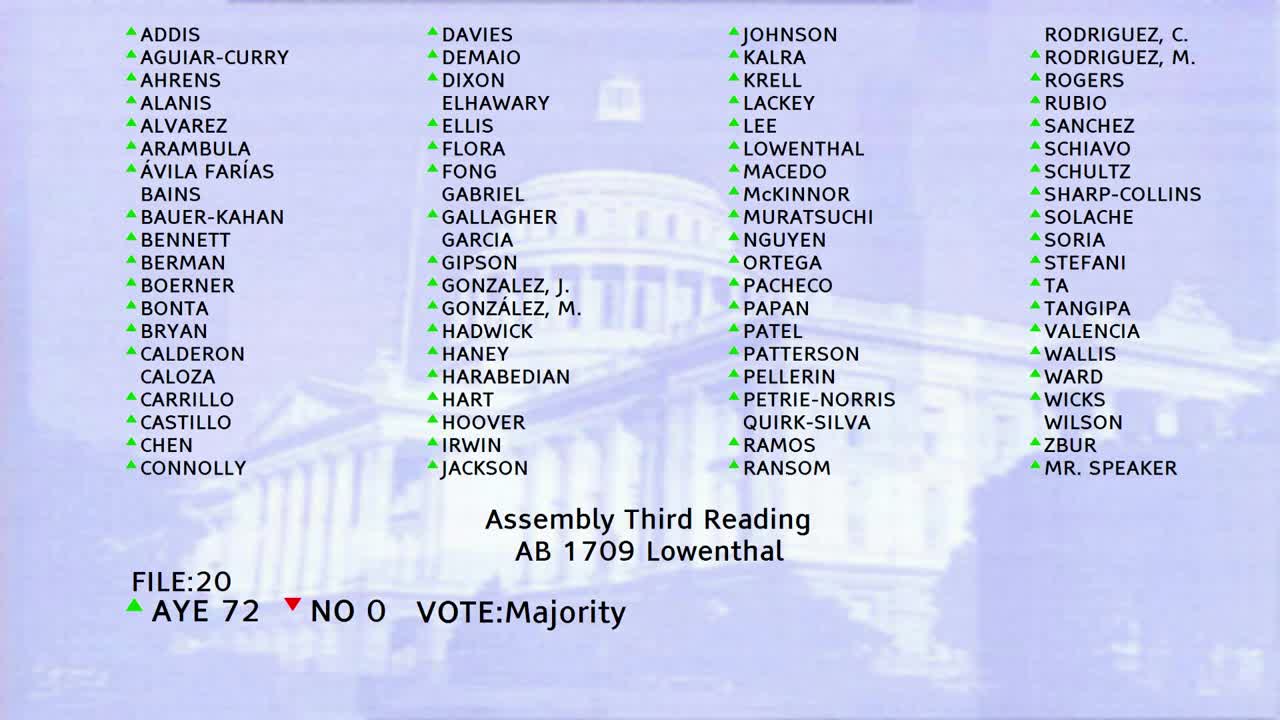 10MIN
Assembly Floor
 12MIN
Assembly Standing Committee on Emergency Management
Bill Author

Bill Co-Author(s):