AB 1811: Health professionals.
- Session Year: 2025-2026
- House: Assembly
- Latest Version Date: 2026-09-27
Current Status:
Passed
(2026-09-27: Chaptered by Secretary of State - Chapter 549, Statutes of 2026.)
Introduced
In Committee
Awaiting First Chamber Vote
Passed First Chamber
In Committee
Awaiting Second Chamber Vote
Passed Second Chamber
Enacted
(1)Existing federal law requires the Secretary of Health and Human Services to designate health professional shortage areas and requires the secretary, in establishing criteria for the designation of those areas, to consider, among other things, the ratio of available health manpower to the number of individuals in an area or population group and indicators of a need for health services, as specified. Existing state law makes references to federally recognized or designated health professional shortage areas in various contexts, including, among others, the California Physician Corps Program, the California Reproductive Health Services Corps, the Oral Health Program, the Virtual Health Hub for Rural Communities Pilot Program, and health professions planning grants.
This bill, until January 1, 2035, would define the term health professional shortage area to mean (1) an area determined by the Department of Health Care Access and Information to have a shortage of health professionals, (2) a health professional shortage area currently designated or recognized by the United States Department of Health and Human Services, or (3) an area designated or recognized as a health professional shortage area by the United States Department of Health and Human Services on January 1, 2025, regardless of whether that area remains designated or recognized by the United States Department of Health and Human Services as a health professional shortage area. The bill would authorize the Department of Health Care Access and Information to revoke designations, as specified.
(2)Existing law requires specified boards, including the Board of Registered Nursing and the Respiratory Care Board of California, to collect certain workforce data from their respective licensees and registrants for future workforce planning at least biennially. Existing law requires other boards that regulate healing arts licensees or registrants to request workforce data from their respective licensees and registrants for future workforce planning at least biennially. Existing law requires the workforce data collected or requested to include specified information, including, among others, the type of employer or classification of primary practice site, as specified. Existing law prohibits a licensee or registrant from being required to provide the information as a condition for license or registration renewal and prohibits licensees or registrants from being subject to discipline for not providing the information. Existing law requires the boards and the Department of Health Care Access and Information to maintain the confidentiality of licensee and registrant information collected pursuant to these provisions and authorizes release of the information only in aggregate form. Existing law requires each board to provide individual licensee and registrant data to the Department of Health Care Access and Information on a quarterly basis, as specified.
This bill would require the workforce data to be collected or requested by boards at the time a license or registration is issued, except as specified. The bill would require the information collected or requested by boards to also include, among other things, the hours worked in inpatient care, hours worked in outpatient care, and whether the licensee or registrant offers a formal sliding fee scale. The bill would instead require each board to provide licensee and registrant data on a monthly basis.
(3)Existing constitutional provisions require that a statute that limits the right of access to the meetings of public bodies or the writings of public officials and agencies be adopted with findings demonstrating the interest protected by the limitation and the need for protecting that interest.
This bill would make legislative findings to that effect.
(4)This bill would incorporate additional changes to Section 502 of the Business and Professions Code proposed by SB 1271 to be operative only if this bill and SB 1271 are enacted and this bill is enacted last.
(1)Existing federal law requires the Secretary of Health and Human Services to designate health professional shortage areas and requires the secretary, in establishing criteria for the designation of those areas, to consider, among other things, the ratio of available health manpower to the number of individuals in an area or population group and indicators of a need for health services, as specified. Existing state law makes references to federally recognized or designated health professional shortage areas in various contexts, including, among others, the California Physician Corps Program, the California Reproductive Health Services Corps, the Oral Health Program, the Virtual Health Hub for Rural Communities Pilot Program, and health professions planning grants.
This bill, until January 1, 2035, would define the term health professional shortage area to mean (1) an area determined by the Department of Health Care Access and Information to have a shortage of health professionals, (2) a health professional shortage area currently designated or recognized by the United States Department of Health and Human Services, or (3) an area designated or recognized as a health professional shortage area by the United States Department of Health and Human Services on January 1, 2025, regardless of whether that area remains designated or recognized by the United States Department of Health and Human Services as a health professional shortage area. The bill would authorize the Department of Health Care Access and Information to revoke designations, as specified.
(2)Existing law requires specified boards, including the Board of Registered Nursing and the Respiratory Care Board of California, to collect certain workforce data from their respective licensees and registrants for future workforce planning at least biennially. Existing law requires other boards that regulate healing arts licensees or registrants to request workforce data from their respective licensees and registrants for future workforce planning at least biennially. Existing law requires the workforce data collected or requested to include specified information, including, among others, the type of employer or classification of primary practice site, as specified. Existing law prohibits a licensee or registrant from being required to provide the information as a condition for license or registration renewal and prohibits licensees or registrants from being subject to discipline for not providing the information. Existing law requires the boards and the Department of Health Care Access and Information to maintain the confidentiality of licensee and registrant information collected pursuant to these provisions and authorizes release of the information only in aggregate form. Existing law requires each board to provide individual licensee and registrant data to the Department of Health Care Access and Information on a quarterly basis, as specified.
This bill would require the workforce data to be collected or requested by boards at the time a license or registration is issued, except as specified. The bill would require the information collected or requested by boards to also include, among other things, the hours worked in inpatient care, hours worked in outpatient care, and whether the licensee or registrant offers a formal sliding fee scale. The bill would instead require each board to provide licensee and registrant data on a monthly basis.
(3)Existing constitutional provisions require that a statute that limits the right of access to the meetings of public bodies or the writings of public officials and agencies be adopted with findings demonstrating the interest protected by the limitation and the need for protecting that interest.
This bill would make legislative findings to that effect.
(4)This bill would incorporate additional changes to Section 502 of the Business and Professions Code proposed by SB 1271 to be operative only if this bill and SB 1271 are enacted and this bill is enacted last.
(1)Existing federal law requires the Secretary of Health and Human Services to designate health professional shortage areas and requires the secretary, in establishing criteria for the designation of those areas, to consider, among other things, the ratio of available health manpower to the number of individuals in an area or population group and indicators of a need for health services, as specified. Existing state law makes references to federally recognized or designated health professional shortage areas in various contexts, including, among others, the California Physician Corps Program, the California Reproductive Health Services Corps, the Oral Health Program, the Virtual Health Hub for Rural Communities Pilot Program, and health professions planning grants.
This bill, until January 1, 2035, would define the term health professional shortage area to mean (1) an area determined by the Department of Health Care Access and Information to have a shortage of health professionals, (2) a health professional shortage area currently designated or recognized by the United States Department of Health and Human Services, or (3) an area designated or recognized as a health professional shortage area by the United States Department of Health and Human Services on January 1, 2025, regardless of whether that area remains designated or recognized by the United States Department of Health and Human Services as a health professional shortage area. For an area determined to be a health professional shortage area by the Department of Health Care Access and Information, the bill would authorize the department to revoke that designation. The bill would authorize the Department of Health Care Access and Information to revoke designations, as specified.
(2)Existing law requires specified boards, including the Board of Registered Nursing and the Respiratory Care Board of California, to collect certain workforce data from their respective licensees and registrants for future workforce planning at least biennially. Existing law requires other boards that regulate healing arts licensees or registrants to request workforce data from their respective licensees and registrants for future workforce planning at least biennially. Existing law requires the workforce data collected or requested to include specified information, including, among others, the type of employer or classification of primary practice site, as specified. Existing law prohibits a licensee or registrant from being required to provide the information as a condition for license or registration renewal and prohibits licensees or registrants from being subject to discipline for not providing the information. Existing law requires the boards and the Department of Health Care Access and Information to maintain the confidentiality of licensee and registrant information collected pursuant to these provisions and authorizes release of the information only in aggregate form. Existing law requires each board to provide individual licensee and registrant data to the Department of Health Care Access and Information on a quarterly basis, as specified.
This bill would require the workforce data to be collected or requested by boards at the time a license or registration is issued. issued, except as specified. The bill would require the information collected or requested by boards to also include, among other things, the hours worked in inpatient care, hours worked in outpatient care, and whether the licensee or registrant offers a formal sliding fee scale. The bill would instead require each board to provide licensee and registrant data on a monthly basis.
(3)Existing constitutional provisions require that a statute that limits the right of access to the meetings of public bodies or the writings of public officials and agencies be adopted with findings demonstrating the interest protected by the limitation and the need for protecting that interest.
This bill would make legislative findings to that effect.
(4)This bill would incorporate additional changes to Section 502 of the Business and Professions Code proposed by SB 1271 to be operative only if this bill and SB 1271 are enacted and this bill is enacted last.
(1)Existing federal law requires the Secretary of Health and Human Services to designate health professional shortage areas, areas and requires the secretary, in establishing criteria for the designation of those areas, to consider, among other things, the ratio of available health manpower to the number of individuals in an area or population group and indicators of a need for health services, as specified. Existing state law makes references to federally recognized or designated health professional shortage areas in various contexts, including, among others, the California Physician Corps Program, the California Reproductive Health Services Corps, the Oral Health Program, the Virtual Health Hub for Rural Communities Pilot Program, and health professions planning grants.
This bill, until January 1, 2035, would define the term health professional shortage area to mean (1) an area determined by the Department of Health Care Access and Information to have a shortage of health professionals, (2) a health professional shortage area designated or recognized by the United States Department of Health and Human Services, or (3) an area designated or recognized as a health professional shortage area by the United States Department of Health and Human Services on January 1, 2025, regardless of whether that area remains designated or recognized by the United States Department of Health and Human Services as a health professional shortage area. For an area determined to be a health professional shortage area by the Department of Health Care Access and Information, the bill would authorize the department to revoke that designation.
(2)Existing law requires specified boards, including the Board of Registered Nursing and the Respiratory Care Board of California, to collect certain workforce data from their respective licensees and registrants for future workforce planning at least biennially. Existing law requires other boards that regulate healing arts licensees or registrants to request workforce data from their respective licensees and registrants for future workforce planning at least biennially. Existing law requires the workforce data collected or requested to include specified information, including, among others, the type of employer or classification of primary practice site, as specified. Existing law prohibits a licensee or registrant from being required to provide the information as a condition for license or registration renewal and prohibits licensees or registrants from being subject to discipline for not providing the information. Existing law requires the boards and the Department of Health Care Access and Information to maintain the confidentiality of licensee and registrant information collected pursuant to these provisions and authorizes release of the information only in aggregate form. Existing law requires each board to provide individual licensee and registrant data to the Department of Health Care Access and Information on a quarterly basis, as specified.
This bill would require the workforce data to be collected or requested by boards at the time a license or registration is issued. The bill would require the information collected or requested by boards to also include, among other things, the hours worked in inpatient care, hours worked in outpatient care, and whether the licensee or registrant offers a formal sliding fee scale. The bill would instead require each board to provide licensee and registrant data on a monthly basis.
(3)Existing constitutional provisions require that a statute that limits the right of access to the meetings of public bodies or the writings of public officials and agencies be adopted with findings demonstrating the interest protected by the limitation and the need for protecting that interest.
This bill would make legislative findings to that effect.
Existing federal law requires the Secretary of Health and Human Services to designate health professional shortage areas, and requires the secretary, in establishing criteria for the designation of those areas, to consider, among other things, the ratio of available health manpower to the number of individuals in an area or population group and indicators of a need for health services, as specified. Existing state law makes references to federally recognized or designated health professional shortage areas in various contexts, including, among others, the California Physician Corps Program, the California Reproductive Health Services Corps, the Oral Health Program, the Virtual Health Hub for Rural Communities Pilot Program, and health professions planning grants.
This bill, until January 1, 2035, would define the term health professional shortage area to mean (1) an area determined by the Department of Health Care Access and Information to have a shortage of health professionals, (2) a health professional shortage area designated or recognized by the United States Department of Health and Human Services, or (3) an area designated or recognized as a health professional shortage area by the United States Department of Health and Human Services on January 1, 2025, regardless of whether that area remains designated or recognized by the United States Department of Health and Human Services as a health professional shortage area.
Existing law establishes the California Physician Corps Program within the Department of Health Care Access and Information. Existing law defines various terms for purposes of the program.This bill would make technical, nonsubstantive changes to these provisions.Existing law establishes the California Physician Corps Program within the Department of Health Care Access and Information. Existing law defines various terms for purposes of the program.
This bill would make technical, nonsubstantive changes to these provisions.
(a)Notwithstanding any other law, both of the following apply:
(1)The Board of Registered Nursing, the Board of Vocational Nursing and Psychiatric Technicians of the State of California, the Physician Assistant Board, and the Respiratory Care Board of California shall collect workforce data from their respective licensees and registrants as specified in subdivision (b) for future workforce planning at the time the license or registration is issued and at least biennially thereafter. The data shall be collected at the time of electronic license or registration issuance and renewal for those boards that utilize electronic issuances and renewals for licensees or registrants.
(2)(A)All other boards that are not listed in paragraph (1) that regulate healing arts licensees or registrants under this division shall request workforce data from their respective licensees and registrants as specified in subdivision (b) for future workforce planning at the time the license or registration is issued and at least biennially thereafter. The data shall be requested at the time of electronic license or registration issuance and renewal for those boards that utilize electronic issuances and renewals for licensees or registrants.
(B)Notwithstanding subparagraph (A) and until July 1, 2027, the Speech-Language Pathology and Audiology and Hearing Aid Dispensers Board is not required to request workforce data at the time the license or registration is issued. On and after July 1, 2027, the Speech-Language Pathology and Audiology and Hearing Aid Dispensers Board shall request the workforce data at the time the license or registration is issued.
(b)In conformance with specifications under subdivision (d), the workforce data collected or requested by each board about its licensees and registrants shall include, at a minimum, all of the following information:
(1)Anticipated year of retirement.
(2)Primary and secondary area of practice or specialty.
(3)City, county, and ZIP Code of practice.
(4)Date of birth.
(5)Educational background and the highest level attained at time of licensure or registration.
(6)Gender or gender identity.
(7)Hours spent in direct patient care, including telehealth hours as a subcategory, training, research, and administration.
(8)Hours worked in inpatient care.
(9)Hours worked in outpatient care.
(10)Languages spoken.
(11)National Provider Identifier.
(12)Hours worked providing direct outpatient primary care services.
(13)Race or ethnicity.
(14)Type of employer or classification of primary practice site, including, but not limited to, clinic, hospital, managed care organization, or private practice.
(15)Whether the licensee or registrant accepts Medicaid.
(16)Whether the licensee or registrant offers a formal sliding fee scale.
(17)Work hours.
(18)Sexual orientation.
(19)Disability status.
(c)Each board shall maintain the confidentiality of the information it receives from licensees and registrants under this section and shall only release information in an aggregate form that cannot be used to identify an individual other than as specified in subdivision (e).
(d)The Department of Consumer Affairs, in consultation with the Department of Health Care Access and Information, shall specify for each board subject to this section the specific information and data that will be collected or requested pursuant to subdivision (b). The Department of Consumer Affairs identification and specification of this information and data shall be exempt until June 30, 2023, from the requirements of the Administrative Procedure Act (Chapter 3.5 (commencing with Section 11340) of Part 1 of Division 3 of Title 2 of the Government Code).
(e)Each board, or the Department of Consumer Affairs on its behalf, shall, beginning on July 1, 2022, and monthly thereafter, provide the individual licensee and registrant data it collects pursuant to this section to the Department of Health Care Access and Information in a manner directed by the Department of Health Care Access and Information, including license or registration number and associated license or registration information. The Department of Health Care Access and Information shall maintain the confidentiality of the licensee and registrant information it receives and shall only release information in an aggregate form that cannot be used to identify an individual.
(f)A licensee or registrant shall not be required to provide the information listed in subdivision (b) as a condition for license or registration renewal, and licensees or registrants shall not be subject to discipline for not providing the information listed in subdivision (b).
(g)This section does not alter or affect mandatory reporting requirements for licensees or registrants established pursuant to this division, including, but not limited to, Sections 1715.5, 1902.2, 2425.3, and 2455.2.
SEC. 1.1.Section 502 of the Business and Professions Code is amended to read:502.(a)Notwithstanding any other law, both of the following apply:
(1)The Board of Registered Nursing, the Board of Vocational Nursing and Psychiatric Technicians of the State of California, the Physician Assistant Board, and the Respiratory Care Board of California shall collect workforce data from their respective licensees and registrants as specified in subdivision (b) for future workforce planning at the time the license or registration is issued and at least biennially thereafter. The data shall be collected at the time of electronic license or registration issuance and renewal for those boards that utilize electronic issuances and renewals for licensees or registrants.
(2)(A)All other boards that are not listed in paragraph (1) that regulate healing arts licensees or registrants under this division shall request workforce data from their respective licensees and registrants as specified in subdivision (b) for future workforce planning at the time the license or registration is issued and at least biennially thereafter. The data shall be requested at the time of electronic license or registration issuance and renewal for those boards that utilize electronic issuances and renewals for licensees or registrants.
(B)Notwithstanding subparagraph (A) and until July 1, 2027, the Speech-Language Pathology and Audiology and Hearing Aid Dispensers Board is not required to request workforce data at the time the license or registration is issued. On and after July 1, 2027, the Speech-Language Pathology and Audiology and Hearing Aid Dispensers Board shall request the workforce data at the time the license or registration is issued.
(b)In conformance with specifications under subdivision (d), the workforce data collected or requested by each board about its licensees and registrants shall include, at a minimum, all of the following information:
(1)Anticipated year of retirement.
(2)Primary and secondary area of practice or specialty.
(3)City, county, and ZIP Code of practice.
(4)Date of birth.
(5)Educational background and the highest level attained at time of licensure or registration.
(6)Gender or gender identity.
(7)Hours spent in direct patient care, including telehealth hours as a subcategory, training, research, and administration.
(8)Hours worked in inpatient care.
(9)Hours worked in outpatient care.
(10)Languages spoken.
(11)National Provider Identifier.
(12)Hours worked providing direct outpatient primary care services.
(13)Race or ethnicity.
(14)Type of employer or classification of primary practice site, including, but not limited to, clinic, hospital, managed care organization, or private practice.
(15)Whether the licensee or registrant accepts Medicaid.
(16)Whether the licensee or registrant offers a formal sliding fee scale.
(17)Work hours.
(18)Sexual orientation.
(19)Disability status.
(c)Each board shall maintain the confidentiality of the information it receives from licensees and registrants under this section and shall only release information in an aggregate form that cannot be used to identify an individual other than as specified in subdivision (e).
(d)The Department of Consumer Affairs, in consultation with the Department of Health Care Access and Information, shall specify for each board subject to this section the specific information and data that will be collected or requested pursuant to subdivision (b). The Department of Consumer Affairs identification and specification of this information and data shall be exempt until June 30, 2023, from the requirements of the Administrative Procedure Act (Chapter 3.5 (commencing with Section 11340) of Part 1 of Division 3 of Title 2 of the Government Code).
(e)Each board, or the Department of Consumer Affairs on its behalf, shall, beginning on July 1, 2022, and monthly thereafter, provide the individual licensee and registrant data it collects pursuant to this section to the Department of Health Care Access and Information in a manner directed by the Department of Health Care Access and Information, including license or registration number and associated license or registration information. The Department of Health Care Access and Information shall maintain the confidentiality of the licensee and registrant information it receives and shall only release information in an aggregate form that cannot be used to identify an individual.
(f)A licensee or registrant shall not be required to provide the information listed in subdivision (b) as a condition for license or registration renewal, and licensees or registrants shall not be subject to discipline for not providing the information listed in subdivision (b).
(g)This section does not alter or affect mandatory reporting requirements for licensees or registrants established pursuant to this division, including, but not limited to, Sections 1715.5, 1902.2, 2425.3, and 2455.2.
(h)(1)Pursuant to the workforce data collection requirement in paragraph (2) of subdivision (a), the Medical Board of California shall, by April 1, 2027, request all of the following, as applicable, from a licensed midwife in the form and manner prescribed by the board:
(A)The licensed midwifes eligibility to serve as a clinical preceptor for student midwives enrolled in a midwifery education program approved by the Medical Board of California, including whether they have met the minimum requirements to become a clinical preceptor.
(B)If the licensed midwife responds that they are eligible to serve as a clinical preceptor pursuant to subparagraph (A), both of the following:
(i)Whether the licensed midwife is currently available, or anticipates becoming available within the next two years, to serve as a clinical preceptor for student midwives.
(ii)The primary practice setting or settings in which the licensed midwife would offer to serve as a clinical preceptor, including, but not limited to, home births, freestanding birth centers, hospital-based or integrated maternity settings, rural or frontier community settings, or federally qualified health centers, as defined by Section 1396(d)(l)(2) of Title 42 of the United States Code.
(C)If the licensed midwife responds that they are currently available pursuant to subparagraph (B), the maximum number of student midwives the licensed midwife is currently able to supervise concurrently and the county or counties in the state in which the licensed midwife currently practices and within which they would be available for clinical preceptorship.
(D)If the licensed midwife responds that they are not currently available pursuant to subparagraph (B), the primary reason or reasons for their unavailability.
(2)(A)The Medical Board of California shall maintain the confidentiality of the information it receives from licensed midwives under this subdivision and shall only release information in an aggregate form that cannot be used to identify an individual other than as specified in subparagraph (B).
(B)The Medical Board of California shall quarterly provide the individual licensed midwife data it collects pursuant to this subdivision to the Department of Health Care Access and Information in a manner directed by the Department of Health Care Access and Information for the purpose of statewide midwifery workforce planning, analysis, and public reporting. The Department of Health Care Access and Information shall maintain the confidentiality of the licensed midwife information it receives and shall only release information in an aggregate form that cannot be used to identify an individual licensed midwife.
(C)On or before June 30, 2029, the Department of Health Care Access and Information shall submit a report to the Legislature, pursuant to Section 9795 of the Government Code, detailing the findings of the Department of Health Care Access and Information based on the information received pursuant to subparagraph (B).
(3)A licensed midwife shall not be required to provide the information requested in this subdivision as a condition for license renewal, and a licensed midwife shall not be subject to discipline for not providing the information requested in this subdivision.
(i)This section shall become inoperative on June 30, 2029, and, as of January 1, 2030, is repealed.
SEC. 1.2.Section 502 is added to the Business and Professions Code, to read:502.(a)Notwithstanding any other law, both of the following apply:
(1)The Board of Registered Nursing, the Board of Vocational Nursing and Psychiatric Technicians of the State of California, the Physician Assistant Board, and the Respiratory Care Board of California shall collect workforce data from their respective licensees and registrants as specified in subdivision (b) for future workforce planning at the time the license or registration is issued and at least biennially thereafter. The data shall be collected at the time of electronic license or registration issuance and renewal for those boards that utilize electronic issuances and renewals for licensees or registrants.
(2)(A)All other boards that are not listed in paragraph (1) that regulate healing arts licensees or registrants under this division shall request workforce data from their respective licensees and registrants as specified in subdivision (b) for future workforce planning at the time the license or registration is issued and at least biennially thereafter. The data shall be requested at the time of electronic license or registration issuance and renewal for those boards that utilize electronic issuances and renewals for licensees or registrants.
(B)Notwithstanding subparagraph (A) and until July 1, 2027, the Speech-Language Pathology and Audiology and Hearing Aid Dispensers Board is not required to request workforce data at the time the license or registration is issued. On and after July 1, 2027, the Speech-Language Pathology and Audiology and Hearing Aid Dispensers Board shall request the workforce data at the time the license or registration is issued.
(b)In conformance with specifications under subdivision (d), the workforce data collected or requested by each board about its licensees and registrants shall include, at a minimum, all of the following information:
(1)Anticipated year of retirement.
(2)Primary and secondary area of practice or specialty.
(3)City, county, and ZIP Code of practice.
(4)Date of birth.
(5)Educational background and the highest level attained at time of licensure or registration.
(6)Gender or gender identity.
(7)Hours spent in direct patient care, including telehealth hours as a subcategory, training, research, and administration.
(8)Hours worked in inpatient care.
(9)Hours worked in outpatient care.
(10)Languages spoken.
(11)National Provider Identifier.
(12)Hours worked providing direct outpatient primary care services.
(13)Race or ethnicity.
(14)Type of employer or classification of primary practice site, including, but not limited to, clinic, hospital, managed care organization, or private practice.
(15)Whether the licensee or registrant accepts Medicaid.
(16)Whether the licensee or registrant offers a formal sliding fee scale.
(17)Work hours.
(18)Sexual orientation.
(19)Disability status.
(c)Each board shall maintain the confidentiality of the information it receives from licensees and registrants under this section and shall only release information in an aggregate form that cannot be used to identify an individual other than as specified in subdivision (e).
(d)The Department of Consumer Affairs, in consultation with the Department of Health Care Access and Information, shall specify for each board subject to this section the specific information and data that will be collected or requested pursuant to subdivision (b). The Department of Consumer Affairs identification and specification of this information and data shall be exempt until June 30, 2023, from the requirements of the Administrative Procedure Act (Chapter 3.5 (commencing with Section 11340) of Part 1 of Division 3 of Title 2 of the Government Code).
(e)Each board, or the Department of Consumer Affairs on its behalf, shall, beginning on July 1, 2022, and monthly thereafter, provide the individual licensee and registrant data it collects pursuant to this section to the Department of Health Care Access and Information in a manner directed by the Department of Health Care Access and Information, including license or registration number and associated license or registration information. The Department of Health Care Access and Information shall maintain the confidentiality of the licensee and registrant information it receives and shall only release information in an aggregate form that cannot be used to identify an individual.
(f)A licensee or registrant shall not be required to provide the information listed in subdivision (b) as a condition for license or registration renewal, and licensees or registrants shall not be subject to discipline for not providing the information listed in subdivision (b).
(g)This section does not alter or affect mandatory reporting requirements for licensees or registrants established pursuant to this division, including, but not limited to, Sections 1715.5, 1902.2, 2425.3, and 2455.2.
(h)This section shall become operative on June 30, 2029.
SEC. 2.Section 30 is added to the Health and Safety Code, to read:30.(a)Notwithstanding any other law, and for purposes of this code and any other state law or regulation, health professional shortage area means all of the following:
(1)A health professional shortage area currently designated or recognized by the United States Department of Health and Human Services.
(2)An area designated or recognized as a health professional shortage area by the United States Department of Health and Human Services on January 1, 2025, regardless of whether that area remains designated or recognized by the United States Department of Health and Human Services as a health professional shortage area.
(3)An area determined by the Department of Health Care Access and Information to have a shortage of health professionals.
(b)The Department of Health Care Access and Information may revoke a designation of a health professional shortage area described in paragraph (2) or (3) of subdivision (a).
(c)Notwithstanding any other law, and for purposes of this code and any other state law or regulation, any reference to a health professional shortage area, including, but not limited to, references qualified as referring to health professional shortage areas designated or recognized by a federal agency, shall be deemed to refer to the definition in subdivision (a).
(d)This section shall remain in effect only until January 1, 2035, and as of that date is repealed.
SEC. 3.The Legislature finds and declares that Sections 1, 1.1, and 1.2 of this act, which amend Section 502 of the Business and Professions Code, impose a limitation on the publics right of access to the meetings of public bodies or the writings of public officials and agencies within the meaning of Section 3 of Article I of the California Constitution. Pursuant to that constitutional provision, the Legislature makes the following findings to demonstrate the interest protected by this limitation and the need for protecting that interest:
In order to protect the privacy of licensees and registrants, while also gathering useful workforce data, it is necessary that some information collected from licensees and registrants only be released in aggregate form.
SEC. 4.Sections 1.1 and 1.2 of this bill incorporate amendments to Section 502 of the Business and Professions Code proposed by both this bill and Senate Bill 1271. Those sections of this bill shall only become operative if (1) both bills are enacted and become effective on or before January 1, 2027, (2) this bill amends Section 502 of the Business and Professions Code and Senate Bill 1271 amends, repeals, and adds Section 502 of the Business and Professions Code, and (3) this bill is enacted after Senate Bill 1271, in which case Section 1 of this bill shall not become operative.
(a)Notwithstanding any other law, both of the following apply:
(1)The Board of Registered Nursing, the Board of Vocational Nursing and Psychiatric Technicians of the State of California, the Physician Assistant Board, and the Respiratory Care Board of California shall collect workforce data from their respective licensees and registrants as specified in subdivision (b) for future workforce planning at the time the license or registration is issued and at least biennially thereafter. The data shall be collected at the time of electronic license or registration issuance and renewal for those boards that utilize electronic issuances and renewals for licensees or registrants.
(2)(A)All other boards that are not listed in paragraph (1) that regulate healing arts licensees or registrants under this division shall request workforce data from their respective licensees and registrants as specified in subdivision (b) for future workforce planning at the time the license or registration is issued and at least biennially thereafter. The data shall be requested at the time of electronic license or registration issuance and renewal for those boards that utilize electronic issuances and renewals for licensees or registrants.
(B)Notwithstanding subparagraph (A) and until July 1, 2027, the Speech-Language Pathology and Audiology and Hearing Aid Dispensers Board is not required to request workforce data at the time the license or registration is issued. On and after July 1, 2027, the Speech-Language Pathology and Audiology and Hearing Aid Dispensers Board shall request the workforce data at the time the license or registration is issued.
(b)In conformance with specifications under subdivision (d), the workforce data collected or requested by each board about its licensees and registrants shall include, at a minimum, all of the following information:
(1)Anticipated year of retirement.
(2)Primary and secondary area of practice or specialty.
(3)City, county, and ZIP Code of practice.
(4)Date of birth.
(5)Educational background and the highest level attained at time of licensure or registration.
(6)Gender or gender identity.
(7)Hours spent in direct patient care, including telehealth hours as a subcategory, training, research, and administration.
(8)Hours worked in inpatient care.
(9)Hours worked in outpatient care.
(10)Languages spoken.
(11)National Provider Identifier.
(12)Hours worked providing direct outpatient primary care services.
(13)Race or ethnicity.
(14)Type of employer or classification of primary practice site, including, but not limited to, clinic, hospital, managed care organization, or private practice.
(15)Whether the licensee or registrant accepts Medicaid.
(16)Whether the licensee or registrant offers a formal sliding fee scale.
(17)Work hours.
(18)Sexual orientation.
(19)Disability status.
(c)Each board shall maintain the confidentiality of the information it receives from licensees and registrants under this section and shall only release information in an aggregate form that cannot be used to identify an individual other than as specified in subdivision (e).
(d)The Department of Consumer Affairs, in consultation with the Department of Health Care Access and Information, shall specify for each board subject to this section the specific information and data that will be collected or requested pursuant to subdivision (b). The Department of Consumer Affairs identification and specification of this information and data shall be exempt until June 30, 2023, from the requirements of the Administrative Procedure Act (Chapter 3.5 (commencing with Section 11340) of Part 1 of Division 3 of Title 2 of the Government Code).
(e)Each board, or the Department of Consumer Affairs on its behalf, shall, beginning on July 1, 2022, and monthly thereafter, provide the individual licensee and registrant data it collects pursuant to this section to the Department of Health Care Access and Information in a manner directed by the Department of Health Care Access and Information, including license or registration number and associated license or registration information. The Department of Health Care Access and Information shall maintain the confidentiality of the licensee and registrant information it receives and shall only release information in an aggregate form that cannot be used to identify an individual.
(f)A licensee or registrant shall not be required to provide the information listed in subdivision (b) as a condition for license or registration renewal, and licensees or registrants shall not be subject to discipline for not providing the information listed in subdivision (b).
(g)This section does not alter or affect mandatory reporting requirements for licensees or registrants established pursuant to this division, including, but not limited to, Sections 1715.5, 1902.2, 2425.3, and 2455.2.
SEC. 1.1.Section 502 of the Business and Professions Code is amended to read:502.(a)Notwithstanding any other law, both of the following apply:
(1)The Board of Registered Nursing, the Board of Vocational Nursing and Psychiatric Technicians of the State of California, the Physician Assistant Board, and the Respiratory Care Board of California shall collect workforce data from their respective licensees and registrants as specified in subdivision (b) for future workforce planning at the time the license or registration is issued and at least biennially thereafter. The data shall be collected at the time of electronic license or registration issuance and renewal for those boards that utilize electronic issuances and renewals for licensees or registrants.
(2)(A)All other boards that are not listed in paragraph (1) that regulate healing arts licensees or registrants under this division shall request workforce data from their respective licensees and registrants as specified in subdivision (b) for future workforce planning at the time the license or registration is issued and at least biennially thereafter. The data shall be requested at the time of electronic license or registration issuance and renewal for those boards that utilize electronic issuances and renewals for licensees or registrants.
(B)Notwithstanding subparagraph (A) and until July 1, 2027, the Speech-Language Pathology and Audiology and Hearing Aid Dispensers Board is not required to request workforce data at the time the license or registration is issued. On and after July 1, 2027, the Speech-Language Pathology and Audiology and Hearing Aid Dispensers Board shall request the workforce data at the time the license or registration is issued.
(b)In conformance with specifications under subdivision (d), the workforce data collected or requested by each board about its licensees and registrants shall include, at a minimum, all of the following information:
(1)Anticipated year of retirement.
(2)Primary and secondary area of practice or specialty.
(3)City, county, and ZIP Code of practice.
(4)Date of birth.
(5)Educational background and the highest level attained at time of licensure or registration.
(6)Gender or gender identity.
(7)Hours spent in direct patient care, including telehealth hours as a subcategory, training, research, and administration.
(8)Hours worked in inpatient care.
(9)Hours worked in outpatient care.
(10)Languages spoken.
(11)National Provider Identifier.
(12)Hours worked providing direct outpatient primary care services.
(13)Race or ethnicity.
(14)Type of employer or classification of primary practice site, including, but not limited to, clinic, hospital, managed care organization, or private practice.
(15)Whether the licensee or registrant accepts Medicaid.
(16)Whether the licensee or registrant offers a formal sliding fee scale.
(17)Work hours.
(18)Sexual orientation.
(19)Disability status.
(c)Each board shall maintain the confidentiality of the information it receives from licensees and registrants under this section and shall only release information in an aggregate form that cannot be used to identify an individual other than as specified in subdivision (e).
(d)The Department of Consumer Affairs, in consultation with the Department of Health Care Access and Information, shall specify for each board subject to this section the specific information and data that will be collected or requested pursuant to subdivision (b). The Department of Consumer Affairs identification and specification of this information and data shall be exempt until June 30, 2023, from the requirements of the Administrative Procedure Act (Chapter 3.5 (commencing with Section 11340) of Part 1 of Division 3 of Title 2 of the Government Code).
(e)Each board, or the Department of Consumer Affairs on its behalf, shall, beginning on July 1, 2022, and monthly thereafter, provide the individual licensee and registrant data it collects pursuant to this section to the Department of Health Care Access and Information in a manner directed by the Department of Health Care Access and Information, including license or registration number and associated license or registration information. The Department of Health Care Access and Information shall maintain the confidentiality of the licensee and registrant information it receives and shall only release information in an aggregate form that cannot be used to identify an individual.
(f)A licensee or registrant shall not be required to provide the information listed in subdivision (b) as a condition for license or registration renewal, and licensees or registrants shall not be subject to discipline for not providing the information listed in subdivision (b).
(g)This section does not alter or affect mandatory reporting requirements for licensees or registrants established pursuant to this division, including, but not limited to, Sections 1715.5, 1902.2, 2425.3, and 2455.2.
(h)(1)Pursuant to the workforce data collection requirement in paragraph (2) of subdivision (a), the Medical Board of California shall, by April 1, 2027, request all of the following, as applicable, from a licensed midwife in the form and manner prescribed by the board:
(A)The licensed midwifes eligibility to serve as a clinical preceptor for student midwives enrolled in a midwifery education program approved by the Medical Board of California, including whether they have met the minimum requirements to become a clinical preceptor.
(B)If the licensed midwife responds that they are eligible to serve as a clinical preceptor pursuant to subparagraph (A), both of the following:
(i)Whether the licensed midwife is currently available, or anticipates becoming available within the next two years, to serve as a clinical preceptor for student midwives.
(ii)The primary practice setting or settings in which the licensed midwife would offer to serve as a clinical preceptor, including, but not limited to, home births, freestanding birth centers, hospital-based or integrated maternity settings, rural or frontier community settings, or federally qualified health centers, as defined by Section 1396(d)(l)(2) of Title 42 of the United States Code.
(C)If the licensed midwife responds that they are currently available pursuant to subparagraph (B), the maximum number of student midwives the licensed midwife is currently able to supervise concurrently and the county or counties in the state in which the licensed midwife currently practices and within which they would be available for clinical preceptorship.
(D)If the licensed midwife responds that they are not currently available pursuant to subparagraph (B), the primary reason or reasons for their unavailability.
(2)(A)The Medical Board of California shall maintain the confidentiality of the information it receives from licensed midwives under this subdivision and shall only release information in an aggregate form that cannot be used to identify an individual other than as specified in subparagraph (B).
(B)The Medical Board of California shall quarterly provide the individual licensed midwife data it collects pursuant to this subdivision to the Department of Health Care Access and Information in a manner directed by the Department of Health Care Access and Information for the purpose of statewide midwifery workforce planning, analysis, and public reporting. The Department of Health Care Access and Information shall maintain the confidentiality of the licensed midwife information it receives and shall only release information in an aggregate form that cannot be used to identify an individual licensed midwife.
(C)On or before June 30, 2029, the Department of Health Care Access and Information shall submit a report to the Legislature, pursuant to Section 9795 of the Government Code, detailing the findings of the Department of Health Care Access and Information based on the information received pursuant to subparagraph (B).
(3)A licensed midwife shall not be required to provide the information requested in this subdivision as a condition for license renewal, and a licensed midwife shall not be subject to discipline for not providing the information requested in this subdivision.
(i)This section shall become inoperative on June 30, 2029, and, as of January 1, 2030, is repealed.
SEC. 1.2.Section 502 is added to the Business and Professions Code, to read:502.(a)Notwithstanding any other law, both of the following apply:
(1)The Board of Registered Nursing, the Board of Vocational Nursing and Psychiatric Technicians of the State of California, the Physician Assistant Board, and the Respiratory Care Board of California shall collect workforce data from their respective licensees and registrants as specified in subdivision (b) for future workforce planning at the time the license or registration is issued and at least biennially thereafter. The data shall be collected at the time of electronic license or registration issuance and renewal for those boards that utilize electronic issuances and renewals for licensees or registrants.
(2)(A)All other boards that are not listed in paragraph (1) that regulate healing arts licensees or registrants under this division shall request workforce data from their respective licensees and registrants as specified in subdivision (b) for future workforce planning at the time the license or registration is issued and at least biennially thereafter. The data shall be requested at the time of electronic license or registration issuance and renewal for those boards that utilize electronic issuances and renewals for licensees or registrants.
(B)Notwithstanding subparagraph (A) and until July 1, 2027, the Speech-Language Pathology and Audiology and Hearing Aid Dispensers Board is not required to request workforce data at the time the license or registration is issued. On and after July 1, 2027, the Speech-Language Pathology and Audiology and Hearing Aid Dispensers Board shall request the workforce data at the time the license or registration is issued.
(b)In conformance with specifications under subdivision (d), the workforce data collected or requested by each board about its licensees and registrants shall include, at a minimum, all of the following information:
(1)Anticipated year of retirement.
(2)Primary and secondary area of practice or specialty.
(3)City, county, and ZIP Code of practice.
(4)Date of birth.
(5)Educational background and the highest level attained at time of licensure or registration.
(6)Gender or gender identity.
(7)Hours spent in direct patient care, including telehealth hours as a subcategory, training, research, and administration.
(8)Hours worked in inpatient care.
(9)Hours worked in outpatient care.
(10)Languages spoken.
(11)National Provider Identifier.
(12)Hours worked providing direct outpatient primary care services.
(13)Race or ethnicity.
(14)Type of employer or classification of primary practice site, including, but not limited to, clinic, hospital, managed care organization, or private practice.
(15)Whether the licensee or registrant accepts Medicaid.
(16)Whether the licensee or registrant offers a formal sliding fee scale.
(17)Work hours.
(18)Sexual orientation.
(19)Disability status.
(c)Each board shall maintain the confidentiality of the information it receives from licensees and registrants under this section and shall only release information in an aggregate form that cannot be used to identify an individual other than as specified in subdivision (e).
(d)The Department of Consumer Affairs, in consultation with the Department of Health Care Access and Information, shall specify for each board subject to this section the specific information and data that will be collected or requested pursuant to subdivision (b). The Department of Consumer Affairs identification and specification of this information and data shall be exempt until June 30, 2023, from the requirements of the Administrative Procedure Act (Chapter 3.5 (commencing with Section 11340) of Part 1 of Division 3 of Title 2 of the Government Code).
(e)Each board, or the Department of Consumer Affairs on its behalf, shall, beginning on July 1, 2022, and monthly thereafter, provide the individual licensee and registrant data it collects pursuant to this section to the Department of Health Care Access and Information in a manner directed by the Department of Health Care Access and Information, including license or registration number and associated license or registration information. The Department of Health Care Access and Information shall maintain the confidentiality of the licensee and registrant information it receives and shall only release information in an aggregate form that cannot be used to identify an individual.
(f)A licensee or registrant shall not be required to provide the information listed in subdivision (b) as a condition for license or registration renewal, and licensees or registrants shall not be subject to discipline for not providing the information listed in subdivision (b).
(g)This section does not alter or affect mandatory reporting requirements for licensees or registrants established pursuant to this division, including, but not limited to, Sections 1715.5, 1902.2, 2425.3, and 2455.2.
(h)This section shall become operative on June 30, 2029.
SEC. 2.Section 30 is added to the Health and Safety Code, to read:30.(a)Notwithstanding any other law, and for purposes of this code and any other state law or regulation, health professional shortage area means all of the following:
(1)A health professional shortage area currently designated or recognized by the United States Department of Health and Human Services.
(2)An area designated or recognized as a health professional shortage area by the United States Department of Health and Human Services on January 1, 2025, regardless of whether that area remains designated or recognized by the United States Department of Health and Human Services as a health professional shortage area.
(3)An area determined by the Department of Health Care Access and Information to have a shortage of health professionals.
(b)The Department of Health Care Access and Information may revoke a designation of a health professional shortage area described in paragraph (2) or (3) of subdivision (a).
(c)Notwithstanding any other law, and for purposes of this code and any other state law or regulation, any reference to a health professional shortage area, including, but not limited to, references qualified as referring to health professional shortage areas designated or recognized by a federal agency, shall be deemed to refer to the definition in subdivision (a).
(d)This section shall remain in effect only until January 1, 2035, and as of that date is repealed.
SEC. 3.The Legislature finds and declares that Sections 1, 1.1, and 1.2 of this act, which amend Section 502 of the Business and Professions Code, impose a limitation on the publics right of access to the meetings of public bodies or the writings of public officials and agencies within the meaning of Section 3 of Article I of the California Constitution. Pursuant to that constitutional provision, the Legislature makes the following findings to demonstrate the interest protected by this limitation and the need for protecting that interest:
In order to protect the privacy of licensees and registrants, while also gathering useful workforce data, it is necessary that some information collected from licensees and registrants only be released in aggregate form.
SEC. 4.Sections 1.1 and 1.2 of this bill incorporate amendments to Section 502 of the Business and Professions Code proposed by both this bill and Senate Bill 1271. Those sections of this bill shall only become operative if (1) both bills are enacted and become effective on or before January 1, 2027, (2) this bill amends Section 502 of the Business and Professions Code and Senate Bill 1271 amends, repeals, and adds Section 502 of the Business and Professions Code, and (3) this bill is enacted after Senate Bill 1271, in which case Section 1 of this bill shall not become operative.
(a)Notwithstanding any other law, both of the following apply:
(1)The Board of Registered Nursing, the Board of Vocational Nursing and Psychiatric Technicians of the State of California, the Physician Assistant Board, and the Respiratory Care Board of California shall collect workforce data from their respective licensees and registrants as specified in subdivision (b) for future workforce planning at the time the license or registration is issued and at least biennially thereafter. The data shall be collected at the time of electronic license or registration issuance and renewal for those boards that utilize electronic issuances and renewals for licensees or registrants.
(2)(A)All other boards that are not listed in paragraph (1) that regulate healing arts licensees or registrants under this division shall request workforce data from their respective licensees and registrants as specified in subdivision (b) for future workforce planning at the time the license or registration is issued and at least biennially thereafter. The data shall be requested at the time of electronic license or registration issuance and renewal for those boards that utilize electronic issuances and renewals for licensees or registrants.
(B)Notwithstanding subparagraph (A) and until July 1, 2027, the Speech-Language Pathology and Audiology and Hearing Aid Dispensers Board is not required to request workforce data at the time the license or registration is issued. On and after July 1, 2027, the Speech-Language Pathology and Audiology and Hearing Aid Dispensers Board shall request the workforce data at the time the license or registration is issued.
(b)In conformance with specifications under subdivision (d), the workforce data collected or requested by each board about its licensees and registrants shall include, at a minimum, all of the following information:
(1)Anticipated year of retirement.
(2)Primary and secondary area of practice or specialty.
(3)City, county, and ZIP Code of practice.
(4)Date of birth.
(5)Educational background and the highest level attained at time of licensure or registration.
(6)Gender or gender identity.
(7)Hours spent in direct patient care, including telehealth hours as a subcategory, training, research, and administration.
(8)Hours worked in inpatient care.
(9)Hours worked in outpatient care.
(10)Languages spoken.
(11)National Provider Identifier.
(12)Hours worked providing direct outpatient primary care services.
(13)Race or ethnicity.
(14)Type of employer or classification of primary practice site, including, but not limited to, clinic, hospital, managed care organization, or private practice.
(15)Whether the licensee or registrant accepts Medicaid.
(16)Whether the licensee or registrant offers a formal sliding fee scale.
(17)Work hours.
(18)Sexual orientation.
(19)Disability status.
(c)Each board shall maintain the confidentiality of the information it receives from licensees and registrants under this section and shall only release information in an aggregate form that cannot be used to identify an individual other than as specified in subdivision (e).
(d)The Department of Consumer Affairs, in consultation with the Department of Health Care Access and Information, shall specify for each board subject to this section the specific information and data that will be collected or requested pursuant to subdivision (b). The Department of Consumer Affairs identification and specification of this information and data shall be exempt until June 30, 2023, from the requirements of the Administrative Procedure Act (Chapter 3.5 (commencing with Section 11340) of Part 1 of Division 3 of Title 2 of the Government Code).
(e)Each board, or the Department of Consumer Affairs on its behalf, shall, beginning on July 1, 2022, and monthly thereafter, provide the individual licensee and registrant data it collects pursuant to this section to the Department of Health Care Access and Information in a manner directed by the Department of Health Care Access and Information, including license or registration number and associated license or registration information. The Department of Health Care Access and Information shall maintain the confidentiality of the licensee and registrant information it receives and shall only release information in an aggregate form that cannot be used to identify an individual.
(f)A licensee or registrant shall not be required to provide the information listed in subdivision (b) as a condition for license or registration renewal, and licensees or registrants shall not be subject to discipline for not providing the information listed in subdivision (b).
(g)This section does not alter or affect mandatory reporting requirements for licensees or registrants established pursuant to this division, including, but not limited to, Sections 1715.5, 1902.2, 2425.3, and 2455.2.
SEC. 1.1.Section 502 of the Business and Professions Code is amended to read:502.(a)Notwithstanding any other law, both of the following apply:
(1)The Board of Registered Nursing, the Board of Vocational Nursing and Psychiatric Technicians of the State of California, the Physician Assistant Board, and the Respiratory Care Board of California shall collect workforce data from their respective licensees and registrants as specified in subdivision (b) for future workforce planning at least biennially. the time the license or registration is issued and at least biennially thereafter. The data shall be collected at the time of electronic license or registration issuance and renewal for those boards that utilize electronic issuances and renewals for licensees or registrants.
(2)(A)All other boards that are not listed in paragraph (1) that regulate healing arts licensees or registrants under this division shall request workforce data from their respective licensees and registrants as specified in subdivision (b) for future workforce planning at least biennially. the time the license or registration is issued and at least biennially thereafter. The data shall be requested at the time of electronic license or registration issuance and renewal for those boards that utilize electronic issuances and renewals for licensees or registrants.
(B)Notwithstanding subparagraph (A) and until July 1, 2027, the Speech-Language Pathology and Audiology and Hearing Aid Dispensers Board is not required to request workforce data at the time the license or registration is issued. On and after July 1, 2027, the Speech-Language Pathology and Audiology and Hearing Aid Dispensers Board shall request the workforce data at the time the license or registration is issued.
(b)In conformance with specifications under subdivision (d), the workforce data collected or requested by each board about its licensees and registrants shall include, at a minimum, all of the following information:
(1)Anticipated year of retirement.
(2)Area Primary and secondary area of practice or specialty.
(3)City, county, and ZIP Code of practice.
(4)Date of birth.
(5)Educational background and the highest level attained at time of licensure or registration.
(6)Gender or gender identity.
(7)Hours spent in direct patient care, including telehealth hours as a subcategory, training, research, and administration.
(8)Hours worked in inpatient care.
(9)Hours worked in outpatient care.
(8)(10)Languages spoken.
(9)(11)National Provider Identifier.
(12)Hours worked providing direct outpatient primary care services.
(10)(13)Race or ethnicity.
(11)(14)Type of employer or classification of primary practice site among the types of practice sites specified by the board, site, including, but not limited to, clinic, hospital, managed care organization, or private practice.
(15)Whether the licensee or registrant accepts Medicaid.
(16)Whether the licensee or registrant offers a formal sliding fee scale.
(12)(17)Work hours.
(13)(18)Sexual orientation.
(14)(19)Disability status.
(c)Each board shall maintain the confidentiality of the information it receives from licensees and registrants under this section and shall only release information in an aggregate form that cannot be used to identify an individual other than as specified in subdivision (e).
(d)The Department of Consumer Affairs, in consultation with the Department of Health Care Access and Information, shall specify for each board subject to this section the specific information and data that will be collected or requested pursuant to subdivision (b). The Department of Consumer Affairs identification and specification of this information and data shall be exempt until June 30, 2023, from the requirements of the Administrative Procedure Act (Chapter 3.5 (commencing with Section 11340) of Part 1 of Division 3 of Title 2 of the Government Code).
(e)Each board, or the Department of Consumer Affairs on its behalf, shall, beginning on July 1, 2022, and quarterly monthly thereafter, provide the individual licensee and registrant data it collects pursuant to this section to the Department of Health Care Access and Information in a manner directed by the Department of Health Care Access and Information, including license or registration number and associated license or registration information. The Department of Health Care Access and Information shall maintain the confidentiality of the licensee and registrant information it receives and shall only release information in an aggregate form that cannot be used to identify an individual.
(f)A licensee or registrant shall not be required to provide the information listed in subdivision (b) as a condition for license or registration renewal, and licensees or registrants shall not be subject to discipline for not providing the information listed in subdivision (b).
(g)This section does not alter or affect mandatory reporting requirements for licensees or registrants established pursuant to this division, including, but not limited to, Sections 1715.5, 1902.2, 2425.3, and 2455.2.
(h)(1)Pursuant to the workforce data collection requirement in paragraph (2) of subdivision (a), the Medical Board of California shall, by April 1, 2027, request all of the following, as applicable, from a licensed midwife in the form and manner prescribed by the board:
(A)The licensed midwifes eligibility to serve as a clinical preceptor for student midwives enrolled in a midwifery education program approved by the Medical Board of California, including whether they have met the minimum requirements to become a clinical preceptor.
(B)If the licensed midwife responds that they are eligible to serve as a clinical preceptor pursuant to subparagraph (A), both of the following:
(i)Whether the licensed midwife is currently available, or anticipates becoming available within the next two years, to serve as a clinical preceptor for student midwives.
(ii)The primary practice setting or settings in which the licensed midwife would offer to serve as a clinical preceptor, including, but not limited to, home births, freestanding birth centers, hospital-based or integrated maternity settings, rural or frontier community settings, or federally qualified health centers, as defined by Section 1396(d)(l)(2) of Title 42 of the United States Code.
(C)If the licensed midwife responds that they are currently available pursuant to subparagraph (B), the maximum number of student midwives the licensed midwife is currently able to supervise concurrently and the county or counties in the state in which the licensed midwife currently practices and within which they would be available for clinical preceptorship.
(D)If the licensed midwife responds that they are not currently available pursuant to subparagraph (B), the primary reason or reasons for their unavailability.
(2)(A)The Medical Board of California shall maintain the confidentiality of the information it receives from licensed midwives under this subdivision and shall only release information in an aggregate form that cannot be used to identify an individual other than as specified in subparagraph (B).
(B)The Medical Board of California shall quarterly provide the individual licensed midwife data it collects pursuant to this subdivision to the Department of Health Care Access and Information in a manner directed by the Department of Health Care Access and Information for the purpose of statewide midwifery workforce planning, analysis, and public reporting. The Department of Health Care Access and Information shall maintain the confidentiality of the licensed midwife information it receives and shall only release information in an aggregate form that cannot be used to identify an individual licensed midwife.
(C)On or before June 30, 2029, the Department of Health Care Access and Information shall submit a report to the Legislature, pursuant to Section 9795 of the Government Code, detailing the findings of the Department of Health Care Access and Information based on the information received pursuant to subparagraph (B).
(3)A licensed midwife shall not be required to provide the information requested in this subdivision as a condition for license renewal, and a licensed midwife shall not be subject to discipline for not providing the information requested in this subdivision.
(i)This section shall become inoperative on June 30, 2029, and, as of January 1, 2030, is repealed.
SEC. 1.2.Section 502 is added to the Business and Professions Code, to read:502.(a)Notwithstanding any other law, both of the following apply:
(1)The Board of Registered Nursing, the Board of Vocational Nursing and Psychiatric Technicians of the State of California, the Physician Assistant Board, and the Respiratory Care Board of California shall collect workforce data from their respective licensees and registrants as specified in subdivision (b) for future workforce planning at the time the license or registration is issued and at least biennially thereafter. The data shall be collected at the time of electronic license or registration issuance and renewal for those boards that utilize electronic issuances and renewals for licensees or registrants.
(2)(A)All other boards that are not listed in paragraph (1) that regulate healing arts licensees or registrants under this division shall request workforce data from their respective licensees and registrants as specified in subdivision (b) for future workforce planning at the time the license or registration is issued and at least biennially thereafter. The data shall be requested at the time of electronic license or registration issuance and renewal for those boards that utilize electronic issuances and renewals for licensees or registrants.
(B)Notwithstanding subparagraph (A) and until July 1, 2027, the Speech-Language Pathology and Audiology and Hearing Aid Dispensers Board is not required to request workforce data at the time the license or registration is issued. On and after July 1, 2027, the Speech-Language Pathology and Audiology and Hearing Aid Dispensers Board shall request the workforce data at the time the license or registration is issued.
(b)In conformance with specifications under subdivision (d), the workforce data collected or requested by each board about its licensees and registrants shall include, at a minimum, all of the following information:
(1)Anticipated year of retirement.
(2)Primary and secondary area of practice or specialty.
(3)City, county, and ZIP Code of practice.
(4)Date of birth.
(5)Educational background and the highest level attained at time of licensure or registration.
(6)Gender or gender identity.
(7)Hours spent in direct patient care, including telehealth hours as a subcategory, training, research, and administration.
(8)Hours worked in inpatient care.
(9)Hours worked in outpatient care.
(10)Languages spoken.
(11)National Provider Identifier.
(12)Hours worked providing direct outpatient primary care services.
(13)Race or ethnicity.
(14)Type of employer or classification of primary practice site, including, but not limited to, clinic, hospital, managed care organization, or private practice.
(15)Whether the licensee or registrant accepts Medicaid.
(16)Whether the licensee or registrant offers a formal sliding fee scale.
(17)Work hours.
(18)Sexual orientation.
(19)Disability status.
(c)Each board shall maintain the confidentiality of the information it receives from licensees and registrants under this section and shall only release information in an aggregate form that cannot be used to identify an individual other than as specified in subdivision (e).
(d)The Department of Consumer Affairs, in consultation with the Department of Health Care Access and Information, shall specify for each board subject to this section the specific information and data that will be collected or requested pursuant to subdivision (b). The Department of Consumer Affairs identification and specification of this information and data shall be exempt until June 30, 2023, from the requirements of the Administrative Procedure Act (Chapter 3.5 (commencing with Section 11340) of Part 1 of Division 3 of Title 2 of the Government Code).
(e)Each board, or the Department of Consumer Affairs on its behalf, shall, beginning on July 1, 2022, and monthly thereafter, provide the individual licensee and registrant data it collects pursuant to this section to the Department of Health Care Access and Information in a manner directed by the Department of Health Care Access and Information, including license or registration number and associated license or registration information. The Department of Health Care Access and Information shall maintain the confidentiality of the licensee and registrant information it receives and shall only release information in an aggregate form that cannot be used to identify an individual.
(f)A licensee or registrant shall not be required to provide the information listed in subdivision (b) as a condition for license or registration renewal, and licensees or registrants shall not be subject to discipline for not providing the information listed in subdivision (b).
(g)This section does not alter or affect mandatory reporting requirements for licensees or registrants established pursuant to this division, including, but not limited to, Sections 1715.5, 1902.2, 2425.3, and 2455.2.
(h)This section shall become operative on June 30, 2029.
SEC. 2.Section 30 is added to the Health and Safety Code, to read:30.(a)Notwithstanding any other law, and for purposes of this code and any other state law or regulation, health professional shortage area means all of the following:
(1)A health professional shortage area currently designated or recognized by the United States Department of Health and Human Services.
(2)An area designated or recognized as a health professional shortage area by the United States Department of Health and Human Services on January 1, 2025, regardless of whether that area remains designated or recognized by the United States Department of Health and Human Services as a health professional shortage area.
(3)(A)An area determined by the Department of Health Care Access and Information to have a shortage of health professionals.
(B)(b)The Department of Health Care Access and Information may revoke a designation of a health professional shortage area described in subparagraph (A). paragraph (2) or (3) of subdivision (a).
(b)(c)Notwithstanding any other law, and for purposes of this code and any other state law or regulation, any reference to a health professional shortage area, including, but not limited to, references qualified as referring to health professional shortage areas designated or recognized by a federal agency, shall be deemed to refer to the definition in subdivision (a).
(c)(d)This section shall remain in effect only until January 1, 2035, and as of that date is repealed.
SEC. 3.The Legislature finds and declares that Section 1 Sections 1, 1.1, and 1.2 of this act, which amends amend Section 502 of the Business and Professions Code, imposes impose a limitation on the publics right of access to the meetings of public bodies or the writings of public officials and agencies within the meaning of Section 3 of Article I of the California Constitution. Pursuant to that constitutional provision, the Legislature makes the following findings to demonstrate the interest protected by this limitation and the need for protecting that interest:
In order to protect the privacy of licensees and registrants, while also gathering useful workforce data, it is necessary that some information collected from licensees and registrants only be released in aggregate form.
SEC. 4.Sections 1.1 and 1.2 of this bill incorporate amendments to Section 502 of the Business and Professions Code proposed by both this bill and Senate Bill 1271. Those sections of this bill shall only become operative if (1) both bills are enacted and become effective on or before January 1, 2027, (2) this bill amends Section 502 of the Business and Professions Code and Senate Bill 1271 amends, repeals, and adds Section 502 of the Business and Professions Code, and (3) this bill is enacted after Senate Bill 1271, in which case Section 1 of this bill shall not become operative.
(a)Notwithstanding any other law, both of the following apply:
(1)The Board of Registered Nursing, the Board of Vocational Nursing and Psychiatric Technicians of the State of California, the Physician Assistant Board, and the Respiratory Care Board of California shall collect workforce data from their respective licensees and registrants as specified in subdivision (b) for future workforce planning at the time the license or registration is issued and at least biennially. biennially thereafter. The data shall be collected at the time of electronic license or registration issuance and renewal for those boards that utilize electronic issuances and renewals for licensees or registrants.
(2)All other boards that are not listed in paragraph (1) that regulate healing arts licensees or registrants under this division shall request workforce data from their respective licensees and registrants as specified in subdivision (b) for future workforce planning at the time the license or registration is issued and at least biennially. biennially thereafter. The data shall be requested at the time of electronic license or registration issuance and renewal for those boards that utilize electronic issuances and renewals for licensees or registrants.
(b)In conformance with specifications under subdivision (d), the workforce data collected or requested by each board about its licensees and registrants shall include, at a minimum, all of the following information:
(1)Anticipated year of retirement.
(2)Area Primary and secondary area of practice or specialty.
(3)City, county, and ZIP Code of practice.
(4)Date of birth.
(5)Educational background and the highest level attained at time of licensure or registration.
(6)Gender or gender identity.
(7)Hours spent in direct patient care, including telehealth hours as a subcategory, training, research, and administration.
(8)Hours worked in inpatient care.
(9)Hours worked in outpatient care.
(8)(10)Languages spoken.
(9)(11)National Provider Identifier.
(12)Hours worked providing direct outpatient primary care services.
(10)(13)Race or ethnicity.
(11)(14)Type of employer or classification of primary practice site among the types of practice sites specified by the board, site, including, but not limited to, clinic, hospital, managed care organization, or private practice.
(15)Whether the licensee or registrant accepts Medicaid.
(16)Whether the licensee or registrant offers a formal sliding fee scale.
(12)(17)Work hours.
(13)(18)Sexual orientation.
(14)(19)Disability status.
(c)Each board shall maintain the confidentiality of the information it receives from licensees and registrants under this section and shall only release information in an aggregate form that cannot be used to identify an individual other than as specified in subdivision (e).
(d)The Department of Consumer Affairs, in consultation with the Department of Health Care Access and Information, shall specify for each board subject to this section the specific information and data that will be collected or requested pursuant to subdivision (b). The Department of Consumer Affairs identification and specification of this information and data shall be exempt until June 30, 2023, from the requirements of the Administrative Procedure Act (Chapter 3.5 (commencing with Section 11340) of Part 1 of Division 3 of Title 2 of the Government Code).
(e)Each board, or the Department of Consumer Affairs on its behalf, shall, beginning on July 1, 2022, and quarterly monthly thereafter, provide the individual licensee and registrant data it collects pursuant to this section to the Department of Health Care Access and Information in a manner directed by the Department of Health Care Access and Information, including license or registration number and associated license or registration information. The Department of Health Care Access and Information shall maintain the confidentiality of the licensee and registrant information it receives and shall only release information in an aggregate form that cannot be used to identify an individual.
(f)A licensee or registrant shall not be required to provide the information listed in subdivision (b) as a condition for license or registration renewal, and licensees or registrants shall not be subject to discipline for not providing the information listed in subdivision (b).
(g)This section does not alter or affect mandatory reporting requirements for licensees or registrants established pursuant to this division, including, but not limited to, Sections 1715.5, 1902.2, 2425.3, and 2455.2.
SECTION 1.SEC. 2.Section 30 is added to the Health and Safety Code, to read:30.(a)Notwithstanding any other law, and for purposes of this code and any other law or regulation, health professional shortage area means all of the following:
(1)A health professional shortage area designated or recognized by the United States Department of Health and Human Services.
(2)An area designated or recognized as a health professional shortage area by the United States Department of Health and Human Services on January 1, 2025, regardless of whether that area remains designated or recognized by the United States Department of Health and Human Services as a health professional shortage area.
(3)(A)An area determined by the Department of Health Care Access and Information to have a shortage of health professionals.
(B)The Department of Health Care Access and Information may revoke a designation of a health professional shortage area described in subparagraph (A).
(b)Notwithstanding any other law, and for purposes of this code and any other law or regulation, any reference to a health professional shortage area, including, but not limited to, references qualified as referring to health professional shortage areas designated or recognized by a federal agency, shall be deemed to refer to the definition in subdivision (a).
(c)This section shall remain in effect only until January 1, 2035, and as of that date is repealed.
SEC. 3.The Legislature finds and declares that Section 1 of this act, which amends Section 502 of the Business and Professions Code, imposes a limitation on the publics right of access to the meetings of public bodies or the writings of public officials and agencies within the meaning of Section 3 of Article I of the California Constitution. Pursuant to that constitutional provision, the Legislature makes the following findings to demonstrate the interest protected by this limitation and the need for protecting that interest:
In order to protect the privacy of licensees and registrants, while also gathering useful workforce data, it is necessary that some information collected from licensees and registrants only be released in aggregate form.
(a)Notwithstanding any other law, and for purposes of this code and any other law or regulation, health professional shortage area means all of the following:
(1)A health professional shortage area designated or recognized by the United States Department of Health and Human Services.
(2)An area designated or recognized as a health professional shortage area by the United States Department of Health and Human Services on January 1, 2025, regardless of whether that area remains designated or recognized by the United States Department of Health and Human Services as a health professional shortage area.
(3)An area determined by the Department of Health Care Access and Information to have a shortage of health professionals.
(b)Notwithstanding any other law, and for purposes of this code and any other law or regulation, any reference to a health professional shortage area, including, but not limited to, references qualified as referring to health professional shortage areas designated or recognized by a federal agency, shall be deemed to refer to the definition in subdivision (a).
(c)This section shall remain in effect only until January 1, 2035, and as of that date is repealed.
SECTION 1.Section 128552 of the Health and Safety Code is amended to read:128552.For purposes of this article, the following definitions shall apply:(a)Account means the Medically Underserved Account for Physicians established within the Health Professions Education Fund pursuant to this article.(b)Fund means the Health Professions Education Fund.(c)Medi-Cal threshold languages means primary languages spoken by limited-English-proficient (LEP) population groups meeting a numeric threshold of 3,000, eligible LEP Medi-Cal beneficiaries residing in a county, 1,000 Medi-Cal eligible LEP beneficiaries residing in a single ZIP Code, or 1,500 LEP Medi-Cal beneficiaries residing in two contiguous ZIP Codes.(d)Medically underserved area means an area defined as a health professional shortage area in Section 5.2 of Title 42 of the Code of Federal Regulations, or an area of the state where unmet priority needs for physicians exist as determined by the department.(e)Medically underserved population means the Medi-Cal program and uninsured populations.(f)Department means the Department of Health Care Access and Information.(g)Physician Volunteer Program means the Physician Volunteer Registry Program established by the Medical Board of California.(h)Practice setting, for the purposes of this article only, means a facility or setting delivering direct patient care, as defined by the department.(i)Primary specialty means family practice, internal medicine, pediatrics, psychiatry, or obstetrics/gynecology.(j)Program means the Steven M. Thompson Physician Corps Loan Repayment Program.For purposes of this article, the following definitions shall apply:
(a)Account means the Medically Underserved Account for Physicians established within the Health Professions Education Fund pursuant to this article.
(b)Fund means the Health Professions Education Fund.
(c)Medi-Cal threshold languages means primary languages spoken by limited-English-proficient (LEP) population groups meeting a numeric threshold of 3,000, eligible LEP Medi-Cal beneficiaries residing in a county, 1,000 Medi-Cal eligible LEP beneficiaries residing in a single ZIP Code, or 1,500 LEP Medi-Cal beneficiaries residing in two contiguous ZIP Codes.
(d)Medically underserved area means an area defined as a health professional shortage area in Part 5 of Subchapter A of Chapter 1 Section 5.2 of Title 42 of the Code of Federal Regulations Regulations, or an area of the state where unmet priority needs for physicians exist as determined by the department.
(e)Medically underserved population means the Medi-Cal program and uninsured populations.
(f)Department means the Department of Health Care Access and Information.
(g)Physician Volunteer Program means the Physician Volunteer Registry Program established by the Medical Board of California.
(h)Practice setting, for the purposes of this article only, means a facility or setting delivering direct patient care, as defined by the department.
(i)Primary specialty means family practice, internal medicine, pediatrics, psychiatry, or obstetrics/gynecology.
(j)Program means the Steven M. Thompson Physician Corps Loan Repayment Program.
|
Date
|
Status
|
|---|---|
| Sep 27, 2026 | Chaptered by Secretary of State - Chapter 549, Statutes of 2026. |
| Sep 27, 2026 | Approved by the Governor. |
| Sep 10, 2026 | Enrolled and presented to the Governor at 3 p.m. |
| Aug 30, 2026 | Senate amendments concurred in. To Engrossing and Enrolling. (Ayes 78. Noes 0. Page 6898.). |
| Aug 30, 2026 | Senate amendments concurred in. To Engrossing and Enrolling. (Ayes 78. Noes 0.). |
| Aug 30, 2026 | Senate amendments concurred in. To Engrossing and Enrolling. |
| Aug 30, 2026 | From committee: That the Senate amendments be concurred in. (Ayes 18. Noes 0.) (August 30). |
| Aug 27, 2026 | In Assembly. Concurrence in Senate amendments pending. |
| Aug 27, 2026 | Re-referred to Com. on B. & P. pursuant to Assembly Rule 77.2. |
| Aug 26, 2026 | Read third time. Passed. Ordered to the Assembly. (Ayes 40. Noes 0. Page 5895.). |
| Aug 26, 2026 | Read third time. Passed. Ordered to the Assembly. (Ayes 39. Noes 0.). |
| Aug 24, 2026 | Read second time. Ordered to third reading. |
| Aug 20, 2026 | Read third time and amended. Ordered to second reading. |
| Aug 6, 2026 | Ordered to third reading. |
| Aug 6, 2026 | From Consent Calendar. |
| Aug 4, 2026 | Read second time. Ordered to Consent Calendar. |
| Aug 3, 2026 | From committee: Be ordered to second reading file pursuant to Senate Rule 28.8 and ordered to Consent Calendar. |
| Jul 2, 2026 | From committee: Do pass and re-refer to Com. on APPR. with recommendation: To Consent Calendar. (Ayes 10. Noes 0.) (July 1). Re-referred to Com. on APPR. |
| Jun 22, 2026 | From committee chair, with author's amendments: Amend, and re-refer to committee. Read second time, amended, and re-referred to Com. on HEALTH. |
| May 27, 2026 | Referred to Com. on HEALTH. |
| May 14, 2026 | In Senate. Read first time. To Com. on RLS. for assignment. |
| May 14, 2026 | Read third time. Passed. Ordered to the Senate. (Ayes 77. Noes 0. Page 5054.) |
| May 14, 2026 | Read third time. Passed. Ordered to the Senate. (Ayes 77. Noes 0.) |
| May 7, 2026 | Read second time. Ordered to Consent Calendar. |
| May 6, 2026 | From committee: Do pass. To Consent Calendar. (Ayes 14. Noes 0.) (May 6). |
| Apr 22, 2026 | From committee: Do pass and re-refer to Com. on APPR. with recommendation: To Consent Calendar. (Ayes 16. Noes 0.) (April 21). Re-referred to Com. on APPR. |
| Mar 23, 2026 | Re-referred to Com. on HEALTH. |
| Mar 19, 2026 | From committee chair, with author's amendments: Amend, and re-refer to Com. on HEALTH. Read second time and amended. |
| Mar 19, 2026 | Referred to Com. on HEALTH. |
| Feb 11, 2026 | From printer. May be heard in committee March 13. |
| Feb 10, 2026 | Read first time. To print. |
|
Date
|
Description
|
Location
|
Votes
|
|
|---|---|---|---|---|
| Aug 30, 2026 | AB 1811 Rogers Concurrence in Senate Amendments | Assembly Floor |
Passed |
|
| Aug 30, 2026 | With recommendation: That Senate amendments be concurred in. | Assembly Standing Committee on Business and Professions |
Passed |
|
| Aug 26, 2026 | Assembly 3rd Reading AB1811 Rogers et al. By Menjivar | Senate Floor |
Passed |
|
| Jul 1, 2026 | Do pass, but first be re-referred to the Committee on [Appropriations] with the recommendation: To Consent Calendar | Senate Standing Committee on Health |
Passed |
|
| May 14, 2026 | AB 1811 Rogers Consent Calendar Second Day Regular Session | Assembly Floor |
Passed |
|
| May 6, 2026 | Do pass. To Consent Calendar. | Assembly Standing Committee on Appropriations |
Passed |
|
| Apr 21, 2026 | Do pass and be re-referred to the Committee on [Appropriations] with recommendation: To Consent Calendar | Assembly Standing Committee on Health |
Passed |
This list shows positions taken on this bill by organizations on the date displayed, which is linked to the original source.
Positions by individuals are not included.
|
Organization
|
Position
|
Date
|
|---|---|---|
| Adventist Health | ** Support | |
| AltaMed Health Services | ** Support | |
| Antelope Valley Medical Center | ** Support | |
| Association of California Healthcare Districts | ** Support | |
| Association Of California Healthcare Districts (Achd) | ** Support | |
| Association of California Healthcare Districts (co-source) | ** Support | |
| California Academy Of Family Physicians | ** Support | |
| California Association Of Health Facilities | ** Support | |
| California Democratic Party | ** Support | |
| California Democratic Party Rural Caucus | ** Support | |
| California Democratic Party Rural Caucus Rural Caucus | ** Support | |
| California Dental Hygienists’ Association | ** Support | |
| California Hospital Association | ** Support | |
| California Special Districts Association | ** Support | |
| California State Association Of Counties | ** Support | |
| Del Puerto Health Care District | ** Support | |
| Desert Healthcare District and Foundation | ** Support | |
| District Hospital Leadership Forum | ** Support | |
| Eden Health District | ** Support | |
| Fallbrook Regional Health District | ** Support | |
| Healthy Petaluma District and Foundation | ** Support | |
| Inland Empire Health Plan Foundation | ** Support | |
| LeadingAge California | ** Support | |
| Mayers Memorial Healthcare District | ** Support | |
| Medical Board of California | ** Support | |
| Plumas District Hospital | ** Support | |
| Private Essential Access Community Hospitals | ** Support | |
| Providence | ** Support | |
| Rural Caucus | ** Support | |
| Rural County Representatives of California | ** Support | |
| Salinas Valley Health | ** Support | |
| San Bernardino Mountains Community Hospital District | ** Support | |
| Sequoia Healthcare District | ** Support | |
| Sierra View Health Care District | ** Support | |
| Soledad Community Health Care District | ** Support | |
| Speech-Language Pathology and Audiology and Hearing Aid Dispensers Board | ** Against |
CONCURRENCE IN SENATE AMENDMENTS
CSA2 Bill Id:AB 1811
Author:(Rogers)
As Amended Ver:August 20, 2026
Majority vote
SUMMARY
Original Committee of Reference: Health Committee
Expands existing requirements for healing arts boards to collect workforce data from their licensees and registrants, requires that workforce data to be provided more regularly to the Department of Health Care Access and Information (HCAI), and establishes a statutory definition of health professional shortage area (HPSA) for purposes of state law and regulation.
Senate Amendments
Current Committee Recommendation: Concur
- Specify that licensees and registrants must report required workforce information at the time the license or registration is issued and then at least biennially thereafter.
- Require workforce data collected by healing arts boards to be reported to HCAI monthly, rather than quarterly.
- Add the following information to the workforce data collected or requested from licensees and registrants by their respective healing arts boards:
- Primary and secondary area of practice or specialty.
- Hours worked in inpatient care.
- Hours worked in outpatient care.
- Hours worked providing direct outpatient primary care services.
- Whether the licensee or registrant accepts Medicaid.
- Whether the licensee or registrant offers a formal sliding fee scale.
- Authorize HCAI to revoke a HPSA designation it previously designated.
COMMENTS
Health Care Workforce Data Collection. California has historically attempted to resolve longstanding issues of health care professional representation and access through a number of different approaches. For example, the Legislature has previously enacted and funded loan repayment programs, such as the Dental Corps Loan Repayment Program of 2002, which provided grants to qualifying dentists who agreed to work for at least three years in a clinic or dental practice located in a dentally unserved area, or in which at least 50 percent of patients are from a dentally underserved population. The Health Professions Career Opportunity Program within HCAI similarly supports initiatives designed to enhance diversity and representation in the health professions by awarding grant funding through competitive programs.
As discussed in a background paper by the Assembly Committee on Health, it is often challenging to evaluate the long-term impacts of these programs, as ″HCAI does not currently collect longitudinal data that could demonstrate which of these programs are more effective.″ During joint sunset review oversight hearings on healing arts boards in 2024, committee members expressed frustration that there was not sufficient data to confirm whether any particular strategy to improve access has been successful. This is in large part due to a lack of consistent data from healing arts licensees to inform policymakers about how many practitioners of particular specialties are providing services in any given area of the state, or about the demographic makeup of those practitioners.
The California Health Workforce Research and Data Center, previously established in 2007 as the Healthcare Workforce Clearinghouse under the prior Office of Statewide Health Planning and Development, serves as California′s central source for collection, analysis, and reporting of information on the healthcare workforce employment and educational data trends for the state. As part of its statutory duties, HCAI is mandated to prepare an annual report to the Legislature that accomplishes the following three goals: (1) identifying education and employment trends in the health care professions (2) reporting on the current supply and demand for health care workers in California and gaps in the educational pipeline producing workers in specific occupations and geographic areas; and (3) recommending state policy needed to address issues of workforce shortage and distribution.
In 2014, the Legislature enacted Assembly Bill 2102, authored by Assemblymember Phil Ting and co-sponsored by the California Pan-Ethnic Health Network and the Latino Coalition for a Healthy California. The bill required four specified healing arts boards—the Board of Registered Nursing, the Physician Assistant Board, the Respiratory Care Board of California, and the Board of Vocational Nursing and Psychiatric Technicians—to collect and report specific demographic data related to its licensees. Specifically, AB 2102 mandated that the four boards collect the following data from licensees: (1) location of practice, including city, county, and zip Code; (2) race or ethnicity; (3) gender; (4) languages spoken; (5) educational background and (6) classification of primary practice site, such as clinic, hospital, managed care organization, or private practice. In order to implement AB 2102, the DCA and HCAI established an interagency agreement to facilitate the specified data collection and exchange.
Assemblymember Ting subsequently introduced Assembly Bill 2704 in 2020, which sought to replace the distinct data collection requirements for the four healing arts boards with a single statute requiring data collection for all healing arts boards. The bill ultimately was not set for a hearing in this committee. The next year, Assemblymember Ting reintroduced the bill as Assembly Bill 1236, adding sexual orientation and disability status to the list of required data points. This bill was ultimately not presented by the author on the Assembly floor.
Instead, language was included in the omnibus health trailer bill as part of the Budget Act of 2021 consolidating the existing workforce data collection requirements for the four healing arts boards into one section with an expanded list of data points. However, the trailer bill did not require this data to be collected by any additional boards under the DCA; instead, it provided that all other healing arts boards request the information. The trailer bill also expressly provided that licensees could not be required to provide the information as a condition for license renewal, and that they could not be disciplined for failing to provide the information.
In 2024, AB 1991 (Bonta) was introduced to amend the consolidated workforce data collection law enacted through the trailer bill to require all healing arts boards to collect the workforce data and report it to HCAI. The author cited recommendations in a 2019 report by the California Future Health Workforce Commission, which included among its goals an objective to ″expand and scale pipeline programs to recruit and prepare students from underrepresented and low-income backgrounds for health careers.″ However, following opposition from certain physician specialty associations, the bill was subsequently amended to simply require healing arts licensees or registrants to provide their National Provider Identifier, if they have one.
This bill would expand the existing workforce data collection laws in several ways. First, it would require data to be submitted to boards at the time of issuance, in addition to renewal, and would require boards to report that data to HCAI monthly rather than quarterly. The bill would then add several new data points to the survey, including hours worked in inpatient care, outpatient care, and direct outpatient primary care services, and whether the licensee or registrant accepts Medicaid or offers a formal sliding fee scale. The bill would not place new requirements on any licensees or registrants whose reporting is currently voluntary, but the data that is collected would now include information that could be valuable to researchers and policymakers aiming to increase access to care in the state.
Health Professional Shortage Areas. A HPSA is a federally recognized geographic area, population group, or health care facility that has been determined to have an insufficient supply of health professionals. HPSAs are designated by the federal Health Resources and Services Administration (HRSA) under criteria established in federal law and regulation. Specific HPSA designations exist for primary care, dental health, or mental health care.
While HPSA is a federal designation, it is frequently used in the context of state policies intended to increase access to care. Current law defines ″medically underserved area″ (MUA) as an area defined as a HPSA, or an area of the state that HCAI determines to have unmet priority needs for physicians. This MUA definition is then used in connection with a number of state laws; for example, the MBC and the OMBC are both required to give priority review status to applicants who can demonstrate that they intend to practice in an MUA. Other laws reference HPSA directly; for example, registered dental hygienists in alternative practice are authorized to independently practice only in specified settings, including a certified dental HPSA.
In September 2025, HRSA′s National Shortage Designation Update raised concerns regarding the accuracy of provider and demographic data and the methodology used to evaluate HPSA designations in California. As a result, HRSA placed numerous California HPSAs in ″Proposed for Withdrawal″ status, including 306 of approximately 400 existing designations. HCAI has worked to review and correct the underlying data and submit updates to HRSA to ensure that communities that continue to meet federal criteria retain their HPSA designations.
The challenging timelines for reviewing proposed withdrawals and submitting corrective information to HRSA has placed significant demands on HCAI. Meanwhile, state laws and programs aimed at promoting health care workforce expansion efforts and supporting health care providers in low-access areas are at serious risk of being undermined if HPSA designations are withdrawn. This bill would ensure that existing HPSA designations are preserved notwithstanding federal actions by defining ″health professional shortage area″ for purposes of California law as including an area was previously federally designated or recognized as a HPSA on January 1, 2025, regardless of whether that area remains designated or recognized by HRSA. HCAI would also be able to designate additional HPSAs for areas determined to have a shortage of health professionals, and could revoke any designation not currently recognized federally. The bill would sunset on January 1, 2035; in the meantime, the author believes that allowing HPSAs in California to maintain their status regardless of what occurs on the federal level will provide for stability and safeguard successful programs to increase and preserve access to care.
According to the Author
″HPSA designations are a critical tool for identifying where resources and workforce programs are most needed to serve underserved populations. In the author′s district, there are many rural clinics and hospitals at risk of having their designation withdrawn. By safeguarding and expanding HPSA eligibility, this bill helps reduce health disparities, protect rural and tribal health infrastructure, and ensure that vulnerable communities continue to receive essential health and mental health services. This bill ensures that these areas remain eligible for state programs that place physicians and other health professionals where they are needed most.″
Arguments in Support
This bill′s co-sponsors, the Rural County Representatives of California (RCRC) and the Association of California Healthcare Districts (ACHD), write jointly with numerous other organizations in support of this bill: ″In 2026, 285 of approximately 5,000 California HPSA designations are proposed for withdrawal, despite continued workforce shortages in those areas. Assembly Bill 1811 would preserve HPSA designations held as of January 1, 2025, through January 1, 2035, for purposes of state benefits, incentives, and resource prioritization, and would authorize the Department of Health Care Access and Information to authorize new HPSAs. Without state action, the loss of these designations will jeopardize access to critical programs for healthcare providers in underserved areas. In addition, the bill requires the collection of additional workforce data in the re-licensing surveys for health care professionals, to help ensure that HCAI has all the information required to verify HPSA designations for the federal government.″
Arguments in Opposition
There is no opposition on file.
FISCAL COMMENTS
Pursuant to Senate Rule 28.8, negligible state costs.
VOTES
ASM HEALTH: 16-0-0
YES: Bonta, Chen, Addis, Aguiar-Curry, Ahrens, Caloza, Carrillo, Mark González, Johnson, Patel, Patterson, Rogers, Sanchez, Schiavo, Sharp-Collins, Stefani
ASM APPROPRIATIONS: 14-0-1
YES: Wicks, Hoover, Aguiar-Curry, Caloza, Dixon, Fong, Mark González, Krell, Pacheco, Pellerin, Sharp-Collins, Solache, Ta, Tangipa
ABS, ABST OR NV: Arambula
ASSEMBLY FLOOR: 77-0-3
YES: Addis, Aguiar-Curry, Ahrens, Alanis, Alvarez, Ávila Farías, Bains, Bauer-Kahan, Bennett, Berman, Boerner, Bonta, Bryan, Calderon, Caloza, Carrillo, Castillo, Chen, Connolly, Davies, DeMaio, Dixon, Elhawary, Ellis, Fong, Gabriel, Gallagher, Garcia, Gipson, Jeff Gonzalez, Mark González, Hadwick, Haney, Harabedian, Hart, Hoover, Irwin, Jackson, Johnson, Kalra, Krell, Lackey, Lee, Lowenthal, Macedo, McKinnor, Muratsuchi, Nguyen, Ortega, Pacheco, Papan, Patel, Patterson, Pellerin, Petrie-Norris, Quirk-Silva, Ramos, Ransom, Michelle Rodriguez, Rogers, Blanca Rubio, Sanchez, Schiavo, Schultz, Sharp-Collins, Solache, Soria, Stefani, Ta, Tangipa, Valencia, Wallis, Ward, Wicks, Wilson, Zbur, Rivas
ABS, ABST OR NV: Arambula, Flora, Celeste Rodriguez
SENATE FLOOR: 40-0-0
YES: Allen, Alvarado-Gil, Archuleta, Arreguín, Ashby, Becker, Blakespear, Cabaldon, Caballero, Cervantes, Choi, Cortese, Dahle, Durazo, Gonzalez, Grayson, Grove, Hurtado, Jones, Laird, Limón, McGuire, McNerney, Menjivar, Niello, Ochoa Bogh, Padilla, Pérez, Reyes, Richardson, Rubio, Seyarto, Smallwood-Cuevas, Stern, Strickland, Umberg, Valladares, Wahab, Weber Pierson, Wiener
ASM BUSINESS AND PROFESSIONS: 18-0-1
YES: Berman, Johnson, Addis, Ahrens, Alanis, Bains, Bauer-Kahan, Caloza, Chen, Hadwick, Haney, Hart, Irwin, Jackson, Lowenthal, Macedo, Nguyen, Pellerin
ABS, ABST OR NV: Elhawary
UPDATED
VERSION: August 20, 2026
CONSULTANT: Robert Sumner / B. & P. / (916) 319-3301 FN: 0004514
Date of Hearing: August 30, 2026
ASSEMBLY COMMITTEE ON BUSINESS AND PROFESSIONS
Marc Berman, Chair
ABPCA Bill Id:AB 1811
Author:(Rogers) – As Amended Ver:August 20, 2026
NOTE: This bill is being heard pursuant to Assembly Rule 77.2 for concurrence in Senate amendments only.
SUBJECT: Health professionals.
SUMMARY: Expands existing requirements for healing arts boards to collect workforce data from their licensees and registrants, requires that workforce data to be provided more regularly to the Department of Health Care Access and Information (HCAI), and establishes a statutory definition of health professional shortage area (HPSA) for purposes of state law and regulation.
EXISTING LAW:
- Establishes the Department of Consumer Affairs (DCA) within the Business and Consumer Services Agency. (Business and Professions Code (BPC) §§ 100 et seq.)
- Enumerates various regulatory boards, bureaus, and other entities within the jurisdiction of the DCA. (BPC § 101)
- Requires information retained by each board under the DCA relating to license applicants with criminal records to include the final disposition and demographic information, consisting of voluntarily provided information on race or gender. (BPC § 480(g))
- Establishes “healing arts” boards within the jurisdiction of DCA, which includes the following entities:
- Acupuncture Board;
- Board of Behavioral Sciences;
- State Board of Chiropractic Examiners;
- Dental Board of California;
- Dental Hygiene Board of California;
- Medical Board of California;
- California Board of Naturopathic Medicine;
- California Board of Occupational Therapy;
- California Board of Optometry;
- Osteopathic Medical Board of California;
- California State Board of Pharmacy;
- Physical Therapy Board of California;
- Physician Assistant Board;
- Podiatric Medical Board of California;
- Board of Psychology;
- Board of Registered Nursing;
- Respiratory Care Board of California;
- Speech-Language Pathology and Audiology and Hearing Aid Dispensers Board;
- Veterinary Medical Board;
- Board of Vocational Nursing and Psychiatric Technicians.
(BPC §§ 500 et seq.)
- Requires the Board of Registered Nursing, the Board of Vocational Nursing and Psychiatric Technicians, the Physician Assistant Board, and the Respiratory Care Board of California to collect specified workforce data from their respective licensees and registrants for future workforce planning at least biennially, with data collected at the time of electronic license or registration renewal as applicable. (BPC § 502(a)(1))
- Provides that all other healing arts boards shall request the specified workforce data for future workforce planning at least biennially, with data collected at the time of electronic license or registration renewal, as applicable. (BPC § 502(a)(2))
- Specifies the following information as included within the workforce data collected or requested by healing arts boards:
- Anticipated year of retirement.
- Area of practice or specialty.
- City, county, and ZIP Code of practice.
- Date of birth.
- Educational background and the highest level attained at time of licensure or registration.
- Gender or gender identity.
- Hours spent in direct patient care, including telehealth hours as a subcategory, training, research, and administration.
- Languages spoken.
- National Provider Identifier.
- Race or ethnicity.
- Type of employer or classification of primary practice site among the types of practice sites specified by the board, including, but not limited to, clinic, hospital, managed care organization, or private practice.
- Work hours.
- Sexual orientation.
- Disability status.
(BPC § 502(b))
- Requires each board to maintain the confidentiality of the information it receives from licensees and registrants and to only release information in an aggregate form that cannot be used to identify an individual. (BPC § 502(c))
- Requires the DCA, in consultation with HCAI, to specify for each board the specific information and data that will be collected or requested. (BPC § 502(d))
- Requires each board, or the DCA on its behalf, to provide the workforce data it collects to HCAI on a quarterly basis in a manner directed by HCAI, including license or registration number and associated license or registration information. (BPC § 502(e))
- Prohibits boards from requiring a licensee or registrant to provide the workforce data as a condition for license or registration renewal, or from disciplining licensees or registrants for not providing the information. (BPC § 502(f))
- Requires each healing arts board within the DCA to require its licensees or registrants who electronically renew their license or registration to provide to that board the licensee’s or registrant’s individual National Provider Identifier, if they have one. (BPC § 850.2)
- Requires licensed dentists to report to the Dental Board of California, upon initial licensure and any subsequent application for renewal, the licensee’s practice status and any completed advanced educational program, as well as information regarding the licensee’s cultural background and foreign language proficiency if voluntarily reported by the applicant or licensee. (BPC § 1715.5)
- Requires licensed dental hygienists to the Dental Hygiene Board, upon initial licensure and any subsequent application for renewal, the licensee’s practice or employment status, as well as information regarding the licensee’s cultural background and foreign language proficiency if reported by the licensee. (BPC § 1902.2)
- Requires licensed physicians and surgeons to report to the Medical Board of California (MBC), immediately upon issuance of an initial license and at the time of license renewal, their practice status and any specialty board certification they hold, along with information relating to their cultural background and foreign language proficiency unless the licensee declines to provide that information. (BPC § 2425.3)
- Requires licensed osteopathic physicians and surgeons to report to the Osteopathic Medical Board of California (OMBC), either immediately upon issuance of an initial license or at the time of renewal, as provided, any specialty board certification they hold and their practice status, along with information relating to their cultural background and foreign language proficiency if reported by the licensee. (BPC § 2455.2)
- Requires the Board of Registered Nursing to incorporate regional forecasts into its biennial analyses of the nursing workforce and to develop a plan to address shortages. (BPC § 2717)
- Establishes HCAI, previously established as the Office of Statewide Health Planning and Development, within the state Health and Human Services Agency, and provides HCAI with responsibilities related to health planning and research development. (Health and Safety Code (HSC) §§ 127000 et seq.)
- Requires HCAI to establish a health care workforce research and data center to serve as the central source of health care workforce and educational data in the state. (HSC § 128050)
- Requires HCAI to work with the Employment Development Department’s Labor Market Information Division, state licensing boards, and state higher education entities to collect, to the extent available, all of the following data:
- The current supply of health care workers, by specialty.
- The geographical distribution of health care workers, by specialty.
- The diversity of the health care workforce, by specialty, including, but not necessarily limited to, data on race, ethnicity, and languages spoken.
- The current and forecasted demand for health care workers, by specialty.
- The educational capacity to produce trained, certified, and licensed health care workers, by specialty and by geographical distribution, including, but not necessarily limited to, the number of educational slots, the number of enrollments, the attrition rate, and wait time to enter the program of study.
(HSC § 128051)
- Requires HCAI to prepare an annual report to the Legislature that does all of the following:
- Identifies education and employment trends in the health care profession.
- Reports on the current supply and demand for health care workers in California and gaps in the educational pipeline producing workers in specific occupations and geographic areas.
- Recommends state policy needed to address issues of workforce shortage and distribution.
- Describes the health care workforce program outcomes and effectiveness.
(HSC § 128052)
- Defines “medically underserved area” as an area defined under federal regulation as a HPSA or an area of the state where unmet priority needs for physicians exist as determined by HCAI. (HSC § 128552)
THIS BILL:
- Specifies that licensees and registrants must report required workforce information at the time the license or registration is issued and then at least biennially thereafter.
- Requires workforce data collected by healing arts boards to be reported to HCAI monthly, rather than quarterly.
- Adds the following information to the workforce data collected or requested from licensees and registrants by their respective healing arts boards:
- Primary and secondary area of practice or specialty.
- Hours worked in inpatient care.
- Hours worked in outpatient care.
- Hours worked providing direct outpatient primary care services.
- Whether the licensee or registrant accepts Medicaid.
- Whether the licensee or registrant offers a formal sliding fee scale.
- Defines “health professional shortage area” for the purpose of state law and regulation as meaning all of the following:
- A HPSA designated or recognized by the United States Department of Health and Human Services.
- An area designated or recognized as a HPSA by the United States Department of Health and Human Services on January 1, 2025, regardless of whether that area remains designated or recognized by the United States Department of Health and Human Services as a HPSA.
- An area determined by HCAI to have a shortage of health professionals.
- Authorizes HCAI to revoke a HPSA designation it previously designated.
- Provides that for purposes of state law or regulation, any reference to a HPSA, including, but not limited to, references qualified as referring to health professional shortage areas designated or recognized by a federal agency, shall be deemed to refer to the definition established in the bill.
- Subjects the statute establishing a definition of HPSA to repeal on January 1, 2035.
FISCAL EFFECT: Pursuant to Senate Rule 28.8, negligible state costs.
COMMENTS:
Purpose. This bill is co-sponsored by the Association of California Healthcare Districts and Rural County Representatives of California. According to the author:
HPSA designations are a critical tool for identifying where resources and workforce programs are most needed to serve underserved populations. In the author’s district, there are many rural clinics and hospitals at risk of having their designation withdrawn. By safeguarding and expanding HPSA eligibility, this bill helps reduce health disparities, protect rural and tribal health infrastructure, and ensure that vulnerable communities continue to receive essential health and mental health services. This bill ensures that these areas remain eligible for state programs that place physicians and other health professionals where they are needed most.
Background.
Health Care Provider Access Gaps and Inequities. California has long faced significant gaps and inequities in its health care workforce. There has historically been a persistent shortage of accessible health professionals overall, which disproportionately impacts communities with concentrated populations of immigrant families and people of color. A recent study found that between 2010 and 2019, the number of primary care physicians in proportion to population remained largely unchanged nationally. Meanwhile, counties with a higher proportion of minorities saw a decline during that period.[1]
Compounding these issues of access is a significant lack of diversity among health care practitioners, with several minority groups remaining persistently underrepresented within the healing arts fields. A recent study of data from the American Community Survey and the Integrated Postsecondary Education Data System found that Black, Hispanic, and Native American people are nationally represented across 10 different health care professions.[2] As a result, minorities seeking to enter these professions face significant systemic obstacles, and patients who are representative of minority groups or immigrant communities often do not have access to practitioners who possess the cultural or linguistic competence to provide them with appropriate care.
Research cited by the California Health Care Foundation (CHCF) in its 2021 report “Health Workforce Strategies for California: A Review of the Evidence” found that while 39 percent of Californians identified as Latino/x in 2019, only 14 percent of medical school matriculants and 6 percent of active patient care physicians in California were Latino/x.[3] A 2018 study published by the Latino Policy & Politics Initiative at the University of California, Los Angeles found that while nearly 44 percent of the California population speaks a language other than English at home, many of the most commonly spoken languages are underrepresented by the physician workforce.[4] While the physician community has worked with the MBC to improve linguistic competency among providers, these efforts have yet to resolve systemic challenges with addressing language barriers in California.
Another issue resulting from underrepresentation in the health professions relates to implicit bias. According to the Stanford Encyclopedia of Philosophy, “implicit bias” can be described as “a term of art referring to relatively unconscious and relatively automatic features of prejudiced judgment and social behavior.” In her 2019 book Biased: Uncovering the Hidden Prejudice That Shapes What We See, Think, and Do, Dr. Jennifer L. Eberhardt explains that “implicit bias is not a new way of calling someone a racist. In fact, you don’t have to be a racist at all to be influenced by it. Implicit bias is a kind of distorting lens that’s a product of both the architecture of our brain and the disparities in our society.” Dr. Eberhardt goes on to describe how “bias is not limited to one domain of life. It is not limited to one profession, one race, or one country. It is also not limited to one stereotypic association.”[5]
In December 2015, the American Journal of Public Health published a systematic review titled Implicit Racial/Ethnic Bias Among Health Care Professionals and Its Influence on Health Care Outcomes. The review concluded that “most health care providers appear to have implicit bias in terms of positive attitudes toward whites and negative attitudes toward people of color.” Additional published studies suggest that implicit bias in regards to gender, sexual orientation and identity, and other characteristics has resulted in inconsistent diagnoses and courses of treatment being provided to patients based on their respective demographic. These trends take into account not only the characteristics of the person being treated, but those of the licensed professional in correlation to that patient.
Implicit bias can have serious consequences in the provision of health care. For example, one frequently cited statistic is that Black women have average maternal mortality rates that are three-to-four times higher than white women. While much of the research and action relating to implicit bias has been focused on the area of law enforcement and police procedure, there has been a growing call to also address the presence of implicit bias in the healing arts professions through additional awareness and training. In 2019, the Legislature enacted Assembly Bill 241 (Kamlager-Dove) to require continuing education courses for physicians and surgeons, nurses, and physician assistants to include the understanding of implicit bias and the promotion of bias-reducing strategies. While implementation of these requirements has undoubtedly had at least some impact on improving health care outcomes for minority patients, education and training is not a substitute for increasing diversity and representation among providers.
In February 2024, the Assembly Committee on Health held an informational hearing focused on Diversity in California’s Health Care Workforce. This hearing included perspectives from various stakeholders and public health researchers, along with policymakers who provided updates on the state’s efforts to increase diversity. The background paper for the hearing cited research published in December 2022 by the Fitzhugh Mullan Institute for Health Workforce Equity at George Washington University in a report titled “The Race and Ethnicity of the California Health Care Workforce,” which demonstrated that “a health workforce that reflects the racial and ethnic diversity of the population can improve access to, quality of, and outcomes of care.”[6] As explained in the background paper, underrepresentation in the health care workforce both “contributes to health disparities” and “limits access to high-paying, meaningful professions for underrepresented minorities.”
Health Care Workforce Data Collection. California has historically attempted to resolve longstanding issues of health care professional representation and access through a number of different approaches. For example, the Legislature has previously enacted and funded loan repayment programs, such as the Dental Corps Loan Repayment Program of 2002, which provided grants to qualifying dentists who agreed to work for at least three years in a clinic or dental practice located in a dentally unserved area, or in which at least 50 percent of patients are from a dentally underserved population. The Health Professions Career Opportunity Program within HCAI similarly supports initiatives designed to enhance diversity and representation in the health professions by awarding grant funding through competitive programs.
As discussed in the Health Committee’s background paper, it is often challenging to evaluate the long-term impacts of these programs, as “HCAI does not currently collect longitudinal data that could demonstrate which of these programs are more effective.” During joint sunset review oversight hearings on healing arts boards in 2024, committee members expressed frustration that there was not sufficient data to confirm whether any particular strategy to improve access has been successful. This is in large part due to a lack of consistent data from healing arts licensees to inform policymakers about how many practitioners of particular specialties are providing services in any given area of the state, or about the demographic makeup of those practitioners.
The California Health Workforce Research and Data Center, previously established in 2007 as the Healthcare Workforce Clearinghouse under the prior Office of Statewide Health Planning and Development, serves as California’s central source for collection, analysis, and reporting of information on the healthcare workforce employment and educational data trends for the state. As part of its statutory duties, HCAI is mandated to prepare an annual report to the Legislature that accomplishes the following three goals: (1) identifying education and employment trends in the health care professions (2) reporting on the current supply and demand for health care workers in California and gaps in the educational pipeline producing workers in specific occupations and geographic areas; and (3) recommending state policy needed to address issues of workforce shortage and distribution.
In 2014, the Legislature enacted Assembly Bill 2102, authored by Assemblymember Phil Ting and co-sponsored by the California Pan-Ethnic Health Network and the Latino Coalition for a Healthy California. The bill required four specified healing arts boards—the Board of Registered Nursing, the Physician Assistant Board, the Respiratory Care Board of California, and the Board of Vocational Nursing and Psychiatric Technicians—to collect and report specific demographic data related to its licensees. Specifically, AB 2102 mandated that the four boards collect the following data from licensees: (1) location of practice, including city, county, and zip Code; (2) race or ethnicity; (3) gender; (4) languages spoken; (5) educational background and (6) classification of primary practice site, such as clinic, hospital, managed care organization, or private practice. In order to implement AB 2102, the DCA and HCAI established an interagency agreement to facilitate the specified data collection and exchange.
Assemblymember Ting subsequently introduced Assembly Bill 2704 in 2020, which sought to replace the distinct data collection requirements for the four healing arts boards with a single statute requiring data collection for all healing arts boards. The bill ultimately was not set for a hearing in this committee. The next year, Assemblymember Ting reintroduced the bill as Assembly Bill 1236, adding sexual orientation and disability status to the list of required data points. This bill was ultimately not presented by the author on the Assembly floor.
Instead, language was included in the omnibus health trailer bill as part of the Budget Act of 2021 consolidating the existing workforce data collection requirements for the four healing arts boards into one section with an expanded list of data points. However, the trailer bill did not require this data to be collected by any additional boards under the DCA; instead, it provided that all other healing arts boards request the information. The trailer bill also expressly provided that licensees could not be required to provide the information as a condition for license renewal, and that they could not be disciplined for failing to provide the information.
In 2024, AB 1991 (Bonta) was introduced to amend the consolidated workforce data collection law enacted through the trailer bill to require all healing arts boards to collect the workforce data and report it to HCAI. The author cited recommendations in a 2019 report by the California Future Health Workforce Commission, which included among its goals an objective to “expand and scale pipeline programs to recruit and prepare students from underrepresented and low-income backgrounds for health careers.” However, following opposition from certain physician specialty associations, the bill was subsequently amended to simply require healing arts licensees or registrants to provide their National Provider Identifier, if they have one.
This bill would expand the existing workforce data collection laws in several ways. First, it would require data to be submitted to boards at the time of issuance, in addition to renewal, and would require boards to report that data to HCAI monthly rather than quarterly. The bill would then add several new data points to the survey, including hours worked in inpatient care, outpatient care, and direct outpatient primary care services, and whether the licensee or registrant accepts Medicaid or offers a formal sliding fee scale. The bill would not place new requirements on any licensees or registrants whose reporting is currently voluntary, but the data that is collected would now include information that could be valuable to researchers and policymakers aiming to increase access to care in the state.
Health Professional Shortage Areas. A HPSA is a federally recognized geographic area, population group, or health care facility that has been determined to have an insufficient supply of health professionals. HPSAs are designated by the federal Health Resources and Services Administration (HRSA) under criteria established in federal law and regulation. Specific HPSA designations exist for primary care, dental health, or mental health care.
While HPSA is a federal designation, it is frequently used in the context of state policies intended to increase access to care. Current law defines “medically underserved area” (MUA) as an area defined as a HPSA, or an area of the state that HCAI determines to have unmet priority needs for physicians. This MUA definition is then used in connection with a number of state laws; for example, the MBC and the OMBC are both required to give priority review status to applicants who can demonstrate that they intend to practice in an MUA. Other laws reference HPSA directly; for example, registered dental hygienists in alternative practice are authorized to independently practice only in specified settings, including a certified dental HPSA.
In September 2025, HRSA’s National Shortage Designation Update raised concerns regarding the accuracy of provider and demographic data and the methodology used to evaluate HPSA designations in California. As a result, HRSA placed numerous California HPSAs in “Proposed for Withdrawal” status, including 306 of approximately 400 existing designations. HCAI has worked to review and correct the underlying data and submit updates to HRSA to ensure that communities that continue to meet federal criteria retain their HPSA designations.
The challenging timelines for reviewing proposed withdrawals and submitting corrective information to HRSA has placed significant demands on HCAI. Meanwhile, state laws and programs aimed at promoting health care workforce expansion efforts and supporting health care providers in low-access areas are at serious risk of being undermined if HPSA designations are withdrawn. This bill would ensure that existing HPSA designations are preserved notwithstanding federal actions by defining “health professional shortage area” for purposes of California law as including an area was previously federally designated or recognized as a HPSA on January 1, 2025, regardless of whether that area remains designated or recognized by HRSA. HCAI would also be able to designate additional HPSAs for areas determined to have a shortage of health professionals, and could revoke any designation not currently recognized federally. The bill would sunset on January 1, 2035; in the meantime, the author believes that allowing HPSAs in California to maintain their status regardless of what occurs on the federal level will provide for stability and safeguard successful programs to increase and preserve access to care.
Current Related Legislation. SB 1271 (Reyes) would require the MBC to work with HCAI to collect information regarding the eligibility and availability of licensed midwives to serve as clinical preceptors for midwifery students. This bill is pending on the Senate Floor.
Prior Related Legislation. AB 1991 (Bonta), Chapter 369, Statutes of 2024 required all healing arts boards under the DCA to require their licensees or registrants who electronically renews their license or registration to provide to that board the licensee’s or registrant’s individual National Provider Identifier, if they have one.
AB 133 (Committee on Budget), Chapter 143, Statutes of 2021 consolidated workforce data collection requirements and requires all healing arts boards to request, if not require, that data.
AB 1236 (Ting) of 2021 would have consolidated workforce data collection requirements and required all healing arts boards to collect that data. This bill died on the inactive file of the Assembly Floor.
AB 2704 (Ting) of 2020 would have consolidated workforce data collection requirements and required all healing arts boards to collect that data. This bill was not set for a hearing in this committee.
AB 2102 (Ting), Chapter 420, Statutes of 2014 required four specified healing arts boards to collect and report specific demographic data related to its licensees.
AB 1288 (Pérez), Chapter 307, Statutes of 2013 required the MBC and the OMBC to give priority review status to applicants who can demonstrate that they intend to practice in a medically underserved area or serve a medically underserved population.
ARGUMENTS IN SUPPORT:
This bill’s co-sponsors, the Rural County Representatives of California (RCRC) and the Association of California Healthcare Districts (ACHD), write jointly with numerous other organizations in support of this bill: “In 2026, 285 of approximately 5,000 California HPSA designations are proposed for withdrawal, despite continued workforce shortages in those areas. Assembly Bill 1811 would preserve HPSA designations held as of January 1, 2025, through January 1, 2035, for purposes of state benefits, incentives, and resource prioritization, and would authorize the Department of Health Care Access and Information to authorize new HPSAs. Without state action, the loss of these designations will jeopardize access to critical programs for healthcare providers in underserved areas. In addition, the bill requires the collection of additional workforce data in the re-licensing surveys for health care professionals, to help ensure that HCAI has all the information required to verify HPSA designations for the federal government.”
ARGUMENTS IN OPPOSITION:
There is no opposition on file.
REGISTERED SUPPORT:
Association of California Healthcare Districts (Co-Sponsor)
Rural County Representatives of California (Co-Sponsor)
Adventist Health
AltaMed Health Services
Antelope Valley Medical Center
California Academy of Family Physicians
California Association of Health Facilities
California Democratic Party
California Democratic Party Rural Caucus
California Dental Hygienists’ Association
California Hospital Association
California Special Districts Association
California State Association of Counties
Del Puerto Health Care District
Desert Healthcare District and Foundation
District Hospital Leadership Forum
Eden Health District
Fallbrook Regional Health District
Healthy Petaluma District and Foundation
Inland Empire Health Plan Foundation
LeadingAge California
Mayers Memorial Healthcare District
Medical Board of California
Plumas District Hospital
Private Essential Access Community Hospitals
Providence
Salinas Valley Health
San Bernardino Mountains Community Hospital District
Sequoia Healthcare District
Sierra View Health Care District
Soledad Community Health Care District
REGISTERED OPPOSITION:
None on file
Analysis Prepared by: Robert Sumner / B. & P. / (916) 319-3301
Liu M, Wadhera RK. Primary Care Physician Supply by County-Level Characteristics, 2010-2019. ↑
Salsberg, Edward et al. “Estimation and Comparison of Current and Future Racial/Ethnic Representation in the US Health Care Workforce.” JAMA network open vol. 4,3 e213789. 1 March 2021. ↑
https://www.chcf.org/publication/health-workforce-strategies-california ↑
https://latino.ucla.edu/wp-content/uploads/2019/08/The_Patient_Perspective-UCLA-LPPI-Final.pdf ↑
Eberhardt, Jennifer L. Biased: Uncovering the Hidden Prejudice That Shapes What We See, Think, and Do. New York: Viking, 2019. ↑
Bogucki C, Brantley E, Salsberg E. “The Race and Ethnicity of the California Health Workforce.” Fitzhugh Mullan Institute for Health Workforce Equity. Washington, DC: George Washington University, 2022. ↑
SENATE RULES COMMITTEE Office of Senate Floor Analyses (916) 651-4171 | AB 1811 |
THIRD READING
Bill No: AB 1811
Author: Rogers (D), et al.
Amended: 8/20/26 in Senate
Vote: 21
SENATE HEALTH COMMITTEE: 10-0, 7/1/26
AYES: Weber Pierson, Valladares, Caballero, Durazo, Gonzalez, Grove, Menjivar, Padilla, Pérez, Smallwood-Cuevas
NO VOTE RECORDED: Rubio
SENATE APPROPRIATIONS COMMITTEE: Senate Rule 28.8
ASSEMBLY FLOOR: 77-0, 5/14/26 (Consent) - See last page for vote
SUBJECT: Health professionals
SOURCE: Association of California Healthcare Districts
Rural County Representatives of California
DIGEST:
This bill defines a health professional shortage area (HPSA) as either one currently recognized by the United States Department of Health and Human Services (HHS), an area recognized as HPSA by HHS on January 1, 2025, or an area determined by the Department of Health Care Access and Information (HCAI) to have a shortage of health professionals. Updates reporting requirements for boards of healing arts licensees and registrants to include specified information used for designating a HPSA and requires healing arts boards to collect this data at the time of licensure or registration and requires boards to provide this information to HCAI monthly.
Senate Floor Amendments of 8/20/26 expand HCAI’s ability to revoke HPSA designations within the state, delay workforce data collection requirements for the Speech-Language Pathology and Audiology and Hearing Aid Dispensers Board until July 1, 2027, and incorporate changes made by SB 1271 (Stefani, 2026) to avoid chaptering out conflicts in the event both bills are signed into law.
ANALYSIS:
Existing law:
- Requires HCAI to collect, analyze, and publish data about health care workforce and health professional training, identify areas of health workforce shortages, and provide scholarships, loan repayments, and grants to students, graduates, and institutions providing direct patient care in areas of unmet need. Establishes the Health Workforce Education and Training Council within HCAI to coordinate California’s health care workforce education and training to meet the state’s health care needs. [Health & Safety Code (HSC) §128050 and §128250]
- Establishes HCAI to, among other functions, collect, analyze, and publish data about health care workforce and health professional training, identify areas of health workforce shortages, and provide scholarships, loan repayments, and grants to students, graduates, and institutions providing direct patient care in areas of unmet need. [HSC §127000 and §127825, et seq.]
- Requires the Medical Board of California (MBC) and other health care licensing boards to request workforce survey data at least biennially at the time of licensure or registration renewal for submission to HCAI for future workforce planning. Requires MBC or the Department of Consumer Affairs to provide the data to HCAI quarterly. Requires HCAI to maintain the confidentiality of the data collected and only release it in an aggregated format. [Business and Professions Code (BPC) §502]
This bill:
- Updates reporting requirements for boards of healing arts licensees and registrants to include the licensees’ and registrants’ primary and secondary areas of practice, hours worked in inpatient and outpatient care, hours worked providing direct outpatient primary care services, whether the licensee or registrant accepts Medicaid, and whether the licensee or registrant offers a formal sliding fee scale.
- Requires healing arts boards to collect the licensee and registrant data at the time of licensure or registration, and to provide the data to HCAI monthly, rather than quarterly. Exempts the Speech-Language Pathology and Audiology and Hearing Aid Dispensers Board from the requirement to request workforce data at the time of license or registration until July 1, 2027.
- Defines a “HPSA” in the state as any of the following:
- A HPSA currently designated or recognized by HHS;
- An area designated or recognized as a HPSA by HHS on January 1, 2025, regardless of whether it remains so designated or recognized by HHS; or,
- An area determined by HCAI to have a shortage of health professionals.
- Permits HCAI to revoke a HPSA designation in the state, if designated under 3b) or 3c) above.
- Repeals this definition on January 1, 2035.
Background
According to the author of this bill:
HPSA designations are a critical tool for identifying where resources and workforce programs are most needed to serve underserved populations. In the author’s district, there are many rural clinics and hospitals at risk of having their designation withdrawn. By safeguarding and expanding HPSA eligibility, this bill helps reduce health disparities, protect rural and tribal health infrastructure, and ensure that vulnerable communities continue to receive essential health and mental health services. This bill ensures that these areas remain eligible for state programs that place physicians and other health professionals where they are needed most.
HPSAs. HPSAs, as defined by the federal Health Resources and Services Administration (HRSA), can be geographic areas, populations, or facilities that have a shortage of primary, dental, or mental health care providers. To gain a HPSA designation, state primary care offices conduct needs assessments in their states, determine what areas, populations, or facilities are eligible for designation, and submit applications to HRSA via the Shortage Designation Management System (SDMS). The SDMS contains provider datapoints (national provider identifiers, clinical practice activity, provider practice locations, hours worked at each location, populations served and amount of time a provider spends serving specific populations), mapping data from the Environmental System Research Institute, demographic data from the Census Bureau, health-related data from the Center for Disease Control and Prevention National Vital Statistics, and Federally Qualified Health Center/Look-A-Like data. HRSA uses the SDMS to review state applications and either approve or deny the designation. According to the HRSA Data Warehouse, California contains over 1,500 HPSAs. As of December 31, 2025, California is the state with the most primary care HPSA designations, with 661 designations that encompass populations of about seven million people, according to KFF. Approximately 1,045 primary care physicians need to be added to achieve a population-to-primary care physician ratio of 3,500 to 1 (3,000 to 1 where high needs are indicated) to remove all primary care HPSA designations in the state.
Changes in California’s 2025 HPSA designations. HRSA requires that states update HPSA designations every three years, notifying states of any updates or corrections needed to maintain their HPSA designations. If states do not update those designations or they no longer meet the criteria, HRSA withdraws the designation in July. According to HCAI, due to a recent update of SDMS to integrate the 2020 Census data, the boundaries of many of California’s HPSAs changed, leading to over 300 designations that needed to be reviewed and updated manually by HCAI. According to HCAI, staff reductions at HRSA and SDMS system outages and errors further slowed HCAI review. As of March 2026, HCAI reported that 164 HPSA designations remained uncorrected and face withdrawal in July 2026. To aid HCAI’s evaluation of HPSA designations, this bill requires healing arts licensing boards to request certain provider data used in determining HPSAs from licensees at the time of licensure or registration, and to report this data to HCAI monthly.
Effects of HPSA designation withdrawal. If HPSAs are withdrawn, facilities and providers may no longer be eligible or prioritized for certain state or federal programs. Federal programs like the National Health Service Corps, Nurse Corps, the Indian Health Service Loan Repayment Program, the Centers for Medicare and Medicaid Services (CMS) HPSA Bonus Payment Program, the CMS Rural Health Clinic Program, and J-1 Visa Waiver all use HPSAs for resource distribution. Similarly, state programs like expedited medical licensure and Office of Health Workforce Development loan repayment and scholarship programs, like the Licensed Mental Health Service Provider Education Program and the Health Professions Career Opportunity Program, also use HPSA designation to allocate resources, according to HCAI.
FISCAL EFFECT: Appropriation: No Fiscal Com.: Yes Local: No
SUPPORT: (Verified 8/21/26)
Association of California Healthcare Districts (co-source)
Rural County Representatives of California (co-source)
Adventist Health
AltaMed Health Services
Antelope Valley Medical Center
California Academy of Family Physicians
California Association of Health Facilities
California Democratic Party
California Democratic Party Rural Caucus Rural Caucus
California Dental Hygienists’ Association
California Hospital Association
California Special Districts Association
California State Association of Counties
Del Puerto Health Care District
Desert Healthcare District and Foundation
District Hospital Leadership Forum
Eden Health District
Fallbrook Regional Health District
Healthy Petaluma District and Foundation
Inland Empire Health Plan Foundation
LeadingAge California
Mayers Memorial Healthcare District
Plumas District Hospital
Private Essential Access Community Hospitals
Providence
Salinas Valley Health
San Bernardino Mountains Community Hospital District
Sequoia Healthcare District
Sierra View Health Care District
Soledad Community Health Care District
OPPOSITION: (Verified 8/21/26)
None received
ARGUMENTS IN SUPPORT: A coalition letter from the co-sources of this bill (The Association of California Healthcare Districts and the Rural County Representatives of California), with the California Hospital Association, California Association of Health Facilities and many other hospitals and health care districts, write that maintaining HPSA designations is essential to the state’s ability to identify and support high-need communities. They share that in 2026, 285 of approximately 5,000 California HPSA designations are proposed for withdrawal, despite continued workforce shortages in those areas. Without state action, the loss of these designations will jeopardize access to critical programs for healthcare providers in underserved areas. By requiring collection of additional workforce data in the re-licensing surveys for health care professionals, this bill ensures that HCAI has all the information required to verify HPSA designations for the federal government in the future. AltaMed shares that HPSA designations are vital workforce tools that support the recruitment and retention of healthcare professionals serving medically underserved communities, and the loss of HPSA designations would exacerbate existing workforce shortages, and make it more difficult to ensure timely access to primary care, dental care, and behavioral health services for the hundreds of thousands of patients who rely on safety-net providers. Adventist Health shares that they, as one of the largest rural health clinic systems in the nation, are concerned that roughly 100 HPSA designations could be withdrawn on July 1, which may affect workforce incentives, reimbursement add-ons, and eligibility for federal programs until areas are redesignated. They appreciate that this measure could afford some protection for California’s HPSAs by maintaining the state designations for state purposes. The California Academy of Family Physicians states that this bill establishes a more durable and comprehensive definition of a HPSA in California law, ensuring that California retains a more accurate and responsive framework for identifying communities with ongoing health care workforce shortages.
ASSEMBLY FLOOR: 77-0, 5/14/26
AYES: Addis, Aguiar-Curry, Ahrens, Alanis, Alvarez, Ávila Farías, Bains, Bauer-Kahan, Bennett, Berman, Boerner, Bonta, Bryan, Calderon, Caloza, Carrillo, Castillo, Chen, Connolly, Davies, DeMaio, Dixon, Elhawary, Ellis, Fong, Gabriel, Gallagher, Garcia, Gipson, Jeff Gonzalez, Mark González, Hadwick, Haney, Harabedian, Hart, Hoover, Irwin, Jackson, Johnson, Kalra, Krell, Lackey, Lee, Lowenthal, Macedo, McKinnor, Muratsuchi, Nguyen, Ortega, Pacheco, Papan, Patel, Patterson, Pellerin, Petrie-Norris, Quirk-Silva, Ramos, Ransom, Michelle Rodriguez, Rogers, Blanca Rubio, Sanchez, Schiavo, Schultz, Sharp-Collins, Solache, Soria, Stefani, Ta, Tangipa, Valencia, Wallis, Ward, Wicks, Wilson, Zbur, Rivas
NO VOTE RECORDED: Arambula, Flora, Celeste Rodriguez
Prepared by: Natalie Gehred / HEALTH / (916) 651-4111
8/24/26 12:16:06
**** END ****
SENATE RULES COMMITTEE Office of Senate Floor Analyses (916) 651-4171 | AB 1811 |
THIRD READING
Bill No: AB 1811
Author: Rogers (D), et al.
Amended: 6/22/26 in Senate
Vote: 21
SENATE HEALTH COMMITTEE: 10-0, 7/1/26
AYES: Weber Pierson, Valladares, Caballero, Durazo, Gonzalez, Grove, Menjivar, Padilla, Pérez, Smallwood-Cuevas
NO VOTE RECORDED: Rubio
ASSEMBLY FLOOR: 77-0, 5/14/26 (Consent) - See last page for vote
SUBJECT: Health professionals
SOURCE: Association of California Healthcare Districts (co-source)
Rural County Representatives of California (co-source)
DIGEST:
This bill defines a health professional shortage area (HPSA) as either one currently recognized by the United States Department of Health and Human Services (HHS), an area recognized as HPSA by HHS on January 1, 2025, or an area determined by the Department of Health Care Access and Information (HCAI) to have a shortage of health professionals. Updates reporting requirements for boards of healing arts licensees and registrants to include specified information used for designating a HPSA and requires healing arts boards to collect this data at the time of licensure or registration and requires boards to provide this information to HCAI monthly.
ANALYSIS:
Existing law:
- Requires HCAI to collect, analyze, and publish data about health care workforce and health professional training, identify areas of health workforce shortages, and provide scholarships, loan repayments, and grants to students, graduates, and institutions providing direct patient care in areas of unmet need. Establishes the Health Workforce Education and Training Council within HCAI to coordinate California’s health care workforce education and training to meet the state’s health care needs. [Health and Safety Code (HSC) §128050 and §128250]
- Establishes HCAI to, among other functions, collect, analyze, and publish data about health care workforce and health professional training, identify areas of health workforce shortages, and provide scholarships, loan repayments, and grants to students, graduates, and institutions providing direct patient care in areas of unmet need. [HSC §127000 and §127825, et seq.]
- Requires the Medical Board of California (MBC) and other health care licensing boards to request workforce survey data at least biennially at the time of licensure or registration renewal for submission to HCAI for future workforce planning. Requires MBC or the Department of Consumer Affairs to provide the data to HCAI quarterly. Requires HCAI to maintain the confidentiality of the data collected and only release it in an aggregated format. [Business and Professions Code (BPC) §502]
This bill:
- Updates reporting requirements for boards of healing arts licensees and registrants to include the licensees’ and registrants’ primary and secondary areas of practice, hours worked in inpatient and outpatient care, hours worked providing direct outpatient primary care services, whether the licensee or registrant accepts Medicaid, and whether the licensee or registrant offers a formal sliding fee scale.
- Requires healing arts boards to collect the licensee and registrant data at the time of licensure or registration, and to provide the data to HCAI monthly, rather than quarterly.
- Defines “HPSA” as any of the following:
- A HPSA designated or recognized by HHS;
- An area designated or recognized as a HPSA by DHHS on January 1, 2025, regardless of whether it remains so designated or recognized by DHHS; or,
- An area determined by HCAI to have a shortage of health professionals.
- Permits HCAI to revoke a designation of a HPSA within the state.
- Repeals this definition on January 1, 2035.
Background
According to the author of this bill:
HPSA designations are a critical tool for identifying where resources and workforce programs are most needed to serve underserved populations. In the author’s district, there are many rural clinics and hospitals at risk of having their designation withdrawn. By safeguarding and expanding HPSA eligibility, this bill helps reduce health disparities, protect rural and tribal health infrastructure, and ensure that vulnerable communities continue to receive essential health and mental health services. This bill ensures that these areas remain eligible for state programs that place physicians and other health professionals where they are needed most.
HPSAs. HPSAs, as defined by the federal Health Resources and Services Administration (HRSA), can be geographic areas, populations, or facilities that have a shortage of primary, dental, or mental health care providers. To gain a HPSA designation, state primary care offices conduct needs assessments in their states, determine what areas, populations, or facilities are eligible for designation, and submit applications to HRSA via the Shortage Designation Management System (SDMS). The SDMS contains provider datapoints (national provider identifiers, clinical practice activity, provider practice locations, hours worked at each location, populations served and amount of time a provider spends serving specific populations), mapping data from the Environmental System Research Institute, demographic data from the Census Bureau, health-related data from the Center for Disease Control and Prevention National Vital Statistics, and Federally Qualified Health Center/Look-A-Like data. HRSA uses the SDMS to review state applications and either approve or deny the designation. According to the HRSA Data Warehouse, California contains over 1,500 HPSAs. As of December 31, 2025, California is the state with the most primary care HPSA designations, with 661 designations that encompass populations of about seven million people, according to KFF. Approximately 1,045 primary care physicians need to be added to achieve a population-to-primary care physician ratio of 3,500 to 1 (3,000 to 1 where high needs are indicated) to remove all primary care HPSA designations in the state.
Changes in California’s 2025 HPSA designations. HRSA requires that states update HPSA designations every three years, notifying states of any updates or corrections needed to maintain their HPSA designations. If states do not update those designations or they no longer meet the criteria, HRSA withdraws the designation in July. According to HCAI, due to a recent update of SDMS to integrate the 2020 Census data, the boundaries of many of California’s HPSAs changed, leading to over 300 designations that needed to be reviewed and updated manually by HCAI. According to HCAI, staff reductions at HRSA and SDMS system outages and errors further slowed HCAI review. As of March 2026, HCAI reported that 164 HPSA designations remained uncorrected and face withdrawal in July 2026. To aid HCAI’s evaluation of HPSA designations, this bill requires healing arts licensing boards to request certain provider data used in determining HPSAs from licensees at the time of licensure or registration, and to report this data to HCAI monthly.
Effects of HPSA designation withdrawal. If HPSAs are withdrawn, facilities and providers may no longer be eligible or prioritized for certain state or federal programs. Federal programs like the National Health Service Corps, Nurse Corps, the Indian Health Service Loan Repayment Program, the Centers for Medicare and Medicaid Services (CMS) HPSA Bonus Payment Program, the CMS Rural Health Clinic Program, and J-1 Visa Waiver all use HPSAs for resource distribution. Similarly, state programs like expedited medical licensure and Office of Health Workforce Development loan repayment and scholarship programs, like the Licensed Mental Health Service Provider Education Program and the Health Professions Career Opportunity Program, also use HPSA designation to allocate resources, according to HCAI.
FISCAL EFFECT: Appropriation: No Fiscal Com.: Yes Local: No
SUPPORT: (Verified 8/3/26)
Association of California Healthcare Districts (co-source)
Rural County Representatives of California (co-source)
Adventist Health
AltaMed Health Services
Antelope Valley Medical Center
California Academy of Family Physicians
California Association of Health Facilities
California Democratic Party Rural Caucus Rural Caucus
California Dental Hygienists’ Association
California Hospital Association
California Special Districts Association
California State Association of Counties
Del Puerto Health Care District
Desert Healthcare District and Foundation
District Hospital Leadership Forum
Eden Health District
Fallbrook Regional Health District
Healthy Petaluma District and Foundation
Inland Empire Health Plan Foundation
LeadingAge California
Mayers Memorial Healthcare District
Plumas District Hospital
Private Essential Access Community Hospitals
Providence
Salinas Valley Health
San Bernardino Mountains Community Hospital District
Sequoia Healthcare District
Sierra View Health Care District
Soledad Community Health Care District
OPPOSITION: (Verified 8/3/26)
Speech-Language Pathology and Audiology and Hearing Aid Dispensers Board
ARGUMENTS IN SUPPORT: A coalition letter from the co-sources of this bill (The Association of California Healthcare Districts and the Rural County Representatives of California), with the California Hospital Association, California Association of Health Facilities and many other hospitals and health care districts, write that maintaining HPSA designations is essential to the state’s ability to identify and support high-need communities. They share that in 2026, 285 of approximately 5,000 California HPSA designations are proposed for withdrawal, despite continued workforce shortages in those areas. Without state action, the loss of these designations will jeopardize access to critical programs for healthcare providers in underserved areas. By requiring collection of additional workforce data in the re-licensing surveys for health care professionals, this bill ensures that HCAI has all the information required to verify HPSA designations for the federal government in the future. AltaMed shares that HPSA designations are vital workforce tools that support the recruitment and retention of healthcare professionals serving medically underserved communities, and the loss of HPSA designations would exacerbate existing workforce shortages, and make it more difficult to ensure timely access to primary care, dental care, and behavioral health services for the hundreds of thousands of patients who rely on safety-net providers. Adventist Health shares that they, as one of the largest rural health clinic systems in the nation, are concerned that roughly 100 HPSA designations could be withdrawn on July 1, which may affect workforce incentives, reimbursement add-ons, and eligibility for federal programs until areas are redesignated. They appreciate that this measure could afford some protection for California’s HPSAs by maintaining the state designations for state purposes. The California Academy of Family Physicians states that this bill establishes a more durable and comprehensive definition of a HPSA in California law, ensuring that California retains a more accurate and responsive framework for identifying communities with ongoing health care workforce shortages.
ARGUMENTS IN OPPOSITION: The Speech-Language Pathology and Audiology and Hearing Aid Dispensers Board has an Oppose Unless Amended position, requesting the inclusion of a minimum six-month delayed implementation period following enactment to ensure their online applications can be properly updated and tested to comply with new data collection requirements.
ASSEMBLY FLOOR: 77-0, 5/14/26
AYES: Addis, Aguiar-Curry, Ahrens, Alanis, Alvarez, Ávila Farías, Bains, Bauer-Kahan, Bennett, Berman, Boerner, Bonta, Bryan, Calderon, Caloza, Carrillo, Castillo, Chen, Connolly, Davies, DeMaio, Dixon, Elhawary, Ellis, Fong, Gabriel, Gallagher, Garcia, Gipson, Jeff Gonzalez, Mark González, Hadwick, Haney, Harabedian, Hart, Hoover, Irwin, Jackson, Johnson, Kalra, Krell, Lackey, Lee, Lowenthal, Macedo, McKinnor, Muratsuchi, Nguyen, Ortega, Pacheco, Papan, Patel, Patterson, Pellerin, Petrie-Norris, Quirk-Silva, Ramos, Ransom, Michelle Rodriguez, Rogers, Blanca Rubio, Sanchez, Schiavo, Schultz, Sharp-Collins, Solache, Soria, Stefani, Ta, Tangipa, Valencia, Wallis, Ward, Wicks, Wilson, Zbur, Rivas
NO VOTE RECORDED: Arambula, Flora, Celeste Rodriguez
Prepared by: Natalie Gehred / HEALTH / (916) 651-4111
8/6/26 11:40:40
**** END ****
SENATE RULES COMMITTEE Office of Senate Floor Analyses (916) 651-4171 | AB 1811 |
CONSENT
Bill No: AB 1811
Author: Rogers (D), et al.
Amended: 6/22/26 in Senate
Vote: 21
SENATE HEALTH COMMITTEE: 10-0, 7/1/26
AYES: Weber Pierson, Valladares, Caballero, Durazo, Gonzalez, Grove, Menjivar, Padilla, Pérez, Smallwood-Cuevas
NO VOTE RECORDED: Rubio
ASSEMBLY FLOOR: 77-0, 5/14/26 (Consent) - See last page for vote
SUBJECT: Health professionals
SOURCE: Association of California Healthcare Districts (co-source)
Rural County Representatives of California (co-source)
DIGEST:
This bill defines a health professional shortage area (HPSA) as either one currently recognized by the United States Department of Health and Human Services (HHS), an area recognized as HPSA by HHS on January 1, 2025, or an area determined by the Department of Health Care Access and Information (HCAI) to have a shortage of health professionals. Updates reporting requirements for boards of healing arts licensees and registrants to include specified information used for designating a HPSA and requires healing arts boards to collect this data at the time of licensure or registration and requires boards to provide this information to HCAI monthly.
ANALYSIS:
Existing law:
- Requires HCAI to collect, analyze, and publish data about health care workforce and health professional training, identify areas of health workforce shortages, and provide scholarships, loan repayments, and grants to students, graduates, and institutions providing direct patient care in areas of unmet need. Establishes the Health Workforce Education and Training Council within HCAI to coordinate California’s health care workforce education and training to meet the state’s health care needs. [Health and Safety Code (HSC) §128050 and §128250]
- Establishes HCAI to, among other functions, collect, analyze, and publish data about health care workforce and health professional training, identify areas of health workforce shortages, and provide scholarships, loan repayments, and grants to students, graduates, and institutions providing direct patient care in areas of unmet need. [HSC §127000 and §127825, et seq.]
- Requires the Medical Board of California (MBC) and other health care licensing boards to request workforce survey data at least biennially at the time of licensure or registration renewal for submission to HCAI for future workforce planning. Requires MBC or the Department of Consumer Affairs to provide the data to HCAI quarterly. Requires HCAI to maintain the confidentiality of the data collected and only release it in an aggregated format. [Business and Professions Code (BPC) §502]
This bill:
- Updates reporting requirements for boards of healing arts licensees and registrants to include the licensees’ and registrants’ primary and secondary areas of practice, hours worked in inpatient and outpatient care, hours worked providing direct outpatient primary care services, whether the licensee or registrant accepts Medicaid, and whether the licensee or registrant offers a formal sliding fee scale.
- Requires healing arts boards to collect the licensee and registrant data at the time of licensure or registration, and to provide the data to HCAI monthly, rather than quarterly.
- Defines “HPSA” as any of the following:
- A HPSA designated or recognized by HHS;
- An area designated or recognized as a HPSA by DHHS on January 1, 2025, regardless of whether it remains so designated or recognized by DHHS; or,
- An area determined by HCAI to have a shortage of health professionals.
- Permits HCAI to revoke a designation of a HPSA within the state.
- Repeals this definition on January 1, 2035.
Background
According to the author of this bill:
HPSA designations are a critical tool for identifying where resources and workforce programs are most needed to serve underserved populations. In the author’s district, there are many rural clinics and hospitals at risk of having their designation withdrawn. By safeguarding and expanding HPSA eligibility, this bill helps reduce health disparities, protect rural and tribal health infrastructure, and ensure that vulnerable communities continue to receive essential health and mental health services. This bill ensures that these areas remain eligible for state programs that place physicians and other health professionals where they are needed most.
HPSAs. HPSAs, as defined by the federal Health Resources and Services Administration (HRSA), can be geographic areas, populations, or facilities that have a shortage of primary, dental, or mental health care providers. To gain a HPSA designation, state primary care offices conduct needs assessments in their states, determine what areas, populations, or facilities are eligible for designation, and submit applications to HRSA via the Shortage Designation Management System (SDMS). The SDMS contains provider datapoints (national provider identifiers, clinical practice activity, provider practice locations, hours worked at each location, populations served and amount of time a provider spends serving specific populations), mapping data from the Environmental System Research Institute, demographic data from the Census Bureau, health-related data from the Center for Disease Control and Prevention National Vital Statistics, and Federally Qualified Health Center/Look-A-Like data. HRSA uses the SDMS to review state applications and either approve or deny the designation. According to the HRSA Data Warehouse, California contains over 1,500 HPSAs. As of December 31, 2025, California is the state with the most primary care HPSA designations, with 661 designations that encompass populations of about seven million people, according to KFF. Approximately 1,045 primary care physicians need to be added to achieve a population-to-primary care physician ratio of 3,500 to 1 (3,000 to 1 where high needs are indicated) to remove all primary care HPSA designations in the state.
Changes in California’s 2025 HPSA designations. HRSA requires that states update HPSA designations every three years, notifying states of any updates or corrections needed to maintain their HPSA designations. If states do not update those designations or they no longer meet the criteria, HRSA withdraws the designation in July. According to HCAI, due to a recent update of SDMS to integrate the 2020 Census data, the boundaries of many of California’s HPSAs changed, leading to over 300 designations that needed to be reviewed and updated manually by HCAI. According to HCAI, staff reductions at HRSA and SDMS system outages and errors further slowed HCAI review. As of March 2026, HCAI reported that 164 HPSA designations remained uncorrected and face withdrawal in July 2026. To aid HCAI’s evaluation of HPSA designations, this bill requires healing arts licensing boards to request certain provider data used in determining HPSAs from licensees at the time of licensure or registration, and to report this data to HCAI monthly.
Effects of HPSA designation withdrawal. If HPSAs are withdrawn, facilities and providers may no longer be eligible or prioritized for certain state or federal programs. Federal programs like the National Health Service Corps, Nurse Corps, the Indian Health Service Loan Repayment Program, the Centers for Medicare and Medicaid Services (CMS) HPSA Bonus Payment Program, the CMS Rural Health Clinic Program, and J-1 Visa Waiver all use HPSAs for resource distribution. Similarly, state programs like expedited medical licensure and Office of Health Workforce Development loan repayment and scholarship programs, like the Licensed Mental Health Service Provider Education Program and the Health Professions Career Opportunity Program, also use HPSA designation to allocate resources, according to HCAI.
FISCAL EFFECT: Appropriation: No Fiscal Com.: Yes Local: No
SUPPORT: (Verified 8/3/26)
Association of California Healthcare Districts (co-source)
Rural County Representatives of California (co-source)
Adventist Health
AltaMed Health Services
Antelope Valley Medical Center
California Academy of Family Physicians
California Association of Health Facilities
California Democratic Party Rural Caucus Rural Caucus
California Dental Hygienists’ Association
California Hospital Association
California Special Districts Association
California State Association of Counties
Del Puerto Health Care District
Desert Healthcare District and Foundation
District Hospital Leadership Forum
Eden Health District
Fallbrook Regional Health District
Healthy Petaluma District and Foundation
Inland Empire Health Plan Foundation
LeadingAge California
Mayers Memorial Healthcare District
Plumas District Hospital
Private Essential Access Community Hospitals
Providence
Salinas Valley Health
San Bernardino Mountains Community Hospital District
Sequoia Healthcare District
Sierra View Health Care District
Soledad Community Health Care District
OPPOSITION: (Verified 8/3/26)
Speech-Language Pathology and Audiology and Hearing Aid Dispensers Board
ARGUMENTS IN SUPPORT: A coalition letter from the co-sources of this bill (The Association of California Healthcare Districts and the Rural County Representatives of California), with the California Hospital Association, California Association of Health Facilities and many other hospitals and health care districts, write that maintaining HPSA designations is essential to the state’s ability to identify and support high-need communities. They share that in 2026, 285 of approximately 5,000 California HPSA designations are proposed for withdrawal, despite continued workforce shortages in those areas. Without state action, the loss of these designations will jeopardize access to critical programs for healthcare providers in underserved areas. By requiring collection of additional workforce data in the re-licensing surveys for health care professionals, this bill ensures that HCAI has all the information required to verify HPSA designations for the federal government in the future. AltaMed shares that HPSA designations are vital workforce tools that support the recruitment and retention of healthcare professionals serving medically underserved communities, and the loss of HPSA designations would exacerbate existing workforce shortages, and make it more difficult to ensure timely access to primary care, dental care, and behavioral health services for the hundreds of thousands of patients who rely on safety-net providers. Adventist Health shares that they, as one of the largest rural health clinic systems in the nation, are concerned that roughly 100 HPSA designations could be withdrawn on July 1, which may affect workforce incentives, reimbursement add-ons, and eligibility for federal programs until areas are redesignated. They appreciate that this measure could afford some protection for California’s HPSAs by maintaining the state designations for state purposes. The California Academy of Family Physicians states that this bill establishes a more durable and comprehensive definition of a HPSA in California law, ensuring that California retains a more accurate and responsive framework for identifying communities with ongoing health care workforce shortages.
ARGUMENTS IN OPPOSITION: The Speech-Language Pathology and Audiology and Hearing Aid Dispensers Board has an Oppose Unless Amended position, requesting the inclusion of a minimum six-month delayed implementation period following enactment to ensure their online applications can be properly updated and tested to comply with new data collection requirements.
ASSEMBLY FLOOR: 77-0, 5/14/26
AYES: Addis, Aguiar-Curry, Ahrens, Alanis, Alvarez, Ávila Farías, Bains, Bauer-Kahan, Bennett, Berman, Boerner, Bonta, Bryan, Calderon, Caloza, Carrillo, Castillo, Chen, Connolly, Davies, DeMaio, Dixon, Elhawary, Ellis, Fong, Gabriel, Gallagher, Garcia, Gipson, Jeff Gonzalez, Mark González, Hadwick, Haney, Harabedian, Hart, Hoover, Irwin, Jackson, Johnson, Kalra, Krell, Lackey, Lee, Lowenthal, Macedo, McKinnor, Muratsuchi, Nguyen, Ortega, Pacheco, Papan, Patel, Patterson, Pellerin, Petrie-Norris, Quirk-Silva, Ramos, Ransom, Michelle Rodriguez, Rogers, Blanca Rubio, Sanchez, Schiavo, Schultz, Sharp-Collins, Solache, Soria, Stefani, Ta, Tangipa, Valencia, Wallis, Ward, Wicks, Wilson, Zbur, Rivas
NO VOTE RECORDED: Arambula, Flora, Celeste Rodriguez
Prepared by: Natalie Gehred / HEALTH / (916) 651-4111
8/5/26 15:04:18
**** END ****
SENATE COMMITTEE ON HEALTH
Senator Akilah Weber Pierson, Chair
BILL NO: AB 1811
AUTHOR: | Rogers | ||
VERSION: | June 22, 2026 | ||
HEARING DATE: | July 1, 2026 | ||
CONSULTANT: | Natalie Gehred | ||
SUBJECT: Health professionals
SUMMARY:
Defines a health professional shortage area (HPSA) as either one currently recognized by the United States Department of Health and Human Services (HHS), an area recognized as HPSA by HHS on January 1, 2025, or an area determined by the Department of Health Care Access and Information (HCAI) to have a shortage of health professionals. Updates reporting requirements for boards of healing arts licensees and registrants to include specified information used for designating a HPSA and requires healing arts boards to collect this data at the time of licensure or registration and requires boards to provide this information to HCAI monthly.
Existing law:
- Requires HCAI to collect, analyze, and publish data about health care workforce and health professional training, identify areas of health workforce shortages, and provide scholarships, loan repayments, and grants to students, graduates, and institutions providing direct patient care in areas of unmet need. Establishes the Health Workforce Education and Training Council within HCAI to coordinate California’s health care workforce education and training to meet the state’s health care needs. [HSC §128050 and §128250]
- Establishes HCAI to, among other functions, collect, analyze, and publish data about health care workforce and health professional training, identify areas of health workforce shortages, and provide scholarships, loan repayments, and grants to students, graduates, and institutions providing direct patient care in areas of unmet need. [HSC §127000 and §127825, et seq.]
- Requires the Medical Board of California (MBC) and other health care licensing boards to request workforce survey data at least biennially at the time of licensure or registration renewal for submission to HCAI for future workforce planning. Requires MBC or the Department of Consumer Affairs to provide the data to HCAI quarterly. Requires HCAI to maintain the confidentiality of the data collected and only release it in an aggregated format. [BPC §502]
This bill:
- Updates reporting requirements for boards of healing arts licensees and registrants to include the licensees’ and registrants’ primary and secondary areas of practice, hours worked in inpatient and outpatient care, hours worked providing direct outpatient primary care services, whether the licensee or registrant accepts Medicaid, and whether the licensee or registrant offers a formal sliding fee scale.
- Requires healing arts boards to collect the licensee and registrant data at the time of licensure or registration, and to provide the data to HCAI monthly, rather than quarterly.
- Defines “HPSA” as any of the following:
- A HPSA designated or recognized by HHS;
- An area designated or recognized as a HPSA by DHHS on January 1, 2025, regardless of whether it remains so designated or recognized by DHHS; or,
- An area determined by HCAI to have a shortage of health professionals.
- Permits HCAI to revoke a designation of a HPSA within the state.
- Repeals this definition on January 1, 2035.
FISCAL EFFECT:
According to the Assembly Appropriations Committee, this bill has minor and absorbable costs.
PRIOR VOTES:
Assembly Floor: | 77 - 0 |
Assembly Appropriations Committee: | 14 - 0 |
Assembly Health Committee: | 16 - 0 |
COMMENTS:
- Author’s statement. According to the author, HPSA designations are a critical tool for identifying where resources and workforce programs are most needed to serve underserved populations. In the author’s district, there are many rural clinics and hospitals at risk of having their designation withdrawn. By safeguarding and expanding HPSA eligibility, this bill helps reduce health disparities, protect rural and tribal health infrastructure, and ensure that vulnerable communities continue to receive essential health and mental health services. This bill ensures that these areas remain eligible for state programs that place physicians and other health professionals where they are needed most.
- HPSAs. HPSAs, as defined by the federal Health Resources and Services Administration (HRSA), can be geographic areas, populations, or facilities that have a shortage of primary, dental, or mental health care providers. To gain a HPSA designation, state primary care offices conduct needs assessments in their states, determine what areas, populations, or facilities are eligible for designation, and submit applications to HRSA via the Shortage Designation Management System (SDMS). The SDMS contains provider datapoints (national provider identifiers, clinical practice activity, provider practice locations, hours worked at each location, populations served and amount of time a provider spends serving specific populations), mapping data from the Environmental System Research Institute, demographic data from the Census Bureau, health-related data from the Center for Disease Control and Prevention National Vital Statistics, and Federally Qualified Health Center/Look-A-Like data. HRSA uses the SDMS to review state applications and either approve or deny the designation. According to the HRSA Data Warehouse, California contains over 1,500 HPSAs. As of December 31, 2025, California is the state with the most primary care HPSA designations, with 661 designations that encompass populations of about seven million people, according to KFF. Approximately 1,045 primary care physicians need to be added to achieve a population-to-primary care physician ratio of 3,500 to 1 (3,000 to 1 where high needs are indicated) to remove all primary care HPSA designations in the state.
- Changes in California’s 2025 HPSA designations. HRSA requires that states update HPSA designations every three years, notifying states of any updates or corrections needed to maintain their HPSA designations. If states do not update those designations or they no longer meet the criteria, HRSA withdraws the designation in July. According to HCAI, due to a recent update of SDMS to integrate the 2020 Census data, the boundaries of many of California’s HPSAs changed, leading to over 300 designations that needed to be reviewed and updated manually by HCAI. According to HCAI, staff reductions at HRSA and SDMS system outages and errors further slowed HCAI review. As of March 2026, HCAI reported that 164 HPSA designations remained uncorrected and face withdrawal in July 2026. To aid HCAI’s evaluation of HPSA designations, this bill requires healing arts licensing boards to request certain provider data used in determining HPSAs from licensees at the time of licensure or registration, and to report this data to HCAI monthly.
- Effects of HPSA designation withdrawal. If HPSAs are withdrawn, facilities and providers may no longer be eligible or prioritized for certain state or federal programs. Federal programs like the National Health Service Corps, Nurse Corps, the Indian Health Service Loan Repayment Program, the Centers for Medicare and Medicaid Services (CMS) HPSA Bonus Payment Program, the CMS Rural Health Clinic Program, and J-1 Visa Waiver all use HPSAs for resource distribution. Similarly, state programs like expedited medical licensure and Office of Health Workforce Development loan repayment and scholarship programs, like the Licensed Mental Health Service Provider Education Program and the Health Professions Career Opportunity Program, also use HPSA designation to allocate resources, according to HCAI.
- Support. A coalition letter from the co-sponsors of the bill (The Association of California Healthcare Districts and the Rural County Representatives of California), with the California Hospital Association, California Association of Health Facilities and many other hospitals and health care districts, write that maintaining HPSA designations is essential to the state’s ability to identify and support high-need communities. They share that in 2026, 285 of approximately 5,000 California HPSA designations are proposed for withdrawal, despite continued workforce shortages in those areas. Without state action, the loss of these designations will jeopardize access to critical programs for healthcare providers in underserved areas. By requiring collection of additional workforce data in the re-licensing surveys for health care professionals, this bill ensures that HCAI has all the information required to verify HPSA designations for the federal government in the future. AltaMed shares that HPSA designations are vital workforce tools that support the recruitment and retention of healthcare professionals serving medically underserved communities, and the loss of HPSA designations would exacerbate existing workforce shortages, and make it more difficult to ensure timely access to primary care, dental care, and behavioral health services for the hundreds of thousands of patients who rely on safety-net providers. Adventist Health shares that they, as one of the largest rural health clinic systems in the nation, are concerned that roughly 100 HPSA designations could be withdrawn on July 1, which may affect workforce incentives, reimbursement add-ons, and eligibility for federal programs until areas are redesignated. They appreciate that this measure could afford some protection for California’s HPSAs by maintaining the state designations for state purposes. The California Academy of Family Physicians states that this bill establishes a more durable and comprehensive definition of a HPSA in California law, ensuring that California retains a more accurate and responsive framework for identifying communities with ongoing health care workforce shortages.
SUPPORT AND OPPOSITION:
Support: Association of California Healthcare Districts (co-sponsor)
Rural County Representatives of California (co-sponsor)
Adventist Health
AltaMed Health Services
Antelope Valley Medical Center
California Academy of Family Physicians
California Association of Health Facilities
California Democratic Party Rural Caucus Rural Caucus
California Dental Hygienists’ Association
California Hospital Association
California Special Districts Association
Del Puerto Health Care District
Desert Healthcare District and Foundation
Eden Health District
Fallbrook Regional Health District
Healthy Petaluma District and Foundation
LeadingAge California
Mayers Memorial Healthcare District
Plumas District Hospital
Private Essential Access Community Hospitals
Providence
Salinas Valley Health
San Bernardino Mountains Community Hospital District
Sequoia Healthcare District
Sierra View Health Care District
Soledad Community Health Care District
Oppose: None received
-- END --
Date of Hearing: May 6, 2026
ASSEMBLY COMMITTEE ON APPROPRIATIONS
Buffy Wicks, Chair
ABPCA Bill Id:AB 1811
Author:(Rogers) – As Amended Ver:March 19, 2026
Policy Committee: | Health | Vote: | 16 - 0 |
|
| ||
|
|
Urgency: No State Mandated Local Program: No Reimbursable: No
SUMMARY:
This bill defines a “health professional shortage area” (HPSA) to mean: (1) an HPSA designated by the U.S Department of Health and Human Services (DHHS), (2) an area designated or recognized as an HPSA by DHHS on January 1, 2025, regardless of whether the area remains designated or recognized, or (3) an area determined by the Department of Health Care Access and Information (HCAI) to have a shortage of health professionals. The bill sunsets on January 1, 2035.
FISCAL EFFECT:
Minor and absorbable costs.
COMMENTS:
- Purpose. This bill is sponsored by the Association of California Healthcare Districts (ACHD) and Rural County Representatives of California (RCRC). According to the author:
Health Professional Shortage Area (HPSA) designations are a critical tool for identifying where resources and workforce programs are most needed to serve underserved populations. In my district, there are many rural clinics and hospitals at risk of having their designation withdrawn. By safeguarding and expanding HPSA eligibility, this bill helps reduce health disparities, protect rural and tribal health infrastructure, and ensure that vulnerable communities continue to receive essential health and mental health services. AB 1811 ensures that these areas remain eligible for state programs that place physicians and other health professionals where they are needed most.
- Background. HPSAs are geographic areas, population groups, or health care facilities that have been designated by the federal Health Resources and Services Administration (HRSA) as having a shortage of primary care, dental, or mental health providers. Generally, HRSA requires states to update HPSA designations every 3 years to ensure data accuracy, including provider data and geography. HRSA automatically processes HPSA designations and notifies states of updates and corrections needed to maintain the HPSA designations. If states do not update designations or no longer meet the criteria, HRSA withdraws the HPSA designation.
In September 2025, HRSA flagged 306 of 400 of California’s designations as “proposed for withdrawal” (PFW), meaning the areas no longer meet the federal criteria to qualify as an HPSA. HRSA used a system that could not accurately read California’s census information, leading to geography errors and requiring HCAI to manually correct errors. HCAI staff had until HRSA’s March 8, 2026 deadline to update data and submit these requests to ensure HRSA officially withdraws HPSA status. HCAI was able to update data for 142 of the 306 PFW areas, and continues with a goal of submitting data for remaining PFW HPSAs by July. However, HRSA does not assure that requests to update a PFW HPSA after the March deadline will be approved in time to prevent a July 2026 withdrawal.
Areas that lose the HPSA designation lose the ability to benefit from federal and state programs that recruit and retain healthcare providers. At the state level, the HPSA designation signals prioritization for state resources. Additionally, once a designation is withdrawn, the service area must submit another application to be considered again. Examples of programs that would be affected include National Health Service Corps loan repayment and scholarship programs and Medicare Bonus Payments for physicians and psychiatrists.
Analysis Prepared by: Allegra Kim / APPR. / (916) 319-2081
Date of Hearing: April 21, 2026
ASSEMBLY COMMITTEE ON HEALTH
Mia Bonta, Chair
ABPCA Bill Id:AB 1811
Author:(Rogers) – As Amended Ver:March 19, 2026
SUBJECT: Health professional shortage areas.
SUMMARY: Until January 1, 2035, defines the term “health professional shortage area” to mean (1) an area determined by the Department of Health Care Access and Information (HCAI) to have a shortage of health professionals, (2) a health professional shortage area (HPSA) designated or recognized by the United States Department of Health and Human Services, or (3) an area designated or recognized as a health professional shortage area by the United States Department of Health and Human Services on January 1, 2025, regardless of whether that area remains designated or recognized by the United States Department of Health and Human Services as a HPSA.
EXISTING LAW: Establishes HCAI to, among other functions, collect, analyze, and publish data about healthcare workforce and health professional training, identify areas of health workforce shortages, and provide scholarships, loan repayments, and grants to students, graduates, and institutions providing direct patient care in areas of unmet need. [Health and Safety Code (HSC) § 127000, § 127825, et seq.]
FISCAL EFFECT: Unknown. This bill has not been analyzed by a fiscal committee.
COMMENTS:
- PURPOSE OF THIS BILL. According to the author, HPSA designations are a critical tool for identifying where resources and workforce programs are most needed to serve underserved populations. The author notes that in his district, there are many rural clinics and hospitals at risk of having their designation withdrawn. By safeguarding and expanding HPSA eligibility, this bill helps reduce health disparities, protect rural and tribal health infrastructure, and ensure that vulnerable communities continue to receive essential health and mental health services. The author concludes that this bill ensures that these areas remain eligible for state programs that place physicians and other health professionals where they are needed most.
- BACKGROUND.
- HPSAs. HPSAs are geographic areas, population groups, or health care facilities that have been designated by the federal Health Resources and Services Administration (HRSA) as having a shortage of primary care, dental, or mental health providers. Generally, HRSA requires states to update HPSA designations every 3 years to ensure data accuracy, including provider data and geography. HRSA automatically processes the HPSA designations during this cycle and notifies states of updates and corrections needed to maintain the HPSA designations. If states do not update designations or they no longer meet the criteria, HRSA withdraws them in July of that year.
- Federal HPSA designation process. The current process for designating a HPSA is dictated entirely at a federal level, by the HRSA Bureau of Health Workforce (BHW), with no flexibility in criteria. As part of this national update, HRSA/BHW uploads new data, including the most recent U.S. Census data, into the federal Shortage Designation Management System. After the update, if areas no longer meet the federal criteria to qualify as an HPSA, they are automatically placed into “proposed for withdrawal” (PFW) status. However, the underlying cause of this status change could be a data error, a change in geographic unit (e.g., a change in census tract boundaries), or other technical issues.
For the 2025 update, changes in census data triggered geographic boundary changes, which automatically put many HPSAs in PFW status. In this instance, HRSA used a system that could not accurately read California’s census information, leading to geography errors and requiring HCAI to manually fix errors. This has caused a significant backlog, uncertainty on future actions, and increased staff time.
In California, HRSA flagged 306 of 400 designations as PFW in September of 2025. HCAI has until July 2026 before HRSA officially withdraws the areas. HCAI and its Primary Care Office (PCO) staff verify the data that HRSA has for areas that are in PFW status. If the data is not correct, the PCO staff revises the PFW HPSA information and submits a request to HRSA to approve and retain the HPSA. The PCO staff has until HRSA’s March 8, 2026 deadline to update and submit these requests to ensure the PFW HPSAs are not officially withdrawn.
If no request to retain the HPSA is submitted or the data shows that an area in PFW no longer qualifies as an HPSA, the HPSA designation will be withdrawn by HRSA in July 2026. HPSA designations can be updated or reinstated at any time after a designation withdrawal if they meet the federal HPSA criteria. After the March 8 deadline, HCAI PCO will continue to review and update data to reinstate withdrawn HPSAs. However, HRSA cannot guarantee that requests to update a PFW HPSA after the March deadline will be approved in time to prevent a July 2026 withdrawal; reinstatement may occur afterward.
- Effects of HPSA withdrawal. Unfortunately, many state administered programs are also linked to HPSA designations. As federal standards for calculating HPSA's remain unchanged and inflexible, there are HPSAs being PFW even though there is still a health profession shortage. These areas will lose the ability to benefit from federal programs, but also statewide programs, that recruit and retain healthcare providers. At the state level, the HPSA designation signals prioritization for state resources. Losing the designation will minimize the state’s understanding of the high need areas within California. Additionally, once a designation is withdrawn, the service area must submit another application to be considered again. Some examples of the effects are below:
- A risk of reduced eligibility for National Health Service Corps (NHSC) loan repayment and scholarship programs. Current NHSC participants can finish their service commitments even if their site loses designation. A significant majority of these awards go to Federally Qualified Health Centers and other federally designated clinics that are not impacted by this HPSA process, but some clinics may have a gap in eligibility as HCAI works to restore their HPSA designation.
- Medicare Bonus Payments for physicians and psychiatrists continue through the calendar year of withdrawal. If reinstated before December 31, 2026, bonus payments can continue in 2027 (using a billing modifier).
- Potential loss of HRSA workforce federal grant prioritization for affected communities/facilities.
- Effects of HPSA withdrawal. Unfortunately, many state administered programs are also linked to HPSA designations. As federal standards for calculating HPSA's remain unchanged and inflexible, there are HPSAs being PFW even though there is still a health profession shortage. These areas will lose the ability to benefit from federal programs, but also statewide programs, that recruit and retain healthcare providers. At the state level, the HPSA designation signals prioritization for state resources. Losing the designation will minimize the state’s understanding of the high need areas within California. Additionally, once a designation is withdrawn, the service area must submit another application to be considered again. Some examples of the effects are below:
HCAI notes they will still honor withdrawn designations for prioritization of state-funded workforce programs, where applicable.
- Summary of Progress. A total of 306 HPSAs needed updates, 142 have been updated and reviewed between June 2025 and March 2026. HCAI is drawing on recently developed in-house provider data to streamline and efficiently update the provider data more quickly for HPSA designations. Additionally, HCAI is directing IT and staffing resources to support the processing of the remaining at risk HPSAs with a goal of submitting those to HRSA by July. This should provide HRSA enough time to approve and reinstate those designations by the end of 2026. However, as noted above, HRSA cannot guarantee that requests to update a PFW HPSA after the March deadline will be approved in time to prevent a July 2026 withdrawal.
- HCAI health care provider data. With the passage of AB 133 (Committee on Budget), Chapter 143, Statutes of 2021, HCAI launched the California Health Workforce Research Data Center (Center). The Center serves as the state’s central repository for health workforce data, and will collect, analyze, and distribute information on educational and employment trends for healthcare occupations in the state. HCAI will produce an annual report that discusses: supply and demand of the health workforce; geographical distribution of the health workforce; diversity of the health workforce, by specialty (including, but not limited to, data on race, ethnicity, and languages spoken); current and forecasted demand for healthcare workers, by specialty; educational capacity to produce trained, certified, and licensed healthcare workers, by specialty and by geographical distribution. HCAI, in partnership with the Medical Board of California and the Department of Consumer Affairs (DCA), has developed a workforce survey for licensed health care providers to complete during the electronic licensure renewal process. The survey will incorporate the requirements of AB 133, as well as the current regarding training and practice characteristics for each provider licensed in California.
- SUPPORT. The Rural County Representatives of California and the Association of California Healthcare Districts are the sponsors of this bill which is supported by a broad swath of health care providers and facilities, including the California Hospital Association, California Association of Health Facilities and many others. The supporters of this bill state that HPSA designations, determined HRSA, identify areas and populations with critical workforce shortages and enable access to key recruitment and retention tools, including loan repayment programs, scope-of-practice flexibilities, and enhanced Medicare and Medicaid reimbursements. Although HPSA determinations are made at the federal level, many state-administered workforce programs rely on these designations for prioritization. The supporters note that in 2026, 285 of approximately 5,000 California HPSA designations are proposed for withdrawal, despite continued workforce shortages in those areas. This bill would preserve HPSA designations held as of January 1, 2025, through January 1, 2035, for purposes of state benefits, incentives, and resource prioritization, and would authorize HCAI to authorize new HPSAs. Without state action, the loss of these designations will jeopardize access to critical programs for healthcare providers in underserved areas. The supporters conclude that maintaining HPSA designations is essential to the state’s ability to identify and support high-need communities.
- RELATED LEGISLATION. AB 2527 (Hoover) would require DPH and HCAI to coordinate and act concurrently, to the extent practicable and consistent with applicable law, in the review and processing of any hospital application requiring approval from both departments, as specified. Would require the departments to commence review of a hospital application upon receipt of a complete application and payment of any applicable fee. Would prohibit the automatic imposition of a waiting period, but would authorize imposition of a reasonable waiting period if the applicant has demonstrated a documented pattern of failure to honor a payment obligation for prior submissions. AB 2527 is pending in the Assembly Health Committee.
- PREVIOUS LEGISLATION.
- AB 1991 (Bonta) Chapter 369, Statutes of 2024 requires all healing arts boards under DCA to require their licensees or registrants who electronically renews their license or registration to provide to that board the licensee’s or registrant’s individual National Provider Identifier, if they have one.
- AB 133 (Committee on Budget) Chapter 143, Statutes of 2021 among other provisions, amends the Business and Professions Code to require healing arts licensing boards to collect or request certain demographic and other data from its licensees for future health workforce planning.
- POLICY COMMENT. In order to provide HCAI with data necessary to verify HPSA designations, as this bill moves forward, the author may wish to consult with HCAI to include additional requested information on provider re-licensing surveys (as discussed in the Background, above) to help ensure that HCAI has all the information required to verify HPSA designations for the federal government.
REGISTERED SUPPORT / OPPOSITION:
Support
Association of California Healthcare Districts (ACHD) (Co-Sponsor)
Rural County Representatives of California (RCRC) (Co-Sponsor)
Antelope Valley Medical Center
California Association of Health Facilities
California Dental Hygienists’ Association
California Hospital Association
California Special Districts Association
Del Puerto Health Care District
Desert Healthcare District and Foundation
Eden Health District
Fallbrook Regional Health District
Healthy Petaluma District and Foundation
LeadingAge California
Mayers Memorial Healthcare District
Plumas District Hospital
Salinas Valley Health
San Bernardino Mountains Community Hospital District
Sequoia Healthcare District
Sierra View Health Care District
Soledad Community Health Care District
Opposition
None on file
Analysis Prepared by: Lara Flynn / HEALTH / (916) 319-2097
Discussed in Hearing
View Older Hearings
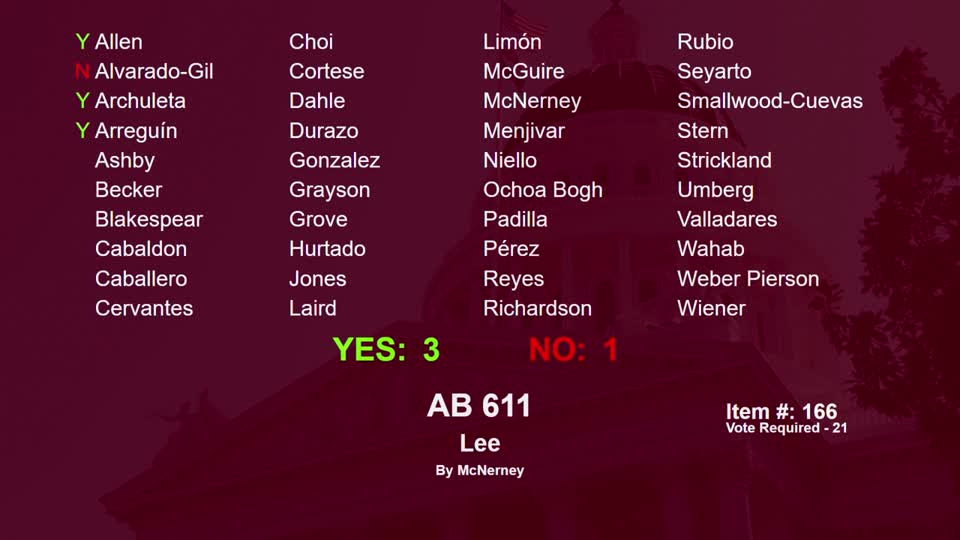
Bill Author

Bill Co-Author(s):