AB 1838: Public contracts: local agencies: responsive bidders.
- Session Year: 2025-2026
- House: Assembly
- Latest Version Date: 2026-09-27
Current Status:
Passed
(2026-09-27: Chaptered by Secretary of State - Chapter 551, Statutes of 2026.)
Introduced
In Committee
Awaiting First Chamber Vote
Passed First Chamber
In Committee
Awaiting Second Chamber Vote
Passed Second Chamber
Enacted
Existing law governs the procurement process for contracts of specified public entities. Existing law requires a local agency that requires that contracts be awarded to the lowest responsible bidder meeting, or making a good faith effort to meet, participation goals for minority, women, or disabled veteran business enterprises to provide in the general conditions under which bids will be received that any person making a bid or offer to perform a contract shall include specified information in that bid or offer.
This bill would require a contractor, as a condition of submitting a bid to a local agency for a public works contract, to fully disclose any history of wage and hour violations, as specified, and provide supporting documentation, as described. The bill would authorize a contractor that fails to provide the required disclosures and supporting materials to be disqualified from the bid. The bill would require a local agency to establish a process for a contractor to appeal their bid disqualification, as specified. By requiring local agencies to establish a bid disqualification appeal process, this bill would impose a state-mandated local program. The bill would exempt public works contracts covered by a project labor agreement, and projects where local agencies require contractors to prequalify as a condition of bidding.
The California Constitution requires the state to reimburse local agencies and school districts for certain costs mandated by the state. Statutory provisions establish procedures for making that reimbursement.
This bill would provide that no reimbursement is required by this act for a specified reason.
Existing law governs the procurement process for contracts of specified public entities. Existing law requires a local agency that requires that contracts be awarded to the lowest responsible bidder meeting, or making a good faith effort to meet, participation goals for minority, women, or disabled veteran business enterprises to provide in the general conditions under which bids will be received that any person making a bid or offer to perform a contract shall include specified information in that bid or offer.
This bill would require a contractor, as a condition of submitting a bid to a local agency, as specified, agency for a public works contract, to fully disclose any history of wage-and-hour violations wage and hour violations, as specified, and provide supporting documentation, as described. The bill would authorize a contractor that fails to provide the required disclosures and supporting materials to be disqualified from the bid.
Existing law governs the procurement process for contracts of specified public entities. Existing law requires a local agency that requires that contracts be awarded to the lowest responsible bidder meeting, or making a good faith effort to meet, participation goals for minority, women, or disabled veteran business enterprises to provide in the general conditions under which bids will be received that any person making a bid or offer to perform a contract shall include specified information in that bid or offer.
This bill would require a contractor, as a condition of submitting a bid to a local agency, as specified, to fully disclose any history of wage-and-hour violations and provide supporting documentation, as described. The bill would authorize a contractor that fails to provide the required disclosures and supporting materials to be disqualified from the bid.
(a)(1)As a condition of submitting a bid to a local agency for a public works contract, a contractor shall fully disclose any history of wage and hour violations and provide supporting documentation, as required by this section.
(2)To the extent applicable, the contractor shall submit all of the following:
(A)A written disclosure of any federal, state, or local wage and hour violations within the past five years, including violations involving unpaid wages, overtime, meal or rest break violations, or misclassification of employees or independent contractors.
(B)(i)Documents demonstrating that each disclosed wage and hour violation has been corrected or otherwise resolved.
(ii)To the extent applicable, the documentation shall include copies of court orders, judgments, or final administrative determinations, along with proof that all fines, penalties, or back wages have been paid in full.
(b)Failure to provide the required disclosures and supporting materials pursuant to this section may result in disqualification of the bid.
(c)A local agency shall establish a process that allows a contractor to appeal a bid disqualification for failure to comply with this section and shall ensure that the process complies with all of the following:
(1)The process shall include a written notification to the contractor regarding the basis for the contractors disqualification and any supporting evidence, including any disclosures submitted to the local agency or adduced as a result of an investigation by the local agency.
(2)The contractor shall be given the opportunity to rebut any evidence used as a basis for disqualification and to present evidence to the local agency that supports why the contractor should be found qualified.
(3)If the contractor elects to not avail themself of this process, the proposed bid disqualification may be adopted without further proceedings.
(d)(1)For purposes of this section, violation means a final judgment, order, or determination by a court or any federal, state, or local administrative agency finding the contractor liable for owed wages or related damages, interest, fines, or penalties.
(2)A contractor shall not be disqualified for any judgment, order, or determination that is under appeal, provided that the contractor has secured the payment of any amount eventually found due through a bond or other appropriate means.
(e)This section shall not apply to either of the following:
(1)A public works contract that is covered by a project labor agreement.
(2)A project for which a local agency requires contractors, as a condition of bidding, to prequalify by disclosing all wage and hour violations within the past five years, including violations regarding unpaid wages, overtime, meal or rest break requirements, or the misclassification of employees or independent contractors.
SEC. 2.No reimbursement is required by this act pursuant to Section 6 of Article XIIIB of the California Constitution because the only costs that may be incurred by a local agency or school district will be incurred because this act creates a new crime or infraction, eliminates a crime or infraction, or changes the penalty for a crime or infraction, within the meaning of Section 17556 of the Government Code, or changes the definition of a crime within the meaning of Section 6 of Article XIIIB of the California Constitution.
(a)(1)As a condition of submitting a bid to a local agency for a public works contract, a contractor shall fully disclose any history of wage and hour violations and provide supporting documentation. documentation, as required by this section.
(2)To the extent applicable, the contractor shall submit all of the following:
(A)A written disclosure of any federal, state, or local wage and hour violations within the past five years, including violations involving unpaid wages, overtime, meal or rest break violations, or misclassification of employees or independent contractors.
(B)(i)Documents demonstrating that each disclosed wage and hour violation has been corrected or otherwise resolved.
(ii)To the extent applicable, the documentation shall include copies of court orders, judgments, or final administrative determinations, along with proof that all fines, penalties, or back wages have been paid in full.
(b)Failure to provide the required disclosures and supporting materials pursuant to this section may result in disqualification of the bid.
(c)A local agency shall establish a process that allows a contractor to appeal a bid disqualification for failure to comply with this section and shall ensure that the process complies with all of the following:
(1)The process shall include a written notification to the contractor regarding the basis for the contractors disqualification and any supporting evidence, including any disclosures submitted to the local agency or adduced as a result of an investigation by the local agency.
(2)The contractor shall be given the opportunity to rebut any evidence used as a basis for disqualification and to present evidence to the public entity local agency that supports why the contractor should be found qualified.
(3)If the contractor elects to not avail themself of this process, the proposed bid disqualification may be adopted without further proceedings.
(d)(1)For purposes of this section, violation means a final judgment, order, or determination by a court or any federal, state, or local administrative agency finding the contractor liable for owed wages or related damages, interest, fines, or penalties.
(2)A contractor shall not be disqualified for any judgment, order, or determination that is under appeal, provided that the contractor has secured the payment of any amount eventually found due through a bond or other appropriate means.
(e)This section shall not apply to either of the following:
(1)A public works contract that is covered by a project labor agreement.
(2)A project for which a local agency requires contractors, as a condition of bidding, to prequalify by disclosing all wage and hour violations within the past five years, including violations regarding unpaid wages, overtime, meal or rest break requirements, or the misclassification of employees or independent contractors.
SEC. 2.No reimbursement is required by this act pursuant to Section 6 of Article XIIIB of the California Constitution because the only costs that may be incurred by a local agency or school district will be incurred because this act creates a new crime or infraction, eliminates a crime or infraction, or changes the penalty for a crime or infraction, within the meaning of Section 17556 of the Government Code, or changes the definition of a crime within the meaning of Section 6 of Article XIIIB of the California Constitution.
(a)(1)As a condition of submitting a bid to a local agency for a public works contract, a contractor shall fully disclose any history of wage and hour violations and provide supporting documentation.
(2)At a minimum, To the extent applicable, the contractor shall submit all of the following:
(A)A written disclosure of any federal, state, or local wage and hour violations within the past five years, including, but not limited to, including violations involving unpaid wages, overtime, meal or rest break violations, or misclassification of employees or independent contractors.
(B)(i)Documents demonstrating that each disclosed wage and hour violation has been corrected or otherwise resolved.
(ii)The To the extent applicable, the documentation shall include, but is not limited to, include copies of court orders, judgments, or final administrative determinations, along with proof that all fines, penalties, or back wages have been paid in full.
(C)A written statement describing all actions taken to prevent future wage and hour violations, which may include revised payroll practices, employee training, compliance monitoring procedures, or implementation of internal audits.(b)Failure to provide the required disclosures and supporting materials pursuant to this section may result in disqualification of the bid.
(c)A local agency shall establish a process that allows a contractor to appeal a bid disqualification for failure to comply with this section and shall ensure that the process complies with all of the following:
(1)The process shall include a written notification to the contractor regarding the basis for the contractors disqualification and any supporting evidence, including any disclosures submitted to the local agency or adduced as a result of an investigation by the local agency.
(2)The contractor shall be given the opportunity to rebut any evidence used as a basis for disqualification and to present evidence to the public entity that supports why the contractor should be found qualified.
(3)If the contractor elects to not avail themself of this process, the proposed bid disqualification may be adopted without further proceedings.
(c)(d)(1)For purposes of this section, violation means a final judgment, order, or determination by a court or any federal, state, or local administrative agency finding the contractor liable for owed wages or related damages, interest, fines, or penalties.
(2)A contractor shall not be disqualified for any judgment, order, or determination that is under appeal, provided that the contractor has secured the payment of any amount eventually found due through a bond or other appropriate means.
(e)This section shall not apply to either of the following:
(1)A public works contract that is covered by a project labor agreement.
(2)A project for which a local agency requires contractors, as a condition of bidding, to prequalify by disclosing all wage and hour violations within the past five years, including violations regarding unpaid wages, overtime, meal or rest break requirements, or the misclassification of employees or independent contractors.
SEC. 2.No reimbursement is required by this act pursuant to Section 6 of Article XIIIB of the California Constitution because the only costs that may be incurred by a local agency or school district will be incurred because this act creates a new crime or infraction, eliminates a crime or infraction, or changes the penalty for a crime or infraction, within the meaning of Section 17556 of the Government Code, or changes the definition of a crime within the meaning of Section 6 of Article XIIIB of the California Constitution.
(a)(1)As a condition of submitting a bid to a local agency pursuant to this chapter, for a public works contract, a contractor shall fully disclose any history of wage-and-hour wage and hour violations and provide supporting documentation.
(2)At a minimum, the contractor shall submit all of the following:
(A)A written disclosure of any federal, state, or local wage-and-hour wage and hour violations within the past five years, including, but not limited to, violations involving unpaid wages, overtime, meal or rest break violations, or misclassification of employees or independent contractors.
(B)(i)Documents demonstrating that each disclosed wage-and-hour wage and hour violation has been corrected or otherwise resolved.
(ii)The documentation shall include, but is not limited to, copies of court orders, judgments, settlement agreements, or final administrative determinations, along with proof that all fines, penalties, or back wages have been paid in full.
(C)A written statement describing all actions taken to prevent future wage-and-hour wage and hour violations, which may include revised payroll practices, employee training, compliance monitoring procedures, or implementation of internal audits.
(b)Failure to provide the required disclosures and supporting materials pursuant to this section may result in disqualification of the bid.
(c)(1)For purposes of this section, violation means a final judgment, order, or determination by a court or any federal, state, or local administrative agency finding the contractor liable for owed wages or related damages, interest, fines, or penalties.
(2)A contractor shall not be disqualified for any judgment, order, or determination that is under appeal, provided that the contractor has secured the payment of any amount eventually found due through a bond or other appropriate means.
(a)(1)As a condition of submitting a bid to a local agency pursuant to this chapter, a contractor shall fully disclose any history of wage-and-hour violations and provide supporting documentation.
(2)At a minimum, the contractor shall submit all of the following:
(A)A written disclosure of any federal, state, or local wage-and-hour violations within the past five years, including, but not limited to, violations involving unpaid wages, overtime, meal or rest break violations, or misclassification of employees or independent contractors.
(B)(i)Documents demonstrating that each disclosed wage-and-hour violation has been corrected or otherwise resolved.
(ii)The documentation shall include, but is not limited to, copies of court orders, judgments, settlement agreements, or final administrative determinations, along with proof that all fines, penalties, or back wages have been paid in full.
(C)A written statement describing all actions taken to prevent future wage-and-hour violations, which may include revised payroll practices, employee training, compliance monitoring procedures, or implementation of internal audits.
(b)Failure to provide the required disclosures and supporting materials pursuant to this section may result in disqualification of the bid.
|
Date
|
Status
|
|---|---|
| Sep 27, 2026 | Chaptered by Secretary of State - Chapter 551, Statutes of 2026. |
| Sep 27, 2026 | Approved by the Governor. |
| Sep 4, 2026 | Enrolled and presented to the Governor at 4 p.m. |
| Aug 27, 2026 | Senate amendments concurred in. To Engrossing and Enrolling. (Ayes 64. Noes 8. Page 6687.). |
| Aug 27, 2026 | Senate amendments concurred in. To Engrossing and Enrolling. (Ayes 64. Noes 8.). |
| Aug 27, 2026 | In Assembly. Concurrence in Senate amendments pending. |
| Aug 26, 2026 | Read third time. Passed. Ordered to the Assembly. (Ayes 31. Noes 9. Page 5912.). |
| Aug 26, 2026 | Read third time. Passed. Ordered to the Assembly. (Ayes 30. Noes 9.). |
| Aug 13, 2026 | From committee: Do pass. (Ayes 6. Noes 1.) (August 13). |
| Aug 13, 2026 | Read second time. Ordered to third reading. |
| Jun 29, 2026 | In committee: Referred to APPR. suspense file. |
| Jun 17, 2026 | From committee: Do pass and re-refer to Com. on APPR. (Ayes 4. Noes 1.) (June 17). Re-referred to Com. on APPR. |
| Jun 11, 2026 | Read second time and amended. Re-referred to Com. on L., P.E. & R. |
| Jun 10, 2026 | From committee: Amend, and do pass as amended and re-refer to Com. on L., P.E. & R. (Ayes 5. Noes 2.) (June 10). |
| Jun 3, 2026 | From committee chair, with author's amendments: Amend, and re-refer to committee. Read second time, amended, and re-referred to Com. on L. GOV. |
| May 6, 2026 | Referred to Coms. on L. GOV. and L., P.E. & R. |
| Apr 20, 2026 | In Senate. Read first time. To Com. on RLS. for assignment. |
| Apr 20, 2026 | Read third time. Passed. Ordered to the Senate. (Ayes 62. Noes 7. Page 4722.) |
| Apr 20, 2026 | Read third time. Passed. Ordered to the Senate. |
| Apr 6, 2026 | Read third time and amended. Ordered to third reading. (Page 4490.) |
| Apr 6, 2026 | Read third time and amended. Ordered to third reading. |
| Mar 23, 2026 | Read second time. Ordered to third reading. |
| Mar 19, 2026 | From committee: Do pass. (Ayes 7. Noes 0.) (March 18). |
| Feb 23, 2026 | Referred to Com. on L. & E. |
| Feb 12, 2026 | From printer. May be heard in committee March 14. |
| Feb 11, 2026 | Read first time. To print. |
|
Date
|
Description
|
Location
|
Votes
|
|
|---|---|---|---|---|
| Aug 27, 2026 | AB 1838 Berman Concurrence in Senate Amendments | Assembly Floor |
Passed |
|
| Aug 26, 2026 | Assembly 3rd Reading AB1838 Berman | Senate Floor |
Passed |
|
| Aug 13, 2026 | Do pass | Senate Standing Committee on Appropriations |
Passed |
|
| Jun 29, 2026 | Placed on suspense file | Senate Standing Committee on Appropriations |
Passed |
|
| Jun 17, 2026 | Do pass, but first be re-referred to the Committee on [Appropriations] | Senate Standing Committee on Labor, Public Employment and Retirement |
Passed |
|
| Jun 10, 2026 | Do pass as amended, but first amend, and re-refer to the Committee on [Labor, Public Employment and Retirement ] | Senate Standing Committee on Local Government |
Passed |
|
| Apr 20, 2026 | AB 1838 Berman Assembly Third Reading | Assembly Floor |
Passed |
|
| Mar 18, 2026 | Do pass. | Assembly Standing Committee on Labor and Employment |
Passed |
This list shows positions taken on this bill by organizations on the date displayed, which is linked to the original source.
Positions by individuals are not included.
|
Organization
|
Position
|
Date
|
|---|---|---|
| American Federation Of State, County And Municipal Employees, Afl-Cio | ** Support | |
| California chapters of the Associated General Contractors | ** Against | |
| California Federation of Labor Unions, Afl-cio | ** Support | |
| California-Nevada Conference Of Operating Engineers | ** Support | |
| California State Association Of Electrical Workers | ** Support | |
| California State Pipe Trades Council | ** Support | |
| County of San Mateo | ** Support | |
| DISTRICT COUNCIL 16, INTERNATIONAL UNION OF PAINTERS AND ALLIED TRADES | ** Support | |
| District Council 36, International Union of Painters and Allied Trades | ** Support | |
| District Council of Ironworkers | ** Support | |
| District Council of Iron Workers | ** Support | |
| El Dorado Irrigation District | ** Support | |
| Filoli | ** Support | |
| SEIU California | ** Support | |
| State Building and Construction Trades Council | ** Support | |
| Teamsters California | ** Support | |
| VALLEY INDUSTRY AND COMMERCE ASSOCIATION | ** Against | |
| Valley Sanitary District | ** Support | |
| Western Electrical Contractors Association | ** Against | |
| Western States Council Sheet Metal, Air, Rail And Transportation | ** Support |
CONCURRENCE IN SENATE AMENDMENTS
CSA1 Bill Id:AB 1838
Author:(Berman)
As Amended Ver:June 11, 2026
Majority vote
SUMMARY
Requires a contractor submitting a bid to a local agency for a public works contract to fully disclose any history of wage and hour violations and provide supporting documentation, as specified.
Senate Amendments
- Make technical and clarifying changes.
- Provide that the documentation required to be submitted by a contractor to a local agency for a public works contract shall be submitted to the extent applicable, rather than at a minimum.
- Delete the requirement that a contractor submit a written statement describing all actions taken to prevent future wage and hour violations, as specified.
- Require a local agency to establish a process that allows a contractor to appeal a bid disqualification for failure to comply with the provisions of this bill, and to ensure that the process complies with specified requirements.
- Provide that the bill′s provisions do not apply to either of the following:
- A public works contract that is covered by a project labor agreement.
- A project for which a local agency requires contractors, as a condition of bidding, to prequalify by disclosing all wage and hour violations within the past five years, including violations regarding unpaid wages, overtime, meal or rest break requirements, or the misclassification of employees or independent contractors.
COMMENTS
Local agencies are required to award most contracts to the lowest responsible bidder; however, local agencies are not always aware of certain information that would assist them in evaluating a contractor′s responsibility. Currently, most local agencies overseeing public works projects determine if a contractor is responsible by verifying the contractor′s public works registration and Contractors State License Board license, since the process to obtain these approvals require contractors to disclose their workers′ compensation coverage, debarment status and other information.
The DIR provides a model questionnaire that local agencies can use to prequalify public works contractors, but it is intended only as a guideline and is optional. The model questionnaire includes questions about a bidder′s five-year history of wage and hour violations.
The author provides examples of localities that already require bidders to report their history violations of wage and hours laws, including the cities of Gilroy and San Jose.
According to the Author
″AB 1838 will help local agencies make informed decisions when awarding contracts by requiring bidders for public contracts to disclose any history of wage-and-hour violations within the last five years. This bill will give local agencies more information to determine if contractors bidding for public contracts are responsible and should be trusted to utilize taxpayer funds. AB 1838 will increase transparency into the use of taxpayer dollars for public works projects, protect workers and fair labor practices, and give greater transparency to local agencies and the public.″
Arguments in Support
The California-Nevada Conference of Operating Engineers and the District Council of Iron Workers, co-sponsors of the measure, state that, ″While existing law prohibits awarding bodies from awarding contracts to debarred or suspended contractors, awarding agencies have few tools available to assess a contractor′s previous history with wage and hour violations, which can and should be a critical component of determining if a contractor can be trusted to properly utilize taxpayer funds.
It′s important to note that various localities including the City of Gilroy and the City of San Jose have internally taken steps to require contractors to disclose in their bid documents whether they have been found to have violated federal, state, or local wage and hour law as a mechanism to assist in determining if a contractor is responsible and can be entrusted with public monies. Further, this information is also included as part of the Department of Industrial Relations pre-qualification model questionnaire that has been developed for localities seeking to pre-qualify contractors for their construction projects. DIRs model questionnaire outlines the importance of wage theft history as an indicator of contractor responsibility.″
Arguments in Opposition
The California Chapters of the Associated General Contractors state that ″for many contractors, particularly small and mid-sized firms, gathering and submitting this information for every local bid would require substantial time and resources. This added paperwork requirement could discourage otherwise qualified contractors from bidding on public projects.
AB 1838 also captures a wide range of wage-and-hour issues, including minor or technical violations that were promptly corrected years ago. Treating all violations the same — regardless of severity, context, or corrective action — unfairly penalizes responsible contractors and exposes them to reputational harm long after issues have been resolved. The bill further authorizes disqualification of a bid if the required disclosures are incomplete or inadvertently missing documentation. Given the breadth and complexity of the required materials, contractors could be excluded from public contracts due to administrative errors rather than actual noncompliance. This creates uncertainty in the bidding process and increases the risk of bid protests and delays in project delivery.″
FISCAL COMMENTS
According to the Senate Appropriations Committee, ″Unknown state-mandated local costs. By requiring local agencies to establish and administer a bid disqualification appeals process, this bill imposes a state-mandated local program. One-time and ongoing local costs related to this requirement are unknown, but potentially significant in the aggregate, and would depend upon the frequency and individual circumstances of contractor appeals. These local costs may be state-reimbursable, subject to a determination by the Commission on State Mandates. (General Fund)″
VOTES:
ASM LABOR AND EMPLOYMENT: 7-0-0
YES: Ortega, Alanis, Chen, Elhawary, Kalra, Lee, Arambula
ASSEMBLY FLOOR: 62-7-11
YES: Addis, Aguiar-Curry, Ahrens, Alanis, Alvarez, Arambula, Ávila Farías, Bains, Bauer-Kahan, Bennett, Berman, Boerner, Bryan, Calderon, Caloza, Carrillo, Chen, Connolly, Davies, Elhawary, Fong, Gabriel, Garcia, Gipson, Jeff Gonzalez, Mark González, Haney, Harabedian, Hart, Irwin, Jackson, Kalra, Krell, Lee, Lowenthal, McKinnor, Muratsuchi, Nguyen, Ortega, Pacheco, Papan, Patel, Pellerin, Petrie-Norris, Quirk-Silva, Ramos, Ransom, Michelle Rodriguez, Rogers, Blanca Rubio, Schiavo, Schultz, Sharp-Collins, Solache, Soria, Stefani, Valencia, Wallis, Wicks, Wilson, Zbur, Rivas
NO: DeMaio, Dixon, Gallagher, Hadwick, Macedo, Sanchez, Tangipa
ABS, ABST OR NV: Bonta, Castillo, Ellis, Flora, Hoover, Johnson, Lackey, Patterson, Celeste Rodriguez, Ta, Ward
UPDATED
VERSION: June 11, 2026
CONSULTANT: Erin Hickey / L. & E. / (916) 319-2091 FN: 0004059
SENATE RULES COMMITTEE Office of Senate Floor Analyses (916) 651-4171 | AB 1838 |
THIRD READING
Bill No: AB 1838
Author: Berman (D)
Amended: 6/11/26 in Senate
Vote: 21
SENATE LOCAL GOVERNMENT COMMITTEE: 5-2, 6/10/26
AYES: Durazo, Arreguín, Ashby, Cervantes, Laird
NOES: Choi, Seyarto
SENATE LABOR, PUB. EMP. & RET. COMMITTEE: 4-1, 6/17/26
AYES: Smallwood-Cuevas, Cortese, Durazo, Laird
NOES: Strickland
SENATE APPROPRIATIONS COMMITTEE: 6-1, 8/13/26
AYES: Cervantes, Cabaldon, Dahle, Grayson, Richardson, Wahab
NOES: Seyarto
ASSEMBLY FLOOR: 62-7, 4/20/26 - See last page for vote
SUBJECT: Public contracts: local agencies: responsive bidders
SOURCE: International Union of Operating Engineers, Cal-Nevada Conference, District Council of Iron Workers
DIGEST:
This bill requires a contractor submitting a bid to a local agency to fully disclose any history of wage and hour violations and provide supporting documentation.
ANALYSIS:
Existing law:
- Establishes the Department of Industrial Relations (DIR), within the Labor and Workforce Development Agency, to foster, promote, and develop the welfare of the wage earners of California, to improve their working conditions, and to advance their opportunities for profitable employment.
- Defines “public works,” for the purposes of regulating public works contracts, as, among other things, construction, alteration, demolition, installation, or repair work done under contract and paid for, in whole or in part, out of public funds.
- Requires that not less than the general prevailing rate of per diem wages be paid to all workers employed on a “public works” project costing over $1,000 dollars and imposes misdemeanor penalties for violation of this requirement.
- Requires contractors and subcontractors to register with the DIR, as specified, to be qualified to bid on, be listed in a bid proposal, or engage in the performance for any public work contract.
- Provides that the Public Contract Code is the basis of contracts between most public entities in the state and their contractors and subcontractors. Applies the Public Contract Code to charter cities in the absence of an express exemption or a city charter provision or ordinance that conflicts with the relevant provision of this code.
- Defines “public works contract,” to mean an agreement for the erection, construction, alteration, repair, or improvement of any public structure, building, road, or other public improvement of any kind.
- Defines a “responsible bidder” to mean a bidder who has demonstrated the attribute of trustworthiness, as well as quality, fitness, capacity, and experience to satisfactorily perform the public works contract.
- Requires, if a public entity awards a contract, that it be awarded to the lowest responsible bidder. If two or more bids are the same and the lowest, the public agency may accept the one it chooses.
- Prohibits a public entity from permitting a contractor or subcontractor who is ineligible to bid or work on, or be awarded, a public works project pursuant to the Labor Code to bid on, be awarded, or perform work as a subcontractor on, a public works project.
- Establishes the Local Agency Public Construction Act which authorizes a public entity to require each prospective bidder for a contract complete and submit to the entity a standardized questionnaire and financial statement in a form specified by the entity, including a complete statement of the prospective bidder’s experience in performing public works. Requires DIR to develop a model questionnaire that may be used by public entities, as specified.
- Requires any public entity requiring prospective bidders to complete and submit questionnaires and financial statements to adopt and apply a uniform system of rating bidders on the basis of the completed questionnaires and financial statements, as specified.
- Requires any public entity requiring prospective bidders on a public works project to prequalify pursuant to 10) to establish a process that will allow prospective bidders to dispute their proposed prequalification rating prior to the closing time for receipt of bids, as specified.
This bill:
- Requires a contractor, as a condition of submitting a bid to a local agency for a public works contract, to fully disclose any history of wage and hour violations and provide supporting documentation;
- Requires, to the extent applicable, the contractor to submit the following:
- A written disclosure of any federal, state or local wage and hour violations within the past five years, including violations involving unpaid wages, overtime, meal or rest break violations, or misclassification of employees or independent contractors; and
- Documents demonstrating that each disclosed wage and hour violation has been corrected or otherwise resolved which can include, copies of court orders, judgements, or final administrative determinations, along with proof that all fines, penalties, or back wages have been paid in full.
- Provides that failure to provide the required disclosures and supporting materials pursuant to these provisions may result in disqualification of the bid;
- Requires a local agency to establish a process that allows a contractor to appeal a bid disqualification for failure to comply with these provisions and to ensure that the process complies with all of the following:
- The process shall include a written notification to the contractor regarding the basis for the contractor’s disqualification and any supporting evidence, including any disclosures submitted to the local agency or adduced as a result of an investigation by the local agency.
- The contractor shall be given the opportunity to rebut any evidence used as a basis for disqualification and to present evidence to the local agency that supports why the contractor should be found qualified.
- If the contractor elects to not avail themself of this process, the proposed bid disqualification may be adopted without further proceedings.
- Provides that these provisions do not apply to either of the following:
- A public works contract that is covered by a project labor agreement,
- A project for which a local agency requires contractors, as a condition of bidding, to prequalify by disclosing all wage and hour violations within the past five years,
- Defines a violation to a mean a final judgment, order, or determination by a court or any federal, state, or local administrative agency finding the contractor liable for owed wages or related damages, interest, fines, or penalties;
- However, specifies that a contractor shall not be disqualified for any judgment, order, or determination that is under appeal, provided that the contractor has secured the payment of any amount eventually found due through a bond or other appropriate means.
Background
Current law generally requires state agencies and local governments to award most public contracts to the lowest responsible bidder. Most local agencies overseeing public works projects determine if a contractor is responsible by verifying the contractor’s public works registration and their Contractors State License Board license. To obtain these approvals and licenses, contractors must disclose their worker’s compensation coverage, barring status and other information.
Public works pre-qualification of contractors. In 1999, the Legislature allowed many public agencies to require licensed contractors that wish to bid for public works jobs to “pre-qualify” for the right to bid (AB 574 (Hertzberg), Chapter 972, Statutes of 1999). AB 574 also directed the Department of Industrial Relations (DIR) to develop a model guideline for rating bidders and draft the standardized questionnaire for public agencies. AB 574 established two different kinds of pre-qualification procedures for public works projects. Specifically, a public agency may either establish:
- A pre-qualification procedure linked to a single project; or
- A procedure in which a contractor may qualify to bid on projects which are put out to bid by that agency for a period of one year after the date of initial pre-qualification.
In 2016, the Labor Commissioner held a series of meetings with key stakeholders to update and enhance the model questionnaire and rating system. The model questionnaire that local agencies can use to prequalify public works contractors is only intended to be a guideline and is optional. The current model questionnaire includes questions about a bidder’s five-year history of wage and hour violations.
Comments
According to the author, “AB 1838 will help local agencies make informed decisions when awarding contracts by requiring bidders for public contracts to disclose any history of wage-and-hour violations within the last five years. This bill will give local agencies more information to determine if contractors bidding for public contracts are responsible and should be trusted to utilize taxpayer funds. AB 1838 will increase transparency into the use of taxpayer dollars for public works projects, protect workers and fair labor practices, and give greater transparency to local agencies and the public.”
Protections. A project labor agreement (PLA) is a pre-hire collective bargaining agreement between two entities and helps establish uniform terms and conditions of employment for workers on a construction project. AB 1838 excludes contracts subject to a PLA. This makes sense because PLAs typically include provisions related to wages, benefits, dispute resolution, and workforce standards and are designed to promote labor stability and ensure compliance with applicable labor standards.
Balancing act. AB 1838 gives local agencies the ability to collect and review disclosures relating to a contractor’s wage and hour violations history, as well as evidence of corrective actions the contractor took over the last five years. While this bill intends to provide local agencies with additional information when evaluating prospective contractors, it may also create new administrative responsibilities for them. Depending on the volume and complexity of the disclosures received, this could result in additional administrative costs. This bill tries to balance these new conditions on contractors submitting bids on public works contracts causing additional due diligence by the local agency while ensuring local agencies have all the information against any potential harm to workers.
FISCAL EFFECT: Appropriation: No Fiscal Com.: Yes Local: Yes
According to Senate Appropriations Committee:
- Unknown state-mandated local costs. By requiring local agencies to establish and administer a bid disqualification appeals process, this bill imposes a state-mandated local program. One-time and ongoing local costs related to this requirement are unknown, but potentially significant in the aggregate, and would depend upon the frequency and individual circumstances of contractor appeals. These local costs may be state-reimbursable, subject to a determination by the Commission on State Mandates. (General Fund)
SUPPORT: (Verified 8/13/26)
International Union of Operating Engineers, Cal-Nevada Conference (Source)
District Council of Iron Workers (Co-Source)
American Federation of State, County and Municipal Employees, Afl-cio
California Federation of Labor Unions, Afl-cio
California State Association of Electrical Workers
California State Pipe Trades Council
County of San Mateo
District Council 16, International Union of Painters and Allied Trades
District Council 36, International Union of Painters and Allied Trades
El Dorado Irrigation District
Filoli
Seiu California
State Building and Construction Trades Council
Teamsters California
Valley Sanitary District
Western States Council Sheet Metal, Air, Rail and Transportation
OPPOSITION: (Verified 8/13/26)
Associated General Contractors, California Chapters
Valley Industry and Commerce Association
Western Electrical Contractors Association
ASSEMBLY FLOOR: 62-7, 4/20/26
AYES: Addis, Aguiar-Curry, Ahrens, Alanis, Alvarez, Arambula, Ávila Farías, Bains, Bauer-Kahan, Bennett, Berman, Boerner, Bryan, Calderon, Caloza, Carrillo, Chen, Connolly, Davies, Elhawary, Fong, Gabriel, Garcia, Gipson, Jeff Gonzalez, Mark González, Haney, Harabedian, Hart, Irwin, Jackson, Kalra, Krell, Lee, Lowenthal, McKinnor, Muratsuchi, Nguyen, Ortega, Pacheco, Papan, Patel, Pellerin, Petrie-Norris, Quirk-Silva, Ramos, Ransom, Michelle Rodriguez, Rogers, Blanca Rubio, Schiavo, Schultz, Sharp-Collins, Solache, Soria, Stefani, Valencia, Wallis, Wicks, Wilson, Zbur, Rivas
NOES: DeMaio, Dixon, Gallagher, Hadwick, Macedo, Sanchez, Tangipa
NO VOTE RECORDED: Bonta, Castillo, Ellis, Flora, Hoover, Johnson, Lackey, Patterson, Celeste Rodriguez, Ta, Ward
Prepared by: Itzel Vargas / L. GOV. / (916) 651-4119
8/14/26 13:26:01
**** END ****
SENATE COMMITTEE ON
Senator Sabrina Cervantes, Chair
2025 - 2026 Regular Session
AB 1838 (Berman) - Public contracts: local agencies: responsive bidders
Version: | Policy Vote: |
Urgency: | Mandate: |
Hearing Date: | Consultant: |
Bill Summary:
AB 1838 would require contractors that submit bids to local agencies for public works contracts to disclose any history of wage and hour violations within the previous five years and provide supporting documentation, as specified. The bill would authorize local agencies to disqualify contractor bids for failure to provide this information, and require local agencies to establish and administer a specified bid disqualification appeal process.
Fiscal Impact:
- Unknown state-mandated local costs. By requiring local agencies to establish and administer a bid disqualification appeals process, this bill imposes a state-mandated local program. One-time and ongoing local costs related to this requirement are unknown, but potentially significant in the aggregate, and would depend upon the frequency and individual circumstances of contractor appeals. These local costs may be state-reimbursable, subject to a determination by the Commission on State Mandates. (General Fund)
Background:
Existing law generally requires public agencies that solicit bids to contract out for public works projects to award contracts to the lowest responsible bidder. All contractors and subcontractors that bid on and engage in the performance of any public works contract must be registered with the Department of Industrial Relations (DIR) by paying an annual fee, and demonstrating proof of workers’ compensation coverage and licensure with the Contractors State License Board (CSLB). In addition, contractors cannot have any delinquent unpaid wage or penalty assessments, or be under federal or state debarment, as specified. Local agencies, when awarding contracts, determine whether a contractor is a “responsible bidder” by verifying their public works registration with DIR and CSLB license.
Existing law, as enacted by AB 574 (Hertzberg, 1999), authorizes cities, counties, and special districts (but not K-12 school districts) to require contractors bidding on public works contracts to “pre-qualify” for the right to bid, which may apply to a single contract or qualify contractors to bid on projects for a one-year period. Local agencies that opt to use this prequalification process must use a standardized form developed by DIR, adopt a uniform system of rating bidders using objective criteria, which may be based on model guidelines developed by DIR, and create a universal appeal procedure that allows a contractor that is denied prequalification to seek a reversal of that decision. DIR released an updated questionnaire in 2018, after meeting and consulting with key stakeholders, that includes questions about a bidder’s five-year history of wage and hour violations.
Proposed Law:
AB 1838 would require a contractor, as a condition of submitting a bid to a local agency for a public works contract, to fully disclose any history of wage and hour violations and provide supporting documentation by submitting the following:
- A written disclosure of any federal, state, or local wage and hour violations within the past five years, as specified.
- Documents demonstrating that each disclosed wage an hour violation has been corrected or otherwise resolved, including copies of any court orders, judgments, or final administrative determinations, and proof that all fines, penalties, or back wages have been paid in full.
The bill would authorize a local agency to disqualify a bid if a contractor fails to provide the required disclosures and supporting materials, but a contractor cannot be disqualified for any judgment, order, or determination that is under appeal if it has secured the payment of any amount eventually found due through a bond or other appropriate means. The bill would also require a local agency to establish a process that allows a contractor to appeal a bid disqualification and ensure the process complies with all of the following:
- The process includes a written notification to the contractor regarding the basis for disqualification and any supporting evidence, including disclosures submitted to the local agency or adduced through an investigation by the local agency.
- The contractor must be provided with the opportunity to rebut any evidence used as the basis for disqualification and present evidence that supports why the contractor should be found qualified.
- The local agency may adopt the proposed bid disqualification without further proceedings if the contractor opts out of the appeal process.
The bill’s requirements would not apply to a public works contract that is covered by a project labor agreement or a project for which the local agency already requires contractors to prequalify by disclosing all wage and hour violations within the past five years, as specified.
Staff Comments:
As noted above, this bill imposes a state-mandated local program by requiring local agencies (including cities, counties, special districts, and school districts) to establish and administer a specified bid disqualification appeal process. Local agencies would incur one-time costs to establish processes and procedures related to the conduct of the notice and appeal requirements, as well as ongoing costs for staff time to administer this process. Costs for several thousand local agencies to comply with these requirements are unknown, but likely significant in the aggregate. These costs may be reimbursable from the state General Fund, to the extent a local agency files a successful claim for reimbursement with the Commission on State Mandates.
-- END --
SENATE COMMITTEE ON LABOR, PUBLIC EMPLOYMENT AND RETIREMENT
Senator Lola Smallwood-Cuevas, Chair
2025 - 2026 Regular
Bill No: AB 1838 Hearing Date: June 17, 2026
Author: | Berman | ||
Version: | June 11, 2026 | ||
Urgency: | No | Fiscal: | Yes |
Consultant: | Emma Bruce | ||
SUBJECT: Public contracts: local agencies: responsive bidders
KEY ISSUE
This bill requires a contractor submitting a bid to a local agency for a public works contract to fully disclose any history of wage and hour violations and provide supporting documentation, as specified.
ANALYSIS
Existing law:
- Establishes the Department of Industrial Relations (DIR), within the Labor and Workforce Development Agency, to foster, promote, and develop the welfare of the wage earners of California, to improve their working conditions, and to advance their opportunities for profitable employment. (Labor Code §50 et seq.)
- Defines “public works,” for the purposes of regulating public works contracts, as, among other things, construction, alteration, demolition, installation, or repair work done under contract and paid for, in whole or in part, out of public funds. (Labor Code §1720(a))
- Requires that not less than the general prevailing rate of per diem wages be paid to all workers employed on a “public works” project costing over $1,000 dollars and imposes misdemeanor penalties for violation of this requirement. (Labor Code §1771)
- Requires contractors and subcontractors to register with the DIR, as specified, to be qualified to bid on, be listed in a bid proposal, or engage in the performance for any public work contract. (Labor Code §1725.5)
- Provides that the Public Contract Code is the basis of contracts between most public entities in the state and their contractors and subcontractors. Applies the Public Contract Code to charter cities in the absence of an express exemption or a city charter provision or ordinance that conflicts with the relevant provision of this code. (Public Contract Code §1100.7)
- Defines “public works contract,” to mean an agreement for the erection, construction, alteration, repair, or improvement of any public structure, building, road, or other public improvement of any kind. (Public Contract Code §1101)
- Defines a “responsible bidder” to mean a bidder who has demonstrated the attribute of trustworthiness, as well as quality, fitness, capacity, and experience to satisfactorily perform the public works contract. (Public Contract Code §1103)
- Requires, if a public entity awards a contract, that it be awarded to the lowest responsible bidder. If two or more bids are the same and the lowest, the public agency may accept the one it chooses. (Public Contract Code §22038)
- Prohibits a public entity from permitting a contractor or subcontractor who is ineligible to bid or work on, or be awarded, a public works project pursuant to the Labor Code to bid on, be awarded, or perform work as a subcontractor on, a public works project. (Public Contract Code §6109)
- Establishes the Local Agency Public Construction Act which authorizes a public entity to require each prospective bidder for a contract complete and submit to the entity a standardized questionnaire and financial statement in a form specified by the entity, including a complete statement of the prospective bidder’s experience in performing public works. Requires DIR to develop a model questionnaire that may be used by public entities, as specified. (Public Contract Code §20100-20101)
- Requires any public entity requiring prospective bidders to complete and submit questionnaires and financial statements to adopt and apply a uniform system of rating bidders on the basis of the completed questionnaires and financial statements, as specified. (Public Contract Code §20101)
- Requires any public entity requiring prospective bidders on a public works project to prequalify pursuant to 10) to establish a process that will allow prospective bidders to dispute their proposed prequalification rating prior to the closing time for receipt of bids, as specified. (Public Contract Code §20101)
This bill:
- Requires as a condition of submitting a bid to a local agency for a public works contract, a contractor to fully disclose any history of wage and hour violations and provide supporting documentation.
- Requires, to the extent applicable, a contractor to submit all of the following:
- A written disclosure of any federal, state, or local wage and hour violations within the past five years, including violations involving unpaid wages, overtime, meal or rest break violations, or misclassification of employees or independent contractors.
- Documents demonstrating that each disclosed wage and hour violation has been corrected or otherwise resolved.
- To the extent applicable, the documentation shall include copies of court orders, judgments, or final administrative determinations, along with proof that all fines, penalties, or back wages have been paid in full.
- Provides that failure to provide the required disclosures and supporting materials pursuant to these provisions may result in disqualification of the bid.
- Requires a local agency to establish a process that allows a contractor to appeal a bid disqualification for failure to comply with these provisions and to ensure that the process complies with all of the following:
- The process shall include a written notification to the contractor regarding the basis for the contractor’s disqualification and any supporting evidence, including any disclosures submitted to the local agency or adduced as a result of an investigation by the local agency.
- The contractor shall be given the opportunity to rebut any evidence used as a basis for disqualification and to present evidence to the local agency that supports why the contractor should be found qualified.
- If the contractor elects to not avail themself of this process, the proposed bid disqualification may be adopted without further proceedings.
- Provides that these provisions do not apply to either of the following:
- A public works contract that is covered by a project labor agreement.
- A project for which a local agency requires contractors, as a condition of bidding, to prequalify by disclosing all wage and hour violations within the past five years, including violations regarding unpaid wages, overtime, meal or rest break requirements, or the misclassification of employees or independent contractors.
- Defines “violation” as a final judgment, order, or determination by a court or any federal, state, or local administrative agency finding the contractor liable for owed wages or related damages, interest, fines, or penalties.
- Specifies that a contractor shall not be disqualified for any judgment, order, or determination that is under appeal, provided that the contractor has secured the payment of any amount eventually found due through a bond or other appropriate means.
COMMENTS
1. Background:
Public Works Contractor Registration
All contractors and subcontractors working on “public works” projects are required to abide by a set of laws that ensure the responsible use of public funds. Among other requirements, this means registering as a contractor with DIR. When enforced consistently and accurately, California’s public works law prevents worker exploitation and promotes the creation of a skilled workforce.
Contractors and subcontractors that bid on or engage in the performance of a public works contract must register with DIR by paying an initial application and an annual renewal fee. Registration covers one fiscal year (July 1- June 30) regardless of the date on which the fee is paid. Currently, the fee is set at $400 and can be renewed for up to three years at a time. Although the Director has discretion to raise the fee above $800. All fees are deposited in the State Public Works Enforcement Fund to be used for enforcement.
To be eligible to register, contractors and subcontractors must have workers’ compensation insurance and be licensed with the Contractors State License Board. They cannot have any delinquent unpaid wage or penalty assessments, nor can they be under federal or state debarment. Bidding or working on a public works project while unregistered will result in a $2,000 penalty and repeat offenders may be disqualified from working in public works for up to 12 months at a time.
In addition to registering with DIR, contractors must obtain a license from the Contractors State License Board. The process to register and obtain a license requires contractors to, among other things, disclose their workers’ compensation coverage and debarment status, certify their work experience, and pass an examination. Local agencies, when awarding contracts, determine whether a contractor is a “responsible bidder” by verifying the contractor’s public works registration and Contractors State Licensing Board license.
Public Works Pre-Qualification
In 1999, the Legislature authorized specified public agencies to require licensed contractors that wish to bid for public works projects to “pre-qualify” for the right to bid. The law applies to all cities, counties, and special districts but does not apply to K-12 school districts. Public agencies that choose to adopt a pre-qualification system must abide by certain requirements, such as:
- Use a standardized questionnaire and financial statement in a form specified by the public entity.
- Adopt and apply a uniform system of rating bidders on objective criteria.
- Create an appeal procedure by which a contractor that is denied pre-qualification may seek a reversal of that determination.
Public agencies can establish two different kinds of pre-qualification procedures for public works projects. The first pre-qualifies a contractor for a single, specific project and the second pre-qualifies contractors to bid on projects that are put out for bid by that agency for a one-year period.
The law that authorized pre-qualification also directed DIR to develop model guidelines for rating bidders and to draft a standardized questionnaire. The initial questionnaire was developed by representatives of public agencies and other interested parties. In 2018, DIR released an updated questionnaire after holding a series of meetings with key stakeholders, representatives of public agencies, unions, contracts, and other interested parties. The model questionnaire includes questions about a bidder’s five-year history of wage and hour violations, as well as apprenticeship violations.
Wage Theft
Although California leads the nation with some of the strongest workplace protections, wage theft remains rampant. Even public works projects with their extensive wage and reporting requirements are not immune. In the 2020-2021 fiscal year, the Public Works Unit within the Labor Commissioner’s Office, tasked with investigating wage and apprenticeship violations, opened 1,964 cases and assessed over $12.6 million in penalties against employers.[1] However, recovering wages is not always easy. A 2024 audit conducted by the State Auditor found that due to an inefficient wage claim process, the Labor Commissioner often takes two years or longer to resolve the wage claims it receives.[2]
The author and sponsor of AB 1838 argue a contractor’s history of wage and hour violations directly impacts whether the contractor can be considered responsible.
This bill
AB 1838 would require, as a condition of submitting a bid to a local agency for a public works contract, a contractor to fully disclose any history of wage and hour violations within the past five years and provide supporting documentation. Local agencies would be authorized, but not required, to disqualify a contractor who fails to provide the required disclosures and supporting materials. For purposes of the bill, “violation” would mean a final judgement, order, or determination by a court or any federal, state, or local administrative agency finding the contractor liable for owed wages or related damages, interest, fines, or penalties.
This bill would also require local agencies to establish a process, as specified, that allows contractors to appeal bid disqualifications. The appeals procedure outlined in this bill closely mirrors the one required under the optional public works pre-qualification process.
Lastly, this bill would exempt public works projects covered by a project labor agreement and projects for which a local agency requires contractors, as a condition of bidding, to prequalify by disclosing all wage and hour violations within the past five years.
2. Need for this bill?
According to the author:
“AB 1838 will help local agencies make informed decisions when awarding contracts by requiring bidders for public contracts to disclose any history of wage-and-hour violations within the last five years. This bill will give local agencies more information to determine if contractors bidding for public contracts are responsible and can be trusted to utilize taxpayer funds. AB 1838 will increase transparency into the use of taxpayer dollars for public works projects, protect workers and fair labor practices, and give greater transparency to local agencies and the public.
The City of San Jose and City of Gilroy have already taken steps to require contractors to disclose in their bid documents whether they have been found to have violated wage-and-hour laws to better determine if a contractor can be considered trusted and responsible.
Additionally, the Department of Industrial Relations has developed a pre-qualification model questionnaire for localities to pre-qualify contractors for construction projects. This questionnaire includes wage-and-hour violation information and outlines the importance of wage theft history as an indicator of contractor responsibility.
AB 1838 will give local agencies a more complete and clearer view of a bidder’s history and trustworthiness while they are determining if a contractor can be deemed a ‘responsible bidder’.”
3. Proponent Arguments:
The sponsors of the measure, the California-Nevada Conference of Operating Engineers and the District Council of Ironworkers argue:
“Under existing law, most public works construction contracts are required to be awarded to the lowest responsible bidder. For purposes of determining if a bidder is responsible or not, existing law defines a responsible bidder as ‘a bidder who has demonstrated the attribute of trustworthiness, as well as quality, fitness, capacity, and experience to satisfactorily perform the public works contract’.
While existing law is clear on what constitutes a responsible bidder, awarding agencies are often not privy to certain information that could be critical in determining if a contractor who is securing taxpayer dollars for a public construction project is actually ‘responsible’. Currently, most awarding bodies determine if a contractor is responsible through verifying their Contractors’ State License Board license and their public works registration, as the process to obtain these critical documents requires contractors to disclose of their workers’ compensation coverage, debarment status and other helpful information. While these are important safeguards, they do not always capture a contractor’s history of labor law violations, which may directly reflect whether a contractor can be considered responsible…
While existing law prohibits awarding bodies from awarding contracts to debarred or suspended contractors, awarding agencies have few tools available to assess a contractor’s previous history with wage and hour violations, which can and should be a critical component of determining if a contractor can be trusted to properly utilize taxpayer funds…
In an effort to protect taxpayer dollars and assist awarding agencies in determining whether contractors bidding for their public construction projects meet the definition of being responsible, AB 1838 (Berman) requires contractors submitting public works construction bids to local awarding agencies to fully disclose wage and hour violations over the previous 5 years as part of their bid. Providing this change will ensure an additional tool that awarding agencies can utilize to assist in ensuring the proper utilization of taxpayer dollars while protecting workers performing critical construction on behalf of an awarding agency.”
4. Opponent Arguments:
The Associated General Contractors of California oppose the measure, arguing:
“[AB 1838] requires contractors to disclose five years of wage-and-hour violations and provide extensive supporting documentation, including court orders, settlements, and proof of payment of penalties or back wages. For many contractors, particularly small and mid-sized firms, gathering and submitting this information for every local bid would require substantial time and resources. This added paperwork requirement could discourage otherwise qualified contractors from bidding on public projects.
AB 1838 also captures a wide range of wage-and-hour issues, including minor or technical violations that were promptly corrected years ago. Treating all violations the same — regardless of severity, context, or corrective action — unfairly penalizes responsible contractors and exposes them to reputational harm long after issues have been resolved. The bill further authorizes disqualification of a bid if the required disclosures are incomplete or inadvertently missing documentation. Given the breadth and complexity of the required materials, contractors could be excluded from public contracts due to administrative errors rather than actual noncompliance. This creates uncertainty in the bidding process and increases the risk of bid protests and delays in project delivery.
Additionally, AB 1838 will lead to inconsistent local enforcement. Each local agency will inevitably interpret the disclosure requirements differently, resulting in uneven application of the law and arbitrary disqualification decisions. Rather than improving compliance, this inconsistency will reduce competition, increase costs for public agencies, and make it more difficult for contractors — especially emerging, diverse, and small businesses — to participate in public works projects.
California’s public contracting system already includes robust mechanisms to ensure contractor responsibility and compliance with labor laws, including Department of Industrial Relations prequalification programs, workforce requirements, labor compliance monitoring, public works registration, and existing debarment authority.”
5. Dual Referral:
The Senate Rules Committee referred this bill to the Senate Local Government Committee, where it passed on a 5-2 vote, and to the Senate Labor, Public Employment and Retirement Committee.
6. Prior Legislation:
SB 909 (Smallwood-Cuevas, 2026) would 1) authorize the Director of DIR to establish and adjust contractor registration and renewal fees of up to $1000, as specified; 2) increase penalties for various public works violations; and 3) direct 50% of penalties recovered through a civil wage and penalty assessment to the State Public Works Enforcement Fund. This bill is pending in the Assembly Appropriations Committee.
SB 458 (Gonzalez, 2023) would have required local agencies to publish a database of their contracts online, as specified. This bill died in the Senate Governance and Finance Committee.
AB 2844 (Bloom, Chapter 581, Statutes of 2016) required a person who submits a bid or proposal to enter into, or renew, a contract of $100,000 or more with a state agency to certify the following, under penalty of perjury: 1) they are in compliance with the California Fair Employment and Housing Act and the Unruh Civil Rights Act and, 2) any policy that they have against any sovereign nation or peoples recognized by the government of the United States is not used to discriminate in violation of the FEHA or the Unruh Act.
AB 574 (Hertzberg, Chapter 972, Statutes of 1999) among other things, defined the term “responsible bidder,” authorized public entities to require prospective bidders to complete questionnaires with specified information, and required DIR to develop a model questionnaire that public entities may use.
SUPPORT
California-Nevada Conference of Operating Engineers (Co-sponsor)
District Council of Ironworkers (Co-sponsor)
American Federation of State, County and Municipal Employees
California Federation of Labor Unions
California State Association of Electrical Workers
California State Pipe Trades Council
El Dorado Irrigation District
Filoli
International Union of Painters and Allied Trades, District Council 16
International Union of Painters and Allied Trades, District Council 36
SEIU California
State Building and Construction Trades Council of California
Teamsters California
Valley Sanitary District
Western States Council Sheet Metal, Air, Rail and Transportation
OPPOSITION
Associated General Contractors of California
Western Electrical Contractors Association
-- END --
The Bureau of Field Enforcement, Fiscal Year Report. 2020-2021. California Labor Commissioner’s Office. p.12. https://www.dir.ca.gov/dlse/BOFE_LegReport2021.pdf ↑
Auditor of the State of California. The California Labor Commissioner’s Office: Inadequate Staffing and Poor Oversight Have Weakened Protections for Workers. Report 2023-104. May 2024. https://www.auditor.ca.gov/wp-content/uploads/2024/05/2023-104-Report.pdf ↑
SENATE COMMITTEE ON LOCAL GOVERNMENT
Senator María Elena Durazo, Chair
2025 - 2026 Regular
Bill No: | AB 1838 | Hearing Date: | 6/10/26 |
Author: | Berman | Fiscal: | Yes |
Version: | 6/3/26 | Consultant: | Vargas |
Public contracts: local agencies: responsive bidders
Requires a contractor submitting a bid to a local agency to fully disclose any history of wage and hour violations and provide supporting documentation.
Background
Current law generally requires state agencies and local governments to award most public contracts to the lowest responsible bidder. Most local agencies overseeing public works projects determine if a contractor is responsible by verifying the contractor’s public works registration and their Contractors State License Board license. To obtain these approvals and licenses, contractors must disclose their worker’s compensation coverage, barring status and other information.
Public works pre-qualification of contractors. In 1999, the Legislature allowed many public agencies to require licensed contractors that wish to bid for public works jobs to “pre-qualify” for the right to bid (AB 574, Hertzberg). AB 574 also directed the Department of Industrial Relations (DIR) to develop a model guideline for rating bidders and draft the standardized questionnaire for public agencies. AB 574 established two different kinds of pre-qualification procedures for public works projects. Specifically, a public agency may either establish:
- A pre-qualification procedure linked to a single project; or
- A procedure in which a contractor may qualify to bid on projects which are put out to bid by that agency for a period of one year after the date of initial pre-qualification.
In 2016, the Labor Commissioner held a series of meetings with key stakeholders to update and enhance the model questionnaire and rating system. The model questionnaire that local agencies can use to prequalify public works contractors is only intended to be a guideline and is optional. The current model questionnaire includes questions about a bidder’s five-year history of wage and hour violations.
The International Union of Operating Engineers and the District Council of Iron Workers want contractors to disclose any wage and hour violations as a condition of submitting a bid to a local agency for a public works contract.
Proposed Law
Assembly Bill 1838 requires a contractor, as a condition of submitting a bid to a local agency for a public works contract, to fully disclose any history of wage and hour violations and provide supporting documentation.
To the extent applicable, the contractor must submit the following:
- A written disclosure of any federal, state or local wage and hour violations within the past five years, including violations involving unpaid wages, overtime, meal or rest break violations, or misclassification of employees or independent contractors; and
- Documents demonstrating that each disclosed wage and hour violation has been corrected or otherwise resolved which can include, copies of court orders, judgements, or final administrative determinations, along with proof that all fines, penalties, or back wages have been paid in full.
The bill also states that a contractor that fails to provide the required disclosures and supporting materials could face disqualification of their bid. However, the local agency must establish a process that allows a contractor to appeal a bid disqualification. The process must:
- Include a written notification to the contractor from the local agency regarding the basis for the contractor’s disqualification and any supporting evidence, as specified; and
- Allow the contractor to rebut any evidence used as a basis for disqualification and to present evidence to the public entity that supports why the contractor should be found qualified.
If the contractor elects to not avail themselves of this process, the proposed bid disqualification may be adopted without further proceedings.
AB 1838 defines a violation to a mean a final judgment, order, or determination by a court or any federal, state, or local administrative agency finding the contractor liable for owed wages or related damages, interest, fines, or penalties. However, a contractor cannot be disqualified while any judgement, order, or determination is under appeal, as long as the contractor has secured the payment of any amount eventually found due through a bond or other appropriate means.
The bill’s requirements do not apply to a public works contract that is covered by a project labor agreement or a project for which the local agency already requires contractors to prequalify by disclosing all wage and hour violations within the past five years.
Comments
1. Purpose of the bill. According to the author, “AB 1838 will help local agencies make informed decisions when awarding contracts by requiring bidders for public contracts to disclose any history of wage-and-hour violations within the last five years. This bill will give local agencies more information to determine if contractors bidding for public contracts are responsible and should be trusted to utilize taxpayer funds. AB 1838 will increase transparency into the use of taxpayer dollars for public works projects, protect workers and fair labor practices, and give greater transparency to local agencies and the public.”
2. Protections. A project labor agreement (PLA) is a pre-hire collective bargaining agreement between two entities and helps establish uniform terms and conditions of employment for workers on a construction project. AB 1838 excludes contracts subject to a PLA. This makes sense because PLAs typically include provisions related to wages, benefits, dispute resolution, and workforce standards and are designed to promote labor stability and ensure compliance with applicable labor standards.
3. Balancing act. AB 1838 gives local agencies the ability to collect and review disclosures relating to a contractor’s wage and hour violations history, as well as evidence of corrective actions the contractor took over the last five years. While the bill intends to provide local agencies with additional information when evaluating prospective contractors, it may also create new administrative responsibilities for them. Depending on the volume and complexity of the disclosures received, this could result in additional administrative costs. The bill tries to balance these new conditions on contractors submitting bids on public works contracts causing additional due diligence by the local agency while ensuring local agencies have all the information against any potential harm to workers.
4. Let’s get technical. Committee staff suggest the following technical amendments to AB 1838:
- Specify the “supporting documentation” that a contractor must provide as a condition of submitting a bid to mean the documentation required by the bill; and
- Replace the term “public entity” with local agency to keep it consistent throughout the bill.
5. Coming and going. The Senate Rules Committee has ordered a double referral of AB 1838: first to the Committee on Local Government to hear issues related to local government powers, and second to the Committee on Labor, Public Employment, and Retirement.
Assembly Actions
Assembly Labor and Employment: 7-0
Assembly Floor: 62-7
Support and Opposition
(6/5/2026)
Support: International Union of Operating Engineers, Cal-nevada Conference (Sponsor)
District Council of Iron Workers (Co-Sponsor)
American Federation of State, County and Municipal Employees, Afl-cio
California Federation of Labor Unions, Afl-cio
California State Association of Electrical Workers
California State Pipe Trades Council
County of San Mateo
District Council 16, International Union of Painters and Allied Trades
District Council 36, International Union of Painters and Allied Trades
El Dorado Irrigation District
Filoli
Seiu California
State Building and Construction Trades Council
Teamsters California
Valley Sanitary District
Western States Council Sheet Metal, Air, Rail and Transportation
Opposition: Associated General Contractors, California Chapters
Western Electrical Contractors Association
-- END --
ASSEMBLY THIRD READING
ATR Bill Id:AB 1838
Author:(Berman)
As Amended Ver:April 6, 2026
Majority vote
SUMMARY
Requires a contractor submitting a bid to a local agency for a public works contract to fully disclose any history of wage and hour violations and provide supporting documentation, as specified.
Major Provisions
- Requires, as a condition of submitting a bid to a local agency for a public works contract, a contractor to fully disclose any history of wage and hour violations and provide supporting documentation.
- Requires, at a minimum, the contractor to submit all of the following:
- A written disclosure of any federal, state, or local wage and hour violations within the past five years, including, but not limited to, violations involving unpaid wages, overtime, meal or rest break violations, or misclassification of employees or independent contractors.
- Documents demonstrating that each disclosed wage and hour violation has been corrected or otherwise resolved.
- The documentation shall include, but is not limited to, copies of court orders, judgments or final administrative determinations, along with proof that all fines, penalties, or back wages have been paid in full.
- A written statement describing all actions taken to prevent future wage and hour violations, which may include revised payroll practices, employee training, compliance monitoring procedures, or implementation of internal audits.
- Provides that failure to provide the above required disclosures and supporting materials may result in disqualification of the bid.
- Defines "violation" to mean a final judgment, order, or determination by a court or any federal, state, or local administrative agency finding the contractor liable for owed wages or related damages, interest, fines, or penalties.
- Provides that a contractor shall not be disqualified for any judgment, order, or determination that is under appeal, provided that the contractor has secured the payment of any amount eventually found due through a bond or other appropriate means.
COMMENTS
Local agencies are required to award most contracts to the lowest responsible bidder; however, local agencies are not always aware of certain information that would assist them in evaluating a contractor's responsibility. Currently, most local agencies overseeing public works projects determine if a contractor is responsible by verifying the contractor's public works registration and Contractors State License Board license, since the process to obtain these approvals require contractors to disclose their workers' compensation coverage, debarment status and other information.
The Department of Industrial Relations (DIR) provides a model questionnaire that local agencies can use to prequalify public works contractors, but it is intended only as a guideline and is optional. The model questionnaire includes questions about a bidder's five-year history of wage and hour violations.
The author provides examples of localities that already require bidders to report their history violations of wage and hours laws, including the cities of Gilroy and San Jose.
According to the Author
"AB 1838 will help local agencies make informed decisions when awarding contracts by requiring bidders for public contracts to disclose any history of wage-and-hour violations within the last five years. This bill will give local agencies more information to determine if contractors bidding for public contracts are responsible and should be trusted to utilize taxpayer funds. AB 1838 will increase transparency into the use of taxpayer dollars for public works projects, protect workers and fair labor practices, and give greater transparency to local agencies and the public."
The author adds that "the construction industry is very diverse and includes sizeable representation of historically underserved populations. This bill promotes equity by increasing transparency in the use of taxpayer dollars and ensures that local agencies are aware of the labor practices of their contractors. Requiring disclosure of previous wage-and-hour violations while bidding for public contracts will ensure that taxpayer money is actually going to a responsible bidder with fair labor practices. Further, this bill encourages all contractors to improve labor practices by requiring documentation of how past violations have been addressed and how they will prevent future violations. By ensuring that local agencies have access to this information, this bill would protect all construction workers, including those from historically marginalized groups."
Arguments in Support
The California-Nevada Conference of Operating Engineers and the District Council of Iron Workers, co-sponsors of the measure, state that, "while existing law prohibits awarding bodies from awarding contracts to debarred or suspended contractors, awarding agencies have few tools available to assess a contractor's previous history with wage and hour violations, which can and should be a critical component of determining if a contractor can be trusted to properly utilize taxpayer funds.
It's important to note that various localities including the City of Gilroy and the City of San Jose have internally taken steps to require contractors to disclose in their bid documents whether they have been found to have violated federal, state, or local wage and hours law as a mechanism to assist in determining if a contractor is responsible and can be entrusted with public monies.
Further, this information is also included as part of the Department of Industrial Relations pre-qualification model questionnaire that has been developed for localities seeking to pre-qualify contractors for their construction projects. DIRs model questionnaire outlines the importance of wage theft history as an indicator of contractor responsibility."
Arguments in Opposition
The Western Electrical Contractors Association is opposed unless amended and states that "AB 1838 as currently drafted would establish a disclosure requirement that applies unevenly across the construction industry, while failing to address well-known enforcement gaps that exist on certain projects performed under project labor agreements (PLAs)…contractors working on non-PLA projects will be required to disclose enforcement actions that are publicly documented, while contractors working under PLAs may resolve similar violations privately through grievance procedures that produce no public record at all. In other words, AB 1838 risks creating a disclosure regime that penalizes transparency while shielding violations resolved through private labor-management arrangements. If the Legislature's goal is meaningful transparency in public contracting, the disclosure requirements must apply equally regardless of how a violation is resolved.
To correct this imbalance, WECA respectfully requests the bill be amended to require disclosure of wage-and-hour violations resolved through private grievance or arbitration procedures, including those arising under collective bargaining agreements or project labor agreements."
FISCAL COMMENTS
None.
VOTES
ASM LABOR AND EMPLOYMENT: 7-0-0
YES: Ortega, Alanis, Chen, Elhawary, Kalra, Lee, Arambula
UPDATED
VERSION: February 11, 2026
CONSULTANT: Erin Hickey / L. & E. / (916) 319-2091 FN: 0002331
ASSEMBLY THIRD READING
ATR Bill Id:AB 1838
Author:(Berman)
As Introduced Ver:February 11, 2026
Majority vote
SUMMARY
Requires a contractor submitting a bid to a local agency to fully disclose any history of wage-and-hour violations and provide supporting documentation, as specified.
Major Provisions
- Requires, as a condition of submitting a bid to a local agency, a contractor to fully disclose any history of wage-and-hour violations and provide supporting documentation.
- Requires, at a minimum, the contractor to submit all of the following:
- A written disclosure of any federal, state, or local wage-and-hour violations within the past five years, including, but not limited to, violations involving unpaid wages, overtime, meal or rest break violations, or misclassification of employees or independent contractors.
- Documents demonstrating that each disclosed wage-and-hour violation has been corrected or otherwise resolved.
- The documentation shall include, but is not limited to, copies of court orders, judgments, settlement agreements, or final administrative determinations, along with proof that all fines, penalties, or back wages have been paid in full.
- A written statement describing all actions taken to prevent future wage-and-hour violations, which may include revised payroll practices, employee training, compliance monitoring procedures, or implementation of internal audits.
- Provides that failure to provide the above required disclosures and supporting materials may result in disqualification of the bid.
COMMENTS
Local agencies are required to award most contracts to the lowest responsible bidder; however, local agencies are not always aware of certain information that would assist them in evaluating a contractor's responsibility. Currently, most local agencies overseeing public works projects determine if a contractor is responsible by verifying the contractor's public works registration and Contractors State License Board license, since the process to obtain these approvals require contractors to disclose their workers' compensation coverage, debarment status and other information.
The Department of Industrial Relations (DIR) provides a model questionnaire that local agencies can use to prequalify public works contractors, but it is intended only as a guideline and is optional. The model questionnaire includes questions about a bidder's five-year history of wage and hour violations.
The author provides examples of localities that already require bidders to report their history violations of wage and hours laws, including the cities of Gilroy and San Jose.
According to the Author
"AB 1838 will help local agencies make informed decisions when awarding contracts by requiring bidders for public contracts to disclose any history of wage-and-hour violations within the last five years. This bill will give local agencies more information to determine if contractors bidding for public contracts are responsible and should be trusted to utilize taxpayer funds. AB 1838 will increase transparency into the use of taxpayer dollars for public works projects, protect workers and fair labor practices, and give greater transparency to local agencies and the public."
The author adds that "the construction industry is very diverse and includes sizeable representation of historically underserved populations. This bill promotes equity by increasing transparency in the use of taxpayer dollars and ensures that local agencies are aware of the labor practices of their contractors. Requiring disclosure of previous wage-and-hour violations while bidding for public contracts will ensure that taxpayer money is actually going to a responsible bidder with fair labor practices. Further, this bill encourages all contractors to improve labor practices by requiring documentation of how past violations have been addressed and how they will prevent future violations. By ensuring that local agencies have access to this information, this bill would protect all construction workers, including those from historically marginalized groups."
Arguments in Support
The California-Nevada Conference of Operating Engineers and the District Council of Iron Workers, co-sponsors of the measure, state that, "while existing law prohibits awarding bodies from awarding contracts to debarred or suspended contractors, awarding agencies have few tools available to assess a contractor's previous history with wage and hour violations, which can and should be a critical component of determining if a contractor can be trusted to properly utilize taxpayer funds.
It's important to note that various localities including the City of Gilroy and the City of San Jose have internally taken steps to require contractors to disclose in their bid documents whether they have been found to have violated federal, state, or local wage and hours law as a mechanism to assist in determining if a contractor is responsible and can be entrusted with public monies.
Further, this information is also included as part of the Department of Industrial Relations pre-qualification model questionnaire that has been developed for localities seeking to pre-qualify contractors for their construction projects. DIRs model questionnaire outlines the importance of wage theft history as an indicator of contractor responsibility."
Arguments in Opposition
The Western Electrical Contractors Association is opposed unless amended and states that "AB 1838 as currently drafted would establish a disclosure requirement that applies unevenly across the construction industry, while failing to address well-known enforcement gaps that exist on certain projects performed under project labor agreements (PLAs)…contractors working on non-PLA projects will be required to disclose enforcement actions that are publicly documented, while contractors working under PLAs may resolve similar violations privately through grievance procedures that produce no public record at all. In other words, AB 1838 risks creating a disclosure regime that penalizes transparency while shielding violations resolved through private labor-management arrangements. If the Legislature's goal is meaningful transparency in public contracting, the disclosure requirements must apply equally regardless of how a violation is resolved.
To correct this imbalance, WECA respectfully requests the bill be amended to require disclosure of wage-and-hour violations resolved through private grievance or arbitration procedures, including those arising under collective bargaining agreements or project labor agreements."
FISCAL COMMENTS
None.
VOTES
ASM LABOR AND EMPLOYMENT: 7-0-0
YES: Ortega, Alanis, Chen, Elhawary, Kalra, Lee, Arambula
UPDATED
VERSION: February 11, 2026
CONSULTANT: Erin Hickey / L. & E. / (916)319-2091 FN: 0002314
Date of Hearing: March 18, 2026
ASSEMBLY COMMITTEE ON LABOR AND EMPLOYMENT
Liz Ortega, Chair
ABPCA Bill Id:AB 1838 (
Author:Berman) – As Introduced Ver:February 11, 2026
SUBJECT: Public contracts: local agencies: responsive bidders
SUMMARY: Requires a contractor submitting a bid to a local agency to fully disclose any history of wage-and-hour violations and provide supporting documentation, as specified. Specifically, this bill:
- Requires, as a condition of submitting a bid to a local agency, a contractor to fully disclose any history of wage-and-hour violations and provide supporting documentation.
- Requires, at a minimum, the contractor to submit all of the following:
- A written disclosure of any federal, state, or local wage-and-hour violations within the past five years, including, but not limited to, violations involving unpaid wages, overtime, meal or rest break violations, or misclassification of employees or independent contractors.
- Documents demonstrating that each disclosed wage-and-hour violation has been corrected or otherwise resolved.
- The documentation shall include, but is not limited to, copies of court orders, judgments, settlement agreements, or final administrative determinations, along with proof that all fines, penalties, or back wages have been paid in full.
- A written statement describing all actions taken to prevent future wage-and-hour violations, which may include revised payroll practices, employee training, compliance monitoring procedures, or implementation of internal audits.
- Provides that failure to provide the above required disclosures and supporting materials may result in disqualification of the bid.
EXISTING LAW:
- Establishes the Department of Industrial Relations (DIR), within the Labor and Workforce Development Agency, to foster, promote, and develop the welfare of the wage earners of California, to improve their working conditions, and to advance their opportunities for profitable employment. Labor Code § 50 et seq.
- Establishes that the Public Contract Code is the basis of contracts between most public entities in the state and their contractors and subcontractors. Applies the Public Contract Code to charter cities in the absence of an express exemption or a city charter provision or ordinance that conflicts with the relevant provision of this code. Public Contract Code § 1100.7.
- Defines “public entity” to mean the state, county, city, city and county, district, public authority, public agency, municipal corporation, or any other political subdivision or public corporation in the state. Public Contract Code § 1100.
- Defines “public works contract,” to mean an agreement for the erection, construction, alteration, repair, or improvement of any public structure, building, road, or other public improvement of any kind. Public Contract Code § 1101.
- Requires, if a public entity awards a contract, that it be awarded to the lowest responsible bidder. If two or more bids are the same and the lowest, the public agency may accept the one it chooses. Public Contract Code § 22038.
- Defines a “responsible bidder” to mean a bidder who has demonstrated the attribute of trustworthiness, as well as quality, fitness, capacity, and experience to satisfactorily perform the public works contract. Public Contract Code § 1103.
- Prohibits a public entity from permitting a contractor or subcontractor who is ineligible to bid or work on, or be awarded, a public works project pursuant to the Labor Code to bid on, be awarded, or perform work as a subcontractor on, a public works project. Public Contract Code § 6109.
- Requires a contractor to be registered to be qualified to bid on, be listed in a bid proposal, or engage in the performance of any public work contract. Includes in the requirements for registration, that the contractor provide certain information, including that the contractor does not have any delinquent liability to an employee or the state for any assessment of back wages or related damages, interest, fines, or penalties pursuant to any final judgment, order, or determination by a court or any federal, state, or local administrative agency, including a confirmed arbitration award. Provides that the contractor shall not be disqualified for any judgment, order, or determination that is under appeal, provided that the contractor has secured the payment of any amount eventually found due through a bond or other appropriate means. Labor Code § 1725.5.
- Establishes the Local Agency Public Construction Act and authorizes a public entity subject to the Act to require that each prospective bidder for a contract complete and submit to the entity a standardized questionnaire and financial statement in a form specified by the entity, including a complete statement of the prospective bidder’s experience in performing public works. Requires the DIR to create a model questionnaire for public entities to use. Public Contract Code § 20100-20101.
FISCAL EFFECT: Unknown
COMMENTS: Local agencies are required to award most contracts to the lowest responsible bidder; however, local agencies are not always aware of certain information that would assist them in evaluating a contractor’s responsibility. Currently, most local agencies overseeing public works projects determine if a contractor is responsible by verifying the contractor’s public works registration and Contractors State License Board license, since the process to obtain these approvals require contractors to disclose their workers’ compensation coverage, debarment status and other information.
The DIR provides a model questionnaire that local agencies can use to prequalify public works contractors, but it is intended only as a guideline and is optional. The model questionnaire includes questions about a bidder’s five-year history of wage and hour violations.
According to the author, “AB 1838 will help local agencies make informed decisions when awarding contracts by requiring bidders for public contracts to disclose any history of wage-and-hour violations within the last five years. This bill will give local agencies more information to determine if contractors bidding for public contracts are responsible and should be trusted to utilize taxpayer funds. AB 1838 will increase transparency into the use of taxpayer dollars for public works projects, protect workers and fair labor practices, and give greater transparency to local agencies and the public.”
The author adds that “the construction industry is very diverse and includes sizeable representation of historically underserved populations. This bill promotes equity by increasing transparency in the use of taxpayer dollars and ensures that local agencies are aware of the labor practices of their contractors. Requiring disclosure of previous wage-and-hour violations while bidding for public contracts will ensure that taxpayer money is actually going to a responsible bidder with fair labor practices. Further, this bill encourages all contractors to improve labor practices by requiring documentation of how past violations have been addressed and how they will prevent future violations. By ensuring that local agencies have access to this information, this bill would protect all construction workers, including those from historically marginalized groups.”
The author provides examples of localities that already require bidders to report their history violations of wage and hours laws, including the cities of Gilroy and San Jose.
Committee Comments
As written, the bill’s language does not apply specifically to public works projects, although that is seemingly the author’s intent. Additionally, clarity is needed on what constitutes a “violation” for purposes of this bill. Lastly, since settlement agreements are often confidential, they likely should be removed from the list of required documentation, or the language should clarify that only non-confidential agreements must be shared.
To address these issues, Committee staff recommend that the author consider amending the bill in the following ways in the future:
2011. (a) (1) As a condition of submitting a bid to a local agency for a public works contract pursuant to this chapter, a contractor shall fully disclose any history of wage-and-hour violations and provide supporting documentation.
(2) At a minimum, the contractor shall submit all of the following:
(A) A written disclosure of any federal, state, or local wage-and-hour violations within the past five years, including, but not limited to, violations involving unpaid wages, overtime, meal or rest break violations, or misclassification of employees or independent contractors.
(B) (i) Documents demonstrating that each disclosed wage-and-hour violation has been corrected or otherwise resolved.
(ii) The documentation shall include, but is not limited to, copies of court orders, judgments, settlement agreements, or final administrative determinations, along with proof that all fines, penalties, or back wages have been paid in full.
(C) A written statement describing all actions taken to prevent future wage-and-hour violations, which may include revised payroll practices, employee training, compliance monitoring procedures, or implementation of internal audits.
(b) Failure to provide the required disclosures and supporting materials pursuant to this section may result in disqualification of the bid.
(c) (1) For purposes of this section, “violation” means a final judgment, order, or determination by a court or any federal, state, or local administrative agency finding the contractor liable for owed wages or related damages, interest, fines, or penalties.
(2) A contractor shall not be disqualified for any judgment, order or determination that is under appeal, provided that the contractor has secured the payment of any amount eventually found due through a bond or other appropriate means.
Arguments in Support
The California-Nevada Conference of Operating Engineers and the District Council of Iron Workers, co-sponsors of the measure, state that, “while existing law prohibits awarding bodies from awarding contracts to debarred or suspended contractors, awarding agencies have few tools available to assess a contractor’s previous history with wage and hour violations, which can and should be a critical component of determining if a contractor can be trusted to properly utilize taxpayer funds.
It’s important to note that various localities including the City of Gilroy and the City of San Jose have internally taken steps to require contractors to disclose in their bid documents whether they have been found to have violated federal, state, or local wage and hours law as a mechanism to assist in determining if a contractor is responsible and can be entrusted with public monies.
Further, this information is also included as part of the Department of Industrial Relations pre-qualification model questionnaire that has been developed for localities seeking to pre-qualify contractors for their construction projects. DIRs model questionnaire outlines the importance of wage theft history as an indicator of contractor responsibility.”
Arguments in Opposition
The Western Electrical Contractors Association is opposed unless amended and states that “AB 1838 as currently drafted would establish a disclosure requirement that applies unevenly across the construction industry, while failing to address well-known enforcement gaps that exist on certain projects performed under project labor agreements (PLAs)…contractors working on non-PLA projects will be required to disclose enforcement actions that are publicly documented, while contractors working under PLAs may resolve similar violations privately through grievance procedures that produce no public record at all. In other words, AB 1838 risks creating a disclosure regime that penalizes transparency while shielding violations resolved through private labor-management arrangements. If the Legislature’s goal is meaningful transparency in public contracting, the disclosure requirements must apply equally regardless of how a violation is resolved.
To correct this imbalance, WECA respectfully requests the bill be amended to require disclosure of wage-and-hour violations resolved through private grievance or arbitration procedures, including those arising under collective bargaining agreements or project labor agreements.”
Prior Legislation
SB 458 (Gonzalez) of 2023 would have required local agencies to publish a database of their contracts online. Died in the Senate Governance and Finance Committee.
AB 2762 (Carrillo), Chapter 654, Statutes of 2018, authorized, effective January 1, 2019, through January 1, 2024, a specified local agency to establish a disabled veteran business preference and a social enterprise preference for use in a public contract awarded to the lowest responsible bidder.
AB 2844 (Bloom), Chapter 581, Statutes of 2016, required a person who submits a bid or proposal to enter into, or renew, a contract of $100,000 or more with a state agency to certify the following, under penalty of perjury: 1) They are in compliance with the California Fair Employment and Housing Act (FEHA) and the Unruh Civil Rights Act (Unruh Act) and, 2) Any policy that they have against any sovereign nation or peoples recognized by the government of the United States, including, but not limited to, the nation and people of Israel, is not used to discriminate in violation of the FEHA or the Unruh Act.
REGISTERED SUPPORT / OPPOSITION:
Support
International Union of Operating Engineers, California-Nevada Conference (Sponsor)
American Federation of State, County and Municipal Employees, AFL-CIO
California Federation of Labor Unions, AFL-CIO
California State Association of Electrical Workers
California State Council of Service Employees International Union
California State Pipe Trades Council
District Council 16, International Union of Painters and Allied Trades
State Building & Construction Trades Council of California
Teamsters California
Western States Council Sheet Metal, Air, Rail and Transportation
Opposition
Western Electrical Contractors Association (Oppose Unless Amended)
Analysis Prepared by: Erin Hickey / L. & E. /
Discussed in Hearing
 1MIN
Assembly Floor
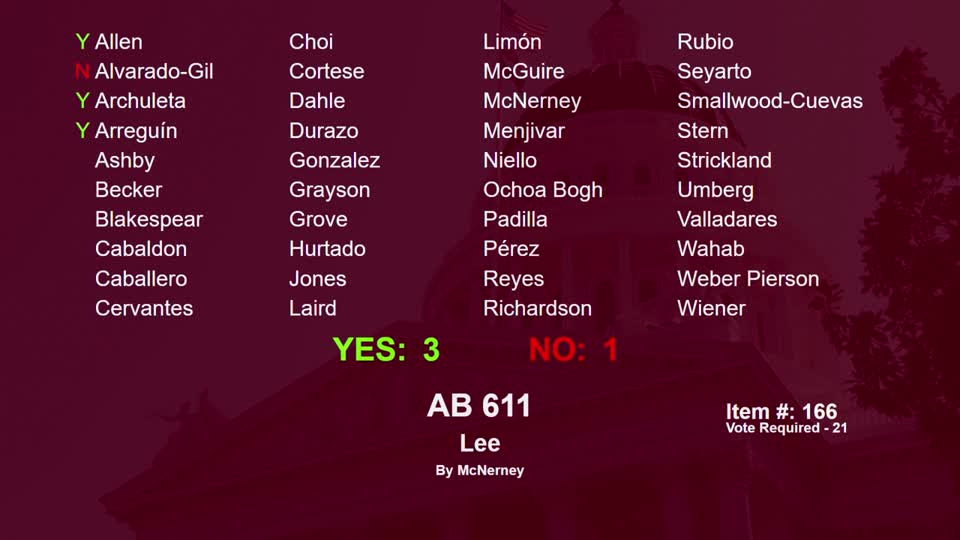 2MIN
Senate Floor
 6MIN
Senate Standing Committee on Labor, Public Employment and Retirement
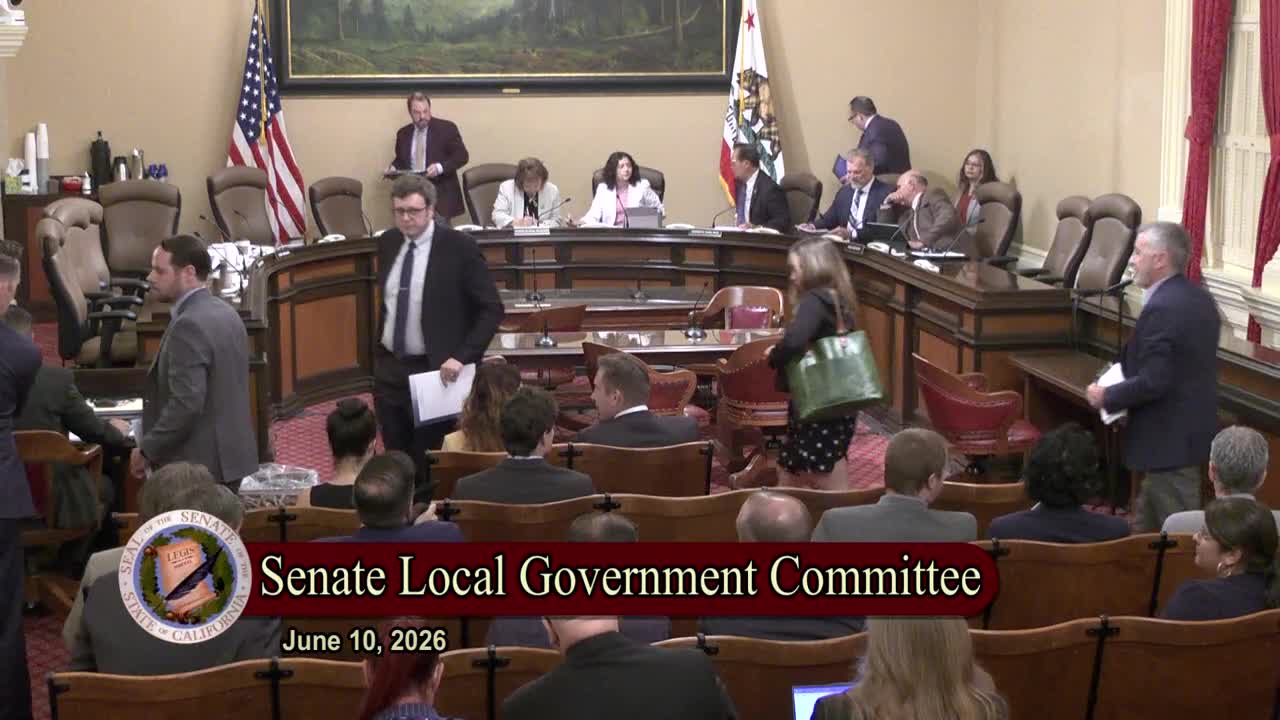 8MIN
Senate Standing Committee on Local Government
 57SEC
Assembly Floor
 12MIN
Assembly Standing Committee on Labor and Employment
Bill Author

Bill Co-Author(s):