AB 1849: Decarbonized gaseous fuels.
- Session Year: 2025-2026
- House: Assembly
- Latest Version Date: 2026-04-15
Current Status:
In Progress
(2026-05-14: In committee: Held under submission.)
Introduced
In Committee
Awaiting First Chamber Vote
Passed First Chamber
In Committee
Awaiting Second Chamber Vote
Passed Second Chamber
Enacted
Existing law regulates the emission of air contaminants, including the oxides of nitrogen, into the atmosphere. Existing law generally vests regulatory jurisdiction over stationary sources of air pollution to the air pollution control districts and air quality management districts and regulatory jurisdiction over mobile sources of air pollution to the State Air Resources Board.
This bill would require, on or before December 31, 2029, the state board to conduct an assessment of the amount of decarbonized gaseous fuels that will be needed to decarbonize hard-to-electrify sectors end uses and maintain reliability in the electricity sector and to post the assessment on its internet website. The bill would require the assessment to include an assessment of the need for decarbonized gaseous fuels in for each hard-to-electrify sector, end use, as defined. The bill would require the state board, in assessing the policies and incentives, to consider, among other things, how to incentivize the increased production and use of decarbonized gas instate in California and how to maximize the benefits of decarbonized gas production and use, use in California, as provided.
Existing law regulates the emission of air contaminants, including the oxides of nitrogen, into the atmosphere. Existing law generally vests regulatory jurisdiction over stationary sources of air pollution to the air pollution control districts and air quality management districts and regulatory jurisdiction over mobile sources of air pollution to the State Air Resources Board.
This bill would require, on or before December 31, 2027, 2029, the state board to conduct an assessment of the amount of decarbonized gaseous fuels that will be needed to decarbonize hard-to-electrify sectors and maintain reliability in the electricity sector. sector and to post the assessment on its internet website. The bill would require the assessment to include an assessment of the need for decarbonized gaseous fuels in each hard-to-electrify sector. The bill would require the state board to ensure, among other things, that policies and incentives to decarbonize hard-to-electrify sectors are performance-based and technology neutral, and that entities that are regulated under the Cap-and-Invest Program shall have a lesser compliance obligation commensurate with purchases of decarbonized gas. sector, as defined. The bill would also require the state board, in recommending assessing the policies and incentives, to consider, among other things, how to incentivize the increased production and use of decarbonized gas instate and how to maximize the benefits of decarbonized gas production and use, as provided.
Existing law regulates the emission of air contaminants, including the oxides of nitrogen, into the atmosphere. Existing law generally vests regulatory jurisdiction over stationary sources of air pollution to the air pollution control districts and air quality management districts and regulatory jurisdiction over mobile sources of air pollution to the State Air Resources Board.
This bill would require, on or before December 31, 2027, the state board to conduct an assessment of the amount of decarbonized gaseous fuels that will be needed to decarbonize hard-to-electrify sectors and maintain reliability in the electricity sector. The bill would require the assessment to include an assessment of the need for decarbonized gaseous fuels in each hard-to-electrify sector. The bill would require the state board to ensure, among other things, that policies and incentives to decarbonize hard-to-electrify sectors are performance-based and technology neutral, and that entities that are regulated under the Cap-and-Invest Program shall have a lesser compliance obligation commensurate with purchases of decarbonized gas. The bill would also require the state board, in recommending the policies and incentives, to consider, among other things, how to incentivize the increased production and use of decarbonized gas instate and how to maximize the benefits of decarbonized gas production and use, as provided.
The Legislature finds and declares all of the following:
(a)To meet Californias climate targets, all sectors of the economy will need to decarbonize.
(b)While California has made significant progress increasing the use of renewable electricity and low-carbon transportation fuels, little progress has been made to decarbonize hard-to-electrify sectors of the economy.
(c)California has increased the procurement of renewable electricity substantially since the first renewables portfolio standard was enacted, but has only reduced natural gas used for electricity generation by 3 percent and has seen a rapid increase in diesel backup generators for electricity reliability.
(d)In California, hard-to-electrify sectors and fossil fuels used for electricity reliability together contribute more than one-third of Californias total greenhouse gas emissions.
(e)Decarbonizing hard-to-electrify sectors and the electricity sector itself will require quickly increasing the production and use of decarbonized gas, sustainable aviation and shipping fuels, and other decarbonized fuels.
(f)The 2022 climate change scoping plan calls for significant increases in the production and use of decarbonized hydrogen and bioenergy to decarbonize hard-to-electrify end uses and provide carbon negative emissions needed to reach the states goal of carbon neutrality by midcentury.
(g)It is the intent of the Legislature to develop additional policies and incentives to accelerate the production and use of decarbonized gas. gas in California.
(h)Increasing the production and use of low-carbon gas will decarbonized gas in California may help protect public health by reducing air and water pollution from fossil fuels, especially the particulate matter and toxic air contaminant emissions from diesel.
(i)Increasing the production of low-carbon decarbonized fuels generated from organic waste in California may also help to mitigate wildfires, meet the landfill diversion requirements of Section 39730.6, and meet the methane and black carbon reduction requirements of Section 39730.5.
43875.1.(a)On or before December 31, 2029, the state board shall conduct an assessment of the amount of decarbonized gaseous fuels that will be needed to decarbonize hard-to-electrify sectors end uses and maintain reliability in the electricity sector, and shall post that assessment on its internet website. That assessment shall include all of the following:
(1)An assessment of the need for, and economic viability of, decarbonized gaseous fuels in for each hard-to-electrify sector. end use.
(2)An assessment of the need for, and cost associated with, decarbonized gaseous fuels for electricity reliability and resilience.
(3)An assessment of current and potential policies and incentives to accelerate the production and use of decarbonized gaseous fuels. fuels in California.
(4)An assessment of opportunities for, and economic viability of, using agricultural and forest residues to help decarbonize hard-to-electrify sectors. end uses.
(b)In assessing the policies and incentives described in subdivision (a), the state board shall consider all of the following:
(1)Whether the policies are consistent with the carbon reductions in the 2022 and 2027 scoping plans identified as necessary to decarbonize necessary to decarbonize hard-to-electrify end uses and to maintain electrical reliability. electricity reliability are consistent with the carbon reductions in the 2022 and 2027 scoping plans.
(2)Recognize the compliance obligations of entities that are regulated pursuant to the Cap-and-Invest Program.(3)(2)How to incentivize the increased production and use of decarbonized gas instate. in California.
(4)(3)How to maximize the benefits of decarbonized gas production and use, use in California, including, but not limited to, opportunities to mitigate wildfire, reduce pile burning of forest and agricultural residues, reduce landfill waste, use renewable energy that may otherwise be curtailed, and create jobs and economic development in the state.
(5)(4)Policies to ensure that decarbonized gases are displacing fossil fuel use.
(6)Consider the(5)The cost implications and economic impacts of using alternatives to fossil gas for both impacted businesses and end-use consumers.
(c)(1)For purposes of this section, hard-to-electrify sectors end uses means those sectors end uses, except onroad transportation, that cannot technically, economically, or practically convert to electricity due to their need for high heat, high energy density, or other operational factors. Those sectors include, but are not limited to, cement, glass, and steel manufacturing, aviation and maritime fuel industries, and food processing industries. The state board shall identify hard-to-electrify end uses with the highest potential to achieve emissions reductions using decarbonized gaseous fuels.
(2)Hard-to-electrify sectors does not include sectors that are regulated pursuant to the Low-Carbon Fuel Standard regulations (Subarticle 7 (commencing with Section 95480) of Article 4 of Subchapter 10 of Chapter 1 of Division 3 of Title 17 of the California Code of Regulations). REVISIONS: HeadingLine 2.The Legislature finds and declares all of the following:
(a)To meet Californias climate targets, all sectors of the economy will need to decarbonize.
(b)While California has made significant progress increasing the use of renewable electricity and low-carbon transportation fuels, little progress has been made to decarbonize hard-to-electrify sectors of the economy.
(c)California has increased the procurement of renewable electricity substantially since the first renewables portfolio standard was enacted, but has only reduced natural gas used for electricity generation by 3 percent and has seen a rapid increase in diesel backup generators for electricity reliability.
(d)In California, hard-to-electrify sectors and fossil fuels used for electricity reliability together contribute more than one-third of Californias total greenhouse gas emissions.
(d)(e)Decarbonizing hard-to-electrify sectors and the electricity sector itself will require quickly increasing the production and use of decarbonized gas, sustainable aviation and shipping fuels, and other decarbonized fuels.
(e)(f)The 2022 climate change scoping plan calls for significant increases in the production and use of decarbonized hydrogen and bioenergy to decarbonize hard-to-electrify end uses and provide carbon negative emissions needed to reach the states goal of carbon neutrality by midcentury.
(f)(g)It is the intent of the Legislature to develop additional policies and incentives to accelerate the production and use of decarbonized gas and other low-carbon fuels for use in hard-to-electrify sectors and for electricity reliability. gas.
(g)(h)Increasing the production and use of low-carbon gas will protect public health by reducing air and water pollution from fossil fuels, especially the particulate matter and toxic air contaminant emissions from diesel.
(h)(i)Increasing the production of low-carbon fuels generated from organic waste may also help to mitigate wildfires, meet the landfill diversion requirements of Section 39730.6, and meet the methane and black carbon reduction requirements of Section 39730.5.
43875.1.(a)On or before December 31, 2027, 2029, the state board shall conduct an assessment of the amount of decarbonized gaseous fuels that will be needed to decarbonize hard-to-electrify sectors and maintain reliability in the electricity sector. sector, and shall post that assessment on its internet website. That assessment shall include all of the following:
(1)An assessment of the need for for, and economic viability of, decarbonized gaseous fuels in each hard-to-electrify sector.
(2)An assessment of the need for for, and cost associated with, decarbonized gaseous fuels for electricity reliability. reliability and resilience.
(3)Recommended An assessment of policies and incentives to accelerate the production and use of decarbonized gaseous fuels.
(4)An assessment of opportunities to use for, and economic viability of, using agricultural and forest residues to help decarbonize hard-to-electrify sectors.
(b)In recommending assessing the policies and incentives described in subdivision (a), the state board shall ensure consider all of the following:
(1)Policies and incentives to decarbonize hard-to-electrify sectors are performance-based and technology neutral.(2)The performance metric is based on the life-cycle carbon intensity of fuels and shall be consistent with carbon reductions required in the electricity and transportation fuels sectors.(3)Entities that are regulated under the Cap-and-Invest Program shall have a lesser compliance obligation commensurate with purchases of decarbonized gas.(c)In recommending the policies and incentives described in subdivision (a), the state board shall also consider all of the following:(1)Whether the policies are consistent with the carbon reductions in the 2022 and 2027 scoping plans identified as necessary to decarbonize hard-to-electrify end uses and to maintain electrical reliability.
(2)Recognize the compliance obligations of entities that are regulated pursuant to the Cap-and-Invest Program.
(1)(3)How to incentivize the increased production and use of decarbonized gas instate.
(2)(4)How to maximize the benefits of decarbonized gas production and use, including, but not limited to, opportunities to mitigate wildfire, reduce pile burning of forest and agricultural residues, reduce landfill waste, use renewable power energy that may otherwise be curtailed, and create jobs and economic development in the state.
(3)Delivery requirements or other policies(5)Policies to ensure that decarbonized gases are displacing fossil fuel use in this state. use.
(6)Consider the cost implications and economic impacts of using alternatives to fossil gas for both impacted businesses and end-use consumers.
(c)(1)For purposes of this section, hard-to-electrify sectors means those sectors that cannot technically, economically, or practically convert to electricity due to their need for high heat, high energy density, or other operational factors. Those sectors include, but are not limited to, cement, glass, and steel manufacturing, aviation and maritime fuel industries, and food processing industries.
(2)Hard-to-electrify sectors does not include sectors that are regulated pursuant to the Low-Carbon Fuel Standard regulations (Subarticle 7 (commencing with Section 95480) of Article 4 of Subchapter 10 of Chapter 1 of Division 3 of Title 17 of the California Code of Regulations).
The Legislature finds and declares all of the following:
(a)To meet Californias climate targets, all sectors of the economy will need to decarbonize.
(b)While California has made significant progress increasing the use of renewable electricity and low-carbon transportation fuels, little progress has been made to decarbonize hard-to-electrify sectors of the economy.
(c)California has increased the procurement of renewable electricity substantially since the first renewables portfolio standard was enacted, but has only reduced natural gas used for electricity generation by 3 percent and has seen a rapid increase in diesel backup generators for electricity reliability.
(d)Decarbonizing hard-to-electrify sectors and the electricity sector itself will require quickly increasing the production and use of decarbonized gas, sustainable aviation and shipping fuels, and other decarbonized fuels.
(e)The 2022 climate change scoping plan calls for significant increases in the production and use of decarbonized hydrogen and bioenergy to decarbonize hard-to-electrify end uses and provide carbon negative emissions needed to reach the states goal of carbon neutrality by midcentury.
(f)It is the intent of the Legislature to develop additional policies and incentives to accelerate the production and use of decarbonized gas and other low-carbon fuels for use in hard-to-electrify sectors and for electricity reliability.
(g)Increasing the production and use of low-carbon gas will protect public health by reducing air and water pollution from fossil fuels, especially the particulate matter and toxic air contaminant emissions from diesel.
(h)Increasing the production of low-carbon fuels generated from organic waste may also help to mitigate wildfires, meet the landfill diversion requirements of Section 39730.6, and meet the methane and black carbon reduction requirements of Section 39730.5.
43875.1.(a)On or before December 31, 2027, the state board shall conduct an assessment of the amount of decarbonized gaseous fuels that will be needed to decarbonize hard-to-electrify sectors and maintain reliability in the electricity sector. That assessment shall include all of the following:
(1)An assessment of the need for decarbonized gaseous fuels in each hard-to-electrify sector.
(2)An assessment of the need for decarbonized gaseous fuels for electricity reliability.
(3)Recommended policies and incentives to accelerate the production and use of decarbonized gaseous fuels.
(4)An assessment of opportunities to use agricultural and forest residues to help decarbonize hard-to-electrify sectors.
(b)In recommending the policies and incentives described in subdivision (a), the state board shall ensure all of the following:
(1)Policies and incentives to decarbonize hard-to-electrify sectors are performance-based and technology neutral.
(2)The performance metric is based on the life-cycle carbon intensity of fuels and shall be consistent with carbon reductions required in the electricity and transportation fuels sectors.
(3)Entities that are regulated under the Cap-and-Invest Program shall have a lesser compliance obligation commensurate with purchases of decarbonized gas.
(c)In recommending the policies and incentives described in subdivision (a), the state board shall also consider all of the following:
(1)How to incentivize the increased production and use of decarbonized gas instate.
(2)How to maximize the benefits of decarbonized gas production and use, including, but not limited to, opportunities to mitigate wildfire, reduce pile burning of forest and agricultural residues, reduce landfill waste, use renewable power that may otherwise be curtailed, and create jobs and economic development in the state.
(3)Delivery requirements or other policies to ensure that decarbonized gases are displacing fossil fuel use in this state.
|
Date
|
Status
|
|---|---|
| May 14, 2026 | In committee: Held under submission. |
| May 6, 2026 | In committee: Set, first hearing. Referred to APPR. suspense file. |
| Apr 23, 2026 | From committee: Do pass and re-refer to Com. on APPR. (Ayes 16. Noes 0.) (April 22). Re-referred to Com. on APPR. |
| Apr 23, 2026 | Coauthors revised. |
| Apr 16, 2026 | Re-referred to Com. on U. & E. |
| Apr 15, 2026 | Read second time and amended. |
| Apr 14, 2026 | From committee: Amend, and do pass as amended and re-refer to Com. on U. & E. (Ayes 10. Noes 0.) (April 13). |
| Apr 7, 2026 | Re-referred to Com. on NAT. RES. |
| Apr 6, 2026 | From committee chair, with author's amendments: Amend, and re-refer to Com. on NAT. RES. Read second time and amended. |
| Apr 3, 2026 | In committee: Hearing postponed by committee. |
| Mar 16, 2026 | Referred to Coms. on NAT. RES. and U. & E. |
| Feb 12, 2026 | From printer. May be heard in committee March 14. |
| Feb 11, 2026 | Read first time. To print. |
|
Date
|
Description
|
Location
|
Votes
|
|
|---|---|---|---|---|
| Apr 22, 2026 | Do pass and be re-referred to the Committee on [Appropriations] | Assembly Standing Committee on Utilities and Energy |
Passed |
|
| Apr 13, 2026 | Do pass as amended and be re-referred to the Committee on [Utilities and Energy] | Assembly Standing Committee on Natural Resources |
Passed |
This list shows positions taken on this bill by organizations on the date displayed, which is linked to the original source.
Positions by individuals are not included.
|
Organization
|
Position
|
Date
|
|---|---|---|
| 1000 Grandmothers for Future Generations | ** Against | |
| 350 Bay Area Action | ** Against | |
| Anaergia | ** Support | |
| Bioenergy Association of California | ** Support | |
| Bioenergy Association of California (Co-Sponsor) | ** Support | |
| Bio-Tronic Energy-CA | ** Support | |
| Bio-tronic Energy-ca, LLC | ** Support | |
| Calgren | ** Support | |
| California Association Of Sanitation Agencies | ** Support | |
| California Environmental Justice Coalition | ** Against | |
| California Hydrogen Business Council | ** Support | |
| California Hydrogen Business Council (Co-Sponsor) | ** Support | |
| California Hydrogen Coalition | ** Support | |
| Californians Against Waste | ** Against | |
| California Nurses for Environmental Health & Justice | ** Against | |
| Center For Biological Diversity | ** Against | |
| Center for Community Action and Environmental Justice (CCAEJ) | ** Against | |
| Center on Race, Poverty and the Environment | ** Against | |
| Center on Race, Poverty & the Environment | ** Against | |
| Clean Water Socal | ** Support | |
| Climate Action California | ** Against | |
| Climate Communications Coalition | ** Against | |
| Cr&R | ** Support | |
| Cr&R, Inc. | ** Support | |
| Darling H2O Consulting | ** Support | |
| Earth Foundries | ** Support | |
| Earth Foundries, INC. | ** Support | |
| Earthjustice | ** Against | |
| Food & Water Watch | ** Against | |
| Forests Forever | ** Against | |
| Fossil Free California | ** Against | |
| Golden State Natural Gas Systems | ** Support | |
| HCycle | ** Support | |
| H-Cycle | ** Support | |
| Leadership Council for Justice and Accountability | ** Against | |
| Los Angeles County Sanitation Districts | ** Support | |
| Los Padres ForestWatch | ** Against | |
| Mainspring Energy | ** Support | |
| Monterey One Water | ** Support | |
| Mote | ** Support | |
| Mote, INC. | ** Support | |
| Mount Shasta Bioregional Ecology Center | ** Against | |
| Northeast-western Energy Systems | ** Support | |
| Resource Recovery Coalition Of California | ** Support | |
| SanDiego350 | ** Against | |
| San Diego 350 | ** Against | |
| San Francisco Bay Physicians for Social Responsibility | ** Against | |
| Santa Cruz Climate Action Network | ** Against | |
| sequoia forestkeeper | ** Against | |
| Sierra Club California | ** Against | |
| Sierra Energy | ** Support | |
| SoCalGas | ** Support | |
| Sonoma County Climate Activist Network | ** Against | |
| Sonoma County Climate Activist Network (SOCOCAN!) | ** Against | |
| Sunflower Alliance | ** Against | |
| Supply Chains for Good Enrolled Member, Standing Rock | ** Support | |
| TSS Consultants | ** Support | |
| USA Water and Power | ** Support | |
| Valley Improvement Projects (VIP) | ** Against | |
| Vespene Energy | ** Support | |
| Western Propane Gas Association | ** Support | |
| Yosemite Clean Energy | ** Support |
Date of Hearing: May 6, 2026
ASSEMBLY COMMITTEE ON APPROPRIATIONS
Buffy Wicks, Chair
ABPCA Bill Id:AB 1849
Author:(Papan) – As Amended Ver:April 15, 2026
Policy Committee: | Natural Resources | Vote: | 10 - 0 |
Utilities and Energy | 16 - 0 | ||
|
|
Urgency: No State Mandated Local Program: No Reimbursable: No
SUMMARY:
This bill requires the Air Resources Board (ARB), on or before December 31, 2029, to conduct and post on its website an assessment of the amount of decarbonized gaseous fuels needed to decarbonize hard-to-electrify end uses and maintain reliability in the electricity sector.
Specifically, this bill:
1) Requires ARB’s study to include an assessment of the (a) need for, and economic viability of, decarbonized gaseous fuels for each hard-to-electrify end use; (b) need for, and cost associated with, decarbonized gaseous fuels for electricity reliability and resilience; (c) current and potential policies and incentives to accelerate the production and use of decarbonized gaseous fuels in the state; and (d) opportunities for, and economic viability of, using agricultural and forest residues to help decarbonize hard-to-electrify sectors.
2) Requires ARB to consider the following in its assessment:
- Whether the policies necessary to decarbonize hard-to-electrify end uses and to maintain electricity reliability are consistent with the carbon reductions in the 2022 and 2027 scoping plans.
- How to incentivize the increased production and use of decarbonized gas in California.
- How to maximize the benefits of decarbonized gas production and use in California, including opportunities to mitigate wildfire, reduce pile burning of forest and agricultural residues, reduce landfill waste, use renewable energy that may otherwise be curtailed, and create jobs and economic development in the state.
- Policies to ensure that decarbonized gases are displacing fossil fuel use.
- The cost implications and economic impacts of using alternatives to fossil gas for both impacted businesses and end-use consumers.
3) Requires ARB to identify hard-to-electrify end uses with the highest potential to achieve emissions reductions using decarbonized gaseous fuels and defines “hard-to-electrify sectors” as those end uses, except on-road transportation, that cannot technically, economically, or practically convert to electricity due to their need for high heat, high energy density, or other operational factors.
FISCAL EFFECT:
ARB estimates costs of approximately $3.5 million in fiscal year (FY) 2027-28 for about five positions and contract funds followed by approximately $1.2 million in FY 2028-29 and ongoing for five positions (Cost of Implementation Account (COIA)) to conduct the required assessment.
Given that the bill requires ARB to complete the assessment by the end of 2029 and does not require implementation beyond 2029, it is not clear to the committee if ARB requires ongoing funding to implement this bill.
For comparison and context, as part of the FY 2023-24 budget, ARB requested and received $3.1 million and four permanent positions, including $2.3 million in one-time contract funds (COIA), to assess and provide policy recommendations on the use of hydrogen, as required by SB 1075 (Skinner), Chapter 363, Statutes of 2022. As part of the FY 2024-25 budget, ARB received $684,000 ongoing and three positions (Air Pollution Control Fund) to implement AB 585 (Rivas), Chapter 336, Statutes of 2023, which, among other things, required ARB to consult with specified agencies on an assessment of barriers limiting the deployment of clean energy projects that support the strategies identified in the scoping plan and advance the state's climate goals. As part of the FY 2025-26 budget, ARB received $120,000 (COIA) in one-time funding to implement SB 941 (Skinner), Chapter 595, Statutes of 2024, which required ARB, in the next update to its scoping plan, to include a discussion of the availability of zero-emission alternatives to industrial sources of greenhouse gas emissions.
COMMENTS:
1) Purpose. According to the author:
Hard-to-electrify industries, such as cement, glass, and steel manufacturing, along with the use of peaker plants for grid reliability, account for more than one-third of California’s greenhouse gas emissions. Consistent with the 2022 Climate Change Scoping Plan, which recognized the need for decarbonized fuels in a carbon-free future, this bill advances that goal by determining how much decarbonized fuel each hard-to-electrify sector will require and by evaluating the policies and incentives needed to speed up deployment.
2) Background. This bill seeks to assess and plan for the role that decarbonized gaseous fuels – which is not defined in the bill – could play in reducing greenhouse gas emissions from sectors of the economy that are difficult to electrify, as well as from continued fossil fuel use in the electricity sector itself. Fossil gas currently accounts for roughly 34% of California's electricity generation, and industrial activity accounts for approximately 22% of the state's greenhouse gas emissions. Together these sources represent more than one-third of statewide emissions. This bill is framed as a tool to help California meet its statutory climate obligations by identifying pathways to deploy decarbonized fuels derived from agricultural residues, forest waste, and organic materials – sources that ARB has identified as significant contributors to methane emissions and as potential feedstocks for new fuel markets.
The Bioenergy Association of California and the California Hydrogen Business Council, the sponsors of this bill, argue California cannot meet its climate goals without a significant increase in the production of low-carbon and carbon-negative gaseous fuels but the state’s “current policy framework lacks a comprehensive, cross-sector assessment of decarbonized gaseous fuel demand.” The sponsors further argue that hard-to-electrify sectors, including high-heat industrial processes, dispatchable electricity generation, heavy-duty transportation, aviation and marine fuels, and long-duration energy storage – require energy-dense, low-carbon molecules, and that hydrogen and renewable gaseous fuels produced from organic waste streams “are among the few scalable options capable of generating carbon negative emissions needed to reach carbon neutrality and also needed to maintain electricity reliability.” The sponsors contend that a data-driven assessment and recommendations for a performance-based program to accelerate deployment of these fuels “will support grid reliability, reduce criteria pollutants, and create durable, well-paying jobs in rural and industrial regions.”
Writing in opposition, a coalition of environmental and environmental justice organizations argue, “This is NOT simply a study bill. It would require [ARB] to ‘accelerate’ and ‘incentivize’ the increased production and use of polluting, expensive forms of hydrogen and methane under the misnomer ‘decarbonized gaseous fuels.’” The coalition notes the bill does not define “decarbonized gaseous fuels” and that California agencies are already undertaking several studies and reports to inform the state’s decarbonization strategy, including the potential use of gaseous fuels. The coalition argues this bill seeks to “prematurely jump ahead of these expert agency processes by presuming benefit and locking in incentives for expensive, polluting, niche fuels,” and that “this is a waste of limited public funds and potentially conflicts with ongoing California agency assessments, all to benefit polluting industries.” The coalition argues, among other things, that hydrogen and methane made from woody biomass, methane created by large dairies, and hydrogen made from fossil fuels have significant carbon and pollutant emissions and should not be incentivized.
Analysis Prepared by: Nikita Koraddi / APPR. / (916) 319-2081
Date of Hearing: April 22, 2026
ASSEMBLY COMMITTEE ON UTILITIES AND ENERGY
Cottie Petrie-Norris, Chair
ABPCA Bill Id:AB 1849 (
Author:Papan) – As Amended Ver:April 15, 2026
SUBJECT: Decarbonized gaseous fuels
SUMMARY: Requires the California Air Resources Board (CARB) to assess the amount of “decarbonized gaseous fuels” that will be needed to decarbonize hard-to-electrify sectors and maintain reliability in the electricity sector.
EXISTING LAW:
- Requires, pursuant to the California Global Warming Solutions Act,[1] CARB to adopt a statewide greenhouse gas (GHG) emissions limit and to adopt rules and regulations to achieve maximum technologically feasible and cost-effective GHG emission reductions. (Health and Safety Code §§ 38500 et seq.)
- Declares the policy of the state to achieve net zero GHG emissions as soon as possible, but no later than 2045, and to achieve and maintain net negative GHG emissions thereafter. (Health and Safety Code § 38562.2)
- Requires ARB to prepare and approve a scoping plan at least once every five years for achieving the maximum technologically feasible and cost-effective reductions in GHG emissions from sources or categories of sources of GHGs. (Health and Safety Code § 38561)
- Requires ARB to evaluate, consider, and report on various issues related the potential role of hydrogen in meeting state “decarbonization” goals by June 1, 2024. (Health and Safety Code § 38561.8)
- Establishes a policy requiring renewable energy resources and zero-carbon electric generating facilities to supply 100% of electricity procured to serve California customers by 2045, and directs the Public Utilities Commission, California Energy Commission, and ARB to incorporate this policy into all relevant planning and programs. (Public Utilities Code § 454.53)
FISCAL EFFECT: Unknown. This bill is keyed fiscal and will be referred to the Assembly Committee on Appropriations for its review.
BACKGROUND:
CARB’s 2022 Scoping Plan – CARB adopted its 2022 Climate Change Scoping Plan, the state’s primary roadmap for achieving carbon neutrality by 2045, in December 2022.[2] The plan concludes that while electrification will play an important role in almost all sectors, electrification is not possible in all situations, and that it will take time to fully grow the electricity grid to serve as the backbone of a decarbonized economy. For those sectors where electrification is not feasible, the plan proposes scaling green hydrogen and biomethane where needed.[3] The plan specifically acknowledges that certain industrial processes – such as steel forging, glass manufacture, and lime and cement manufacture – present few commercially available or economically viable electrification options due to their high-heat requirements, and identifies carbon capture and sequestration as a vital component of decarbonization for such processes.[4] The final plan projects a 48% reduction in greenhouse gas emissions below 1990 levels by 2030, surpassing the statutory minimum of 40%. Taken together, the Scoping Plan’s treatment of decarbonized fuels reflects a conditional role — necessary for hard-to-electrify end uses and grid reliability, but secondary to electrification as the primary decarbonization strategy.
COMMENTS:
- Author’s Statement. According to the author, “AB 1849 directs CARB to conduct an assessment of the need for decarbonized gaseous fuels and provide recommendations to help the state meet its climate targets for hard-to-electrify sectors and electricity reliability. Hard-to-electrify industries, such as cement, glass, and steel manufacturing, along with the use of peaker plants for grid reliability, account for more than one-third of California’s greenhouse gas emissions. Consistent with the 2022 Climate Change Scoping Plan, which recognized the need for decarbonized fuels in a carbon-free future, this bill advances that goal by determining how much decarbonized fuel each hard-to-electrify sector will require and by evaluating the policies and incentives needed to speed up deployment.”
- Purpose of Bill. AB 1849 seeks to assess and plan for the role that decarbonized gaseous fuels (undefined) could play in reducing greenhouse gas emissions from sectors of the California economy that are difficult to electrify, as well as from continued fossil fuel use in the electricity sector itself. Fossil gas currently accounts for roughly 34% of California's electricity generation,[5] and industrial activity accounts for approximately 22% of the state's GHG emissions.[6] Together these sources represent more than one-third of statewide emissions. This bill is framed as a tool to help California meet its statutory climate obligations by identifying pathways to deploy decarbonized fuels derived from agricultural residues, forest waste, and organic materials – sources that CARB has identified as significant contributors to methane emissions and as potential feedstocks for new fuel markets.
- What is Decarbonized Gaseous Fuel? The bill does not include a definition of “decarbonized gaseous fuels” despite it being the subject of the bill’s assessment. This gives CARB broad discretion to determine which fuels qualify, a determination that could encompass fuels with contested carbon profiles. This is a central concern of the bill’s opponents who take issue with the potential for fuels made from woody biomass, fossil fuel (with or without carbon capture), or large dairy feedstocks to be considered and included. A lack of a definition also makes it difficult to ensure consistency within existing regulatory frameworks, such as the low carbon fuel standard, the scoping plan, and CARB’s recent hydrogen assessment. However, leaving the fuel choice undefined gives CARB the flexibility to apply its technical expertise and adapt to new information in this rapidly evolving technological space. Because the bill’s primary output is an assessment, rather than a regulatory mandate, it seems reasonable to give CARB more discretion to determine what should be included and not foreclose on fuels and pathways that could prove viable in the future.
- A Narrow Perspective. This bill asks CARB to assess the need for these decarbonized gaseous fuels to decarbonize hard-to-electrify sectors and to maintain electricity reliability and resilience. While considering alternatives to the electricity grid’s natural gas peaker plants and the local reliability value they provide is laudable, having CARB assess this without any input or feedback from the state’s electricity organizations – namely the California Public Utilities Commission, the California Energy Commission, and the California Independent System Operator – may produce incomplete results.
Moreover, the assessment asks CARB to quantify future demand for gaseous fuels, which could be used by gas utilities and fossil fuel interests to justify continued infrastructure investment. The “policies to ensure decarbonized gases displace fossil fuels” provision is important but may need stronger direction. In fact, the bill seems to assume that only decarbonized gases can displace fossil fuels in circumstances where electrification is not viable. Indeed, the bill requires CARB to consider “how to incentivize the increased production and use of decarbonized gas in California,” drawing a conclusion that growth in the decarbonized gas sector is necessary to reach our climate goals.
However, other technologies like energy efficiency, waste heat recovery and thermal energy networks may also serve a role in displacing fossil gas, even in difficult industrial applications. These are technologies advanced by both CARB[7] and this bill’s author.[8] Since the amount of decarbonized gaseous fuels needed to decarbonize hard-to-electrify end uses and maintain grid reliability is dependent upon the availability and efficacy of these alternative technologies, limiting the bill’s assessment to only decarbonized fuels may inflate their anticipated contribution. Given this, the author may wish to consider broadening the scope of the assessment to enable CARB to form a more complete picture of future needs.
- Related Legislation.
AB 2088 (Papan, 2026) authorizes gas corporations and other utilities regulated by the CPUC to own and operate thermal energy service as a regulated utility service through thermal energy networks (TENs), directs the CEC to develop technical standards for TENs, and requires the CPUC to initiate a proceeding to establish a regulatory framework for TENs deployment. Status: set for hearing in this committee on April 22, 2026.
AB 2313 (Berman, 2026) requires the CPUC to establish a program to require gas corporations to offer eligible gas customers a monetary incentive to replace gas appliances with electric alternatives and cease gas service as an alternative to a planned gas distribution service line replacement. Status: set for hearing in this committee on April 22, 2026.
SB 1359 (Stern, 2026) establishes the Gas Transition Responsibility and Electrification Act, directing the CPUC to prioritize electrification and nonpipelined alternatives to capital investment for natural gas distribution infrastructure. The bill requires the CPUC to develop a framework for the orderly and equitable transition of the natural gas distribution system, including minimizing ratepayer impacts. Status: set for hearing on April 21, 2026, in the Senate Committee on Energy, Utilities and Communications.
- Prior Legislation.
SB 1221 (Min, 2024) requires the CPUC to establish a voluntary zonal decarbonization program and designate priority neighborhood decarbonization zones. Also directed the CPUC to evaluate the costs and benefits of TENs and to identify potential implementation barriers. Status: Chapter 602, Statutes of 2024.
AB 1279 (Muratsuchi) establishes a goal of net zero GHG emissions by 2045 and ensures that by 2045, statewide anthropogenic GHGs are reduced to at least 85% below 1990 levels. Status: Chapter 337, Statutes of 2022.
SB 1383 (Lara) requires CARB to approve and implement the comprehensive short-lived climate pollutant strategy to achieve, from 2013 levels, a 40% reduction in methane, a 40% reduction in hydrofluorocarbon gases, and a 50% reduction in anthropogenic black carbon, by 2030. Status: Chapter 395, Statutes of 2016.
SB 32 (Pavley) requires CARB to ensure that statewide GHG emissions are reduced to at least 40% below the 1990 level by 2030. Status: Chapter 249, Statutes of 2016.
- Double Referral. This bill is double referred. It was first heard in the Assembly Committee on Natural Resources on April 13, 2026, where it passed on a 10-0-4 vote.
REGISTERED SUPPORT / OPPOSITION:
Support
Bioenergy Association of California (Co-Sponsor)
California Hydrogen Business Council (Co-Sponsor)
Anaergia
Bio-tronic Energy-ca, LLC
Calgren
California Association of Sanitation Agencies
California Hydrogen Coalition
Clean Water Socal
Cr&r, INC.
Darling H2o Consulting
Earth Foundries, INC.
Golden State Natural Gas Systems
Hcycle
Los Angeles County Sanitation Districts
Mainspring Energy
Monterey One Water
Mote, INC.
Northeast-western Energy Systems
Resource Recovery Coalition of California
Sierra Energy
Socalgas
Supply Chains for Good Enrolled Member, Standing Rock
Tss Consultants
USA Water and Power
Vespene Energy
Western Propane Gas Association
Yosemite Clean Energy
Oppose
1000 Grandmothers for Future Generations
350 Bay Area Action
California Environmental Justice Coalition
California Nurses for Environmental Health & Justice
Center for Biological Diversity
Center for Community Action and Environmental Justice (CCAEJ)
Center on Race, Poverty & the Environment
Center on Race, Poverty and the Environment
Climate Action California
Climate Communications Coalition
Earthjustice
Food & Water Watch
Forests Forever
Fossil Free California
Leadership Council for Justice and Accountability
Los Padres Forestwatch
Mount Shasta Bioregional Ecology Center
San Diego 350
San Francisco Bay Physicians for Social Responsibility
Sandiego350
Santa Cruz Climate Action Network
Sequoia Forestkeeper
Sierra Club California
Sonoma County Climate Activist Network (SOCOCAN!)
Sunflower Alliance
Valley Improvement Projects (VIP)
Oppose Unless Amended
Californians Against Waste
Analysis Prepared by: Laura Shybut / U. & E. / (916) 319-2083
AB 32 (Núñez), Chapter 488, Statutes of 2006 ↑
https://ww2.arb.ca.gov/sites/default/files/2023-04/2022-sp.pdf ↑
Pg. 1 of Executive Summary, Ibid. ↑
Pg. 207, Ibid. ↑
CEC’s 2024 Total System Electric Generation; https://www.energy.ca.gov/data-reports/energy-almanac/california-electricity-data/2024-total-system-electric-generation ↑
CARB’s 2000-2023 GHG Inventory; 2023 GHG emissions broken out by economic sector; https://ww2.arb.ca.gov/ghg-inventory-data ↑
On pg 207 of CARB’s 2022 Scoping Plan, CARB noted: “Decarbonizing industrial facilities depends upon displacing fossil fuel use with a mix of electrification, solar thermal heat, biomethane, low- or zero-carbon hydrogen, and other low-carbon fuels to provide energy for heat and reduce combustion emissions. Emissions also can be reduced by implementing energy efficiency measures and using substitute raw materials.” ↑
AB 2088 (Papan, 2026) ↑
Date of Hearing: April 13, 2026
ASSEMBLY COMMITTEE ON NATURAL RESOURCES
Isaac G. Bryan, Chair
ABPCA Bill Id:AB 1849 (
Author:Papan) – As Amended Ver:April 6, 2026
SUBJECT: Decarbonized gaseous fuels
SUMMARY: Requires the Air Resources Board (ARB) to assess the amount of “decarbonized gaseous fuels” that will be needed to decarbonize hard-to-electrify sectors and maintain reliability in the electricity sector.
EXISTING LAW:
- Requires, pursuant to the California Global Warming Solutions Act [AB 32 (Núñez), Chapter 488, Statutes of 2006], ARB to adopt a statewide greenhouse gas (GHG) emissions limit and to adopt rules and regulations to achieve maximum technologically feasible and cost-effective GHG emission reductions. (Health and Safety Code (HSC) 38500 et seq.)
- Declares the policy of the state to achieve net zero GHG emissions as soon as possible, but no later than 2045, and to achieve and maintain net negative GHG emissions thereafter. (HSC 38562.2)
- Requires ARB to prepare and approve a scoping plan at least once every five years for achieving the maximum technologically feasible and cost-effective reductions in GHG emissions from sources or categories of sources of GHGs. (HSC 38561)
- Requires ARB to evaluate, consider, and report on various issues related the potential role of hydrogen in meeting state “decarbonization” goals by June 1, 2024. (HSC 38561.8)
- Pursuant to Executive Order S-01-07, established a statewide goal to reduce the carbon intensity (CI) of California’s transportation fuels and directed ARB to consider adopting a low carbon fuel standard (LCFS) to implement this goal. In 2009, ARB adopted the LCFS as a regulation. The LCFS attributes CI values to a variety of fuels based on direct and indirect GHG emissions. The LCFS permits producers of certain low CI fuels to opt in to LCFS regulation for the purpose of generating credits, which can be banked and used for compliance, sold to regulated parties, and purchased and retired by regulated parties. In addition, LCFS credits can be exported to other GHG emission reduction programs. (17 CCR 95840 et seq.)
- Establishes a policy requiring renewable energy resources and zero-carbon electric generating facilities to supply 100% of electricity procured to serve California customers by 2045, and directs the Public Utilities Commission, California Energy Commission, and ARB to incorporate this policy into all relevant planning and programs. (PUC 454.53)
THIS BILL:
- Requires ARB to assess the amount of “decarbonized gaseous fuels” that will be needed to decarbonize hard-to-electrify sectors and maintain reliability in the electricity sector.
- Requires this assessment to include:
- Need for, and economic viability of, decarbonized gaseous fuels in each hard-to-electrify sector.
- Need for, and cost associated with, decarbonized gaseous fuels for electricity reliability and resilience.
- Policies and incentives to accelerate the production and use of decarbonized gaseous fuels.
- Opportunities for, and economic viability of, using agricultural and forest residues to help decarbonize hard-to-electrify sectors.
- Requires ARB to consider:
- Whether the policies are consistent with the carbon reductions in the 2022 and 2027 scoping plans identified as necessary to decarbonize hard-to-electrify end uses and to maintain electrical reliability.
- Recognize the compliance obligations of entities that are regulated pursuant to the Cap-and-Invest Program.
- How to incentivize the increased production and use of decarbonized gas instate.
- How to maximize the benefits of decarbonized gas production and use, including, but not limited to, opportunities to mitigate wildfire, reduce pile burning of forest and agricultural residues, reduce landfill waste, use renewable energy that may otherwise be curtailed, and create jobs and economic development in the state.
- Policies to ensure that decarbonized gases are displacing fossil fuel use.
- The cost implications and economic impacts of using alternatives to fossil gas for both impacted businesses and end-use consumers.
- Defines “hard-to-electrify sectors” as those sectors that cannot technically, economically, or practically convert to electricity due to their need for high heat, high energy density, or other operational factors, not including sectors that are regulated pursuant to the LCFS.
- Requires ARB to post the assessment on its internet website.
- Makes related findings.
FISCAL EFFECT: Unknown
COMMENTS:
- Author’s statement:
AB 1849 directs ARB to conduct an assessment of the need for decarbonized gaseous fuels and provide recommendations to help the state meet its climate targets for hard-to-electrify sectors and electricity reliability. Hard-to-electrify industries, such as cement, glass, and steel manufacturing, along with the use of peaker plants for grid reliability, account for more than one-third of California’s GHG emissions. Consistent with the 2022 Climate Change Scoping Plan, which recognized the need for decarbonized fuels in a carbon-free future, this bill advances that goal by determining how much decarbonized fuel each hard-to-electrify sector will require and by evaluating the policies and incentives needed to speed up deployment.
- Double referral. This bill is double-referred to the Assembly Utilities and Energy Committee.
REGISTERED SUPPORT / OPPOSITION:
Support
Bioenergy Association of California (co-sponsor)
California Hydrogen Business Council (co-sponsor)
Anaergia
Bio-Tronic Energy-CA
Calgren
California Association of Sanitation Agencies
California Hydrogen Coalition
Clean Water SoCal
CR&R
Darling H2O Consulting
Earth Foundries
Golden State Natural Gas Systems
H-Cycle
Los Angeles County Sanitation Districts
Mainspring Energy
Mote
Northeast-Western Energy Systems
Resource Recovery Coalition of California
Sierra Energy
SoCalGas
Supply Chains for Good Enrolled Member, Standing Rock
TSS Consultants
USA Water and Power
Vespene Energy
Yosemite Clean Energy
Opposition
1000 Grandmothers for Future Generations
350 Bay Area Action
California Environmental Justice Coalition
California Nurses for Environmental Health & Justice
Californians Against Waste (unless amended)
Center for Biological Diversity
Center for Community Action and Environmental Justice
Center on Race, Poverty & the Environment
Climate Action California
Climate Communications Coalition
Earthjustice
Food & Water Watch
Forests Forever
Fossil Free California
Leadership Council for Justice and Accountability
Los Padres Forestwatch
Mount Shasta Bioregional Ecology Center
San Diego 350
San Francisco Bay Physicians for Social Responsibility
Santa Cruz Climate Action Network
Sequoia Forestkeeper
Sierra Club California
Sonoma County Climate Activist Network
Sunflower Alliance
Valley Improvement Project
Analysis Prepared by: Lawrence Lingbloom / NAT. RES. /
Discussed in Hearing
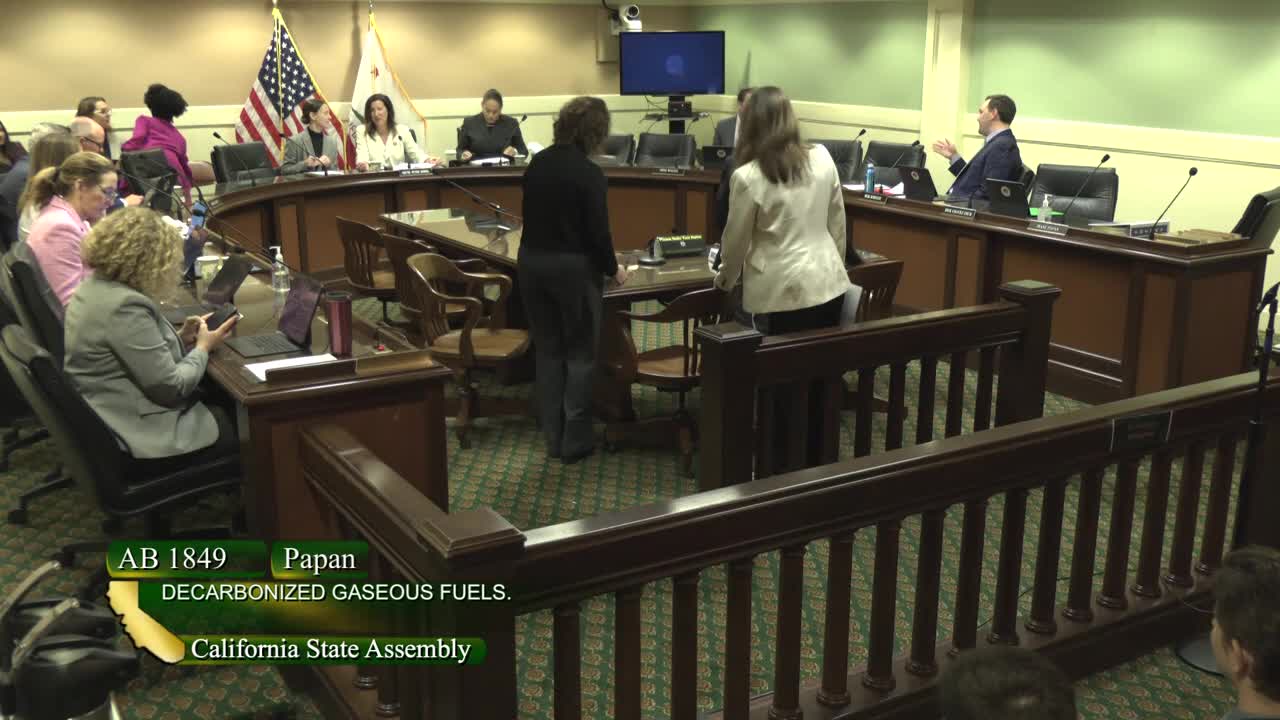 23MIN
Assembly Standing Committee on Utilities and Energy
 14MIN
Assembly Standing Committee on Natural Resources
Bill Author

Bill Co-Author(s):
