AB 1864: Gene synthesis equipment manufacturers and providers.
- Session Year: 2025-2026
- House: Assembly
- Latest Version Date: 2026-09-30
Current Status:
Passed
(2026-09-30: Chaptered by Secretary of State - Chapter 852, Statutes of 2026.)
Introduced
In Committee
Awaiting First Chamber Vote
Passed First Chamber
In Committee
Awaiting Second Chamber Vote
Passed Second Chamber
Enacted
Existing law requires the State Department of Public Health to establish an advisory committee to advise the Legislature and the Governor on human cloning and other issues relating to human biotechnology. Existing law requires the California State University, and requests the University of California, to develop systemwide guidance for purchasing gene synthesis equipment or gene synthesis products from gene synthesis providers who prevent the misuse of synthetic genes and safeguard the benefits of gene synthesis technology while minimizing risk, as specified.
This bill would prohibit a manufacturer of benchtop nucleic acid synthesis equipment, as defined, from producing equipment in this state or selling or delivering that equipment to a customer in this state unless the manufacturer adheres to the Framework for Nucleic Acid Synthesis Screening issued by the Fast Track Action Committee on Synthetic Nucleic Acid Procurement Screening of the National Science and Technology Council, as revised in September 2024, with respect to that equipment, attests that they comply with the framework with respect to that equipment, and posts that attestation on a public internet website, and would prohibit a provider of specified synthetic nucleic acids from producing those nucleic acids in this state or selling or delivering those nucleic acids to a customer in this state unless the provider adheres to the framework described above with respect to those nucleic acids, attests to complying with the framework with respect to those nucleic acids, and posts that attestation on a public internet website. The bill would make a violation of the prohibitions described above subject to a civil penalty in an amount dependent on the severity of the violation that does not exceed $5,000 per day that the violation continues. The bill would make related findings and declarations.
This bill would provide that the provisions of this bill are severable.
Existing law requires the State Department of Public Health to establish an advisory committee to advise the Legislature and the Governor on human cloning and other issues relating to human biotechnology. Existing law requires the California State University, and requests the University of California, to develop systemwide guidance for purchasing gene synthesis equipment or gene synthesis products from gene synthesis providers who prevent the misuse of synthetic genes and safeguard the benefits of gene synthesis technology while minimizing risk, as specified.
This bill would prohibit a manufacturer of benchtop nucleic acid synthesis equipment, as defined, from producing equipment in this state or selling or delivering that equipment to a customer in this state unless the manufacturer adheres to the Framework for Nucleic Acid Synthesis Screening issued by the Fast Track Action Committee on Synthetic Nucleic Acid Procurement Screening of the National Science and Technology Council, as revised in September 2024, with respect to that equipment, attests that they comply with the framework with respect to that equipment, and posts that attestation on a public internet website, and would prohibit a provider of specified synthetic nucleic acids from producing those nucleic acids in this state or selling or delivering those nucleic acids to a customer in this state unless the provider adheres to the framework described above with respect to those nucleic acids. acids, attests to complying with the framework with respect to those nucleic acids, and posts that attestation on a public internet website. The bill would make a violation of the prohibitions described above subject to a civil penalty in an amount dependent on the severity of the violation that does not exceed $1,000 $5,000 per day that the violation continues. The bill would make related findings and declarations.
This bill would provide that the provisions of this bill are severable.
Existing law requires the State Department of Public Health to establish an advisory committee to advise the Legislature and the Governor on human cloning and other issues relating to human biotechnology. Existing law requires the California State University, and requests the University of California, to develop systemwide guidance for purchasing gene synthesis equipment or gene synthesis products from gene synthesis providers who prevent the misuse of synthetic genes and safeguard the benefits of gene synthesis technology while minimizing risk, as specified.
This bill would prohibit a manufacturer of benchtop nucleic acid synthesis equipment, as defined, from producing equipment in this state or selling or delivering that equipment to a customer in this state unless the manufacturer adheres to the Framework for Nucleic Acid Synthesis Screening issued by the Fast Track Action Committee on Synthetic Nucleic Acid Procurement Screening of the National Science and Technology Council, as revised in September 2024, with respect to that equipment, and would prohibit a provider of specified synthetic nucleic acids from producing those nucleic acids in this state or selling or delivering those nucleic acids to a customer in this state unless the provider adheres to the framework described above with respect to those nucleic acids. The bill would make a violation of the prohibitions described above subject to a civil penalty in an amount dependent on the severity of the violation that does not exceed $1,000 per day that the violation continues. The bill would define framework to mean the framework described above, but would authorize the State Department of Public Health to adopt regulations that define framework to mean one or more federal law, regulation, or guidance document that provides standards for the screening of synthetic nucleic acids if the department determines that the regulations would result in an equal or greater degree of protection for the residents of California from relevant biohazards, as specified, and would not impose, in the judgment of the department, unreasonable burdens on manufacturers or providers. The bill would define various terms to have the same meanings as in the framework described above, but would authorize the department, as part of the adoption of a different definition of framework, to adopt different definitions of those terms. The bill would require the department, no later than one year after the adoption of any regulation adopted as described above, to submit a report to the Legislature, as specified. The bill would make related findings and declarations.
This bill would provide that the provisions of this bill are severable.
The Legislature finds and declares both of the following:
(a)The state has a strong interest in protecting the residents of California from biohazards caused by reckless or malicious individuals with access to dangerous nucleic acids synthesized by benchtop nucleic acid synthesis equipment or ordered from commercial gene synthesis providers, and providers and manufacturers must take due care in order to avoid creating unreasonable risks of serious injury.
(b)In 2023, the Director of the White House Office of Science and Technology Policy initiated an interagency process for the development of a framework to encourage providers of synthetic nucleic acid sequences to implement comprehensive, scalable, and verifiable synthetic nucleic acid procurement screening mechanisms, including standards and recommended incentives, resulting in the issuance by the National Science and Technology Councils Fast Track Action Committee on Synthetic Nucleic Acid Procurement Screening of the Framework For Nucleic Acid Synthesis Screening, revised as of September 2024 (the framework). It is in the interest of all Californians that all synthesis providers and manufacturers operating in the state adhere to the framework.
SEC. 2.Chapter 1.5 (commencing with Section 24200) is added to Division 20 of the Health and Safety Code, to read:1.5.Gene Synthesis Screening24200.For the purposes of this chapter, the following terms have the following meanings:
(a)Benchtop nucleic acid synthesis equipment has the same meaning as defined in the framework.
(b)Customer has the same meaning as defined in the framework.
(c)(1)Framework means the Framework for Nucleic Acid Synthesis Screening issued by the Fast Track Action Committee on Synthetic Nucleic Acid Procurement Screening of the National Science and Technology Council, as revised in September 2024.
(2)For the purposes of this chapter, the version of the framework described in this subdivision is the sole operative version. Any subsequent revision, supplement, or successor to the framework that is issued by a federal entity shall not modify or be incorporated into the meaning of framework as defined in this section unless the Legislature expressly amends the meaning of framework.
(d)Manufacturer has the same meaning as defined in the framework.
(e)Provider has the same meaning as defined in the framework.
(f)Synthetic nucleic acids subject to screening has the same meaning as defined in the framework.
24201.(a)A manufacturer shall not produce benchtop nucleic acid synthesis equipment in this state or sell or deliver benchtop nucleic acid synthesis equipment to a customer in this state unless the manufacturer does both of the following:
(1)Adheres to the framework with respect to the produced, sold, or delivered equipment.
(2)Attests that they comply with paragraph (1), as attestation is described in the framework, and posts that attestation on a public internet website.
(b)A provider shall not produce synthetic nucleic acids subject to screening in this state or sell or deliver synthetic nucleic acids subject to screening to a customer in this state unless the provider does both of the following:
(1)Adheres to the framework with respect to the produced, sold, or delivered nucleic acids.
(2)Attests that they comply with paragraph (1), as attestation is described in the framework, and posts that attestation on a public internet website.
(c)(1)For the purposes of this section, if the framework uses the term should, it is a requirement for a provider or manufacturer.
(2)For the purposes of this section, if the framework uses the term encouraged, it is a recommendation, but not a requirement, for a provider or manufacturer.
(d)Provisions in the framework that the framework states take effect only on or after October 13, 2026, shall have no effect under this chapter prior to October 13, 2027.
24202.(a)A manufacturer or provider that violates this chapter shall be subject to a civil penalty in an amount dependent on the severity of the violation that does not exceed five thousand dollars ($5,000) per day that the violation continues.
(b)A civil penalty assessed pursuant to this section shall be recovered in a civil action brought only by the Attorney General.
24203.This chapter does not regulate the activities of a customer that is not a provider or a manufacturer, including, but not limited to, activities related to medical or pharmaceutical research and development or manufacturing, drug screening assays, reagent production, tests employed in preclinical and clinical studies, manufacturing of biologics, gene therapy, and RNA therapeutics. This section does not exempt a person from this chapter with respect to that persons activities as a provider or manufacturer as defined in Section 24200.
24204.The provisions of this chapter are severable. If any provision of this act or its application is held invalid, that invalidity shall not affect other provisions or applications that can be given effect without the invalid provision or application.
The Legislature finds and declares both of the following:
(a)The state has a strong interest in protecting the residents of California from biohazards caused by reckless or malicious individuals with access to dangerous nucleic acids synthesized by benchtop nucleic acid synthesis equipment or ordered from commercial gene synthesis providers, and providers and manufacturers must take due care in order to avoid creating unreasonable risks of serious injury.
(b)In 2023, the Director of the White House Office of Science and Technology Policy initiated an interagency process for the development of a framework to encourage providers of synthetic nucleic acid sequences to implement comprehensive, scalable, and verifiable synthetic nucleic acid procurement screening mechanisms, including standards and recommended incentives, resulting in the issuance by the National Science and Technology Councils Fast Track Action Committee on Synthetic Nucleic Acid Procurement Screening of the Framework For Nucleic Acid Synthesis Screening, revised as of September 2024 (the framework). It is in the interest of all Californians that all synthesis providers and manufacturers operating in the state adhere to the framework.
SEC. 2.Chapter 1.5 (commencing with Section 24200) is added to Division 20 of the Health and Safety Code, to read:1.5.Gene Synthesis Screening24200.For the purposes of this chapter, the following terms have the following meanings:
(a)Benchtop nucleic acid synthesis equipment has the same meaning as defined in the framework.
(b)Customer has the same meaning as defined in the framework.
(c)(1)Framework means the Framework for Nucleic Acid Synthesis Screening issued by the Fast Track Action Committee on Synthetic Nucleic Acid Procurement Screening of the National Science and Technology Council, as revised in September 2024.
(2)For the purposes of this chapter, the version of the framework described in this subdivision is the sole operative version. Any subsequent revision, supplement, or successor to the framework that is issued by a federal entity shall not modify or be incorporated into the meaning of framework as defined in this section unless the Legislature expressly amends the meaning of framework.
(d)Manufacturer has the same meaning as defined in the framework.
(e)Provider has the same meaning as defined in the framework.
(f)Synthetic nucleic acids subject to screening has the same meaning as defined in the framework.
24201.(a)A manufacturer shall not produce benchtop nucleic acid synthesis equipment in this state or sell or deliver benchtop nucleic acid synthesis equipment to a customer in this state unless the manufacturer adheres to the framework with respect to the produced, sold, or delivered equipment. does both of the following:
(1)Adheres to the framework with respect to the produced, sold, or delivered equipment.
(2)Attests that they comply with paragraph (1), as attestation is described in the framework, and posts that attestation on a public internet website.
(b)A provider shall not produce synthetic nucleic acids subject to screening in this state or sell or deliver synthetic nucleic acids subject to screening to a customer in this state unless the provider adheres to the framework with respect to the produced, sold, or delivered nucleic acids. does both of the following:
(1)Adheres to the framework with respect to the produced, sold, or delivered nucleic acids.
(2)Attests that they comply with paragraph (1), as attestation is described in the framework, and posts that attestation on a public internet website.
(c)(1)For the purposes of this section, if the framework uses the term should, it is a requirement for a provider or manufacturer.
(2)For the purposes of this section, if the framework uses the term encouraged, it is a recommendation, but not a requirement, for a provider or manufacturer.
(d)Provisions in the framework that the framework states take effect only on or after October 13, 2026, shall have no effect under this chapter prior to October 13, 2027.
24202.(a)A manufacturer or provider that violates this chapter shall be subject to a civil penalty in an amount dependent on the severity of the violation that does not exceed one thousand dollars ($1,000) five thousand dollars ($5,000) per day that the violation continues.
(b)A civil penalty assessed pursuant to this section shall be recovered in a civil action brought only by the Attorney General.
24203.This chapter does not regulate the activities of a customer that is not a provider or a manufacturer, including, but not limited to, activities related to medical or pharmaceutical research and development or manufacturing, drug screening assays, reagent production, tests employed in preclinical and clinical studies, manufacturing of biologics, gene therapy, and RNA therapeutics. This section does not exempt a person from this chapter with respect to that persons activities as a provider or manufacturer as defined in Section 24200.
24204.The provisions of this chapter are severable. If any provision of this act or its application is held invalid, that invalidity shall not affect other provisions or applications that can be given effect without the invalid provision or application.
The Legislature finds and declares both of the following:
(a)The state has a strong interest in protecting the residents of California from biohazards caused by reckless or malicious individuals with access to dangerous nucleic acids synthesized by benchtop nucleic acid synthesis equipment or ordered from commercial gene synthesis providers, and providers and manufacturers must take due care in order to avoid creating unreasonable risks of serious injury.
(b)In 2023, the Director of the White House Office of Science and Technology Policy initiated an interagency process for the development of a framework to encourage providers of synthetic nucleic acid sequences to implement comprehensive, scalable, and verifiable synthetic nucleic acid procurement screening mechanisms, including standards and recommended incentives, resulting in the issuance by the National Science and Technology Councils Fast Track Action Committee on Synthetic Nucleic Acid Procurement Screening of the Framework For Nucleic Acid Synthesis Screening, revised as of September 2024 (the framework). It is in the interest of all Californians that all synthesis providers and manufacturers operating in the state adhere to the framework or a future framework or standards promulgated by the federal government that the State Department of Public Health deems to be equally or more protective of the residents of California from relevant biohazards. framework.
SEC. 2.Chapter 1.5 (commencing with Section 24200) is added to Division 20 of the Health and Safety Code, to read:1.5.Gene Synthesis Screening24200.(a)(1)Unless the State Department of Public Health adopts regulations pursuant to Section 24203, framework means the Framework for Nucleic Acid Synthesis Screening issued by the Fast Track Action Committee on Synthetic Nucleic Acid Procurement Screening of the National Science and Technology Council, as revised in September 2024.(2)If the department has adopted regulations pursuant to this chapter, framework has the same meaning as defined in the regulations.(b)Except as otherwise provided in regulations adopted pursuant to Section 24203, the following terms have the following meanings:24200.For the purposes of this chapter, the following terms have the following meanings:
(1)(a)Benchtop nucleic acid synthesis equipment has the same meaning as defined in the framework.
(2)(b)Customer has the same meaning as defined in the framework.
(c)(1)Framework means the Framework for Nucleic Acid Synthesis Screening issued by the Fast Track Action Committee on Synthetic Nucleic Acid Procurement Screening of the National Science and Technology Council, as revised in September 2024.
(2)For the purposes of this chapter, the version of the framework described in this subdivision is the sole operative version. Any subsequent revision, supplement, or successor to the framework that is issued by a federal entity shall not modify or be incorporated into the meaning of framework as defined in this section unless the Legislature expressly amends the meaning of framework.
(3)(d)Manufacturer has the same meaning as defined in the framework.
(4)(e)Provider has the same meaning as defined in the framework.
(5)(f)Synthetic nucleic acids subject to screening has the same meaning as defined in the framework.
24201.(a)A manufacturer shall not produce benchtop nucleic acid synthesis equipment in this state or sell or deliver benchtop nucleic acid synthesis equipment to a customer in this state unless the manufacturer adheres to the framework with respect to the produced, sold, or delivered equipment.
(b)A provider shall not produce synthetic nucleic acids subject to screening in this state or sell or deliver synthetic nucleic acids subject to screening to a customer in this state unless the provider adheres to the framework with respect to the produced, sold, or delivered nucleic acids.
(c)(1)For the purposes of this section, if the framework uses the term should, it is a requirement for a provider or manufacturer.
(2)For the purposes of this section, if the framework uses the term encouraged, it is a recommendation, but not a requirement, for a provider or manufacturer.
24202.(a)A manufacturer or provider that violates this chapter shall be subject to a civil penalty in an amount dependent on the severity of the violation that does not exceed one thousand dollars ($1,000) per day that the violation continues.
(b)A civil penalty assessed pursuant to this section shall be recovered in a civil action brought only by the Attorney General.
24203.(a)(1)The department may adopt regulations that define framework of Section 24200, for the purposes of this chapter, to have the same meaning as one or more, either in combination or in the alternative, federal law, regulation, or guidance document if the department determines that the regulations would result in an equal or greater degree of protection for the residents of California from relevant biohazards and would not impose, in the judgment of the department, unreasonable burdens on manufacturers or providers.(2)As part of the adoption of regulations described in paragraph (1), the department may adopt definitions of the terms in subdivision (b) of Section 24200.(b)(1)If the department adopts regulations pursuant to subdivision (a) and the law, regulation, or guidance document contains a definition of term that is different from, but functionally equivalent to, the definition in subdivision (b) of Section 24200, the regulations may specify which term is the functional equivalent of a term defined in Section 24200.(2)If the department adopts regulations pursuant to subdivision (a) and the law, regulation, or guidance document does not define a term defined in subdivision (b) of Section 24200, the regulations may specify that a term has the same definition as in a prior version of the framework.(c)(1)No later than one year after the adoption of any regulation adopted pursuant to this chapter, the department shall submit a report to the Legislature assessing whether the regulations have maintained or enhanced the protection of the residents of California from relevant biohazards.(2)The report required by this section shall be submitted pursuant to Section 9795 of the Government Code.24203.This chapter does not regulate the activities of a customer that is not a provider or a manufacturer, including, but not limited to, activities related to medical or pharmaceutical research and development or manufacturing, drug screening assays, reagent production, tests employed in preclinical and clinical studies, manufacturing of biologics, gene therapy, and RNA therapeutics.
24204.The provisions of this chapter are severable. If any provision of this act or its application is held invalid, that invalidity shall not affect other provisions or applications that can be given effect without the invalid provision or application.
The Legislature finds and declares both of the following:
(a)The state has a strong interest in protecting the residents of California from biohazards caused by reckless or malicious individuals with access to dangerous nucleic acids synthesized by benchtop nucleic acid synthesis equipment or ordered from commercial gene synthesis providers, and providers and manufacturers must take due care in order to avoid creating unreasonable risks of serious injury.
(b)In 2023, the Director of the White House Office of Science and Technology Policy initiated an interagency process for the development of a framework to encourage providers of synthetic nucleic acid sequences to implement comprehensive, scalable, and verifiable synthetic nucleic acid procurement screening mechanisms, including standards and recommended incentives, resulting in the issuance by the National Science and Technology Councils Fast Track Action Committee on Synthetic Nucleic Acid Procurement Screening of the Framework For Nucleic Acid Synthesis Screening, revised as of September 2024 (the framework). It is in the interest of all Californians that all synthesis providers and manufacturers operating in the state adhere to the framework or a future framework or standards promulgated by the federal government that the State Department of Public Health deems to be equally or more protective of the residents of California from relevant biohazards.
SEC. 2.Chapter 1.5 (commencing with Section 24200) is added to Division 20 of the Health and Safety Code, to read:1.5.Gene Synthesis Screening24200.(a)(1)Unless the State Department of Public Health adopts regulations pursuant to Section 24203, framework means the Framework for Nucleic Acid Synthesis Screening issued by the Fast Track Action Committee on Synthetic Nucleic Acid Procurement Screening of the National Science and Technology Council, as revised in September 2024.
(2)If the department has adopted regulations pursuant to this chapter, framework has the same meaning as defined in the regulations.
(b)Except as otherwise provided in regulations adopted pursuant to Section 24203, the following terms have the following meanings:
(1)Benchtop nucleic acid synthesis equipment has the same meaning as defined in the framework.
(2)Customer has the same meaning as defined in the framework.
(3)Manufacturer has the same meaning as defined in the framework.
(4)Provider has the same meaning as defined in the framework.
(5)Synthetic nucleic acids subject to screening has the same meaning as defined in the framework.
24201.(a)A manufacturer shall not produce benchtop nucleic acid synthesis equipment in this state or sell or deliver benchtop nucleic acid synthesis equipment to a customer in this state unless the manufacturer adheres to the framework with respect to the produced, sold, or delivered equipment.
(b)A provider shall not produce synthetic nucleic acids subject to screening in this state or sell or deliver synthetic nucleic acids subject to screening to a customer in this state unless the provider adheres to the framework with respect to the produced, sold, or delivered nucleic acids.
(c)(1)For the purposes of this section, if the framework uses the term should, it is a requirement for a provider or manufacturer.
(2)For the purposes of this section, if the framework uses the term encouraged, it is a recommendation, but not a requirement, for a provider or manufacturer.
24202.(a)A manufacturer or provider that violates this chapter shall be subject to a civil penalty in an amount dependent on the severity of the violation that does not exceed one thousand dollars ($1,000) per day that the violation continues.
(b)A civil penalty assessed pursuant to this section shall be recovered in a civil action brought only by the Attorney General.
24203.(a)(1)The department may adopt regulations that define framework of Section 24200, for the purposes of this chapter, to have the same meaning as one or more, either in combination or in the alternative, federal law, regulation, or guidance document if the department determines that the regulations would result in an equal or greater degree of protection for the residents of California from relevant biohazards and would not impose, in the judgment of the department, unreasonable burdens on manufacturers or providers.
(2)As part of the adoption of regulations described in paragraph (1), the department may adopt definitions of the terms in subdivision (b) of Section 24200.
(b)(1)If the department adopts regulations pursuant to subdivision (a) and the law, regulation, or guidance document contains a definition of term that is different from, but functionally equivalent to, the definition in subdivision (b) of Section 24200, the regulations may specify which term is the functional equivalent of a term defined in Section 24200.
(2)If the department adopts regulations pursuant to subdivision (a) and the law, regulation, or guidance document does not define a term defined in subdivision (b) of Section 24200, the regulations may specify that a term has the same definition as in a prior version of the framework.
(c)(1)No later than one year after the adoption of any regulation adopted pursuant to this chapter, the department shall submit a report to the Legislature assessing whether the regulations have maintained or enhanced the protection of the residents of California from relevant biohazards.
(2)The report required by this section shall be submitted pursuant to Section 9795 of the Government Code.
24204.The provisions of this chapter are severable. If any provision of this act or its application is held invalid, that invalidity shall not affect other provisions or applications that can be given effect without the invalid provision or application.
|
Date
|
Status
|
|---|---|
| Sep 30, 2026 | Chaptered by Secretary of State - Chapter 852, Statutes of 2026. |
| Sep 30, 2026 | Approved by the Governor. |
| Aug 27, 2026 | Enrolled and presented to the Governor at 4 p.m. |
| Aug 20, 2026 | Senate amendments concurred in. To Engrossing and Enrolling. (Ayes 77. Noes 0. Page 6321.). |
| Aug 20, 2026 | Senate amendments concurred in. To Engrossing and Enrolling. (Ayes 77. Noes 0.). |
| Aug 20, 2026 | Senate amendments concurred in. To Engrossing and Enrolling. |
| Aug 19, 2026 | In Assembly. Concurrence in Senate amendments pending. |
| Aug 19, 2026 | Read third time. Passed. Ordered to the Assembly. (Ayes 38. Noes 0. Page 5560.). |
| Aug 19, 2026 | Read third time. Passed. Ordered to the Assembly. (Ayes 37. Noes 0.). |
| Aug 17, 2026 | Read second time. Ordered to third reading. |
| Aug 13, 2026 | Read second time and amended. Ordered returned to second reading. |
| Aug 13, 2026 | From committee: Amend, and do pass as amended. (Ayes 7. Noes 0.) (August 13). |
| Aug 3, 2026 | In committee: Referred to APPR. suspense file. |
| Jun 24, 2026 | From committee: Do pass and re-refer to Com. on APPR. with recommendation: To Consent Calendar. (Ayes 13. Noes 0.) (June 23). Re-referred to Com. on APPR. |
| Jun 11, 2026 | From committee: Do pass and re-refer to Com. on JUD. with recommendation: To Consent Calendar. (Ayes 10. Noes 0.) (June 10). Re-referred to Com. on JUD. |
| Jun 3, 2026 | Referred to Coms. on HEALTH and JUD. |
| May 27, 2026 | In Senate. Read first time. To Com. on RLS. for assignment. |
| May 26, 2026 | Read third time. Passed. Ordered to the Senate. (Ayes 78. Noes 0. Page 5365.) |
| May 26, 2026 | Read third time. Passed. Ordered to the Senate. (Ayes 78. Noes 0.) |
| May 26, 2026 | Read third time. Passed. Ordered to the Senate. |
| May 19, 2026 | Read second time. Ordered to third reading. |
| May 18, 2026 | Read second time and amended. Ordered returned to second reading. |
| May 14, 2026 | Joint Rule 62(a), file notice suspended. (Page 5030.) |
| May 14, 2026 | From committee: Amend, and do pass as amended. (Ayes 11. Noes 0.) (May 14). |
| May 14, 2026 | Joint Rule 62(a), file notice suspended. |
| May 13, 2026 | In committee: Set, first hearing. Referred to APPR. suspense file. |
| Apr 22, 2026 | From committee: Do pass and re-refer to Com. on APPR. (Ayes 12. Noes 0.) (April 21). Re-referred to Com. on APPR. |
| Mar 25, 2026 | From committee: Do pass and re-refer to Com. on JUD. (Ayes 16. Noes 0.) (March 24). Re-referred to Com. on JUD. |
| Feb 23, 2026 | Referred to Coms. on HEALTH and JUD. |
| Feb 12, 2026 | From printer. May be heard in committee March 14. |
| Feb 11, 2026 | Read first time. To print. |
|
Date
|
Description
|
Location
|
Votes
|
|
|---|---|---|---|---|
| Aug 20, 2026 | AB 1864 Berman Concurrence in Senate Amendments | Assembly Floor |
Passed |
|
| Aug 19, 2026 | Assembly 3rd Reading AB1864 Berman By McNerney | Senate Floor |
Passed |
|
| Aug 13, 2026 | Do pass as amended | Senate Standing Committee on Appropriations |
Passed |
|
| Aug 3, 2026 | Placed on suspense file | Senate Standing Committee on Appropriations |
Passed |
|
| Jun 23, 2026 | Do pass, but first be re-referred to the Committee on [Appropriations] with the recommendation: To Consent Calendar | Senate Standing Committee on Judiciary |
Passed |
|
| Jun 10, 2026 | Do pass, but first be re-referred to the Committee on [Judiciary] with the recommendation: To Consent Calendar | Senate Standing Committee on Health |
Passed |
|
| May 26, 2026 | AB 1864 Berman Assembly Third Reading | Assembly Floor |
Passed |
|
| May 14, 2026 | Do pass as amended. | Assembly Standing Committee on Appropriations |
Passed |
|
| Apr 21, 2026 | Do pass and be re-referred to the Committee on [Appropriations] | Assembly Standing Committee on Judiciary |
Passed |
|
| Mar 24, 2026 | Do pass and be re-referred to the Committee on [Judiciary] | Assembly Standing Committee on Health |
Passed |
This list shows positions taken on this bill by organizations on the date displayed, which is linked to the original source.
Positions by individuals are not included.
|
Organization
|
Position
|
Date
|
|---|---|---|
| American Nurses Association California | ** Support | |
| Anthropic | ** Support | |
| Biocom California (unless amended) | ** Against | |
| California Federation Of Teachers | ** Support | |
| California Initiative for Technology & Democracy, a Project of California Common Cause | ** Support | |
| California Medical Association | ** Support | |
| Encode | ** Support | |
| Encode AI | ** Support | |
| Encode Ai Corporation | ** Support | |
| Five individuals | ** Support | |
| International Gene Synthesis Consortium (IGSC) | ** Support | |
| Kapor Center Advocacy | ** Support | |
| Secure Ai Project | ** Support |
CONCURRENCE IN SENATE AMENDMENTS
CSA1 Bill Id:AB 1864
Author:(Berman)
As Amended Ver:August 13, 2026
Majority vote
SUMMARY
Prohibits manufacturers of benchtop nucleic acid synthesis equipment and providers of synthetic nucleic acid sequences from producing, selling, or distributing the equipment or nucleic acids within the state unless the provider or manufacturer adheres to the federal Framework for Nucleic Acid Synthesis Screening (the framework) as revised by the National Science and Technology Council in 2024, and attests to doing so on a public website. Makes a provider or manufacturer who violates this bill subject to a civil penalty of up to $5,000.
Senate Amendments
Add the requirement that a manufacturer attest to compliance with the framework on their public internet website and increase the fine from $1,000 to $5,000 per day that a violation of this bill continues.
COMMENTS
Biosecurity scholars and experts have long recognized there is a great potential for misuse of synthetic biological techniques, including gene synthesis or the artificial process of using chemicals and specialized equipment to build deoxyribonucleic acid (DNA) or ribonucleic acid (RNA) sequences, rather than copying them from a living organism. Though the benefits of synthetic biology and gene synthesis are widely recognized, there are concerns that specific nucleic acid sequences (or sequences of concern) can be used to create dangerous pathogens that could then be weaponized and used as biological weapons.
The federal framework was developed by the Fast Track Action Committee on Synthetic Nucleic Acid Procurement Screening of the National Science and Technology Council, spurred in part by an October 2023 executive order by then-President Biden. The executive order emphasized the need to reduce the risk of misuse of synthetic nucleic acids, which could be substantially increased by the capabilities of artificial intelligence.
Under the framework, a manufacturer is an entity that produces and distributes benchtop nucleic acid synthesis equipment. A provider is an entity that synthesizes and distributes synthetic nucleic acids and which may provide synthetic nucleic acids to a customer or third-party vendor as a transactional service, rather than as a research scientist collaborating with a colleague. A customer is an individual or entity, such as an institution, that orders or requests synthetic nucleic acids from a provider or purchases nucleic acid synthesis equipment from a manufacturer.
According to the framework, providers and manufacturers should take the following six actions:
- Attest to implementing this screening framework through a statement that either is posted on a public website or provided to the federally funded customer and federal funding agency upon request;
- Screen purchase orders for synthetic nucleic acids to identify sequences of concern (SOCs), which at the time of the framework’s issuance, includes a nucleotide sequence or its corresponding amino acid sequence that is a best match to a sequence of federally regulated agents, except when the sequence is also found in an unregulated organism or toxin. As of and after October 13, 2026, this definition will include sequences known to contribute to pathogenicity or toxicity, even when not derived from or encoding regulated biological agents;
- Screen customers submitting purchase orders of synthetic nucleic acids with SOCs, and purchase orders of benchtop nucleic acid synthesis equipment, to verify legitimacy;
- Report potentially illegitimate purchase orders of synthetic nucleic acids involving SOCs or of benchtop nucleic acid synthesis equipment;
- Retain records relating to purchase orders for synthetic nucleic acids and benchtop nucleic acid synthesis equipment; and,
- Take steps to ensure cybersecurity and information security.
This bill prohibits providers and manufacturers from producing, selling, or delivering benchtop nucleic acid synthesis equipment and synthetic nucleic acids subject to screening in this state unless they adhere to the framework.
According to the Author
From Silicon Valley to Biotech Beach, California is the undisputed cradle of innovation, which has led to great technological advancements and the development of lifesaving vaccines and treatments. However, innovation cannot come at the expense of protecting public health and we must implement enforceable guardrails to ensure that gene synthesis technology is not misused to create dangerous bioweapons. The author states that this bill would protect Californians against the misuse of gene synthesis technology by requiring providers of synthetic genes and manufacturers of gene synthesis equipment to screen customer orders for dangerous pathogen sequences and confirm the legitimacy of customers. The author concludes that this bill is a commonsense approach to standardize federally recognized best practices in order to keep Californians safe and defend against biological threats.
Arguments in Support
This bill is sponsored by ENCODE AI and the Secure AI Project, who state in support that this bill would align California law with existing federal guidelines, safeguarding public health and protecting California’s life sciences enterprise from misuse. The cosponsors state that the history of biological threats demonstrates the existence of malicious and irresponsible actors. The cosponsors note that in 2023, local authorities discovered an illegal biolab in Reedley, California, operating without proper containment or oversight, storing pathogens including human immunodeficiency virus, malaria, and SARS-CoV-2 (which is the virus that causes COVID-19). The cosponsors further state that in the 1990s, the Japanese cult Aum Shinrikyo attempted to acquire Ebola, cultivate anthrax, and produce botulinum toxin. Those efforts failed in part because the group needed to collect physical samples from nature. The cosponsors contend that gene synthesis removes that barrier: a bad actor with access to synthesis services or equipment no longer needs a physical sample to obtain a dangerous biological agent. Gene synthesis screening is the primary defense against misuse. Screening checks orders against databases of dangerous pathogen sequences and verifies that customers are legitimate researchers at known institutions. The cosponsors applaud efforts related to screening [including the creation of the International Gene Synthesis Consortium (IGSC), AB 1963 (Salas), Chapter 179, Statutes of 2022, and the framework] and recognize that each of them relies on voluntary compliance and self-attestation with no independent verification. The cosponsors continue that voluntary compliance creates an uneven playing field that punishes responsible firms for doing the right thing and leaves a gap that bad actors can exploit. The cosponsors state this bill would make compliance with the federal government’s 2024 Framework mandatory. The cosponsors conclude that this bill will not only safeguard Californians from severe public health threats, but also protect industry against incidents that could jeopardize public trust and result in backlash.
Arguments in Opposition
None on file.
FISCAL COMMENTS
According to the Senate Appropriations Committee:
- Unknown ongoing General Fund costs, likely low millions, for the California Department of Justice for state administration. This would include costs for increased workload to work with an expert to assess when there is a violation, and to litigate violations of the law.
- No fiscal impact for the California Department of Public Health for state administration.
- Unknown, potential workload costs to the courts related to enforcement of civil penalties under the bill (Trial Court Trust Fund, General Fund). While the courts are not funded on a workload basis, an increase in workload could result in delayed court services and would put pressure on the General Fund to increase the amount appropriated for trial court operations.
VOTES:
ASM HEALTH: 16-0-0
YES: Bonta, Chen, Addis, Aguiar-Curry, Pacheco, Caloza, Carrillo, Mark González, Johnson, Patel, Patterson, Rogers, Sanchez, Schiavo, Sharp-Collins, Stefani
ASM JUDICIARY: 12-0-0
YES: Kalra, Macedo, Bauer-Kahan, Bryan, Connolly, Dixon, Harabedian, Pacheco, Papan, Sanchez, Stefani, Zbur
ASM APPROPRIATIONS: 11-0-4
YES: Wicks, Aguiar-Curry, Calderon, Caloza, Fong, Mark González, Krell, Pacheco, Pellerin, Sharp-Collins, Solache
ABS, ABST OR NV: Hoover, Dixon, Ta, Tangipa
ASSEMBLY FLOOR: 78-0-2
YES: Addis, Aguiar-Curry, Ahrens, Alanis, Alvarez, Arambula, Ávila Farías, Bains, Bauer-Kahan, Bennett, Berman, Boerner, Bonta, Bryan, Calderon, Caloza, Carrillo, Castillo, Chen, Connolly, Davies, DeMaio, Dixon, Elhawary, Ellis, Flora, Fong, Gabriel, Gallagher, Garcia, Gipson, Jeff Gonzalez, Mark González, Hadwick, Haney, Harabedian, Hart, Hoover, Irwin, Jackson, Johnson, Kalra, Krell, Lackey, Lee, Lowenthal, Macedo, McKinnor, Nguyen, Ortega, Pacheco, Papan, Patel, Patterson, Pellerin, Petrie-Norris, Quirk-Silva, Ramos, Ransom, Michelle Rodriguez, Rogers, Blanca Rubio, Sanchez, Schiavo, Schultz, Sharp-Collins, Solache, Soria, Stefani, Ta, Tangipa, Valencia, Wallis, Ward, Wicks, Wilson, Zbur, Rivas
ABS, ABST OR NV: Muratsuchi, Celeste Rodriguez
SENATE FLOOR: 38-0-2
YES: Allen, Alvarado-Gil, Archuleta, Arreguín, Ashby, Becker, Cabaldon, Caballero, Cervantes, Choi, Cortese, Dahle, Durazo, Gonzalez, Grayson, Grove, Hurtado, Jones, Laird, McGuire, McNerney, Menjivar, Niello, Ochoa Bogh, Padilla, Pérez, Reyes, Richardson, Rubio, Seyarto, Smallwood-Cuevas, Stern, Strickland, Umberg, Valladares, Wahab, Weber Pierson, Wiener
ABS, ABST OR NV: Blakespear, Limón
UPDATED
VERSION: August 13, 2026
CONSULTANT: Lara Flynn / HEALTH / (916) 319-2097 FN: 0003836
SENATE RULES COMMITTEE Office of Senate Floor Analyses (916) 651-4171 | AB 1864 |
THIRD READING
Bill No: AB 1864
Author: Berman (D)
Amended: 8/13/26 in Senate
Vote: 21
SENATE HEALTH COMMITTEE: 10-0, 6/10/26
AYES: Weber Pierson, Valladares, Caballero, Durazo, Grove, Menjivar, Padilla, Pérez, Rubio, Smallwood-Cuevas
NO VOTE RECORDED: Gonzalez
SENATE JUDICIARY COMMITTEE: 13-0, 6/23/26
AYES: Umberg, Niello, Allen, Ashby, Caballero, Durazo, Laird, Reyes, Stern, Valladares, Wahab, Weber Pierson, Wiener
SENATE APPROPRIATIONS COMMITTEE: 7-0, 8/13/26
AYES: Cervantes, Seyarto, Cabaldon, Dahle, Grayson, Richardson, Wahab
ASSEMBLY FLOOR: 78-0, 5/26/26 - See last page for vote
SUBJECT: Gene synthesis equipment manufacturers and providers
SOURCE: Encode AI Corporation
Secure AI Project
DIGEST:
This bill prohibits manufacturers of benchtop nucleic acid synthesis equipment and providers of synthetic nucleic acid sequences from producing, selling, or distributing the equipment or nucleic acids within the state unless the provider or manufacturer adheres to the federal Framework for Nucleic Acid Synthesis Screening as revised by the National Science and Technology Council in 2024, and attests to doing so on a public website. This bill also makes a provider or manufacturer who violates this bill subject to a civil penalty of up to $5,000.
ANALYSIS:
Existing law requires the California State University (CSU), and requests the University of California (UC), to develop systemwide guidance for purchasing gene synthesis equipment or products from gene synthesis providers who prevent the misuse of synthetic genes and safeguard the benefits of gene synthesis technology while minimizing risk, and to consider including International Gene Synthesis Consortium (IGSC) criteria in their guidance. [Education Code (EDC) §66361]
This bill:
- Defines “framework” as the Framework for Nucleic Acid Synthesis Screening (“the framework”) guidance document issued by the Fast Track Action Committee on Synthetic Nucleic Acid Procurement Screening of the National Science and Technology Council as revised in September 2024. States that the September 2024 version of the framework is the sole operative version and prohibits any subsequent revisions, supplements, or successors issued by a federal entity from modifying or being incorporated into the meaning of “framework” unless the Legislature expressly amends the meaning of “framework.”
- Establishes the following definitions:
- “Benchtop nucleic acid synthesis equipment” means equipment sold by manufacturers that is intended to be used to synthesize nucleic acids for use within a research laboratory or within an institution. While it may not necessarily be small enough to be placed on a benchtop, it is still considered benchtop equipment if it is sold with the intent that it will be used by researchers individually or in a core facility at an institution;
- “Customer” means an individual or entity (such as an institution) that orders or requests synthetic nucleic acids from a provider, or that purchases nucleic acid synthesis equipment from a manufacturer;
- “Manufacturer” means an entity that produces and distributes benchtop equipment for synthesizing nucleic acids. Manufacturers may provide equipment to a customer or third-party vendor;
- “Provider” means an entity that synthesizes and distributes synthetic nucleic acids. Providers may provide nucleic acids to a customer or third-party vendor. A provider is understood to be synthesizing and distributing nucleic acids as a transactional service, rather than as a research scientist collaborating with a colleague; and,
- “Synthetic nucleic acids subject to screening” means single-or double-stranded DNA or RNA, 200 nucleotides or longer (including the corresponding amino acid sequence, if applicable). As of October 13, 2026, this screening window will be decreased to 50 nucleotides, and providers should implement screening mechanisms that detect the potential for shorter nucleotides to be assembled into Sequences of Concern (SOC) when multiple synthetic nucleic acids are ordered by the same customer in a bulk order or in multiple orders over time.
- Prohibits a manufacturer from producing benchtop nucleic acid synthesis equipment in the state or selling or delivering such equipment to a customer in the state unless the manufacturer adheres to the framework and attests to their compliance through a statement posted on a public website.
- Prohibits a provider from producing synthetic nucleic acids subject to screening in the state or selling or delivering such nucleic acids to a customer in the state unless the provider adheres to the framework and attests to their compliance through a statement posted on a public website.
- Specifies that if the framework uses the term “should,” it is a requirement for a provider or manufacturer, and if the framework uses the term “encouraged,” it is a recommendation, but not a requirement, for a provider or manufacturer.
- Specifies that if the framework states a provision takes effect only on or after October 13, 2026, the provision will have no effect under this bill until October 13, 2027.
- Makes a provider or manufacturer who violates this bill subject to a civil penalty in an amount dependent on the severity of the violation up to $5,000 per day that the violation continues. Requires any penalty to be recovered in a civil action brought only by the Attorney General.
- Specifies that this bill does not regulate the activities of a customer who is not a provider or manufacturer, including, but not limited to, activities related to medical or pharmaceutical research and development or manufacturing, drug screening assays, reagent production, tests employed in preclinical and clinical studies, manufacturing of biologics, gene therapy, and RNA therapeutics.
- Makes the provisions of this bill severable.
Background
According to the author of this bill:
From Silicon Valley to Biotech Beach, California is the undisputed cradle of innovation, which has led to great technological advancements and the development of lifesaving vaccines and treatments. However, innovation cannot come at the expense of protecting public health and we must implement enforceable guardrails to ensure that gene synthesis technology is not misused to create dangerous bioweapons. This bill would protect Californians against the misuse of gene synthesis technology by requiring providers of synthetic genes and manufacturers of gene synthesis equipment to screen customer orders for dangerous pathogen sequences and confirm the legitimacy of customers. This bill is a commonsense approach to require federally recognized best practices in order to keep Californians safe and defend against biological threats.
Synthetic nucleic acids. Nucleic acids like DNA and RNA are polymers of molecules called nucleotides, some of which have the potential to encode functional RNA or proteins. As described in a perspective article published in Cold Spring Harbor Perspectives in Biology, scientists began developing chemical synthesis and ligation methods in the mid-1960s that enabled the assembly of nucleotides into custom nucleic acid sequences for molecular biology research. The ability to synthesize nucleic acids has since transformed the life sciences, according to a 2025 Applied Biosafety article.
Growing risks of synthetic biology. According to the National Academy of Science’s “Biodefense in the Age of Synthetic Biology” report, synthetic biology and related biotechnologies expand the landscape of potential biodefense concerns. The advent of sophisticated algorithms and artificial intelligence (AI) have also heightened biosecurity risks; the California Report on Frontier AI Policy highlights that AI models can help users access dual-use biological knowledge, allowing novices to create known biological threats. Open AI’s o3 model was able to outperform 94% of expert virologists on questions of troubleshooting complex virology laboratory protocols, according to a 2025 preprint.
SOC and nucleic acid sequence screening. According to the framework, SOC include a nucleotide sequence or its corresponding amino acid sequence that is a best match to a sequence of federally regulated agents (i.e., the Biological Select Agents and Toxins List or the Commerce Control List), except when the sequence is also found in an unregulated organism or toxin. After October 13, 2026, this definition expands to include sequences known to contribute to pathogenicity or toxicity, even when not derived from or encoding regulated biological agents. Several computational tools are available to screen these sequences, including both commercial and free options. According to a 2025 article in Applied Biosafety that compared how six different screening tools screened and labeled a test dataset compiled by the National Institutes of Standards and Technology, there is general agreement between the tools, and all tools had a baseline performance of greater than 95% sensitivity and 97% accuracy. All programs were capable of screening windows of 50 nucleotides, and half were capable of screening 30-nucleotide sequences or less.
The Framework for Nucleic Acid Synthesis Screening. The Framework for Nucleic Acid Synthesis Screening referenced in this bill is the product of the National Science and Technology Council’s (NSTC) Fast Track Action Committee on Synthetic Nucleic Acid Procurement Screening. Adherence with the guidance is required for firms providing equipment or synthetic nucleic acids to the government or recipients of federal funding, although compliance is self-attested. The framework takes a sequential approach to screening. First, the nucleotide sequences are screened for SOC as described above. Second, for orders containing SOC, the provider must verify customer legitimacy, including that the customer is affiliated with a legitimate life sciences-oriented institution and has a legitimate need to use synthetic nucleic acids. The framework consists of the following six requirements for synthetic nucleic acid providers and benchtop synthesis equipment manufacturers:
- Attest to implementing this screening framework through a statement that either is posted on a public website or provided to the federally funded customer and federal funding agency upon request;
- Screen purchase orders for synthetic nucleic acids to identify SOCs;
- Screen customers submitting purchase orders of synthetic nucleic acids with SOCs, and purchase orders of benchtop nucleic acid synthesis equipment, to verify legitimacy;
- Report potentially illegitimate purchase orders of synthetic nucleic acids involving SOCs or of benchtop nucleic acid synthesis equipment;
- Retain records relating to purchase orders for synthetic nucleic acids and benchtop nucleic acid synthesis equipment; and,
- Take steps to ensure cybersecurity and information security.
While Executive Order 14110 was rescinded by President Trump in January 2025, the intent to encourage synthetic nucleic acid screening was reiterated in the May 2025 Executive Order 14292. This Executive Order requires the existing framework to be revised or replaced within 90 days, but nothing has yet been produced to replace the NSTC 2024 framework, which remains the federal government’s most recent guidance on the topic.
IGSC Harmonized Screening Protocol. IGSC is an industry-led group of gene synthesis companies and organizations that formed in 2009 to design and apply a common protocol to screen synthetic nucleic acid sequences and the customers who place them. IGSC members agree to adhere to the IGSC Harmonized Screening Protocol, which requires members to screen all synthetic nucleic acid orders against the IGSC’s comprehensive curated Regulated Pathogen Database, which is compiled from international pathogen and toxin sequence databases. IGSC members also perform customer screening measures to review the individual and organization placing the order, and agree to only provide orders containing sequences for regulated pathogens or toxins to verified government laboratories, universities, and industrial laboratories demonstrably engaged in legitimate research. The Harmonized Screening Protocol additionally establishes best practices related to record-keeping, order refusal and reporting, regulatory compliance, and consortium collaborative activities. Version 3 of the IGSC Harmonized Screening Protocol incorporates the NSTC framework, so that IGSC members should be in compliance with the federal framework. According to IGSC’s website, their members represent approximately 80% of commercial gene synthesis capacity world-wide.
Compliance concerns. The Johns Hopkins Center for Health Security’s Gene Synthesis Screening Information Hub website maintains a list of biotechnology companies that publicly attest to following the NSTC framework, and CSU and UC have posted a public spreadsheet of various nucleic acid synthesis providers that publicly attest to gene synthesis screening protocols compliant with AB 1963 (Salas, Chapter 179, Statutes of 2022). Although both lists include many large providers and manufacturers, many firms on the UC/CSU list did not provide an attestation upon request (with the caveat that most requests were issued in 2023 and may not reflect changes since the publication of the NSTC 2024 framework). The International Biosecurity and Biosafety Initiative for Science’s 2025 Global DNA Synthesis Map reveals a large gap in screening practices, with only 69 providers and manufacturers out of over 700 confirming screening implementation. According to the Engineering Biology Research Consortium, they performed a study that stress-tested providers’ screening protocols by ordering SOC to customers of varying legitimacy and found that IGSC membership or self-attestation of compliance is insufficient to ensure that SOC are not shipped to fraudulent companies or residential addresses.
FISCAL EFFECT: Appropriation: No Fiscal Com.: Yes Local: No
According to the Senate Appropriations Committee:
- Unknown ongoing General Fund costs, likely low millions, for the California Department of Justice for state administration. This would include costs for increased workload to work with an expert to assess when there is a violation, and to litigate violations of the law.
- No fiscal impact for the California Department of Public Health for state administration.
- Unknown, potential workload costs to the courts related to enforcement of civil penalties under the bill (Trial Court Trust Fund, General Fund). While the courts are not funded on a workload basis, an increase in workload could result in delayed court services and would put pressure on the General Fund to increase the amount appropriated for trial court operations.
SUPPORT: (Verified 8/14/26)
Encode AI Corporation (co-source)
Secure AI Project (co-source)
American Nurses Association\California
Anthropic
California Federation of Teachers
California Initiative for Technology & Democracy, a project of California Common Cause
California Medical Association
Kapor Center Advocacy
Eleven individuals
OPPOSITION: (Verified 8/14/26)
None received
ARGUMENTS IN SUPPORT: Encode AI and The Secure AI Project are the co-source of this bill. A coalition letter with the sources and other organizations like the California Initiative for Technology & Democracy (CITED), Kapor Center Advocacy, and the American Nurses Association\California claim that advances in artificial intelligence are accelerating the risk of gene synthesis technology being misused to produce dangerous pathogens or toxins. They point out that the current systems of voluntary compliance create an uneven playing field that punishes responsible companies and leaves a gap that bad actors can exploit, and that many prominent voices in biotechnology, biosecurity, and AI have called for mandatory gene synthesis screening and customer verification. They claim that by empowering the Attorney General to seek civil penalties, this bill creates an enforcement mechanism that would level the playing field for responsible firms, ultimately protecting Californians from severe public health threats as well as the biotechnology industry against incidents that could jeopardize public trust and result in backlash. Anthropic writes that the same advances in AI that will help cure disease are also lowering the barrier to designing dangerous biology, which is why safeguards must be built into models and paired with screening. CITED and the California Federation of Teachers also highlight that AI systems could help novices create biological weapons, citing the California Report on Frontier AI Policy. They view this bill as an opportunity for California to lead efforts to protect public health and defend the public against biological threats.
ASSEMBLY FLOOR: 78-0, 5/26/26
AYES: Addis, Aguiar-Curry, Ahrens, Alanis, Alvarez, Arambula, Ávila Farías, Bains, Bauer-Kahan, Bennett, Berman, Boerner, Bonta, Bryan, Calderon, Caloza, Carrillo, Castillo, Chen, Connolly, Davies, DeMaio, Dixon, Elhawary, Ellis, Flora, Fong, Gabriel, Gallagher, Garcia, Gipson, Jeff Gonzalez, Mark González, Hadwick, Haney, Harabedian, Hart, Hoover, Irwin, Jackson, Johnson, Kalra, Krell, Lackey, Lee, Lowenthal, Macedo, McKinnor, Nguyen, Ortega, Pacheco, Papan, Patel, Patterson, Pellerin, Petrie-Norris, Quirk-Silva, Ramos, Ransom, Michelle Rodriguez, Rogers, Blanca Rubio, Sanchez, Schiavo, Schultz, Sharp-Collins, Solache, Soria, Stefani, Ta, Tangipa, Valencia, Wallis, Ward, Wicks, Wilson, Zbur, Rivas
NO VOTE RECORDED: Muratsuchi, Celeste Rodriguez
Prepared by: Natalie Gehred / HEALTH / (916) 651-4111
8/17/26 10:42:56
**** END ****
SENATE COMMITTEE ON
Senator Sabrina Cervantes, Chair
2025 - 2026 Regular Session
AB 1864 (Berman) - Gene synthesis equipment manufacturers and providers
Version: | Policy Vote: |
Urgency: | Mandate: |
Hearing Date: | Consultant: |
Bill Summary:
AB 1864 would impose requirements on synthetic nucleic acid providers and benchtop nucleic acid synthesis equipment manufacturers, as specified.
*********** ANALYSIS ADDENDUM – SUSPENSE FILE ***********
The following information is revised to reflect amendments
adopted by the committee on August 13, 2026
Fiscal Impact:
- Unknown ongoing General Fund costs, likely low millions, for the California Department of Justice for state administration. This would include costs for increased workload to work with an expert to assess when there is a violation, and to litigate violations of the law.
- No fiscal impact for the California Department of Public Health for state administration.
- Unknown, potential workload costs to the courts related to enforcement of civil penalties under the bill (Trial Court Trust Fund, General Fund). While the courts are not funded on a workload basis, an increase in workload could result in delayed court services and would put pressure on the General Fund to increase the amount appropriated for trial court operations.
Author Amendments:
Require providers and manufacturers to attest their compliance and post that attestation on a public internet website; clarify effective dates; and increase the civil penalty amount from $1,000 per day to $5,000 per day.
-- END --
SENATE COMMITTEE ON
Senator Sabrina Cervantes, Chair
2025 - 2026 Regular Session
AB 1864 (Berman) - Gene synthesis equipment manufacturers and providers
Version: | Policy Vote: |
Urgency: | Mandate: |
Hearing Date: | Consultant: |
Bill Summary:
AB 1864 would impose requirements on synthetic nucleic acid providers and benchtop nucleic acid synthesis equipment manufacturers, as specified.
Fiscal Impact:
- The California Department of Justice estimates General Fund costs of $1,238,000 in 2026-27 and $2,307,000 in 2027-28 and ongoing thereafter for state administration. This includes costs for increased workload to work with an expert to assess when there is a violation, and to litigate violations of the law. The department would work with the California Department of Public Health (CDPH) on the regulatory, administrative enforcement, and reporting requirements.
- The CDPH indicates no fiscal impact for state administration.
- Unknown, potential workload costs to the courts related to enforcement of civil penalties under the bill (Trial Court Trust Fund, General Fund). While the courts are not funded on a workload basis, an increase in workload could result in delayed court services and would put pressure on the General Fund to increase the amount appropriated for trial court operations.
Background:
According to the National Human Genome Research Institute, nucleic acids like DNA and RNA are polymers of molecules called nucleotides. While nucleic acids may replicate in nature, scientists have developed methods that enable the assembly of nucleotides into custom nucleic acid sequences for molecular biology research. The ability to synthesize nucleic acids has since transformed the life sciences, underpinning advances such as the construction of minimal bacterial genomes, disease diagnostics, crop improvement, and the manufacturing of biofuels.
In June 2018, in response to a request from the U.S. Department of Defense, the National Academy of Sciences released a report regarding synthetic biology and potential biodefense concerns. The report found that synthetic biology and related biotechnologies could enable new modes of attack, some of which may not be detectable or treatable with current approaches to disease containment and biodefense mitigation. The advent of sophisticated algorithms and artificial intelligence (AI) have also heightened biosecurity risks by reducing the scientific expertise required to create bioweapons.
The 2024 Framework for Nucleic Acid Synthesis Screening is the product of the National Science and Technology Council and is intended to reduce the risks of misuse of synthetic nucleic acids and improve related biosecurity measures. As a condition of receiving federal government life sciences research funding, the framework establishes requirements for synthetic nucleic acid providers and benchtop nucleic acid synthesis equipment manufacturers. Under the framework, nucleotide sequences are screened for sequences of concern and for purchase orders containing sequences of concern, the provider must verify customer legitimacy, including that the customer is affiliated with a legitimate life sciences-oriented institution and has a legitimate need to use synthetic nucleic acids.
Proposed Law:
Specific provisions of the bill would:
- Define “framework” to mean the Framework for Nucleic Acid Synthesis Screening issued by the Fast Track Action Committee on Synthetic Nucleic Acid Procurement Screening of the National Science and Technology Council, as revised in September 2024.
- Prohibit a manufacturer, as defined, from producing benchtop nucleic acid synthesis equipment in this state or selling or delivering benchtop nucleic acid synthesis equipment to a customer in this state unless the manufacturer adheres to the framework with respect to the produced, sold, or delivered equipment.
- Prohibit a provider, as defined, from producing synthetic nucleic acids subject to screening in this state or selling or delivering synthetic nucleic acids subject to screening to a customer in this state unless the provider adheres to the framework with respect to the produced, sold, or delivered nucleic acids.
- Impose civil penalties on a manufacturer or provider for violations, in an amount dependent on the severity of the violation that does not exceed $1,000 per day that the violation continues; and require a civil penalty assessed to be recovered in a civil action brought only by the Attorney General.
-- END --
Senator Thomas Umberg, Chair
2025-2026 Regular Session
Bill No: AB 1864 (Author:Berman)
Version: May 18, 2026
Hearing Date: June 23, 2026
Fiscal: Yes
Urgency: No
Consultant: AM
SUBJECT
Gene synthesis equipment manufacturers and providers
DIGEST
This bill prohibits a manufacturer from producing benchtop nucleic acid synthesis equipment in this state or selling or delivering such equipment to a customer in this state unless the manufacturer adheres to the Framework for Nucleic Acid Synthesis Screening (“the framework”) guidance document issued by the Fast Track Action Committee on Synthetic Nucleic Acid Procurement Screening of the National Science and Technology Council as revised in September 2024, except as provided. Under the bill, violation of this prohibition by a provider or manufacturer is subject to a civil penalty not to exceed $1,000, which can only be brought in a cause of action by the Attorney General.
EXECUTIVE SUMMARY
In October of 2023, then President Biden signed Executive Order 14110 with the purpose of governing the development and use of artificial intelligence (AI) safely and responsibly under a coordinated federal wide approach. (88 Fed. Reg. 75191) The Executive Order (EO) required specified actions to be taken related to the risk of misuse of synthetic nucleic acids. The Framework for Nucleic Acid Synthesis Screening that this bill references was established as a result of this EO by the National Science and Technology Council’s (NSTC) Fast Track Action Committee on Synthetic Nucleic Acid Procurement Screening. Regrettably, this EO was rescinded mere hours after President Trump was inaugurated for his second term. For a detailed analysis of the framework and how it provides for the screening of sequences of concern (SOCs), see the Senate Health Committee analysis of this bill.[1] This analysis will focus on the provisions of the bill in this Committee’s jurisdiction, specifically the civil penalty enforcement and potential Commerce Clause implications.
This bill is sponsored by Encode AI Corporation and Secure AI Project. The bill is supported by the American Nurses Association/California, Anthropic, the California Medical Association, the California Initiative for Technology & Democracy, the
Kapor Center Advocacy, and 12 individuals. No timely opposition was received by the Committee. The bill passed the Senate Health Committee on a vote of 10 to 0.
PROPOSED CHANGES TO THE LAW
Existing law:
- Requires the California State University (CSU), and requests the University of California (UC), to develop systemwide guidance for purchasing gene synthesis equipment or products from gene synthesis providers that prevent the misuse of synthetic genes and safeguard the benefits of gene synthesis technology while minimizing risk, and to consider including International Gene Synthesis Consortium (IGSC) criteria in their guidance. (Ed. Code § 66361.)
- Defines the following terms:
- “Gene synthesis product” is double-stranded DNA, double-stranded nucleic acids, RNA, or oligonucleotides, designed and created without an existing DNA template.
- “Gene synthesis equipment” is equipment needed to produce gene synthesis products that is not readily used for any other purpose.
- “Gene synthesis provider” is an entity that does any of the following:
- An entity that creates gene synthesis products for delivery to a customer;
- A distributor of gene synthesis products, including, but not limited to, entities that manufacture gene synthesis products for use by other parties, both inside and outside of the entity; or,
- A third-party entity that is not the end user of a gene synthesis product and does not make gene synthesis products, but otherwise fills, completes, modifies, or purifies gene synthesis products. (Ed. Code § 66360.)
- Clarifies that “gene synthesis provider” does not include a research scientist making gene synthesis products for the research scientist’s own use or for use by another research scientist or an entity that manufactures gene synthesis products for the entity’s own use. (Ed. Code § 66360.)
This bill:
- Prohibits a manufacturer from producing benchtop nucleic acid synthesis equipment in the state or selling or delivering such equipment to a customer in the state unless the manufacturer adheres to the framework with respect to the produced, sold, or delivered equipment.
- Defines “framework” as the Framework for Nucleic Acid Synthesis Screening (“the framework”) guidance document issued by the Fast Track Action Committee on Synthetic Nucleic Acid Procurement Screening of NSTC as revised in September 2024.
- States that the September 2024 version of the framework is the sole operative version and prohibits any subsequent revisions, supplements, or successors issued by a federal entity from modifying or being incorporated into the meaning of “framework” unless the Legislature expressly amends the meaning of “framework.”
- Prohibits a provider from producing synthetic nucleic acids subject to screening in the state or selling or delivering such nucleic acids to a customer in the state unless the provider adheres to the framework with respect to the produced, sold, or delivered nucleic acids.
- Specifies that if the framework uses the term “should,” it is a requirement for a provider or manufacturer, and if the framework uses the term “encouraged,” it is a recommendation, but not a requirement, for a provider or manufacturer.
- Makes a provider or manufacturer who violates this bill subject to a civil penalty not to exceed $1,000 per day that the violation continues dependent on the severity of the violation.
- A civil penalty assessed is to be recovered in a civil action brought only by the Attorney General.
- A civil penalty assessed is to be recovered in a civil action brought only by the Attorney General.
- Specifies that this bill does not regulate the activities of a customer who is not a provider or manufacturer, including, but not limited to, activities related to medical or pharmaceutical research and development or manufacturing, drug screening assays, reagent production, tests employed in preclinical and clinical studies, manufacturing of biologics, gene therapy, and RNA therapeutics.
- Defines the following terms for these purposes.
- “Benchtop nucleic acid synthesis equipment” means equipment sold by manufacturers that is intended to be used to synthesize nucleic acids for use within a research laboratory or within an institution. While it may not necessarily be small enough to be placed on a benchtop, it is still considered benchtop equipment if it is sold with the intent that it will be used by researchers individually or in a core facility at an institution;
- “Customer” means an individual or entity (such as an institution) that orders or requests synthetic nucleic acids from a provider, or that purchases nucleic acid synthesis equipment from a manufacturer;
- “Manufacturer” means an entity that produces and distributes benchtop equipment for synthesizing nucleic acids. Manufacturers may provide equipment to a customer or third-party vendor;
- “Provider” means an entity that synthesizes and distributes synthetic nucleic acids. Providers may provide nucleic acids to a customer or third-party vendor. A provider is understood to be synthesizing and distributing nucleic acids as a transactional service, rather than as a research scientist collaborating with a colleague; and,
- “Synthetic nucleic acids subject to screening” means single-or double-stranded DNA or RNA, 200 nucleotides or longer (including the corresponding amino acid sequence, if applicable). As of October 13, 2026, this screening window will be decreased to 50 nucleotides, and providers should implement screening mechanisms that detect the potential for shorter nucleotides to be assembled into Sequences of Concern (SOC) when multiple synthetic nucleic acids are ordered by the same customer in a bulk order or in multiple orders over time.
- Makes the provisions of this bill severable.
COMMENTS
- Stated need for the bill
The author writes:
From Silicon Valley to Biotech Beach, California is the undisputed cradle of innovation, which has led to great technological advancements and the development of lifesaving vaccines and treatments. However, innovation cannot come at the expense of protecting public health and we must implement enforceable guardrails to ensure that gene synthesis technology is not misused to create dangerous bioweapons. AB 1864 would protect Californians against the misuse of gene synthesis technology by requiring providers of synthetic genes and manufacturers of gene synthesis equipment to screen customer orders for dangerous pathogen sequences and confirm the legitimacy of customers. This bill is a commonsense approach to require federally recognized best practices in order to keep Californians safe and defend against biological threats.
- Risks of synthetic biology
The Senate Health Committee analysis of this bill provides a detailed background on the emerging risks of synthetic biology amidst the growing prevalence of artificial intelligence. That Committee analysis notes:
In June 2018, in response to a request from the Department of Defense, the National Academy of Sciences released “Biodefense in the Age of Synthetic Biology.” According to this report, synthetic biology and related biotechnologies expand the landscape of potential biodefense concerns. These capabilities could enable new modes of attack, some of which may not be detectable or treatable with current approaches to disease containment and biodefense mitigation. The age of synthetic biology also lowers some of the barriers to developing and using biological and chemical weapons, potentially putting such weapons within the reach of adversaries with relatively low expertise, financing, and access to scientific equipment and resources. The advent of sophisticated algorithms and artificial intelligence (AI) have also heightened biosecurity risks by reducing the scientific expertise required to create bioweapons. The California Report on Frontier AI Policy highlights that AI models can help users access dual-use biological knowledge, allowing novices to create known biological threats. Open AI’s o3 large language model was able to outperform 94% of expert virologists on questions of troubleshooting complex virology laboratory protocols, according to a 2025 preprint.[2]
This bill seeks to address these risks by prohibiting a manufacturer from producing benchtop nucleic acid synthesis equipment in the state or selling or delivering such equipment to a customer in the state unless the manufacturer adheres to the Framework for Nucleic Acid Synthesis Screening (“the framework”) guidance document issued by the Fast Track Action Committee on Synthetic Nucleic Acid Procurement Screening of the National Science and Technology Council (NSTC) as revised in September 2024.
The framework contains the following requirements for synthetic nucleic acid providers and benchtop synthesis equipment manufacturers:
- attest to implementing the screening framework through a statement that either is posted on a public website or provided to the federally funded customer and federal funding agency upon request;
- screen purchase orders for synthetic nucleic acids to identify SOCs;
- screen customers submitting purchase orders of synthetic nucleic acids with SOCs, and purchase orders of benchtop nucleic acid synthesis equipment, to verify legitimacy;
- report potentially illegitimate purchase orders of synthetic nucleic acids involving SOCs or of benchtop nucleic acid synthesis equipment;
- retain records relating to purchase orders for synthetic nucleic acids and benchtop nucleic acid synthesis equipment; and
- take steps to ensure cybersecurity and information security.
- Enforcement
Under the bill, a violation of its provisions subjects a provider or manufacturer to a civil penalty not to exceed $1,000 per day that the violation continues, dependent on the severity of the violation. This provision will provide the court flexibility in assessing a civil penalty to take into account any and all mitigating factors that may exist. The bill does not create a private right of action and only authorizes the Attorney General to enforce the provisions of the bill.
- Dormant Commerce Clause
Section 8 of Article I of the United States Constitution grants the United States Congress the power to regulate interstate commerce. The converse proposition—that states may not usurp Congress’s express power to regulate interstate commerce—is known as the Dormant Commerce Clause—“the Clause also contains a further, negative command, one effectively forbidding the enforcement of certain state economic regulations even when Congress has failed to legislate on the subject.” [3] The United States Supreme Court affirmed that the Dormant Commerce Clause generally does not prohibit a state from regulating commerce within its borders, even if the prohibition affects out-of-state sellers, unless the prohibition acts to discriminate against out-of-state interests for the benefit of in-state commerce. [4] The Court has held that “[s]tate laws that ‘regulat[e] even-handedly [across all in-state and out-of-state businesses] to effectuate a legitimate local public interest…will be upheld unless the burden imposed upon such commerce is clearly excessive in relation to the putative local benefits.’”[5] The bill seems to meet these requirements, and as such should not conflict with the Dormant Commerce Clause.
- Stakeholder statements
A coalition of supporters, including Encode AI Corporation and Secure AI Project (sponsors of the bill), write in support stating:
[…] AB 1864 would mandate compliance with the federal government's 2024 Framework. Gene synthesis providers would need to screen orders against a database of dangerous pathogen sequences and conduct follow-up screening to verify customer legitimacy if a match is found. It would extend similar requirements to manufacturers of benchtop nucleic acid synthesis machines, which can produce DNA on-site. The 2024 Framework incorporated extensive input from industry, academia, and national security experts — many firms already adhere to it, and it imposes minimal burdens on legitimate research.
Under AB 1864, companies would need to have a process for reporting orders to law enforcement if concerns about legitimacy cannot be resolved, and they would need to take steps to protect proprietary and other sensitive information. The bill would give the California Department of Public Health limited rulemaking authority to adopt future federal screening guidelines in place of the 2024 Framework, helping avoid conflicting requirements and navigate a changing threat landscape. By empowering the Attorney General to seek civil penalties, AB 1864 would create real enforcement that levels the playing field for responsible firms. This would not only safeguard Californians from severe public health threats, but also protect industry against incidents that could jeopardize public trust and result in backlash. […]
SUPPORT
Encode AI Corporation (sponsor)
Secure AI Project (sponsor)
American Nurses Association/California
Anthropic
California Medical Association
California Initiative for Technology & Democracy
Kapor Center Advocacy
12 individuals
OPPOSITION
None received
RELATED LEGISLATION
Pending Legislation: None known.
Prior Legislation:
AB 70 (Salas, 2021) would have required a gene synthesis provider and manufacturer of gene synthesis equipment to either be a member of the International Gene Synthesis Consortium (IGSC) or be verified by the California Department of Public Health (CDPH) as using customer and sequence screening protocols that are equivalent to or stronger than the IGSC’s Harmonized Screening Protocol. AB 70 was vetoed by Governor Newsom, who wrote, in part: “In order to fund the establishment of the program, the bill would authorize CDPH to begin charging fees from the entities to be regulated before the program is established and before businesses are required to be in compliance. This structure is not implementable and General Fund resources needed to support the establishment of a new regulatory program should be considered in the annual budget process. Furthermore, consideration should be given to whether a patchwork of state and federal regulations on biosecurity is the most effective way to approach an issue of international magnitude.”
AB 1966 (Salas, 2020) would have required CDPH to develop gene sequence and customer screening guidelines and a certification process for gene synthesis providers and manufacturers of gene synthesis equipment operating in California. AB 1966 died in the Assembly Health Committee.
PRIOR VOTES
Senate Health Committee (Ayes 10, Noes 1)
Assembly Floor (Ayes 78, Noes 0)
Assembly Appropriations Committee (Ayes 11, Noes 0)
Assembly Judiciary Committee (Ayes 12, Noes 0)
Assembly Health Committee (Ayes 16, Noes 0)
**************
Sen. Health Comm. analysis of AB 1864 (2025-26 reg. sess.) as amended May 18, 2026. ↑
Sen. Health Comm. analysis of AB 1864 (2025-26 reg. sess.) as amended May 18, 2026, at pp. 3-4. ↑
National Pork Producers Council v. Ross (2023) 143 S.Ct. 1142, 1152 (internal quotation marks and alterations omitted). ↑
Id. at pp. 1152-1153. ↑
South Dakota v. Wayfair, Inc. (2018) 138 S.Ct. 2080, 2091. ↑
SENATE COMMITTEE ON HEALTH
Senator Akilah Weber Pierson, Chair
BILL NO: AB 1864
AUTHOR: | Berman | ||
VERSION: | May 18, 2026 | ||
HEARING DATE: | June 10, 2026 | ||
CONSULTANT: | Natalie Gehred | ||
SUBJECT: Gene synthesis equipment manufacturers and providers
SUMMARY:
Requires manufacturers of benchtop nucleic acid synthesis equipment and providers of synthetic nucleic acid sequences from producing, selling, or distributing the equipment or nucleic acids within the state unless the provider adheres to the federal Framework for Nucleic Acid Synthesis Screening as revised by the National Science and Technology Council in 2024. Makes a provider or manufacturer who violates this bill subject to a civil penalty of up to $1,000.
Existing law:
- Requires the California State University (CSU), and requests the University of California (UC), to develop systemwide guidance for purchasing gene synthesis equipment or products from gene synthesis providers who prevent the misuse of synthetic genes and safeguard the benefits of gene synthesis technology while minimizing risk, and to consider including International Gene Synthesis Consortium (IGSC) criteria in their guidance. [EDC §66361]
- Establishes the following definitions:
- “Gene synthesis product” is double-stranded DNA, double-stranded nucleic acids, RNA, or oligonucleotides, designed and created without an existing DNA template.
- “Gene synthesis equipment” is equipment needed to produce gene synthesis products that is not readily used for any other purpose.
- “Gene synthesis provider” is an entity that does any of the following:
- An entity that creates gene synthesis products for delivery to a customer;
- A distributor of gene synthesis products, including, but not limited to, entities that manufacture gene synthesis products for use by other parties, both inside and outside of the entity; or,
- A third-party entity that is not the end user of a gene synthesis product and does not make gene synthesis products, but otherwise fills, completes, modifies, or purifies gene synthesis products. [EDC §66360]
- Clarifies that “gene synthesis provider” does not include a research scientist making gene synthesis products for the research scientist’s own use or for use by another research scientist or an entity that manufactures gene synthesis products for the entity’s own use. [EDC §66360]
This bill:
- Defines “framework” as the Framework for Nucleic Acid Synthesis Screening (“the framework”) guidance document issued by the Fast Track Action Committee on Synthetic Nucleic Acid Procurement Screening of the National Science and Technology Council as revised in September 2024. States that the September 2024 version of the framework is the sole operative version and prohibits any subsequent revisions, supplements, or successors issued by a federal entity from modifying or being incorporated into the meaning of “framework” unless the Legislature expressly amends the meaning of “framework.”
- Establishes the following definitions:
- “Benchtop nucleic acid synthesis equipment” means equipment sold by manufacturers that is intended to be used to synthesize nucleic acids for use within a research laboratory or within an institution. While it may not necessarily be small enough to be placed on a benchtop, it is still considered benchtop equipment if it is sold with the intent that it will be used by researchers individually or in a core facility at an institution;
- “Customer” means an individual or entity (such as an institution) that orders or requests synthetic nucleic acids from a provider, or that purchases nucleic acid synthesis equipment from a manufacturer;
- “Manufacturer” means an entity that produces and distributes benchtop equipment for synthesizing nucleic acids. Manufacturers may provide equipment to a customer or third-party vendor;
- “Provider” means an entity that synthesizes and distributes synthetic nucleic acids. Providers may provide nucleic acids to a customer or third-party vendor. A provider is understood to be synthesizing and distributing nucleic acids as a transactional service, rather than as a research scientist collaborating with a colleague; and,
- “Synthetic nucleic acids subject to screening” means single-or double-stranded DNA or RNA, 200 nucleotides or longer (including the corresponding amino acid sequence, if applicable). As of October 13, 2026, this screening window will be decreased to 50 nucleotides, and providers should implement screening mechanisms that detect the potential for shorter nucleotides to be assembled into Sequences of Concern (SOC) when multiple synthetic nucleic acids are ordered by the same customer in a bulk order or in multiple orders over time.
- Prohibits a manufacturer from producing benchtop nucleic acid synthesis equipment in the state or selling or delivering such equipment to a customer in the state unless the manufacturer adheres to the framework.
- Prohibits a provider from producing synthetic nucleic acids subject to screening in the state or selling or delivering such nucleic acids to a customer in the state unless the provider adheres to the framework.
- Specifies that if the framework uses the term “should,” it is a requirement for a provider or manufacturer, and if the framework uses the term “encouraged,” it is a recommendation, but not a requirement, for a provider or manufacturer.
- Makes a provider or manufacturer who violates this bill subject to a civil penalty in an amount dependent on the severity of the violation up to $1,000 per day that the violation continues. Requires any penalty to be recovered in a civil action brought only by the Attorney General.
- Specifies that this bill does not regulate the activities of a customer who is not a provider or manufacturer, including, but not limited to, activities related to medical or pharmaceutical research and development or manufacturing, drug screening assays, reagent production, tests employed in preclinical and clinical studies, manufacturing of biologics, gene therapy, and RNA therapeutics.
- Makes the provisions of this bill severable.
FISCAL EFFECT:
According to the Assembly Committee on Appropriations, the Department of Justice (DOJ) estimates costs of $1.2 million in fiscal year (FY) 2026-27 and $2.3 million per year in FY 2027-28 and ongoing (General Fund). DOJ states it will work with an expert to assess when there is a violation and to litigate violations of this bill. DOJ projects it will need three deputy attorneys general, two legal secretaries, and $1 million for external consultant costs. They also expect cost pressures of an unknown amount to the courts in additional workload to adjudicate additional filings resulting from this bill. Costs will depend on the number of cases filed and the amount of court time needed to resolve each case (Trial Court Trust Fund, General Fund). It generally costs approximately $1,000 to operate a courtroom for one hour. Although courts are not funded based on workload, increased pressure on the Trial Court Trust Fund may create a demand for increased funding for courts from the General Fund.
PRIOR VOTES:
Assembly Floor: | 78 - 0 |
Assembly Appropriations Committee: | 11 - 0 |
Assembly Judiciary Committee | 12 - 0 |
Assembly Health Committee: | 16 - 0 |
COMMENTS:
- Author’s statement. According to the author, from Silicon Valley to Biotech Beach, California is the undisputed cradle of innovation, which has led to great technological advancements and the development of lifesaving vaccines and treatments. However, innovation cannot come at the expense of protecting public health and we must implement enforceable guardrails to ensure that gene synthesis technology is not misused to create dangerous bioweapons. This bill would protect Californians against the misuse of gene synthesis technology by requiring providers of synthetic genes and manufacturers of gene synthesis equipment to screen customer orders for dangerous pathogen sequences and confirm the legitimacy of customers. This bill is a commonsense approach to require federally recognized best practices in order to keep Californians safe and defend against biological threats.
- Synthetic nucleic acids. According to the National Human Genome Research Institute, nucleic acids like DNA and RNA are polymers of molecules called nucleotides, specifically adenine, guanine, cytosine, and thymine (replaced by uracil in RNA). These four nucleotides can be assembled into any sequence, some of which have the potential to encode functional RNA or proteins. In nature, nucleic acids are replicated using preexisting templates. However, as described in a perspective article published in Cold Spring Harbor Perspectives in Biology, scientists began developing chemical synthesis and ligation methods in the mid-1960s that enabled the assembly of nucleotides into custom nucleic acid sequences for molecular biology research. The ability to synthesize nucleic acids has since transformed the life sciences, underpinning advances such as the construction of minimal bacterial genomes, disease diagnostics, crop improvement, and the manufacturing of biofuels, according to a 2025 Applied Biosafety article.
- Growing risks of synthetic biology. In June 2018, in response to a request from the Department of Defense, the National Academy of Sciences released “Biodefense in the Age of Synthetic Biology.” According to this report, synthetic biology and related biotechnologies expand the landscape of potential biodefense concerns. These capabilities could enable new modes of attack, some of which may not be detectable or treatable with current approaches to disease containment and biodefense mitigation. The age of synthetic biology also lowers some of the barriers to developing and using biological and chemical weapons, potentially putting such weapons within the reach of adversaries with relatively low expertise, financing, and access to scientific equipment and resources. The advent of sophisticated algorithms and artificial intelligence (AI) have also heightened biosecurity risks by reducing the scientific expertise required to create bioweapons. The California Report on Frontier AI Policy highlights that AI models can help users access dual-use biological knowledge, allowing novices to create known biological threats. Open AI’s o3 large language model was able to outperform 94% of expert virologists on questions of troubleshooting complex virology laboratory protocols, according to a 2025 preprint.
- SOC and nucleic acid sequence screening. According to the framework, SOC include a nucleotide sequence or its corresponding amino acid sequence that is a best match (meaning the database record with the highest sequence similarity for any unique start/stop location in a query sequence in a sequence alignment) to a sequence of federally regulated agents (i.e., the Biological Select Agents and Toxins List or the Commerce Control List), except when the sequence is also found in an unregulated organism or toxin. After October 13, 2026, this definition expands to include sequences known to contribute to pathogenicity or toxicity, even when not derived from or encoding regulated biological agents. The framework states that single- or double-stranded DNA or RNA sequences 200 nucleotides or longer should be screened for SOC, and as of October 13, 2026, this window will be decreased to any sequence 50 nucleotides or longer. As of October 13, 2026, providers must also consider how multiple synthetic nucleic acids in a single order or across multiple orders from the same customer could be constructed to form SOC when ligated together.
Several computational tools are available to screen these sequences, including both commercial and free options. According to a 2025 article in Applied Biosafety that compared how six different screening tools screened and labeled a test dataset compiled by the National Institutes of Standards and Technology, there is general agreement between the tools, and all tools had a baseline performance of greater than 95% sensitivity and 97% accuracy. All programs were capable of screening windows of 50 nucleotides, and half were capable of screening 30-nucleotide sequences or less.
- The Framework for Nucleic Acid Synthesis Screening. The Framework for Nucleic Acid Synthesis Screening referenced in this bill is the product of the National Science and Technology Council’s (NSTC) Fast Track Action Committee on Synthetic Nucleic Acid Procurement Screening, which was created in response to President Biden’s Executive Order 14110, “Safe, Secure, and Trustworthy Development and Use of Artificial Intelligence,” which called on the federal government to reduce the risks of misuse of synthetic nucleic acids and improve related biosecurity measures. The framework heavily references and incorporates 2023 guidance from the U.S. Department of Health and Human Services, the “Screening Framework Guidance for Providers and Users of Synthetic Nucleic Acids.” Adherence with the guidance is required for firms providing equipment or synthetic nucleic acids to the government or recipients of federal funding, although compliance is self-attested.
The framework takes a sequential approach to screening. First, the nucleotide sequences are screened for SOC as described above. Second, for orders containing SOC, the provider must verify customer legitimacy, including that the customer is affiliated with a legitimate life sciences-oriented institution and has a legitimate need to use synthetic nucleic acids. The framework encourages the use of verified user accounts or forms that require self-attestation of SOC that would trigger the customer to provide information that would reduce the burden of verification on the provider or manufacturer. The framework consists of the following six requirements for synthetic nucleic acid providers and benchtop synthesis equipment manufacturers:
- Attest to implementing this screening framework through a statement that either is posted on a public website or provided to the federally funded customer and federal funding agency upon request;
- Screen purchase orders for synthetic nucleic acids to identify SOCs;
- Screen customers submitting purchase orders of synthetic nucleic acids with SOCs, and purchase orders of benchtop nucleic acid synthesis equipment, to verify legitimacy;
- Report potentially illegitimate purchase orders of synthetic nucleic acids involving SOCs or of benchtop nucleic acid synthesis equipment;
- Retain records relating to purchase orders for synthetic nucleic acids and benchtop nucleic acid synthesis equipment; and,
- Take steps to ensure cybersecurity and information security.
While Executive Order 14110 was rescinded by President Trump in January 2025, the intent to encourage synthetic nucleic acid screening was reiterated in the May 2025 Executive Order 14292, “Improving the Safety and Security of Biological Research.” This Executive Order requires the existing framework to be revised or replaced within 90 days, and requires all agencies that fund life science research to ensure that synthetic nucleic acid procurement is conducted through providers or manufacturers who adhere to the updated framework. However, nothing has yet been produced to replace the NSTC 2024 framework, which remains the federal government’s most recent guidance on the topic.
- IGSC Harmonized Screening Protocol. IGSC is an industry-led group of gene synthesis companies and organizations that formed in 2009 to design and apply a common protocol to screen synthetic nucleic acid sequences and the customers who place them. IGSC members agree to adhere to the IGSC Harmonized Screening Protocol, which requires members to screen all synthetic nucleic acid orders against the IGSC’s comprehensive curated Regulated Pathogen Database, which is compiled from international pathogen and toxin sequence databases. IGSC members also perform customer screening measures to review the individual and organization placing the order, and agree to only provide orders containing sequences for regulated pathogens or toxins to verified government laboratories, universities, and industrial laboratories demonstrably engaged in legitimate research. The Harmonized Screening Protocol additionally establishes best practices related to record-keeping, order refusal and reporting, regulatory compliance, and consortium collaborative activities. Version 3 of the IGSC Harmonized Screening Protocol incorporates the NSTC framework, so that IGSC members should be in compliance with the federal framework. According to IGSC’s website, their members represent approximately 80% of commercial gene synthesis capacity world-wide.
- Compliance concerns. The Johns Hopkins Center for Health Security’s Gene Synthesis Screening Information Hub website maintains a list of biotechnology companies that publicly attest to following the NSTC framework, and CSU and UC have posted a public spreadsheet of various nucleic acid synthesis providers that publicly attest to gene synthesis screening protocols compliant with AB 1963 (Salas, Chapter 179, Statutes of 2022). Although both lists include many large providers and manufacturers, many firms on the UC/CSU list did not provide an attestation upon request (with the caveat that most requests were issued in 2023 and may not reflect changes since the publication of the NSTC 2024 framework). The International Biosecurity and Biosafety Initiative for Science’s 2025 Global DNA Synthesis Map reveals a large gap in screening practices, with only 69 providers and manufacturers out of over 700 confirming screening implementation. According to the Engineering Biology Research Consortium, they performed a study that stress-tested providers’ screening protocols by ordering SOC to customers of varying legitimacy and found that IGSC membership or self-attestation of compliance is insufficient to ensure that SOC are not shipped to fraudulent companies or residential addresses.
- Double referral. This bill is double referred. Should it pass out of this committee, it will be referred to the Senate Committee on Judiciary.
- Prior legislation. AB 1963 (Salas, Chapter 179, Statutes of 2022) requires CSU, and requests UC, to develop systemwide guidance for purchasing gene synthesis equipment or gene synthesis products from gene synthesis providers who prevent the misuse of synthetic genes and safeguard the benefits of gene synthesis technology while minimizing risk, and to consider including the IGSC criteria in their guidance.
AB 70 (Salas of 2021) would have required a gene synthesis provider and manufacturer of gene synthesis equipment to either be a member of the IGSC or be verified by the California Department of Public Health (CDPH) as using customer and sequence screening protocols that are equivalent to or stronger than the IGSC’s Harmonized Screening Protocol. AB 70 was vetoed by Governor Newsom, who wrote, in part: “In order to fund the establishment of the program, the bill would authorize CDPH to begin charging fees from the entities to be regulated before the program is established and before businesses are required to be in compliance. This structure is not implementable and General Fund resources needed to support the establishment of a new regulatory program should be considered in the annual budget process. Furthermore, consideration should be given to whether a patchwork of state and federal regulations on biosecurity is the most effective way to approach an issue of international magnitude.”
AB 1966 (Salas of 2019) would have required CDPH to develop gene sequence and customer screening guidelines and a certification process for gene synthesis providers and manufacturers of gene synthesis equipment operating in California. AB 1966 would have required any recipient of state resources to purchase gene synthesis products or equipment from certified providers and manufacturers, and specified penalties for failure to comply with these requirements. AB 1966 was not heard in the Assembly Health Committee.
- Support. Encode AI and The Secure AI Project are the co-sponsors of this bill. A coalition letter with the sponsors and other organizations like the California Initiative for Technology & Democracy (CITED), Kapor Center Advocacy, and the American Nurses Association\California claim that advances in artificial intelligence are accelerating the risk of gene synthesis technology being misused to produce dangerous pathogens or toxins. They point out that the current systems of voluntary compliance create an uneven playing field that punishes responsible companies and leaves a gap that bad actors can exploit, and that many prominent voices in biotechnology, biosecurity, and AI have called for mandatory gene synthesis screening and customer verification. They claim that by empowering the Attorney General to seek civil penalties, this bill would create an enforcement mechanism that would level the playing field for responsible firms, ultimately protecting Californians from severe public health threats as well as the biotechnology industry against incidents that could jeopardize public trust and result in backlash. Anthropic writes that the same advances in AI that will help cure disease are also lowering the barrier to designing dangerous biology, which is why safeguards must be built into models and paired with protections such as screening. CITED and the California Federation of Teachers write that in the past, creating a live virus or engineered bacterium from genetic material required specialized expertise. They claim that now there is growing evidence that AI systems could help novices create biological weapons, citing the California Report on Frontier AI Policy. They view this bill as an opportunity for California to lead efforts to protect public health and defend the public against biological threats.
SUPPORT AND OPPOSITION:
Support: Encode AI Corporation (co-sponsor)
Secure AI Project (co-sponsor)
American Nurses Association\California
Anthropic
California Federation of Teachers
California Initiative for Technology & Democracy, a project of California Common Cause
Kapor Center Advocacy
Oppose: None received
-- END --
ASSEMBLY THIRD READING
ATR Bill Id:AB 1864
Author:(Berman)
As Amended Ver:May 18, 2026
Majority vote
SUMMARY
Prohibits a manufacturer from producing, selling, or delivering benchtop nucleic acid synthesis equipment and prohibits a provider from producing, selling, or delivering synthetic nucleic acids subject to screening unless the provider or manufacturer adheres to the Framework for Nucleic Acid Synthesis Screening issued by the Fast Track Action Committee on Synthetic Nucleic Acid Procurement Screening of the National Science and Technology Council, as revised in September 2024 (the framework), as specified. Specifies that the version of the framework described in this bill is the sole operative version, and any subsequent revision, supplement or successor to the framework that is issued by a federal entity is prohibited from modifying or being incorporated into the meaning of "framework" as defined in this bill unless the Legislature expressly amends the meaning of "framework." Makes a violation of this bill subject to civil penalties, as specified. Prohibits this bill from being interpreted to regulate the activities of a customer that is not a provider or manufacturer, including with respect to medical or pharmaceutical research and development or manufacturing, drug screening assays, reagent production, tests employed in preclinical and clinical studies, manufacturing of biologics, gene therapy, and ribonucleic acid (RNA) therapeutics.
Major Provisions
COMMENTS
Biosecurity scholars and experts have long recognized there is a great potential for misuse of synthetic biological techniques, including gene synthesis or the artificial process of using chemicals and specialized equipment to build deoxyribonucleic acid (DNA) or RNA sequences, rather than copying them from a living organism. Though the benefits of synthetic biology and gene synthesis are widely recognized, there are concerns that specific nucleic acid sequences (or sequences of concern) can be used to create dangerous pathogens that could then be weaponized and used as biological weapons.
The federal framework was developed by the Fast Track Action Committee on Synthetic Nucleic Acid Procurement Screening of the National Science and Technology Council, spurred in part by an October 2023 executive order by then-President Biden. The executive order emphasized the need to reduce the risk of misuse of synthetic nucleic acids, which could be substantially increased by the capabilities of artificial intelligence.
Under the framework, a manufacturer is an entity that produces and distributes benchtop nucleic acid synthesis equipment. A provider is an entity that synthesizes and distributes synthetic nucleic acids and which may provide synthetic nucleic acids to a customer or third-party vendor as a transactional service, rather than as a research scientist collaborating with a colleague. A customer is an individual or entity, such as an institution, that orders or requests synthetic nucleic acids from a provider or purchases nucleic acid synthesis equipment from a manufacturer.
According to the framework, providers and manufacturers should take the following six actions:
- Attest to implementing this screening framework through a statement that either is posted on a public website or provided to the federally funded customer and federal funding agency upon request;
- Screen purchase orders for synthetic nucleic acids to identify sequences of concern (SOCs), which at the time of the framework's issuance, includes a nucleotide sequence or its corresponding amino acid sequence that is a best match to a sequence of federally regulated agents, except when the sequence is also found in an unregulated organism or toxin. As of and after October 13, 2026, this definition will include sequences known to contribute to pathogenicity or toxicity, even when not derived from or encoding regulated biological agents;
- Screen customers submitting purchase orders of synthetic nucleic acids with SOCs, and purchase orders of benchtop nucleic acid synthesis equipment, to verify legitimacy;
- Report potentially illegitimate purchase orders of synthetic nucleic acids involving SOCs or of benchtop nucleic acid synthesis equipment;
- Retain records relating to purchase orders for synthetic nucleic acids and benchtop nucleic acid synthesis equipment; and,
- Take steps to ensure cybersecurity and information security.
At the time of this analysis' publication, a new framework has not been issued, and it is unclear whether the 2024 framework is still in place. The 2025 Executive Order does not explicitly rescind the 2024 framework, yet Pennsylvania State University's website states that it has been paused.
This bill prohibits providers and manufacturers from producing, selling, or delivering benchtop nucleic acid synthesis equipment and synthetic nucleic acids subject to screening in this state unless they adhere to the framework.
According to the Author
From Silicon Valley to Biotech Beach, California is the undisputed cradle of innovation, which has led to great technological advancements and the development of lifesaving vaccines and treatments. However, innovation cannot come at the expense of protecting public health and we must implement enforceable guardrails to ensure that gene synthesis technology is not misused to create dangerous bioweapons. The author states that this bill would protect Californians against the misuse of gene synthesis technology by requiring providers of synthetic genes and manufacturers of gene synthesis equipment to screen customer orders for dangerous pathogen sequences and confirm the legitimacy of customers. The author concludes that this bill is a commonsense approach to standardize federally recognized best practices in order to keep Californians safe and defend against biological threats.
Arguments in Support
This bill is sponsored by ENCODE AI and the Secure AI Project, who state in support that this bill would align California law with existing federal guidelines, safeguarding public health and protecting California's life sciences enterprise from misuse. The cosponsors state that the history of biological threats demonstrates the existence of malicious and irresponsible actors. The cosponsors note that in 2023, local authorities discovered an illegal biolab in Reedley, California, operating without proper containment or oversight, storing pathogens including human immunodeficiency virus, malaria, and SARS-CoV-2 (which is the virus that causes COVID-19). The cosponsors further state that in the 1990s, the Japanese cult Aum Shinrikyo attempted to acquire Ebola, cultivate anthrax, and produce botulinum toxin. Those efforts failed in part because the group needed to collect physical samples from nature. The cosponsors contend that gene synthesis removes that barrier: a bad actor with access to synthesis services or equipment no longer needs a physical sample to obtain a dangerous biological agent. Gene synthesis screening is the primary defense against misuse. Screening checks orders against databases of dangerous pathogen sequences and verifies that customers are legitimate researchers at known institutions. The cosponsors applaud efforts related to screening [including the creation of the International Gene Synthesis Consortium (IGSC), AB 1963 (Salas), Chapter 179, Statutes of 2022, and the framework] and recognize that each of them relies on voluntary compliance and self-attestation with no independent verification. The cosponsors continue that voluntary compliance creates an uneven playing field that punishes responsible firms for doing the right thing and leaves a gap that bad actors can exploit. The cosponsors state this bill would make compliance with the federal government's 2024 Framework mandatory. The cosponsors conclude that this bill will not only safeguard Californians from severe public health threats, but also protect industry against incidents that could jeopardize public trust and result in backlash.
Arguments in Opposition
None to the current version of this bill.
FISCAL COMMENTS
According to the Assembly Committee on Appropriations, the Department of Justice (DOJ) estimates costs of $1.2 million in fiscal year (FY) 2026-27 and $2.3 million per year in FY 2027-28 and ongoing (General Fund). DOJ states it will work with an expert to assess when there is a violation and to litigate violations of this bill. DOJ projects it will need three deputy attorneys general, two legal secretaries, and $1 million for external consultant costs. Cost pressures of an unknown amount to the courts in additional workload to adjudicate additional filings resulting from this bill. Costs will depend on the number of cases filed and the amount of court time needed to resolve each case (Trial Court Trust Fund, General Fund). It generally costs approximately $1,000 to operate a courtroom for one hour. Although courts are not funded based on workload, increased pressure on the Trial Court Trust Fund may create a demand for increased funding for courts from the General Fund.
VOTES
ASM HEALTH: 16-0-0
YES: Bonta, Chen, Addis, Aguiar-Curry, Pacheco, Caloza, Carrillo, Mark González, Johnson, Patel, Patterson, Rogers, Sanchez, Schiavo, Sharp-Collins, Stefani
ASM JUDICIARY: 12-0-0
YES: Kalra, Macedo, Bauer-Kahan, Bryan, Connolly, Dixon, Harabedian, Pacheco, Papan, Sanchez, Stefani, Zbur
ASM APPROPRIATIONS: 11-0-4
YES: Wicks, Aguiar-Curry, Calderon, Caloza, Fong, Mark González, Krell, Pacheco, Pellerin, Sharp-Collins, Solache
ABS, ABST OR NV: Hoover, Dixon, Ta, Tangipa
UPDATED
VERSION: May 18, 2026
CONSULTANT: Eliza Brooks / HEALTH / (916) 319-2097 FN: 0003072
Date of Hearing: May 13, 2026
ASSEMBLY COMMITTEE ON APPROPRIATIONS
Buffy Wicks, Chair
ABPCA Bill Id:AB 1864
Author:(Berman) – As Introduced Ver:February 11, 2026
Policy Committee: | Health | Vote: | 16 - 0 |
Judiciary | 12 - 0 | ||
|
|
Urgency: No State Mandated Local Program: No Reimbursable: No
SUMMARY:
This bill prohibits a manufacturer from producing, selling, or delivering benchtop nucleic acid synthesis equipment and prohibits a provider of synthetic nucleic acids (provider) from producing, selling, or delivering synthetic nucleic acids subject to screening unless the provider or manufacturer adheres to either a specified framework issued by the National Science and Technology Council (framework), or regulations adopted by the California Department of Public Health (CDPH) pursuant to this bill.
Specifically, this bill:
- Defines “framework” to mean the Framework for Nucleic Acid Synthesis Screening issued by the Fast Track Action Committee on Synthetic Nucleic Acid Procurement Screening of the National Science and Technology Council, as revised in September 2024, unless the State Department of Public Health adopts regulations pursuant to this bill.
- Prohibits a manufacturer from producing or selling or delivering benchtop nucleic acid synthesis equipment to a customer in this state unless the manufacturer adheres to the framework.
- Prohibits a provider from producing or selling or delivering synthetic nucleic acids subject to screening to a customer in this state unless the provider adheres to the framework.
- Specifies that if the framework uses the term “should,” it is a requirement for a provider or manufacturer.
- Specifies that if the framework uses the term “encouraged,” it is a recommendation, but not a requirement, for a provider or manufacturer.
- Provides that a manufacturer or provider that violates this chapter is subject to a civil penalty in an amount dependent on the severity of the violation, not exceeding $1,000 per day that the violation continues. Specifies that a civil penalty assessed pursuant to this section shall be recovered in a civil action brought only by the Attorney General.
- Authorizes CDPH to adopt regulations that define “framework” to have the same meaning as one or more, either in combination or in the alternative, federal law, regulation, or guidance document if CDPH determines the regulations would result in an equal or greater degree of protection for the residents of California from relevant biohazards and would not impose, in the judgment of the department, unreasonable burdens on manufacturers or providers.
- Defines “benchtop nucleic acid synthesis equipment,” “customer,” “manufacturer”, “provider,” and “synthetic nucleic acids subject to screening” to have the same meaning as defined in the framework.
- Requires CDPH, no later than one year after the adoption of any regulation adopted pursuant to this chapter, to submit a report to the Legislature assessing whether the regulations have maintained or enhanced the protection of the residents of California from relevant biohazards.
FISCAL EFFECT:
- General Fund costs of an unknown amount to CDPH. CDPH would likely need to adopt regulations, which could cost hundreds of thousands of dollars or more, and prepare a report on the effects of the regulations on protection of California residents.
- The Department of Justice (DOJ) estimates costs of $1.2 million in fiscal year (FY) 2026-27 and $2.3 million per year in FY 2027-28 and ongoing (General Fund). DOJ states it will work with an expert to assess when there is a violation and to litigate violations of this bill. DOJ’s Healthcare Rights and Access Section will work with CDPH on the regulatory, administrative enforcement, and reporting aspects of this bill. DOJ projects it will need three deputy attorneys general, two legal secretaries, and $1 million for external consultant costs.
- Cost pressures of an unknown but potentially significant amount to the courts to adjudicate additional filings resulting from this bill. Costs will depend on the number of cases filed and the amount of court time needed to resolve each case (Trial Court Trust Fund, General Fund). It generally costs approximately $1,000 to operate a courtroom for one hour. Although courts are not funded based on workload, increased pressure on the Trial Court Trust Fund may create a demand for increased funding for courts from the General Fund. The state budget provides annual General Fund backfills to the Trial Court Trust Fund to offset revenue reductions, totaling approximately $117.3 million in 2025-26.
The Legislative Analyst’s Office recently warned of General Fund structural deficits of around $35 billion per year in FY 2027-28 and ongoing.
COMMENTS:
- Purpose. This bill is sponsored by Encode and Secure AI Project. According to the author:
Innovation cannot come at the expense of protecting public health and we must implement enforceable guardrails to ensure that gene synthesis technology is not misused to create dangerous bioweapons. [This bill] would protect Californians against the misuse of gene synthesis technology by requiring providers of synthetic genes and manufacturers of gene synthesis equipment to screen customer orders for dangerous pathogen sequences and confirm the legitimacy of customers. This bill is a commonsense approach to standardize federally recognized best practices in order to keep Californians safe and defend against biological threats.
- Background. Biosecurity scholars and experts have long recognized there is a great potential for misuse of synthetic biological techniques, including gene synthesis or the artificial process of using chemicals and specialized equipment to build DNA or RNA sequences, rather than copying them from a living organism. Though the benefits of synthetic biology and gene synthesis are widely recognized, there are concerns that specific nucleic acid sequences (or sequences of concern) can be used to create dangerous pathogens that could then be weaponized and used as biological weapons.
The federal framework was developed by the Fast Track Action Committee on Synthetic Nucleic Acid Procurement Screening of the National Science and Technology Council, spurred in part by an October 2023 executive order by then-President Biden. The executive order emphasized the need to reduce the risk of misuse of synthetic nucleic acids, which could be substantially increased by the capabilities of artificial intelligence.
According to the framework, providers and manufacturers should take the following six actions:- Attest to implementing this screening framework through a statement that is either posted on a public website or provided to the federally funded customer and federal funding agency upon request.
- Screen purchase orders for synthetic nucleic acids to identify sequences of concern (SOCs), which at the time of the framework’s issuance, include a nucleotide sequence or its corresponding amino acid sequence that is a best match to a sequence of federally regulated agents, except when the sequence is also found in an unregulated organism or toxin. Beginning October 13, 2026, the definition of SOC will include sequences known to contribute to pathogenicity or toxicity, even when not derived from or encoding regulated biological agents.
- Screen customers submitting purchase orders of synthetic nucleic acids with SOCs, and purchase orders of benchtop nucleic acid synthesis equipment, to verify legitimacy.
- Report potentially illegitimate purchase orders of synthetic nucleic acids involving SOCs or of benchtop nucleic acid synthesis equipment.
- Retain records relating to purchase orders for synthetic nucleic acids and benchtop nucleic acid synthesis equipment.
- Take steps to ensure cybersecurity and information security.
Analysis Prepared by: Allegra Kim / APPR. / (916) 319-2081
Date of Hearing: April 21, 2026
ASSEMBLY COMMITTEE ON JUDICIARY
Ash Kalra, Chair
ABPCA Bill Id:AB 1864
Author:(Berman) – As Introduced Ver:February 11, 2026
SUBJECT: Gene synthesis equipment manufacturers and providers
KEY ISSUE: should the state require manufacTuRers and providers of gene synthesis products and equipment to adhere to a screening framework to prevent the potential misuse of these products?
SYNOPSIS
Globally, biosecurity experts have long recognized the potential for misuse of gene synthesis, which is the artificial process of using chemicals and specialized equipment to build DNA or RNA sequences (or nucleic acid sequences). Though the benefits of gene synthesis are widely recognized, there are concerns that specific nucleic acid sequences can be used to create dangerous pathogens that could then be weaponized and used as biological weapons. To address these concerns, numerous institutions have developed guidance on screening mechanisms that providers of gene synthesis products can implement to ensure their products are being provided to customers with legitimate, rather than nefarious purposes. However, none of the existing guidance is mandatory for providers, leaving no mechanism for enforcement, and no true guard against these threats.
This bill addresses this gap in enforcement by requiring manufacturers of benchtop nucleic acid synthesis equipment and providers of specific synthetic nucleic acids to adhere to a previously adopted federal Framework for Nucleic Acid Synthesis Screening and imposes civil penalties for failure to adhere to the framework.
This bill enjoys the support of various organizations, especially those concerned with technology and artificial intelligence. In support of the bill, these groups generally contend that AB 1864 will reduce biosecurity risks to Californians by requiring basic screening of synthetic nucleic acids. This bill is also opposed unless amended by Biocom California, who asserts that this bill grants the California Department of Public Health with sweeping authority to regulate the DNA/RNA synthesis technologies without the requisite expertise, and contends that certain technical requirements are difficult to implement for industry stakeholders, among other things. This bill was unanimously passed out of the Assembly Health Committee.
SUMMARY: Prohibits the production, sale, or delivery of “benchtop nucleic acid synthesis equipment,” and “synthetic nucleic acids subject to screening” unless a manufacturer or provider of those items adheres to the Framework for Nucleic Acid Synthesis Screening issued by the Fast Track Action Committee on Synthetic Nucleic Acid Procurement Screening of the National Science and Technology Council as revised in September 2024, or equivalent regulations adopted by the California Department of Public Health (CDPH), if the department chooses to adopt such regulations. Specifically, this bill:
- Makes the following findings and declarations:
- The state has a strong interest in protecting the residents of California from biohazards caused by reckless or malicious individuals with access to dangerous nucleic acids synthesized by benchtop nucleic acid synthesis equipment or ordered from commercial gene synthesis providers, and providers and manufacturers must take due care in order to avoid creating unreasonable risks of serious injury.
- In 2023, the Director of the White House Office of Science and Technology Policy initiated an interagency process for the development of a framework “to encourage providers of synthetic nucleic acid sequences to implement comprehensive, scalable, and verifiable synthetic nucleic acid procurement screening mechanisms, including standards and recommended incentives,” resulting in the issuance by the National Science and Technology Council’s Fast Track Action Committee on Synthetic Nucleic Acid Procurement Screening of the Framework For Nucleic Acid Synthesis Screening, revised as of September 2024 (the framework). It is in the interest of all Californians that all synthesis providers and manufacturers operating in the state adhere to the framework or a future framework or standards promulgated by the federal government that the State Department of Public Health deems to be equally or more protective of the residents of California from relevant biohazards.
- Prohibits a manufacturer from producing benchtop nucleic acid synthesis equipment in this state or sell or deliver benchtop nucleic acid synthesis equipment to a customer in this state unless the manufacturer adheres to the framework with respect to the produced, sold, or delivered equipment.
- Prohibits a provider from producing synthetic nucleic acids subject to screening in this state or sell or deliver synthetic nucleic acids subject to screening to a customer in this state unless the provider adheres to the framework with respect to the produced, sold, or delivered nucleic acids.
- Specifies, for purposes of this bill, if the framework uses the term “should” it is a requirement for a provider or manufacturer.
- Specifies, for purposes of this bill, if the framework uses the term “encouraged,” it is a recommendation, but not a requirement, for a provider or manufacturer.
- Specifies that a provider or manufacturer that violates this bill is subject to a civil penalty in an amount dependent on the severity of the violation that does not exceed one thousand dollars ($1,000) per day that the violation continues.
- Specifies that the civil penalty discussed in 6) can only be recovered in a civil action brought by the Attorney General.
- Defines “framework” to mean the Framework for Nucleic Acid Synthesis Screening issued by the Fast Track Action Committee on Synthetic Nucleic Acid Procurement Screening of the National Science and Technology Council, as revised in 2024, unless the California Department of Public Health (CDPH) adopts regulations pursuant to this bill.
- Authorizes CDPH to adopt regulations that define the “framework” for the purposes of this bill, to have the same meaning as one or more, either in combination or in the alternative, federal law, regulation, or guidance document if CDPH determines that the regulations would result in an equal or greater degree of protection for the residents of California from relevant biohazards and would not impose, in the judgment of the department, unreasonable burdens on manufacturers or providers.
- Provides that CDPH may adopt definitions of the terms in 13) as part of the adoption of the regulations described in 9).
- Requires, no later than one year after the adoption of any regulation adopted pursuant to this bill, CDPH to submit a report to the Legislature assessing whether the regulations have maintained or enhanced the protection of the residents of California from relevant biohazards.
- Makes the provisions of this bill severable.
- Defines all of the following to have the same meaning as defined in the framework, except as otherwise provided by the regulations adopted pursuant to 9) above:
- “Benchtop nucleic acid synthesis equipment” means benchtop nucleic acid synthesis equipment sold by manufacturers that is intended to be used to synthesize nucleic acids for use within a research laboratory or within an institution. While this nucleic acid synthesis equipment may not be small enough to be placed on a benchtop (e.g., it sits on the laboratory floor), it is still considered benchtop equipment if it is sold with the intent that it will be used by researchers individually or in a core facility in an institution.
- “Customer” means the individual or entity (such as an institution) that orders or requests synthetic nucleic acids from a provider, or that purchases nucleic acid synthesis equipment from a manufacturer.
- “Manufacturer” means an entity that produces and distributes benchtop equipment for synthesizing nucleic acids. Manufacturers may provide equipment to a customer or third-party vendor.
- “Provider” means an entity that synthesizes and distributes synthetic nucleic acids. Providers may provide nucleic acids to a customer or third-party vendor. A provider is understood to be synthesizing and distributing nucleic acids as a transactional service, rather than as a research scientist collaborating with a colleague.
- “Synthetic nucleic acids subject to screening” means at a minimum, DNA or RNA, single- or double-stranded, 200 nucleotides (including the corresponding amino acid sequence, if applicable) or longer. As of October 13, 2026, this screening window will be decreased to 50 nucleotides.
EXISTING LAW:
- Defines “gene synthesis equipment” to mean equipment needed to produce gene synthesis products that is not readily used for any other purpose. (Education Code 66360 (a).)
- Defines “gene synthesis product” to include double-stranded DNA; double-stranded nucleic acids, RNA, or oligonucleotides, designed and created without an existing DNA template. (Education Code 66360 (b).)
- Defines “gene synthesis provider” to mean an entity that does any of the following:
- An entity that creates gene synthesis products for delivery to a customer.
- A distributor of gene synthesis products, including, but not limited to, entities who manufacture gene synthesis products for use by other parties, both inside and outside of the entity.
- A third-party entity that is not the end user of a gene synthesis product and does not make gene synthesis products, but otherwise fills, completes, modifies, or purifies gene synthesis products. (Education Code 66360 (c).)
- Requires the California State University to develop systemwide guidance for purchasing gene synthesis equipment or gene synthesis product for the entity’s own use. Requires the California State University to consider including International Gene Synthesis Consortium criteria in their guidance. (Education Code 66361 (a) – (b).)
- Requests the University of California to develop systemwide guidance for purchasing gene synthesis equipment or gene synthesis product for the entity’s own use. Requests the University of California to consider including International Gene Synthesis Consortium criteria in their guidance. (Education Code 66361 (a) – (b).)
FISCAL EFFECT: As currently in print this bill is keyed fiscal.
COMMENTS: Biosecurity scholars and experts have long recognized there is a great potential for misuse of synthetic biological techniques, including gene synthesis or the artificial process of using chemicals and specialized equipment to build DNA or RNA sequences, rather than copying them from a living organism. Though the benefits of synthetic biology and gene synthesis are widely recognized, there are concerns that specific nucleic acid sequences (or sequences of concern) can be used to create dangerous pathogens that could then be weaponized and used as biological weapons. (See Trump et al., Emerging Threats of Synthetic Biology and Biotechnology (2021) p. 2.)
In response to those concerns, this bill requires providers and manufacturers of specified gene synthesis technologies to screen and vet purchase orders, potential customers, and even third-party users to ensure that these products are used for legitimate purposes. In support of the bill, the author submits:
From Silicon Valley to Biotech Beach, California is the undisputed cradle of innovation, which has led to great technological advancements and the development of lifesaving vaccines and treatments. However, innovation cannot come at the expense of protecting public health and we must implement enforceable guardrails to ensure that gene synthesis technology is not misused to create dangerous bioweapons. AB 1864 would protect Californians against the misuse of gene synthesis technology by requiring providers of synthetic genes and manufacturers of gene synthesis equipment to screen customer orders for dangerous pathogen sequences and confirm the legitimacy of customers. This bill is a commonsense approach to require federally recognized best practices in order to keep Californians safe and defend against biological threats.
This bill requires manufacturers of benchtop nucleic acid synthesis equipment and providers of synthetic gene synthesis products subject to screening to adhere to the federal Framework for Nucleic Acid Synthesis Screening (the framework) by the Fast Track Action Committee on Synthetic Nucleic Acid Procurement Screening of the National Science and Technology Council as revised in September 2024, unless CDPH adopts regulations to create an equivalent framework.
The adoption of this framework was spurred in part by an October 2023 Executive Order by former President Biden, which emphasized the need to reduce the risk of misuse of synthetic nucleic acids, which could be substantially increased by the capabilities of artificial intelligence. In response to that order, the White House Office of Science and Technology Policy issued a revised framework on screening of synthetic nucleic acid purchases in 2024.
According to the framework, providers and manufacturers should take the following six actions to adhere to the framework:
- Attest to implementing this screening framework through a statement that either is posted on a public website or provided to the federally funded customer and federal funding agency upon request;
- Screen purchase orders for synthetic nucleic acids to identify so-called “sequences of concern” (SOCs), which at the time of the framework’s issuance, includes a nucleotide sequence or its corresponding amino acid sequence that is a best match to a sequence of federally regulated agents, except when the sequence is also found in an unregulated organism or toxin. As of and after October 13, 2026, this definition will include sequences known to contribute to pathogenicity or toxicity, even when not derived from or encoding regulated biological agents;
- Screen customers submitting purchase orders of synthetic nucleic acids with SOCs, and purchase orders of benchtop nucleic acid synthesis equipment, to verify legitimacy;
- Report potentially illegitimate purchase orders of synthetic nucleic acids involving SOCs or of benchtop nucleic acid synthesis equipment;
- Retain records relating to purchase orders for synthetic nucleic acids and benchtop nucleic acid synthesis equipment; and,
- Take steps to ensure cybersecurity and information security.
Given the current gap in enforcement and the risks imposed by gene synthesis technology, requiring manufacturers to take the six steps above seems like a reasonable intermediate step, until and if CDPH or a federal Administration develops another enforceable alternative.
Enforcement considerations. Under the bill, the Attorney General’s office would be the sole entity allowed to bring a civil cause of action for a violation of this bill. If and until CDPH adopts regulations under this bill, the Attorney General’s office will need to determine whether a manufacturer or provider is adhering to the federal framework described above.
The bill states that if the framework uses the term “should,” it is a requirement for a provider or a manufacturer, and if the framework uses the word “encouraged,” it is a recommendation, but not a requirement. As part of each of the six requirements described in the framework above, the framework states that a provider or a manufacturer “should” do a multitude of things as part of complying with a given requirement. For example, as part of requirement 3), providers “should develop and implement a process to assess the legitimacy of orders for their equipment, such as through verified user accounts,” among other things.
A manufacturer or provider that does not meet one of these requirements may be subject to a civil penalty of $1,000 per day that the violation continues. To the extent that the framework is ambiguous as to what mechanisms, procedures, or processes a provider or manufacturer should be implementing to adhere to the framework, the provisions of this bill may be difficult to enforce. To that end, the author may wish to consider more prescriptive and clear language to lessen the potential for ambiguity in enforcement.
ARGUMENTS IN SUPPORT: Collectively, the Encode AI, the Secure AI project, American Nurses Association California, California Initiative for Technology & Democracy, a Project of California Common Cause, and Kapor Center Advocacy, argue that gene synthesis screening has been recognized as a primary defense against misuse. They note that while there have been efforts to establish guidelines and best practices for screening gene synthesis products, each of these efforts relies on voluntary compliance, which leaves a gap for bad actors to exploit. In support of the bill, they further submit:
AB 1864 would mandate compliance with the federal government’s 2024 Framework. Gene synthesis providers would need to screen orders against a database of dangerous pathogen sequences and conduct follow-up screening to verify customer legitimacy if a match is found. It would extend similar requirements to manufacturers of benchtop nucleic acid synthesis machines, which can produce DNA on-site. The 2024 Framework incorporated extensive input from industry, academia, and national security experts — many firms already adhere to it, and it imposes minimal burdens on legitimate research.
Under AB 1864, companies would need to have a process for reporting orders to law enforcement if concerns about legitimacy cannot be resolved, and they would need to take steps to protect proprietary and other sensitive information. The bill would give the California Department of Public Health limited rulemaking authority to adopt future federal screening guidelines in place of the 2024 Framework, helping avoid conflicting requirements and navigate a changing threat landscape. By empowering the Attorney General to seek civil penalties, AB 1864 would create real enforcement that levels the playing field for responsible firms. This would not only safeguard Californians from severe public health threats, but also protect industry against incidents that could jeopardize public trust and result in backlash.
ARGUMENTS IN OPPOSITION: Biocom California, a life science organization representing biotechnology, pharmaceutical, medical device, genomics, and diagnostics companies, and various research institutions, has registered an oppose unless amended position on the bill. Among other things, Biocom is concerned that the bill provides CDPH “with sweeping authority to regulate the life sciences industry with respect to DNA/RNA synthesis technologies.” Specifically, they note that CDPH does not have the specialized expertise to address biosecurity risk mitigation strategy and contend that biosecurity oversight is best addressed through a federal framework.
Additionally, Biocom takes issue with several of technical requirements of the bill, including the following:
These include the reduction of the sequence screening window from 200 nucleotides to 50 nucleotides, requirements that providers detect potential assembly of shorter fragments into sequences of concern across multiple orders, expanded screening for sequences beyond federally regulated lists, and mandates requiring benchtop synthesis equipment to incorporate built-in screening and real-time tamper detection capabilities. Collectively, these requirements would increase compliance burdens, impose substantial costs on manufacturers, research institutions, and small biotechnology companies, and potentially slow the pace of scientific discovery while offering uncertain biosecurity benefits.
REGISTERED SUPPORT / OPPOSITION:
Support
Encode AI Corporation (co-sponsor)
Secure AI Project (co-sponsor)
American Nurses Association/California
California Initiative for Technology & Democracy, a Project of California Common CAUSE
CFT – a Union of Educators & Classified Professionals, AFT, AFL-CIO
Kapor Center Advocacy
11 individuals
Opposition
Biocom California (unless amended)
Analysis Prepared by: Kristian Wright / JUD. / (916) 319-2334
Date of Hearing: March 24, 2026
ASSEMBLY COMMITTEE ON HEALTH
Mia Bonta, Chair
ABPCA Bill Id:AB 1864
Author:(Berman) – As Introduced Ver:February 11, 2026
SUBJECT: Gene synthesis equipment manufacturers and providers.
SUMMARY: Prohibits a manufacturer from producing, selling, or delivering benchtop nucleic acid synthesis equipment and prohibits a provider from producing, selling, or delivering synthetic nucleic acids subject to screening unless the provider adheres to the Framework for Nucleic Acid Synthesis Screening issued by the Fast Track Action Committee on Synthetic Nucleic Acid Procurement Screening of the National Science and Technology Council as revised in September 2024 (the framework), unless the Department of Public Health (DPH) adopts regulations pursuant to this bill, in which case they must adhere to DPH’s regulations. Specifically, this bill:
- Prohibits a manufacturer from producing benchtop nucleic acid synthesis equipment in this state or selling or delivering benchtop nucleic acid synthesis equipment to a customer in this state unless the manufacturer adheres to the framework with respect to the produced, sold or delivered equipment.
- Prohibits a provider from producing synthetic nucleic acids subject to screening in this state or sell or deliver synthetic nucleic acids subject to screening to a customer in this state unless the provider adheres to the framework with respect to the produced, sold, or delivered nucleic acids.
- Specifies, for purposes of this bill, if the framework uses the term “should” it is a requirement for a provider or manufacturer.
- Specifies, for purposes of this section, if the framework uses the term “encouraged,” it is a recommendation, but not a requirement, for a provider or manufacturer.
- Makes a provider or manufacturer that violates this bill subject to a civil penalty in an amount dependent on the severity of the violation that does not exceed one thousand dollars ($1,000) per day that the violation continues.
- Requires a civil penalty assessed pursuant to this bill to be recovered in a civil action brought only by the Attorney General (AG).
- Defines “framework” to mean the Framework for Nucleic Acid Synthesis Screening issued by the Fast Track Action Committee on Synthetic Nucleic Acid Procurement Screening of the National Science and Technology Council, as revised in September 2024, unless DPH adopts regulations pursuant to 9) below. States that if DPH adopts regulations pursuant to this bill, “framework” has the same meaning as defined in the regulations.
- Except as otherwise provided in regulations adopted pursuant to this bill, the following terms have the following meaning:
- “Benchtop nucleic acid synthesis equipment” has the same meaning in the framework (which is equipment intended to be used to synthesize nucleic acids for use within a research laboratory or institution, regardless of whether it is small enough to be placed on a benchtop).
- “Customer” has the same meaning as defined in the framework (which is the individual or entity, such as an institution, that orders or requests synthetic nucleic acids from a provider or purchases nucleic acid synthesis equipment from a manufacturer).
- “Manufacturer” has the same meaning as defined in the framework (which is an entity that produces and distributes benchtop nucleic acid synthesis equipment).
- “Provider” has the same meaning as defined in the framework (which is an entity that synthesizes and distributes synthetic nucleic acids and which may provide synthetic nucleic acids to a customer or third-party vendor as a transactional service, rather than as a research scientist collaborating with a colleague).
- “Synthetic nucleic acids subject to screening” has the same meaning as defined in the framework (which at the time of the September 2024 framework’s issuance, states that at a minimum, DNA or RNA, single- or double-stranded, 200 nucleotides (including the corresponding amino acid sequence, if applicable) or longer should be screened for sequences of concern. As of October 13, 2026, this screening window will be decreased to 50 nucleotides).
- Authorizes DPH to adopt regulations that define “framework” for the purposes of this bill, to have the same meaning as one or more, either in combination or in the alternative, federal law, regulation, or guidance document if DPH determines that the regulations would result in an equal or greater degree of protection for the residents of California from relevant biohazards and would not impose, in the judgment of DPH, unreasonable burdens on manufacturers or providers.
- Authorizes, as part of the adoption of regulations, DPH to adopt definitions of the terms in 8) above.
- Authorizes, if DPH adopts regulations and the law, regulation, or guidance document contains a definition of a term that is different from, but functionally equivalent to the definition in 8) above, DPH’s regulations to specify which term is a functional equivalent of a term defined in 8) above.
- Authorizes, if DPH adopts regulations and the law, regulation, or guidance document does not define a term defined in 8) above, the regulations to specify that a term has the same definition as in a prior version of the framework.
- Requires, no later than one year after the adoption of any regulation adopted pursuant to this bill, DPH to submit a report to the Legislature assessing whether the regulations have maintained or enhanced the protection of the residents of California from relevant biohazards.
- Makes the provisions of this bill severable. If any provision of this bill or its application is held invalid, prohibits the invalidity from affecting other provisions or applications that can be given effect without the invalid provision or application.
- Finds and declares that the state has a strong interest in protecting the residents of California from biohazards caused by reckless or malicious individuals with access to dangerous nucleic acid synthesis equipment or ordered from commercial gene synthesis providers, and providers and manufacturers must take due care in order to avoid creating unreasonable risks of serious injury.
- Finds and declares that in 2023, the Director of the White House Office of Science and Technology Policy (OSTP) initiated an interagency process for the development of a framework “to encourage providers of synthetic nucleic acid sequences to implement comprehensive, scalable, and verifiable synthetic nucleic acid procurement screening mechanisms, including standards and recommended incentives, resulting in the issuance by the National science and Technology Council’s Fast Track Action Committee on Synthetic Nucleic Acid Procurement Screening of the Framework for Nucleic Acid Synthesis Screening, revised as of September 2024 (the framework). It is in the interest of all Californians that all synthesis providers and manufacturers operating in the state adhere to the framework or a future framework or standards promulgated by the federal government that DPH to be equally or more protective of the residents of California from relevant biohazards.
EXISTING LAW:
- Requires DPH to establish an advisory committee to advise the Legislature and the Governor on human cloning and other issues relating to human biotechnology. [Health and Safety Code (HSC) § 24186]
- Requires the California State University (CSU), and requests the University of California (UC), to develop systemwide guidance for purchasing gene synthesis equipment or gene synthesis products from gene synthesis providers who prevent the misuse of synthetic genes and safeguard the benefits of gene synthesis technology while minimizing risk and consider including International Gene Synthesis Consortium (IGSC) criteria in their guidance. [Education Code (EDC) § 66361]
- Defines “gene synthesis equipment” to mean equipment needed to produce gene synthesis products that are not readily used for any other purpose. [EDC § 66360]
- Defines “gene synthesis product” as double-stranded deoxyribonucleic acid (DNA), double-stranded nucleic acids, ribonucleic acid (RNA), or oligonucleotides, designed and created without an existing DNA template. [EDC § 66360]
- Defines “gene synthesis provider” to mean an entity that does any of the following:
- An entity that creates gene synthesis products for delivery to a customer;
- A distributor of gene synthesis products, including, but not limited to, entities who manufacture gene synthesis products for use by other parties, both inside and outside of the entity;
- A third-party entity that is not the end user of a gene synthesis product and does not make gene synthesis products, but otherwise fills, completes, modifies, or purifies gene synthesis products; and,
- Excludes from the definition of “gene synthesis provider” a research scientist making gene synthesis products for the research scientist’s own use or for use by another research scientist or an entity that manufactures gene synthesis products for the entities own use. [EDC § 66360]
FISCAL EFFECT: Unknown. This bill has not been analyzed by a fiscal committee.
COMMENTS:
- PURPOSE OF THIS BILL. According to the author, from Silicon Valley to Biotech Beach, California is the undisputed cradle of innovation, which has led to great technological advancements and the development of lifesaving vaccines and treatments. However, innovation cannot come at the expense of protecting public health and we must implement enforceable guardrails to ensure that gene synthesis technology is not misused to create dangerous bioweapons. The author states that this bill would protect Californians against the misuse of gene synthesis technology by requiring providers of synthetic genes and manufacturers of gene synthesis equipment to screen customer orders for dangerous pathogen sequences and confirm the legitimacy of customers. The author concludes that this bill is a commonsense approach to standardize federally recognized best practices in order to keep Californians safe and defend against biological threats.
- BACKGROUND.
- Gene synthesis. Gene synthesis is the artificial construction of gene sequences from their chemical building blocks (nucleic acids), rather than copying them from a living organism. Gene synthesis is enabling experimentation and innovation in research, medicine and industrial applications.
- Risks Associated with Synthetic Biology. Although important for many beneficial applications, there are significant risks associated with the misuse of synthetic biology and related biotechnologies, including gene synthesis. The National Academy of Sciences released its report, “Biodefense in the Age of Synthetic Biology” in June 2018 in response to a request of the then Department of Defense for an assessment of the security concerns related to advances in synthetic biology. As the Senate Health Committee pointed out in its discussion of this report in its analysis of AB 1963 (Salas), Chapter 179, Statutes of 2022, (which requires the CSU and requests the UC to develop guidance for purchasing gene synthesis products from providers who prevent misuse, universities began requesting biosecurity attestations from gene synthesis providers), these capabilities make possible new modes of attack, some of which may not be detectable or treatable with current approaches to disease containment and biodefense mitigation. The age of synthetic biology also lowers some of the barriers to developing and using biological and chemical weapons, potentially putting such weapons within the reach of adversaries with relatively low expertise, financing, and access to scientific equipment and resources. The report notes how related developments such as gene therapy, nanotechnology, automation, additive manufacturing, and health informatics may converge with synthetic biology and help overcome current barriers to the development or use of synthetic biology-enabled weapons. The report notes that to account for the broader capabilities enabled by synthetic biology, the U.S. government could, among other actions, evaluate existing infrastructure for disease surveillance and identification and consider strategies for preventing misuse of biology that manage emerging risk in addition to current approaches focused on restricting access to specific pathogens and toxins.
The risks associated with synthetic biology, including gene synthesis, are compounded by artificial intelligence (AI). The Nuclear Threat Initiative’s 2023 report titled “The Convergence of Artificial Intelligence and the Life Sciences: Safeguarding Technology, Rethinking Governance, and Preventing Catastrophe” notes that AI tools and technologies that enable the engineering of living systems could be deliberately misused to cause significant harm, as they expand access to knowledge and capabilities for producing well-known toxins, pathogens, or other biological agents. The report warned that such misuse has the potential to cause a global biological catastrophe.
A June 2023 study published on Cornell University’s website titled, “Can Large Language Models Democratize Access to Dual-Use Biotechnology?” found that non-scientist students, given just one hour with Large Language Model (LLM) chatbots, identified four potential pandemic pathogens, obtained reverse genetics protocols to turn synthetic DNA into live viruses, and received names of gene synthesis companies unlikely to screen orders.
- Screening and Introduction to the Framework. Screening is a tool that can help to prevent synthetic nucleic acids from ending up in the hands of bad actors. In October 2023, President Biden issued an Executive Order on the Safe, Secure, and Trustworthy Development and Use of Artificial Intelligence. The Executive Order directed the federal government to reduce the risks of misuse of synthetic nucleic acids and improve associated biosecurity measures. The Executive Order requires that OSTP develop a framework to encourage providers of synthetic nucleic acid sequences to implement comprehensive, scalable, and verifiable synthetic nucleic acid procurement screening mechanisms. The OSTP published its Framework for Nucleic Acid Synthesis Screening in April of 2024 and issued a revised version in September of 2024.
The framework outlines a unified process for screening purchases of synthetic nucleic acids and benchtop nucleic acid synthesis equipment, guiding providers of synthetic nucleic acids and manufacturers of benchtop nucleic acid synthesis equipment to screen purchase orders to identify sequences of concern (SOCs) and assess customer legitimacy.
The framework incorporates and supplements portions of the Screening Framework Guidance for Providers and Users of Synthetic Nucleic Acids, U.S. Department of Health and Human Services, October 2023, and its accompanying Companion Guide.
The framework states that federal funding agencies will, as appropriate and consistent with applicable law, require that procurement of synthetic nucleic acids and benchtop nucleic acid synthesis equipment using federal life sciences funding be conducted through providers and manufacturers that adhere to the framework.
- Details of the Framework. According to the framework, providers and manufacturers should take the following six actions for such procurement, consistent with the 2023 federal Department of Health and Human Services Guidance and the October 2023 Executive Order in order to adhere to the framework:
- Attest to implementing this screening framework through a statement that either is posted on a public website or provided to the federally funded customer and federal funding agency upon request;
- Screen purchase orders for synthetic nucleic acids to identify SOCs, which at the time of the framework’s issuance, includes a nucleotide sequence or its corresponding amino acid sequence that is a best match to a sequence of federally regulated agents, except when the sequence is also found in an unregulated organism or toxin. As of and after October 13, 2026, this definition will include sequences known to contribute to pathogenicity or toxicity, even when not derived from or encoding regulated biological agents;
- Screen customers submitting purchase orders of synthetic nucleic acids with SOCs, and purchase orders of benchtop nucleic acid synthesis equipment, to verify legitimacy;
- Report potentially illegitimate purchase orders of synthetic nucleic acids involving SOCs or of benchtop nucleic acid synthesis equipment;
- Retain records relating to purchase orders for synthetic nucleic acids and benchtop nucleic acid synthesis equipment; and,
- Take steps to ensure cybersecurity and information security.
- Current state of screening. President Trump’s May 2025 Executive Order on “Improving the Safety and Security of Biological Research”, which requires federal departments and agencies to revise or replace the 2024 framework within 90 days of the date of the Executive Order. At the time of this analysis’ publication, a new framework has not been issued, and it is unclear whether the 2024 framework is still in place. The 2025 Executive Order does not explicitly rescind the 2024 framework, yet Pennsylvania State University’s website states that it has been paused.
- Details of the Framework. According to the framework, providers and manufacturers should take the following six actions for such procurement, consistent with the 2023 federal Department of Health and Human Services Guidance and the October 2023 Executive Order in order to adhere to the framework:
In 2009, an industry-led group of gene synthesis companies and organizations formed the International Gene Synthesis Consortium (IGSC) to design and apply a common protocol to screen both the sequences of synthetic gene orders and the customers who place them. Membership in the IGSC is voluntary. The third version of the IGSC’s protocol was developed based on the 2024 framework and is substantially aligned with its requirements. According to information provided by the author and sponsors, compliance with the IGSC’s Harmonized Screening Protocol is not independently verified.
In September 2024, the Johns Hopkins Center for Health Security (JHCHS) launched the Gene Synthesis Screening Hub dedicated to helping providers, manufacturers, and customers adhere to the framework. As part of its work, it maintains a list of firms that publicly attest to following the 2024 framework. JHCHS notes that they do not attempt to independently verify or categorize the types of providers or manufacturers listed and do not claim that the list is exhaustive.
- What does the bill do? This bill requires manufacturers and providers to comply with the 2024 framework, unless DPH adopts regulations as described above. Second, this bill authorizes DPH to update regulations to adhere to future federal standards, regulations, or guidance documents, allowing California’s requirements to stay current as biosecurity evolves. Further, this bill authorizes the AG to enforce the statute to seek civil penalties.
- SUPPORT. This bill is sponsored by ENCODE AI and the Secure AI Project, who state in support that this bill would align California law with existing federal guidelines, safeguarding public health and protecting California’s life sciences enterprise from misuse. The cosponsors state that the history of biological threats demonstrates the existence of malicious and irresponsible actors. The cosponsors note that in 2023, local authorities discovered an illegal biolab in Reedley, California, operating without proper containment or oversight, storing pathogens including human immunodeficiency virus, malaria, and SARS-CoV-2 (which is the virus that causes COVID-19). The cosponsors further state that in the 1990s, the Japanese cult Aum Shinrikyo attempted to acquire Ebola, cultivate anthrax, and produce botulinum toxin. Those efforts failed in part because the group needed to collect physical samples from nature. The cosponsors contend that gene synthesis removes that barrier: a bad actor with access to synthesis services or equipment no longer needs a physical sample to obtain a dangerous biological agent. Gene synthesis screening is the primary defense against misuse. Screening checks orders against databases of dangerous pathogen sequences and verifies that customers are legitimate researchers at known institutions. The cosponsors applaud efforts related to screening (including the creation of the IGSC, AB 1963, and the framework) and recognize that each of them relies on voluntary compliance and self-attestation with no independent verification. The cosponsors continue that voluntary compliance creates an uneven playing field that punishes responsible firms for doing the right thing and leaves a gap that bad actors can exploit. The cosponsors state this bill would make compliance with the federal government’s 2024 Framework mandatory. The cosponsors conclude that this bill will not only safeguard Californians from severe public health threats, but also protect industry against incidents that could jeopardize public trust and result in backlash.
- PREVIOUS LEGISLATION.
- AB 1963 requires the CSU and requests the UC to develop guidance for purchasing gene synthesis products from providers who prevent misuse, universities began requesting biosecurity attestations from gene synthesis providers.
- AB 70 (Salas) of 2021 would have required DPH to develop a verification process, with input from the IGSC and industry stakeholders, to verify that a gene synthesis provider and manufacturer of gene synthesis equipment to adhere to customer and sequence screening protocols that are equivalent to, or stronger than the IGSC’s Harmonized Screening Protocol, including at a minimum a review of each entity’s compliance every two years. Would have authorized DPH to charge a fee to establish and administer the verification process not to exceed DPH’s reasonable costs. Would have required gene synthesis providers and manufacturers of gene synthesis equipment operating in California to be either current members of the IGSC or verified by DPH as having proper screening protocols, subject to a civil penalty of $1,000 per day that it is noncompliant. Would have required any entity that is a recipient of state resources to purchase gene synthesis products from a gene synthesis provider and gene synthesis equipment from a manufacturer of gene synthesis equipment, only if they are a current member of the IGSC or are otherwise verified by DPH, whether or not the gene synthesis provider or manufacturer of gene synthesis equipment is operating in California, subject to revocation of all state resources for the duration of noncompliance. Would have required DPH to develop an appeals process (ensuring that appellants are provided with due process) for entities subject to civil penalty and state resource revocation. AB 70 was vetoed by the Governor who stated in part:
“In order to fund the establishment of the program, AB 70 would authorize DPH to begin charging fees from the entities to be regulated before the program is established and before businesses are required to be in compliance. This structure is not implementable and General Fund resources needed to support the establishment of a new regulatory program should be considered in the annual budget process. Furthermore, consideration should be given to whether a patchwork of state and federal regulations on biosecurity is the most effective way to approach an issue of international magnitude.”
- AB 1986 (Salas) of 2019 would have required DPH to, with input from industry stakeholders, develop gene sequence and customer screening guidelines for gene synthesis providers and manufacturers of gene synthesis equipment on or before January 1, 2022. Would have required the guidelines to include a requirement that gene synthesis providers identify gene synthesis product orders that include dangerous pathogen sequences and other potentially dangerous sequences and, if a dangerous pathogen or other potentially dangerous sequence is identified, a requirement that the order be reviewed by a human and subject to additional screening. Would have required DPH to develop a process to certify that gene synthesis providers and manufacturers of gene synthesis equipment are in compliance with the guidelines developed pursuant to AB 1986. Would have required the certification process to include, at a minimum, a review of each entity’s compliance biennially. Would have required, beginning January 1, 2023, gene synthesis providers and manufacturers of gene synthesis equipment operating in California to be certified pursuant to AB 1986. Would have subjected a gene synthesis provider or manufacturer of gene synthesis equipment that is not certified, or fails to maintain its certification, to a civil penalty of one thousand dollars ($1,000) per day that it is not certified. Would have required any entity that is the recipient of state resources to purchase gene synthesis products from a gene synthesis provider, and gene synthesis equipment from a manufacturer of gene synthesis equipment, that is certified pursuant to this bill subject to the revocation of all state resources for the duration of the noncompliance. Would have required DPH to develop an appeals process (ensuring that appellants are provided with due process) for entities subject to civil penalty and state resource revocation.
- DOUBLE REFERRAL. This bill is double referred, upon passage of this committee, this bill will be referred to the Assembly Judiciary Committee.
- POLICY COMMENT. This bill references the federal framework and states that if the framework uses the term “should”, it is a requirement for a provider or manufacturer. The framework states that providers and manufacturers should “attest to implementing this screening framework through a statement that either is posted on a public website or provided to the federally funded customer and federal funding agency upon request.” Given that this bill is focused on California, the federally funded customer and federal funding agency would not be relevant. As this bill moves forward, the author may wish to consider amending the bill for clarity.
REGISTERED SUPPORT / OPPOSITION:
Support
Encode AI Corporation (co-sponsor)
Secure AI Project (co-sponsor)
California Initiative for Technology & Democracy, a Project of California Common CAUSE
CFT – a Union of Educators & Classified Professionals, AFT, AFL-CIO
Kapor Center Advocacy
Five Individuals
Opposition
None on file
Analysis Prepared by: Eliza Brooks / HEALTH / (916) 319-2097
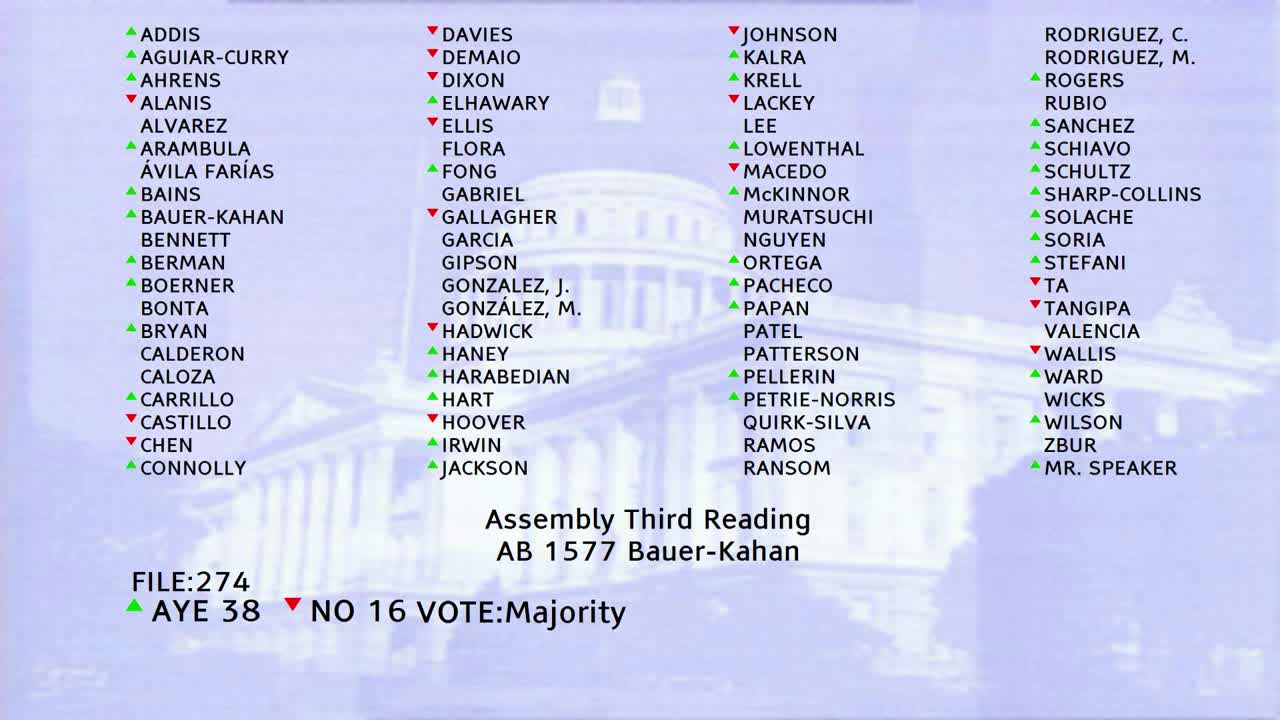
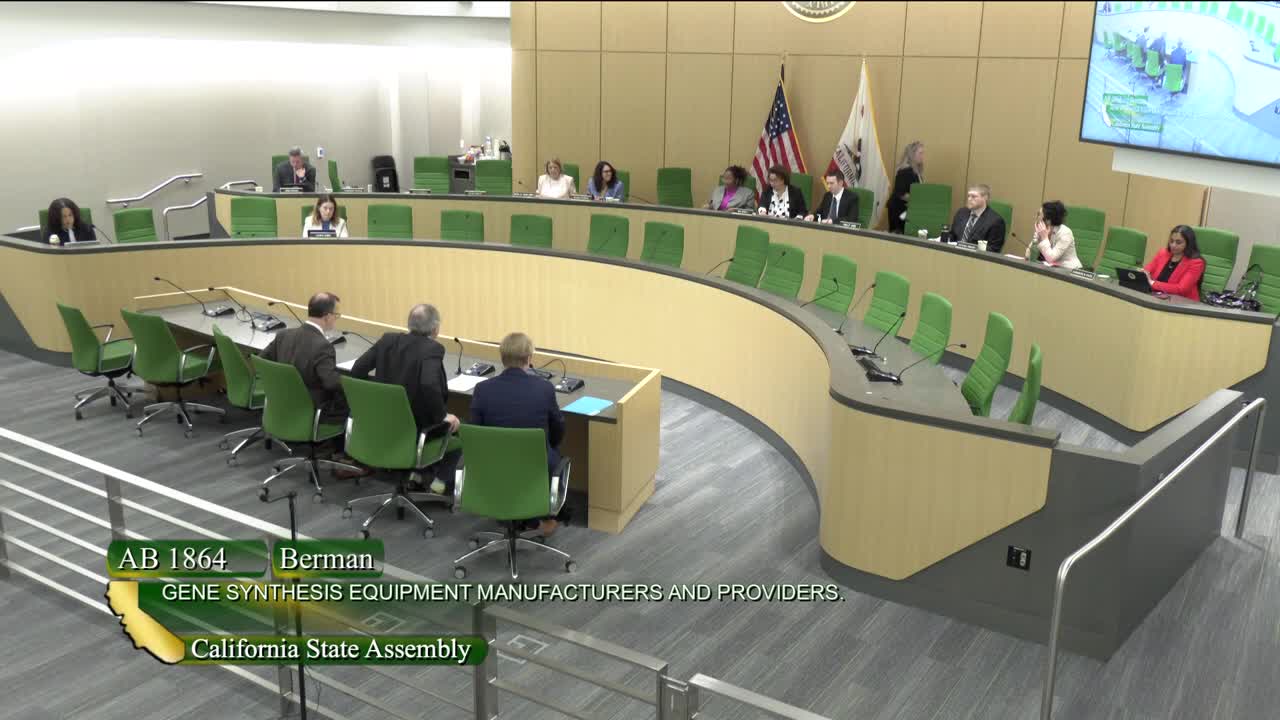
Bill Author

Bill Co-Author(s):