AB 1881: California Indian Freedom Act of 2026.
- Session Year: 2025-2026
- House: Assembly
- Latest Version Date: 2026-09-03
Current Status:
Failed
(2026-09-30: Vetoed by Governor.)
Introduced
In Committee
Awaiting First Chamber Vote
Passed First Chamber
In Committee
Awaiting Second Chamber Vote
Passed Second Chamber
Enacted
Existing law establishes various protections for California Native American tribes, including prohibiting a public agency or private party using or occupying public property or operating on public property from interfering with the free expression or exercise of Native American religion as provided in the United States Constitution and the California Constitution. Existing law also requires a local government to provide formal notification to each California Native American tribe that is traditionally and culturally affiliated with the project site as an invitation to consult on the proposed project, as provided. Existing law requires the local government, during the consultation, to give deference to the tribal information, tribal knowledge and customs, and the significance of the resource to the California Native American tribe. Existing law prohibits any information, as described, that is submitted by a California Native American tribe during the environmental review process from being included in the environmental document or otherwise disclosed by the lead agency or any other public agency to the public, as specified, without the prior consent of the tribe that provided the information.
Existing law, the California Public Records Act, requires each state and local agency, as defined, to make its records open to public inspection at all times during office hours, except as specifically exempted from disclosure by law. The act specifically exempts from disclosure records that are exempted or prohibited from disclosure by federal or state law and lists records subject to that exemption, specifying that the listed exemptions are not inclusive of all exemptions under the act.
This bill, the California Indian Freedom Act of 2026, would, commencing January 1, 2028, prohibit a governmental agency from substantially burdening a California Indian or California Native American tribes exercise of religious beliefs or spiritual practices on state lands, except as necessary to protect public safety and security, including their access to and use of sacred sites and objects, and their ability to perform religious ceremonies and rites, even if the burden results from a rule of general applicability, unless the governmental agency demonstrates that application of the burden is in furtherance of a compelling governmental interest and is in the least restrictive means of furthering that interest. The bill would provide that a California Native American tribe has exclusive standing to assert a violation of these provisions and would authorize a California Native American tribe to assert a violation of these provisions as a claim or defense in any judicial or administrative proceeding, as specified. The bill would require a governmental agency to allow California Indians access to sacred sites on state lands, as specified. The bill would require a governmental agency to seek and document free, prior, and informed consent from affected tribes before undertaking any physical change to a state land, as described, which the agency has actual knowledge is a sacred site where the action may pose a risk to sacred sites, as specified. The bill would require the affirmation of consent from the governing body of the affected tribe to be in writing, as described.
This bill would require the Department of General Services, in coordination with the Capitol Protective Section and the Joint Rules Committee, to the greatest extent possible, to uphold the religious freedom, ceremonial practices, sacred sites, cultural patrimony, and cultural landscapes of tribes when accessing the State Capitol grounds. The bill would require the Joint Rules Committee, in coordination with the Capitol Protective Section and the State Senate Capitol Security Program, to the greatest extent possible, to uphold the religious freedom, ceremonial practices, sacred sites, cultural patrimony, and cultural landscapes of tribes when accessing the State Capitol Building, as specified.
This bill would provide that the application of the act is strictly limited to a governmental agencys management actions that involve only state lands, as specified. The bill would declare that specified provisions of the bill do not apply to the authority of the State Water Resources Control Board to authorize, curtail, or otherwise regulate the diversion and use of water, or to the Porter-Cologne Water Quality Control Act.
This bill would require information identifying sacred sites, cultural landscapes, or religious practices obtained by a governmental agency for the purposes of the California Indian Freedom Act of 2026 to be confidential and would exempt this information from public record laws, including the California Public Records Act. The bill would revise the list of exempted records under the California Public Records Act to add the above-described exemption. The bill would prohibit the provisions of the act from being construed to limit or restrict the authority of the state or any state agency to enter into an agreement, memorandum of understanding, or other arrangement with any tribe to allow access to any state lands for the purpose of conducting religious, cultural, or ceremonial practices. The bill would define various terms for these purposes and would make related legislative findings.
Existing constitutional provisions require that a statute that limits the right of access to the meetings of public bodies or the writings of public officials and agencies be adopted with findings demonstrating the interest protected by the limitation and the need for protecting that interest.
This bill would make legislative findings to that effect.
Existing law establishes various protections for California Native American tribes, including prohibiting a public agency or private party using or occupying public property or operating on public property from interfering with the free expression or exercise of Native American religion as provided in the United States Constitution and the California Constitution. Existing law also requires a local government to provide formal notification to each California Native American tribe that is traditionally and culturally affiliated with the project site as an invitation to consult on the proposed project, as provided. Existing law requires the local government, during the consultation, to give deference to the tribal information, tribal knowledge and customs, and the significance of the resource to the California Native American tribe. Existing law prohibits any information, as described, that is submitted by a California Native American tribe during the environmental review process from being included in the environmental document or otherwise disclosed by the lead agency or any other public agency to the public, as specified, without the prior consent of the tribe that provided the information.
Existing law, the California Public Records Act, requires each state and local agency, as defined, to make its records open to public inspection at all times during office hours, except as specifically exempted from disclosure by law. The act specifically exempts from disclosure records that are exempted or prohibited from disclosure by federal or state law and lists records subject to that exemption, specifying that the listed exemptions are not inclusive of all exemptions under the act.
This bill, the California Indian Freedom Act of 2026, would, commencing January 1, 2028, prohibit a governmental agency from substantially burdening a California Indian or California Native American tribes exercise of religious beliefs or spiritual practices on state lands, except as necessary to protect public safety and security, including their access to and use of sacred sites and objects, and their ability to perform religious ceremonies and rites, even if the burden results from a rule of general applicability, unless the governmental agency demonstrates that application of the burden is in furtherance of a compelling governmental interest and is in the least restrictive means of furthering that interest. The bill would authorize provide that a California Indian or Native American tribe has exclusive standing to assert a violation of these provisions and would authorize a California Native American tribe to assert a violation of these provisions as a claim or defense in any judicial or administrative proceeding, as specified. The bill would require a governmental agency to allow California Indians access to sacred sites on state lands, as specified. The bill would require a governmental agency to seek and document free, prior, and informed consent from affected tribes before undertaking any physical change to a state land, as described, which the agency has actual knowledge is a sacred site where the action may pose a risk to sacred sites, as specified. The bill would require the affirmation of consent from the governing body of the affected tribe to be in writing, as described.
This bill would require the Department of General Services, in coordination with the Capitol Protective Section and the Joint Rules Committee, to the greatest extent possible, to uphold the religious freedom, ceremonial practices, sacred sites, cultural patrimony, and cultural landscapes of tribes when accessing the State Capitol grounds. The bill would require the Joint Rules Committee, in coordination with the Capitol Protective Section and the State Senate Capitol Security Program, to the greatest extent possible, to uphold the religious freedom, ceremonial practices, sacred sites, cultural patrimony, and cultural landscapes of tribes when accessing the State Capitol Building, as specified.
This bill would provide that the application of the act is strictly limited to a governmental agencys management actions that involve only state lands, as specified. The bill would declare that specified provisions of the bill do not apply to the authority of the State Water Resources Control Board to authorize, curtail, or otherwise regulate the diversion and use of water, or to the Porter-Cologne Water Quality Control Act.
This bill would require information identifying sacred sites, cultural landscapes, or religious practices obtained by a governmental agency for the purposes of the California Indian Freedom Act of 2026 to be confidential and would exempt this information from public record laws, including the California Public Records Act. The bill would revise the list of exempted records under the California Public Records Act to add the above-described exemption. The bill would prohibit the provisions of the act from being construed to limit or restrict the authority of the state or any state agency to enter into an agreement, memorandum of understanding, or other arrangement with any tribe to allow access to any state lands for the purpose of conducting religious, cultural, or ceremonial practices. The bill would define various terms for these purposes and would make related legislative findings.
Existing constitutional provisions require that a statute that limits the right of access to the meetings of public bodies or the writings of public officials and agencies be adopted with findings demonstrating the interest protected by the limitation and the need for protecting that interest.
This bill would make legislative findings to that effect.
Existing law establishes various protections for California Native American tribes, including prohibiting a public agency or private party using or occupying public property or operating on public property from interfering with the free expression or exercise of Native American religion as provided in the United States Constitution and the California Constitution. Existing law also requires a local government to provide formal notification to each California Native American tribe that is traditionally and culturally affiliated with the project site as an invitation to consult on the proposed project, as provided. Existing law requires the local government, during the consultation, to give deference to the tribal information, tribal knowledge and customs, and the significance of the resource to the California Native American tribe. Existing law prohibits any information, as described, that is submitted by a California Native American tribe during the environmental review process from being included in the environmental document or otherwise disclosed by the lead agency or any other public agency to the public, as specified, without the prior consent of the tribe that provided the information.
Existing law, the California Public Records Act, requires each state and local agency, as defined, to make its records open to public inspection at all times during office hours, except as specifically exempted from disclosure by law. The act specifically exempts from disclosure records that are exempted or prohibited from disclosure by federal or state law and lists records subject to that exemption, specifying that the listed exemptions are not inclusive of all exemptions under the act.
This bill, the California Indian Freedom Act of 2026, would would, commencing January 1, 2028, prohibit a governmental agency from substantially burdening a California Indian or California Native American tribes exercise of religious beliefs or spiritual practices on state lands, except as necessary to protect public safety and security, including their access to and use of sacred sites and objects, and their ability to perform religious ceremonies and rites, even if the burden results from a rule of general applicability, unless the governmental agency demonstrates that application of the burden is in furtherance of a compelling governmental interest and is in the least restrictive means of furthering that interest. The bill would authorize a California Indian or tribe to assert a violation of these provisions as a claim or defense in any judicial or administrative proceeding, as specified. The bill would require a governmental agency to allow California Indians access to sacred sites on state lands, as specified. The bill would require a governmental agency to seek and document free, prior, and informed consent from affected tribes before undertaking any physical change to a state land, as described, which the agency has actual knowledge is a sacred site where the action may pose a risk to sacred sites, as specified. The bill would require the affirmation of consent from the governing body of the affected tribe to be in writing, as described.
This bill would require the Department of General Services, in coordination with the Capitol Protective Section and the Joint Rules Committee, to the greatest extent possible, to uphold the religious freedom, ceremonial practices, sacred sites, cultural patrimony, and cultural landscapes of tribes when accessing the State Capitol grounds. The bill would require the Joint Rules Committee, in coordination with the Capitol Protective Section, Section and the State Senate Capitol Security Program, to the greatest extent possible, to uphold the religious freedom, ceremonial practices, sacred sites, cultural patrimony, and cultural landscapes of tribes when accessing the State Capitol Building, as specified.
This bill would provide that the application of the act is strictly limited to a governmental agencys management actions that involve only state lands, as specified. The bill would declare that specified provisions of the bill do not apply to the authority of the State Water Resources Control Board to authorize, curtail, or otherwise regulate the diversion and use of water, or to the Porter-Cologne Water Quality Control Act.
This bill would require information identifying sacred sites, cultural landscapes, or religious practices obtained by a governmental agency for the purposes of the California Indian Freedom Act of 2026 to be confidential and would exempt this information from public record laws, including the California Public Records Act. The bill would revise the list of exempted records under the California Public Records Act to add the above-described exemption. The bill would prohibit the provisions of the act from being construed to limit or restrict the authority of the state or any state agency to enter into an agreement, memorandum of understanding, or other arrangement with any tribe to allow access to any state lands for the purpose of conducting religious, cultural, or ceremonial practices. The bill would define various terms for these purposes and would make related legislative findings.
Existing constitutional provisions require that a statute that limits the right of access to the meetings of public bodies or the writings of public officials and agencies be adopted with findings demonstrating the interest protected by the limitation and the need for protecting that interest.
This bill would make legislative findings to that effect.
Existing law establishes various protections for California Native American tribes, including prohibiting a public agency or private party using or occupying public property or operating on public property from interfering with the free expression or exercise of Native American religion as provided in the United States Constitution and the California Constitution. Existing law also requires a local government to provide formal notification to each California Native American tribe that is traditionally and culturally affiliated with the project site as an invitation to consult on the proposed project, as provided. Existing law requires the local government, during the consultation, to give deference to the tribal information, tribal knowledge and customs, and the significance of the resource to the California Native American tribe. Existing law prohibits any information, as described, that is submitted by a California Native American tribe during the environmental review process from being included in the environmental document or otherwise disclosed by the lead agency or any other public agency to the public, as specified, without the prior consent of the tribe that provided the information.
Existing law, the California Public Records Act, requires each state and local agency, as defined, to make its records open to public inspection at all times during office hours, except as specifically exempted from disclosure by law. The act specifically exempts from disclosure records that are exempted or prohibited from disclosure by federal or state law and lists records subject to that exemption, specifying that the listed exemptions are not inclusive of all exemptions under the act.
This bill, the California Indian Freedom Act of 2026, would prohibit a governmental agency from substantially burdening a California Indian or California Native American tribes exercise of religious beliefs or spiritual practices on state lands, including their access to and use of sacred sites and objects, and their ability to perform religious ceremonies and rites, even if the burden results from a rule of general applicability, unless the governmental agency demonstrates that application of the burden is in furtherance of a compelling governmental interest and is in the least restrictive means of furthering that interest. The bill would authorize a California Indian or tribe to assert a violation of these provisions as a claim or defense in any judicial or administrative proceeding, as specified. The bill would require a governmental agency to allow California Indians access to sacred sites on state lands, as specified. The bill would require a governmental agency to seek and document free, prior, and informed consent from affected tribes before undertaking any project action on state lands that physical change to a state land, as described, which the agency has actual knowledge is a sacred site where the action may pose a risk to sacred sites, as specified. The bill would require the affirmation of consent from the governing body of the affected tribe to be in writing, as described.
This bill would require the Department of General Services, in coordination with the Capitol Protective Section, Section and the Joint Rules Committee, to the greatest extent possible, to uphold the religious freedom, ceremonial practices, sacred sites, cultural patrimony, and cultural landscapes of tribes when accessing the State Capitol Building Annex and grounds. The bill would require the Joint Rules Committee, in coordination with the Capitol Protective Section, to the greatest extent possible, to avoid undue harm when handling tribal instruments and regalia. uphold the religious freedom, ceremonial practices, sacred sites, cultural patrimony, and cultural landscapes of tribes when accessing the State Capitol Building, as specified.
This bill would provide that the application of the act is strictly limited to a governmental agencys management actions that involve only state lands, as specified. The bill would declare that specified provisions of the bill do not apply to the authority of the State Water Resources Control Board to authorize, curtail, or otherwise regulate the diversion and use of water, or to the Porter-Cologne Water Quality Control Act.
This bill would require information identifying sacred sites, cultural landscapes, or religious practices obtained by a governmental agency for the purposes of the California Indian Freedom Act of 2026 to be confidential and would exempt this information from public record laws, including the California Public Records Act. The bill would revise the list of exempted records under the California Public Records Act to add the above-described exemption. The bill would prohibit the provisions of the act from being construed to limit or restrict the authority of the state or any state agency to enter into an agreement, memorandum of understanding, or other arrangement with any tribe to allow access to any state lands for the purpose of conducting religious, cultural, or ceremonial practices. The bill would define various terms for these purposes and would make related legislative findings.
Existing constitutional provisions require that a statute that limits the right of access to the meetings of public bodies or the writings of public officials and agencies be adopted with findings demonstrating the interest protected by the limitation and the need for protecting that interest.
This bill would make legislative findings to that effect.
Existing law establishes various protections for California Native American tribes, including prohibiting a public agency or private party using or occupying public property or operating on public property from interfering with the free expression or exercise of Native American religion as provided in the United States Constitution and the California Constitution. Existing law also requires a local government to provide formal notification to each California Native American tribe that is traditionally and culturally affiliated with the project site as an invitation to consult on the proposed project, as provided. Existing law requires the local government, during the consultation, to give deference to the tribal information, tribal knowledge and customs, and the significance of the resource to the California Native American tribe. Existing law prohibits any information, as described, that is submitted by a California Native American tribe during the environmental review process from being included in the environmental document or otherwise disclosed by the lead agency or any other public agency to the public, as specified, without the prior consent of the tribe that provided the information.
Existing law, the California Public Records Act, requires each state and local agency, as defined, to make its records open to public inspection at all times during office hours, except as specifically exempted from disclosure by law. The act specifically exempts from disclosure records that are exempted or prohibited from disclosure by federal or state law and lists records subject to that exemption, specifying that the listed exemptions are not inclusive of all exemptions under the act.
This bill, the California Indian Freedom Act of 2026, would prohibit a governmental agency from substantially burdening a California Indian or California Native American tribes exercise of religious beliefs or spiritual practices on state lands, including their access to and use of sacred sites and objects, and their ability to perform religious ceremonies and rites, even if the burden results from a rule of general applicability, unless the governmental agency demonstrates that application of the burden is in furtherance of a compelling governmental interest and is in the least restrictive means of furthering that interest. The bill would authorize a California Indian or tribe to assert a violation of these provisions as a claim or defense in any judicial or administrative proceeding, as specified. The bill would require a governmental agency to allow California Indians access to sacred sites on state lands, as specified. The bill would require a governmental agency to seek and document free, prior, and informed consent from affected tribes before undertaking any project action on state lands that may pose a risk to sacred sites, as specified. The bill would require the affirmation of consent from the governing body of the affected tribe to be in writing, as described.
This bill would require the Department of General Services, in coordination with the Capitol Protective Section, to the greatest extent possible, to uphold the religious freedom, ceremonial practices, sacred sites, cultural patrimony, and cultural landscapes of tribes when accessing the State Capitol Building Annex and grounds. The bill would require the Capitol Protective Section, to the greatest extent possible, to avoid undue harm when handling tribal instruments and regalia.
This bill would provide that the application of the act is strictly limited to a governmental agencys management actions that involve only state lands, as specified.
This bill would require information identifying sacred sites, cultural landscapes, or religious practices obtained by a governmental agency for the purposes of the California Indian Freedom Act of 2026 to be confidential and would exempt this information from public record laws, including the California Public Records Act. The bill would revise the list of exempted records under the California Public Records Act to add the above-described exemption. The bill would prohibit the provisions of the act from being construed to limit or restrict the authority of the state or any state agency to enter into an agreement, memorandum of understanding, or other arrangement with any tribe to allow access to any state lands for the purpose of conducting religious, cultural, or ceremonial practices. The bill would define various terms for these purposes and would make related legislative findings.
Existing constitutional provisions require that a statute that limits the right of access to the meetings of public bodies or the writings of public officials and agencies be adopted with findings demonstrating the interest protected by the limitation and the need for protecting that interest.
This bill would make legislative findings to that effect.
Existing law establishes various protections for California Native American tribes, including prohibiting a public agency or private party using or occupying public property or operating on public property from interfering with the free expression or exercise of Native American religion as provided in the United States Constitution and the California Constitution. Existing law also requires a local government to provide formal notification to each California Native American tribe that is traditionally and culturally affiliated with the project site as an invitation to consult on the proposed project, as provided. Existing law requires the local government, during the consultation, to give deference to the tribal information, tribal knowledge and customs, and the significance of the resource to the California Native American tribe. Existing law prohibits any information, as described, that is submitted by a California Native American tribe during the environmental review process from being included in the environmental document or otherwise disclosed by the lead agency or any other public agency to the public, as specified, without the prior consent of the tribe that provided the information.
Existing law, the California Public Records Act, requires each state and local agency, as defined, to make its records open to public inspection at all times during office hours, except as specifically exempted from disclosure by law. The act specifically exempts from disclosure records that are exempted or prohibited from disclosure by federal or state law and lists records subject to that exemption, specifying that the listed exemptions are not inclusive of all exemptions under the act.
This bill, the California Indian Freedom Act of 2026, would prohibit a governmental agency from substantially burdening a California Indian or California Native American tribes exercise of religious beliefs or spiritual practices on state public lands, including their access to and use of sacred sites and objects, and their ability to perform religious ceremonies and rites, even if the burden results from a rule of general applicability, unless the governmental agency demonstrates that application of the burden is in furtherance of a compelling governmental interest and is in the least restrictive means of furthering that interest. The bill would authorize a California Indian or tribe to assert a violation of these provisions as a claim or defense in any judicial or administrative proceeding, as specified. The bill would require a governmental agency to allow California Indians access to sacred sites on state public lands, as specified. The bill would require a governmental agency to seek and document free, prior, and informed consent from affected tribes before undertaking any project action on state public lands that may pose a risk to sacred sites, as specified. The bill would require the affirmation of consent from the governing body of the affected tribe to be in writing, as described.
This bill would require the Department of General Services, in coordination with the Capitol Protective Section, to the greatest extent possible, to uphold the religious freedom, ceremonial practices, sacred sites, cultural patrimony, and cultural landscapes of tribes when accessing the State Capitol Building Annex and grounds. The bill would require the Capitol Protective Section, to the greatest extent possible, to avoid undue harm when handling tribal instruments and regalia.
This bill would require information identifying sacred sites, cultural landscapes, or religious practices obtained by a governmental agency for the purposes of the California Indian Freedom Act of 2026 to be confidential and would exempt this information from public record laws, including the California Public Records Act. The bill would revise the list of exempted records under the California Public Records Act to add the above-described exemption. The bill would define various terms for these purposes and would make related legislative findings.
Existing constitutional provisions require that a statute that limits the right of access to the meetings of public bodies or the writings of public officials and agencies be adopted with findings demonstrating the interest protected by the limitation and the need for protecting that interest.
This bill would make legislative findings to that effect.
Existing law establishes various protections for California Native American tribes, including prohibiting a public agency or private party using or occupying public property or operating on public property from interfering with the free expression or exercise of Native American religion as provided in the United States Constitution and the California Constitution. Existing law also requires a local government to provide formal notification to each California Native American tribe that is traditionally and culturally affiliated with the project site as an invitation to consult on the proposed project, as provided. Existing law requires the local government, during the consultation, to give deference to the tribal information, tribal knowledge and customs, and the significance of the resource to the California Native American tribe. Existing law prohibits any information, as described, that is submitted by a California Native American tribe during the environmental review process from being included in the environmental document or otherwise disclosed by the lead agency or any other public agency to the public, as specified, without the prior consent of the tribe that provided the information.
Existing law, the California Public Records Act, requires each state and local agency, as defined, to make its records open to public inspection at all times during office hours, except as specifically exempted from disclosure by law. The act specifically exempts from disclosure records that are exempted or prohibited from disclosure by federal or state law and lists records subject to that exemption, specifying that the listed exemptions are not inclusive of all exemptions under the act.
This bill, the California Indian Freedom Act of 2026, would prohibit a governmental agency from substantially burdening a California Indian or California Native American tribes exercise of religious beliefs or spiritual practices, practices on state public lands, including their access to and use of sacred sites and objects, and their ability to perform religious ceremonies and rites, even if the burden results from a rule of general applicability, unless the governmental agency demonstrates that application of the burden is in furtherance of a compelling governmental interest and is in the least restrictive means of furthering that interest. The act would apply to all state and local government actions, including, among others, permitting decisions, land use approvals, and enforcement actions. The bill would authorize a California Indian or tribe to assert a violation of these provisions as a claim or defense in any judicial or administrative proceeding, as specified. Before any governmental agency undertakes, approves, permits, funds, or authorizes a project that may impact a sacred site or cultural landscape, the bill would require the governmental agency to engage in early, meaningful and good-faith government-to-government consultation with an affected tribe. The bill would require a governmental agency to allow California Indians access to sacred sites on state public lands, as specified. The bill would require a governmental agency to seek and document free, prior, and informed consent from affected tribes for any project that risks, among other things, physical destruction or alteration of a sacred site. The bill would require a government agency to avoid adverse impacts to sacred sites, as described, and allow California Indians access to sacred sites on public lands for Native American religious, ceremonial, or cultural activities, except as specified. The before undertaking any project action that may pose a risk to sacred sites, as specified. The bill would require the affirmation of consent from the governing body of the affected tribe to be in writing, as described.
This bill would require the Department of General Services, in coordination with the Capitol Protective Section, to the greatest extent possible, to uphold the religious freedom, ceremonial practices, sacred sites, cultural patrimony, and cultural landscapes of tribes when accessing the State Capitol Building Annex and grounds. The bill would require the Capitol Protective Section, to the greatest extent possible, to avoid undue harm when handling tribal instruments and regalia.
This bill would require information identifying sacred sites, cultural landscapes, or religious practices obtained by a governmental agency for the purposes of the California Indian Freedom Act of 2026 to be confidential and would exempt this information from public record laws, including the California Public Records Act. The bill would revise the list of exempted records under the California Public Records Act to add the above-described exemption. The bill would define various terms for these purposes and would make related legislative findings. By imposing additional duties on local governmental agencies, this bill would impose a state-mandated local program.
The California Constitution requires the state to reimburse local agencies and school districts for certain costs mandated by the state. Statutory provisions establish procedures for making that reimbursement.This bill would provide that no reimbursement is required by this act for a specified reason.This bill would include findings that changes proposed by this bill address a matter of statewide concern rather than a municipal affair and, therefore, apply to all cities, including charter cities.Existing constitutional provisions require that a statute that limits the right of access to the meetings of public bodies or the writings of public officials and agencies be adopted with findings demonstrating the interest protected by the limitation and the need for protecting that interest.
This bill would make legislative findings to that effect.
The California Constitution requires local agencies, for the purpose of ensuring public access to the meetings of public bodies and the writings of public officials and agencies, to comply with a statutory enactment that amends or enacts laws relating to public records or open meetings and contains findings demonstrating that the enactment furthers the constitutional requirements relating to this purpose.This bill would make legislative findings to that effect.Existing law establishes various protections for California Native American tribes, including prohibiting a public agency or private party using or occupying public property or operating on public property from interfering with the free expression or exercise of Native American religion as provided in the United States Constitution and the California Constitution. Existing law also requires a local government to provide formal notification to each California Native American tribe that is traditionally and culturally affiliated with the project site as an invitation to consult on the proposed project, as provided. Existing law requires the local government, during the consultation, to give deference to the tribal information, tribal knowledge and customs, and the significance of the resource to the California Native American tribe. Existing law prohibits any information, as described, that is submitted by a California Native American tribe during the environmental review process from being included in the environmental document or otherwise disclosed by the lead agency or any other public agency to the public, as specified, without the prior consent of the tribe that provided the information.
Existing law, the California Public Records Act, requires each state and local agency, as defined, to make its records open to public inspection at all times during office hours, except as specifically exempted from disclosure by law. The act specifically exempts from disclosure records that are exempted or prohibited from disclosure by federal or state law and lists records subject to that exemption, specifying that the listed exemptions are not inclusive of all exemptions under the act.
This bill, the California Indian Freedom Act of 2026, would prohibit a governmental agency from substantially burdening a California Indian or California Native American tribes exercise of religious beliefs or spiritual practices, including their access to and use of sacred sites and objects, and their ability to perform religious ceremonies and rites, even if the burden results from a rule of general applicability, unless the governmental agency demonstrates that application of the burden is in furtherance of a compelling governmental interest and is in the least restrictive means of furthering that interest. The act would apply to all state and local government actions, including, among others, permitting decisions, land use approvals, and enforcement actions. The bill would authorize a California Indian or tribe to assert a violation of these provisions as a claim or defense in any judicial or administrative proceeding, as specified. Before any governmental agency undertakes, approves, permits, funds, or authorizes a project that may impact a sacred site or cultural landscape, the bill would require the governmental agency to engage in early, meaningful and good-faith government-to-government consultation with an affected tribe. The bill would require a governmental agency to seek and document free, prior, and informed consent from affected tribes for any project that risks, among other things, physical destruction or alteration of a sacred site. The bill would require a government agency to avoid adverse impacts to sacred sites, as described, and allow California Indians access to sacred sites on public lands for Native American religious, ceremonial, or cultural activities, except as specified. The bill would require information identifying sacred sites, cultural landscapes, or religious practices to be confidential and would exempt this information from public record laws, including the California Public Records Act. The bill would revise the list of exempted records under the California Public Records Act to add the above-described exemption. The bill would define various terms for these purposes and would make related legislative findings. By imposing additional duties on local governmental agencies, this bill would impose a state-mandated local program.
The California Constitution requires the state to reimburse local agencies and school districts for certain costs mandated by the state. Statutory provisions establish procedures for making that reimbursement.
This bill would provide that no reimbursement is required by this act for a specified reason.
This bill would include findings that changes proposed by this bill address a matter of statewide concern rather than a municipal affair and, therefore, apply to all cities, including charter cities.
Existing constitutional provisions require that a statute that limits the right of access to the meetings of public bodies or the writings of public officials and agencies be adopted with findings demonstrating the interest protected by the limitation and the need for protecting that interest.
This bill would make legislative findings to that effect.
The California Constitution requires local agencies, for the purpose of ensuring public access to the meetings of public bodies and the writings of public officials and agencies, to comply with a statutory enactment that amends or enacts laws relating to public records or open meetings and contains findings demonstrating that the enactment furthers the constitutional requirements relating to this purpose.
This bill would make legislative findings to that effect.
The Legislature finds and declares all of the following:
(a)California is home to the greatest number of California Indians living in the United States, approximately 700,000 according to the 2025 United States Census.
(b)More than 100 Native Nations call California home, each with distinct religions, spiritual traditions, and ceremonies that long predate statehood and continue to be practiced to this day.
(c)California Indian religions and spiritual beliefs, like many Indigenous religions, are exercised through land-based practices, including sacred sites and ceremonies tied to specific geographies, and require access to cultural landscapes that remain integral to the continued survival of California Indian religions and spiritual practices.
(d)Prior to the annexation of the California territory by the United States of America, the Indigenous people of this land were subjected to systems of conversion and enslavement under Spanish rule until 1821 through the Franciscan mission system.
(e)During the Mexican administration of the province from 1821 to 1845, the ancestral homelands of Californias Native Nations continued to be carved up by migrating Mexican, United States, British, and Canadian settlers, therefore, losing access to their spiritual sites and the natural resources.
(f)Since the incorporation of California territory into the United States of America in 1849, the relationship between the state and California Indians was fraught with violence, exploitation, dispossession, and the attempted destruction of tribal communities and criminalization of Native religious and spiritual practices.
(g)In 1850, the State of California passed An Act for the Government and Protection of Indians, which facilitated the removal of Indigenous groups from their ancestral lands through family separation and indentured servitude. The act also facilitated the punishment of Indigenous people for minor crimes, and prohibited the religious and spiritual practices of California Indians.
(h)Between 1850 and 1859, the State of California actively engaged in violent conflicts against its Native population, organizing private militias and calling up the state militia to respond to what officials perceived as Indian attacks.
(i)In 1851, Governor Peter Hardeman Burnett, Californias first governor, declared in his State of the State address that a war of extermination will continue to be waged between the two races until the Indian race becomes extinct must be expected.
(j)Between 1854 and 1859, the state authorized a series of military expeditions against Native communities in Humboldt, Klamath, Modoc, Pit River, San Bernardino, and Tulare. These campaigns generated an estimated cost of $449,605.74. California later submitted the expenses to Congress for reimbursement, but only $229,987.67 was ultimately approved and repaid under the Congressional Appropriations Act of March 2, 1861.
(k)Between 1892 and 1974, California was home to 13 federal Indian boarding schools that, under a federal mandate to assimilate California Indian children into American culture, forcibly removed thousands of Native children from their families, subjected them to harsh discipline and cultural suppression, including the loss of language, identity, and spiritual practices, and left a legacy of profound intergenerational trauma that continues to affect the well-being of California Native American tribes.
(l)Prior to 2022, more than 100 geographic features and places in California carried the term squaw, along with other derogatory names assigned to locations within the ancestral homelands of Native Nations. These names reinforced harmful stereotypes, fueled prejudice, and connected to the broader crisis of missing and murdered Indigenous people.
(m)Governmentsanctioned policies and actions that dispossessed California Indian tribes from their lands normalized a broader culture of mistreatment throughout the early 20th century, and the consequences of these injustices remain visible and deeply felt today.
(n)California Indian tribes continue to be separated from their cultural items and the ancestral human remains.
(o)Existing federal protections for Native American religious and spiritual practices, including the American Indian Religious Freedom Act of 1978 (42 U.S.C. Sec. 1996) (AIRFA) and the Religious Freedom Restoration Act of 1993 (42 U.S.C. Sec. 2000bb) (RFRA), are limited in scope, underenforced, or inapplicable to state and private actions.
(p)Existing California laws do not require Indigenous consent to state and local actions that would burden Native American religious freedom or provide comprehensive protection for the free exercise of Native American religious and spiritual practices, sacred sites, or access to cultural landscapes.
(q)California has a compelling interest in safeguarding Indigenous religious freedom, ceremonial practices, sacred sites, cultural patrimony, and access to cultural landscapes as a matter of human rights, cultural survival, and compliance with the United Nations Declaration on the Rights of Indigenous Peoples (UNDRIP), including Article 11 (right to practices and revitalize cultural traditions), Article 12 (right to maintain, protect, and access religious and cultural sites), Article 25 (right to maintain spiritual relationships with traditional lands), and Article 32 (right to determine and develop priorities for the use of lands and resources), as endorsed by the United States in 2010.
(r)It is therefore necessary to enact comprehensive state-level protections for California Indian religious and spiritual practice freedom protections and sacred site protections, including enforceable rights, consultation and consent requirements, confidentiality measures, stewardship and comanagement frameworks, and remedies.
SEC. 3.Section 7930.205 of the Government Code is amended to read:7930.205.The following provisions may operate to exempt certain records, or portions thereof, from disclosure pursuant to this division:
Taxpayer information, confidentiality, local taxes, Section 7925.000, this code.
Tax preparer, disclosure of information obtained in business of preparing tax returns, Section 17530.5, Business and Professions Code.
Teacher, credential holder or applicant, information provided to Commission on Teacher Credentialing, confidentiality of, Section 44341, Education Code.
Teacher, certified school personnel examination results, confidentiality of, Section 44289, Education Code.
Telephone answering service customer list, trade secret, Section 16606, Business and Professions Code.
Timber yield tax, disclosure to county assessor, Section 38706, Revenue and Taxation Code.
Timber yield tax, disclosure of information, Section 38705, Revenue and Taxation Code.
Title insurers, confidentiality of notice of noncompliance, Section 12414.14, Insurance Code.
Tobacco products, exemption from disclosure for distribution information provided to the State Department of Public Health, Section 22954, Business and Professions Code.
Tow truck driver, information in records of the Department of the California Highway Patrol, Department of Motor Vehicles, or other agencies, confidentiality of, Sections 2431 and 2432.3, Vehicle Code.
Toxic Substances Control, Department of, inspection of records of, Section 25152.5, Health and Safety Code.
Trade secrets, Section 1060, Evidence Code.
Trade secrets, confidentiality of, occupational safety and health inspections, Section 6322, Labor Code.
Trade secrets, disclosure of public records, Section 3426.7, Civil Code.
Trade secrets, food, drugs, cosmetics, nondisclosure, Sections 110165 and 110370, Health and Safety Code.
Trade secrets, protection by Director of Pesticide Regulation, Sections 7924.300 to 7924.335, inclusive, this code.
Trade secrets and proprietary information relating to pesticides, confidentiality of, Sections 14022 and 14023, Food and Agricultural Code.
Trade secrets, protection by Director of Industrial Relations, Section 6396, Labor Code.
Trade secrets relating to hazardous substances, disclosure of, Sections 78480 to 78495, inclusive, and Section 78930, Health and Safety Code.
Traffic violator school licensee records, confidentiality of, Section 11212, Vehicle Code.
Traffic offense, dismissed for participation in driving school or program, record of, confidentiality of, Section 1808.7, Vehicle Code.
Transit districts, questionnaire and financial statement information in bids, Section 99154, Public Utilities Code.
Tribal financial information, Section 8450, this code.
Tribal-state gaming compacts, exemption from disclosure for records of an Indian tribe relating to securitization of annual payments, Section 63048.63, this code.
Trust companies, disclosure of private trust confidential information, Section 1602, Financial Code.
This section shall remain in effect only until January 1, 2028, and as of that date is repealed.
SEC. 4.Section 7930.205 is added to the Government Code, to read:7930.205.The following provisions may operate to exempt certain records, or portions thereof, from disclosure pursuant to this division:
Information identifying sacred sites, cultural landscapes, or religious practices of California Native American tribes, Section 5097.1002, Public Resources Code.
Taxpayer information, confidentiality, local taxes, Section 7925.000, this code.
Tax preparer, disclosure of information obtained in business of preparing tax returns, Section 17530.5, Business and Professions Code.
Teacher, credential holder or applicant, information provided to Commission on Teacher Credentialing, confidentiality of, Section 44341, Education Code.
Teacher, certified school personnel examination results, confidentiality of, Section 44289, Education Code.
Telephone answering service customer list, trade secret, Section 16606, Business and Professions Code.
Timber yield tax, disclosure to county assessor, Section 38706, Revenue and Taxation Code.
Timber yield tax, disclosure of information, Section 38705, Revenue and Taxation Code.
Title insurers, confidentiality of notice of noncompliance, Section 12414.14, Insurance Code.
Tobacco products, exemption from disclosure for distribution information provided to the State Department of Public Health, Section 22954, Business and Professions Code.
Tow truck driver, information in records of the Department of the California Highway Patrol, Department of Motor Vehicles, or other agencies, confidentiality of, Sections 2431 and 2432.3, Vehicle Code.
Toxic Substances Control, Department of, inspection of records of, Section 25152.5, Health and Safety Code.
Trade secrets, Section 1060, Evidence Code.
Trade secrets, confidentiality of, occupational safety and health inspections, Section 6322, Labor Code.
Trade secrets, disclosure of public records, Section 3426.7, Civil Code.
Trade secrets, food, drugs, cosmetics, nondisclosure, Sections 110165 and 110370, Health and Safety Code.
Trade secrets, protection by Director of Pesticide Regulation, Sections 7924.300 to 7924.335, inclusive, this code.
Trade secrets and proprietary information relating to pesticides, confidentiality of, Sections 14022 and 14023, Food and Agricultural Code.
Trade secrets, protection by Director of Industrial Relations, Section 6396, Labor Code.
Trade secrets relating to hazardous substances, disclosure of, Sections 78480 to 78495, inclusive, and Section 78930, Health and Safety Code.
Traffic violator school licensee records, confidentiality of, Section 11212, Vehicle Code.
Traffic offense, dismissed for participation in driving school or program, record of, confidentiality of, Section 1808.7, Vehicle Code.
Transit districts, questionnaire and financial statement information in bids, Section 99154, Public Utilities Code.
Tribal financial information, Section 8450, this code.
Tribal-state gaming compacts, exemption from disclosure for records of an Indian tribe relating to securitization of annual payments, Section 63048.63, this code.
Trust companies, disclosure of private trust confidential information, Section 1602, Financial Code.
This section shall become operative on January 1, 2028.
SEC. 5.Chapter 1.79 (commencing with Section 5097.1000) is added to Division 5 of the Public Resources Code, to read:1.79.California Indian Freedom Act of 20265097.1000.For purposes of this act, the following definitions apply:
(a)California Indian means a Native American who is a member or citizen of a California Native American tribe.
(b)California Native American tribe means a Native American tribe located in California that is on the contact list maintained by the Native American Heritage Commission for the purposes of Chapter 905 of the Statutes of 2004.
(c)Capitol Protective Section means the division of the Department of the California Highway Patrol that provides law enforcement and safety services for the State Capitol Building and grounds and for the State Capitol Building Annex and grounds.
(d)Consultation has the same meaning as defined in Section 65352.4 of the Government Code.
(e)Cultural landscape means a geographical area on state lands that includes cultural and natural resources associated with the spiritual and cultural practices of a California Native American tribe.
(f)(1)Exercise of religious beliefs or spiritual practices means any tribal traditional practice undertaken as part of California Indian religious, spiritual, or sacred observance, whether or not compelled by, or central to, a system of religious belief.
(2)This term includes California Indian spiritual and religious practices tied to land, water, cultural landscapes, and sacred sites on state lands, and the use, building, or conversion of real property for religious or sacred purposes.
(3)This term includes actions and efforts associated with the preparation in the exercise of California Indian religious or spiritual practices, such as the gathering and collecting of California Indian traditional foods and plants for ceremonial purposes.
(g)Governmental agency means any state agency, department, board, or commission.
(h)Least restrictive means shall be interpreted consistent with strict scrutiny jurisprudence of California.
(i)Native Nation or tribe means any federally recognized or nonfederally recognized California Native American tribe.
(j)Sacred site means any specific location, landscape, landform, waterbody, or area on state lands that, on the basis of substantial evidence, is both of the following:
(1)Historically, culturally, or spiritually significant to a California Indian or tribe.
(2)Used, or has historically been used, for religious, ceremonial, or cultural purposes.
(k)(1)State lands means lands owned by the state or any state agency, excluding lands owned by or under the jurisdiction of any city, county, or district.
(2)State lands does not include private lands or lands used for public infrastructure or services, or authorized for private use or development.
(l)(1)Substantial burden means any governmental agency action or policy that occurs on or after January 1, 2027, that does any of the following:
(A)Significantly restricts, denies, or unreasonably interferes with gathering or collecting traditional foods and plants used in ceremonies, including funerals, feasts, and celebrations on state lands.
(B)Denies or unreasonably restricts access to sacred sites, ceremonial grounds, or other locations of religious or spiritual significance on state lands.
(C)Destroys, desecrates, materially alters, or otherwise interferes with sacred sites, cultural landscapes, or ceremonial items on state lands in a manner that prevents or substantially impedes the practice of sincerely held religious or spiritual beliefs.
(D)(i)Restricts items of cultural, sacred, or religious significance, including, but not limited to, regalia, headdresses, eagle feathers, traditional medicines, gourd rattles, or other ceremonial items, when entering state government buildings.
(ii)The items shall be permitted and, whenever possible, may be inspected by hand or through other nontechnological means.
(iii)At the request of the California Indian visitor to the State Capitol Building, the State Capitol Building Annex, or the State Capitol O Street Building, any item, including cultural or religious artifacts, that cannot be admitted into a secure facility for security reasons shall be stored and held for the convenience of the visitor until it can be collected.
(2)Routine administrative procedures, minor restrictions, or actions that do not materially prevent or significantly interfere with a California Indians or tribes exercise of religious beliefs or spiritual practices shall not constitute a substantial burden.
5097.1001.(a)A governmental agency shall not substantially burden a California Indian or California Native American tribes exercise of religious beliefs or spiritual practices on state lands, except as necessary to protect public safety and security, including their access to and use of sacred sites and objects, and their ability to perform religious ceremonies and rites, even if the burden results from a rule of general applicability, unless the governmental agency demonstrates that application of the burden is both of the following:
(1)In furtherance of a compelling governmental interest.
(2)The least restrictive means of furthering that interest.
(b)(1)A California Native American tribe shall have exclusive standing to bring a claim for a violation of this section.
(2)A California Native American tribe may assert a violation of this section as a claim or defense in any judicial or administrative proceeding.
(3)A California Native American tribe may obtain either of the following:
(A)Declaratory relief.
(B)Injunctive relief.
(4)A prevailing party asserting a claim under this act shall be entitled to reasonable attorneys fees and costs, and any other equitable remedies determined by the court.
5097.1002.(a)A governmental agency shall allow California Indians access to sacred sites on state lands for Native American religious, ceremonial, or cultural activities, except where public safety or resource protection make access impossible.
(b)Consistent with United Nations Declaration on the Rights of Indigenous Peoples (UNDRIP) Articles 11, 12, 25, and 32, a governmental agency shall seek and document free, prior, and informed consent of any affected tribe before undertaking any physical change to a state land, or a portion of a state land, which the agency has actual knowledge is a sacred site where the action may pose a risk to the sacred site by resulting in any of the following:
(1)Physical destruction of a sacred site.
(2)Alteration of the essential characteristics of a sacred site.
(3)Loss of access, privacy, or quiet use.
(4)Long-term environmental degradation affecting religious and spiritual practices.
(c)(1)Affirmation of consent from the governing body of the affected tribe shall be in writing.
(2)If a tribe does not respond within a reasonable timeframe designated in the request, then the governmental agency may interpret the lack of response as a grant of request.
(3)If a tribe responds to a request for consent by objecting to the undertaking, the governmental agency may request consultation with the tribe to see if issues raised by the tribe can be addressed.
(d)Information identifying sacred sites, cultural landscapes, or religious practices obtained by a governmental agency for the purposes of this chapter shall be confidential and exempt from public records laws, including, but not limited to, the California Public Records Act (Division 10 (commencing with Section 7920.000) of Title 1 of the Government Code).
5097.1003.(a)Notwithstanding Section 5097.1001, the Department of General Services, in coordination with the Capitol Protective Section and the Joint Rules Committee, shall, to the greatest extent possible, uphold the religious freedom, ceremonial practices, sacred sites, cultural patrimony, and cultural landscapes of tribes when accessing the State Capitol grounds.
(b)The Joint Rules Committee, in coordination with the Capitol Protective Section and the State Senate Capitol Security Program, shall, to the greatest extent possible, uphold the religious freedom, ceremonial practices, sacred sites, cultural patrimony, and cultural landscapes of tribes when accessing the State Capitol Building, including the State Capitol Building Annex.
5097.1004.Nothing in this act shall be construed to limit or restrict the authority of the state or any state agency to enter into an agreement, memorandum of understanding, or other arrangement with any tribe to allow access to any state lands for the purpose of conducting religious, cultural, or ceremonial practices.
5097.1005.(a)The application of this chapter is strictly limited to a governmental agencys management actions that involve only state lands, regardless of whether this limitation is specified in any provision in this chapter.
(b)This chapter has no application to any actions or direct or indirect effects arising out of, pertaining to, or relating to lands that are not state lands.
(c)To the extent there is a conflict between this section and any other provision of this chapter, this section shall control.
(d)This chapter does not apply to the authority of the State Water Resources Control Board to authorize, curtail, or otherwise regulate the diversion and use of water, or to Division 7 (commencing with Section 13000) of the Water Code.
5097.1006.This chapter shall become operative on January 1, 2028.
SEC. 6.The provisions of this act are severable. If any provision of this act or its application is held invalid, that invalidity shall not affect other provisions or applications that can be given effect without the invalid provision or application.
SEC. 7.The Legislature finds and declares that Sections 3 and 5 of this act, which amend Section 7930.205 of the Government Code and add Chapter 1.79 (commencing with Section 5097.1000) to Division 5 of the Public Resources Code, respectively, impose a limitation on the publics right of access to the meetings of public bodies or the writings of public officials and agencies within the meaning of Section 3 of Article I of the California Constitution. Pursuant to that constitutional provision, the Legislature makes the following findings to demonstrate the interest protected by this limitation and the need for protecting that interest:
The Legislature recognizes the states destructive role in the ability of California Indians to freely and safely practice their religious and spiritual beliefs through its past legislative actions, and that in order to both protect the privacy of California Indians and California Native American tribes with regard to information they may share with governmental agencies about the location and significance of sacred sites, cultural landscapes, and the practices of profound cultural, religious, and spiritual beliefs, it is necessary that this act limit the publics right of access to that information and for it to remain confidential.
The Legislature finds and declares all of the following:
(a)California is home to the greatest number of California Indians living in the United States, approximately 700,000 according to the 2025 United States Census.
(b)More than 100 Native Nations call California home, each with distinct religions, spiritual traditions, and ceremonies that long predate statehood and continue to be practiced to this day.
(c)California Indian religions and spiritual beliefs, like many Indigenous religions, are exercised through land-based practices, including sacred sites and ceremonies tied to specific geographies, and require access to cultural landscapes that remain integral to the continued survival of California Indian religions and spiritual practices.
(d)Prior to the annexation of the California territory by the United States of America, the Indigenous people of this land were subjected to systems of conversion and enslavement under Spanish rule until 1821 through the Franciscan mission system.
(e)During the Mexican administration of the province from 1821 to 1845, the ancestral homelands of Californias Native Nations continued to be carved up by migrating Mexican, United States, British, and Canadian settlers, therefore, losing access to their spiritual sites and the natural resources.
(f)Since the incorporation of California territory into the United States of America in 1849, the relationship between the state and California Indians was fraught with violence, exploitation, dispossession, and the attempted destruction of tribal communities and criminalization of Native religious and spiritual practices.
(g)In 1850, the State of California passed An Act for the Government and Protection of Indians, which facilitated the removal of Indigenous groups from their ancestral lands through family separation and indentured servitude. The act also facilitated the punishment of Indigenous people for minor crimes, and prohibited the religious and spiritual practices of California Indians.
(h)Between 1850 and 1859, the State of California actively engaged in violent conflicts against its Native population, organizing private militias and calling up the state militia to respond to what officials perceived as Indian attacks.
(i)In 1851, Governor Peter Hardeman Burnett, Californias first governor, declared in his State of the State address that a war of extermination will continue to be waged between the two races until the Indian race becomes extinct must be expected.
(j)Between 1854 and 1859, the state authorized a series of military expeditions against Native communities in Humboldt, Klamath, Modoc, Pit River, San Bernardino, and Tulare. These campaigns generated an estimated cost of $449,605.74. California later submitted the expenses to Congress for reimbursement, but only $229,987.67 was ultimately approved and repaid under the Congressional Appropriations Act of March 2, 1861.
(k)Between 1892 and 1974, California was home to 13 federal Indian boarding schools that, under a federal mandate to assimilate California Indian children into American culture, forcibly removed thousands of Native children from their families, subjected them to harsh discipline and cultural suppression, including the loss of language, identity, and spiritual practices, and left a legacy of profound intergenerational trauma that continues to affect the well-being of California Native American tribes.
(l)Prior to 2022, more than 100 geographic features and places in California carried the term squaw, along with other derogatory names assigned to locations within the ancestral homelands of Native Nations. These names reinforced harmful stereotypes, fueled prejudice, and connected to the broader crisis of missing and murdered Indigenous people.
(m)Governmentsanctioned policies and actions that dispossessed California Indian tribes from their lands normalized a broader culture of mistreatment throughout the early 20th century, and the consequences of these injustices remain visible and deeply felt today.
(n)California Indian tribes continue to be separated from their cultural items and the ancestral human remains.
(o)Existing federal protections for Native American religious and spiritual practices, including the American Indian Religious Freedom Act of 1978 (42 U.S.C. Sec. 1996) (AIRFA) and the Religious Freedom Restoration Act of 1993 (42 U.S.C. Sec. 2000bb) (RFRA), are limited in scope, underenforced, or inapplicable to state and private actions.
(p)Existing California laws do not require Indigenous consent to state and local actions that would burden Native American religious freedom or provide comprehensive protection for the free exercise of Native American religious and spiritual practices, sacred sites, or access to cultural landscapes.
(q)California has a compelling interest in safeguarding Indigenous religious freedom, ceremonial practices, sacred sites, cultural patrimony, and access to cultural landscapes as a matter of human rights, cultural survival, and compliance with the United Nations Declaration on the Rights of Indigenous Peoples (UNDRIP), including Article 11 (right to practices and revitalize cultural traditions), Article 12 (right to maintain, protect, and access religious and cultural sites), Article 25 (right to maintain spiritual relationships with traditional lands), and Article 32 (right to determine and develop priorities for the use of lands and resources), as endorsed by the United States in 2010.
(r)It is therefore necessary to enact comprehensive state-level protections for California Indian religious and spiritual practice freedom protections and sacred site protections, including enforceable rights, consultation and consent requirements, confidentiality measures, stewardship and comanagement frameworks, and remedies.
SEC. 3.Section 7930.205 of the Government Code is amended to read:7930.205.The following provisions may operate to exempt certain records, or portions thereof, from disclosure pursuant to this division:
Taxpayer information, confidentiality, local taxes, Section 7925.000, this code.
Tax preparer, disclosure of information obtained in business of preparing tax returns, Section 17530.5, Business and Professions Code.
Teacher, credential holder or applicant, information provided to Commission on Teacher Credentialing, confidentiality of, Section 44341, Education Code.
Teacher, certified school personnel examination results, confidentiality of, Section 44289, Education Code.
Telephone answering service customer list, trade secret, Section 16606, Business and Professions Code.
Timber yield tax, disclosure to county assessor, Section 38706, Revenue and Taxation Code.
Timber yield tax, disclosure of information, Section 38705, Revenue and Taxation Code.
Title insurers, confidentiality of notice of noncompliance, Section 12414.14, Insurance Code.
Tobacco products, exemption from disclosure for distribution information provided to the State Department of Public Health, Section 22954, Business and Professions Code.
Tow truck driver, information in records of the Department of the California Highway Patrol, Department of Motor Vehicles, or other agencies, confidentiality of, Sections 2431 and 2432.3, Vehicle Code.
Toxic Substances Control, Department of, inspection of records of, Section 25152.5, Health and Safety Code.
Trade secrets, Section 1060, Evidence Code.
Trade secrets, confidentiality of, occupational safety and health inspections, Section 6322, Labor Code.
Trade secrets, disclosure of public records, Section 3426.7, Civil Code.
Trade secrets, food, drugs, cosmetics, nondisclosure, Sections 110165 and 110370, Health and Safety Code.
Trade secrets, protection by Director of Pesticide Regulation, Sections 7924.300 to 7924.335, inclusive, this code.
Trade secrets and proprietary information relating to pesticides, confidentiality of, Sections 14022 and 14023, Food and Agricultural Code.
Trade secrets, protection by Director of Industrial Relations, Section 6396, Labor Code.
Trade secrets relating to hazardous substances, disclosure of, Sections 78480 to 78495, inclusive, and Section 78930, Health and Safety Code.
Traffic violator school licensee records, confidentiality of, Section 11212, Vehicle Code.
Traffic offense, dismissed for participation in driving school or program, record of, confidentiality of, Section 1808.7, Vehicle Code.
Transit districts, questionnaire and financial statement information in bids, Section 99154, Public Utilities Code.
Tribal financial information, Section 8450, this code.
Tribal-state gaming compacts, exemption from disclosure for records of an Indian tribe relating to securitization of annual payments, Section 63048.63, this code.
Trust companies, disclosure of private trust confidential information, Section 1602, Financial Code.
This section shall remain in effect only until January 1, 2028, and as of that date is repealed.
SEC. 4.Section 7930.205 is added to the Government Code, to read:7930.205.The following provisions may operate to exempt certain records, or portions thereof, from disclosure pursuant to this division:
Information identifying sacred sites, cultural landscapes, or religious practices of California Native American tribes, Section 5097.1002, Public Resources Code.
Taxpayer information, confidentiality, local taxes, Section 7925.000, this code.
Tax preparer, disclosure of information obtained in business of preparing tax returns, Section 17530.5, Business and Professions Code.
Teacher, credential holder or applicant, information provided to Commission on Teacher Credentialing, confidentiality of, Section 44341, Education Code.
Teacher, certified school personnel examination results, confidentiality of, Section 44289, Education Code.
Telephone answering service customer list, trade secret, Section 16606, Business and Professions Code.
Timber yield tax, disclosure to county assessor, Section 38706, Revenue and Taxation Code.
Timber yield tax, disclosure of information, Section 38705, Revenue and Taxation Code.
Title insurers, confidentiality of notice of noncompliance, Section 12414.14, Insurance Code.
Tobacco products, exemption from disclosure for distribution information provided to the State Department of Public Health, Section 22954, Business and Professions Code.
Tow truck driver, information in records of the Department of the California Highway Patrol, Department of Motor Vehicles, or other agencies, confidentiality of, Sections 2431 and 2432.3, Vehicle Code.
Toxic Substances Control, Department of, inspection of records of, Section 25152.5, Health and Safety Code.
Trade secrets, Section 1060, Evidence Code.
Trade secrets, confidentiality of, occupational safety and health inspections, Section 6322, Labor Code.
Trade secrets, disclosure of public records, Section 3426.7, Civil Code.
Trade secrets, food, drugs, cosmetics, nondisclosure, Sections 110165 and 110370, Health and Safety Code.
Trade secrets, protection by Director of Pesticide Regulation, Sections 7924.300 to 7924.335, inclusive, this code.
Trade secrets and proprietary information relating to pesticides, confidentiality of, Sections 14022 and 14023, Food and Agricultural Code.
Trade secrets, protection by Director of Industrial Relations, Section 6396, Labor Code.
Trade secrets relating to hazardous substances, disclosure of, Sections 78480 to 78495, inclusive, and Section 78930, Health and Safety Code.
Traffic violator school licensee records, confidentiality of, Section 11212, Vehicle Code.
Traffic offense, dismissed for participation in driving school or program, record of, confidentiality of, Section 1808.7, Vehicle Code.
Transit districts, questionnaire and financial statement information in bids, Section 99154, Public Utilities Code.
Tribal financial information, Section 8450, this code.
Tribal-state gaming compacts, exemption from disclosure for records of an Indian tribe relating to securitization of annual payments, Section 63048.63, this code.
Trust companies, disclosure of private trust confidential information, Section 1602, Financial Code.
This section shall become operative on January 1, 2028.
SEC. 5.Chapter 1.79 (commencing with Section 5097.1000) is added to Division 5 of the Public Resources Code, to read:1.79.California Indian Freedom Act of 20265097.1000.For purposes of this act, the following definitions apply:
(a)California Indian means a Native American who is a member or citizen of a California Native American tribe.
(b)California Native American tribe means a Native American tribe located in California that is on the contact list maintained by the Native American Heritage Commission for the purposes of Chapter 905 of the Statutes of 2004.
(c)Capitol Protective Section means the division of the Department of the California Highway Patrol that provides law enforcement and safety services for the State Capitol Building and grounds and for the State Capitol Building Annex and grounds.
(d)Consultation has the same meaning as defined in Section 65352.4 of the Government Code.
(e)Cultural landscape means a geographical area on state lands that includes cultural and natural resources associated with the spiritual and cultural practices of a California Native American tribe.
(f)(1)Exercise of religious beliefs or spiritual practices means any tribal traditional practice undertaken as part of California Indian religious, spiritual, or sacred observance, whether or not compelled by, or central to, a system of religious belief.
(2)This term includes California Indian spiritual and religious practices tied to land, water, cultural landscapes, and sacred sites on state lands, and the use, building, or conversion of real property for religious or sacred purposes.
(3)This term includes actions and efforts associated with the preparation in the exercise of California Indian religious or spiritual practices, such as the gathering and collecting of California Indian traditional foods and plants for ceremonial purposes.
(g)Governmental agency means any state agency, department, board, or commission.
(h)Least restrictive means shall be interpreted consistent with strict scrutiny jurisprudence of California.
(i)Native Nation or tribe means any federally recognized or nonfederally recognized California Native American tribe.
(j)Sacred site means any specific location, landscape, landform, waterbody, or area on state lands that, on the basis of substantial evidence, is both of the following:
(1)Historically, culturally, or spiritually significant to a California Indian or tribe.
(2)Used, or has historically been used, for religious, ceremonial, or cultural purposes.
(k)(1)State lands means lands owned by the state or any state agency, excluding lands owned by or under the jurisdiction of any city, county, or district.
(2)State lands does not include private lands or lands used for public infrastructure or services, or authorized for private use or development.
(l)(1)Substantial burden means any governmental agency action or policy that occurs on or after January 1, 2027, that does any of the following:
(A)Significantly restricts, denies, or unreasonably interferes with gathering or collecting traditional foods and plants used in ceremonies, including funerals, feasts, and celebrations on state lands.
(B)Denies or unreasonably restricts access to sacred sites, ceremonial grounds, or other locations of religious or spiritual significance on state lands.
(C)Destroys, desecrates, materially alters, or otherwise interferes with sacred sites, cultural landscapes, or ceremonial items on state lands in a manner that prevents or substantially impedes the practice of sincerely held religious or spiritual beliefs.
(D)(i)Restricts items of cultural, sacred, or religious significance, including, but not limited to, regalia, headdresses, eagle feathers, traditional medicines, gourd rattles, or other ceremonial items, when entering state government buildings.
(ii)The items shall be permitted and, whenever possible, may be inspected by hand or through other nontechnological means.
(iii)At the request of the California Indian visitor to the State Capitol Building, the State Capitol Building Annex, or the State Capitol O Street Building, any item, including cultural or religious artifacts, that cannot be admitted into a secure facility for security reasons shall be stored and held for the convenience of the visitor until it can be collected.
(2)Routine administrative procedures, minor restrictions, or actions that do not materially prevent or significantly interfere with a California Indians or tribes exercise of religious beliefs or spiritual practices shall not constitute a substantial burden.
5097.1001.(a)A governmental agency shall not substantially burden a California Indian or California Native American tribes exercise of religious beliefs or spiritual practices on state lands, except as necessary to protect public safety and security, including their access to and use of sacred sites and objects, and their ability to perform religious ceremonies and rites, even if the burden results from a rule of general applicability, unless the governmental agency demonstrates that application of the burden is both of the following:
(1)In furtherance of a compelling governmental interest.
(2)The least restrictive means of furthering that interest.
(b)(1)A California Indian or Native American tribe shall have exclusive standing and may to bring a claim for a violation of this section.
(2)A California Native American tribe may assert a violation of this section as a claim or defense in any judicial or administrative proceeding.
(2)(3)A California Indian or Native American tribe may obtain either of the following:
(A)Declaratory relief.
(B)Injunctive relief.
(3)(4)A prevailing party asserting a claim under this act shall be entitled to reasonable attorneys fees and costs, and any other equitable remedies determined by the court.
5097.1002.(a)A governmental agency shall allow California Indians access to sacred sites on state lands for Native American religious, ceremonial, or cultural activities, except where public safety or resource protection make access impossible.
(b)Consistent with United Nations Declaration on the Rights of Indigenous Peoples (UNDRIP) Articles 11, 12, 25, and 32, a governmental agency shall seek and document free, prior, and informed consent of any affected tribe before undertaking any physical change to a state land, or a portion of a state land, which the agency has actual knowledge is a sacred site where the action may pose a risk to the sacred site by resulting in any of the following:
(1)Physical destruction of a sacred site.
(2)Alteration of the essential characteristics of a sacred site.
(3)Loss of access, privacy, or quiet use.
(4)Long-term environmental degradation affecting religious and spiritual practices.
(c)(1)Affirmation of consent from the governing body of the affected tribe shall be in writing.
(2)If a tribe does not respond within a reasonable timeframe designated in the request, then the governmental agency may interpret the lack of response as a grant of request.
(3)If a tribe responds to a request for consent by objecting to the undertaking, the governmental agency may request consultation with the tribe to see if issues raised by the tribe can be addressed.
(d)Information identifying sacred sites, cultural landscapes, or religious practices obtained by a governmental agency for the purposes of this chapter shall be confidential and exempt from public records laws, including, but not limited to, the California Public Records Act (Division 10 (commencing with Section 7920.000) of Title 1 of the Government Code).
5097.1003.(a)Notwithstanding Section 5097.1001, the Department of General Services, in coordination with the Capitol Protective Section and the Joint Rules Committee, shall, to the greatest extent possible, uphold the religious freedom, ceremonial practices, sacred sites, cultural patrimony, and cultural landscapes of tribes when accessing the State Capitol grounds.
(b)The Joint Rules Committee, in coordination with the Capitol Protective Section and the State Senate Capitol Security Program, shall, to the greatest extent possible, uphold the religious freedom, ceremonial practices, sacred sites, cultural patrimony, and cultural landscapes of tribes when accessing the State Capitol Building, including the State Capitol Building Annex.
5097.1004.Nothing in this act shall be construed to limit or restrict the authority of the state or any state agency to enter into an agreement, memorandum of understanding, or other arrangement with any tribe to allow access to any state lands for the purpose of conducting religious, cultural, or ceremonial practices.
5097.1005.(a)The application of this chapter is strictly limited to a governmental agencys management actions that involve only state lands, regardless of whether this limitation is specified in any provision in this chapter.
(b)This chapter has no application to any actions or direct or indirect effects arising out of, pertaining to, or relating to lands that are not state lands.
(c)To the extent there is a conflict between this section and any other provision of this chapter, this section shall control.
(d)This chapter does not apply to the authority of the State Water Resources Control Board to authorize, curtail, or otherwise regulate the diversion and use of water, or to Division 7 (commencing with Section 13000) of the Water Code.
5097.1006.This chapter shall become operative on January 1, 2028.
SEC. 6.The provisions of this act are severable. If any provision of this act or its application is held invalid, that invalidity shall not affect other provisions or applications that can be given effect without the invalid provision or application.
SEC. 7.The Legislature finds and declares that Sections 3 and 4 5 of this act, which amend Section 7930.205 of the Government Code and add Chapter 1.79 (commencing with Section 5097.1000) to Division 5 of the Public Resources Code, respectively, impose a limitation on the publics right of access to the meetings of public bodies or the writings of public officials and agencies within the meaning of Section 3 of Article I of the California Constitution. Pursuant to that constitutional provision, the Legislature makes the following findings to demonstrate the interest protected by this limitation and the need for protecting that interest:
The Legislature recognizes the states destructive role in the ability of California Indians to freely and safely practice their religious and spiritual beliefs through its past legislative actions, and that in order to both protect the privacy of California Indians and California Native American tribes with regard to information they may share with governmental agencies about the location and significance of sacred sites, cultural landscapes, and the practices of profound cultural, religious, and spiritual beliefs, it is necessary that this act limit the publics right of access to that information and for it to remain confidential.
The Legislature finds and declares all of the following:
(a)California is home to the greatest number of California Indians living in the United States, approximately 700,000 according to the 2025 United States Census.
(b)More than 100 Native Nations call California home, each with distinct religions, spiritual traditions, and ceremonies that long predate statehood and continue to be practiced to this day.
(c)California Indian religions and spiritual beliefs, like many Indigenous religions, are exercised through land-based practices, including sacred sites and ceremonies tied to specific geographies, and require access to cultural landscapes that remain integral to the continued survival of California Indian religions and spiritual practices.
(d)Prior to the annexation of the California territory by the United States of America, the Indigenous people of this land were subjected to systems of conversion and enslavement under Spanish rule until 1821 through the Franciscan mission system.
(e)During the Mexican administration of the province from 1821 to 1845, the ancestral homelands of Californias Native Nations continued to be carved up by migrating Mexican, United States, British, and Canadian settlers, therefore, losing access to their spiritual sites and the natural resources.
(f)Since the incorporation of California territory into the United States of America in 1849, the relationship between the state and California Indians was fraught with violence, exploitation, dispossession, and the attempted destruction of tribal communities and criminalization of Native religious and spiritual practices.
(g)In 1850, the State of California passed An Act for the Government and Protection of Indians, which facilitated the removal of Indigenous groups from their ancestral lands through family separation and indentured servitude. The act also facilitated the punishment of Indigenous people for minor crimes, and prohibited the religious and spiritual practices of California Indians.
(h)Between 1850 and 1859, the State of California actively engaged in violent conflicts against its Native population, organizing private militias and calling up the state militia to respond to what officials perceived as Indian attacks.
(i)In 1851, Governor Peter Hardeman Burnett, Californias first governor, declared in his State of the State address that a war of extermination will continue to be waged between the two races until the Indian race becomes extinct must be expected.
(j)Between 1854 and 1859, the state authorized a series of military expeditions against Native communities in Humboldt, Klamath, Modoc, Pit River, San Bernardino, and Tulare. These campaigns generated an estimated cost of $449,605.74. California later submitted the expenses to Congress for reimbursement, but only $229,987.67 was ultimately approved and repaid under the Congressional Appropriations Act of March 2, 1861.
(k)Between 1892 and 1974, California was home to 13 federal Indian boarding schools that, under a federal mandate to assimilate California Indian children into American culture, forcibly removed thousands of Native children from their families, subjected them to harsh discipline and cultural suppression, including the loss of language, identity, and spiritual practices, and left a legacy of profound intergenerational trauma that continues to affect the well-being of California Native American tribes.
(l)Prior to 2022, more than 100 geographic features and places in California carried the term squaw, along with other derogatory names assigned to locations within the ancestral homelands of Native Nations. These names reinforced harmful stereotypes, fueled prejudice, and connected to the broader crisis of missing and murdered Indigenous people.
(m)Governmentsanctioned policies and actions that dispossessed California Indian tribes from their lands normalized a broader culture of mistreatment throughout the early 20th century, and the consequences of these injustices remain visible and deeply felt today.
(n)California Indian tribes continue to be separated from their cultural items and the ancestral human remains.
(o)Existing federal protections for Native American religious and spiritual practices, including the American Indian Religious Freedom Act of 1978 (42 U.S.C. Sec. 1996) (AIRFA) and the Religious Freedom Restoration Act of 1993 (42 U.S.C. Sec. 2000bb) (RFRA), are limited in scope, underenforced, or inapplicable to state and private actions.
(p)Existing California laws do not require Indigenous consent to state and local actions that would burden Native American religious freedom or provide comprehensive protection for the free exercise of Native American religious and spiritual practices, sacred sites, or access to cultural landscapes.
(q)California has a compelling interest in safeguarding Indigenous religious freedom, ceremonial practices, sacred sites, cultural patrimony, and access to cultural landscapes as a matter of human rights, cultural survival, and compliance with the United Nations Declaration on the Rights of Indigenous Peoples (UNDRIP), including Article 11 (right to practices and revitalize cultural traditions), Article 12 (right to maintain, protect, and access religious and cultural sites), Article 25 (right to maintain spiritual relationships with traditional lands), and Article 32 (right to determine and develop priorities for the use of lands and resources), as endorsed by the United States in 2010.
(r)It is therefore necessary to enact comprehensive state-level protections for California Indian religious and spiritual practice freedom protections and sacred site protections, including enforceable rights, consultation and consent requirements, confidentiality measures, stewardship and comanagement frameworks, and remedies.
SEC. 3.Section 7930.205 of the Government Code is amended to read:7930.205.The following provisions may operate to exempt certain records, or portions thereof, from disclosure pursuant to this division:
Information identifying sacred sites, cultural landscapes, or religious practices of California Native American tribes, Section 5097.1002, Public Resources Code.Taxpayer information, confidentiality, local taxes, Section 7925.000, this code.
Tax preparer, disclosure of information obtained in business of preparing tax returns, Section 17530.5, Business and Professions Code.
Teacher, credential holder or applicant, information provided to Commission on Teacher Credentialing, confidentiality of, Section 44341, Education Code.
Teacher, certified school personnel examination results, confidentiality of, Section 44289, Education Code.
Telephone answering service customer list, trade secret, Section 16606, Business and Professions Code.
Timber yield tax, disclosure to county assessor, Section 38706, Revenue and Taxation Code.
Timber yield tax, disclosure of information, Section 38705, Revenue and Taxation Code.
Title insurers, confidentiality of notice of noncompliance, Section 12414.14, Insurance Code.
Tobacco products, exemption from disclosure for distribution information provided to the State Department of Public Health, Section 22954, Business and Professions Code.
Tow truck driver, information in records of the Department of the California Highway Patrol, Department of Motor Vehicles, or other agencies, confidentiality of, Sections 2431 and 2432.3, Vehicle Code.
Toxic Substances Control, Department of, inspection of records of, Section 25152.5, Health and Safety Code.
Trade secrets, Section 1060, Evidence Code.
Trade secrets, confidentiality of, occupational safety and health inspections, Section 6322, Labor Code.
Trade secrets, disclosure of public records, Section 3426.7, Civil Code.
Trade secrets, food, drugs, cosmetics, nondisclosure, Sections 110165 and 110370, Health and Safety Code.
Trade secrets, protection by Director of Pesticide Regulation, Sections 7924.300 to 7924.335, inclusive, this code.
Trade secrets and proprietary information relating to pesticides, confidentiality of, Sections 14022 and 14023, Food and Agricultural Code.
Trade secrets, protection by Director of Industrial Relations, Section 6396, Labor Code.
Trade secrets relating to hazardous substances, disclosure of, Sections 78480 to 78495, inclusive, and Section 78930, Health and Safety Code.
Traffic violator school licensee records, confidentiality of, Section 11212, Vehicle Code.
Traffic offense, dismissed for participation in driving school or program, record of, confidentiality of, Section 1808.7, Vehicle Code.
Transit districts, questionnaire and financial statement information in bids, Section 99154, Public Utilities Code.
Tribal financial information, Section 8450, this code.
Tribal-state gaming compacts, exemption from disclosure for records of an Indian tribe relating to securitization of annual payments, Section 63048.63, this code.
Trust companies, disclosure of private trust confidential information, Section 1602, Financial Code.
This section shall remain in effect only until January 1, 2028, and as of that date is repealed.
SEC. 4.Section 7930.205 is added to the Government Code, to read:7930.205.The following provisions may operate to exempt certain records, or portions thereof, from disclosure pursuant to this division:
Information identifying sacred sites, cultural landscapes, or religious practices of California Native American tribes, Section 5097.1002, Public Resources Code.
Taxpayer information, confidentiality, local taxes, Section 7925.000, this code.
Tax preparer, disclosure of information obtained in business of preparing tax returns, Section 17530.5, Business and Professions Code.
Teacher, credential holder or applicant, information provided to Commission on Teacher Credentialing, confidentiality of, Section 44341, Education Code.
Teacher, certified school personnel examination results, confidentiality of, Section 44289, Education Code.
Telephone answering service customer list, trade secret, Section 16606, Business and Professions Code.
Timber yield tax, disclosure to county assessor, Section 38706, Revenue and Taxation Code.
Timber yield tax, disclosure of information, Section 38705, Revenue and Taxation Code.
Title insurers, confidentiality of notice of noncompliance, Section 12414.14, Insurance Code.
Tobacco products, exemption from disclosure for distribution information provided to the State Department of Public Health, Section 22954, Business and Professions Code.
Tow truck driver, information in records of the Department of the California Highway Patrol, Department of Motor Vehicles, or other agencies, confidentiality of, Sections 2431 and 2432.3, Vehicle Code.
Toxic Substances Control, Department of, inspection of records of, Section 25152.5, Health and Safety Code.
Trade secrets, Section 1060, Evidence Code.
Trade secrets, confidentiality of, occupational safety and health inspections, Section 6322, Labor Code.
Trade secrets, disclosure of public records, Section 3426.7, Civil Code.
Trade secrets, food, drugs, cosmetics, nondisclosure, Sections 110165 and 110370, Health and Safety Code.
Trade secrets, protection by Director of Pesticide Regulation, Sections 7924.300 to 7924.335, inclusive, this code.
Trade secrets and proprietary information relating to pesticides, confidentiality of, Sections 14022 and 14023, Food and Agricultural Code.
Trade secrets, protection by Director of Industrial Relations, Section 6396, Labor Code.
Trade secrets relating to hazardous substances, disclosure of, Sections 78480 to 78495, inclusive, and Section 78930, Health and Safety Code.
Traffic violator school licensee records, confidentiality of, Section 11212, Vehicle Code.
Traffic offense, dismissed for participation in driving school or program, record of, confidentiality of, Section 1808.7, Vehicle Code.
Transit districts, questionnaire and financial statement information in bids, Section 99154, Public Utilities Code.
Tribal financial information, Section 8450, this code.
Tribal-state gaming compacts, exemption from disclosure for records of an Indian tribe relating to securitization of annual payments, Section 63048.63, this code.
Trust companies, disclosure of private trust confidential information, Section 1602, Financial Code.
This section shall become operative on January 1, 2028.
SEC. 4.SEC. 5.Chapter 1.79 (commencing with Section 5097.1000) is added to Division 5 of the Public Resources Code, to read:1.79.California Indian Freedom Act of 20265097.1000.For purposes of this act, the following definitions apply:
(a)California Indian means a Native American who is a member or citizen of a California Native American tribe.
(b)California Native American tribe means a Native American tribe located in California that is on the contact list maintained by the Native American Heritage Commission for the purposes of Chapter 905 of the Statutes of 2004.
(c)Capitol Protective Section means the division of the Department of the California Highway Patrol that provides law enforcement and safety services for the State Capitol Building and grounds and for the State Capitol Building Annex and grounds.
(d)Consultation has the same meaning as defined in Section 65352.4 of the Government Code.
(e)Cultural landscape means a geographical area on state lands that includes cultural and natural resources associated with the spiritual and cultural practices of a California Native American tribe.
(f)(1)Exercise of religious beliefs or spiritual practices means any tribal traditional practice undertaken as part of California Indian religious, spiritual, or sacred observance, whether or not compelled by, or central to, a system of religious belief.
(2)This term includes California Indian spiritual and religious practices tied to land, water, cultural landscapes, and sacred sites on state lands, and the use, building, or conversion of real property for religious or sacred purposes.
(3)This term includes actions and efforts associated with the preparation in the exercise of California Indian religious or spiritual practices, such as the gathering and collecting of California Indian traditional foods and plants for ceremonial purposes.
(g)Governmental agency means any state agency, department, board, or commission.
(h)Least restrictive means shall be interpreted consistent with strict scrutiny jurisprudence of California.
(i)Native Nation or tribe means any federally recognized or nonfederally recognized California Native American tribe.
(j)Sacred site means any specific location, landscape, landform, waterbody, or area on state lands that, on the basis of substantial evidence, is both of the following:
(1)Historically, culturally, or spiritually significant to a California Indian or tribe.
(2)Used, or has historically been used, for religious, ceremonial, or cultural purposes.
(k)(1)State lands means lands owned by the state or any state agency, excluding lands owned by or under the jurisdiction of any city, county, or district.
(2)State lands does not include private lands or lands used for public infrastructure or services, or authorized for private use or development.
(l)(1)Substantial burden means any governmental agency action or policy that occurs on or after January 1, 2027, that does any of the following:
(A)Significantly restricts, denies, or unreasonably interferes with gathering or collecting traditional foods and plants used in ceremonies, including funerals, feasts, and celebrations on state lands.
(B)Denies or unreasonably restricts access to sacred sites, ceremonial grounds, or other locations of religious or spiritual significance on state lands.
(C)Destroys, desecrates, materially alters, or otherwise interferes with sacred sites, cultural landscapes, or ceremonial items on state lands in a manner that prevents or substantially impedes the practice of sincerely held religious or spiritual beliefs.
(D)(i)Screens or restricts Restricts items of cultural, sacred, or religious significance, including, but not limited to, regalia, headdresses, eagle feathers, traditional medicines, gourd rattles, or other ceremonial items, when entering state government buildings.
(ii)The items shall be permitted and and, whenever possible, may only be inspected by hand or through other nontechnological means.
(iii)The items shall not be inspected by technological screening.(iii)At the request of the California Indian visitor to the State Capitol Building, the State Capitol Building Annex, or the State Capitol O Street Building, any item, including cultural or religious artifacts, that cannot be admitted into a secure facility for security reasons shall be stored and held for the convenience of the visitor until it can be collected.
(2)Routine administrative procedures, minor restrictions, or actions that do not materially prevent or significantly interfere with a California Indians or tribes exercise of religious beliefs or spiritual practices shall not constitute a substantial burden.
5097.1001.(a)A governmental agency shall not substantially burden a California Indian or California Native American tribes exercise of religious beliefs or spiritual practices on state lands, except as necessary to protect public safety and security, including their access to and use of sacred sites and objects, and their ability to perform religious ceremonies and rites, even if the burden results from a rule of general applicability, unless the governmental agency demonstrates that application of the burden is both of the following:
(1)In furtherance of a compelling governmental interest.
(2)The least restrictive means of furthering that interest.
(b)(1)A California Indian or tribe shall have standing and may assert a violation of this section as a claim or defense in any judicial or administrative proceeding.
(2)A California Indian or tribe may obtain either of the following:
(A)Declaratory relief.
(B)Injunctive relief.
(3)A prevailing party asserting a claim under this act shall be entitled to reasonable attorneys fees and costs, and any other equitable remedies determined by the court.
5097.1002.(a)A governmental agency shall allow California Indians access to sacred sites on state lands for Native American religious, ceremonial, or cultural activities, except where public safety or resource protection make access impossible.
(b)Consistent with United Nations Declaration on the Rights of Indigenous Peoples (UNDRIP) Articles 11, 12, 25, and 32, a governmental agency shall seek and document free, prior, and informed consent of any affected tribe before undertaking any physical change to a state land, or a portion of a state land, which the agency has actual knowledge is a sacred site where the action may pose a risk to the sacred site by resulting in any of the following:
(1)Physical destruction of a sacred site.
(2)Alteration of the essential characteristics of a sacred site.
(3)Loss of access, privacy, or quiet use.
(4)Long-term environmental degradation affecting religious and spiritual practices.
(c)(1)Affirmation of consent from the governing body of the affected tribe shall be in writing.
(2)If a tribe does not respond within a reasonable timeframe designated in the request, then the governmental agency may interpret the lack of response as a grant of request.
(3)If a tribe responds to a request for consent by objecting to the undertaking, the governmental agency may request consultation with the tribe to see if issues raised by the tribe can be addressed.
(d)Information identifying sacred sites, cultural landscapes, or religious practices obtained by a governmental agency for the purposes of this chapter shall be confidential and exempt from public records laws, including, but not limited to, the California Public Records Act (Division 10 (commencing with Section 7920.000) of Title 1 of the Government Code).
5097.1003.(a)The Notwithstanding Section 5097.1001, the Department of General Services, in coordination with the Capitol Protective Section and the Joint Rules Committee, shall, to the greatest extent possible, uphold the religious freedom, ceremonial practices, sacred sites, cultural patrimony, and cultural landscapes of tribes when accessing the State Capitol grounds.
(b)The Joint Rules Committee, in coordination with the Capitol Protective Section, Section and the State Senate Capitol Security Program, shall, to the greatest extent possible, uphold the religious freedom, ceremonial practices, sacred sites, cultural patrimony, and cultural landscapes of tribes when accessing the State Capitol Building, including the State Capitol Building Annex.
5097.1004.Nothing in this act shall be construed to limit or restrict the authority of the state or any state agency to enter into an agreement, memorandum of understanding, or other arrangement with any tribe to allow access to any state lands for the purpose of conducting religious, cultural, or ceremonial practices.
5097.1005.(a)The application of this chapter is strictly limited to a governmental agencys management actions that involve only state lands, regardless of whether this limitation is specified in any provision in this chapter.
(b)This chapter has no application to any actions or direct or indirect effects arising out of, pertaining to, or relating to lands that are not state lands.
(c)To the extent there is a conflict between this section and any other provision of this chapter, this section shall control.
(d)This chapter does not apply to the authority of the State Water Resources Control Board to authorize, curtail, or otherwise regulate the diversion and use of water, or to Division 7 (commencing with Section 13000) of the Water Code.
5097.1006.This chapter shall become operative on January 1, 2028.
SEC. 5.SEC. 6.The provisions of this act are severable. If any provision of this act or its application is held invalid, that invalidity shall not affect other provisions or applications that can be given effect without the invalid provision or application.
SEC. 6.SEC. 7.The Legislature finds and declares that Sections 3 and 4 of this act, which amend Section 7930.205 of the Government Code and add Chapter 1.79 (commencing with Section 5097.1000) to Division 5 of the Public Resources Code, respectively, impose a limitation on the publics right of access to the meetings of public bodies or the writings of public officials and agencies within the meaning of Section 3 of Article I of the California Constitution. Pursuant to that constitutional provision, the Legislature makes the following findings to demonstrate the interest protected by this limitation and the need for protecting that interest:
The Legislature recognizes the states destructive role in the ability of California Indians to freely and safely practice their religious and spiritual beliefs through its past legislative actions, and that in order to both protect the privacy of California Indians and California Native American tribes with regard to information they may share with governmental agencies about the location and significance of sacred sites, cultural landscapes, and the practices of profound cultural, religious, and spiritual beliefs, it is necessary that this act limit the publics right of access to that information and for it to remain confidential.
The Legislature finds and declares all of the following:
(a)California is home to the greatest number of California Indians living in the United States, approximately 700,000 according to the 2025 United States Census.
(b)More than 100 Native Nations call California home, each with distinct religions, spiritual traditions, and ceremonies that long predate statehood and continue to be practiced to this day.
(c)California Indian religions and spiritual beliefs, like many Indigenous religions, are exercised through land-based practices, including sacred sites and ceremonies tied to specific geographies, and require access to cultural landscapes that remain integral to the continued survival of California Indian religions and spiritual practices.
(d)Prior to the annexation of the California territory by the United States of America, the Indigenous people of this land were subjected to systems of conversion and enslavement under Spanish rule until 1821 through the Franciscan mission system.
(e)During the Mexican administration of the province from 1821 to 1845, the ancestral homelands of Californias Native Nations continued to be carved up by migrating Mexican, United States, British, and Canadian settlers, therefore, losing access to their spiritual sites and the natural resources.
(f)Since the incorporation of California territory into the United States of America in 1849, the relationship between the state and California Indians was fraught with violence, exploitation, dispossession, and the attempted destruction of tribal communities and criminalization of Native religious and spiritual practices.
(g)In 1850, the State of California passed An Act for the Government and Protection of Indians, which facilitated the removal of Indigenous groups from their ancestral lands through family separation and indentured servitude. The act also facilitated the punishment of Indigenous people for minor crimes, and prohibited the religious and spiritual practices of California Indians.
(h)Between 1850 and 1859, the State of California actively engaged in violent conflicts against its Native population, organizing private militias and calling up the state militia to respond to what officials perceived as Indian attacks.
(i)In 1851, Governor Peter Hardeman Burnett, Californias first governor, declared in his State of the State address that a war of extermination will continue to be waged between the two races until the Indian race becomes extinct must be expected.
(j)Between 1854 and 1859, the state authorized a series of military expeditions against Native communities in Humboldt, Klamath, Modoc, Pit River, San Bernardino, and Tulare. These campaigns generated an estimated cost of $449,605.74. California later submitted the expenses to Congress for reimbursement, but only $229,987.67 was ultimately approved and repaid under the Congressional Appropriations Act of March 2, 1861.
(k)Between 1892 and 1974, California was home to 13 federal Indian boarding schools that, under a federal mandate to assimilate California Indian children into American culture, forcibly removed thousands of Native children from their families, subjected them to harsh discipline and cultural suppression, including the loss of language, identity, and spiritual practices, and left a legacy of profound intergenerational trauma that continues to affect the well-being of California Native American tribes.
(l)Prior to 2022, more than 100 geographic features and places in California carried the term squaw, along with other derogatory names assigned to locations within the ancestral homelands of Native Nations. These names reinforced harmful stereotypes, fueled prejudice, and connected to the broader crisis of missing and murdered Indigenous people.
(m)Governmentsanctioned policies and actions that dispossessed California Indian tribes from their lands normalized a broader culture of mistreatment throughout the early 20th century, and the consequences of these injustices remain visible and deeply felt today.
(n)California Indian tribes continue to be separated from their cultural items and the ancestral human remains.
(o)Existing federal protections for Native American religious and spiritual practices, including the American Indian Religious Freedom Act of 1978 (42 U.S.C. Sec. 1996) (AIRFA) and the Religious Freedom Restoration Act of 1993 (42 U.S.C. Sec. 2000bb) (RFRA), are limited in scope, underenforced, or inapplicable to state and private actions.
(p)Existing California laws do not require Indigenous consent to state and local actions that would burden Native American religious freedom or provide comprehensive protection for the free exercise of Native American religious and spiritual practices, sacred sites, or access to cultural landscapes.
(q)California has a compelling interest in safeguarding Indigenous religious freedom, ceremonial practices, sacred sites, cultural patrimony, and access to cultural landscapes as a matter of human rights, cultural survival, and compliance with the United Nations Declaration on the Rights of Indigenous Peoples (UNDRIP), including Article 11 (right to practices and revitalize cultural traditions), Article 12 (right to maintain, protect, and access religious and cultural sites), Article 25 (right to maintain spiritual relationships with traditional lands), and Article 32 (right to determine and develop priorities for the use of lands and resources), as endorsed by the United States in 2010.
(r)It is therefore necessary to enact comprehensive state-level protections for California Indian religious and spiritual practice freedom protections and sacred site protections, including enforceable rights, consultation and consent requirements, confidentiality measures, stewardship and comanagement frameworks, and remedies.
SEC. 3.Section 7930.205 of the Government Code is amended to read:7930.205.The following provisions may operate to exempt certain records, or portions thereof, from disclosure pursuant to this division:
Information identifying sacred sites, cultural landscapes, or religious practices of California Native American tribes, Section 5097.1002, Public Resources Code.
Taxpayer information, confidentiality, local taxes, Section 7925.000, this code.
Tax preparer, disclosure of information obtained in business of preparing tax returns, Section 17530.5, Business and Professions Code.
Teacher, credential holder or applicant, information provided to Commission on Teacher Credentialing, confidentiality of, Section 44341, Education Code.
Teacher, certified school personnel examination results, confidentiality of, Section 44289, Education Code.
Telephone answering service customer list, trade secret, Section 16606, Business and Professions Code.
Timber yield tax, disclosure to county assessor, Section 38706, Revenue and Taxation Code.
Timber yield tax, disclosure of information, Section 38705, Revenue and Taxation Code.
Title insurers, confidentiality of notice of noncompliance, Section 12414.14, Insurance Code.
Tobacco products, exemption from disclosure for distribution information provided to the State Department of Public Health, Section 22954, Business and Professions Code.
Tow truck driver, information in records of the Department of the California Highway Patrol, Department of Motor Vehicles, or other agencies, confidentiality of, Sections 2431 and 2432.3, Vehicle Code.
Toxic Substances Control, Department of, inspection of records of, Section 25152.5, Health and Safety Code.
Trade secrets, Section 1060, Evidence Code.
Trade secrets, confidentiality of, occupational safety and health inspections, Section 6322, Labor Code.
Trade secrets, disclosure of public records, Section 3426.7, Civil Code.
Trade secrets, food, drugs, cosmetics, nondisclosure, Sections 110165 and 110370, Health and Safety Code.
Trade secrets, protection by Director of Pesticide Regulation, Sections 7924.300 to 7924.335, inclusive, this code.
Trade secrets and proprietary information relating to pesticides, confidentiality of, Sections 14022 and 14023, Food and Agricultural Code.
Trade secrets, protection by Director of Industrial Relations, Section 6396, Labor Code.
Trade secrets relating to hazardous substances, disclosure of, Sections 78480 to 78495, inclusive, and Section 78930, Health and Safety Code.
Traffic violator school licensee records, confidentiality of, Section 11212, Vehicle Code.
Traffic offense, dismissed for participation in driving school or program, record of, confidentiality of, Section 1808.7, Vehicle Code.
Transit districts, questionnaire and financial statement information in bids, Section 99154, Public Utilities Code.
Tribal financial information, Section 8450, this code.
Tribal-state gaming compacts, exemption from disclosure for records of an Indian tribe relating to securitization of annual payments, Section 63048.63, this code.
Trust companies, disclosure of private trust confidential information, Section 1602, Financial Code.
SEC. 4.Chapter 1.79 (commencing with Section 5097.1000) is added to Division 5 of the Public Resources Code, to read:1.79.California Indian Freedom Act of 20265097.1000.For purposes of this act, the following definitions apply:
(a)California Indian means a Native American who is a member or citizen of a California Native American tribe.
(b)California Native American tribe means a Native American tribe located in California that is on the contact list maintained by the Native American Heritage Commission for the purposes of Chapter 905 of the Statutes of 2004.
(c)Capitol Protective Section means the division of the Department of the California Highway Patrol that provides law enforcement and safety services for the State Capitol Building and grounds and for the State Capitol Building Annex and grounds.
(d)Consultation has the same meaning as defined in Section 65352.4 of the Government Code.
(e)Cultural landscape means a geographical area on state lands that includes cultural and natural resources associated with the spiritual and cultural practices of a California Native American tribe.
(f)(1)Exercise of religious beliefs or spiritual practices means any tribal traditional practice undertaken as part of California Indian religious, spiritual, or sacred observance, whether or not compelled by, or central to, a system of religious belief.
(2)This term includes California Indian spiritual and religious practices tied to land, water, cultural landscapes, and sacred sites on state lands, and the use, building, or conversion of real property for religious or sacred purposes.
(3)This term includes actions and efforts associated with the preparation in the exercise of California Indian religious or spiritual practices, such as the gathering and collecting of California Indian traditional foods and plants for ceremonial purposes.
(g)Governmental agency means any state agency, department, board, or commission.
(h)Least restrictive means shall be interpreted consistent with strict scrutiny jurisprudence of California.
(i)Native Nation or tribe means any federally recognized or nonfederally recognized California Native American tribe.
(j)Sacred site means any specific location, landscape, landform, waterbody, or area on state lands that that, on the basis of substantial evidence, is both of the following:
(1)Historically, culturally, or spiritually significant to a California Indian or tribe.
(2)Used, or has historically been used, for religious, ceremonial, or cultural purposes.
(k)(1)State lands means lands owned by the state or any state agency, excluding lands owned by or under the jurisdiction of any city, county, or district.
(2)State lands does not include private lands or lands used for public infrastructure or services, or authorized for private use or development.
(l)(1)Substantial burden means any government governmental agency action or policy that occurs on or after January 1, 2027, that does any of the following:
(A)Significantly restricts, denies, or unreasonably interferes with gathering or collecting traditional foods and plants used in ceremonies, including funerals, feasts, and celebrations on state lands.
(B)Denies or unreasonably restricts access to sacred sites, ceremonial grounds, or other locations of religious or spiritual significance on state lands.
(C)Destroys, desecrates, materially alters, or otherwise interferes with sacred sites, cultural landscapes, or ceremonial items on state lands in a manner that prevents or substantially impedes the practice of sincerely held religious or spiritual beliefs.
(D)(i)Screens or restricts items of cultural, sacred, or religious significance, including, but not limited to, regalia, headdresses, eagle feathers, traditional medicines, gourd rattles, or other ceremonial items, when entering state government buildings.
(ii)The items shall be permitted and may only be inspected by hand or through other nontechnological means.
(iii)The items shall not be inspected by technological screening.
(2)Routine administrative procedures, minor restrictions, or actions that do not materially prevent or significantly interfere with a California Indians or tribes exercise of religious beliefs or spiritual practices shall not constitute a substantial burden.
5097.1001.(a)A governmental agency shall not substantially burden a California Indian or California Native American tribes exercise of religious beliefs or spiritual practices on state lands, including their access to and use of sacred sites and objects, and their ability to perform religious ceremonies and rites, even if the burden results from a rule of general applicability, unless the governmental agency demonstrates that application of the burden is both of the following:
(1)In furtherance of a compelling governmental interest.
(2)The least restrictive means of furthering that interest.
(b)(1)A California Indian or tribe shall have standing and may assert a violation of this section as a claim or defense in any judicial or administrative proceeding.
(2)A California Indian or tribe may obtain either of the following:
(A)Declaratory relief.
(B)Injunctive relief.
(3)A prevailing party asserting a claim under this act shall be entitled to reasonable attorneys fees and costs, and any other equitable remedies determined by the court.
5097.1002.(a)A governmental agency shall allow California Indians access to sacred sites on state lands for Native American religious, ceremonial, or cultural activities, except where public safety or resource protection make access impossible.
(b)Consistent with United Nations Declaration on the Rights of Indigenous Peoples (UNDRIP) Articles 11, 12, 25, and 32, a governmental agency shall seek and document free, prior, and informed consent of any affected tribe before undertaking any project action on state lands that may pose a risk to sacred sites of physical change to a state land, or a portion of a state land, which the agency has actual knowledge or has been formally notified that may result is a sacred site where the action may pose a risk to the sacred site by resulting in any of the following:
(1)Physical destruction or alteration of a sacred site.
(2)Alteration of the essential characteristics of a sacred site.
(2)(3)Loss of access, privacy, or quiet use.
(3)(4)Long-term environmental degradation affecting religious and spiritual practices.
(c)(1)Affirmation of consent from the governing body of the affected tribe shall be in writing.
(2)If a tribe does not respond within a reasonable timeframe designated in the request, then the governmental agency may interpret the lack of response as a grant of request.
(3)If a tribe responds to a request for consent by objecting to the undertaking, the governmental agency may request consultation with the tribe to see if issues raised by the tribe can be addressed.
(d)Information identifying sacred sites, cultural landscapes, or religious practices obtained by a governmental agency for the purposes of this chapter shall be confidential and exempt from public records laws, including, but not limited to, the California Public Records Act (Division 10 (commencing with Section 7920.000) of Title 1 of the Government Code).
5097.1003.(a)The Department of General Services, in coordination with the Capitol Protective Section, Section and the Joint Rules Committee, shall, to the greatest extent possible, uphold the religious freedom, ceremonial practices, sacred sites, cultural patrimony, and cultural landscapes of tribes when accessing the State Capitol Building Annex and grounds.
(b)The Joint Rules Committee, in coordination with the Capitol Protective Section Section, shall, to the greatest extent possible, avoid undue harm when handling tribal instruments and regalia. uphold the religious freedom, ceremonial practices, sacred sites, cultural patrimony, and cultural landscapes of tribes when accessing the State Capitol Building, including the State Capitol Building Annex.
5097.1004.Nothing in this act shall be construed to limit or restrict the authority of the state or any state agency to enter into an agreement, memorandum of understanding, or other arrangement with any tribe to allow access to any state lands for the purpose of conducting religious, cultural, or ceremonial practices.
5097.1005.(a)The application of this chapter is strictly limited to a governmental agencys management actions that involve only state lands, regardless of whether this limitation is specified in any provision in this chapter.
(b)This chapter has no application to any actions or direct or indirect effects arising out of, pertaining to, or relating to lands that are not state lands.
(c)To the extent there is a conflict between this section and any other provision of this chapter, this section shall control.
(d)This chapter does not apply to the authority of the State Water Resources Control Board to authorize, curtail, or otherwise regulate the diversion and use of water, or to Division 7 (commencing with Section 13000) of the Water Code.
SEC. 5.The provisions of this act are severable. If any provision of this act or its application is held invalid, that invalidity shall not affect other provisions or applications that can be given effect without the invalid provision or application.
SEC. 6.The Legislature finds and declares that Sections 3 and 4 of this act, which amend Section 7930.205 of the Government Code and add Chapter 1.79 (commencing with Section 5097.1000) to Division 5 of the Public Resources Code, respectively, impose a limitation on the publics right of access to the meetings of public bodies or the writings of public officials and agencies within the meaning of Section 3 of Article I of the California Constitution. Pursuant to that constitutional provision, the Legislature makes the following findings to demonstrate the interest protected by this limitation and the need for protecting that interest:
The Legislature recognizes the states destructive role in the ability of California Indians to freely and safely practice their religious and spiritual beliefs through its past legislative actions, and that in order to both protect the privacy of California Indians and California Native American tribes with regard to information they may share with governmental agencies about the location and significance of sacred sites, cultural landscapes, and the practices of profound cultural, religious, and spiritual beliefs, it is necessary that this act limit the publics right of access to that information and for it to remain confidential.
The Legislature finds and declares all of the following:
(a)California is home to the greatest number of California Indians living in the United States, approximately 700,000 according to the 2025 United States Census.
(b)More than 100 Native Nations call California home, each with distinct religions, spiritual traditions, and ceremonies that long predate statehood and continue to be practiced to this day.
(c)California Indian religions and spiritual beliefs, like many Indigenous religions, are exercised through land-based practices, including sacred sites and ceremonies tied to specific geographies, and require access to cultural landscapes that remain integral to the continued survival of California Indian religions and spiritual practices.
(d)Prior to the annexation of the California territory by the United States of America, the Indigenous people of this land were subjected to systems of conversion and enslavement under Spanish rule until 1821 through the Franciscan mission system.
(e)During the Mexican administration of the province from 1821 to 1845, the ancestral homelands of Californias Native Nations continued to be carved up by migrating Mexican, United States, British, and Canadian settlers, therefore, losing access to their spiritual sites and the natural resources.
(f)Since the incorporation of California territory into the United States of America in 1849, the relationship between the state and California Indians was fraught with violence, exploitation, dispossession, and the attempted destruction of tribal communities and criminalization of Native religious and spiritual practices.
(g)In 1850, the State of California passed An Act for the Government and Protection of Indians, which facilitated the removal of Indigenous groups from their ancestral lands through family separation and indentured servitude. The act also facilitated the punishment of Indigenous people for minor crimes, and prohibited the religious and spiritual practices of California Indians.
(h)Between 1850 and 1859, the State of California actively engaged in violent conflicts against its Native population, organizing private militias and calling up the state militia to respond to what officials perceived as Indian attacks.
(i)In 1851, Governor Peter Hardeman Burnett, Californias first governor, declared in his State of the State address that a war of extermination will continue to be waged between the two races until the Indian race becomes extinct must be expected.
(j)Between 1854 and 1859, the state authorized a series of military expeditions against Native communities in Humboldt, Klamath, Modoc, Pit River, San Bernardino, and Tulare. These campaigns generated an estimated cost of $449,605.74. California later submitted the expenses to Congress for reimbursement, but only $229,987.67 was ultimately approved and repaid under the Congressional Appropriations Act of March 2, 1861.
(k)Between 1892 and 1974, California was home to 13 federal Indian boarding schools that, under a federal mandate to assimilate California Indian children into American culture, forcibly removed thousands of Native children from their families, subjected them to harsh discipline and cultural suppression, including the loss of language, identity, and spiritual practices, and left a legacy of profound intergenerational trauma that continues to affect the well-being of California Native American tribes.
(l)Prior to 2022, more than 100 geographic features and places in California carried the term squaw, along with other derogatory names assigned to locations within the ancestral homelands of Native Nations. These names reinforced harmful stereotypes, fueled prejudice, and connected to the broader crisis of missing and murdered Indigenous people.
(m)Governmentsanctioned policies and actions that dispossessed California Indian tribes from their lands normalized a broader culture of mistreatment throughout the early 20th century, and the consequences of these injustices remain visible and deeply felt today.
(n)California Indian tribes continue to be separated from their cultural items and the ancestral human remains.
(o)Existing federal protections for Native American religious and spiritual practices, including the American Indian Religious Freedom Act of 1978 (42 U.S.C. Sec. 1996) (AIRFA) and the Religious Freedom Restoration Act of 1993 (42 U.S.C. Sec. 2000bb) (RFRA), are limited in scope, underenforced, or inapplicable to state and private actions.
(p)Existing California laws do not require Indigenous consent to state and local actions that would burden Native American religious freedom or provide comprehensive protection for the free exercise of Native American religious and spiritual practices, sacred sites, or access to cultural landscapes.
(q)California has a compelling interest in safeguarding Indigenous religious freedom, ceremonial practices, sacred sites, cultural patrimony, and access to cultural landscapes as a matter of human rights, cultural survival, and compliance with the United Nations Declaration on the Rights of Indigenous Peoples (UNDRIP), including Article 11 (right to practices and revitalize cultural traditions), Article 12 (right to maintain, protect, and access religious and cultural sites), Article 25 (right to maintain spiritual relationships with traditional lands), and Article 32 (right to determine and develop priorities for the use of lands and resources), as endorsed by the United States in 2010.
(r)It is therefore necessary to enact comprehensive state-level protections for California Indian religious and spiritual practice freedom protections and sacred site protections, including enforceable rights, consultation and consent requirements, confidentiality measures, stewardship and comanagement frameworks, and remedies.
SEC. 3.Section 7930.205 of the Government Code is amended to read:7930.205.The following provisions may operate to exempt certain records, or portions thereof, from disclosure pursuant to this division:
Information identifying sacred sites, cultural landscapes, or religious practices of California Native American tribes, Section 5097.1002, Public Resources Code.
Taxpayer information, confidentiality, local taxes, Section 7925.000, this code.
Tax preparer, disclosure of information obtained in business of preparing tax returns, Section 17530.5, Business and Professions Code.
Teacher, credential holder or applicant, information provided to Commission on Teacher Credentialing, confidentiality of, Section 44341, Education Code.
Teacher, certified school personnel examination results, confidentiality of, Section 44289, Education Code.
Telephone answering service customer list, trade secret, Section 16606, Business and Professions Code.
Timber yield tax, disclosure to county assessor, Section 38706, Revenue and Taxation Code.
Timber yield tax, disclosure of information, Section 38705, Revenue and Taxation Code.
Title insurers, confidentiality of notice of noncompliance, Section 12414.14, Insurance Code.
Tobacco products, exemption from disclosure for distribution information provided to the State Department of Public Health, Section 22954, Business and Professions Code.
Tow truck driver, information in records of the Department of the California Highway Patrol, Department of Motor Vehicles, or other agencies, confidentiality of, Sections 2431 and 2432.3, Vehicle Code.
Toxic Substances Control, Department of, inspection of records of, Section 25152.5, Health and Safety Code.
Trade secrets, Section 1060, Evidence Code.
Trade secrets, confidentiality of, occupational safety and health inspections, Section 6322, Labor Code.
Trade secrets, disclosure of public records, Section 3426.7, Civil Code.
Trade secrets, food, drugs, cosmetics, nondisclosure, Sections 110165 and 110370, Health and Safety Code.
Trade secrets, protection by Director of Pesticide Regulation, Sections 7924.300 to 7924.335, inclusive, this code.
Trade secrets and proprietary information relating to pesticides, confidentiality of, Sections 14022 and 14023, Food and Agricultural Code.
Trade secrets, protection by Director of Industrial Relations, Section 6396, Labor Code.
Trade secrets relating to hazardous substances, disclosure of, Sections 78480 to 78495, inclusive, and Section 78930, Health and Safety Code.
Traffic violator school licensee records, confidentiality of, Section 11212, Vehicle Code.
Traffic offense, dismissed for participation in driving school or program, record of, confidentiality of, Section 1808.7, Vehicle Code.
Transit districts, questionnaire and financial statement information in bids, Section 99154, Public Utilities Code.
Tribal financial information, Section 8450, this code.
Tribal-state gaming compacts, exemption from disclosure for records of an Indian tribe relating to securitization of annual payments, Section 63048.63, this code.
Trust companies, disclosure of private trust confidential information, Section 1602, Financial Code.
SEC. 4.Chapter 1.79 (commencing with Section 5097.1000) is added to Division 5 of the Public Resources Code, to read:1.79.California Indian Freedom Act of 20265097.1000.For purposes of this act, the following definitions apply:
(a)California Indian means a Native American who is a member or citizen of a California Native American tribe.
(b)California Native American tribe means a Native American tribe located in California that is on the contact list maintained by the Native American Heritage Commission for the purposes of Chapter 905 of the Statutes of 2004.
(c)Capitol Protective Section means the division of the Department of the California Highway Patrol that provides law enforcement and safety services for the State Capitol Building and grounds and for the State Capitol Building Annex and grounds.
(d)Consultation has the same meaning as defined in Section 65352.4 of the Government Code.
(e)Cultural landscape means a geographical area on state lands that includes cultural and natural resources associated with the spiritual and cultural practices of a California Native American tribe.
(f)(1)Exercise of religious beliefs or spiritual practices means any tribal traditional practice undertaken as part of California Indian religious, spiritual, or sacred observance, whether or not compelled by, or central to, a system of religious belief.
(2)This term includes California Indian spiritual and religious practices tied to land, water, cultural landscapes, and sacred sites on state lands, and the use, building, or conversion of real property for religious or sacred purposes.
(3)This term includes actions and efforts associated with the preparation in the exercise of California Indian religious or spiritual practices, such as the gathering and collecting of California Indian traditional foods and plants for ceremonial purposes.
(g)Governmental agency means any state agency, department, board, or commission.
(h)Least restrictive means shall be interpreted consistent with strict scrutiny jurisprudence of California.
(i)Native Nation or tribe means any federally recognized or nonfederally recognized California Native American tribe.
(j)Sacred site means any specific location, landscape, landform, waterbody, or area on state lands that is both of the following:
(1)Historically, culturally, or spiritually significant to a California Indian or tribe.
(2)Used, or has historically been used, for religious, ceremonial, or cultural purposes.
(k)(1)State lands means lands owned by the state or any state agency, excluding lands owned by or under the jurisdiction of any city, county, or district.
(2)State lands does not include private lands or lands used for public infrastructure or services, or authorized for private use or development.
(l)(1)Substantial burden means any government action or policy that occurs on or after January 1, 2027, that does any of the following:
(A)Significantly restricts, denies, or unreasonably interferes with gathering or collecting traditional foods and plants used in ceremonies, including funerals, feasts, and celebrations on state lands.
(B)Denies or unreasonably restricts access to sacred sites, ceremonial grounds, or other locations of religious or spiritual significance on state lands.
(C)Destroys, desecrates, materially alters, or otherwise interferes with sacred sites, cultural landscapes, or ceremonial items on state lands in a manner that prevents or substantially impedes the practice of sincerely held religious or spiritual beliefs.
(D)(i)Screens or restricts items of cultural, sacred, or religious significance, including, but not limited to, regalia, headdresses, eagle feathers, traditional medicines, gourd rattles, or other ceremonial items, when entering state government buildings.
(ii)The items shall be permitted and may only be inspected by hand or through other nontechnological means.
(iii)The items shall not be inspected by technological screening.
(2)Routine administrative procedures, minor restrictions, or actions that do not materially prevent or significantly interfere with a California Indians or tribes exercise of religious beliefs or spiritual practices shall not constitute a substantial burden.
5097.1001.(a)A governmental agency shall not substantially burden a California Indian or California Native American tribes exercise of religious beliefs or spiritual practices on state lands, including their access to and use of sacred sites and objects, and their ability to perform religious ceremonies and rites, even if the burden results from a rule of general applicability, unless the governmental agency demonstrates that application of the burden is both of the following:
(1)In furtherance of a compelling governmental interest.
(2)The least restrictive means of furthering that interest.
(b)(1)A California Indian or tribe shall have standing and may assert a violation of this section as a claim or defense in any judicial or administrative proceeding.
(2)A California Indian or tribe may obtain either of the following:
(A)Declaratory relief.
(B)Injunctive relief.
(3)A prevailing party asserting a claim under this act shall be entitled to reasonable attorneys fees and costs, and any other equitable remedies determined by the court.
5097.1002.(a)A governmental agency shall allow California Indians access to sacred sites on state lands for Native American religious, ceremonial, or cultural activities, except where public safety or resource protection make access impossible.
(b)Consistent with United Nations Declaration on the Rights of Indigenous Peoples (UNDRIP) Articles 11, 12, 25, and 32, a governmental agency shall seek and document free, prior, and informed consent of any affected tribe before undertaking any project action on state lands that may pose a risk to sacred sites of which the agency has actual knowledge or has been formally notified that may result in any of the following:
(1)Physical destruction or alteration of a sacred site.
(2)Loss of access, privacy, or quiet use.
(3)Long-term environmental degradation affecting religious and spiritual practices.
(c)(1)Affirmation of consent from the governing body of the affected tribe shall be in writing.
(2)If a tribe does not respond within a reasonable timeframe designated in the request, then the governmental agency may interpret the lack of response as a grant of request.
(3)If a tribe responds to a request for consent by objecting to the undertaking, the governmental agency may request consultation with the tribe to see if issues raised by the tribe can be addressed.
(d)Information identifying sacred sites, cultural landscapes, or religious practices obtained by a governmental agency for the purposes of this chapter shall be confidential and exempt from public records laws, including, but not limited to, the California Public Records Act (Division 10 (commencing with Section 7920.000) of Title 1 of the Government Code).
5097.1003.(a)The Department of General Services, in coordination with the Capitol Protective Section, shall, to the greatest extent possible, uphold the religious freedom, ceremonial practices, sacred sites, cultural patrimony, and cultural landscapes of tribes when accessing the State Capitol Building Annex and grounds.
(b)The Capitol Protective Section shall, to the greatest extent possible, avoid undue harm when handling tribal instruments and regalia.
5097.1004.Nothing in this act shall be construed to limit or restrict the authority of the state or any state agency to enter into an agreement, memorandum of understanding, or other arrangement with any tribe to allow access to any state lands for the purpose of conducting religious, cultural, or ceremonial practices.
5097.1005.(a)The application of this chapter is strictly limited to a governmental agencys management actions that involve only state lands, regardless of whether this limitation is specified in any provision in this chapter.
(b)This chapter has no application to any actions or direct or indirect effects arising out of, pertaining to, or relating to lands that are not state lands.
(c)To the extent there is a conflict between this section and any other provision of this chapter, this section shall control.
SEC. 5.The provisions of this act are severable. If any provision of this act or its application is held invalid, that invalidity shall not affect other provisions or applications that can be given effect without the invalid provision or application.
SEC. 6.The Legislature finds and declares that Sections 3 and 4 of this act, which amend Section 7930.205 of the Government Code and add Chapter 1.79 (commencing with Section 5097.1000) to Division 5 of the Public Resources Code, respectively, impose a limitation on the publics right of access to the meetings of public bodies or the writings of public officials and agencies within the meaning of Section 3 of Article I of the California Constitution. Pursuant to that constitutional provision, the Legislature makes the following findings to demonstrate the interest protected by this limitation and the need for protecting that interest:
The Legislature recognizes the states destructive role in the ability of California Indians to freely and safely practice their religious and spiritual beliefs through its past legislative actions, and that in order to both protect the privacy of California Indians and California Native American tribes with regard to information they may share with governmental agencies about the location and significance of sacred sites, cultural landscapes, and the practices of profound cultural, religious, and spiritual beliefs, it is necessary that this act limit the publics right of access to that information and for it to remain confidential.
The Legislature finds and declares all of the following:
(a)California is home to the greatest number of California Indians living in the United States, approximately 700,000 according to the 2025 United States Census.
(b)More than 100 Native Nations call California home, each with distinct religions, spiritual traditions, and ceremonies that long predate statehood and continue to be practiced to this day.
(c)California Indian religions and spiritual beliefs, like many Indigenous religions, are exercised through land-based practices, including sacred sites and ceremonies tied to specific geographies, and require access to cultural landscapes that remain integral to the continued survival of California Indian religions and spiritual practices.
(d)Prior to the annexation of the California territory by the United States of America, the Indigenous people of this land were subjected to systems of conversion and enslavement under Spanish rule until 1821 through the Franciscan mission system.
(e)During the Mexican administration of the province from 1821 to 1845, the ancestral homelands of Californias Native Nations continued to be carved up by migrating Mexican, United States, British, and Canadian settlers, therefore, losing access to their spiritual sites and the natural resources.
(f)Since the incorporation of California territory into the United States of America in 1849, the relationship between the state and California Indians was fraught with violence, exploitation, dispossession, and the attempted destruction of tribal communities and criminalization of Native religious and spiritual practices.
(g)In 1850, the State of California passed An Act for the Government and Protection of Indians, which facilitated the removal of Indigenous groups from their ancestral lands through family separation and indentured servitude. The act also facilitated the punishment of Indigenous people for minor crimes, and prohibited the religious and spiritual practices of California Indians.
(h)Between 1850 and 1859, the State of California actively engaged in violent conflicts against its Native population, organizing private militias and calling up the state militia to respond to what officials perceived as Indian attacks.
(i)In 1851, Governor Peter Hardeman Burnett, Californias first governor, declared in his State of the State address that a war of extermination will continue to be waged between the two races until the Indian race becomes extinct must be expected.
(j)Between 1854 and 1859, the state authorized a series of military expeditions against Native communities in Humboldt, Klamath, Modoc, Pit River, San Bernadino, Bernardino, and Tulare. These campaigns generated an estimated cost of $449,605.74. California later submitted the expenses to Congress for reimbursement, but only $229,987.67 was ultimately approved and repaid under the Congressional Appropriations Act of March 2, 1861.
(k)Between 1892 and 1974, California was home to 13 federal Indian boarding schools that, under a federal mandate to assimilate California Indian children into American culture, forcibly removed thousands of Native children from their families, subjected them to harsh discipline and cultural suppression, including the loss of language, identity, and spiritual practices, and left a legacy of profound intergenerational trauma that continues to affect the well-being of California Native American tribes.
(l)Prior to 2022, more than 100 geographic features and places in California carried the term squaw, along with other derogatory names assigned to locations within the ancestral homelands of Native Nations. These names reinforced harmful stereotypes, fueled prejudice, and connected to the broader crisis of missing and murdered Indigenous people.
(m)Governmentsanctioned policies and actions that dispossessed California Indian tribes from their lands normalized a broader culture of mistreatment throughout the early 20th century, and the consequences of these injustices remain visible and deeply felt today.
(n)California Indian tribes continue to be separated from their cultural items and the ancestral human remains.
(o)Existing federal protections for Native American religious and spiritual practices, including the American Indian Religious Freedom Act of 1978 (42 U.S.C. Sec. 1996) (AIRFA) and the Religious Freedom Restoration Act of 1993 (42 U.S.C. Sec. 2000bb) (RFRA), are limited in scope, underenforced, or inapplicable to state and private actions.
(p)Existing California laws do not require Indigenous consent to state and local actions that would burden Native American religious freedom or provide comprehensive protection for the free exercise of Native American religious and spiritual practices, sacred sites, or access to cultural landscapes.
(q)California has a compelling interest in safeguarding Indigenous religious freedom, ceremonial practices, sacred sites, cultural patrimony, and access to cultural landscapes as a matter of human rights, cultural survival, and compliance with the United Nations Declaration on the Rights of Indigenous Peoples (UNDRIP), including Article 11 (right to practices and revitalize cultural traditions), Article 12 (right to maintain, protect, and access religious and cultural sites), Article 25 (right to maintain spiritual relationships with traditional lands), and Article 32 (right to determine and develop priorities for the use of lands and resources), as endorsed by the United States in 2010.
(r)It is therefore necessary to enact comprehensive state-level protections for California Indian religious and spiritual practice freedom protections and sacred site protections, including enforceable rights, consultation and consent requirements, confidentiality measures, stewardship and comanagement frameworks, and remedies.
SEC. 3.Section 7930.205 of the Government Code is amended to read:7930.205.The following provisions may operate to exempt certain records, or portions thereof, from disclosure pursuant to this division:
Information identifying sacred sites, cultural landscapes, or religious practices of California Native American tribes, Section 5097.1002, Public Resources Code.
Taxpayer information, confidentiality, local taxes, Section 7925.000, this code.
Tax preparer, disclosure of information obtained in business of preparing tax returns, Section 17530.5, Business and Professions Code.
Teacher, credential holder or applicant, information provided to Commission on Teacher Credentialing, confidentiality of, Section 44341, Education Code.
Teacher, certified school personnel examination results, confidentiality of, Section 44289, Education Code.
Telephone answering service customer list, trade secret, Section 16606, Business and Professions Code.
Timber yield tax, disclosure to county assessor, Section 38706, Revenue and Taxation Code.
Timber yield tax, disclosure of information, Section 38705, Revenue and Taxation Code.
Title insurers, confidentiality of notice of noncompliance, Section 12414.14, Insurance Code.
Tobacco products, exemption from disclosure for distribution information provided to the State Department of Public Health, Section 22954, Business and Professions Code.
Tow truck driver, information in records of the Department of the California Highway Patrol, Department of Motor Vehicles, or other agencies, confidentiality of, Sections 2431 and 2432.3, Vehicle Code.
Toxic Substances Control, Department of, inspection of records of, Section 25152.5, Health and Safety Code.
Trade secrets, Section 1060, Evidence Code.
Trade secrets, confidentiality of, occupational safety and health inspections, Section 6322, Labor Code.
Trade secrets, disclosure of public records, Section 3426.7, Civil Code.
Trade secrets, food, drugs, cosmetics, nondisclosure, Sections 110165 and 110370, Health and Safety Code.
Trade secrets, protection by Director of Pesticide Regulation, Sections 7924.300 to 7924.335, inclusive, this code.
Trade secrets and proprietary information relating to pesticides, confidentiality of, Sections 14022 and 14023, Food and Agricultural Code.
Trade secrets, protection by Director of Industrial Relations, Section 6396, Labor Code.
Trade secrets relating to hazardous substances, disclosure of, Sections 78480 to 78495, inclusive, and Section 78930, Health and Safety Code.
Traffic violator school licensee records, confidentiality of, Section 11212, Vehicle Code.
Traffic offense, dismissed for participation in driving school or program, record of, confidentiality of, Section 1808.7, Vehicle Code.
Transit districts, questionnaire and financial statement information in bids, Section 99154, Public Utilities Code.
Tribal financial information, Section 8450, this code.
Tribal-state gaming compacts, exemption from disclosure for records of an Indian tribe relating to securitization of annual payments, Section 63048.63, this code.
Trust companies, disclosure of private trust confidential information, Section 1602, Financial Code.
SEC. 4.Chapter 1.79 (commencing with Section 5097.1000) is added to Division 5 of the Public Resources Code, to read:1.79.California Indian Freedom Act of 20265097.1000.For purposes of this act, the following definitions apply:
(a)California Indian means a Native American who is a member or citizen of a California Native American tribe.
(b)California Native American tribe means a Native American tribe located in California that is on the contact list maintained by the Native American Heritage Commission for the purposes of Chapter 905 of the Statutes of 2004.
(c)Capitol Protective Section means the division of the Department of the California Highway Patrol that provides law enforcement and safety services for the State Capitol Building and grounds and for the State Capitol Building Annex and grounds.
(d)Consultation has the same meaning as defined in Section 65352.4 of the Government Code.
(e)Cultural landscape means a geographical area on state public lands that includes cultural and natural resources associated with the spiritual and cultural practices of a California Native American tribe.
(f)(1)Exercise of religious beliefs or spiritual practices means any tribal traditional practice undertaken as part of California Indian religious, spiritual, or sacred observance, whether or not compelled by, or central to, a system of religious belief.
(2)This term includes California Indian spiritual and religious practices tied to land, water, cultural landscapes, and sacred sites on state public lands, and the use, building, or conversion of real property for religious or sacred purposes.
(3)This term includes actions and efforts associated with the preparation in the exercise of California Indian religious or spiritual practices, such as the gathering and collecting of California Indian traditional foods and plants for ceremonial purposes.
(g)Governmental agency means any state agency, department, board, or commission.
(h)Least restrictive means shall be interpreted consistent with strict scrutiny jurisprudence of California.
(i)Native Nation or tribe means any federally recognized or nonfederally recognized California Native American tribe.
(j)Sacred site means any specific location, landscape, landform, waterbody, or area on state lands that is both of the following:
(1)Historically, culturally, or spiritually significant to a California Indian or tribe.
(2)Used, or has historically been used, for religious, ceremonial, or cultural purposes.
(k)(1)State lands means lands owned by the state or any state agency, excluding lands owned by or under the jurisdiction of any city, county, or district.
(2)State lands does not include private lands or lands used for public infrastructure or services, or authorized for private use or development.
(j)(l)(1)Substantial burden means any government action or policy that occurs on or after January 1, 2027, that does any of the following:
(A)Significantly restricts, denies, or unreasonably interferes with gathering or collecting traditional foods and plants used in ceremonies, including funerals, feasts, and celebrations on state public lands.
(B)Denies or unreasonably restricts access to sacred sites, ceremonial grounds, or other locations of religious or spiritual significance on state public lands.
(C)Destroys, desecrates, materially alters, or otherwise interferes with sacred sites, cultural landscapes, or ceremonial items on state public lands in a manner that prevents or substantially impedes the practice of sincerely held religious or spiritual beliefs.
(D)(i)Screens or restricts items of cultural, sacred, or religious significance, including, but not limited to, regalia, headdresses, eagle feathers, traditional medicines, gourd rattles, or other ceremonial items, when entering state government buildings.
(ii)The items shall be permitted and may only be inspected by hand or through other nontechnological means.
(iii)The items shall not be inspected by technological screening.
(2)Routine administrative procedures, minor restrictions, or actions that do not materially prevent or significantly interfere with a California Indians or tribes exercise of religious beliefs or spiritual practices shall not constitute a substantial burden.
(k)Sacred site means any specific location, landscape, landform, waterbody, or area on state public lands that is both of the following: (1)Historically, culturally, or spiritually significant to a California Indian or tribe. (2)Used, or has historically been used, for religious, ceremonial, or cultural purposes. 5097.1001.(a)A governmental agency shall not substantially burden a California Indian or California Native American tribes exercise of religious beliefs or spiritual practices on state public lands, including their access to and use of sacred sites and objects, and their ability to perform religious ceremonies and rites, even if the burden results from a rule of general applicability, unless the governmental agency demonstrates that application of the burden is both of the following:
(1)In furtherance of a compelling governmental interest.
(2)The least restrictive means of furthering that interest.
(b)(1)A California Indian or tribe shall have standing and may assert a violation of this section as a claim or defense in any judicial or administrative proceeding.
(2)A California Indian or tribe may obtain either of the following:
(A)Declaratory relief.
(B)Injunctive relief.
(3)A prevailing party asserting a claim under this act shall be entitled to reasonable attorneys fees and costs, and any other equitable remedies determined by the court.
5097.1002.(a)A governmental agency shall allow California Indians access to sacred sites on state public lands for Native American religious, ceremonial, or cultural activities, except where public safety or resource protection make access impossible.
(b)Consistent with United Nations Declaration on the Rights of Indigenous Peoples (UNDRIP) Articles 11, 12, 25, and 32, a governmental agency shall seek and document free, prior, and informed consent of any affected tribe before undertaking any project action on state public lands that may pose a risk to sacred sites of which the agency has actual knowledge or has been formally notified that may result in any of the following:
(1)Physical destruction or alteration of a sacred site.
(2)Loss of access, privacy, or quiet use.
(3)Long-term environmental degradation affecting religious and spiritual practices.
(c)(1)Affirmation of consent from the governing body of the affected tribe shall be in writing.
(2)If a tribe does not respond within a reasonable timeframe designated in the request, then the governmental agency may interpret the lack of response as a grant of request.
(3)If a tribe responds to a request for consent by objecting to the undertaking, the governmental agency may request consultation with the tribe to see if issues raised by the tribe can be addressed.
(d)Information identifying sacred sites, cultural landscapes, or religious practices obtained by a governmental agency for the purposes of this chapter shall be confidential and exempt from public records laws, including, but not limited to, the California Public Records Act (Division 10 (commencing with Section 7920.000) of Title 1 of the Government Code).
5097.1003.(a)The Department of General Services, in coordination with the Capitol Protective Section, shall, to the greatest extent possible, uphold the religious freedom, ceremonial practices, sacred sites, cultural patrimony, and cultural landscapes of tribes when accessing the State Capitol Building Annex and grounds.
(b)The Capitol Protective Section shall, to the greatest extent possible, avoid undue harm when handling tribal instruments and regalia.
5097.1004.Nothing in this act shall be construed to limit or restrict the authority of the state or any state agency to enter into an agreement, memorandum of understanding, or other arrangement with any tribe to allow access to any state lands for the purpose of conducting religious, cultural, or ceremonial practices.
SEC. 5.The provisions of this act are severable. If any provision of this act or its application is held invalid, that invalidity shall not affect other provisions or applications that can be given effect without the invalid provision or application.
SEC. 6.The Legislature finds and declares that Sections 3 and 4 of this act, which amend Section 7930.205 of the Government Code and add Chapter 1.79 (commencing with Section 5097.1000) to Division 5 of the Public Resources Code, respectively, impose a limitation on the publics right of access to the meetings of public bodies or the writings of public officials and agencies within the meaning of Section 3 of Article I of the California Constitution. Pursuant to that constitutional provision, the Legislature makes the following findings to demonstrate the interest protected by this limitation and the need for protecting that interest:
The Legislature recognizes the states destructive role in the ability of California Indians to freely and safely practice their religious and spiritual beliefs through its past legislative actions, and that in order to both protect the privacy of California Indians and California Native American tribes with regard to information they may share with governmental agencies about the location and significance of sacred sites, cultural landscapes, and the practices of profound cultural, religious, and spiritual beliefs, it is necessary that this act limit the publics right of access to that information and for it to remain confidential.
The Legislature finds and declares all of the following:
(a)California is home to the greatest number of California Indians living in the United States, approximately 700,000 according to the 2025 United States Census.
(b)More than 100 Native Nations call California home, each with distinct religions, spiritual traditions, and ceremonies that long predate statehood and continue to be practiced to this day.
(c)California Indian religions and spiritual beliefs, like many Indigenous religions, are exercised through land-based practices, including sacred sites and ceremonies tied to specific geographies, and require access to cultural landscapes that remain integral to the continued survival of California Indian religions and spiritual practices.
(d)Prior to the annexation of the California territory by the United States of America, the Indigenous people of this land were subjected to systems of conversion and enslavement under Spanish rule until 1821 through the Franciscan mission system.
(e)During the Mexican administration of the province from 1821 to 1845, the ancestral homelands of Californias Native Nations continued to be carved up by migrating Mexican, United States, British, and Canadian settlers, therefore, losing access to their spiritual sites and the natural resources.
(f)Since the incorporation of California territory into the United States of America in 1849, the relationship between the state and California Indians was fraught with violence, exploitation, dispossession, and the attempted destruction of tribal communities and criminalization of Native religious and spiritual practices.
(g)In 1850, the State of California passed An Act for the Government and Protection of Indians, which facilitated the removal of Indigenous groups from their ancestral lands through family separation and indentured servitude. The act also facilitated the punishment of Indigenous people for minor crimes, and prohibited the religious and spiritual practices of California Indians.
(h)Between 1850 and 1859, the State of California actively engaged in violent conflicts against its Native population, organizing private militias and calling up the state militia to respond to what officials perceived as Indian attacks.
(i)In 1851, Governor Peter Hardeman Burnett, Californias first governor, declared in his State of the State address that a war of extermination will continue to be waged between the two races until the Indian race becomes extinct must be expected.
(j)Between 1854 and 1859, the state authorized a series of military expeditions against Native communities in Humboldt, Klamath, Modoc, Pit River, San Bernadino, and Tulare. These campaigns generated an estimated cost of $449,605.74. California later submitted the expenses to Congress for reimbursement, but only $229,987.67 was ultimately approved and repaid under the Congressional Appropriations Act of March 2, 1861.
(k)Between 1892 and 1974, California was home to 13 federal Indian boarding schools that, under a federal mandate to assimilate California Indian children into American culture, forcibly removed thousands of Native children from their families, subjected them to harsh discipline and cultural suppression, including the loss of language, identity, and spiritual practices, and left a legacy of profound intergenerational trauma that continues to affect the well-being of California Native American tribes.
(l)Prior to 2022, more than 100 geographic features and places in California carried the term squaw, along with other derogatory names assigned to locations within the ancestral homelands of Native Nations. These names reinforced harmful stereotypes, fueled prejudice, and connected to the broader crisis of missing and murdered Indigenous people.
(m)Governmentsanctioned policies and actions that dispossessed California Indian tribes from their lands normalized a broader culture of mistreatment throughout the early 20th century, and the consequences of these injustices remain visible and deeply felt today.
(n)California Indian tribes continue to be separated from their cultural items and the ancestral human remains.
(o)Existing federal protections for Native American religious and spiritual practices, including the American Indian Religious Freedom Act of 1978 (42 U.S.C. Sec. 1996) (AIRFA) and the Religious Freedom Restoration Act of 1993 (42 U.S.C. Sec. 2000bb) (RFRA), are limited in scope, underenforced, or inapplicable to state and private actions.
(p)Existing California laws do not require Indigenous consent to state and local actions that would burden Native American religious freedom or provide comprehensive protection for the free exercise of Native American religious and spiritual practices, sacred sites, or access to cultural landscapes.
(q)California has a compelling interest in safeguarding Indigenous religious freedom, ceremonial practices, sacred sites, cultural patrimony, and access to cultural landscapes as a matter of human rights, cultural survival, and compliance with the United Nations Declaration on the Rights of Indigenous Peoples (UNDRIP), including Article 11 (right to practices and revitalize cultural traditions), Article 12 (right to maintain, protect, and access religious and cultural sites), Article 25 (right to maintain spiritual relationships with traditional lands), and Article 32 (right to determine and develop priorities for the use of lands and resources), as endorsed by the United States in 2010.
(r)It is therefore necessary to enact comprehensive state-level protections for California Indian religious and spiritual practice freedom protections and sacred site protections, including enforceable rights, consultation and consent requirements, confidentiality measures, stewardship and comanagement frameworks, and remedies.
SEC. 3.Section 7930.205 of the Government Code is amended to read:7930.205.The following provisions may operate to exempt certain records, or portions thereof, from disclosure pursuant to this division:
Information identifying sacred sites, cultural landscapes, or religious practices of California Native American tribes, Section 5097.1002, Public Resources Code.
Taxpayer information, confidentiality, local taxes, Section 7925.000, this code.
Tax preparer, disclosure of information obtained in business of preparing tax returns, Section 17530.5, Business and Professions Code.
Teacher, credential holder or applicant, information provided to Commission on Teacher Credentialing, confidentiality of, Section 44341, Education Code.
Teacher, certified school personnel examination results, confidentiality of, Section 44289, Education Code.
Telephone answering service customer list, trade secret, Section 16606, Business and Professions Code.
Timber yield tax, disclosure to county assessor, Section 38706, Revenue and Taxation Code.
Timber yield tax, disclosure of information, Section 38705, Revenue and Taxation Code.
Title insurers, confidentiality of notice of noncompliance, Section 12414.14, Insurance Code.
Tobacco products, exemption from disclosure for distribution information provided to the State Department of Public Health, Section 22954, Business and Professions Code.
Tow truck driver, information in records of the Department of the California Highway Patrol, Department of Motor Vehicles, or other agencies, confidentiality of, Sections 2431 and 2432.3, Vehicle Code.
Toxic Substances Control, Department of, inspection of records of, Section 25152.5, Health and Safety Code.
Trade secrets, Section 1060, Evidence Code.
Trade secrets, confidentiality of, occupational safety and health inspections, Section 6322, Labor Code.
Trade secrets, disclosure of public records, Section 3426.7, Civil Code.
Trade secrets, food, drugs, cosmetics, nondisclosure, Sections 110165 and 110370, Health and Safety Code.
Trade secrets, protection by Director of Pesticide Regulation, Sections 7924.300 to 7924.335, inclusive, this code.
Trade secrets and proprietary information relating to pesticides, confidentiality of, Sections 14022 and 14023, Food and Agricultural Code.
Trade secrets, protection by Director of Industrial Relations, Section 6396, Labor Code.
Trade secrets relating to hazardous substances, disclosure of, Sections 78480 to 78495, inclusive, and Section 78930, Health and Safety Code.
Traffic violator school licensee records, confidentiality of, Section 11212, Vehicle Code.
Traffic offense, dismissed for participation in driving school or program, record of, confidentiality of, Section 1808.7, Vehicle Code.
Transit districts, questionnaire and financial statement information in bids, Section 99154, Public Utilities Code.
Tribal financial information, Section 8450, this code.
Tribal-state gaming compacts, exemption from disclosure for records of an Indian tribe relating to securitization of annual payments, Section 63048.63, this code.
Trust companies, disclosure of private trust confidential information, Section 1602, Financial Code.
SEC. 4.Chapter 1.79 (commencing with Section 5097.1000) is added to Division 5 of the Public Resources Code, to read:1.79.California Indian Freedom Act of 20265097.1000.For purposes of this act, the following definitions apply:
(a)California Indian means a Native American who is a member or citizen of a California Native American tribe.
(b)California Native American tribe means a Native American tribe located in California that is on the contact list maintained by the Native American Heritage Commission for the purposes of Chapter 905 of the Statutes of 2004.
(c)Capitol Protective Section means the division of the Department of the California Highway Patrol that provides law enforcement and safety services for the State Capitol Building and grounds and for the State Capitol Building Annex and grounds.
(d)Consultation has the same meaning as defined in Section 65352.4 of the Government Code.
(e)Cultural landscape means a geographical area on state public lands that includes cultural and natural resources associated with the spiritual and cultural practices of a California Native American tribe.
(f)(1)Exercise of religious beliefs or spiritual practices means any tribal traditional practice undertaken as part of California Indian religious, spiritual, or sacred observance, whether or not compelled by, or central to, a system of religious belief.
(2)This term includes California Indian spiritual and religious practices tied to land, water, cultural landscapes, and sacred sites, sites on state public lands, and the use, building, or conversion of real property for religious or sacred purposes.
(3)This term includes actions and efforts associated with the preparation in the exercise of California Indian religious or spiritual practices, such as the gathering and collecting of California Indian traditional foods and plants for ceremonial purposes.
(g)Governmental agency means any state agency, department, board, or commission.
(h)Least restrictive means shall be interpreted consistent with strict scrutiny jurisprudence of California.
(i)Native Nation or tribe means any federally recognized or nonfederally recognized California Native American tribe.
(j)(1)Substantial burden means any government action or policy that occurs on or after January 1, 2027, that does any of the following:
(A)Significantly restricts, denies, or unreasonably interferes with gathering or collecting traditional foods and plants used in ceremonies, including funerals, feasts, and celebrations. celebrations on state public lands.
(B)Denies or unreasonably restricts access to sacred sites, ceremonial grounds, or other locations of religious or spiritual significance. significance on state public lands.
(C)Destroys, desecrates, materially alters, or otherwise interferes with sacred sites, cultural landscapes, or ceremonial items on state public lands in a manner that prevents or substantially impedes the practice of sincerely held religious or spiritual beliefs.
(D)(i)Screens or restricts items of cultural, sacred, or religious significance, including, but not limited to, regalia, headdresses, eagle feathers, traditional medicines, gourd rattles, or other ceremonial items, when entering state government buildings.
(ii)The items shall be permitted and may only be inspected by hand or through other nontechnological means.
(iii)The items shall not be inspected by technological screening.
(2)Routine administrative procedures, minor restrictions, or actions that do not materially prevent or significantly interfere with a California Indians or tribes exercise of religious beliefs or spiritual practices shall not constitute a substantial burden.
(k)Sacred site means any specific location, landscape, landform, waterbody, or area on state public lands that is both of the following:
(1)Historically, culturally, or spiritually significant to a California Indian or tribe.
(2)Used, or has historically been used, for religious, ceremonial, or cultural purposes.
5097.1001.(a)A governmental agency shall not substantially burden a California Indian or California Native American tribes exercise of religious beliefs or spiritual practices on state public lands, including their access to and use of sacred sites and objects, and their ability to perform religious ceremonies and rites, even if the burden results from a rule of general applicability, unless the governmental agency demonstrates that application of the burden is both of the following:
(1)In furtherance of a compelling governmental interest.
(2)The least restrictive means of furthering that interest.
(b)(1)A California Indian or tribe shall have standing and may assert a violation of this section as a claim or defense in any judicial or administrative proceeding.
(2)A California Indian or tribe may obtain either of the following:
(A)Declaratory relief.
(B)Injunctive relief.
(3)A prevailing party asserting a claim under this act shall be entitled to reasonable attorneys fees and costs, and any other equitable remedies determined by the court.
5097.1002.(a)A governmental agency shall allow California Indians access to sacred sites on state public lands for Native American religious, ceremonial, or cultural activities, except where public safety or resource protection make access impossible.
(b)Consistent with United Nations Declaration on the Rights of Indigenous Peoples (UNDRIP) Articles 11, 12, 25, and 32, a governmental agency shall seek and document free, prior, and informed consent of any affected tribe before undertaking any project action on state public lands that may pose a risk to sacred sites of which the agency has actual knowledge or has been formally notified that may result in any of the following:
(1)Physical destruction or alteration of a sacred site.
(2)Loss of access, privacy, or quiet use.
(3)Long-term environmental degradation affecting religious and spiritual practices.
(c)(1)Affirmation of consent from the governing body of the affected tribe shall be in writing.
(2)If a tribe does not respond within a reasonable timeframe designated in the request, then the governmental agency may interpret the lack of response as a grant of request.
(3)If a tribe responds to a request for consent by objecting to the undertaking, the governmental agency may request consultation with the tribe to see if issues raised by the tribe can be addressed.
(d)Information identifying sacred sites, cultural landscapes, or religious practices obtained by a governmental agency for the purposes of this chapter shall be confidential and exempt from public records laws, including, but not limited to, the California Public Records Act (Division 10 (commencing with Section 7920.000) of Title 1 of the Government Code).
5097.1003.(a)The Department of General Services, in coordination with the Capitol Protective Section, shall, to the greatest extent possible, uphold the religious freedom, ceremonial practices, sacred sites, cultural patrimony, and cultural landscapes of tribes when accessing the State Capitol Building Annex and grounds.
(b)The Capitol Protective Section shall, to the greatest extent possible, avoid undue harm when handling tribal instruments and regalia.
SEC. 5.The provisions of this act are severable. If any provision of this act or its application is held invalid, that invalidity shall not affect other provisions or applications that can be given effect without the invalid provision or application.
SEC. 6.The Legislature finds and declares that Sections 3 and 4 of this act, which amend Section 7930.205 of the Government Code and add Chapter 1.79 (commencing with Section 5097.1000) to Division 5 of the Public Resources Code, respectively, impose a limitation on the publics right of access to the meetings of public bodies or the writings of public officials and agencies within the meaning of Section 3 of Article I of the California Constitution. Pursuant to that constitutional provision, the Legislature makes the following findings to demonstrate the interest protected by this limitation and the need for protecting that interest:
The Legislature recognizes the states destructive role in the ability of California Indians to freely and safely practice their religious and spiritual beliefs through its past legislative actions, and that in order to both protect the privacy of California Indians and California Native American tribes with regard to information they may share with governmental agencies about the location and significance of sacred sites, cultural landscapes, and the practices of profound cultural, religious, and spiritual beliefs, it is necessary that this act limit the publics right of access to that information and for it to remain confidential.
The Legislature finds and declares all of the following:
(a)California is home to the greatest number of California Indians living in the United States, approximately 700,000 according to the 2025 United States Census.
(b)More than 100 Native Nations call California home, each with distinct religions, spiritual traditions, ceremonies, and sacred sites and ceremonies that long predate statehood and continue to be practiced to this day day.
(c)California Indian religions and spiritual beliefs, like many Indigenous religions, are exercised through land-based practices, including sacred sites and ceremonies tied to specific geographies, and require access to cultural landscapes that remain integral to the continued survival of California Indian religions and spiritual practices.
(d)Prior to the annexation of the California territory by the United States of America, the Indigenous people of this land were subjected to systems of conversion and enslavement under Spanish rule until 1821 through the Franciscan mission system.
(e)During the Mexican administration of the province from 1821 to 1845, the ancestral homelands of Californias Native Nations continued to be carved up by migrating Mexican, United States, British, and Canadian settlers, therefore, losing access to their spiritual sites and the natural resources.
(f)Since the incorporation of California territory into the United States of America in 1849, the relationship between the state and California Indians was fraught with violence, exploitation, dispossession, and the attempted destruction of tribal communities and criminalization of Native religious and spiritual practices.
(g)In 1850, the State of California passed An Act for the Government and Protection of Indians, which facilitated the removal of Indigenous groups from their ancestral lands through family separation and indentured servitude. The act also facilitated the punishment of Indigenous people for minor crimes, and prohibited the religious and spiritual practices of California Indians.
(h)Between 1850 and 1859, the State of California actively engaged in violent conflicts against its Native population, organizing private militias and calling up the state militia to respond to what officials perceived as Indian attacks.
(i)In 1851, Governor Peter Hardeman Burnett, Californias first governor, declared in his State of the State address that a war of extermination will continue to be waged between the two races until the Indian race becomes extinct must be expected.
(j)Between 1854 and 1859, the state authorized a series of military expeditions against Native communities in Humboldt, Klamath, Modoc, Pit River, San Bernadino, and Tulare. These campaigns generated an estimated cost of $449,605.74. California later submitted the expenses to Congress for reimbursement, but only $229,987.67 was ultimately approved and repaid under the Congressional Appropriations Act of March 2, 1861.
(k)Between 1892 and 1974, California was home to 13 federal Indian boarding schools that, under a federal mandate to assimilate California Indian children into American culture, forcibly removed thousands of Native children from their families, subjected them to harsh discipline and cultural suppression, including the loss of language, identity, and spiritual practices, and left a legacy of profound intergenerational trauma that continues to affect the well-being of California Native American tribes.
(l)Prior to 2022, more than 100 geographic features and places in California carried the term squaw, along with other derogatory names assigned to locations within the ancestral homelands of Native Nations. These names reinforced harmful stereotypes, fueled prejudice, and connected to the broader crisis of missing and murdered Indigenous people.
(m)Governmentsanctioned policies and actions that dispossessed California Indian tribes from their lands normalized a broader culture of mistreatment throughout the early 20th century, and the consequences of these injustices remain visible and deeply felt today.
(n)California Indian tribes continue to be separated from their cultural items and the ancestral human remains.
(o)Existing federal protections for Native American religious and spiritual practices, including the American Indian Religious Freedom Act of 1978 (42 U.S.C. Sec. 1996) (AIRFA) and the Religious Freedom Restoration Act of 1993 (42 U.S.C. Sec. 2000bb) (RFRA), are limited in scope, underenforced, or inapplicable to state and private actions.
(p)Existing California laws do not require Indigenous consent to state and local actions that would burden Native American religious freedom or provide comprehensive protection for the free exercise of Native American religious and spiritual practices, sacred sites, or access to cultural landscapes.
(q)California has a compelling interest in safeguarding Indigenous religious freedom, ceremonial practices, sacred sites, cultural patrimony, and access to cultural landscapes as a matter of human rights, environmental justice, cultural survival, and compliance with the United Nations Declaration on the Rights of Indigenous Peoples (UNDRIP), including Article 11 (right to practices and revitalize cultural traditions), Article 12 (right to maintain, protect, and access religious and cultural sites), Article 25 (right to maintain spiritual relationships with traditional lands), and Article 32 (right to determine and develop priorities for the use of lands and resources), as endorsed by the United States in 2010.
(r)It is therefore necessary to enact comprehensive state-level protections for California Indian religious and spiritual practice freedom protections and sacred site protections, including enforceable rights, consultation and consent requirements, confidentiality measures, stewardship and comanagement frameworks, and remedies.
SEC. 3.Section 7930.205 of the Government Code is amended to read:7930.205.The following provisions may operate to exempt certain records, or portions thereof, from disclosure pursuant to this division:
Information identifying sacred sites, cultural landscapes, or religious practices of California Native American tribes, Section 5097.1002, Public Resources Code.
Taxpayer information, confidentiality, local taxes, Section 7925.000, this code.
Tax preparer, disclosure of information obtained in business of preparing tax returns, Section 17530.5, Business and Professions Code.
Teacher, credential holder or applicant, information provided to Commission on Teacher Credentialing, confidentiality of, Section 44341, Education Code.
Teacher, certified school personnel examination results, confidentiality of, Section 44289, Education Code.
Telephone answering service customer list, trade secret, Section 16606, Business and Professions Code.
Timber yield tax, disclosure to county assessor, Section 38706, Revenue and Taxation Code.
Timber yield tax, disclosure of information, Section 38705, Revenue and Taxation Code.
Title insurers, confidentiality of notice of noncompliance, Section 12414.14, Insurance Code.
Tobacco products, exemption from disclosure for distribution information provided to the State Department of Public Health, Section 22954, Business and Professions Code.
Tow truck driver, information in records of the Department of the California Highway Patrol, Department of Motor Vehicles, or other agencies, confidentiality of, Sections 2431 and 2432.3, Vehicle Code.
Toxic Substances Control, Department of, inspection of records of, Section 25152.5, Health and Safety Code.
Trade secrets, Section 1060, Evidence Code.
Trade secrets, confidentiality of, occupational safety and health inspections, Section 6322, Labor Code.
Trade secrets, disclosure of public records, Section 3426.7, Civil Code.
Trade secrets, food, drugs, cosmetics, nondisclosure, Sections 110165 and 110370, Health and Safety Code.
Trade secrets, protection by Director of Pesticide Regulation, Sections 7924.300 to 7924.335, inclusive, this code.
Trade secrets and proprietary information relating to pesticides, confidentiality of, Sections 14022 and 14023, Food and Agricultural Code.
Trade secrets, protection by Director of Industrial Relations, Section 6396, Labor Code.
Trade secrets relating to hazardous substances, disclosure of, Sections 78480 to 78495, inclusive, and Section 78930, Health and Safety Code.
Traffic violator school licensee records, confidentiality of, Section 11212, Vehicle Code.
Traffic offense, dismissed for participation in driving school or program, record of, confidentiality of, Section 1808.7, Vehicle Code.
Transit districts, questionnaire and financial statement information in bids, Section 99154, Public Utilities Code.
Tribal financial information, Section 8450, this code.
Tribal-state gaming compacts, exemption from disclosure for records of an Indian tribe relating to securitization of annual payments, Section 63048.63, this code.
Trust companies, disclosure of private trust confidential information, Section 1602, Financial Code.
SEC. 4.Chapter 1.79 (commencing with Section 5097.1000) is added to Division 5 of the Public Resources Code, to read:1.79.California Indian Freedom Act of 20265097.1000.For purposes of this act, the following definitions apply:
(a)California Indian means a Native American who is a member or citizen of a California Native American tribe.
(a)(b)California Native American tribe means a Native American tribe located in California that is on the contact list maintained by the Native American Heritage Commission for the purposes of Chapter 905 of the Statutes of 2004.
(b)(1)Consultation means the meaningful and timely process of seeking, discussing, and considering carefully the views of others, in a manner that is cognizant of all parties cultural values and, where feasible, seeking agreement. (2)Consultation between governmental agencies and Native American tribes shall be conducted in a way that is mutually respectful of each partys sovereignty. (3)Consultation shall also recognize the tribes potential needs for confidentiality with respect to places that have traditional tribal cultural significance.(c)Capitol Protective Section means the division of the Department of the California Highway Patrol that provides law enforcement and safety services for the State Capitol Building and grounds and for the State Capitol Building Annex and grounds.
(d)Consultation has the same meaning as defined in Section 65352.4 of the Government Code.
(c)(e)Cultural landscape means a geographical area that includes cultural and natural resources associated with the spiritual and cultural practices of a California Native American tribe.
(d)(f)(1)Exercise of religious beliefs or spiritual practices means any tribal traditional practice undertaken as part of California Indian religious, spiritual, or sacred observance, whether or not compelled by, or central to, a system of religious belief.
(2)This term includes California Indian spiritual and religious practices tied to land, water, cultural landscapes, and sacred sites, and the use, building, or conversion of real property for religious or sacred purposes.
(3)This term includes actions and efforts associated with the preparation in the exercise of California Indian religious or spiritual practices, such as the gathering and collecting of California Indian traditional foods and plants for ceremonial purposes.
(e)(g)Governmental agency means any state agency, department, board, commission, local government, or subdivision thereof. or commission.
(f)(h)Least restrictive means shall be interpreted consistent with strict scrutiny jurisprudence of California.
(g)(i)Native Nation or tribe means any federally recognized or nonfederally recognized California Native American tribe.
(h)(j)(1)Substantial burden means any government action that significantly inhibits, constrains, or otherwise pressures an individual or tribe to violate, abandon, or modify a sincerely held religious belief or practice. action or policy that occurs on or after January 1, 2027, that does any of the following:
(A)Significantly restricts, denies, or unreasonably interferes with gathering or collecting traditional foods and plants used in ceremonies, including funerals, feasts, and celebrations.
(B)Denies or unreasonably restricts access to sacred sites, ceremonial grounds, or other locations of religious or spiritual significance.
(C)Destroys, desecrates, materially alters, or otherwise interferes with sacred sites, cultural landscapes, or ceremonial items in a manner that prevents or substantially impedes the practice of sincerely held religious or spiritual beliefs.
(D)(i)Screens or restricts items of cultural, sacred, or religious significance, including, but not limited to, regalia, headdresses, eagle feathers, traditional medicines, gourd rattles, or other ceremonial items, when entering state government buildings.
(ii)The items shall be permitted and may only be inspected by hand or through other nontechnological means.
(iii)The items shall not be inspected by technological screening.
(2)Routine administrative procedures, minor restrictions, or actions that do not materially prevent or significantly interfere with a California Indians or tribes exercise of religious beliefs or spiritual practices shall not constitute a substantial burden.
(i)(k)Sacred site means any specific location, landscape, landform, waterbody, or area that is both of the following:
(1)Historically, culturally, or spiritually significant to a California Indian or tribe.
(2)Used, or has historically been used, for religious, ceremonial, or cultural purposes.
5097.1001.(a)A governmental agency shall not substantially burden a California Indian or California Native American tribes exercise of religious beliefs or spiritual practices, practices on state public lands, including their access to and use of sacred sites and objects, and their ability to perform religious ceremonies and rites, even if the burden results from a rule of general applicability, unless the governmental agency demonstrates that application of the burden is both of the following:
(1)In furtherance of a compelling governmental interest.
(2)The least restrictive means of furthering that interest.
(b)This section applies to all state and local government actions, including all of the following:(1)Permitting decisions.(2)Land use approvals.(3)Enforcement actions.(4)Environmental review.(5)Contracting, licensing, or regulatory activities. (c)(b)(1)A California Indian or tribe shall have standing and may assert a violation of this section as a claim or defense in any judicial or administrative proceeding.
(2)A California Indian or tribe may obtain either of the following:
(A)Declaratory relief.
(B)Injunctive relief.
(3)A prevailing party asserting a claim under this act shall be entitled to reasonable attorneys fees and costs, and any other equitable remedies determined by the court.
5097.1002.(a)Before any governmental agency undertakes, approves, permits, funds, or authorizes a project that may impact a sacred site or cultural landscape, the governmental agency shall engage in early, meaningful, and good-faith government-to-government consultation with an affected tribe. A governmental agency shall allow California Indians access to sacred sites on state public lands for Native American religious, ceremonial, or cultural activities, except where public safety or resource protection make access impossible.(b)Consistent with United Nations Declaration on the Rights of Indigenous Peoples (UNDRIP) Articles 11, 12, 25, and 32, a governmental agency shall seek and document free, prior, and informed consent from an affected tribe for any project that risks of any affected tribe before undertaking any project action that may pose a risk to sacred sites of which the agency has actual knowledge or has been formally notified that may result in any of the following:
(1)Physical destruction or alteration of a sacred site.
(2)Loss of access, privacy, or quiet use.
(3)Long-term environmental degradation affecting religious and spiritual practices.
(c)(1)A governmental agency shall avoid adverse impacts to sacred sites to the maximum extent feasible.(2)If avoidance is not feasible, a governmental agency shall do all of the following:(A)Demonstrate that no prudent and feasible alternative exists.(B)Minimize impacts to the greatest extent possible.(C)Adopt mitigation measures approved by the affected tribe. (d)A governmental agency shall allow California Indians access to sacred sites on public lands for Native American religious, ceremonial, or cultural activities, except where public safety or resource protection make access impossible.(c)(1)Affirmation of consent from the governing body of the affected tribe shall be in writing.
(2)If a tribe does not respond within a reasonable timeframe designated in the request, then the governmental agency may interpret the lack of response as a grant of request.
(3)If a tribe responds to a request for consent by objecting to the undertaking, the governmental agency may request consultation with the tribe to see if issues raised by the tribe can be addressed.
(e)(d)Information identifying sacred sites, cultural landscapes, or religious practices obtained by a governmental agency for the purposes of this chapter shall be confidential and exempt from public records laws, including, but not limited to, the California Public Records Act (Division 10 (commencing with Section 7920.000) of Title 1 of the Government Code).
5097.1003.(a)The Department of General Services, in coordination with the Capitol Protective Section, shall, to the greatest extent possible, uphold the religious freedom, ceremonial practices, sacred sites, cultural patrimony, and cultural landscapes of tribes when accessing the State Capitol Building Annex and grounds.
(b)The Capitol Protective Section shall, to the greatest extent possible, avoid undue harm when handling tribal instruments and regalia.
SEC. 5.The provisions of this act are severable. If any provision of this act or its application is held invalid, that invalidity shall not affect other provisions or applications that can be given effect without the invalid provision or application.
SEC. 6.The Legislature finds and declares that Sections 3 and 4 of this act, which amend Section 7930.205 of the Government Code and add Chapter 1.79 (commencing with Section 5097.1000) to Division 5 of the Public Resources Code, respectively, impose a limitation on the publics right of access to the meetings of public bodies or the writings of public officials and agencies within the meaning of Section 3 of Article I of the California Constitution. Pursuant to that constitutional provision, the Legislature makes the following findings to demonstrate the interest protected by this limitation and the need for protecting that interest:
The Legislature recognizes the states destructive role in the ability of California Indians to freely and safely practice their religious and spiritual beliefs through its past legislative actions, and that in order to both protect the privacy of California Indians and California Native American tribes with regard to information they may share with governmental agencies about the location and significance of sacred sites, cultural landscapes, and the practices of profound cultural, religious, and spiritual beliefs, it is necessary that this act limit the publics right of access to that information and for it to remain confidential.
SEC. 7.The Legislature finds and declares that Sections 3 and 4 of this act, which amend Section 7930.205 of the Government Code and adds Chapter 1.79 (commencing with Section 5097.1000) to Division 5 of the Public Resources Code, respectively, further, within the meaning of paragraph (7) of subdivision (b) of Section 3 of Article I of the California Constitution, the purposes of that constitutional section as it relates to the right of public access to the meetings of local public bodies or the writings of local public officials and local agencies. Pursuant to paragraph (7) of subdivision (b) of Section 3 of Article I of the California Constitution, the Legislature makes the following findings:The Legislature recognizes the states destructive role in the ability of California Indians to freely and safely practice their religious and spiritual beliefs through its past legislative actions, and that in order to both protect the privacy of California Indians and California Native American tribes with regard to information they may share with governmental agencies about the location and significance of sacred sites, cultural landscapes, and the practices of profound cultural, religious, and spiritual beliefs, it is necessary that this act limit the publics right of access to that information and for it to remain confidential.SEC. 8.(a)The Legislature finds and declares that the protection of Native American spiritual practices is a matter of statewide concern and is not a municipal affair as that term is used in Section 5 of Article XI of the California Constitution for all of the following reasons: (1)Existing federal protections, including those intended to safeguard access to sacred sites and culturally significant resources, have proven inadequate to ensure the free exercise of Native American spiritual and cultural traditions. (2)The limited recognition of culturally specific practices and ongoing threats to sacred landscapes have resulted in substantial and continuing harm to Native American communities. (3)California has a compelling interest in affirmatively supporting the survival, dignity, and continuity of Native American spiritual traditions, which constitute an irreplaceable part of the states cultural heritage. (4)Strengthening state-level protections is necessary to remedy historical wrongdoings and ensure that Californias Native American people can practice their religions and spiritual beliefs without undue interference, obstruction, or degradation of sacred places and resources essential to those practices. (b)Therefore, Sections 3 and 4 of this act amending Section 7930.205 of the Government Code and adding Chapter 1.79 (commencing with Section 5097.1000) to Division 5 of the Public Resources Code, respectively, applies to all cities, including charter cities.SEC. 9.No reimbursement is required by this act pursuant to Section 6 of Article XIIIB of the California Constitution because a local agency or school district has the authority to levy service charges, fees, or assessments sufficient to pay for the program or level of service mandated by this act, within the meaning of Section 17556 of the Government Code.The Legislature finds and declares all of the following:
(a)California is home to the greatest number of California Indians living in the United States, approximately 700,000 according to the 2025 United States Census.
(b)More than 100 Native Nations call California home, each with distinct religions, spiritual traditions, ceremonies, and sacred sites that long predate statehood and continue to be practiced to this day
(c)California Indian religions and spiritual beliefs, like many Indigenous religions, are exercised through land-based practices, including sacred sites and ceremonies tied to specific geographies, and access to cultural landscapes that remain integral to the continued survival of California Indian religions and spiritual practices.
(d)Prior to the annexation of the California territory by the United States of America, the Indigenous people of this land were subjected to systems of conversion and enslavement under Spanish rule until 1821 through the Franciscan mission system.
(e)During the Mexican administration of the province from 1821 to 1845, the ancestral homelands of Californias Native Nations continued to be carved up by migrating Mexican, United States, British, and Canadian settlers, therefore, losing access to their spiritual sites and the natural resources.
(f)Since the incorporation of California territory into the United States of America in 1849, the relationship between the state and California Indians was fraught with violence, exploitation, dispossession, and the attempted destruction of tribal communities and criminalization of Native religious and spiritual practices.
(g)In 1850, the State of California passed An Act for the Government and Protection of Indians, which facilitated the removal of Indigenous groups from their ancestral lands through family separation and indentured servitude. The act also facilitated the punishment of Indigenous people for minor crimes, and prohibited the religious and spiritual practices of California Indians.
(h)Between 1850 and 1859, the State of California actively engaged in violent conflicts against its Native population, organizing private militias and calling up the state militia to respond to what officials perceived as Indian attacks.
(i)In 1851, Governor Peter Hardeman Burnett, Californias first governor, declared in his State of the State address that a war of extermination will continue to be waged between the two races until the Indian race becomes extinct must be expected.
(j)Between 1854 and 1859, the state authorized a series of military expeditions against Native communities in Humboldt, Klamath, Modoc, Pit River, San Bernadino, and Tulare. These campaigns generated an estimated cost of $449,605.74. California later submitted the expenses to Congress for reimbursement, but only $229,987.67 was ultimately approved and repaid under the Congressional Appropriations Act of March 2, 1861.
(k)Between 1892 and 1974, California was home to 13 federal Indian boarding schools that, under a federal mandate to assimilate California Indian children into American culture, forcibly removed thousands of Native children from their families, subjected them to harsh discipline and cultural suppression, including the loss of language, identity, and spiritual practices, and left a legacy of profound intergenerational trauma that continues to affect the well-being of California Native American tribes.
(l)Prior to 2022, more than 100 geographic features and places in California carried the term squaw, along with other derogatory names assigned to locations within the ancestral homelands of Native Nations. These names reinforced harmful stereotypes, fueled prejudice, and connected to the broader crisis of missing and murdered Indigenous people.
(m)Governmentsanctioned policies and actions that dispossessed California Indian tribes from their lands normalized a broader culture of mistreatment throughout the early 20th century, and the consequences of these injustices remain visible and deeply felt today.
(n)California Indian tribes continue to be separated from cultural items and the ancestral human remains.
(o)Existing federal protections for Native American religious and spiritual practices, including the American Indian Religious Freedom Act of 1978 (42 U.S.C. Sec. 1996) (AIRFA) and the Religious Freedom Restoration Act of 1993 (42 U.S.C. Sec. 2000bb) (RFRA), are limited in scope, underenforced, or inapplicable to state and private actions.
(p)Existing California laws do not require Indigenous consent to state and local actions that would burden Native American religious freedom or provide comprehensive protection for the free exercise of Native American religious and spiritual practices, sacred sites, or access to cultural landscapes.
(q)California has a compelling interest in safeguarding Indigenous religious freedom, ceremonial practices, sacred sites, cultural patrimony, and access to cultural landscapes as a matter of human rights, environmental justice, cultural survival, and compliance with the United Nations Declaration on the Rights of Indigenous Peoples (UNDRIP), including Article 11 (right to practices and revitalize cultural traditions), Article 12 (right to maintain, protect, and access religious and cultural sites), Article 25 (right to maintain spiritual relationships with traditional lands), and Article 32 (right to determine and develop priorities for the use of lands and resources), as endorsed by the United States in 2010.
(r)It is therefore necessary to enact comprehensive state-level protections for California Indian religious and spiritual practice freedom protections and sacred site protections, including enforceable rights, consultation and consent requirements, confidentiality measures, stewardship and comanagement frameworks, and remedies.
SEC. 3.Section 7930.205 of the Government Code is amended to read:7930.205.The following provisions may operate to exempt certain records, or portions thereof, from disclosure pursuant to this division:
Information identifying sacred sites, cultural landscapes, or religious practices of California Native American tribes, Section 5097.1002, Public Resources Code.
Taxpayer information, confidentiality, local taxes, Section 7925.000, this code.
Tax preparer, disclosure of information obtained in business of preparing tax returns, Section 17530.5, Business and Professions Code.
Teacher, credential holder or applicant, information provided to Commission on Teacher Credentialing, confidentiality of, Section 44341, Education Code.
Teacher, certified school personnel examination results, confidentiality of, Section 44289, Education Code.
Telephone answering service customer list, trade secret, Section 16606, Business and Professions Code.
Timber yield tax, disclosure to county assessor, Section 38706, Revenue and Taxation Code.
Timber yield tax, disclosure of information, Section 38705, Revenue and Taxation Code.
Title insurers, confidentiality of notice of noncompliance, Section 12414.14, Insurance Code.
Tobacco products, exemption from disclosure for distribution information provided to the State Department of Public Health, Section 22954, Business and Professions Code.
Tow truck driver, information in records of the Department of the California Highway Patrol, Department of Motor Vehicles, or other agencies, confidentiality of, Sections 2431 and 2432.3, Vehicle Code.
Toxic Substances Control, Department of, inspection of records of, Section 25152.5, Health and Safety Code.
Trade secrets, Section 1060, Evidence Code.
Trade secrets, confidentiality of, occupational safety and health inspections, Section 6322, Labor Code.
Trade secrets, disclosure of public records, Section 3426.7, Civil Code.
Trade secrets, food, drugs, cosmetics, nondisclosure, Sections 110165 and 110370, Health and Safety Code.
Trade secrets, protection by Director of Pesticide Regulation, Sections 7924.300 to 7924.335, inclusive, this code.
Trade secrets and proprietary information relating to pesticides, confidentiality of, Sections 14022 and 14023, Food and Agricultural Code.
Trade secrets, protection by Director of Industrial Relations, Section 6396, Labor Code.
Trade secrets relating to hazardous substances, disclosure of, Sections 78480 to 78495, inclusive, and Section 78930, Health and Safety Code.
Traffic violator school licensee records, confidentiality of, Section 11212, Vehicle Code.
Traffic offense, dismissed for participation in driving school or program, record of, confidentiality of, Section 1808.7, Vehicle Code.
Transit districts, questionnaire and financial statement information in bids, Section 99154, Public Utilities Code.
Tribal financial information, Section 8450, this code.
Tribal-state gaming compacts, exemption from disclosure for records of an Indian tribe relating to securitization of annual payments, Section 63048.63, this code.
Trust companies, disclosure of private trust confidential information, Section 1602, Financial Code.
SEC. 4.Chapter 1.79 (commencing with Section 5097.1000) is added to Division 5 of the Public Resources Code, to read:1.79.California Indian Freedom Act of 20265097.1000.For purposes of this act, the following definitions apply:
(a)California Native American tribe means a Native American tribe located in California that is on the contact list maintained by the Native American Heritage Commission for the purposes of Chapter 905 of the Statutes of 2004.
(b)(1)Consultation means the meaningful and timely process of seeking, discussing, and considering carefully the views of others, in a manner that is cognizant of all parties cultural values and, where feasible, seeking agreement.
(2)Consultation between governmental agencies and Native American tribes shall be conducted in a way that is mutually respectful of each partys sovereignty.
(3)Consultation shall also recognize the tribes potential needs for confidentiality with respect to places that have traditional tribal cultural significance.
(c)Cultural landscape means a geographical area that includes cultural and natural resources associated with the spiritual and cultural practices of a California Native American tribe.
(d)(1)Exercise of religious beliefs or spiritual practices means any practice undertaken as part of California Indian religious, spiritual, or sacred observance, whether or not compelled by, or central to, a system of religious belief.
(2)This term includes California Indian spiritual and religious practices tied to land, water, and sacred sites, and the use, building, or conversion of real property for religious or sacred purposes.
(e)Governmental agency means any state agency, department, board, commission, local government, or subdivision thereof.
(f)Least restrictive means shall be interpreted consistent with strict scrutiny jurisprudence of California.
(g)Native Nation or tribe means any federally recognized or nonfederally recognized California Native American tribe.
(h)Substantial burden means any government action that significantly inhibits, constrains, or otherwise pressures an individual or tribe to violate, abandon, or modify a sincerely held religious belief or practice.
(i)Sacred site means any specific location, landscape, landform, waterbody, or area that is both of the following:
(1)Historically, culturally, or spiritually significant to a California Indian or tribe.
(2)Used, or has historically been used, for religious, ceremonial, or cultural purposes.
5097.1001.(a)A governmental agency shall not substantially burden a California Indian or California Native American tribes exercise of religious beliefs or spiritual practices, including their access to and use of sacred sites and objects, and their ability to perform religious ceremonies and rites, even if the burden results from a rule of general applicability, unless the governmental agency demonstrates that application of the burden is both of the following:
(1)In furtherance of a compelling governmental interest.
(2)The least restrictive means of furthering that interest.
(b)This section applies to all state and local government actions, including all of the following:
(1)Permitting decisions.
(2)Land use approvals.
(3)Enforcement actions.
(4)Environmental review.
(5)Contracting, licensing, or regulatory activities.
(c)(1)A California Indian or tribe shall have standing and may assert a violation of this section as a claim or defense in any judicial or administrative proceeding.
(2)A California Indian or tribe may obtain either of the following:
(A)Declaratory relief.
(B)Injunctive relief.
(3)A prevailing party asserting a claim under this act shall be entitled to reasonable attorneys fees and costs, and any other equitable remedies determined by the court.
5097.1002.(a)Before any governmental agency undertakes, approves, permits, funds, or authorizes a project that may impact a sacred site or cultural landscape, the governmental agency shall engage in early, meaningful, and good-faith government-to-government consultation with an affected tribe.
(b)Consistent with United Nations Declaration on the Rights of Indigenous Peoples (UNDRIP) Articles 11, 12, 25, and 32, a governmental agency shall seek and document free, prior, and informed consent from an affected tribe for any project that risks any of the following:
(1)Physical destruction or alteration of a sacred site.
(2)Loss of access, privacy, or quiet use.
(3)Long-term environmental degradation affecting religious and spiritual practices.
(c)(1)A governmental agency shall avoid adverse impacts to sacred sites to the maximum extent feasible.
(2)If avoidance is not feasible, a governmental agency shall do all of the following:
(A)Demonstrate that no prudent and feasible alternative exists.
(B)Minimize impacts to the greatest extent possible.
(C)Adopt mitigation measures approved by the affected tribe.
(d)A governmental agency shall allow California Indians access to sacred sites on public lands for Native American religious, ceremonial, or cultural activities, except where public safety or resource protection make access impossible.
(e)Information identifying sacred sites, cultural landscapes, or religious practices shall be confidential and exempt from public records laws, including, but not limited to, the California Public Records Act (Division 10 (commencing with Section 7920.000) of Title 1 of the Government Code).
SEC. 5.The provisions of this act are severable. If any provision of this act or its application is held invalid, that invalidity shall not affect other provisions or applications that can be given effect without the invalid provision or application.
SEC. 6.The Legislature finds and declares that Sections 3 and 4 of this act, which amend Section 7930.205 of the Government Code and add Chapter 1.79 (commencing with Section 5097.1000) to Division 5 of the Public Resources Code, respectively, impose a limitation on the publics right of access to the meetings of public bodies or the writings of public officials and agencies within the meaning of Section 3 of Article I of the California Constitution. Pursuant to that constitutional provision, the Legislature makes the following findings to demonstrate the interest protected by this limitation and the need for protecting that interest:
The Legislature recognizes the states destructive role in the ability of California Indians to freely and safely practice their religious and spiritual beliefs through its past legislative actions, and that in order to both protect the privacy of California Indians and California Native American tribes with regard to information they may share with governmental agencies about the location and significance of sacred sites, cultural landscapes, and the practices of profound cultural, religious, and spiritual beliefs, it is necessary that this act limit the publics right of access to that information and for it to remain confidential.
SEC. 7.The Legislature finds and declares that Sections 3 and 4 of this act, which amend Section 7930.205 of the Government Code and adds Chapter 1.79 (commencing with Section 5097.1000) to Division 5 of the Public Resources Code, respectively, further, within the meaning of paragraph (7) of subdivision (b) of Section 3 of Article I of the California Constitution, the purposes of that constitutional section as it relates to the right of public access to the meetings of local public bodies or the writings of local public officials and local agencies. Pursuant to paragraph (7) of subdivision (b) of Section 3 of Article I of the California Constitution, the Legislature makes the following findings:
The Legislature recognizes the states destructive role in the ability of California Indians to freely and safely practice their religious and spiritual beliefs through its past legislative actions, and that in order to both protect the privacy of California Indians and California Native American tribes with regard to information they may share with governmental agencies about the location and significance of sacred sites, cultural landscapes, and the practices of profound cultural, religious, and spiritual beliefs, it is necessary that this act limit the publics right of access to that information and for it to remain confidential.
SEC. 8.(a)The Legislature finds and declares that the protection of Native American spiritual practices is a matter of statewide concern and is not a municipal affair as that term is used in Section 5 of Article XI of the California Constitution for all of the following reasons:
(1)Existing federal protections, including those intended to safeguard access to sacred sites and culturally significant resources, have proven inadequate to ensure the free exercise of Native American spiritual and cultural traditions.
(2)The limited recognition of culturally specific practices and ongoing threats to sacred landscapes have resulted in substantial and continuing harm to Native American communities.
(3)California has a compelling interest in affirmatively supporting the survival, dignity, and continuity of Native American spiritual traditions, which constitute an irreplaceable part of the states cultural heritage.
(4)Strengthening state-level protections is necessary to remedy historical wrongdoings and ensure that Californias Native American people can practice their religions and spiritual beliefs without undue interference, obstruction, or degradation of sacred places and resources essential to those practices.
(b)Therefore, Sections 3 and 4 of this act amending Section 7930.205 of the Government Code and adding Chapter 1.79 (commencing with Section 5097.1000) to Division 5 of the Public Resources Code, respectively, applies to all cities, including charter cities.
SEC. 9.No reimbursement is required by this act pursuant to Section 6 of Article XIIIB of the California Constitution because a local agency or school district has the authority to levy service charges, fees, or assessments sufficient to pay for the program or level of service mandated by this act, within the meaning of Section 17556 of the Government Code.
|
Date
|
Status
|
|---|---|
| Sep 30, 2026 | Vetoed by Governor. |
| Sep 10, 2026 | Enrolled and presented to the Governor at 3 p.m. |
| Aug 30, 2026 | Senate amendments concurred in. To Engrossing and Enrolling. (Ayes 65. Noes 0. Page 6915.). |
| Aug 30, 2026 | Senate amendments concurred in. To Engrossing and Enrolling. (Ayes 65. Noes 0.). |
| Aug 30, 2026 | Senate amendments concurred in. To Engrossing and Enrolling. |
| Aug 30, 2026 | In Assembly. Concurrence in Senate amendments pending. |
| Aug 30, 2026 | Read third time. Passed. Ordered to the Assembly. (Ayes 29. Noes 1.). |
| Aug 28, 2026 | Read second time. Ordered to third reading. |
| Aug 27, 2026 | Read third time and amended. Ordered to second reading. |
| Aug 24, 2026 | Read second time. Ordered to third reading. |
| Aug 21, 2026 | Read third time and amended. Ordered to second reading. |
| Aug 13, 2026 | Read second time. Ordered to third reading. |
| Aug 13, 2026 | From committee: Do pass. (Ayes 5. Noes 0.) (August 13). |
| Aug 10, 2026 | In committee: Referred to APPR. suspense file. |
| Aug 3, 2026 | From committee chair, with author's amendments: Amend, and re-refer to committee. Read second time, amended, and re-referred to Com. on APPR. |
| Jul 22, 2026 | In committee: Hearing postponed by committee. |
| Jul 1, 2026 | From committee: Do pass and re-refer to Com. on APPR. (Ayes 10. Noes 1.) (June 30). Re-referred to Com. on APPR. |
| Jun 22, 2026 | Referred to Com. on JUD. |
| May 28, 2026 | In Senate. Read first time. To Com. on RLS. for assignment. |
| May 27, 2026 | Read third time. Passed. Ordered to the Senate. (Ayes 65. Noes 0. Page 5470.) |
| May 27, 2026 | Read third time. Passed. Ordered to the Senate. (Ayes 65. Noes 0.) |
| May 27, 2026 | Read third time. Passed. Ordered to the Senate. |
| May 19, 2026 | Read third time and amended. Ordered to third reading. (Page 5153.) |
| May 19, 2026 | Read third time and amended. Ordered to third reading. |
| May 19, 2026 | Read second time. Ordered to third reading. |
| May 18, 2026 | Read second time and amended. Ordered returned to second reading. |
| May 14, 2026 | From committee: Amend, and do pass as amended. (Ayes 11. Noes 0.) (May 14). |
| May 6, 2026 | In committee: Set, first hearing. Referred to APPR. suspense file. |
| Apr 20, 2026 | Re-referred to Com. on APPR. |
| Apr 16, 2026 | Read second time and amended. |
| Apr 15, 2026 | From committee: Amend, and do pass as amended and re-refer to Com. on APPR. (Ayes 10. Noes 0.) (April 14). |
| Apr 9, 2026 | Re-referred to Com. on JUD. |
| Apr 8, 2026 | From committee chair, with author's amendments: Amend, and re-refer to Com. on JUD. Read second time and amended. |
| Mar 3, 2026 | In committee: Hearing postponed by committee. |
| Mar 2, 2026 | Referred to Com. on JUD. |
| Feb 13, 2026 | From printer. May be heard in committee March 15. |
| Feb 12, 2026 | Read first time. To print. |
|
Date
|
Description
|
Location
|
Votes
|
|
|---|---|---|---|---|
| Aug 30, 2026 | Assembly 3rd Reading AB1881 Ramos et al. By Cervantes | Senate Floor |
Passed |
|
| Aug 30, 2026 | AB 1881 Ramos Concurrence in Senate Amendments | Assembly Floor |
Passed |
|
| Aug 13, 2026 | Do pass | Senate Standing Committee on Appropriations |
Passed |
|
| Aug 10, 2026 | Placed on suspense file | Senate Standing Committee on Appropriations |
Passed |
|
| Jun 30, 2026 | Do pass, but first be re-referred to the Committee on [Appropriations] | Senate Standing Committee on Judiciary |
Passed |
|
| May 27, 2026 | AB 1881 Ramos Assembly Third Reading | Assembly Floor |
Passed |
|
| May 14, 2026 | Do pass as amended. | Assembly Standing Committee on Appropriations |
Passed |
|
| Apr 14, 2026 | Do pass as amended and be re-referred to the Committee on [Appropriations] | Assembly Standing Committee on Judiciary |
Passed |
This list shows positions taken on this bill by organizations on the date displayed, which is linked to the original source.
Positions by individuals are not included.
|
Organization
|
Position
|
Date
|
|---|---|---|
| Agricultural Council Of California | ** Against | |
| American Atheists | ** Against | |
| Association Of California Water Agencies | ** Against | |
| BOMA California | ** Against | |
| Building Healthy Communities – Kern | ** Support | |
| Building Industry Association of Southern California | ** Against | |
| Building Industry Association of Tulare/kings County, INC. | ** Against | |
| California Association Of Realtors | ** Against | |
| California Building Industry Association (CBIA) | ** Against | |
| California Business Properties Association | ** Against | |
| California Chamber Of Commerce | ** Against | |
| California Consortium for Urban Health | ** Support | |
| California Municipalities Association | ** Against | |
| California Municipal Utilities Association | ** Against | |
| California Special Districts Association | ** Against | |
| California State Association Of Counties | ** Against | |
| CA Native Organizing Network | ** Support | |
| CBIA | ** Against | |
| Chalon Indian Council of Bakersfield | ** Support | |
| Chalon Indian Nation of California | ** Support | |
| Chamber coalition | ** Against | |
| City of Corona | ** Against | |
| Coalition of California State | ** Support | |
| Coalition of California State Tribes | ** Support | |
| County Supervisor Joe Baca, San Bernardino 5th District | ** Support | |
| Davis Joint Unified School District | ** Support | |
| Dunlap Band Mono Indians Cultural Association | ** Support | |
| East Valley Water District | ** Support | |
| El Dorado Immigration District | ** Against | |
| FERNANDENO TATAVIAM BAND OF MISSION INDIANS | ** Support | |
| Freedom 4 Youth | ** Support | |
| Indian Health Center of Santa Clara Valley | ** Support | |
| Indigenous Justice | ** Support | |
| Indigenous Justice (Source) | ** Support | |
| Indigenous Justice (sponsor) | ** Support | |
| International Indian Treaty Council | ** Support | |
| Intertribal Friendship House | ** Support | |
| Juaneño Band of Mission Indians, Acjachemen Nation | ** Support | |
| Kaweah Yokuts Circle | ** Support | |
| Kno'Qoti Native Wellness, Inc. | ** Support | |
| League Of California Cities | ** Against | |
| Milpa Collective | ** Support | |
| NAIOP of California | ** Against | |
| Native American Health Center | ** Support | |
| Nor El Muk Band of Wintu Indians of Northern California | ** Support | |
| Northern California Water Association | ** Against | |
| One individual | ** Support | |
| Orange County Business Council | ** Against | |
| Regional Water Authority | ** Against | |
| Sacramento Native American Health Center, Inc. | ** Support | |
| Sacred Placed Institute for Indigenous Peoples | ** Support | |
| Santa Ynez Band Of Chumash Indians | ** Support | |
| Solano County Water Agency | ** Against | |
| So’oh-Shinálí Sister Project | ** Support | |
| Southern California Leadership Council | ** Against | |
| Southern Hill Nisenan Band dba Nashville Enterprise Miwok-Maidu-Nishinam | ** Support | |
| TEAMSTERS LOCAL 1932 | ** Support | |
| Unitarian Universalist Church of Long Beach, Native Justice Team | ** Support | |
| Valley Ag Water Coalition | ** Against | |
| Water Blueprint for San Joaquin Valley Advocacy Fund | ** Against | |
| Western Growers Association | ** Against | |
| Wilton Rancheria | ** Support | |
| Yuhaaviatam of San Manuel Nation | ** Support |
GOVERNOR′S VETO
GV Bill Id:AB 1881
Author:(Ramos)
As Enrolled Ver:September 3, 2026
2/3 vote
SUMMARY
Enacts the California Indian Freedom Act of 2026 which prohibits a governmental agency from substantially burdening a California Native American tribe from exercising religious beliefs or spiritual practices on state lands unless it is in furtherance of a compelling government interest by the least restrictive means.
Major Provisions
- Makes findings and declarations relating to the history of government policies in California that have harmed California′s indigenous people, including efforts to suppress Native American cultural and religious practices.
- Exempts from disclosure under the Public Records Act information identifying sacred sites, cultural landscapes, or religious practices that are obtained by a governmental agency, as specified. Makes required findings justifying limiting the right to access public records.
- Prohibits, commencing January 1, 2028, a governmental agency from substantially burdening a California Indian or California Native American tribe′s exercise of religious or spiritual practices on state lands, except as necessary to protect public safety and security, including anything that burdens access to and use of sacred sites and objects, or perform religious ceremonies and rites, even if the burden results from a rule of general applicability, unless the governmental agency demonstrates that application of the burden is in furtherance of a compelling governmental interest and is the least restrictive means of furthering that interest.
- Permits a California Native American tribe, and only a tribe, to assert a violation of the above provisions as a claim or defense in any judicial or administrative proceeding, as specified.
- Requires a governmental agency to allow California Indians access to sacred sites on state lands, as specified.
- Requires a governmental agency to seek and document free, prior, informed, and written consent from affected tribes before undertaking any physical change to a state land, as described, which the agency has actual knowledge is a sacred site where the action may pose a risk to sacred sites on state land, as specified.
- Defines ″state lands″ for purposes of the above provisions to mean lands owned by the state or any state agency, excluding lands owned by or under the jurisdiction of any city, county, or district. Specifies that ″state lands″ does not include private lands or lands used for public infrastructure or services or authorized for private use or development.
- Requires the Department of General Services, in coordination with the Capitol Protective Section and the Joint Rules Committee, to the greatest extent possible, to uphold the religious freedom, ceremonial practices, sacred sites, cultural patrimony, cultural regalia, and cultural landscapes of tribes when accessing the State Capitol Building Annex and grounds.
- Specifies that the provisions of this bill are strictly limited to agency actions that involve state lands and, to the extent that there is any conflict between the provisions of this bill, this strict limitation shall control.
- Specifies that nothing in the provisions above limit the authority of the State Water Resources Control Board to authorize, curtail, or otherwise regulate the diversion and use of water, as specified.
Senate Amendments
- Clarify that the prohibition on burdening religious practices does not apply if the action is necessary to public safety and security.
- Specify that nothing in the provisions above limit the authority of the State Water Resources Control Board to authorize, curtail, or otherwise regulate the diversion and use of water, as specified.
- Make other clarifying and technical amendments.
Governor′s Veto Message
This bill would prohibit a government agency from burdening a California Native American tribe′s exercise of religious beliefs or spiritual practices on state lands, even if the burden results from a rule or general applicability, unless the agency shows that doing so is the least restrictive means of furthering a compelling government interest. This bill would also require a government agency to obtain written consent from an affected tribe before undertaking any physical change to a state land if the action may pose a risk to a sacred site.
I am sympathetic to the goals of this measure. However, this legislation′s proposed framework could have far-reaching impacts on the basic operations of state government and the management of state property, and this uncertainty calls for further discussion and review. I encourage the author to continue his work to refine these concepts, and I call on state agencies to be part of that conversation.
COMMENTS
This bill creates the California Indian Freedom Act of 2026 in order to ensure that California Native Americans have access to traditional sacred sites and are permitted to exercise their religious beliefs and spiritual practices on state public lands. Although existing constitutional law protects religious exercise from government action that is arbitrary, intentionally discriminatory, or serves no legitimate government purpose, this bill would hold government actions that infringe upon religious exercise to a heightened standard of review, or ″strict scrutiny,″ even when the government action stems from a law of general applicability.
In addition to requiring government agencies to meet a strict scrutiny standard, this bill makes several other changes to existing law in order to better protect California Native American access to state public lands, including state parks, and to protect the integrity of tribal cultural resources. For example, the bill does all of the following: 1) exempts information identifying sacred sites, cultural landscapes, or religious practices obtained by a government agency from disclosure under the Public Records Act; 2) grants a California Indian or tribe standing to assert a violation of the provisions of this bill as a claim or defense; 3) requires government agencies to allow California Indians access to sacred sites on state public lands; 4) requires a government agency to seek and document free, prior, informed, and written consent of any affected tribe before undertaking any project action that may pose a risk to sacred sites; and 5) requires the Department of General Services, to the greatest extend possible, to uphold religious freedoms of tribes accessing the State Capitol Building and grounds, and avoid harm when handling tribal instruments and regalia.
Existing Protections for Native American religious practice and access to sacred sites. Federal law, and in particular the Religious Land Use and Institutionalized Persons Act of 2000 (RLUIPA), prohibits government agencies from adopting land use regulations that impose a ″substantial burden″ on the religious exercise of a person, including a religious assembly or institution, unless it is demonstrated that the imposition of the burden is in furtherance of a compelling governmental interest and the least restrictive means of furthering that interest. State law also generally prohibits a public or private entity from using public property in a way that interferes with the free exercise of Native American religion. (United States Constitution, Amendment I and California Constitution Article I, Section 4.) Both public and private entities are prohibited from causing severe or irreparable damage to any Native American sanctified cemetery, place of worship, religious or ceremonial site, or sacred shrine located on public property, except on a clear and convincing showing that the public interest and necessity so require. In addition, the California Environmental Quality Act (CEQA), as amended by AB 52 (Gatto) Chapter 532, Statutes of 2014, requires governmental agencies to consult with impacted California Native American tribes, as specified, before undertaking a project that could impact ″tribal cultural resources,″ which are defined to include cultural landscapes, sacred sites, and objects of cultural value to California Native Americans. Existing law also requires that any information about these cultural resources that are submitted by a tribe during the consultation process cannot be included in the environmental document or otherwise disclosed without the prior consent of the tribe. (Public Resources Code Sections 21080.3.1 et seq.)
Notwithstanding the protections noted above, the author maintains that there are ″no enforceable legal protections to prevent government agencies from approving actions that damage Native American sacred sites or impede religious practices,″ thus leaving California Native Americans ″with little to no meaningful legal recourse to prevent irreversible harm.″ To say that there are ″no enforceable legal protections″ and ″no meaningful legal recourse″ may be an overstatement, but it is certainly true that this bill would enhance existing protections in numerous ways, not least of which by requiring government actions to survive strict scrutiny and granting broad standing to assert a claim or defense based on a violation of the bill′s provision. The bill also appears to considerably strengthen the AB 52 ″consultation″ process by not only requiring an agency to engage in good faith negotiations, but also by requiring a government agency to seek the ″consent″ of an affected tribe before undertaking any project that poses a risk to sacred sites on state public lands. However, as the groups who oppose the bill (or oppose unless amended) point out, it is not entirely clear how the new provisions added by this bill relate to the AB 52 ″consultation″ process. That process, which amended CEQA, applies not so much to ″access″ to ″state public lands″ as it does to any government ″project″ that impacts tribal cultural resources. While the AB 52 process requires good faith consultation and deference to tribal knowledge before undertaking a project, it does not require a tribe to ″consent″ to the project before it can be undertaken. It is possible under existing law that, after a project is initiated, a tribe could challenge the project based on various causes of action, whether on constitutional grounds or upon the government agency′s failure to comply with CEQA or AB 52 requirements. But nothing in existing law requires prior consent.
According to the Author
California is home to hundreds of tribes, each with its own distinct religious and spiritual practices. Yet diversity of these traditions is often overlooked. Instead, broad assumptions are made about what ″Native spirituality″ is. For Native people, these lands are not simply ″parks″ but their ancestral homelands. These lands are the settings of their creation stories and the landscapes where their communities have lived, gathered, and prayed for thousands of years until colonization disrupted that relationship. Tribes were driven away from the places they held most sacred. To this day, access to ceremonial sites, burial grounds, and traditional gatherings places continues to be restricted. [This bill] intends to restore and protect Native peoples′ ability to practice their religions on their ancestral lands. The bill aims to reduce the bureaucratic barriers that have long prevented tribal communities from exercising their spiritual traditions and to ensure that Native voices are included whenever decisions are made that could affect their sacred sites.
Arguments in Support
Indigenous Justice, the sponsor of this bill, writes in support: ″We believe this bill is essential to protecting the religious freedom of California Tribal Nations and ensuring that Native cultural and ceremonial practices are respected and protected by state and local agencies. [This bill] reflects California′s growing commitment to international human rights standards, including the principles of Free, Prior, and Informed Consent (FPIC) recognized under [the United Nations Declaration on the Rights of Indigenous Peoples] (UNDRIP) and reinforced in [the Convention on the Elimination of All Forms of Discrimination Against Women] (CEDAW) General Recommendation No. 39 on the Rights of Indigenous Women and Girls. FPIC affirms that Indigenous Peoples must have the right to meaningful consultation and consent regarding actions that impact their lands, sacred places, cultural practices, and ways of life. For Indigenous Peoples, spiritual practice is inseparable from land. Sacred sites gathering places, waters, plants, and ceremonial materials are not merely resources; they are relatives and responsibilities that sustain Indigenous cultural identity and community wellbeing.″
Arguments in Opposition
Several groups, including the California Chamber of Commerce and associations representing cities, counties, special districts, and water agencies, among others (Chamber coalition) oppose this bill unless amended. Overall, while these opponents appreciate recent amendments, they contend that the scope of the bill is still unclear. They contend that many of the provisions in AB 1881 duplicate and potentially conflict with existing state and federal laws. It is not clear, opponents contend, what specific deficiencies in existing law the bill is attempting to address. Moreover, it is not clear to the Chamber coalition how this bill, even as recently amended, will interact with AB 52 ″consultation″ amendments to CEQA. The Chamber coalition also cites other features of the bill that, unless amended, would make the bill ″unimplementable.″ Finally, the Chamber coalition points to the private right of action that grants standing, not only to tribes, but to any individual California Native American to assert ″a claim or defense in any judicial or administrative proceeding.″ They claim that this permissive standing will lead to litigation, which could be used to strategically delay or block projects.
FISCAL COMMENTS
According to the Senate Appropriations Committee, the fiscal effect is as follows:
Ongoing workload costs, potentially in the millions of dollars annually, across state agencies with jurisdiction over state public lands, including the Department of Parks and Recreation, State Lands Commission, Department of Water Resources, Department of Fish and Wildlife, Caltrans, and the University of California and California State University systems, to conduct expanded tribal consultation, seek and document written consent where required, screen records for new Public Records Act exemption findings, and develop implementation procedures. (General Fund and various special funds.)
Major cost pressure on the courts to adjudicate additional filings. Actual costs will depend on the number of cases filed and the amount of court time needed to resolve each case. Although courts are not funded on the basis of workload, increased pressure on the Trial Court Trust Fund may create a demand for increased funding for courts. The fiscal year (FY) 2025–27 Budget provided $70 million General Fund to backfill the Trial Court Trust Fund to offset revenue reductions.
VOTES
ASM JUDICIARY: 10-0-2
YES: Kalra, Macedo, Bauer-Kahan, Bryan, Connolly, Harabedian, Pacheco, Sanchez, Stefani, Zbur
ABS, ABST OR NV: Dixon, Papan
ASM APPROPRIATIONS: 11-0-4
YES: Wicks, Aguiar-Curry, Calderon, Caloza, Fong, Mark González, Krell, Pacheco, Pellerin, Sharp-Collins, Solache
ABS, ABST OR NV: Hoover, Dixon, Ta, Tangipa
ASSEMBLY FLOOR: 65-0-15
YES: Addis, Aguiar-Curry, Ahrens, Alanis, Alvarez, Arambula, Ávila Farías, Bains, Bauer-Kahan, Bennett, Berman, Boerner, Bonta, Bryan, Calderon, Caloza, Carrillo, Chen, Connolly, Elhawary, Flora, Fong, Gabriel, Garcia, Gipson, Jeff Gonzalez, Mark González, Haney, Harabedian, Hart, Irwin, Jackson, Kalra, Krell, Lee, Lowenthal, McKinnor, Muratsuchi, Nguyen, Ortega, Pacheco, Patel, Patterson, Pellerin, Petrie-Norris, Quirk-Silva, Ramos, Ransom, Michelle Rodriguez, Rogers, Blanca Rubio, Sanchez, Schiavo, Schultz, Sharp-Collins, Solache, Soria, Stefani, Valencia, Wallis, Ward, Wicks, Wilson, Zbur, Rivas
ABS, ABST OR NV: Castillo, Davies, DeMaio, Dixon, Ellis, Gallagher, Hadwick, Hoover, Johnson, Lackey, Macedo, Papan, Celeste Rodriguez, Ta, Tangipa
SENATE FLOOR: 29-1-10
YES: Allen, Alvarado-Gil, Archuleta, Arreguín, Ashby, Blakespear, Cabaldon, Caballero, Cervantes, Cortese, Durazo, Gonzalez, Grayson, Hurtado, Laird, Limón, McGuire, McNerney, Menjivar, Padilla, Reyes, Richardson, Rubio, Smallwood-Cuevas, Stern, Umberg, Wahab, Weber Pierson, Wiener
NO: Niello
ABS, ABST OR NV: Becker, Choi, Dahle, Grove, Jones, Ochoa Bogh, Pérez, Seyarto, Strickland, Valladares
ASSEMBLY FLOOR: 65-0-14
YES: Addis, Aguiar-Curry, Ahrens, Alanis, Alvarez, Arambula, Ávila Farías, Bains, Bauer-Kahan, Bennett, Berman, Boerner, Bonta, Bryan, Calderon, Caloza, Carrillo, Chen, Connolly, Elhawary, Flora, Fong, Gabriel, Garcia, Gipson, Jeff Gonzalez, Mark González, Haney, Harabedian, Hart, Hoover, Irwin, Jackson, Kalra, Lee, Lowenthal, McKinnor, Muratsuchi, Nguyen, Ortega, Pacheco, Patel, Patterson, Pellerin, Petrie-Norris, Quirk-Silva, Ramos, Ransom, Celeste Rodriguez, Michelle Rodriguez, Rogers, Blanca Rubio, Schiavo, Schultz, Sharp-Collins, Solache, Soria, Stefani, Valencia, Wallis, Ward, Wicks, Wilson, Zbur, Rivas
ABS, ABST OR NV: Castillo, Davies, DeMaio, Dixon, Ellis, Hadwick, Johnson, Krell, Lackey, Macedo, Papan, Sanchez, Ta, Tangipa
UPDATED
VERSION: September 3, 2026
CONSULTANT: Tom Clark / JUD. / (916) 319-2334 FN: 0004628
CONCURRENCE IN SENATE AMENDMENTS
CSA1 Bill Id:AB 1881
Author:(Ramos)
As Amended Ver:August 27, 2026
Majority vote
SUMMARY
Enacts the California Indian Freedom Act of 2026 which prohibits a governmental agency from substantially burdening a California Native American tribe from exercising religious beliefs or spiritual practices on state lands unless it is in furtherance of a compelling government interest by the least restrictive means.
Major Provisions
- Makes findings and declarations relating to the history of government policies in California that have harmed California's indigenous people, including efforts to suppress Native American cultural and religious practices.
- Exempts from disclosure under the Public Records Act information identifying sacred sites, cultural landscapes, or religious practices that are obtained by a governmental agency, as specified. Makes required findings justifying limiting the right to access public records.
- Prohibits, commencing January 1, 2028, a governmental agency from substantially burdening a California Indian or California Native American tribe's exercise of religious or spiritual practices on state lands, except as necessary to protect public safety and security, including anything that burdens access to and use of sacred sites and objects, or perform religious ceremonies and rites, even if the burden results from a rule of general applicability, unless the governmental agency demonstrates that application of the burden is in furtherance of a compelling governmental interest and is the least restrictive means of furthering that interest.
- Permits a California Native American tribe, and only a tribe, to assert a violation of the above provisions as a claim or defense in any judicial or administrative proceeding, as specified.
- Requires a governmental agency to allow California Indians access to sacred sites on state lands, as specified.
- Requires a governmental agency to seek and document free, prior, informed, and written consent from affected tribes before undertaking any physical change to a state land, as described, which the agency has actual knowledge is a sacred site where the action may pose a risk to sacred sites on state land, as specified.
- Defines "state lands" for purposes of the above provisions to mean lands owned by the state or any state agency, excluding lands owned by or under the jurisdiction of any city, county, or district. Specifies that "state lands" does not include private lands or lands used for public infrastructure or services or authorized for private use or development.
- Requires the Department of General Services, in coordination with the Capitol Protective Section and the Joint Rules Committee, to the greatest extent possible, to uphold the religious freedom, ceremonial practices, sacred sites, cultural patrimony, cultural regalia, and cultural landscapes of tribes when accessing the State Capitol Building Annex and grounds.
- Specifies that the provisions of this bill are strictly limited to agency actions that involve state lands and, to the extent that there is any conflict between the provisions of this bill, this strict limitation shall control.
- Specifies that nothing in the provisions above limit the authority of the State Water Resources Control Board to authorize, curtail, or otherwise regulate the diversion and use of water, as specified.
Senate Amendments
- Clarify that the prohibition on burdening religious practices does not apply if the action is necessary to public safety and security.
- Specify that nothing in the provisions above limit the authority of the State Water Resources Control Board to authorize, curtail, or otherwise regulate the diversion and use of water, as specified.
- Make other clarifying and technical amendments.
COMMENTS
This bill creates the California Indian Freedom Act of 2026 in order to ensure that California Native Americans have access to traditional sacred sites and are permitted to exercise their religious beliefs and spiritual practices on state public lands. Although existing constitutional law protects religious exercise from government action that is arbitrary, intentionally discriminatory, or serves no legitimate government purpose, this bill would hold government actions that infringe upon religious exercise to a heightened standard of review, or "strict scrutiny," even when the government action stems from a law of general applicability.
In addition to requiring government agencies to meet a strict scrutiny standard, this bill makes several other changes to existing law in order to better protect California Native American access to state public lands, including state parks, and to protect the integrity of tribal cultural resources. For example, the bill does all of the following: 1) exempts information identifying sacred sites, cultural landscapes, or religious practices obtained by a government agency from disclosure under the Public Records Act; 2) grants a California Indian or tribe standing to assert a violation of the provisions of this bill as a claim or defense; 3) requires government agencies to allow California Indians access to sacred sites on state public lands; 4) requires a government agency to seek and document free, prior, informed, and written consent of any affected tribe before undertaking any project action that may pose a risk to sacred sites; and 5) requires the Department of General Services, to the greatest extend possible, to uphold religious freedoms of tribes accessing the State Capitol Building and grounds, and avoid harm when handling tribal instruments and regalia.
Existing Protections for Native American religious practice and access to sacred sites. Federal law, and in particular the Religious Land Use and Institutionalized Persons Act of 2000 (RLUIPA), prohibits government agencies from adopting land use regulations that impose a "substantial burden" on the religious exercise of a person, including a religious assembly or institution, unless it is demonstrated that the imposition of the burden is in furtherance of a compelling governmental interest and the least restrictive means of furthering that interest. State law also generally prohibits a public or private entity from using public property in a way that interferes with the free exercise of Native American religion. (United States Constitution, Amendment I and California Constitution Article I, Section 4.) Both public and private entities are prohibited from causing severe or irreparable damage to any Native American sanctified cemetery, place of worship, religious or ceremonial site, or sacred shrine located on public property, except on a clear and convincing showing that the public interest and necessity so require. In addition, the California Environmental Quality Act (CEQA), as amended by AB 52 (Gatto) Chapter 532, Statutes of 2014, requires governmental agencies to consult with impacted California Native American tribes, as specified, before undertaking a project that could impact "tribal cultural resources," which are defined to include cultural landscapes, sacred sites, and objects of cultural value to California Native Americans. Existing law also requires that any information about these cultural resources that are submitted by a tribe during the consultation process cannot be included in the environmental document or otherwise disclosed without the prior consent of the tribe. (Public Resources Code Sections 21080.3.1 et seq.)
Notwithstanding the protections noted above, the author maintains that there are "no enforceable legal protections to prevent government agencies from approving actions that damage Native American sacred sites or impede religious practices," thus leaving California Native Americans "with little to no meaningful legal recourse to prevent irreversible harm." To say that there are "no enforceable legal protections" and "no meaningful legal recourse" may be an overstatement, but it is certainly true that this bill would enhance existing protections in numerous ways, not least of which by requiring government actions to survive strict scrutiny and granting broad standing to assert a claim or defense based on a violation of the bill's provision. The bill also appears to considerably strengthen the AB 52 "consultation" process by not only requiring an agency to engage in good faith negotiations, but also by requiring a government agency to seek the "consent" of an affected tribe before undertaking any project that poses a risk to sacred sites on state public lands. However, as the groups who oppose the bill (or oppose unless amended) point out, it is not entirely clear how the new provisions added by this bill relate to the AB 52 "consultation" process. That process, which amended CEQA, applies not so much to "access" to "state public lands" as it does to any government "project" that impacts tribal cultural resources. While the AB 52 process requires good faith consultation and deference to tribal knowledge before undertaking a project, it does not require a tribe to "consent" to the project before it can be undertaken. It is possible under existing law that, after a project is initiated, a tribe could challenge the project based on various causes of action, whether on constitutional grounds or upon the government agency's failure to comply with CEQA or AB 52 requirements. But nothing in existing law requires prior consent.
According to the Author
California is home to hundreds of tribes, each with its own distinct religious and spiritual practices. Yet diversity of these traditions is often overlooked. Instead, broad assumptions are made about what "Native spirituality" is. For Native people, these lands are not simply "parks" but their ancestral homelands. These lands are the settings of their creation stories and the landscapes where their communities have lived, gathered, and prayed for thousands of years until colonization disrupted that relationship. Tribes were driven away from the places they held most sacred. To this day, access to ceremonial sites, burial grounds, and traditional gatherings places continues to be restricted. [This bill] intends to restore and protect Native peoples' ability to practice their religions on their ancestral lands. The bill aims to reduce the bureaucratic barriers that have long prevented tribal communities from exercising their spiritual traditions and to ensure that Native voices are included whenever decisions are made that could affect their sacred sites.
Arguments in Support
Indigenous Justice, the sponsor of this bill, writes in support: "We believe this bill is essential to protecting the religious freedom of California Tribal Nations and ensuring that Native cultural and ceremonial practices are respected and protected by state and local agencies. [This bill] reflects California's growing commitment to international human rights standards, including the principles of Free, Prior, and Informed Consent (FPIC) recognized under [the United Nations Declaration on the Rights of Indigenous Peoples] (UNDRIP) and reinforced in [the Convention on the Elimination of All Forms of Discrimination Against Women] (CEDAW) General Recommendation No. 39 on the Rights of Indigenous Women and Girls. FPIC affirms that Indigenous Peoples must have the right to meaningful consultation and consent regarding actions that impact their lands, sacred places, cultural practices, and ways of life. For Indigenous Peoples, spiritual practice is inseparable from land. Sacred sites gathering places, waters, plants, and ceremonial materials are not merely resources; they are relatives and responsibilities that sustain Indigenous cultural identity and community wellbeing.
Arguments in Opposition
Several groups, including the California Chamber of Commerce and associations representing cities, counties, special districts, and water agencies, among others (Chamber coalition) oppose this bill unless amended. Overall, while these opponents appreciate recent amendments, they contend that the scope of the bill is still unclear. They contend that many of the provisions in AB 1881 duplicate and potentially conflict with existing state and federal laws. It is not clear, opponents contend, what specific deficiencies in existing law the bill is attempting to address. Moreover, it is not clear to the Chamber coalition how this bill, even as recently amended, will interact with AB 52 "consultation" amendments to CEQA. The Chamber coalition also cites other features of the bill that, unless amended, would make the bill "unimplementable." Finally, the Chamber coalition points to the private right of action that grants standing, not only to tribes, but to any individual California Native American to assert "a claim or defense in any judicial or administrative proceeding." They claim that this permissive standing will lead to litigation, which could be used to strategically delay or block projects.
FISCAL COMMENTS
According to the Senate Appropriations Committee, the fiscal effect is as follows:
Ongoing workload costs, potentially in the millions of dollars annually, across state agencies with jurisdiction over state public lands, including the Department of Parks and Recreation, State Lands Commission, Department of Water Resources, Department of Fish and Wildlife, Caltrans, and the University of California and California State University systems, to conduct expanded tribal consultation, seek and document written consent where required, screen records for new Public Records Act exemption findings, and develop implementation procedures. (General Fund and various special funds.)
Major cost pressure on the courts to adjudicate additional filings. Actual costs will depend on the number of cases filed and the amount of court time needed to resolve each case. Although courts are not funded on the basis of workload, increased pressure on the Trial Court Trust Fund may create a demand for increased funding for courts. The fiscal year (FY) 2025–27 Budget provided $70 million General Fund to backfill the Trial Court Trust Fund to offset revenue reductions.
VOTES:
ASM JUDICIARY: 10-0-2
YES: Kalra, Macedo, Bauer-Kahan, Bryan, Connolly, Harabedian, Pacheco, Sanchez, Stefani, Zbur
ABS, ABST OR NV: Dixon, Papan
ASM APPROPRIATIONS: 11-0-4
YES: Wicks, Aguiar-Curry, Calderon, Caloza, Fong, Mark González, Krell, Pacheco, Pellerin, Sharp-Collins, Solache
ABS, ABST OR NV: Hoover, Dixon, Ta, Tangipa
ASSEMBLY FLOOR: 65-0-15
YES: Addis, Aguiar-Curry, Ahrens, Alanis, Alvarez, Arambula, Ávila Farías, Bains, Bauer-Kahan, Bennett, Berman, Boerner, Bonta, Bryan, Calderon, Caloza, Carrillo, Chen, Connolly, Elhawary, Flora, Fong, Gabriel, Garcia, Gipson, Jeff Gonzalez, Mark González, Haney, Harabedian, Hart, Irwin, Jackson, Kalra, Krell, Lee, Lowenthal, McKinnor, Muratsuchi, Nguyen, Ortega, Pacheco, Patel, Patterson, Pellerin, Petrie-Norris, Quirk-Silva, Ramos, Ransom, Michelle Rodriguez, Rogers, Blanca Rubio, Sanchez, Schiavo, Schultz, Sharp-Collins, Solache, Soria, Stefani, Valencia, Wallis, Ward, Wicks, Wilson, Zbur, Rivas
ABS, ABST OR NV: Castillo, Davies, DeMaio, Dixon, Ellis, Gallagher, Hadwick, Hoover, Johnson, Lackey, Macedo, Papan, Celeste Rodriguez, Ta, Tangipa
UPDATED
VERSION: August 3, 2026
CONSULTANT: Tom Clark / JUD. / (916) 319-2334 FN: 0004487
SENATE RULES COMMITTEE Office of Senate Floor Analyses (916) 651-4171 | AB 1881 |
THIRD READING
Bill No: AB 1881
Author: Ramos (D), et al.
Amended: 8/27/26 in Senate
Vote: 21
SENATE JUDICIARY COMMITTEE: 10-1, 6/30/26
AYES: Umberg, Allen, Ashby, Durazo, Laird, Reyes, Stern, Wahab, Weber Pierson, Wiener
NOES: Niello
NO VOTE RECORDED: Caballero, Valladares
SENATE APPROPRIATIONS COMMITTEE: 5-0, 8/13/26
AYES: Cervantes, Cabaldon, Grayson, Richardson, Wahab
NO VOTE RECORDED: Seyarto, Dahle
ASSEMBLY FLOOR: 65-0, 5/27/26 - See last page for vote
SUBJECT: California Indian Freedom Act of 2026
SOURCE: Author
DIGEST:
This bill establishes a framework for California Native American tribes to exercise their religious beliefs or spiritual practices on state lands, and requires a governmental agency to obtain free, prior, and informed consent of any affected tribe before undertaking any project action on state lands that may pose a risk to sacred sites, as specified; these provisions will take effect on January 1, 2028.
Senate Floor Amendments of 8/27/26 remove provisions permitting an individual California Indian to sue when a state agency is alleged to substantially burden their religious beliefs or spiritual practices and specify that California Native American tribes have exclusive standing to bring such claims.
ANALYSIS:
Existing federal law:
- Provides that, on and after August 11, 1978, it shall be the policy of the United States to protect and preserve for American Indians their inherent right of freedom to believe, express, and exercise the traditional religions of the American Indian, Eskimo, Aleut, and Native Hawaiian peoples, including, but not limited to, access to sites, use and possession of sacred objects, and the freedom to worship through ceremonials and traditional rites. (42 United States Code (U.S.C.) § 1996.)
- Establishes the Religious Freedom Restoration Act (RFRA), which provides that a government shall not substantially burden a person’s exercise of religion even if the burden results form a rule of general applicability, unless the government demonstrates that the burden is both:
- In furtherance of a compelling government interest.
- The least restrictive means of furthering that compelling governmental interest. (42 U.S.C. § 2000bb-1.)
- Provides that 3) cannot be enforced against state and local laws. (City of Boerne v. Flores (1997) 521 U.S. 507, 532-536.)
- Establishes the Religious Land Use and Institutionalized Persons Act (RLUIPA), which prohibits a government agency from implementing a land use regulation in a manner that imposes a substantial burden on the religious exercise of a person, including a religious assembly or institution, unless the government demonstrates that the imposition of that person, assembly, or institution is both:
- In furtherance of a compelling governmental interest.
- The least restrictive means of furthering that compelling governmental interest. (42 U.S.C. § 2000cc.)
- Provides that 4) applies in any case in which:
- The substantial burden is imposed in a program or activity that receives federal financial assistance, even if the burden results from a rule of general applicability.
- The substantial burden affects, or removal of that financial burden would affect, commerce with foreign nations, among the several states, or with Indian tribes, even if the burden results from a rule of general applicability.
- The substantial burden is imposed in the implementation of a land use regulation or system of land use regulations, under which a government makes, or has in place formal or informal procedures or practices that permit the government to make, individualized assessments of the proposed uses for the property involved. (42 U.S.C. § 2000cc.)
Existing state law:
- Gives a California Native American tribe that is on the contact list maintained by the Native American Heritage Commission certain rights with respect to land use. (E.g., Government (Gov.) Code, §§ 65902, 65351, 65352, 65352.3, 65562.5.)
- Prohibits a public agency, or a private property using or operating public property under a public license, permit, lease, or contract made on or after July 1, 1977, from interfering with the free expression or exercise of Native American religion as provided in the United States Constitution and the California Constitution, or from causing severe or irreparable damage to any Native American sanctified cemetery, place of worship, religious or ceremonial site, or sacred shrine located on public property, except on a clear and convincing showing that the public and necessity so require. (Public (Pub.) Resources Code, § 5097.9.)
- Provides that 2) shall not be construed to limit the requirements of the Environmental Quality Act of 1970 (CEQA) and does not apply to the public property of all cities, counties, and city and county located within the limits of the city, county, and city and county, except for all parklands in excess of 100 acres. (Pub. Resources Code, § 5097.9.)
- Establishes the Native American Heritage Commission (Commission) within the state government. (Pub. Resources Code, § 5097.91.)
- Establishes the powers and obligations of the Commission, which include:
- Identifying and cataloguing places of special religious or social significance to Native Americans, and known graves and cemeteries of Native Americans on private lands.
- Making places of special religious or social significance to Native Americans, and known graves and cemeteries of Native Americans on private lands.
- Bringing an action to prevent severe and irreparable damage, or assure appropriate access for Native Americans, to a Native American sanctified cemetery, place of worship, religious or ceremonial site, or sacred shrine located on public property, as specified.
- Assisting Native Americans in obtaining appropriate access to sacred places that are located on public lands for ceremonial or spiritual activities. (Pub. Resources Code, § 5097.94.)
- Requires every state and local agency to cooperate with the Commission in carrying out its duties, as specified. (Pub. Resources Code, § 5097.95.)
- Permits the Commission, in the event that any Native American organization, tribe, group, or individual advises the Commission that a proposed action by a public agency may cause severe or irreparable damage to a Native American sanctified cemetery, place of worship, religious or ceremonial site, or sacred shrine located on public property, or may bar appropriate access thereto by Native Americans, to conduct an investigation into the effect of the proposed action and, if the Commission finds that the proposed action would result in such damage or interference, to recommend mitigation measures to the agency; if the agency fails to accept the mitigation action, the Commission may ask the Attorney General to take appropriate legal action. (Pub. Resources Code, § 5097.97.)
- Provides, within CEQA, that California Native American tribes traditionally and culturally affiliated with a geographic area may have expertise concerning their tribal cultural resources, and requires the lead agency, prior to the release of a declaration or environmental impact report, to begin consultation with a California Native American tribe that is traditionally and culturally affiliated with the geographic area of the proposed project if both of the following conditions are met:
- The California Native American tribe requested to the lead agency, in writing, to be informed by the lead agency through formal notification of proposed projects in the geographic area that is traditionally and culturally affiliated with the tribe.
- The California Native American tribe responds, in writing, within 30 days of receipt of the formal notification and requests the consultation. (Pub. Resources Code, § 21080.3.1.)
This bill:
- Establishes the California Indian Freedom Act of 2026 (the Act).
- Makes findings and declarations relating to the long history of Native Nations within California, the history of government policies in California intended to exterminate or culturally erase Indigenous groups, including through the suppression of religious and spiritual practices, and the lack of state laws protecting Indigenous religious freedom.
- Exempts, from the disclosure requirements of the CPRA, information identifying sacred sites, cultural landscapes, or religious practices of California Native American tribes.
- Defines the following relevant terms:
- “California Indian” means a Native American who is a member or citizen of a California Native American tribe.
- “California Native American tribe” means a Native American tribe located in California that is on the contact list maintained by the Native American Heritage Commission.
- “Consultation” has the same meaning as in CEQA.
- “Cultural landscape” means a geographical area on state lands that includes cultural and natural resources associated with the spiritual and cultural practices of a California Native American tribe.
- “Exercise of religious beliefs or spiritual practices” means any tribal practice undertaken as part of California Indian religious, spiritual, or sacred observance, whether or not compelled by, or central to, a system of religious beliefs, as specified.
- “Governmental agency” means any state agency, department, board, or commission.
- “Least restrictive means” shall be interpreted consistent with strict judicial scrutiny jurisprudence of California.
- “Sacred site” means any specific location, landscape, landform, waterbody, or area on state lands that is both (1) historically, culturally, or spiritually significant to a California Indian or tribe; and used, or has historically been used, for religious, ceremonial, or cultural purposes.
- “State lands” means lands owned by the state or any state agency, excluding lands owned by, or under the jurisdiction of, any city, county, or district; but does not include private lands or lands used for public infrastructure or services, or authorized for private use or development.
- “Substantial burden” mans any government action or policy that occurs on or after January 1, 2027, excluding routine administrative procedures, minor restrictions, or actions that do not materially prevent or significantly interfere with a California Indian or tribe’s exercise of religious beliefs or spiritual practices, that does any of the following:
- Significantly restricts, denies, or unreasonably interferes with gathering or collecting traditional foods and plants used in ceremonies, including funerals, feasts, and celebrations on state lands.
- Denies or unreasonably restricts access to sacred sites, ceremonial grounds, or other locations of religious or spiritual significance on state lands.
- Destroys, desecrates, materially alters, or otherwise interferes with sacred sites, cultural landscapes, or ceremonial items on state lands in a manner that prevents or substantially impedes the practice of sincerely held religious or spiritual beliefs.
- Restricts items of cultural, sacred, or religious significance, including, but not limited to, regalia, headdresses, eagle feathers, traditional medicines, gourd rattles, or other ceremonial items, when entering state government buildings; these items shall be permitted and, whenever possible, may be inspected only by hand or through other nontechnological means, and shall not be inspected by technological screening. At the request of a California Indian visitor to the State Capitol Building, the State Capitol Building Annex, or the State Capitol O Street Building, any item, including cultural or religious artifacts, that cannot be admitted into a secure facility for security reasons shall be stored and held for the convenience of the visitor until it can be collected.
- Provides that a governmental agency shall not substantially burden a California Indian or a California Native American tribe’s exercise of religious beliefs or spiritual practices on state lands, except as necessary to protect public safety and security, including their access to, and use of, sacred sites or objects, and their ability to perform religious ceremonies and rites, even if the burden results from a rule of general applicability, unless the governmental agency demonstrates that the application of the burden is (1) in furtherance of a compelling governmental interest, and (2) the least restrictive means of furthering that interest.
- Provides that a California Native American tribe has exclusive standing to bring a claim for a violation of 5).
- Provides that a California Native American tribe may assert a violation of 5) as a claim or defense in any judicial or administrative proceeding, and may obtain declaratory or injunctive relief.
- Provides that a prevailing party asserting a claim under the Act is entitled to reasonable attorney’s fees and costs, and any other equitable remedies determined by the court.
- Requires a governmental agency to allow California Indians access to sacred sites on state lands for Native American religious, ceremonial, or cultural activities, except where public safety or resource protection makes access impossible.
- Requires, consistent with Articles 11, 12, 25, and 32 of the United Nations Declaration on the Rights of Indigenous Peoples (UNDRIP), a governmental agency to seek and document free, prior, and informed consent of any affected tribe before undertaking any project action on state lands that may pose a risk to sacred sites of which the agency has actual knowledge or has been formally notified that may result in any of the following:
- Physical destruction or alteration of a sacred site.
- Loss of access, privacy, or quiet use.
- Long-term environmental degradation affecting religious and spiritual practices.
- Requires the affirmative consent required under 9) to be in writing from the governing body of the affected tribe, subject to the following:
- If a tribe does not respond within a reasonable timeframe designated in the request, then the governmental agency may interpret the lack of response as a grant of request.
- If a tribe responds to a request for consent by objecting to the undertaking, the governmental agency may request consultation with the tribe to see if issues raised by the tribe can be addressed.
- Provides that information identifying sacred sites, cultural landscapes, or religious practices obtained by a governmental agency for the purposes of the Act shall be confidential and exempt from public records laws, including the CPRA.
- Requires the Department of General Services (DGS), in coordination with the Capitol Protective Section, to the greatest extent possible, to uphold the religious freedom, ceremonial practices, sacred sites, cultural patrimony, and cultural landscapes of tribes when accessing the State Capitol Building Annex and grounds.
- Requires the Capitol Protective Section, to the greatest extent possible, to avoid undue harm when handling tribal instruments and regalia.
- Provides that nothing in the Act shall be construed to limit or restrict the authority of the state or any state agency to enter into an agreement, memorandum of understanding (MOU), or other arrangement with any tribe to allow access to any state lands for the purpose of conducting religious, cultural, or ceremonial practices.
- Provides the following with respect to the Act:
- The application of the Act is strictly limited to a governmental agency’s management actions that involve only state lands, regardless of whether this limitation is specified in any provision in the Act.
- The Act has no application to any actions or direct or indirect effects arising out of, pertaining to, or relating to, lands that are not state lands.
- To the extent there is a conflict between these provisions and any other provision of the Act, these provisions shall control.
- Provides that the Act shall become operative on January 1, 2028.
- Includes a severability clause.
Comments
California has the highest population of Native Americans in the United States. California’s over 100 Native Nations are an essential part of California, each with their own religions, spiritual traditions, and ceremonies that predate statehood. Unfortunately, colonization and California’s early policies toward Native Americans disrupted centuries-old religious practices for many California Native American tribes. Many sacred sites and other locations of religious significance are located on what is now state-owned lands, and current law does not reliably protect California Native American tribes’ ability to practice their spiritual and cultural practices free from state interference.
This bill establishes the California Indian Freedom Act of 2026 to ensure that California Native Americans have access to traditional sacred sites and are not unduly denied the right to exercise their religious beliefs and engage in spiritual practices on state public lands. This bill specifically prohibits state agencies from substantially burdening California Native American tribal religious practices, as defined, on state lands, except as necessary to protect public safety and security, unless the burden is the least restrictive means of achieving a compelling state interest, also known as the “strict scrutiny” standard. This bill requires a state agency to seek free, prior, and informed consent from any California Native American tribe whose sacred sites will be affected by an agency’s project on state lands, provided that the agency has actual knowledge of the site. This bill’s provisions will become operative on January 1, 2028.
Recent amendments taken by the author remove provisions permitting a California Indian to sue a state agency for substantially burdening their religious exercise on state lands, and instead provide that California Native American tribes have exclusive standing to bring such claims. In the event that a state agency action substantially burdens an individual California Indian’s religious exercise in violation of the statute, their only recourse would be through a suit brought by their tribe.
FISCAL EFFECT: Appropriation: No Fiscal Com.: Yes Local: No
According to the Senate Appropriations Committee, the fiscal effect is as follows:
Ongoing workload costs, potentially in the millions of dollars annually, across state agencies with jurisdiction over state public lands, including the Department of Parks and Recreation, State Lands Commission, Department of Water Resources, Department of Fish and Wildlife, Caltrans, and the University of California and California State University systems, to conduct expanded tribal consultation, seek and document written consent where required, screen records for new Public Records Act exemption findings, and develop implementation procedures. (General Fund and various special funds.)
Major cost pressure on the courts to adjudicate additional filings. Actual costs will depend on the number of cases filed and the amount of court time needed to resolve each case. Although courts are not funded on the basis of workload, increased pressure on the Trial Court Trust Fund may create a demand for increased funding for courts. The FY 2025–27 Budget provided $70 million General Fund to backfill the Trial Court Trust Fund to offset revenue reductions.
SUPPORT: (Verified 8/25/26)
Indigenous Justice (Source)
Building Healthy Communities – Kern
CA Native Organizing Network
California Consortium for Urban Health
Chalon Indian Council of Bakersfield
Chalon Indian Nation of California
Coalition of California State
County Supervisor Joe Baca, San Bernardino 5th District
Davis Joint Unified School District
East Valley Water District
Fernandeño Tataviam Band of Mission Indians
Indian Health Center of Santa Clara Valley
International Indian Treaty Council
Intertribal Friendship House
Juaneño Band of Mission Indians, Acjachemen Nation
Kno'Qoti Native Wellness, Inc.
Native American Health Center
Sacramento Native American Health Center, Inc.
Sacred Placed Institute for Indigenous Peoples
Santa Ynez Band of Chumash Indians
So’oh-Shinálí Sister Project
Southern Hill Nisenan Band dba Nashville Enterprise Miwok-Maidu-Nishinam
Teamsters Local 1932
Unitarian Universalist Church of Long Beach, Native Justice Team
Wilton Rancheria
Yuhaaviatam of San Manuel Nation
Wilton Rancheria
Five individuals
OPPOSITION: (Verified 8/25/26)
Agricultural Council of California
Association of California Water Agencies
California Chamber of Commerce
California Municipal Utilities Association
California Special Districts Association
California State Association of Counties
City of Corona
El Dorado Immigration District
League of California Cities
Northern California Water Association
Regional Water Authority
Solano County Water Agency
Valley Ag Water Coalition
Water Blueprint for San Joaquin Valley Advocacy Fund
Western Growers Association
ARGUMENTS IN SUPPORT: According to Indigenous Justice:
AB 1881 strengthens protections for Tribes’ religious and spiritual practices by ensuring that the state cannot interfere with their ability to practice their traditions. This bill recognizes tribes’ deep connections to the land and natural resources, which are central to tribal identity and community, and affirms that these connections are inseparable from their spiritual and religious practices.
These protections must include the ability of tribal members to access their sacred sites without unnecessary barriers. These places are not simply historic locations, but living spaces where prayer, teaching, and responsibilities to the land continue every day. When access is restricted, it disrupts the continuation of these practices and harms the cultural and spiritual wellbeing of tribal communities.
Equally important is the freedom to gather the traditional materials needed for ceremonies. Many require certain plants, foods, water sources, and other natural elements that cannot simply be replaced or collected elsewhere. Protecting the right to gather these materials freely is essential to keeping these traditions alive.
AB 1881 also affirms the right of tribal members to carry traditional instruments, regalia, and sacred items without being questioned or stopped. These items are part of spiritual practices, and the ability to transport them safely and without interference is an important component of religious freedom
ARGUMENTS IN OPPOSITION: According to a coalition of this bill’s opponents:
The California Environmental Quality Act (CEQA) provides a framework for the assessment of environmental impacts from projects that require discretionary action and provides for public disclosure of those environmental impacts, including proposed mitigation measures and project alternatives as part of the overall project analysis. Lead agencies must follow a formal process for early government-to-government consultation with California Native American tribes traditionally and culturally affiliated with the geographic area of a proposed project as part of the environmental review process under CEQA.
This bill would create a duplicative path for tribal consultation outside of the CEQA process and set standards that could result in projects not moving forward. Such provisions like requiring a government agency to “seek and document free, prior, and informed consent from an affected tribe for any project” could drastically constrain projects, including those necessary to modernize water infrastructure in the face of a changing climate. This shift from consultation to mandating consent marks a fundamental change in California land use law and could effectively grant a single tribe the power to halt or indefinitely delay any project—including projects that have already undergone extensive environmental review and received all other required approvals
ASSEMBLY FLOOR: 65-0, 5/27/26
AYES: Addis, Aguiar-Curry, Ahrens, Alanis, Alvarez, Arambula, Ávila Farías, Bains, Bauer-Kahan, Bennett, Berman, Boerner, Bonta, Bryan, Calderon, Caloza, Carrillo, Chen, Connolly, Elhawary, Flora, Fong, Gabriel, Garcia, Gipson, Jeff Gonzalez, Mark González, Haney, Harabedian, Hart, Irwin, Jackson, Kalra, Krell, Lee, Lowenthal, McKinnor, Muratsuchi, Nguyen, Ortega, Pacheco, Patel, Patterson, Pellerin, Petrie-Norris, Quirk-Silva, Ramos, Ransom, Michelle Rodriguez, Rogers, Blanca Rubio, Sanchez, Schiavo, Schultz, Sharp-Collins, Solache, Soria, Stefani, Valencia, Wallis, Ward, Wicks, Wilson, Zbur, Rivas
NO VOTE RECORDED: Castillo, Davies, DeMaio, Dixon, Ellis, Gallagher, Hadwick, Hoover, Johnson, Lackey, Macedo, Papan, Celeste Rodriguez, Ta, Tangipa
Prepared by: Allison Whitt Meredith / JUD. / (916) 651-4113
8/28/26 11:28:47
**** END ****
SENATE RULES COMMITTEE Office of Senate Floor Analyses (916) 651-4171 | AB 1881 |
THIRD READING
Bill No: AB 1881
Author: Ramos (D), et al.
Amended: 8/21/26 in Senate
Vote: 21
SENATE JUDICIARY COMMITTEE: 10-1, 6/30/26
AYES: Umberg, Allen, Ashby, Durazo, Laird, Reyes, Stern, Wahab, Weber Pierson, Wiener
NOES: Niello
NO VOTE RECORDED: Caballero, Valladares
SENATE APPROPRIATIONS COMMITTEE: 5-0, 8/13/26
AYES: Cervantes, Cabaldon, Grayson, Richardson, Wahab
NO VOTE RECORDED: Seyarto, Dahle
ASSEMBLY FLOOR: 65-0, 5/27/26 - See last page for vote
SUBJECT: California Indian Freedom Act of 2026
SOURCE: Indigenous Justice
DIGEST:
This bill establishes a framework for California Native American tribes to exercise their religious beliefs or spiritual practices on state lands, and requires a governmental agency to obtain free, prior, and informed consent of any affected tribe before undertaking any project action on state lands that may pose a risk to sacred sites, as specified; these provisions will take effect on January 1, 2028.
Senate Floor amendments of 8/21/26 delay the operative date of the bill to January 1, 2028; provide that items of cultural, sacred, or religious significance may, as needed, be screened through technical means, and require items that cannot be admitted into specified government buildings to be stored and held for the California Indian visitor; and provide that a governmental agency may substantially burden a California Indian or California Native American tribe’s exercise of religious beliefs or spiritual practice on state lands, without applying this bill’s strict scrutiny standard, as necessary to protect public safety and security.
ANALYSIS:
Existing federal law:
- Provides that, on and after August 11, 1978, it shall be the policy of the United States to protect and preserve for American Indians their inherent right of freedom to believe, express, and exercise the traditional religions of the American Indian, Eskimo, Aleut, and Native Hawaiian peoples, including, but not limited to, access to sites, use and possession of sacred objects, and the freedom to worship through ceremonials and traditional rites. (42 United States Code (U.S.C.) § 1996.)
- Establishes the Religious Freedom Restoration Act (RFRA), which provides that a government shall not substantially burden a person’s exercise of religion even if the burden results form a rule of general applicability, unless the government demonstrates that the burden is both:
- In furtherance of a compelling government interest.
- The least restrictive means of furthering that compelling governmental interest. (42 U.S.C. § 2000bb-1.)
- Provides that 3) cannot be enforced against state and local laws. (City of Boerne v. Flores (1997) 521 U.S. 507, 532-536.)
- Establishes the Religious Land Use and Institutionalized Persons Act (RLUIPA), which prohibits a government agency from implementing a land use regulation in a manner that imposes a substantial burden on the religious exercise of a person, including a religious assembly or institution, unless the government demonstrates that the imposition of that person, assembly, or institution is both:
- In furtherance of a compelling governmental interest.
- The least restrictive means of furthering that compelling governmental interest. (42 U.S.C. § 2000cc.)
- Provides that 4) applies in any case in which:
- The substantial burden is imposed in a program or activity that receives federal financial assistance, even if the burden results from a rule of general applicability.
- The substantial burden affects, or removal of that financial burden would affect, commerce with foreign nations, among the several states, or with Indian tribes, even if the burden results from a rule of general applicability.
- The substantial burden is imposed in the implementation of a land use regulation or system of land use regulations, under which a government makes, or has in place formal or informal procedures or practices that permit the government to make, individualized assessments of the proposed uses for the property involved. (42 U.S.C. § 2000cc.)
Existing state law:
- Gives a California Native American tribe that is on the contact list maintained by the Native American Heritage Commission certain rights with respect to land use. (E.g., Government (Gov.) Code, §§ 65902, 65351, 65352, 65352.3, 65562.5.)
- Prohibits a public agency, or a private property using or operating public property under a public license, permit, lease, or contract made on or after July 1, 1977, from interfering with the free expression or exercise of Native American religion as provided in the United States Constitution and the California Constitution, or from causing severe or irreparable damage to any Native American sanctified cemetery, place of worship, religious or ceremonial site, or sacred shrine located on public property, except on a clear and convincing showing that the public and necessity so require. (Public (Pub.) Resources Code, § 5097.9.)
- Provides that 2) shall not be construed to limit the requirements of the Environmental Quality Act of 1970 (CEQA) and does not apply to the public property of all cities, counties, and city and county located within the limits of the city, county, and city and county, except for all parklands in excess of 100 acres. (Pub. Resources Code, § 5097.9.)
- Establishes the Native American Heritage Commission (Commission) within the state government. (Pub. Resources Code, § 5097.91.)
- Establishes the powers and obligations of the Commission, which include:
- Identifying and cataloguing places of special religious or social significance to Native Americans, and known graves and cemeteries of Native Americans on private lands.
- Making places of special religious or social significance to Native Americans, and known graves and cemeteries of Native Americans on private lands.
- Bringing an action to prevent severe and irreparable damage, or assure appropriate access for Native Americans, to a Native American sanctified cemetery, place of worship, religious or ceremonial site, or sacred shrine located on public property, as specified.
- Assisting Native Americans in obtaining appropriate access to sacred places that are located on public lands for ceremonial or spiritual activities. (Pub. Resources Code, § 5097.94.)
- Requires every state and local agency to cooperate with the Commission in carrying out its duties, as specified. (Pub. Resources Code, § 5097.95.)
- Permits the Commission, in the event that any Native American organization, tribe, group, or individual advises the Commission that a proposed action by a public agency may cause severe or irreparable damage to a Native American sanctified cemetery, place of worship, religious or ceremonial site, or sacred shrine located on public property, or may bar appropriate access thereto by Native Americans, to conduct an investigation into the effect of the proposed action and, if the Commission finds that the proposed action would result in such damage or interference, to recommend mitigation measures to the agency; if the agency fails to accept the mitigation action, the Commission may ask the Attorney General to take appropriate legal action. (Pub. Resources Code, § 5097.97.)
- Provides, within CEQA, that California Native American tribes traditionally and culturally affiliated with a geographic area may have expertise concerning their tribal cultural resources, and requires the lead agency, prior to the release of a declaration or environmental impact report, to begin consultation with a California Native American tribe that is traditionally and culturally affiliated with the geographic area of the proposed project if both of the following conditions are met:
- The California Native American tribe requested to the lead agency, in writing, to be informed by the lead agency through formal notification of proposed projects in the geographic area that is traditionally and culturally affiliated with the tribe.
- The California Native American tribe responds, in writing, within 30 days of receipt of the formal notification and requests the consultation. (Pub. Resources Code, § 21080.3.1.)
This bill:
- Establishes the California Indian Freedom Act of 2026 (the Act).
- Makes findings and declarations relating to the long history of Native Nations within California, the history of government policies in California intended to exterminate or culturally erase Indigenous groups, including through the suppression of religious and spiritual practices, and the lack of state laws protecting Indigenous religious freedom.
- Exempts, from the disclosure requirements of the CPRA, information identifying sacred sites, cultural landscapes, or religious practices of California Native American tribes.
- Defines the following relevant terms:
- “California Indian” means a Native American who is a member or citizen of a California Native American tribe.
- “California Native American tribe” means a Native American tribe located in California that is on the contact list maintained by the Native American Heritage Commission.
- “Consultation” has the same meaning as in CEQA.
- “Cultural landscape” means a geographical area on state lands that includes cultural and natural resources associated with the spiritual and cultural practices of a California Native American tribe.
- “Exercise of religious beliefs or spiritual practices” means any tribal practice undertaken as part of California Indian religious, spiritual, or sacred observance, whether or not compelled by, or central to, a system of religious beliefs, as specified.
- “Governmental agency” means any state agency, department, board, or commission.
- “Least restrictive means” shall be interpreted consistent with strict judicial scrutiny jurisprudence of California.
- “Sacred site” means any specific location, landscape, landform, waterbody, or area on state lands that is both (1) historically, culturally, or spiritually significant to a California Indian or tribe; and used, or has historically been used, for religious, ceremonial, or cultural purposes.
- “State lands” means lands owned by the state or any state agency, excluding lands owned by, or under the jurisdiction of, any city, county, or district; but does not include private lands or lands used for public infrastructure or services, or authorized for private use or development.
- “Substantial burden” mans any government action or policy that occurs on or after January 1, 2027, excluding routine administrative procedures, minor restrictions, or actions that do not materially prevent or significantly interfere with a California Indian or tribe’s exercise of religious beliefs or spiritual practices, that does any of the following:
- Significantly restricts, denies, or unreasonably interferes with gathering or collecting traditional foods and plants used in ceremonies, including funerals, feasts, and celebrations on state lands.
- Denies or unreasonably restricts access to sacred sites, ceremonial grounds, or other locations of religious or spiritual significance on state lands.
- Destroys, desecrates, materially alters, or otherwise interferes with sacred sites, cultural landscapes, or ceremonial items on state lands in a manner that prevents or substantially impedes the practice of sincerely held religious or spiritual beliefs.
- Restricts items of cultural, sacred, or religious significance, including, but not limited to, regalia, headdresses, eagle feathers, traditional medicines, gourd rattles, or other ceremonial items, when entering state government buildings; these items shall be permitted and, whenever possible, may be inspected only by hand or through other nontechnological means, and shall not be inspected by technological screening. At the request of a California Indian visitor to the State Capitol Building, the State Capitol Building Annex, or the State Capitol O Street Building, any item, including cultural or religious artifacts, that cannot be admitted into a secure facility for security reasons shall be stored and held for the convenience of the visitor until it can be collected.
- Provides that a governmental agency shall not substantially burden a California Indian or California Native American tribe’s exercise of religious beliefs or spiritual practices on state lands, except as necessary to protect public safety and security, including their access to, and use of, sacred sites or objects, and their ability to perform religious ceremonies and rites, even if the burden results from a rule of general applicability, unless the governmental agency demonstrates that the application of the burden is (1) in furtherance of a compelling governmental interest, and (2) the least restrictive means of furthering that interest.
- Provides that a California Indian or tribe shall have standing and may assert a violation of 5) as a claim or defense in any judicial or administrative proceeding, and may obtain declaratory or injunctive relief.
- Provides that a prevailing party asserting a claim under the Act is entitled to reasonable attorney’s fees and costs, and any other equitable remedies determined by the court.
- Requires a governmental agency to allow California Indians access to sacred sites on state lands for Native American religious, ceremonial, or cultural activities, except where public safety or resource protection makes access impossible.
- Requires, consistent with Articles 11, 12, 25, and 32 of the United Nations Declaration on the Rights of Indigenous Peoples (UNDRIP), a governmental agency to seek and document free, prior, and informed consent of any affected tribe before undertaking any project action on state lands that may pose a risk to sacred sites of which the agency has actual knowledge or has been formally notified that may result in any of the following:
- Physical destruction or alteration of a sacred site.
- Loss of access, privacy, or quiet use.
- Long-term environmental degradation affecting religious and spiritual practices.
- Requires the affirmative consent required under 9) to be in writing from the governing body of the affected tribe, subject to the following:
- If a tribe does not respond within a reasonable timeframe designated in the request, then the governmental agency may interpret the lack of response as a grant of request.
- If a tribe responds to a request for consent by objecting to the undertaking, the governmental agency may request consultation with the tribe to see if issues raised by the tribe can be addressed.
- Provides that information identifying sacred sites, cultural landscapes, or religious practices obtained by a governmental agency for the purposes of the Act shall be confidential and exempt from public records laws, including the CPRA.
- Requires the Department of General Services (DGS), in coordination with the Capitol Protective Section, to the greatest extent possible, to uphold the religious freedom, ceremonial practices, sacred sites, cultural patrimony, and cultural landscapes of tribes when accessing the State Capitol Building Annex and grounds.
- Requires the Capitol Protective Section, to the greatest extent possible, to avoid undue harm when handling tribal instruments and regalia.
- Provides that nothing in the Act shall be construed to limit or restrict the authority of the state or any state agency to enter into an agreement, memorandum of understanding (MOU), or other arrangement with any tribe to allow access to any state lands for the purpose of conducting religious, cultural, or ceremonial practices.
- Provides the following with respect to the Act:
- The application of the Act is strictly limited to a governmental agency’s management actions that involve only state lands, regardless of whether this limitation is specified in any provision in the Act.
- The Act has no application to any actions or direct or indirect effects arising out of, pertaining to, or relating to, lands that are not state lands.
- To the extent there is a conflict between these provisions and any other provision of the Act, these provisions shall control.
- Provides that the Act shall become operative on January 1, 2028.
- Includes a severability clause.
Comments
California has the highest population of Native Americans in the United States. California’s over 100 Native Nations are an essential part of California, each with their own religions, spiritual traditions, and ceremonies that predate statehood. Unfortunately, colonization and California’s early policies toward Native Americans disrupted centuries-old religious practices for many California Native American tribes. Many sacred sites and other locations of religious significance are located on what is now state-owned lands, and current law does not reliably protect California Native American tribes’ ability to practice their spiritual and cultural practices free from state interference.
This bill establishes the California Indian Freedom Act of 2026 to ensure that California Native Americans have access to traditional sacred sites and are not unduly denied the right to exercise their religious beliefs and engage in spiritual practices on state public lands. This bill specifically prohibits state agencies from substantially burdening California Native American tribal religious practices, as defined, on state lands, except as necessary to protect public safety and security, unless the burden is the least restrictive means of achieving a compelling state interest, also known as the “strict scrutiny” standard. This bill also requires a state agency to seek free, prior, and informed consent from any California Native American tribe whose sacred sites will be affected by an agency’s project on state lands, provided that the agency has actual knowledge of the site. This bill’s provisions will become operative on January 1, 2028.
From a constitutional standpoint, it appears that this bill is within the state’s authority to regulate relations with Indian tribes consistent with federal guidance. Opponents of this bill, however, are concerned that the bill’s provisions could harm the ability to deliver water throughout the state.
FISCAL EFFECT: Appropriation: No Fiscal Com.: Yes Local: No
According to the Senate Appropriations Committee, the fiscal effect is as follows:
Ongoing workload costs, potentially in the millions of dollars annually, across state agencies with jurisdiction over state public lands, including the Department of Parks and Recreation, State Lands Commission, Department of Water Resources, Department of Fish and Wildlife, Caltrans, and the University of California and California State University systems, to conduct expanded tribal consultation, seek and document written consent where required, screen records for new Public Records Act exemption findings, and develop implementation procedures. (General Fund and various special funds.)
Major cost pressure on the courts to adjudicate additional filings. Actual costs will depend on the number of cases filed and the amount of court time needed to resolve each case. Although courts are not funded on the basis of workload, increased pressure on the Trial Court Trust Fund may create a demand for increased funding for courts. The FY 2025–27 Budget provided $70 million General Fund to backfill the Trial Court Trust Fund to offset revenue reductions.
SUPPORT: (Verified 8/21/26)
Indigenous Justice (Source)
Building Healthy Communities – Kern
CA Native Organizing Network
California Consortium for Urban Health
Chalon Indian Council of Bakersfield
Chalon Indian Nation of California
Coalition of California State
County Supervisor Joe Baca, San Bernardino 5th District
Davis Joint Unified School District
East Valley Water District
Fernandeño Tataviam Band of Mission Indians
Indian Health Center of Santa Clara Valley
International Indian Treaty Council
Intertribal Friendship House
Juaneño Band of Mission Indians, Acjachemen Nation
Kno'Qoti Native Wellness, Inc.
Native American Health Center
Sacramento Native American Health Center, Inc.
Sacred Placed Institute for Indigenous Peoples
Santa Ynez Band of Chumash Indians
So’oh-Shinálí Sister Project
Southern Hill Nisenan Band dba Nashville Enterprise Miwok-Maidu-Nishinam
Teamsters Local 1932
Unitarian Universalist Church of Long Beach, Native Justice Team
Wilton Rancheria
Yuhaaviatam of San Manuel Nation
Wilton Rancheria
Five individuals
OPPOSITION: (Verified 8/21/26)
Agricultural Council of California
Association of California Water Agencies
California Chamber of Commerce
California Municipal Utilities Association
California Special Districts Association
California State Association of Counties
City of Corona
El Dorado Immigration District
League of California Cities
Northern California Water Association
Regional Water Authority
Solano County Water Agency
Valley Ag Water Coalition
Water Blueprint for San Joaquin Valley Advocacy Fund
Western Growers Association
ARGUMENTS IN SUPPORT: According to Indigenous Justice:
AB 1881 strengthens protections for Tribes’ religious and spiritual practices by ensuring that the state cannot interfere with their ability to practice their traditions. This bill recognizes tribes’ deep connections to the land and natural resources, which are central to tribal identity and community, and affirms that these connections are inseparable from their spiritual and religious practices.
These protections must include the ability of tribal members to access their sacred sites without unnecessary barriers. These places are not simply historic locations, but living spaces where prayer, teaching, and responsibilities to the land continue every day. When access is restricted, it disrupts the continuation of these practices and harms the cultural and spiritual wellbeing of tribal communities.
Equally important is the freedom to gather the traditional materials needed for ceremonies. Many require certain plants, foods, water sources, and other natural elements that cannot simply be replaced or collected elsewhere. Protecting the right to gather these materials freely is essential to keeping these traditions alive.
AB 1881 also affirms the right of tribal members to carry traditional instruments, regalia, and sacred items without being questioned or stopped. These items are part of spiritual practices, and the ability to transport them safely and without interference is an important component of religious freedom.
ARGUMENTS IN OPPOSITION: According to a coalition of this bill’s opponents:
The California Environmental Quality Act (CEQA) provides a framework for the assessment of environmental impacts from projects that require discretionary action and provides for public disclosure of those environmental impacts, including proposed mitigation measures and project alternatives as part of the overall project analysis. Lead agencies must follow a formal process for early government-to-government consultation with California Native American tribes traditionally and culturally affiliated with the geographic area of a proposed project as part of the environmental review process under CEQA.
This bill would create a duplicative path for tribal consultation outside of the CEQA process and set standards that could result in projects not moving forward. Such provisions like requiring a government agency to “seek and document free, prior, and informed consent from an affected tribe for any project” could drastically constrain projects, including those necessary to modernize water infrastructure in the face of a changing climate. This shift from consultation to mandating consent marks a fundamental change in California land use law and could effectively grant a single tribe the power to halt or indefinitely delay any project—including projects that have already undergone extensive environmental review and received all other required approvals.
ASSEMBLY FLOOR: 65-0, 5/27/26
AYES: Addis, Aguiar-Curry, Ahrens, Alanis, Alvarez, Arambula, Ávila Farías, Bains, Bauer-Kahan, Bennett, Berman, Boerner, Bonta, Bryan, Calderon, Caloza, Carrillo, Chen, Connolly, Elhawary, Flora, Fong, Gabriel, Garcia, Gipson, Jeff Gonzalez, Mark González, Haney, Harabedian, Hart, Irwin, Jackson, Kalra, Krell, Lee, Lowenthal, McKinnor, Muratsuchi, Nguyen, Ortega, Pacheco, Patel, Patterson, Pellerin, Petrie-Norris, Quirk-Silva, Ramos, Ransom, Michelle Rodriguez, Rogers, Blanca Rubio, Sanchez, Schiavo, Schultz, Sharp-Collins, Solache, Soria, Stefani, Valencia, Wallis, Ward, Wicks, Wilson, Zbur, Rivas
NO VOTE RECORDED: Castillo, Davies, DeMaio, Dixon, Ellis, Gallagher, Hadwick, Hoover, Johnson, Lackey, Macedo, Papan, Celeste Rodriguez, Ta, Tangipa
Prepared by: Allison Whitt Meredith / JUD. / (916) 651-4113
8/24/26 13:30:31
**** END ****
SENATE RULES COMMITTEE Office of Senate Floor Analyses (916) 651-4171 | AB 1881 |
THIRD READING
Bill No: AB 1881
Author: Ramos (D), et al.
Amended: 8/3/26 in Senate
Vote: 21
SENATE JUDICIARY COMMITTEE: 10-1, 6/30/26
AYES: Umberg, Allen, Ashby, Durazo, Laird, Reyes, Stern, Wahab, Weber Pierson, Wiener
NOES: Niello
NO VOTE RECORDED: Caballero, Valladares
SENATE APPROPRIATIONS COMMITTEE: 5-0, 8/13/26
AYES: Cervantes, Cabaldon, Grayson, Richardson, Wahab
NO VOTE RECORDED: Seyarto, Dahle
ASSEMBLY FLOOR: 65-0, 5/27/26 - See last page for vote
SUBJECT: California Indian Freedom Act of 2026
SOURCE: Indigenous Justice
DIGEST:
This bill establishes a framework for California Native American tribes to exercise their religious beliefs or spiritual practices on state lands, and requires a governmental agency to obtain free, prior, and informed consent of any affected tribe before undertaking any project action on state lands that may pose a risk to sacred sites, as specified.
ANALYSIS:
Existing federal law:
- Provides that, on and after August 11, 1978, it shall be the policy of the United States to protect and preserve for American Indians their inherent right of freedom to believe, express, and exercise the traditional religions of the American Indian, Eskimo, Aleut, and Native Hawaiian peoples, including, but not limited to, access to sites, use and possession of sacred objects, and the freedom to worship through ceremonials and traditional rites. (42 United States Code (U.S.C.) § 1996.)
- Establishes the Religious Freedom Restoration Act (RFRA), which provides that a government shall not substantially burden a person’s exercise of religion even if the burden results form a rule of general applicability, unless the government demonstrates that the burden is both:
- In furtherance of a compelling government interest.
- The least restrictive means of furthering that compelling governmental interest. (42 U.S.C. § 2000bb-1.)
- Provides that 3) cannot be enforced against state and local laws. (City of Boerne v. Flores (1997) 521 U.S. 507, 532-536.)
- Establishes the Religious Land Use and Institutionalized Persons Act (RLUIPA), which prohibits a government agency from implementing a land use regulation in a manner that imposes a substantial burden on the religious exercise of a person, including a religious assembly or institution, unless the government demonstrates that the imposition of that person, assembly, or institution is both:
- In furtherance of a compelling governmental interest.
- The least restrictive means of furthering that compelling governmental interest. (42 U.S.C. § 2000cc.)
- Provides that 4) applies in any case in which:
- The substantial burden is imposed in a program or activity that receives federal financial assistance, even if the burden results from a rule of general applicability.
- The substantial burden affects, or removal of that financial burden would affect, commerce with foreign nations, among the several states, or with Indian tribes, even if the burden results from a rule of general applicability.
- The substantial burden is imposed in the implementation of a land use regulation or system of land use regulations, under which a government makes, or has in place formal or informal procedures or practices that permit the government to make, individualized assessments of the proposed uses for the property involved. (42 U.S.C. § 2000cc.)
Existing state law:
- Gives a California Native American tribe that is on the contact list maintained by the Native American Heritage Commission certain rights with respect to land use. (E.g., Government (Gov.) Code, §§ 65902, 65351, 65352, 65352.3, 65562.5.)
- Prohibits a public agency, or a private property using or operating public property under a public license, permit, lease, or contract made on or after July 1, 1977, from interfering with the free expression or exercise of Native American religion as provided in the United States Constitution and the California Constitution, or from causing severe or irreparable damage to any Native American sanctified cemetery, place of worship, religious or ceremonial site, or sacred shrine located on public property, except on a clear and convincing showing that the public and necessity so require. (Public (Pub.) Resources Code, § 5097.9.)
- Provides that 2) shall not be construed to limit the requirements of the Environmental Quality Act of 1970 (CEQA) and does not apply to the public property of all cities, counties, and city and county located within the limits of the city, county, and city and county, except for all parklands in excess of 100 acres. (Pub. Resources Code, § 5097.9.)
- Establishes the Native American Heritage Commission (Commission) within the state government. (Pub. Resources Code, § 5097.91.)
- Establishes the powers and obligations of the Commission, which include:
- Identifying and cataloguing places of special religious or social significance to Native Americans, and known graves and cemeteries of Native Americans on private lands.
- Making places of special religious or social significance to Native Americans, and known graves and cemeteries of Native Americans on private lands.
- Bringing an action to prevent severe and irreparable damage, or assure appropriate access for Native Americans, to a Native American sanctified cemetery, place of worship, religious or ceremonial site, or sacred shrine located on public property, as specified.
- Assisting Native Americans in obtaining appropriate access to sacred places that are located on public lands for ceremonial or spiritual activities. (Pub. Resources Code, § 5097.94.)
- Requires every state and local agency to cooperate with the Commission in carrying out its duties, as specified. (Pub. Resources Code, § 5097.95.)
- Permits the Commission, in the event that any Native American organization, tribe, group, or individual advises the Commission that a proposed action by a public agency may cause severe or irreparable damage to a Native American sanctified cemetery, place of worship, religious or ceremonial site, or sacred shrine located on public property, or may bar appropriate access thereto by Native Americans, to conduct an investigation into the effect of the proposed action and, if the Commission finds that the proposed action would result in such damage or interference, to recommend mitigation measures to the agency; if the agency fails to accept the mitigation action, the Commission may ask the Attorney General to take appropriate legal action. (Pub. Resources Code, § 5097.97.)
- Provides, within CEQA, that California Native American tribes traditionally and culturally affiliated with a geographic area may have expertise concerning their tribal cultural resources, and requires the lead agency, prior to the release of a declaration or environmental impact report, to begin consultation with a California Native American tribe that is traditionally and culturally affiliated with the geographic area of the proposed project if both of the following conditions are met:
- The California Native American tribe requested to the lead agency, in writing, to be informed by the lead agency through formal notification of proposed projects in the geographic area that is traditionally and culturally affiliated with the tribe.
- The California Native American tribe responds, in writing, within 30 days of receipt of the formal notification and requests the consultation. (Pub. Resources Code, § 21080.3.1.)
This bill:
- Establishes the California Indian Freedom Act of 2026 (the Act).
- Makes findings and declarations relating to the long history of Native Nations within California, the history of government policies in California intended to exterminate or culturally erase Indigenous groups, including through the suppression of religious and spiritual practices, and the lack of state laws protecting Indigenous religious freedom.
- Exempts, from the disclosure requirements of the CPRA, information identifying sacred sites, cultural landscapes, or religious practices of California Native American tribes.
- Defines the following relevant terms:
- “California Indian” means a Native American who is a member or citizen of a California Native American tribe.
- “California Native American tribe” means a Native American tribe located in California that is on the contact list maintained by the Native American Heritage Commission.
- “Consultation” has the same meaning as in CEQA.
- “Cultural landscape” means a geographical area on state lands that includes cultural and natural resources associated with the spiritual and cultural practices of a California Native American tribe.
- “Exercise of religious beliefs or spiritual practices” means any tribal practice undertaken as part of California Indian religious, spiritual, or sacred observance, whether or not compelled by, or central to, a system of religious beliefs, as specified.
- “Governmental agency” means any state agency, department, board, or commission.
- “Least restrictive means” shall be interpreted consistent with strict judicial scrutiny jurisprudence of California.
- “Sacred site” means any specific location, landscape, landform, waterbody, or area on state lands that is both (1) historically, culturally, or spiritually significant to a California Indian or tribe; and used, or has historically been used, for religious, ceremonial, or cultural purposes.
- “State lands” means lands owned by the state or any state agency, excluding lands owned by, or under the jurisdiction of, any city, county, or district; but does not include private lands or lands used for public infrastructure or services, or authorized for private use or development.
- “Substantial burden” mans any government action or policy that occurs on or after January 1, 2027, excluding routine administrative procedures, minor restrictions, or actions that do not materially prevent or significantly interfere with a California Indian or tribe’s exercise of religious beliefs or spiritual practices, that does any of the following:
- Significantly restricts, denies, or unreasonably interferes with gathering or collecting traditional foods and plants used in ceremonies, including funerals, feasts, and celebrations on state lands.
- Denies or unreasonably restricts access to sacred sites, ceremonial grounds, or other locations of religious or spiritual significance on state lands.
- Destroys, desecrates, materially alters, or otherwise interferes with sacred sites, cultural landscapes, or ceremonial items on state lands in a manner that prevents or substantially impedes the practice of sincerely held religious or spiritual beliefs.
- Screens or restricts items of cultural, sacred, or religious significance, including, but not limited to, regalia, headdresses, eagle feathers, traditional medicines, gourd rattles, or other ceremonial items, when entering state government buildings; these items shall be permitted and may be inspected only by hand or through other nontechnological means, and shall not be inspected by technological screening.
- Provides that a governmental agency shall not substantially burden a California Indian or California Native American tribe’s exercise of religious beliefs or spiritual practices on state lands, including their access to, and use of, sacred sites or objects, and their ability to perform religious ceremonies and rites, even if the burden results from a rule of general applicability, unless the governmental agency demonstrates that the application of the burden is (1) in furtherance of a compelling governmental interest, and (2) the least restrictive means of furthering that interest.
- Provides that a California Indian or tribe shall have standing and may assert a violation of 5) as a claim or defense in any judicial or administrative proceeding, and may obtain declaratory or injunctive relief.
- Provides that a prevailing party asserting a claim under the Act is entitled to reasonable attorney’s fees and costs, and any other equitable remedies determined by the court.
- Requires a governmental agency to allow California Indians access to sacred sites on state lands for Native American religious, ceremonial, or cultural activities, except where public safety or resource protection makes access impossible.
- Requires, consistent with Articles 11, 12, 25, and 32 of the United Nations Declaration on the Rights of Indigenous Peoples (UNDRIP), a governmental agency to seek and document free, prior, and informed consent of any affected tribe before undertaking any project action on state lands that may pose a risk to sacred sites of which the agency has actual knowledge or has been formally notified that may result in any of the following:
- Physical destruction or alteration of a sacred site.
- Loss of access, privacy, or quiet use.
- Long-term environmental degradation affecting religious and spiritual practices.
- Requires the affirmative consent required under 9) to be in writing from the governing body of the affected tribe, subject to the following:
- If a tribe does not respond within a reasonable timeframe designated in the request, then the governmental agency may interpret the lack of response as a grant of request.
- If a tribe responds to a request for consent by objecting to the undertaking, the governmental agency may request consultation with the tribe to see if issues raised by the tribe can be addressed.
- Provides that information identifying sacred sites, cultural landscapes, or religious practices obtained by a governmental agency for the purposes of the Act shall be confidential and exempt from public records laws, including the CPRA.
- Requires the Department of General Services (DGS), in coordination with the Capitol Protective Section, to the greatest extent possible, to uphold the religious freedom, ceremonial practices, sacred sites, cultural patrimony, and cultural landscapes of tribes when accessing the State Capitol Building Annex and grounds.
- Requires the Capitol Protective Section, to the greatest extent possible, to avoid undue harm when handling tribal instruments and regalia.
- Provides that nothing in the Act shall be construed to limit or restrict the authority of the state or any state agency to enter into an agreement, memorandum of understanding (MOU), or other arrangement with any tribe to allow access to any state lands for the purpose of conducting religious, cultural, or ceremonial practices.
- Provides the following with respect to the Act:
- The application of the Act is strictly limited to a governmental agency’s management actions that involve only state lands, regardless of whether this limitation is specified in any provision in the Act.
- The Act has no application to any actions or direct or indirect effects arising out of, pertaining to, or relating to, lands that are not state lands.
- To the extent there is a conflict between these provisions and any other provision of the Act, these provisions shall control.
- Includes a severability clause.
Comments
California has the highest population of Native Americans in the United States. California’s over 100 Native Nations are an essential part of California, each with their own religions, spiritual traditions, and ceremonies that predate statehood. Unfortunately, colonization and California’s early policies toward Native Americans disrupted centuries-old religious practices for many California Native American tribes. Many sacred sites and other locations of religious significance are located on what is now state-owned lands, and current law does not reliably protect California Native American tribes’ ability to practice their spiritual and cultural practices free from state interference.
This bill establishes the California Indian Freedom Act of 2026 to ensure that California Native Americans have access to traditional sacred sites and are not unduly denied the right to exercise their religious beliefs and engage in spiritual practices on state public lands. This bill specifically prohibits state agencies from substantially burdening California Native American tribal religious practices, as defined, on state lands unless the burden is the least restrictive means of achieving a compelling state interest, also known as the “strict scrutiny” standard. This bill also requires a state agency to seek free, prior, and informed consent from any California Native American tribe whose sacred sites will be affected by an agency’s project on state lands, provided that the agency has actual knowledge of the site.
From a constitutional standpoint, it appears that this bill is within the state’s authority to regulate relations with Indian tribes consistent with federal guidance. Opponents of this bill, however, are concerned that the bill’s provisions could harm the ability to deliver water throughout the state.
FISCAL EFFECT: Appropriation: No Fiscal Com.: Yes Local: No
According to the Senate Appropriations Committee, the fiscal effect is as follows:
Ongoing workload costs, potentially in the millions of dollars annually, across state agencies with jurisdiction over state public lands, including the Department of Parks and Recreation, State Lands Commission, Department of Water Resources, Department of Fish and Wildlife, Caltrans, and the University of California and California State University systems, to conduct expanded tribal consultation, seek and document written consent where required, screen records for new Public Records Act exemption findings, and develop implementation procedures. (General Fund and various special funds.)
Major cost pressure on the courts to adjudicate additional filings. Actual costs will depend on the number of cases filed and the amount of court time needed to resolve each case. Although courts are not funded on the basis of workload, increased pressure on the Trial Court Trust Fund may create a demand for increased funding for courts. The FY 2025–27 Budget provided $70 million General Fund to backfill the Trial Court Trust Fund to offset revenue reductions.
SUPPORT: (Verified 8/13/26)
Indigenous Justice (Source)
Building Healthy Communities – Kern
CA Native Organizing Network
California Consortium for Urban Health
Chalon Indian Council of Bakersfield
Chalon Indian Nation of California
Coalition of California State
County Supervisor Joe Baca, San Bernardino 5th District
Davis Joint Unified School District
East Valley Water District
Fernandeño Tataviam Band of Mission Indians
Indian Health Center of Santa Clara Valley
International Indian Treaty Council
Intertribal Friendship House
Juaneño Band of Mission Indians, Acjachemen Nation
Kno'Qoti Native Wellness, Inc.
Native American Health Center
Sacramento Native American Health Center, Inc.
Sacred Placed Institute for Indigenous Peoples
Santa Ynez Band of Chumash Indians
So’oh-Shinálí Sister Project
Southern Hill Nisenan Band dba Nashville Enterprise Miwok-Maidu-Nishinam
Teamsters Local 1932
Unitarian Universalist Church of Long Beach, Native Justice Team
Wilton Rancheria
Yuhaaviatam of San Manuel Nation
Wilton Rancheria
One individual
OPPOSITION: (Verified 8/13/26)
Agricultural Council of California
Association of California Water Agencies
California Chamber of Commerce
California Municipal Utilities Association
California Special Districts Association
California State Association of Counties
City of Corona
El Dorado Immigration District
League of California Cities
Northern California Water Association
Regional Water Authority
Solano County Water Agency
Valley Ag Water Coalition
Water Blueprint for San Joaquin Valley Advocacy Fund
Western Growers Association
ARGUMENTS IN SUPPORT: According to Indigenous Justice:
AB 1881 strengthens protections for Tribes’ religious and spiritual practices by ensuring that the state cannot interfere with their ability to practice their traditions. This bill recognizes tribes’ deep connections to the land and natural resources, which are central to tribal identity and community, and affirms that these connections are inseparable from their spiritual and religious practices.
These protections must include the ability of tribal members to access their sacred sites without unnecessary barriers. These places are not simply historic locations, but living spaces where prayer, teaching, and responsibilities to the land continue every day. When access is restricted, it disrupts the continuation of these practices and harms the cultural and spiritual wellbeing of tribal communities.
Equally important is the freedom to gather the traditional materials needed for ceremonies. Many require certain plants, foods, water sources, and other natural elements that cannot simply be replaced or collected elsewhere. Protecting the right to gather these materials freely is essential to keeping these traditions alive.
AB 1881 also affirms the right of tribal members to carry traditional instruments, regalia, and sacred items without being questioned or stopped. These items are part of spiritual practices, and the ability to transport them safely and without interference is an important component of religious freedom.
ARGUMENTS IN OPPOSITION: According to a coalition of this bill’s opponents:
The California Environmental Quality Act (CEQA) provides a framework for the assessment of environmental impacts from projects that require discretionary action and provides for public disclosure of those environmental impacts, including proposed mitigation measures and project alternatives as part of the overall project analysis. Lead agencies must follow a formal process for early government-to-government consultation with California Native American tribes traditionally and culturally affiliated with the geographic area of a proposed project as part of the environmental review process under CEQA.
This bill would create a duplicative path for tribal consultation outside of the CEQA process and set standards that could result in projects not moving forward. Such provisions like requiring a government agency to “seek and document free, prior, and informed consent from an affected tribe for any project” could drastically constrain projects, including those necessary to modernize water infrastructure in the face of a changing climate. This shift from consultation to mandating consent marks a fundamental change in California land use law and could effectively grant a single tribe the power to halt or indefinitely delay any project—including projects that have already undergone extensive environmental review and received all other required approvals.
ASSEMBLY FLOOR: 65-0, 5/27/26
AYES: Addis, Aguiar-Curry, Ahrens, Alanis, Alvarez, Arambula, Ávila Farías, Bains, Bauer-Kahan, Bennett, Berman, Boerner, Bonta, Bryan, Calderon, Caloza, Carrillo, Chen, Connolly, Elhawary, Flora, Fong, Gabriel, Garcia, Gipson, Jeff Gonzalez, Mark González, Haney, Harabedian, Hart, Irwin, Jackson, Kalra, Krell, Lee, Lowenthal, McKinnor, Muratsuchi, Nguyen, Ortega, Pacheco, Patel, Patterson, Pellerin, Petrie-Norris, Quirk-Silva, Ramos, Ransom, Michelle Rodriguez, Rogers, Blanca Rubio, Sanchez, Schiavo, Schultz, Sharp-Collins, Solache, Soria, Stefani, Valencia, Wallis, Ward, Wicks, Wilson, Zbur, Rivas
NO VOTE RECORDED: Castillo, Davies, DeMaio, Dixon, Ellis, Gallagher, Hadwick, Hoover, Johnson, Lackey, Macedo, Papan, Celeste Rodriguez, Ta, Tangipa
Prepared by: Allison Whitt Meredith / JUD. / (916) 651-4113
8/15/26 16:27:13
**** END ****
SENATE COMMITTEE ON
Senator Sabrina Cervantes, Chair
2025 - 2026 Regular Session
AB 1881 (Ramos) - California Indian Freedom Act of 2026
Version: | Policy Vote: |
Urgency: | Mandate: |
Hearing Date: | Consultant: |
Bill Summary:
AB 1881, the California Indian Freedom Act of 2026, would prohibit a governmental agency from substantially burdening a California Indian or California Native American tribe’s exercise of religious beliefs or spiritual practices on state lands, including their access to and use of sacred sites and objects, and their ability to perform religious ceremonies and rites, even if the burden results from a rule of general applicability, unless the governmental agency demonstrates that application of the burden is in furtherance of a compelling governmental interest and is in the least restrictive means of furthering that interest.
Fiscal Impact:
Ongoing workload costs, potentially in the millions of dollars annually, across state agencies with jurisdiction over state public lands, including the Department of Parks and Recreation, State Lands Commission, Department of Water Resources, Department of Fish and Wildlife, Caltrans, and the University of California and California State University systems, to conduct expanded tribal consultation, seek and document written consent where required, screen records for new Public Records Act exemption findings, and develop implementation procedures. (General Fund and various special funds)
Major cost pressure on the courts to adjudicate additional filings. Actual costs will depend on the number of cases filed and the amount of court time needed to resolve each case. Although courts are not funded on the basis of workload, increased pressure on the Trial Court Trust Fund may create a demand for increased funding for courts. The FY 2025-27 Budget provided $70 million General Fund to backfill the Trial Court Trust Fund to offset revenue reductions.
Background: This bill enacts the California Indian Freedom Act of 2026, prohibiting a governmental agency from substantially burdening a California Indian or California Native American tribe’s exercise of religious or spiritual practices on state public lands unless the agency demonstrates the burden is in furtherance of a compelling governmental interest and is the least restrictive means of furthering that interest.
Provides that a California Indian or tribe shall have standing and may assert a violation as a claim or defense in any judicial or administrative proceeding and may obtain declaratory or injunctive relief. A prevailing party asserting a claim under this act shall be entitled to reasonable attorney fees and costs, and any other equitable remedies determined by the court.
Proposed Law: This bill would require a governmental entity to seek and document free, prior, and informed consent from affected tribes before undertaking any physical change to a state land which the agency has actual knowledge is a scared site where the action may pose a risk to scared sites. The bill would require the affirmation of consent from the governing body of the affected tribe to be in writing.
This bill raises implementation issues that may arise at the project level. For example, the bill requires informed consent from a tribe for a project that might impact, harm or affect a sacred site before the project can proceed. The bill states consultation can occur where an objection is raised by a tribe, but unlike a CEQA consultation, the project proponent has no clear option, like an overriding consideration, under which it can move forward and it is unclear what happens if resolution is not achieved. However, the bill does include specific language relating to injunctive and declaratory relief, and tribal standing to seek relief through the courts, so it appears to be structured with the expectation that there would be a challenge to projects through the courts.
Further, a lack of clarity would almost assure a determination by a court in almost every instance. The Department of Water Resources notes the required informed consent could come into play if the project has the potential to affect a sacred site, including the site’s “essential characteristics.” Since Public Resources Code 5097.1002 (b) (1), as added by the bill, addresses “physical destruction of a scared site,” it is unclear if “essential characteristics” mean something else and that something else likely means something different to each party involved, leaving the courts to decide.
Caltrans anticipates major workload increases with annual, ongoing costs of approximately $1.52 million. Caltrans estimates both an increase in the number of requests to access state lands for exercise of religious beliefs and spiritual practices, as well as the need for enhanced engagement and coordination with tribes to ensure they are not wrongfully denied access. This engagement will include:
- Establishing regular, standing coordination meetings with each tribe to compare tribal ceremonial calendars with Caltrans activities, discuss concerns, and track follow-up items.
- Conducting meetings with individual cultural practitioners to understand religious or ceremonial needs, document them, and address potential issues of concern.
- Draft and maintain memorandums of understanding regarding recurring ceremonial access to reduce incident workload, build trust, and provide predictable access to tribes.
Additionally, there will be workload to seek and document free, prior, and informed consent of any affected tribe before undertaking any project action on state lands that may pose a risk to sacred sites of which the agency has actual knowledge or been put on notice. This will require an enhanced level of notice and engagement by Caltrans to ensure that tribes can thoughtfully consider and provide informed consent on project actions.
To ensure all appropriate actions were taken, Caltrans also anticipates workload to document, track, and review all tribal engagement.
This bill would require the Department of General Services, in coordination with the Capitol Protective Section and the Joint Rules Committee to uphold the religious freedom, ceremonial practices, sacred sites, cultural patrimony, and cultural landscapes of tribes when accessing the State Capitol grounds. The bill would require the Joint Rules Committee, in coordination with the Capitol Protective Section, to the greatest extent possible, to uphold the religious freedom, ceremonial practices, sacred sites, cultural patrimony, and cultural landscapes of tribes when accessing the State Capitol Building, as specified.
This bill would provide that the application of the act is strictly limited to a governmental agency’s management actions that involve only state lands. The bill would declare that specified provisions of the bill do not apply to the authority of the State Water Resources Control Board to authorize, curtail, or otherwise regulate the diversion and use of water, or to the Porter-Cologne Water Quality Control Act.
Related Legislation:
AB 2115 (Ramos) provides that the State of California recognizes and accepts responsibility for all of the harms and atrocities perpetrated against Native Americans and requires a plaque memorializing the apology to be publicly and conspicuously installed and maintained in the State Capitol Building. AB 2115 is pending before the Senate Appropriations Committee.
Senator Thomas Umberg, Chair
2025-2026 Regular Session
Bill No: AB 1881 (Author:Ramos)
Version: May 19, 2026
Hearing Date: June 30, 2026
Fiscal: Yes
Urgency: No
Consultant: AWM
SUBJECT
California Indian Freedom Act of 2026
DIGEST
This bill establishes a framework for California Native American tribes to exercise their religious beliefs or spiritual practices on state lands, and requires a governmental agency to obtain free, prior, and informed consent of any affected tribe before undertaking any project action on state lands that may pose a risk to sacred sites, as specified.
EXECUTIVE SUMMARY
California has the highest population of Native Americans in the United States. California’s over 100 Native Nations are an essential part of California, each with their own religions, spiritual traditions, and ceremonies that predate statehood. Unfortunately, colonization and California’s early policies toward Native Americans disrupted centuries-old religious practices for many California Native American tribes. Many sacred sites and other locations of religious significance are located on what is now state-owned lands, and current law does not reliably protect California Native American tribes’ ability to practice their spiritual and cultural practices free from state interference.
This bill establishes the California Indian Freedom Act of 2026 to ensure that California Native Americans have access to traditional sacred sites and are not unduly denied the right to exercise their religious beliefs and engage in spiritual practices on state public lands. The bill specifically prohibits state agencies from substantially burdening California Native American tribal religious practices, as defined, on state lands unless the burden is the least restrictive means of achieving a compelling state interest, also known as the “strict scrutiny” standard. The bill also requires a state agency to seek free, prior, and informed consent from any California Native American tribe whose sacred sites will be affected by an agency’s project on state lands, provided that the agency has actual knowledge of the site. The author has agreed to continue working with stakeholders and state agencies to ensure that the bill’s processes do not interfere with the provision of vital services, including water, throughout the state.
This bill is sponsored by Indigenous Justice, and is supported by the Indian Health Center of Santa Clara Valley, Indigenous Justice, Sacramento Native American Health Center, Inc., the Santa Ynez Band of Chumash Indians, Yuhaaviatam of San Manuel Nation, and the Wilton Rancheria. This bill is opposed by a number of organizations, including municipal and regional water agencies and authorities and the California Chamber of Commerce.
PROPOSED CHANGES TO THE LAW
Existing constitutional law:
- Provides that Indian tribes are domestic independent nations that exercise inherent sovereign authority which can be modified only through Congressional action. (E.g., Michigan v. Bay Mills Indian Community (2014) 572 U.S. 782, 788-789.)
- Provides that Congress shall make no law respecting an establishment of religion, or prohibiting the free exercise thereof. (U.S. Const., 1st amend.)
- Provides that free exercise and enjoyment of religion without discrimination or preference are guaranteed, and that the Legislature shall make no law respecting an establishment of religion. (Cal. Const., art. 1, § 4.)
- Provides for equal protection under the law as follows:
- Under the United States Constitution, provides that no state shall deny to any person within its jurisdiction the equal protection of the laws. (U.S. Const., 14th amend., § 1.)
- Under the California Constitution, provides that a person may not be denied the equal protection of the laws, and that a citizen or class of citizens may not be granted privileges or immunities not granted on the same terms to all citizens. (Cal. Const., art. I, § 7.)
Existing federal law:
- Provides that, on and after August 11, 1978, it shall be the policy of the United States to protect and preserve for American Indians their inherent right of freedom to believe, express, and exercise the traditional religions of the American Indian, Eskimo, Aleut, and Native Hawaiian peoples, including, but not limited to, access to sites, use and possession of sacred objects, and the freedom to worship through ceremonials and traditional rites. (42 U.S.C. § 1996.)
- Provides, notwithstanding any other law, that the use, possession, or transportation of peyote by an Indian for bona fide traditional ceremonial purposes in connection with the practice of a traditional Indian religion is lawful, and shall not be prohibited by the United States or any state, and that no Indian shall be penalized or discriminated against on the basis of such use, possession, or transportation. (42 U.S.C. § 1996a.)
- Establishes the Religious Freedom Restoration Act (RFRA), which provides that a government shall not substantially burden a person’s exercise of religion even if the burden results form a rule of general applicability, unless the government demonstrates that the burden is both:
- In furtherance of a compelling government interest.
- The least restrictive means of furthering that compelling governmental interest. (42 U.S.C. § 2000bb-1.)
- Provides that 3) cannot be enforced against state and local laws. (City of Boerne v. Flores (1997) 521 U.S. 507, 532-536.)
- Establishes the Religious Land Use and Institutionalized Persons Act (RLUIPA), which prohibits a government agency from implementing a land use regulation in a manner that imposes a substantial burden on the religious exercise of a person, including a religious assembly or institution, unless the government demonstrates that the imposition of that person, assembly, or institution is both:
- In furtherance of a compelling governmental interest.
- The least restrictive means of furthering that compelling governmental interest. (42 U.S.C. § 2000cc.)
- Provides that 5) applies in any case in which:
- The substantial burden is imposed in a program or activity that receives federal financial assistance, even if the burden results from a rule of general applicability.
- The substantial burden affects, or removal of that financial burden would affect, commerce with foreign nations, among the several states, or with Indian tribes, even if the burden results from a rule of general applicability.
- The substantial burden is imposed in the implementation of a land use regulation or system of land use regulations, under which a government makes, or has in place formal or informal procedures or practices that permit the government to make, individualized assessments of the proposed uses for the property involved. (42 U.S.C. § 2000cc.)
Existing state law:
- Gives a California Native American tribe that is on the contact list maintained by the Native American Heritage Commission certain rights with respect to land use, including:
- The right to receive notice, on request, of public hearings for plans or projects. (Gov. Code, § 65092.)
- The right to be involved in, and receive notice of, the preparation or amendment of a general plan. (Gov. Code, §§ 65351, 65352.)
- The right to be consulted prior to the adoption or amendment of a city or county’s general plan, for purposes of preserving or mitigating impacts to tribal cultural resources that are located within the city or county’s jurisdiction. (Gov. Code, § 65352.3.)
- The right to be consulted if land designated, or proposed to be designated, as an open space contains tribal cultural resources for the purpose of determining the level of confidentiality required to protect the specific identity, location, character, or use of the resource, and for the purpose of developing treatment with appropriate dignity of the place, feature, or object in any corresponding management plan. (Gov. Code, § 65562.5.)
- Prohibits a public agency, or a private property using or operating public property under a public license, permit, lease, or contract made on or after July 1, 1977, from interfering with the free expression or exercise of Native American religion as provided in the United States Constitution and the California Constitution, or from causing severe or irreparable damage to any Native American sanctified cemetery, place of worship, religious or ceremonial site, or sacred shrine located on public property, except on a clear and convincing showing that the public and necessity so require. (Pub. Resources Code, § 5097.9.)
- Provides that 2) shall not be construed to limit the requirements of the Environmental Quality Act of 1970 (CEQA) and does not apply to the public property of all cities, counties, and city and county located within the limits of the city, county, and city and county, except for all parklands in excess of 100 acres. (Pub. Resources Code, § 5097.9.)
- Establishes the Native American Heritage Commission (Commission) within the state government. (Pub. Resources Code, § 5097.91.)
- Establishes the powers and obligations of the Commission, which include:
- Identifying and cataloguing places of special religious or social significance to Native Americans, and known graves and cemeteries of Native Americans on private lands.
- Making places of special religious or social significance to Native Americans, and known graves and cemeteries of Native Americans on private lands.
- Bringing an action to prevent severe and irreparable damage, or assure appropriate access for Native Americans, to a Native American sanctified cemetery, place of worship, religious or ceremonial site, or sacred shrine located on public property, as specified.
- Assisting Native Americans in obtaining appropriate access to sacred places that are located on public lands for ceremonial or spiritual activities.
- Providing each California Native American tribe with a list of all public agencies that may be a lead agency within the geographic area with which the tribe is traditionally and culturally affiliated, the contact information of those agencies, and information on how the tribe may request the public agency to notify the tribe of projects within the jurisdiction of those public agencies for the purposes of requesting consultation. (Pub. Resources Code, § 5097.94.)
- Requires every state and local agency to cooperate with the Commission in carrying out its duties, as specified. (Pub. Resources Code, § 5097.95.)
- Permits the Commission, in the event that any Native American organization, tribe, group, or individual advises the Commission that a proposed action by a public agency may cause severe or irreparable damage to a Native American sanctified cemetery, place of worship, religious or ceremonial site, or sacred shrine located on public property, or may bar appropriate access thereto by Native Americans, to conduct an investigation into the effect of the proposed action and, if the Commission finds that the proposed action would result in such damage or interference, to recommend mitigation measures to the agency; if the agency fails to accept the mitigation action, the Commission may ask the Attorney General to take appropriate legal action. (Pub. Resources Code, § 5097.97.)
- Provides, within CEQA, that California Native American tribes traditionally and culturally affiliated with a geographic area may have expertise concerning their tribal cultural resources, and requires the lead agency, prior to the release of a declaration or environmental impact report, to begin consultation with a California Native American tribe that is traditionally and culturally affiliated with the geographic area of the proposed project if both of the following conditions are met:
- The California Native American tribe requested to the lead agency, in writing, to be informed by the lead agency through formal notification of proposed projects in the geographic area that is traditionally and culturally affiliated with the tribe.
- The California Native American tribe responds, in writing, within 30 days of receipt of the formal notification and requests the consultation. (Pub. Resources Code, § 21080.3.1.)
This bill:
- Establishes the California Indian Freedom Act of 2026 (the Act).
- Makes findings and declarations relating to the long history of Native Nations within California, the history of government policies in California intended to exterminate or culturally erase Indigenous groups, including through the suppression of religious and spiritual practices, and the lack of state laws protecting Indigenous religious freedom.
- Exempts, from the disclosure requirements of the CPRA, information identifying sacred sites, cultural landscapes, or religious practices of California Native American Tribes.
- Defines the following terms:
- “California Indian” means a Native American who is a member or citizen of a California Native American tribe.
- “California Native American tribe” means a Native American tribe located in California that is on the contact list maintained by the Native American Heritage Commission.
- “Capitol Protective Services” means the division of the Department of California Highway Patrol that provides law enforcement and safety services for the State Capitol Building and grounds, and for the State Capitol Building Annex and grounds.
- “Consultation” has the same meaning as in CEQA.
- “Cultural landscape” means a geographical area on state lands that includes cultural and natural resources associated with the spiritual and cultural practices of a California Native American Tribe.
- “Exercise of religious beliefs or spiritual practices” means any tribal practice undertaken as part of California Indian religious, spiritual, or sacred observance, whether or not compelled by, or central to, a system of religious beliefs, and includes:
- California Indian spiritual and religious practices tied to land, water, cultural landscapes, and sacred sites on state lands, and the use, building, or conversion of real property for religious or sacred purposes.
- Actions and efforts associated with the preparation in the exercise of California Indian religious or spiritual practices, such as the gathering and collecting of California Indian traditional foods and plants for ceremonial purposes.
- “Governmental agency” means any state agency, department, board, or commission.
- “Least restrictive means” shall be interpreted consistent with strict judicial scrutiny jurisprudence of California.
- “Native Nation” or “tribe” means any federally recognized or nonfederally recognized California Native American tribe.
- “Sacred site” means any specific location, landscape, landform, waterbody, or area on state lands that is both of the following:
- Historically, culturally, or spiritually significant to a California Indian or tribe.
- Used, or has historically been used, for religious, ceremonial, or cultural purposes.
- “State lands” means lands owned by the state or any state agency, excluding lands owned by, or under the jurisdiction of, any city, county, or district; but does not include private lands or lands used for public infrastructure or services, or authorized for private use or development.
- “Substantial burden” mans any government action or policy that occurs on or after January 1, 2027, excluding routine administrative procedures, minor restrictions, or actions that do not materially prevent or significantly interfere with a California Indian or tribe’s exercise of religious beliefs or spiritual practices, that does any of the following:
- Significantly restricts, denies, or unreasonably interferes with gathering or collecting traditional foods and plants used in ceremonies, including funerals, feasts, and celebrations on state lands.
- Denies or unreasonably restricts access to sacred sites, ceremonial grounds, or other locations of religious or spiritual significance on state lands.
- Destroys, desecrates, materially alters, or otherwise interferes with sacred sites, cultural landscapes, or ceremonial items on state lands in a manner that prevents or substantially impedes the practice of sincerely held religious or spiritual beliefs.
- Screens or restricts items of cultural, sacred, or religious significance, including, but not limited to, regalia, headdresses, eagle feathers, traditional medicines, gourd rattles, or other ceremonial items, when entering state government buildings; these items shall be permitted and may be inspected only by hand or through other nontechnological means, and shall not be inspected by technological screening.
- Provides that a governmental agency shall not substantially burden a California Indian or California Native American tribe’s exercise of religious beliefs or spiritual practices on state lands, including their access to, and use of, sacred sites or objects, and their ability to perform religious ceremonies and rites, even if the burden results from a rule of general applicability, unless the governmental agency demonstrates that the application of the burden is both of the following:
- In furtherance of a compelling governmental interest.
- The least restrictive means of furthering that interest.
- Provides that a California Indian or tribe shall have standing and may assert a violation of 5) as a claim or defense in any judicial or administrative proceeding, and may obtain declaratory or injunctive relief.
- Provides that a prevailing party asserting a claim under the Act is entitled to reasonable attorney’s fees and costs, and any other equitable remedies determined by the court.
- Requires a governmental agency to allow California Indians access to sacred sites on state lands for Native American religious, ceremonial, or cultural activities, except where public safety or resource protection makes access impossible.
- Requires, consistent with Articles 11, 12, 25, and 32 of the UNDRIP, a governmental agency to seek and document free, prior, and informed consent of any affected tribe before undertaking any project action on state lands that may pose a risk to sacred sites of which the agency has actual knowledge or has been formally notified that may result in any of the following:
- Physical destruction or alteration of a sacred site.
- Loss of access, privacy, or quiet use.
- Long-term environmental degradation affecting religious and spiritual practices.
- Requires the affirmative consent required under 9) to be in writing from the governing body of the affected tribe, subject to the following:
- If a tribe does not respond within a reasonable timeframe designated in the request, then the governmental agency may interpret the lack of response as a grant of request.
- If a tribe responds to a request for consent by objecting to the undertaking, the governmental agency may request consultation with the tribe to see if issues raised by the tribe can be addressed.
- Provides that information identifying sacred sites, cultural landscapes, or religious practices obtained by a governmental agency for the purposes of the Act shall be confidential and exempt from public records laws, including the CPRA.
- Requires the Department of General Services (DGS), in coordination with the Capitol Protective Section, to the greatest extent possible, to uphold the religious freedom, ceremonial practices, sacred sites, cultural patrimony, and cultural landscapes of tribes when accessing the State Capitol Building Annex and grounds.
- Requires the Capitol Protective Section, to the greatest extent possible, to avoid undue harm when handling tribal instruments and regalia.
- Provides that nothing in the Act shall be construed to limit or restrict the authority of the state or any state agency to enter into an agreement, memorandum of understanding (MOU), or other arrangement with any tribe to allow access to any state lands for the purpose of conducting religious, cultural, or ceremonial practices.
- Provides the following with respect to the Act:
- The application of the Act is strictly limited to a governmental agency’s management actions that involve only state lands, regardless of whether this limitation is specified in any provision in the Act.
- The Act has no application to any actions or direct or indirect effects arising out of, pertaining to, or relating to, lands that are not state lands.
- To the extent there is a conflict between these provisions and any other provision of the Act, these provisions shall control.
- Includes a severability clause.
COMMENTS
- Author’s comment
According to the author:
California is home to hundreds of tribes, each with its own distinct religious and spiritual practices. Yet diversity of these traditions is often overlooked. Instead, broad assumptions are made about what ‘Native spirituality’ is. For Native people, these lands are not simply ‘parks’ but their ancestral homelands. These lands are the settings of their creation stories and the landscapes where their communities have lived, gathered, and prayed for thousands of years until colonization disrupted that relationship.
Tribes were forcibly removed from these sacred places through violence, coercion, and government policies of dispossession. To this day, access to ceremonial sites, burial grounds, and traditional gatherings places continues to be restricted. AB 1881 intends to restore and protect Native peoples’ ability to practice their religions on their ancestral lands. The bill aims to reduce the bureaucratic barriers that have long prevented tribal communities from exercising their spiritual traditions and to ensure that Native voices are included whenever decisions are made that could affect their sacred sites.
2. California’s long, shameful history of violence, enslavement, family separation, and deliberate cultural suppression of California Native Americans
The findings and declarations in this bill set forth some of the most egregious offenses committed by the California government, or condoned by the California government, against California Native Americans, from before the state’s admission into the United States through the 1970s. This Committee has already considered and passed AB 2115 (Ramos, 2026), which would issue an apology on behalf of the Legislature for its role in these policies. This Committee’s analysis of AB 2115 contains a more thorough discussion of these issues, and is incorporated herein by reference. A few matters, however, bear reiterating here:
- Enslavement. Although California ostensibly joined the United States as a free state, the 1850 Act for the Government and Protection of Indians effectively permitted white Californians to enslave Native Americans as a punishment for “vagrancy,” which could mean simply existing in public. [1] Both children and adults were forced into indentured servitude. [2]
- Genocidal violence. After California joined the Union, California’s first governor, Peter H. Burnett, believed it was “inevitable” that “a war of extinction [would] continue to be waged between the races, until the Indian race becomes extinct.”[3] To that end, Burnett and subsequent California governors repeatedly used the State Militia to attack Native Americans in California; while “it is impossible to determine exactly” the total number of attacks, records indicate that campaigns took place all over the state.[4] Overall, “US occupation and settlement exterminated more than one hundred thousand California Native people…reducing the population to thirty thousand by 1870—quite possibly the most extreme demographic disaster of all time.”[5]
- Land theft. The 1850 Act for the Government and Protection of Indians “facilitated removing California Indians from their traditional lands, separating at least a generation of children and adults from their families, languages, and cultures.”[6] Many of the California Native Americans who were removed from their lands were transported to reservations in Oregon and Oklahoma against their will.[7]
- Boarding schools and family separation. By the latter half of the nineteenth century, eradicating Indian culture by removing children from their homes, families, and tribes was official American policy. [8] The “boarding school” model gained prominence after Congress enacted federal legislation to compel Indian parents to send their children to government schools.[9] Indian children were removed from their families against their will—often for years at a time—forced to speak English and punished for speaking their native languages, and housed in deplorable conditions, with the goal of forcing them to reject their culture and embrace “whiteness.”[10] Thirteen Federal Indian Boarding Schools (FIBS) were located in California.[11] FIBS practiced “systematic identity-alteration methods” to alienate Indian children from their families and tribes, including forcing them to adopt Christianity, cutting their hair, and “renaming Indian children from Indian names to different English names.”[12] In the twentieth century, the project of forced assimilation changed its methods, but not its goal. As state governments developed child welfare programs, “[m]any states began to systematically remove Indian children from their homes in the mid-twentieth century to ‘save’ them from reservation life, intentionally placing the children in non-Indian homes as far away from their families as possible.”[13] It was estimated that state governments removed between 25 [percent] and 30 [percent] of all Indian children nationwide from their families, placing about 90 [percent] of those removed children in non-Indian homes. No one will ever know the exact numbers; far too many removals were paperless and lacked even rudimentary process.[14]
3. Efforts to atone for, and correct, state and federal approaches to Native Americans
Native American activism in the 1960s and 1970s resulted in new, albeit flawed, legal protections for Native Americans. In 1976, the Legislature created the Native American Heritage Commission.[15] The Commission is tasked with identifying and cataloguing places of special religious or social significance to Native Americans and, if it appears that a project would irreparably harm such a place located on public lands, take action to prevent the harm, including through legal action if necessary.[16] The Legislature also prohibited the interference with the free expression or exercise of Native American religion on state, and certain local, property, and prohibited causing severe or irreparable damage to any Native American sanctified cemetery, place of worship, religious or ceremonial site, or sacred shrine located on public property unless it was established, by clear and convincing evidence, that the public interest and necessity requires the action.[17] California Native American tribes do not have the right to enforce these prohibitions, however—only the Commission can determine whether action is necessary to stop a project.[18]
At the federal level, the 1970s saw a number of measures intended to prevent the continued destruction of Indigenous families and culture. The Indian Child Welfare Act of 1978 (ICWA) was intended to end states’ use of the dependency system to remove Native American children from tribes and place them with non-Indigenous families.[19] ICWA does this by establishing a number of actions that a state court or state welfare agency must take in any proceeding involving the custody and placement of a child who is, or may be, an Indian child, as defined.[20] Also in 1978, federal legislation was enacted to formally declare the United States’ policy toward Indigenous religious practices:
On and after August 11, 1978, it shall be the policy of the United States to protect and preserve for American Indians their inherent right of freedom to believe, express, and exercise the traditional religions of the American Indian, Eskimo, Aleut, and Native Hawaiians, including but not limited to access to sites, use and possession of sacred objects, and the freedom to worship through ceremonials and traditional rites.[21]
In the 1990s, following a United States Supreme Court decision holding that the State of Oregon could withhold benefits from two individuals because of their peyote use, even though the use was for religious purposes,[22] Congress passed a law specifically permitting the use, possession, and transportation of peyote by a Native American for traditional ceremonial purposes in connection with the practice of a traditional Indian religion.[23]
4. This bill establishes a framework to ensure that California Native American tribes can exercise their religious and spiritual practices on state lands and are consulted before projects are undertaken at their sacred sites
This bill establishes the California Indian Freedom Act of 2026 and provides three main protections for California Native Americans whose religious and spiritual traditions involve accessing sites on state lands.
First, the bill prohibits a state agency from substantially burdening a California Indian or California Native American tribe’s exercise of religious or spiritual practices on state lands, even if the burden results from a rule of general applicability, unless the agency demonstrates that the burden both (1) furthers a compelling state interest and (2) is the least restrictive means of furthering that interest. An action “substantially burdens” religious exercise if it significantly restricts, denies, or otherwise interferes with access to locations of spiritual significance or the ability to gather and collect materials used for traditional ceremonies on state lands; destroys, desecrates, or materially alters, cultural landscapes or ceremonial items on state lands in a way that prevents or substantially impedes the practice of sincerely held religious or spiritual beliefs; or destroys, desecrates, or materially alters sacred sites, cultural landscapes, or ceremonial items on state lands. “Substantial burden” also includes technological screening items of cultural, sacred, or religious significance when entering government buildings; nontechnological screenings are permitted.[24] The bill authorizes a California Indian or California Native American tribe to assert a violation of these requirements through a civil action for injunctive or declaratory relief, and may recover reasonable attorney’s fees and costs if they prevail. There is no action for damages.
Second, this bill requires a government agency to allow California Indians access to sacred sites on state lands for Native American religious, ceremonial, or cultural activities, except where public safety or resource protection makes access impossible. This builds on existing law, which already prohibits interference with the free expression or exercise of Native American religion on state and certain local properties.[25]
Third, this bill establishes a process through which a state agency must obtain free, prior, and informed consent from a California Native American tribe before it undertakes a project on state lands that may pose a risk to the tribe’s sacred sites, provided that the agency has actual knowledge of the site (either through prior awareness or through a formal notice provided by the tribe in connection with the project). An action poses a risk to a site if it may result in physical destruction or alteration of the site; loss of access, privacy, or quiet use; or long-term environmental degradation that will affect religious and spiritual practices. If a tribe fails to respond to the agency’s request for consent after a reasonable timeframe set forth in the request, the agency may interpret the lack of response as assent. If the tribe objects to the project, the governmental agency may request to consult with the tribe to determine whether a resolution is possible.
In addition to the above, the bill establishes a California Public Records Act[26] exemption for information identifying sacred sites, cultural landscapes, or religious practices provided to a governmental agency pursuant to the Act. This exemption appears reasonable to prevent intrusion or disruption by the public of California Native American tribal religious and spiritual practices, including the potential destruction of sites and plants needed for religious observances.
A number of the bill’s opponents express concerns that the bill raises significant implementation difficulties, and may be inadvertently broader in scope than the author intended. In particular, they argue that the bill’s definition of “public lands” may include certain tidelands, navigable waterways, and submerged lands, which are treated as public lands under the “public trust” doctrine. They also express concern that the bill’s grant of privileges to California Native American tribes, such as requiring a strict scrutiny standard to be applied to impediments to tribal religious expressions, or the free, prior, and written consent requirement, will create implementation difficulties for state agencies. For example, according to a coalition of the bill’s opponents:
We are particularly concerned about the bill's implications for water management. AB 1881 expressly defines waterbodies as potential sacred sites and cultural landscapes subject to its FPIC requirements and private right of action. The scope of “state lands” under the bill would likely encompass waterways, as well. The public trust doctrine establishes that the state holds certain natural resources—including tidelands, navigable waterways, and submerged lands—in trust for the benefit of all Californians. These public trust resources are, by definition, state-owned lands, and would therefore fall squarely within AB 1881's coverage. The result is that the agencies entrusted with managing California's most critical water resources would be subject to a private right of action when undertaking regulatory actions involving waterways. These agencies would also be required to obtain tribal consent before undertaking project actions on the very waterways they are legally obligated to manage in the public interest—with no timeline, no override, and, again, a private right of action available to enforce compliance.
The author has committed to continue working with stakeholders and the relevant state agencies to ensure that this bill is appropriately tailored to protect Indigenous rights without interfering with vital state operations.
5. Constitutional issues
The state and federal constitutions protect the right to practice one’s religion, prohibit the government from establishing a religion, and guarantee equal protection under the laws. [27] This bill is clearly consistent with the constitutional provisions protecting the free exercise of religion. To the extent that this bill grants California Native American tribes rights relating to their religious and spiritual practices not granted to other persons, it’s possible that these provisions could be challenged as impermissibly preferencing certain religions or cultures.[28] But because this bill relates to the religious practices of California Native American tribes, a straightforward First Amendment or equal protection challenge is not the right approach.
Indigenous tribes have a “unique legal status” under federal law, “based on a history of treaties and the assumption of a ‘guardian-ward’ status” by the federal government over tribes.[29] Statutes addressing Native Americans specifically have generally been understood to treat Indians as members of quasi-sovereign tribal entities.[30] “Congress’s power in this field is muscular, superseding both tribal and state authority.”[31] Consistent with that authority, Congress has enacted numerous measures specifically granting privileges to Native Americans as a political class that it likely would not be able to grant on the basis of racial or ethnic classifications.[32] Two acts of Congress are of particular relevance here: Congress’s statement of policy regarding the practice of Indigenous religion, and Congress’s authorization of peyote use in connection with traditional Native American religious ceremonies, notwithstanding the general prohibition on the possession, cultivation, and transportation of peyote.
In the first instance, the statement of policy, set forth in full in Comment 3, above, indicates Congress’s clear intent to protect the rights of Indigenous peoples to exercise their traditional religions, including through access to sites and the use and possession of sacred objects.[33] By establishing provisions to allow California Native American tribes greater freedom to practice their religious and spiritual beliefs, and to have more say in the treatment of their traditional lands and sites, this bill is furthering Congress’s stated policy.
The appropriateness of this policy is confirmed by other measures similarly protecting Indigenous religious and spiritual practices. Congress’s peyote usage exception, enacted as the American Indian Religious Freedom Act Amendments of 1994, demonstrates that classifications involving Indigenous religious practices should not be analyzed under the same framework as other religious, ethnic, or racial classifications. The United States Court of Appeals for the Fifth Circuit rejected First Amendment and equal protection challenges to the peyote exemption for precisely this reason.[34]
Because the statutes and case law establish (1) clear Congressional intent to permit Indigenous religious practices, and (2) the constitutionality of laws singling out Indigenous religious practices for special treatment, it does not appear appropriate to apply the frameworks for analyzing non-Indigenous Establishment clause or equal protection claims.[35] To the extent the state does require an added justification for this bill, the state has a strong reparatory interest in remedying the disruption to California Native American tribal religious practices that was caused by the state’s violent policies directed specifically at Native Americans.[36]
6. Arguments in support
According to Indigenous Justice:
AB 1881 strengthens protections for Tribes’ religious and spiritual practices by ensuring that the state cannot interfere with their ability to practice their traditions. This bill recognizes tribes’ deep connections to the land and natural resources, which are central to tribal identity and community, and affirms that these connections are inseparable from their spiritual and religious practices.
These protections must include the ability of tribal members to access their sacred sites without unnecessary barriers. These places are not simply historic locations, but living spaces where prayer, teaching, and responsibilities to the land continue every day. When access is restricted, it disrupts the continuation of these practices and harms the cultural and spiritual wellbeing of tribal communities.
Equally important is the freedom to gather the traditional materials needed for ceremonies. Many require certain plants, foods, water sources, and other natural elements that cannot simply be replaced or collected elsewhere. Protecting the right to gather these materials freely is essential to keeping these traditions alive.
AB 1881 also affirms the right of tribal members to carry traditional instruments, regalia, and sacred items without being questioned or stopped. These items are part of spiritual practices, and the ability to transport them safely and without interference is an important component of religious freedom.
7. Arguments in opposition
According to a coalition of the bill’s opponents:
The California Environmental Quality Act (CEQA) provides a framework for the assessment of environmental impacts from projects that require discretionary action and provides for public disclosure of those environmental impacts, including proposed mitigation measures and project alternatives as part of the overall project analysis. Lead agencies must follow a formal process for early government-to-government consultation with California Native American tribes traditionally and culturally affiliated with the geographic area of a proposed project as part of the environmental review process under CEQA.
The bill would create a duplicative path for tribal consultation outside of the CEQA process and set standards that could result in projects not moving forward. Such provisions like requiring a government agency to “seek and document free, prior, and informed consent from an affected tribe for any project” could drastically constrain projects, including those necessary to modernize water infrastructure in the face of a changing climate. This shift from consultation to mandating consent marks a fundamental change in California land use law and could effectively grant a single tribe the power to halt or indefinitely delay any project—including projects that have already undergone extensive environmental review and received all other required approvals.
Additionally, Government Code §7927.000 already requires that records of Native American graves, cemeteries, and sacred places, including those records that are maintained by the Native American Heritage Commission, another state agency, or a local agency are exempt from mandatory public disclosure under the California Public Records Act due to being of historical and cultural significance.
Based on these existing laws, AB 1881 would introduce far-reaching and unworkable changes that inhibit government decision-making and conflict with existing law, including tribal consultation processes and confidentiality measures.
SUPPORT
Indigenous Justice (sponsor)
Indian Health Center of Santa Clara Valley
Sacramento Native American Health Center, Inc.
Santa Ynez Band of Chumash Indians
Yuhaaviatam of San Manuel Nation
Wilton Rancheria
OPPOSITION
Agricultural Council of California
Association of California Water Agencies
California Chamber of Commerce
California Municipalities Association
California Special Districts Association
California State Association of Counties
El Dorado Immigration District
League of California Cities
Northern California Water Association
Solano County Water Agency
Regional Water Authority
Valley Ag Water Coalition
Water Blueprint for San Joaquin Valley Advocacy Fund
Western Growers Association
RELATED LEGISLATION
Pending legislation: AB 2115 (Ramos, 2026) provides that the State of California recognizes and accepts responsibility for all of the harms and atrocities perpetrated against Native Americans, and requires a plaque memorializing the apology to be publicly and conspicuously installed and maintained in the State Capitol Building. AB 2115 is pending before the Senate Appropriations Committee.
Prior legislation: AB 52 (Aguiar-Curry, 2025) would have established specified processes for consultation with federally recognized tribes and non-federally recognized tribes under specified state laws that require consultation with California Native American tribes. AB 52 was never heard in the Assembly Natural Resources Committee and was subsequently gutted and amended to address an unrelated topic.
PRIOR VOTES
Assembly Floor (Ayes 65, Noes 0)
Assembly Appropriations Committee (Ayes 11, Noes 0)
Assembly Judiciary Committee (Ayes 10, Noes 0)
**************
Johnston-Dodds, Early California Laws and Policies Related to California Native Americans (Sept. 2002) California Research Bureau, CRB-02-2014, p. 8, available at https://courts.ca.gov/sites/default/files/courts/default/2024-08/module1-resources.pdf. All links in this analysis are current as of June 26, 2026. ↑
Ibid. ↑
Id. at p. 15. ↑
Id. at pp. 15-16. ↑
Dunbar-Ortiz, An Indigenous Peoples’ History of the United States (2104) p. 129. ↑
Johnston-Dodds, supra, at p. 5. ↑
Dunbar-Ortiz, supra, at p. 130. ↑
Lacey, The White Man's Law and the American Indian Family in the Assimilation Era, 40 Ark. L. Rev. 327, 356–357 (1986) (internal quotation marks omitted). ↑
United States Department of the Interior, Federal Indian Boarding School Initiative: Investigative Report, Vol. 1 (May 2022) p. 35. ↑
Lacey, supra, at pp. 356-358. ↑
Bureau of Indian Affairs, List of Federal Indian Boarding Schools, Appendix A to the Federal Indian Boarding School Initiative: Investigative Report, Vol. 2 (2024) pp. 1-2, available at https://www.bia.gov/sites/default/files/media_document/vol_ii_appendix_a_list_of_federal_indian_boarding_schools_public_508_final%5B1%5D.pdf. ↑
Federal Indian Boarding School Initiative: Investigative Report, supra, at p. 53. The full list of horrors experienced by Indian children is too long to list in this analysis; as the Department of the Interior notes, “[r]ampant physical, sexual, and emotional abuse; disease; malnourishment; overcrowding; and lack of health care” at the boarding schools are all well-documented. (Id. at p. 56.) ↑
Fletcher & Stengel, supra, at p. 952. ↑
Id. at pp. 954-955. ↑
AB 4239 (Knox, Ch. 1332, Stats. 1976). ↑
Pub. Resources Code, §§ 5097.94, 5097.97. ↑
Id., § 5097.9. ↑
Ibid. ↑
See 25 U.S.C. §§ 1901 et seq. ↑
Ibid. ↑
42 U.S.C. § 1996. ↑
Employment Division v. Smith (1990) 494 U.S. 872, ↑
42 U.S.C. § 1996a. ↑
This is consistent with the Transportation Security Administration’s (TSA) policy of permitting tribal and Indigenous cultural, sacred, or religious significance to be inspected by hand only. (TSA, Tribal and Indigenous, http://www.tsa.gov/travel/tsa-cares/tribal-and-indigenous.) ↑
Pub. Resources Code, § 5097.9. ↑
See Gov. Code, tit. 1, div. 10, §§ 7920.000 et seq. ↑
U.S. Const., 1st & 14th amends.; Cal. Const., art. 1, §§ 4, 7. ↑
U.S. Const., 1st amend.; Cal. Const., art. 1, § 4. ↑
Morton v. Mancari (1974) 417 U.S. 535, 551. ↑
Id. at p. 554. ↑
Haaland v. Brakeen (2023) 599 U.S. 255, 273. ↑
See, e.g., 25 U.S.C. §§ 1901 et seq. (Indian Child Welfare Act). ↑
42 U.S.C. § 1996. ↑
Peyote Way Church of God, Inc. v. Thornburgh (1991) 922 F.2d 1210, 1214-1219. ↑
The Religious Land Use and Institutionalized Persons Act of 2000 (Pub. L. 106-274 (Sept. 22, 2000) 114 Stat. 803) (RLUIPA) applies the same compelling interest/least restrictive means standard to burdens on religious exercise as this bill, when the burden arises in cases involving federal financial assistance, interstate commerce, or federal lands. Because RLUIPA applies to all religious activities, it is more appropriately viewed as a measure protecting the free exercise of religion and does not provide guidance on the Establishment Clause question potentially raised by this bill. ↑
Cf. Students for Fair Admissions, Inc. v. President and Fellows of Harvard College (2023) 600 U.S. 181, 207 (“remediating specific, identified instances of past discrimination that violated the Constitution or a statute” justifies a wholly race-based classification that does not violate the Fourteenth Amendment). ↑
ASSEMBLY THIRD READING
ATR Bill Id:AB 1881
Author:(Ramos)
As Amended Ver:May 18, 2026
Majority vote
SUMMARY
Enacts the California Indian Freedom Act of 2026 which prohibits a governmental agency from substantially burdening a California Native American tribe from exercising religious beliefs or spiritual practices on state lands unless it is in furtherance of a compelling government interest by the least restrictive means.
Major Provisions
- Makes findings and declarations relating to the history of government policies in California that have harmed California's indigenous people, including efforts to suppress Native American cultural and religious practices.
- Exempts from disclosure under the Public Records Act information identifying sacred sites, cultural landscapes, or religious practices that are obtained by a governmental agency, as specified. Makes required findings justifying limiting the right to access public records.
- Prohibits a governmental agency from substantially burdening a California Indian or California Native American tribe's exercise of religious or spiritual practices on state lands, including anything that burdens access to and use of sacred sites and objects, or perform religious ceremonies and rites, even if the burden results from a rule of general applicability, unless the governmental agency demonstrates that application of the burden is in furtherance of a compelling governmental interest and is the least restrictive means of furthering that interest.
- Authorizes a California Indian or tribe to assert a violation of the above provisions as a claim or defense in any judicial or administrative proceeding, as specified.
- Requires a governmental agency to allow California Indians access to sacred sites on state lands, as specified.
- Requires a governmental agency to seek and document free, prior, informed, and written consent from affected tribes before undertaking any project that may pose a risk to sacred sites on state land, as specified.
- Defines "state lands" for purposes of the above provisions to mean lands owned by the state or any state agency, excluding lands owned by or under the jurisdiction of any city, county, or district. Specifies that "state lands" does not include private lands or lands used for public infrastructure or services or authorized for private use or development.
- Requires the Department of General Services, in coordination with the Capitol Protective Section, to the greatest extent possible, to uphold the religious freedom, ceremonial practices, sacred sites, cultural patrimony, and cultural landscapes of tribes when accessing the State Capitol Building Annex and grounds. The bill requires the Capitol Protective Section, to the greatest extent possible, to avoid undue harm when handling tribal instruments and regalia.
COMMENTS
This bill creates the California Indian Freedom Act of 2026 in order to ensure that California Native Americans have access to traditional sacred sites and are permitted to exercise their religious beliefs and spiritual practices on state public lands. Although existing constitutional law protects religious exercise from government action that is arbitrary, intentionally discriminatory, or serves no legitimate government purpose, this bill would hold government actions that infringe upon religious exercise to a heightened standard of review, or "strict scrutiny," even when the government action stems from a law of general applicability.
In addition to requiring government agencies to meet a strict scrutiny standard, this bill makes several other changes to existing law in order to better protect California Native American access to state public lands, including state parks, and to protect the integrity of tribal cultural resources. For example, the bill does all of the following: 1) exempts information identifying sacred sites, cultural landscapes, or religious practices obtained by a government agency from disclosure under the Public Records Act; 2) grants a California Indian or tribe standing to assert a violation of the provisions of this bill as a claim or defense; 3) requires government agencies to allow California Indians access to sacred sites on state public lands; 4) requires a government agency to seek and document free, prior, informed, and written consent of any affected tribe before undertaking any project action that may pose a risk to sacred sites; and 5) requires the Department of General Services, to the greatest extend possible, to uphold religious freedoms of tribes accessing the State Capitol Building and grounds, and avoid harm when handling tribal instruments and regalia.
Existing Protections for Native American religious practice and access to sacred sites. Federal law, and in particular the Religious Land Use and Institutionalized Persons Act of 2000 (RLUIPA), prohibits government agencies from adopting land use regulations that impose a "substantial burden" on the religious exercise of a person, including a religious assembly or institution, unless it is demonstrated that the imposition of the burden is in furtherance of a compelling governmental interest and the least restrictive means of furthering that interest. State law also generally prohibits a public or private entity from using public property in a way that interferes with the free exercise of Native American religion. (United States Constitution, Amendment I and California Constitution Article I, Section 4.) Both public and private entities are prohibited from causing severe or irreparable damage to any Native American sanctified cemetery, place of worship, religious or ceremonial site, or sacred shrine located on public property, except on a clear and convincing showing that the public interest and necessity so require. In addition, the California Environmental Quality Act (CEQA), as amended by AB 52 (Gatto) Chapter 532, Statutes of 2014, requires governmental agencies to consult with impacted California Native American tribes, as specified, before undertaking a project that could impact "tribal cultural resources," which are defined to include cultural landscapes, sacred sites, and objects of cultural value to California Native Americans. Existing law also requires that any information about these cultural resources that are submitted by a tribe during the consultation process cannot be included in the environmental document or otherwise disclosed without the prior consent of the tribe. (Public Resources Code Sections 21080.3.1 et seq.)
Notwithstanding the protections noted above, the author maintains that there are "no enforceable legal protections to prevent government agencies from approving actions that damage Native American sacred sites or impede religious practices," thus leaving California Native Americans "with little to no meaningful legal recourse to prevent irreversible harm." To say that there are "no enforceable legal protections" and "no meaningful legal recourse" may be an overstatement, but it is certainly true that this bill would enhance existing protections in numerous ways, not least of which by requiring government actions to survive strict scrutiny and granting broad standing to assert a claim or defense based on a violation of the bill's provision. The bill also appears to considerably strengthen the AB 52 "consultation" process by not only requiring an agency to engage in good faith negotiations, but also by requiring a government agency to seek the "consent" of an affected tribe before undertaking any project that poses a risk to sacred sites on state public lands. However, as the groups who oppose the bill (or oppose unless amended) point out, it is not entirely clear how the new provisions added by this bill relate to the AB 52 "consultation" process. That process, which amended CEQA, applies not so much to "access" to "state public lands" as it does to any government "project" that impacts tribal cultural resources. While the AB 52 process requires good faith consultation and deference to tribal knowledge before undertaking a project, it does not require a tribe to "consent" to the project before it can be undertaken. It is possible under existing law that, after a project is initiated, a tribe could challenge the project based on various causes of action, whether on constitutional grounds or upon the government agency's failure to comply with CEQA or AB 52 requirements. But nothing in existing law requires prior consent.
What are "state public lands" – and do they include waterways? While the bill restricts the right of access to "state public lands" in most provisions of the bill, it does not define "state public lands." This lack of definition is not unusual. A search for "state public lands" across all California codes does not produce a definition. Where the term is used in a handful of code sections, the Legislature apparently assumed that the definition of "state public lands" was self-evident. But does this self-evident definition mean any "public lands" within the state, or does it mean only public land that is owned by, or under the jurisdiction of, a state entity? Some of the opponents asked whether "state public lands" would include a waterway that crossed state public land. Would access to a waterway on public lands mean that a California Native American could enter the waterway, or would it mean that a California Native American could divert water from the stream, so long as doing so was linked to a religious purpose? If it included the latter, the bill could disrupt established water rights.
According to the Author
California is home to hundreds of tribes, each with its own distinct religious and spiritual practices. Yet diversity of these traditions is often overlooked. Instead, broad assumptions are made about what "Native spirituality" is. For Native people, these lands are not simply "parks" but their ancestral homelands. These lands are the settings of their creation stories and the landscapes where their communities have lived, gathered, and prayed for thousands of years until colonization disrupted that relationship.
Tribes were driven away from the places they held most sacred. To this day, access to ceremonial sites, burial grounds, and traditional gatherings places continues to be restricted. AB 1881 intends to restore and protect Native peoples' ability to practice their religions on their ancestral lands. The bill aims to reduce the bureaucratic barriers that have long prevented tribal communities from exercising their spiritual traditions and to ensure that Native voices are included whenever decisions are made that could affect their sacred sites.
Arguments in Support
Indigenous Justice, the sponsor of this bill, writes in support: "We believe this bill is essential to protecting the religious freedom of California Tribal Nations and ensuring that Native cultural and ceremonial practices are respected and protected by state and local agencies. AB 1881 reflects California's growing commitment to international human rights standards, including the principles of Free, Prior, and Informed Consent (FPIC) recognized under UNDRIP and reinforced in CEDAW General Recommendation No. 39 on the Rights of Indigenous Women and Girls. FPIC affirms that Indigenous Peoples must have the right to meaningful consultation and consent regarding actions that impact their lands, sacred places, cultural practices, and ways of life. For Indigenous Peoples, spiritual practice is inseparable from land. Sacred sites gathering places, waters, plants, and ceremonial materials are not merely resources; they are relatives and responsibilities that sustain Indigenous cultural identity and community wellbeing.
Arguments in Opposition
The California Building Industry Association (CBIA), writing in response to the bill as introduced, fears that "AB 1881 would create significant, far-reaching, unpredictable, and unnecessary obstacles to housing production and critical infrastructure at a time when California faces a severe housing and affordability crisis that demands urgent action." In particular CBIA believes that the bill elevates tribal interests above all other interests; changes the existing CEQA requirement that agencies "consult" with tribes before initiating a project to a requirement that tribes "consent" to the project, and apparently extends the requirement beyond CEQA to encompass any government action; contains confidentiality and public record exemption provisions that will undermine project planning; and creates a private right of action that will create significant new litigation exposure.
Several groups, including the California Chamber of Commerce and associations representing cities, counties, special districts, and water agencies, among others (Chamber coalition) oppose this bill unless amended. As with the others, their letter does not address the bill as recently amended. However, they have communicated to the Committee they continue to have serious concerns about the bill as amended. Overall, they contend that the scope of the bill is still unclear. They contend that many of the provisions in AB 1881 duplicate and potentially conflict with existing state and federal laws. It is not clear, opponents contend, what specific deficiencies in existing law the bill is attempting to address. Moreover, it is not clear to the Chamber coalition how this bill, even as recently amended, will interact with AB 52 "consultation" amendments to CEQA. The Chamber coalition also cites other features of the bill that, unless amended, would make the bill "unimplementable." Finally, the Chamber coalition points to the private right of action that grants standing, not only to tribes, but to any individual California Native American to assert "a claim or defense in any judicial or administrative proceeding." They claim that this permissive standing will lead to litigation, which could be used to strategically delay or block projects.
FISCAL COMMENTS
According to the Assembly Appropriations Committee:
- Ongoing workload costs (General Fund and various special funds) of an unknown amount across state agencies with jurisdiction over state public lands.
- Cost pressures (Trial Court Trust Fund, General Fund) of an unknown but potentially significant amount to the courts to adjudicate any additional filings. Actual costs will depend on the number of cases filed and the amount of court time needed to resolve each case. It generally costs approximately $1,000 to operate a courtroom for one hour. Although courts are not funded on the basis of workload, increased pressure on the Trial Court Trust Fund may create a demand for increased funding for courts from the General Fund. The state budget provides annual General Fund backfills to the Trial Court Trust Fund to offset revenue reductions, totaling approximately $117.3 million in 2025-26.
- The Department of General Services (General Fund) estimates ongoing costs of $480,000 for two full-time senior environmental planners, and unknown ongoing costs for CEQA mitigations ranging from nominal to $100,000 per consultation. Given the broad definition of a sacred site, including the possibility an unknown number of state-owned properties to be subsequently identified as sacred sites, this fiscal estimate must assume some number of properties. If 10% of state-owned parcels are considered sacred sites, that would be approximately 4,000 state-owned properties impacted. General Services estimates needing one planner dedicated just to Capital Park, and another for the rest of its real estate holdings.
The Legislative Analyst's Office recently warned of General Fund structural deficits of around $35 billion per year beginning in the 2027-28 fiscal year.
VOTES
ASM JUDICIARY: 10-0-2
YES: Kalra, Macedo, Bauer-Kahan, Bryan, Connolly, Harabedian, Pacheco, Sanchez, Stefani, Zbur
ABS, ABST OR NV: Dixon, Papan
ASM APPROPRIATIONS: 11-0-4
YES: Wicks, Aguiar-Curry, Calderon, Caloza, Fong, Mark González, Krell, Pacheco, Pellerin, Sharp-Collins, Solache
ABS, ABST OR NV: Hoover, Dixon, Ta, Tangipa
UPDATED
VERSION: May 18, 2026
CONSULTANT: Tom Clark / JUD. / (916) 319-2334 FN: 0002865
ASSEMBLY THIRD READING
ATR Bill Id:AB 1881
Author:(Ramos)
As Amended Ver:May 19, 2026
Majority vote
SUMMARY
Enacts the California Indian Freedom Act of 2026 which prohibits a governmental agency from substantially burdening a California Native American tribe from exercising religious beliefs or spiritual practices on state lands unless it is in furtherance of a compelling government interest by the least restrictive means.
Major Provisions
- Makes findings and declarations relating to the history of government policies in California that have harmed California's indigenous people, including efforts to suppress Native American cultural and religious practices.
- Exempts from disclosure under the Public Records Act information identifying sacred sites, cultural landscapes, or religious practices that are obtained by a governmental agency, as specified. Makes required findings justifying limiting the right to access public records.
- Prohibits a governmental agency from substantially burdening a California Indian or California Native American tribe's exercise of religious or spiritual practices on state lands, including anything that burdens access to and use of sacred sites and objects, or perform religious ceremonies and rites, even if the burden results from a rule of general applicability, unless the governmental agency demonstrates that application of the burden is in furtherance of a compelling governmental interest and is the least restrictive means of furthering that interest.
- Authorizes a California Indian or tribe to assert a violation of the above provisions as a claim or defense in any judicial or administrative proceeding, as specified.
- Requires a governmental agency to allow California Indians access to sacred sites on state lands, as specified.
- Requires a governmental agency to seek and document free, prior, informed, and written consent from affected tribes before undertaking any project that may pose a risk to sacred sites on state land, as specified.
- Defines "state lands" for purposes of the above provisions to mean lands owned by the state or any state agency, excluding lands owned by or under the jurisdiction of any city, county, or district. Specifies that "state lands" does not include private lands or lands used for public infrastructure or services or authorized for private use or development.
- Requires the Department of General Services, in coordination with the Capitol Protective Section, to the greatest extent possible, to uphold the religious freedom, ceremonial practices, sacred sites, cultural patrimony, cultural regalia, and cultural landscapes of tribes when accessing the State Capitol Building Annex and grounds.
- Specifies that the provisions of this bill are strictly limited to agency actions that involve state lands and, to the extent that there is any conflict between the provisions of this bill, this strict limitation shall control.
COMMENTS
This bill creates the California Indian Freedom Act of 2026 in order to ensure that California Native Americans have access to traditional sacred sites and are permitted to exercise their religious beliefs and spiritual practices on state public lands. Although existing constitutional law protects religious exercise from government action that is arbitrary, intentionally discriminatory, or serves no legitimate government purpose, this bill would hold government actions that infringe upon religious exercise to a heightened standard of review, or "strict scrutiny," even when the government action stems from a law of general applicability.
In addition to requiring government agencies to meet a strict scrutiny standard, this bill makes several other changes to existing law in order to better protect California Native American access to state public lands, including state parks, and to protect the integrity of tribal cultural resources. For example, the bill does all of the following: 1) exempts information identifying sacred sites, cultural landscapes, or religious practices obtained by a government agency from disclosure under the Public Records Act; 2) grants a California Indian or tribe standing to assert a violation of the provisions of this bill as a claim or defense; 3) requires government agencies to allow California Indians access to sacred sites on state public lands; 4) requires a government agency to seek and document free, prior, informed, and written consent of any affected tribe before undertaking any project action that may pose a risk to sacred sites; and 5) requires the Department of General Services, to the greatest extend possible, to uphold religious freedoms of tribes accessing the State Capitol Building and grounds, and avoid harm when handling tribal instruments and regalia.
Existing Protections for Native American religious practice and access to sacred sites. Federal law, and in particular the Religious Land Use and Institutionalized Persons Act of 2000 (RLUIPA), prohibits government agencies from adopting land use regulations that impose a "substantial burden" on the religious exercise of a person, including a religious assembly or institution, unless it is demonstrated that the imposition of the burden is in furtherance of a compelling governmental interest and the least restrictive means of furthering that interest. State law also generally prohibits a public or private entity from using public property in a way that interferes with the free exercise of Native American religion. (United States Constitution, Amendment I and California Constitution Article I, Section 4.) Both public and private entities are prohibited from causing severe or irreparable damage to any Native American sanctified cemetery, place of worship, religious or ceremonial site, or sacred shrine located on public property, except on a clear and convincing showing that the public interest and necessity so require. In addition, the California Environmental Quality Act (CEQA), as amended by AB 52 (Gatto) Chapter 532, Statutes of 2014, requires governmental agencies to consult with impacted California Native American tribes, as specified, before undertaking a project that could impact "tribal cultural resources," which are defined to include cultural landscapes, sacred sites, and objects of cultural value to California Native Americans. Existing law also requires that any information about these cultural resources that are submitted by a tribe during the consultation process cannot be included in the environmental document or otherwise disclosed without the prior consent of the tribe. (Public Resources Code Sections 21080.3.1 et seq.)
Notwithstanding the protections noted above, the author maintains that there are "no enforceable legal protections to prevent government agencies from approving actions that damage Native American sacred sites or impede religious practices," thus leaving California Native Americans "with little to no meaningful legal recourse to prevent irreversible harm." To say that there are "no enforceable legal protections" and "no meaningful legal recourse" may be an overstatement, but it is certainly true that this bill would enhance existing protections in numerous ways, not least of which by requiring government actions to survive strict scrutiny and granting broad standing to assert a claim or defense based on a violation of the bill's provision. The bill also appears to considerably strengthen the AB 52 "consultation" process by not only requiring an agency to engage in good faith negotiations, but also by requiring a government agency to seek the "consent" of an affected tribe before undertaking any project that poses a risk to sacred sites on state public lands. However, as the groups who oppose the bill (or oppose unless amended) point out, it is not entirely clear how the new provisions added by this bill relate to the AB 52 "consultation" process. That process, which amended CEQA, applies not so much to "access" to "state public lands" as it does to any government "project" that impacts tribal cultural resources. While the AB 52 process requires good faith consultation and deference to tribal knowledge before undertaking a project, it does not require a tribe to "consent" to the project before it can be undertaken. It is possible under existing law that, after a project is initiated, a tribe could challenge the project based on various causes of action, whether on constitutional grounds or upon the government agency's failure to comply with CEQA or AB 52 requirements. But nothing in existing law requires prior consent.
According to the Author
California is home to hundreds of tribes, each with its own distinct religious and spiritual practices. Yet diversity of these traditions is often overlooked. Instead, broad assumptions are made about what "Native spirituality" is. For Native people, these lands are not simply "parks" but their ancestral homelands. These lands are the settings of their creation stories and the landscapes where their communities have lived, gathered, and prayed for thousands of years until colonization disrupted that relationship. Tribes were driven away from the places they held most sacred. To this day, access to ceremonial sites, burial grounds, and traditional gatherings places continues to be restricted. [This bill] intends to restore and protect Native peoples' ability to practice their religions on their ancestral lands. The bill aims to reduce the bureaucratic barriers that have long prevented tribal communities from exercising their spiritual traditions and to ensure that Native voices are included whenever decisions are made that could affect their sacred sites.
Arguments in Support
Indigenous Justice, the sponsor of this bill, writes in support: "We believe this bill is essential to protecting the religious freedom of California Tribal Nations and ensuring that Native cultural and ceremonial practices are respected and protected by state and local agencies. [This bill] reflects California's growing commitment to international human rights standards, including the principles of Free, Prior, and Informed Consent (FPIC) recognized under [the United Nations Declaration on the Rights of Indigenous Peoples] (UNDRIP) and reinforced in [the Convention on the Elimination of All Forms of Discrimination Against Women] (CEDAW) General Recommendation No. 39 on the Rights of Indigenous Women and Girls. FPIC affirms that Indigenous Peoples must have the right to meaningful consultation and consent regarding actions that impact their lands, sacred places, cultural practices, and ways of life. For Indigenous Peoples, spiritual practice is inseparable from land. Sacred sites gathering places, waters, plants, and ceremonial materials are not merely resources; they are relatives and responsibilities that sustain Indigenous cultural identity and community wellbeing.
Arguments in Opposition
The California Building Industry Association (CBIA), writing in response to the bill as introduced, fears that "AB 1881 would create significant, far-reaching, unpredictable, and unnecessary obstacles to housing production and critical infrastructure at a time when California faces a severe housing and affordability crisis that demands urgent action." In particular CBIA believes that the bill elevates tribal interests above all other interests; changes the existing CEQA requirement that agencies "consult" with tribes before initiating a project to a requirement that tribes "consent" to the project, and apparently extends the requirement beyond CEQA to encompass any government action; contains confidentiality and public record exemption provisions that will undermine project planning; and creates a private right of action that will create significant new litigation exposure.
Several groups, including the California Chamber of Commerce and associations representing cities, counties, special districts, and water agencies, among others (Chamber coalition) oppose this bill unless amended. As with the others, their letter does not address the bill as recently amended. However, they have communicated to the Committee they continue to have serious concerns about the bill as amended. Overall, they contend that the scope of the bill is still unclear. They contend that many of the provisions in AB 1881 duplicate and potentially conflict with existing state and federal laws. It is not clear, opponents contend, what specific deficiencies in existing law the bill is attempting to address. Moreover, it is not clear to the Chamber coalition how this bill, even as recently amended, will interact with AB 52 "consultation" amendments to CEQA. The Chamber coalition also cites other features of the bill that, unless amended, would make the bill "unimplementable." Finally, the Chamber coalition points to the private right of action that grants standing, not only to tribes, but to any individual California Native American to assert "a claim or defense in any judicial or administrative proceeding." They claim that this permissive standing will lead to litigation, which could be used to strategically delay or block projects.
FISCAL COMMENTS
According to the Assembly Appropriations Committee:
- Ongoing workload costs (General Fund and various special funds) of an unknown amount across state agencies with jurisdiction over state public lands.
- Cost pressures (Trial Court Trust Fund, General Fund) of an unknown but potentially significant amount to the courts to adjudicate any additional filings. Actual costs will depend on the number of cases filed and the amount of court time needed to resolve each case. It generally costs approximately $1,000 to operate a courtroom for one hour. Although courts are not funded on the basis of workload, increased pressure on the Trial Court Trust Fund may create a demand for increased funding for courts from the General Fund. The state budget provides annual General Fund backfills to the Trial Court Trust Fund to offset revenue reductions, totaling approximately $117.3 million in 2025-26.
- The Department of General Services (General Fund) estimates ongoing costs of $480,000 for two full-time senior environmental planners, and unknown ongoing costs for CEQA mitigations ranging from nominal to $100,000 per consultation. Given the broad definition of a sacred site, including the possibility an unknown number of state-owned properties to be subsequently identified as sacred sites, this fiscal estimate must assume some number of properties. If 10% of state-owned parcels are considered sacred sites, that would be approximately 4,000 state-owned properties impacted. General Services estimates needing one planner dedicated just to Capital Park, and another for the rest of its real estate holdings.
The Legislative Analyst's Office recently warned of General Fund structural deficits of around $35 billion per year beginning in the 2027-28 fiscal year.
VOTES
ASM JUDICIARY: 10-0-2
YES: Kalra, Macedo, Bauer-Kahan, Bryan, Connolly, Harabedian, Pacheco, Sanchez, Stefani, Zbur
ABS, ABST OR NV: Dixon, Papan
ASM APPROPRIATIONS: 11-0-4
YES: Wicks, Aguiar-Curry, Calderon, Caloza, Fong, Mark González, Krell, Pacheco, Pellerin, Sharp-Collins, Solache
ABS, ABST OR NV: Hoover, Dixon, Ta, Tangipa
UPDATED
VERSION: May 19, 2026
CONSULTANT: Tom Clark / JUD. / (916) 319-2334 FN: 0003082
Date of Hearing: May 6, 2026
ASSEMBLY COMMITTEE ON APPROPRIATIONS
Buffy Wicks, Chair
ABPCA Bill Id:AB 1881
Author:(Ramos) – As Amended Ver:April 16, 2026
Policy Committee: | Judiciary | Vote: | 10 - 0 |
|
| ||
|
|
Urgency: No State Mandated Local Program: No Reimbursable: No
SUMMARY:
This bill enacts the California Indian Freedom Act of 2026, prohibiting a governmental agency from substantially burdening a California Indian or California Native American tribe’s exercise of religious or spiritual practices on state public lands — even when the burden results from a rule of general applicability — unless the agency demonstrates the burden is in furtherance of a compelling governmental interest and is the least restrictive means of furthering that interest.
Specifically, this bill:
- Authorizes a California Indian or tribe to assert a violation of the Act as a claim or defense in any judicial or administrative proceeding.
- Requires governmental agencies to allow California Indians access to sacred sites on state public lands and to obtain free, prior, informed, and written consent from affected tribes before undertaking any project that may pose a risk to sacred sites on state public land.
- Exempts from Public Records Act (PRA) disclosure information identifying sacred sites, cultural landscapes, or religious practices obtained by a governmental agency, with required findings.
- Requires the Department of General Services, in coordination with the Capitol Protective Section, to uphold tribal religious freedom, ceremonial practices, sacred sites, and cultural patrimony when accessing the State Capitol Building Annex and grounds, and to avoid undue harm when handling tribal instruments and regalia.
FISCAL EFFECT:
- Ongoing workload costs (General Fund and various special funds), likely in the tens of millions annually, across state agencies with jurisdiction over state public lands — including the Department of Parks and Recreation, State Lands Commission, Department of Water Resources, Department of Fish and Wildlife, Caltrans, and the University of California and California State University systems — to conduct expanded tribal consultation, seek and document written consent where required, screen records for new PRA exemption findings, and develop implementation procedures. For its part, the State Water Board estimates a fiscal impact of at least $30.5 million annually due to this bill’s provisions. Of those costs, the Water Boards estimate $27 million annually (108 full-time positions) for staffing and approximately $3.5 million in annual contracting costs. The increased workload and need for contracting services would be due to the substantial increase in tribal outreach and consultations under this bill, the need to increase data and analysis on Water Board impacts to tribal religious sites and practices, and the need for extensive documentation demonstrating why Water Board actions should withstand strict scrutiny regarding burdens to tribal religious practices. This bill’s requirements would add additional review to a large segment of the Water Boards’ programs, which would increase current program timelines. Furthermore, given the bill’s application to all “public lands”— a substantial portion of which is the land underneath the state’s streams, rivers, other water bodies, and coastal waters — the regulatory scope of this bill would fall onto the Water Boards. The Water Boards’ workload estimate may overstate the marginal cost of this bill, given that the Boards already conduct tribal consultation under CEQA and other existing frameworks.
- Potentially significant ongoing litigation and legal defense costs (General Fund) to the Department of Justice and affected state agencies arising from the bill’s private right of action and strict scrutiny standard. Magnitude depends on the volume of claims and defenses asserted. Also potentially significant one-time defense costs associated with constitutional challenges to the Act itself, given unresolved questions regarding a state legislature’s authority to direct courts to apply strict scrutiny in free exercise cases.
- Cost pressures (Trial Court Trust Fund, General Fund) of an unknown but potentially significant amount to the courts to adjudicate any additional filings. Actual costs will depend on the number of cases filed and the amount of court time needed to resolve each case. It generally costs approximately $1,000 to operate a courtroom for one hour. Although courts are not funded on the basis of workload, increased pressure on the Trial Court Trust Fund may create a demand for increased funding for courts from the General Fund. The state budget provides annual General Fund backfills to the Trial Court Trust Fund to offset revenue reductions, totaling approximately $117.3 million in 2025-26.
- The Department of General Services (General Fund) estimates ongoing costs of $480,000 for two full-time senior environmental planners, and unknown ongoing costs for CEQA mitigations ranging from nominal to $100,000 per consultation. Given the broad definition of a sacred site, including the possibility an unknown number of state-owned properties to be subsequently identified as sacred sites, this fiscal estimate must assume some number of properties. If 10% of state-owned parcels are considered sacred sites, that would be approximately 4,000 state-owned properties impacted. General Services estimates needing one planner dedicated just to Capital Park, and another for the rest of its real estate holdings.
The Legislative Analyst’s Office recently warned of General Fund structural deficits of around $35 billion per year beginning in the 2027-28 fiscal year.
COMMENTS:
- Purpose. According to the author:
California is home to hundreds of tribes, each with its own distinct religious and spiritual practices…Tribes were driven away from the places they held most sacred. To this day, access to ceremonial sites, burial grounds, and traditional gatherings places continues to be restricted. AB 1881 intends to restore and protect Native peoples’ ability to practice their religions on their ancestral lands. The bill aims to reduce the bureaucratic barriers that have long prevented tribal communities from exercising their spiritual traditions and to ensure that Native voices are included whenever decisions are made that could affect their sacred sites.
- Background. Existing state and federal law protects Native American religious exercise and prohibits interference with access to sacred sites on public property. CEQA, as amended by AB 52 (Gatto, Chapter 532, Statutes 2014), requires government agencies to consult with affected California tribes before undertaking projects that could impact tribal cultural resources, and protects information submitted during consultation from disclosure. This bill layers additional obligations on top of those existing frameworks, including a strict scrutiny standard, a tribal consent requirement for projects posing a risk to sacred sites on state public land, a broad private right of action, and a new PRA exemption.
The bill does not define “state public lands,” which materially affects the scope of affected state agencies and the volume of consultation and consent workload. The policy committee has flagged this ambiguity — including whether the term reaches waterways crossing state lands. Fiscal estimates are correspondingly preliminary.
The bill permits any California Indian or tribe to assert a violation of the Act as a claim or defense in any judicial or administrative proceeding. This broad standing provision is the largest source of uncertainty in the state’s fiscal exposure. Litigation volume is difficult to estimate in advance but could be material, particularly during the period before courts resolve threshold questions about the Act’s scope and constitutionality.
As discussed in the Judiciary Committee analysis, directing courts to apply strict scrutiny in free exercise cases raises questions under City of Boerne v. Flores, which held that Congress lacked authority to require strict scrutiny of state and local government action in in the federal Religious Freedom Restoration Act (RFRA), a 1993 law that sought to require strict scrutiny review of any government action substantially burdening religious exercise, including laws of general applicability. Whether a state legislature may direct its own courts to apply strict scrutiny in this context is unsettled. The state is likely to incur defense costs if the Act is challenged on these grounds.
Analysis Prepared by: Shiran Zohar / APPR. / (916) 319-2081
Date of Hearing: April 14, 2026
ASSEMBLY COMMITTEE ON JUDICIARY
Ash Kalra, Chair
ABPCA Bill Id:AB 1881
Author:(Ramos) – As Amended Ver:April 8, 2026
As Proposed to be Amended
SUBJECT: California Indian Freedom Act of 2026
KEY ISSUE: SHOULD government agencies be required to take certain steps to protect the religious freedom of California Native Americans, and should they meet a heigHtened burden if their policies deny California Native Americans access to religious sites on state public lands?
SYNOPSIS
This bill creates the California Indian Freedom Act of 2026 in order to ensure that California Native Americans have access to traditional sacred sites and are not unduly denied the right to exercise their religious beliefs and engage in spiritual practices on state public lands. Although existing constitutional law protects religious exercise from government action that is arbitrary, intentionally discriminatory, or serves no legitimate government purpose, this bill would hold government actions that infringe upon religious exercise to a heightened standard of review, or “strict scrutiny,” even when the government action stems from a law of general applicability.
In addition to applying strict scrutiny to government actions that block Native Americans’ access to state public lands, the bill contains other provisions that attempt to make it easier for Native Californians to access traditional sacred sites. For example, the bill seeks to strengthen existing laws that require government agencies to consult with California tribes, giving deference to tribal knowledge, before undertaking a public project that may pose a risk to sacred sites. In addition, the bill requires a government agency to obtain the consent of the affected California tribe before undertaking any project that may pose a risk to sacred sites on state public land.
The bill is sponsored by Indigenous Justice and is supported by several other organizations representing Indigenous Californians. Several organizations representing local governments, water agencies, and the building industry oppose this bill or oppose it unless substantially amended. However, most opposition letters refer to a prior version of the bill, and do not necessarily reflect the most recently amended version of the bill. Nonetheless, these groups have indicated to the Committee that they continue to have concerns with the present version of the bill as well. The author will take clarifying amendments in this Committee. The amendments are reflected in the bill summary and discussed in the analysis.
SUMMARY: Enacts the California Indian Freedom Act of 2026 which prohibits a governmental agency from substantially burdening a California Native American tribe from exercising religious beliefs or spiritual practices on state public lands unless it is in furtherance of a compelling government interest by the least restrictive means. Specifically, this bill:
- Makes findings and declarations relating to the history of government policies in California that have harmed California’s indigenous people, including efforts to suppress Native American cultural and religious practices.
- Exempts from disclosure under the Public Records Act information identifying sacred sites, cultural landscapes, or religious practices that are obtained by a governmental agency, as specified. Makes required findings justifying limiting the right to access public records.
- Prohibits a governmental agency from substantially burdening a California Indian or California Native American tribe’s exercise of religious or spiritual practices on state public lands, including anything that burdens access to and use of sacred sites and objects, or perform religious ceremonies and rites, even if the burden results from a rule of general applicability, unless the governmental agency demonstrates that application of the burden is in furtherance of a compelling governmental interest and is the least restrictive means of furthering that interest.
- Authorizes a California Indian or tribe to assert a violation of the above provisions as a claim or defense in any judicial or administrative proceeding, as specified.
- Requires a governmental agency to allow California Indians access to sacred sites on state public lands, as specified.
- Requires a governmental agency to seek and document free, prior, informed, and written consent from affected tribes before undertaking any project that may pose a risk to sacred sites on state public land, as specified.
- Requires the Department of General Services, in coordination with the Capitol Protective Section, to the greatest extent possible, to uphold the religious freedom, ceremonial practices, sacred sites, cultural patrimony, and cultural landscapes of tribes when accessing the State Capitol Building Annex and grounds. The bill would require the Capitol Protective Section, to the greatest extent possible, to avoid undue harm when handling tribal instruments and regalia.
EXISTING LAW:
- Prohibits a public agency or private party using or occupying public property or operating on public property from interfering with the free expression or exercise of Native American religion as provided in the United States Constitution and the California Constitution, and court decisions interpreting those constitutional provisions. (Public Resources Code Section 5097.9.)
- Requires a local government to consult with any California tribe traditionally affiliated with a with a project site and requires that local government, during the consultation, to give deference to the tribal information, tribal knowledge and customs, and the significance of the resource to the California Native American tribe. Species that the consultation shall be deemed complete when the parties agree to measures to mitigate or avoid a significant effect on tribal resources, or one party, acting in good faith and after reasonable effort, concludes that mutual agreement cannot be obtained. (Public Resources Code Sections 21080.3.1and 28180.3.2.)
- Provides that any mitigation effort agreed upon in the consultation process described in 2) above shall be recommended for inclusion in the environmental document, as specified; however, any information relating to the location, description, and use of tribal cultural resources that is submitted by the tribe during the environmental review process shall not be included in the environmental document or otherwise disclosed without the prior consent of the tribe that provided the information. (Public Resources Code 21082.3.)
- Requires a state or local agency, under the Public Records Act, to make its records open to public inspection, unless the disclosure is specifically exempted by statute. (Government Code Sections 7920.000 et seq.)
FISCAL EFFECT: As currently in print this bill is keyed fiscal.
COMMENTS: According to the author:
California is home to hundreds of tribes, each with its own distinct religious and spiritual practices. Yet diversity of these traditions is often overlooked. Instead, broad assumptions are made about what “Native spirituality” is. For Native people, these lands are not simply “parks” but their ancestral homelands. These lands are the settings of their creation stories and the landscapes where their communities have lived, gathered, and prayed for thousands of years until colonization disrupted that relationship.
Tribes were driven away from the places they held most sacred. To this day, access to ceremonial sites, burial grounds, and traditional gatherings places continues to be restricted. AB 1881 intends to restore and protect Native peoples’ ability to practice their religions on their ancestral lands. The bill aims to reduce the bureaucratic barriers that have long prevented tribal communities from exercising their spiritual traditions and to ensure that Native voices are included whenever decisions are made that could affect their sacred sites.
This bill creates the California Indian Freedom Act of 2026 in order to ensure that California Native Americans have access to traditional sacred sites and are permitted to exercise their religious beliefs and spiritual practices on state public lands. Although existing constitutional law protects religious exercise from government action that is arbitrary, intentionally discriminatory, or serves no legitimate government purpose, this bill would hold government actions that infringe upon religious exercise to a heightened standard of review, or “strict scrutiny,” even when the government action stems from a law of general applicability.
In addition to requiring government agencies to meet a strict scrutiny standard, this bill makes several other changes to existing law in order to better protect California Native American access to state public lands, including state parks, and to protect the integrity of tribal cultural resources. For example, the bill does all of the following: (1) exempts information identifying sacred sites, cultural landscapes, or religious practices obtained by a government agency from disclosure under the Public Records Act; (2) grants a California Indian or tribe standing to assert a violation of the provisions of this bill as a claim or defense; (3) requires government agencies to allow California Indians access to sacred sites on state public lands; (4) requires a government agency to seek and document free, prior, informed, and written consent of any affected tribe before undertaking any project action that may pose a risk to sacred sites; and (5) requires the Department of General Services, to the greatest extend possible, to uphold religious freedoms of tribes accessing the State Capitol Building and grounds, and avoid harm when handling tribal instruments and regalia.
Existing Protections for Native American religious practice and access to sacred sites. Federal law, and in particular the Religious Land Use and Institutionalized Persons Act of 2000 (RLUIPA), prohibits government agencies from adopting land use regulations that impose a “substantial burden” on the religious exercise of a person, including a religious assembly or institution, unless it is demonstrated that the imposition of the burden is in furtherance of a compelling governmental interest and the least restrictive means of furthering that interest. (As discussed below, the U.S. Supreme Court upheld RLUPIA, notwithstanding prior decisions that prohibited Congress from requiring courts to impose strict scrutiny in other free exercise contexts.)
State law also generally prohibits a public or private entity from using public property in a way that interferes with the free exercise of Native American religion. (U.S. Constitution, Amendment I and California Constitution Article I, Section 4.) Both public and private entities are prohibited from causing severe or irreparable damage to any Native American sanctified cemetery, place of worship, religious or ceremonial site, or sacred shrine located on public property, except on a clear and convincing showing that the public interest and necessity so require. In addition, the California Environmental Quality Act (CEQA), as amended by AB 52 (Chap. 532, Stats. 2014), requires governmental agencies to consult with impacted California Native American tribes, as specified, before undertaking a project that could impact “tribal cultural resources,” which are defined to include cultural landscapes, sacred sites, and objects of cultural value to California Native Americans. Existing law also requires that any information about these cultural resources that are submitted by a tribe during the consultation process cannot be included in the environmental document or otherwise disclosed without the prior consent of the tribe. (Public Resources Code Sections 21080.3.1 et seq.)
Notwithstanding the protections noted above, the author maintains that there are “no enforceable legal protections to prevent government agencies from approving actions that damage Native American sacred sites or impede religious practices,” thus leaving California Native Americans “with little to no meaningful legal recourse to prevent irreversible harm.” To say that there are “no enforceable legal protections” and “no meaningful legal recourse” may be an overstatement, but it is certainly true that this bill would enhance existing protections in numerous ways, not least of which by requiring government actions to survive strict scrutiny and granting broad standing to assert a claim or defense based on a violation of the bill’s provision. The bill also appears to considerably strengthen the AB 52 “consultation” process by not only requiring an agency to engage in good faith negotiations, but also by requiring a government agency to seek the “consent” of an affected tribe before undertaking any project that poses a risk to sacred sites on state public lands. However, as the groups who oppose the bill (or oppose unless amended) point out, it is not entirely clear how the new provisions added by this bill relate to the AB 52 “consultation” process. That process, which amended CEQA, applies not so much to “access” to “state public lands” as it does to any government “project” that impacts tribal cultural resources. While the AB 52 process requires good faith consultation and deference to tribal knowledge before undertaking a project, it does not require a tribe to “consent” to the project before it can be undertaken. It is possible under existing law that, after a project is initiated, a tribe could challenge the project based on various causes of action, whether on constitutional grounds or upon the government agency’s failure to comply with CEQA or AB 52 requirements. But nothing in existing law requires prior consent.
Constitutionality of imposing heightened standard of review in free exercise cases. As noted above, the bill prohibits a government agency from taking any action that restricts the right of a California Native American or a California tribe to access sacred sites or freely exercise their religion on state public lands, unless the government demonstrates (1) the restriction is in furtherance of a compelling governmental interest and (2) is the least restrictive means of furthering that interest. In short, the bill requires the government to meet the demands of “strict scrutiny.” Moreover, the bill states that the government must meet this heightened level of judicial review even if the government action is the result of a “rule of general applicability.”
Requiring a government, when faced with a free exercise challenge, to meet the requirements of “strict scrutiny” raises constitutional questions, especially when the interference stems from “a law of general applicability.” The First Amendment’s “free exercise” clause, and a parallel provision in the California Constitution, prohibit governments from making any law that prohibits “the free exercise [of religion].” As interpreted by the courts, the First Amendment not only prevents laws that “prohibit” free exercise, but it also prevents laws that “substantially burden” the exercise of religion. Although older case law, such as Sherbert v. Verner (1963) 374 U.S. 398, held that any action that burdened religious freedom could only be upheld if it met the requirements of strict scrutiny, in Employment Division v. Smith (1990) 494 U.S. 872, the U.S. Supreme Cout held that the free exercise clause does not exempt individuals from complying with “laws of general applicability” and, most notably, held that such laws, even if they burden religious exercise, do not need to meet the requirements of strict scrutiny. In other words, for laws of general applicability (that is, laws that are neutral toward religion), the government need only show that the law serves a legitimate government interest and that the means employed were rationally related to the achievement of that interest.
The Smith decision created a strong response from the proponents of religious liberty, and in 1993 Congress responded by enacting the Religious Freedom and Restoration Act (RFRA). The RFRA purported to overturn the Smith decision by requiring a strict scrutiny review of any government action – including laws of general applicability – that “substantially burdened” the free exercise of religion. To enforce its provisions, RFRA created a private right of action for any person whose religious freedom has been substantially burdened. However, in City of Boerne v. Flores (1997) 521 U.S. 507, the Court held that RFRA’s application to state and local governments exceeded Congressional authority. The Court also held that by requiring strict scrutiny, Congress had exceeded its authority by substantially changing the meaning of the First Amendment. In short, Congress cannot dictate to the courts the level of review that they must use in carrying out their duty to interpret the Constitution. In response to Boerne, Congress passed the more limited Religious Land Use and Institutionalized Persons Act of 2000 (RLUIPA), which provided that state and local governments could not implement land use regulations that burdened free exercise unless the government could demonstrate that the action served a compelling government interest and used the least restrictive means to achieve the interest. The law required strict scrutiny for actions that interfered with the religious freedom of institutionalized persons. The U.S. Supreme Court upheld RLUPIA, holding that a state law that prohibited prisoners from growing longer than half-inch beards substantially burdened Muslim inmates sincerely held religious beliefs. [Holt v. Hobbs (2015) 574 U.S. 352.]
Whether the bill before the Committee would be interpreted as exceeding legislative authority by trying to dictate the standard of review that courts must use in free exercise cases, or whether its narrow focus on religious exercise by California Native Americans on state public lands would pass constitutional muster, will be for the courts to decide. However, it is worth considering the arguments made in the letter of opposition submitted by the American Atheists, who contend that this bill could set a dangerous precedent by suggesting that people can ignore laws of general applicability by invoking religious liberty. In recent years, religious groups in other states have pushed for RFRA-type laws that allow employers to violate anti-discrimination laws on the grounds that compliance burdens religious exercise or compels them to support practices that they find religiously objectionable. To be sure, this narrowly focused bill does not raise that prospect, but it may provide a precedent for those who wish to invoke religious liberty to challenge other laws of general applicability.
Opposition concerns. As introduced, this bill had a much broader and even uncertain application. Most of the letters opposing this bill (or opposing unless amended) reference the introduced version rather than the bill as amended on April 8. The most recent amendments address some, but not all, of the opposition concerns. For example, the California Chamber of Commerce, along with several groups representing cities, counties, special districts, and water agencies, among others, oppose the original bill unless amended, and still have concerns with the April 8 version. Overall, they contend that the scope of the bill is still unclear, for while the proponents of the bill contend that they are mainly interested in access to state public lands, including state parks, some provisions of the bill seem to go beyond that. Opponents also contend that many of the provisions in AB 1881 duplicate and potentially conflict with existing state and federal laws. It is not clear, opponents contend, what specific deficiencies in existing law the bill is attempting to address. Moreover, it is not clear to the opposition how this bill will interact with AB 52 “consultation” amendments to CEQA (discussed above). Opponents point out that AB 52 created a framework for public agencies to consult with impacted California tribes on development projects, but that this bill appears to create a “duplicative path” for tribal consultation, and it now apparently includes a requirement that the agency obtain tribal consent for the project. As proposed to be amended, the bill will clarify that the consent requirements in the bill only apply to policies that limit access to state public lands, not to all development projects undertaken by a government agency. Opponents also cite other features of the bill that, unless amended, would make the bill “unimplementable.” Finally, opponents point to the private right of action that grants standing, not only to tribes, but to any individual California Native American to assert of violation of the bill’s provision “as a claim or defense in any judicial or administrative proceeding.” Opponents claim that this permissive standing will lead to litigation, which could be used strategically to delay or block projects.
Access to “state public lands.” One point of contention between the supporters and opponents of this measure concerns the scope of the bill and the meaning of “access” to “state public lands.” Based on the Committee’s communications with the sponsor and author’s office, the primary purpose of the bill is not so much to hold up projects that impact tribal cultural sources as it is to ensure that California Native Americans may access state public lands, including state parks, in order to engage in certain practices that are spiritually connected to specific landscapes and sacred sites. For example, a state park may prohibit access to certain areas or limit collection of certain plants or animals that are central to Indigenous religious practices. In short, the supporters seek reasonable exceptions to these restrictions insofar as they substantially burden religious exercise. Apparently, the state parks have reached working agreements with certain California tribes. For example, according to the California State Park’s (CSP) website, CSP has developed Memoranda of Understanding (MOUs) with California tribes to co-manage, protect, and restore access to ancestral lands. For example, some of these MOUs allow tribal members to use tribal IDs to access otherwise restricted areas or gather traditional plants and other resources without a permit. (See e.g. “California State Parks Tribal Affairs Program,” available at www.parks.ca.gov.) According to the author and sponsor, however, these MOUs are limited in time and scope. The MOUs are usually reached with a single tribe, whereas this bill codifies those rights and guarantees them to all California Native Americans with an historical and cultural connection to places within the park or other restricted public lands.
What are “state public lands” – and do they include waterways? While the bill as recently amended restricts the right of access to “state public lands” in most provisions of the bill, it does not define “state public lands.” This lack of definition is not unusual. A search for “state public lands” across all California codes does not produce a definition. Where the term is used in a handful of code sections, the Legislature apparently assumed that the definition of “state public lands” was self-evident. But does this self-evidence definition mean any “public lands” within the state, or does it mean only public land that is owned by, or under the jurisdiction of, a state entity? Some of the opponents asked the Committee whether “state public lands” would include a waterway that crossed state public land. Would access to a waterway on public lands mean that a California Native American could enter the waterway, or would it mean that a California Native American could divert water from the stream, so long as doing so was linked to a religious purpose? If it included the latter, the bill could disrupt established water rights. Therefore, if the bill moves out of the Committee the author may wish to consider providing a definition of “state public lands” and, if it is the author’s intent, to clarify that access to state public lands would not include access to water that passes over or rests within state public lands.
In sum, this bill appears to be a work in progress. While recent amendments have considerably narrowed the scope of the bill – especially by restricting right of access to state public lands – the opponents (and those who oppose unless amended) have raised significant and legitimate questions that the author may wish to consider if the bill moves forward.
Proposed author amendments. As noted above, the April 8 amendments, among other things, sought to limit to access rights to “state public lands.” While the author apparently intended to add this limitation to all of the relevant provisions of the bill, the phrase was unintentionally omitted from several sections where it should have appeared. Therefore, the author will take the following amendments in this Committee:
- On page 9, line 6, after “area” insert: state public lands
- On page 9, line 15, after “sites” insert: state public lands
- On page 10, line 3, after “celebrations” insert: state public lands
- On page 10, line 6, after “significance” insert: state public lands
- On page 10, line 9, after “items” insert: state public lands
- On page 10, line 24, after “area” insert: state public lands
ARGUMENTS IN SUPPORT: Indigenous Justice, the sponsor of this bill, writes in support:
We believe this bill is essential to protecting the religious freedom of California Tribal Nations and ensuring that Native cultural and ceremonial practices are respected and protected by state and local agencies.
AB 1881 reflects California’s growing commitment to international human rights standards, including the principles of Free, Prior, and Informed Consent (FPIC) recognized under UNDRIP and reinforced in CEDAW General Recommendation No. 39 on the Rights of Indigenous Women and Girls. FPIC affirms that Indigenous Peoples must have the right to meaningful consultation and consent regarding actions that impact their lands, sacred places, cultural practices, and ways of life.
For Indigenous Peoples, spiritual practice is inseparable from land. Sacred sites,
gathering places, waters, plants, and ceremonial materials are not merely resources; they are relatives and responsibilities that sustain Indigenous cultural identity and community wellbeing.
ARGUMENTS IN OPPOSITION: The California Building Industry Association (CBIA), writing in response to the bill as introduced, fears that “AB 1881 would create significant, far-reaching, unpredictable, and unnecessary obstacles to housing production and critical infrastructure at a time when California faces a severe housing and affordability crisis that demands urgent action.” In particular CBIA believes that the bill elevates tribal interests above all other interests; changes the existing CEQA requirement that agencies “consult” with tribes before initiating a project to a requirement that tribes “consent” to the project, and apparently extends the requirement beyond CEQA to encompass any government action; contains confidentiality and public record exemption provisions that will undermine project planning; and creates a private right of action that will create significant new litigation exposure.
Several other groups oppose this bill for the same reasons articulated by CBIA. However, most of these letters were submitted before the April 8 amendments were publicly accessible. While it is unclear if the amendments will change the position of these opponents, it appears that many of these concerns are still relevant.
The American Atheists also oppose this bill, but for reasons more focused on the requirement to apply strict scrutiny to free exercise challenges. They write:
Although this bill is framed as protecting religious freedom for Indigenous communities, the practical effect of this dangerous legislation would be to undermine religious equality in California just as it has done in other states that have passed similar legislation. Because AB 1881 would interfere with the constitutional rights of all Californians, we strongly urge you to oppose this bill.
AB 1881 is an example of a “Religious Freedom Restoration Act,” or RFRA, a bill that provides that government action may only burden religious exercise if it meets a stringent legal test. . . While RFRA laws were originally introduced at the federal and state level to protect religious exercise, in recent years RFRA language has been used in increasingly broad ways that its original supporters and sponsors would never have imagined, such as trumping nondiscrimination, public health, and safety laws. Despite AB 1881’s protective framing, its language would open the door to creating a two-tiered legal system that would undermine the rights of all — just as has occurred in every other state that has passed a similar bill.
AB 1881 would, under the guise of religious freedom, create special exemptions to a range of neutral laws to privilege religious organizations at the expense of everyone else. For example, this bill would potentially allow individuals and organizations to evade nondiscrimination laws enacted to protect vulnerable Americans, such as the efforts in Virginia to weaponize the state’s RFRA against the Virginia Values Act, a state LGBTQ nondiscrimination law. The rule of law is important, and we cannot simply create sweeping exemptions that allow people to pick and choose which laws they wish to follow. We should all be held to and protected by the same laws.
Arguments in Opposition, unless amended: Several groups, including the California Chamber of Commerce and associations representing cities, counties, special districts, and water agencies, among others (Chamber coalition) oppose this bill unless amended. As with the others, their letter does not address the bill as recently amended. However, they have communicated to the Committee they continue to have serious concerns about the bill as amended. Overall, they contend that the scope of the bill is still unclear. They contend that many of the provisions in AB 1881 duplicate and potentially conflict with existing state and federal laws. It is not clear, opponents contend, what specific deficiencies in existing law the bill is attempting to address. Moreover, it is not clear to the Chamber coalition how this bill, even as recently amended, will interact with AB 52 “consultation” amendments to CEQA. The Chamber coalition also cites other features of the bill that, unless amended, would make the bill “unimplementable.” Finally, the Chamber coalition points to the private right of action that grants standing, not only to tribes, but to any individual California Native American to assert “a claim or defense in any judicial or administrative proceeding.” They claim that this permissive standing will lead to litigation, which could be used to strategically delay or block projects.
REGISTERED SUPPORT / OPPOSITION:
Support
Indigenous Justice (sponsor)
Coalition of California State Tribes
Dunlap Band Mono Indians Cultural Association
Freedom 4 Youth
International Indian Treaty Council
Kaweah Yokuts Circle
Milpa Collective
Nor El Muk Band of Wintu Indians of Northern California
Opposition
American Atheists
Boma California
Building Industry Association of Southern California
Building Industry Association of Tulare/kings County, INC.
California Association of Realtors
California Building Industry Association
California Business Properties Association
California Municipal Utilities Association
NAIOP of California
Orange County Business Council
Southern California Leadership Council
Opposition (unless amended)
Association of California Water Agencies (ACWA)
California Chamber of Commerce
California Farm Bureau Federation
California Special Districts Association
California State Association of Counties (CSAC)
El Dorado Irrigation District
League of California Cities
Rural County Representatives of California (RCRC)
Valley Ag Water Coalition
Analysis Prepared by: Tom Clark / JUD. / (916) 319-2334
Discussed in Hearing
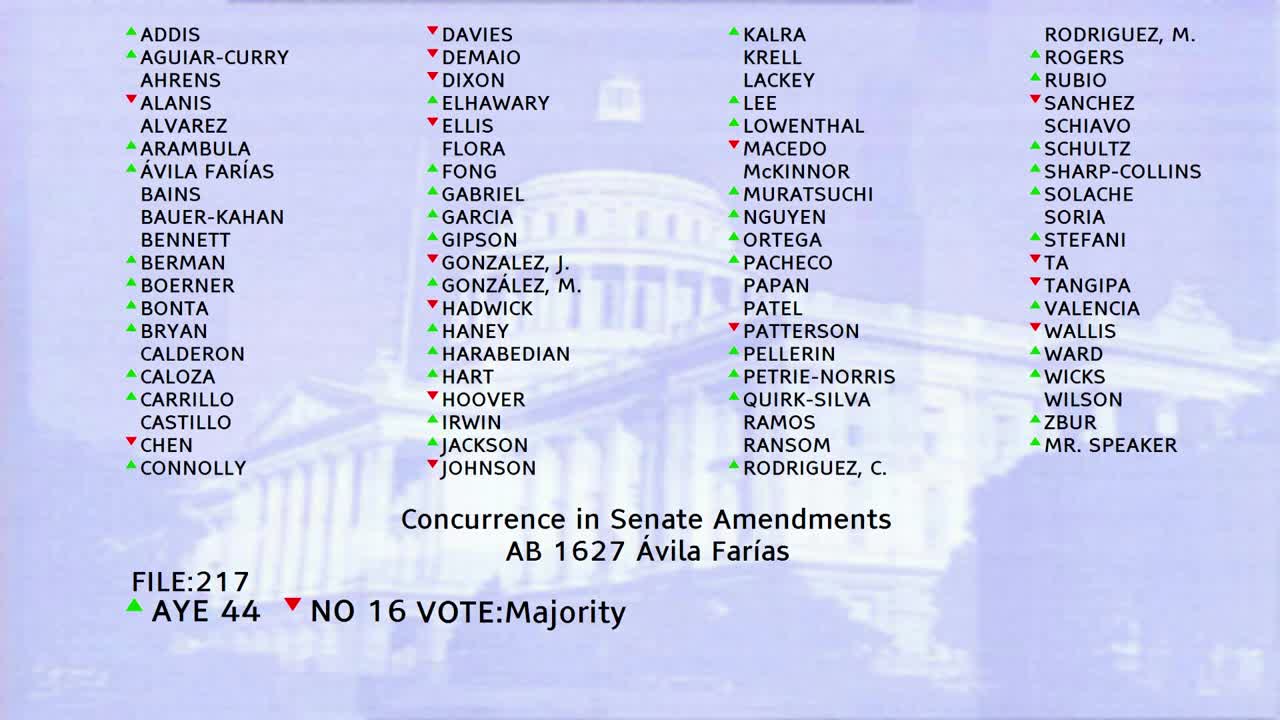 44SEC
Assembly Floor
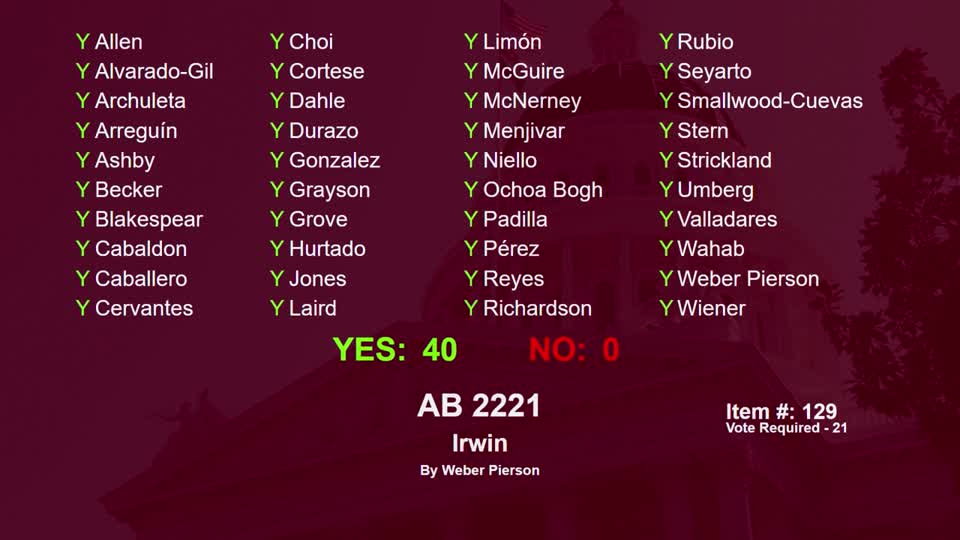 7MIN
Senate Floor
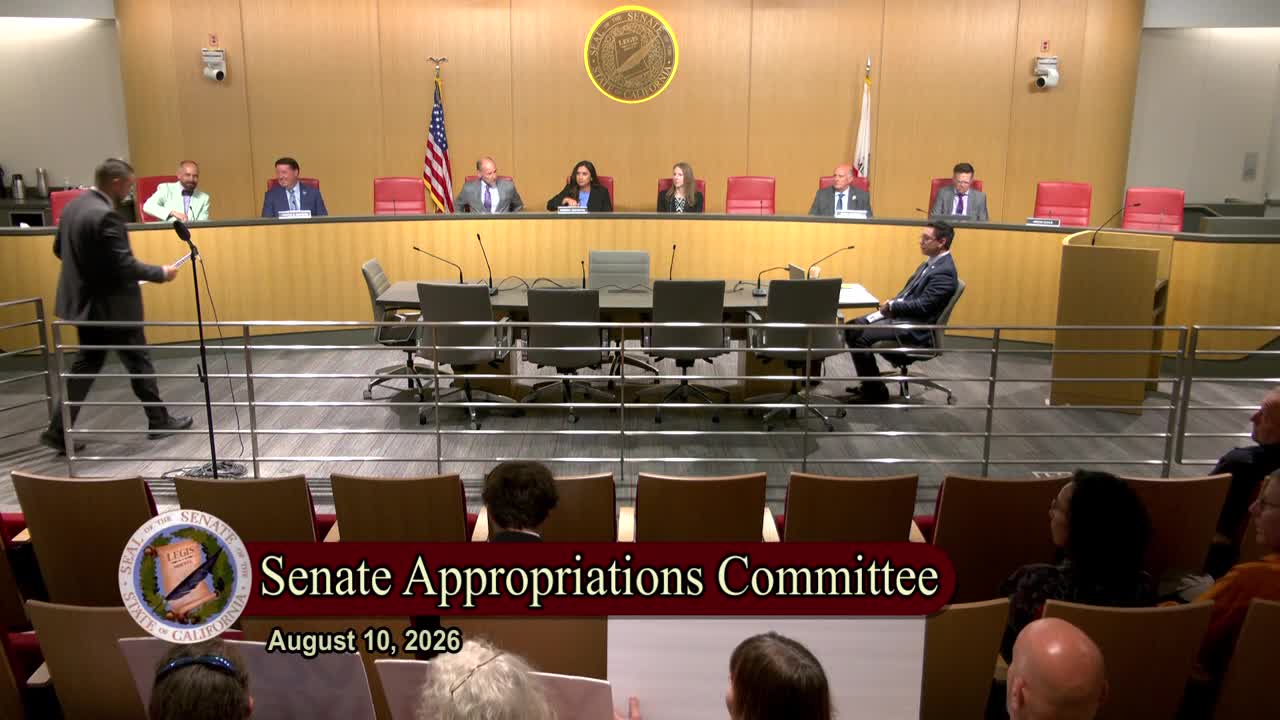 2MIN
Senate Standing Committee on Appropriations
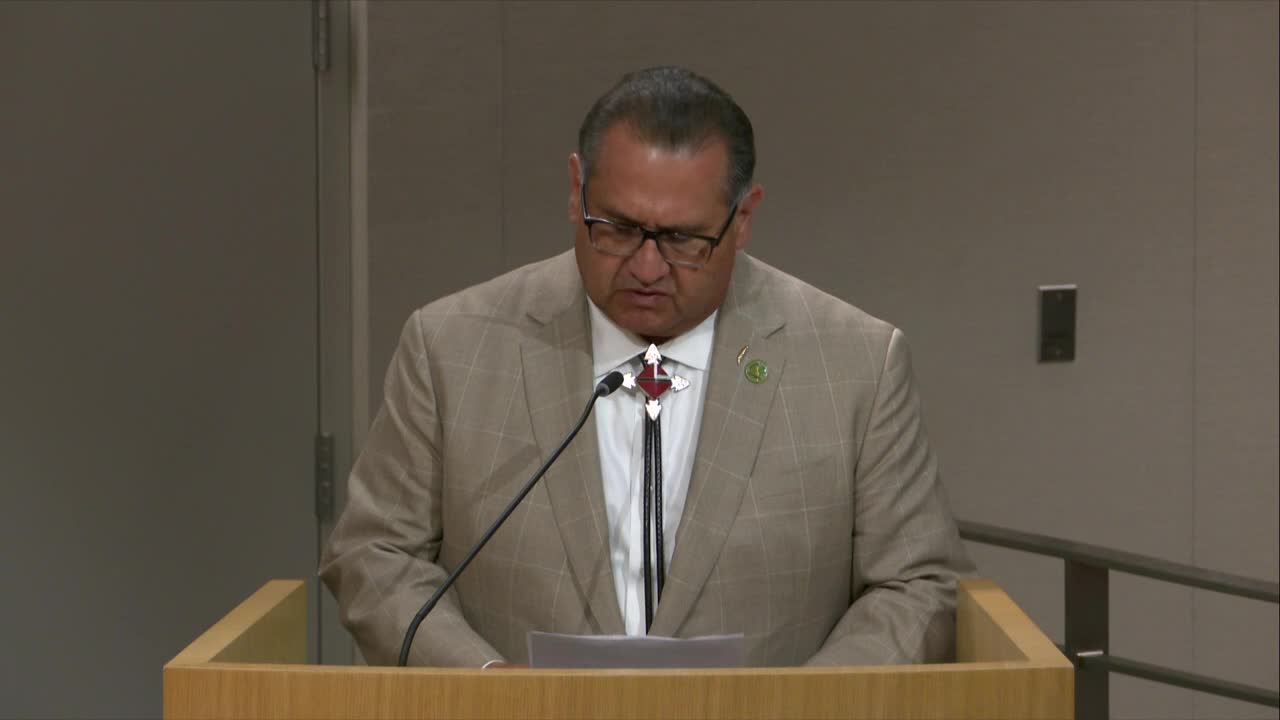 31MIN
Senate Standing Committee on Judiciary
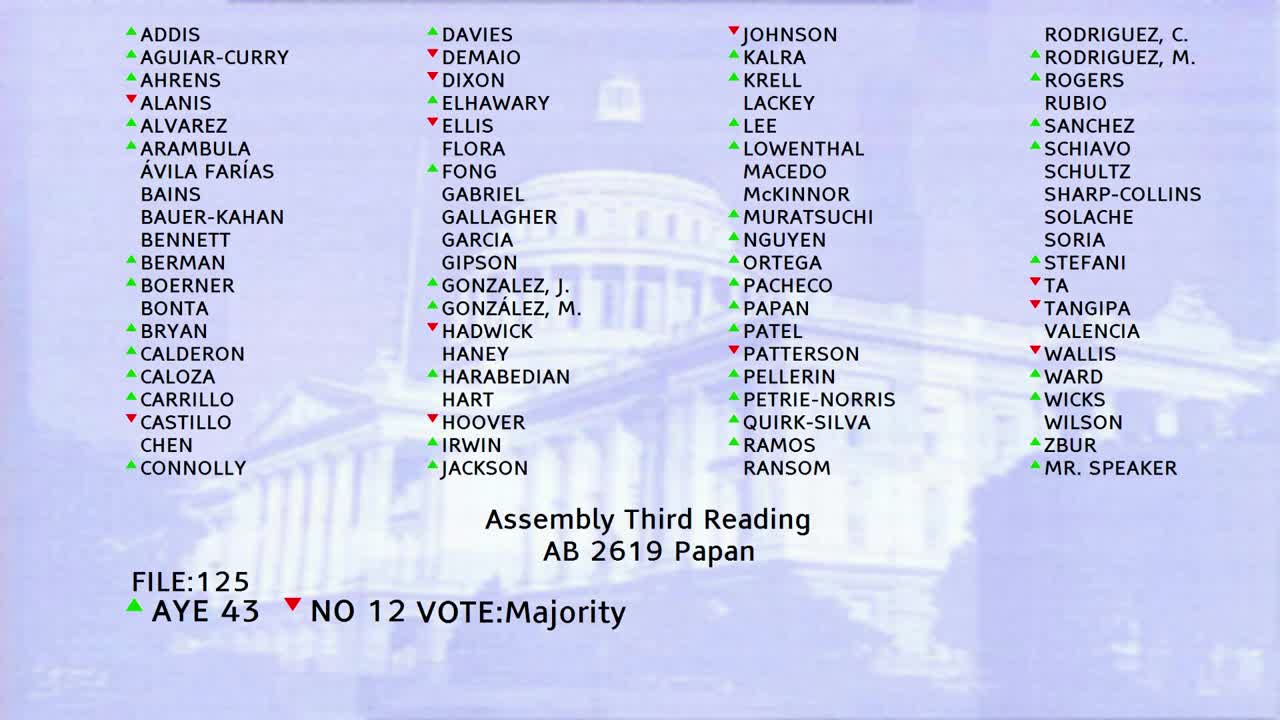 6MIN
Assembly Floor
 28MIN
Assembly Standing Committee on Judiciary
Bill Author