AB 1886: Wards: probation.
- Session Year: 2025-2026
- House: Assembly
- Latest Version Date: 2026-09-30
Current Status:
Passed
(2026-09-30: Chaptered by Secretary of State - Chapter 904, Statutes of 2026.)
Introduced
In Committee
Awaiting First Chamber Vote
Passed First Chamber
In Committee
Awaiting Second Chamber Vote
Passed Second Chamber
Enacted
Existing law subjects a minor between 12 and 17 years of age, inclusive, who violates any federal, state, or local law or ordinance, who persistently or habitually refuses to obey the reasonable and proper orders or directions of the minors parents, guardian, or custodian, or who is beyond the control of that person, who violates an ordinance establishing a curfew or is truant, and a minor under 12 years of age who is alleged to have committed specified serious offenses to the jurisdiction of the juvenile court, which may adjudge the minor to be a ward of the court. Existing law authorizes the court to make any reasonable orders for the care, supervision, custody, conduct, maintenance, and support of the ward, including ordering the ward to be on probation without the supervision of the probation officer or ordering the care, custody, and control of the ward to be under the supervision of the probation officer who may place the ward in specified out-of-home placements. Existing law limits to 12 months from the most recent disposition hearing the period of time a ward may remain on probation, except, among other things, the limit does not apply to a ward ordered under the supervision of the probation officer for placement in specified out-of-home placements and a ward who is transferred or discharged from a secure youth treatment facility.
This bill would remove the exclusion of wards that have been ordered to be under the supervision of the probation officer for placement in specified out-of-home placements from the 12-month limitation described above. The bill would authorize the court to extend a period of probation to comply with specified provisions, but would prohibit the court from imposing terms and conditions of probation or any other conditions of performance or compliance on the ward during this period of extended jurisdiction. The bill would specify that these provisions do not apply to a ward who has been committed to a secure youth treatment facility during the term of commitment.
Existing law subjects a minor between 12 and 17 years of age, inclusive, who violates any federal, state, or local law or ordinance, who persistently or habitually refuses to obey the reasonable and proper orders or directions of the minors parents, guardian, or custodian, or who is beyond the control of that person, who violates an ordinance establishing a curfew or is truant, and a minor under 12 years of age who is alleged to have committed specified serious offenses to the jurisdiction of the juvenile court, which may adjudge the minor to be a ward of the court. Existing law authorizes the court to make any reasonable orders for the care, supervision, custody, conduct, maintenance, and support of the ward, including ordering the ward to be on probation without the supervision of the probation officer or ordering the care, custody, and control of the ward to be under the supervision of the probation officer who may place the ward in specified out-of-home placements. Existing law limits to 12 months from the most recent disposition hearing the period of time a ward may remain on probation, except, among other things, the limit does not apply to a ward ordered under the supervision of the probation officer for placement in specified out-of-home placements and a ward who is transferred or discharged from a secure youth treatment facility.
This bill would remove the exclusion of wards that have been ordered to be under the supervision of the probation officer for placement in specified out-of-home placements from the 12-month limitation described above. The bill would also make these provisions applicable to wards who have been discharged from a secure youth treatment facility to a period of probation, or whose commitment to the secure youth treatment facility was set aside. The bill would authorize the court to extend a period of probation to comply with specified provisions, but would prohibit the court from imposing terms and conditions of probation or any other conditions of performance or compliance on the ward during this period of extended jurisdiction.
Existing law subjects a minor between 12 and 17 years of age, inclusive, who violates any federal, state, or local law or ordinance, who persistently or habitually refuses to obey the reasonable and proper orders or directions of the minors parents, guardian, or custodian, or who is beyond the control of that person, who violates an ordinance establishing a curfew or is truant, and a minor under 12 years of age who is alleged to have committed specified serious offenses to the jurisdiction of the juvenile court, which may adjudge the minor to be a ward of the court. Existing law authorizes the court to make any reasonable orders for the care, supervision, custody, conduct, maintenance, and support of the ward, including ordering the ward to be on probation without the supervision of the probation officer or ordering the care, custody, and control of the ward to be under the supervision of the probation officer who may place the ward in specified out-of-home placements. Existing law limits to 12 months from the most recent disposition hearing the period of time a ward may remain on probation, except, among other things, the limit does not apply to a ward ordered under the supervision of the probation officer for placement in specified out-of-home placements and a ward who is transferred or discharged from a secure youth treatment facility.
This bill would state the intent of the Legislature to enact legislation to expand these limitations on the probationary period to apply to youth in out-of-home placements and to youth transitioning from secure youth treatment facilities.This bill would remove the exclusion of wards that have been ordered to be under the supervision of the probation officer for placement in specified out-of-home placements from the 12-month limitation described above. The bill would also make these provisions applicable to wards who have been discharged from a secure youth treatment facility to a period of probation, or whose commitment to the secure youth treatment facility was set aside. The bill would authorize the court to extend a period of probation to comply with specified provisions, but would prohibit the court from imposing terms and conditions of probation or any other conditions of performance or compliance on the ward during this period of extended jurisdiction.
Existing law subjects a minor between 12 and 17 years of age, inclusive, who violates any federal, state, or local law or ordinance, who persistently or habitually refuses to obey the reasonable and proper orders or directions of the minors parents, guardian, or custodian, or who is beyond the control of that person, who violates an ordinance establishing a curfew or is truant, and a minor under 12 years of age who is alleged to have committed specified serious offenses to the jurisdiction of the juvenile court, which may adjudge the minor to be a ward of the court. Existing law authorizes the court to make any reasonable orders for the care, supervision, custody, conduct, maintenance, and support of the ward, including ordering the ward to be on probation without the supervision of the probation officer or ordering the care, custody, and control of the ward to be under the supervision of the probation officer who may place the ward in specified out-of-home placements. Existing law limits to 12 months from the most recent disposition hearing the period of time a ward may remain on probation, except, among other things, the limit does not apply to a ward ordered under the supervision of the probation officer for placement in specified out-of-home placements and a ward who is transferred or discharged from a secure youth treatment facility.
This bill would state the intent of the Legislature to enact legislation to expand these limitations on the probationary period to apply to youth in out-of-home placements and to youth transitioning from secure youth treatment facilities.
It is the intent of the Legislature that youth in out-of-home placements, disproportionately girls and youth of color, be entitled to protections under Section 602.05 of the Welfare and Institutions Code.
SEC. 2.Section 602.05 of the Welfare and Institutions Code is amended to read:602.05.(a)A minor adjudged to be a ward of the court pursuant to Section 601 or 602 who is subject to an order of probation pursuant to Section 727, with or without supervision of the probation officer, shall not remain on probation for a period that exceeds 12 months from the most recent disposition hearing, except as specified in subdivision (b). Nothing in this section shall preclude the court from holding progress review hearings at any point prior to 12 months from the most recent disposition hearing.
(b)A court may extend the probation period after a noticed hearing and upon proof by a preponderance of the evidence that it is in the wards and the publics best interest, consistent with Section 202.
(1)At the noticed hearing, the probation agency shall submit a report to the court detailing the basis for any request to extend probation.
(2)The court shall provide the ward and the prosecuting attorney with the opportunity to present relevant evidence. The court has discretion to receive evidence by testimony, declaration, and other documentary evidence.
(3)In cases in which the court finds by a preponderance of the evidence a basis for extending probation, the court shall state the reasons for the findings orally on the record. The court shall also set forth the reasons in an order entered upon the minutes if requested by either party or when the proceedings are not being recorded electronically or reported by a court reporter.
(4)If the court finds good cause to continue the noticed hearing, probation shall continue until completion of the noticed hearing, provided that continuance shall be for only as long as necessary.
(c)If the court extends probation at the noticed hearing, the court shall schedule and hold subsequent noticed hearings for the ward pursuant to subdivision (b) not less frequently than every six months for the remainder of the wardship period.
(d)This section does not preclude termination of a wards probation before the end of a 12-month period.
(e)Prior to terminating jurisdiction over a youth who is described by subdivision (a) of Section 607.2, the court shall comply with the provisions of Section 607.2. The requirement to comply with Section 607.2 shall not be a basis for extending the probation period pursuant to subdivision (b), except if the procedures described in Section 607.2 cannot be completed before the end of the period of probation. The court may maintain jurisdiction beyond the end of the probation period for the purpose of complying with Section 607.2, but shall not impose any terms and conditions of probation or any other conditions of performance or compliance on the ward during this period of extended jurisdiction.
(f)This section does not apply to a ward while serving a custodial commitment to a juvenile hall, juvenile home, ranch, camp, or forestry camp pursuant to Section 730.
(g)This section does not apply to a ward who has been committed to a secure youth treatment facility pursuant to Section 875, during the term of the commitment, including any period during which the ward is placed in a less restrictive program pursuant to subdivision (f) of Section 875, nor during any period of probation supervision in the community following discharge pursuant to subdivision (e) of Section 875.
It is the intent of the Legislature that youth in out-of-home placements, disproportionately girls and youth of color, be entitled to protections under Section 602.05 of the Welfare and Institutions Code.
SEC. 2.Section 602.05 of the Welfare and Institutions Code is amended to read:602.05.(a)A minor adjudged to be a ward of the court pursuant to Section 601 or 602 who is subject to an order of probation pursuant to Section 727, with or without supervision of the probation officer, shall not remain on probation for a period that exceeds 12 months from the most recent disposition hearing, except as specified in subdivision (b). Nothing in this section shall preclude the court from holding progress review hearings at any point prior to 12 months from the most recent disposition hearing.
(b)A court may extend the probation period after a noticed hearing and upon proof by a preponderance of the evidence that it is in the wards and the publics best interest, consistent with Section 202.
(1)At the noticed hearing, the probation agency shall submit a report to the court detailing the basis for any request to extend probation.
(2)The court shall provide the ward and the prosecuting attorney with the opportunity to present relevant evidence. The court has discretion to receive evidence by testimony, declaration, and other documentary evidence.
(3)In cases in which the court finds by a preponderance of the evidence a basis for extending probation, the court shall state the reasons for the findings orally on the record. The court shall also set forth the reasons in an order entered upon the minutes if requested by either party or when the proceedings are not being recorded electronically or reported by a court reporter.
(4)If the court finds good cause to continue the noticed hearing, probation shall continue until completion of the noticed hearing, provided that continuance shall be for only as long as necessary.
(c)If the court extends probation at the noticed hearing, the court shall schedule and hold subsequent noticed hearings for the ward pursuant to subdivision (b) not less frequently than every six months for the remainder of the wardship period.
(d)This section does not preclude termination of a wards probation before the end of a 12-month period.
(e)Prior to terminating jurisdiction over a youth who is described by subdivision (a) of Section 607.2, the court shall comply with the provisions of Section 607.2. The requirement to comply with Section 607.2 shall not be a basis for extending the probation period pursuant to subdivision (b), except if the procedures described in Section 607.2 cannot be completed before the end of the period of probation. The court may maintain jurisdiction beyond the end of the probation period for the purpose of complying with Section 607.2, but shall not impose any terms and conditions of probation or any other conditions of performance or compliance on the ward during this period of extended jurisdiction.
(f)This section does not apply to a ward while serving a custodial commitment to a juvenile hall, juvenile home, ranch, camp, or forestry camp pursuant to Section 730.
(g)This section does not apply to any ward who is transferred from a secure youth treatment facility to a less restrictive program pursuant to paragraph (2) of subdivision (f) of Section 875 or to any ward who is discharged from a secure youth treatment facility pursuant to a probation discharge hearing described in subdivision (e) of Section 875.(g)This section does not apply to a ward who has been committed to a secure youth treatment facility pursuant to Section 875, during the term of the commitment, including any period during which the ward is placed in a less restrictive program pursuant to subdivision (f) of Section 875, nor during any period of probation supervision in the community following discharge pursuant to subdivision (e) of Section 875.
It is the intent of the Legislature that youth in out-of-home placements, disproportionately girls and youth of color, be entitled to protections under Section 602.05 of the Welfare and Institutions Code.
SEC. 2.Section 602.05 of the Welfare and Institutions Code is amended to read:602.05.(a)A minor adjudged to be a ward of the court pursuant to Section 601 or 602 who is subject to an order of probation pursuant to Section 727, with or without supervision of the probation officer, shall not remain on probation for a period that exceeds 12 months from the most recent disposition hearing, except as specified in subdivision (b). Nothing in this section shall preclude the court from holding progress review hearings at any point prior to 12 months from the most recent disposition hearing.
(b)A court may extend the probation period after a noticed hearing and upon proof by a preponderance of the evidence that it is in the wards and the publics best interest, consistent with Section 202.
(1)At the noticed hearing, the probation agency shall submit a report to the court detailing the basis for any request to extend probation.
(2)The court shall provide the ward and the prosecuting attorney with the opportunity to present relevant evidence. The court has discretion to receive evidence by testimony, declaration, and other documentary evidence.
(3)In cases in which the court finds by a preponderance of the evidence a basis for extending probation, the court shall state the reasons for the findings orally on the record. The court shall also set forth the reasons in an order entered upon the minutes if requested by either party or when the proceedings are not being recorded electronically or reported by a court reporter.
(4)If the court finds good cause to continue the noticed hearing, probation shall continue until completion of the noticed hearing, provided that continuance shall be for only as long as necessary.
(c)If the court extends probation at the noticed hearing, the court shall schedule and hold subsequent noticed hearings for the ward pursuant to subdivision (b) not less frequently than every six months for the remainder of the wardship period.
(d)This section does not preclude termination of a wards probation before the end of a 12-month period.
(e)Prior to terminating jurisdiction over a youth who is described by subdivision (a) of Section 607.2, the court shall comply with the provisions of Section 607.2. The requirement to comply with Section 607.2 shall not be a basis for extending the probation period pursuant to subdivision (b), except if the procedures described in Section 607.2 cannot be completed before the end of the period of probation. The court may maintain jurisdiction beyond the end of the probation period for the purpose of complying with Section 607.2, but shall not impose any terms and conditions of probation or any other conditions of performance or compliance on the ward during this period of extended jurisdiction.
(f)This section does not apply to a ward while serving a custodial commitment to a juvenile hall, juvenile home, ranch, camp, or forestry camp pursuant to Section 730.
(g)(1)This section does not apply to a ward who is committed to a secure youth treatment facility pursuant to Section 875 while the ward has any remaining baseline or modified baseline term, whether the ward remains in the secure youth treatment facility or has been transferred to a less restrictive program pursuant to paragraph (2) of subdivision (f) of Section 875.(2)This section shall apply to a ward upon discharge to a period of probation supervision in the community pursuant to paragraph (3) of subdivision (e) of Section 875, or upon the commitment being set aside pursuant to Section 779.5.(g)This section does not apply to any ward who is transferred from a secure youth treatment facility to a less restrictive program pursuant to paragraph (2) of subdivision (f) of Section 875 or to any ward who is discharged from a secure youth treatment facility pursuant to a probation discharge hearing described in subdivision (e) of Section 875.
It is the intent of the Legislature that youth in out-of-home placements, disproportionately girls and youth of color, be entitled to protections under Section 602.05 of the Welfare and Institutions Code.
SEC. 2.Section 602.05 of the Welfare and Institutions Code is amended to read:602.05.(a)A minor adjudged to be a ward of the court pursuant to Section 601 or 602 who is subject to an order of probation pursuant to Section 727, with or without supervision of the probation officer, shall not remain on probation for a period that exceeds 12 months from the most recent disposition hearing, except as specified in subdivision (b). Nothing in this section shall preclude the court from holding progress review hearings at any point prior to 12 months from the most recent disposition hearing.
(b)A court may extend the probation period after a noticed hearing and upon proof by a preponderance of the evidence that it is in the wards and the publics best interest, consistent with Section 202.
(1)At the noticed hearing, the probation agency shall submit a report to the court detailing the basis for any request to extend probation.
(2)The court shall provide the ward and the prosecuting attorney with the opportunity to present relevant evidence. The court has discretion to receive evidence by testimony, declaration, and other documentary evidence.
(3)In cases in which the court finds by a preponderance of the evidence a basis for extending probation, the court shall state the reasons for the findings orally on the record. The court shall also set forth the reasons in an order entered upon the minutes if requested by either party or when the proceedings are not being recorded electronically or reported by a court reporter.
(4)If the court finds good cause to continue the noticed hearing, probation shall continue until completion of the noticed hearing, provided that continuance shall be for only as long as necessary.
(c)If the court extends probation at the noticed hearing, the court shall schedule and hold subsequent noticed hearings for the ward pursuant to subdivision (b) not less frequently than every six months for the remainder of the wardship period.
(d)This section does not preclude termination of a wards probation before the end of a twelve-month 12-month period.
(e)Prior to terminating jurisdiction over a youth who is described by subdivision (a) of Section 607.2, the court shall comply with the provisions of Section 607.2. The requirement to comply with Section 607.2 shall not be a basis for extending the probation period pursuant to subdivision (b), except if the procedures described in Section 607.2 cannot be completed before the end of the period of probation. The court may maintain jurisdiction beyond the end of the probation period for the purpose of complying with Section 607.2, but shall not impose any terms and conditions of probation or any other conditions of performance or compliance on the ward during this period of extended jurisdiction.
(f)This section does not apply to any ward whom the court ordered the care, custody, and control of the minor or nonminor to be under the supervision of the probation officer pursuant to paragraph (3) of subdivision (a) of Section 727 for placement except that the requirement to comply with the provisions of Section 607.2 shall not be the sole basis for continuing an order imposing terms and conditions of probation, as referenced in subdivision (b) of Section 730. If the court retains jurisdiction pursuant to this subdivision, the ward shall not be subject to a petition pursuant to Section 777 or a violation of probation. (g)(f)This section does not apply to a ward while serving a custodial commitment to a juvenile hall, juvenile home, ranch, camp, or forestry camp pursuant to Section 730.
(h)(g)(1)This section does not apply to any a ward who is transferred from committed to a secure youth treatment facility pursuant to Section 875 while the ward has any remaining baseline or modified baseline term, whether the ward remains in the secure youth treatment facility or has been transferred to a less restrictive program pursuant to paragraph (2) of subdivision (f) of Section 875 or to any ward who is discharged from a secure youth treatment facility pursuant to a probation discharge hearing described in subdivision (e) of Section 875. 875.
(2)This section shall apply to a ward upon discharge to a period of probation supervision in the community pursuant to paragraph (3) of subdivision (e) of Section 875, or upon the commitment being set aside pursuant to Section 779.5.
SECTION 1.It is the intent of the Legislature to enact legislation to expand the protections of Section 602.05 of the Welfare and Institutions Code to apply to youth in out-of-home placements and to youth transitioning from secure youth treatment facilities.It is the intent of the Legislature to enact legislation to expand the protections of Section 602.05 of the Welfare and Institutions Code to apply to youth in out-of-home placements and to youth transitioning from secure youth treatment facilities.
|
Date
|
Status
|
|---|---|
| Sep 30, 2026 | Chaptered by Secretary of State - Chapter 904, Statutes of 2026. |
| Sep 30, 2026 | Approved by the Governor. |
| Sep 4, 2026 | Enrolled and presented to the Governor at 4 p.m. |
| Aug 27, 2026 | Senate amendments concurred in. To Engrossing and Enrolling. (Ayes 43. Noes 20. Page 6687.). |
| Aug 27, 2026 | In Assembly. Concurrence in Senate amendments pending. |
| Aug 27, 2026 | Senate amendments concurred in. To Engrossing and Enrolling. (Ayes 43. Noes 20.). |
| Aug 26, 2026 | Read third time. Passed. Ordered to the Assembly. (Ayes 25. Noes 11. Page 5909.). |
| Aug 26, 2026 | Read third time. Passed. Ordered to the Assembly. (Ayes 24. Noes 11.). |
| Aug 20, 2026 | Read second time. Ordered to third reading. |
| Aug 19, 2026 | Read third time and amended. Ordered to second reading. |
| Jul 2, 2026 | Read second time. Ordered to third reading. |
| Jul 1, 2026 | From committee: Do pass. (Ayes 5. Noes 1.) (June 30). |
| Jun 16, 2026 | From committee chair, with author's amendments: Amend, and re-refer to committee. Read second time, amended, and re-referred to Com. on PUB. S. |
| Jun 10, 2026 | Referred to Com. on PUB. S. |
| Jun 1, 2026 | In Senate. Read first time. To Com. on RLS. for assignment. |
| May 28, 2026 | Read third time. Passed. Ordered to the Senate. (Ayes 46. Noes 21. Page 5540.) |
| May 28, 2026 | Read third time. Passed. Ordered to the Senate. (Ayes 46. Noes 21.) |
| Apr 23, 2026 | Read second time. Ordered to third reading. |
| Apr 22, 2026 | From committee: Do pass. (Ayes 5. Noes 2.) (April 21). |
| Mar 17, 2026 | Re-referred to Com. on PUB. S. |
| Mar 16, 2026 | From committee chair, with author's amendments: Amend, and re-refer to Com. on PUB. S. Read second time and amended. |
| Mar 16, 2026 | Referred to Com. on PUB. S. |
| Feb 13, 2026 | From printer. May be heard in committee March 15. |
| Feb 12, 2026 | Read first time. To print. |
|
Date
|
Description
|
Location
|
Votes
|
|
|---|---|---|---|---|
| Aug 27, 2026 | AB 1886 Elhawary Concurrence in Senate Amendments | Assembly Floor |
Passed |
|
| Aug 26, 2026 | Assembly 3rd Reading AB1886 Elhawary By Cortese | Senate Floor |
Passed |
|
| Jun 30, 2026 | Do pass | Senate Standing Committee on Public Safety |
Passed |
|
| May 28, 2026 | AB 1886 Elhawary Assembly Third Reading | Assembly Floor |
Passed |
|
| Apr 21, 2026 | Do pass. | Assembly Standing Committee on Public Safety |
Passed |
This list shows positions taken on this bill by organizations on the date displayed, which is linked to the original source.
Positions by individuals are not included.
|
Organization
|
Position
|
Date
|
|---|---|---|
| Aclu California Action | ** Support | |
| Alianza for Opportunity | ** Support | |
| Alliance for Boys & Men of Color | ** Support | |
| Alliance for Children's Rights | ** Support | |
| Alliance of Californians for Community Empowerment Action | ** Support | |
| All of Us or None Riverside | ** Support | |
| All of US or None-Sacramento | ** Support | |
| A New PATH | ** Support | |
| Annie E. Casey Foundation | ** Support | |
| Anti-Recidivism Coalition | ** Support | |
| Asian Solidarity Collective | ** Support | |
| Association Of Orange County Deputy Sheriffs | ** Against | |
| Back to the Start | ** Support | |
| BAY-Peace | ** Support | |
| Bend the Arc: Jewish Action California | ** Support | |
| Bend the Arc: Jewish Action, California | ** Support | |
| Black Youth Leadership Project | ** Support | |
| Bridges of Hope CA | ** Support | |
| Brotherhood Crusade | ** Support | |
| California Alliance for Youth and Community Justice | ** Support | |
| California Alliance Of Child And Family Services | ** Support | |
| California Attorneys For Criminal Justice | ** Support | |
| California Coalition for Women Prisoners | ** Support | |
| California Community Foundation | ** Support | |
| California Department of Justice | ** Support | |
| California District Attorneys Association | ** Against | |
| California for Safety and Justice | ** Support | |
| California Judges Association | ** Against | |
| Californians for Safety and Justice | ** Support | |
| Californians for Safety and Justice (CSJ) | ** Support | |
| Californians United for a Responsible Budget | ** Support | |
| California Police Chiefs Association | ** Against | |
| California Public Defenders Association | ** Support | |
| California School-Based Health Alliance | ** Support | |
| California State Sheriffs’ Association | ** Against | |
| California Youth Connection | ** Support | |
| California Youth Connection (CYC) | ** Support | |
| California Youth Defender Center | ** Support | |
| Cancel the Contract | ** Support | |
| Cancel the Contract Antelope Valley | ** Support | |
| Center for Juvenile Law and Policy, Loyola Law School | ** Support | |
| Center on Juvenile and Criminal Justice | ** Support | |
| Center on Juvenile & Criminal Justice | ** Support | |
| Chief Probation Officers Of California | ** Against | |
| Children Now | ** Support | |
| Children’s Defense Fund – CA | ** Support | |
| Children’s Defense Fund-CA | ** Support | |
| Coalition of California State Tribes | ** Support | |
| Coleman advocates for Children & Youth | ** Support | |
| Communities United for Restorative Youth Justice | ** Support | |
| Community Interventions | ** Support | |
| Community Works | ** Support | |
| Consumer Attorneys Of California | ** Support | |
| Courage California | ** Support | |
| Ella Baker Center For Human Rights | ** Support | |
| Equity California | ** Support | |
| Essie Justice Group | ** Support | |
| Fair Chance Project | ** Support | |
| Families Inspiring Reentry & Reunification 4 Everyone | ** Support | |
| Felony Murder Elimination Project | ** Support | |
| Freedom 4 Youth | ** Support | |
| Fresh Lifelines for Youth | ** Support | |
| Fresh Lifelines for Youth (FLY) | ** Support | |
| Fresno Barrios Unidos | ** Support | |
| Friends Committee On Legislation Of California | ** Support | |
| Glide Foundation | ** Support | |
| Hoops 4 Justice | ** Support | |
| Initiate Justice | ** Support | |
| Initiate Justice Action | ** Support | |
| InsideOUT Writers | ** Support | |
| Integral Community Solutions Institute | ** Support | |
| Jesse’s Place Organization | ** Support | |
| Justice2jobs Coalition | ** Support | |
| Juvenile Court Judges of California | ** Against | |
| LA Defensa | ** Support | |
| Legal Services for Prisoners with Children | ** Support | |
| Local 148 Los Angeles County Public Defender’s Union | ** Support | |
| Los Angeles Brotherhood Crusade - Black United Fund | ** Support | |
| Milpa Collective | ** Support | |
| National Center for Youth Law | ** Support | |
| Nuestra Causa | ** Support | |
| Peace and Justice Law Center | ** Support | |
| Peace Officers Research Association of California (PORAC) | ** Against | |
| Peace United Church of Christ, Santa Cruz | ** Support | |
| Pew Charitable Trusts | ** Support | |
| Pillars of the Community | ** Support | |
| Restore 180 | ** Support | |
| Restoring Hope California | ** Support | |
| Riverside Sheriffs’ Association | ** Against | |
| Sacramento County Probation Association | ** Against | |
| San Francisco Public Defender | ** Support | |
| San Joaquin County Probation Officers Association | ** Against | |
| Santa Cruz Barrios Unidos | ** Support | |
| Silicon Valley Debug | ** Support | |
| Silicon Valley De-Bug | ** Support | |
| Sister Warriors Freedom Coalition | ** Support | |
| Smart Justice California | ** Support | |
| Solano County Board of Supervisors | ** Against | |
| Starting Over Inc. | ** Support | |
| State Coalition Of Probation Organizations | ** Against | |
| The California Youth Justice Project | ** Support | |
| The Collective for Liberatory Lawyering | ** Support | |
| Ujima Adult and Family Serivces | ** Support | |
| Ujima Adult and Family Services | ** Support | |
| Underground Grit | ** Support | |
| Universidad Popular | ** Support | |
| Upward Together | ** Support | |
| Urban Institute | ** Support | |
| Urban Peace Institute | ** Support | |
| Urban Peace Movement | ** Support | |
| western center on law & poverty | ** Support | |
| W. Haywood Burns Institute | ** Support | |
| Youngsters for Change | ** Support | |
| Youth Alliance | ** Support | |
| Youth Justice Coalition | ** Support | |
| Youth Justice Coaltion LA | ** Support | |
| Youth Justice Education Clinic, Center for Juvenile Law and Policy, Loyola Law School | ** Support | |
| Youth Law Center | ** Support | |
| Youth Leadership Institute | ** Support |
CONCURRENCE IN SENATE AMENDMENTS
CSA1 Bill Id:AB 1886
Author:(Elhawary)
As Amended Ver:August 19, 2026
Majority vote
SUMMARY
Removes the exclusion of wards that have been ordered to be under the supervision of the probation officer for placement in specified out-of-home placements from the 12-month limitation on term of probation in existing law.
Senate Amendments
- Delete the bill's application of the 12-month limitation to a ward upon discharge from a secure youth treatment facility (SYTF) to a period of probation supervision in the community or upon the commitment being set aside.
COMMENTS
As Passed by the Assembly: This bill removed the exclusion of wards that have been ordered to be under the supervision of the probation officer for placement in specified out-of-home placements from the 12-month limitation on term of probation in existing law.
Major Provisions
- Stated that the requirement to comply with specified procedures for the termination of jurisdiction over a ward who was subject to foster care placement shall not be a basis for extending the probation period, except if the procedures cannot be completed before the end of the period of probation.
- Provided that the court may maintain jurisdiction beyond the end of the probation period for the purpose of complying with those procedures, but shall not impose any terms and conditions of probation or any other conditions of performance or compliance on the ward during this period of extended jurisdiction.
- Removed the exclusion from the 12-month probation limitation of any ward whom the court ordered the care, custody, and control of the minor or nonminor to be under the supervision of the probation officer for out-of-home placement as specified.
- Revised the exclusion from the 12-month probation limitation that applies to wards who are transferred from an SYTF to a less restrictive program (LRP) or to wards who are discharged from an SYTF to instead exclude a ward who is committed to an SYTF while the ward has any remaining baseline or modified baseline term, whether the ward remains in the SYTF or has been transferred to an LRP.
- Applied the 12-month probation limit to a ward upon discharge to a period of probation supervision, or upon the commitment being set aside, as specified.
- Stated the Legislative intent that youth in out-of-home placements, disproportionately girls and youth of color, be entitled to protections that limit terms of probation.
According to the Author
″Keeping young people on probation longer doesn′t make our communities safer. It increases violations and pushes youth back into the system. And we know the harm isn′t felt equally. Youth of color are kept on probation longer than their white peers. AB 1886 builds on the work of AB 1376 (Bonta, CHP 2025) by making sure probation remains individualized, developmentally appropriate, and fair, while extending those same protections to youth in out-of-home placements and secure youth treatment facilities. This bill is about equity and consistency. Judges still have the authority to extend probation when it′s truly necessary, but no young person should be excluded from review simply because of where they live or their past involvement in the system.″
Arguments in Support
According to Center on Juvenile & Criminal Justice, ″Recent evidence indicates that probation, in its current form, often prioritizes monitoring over meaningful rehabilitation. Studies conducted between 2022 and 2024 show that longer probation periods are associated with higher rates of technical violations and non-criminal issues, such as missed appointments or curfew violations. These violations frequently result in deeper system involvement, despite having little to no impact on improving public safety. Research from the Pew Charitable Trusts similarly finds that shorter probation terms can lower recidivism while also reducing costs.
″These challenges are even more pronounced for youth in foster care, who are disproportionately impacted by the juvenile legal system through what is commonly referred to as the ″crossover youth″ pathway. Findings from the Urban Institute and the Annie E. Casey Foundation demonstrate that foster youth are far more likely to be arrested, formally charged, and placed on probation than their peers. Once involved, they often face additional instability, including frequent placement changes, limited access to consistent services, and overlapping supervision from multiple systems.
. . . .
″Significant racial disparities also persist within the system. Data from the California Department of Justice show that youth of color remain overrepresented at every stage of the juvenile legal process, including probation and placement in secure facilities. They are also more likely to be placed on probation and to remain under supervision for longer periods than white youth, further reinforcing inequities.″
Arguments in Opposition
According to Chief Probation Officers of California, ″This change is coming just months after the enactment of AB 1376, which has been applied retroactively, and before the impacts of that bill have fully materialized. Assembly Bill 1376, when implemented in January of this year, set a 12-month mandatory presumption for discharge from court-ordered probation for wards of the court, including those adjudicated of having committed the most serious and violent 707(b) offenses including murder, rape, and kidnapping. Specific concerns include:
"Application of the 12-month shortened term to Secure Youth Treatment Facilities (SYTF): Despite the removal of the Secure Youth Treatment Facility (SYTF) language from the bill, we would note that the current statutory language around SYTFs, as adopted pursuant to last year's AB 1376, is drafted in a way that does not expressly exempt the time in detention serving a commitment to SYTFs from the 12-month presumption similar to how the language reads for juvenile halls, camps, and ranches.
"Applies the 12-month shortened term to a population exempted in previous legislation: AB 1886 (Elhawary) seeks to undo limited but necessary exemptions that were part of last year's AB 1376. This bill would now also apply to probation foster youth, which were exempted from the bill last year in light of focused approaches taken by the court in addition to supplemental supports and services addressing their needs as foster youth within the juvenile justice system. These are youth who have been adjudicated of a multitude of offenses, including serious and violent offenses and are placed in out-of-home care.
″Undermines public safety and individualized rehabilitation: This bill builds on policy that creates public safety impacts through the arbitrary shortening of juvenile probation terms that moves away from a focus on individualized rehabilitative progress."
FISCAL COMMENTS
Unknown. This bill was keyed non-fiscal by Legislative Counsel.
VOTES:
ASM PUBLIC SAFETY: 5-2-2
YES: Schultz, Mark González, Haney, Harabedian, Sharp-Collins
NO: Alanis, Lackey
ABS, ABST OR NV: Nguyen, Ramos
ASSEMBLY FLOOR: 46-21-13
YES: Addis, Aguiar-Curry, Ahrens, Alvarez, Arambula, Ávila Farías, Bauer-Kahan, Bennett, Berman, Boerner, Bonta, Bryan, Calderon, Caloza, Carrillo, Connolly, Elhawary, Fong, Gabriel, Garcia, Mark González, Haney, Harabedian, Hart, Jackson, Kalra, Krell, Lee, Lowenthal, McKinnor, Muratsuchi, Ortega, Papan, Pellerin, Ransom, Rogers, Schiavo, Schultz, Sharp-Collins, Solache, Stefani, Ward, Wicks, Wilson, Zbur, Rivas
NO: Alanis, Bains, Castillo, Chen, Davies, DeMaio, Dixon, Ellis, Flora, Gallagher, Jeff Gonzalez, Hadwick, Hoover, Johnson, Lackey, Macedo, Patterson, Sanchez, Ta, Tangipa, Wallis
ABS, ABST OR NV: Gipson, Irwin, Nguyen, Pacheco, Patel, Petrie-Norris, Quirk-Silva, Ramos, Celeste Rodriguez, Michelle Rodriguez, Blanca Rubio, Soria, Valencia
UPDATED
VERSION: August 19, 2026
CONSULTANT: Stella Choe / PUB. S. / (916) 319-3744 FN: 0004325
SENATE RULES COMMITTEE Office of Senate Floor Analyses (916) 651-4171 | AB 1886 |
THIRD READING
Bill No: AB 1886
Author: Elhawary (D)
Amended: 8/19/26 in Senate
Vote: 21
SENATE PUBLIC SAFETY COMMITTEE: 5-1, 6/30/26
AYES: Arreguín, Caballero, Cortese, Pérez, Wiener
NOES: Seyarto
ASSEMBLY FLOOR: 46-21, 5/28/26 - See last page for vote
SUBJECT: Wards: probation
SOURCE: Alliance for Boys & Men of Color
California Alliance for Youth and Community Justice
California Youth Connection
California Youth Defender Center
Communities United for Restorative Youth Justice
Fresh Lifelines for Youth
National Center for Youth Law
Sister Warriors Freedom Coalition
W. Haywood Burns Institute
Western Center on Law & Poverty
DIGEST:
This bill removes the exclusion of wards who have been ordered to be under the supervision of the probation officer in specified out-of-home placements from the general 12-month limitation on juvenile probation.
Senate Floor Amendments of 8/19/26 clarify that this bill does not apply to a youth who has been committed to a secure youth treatment facility.
ANALYSIS:
Existing law:
- States that the purpose of the juvenile court law is to provide for the protection and safety of the public and each minor under the jurisdiction of the juvenile court and to preserve and strengthen the minor’s family ties whenever possible, removing the minor from the custody of the minor’s parents only when necessary for the minor’s welfare or for the safety and protection of the public. Requires the juvenile court and other public agencies charged with enforcing, interpreting, and administering the juvenile court law to consider the safety and protection of the public, the importance of redressing injuries to victims, and the best interests of the minor in all deliberations. (Welfare (Welf.) & Institutions (Inst.) Code, § 202, subds. (a) & (d).)
- Provides that a minor between 12 and 17 years of age, inclusive, who violates any law defining a crime, and a minor under 12 years of age who is alleged to have committed murder or a specified sex offense, is within the jurisdiction of the juvenile court, which may adjudge the minor to be a ward of the court. (Welf. & Inst. Code, § 602.)
- Provides that the juvenile court may retain jurisdiction over a ward until the person attains 21 years of age, except that if the wardship is based on the commission of a specified serious offense, the juvenile court may retain jurisdiction until age 23, unless the ward would have faced an aggregate sentence of seven years or more in criminal court, in which case the juvenile court may retain jurisdiction until age 25. (Welf. & Inst. Code, § 607, subds. (a)-(c).)
- Authorizes the juvenile court to place a ward of the court on supervised probation. Authorizes the court to make any reasonable orders for the care, supervision, custody, conduct, maintenance, and support of the ward. (Welf. & Inst. Code, § 727.)
- Prohibits a minor adjudged to be a ward of the court who is subject to an order of probation, with or without supervision of the probation officer, from remaining on probation for a period that exceeds 12 months from the most recent disposition hearing, except as specified. Specifies that a court is not precluded from holding progress review hearings at any point prior to 12 months from the most recent disposition hearing. (Welf. & Inst. Code, § 602.05, subd. (a).)
- Authorizes a court may extend the probation period after a noticed hearing and upon proof by a preponderance of the evidence that it is in the ward’s and the public’s best interest, consistent with Section 202. (Welf. & Inst. Code, § 602.05, subd. (b).)
- Requires the probation agency to submit a report to the court detailing the basis for any request to extend probation. (Welf. & Inst. Code, § 602.05, subd. (b)(1).)
- Requires the court to provide the ward and the prosecuting attorney with the opportunity to present relevant evidence. Provides that the court has discretion to receive evidence by testimony, declaration, and other documentary evidence. (Welf. & Inst. Code, § 602.05, subd. (b)(2).)
- Requires the court, in cases in which the court finds by a preponderance of the evidence a basis for extending probation, to state the reasons for the findings orally on the record. Requires the court to also set forth the reasons in an order entered upon the minutes if requested by either party or when the proceedings are not being recorded electronically or reported by a court reporter. (Welf. & Inst. Code, § 602.05, subd. (b)(3).)
- Requires, if the court finds good cause to continue the noticed hearing, probation to continue until completion of the noticed hearing, provided that continuance is only as long as necessary. (Welf. & Inst. Code, § 602.05, subd. (b)(4).)
- Requires the court, if it extends probation at the noticed hearing, to schedule and hold subsequent noticed hearings for the ward not less frequently than every six months for the remainder of the wardship period. (Welf. & Inst. Code, § 602.05, subd. (c).)
- Specifies that termination of a ward’s probation before the end of a twelve-month period is permitted. (Welf. & Inst. Code, § 602.05, subd. (d).)
- Requires the court to comply with the provisions of existing law prior to terminating jurisdiction over a youth who is a minor or was a nonminor or ward subject to an order for foster care placement. (Welf. & Inst. Code, § 602.05, subd. (e).)
- Provides that the limit on a youth’s probation term does not apply to any ward whom the court ordered the care, custody, and control of the minor or nonminor to be under the supervision of the probation officer, as specified, for foster care placement. Prohibits the requirement to comply with the provisions of Section 607.2 from being the sole basis for continuing an order imposing terms and conditions of probation. Provides that if the court retains jurisdiction, the ward shall not be subject to a removal petition directing an out-of-home placement or a violation of probation. (Welf. & Inst. Code, § 602.05, subd. (f).)
- Provides that the limit on a youth’s probation term does not apply to a ward while serving a custodial commitment to a juvenile hall, juvenile home, ranch, camp, or forestry camp. (Welf. & Inst. Code, § 602.05, subd. (g).)
- Provides that the limit on a youth’s probation term does not apply to any ward who is transferred from a secure youth treatment facility (SYTF) to a less restrictive program (LRP) or to any ward who is discharged from an SYTF pursuant to a probation discharge hearing. (Welf. & Inst. Code, § 602.05, subd. (h).)
- Requires the court to hold a hearing prior to terminating jurisdiction over a ward who satisfies any of the following criteria:
- Is a minor subject to an order for foster care placement as a ward who has not previously been subject to the jurisdiction of the court, as specified.
- Is a nonminor who was subject to an order for foster care placement as a ward on the day he or she attained 18 years of age.
- Is a ward who was subject to an order for foster care placement as a dependent of the court at the time the court adjudged the child to be a ward of the court, as specified. (Welf. & Inst. Code, § 607.2, subd. (a).)
This bill:
- Prohibits, prior to the court’s termination of jurisdiction over a youth in foster care, the requirement to comply with existing law pertaining to the termination of that jurisdiction, from being a basis for extending the probation period. Provides that if the procedures described in Section 607.2 cannot be completed before the end of the period of probation, the court may maintain jurisdiction beyond the end of the probation period for the purpose of compliance. Prohibits the court from imposing any terms and conditions of probation or any other conditions of performance or compliance on the ward during this period of extended jurisdiction.
- Deletes a provision of existing law that states that the general limit on a juvenile probation term does not apply to a minor or nonminor who is on supervised probation and in a foster care placement.
Background
There are a number of dispositional outcomes available to the juvenile court for minors who are before the court based on the commission of a crime, including diversion, informal probation, and wardship probation. For minors placed on wardship probation, the court may order probation with or without the supervision of a probation officer.
The California Department of Justice reported that in 2024, over 11,000 youth in California were placed on wardship probation. (Office of the Attorney General, Juvenile Justice in California (2025), p. 40, available at <https://data-openjustice.doj.ca.gov/sites/default/files/2025-07/Juvenile%20Justice%20In%20CA%202024%20final.pdf .) The report included the percentage of each type of juvenile court disposition (e.g., wardship, informal probation, dismissed, etc.) within each racial or ethnic category, and indicated that 43.2% of White youths were placed on wardship probation, 54.2% Hispanic youths were placed on wardship probation, 49.7% Black youths were placed on wardship probation, and 41.6% of youth identified as “Other” were placed on wardship probation. (Id. at p. 41.)
AB 1376 (Bonta, Chapter 575, Statutes of 2025), established a presumptive 12-month limit that a ward may remain on probation. Welfare and Institutions Code section 602.05 authorizes a court to extend the probation period after a noticed hearing and upon proof by a preponderance of the evidence that it is in the ward’s and the public’s best interest. Existing law requires the court to hold noticed hearings for the ward not less frequently than every 6 months for the remainder of the wardship period if the court extends probation.
Notably, AB 1376 excluded from the 12-month limitation on probation any ward that has been ordered to be under the supervision of the probation officer for placement in specified out-of-home placements; any ward serving a custodial commitment to a juvenile hall, juvenile home, ranch, camp, or forestry camp; and, any ward who is transferred from an SYTF to an LRP or who has been discharged from an SYTF.
Proponents of this bill argue that AB 1376 excluded foster youth, creating an inequity that this bill seeks to address. To address this concern, this bill prohibits, prior to the court’s termination of jurisdiction over a youth in foster care, the requirement to comply with existing law pertaining to the termination of that jurisdiction, from being a basis for extending the probation period. However, this bill provides that if the procedures described in Section 607.2 cannot be completed before the end of the period of probation, the court may maintain jurisdiction beyond the end of the probation period for the purpose of compliance but the court is prohibited from imposing any terms and conditions of probation or any other conditions of performance or compliance on the ward during this period of extended jurisdiction. This bill also deletes a provision of existing law that states that the general limit on a juvenile probation term does not apply to a minor or nonminor who is on supervised probation and in a foster care placement.
FISCAL EFFECT: Appropriation: No Fiscal Com.: No Local: No
SUPPORT: (Verified 8/19/26)
Alliance for Boys & Men of Color (co-source)
California Alliance for Youth and Community Justice (co-source)
California Youth Connection (co-source)
California Youth Defender Center (co-source)
Communities United for Restorative Youth Justice (co-source)
Fresh Lifelines for Youth (co-source)
National Center for Youth Law (co-source)
Sister Warriors Freedom Coalition (co-source)
W. Haywood Burns Institute (co-source)
Western Center on Law & Poverty (co-source)
A New Path
Alianza for Opportunity
All of US or None-Sacramento
All of US or None Riverside
Alliance of Californians for Community Empowerment Action
Asian Solidarity Collective
Back to the Start
BAY-Peace
Bend the Arc: Jewish Action, California
Bridges of Hope CA
Brotherhood Crusade
California Alliance of Child and Family Services
California Attorneys for Criminal Justice
California Coalition for Women Prisoners
California Community Foundation
California for Safety and Justice
California Public Defenders Association
California School-Based Health Alliance
Californians for Safety and Justice
Californians United for a Responsible Budget
Cancel the Contract
Cancel the Contract Antelope Valley
Center for Juvenile Law and Policy, Loyola Law School
Center on Juvenile and Criminal Justice
Children Now
Children’s Defense Fund-CA
Coalition of California State Tribes
Coleman Advocates for Children & Youth
Community Interventions
Community Works
Consumer Attorneys of California
Ella Baker Center for Human Rights
Equity California
Essie Justice Group
Fair Chance Project
Families Inspiring Reentry & Reunification 4 Everyone
Felony Murder Elimination Project
Freedom 4 Youth
Fresno Barrios Unidos
Friends Committee on Legislation of California
Glide Foundation
Hoops 4 Justice
Initiate Justice
Initiate Justice Action
Insideout Writers
Integral Community Solutions Institute
Jesse’s Place Organization
Legal Services for Prisoners With Children
Local 148 Los Angeles County Public Defender’s Union
Los Angeles Brotherhood Crusade - Black United Fund
MILPA Collective
Nuestra Causa
Peace and Justice Law Center
Peace United Church of Christ, Santa Cruz
Pillars of the Community
Restore 180
Restoring Hope California
San Francisco Public Defender
Smart Justice California
The California Youth Justice Project
Ujima Adult and Family Services
Underground Grit
Universidad Popular
Urban Peace Institute
Urban Peace Movement
Youngsters for Change
Youth Alliance
Youth Law Center
Youth Leadership Institute
OPPOSITION: (Verified 8/19/26)
Association of Orange County Deputy Sheriffs
California Judges Association
California State Sheriffs’ Association
Chief Probation Officers’ of California
Riverside Sheriffs’ Association
Sacramento County Probation Association
San Joaquin County Probation Officers Association
State Coalition of Probation Organizations
ASSEMBLY FLOOR: 46-21, 5/28/26
AYES: Addis, Aguiar-Curry, Ahrens, Alvarez, Arambula, Ávila Farías, Bauer-Kahan, Bennett, Berman, Boerner, Bonta, Bryan, Calderon, Caloza, Carrillo, Connolly, Elhawary, Fong, Gabriel, Garcia, Mark González, Haney, Harabedian, Hart, Jackson, Kalra, Krell, Lee, Lowenthal, McKinnor, Muratsuchi, Ortega, Papan, Pellerin, Ransom, Rogers, Schiavo, Schultz, Sharp-Collins, Solache, Stefani, Ward, Wicks, Wilson, Zbur, Rivas
NOES: Alanis, Bains, Castillo, Chen, Davies, DeMaio, Dixon, Ellis, Flora, Gallagher, Jeff Gonzalez, Hadwick, Hoover, Johnson, Lackey, Macedo, Patterson, Sanchez, Ta, Tangipa, Wallis
NO VOTE RECORDED: Gipson, Irwin, Nguyen, Pacheco, Patel, Petrie-Norris, Quirk-Silva, Ramos, Celeste Rodriguez, Michelle Rodriguez, Blanca Rubio, Soria, Valencia
Prepared by: Stephanie Jordan / PUB. S. / 916-651-4118
8/20/26 10:34:22
SENATE RULES COMMITTEE Office of Senate Floor Analyses (916) 651-4171 | AB 1886 |
THIRD READING
Bill No: AB 1886
Author: Elhawary (D)
Amended: 6/16/26 in Senate
Vote: 21
SENATE PUBLIC SAFETY COMMITTEE: 5-1, 6/30/26
AYES: Arreguín, Caballero, Cortese, Pérez, Wiener
NOES: Seyarto
ASSEMBLY FLOOR: 46-21, 5/28/26 - See last page for vote
SUBJECT: Wards: probation
SOURCE: Alliance for Boys & Men of Color
California Alliance for Youth and Community Justice
California Youth Connection
California Youth Defender Center
Communities United for Restorative Youth Justice
Fresh Lifelines for Youth
National Center for Youth Law
Sister Warriors Freedom Coalition
W. Haywood Burns Institute
Western Center on Law & Poverty
DIGEST:
This bill removes the exclusion of wards who have been ordered to be under the supervision of the probation officer in specified out-of-home placements from the general 12-month limitation on juvenile probation.
ANALYSIS:
Existing law:
- States that the purpose of the juvenile court law is to provide for the protection and safety of the public and each minor under the jurisdiction of the juvenile court and to preserve and strengthen the minor’s family ties whenever possible, removing the minor from the custody of the minor’s parents only when necessary for the minor’s welfare or for the safety and protection of the public. Requires the juvenile court and other public agencies charged with enforcing, interpreting, and administering the juvenile court law to consider the safety and protection of the public, the importance of redressing injuries to victims, and the best interests of the minor in all deliberations. (Welfare (Welf.) & Institutions (Inst.) Code, § 202, subds. (a) & (d).)
- Provides that a minor between 12 and 17 years of age, inclusive, who violates any law defining a crime, and a minor under 12 years of age who is alleged to have committed murder or a specified sex offense, is within the jurisdiction of the juvenile court, which may adjudge the minor to be a ward of the court. (Welf. & Inst. Code, § 602.)
- Provides that the juvenile court may retain jurisdiction over a ward until the person attains 21 years of age, except that if the wardship is based on the commission of a specified serious offense, the juvenile court may retain jurisdiction until age 23, unless the ward would have faced an aggregate sentence of seven years or more in criminal court, in which case the juvenile court may retain jurisdiction until age 25. (Welf. & Inst. Code, § 607, subds. (a)-(c).)
- Authorizes the juvenile court to place a ward of the court on supervised probation. Authorizes the court to make any reasonable orders for the care, supervision, custody, conduct, maintenance, and support of the ward. (Welf. & Inst. Code, § 727.)
- Prohibits a minor adjudged to be a ward of the court who is subject to an order of probation, with or without supervision of the probation officer, from remaining on probation for a period that exceeds 12 months from the most recent disposition hearing, except as specified. Specifies that a court is not precluded from holding progress review hearings at any point prior to 12 months from the most recent disposition hearing. (Welf. & Inst. Code, § 602.05, subd. (a).)
- Authorizes a court may extend the probation period after a noticed hearing and upon proof by a preponderance of the evidence that it is in the ward’s and the public’s best interest, consistent with Section 202. (Welf. & Inst. Code, § 602.05, subd. (b).)
- Requires the probation agency to submit a report to the court detailing the basis for any request to extend probation. (Welf. & Inst. Code, § 602.05, subd. (b)(1).)
- Requires the court to provide the ward and the prosecuting attorney with the opportunity to present relevant evidence. Provides that the court has discretion to receive evidence by testimony, declaration, and other documentary evidence. (Welf. & Inst. Code, § 602.05, subd. (b)(2).)
- Requires the court, in cases in which the court finds by a preponderance of the evidence a basis for extending probation, to state the reasons for the findings orally on the record. Requires the court to also set forth the reasons in an order entered upon the minutes if requested by either party or when the proceedings are not being recorded electronically or reported by a court reporter. (Welf. & Inst. Code, § 602.05, subd. (b)(3).)
- Requires, if the court finds good cause to continue the noticed hearing, probation to continue until completion of the noticed hearing, provided that continuance is only as long as necessary. (Welf. & Inst. Code, § 602.05, subd. (b)(4).)
- Requires the court, if it extends probation at the noticed hearing, to schedule and hold subsequent noticed hearings for the ward not less frequently than every six months for the remainder of the wardship period. (Welf. & Inst. Code, § 602.05, subd. (c).)
- Specifies that termination of a ward’s probation before the end of a twelve-month period is permitted. (Welf. & Inst. Code, § 602.05, subd. (d).)
- Requires the court to comply with the provisions of existing law prior to terminating jurisdiction over a youth who is a minor or was a nonminor or ward subject to an order for foster care placement. (Welf. & Inst. Code, § 602.05, subd. (e).)
- Provides that the limit on a youth’s probation term does not apply to any ward whom the court ordered the care, custody, and control of the minor or nonminor to be under the supervision of the probation officer, as specified, for foster care placement. Prohibits the requirement to comply with the provisions of Section 607.2 from being the sole basis for continuing an order imposing terms and conditions of probation. Provides that if the court retains jurisdiction, the ward shall not be subject to a removal petition directing an out-of-home placement or a violation of probation. (Welf. & Inst. Code, § 602.05, subd. (f).)
- Provides that the limit on a youth’s probation term does not apply to a ward while serving a custodial commitment to a juvenile hall, juvenile home, ranch, camp, or forestry camp. (Welf. & Inst. Code, § 602.05, subd. (g).)
- Provides that the limit on a youth’s probation term does not apply to any ward who is transferred from a secure youth treatment facility (SYTF) to a less restrictive program (LRP) or to any ward who is discharged from an SYTF pursuant to a probation discharge hearing. (Welf. & Inst. Code, § 602.05, subd. (h).)
- Requires the court to hold a hearing prior to terminating jurisdiction over a ward who satisfies any of the following criteria:
- Is a minor subject to an order for foster care placement as a ward who has not previously been subject to the jurisdiction of the court, as specified.
- Is a nonminor who was subject to an order for foster care placement as a ward on the day he or she attained 18 years of age.
- Is a ward who was subject to an order for foster care placement as a dependent of the court at the time the court adjudged the child to be a ward of the court, as specified. (Welf. & Inst. Code, § 607.2, subd. (a).)
This bill:
- Prohibits, prior to the court’s termination of jurisdiction over a youth in foster care, the requirement to comply with existing law pertaining to the termination of that jurisdiction, from being a basis for extending the probation period. Provides that if the procedures described in Section 607.2 cannot be completed before the end of the period of probation, the court may maintain jurisdiction beyond the end of the probation period for the purpose of compliance. Prohibits the court from imposing any terms and conditions of probation or any other conditions of performance or compliance on the ward during this period of extended jurisdiction.
- Deletes a provision of existing law that states that the general limit on a juvenile probation term does not apply to a minor or nonminor who is on supervised probation and in a foster care placement.
Background
There are a number of dispositional outcomes available to the juvenile court for minors who are before the court based on the commission of a crime, including diversion, informal probation, and wardship probation. For minors placed on wardship probation, the court may order probation with or without the supervision of a probation officer.
The California Department of Justice reported that in 2024, over 11,000 youth in California were placed on wardship probation. (Office of the Attorney General, Juvenile Justice in California (2025), p. 40, available at <https://data-openjustice.doj.ca.gov/sites/default/files/2025-07/Juvenile%20Justice%20In%20CA%202024%20final.pdf .) The report included the percentage of each type of juvenile court disposition (e.g., wardship, informal probation, dismissed, etc.) within each racial or ethnic category, and indicated that 43.2% of White youths were placed on wardship probation, 54.2% Hispanic youths were placed on wardship probation, 49.7% Black youths were placed on wardship probation, and 41.6% of youth identified as “Other” were placed on wardship probation. (Id. at p. 41.)
AB 1376 (Bonta, Chapter 575, Statutes of 2025), established a presumptive 12-month limit that a ward may remain on probation. Welfare and Institutions Code section 602.05 authorizes a court to extend the probation period after a noticed hearing and upon proof by a preponderance of the evidence that it is in the ward’s and the public’s best interest. Existing law requires the court to hold noticed hearings for the ward not less frequently than every 6 months for the remainder of the wardship period if the court extends probation.
Notably, AB 1376 excluded from the 12-month limitation on probation any ward that has been ordered to be under the supervision of the probation officer for placement in specified out-of-home placements; any ward serving a custodial commitment to a juvenile hall, juvenile home, ranch, camp, or forestry camp; and, any ward who is transferred from an SYTF to an LRP or who has been discharged from an SYTF.
Proponents of the bill argue that AB 1376 excluded foster youth, creating an inequity that this bill seeks to address. To address this concern, this bill prohibits, prior to the court’s termination of jurisdiction over a youth in foster care, the requirement to comply with existing law pertaining to the termination of that jurisdiction, from being a basis for extending the probation period. However, the bill provides that if the procedures described in Section 607.2 cannot be completed before the end of the period of probation, the court may maintain jurisdiction beyond the end of the probation period for the purpose of compliance but the court is prohibited from imposing any terms and conditions of probation or any other conditions of performance or compliance on the ward during this period of extended jurisdiction. This bill also deletes a provision of existing law that states that the general limit on a juvenile probation term does not apply to a minor or nonminor who is on supervised probation and in a foster care placement.
FISCAL EFFECT: Appropriation: No Fiscal Com.: No Local: No
SUPPORT: (Verified 7/1/26)
Alliance for Boys & Men of Color (co-source)
California Alliance for Youth and Community Justice (co-source)
California Youth Connection (co-source)
California Youth Defender Center (co-source)
Communities United for Restorative Youth Justice (co-source)
Fresh Lifelines for Youth (co-source)
National Center for Youth Law (co-source)
Sister Warriors Freedom Coalition (co-source)
W. Haywood Burns Institute (co-source)
Western Center on Law & Poverty (co-source)
A New Path
Alianza for Opportunity
All of US or None-Sacramento
All of US or None Riverside
Alliance of Californians for Community Empowerment Action
Asian Solidarity Collective
Back to the Start
BAY-Peace
Bend the Arc: Jewish Action, California
Bridges of Hope CA
Brotherhood Crusade
California Alliance of Child and Family Services
California Attorneys for Criminal Justice
California Coalition for Women Prisoners
California Community Foundation
California for Safety and Justice
California Public Defenders Association
California School-Based Health Alliance
Californians for Safety and Justice
Californians United for a Responsible Budget
Cancel the Contract
Cancel the Contract Antelope Valley
Center for Juvenile Law and Policy, Loyola Law School
Center on Juvenile and Criminal Justice
Children Now
Children’s Defense Fund-CA
Coalition of California State Tribes
Coleman Advocates for Children & Youth
Community Interventions
Community Works
Consumer Attorneys of California
Ella Baker Center for Human Rights
Equity California
Essie Justice Group
Fair Chance Project
Families Inspiring Reentry & Reunification 4 Everyone
Felony Murder Elimination Project
Freedom 4 Youth;
Fresno Barrios Unidos
Friends Committee on Legislation of California
Glide Foundation
Hoops 4 Justice
Initiate Justice
Initiate Justice Action
Insideout Writers
Integral Community Solutions Institute
Jesse’s Place Organization
Legal Services for Prisoners With Children
Local 148 Los Angeles County Public Defender’s Union
Los Angeles Brotherhood Crusade - Black United Fund
MILPA Collective
Nuestra Causa
Peace and Justice Law Center
Peace United Church of Christ, Santa Cruz
Pillars of the Community
Restore 180
Restoring Hope California
San Francisco Public Defender
Smart Justice California
The California Youth Justice Project
Ujima Adult and Family Services
Underground Grit
Universidad Popular
Urban Peace Institute
Urban Peace Movement
Youngsters for Change
Youth Alliance
Youth Law Center
Youth Leadership Institute
OPPOSITION: (Verified 7/1/26)
Association of Orange County Deputy Sheriffs
California Judges Association
California State Sheriffs’ Association
Chief Probation Officers’ of California
Sacramento County Probation Association
San Joaquin County Probation Officers Association
State Coalition of Probation Organizations
ASSEMBLY FLOOR: 46-21, 5/28/26
AYES: Addis, Aguiar-Curry, Ahrens, Alvarez, Arambula, Ávila Farías, Bauer-Kahan, Bennett, Berman, Boerner, Bonta, Bryan, Calderon, Caloza, Carrillo, Connolly, Elhawary, Fong, Gabriel, Garcia, Mark González, Haney, Harabedian, Hart, Jackson, Kalra, Krell, Lee, Lowenthal, McKinnor, Muratsuchi, Ortega, Papan, Pellerin, Ransom, Rogers, Schiavo, Schultz, Sharp-Collins, Solache, Stefani, Ward, Wicks, Wilson, Zbur, Rivas
NOES: Alanis, Bains, Castillo, Chen, Davies, DeMaio, Dixon, Ellis, Flora, Gallagher, Jeff Gonzalez, Hadwick, Hoover, Johnson, Lackey, Macedo, Patterson, Sanchez, Ta, Tangipa, Wallis
NO VOTE RECORDED: Gipson, Irwin, Nguyen, Pacheco, Patel, Petrie-Norris, Quirk-Silva, Ramos, Celeste Rodriguez, Michelle Rodriguez, Blanca Rubio, Soria, Valencia
Prepared by: Stephanie Jordan / PUB. S. / 916-651-4118
7/30/26 14:49:20
SENATE COMMITTEE ON PUBLIC SAFETY
Senator Jesse Arreguín, Chair
2025 - 2026 Regular
Bill No: AB 1886 Hearing Date: June 30, 2026
Author: | Elhawary | ||
Version: | June 16, 2026 | ||
Urgency: | No | Fiscal: | No |
Consultant: | SJ | ||
Subject: Wards: probation
HISTORY
Source: Alliance for Boys & Men of Color
California Alliance for Youth and Community Justice
California Youth Connection
California Youth Defender Center
Communities United for Restorative Youth Justice
Fresh Lifelines for Youth
National Center for Youth Law
Sister Warriors Freedom Coalition
W. Haywood Burns Institute
Western Center on Law & Poverty
Prior Legislation: AB 1376 (Bonta), Ch. 575, Stats. of 2025
AB 503 (Stone), vetoed, 2022
SB 92 (Com. on Budget & Fiscal Review), Ch. 18, Stats. of 2021
SB 823 (Com. on Budget & Fiscal Review), Ch. 337, Stats. of 2020
SB 1134 (Beall), didn’t move in 2020 due to COVID-19
SB 81 (Com. on Budget & Fiscal Review), Ch. 175, Stats. of 2007
Support: A New Path; ACLU California Action; Alianza for Opportunity; All of US or None – Sacramento; All of US or None Riverside; Alliance of Californians for Community Empowerment Action; Asian Solidarity Collective; Back to the Start; BAY-Peace; Bend the Arc: Jewish Action, California; Bridges of Hope CA; Brotherhood Crusade; California Alliance of Child and Family Services; California Attorneys for Criminal Justice; California Coalition for Women Prisoners; California Community Foundation; California for Safety and Justice; California Public Defenders Association; California School-Based Health Alliance; Californians for Safety and Justice; Californians United for a Responsible Budget; Cancel the Contract; Cancel the Contract Antelope Valley; Center for Juvenile Law and Policy, Loyola Law School; Center on Juvenile and Criminal Justice; Children Now; Children’s Defense Fund – CA; Coalition of California State Tribes; Coleman Advocates for Children & Youth; Community Interventions; Community Works; Consumer Attorneys of California; Ella Baker Center for Human Rights; Equity California; Essie Justice Group; Fair Chance Project; Families Inspiring Reentry & Reunification 4 Everyone; Felony Murder Elimination Project; Freedom 4 Youth; Fresno Barrios Unidos; Friends Committee on Legislation of California; Glide Foundation; Haywood Burns Institute; Hoops 4 Justice; Initiate Justice; Initiate Justice Action; Insideout Writers; Integral Community Solutions Institute; Jesse’s Place Organization; Legal Services for Prisoners With Children; Local 148 Los Angeles County Public Defender’s Union; Los Angeles Brotherhood Crusade - Black United Fund; MILPA Collective; Nuestra Causa; Peace and Justice Law Center; Peace United Church of Christ, Santa Cruz; Pillars of the Community; Restore 180; Restoring Hope California; San Francisco Public Defender; Smart Justice California; The California Youth Justice Project; Ujima Adult and Family Services; Underground Grit; Universidad Popular; Urban Peace Institute; Urban Peace Movement; W. Haywood Burns Institute; Youngsters for Change; Youth Alliance; Youth Law Center; Youth Leadership Institute
Opposition: Association of Orange County Deputy Sheriffs; California Judges Association; California State Sheriffs’ Association; Chief Probation Officers’ of California; Sacramento County Probation Association; San Joaquin County Probation Officers Association; State Coalition of Probation Organizations
Assembly Floor Vote: 46 - 21
PURPOSE
The purpose of this bill is to remove the exclusion of wards who have been ordered to be under the supervision of the probation officer in specified out-of-home placements from the general 12-month limitation on juvenile probation.
Existing law states that the purpose of the juvenile court law is to provide for the protection and safety of the public and each minor under the jurisdiction of the juvenile court and to preserve and strengthen the minor’s family ties whenever possible, removing the minor from the custody of the minor’s parents only when necessary for the minor’s welfare or for the safety and protection of the public. Requires the juvenile court and other public agencies charged with enforcing, interpreting, and administering the juvenile court law to consider the safety and protection of the public, the importance of redressing injuries to victims, and the best interests of the minor in all deliberations. (Welf. & Inst. Code, § 202, subds. (a) & (d).)
Existing law provides that a minor between 12 and 17 years of age, inclusive, who violates any law defining a crime, and a minor under 12 years of age who is alleged to have committed murder or a specified sex offense, is within the jurisdiction of the juvenile court, which may adjudge the minor to be a ward of the court. (Welf. & Inst. Code, § 602.)
Existing law provides that the juvenile court may retain jurisdiction over a ward until the person attains 21 years of age, except that if the wardship is based on the commission of a specified serious offense, the juvenile court may retain jurisdiction until age 23, unless the ward would have faced an aggregate sentence of seven years or more in criminal court, in which case the juvenile court may retain jurisdiction until age 25. (Welf. & Inst. Code, § 607, subds. (a)-(c).)
Existing law authorizes the juvenile court to place a ward of the court on supervised probation. Authorizes the court to make any reasonable orders for the care, supervision, custody, conduct, maintenance, and support of the ward. (Welf. & Inst. Code, § 727.)
Existing law prohibits a minor adjudged to be a ward of the court who is subject to an order of probation, with or without supervision of the probation officer, from remaining on probation for a period that exceeds 12 months from the most recent disposition hearing, except as specified. Specifies that a court is not precluded from holding progress review hearings at any point prior to 12 months from the most recent disposition hearing. (Welf. & Inst. Code, § 602.05, subd. (a).)
Existing law authorizes a court may extend the probation period after a noticed hearing and upon proof by a preponderance of the evidence that it is in the ward’s and the public’s best interest, consistent with Section 202. (Welf. & Inst. Code, § 602.05, subd. (b).)
Existing law requires the probation agency to submit a report to the court detailing the basis for any request to extend probation. (Welf. & Inst. Code, § 602.05, subd. (b)(1).)
Existing law requires the court to provide the ward and the prosecuting attorney with the opportunity to present relevant evidence. Provides that the court has discretion to receive evidence by testimony, declaration, and other documentary evidence. (Welf. & Inst. Code, § 602.05, subd. (b)(2).)
Existing law requires the court, in cases in which the court finds by a preponderance of the evidence a basis for extending probation, to state the reasons for the findings orally on the record. Requires the court to also set forth the reasons in an order entered upon the minutes if requested by either party or when the proceedings are not being recorded electronically or reported by a court reporter. (Welf. & Inst. Code, § 602.05, subd. (b)(3).)
Existing law requires, if the court finds good cause to continue the noticed hearing, probation to continue until completion of the noticed hearing, provided that continuance is only as long as necessary. (Welf. & Inst. Code, § 602.05, subd. (b)(4).)
Existing law requires the court, if it extends probation at the noticed hearing, to schedule and hold subsequent noticed hearings for the ward not less frequently than every six months for the remainder of the wardship period. (Welf. & Inst. Code, § 602.05, subd. (c).)
Existing law specifies that termination of a ward’s probation before the end of a twelve-month period is permitted. (Welf. & Inst. Code, § 602.05, subd. (d).)
Existing law requires the court to comply with the provisions of existing law prior to terminating jurisdiction over a youth who is a minor or was a nonminor or ward subject to an order for foster care placement. (Welf. & Inst. Code, § 602.05, subd. (e).)
Existing law provides that the limit on a youth’s probation term does not apply to any ward whom the court ordered the care, custody, and control of the minor or nonminor to be under the supervision of the probation officer, as specified, for foster care placement. Prohibits the requirement to comply with the provisions of Section 607.2 from being the sole basis for continuing an order imposing terms and conditions of probation. Provides that if the court retains jurisdiction, the ward shall not be subject to a removal petition directing an out-of-home placement or a violation of probation. (Welf. & Inst. Code, § 602.05, subd. (f).)
Existing law provides that the limit on a youth’s probation term does not apply to a ward while serving a custodial commitment to a juvenile hall, juvenile home, ranch, camp, or forestry camp. (Welf. & Inst. Code, § 602.05, subd. (g).)
Existing law provides that the limit on a youth’s probation term does not apply to any ward who is transferred from a secure youth treatment facility to a less restrictive program or to any ward who is discharged from a secure youth treatment facility pursuant to a probation discharge hearing. (Welf. & Inst. Code, § 602.05, subd. (h).)
Existing law requires the court to hold a hearing prior to terminating jurisdiction over a ward who satisfies any of the following criteria:
- Is a minor subject to an order for foster care placement as a ward who has not previously been subject to the jurisdiction of the court, as specified.
- Is a nonminor who was subject to an order for foster care placement as a ward on the day he or she attained 18 years of age.
- Is a ward who was subject to an order for foster care placement as a dependent of the court at the time the court adjudged the child to be a ward of the court, as specified. (Welf. & Inst. Code, § 607.2, subd. (a).)
This bill prohibits, prior to the court’s termination of jurisdiction over a youth in foster care, the requirement to comply with existing law pertaining to the termination of that jurisdiction, from being a basis for extending the probation period. Provides that if the procedures described in Section 607.2 cannot be completed before the end of the period of probation, the court may maintain jurisdiction beyond the end of the probation period for the purpose of compliance. Prohibits the court from imposing any terms and conditions of probation or any other conditions of performance or compliance on the ward during this period of extended jurisdiction.
This bill deletes a provision of existing law that states that the general limit on a juvenile probation term does not apply to a minor or nonminor who is on supervised probation and in a foster care placement.
COMMENTS
- Need For This Bill
According to the author:
Keeping young people on probation longer doesn’t make our communities safer. It increases violations and pushes youth back into the system. And we know the harm isn’t felt equally. Youth of color are kept on probation longer than their white peers. AB 1886 builds on the work of AB 1376 (Bonta, 2025) by making sure probation remains individualized, developmentally appropriate, and fair, while extending those same protections to youth in out-of-home placements. This bill is about equity and consistency. Judges still have the authority to extend probation when it’s truly necessary, but no young person should be excluded from review simply because of where they live.
- Juvenile Probation
There are a number of dispositional outcomes available to the juvenile court for minors who are before the court based on the commission of a crime, including diversion, informal probation, and wardship probation. For minors placed on wardship probation, the court may order probation with or without the supervision of a probation officer.
The California Department of Justice reported that in 2024, over 11,000 youth in California were placed on wardship probation. (Office of the Attorney General, Juvenile Justice in California (2025), p. 40, available at <https://data-openjustice.doj.ca.gov/sites/default/files/2025-07/Juvenile%20Justice%20In%20CA%202024%20final.pdf>.) The report included the percentage of each type of juvenile court disposition (e.g., wardship, informal probation, dismissed, etc.) within each racial or ethnic category, and indicated that 43.2% of White youths were placed on wardship probation, 54.2% Hispanic youths were placed on wardship probation, 49.7% Black youths were placed on wardship probation, and 41.6% of youth identified as “Other” were placed on wardship probation. (Id. at p. 41.)
AB 1376 (Bonta), Chapter 575, Statutes of 2025, established a presumptive 12-month limit that a ward may remain on probation. Welfare and Institutions Code section 602.05 authorizes a court to extend the probation period after a noticed hearing and upon proof by a preponderance of the evidence that it is in the ward’s and the public’s best interest. Existing law requires the court to hold noticed hearings for the ward not less frequently than every 6 months for the remainder of the wardship period if the court extends probation.
Notably, AB 1376 excluded from the 12-month limitation on probation any ward that has been ordered to be under the supervision of the probation officer for placement in specified out-of-home placements; any ward serving a custodial commitment to a juvenile hall, juvenile home, ranch, camp, or forestry camp; and, any ward who is transferred from an SYTF to an LRP or who has been discharged from an SYTF.
- Effect of This Bill
Proponents of the bill argue that AB 1376 excluded foster youth, creating an inequity that this bill seeks to address. In order to address this concern, this bill prohibits, prior to the court’s termination of jurisdiction over a youth in foster care, the requirement to comply with existing law pertaining to the termination of that jurisdiction, from being a basis for extending the probation period. However, the bill provides that if the procedures described in Section 607.2 cannot be completed before the end of the period of probation, the court may maintain jurisdiction beyond the end of the probation period for the purpose of compliance but the court is prohibited from imposing any terms and conditions of probation or any other conditions of performance or compliance on the ward during this period of extended jurisdiction. This bill also deletes a provision of existing law that states that the general limit on a juvenile probation term does not apply to a minor or nonminor who is on supervised probation and in a foster care placement.
- Argument in Support
According to Smart Justice:
AB 1886 reflects a growing body of research demonstrating that overly burdensome probation systems do not improve public safety outcomes and instead increase the likelihood of system re-involvement. Youth placed on probation often face extensive conditions and prolonged supervision periods that set them up for failure rather than success. While California took steps to address this issue with AB 1376 (2025 - Bonta), it excluded particularly vulnerable populations, including youth in foster care. In doing so it created an inequitable double standard that AB 1886 addresses. This bill moves California toward a more equitable, effective approach grounded in adolescent development science and national best practices.
Recent research confirms that probation, as currently structured, can function more as a surveillance system than a rehabilitative one. Studies have found that longer probation terms are associated with higher rates of technical violations—non-criminal rule violations such as missing appointments or failing to comply with curfews—which frequently led to deeper system involvement without improving public safety outcomes. Shorter probation terms can reduce reoffending while lowering system costs.
These harms are particularly acute for youth in foster care, who are disproportionately drawn into the juvenile legal system through pathways often described as the “crossover youth” phenomenon. Research has shown that foster youth are significantly more likely to be arrested, charged, and placed on probation than their non-system-involved peers. Once on probation, they face compounded challenges, including placement instability, limited access to supportive services, and heightened surveillance from multiple systems.
In California, disparities remain stark. Youth of color continue to be overrepresented at every stage of the juvenile legal system, including probation placement. Youth of color are more likely to be placed on probation and to remain under supervision for longer periods compared to their white peers. These disparities intersect with foster care involvement, further exacerbating inequities. …
Importantly, studies consistently show that most positive behavior change occurs within the first several months of supervision. Extending probation beyond that period yields diminishing returns and increases the risk of violations. National best practices now recommend limiting probation length and tailoring conditions to the individual needs and circumstances of the youth.
AB 1886 addresses these challenges by advancing policies that:
● Promote reasonable limits on probation supervision consistent with research on adolescent development and recidivism reduction;
● Encourage individualized, developmentally appropriate probation conditions; and
● Reduce unnecessary system involvement, particularly for foster youth and other system-impacted populations.
By aligning California’s approach with the evidence base, AB 1886 will help ensure that ALL youth are supported while maintaining community safety. All young people deserve the opportunity to grow, make mistakes, and succeed without being unnecessarily entangled in punitive systems. For youth in foster care, who already face significant structural barriers, reforming probation practices is especially critical to advancing equity and long-term well-being.
- Argument in Opposition
The Chief Probation Officers of California writes:
Last year, the Chief Probation Officers of California (CPOC) opposed Assembly Bill 1376 (Bonta), which, when implemented in January of this year, set a 12-month mandatory presumption for discharge from court ordered probation for wards of the court up to age 25, including those adjudicated of having committed the most serious and violent 707(b) offenses including murder, rape, and kidnapping.
CPOC’s opposition was premised on the fact that the bill set a presumption of discharge and removed the court’s ability to make individualized determinations based on the criminogenic risks and rehabilitative needs of youth and the public safety impact to communities. Our opposition to this bill continues to reflect these underlying concerns.
While AB 1376 just went into effect in January, courts and probation departments across the state have already seen the impacts to juvenile probationers and the communities to which they are returning prior to completion of necessary rehabilitative programming.
Now, AB 1886 (Elhawary) seeks to undo limited but necessary exemptions that were part of last year’s AB 1376. AB 1886 would now also apply to probation foster youth which similarly were exempted from the bill last year in light of focused approaches taken by the court in addressing their needs as foster youth within the juvenile justice system. These youth reflect youth who have been adjudicated of a multitude of offenses, including, at times, serious and violent offenses and are placed in out-of-home care.
Additionally, despite the removal of the SYTF language from the bill, we would note that the current statutory language around SYTF’s is drafted in a way that does not make it as clear that serving a commitment to SYTF’s is exempted from the 12 month presumption similar to how the language reads for juvenile halls, camps and ranches.
-- END --
ASSEMBLY THIRD READING
ATR Bill Id:AB 1886
Author:(Elhawary)
As Amended Ver:March 16, 2026
Majority vote
SUMMARY
Removes the exclusion of wards that have been ordered to be under the supervision of the probation officer for placement in specified out-of-home placements from the 12-month limitation on term of probation in existing law.
Major Provisions
- States that the requirement to comply with specified procedures for the termination of jurisdiction over a ward who was subject to foster care placement shall not be a basis for extending the probation period, except if the procedures cannot be completed before the end of the period of probation.
- Provides that the court may maintain jurisdiction beyond the end of the probation period for the purpose of complying with those procedures, but shall not impose any terms and conditions of probation or any other conditions of performance or compliance on the ward during this period of extended jurisdiction.
- Removes the exclusion from the 12-month probation limitation of any ward whom the court ordered the care, custody, and control of the minor or nonminor to be under the supervision of the probation officer for out-of-home placement as specified.
- Revises the exclusion from the 12-month probation limitation that applies to wards who are transferred from a secure youth treatment facility (SYTF) to a less restrictive program (LRP) or to wards who are discharged from an SYTF to instead exclude a ward who is committed to an SYTF while the ward has any remaining baseline or modified baseline term, whether the ward remains in the SYTF or has been transferred to an LRP.
- Applies the 12-month probation limit to a ward upon discharge to a period of probation supervision, or upon the commitment being set aside, as specified.
- States the Legislative intent that youth in out-of-home placements, disproportionately girls and youth of color, be entitled to protections that limit terms of probation.
COMMENTS
According to the Author
″Keeping young people on probation longer doesn′t make our communities safer. It increases violations and pushes youth back into the system. And we know the harm isn′t felt equally. Youth of color are kept on probation longer than their white peers. AB 1886 builds on the work of AB 1376 (Bonta, CHP 2025) by making sure probation remains individualized, developmentally appropriate, and fair, while extending those same protections to youth in out-of-home placements and secure youth treatment facilities. This bill is about equity and consistency. Judges still have the authority to extend probation when it′s truly necessary, but no young person should be excluded from review simply because of where they live or their past involvement in the system.″
Arguments in Support
According to Center on Juvenile & Criminal Justice, ″Recent evidence indicates that probation, in its current form, often prioritizes monitoring over meaningful rehabilitation. Studies conducted between 2022 and 2024 show that longer probation periods are associated with higher rates of technical violations and non-criminal issues, such as missed appointments or curfew violations. These violations frequently result in deeper system involvement, despite having little to no impact on improving public safety. Research from the Pew Charitable Trusts similarly finds that shorter probation terms can lower recidivism while also reducing costs.
″These challenges are even more pronounced for youth in foster care, who are disproportionately impacted by the juvenile legal system through what is commonly referred to as the ″crossover youth″ pathway. Findings from the Urban Institute and the Annie E. Casey Foundation demonstrate that foster youth are far more likely to be arrested, formally charged, and placed on probation than their peers. Once involved, they often face additional instability, including frequent placement changes, limited access to consistent services, and overlapping supervision from multiple systems.
″Additionally, AB 1376 left out youth who have been released from Secure Youth Treatment Facilities (SYTFs) after completing their baseline confinement period. Many of these young people have already spent years in custody and have fulfilled the time determined necessary to address their developmental and treatment needs. Requiring extended or indefinite probation after such confinement can hinder, rather than support, successful reintegration into the community.
″Significant racial disparities also persist within the system. Data from the California Department of Justice show that youth of color remain overrepresented at every stage of the juvenile legal process, including probation and placement in secure facilities. They are also more likely to be placed on probation and to remain under supervision for longer periods than white youth, further reinforcing inequities.″
Arguments in Opposition
According to Chief Probation Officers of California, ″CPOC′s opposition was premised on the fact that the bill set a presumption of discharge and removed the court′s ability to make individualized determinations based on the crimogenic risks and rehabilitative needs of youth and the public safety impact to communities to which these youth will be returning.
″While AB 1376 just went into effect in January, courts and probation departments across the state have already seen the impacts to juvenile probationers and the communities to which they are returning prior to completion of necessary rehabilitative programming.
″Now, AB 1886 (Elhawary) seeks to undo limited but necessary exemptions that were part of last year′s AB 1376. AB 1886 seeks to now apply the 12-month limited probation term to wards that have been discharged from a secure youth treatment facility (SYTF), a part of the continuum reserved for the highest risk and highest need youth and young adults up to age 25 for the most serious and violent offenses. Application of the one-year supervision term post custodial baseline term is arbitrary and does not allow for sufficient time for probation support and supervision for the highest risk, highest need population as these individuals establish and reinforce their natural supports that will be critical for their long-term success post their probationary period – and increased public safety. Additionally, the bill would now also apply to probation foster youth which similarly were exempted from the bill last year in light of focused approaches taken by the court in addressing their needs as foster youth within the juvenile justice system.″
FISCAL COMMENTS
Unknown. This bill is keyed non-fiscal by the Legislative Counsel.
VOTES
ASM PUBLIC SAFETY: 5-2-2
YES: Schultz, Mark González, Haney, Harabedian, Sharp-Collins
NO: Alanis, Lackey
ABS, ABST OR NV: Nguyen, Ramos
UPDATED
VERSION: March 16, 2026
CONSULTANT: Stella Choe / PUB. S. / (916) 319-3744 FN: 0002394
Date of Hearing:
Deputy Chief Counsel: Stella Choe
ASSEMBLY COMMITTEE ON PUBLIC SAFETY
Nick Schultz, Chair
ABPCA Bill Id:AB 1886
Author:(Elhawary) – As Amended Ver:March 16, 2026
SUMMARY:
Removes the exclusion of wards that have been ordered to be under the supervision of the probation officer for placement in specified out-of-home placements from the 12-month limitation on term of probation in existing law. Specifically, this bill:
- States that the requirement to comply with specified procedures for the termination of jurisdiction over a ward who was subject to foster care placement shall not be a basis for extending the probation period, except if the procedures cannot be completed before the end of the period of probation.
- Provides that the court may maintain jurisdiction beyond the end of the probation period for the purpose of complying with those procedures, but shall not impose any terms and conditions of probation or any other conditions of performance or compliance on the ward during this period of extended jurisdiction.
- Removes the exclusion from the 12-month probation limitation of any ward whom the court ordered the care, custody, and control of the minor or nonminor to be under the supervision of the probation officer for out-of-home placement as specified.
- Revises the exclusion from the 12-month probation limitation that applies to wards who are transferred from a secure youth treatment facility (SYTF) to a less restrictive program (LRP) or to wards who are discharged from an SYTF to instead exclude a ward who is committed to an SYTF while the ward has any remaining baseline or modified baseline term, whether the ward remains in the SYTF or has been transferred to an LRP.
- Applies the 12-month probation limit to a ward upon discharge to a period of probation supervision, or upon the commitment being set aside, as specified.
- States the Legislative intent that youth in out-of-home placements, disproportionately girls and youth of color, be entitled to protections that limit terms of probation.
EXISTING LAW:
- Provides that a minor adjudged to be a ward of the court shall not remain on probation for a period that exceeds 12 months from the most recent disposition hearing, except as specified, and nothing precludes the court from holding progress review hearings prior to 12 months from the most recent disposition hearing. (Welf. & Inst. Code, § 602.5, subd. (a).)
- Authorizes a court to extend the probation period beyond 12 months after a noticed hearing and upon proof by a preponderance of the evidence that it is in the ward’s and public’s best interest using the following procedures:
- At the noticed hearing, the probation agency shall submit a report to the court detailing the basis for any request to extend probation;
- The court shall provide the ward and the prosecuting attorney with the opportunity to present relevant evidence. The court has discretion to receive evidence by testimony, declaration, and other documentary evidence;
- In cases in which the court finds by a preponderance of the evidence a basis for extending probation, the court shall state the reasons for the findings orally on the record. The court shall also set forth the reasons in an order entered upon the minutes if requested by either party or when the proceedings are not being recorded electronically or reported by a court reporter; and,
- If the court finds good cause to continue the noticed hearing, probation shall continue until completion of the noticed hearing, provided that continuance shall be for only as long as necessary. (Welf. & Inst. Code, § 602.5, subd. (b).)
- States that if the court extends probation at the noticed hearing, the court shall schedule and hold subsequent noticed hearings for the ward not less frequently than every six months for the remainder of the wardship period. (Welf. & Inst. Code, § 602.5, subd. (c).)
- Provides that a court is not precluded from terminating a ward’s probation before the end of the 12-month period. (Welf. & Inst. Code, § 602.5, subd. (d).)
- Requires, prior to terminating jurisdiction over a youth who was subject to foster care placement, the court shall comply with existing procedures. (Welf. & Inst. Code, § 602.5, subd. (e).)
- Specifies that the 12-month probation limit does not apply to the following:
- Any ward that has been ordered to be under the supervision of the probation officer for placement in specified out-of-home placements;
- Any ward serving a custodial commitment to a juvenile hall, juvenile home, ranch, camp, or forestry camp; and,
- Any ward who is transferred from an SYTF to an LRP or who has been discharged from an SYTF. (Welf. & Inst. Code, § 602.5, subds. (f)-(h).)
FISCAL EFFECT:
Unknown
COMMENTS:
- Author's Statement: According to the author, “Keeping young people on probation longer doesn’t make our communities safer. It increases violations and pushes youth back into the system. And we know the harm isn’t felt equally. Youth of color are kept on probation longer than their white peers. AB 1886 builds on the work of AB 1376 (Bonta, CHP 2025) by making sure probation remains individualized, developmentally appropriate, and fair, while extending those same protections to youth in out-of-home placements and secure youth treatment facilities. This bill is about equity and consistency. Judges still have the authority to extend probation when it’s truly necessary, but no young person should be excluded from review simply because of where they live or their past involvement in the system.”
- Juvenile Probation Generally and Recent Legislation: There are a variety of case dispositions available for minors who come before the juvenile court based on commission of a crime. The court may order the minor to participate in a diversion with the Probation Department for six months. (Welf. & Inst. Code, § 654.2) If the minor is not made a ward of the court, the court also order informal probation for a period of six months. (Welf. & Inst. Code, § 725, subd. (a).) For those who are made a ward of the court, the court can order wardship probation either with or without supervision of the Probation Department. The most common disposition is probation with Probation Supervision.[1]
Unlike adult probationers who have a statutory cap of one year probation for misdemeanors and two years’ probation for felonies, except as specified for longer terms by statute, juvenile probation terms under wardship probation do not have a statutory cap on the probation term, with the only statutory limitation being when the court loses jurisdiction over the minor at age 21. (Welf & Inst. Code, § 602.) According to a report by Youth Law Center[2]:
While the court is not required to specify the probation length, the court does have the discretion to set a specific date for probation termination. Current research supports tailoring probation length to the individual youth, with a typical period being no more than six to nine months. The probation term should be shortened for youth who meet probation expectations and should not ever exceed one year. Such an approach is consistent with research showing that youth respond better to incentives rather than punishment, and that shorter probation terms both save costs and produce better outcomes. Whether or not the court sets a definite term, the court has the discretion to terminate probation at any time, and in making that decision must consider the youth’s overall performance on probation. There is no requirement that a youth show perfect compliance in order to complete probation. Instead, the court can dismiss probation if it finds that the youth has “substantially complied” with the purpose of his or her probation, even when the youth has not perfectly complied with all technical requirements. If a youth meets this standard of substantial compliance, he or she has attained “satisfactory completion” of probation, and in most cases the court will then order that the youth’s case be dismissed and sealed. Once a case is sealed, the case is deemed not to have occurred, and the youth has a legal right not to disclose it to employers, educational institutions, or other persons or entities.
Last year, the Legislature enacted AB 1376 (Bonta) which established a presumptive 12-month limit that a ward may remain on probation. The law authorizes a court to extend the probation period after a noticed hearing and upon proof by a preponderance of the evidence that it is in the ward’s and the public’s best interest. The law requires the court to hold noticed hearings for the ward not less frequently than every 6 months for the remainder of the wardship period if the court extends probation.
Notably, AB 1376 excluded from the 12-month limitation on probation any ward that has been ordered to be under the supervision of the probation officer for placement in specified out-of-home placements; any ward serving a custodial commitment to a juvenile hall, juvenile home, ranch, camp, or forestry camp; and, any ward who is transferred from an SYTF to an LRP or who has been discharged from an SYTF.
This bill would remove the exclusion of wards who are on probation for placement in specified out-of-home placements, and would make the 12-month limitation apply to wards who have been discharged from an SYTF or whose commitment to an SYTF was set aside. According to opponents of this bill, the exclusions were a critical part of negotiations on AB 1376 from last year to relieve oppositions’ concerns. According to supporters, wards in out-of-home placement, such as foster care, are oftentimes there due to factors outside of their control thus should not receive disparate probation terms from those who remain at home. Additionally, as to the wards discharged from SYTF after completing their baseline confinement period, supporters believe there is no reason to subject them to a longer probation limit because they have fulfilled the time determined necessary to address their developmental and treatment needs.
- Juvenile Justice Realignment: In 2020, the Legislature passed Senate Bill 823 (Committee on Budget and Fiscal Review) which established a process for realigning California’s juvenile system by phasing out the state’s youth prison system, the Division of Juvenile Justice, and transferring the responsibility for managing all youthful offenders to local jurisdictions.[3]
Among other things, SB 823 stated the intent of the Legislature to establish a separate dispositional track for higher-need youth by March 1, 2021. In order to implement Senate Bill 823, in 2021, the Legislature passed Senate Bill 92 (Committee on Budget and Fiscal Review) which authorized counties to establish secure youth treatment facilities for the placement of wards who were adjudicated for specified serious offenses when the juvenile was age 14 or older, as specified. (Welf. & Inst. Code, § 875.) At the conclusion of a baseline confinement term, a ward could be discharged to a period of probation supervision in the community under conditions approved by the court, unless the court finds that the ward constitutes a substantial risk of imminent harm to others in the community if released from custody. (Welf. & Inst. Code, § 875, subd. (e)(3).) The court could also discharge a ward to a program of probation supervision. The court would determine the reasonable conditions of probation that are suitable to meet the developmental needs and circumstances of the ward and to facilitate the ward’s successful reentry into the community. If the ward was discharged to a program of probation supervision, the court would be required to periodically review the ward’s progress and make any additional orders deemed necessary in order to facilitate the provision of services or to otherwise support the ward’s successful reentry into the community. (Welf. & Inst. Code, § 875, subd. (e)(4).) If the ward failed to materially comply with the reasonable orders of probation imposed by the court, the court could order that the ward be returned to custody in the secure youth treatment facility for the remainder of the presumptive term initially ordered by the court, subject to review hearings. (Ibid.)
The court may, upon the motion of the probation department or ward, order that the ward be transferred from a secure youth treatment facility to a less restrictive program, such as such as a halfway house, a camp or ranch, or a community residential or nonresidential service program. The purpose of a less restrictive program is to facilitate the safe and successful reintegration of the ward into the community. (Welf. & Inst. Code, § 875, subd. (f)(1).) The court shall consider the recommendations of the probation department on the proposed change in placement. Approval of the request for a less restrictive program shall be made only upon the court’s determination that the ward has made substantial progress toward the goals of the individual rehabilitation plan and that placement is consistent with the goals of youth rehabilitation and community safety. (Ibid.) In transferring a ward to a less restrictive program, the court may require the ward to observe reasonable conditions and shall set the length of time the ward is to remain in the less restrictive program, not to exceed the remainder of the baseline or modified baseline term. (Welf. & Inst. Code, § 875, subd. (f)(2).) If, after placement in a less restrictive program, the court determines that the ward has materially failed to comply with the court-ordered conditions of placement in the program, the court may modify the terms and conditions of placement in the program or may order the ward to be returned to a secure youth treatment facility for the remainder of the baseline term, or modified baseline term, and subject to further periodic reviews and to the maximum confinement set by the court. (Ibid.)
AB 1376 specified that the bill’s presumptive maximum of 12 months’ probation period does not apply to any ward who is transferred from a secure youth treatment facility to a less restrictive program, as specified, or any ward serving a custodial commitment to a juvenile hall, juvenile home, ranch, camp, or forestry camp, or any ward that has been ordered to be under the supervision of the probation officer for placement in specified out-of-home placements.
This bill removes the exclusion of any ward that has been ordered to be under the supervision of the probation officer for placement in specified out-of-home placements and revises the exclusion for wards who are transferred from an SYTF to an LRP or to wards who are discharged from an SYTF to instead only exclude a ward who is committed to an SYTF while the ward has any remaining baseline or modified baseline term, whether the ward remains in the SYTF or has been transferred to an LRP.
- Argument in Support: According to Center on Juvenile & Criminal Justice, “Recent evidence indicates that probation, in its current form, often prioritizes monitoring over meaningful rehabilitation. Studies conducted between 2022 and 2024 show that longer probation periods are associated with higher rates of technical violations and non-criminal issues, such as missed appointments or curfew violations. These violations frequently result in deeper system involvement, despite having little to no impact on improving public safety. Research from the Pew Charitable Trusts similarly finds that shorter probation terms can lower recidivism while also reducing costs.
“These challenges are even more pronounced for youth in foster care, who are disproportionately impacted by the juvenile legal system through what is commonly referred to as the “crossover youth” pathway. Findings from the Urban Institute and the Annie E. Casey Foundation demonstrate that foster youth are far more likely to be arrested, formally charged, and placed on probation than their peers. Once involved, they often face additional instability, including frequent placement changes, limited access to consistent services, and overlapping supervision from multiple systems.
“Additionally, AB 1376 left out youth who have been released from Secure Youth Treatment Facilities (SYTFs) after completing their baseline confinement period. Many of these young people have already spent years in custody and have fulfilled the time determined necessary to address their developmental and treatment needs. Requiring extended or indefinite probation after such confinement can hinder, rather than support, successful reintegration into the community.
“Significant racial disparities also persist within the system. Data from the California Department of Justice show that youth of color remain overrepresented at every stage of the juvenile legal process, including probation and placement in secure facilities. They are also more likely to be placed on probation and to remain under supervision for longer periods than white youth, further reinforcing inequities.”
- Argument in Opposition: According to Chief Probation Officers of California, “CPOC’s opposition was premised on the fact that the bill set a presumption of discharge and removed the court’s ability to make individualized determinations based on the crimogenic risks and rehabilitative needs of youth and the public safety impact to communities to which these youth will be returning.
“While AB 1376 just went into effect in January, courts and probation departments across the state have already seen the impacts to juvenile probationers and the communities to which they are returning prior to completion of necessary rehabilitative programming.
“Now, AB 1886 (Elhawary) seeks to undo limited but necessary exemptions that were part of last year’s AB 1376. AB 1886 seeks to now apply the 12-month limited probation term to wards that have been discharged from a secure youth treatment facility (SYTF), a part of the continuum reserved for the highest risk and highest need youth and young adults up to age 25 for the most serious and violent offenses. Application of the one-year supervision term post custodial baseline term is arbitrary and does not allow for sufficient time for probation support and supervision for the highest risk, highest need population as these individuals establish and reinforce their natural supports that will be critical for their long-term success post their probationary period – and increased public safety. Additionally, the bill would now also apply to probation foster youth which similarly were exempted from the bill last year in light of focused approaches taken by the court in addressing their needs as foster youth within the juvenile justice system.”
- Prior Legislation:
- AB 1376 (Bonta), Chapter 575, Statutes of 2025, limited to 12 months from the most recent disposition hearing the period of time a ward may remain on probation, except that a court may extend the probation period after a noticed hearing and upon proof by a preponderance of the evidence that it is in the ward’s and the public’s best interest.
- SB 824 (Menjivar), of the 2025-2026 Legislative Session, would have required Individualized Rehabilitation Plans (IRP) for youth committed to an SYTF to contain a roadmap for their successful return to their community and requires judges to assess the juvenile’s progress at each six-month review hearing. SB 824 was held in the Senate Appropriations Committee suspense file.
- AB 102 (Ting), Chapter 38, Statutes of 2023, relevant to this bill, required county probation departments to provide the OYCR with specific juvenile justice data related to the realignment of DJJ.
- AB 503 (Stone), of the 2021-2022 Legislative Session, would have limited a ward’s probation term to 6 months as specified. AB 503 was vetoed.
- SB 92 (Committee on Budget and Fiscal Review), Chapter 18, Statutes of 2021, allowed counties, commencing July 1, 2021, to establish SYTFs for wards who are 14 years of age or older who have been adjudicated and found to be a ward of the court based on an offense that would have resulted in a commitment to the DJJ, as provided.
- SB 823 (Committee on Budget and Fiscal Review), Chapter 337, Statutes of 2020, established a process for realigning California’s juvenile system by phasing out the state’s youth prison system, DJJ, and transferring the responsibility for managing all youthful offenders to local jurisdictions.
REGISTERED SUPPORT / OPPOSITION:
Support
Alliance for Boys & Men of Color (Sponsor)
ACLU California Action
Alliance for Boys and Men of Color
Alliance for Children's Rights
Anti-recidivism Coalition
Asian Solidarity Collective
Back to the Start
Bay Peace
Bay-peace
Bend the Arc: Jewish Action California
Bend the Arc: Jewish Action, California
Black Youth Leadership Project
Bridges of Hope CA
Brotherhood Crusade
California Alliance for Youth and Community Justice
California Attorneys for Criminal Justice
California Coalition for Women Prisoners
California Public Defenders Association
California School-based Health Alliance
California Youth Connection
California Youth Connection (CYC)
California Youth Defender Center
Californians for Safety and Justice
Californians for Safety and Justice (CSJ)
Californians United for a Responsible Budget
Cancel the Contract Antelope Valley
Center on Juvenile and Criminal Justice
Children Now
Communities United for Restorative Youth Justice (CURYJ)
Community Interventions
Community Works
Consumer Attorneys of California
Courage California
Ella Baker Center for Human Rights
Essie Justice Group
Fair Chance Project
Felony Murder Elimination Project
Freedom 4 Youth
Fresh Lifelines for Youth
Fresh Lifelines for Youth (FLY)
Fresno Barrios Unidos
Glide Foundation
Haywood Burns Institute
Hoops 4 Justice
Initiate Justice
Initiate Justice Action
Insideout Writers
Integral Community Solutions Institute
Justice2jobs Coalition
LA Defensa
Legal Services for Prisoner With Children
Legal Services for Prisoners With Children / All of US or None
Local 148 Los Angeles County Public Defender's Union
National Center for Youth Law
National Center for Youth Law (NCYL)
Pillars of the Community
Restore 180
Restoring Hope California
San Francisco Public Defender's Office
San Francisco Public Defender’s Office
Santa Cruz Barrios Unidos
Silicon Valley De-bug
Silicon Valley Debug
Sister Warriors Freedom Coalition
Smart Justice California, a Project of Beyond Impact
Starting Over INC.
The California Youth Justice Project
The Collective for Liberatory Lawyering
The W. Haywood Burns Institute
Ujima Adult and Family Serivces
Underground Grit
Universidad Popular
Upward Together
Urban Peace Institute
Urban Peace Movement
Western Center on Law & Poverty
Western Center on Law and Poverty
Youngsters for Change
Youth Alliance
Youth Justice Coalition
Youth Justice Coaltion LA
Youth Justice Education Clinic, Center for Juvenile Law and Policy, Loyola Law School
Youth Law Center
Youth Leadership Institute
Opposition
California District Attorneys Association
California Police Chiefs Association
Chief Probation Officers' of California (CPOC)
Juvenile Court Judges of California
Peace Officers Research Association of California (PORAC)
Solano County Board of Supervisors
Analysis Prepared by:
Stella Choe / PUB. S. / (916) 319-3744
A Legal Map of Youth Probation in California, Youth Law Center (Aug. 2020) < ylc-part5-youth-probation-final.pdf> at p. 2 (accessed Apr. 14, 2025). ↑
Id. at p. 8. ↑
See Sen. Comm. on Budget and Fiscal Review. Floor Analysis of Sen. Bill No. 823 (2019-2020 Reg. Sess.) as amended August 28, 2020, p. 1. ↑
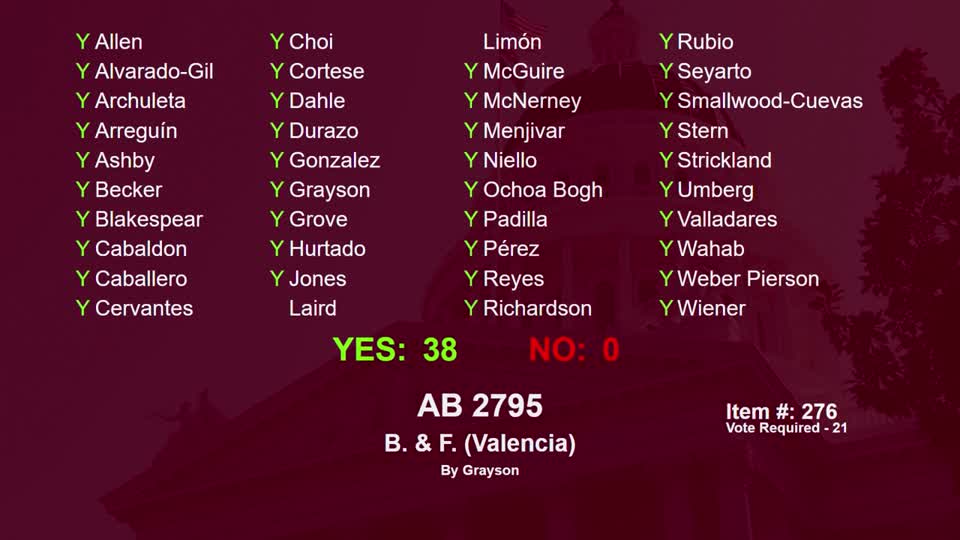
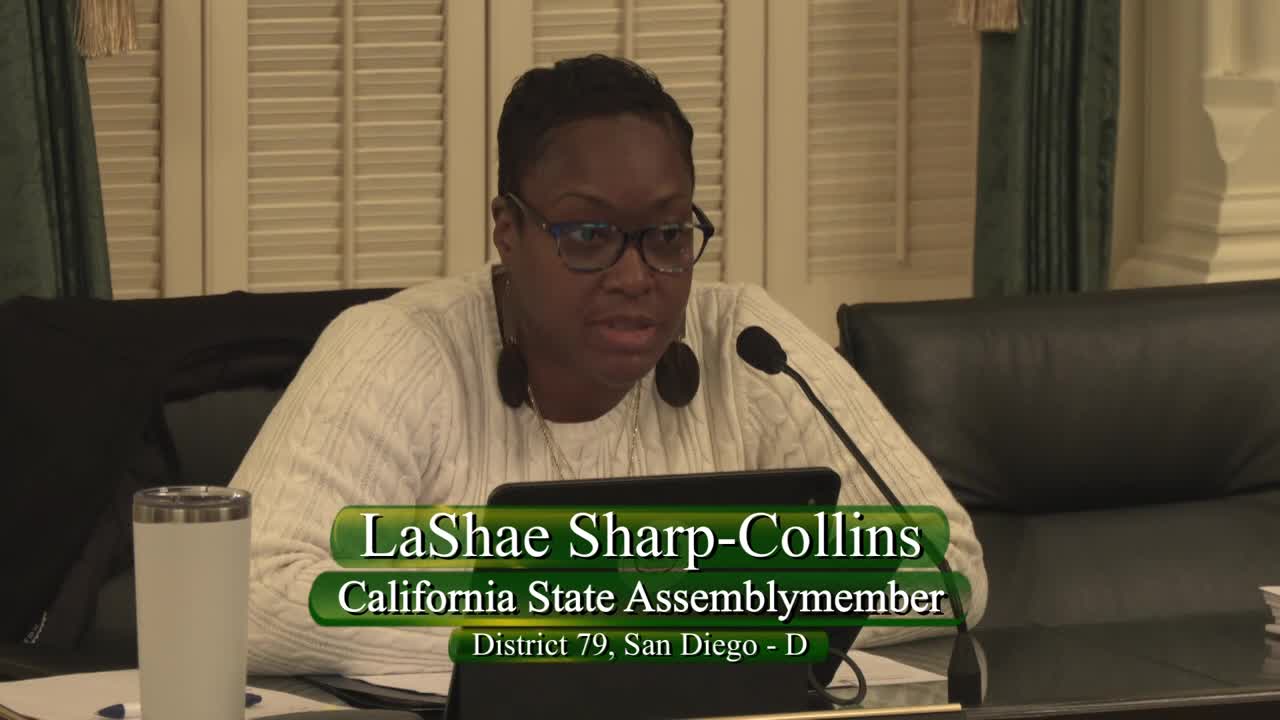
Bill Author
Bill Co-Author(s):