AB 1899: Office of Youth Homelessness Prevention.
- Session Year: 2025-2026
- House: Assembly
- Latest Version Date: 2026-05-18
Current Status:
In Progress
(2026-08-13: In committee: Held under submission.)
Introduced
In Committee
Awaiting First Chamber Vote
Passed First Chamber
In Committee
Awaiting Second Chamber Vote
Passed Second Chamber
Enacted
Existing law, the Governors Reorganization Plan No. 1 of 2025, beginning July 1, 2026, eliminates the Business, Consumer Services, and Housing Agency and instead establishes the Business and Consumer Services Agency and the California Housing and Homelessness Agency. The plan also, among other things, establishes the California Interagency Council on Homelessness as an independent entity within the California Housing and Homelessness Agency and renames the existing council as the California Interagency Executive Council on Homelessness, which it establishes within the California Interagency Council on Homelessness. Existing law requires the Interagency Council on Homelessness to set and measure progress toward goals to prevent and end homelessness among youth in California by setting specific, measurable goals aimed at preventing and ending homelessness among youth in the state, as provided.
This bill would establish within the California Interagency Council on Homelessness the Office of Youth Homelessness Prevention (office), with the mission of reducing youth homelessness in the state to functional zero, defined as the condition in which the number of youth experiencing homelessness does not exceed the capacity to provide youth with permanent housing. The bill would impose prescribed responsibilities on the office, including, by September 15, 2027, developing and overseeing the implementation of a comprehensive framework to reduce youth homelessness to functional zero containing specific and measurable goals, as provided. The
This bill would require the office, on or before December 15, 2027, to create and post on its internet website a publicly accessible dashboard tracking the offices progress toward these goals. The bill would require the office to consult with an advisory committee, as provided, and would require the Governor Secretary of California Housing and Homelessness to appoint the members of the advisory committee by March 1, 2027. The bill would establish the Office of Youth Homelessness Prevention Fund and require that, upon appropriation, moneys deposited into the fund be made available to the council, as provided. The bill would require the office to submit a report on its progress toward achieving its goals to the Legislature and the California Interagency Council on Homelessness council on or before December 15, 2027, and annually thereafter, as provided.
This bill would make related findings and declarations.
Existing law, the Governors Reorganization Plan No. 1 of 2025, beginning July 1, 2026, eliminates the Business, Consumer Services, and Housing Agency and instead establishes the Business and Consumer Services Agency and the California Housing and Homelessness Agency. The plan also, among other things, establishes the California Interagency Council on Homelessness as an independent entity within the California Housing and Homelessness Agency and renames the existing council as the California Interagency Executive Council on Homelessness, which it establishes within the California Interagency Council on Homelessness. Existing law requires the Interagency Council on Homelessness to set and measure progress toward goals to prevent and end homelessness among youth in California by setting specific, measurable goals aimed at preventing and ending homelessness among youth in the state, as provided.
This bill would establish within the California Housing and Homelessness Agency Interagency Council on Homelessness the Office of Youth Homelessness Prevention (office), with the mission of reducing youth homelessness in the state to functional zero, defined as the condition in which the number of youth experiencing homelessness does not exceed the capacity to provide youth with permanent housing. The bill would impose prescribed responsibilities on the office, including, by September 15, 2027, developing and overseeing the implementation of a comprehensive framework to reduce youth homelessness to functional zero containing specific and measurable goals, as provided. The bill would require the office, on or before December 15, 2027, to create and post on its internet website a publicly accessible dashboard tracking the offices progress toward these goals. The bill would require the office to consult with an advisory committee, as provided, and would require the Governor to appoint the members of the advisory committee by March 1, 2027. The bill would require the office to submit a report on its progress toward achieving its goals to the Legislature and the California Housing and Homelessness Agency Interagency Council on Homelessness on or before December 15, 2027, and annually thereafter, as provided.
This bill would make related findings and declarations.
Existing law, the Governors Reorganization Plan No. 1 of 2025, beginning July 1, 2026, eliminates the Business, Consumer Services, and Housing Agency and instead establishes the Business and Consumer Services Agency and the California Housing and Homelessness Agency. Existing law requires the Interagency Council on Homelessness to set and measure progress toward goals to prevent and end homelessness among youth in California by setting specific, measurable goals aimed at preventing and ending homelessness among youth in the state, as provided.
This bill would state the intent of the Legislature to enact legislation to create an Office of Youth Homelessness Prevention in the California Housing and Homelessness Agency. establish within the California Housing and Homelessness Agency the Office of Youth Homelessness Prevention (office), with the mission of reducing youth homelessness in the state to functional zero, defined as the condition in which the number of youth experiencing homelessness does not exceed the capacity to provide youth with permanent housing. The bill would impose prescribed responsibilities on the office, including, by September 15, 2027, developing and overseeing the implementation of a comprehensive framework to reduce youth homelessness to functional zero containing specific and measurable goals, as provided. The bill would require the office, on or before December 15, 2027, to create and post on its internet website a publicly accessible dashboard tracking the offices progress toward these goals. The bill would require the office to consult with an advisory committee, as provided, and would require the Governor to appoint the members of the advisory committee by March 1, 2027. The bill would require the office to submit a report on its progress toward achieving its goals to the Legislature and the California Housing and Homelessness Agency on or before December 15, 2027, and annually thereafter, as provided.
This bill would make related findings and declarations.
Existing law, the Governors Reorganization Plan No. 1 of 2025, beginning July 1, 2026, eliminates the Business, Consumer Services, and Housing Agency and instead establishes the Business and Consumer Services Agency and the California Housing and Homelessness Agency.
This bill would state the intent of the Legislature to enact legislation to create an Office of Youth Homelessness Prevention in the California Housing and Homelessness Agency.
The Legislature finds and declares all of the following:
(a)Youth homelessness continues to be a significant issue in California. While there has been a notable decrease in youth and young adult homelessness statewide, nearly 10,000 unaccompanied youth still experience homelessness in our state.
(b)An estimated 33 percent Nearly one-quarter of the nations homeless youth and young adults live in California. California, of which 60 percent are unsheltered. A significant percentage of youth and young adults who experience homelessness emerge from the states foster care system and other systems that serve youth, including the juvenile justice and behavioral health systems.
(c)The state has unique responsibilities to youth who live in or emerge from the states foster care system. The state is the parent of youth in foster care and has a duty to ensure their safety, welfare, and protection. One in four youth who have lived in the foster care system report experiencing homelessness by the time they reach 24 years of age.
(d)Youth and young adults who experience homelessness have poorer physical and mental health outcomes, increased likelihood of contact with the legal system, and fewer opportunities to complete high school and pursue higher education and employment.
(e)They also have a higher risk of chronic homelessness as adults. Research demonstrates that approximately 50 percent of adults experiencing chronic homelessness first experienced homelessness by the time they were 25 years of age.
(f)To break the cycle of adult homelessness, it is crucial to achieve functional zero in youth and young adult homelessness, meaning the number of youth and young adults experiencing homelessness does not exceed the capacity to provide youth with permanent housing.
(g)The State of Washington established the nations first an Office of Homeless Youth in 2015. Its goal is to prevent state systems from discharging youth and young adults into homelessness. The offices responsibilities include leading the coordination of a spectrum of funding, policy, and practice efforts related to youth and young adult homelessness, and using data to tailor investments in prevention. Since the office was established, the State of Washington has been progressing toward functional zero in youth and young adult homelessness, with a 40 percent reduction since 2016.
(h)California is now establishing the California Housing and Homelessness Agency. In recognition of the states unique responsibilities to youth living in and emerging from the foster care system, the state should create a state-level Office of Youth Homelessness Prevention in the California Interagency Council on Homelessness to serve as the focal point for policy, funding, and best practices on preventing youth and young adult homelessness and deepening collaborations across all sectors of government toward the goal of achieving functional zero in youth and young adult homelessness.
SEC. 2.Chapter 8.5 (commencing with Section 50259.5) is added to Part 1 of Division 31 of the Health and Safety Code, to read:8.5.Office of Youth Homelessness Prevention50259.5.For purposes of this chapter:
(a)Council means the California Interagency Council on Homelessness.
(b)Functional zero means the condition in which the number of youth experiencing homelessness does not exceed the capacity to provide youth with permanent housing.
(c)Office means the Office of Youth Homelessness Prevention.
(d)Youth means an individual under 26 years of age.
50259.6.(a)There is in the California Interagency Council on Homelessness the Office of Youth Homelessness Prevention.
(b)The offices mission shall be to reduce youth homelessness in the state to functional zero.
(c)The office shall have all of the following responsibilities:
(1)Developing and overseeing the implementation of a comprehensive framework to reduce youth homelessness to functional zero, which shall include all of the following:
(A)Specific and measurable goals, including, but not limited to, all of the following:
(i)Decreasing the number of youth who experience homelessness within 12 months of discharge from a public system of care, including foster care, inpatient residential treatment, and incarceration.
(ii)Decreasing the length and occurrence of youth homelessness caused by a youths separation from family or a legal guardian.
(iii)Decreasing the number of homeless youth experiencing homelessness to functional zero, through, among other things, identifying and enhancing programs that address the root causes of youth homelessness, including timelines within which to attain these measures of success.
(B)The office shall complete development of the framework specified in this paragraph on or before September 15, 2027.
(2)(A)Leading the coordination of funding, policy, and practice to prevent youth homelessness across federal and state agencies and departments with jurisdiction over the states child welfare, foster care, and juvenile justice juvenile justice, education, and workforce systems, including, but not limited to, the Department of Housing and Community Development, the State Department of Social Services, and the Department the Office of Youth and Community Restoration, the State Department of Education, and the Labor and Workforce Development Agency, focused on all of the following:
(i)Sufficient stable housing, including, but not limited to, the utilization of housing vouchers, rapid rehousing, rental support, transitional housing, and eviction prevention.
(ii)Economic and employment support, including job training and placement, financial management skills, flexible financial assistance, and assistance connecting with public benefits.
(iii)Education, including support to earn a high school degree and to pursue and complete postsecondary education and training programs.
(iv)Prevention of youth homelessness, including family reconciliation, interventions to prevent exits from public systems of care, including child welfare, foster care, juvenile justice, and behavioral health, into homelessness, flexible financial assistance, and school-based supports.
(v)Health and mental health, including support for youth to obtain and maintain mental health care.
(vi)Services to assist youth to establish and maintain connections with supportive adults and peers.
(B)The office may provide support, advice, or guidance to local agencies and entities, including, but not limited to, county child welfare agencies, and county probation departments, continuums of care, county behavioral health departments, local housing authorities, and local homelessness departments on funding, policy, and practice, including transition planning, housing services, aftercare supports, and other approaches to preventing youth from existing public systems into homelessness.
(3)Developing best practices and policy recommendations, with proposed timelines for completion, to address gaps, shortfalls, and other inadequacies in the areas listed in paragraph (2).
(4)Gathering data, including by initiating data-sharing agreements, and analyzing the data to evaluate the progress toward desired outcomes, including tracking the rate at which youth exit foster care and other public systems of care into homelessness.
(d)On or before December 15, 2027, the office shall create and post to its internet website a publicly accessible dashboard tracking the offices progress toward the goals specified in this section.
50259.7.(a)The office shall consult with a 12-member advisory committee with membership as follows:
(1)Two youth with current or previous lived experience with the foster system. homelessness. These youth may also have current or previous lived experience with homelessness the foster care or the juvenile justice system.
(2)Two parent advocates. advocates or legal guardians of formerly homeless youth.
(3)Three advocates for homeless youth.
(4)Two members of the Legislature.
(5)Three stakeholders knowledgeable in or with demonstrated experience with the provision of services to homeless youth, the dependency system, and family reunification.
(b)The members of the advisory committee shall be appointed by the Governor Secretary of California Housing and Homelessness on or before March 1, 2027.
(c)The advisory committee shall meet on or before June 1, 2027, and at least twice each calendar year thereafter.
(d)At least one member of the office shall attend advisory committee meetings to provide administrative support and guidance as needed.
50259.8.(a)The Office of Youth Homelessness Prevention Fund is hereby established within the State Treasury.
(b)The fund may accept gifts, grants, and other funds from any source, private or public.
(c)Moneys deposited into the fund shall, upon appropriation by the Legislature, be made available to the council to be used in the manner prescribed by law to carry out the provisions of this chapter.
50259.8.50259.9.(a)Notwithstanding Section 10231.5 of the Government Code, the office shall report on its progress toward achieving the measurable goals in this chapter to the Legislature and the council on or before December 15, 2027, and annually thereafter.
(b)The office shall make the report completed pursuant to this section available to the public on its internet website.
(c)The report completed pursuant to this subdivision shall be submitted in compliance with Section 9795 of the Government Code.
The Legislature finds and declares all of the following:
(a)Youth homelessness continues to be a significant issue in California. While there has been a notable decrease in youth and young adult homelessness statewide, nearly 10,000 unaccompanied youth still experience homelessness in our state.
(b)An estimated 33 percent of the nations homeless youth and young adults live in California. A significant percentage of youth and young adults who experience homelessness emerge from the states foster care system and other systems that serve youth, including the juvenile justice and behavioral health systems.
(c)The state has unique responsibilities to youth who live in or emerge from the states foster care system. The state is the parent of youth in foster care and has a duty to ensure their safety, welfare, and protection. One in four youth who have lived in the foster care system report experiencing homelessness by the time they reach 24 years of age.
(d)Youth and young adults who experience homelessness have poorer physical and mental health outcomes, increased likelihood of contact with the legal system, and fewer opportunities to complete high school and pursue higher education and employment.
(e)They also have a higher risk of chronic homelessness as adults. Research demonstrates that approximately 50 percent of adults experiencing chronic homelessness first experienced homelessness by the time they were 25 years of age.
(f)To break the cycle of adult homelessness, it is crucial to achieve functional zero in youth and young adult homelessness, meaning the number of youth and young adults experiencing homelessness does not exceed the capacity to provide youth with permanent housing.
(g)The State of Washington established the nations first Office of Homeless Youth in 2015. Its goal is to prevent state systems from discharging youth and young adults into homelessness. The offices responsibilities include leading the coordination of a spectrum of funding, policy, and practice efforts related to youth and young adult homelessness, and using data to tailor investments in prevention. Since the office was established, the State of Washington has been progressing toward functional zero in youth and young adult homelessness, with a 40 percent reduction since 2016.
(h)California is now establishing the California Housing and Homelessness Agency. In recognition of the states unique responsibilities to youth living in and emerging from the foster care system, the state should create a state-level Office of Youth Homelessness Prevention in the agency California Interagency Council on Homelessness to serve as the focal point for policy, funding, and best practices on preventing youth and young adult homelessness and deepening collaborations across all sectors of government toward the goal of achieving functional zero in youth and young adult homelessness.
SEC. 2.Chapter 8.5 (commencing with Section 50259.5) is added to Part 1 of Division 31 of the Health and Safety Code, to read:8.5.Office of Youth Homelessness Prevention50259.5.For purposes of this chapter:
(a)Agency means the California Housing and Homelessness Agency.(a)Council means the California Interagency Council on Homelessness.
(b)Functional zero means the condition in which the number of youth experiencing homelessness does not exceed the capacity to provide youth with permanent housing.
(c)Office means the Office of Youth Homelessness Prevention.
(d)Youth means an individual under 26 years of age.
50259.6.(a)There is in the California Agency on Housing and Homelessness Interagency Council on Homelessness the Office of Youth Homelessness Prevention.
(b)The offices mission shall be to reduce youth homelessness in the state to functional zero.
(c)The office shall have all of the following responsibilities:
(1)Developing and overseeing the implementation of a comprehensive framework to reduce youth homelessness to functional zero, which shall include all of the following:
(A)Specific and measurable goals, including, but not limited to, all of the following:
(i)Decreasing the number of youth who experience homelessness within 12 months of discharge from a public system of care, including foster care, inpatient residential treatment, and incarceration.
(ii)Decreasing the length and occurrence of youth homelessness caused by a youths separation from family or a legal guardian.
(iii)Decreasing the number of homeless youth experiencing homelessness to functional zero, through, among other things, identifying and enhancing programs that address the root causes of youth homelessness, including timelines within which to attain these measures of success.
(B)The office shall complete development of the framework specified in this paragraph on or before September 15, 2027.
(2)(A)Leading the coordination of funding, policy, and practice to prevent youth homelessness across federal and state agencies and departments with jurisdiction over the states child welfare, foster care, and juvenile justice systems, including, but not limited to, the Interagency Council on Homelessness, the Department of Housing and Community Development, the State Department of Social Services, and the Department of Youth and Community Restoration, focused on all of the following:
(i)Sufficient stable housing, including, but not limited to, the utilization of housing vouchers, rapid rehousing, rental support, and eviction prevention.
(ii)Economic and employment support, including job training and placement, financial management skills, flexible financial assistance, and assistance connecting with public benefits.
(iii)Education, including support to earn a high school degree and to pursue and complete postsecondary education and training programs.
(iv)Prevention of youth homelessness, including family reconciliation, interventions to prevent exits from public systems of care, including child welfare, foster care, juvenile justice, and behavioral health, into homelessness, flexible financial assistance, and school-based supports.
(v)Health and mental health, including support for youth to obtain and maintain mental health care.
(vi)Services to assist youth to establish and maintain connections with supportive adults and peers.
(B)The office may provide support, advice, or guidance to local agencies and entities, including, but not limited to, county child welfare agencies, and county probation departments, on funding, policy, and practice, including transition planning, housing services, aftercare supports, and other approaches to preventing youth from existing public systems into homelessness.
(3)Developing best practices and policy recommendations, with proposed timelines for completion, to address gaps, shortfalls, and other inadequacies in the areas listed in paragraph (2).
(4)Gathering data, including by initiating data sharing data-sharing agreements, and analyzing the data to evaluate the progress toward desired outcomes, including tracking the rate at which youth exit foster care and other public systems of care into homelessness.
(d)On or before December 15, 2027, the office shall create and post to its internet website a publicly accessible dashboard tracking the offices progress toward the goals specified in this section.
50259.7.(a)The office shall consult with a 12-member advisory committee with membership as follows:
(1)Two youth with current or previous lived experience with the foster system. These youth may also have current or previous lived experience with homelessness or the juvenile justice system.
(2)Two parent advocates.
(3)Three advocates for youth.
(4)Two members of the Legislature.
(5)Three stakeholders knowledgeable in the provision of services to homeless youth, the dependency system, and family reunification.
(b)The members of the advisory committee shall be appointed by the Governor on or before March 1, 2027.
(c)The advisory committee shall meet on or before June 1, 2027, and at least twice each calendar year thereafter.
(d)At least one member of the office shall attend advisory committee meetings to provide administrative support and guidance as needed.
50259.8.(a)Notwithstanding Section 10231.5 of the Government Code, the office shall report on its progress toward achieving the measurable goals in this chapter to the Legislature and the agency council on or before December 15, 2027, and annually thereafter.
(b)The office shall make the report completed pursuant to this section available to the public on its internet website.
(c)The report completed pursuant to this subdivision shall be submitted in compliance with Section 9795 of the Government Code.
The Legislature finds and declares all of the following:
(a)Youth homelessness continues to be a significant issue in California. While there has been a notable decrease in youth and young adult homelessness statewide, nearly 10,000 unaccompanied youth still experience homelessness in our state.
(b)An estimated 33 percent of the nations homeless youth and young adults live in California. A significant percentage of youth and young adults who experience homelessness emerge from the states foster care system and other systems that serve youth, including the juvenile justice and behavioral health systems.
(c)The state has unique responsibilities to youth who live in or emerge from the states foster care system. The state is the parent of youth in foster care and has a duty to ensure their safety, welfare, and protection. One in four youth who have lived in the foster care system report experiencing homelessness by the time they reach 24 years of age.
(d)Youth and young adults who experience homelessness have poorer physical and mental health outcomes, increased likelihood of contact with the legal system, and fewer opportunities to complete high school and pursue higher education and employment.
(e)They also have a higher risk of chronic homelessness as adults. Research demonstrates that approximately 50 percent of adults experiencing chronic homelessness first experienced homelessness by the time they were 25 years of age.
(f)To break the cycle of adult homelessness, it is crucial to achieve functional zero in youth and young adult homelessness, meaning the number of youth and young adults experiencing homelessness does not exceed the capacity to provide youth with permanent housing.
(g)The State of Washington established the nations first Office of Homeless Youth in 2015. Its goal is to prevent state systems from discharging youth and young adults into homelessness. The offices responsibilities include leading the coordination of a spectrum of funding, policy, and practice efforts related to youth and young adult homelessness, and using data to tailor investments in prevention. Since the office was established, the State of Washington has been progressing toward functional zero in youth and young adult homelessness, with a 40 percent reduction since 2016.
(h)California is now establishing the California Housing and Homelessness Agency. In recognition of the states unique responsibilities to youth living in and emerging from the foster care system, the state should create a state-level Office of Youth Homelessness Prevention in the agency to serve as the focal point for policy, funding, and best practices on preventing youth and young adult homelessness and deepening collaborations across all sectors of government toward the goal of achieving functional zero in youth and young adult homelessness.
SEC. 2.Chapter 8.5 (commencing with Section 50259.5) is added to Part 1 of Division 31 of the Health and Safety Code, to read:8.5.Office of Youth Homelessness Prevention50259.5.For purposes of this chapter:
(a)Agency means the California Housing and Homelessness Agency.
(b)Functional zero means the condition in which the number of youth experiencing homelessness does not exceed the capacity to provide youth with permanent housing.
(c)Office means the Office of Youth Homelessness Prevention.
(d)Youth means an individual under 26 years of age.
50259.6.(a)There is in the California Agency on Housing and Homelessness the Office of Youth Homelessness Prevention.
(b)The offices mission shall be to reduce youth homelessness in the state to functional zero.
(c)The office shall have all of the following responsibilities:
(1)Developing and overseeing the implementation of a comprehensive framework to reduce youth homelessness to functional zero, which shall include all of the following:
(A)Specific and measurable goals, including, but not limited to, all of the following:
(i)Decreasing the number of youth who experience homelessness within 12 months of discharge from a public system of care, including foster care, inpatient residential treatment, and incarceration.
(ii)Decreasing the length and occurrence of youth homelessness caused by a youths separation from family or a legal guardian.
(iii)Decreasing the number of homeless youth experiencing homelessness to functional zero, through, among other things, identifying and enhancing programs that address the root causes of youth homelessness, including timelines within which to attain these measures of success.
(B)The office shall complete development of the framework specified in this paragraph on or before September 15, 2027.
(2)(A)Leading the coordination of funding, policy, and practice to prevent youth homelessness across federal and state agencies and departments with jurisdiction over the states child welfare, foster care, and juvenile justice systems, including, but not limited to, the Interagency Council on Homelessness, the State Department of Social Services, and the Department of Youth and Community Restoration, focused on all of the following:
(i)Sufficient stable housing, including, but not limited to, the utilization of housing vouchers, rapid rehousing, rental support, and eviction prevention.
(ii)Economic and employment support, including job training and placement, financial management skills, flexible financial assistance, and assistance connecting with public benefits.
(iii)Education, including support to earn a high school degree and to pursue and complete postsecondary education and training programs.
(iv)Prevention of youth homelessness, including family reconciliation, interventions to prevent exits from public systems of care, including child welfare, foster care, juvenile justice, and behavioral health, into homelessness, flexible financial assistance, and school-based supports.
(v)Health and mental health, including support for youth to obtain and maintain mental health care.
(vi)Services to assist youth to establish and maintain connections with supportive adults and peers.
(B)The office may provide support, advice, or guidance to local agencies and entities, including, but not limited to, county child welfare agencies, and county probation departments, on funding, policy, and practice, including transition planning, housing services, aftercare supports, and other approaches to preventing youth from existing public systems into homelessness.
(3)Developing best practices and policy recommendations, with proposed timelines for completion, to address gaps, shortfalls, and other inadequacies in the areas listed in paragraph (2).
(4)Gathering data, including by initiating data sharing agreements, and analyzing the data to evaluate the progress toward desired outcomes, including tracking the rate at which youth exit foster care and other public systems of care into homelessness.
(d)On or before December 15, 2027, the office shall create and post to its internet website a publicly accessible dashboard tracking the offices progress toward the goals specified in this section.
50259.7.(a)The office shall consult with a 12-member advisory committee with membership as follows:
(1)Two youth with current or previous lived experience with the foster system. These youth may also have current or previous lived experience with homelessness or the juvenile justice system.
(2)Two parent advocates.
(3)Three advocates for youth.
(4)Two members of the Legislature.
(5)Three stakeholders knowledgeable in the provision of services to homeless youth, the dependency system, and family reunification.
(b)The members of the advisory committee shall be appointed by the Governor on or before March 1, 2027.
(c)The advisory committee shall meet on or before June 1, 2027, and at least twice each calendar year thereafter.
(d)At least one member of the office shall attend advisory committee meetings to provide administrative support and guidance as needed.
50259.8.(a)Notwithstanding Section 10231.5 of the Government Code, the office shall report on its progress toward achieving the measurable goals in this chapter to the Legislature and the agency on or before December 15, 2027, and annually thereafter.
(b)The office shall make the report completed pursuant to this section available to the public on its internet website.
(c)The report completed pursuant to this subdivision shall be submitted in compliance with Section 9795 of the Government Code.
SECTION 1.It is the intent of the Legislature to enact legislation to create an Office of Youth Homelessness Prevention in the California Housing and Homelessness Agency.It is the intent of the Legislature to enact legislation to create an Office of Youth Homelessness Prevention in the California Housing and Homelessness Agency.
|
Date
|
Status
|
|---|---|
| Aug 13, 2026 | In committee: Held under submission. |
| Aug 3, 2026 | In committee: Referred to APPR. suspense file. |
| Jun 25, 2026 | From committee: Do pass and re-refer to Com. on APPR. with recommendation: To Consent Calendar. (Ayes 10. Noes 0.) (June 24). Re-referred to Com. on APPR. |
| Jun 16, 2026 | From committee: Do pass and re-refer to Com. on HOUSING with recommendation: To Consent Calendar. (Ayes 5. Noes 0.) (June 15). Re-referred to Com. on HOUSING. |
| Jun 3, 2026 | Referred to Coms. on HUMAN S. and HOUSING. |
| May 22, 2026 | In Senate. Read first time. To Com. on RLS. for assignment. |
| May 22, 2026 | Read third time. Passed. Ordered to the Senate. (Ayes 74. Noes 0. Page 5259.) |
| May 22, 2026 | Read third time. Passed. Ordered to the Senate. (Ayes 74. Noes 0.) |
| May 18, 2026 | Read third time and amended. Ordered to third reading. (Page 5142.) |
| May 18, 2026 | Read third time and amended. Ordered to third reading. |
| May 18, 2026 | Read second time. Ordered to third reading. |
| May 14, 2026 | Joint Rule 62(a), file notice suspended. (Page 5030.) |
| May 14, 2026 | From committee: Do pass. (Ayes 15. Noes 0.) (May 14). |
| May 14, 2026 | Joint Rule 62(a), file notice suspended. |
| May 13, 2026 | In committee: Set, first hearing. Referred to APPR. suspense file. |
| Apr 23, 2026 | From committee: Do pass and re-refer to Com. on APPR. with recommendation: To Consent Calendar. (Ayes 6. Noes 0.) (April 23). Re-referred to Com. on APPR. |
| Apr 13, 2026 | Re-referred to Com. on HUM. S. |
| Apr 9, 2026 | Read second time and amended. |
| Apr 8, 2026 | From committee: Amend, and do pass as amended and re-refer to Com. on HUM. S. with recommendation: To Consent Calendar. (Ayes 12. Noes 0.) (April 8). |
| Mar 23, 2026 | Re-referred to Com. on H. & C.D. |
| Mar 19, 2026 | From committee chair, with author's amendments: Amend, and re-refer to Com. on H. & C.D. Read second time and amended. |
| Mar 19, 2026 | Referred to Coms. on H. & C.D. and HUM. S. |
| Feb 13, 2026 | From printer. May be heard in committee March 15. |
| Feb 12, 2026 | Read first time. To print. |
|
Date
|
Description
|
Location
|
Votes
|
|
|---|---|---|---|---|
| Aug 3, 2026 | Placed on suspense file | Senate Standing Committee on Appropriations |
Passed |
|
| Jun 24, 2026 | Do pass, but first be re-referred to the Committee on [Appropriations] with the recommendation: To Consent Calendar | Senate Standing Committee on Housing |
Passed |
|
| Jun 15, 2026 | Do pass, but first be re-referred to the Committee on [Housing] with the recommendation: To Consent Calendar | Senate Standing Committee on Human Services |
Passed |
|
| May 22, 2026 | AB 1899 Caloza Assembly Third Reading | Assembly Floor |
Passed |
|
| May 14, 2026 | Do pass. | Assembly Standing Committee on Appropriations |
Passed |
|
| Apr 23, 2026 | Do pass and be re-referred to the Committee on [Appropriations] with recommendation: To Consent Calendar | Assembly Standing Committee on Human Services |
Passed |
|
| Apr 8, 2026 | Do pass as amended, and be re-referred to the Committee on [Human Services] with recommendation: To Consent Calendar | Assembly Standing Committee on Housing and Community Development |
Passed |
This list shows positions taken on this bill by organizations on the date displayed, which is linked to the original source.
Positions by individuals are not included.
|
Organization
|
Position
|
Date
|
|---|---|---|
| AdvancED Consulting, LLC | ** Support | |
| Aids Healthcare Foundation | ** Support | |
| American Academy Of Pediatrics, California | ** Support | |
| ASPIRANET | ** Support | |
| Bill Wilson Center | ** Support | |
| Black Women United | ** Support | |
| Bresee Foundation | ** Support | |
| Bright Futures for Youth | ** Support | |
| California Alliance Of Child And Family Services | ** Support | |
| California Apartment Association | ** Support | |
| California Association Of Christian Colleges And Universities | ** Support | |
| California Behavioral Health Association | ** Support | |
| California Coalition For Youth | ** Support | |
| California Coalition for Youth (Co-Sponsor) | ** Support | |
| California Community Foundation | ** Support | |
| California Youth Connection | ** Support | |
| Children Now | ** Support | |
| City Of Los Angeles | ** Support | |
| Destination: Home | ** Support | |
| Echoes of Hope | ** Support | |
| Fostering Promise | ** Support | |
| Glide | ** Support | |
| Home Start, INC | ** Support | |
| Inner City Law Center | ** Support | |
| John Burton Advocates for Youth | ** Support | |
| LA Emissary | ** Support | |
| Larkin Street Youth Services | ** Support | |
| League Of California Cities | ** Support | |
| Legacy Bridge CDC | ** Support | |
| Los Angeles Unified School District | ** Support | |
| National Center for Youth Law (NCYL) | ** Support | |
| Orangewood Foundation | ** Support | |
| Public Counsel | ** Support | |
| Safe Place For Youth | ** Support | |
| San Diego Youth Services | ** Support | |
| Stanford Sierra Youth and Families | ** Support | |
| Steinberg Institute | ** Support | |
| Sunset Youth Services | ** Support | |
| SV@HOME ACTION FUND | ** Support | |
| The Village Family Services | ** Support | |
| Unity Care | ** Support | |
| YMCA of San Diego County | ** Support | |
| Youth Law Center | ** Support |
SENATE COMMITTEE ON
Senator Sabrina Cervantes, Chair
2025 - 2026 Regular Session
AB 1899 (Caloza) - Office of Youth Homelessness Prevention
Version: | Policy Vote: |
Urgency: | Mandate: |
Hearing Date: | Consultant: |
Bill Summary:
AB 1899 would establish the Office of Youth Homelessness Prevention.
Fiscal Impact:
- The California Interagency Council on Homelessness (Cal ICH) estimates General Fund costs of $1,223,000 in the first year and $1,151,000 annually thereafter to support staffing for leading statewide coordination across various stakeholders, developing a framework with measurable goals, and aligning funding and policy toward achieving functional zero youth homelessness.
- The California Department of Social Services (CDSS) estimates General Fund costs of $1,096,000 in 2026-27 and $1,072,000 annually thereafter to collaborate with the office on funding, policy, best practices, and engagement.
Background:
State law requires the Cal ICH to set and measure progress towards goals to prevent and end homelessness among youth in California by doing both of the following:
- Setting specific, measurable goals aimed at preventing and ending homelessness among youth in the state. These goals must include, but not be limited to, all of the following:
- Measurably decreasing the number of young people experiencing homelessness in the state.
- Measurably increasing permanency rates among young people experiencing homelessness by decreasing the length and occurrences of young people experiencing homelessness caused by a youth’s separation from family or a legal guardian.
- Decreasing the duration and frequency of experiences of homelessness among California’s youth.
- Decreasing barriers to services through promoting cross-systems partnerships to expedite access to services, including social services, child welfare services, regional center services, and mental health services.
- Defining outcome measures and gathering data related to the goals.
Proposed Law:
Specific provisions of the bill would:
- Establish the Office of Youth Homelessness Prevention in the Cal ICH to reduce youth homelessness in the state to functional zero.
- Require the office to create and post to its internet website a publicly accessible dashboard tracking the office’s progress toward specified goals.
- Require the office to consult with a 12-member advisory committee, as specified.
- Establish the Office of Youth Homelessness Prevention Fund within the State Treasury; provide that the fund may accept gifts, grants, and other funds from any source, private or public; and require that moneys deposited into the fund, upon appropriation by the Legislature, be made available to the Cal ICH.
- Require the office to report on its progress toward achieving the measurable goals to the Legislature and the Cal ICH on or before December 15, 2027, and annually thereafter.
-- END --
SENATE COMMITTEE ON HOUSING
Senator Jesse Arreguín, Chair
2025 - 2026 Regular
Bill No: AB 1899 Hearing Date: 6/24/2026
Author: | Caloza | ||
Version: | 5/18/2026 Amended | ||
Urgency: | No | Fiscal: | Yes |
Consultant: | Ryan Hardmeyer | ||
SUBJECT: Office of Youth Homelessness Prevention
DIGEST: This bill would establish the Office of Youth Homelessness Prevention within the California Interagency Council of Homelessness to oversee the implementation of a comprehensive framework to reduce youth homelessness to functional zero and track and report progress toward related goals.
ANALYSIS:
Existing law:
- Establishes the California Interagency Council on Homelessness (Cal-ICH), with the purpose of coordinating the state’s response to homelessness by utilizing Housing First practices.
- Establishes a number of goals for Cal-ICH, including the following:
- Creating partnerships among state agencies and departments;
- Promoting systems integration to increase efficiency and effectiveness; and,
- Coordinating existing funding and applications for competitive funding.
- Establishes the Secretary of the Business, Consumer Services and Housing Agency and the Secretary of the California Health and Human Services Agency as co-chairs of Cal-ICH, which consists of 20 other members, as specified.
- Establishes the Homeless Housing, Assistance, and Prevention (HHAP) Grant Program to provide large cities, counties, and Continuums of Care (CoCs) with one-time grant funds to support regional coordination and prevent and end homelessness, informed by a best-practices framework focused on moving homeless individuals and families into permanent housing and supporting the efforts of those individuals and families to maintain their permanent housing. Directs Cal-ICH to administer HHAP.
- Requires a HHAP recipient to use at least 10% of funding from a HHAP allocation for services dedicated to homeless youth.
- Requires HHAP to be used for evidence-based solutions that address and prevent homelessness among eligible populations, as specified.
- Establishes the Homeless Youth Act of 2018 to better serve the state’s homeless youth population and requires Cal-ICH to take on additional related responsibilities, including setting goals to prevent and end homelessness among youth in the state, defining outcome measures, and gathering data related to those goals. These goals include:
- Setting goals to prevent and end homelessness among California’s youth;
- Improving the safety, health, and welfare of young people experiencing homelessness in the state;
- Increasing system integration and coordinating efforts to prevent homelessness among youth who are currently, or formerly, involved in the child welfare services or the juvenile justice systems;
- Leading efforts to coordinate a spectrum of funding, policy, and practice efforts related to young people experiencing homelessness; and,
- Identifying best practices to ensure homeless minors who have experienced maltreatment and are eligible to be dependent children are re-referred to, or have the ability to self-refer to, the child welfare system, as specified.
- Instructs the Cal-ICH, in order to coordinate a spectrum of funding, policy, and practice efforts for youth experiencing homelessness, to do the following:
- Coordinate with youth experiencing homelessness, the Department of Social Services (DSS), appropriate state and county agencies and departments, the state advisory group established pursuant to current law related to runaway and homeless youth, and relevant stakeholders, in order to inform policy, practices, and programs; and,
- Provide technical assistance and program development support, to the extent that funding is made available, in order to increase capacity among new and existing service providers to best meet statewide needs, particularly in areas where services to youth experiencing homelessness have not yet been established, and provide support to service providers in making evidence-informed and data-driven decisions.
This bill:
- Establishes the Office of Youth Homelessness Prevention (OYHP) within the California Interagency Council on Homelessness.
- Declares the OYHP’s mission is to reduce youth homelessness in California to functional zero, as defined.
- Defines functional zero to mean the condition in which the number of youth experiencing homelessness does not exceed the capacity to provide youth with permanent housing.
- Assigns the following responsibilities to the OYHP:
- Developing and overseeing the implementation of a comprehensive framework to reduce youth homelessness to functional zero, which shall include all of the following:
- Specific and measurable goals, including, but not limited to, all of the following:
- Decreasing the number of youth who experience homelessness within 12 months of discharge from a public system of care, including foster care, inpatient residential treatment, and incarceration.
- Decreasing the length and occurrence of youth homelessness caused by a youth’s separation from family or a legal guardian.
- Decreasing the number of homeless youth experiencing homelessness to functional zero, through, among other things, identifying and enhancing programs that address the root causes of youth homelessness, including timelines within which to attain these measures of success.
- The office shall complete development of the framework specified in this paragraph on or before September 15th, 2027.
- Specific and measurable goals, including, but not limited to, all of the following:
- Leading the coordination of funding, policy, and practice to prevent youth homelessness across federal and state agencies and departments with jurisdiction over the state’s child welfare, foster care, juvenile justice, education, and workforce systems, including, but not limited to, the Department of Housing and Community Development, the DSS, the Office of Youth and Community Restoration, the State Department of Education, and the Labor and Workforce Development Agency, focused on all of the following:
- Sufficient stable housing, including, but not limited to, the utilization of housing vouchers, rapid rehousing, rental support, transitional housing, and eviction prevention.
- Economic and employment support, including job training and placement, financial management skills, flexible financial assistance, and assistance connecting with public benefits.
- Education, including support to earn a high school degree and to pursue and complete postsecondary education and training programs.
- Prevention of youth homelessness, including family reconciliation, interventions to prevent exits from public systems of care – including child welfare, foster care, juvenile justice, and behavioral health – into homelessness, flexible financial assistance, and school-based supports.
- Health and mental health, including support for youth to obtain and maintain mental health care.
- Services to assist youth to establish and maintain connections with supportive adults and peers.
- The office may provide support, advice, or guidance to local agencies and entities, including, but not limited to, county child welfare agencies, county probation departments, continuums of care, county behavioral health departments, local housing authorities, and local homelessness departments on funding, policy, and practice, including transition planning, housing services, aftercare supports, and other approaches to prevent youth from exiting public systems into homelessness.
- Developing best practices and policy recommendations, with proposed timelines for completion, to address gaps, shortfalls, and other inadequacies in the areas listed in (b).
- Gathering data, including by initiating data-sharing agreements, and analyzing the data to evaluate the progress toward desired outcomes, including tracking the rate at which youth exit foster care and other public systems of care into homelessness.
- Developing and overseeing the implementation of a comprehensive framework to reduce youth homelessness to functional zero, which shall include all of the following:
- Requires the OYHP, on or before December 15th, 2027, to create and post to its internet website a publicly accessible dashboard tracking the office’s progress toward the specified goals.
- Requires the OYHP consult with a 12-member advisory committee with membership as follows:
- Two youth with current or previous lived experience with
- Two parent advocates or legal guardians of formerly homeless youth.
- Three advocates for homeless youth.
- Two members of the Legislature.
- Three stakeholders knowledgeable in, or with demonstrated experience with, the provision of services to homeless youth, the dependency system, and family reunification.
- Two youth with current or previous lived experience with
- Requires the Secretary of the California Housing and Homelessness Agency, on or before March 1st, 2027, to appoint members to the advisory committee.
- Requires the advisory committee meet on or before June 1st, 2027, and at least twice each calendar year thereafter.
- Provides that at least one member of the office shall attend advisory committee meetings to provide administrative support and guidance as needed.
- Establishes the OYHP Fund within the State Treasury.
- The fund may accept gifts, grants, and other funds from any source, private or public.
- Moneys deposited into the fund shall, upon appropriation by the Legislature, be made available to the council to be used in the manner prescribed by law to carry out the provisions of this chapter.
- Requires the OYHP to report on its progress toward achieving the measurable goals in this bill to the Legislature and Cal-ICH on or before December 15th, 2027, and annually thereafter.
- The office shall make the report completed pursuant to this section available to the public on its internet website.
- The report completed pursuant to this subdivision shall be submitted in compliance with Section 9795 of the Government Code.
Background
The creation of Cal-ICH. SB 1380 (Mitchell, 2016) created the Homelessness Coordination and Financing Council (HCFC) to coordinate the state's response to homelessness. HCFC was later renamed Cal-ICH. Cal-ICH is made up of all state agencies and departments that operate programs that provide housing or housing-related services to people experiencing homelessness or at risk of homelessness. Cal-ICH meets quarterly and has an advisory committee which includes a current or formerly homeless youth who lives in California. One of the listed statutory goals of the Council is to prevent and end homelessness among California’s youth, recognizing the unique needs of the population.
Homeless Youth Act of 2018. SB 918 (Weiner, 2018) established the Homeless Youth Act of 2018 to better serve the state’s homeless youth population. The Act requires Cal-ICH to set goals to prevent and end homelessness among youth in the state, define outcome measures, and gather data related to those goals. In addition, the Act requires Cal-ICH to coordinate with young people experiencing homelessness, the State Department of Social Services, and the other appropriate agencies and departments to coordinate a spectrum of funding, policy, and practice efforts related to young people experiencing homelessness. SB 918 did not include any deadlines by which Cal-ICH would deliver on the goals of the bill or a reporting requirement on progress or outcomes.
Homeless Housing, Assistance, and Prevention Grant Program. Beginning in 2018, in response to a growing number of people experiencing unsheltered homelessness, the state began investing significantly in the local homelessness response system through HHAP. HHAP provides one-time grants to cities with populations over 300,000, counties, and Continuums of Care (CoCs) to support regional coordination and expand, or develop, local capacity to address their immediate homelessness challenges. Investments are informed by a best-practices framework focused on moving homeless individuals and families into permanent housing and supporting the efforts of those individuals and families to maintain their permanent housing. Big cities, counties, and CoCs can use HHAP funds for operating subsidies for shelters and supportive housing; construction of shelter, interim housing, and supportive housing; landlord incentives, rental assistance and rapid rehousing; prevention and shelter diversion; and street outreach and services coordination. The program has received 7 rounds of funding totaling $5.45 billion from 2019-2025, of which $3.9 billion has been awarded, and $2.3 billion has been expended. Round 6 of HHAP is available to applicants and an additional $500 million was included in this year’s budget, contingent on more accountability, with a commitment that funds would go out in an expedited fashion.
Comments
- Author’s statement. “No young person should have to choose between school and the streets or between meaningful work and the street economy. No young person should be sleeping on a city bus or camping on a sidewalk. Creating an Office of Homeless Youth, as envisioned in AB 1899, will ensure that there are programs specifically designed to support and serve youth and young adults to prevent unnecessary suffering and prevent them from growing up and becoming chronically homeless. It is modeled after Washington State, which has reduced youth and young adult homelessness by forty percent. California can, and must, do more for our young people who are experiencing homelessness.”
- Youth Homelessness in California. According to the 2024 U.S. Department of Housing and Urban Development Point-in-Time (PIT) Count, there are over 187,000 people experiencing homelessness in California. This includes 9,052 homeless youth and 1,890 parenting youth and their children experiencing homelessness. Homelessness among some subcommunities of youth is significantly disproportionate. LGBTQ+ youth are 120% more likely than their non-LGBTQ+ peers to be homeless, and represent up to 40% of homeless youth. Further, Black, Indigenous, and other youth of color were especially overrepresented, with an 83% increased risk of having experienced homelessness compared to their non-BIPOC peers.[1] The lack of a high school diploma or General Equivalency Diploma (GED) is a factor strongly correlated with experiencing homelessness. These young adults, without a high school diploma or GED, are at 4.5 times higher risk of experiencing homelessness compared to peers who completed high school.[2] Beyond those demographics, other contributing factors include economic circumstances like poverty and financial insecurity, racial disparities, and mental health and substance use disorders. Young people who have had involvement with the child welfare and juvenile justice systems are also more likely to become homeless. Evidence has also shown that being homeless as a youth is a key indicator of adult homelessness. All of these factors demonstrate the complexity of the drivers of youth homelessness and reiterate the need for comprehensive supports.
- Targeted Funding & Supports Show Results. Between 2023 and 2024, California had the largest reduction in the number of unaccompanied youths experiencing homelessness in the nation, with 1,121 fewer unaccompanied youth experiencing homelessness on a single night in January 2024 than in January 2023. According to the UCSF Benioff Homelessness and Housing Initiative, the reductions in youth homelessness can be attributed to consistent HHAP and Homekey funding for youth homelessness, as well as targeted strategies by Cal-ICH and other relevant state agencies.
- Potential for Duplicative Responsibilities. This bill would establish the OYHP as the lead state entity in coordination of funding, policy, and practice to prevent youth homelessness across federal and state agencies and departments with jurisdiction over the state’s child welfare, foster care, and juvenile justice systems, including, but not limited to, Cal-ICH, DSS, and the Department of Youth and Community Restoration. It is worth noting that Cal-ICH is already tasked with coordination across federal and state agencies with such jurisdiction. Additionally, this bill would require OYHP to establish a comprehensive framework to reduce youth homelessness to functional zero. The Homeless Youth Act of 2018 already requires Cal-ICH to set goals to prevent and end homelessness among youth in the state, define outcome measures, and gather data related to those goals. While homeless youth face unique challenges which should be uplifted and addressed by policy, and data bear out the value of targeted interventions, it is not clear how creating a standalone office and adding bureaucracy would result in fewer homeless youth when many of these responsibilities are already assumed by Cal-ICH.
- Incoming! This bill was also referred to the Senate Human Services Committee, where it passed on a vote of 5-0.
Related/Prior Legislation
SB 1380 (Mitchell, Chapter 847, Statutes of 2016) — created the Homelessness Coordination and Financing Council (HCFC), now known as Cal-ICH, to coordinate the state's response to homelessness.
SB 918 (Weiner, Chapter 841, Statutes of 2018) — established the Homeless Youth Act of 2018 to better serve the state’s homeless youth population.
FISCAL EFFECT: Appropriation: Fiscal Com.: Local:
POSITIONS: (Communicated to the committee before noon on Wednesday, June 17th, 2026.)
SUPPORT:
California Coalition for Youth (Sponsor)
Inner City Law Center (Sponsor)
Advanced Consulting, LLC
Aids Healthcare Foundation
Aspiranet
Bill Wilson Center
Black Women United
Bresee Foundation
Bright Futures for Youth
California Alliance of Child and Family Services
California Apartment Association
California Association of Christian Colleges and Universities
California Behavioral Health Association
California Youth Connection
City of Los Angeles
Echoes of Hope
Fostering Promise
Glide
Home Start, INC
John Burton Advocates for Youth
LA Emissary
Larkin Street Youth Services
Legacy Bridge CDC
Public Counsel
Safe Place for Youth
San Diego Youth Services
Sunset Youth Services
Sv@home Action Fund
Unity Care
YMCA of San Diego County
Youth Law Center
OPPOSITION:
None received.
-- END --
National Network for Youth. Understanding Youth Homelessness. Accessible here: https://nn4youth.org/learn/lgbtq-homeless-youth/. ↑
Kull, M. A., et. al. Missed opportunities: Education among youth and young adults experiencing homelessness in America. Accessible here: https://www.chapinhall.org/wp-content/uploads/ChapinHall_VoYC_Education-Brief.pdf. November 2019. ↑
SENATE COMMITTEE ON HUMAN SERVICES
Senator Becker, Chair
2025 - 2026 Regular
Bill No: | AB 1899 | ||
Author: | Caloza | ||
Version: | May 18, 2026 | Hearing Date: | June 15, 2026 |
Urgency: | No | Fiscal: | Yes |
Consultant: | Naima Ford Antal | ||
Subject: Office of Youth Homelessness Prevention
SUMMARY
This bill requires the California Interagency Council on Homelessness (Cal-ICH) to establish an Office of Youth Homelessness Prevention and establishes the Office of Youth Homelessness Prevention Fund in the State Treasury.
ABSTRACT
Existing Law:
- Defines, in the federal McKinney-Vento Act Homeless Assistance Act, “homeless children and youth” as individuals who lack a fixed, regular, and adequate nighttime residence, including children who are sharing the housing of other people, living in motels, hotels, trailer parks, or camp grounds, emergency or transitional shelters, abandoned in hospitals or awaiting foster care placement, or who are living in a place not generally used for sleeping, such as cars, parks, public places, abandoned buildings, substandard housing, bus or train stations, and migratory children living in the circumstances above. (Title 42 United States Code [USC] 11434(a)(2))
- Requires the Governor to create an Interagency Council on Homelessness (Welfare and Institutions Code [WIC] 8257 et seq)
- Makes findings and declarations establishing the Homeless Youth Act of 2018 to improve prevention and early intervention services for youth at risk of experiencing homelessness and increase access to services for youth experiencing homelessness. (WIC 8259)
- Defines “homeless youth” as unaccompanied youth between 12 and 24 years old who is experiencing homelessness as defined in the federal McKinney-Vento Homeless Assistance Act. It also includes youth that are pregnant or parenting. (WIC 8260(d))
- Requires Cal- ICH to set and measure progress towards the goals of the Homeless Youth Act of 2018 to prevent and end homelessness among youth in California (WIC 8261 (a))
This Bill:
- Makes findings and declarations related to the impact of homelessness on youth and young adults.
- Defines “Council” to mean the California Interagency Council on Homelessness.
- Defines “Functional zero” to mean the condition in which the number of youth experiencing homelessness does not exceed the capacity to provide youth with permanent housing.
- Defines “Office” to mean the Office of Youth Homelessness Prevention.
- Defines “Youth” to mean an individual under 26 years of age.
- Creates the Office of Youth Homelessness Prevention in the California Interagency Council on Homelessness.
- Requires the Office’s mission to be to reduce youth homelessness in the state to functional zero.
- Requires the Office to have the following responsibilities:
- Developing and overseeing the implementation of a comprehensive framework to reduce youth homelessness to functional zero, which shall include all of the following:
- Specific and measurable goals, including, but not limited to, all of the following:
- Decreasing the number of youth who experience homelessness within 12 months of discharge from a public system of care, including foster care, inpatient residential treatment, and incarceration.
- Decreasing the length and occurrence of youth homelessness caused by a youth’s separation from family or a legal guardian.
- Decreasing the number of homeless youth experiencing homelessness to functional zero, through, among other things, identifying and enhancing programs that address the root causes of youth homelessness, including timelines within which to attain these measures of success.
- The office shall complete development of the framework specified in this paragraph on or before September 15, 2027.
- Specific and measurable goals, including, but not limited to, all of the following:
- Lead the coordination of funding, policy, and practice to prevent youth homelessness across federal and state agencies and departments with jurisdiction over the state’s child welfare, foster care, juvenile justice, education, and workforce systems, including, but not limited to, the Department of Housing and Community Development, the State Department of Social Services, the Office of Youth and Community Restoration, the State Department of Education, and the Labor and Workforce Development Agency, focused on all of the following:
- Sufficient stable housing, including, but not limited to, the utilization of housing vouchers, rapid rehousing, rental support, transitional housing, and eviction prevention.
- Economic and employment support, including job training and placement, financial management skills, flexible financial assistance, and assistance connecting with public benefits.
- Education, including support to earn a high school degree and to pursue and complete postsecondary education and training programs.
- Prevention of youth homelessness, including family reconciliation, interventions to prevent exits from public systems of care, including child welfare, foster care, juvenile justice, and behavioral health, into homelessness, flexible financial assistance, and school-based supports.
- Health and mental health, including support for youth to obtain and maintain mental health care.
- Services to assist youth to establish and maintain connections with supportive adults and peers.
- The office may provide support, advice, or guidance to local agencies and entities, including, but not limited to, county child welfare agencies, county probation departments, continuums of care, county behavioral health departments, local housing authorities, and local homelessness departments on funding, policy, and practice, including transition planning, housing services, aftercare supports, and other approaches to preventing youth from existing public systems into homelessness.
- Develop best practices and policy recommendations, with proposed timelines for completion, to address gaps, shortfalls, and other inadequacies in the areas specified by this bill.
- Gather data, including by initiating data-sharing agreements, and analyzing the data to evaluate the progress toward desired outcomes, including tracking the rate at which youth exit foster care and other public systems of care into homelessness.
- Developing and overseeing the implementation of a comprehensive framework to reduce youth homelessness to functional zero, which shall include all of the following:
- On or before December 15, 2027, the office must create and post to its internet website a publicly accessible dashboard tracking the office’s progress toward the goals specified in this section.
- Requires the Office to consult with a 12-member advisory committee with membership as follows:
- Two youth with current or previous lived experience with homelessness. These youth may also have current or previous lived experience with the foster care or juvenile justice system.
- Two parent advocates or legal guardians of formerly homeless youth.
- Three advocates for homeless youth.
- Two members of the Legislature.
- Three stakeholders knowledgeable in or with demonstrated experience with the provision of services to homeless youth, the dependency system, and family reunification.
- Requires the members of the advisory committee to be appointed by the Secretary of California Housing and Homelessness on or before March 1, 2027.
- Requires the advisory committee to meet on or before June 1, 2027, and at least twice each calendar year thereafter.
- Requires at least one member of the Office to attend advisory committee meetings to provide administrative support and guidance as needed.
- Establishes the Office of Youth Homelessness Prevention Fund in the State Treasury.
- Allows the fund to accept gifts, grants, and other funds from any source, private or public.
- Requires moneys deposited into the fund to, upon appropriation by the Legislature, be made available to the council to be used in the manner prescribed by law to carry out the provisions of this chapter.
- Notwithstanding Section 10231.5 of the Government Code, the office shall report on its progress toward achieving the measurable goals in this chapter to the Legislature and the council on or before December 15, 2027, and annually thereafter.
- Requires the office to make the report completed pursuant to this section available to the public on its internet website.
- Requires the report completed pursuant to this bill to be submitted in compliance with the Government Code.
FISCAL IMPACT
According to the Assembly Appropriations Committee:
“Cal- ICH estimates General Fund costs of $1.22 million in the first year and $1.15 million annually thereafter for staff to lead statewide coordination across various stakeholders, develop a framework with measurable goals, and align funding and policy toward achieving functional zero youth homelessness.”
BACKGROUND AND DISCUSSION
Purpose of the Bill:
According to the author, “No young person should have to choose between school and the streets or between meaningful work and the street economy. No young person should be sleeping on a city bus or camping on a sidewalk. Creating an Office of Homeless Youth, as envisioned in AB 1899, will ensure that there are programs specifically designed to support and serve youth and young adults to prevent unnecessary suffering and prevent them from growing up and becoming chronically homeless. It is modeled after Washington State, which has reduced youth and young adult homelessness by forty percent. California can, and must, do more for our young people who are experiencing homelessness.”
Homeless Youth
There are many definitions of homeless youth found within federal code and program eligibility. For example, the Runaway and Homeless Youth Act defines “homeless youth” as individuals who are less than 21 years of age and for whom it is not possible to live in a safe environment with a relative and who have no other safe alternative living arrangement. This definition only includes those youth who are unaccompanied by families or caregivers. Through the McKinney-Vento Homeless Assistance Act, the federal government defines “homeless children and youth” as individuals who lack a fixed, regular, and adequate nighttime residence, including children who are sharing the housing of other people, living in motels, hotels, trailer parks, or camp grounds, emergency or transitional shelters, abandoned in hospitals or awaiting foster care placement, or who are living in a place not generally used for sleeping such as cars, parks, public spaces, abandoned buildings, substandard housing, bus or train stations, and migratory children living in the circumstances above. According to Cal-ICH, the California Department of Education reported that over 210,000 students experienced homelessness during the 2023-24 school year.
Another subsection of homeless youth, as defined by the McKinney-Vento Act is “unaccompanied youth”. These are youth experiencing homelessness, as defined above, and not in the physical custody of a parent or guardian. As such, the McKinney-Vento Act definition of homeless children and youth may include both those youth experiencing homelessness with their family or caregiver and those youth experiencing homelessness alone. Unaccompanied youth are captured as a unique subset of data in the annual United States Department of Housing and Urban Development (HUD) Point in Time Count.
Data on Youth Homelessness in California
Most homelessness data stems from the HUD Point in Time Count. Annually, HUD directs local community Continuums of Care to conduct a Point in Time Count of people experiencing homelessness in January, and includes people experiencing homelessness who are “sheltered” – living in temporary shelters – and those who are “unsheltered,” or living out in the open or in places not designated for, or ordinarily used as, a regular sleeping accommodation for people (i.e. the streets, vehicles, or parks). The Point in Time Count is required by HUD as a condition of receiving federal funding. The Point in Time Count captures homeless children and youth data in two ways, through reporting numbers on homeless families with children and reporting numbers on unaccompanied homeless youth. According to HUD, counting unaccompanied youth is very challenging because this population is less likely to use residential services, they congregate away from adults experiencing homelessness, and often hide from law enforcement because they are minors. In the 2024 Point in Time Count (the latest data available), California was reported to have 9,052 unaccompanied homeless youth and 60% of those were unsheltered, which is a decrease from 2022 when the Point in Time Count identified 9,590 unaccompanied homeless youth.
California also uses the Homeless Data Integration System (HDIS), to gather data on the needs of people experiencing homelessness and changing demographics. The HDIS is a compilation of data reported by Continuums of Care to their county Homelessness Management Information Systems about the services they have provided to people experiencing homelessness. This means HDIS data is limited only to what is provided by service providers who use the Homelessness Management Information System. Potential gaps includes providers to the 110 federally recognized Tribes and domestic violence victims, because they are not required to use the system. Despite the potential gaps in data, California is the only state to create such a data warehouse based on Homelessness Management Information System data. The advantages of using this warehouse of data includes its ability to show “patterns of service usage across geographic regions and support[s] efforts to identify and address racial and other inequalities among people experiencing homelessness.”[1] According to HDIS data, in 2025, 75,696 individuals under the age of 18 years old and 27,088 people age 18 to 24 year old accessed homeless support services.
California Interagency Council on Homelessness (Cal-ICH)
Cal-ICH was created in 2021 by AB 1220 (Rivas, Chapter 398) as a successor to the Homeless Coordinating and Financing Council to address the coordination and oversight of homelessness programs. The bill also made changes to the membership of Cal-ICH and provided Cal-ICH with additional authority to access information from other departments. To ensure Cal-ICH has access to information about homelessness programs throughout state agencies, Cal-ICH is allowed to require state departments that have homelessness programs to participate in Cal-ICH workgroups or other collaborative work. They can also require those departments or agencies to provide Cal-ICH data on those programs. Unlike the Homeless Coordinating and Financing Council, Cal-ICH also requires department directors, agency secretaries, and executive directors to participate on the council rather than their representatives.
In addition to improving coordination between agencies, the Cal-ICH is also charged with coordinating existing and competitive funding for homelessness initiatives, find new funding initiatives, make policy recommendations, broker agreements between state agencies, increase accountability, create reports for the Governor and Legislature, and create a statewide database for local homelessness data. This bill will place the Office of Homeless Youth within Cal-ICH.
Programs for Homeless Youth
There are a number of current state programs that Cal-ICH has identified as providing services that advance the goal of preventing youth homelessness. Some of these programs include:
- Transitional Age Youth Program: Funds services to help young adults 18-24 secure and maintain housing, with priority given to those formerly in the foster care or probation systems, operated by HCD.
- Homeless Youth and Exploitation Program: Provides services to help homeless youth find permanent shelter, with a focus on providing specialized services for youth experiencing sexual exploitation, operated by Cal OES.
- Homeless Youth Emergency Services and Housing Program: Provides funding for food, shelter, counseling, and outreach services to locate homeless youth and link them with services, screen for basic health needs, and provide long-term stabilization planning with an emphasis on housing, operated by Cal OES.
- Homeless Youth Emergency Services Pilot: Provides funding to expand crisis intervention and stabilization services to homeless youth to address immediate crisis, operated by Cal OES.
- Specialized Emergency Housing Program: Expands emergency shelter/emergency housing assistance and provides supportive services for victims/survivors of crime with specialized needs (e.g. elderly, youth, women, disabled, LGBTQIA+, non-English speaking, culturally or religiously marginalized, etc.) who cannot be served through a traditional shelter, operated by Cal OES.
There are also programs and services provided by schools, county welfare departments, county behavioral health departments and other local agencies that combat youth homelessness. This bill would create an office that could provide leadership and coordination between the departments that oversee these and other relevant programs.
Homeless Youth Act of 2018
The Homeless Youth Act of 2018 (Act) was created by AB 918 (Weiner, Chapter 841) within the Homeless Coordinating and Financing Council before it became the Cal-ICH. The Act placed additional responsibilities on the Homeless Coordinating and Financing Council to focus on youth facing homelessness including data collection and coordination with relevant departments. The Act’s current goals reflect the overall goals of Cal-ICH to decrease homelessness and increase coordination. The Act defines homeless youth as unaccompanied youth between 12 and 24 years of age, inclusive, who are experiencing homelessness, including youth who are pregnant or parenting. Specifically, the Act requires Cal-ICH to pursue the following goals:
- Decrease the number of youth experiencing homelessness
- Decrease homelessness caused by separation from family or legal guardian
- Decrease the rate and length of youth experiencing homelessness
- Decrease barriers to service by increasing cross- system partnerships with government entities service this population.
Cal-ICH is also required to define the outcome measures and data collection processes needed to reach these goals including:
- Develop and collect data on county-level and statewide measures, including, but not limited to, the number of young people experiencing homelessness in California and their dependency status, delinquency status, family reunification status, housing status, program participation, and runaway status.
- Require programs that receive state funding for youth homelessness to collect data and share with state and county agencies as a condition of receiving the funds.
This bill would require Cal-ICH to create an office within the Council that oversees the creation, and leads the implementation, of a comprehensive framework to reduce youth homelessness to functional zero. This includes setting similar and new goals, advising other departments, creating best practices and gathering data.
Functional Zero Homelessness
Functional Zero is a way for cities and communities to define their goals for reducing homelessness in a measurable way. According to the nonprofit organization, Community Solutions, to be considered meeting “functional zero,” a community must reduce its number of people experiencing homelessness to close to zero, and keep it “below the community’s capacity to ensure positive exits from homelessness.” For example, functional zero for addressing chronic homelessness would mean the number of people experiencing chronic homelessness would be 0.1% of the number of people reported in the most recent point in time count. Achieving functional zero relies heavily on data gathering and metrics like the point-in-time count and local tracking efforts. It also comes with the expectation that communities will sustain these sheltering goals. According to Community Solutions, the Bakersfield/ Kern County community achieved functional zero in January 2020 and sustained it through June 2021. Criticisms of functional zero stem from its focus on stopping the growth of people experiencing homelessness over decreasing the existing number of people experiencing homelessness. Communities can claim functional zero if the rate of people entering and exiting homelessness remains low. However, there is concern that achieving this metric can distract from the number of people that remain homeless even as functional zero is maintained and take resources from efforts to address the root causes of homelessness. This bill requires the Office of Homeless Youth to achieve functional zero homelessness for youth.
Washington Office of Homeless Youth
In 2015, the state of Washington passed the Homeless Youth Act which established the state’s Office of Homeless Youth. The Office has five priority service areas to reduce and prevent homelessness in unaccompanied youth between 12 and 24 years old. Those areas include: stable housing, family reconciliation, permanent connections, education and employment, and social and emotional well-being. According to the York University research project Homeless Hub, the state had a decrease of almost 10,000 homeless youth between 2016 and 2022. It credits the change to cross-sector coordination starting with the state government, which led to “prevention-focused strategies and interventions, including wraparound, legal, financial, and school-based support.”[2] In addition to gathering data and overseeing an advisory group, the office operates a grant program, a statewide training program on homeless youth for criminal justice personnel, and publishes strategic initiatives to prevent youth homelessness. This bill would create an office with a similar structure and purpose in California.
Related/Prior Legislation:
SB 606 (Becker, 2025) would have added to the information required of applicants to the Homeless Housing, Assistance, and Prevention program and established a definition for “functional zero unsheltered.” AB 606 was held in the Assembly Appropriations Committee.
SB 918 (Weiner, Chapter 841, Statutes 2018) created Homeless Youth Act of 2018, which adds new responsibilities related to homeless youth to the Homeless Coordinating and Financing and Cal- ICH.
AB 1220 (Luz Rivas, Chapter 398, Statutes 2021) created the California Interagency Council to coordinate state homelessness resources and programming.
COMMENTS
This bill creates the Office of Homeless Youth in California. Children and young adults experiencing homelessness are part of the population that has increased since the beginning of the pandemic, but they have unique needs and face unique challenges. Some are minors living with their family in unstable housing, some are teenagers who are not living with or supported by a parent or guardian, and some are young adults on their own for the first time. This bill creates an office that will coordinate the efforts of the various departments and organizations that serve homeless youth or prevent youth homelessness. The office is not meant to remove youth homelessness prevention from the larger state anti-homelessness effort but instead create a team that can provide a long-term strategy, technical assistance, and data to the entities providing services directly to this unique population.
PRIOR VOTES
Assembly Floor: | 74 - 0 |
Assembly Appropriations Committee: | 15 - 0 |
Assembly Housing and Community Development Committee: | 12 - 0 |
POSITIONS
Support:
California Coalition for Youth (Co-Sponsor)
Inner City Law Center (Co-Sponsor)
Advanced Consulting, LLC
Aspiranet
Bill Wilson Center
Black Women United
Bresee Foundation
Bright Futures for Youth
California Alliance of Child and Family Services
California Apartment Association
California Association of Christian Colleges and Universities
California Behavioral Health Association
California Community Foundation
California Youth Connection
Children Now
Echoes of Hope
Fostering Promise
Glide
Home Start, INC
John Burton Advocates for Youth
LA Emissary
Larkin Street Youth Services
League of California Cities
Legacy Bridge CDC
Los Angeles Unified School District
Public Counsel
Safe Place for Youth
San Diego Youth Services
Sunset Youth Services
SV@Home Action Fund
Unity Care
YMCA of San Diego County
Youth Law Center
Oppose:
None received
-- END --
California Interagency Council on Homelessness' Statewide Action Plan for Preventing and Ending Homelessness in California. December 2024. ↑
“Washington State’s 40% Reduction in Youth Homelessness Shows What Happens When Prevention Becomes State Legislation”. November 25, 2025. homelesshub.ca/blog/2025/washington-states-40-reduction-in-youth-homelessness-shows-what-happens-when-prevention-becomes-state-legislation/ ↑
ASSEMBLY THIRD READING
ATR Bill Id:AB 1899
Author:(Caloza)
As Amended Ver:April 9, 2026
Majority vote
SUMMARY
Creates the Office of Youth Homelessness Prevention (OYHP) in the California Interagency Council on Homelessness (Cal-ICH).
Major Provisions
- Gives the OYHP the following responsibilities:
- Developing and overseeing the implementation of a comprehensive framework, by September 15, 2027, to reduce youth homelessness to functional zero, with specific and measurable goals, including, but not limited to, all of the following:
- Decreasing the number of youth who experience homelessness within 12 months of discharge from a public system of care, including foster care, inpatient residential treatment, and incarceration;
- Decreasing the length and occurrence of youth homelessness caused by a youth's separation from family or a legal guardian; and
- Decreasing the number of homeless youth experiencing homelessness to functional zero, through, among other things, identifying and enhancing programs that address the root causes of youth homelessness, including timelines within which to attain these measures of success.
- Leading the coordination of funding, policy, and practice to prevent youth homelessness across federal and state agencies and departments with jurisdiction over the state's child welfare, foster care, and juvenile justice systems, focused on all of the following:
- Sufficient stable housing, including, but not limited to, the utilization of housing vouchers, rapid rehousing, rental support, and eviction prevention;
- Economic and employment support, including job training and placement, financial management skills, flexible financial assistance, and assistance connecting with public benefits;
- Education, including support to earn a high school degree and to pursue and complete postsecondary education and training programs;
- Prevention of youth homelessness, including family reconciliation, interventions to prevent exits from public systems of care, including child welfare, foster care, juvenile justice, and behavioral health, into homelessness, flexible financial assistance, and school-based supports;
- Health and mental health, including support for youth to obtain and maintain mental health care; and
- Services to assist youth to establish and maintain connections with supportive adults and peers.
- Supporting, advising, or providing guidance to local agencies and entities, including, but not limited to, county child welfare agencies, and county probation departments, on funding, policy, and practice, including transition planning, housing services, aftercare supports, and other approaches to preventing youth from existing public systems into homelessness;
- Developing best practices and policy recommendations, with proposed timelines for completion, to address gaps, shortfalls, and other inadequacies in the areas listed in 2)b).
- Gathering data, including by initiating data sharing agreements, and analyzing the data to evaluate the progress toward desired outcomes, including tracking the rate at which youth exit foster care and other public systems of care into homelessness; and
- Creating and posting on or before December 15, 2027, to its internet website a publicly accessible dashboard tracking the office's progress toward the goals.
- Requires OYHP to consult with a 12-member advisory committee. Requires the Governor to appoint the members of the advisory committee by March 1, 2027.
- Requires the advisory committee to meet on or before June 1, 2027, and at least twice each calendar year thereafter.
- Requires at least one member of the OYHP to attend advisory committee meetings to provide administrative support and guidance as needed.
COMMENTS
Homeless Youth in California: According to the 2024 U.S. Department of Housing and Urban Development Point-in-Time (PIT) count, there are over 187,000 people experiencing homelessness in California. This includes 9,052 homeless youth and 1,890 parenting youth and their children experiencing . Homelessness among some groups of youth is significantly disproportionate – up to 40% of homeless youth identify as LGBTQ. Among racial and ethnic groups, African American youth were especially overrepresented, with an 83% increased risk of having experienced homelessness over youth of other races. Most telling, the lack of a high school diploma or General Equivalency Diploma (GED) was the most strongly correlated indicator with the greatest risk of experiencing homelessness. These young adults, without a high school diploma or GED, had 4.5 times the risk of experiencing homelessness compared to peers who completed high school. Youth homelessness is often rooted in family conflict. Other contributing factors include economic circumstances like poverty and housing insecurity, racial disparities, and mental health and substance use disorders. Young people who have had involvement with the child welfare and juvenile justice systems are also more likely to become homeless. Evidence has also shown that being homeless as a youth is a key indicator of adult homelessness.
HHAP Youth Set Aside: Beginning in 2018, in response to a growing number of people experiencing unsheltered homelessness, the state began investing significantly in the local homelessness response system through Homeless Housing, Assistance and Prevention Program (HHAP). HHAP provides one-time grants to cities with populations over 300,000, Continuums of Care (CoCs), and counties to support regional coordination and expand or develop local capacity to address their immediate homelessness challenges. Investments are informed by a best-practices framework focused on moving homeless individuals and families into permanent housing and supporting the efforts of those individuals and families to maintain their permanent housing. The Homeless Emergency Aid Program (HEAP) and subsequently HHAP requires applicants to use a percentage of their allocation to assist homeless youth. The 10% set-aside for youth totals of $276 million from both programs must be used by local jurisdictions to address youth homelessness. The John Burton Foundation analyzed the impact these funds had regionally on reducing the number of homeless youth by comparing the 2020 PIT count to the 2022 PIT count. They found a 21% reduction in homelessness among unaccompanied youth. California's decrease in youth homelessness is 2.6 times greater than the reduction in all other states – all other states decreased by 8%.
HHAP rounds 3 and 4 both authorized the use of HHAP funds to create a youth-specific CES or youth-specific coordinated entry access points, or to improve the coordinated entry assessment tool to ensure that it contemplates the specific needs of youth experiencing homelessness.
Homeless Youth Act of 2018: SB 918 (Weiner) Chapter 841, Statutes of 2018, established the Homeless Youth Act of 2018 to better serve the state's homeless youth population. Cal-ICH is required to set goals to prevent and end homelessness among youth in the state, defining outcome measures, and gathering data related to those goals. Specifically, Cal-ICH is required to set specific and measurable goals aimed at preventing and ending homelessness for youth in the state by defining outcome measures and gathering data related to the goals. In addition, coordinate with young people experiencing homelessness, the State Department of Social Services, and the appropriate agencies and departments to coordinate a spectrum of funding policy and practice efforts related to young people experiencing homelessness. SB 918 did not include any deadlines by which Cal-ICH would deliver on the goals of the bill or a reporting requirement on progress or outcomes.
California Interagency Council on Homelessness (Cal-ICH): In 2016, SB 1380 (Mitchell), Chapter 847, created the Homelessness Coordination and Financing Council (HCFC) to coordinate the state's response to homelessness. HCFC was later named Cal-ICH. Cal-ICH is made up of all state agencies or departments that operate programs that provide housing or housing-related services to people experiencing homelessness or at risk of homelessness. The council meets quarterly and has an advisory committee which includes a current or formerly homeless youth who lives in California. One of the listed statutory goals of the Council is to prevent and end homelessness among California's youth. This bill would create the OYHP to be the lead state entity in coordination of funding, policy, and practice to prevent youth homelessness across federal and state agencies and departments with jurisdiction over the state's child welfare, foster care, and juvenile justice systems.
According to the Author
"No young person should have to choose between school and the streets or between meaningful work and the street economy. No young person should be sleeping on a city bus or camping on a sidewalk. Creating an Office of Homeless Youth, as envisioned in AB 1899, will ensure that there are programs specifically designed to support and serve youth and young adults to prevent unnecessary suffering and prevent them from growing up and becoming chronically homeless. It is modeled after Washington State, which has reduced youth and young adult homelessness by forty percent. California can, and must, do more for our young people who are experiencing homelessness. If youth or young adults do experience homelessness, then it must be rare, brief, and non-recurring."
Arguments in Support
According to the Inner City Law Center this bill, "the State of Washington established an Office of Homeless Youth in 2015, with the goal of preventing state systems from discharging youth and young adults into homelessness. Washington has reduced youth and young adult homelessness by forty percent since the Office was created. Solving youth homelessness is a critical part of ending California's larger homelessness crisis because young people who experience homelessness are five times more likely than their peers to become homeless adults. While the Interagency Council on Homelessness is tasked with setting goals to reduce youth homelessness, a state-level Office of Youth Homelessness Prevention, focused exclusively on leading California to achieve function zero in youth and young adult homelessness, would ensure these goals are fulfilled."
Arguments in Opposition
None on file.
FISCAL COMMENTS
According to the Assembly Committee on Appropriations:
Cal ICH estimates General Fund costs of $1.22 million in the first year and $1.15 million annually thereafter for staff to lead statewide coordination across various stakeholders, develop a framework with measurable goals, and align funding and policy toward achieving functional zero youth homelessness.
The Legislative Analyst's Office recently warned of General Fund structural deficits of around $35 billion per year in the 2027-28 fiscal year and ongoing.
VOTES
ASM HOUSING AND COMMUNITY DEVELOPMENT: 12-0-0
YES: Haney, Patterson, Ward, Caloza, Garcia, Kalra, Lee, Quirk-Silva, Ta, Tangipa, Wicks, Wilson
ASM HUMAN SERVICES: 6-0-1
YES: Lee, Calderon, Elhawary, Blanca Rubio, Ahrens, Tangipa
ABS, ABST OR NV: Castillo
ASM APPROPRIATIONS: 15-0-0
YES: Wicks, Hoover, Aguiar-Curry, Calderon, Caloza, Dixon, Fong, Mark González, Krell, Pacheco, Pellerin, Sharp-Collins, Solache, Ta, Tangipa
UPDATED
VERSION: April 9, 2026
CONSULTANT: Lisa Engel / H. & C.D. / (916) 319-2085 FN: 0002571
ASSEMBLY THIRD READING
ATR Bill Id:AB 1899
Author:(Caloza)
As Amended Ver:May 18, 2026
Majority vote
SUMMARY
Creates the Office of Youth Homelessness Prevention (OYHP) in the California Interagency Council on Homelessness (Cal-ICH).
Major Provisions
- Gives the OYHP the following responsibilities:
- Developing and overseeing the implementation of a comprehensive framework, by September 15, 2027, to reduce youth homelessness to functional zero, with specific and measurable goals, including, but not limited to, all of the following:
- Decreasing the number of youth who experience homelessness within 12 months of discharge from a public system of care, including foster care, inpatient residential treatment, and incarceration;
- Decreasing the length and occurrence of youth homelessness caused by a youth's separation from family or a legal guardian; and
- Decreasing the number of homeless youth experiencing homelessness to functional zero, through, among other things, identifying and enhancing programs that address the root causes of youth homelessness, including timelines within which to attain these measures of success.
- Leading the coordination of funding, policy, and practice to prevent youth homelessness across federal and state agencies and departments with jurisdiction over the state's child welfare, foster care, and juvenile justice systems, focused on all of the following:
- Sufficient stable housing, including, but not limited to, the utilization of housing vouchers, rapid rehousing, rental support, and eviction prevention;
- Economic and employment support, including job training and placement, financial management skills, flexible financial assistance, and assistance connecting with public benefits;
- Education, including support to earn a high school degree and to pursue and complete postsecondary education and training programs;
- Prevention of youth homelessness, including family reconciliation, interventions to prevent exits from public systems of care, including child welfare, foster care, juvenile justice, and behavioral health, into homelessness, flexible financial assistance, and school-based supports;
- Health and mental health, including support for youth to obtain and maintain mental health care; and
- Services to assist youth to establish and maintain connections with supportive adults and peers.
- Supporting, advising, or providing guidance to local agencies and entities, including, but not limited to, county child welfare agencies, and county probation departments, on funding, policy, and practice, including transition planning, housing services, aftercare supports, and other approaches to preventing youth from existing public systems into homelessness;
- Developing best practices and policy recommendations, with proposed timelines for completion, to address gaps, shortfalls, and other inadequacies in the areas listed in 2) b).
- Gathering data, including by initiating data sharing agreements, and analyzing the data to evaluate the progress toward desired outcomes, including tracking the rate at which youth exit foster care and other public systems of care into homelessness; and
- Creating and posting on or before December 15, 2027, to its internet website a publicly accessible dashboard tracking the office's progress toward the goals.
- Requires OYHP to consult with a 12-member advisory committee. Requires the Governor to appoint the members of the advisory committee by March 1, 2027.
- Requires the advisory committee to meet on or before June 1, 2027, and at least twice each calendar year thereafter.
- Requires at least one member of the OYHP to attend advisory committee meetings to provide administrative support and guidance as needed.
COMMENTS
Homeless Youth in California: According to the 2024 United States Department of Housing and Urban Development Point-in-Time (PIT) count, there are over 187,000 people experiencing homelessness in California. This includes 9,052 homeless youth and 1,890 parenting youth and their children experiencing . Homelessness among some groups of youth is significantly disproportionate – up to 40% of homeless youth identify as LGBTQ. Among racial and ethnic groups, African American youth were especially overrepresented, with an 83% increased risk of having experienced homelessness over youth of other races. Most telling, the lack of a high school diploma or General Equivalency Diploma (GED) was the most strongly correlated indicator with the greatest risk of experiencing homelessness. These young adults, without a high school diploma or GED, had 4.5 times the risk of experiencing homelessness compared to peers who completed high school. Youth homelessness is often rooted in family conflict. Other contributing factors include economic circumstances like poverty and housing insecurity, racial disparities, and mental health and substance use disorders. Young people who have had involvement with the child welfare and juvenile justice systems are also more likely to become homeless. Evidence has also shown that being homeless as a youth is a key indicator of adult homelessness.
Homeless Housing, Assistance and Prevention Program (HHAP) Youth Set Aside: Beginning in 2018, in response to a growing number of people experiencing unsheltered homelessness, the state began investing significantly in the local homelessness response system through Homeless Housing, Assistance and Prevention Program (HHAP). HHAP provides one-time grants to cities with populations over 300,000, Continuums of Care (CoCs), and counties to support regional coordination and expand or develop local capacity to address their immediate homelessness challenges. Investments are informed by a best-practices framework focused on moving homeless individuals and families into permanent housing and supporting the efforts of those individuals and families to maintain their permanent housing. The Homeless Emergency Aid Program (HEAP) and subsequently HHAP requires applicants to use a percentage of their allocation to assist homeless youth. The 10% set-aside for youth totals of $276 million from both programs must be used by local jurisdictions to address youth homelessness. The John Burton Foundation analyzed the impact these funds had regionally on reducing the number of homeless youth by comparing the 2020 PIT count to the 2022 PIT count. They found a 21% reduction in homelessness among unaccompanied youth. California's decrease in youth homelessness is 2.6 times greater than the reduction in all other states – all other states decreased by 8%.
HHAP rounds 3 and 4 both authorized the use of HHAP funds to create a youth-specific CES or youth-specific coordinated entry access points, or to improve the coordinated entry assessment tool to ensure that it contemplates the specific needs of youth experiencing homelessness.
Homeless Youth Act of 2018: SB 918 (Weiner) Chapter 841, Statutes of 2018, established the Homeless Youth Act of 2018 to better serve the state's homeless youth population. Cal-ICH is required to set goals to prevent and end homelessness among youth in the state, defining outcome measures, and gathering data related to those goals. Specifically, Cal-ICH is required to set specific and measurable goals aimed at preventing and ending homelessness for youth in the state by defining outcome measures and gathering data related to the goals. In addition, coordinate with young people experiencing homelessness, the State Department of Social Services, and the appropriate agencies and departments to coordinate a spectrum of funding policy and practice efforts related to young people experiencing homelessness. SB 918 did not include any deadlines by which Cal-ICH would deliver on the goals of the bill or a reporting requirement on progress or outcomes.
California Interagency Council on Homelessness (Cal-ICH): In 2016, SB 1380 (Mitchell), Chapter 847, Statutes of 2016created the Homelessness Coordination and Financing Council (HCFC) to coordinate the state's response to homelessness. HCFC was later named Cal-ICH. Cal-ICH is made up of all state agencies or departments that operate programs that provide housing or housing-related services to people experiencing homelessness or at risk of homelessness. The council meets quarterly and has an advisory committee which includes a current or formerly homeless youth who lives in California. One of the listed statutory goals of the Council is to prevent and end homelessness among California's youth. This bill would create the OYHP to be the lead state entity in coordination of funding, policy, and practice to prevent youth homelessness across federal and state agencies and departments with jurisdiction over the state’s child welfare, foster care, and juvenile justice systems.
According to the Author
"No young person should have to choose between school and the streets or between meaningful work and the street economy. No young person should be sleeping on a city bus or camping on a sidewalk. Creating an Office of Homeless Youth, as envisioned in AB 1899, will ensure that there are programs specifically designed to support and serve youth and young adults to prevent unnecessary suffering and prevent them from growing up and becoming chronically homeless. It is modeled after Washington State, which has reduced youth and young adult homelessness by forty percent. California can, and must, do more for our young people who are experiencing homelessness. If youth or young adults do experience homelessness, then it must be rare, brief, and non-recurring."
Arguments in Support
According to the Inner City Law Center this bill, "the State of Washington established an Office of Homeless Youth in 2015, with the goal of preventing state systems from discharging youth and young adults into homelessness. Washington has reduced youth and young adult homelessness by forty percent since the Office was created. Solving youth homelessness is a critical part of ending California's larger homelessness crisis because young people who experience homelessness are five times more likely than their peers to become homeless adults. While the Interagency Council on Homelessness is tasked with setting goals to reduce youth homelessness, a state-level Office of Youth Homelessness Prevention, focused exclusively on leading California to achieve function zero in youth and young adult homelessness, would ensure these goals are fulfilled."
Arguments in Opposition
None on file.
FISCAL COMMENTS
According to the Assembly Committee on Appropriations:
Cal ICH estimates General Fund costs of $1.22 million in the first year and $1.15 million annually thereafter for staff to lead statewide coordination across various stakeholders, develop a framework with measurable goals, and align funding and policy toward achieving functional zero youth homelessness.
The Legislative Analyst's Office recently warned of General Fund structural deficits of around $35 billion per year in the 2027-28 fiscal year and ongoing.
VOTES
ASM HOUSING AND COMMUNITY DEVELOPMENT: 12-0-0
YES: Haney, Patterson, Ward, Caloza, Garcia, Kalra, Lee, Quirk-Silva, Ta, Tangipa, Wicks, Wilson
ASM HUMAN SERVICES: 6-0-1
YES: Lee, Calderon, Elhawary, Blanca Rubio, Ahrens, Tangipa
ABS, ABST OR NV: Castillo
ASM APPROPRIATIONS: 15-0-0
YES: Wicks, Hoover, Aguiar-Curry, Calderon, Caloza, Dixon, Fong, Mark González, Krell, Pacheco, Pellerin, Sharp-Collins, Solache, Ta, Tangipa
UPDATED
VERSION: May 18, 2026
CONSULTANT: Lisa Engel / H. & C.D. / (916) 319-2085 FN: 0003063
Date of Hearing: May 13, 2026
ASSEMBLY COMMITTEE ON APPROPRIATIONS
Buffy Wicks, Chair
ABPCA Bill Id:AB 1899
Author:(Caloza) – As Amended Ver:April 9, 2026
Policy Committee: | Housing and Community Development | Vote: | 12 - 0 |
Human Services | 6 - 0 | ||
|
|
Urgency: No State Mandated Local Program: No Reimbursable: No
SUMMARY:
This bill establishes the Office of Youth Homelessness Prevention (Office) within the California Interagency Council on Homelessness (Cal ICH) to reduce youth homelessness in the state to functional zero.
Specifically, this bill:
- Defines “functional zero” as the condition in which the number of youth experiencing homelessness does not exceed the capacity to provide youth with permanent housing.
- Establishes the Office within Cal ICH and gives the Office the following responsibilities:
- Developing and overseeing the implementation of a comprehensive framework to reduce youth homelessness to functional zero, as specified. The framework must be completed by September 15, 2027.
- Leading the coordination of funding, policy, and practice to prevent youth homelessness across federal and state agencies and departments with jurisdiction over the state’s child welfare, foster care, and juvenile justice systems.
- Providing support, advice, or guidance to local agencies and entities, including, but not limited to, county child welfare agencies, and county probation departments, on funding, policy, and practice.
- Developing best practices and policy recommendations, with proposed timelines for completion.
- Gathering data, including by initiating data sharing agreements, and analyzing the data to evaluate the progress toward desired outcomes.
- Creating and posting to its website, by December 15, 2027, a publicly accessible dashboard tracking the Office’s progress toward its goals.
- Requires the Office to consult with a 12-member advisory committee with specified membership, to be appointed by the Governor by March 1, 2027, and requires the advisory committee to meet by June 1, 2027, and at least twice each calendar year thereafter.
- Requires the Office to report on its progress toward its goals to the Legislature and Cal ICH by December 15, 2027, and annually thereafter, and to post the report to its website.
FISCAL EFFECT:
Cal ICH estimates General Fund costs of $1.22 million in the first year and $1.15 million annually thereafter for staff to lead statewide coordination across various stakeholders, develop a framework with measurable goals, and align funding and policy toward achieving functional zero youth homelessness.
The Legislative Analyst’s Office recently warned of General Fund structural deficits of around $35 billion per year in the 2027-28 fiscal year and ongoing.
COMMENTS:
- Purpose. According to the author:
No young person should have to choose between school and the streets or between meaningful work and the street economy. No young person should be sleeping on a city bus or camping on a sidewalk. Creating an Office of Homeless Youth, as envisioned in [this bill], will ensure that there are programs specifically designed to support and serve youth and young adults to prevent unnecessary suffering and prevent them from growing up and becoming chronically homeless.
- Background. Cal ICH. In 2016, SB 1380 (Mitchell), Chapter 847, created the Homelessness Coordination and Financing Council (later renamed Cal ICH) to coordinate the state's response to homelessness. Cal ICH is responsible for overseeing the implementation of Housing First guidelines and regulations, and developing and implementing a statewide action plan to prevent and end homelessness. SB 918 (Weiner), Chapter 841, Statutes of 2018, required Cal ICH to set specific, measurable goals aimed at preventing and ending homelessness among youth in the state. In addition, SB 918 required Cal ICH to coordinate with young people experiencing homelessness, the California Department of Social Services (CDSS), and the appropriate agencies and departments to coordinate a spectrum of funding policy and practice efforts related to young people experiencing homelessness.
This bill creates an office focused on ending youth homelessness that largely duplicates the mission of Cal ICH. According to the bill’s sponsors, the California Coalition for Youth and Inner City Law Center, “While Cal ICH is tasked with setting goals to reduce youth homelessness, a state-level Office, focused exclusively on leading California to achieve function zero in youth and young adult homelessness, would ensure these goals are fulfilled.”
Governor’s Reorganization Plan. Existing law, the Governor’s Reorganization Plan No. 1 of 2025, beginning July 1, 2026, eliminates the Business, Consumer Services, and Housing Agency and instead establishes the Business and Consumer Services Agency and the California Housing and Homelessness Agency. The plan also, among other things, establishes Cal ICH as an independent entity within the California Housing and Homelessness Agency. This bill establishes the Office within Cal ICH under the newly restructured agency.
Analysis Prepared by: Jennifer Swenson / APPR. / (916) 319-2081
Date of Hearing: April 23, 2026
ASSEMBLY COMMITTEE ON HUMAN SERVICES
Alex Lee, Chair
ABPCA Bill Id:AB 1899 (
Author:Caloza) – As Amended Ver:April 9, 2026
SUBJECT: Office of Youth Homelessness Prevention
SUMMARY: Establishes the Office of Youth Homelessness Prevention. Specifically, this bill:
- Establishes the Office of Youth Homelessness Prevention within the California Interagency Council on Homelessness (Cal ICH) to reduce youth homelessness in the state to functional zero.
- Requires the Office of Youth Homelessness Prevention to have all of the following responsibilities:
- Developing and overseeing the implementation of a comprehensive framework to reduce youth homelessness to functional zero, which shall include all of the following:
- Specific and measurable goals, including, but not limited to, all of the following:
decreasing the number of youth who experience homelessness within 12 months of discharge from a public system of care, including foster care, inpatient residential treatment, and incarceration;
- Decreasing the length and occurrence of youth homelessness caused by a youth’s separation from family or a legal guardian; and,
- Decreasing the number of homeless youth experiencing homelessness to functional zero, through, among other things, identifying and enhancing programs that address the root causes of youth homelessness, including timelines within which to attain these measures of success.
- Requiring the Office of Youth Homelessness Prevention to complete development of the framework specified above on or before September 15, 2027;
- Leading the coordination of funding, policy, and practice to prevent youth homelessness across federal and state agencies and departments with jurisdiction over the state’s child welfare, foster care, and juvenile justice systems, including, but not limited to, the California Department of Housing and Community Development (HCD), the California Department of Social Services (CDSS), and the Department of Youth and Community Restoration, focused on all of the following:
- Sufficient stable housing, including, but not limited to, the utilization of housing vouchers, rapid rehousing, rental support, and eviction prevention;
- Economic and employment support, including job training and placement, financial management skills, flexible financial assistance, and assistance connecting with public benefits;
- Education, including support to earn a high school degree and to pursue and complete postsecondary education and training programs;
- Prevention of youth homelessness, including family reconciliation, interventions to prevent exits from public systems of care, including child welfare, foster care, juvenile justice, and behavioral health, into homelessness, flexible financial assistance, and school-based supports;
- Health and mental health, including support for youth to obtain and maintain mental health care; and,
- Services to assist youth to establish and maintain connections with supportive adults and peers.
- Authorizes the Office of Youth Homelessness Prevention to provide support, advice, or guidance to local agencies and entities, including, but not limited to, county child welfare agencies, and county probation departments, on funding, policy, and practice, including transition planning, housing services, aftercare supports, and other approaches to preventing youth from existing public systems into homelessness;
- Developing best practices and policy recommendations, with proposed timelines for completion, to address gaps, shortfalls, and other inadequacies as specified; and,
- Gathering data, including by initiating data-sharing agreements, and analyzing the data to evaluate the progress toward desired outcomes, including tracking the rate at which youth exit foster care and other public systems of care into homelessness.
- Requires the Office of Youth Homelessness Prevention, on or before December 15, 2027, to create and post to its website a publicly accessible dashboard tracking the office’s progress toward the goals specified in these provisions.
- Requires the Office of Youth Homelessness Prevention to consult with a 12-member advisory committee with membership as follows:
- Two youth with current or previous lived experience with the foster care system. These youth may also have current or previous lived experience with homelessness or the juvenile justice system;
- Two parent advocates;
- Three advocates for youth;
- Two members of the Legislature; and,
- Three stakeholders knowledgeable in the provision of services to homeless youth, the dependency system, and family reunification;
- Requires the members of the advisory committee to be appointed by the Governor on or before March 1, 2027.
- Requires the advisory committee to meet on or before June 1, 2027, and at least twice each calendar year thereafter.
- Requires at least one member of the office to attend advisory committee meetings to provide administrative support and guidance as needed.
- Requires the Office of Youth Homelessness Prevention to report on its progress toward achieving the measurable goals to the Legislature and Cal ICH on or before December 15, 2027, and annually thereafter. Requires the report to be available to the public on its website.
- Makes the following legislative findings and declarations:
- Youth homelessness continues to be a significant issue in California. While there has been a notable decrease in youth and young adult homelessness statewide, nearly 10,000 unaccompanied youth still experience homelessness in our state;
- An estimated 33% of the nation’s homeless youth and young adults live in California. A significant percentage of youth and young adults who experience homelessness emerge from the state’s foster care system and other systems that serve youth, including the juvenile justice and behavioral health systems;
- The state has unique responsibilities to youth who live in, or emerge from, the state’s foster care system. The state is the parent of youth in foster care and has a duty to ensure their safety, welfare, and protection. One in four youth who have lived in the foster care system report experiencing homelessness by the time they reach 24 years of age;
- Youth and young adults who experience homelessness have poorer physical and mental health outcomes, increased likelihood of contact with the legal system, and fewer opportunities to complete high school and pursue higher education and employment;
- They also have a higher risk of chronic homelessness as adults. Research demonstrates that approximately 50% of adults experiencing chronic homelessness first experienced homelessness by the time they were 25 years of age;
- To break the cycle of adult homelessness, it is crucial to achieve functional zero in youth and young adult homelessness, meaning the number of youth and young adults experiencing homelessness does not exceed the capacity to provide youth with permanent housing;
- The State of Washington established the nation’s first Office of Homeless Youth in 2015. Its goal is to prevent state systems from discharging youth and young adults into homelessness. The office’s responsibilities include leading the coordination of a spectrum of funding, policy, and practice efforts related to youth and young adult homelessness, and using data to tailor investments in prevention. Since the office was established, the State of Washington has been progressing toward functional zero in youth and young adult homelessness, with a 40% reduction since 2016; and,
- California is now establishing the California Housing and Homelessness Agency. In recognition of the state’s unique responsibilities to youth living in, and emerging from, the foster care system, the state should create a state-level Office of Youth Homelessness Prevention in Cal ICH to serve as the focal point for policy, funding, and best practices on preventing youth and young adult homelessness and deepening collaborations across all sectors of government toward the goal of achieving functional zero in youth and young adult homelessness.
EXISTING LAW:
- Establishes Cal ICH, formerly known as the Homelessness Coordinating and Financing Council (HCFC), to oversee and coordinate the implementation of the Housing First guidelines and regulations in California and to identify resources and services that can be accessed to prevent and end homelessness in California. This includes ensuring that local jurisdictions and state agencies align their services with statutory core components that prioritize permanent housing placement without service-participation requirements or other preconditions. (Welfare and Institutions Code [WIC] § 8255 et seq.)
- Requires Cal ICH to consist of the following members:
- The Secretary of Business, Consumer Services, and Housing and the Secretary of California Health and Human Services, who both shall serve as cochairs of the council;
- The Director of Transportation;
- The Director of HCD
- The Director of CDSS
- The Director of the California Housing Finance Agency;
- The Director or the State Medicaid Director of Health Care Services;
- The Secretary of Veterans Affairs;
- The Secretary of the Department of Corrections and Rehabilitation;;
- The Governor’s Tribal Advisor;
- The Executive Director of the California Tax Credit Allocation Committee in the Treasurer’s office;
- The State Public Health Officer;
- The Director of the California Department of Aging;
- The Director of Rehabilitation;
- The Director of State Hospitals;
- The executive director of the California Workforce Development Board;
- The Director of Emergency Services;
- A representative from the State Department of Education, who shall be appointed by the Superintendent of Public Instruction; and,
- A representative of the state public higher education system who shall be from one of the following:
- The California Community Colleges;
- The University of California; and,
- The California State University (WIC § 8257(c))
FISCAL EFFECT: Unknown, this bill has not been analyzed by a fiscal committee.
COMMENTS: This analysis only discusses policy issues germane to the Assembly Committee on Human Services.
Background: Youth Homelessness in California. Youth homelessness remains a significant and persistent crisis in California. According to the 2024 Point-in-Time Count, approximately 10,000 unaccompanied youth experience homelessness on any given night in the state which is understood to be an undercount given the hidden nature of youth homelessness, including couch surfing and doubling up. California accounts for an estimated 33% of the nation's homeless youth and young adults.[1] Since 2020, the state's young adult homeless population (ages 18 to 24) has declined by nearly 25% from 11,403 to 8,569 in 2024, even as national youth homelessness increased by 11% over a similar period. Despite this progress, 60% of unaccompanied youth experiencing homelessness remain unsheltered, and the average waiting time for a youth seeking any type of housing is 4.5 months. Research has found that every additional day of waiting for housing services reduces a youth's chances of achieving stable housing by 2%.[2]
According to federal data[3], the foster care system is the single largest institutional pathway into youth homelessness in California, which as of January 1, 2026, has 36,999 children in foster care, which is the largest foster care population in the nation. Research consistently finds that approximately 31% of transition-age foster youth in California experience homelessness after exiting care, compared to a 4% lifetime prevalence in the general population. One in four youth who have lived in the foster care system report experiencing homelessness by the time they reach 24 years of age. Youth who exit the juvenile justice and behavioral health systems face similarly elevated risks, compounding the need for cross-system coordination.
The long-term consequences of youth homelessness contribute to them having poorer physical and mental health outcomes, an increased likelihood of contact with the legal system, and reduced opportunities to complete high school and pursue higher education and employment. Approximately 50% of adults experiencing chronic homelessness first experienced homelessness by the time they were 25 years of age. This pipeline from youth to adult chronic homelessness represents both a human tragedy and a long-term cost to public systems.[4] Addressing youth homelessness is a prevention strategy for adult chronic homelessness.
The Homeless Youth Act of 2018. SB 918 (Wiener), Chapter 841, Statutes of 2018, established a statutory mandate for the HCFC, now Cal ICH, to set and measure progress toward specific, measurable goals to prevent and end homelessness among youth in California. Those goals included measurably decreasing the number of young people experiencing homelessness statewide; increasing permanency rates by decreasing the length and occurrence of homelessness caused by a youth's separation from family or a legal guardian; decreasing the duration and frequency of youth homelessness experiences; and decreasing barriers to services through cross-systems partnerships to expedite access to social services, child welfare, regional center, and mental health services. The Act also required Cal ICH to coordinate a spectrum of funding, policy, and practice efforts related to young people experiencing homelessness, and to develop and collect county-level and statewide data, including dependency status, delinquency status, family reunification status, housing status, and program participation.
Cal ICH created a Youth and Young Adult Working Group in November 2024 to begin this work and then paused all working groups in August 2025 for a strategic review to identify gaps and reduce silos within the state's homelessness structure and to ensure resources were effectively advancing the new 2025-27 Statewide Action Plan. Cal ICH completed this review and resumed focused activities at the end of 2025. The working group's objectives have been absorbed into the Statewide Action Plan for Preventing and Ending Homelessness (2025-27). This plan specifically prioritizes "centering the voices and needs of those most impacted," which includes youth with lived experience. Starting July 1, 2026, Cal ICH and its specialized working groups will transition into the newly created California Housing and Homelessness Agency. This reorganization is expected to further centralize youth-specific homelessness resources that are currently spread across multiple state departments.
This bill creates a specific office housed within Cal ICH charged exclusively with driving a comprehensive, outcomes-focused strategy toward functional zero youth homelessness.
The California Interagency Council on Homelessness was established as the state's primary coordinating body for homelessness policy and programs. Cal ICH is responsible for overseeing the implementation of Housing First guidelines and regulations, developing and implementing a statewide action plan to prevent and end homelessness, setting measurable goals, leading data collection and analysis through the Homeless Data Integration System, and coordinating funding, policy, and practice across state agencies and departments. Cal ICH's membership spans multiple state agencies including CDSS, HCD, the Department of Youth and Community Restoration, the Department of Health Care Services, and others.
Cal ICH's organizational role is changing significantly as a result of the Governor's Reorganization Plan No. 1 of 2025, effective July 1, 2026. Under the reorganization, the Business, Consumer Services and Housing Agency is eliminated and replaced by two new entities: the Business and Consumer Services Agency and the California Housing and Homelessness Agency. Cal ICH is reconstituted as an independent entity within the California Housing and Homelessness Agency, and renamed the California Interagency Executive Council on Homelessness.[5]
This bill situates the new Office of Youth Homelessness Prevention within Cal ICH as restructured, placing it at the center of the state's reconstituted homelessness governance structure.
Cal ICH adopted a three-year Action Plan for Preventing and Ending Homelessness in 2024, covering 2025 through 2027. The plan includes five measurable goals organized around reducing unsheltered homelessness, increasing housing exits, and addressing racial disparities. Youth homelessness is addressed within this broader framework, but does not have a dedicated driver or accountability structure. The 2023 State Auditor's report[6] on California's homelessness investments found that Cal ICH had not adequately required state agencies to report costs and outcomes of homelessness programs, limiting transparency and the ability to assess program effectiveness. This bill requires a publicly accessible dashboard tracking progress toward functional zero, and annual legislative reporting.
The Washington State Model. Washington State's Office of Homeless Youth, established in 2015 as the nation's first such office, has the goal of preventing state systems from discharging youth and young adults into homelessness and leads the coordination of a spectrum of funding, policy, and practice efforts related to youth and young adult homelessness, using data to tailor investments in prevention. Since the office was established, Washington has reduced youth and young adult homelessness by 40% from 2016 to 2022.[7] The number of people who were homeless in Washington in 2016 was 23,961, and in 2022 that number was down to 14,410, according to the report. The provisions of this bill seek to adopt the same functional zero mission and the same emphasis on cross-system coordination, data-driven goal-setting, and prevention of system discharges into homelessness.
Author’s Statement: According to the Author, “No young person should have to choose between school and the streets or between meaningful work and the street economy. No young person should be sleeping on a city bus or camping on a sidewalk. Creating an Office of Homeless Youth, as envisioned in [this bill], will ensure that there are programs specifically designed to support and serve youth and young adults to prevent unnecessary suffering and prevent them from growing up and becoming chronically homeless. It is modeled after Washington State, which has reduced youth and young adult homelessness by forty percent. California can, and must, do more for our young people who are experiencing homelessness. If youth or young adults do experience homelessness, then it must be rare, brief, and non-recurring.”
Equity Implications: The provisions of this bill seek to create the Office of Youth Homelessness Prevention to reduce youth homelessness to functional zero. Black and Native American youth are dramatically overrepresented among those experiencing homelessness, LGBTQ+ youth account for a disproportionate share of homeless young people, and youth exiting the foster care system, which is a population that is itself disproportionately composed of youth of color, face homelessness at rates that dwarf the general population. For these young people, homelessness is not a random misfortune but a predictable and largely preventable outcome of systems that failed to protect them. The state is legally and morally the parent of youth in foster care, and the absence of a dedicated, accountable institutional home for youth homelessness prevention within state government has meant that this preventable crisis has been treated as a diffuse responsibility belonging to no one in particular. Establishing an Office of Youth Homelessness Prevention with a clear mission, measurable goals, and a mandate to coordinate across the child welfare, juvenile justice, and behavioral health systems creates the infrastructure necessary to translate policy commitments into on-the-ground outcomes for the young people most at risk.
Double referral: This bill was previously heard in the Assembly Committee on Housing and Community Development on April 8, 2026, and was approved on a 12-0 vote.
Arguments in support: Inner City Law Center and the California Coalition for Youth write in support, “Solving youth homelessness is a critical part of ending California’s larger homelessness crisis because young people who experience homelessness are five times more likely than their peers to become homeless adults. While the Interagency Council on Homelessness is tasked with setting goals to reduce youth homelessness, a state-level Office of Youth Homelessness Prevention, focused exclusively on leading California to achieve Function Zero in youth and young adult homelessness, would ensure these goals are fulfilled.”
Arguments in opposition: None on file.
RELATED AND PRIOR LEGISLATION:
AB 589 (Boerner) of 2023, would have required, to the extent that funding is made available, HCD to establish the Unicorn Homes Transitional Housing for Homeless LGBTQ+ Youth Program as a five-year pilot program. AB 589 was vetoed by Governor Newsom due to costs.
AB 2663 (Ramos) of 2022, would have required CDSS to establish a five-year pilot program to increase permanency outcomes for LGBTQ+ and gender-expansive youth and their families.
AB 2663 was vetoed by Governor Newsom due to costs.
AB 592 (Friedman), Chapter 702, Statutes of 2021, expanded the housing options for extended foster youth, particularly as it related to LGBTQ youth.
AB 1979 (Friedman), Chapter 141, Statutes of 2020, expanded the definition of a Supervised Independent Living Setting to include a transitional living setting approved by the county to support youth entering or reentering care or transitioning between placements, and required counties to examine their ability to meet the emergency housing needs of nonminor dependents (NMDs).
AB 531 (Friedman) of 2019, would have permitted certain approved caregivers of NMDs to convert to a host family without additional certification, would have required counties to examine their ability to meet the emergency housing needs of NMDs, and would have allowed counties to request funds for the purpose of providing housing navigation services to youth.
AB 531 was held on the Senate Appropriations Committee suspense file.
SB 918 (Wiener), Chapter 841, Statutes of 2018, see comments above.
SB 1380 (Mitchell), Chapter 847, Statutes of 2016, created the HCFC to coordinate the state’s response to homelessness.
REGISTERED SUPPORT / OPPOSITION:
Support
California Coalition for Youth (Co-Sponsor)
Inner City Law Center (Co-Sponsor)
AIDS Healthcare Foundation
American Academy of Pediatrics, California
Aspiranet
Bill Wilson Center
Black Women United
Bright Futures for Youth
California Behavioral Health Association
Children Now
Destination: Home
Fostering Promise
GLIDE
John Burton Advocates for Youth
Larkin Street Youth Services
League of California Cities
Legacy Bridge CDC
Los Angeles Unified School District
National Center for Youth Law (NCYL)
Orangewood Foundation
Public Counsel
Safe Place for Youth
Stanford Sierra Youth and Families
Steinberg Institute
SV@Home Action Fund
The Village Family Services
Unity Care
YMCA of San Diego County
Youth Law Center
Opposition
None on file.
Analysis Prepared by: Jessica Langtry / HUM. S. / (916) 319-2089
https://bcsh.ca.gov/calich/hdis.html ↑
https://jbay.org/resources/investing-in-impact-2025/ ↑
Penny Lane Centers foster care statistics (citing AFCARS FY2024): https://www.pennylane.org/resources/foster-care-statistics ↑
: https://www.library.ca.gov/wp-content/uploads/2021/08/More-Than-a-Roof-FINAL.pdf ↑
https://bcsh.ca.gov/calich/action_plan ↑
and https://information.auditor.ca.gov/reports/2023-102.1/index.html ↑
https://awayhomewa.org/wp-content/uploads/2024/02/2024-WA-Unaccompanied-YYA-Landscape-Scan_Final.pdf ↑
Date of Hearing: April 8, 2026
ASSEMBLY COMMITTEE ON HOUSING AND COMMUNITY DEVELOPMENT
Matt Haney, Chair
ABPCA Bill Id:AB 1899 (
Author:Caloza) – As Amended Ver:March 19, 2026
SUBJECT: Office of Youth Homelessness Prevention
SUMMARY: Creates the Office of Youth Homelessness Prevention (OYHP) in the California Agency on Housing and Homelessness. Specifically, this bill:
- Declares that the mission of the OYHP is to reduce youth homelessness in the state to functional zero.
- Gives the OYHP the following responsibilities:
- Developing and overseeing the implementation of a comprehensive framework, by September 15, 2027, to reduce youth homelessness to functional zero, with specific and measurable goals, including, but not limited to, all of the following:
- Decreasing the number of youth who experience homelessness within 12 months of discharge from a public system of care, including foster care, inpatient residential treatment, and incarceration;
- Decreasing the length and occurrence of youth homelessness caused by a youth’s separation from family or a legal guardian; and
- Decreasing the number of homeless youth experiencing homelessness to functional zero, through, among other things, identifying and enhancing programs that address the root causes of youth homelessness, including timelines within which to attain these measures of success.
- Leading the coordination of funding, policy, and practice to prevent youth homelessness across federal and state agencies and departments with jurisdiction over the state’s child welfare, foster care, and juvenile justice systems, including, but not limited to, the California Interagency Council on Homelessness (Cal-ICH), the State Department of Social Services, and the Department of Youth and Community Restoration, focused on all of the following:
- Sufficient stable housing, including, but not limited to, the utilization of housing vouchers, rapid rehousing, rental support, and eviction prevention;
- Economic and employment support, including job training and placement, financial management skills, flexible financial assistance, and assistance connecting with public benefits;
- Education, including support to earn a high school degree and to pursue and complete postsecondary education and training programs;
- Prevention of youth homelessness, including family reconciliation, interventions to prevent exits from public systems of care, including child welfare, foster care, juvenile justice, and behavioral health, into homelessness, flexible financial assistance, and school-based supports;
- Health and mental health, including support for youth to obtain and maintain mental health care; and
- Services to assist youth to establish and maintain connections with supportive adults and peers.
- Supporting, advising, or providing guidance to local agencies and entities, including, but not limited to, county child welfare agencies, and county probation departments, on funding, policy, and practice, including transition planning, housing services, aftercare supports, and other approaches to preventing youth from existing public systems into homelessness;
- Developing best practices and policy recommendations, with proposed timelines for completion, to address gaps, shortfalls, and other inadequacies in the areas listed in 2)b).
- Gathering data, including by initiating data sharing agreements, and analyzing the data to evaluate the progress toward desired outcomes, including tracking the rate at which youth exit foster care and other public systems of care into homelessness; and
- Creating and posting on or before December 15, 2027, to its internet website a publicly accessible dashboard tracking the office’s progress toward the goals.
- Requires OYHP to consult with a 12-member advisory committee with membership as follows:
- Two youth with current or previous lived experience with the foster system or the juvenile justice system;
- Two parent advocates;
- Three advocates for youth;
- Two members of the Legislature; and
- Three stakeholders knowledgeable in the provision of services to homeless youth, the dependency system, and family reunification.
- Requires the Governor to appoint the members of the advisory committee by March 1, 2027.
- Requires the advisory committee to meet on or before June 1, 2027, and at least twice each calendar year thereafter.
- Requires at least one member of the OYHP to attend advisory committee meetings to provide administrative support and guidance as needed.
EXISTING LAW:
- Establishes the Cal-ICH with the purpose of coordinating the state’s response to homelessness by utilizing Housing First practices. (Welfare and Institutions Code (WIC) Section 8255)
- Establishes a number of goals for Cal-ICH, including the following:
- Creating partnerships among state agencies and departments;
- Promoting systems integration to increase efficiency and effectiveness; and
- Coordinating existing funding and application for competitive funding.
- Establishes the Secretary of the Business, Consumer Services and Housing Agency and the Secretary of the California Health and Human Services Agency (CalHHS) as co-chairs of Cal-ICH, which consists of 20 other members:
- The Director of Transportation;
- The Director of Housing and Community Development;
- The Director of Social Services;
- The Director of the California Finance Agency;
- The Director or the State Medicaid Director of Health Care Services;
- The Secretary of Veterans Affairs;
- The Secretary of the Department of Corrections and Rehabilitation;
- The Executive Director of the California Tax Credit Allocation Committee in the State Treasurer’s Office;
- The State Public Health Officer;
- The Director of the California Department of Aging;
- The Director of Rehabilitation;
- The Director of State Hospitals;
- The Executive Director of the California Workforce Development Board;
- The Director of the Office of Emergency Services;
- A representative from the State Department of Education;
- A representative of the state public higher education system from one of the following:
- The California Community Colleges;
- The University of California; and
- The California State University.
- One member appointed by the Senate Committee of Rules, and one appointed by the Speaker of the Assembly, from two different stakeholder organizations.
- Requires Cal-ICH to have a public meeting at least once every quarter and authorizes Cal-ICH to invite stakeholders, members of the philanthropic community, experts, and individuals who have experienced homelessness.
- Requires Cal-ICH to seek guidance from and meet, at least twice a year, with an advisory committee that includes the following:
- A survivor of gender-based violence who formerly experienced homelessness;
- Representatives of local agencies or organizations that participate in the United States Department of Housing and Urban Development’s Continuum of Care Program;
- Stakeholders with expertise in solutions to homelessness and best practices from other states;
- Representatives of committees of African Americans, youth, and survivors of gender-based violence;
- A current or formerly homeless person who lives in California; and
- A current of formerly homeless youth who lives in California.
- Established Homeless Housing, Assistance and Prevention Program (HHAP) to provide jurisdictions with one-time grant funds to support regional coordination and expand or develop local capacity to address their immediate homelessness challenges, informed by a best-practices framework focused on moving homeless individuals and families into permanent housing and supporting the efforts of those individuals and families to maintain their permanent housing. Directs the California Interagency Council on Homelessness (Cal-ICH) to administer HHAP. (Government Code (GOV) Section 50216)
- Requires an applicant to use at least 10% of funding from a HHAP allocation for services for homeless youth populations. (Health and Safety Code Section 50218.6)
- Requires HHAP to be used for evidence-based solutions that address and prevent homelessness among eligible populations, including any of the following:
- Rapid rehousing, including rental subsidies and incentives to landlords, such as security deposits and holding fees;
- Operating subsidies in new and existing affordable or supportive housing units, emergency shelters, and navigation centers. Operating subsidies may include operating reserves;
- Street outreach to assist persons experiencing homelessness to access permanent housing and services;
- Services coordination, which may include access to workforce, education, and training programs, or other services needed to promote housing stability in supportive housing;
- Systems support for activities necessary to create regional partnerships and maintain a homeless services and housing delivery system, particularly for vulnerable populations, including families and homeless youth;
- Delivery of permanent housing and innovative housing solutions, such as hotel and motel conversions;
- Prevention and shelter diversion to permanent housing, including rental subsidies; and
- Interim sheltering, limited to newly developed clinically enhanced congregate shelters, new or existing noncongregate shelters, and operations of existing navigation centers and shelters based on demonstrated need. Demonstrated need for purposes of this paragraph shall be based on the following:
- The number of available shelter beds in the city, county, or region served by a CoC;
- The number of people experiencing unsheltered homelessness in the homeless point-in-time count;
- Shelter vacancy rate in the summer and winter months;
- Percentage of exits from emergency shelters to permanent housing solutions; and
- A plan to connect residents to permanent housing. (GOV 50220.7)
- Requires, beginning with the third round of HHAP, applicants to provide the following information for all rounds of program allocations through a data collection, reporting, performance monitoring, and accountability framework, as established by Cal-ICH. The framework includes:
- Data on the applicant’s progress towards meeting their outcome goals, which must be submitted annually on December 31 of each year through the duration of the program;
- If the applicant has not made significant progress toward their outcome goals, the applicant must submit a description of barriers and possible solutions to those barriers;
- Applicants that do not demonstrate significant progress towards meeting outcome goals must accept technical assistance from Cal-ICH and may also be required to limit the allowable uses of these program funds, as determined by the council.
- A quarterly fiscal report of program funds expended and obligated in each allowable budget category approved in their application for program funds; and
- If the applicant has not made significant progress toward their outcome goals, then the applicant must report on their outcome goals in their quarterly report. (GOV 50220.7)
- Requires Cal-ICH to post a statewide report that aggregates each applicant’s outcome goals into a single statewide set of metrics. (GOV 50220.7)
- Requires each recipient that receives a round three program allocation to submit to Cal-ICH a final report, as well as detailed uses of all program funds, no later than October 1, 2026. (GOV 50220.7)
- Requires each recipient that receives a round four program allocation to submit to Cal-ICH a final report, as well as detailed uses of all program funds, no later than October 1, 2027. (GOV 50220.7)
- Establishes the Homeless Youth Act of 2018 to better serve the state’s homeless youth population and requires the Homeless Coordinating and Financing Council to take on additional related responsibilities, including setting goals to prevent and end homelessness among youth in the state, defining outcome measures, and gathering data related to those goals. (WIC 8261)
- Includes among the existing goals of the Homeless Coordinating and Financing Council, the following:
- Setting goals to prevent and end homelessness among California’s youth;
- Improving the safety, health, and welfare of young people experiencing homelessness in the state;
- Increasing system integration and coordinating efforts to prevent homelessness among youth who are currently or formerly involved in the child welfare services or the juvenile justice systems;
- Leading efforts to coordinate a spectrum of funding, policy, and practice efforts related to young people experiencing homelessness; and
- Identifying best practices to ensure homeless minors who have experienced maltreatment and are eligible to be dependent children re-referred to, or have the ability to self-refer to, the child welfare system, as specified. (WIC 8261)
- Tasks the council with setting and measuring progress towards goals to prevent and end homelessness among youth in California by setting specific, measurable goals aimed at preventing and ending homelessness among youth in the state, and defining outcome measures and gathering data related to those goals, as specified. (WIC 8261)
- Instructs the council, in order to coordinate a spectrum of funding, policy, and practice efforts related to young people experiencing homelessness, to do the following:
- Coordinate with young people experiencing homelessness, the Department of Social Services (DSS), appropriate state and county agencies and departments, the state advisory group established pursuant to current law related to runaway and homeless youth, and relevant stakeholders, in order to inform policy, practices, and programs; and
- Provide technical assistance and program development support, to the extent that funding is made available, in order to increase capacity among new and existing service providers to best meet statewide needs, particularly in areas where services to youth experiencing homelessness have not yet been established, and provide support to service providers in making evidence-informed and data-driven decisions. (WIC 8261)
FISCAL EFFECT: Unknown.
COMMENTS:
Author’s Statement: According to the author, “No young person should have to choose between school and the streets or between meaningful work and the street economy. No young person should be sleeping on a city bus or camping on a sidewalk. Creating an Office of Homeless Youth, as envisioned in AB 1899, will ensure that there are programs specifically designed to support and serve youth and young adults to prevent unnecessary suffering and prevent them from growing up and becoming chronically homeless. It is modeled after Washington State, which has reduced youth and young adult homelessness by forty percent. California can, and must, do more for our young people who are experiencing homelessness. If youth or young adults do experience homelessness, then it must be rare, brief, and non-recurring.”
Homeless Youth in California: According to the 2024 U.S. Department of Housing and Urban Development Point-in-Time (PIT) count, there are over 187,000 people experiencing homelessness in California. This includes 9,052 homeless youth and 1,890 parenting youth and their children experiencing . Homelessness among some groups of youth is significantly disproportionate – up to 40% of homeless youth identify as LGBTQ. Among racial and ethnic groups, African American youth were especially overrepresented, with an 83% increased risk of having experienced homelessness over youth of other races. Most telling, the lack of a high school diploma or General Equivalency Diploma (GED) was the most strongly correlated indicator with the greatest risk of experiencing homelessness. These young adults, without a high school diploma or GED, had 4.5 times the risk of experiencing homelessness compared to peers who completed high school. Youth homelessness is often rooted in family conflict. Other contributing factors include economic circumstances like poverty and housing insecurity, racial disparities, and mental health and substance use disorders. Young people who have had involvement with the child welfare and juvenile justice systems are also more likely to become homeless. Evidence has also shown that being homeless as a youth is a key indicator of adult homelessness.
HHAP: Beginning in 2018, in response to a growing number of people experiencing unsheltered homelessness, the state began investing significantly in the local homelessness response system through HHAP. HHAP provides one-time grants to cities with populations over 300,000, Continuums of Care (CoCs), and counties to support regional coordination and expand or develop local capacity to address their immediate homelessness challenges. Investments are informed by a best-practices framework focused on moving homeless individuals and families into permanent housing and supporting the efforts of those individuals and families to maintain their permanent housing. Big cities, CoCs and counties can use HHAP for operating subsidies for shelters and supportive housing; construction of shelter, interim housing and supportive housing, landlord incentives, rental assistance and rapid rehousing; prevention and shelter diversion; street outreach and services coordination. The program has received 7 rounds of funding totaling $5.45 billion from 2019-2025, of that $3.9 billion has been awarded, and $2.3 billion has been expended. Round 6 of HHAP is available to applicants and an additional $500 million was included in this year’s budget, contingent on more accountability, with a commitment that funds would go out in an expedited fashion.
HHAP Youth Set Aside: The Homeless Emergency Aid Program (HEAP) and subsequently HHAP requires applicants to use a percentage of their allocation to assist homeless youth. The 10% set-aside for youth totals of $276 million from both programs must be used by local jurisdictions to address youth homelessness. The John Burton Foundation analyzed the impact these funds had regionally on reducing the number of homeless youth by comparing the 2020 PIT count to the 2022 PIT count. They found a 21% reduction in homelessness among unaccompanied youth. California’s decrease in youth homelessness is 2.6 times greater than the reduction in all other states – all other states decreased by 8%.
HHAP rounds 3 and 4 both authorized the use of HHAP funds to create a youth-specific CES or youth-specific coordinated entry access points, or to improve the coordinated entry assessment tool to ensure that it contemplates the specific needs of youth experiencing homelessness.
Homeless Youth Act of 2018: SB 918 (Weiner) Chapter 841, Statutes of 2018, established the Homeless Youth Act of 2018 to better serve the state’s homeless youth population. Cal-ICH is required to set goals to prevent and end homelessness among youth in the state, defining outcome measures, and gathering data related to those goals. Specifically, Cal-ICH is required to set specific and measurable goals aimed at preventing and ending homelessness for youth in the state by defining outcome measures and gathering data related to the goals. In addition, coordinate with young people experiencing homelessness, the State Department of Social Services, and the appropriate agencies and departments to coordinate a spectrum of funding policy and practice efforts related to young people experiencing homelessness. SB 918 did not include any deadlines by which Cal-ICH would deliver on the goals of the bill or a reporting requirement on progress or outcomes.
California Interagency Council on Homelessness (Cal-ICH): In 2016, SB 1380 (Mitchell), Chapter 847, created the Homelessness Coordination and Financing Council (HCFC) to coordinate the state's response to homelessness. HCFC was later named Cal-ICH. Cal-ICH is made up of all state agencies or departments that operate programs that provide housing or housing-related services to people experiencing homelessness or at risk of homelessness. The council meets quarterly and has an advisory committee which includes a current or formerly homeless youth who lives in California. One of the listed statutory goals of the Council is to prevent and end homelessness among California’s youth.
This bill would create the OYHP to be the lead state entity in coordination of funding, policy, and practice to prevent youth homelessness across federal and state agencies and departments with jurisdiction over the state’s child welfare, foster care, and juvenile justice systems, including, but not limited to, the Interagency Council on Homelessness, the State Department of Social Services, and the Department of Youth and Community Restoration. While youth are a deserving population of special attention, the Committee may wish to consider if this proposal is duplicative of the role of Cal-ICH.
Arguments in Support: According to the sponsors of this bill, “the State of Washington established an Office of Homeless Youth in 2015, with the goal of preventing state systems from discharging youth and young adults into homelessness. Washington has reduced youth and young adult homelessness by forty percent since the Office was created. Solving youth homelessness is a critical part of ending California’s larger homelessness crisis because young people who experience homelessness are five times more likely than their peers to become homeless adults. While the Interagency Council on Homelessness is tasked with setting goals to reduce youth homelessness, a state-level Office of Youth Homelessness Prevention, focused exclusively on leading California to achieve function zero in youth and young adult homelessness, would ensure these goals are fulfilled.”
Arguments in Opposition: None on file.
Committee Amendment: The Committee may wish to consider moving the OYHP into Cal-ICH. The Governor’s reorganization of the Business, Consumer Services, and Housing Agency made Cal-ICH its own entity, which has the potential to give it more authority to influence the work of other state departments and agencies.
Double-Referred: This bill was also referred to the Assembly Committee on Human Services where it will be heard should it pass out of this committee.
REGISTERED SUPPORT / OPPOSITION:
Support
California Coalition for Youth (Co-Sponsor)
Inner City Law Center (Co-Sponsor)
Aspiranet
Bill Wilson Center
Black Women United
Bright Futures for Youth
California Behavioral Health Association
Fostering Promise
Glide
John Burton Advocates for Youth
Larkin Street Youth Services
League of California Cities
Legacy Bridge CDC
Orangewood Foundation
Safe Place for Youth
Steinberg Institute
SV@Home Action Fund
Unity Care
Youth Law Center
Opposition
None on file.
Analysis Prepared by: Lisa Engel / H. & C.D. / (916) 319-2085
Discussed in Hearing
View Older Hearings
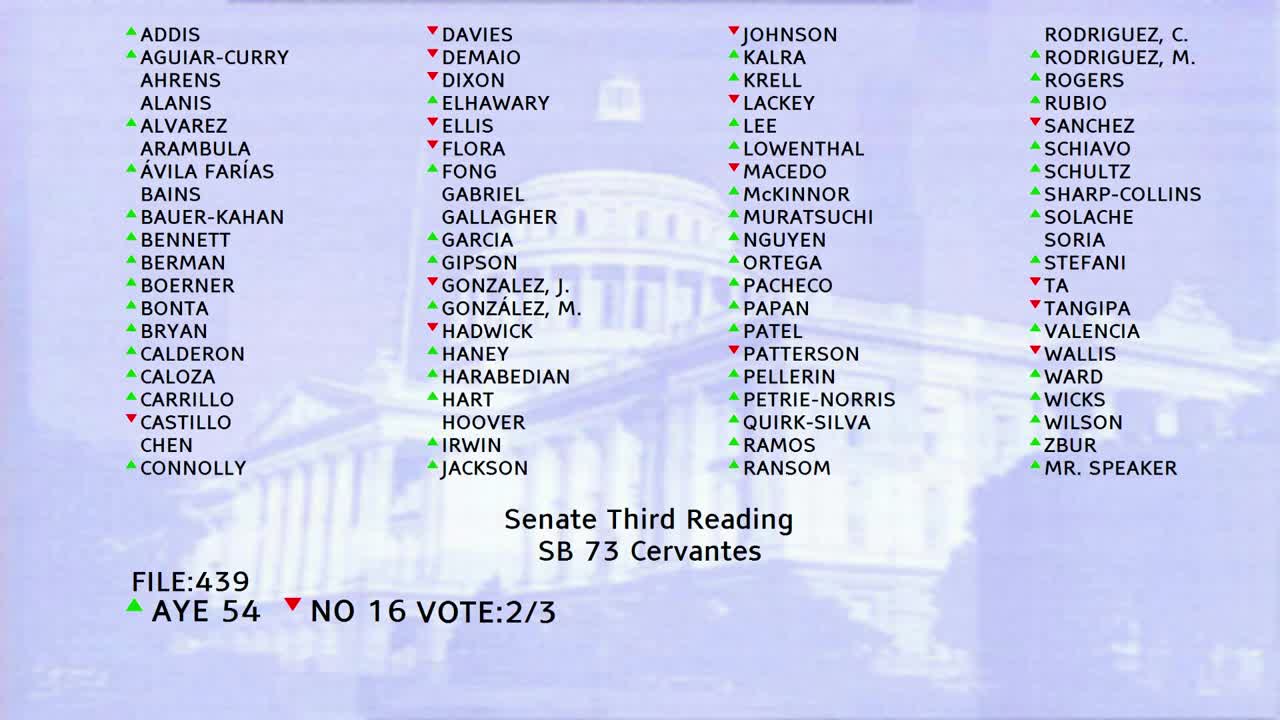
Bill Author

Bill Co-Author(s):