AB 1920: Community colleges: California College Promise: fee waiver eligibility.
- Session Year: 2025-2026
- House: Assembly
- Latest Version Date: 2026-06-29
Current Status:
Passed
(2026-06-29: Chaptered by Secretary of State - Chapter 32, Statutes of 2026.)
Introduced
In Committee
Awaiting First Chamber Vote
Passed First Chamber
In Committee
Awaiting Second Chamber Vote
Passed Second Chamber
Enacted
Existing law establishes the California College Promise, under the administration of the Chancellor of the California Community Colleges, to provide funding, upon appropriation by the Legislature, to each community college meeting prescribed requirements. Existing law authorizes a community college to use that funding to waive some or all of the fees for 2 academic years for first-time community college students and returning community college students, as defined, who are enrolled in 12 or more semester units or the equivalent, or less for students certified as full time, as specified, and who complete and submit either a Free Application for Federal Student Aid or a California Dream Act application, except that a student who has previously earned a degree or certificate from a postsecondary educational institution is not eligible for this fee waiver.
This bill would prohibit a certificate awarded to a student by a postsecondary educational institution as part of a course sequence leading to an associate degree from making the student ineligible for that fee waiver.
(a)A community college that has been certified by the chancellor as meeting the conditions established under Section 76396.2 shall receive funding pursuant to Section 76396.
(b)(1)The community college may use funding appropriated pursuant to this article to waive some or all of the fees for first-time community college students and returning community college students who are enrolled at the college full time, and who complete and submit either a Free Application for Federal Student Aid or a California Dream Act application, except that a student who has previously earned a degree or certificate from a postsecondary educational institution is not eligible for this fee waiver. However, a certificate awarded to a student by a postsecondary educational institution as part of a course sequence leading to an associate degree shall not make the student ineligible for a fee waiver pursuant to this paragraph. A fee waiver that a first-time community college student or returning community college student receives pursuant to this subdivision shall only be for two academic years, and fees shall only be waived for the summer term and each semester or quarter of an academic year in which the student maintains full-time status. A fee waiver provided pursuant to this subdivision shall not be available to a student who is charged a tuition fee pursuant to Section 76140.
(2)Notwithstanding paragraph (1), a student who is a member of the Armed Forces of the United States and is called to duty compelling the student to take a leave of absence pursuant to provisions of Title 10, Title 14, or Title 32 of the United States Code, or to state-funded active duty on order of the Governor, may withdraw from participation in the California College Promise and resume participation in the program upon the students return from duty without losing eligibility for the fee waiver or any other benefit of the program. The time during which the student was obliged to withdraw because of active duty shall not count toward the limit of the period of that students eligibility for participation in the California College Promise.
(3)Notwithstanding paragraph (1), a high school pupil who enrolls in community college pursuant to Section 48800, 52620, or 76004 shall be considered a first-time community college student for purposes of paragraph (1) upon the students enrollment in community college after high school graduation.
(c)For purposes of this section, the following terms have the following meanings:
(1)Academic year means the total of the summer term that immediately precedes the first semester or quarter of the fall term, and the two consecutive semesters or three quarters that immediately follow that summer term. Each semester or quarter is approximately the same length.
(2)Armed Forces of the United States means the United States Air Force, Army, Coast Guard, Marine Corps, Space Force, and Navy, and the reserve components of each of those forces, and the California National Guard, the California State Guard, and the California Naval Militia.
(3)(A)Except as provided in subparagraph (B), full time means 12 or more semester units or the equivalent.
(B)A student enrolled in fewer than 12 units may be deemed full time at the discretion of the institution if the student has been certified as full time by a staff person in the disabled student services program at the institution who is qualified to make such a designation.
(4)Returning community college student means a student who has taken a break of one or more semesters, or the equivalent quarters.
(d)It is the intent of the Legislature that funding provided to support the California College Promise be used by the community college to advance the goals outlined in Section 76396.1.
(e)On or before July 1, 2024, the chancellors office shall submit a report to the Legislature in compliance with Section 9795 of the Government Code evaluating the use of funding for the California College Promise to waive student fees. The report shall determine whether the goals outlined in Section 76396.1 are being met.
(f)The chancellors office may require community colleges and community college districts receiving funding pursuant to this article to report on an annual basis the use of these funds consistent with the conditions of Section 76396.2. Funding during the following academic year may only be distributed to those community colleges and community college districts that provided this information, if required by the chancellors office, in a timely manner during the prior academic year and demonstrated compliance with the requirements of Section 76396.2 and this subdivision.
REVISIONS: HeadingLine 2.|
Date
|
Status
|
|---|---|
| Jun 29, 2026 | Chaptered by Secretary of State - Chapter 32, Statutes of 2026. |
| Jun 29, 2026 | Approved by the Governor. |
| Jun 24, 2026 | Enrolled and presented to the Governor at 11:30 a.m. |
| Jun 18, 2026 | In Assembly. Ordered to Engrossing and Enrolling. |
| Jun 18, 2026 | Read third time. Passed. Ordered to the Assembly. (Ayes 37. Noes 0. Page 4860.). |
| Jun 18, 2026 | Read third time. Passed. Ordered to the Assembly. (Ayes 37. Noes 0.). |
| Jun 16, 2026 | Read second time. Ordered to Consent Calendar. |
| Jun 15, 2026 | From committee: Be ordered to second reading file pursuant to Senate Rule 28.8 and ordered to Consent Calendar. |
| Jun 4, 2026 | From committee: Do pass and re-refer to Com. on APPR. with recommendation: To Consent Calendar. (Ayes 7. Noes 0.) (June 3). Re-referred to Com. on APPR. |
| May 20, 2026 | Referred to Com. on ED. |
| May 12, 2026 | In Senate. Read first time. To Com. on RLS. for assignment. |
| May 11, 2026 | Read third time. Passed. Ordered to the Senate. (Ayes 73. Noes 0. Page 4998.) |
| May 11, 2026 | Read third time. Passed. Ordered to the Senate. (Ayes 73. Noes 0.) |
| May 11, 2026 | Read third time. Passed. Ordered to the Senate. |
| Apr 30, 2026 | Read second time. Ordered to third reading. |
| Apr 29, 2026 | From committee: Do pass. (Ayes 14. Noes 0.) (April 29). |
| Apr 8, 2026 | From committee: Do pass and re-refer to Com. on APPR. (Ayes 10. Noes 0.) (April 7). Re-referred to Com. on APPR. |
| Apr 8, 2026 | Coauthors revised. |
| Mar 2, 2026 | Referred to Com. on HIGHER ED. |
| Feb 13, 2026 | From printer. May be heard in committee March 15. |
| Feb 12, 2026 | Read first time. To print. |
|
Date
|
Description
|
Location
|
Votes
|
|
|---|---|---|---|---|
| Jun 18, 2026 | Consent Calendar 2nd AB1920 Mark González et al. | Senate Floor |
Passed |
|
| Jun 3, 2026 | Do pass, but first be re-referred to the Committee on [Appropriations] with the recommendation: To Consent Calendar | Senate Standing Committee on Education |
Passed |
|
| May 11, 2026 | AB 1920 Mark González Assembly Third Reading | Assembly Floor |
Passed |
|
| Apr 29, 2026 | Do pass. | Assembly Standing Committee on Appropriations |
Passed |
|
| Apr 7, 2026 | Do pass and be re-referred to the Committee on [Appropriations] | Assembly Standing Committee on Higher Education |
Passed |
This list shows positions taken on this bill by organizations on the date displayed, which is linked to the original source.
Positions by individuals are not included.
|
Organization
|
Position
|
Date
|
|---|---|---|
| Barstow Community College District | ** Support | |
| Cabrillo Community College District | ** Support | |
| California Community Colleges Chancellor’s Office | ** Support | |
| California Community Colleges Chancellor’s Office (sponsor) | ** Support | |
| California Community Colleges, Chancellor's Office (Sponsor) | ** Support | |
| CalWORKs Program at San Bernardino Valley College | ** Support | |
| CFT – a Union of Educators & Classified Professionals, AFT, AFL-CIO | ** Support | |
| Chaffey Community College District | ** Support | |
| Chief Executive Officers of the California Community Colleges Board | ** Support | |
| Citrus College | ** Support | |
| Community College League of California | ** Support | |
| Faculty Association Of California Community Colleges | ** Support | |
| Fresno CalWORKs Program | ** Support | |
| Golden West College CalWORKs Program | ** Support | |
| Immigrants Rising | ** Support | |
| Kern Community College District | ** Support | |
| Los Angeles Trade-Technical College | ** Support | |
| miracosta community college district | ** Support | |
| Mt. San Antonio College | ** Support | |
| NextGen California | ** Support | |
| Norco College | ** Support | |
| North Orange County Community College District | ** Support | |
| Ohlone Community College | ** Support | |
| One individual | ** Support | |
| Rio Hondo College | ** Support | |
| Riverside Community College District | ** Support | |
| San Gabriel Valley Economic Partnership | ** Support | |
| San Jose-Evergreen Community College District | ** Support | |
| Santa Clarita Community College District - College of the Canyons | ** Support | |
| Solano Community College | ** Support | |
| Southwestern Community College District’s Governing Board | ** Support | |
| Student Senate for California Community Colleges | ** Support | |
| Victor Valley Community College District | ** Support |
SENATE RULES COMMITTEE Office of Senate Floor Analyses (916) 651-4171 | AB 1920 |
CONSENT
Bill No: AB 1920
Author: Mark González (D) and Ahrens (D), et al.
Introduced: 2/12/26
Vote: 21
SENATE EDUCATION COMMITTEE: 7-0, 6/3/26
AYES: Pérez, Ochoa Bogh, Cabaldon, Choi, Cortese, Gonzalez, Reyes
SENATE APPROPRIATIONS COMMITTEE: Senate Rule 28.8
ASSEMBLY FLOOR: 73-0, 5/11/26 - See last page for vote
SUBJECT: Community colleges: California College Promise: fee waiver eligibility
SOURCE: California Community Colleges Chancellor’s Office
DIGEST:
This bill prohibits a community college from deeming a student ineligible for a fee waiver under the California College Promise program if a student was awarded a certificate by a postsecondary educational institution as part of a course sequence leading to an associate degree.
ANALYSIS:
Existing law:
- Establishes the California Community Colleges (CCCs), under the administration of the Board of Governors (BOG), as one of the segments of public postsecondary education in this state. (Education Code (EC) § 70900)
- Requires community college districts (CCDs) to charge students an enrollment fee of $46 per unit per semester. (EC § 76300)
- Requires a waiver of enrollment fees for students who meet specified income requirements based on any of the following criteria:
- At the time of enrollment, the student is a recipient of benefits under the Temporary Assistance for Needy Families program, the Supplemental Security Income/State Supplementary Payment Program, or a general assistance program.
- Demonstrates eligibility according to income standards established by regulations of the BOG.
- Demonstrates financial need in accordance with the methodology set forth in federal law or regulation for determining the expected family contribution of students seeking financial aid.
- At the time of enrollment, the student is a homeless youth or former homeless youth. (EC § 76300)
- Additionally provides for a waiver of fees for certain types of students, including:
- Dependents or surviving spouses of California National Guard members, either killed or who died from a permanent disability, as a result of service to the state.
- A surviving spouse or child of a California law enforcement officer or firefighter killed in the performance of active law enforcement or fire suppression duties or who died as a result of performing those duties.
- The dependent of any California resident killed in the September 11, 2001, terrorist attacks.
- The child of a United States military veteran who has a service-connected disability, or was killed in action, or died of a service-connected disability.
- The child of a recipient of the Congressional Medal of Honor. (EC § 66025.3)
- Establishes the California College Promise, under the administration of the Chancellor of the CCCs, and requires the Chancellor, upon appropriation by the Legislature, to distribute funding to CCDs to fund colleges that meet specified requirements. (EC § 76396)
- Authorizes a community college to use funding appropriated for the California College Promise to waive some or all of the fees for two academic years for first-time community college students and returning community college students, as defined, and who complete and submit either a Free Application for Federal Student Aid (FAFSA) or a California Dream Act application (CADAA). (EC § 76396.3)
- Prohibits a student who has previously earned a degree or certificate from a postsecondary educational institution from being eligible for a fee waiver from California College Promise funding. (EC § 76396.3)
This bill prohibits a community college from deeming a student ineligible for a fee waiver under the California College Promise program if a student was awarded a certificate by a postsecondary educational institution as part of a course sequence leading to an associate degree.
Comments
- Need for the bill. According to the author, “AB 1920 clarifies eligibility rules under the California College Promise Program to ensure that first-time, full-time community college students are not penalized for earning certificates while progressing toward a degree.
“Under the current interpretation of Education Code Section 76396.3, students who receive the AB 19 Community College Promise fee waiver lose eligibility if they earn any degree or certificate while enrolled—even when that credential is part of a longer program of study. … Many community college programs are intentionally designed with stackable or nested credentials, allowing students to earn certificates along the pathway to an associate degree. These interim awards provide workforce value and recognize academic milestones.
“As a result, students on this fee waiver that are working towards Associate’s degrees for transfer and earning a certificate from the college on that academic journey, lose access to this program without completing their Associate’s degrees. This ambiguity in the law penalizes students for academic success and discourages colleges from recognizing their hard work.”
- Statutory fees and fee waivers for the CCC system. At $46 per unit, and with an annual average tuition of $1,380 for full-time California resident students, the CCC system offers the lowest tuition in the nation, as of February 2026. Enrollment fees are waived for CCC students demonstrating financial need, which was almost half of CCC students, or over 1 million students, in 2024-25. For decades, this waiver was known as the BOG fee waiver and has existed since CCC enrollment fees were established in 1984. The fee waiver has since been renamed the California College Promise Grant—not to be confused with the separate California College Promise Program. A CCC student meeting specified income standards may qualify and may receive the waiver, so long as they are eligible to take courses; there is no minimum unit requirement, and the fee waiver is applied to any course for which a student must pay the enrollment fee.
- “Free College” for first-time, full-time students through the California College Promise. The California College Promise was established by AB 19 (Santiago, Chapter 735, Statutes of 2017). The program, broadly marketed as providing “free college”, allowed participating CCCs to waive some or all enrollment fees for one academic year for first-time, full-time community college students who completed and submitted a FAFSA or CADAA. Unlike the statutory fee waivers for CCC students demonstrating financial need, the California College Promise allowed CCCs to waive fees for students who did not demonstrate financial need but met other program criteria. Though some have critiqued the California College Promise for not being a means-tested program, others have indicated that the “free college” marketing have created interest and enthusiasm in CCCs that exceeds the costs of the program.
- Eligible recipients. Though the initial statute intended for California College Promise cohorts to be comprised of first-time, full-time community college students, subsequent legislation has gradually expanded, and clarified, student eligibility for the program:
- AB 2 (Santiago, Chapter 509, Statutes of 2019) authorized for a student enrolled in fewer than 12 units to be deemed as full-time at the discretion of the institution if the student has been certified as full-time by a staff person in the disabled student services program.
- AB 3137 (Voepel, Chapter 226, Statutes of 2020) required that a student who is a member of the Armed Forces of the United States, and is called to duty, may withdraw from participation in the California College Promise and resume program participation upon the student’s return from duty without losing eligibility for the benefits of the program, including fee waivers.
- AB 183 (Committee on Budget, Chapter 54, Statutes of 2022) made returning students, defined as a student who has taken a break of one or more semesters (or the quarterly equivalent), eligible for the program.
- AB 1342 (Megan Dahle, Chapter 102, Statutes of 2023) clarified that a high school pupil who enrolls in community college as part of dual enrollment programs are required to be considered a first-time community college student for purposes of the California College Promise upon the student’s enrollment in community college after high school graduation.
The initial appropriation for the California College Promise was $46 million in 2018-19, and program funding has grown to $91.2 million in 2025-26. The largest augmentation for the program was attributed to expanding the program to be for two academic years, rather than one academic year.
Program eligibility for the California College Promise has included first-time community college students since program inception, and current statute specifically prohibits students who have previously earned a degree or certificate from a postsecondary educational institution as not eligible for a fee waiver under the California College Promise. This bill seeks to clarify that students would not be deemed ineligible for a fee waiver under the California College Promise program if a student was awarded a certificate by a postsecondary educational institution as part of a course sequence leading to an associate degree.
Related/Prior Legislation
AB 1342 (Megan Dahle, Chapter 102, Statutes of 2023) clarified that a high school pupil who enrolls in community college as part of dual enrollment programs is required to be considered a first-time community college student for purposes of the California College Promise upon the student’s enrollment in community college after high school graduation.
AB 183 (Assembly Committee on Budget, Chapter 54, Statutes of 2022) made returning students, defined as a student who has taken a break of one or more semesters (or the quarterly equivalent), eligible for the program.
AB 3137 (Voepel, Chapter 226, Statutes of 2020) required that a student who is a member of the Armed Forces of the United States, and is called to duty, may withdraw from participation in the California College Promise and resume program participation upon the student’s return from duty without losing eligibility for the benefits of the program, including fee waivers.
AB 2 (Santiago, Chapter 509, Statutes of 2019) authorized for a student enrolled in fewer than 12 units to be deemed as full-time at the discretion of the institution if the student has been certified as full-time by a staff person in the disabled student services program.
SB 77 (Senate Committee on Budget and Fiscal Review, Chapter 53, Statutes of 2019) expanded the California College Promise by allowing community colleges to waive enrollment fees for first-time, full-time students for two academic years, as opposed to one academic year.
FISCAL EFFECT: Appropriation: No Fiscal Com.: Yes Local: No
SUPPORT: (Verified 6/15/26)
California Community Colleges Chancellor’s Office (source)
Cabrillo Community College District
CalWORKs Program at San Bernardino Valley College
CFT – A Union of Educators & Classified Professionals, AFT, AFL-CIO
Chaffey Community College District
Citrus College
Community College League of California
Fresno CalWORKs Program
Golden West College CalWORKs Program
Immigrants Rising
Kern Community College District
Los Angeles Trade-Technical College
Mt. San Antonio College
NextGen California
Norco College
North Orange County Community College District
Ohlone Community College
Rio Hondo College
Riverside Community College District
San Gabriel Valley Economic Partnership
San Jose-Evergreen Community College District
Southwestern Community College District’s Governing Board
Student Senate for California Community Colleges
OPPOSITION: (Verified 6/15/26)
None received
ASSEMBLY FLOOR: 73-0, 5/11/26
AYES: Addis, Aguiar-Curry, Ahrens, Alanis, Alvarez, Ávila Farías, Bains, Bauer-Kahan, Bennett, Berman, Boerner, Bonta, Bryan, Calderon, Caloza, Carrillo, Castillo, Chen, Connolly, Davies, DeMaio, Dixon, Elhawary, Ellis, Flora, Fong, Gabriel, Gallagher, Garcia, Gipson, Jeff Gonzalez, Mark González, Hadwick, Haney, Harabedian, Hart, Hoover, Irwin, Jackson, Johnson, Kalra, Krell, Lackey, Lee, Macedo, McKinnor, Muratsuchi, Nguyen, Ortega, Pacheco, Papan, Patel, Patterson, Pellerin, Petrie-Norris, Ramos, Ransom, Rogers, Blanca Rubio, Sanchez, Schiavo, Schultz, Sharp-Collins, Stefani, Ta, Tangipa, Valencia, Wallis, Ward, Wicks, Wilson, Zbur, Rivas
NO VOTE RECORDED: Arambula, Lowenthal, Quirk-Silva, Celeste Rodriguez, Michelle Rodriguez, Solache, Soria
Prepared by: Michelle Nguyen / ED. / (916) 651-4105
6/16/26 16:43:02
**** END ****
SENATE COMMITTEE ON EDUCATION
Senator Sasha Renée Pérez, Chair
2025 - 2026 Regular
Bill No: Hearing Date: June 3, 2026
Author: | |||
Version: |
| ||
Urgency: | Fiscal: | ||
Consultant: | |||
Subject:
SUMMARY
This bill prohibits a community college from deeming a student ineligible for a fee waiver under the California College Promise program if a student was awarded a certificate by a postsecondary educational institution as part of a course sequence leading to an associate degree.
BACKGROUND
Existing law:
- Establishes the California Community Colleges (CCCs), under the administration of the Board of Governors (BOG), as one of the segments of public postsecondary education in this state. (Education Code (EC) § 70900)
- Requires community college districts (CCDs) to charge students an enrollment fee of $46 per unit per semester. (EC § 76300)
- Requires a waiver of enrollment fees for students who meet specified income requirements based on any of the following criteria:
- At the time of enrollment, the student is a recipient of benefits under the Temporary Assistance for Needy Families program, the Supplemental Security Income/State Supplementary Payment Program, or a general assistance program.
- Demonstrates eligibility according to income standards established by regulations of the BOG.
- Demonstrates financial need in accordance with the methodology set forth in federal law or regulation for determining the expected family contribution of students seeking financial aid.
- At the time of enrollment, the student is a homeless youth or former homeless youth. (EC § 76300)
- Additionally provides for a waiver of fees for certain types of students, including:
- Dependents or surviving spouses of California National Guard members, either killed or who died from a permanent disability, as a result of service to the state.
- A surviving spouse or child of a California law enforcement officer or firefighter killed in the performance of active law enforcement or fire suppression duties or who died as a result of performing those duties.
- The dependent of any California resident killed in the September 11, 2001, terrorist attacks.
- The child of a United States military veteran who has a service-connected disability, or was killed in action, or died of a service-connected disability.
- The child of a recipient of the Congressional Medal of Honor. (EC § 66025.3)
- Establishes the California College Promise, under the administration of the Chancellor of the CCCs, and requires the Chancellor, upon appropriation by the Legislature, to distribute funding to CCDs to fund colleges that meet specified requirements. (EC § 76396)
- Authorizes a community college to use funding appropriated for the California College Promise to waive some or all of the fees for two academic years for first-time community college students and returning community college students, as defined, and who complete and submit either a Free Application for Federal Student Aid (FAFSA) or a California Dream Act application (CADAA). (EC § 76396.3)
- Prohibits a student who has previously earned a degree or certificate from a postsecondary educational institution from being eligible for a fee waiver from California College Promise funding. (EC § 76396.3)
ANALYSIS
This bill prohibits a community college from deeming a student ineligible for a fee waiver under the California College Promise program if a student was awarded a certificate by a postsecondary educational institution as part of a course sequence leading to an associate degree.
STAFF COMMENTS
- Need for the bill. According to the author, “AB 1920 clarifies eligibility rules under the California College Promise Program to ensure that first-time, full-time community college students are not penalized for earning certificates while progressing toward a degree.
Under the current interpretation of Education Code Section 76396.3, students who receive the AB 19 Community College Promise fee waiver lose eligibility if they earn any degree or certificate while enrolled—even when that credential is part of a longer program of study. … Many community college programs are intentionally designed with stackable or nested credentials, allowing students to earn certificates along the pathway to an associate degree. These interim awards provide workforce value and recognize academic milestones.
As a result, students on this fee waiver that are working towards Associate’s degrees for transfer and earning a certificate from the college on that academic journey, lose access to this program without completing their Associate’s degrees. This ambiguity in the law penalizes students for academic success and discourages colleges from recognizing their hard work.”
- Statutory fees and fee waivers for the CCC system. At $46 per unit, and with an annual average tuition of $1,380 for full-time California resident students, the CCC system offers the lowest tuition in the nation, as of February 2026. Enrollment fees are waived for CCC students demonstrating financial need, which was almost half of CCC students, or over 1 million students, in 2024-25. For decades, this waiver was known as the BOG fee waiver and has existed since CCC enrollment fees were established in 1984. The fee waiver has since been renamed the California College Promise Grant—not to be confused with the separate California College Promise Program. A CCC student meeting specified income standards may qualify and may receive the waiver, so long as they are eligible to take courses; there is no minimum unit requirement, and the fee waiver is applied to any course for which a student must pay the enrollment fee.
- “Free College” for first-time, full-time students through the California College Promise. The California College Promise was established by AB 19 (Santiago, Chapter 735, Statutes of 2017). The program, broadly marketed as providing “free college”, allowed participating CCCs to waive some or all enrollment fees for one academic year for first-time, full-time community college students who completed and submitted a FAFSA or CADAA. Unlike the statutory fee waivers for CCC students demonstrating financial need, the California College Promise allowed CCCs to waive fees for students who did not demonstrate financial need but met other program criteria. Though some have critiqued the California College Promise for not being a means-tested program, others have indicated that the “free college” marketing have created interest and enthusiasm in CCCs that exceeds the costs of the program.
- Eligible recipients. Though the initial statute intended for California College Promise cohorts to be comprised of first-time, full-time community college students, subsequent legislation has gradually expanded, and clarified, student eligibility for the program:
- AB 2 (Santiago, Chapter 509, Statutes of 2019) authorized for a student enrolled in fewer than 12 units to be deemed as full-time at the discretion of the institution if the student has been certified as full-time by a staff person in the disabled student services program.
- AB 3137 (Voepel, Chapter 226, Statutes of 2020) required that a student who is a member of the Armed Forces of the United States, and is called to duty, may withdraw from participation in the California College Promise and resume program participation upon the student’s return from duty without losing eligibility for the benefits of the program, including fee waivers.
- AB 183 (Committee on Budget, Chapter 54, Statutes of 2022) made returning students, defined as a student who has taken a break of one or more semesters (or the quarterly equivalent), eligible for the program.
- AB 1342 (Megan Dahle, Chapter 102, Statutes of 2023) clarified that a high school pupil who enrolls in community college as part of dual enrollment programs are required to be considered a first-time community college student for purposes of the California College Promise upon the student’s enrollment in community college after high school graduation.
The initial appropriation for the California College Promise was $46 million in 2018-19, and program funding has grown to $91.2 million in 2025-26. The largest augmentation for the program was attributed to expanding the program to be for two academic years, rather than one academic year.
Program eligibility for the California College Promise has included first-time community college students since program inception, and current statute specifically prohibits students who have previously earned a degree or certificate from a postsecondary educational institution as not eligible for a fee waiver under the California College Promise. This bill seeks to clarify that students would not be deemed ineligible for a fee waiver under the California College Promise program if a student was awarded a certificate by a postsecondary educational institution as part of a course sequence leading to an associate degree.
- Related and Prior Legislation.
AB 1342 (Megan Dahle, Chapter 102, Statutes of 2023) clarified that a high school pupil who enrolls in community college as part of dual enrollment programs is required to be considered a first-time community college student for purposes of the California College Promise upon the student’s enrollment in community college after high school graduation.
AB 183 (Committee on Budget, Chapter 54, Statutes of 2022) made returning students, defined as a student who has taken a break of one or more semesters (or the quarterly equivalent), eligible for the program.
AB 3137 (Voepel, Chapter 226, Statutes of 2020) required that a student who is a member of the Armed Forces of the United States, and is called to duty, may withdraw from participation in the California College Promise and resume program participation upon the student’s return from duty without losing eligibility for the benefits of the program, including fee waivers.
AB 2 (Santiago, Chapter 509, Statutes of 2019) authorized for a student enrolled in fewer than 12 units to be deemed as full-time at the discretion of the institution if the student has been certified as full-time by a staff person in the disabled student services program.
SB 77 (Committee on Budget and Fiscal Review, Chapter 53, Statutes of 2019) expanded the California College Promise by allowing community colleges to waive enrollment fees for first-time, full-time students for two academic years, as opposed to one academic year.
SUPPORT
California Community Colleges Chancellor’s Office (sponsor)
Cabrillo Community College District
CalWORKs Program at San Bernardino Valley College
CFT – A Union of Educators & Classified Professionals, AFT, AFL-CIO
Chaffey Community College District
Community College League of California
Fresno CalWORKs Program
Immigrants Rising
Kern Community College District
Los Angeles Trade-Technical College
Norco College
Ohlone Community College
Rio Hondo College
Riverside Community College District
San Gabriel Valley Economic Partnership
San Jose-Evergreen Community College District
Southwestern Community College District’s Governing Board
Student Senate for California Community Colleges
One Individual
OPPOSITION
None received
-- END --
ASSEMBLY THIRD READING
ATR Bill Id:AB 1920
Author:(Mark González and Ahrens)
As Introduced Ver:February 12, 2026
Majority vote
SUMMARY
Clarifies eligibility for California College Promise fee waivers by ensuring that certain certificates earned along the pathway to an associate degree do not disqualify students.
Major Provisions
- Provides that a certificate awarded as part of a course sequence leading to an associate degree does not make a student ineligible for a California College Promise fee waiver.
- Maintains existing eligibility requirements, including full-time enrollment and submission of a Free Application for Federal Student Aid (FAFSA) or California Dream Act Application (CADAA).
- Preserves the two-year fee waiver limit and other program conditions.
COMMENTS
This measure seeks to clarify that students may earn certificates while completing a degree without losing access to the Community College Promise fee waiver. This clarification, according to the Solano Community College, "removes unnecessary bureaucratic barriers and ensures that California's first-generation and low-income students—who rely heavily on predictable financial support—can continue advancing toward their education and career goals."
Fees and fee waivers at the California Community College (CCC). Enrollment fees at CCCs are the lowest in the country ($46 per unit), and are waived for almost half of all CCC students (this amounts to over one million students). For decades, this waiver was known as the BOG fee waiver and has existed since enrollment fees were established (1984) at the CCC and waives the per unit enrollment fee for any CCC student who demonstrates financial need.
The BOG fee waiver has been renamed as the California College Promise Grant (not to be confused with the separate California College Promise Program). Additionally, current law requires fees to be waived for surviving dependents of certain military service members and first responders.
California College Promise Program. In addition to the fee waivers in current law, (as noted in the Fees and fee waivers at the CCC section of this analysis), AB 19 (Santiago), Chapter 735, Statutes of 2017, established the California College Promise Program, which authorizes, but does not require, CCCs to waive fees for two years of college for first-time or returning full-time students regardless of financial need. To be eligible for these waivers, students must have no prior postsecondary coursework or have taken one or more semesters off from college coursework, enroll in 12 or more units per semester (which is considered full-time), and submit an FAFSA or CADAA. Under the Program, colleges may also use their college program funds for a variety of other purposes, such as providing students with supplemental services.
The California College Promise Program was funded beginning in 2018-19 for $46 million. Not all colleges receiving Promise funds are waiving enrollment fees; many believe their California Promise funding is better used for other purposes, such as strengthening student support services to boost outcomes, or providing grants to help students cover the costs of child care, transportation, books or other expenses. Under the provisions of the Promise Program, colleges receiving California Promise funds must engage in several outlined activities.
Among those activities: operating programs with local high school districts that support pathways to college; implementing the Guided Pathways framework; and helping students access need-based financial aid such as Pell Grants and Cal Grants.
Student success and completion pathways. Career pathways have a wide range of features intended to enable individuals to develop industry-related skills and achieve their career goals. Stackable credentials, which lay out a sequence of career education awards that allow students to build qualifications over time, are an important component of successful pathway programs. According to the Public Policy Institute of California (PPIC), many career education credentials in the community college system are designed to be earned relatively quickly—in particular, short-term certificates require as few as 6 units. Stackable short-term credentials offer students the clearest opportunities to return to the community college system for additional training and advance along a career pathway.
Additionally, stackable credentials also hold a key component with current initiatives in the community college system that focus on helping students connect their educational plans to careers. Stackable credentials are creating clear curricular pathways to employment and further education.
Under existing law, such certificates may inadvertently disqualify students from fee waivers. This measure appears to remove an unintended barrier in the California College Promise Program by ensuring that students who earn interim certificates on the path to an associate degree are not penalized or excluded from fee waiver eligibility; by preserving eligibility for students pursuing structured pathways, this measure supports continued enrollment and degree completion, particularly for students from low-income or nontraditional backgrounds who rely on fee waivers.
According to the Author
According to the author, "current law states that a student can receive free tuition for up to two years if they are a first-time college student and do not have a previous degree. The existing law includes certificates as a part of the disqualifying factors."
As noted by the author, "community college programs are intentionally designed with stackable or nested credentials, allowing students to earn certificates along the pathway to an associate degree. These interim awards provide workforce value and recognize academic milestones. So, if a student achieved their certificate while on the path to achieve an AA degree, they may be deemed ineligible."
Lastly, the author states that, "AB 1920 is a simple fix to an unintended reading of historic legislation championed by this legislature. This small clarification will ensure bureaucratic barriers are broken down, and students have access to free tuition waivers if they are first-time students."
Arguments in Support
According to the CCC Chancellor's Office (CCCCO), sponsors of the measure, this measure seeks to strengthen the implementation of the California College Promise by, "ensuring that students are not penalized for earning a certificate as part of their educational journey."
The CCCCO contends that, "by clarifying that receipt of a certificate does not disadvantage a student's continued access to Promise benefits or future educational opportunities, the bill protects student progress, promotes equitable access, and supports continued advancement toward higher credentials and career goals."
Further, the CCCCO notes that, "this measure directly advances the goals of Vision 2030, the California Community Colleges' strategic roadmap centered on Equity in Access, Equity in Success, and Equity in Support. Vision 2030 calls on our system to meet learners where they are, remove systemic barriers, and expand opportunities for underserved and working learners so they can earn credentials that lead to economic mobility. AB 1920 reinforces these priorities by ensuring students are recognized for the learning they complete and can more effectively progress toward certificates, degrees, and career advancement."
Lastly, the CCCCO states that, "AB 1920 also aligns with the broader intent of the California College Promise to expand opportunity, reduce financial and institutional barriers, and support student persistence and completion. Strengthening pathways to recognized credentials ensures students — particularly first-generation, low-income, and historically underserved learners — can fully participate in higher education and move toward family-sustaining careers."
Arguments in Opposition
None on file.
FISCAL COMMENTS
According to the Assembly Committee on Appropriations, no new state costs. According to the CCCCO, this bill does not alter underlying eligibility provisions for the California College Promise Grant Fee Waiver but prevents currently eligible students from losing eligibility if they are awarded a certificate during their academic progress towards a degree.
VOTES
ASM HIGHER EDUCATION: 10-0-0
YES: Fong, DeMaio, Boerner, Jeff Gonzalez, Jackson, Irwin, Patel, Bennett, Sharp-Collins, Tangipa
ASM APPROPRIATIONS: 14-0-1
YES: Wicks, Hoover, Arambula, Calderon, Caloza, Dixon, Fong, Mark González, Krell, Pacheco, Pellerin, Solache, Ta, Tangipa
ABS, ABST OR NV: Muratsuchi
UPDATED
VERSION: February 12, 2026
CONSULTANT: Jeanice Warden / HIGHER ED. / (916) 319-3960 FN: 0002456
Date of Hearing: April 29, 2026
ASSEMBLY COMMITTEE ON APPROPRIATIONS
Buffy Wicks, Chair
ABPCA Bill Id:AB 1920
Author:(Mark González) – As Introduced Ver:February 12, 2026
Policy Committee: | Higher Education | Vote: | 10 - 0 |
|
| ||
|
|
Urgency: No State Mandated Local Program: No Reimbursable: No
SUMMARY:
This bill requires that a student awarded a certificate as part of an associate degree course sequence remain eligible for the California College Promise Grant Fee Waiver.
FISCAL EFFECT:
No new state costs. According to the California Community Colleges Chancellor’s Office (CCCCO), this bill does not alter underlying eligibility provisions for the California College Promise Grant Fee Waiver but prevents currently eligible students from losing eligibility if they are awarded a certificate during their academic progress towards a degree.
COMMENTS:
- Purpose. According to the author:
Current law states that a student can receive free tuition for up to 2 years if they are a first-time college student and do not have a previous degree. The existing law includes certificates as a part of the disqualifying factors. AB 1920 is a simple fix to an unintended reading of historic legislation championed by this legislature. This small clarification will ensure bureaucratic barriers are broken down, and students have access to free tuition waivers if they are first-time students.
- Background. California College Promise Program. Established in 2017, the California College Promise Program authorizes CCCs to waive fees for the first two years of college for first-time or returning full-time students regardless of financial need. To qualify, students must have no prior postsecondary coursework or have taken one or more semesters off from college coursework, enroll full-time (defined as 12 or more units per semester), and submit a Free Application for Federal Student Aid or California Dream Act Application. Under the program, CCCs may also use the California College Promise Program funds for a variety of other purposes, such as strengthening student support services, or providing grants to help students cover the costs of child care, transportation, books or other expenses. The Legislative Analyst’s Office (LAO) estimates that CCCs spent 75% of the total $375 million allocated by the Legislature for the program between fiscal years 2018-19 and 2022-23 on direct student aid. According to the CCC Chancellor’s Office, approximately 61% to 65% of over 1.9 million total CCC students enrolled are part-time students in a given year.
California College Promise Grant Fee Waiver. Enrollment fees at CCCs are the lowest in the country ($46 per unit), and almost half of all CCC students (over one million) receive a fee waiver. Until recently, the CCCs referred to a fee waiver as a Board of Governor’s (BOG) fee waiver. The BOG fee waiver has existed since the establishment of enrollment fees at the CCC in 1984 and waives the per-unit enrollment fee for any CCC student (part-time or full-time) who demonstrates financial need, without limit on the number of years a student may be eligible. The California College Promise Grant replaced the BOG fee waiver. Additionally, current law requires CCCs to provide fee waivers for surviving dependents of certain military service members and first responders.
Many career pathways offered at the CCCs include the awarding of stackable credentials, often in the form of short-term certificates requiring as few as six units. These credentials allow students to enter the workforce and return to the CCC system as needed for additional training as they continue along their career education pathway. Because current law limits eligibility for the fee waiver to students who have not earned a degree or certificate from a postsecondary educational institution, students who may have earned a certificate as part of their associate degree pathway but have not yet received their degree become ineligible for the fee waiver. This bill provides eligibility for such students.
- Related Legislation. AB 537 (Ahrens), of the current legislative session, would have reduced the minimum unit requirement for CCC students to qualify for a California College Promise fee waiver from full-time (12 or more units) to 9 units. AB 537 was held in the Senate Appropriations Committee.
AB 1035 (Mark González), of the current legislative session, would have authorized the expansion of the community college enrollment fee waiver that students are eligible for under the California College Promise by an additional two years of full-time attendance for a student enrolled in a community college baccalaureate degree program for a total of four years of eligibility. AB 1035 was held in this committee.
Analysis Prepared by: Aaron Heredia / APPR. / (916) 319-2081
Date of Hearing: April 7, 2026
ASSEMBLY COMMITTEE ON HIGHER EDUCATION
Mike Fong, Chair
ABPCA Bill Id:AB 1920 (
Author:Mark González and Ahrens) – As Introduced Ver:February 12, 2026
SUBJECT: Community colleges: California College Promise: fee waiver eligibility.
SUMMARY: Clarifies eligibility for California College Promise fee waivers by ensuring that certain certificates earned along the pathway to an associate degree do not disqualify students. Specifically, this bill:
- Provides that a certificate awarded as part of a course sequence leading to an associate degree does not make a student ineligible for a California College Promise fee waiver.
- Maintains existing eligibility requirements, including full-time enrollment and submission of a Free Application for Federal Student Aid (FAFSA) or California Dream Act Application (CADAA).
- Preserves the two-year fee waiver limit and other program conditions.
EXISTING LAW:
- Establishes the mission and function of the California Community Colleges (CCC), which, in part is to: 1) offer academic and vocational instruction at the lower division level for both younger and older students, including those persons returning to school; 2) authorizes the CCC to grant the associate in arts and the associate in science degrees; 3) requires the CCC to offer English as a Second Language instruction, adult noncredit instruction, and support services which help students succeed at the postsecondary level; and, 4) advance California’s economic growth and global competitiveness through education, training, and services that contribute to continuous work force improvement (Education Code (EC) Section 66010.4).
- Establishes a $46 per unit fee for students at the CCC. Provides for a fee waiver for certain types of students, including those who meet minimum academic and progress standards adopted by the CCC Board of Governors (BOG) and have household incomes below certain thresholds established by the BOG or have demonstrated financial need pursuant to federal law (EC Section 76300).
- Establishes the California College Promise, under the administration of the CCC Chancellor, to provide funding, upon appropriation by the Legislature, to each community college meeting prescribed requirements. Additionally, existing law:
- Authorizes a community college to use that funding to waive some or all of the fees for two academic years for first-time community college students and returning community college students, as defined, who are enrolled in 12 or more semester units or the equivalent, or less for students certified as “full time,” as specified, and who complete and submit either a FAFSA or a CADAA, except as provided;
- Requires the CCC Chancelor to establish a funding formula that advances the goals of the program;
- Requires the funding formula to include, for funding appropriated for the program in excess of the funding needed to waive all student fees, the number of full-time equivalent students at a community college and the number of students at a community college who satisfy the requirements to receive federal Pell Grants and the requirements to receive a specified exemption from paying nonresident tuition; and,
- Requires the CCC Chancellor to submit a report to the Legislature by July 1, 2024, evaluating the use of funding for the California College Promise to waive student fees (EC Sections 76396-76396.4).
FISCAL EFFECT: Unknown
COMMENTS: Need for the measure. According to the author, “current law states that a student can receive free tuition for up to 2 years if they are a first-time college student and do not have a previous degree. The existing law includes certificates as a part of the disqualifying factors.”
As noted by the author, “community college programs are intentionally designed with stackable or nested credentials, allowing students to earn certificates along the pathway to an associate degree. These interim awards provide workforce value and recognize academic milestones. So, if a student achieved their certificate while on the path to achieve an AA degree, they may be deemed ineligible.”
Lastly, the author states that, “AB 1920 is a simple fix to an unintended reading of historic legislation championed by this legislature. This small clarification will ensure bureaucratic barriers are broken down, and students have access to free tuition waivers if they are first-time students.”
This measure seeks to clarify that students may earn certificates while completing a degree without losing access to the Community College Promise fee waiver. This clarification, according to the Solano Community College, “removes unnecessary bureaucratic barriers and ensures that California’s first-generation and low-income students—who rely heavily on predictable financial support—can continue advancing toward their education and career goals.”
Fees and fee waivers at the CCC. Enrollment fees at CCCs are the lowest in the country ($46 per unit), and are waived for almost half of all CCC students (this amounts to over one million students). For decades, this waiver was known as the BOG fee waiver and has existed since enrollment fees were established (1984) at the CCC and waives the per unit enrollment fee for any CCC student who demonstrates financial need.
The BOG fee waiver has been renamed as the California College Promise Grant (not to be confused with the separate California College Promise Program). Additionally, current law requires fees to be waived for surviving dependents of certain military service members and first responders.
California College Promise Program. In addition to the fee waivers in current law, (as noted in the Fees and fee waivers at the CCC section of this analysis), AB 19 (Santiago), Chapter 735, Statutes of 2017, established the California College Promise Program, which authorizes, but does not require, CCCs to waive fees for two years of college for first-time or returning full-time students regardless of financial need. To be eligible for these waivers, students must have no prior postsecondary coursework or have taken one or more semesters off from college coursework, enroll in 12 or more units per semester (which is considered full-time), and submit an FAFSA or CADAA. Under the Program, colleges may also use their college program funds for a variety of other purposes, such as providing students with supplemental services.
The California College Promise Program was funded beginning in 2018-19 for $46 million. Not all colleges receiving Promise funds are waiving enrollment fees; many believe their California Promise funding is better used for other purposes, such as strengthening student support services to boost outcomes, or providing grants to help students cover the costs of child care, transportation, books or other expenses. Under the provisions of the Promise Program, colleges receiving California Promise funds must engage in several outlined activities.
Among those activities: operating programs with local high school districts that support pathways to college; implementing the Guided Pathways framework; and helping students access need-based financial aid such as Pell Grants and Cal Grants.
Student success and completion pathways. Career pathways have a wide range of features intended to enable individuals to develop industry-related skills and achieve their career goals. Stackable credentials, which lay out a sequence of career education awards that allow students to build qualifications over time, are an important component of successful pathway programs. According to the Public Policy Institute of California (PPIC), many career education credentials in the community college system are designed to be earned relatively quickly—in particular, short-term certificates require as few as 6 units. Stackable short-term credentials offer students the clearest opportunities to return to the community college system for additional training and advance along a career pathway.
Additionally, stackable credentials also hold a key component with current initiatives in the community college system that focus on helping students connect their educational plans to careers. Stackable credentials are creating clear curricular pathways to employment and further education.
Under existing law, such certificates may inadvertently disqualify students from fee waivers. This measure appears to remove an unintended barrier in the California College Promise Program by ensuring that students who earn interim certificates on the path to an associate degree are not penalized or excluded from fee waiver eligibility; by preserving eligibility for students pursuing structured pathways, this measure supports continued enrollment and degree completion, particularly for students from low-income or nontraditional backgrounds who rely on fee waivers.
Committee comments. It is unclear whether a distinction exists between stackable credentials and certificates that are a part of a pathway to earning an associate degree, and those that are standalone credentials. The CCC Chancellor’s Office (CCCCO) may wish to explore if a minor administrative clarification to distinguish between the two is necessary.
Arguments in support. According to the CCC Chancellor’s Office (CCCCO), sponsors of the measure, this measure seeks to strengthen the implementation of the California College Promise by, “ensuring that students are not penalized for earning a certificate as part of their educational journey.”
The CCCCO contends that, “by clarifying that receipt of a certificate does not disadvantage a student’s continued access to Promise benefits or future educational opportunities, the bill protects student progress, promotes equitable access, and supports continued advancement toward higher credentials and career goals.”
Further, the CCCCO notes that, “this measure directly advances the goals of Vision 2030, the California Community Colleges’ strategic roadmap centered on Equity in Access, Equity in Success, and Equity in Support. Vision 2030 calls on our system to meet learners where they are, remove systemic barriers, and expand opportunities for underserved and working learners so they can earn credentials that lead to economic mobility. AB 1920 reinforces these priorities by ensuring students are recognized for the learning they complete and can more effectively progress toward certificates, degrees, and career advancement.”
Lastly, the CCCCO states that, “AB 1920 also aligns with the broader intent of the California College Promise to expand opportunity, reduce financial and institutional barriers, and support student persistence and completion. Strengthening pathways to recognized credentials ensures students — particularly first-generation, low-income, and historically underserved learners — can fully participate in higher education and move toward family-sustaining careers.”
Prior legislation. AB 537 (Ahrens) of 2025, which was held on the Suspense File in the Senate Committee on Appropriations, in part, reduces the minimum unit requirement for CCC students to qualify for a California College Promise fee waiver from full-time (12 or more units) to 9 units.
AB 1035 (Mark González) of 2025, which was held on the Suspense File in the Assembly Committee on Appropriations, in part, authorizes the expansion of the community college enrollment fee waiver that students are eligible for under the California College Promise by an additional two years of full-time attendance for a student enrolled in a community college baccalaureate degree program for a total of four years of eligibility.
AB 1342 (Megan Dahle), Chapter 102, Statutes of 2023, deems a student as a first-time CCC student for purposes of qualifying for a California College Promise Program fee waiver, even if that student had been enrolled in a CCC through a dual enrollment program in high school.
AB 2 (Santiago, et al.), Chapter 509, Statutes of 2019, expands the California Promise Program, allowing a student enrolled in fewer than 12 units, and part of the Disabled Students Programs and Services (DSPS), to be considered a full-time student for purposes of eligibility for the California College Promise Program.
SB 77 (Committee on Budget and Fiscal Review) Chapter 53, Statutes of 2019, which is the higher education budget trailer bill, includes the statutory changes necessary to expand the California College Promise Program for a second academic year.
AB 19 (Santiago), Chapter 735, Statutes of 2017, establishes the California College Promise Program, to be administered by the CCCCO which must distribute funding, upon appropriation by the Legislature, to each community college meeting the specified requirements to be used to accomplish certain goals and waive the $46 per unit fee for one academic year for first-time students.
AB 1741 (Freddie Rodriguez and O'Donnell), Chapter 434, Statutes of 2016, in part, until January 1, 2021, establishes the California College Promise Innovation Grant Program to be administered by the CCC Chancellor's Office. The Program would support the CCC in establishing or expanding regional programs to address college preparedness, attendance, and graduation in partnership with school districts and public postsecondary universities in California.
REGISTERED SUPPORT / OPPOSITION:
Support
California Community Colleges, Chancellor's Office (Sponsor)
Barstow Community College District
Chief Executive Officers of the California Community Colleges Board
Faculty Association of California Community Colleges
MiraCosta Community College District
Rio Hondo College
Riverside Community College District
Santa Clarita Community College District - College of the Canyons
Solano Community College
Student Senate for California Community Colleges
Victor Valley Community College District
Opposition
None on file.
Analysis Prepared by: Jeanice Warden / HIGHER ED. / (916) 319-3960
Discussed in Hearing
View Older Hearings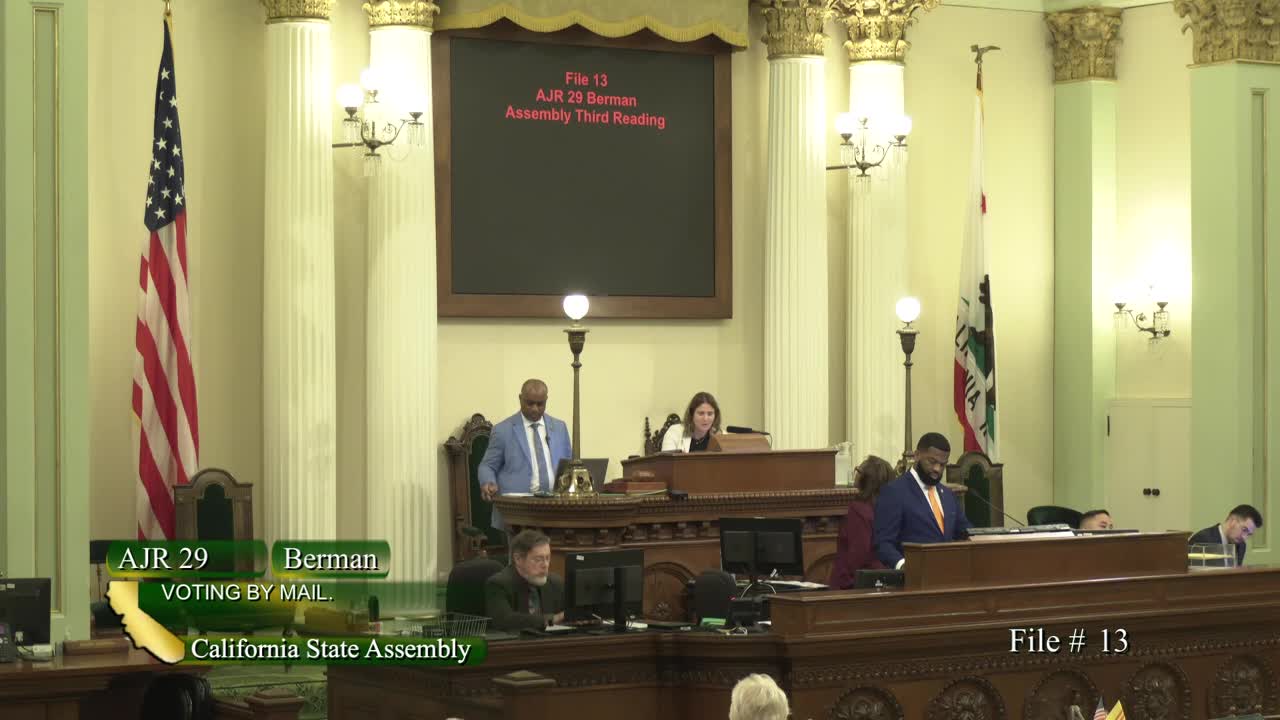


Bill Co-Author(s):
