AB 1928: Sex equity: sexual harassment complaints.
- Session Year: 2025-2026
- House: Assembly
- Latest Version Date: 2026-08-27
Current Status:
Passed
(2026-08-27: Chaptered by Secretary of State - Chapter 134, Statutes of 2026.)
Introduced
In Committee
Awaiting First Chamber Vote
Passed First Chamber
In Committee
Awaiting Second Chamber Vote
Passed Second Chamber
Enacted
Existing federal law, known as Title IX, prohibits a person, on the basis of sex, from being excluded from participation in, being denied the benefits of, or being subject to discrimination, which includes sexual harassment, under any education program or activity receiving federal financial assistance. Existing law requires, no later than January 1, 2022, except as specified, the governing board or body of a postsecondary educational institution that receives state financial assistance to provide students with procedural protections relating to complaints of sexual harassment, including the requirement to adopt and publish on its internet website grievance procedures providing for the prompt and equitable resolution of sexual harassment complaints filed by a student against an employee or another student. Existing law requires that the grievance procedures afford both student parties the opportunity to each have a support person or adviser accompany the student party during any stage of the process.
This bill would instead require that the grievance procedures afford each student party the opportunity to have a support person and an advisor of their choice accompany the student party during any stage of the process, as specified. The bill would also require the governing board or body of a postsecondary educational institution that receives state financial assistance and state student financial aid to allow each complainant or respondent of a sexual harassment complaint to have a support person, in addition to an advisor, accompany the parties of a sexual harassment complaint during the grievance procedures that provide for the prompt and equitable resolution of sexual harassment complaints pursuant to the above-described procedural protections for students or Title IX, as specified. By imposing new duties on community college districts, the bill would impose a state-mandated local program.
The California Constitution requires the state to reimburse local agencies and school districts for certain costs mandated by the state. Statutory provisions establish procedures for making that reimbursement.
This bill would provide that, if the Commission on State Mandates determines that the bill contains costs mandated by the state, reimbursement for those costs shall be made pursuant to the statutory provisions noted above.
Existing federal law, known as Title IX, prohibits a person, on the basis of sex, from being excluded from participation in, being denied the benefits of, or being subject to discrimination, which includes sexual harassment, under any education program or activity receiving federal financial assistance. Existing law requires, no later than January 1, 2022, except as specified, the governing board or body of a postsecondary educational institution that receives state financial assistance to provide students with procedural protections relating to complaints of sexual harassment, including the requirement to adopt and publish on its internet website grievance procedures providing for the prompt and equitable resolution of sexual harassment complaints. complaints filed by a student against an employee or another student. Existing law requires that the grievance procedures afford both student parties the opportunity to each have a support person or adviser accompany the student party during any stage of the process.
This bill would instead require that the grievance procedures afford each student party the opportunity to have both a support person and an adviser advisor accompany the student party during any stage of the process, as specified. The bill would also require the governing board or body of a postsecondary educational institution that receives state financial assistance and state student financial aid to allow each complainant or respondent of a sexual harassment complaint to have a support person, in addition to an advisor, accompany the parties of a sexual harassment complaint during the grievance procedures that provide for the prompt and equitable resolution of sexual harassment complaints pursuant to the above-described procedural protections for students or Title IX, as specified. By imposing new duties on community college districts, this the bill would impose a state-mandated local program.
The California Constitution requires the state to reimburse local agencies and school districts for certain costs mandated by the state. Statutory provisions establish procedures for making that reimbursement.
This bill would provide that, if the Commission on State Mandates determines that the bill contains costs mandated by the state, reimbursement for those costs shall be made pursuant to the statutory provisions noted above.
Existing federal law, known as Title IX, prohibits a person, on the basis of sex, from being excluded from participation in, being denied the benefits of, or being subject to discrimination, which includes sexual harassment, under any education program or activity receiving federal financial assistance. Existing law requires, no later than January 1, 2022, except as specified, the governing board or body of a postsecondary institution that receives state financial assistance to provide students with procedural protections relating to complaints of sexual harassment, including the requirement to adopt and publish on its internet website grievance procedures providing for the prompt and equitable resolution of sexual harassment complaints. Existing law requires that the grievance procedures afford both student parties the opportunity to each have a support person or adviser accompany the student party during any stage of the process.
This bill would instead require that the grievance procedures afford each student party the opportunity to have both a support person and an adviser accompany the student party during any stage of the process, as specified. By imposing new duties on community college districts, this bill would impose a state-mandated local program.
The California Constitution requires the state to reimburse local agencies and school districts for certain costs mandated by the state. Statutory provisions establish procedures for making that reimbursement.
This bill would provide that, if the Commission on State Mandates determines that the bill contains costs mandated by the state, reimbursement for those costs shall be made pursuant to the statutory provisions noted above.
(a)For the purposes of this section, the following terms have the following meanings:
(1)Postsecondary institution means a campus of the University of California, the California State University, or the California Community Colleges, a private postsecondary educational institution, or an independent institution of higher education that receives state financial assistance.
(2)(A)Responsible employee means an employee who has the authority to take action to redress sexual harassment or provide supportive measures to students, or who has the duty to report sexual harassment to an appropriate school official who has that authority.
(B)Responsible employee includes, but is not limited to, those individuals with any of the following positions or substantially similar positions or job duties, regardless of the specific title the institution may attach to the position:
(i)Title IX coordinator or other coordinator designated to comply with and carry out the institutions responsibilities under this section.
(ii)Residential advisors, while performing the duties of employment by the institution.
(iii)Housing directors, coordinators, or deans.
(iv)Student life directors, coordinators, or deans.
(v)Athletic directors, coordinators, or deans.
(vi)Coaches of any student athletic or academic team or activity.
(vii)Faculty and associate faculty, teachers, instructors, or lecturers.
(viii)Graduate student instructors, while performing the duties of employment by the institution.
(ix)Laboratory directors, coordinators, or principal investigators.
(x)Internship or externship directors or coordinators.
(xi)Study abroad program directors or coordinators.
(C)(i)Notwithstanding subparagraphs (A) and (B), responsible employee does not include those individuals described in subparagraphs (A) and (B) who are also any of the following:
(I)A therapist or other professional described in Sections 990, 1010, 1030, 1035, and 1037 of the Evidence Code, including a University of California Center for Advocacy, Resources, and Education (CARE) director, advocate, or employee.
(II)A University of California Center for Advocacy, Resources, and Education (CARE) director, advocate, or employee.
(III)A California State University victim advocate or other position with similar responsibilities.
(IV)An individual acting in a professional capacity for which confidentiality is mandated by law.
(ii)An individual described in clause (i) shall inform each student who provides the individual with information regarding sexual harassment of the students ability to report to a responsible employee and direct the student to those specific reporting resources.
(b)Notwithstanding Section 67400, in order to receive state financial assistance, as defined in Section 213, the appropriate governing board or body of each postsecondary institution shall implement, and at all times comply with, all of the following requirements at the institution:
(1)It shall disseminate, by electronic or other means, a notice of nondiscrimination, including, but not limited to, all information required to be included in the notice provided pursuant to Section 66281.5, to all of the following:
(A)Each employee of the postsecondary institution.
(B)Each volunteer who will regularly interact with students.
(C)Each individual or entity under contract with the postsecondary institution to perform any service involving regular interaction with students at the institution.
(2)It shall designate at least one employee of the institution to coordinate its efforts to comply with and carry out its responsibilities under this section. The employee may be the same individual as the institutions federal Title IX coordinator. The employee shall have adequate training on what constitutes sexual harassment and on trauma-informed investigatory and hearing practices, and shall understand how the institutions grievance procedures operate.
(3)It shall adopt rules and procedures within the policies required by Title IX of the Education Amendments of 1972 (20 U.S.C. Sec. 1681 et seq.) and Section 67386 for the prevention of sexual harassment that also provide for all of the following elements:
(A)The institutions primary concern shall be student safety. Any disciplinary measures imposed by the institution for violations of the institutions student conduct policy at or near the time of the incident being investigated shall be consistent with paragraph (10) of subdivision (b) of Section 67386.
(B)The institution shall take reasonable steps to respond to each incident of sexual harassment involving individuals subject to the institutions policies that occur in connection with any educational activity or other program of the institution, and incidents that occurred outside of those educational programs or activities, whether they occurred on or off campus, if, based on the allegations, there is any reason to believe that the incident could contribute to a hostile educational environment or otherwise interfere with a students access to education.
(C)(i)Regardless of whether or not a complaint has been filed under the institutions grievance procedures, if the institution knows, or reasonably should know, about possible sexual harassment involving individuals subject to the institutions policies at the time, the institution shall promptly investigate to determine whether the alleged conduct more likely than not occurred, or otherwise respond if the institution determines that an investigation is not required. If the institution determines that the alleged conduct more likely than not occurred, it shall immediately take reasonable steps to end the harassment, address the hostile environment, if one has been created, prevent its recurrence, and address its effects. A postsecondary institution shall be presumed to know of sexual harassment if a responsible employee knew, or, in the exercise of reasonable care, should have known, about the sexual harassment. The institution may rebut this presumption of knowledge if it shows all of the following:
(I)The institution provides training and requires all nonconfidential responsible employees to report sexual harassment.
(II)Each nonconfidential responsible employee with actual or constructive knowledge of the conduct in question was provided training and direction to report sexual harassment.
(III)Each nonconfidential responsible employee with actual or constructive knowledge of the conduct in question failed to report it.
(ii)The institution shall consider and respond to requests for accommodations relating to prior incidents of sexual harassment that could contribute to a hostile educational environment or otherwise interfere with a students access to education where both individuals are, at the time of the request, subject to the institutions policies.
(D)(i)If a complainant requests confidentiality, which could preclude a meaningful investigation or potential discipline of the potential respondent, or that no investigation or disciplinary action be pursued to address alleged sexual harassment, the institution shall take the request seriously, while at the same time considering its responsibility to provide a safe and nondiscriminatory environment for all students, including for the complainant. The institution shall generally grant the request. In determining whether to disclose a complainants identity or proceed to an investigation over the objection of the complainant, the institution may consider whether any of the following apply:
(I)There are multiple or prior reports of sexual misconduct against the respondent.
(II)The respondent reportedly used a weapon, physical restraints, or engaged in battery.
(III)The respondent is a faculty or staff member with oversight of students.
(IV)There is a power imbalance between the complainant and respondent.
(V)The complainant believes that the complainant will be less safe if the complainants name is disclosed or an investigation is conducted.
(VI)The institution is able to conduct a thorough investigation and obtain relevant evidence in the absence of the complainants cooperation.
(ii)If the institution determines that it can honor the students request for confidentiality, it shall still take reasonable steps to respond to the complaint, consistent with the request, to limit the effects of the alleged sexual harassment and prevent its recurrence without initiating formal action against the alleged perpetrator or revealing the identity of the complainant. These steps may include increased monitoring, supervision, or security at locations or activities where the alleged misconduct occurred; providing additional training and education materials for students and employees; or conducting climate surveys regarding sexual violence. The institution shall also take immediate steps to provide for the safety of the complainant while keeping the complainants identity confidential as appropriate. These steps may include changing living arrangements or course schedules, assignments, or tests. The complainant shall be notified that the steps the institution will take to respond to the complaint will be limited by the request for confidentiality.
(iii)If the institution determines that it must disclose the complainants identity to the respondent or proceed with an investigation, it shall inform the complainant before making this disclosure or initiating the investigation. The institution shall also take immediate steps to provide for the safety of the complainant where appropriate. In the event the complainant requests that the institution inform the respondent that the student asked the institution not to investigate or seek discipline, the institution shall honor this request.
(4)(A)It shall adopt and publish on its internet website grievance procedures that provide for prompt and equitable resolution of sexual harassment complaints filed by a student against an employee or another student. The grievance procedures shall satisfy all of the following requirements:
(i)They shall state that the investigation and adjudication of alleged misconduct under this section is not an adversarial process between the complainant, the respondent, and the witnesses, but rather a process for postsecondary institutions to comply with their obligations under existing law. The complainant does not have the burden to prove, nor does the respondent have the burden to disprove, the underlying allegation or allegations of misconduct.
(ii)They shall require notice be provided to all students of the grievance procedures, including where and how complaints may be filed.
(iii)They shall ensure that the persons or entities responsible for conducting investigations, finding facts, and making disciplinary decisions are neutral.
(iv)They shall ensure trauma-informed and impartial investigation of complaints. Student parties shall be given an opportunity to identify witnesses and other evidence to assist the institution in determining whether a policy violation has occurred, and shall be informed that any evidence available but not disclosed during the investigation might not be considered at a subsequent hearing.
(v)They shall include reasonable and equitable evidentiary guidelines, and may include page or word limitations on party submissions.
(vi)They shall include all of the following:
(I)The investigator or hearing office shall not consider the past sexual history of a complainant or respondent except in the limited circumstances permitted by this clause.
(II)The investigator or hearing officer shall not consider prior or subsequent sexual history between the complainant and anyone other than the respondent for any reason unless directly relevant to prove that physical injuries alleged to have been inflicted by the respondent were inflicted by another individual.
(III)(ia)The investigator or hearing officer shall not consider the existence of a dating relationship or prior or subsequent consensual sexual relations between the complainant and the respondent unless the evidence is relevant to how the parties communicated consent in prior or subsequent consensual sexual relations.
(ib)Where the investigator or hearing officer allows consideration of evidence about a dating relationship or prior or subsequent consensual sexual relations between the complainant and the respondent pursuant to sub-subclause (ia), the mere fact that the complainant and respondent engaged in other consensual sexual relations with one another is never sufficient, by itself, to establish that the conduct in question was consensual.
(IV)Before allowing the consideration of any evidence proffered pursuant to this subdivision, the investigator or hearing officer shall provide a written explanation to the parties as to why consideration of the evidence is consistent with this clause.
(vii)They shall prohibit questions of either party or of any witness that are repetitive, irrelevant, or harassing.
(viii)They shall provide that the institution shall decide whether or not a hearing is necessary to determine whether any sexual violence more likely than not occurred. In making this decision, an institution may consider whether the parties elected to participate in the investigation and whether each party had the opportunity to suggest questions to be asked of the other party or witnesses, or both, during the investigation. Any hearing shall be subject to the following rules:
(I)Any cross-examination of either party or any witness shall not be conducted directly by a party or a partys advisor.
(II)Either party or any witness may request to answer the questions by video from a remote location.
(III)Student parties shall have the opportunity to submit written questions to the hearing officer in advance of the hearing. At the hearing, the other party shall have an opportunity to note an objection to the questions posed. The institution may limit such objections to written form, and neither the hearing officer nor the institution are obligated to respond, other than to include any objection in the record. The hearing officer shall have the authority and obligation to discard or rephrase any question that the hearing officer deems to be repetitive, irrelevant, or harassing. In making these determinations, the hearing officer is not bound by, but may take guidance from, the formal rules of evidence.
(IV)Generally, the parties may not introduce evidence, including witness testimony, at the hearing that the party did not identify during the investigation and that was available at the time of the investigation. However, the hearing officer has discretion to accept for good cause, or exclude, such new evidence offered at the hearing.
(ix)They shall provide an explanation of the meaning of the preponderance of the evidence standard, and affirm that it shall apply to adjudications under this section. The preponderance of the evidence standard is met if the institution determines that it is more likely than not that the alleged misconduct occurred, based on the facts available at the time of the decision.
(x)They shall provide a reasonably prompt timeframe for all of the major stages of the complaint process, and a process for extending the institutions timelines for good cause only, and shall provide for the prompt communication of that information to the complainant and respondent. The communicated timeline information shall include, but shall not be limited to, each of the following:
(I)The period during which the institution shall conduct any investigation.
(II)The date by which the parties shall be notified of the outcome of any investigation.
(III)The deadlines and process for parties to appeal, if the institutions grievance procedures include an appeals process.
(xi)They shall provide that the institution shall not unreasonably deny a student partys request for an extension of a deadline related to a complaint during periods of examinations or school closures.
(xii)They shall provide for periodic status updates on the investigation consistent with the timelines referenced in clause (x) to the complainant and respondent.
(xiii)They shall provide for notice in writing to parties of any extension of a time period granted in the investigation and fact-finding process that would change the prospective timeframes for the major stages of the complaint process, and the reason for that extension.
(xiv)They shall provide for written notice to parties of the outcome of the complaint, including whether a policy violation was found to have occurred, the basis for that determination, including factual findings, and any discipline imposed.
(xv)They shall provide assurance that the institution will take steps to prevent recurrence of any harassment and to correct its discriminatory effects on the complainant and others, if appropriate.
(xvi)They shall require that student parties receive notice if the institution is conducting a formal investigation. The notice shall include the allegations and the alleged institutional policy violations under review. Any new allegations that arise during the course of the investigation that could subject either party to new or additional sanctions shall be subject to the same notice requirements.
(xvii)They shall afford each student party the opportunity to have both a support person of their choice and an advisor of their choice accompany the student party during any stage of the process, including, but not limited to, reporting, investigation, hearing, sanctioning, or any informal resolution. This clause shall be implemented consistent with Section 66281.10.
(xviii)They shall advise student parties of their right to consult with an attorney, at their own expense, at any stage of the process if they wish to do so. An attorney may serve as a support person or advisor pursuant to clause (xvii).
(xix)They shall require that student parties receive a notice regarding appropriate counseling resources developed and maintained by the institution for student parties in school misconduct matters involving sexual harassment.
(xx)They shall allow either party to appeal the outcome of the grievance proceeding if the institution has such an appeals process. An institutions grievance procedure may limit the grounds for an appeal, provided that any limitation shall apply equally to all parties and that the nonappealing party shall have an opportunity to respond to the appeal.
(xxi)They shall outline the possible interim measures that may be put in place during the pendency of an investigation, the supportive measures that may be provided in the absence of an investigation, and the disciplinary outcomes, remedial measures, and systemic remedies that may follow a final finding of responsibility, subject to all of the following:
(I)An institution shall not mandate mediation to resolve allegations of sexual harassment, and shall not allow mediation, even on a voluntary basis, to resolve allegations of sexual violence.
(II)An institution shall not require that the complainant enter a voluntary resolution agreement or any other form of resolution as a prerequisite to receiving remedial measures from the institution which safeguard the complainants access to education.
(III)(ia)When requested by a complainant or otherwise determined to be appropriate, an institution shall issue an interim no-contact directive prohibiting the respondent from contacting the complainant during the pendency of the investigation. An institution shall not issue an interim mutual no-contact directive automatically, but instead shall consider the specific circumstances of each case to determine whether a mutual no-contact directive is necessary or justifiable to protect the noncomplaining partys safety or well-being, or to respond to interference with an investigation. A no-contact directive issued after a decision of responsibility has been made shall be unilateral and only apply against the party found responsible.
(ib)Upon the issuance of a mutual no-contact directive, an institution shall provide the parties with a written justification for the directive and an explanation of the terms of the directive. Upon the issuance of any no-contact directive, the institution shall provide the parties with an explanation of the terms of the directive, including the circumstances, if any, under which violation could be subject to disciplinary action.
(xxii)They shall describe the obligations of all faculty and staff designated by the institution as required to report concerns of sexual harassment to the Title IX coordinator or other designated employee, consistent with the requirement in paragraph (2). An individual who has a confidential relationship with a student or students by law is exempt from having to report sexual harassment concerns to the Title IX coordinator or other designated employee, unless otherwise required by law.
(xxiii)They shall contain a requirement that the Title IX coordinator or other designated employee assess each report of sexual harassment and provide outreach, as appropriate, to each identifiable student who is alleged to be the victim of the reported conduct. The outreach shall include all of the following information:
(I)The institution has received a report that the student may have been a victim of sexual harassment.
(II)A statement that retaliation for filing a complaint or participating in a complaint process, or both, under this section is prohibited.
(III)Counseling resources within the institution or in the community.
(IV)Where a crime may have occurred, notice that the student has the right, but not the obligation, to report the matter to law enforcement.
(V)The institutions investigation procedures established pursuant to the requirements of this section.
(VI)Potential interim measures, such as no-contact directives, housing changes, and academic schedule changes, where applicable.
(VII)The importance of preserving evidence.
(VIII)A request for the student to meet with the Title IX coordinator or other designated employee to discuss options for responding to the report.
(IX)The manner in which the institution responds to reports of sexual harassment and a description of potential disciplinary consequences.
(B)The grievance procedures shall also provide a process for a student to report sexual harassment by a third party. The institution shall respond to those reports to address or prevent a hostile educational environment or to ensure students access to education. This section shall not establish any duty or obligation owed by a postsecondary institution to nonstudent parties that does not already exist by statute or agreement.
(5)It shall publish in a prominent place on its internet website, with accompanying text clearly associating them with the sexual harassment and sexual violence grievance processes, the name, title, and contact information, which shall include the telephone number, office location, and email address, of each of the following individuals:
(A)The Title IX coordinator or other designated employee.
(B)Any individual official within the institution with the authority to investigate complaints made pursuant to this section or to institute corrective measures such as sanctions, accommodations, or other forms of resolution of the complaint.
(6)(A)It shall provide the training described in paragraph (12) of subdivision (b) of Section 67386 to each employee engaged in the grievance procedures related to sex discrimination, including sexual violence, which shall include for these employees training on (i) trauma-informed investigatory and hearing practices that help ensure an impartial and equitable process, (ii) best practices for assessment of a sexual harassment or sexual violence complaint, (iii) best practices for questioning of the complainant, respondent, and witnesses, and (iv) implicit bias and racial inequities, both broadly and in school disciplinary processes.
(B)Materials approved by the institution for this training shall include statistics on the prevalence of sexual harassment and sexual violence in the educational setting, and the differing rates at which students experience sexual harassment and sexual assault in the educational setting based on their race, sexual orientation, disability, gender, and gender identity. When possible, citation to such statistics shall be included in the written sexual harassment policies required by Section 66281.5 accompanying the institutions grievance procedures.
(7)If the institution has on-campus housing, it shall ensure that residential life student and nonstudent staff, or their equivalent, annually receive training on how to handle, in a trauma-informed manner, reports made to them of sexual harassment or sexual violence, and situations in which they are aware of sexual harassment or sexual violence, in student residential facilities.
(8)It shall notify employees of the obligation to report harassment to appropriate school officials.
(9)It shall provide training to all employees on the identification of sexual harassment, including the person to whom it should be reported. This paragraph does not require an institution to provide separate training for identification of sexual harassment. The school may include this requirement in existing employee training on sexual harassment.
(c)This section does not require a school to provide separate grievance procedures for student sexual harassment complaints. The school may use student disciplinary procedures or other separate procedures to resolve sexual harassment complaints. Any procedures used to investigate complaints of sexual harassment, including disciplinary procedures, shall afford a complainant and a respondent a prompt and equitable resolution. If the school relies on existing procedures for compliance with the requirements of this section, the Title IX officer or designated employee shall review the schools procedures to ensure that they comply with the requirements of this section.
(d)A violation of this section may constitute discrimination and shall be subject to a civil action brought pursuant to Sections 66292.3 and 66292.4.
(e)Except for the amendments made to subdivision (b) by the act that amended this section during the 202526 Regular Session of the Legislature, the requirements of this section shall be implemented at each postsecondary institution by no later than January 1, 2022.
(f)If, on or after the date of implementation, any provision of Chapter 303 of the Statutes of 2020 conflicts with federal law, that provision shall be rendered inoperative for the duration of the conflict and without affecting the whole.
(g)(1)Any case law interpreting procedural requirements or process that is due to student complainants or respondents when adjudicating complaints of sexual or gender-based violence, including dating or domestic violence, at postsecondary institutions in the state shall have no retroactive effect.
(2)Any case law that conflicts with the provisions of Chapter 303 of the Statutes of 2020 shall be superseded as of January 1, 2021.
SEC. 2.Section 66281.10 is added to the Education Code, to read:66281.10.(a)Notwithstanding Section 67400, in order to receive state financial assistance, as defined in Section 66263, and state student financial aid, as defined in Section 66264, the appropriate governing board or body of each postsecondary institution, as defined in Section 66281.8, shall permit each complainant or respondent of a sexual harassment complaint to have a support person, in addition to an advisor, accompany the parties of a sexual harassment complaint during the grievance procedures that provide for the prompt and equitable resolution of sexual harassment complaints pursuant to Section 66281.8 or Title IX of the Education Amendments of 1972 (20 U.S.C. Sec. 1681 et seq.). The postsecondary institution shall permit each complainant or respondent of a sexual harassment complaint to have a support person of their choice and an advisor of their choice accompany the complainant or respondent during any stage of the process, including, but not limited to, reporting, investigation, hearing, sanctioning, or any informal resolution.
(b)The support person identified in subdivision (a) by the complainant or respondent shall not act in the role of advisor as authorized by Section 66281.8 and Title IX of the Education Amendments of 1972 (20 U.S.C. Sec. 1681 et seq.).
(c)This section does not require a postsecondary institution to provide a support person for any party to a sexual harassment complaint during the adjudication of the complaint pursuant to Section 66281.8 or Title IX of the Education Amendments of 1972 (20 U.S.C. Sec. 1681 et seq.).
SEC. 3.If the Commission on State Mandates determines that this act contains costs mandated by the state, reimbursement to local agencies and school districts for those costs shall be made pursuant to Part 7 (commencing with Section 17500) of Division 4 of Title 2 of the Government Code.
(a)For the purposes of this section, the following terms have the following meanings:
(1)Postsecondary institution means a campus of the University of California, the California State University, or the California Community Colleges, a private postsecondary educational institution, or an independent institution of higher education that receives state financial assistance.
(2)(A)Responsible employee means an employee who has the authority to take action to redress sexual harassment or provide supportive measures to students, or who has the duty to report sexual harassment to an appropriate school official who has that authority.
(B)Responsible employee includes, but is not limited to, those individuals with any of the following positions or substantially similar positions or job duties, regardless of the specific title the institution may attach to the position:
(i)Title IX coordinator or other coordinator designated to comply with and carry out the institutions responsibilities under this section.
(ii)Residential advisors, while performing the duties of employment by the institution.
(iii)Housing directors, coordinators, or deans.
(iv)Student life directors, coordinators, or deans.
(v)Athletic directors, coordinators, or deans.
(vi)Coaches of any student athletic or academic team or activity.
(vii)Faculty and associate faculty, teachers, instructors, or lecturers.
(viii)Graduate student instructors, while performing the duties of employment by the institution.
(ix)Laboratory directors, coordinators, or principal investigators.
(x)Internship or externship directors or coordinators.
(xi)Study abroad program directors or coordinators.
(C)(i)Notwithstanding subparagraphs (A) and (B), responsible employee does not include those individuals described in subparagraphs (A) and (B) who are also any of the following:
(I)A therapist or other professional described in Sections 990, 1010, 1030, 1035, and 1037 of the Evidence Code, including a University of California Center for Advocacy, Resources, and Education (CARE) director, advocate, or employee.
(II)A University of California Center for Advocacy, Resources, and Education (CARE) director, advocate, or employee.
(III)A California State University victim advocate or other position with similar responsibilities.
(IV)An individual acting in a professional capacity for which confidentiality is mandated by law.
(ii)An individual described in clause (i) shall inform each student who provides the individual with information regarding sexual harassment of the students ability to report to a responsible employee and direct the student to those specific reporting resources.
(b)Notwithstanding Section 67400, in order to receive state financial assistance, as defined in Section 213, the appropriate governing board or body of each postsecondary institution shall implement, and at all times comply with, all of the following requirements at the institution:
(1)It shall disseminate, by electronic or other means, a notice of nondiscrimination, including, but not limited to, all information required to be included in the notice provided pursuant to Section 66281.5, to all of the following:
(A)Each employee of the postsecondary institution.
(B)Each volunteer who will regularly interact with students.
(C)Each individual or entity under contract with the postsecondary institution to perform any service involving regular interaction with students at the institution.
(2)It shall designate at least one employee of the institution to coordinate its efforts to comply with and carry out its responsibilities under this section. The employee may be the same individual as the institutions federal Title IX coordinator. The employee shall have adequate training on what constitutes sexual harassment and on trauma-informed investigatory and hearing practices, and shall understand how the institutions grievance procedures operate.
(3)It shall adopt rules and procedures within the policies required by Title IX of the Education Amendments of 1972 (20 U.S.C. Sec. 1681 et seq.) and Section 67386 for the prevention of sexual harassment that also provide for all of the following elements:
(A)The institutions primary concern shall be student safety. Any disciplinary measures imposed by the institution for violations of the institutions student conduct policy at or near the time of the incident being investigated shall be consistent with paragraph (10) of subdivision (b) of Section 67386.
(B)The institution shall take reasonable steps to respond to each incident of sexual harassment involving individuals subject to the institutions policies that occur in connection with any educational activity or other program of the institution, as well as and incidents that occurred outside of those educational programs or activities, whether they occurred on or off campus, if, based on the allegations, there is any reason to believe that the incident could contribute to a hostile educational environment or otherwise interfere with a students access to education.
(C)(i)Regardless of whether or not a complaint has been filed under the institutions grievance procedures, if the institution knows, or reasonably should know, about possible sexual harassment involving individuals subject to the institutions policies at the time, the institution shall promptly investigate to determine whether the alleged conduct more likely than not occurred, or otherwise respond if the institution determines that an investigation is not required. If the institution determines that the alleged conduct more likely than not occurred, it shall immediately take reasonable steps to end the harassment, address the hostile environment, if one has been created, prevent its recurrence, and address its effects. A postsecondary institution shall be presumed to know of sexual harassment if a responsible employee knew, or, in the exercise of reasonable care, should have known, about the sexual harassment. The institution may rebut this presumption of knowledge if it shows all of the following:
(I)The institution provides training and requires all nonconfidential responsible employees to report sexual harassment.
(II)Each nonconfidential responsible employee with actual or constructive knowledge of the conduct in question was provided training and direction to report sexual harassment.
(III)Each nonconfidential responsible employee with actual or constructive knowledge of the conduct in question failed to report it.
(ii)The institution shall consider and respond to requests for accommodations relating to prior incidents of sexual harassment that could contribute to a hostile educational environment or otherwise interfere with a students access to education where both individuals are, at the time of the request, subject to the institutions policies.
(D)(i)If a complainant requests confidentiality, which could preclude a meaningful investigation or potential discipline of the potential respondent, or that no investigation or disciplinary action be pursued to address alleged sexual harassment, the institution shall take the request seriously, while at the same time considering its responsibility to provide a safe and nondiscriminatory environment for all students, including for the complainant. The institution shall generally grant the request. In determining whether to disclose a complainants identity or proceed to an investigation over the objection of the complainant, the institution may consider whether any of the following apply:
(I)There are multiple or prior reports of sexual misconduct against the respondent.
(II)The respondent reportedly used a weapon, physical restraints, or engaged in battery.
(III)The respondent is a faculty or staff member with oversight of students.
(IV)There is a power imbalance between the complainant and respondent.
(V)The complainant believes that the complainant will be less safe if the complainants name is disclosed or an investigation is conducted.
(VI)The institution is able to conduct a thorough investigation and obtain relevant evidence in the absence of the complainants cooperation.
(ii)If the institution determines that it can honor the students request for confidentiality, it shall still take reasonable steps to respond to the complaint, consistent with the request, to limit the effects of the alleged sexual harassment and prevent its recurrence without initiating formal action against the alleged perpetrator or revealing the identity of the complainant. These steps may include increased monitoring, supervision, or security at locations or activities where the alleged misconduct occurred; providing additional training and education materials for students and employees; or conducting climate surveys regarding sexual violence. The institution shall also take immediate steps to provide for the safety of the complainant while keeping the complainants identity confidential as appropriate. These steps may include changing living arrangements or course schedules, assignments, or tests. The complainant shall be notified that the steps the institution will take to respond to the complaint will be limited by the request for confidentiality.
(iii)If the institution determines that it must disclose the complainants identity to the respondent or proceed with an investigation, it shall inform the complainant prior to before making this disclosure or initiating the investigation. The institution shall also take immediate steps to provide for the safety of the complainant where appropriate. In the event the complainant requests that the institution inform the respondent that the student asked the institution not to investigate or seek discipline, the institution shall honor this request.
(4)(A)It shall adopt and publish on its internet website grievance procedures that provide for prompt and equitable resolution of sexual harassment complaints filed by a student against an employee or another student. The grievance procedures shall satisfy all of the following requirements:
(i)They shall state that the investigation and adjudication of alleged misconduct under this section is not an adversarial process between the complainant, the respondent, and the witnesses, but rather a process for postsecondary institutions to comply with their obligations under existing law. The complainant does not have the burden to prove, nor does the respondent have the burden to disprove, the underlying allegation or allegations of misconduct.
(ii)They shall require notice be provided to all students of the grievance procedures, including where and how complaints may be filed.
(iii)They shall ensure that the persons or entities responsible for conducting investigations, finding facts, and making disciplinary decisions are neutral.
(iv)They shall ensure trauma-informed and impartial investigation of complaints. Student parties shall be given an opportunity to identify witnesses and other evidence to assist the institution in determining whether a policy violation has occurred, and shall be informed that any evidence available but not disclosed during the investigation might not be considered at a subsequent hearing.
(v)They shall include reasonable and equitable evidentiary guidelines, and may include page or word limitations on party submissions.
(vi)They shall include all of the following:
(I)The investigator or hearing office shall not consider the past sexual history of a complainant or respondent except in the limited circumstances permitted by this clause.
(II)The investigator or hearing officer shall not consider prior or subsequent sexual history between the complainant and anyone other than the respondent for any reason unless directly relevant to prove that physical injuries alleged to have been inflicted by the respondent were inflicted by another individual.
(III)(ia)The investigator or hearing officer shall not consider the existence of a dating relationship or prior or subsequent consensual sexual relations between the complainant and the respondent unless the evidence is relevant to how the parties communicated consent in prior or subsequent consensual sexual relations.
(ib)Where the investigator or hearing officer allows consideration of evidence about a dating relationship or prior or subsequent consensual sexual relations between the complainant and the respondent pursuant to sub-subclause (ia), the mere fact that the complainant and respondent engaged in other consensual sexual relations with one another is never sufficient, by itself, to establish that the conduct in question was consensual.
(IV)Before allowing the consideration of any evidence proffered pursuant to this subdivision, the investigator or hearing officer shall provide a written explanation to the parties as to why consideration of the evidence is consistent with this clause.
(vii)They shall prohibit questions of either party or of any witness that are repetitive, irrelevant, or harassing.
(viii)They shall provide that the institution shall decide whether or not a hearing is necessary to determine whether any sexual violence more likely than not occurred. In making this decision, an institution may consider whether the parties elected to participate in the investigation and whether each party had the opportunity to suggest questions to be asked of the other party or witnesses, or both, during the investigation. Any hearing shall be subject to the following rules:
(I)Any cross-examination of either party or any witness shall not be conducted directly by a party or a partys advisor.
(II)Either party or any witness may request to answer the questions by video from a remote location.
(III)Student parties shall have the opportunity to submit written questions to the hearing officer in advance of the hearing. At the hearing, the other party shall have an opportunity to note an objection to the questions posed. The institution may limit such objections to written form, and neither the hearing officer nor the institution are obligated to respond, other than to include any objection in the record. The hearing officer shall have the authority and obligation to discard or rephrase any question that the hearing officer deems to be repetitive, irrelevant, or harassing. In making these determinations, the hearing officer is not bound by, but may take guidance from, the formal rules of evidence.
(IV)Generally, the parties may not introduce evidence, including witness testimony, at the hearing that the party did not identify during the investigation and that was available at the time of the investigation. However, the hearing officer has discretion to accept for good cause, or exclude, such new evidence offered at the hearing.
(ix)They shall provide an explanation of the meaning of the preponderance of the evidence standard, and affirm that it shall apply to adjudications under this section. The preponderance of the evidence standard is met if the institution determines that it is more likely than not that the alleged misconduct occurred, based on the facts available at the time of the decision.
(x)They shall provide a reasonably prompt timeframe for all of the major stages of the complaint process, as well as and a process for extending the institutions timelines for good cause only, and shall provide for the prompt communication of that information to the complainant and respondent. The communicated timeline information shall include, but shall not necessarily be limited to, each of the following:
(I)The period during which the institution shall conduct any investigation.
(II)The date by which the parties shall be notified of the outcome of any investigation.
(III)The deadlines and process for parties to appeal, if the institutions grievance procedures include an appeals process.
(xi)They shall provide that the institution shall not unreasonably deny a student partys request for an extension of a deadline related to a complaint during periods of examinations or school closures.
(xii)They shall provide for periodic status updates on the investigation consistent with the timelines referenced in clause (x) to the complainant and respondent.
(xiii)They shall provide for notice in writing to parties of any extension of a time period granted in the investigation and fact-finding process that would change the prospective timeframes for the major stages of the complaint process, and the reason for that extension.
(xiv)They shall provide for written notice to parties of the outcome of the complaint, including whether a policy violation was found to have occurred, the basis for that determination, including factual findings, and any discipline imposed.
(xv)They shall provide assurance that the institution will take steps to prevent recurrence of any harassment and to correct its discriminatory effects on the complainant and others, if appropriate.
(xvi)They shall require that student parties receive notice if the institution is conducting a formal investigation. The notice shall include the allegations and the alleged institutional policy violations under review. Any new allegations that arise during the course of the investigation that could subject either party to new or additional sanctions shall be subject to the same notice requirements.
(xvii)They shall afford each student party the opportunity to have both a support person of their choice and an adviser advisor of their choice accompany the student party during any stage of the process, including, but not limited to, reporting, investigation, hearing, sanctioning, or any informal resolution. This clause shall be implemented consistent with Section 66281.10.
(xviii)They shall advise student parties of their right to consult with an attorney, at their own expense, at any stage of the process if they wish to do so. An attorney may serve as a support person or adviser advisor pursuant to clause (xvii).
(xix)They shall require that student parties receive a notice regarding appropriate counseling resources developed and maintained by the institution for student parties in school misconduct matters involving sexual harassment.
(xx)They shall allow either party to appeal the outcome of the grievance proceeding if the institution has such an appeals process. An institutions grievance procedure may limit the grounds for an appeal, provided that any limitation shall apply equally to all parties and that the nonappealing party shall have an opportunity to respond to the appeal.
(xxi)They shall outline the possible interim measures that may be put in place during the pendency of an investigation, the supportive measures that may be provided in the absence of an investigation, and the disciplinary outcomes, remedial measures, and systemic remedies that may follow a final finding of responsibility, subject to all of the following:
(I)An institution shall not mandate mediation to resolve allegations of sexual harassment, and shall not allow mediation, even on a voluntary basis, to resolve allegations of sexual violence.
(II)An institution shall not require that the complainant enter a voluntary resolution agreement or any other form of resolution as a prerequisite to receiving remedial measures from the institution which safeguard the complainants access to education.
(III)(ia)When requested by a complainant or otherwise determined to be appropriate, an institution shall issue an interim no-contact directive prohibiting the respondent from contacting the complainant during the pendency of the investigation. An institution shall not issue an interim mutual no-contact directive automatically, but instead shall consider the specific circumstances of each case to determine whether a mutual no-contact directive is necessary or justifiable to protect the noncomplaining partys safety or well-being, or to respond to interference with an investigation. A no-contact directive issued after a decision of responsibility has been made shall be unilateral and only apply against the party found responsible.
(ib)Upon the issuance of a mutual no-contact directive, an institution shall provide the parties with a written justification for the directive and an explanation of the terms of the directive. Upon the issuance of any no-contact directive, the institution shall provide the parties with an explanation of the terms of the directive, including the circumstances, if any, under which violation could be subject to disciplinary action.
(xxii)They shall describe the obligations of all faculty and staff designated by the institution as required to report concerns of sexual harassment to the Title IX coordinator or other designated employee, consistent with the requirement in paragraph (2). An individual who has a confidential relationship with a student or students by law is exempt from having to report sexual harassment concerns to the Title IX coordinator or other designated employee, unless otherwise required by law.
(xxiii)They shall contain a requirement that the Title IX coordinator or other designated employee assess each report of sexual harassment and provide outreach, as appropriate, to each identifiable student who is alleged to be the victim of the reported conduct. The outreach shall include all of the following information:
(I)The institution has received a report that the student may have been a victim of sexual harassment.
(II)A statement that retaliation for filing a complaint or participating in a complaint process, or both, under this section is prohibited.
(III)Counseling resources within the institution or in the community.
(IV)Where a crime may have occurred, notice that the student has the right, but not the obligation, to report the matter to law enforcement.
(V)The institutions investigation procedures established pursuant to the requirements of this section.
(VI)Potential interim measures, such as no-contact directives, housing changes, and academic schedule changes, where applicable.
(VII)The importance of preserving evidence.
(VIII)A request for the student to meet with the Title IX coordinator or other designated employee to discuss options for responding to the report.
(IX)The manner in which the institution responds to reports of sexual harassment and a description of potential disciplinary consequences.
(B)The grievance procedures shall also provide a process for a student to report sexual harassment by a third party. The institution shall respond to those reports to address or prevent a hostile educational environment or to ensure students access to education. Nothing in this This section shall not establish any duty or obligation owed by a postsecondary institution to nonstudent parties that does not already exist by statute or agreement.
(5)It shall publish in a prominent place on its internet website, with accompanying text clearly associating them with the sexual harassment and sexual violence grievance processes, the name, title, and contact information, which shall include the telephone number, office location, and email address, of each of the following individuals:
(A)The Title IX coordinator or other designated employee.
(B)Any individual official within the institution with the authority to investigate complaints made pursuant to this section or to institute corrective measures such as sanctions, accommodations, or other forms of resolution of the complaint.
(6)(A)It shall provide the training described in paragraph (12) of subdivision (b) of Section 67386 to each employee engaged in the grievance procedures related to sex discrimination, including sexual violence, which shall include for these employees training on (i) trauma-informed investigatory and hearing practices that help ensure an impartial and equitable process, (ii) best practices for assessment of a sexual harassment or sexual violence complaint, (iii) best practices for questioning of the complainant, respondent, and witnesses, and (iv) implicit bias and racial inequities, both broadly and in school disciplinary processes.
(B)Materials approved by the institution for this training shall include statistics on the prevalence of sexual harassment and sexual violence in the educational setting, and the differing rates at which students experience sexual harassment and sexual assault in the educational setting based on their race, sexual orientation, disability, gender, and gender identity. When possible, citation to such statistics shall be included in the written sexual harassment policies required by Section 66281.5 accompanying the institutions grievance procedures.
(7)If the institution has on-campus housing, it shall ensure that residential life student and nonstudent staff, or their equivalent, annually receive training on how to handle, in a trauma-informed manner, reports made to them of sexual harassment or sexual violence, and situations in which they are aware of sexual harassment or sexual violence, in student residential facilities.
(8)It shall notify employees of the obligation to report harassment to appropriate school officials.
(9)It shall provide training to all employees on the identification of sexual harassment, including the person to whom it should be reported. This paragraph does not require an institution to provide separate training for identification of sexual harassment. The school may include this requirement in existing employee training on sexual harassment.
(c)This section does not require a school to provide separate grievance procedures for student sexual harassment complaints. The school may use student disciplinary procedures or other separate procedures to resolve sexual harassment complaints. Any procedures used to investigate complaints of sexual harassment, including disciplinary procedures, shall afford a complainant and a respondent a prompt and equitable resolution. If the school relies on existing procedures for compliance with the requirements of this section, the Title IX officer or designated employee shall review the schools procedures to ensure that they comply with the requirements of this section.
(d)A violation of this section may constitute discrimination and shall be subject to a civil action brought pursuant to Sections 66292.3 and 66292.4.
(e)Except for the amendments made to subdivision (b) by the act that amended this section during the 202526 Regular Session of the Legislature, the requirements of this section shall be implemented at each postsecondary institution by no later than January 1, 2022.
(f)If If, on or after the date of implementation, any provision of the act that adds this section Chapter 303 of the Statutes of 2020 conflicts with federal law, that provision shall be rendered inoperative for the duration of the conflict and without affecting the whole.
(g)(1)Any case law interpreting procedural requirements or process that is due to student complainants or respondents when adjudicating complaints of sexual or gender-based violence, including dating or domestic violence, at postsecondary educational institutions in the State of California state shall have no retroactive effect.
(2)Any case law that conflicts with the provisions of the act that adds this section Chapter 303 of the Statutes of 2020 shall be superseded as of this statutes effective date. January 1, 2021.
SEC. 2.Section 66281.10 is added to the Education Code, to read:66281.10.(a)Notwithstanding Section 67400, in order to receive state financial assistance, as defined in Section 66263, and state student financial aid, as defined in Section 66264, the appropriate governing board or body of each postsecondary institution, as defined in Section 66281.8, shall permit each complainant or respondent of a sexual harassment complaint to have a support person, in addition to an advisor, accompany the parties of a sexual harassment complaint during the grievance procedures that provide for the prompt and equitable resolution of sexual harassment complaints pursuant to Section 66281.8 or Title IX of the Education Amendments of 1972 (20 U.S.C. Sec. 1681 et seq.). The postsecondary institution shall permit each complainant or respondent of a sexual harassment complaint to have a support person of their choice and an advisor of their choice accompany the complainant or respondent during any stage of the process, including, but not limited to, reporting, investigation, hearing, sanctioning, or any informal resolution.
(b)The support person identified in subdivision (a) by the complainant or respondent shall not act in the role of advisor as authorized by Section 66281.8 and Title IX of the Education Amendments of 1972 (20 U.S.C. Sec. 1681 et seq.).
(c)This section does not require a postsecondary institution to provide a support person for any party to a sexual harassment complaint during the adjudication of the complaint pursuant to Section 66281.8 or Title IX of the Education Amendments of 1972 (20 U.S.C. Sec. 1681 et seq.).
SEC. 2.SEC. 3.If the Commission on State Mandates determines that this act contains costs mandated by the state, reimbursement to local agencies and school districts for those costs shall be made pursuant to Part 7 (commencing with Section 17500) of Division 4 of Title 2 of the Government Code.
(a)For the purposes of this section, the following terms have the following meanings:
(1)Postsecondary institution means a campus of the University of California, the California State University, or the California Community Colleges, a private postsecondary educational institution, or an independent institution of higher education that receives state financial assistance.
(2)(A)Responsible employee means an employee who has the authority to take action to redress sexual harassment or provide supportive measures to students, or who has the duty to report sexual harassment to an appropriate school official who has that authority.
(B)Responsible employee includes, but is not limited to, those individuals with any of the following positions or substantially similar positions or job duties, regardless of the specific title the institution may attach to the position:
(i)Title IX coordinator or other coordinator designated to comply with and carry out the institutions responsibilities under this section.
(ii)Residential advisors, while performing the duties of employment by the institution.
(iii)Housing directors, coordinators, or deans.
(iv)Student life directors, coordinators, or deans.
(v)Athletic directors, coordinators, or deans.
(vi)Coaches of any student athletic or academic team or activity.
(vii)Faculty and associate faculty, teachers, instructors, or lecturers.
(viii)Graduate student instructors, while performing the duties of employment by the institution.
(ix)Laboratory directors, coordinators, or principal investigators.
(x)Internship or externship directors or coordinators.
(xi)Study abroad program directors or coordinators.
(C)(i)Notwithstanding subparagraphs (A) and (B), responsible employee does not include those individuals described in subparagraphs (A) and (B) who are also any of the following:
(I)A therapist or other professional described in Sections 990, 1010, 1030, 1035, and 1037 of the Evidence Code, including a University of California Center for Advocacy, Resources, and Education (CARE) director, advocate, or employee.
(II)A University of California Center for Advocacy, Resources, and Education (CARE) director, advocate, or employee.
(III)A California State University victim advocate or other position with similar responsibilities.
(IV)An individual acting in a professional capacity for which confidentiality is mandated by law.
(ii)An individual described in clause (i) shall inform each student who provides the individual with information regarding sexual harassment of the students ability to report to a responsible employee and direct the student to those specific reporting resources.
(b)Notwithstanding Section 67400, in order to receive state financial assistance, as defined in Section 213, the appropriate governing board or body of each postsecondary institution shall implement, and at all times comply with, all of the following requirements at the institution:
(1)It shall disseminate, by electronic or other means, a notice of nondiscrimination, including, but not limited to, all information required to be included in the notice provided pursuant to Section 66281.5, to all of the following:
(A)Each employee of the postsecondary institution.
(B)Each volunteer who will regularly interact with students.
(C)Each individual or entity under contract with the postsecondary institution to perform any service involving regular interaction with students at the institution.
(2)It shall designate at least one employee of the institution to coordinate its efforts to comply with and carry out its responsibilities under this section. The employee may be the same individual as the institutions federal Title IX coordinator. The employee shall have adequate training on what constitutes sexual harassment and on trauma-informed investigatory and hearing practices, and shall understand how the institutions grievance procedures operate.
(3)It shall adopt rules and procedures within the policies required by Title IX of the Education Amendments of 1972 (20 U.S.C. Sec. 1681 et seq.) and Section 67386 for the prevention of sexual harassment that also provide for all of the following elements:
(A)The institutions primary concern shall be student safety. Any disciplinary measures imposed by the institution for violations of the institutions student conduct policy at or near the time of the incident being investigated shall be consistent with paragraph (10) of subdivision (b) of Section 67386.
(B)The institution shall take reasonable steps to respond to each incident of sexual harassment involving individuals subject to the institutions policies that occur in connection with any educational activity or other program of the institution, as well as incidents that occurred outside of those educational programs or activities, whether they occurred on or off campus, if, based on the allegations, there is any reason to believe that the incident could contribute to a hostile educational environment or otherwise interfere with a students access to education.
(C)(i)Regardless of whether or not a complaint has been filed under the institutions grievance procedures, if the institution knows, or reasonably should know, about possible sexual harassment involving individuals subject to the institutions policies at the time, the institution shall promptly investigate to determine whether the alleged conduct more likely than not occurred, or otherwise respond if the institution determines that an investigation is not required. If the institution determines that the alleged conduct more likely than not occurred, it shall immediately take reasonable steps to end the harassment, address the hostile environment, if one has been created, prevent its recurrence, and address its effects. A postsecondary institution shall be presumed to know of sexual harassment if a responsible employee knew, or, in the exercise of reasonable care, should have known, about the sexual harassment. The institution may rebut this presumption of knowledge if it shows all of the following:
(I)The institution provides training and requires all nonconfidential responsible employees to report sexual harassment.
(II)Each nonconfidential responsible employee with actual or constructive knowledge of the conduct in question was provided training and direction to report sexual harassment.
(III)Each nonconfidential responsible employee with actual or constructive knowledge of the conduct in question failed to report it.
(ii)The institution shall consider and respond to requests for accommodations relating to prior incidents of sexual harassment that could contribute to a hostile educational environment or otherwise interfere with a students access to education where both individuals are, at the time of the request, subject to the institutions policies.
(D)(i)If a complainant requests confidentiality, which could preclude a meaningful investigation or potential discipline of the potential respondent, or that no investigation or disciplinary action be pursued to address alleged sexual harassment, the institution shall take the request seriously, while at the same time considering its responsibility to provide a safe and nondiscriminatory environment for all students, including for the complainant. The institution shall generally grant the request. In determining whether to disclose a complainants identity or proceed to an investigation over the objection of the complainant, the institution may consider whether any of the following apply:
(I)There are multiple or prior reports of sexual misconduct against the respondent.
(II)The respondent reportedly used a weapon, physical restraints, or engaged in battery.
(III)The respondent is a faculty or staff member with oversight of students.
(IV)There is a power imbalance between the complainant and respondent.
(V)The complainant believes that the complainant will be less safe if the complainants name is disclosed or an investigation is conducted.
(VI)The institution is able to conduct a thorough investigation and obtain relevant evidence in the absence of the complainants cooperation.
(ii)If the institution determines that it can honor the students request for confidentiality, it shall still take reasonable steps to respond to the complaint, consistent with the request, to limit the effects of the alleged sexual harassment and prevent its recurrence without initiating formal action against the alleged perpetrator or revealing the identity of the complainant. These steps may include increased monitoring, supervision, or security at locations or activities where the alleged misconduct occurred; providing additional training and education materials for students and employees; or conducting climate surveys regarding sexual violence. The institution shall also take immediate steps to provide for the safety of the complainant while keeping the complainants identity confidential as appropriate. These steps may include changing living arrangements or course schedules, assignments, or tests. The complainant shall be notified that the steps the institution will take to respond to the complaint will be limited by the request for confidentiality.
(iii)If the institution determines that it must disclose the complainants identity to the respondent or proceed with an investigation, it shall inform the complainant prior to making this disclosure or initiating the investigation. The institution shall also take immediate steps to provide for the safety of the complainant where appropriate. In the event the complainant requests that the institution inform the respondent that the student asked the institution not to investigate or seek discipline, the institution shall honor this request.
(4)(A)It shall adopt and publish on its internet website grievance procedures that provide for prompt and equitable resolution of sexual harassment complaints filed by a student against an employee or another student. The grievance procedures shall satisfy all of the following requirements:
(i)They shall state that the investigation and adjudication of alleged misconduct under this section is not an adversarial process between the complainant, the respondent, and the witnesses, but rather a process for postsecondary institutions to comply with their obligations under existing law. The complainant does not have the burden to prove, nor does the respondent have the burden to disprove, the underlying allegation or allegations of misconduct.
(ii)They shall require notice be provided to all students of the grievance procedures, including where and how complaints may be filed.
(iii)They shall ensure that the persons or entities responsible for conducting investigations, finding facts, and making disciplinary decisions are neutral.
(iv)They shall ensure trauma-informed and impartial investigation of complaints. Student parties shall be given an opportunity to identify witnesses and other evidence to assist the institution in determining whether a policy violation has occurred, and shall be informed that any evidence available but not disclosed during the investigation might not be considered at a subsequent hearing.
(v)They shall include reasonable and equitable evidentiary guidelines, and may include page or word limitations on party submissions.
(vi)They shall include all of the following:
(I)The investigator or hearing office shall not consider the past sexual history of a complainant or respondent except in the limited circumstances permitted by this clause.
(II)The investigator or hearing officer shall not consider prior or subsequent sexual history between the complainant and anyone other than the respondent for any reason unless directly relevant to prove that physical injuries alleged to have been inflicted by the respondent were inflicted by another individual.
(III)(ia)The investigator or hearing officer shall not consider the existence of a dating relationship or prior or subsequent consensual sexual relations between the complainant and the respondent unless the evidence is relevant to how the parties communicated consent in prior or subsequent consensual sexual relations.
(ib)Where the investigator or hearing officer allows consideration of evidence about a dating relationship or prior or subsequent consensual sexual relations between the complainant and the respondent pursuant to sub-subclause (ia), the mere fact that the complainant and respondent engaged in other consensual sexual relations with one another is never sufficient, by itself, to establish that the conduct in question was consensual.
(IV)Before allowing the consideration of any evidence proffered pursuant to this subdivision, the investigator or hearing officer shall provide a written explanation to the parties as to why consideration of the evidence is consistent with this clause.
(vii)They shall prohibit questions of either party or of any witness that are repetitive, irrelevant, or harassing.
(viii)They shall provide that the institution shall decide whether or not a hearing is necessary to determine whether any sexual violence more likely than not occurred. In making this decision, an institution may consider whether the parties elected to participate in the investigation and whether each party had the opportunity to suggest questions to be asked of the other party or witnesses, or both, during the investigation. Any hearing shall be subject to the following rules:
(I)Any cross-examination of either party or any witness shall not be conducted directly by a party or a partys advisor.
(II)Either party or any witness may request to answer the questions by video from a remote location.
(III)Student parties shall have the opportunity to submit written questions to the hearing officer in advance of the hearing. At the hearing, the other party shall have an opportunity to note an objection to the questions posed. The institution may limit such objections to written form, and neither the hearing officer nor the institution are obligated to respond, other than to include any objection in the record. The hearing officer shall have the authority and obligation to discard or rephrase any question that the hearing officer deems to be repetitive, irrelevant, or harassing. In making these determinations, the hearing officer is not bound by, but may take guidance from, the formal rules of evidence.
(IV)Generally, the parties may not introduce evidence, including witness testimony, at the hearing that the party did not identify during the investigation and that was available at the time of the investigation. However, the hearing officer has discretion to accept for good cause, or exclude, such new evidence offered at the hearing.
(ix)They shall provide an explanation of the meaning of the preponderance of the evidence standard, and affirm that it shall apply to adjudications under this section. The preponderance of the evidence standard is met if the institution determines that it is more likely than not that the alleged misconduct occurred, based on the facts available at the time of the decision.
(x)They shall provide a reasonably prompt timeframe for all of the major stages of the complaint process, as well as a process for extending the institutions timelines for good cause only, and shall provide for the prompt communication of that information to the complainant and respondent. The communicated timeline information shall include, but shall not necessarily be limited to, each of the following:
(I)The period during which the institution shall conduct any investigation.
(II)The date by which the parties shall be notified of the outcome of any investigation.
(III)The deadlines and process for parties to appeal, if the institutions grievance procedures include an appeals process.
(xi)They shall provide that the institution shall not unreasonably deny a student partys request for an extension of a deadline related to a complaint during periods of examinations or school closures.
(xii)They shall provide for periodic status updates on the investigation consistent with the timelines referenced in clause (x) to the complainant and respondent.
(xiii)They shall provide for notice in writing to parties of any extension of a time period granted in the investigation and fact-finding process that would change the prospective timeframes for the major stages of the complaint process, and the reason for that extension.
(xiv)They shall provide for written notice to parties of the outcome of the complaint, including whether a policy violation was found to have occurred, the basis for that determination, including factual findings, and any discipline imposed.
(xv)They shall provide assurance that the institution will take steps to prevent recurrence of any harassment and to correct its discriminatory effects on the complainant and others, if appropriate.
(xvi)They shall require that student parties receive notice if the institution is conducting a formal investigation. The notice shall include the allegations and the alleged institutional policy violations under review. Any new allegations that arise during the course of the investigation that could subject either party to new or additional sanctions shall be subject to the same notice requirements.
(xvii)They shall afford both each student parties party the opportunity to each have both a support person or of their choice and an adviser of their choice accompany the student party during any stage of the process. process, including, but not limited to, reporting, investigation, hearing, sanctioning, or any informal resolution.
(xviii)They shall advise student parties of their right to consult with an attorney, at their own expense, at any stage of the process if they wish to do so. An attorney may serve as a support person or adviser pursuant to clause (xvii).
(xix)They shall require that student parties receive a notice regarding appropriate counseling resources developed and maintained by the institution for student parties in school misconduct matters involving sexual harassment.
(xx)They shall allow either party to appeal the outcome of the grievance proceeding if the institution has such an appeals process. An institutions grievance procedure may limit the grounds for an appeal, provided that any limitation shall apply equally to all parties and that the nonappealing party shall have an opportunity to respond to the appeal.
(xxi)They shall outline the possible interim measures that may be put in place during the pendency of an investigation, the supportive measures that may be provided in the absence of an investigation, and the disciplinary outcomes, remedial measures, and systemic remedies that may follow a final finding of responsibility, subject to all of the following:
(I)An institution shall not mandate mediation to resolve allegations of sexual harassment, and shall not allow mediation, even on a voluntary basis, to resolve allegations of sexual violence.
(II)An institution shall not require that the complainant enter a voluntary resolution agreement or any other form of resolution as a prerequisite to receiving remedial measures from the institution which safeguard the complainants access to education.
(III)(ia)When requested by a complainant or otherwise determined to be appropriate, an institution shall issue an interim no-contact directive prohibiting the respondent from contacting the complainant during the pendency of the investigation. An institution shall not issue an interim mutual no-contact directive automatically, but instead shall consider the specific circumstances of each case to determine whether a mutual no-contact directive is necessary or justifiable to protect the noncomplaining partys safety or well-being, or to respond to interference with an investigation. A no-contact directive issued after a decision of responsibility has been made shall be unilateral and only apply against the party found responsible.
(ib)Upon the issuance of a mutual no-contact directive, an institution shall provide the parties with a written justification for the directive and an explanation of the terms of the directive. Upon the issuance of any no-contact directive, the institution shall provide the parties with an explanation of the terms of the directive, including the circumstances, if any, under which violation could be subject to disciplinary action.
(xxii)They shall describe the obligations of all faculty and staff designated by the institution as required to report concerns of sexual harassment to the Title IX coordinator or other designated employee, consistent with the requirement in paragraph (2). An individual who has a confidential relationship with a student or students by law is exempt from having to report sexual harassment concerns to the Title IX coordinator or other designated employee, unless otherwise required by law.
(xxiii)They shall contain a requirement that the Title IX coordinator or other designated employee assess each report of sexual harassment and provide outreach, as appropriate, to each identifiable student who is alleged to be the victim of the reported conduct. The outreach shall include all of the following information:
(I)The institution has received a report that the student may have been a victim of sexual harassment.
(II)A statement that retaliation for filing a complaint or participating in a complaint process, or both, under this section is prohibited.
(III)Counseling resources within the institution or in the community.
(IV)Where a crime may have occurred, notice that the student has the right, but not the obligation, to report the matter to law enforcement.
(V)The institutions investigation procedures established pursuant to the requirements of this section.
(VI)Potential interim measures, such as no-contact directives, housing changes, and academic schedule changes, where applicable.
(VII)The importance of preserving evidence.
(VIII)A request for the student to meet with the Title IX coordinator or other designated employee to discuss options for responding to the report.
(IX)The manner in which the institution responds to reports of sexual harassment and a description of potential disciplinary consequences.
(B)The grievance procedures shall also provide a process for a student to report sexual harassment by a third party. The institution shall respond to those reports to address or prevent a hostile educational environment or to ensure students access to education. Nothing in this section shall establish any duty or obligation owed by a postsecondary institution to nonstudent parties that does not already exist by statute or agreement.
(5)It shall publish in a prominent place on its internet website, with accompanying text clearly associating them with the sexual harassment and sexual violence grievance processes, the name, title, and contact information, which shall include the telephone number, office location, and email address, of each of the following individuals:
(A)The Title IX coordinator or other designated employee.
(B)Any individual official within the institution with the authority to investigate complaints made pursuant to this section or to institute corrective measures such as sanctions, accommodations, or other forms of resolution of the complaint.
(6)(A)It shall provide the training described in paragraph (12) of subdivision (b) of Section 67386 to each employee engaged in the grievance procedures related to sex discrimination, including sexual violence, which shall include for these employees training on (i) trauma-informed investigatory and hearing practices that help ensure an impartial and equitable process, (ii) best practices for assessment of a sexual harassment or sexual violence complaint, (iii) best practices for questioning of the complainant, respondent, and witnesses, and (iv) implicit bias and racial inequities, both broadly and in school disciplinary processes.
(B)Materials approved by the institution for this training shall include statistics on the prevalence of sexual harassment and sexual violence in the educational setting, and the differing rates at which students experience sexual harassment and sexual assault in the educational setting based on their race, sexual orientation, disability, gender, and gender identity. When possible, citation to such statistics shall be included in the written sexual harassment policies required by Section 66281.5 accompanying the institutions grievance procedures.
(7)If the institution has on-campus housing, it shall ensure that residential life student and nonstudent staff, or their equivalent, annually receive training on how to handle, in a trauma-informed manner, reports made to them of sexual harassment or sexual violence, and situations in which they are aware of sexual harassment or sexual violence, in student residential facilities.
(8)It shall notify employees of the obligation to report harassment to appropriate school officials.
(9)It shall provide training to all employees on the identification of sexual harassment, including the person to whom it should be reported. This paragraph does not require an institution to provide separate training for identification of sexual harassment. The school may include this requirement in existing employee training on sexual harassment.
(c)This section does not require a school to provide separate grievance procedures for student sexual harassment complaints. The school may use student disciplinary procedures or other separate procedures to resolve sexual harassment complaints. Any procedures used to investigate complaints of sexual harassment, including disciplinary procedures, shall afford a complainant and a respondent a prompt and equitable resolution. If the school relies on existing procedures for compliance with the requirements of this section, the Title IX officer or designated employee shall review the schools procedures to ensure that they comply with the requirements of this section.
(d)A violation of this section may constitute discrimination and shall be subject to a civil action brought pursuant to Sections 66292.3 and 66292.4.
(e)The Except for the amendments made to subdivision (b) by the act that amended this section during the 202526 Regular Session of the Legislature, the requirements of this section shall be implemented at each postsecondary institution by no later than January 1, 2022.
(f)If on or after the date of implementation, any provision of the act that adds this section conflicts with federal law, that provision shall be rendered inoperative for the duration of the conflict and without affecting the whole.
(g)(1)Any case law interpreting procedural requirements or process that is due to student complainants or respondents when adjudicating complaints of sexual or gender-based violence, including dating or domestic violence, at postsecondary educational institutions in the State of California shall have no retroactive effect.
(2)Any case law that conflicts with the provisions of the act that adds this section shall be superseded as of this statutes effective date.
SEC. 2.If the Commission on State Mandates determines that this act contains costs mandated by the state, reimbursement to local agencies and school districts for those costs shall be made pursuant to Part 7 (commencing with Section 17500) of Division 4 of Title 2 of the Government Code.
|
Date
|
Status
|
|---|---|
| Aug 27, 2026 | Chaptered by Secretary of State - Chapter 134, Statutes of 2026. |
| Aug 27, 2026 | Approved by the Governor. |
| Aug 18, 2026 | Enrolled and presented to the Governor at 3:30 p.m. |
| Aug 11, 2026 | In Assembly. Ordered to Engrossing and Enrolling. |
| Aug 10, 2026 | Read third time. Passed. Ordered to the Assembly. (Ayes 39. Noes 0. Page 5322.). |
| Aug 10, 2026 | Read third time. Passed. Ordered to the Assembly. (Ayes 39. Noes 0.). |
| Aug 4, 2026 | Read second time. Ordered to Consent Calendar. |
| Aug 3, 2026 | From committee: Be ordered to second reading file pursuant to Senate Rule 28.8 and ordered to Consent Calendar. |
| Jun 24, 2026 | From committee: Do pass and re-refer to Com. on APPR. with recommendation: To Consent Calendar. (Ayes 13. Noes 0.) (June 23). Re-referred to Com. on APPR. |
| Jun 10, 2026 | From committee: Do pass and re-refer to Com. on JUD. with recommendation: To Consent Calendar. (Ayes 7. Noes 0.) (June 10). Re-referred to Com. on JUD. |
| May 27, 2026 | Referred to Coms. on ED. and JUD. |
| May 14, 2026 | In Senate. Read first time. To Com. on RLS. for assignment. |
| May 14, 2026 | Read third time. Passed. Ordered to the Senate. (Ayes 77. Noes 0. Page 5054.) |
| May 14, 2026 | Read third time. Passed. Ordered to the Senate. (Ayes 77. Noes 0.) |
| May 7, 2026 | Read second time. Ordered to Consent Calendar. |
| May 6, 2026 | From committee: Do pass. To Consent Calendar. (Ayes 14. Noes 0.) (May 6). |
| Apr 22, 2026 | From committee: Do pass and re-refer to Com. on APPR. with recommendation: To Consent Calendar. (Ayes 12. Noes 0.) (April 21). Re-referred to Com. on APPR. |
| Apr 13, 2026 | Re-referred to Com. on JUD. |
| Apr 9, 2026 | Read second time and amended. |
| Apr 8, 2026 | From committee: Amend, and do pass as amended and re-refer to Com. on JUD. (Ayes 10. Noes 0.) (April 7). |
| Mar 2, 2026 | Referred to Coms. on HIGHER ED. and JUD. |
| Feb 14, 2026 | From printer. May be heard in committee March 16. |
| Feb 13, 2026 | Read first time. To print. |
|
Date
|
Description
|
Location
|
Votes
|
|
|---|---|---|---|---|
| Aug 10, 2026 | Consent Calendar 2nd AB1928 Fong et al. | Senate Floor |
Passed |
|
| Jun 23, 2026 | Do pass, but first be re-referred to the Committee on [Appropriations] with the recommendation: To Consent Calendar | Senate Standing Committee on Judiciary |
Passed |
|
| Jun 10, 2026 | Do pass, but first be re-referred to the Committee on [Judiciary] with the recommendation: To Consent Calendar | Senate Standing Committee on Education |
Passed |
|
| May 14, 2026 | AB 1928 Fong Consent Calendar Second Day Regular Session | Assembly Floor |
Passed |
|
| May 6, 2026 | Do pass. To Consent Calendar. | Assembly Standing Committee on Appropriations |
Passed |
|
| Apr 21, 2026 | Do pass and be re-referred to the Committee on [Appropriations] with recommendation: To Consent Calendar | Assembly Standing Committee on Judiciary |
Passed |
|
| Apr 7, 2026 | Do pass as amended and be re-referred to the Committee on [Judiciary] | Assembly Standing Committee on Higher Education |
Passed |
This list shows positions taken on this bill by organizations on the date displayed, which is linked to the original source.
Positions by individuals are not included.
|
Organization
|
Position
|
Date
|
|---|---|---|
| Access Reproductive Justice | ** Support | |
| American Association of University Women – California | ** Support | |
| American Association of University Women of California | ** Support | |
| Associated Students of the University of California Sexual Violence Commission | ** Support | |
| ASUCD Sexual Assault Awareness and Advocacy Committee | ** Support | |
| California State University | ** Support | |
| California State University, Office Of The Chancellor | ** Support | |
| California Women’s Law Center | ** Support | |
| Consumer Attorneys Of California | ** Support | |
| Empowering Women of Color Club At Santa Ana College | ** Support | |
| Equal Rights Advocates | ** Support | |
| Messaging for Success | ** Support | |
| Public Counsel | ** Support | |
| Sexual Violence Free Stanford | ** Support | |
| Stanford ACLU Chapter | ** Support | |
| Stanford Sexual Health Peer Resource Center | ** Support | |
| Starting Over Inc. | ** Support | |
| Survivors+Allies | ** Support | |
| Survivors + Allies At UCLA | ** Support | |
| Survivors + Allies of UCLA | ** Support | |
| Survivors Pro Bono | ** Support | |
| The Survivors Pro Bono | ** Support | |
| The Women’s Foundation California | ** Support | |
| University of California | ** Support | |
| University of California Office of the President | ** Support | |
| Women’s Foundation California | ** Support |
SENATE RULES COMMITTEE Office of Senate Floor Analyses (916) 651-4171 | AB 1928 |
CONSENT
Bill No: AB 1928
Author: Fong (D), et al.
Amended: 4/9/26 in Assembly
Vote: 21
SENATE EDUCATION COMMITTEE: 7-0, 6/10/26
AYES: Pérez, Ochoa Bogh, Cabaldon, Choi, Cortese, Menjivar, Reyes
SENATE JUDICIARY COMMITTEE: 13-0, 6/23/26
AYES: Umberg, Niello, Allen, Ashby, Caballero, Durazo, Laird, Reyes, Stern, Valladares, Wahab, Weber Pierson, Wiener
SENATE APPROPRIATIONS COMMITTEE: Senate Rule 28.8
ASSEMBLY FLOOR: 77-0, 5/14/26 (Consent) - See last page for vote
SUBJECT: Sex equity: sexual harassment complaints
SOURCE: Equal Rights Advocates
The Survivors Pro Bono
DIGEST:
This bill requires the governing board of each postsecondary institution, as defined, as a condition to receive state financial assistance, to permit each complainant or respondent of a sexual harassment complaint to have a support person, in addition to an advisor, accompany the parties of a sexual harassment complaint during the grievance procedures and during any stage of the process, whether adjudicated through federal or state law.
ANALYSIS:
Existing federal law:
- Establishes Title IX, providing that, in part, “no person in the United States shall, on the basis of sex, be excluded from participation in, be denied the benefits of, or be subjected to discrimination under any educational program or activity receiving Federal financial assistance.” (United States Code (USC) Title 20, Chapter 38, § 1681 (colloquially known as Title IX))
- Outlines the required response, pursuant to Title IX, of a postsecondary higher education institution when the institution is made aware of an alleged sexual harassment incident on campus, which include a requirement for a formal complaint, a grievance procedure for an investigation into whether the incident based on a standard of evidence occurred, a hearing by which advisors are provided an opportunity to cross-examine, and a method of appealing the outcome of the grievance process. (Code of Federal Regulations (CFR) Title 34, Subtitle B, Chapter 1, Part 106, Subpart D, § 106.45)
- Defines sexual harassment as a form of sex discrimination and as conduct on the basis of sex that satisfies at least one of the following:
- Quid pro quo harassment. An employee of the postsecondary education institution conditions aid, benefit, or services to a postsecondary education institution’s education program or activity on the individual’s participation in unwelcome sexual conduct.
- Hostile environment harassment. Unwelcome conduct determined by a reasonable person to be so severe, pervasive, and objectively offensive that it effectively denies a person equal access to the recipient’s education program or activity.
- Specific offenses. Sexual assault, dating violence, domestic violence, and stalking, as defined in the USC. (CFR, Title 34, Subtitle B, Chapter 1, Part 106, Subpart A, § 106.2)
Existing state law:
- Establishes the policy of the State of California that all persons, regardless of their sex, should enjoy freedom from discrimination of any kind in their postsecondary educational institution of the state. (Education Code (EC) § 66281.5)
- Requires each postsecondary educational institution in the state to have a written policy on sexual harassment, including information on the complaint process, to be available on its website, and requires the written policy on sexual harassment to include information on where to obtain the specific rules and procedures for reporting charges of sexual harassment for pursuing available remedies, both on and off campus. (EC § 66281.5)
- Requires the governing board or body of each postsecondary institution, as a condition of receiving state financial assistance, to comply with all of the following requirements as specified:
- Disseminating a notice of nondiscrimination to specified individuals.
- Designating at least one employee of the institution to coordinate its efforts to comply with and carry out the responsibilities of this section.
- Adopting rules and procedures within the policies required by Title IX and state law for the prevention of sexual harassment.
- Adopting and publishing on its website grievance procedures that provide for prompt and equitable resolution of sexual harassment complaints filed by a student against an employee or another student, as well as establishing grievance procedures that satisfy multiple requirements, as specified.
- Publishing in a prominent place on its website—with accompanying text clearly associating them with the sexual harassment and sexual violence grievance processes—the name, title, and contact information of specified individuals.
- Providing specified training to each employee engaged in the grievance procedures related to sex discrimination, including sexual violence, which would include: i) trauma-informed investigatory and hearing practices to help ensure an impartial and equitable process; ii) best practices for assessment of a sexual harassment of sexual violence complaint; iii) best practices for questioning of the complainant, respondent, and witnesses; and iv) implicit bias and racial inequities, both broadly and in school disciplinary processes.
- Ensuring, if an institution has on-campus housing, that residential life student and nonstudent staff, or their equivalent, annually receive training on how to handle, in a trauma-informed manner, reports made to them of sexual harassment or sexual violence, and situations in which they are aware of sexual harassment or sexual violence, in student residential facilities.
- Notifying employees of the obligation to report harassment to appropriate school officials.
- Providing training to all employees on the identification of sexual harassment, including the person to whom it should be reported. (EC § 66281.8)
- Defines “postsecondary institution” as a campus of the University of California, the California State University, or the California Community Colleges, a private postsecondary educational institution, or an independent institution of higher education that receives state financial assistance. (EC § 66281.8)
- Defines “state financial assistance” as any funds or other form of financial aid appropriated or authorized pursuant to state law, or pursuant to federal law administered by any state agency, for the purpose of providing assistance to any educational institution for its own benefit or for the benefit of any pupils admitted to the educational institution. Requires that “state financial assistance” include, but not be limited to: a) grants of state property, or any interest therein, b) provision of the services of state personnel, and c) funds provided by contract, tax rebate, appropriation, allocation, or formula. (EC § 213)
- Defines sexual harassment and sexual violence as the following:
- “Sexual harassment” as unwelcomed sexual advances, requests for sexual favors, and other verbal, visual, or physical conduct of a sexual nature made by someone from or in the work or educational setting in which specific conditions are met. “Sexual harassment” also includes sexual battery, sexual violence, and sexual exploitation.
- “Sexual violence” as physical sexual acts perpetrated against a person without the affirmed consent of the person, and these acts include rape and sexual battery. (EC § 66262.5)
- Requires, as a condition of receiving state funds for student financial assistance, a public postsecondary educational institution to provide an advisor to a student receiving a notification of an alleged violation of the institution’s student code of conduct, if requested by the student. (EC § 66283)
This bill:
- Requires the governing board of each postsecondary institution, as defined, as a condition to receive state financial assistance, to permit each complainant or respondent of a sexual harassment complaint to have a support person, in addition to an advisor, accompany the parties of a sexual harassment complaint during the grievance procedures and during any stage of the process.
- Updates the grievance procedures for a postsecondary institution, as a condition of receiving state financial assistance, such that each student party be afforded the opportunity have both a support person of their choice and an advisor of their choice accompany the student party during any stage of the process, including, but not limited to, reporting, investigation, hearing, sanctioning, or any informal resolution, as opposed to the student parties having either a support person or an advisor.
Comments
- Need for the bill. According to the author, “Resolving campus sexual violence complaints is a lengthy and emotional process that can create new trauma for those involved, especially as implementation of state protections has been uneven. Some institutions, like the University of California (UC) and Claremont Colleges, allow students to be accompanied by both an advisor and a separate support person throughout the grievance process. Others, including the California State University (CSU) system, Stanford University, and the University of Southern California, allow only a single advisor or a support person. Non-student parties are excluded from state protections altogether.”
The author continues, “Advisors and support persons serve different functions. An advisor helps a student navigate complex procedural aspects of the process and often conducts cross-examinations at required hearings. A support person provides emotional support, which is important given that the process itself can be retraumatizing for survivors and emotional for those responding to allegations of misconduct. … AB 1928 ensures that each party to a Title IX proceeding at a postsecondary institution can have both a support person and an advisor accompany them at all stages of the campus grievance process.”
- Federal and state sexual harassment complaint resolution proceedings. To address concerns that advocates and higher education institutions had with the then-proposed 2020 Title IX regulations, state lawmakers proposed legislation that intended to make Title IX the floor for the protections afforded to students on campus. Specifically, SB 493 (Jackson, Chapter 303, Statutes of 2020) requires, by January 1, 2022, except as specified, that any postsecondary institution that receives state financial assistance, comply with various requirements pertaining to student sexual harassment protections and, provide students with procedural protections relating to claims of sexual harassment.
According to the author, SB 493 intended to “address deficiencies in state law as it concerns institutions of Higher Education, which is particularly important in light of the rampant epidemic of campus sexual assault. The bill delineates processes for schools to respond to allegations of sexual harassment and violence, including notice and posting requirements (to ensure students are aware of such processes and their rights) as well as transparent procedures for investigating complaints to ensure a fair and equitable process for all parties.”
SB 493 was signed by the Governor prior to the 2020 Title IX regulations becoming finalized, and it stipulated that if any of the provisions conflicted with federal law, that provision would be considered inoperable. Colleges and universities in the state have, in effect, interpreted the landscape of changes to federal Title IX regulations and state law relating to protecting students relating to claims of sexual harassment to mean that if a case falls under the jurisdiction of Title IX, it shall be processed in accordance with the 2020 Title IX regulations, and if a case does not fall under the jurisdiction of Title IX, it will be processed in accordance with SB 493.
According to the Assembly Higher Education Committee analysis on this bill that was heard on April 7, 2026, the primary differences between the 2020 Title IX regulations and Education Code Section 66281.8 are as follows:
State Requirements Pursuant to | Federal Requirements Pursuant to 2020 Title IX Regulations |
Applies to sexual harassment incidents involving student complainants or filers of the complaint. | Applies to sexual harassment incidents involving student and employee complainants or filers of the complaint. |
Defines sexual harassment having to be severe OR pervasive for the complaint to be processed by the institution. | Defines sexual harassment as being severe AND pervasive for the complaint to be processed by the institution. |
Allows for the investigation of a claim of harassment if the event transpired outside a campus-sanctioned event if there is an impact on a student’s ability to access education. | Stipulates the incident must have occurred as part of an educational activity within the United States. |
Does not require live hearings in all circumstances. | Does require live hearings for any complaint. |
Requires cross-examinations during hearing to occur by the hearing officer. | Allows cross-examination during a hearing to occur and for the cross-examinations to be conducted by the advisor. |
- Differences between an advisor and a support person. This bill seeks to allow a complainant or respondent of a sexual harassment complaint to have both a support person and advisor accompany them during any stage of the process, including the grievance procedures, as opposed to permitting either a support person or advisor. According to the author, “support persons and advisors serve different functions: an advisor helps a student navigate the procedural aspects of the grievance process and is responsible for conducting cross examination at required hearings, while a support person provides emotional support. Both roles are integral to the grievance process: an advisor can be useful given the quasi-judicial nature of sexual violence proceedings, while a support person is important given that the process itself can be retraumatizing for survivors and emotional for those responding to allegations of misconduct.”
Related and Prior Legislation
SB 493 (Jackson, Chapter 303, Statutes of 2020) requires postsecondary institutions to adopt rules and procedures for the prevention of sexual harassment, and adopt and post on their websites the grievance procedures to resolve complaints of sexual harassment.
FISCAL EFFECT: Appropriation: No Fiscal Com.: Yes Local: Yes
SUPPORT: (Verified 8/3/26)
Equal Rights Advocates (co-source)
The Survivors Pro Bono (co-source)
American Association of University Women of California
Associated Students of the University of California Sexual Violence Commission
ASUCD Sexual Assault Awareness and Advocacy Committee
California State University
California Women’s Law Center
Consumer Attorneys of California
Empowering Women of Color Club at Santa Ana College
Messaging for Success
Public Counsel
Sexual Violence Free Stanford
Stanford ACLU Chapter
Stanford Sexual Health Peer Resource Center
Starting Over Inc.
Survivors + Allies of UCLA
University of California
Women’s Foundation California
OPPOSITION: (Verified 8/3/26)
None received
ASSEMBLY FLOOR: 77-0, 5/14/26
AYES: Addis, Aguiar-Curry, Ahrens, Alanis, Alvarez, Ávila Farías, Bains, Bauer-Kahan, Bennett, Berman, Boerner, Bonta, Bryan, Calderon, Caloza, Carrillo, Castillo, Chen, Connolly, Davies, DeMaio, Dixon, Elhawary, Ellis, Fong, Gabriel, Gallagher, Garcia, Gipson, Jeff Gonzalez, Mark González, Hadwick, Haney, Harabedian, Hart, Hoover, Irwin, Jackson, Johnson, Kalra, Krell, Lackey, Lee, Lowenthal, Macedo, McKinnor, Muratsuchi, Nguyen, Ortega, Pacheco, Papan, Patel, Patterson, Pellerin, Petrie-Norris, Quirk-Silva, Ramos, Ransom, Michelle Rodriguez, Rogers, Blanca Rubio, Sanchez, Schiavo, Schultz, Sharp-Collins, Solache, Soria, Stefani, Ta, Tangipa, Valencia, Wallis, Ward, Wicks, Wilson, Zbur, Rivas
NO VOTE RECORDED: Arambula, Flora, Celeste Rodriguez
Prepared by: Michelle Nguyen / ED. / (916) 651-4105
8/5/26 15:04:15
**** END ****
Senator Thomas Umberg, Chair
2025-2026 Regular Session
Bill No: AB 1928 (Author:Fong)
Version: April 9, 2026
Hearing Date: June 23, 2026
Fiscal: Yes
Urgency: No
Consultant: ME
SUBJECT
Sex equity: sexual harassment complaints
DIGEST
This bill requires each postsecondary educational institution to permit each complainant or respondent of a sexual harassment complaint to have a support person and an advisor accompany them during the sexual harassment grievance procedures and during any stage of the process, whether adjudicated through federal or state law.
EXECUTIVE SUMMARY
Existing federal law prohibits a person, on the basis of sex, from being excluded from participation in, being denied the benefits of, or being subject to discrimination, which includes sexual harassment, under any education program or activity receiving federal financial assistance. (U.S.C. Title 20, Ch. 38, § 1681.) Existing state law requires the governing board or body of a postsecondary educational institution that receives state financial assistance to provide students with procedural protections relating to complaints of sexual harassment, including the requirement to adopt grievance procedures providing for the prompt and equitable resolution of sexual harassment complaints filed by a student against an employee or another student. (Cal. Ed. Code § 66281.8.). State law also requires that the grievance procedures afford both student parties the opportunity to have a support person or advisor to accompany the student party during any stage of the process. (Id.). The author brings this bill to ensure that both student parties are afforded the opportunity to have both a support person and advisor accompany the student party during any stage of the process. The author explains that an advisor guides students through the procedural aspects of the process and a support person assists them with their emotional needs.
This bill is sponsored by Equal Rights Advocates and Survivors Pro Bono and is supported by the University of California and California State University. The Committee received no timely opposition to the bill. The bill passed out of the Senate Education Committee on a vote of 7 to 0. Should the bill pass this Committee, it will then be referred to the Senate Appropriations Committee.
PROPOSED CHANGES TO THE LAW
Existing federal law:
- Establishes Title IX, providing that, in part, “no person in the United States shall, on the basis of sex, be excluded from participation in, be denied the benefits of, or be subjected to discrimination under any educational program or activity receiving Federal financial assistance.” (USC Title 20, Ch. 38, § 1681.)
- Outlines the required response, pursuant to Title IX, of a postsecondary higher education institution when the institution is made aware of an alleged sexual harassment incident on campus, which includes a requirement for a formal complaint, a grievance procedure for an investigation into whether the incident based on a standard of evidence occurred, a hearing by which advisors are provided an opportunity to cross-examine, and a method of appealing the outcome of the grievance process. (CFR Title 34, Subtitle B, Chapter 1, Part 106, Subpart D, § 106.45.)
- Defines sexual harassment as a form of sex discrimination, and as conduct on the basis of sex, that satisfies at least one of the following:
- Quid pro quo harassment. An employee of the postsecondary education institution conditions aid, benefit, or services to a postsecondary education institution’s education program or activity on the individual’s participation in unwelcome sexual conduct.
- Hostile environment harassment. Unwelcome conduct determined by a reasonable person to be so severe, pervasive, and objectively offensive that it effectively denies a person equal access to the recipient’s education program or activity.
- Specific offenses. Sexual assault, dating violence, domestic violence, and stalking, as defined in the USC. (CFR, Title 34, Subtitle B, Chapter 1, Part 106, Subpart A, § 106.2.)
Existing state law:
- Establishes the policy of the State of California that all persons, regardless of their sex, should enjoy freedom from discrimination of any kind in their postsecondary educational institution of the state. (Ed. Code § 66281.5.)
- Requires each postsecondary educational institution in the state to have a written policy on sexual harassment, including information on the complaint process, to be available on its website, and requires the written policy on sexual harassment to include information on where to obtain the specific rules and procedures for reporting charges of sexual harassment for pursuing available remedies, both on and off campus. (Ed. Code § 66281.5.)
- Requires the governing board or body of each postsecondary institution, as a condition of receiving state financial assistance, to comply with all of the following requirements as specified:
- Disseminating a notice of nondiscrimination to specified individuals.
- Designating at least one employee of the institution to coordinate its efforts to comply with and carry out the responsibilities of this section.
- Adopting rules and procedures within the policies required by Title IX and state law for the prevention of sexual harassment.
- Adopting and publishing on its website grievance procedures that provide for prompt and equitable resolution of sexual harassment complaints filed by a student against an employee or another student, as well as establishing grievance procedures that satisfy multiple requirements, as specified.
- Publishing in a prominent place on its website—with accompanying text clearly associating them with the sexual harassment and sexual violence grievance processes—the name, title, and contact information of specified individuals.
- Providing specified training to each employee engaged in the grievance procedures related to sex discrimination, including sexual violence, which would include: i) trauma-informed investigatory and hearing practices to help ensure an impartial and equitable process; ii) best practices for assessment of a sexual harassment or sexual violence complaint; iii) best practices for questioning of the complainant, respondent, and witnesses; and iv) implicit bias and racial inequities, both broadly and in school disciplinary processes.
- Ensuring, if an institution has on-campus housing, that residential life student and nonstudent staff, or their equivalent, annually receive training on how to handle, in a trauma-informed manner, reports made to them of sexual harassment or sexual violence, and situations in which they are aware of sexual harassment or sexual violence, in student residential facilities.
- Notifying employees of the obligation to report harassment to appropriate school officials.
- Providing training to all employees on the identification of sexual harassment, including the person to whom it should be reported. (Ed. Code § 66281.8.)
- Defines “postsecondary institution” as a campus of the University of California, the California State University, or the California Community Colleges, a private postsecondary educational institution, or an independent institution of higher education that receives state financial assistance. (Educ. Code § 66281.8.)
- Defines “state financial assistance” as any funds or other form of financial aid appropriated or authorized pursuant to state law, or pursuant to federal law administered by any state agency, for the purpose of providing assistance to any educational institution for its own benefit or for the benefit of any pupils admitted to the educational institution. Requires that “state financial assistance” include, but not be limited to: grants of state property, or any interest therein; provision of the services of state personnel; and funds provided by contract, tax rebate, appropriation, allocation, or formula. (Ed. Code § 213.)
- Defines sexual harassment and sexual violence as the following:
- “Sexual harassment” as unwelcomed sexual advances, requests for sexual favors, and other verbal, visual, or physical conduct of a sexual nature made by someone from or in the work or educational setting in which specific conditions are met. “Sexual harassment” also includes sexual battery, sexual violence, and sexual exploitation.
- “Sexual violence” as physical sexual acts perpetrated against a person without the affirmed consent of the person, and these acts include rape and sexual battery. (Ed. Code § 66262.5.)
- Requires, as a condition of receiving state funds for student financial assistance, a public postsecondary educational institution to provide an advisor to a student receiving a notification of an alleged violation of the institution’s student code of conduct, if requested by the student. (Ed. Code § 66283.)
This bill:
- Requires that the grievance procedures afford each student party the opportunity to have both a support person and an advisor accompany the student party during any stage of the process, as specified.
- Requires the governing board or body of a postsecondary educational institution that receives state financial assistance and state student financial aid to allow each complainant or respondent of a sexual harassment complaint to have a support person, in addition to an advisor, accompany the parties of a sexual harassment complaint during the grievance procedures that provide for the prompt and equitable resolution of sexual harassment complaints pursuant to the procedural protections for students or Title IX, as specified.
COMMENTS
- Requires postsecondary institutions to allow both parties in proceedings to have both an advisor and a support person
This bill requires that the sexual assault grievance procedures at postsecondary educational institutions allow each party the opportunity to have both a support person and an advisor accompany the party during any stage of the process.
This bill codifies that all postsecondary institutions must allow each party to a sexual assault grievance process to have both a support person and an advisor in attendance at all proceedings. This option applies to all campus community members who are a party to a grievance process that follows Title IX or an alternative process.
According to the author:
AB 1928 strengthens protections for parties to Title IX and other campus sexual harassment grievance proceedings by ensuring that they have equal access to both an advisor who can guide them through the procedural aspects of the process and a support person who can assist them with emotional needs.
The grievance process is complex and can be traumatizing to victims and respondents. They should not be forced to choose between procedural guidance and emotional support. This is a narrow but important change that supports a trauma-informed approach to the sexual assault grievance process.
2. Support
This bill is sponsored by Equal Rights Advocates and Survivors Pro Bono. The University of California and the California State Universities also support this bill.
According to the Survivors Pro Bono, the sponsors of the bill[1]:
Sexual violence is one of the most urgent issues on college campuses today: according to a report by the Association of American Universities, nearly one in four undergraduate women and gender-nonconforming students will experience sexual violence during their time on campus. The same report indicates, however, that only 3% of students who experienced sexual violence or harassment contacted their Title IX office.
One explanation for this lack of reporting is that students often avoid the Title IX system due to the process itself being retraumatizing. Several studies since 2020 have indicated that “students have regarded the Title IX reporting process as worse than the original violence they experienced.” A 2022 interview-based qualitative study on campus sexual violence survivors’ experiences found that every survivor interviewed reported at least one form of institutional betrayal related to the Title IX process, such as it failing to adequately acknowledge or respond to interpersonal trauma/harmed experience. In our experience providing trauma informed legal services to students across California, this continues to be an issue at California universities. For example, at Stanford University, where we attend school and operate our initiative, only 29 percent of women believe that the Title IX office will conduct a fair process—one that won’t compound existing trauma for survivors of sexual violence.
We are proposing a piece of the solution to this problem – a way to provide students with the adequate support they need in campus sexual violence proceedings to mitigate retraumatization and encourage reporting: allowing students to have both procedural and emotional support in sexual violence proceedings.
According to the University of California in support of AB 1928:
The University is committed to creating and maintaining a community where all individuals who participate in UC programs and activities can work and learn together in an atmosphere free of sexual violence, sexual harassment, and other conduct prohibited under the Policy on Sexual Violence and Sexual Harassment (SVSH Policy). UC responds promptly and effectively to reports of prohibited conduct under the SVSH Policy, and takes appropriate action to stop, prevent, remedy, and when necessary, to discipline behavior that violates the SVSH Policy. Our student disciplinary procedures emphasize education, personal growth, accountability, and ethical behavior – upholding standards of responsible conduct to protect the welfare of the University community. The procedures are designed to provide a prompt, fair, and impartial resolution of the matter.
As provided for in UC’s Policies Applying to Campus Activities, Organizations and Students, parties making and responding to a complaint have the right to select an advisor of their choice or to request that the University provide an advisor to them. The party’s advisor will have access to training provided by the University regarding these procedures. The advisor’s primary role is to provide guidance through the process, and, during the hearing, an advisor is required to ask a party’s questions of the other party and witnesses. The parties also have a right to a support person of their choosing during the process. The advisor and/or the support person may be any person (including an advocate, attorney, friend, or parent) who is not otherwise a party.
The California State University writes the following in support of the bill:
The California State University (CSU) has adopted a support position on Assembly Bill 1928 by Assemblymember Mike Fong. This bill makes a commonsense change to Education Code to ensure that student parties involved in a Title IX process are allowed a support-person, as well as a formal adviser of their choice.
While it is already law that students—whether they are a victim reporting wrongdoing or a respondent in a Title IX case—be offered an adviser to assist them in navigating the process, this bill clarifies that students may also select a support person to provide emotional assistance as they progress throughout the process. Title IX processes involve many steps, from reporting to the investigation, hearing, sanctioning, and any informal resolution that is issued. This change will apply across all segments, ensuring consistency of support offered for students at all public and private postsecondary educational institutions that receive state funding.
This is a change that will ensure students have not only technical expertise offered by advisers, but that they also have the emotional support of a person they have selected themselves for this purpose.
SUPPORT
Survivors Pro Bono (sponsor)
Equal Rights Advocates (sponsor)
Access Reproductive Justice
American Association of University Women – California
Associated Students of the University of California Sexual Violence Commission
ASUCD Sexual Assault Awareness and Advocacy Committee
California State University
California Women’s Law Center
Consumer Attorneys of California
Empowering Women of Color Club at Santa Ana College
Messaging for Success
Public Counsel
Sexual Violence Free Stanford
Stanford ACLU Chapter
Stanford Sexual Health Peer Resource Center
Starting Over, Inc.
Survivors+Allies
The Women’s Foundation California
University of California
OPPOSITION
None received
RELATED LEGISLATION
Pending legislation: AB 1730 (Fong, 2026) requires the board of governors of the California Community Colleges to contract with a managing entity to administer discrimination complaints. AB 1730 is currently in the Assembly Appropriations Committee.
Prior legislation: SB 493 (Jackson, Ch. 303, Stats. 2020) required postsecondary institutions to adopt rules and procedures for the prevention of sexual harassment, and adopt grievance procedures to resolve complaints of sexual harassment and to post the procedures on their websites.
PRIOR VOTES:
Senate Education Committee (Ayes 7, Noes 0)
Assembly Floor (Ayes 77, Noes 0)
Assembly Appropriations Committee (Ayes 14, Noes 0)
Assembly Judiciary Committee (Ayes 12, Noes 0)
Assembly Higher Education Committee (Ayes 10, Noes 0)
**************
Citations omitted. ↑
SENATE COMMITTEE ON EDUCATION
Senator Sasha Renée Pérez, Chair
2025 - 2026 Regular
Bill No: Hearing Date: June 10, 2026
Author: | |||
Version: |
| ||
Urgency: | Fiscal: | ||
Consultant: | |||
Subject:
NOTE: This bill has been referred to the Committees on Education and Judiciary. A “do pass” motion should include referral to the Committee on Judiciary.
SUMMARY
This bill requires the governing board of each postsecondary institution, as defined, as a condition to receive state financial assistance, to permit each complainant or respondent of a sexual harassment complaint to have a support person, in addition to an advisor, accompany the parties of a sexual harassment complaint during the grievance procedures and during any stage of the process, whether adjudicated through federal or state law.
BACKGROUND
Existing federal law:
- Establishes Title IX, providing that, in part, “no person in the United States shall, on the basis of sex, be excluded from participation in, be denied the benefits of, or be subjected to discrimination under any educational program or activity receiving Federal financial assistance.” (United States Code (USC) Title 20, Chapter 38, § 1681 (colloquially known as Title IX))
- Outlines the required response, pursuant to Title IX, of a postsecondary higher education institution when the institution is made aware of an alleged sexual harassment incident on campus, which include a requirement for a formal complaint, a grievance procedure for an investigation into whether the incident based on a standard of evidence occurred, a hearing by which advisors are provided an opportunity to cross-examine, and a method of appealing the outcome of the grievance process. (Code of Federal Regulations (CFR) Title 34, Subtitle B, Chapter 1, Part 106, Subpart D, § 106.45)
- Defines sexual harassment as a form of sex discrimination and as conduct on the basis of sex that satisfies at least one of the following:
- Quid pro quo harassment. An employee of the postsecondary education institution conditions aid, benefit, or services to a postsecondary education institution’s education program or activity on the individual’s participation in unwelcome sexual conduct.
- Hostile environment harassment. Unwelcome conduct determined by a reasonable person to be so severe, pervasive, and objectively offensive that it effectively denies a person equal access to the recipient’s education program or activity.
- Specific offenses. Sexual assault, dating violence, domestic violence, and stalking, as defined in the USC. (CFR, Title 34, Subtitle B, Chapter 1, Part 106, Subpart A, § 106.2)
Existing state law:
- Establishes the policy of the State of California that all persons, regardless of their sex, should enjoy freedom from discrimination of any kind in their postsecondary educational institution of the state. (Education Code (EC) § 66281.5)
- Requires each postsecondary educational institution in the state to have a written policy on sexual harassment, including information on the complaint process, to be available on its website, and requires the written policy on sexual harassment to include information on where to obtain the specific rules and procedures for reporting charges of sexual harassment for pursuing available remedies, both on and off campus. (EC § 66281.5)
- Requires the governing board or body of each postsecondary institution, as a condition of receiving state financial assistance, to comply with all of the following requirements as specified:
- Disseminating a notice of nondiscrimination to specified individuals.
- Designating at least one employee of the institution to coordinate its efforts to comply with and carry out the responsibilities of this section.
- Adopting rules and procedures within the policies required by Title IX and state law for the prevention of sexual harassment.
- Adopting and publishing on its website grievance procedures that provide for prompt and equitable resolution of sexual harassment complaints filed by a student against an employee or another student, as well as establishing grievance procedures that satisfy multiple requirements, as specified.
- Publishing in a prominent place on its website—with accompanying text clearly associating them with the sexual harassment and sexual violence grievance processes—the name, title, and contact information of specified individuals.
- Providing specified training to each employee engaged in the grievance procedures related to sex discrimination, including sexual violence, which would include: i) trauma-informed investigatory and hearing practices to help ensure an impartial and equitable process; ii) best practices for assessment of a sexual harassment of sexual violence complaint; iii) best practices for questioning of the complainant, respondent, and witnesses; and iv) implicit bias and racial inequities, both broadly and in school disciplinary processes.
- Ensuring, if an institution has on-campus housing, that residential life student and nonstudent staff, or their equivalent, annually receive training on how to handle, in a trauma-informed manner, reports made to them of sexual harassment or sexual violence, and situations in which they are aware of sexual harassment or sexual violence, in student residential facilities.
- Notifying employees of the obligation to report harassment to appropriate school officials.
- Providing training to all employees on the identification of sexual harassment, including the person to whom it should be reported. (EC § 66281.8)
- Defines “postsecondary institution” as a campus of the University of California, the California State University, or the California Community Colleges, a private postsecondary educational institution, or an independent institution of higher education that receives state financial assistance. (EC § 66281.8)
- Defines “state financial assistance” as any funds or other form of financial aid appropriated or authorized pursuant to state law, or pursuant to federal law administered by any state agency, for the purpose of providing assistance to any educational institution for its own benefit or for the benefit of any pupils admitted to the educational institution. Requires that “state financial assistance” include, but not be limited to: a) grants of state property, or any interest therein, b) provision of the services of state personnel, and c) funds provided by contract, tax rebate, appropriation, allocation, or formula. (EC § 213)
- Defines sexual harassment and sexual violence as the following:
- “Sexual harassment” as unwelcomed sexual advances, requests for sexual favors, and other verbal, visual, or physical conduct of a sexual nature made by someone from or in the work or educational setting in which specific conditions are met. “Sexual harassment” also includes sexual battery, sexual violence, and sexual exploitation.
- “Sexual violence” as physical sexual acts perpetrated against a person without the affirmed consent of the person, and these acts include rape and sexual battery. (EC § 66262.5)
- Requires, as a condition of receiving state funds for student financial assistance, a public postsecondary educational institution to provide an advisor to a student receiving a notification of an alleged violation of the institution’s student code of conduct, if requested by the student. (EC § 66283)
ANALYSIS
This bill:
- Requires the governing board of each postsecondary institution, as defined, as a condition to receive state financial assistance, to permit each complainant or respondent of a sexual harassment complaint to have a support person, in addition to an advisor, accompany the parties of a sexual harassment complaint during the grievance procedures and during any stage of the process.
- Updates the grievance procedures for a postsecondary institution, as a condition of receiving state financial assistance, such that each student party be afforded the opportunity have both a support person of their choice and an advisor of their choice accompany the student party during any stage of the process, including, but not limited to, reporting, investigation, hearing, sanctioning, or any informal resolution, as opposed to the student parties having either a support person or an advisor.
STAFF COMMENTS
- Need for the bill. According to the author, “Resolving campus sexual violence complaints is a lengthy and emotional process that can create new trauma for those involved, especially as implementation of state protections has been uneven. Some institutions, like the University of California (UC) and Claremont Colleges, allow students to be accompanied by both an advisor and a separate support person throughout the grievance process. Others, including the California State University (CSU) system, Stanford University, and the University of Southern California, allow only a single advisor or a support person. Non-student parties are excluded from state protections altogether.
Advisors and support persons serve different functions. An advisor helps a student navigate complex procedural aspects of the process and often conducts cross-examinations at required hearings. A support person provides emotional support, which is important given that the process itself can be retraumatizing for survivors and emotional for those responding to allegations of misconduct. … AB 1928 ensures that each party to a Title IX proceeding at a postsecondary institution can have both a support person and an advisor accompany them at all stages of the campus grievance process.”
- Federal and state sexual harassment complaint resolution proceedings. To address concerns that advocates and higher education institutions had with the then-proposed 2020 Title IX regulations, state lawmakers proposed legislation that intended to make Title IX the floor for the protections afforded to students on campus. Specifically, SB 493 (Jackson, Chapter 303, Statutes of 2020) requires, by January 1, 2022, except as specified, that any postsecondary institution that receives state financial assistance, comply with various requirements pertaining to student sexual harassment protections and, provide students with procedural protections relating to claims of sexual harassment.
According to the author, SB 493 intended to “address deficiencies in state law as it concerns institutions of Higher Education, which is particularly important in light of the rampant epidemic of campus sexual assault. The bill delineates processes for schools to respond to allegations of sexual harassment and violence, including notice and posting requirements (to ensure students are aware of such processes and their rights) as well as transparent procedures for investigating complaints to ensure a fair and equitable process for all parties.”
SB 493 was signed by the Governor prior to the 2020 Title IX regulations becoming finalized, and it stipulated that if any of the provisions conflicted with federal law, that provision would be considered inoperable. Colleges and universities in the state have, in effect, interpreted the landscape of changes to federal Title IX regulations and state law relating to protecting students relating to claims of sexual harassment to mean that if a case falls under the jurisdiction of Title IX, it shall be processed in accordance with the 2020 Title IX regulations, and if a case does not fall under the jurisdiction of Title IX, it will be processed in accordance with SB 493.
According to the Assembly Higher Education Committee analysis on this bill that was heard on April 7, 2026, the primary differences between the 2020 Title IX regulations and Education Code Section 66281.8 are as follows:
State Requirements Pursuant to | Federal Requirements Pursuant to 2020 Title IX Regulations |
Applies to sexual harassment incidents involving student complainants or filers of the complaint. | Applies to sexual harassment incidents involving student and employee complainants or filers of the complaint. |
Defines sexual harassment having to be severe OR pervasive for the complaint to be processed by the institution. | Defines sexual harassment as being severe AND pervasive for the complaint to be processed by the institution. |
Allows for the investigation of a claim of harassment if the event transpired outside a campus-sanctioned event if there is an impact on a student’s ability to access education. | Stipulates the incident must have occurred as part of an educational activity within the United States. |
Does not require live hearings in all circumstances. | Does require live hearings for any complaint. |
Requires cross-examinations during hearing to occur by the hearing officer. | Allows cross-examination during a hearing to occur and for the cross-examinations to be conducted by the advisor. |
- Differences between an advisor and a support person. This bill seeks to allow a complainant or respondent of a sexual harassment complaint to have both a support person and advisor accompany them during any stage of the process, including the grievance procedures, as opposed to permitting either a support person or advisor. According to the author, “support persons and advisors serve different functions: an advisor helps a student navigate the procedural aspects of the grievance process and is responsible for conducting cross examination at required hearings, while a support person provides emotional support. Both roles are integral to the grievance process: an advisor can be useful given the quasi-judicial nature of sexual violence proceedings, while a support person is important given that the process itself can be retraumatizing for survivors and emotional for those responding to allegations of misconduct.”
- Related and Prior Legislation.
SB 493 (Jackson, Chapter 303, Statutes of 2020) requires postsecondary institutions to adopt rules and procedures for the prevention of sexual harassment, and adopt and post on their websites the grievance procedures to resolve complaints of sexual harassment.
SUPPORT
Equal Rights Advocates (co-sponsor)
The Survivors Pro Bono (co-sponsor)
California State University
University of California
OPPOSITION
None received
-- END --
Date of Hearing: May 6, 2026
ASSEMBLY COMMITTEE ON APPROPRIATIONS
Buffy Wicks, Chair
ABPCA Bill Id:AB 1928
Author:(Fong) – As Amended Ver:April 9, 2026
Policy Committee: | Higher Education | Vote: | 10 - 0 |
Judiciary | 12 - 0 | ||
|
|
Urgency: No State Mandated Local Program: Yes Reimbursable: Yes
SUMMARY:
This bill requires a postsecondary educational institution’s sexual harassment grievance procedures to allow a complainant and respondent to be accompanied by both a support person and an advisor during any stage of the grievance resolution process. The bill prohibits the support person from also acting as an advisor and states that a postsecondary educational institution is not required to provide a support person.
FISCAL EFFECT:
Potential ongoing General Fund and Proposition 98 General Fund costs of an unknown amount, but likely minor and absorbable, to the California State University, University California, and California Community Colleges, collectively statewide, to update existing sexual harassment grievance policies and procedures.
COMMENTS:
- Purpose. According to the author:
AB 1928 strengthens protections for parties to Title IX proceedings by ensuring that they have equal access to both an advisor who can guide them through the procedural aspects of the process and a support person who can assist them with emotional needs. The Title IX grievance process is complex and can be traumatizing to victims and respondents. They should not be forced to choose between procedural guidance and emotional support. This is a narrow but important change that supports a trauma-informed approach to the sexual assault grievance process.
- Background. Federal law (Title IX of the Education Amendments of 1972 to the 1964 Civil Rights Act) states that, "no person in the United States shall, on the basis of sex, be excluded from participation in, be denied the benefits of, or be subjected to discrimination under any educational program of activity receiving Federal financial assistance." Sexual harassment on college campuses may be considered a violation of Title IX because it impedes a student’s right to receive an education free of sex-based discrimination. Federal law requires institutions of higher education to designate an individual on each campus to serve as a Title IX coordinator.
State law currently requires schools to post information on their websites related to the designated Title IX coordinator, rights of students and responsibilities of schools with regard to Title IX, and a description of how to file a complaint. In addition, state law requires each educational institution in California to have a written policy on sexual harassment. The policy is to be displayed on campus, be provided during orientations for new students and staff and appear in certain school publications.
Current law provides a student progressing through the Title IX complaint resolution process with an advisor who acts as a legal guide for the student while the institution determines whether evidence exists to support the complaint and requires a legally obligated response. Current law also provides for a support person for a student going through the grievance process, however, it does not provide for a student to have both an advisor and a support person. According to Equal Rights Advocates, writing in support of this bill:
As advocates that have participated in countless campus grievance proceedings, we believe that achieving a truly trauma-informed process is only possible when students have access to both an advisor and a support person rather than being limited to one or the other. Students need both a support person and an advisor to successfully navigate campus sexual misconduct adjudications.
Analysis Prepared by: Aaron Heredia / APPR. / (916) 319-2081
Date of Hearing: April 21, 2026
ASSEMBLY COMMITTEE ON JUDICIARY
Ash Kalra, Chair
ABPCA Bill Id:AB 1928
Author:(Fong) – As Amended Ver:April 9, 2026
proposed consent
SUBJECT: Sex equity: sexual harassment complaints
KEY ISSUE: should the sexual harassment grievance procedure at a postsecondary educational institution permit each student party to have both a support person and an advisor accompany them during any stage of the process?
SYNOPSIS
Existing federal law, known as Title IX, prohibits sexual discrimination, which includes sexual harassment, in any educational institution that receives federal funding, and federal law outlines a process for reporting, investigating, hearing, and adjudicating complaints. Existing state law, the Sex Equity in Education Act, states that it is the policy of the state that all persons, regardless of sex, should enjoy freedom from discrimination in postsecondary institutions within the state. State law also requires all postsecondary institutions to adopt, post, and follow a written policy that sets forth the procedures for addressing sexual harassment complaints at all stages of the process, and requires that it contain specified elements, including “trauma-informed investigatory and hearing practices.”
This noncontroversial bill amends sexual harassment grievance procedures at postsecondary institutions by allowing the student who filed the complaint, as well as the respondent, to be accompanied by both an “advisor” and a “support person” during any stage of the grievance process. The advisor generally provides legal or technical advice, while the support person provides emotional support. Consistent with the requirement the grievance procedure be carried out in a trauma-informed” manner, existing law permits the complainant and respondent to have either an advisor or a support person accompany them at all stages of the process. This bill would allow the complainant or respondent to have both an advisor and a support person present at any stage of the process.
The bill is co-sponsored by Survivors Pro Bono and Equal Rights Advocates, and it is supported by the U.C. President’s Office, CSU Chancellor’s Office, the American Association of University Women, the Associated Students of the University of California Sexual Violence, and other women’s and student groups. There is no opposition to this bill. The bill recently passed out of the Assembly Higher Education Committee unanimously.
SUMMARY: Requires the sexual harassment grievance procedure at postsecondary educational institutions that receive state financial assistance to permit the complainant and respondent to be accompanied by both an advisor and a support person during any stage of the grievance resolution process. Specifically, this bill:
- Requires a postsecondary institution, as part of its sexual harassment grievance procedure, to afford each study party (complainant and respondent) the opportunity to have both a support person of their choice and an advisor of their choice accompany them during any stage of the process, including, but not limited to, reporting, investigation, hearing, sanctioning, or any informal resolution.
- Prohibits the support person chosen by the student party from acting in the role of advisor, as specified.
- Specifies that nothing in the bill requires a postsecondary institution to provide a support person for any party to a sexual harassment complaint during the adjudication process.
EXISTING LAW:
- Provides under federal law known as Title IX that no person shall, on the basis of sex, be excluded from participation in, be denied the benefits of, or be subjected to discrimination under any education program or activity receiving federal financial assistance except for specified circumstances including membership of fraternities and sororities. (38 U.S.C. Section 1681.)
- Establishes Title IX regulations that detail the obligations of a postsecondary institution when the institution is made aware of an alleged sexual harassment incident on campus. The regulations include a requirement for a formal complaint, a grievance procedure for an investigation into whether an incident occurred, and a method of appealing the outcome of the grievance process. (Federal Code of Regulations Title 34, Subtitle B, Chapter 1, Subpart D, Section 106.45.)
- Pursuant to the Sex Equity in Education Act, requires all postsecondary institutions in the state to establish a Title IX Office, under the direction of a designated Title IX Coordinator, in a private space for students and employees to disclose reports and complaints of sex discrimination, including sexual harassment. Sets forth the duties of the Title IX Office, including, among other things, timely and effective responses to sexual harassment complaints and a process for adjudicating, resolving, and documenting those complaints and their outcomes. (Education Code Section 66250 et seq.)
- Requires each postsecondary institution to have a written policy on sexual harassment, including information on the complaint process and timelines, which shall be posted and distributed, as specified. (Education Code Section 66281.5.)
- Sets forth certain requirements that must be a part of the sexual harassment grievance process, including that the process employ trauma-informed investigatory and hearing practices and that it affords the student parties the opportunity to have a support person or advisor accompany them during any stage of the process. (Education Code Section 66218.5 (b).)
FISCAL EFFECT: As currently in print this bill is keyed fiscal.
COMMENTS: According to the author:
AB 1928 strengthens protections for parties to Title IX proceedings by ensuring that they have equal access to both an advisor who can guide them through the procedural aspects of the process and a support person who can assist them with emotional needs.
The Title IX grievance process is complex and can be traumatizing to victims and respondents. They should not be forced to choose between procedural guidance and emotional support. This is a narrow but important change that supports a trauma-informed approach to the sexual assault grievance process.
Existing federal law, known as Title IX, prohibits sex discrimination, which includes sexual harassment, in any educational institution that receives federal funding, and outlines a process for reporting, investigating, hearing, and adjudicating complaints. Similarly state law, the Sex Equity in Education Act, provides that it is state policy that all persons, regardless of sex, should enjoy freedom from discrimination in the state’s postsecondary institutions, which include public institutions and private institutions that receive state financial assistance. State law also requires postsecondary institutions to adopt, post, and follow a written policy that sets forth the procedures addressing sexual harassment complaints at all stages of the process, from initial reporting to resolution.
This bill amends the statutorily required sexual harassment grievance procedures at postsecondary institutions by allowing the student who filed the complaint, as well as the respondent, to be accompanied by both an “advisor” and a “support person” during any stage of the grievance process. Consistent with the requirement that the grievance procedure be carried out in a trauma-informed manner, existing law permits the complainant and respondent to have either an advisor or a support person accompany them at all stages of the process. This bill would allow the complainant or respondent to have both an advisor and a support person present at any stage of the process.
As noted by the author and supporters, the advisor and the support person perform separate but equally important functions. The advisor helps the student navigate procedural aspects of the grievance process and may even conduct cross-examination for the student party. The support person, on the other hand, provides emotional support for what can be a psychologically traumatic experience. The bill is a sensible, noncontroversial, and nonburdensome change to existing law that will help students – both complainants and respondents – get through a process that can be both procedurally complex and emotionally trying.
ARGUMENTS IN SUPPORT: Equal Rights Advocates, one the bill’s co-sponsors, write in support:
In recognition of the potentially traumatic impact of participating in the campus grievance processes, current state law requires institutions to resolve sexual misconduct complaints in a trauma-informed manner, including by allowing all student parties to be accompanied by a support person or an advisor. However, in the years since this requirement was established, ERA has seen firsthand that it is not enough. As advocates that have participated in countless campus grievance proceedings, we believe that achieving a truly trauma-informed process is only possible when parties have access to both an advisor and a support person rather than being restricted to one or the other.
AB 1928 will expand necessary support for parties to a campus complaint of sexual misconduct at California institutions of higher education by permitting each party to be accompanied by both a support person and an advisor of their choice at all stages of the grievance process. This protection will apply to all parties, including faculty and staff, rather than only student parties. . . By ensuring that all parties have access to both procedural and emotional support, AB 1928 will encourage reporting and promote meaningful participation in the grievance process while minimizing risk of further harm.
REGISTERED SUPPORT / OPPOSITION:
Support
Equal Rights Advocates (co-sponsor)
Access Reproductive Justice
American Association of University Women - California
Associated Students of the University of California Sexual Violence Commission
ASUCD Sexual Assault Awareness and Advocacy Committee
California State University, Office of the Chancellor
California Women's Law Center
Consumer Attorneys of California
Empowering Women of Color Club At Santa Ana College
Equal Rights Advocates
Messaging for Success
Public Counsel
Sexual Violence Free Stanford
Stanford ACLU Chapter
Stanford Sexual Health Peer Resource Center
Starting Over, INC.
Survivors + Allies At UCLA
The Survivors Pro Bono
The Women's Foundation California
University of California Office of the President
Opposition
None on file
Analysis Prepared by: Tom Clark / JUD. / (916) 319-2334
Date of Hearing: April 7, 2026
ASSEMBLY COMMITTEE ON HIGHER EDUCATION
Mike Fong, Chair
ABPCA Bill Id:AB 1928 (
Author:Fong) – As Introduced Ver:February 13, 2026
[Note: This bill is double referred to the Assembly Committee on the Judiciary, where the Committee will hear it as it relates to issues under its jurisdiction.]
SUBJECT: Sex equity: sexual harassment complaints
SUMMARY: Amends the postsecondary education institution’s grievance procedures for sexual harassment complaints filed by a student against an employee or another student, to allow for up to two individuals, a support person and an advisor, to accompany the student and/or respondent during any stage of the grievance process including, but not limited to: reporting, investigating, hearing, sanctioning, or any informal resolution (if applicable).
EXISTING LAW: Federal.
- No person in the United States will, on the basis of sex, be excluded from participation in, be denied the benefits of, or be subjected to discrimination under any education program or activity receiving Federal financial assistance except for specified circumstances including membership of fraternities and sororities (United States Code Title 20, Chapter 38, Section 1681… colloquially known as Title IX).
- Outlines the required response pursuant to Title IX, of a postsecondary higher education institution when the institution is made aware of an alleged sexual harassment incident on campus. The regulations include a requirement for a formal complaint, a grievance procedure for an investigation into whether the incident based on a standard of evidence occurred, a hearing by which advisors are provided an opportunity to cross-examine, and a method of appealing the outcome of the grievance process (Federal Code of Regulations Title 34, Subtitle B, Chapter 1, Subpart D, Section 106.45).
- Defines sexual harassment as conduct on the basis of sex that satisfies at least one of the following:
- An employee of the postsecondary education institution conditions aid, benefit, or services to a recipient on the individual’s participation in unwelcome sexual conduct;
- Unwelcome conduct determined by a reasonable person to be so severe, pervasive, and objectively offensive that it effectively denies a person equal access to the recipient’s education program or activity; and,
- Sexual assault, dating violence, domestic violence, and stalking, as defined in the United States Code (Federal Code of Regulations, Title 34, Subpart D, Section 106.30).
State.
- Establishes the policy for the State of California that all persons should enjoy their postsecondary education free from discrimination regardless of their sex. Requires each postsecondary education institution in the state to provide a written policy on sexual harassment (policy), including information on the complaint process, on the institutions website. The policy is to include information on the specific rules and procedures for reporting charges of sexual harassment and the available remedies and resources available to survivors both on and off campus. A copy of the policies shall be:
- Displayed in a prominent location, as defined, in the main administrative building or in another area on the campus or school site;
- Provided to students during any orientation program for new students at the beginning of each quarter, semester, or summer session;
- Provided to each faculty member, administrative staff, and all member of the support staff at the beginning of each school year or at the time the employee is hired;
- Included in any publication of the institution that includes the comprehensive rules, regulations, procedure, and standards of conduct for the institution (EDC Section 66281.5).
- Requires the governing board or body of each postsecondary institution in the state, as a condition of receiving state funding, to comply with an array of conditions pertaining to protecting students from sexual harassment protections and to provide students with procedural protections relating to claims of sexual harassment (EDC Section 66281.8).
- Defines sexual harassment and sexual violence as the following:
- “Sexual harassment” as sexual battery, sexual violence, sexual exploitation, and unwelcomed sexual advances request for sexual favors and other verbal, visual, or physical conduct of a sexual nature made by someone from or in the work or educational setting in which specific conditions are met. Clarifies sexual harassment of students is a form of sex discrimination prohibited by the Equity in Higher Education Act; and,
- “Sexual violence” as a physical sexual act perpetrated against a person without the affirmed consent of the survivor, as defined. Physical sexual acts include rape, sexual battery, sexual exploitation, prostituting another person, trafficking another person, recording images of the person during the act without consent, distributions of said images without consent, or viewing a person’s intimate moments in which privacy is expected without consent, as defined (EDC Section 66262.5).
FISCAL EFFECT: Unknown.
COMMENTS: Need for the measure. Sexual harassment continues to be a pervasive issue on college and university campuses. A recent study published in the Journal for American College Health, found women who attend college experienced sexual violence at a greater rate than those who do not enroll in college; and, women who live on campus experience a higher rate of sexual violence than those who commute to campus.[1] Each year, colleges and universities are required by federal law to transmit data on crimes which occur on – and near – campus. In the latest reports available, in 2023 there were 1,770 incidents of sexual assault, dating violence, domestic violence, and stalking on or near California colleges and universities.[2] Since 2014, the U.S. Department of Education and the California State Legislature have sought to curtail and lessen the impacts of sexual harassment and sexual violence on educational access and equity. In 2011, the Obama Administration issued a “Dear Colleague Letter” reframing a college and universities responsibilities under the Patsy Mink Equal Opportunity in Education Act (Title IX) to include preventing sexual harassment and sexual violence on campus.[3] Since 2011, the procedures for how colleges and universities should address and mitigate sexual harassment and sexual violence have evolved with the most recent iteration in the form of federal regulations in 2020.[4]
To assist a student through the Title IX proceedings and California Education Code proceedings, an institution of higher education is required to provide a student with an advisor. The advisor is meant to act like a legal guide for the student, helping to navigate the various stages of the grievance process as the college determines whether the complaint of sexual harassment or sexual violence meets the evidentiary standard to warrant a legally obligated response. However, the advisor is a legal counsel or a person versed in the procedures of the campus and not an emotional support character for the student. What began as a trauma – informed process to help maintain equal access to education for survivors has morphed into a court proceeding with cross examinations and live hearings often leading to the re-traumatization for survivors.[5]
To mitigate this experience for both the complainant and respondent, AB 1928 (M. Fong) is proposing both parties be afforded the right to have a support person present throughout the proceedings.
According to the author, “AB 1928 strengthens protections for all parties in a Title IX proceedings by ensuring that they have equal access to both: an advisor who can guide them through the procedural aspects of the process and a support person who can assist them with emotional needs. The Title IX grievance process is complex and can be traumatizing to victims and respondents. They should not be forced to choose between procedural guidance and emotional support. This is a narrow but important change that supports a trauma-informed approach to the sexual assault grievance process.”
Federal vs State sexual harassment complaint resolution proceedings. In the wake of the Trump Administration’s proposal to codify the 2020 Title IX regulations, concerns were raised by advocates and higher education institutions as to the unintended harm the regulations could inflict upon students, faculty, and staff. The National Women’s Law Center wrote the regulations, “explicitly seeks ‘a reduction in the number of Title IX investigations’ schools undertake by making it harder for sexual harassment victims to come forward, requiring schools to ignore victims in many instances when they do ask for help, and denying victims fair treatment when they try to use the system that is supposed to protect them.”[6] To address the ongoing concerns with the federal regulations, then California State Senator Hannah Beth Jackson endeavored to make Title IX the floor for the protections afforded to students on campus with the introduction and codification of SB 493 (Jackson), Chapter 303, Statutes of 2020.
According to the author, SB 493 (Jackson) was meant to “address deficiencies in state law as it concerns institutions of Higher Education, which is particularly important in light of the rampant epidemic of campus sexual assault. The bill delineates processes for schools to respond to allegations of sexual harassment and violence, including notice and posting requirements (to ensure students are aware of such processes and their rights) as well as transparent procedures for investigating complaints to ensure a fair and equitable process for all parties.”
SB 493 (Jackson) was finalized and signed by the Governor prior to the issuances of the 2020 Title IX Regulations. The new law, Section 66281.8 of the Education Code, stipulated if any of the provisions conflicted with federal law, the section would be considered inoperable. Colleges and Universities in California have interpreted this to mean that if a case falls under the jurisdiction of Title IX, it shall be processed in accordance with the 2020 regulations and if the case does not fall under the jurisdiction of Title IX, it will be processed in accordance with EDC Section 66281.8.
The primary differences between the 2020 regulations and EDC Section 66281.8 are as follows:
SB 493 Requirement | Title IX – 2020 Regulations |
Applies to sexual harassment incidents involving student complainants or filers of the complaint. | Applies to sexual harassment incidents involving student and employee complainants or filers of the complaint. |
Defines sexual harassment having to be severe OR pervasive for the complaint to be processed by the institution. | Defines sexual harassment as being severe AND pervasive for the complaint to be processed by the institution. |
Allows for the investigation of a claim of harassment if the event transpired outside a campus-sanctioned event if there is an impact on a student’s ability to access education. | Stipulates the incident must have occurred as part of an educational activity within the United States. |
Does not require live hearings in all circumstances. | Does require live hearings for any complaint. |
Requires cross-examinations during hearing to occur by the hearing officer. | Allows cross-examination during a hearing to occur and for the cross-examinations to be conducted by the advisor. |
Arguments in support. Equal Rights Advocates expresses the need for AB 1928 (M. Fong), “as the federal government has neglected the needs of student survivors, California has stepped up to the plate to protect them. In response to the 2020 Title IX regulations, California established its own set of procedural protections for students at state-funded colleges and universities through SB 493 (Jackson, Chapter 303, Statutes of 2020). The legislature has continued to explore options for improving campus sexual violence response in subsequent years, including in a 2024 report issued by this committee. In recognition of the potentially traumatic impact of participating in the campus grievance processes, current state law requires institutions to resolve sexual misconduct complaints in a trauma-informed manner, including by allowing all student parties to be accompanied by a support person or an advisor.17 However, in the years since this requirement was established, ERA has seen firsthand that it is not enough. As advocates that have participated in countless campus grievance proceedings, we believe that achieving a truly trauma-informed process is only possible when students have access to both an advisor and a support person rather than being limited to one or the other. Students need both a support person and an advisor to successfully navigate campus sexual misconduct adjudications.”
As one of the co-sponsors for the measure, the The Survivors Pro Bono, further explain the need for the measure, “under California state law, colleges are only required to permit one person to accompany students in proceedings: a support person or an advisor. Because of the ambiguity in current law, the implementation of this policy is unequal between California’s higher education institutions. For example, the University of California’s Sexual Violence and Sexual Harassment Policy permits parties to be accompanied by both an advisor and a support person throughout the grievance process. In contrast, the California State University's Nondiscrimination Policy provides that each party ‘may choose to be accompanied by one advisor of their choice, who may be, but is not required to be, an attorney or a union representative.’ Other higher education institutions in California, such as Stanford University, Caltech University, University of Southern California, and Sonoma County Junior Colleges, also only allow an advisor. In our experience representing students across California, a support person typically serves an emotional support role—such as a parent, friend, or sexual assault advocate—while an advisor provides procedural help. Though both roles are not required to be afforded to each party under current state law, they are necessary for students going through the process. Students may be required to write appeals, evidentiary objections, and cross examinations as part of campus sexual violence proceedings; this quasi-judicial aspect of Title IX processes necessitates the support of an advisor. Title IX processes can also be retraumatizing for survivors going through one of the worst moments of their lives, and emotionally difficult for respondents as well. In our experience representing clients directly, the skillsets to provide support in each of these roles are drastically different, and the roles are often in conflict. Despite these two roles being so markedly different in their responsibilities, we currently force countless survivors to make an impossible choice between legal counsel and emotional support. The solution is simple: let them have access to both.”
Clarifying amendments. AB 1928 (M. Fong) does not amend the Title IX regulations, instead the measure amends Education Code Section 66281.8 to include a requirement for all postsecondary education institutions in the State of California to allow for a supportive person in addition to an advisor during each phase of the grievance process or adjudication process for a sexual harassment complaint. Both the Education Code Section 66281.8 and Title IX require a postsecondary education institution to provide a student with an advisor; however, Title IX goes a step further and states all parties should have an advisor regardless of whether the filer of the complaint is a student or not. Furthermore, Title IX is silent with regards to whether a student, faculty, or employee is permitted a support person. While it is the understanding of Committee staff, that if Title IX does not express specified intent, the State is authorized to establish a requirement to fill the gap. Therefore, one could suppose AB 1928 (M. Fong) would apply for cases involving a student complainant regardless of whether the case is adjudicated pursuant to the Title IX regulations or Education Code Section 66281.8. However, the intent of the author is to ensure all complainants and all respondents of sexual harassment cases are afforded the opportunity of a support person and an advisor, the requirement would need to explicitly state the measure applies to both Title IX procedures and Education Code Section 66281.8 procedures; as the Education Code procedures only apply for student – student and student – faculty cases where the student is the filer.
To ensure a support person and an advisor are afforded to every party in every type of sexual harassment complaint, the Committee has suggested, and the Author has agreed to the following amendments:
- Adds the following language to AB 1928 (M. Fong):
SEC. 2. Section 66281.10 is added to the Education Code, to read:
66281.10. (a) Notwithstanding Section 67400, in order to receive state financial assistance, as defined in Section 66263, and state student financial aid, as defined in Section 66264, the appropriate governing board or body of each postsecondary institution, as defined in Section 66281.8, shall permit the complainant and respondent of a sexual harassment complaint to have a support person, in addition to an advisor, accompany the parties of a complaint during the grievance procedure that provide for the prompt and equitable resolution of sexual harassment complaints pursuant to Section 66281.8 or Title IX of the Education Amendments of 1972 (20 U.S.C. Sec. 1681 et seq.). The postsecondary institution shall permit the complainant and respondent of a sexual harassment complaint to have a support person of their choice and an advisor of their choice accompany the complainant or respondent during any stage of the process, including, but not limited to, reporting, investigation, hearing, sanctioning, or any informal resolution.
(b) The support person identified in subdivision (a) by the complainant or respondent shall not act in the role of advisor as authorized by Section 66281.8 and Title IX of the Education Amendments of 1972 (20 U.S.C. Sec. 1681 et seq.).
(c) This section does not require a postsecondary institution to provide a support person for a party of a sexual harassment complaint during the adjudication of the complaint pursuant to Section 66281.8 or Title IX of the Education Amendments of 1972 (20 U.S.C. Sec. 1681 et seq.).
- Amends Education Code Section 66281.8 subdivision (b), paragraph (4), subparagraph (A), clause (xvii) to read as follows:
(xvii) They shall afford each student party the opportunity to have both a support person of their choice and an advisor of their choice accompany the student party during any stage of the process, including, but not limited to, reporting, investigation, hearing, sanctioning, or any informal resolution. This clause shall be implemented consistent with Section 66281.10.
- Amends Education Code Section 66281.8 subdivision (b), paragraph (4), subparagraph (A), clause (xviii) to read as follows:
(xviii) They shall advise student parties of their right to consult with an attorney, at their own expense, at any stage of the process if they wish to do so. An attorney may serve as a support person or adviser advisor pursuant to clause (xvii).
- Makes technical and conforming changes.
REGISTERED SUPPORT / OPPOSITION:
Support
Access Reproductive Justice
California State University, Office of the Chancellor
Equal Rights Advocates
Public Counsel
The Survivors Pro Bono
University of California Office of the President
Opposition
None on file.
Analysis Prepared by: Ellen Cesaretti-Monroy / HIGHER ED. / (916) 319-3960
https://www.tandfonline.com/doi/full/10.1080/07448481.2025.2563024#d1e208 ↑
https://ope.ed.gov/campussafety/Trend/public/#/answer/3/301/main?row=-1&column=-1&limit=5&limitValues=CA ↑
https://www.womenssportsfoundation.org/advocacy/history-of-title-ix/ ↑
https://www.ed.gov/laws-and-policy/civil-rights-laws/title-ix-and-sex-discrimination/sex-discrimination-overview-of-law ↑
https://journals.sagepub.com/doi/epub/10.1177/15570851221105853 ↑
https://nwlc.org/resource/devos-new-title-ix-sexual-harassment-rule-explained/ ↑
Discussed in Hearing
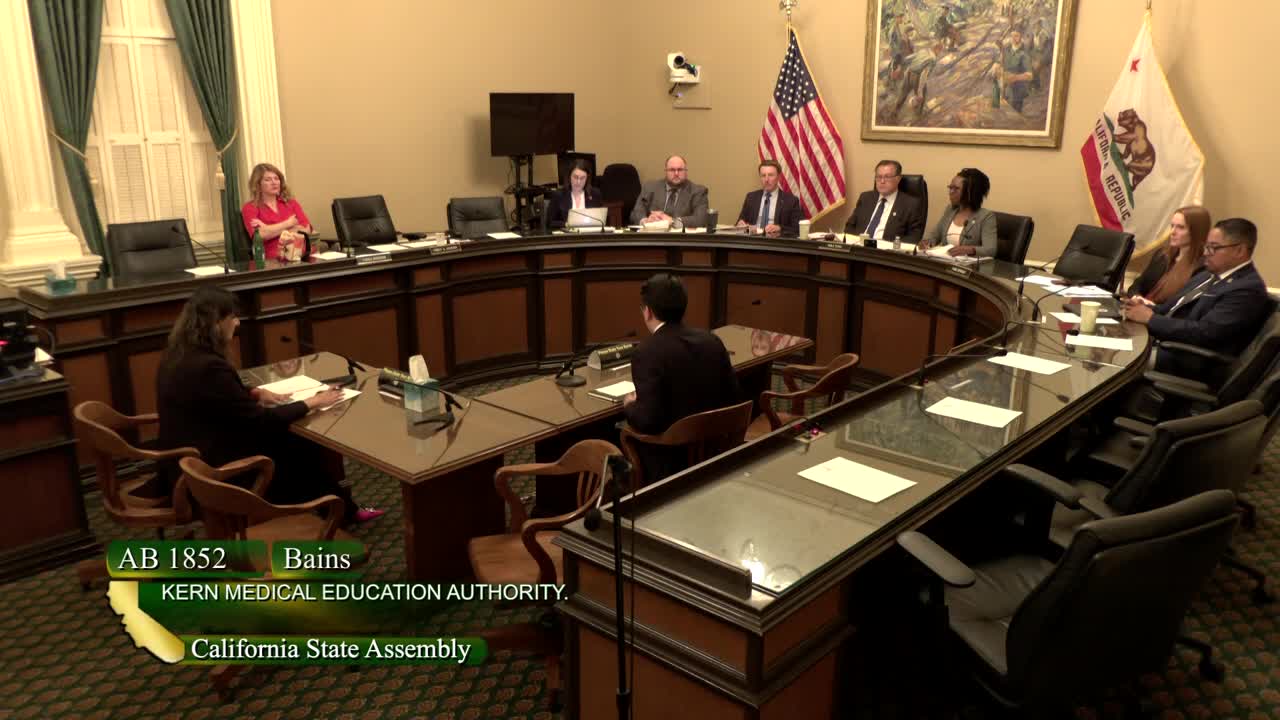 7MIN
Assembly Standing Committee on Higher Education
Bill Author

Bill Co-Author(s):