AB 1940: Unlawful practices: discrimination: menopause.
- Session Year: 2025-2026
- House: Assembly
- Latest Version Date: 2026-09-02
Current Status:
Failed
(2026-09-30: Vetoed by Governor.)
Introduced
In Committee
Awaiting First Chamber Vote
Passed First Chamber
In Committee
Awaiting Second Chamber Vote
Passed Second Chamber
Enacted
(1)Existing law, the California Fair Employment and Housing Act (FEHA), establishes the Civil Rights Department to enforce civil rights laws with respect to housing and employment, as prescribed. The FEHA recognizes and declares to be a civil right the opportunity to seek, obtain, and hold employment and housing without discrimination because of a specified characteristic. The FEHA makes certain discriminatory practices based on those characteristics unlawful. The FEHA also declares that its purpose is to provide effective remedies that will eliminate these discriminatory practices.
The FEHA defines terms used in connection with unlawful practices. These include sex, which includes pregnancy or medical conditions related to pregnancy, childbirth or medical conditions related to childbirth, and breastfeeding or medical conditions related to breastfeeding.
This bill would include perimenopause, menopause, or postmenopause or other related medical conditions within the above definition of sex.
The FEHA separately defines the term medical condition to mean either a health impairment related to or associated with a diagnosis of cancer or a record or history of cancer or specified genetic characteristics.
The Unruh Civil Rights Act (Unruh Act) establishes that all persons within the jurisdiction of the state are free and equal and, regardless of their sex, race, color, religion, ancestry, national origin, disability, medical condition, genetic information, marital status, sexual orientation, citizenship, primary language, or immigration status are entitled to the full and equal accommodations, advantages, facilities, privileges, or services in all business establishments, as prescribed. The Unruh Act defines sex to include, among other things, pregnancy, childbirth, or medical conditions related to pregnancy or childbirth.
This bill would provide that medical condition as used in the definition of sex in FEHA and the Unruh Act includes, but is not limited to, the conditions included in the definition of medical condition in FEHA.
(2)Existing law requires the Civil Rights Department to provide a poster on discrimination in employment to an employer or a member of the public upon request. Existing law requires the poster to be available at each office of the department and requires each employer to post the poster in a prominent and accessible location in the workplace, as prescribed.
This bill would require the department, on or before July 1, 2027, to update the poster to notify people of their rights and protections in regard to perimenopause, menopause, postmenopause, or related medical conditions.
(3)This bill would incorporate additional changes to Section 51 of the Civil Code proposed by AB 2563 to be operative only if this bill and AB 2563 are enacted and this bill is enacted last.
This bill would incorporate additional changes to Section 12926 of the Government Code proposed by AB 2563 to be operative only if this bill and AB 2563 are enacted and this bill is enacted last.
(1)Existing law, the California Fair Employment and Housing Act (FEHA), establishes the Civil Rights Department to enforce civil rights laws with respect to housing and employment, as prescribed. The FEHA recognizes and declares to be a civil right the opportunity to seek, obtain, and hold employment and housing without discrimination because of a specified characteristic. The FEHA makes certain discriminatory practices based on those characteristics unlawful. The FEHA also declares that its purpose is to provide effective remedies that will eliminate these discriminatory practices.
The FEHA defines terms used in connection with unlawful practices. These include sex, which includes pregnancy or medical conditions related to pregnancy, childbirth or medical conditions related to childbirth, and breastfeeding or medical conditions related to breastfeeding.
This bill would include perimenopause, menopause, or postmenopause or other related medical conditions within the above definition of sex.
The FEHA separately defines the term medical condition to mean either a health impairment related to or associated with a diagnosis of cancer or a record or history of cancer or specified genetic characteristics.
The Unruh Civil Rights Act (Unruh Act) establishes that all persons within the jurisdiction of the state are free and equal and, regardless of their sex, race, color, religion, ancestry, national origin, disability, medical condition, genetic information, marital status, sexual orientation, citizenship, primary language, or immigration status are entitled to the full and equal accommodations, advantages, facilities, privileges, or services in all business establishments, as prescribed. The Unruh Act defines sex to include, among other things, pregnancy, childbirth, or medical conditions related to pregnancy or childbirth.
This bill would provide that the definition of medical condition in FEHA does not apply to the definition of sex in FEHA or the Unruh Act.This bill would provide that medical condition as used in the definition of sex in FEHA and the Unruh Act includes, but is not limited to, the conditions included in the definition of medical condition in FEHA.
(2)Existing law requires the Civil Rights Department to provide a poster on discrimination in employment to an employer or a member of the public upon request. Existing law requires the poster to be available at each office of the department and requires each employer to post the poster in a prominent and accessible location in the workplace, as prescribed.
This bill would require the department, on or before July 1, 2027, to update the poster to notify people of their rights and protections in regard to perimenopause, menopause, postmenopause, or related medical conditions.
(3)Existing law creates the Commission on the Status of Women and Girls within state government and requires the commission to study specified policy areas, including gender in the workplace and employment and the health and safety of women and girls.This bill would require the commission, beginning July 1, 2027, to raise awareness of the employment rights of women experiencing perimenopause, menopause, or postmenopause by taking specified actions, including developing and distributing public education materials that explain workplace protections applicable to employees experiencing menopause-related symptoms.(1)Existing law, the California Fair Employment and Housing Act (FEHA), establishes the Civil Rights Department to enforce civil rights laws with respect to housing and employment, as prescribed. The FEHA recognizes and declares to be a civil right the opportunity to seek, obtain, and hold employment and housing without discrimination because of a specified characteristic. The FEHA makes certain discriminatory practices based on those characteristics unlawful. The FEHA also declares that its purpose is to provide effective remedies that will eliminate these discriminatory practices.
The FEHA defines terms used in connection with unlawful practices. These include sex, which includes pregnancy or medical conditions related to pregnancy, childbirth or medical conditions related to childbirth, and breastfeeding or medical conditions related to breastfeeding.
This bill would include perimenopause, menopause, or postmenopause or other related medical conditions within the above definition of sex.
The FEHA separately defines the term medical condition to mean either a health impairment related to or associated with a diagnosis of cancer or a record or history of cancer or specified genetic characteristics.
The Unruh Civil Rights Act (Unruh Act) establishes that all persons within the jurisdiction of the state are free and equal and, regardless of their sex, race, color, religion, ancestry, national origin, disability, medical condition, genetic information, marital status, sexual orientation, citizenship, primary language, or immigration status are entitled to the full and equal accommodations, advantages, facilities, privileges, or services in all business establishments, as prescribed.
This bill would provide that the definition of medical condition in FEHA does not apply to the definition of sex in FEHA or the Unruh Act.
(2)Existing law requires the Civil Rights Department to provide a poster on discrimination in employment to an employer or a member of the public upon request. Existing law requires the poster to be available at each office of the department and requires each employer to post the poster in a prominent and accessible location in the workplace, as prescribed.
This bill would require the department, on or before July 1, 2027, to update the poster to notify people of their rights and protections in regard to perimenopause, menopause, postmenopause, or related medical conditions.
(3)Existing law creates the Commission on the Status of Women and Girls within state government and requires the commission to study specified policy areas, including gender in the workplace and employment and the health and safety of women and girls.
This bill would require the commission, beginning July 1, 2027, to raise awareness of the employment rights of women experiencing perimenopause, menopause, or postmenopause by taking specified actions, including developing and distributing public education materials that explain workplace protections applicable to employees experiencing menopause-related symptoms.
(1)Existing law, the California Fair Employment and Housing Act (FEHA), establishes the Civil Rights Department to enforce civil rights laws with respect to housing and employment, as prescribed. The FEHA recognizes and declares to be a civil right the opportunity to seek, obtain, and hold employment and housing without discrimination because of a specified characteristic. The FEHA makes certain discriminatory practices based on those characteristics unlawful. The FEHA also declares that its purpose is to provide effective remedies that will eliminate these discriminatory practices.
The FEHA defines terms used in connection with unlawful practices. These include sex, which includes pregnancy or medical conditions related to pregnancy, childbirth or medical conditions related to childbirth, and breastfeeding or medical conditions related to breastfeeding.
This bill would include perimenopause, menopause, or postmenopause or other related medical conditions within the above definition of sex.
(2)Existing law requires the Civil Rights Department to provide a poster on discrimination in employment to an employer or a member of the public upon request. Existing law requires the poster to be available at each office of the department and requires each employer to post the poster in a prominent and accessible location in the workplace, as prescribed.
This bill would require the department, on or before July 1, 2027, to update the poster to notify women people of their rights and protections in regard to perimenopause, menopause, postmenopause, or related medical conditions.
(3)Existing law creates the Commission on the Status of Women and Girls within state government and requires the commission to study specified policy areas, including gender in the workplace and employment and the health and safety of women and girls.
This bill would require the commission, beginning July 1, 2027, to raise awareness of the employment rights of women experiencing perimenopause, menopause, or postmenopause by taking specified actions, including developing and distributing public education materials that explain workplace protections applicable to employees experiencing menopause-related symptoms.
(1)Existing law, the California Fair Employment and Housing Act (FEHA), establishes the Civil Rights Department to enforce civil rights laws with respect to housing and employment, as prescribed. The FEHA recognizes and declares to be a civil right the opportunity to seek, obtain, and hold employment and housing without discrimination because of a specified characteristic. The FEHA makes certain discriminatory practices based on those characteristics unlawful. The FEHA also declares that its purpose is to provide effective remedies that will eliminate these discriminatory practices.
The FEHA defines terms used in connection with unlawful practices. These include sex, which includes pregnancy or medical conditions related to pregnancy, childbirth or medical conditions related to childbirth, and breastfeeding or medical conditions related to breastfeeding.
This bill would include perimenopause, menopause, or postmenopause or other related medical conditions within the above definition of sex.
(2)Existing law requires the Civil Rights Department to provide a poster on discrimination in employment to an employer or a member of the public upon request. Existing law requires the poster to be available at each office of the department and requires each employer to post the poster in a prominent and accessible location in the workplace, as prescribed.
This bill would require the department, on or before July 1, 2027, to update the poster to notify women of their rights and protections in regard to perimenopause, menopause, postmenopause, or related medical conditions.
(3)Existing law establishes the Office of Community Partnerships and Strategic Communications within the Governors Office of Service and Community Engagement. Existing law requires the office to initiate and execute campaigns related to the states highest priority public awareness and community outreach efforts, as specified. creates the Commission on the Status of Women and Girls within state government and requires the commission to study specified policy areas, including gender in the workplace and employment and the health and safety of women and girls.
This bill would require the office, on or before commission, beginning July 1, 2027, to raise awareness of the employment right rights of women experiencing perimenopause, menopause, or postmenopause by taking specified actions, including developing and distributing public education materials that explain workplace protections applicable to employees experiencing menopause-related symptoms.
(1)Existing law, the California Fair Employment and Housing Act (FEHA), establishes the Civil Rights Department to enforce civil rights laws with respect to housing and employment, as prescribed. The FEHA recognizes and declares to be a civil right the opportunity to seek, obtain, and hold employment and housing without discrimination because of a specified characteristic. The FEHA makes certain discriminatory practices based on those characteristics unlawful. The FEHA also declares that its purpose is to provide effective remedies that will eliminate these discriminatory practices.
The FEHA defines terms used in connection with unlawful practices. These include sex, which includes pregnancy or medical conditions related to pregnancy, childbirth or medical conditions related to childbirth, and breastfeeding or medical conditions related to breastfeeding.
This bill would include perimenopause, menopause, or postmenopause or other related medical conditions within the above definition of sex.
(2)Existing law requires the Civil Rights Department to provide a poster on discrimination in employment to an employer or a member of the public upon request. Existing law requires the poster to be available at each office of the department and requires each employer to post the poster in a prominent and accessible location in the workplace, as prescribed.
This bill would require the department, on or before July 1, 2027, to update the poster to notify women of their rights and protections in regard to perimenopause, menopause, postmenopause, or related medical conditions.
(3)Existing law establishes the Office of Community Partnerships and Strategic Communications within the Governors Office of Service and Community Engagement. Existing law requires the office to initiate and execute campaigns related to the states highest priority public awareness and community outreach efforts, as specified.
This bill would require the office, on or before July 1, 2027, to raise awareness of the employment right of women experiencing perimenopause, menopause, or postmenopause by taking specified actions, including developing and distributing public education materials that explain workplace protections applicable to employees experiencing menopause-related symptoms.
(a)This section shall be known, and may be cited, as the Unruh Civil Rights Act.
(b)All persons within the jurisdiction of this state are free and equal, and no matter what their sex, race, color, religion, ancestry, national origin, disability, medical condition, genetic information, marital status, sexual orientation, citizenship, primary language, or immigration status are entitled to the full and equal accommodations, advantages, facilities, privileges, or services in all business establishments of every kind whatsoever.
(c)This section shall not be construed to confer any right or privilege on a person that is conditioned or limited by law or that is applicable alike to persons of every sex, color, race, religion, ancestry, national origin, disability, medical condition, marital status, sexual orientation, citizenship, primary language, or immigration status, or to persons regardless of their genetic information.
(d)Nothing in this section shall be construed to require any construction, alteration, repair, structural or otherwise, or modification of any sort whatsoever, beyond that construction, alteration, repair, or modification that is otherwise required by other provisions of law, to any new or existing establishment, facility, building, improvement, or any other structure, nor shall anything in this section be construed to augment, restrict, or alter in any way the authority of the State Architect to require construction, alteration, repair, or modifications that the State Architect otherwise possesses pursuant to other laws.
(e)For purposes of this section:
(1)Disability means any mental or physical disability as defined in Sections 12926 and 12926.1 of the Government Code.
(2)(A)Genetic information means, with respect to any individual, information about any of the following:
(i)The individuals genetic tests.
(ii)The genetic tests of family members of the individual.
(iii)The manifestation of a disease or disorder in family members of the individual.
(B)Genetic information includes any request for, or receipt of, genetic services, or participation in clinical research that includes genetic services, by an individual or any family member of the individual.
(C)Genetic information does not include information about the sex or age of any individual.
(3)Medical condition has the same meaning as defined in subdivision (i) of Section 12926 of the Government Code.
(4)Race is inclusive of traits associated with race, including, but not limited to, hair texture and protective hairstyles. Protective hairstyles includes, but is not limited to, such hairstyles as braids, locs, and twists.
(5)Religion includes all aspects of religious belief, observance, and practice.
(6)(A)Sex includes, but is not limited to, pregnancy, childbirth, or medical conditions related to pregnancy or childbirth. Sex also includes, but is not limited to, a persons gender. Gender means sex, and includes a persons gender identity and gender expression. Gender expression means a persons gender-related appearance and behavior whether or not stereotypically associated with the persons assigned sex at birth.
(B)Medical condition, as used in this paragraph, includes, but is not limited to, the conditions included in the definition of medical condition set forth in subdivision (i) of Section 12926 of the Government Code.
(7)Sex, race, color, religion, ancestry, national origin, disability, medical condition, genetic information, marital status, sexual orientation, citizenship, primary language, or immigration status includes any of the following:
(A)Any combination of those characteristics.
(B)A perception that the person has any particular characteristic or characteristics within the listed categories or any combination of those characteristics.
(C)A perception that the person is associated with a person who has, or is perceived to have, any particular characteristic or characteristics, or any combination of characteristics, within the listed categories.
(8)Sexual orientation has the same meaning as defined in subdivision (s) of Section 12926 of the Government Code.
(f)A violation of the right of any individual under the federal Americans with Disabilities Act of 1990 (Public Law 101-336) shall also constitute a violation of this section.
(g)Verification of immigration status and any discrimination based upon verified immigration status, where required by federal law, shall not constitute a violation of this section.
(h)Nothing in this section shall be construed to require the provision of services or documents in a language other than English, beyond that which is otherwise required by other provisions of federal, state, or local law, including Section 1632.
SEC. 1.5.Section 51 of the Civil Code is amended to read:51.(a)This section shall be known, and may be cited, as the Unruh Civil Rights Act.
(b)All persons within the jurisdiction of this state are free and equal, and no matter what their sex, race, color, religion, ancestry, national origin, disability, medical condition, genetic information, marital status, sexual orientation, citizenship, primary language, or immigration status are entitled to the full and equal accommodations, advantages, facilities, privileges, or services in all business establishments of every kind whatsoever.
(c)This section shall not be construed to confer any right or privilege on a person that is conditioned or limited by law or that is applicable alike to persons of every sex, color, race, religion, ancestry, national origin, disability, medical condition, marital status, sexual orientation, citizenship, primary language, or immigration status, or to persons regardless of their genetic information.
(d)Nothing in this section shall be construed to require any construction, alteration, repair, structural or otherwise, or modification of any sort whatsoever, beyond that construction, alteration, repair, or modification that is otherwise required by other provisions of law, to any new or existing establishment, facility, building, improvement, or any other structure, nor shall anything in this section be construed to augment, restrict, or alter in any way the authority of the State Architect to require construction, alteration, repair, or modifications that the State Architect otherwise possesses pursuant to other laws.
(e)For purposes of this section:
(1)Disability means any mental or physical disability as defined in Sections 12926 and 12926.1 of the Government Code.
(2)(A)Genetic information means, with respect to any individual, information about any of the following:
(i)The individuals genetic tests.
(ii)The genetic tests of family members of the individual.
(iii)The manifestation of a disease or disorder in family members of the individual.
(B)Genetic information includes any request for, or receipt of, genetic services, or participation in clinical research that includes genetic services, by an individual or any family member of the individual.
(C)Genetic information does not include information about the sex or age of any individual.
(3)Medical condition has the same meaning as defined in subdivision (i) of Section 12926 of the Government Code.
(4)Race is inclusive of traits associated with race, including, but not limited to, hair texture and protective hairstyles. Protective hairstyles includes, but is not limited to, such hairstyles as braids, locs, and twists.
(5)Religion includes all aspects of religious belief, observance, and practice.
(6)(A)Sex includes, but is not limited to, pregnancy, childbirth, or medical conditions related to pregnancy or childbirth, and any characteristic in paragraph (3) of subdivision (b) of Section 14.1. Sex also includes, but is not limited to, a persons gender. Gender means sex, and includes a persons gender identity and gender expression. Gender expression means a persons gender-related appearance and behavior whether or not stereotypically associated with the persons assigned sex at birth.
(B)Medical condition, as used in this paragraph, includes, but is not limited to, the conditions included in the definition of medical condition set forth in subdivision (i) of Section 12926 of the Government Code.
(7)Sex, race, color, religion, ancestry, national origin, disability, medical condition, genetic information, marital status, sexual orientation, citizenship, primary language, or immigration status includes any of the following:
(A)Any combination of those characteristics.
(B)A perception that the person has any particular characteristic or characteristics within the listed categories or any combination of those characteristics.
(C)A perception that the person is associated with a person who has, or is perceived to have, any particular characteristic or characteristics, or any combination of characteristics, within the listed categories.
(8)Sexual orientation has the same meaning as defined in subdivision (s) of Section 12926 of the Government Code.
(f)A violation of the right of any individual under the federal Americans with Disabilities Act of 1990 (Public Law 101-336) shall also constitute a violation of this section.
(g)Verification of immigration status and any discrimination based upon verified immigration status, where required by federal law, shall not constitute a violation of this section.
(h)Nothing in this section shall be construed to require the provision of services or documents in a language other than English, beyond that which is otherwise required by other provisions of federal, state, or local law, including Section 1632.
SEC. 2.Section 12926 of the Government Code is amended to read:12926.As used in this part in connection with unlawful practices, unless a different meaning clearly appears from the context:
(a)Affirmative relief or prospective relief includes the authority to order reinstatement of an employee, awards of backpay, reimbursement of out-of-pocket expenses, hiring, transfers, reassignments, grants of tenure, promotions, cease and desist orders, posting of notices, training of personnel, testing, expunging of records, reporting of records, and any other similar relief that is intended to correct unlawful practices under this part.
(b)Age refers to the chronological age of any individual who has reached a 40th birthday.
(c)Except as provided by Section 12926.05, employee does not include any individual employed by that persons parent, spouse, or child or any individual employed under a special license in a nonprofit sheltered workshop or rehabilitation facility.
(d)Employer includes any person regularly employing five or more persons, or any person acting as an agent of an employer, directly or indirectly, the state or any political or civil subdivision of the state, and cities, except as follows:
Employer does not include a religious association or corporation not organized for private profit.
(e)Employment agency includes any person undertaking for compensation to procure employees or opportunities to work.
(f)Essential functions means the fundamental job duties of the employment position the individual with a disability holds or desires. Essential functions does not include the marginal functions of the position.
(1)A job function may be considered essential for any of several reasons, including, but not limited to, any one or more of the following:
(A)The function may be essential because the reason the position exists is to perform that function.
(B)The function may be essential because of the limited number of employees available among whom the performance of that job function can be distributed.
(C)The function may be highly specialized, so that the incumbent in the position is hired based on expertise or the ability to perform a particular function.
(2)Evidence of whether a particular function is essential includes, but is not limited to, the following:
(A)The employers judgment as to which functions are essential.
(B)Written job descriptions prepared before advertising or interviewing applicants for the job.
(C)The amount of time spent on the job performing the function.
(D)The consequences of not requiring the incumbent to perform the function.
(E)The terms of a collective bargaining agreement.
(F)The work experiences of past incumbents in the job.
(G)The current work experience of incumbents in similar jobs.
(g)(1)Genetic information means, with respect to any individual, information about any of the following:
(A)The individuals genetic tests.
(B)The genetic tests of family members of the individual.
(C)The manifestation of a disease or disorder in family members of the individual.
(2)Genetic information includes any request for, or receipt of, genetic services, or participation in clinical research that includes genetic services, by an individual or any family member of the individual.
(3)Genetic information does not include information about the sex or age of any individual.
(h)Labor organization includes any organization that exists and is constituted for the purpose, in whole or in part, of collective bargaining or of dealing with employers concerning grievances, terms or conditions of employment, or of other mutual aid or protection.
(i)Medical condition means either of the following:
(1)Any health impairment related to or associated with a diagnosis of cancer or a record or history of cancer.
(2)Genetic characteristics. For purposes of this section, genetic characteristics means either of the following:
(A)Any scientifically or medically identifiable gene or chromosome, or combination or alteration thereof, that is known to be a cause of a disease or disorder in a person or that persons offspring, or that is determined to be associated with a statistically increased risk of development of a disease or disorder, and that is presently not associated with any symptoms of any disease or disorder.
(B)Inherited characteristics that may derive from the individual or family member, that are known to be a cause of a disease or disorder in a person or that persons offspring, or that are determined to be associated with a statistically increased risk of development of a disease or disorder, and that are presently not associated with any symptoms of any disease or disorder.
(j)Mental disability includes, but is not limited to, all of the following:
(1)Having any mental or psychological disorder or condition, such as intellectual disability, organic brain syndrome, emotional or mental illness, or specific learning disabilities, that limits a major life activity. For purposes of this section:
(A)Limits shall be determined without regard to mitigating measures, such as medications, assistive devices, or reasonable accommodations, unless the mitigating measure itself limits a major life activity.
(B)A mental or psychological disorder or condition limits a major life activity if it makes the achievement of the major life activity difficult.
(C)Major life activities shall be broadly construed and shall include physical, mental, and social activities and working.
(2)Any other mental or psychological disorder or condition not described in paragraph (1) that requires special education or related services.
(3)Having a record or history of a mental or psychological disorder or condition described in paragraph (1) or (2), which is known to the employer or other entity covered by this part.
(4)Being regarded or treated by the employer or other entity covered by this part as having, or having had, any mental condition that makes achievement of a major life activity difficult.
(5)Being regarded or treated by the employer or other entity covered by this part as having, or having had, a mental or psychological disorder or condition that has no present disabling effect, but that may become a mental disability as described in paragraph (1) or (2).
Mental disability does not include sexual behavior disorders, compulsive gambling, kleptomania, pyromania, or psychoactive substance use disorders resulting from the current unlawful use of controlled substances or other drugs.
(k)Veteran or military status means a member or veteran of the United States Armed Forces, United States Armed Forces Reserve, the United States National Guard, and the California National Guard.
(l)On the bases enumerated in this part means or refers to discrimination on the basis of one or more of the following: race, religious creed, color, national origin, ancestry, physical disability, mental disability, medical condition, genetic information, marital status, sex, age, sexual orientation, reproductive health decisionmaking, or veteran or military status.
(m)Physical disability includes, but is not limited to, all of the following:
(1)Having any physiological disease, disorder, condition, cosmetic disfigurement, or anatomical loss that does both of the following:
(A)Affects one or more of the following body systems: neurological, immunological, musculoskeletal, special sense organs, respiratory, including speech organs, cardiovascular, reproductive, digestive, genitourinary, hemic and lymphatic, skin, and endocrine.
(B)Limits a major life activity. For purposes of this section:
(i)Limits shall be determined without regard to mitigating measures such as medications, assistive devices, prosthetics, or reasonable accommodations, unless the mitigating measure itself limits a major life activity.
(ii)A physiological disease, disorder, condition, cosmetic disfigurement, or anatomical loss limits a major life activity if it makes the achievement of the major life activity difficult.
(iii)Major life activities shall be broadly construed and includes physical, mental, and social activities and working.
(2)Any other health impairment not described in paragraph (1) that requires special education or related services.
(3)Having a record or history of a disease, disorder, condition, cosmetic disfigurement, anatomical loss, or health impairment described in paragraph (1) or (2), which is known to the employer or other entity covered by this part.
(4)Being regarded or treated by the employer or other entity covered by this part as having, or having had, any physical condition that makes achievement of a major life activity difficult.
(5)Being regarded or treated by the employer or other entity covered by this part as having, or having had, a disease, disorder, condition, cosmetic disfigurement, anatomical loss, or health impairment that has no present disabling effect but may become a physical disability as described in paragraph (1) or (2).
(6)Physical disability does not include sexual behavior disorders, compulsive gambling, kleptomania, pyromania, or psychoactive substance use disorders resulting from the current unlawful use of controlled substances or other drugs.
(n)Notwithstanding subdivisions (j) and (m), if the definition of disability used in the federal Americans with Disabilities Act of 1990 (Public Law 101-336) would result in broader protection of the civil rights of individuals with a mental disability or physical disability, as defined in subdivision (j) or (m), or would include any medical condition not included within those definitions, then that broader protection or coverage shall be deemed incorporated by reference into, and shall prevail over conflicting provisions of, the definitions in subdivisions (j) and (m).
(o)Race, religious creed, color, national origin, ancestry, physical disability, mental disability, medical condition, genetic information, marital status, sex, age, sexual orientation, reproductive health decisionmaking, or veteran or military status includes any of the following:
(1)Any combination of those characteristics.
(2)A perception that the person has any of those characteristics or any combination of those characteristics.
(3)A perception that the person is associated with a person who has, or is perceived to have, any of those characteristics or any combination of those characteristics.
(p)Reasonable accommodation may include either of the following:
(1)Making existing facilities used by employees readily accessible to, and usable by, individuals with disabilities.
(2)Job restructuring, part-time or modified work schedules, reassignment to a vacant position, acquisition or modification of equipment or devices, adjustment or modifications of examinations, training materials or policies, the provision of qualified readers or interpreters, and other similar accommodations for individuals with disabilities.
(q)Religious creed, religion, religious observance, religious belief, and creed include all aspects of religious belief, observance, and practice, including religious dress and grooming practices. Religious dress practice shall be construed broadly to include the wearing or carrying of religious clothing, head or face coverings, jewelry, artifacts, and any other item that is part of an individual observing a religious creed. Religious grooming practice shall be construed broadly to include all forms of head, facial, and body hair that are part of an individual observing a religious creed.
(r)(1)Sex includes, but is not limited to, the following:
(A)Pregnancy or medical conditions related to pregnancy.
(B)Childbirth or medical conditions related to childbirth.
(C)Breastfeeding or medical conditions related to breastfeeding.
(D)Perimenopause, menopause, or postmenopause or medical conditions related to perimenopause, menopause, and postmenopause.
(2)Sex also includes, but is not limited to, a persons gender. Gender means sex, and includes a persons gender identity and gender expression. Gender expression means a persons gender-related appearance and behavior whether or not stereotypically associated with the persons assigned sex at birth.
(3)Medical condition, as used in this subdivision, includes, but is not limited to, the conditions included in the definition of medical condition set forth in subdivision (i).
(s)Sexual orientation means heterosexuality, homosexuality, and bisexuality.
(t)Supervisor means any individual having the authority, in the interest of the employer, to hire, transfer, suspend, lay off, recall, promote, discharge, assign, reward, or discipline other employees, or the responsibility to direct them, or to adjust their grievances, or effectively to recommend that action, if, in connection with the foregoing, the exercise of that authority is not of a merely routine or clerical nature, but requires the use of independent judgment.
(u)Undue hardship means an action requiring significant difficulty or expense, when considered in light of the following factors:
(1)The nature and cost of the accommodation needed.
(2)The overall financial resources of the facilities involved in the provision of the reasonable accommodations, the number of persons employed at the facility, and the effect on expenses and resources or the impact otherwise of these accommodations upon the operation of the facility.
(3)The overall financial resources of the covered entity, the overall size of the business of a covered entity with respect to the number of employees, and the number, type, and location of its facilities.
(4)The type of operations, including the composition, structure, and functions of the workforce of the entity.
(5)The geographic separateness or administrative or fiscal relationship of the facility or facilities.
(v)National origin discrimination includes, but is not limited to, discrimination on the basis of possessing a drivers license or identification card granted under Section 12801.9 of the Vehicle Code.
(w)Race is inclusive of traits associated with race, including, but not limited to, hair texture and protective hairstyles.
(x)Protective hairstyles includes, but is not limited to, such hairstyles as braids, locs, and twists.
(y)Reproductive health decisionmaking includes, but is not limited to, a decision to use or access a particular drug, device, product, or medical service for reproductive health. This subdivision and other provisions in this part relating to reproductive health decisionmaking shall not be construed to mean that subdivision (r) of this section and other provisions in this part related to sex do not include reproductive health decisionmaking.
(z)Group or class complaint includes any complaint alleging a pattern or practice. This paragraph is declaratory of, and clarifies, existing law.
SEC. 2.5.Section 12926 of the Government Code is amended to read:12926.As used in this part in connection with unlawful practices, unless a different meaning clearly appears from the context:
(a)Affirmative relief or prospective relief includes the authority to order reinstatement of an employee, awards of backpay, reimbursement of out-of-pocket expenses, hiring, transfers, reassignments, grants of tenure, promotions, cease and desist orders, posting of notices, training of personnel, testing, expunging of records, reporting of records, and any other similar relief that is intended to correct unlawful practices under this part.
(b)Age refers to the chronological age of any individual who has reached a 40th birthday.
(c)Except as provided by Section 12926.05, employee does not include any individual employed by that persons parent, spouse, or child or any individual employed under a special license in a nonprofit sheltered workshop or rehabilitation facility.
(d)Employer includes any person regularly employing five or more persons, or any person acting as an agent of an employer, directly or indirectly, the state or any political or civil subdivision of the state, and cities, except as follows:
Employer does not include a religious association or corporation not organized for private profit.
(e)Employment agency includes any person undertaking for compensation to procure employees or opportunities to work.
(f)Essential functions means the fundamental job duties of the employment position the individual with a disability holds or desires. Essential functions does not include the marginal functions of the position.
(1)A job function may be considered essential for any of several reasons, including, but not limited to, any one or more of the following:
(A)The function may be essential because the reason the position exists is to perform that function.
(B)The function may be essential because of the limited number of employees available among whom the performance of that job function can be distributed.
(C)The function may be highly specialized, so that the incumbent in the position is hired based on expertise or the ability to perform a particular function.
(2)Evidence of whether a particular function is essential includes, but is not limited to, the following:
(A)The employers judgment as to which functions are essential.
(B)Written job descriptions prepared before advertising or interviewing applicants for the job.
(C)The amount of time spent on the job performing the function.
(D)The consequences of not requiring the incumbent to perform the function.
(E)The terms of a collective bargaining agreement.
(F)The work experiences of past incumbents in the job.
(G)The current work experience of incumbents in similar jobs.
(g)(1)Genetic information means, with respect to any individual, information about any of the following:
(A)The individuals genetic tests.
(B)The genetic tests of family members of the individual.
(C)The manifestation of a disease or disorder in family members of the individual.
(2)Genetic information includes any request for, or receipt of, genetic services, or participation in clinical research that includes genetic services, by an individual or any family member of the individual.
(3)Genetic information does not include information about the sex or age of any individual.
(h)Labor organization includes any organization that exists and is constituted for the purpose, in whole or in part, of collective bargaining or of dealing with employers concerning grievances, terms or conditions of employment, or of other mutual aid or protection.
(i)Medical condition means either of the following:
(1)Any health impairment related to or associated with a diagnosis of cancer or a record or history of cancer.
(2)Genetic characteristics. For purposes of this section, genetic characteristics means either of the following:
(A)Any scientifically or medically identifiable gene or chromosome, or combination or alteration thereof, that is known to be a cause of a disease or disorder in a person or that persons offspring, or that is determined to be associated with a statistically increased risk of development of a disease or disorder, and that is presently not associated with any symptoms of any disease or disorder.
(B)Inherited characteristics that may derive from the individual or family member, that are known to be a cause of a disease or disorder in a person or that persons offspring, or that are determined to be associated with a statistically increased risk of development of a disease or disorder, and that are presently not associated with any symptoms of any disease or disorder.
(j)Mental disability includes, but is not limited to, all of the following:
(1)Having any mental or psychological disorder or condition, such as intellectual disability, organic brain syndrome, emotional or mental illness, or specific learning disabilities, that limits a major life activity. For purposes of this section:
(A)Limits shall be determined without regard to mitigating measures, such as medications, assistive devices, or reasonable accommodations, unless the mitigating measure itself limits a major life activity.
(B)A mental or psychological disorder or condition limits a major life activity if it makes the achievement of the major life activity difficult.
(C)Major life activities shall be broadly construed and shall include physical, mental, and social activities and working.
(2)Any other mental or psychological disorder or condition not described in paragraph (1) that requires special education or related services.
(3)Having a record or history of a mental or psychological disorder or condition described in paragraph (1) or (2), which is known to the employer or other entity covered by this part.
(4)Being regarded or treated by the employer or other entity covered by this part as having, or having had, any mental condition that makes achievement of a major life activity difficult.
(5)Being regarded or treated by the employer or other entity covered by this part as having, or having had, a mental or psychological disorder or condition that has no present disabling effect, but that may become a mental disability as described in paragraph (1) or (2).
Mental disability does not include sexual behavior disorders, compulsive gambling, kleptomania, pyromania, or psychoactive substance use disorders resulting from the current unlawful use of controlled substances or other drugs.
(k)Veteran or military status means a member or veteran of the United States Armed Forces, United States Armed Forces Reserve, the United States National Guard, and the California National Guard.
(l)On the bases enumerated in this part means or refers to discrimination on the basis of one or more of the following: race, religious creed, color, national origin, ancestry, physical disability, mental disability, medical condition, genetic information, marital status, sex, age, sexual orientation, reproductive health decisionmaking, or veteran or military status.
(m)Physical disability includes, but is not limited to, all of the following:
(1)Having any physiological disease, disorder, condition, cosmetic disfigurement, or anatomical loss that does both of the following:
(A)Affects one or more of the following body systems: neurological, immunological, musculoskeletal, special sense organs, respiratory, including speech organs, cardiovascular, reproductive, digestive, genitourinary, hemic and lymphatic, skin, and endocrine.
(B)Limits a major life activity. For purposes of this section:
(i)Limits shall be determined without regard to mitigating measures such as medications, assistive devices, prosthetics, or reasonable accommodations, unless the mitigating measure itself limits a major life activity.
(ii)A physiological disease, disorder, condition, cosmetic disfigurement, or anatomical loss limits a major life activity if it makes the achievement of the major life activity difficult.
(iii)Major life activities shall be broadly construed and includes physical, mental, and social activities and working.
(2)Any other health impairment not described in paragraph (1) that requires special education or related services.
(3)Having a record or history of a disease, disorder, condition, cosmetic disfigurement, anatomical loss, or health impairment described in paragraph (1) or (2), which is known to the employer or other entity covered by this part.
(4)Being regarded or treated by the employer or other entity covered by this part as having, or having had, any physical condition that makes achievement of a major life activity difficult.
(5)Being regarded or treated by the employer or other entity covered by this part as having, or having had, a disease, disorder, condition, cosmetic disfigurement, anatomical loss, or health impairment that has no present disabling effect but may become a physical disability as described in paragraph (1) or (2).
(6)Physical disability does not include sexual behavior disorders, compulsive gambling, kleptomania, pyromania, or psychoactive substance use disorders resulting from the current unlawful use of controlled substances or other drugs.
(n)Notwithstanding subdivisions (j) and (m), if the definition of disability used in the federal Americans with Disabilities Act of 1990 (Public Law 101-336) would result in broader protection of the civil rights of individuals with a mental disability or physical disability, as defined in subdivision (j) or (m), or would include any medical condition not included within those definitions, then that broader protection or coverage shall be deemed incorporated by reference into, and shall prevail over conflicting provisions of, the definitions in subdivisions (j) and (m).
(o)Race, religious creed, color, national origin, ancestry, physical disability, mental disability, medical condition, genetic information, marital status, sex, age, sexual orientation, reproductive health decisionmaking, or veteran or military status includes any of the following:
(1)Any combination of those characteristics.
(2)A perception that the person has any of those characteristics or any combination of those characteristics.
(3)A perception that the person is associated with a person who has, or is perceived to have, any of those characteristics or any combination of those characteristics.
(p)Reasonable accommodation may include either of the following:
(1)Making existing facilities used by employees readily accessible to, and usable by, individuals with disabilities.
(2)Job restructuring, part-time or modified work schedules, reassignment to a vacant position, acquisition or modification of equipment or devices, adjustment or modifications of examinations, training materials or policies, the provision of qualified readers or interpreters, and other similar accommodations for individuals with disabilities.
(q)Religious creed, religion, religious observance, religious belief, and creed include all aspects of religious belief, observance, and practice, including religious dress and grooming practices. Religious dress practice shall be construed broadly to include the wearing or carrying of religious clothing, head or face coverings, jewelry, artifacts, and any other item that is part of an individual observing a religious creed. Religious grooming practice shall be construed broadly to include all forms of head, facial, and body hair that are part of an individual observing a religious creed.
(r)(1)Sex includes, but is not limited to, the following:
(A)Pregnancy or medical conditions related to pregnancy.
(B)Childbirth or medical conditions related to childbirth.
(C)Breastfeeding or medical conditions related to breastfeeding.
(D)Perimenopause, menopause, or postmenopause or medical conditions related to perimenopause, menopause, and postmenopause.
(2)Sex also includes, but is not limited to, a persons gender. Gender means sex, and includes a persons gender identity and gender expression. Gender expression means a persons gender-related appearance and behavior whether or not stereotypically associated with the persons assigned sex at birth.
(3)Sex also includes any characteristics listed in paragraph (3) of subdivision (b) of Section 27.
(4)Medical condition, as used in this subdivision, includes, but is not limited to, the conditions included in the definition of medical condition set forth in subdivision (i).
(s)Sexual orientation means heterosexuality, homosexuality, and bisexuality.
(t)Supervisor means any individual having the authority, in the interest of the employer, to hire, transfer, suspend, lay off, recall, promote, discharge, assign, reward, or discipline other employees, or the responsibility to direct them, or to adjust their grievances, or effectively to recommend that action, if, in connection with the foregoing, the exercise of that authority is not of a merely routine or clerical nature, but requires the use of independent judgment.
(u)Undue hardship means an action requiring significant difficulty or expense, when considered in light of the following factors:
(1)The nature and cost of the accommodation needed.
(2)The overall financial resources of the facilities involved in the provision of the reasonable accommodations, the number of persons employed at the facility, and the effect on expenses and resources or the impact otherwise of these accommodations upon the operation of the facility.
(3)The overall financial resources of the covered entity, the overall size of the business of a covered entity with respect to the number of employees, and the number, type, and location of its facilities.
(4)The type of operations, including the composition, structure, and functions of the workforce of the entity.
(5)The geographic separateness or administrative or fiscal relationship of the facility or facilities.
(v)National origin discrimination includes, but is not limited to, discrimination on the basis of possessing a drivers license or identification card granted under Section 12801.9 of the Vehicle Code.
(w)Race is inclusive of traits associated with race, including, but not limited to, hair texture and protective hairstyles.
(x)Protective hairstyles includes, but is not limited to, such hairstyles as braids, locs, and twists.
(y)Reproductive health decisionmaking includes, but is not limited to, a decision to use or access a particular drug, device, product, or medical service for reproductive health. This subdivision and other provisions in this part relating to reproductive health decisionmaking shall not be construed to mean that subdivision (r) of this section and other provisions in this part related to sex do not include reproductive health decisionmaking.
(z)Group or class complaint includes any complaint alleging a pattern or practice. This paragraph is declaratory of, and clarifies, existing law.
SEC. 3.Section 12950 of the Government Code is amended to read:12950.In addition to employer responsibilities set forth in subdivisions (j) and (k) of Section 12940 and in rules adopted by the department and the council, every employer shall act to ensure a workplace free of sexual harassment by implementing the following minimum requirements:
(a)(1)The departments poster on discrimination in employment shall include information relating to the illegality of sexual harassment. One copy of the poster shall be provided by the department to an employer or a member of the public upon request. The poster shall be available at each office of the department, and shall be mailed if the request includes a self-addressed envelope with postage affixed. Each employer shall post the poster in a prominent and accessible location in the workplace.
(2)Post a poster developed by the department regarding transgender rights in a prominent and accessible location in the workplace.
(3)Provide sexual harassment training as required by Section 12950.1.
(b)Each employer shall obtain from the department its information sheet on sexual harassment, which the department shall make available to employers for reproduction and distribution to employees. One copy of the information sheet shall be provided by the department to an employer or a member of the public upon request. The information sheets shall be available at each office of the department, and shall be mailed if the request includes a self-addressed envelope with postage affixed. Each employer shall distribute this information sheet to its employees, unless the employer provides equivalent information to its employees that contains, at a minimum, components on the following:
(1)The illegality of sexual harassment.
(2)The definition of sexual harassment under applicable state and federal law.
(3)A description of sexual harassment, utilizing examples.
(4)The internal complaint process of the employer available to the employee.
(5)The legal remedies and complaint process available through the department.
(6)Directions on how to contact the department.
(7)The protection against retaliation provided by Title 2 of the California Code of Regulations for opposing the practices prohibited by this article or for filing a complaint with, or otherwise participating in an investigation, proceeding, or hearing conducted by, the department or the council.
(8)A link to, or the internet website address for, the sexual harassment online training courses developed pursuant to Section 12950.1 and located on the internet website of the department.
(c)The information sheet or information required to be distributed to employees pursuant to subdivision (b) shall be delivered in a manner that ensures distribution to each employee, such as including the information sheet or information with an employees pay.
(d)The department shall make the poster, fact sheet, and online training courses available in English, Spanish, Simplified Chinese, Tagalog, Vietnamese, Korean, and any other language that is spoken by a substantial number of non-English-speaking people, as that phrase is defined in Section 7296.2. The department shall make versions of the online training courses with subtitles in each language and shall orally dub the online training courses into each language other than English. Simplified Chinese shall be sufficient for subtitling purposes.
(e)The department shall make the poster, fact sheet, and online training courses required by this section, and the corresponding translations, available to employers and to the public through its internet website in formats that may be streamed or downloaded.
(f)On or before July 1, 2027, the department shall update the poster to notify people of their rights and protections in regard to perimenopause, menopause, or postmenopause or medical conditions related to perimenopause, menopause, and postmenopause.
(g)Notwithstanding subdivisions (j) and (k) of Section 12940, a claim that the information sheet or information required to be distributed pursuant to this section did not reach a particular individual or individuals shall not in and of itself result in the liability of any employer to any present or former employee or applicant in any action alleging sexual harassment. Conversely, an employers compliance with this section does not insulate the employer from liability for sexual harassment of any current or former employee or applicant.
(h)If an employer violates the requirements of this section, the department may seek an order requiring the employer to comply with these requirements.
SEC. 4.Section 1.5 of this bill incorporates amendments to Section 51 of the Civil Code proposed by both this bill and Assembly Bill 2563. That section of this bill shall only become operative if (1) both bills are enacted and become effective on or before January 1, 2027, (2) each bill amends Section 51 of the Civil Code, and (3) this bill is enacted after Assembly Bill 2563, in which case Section 1 of this bill shall not become operative.
SEC. 5.Section 2.5 of this bill incorporates amendments to Section 12926 of the Government Code proposed by both this bill and Assembly Bill 2563. That section of this bill shall only become operative if (1) both bills are enacted and become effective on or before January 1, 2027, (2) each bill amends Section 12926 of the Government Code, and (3) this bill is enacted after Assembly Bill 2563, in which case Section 2 of this bill shall not become operative.
(a)This section shall be known, and may be cited, as the Unruh Civil Rights Act.
(b)All persons within the jurisdiction of this state are free and equal, and no matter what their sex, race, color, religion, ancestry, national origin, disability, medical condition, genetic information, marital status, sexual orientation, citizenship, primary language, or immigration status are entitled to the full and equal accommodations, advantages, facilities, privileges, or services in all business establishments of every kind whatsoever.
(c)This section shall not be construed to confer any right or privilege on a person that is conditioned or limited by law or that is applicable alike to persons of every sex, color, race, religion, ancestry, national origin, disability, medical condition, marital status, sexual orientation, citizenship, primary language, or immigration status, or to persons regardless of their genetic information.
(d)Nothing in this section shall be construed to require any construction, alteration, repair, structural or otherwise, or modification of any sort whatsoever, beyond that construction, alteration, repair, or modification that is otherwise required by other provisions of law, to any new or existing establishment, facility, building, improvement, or any other structure, nor shall anything in this section be construed to augment, restrict, or alter in any way the authority of the State Architect to require construction, alteration, repair, or modifications that the State Architect otherwise possesses pursuant to other laws.
(e)For purposes of this section:
(1)Disability means any mental or physical disability as defined in Sections 12926 and 12926.1 of the Government Code.
(2)(A)Genetic information means, with respect to any individual, information about any of the following:
(i)The individuals genetic tests.
(ii)The genetic tests of family members of the individual.
(iii)The manifestation of a disease or disorder in family members of the individual.
(B)Genetic information includes any request for, or receipt of, genetic services, or participation in clinical research that includes genetic services, by an individual or any family member of the individual.
(C)Genetic information does not include information about the sex or age of any individual.
(3)Medical condition has the same meaning as defined in subdivision (i) of Section 12926 of the Government Code.
(4)Race is inclusive of traits associated with race, including, but not limited to, hair texture and protective hairstyles. Protective hairstyles includes, but is not limited to, such hairstyles as braids, locs, and twists.
(5)Religion includes all aspects of religious belief, observance, and practice.
(6)(A)Sex includes, but is not limited to, pregnancy, childbirth, or medical conditions related to pregnancy or childbirth. Sex also includes, but is not limited to, a persons gender. Gender means sex, and includes a persons gender identity and gender expression. Gender expression means a persons gender-related appearance and behavior whether or not stereotypically associated with the persons assigned sex at birth.
(B)Medical condition, as used in this paragraph, includes, but is not limited to, the conditions included in the definition of medical condition set forth in subdivision (i) of Section 12926 of the Government Code.
(7)Sex, race, color, religion, ancestry, national origin, disability, medical condition, genetic information, marital status, sexual orientation, citizenship, primary language, or immigration status includes any of the following:
(A)Any combination of those characteristics.
(B)A perception that the person has any particular characteristic or characteristics within the listed categories or any combination of those characteristics.
(C)A perception that the person is associated with a person who has, or is perceived to have, any particular characteristic or characteristics, or any combination of characteristics, within the listed categories.
(8)Sexual orientation has the same meaning as defined in subdivision (s) of Section 12926 of the Government Code.
(f)A violation of the right of any individual under the federal Americans with Disabilities Act of 1990 (Public Law 101-336) shall also constitute a violation of this section.
(g)Verification of immigration status and any discrimination based upon verified immigration status, where required by federal law, shall not constitute a violation of this section.
(h)Nothing in this section shall be construed to require the provision of services or documents in a language other than English, beyond that which is otherwise required by other provisions of federal, state, or local law, including Section 1632.
SEC. 1.5.Section 51 of the Civil Code is amended to read:51.(a)This section shall be known, and may be cited, as the Unruh Civil Rights Act.
(b)All persons within the jurisdiction of this state are free and equal, and no matter what their sex, race, color, religion, ancestry, national origin, disability, medical condition, genetic information, marital status, sexual orientation, citizenship, primary language, or immigration status are entitled to the full and equal accommodations, advantages, facilities, privileges, or services in all business establishments of every kind whatsoever.
(c)This section shall not be construed to confer any right or privilege on a person that is conditioned or limited by law or that is applicable alike to persons of every sex, color, race, religion, ancestry, national origin, disability, medical condition, marital status, sexual orientation, citizenship, primary language, or immigration status, or to persons regardless of their genetic information.
(d)Nothing in this section shall be construed to require any construction, alteration, repair, structural or otherwise, or modification of any sort whatsoever, beyond that construction, alteration, repair, or modification that is otherwise required by other provisions of law, to any new or existing establishment, facility, building, improvement, or any other structure, nor shall anything in this section be construed to augment, restrict, or alter in any way the authority of the State Architect to require construction, alteration, repair, or modifications that the State Architect otherwise possesses pursuant to other laws.
(e)For purposes of this section:
(1)Disability means any mental or physical disability as defined in Sections 12926 and 12926.1 of the Government Code.
(2)(A)Genetic information means, with respect to any individual, information about any of the following:
(i)The individuals genetic tests.
(ii)The genetic tests of family members of the individual.
(iii)The manifestation of a disease or disorder in family members of the individual.
(B)Genetic information includes any request for, or receipt of, genetic services, or participation in clinical research that includes genetic services, by an individual or any family member of the individual.
(C)Genetic information does not include information about the sex or age of any individual.
(3)Medical condition has the same meaning as defined in subdivision (i) of Section 12926 of the Government Code.
(4)Race is inclusive of traits associated with race, including, but not limited to, hair texture and protective hairstyles. Protective hairstyles includes, but is not limited to, such hairstyles as braids, locs, and twists.
(5)Religion includes all aspects of religious belief, observance, and practice.
(6)(A)Sex includes, but is not limited to, pregnancy, childbirth, or medical conditions related to pregnancy or childbirth. childbirth, and any characteristic in paragraph (3) of subdivision (b) of Section 14.1. Sex also includes, but is not limited to, a persons gender. Gender means sex, and includes a persons gender identity and gender expression. Gender expression means a persons gender-related appearance and behavior whether or not stereotypically associated with the persons assigned sex at birth.
(B)Medical condition, as used in this paragraph, includes, but is not limited to, the conditions included in the definition of medical condition set forth in subdivision (i) of Section 12926 of the Government Code.
(7)Sex, race, color, religion, ancestry, national origin, disability, medical condition, genetic information, marital status, sexual orientation, citizenship, primary language, or immigration status includes any of the following:
(A)Any combination of those characteristics.
(B)A perception that the person has any particular characteristic or characteristics within the listed categories or any combination of those characteristics.
(C)A perception that the person is associated with a person who has, or is perceived to have, any particular characteristic or characteristics, or any combination of characteristics, within the listed categories.
(8)Sexual orientation has the same meaning as defined in subdivision (s) of Section 12926 of the Government Code.
(f)A violation of the right of any individual under the federal Americans with Disabilities Act of 1990 (Public Law 101-336) shall also constitute a violation of this section.
(g)Verification of immigration status and any discrimination based upon verified immigration status, where required by federal law, shall not constitute a violation of this section.
(h)Nothing in this section shall be construed to require the provision of services or documents in a language other than English, beyond that which is otherwise required by other provisions of federal, state, or local law, including Section 1632.
SEC. 2.Section 12926 of the Government Code is amended to read:12926.As used in this part in connection with unlawful practices, unless a different meaning clearly appears from the context:
(a)Affirmative relief or prospective relief includes the authority to order reinstatement of an employee, awards of backpay, reimbursement of out-of-pocket expenses, hiring, transfers, reassignments, grants of tenure, promotions, cease and desist orders, posting of notices, training of personnel, testing, expunging of records, reporting of records, and any other similar relief that is intended to correct unlawful practices under this part.
(b)Age refers to the chronological age of any individual who has reached a 40th birthday.
(c)Except as provided by Section 12926.05, employee does not include any individual employed by that persons parent, spouse, or child or any individual employed under a special license in a nonprofit sheltered workshop or rehabilitation facility.
(d)Employer includes any person regularly employing five or more persons, or any person acting as an agent of an employer, directly or indirectly, the state or any political or civil subdivision of the state, and cities, except as follows:
Employer does not include a religious association or corporation not organized for private profit.
(e)Employment agency includes any person undertaking for compensation to procure employees or opportunities to work.
(f)Essential functions means the fundamental job duties of the employment position the individual with a disability holds or desires. Essential functions does not include the marginal functions of the position.
(1)A job function may be considered essential for any of several reasons, including, but not limited to, any one or more of the following:
(A)The function may be essential because the reason the position exists is to perform that function.
(B)The function may be essential because of the limited number of employees available among whom the performance of that job function can be distributed.
(C)The function may be highly specialized, so that the incumbent in the position is hired based on expertise or the ability to perform a particular function.
(2)Evidence of whether a particular function is essential includes, but is not limited to, the following:
(A)The employers judgment as to which functions are essential.
(B)Written job descriptions prepared before advertising or interviewing applicants for the job.
(C)The amount of time spent on the job performing the function.
(D)The consequences of not requiring the incumbent to perform the function.
(E)The terms of a collective bargaining agreement.
(F)The work experiences of past incumbents in the job.
(G)The current work experience of incumbents in similar jobs.
(g)(1)Genetic information means, with respect to any individual, information about any of the following:
(A)The individuals genetic tests.
(B)The genetic tests of family members of the individual.
(C)The manifestation of a disease or disorder in family members of the individual.
(2)Genetic information includes any request for, or receipt of, genetic services, or participation in clinical research that includes genetic services, by an individual or any family member of the individual.
(3)Genetic information does not include information about the sex or age of any individual.
(h)Labor organization includes any organization that exists and is constituted for the purpose, in whole or in part, of collective bargaining or of dealing with employers concerning grievances, terms or conditions of employment, or of other mutual aid or protection.
(i)Medical condition means either of the following:
(1)Any health impairment related to or associated with a diagnosis of cancer or a record or history of cancer.
(2)Genetic characteristics. For purposes of this section, genetic characteristics means either of the following:
(A)Any scientifically or medically identifiable gene or chromosome, or combination or alteration thereof, that is known to be a cause of a disease or disorder in a person or that persons offspring, or that is determined to be associated with a statistically increased risk of development of a disease or disorder, and that is presently not associated with any symptoms of any disease or disorder.
(B)Inherited characteristics that may derive from the individual or family member, that are known to be a cause of a disease or disorder in a person or that persons offspring, or that are determined to be associated with a statistically increased risk of development of a disease or disorder, and that are presently not associated with any symptoms of any disease or disorder.
(j)Mental disability includes, but is not limited to, all of the following:
(1)Having any mental or psychological disorder or condition, such as intellectual disability, organic brain syndrome, emotional or mental illness, or specific learning disabilities, that limits a major life activity. For purposes of this section:
(A)Limits shall be determined without regard to mitigating measures, such as medications, assistive devices, or reasonable accommodations, unless the mitigating measure itself limits a major life activity.
(B)A mental or psychological disorder or condition limits a major life activity if it makes the achievement of the major life activity difficult.
(C)Major life activities shall be broadly construed and shall include physical, mental, and social activities and working.
(2)Any other mental or psychological disorder or condition not described in paragraph (1) that requires special education or related services.
(3)Having a record or history of a mental or psychological disorder or condition described in paragraph (1) or (2), which is known to the employer or other entity covered by this part.
(4)Being regarded or treated by the employer or other entity covered by this part as having, or having had, any mental condition that makes achievement of a major life activity difficult.
(5)Being regarded or treated by the employer or other entity covered by this part as having, or having had, a mental or psychological disorder or condition that has no present disabling effect, but that may become a mental disability as described in paragraph (1) or (2).
Mental disability does not include sexual behavior disorders, compulsive gambling, kleptomania, pyromania, or psychoactive substance use disorders resulting from the current unlawful use of controlled substances or other drugs.
(k)Veteran or military status means a member or veteran of the United States Armed Forces, United States Armed Forces Reserve, the United States National Guard, and the California National Guard.
(l)On the bases enumerated in this part means or refers to discrimination on the basis of one or more of the following: race, religious creed, color, national origin, ancestry, physical disability, mental disability, medical condition, genetic information, marital status, sex, age, sexual orientation, reproductive health decisionmaking, or veteran or military status.
(m)Physical disability includes, but is not limited to, all of the following:
(1)Having any physiological disease, disorder, condition, cosmetic disfigurement, or anatomical loss that does both of the following:
(A)Affects one or more of the following body systems: neurological, immunological, musculoskeletal, special sense organs, respiratory, including speech organs, cardiovascular, reproductive, digestive, genitourinary, hemic and lymphatic, skin, and endocrine.
(B)Limits a major life activity. For purposes of this section:
(i)Limits shall be determined without regard to mitigating measures such as medications, assistive devices, prosthetics, or reasonable accommodations, unless the mitigating measure itself limits a major life activity.
(ii)A physiological disease, disorder, condition, cosmetic disfigurement, or anatomical loss limits a major life activity if it makes the achievement of the major life activity difficult.
(iii)Major life activities shall be broadly construed and includes physical, mental, and social activities and working.
(2)Any other health impairment not described in paragraph (1) that requires special education or related services.
(3)Having a record or history of a disease, disorder, condition, cosmetic disfigurement, anatomical loss, or health impairment described in paragraph (1) or (2), which is known to the employer or other entity covered by this part.
(4)Being regarded or treated by the employer or other entity covered by this part as having, or having had, any physical condition that makes achievement of a major life activity difficult.
(5)Being regarded or treated by the employer or other entity covered by this part as having, or having had, a disease, disorder, condition, cosmetic disfigurement, anatomical loss, or health impairment that has no present disabling effect but may become a physical disability as described in paragraph (1) or (2).
(6)Physical disability does not include sexual behavior disorders, compulsive gambling, kleptomania, pyromania, or psychoactive substance use disorders resulting from the current unlawful use of controlled substances or other drugs.
(n)Notwithstanding subdivisions (j) and (m), if the definition of disability used in the federal Americans with Disabilities Act of 1990 (Public Law 101-336) would result in broader protection of the civil rights of individuals with a mental disability or physical disability, as defined in subdivision (j) or (m), or would include any medical condition not included within those definitions, then that broader protection or coverage shall be deemed incorporated by reference into, and shall prevail over conflicting provisions of, the definitions in subdivisions (j) and (m).
(o)Race, religious creed, color, national origin, ancestry, physical disability, mental disability, medical condition, genetic information, marital status, sex, age, sexual orientation, reproductive health decisionmaking, or veteran or military status includes any of the following:
(1)Any combination of those characteristics.
(2)A perception that the person has any of those characteristics or any combination of those characteristics.
(3)A perception that the person is associated with a person who has, or is perceived to have, any of those characteristics or any combination of those characteristics.
(p)Reasonable accommodation may include either of the following:
(1)Making existing facilities used by employees readily accessible to, and usable by, individuals with disabilities.
(2)Job restructuring, part-time or modified work schedules, reassignment to a vacant position, acquisition or modification of equipment or devices, adjustment or modifications of examinations, training materials or policies, the provision of qualified readers or interpreters, and other similar accommodations for individuals with disabilities.
(q)Religious creed, religion, religious observance, religious belief, and creed include all aspects of religious belief, observance, and practice, including religious dress and grooming practices. Religious dress practice shall be construed broadly to include the wearing or carrying of religious clothing, head or face coverings, jewelry, artifacts, and any other item that is part of an individual observing a religious creed. Religious grooming practice shall be construed broadly to include all forms of head, facial, and body hair that are part of an individual observing a religious creed.
(r)(1)Sex includes, but is not limited to, the following:
(A)Pregnancy or medical conditions related to pregnancy.
(B)Childbirth or medical conditions related to childbirth.
(C)Breastfeeding or medical conditions related to breastfeeding.
(D)Perimenopause, menopause, or postmenopause or medical conditions related to perimenopause, menopause, and postmenopause.
(2)Sex also includes, but is not limited to, a persons gender. Gender means sex, and includes a persons gender identity and gender expression. Gender expression means a persons gender-related appearance and behavior whether or not stereotypically associated with the persons assigned sex at birth.
(3)Medical condition, as used in this subdivision, includes, but is not limited to, the conditions included in the definition of medical condition set forth in subdivision (i).
(s)Sexual orientation means heterosexuality, homosexuality, and bisexuality.
(t)Supervisor means any individual having the authority, in the interest of the employer, to hire, transfer, suspend, lay off, recall, promote, discharge, assign, reward, or discipline other employees, or the responsibility to direct them, or to adjust their grievances, or effectively to recommend that action, if, in connection with the foregoing, the exercise of that authority is not of a merely routine or clerical nature, but requires the use of independent judgment.
(u)Undue hardship means an action requiring significant difficulty or expense, when considered in light of the following factors:
(1)The nature and cost of the accommodation needed.
(2)The overall financial resources of the facilities involved in the provision of the reasonable accommodations, the number of persons employed at the facility, and the effect on expenses and resources or the impact otherwise of these accommodations upon the operation of the facility.
(3)The overall financial resources of the covered entity, the overall size of the business of a covered entity with respect to the number of employees, and the number, type, and location of its facilities.
(4)The type of operations, including the composition, structure, and functions of the workforce of the entity.
(5)The geographic separateness or administrative or fiscal relationship of the facility or facilities.
(v)National origin discrimination includes, but is not limited to, discrimination on the basis of possessing a drivers license or identification card granted under Section 12801.9 of the Vehicle Code.
(w)Race is inclusive of traits associated with race, including, but not limited to, hair texture and protective hairstyles.
(x)Protective hairstyles includes, but is not limited to, such hairstyles as braids, locs, and twists.
(y)Reproductive health decisionmaking includes, but is not limited to, a decision to use or access a particular drug, device, product, or medical service for reproductive health. This subdivision and other provisions in this part relating to reproductive health decisionmaking shall not be construed to mean that subdivision (r) of this section and other provisions in this part related to sex do not include reproductive health decisionmaking.
(z)Group or class complaint includes any complaint alleging a pattern or practice. This paragraph is declaratory of, and clarifies, existing law.
SEC. 2.5.Section 12926 of the Government Code is amended to read:12926.As used in this part in connection with unlawful practices, unless a different meaning clearly appears from the context:
(a)Affirmative relief or prospective relief includes the authority to order reinstatement of an employee, awards of backpay, reimbursement of out-of-pocket expenses, hiring, transfers, reassignments, grants of tenure, promotions, cease and desist orders, posting of notices, training of personnel, testing, expunging of records, reporting of records, and any other similar relief that is intended to correct unlawful practices under this part.
(b)Age refers to the chronological age of any individual who has reached a 40th birthday.
(c)Except as provided by Section 12926.05, employee does not include any individual employed by that persons parent, spouse, or child or any individual employed under a special license in a nonprofit sheltered workshop or rehabilitation facility.
(d)Employer includes any person regularly employing five or more persons, or any person acting as an agent of an employer, directly or indirectly, the state or any political or civil subdivision of the state, and cities, except as follows:
Employer does not include a religious association or corporation not organized for private profit.
(e)Employment agency includes any person undertaking for compensation to procure employees or opportunities to work.
(f)Essential functions means the fundamental job duties of the employment position the individual with a disability holds or desires. Essential functions does not include the marginal functions of the position.
(1)A job function may be considered essential for any of several reasons, including, but not limited to, any one or more of the following:
(A)The function may be essential because the reason the position exists is to perform that function.
(B)The function may be essential because of the limited number of employees available among whom the performance of that job function can be distributed.
(C)The function may be highly specialized, so that the incumbent in the position is hired based on expertise or the ability to perform a particular function.
(2)Evidence of whether a particular function is essential includes, but is not limited to, the following:
(A)The employers judgment as to which functions are essential.
(B)Written job descriptions prepared before advertising or interviewing applicants for the job.
(C)The amount of time spent on the job performing the function.
(D)The consequences of not requiring the incumbent to perform the function.
(E)The terms of a collective bargaining agreement.
(F)The work experiences of past incumbents in the job.
(G)The current work experience of incumbents in similar jobs.
(g)(1)Genetic information means, with respect to any individual, information about any of the following:
(A)The individuals genetic tests.
(B)The genetic tests of family members of the individual.
(C)The manifestation of a disease or disorder in family members of the individual.
(2)Genetic information includes any request for, or receipt of, genetic services, or participation in clinical research that includes genetic services, by an individual or any family member of the individual.
(3)Genetic information does not include information about the sex or age of any individual.
(h)Labor organization includes any organization that exists and is constituted for the purpose, in whole or in part, of collective bargaining or of dealing with employers concerning grievances, terms or conditions of employment, or of other mutual aid or protection.
(i)Medical condition means either of the following:
(1)Any health impairment related to or associated with a diagnosis of cancer or a record or history of cancer.
(2)Genetic characteristics. For purposes of this section, genetic characteristics means either of the following:
(A)Any scientifically or medically identifiable gene or chromosome, or combination or alteration thereof, that is known to be a cause of a disease or disorder in a person or that persons offspring, or that is determined to be associated with a statistically increased risk of development of a disease or disorder, and that is presently not associated with any symptoms of any disease or disorder.
(B)Inherited characteristics that may derive from the individual or family member, that are known to be a cause of a disease or disorder in a person or that persons offspring, or that are determined to be associated with a statistically increased risk of development of a disease or disorder, and that are presently not associated with any symptoms of any disease or disorder.
(j)Mental disability includes, but is not limited to, all of the following:
(1)Having any mental or psychological disorder or condition, such as intellectual disability, organic brain syndrome, emotional or mental illness, or specific learning disabilities, that limits a major life activity. For purposes of this section:
(A)Limits shall be determined without regard to mitigating measures, such as medications, assistive devices, or reasonable accommodations, unless the mitigating measure itself limits a major life activity.
(B)A mental or psychological disorder or condition limits a major life activity if it makes the achievement of the major life activity difficult.
(C)Major life activities shall be broadly construed and shall include physical, mental, and social activities and working.
(2)Any other mental or psychological disorder or condition not described in paragraph (1) that requires special education or related services.
(3)Having a record or history of a mental or psychological disorder or condition described in paragraph (1) or (2), which is known to the employer or other entity covered by this part.
(4)Being regarded or treated by the employer or other entity covered by this part as having, or having had, any mental condition that makes achievement of a major life activity difficult.
(5)Being regarded or treated by the employer or other entity covered by this part as having, or having had, a mental or psychological disorder or condition that has no present disabling effect, but that may become a mental disability as described in paragraph (1) or (2).
Mental disability does not include sexual behavior disorders, compulsive gambling, kleptomania, pyromania, or psychoactive substance use disorders resulting from the current unlawful use of controlled substances or other drugs.
(k)Veteran or military status means a member or veteran of the United States Armed Forces, United States Armed Forces Reserve, the United States National Guard, and the California National Guard.
(l)On the bases enumerated in this part means or refers to discrimination on the basis of one or more of the following: race, religious creed, color, national origin, ancestry, physical disability, mental disability, medical condition, genetic information, marital status, sex, age, sexual orientation, reproductive health decisionmaking, or veteran or military status.
(m)Physical disability includes, but is not limited to, all of the following:
(1)Having any physiological disease, disorder, condition, cosmetic disfigurement, or anatomical loss that does both of the following:
(A)Affects one or more of the following body systems: neurological, immunological, musculoskeletal, special sense organs, respiratory, including speech organs, cardiovascular, reproductive, digestive, genitourinary, hemic and lymphatic, skin, and endocrine.
(B)Limits a major life activity. For purposes of this section:
(i)Limits shall be determined without regard to mitigating measures such as medications, assistive devices, prosthetics, or reasonable accommodations, unless the mitigating measure itself limits a major life activity.
(ii)A physiological disease, disorder, condition, cosmetic disfigurement, or anatomical loss limits a major life activity if it makes the achievement of the major life activity difficult.
(iii)Major life activities shall be broadly construed and includes physical, mental, and social activities and working.
(2)Any other health impairment not described in paragraph (1) that requires special education or related services.
(3)Having a record or history of a disease, disorder, condition, cosmetic disfigurement, anatomical loss, or health impairment described in paragraph (1) or (2), which is known to the employer or other entity covered by this part.
(4)Being regarded or treated by the employer or other entity covered by this part as having, or having had, any physical condition that makes achievement of a major life activity difficult.
(5)Being regarded or treated by the employer or other entity covered by this part as having, or having had, a disease, disorder, condition, cosmetic disfigurement, anatomical loss, or health impairment that has no present disabling effect but may become a physical disability as described in paragraph (1) or (2).
(6)Physical disability does not include sexual behavior disorders, compulsive gambling, kleptomania, pyromania, or psychoactive substance use disorders resulting from the current unlawful use of controlled substances or other drugs.
(n)Notwithstanding subdivisions (j) and (m), if the definition of disability used in the federal Americans with Disabilities Act of 1990 (Public Law 101-336) would result in broader protection of the civil rights of individuals with a mental disability or physical disability, as defined in subdivision (j) or (m), or would include any medical condition not included within those definitions, then that broader protection or coverage shall be deemed incorporated by reference into, and shall prevail over conflicting provisions of, the definitions in subdivisions (j) and (m).
(o)Race, religious creed, color, national origin, ancestry, physical disability, mental disability, medical condition, genetic information, marital status, sex, age, sexual orientation, reproductive health decisionmaking, or veteran or military status includes any of the following:
(1)Any combination of those characteristics.
(2)A perception that the person has any of those characteristics or any combination of those characteristics.
(3)A perception that the person is associated with a person who has, or is perceived to have, any of those characteristics or any combination of those characteristics.
(p)Reasonable accommodation may include either of the following:
(1)Making existing facilities used by employees readily accessible to, and usable by, individuals with disabilities.
(2)Job restructuring, part-time or modified work schedules, reassignment to a vacant position, acquisition or modification of equipment or devices, adjustment or modifications of examinations, training materials or policies, the provision of qualified readers or interpreters, and other similar accommodations for individuals with disabilities.
(q)Religious creed, religion, religious observance, religious belief, and creed include all aspects of religious belief, observance, and practice, including religious dress and grooming practices. Religious dress practice shall be construed broadly to include the wearing or carrying of religious clothing, head or face coverings, jewelry, artifacts, and any other item that is part of an individual observing a religious creed. Religious grooming practice shall be construed broadly to include all forms of head, facial, and body hair that are part of an individual observing a religious creed.
(r)(1)Sex includes, but is not limited to, the following:
(A)Pregnancy or medical conditions related to pregnancy.
(B)Childbirth or medical conditions related to childbirth.
(C)Breastfeeding or medical conditions related to breastfeeding.
(D)Perimenopause, menopause, or postmenopause or medical conditions related to perimenopause, menopause, and postmenopause.
(2)Sex also includes, but is not limited to, a persons gender. Gender means sex, and includes a persons gender identity and gender expression. Gender expression means a persons gender-related appearance and behavior whether or not stereotypically associated with the persons assigned sex at birth.
(3)Sex also includes any characteristics listed in paragraph (3) of subdivision (b) of Section 27.
(4)Medical condition, as used in this subdivision, includes, but is not limited to, the conditions included in the definition of medical condition set forth in subdivision (i).
(s)Sexual orientation means heterosexuality, homosexuality, and bisexuality.
(t)Supervisor means any individual having the authority, in the interest of the employer, to hire, transfer, suspend, lay off, recall, promote, discharge, assign, reward, or discipline other employees, or the responsibility to direct them, or to adjust their grievances, or effectively to recommend that action, if, in connection with the foregoing, the exercise of that authority is not of a merely routine or clerical nature, but requires the use of independent judgment.
(u)Undue hardship means an action requiring significant difficulty or expense, when considered in light of the following factors:
(1)The nature and cost of the accommodation needed.
(2)The overall financial resources of the facilities involved in the provision of the reasonable accommodations, the number of persons employed at the facility, and the effect on expenses and resources or the impact otherwise of these accommodations upon the operation of the facility.
(3)The overall financial resources of the covered entity, the overall size of the business of a covered entity with respect to the number of employees, and the number, type, and location of its facilities.
(4)The type of operations, including the composition, structure, and functions of the workforce of the entity.
(5)The geographic separateness or administrative or fiscal relationship of the facility or facilities.
(v)National origin discrimination includes, but is not limited to, discrimination on the basis of possessing a drivers license or identification card granted under Section 12801.9 of the Vehicle Code.
(w)Race is inclusive of traits associated with race, including, but not limited to, hair texture and protective hairstyles.
(x)Protective hairstyles includes, but is not limited to, such hairstyles as braids, locs, and twists.
(y)Reproductive health decisionmaking includes, but is not limited to, a decision to use or access a particular drug, device, product, or medical service for reproductive health. This subdivision and other provisions in this part relating to reproductive health decisionmaking shall not be construed to mean that subdivision (r) of this section and other provisions in this part related to sex do not include reproductive health decisionmaking.
(z)Group or class complaint includes any complaint alleging a pattern or practice. This paragraph is declaratory of, and clarifies, existing law.
SEC. 3.Section 12950 of the Government Code is amended to read:12950.In addition to employer responsibilities set forth in subdivisions (j) and (k) of Section 12940 and in rules adopted by the department and the council, every employer shall act to ensure a workplace free of sexual harassment by implementing the following minimum requirements:
(a)(1)The departments poster on discrimination in employment shall include information relating to the illegality of sexual harassment. One copy of the poster shall be provided by the department to an employer or a member of the public upon request. The poster shall be available at each office of the department, and shall be mailed if the request includes a self-addressed envelope with postage affixed. Each employer shall post the poster in a prominent and accessible location in the workplace.
(2)Post a poster developed by the department regarding transgender rights in a prominent and accessible location in the workplace.
(3)Provide sexual harassment training as required by Section 12950.1.
(b)Each employer shall obtain from the department its information sheet on sexual harassment, which the department shall make available to employers for reproduction and distribution to employees. One copy of the information sheet shall be provided by the department to an employer or a member of the public upon request. The information sheets shall be available at each office of the department, and shall be mailed if the request includes a self-addressed envelope with postage affixed. Each employer shall distribute this information sheet to its employees, unless the employer provides equivalent information to its employees that contains, at a minimum, components on the following:
(1)The illegality of sexual harassment.
(2)The definition of sexual harassment under applicable state and federal law.
(3)A description of sexual harassment, utilizing examples.
(4)The internal complaint process of the employer available to the employee.
(5)The legal remedies and complaint process available through the department.
(6)Directions on how to contact the department.
(7)The protection against retaliation provided by Title 2 of the California Code of Regulations for opposing the practices prohibited by this article or for filing a complaint with, or otherwise participating in an investigation, proceeding, or hearing conducted by, the department or the council.
(8)A link to, or the internet website address for, the sexual harassment online training courses developed pursuant to Section 12950.1 and located on the internet website of the department.
(c)The information sheet or information required to be distributed to employees pursuant to subdivision (b) shall be delivered in a manner that ensures distribution to each employee, such as including the information sheet or information with an employees pay.
(d)The department shall make the poster, fact sheet, and online training courses available in English, Spanish, Simplified Chinese, Tagalog, Vietnamese, Korean, and any other language that is spoken by a substantial number of non-English-speaking people, as that phrase is defined in Section 7296.2. The department shall make versions of the online training courses with subtitles in each language and shall orally dub the online training courses into each language other than English. Simplified Chinese shall be sufficient for subtitling purposes.
(e)The department shall make the poster, fact sheet, and online training courses required by this section, and the corresponding translations, available to employers and to the public through its internet website in formats that may be streamed or downloaded.
(f)On or before July 1, 2027, the department shall update the poster to notify people of their rights and protections in regard to perimenopause, menopause, or postmenopause or medical conditions related to perimenopause, menopause, and postmenopause.
(g)Notwithstanding subdivisions (j) and (k) of Section 12940, a claim that the information sheet or information required to be distributed pursuant to this section did not reach a particular individual or individuals shall not in and of itself result in the liability of any employer to any present or former employee or applicant in any action alleging sexual harassment. Conversely, an employers compliance with this section does not insulate the employer from liability for sexual harassment of any current or former employee or applicant.
(h)If an employer violates the requirements of this section, the department may seek an order requiring the employer to comply with these requirements.
SEC. 4.Section 1.5 of this bill incorporates amendments to Section 51 of the Civil Code proposed by both this bill and Assembly Bill 2563. That section of this bill shall only become operative if (1) both bills are enacted and become effective on or before January 1, 2027, (2) each bill amends Section 51 of the Civil Code, and (3) this bill is enacted after Assembly Bill 2563, in which case Section 1 of this bill shall not become operative.
SEC. 5.Section 2.5 of this bill incorporates amendments to Section 12926 of the Government Code proposed by both this bill and Assembly Bill 2563. That section of this bill shall only become operative if (1) both bills are enacted and become effective on or before January 1, 2027, (2) each bill amends Section 12926 of the Government Code, and (3) this bill is enacted after Assembly Bill 2563, in which case Section 2 of this bill shall not become operative.
(a)This section shall be known, and may be cited, as the Unruh Civil Rights Act.
(b)All persons within the jurisdiction of this state are free and equal, and no matter what their sex, race, color, religion, ancestry, national origin, disability, medical condition, genetic information, marital status, sexual orientation, citizenship, primary language, or immigration status are entitled to the full and equal accommodations, advantages, facilities, privileges, or services in all business establishments of every kind whatsoever.
(c)This section shall not be construed to confer any right or privilege on a person that is conditioned or limited by law or that is applicable alike to persons of every sex, color, race, religion, ancestry, national origin, disability, medical condition, marital status, sexual orientation, citizenship, primary language, or immigration status, or to persons regardless of their genetic information.
(d)Nothing in this section shall be construed to require any construction, alteration, repair, structural or otherwise, or modification of any sort whatsoever, beyond that construction, alteration, repair, or modification that is otherwise required by other provisions of law, to any new or existing establishment, facility, building, improvement, or any other structure, nor shall anything in this section be construed to augment, restrict, or alter in any way the authority of the State Architect to require construction, alteration, repair, or modifications that the State Architect otherwise possesses pursuant to other laws.
(e)For purposes of this section:
(1)Disability means any mental or physical disability as defined in Sections 12926 and 12926.1 of the Government Code.
(2)(A)Genetic information means, with respect to any individual, information about any of the following:
(i)The individuals genetic tests.
(ii)The genetic tests of family members of the individual.
(iii)The manifestation of a disease or disorder in family members of the individual.
(B)Genetic information includes any request for, or receipt of, genetic services, or participation in clinical research that includes genetic services, by an individual or any family member of the individual.
(C)Genetic information does not include information about the sex or age of any individual.
(3)Medical condition has the same meaning as defined in subdivision (i) of Section 12926 of the Government Code.
(4)Race is inclusive of traits associated with race, including, but not limited to, hair texture and protective hairstyles. Protective hairstyles includes, but is not limited to, such hairstyles as braids, locs, and twists.
(5)Religion includes all aspects of religious belief, observance, and practice.
(6)(A)Sex includes, but is not limited to, pregnancy, childbirth, or medical conditions related to pregnancy or childbirth. Sex also includes, but is not limited to, a persons gender. Gender means sex, and includes a persons gender identity and gender expression. Gender expression means a persons gender-related appearance and behavior whether or not stereotypically associated with the persons assigned sex at birth.
(B)Medical condition, as used in this paragraph, includes, but is not limited to, the conditions included in the definition of medical condition set forth in subdivision (i) of Section 12926 of the Government Code.
(7)Sex, race, color, religion, ancestry, national origin, disability, medical condition, genetic information, marital status, sexual orientation, citizenship, primary language, or immigration status includes any of the following:
(A)Any combination of those characteristics.
(B)A perception that the person has any particular characteristic or characteristics within the listed categories or any combination of those characteristics.
(C)A perception that the person is associated with a person who has, or is perceived to have, any particular characteristic or characteristics, or any combination of characteristics, within the listed categories.
(8)Sexual orientation has the same meaning as defined in subdivision (s) of Section 12926 of the Government Code.
(f)A violation of the right of any individual under the federal Americans with Disabilities Act of 1990 (Public Law 101-336) shall also constitute a violation of this section.
(g)Verification of immigration status and any discrimination based upon verified immigration status, where required by federal law, shall not constitute a violation of this section.
(h)Nothing in this section shall be construed to require the provision of services or documents in a language other than English, beyond that which is otherwise required by other provisions of federal, state, or local law, including Section 1632.
SECTION 1.Section 8245.5 is added to the Government Code, to read:8245.5.Beginning July 1, 2027, the commission shall raise awareness of the employment rights of women experiencing perimenopause, menopause, or postmenopause by doing all of the following:(a)Developing and distributing public education materials that clearly explain employment rights and workplace protections applicable to employees experiencing menopause-related symptoms, including, but not limited to, rights related to reasonable accommodations and retaliation under state and federal law.(b)Ensuring culturally competent and linguistically appropriate outreach by making all public education materials available in the languages required by state law, as described in Section 7296.2, and tailoring messaging to reach diverse communities, including women of color, low-income workers, immigrant workers, older workers, and workers in industries with historically limited access to workplace protections information.(c)Coordinating with relevant state agencies, including the Civil Rights Department, the Department of Industrial Relations, the Employment Development Department, and the State Department of Public Health, to ensure accuracy, consistency, and clarity of information regarding menopause-related employment rights and resources.(d)Partnering with community-based organizations, labor organizations, employer associations, and health advocacy organizations to expand the reach of outreach efforts and ensure materials are distributed through trusted messengers and accessible community channels.(e)Conducting statewide public awareness campaigns, including digital, print, and media outreach, to educate both employees and employers about menopause in the workplace, with an emphasis on reducing stigma, promoting understanding, and encouraging compliance with existing employment laws.(f)Providing referrals to enforcement and support resources, including information on how employees may file complaints, seek accommodations, or access legal, medical, or workplace support related to menopause-related employment issues.(g)Periodically evaluating the effectiveness of outreach efforts, using available data and community feedback, and updating strategies and materials as necessary to address identified gaps and emerging needs.SEC. 2.Section 12926 of the Government Code is amended to read:12926.As used in this part in connection with unlawful practices, unless a different meaning clearly appears from the context:
(a)Affirmative relief or prospective relief includes the authority to order reinstatement of an employee, awards of backpay, reimbursement of out-of-pocket expenses, hiring, transfers, reassignments, grants of tenure, promotions, cease and desist orders, posting of notices, training of personnel, testing, expunging of records, reporting of records, and any other similar relief that is intended to correct unlawful practices under this part.
(b)Age refers to the chronological age of any individual who has reached a 40th birthday.
(c)Except as provided by Section 12926.05, employee does not include any individual employed by that persons parent, spouse, or child or any individual employed under a special license in a nonprofit sheltered workshop or rehabilitation facility.
(d)Employer includes any person regularly employing five or more persons, or any person acting as an agent of an employer, directly or indirectly, the state or any political or civil subdivision of the state, and cities, except as follows:
Employer does not include a religious association or corporation not organized for private profit.
(e)Employment agency includes any person undertaking for compensation to procure employees or opportunities to work.
(f)Essential functions means the fundamental job duties of the employment position the individual with a disability holds or desires. Essential functions does not include the marginal functions of the position.
(1)A job function may be considered essential for any of several reasons, including, but not limited to, any one or more of the following:
(A)The function may be essential because the reason the position exists is to perform that function.
(B)The function may be essential because of the limited number of employees available among whom the performance of that job function can be distributed.
(C)The function may be highly specialized, so that the incumbent in the position is hired based on expertise or the ability to perform a particular function.
(2)Evidence of whether a particular function is essential includes, but is not limited to, the following:
(A)The employers judgment as to which functions are essential.
(B)Written job descriptions prepared before advertising or interviewing applicants for the job.
(C)The amount of time spent on the job performing the function.
(D)The consequences of not requiring the incumbent to perform the function.
(E)The terms of a collective bargaining agreement.
(F)The work experiences of past incumbents in the job.
(G)The current work experience of incumbents in similar jobs.
(g)(1)Genetic information means, with respect to any individual, information about any of the following:
(A)The individuals genetic tests.
(B)The genetic tests of family members of the individual.
(C)The manifestation of a disease or disorder in family members of the individual.
(2)Genetic information includes any request for, or receipt of, genetic services, or participation in clinical research that includes genetic services, by an individual or any family member of the individual.
(3)Genetic information does not include information about the sex or age of any individual.
(h)Labor organization includes any organization that exists and is constituted for the purpose, in whole or in part, of collective bargaining or of dealing with employers concerning grievances, terms or conditions of employment, or of other mutual aid or protection.
(i)(1)Medical condition means either of the following:
(A)(1)Any health impairment related to or associated with a diagnosis of cancer or a record or history of cancer.
(B)(2)Genetic characteristics. For purposes of this section, genetic characteristics means either of the following:
(i)(A)Any scientifically or medically identifiable gene or chromosome, or combination or alteration thereof, that is known to be a cause of a disease or disorder in a person or that persons offspring, or that is determined to be associated with a statistically increased risk of development of a disease or disorder, and that is presently not associated with any symptoms of any disease or disorder.
(ii)(B)Inherited characteristics that may derive from the individual or family member, that are known to be a cause of a disease or disorder in a person or that persons offspring, or that are determined to be associated with a statistically increased risk of development of a disease or disorder, and that are presently not associated with any symptoms of any disease or disorder.
(2)Medical condition, as defined in paragraph (1), does not apply to the definition of sex in subdivision (r), or to the definition of sex in Section 51 of the Civil Code.(j)Mental disability includes, but is not limited to, all of the following:
(1)Having any mental or psychological disorder or condition, such as intellectual disability, organic brain syndrome, emotional or mental illness, or specific learning disabilities, that limits a major life activity. For purposes of this section:
(A)Limits shall be determined without regard to mitigating measures, such as medications, assistive devices, or reasonable accommodations, unless the mitigating measure itself limits a major life activity.
(B)A mental or psychological disorder or condition limits a major life activity if it makes the achievement of the major life activity difficult.
(C)Major life activities shall be broadly construed and shall include physical, mental, and social activities and working.
(2)Any other mental or psychological disorder or condition not described in paragraph (1) that requires special education or related services.
(3)Having a record or history of a mental or psychological disorder or condition described in paragraph (1) or (2), which is known to the employer or other entity covered by this part.
(4)Being regarded or treated by the employer or other entity covered by this part as having, or having had, any mental condition that makes achievement of a major life activity difficult.
(5)Being regarded or treated by the employer or other entity covered by this part as having, or having had, a mental or psychological disorder or condition that has no present disabling effect, but that may become a mental disability as described in paragraph (1) or (2).
Mental disability does not include sexual behavior disorders, compulsive gambling, kleptomania, pyromania, or psychoactive substance use disorders resulting from the current unlawful use of controlled substances or other drugs.
(k)Veteran or military status means a member or veteran of the United States Armed Forces, United States Armed Forces Reserve, the United States National Guard, and the California National Guard.
(l)On the bases enumerated in this part means or refers to discrimination on the basis of one or more of the following: race, religious creed, color, national origin, ancestry, physical disability, mental disability, medical condition, genetic information, marital status, sex, age, sexual orientation, reproductive health decisionmaking, or veteran or military status.
(m)Physical disability includes, but is not limited to, all of the following:
(1)Having any physiological disease, disorder, condition, cosmetic disfigurement, or anatomical loss that does both of the following:
(A)Affects one or more of the following body systems: neurological, immunological, musculoskeletal, special sense organs, respiratory, including speech organs, cardiovascular, reproductive, digestive, genitourinary, hemic and lymphatic, skin, and endocrine.
(B)Limits a major life activity. For purposes of this section:
(i)Limits shall be determined without regard to mitigating measures such as medications, assistive devices, prosthetics, or reasonable accommodations, unless the mitigating measure itself limits a major life activity.
(ii)A physiological disease, disorder, condition, cosmetic disfigurement, or anatomical loss limits a major life activity if it makes the achievement of the major life activity difficult.
(iii)Major life activities shall be broadly construed and includes physical, mental, and social activities and working.
(2)Any other health impairment not described in paragraph (1) that requires special education or related services.
(3)Having a record or history of a disease, disorder, condition, cosmetic disfigurement, anatomical loss, or health impairment described in paragraph (1) or (2), which is known to the employer or other entity covered by this part.
(4)Being regarded or treated by the employer or other entity covered by this part as having, or having had, any physical condition that makes achievement of a major life activity difficult.
(5)Being regarded or treated by the employer or other entity covered by this part as having, or having had, a disease, disorder, condition, cosmetic disfigurement, anatomical loss, or health impairment that has no present disabling effect but may become a physical disability as described in paragraph (1) or (2).
(6)Physical disability does not include sexual behavior disorders, compulsive gambling, kleptomania, pyromania, or psychoactive substance use disorders resulting from the current unlawful use of controlled substances or other drugs.
(n)Notwithstanding subdivisions (j) and (m), if the definition of disability used in the federal Americans with Disabilities Act of 1990 (Public Law 101-336) would result in broader protection of the civil rights of individuals with a mental disability or physical disability, as defined in subdivision (j) or (m), or would include any medical condition not included within those definitions, then that broader protection or coverage shall be deemed incorporated by reference into, and shall prevail over conflicting provisions of, the definitions in subdivisions (j) and (m).
(o)Race, religious creed, color, national origin, ancestry, physical disability, mental disability, medical condition, genetic information, marital status, sex, age, sexual orientation, reproductive health decisionmaking, or veteran or military status includes any of the following:
(1)Any combination of those characteristics.
(2)A perception that the person has any of those characteristics or any combination of those characteristics.
(3)A perception that the person is associated with a person who has, or is perceived to have, any of those characteristics or any combination of those characteristics.
(p)Reasonable accommodation may include either of the following:
(1)Making existing facilities used by employees readily accessible to, and usable by, individuals with disabilities.
(2)Job restructuring, part-time or modified work schedules, reassignment to a vacant position, acquisition or modification of equipment or devices, adjustment or modifications of examinations, training materials or policies, the provision of qualified readers or interpreters, and other similar accommodations for individuals with disabilities.
(q)Religious creed, religion, religious observance, religious belief, and creed include all aspects of religious belief, observance, and practice, including religious dress and grooming practices. Religious dress practice shall be construed broadly to include the wearing or carrying of religious clothing, head or face coverings, jewelry, artifacts, and any other item that is part of an individual observing a religious creed. Religious grooming practice shall be construed broadly to include all forms of head, facial, and body hair that are part of an individual observing a religious creed.
(r)(1)Sex includes, but is not limited to, the following:
(A)Pregnancy or medical conditions related to pregnancy.
(B)Childbirth or medical conditions related to childbirth.
(C)Breastfeeding or medical conditions related to breastfeeding.
(D)Perimenopause, menopause, or postmenopause or medical conditions related to perimenopause, menopause, and postmenopause.
(2)Sex also includes, but is not limited to, a persons gender. Gender means sex, and includes a persons gender identity and gender expression. Gender expression means a persons gender-related appearance and behavior whether or not stereotypically associated with the persons assigned sex at birth.
(3)Medical condition, as used in this subdivision, includes, but is not limited to, the conditions included in the definition of medical condition set forth in subdivision (i).
(s)Sexual orientation means heterosexuality, homosexuality, and bisexuality.
(t)Supervisor means any individual having the authority, in the interest of the employer, to hire, transfer, suspend, lay off, recall, promote, discharge, assign, reward, or discipline other employees, or the responsibility to direct them, or to adjust their grievances, or effectively to recommend that action, if, in connection with the foregoing, the exercise of that authority is not of a merely routine or clerical nature, but requires the use of independent judgment.
(u)Undue hardship means an action requiring significant difficulty or expense, when considered in light of the following factors:
(1)The nature and cost of the accommodation needed.
(2)The overall financial resources of the facilities involved in the provision of the reasonable accommodations, the number of persons employed at the facility, and the effect on expenses and resources or the impact otherwise of these accommodations upon the operation of the facility.
(3)The overall financial resources of the covered entity, the overall size of the business of a covered entity with respect to the number of employees, and the number, type, and location of its facilities.
(4)The type of operations, including the composition, structure, and functions of the workforce of the entity.
(5)The geographic separateness or administrative or fiscal relationship of the facility or facilities.
(v)National origin discrimination includes, but is not limited to, discrimination on the basis of possessing a drivers license or identification card granted under Section 12801.9 of the Vehicle Code.
(w)Race is inclusive of traits associated with race, including, but not limited to, hair texture and protective hairstyles.
(x)Protective hairstyles includes, but is not limited to, such hairstyles as braids, locs, and twists.
(y)Reproductive health decisionmaking includes, but is not limited to, a decision to use or access a particular drug, device, product, or medical service for reproductive health. This subdivision and other provisions in this part relating to reproductive health decisionmaking shall not be construed to mean that subdivision (r) of this section and other provisions in this part related to sex do not include reproductive health decisionmaking.
(z)Group or class complaint includes any complaint alleging a pattern or practice. This paragraph is declaratory of, and clarifies, existing law.
SEC. 3.Section 12950 of the Government Code is amended to read:12950.In addition to employer responsibilities set forth in subdivisions (j) and (k) of Section 12940 and in rules adopted by the department and the council, every employer shall act to ensure a workplace free of sexual harassment by implementing the following minimum requirements:
(a)(1)The departments poster on discrimination in employment shall include information relating to the illegality of sexual harassment. One copy of the poster shall be provided by the department to an employer or a member of the public upon request. The poster shall be available at each office of the department, and shall be mailed if the request includes a self-addressed envelope with postage affixed. Each employer shall post the poster in a prominent and accessible location in the workplace.
(2)Post a poster developed by the department regarding transgender rights in a prominent and accessible location in the workplace.
(3)Provide sexual harassment training as required by Section 12950.1.
(b)Each employer shall obtain from the department its information sheet on sexual harassment, which the department shall make available to employers for reproduction and distribution to employees. One copy of the information sheet shall be provided by the department to an employer or a member of the public upon request. The information sheets shall be available at each office of the department, and shall be mailed if the request includes a self-addressed envelope with postage affixed. Each employer shall distribute this information sheet to its employees, unless the employer provides equivalent information to its employees that contains, at a minimum, components on the following:
(1)The illegality of sexual harassment.
(2)The definition of sexual harassment under applicable state and federal law.
(3)A description of sexual harassment, utilizing examples.
(4)The internal complaint process of the employer available to the employee.
(5)The legal remedies and complaint process available through the department.
(6)Directions on how to contact the department.
(7)The protection against retaliation provided by Title 2 of the California Code of Regulations for opposing the practices prohibited by this article or for filing a complaint with, or otherwise participating in an investigation, proceeding, or hearing conducted by, the department or the council.
(8)A link to, or the internet website address for, the sexual harassment online training courses developed pursuant to Section 12950.1 and located on the internet website of the department.
(c)The information sheet or information required to be distributed to employees pursuant to subdivision (b) shall be delivered in a manner that ensures distribution to each employee, such as including the information sheet or information with an employees pay.
(d)The department shall make the poster, fact sheet, and online training courses available in English, Spanish, Simplified Chinese, Tagalog, Vietnamese, Korean, and any other language that is spoken by a substantial number of non-English-speaking people, as that phrase is defined in Section 7296.2. The department shall make versions of the online training courses with subtitles in each language and shall orally dub the online training courses into each language other than English. Simplified Chinese shall be sufficient for subtitling purposes.
(e)The department shall make the poster, fact sheet, and online training courses required by this section, and the corresponding translations, available to employers and to the public through its internet website in formats that may be streamed or downloaded.
(f)On or before July 1, 2027, the department shall update the poster to notify people of their rights and protections in regard to perimenopause, menopause, or postmenopause or medical conditions related to perimenopause, menopause, and postmenopause.
(g)Notwithstanding subdivisions (j) and (k) of Section 12940, a claim that the information sheet or information required to be distributed pursuant to this section did not reach a particular individual or individuals shall not in and of itself result in the liability of any employer to any present or former employee or applicant in any action alleging sexual harassment. Conversely, an employers compliance with this section does not insulate the employer from liability for sexual harassment of any current or former employee or applicant.
(h)If an employer violates the requirements of this section, the department may seek an order requiring the employer to comply with these requirements.
Beginning July 1, 2027, the commission shall raise awareness of the employment rights of women experiencing perimenopause, menopause, or postmenopause by doing all of the following:
(a)Developing and distributing public education materials that clearly explain employment rights and workplace protections applicable to employees experiencing menopause-related symptoms, including, but not limited to, rights related to reasonable accommodations and retaliation under state and federal law.
(b)Ensuring culturally competent and linguistically appropriate outreach by making all public education materials available in the languages required by state law, as described in Section 7296.2, and tailoring messaging to reach diverse communities, including women of color, low-income workers, immigrant workers, older workers, and workers in industries with historically limited access to workplace protections information.
(c)Coordinating with relevant state agencies, including the Civil Rights Department, the Department of Industrial Relations, the Employment Development Department, and the State Department of Public Health, to ensure accuracy, consistency, and clarity of information regarding menopause-related employment rights and resources.
(d)Partnering with community-based organizations, labor organizations, employer associations, and health advocacy organizations to expand the reach of outreach efforts and ensure materials are distributed through trusted messengers and accessible community channels.
(e)Conducting statewide public awareness campaigns, including digital, print, and media outreach, to educate both employees and employers about menopause in the workplace, with an emphasis on reducing stigma, promoting understanding, and encouraging compliance with existing employment laws.
(f)Providing referrals to enforcement and support resources, including information on how employees may file complaints, seek accommodations, or access legal, medical, or workplace support related to menopause-related employment issues.
(g)Periodically evaluating the effectiveness of outreach efforts, using available data and community feedback, and updating strategies and materials as necessary to address identified gaps and emerging needs.
SEC. 2.Section 12926 of the Government Code is amended to read:12926.As used in this part in connection with unlawful practices, unless a different meaning clearly appears from the context:
(a)Affirmative relief or prospective relief includes the authority to order reinstatement of an employee, awards of backpay, reimbursement of out-of-pocket expenses, hiring, transfers, reassignments, grants of tenure, promotions, cease and desist orders, posting of notices, training of personnel, testing, expunging of records, reporting of records, and any other similar relief that is intended to correct unlawful practices under this part.
(b)Age refers to the chronological age of any individual who has reached a 40th birthday.
(c)Except as provided by Section 12926.05, employee does not include any individual employed by that persons parent, spouse, or child or any individual employed under a special license in a nonprofit sheltered workshop or rehabilitation facility.
(d)Employer includes any person regularly employing five or more persons, or any person acting as an agent of an employer, directly or indirectly, the state or any political or civil subdivision of the state, and cities, except as follows:
Employer does not include a religious association or corporation not organized for private profit.
(e)Employment agency includes any person undertaking for compensation to procure employees or opportunities to work.
(f)Essential functions means the fundamental job duties of the employment position the individual with a disability holds or desires. Essential functions does not include the marginal functions of the position.
(1)A job function may be considered essential for any of several reasons, including, but not limited to, any one or more of the following:
(A)The function may be essential because the reason the position exists is to perform that function.
(B)The function may be essential because of the limited number of employees available among whom the performance of that job function can be distributed.
(C)The function may be highly specialized, so that the incumbent in the position is hired based on expertise or the ability to perform a particular function.
(2)Evidence of whether a particular function is essential includes, but is not limited to, the following:
(A)The employers judgment as to which functions are essential.
(B)Written job descriptions prepared before advertising or interviewing applicants for the job.
(C)The amount of time spent on the job performing the function.
(D)The consequences of not requiring the incumbent to perform the function.
(E)The terms of a collective bargaining agreement.
(F)The work experiences of past incumbents in the job.
(G)The current work experience of incumbents in similar jobs.
(g)(1)Genetic information means, with respect to any individual, information about any of the following:
(A)The individuals genetic tests.
(B)The genetic tests of family members of the individual.
(C)The manifestation of a disease or disorder in family members of the individual.
(2)Genetic information includes any request for, or receipt of, genetic services, or participation in clinical research that includes genetic services, by an individual or any family member of the individual.
(3)Genetic information does not include information about the sex or age of any individual.
(h)Labor organization includes any organization that exists and is constituted for the purpose, in whole or in part, of collective bargaining or of dealing with employers concerning grievances, terms or conditions of employment, or of other mutual aid or protection.
(i)(1)Medical condition means either of the following:
(1)(A)Any health impairment related to or associated with a diagnosis of cancer or a record or history of cancer.
(2)(B)Genetic characteristics. For purposes of this section, genetic characteristics means either of the following:
(A)(i)Any scientifically or medically identifiable gene or chromosome, or combination or alteration thereof, that is known to be a cause of a disease or disorder in a person or that persons offspring, or that is determined to be associated with a statistically increased risk of development of a disease or disorder, and that is presently not associated with any symptoms of any disease or disorder.
(B)(ii)Inherited characteristics that may derive from the individual or family member, that are known to be a cause of a disease or disorder in a person or that persons offspring, or that are determined to be associated with a statistically increased risk of development of a disease or disorder, and that are presently not associated with any symptoms of any disease or disorder.
(2)Medical condition, as defined in paragraph (1), does not apply to the definition of sex in subdivision (r), or to the definition of sex in Section 51 of the Civil Code.
(j)Mental disability includes, but is not limited to, all of the following:
(1)Having any mental or psychological disorder or condition, such as intellectual disability, organic brain syndrome, emotional or mental illness, or specific learning disabilities, that limits a major life activity. For purposes of this section:
(A)Limits shall be determined without regard to mitigating measures, such as medications, assistive devices, or reasonable accommodations, unless the mitigating measure itself limits a major life activity.
(B)A mental or psychological disorder or condition limits a major life activity if it makes the achievement of the major life activity difficult.
(C)Major life activities shall be broadly construed and shall include physical, mental, and social activities and working.
(2)Any other mental or psychological disorder or condition not described in paragraph (1) that requires special education or related services.
(3)Having a record or history of a mental or psychological disorder or condition described in paragraph (1) or (2), which is known to the employer or other entity covered by this part.
(4)Being regarded or treated by the employer or other entity covered by this part as having, or having had, any mental condition that makes achievement of a major life activity difficult.
(5)Being regarded or treated by the employer or other entity covered by this part as having, or having had, a mental or psychological disorder or condition that has no present disabling effect, but that may become a mental disability as described in paragraph (1) or (2).
Mental disability does not include sexual behavior disorders, compulsive gambling, kleptomania, pyromania, or psychoactive substance use disorders resulting from the current unlawful use of controlled substances or other drugs.
(k)Veteran or military status means a member or veteran of the United States Armed Forces, United States Armed Forces Reserve, the United States National Guard, and the California National Guard.
(l)On the bases enumerated in this part means or refers to discrimination on the basis of one or more of the following: race, religious creed, color, national origin, ancestry, physical disability, mental disability, medical condition, genetic information, marital status, sex, age, sexual orientation, reproductive health decisionmaking, or veteran or military status.
(m)Physical disability includes, but is not limited to, all of the following:
(1)Having any physiological disease, disorder, condition, cosmetic disfigurement, or anatomical loss that does both of the following:
(A)Affects one or more of the following body systems: neurological, immunological, musculoskeletal, special sense organs, respiratory, including speech organs, cardiovascular, reproductive, digestive, genitourinary, hemic and lymphatic, skin, and endocrine.
(B)Limits a major life activity. For purposes of this section:
(i)Limits shall be determined without regard to mitigating measures such as medications, assistive devices, prosthetics, or reasonable accommodations, unless the mitigating measure itself limits a major life activity.
(ii)A physiological disease, disorder, condition, cosmetic disfigurement, or anatomical loss limits a major life activity if it makes the achievement of the major life activity difficult.
(iii)Major life activities shall be broadly construed and includes physical, mental, and social activities and working.
(2)Any other health impairment not described in paragraph (1) that requires special education or related services.
(3)Having a record or history of a disease, disorder, condition, cosmetic disfigurement, anatomical loss, or health impairment described in paragraph (1) or (2), which is known to the employer or other entity covered by this part.
(4)Being regarded or treated by the employer or other entity covered by this part as having, or having had, any physical condition that makes achievement of a major life activity difficult.
(5)Being regarded or treated by the employer or other entity covered by this part as having, or having had, a disease, disorder, condition, cosmetic disfigurement, anatomical loss, or health impairment that has no present disabling effect but may become a physical disability as described in paragraph (1) or (2).
(6)Physical disability does not include sexual behavior disorders, compulsive gambling, kleptomania, pyromania, or psychoactive substance use disorders resulting from the current unlawful use of controlled substances or other drugs.
(n)Notwithstanding subdivisions (j) and (m), if the definition of disability used in the federal Americans with Disabilities Act of 1990 (Public Law 101-336) would result in broader protection of the civil rights of individuals with a mental disability or physical disability, as defined in subdivision (j) or (m), or would include any medical condition not included within those definitions, then that broader protection or coverage shall be deemed incorporated by reference into, and shall prevail over conflicting provisions of, the definitions in subdivisions (j) and (m).
(o)Race, religious creed, color, national origin, ancestry, physical disability, mental disability, medical condition, genetic information, marital status, sex, age, sexual orientation, reproductive health decisionmaking, or veteran or military status includes any of the following:
(1)Any combination of those characteristics.
(2)A perception that the person has any of those characteristics or any combination of those characteristics.
(3)A perception that the person is associated with a person who has, or is perceived to have, any of those characteristics or any combination of those characteristics.
(p)Reasonable accommodation may include either of the following:
(1)Making existing facilities used by employees readily accessible to, and usable by, individuals with disabilities.
(2)Job restructuring, part-time or modified work schedules, reassignment to a vacant position, acquisition or modification of equipment or devices, adjustment or modifications of examinations, training materials or policies, the provision of qualified readers or interpreters, and other similar accommodations for individuals with disabilities.
(q)Religious creed, religion, religious observance, religious belief, and creed include all aspects of religious belief, observance, and practice, including religious dress and grooming practices. Religious dress practice shall be construed broadly to include the wearing or carrying of religious clothing, head or face coverings, jewelry, artifacts, and any other item that is part of an individual observing a religious creed. Religious grooming practice shall be construed broadly to include all forms of head, facial, and body hair that are part of an individual observing a religious creed.
(r)(1)Sex includes, but is not limited to, the following:
(A)Pregnancy or medical conditions related to pregnancy.
(B)Childbirth or medical conditions related to childbirth.
(C)Breastfeeding or medical conditions related to breastfeeding.
(D)Perimenopause, menopause, or postmenopause or medical conditions related to perimenopause, menopause, and postmenopause.
(2)Sex also includes, but is not limited to, a persons gender. Gender means sex, and includes a persons gender identity and gender expression. Gender expression means a persons gender-related appearance and behavior whether or not stereotypically associated with the persons assigned sex at birth.
(s)Sexual orientation means heterosexuality, homosexuality, and bisexuality.
(t)Supervisor means any individual having the authority, in the interest of the employer, to hire, transfer, suspend, lay off, recall, promote, discharge, assign, reward, or discipline other employees, or the responsibility to direct them, or to adjust their grievances, or effectively to recommend that action, if, in connection with the foregoing, the exercise of that authority is not of a merely routine or clerical nature, but requires the use of independent judgment.
(u)Undue hardship means an action requiring significant difficulty or expense, when considered in light of the following factors:
(1)The nature and cost of the accommodation needed.
(2)The overall financial resources of the facilities involved in the provision of the reasonable accommodations, the number of persons employed at the facility, and the effect on expenses and resources or the impact otherwise of these accommodations upon the operation of the facility.
(3)The overall financial resources of the covered entity, the overall size of the business of a covered entity with respect to the number of employees, and the number, type, and location of its facilities.
(4)The type of operations, including the composition, structure, and functions of the workforce of the entity.
(5)The geographic separateness or administrative or fiscal relationship of the facility or facilities.
(v)National origin discrimination includes, but is not limited to, discrimination on the basis of possessing a drivers license or identification card granted under Section 12801.9 of the Vehicle Code.
(w)Race is inclusive of traits associated with race, including, but not limited to, hair texture and protective hairstyles.
(x)Protective hairstyles includes, but is not limited to, such hairstyles as braids, locs, and twists.
(y)Reproductive health decisionmaking includes, but is not limited to, a decision to use or access a particular drug, device, product, or medical service for reproductive health. This subdivision and other provisions in this part relating to reproductive health decisionmaking shall not be construed to mean that subdivision (r) of this section and other provisions in this part related to sex do not include reproductive health decisionmaking.
(z)Group or class complaint includes any complaint alleging a pattern or practice. This paragraph is declaratory of, and clarifies, existing law.
SEC. 3.Section 12950 of the Government Code is amended to read:12950.In addition to employer responsibilities set forth in subdivisions (j) and (k) of Section 12940 and in rules adopted by the department and the council, every employer shall act to ensure a workplace free of sexual harassment by implementing the following minimum requirements:
(a)(1)The departments poster on discrimination in employment shall include information relating to the illegality of sexual harassment. One copy of the poster shall be provided by the department to an employer or a member of the public upon request. The poster shall be available at each office of the department, and shall be mailed if the request includes a self-addressed envelope with postage affixed. Each employer shall post the poster in a prominent and accessible location in the workplace.
(2)Post a poster developed by the department regarding transgender rights in a prominent and accessible location in the workplace.
(3)Provide sexual harassment training as required by Section 12950.1.
(b)Each employer shall obtain from the department its information sheet on sexual harassment, which the department shall make available to employers for reproduction and distribution to employees. One copy of the information sheet shall be provided by the department to an employer or a member of the public upon request. The information sheets shall be available at each office of the department, and shall be mailed if the request includes a self-addressed envelope with postage affixed. Each employer shall distribute this information sheet to its employees, unless the employer provides equivalent information to its employees that contains, at a minimum, components on the following:
(1)The illegality of sexual harassment.
(2)The definition of sexual harassment under applicable state and federal law.
(3)A description of sexual harassment, utilizing examples.
(4)The internal complaint process of the employer available to the employee.
(5)The legal remedies and complaint process available through the department.
(6)Directions on how to contact the department.
(7)The protection against retaliation provided by Title 2 of the California Code of Regulations for opposing the practices prohibited by this article or for filing a complaint with, or otherwise participating in an investigation, proceeding, or hearing conducted by, the department or the council.
(8)A link to, or the internet website address for, the sexual harassment online training courses developed pursuant to Section 12950.1 and located on the internet website of the department.
(c)The information sheet or information required to be distributed to employees pursuant to subdivision (b) shall be delivered in a manner that ensures distribution to each employee, such as including the information sheet or information with an employees pay.
(d)The department shall make the poster, fact sheet, and online training courses available in English, Spanish, Simplified Chinese, Tagalog, Vietnamese, Korean, and any other language that is spoken by a substantial number of non-English-speaking people, as that phrase is defined in Section 7296.2. The department shall make versions of the online training courses with subtitles in each language and shall orally dub the online training courses into each language other than English. Simplified Chinese shall be sufficient for subtitling purposes.
(e)The department shall make the poster, fact sheet, and online training courses required by this section, and the corresponding translations, available to employers and to the public through its internet website in formats that may be streamed or downloaded.
(f)On or before July 1, 2027, the department shall update the poster to notify people of their rights and protections in regard to perimenopause, menopause, or postmenopause or medical conditions related to perimenopause, menopause, and postmenopause.
(g)Notwithstanding subdivisions (j) and (k) of Section 12940, a claim that the information sheet or information required to be distributed pursuant to this section did not reach a particular individual or individuals shall not in and of itself result in the liability of any employer to any present or former employee or applicant in any action alleging sexual harassment. Conversely, an employers compliance with this section does not insulate the employer from liability for sexual harassment of any current or former employee or applicant.
(h)If an employer violates the requirements of this section, the department may seek an order requiring the employer to comply with these requirements.
Beginning July 1, 2027, the commission shall raise awareness of the employment rights of women experiencing perimenopause, menopause, or postmenopause by doing all of the following:
(a)Developing and distributing public education materials that clearly explain employment rights and workplace protections applicable to employees experiencing menopause-related symptoms, including, but not limited to, rights related to reasonable accommodations and retaliation under state and federal law.
(b)Ensuring culturally competent and linguistically appropriate outreach by making all public education materials available in the languages required by state law, as described in Section 7296.2, and tailoring messaging to reach diverse communities, including women of color, low-income workers, immigrant workers, older workers, and workers in industries with historically limited access to workplace protections information.
(c)Coordinating with relevant state agencies, including the Civil Rights Department, the Department of Industrial Relations, the Employment Development Department, and the State Department of Public Health, to ensure accuracy, consistency, and clarity of information regarding menopause-related employment rights and resources.
(d)Partnering with community-based organizations, labor organizations, employer associations, and health advocacy organizations to expand the reach of outreach efforts and ensure materials are distributed through trusted messengers and accessible community channels.
(e)Conducting statewide public awareness campaigns, including digital, print, and media outreach, to educate both employees and employers about menopause in the workplace, with an emphasis on reducing stigma, promoting understanding, and encouraging compliance with existing employment laws.
(f)Providing referrals to enforcement and support resources, including information on how employees may file complaints, seek accommodations, or access legal, medical, or workplace support related to menopause-related employment issues.
(g)Periodically evaluating the effectiveness of outreach efforts, using available data and community feedback, and updating strategies and materials as necessary to address identified gaps and emerging needs.
SEC. 2.Section 12926 of the Government Code is amended to read:12926.As used in this part in connection with unlawful practices, unless a different meaning clearly appears from the context:
(a)Affirmative relief or prospective relief includes the authority to order reinstatement of an employee, awards of backpay, reimbursement of out-of-pocket expenses, hiring, transfers, reassignments, grants of tenure, promotions, cease and desist orders, posting of notices, training of personnel, testing, expunging of records, reporting of records, and any other similar relief that is intended to correct unlawful practices under this part.
(b)Age refers to the chronological age of any individual who has reached a 40th birthday.
(c)Except as provided by Section 12926.05, employee does not include any individual employed by that persons parent, spouse, or child or any individual employed under a special license in a nonprofit sheltered workshop or rehabilitation facility.
(d)Employer includes any person regularly employing five or more persons, or any person acting as an agent of an employer, directly or indirectly, the state or any political or civil subdivision of the state, and cities, except as follows:
Employer does not include a religious association or corporation not organized for private profit.
(e)Employment agency includes any person undertaking for compensation to procure employees or opportunities to work.
(f)Essential functions means the fundamental job duties of the employment position the individual with a disability holds or desires. Essential functions does not include the marginal functions of the position.
(1)A job function may be considered essential for any of several reasons, including, but not limited to, any one or more of the following:
(A)The function may be essential because the reason the position exists is to perform that function.
(B)The function may be essential because of the limited number of employees available among whom the performance of that job function can be distributed.
(C)The function may be highly specialized, so that the incumbent in the position is hired based on expertise or the ability to perform a particular function.
(2)Evidence of whether a particular function is essential includes, but is not limited to, the following:
(A)The employers judgment as to which functions are essential.
(B)Written job descriptions prepared before advertising or interviewing applicants for the job.
(C)The amount of time spent on the job performing the function.
(D)The consequences of not requiring the incumbent to perform the function.
(E)The terms of a collective bargaining agreement.
(F)The work experiences of past incumbents in the job.
(G)The current work experience of incumbents in similar jobs.
(g)(1)Genetic information means, with respect to any individual, information about any of the following:
(A)The individuals genetic tests.
(B)The genetic tests of family members of the individual.
(C)The manifestation of a disease or disorder in family members of the individual.
(2)Genetic information includes any request for, or receipt of, genetic services, or participation in clinical research that includes genetic services, by an individual or any family member of the individual.
(3)Genetic information does not include information about the sex or age of any individual.
(h)Labor organization includes any organization that exists and is constituted for the purpose, in whole or in part, of collective bargaining or of dealing with employers concerning grievances, terms or conditions of employment, or of other mutual aid or protection.
(i)Medical condition means either of the following:
(1)Any health impairment related to or associated with a diagnosis of cancer or a record or history of cancer.
(2)Genetic characteristics. For purposes of this section, genetic characteristics means either of the following:
(A)Any scientifically or medically identifiable gene or chromosome, or combination or alteration thereof, that is known to be a cause of a disease or disorder in a person or that persons offspring, or that is determined to be associated with a statistically increased risk of development of a disease or disorder, and that is presently not associated with any symptoms of any disease or disorder.
(B)Inherited characteristics that may derive from the individual or family member, that are known to be a cause of a disease or disorder in a person or that persons offspring, or that are determined to be associated with a statistically increased risk of development of a disease or disorder, and that are presently not associated with any symptoms of any disease or disorder.
(j)Mental disability includes, but is not limited to, all of the following:
(1)Having any mental or psychological disorder or condition, such as intellectual disability, organic brain syndrome, emotional or mental illness, or specific learning disabilities, that limits a major life activity. For purposes of this section:
(A)Limits shall be determined without regard to mitigating measures, such as medications, assistive devices, or reasonable accommodations, unless the mitigating measure itself limits a major life activity.
(B)A mental or psychological disorder or condition limits a major life activity if it makes the achievement of the major life activity difficult.
(C)Major life activities shall be broadly construed and shall include physical, mental, and social activities and working.
(2)Any other mental or psychological disorder or condition not described in paragraph (1) that requires special education or related services.
(3)Having a record or history of a mental or psychological disorder or condition described in paragraph (1) or (2), which is known to the employer or other entity covered by this part.
(4)Being regarded or treated by the employer or other entity covered by this part as having, or having had, any mental condition that makes achievement of a major life activity difficult.
(5)Being regarded or treated by the employer or other entity covered by this part as having, or having had, a mental or psychological disorder or condition that has no present disabling effect, but that may become a mental disability as described in paragraph (1) or (2).
Mental disability does not include sexual behavior disorders, compulsive gambling, kleptomania, pyromania, or psychoactive substance use disorders resulting from the current unlawful use of controlled substances or other drugs.
(k)Veteran or military status means a member or veteran of the United States Armed Forces, United States Armed Forces Reserve, the United States National Guard, and the California National Guard.
(l)On the bases enumerated in this part means or refers to discrimination on the basis of one or more of the following: race, religious creed, color, national origin, ancestry, physical disability, mental disability, medical condition, genetic information, marital status, sex, age, sexual orientation, reproductive health decisionmaking, or veteran or military status.
(m)Physical disability includes, but is not limited to, all of the following:
(1)Having any physiological disease, disorder, condition, cosmetic disfigurement, or anatomical loss that does both of the following:
(A)Affects one or more of the following body systems: neurological, immunological, musculoskeletal, special sense organs, respiratory, including speech organs, cardiovascular, reproductive, digestive, genitourinary, hemic and lymphatic, skin, and endocrine.
(B)Limits a major life activity. For purposes of this section:
(i)Limits shall be determined without regard to mitigating measures such as medications, assistive devices, prosthetics, or reasonable accommodations, unless the mitigating measure itself limits a major life activity.
(ii)A physiological disease, disorder, condition, cosmetic disfigurement, or anatomical loss limits a major life activity if it makes the achievement of the major life activity difficult.
(iii)Major life activities shall be broadly construed and includes physical, mental, and social activities and working.
(2)Any other health impairment not described in paragraph (1) that requires special education or related services.
(3)Having a record or history of a disease, disorder, condition, cosmetic disfigurement, anatomical loss, or health impairment described in paragraph (1) or (2), which is known to the employer or other entity covered by this part.
(4)Being regarded or treated by the employer or other entity covered by this part as having, or having had, any physical condition that makes achievement of a major life activity difficult.
(5)Being regarded or treated by the employer or other entity covered by this part as having, or having had, a disease, disorder, condition, cosmetic disfigurement, anatomical loss, or health impairment that has no present disabling effect but may become a physical disability as described in paragraph (1) or (2).
(6)Physical disability does not include sexual behavior disorders, compulsive gambling, kleptomania, pyromania, or psychoactive substance use disorders resulting from the current unlawful use of controlled substances or other drugs.
(n)Notwithstanding subdivisions (j) and (m), if the definition of disability used in the federal Americans with Disabilities Act of 1990 (Public Law 101-336) would result in broader protection of the civil rights of individuals with a mental disability or physical disability, as defined in subdivision (j) or (m), or would include any medical condition not included within those definitions, then that broader protection or coverage shall be deemed incorporated by reference into, and shall prevail over conflicting provisions of, the definitions in subdivisions (j) and (m).
(o)Race, religious creed, color, national origin, ancestry, physical disability, mental disability, medical condition, genetic information, marital status, sex, age, sexual orientation, reproductive health decisionmaking, or veteran or military status includes any of the following:
(1)Any combination of those characteristics.
(2)A perception that the person has any of those characteristics or any combination of those characteristics.
(3)A perception that the person is associated with a person who has, or is perceived to have, any of those characteristics or any combination of those characteristics.
(p)Reasonable accommodation may include either of the following:
(1)Making existing facilities used by employees readily accessible to, and usable by, individuals with disabilities.
(2)Job restructuring, part-time or modified work schedules, reassignment to a vacant position, acquisition or modification of equipment or devices, adjustment or modifications of examinations, training materials or policies, the provision of qualified readers or interpreters, and other similar accommodations for individuals with disabilities.
(q)Religious creed, religion, religious observance, religious belief, and creed include all aspects of religious belief, observance, and practice, including religious dress and grooming practices. Religious dress practice shall be construed broadly to include the wearing or carrying of religious clothing, head or face coverings, jewelry, artifacts, and any other item that is part of an individual observing a religious creed. Religious grooming practice shall be construed broadly to include all forms of head, facial, and body hair that are part of an individual observing a religious creed.
(r)(1)Sex includes, but is not limited to, the following:
(A)Pregnancy or medical conditions related to pregnancy.
(B)Childbirth or medical conditions related to childbirth.
(C)Breastfeeding or medical conditions related to breastfeeding.
(D)Perimenopause, menopause, or postmenopause or medical conditions related to perimenopause, menopause, and postmenopause.
(2)Sex also includes, but is not limited to, a persons gender. Gender means sex, and includes a persons gender identity and gender expression. Gender expression means a persons gender-related appearance and behavior whether or not stereotypically associated with the persons assigned sex at birth.
(s)Sexual orientation means heterosexuality, homosexuality, and bisexuality.
(t)Supervisor means any individual having the authority, in the interest of the employer, to hire, transfer, suspend, lay off, recall, promote, discharge, assign, reward, or discipline other employees, or the responsibility to direct them, or to adjust their grievances, or effectively to recommend that action, if, in connection with the foregoing, the exercise of that authority is not of a merely routine or clerical nature, but requires the use of independent judgment.
(u)Undue hardship means an action requiring significant difficulty or expense, when considered in light of the following factors:
(1)The nature and cost of the accommodation needed.
(2)The overall financial resources of the facilities involved in the provision of the reasonable accommodations, the number of persons employed at the facility, and the effect on expenses and resources or the impact otherwise of these accommodations upon the operation of the facility.
(3)The overall financial resources of the covered entity, the overall size of the business of a covered entity with respect to the number of employees, and the number, type, and location of its facilities.
(4)The type of operations, including the composition, structure, and functions of the workforce of the entity.
(5)The geographic separateness or administrative or fiscal relationship of the facility or facilities.
(v)National origin discrimination includes, but is not limited to, discrimination on the basis of possessing a drivers license or identification card granted under Section 12801.9 of the Vehicle Code.
(w)Race is inclusive of traits associated with race, including, but not limited to, hair texture and protective hairstyles.
(x)Protective hairstyles includes, but is not limited to, such hairstyles as braids, locs, and twists.
(y)Reproductive health decisionmaking includes, but is not limited to, a decision to use or access a particular drug, device, product, or medical service for reproductive health. This subdivision and other provisions in this part relating to reproductive health decisionmaking shall not be construed to mean that subdivision (r) of this section and other provisions in this part related to sex do not include reproductive health decisionmaking.
(z)Group or class complaint includes any complaint alleging a pattern or practice. This paragraph is declaratory of, and clarifies, existing law.
SEC. 3.Section 12950 of the Government Code is amended to read:12950.In addition to employer responsibilities set forth in subdivisions (j) and (k) of Section 12940 and in rules adopted by the department and the council, every employer shall act to ensure a workplace free of sexual harassment by implementing the following minimum requirements:
(a)(1)The departments poster on discrimination in employment shall include information relating to the illegality of sexual harassment. One copy of the poster shall be provided by the department to an employer or a member of the public upon request. The poster shall be available at each office of the department, and shall be mailed if the request includes a self-addressed envelope with postage affixed. Each employer shall post the poster in a prominent and accessible location in the workplace.
(2)Post a poster developed by the department regarding transgender rights in a prominent and accessible location in the workplace.
(3)Provide sexual harassment training as required by Section 12950.1.
(b)Each employer shall obtain from the department its information sheet on sexual harassment, which the department shall make available to employers for reproduction and distribution to employees. One copy of the information sheet shall be provided by the department to an employer or a member of the public upon request. The information sheets shall be available at each office of the department, and shall be mailed if the request includes a self-addressed envelope with postage affixed. Each employer shall distribute this information sheet to its employees, unless the employer provides equivalent information to its employees that contains, at a minimum, components on the following:
(1)The illegality of sexual harassment.
(2)The definition of sexual harassment under applicable state and federal law.
(3)A description of sexual harassment, utilizing examples.
(4)The internal complaint process of the employer available to the employee.
(5)The legal remedies and complaint process available through the department.
(6)Directions on how to contact the department.
(7)The protection against retaliation provided by Title 2 of the California Code of Regulations for opposing the practices prohibited by this article or for filing a complaint with, or otherwise participating in an investigation, proceeding, or hearing conducted by, the department or the council.
(8)A link to, or the internet website address for, the sexual harassment online training courses developed pursuant to Section 12950.1 and located on the internet website of the department.
(c)The information sheet or information required to be distributed to employees pursuant to subdivision (b) shall be delivered in a manner that ensures distribution to each employee, such as including the information sheet or information with an employees pay.
(d)The department shall make the poster, fact sheet, and online training courses available in English, Spanish, Simplified Chinese, Tagalog, Vietnamese, Korean, and any other language that is spoken by a substantial number of non-English-speaking people, as that phrase is defined in Section 7296.2. The department shall make versions of the online training courses with subtitles in each language and shall orally dub the online training courses into each language other than English. Simplified Chinese shall be sufficient for subtitling purposes.
(e)The department shall make the poster, fact sheet, and online training courses required by this section, and the corresponding translations, available to employers and to the public through its internet website in formats that may be streamed or downloaded.
(f)On or before July 1, 2027, the department shall update the poster to notify women people of their rights and protections in regard to perimenopause, menopause, or postmenopause or medical conditions related to perimenopause, menopause, and postmenopause.
(g)Notwithstanding subdivisions (j) and (k) of Section 12940, a claim that the information sheet or information required to be distributed pursuant to this section did not reach a particular individual or individuals shall not in and of itself result in the liability of any employer to any present or former employee or applicant in any action alleging sexual harassment. Conversely, an employers compliance with this section does not insulate the employer from liability for sexual harassment of any current or former employee or applicant.
(h)If an employer violates the requirements of this section, the department may seek an order requiring the employer to comply with these requirements.
Beginning July 1, 2027, the commission shall raise awareness of the employment rights of women experiencing perimenopause, menopause, or postmenopause by doing all of the following:
(a)Developing and distributing public education materials that clearly explain employment rights and workplace protections applicable to employees experiencing menopause-related symptoms, including, but not limited to, rights related to reasonable accommodations and retaliation under state and federal law.
(b)Ensuring culturally competent and linguistically appropriate outreach by making all public education materials available in the languages required by state law, as described in Section 7296.2, and tailoring messaging to reach diverse communities, including women of color, low-income workers, immigrant workers, older workers, and workers in industries with historically limited access to workplace protections information.
(c)Coordinating with relevant state agencies, including the Civil Rights Department, the Department of Industrial Relations, the Employment Development Department, and the State Department of Public Health, to ensure accuracy, consistency, and clarity of information regarding menopause-related employment rights and resources.
(d)Partnering with community-based organizations, labor organizations, employer associations, and health advocacy organizations to expand the reach of outreach efforts and ensure materials are distributed through trusted messengers and accessible community channels.
(e)Conducting statewide public awareness campaigns, including digital, print, and media outreach, to educate both employees and employers about menopause in the workplace, with an emphasis on reducing stigma, promoting understanding, and encouraging compliance with existing employment laws.
(f)Providing referrals to enforcement and support resources, including information on how employees may file complaints, seek accommodations, or access legal, medical, or workplace support related to menopause-related employment issues.
(g)Periodically evaluating the effectiveness of outreach efforts, using available data and community feedback, and updating strategies and materials as necessary to address identified gaps and emerging needs.
SEC. 2.Section 12926 of the Government Code is amended to read:12926.As used in this part in connection with unlawful practices, unless a different meaning clearly appears from the context:
(a)Affirmative relief or prospective relief includes the authority to order reinstatement of an employee, awards of backpay, reimbursement of out-of-pocket expenses, hiring, transfers, reassignments, grants of tenure, promotions, cease and desist orders, posting of notices, training of personnel, testing, expunging of records, reporting of records, and any other similar relief that is intended to correct unlawful practices under this part.
(b)Age refers to the chronological age of any individual who has reached a 40th birthday.
(c)Except as provided by Section 12926.05, employee does not include any individual employed by that persons parent, spouse, or child or any individual employed under a special license in a nonprofit sheltered workshop or rehabilitation facility.
(d)Employer includes any person regularly employing five or more persons, or any person acting as an agent of an employer, directly or indirectly, the state or any political or civil subdivision of the state, and cities, except as follows:
Employer does not include a religious association or corporation not organized for private profit.
(e)Employment agency includes any person undertaking for compensation to procure employees or opportunities to work.
(f)Essential functions means the fundamental job duties of the employment position the individual with a disability holds or desires. Essential functions does not include the marginal functions of the position.
(1)A job function may be considered essential for any of several reasons, including, but not limited to, any one or more of the following:
(A)The function may be essential because the reason the position exists is to perform that function.
(B)The function may be essential because of the limited number of employees available among whom the performance of that job function can be distributed.
(C)The function may be highly specialized, so that the incumbent in the position is hired based on expertise or the ability to perform a particular function.
(2)Evidence of whether a particular function is essential includes, but is not limited to, the following:
(A)The employers judgment as to which functions are essential.
(B)Written job descriptions prepared before advertising or interviewing applicants for the job.
(C)The amount of time spent on the job performing the function.
(D)The consequences of not requiring the incumbent to perform the function.
(E)The terms of a collective bargaining agreement.
(F)The work experiences of past incumbents in the job.
(G)The current work experience of incumbents in similar jobs.
(g)(1)Genetic information means, with respect to any individual, information about any of the following:
(A)The individuals genetic tests.
(B)The genetic tests of family members of the individual.
(C)The manifestation of a disease or disorder in family members of the individual.
(2)Genetic information includes any request for, or receipt of, genetic services, or participation in clinical research that includes genetic services, by an individual or any family member of the individual.
(3)Genetic information does not include information about the sex or age of any individual.
(h)Labor organization includes any organization that exists and is constituted for the purpose, in whole or in part, of collective bargaining or of dealing with employers concerning grievances, terms or conditions of employment, or of other mutual aid or protection.
(i)Medical condition means either of the following:
(1)Any health impairment related to or associated with a diagnosis of cancer or a record or history of cancer.
(2)Genetic characteristics. For purposes of this section, genetic characteristics means either of the following:
(A)Any scientifically or medically identifiable gene or chromosome, or combination or alteration thereof, that is known to be a cause of a disease or disorder in a person or that persons offspring, or that is determined to be associated with a statistically increased risk of development of a disease or disorder, and that is presently not associated with any symptoms of any disease or disorder.
(B)Inherited characteristics that may derive from the individual or family member, that are known to be a cause of a disease or disorder in a person or that persons offspring, or that are determined to be associated with a statistically increased risk of development of a disease or disorder, and that are presently not associated with any symptoms of any disease or disorder.
(j)Mental disability includes, but is not limited to, all of the following:
(1)Having any mental or psychological disorder or condition, such as intellectual disability, organic brain syndrome, emotional or mental illness, or specific learning disabilities, that limits a major life activity. For purposes of this section:
(A)Limits shall be determined without regard to mitigating measures, such as medications, assistive devices, or reasonable accommodations, unless the mitigating measure itself limits a major life activity.
(B)A mental or psychological disorder or condition limits a major life activity if it makes the achievement of the major life activity difficult.
(C)Major life activities shall be broadly construed and shall include physical, mental, and social activities and working.
(2)Any other mental or psychological disorder or condition not described in paragraph (1) that requires special education or related services.
(3)Having a record or history of a mental or psychological disorder or condition described in paragraph (1) or (2), which is known to the employer or other entity covered by this part.
(4)Being regarded or treated by the employer or other entity covered by this part as having, or having had, any mental condition that makes achievement of a major life activity difficult.
(5)Being regarded or treated by the employer or other entity covered by this part as having, or having had, a mental or psychological disorder or condition that has no present disabling effect, but that may become a mental disability as described in paragraph (1) or (2).
Mental disability does not include sexual behavior disorders, compulsive gambling, kleptomania, pyromania, or psychoactive substance use disorders resulting from the current unlawful use of controlled substances or other drugs.
(k)Veteran or military status means a member or veteran of the United States Armed Forces, United States Armed Forces Reserve, the United States National Guard, and the California National Guard.
(l)On the bases enumerated in this part means or refers to discrimination on the basis of one or more of the following: race, religious creed, color, national origin, ancestry, physical disability, mental disability, medical condition, genetic information, marital status, sex, age, sexual orientation, reproductive health decisionmaking, or veteran or military status.
(m)Physical disability includes, but is not limited to, all of the following:
(1)Having any physiological disease, disorder, condition, cosmetic disfigurement, or anatomical loss that does both of the following:
(A)Affects one or more of the following body systems: neurological, immunological, musculoskeletal, special sense organs, respiratory, including speech organs, cardiovascular, reproductive, digestive, genitourinary, hemic and lymphatic, skin, and endocrine.
(B)Limits a major life activity. For purposes of this section:
(i)Limits shall be determined without regard to mitigating measures such as medications, assistive devices, prosthetics, or reasonable accommodations, unless the mitigating measure itself limits a major life activity.
(ii)A physiological disease, disorder, condition, cosmetic disfigurement, or anatomical loss limits a major life activity if it makes the achievement of the major life activity difficult.
(iii)Major life activities shall be broadly construed and includes physical, mental, and social activities and working.
(2)Any other health impairment not described in paragraph (1) that requires special education or related services.
(3)Having a record or history of a disease, disorder, condition, cosmetic disfigurement, anatomical loss, or health impairment described in paragraph (1) or (2), which is known to the employer or other entity covered by this part.
(4)Being regarded or treated by the employer or other entity covered by this part as having, or having had, any physical condition that makes achievement of a major life activity difficult.
(5)Being regarded or treated by the employer or other entity covered by this part as having, or having had, a disease, disorder, condition, cosmetic disfigurement, anatomical loss, or health impairment that has no present disabling effect but may become a physical disability as described in paragraph (1) or (2).
(6)Physical disability does not include sexual behavior disorders, compulsive gambling, kleptomania, pyromania, or psychoactive substance use disorders resulting from the current unlawful use of controlled substances or other drugs.
(n)Notwithstanding subdivisions (j) and (m), if the definition of disability used in the federal Americans with Disabilities Act of 1990 (Public Law 101-336) would result in broader protection of the civil rights of individuals with a mental disability or physical disability, as defined in subdivision (j) or (m), or would include any medical condition not included within those definitions, then that broader protection or coverage shall be deemed incorporated by reference into, and shall prevail over conflicting provisions of, the definitions in subdivisions (j) and (m).
(o)Race, religious creed, color, national origin, ancestry, physical disability, mental disability, medical condition, genetic information, marital status, sex, age, sexual orientation, reproductive health decisionmaking, or veteran or military status includes any of the following:
(1)Any combination of those characteristics.
(2)A perception that the person has any of those characteristics or any combination of those characteristics.
(3)A perception that the person is associated with a person who has, or is perceived to have, any of those characteristics or any combination of those characteristics.
(p)Reasonable accommodation may include either of the following:
(1)Making existing facilities used by employees readily accessible to, and usable by, individuals with disabilities.
(2)Job restructuring, part-time or modified work schedules, reassignment to a vacant position, acquisition or modification of equipment or devices, adjustment or modifications of examinations, training materials or policies, the provision of qualified readers or interpreters, and other similar accommodations for individuals with disabilities.
(q)Religious creed, religion, religious observance, religious belief, and creed include all aspects of religious belief, observance, and practice, including religious dress and grooming practices. Religious dress practice shall be construed broadly to include the wearing or carrying of religious clothing, head or face coverings, jewelry, artifacts, and any other item that is part of an individual observing a religious creed. Religious grooming practice shall be construed broadly to include all forms of head, facial, and body hair that are part of an individual observing a religious creed.
(r)(1)Sex includes, but is not limited to, the following:
(A)Pregnancy or medical conditions related to pregnancy.
(B)Childbirth or medical conditions related to childbirth.
(C)Breastfeeding or medical conditions related to breastfeeding.
(D)Perimenopause, menopause, or postmenopause or medical conditions related to perimenopause, menopause, and postmenopause.
(2)Sex also includes, but is not limited to, a persons gender. Gender means sex, and includes a persons gender identity and gender expression. Gender expression means a persons gender-related appearance and behavior whether or not stereotypically associated with the persons assigned sex at birth.
(s)Sexual orientation means heterosexuality, homosexuality, and bisexuality.
(t)Supervisor means any individual having the authority, in the interest of the employer, to hire, transfer, suspend, lay off, recall, promote, discharge, assign, reward, or discipline other employees, or the responsibility to direct them, or to adjust their grievances, or effectively to recommend that action, if, in connection with the foregoing, the exercise of that authority is not of a merely routine or clerical nature, but requires the use of independent judgment.
(u)Undue hardship means an action requiring significant difficulty or expense, when considered in light of the following factors:
(1)The nature and cost of the accommodation needed.
(2)The overall financial resources of the facilities involved in the provision of the reasonable accommodations, the number of persons employed at the facility, and the effect on expenses and resources or the impact otherwise of these accommodations upon the operation of the facility.
(3)The overall financial resources of the covered entity, the overall size of the business of a covered entity with respect to the number of employees, and the number, type, and location of its facilities.
(4)The type of operations, including the composition, structure, and functions of the workforce of the entity.
(5)The geographic separateness or administrative or fiscal relationship of the facility or facilities.
(v)National origin discrimination includes, but is not limited to, discrimination on the basis of possessing a drivers license or identification card granted under Section 12801.9 of the Vehicle Code.
(w)Race is inclusive of traits associated with race, including, but not limited to, hair texture and protective hairstyles.
(x)Protective hairstyles includes, but is not limited to, such hairstyles as braids, locs, and twists.
(y)Reproductive health decisionmaking includes, but is not limited to, a decision to use or access a particular drug, device, product, or medical service for reproductive health. This subdivision and other provisions in this part relating to reproductive health decisionmaking shall not be construed to mean that subdivision (r) of this section and other provisions in this part related to sex do not include reproductive health decisionmaking.
(z)Group or class complaint includes any complaint alleging a pattern or practice. This paragraph is declaratory of, and clarifies, existing law.
SEC. 3.Section 12950 of the Government Code is amended to read:12950.In addition to employer responsibilities set forth in subdivisions (j) and (k) of Section 12940 and in rules adopted by the department and the council, every employer shall act to ensure a workplace free of sexual harassment by implementing the following minimum requirements:
(a)(1)The departments poster on discrimination in employment shall include information relating to the illegality of sexual harassment. One copy of the poster shall be provided by the department to an employer or a member of the public upon request. The poster shall be available at each office of the department, and shall be mailed if the request includes a self-addressed envelope with postage affixed. Each employer shall post the poster in a prominent and accessible location in the workplace.
(2)Post a poster developed by the department regarding transgender rights in a prominent and accessible location in the workplace.
(3)Provide sexual harassment training as required by Section 12950.1.
(b)Each employer shall obtain from the department its information sheet on sexual harassment, which the department shall make available to employers for reproduction and distribution to employees. One copy of the information sheet shall be provided by the department to an employer or a member of the public upon request. The information sheets shall be available at each office of the department, and shall be mailed if the request includes a self-addressed envelope with postage affixed. Each employer shall distribute this information sheet to its employees, unless the employer provides equivalent information to its employees that contains, at a minimum, components on the following:
(1)The illegality of sexual harassment.
(2)The definition of sexual harassment under applicable state and federal law.
(3)A description of sexual harassment, utilizing examples.
(4)The internal complaint process of the employer available to the employee.
(5)The legal remedies and complaint process available through the department.
(6)Directions on how to contact the department.
(7)The protection against retaliation provided by Title 2 of the California Code of Regulations for opposing the practices prohibited by this article or for filing a complaint with, or otherwise participating in an investigation, proceeding, or hearing conducted by, the department or the council.
(8)A link to, or the internet website address for, the sexual harassment online training courses developed pursuant to Section 12950.1 and located on the internet website of the department.
(c)The information sheet or information required to be distributed to employees pursuant to subdivision (b) shall be delivered in a manner that ensures distribution to each employee, such as including the information sheet or information with an employees pay.
(d)The department shall make the poster, fact sheet, and online training courses available in English, Spanish, Simplified Chinese, Tagalog, Vietnamese, Korean, and any other language that is spoken by a substantial number of non-English-speaking people, as that phrase is defined in Section 7296.2. The department shall make versions of the online training courses with subtitles in each language and shall orally dub the online training courses into each language other than English. Simplified Chinese shall be sufficient for subtitling purposes.
(e)The department shall make the poster, fact sheet, and online training courses required by this section, and the corresponding translations, available to employers and to the public through its internet website in formats that may be streamed or downloaded.
(f)On or before July 1, 2027, the department shall update the poster to notify women of their rights and protections in regard to perimenopause, menopause, or postmenopause or medical conditions related to perimenopause, menopause, and postmenopause.
(g)Notwithstanding subdivisions (j) and (k) of Section 12940, a claim that the information sheet or information required to be distributed pursuant to this section did not reach a particular individual or individuals shall not in and of itself result in the liability of any employer to any present or former employee or applicant in any action alleging sexual harassment. Conversely, an employers compliance with this section does not insulate the employer from liability for sexual harassment of any current or former employee or applicant.
(h)If an employer violates the requirements of this section, the department may seek an order requiring the employer to comply with these requirements.
On or before July 1, 2027, the office shall raise awareness of the employment rights of women experiencing perimenopause, menopause, or postmenopause by doing all of the following:
(a)Developing and distributing public education materials that clearly explain employment rights and workplace protections applicable to employees experiencing menopause-related symptoms, including, but not limited to, rights related to reasonable accommodations, medical leave, disability discrimination, and retaliation under state and federal law.
(b)Ensuring culturally competent and linguistically appropriate outreach by making all public education materials available in the languages required by state law, as described in Section 7296.2, and tailoring messaging to reach diverse communities, including women of color, low-income workers, immigrant workers, older workers, and workers in industries with historically limited access to workplace protections information.
(c)Coordinating with relevant state agencies, including the Civil Rights Department, the Department of Industrial Relations, the Employment Development Department, and the State Department of Public Health, to ensure accuracy, consistency, and clarity of information regarding menopause-related employment rights and resources.
(d)Partnering with community-based organizations, labor organizations, employer associations, and health advocacy organizations to expand the reach of outreach efforts and ensure materials are distributed through trusted messengers and accessible community channels.
(e)Conducting statewide public awareness campaigns, including digital, print, and media outreach, to educate both employees and employers about menopause in the workplace, with an emphasis on reducing stigma, promoting understanding, and encouraging compliance with existing employment laws.
(f)Providing referrals to enforcement and support resources, including information on how employees may file complaints, seek accommodations, or access legal, medical, or workplace support related to menopause-related employment issues.
(g)Periodically evaluating the effectiveness of outreach efforts, using available data and community feedback, and updating strategies and materials as necessary to address identified gaps and emerging needs.
SEC. 2.Section 12926 of the Government Code is amended to read:12926.As used in this part in connection with unlawful practices, unless a different meaning clearly appears from the context:
(a)Affirmative relief or prospective relief includes the authority to order reinstatement of an employee, awards of backpay, reimbursement of out-of-pocket expenses, hiring, transfers, reassignments, grants of tenure, promotions, cease and desist orders, posting of notices, training of personnel, testing, expunging of records, reporting of records, and any other similar relief that is intended to correct unlawful practices under this part.
(b)Age refers to the chronological age of any individual who has reached a 40th birthday.
(c)Except as provided by Section 12926.05, employee does not include any individual employed by that persons parent, spouse, or child or any individual employed under a special license in a nonprofit sheltered workshop or rehabilitation facility.
(d)Employer includes any person regularly employing five or more persons, or any person acting as an agent of an employer, directly or indirectly, the state or any political or civil subdivision of the state, and cities, except as follows:
Employer does not include a religious association or corporation not organized for private profit.
(e)Employment agency includes any person undertaking for compensation to procure employees or opportunities to work.
(f)Essential functions means the fundamental job duties of the employment position the individual with a disability holds or desires. Essential functions does not include the marginal functions of the position.
(1)A job function may be considered essential for any of several reasons, including, but not limited to, any one or more of the following:
(A)The function may be essential because the reason the position exists is to perform that function.
(B)The function may be essential because of the limited number of employees available among whom the performance of that job function can be distributed.
(C)The function may be highly specialized, so that the incumbent in the position is hired based on expertise or the ability to perform a particular function.
(2)Evidence of whether a particular function is essential includes, but is not limited to, the following:
(A)The employers judgment as to which functions are essential.
(B)Written job descriptions prepared before advertising or interviewing applicants for the job.
(C)The amount of time spent on the job performing the function.
(D)The consequences of not requiring the incumbent to perform the function.
(E)The terms of a collective bargaining agreement.
(F)The work experiences of past incumbents in the job.
(G)The current work experience of incumbents in similar jobs.
(g)(1)Genetic information means, with respect to any individual, information about any of the following:
(A)The individuals genetic tests.
(B)The genetic tests of family members of the individual.
(C)The manifestation of a disease or disorder in family members of the individual.
(2)Genetic information includes any request for, or receipt of, genetic services, or participation in clinical research that includes genetic services, by an individual or any family member of the individual.
(3)Genetic information does not include information about the sex or age of any individual.
(h)Labor organization includes any organization that exists and is constituted for the purpose, in whole or in part, of collective bargaining or of dealing with employers concerning grievances, terms or conditions of employment, or of other mutual aid or protection.
(i)Medical condition means either of the following:
(1)Any health impairment related to or associated with a diagnosis of cancer or a record or history of cancer.
(2)Genetic characteristics. For purposes of this section, genetic characteristics means either of the following:
(A)Any scientifically or medically identifiable gene or chromosome, or combination or alteration thereof, that is known to be a cause of a disease or disorder in a person or that persons offspring, or that is determined to be associated with a statistically increased risk of development of a disease or disorder, and that is presently not associated with any symptoms of any disease or disorder.
(B)Inherited characteristics that may derive from the individual or family member, that are known to be a cause of a disease or disorder in a person or that persons offspring, or that are determined to be associated with a statistically increased risk of development of a disease or disorder, and that are presently not associated with any symptoms of any disease or disorder.
(j)Mental disability includes, but is not limited to, all of the following:
(1)Having any mental or psychological disorder or condition, such as intellectual disability, organic brain syndrome, emotional or mental illness, or specific learning disabilities, that limits a major life activity. For purposes of this section:
(A)Limits shall be determined without regard to mitigating measures, such as medications, assistive devices, or reasonable accommodations, unless the mitigating measure itself limits a major life activity.
(B)A mental or psychological disorder or condition limits a major life activity if it makes the achievement of the major life activity difficult.
(C)Major life activities shall be broadly construed and shall include physical, mental, and social activities and working.
(2)Any other mental or psychological disorder or condition not described in paragraph (1) that requires special education or related services.
(3)Having a record or history of a mental or psychological disorder or condition described in paragraph (1) or (2), which is known to the employer or other entity covered by this part.
(4)Being regarded or treated by the employer or other entity covered by this part as having, or having had, any mental condition that makes achievement of a major life activity difficult.
(5)Being regarded or treated by the employer or other entity covered by this part as having, or having had, a mental or psychological disorder or condition that has no present disabling effect, but that may become a mental disability as described in paragraph (1) or (2).
Mental disability does not include sexual behavior disorders, compulsive gambling, kleptomania, pyromania, or psychoactive substance use disorders resulting from the current unlawful use of controlled substances or other drugs.
(k)Veteran or military status means a member or veteran of the United States Armed Forces, United States Armed Forces Reserve, the United States National Guard, and the California National Guard.
(l)On the bases enumerated in this part means or refers to discrimination on the basis of one or more of the following: race, religious creed, color, national origin, ancestry, physical disability, mental disability, medical condition, genetic information, marital status, sex, age, sexual orientation, reproductive health decisionmaking, or veteran or military status.
(m)Physical disability includes, but is not limited to, all of the following:
(1)Having any physiological disease, disorder, condition, cosmetic disfigurement, or anatomical loss that does both of the following:
(A)Affects one or more of the following body systems: neurological, immunological, musculoskeletal, special sense organs, respiratory, including speech organs, cardiovascular, reproductive, digestive, genitourinary, hemic and lymphatic, skin, and endocrine.
(B)Limits a major life activity. For purposes of this section:
(i)Limits shall be determined without regard to mitigating measures such as medications, assistive devices, prosthetics, or reasonable accommodations, unless the mitigating measure itself limits a major life activity.
(ii)A physiological disease, disorder, condition, cosmetic disfigurement, or anatomical loss limits a major life activity if it makes the achievement of the major life activity difficult.
(iii)Major life activities shall be broadly construed and includes physical, mental, and social activities and working.
(2)Any other health impairment not described in paragraph (1) that requires special education or related services.
(3)Having a record or history of a disease, disorder, condition, cosmetic disfigurement, anatomical loss, or health impairment described in paragraph (1) or (2), which is known to the employer or other entity covered by this part.
(4)Being regarded or treated by the employer or other entity covered by this part as having, or having had, any physical condition that makes achievement of a major life activity difficult.
(5)Being regarded or treated by the employer or other entity covered by this part as having, or having had, a disease, disorder, condition, cosmetic disfigurement, anatomical loss, or health impairment that has no present disabling effect but may become a physical disability as described in paragraph (1) or (2).
(6)Physical disability does not include sexual behavior disorders, compulsive gambling, kleptomania, pyromania, or psychoactive substance use disorders resulting from the current unlawful use of controlled substances or other drugs.
(n)Notwithstanding subdivisions (j) and (m), if the definition of disability used in the federal Americans with Disabilities Act of 1990 (Public Law 101-336) would result in broader protection of the civil rights of individuals with a mental disability or physical disability, as defined in subdivision (j) or (m), or would include any medical condition not included within those definitions, then that broader protection or coverage shall be deemed incorporated by reference into, and shall prevail over conflicting provisions of, the definitions in subdivisions (j) and (m).
(o)Race, religious creed, color, national origin, ancestry, physical disability, mental disability, medical condition, genetic information, marital status, sex, age, sexual orientation, reproductive health decisionmaking, or veteran or military status includes any of the following:
(1)Any combination of those characteristics.
(2)A perception that the person has any of those characteristics or any combination of those characteristics.
(3)A perception that the person is associated with a person who has, or is perceived to have, any of those characteristics or any combination of those characteristics.
(p)Reasonable accommodation may include either of the following:
(1)Making existing facilities used by employees readily accessible to, and usable by, individuals with disabilities.
(2)Job restructuring, part-time or modified work schedules, reassignment to a vacant position, acquisition or modification of equipment or devices, adjustment or modifications of examinations, training materials or policies, the provision of qualified readers or interpreters, and other similar accommodations for individuals with disabilities.
(q)Religious creed, religion, religious observance, religious belief, and creed include all aspects of religious belief, observance, and practice, including religious dress and grooming practices. Religious dress practice shall be construed broadly to include the wearing or carrying of religious clothing, head or face coverings, jewelry, artifacts, and any other item that is part of an individual observing a religious creed. Religious grooming practice shall be construed broadly to include all forms of head, facial, and body hair that are part of an individual observing a religious creed.
(r)(1)Sex includes, but is not limited to, the following:
(A)Pregnancy or medical conditions related to pregnancy.
(B)Childbirth or medical conditions related to childbirth.
(C)Breastfeeding or medical conditions related to breastfeeding.
(D)Perimenopause, menopause, or postmenopause or medical conditions related to perimenopause, menopause, and postmenopause.
(2)Sex also includes, but is not limited to, a persons gender. Gender means sex, and includes a persons gender identity and gender expression. Gender expression means a persons gender-related appearance and behavior whether or not stereotypically associated with the persons assigned sex at birth.
(s)Sexual orientation means heterosexuality, homosexuality, and bisexuality.
(t)Supervisor means any individual having the authority, in the interest of the employer, to hire, transfer, suspend, lay off, recall, promote, discharge, assign, reward, or discipline other employees, or the responsibility to direct them, or to adjust their grievances, or effectively to recommend that action, if, in connection with the foregoing, the exercise of that authority is not of a merely routine or clerical nature, but requires the use of independent judgment.
(u)Undue hardship means an action requiring significant difficulty or expense, when considered in light of the following factors:
(1)The nature and cost of the accommodation needed.
(2)The overall financial resources of the facilities involved in the provision of the reasonable accommodations, the number of persons employed at the facility, and the effect on expenses and resources or the impact otherwise of these accommodations upon the operation of the facility.
(3)The overall financial resources of the covered entity, the overall size of the business of a covered entity with respect to the number of employees, and the number, type, and location of its facilities.
(4)The type of operations, including the composition, structure, and functions of the workforce of the entity.
(5)The geographic separateness or administrative or fiscal relationship of the facility or facilities.
(v)National origin discrimination includes, but is not limited to, discrimination on the basis of possessing a drivers license or identification card granted under Section 12801.9 of the Vehicle Code.
(w)Race is inclusive of traits associated with race, including, but not limited to, hair texture and protective hairstyles.
(x)Protective hairstyles includes, but is not limited to, such hairstyles as braids, locs, and twists.
(y)Reproductive health decisionmaking includes, but is not limited to, a decision to use or access a particular drug, device, product, or medical service for reproductive health. This subdivision and other provisions in this part relating to reproductive health decisionmaking shall not be construed to mean that subdivision (r) of this section and other provisions in this part related to sex do not include reproductive health decisionmaking.
(z)Group or class complaint includes any complaint alleging a pattern or practice. This paragraph is declaratory of, and clarifies, existing law.
SEC. 3.Section 12950 of the Government Code is amended to read:12950.In addition to employer responsibilities set forth in subdivisions (j) and (k) of Section 12940 and in rules adopted by the department and the council, every employer shall act to ensure a workplace free of sexual harassment by implementing the following minimum requirements:
(a)(1)The departments poster on discrimination in employment shall include information relating to the illegality of sexual harassment. One copy of the poster shall be provided by the department to an employer or a member of the public upon request. The poster shall be available at each office of the department, and shall be mailed if the request includes a self-addressed envelope with postage affixed. Each employer shall post the poster in a prominent and accessible location in the workplace.
(2)Post a poster developed by the department regarding transgender rights in a prominent and accessible location in the workplace.
(3)Provide sexual harassment training as required by Section 12950.1.
(b)Each employer shall obtain from the department its information sheet on sexual harassment, which the department shall make available to employers for reproduction and distribution to employees. One copy of the information sheet shall be provided by the department to an employer or a member of the public upon request. The information sheets shall be available at each office of the department, and shall be mailed if the request includes a self-addressed envelope with postage affixed. Each employer shall distribute this information sheet to its employees, unless the employer provides equivalent information to its employees that contains, at a minimum, components on the following:
(1)The illegality of sexual harassment.
(2)The definition of sexual harassment under applicable state and federal law.
(3)A description of sexual harassment, utilizing examples.
(4)The internal complaint process of the employer available to the employee.
(5)The legal remedies and complaint process available through the department.
(6)Directions on how to contact the department.
(7)The protection against retaliation provided by Title 2 of the California Code of Regulations for opposing the practices prohibited by this article or for filing a complaint with, or otherwise participating in an investigation, proceeding, or hearing conducted by, the department or the council.
(8)A link to, or the internet website address for, the sexual harassment online training courses developed pursuant to Section 12950.1 and located on the internet website of the department.
(c)The information sheet or information required to be distributed to employees pursuant to subdivision (b) shall be delivered in a manner that ensures distribution to each employee, such as including the information sheet or information with an employees pay.
(d)The department shall make the poster, fact sheet, and online training courses available in English, Spanish, Simplified Chinese, Tagalog, Vietnamese, Korean, and any other language that is spoken by a substantial number of non-English-speaking people, as that phrase is defined in Section 7296.2. The department shall make versions of the online training courses with subtitles in each language and shall orally dub the online training courses into each language other than English. Simplified Chinese shall be sufficient for subtitling purposes.
(e)The department shall make the poster, fact sheet, and online training courses required by this section, and the corresponding translations, available to employers and to the public through its internet website in formats that may be streamed or downloaded.
(f)On or before July 1, 2027, the department shall update the poster to notify women of their rights and protections in regard to perimenopause, menopause, or postmenopause or medical conditions related to perimenopause, menopause, and postmenopause.
(f)(g)Notwithstanding subdivisions (j) and (k) of Section 12940, a claim that the information sheet or information required to be distributed pursuant to this section did not reach a particular individual or individuals shall not in and of itself result in the liability of any employer to any present or former employee or applicant in any action alleging sexual harassment. Conversely, an employers compliance with this section does not insulate the employer from liability for sexual harassment of any current or former employee or applicant.
(g)(h)If an employer violates the requirements of this section, the department may seek an order requiring the employer to comply with these requirements.
REVISIONS: HeadingLine 3.|
Date
|
Status
|
|---|---|
| Sep 30, 2026 | Vetoed by Governor. |
| Sep 8, 2026 | Enrolled and presented to the Governor at 3:30 p.m. |
| Aug 28, 2026 | Senate amendments concurred in. To Engrossing and Enrolling. (Ayes 65. Noes 9. Page 6810.). |
| Aug 28, 2026 | Senate amendments concurred in. To Engrossing and Enrolling. (Ayes 65. Noes 9.). |
| Aug 27, 2026 | In Assembly. Concurrence in Senate amendments pending. |
| Aug 27, 2026 | Read third time. Passed. Ordered to the Assembly. (Ayes 30. Noes 1. Page 6034.). |
| Aug 27, 2026 | Read third time. Passed. Ordered to the Assembly. (Ayes 30. Noes 1.). |
| Aug 24, 2026 | Read second time. Ordered to third reading. |
| Aug 21, 2026 | Read third time and amended. Ordered to second reading. |
| Aug 17, 2026 | Read second time. Ordered to third reading. |
| Aug 13, 2026 | Read second time and amended. Ordered returned to second reading. |
| Aug 13, 2026 | From committee: Amend, and do pass as amended. (Ayes 5. Noes 1.) (August 13). |
| Aug 3, 2026 | In committee: Referred to APPR. suspense file. |
| Jul 1, 2026 | From committee: Do pass and re-refer to Com. on APPR. (Ayes 4. Noes 0.) (July 1). Re-referred to Com. on APPR. |
| Jun 23, 2026 | From committee chair, with author's amendments: Amend, and re-refer to committee. Read second time, amended, and re-referred to Com. on L., P.E. & R. |
| Jun 17, 2026 | From committee: Do pass and re-refer to Com. on L., P.E. & R. (Ayes 9. Noes 0.) (June 16). Re-referred to Com. on L., P.E. & R. |
| Jun 4, 2026 | From committee chair, with author's amendments: Amend, and re-refer to committee. Read second time, amended, and re-referred to Com. on JUD. |
| Jun 3, 2026 | Referred to Coms. on JUD. and L., P.E. & R. |
| May 27, 2026 | In Senate. Read first time. To Com. on RLS. for assignment. |
| May 26, 2026 | Read third time. Passed. Ordered to the Senate. (Ayes 61. Noes 9. Page 5367.) |
| May 26, 2026 | Read third time. Passed. Ordered to the Senate. (Ayes 61. Noes 9.) |
| May 26, 2026 | Read third time. Passed. Ordered to the Senate. |
| May 19, 2026 | Read second time. Ordered to third reading. |
| May 18, 2026 | Read second time and amended. Ordered returned to second reading. |
| May 14, 2026 | From committee: Amend, and do pass as amended. (Ayes 11. Noes 3.) (May 14). |
| May 6, 2026 | In committee: Set, first hearing. Referred to APPR. suspense file. |
| Apr 27, 2026 | Re-referred to Com. on APPR. |
| Apr 23, 2026 | Read second time and amended. |
| Apr 22, 2026 | From committee: Amend, and do pass as amended and re-refer to Com. on APPR. (Ayes 9. Noes 3.) (April 21). |
| Apr 13, 2026 | In committee: Set, first hearing. Hearing canceled at the request of author. |
| Mar 19, 2026 | From committee: Do pass and re-refer to Com. on JUD. (Ayes 7. Noes 0.) (March 18). Re-referred to Com. on JUD. |
| Mar 19, 2026 | Coauthors revised. |
| Mar 2, 2026 | Referred to Coms. on L. & E. and JUD. |
| Feb 14, 2026 | From printer. May be heard in committee March 16. |
| Feb 13, 2026 | Read first time. To print. |
|
Date
|
Description
|
Location
|
Votes
|
|
|---|---|---|---|---|
| Aug 28, 2026 | AB 1940 Calderon Concurrence in Senate Amendments | Assembly Floor |
Passed |
|
| Aug 27, 2026 | Assembly 3rd Reading AB1940 Calderon et al. By Gonzalez | Senate Floor |
Passed |
|
| Aug 13, 2026 | Do pass as amended | Senate Standing Committee on Appropriations |
Passed |
|
| Aug 3, 2026 | Placed on suspense file | Senate Standing Committee on Appropriations |
Passed |
|
| Jul 1, 2026 | Do pass, but first be re-referred to the Committee on [Appropriations] | Senate Standing Committee on Labor, Public Employment and Retirement |
Passed |
|
| Jun 16, 2026 | Do pass, but first be re-referred to the Committee on [Labor, Public Employment and Retirement ] | Senate Standing Committee on Judiciary |
Passed |
|
| May 26, 2026 | AB 1940 Calderon Assembly Third Reading | Assembly Floor |
Passed |
|
| May 14, 2026 | Do pass as amended. | Assembly Standing Committee on Appropriations |
Passed |
|
| Apr 21, 2026 | Do pass as amended and be re-referred to the Committee on [Appropriations] | Assembly Standing Committee on Judiciary |
Passed |
|
| Mar 18, 2026 | Do pass and be re-referred to the Committee on [Judiciary] | Assembly Standing Committee on Labor and Employment |
Passed |
This list shows positions taken on this bill by organizations on the date displayed, which is linked to the original source.
Positions by individuals are not included.
|
Organization
|
Position
|
Date
|
|---|---|---|
| American College Of Obstetricians And Gynecologists, District Ix | ** Support | |
| American College on Obstetricians and Gynecologists, District IX | ** Support | |
| California Apartment Association | ** Against | |
| California Chamber Of Commerce | ** Against | |
| California Commission on the Status of Women and Girls | ** Support | |
| California Employment Lawyers Association | ** Support | |
| California Restaurant Association | ** Against | |
| California Teachers Association | ** Support | |
| CFT – a Union of Educators & Classified Professionals, AFT, AFL-CIO | ** Support | |
| Delta Dental Of California | ** Support | |
| Menopause Education Center | ** Support | |
| Menowar LLC | ** Support | |
| National Federation of Independent Businesses | ** Against | |
| Wisepause Wellness | ** Support |
GOVERNOR'S VETO
GV Bill Id:AB 1940
Author:(Calderon)
As Enrolled Ver:September 2, 2026
2/3 vote
SUMMARY
Expands the definition of ″sex,″ as a protected category under the Fair Employment and Housing Act (FEHA), to include perimenopause, menopause, or postmenopause or medical conditions related to perimenopause, menopause, and postmenopause.
Senate Amendments:
- Delete provisions related to the public awareness campaign.
- Provide that “medical condition,” as used in connection with the definition of “sex” in the Unruh Civil Rights Act and FEHA includes, but is not limited to, the conditions included in FEHA’s definition of “medical condition.”
- Address chaptering out with AB 2563 (Pacheco), Chapter 952, Statutes of 2026.
Governor’s Veto Message
This bill would amend the Fair Employment and Housing Act (FEHA) to include perimenopause, menopause, postmenopause, and related medical conditions within the definition of “sex”.
I strongly support the author’s goal of protecting women experiencing menopause and related conditions. For that reason, my budget proposal included improvements to prescription drug coverage for symptoms of menopause, required plans to screen enrollees a40 and older for menopause during primary care and OB/GYN appointments, and provided professional training incentives for physicians and other healthcare professionals who specialize in menopause care.
The characteristics this bill seeks to include in the definition of sex are already covered under FEHA to the extent that menopause-related symptoms rise to the level of a medical condition or disability. Under those circumstances, current state law requires employers to provide reasonable accommodations. The approach taken by this measure may have the unintended consequence of authorizing a FEHA lawsuit for all adverse employment decisions made against a very large segment of the working population. The ensuing litigation could result in substantial General Fund impacts and cost pressures without meaningfully addressing the needs of the people the bills intended to protect.
COMMENTS
Menopause is generally defined as occurring when a woman’s menstrual period stops permanently for at least 12 months. For some women, menopause can last for up to a decade. Common symptoms include hot flashes, night sweats, mood changes, cognitive changes, and insomnia.[1] The many symptoms of menopause can make participating in the workforce difficult for women. By adding menopause and the related before and after stages of menopause to protection under FEHA, this bill provides an avenue for women experiencing these transitions to receive accommodations at work. According to the CDC, “Workplaces can support women who may be experiencing menopause by offering flexible working arrangements, adjustable room temperatures, non-restrictive and breathable uniforms, and adequate access to restrooms.[2]”
According to the Author
According to the author, “For too long, workers experiencing menopause have navigated the workplace without a clear understanding of their rights. AB 1940 makes it clear that no one should face discrimination or harassment because of a natural biological transition, and it ensures employees know the protections available to them. With women representing roughly half of the population, and approximately 57.3% participating in the workforce, menopause will impact a significant portion of employees during their careers. Supporting women during this stage of life helps ensure they can navigate this transition with dignity, stability, and the resources they need to continue thriving professionally.”
Arguments in Support
According to the California Commission on the Status of Women and Girls, a sponsor to the bill,
“39 million women in the U.S. workforce currently experience or will soon experience menopause and related conditions. While current law prohibits discrimination on the basis of sex, the lack of specific protections for women experiencing these conditions can leave women in the workforce inadequately informed about their workplace rights. This can keep them from disclosing and discussing symptoms with employers, as well as, keep them from requesting reasonable accommodations.”
Arguments in Opposition
A coalition of employer associations, including the California Chamber of Commerce, is opposed and states, “We agree that women experiencing symptoms due to perimenopause, menopause, and post menopause should have protections. Under current law, where menopause-related symptoms rise to the level of a medical condition or disability under FEHA, employers are already required to engage in the interactive process and provide reasonable accommodation where appropriate. See Sipple v. Crossmark, Inc., 2012 WL 2798791 (E.D. Cal. 2012). That framework allows for a conversation between the employee and employer to find an appropriate accommodation and takes into account potential fiscal impacts, especially on small businesses. It also protects employee privacy because employers are prohibited from ever asking what an employee’s medical condition is – they are only supposed to know what accommodations are being requested or recommended by a medical professional. FEHA therefore already provides broad remedies and expansive protections for menopause-related conditions, and we are concerned that AB 1940’s language will open public and private employers up to litigation…”
FISCAL COMMENTS
According to the Senate Appropriations Committee,
Minor and absorbable costs annually to the Civil Rights Department (CRD). Because this bill primarily clarifies existing law rather than expanding it, CRD does not anticipate a significant increase in complaints upon implementation. (General Fund).
Estimated $610,000 in FY 2026-27, $580,000 ongoing to the Department of Industrial Relations for the investigation and enforcement of Equal Pay Act claims by the Labor Commissioner’s Office. (Occupational Safety and Health Fund)
Annual costs of an unknown, but potentially significant amount, to the state as an employer to ensure compliance with expanded workplace protections for employees experiencing menopause. The magnitude of costs depends on the number of protected employees and the state’s existing practices regarding such employees. (special funds, General Fund)
VOTES
ASM LABOR AND EMPLOYMENT: 7-0-0
YES: Ortega, Alanis, Chen, Elhawary, Kalra, Lee, Arambula
ASM JUDICIARY: 9-3-0
YES: Kalra, Bauer-Kahan, Bryan, Connolly, Harabedian, Pacheco, Papan, Stefani, Zbur
NO: Macedo, Dixon, Sanchez
ASM APPROPRIATIONS: 11-3-1
YES: Wicks, Aguiar-Curry, Calderon, Caloza, Fong, Mark González, Krell, Pacheco, Pellerin, Sharp-Collins, Solache
NO: Dixon, Ta, Tangipa
ABS, ABST OR NV: Hoover
ASSEMBLY FLOOR: 61-9-10
YES: Addis, Aguiar-Curry, Ahrens, Alanis, Alvarez, Arambula, Ávila Farías, Bains, Bauer-Kahan, Bennett, Berman, Boerner, Bonta, Bryan, Calderon, Caloza, Carrillo, Chen, Connolly, Davies, Elhawary, Fong, Gabriel, Garcia, Gipson, Mark González, Haney, Harabedian, Hart, Irwin, Jackson, Kalra, Krell, Lee, Lowenthal, McKinnor, Nguyen, Ortega, Pacheco, Papan, Patel, Pellerin, Petrie-Norris, Quirk-Silva, Ransom, Michelle Rodriguez, Rogers, Blanca Rubio, Schiavo, Schultz, Sharp-Collins, Solache, Soria, Stefani, Valencia, Wallis, Ward, Wicks, Wilson, Zbur, Rivas
NO: DeMaio, Dixon, Ellis, Hadwick, Johnson, Macedo, Patterson, Sanchez, Tangipa
ABS, ABST OR NV: Castillo, Flora, Gallagher, Jeff Gonzalez, Hoover, Lackey, Muratsuchi, Ramos, Celeste Rodriguez, Ta
SENATE FLOOR: 30-1-9
YES: Allen, Alvarado-Gil, Archuleta, Arreguín, Ashby, Becker, Blakespear, Cabaldon, Cervantes, Cortese, Durazo, Gonzalez, Grayson, Hurtado, Laird, Limón, McGuire, McNerney, Menjivar, Padilla, Pérez, Reyes, Richardson, Rubio, Smallwood-Cuevas, Stern, Umberg, Valladares, Wahab, Wiener
NO: Ochoa Bogh
ABS, ABST OR NV: Caballero, Choi, Dahle, Grove, Jones, Niello, Seyarto, Strickland, Weber Pierson
ASSEMBLY FLOOR: 65-9-5
YES: Addis, Aguiar-Curry, Ahrens, Alanis, Alvarez, Arambula, Ávila Farías, Bains, Bauer-Kahan, Bennett, Berman, Boerner, Bonta, Bryan, Calderon, Caloza, Carrillo, Castillo, Chen, Connolly, Davies, Elhawary, Fong, Gabriel, Garcia, Gipson, Jeff Gonzalez, Mark González, Haney, Harabedian, Hart, Irwin, Jackson, Kalra, Krell, Lee, Lowenthal, Muratsuchi, Nguyen, Ortega, Pacheco, Papan, Patel, Pellerin, Petrie-Norris, Quirk-Silva, Ramos, Ransom, Celeste Rodriguez, Michelle Rodriguez, Rogers, Blanca Rubio, Schiavo, Schultz, Sharp-Collins, Solache, Soria, Stefani, Valencia, Wallis, Ward, Wicks, Wilson, Zbur, Rivas
NO: DeMaio, Dixon, Ellis, Hadwick, Johnson, Macedo, Patterson, Sanchez, Tangipa
ABS, ABST OR NV: Flora, Hoover, Lackey, McKinnor, Ta
UPDATED
VERSION: September 2, 2026
CONSULTANT: Megan Lane / L. & E. / (916) 319-2091 FN: 0004651
CONCURRENCE IN SENATE AMENDMENTS
CSA1 Bill Id:AB 1940
Author:(Calderon)
As Amended Ver:August 21, 2026
Majority vote
SUMMARY
Expands the definition of ″sex,″ as a protected category under the Fair Employment and Housing Act (FEHA), to include perimenopause, menopause, or postmenopause or medical conditions related to perimenopause, menopause, and postmenopause.
Senate Amendments
- Delete provisions related to the public awareness campaign.
- Provide that "medical condition," as used in connection with the definition of "sex" in the Unruh Civil Rights Act and FEHA includes, but is not limited to, the conditions included in FEHA's definition of "medical condition."
- Address chaptering out with AB 2563, of the current legislative session.
COMMENTS
Menopause is generally defined as occurring when a woman's menstrual period stops permanently for at least 12 months. For some women, menopause can last for up to a decade. Common symptoms include hot flashes, night sweats, mood changes, cognitive changes, and insomnia.[1] The many symptoms of menopause can make participating in the workforce difficult for women. By adding menopause and the related before and after stages of menopause to protection under FEHA, this bill provides an avenue for women experiencing these transitions to receive accommodations at work. According to the Center for Disease Control and Prevention (CDC), "Workplaces can support women who may be experiencing menopause by offering flexible working arrangements, adjustable room temperatures, non-restrictive and breathable uniforms, and adequate access to restrooms.[2]"
According to the Author
According to the author, "For too long, workers experiencing menopause have navigated the workplace without a clear understanding of their rights. AB 1940 makes it clear that no one should face discrimination or harassment because of a natural biological transition, and it ensures employees know the protections available to them. With women representing roughly half of the population, and approximately 57.3% participating in the workforce, menopause will impact a significant portion of employees during their careers. Supporting women during this stage of life helps ensure they can navigate this transition with dignity, stability, and the resources they need to continue thriving professionally."
Arguments in Support
According to the California Commission on the Status of Women and Girls, a sponsor to the bill,
"39 million women in the U.S. workforce currently experience or will soon experience menopause and related conditions. While current law prohibits discrimination on the basis of sex, the lack of specific protections for women experiencing these conditions can leave women in the workforce inadequately informed about their workplace rights. This can keep them from disclosing and discussing symptoms with employers, as well as, keep them from requesting reasonable accommodations."
Arguments in Opposition
A coalition of employer associations, including the California Chamber of Commerce, is opposed and states, "We agree that women experiencing symptoms due to perimenopause, menopause, and post menopause should have protections. Under current law, where menopause-related symptoms rise to the level of a medical condition or disability under FEHA, employers are already required to engage in the interactive process and provide reasonable accommodation where appropriate. See Sipple v. Crossmark, Inc., 2012 WL 2798791 (E.D. Cal. 2012). That framework allows for a conversation between the employee and employer to find an appropriate accommodation and takes into account potential fiscal impacts, especially on small businesses. It also protects employee privacy because employers are prohibited from ever asking what an employee's medical condition is – they are only supposed to know what accommodations are being requested or recommended by a medical professional. FEHA therefore already provides broad remedies and expansive protections for menopause-related conditions, and we are concerned that AB 1940’s language will open public and private employers up to litigation…"
FISCAL COMMENTS
According to the Senate Appropriations Committee,
Minor and absorbable costs annually to the Civil Rights Department (CRD). Because this bill primarily clarifies existing law rather than expanding it, CRD does not anticipate a significant increase in complaints upon implementation. (General Fund).
Estimated $610,000 in FY 2026-27, $580,000 ongoing to the Department of Industrial Relations for the investigation and enforcement of Equal Pay Act claims by the Labor Commissioner's Office. (Occupational Safety and Health Fund)
Annual costs of an unknown, but potentially significant amount, to the state as an employer to ensure compliance with expanded workplace protections for employees experiencing menopause. The magnitude of costs depends on the number of protected employees and the state's existing practices regarding such employees. (special funds, General Fund)
VOTES:
ASM LABOR AND EMPLOYMENT: 7-0-0
YES: Ortega, Alanis, Chen, Elhawary, Kalra, Lee, Arambula
ASM JUDICIARY: 9-3-0
YES: Kalra, Bauer-Kahan, Bryan, Connolly, Harabedian, Pacheco, Papan, Stefani, Zbur
NO: Macedo, Dixon, Sanchez
ASM APPROPRIATIONS: 11-3-1
YES: Wicks, Aguiar-Curry, Calderon, Caloza, Fong, Mark González, Krell, Pacheco, Pellerin, Sharp-Collins, Solache
NO: Dixon, Ta, Tangipa
ABS, ABST OR NV: Hoover
ASSEMBLY FLOOR: 61-9-10
YES: Addis, Aguiar-Curry, Ahrens, Alanis, Alvarez, Arambula, Ávila Farías, Bains, Bauer-Kahan, Bennett, Berman, Boerner, Bonta, Bryan, Calderon, Caloza, Carrillo, Chen, Connolly, Davies, Elhawary, Fong, Gabriel, Garcia, Gipson, Mark González, Haney, Harabedian, Hart, Irwin, Jackson, Kalra, Krell, Lee, Lowenthal, McKinnor, Nguyen, Ortega, Pacheco, Papan, Patel, Pellerin, Petrie-Norris, Quirk-Silva, Ransom, Michelle Rodriguez, Rogers, Blanca Rubio, Schiavo, Schultz, Sharp-Collins, Solache, Soria, Stefani, Valencia, Wallis, Ward, Wicks, Wilson, Zbur, Rivas
NO: DeMaio, Dixon, Ellis, Hadwick, Johnson, Macedo, Patterson, Sanchez, Tangipa
ABS, ABST OR NV: Castillo, Flora, Gallagher, Jeff Gonzalez, Hoover, Lackey, Muratsuchi, Ramos, Celeste Rodriguez, Ta
UPDATED
VERSION: August 21, 2026
CONSULTANT: Megan Lane / L. & E. / (916) 319-2091 FN: 0004299
Menopause: The Journal of The Menopause Society, Vol. 31, No. 9, p. 741. ↑
The Center for Disease Control, “Menopause, Women’s Health, and Work,” November 14, 2024. May be accessed at: Menopause, Women’s Health, and Work | Women’s Health | CDC.[ https://www.cdc.gov/womens-health/features/menopause-womens-health-and-work.html] ↑
SENATE RULES COMMITTEE Office of Senate Floor Analyses (916) 651-4171 | AB 1940 |
THIRD READING
Bill No: AB 1940
Author: Calderon (D), et al.
Amended: 8/21/26 in Senate
Vote: 21
SENATE JUDICIARY COMMITTEE: 9-0, 6/16/26
AYES: Umberg, Allen, Caballero, Durazo, Laird, Reyes, Stern, Wahab, Wiener
NO VOTE RECORDED: Niello, Ashby, Valladares, Weber Pierson
SENATE LABOR, PUB. EMP. & RET. COMMITTEE: 4-0, 7/1/26
AYES: Smallwood-Cuevas, Cortese, Durazo, Laird
NO VOTE RECORDED: Strickland
SENATE APPROPRIATIONS COMMITTEE: 5-1, 8/13/26
AYES: Cervantes, Cabaldon, Grayson, Richardson, Wahab
NOES: Seyarto
NO VOTE RECORDED: Dahle
ASSEMBLY FLOOR: 61-9, 5/26/26 - See last page for vote
SUBJECT: Unlawful practices: discrimination: menopause
SOURCE: California Commission on the Status of Women and Girls
DIGEST:
This bill adds, to the definition of “sex” within the California Fair Employment and Housing Act (FEHA), perimenopause, menopause, or postmenopause, or medical conditions related to perimenopause, menopause, and postmenopause; and provides that “medical conditions,” as used in connection with perimenopause, menopause, and postmenopause include, but are not limited to, the existing definition of “medical condition” within FEHA.
Senate Floor Amendments of 8/21/26 add contingent enactment language to avoid a conflict with AB 2563 (Pacheco).
ANALYSIS:
Existing law:
- Establishes the FEHA, which makes it an unlawful employment practice, unless based upon a bona fide occupational qualification, or, except where based upon applicable security regulations, for an employer, on the basis of a person’s protected characteristics, to refuse to hire or employ the person or to refuse to select the person for a training program leading to employment, or to bar or to discharge the person from employment or from a training program leading to employment, or to discriminate against the person in compensation or in terms, conditions, or privileges of employment. (Government (Gov.) Code, § 12940.)
- Provides that the protected characteristics under FEHA are: race, religious creed, color, national origin, ancestry, physical disability, mental disability, reproductive health decision making, medical condition, genetic information, marital status, sex, gender, gender identity, gender expression, age, sexual orientation, or veteran or military status. (Gov. Code, § 12940.)
- Defines the following relevant terms within the FEHA:
- “Employer” includes any person regularly employing five or more persons, with specified exceptions for religious associations and nonprofit organizations.
- “Medical condition” means either (1) any health impairment related to, or associated with, a diagnosis of cancer or a record or history of cancer, or (2) genetic characteristics, as defined.
- “Reasonable accommodation” may include either of the following: (1) making existing facilities used by employees readily accessible to, and useable by, individuals with disabilities; or (2) job-restructuring, part-time or modified work schedules, reassignment to a vacant position, acquisition or modification of equipment or devices, adjustment or modifications of examinations, training materials, or policies, the provision of qualified readers or interpreters, and other similar accommodations for individuals with disabilities.
- “Sex” includes, but is not limited to, all of the following:
- Pregnancy or medical conditions related to pregnancy.
- Childbirth or medical conditions related to childbirth.
- Breastfeeding or medical conditions related to breastfeeding.
- A person’s gender, which means sex, and includes a person’s gender identity and gender expression; “gender expression” means a person’s gender-related appearance and behavior whether or not stereotypically associated with the person’s assigned sex at birth. (Gov. Code, § 12926.)
- Requires the Civil Rights Department (CRD) to create a poster on discrimination in employment and the illegality of sexual harassment that sets forth specified information, which an employer must post in a prominent and accessible location in the workplace. (Gov. Code, § 12950.)
This bill:
- Provides that the definition of “sex” within the FEHA includes perimenopause, menopause, or postmenopause or medical conditions related to perimenopause, menopause, and postmenopause.
- Provides that “medical condition,” as used in connection with 1), includes, but is not limited to, the conditions included in the FEHA’s definition of “medical condition.”
- Requires the CRD, on or before July 1, 2027, to update its employment discrimination and sexual harassment poster to notify people of their rights and protections in regard to perimenopause, menopause, or postmenopause or medical conditions related to perimenopause, menopause, or postmenopause.
- Adds contingent enactment language to avoid a conflict with AB 2563 (Pacheco, 2026).
Comments
The FEHA protects against discrimination on the basis of specified characteristics in employment and housing. Protected characteristics include sex, which includes pregnancy, gender, and gender identity, and age, beginning with persons aged 40 years or older. The FEHA also prohibits discrimination on the basis of an intersection of protected characteristics.
This bill expressly adds “perimenopause, menopause, or postmenopause, or medical conditions related to perimenopause, menopause, and postmenopause” to the FEHA’s definition of “sex.” While these characteristics should already be covered under the definition of sex, or as a form of intersectional discrimination combining sex and age, this bill is intended to remove any ambiguity and to make clear that employees experiencing menopause are protected even if their menopause symptoms are not so severe that they qualify as a disability or medical condition under the FEHA. Additionally, this bill provides that medical conditions relating to perimenopause, menopause, and postmenopause include, but are not limited to, conditions that fall under the FEHA’s existing definition of “medical condition.” This bill also seeks to expand awareness about menopause-related conditions by requiring the CRD to update posters on discrimination to notify employees of their rights and protections in regard to perimenopause, menopause, and postmenopause.
FISCAL EFFECT: Appropriation: No Fiscal Com.: Yes Local: No
SUPPORT: (Verified 8/21/26)
California Commission on the Status of Women and Girls (source)
American College of Obstetricians and Gynecologists, District IX
California Teachers Association
Menopause Education Center
Two individuals
OPPOSITION: (Verified 8/21/26)
California Apartment Association
California Chamber of Commerce
California Restaurant Association
National Federation of Independent Businesses
ARGUMENTS IN SUPPORT: According to the American College of Obstetricians and Gynecologists, District IX:
From a clinical standpoint, menopause is not a single event; it is a transition that can last years, often coinciding with a woman’s peak professional responsibilities. Many women experience significant symptoms, including hot flashes, sleep disruption, cognitive changes, anxiety, depression, and musculoskeletal pain. These are not trivial inconveniences. They can materially impact a person’s ability to perform at work without reasonable support.
Too often, however, these experiences are stigmatized, misunderstood, or dismissed. As a result, women may suffer in silence, reduce their hours, or leave the workforce entirely. That is a loss not only to those individuals, but also to employers and to California’s economy.
AB 1940 does two important things. First, it provides legal clarity so that workers experiencing menopause-related conditions are protected from discrimination and have access to reasonable accommodations, just as California law already recognizes protections for pregnancy and related conditions. Second, it promotes education and awareness so employers better understand both their obligations and the practical, low-cost accommodations that can make a meaningful difference, such as flexible scheduling, temperature control, or access to breaks.
Supporting menopausal women in the workplace is not burdensome; it is sound workforce policy. It improves retention, productivity, and equity for a substantial portion of California’s workforce.
ARGUMENTS IN OPPOSITION: According to a coalition of this bill’s opponents:
We agree that women experiencing symptoms due to perimenopause, menopause, and postmenopause should have protections. Under current law, where menopause-related symptoms rise to the level of a medical condition or disability under FEHA, employers are already required to engage in the interactive process and provide reasonable accommodation where appropriate. See Sipple v. Crossmark, Inc., 2012 WL 2798791 (E.D. Cal. 2012). That framework allows for a conversation between the employee and employer to find an appropriate accommodation and takes into account potential fiscal impacts, especially on small businesses. It also protects employee privacy because employers are prohibited from ever asking what an employee’s medical condition is – they are only supposed to know what accommodations are being requested or recommended by a medical professional. FEHA therefore already provides broad remedies and expansive protections for menopause-related conditions, and we are concerned that AB 1940’s language will open public and private employers up to litigation as explained below…
By adding perimenopause, menopause, and postmenopause to the definition of “sex” in FEHA, our concern is that this creates a new, automatic basis on which to challenge any adverse employment action rather than keeping those conditions under the accommodation framework as described above. Women ages 35-54 represent roughly 40% of all women participating in California’s workforce, making this one of the largest demographic segments of the California labor marker according to Employment Development Department’s 2025 Labor Market Report. Because employers are prohibited from asking employees to disclose any medical conditions, employers would effectively have to assume that 40% of the workforce falls in this new protected category. That would make it difficult for employers to ever take any disciplinary action against an employee who falls in this group out of concern for litigation.
ASSEMBLY FLOOR: 61-9, 5/26/26
AYES: Addis, Aguiar-Curry, Ahrens, Alanis, Alvarez, Arambula, Ávila Farías, Bains, Bauer-Kahan, Bennett, Berman, Boerner, Bonta, Bryan, Calderon, Caloza, Carrillo, Chen, Connolly, Davies, Elhawary, Fong, Gabriel, Garcia, Gipson, Mark González, Haney, Harabedian, Hart, Irwin, Jackson, Kalra, Krell, Lee, Lowenthal, McKinnor, Nguyen, Ortega, Pacheco, Papan, Patel, Pellerin, Petrie-Norris, Quirk-Silva, Ransom, Michelle Rodriguez, Rogers, Blanca Rubio, Schiavo, Schultz, Sharp-Collins, Solache, Soria, Stefani, Valencia, Wallis, Ward, Wicks, Wilson, Zbur, Rivas
NOES: DeMaio, Dixon, Ellis, Hadwick, Johnson, Macedo, Patterson, Sanchez, Tangipa
NO VOTE RECORDED: Castillo, Flora, Gallagher, Jeff Gonzalez, Hoover, Lackey, Muratsuchi, Ramos, Celeste Rodriguez, Ta
Prepared by: Allison Whitt Meredith / JUD. / (916) 651-4113
8/24/26 12:14:04
**** END ****
SENATE RULES COMMITTEE Office of Senate Floor Analyses (916) 651-4171 | AB 1940 |
THIRD READING
Bill No: AB 1940
Author: Calderon (D), et al.
Amended: 8/13/26 in Senate
Vote: 21
SENATE JUDICIARY COMMITTEE: 9-0, 6/16/26
AYES: Umberg, Allen, Caballero, Durazo, Laird, Reyes, Stern, Wahab, Wiener
NO VOTE RECORDED: Niello, Ashby, Valladares, Weber Pierson
SENATE LABOR, PUB. EMP. & RET. COMMITTEE: 4-0, 7/1/26
AYES: Smallwood-Cuevas, Cortese, Durazo, Laird
NO VOTE RECORDED: Strickland
SENATE APPROPRIATIONS COMMITTEE: 5-1, 8/13/26
AYES: Cervantes, Cabaldon, Grayson, Richardson, Wahab
NOES: Seyarto
NO VOTE RECORDED: Dahle
ASSEMBLY FLOOR: 61-9, 5/26/26 - See last page for vote
SUBJECT: Unlawful practices: discrimination: menopause
SOURCE: California Commission on the Status of Women and Girls
DIGEST:
This bill adds, to the definition of “sex” within the California Fair Employment and Housing Act (FEHA), perimenopause, menopause, or postmenopause, or medical conditions related to perimenopause, menopause, and postmenopause; and provides that “medical conditions,” as used in connection with perimenopause, menopause, and postmenopause include, but are not limited to, the existing definition of “medical condition” within FEHA.
ANALYSIS:
Existing law:
- Establishes the FEHA, which makes it an unlawful employment practice, unless based upon a bona fide occupational qualification, or, except where based upon applicable security regulations, for an employer, on the basis of a person’s protected characteristics, to refuse to hire or employ the person or to refuse to select the person for a training program leading to employment, or to bar or to discharge the person from employment or from a training program leading to employment, or to discriminate against the person in compensation or in terms, conditions, or privileges of employment. (Government (Gov.) Code, § 12940.)
- Provides that the protected characteristics under FEHA are: race, religious creed, color, national origin, ancestry, physical disability, mental disability, reproductive health decisionmaking, medical condition, genetic information, marital status, sex, gender, gender identity, gender expression, age, sexual orientation, or veteran or military status. (Gov. Code, § 12940.)
- Defines the following relevant terms within the FEHA:
- “Employer” includes any person regularly employing five or more persons, with specified exceptions for religious associations and nonprofit organizations.
- “Medical condition” means either (1) any health impairment related to, or associated with, a diagnosis of cancer or a record or history of cancer, or (2) genetic characteristics, as defined.
- “Reasonable accommodation” may include either of the following: (1) making existing facilities used by employees readily accessible to, and useable by, individuals with disabilities; or (2) job-restructuring, part-time or modified work schedules, reassignment to a vacant position, acquisition or modification of equipment or devices, adjustment or modifications of examinations, training materials, or policies, the provision of qualified readers or interpreters, and other similar accommodations for individuals with disabilities.
- “Sex” includes, but is not limited to, all of the following:
- Pregnancy or medical conditions related to pregnancy.
- Childbirth or medical conditions related to childbirth.
- Breastfeeding or medical conditions related to breastfeeding.
- A person’s gender, which means sex, and includes a person’s gender identity and gender expression; “gender expression” means a person’s gender-related appearance and behavior whether or not stereotypically associated with the person’s assigned sex at birth. (Gov. Code, § 12926.)
- Requires the Civil Rights Department (CRD) to create a poster on discrimination in employment and the illegality of sexual harassment that sets forth specified information, which an employer must post in a prominent and accessible location in the workplace. (Gov. Code, § 12950.)
This bill:
- Provides that the definition of “sex” within the FEHA includes perimenopause, menopause, or postmenopause or medical conditions related to perimenopause, menopause, and postmenopause.
- Provides that “medical condition,” as used in connection with 1), includes, but is not limited to, the conditions included in the FEHA’s definition of “medical condition.”
- Requires the CRD, on or before July 1, 2027, to update its employment discrimination and sexual harassment poster to notify people of their rights and protections in regard to perimenopause, menopause, or postmenopause or medical conditions related to perimenopause, menopause, or postmenopause.
Comments
The FEHA protects against discrimination on the basis of specified characteristics in employment and housing. Protected characteristics include sex, which includes pregnancy, gender, and gender identity, and age, beginning with persons aged 40 years or older. The FEHA also prohibits discrimination on the basis of an intersection of protected characteristics.
This bill expressly adds “perimenopause, menopause, or postmenopause, or medical conditions related to perimenopause, menopause, and postmenopause” to the FEHA’s definition of “sex.” While these characteristics should already be covered under the definition of sex, or as a form of intersectional discrimination combining sex and age, this bill is intended to remove any ambiguity and to make clear that employees experiencing menopause are protected even if their menopause symptoms are not so severe that they qualify as a disability or medical condition under the FEHA. Additionally, this bill provides that medical conditions relating to perimenopause, menopause, and postmenopause include, but are not limited to, conditions that fall under the FEHA’s existing definition of “medical condition.” This bill also seeks to expand awareness about menopause-related conditions by requiring the CRD to update posters on discrimination to notify employees of their rights and protections in regard to perimenopause, menopause, and postmenopause.
FISCAL EFFECT: Appropriation: No Fiscal Com.: Yes Local: No
According to the Senate Appropriations Committee, the fiscal effect is as follows:
Minor and absorbable costs annually to the CRD. Because this bill primarily clarifies existing law rather than expanding it, CRD does not anticipate a significant increase in complaints upon implementation. (General Fund).
Estimated $610,000 in FY 2026–27, $580,000 ongoing to the Department of Industrial Relations for the investigation and enforcement of Equal Pay Act claims by the Labor Commissioner’s Office. (Occupational Safety and Health Fund)
Annual costs of an unknown, but potentially significant amount, to the state as an employer to ensure compliance with expanded workplace protections for employees experiencing menopause. The magnitude of costs depends on the number of protected employees and the state’s existing practices regarding such employees. (special funds, General Fund)
SUPPORT: (Verified 8/13/26)
California Commission on the Status of Women and Girls (Source)
American College of Obstetricians and Gynecologists, District IX
California Teachers Association
Menopause Education Center
Two individuals
OPPOSITION: (Verified 8/13/26)
California Apartment Association
California Chamber of Commerce
California Restaurant Association
National Federation of Independent Businesses
ARGUMENTS IN SUPPORT: According to the American College of Obstetricians and Gynecologists, District IX:
From a clinical standpoint, menopause is not a single event; it is a transition that can last years, often coinciding with a woman’s peak professional responsibilities. Many women experience significant symptoms, including hot flashes, sleep disruption, cognitive changes, anxiety, depression, and musculoskeletal pain. These are not trivial inconveniences. They can materially impact a person’s ability to perform at work without reasonable support.
Too often, however, these experiences are stigmatized, misunderstood, or dismissed. As a result, women may suffer in silence, reduce their hours, or leave the workforce entirely. That is a loss not only to those individuals, but also to employers and to California’s economy.
AB 1940 does two important things. First, it provides legal clarity so that workers experiencing menopause-related conditions are protected from discrimination and have access to reasonable accommodations, just as California law already recognizes protections for pregnancy and related conditions. Second, it promotes education and awareness so employers better understand both their obligations and the practical, low-cost accommodations that can make a meaningful difference, such as flexible scheduling, temperature control, or access to breaks.
Supporting menopausal women in the workplace is not burdensome; it is sound workforce policy. It improves retention, productivity, and equity for a substantial portion of California’s workforce.
ARGUMENTS IN OPPOSITION: According to a coalition of this bill’s opponents:
We agree that women experiencing symptoms due to perimenopause, menopause, and postmenopause should have protections. Under current law, where menopause-related symptoms rise to the level of a medical condition or disability under FEHA, employers are already required to engage in the interactive process and provide reasonable accommodation where appropriate. See Sipple v. Crossmark, Inc., 2012 WL 2798791 (E.D. Cal. 2012). That framework allows for a conversation between the employee and employer to find an appropriate accommodation and takes into account potential fiscal impacts, especially on small businesses. It also protects employee privacy because employers are prohibited from ever asking what an employee’s medical condition is – they are only supposed to know what accommodations are being requested or recommended by a medical professional. FEHA therefore already provides broad remedies and expansive protections for menopause-related conditions, and we are concerned that AB 1940’s language will open public and private employers up to litigation as explained below…
By adding perimenopause, menopause, and postmenopause to the definition of “sex” in FEHA, our concern is that this creates a new, automatic basis on which to challenge any adverse employment action rather than keeping those conditions under the accommodation framework as described above. Women ages 35-54 represent roughly 40% of all women participating in California’s workforce, making this one of the largest demographic segments of the California labor marker according to Employment Development Department’s 2025 Labor Market Report. Because employers are prohibited from asking employees to disclose any medical conditions, employers would effectively have to assume that 40% of the workforce falls in this new protected category. That would make it difficult for employers to ever take any disciplinary action against an employee who falls in this group out of concern for litigation.
ASSEMBLY FLOOR: 61-9, 5/26/26
AYES: Addis, Aguiar-Curry, Ahrens, Alanis, Alvarez, Arambula, Ávila Farías, Bains, Bauer-Kahan, Bennett, Berman, Boerner, Bonta, Bryan, Calderon, Caloza, Carrillo, Chen, Connolly, Davies, Elhawary, Fong, Gabriel, Garcia, Gipson, Mark González, Haney, Harabedian, Hart, Irwin, Jackson, Kalra, Krell, Lee, Lowenthal, McKinnor, Nguyen, Ortega, Pacheco, Papan, Patel, Pellerin, Petrie-Norris, Quirk-Silva, Ransom, Michelle Rodriguez, Rogers, Blanca Rubio, Schiavo, Schultz, Sharp-Collins, Solache, Soria, Stefani, Valencia, Wallis, Ward, Wicks, Wilson, Zbur, Rivas
NOES: DeMaio, Dixon, Ellis, Hadwick, Johnson, Macedo, Patterson, Sanchez, Tangipa
NO VOTE RECORDED: Castillo, Flora, Gallagher, Jeff Gonzalez, Hoover, Lackey, Muratsuchi, Ramos, Celeste Rodriguez, Ta
Prepared by: Allison Whitt Meredith / JUD. / (916) 651-4113
8/17/26 10:54:44
**** END ****
SENATE COMMITTEE ON
Senator Sabrina Cervantes, Chair
2025 - 2026 Regular Session
AB 1940 (Calderon) - Unlawful practices: discrimination: menopause
Version: | Policy Vote: |
Urgency: | Mandate: |
Hearing Date: | Consultant: |
Bill Summary:
AB 1940 would add to the definition of sex with the California Fair Employment and Housing Act (FEHA) menopause and related conditions.
*********** ANALYSIS ADDENDUM – SUSPENSE FILE ***********
The following information is revised to reflect amendments
adopted by the committee on August 13, 2026
Fiscal Impact:
Minor and absorbable costs annually to the Civil Rights Department (CRD). Because this bill primarily clarifies existing law rather than expanding it, CRD does not anticipate a significant increase in complaints upon implementation. (General Fund).
Estimated $610,000 in FY 2026-27, $580,000 ongoing to the Department of Industrial Relations for the investigation and enforcement of Equal Pay Act claims by the Labor Commissioner’s Office. (Occupational Safety and Health Fund)
Annual costs of an unknown, but potentially significant amount, to the state as an employer to ensure compliance with expanded workplace protections for employees experiencing menopause. The magnitude of costs depends on the number of protected employees and the state’s existing practices regarding such employees. (special funds, General Fund)
Author Amendments:
- Provide that “medical condition” as used in the definition of “sex” in FEHA and the Unruh Act includes, but is not limited to, the conditions included in the definition of “medical condition” in FEHA.
- Deletes the requirement that the commission, beginning July 1, 2027, raise awareness of the employment rights of women experiencing perimenopause, menopause, or postmenopause by taking specified actions, including developing and distributing public education materials that explain workplace protections applicable to employees experiencing menopause-related symptoms.
-- END --
SENATE COMMITTEE ON
Senator Sabrina Cervantes, Chair
2025 - 2026 Regular Session
AB 1940 (Calderon) - Unlawful practices: discrimination: menopause
Version: | Policy Vote: |
Urgency: | Mandate: |
Hearing Date: | Consultant: |
Bill Summary:
AB 1940 would add to the definition of sex with the California Fair Employment and Housing Act (FEHA) menopause and related conditions. The bill would require the Commission on the Status of Women and Girls (CSWG) to raise awareness of the employment rights of women experiencing menopause and to develop and distribute public education materials that explain workplace protections.
Fiscal Impact:
Minor and absorbable costs annually to the Civil Rights Department (CRD). Because this bill primarily clarifies existing law rather than expanding it, CRD does not anticipate a significant increase in complaints upon implementation. (General Fund).
Estimated $610,000 in FY 2026-27, $580,000 ongoing to the Department of Industrial Relations for the investigation and enforcement of Equal Pay Act claims by the Labor Commissioner’s Office. (Occupational Safety and Health Fund)
Annual costs of an unknown, but potentially significant amount, to the state as an employer to ensure compliance with expanded workplace protections for employees experiencing menopause. The magnitude of costs depends on the number of protected employees and the state’s existing practices regarding such employees. (special funds, General Fund)
Significant costs annually to the CSWG for outreach and public education materials. (General Fund)
Background:
The FEHA protects against discrimination on the basis of specified characteristics in employment and housing. Protected characteristics include sex, which includes pregnancy, gender, and gender identity, and age, beginning with persons aged 40 years or older. The FEHA also prohibits discrimination on the basis of an intersection of protected characteristics.
Proposed Law:
Existing law requires the CRD to provide a poster on discrimination in employment to an employer or a member of the public upon request and requires each employer to post the poster in a prominent and accessible location in the workplace, as prescribed.
This bill would require CDR, on or before July 1, 2027, to update the poster to notify people of their rights and protections regarding perimenopause, menopause, postmenopause, or related medical conditions.
Existing law creates the Commission on the Status of Women and Girls within state government and requires the commission to study specified policy areas, including gender in the workplace and employment and the health and safety of women and girls.
This bill would require the commission, beginning July 1, 2027, to raise awareness of the employment rights of women experiencing perimenopause, menopause, or postmenopause by taking specified actions, including developing and distributing public education materials that explain workplace protections applicable to employees experiencing menopause-related symptoms.
Staff Comments: To the extent this bill would require CRD to update its sexual harassment posters and coordinate with the CSWG to ensure accuracy and consistency of their public information campaign materials and resources, those activities may be absorbed using existing staff and resources. However, over time, increased public awareness resulting from outreach and education provisions have the potential to increase the number of complaints CRD receives. Should complaint volumes increase materially, CRD may seek additional resources.
Recommended Amendments:
Staff Recommend deleting the CSWG as it does not have the staff or budget to conduct the statewide public education campaign envisioned by the bill.
SENATE COMMITTEE ON LABOR, PUBLIC EMPLOYMENT AND RETIREMENT
Senator Lola Smallwood-Cuevas, Chair
2025 - 2026 Regular
Bill No: AB 1940 Hearing Date: July 1, 2026
Author: | Calderon | ||
Version: | June 23, 2026 | ||
Urgency: | No | Fiscal: | Yes |
Consultant: | Alma Perez-Schwab | ||
SUBJECT: Unlawful practices: discrimination: menopause
KEY ISSUES
This bill 1) expands the definition of “sex,” as a protected category under the Fair Employment and Housing Act (FEHA), to include perimenopause, menopause, or postmenopause or related medical conditions; and 2) requires the California Commission on the Status of Women and Girls and the Civil Rights Department (CRD) to take specified steps raise awareness of the employment rights of women experiencing perimenopause, menopause, or postmenopause.
ANALYSIS
Existing law:
- Establishes the Commission on the Status of Women and Girls, which was created to develop recommendations which will enable women to make the maximum contribution to society. (Government Code §8240 et seq.)
- Establishes the Civil Rights Department (CRD) to, among other things, enforce California’s civil rights laws and protect Californians from discrimination in employment, housing, businesses, state-funded programs, and from bias-motivated violence, and from human trafficking. (Government Code §12930 et seq.)
- Establishes the Fair Employment and Housing Act (FEHA), which makes it an unlawful employment practice for an employer, on the basis of a person’s protected characteristics, to refuse to hire, employ, bar or discharge the person or refuse to select the person for a training program leading to employment, or to discriminate against the person in compensation or in terms, conditions, or privileges of employment. [Government Code §12940(a)]
- Under FEHA, prohibits an employer, labor organization, employment agency, apprenticeship training program or any training program leading to employment, or any other person from harassing an employee, an applicant, an unpaid intern or volunteer, or a person providing services pursuant to a contract based on a person’s protected characteristic. Additionally, makes it unlawful for an employer to fail to take all reasonable steps necessary to prevent discrimination and harassment from occurring or fail to make a reasonable accommodation for the known physical or mental disability of an applicant or employee, as specified. [Government Code §12940(j), (k) and (m)]
- Provides that the protected characteristics under FEHA are: race, religious creed, color, national origin, ancestry, physical disability, mental disability, reproductive health decisionmaking, medical condition, genetic information, marital status, sex, gender, gender identity, gender expression, age, sexual orientation, or veteran or military status. (Government Code §12940)
- Defines, among others, the following terms for purposes of FEHA:
- “Age” refers to the chronological age of any individual who has reached a 40th birthday.
- “Employer” includes any person regularly employing five or more persons, with specified exceptions for religious associations and nonprofit organizations.
- “Medical condition” means either of the following:
- Any health impairment related to, or associated with, a diagnosis of cancer or a record or history of cancer, or
- Genetic characteristics, as defined.
- “Physical disability” includes, but is not limited to, all of the following:
- Having any physiological disease, disorder, condition, cosmetic disfigurement, or anatomical loss that either affects one or more specified body systems or limits a major life activity, as specified.
- Any other health impairment not described in (i) that requires special education or related services.
- Having a record or history of a condition or impairment described in (i) or (ii), which is known to the employer or other covered entity.
- Being regarded or treated by the employer or other covered entity as having, or having had, any physical condition that makes achievement of a major life activity difficult, or as having a condition or impairment described in (i) or (ii).
- “Race, religious creed, color, national origin, ancestry, physical disability, mental disability, medical condition, genetic information, marital status, sex, age, sexual orientation, reproductive health decisionmaking, or veteran or military status” includes any of the following:
- Any combination of those characteristics.
- A perception that the person has any of those characteristics or any combination of those characteristics.
- A perception that the person is associated with a person who has, or is perceived to have, any of those characteristics or any combination of those characteristics.
- “Reasonable accommodation” may include either of the following:
- Making existing facilities used by employees readily accessible to, and useable by, individuals with disabilities.
- Job-restructuring, part-time or modified work schedules, reassignment to a vacant position, acquisition or modification of equipment or devices, adjustment or modifications of examinations, training materials, or policies, the provision of qualified readers or interpreters, and other similar accommodations for individuals with disabilities.
- “Sex” includes, but is not limited to, the following:
- Pregnancy or medical conditions related to pregnancy.
- Childbirth or medical conditions related to childbirth.
- Breastfeeding or medical conditions related to breastfeeding.
- A person’s gender, which means sex, and includes a person’s gender identity and gender expression; “gender expression” means a person’s gender-related appearance and behavior whether or not stereotypically associated with the person’s assigned sex at birth.
(Government Code §12926)
- Requires the CRD to develop a poster on discrimination in employment to include information relating to the illegality of sexual harassment. One copy of the poster shall be provided by the department to an employer or a member of the public upon request. (Government Code §12950)
- Requires every employer to ensure a workplace free of sexual harassment by, among other things, posting a poster developed by CRD in a prominent and accessible location in the workplace and providing sexual harassment training. (Government Code §12950 and §12950.1)
- Provides, pursuant to the Unruh Civil Rights Act, that all persons within the jurisdiction of this state are free and equal, and no matter what their sex, race, color, religion, ancestry, national origin, disability, medical condition, genetic information, marital status, sexual orientation, citizenship, primary language, or immigration status are entitled to the full and equal accommodations, advantages, facilities, privileges, or services in all business establishments of every kind whatsoever. Defines “sex” as including, but is not limited to, pregnancy, childbirth, or medical conditions related to pregnancy or childbirth. “Sex” also includes, but is not limited to, a person’s gender. (Civil Code §51)
This bill:
- Expands the definition of “sex” within the FEHA to include perimenopause, menopause, or postmenopause or medical conditions related to perimenopause, menopause, and postmenopause.
- Provides that within FEHA, the definition of “medical condition” does not apply to the definition of “sex,” as specified.
- Requires the CRD, on or before July 1, 2027, to update its employment discrimination and sexual harassment poster to notify people of their rights and protections in regard to perimenopause, menopause, or postmenopause or medical conditions related to perimenopause, menopause, or postmenopause.
- Requires the Commission on the Status of Women and Girls, beginning July 1, 2027, to raise awareness of the employment rights of women experiencing perimenopause, menopause, and postmenopause by doing all of the following:
- Developing and distributing public education materials that clearly explain employment rights and workplace protections applicable to employees experiencing menopause-related symptoms, including, but not limited to, rights related to reasonable accommodations and retaliation under state and federal law.
- Ensuring culturally competent and linguistically appropriate outreach by making all public education materials available in the languages required by state law, as defined, and tailoring messaging to reach diverse communities, including women of color, low-income workers, immigrant workers, older workers, and workers in industries with historically limited access to workplace protections information.
- Coordinating with relevant state agencies, including the CRD, the Department of Industrial Relations, the Employment Development Department, and the State Department of Public Health, to ensure accuracy, consistency, and clarity of information regarding menopause-related employment rights and resources.
- Partnering with community-based organizations, labor organizations, employer associations, and health advocacy organizations to expand the reach of outreach efforts and ensure materials are distributed through trusted messengers and accessible community channels.
- Conducting statewide public awareness campaigns, including digital, print, and media outreach, to educate both employees and employers about menopause in the workplace, with an emphasis on reducing stigma, promoting understanding, and encouraging compliance with existing employment laws.
- Providing referrals to enforcement and support resources, including information on how employees may file complaints, seek accommodations, or access legal, medical, or workplace support related to menopause-related employment issues.
- Periodically evaluating the effectiveness of outreach efforts, using available data and community feedback, and updating strategies and materials as necessary to address identified gaps and emerging needs.
COMMENTS
1. Background:
The Fair Employment and Housing Act:
FEHA provides protection from harassment or discrimination in employment because of the following protected characteristics: age (40 and over) race, religious creed, color, national origin, ancestry, disability (mental and physical), reproductive health decisionmaking, medical condition (cancer and genetic characteristics), genetic information, marital status, sex, gender, gender identity, gender expression, sexual orientation, or veteran or military status. FEHA applies to public and private employers, labor organizations and employment agencies with 5 or more employees.
FEHA’s provisions barring discrimination apply to all business practices, including advertisements; applications, screening, and interviews; hiring, transferring, promoting, terminating, or separating employees; working conditions, including compensation; and participation in a training or apprenticeship program, employee organization or union.
Victims of discrimination, harassment or retaliation can file a complaint with the CRD for possible investigation. Once a claim is filed, CRD will then evaluate the facts and decide whether to accept the case for investigation. CRD attempts to resolve the dispute in appropriate cases and, if necessary, may decide to take legal action by filing a civil action in court on behalf of the worker, either individually or as a class complaint. Alternatively, if the CRD is unable to determine that a violation took place, or if the worker requests it at any time, then the department will provide the worker with a right-to-sue letter. Only upon receipt of the right-to-sue letter from the CRD may the worker proceed to file a civil action in court. The worker has one year from the date of the right-to-sue letter to do so.
State law provides a variety of remedies for victims of employment discrimination, including, among others: back pay (past lost earnings) and front pay (future lost earnings); hiring or reinstatement; promotion; policy changes; reasonable accommodation(s); damages for emotional distress; punitive damages; attorney’s fees and costs.
Menopause, Perimenopause and Postmenopause:
Menopause is generally defined as the cessation of menstruation for at least 12 months in a person who previously menstruated. For some women, menopause can last for up to a decade. Common menopause symptoms include “hot flashes, night sweats, trouble sleeping, joint and muscle discomfort, pain during sex, moodiness and irritability, forgetfulness, difficultly concentrating, or a combination of these,” which can vary in frequency and severity.[1] Perimenopause is the stage that precedes menopause, when estrogen levels start to rise and fall and periods become more irregular; persons in perimenopause can also experience hot flashes, sleep problems, mood changes, and other symptoms of menopause.[2]
According to a 2025 analysis by the California Health Benefits Review Program at the University of California Berkeley, there are approximately 5 million women aged 40 to 64 years in California, many of whom experience mild, moderate, or severe menopause symptoms for a few months to more than 12 years.[3]
As noted by the Senate Judiciary Committee analysis of this bill:
“Menopause “is especially stigmatized because of its intersection with age and a perception that a woman’s value ends with her reproductive ability.”[4] There is significant cultural discomfort around menopause, which has contributed to a (now-lessening) reluctance to discuss the topic, as well as dramatically disparaging portrayals, such as “[menopause is] a time in a woman’s life when she goes batty for a few years, subject to wild rage and deep depression, and after it she mourns her lost youth and fades into the woodwork.”[5] In the workplace, stigma around menopause can lead to discrimination in two main forms: comments and employment actions based on stereotypes about how menopausal women, or “women of a certain age,” act and/or should act; and employer refusals to accommodate menopausal employees’ symptoms.”
FEHA and Reasonable Accommodations:
FEHA provisions require employers to provide reasonable accommodation for individuals with a physical or mental disability to apply for jobs and to perform the essential functions of their jobs unless it would cause an undue hardship. Reasonable accommodation can include, but is not limited to, changing job duties, providing leave for medical care, or changing work schedules. Employers must initiate an “interactive process” when an applicant or employee requests reasonable accommodations or when the employer becomes aware of the possible need for an accommodation. This awareness might come through a third party, by observation, or because the employee has exhausted leave benefits but still needs reasonable accommodation.
Under FEHA, it is possible for a person suffering from menopause related symptoms to request a reasonable accommodation from their employer if the symptoms rise to the level of a medical condition or disability. When the disability and/or the need for accommodation is not obvious, the employer may ask the individual for reasonable documentation about their disability and functional limitations.[6] Reasonable documentation means that the employer may require only the documentation necessary to establish that a person has a disability which necessitates a reasonable accommodation.[7]
Unfortunately, this means that a person whose menopause symptoms do not rise to the level and severity of a disability or medical condition, for which they can get medical documentation, may not be able to access the relief of a reasonable accommodation to fulfill their work duties.
This bill:
As noted under existing law, FEHA provides definitions for the various protected characteristics. Under FEHA, “sex” includes a range of traits traditionally associated with one gender, such as pregnancy, gender expression, and gender identity. This bill proposes to include perimenopause, menopause, or postmenopause or other related medical conditions within the above definition of sex. The bill additionally requires the CRD and the Commission on the Status of Women and Girls to raise awareness of the employment rights of women experiencing perimenopause, menopause, or postmenopause by taking specified actions.
The many symptoms of menopause can make participating in the workforce difficult for some women. By adding menopause and the related before and after stages of menopause to protection under FEHA, this bill provides an avenue for women experiencing these transitions to receive accommodations at work without fear of discrimination.
A couple other states have already taken steps to protect against menopause discrimination. In 2025, Rhode Island became the first state in the nation to mandate workplace accommodations for menopausal women and explicitly prohibits menopause discrimination.[8] This year, on June 1, 2026, the Governor of Washington signed an executive order recognizing that menopause is linked to premature departure from the workforce and that employees experiencing perimenopause or menopause may experience symptoms that may require reasonable accommodation. The EO instructs state agencies to, among other things, have appropriate workplace reasonable accommodation policies that apply to, and account for the needs of, employees experiencing menopause and/or perimenopause.[9]
2. Need for this bill?
According to the author:
“Currently, 39 million women in the US workforce are experiencing menopause or will soon experience menopause or menopausal symptoms. Despite the scale of this population, current laws do not clearly define workplace rights or protections for women or others experiencing menopause. Many women fear bias and discrimination, making them reluctant to disclose their menopausal status or discuss symptoms and concerns with managers or supervisors. They often feel both fear and a personal responsibility to manage their symptoms independently while at work. This reluctance and lack of support have been shown to negatively impact workforce participation and engagement. As a result, menopause-related challenges contribute to an estimated $1.8 billion in lost work productivity annually.
No worker should experience discrimination, harassment, or bullying based on biological conditions that are largely outside their control. Providing clear legal protections and accessible information will help ensure that employees experiencing menopause feel supported and able to continue thriving in the workplace. Increased consideration and retention of experienced workers will also strengthen the workforce by reducing unnecessary job loss, reduced hours, or premature retirement.”
3. Proponent Arguments:
The California Commission on the Status of Women and Girls is sponsoring and write:
“According to the Center for Human Capital Innovation, 39 million women in the U.S. workforce currently experience or will soon experience menopause and related conditions. While current law prohibits discrimination on the basis of sex, the lack of specific protections for women experiencing these conditions can leave women in the workforce inadequately informed about their workplace rights. This can keep them from disclosing and discussing symptoms with employers, as well as, keep them from requesting reasonable accommodations. Research further shows that menopause-related challenges have contributed to an estimated $1.8 billion loss in annual work productivity and may lead women to leave jobs and reduce their work hours. AB 1940 will help ensure that women have fair and equal access to employment to which menopausal conditions are not a barrier.”
The American College of Obstetricians and Gynecologists, District IX write in support:
“AB 1940 does two important things. First, it provides legal clarity so that workers experiencing menopause-related conditions are protected from discrimination and have access to reasonable accommodations, just as California law already recognizes protections for pregnancy and related conditions. Second, it promotes education and awareness so employers better understand both their obligations and the practical, low-cost accommodations that can make a meaningful difference, such as flexible scheduling, temperature control, or access to breaks.
Supporting menopausal women in the workplace is not burdensome; it is sound workforce policy. It improves retention, productivity, and equity for a substantial portion of California’s workforce.”
4. Opponent Arguments:
A coalition of employer organizations, including the California Chamber of Commerce, are opposed to the measure arguing:
“By adding perimenopause, menopause, and post menopause to the definition of “sex” in FEHA, our concern is that this creates a new, automatic basis on which to challenge any adverse employment action rather than keeping those conditions under the accommodation framework as described above. Women ages 35-54 represent roughly 40% of all women participating in California’s workforce, making this one of the largest demographic segments of the California labor marker according to Employment Development Department’s 2025 Labor Market Report. Because employers are prohibited from asking employees to disclose any medical conditions, employers would effectively have to assume that 40% of the workforce falls in this new protected category. That would make it difficult for employers to ever take any disciplinary action against an employee who falls in this group out of concern for litigation.
Any misstep could subject employers to compensatory damages, emotional distress damages, punitive damages, and attorneys’ fees. California already has the highest litigation rate for employment claims in the country. A 2017 study by insurance provider Hiscox regarding the cost of employee lawsuits estimated that the cost for a small to mid-size employer to defend and settle a single plaintiff discrimination claim was approximately $160,000, which was a $35,000 increase from Hiscox’s study just two years earlier. This amount, especially for a small employer, reflects the financial risk associated with defending a lawsuit under FEHA. In 2016, Hiscox found that U.S. companies had a 10.5% chance of having an employment charge filed against them. For California, that percentage was 56.5%. According to the Civil Rights Department (CRD) annual reports, thousands of complaints are filed each year, with more than 50% of those employees choosing to immediately pursue civil litigation instead of having the CRD investigate their claim. According to the CRD’s 2024 Annual Report there were 16,924 cases with an immediate right to sue. This demonstrates the increased litigation exposure that businesses, including small businesses, face litigating employment claims.
In summary, while we appreciate the intent of AB 1940, we believe that the reasonable accommodation framework is the best solution for addressing symptoms arising from perimenopause, menopause, and post menopause.”
This bill has been double referred and prior to our hearing today, was heard and passed by Senate Judiciary Committee.
6. Prior/Related Legislation:
AB 360 (Papan, 2025) would have required the Department of Health Care Access and Information to work with the Medical Board of California, the Osteopathic Medical Board of California, and state higher education entities to assess, among other things, physicians and surgeons’ education and training, as specified, relating to menopause diagnosis and treatment. AB 360 was held under submission in the Assembly Appropriations Committee.
AB 432 (Bauer- Kahan, 2025) would have required, among other things, a health care service plan contract or health insurance policy that covers outpatient prescription drugs, except as specified, that is issued, amended, or renewed on or after January 1, 2026, to include coverage for evaluation and treatment options for symptoms of perimenopause and menopause. This bill was vetoed by Governor Newsom.
AB 2270 (Maienschein, Chapter 636, Statutes of 2024) requires a number of medical boards, in determining their continuing education requirements, to consider including a course in menopausal mental or physical health.
SB 1137 (Smallwood-Cuevas, Ch. 779, Stats. 2024) clarified that the FEHA and other antidiscrimination laws protect against discrimination on the basis of an intersection of protected traits.
AB 524 (Wicks, 2023) would have added “family caregiver status” to the list of protected characteristics under the FEHA. AB 524 was vetoed by Governor Newsom who stated in his veto message that, “[a]lthough the bill does not require employers to provide ‘special accommodations’ based on ‘family caregiver status,’ it is not clear what types of acts would constitute unlawful discrimination and what types of acts would be lawful denials of ‘special accommodations.’ Given this ambiguity, this bill would be difficult to implement and lead to costly litigation for employers in California.”
AB 2467 (Bauer- Kahan, 2023) was virtually identical to AB 432 of 2025 and was vetoed by Governor Newsom.
SUPPORT
CA Commission on the Status of Women and Girls (Co-Sponsor)
American College of Obstetricians & Gynecologists - District Ix
California Employment Lawyers Association
California Teachers Association
CFT – a Union of Educators & Classified Professionals, AFT, AFL-CIO
Delta Dental of California
Menopause Education Center
Menowar LLC
Wisepause Wellness
OPPOSITION
California Apartment Association
California Chamber of Commerce
California Restaurant Association
National Federation of Independent Business (NFIB)
-- END --
National Institute on Aging, What is Menopause? (last reviewed Oct. 16, 2024) https://www.nia.nih.gov/health/menopause/what-menopause ↑
Mayo Clinic Staff, Perimenopause Overview (Dec. 18, 2025) Mayo Clinic, https://www.mayoclinic.org/diseases-conditions/perimenopause/symptoms-causes/syc-20354666. ↑
“A report to the 2025-2026 California Legislature: Analysis of California Assembly Bill 432: Menopause,” April 22, 2025. California Health Benefits Review Program, University of California Berkeley. https://www.chbrp.org/sites/default/files/bill-documents/AB432/AB%20432%20Menopause%20-%20FINAL%20Apr%2022%2025.pdf ↑
Mullins, Is it Hot in Here or Is It Just Me?: A Call for Menopause Equity in the Workplace (Spr. 2022) 25 U. DC. L. Rev. 34, 34. ↑
Id. at p. 38 (internal quotation marks omitted). ↑
Savage, Ellen. “Medical Documentation Requirements for Disability Leaves,” Labor Law Corner. (June 17, 2022) CalChamber. https://calchamberalert.com/2022/06/17/medical-documentation-requirements-for-disability-leaves/ ↑
Ibid. ↑
R.I. Gen. Laws § 28-5-7.4. ↑
Wash. Governor’s Exec. Order No. 26-01 (June 1, 2026) p. 1. ↑
Senator Thomas Umberg, Chair
2025-2026 Regular Session
Bill No: AB 1940 (Author:Calderon)
Version: June 4, 2026
Hearing Date: June 16, 2026
Fiscal: Yes
Urgency: No
Consultant: AWM
SUBJECT
Unlawful practices: discrimination: menopause
DIGEST
This bill adds, to the definition of “sex” within the California Fair Employment and Housing Act (FEHA), perimenopause, menopause, or postmenopause, or medical conditions related to perimenopause, menopause, and postmenopause; and requires the California Commission on the Status of Women and Girls and the Civil Rights Department (CRD) to take specified steps to notify persons about their rights relating to perimenopause, as specified.
EXECUTIVE SUMMARY
The FEHA protects against discrimination on the basis of specified characteristics in employment and housing. Protected characteristics include sex, which includes pregnancy, gender, and gender identity, and age, beginning with persons aged 40 years or older. The FEHA also prohibits discrimination on the basis of an intersection of protected characteristics.
This bill expressly adds “perimenopause, menopause, or postmenopause, or medical conditions related to perimenopause, menopause, and postmenopause” to the FEHA’s definition of “sex.” While these characteristics should already be covered under the definition of sex, or as a form of intersectional discrimination combining sex and age, this bill is intended to remove any ambiguity and to make clear that employees experiencing menopause are protected even if their menopause symptoms are not so severe that they qualify as a disability or medical condition under the FEHA. The bill also seeks to expand awareness about menopause-related conditions by (1) requiring the CRD to update posters on discrimination to notify employees of their rights and protections in regard to perimenopause, menopause, and post-menopause, and (2) requiring the Commission on the Status of Women and Girls to raise awareness of the employment rights of persons experiencing perimenopause, menopause, post-menopause, or related medical conditions.
This bill is sponsored by the California Commission on the Status of Women and Girls and is supported by the American College of Obstetricians and Gynecologists, District IX, the California Teachers Association, and the Menopause Education Center. This bill is opposed by the California Apartment Association, the California Chamber of Commerce, the California Restaurant Association, the National Federation of Independent Businesses, and two individuals. If this Committee passes this bill, it will be referred to the Senate Labor, Public Employment and Retirement Committee.
PROPOSED CHANGES TO THE LAW
Existing law:
- Establishes the Commission on the Status of Women and Girls, which was created to develop recommendations which will enable women to make the maximum contribution to society. (Gov. Code, tit. 2, div. 1, ch. 3.1, §§ 8240 et seq.)
- Establishes the FEHA, which makes it an unlawful employment practice, unless based upon a bona fide occupational qualification, or, except where based upon applicable security regulations, for an employer, on the basis of a person’s protected characteristics, to refuse to hire or employ the person or to refuse to select the person for a training program leading to employment, or to bar or to discharge the person from employment or from a training program leading to employment, or to discriminate against the person in compensation or in terms, conditions, or privileges of employment. (Gov. Code, § 12940.)
- Provides that the protected characteristics under FEHA are: race, religious creed, color, national origin, ancestry, physical disability, mental disability, reproductive health decisionmaking, medical condition, genetic information, marital status, sex, gender, gender identity, gender expression, age, sexual orientation, or veteran or military status. (Gov. Code, § 12940.)
- Defines the following relevant terms for purposes of 2):
- “Age” refers to the chronological age of any individual who has reached a 40th birthday.
- “Employer” includes any person regularly employing five or more persons, with specified exceptions for religious associations and nonprofit organizations.
- “Medical condition” means either (1) any health impairment related to, or associated with, a diagnosis of cancer or a record or history of cancer, or (2) genetic characteristics, as defined.
- “Physical disability” includes, but is not limited to, all of the following:
- Having any physiological disease, disorder, condition, cosmetic disfigurement, or anatomical loss that either affects one or more specified body systems or limits a major life activity, as specified.
- Any other health impairment not described in (i) that requires special education or related services.
- Having a record or history of a condition or impairment described in (i) or (ii), which is known to the employer or other covered entity.
- Being regarded or treated by the employer or other covered entity as having, or having had, any physical condition that makes achievement of a major life activity difficult, or as having a condition or impairment described in (i) or (ii).
- “Race, religious creed, color, national origin, ancestry, physical disability, mental disability, medical condition, genetic information, marital status, sex, age, sexual orientation, reproductive health decisionmaking, or veteran or military status” includes any of the following:
- Any combination of those characteristics.
- A perception that the person has any of those characteristics or any combination of those characteristics.
- A perception that the person is associated with a person who has, or is perceived to have, any of those characteristics or any combination of those characteristics.
- “Reasonable accommodation” may include either of the following: (1) making existing facilities used by employees readily accessible to, and useable by, individuals with disabilities; or (2) job-restructuring, part-time or modified work schedules, reassignment to a vacant position, acquisition or modification of equipment or devices, adjustment or modifications of examinations, training materials, or policies, the provision of qualified readers or interpreters, and other similar accommodations for individuals with disabilities.
- “Sex” includes, but is not limited to, all of the following:
- Pregnancy or medical conditions related to pregnancy.
- Childbirth or medical conditions related to childbirth.
- Breastfeeding or medical conditions related to breastfeeding.
- A person’s gender, which means sex, and includes a person’s gender identity and gender expression; “gender expression” means a person’s gender-related appearance and behavior whether or not stereotypically associated with the person’s assigned sex at birth.
- “Undue hardship” means an action requiring significant disability or expense, when considered in light of the following factors:
- The nature and cost of the accommodation needed.
- The overall financial resources of the facilities involved in the provision of the reasonable accommodations, the number of persons employed at the facility, and the effect on expenses and resources or the impact otherwise of these accommodations upon the operation of the facility.
- The overall financial resources of the covered entity, the overall size of the business of a covered entity with respect to the number of employees, and the number, type, and location of its facilities.
- The type of operations, including the composition, structure, and functions of the workforce of the entity.
- The geographic separateness or administrative or fiscal relationship of the facility or facilities. (Gov. Code, § 12926.)
- Requires the CRD to create a poster on discrimination in employment and the illegality of sexual harassment that sets forth specified information, which an employer must post in a prominent and accessible location in the workplace. (Gov. Code, § 12950.)
This bill:
- Requires the Commission on the Status of Women and Girls, beginning July 1, 2027, to raise awareness of the employment rights of women experiencing perimenopause, menopause, and postmenopause by doing all of the following:
- Developing and distributing public education materials that clearly explain employment rights and workplace protections applicable to employees experiencing menopause-related symptoms, including, but not limited to, rights related to reasonable accommodations and retaliation under state and federal law.
- Ensuring culturally competent and linguistically appropriate outreach by making all public education materials available in the languages required by state law, as defined, and tailoring messaging to reach diverse communities, including women of color, low-income workers, immigrant workers, older workers, and workers in industries with historically limited access to workplace protections information.
- Coordinating with relevant state agencies, including the CRD, the Department of Industrial Relations, the Employment Development Department, and the State Department of Public Health, to ensure accuracy, consistency, and clarity of information regarding menopause-related employment rights and resources.
- Partnering with community-based organizations, labor organizations, employer associations, and health advocacy organizations to expand the reach of outreach efforts and ensure materials are distributed through trusted messengers and accessible community channels.
- Conducting statewide public awareness campaigns, including digital, print, and media outreach, to educate both employees and employers about menopause in the workplace, with an emphasis on reducing stigma, promoting understanding, and encouraging compliance with existing employment laws.
- Providing referrals to enforcement and support resources, including information on how employees may file complaints, seek accommodations, or access legal, medical, or workplace support related to menopause-related employment issues.
- Periodically evaluating the effectiveness of outreach efforts, using available data and community feedback, and updating strategies and materials as necessary to address identified gaps and emerging needs.
- Provides that the definition of “sex” within the FEHA includes perimenopause, menopause, or postmenopause or medical conditions related to perimenopause, menopause, and postmenopause.
- Requires the CRD, on or before July 1, 2027, to update its employment discrimination and sexual harassment poster to notify people of their rights and protections in regard to perimenopause, menopause, or postmenopause or medical conditions related to perimenopause, menopause, or postmenopause.
COMMENTS
- Author’s comment
According to the author:
For too long, workers experiencing menopause have navigated the workplace without a clear understanding of their rights. AB 1940 makes it clear that no one should face discrimination or harassment because of a natural biological transition, and it ensures employees know the protections available to them. With women representing roughly half of the population, and approximately 57.3% participating in the workforce, menopause will impact a significant portion of employees during their careers. Supporting women during this stage of life helps ensure they can navigate this transition with dignity, stability, and the resources they need to continue thriving professionally.
This bill directly affects women in the workplace and promotes economic equity by recognizing the challenges associated with a significant biological transition. Women often experience physical, emotional, and cognitive changes during menopause while still being expected to meet workplace standards that were historically designed without these realities in mind. Too often, women are not provided with reasonable accommodations, and many are unaware that they have rights that allow them to request support. By increasing awareness and encouraging workplace protections, this bill helps ensure that women can continue to contribute fully and fairly in their professional roles. When workers understand their rights and businesses understand their responsibilities, we create healthier workplaces and retain experienced employees who are vital to our economy.
2. Background on the FEHA
California’s prohibits invidious discrimination in the workplace and in housing.[1] With respect to employment discrimination, the FEHA governs claims involving workplace harassment, discrimination, and civil rights-related retaliation.[2] The list of characteristics protected from discrimination under FEHA is as follows:
[R]ace, religious creed, color, national origin, ancestry, physical disability, mental disability, reproductive health decisionmaking, medical condition, genetic information, marital status, sex, gender, gender identity, gender expression, age, sexual orientation, or veteran or military status.[3]
The FEHA also provides definitions to clarify the scope of some of these characteristics. “Sex” includes a range of traits traditionally associated with one gender, such as pregnancy, as well as gender, gender expression, and gender identity.[4] “Physical disability” includes, but is not limited to, diseases and conditions that affect major body systems or limit a major life activity.[5] And in 2024, the Legislature enacted SB 1137 (Smallwood-Cuevas, Ch. 779, Stats. 2024), which clarified that the FEHA’s prohibitions on discrimination extend to discrimination on the basis of a combination of protected characteristics, to reflect the prevalence of intersectional discrimination.[6]
The FEHA requires an employee who believes they have experienced prohibited discrimination to first exhaust their administrative remedies by filing a claim with the CRD.[7] Once a claim is filed with the CRD, the CRD investigates the claim; it must finish the investigation within one year, or two years for a group or class complaint.[8] If the CRD determines that a FEHA violation took place, then the department has discretion to file a civil action in court on behalf of the worker, either individually or as a class complaint.[9] Alternatively, if the CRD is unable to determine that a violation took place, or if the worker requests it at any time, then the department will provide the worker with a right-to-sue letter.[10] Only upon receipt of the right-to-sue letter may the worker proceed to file a civil action in court.[11] The worker has one year from the date of the right-to-sue letter to do so.[12]
3. Background on menopause and menopause discrimination
Society treats cisgender men as normal and all other genders as aberrant. Thus, although around half the population will go through perimenopause and menopause at some point, and up to one in five people in the United States workforce are currently going through menopause,[13] many still treat perimenopause and menopause as burdens on an employer, rather than simply a feature of a workforce that welcomes women.[14]
“Medically speaking, menopause is the cessation of menstruation for at least twelve months in a person who previously menstruated.”[15] Menopause symptoms can include “hot flashes, night sweats, trouble sleeping, joint and muscle discomfort, pain during sex, moodiness and irritability, forgetfulness, difficultly concentrating, or a combination of these,” which can vary in frequency and severity.[16] Perimenopause is the stage that precedes menopause, when estrogen levels start to rise and fall and periods become more irregular; persons in perimenopause can also experience hot flashes, sleep problems, mood changes, and other symptoms of menopause.[17] This analysis refers to the entire perimenopausal-to-menopausal transition stage as “menopause.”
Menopause “is especially stigmatized because of its intersection with age and a perception that a woman’s value ends with her reproductive ability.”[18] There is significant cultural discomfort around menopause, which has contributed to a (now-lessening) reluctance to discuss the topic, as well as dramatically disparaging portrayals, such as “[menopause is] a time in a woman’s life when she goes batty for a few years, subject to wild rage and deep depression, and after it she mourns her lost youth and fades into the woodwork.”[19] In the workplace, stigma around menopause can lead to discrimination in two main forms: comments and employment actions based on stereotypes about how menopausal women, or “women of a certain age,” act and/or should act; and employer refusals to accommodate menopausal employees’ symptoms.
Menopause stereotypes have long prevented women from enjoying equal rights. For a period of time in the 20th century, courts recognized a “menopause defense” against plaintiffs who were women old enough to be going through menopause, based on the assumption that “a woman approaching mid-life was either mentally ill, physically ill, or both.”[20] A Missouri judge, for example, reduced a jury’s damages award by nearly a third based on his assumption that the woman, who suffered injuries from being electrically shocked, “was at the age the menopause condition sets in and nervousness accompanies that condition” and was, therefore, overstating her injuries.[21] Menopause, at the intersection of age and gender, also leads some to argue that women have no place or function in the workplace after a certain age. For example, Vice President J.D. Vance agreed that “the whole purpose of the postmenopausal female in history” is to take care of grandchildren.[22] These stereotypes can infect the workplace and lead to hostile work environments.[23]
With respect to accommodations, as noted above, the cisgender male body and its aging process are often treated as “normal,” while menopause is either treated as women’s burden to bear or pathologized. The bill’s opponents, for example, argue that the FEHA’s protections for menopause are already sufficient because people whose menopause-related symptoms that rise to the level of a medical condition or disability require reasonable accommodations under the FEHA. This approach, however, leaves a gap in protections for women whose menopause symptoms are not so severe as to qualify as a disability or medical condition, but which still meaningfully affect their conditions at work. Similarly, federal antidiscrimination law requires a female plaintiff in a sex-discrimination claim to show that she was treated less favorably than a “male comparator,” i.e., a similarly situated male—but since men, for the most part, don’t go through menopause, there is simply no way to show that the adverse employment actions arising from her menopause wouldn’t have happened to a man.[24] Under this framework, an employer can often get away with discriminating on the basis of the natural aging process experienced by the vast majority of women, precisely because men don’t age the same way.
4. This bill adds “perimenopause, menopause, or postmenopause or medical conditions related to perimenopause, menopause, and postmenopause” to the definition of “sex” under the FEHA
Because the FEHA prohibits discrimination on the basis of sex, age, and intersectionality, menopause should already be covered by the FEHA. To avoid any doubt, however, this bill expressly adds “perimenopause, menopause, or postmenopause or medical conditions related to perimenopause, menopause, and postmenopause” to the FEHA’s definition of “sex.” The placement of perimenopause within the definition of sex is consistent with the Legislature’s treatment of pregnancy discrimination, which is also defined as a sub-characteristic of sex discrimination because pregnancy is (1) closely associated with gender and gender stereotypes, and (2) a frequent life occurrence which does not automatically result in disability or a medical condition. Given that menopause is even more prevalent than pregnancy—not everyone with a uterus will get pregnant, but everyone with a uterus will go through menopause at some point—adding menopause as a component of sex aligns with the Legislature’s overall approach to the FEHA.
By erasing any ambiguity as to whether menopause discrimination is prohibited under the FEHA, this bill will ensure that employees and employers know their rights and obligations with respect to employees going through menopause. Additionally, this bill makes clear to employers that they cannot ignore an employee’s menopause symptoms merely because they do not rise to the statutory definitions of medical condition or disability. To ensure that employers and employees are properly informed of the FEHA’s protection against menopause discrimination, the bill also (1) requires the CRD to update posters on discrimination to notify employees of their rights and protections in regard to perimenopause, menopause, and post-menopause, and (2) requires the Commission on the Status of Women and Girls to raise awareness of the employment rights of persons experiencing perimenopause, menopause, post-menopause, or related medical conditions.
Other states have already taken steps to protect against menopause discrimination. Last year, Rhode Island enacted legislation requiring employers to provide reasonable accommodations for menopause-related conditions, along the same lines as the reasonable accommodations required for pregnancy.[25] This year, on June 1, 2026, the Governor of Washington signed an executive order recognizing that menopause is linked to premature departure from the workforce, that employees experiencing perimenopause or menopause may experience symptoms that may require reasonable accommodation under Washington’s antidiscrimination statutes, and that employees experiencing perimenopause or menopause may benefit from workplace adjustments designed to facilitate their wellbeing and full participation at work.[26] The order instructs state agencies to, among other things, “have appropriate workplace reasonable accommodation policies that apply to, and account for the needs of, employees experiencing menopause and/or perimenopause.”[27]
5. Arguments in support
According to the American College of Obstetricians and Gynecologists, District IX:
From a clinical standpoint, menopause is not a single event; it is a transition that can last years, often coinciding with a woman’s peak professional responsibilities. Many women experience significant symptoms, including hot flashes, sleep disruption, cognitive changes, anxiety, depression, and musculoskeletal pain. These are not trivial inconveniences. They can materially impact a person’s ability to perform at work without reasonable support.
Too often, however, these experiences are stigmatized, misunderstood, or dismissed. As a result, women may suffer in silence, reduce their hours, or leave the workforce entirely. That is a loss not only to those individuals, but also to employers and to California’s economy.
AB 1940 does two important things. First, it provides legal clarity so that workers experiencing menopause-related conditions are protected from discrimination and have access to reasonable accommodations, just as California law already recognizes protections for pregnancy and related conditions. Second, it promotes education and awareness so employers better understand both their obligations and the practical, low-cost accommodations that can make a meaningful difference, such as flexible scheduling, temperature control, or access to breaks.
Supporting menopausal women in the workplace is not burdensome; it is sound workforce policy. It improves retention, productivity, and equity for a substantial portion of California’s workforce.
6. Arguments in opposition
According to a coalition of the bill’s opponents:
We agree that women experiencing symptoms due to perimenopause, menopause, and post menopause should have protections. Under current law, where menopause-related symptoms rise to the level of a medical condition or disability under FEHA, employers are already required to engage in the interactive process and provide reasonable accommodation where appropriate. See Sipple v. Crossmark, Inc., 2012 WL 2798791 (E.D. Cal. 2012). That framework allows for a conversation between the employee and employer to find an appropriate accommodation and takes into account potential fiscal impacts, especially on small businesses. It also protects employee privacy because employers are prohibited from ever asking what an employee’s medical condition is – they are only supposed to know what accommodations are being requested or recommended by a medical professional. FEHA therefore already provides broad remedies and expansive protections for menopause-related conditions, and we are concerned that AB 1940’s language will open public and private employers up to litigation as explained below…
By adding perimenopause, menopause, and post menopause to the definition of “sex” in FEHA, our concern is that this creates a new, automatic basis on which to challenge any adverse employment action rather than keeping those conditions under the accommodation framework as described above. Women ages 35-54 represent roughly 40% of all women participating in California’s workforce, making this one of the largest demographic segments of the California labor marker according to Employment Development Department’s 2025 Labor Market Report3. Because employers are prohibited from asking employees to disclose any medical conditions, employers would effectively have to assume that 40% of the workforce falls in this new protected category. That would make it difficult for employers to ever take any disciplinary action against an employee who falls in this group out of concern for litigation.
SUPPORT
California Commission on the Status of Women and Girls (sponsor)
American College of Obstetricians and Gynecologists, District IX
California Teachers Association
Menopause Education Center
Two individuals
OPPOSITION
California Apartment Association
California Chamber of Commerce
California Restaurant Association
National Federation of Independent Businesses
RELATED LEGISLATION
Pending legislation: AB 2563 (Pacheco) uniformly codifies within the California Codes provisions clarifying existing law regarding the meaning of discrimination on the basis of sex or gender, and the scope of those terms. AB 2563 is pending before this Committee and is set to be heard on the same date as this bill.
Prior legislation:
SB 1137 (Smallwood-Cuevas, Ch. 779, Stats. 2024) clarified that the FEHA and other antidiscrimination laws protect against discrimination on the basis of an intersection of protected traits. SB 1137 is discussed further in Comment 2 of this analysis.
AB 524 (Wicks, 2023) would have added “family caregiver status” to the list of protected characteristics under the FEHA. Governor Newsom vetoed AB 524, stating in his veto message that, “[a]lthough the bill does not require employers to provide ‘special accommodations’ based on ‘family caregiver status,’ it is not clear what types of acts would constitute unlawful discrimination and what types of acts would be lawful denials of ‘special accommodations.’ Given this ambiguity, this bill would be difficult to implement and lead to costly litigation for employers in California.”
PRIOR VOTES:
Assembly Floor (Ayes 61, Noes 9)
Assembly Appropriations Committee (Ayes 11, Noes 3)
Assembly Judiciary Committee (Ayes 9, Noes 3)
Assembly Labor and Employment Committee (Ayes 7, Noes 0)
**************
Gov. Code, tit. 2, div. 3, pt. 2.8, §§ 12940 et seq. ↑
Id., § 12940. ↑
Ibid. ↑
Id., § 12926(r). ↑
Id., § 12926(m). ↑
See SB 1137 (Smallwood-Cuevas, Ch. 779, Stats. 2024); Gov. Code, § 12926(o). Legal scholar Kimberlé Williams Crenshaw is credited with the introduction of the term “intersectionality” to describe how the interaction of multiple traits is necessary to avoid excluding individuals from discussions around, and solutions for combatting, discrimination. (See Crenshaw, Demarginalizing the Intersection of Race and Sex: A Black Feminist Critique of Antidiscrimination Doctrine, Feminist Theory, and Antiracist Politics (1989) 1989 U. Chi. Legal F. 139, 140.) ↑
Gov. Code, § 12965. ↑
Id., § 12965. ↑
Id., §§ 12960, 12961. ↑
Id., § 12965(c). ↑
Id., § 12960(f). ↑
Ibid. ↑
Weiss-Wolf, Menopause and the Menstrual Equity Agenda (2021) 41 Colum. J. Gender & L. 228, 233. ↑
Because women are the overwhelming majority of people who experience menopause, and stereotypes about menopause are intertwined with stereotypes about women, this analysis mostly uses “women” to refer to people experiencing menopause. ↑
Cahn, Crawford, & Waldman, Managing and Monitoring the Menopausal Body (2022) 22 U. Chi. Legal. F. 41, 42. ↑
National Institute on Aging, What is Menopause? (last reviewed Oct. 16, 2024) https://www.nia.nih.gov/health/menopause/what-menopause. All links in this analysis are current as of June 11, 2206. ↑
Mayo Clinic Staff, Perimenopause Overview (Dec. 18, 2025) Mayo Clinic, https://www.mayoclinic.org/diseases-conditions/perimenopause/symptoms-causes/syc-20354666. ↑
Mullins, Is it Hot in Here or Is It Just Me?: A Call for Menopause Equity in the Workplace (Spr. 2022) 25 U. DC. L. Rev. 34, 34. ↑
Id. at p. 38 (internal quotation marks omitted). ↑
Bookspan & Kline, On Mirrors and Gavels: A Chronicle of How Menopause Was Used as a Legal Defense Against Women (1999) 32 Ind. L. Rev. 1267, 1272. ↑
Tate v. Western Union Telegraph Co. (Mo. 1936) 339 Mo. 262, 269. ↑
Skinner, JD Vance Comment in Podcast Chat on ‘Postmenopausal’ Women Draws Backlash (Aug. 14, 2024, updated Aug. 16, 2024) Newsweek, https://www.newsweek.com/jd-vance-postmenopausal-women-podcast-1939927. ↑
See, e.g., Bailey v. Henderson (D.D.C. 2000) 94 F.Supp.2d 68, 76 (statements including a supervisor’s statement that certain employees “were ‘just some [B]lack women going through menopause’ ” gave rise to a triable question of fact as to whether employer created a hostile work environment on the basis of sex); E.E.O.C. v. Massey Yardley Chrysler Plymouth, Inc. (11th Cir. 1997) 117 F.3f 1244, 1247, 1249 (comments to employee about her age, including a statement from a younger colleague that the younger colleague “ ‘would never go through [menopause] and become an old lady like [the plaintiff] was’ ” were sufficient to support jury’s verdict on plaintiff’s age discrimination claim). The fact that courts have treated menopause-related statements as both sex-based and age-based speaks to the intersectional nature of menopause-based discrimination. ↑
Although transgender men can go through menopause, the intersectionality at play in such cases—age plus gender identity plus sex—would make evidence of an employer’s treatment of a transgender male employee’s menopause of questionable relevance in a cisgender woman’s case. ↑
R.I. Gen. Laws § 28-5-7.4. ↑
Wash. Governor’s Exec. Order No. 26-01 (June 1, 2026) p. 1. ↑
Id. at pp. 1-2. ↑
ASSEMBLY THIRD READING
ATR Bill Id:AB 1940
Author:(Calderon)
As Amended Ver:May 18, 2026
Majority vote
SUMMARY
Expands the definition of ″sex,″ as a protected category under the Fair Employment and Housing Act (FEHA), to include perimenopause, menopause, or postmenopause or medical conditions related to perimenopause, menopause, and postmenopause.
Major Provisions
- Requires, beginning July 1, 2027, the Commission on the Status of Women and Girls to raise awareness of the employment rights of women experiencing perimenopause, menopause, or postmenopause by doing all of the following:
- Developing and distributing public education materials that clearly explain employment rights and workplace protections applicable to employees experiencing menopause-related symptoms, including, but not limited to, rights related to reasonable accommodations and retaliation under state and federal law.
- Ensuring culturally competent and linguistically appropriate outreach by making all public education materials available in the languages required by state law, as described, and tailoring messaging to reach diverse communities, including women of color, low-income workers, immigrant workers, older workers, and workers in industries with historically limited access to workplace protections information.
- Coordinating with relevant state agencies, as specified, to ensure accuracy, consistency, and clarity of information regarding menopause-related employment rights and resources.
- Partnering with community-based organizations, labor organizations, employer associations, and health advocacy organizations to expand the reach of outreach efforts and ensure materials are distributed through trusted messengers and accessible community channels.
- Conducting statewide public awareness campaigns, including digital, print, and media outreach, to educate both employees and employers about menopause in the workplace, with an emphasis on reducing stigma, promoting understanding, and encouraging compliance with existing employment laws.
- Providing referrals to enforcement and support resources, including information on how employees may file complaints, seek accommodations, or access legal, medical, or workplace support for menopause-related employment issues. Periodically evaluating the effectiveness of outreach efforts, using available data and community feedback, and updating strategies and materials as necessary to address identified gaps and emerging needs.
- Expands the definition of ″sex″ as a protected category under FEHA, to include perimenopause, menopause, or postmenopause or medical conditions related to perimenopause, menopause, and postmenopause.
- Requires, on or before July 1, 2027, the Civil Rights Department (CRD) to update its discrimination in employment poster to notify women of their rights and protections in regard to perimenopause, menopause, or postmenopause or medical conditions related to perimenopause, menopause, and postmenopause.
COMMENTS
Menopause is generally defined as occurring when a woman’s menstrual period stops permanently for at least 12 months. For some women, menopause can last for up to a decade. Common symptoms include hot flashes, night sweats, mood changes, cognitive changes, and insomnia.[1] The many symptoms of menopause can make participating in the workforce difficult for women. By adding menopause and the related before and after stages of menopause to protection under FEHA, this bill provides an avenue for women experiencing these transitions to receive accommodations at work. According to the CDC, ″Workplaces can support women who may be experiencing menopause by offering flexible working arrangements, adjustable room temperatures, non-restrictive and breathable uniforms, and adequate access to restrooms.[2]″
According to the Author
According to the author, ″For too long, workers experiencing menopause have navigated the workplace without a clear understanding of their rights. AB 1940 makes it clear that no one should face discrimination or harassment because of a natural biological transition, and it ensures employees know the protections available to them. With women representing roughly half of the population, and approximately 57.3% participating in the workforce, menopause will impact a significant portion of employees during their careers. Supporting women during this stage of life helps ensure they can navigate this transition with dignity, stability, and the resources they need to continue thriving professionally.″
Arguments in Support
According to the California Commission on the Status of Women and Girls, a sponsor to the bill,
″39 million women in the U.S. workforce currently experience or will soon experience menopause and related conditions. While current law prohibits discrimination on the basis of sex, the lack of specific protections for women experiencing these conditions can leave women in the workforce inadequately informed about their workplace rights. This can keep them from disclosing and discussing symptoms with employers, as well as keep them from requesting reasonable accommodations.″
Arguments in Opposition
A coalition of employer associations, including the California Chamber of Commerce, is opposed and states, ″We agree that women experiencing symptoms due to perimenopause, menopause, and post menopause should have protections. Under current law, where menopause-related symptoms rise to the level of a medical condition or disability under FEHA, employers are already required to engage in the interactive process and provide reasonable accommodation where appropriate. See Sipple v. Crossmark, Inc., 2012 WL 2798791 (E.D. Cal. 2012). That framework allows for a conversation between the employee and employer to find an appropriate accommodation and takes into account potential fiscal impacts, especially on small businesses. It also protects employee privacy because employers are prohibited from ever asking what an employee’s medical condition is – they are only supposed to know what accommodations are being requested or recommended by a medical professional. FEHA therefore already provides broad remedies and expansive protections for menopause-related conditions, and we are concerned that AB 1940’s language will open public and private employers up to litigation…″
FISCAL COMMENTS
According to the Assembly Appropriations Committee,
- Ongoing costs of an unknown, but potentially significant amount, in excess of $150,000, to the state as an employer to ensure compliance with expanded workplace protections for employees experiencing menopause (General Fund (GF) or special fund). The magnitude of costs depends on the number of protected employees and the state’s existing practices regarding such employees. According to the California Health Benefits Review Program, there are approximately five million women aged 40 to 64 years in California, many of whom experience mild, moderate, or severe menopause symptoms for a few months to more than 12 years.
Similarly, potentially significant ongoing costs to local government employers, which the state would not need to reimburse because this bill’s new requirements for local agencies equally apply to the private sector.
- Costs in the hundreds of thousands of dollars annually to CRD for additional staff workload resources to investigate, mediate, and litigate the anticipated increase in complaints of sex-based discrimination (GF).
- By expanding what constitutes an unlawful employment practice enforceable by CRD, this bill may result in new civil actions filed by CRD against an employer, thus increasing cost pressures of an unknown amount to the state court system (Trial Court Trust Fund). However, the magnitude of such actions is likely small, as CRD has an extensive process to attempt to resolve complaints prior to bringing a civil action.
- Ongoing costs of an unknown, but likely significant amount, to the Commission on the Status of Women and Girls (Commission) to implement the comprehensive awareness plan outlined in this bill, including staff workload resources and printing, media, and translation costs.
- Likely absorbable costs to Civil Rights Department (CRD), Department of Industrial Relations (DIR), Employment Development Department (EDD), and State Department of Public Health (DCDPH) to coordinate with the Commission to ensure the accuracy of informational materials.
VOTES
ASM LABOR AND EMPLOYMENT: 7-0-0
YES: Ortega, Alanis, Chen, Elhawary, Kalra, Lee, Arambula
ASM JUDICIARY: 9-3-0
YES: Kalra, Bauer-Kahan, Bryan, Connolly, Harabedian, Pacheco, Papan, Stefani, Zbur
NO: Macedo, Dixon, Sanchez
ASM APPROPRIATIONS: 11-3-1
YES: Wicks, Aguiar-Curry, Calderon, Caloza, Fong, Mark González, Krell, Pacheco, Pellerin, Sharp-Collins, Solache
NO: Dixon, Ta, Tangipa
ABS, ABST OR NV: Hoover
UPDATED
VERSION: May 18, 2026
CONSULTANT: Megan Lane / L. & E. / (916) 319-2091 FN: 0002841
Menopause: The Journal of The Menopause Society, Vol. 31, No. 9, p. 741. ↑
The Center for Disease Control, “Menopause, Women′s Health, and Work,” November 14, 2024. May be accessed at: Menopause, Women′s Health, and Work | Women′s Health | CDC. ↑
Date of Hearing: May 6, 2026
ASSEMBLY COMMITTEE ON APPROPRIATIONS
Buffy Wicks, Chair
ABPCA Bill Id:AB 1940
Author:(Calderon) – As Amended Ver:April 23, 2026
Policy Committee: | Labor and Employment | Vote: | 7 - 0 |
Judiciary | 9 - 3 | ||
|
|
Urgency: No State Mandated Local Program: No Reimbursable: No
SUMMARY:
This bill includes menopause and related medical conditions within the definition of “sex” under the California Fair Employment and Housing Act (FEHA).
Specifically, this bill:
- Expands the definition of “sex” under FEHA to include perimenopause, menopause, or postmenopause or other related medical conditions (“menopause”).
- Requires, by July 1, 2027, the Civil Rights Department (CRD) to update the poster CRD provides on discrimination in employment to notify women of their rights and protections regarding menopause.
- Requires, by July 1, 2027, the Office of Community Partnerships and Strategic Communications (OCPSC) to take certain actions to raise awareness of the employment rights of women experiencing menopause, including developing and distributing culturally competent and linguistically appropriate public education materials; coordinating with CRD, Department of Industrial Relations (DIR), Employment Development Department (EDD), and State Department of Public Health (CDPH) to ensure accuracy of information; partnering with external organizations to expand outreach efforts; and providing referrals to enforcement and support resources.
FISCAL EFFECT:
- Ongoing costs of an unknown, but potentially significant amount, in excess of $150,000, to the state as an employer to ensure compliance with expanded workplace protections for employees experiencing menopause (General Fund (GF) or special fund). The magnitude of costs depends on the number of protected employees and the state’s existing practices regarding such employees. According to the California Health Benefits Review Program, there are approximately five million women aged 40 to 64 years in California, many of whom experience mild, moderate, or severe menopause symptoms for a few months to more than 12 years.
Similarly, potentially significant ongoing costs to local government employers, which the state would not need to reimburse because this bill’s new requirements for local agencies equally apply to the private sector.
- Costs in the hundreds of thousands of dollars annually to CRD for additional staff workload resources to investigate, mediate, and litigate the anticipated increase in complaints of sex-based discrimination (GF).
- By expanding what constitutes an unlawful employment practice enforceable by CRD, this bill may result in new civil actions filed by CRD against an employer, thus increasing cost pressures of an unknown amount to the state court system (Trial Court Trust Fund). However, the magnitude of such actions is likely small, as CRD has an extensive process to attempt to resolve complaints prior to bringing a civil action.
- Ongoing costs of an unknown, but likely significant amount, to OCPSC to implement the comprehensive awareness plan outlined in this bill within six months, including staff workload resources and printing, media, and translation costs. Additionally, the limited-term budget funding for OCPSC is scheduled to expire at the end of this fiscal year, so requiring OCPSC to lead the awareness campaign instead of another state entity may result in additional overhead costs related to continuing the office’s expiring duties.
- Likely absorbable costs to CRD, DIR, EDD, and CDPH to coordinate with OCPSC to ensure the accuracy of informational materials.
The Legislative Analyst’s Office recently warned of GF structural deficits of around $35 billion per year in the 2027-28 fiscal year and ongoing.
COMMENTS:
- Purpose. According to the author:
Women often experience physical, emotional, and cognitive changes during menopause while still being expected to meet workplace standards that were historically designed without these realities in mind. Too often, women are not provided with reasonable accommodations, and many are unaware that they have rights that allow them to request support. By increasing awareness and encouraging workplace protections, this bill helps ensure that women can continue to contribute fully and fairly in their professional roles.
- FEHA. FEHA prohibits employment discrimination on the basis of the following protected characteristics: race, religious creed, color, national origin, ancestry, physical disability, mental disability, reproductive health decision making, medical condition, genetic information, marital status, sex, gender, gender identity, gender expression, age, sexual orientation, or military and veteran status. Under FEHA, “sex” is defined to include, but not is not limited to: (a) pregnancy or medical conditions related to pregnancy, (b) childbirth or medical conditions related to childbirth, and (c) breastfeeding or medical conditions related to breastfeeding. FEHA also requires an employer to make “reasonable accommodations” for an employee with a known physical or mental disability, so long as the accommodation does not impose an undue burden on the employer.
This bill adds perimenopause, menopause, or postmenopause or related medical conditions to the definition of “sex” under FEHA. According to the Assembly Judiciary Committee analysis on this bill:
Discrimination against menopause, therefore, would not only entitle the person experiencing menopause to reasonable accommodation; it would protect that person from any adverse action by their employer arising because of that fact. When the opponents say that it is already covered by existing law, they mean that existing law (arguably) already requires an employer to make a reasonable accommodation; existing law does not, however, protect employees from other discriminatory adverse actions. This bill would provide that wider protection.
This bill also requires CRD to update informational posters to notify employees of their rights and protections regarding menopause and requires OCPSC to develop and implement various menopause awareness and outreach efforts.
- Support and Opposition. This bill is sponsored by the California Commission on the Status of Women and Girls, which argues the lack of specific protections for women experiencing menopause “can leave women in the workforce inadequately informed about their workplace rights. This can keep them from disclosing and discussing symptoms with employers, as well as, keep them from requesting reasonable accommodations.” This bill is also supported by labor organizations and menopause awareness groups.
This bill is opposed by a coalition of employer organizations, led by the California Chamber of Commerce, which argues this bill would take menopause “out of the accommodation framework and create an automatic basis for an individual in this new classification to challenge any adverse employment action, which would apply to approximately 40% of the workforce.”
Analysis Prepared by: Irene Ho / APPR. / (916) 319-2081
Date of Hearing: April 21, 2026
ASSEMBLY COMMITTEE ON JUDICIARY
Ash Kalra, Chair
ABPCA Bill Id:AB 1940
Author:(Calderon) – As Introduced Ver:February 13, 2026
As Proposed to be Amended
SUBJECT: Unlawful practices: discrimination: menopause
KEY ISSUES:
- should the definition of “sex” for purposes of the anti-discrimination provisIOns under the Fair Employment and Housing Act, be expanded to include perimenopause, menopause, and post-menopause?
- should the civil rights division and the Governor’s Office of Community partnerships and Strategic communications take specified steps to raise awareness about the employment rights of persons experiencing menopause and related conditions?
SYNOPSIS
According to the author, millions of working women experience menopause or will soon experience menopause or menopausal symptoms. Despite these numbers, the author contends that existing law does not clearly protect women experiencing menopause from workplace discrimination. California’s Fair Employment and Housing Act (FEHA) prohibits discrimination in employment and housing on the basis of several protected characteristics, including sex. Existing anti-discrimination provisions in FEHA define “sex” to include pregnancy or medical conditions related to pregnancy, childbirth or medical conditions related to childbirth, and breastfeeding or medical conditions relating to breastfeeding. This bill expands the definition of “sex” to expressly include “perimenopause, menopause, or post-menopause.”
The bill also seeks to expand awareness about menopause-related conditions by (1) requiring the Civil Rights Department to update posters on discrimination to notify employees of their rights and protections in regard to perimenopause, menopause, and post-menopause, and (2) requiring the Governor’s Office of Community Partnerships and Strategic Communications to raise awareness of the employment rights of persons experiencing perimenopause, menopause, post-menopause, or related medical conditions.
The bill is sponsored by the California Commission on the Status of Women and Girls and supported by California Employment Lawyers Association, among others. It is opposed by the California Chamber of Commerce and the California Apartment Association, among others. The bill passed out of the Assembly Labor Committee unanimously. The author will make a technical amendment in this Committee; the amendment is reflected in the summary and noted in the analysis.
SUMMARY: Expands the definition of “sex,” as a protected category under the Fair Employment and Housing Act (FEHA), to include perimenopause, menopause, or post-menopause and makes other changes to expand awareness of the employment rights of women experiencing menopause. Specifically, this bill:
- Includes perimenopause, menopause, and post-menopause within the definition of “sex” as a protected characteristic under FEHA.
- Requires the Civil Rights Department to update a mandatory poster on employment discrimination, on or before July 1, 2027, to notify employees of their rights and protections in regard to perimenopause, menopause, post-menopause, or related medical conditions.
- Requires the Office of Community Partnerships and Strategic Communications, within the Governor’s Office of Service and Community Engagement, on or before July 1, 2027, to initiate, by specified means, a campaign to raise awareness of the employment rights of women experiencing perimenopause, menopause, and post-menopause.
EXISTING LAW:
- Prohibits discrimination in employment and housing on the basis of certain protected characteristics, including discrimination based on race, religion, color, national origin, ancestry, physical disability, mental disability, reproductive health decision-making, medical condition, genetic information, marital status, sex, gender, gender identity, gender expression, age, sexual orientation, or veteran or military status. (Government Code Sections 12940 and 12955.)
- Establishes the Civil Rights Department to receive, investigate, conciliate, mediate, and prosecute complaints alleging violations of FEHA and other civil rights statutes in the Civil Code. (Government Code Sections 12930-12935.)
- Defines “sex” under FEHA to include pregnancy or medical conditions related to pregnancy, childbirth or medical conditions related to childbirth, and breastfeeding or medical conditions relating to breastfeeding. (Government Code Section 12926(r).)
FISCAL EFFECT: As currently in print this bill is keyed fiscal.
COMMENTS: According to the author:
For too long, workers experiencing menopause have navigated the workplace without a clear understanding of their rights. AB 1940 makes it clear that no one should face discrimination or harassment because of a natural biological transition, and it ensures employees know the protections available to them. With women representing roughly half of the population, and approximately 57.3% participating in the workforce, menopause will impact a significant portion of employees during their careers. Supporting women during this stage of life helps ensure they can navigate this transition with dignity, stability, and the resources they need to continue thriving professionally.
This bill directly affects women in the workplace and promotes economic equity by recognizing the challenges associated with a significant biological transition. Women often experience physical, emotional, and cognitive changes during menopause while still being expected to meet workplace standards that were historically designed without these realities in mind. Too often, women are not provided with reasonable accommodations, and many are unaware that they have rights that allow them to request support. By increasing awareness and encouraging workplace protections, this bill helps ensure that women can continue to contribute fully and fairly in their professional roles. When workers understand their rights and businesses understand their responsibilities, we create healthier workplaces and retain experienced employees who are vital to our economy.
California’s Fair Employment and Housing Act (FEHA) prohibits discrimination in employment and housing on the basis of several protected characteristics, including sex. FEHA defines “sex” to include, among other things, pregnancy or medical conditions related to pregnancy, childbirth or medical conditions related to childbirth, and breastfeeding or medical conditions relating to breastfeeding. This bill expands the definition of “sex” to expressly include “perimenopause, menopause, or post-menopause.”
Menopause under existing anti-discrimination law. The opponents of this bill claim that women experiencing menopause are already protected from discrimination and that employers are already required to provide “reasonable accommodations” to women experiencing menopause if the symptoms rise to the level of a “medical condition” or “physical disability.” (See Chamber of Commerce coalition letter dated March 12, 2026.) While there is some case law suggesting that this is so, it does not necessarily follow from a plain reading of the statute that menopause would clearly fit into either one of those categories. FEHA defines “physical disability” to include “any physiological disease, disorder, condition, cosmetic disfigurement, or anatomical loss that does both of the following:” (1) affects a major bodily system and (2) limits a major life activity. (Government Code Section 12926(m)(1).) It is not clear that menopausal symptoms would rise to the level of affecting “a major bodily system” or limit a “major life activity.” A woman might request reasonable accommodation for menopause before it reaches that level. Similarly, the definition of “medical condition” in existing law does not clearly include menopausal symptoms, which is very narrowly (and oddly) defined to mean (1) “any health impairment related to or associated with a diagnosis of cancer or a record or history of cancer,” or (2) “genetic characteristics.” Menopause is not a “cancer.” It is not “genetic characteristic” – rather it is something that every biological woman will experience at some point in her life if she lives long enough. So, it may be that some courts have recognized menopause as requiring a reasonable accommodation, but that is not because menopause clearly falls under one of those categories.
A more important difference between the proponents and opponents has less to do with affording reasonable accommodations and more to do with the other implications of making menopause a protected characteristic. After all, if this change only meant that people experiencing menopause were entitled to reasonable accommodations, then the opponents should have no reason to object since they maintain that this is already the case. Rather, the bigger disagreement stems from making menopause a protected characteristic under FEHA. This bill is not limited to affording reasonable accommodations. Rather, by defining “sex” to include menopause, the bill makes menopause a protected characteristic used in the general anti-discrimination provisions of Government Code Section 12926 (a). Discrimination against menopause, therefore, would not only entitle the person experiencing menopause to reasonable accommodation; it would protect that person from any adverse action by their employer arising because of that fact. When the opponents say that it is already covered by existing law, they mean that existing law (arguably) already requires an employer to make a reasonable accommodation; existing law does not, however, protect employees from other discriminatory adverse actions. This bill would provide that wider protection.
Raising awareness about menopause and employee rights. The bill also seeks to expand awareness about menopause-related conditions by requiring the Civil Rights Department to update posters that notify employees of their right to be free of unlawful discrimination so that they will also notify employees of their rights if they are experiencing perimenopause, menopause, and post-menopause. In addition, the bill requires the Office of Community Partnerships and Strategic Communications (within the Governor’s office) to initiate educational programs to raise awareness about the employment rights of persons experiencing perimenopause, menopause, post-menopause, or related medical conditions.
Proposed author amendment. The author wishes to take the following amendment in this Committee:
- On page 2, line 10 delete “disability discrimination.”
ARGUMENTS IN SUPPORT: The California Commission on the Status of Women supports this bill because it will expand definitions in FEHA to prohibit discrimination on the basis of perimenopause, menopause, and post-menopause and will “further require the Governor’s Office to raise awareness of the employment rights of individuals experiencing such conditions and require workplace discrimination posters to notify employees of these rights.” The Commission explains the need for the bill as follows:
According to the Center for Human Capital Innovation, 39 million women in the U.S. workforce currently experience or will soon experience menopause and related conditions. While current law prohibits discrimination on the basis of sex, the lack of specific protections for women experiencing these conditions can leave women in the workforce inadequately informed about their workplace rights. This can keep them from disclosing and discussing symptoms with employers, as well as keep them from requesting reasonable accommodations. Research further shows that menopause-related challenges have contributed to an estimated $1.8 billion loss in annual work productivity and may lead women to leave jobs and reduce their work hours. AB 1940 will help ensure that women have fair and equal access to employment to which menopausal conditions are not a barrier.
ARGUMENTS IN OPPOSITION: The California Chamber of Commerce, the California Apartment Association, the California Restaurant Association, and the National Federation of Independent Businesses (opponents) contend that:
California already protects women experiencing symptoms because of perimenopause, menopause, or post-menopause through the reasonable accommodation process. AB 1940 would take these conditions out of the accommodation framework and create an automatic basis for an individual in this new classification to challenge any adverse employment action, which would apply to approximately 40% of the workforce. This makes it difficult to enforce workplace policies out of concern for a floodgate of litigation. Between litigation exposure and creating a new protected classification, AB 1940 will increase the cost of doing business in California and the cost of goods and services.
Any misstep could subject employers to compensatory damages, emotional distress damages, punitive damages, and attorneys’ fees. California already has the highest litigation rate for employment claims in the country. A 2017 study by insurance provider Hiscox regarding the cost of employee lawsuits estimated that the cost for a small to mid-size employer to defend and settle a single plaintiff discrimination claim was approximately $160,000, which was a $35,000 increase from Hiscox’s study just two years earlier. This amount, especially for a small employer, reflects the financial risk associated with defending a lawsuit under FEHA. In 2016, Hiscox found that U.S. companies had a 10.5% chance of having an employment charge filed against them. For California, that percentage was 56.5%. According to the Civil Rights Department (CRD)1 annual reports, thousands of complaints are filed each year, with more than 50% of those employees choosing to immediately pursue civil litigation instead of having the CRD investigate their claim. According to the CRD’s 2024 Annual Report2 there were 16,924 cases with an immediate right to sue. This demonstrates the increased litigation exposure that businesses, including small businesses, face litigating employment claims.
REGISTERED SUPPORT / OPPOSITION:
Support
California Commission on the Status of Women and Girls
California Employment Lawyers Association
California Teachers Association
CFT – A Union of Educators & Classified Professionals
Delta Dental of California
Menowar LLC
Wisepause Wellness
Opposition
California Apartment Association
California Chamber of Commerce
California Restaurant Association
National Federation of Independent Business
Analysis Prepared by: Tom Clark / JUD. / (916) 319-2334
Date of Hearing: April 14, 2026
ASSEMBLY COMMITTEE ON JUDICIARY
Ash Kalra, Chair
ABPCA Bill Id:AB 1940
Author:(Calderon) – As Introduced Ver:February 13, 2026
As Proposed to be Amended
SUBJECT: Unlawful practices: discrimination: menopause
KEY ISSUES:
- should the definition of “medical condition,” for purposes of the anti-discrimination provisIOns under the Fair Employment and Housing Act, be expanded to include perimenopause, menopause, and post-menopause?
- should the civil rights division and the Governor’s Office of Community partnerships and Strategic communications take specified steps to raise awareness about the employment rights of persons experiencing menopause and related conditions?
SYNOPSIS
According to the author, millions of working women experience menopause or will soon experience menopause or menopausal symptoms. Despite these numbers, the author contends that existing law does not clearly protect women experiencing menopause from workplace discrimination. California’s Fair Employment and Housing Act (FEHA) prohibits discrimination in employment and housing on the basis of several protected characteristics, including sex, age, and medical condition, any of which might arguably prohibit discrimination on the basis of menopause. Existing anti-discrimination provisions in FEHA define “sex” to include pregnancy or medical conditions related to pregnancy, childbirth or medical conditions related to childbirth, and breastfeeding or medical conditions relating to breastfeeding. Existing law defines “medical condition” to mean any health impairment related to a diagnosis of cancer and genetic characteristics, as defined. As proposed to be amended, this bill would expand the definition of “medical condition” to expressly include perimenopause, menopause, or post-menopause.
The bill also seeks to expand awareness about menopause-related conditions by (1) requiring the Civil Rights Department to update posters on discrimination to notify employees of their rights and protections in regard to perimenopause, menopause, and post-menopause, and (2) requiring the Governor’s Office of Community Partnerships and Strategic Communications to raise awareness of the employment rights of persons experiencing perimenopause, menopause, post-menopause, or related medical conditions.
The bill is sponsored by the California Commission on the Status of Women and Girls and supported by California Employment Lawyers Association, among others. It is opposed by the California Chamber of Commerce and the California Apartment Association, among others. The bill recently passed out of the Assembly Labor Committee unanimously. The author will amend the bill in this Committee; the amendments are reflected in the summary and discussed in the analysis.
SUMMARY: Expands the definition of “medical condition,” as a protected category under the Fair Employment and Housing Act (FEHA), to include perimenopause, menopause, or post-menopause and makes other changes to expand awareness of the employment rights of women experiencing menopause. Specifically, this bill:
- Includes perimenopause, menopause, and post-menopause within the definition of “medical condition” as a protected characteristic under FEHA.
- Specifies that a person seeking protection pursuant to 1) above does not need to prove that perimenopause, menopause, or post-menopause is having a major effect on their life and would only need to show a physician’s note stating the person is experiencing perimenopause, menopause, or post-menopause.
- Requires the Civil Rights Department to update a mandatory poster on employment discrimination, on or before July 1, 2027, to notify employees of their rights and protections in regard to perimenopause, menopause, post-menopause, or related medical conditions.
- Requires the Office of Community Partnerships and Strategic Communications, within the Governor’s Office of Service and Community Engagement, on or before July 1, 2027, to initiate, by specified means, a campaign to raise awareness of the employment rights of women experiencing perimenopause, menopause, and post-menopause.
EXISTING LAW:
- Prohibits discrimination in employment and housing on the basis of certain protected characteristics, including discrimination based on race, religion, color, national origin, ancestry, physical disability, mental disability, reproductive health decision-making, medical condition, genetic information, marital status, sex, gender, gender identity, gender expression, age, sexual orientation, or veteran or military status. (Government Code Sections 12940 and 12955.)
- Establishes the Civil Rights Department to receive, investigate, conciliate, mediate, and prosecute complaints alleging violations of FEHA and other civil rights statutes in the Civil Code. (Government Code Sections 12930-12935.)
- Defines “medical condition” under FEHA to mean any health impairment related to or associated with cancer or a record or history of genetic conditions, as specified. (Government Code Section 12926(i).)
FISCAL EFFECT: As currently in print this bill is keyed fiscal.
COMMENTS: According to the author:
For too long, workers experiencing menopause have navigated the workplace without a clear understanding of their rights. AB 1940 makes it clear that no one should face discrimination or harassment because of a natural biological transition, and it ensures employees know the protections available to them. With women representing roughly half of the population, and approximately 57.3% participating in the workforce, menopause will impact a significant portion of employees during their careers. Supporting women during this stage of life helps ensure they can navigate this transition with dignity, stability, and the resources they need to continue thriving professionally.
This bill directly affects women in the workplace and promotes economic equity by recognizing the challenges associated with a significant biological transition. Women often experience physical, emotional, and cognitive changes during menopause while still being expected to meet workplace standards that were historically designed without these realities in mind. Too often, women are not provided with reasonable accommodations, and many are unaware that they have rights that allow them to request support. By increasing awareness and encouraging workplace protections, this bill helps ensure that women can continue to contribute fully and fairly in their professional roles. When workers understand their rights and businesses understand their responsibilities, we create healthier workplaces and retain experienced employees who are vital to our economy.
California’s Fair Employment and Housing Act (FEHA) prohibits discrimination in employment and housing on the basis of several protected characteristics, including sex, age, and medical condition, any of which might arguably prohibit discrimination on the basis of menopause. Existing anti-discrimination provisions in FEHA define “sex” to include pregnancy or medical conditions related to pregnancy, childbirth or medical conditions related to childbirth, and breastfeeding or medical conditions relating to breastfeeding. Existing law defines “medical condition” to mean any health impairment related to a diagnosis of cancer and genetic characteristics, as defined. Although the bill in print expands the definition of “sex” to expressly include perimenopause, menopause, or post-menopause, the bill as proposed to be amended would expand the definition of “medical condition” to include these conditions. It is not entirely clear why the author opted to expand the definition of “medical condition” instead of expanding the definition of “sex.” In many ways the conditions included in the existing definition of “sex” seem to have more affinity with pregnancy, childbirth, breastfeeding and related conditions (all of which happen exclusively to persons defined as female at birth), than it does to cancer and genetic characteristics, which can happen to people of any biological sex or gender identity. Nevertheless, because both “sex” and “medical condition” are listed as “protected characteristics” under FEHA, defining either one to include perimenopause, menopause, and post-menopause will have the effect of making those conditions a protected characteristic.
As proposed to be amended, the bill also specifies that a person alleging discrimination under this bill does not need to prove that perimenopause, menopause, or post-menopause is having a major effect on their life and would only need to show a physician’s note stating the person is experiencing perimenopause, menopause, or post-menopause. While the intent of this provision is to make it easier for someone experiencing menopause to bring a complaint, there is no reason to believe that someone alleging discrimination on the basis of a medical condition would need to show it had a major impact on their life. Rather, showing an impact on a major life activity is usually a requirement for demonstrating that one suffers from a “disability.” Because this bill is not defining menopause as a disability, there would be no need to show that it interfered with a major life activity.
Menopause under existing anti-discrimination law. The opponents of this bill claim that women experiencing menopause are already protected from discrimination and that employers are already required to provide “reasonable accommodations” to women experiencing menopause. However, while the opposition has suggested that there may be some case law supporting this position, it does not necessarily follow from a plain reading of the statute. While existing law does not expressly reference menopause, it does require employers to provide reasonable accommodations for individuals with a physical or mental disability. Therefore, the opposition’s position that it is already covered under the reasonable accommodation requirements is only valid if menopause rises to the level of a “physical disability.” FEHA defines “physical disability” to include, but is not limited to, “any physiological disease, disorder, condition, cosmetic disfigurement, or anatomical loss that does both of the following:” (1) affects a major bodily system and (2) limits a major life activity. The definition of “physical disability” expressly excludes “sexual behavior disorders, compulsive gambling, kleptomania, pyromania, or psychoactive substance use disorders resulting from the current unlawful use of controlled substances or other drugs.” (Government Code Section 12926(m)(1).) In short, menopause is neither expressly included nor expressly excluded from the definition of “physical disability.” Thus, there is at least some ambiguity as to whether a person experiencing menopause is entitled to reasonable accommodations, at least in the plain text of the statute.
Whether existing law requires reasonable accommodation, this bill is not limited to the requirement for reasonable accommodations. Rather, by effectively making menopause a protected characteristic the bill would provide protections beyond providing reasonable accommodation. As a protected characteristic under FEHA, a person experiencing menopause would be protected from any adverse action by their employer arising because the person is experiencing menopause. That distinction is seemingly at the root of the opposition concern. If, as the opponents claim, discrimination on the basis of menopause is already unlawful, then there would be no reason for them to oppose a bill making it unlawful. When the opponents say that it is already covered by existing law, they mean that existing law (arguably) already requires an employer to make a reasonable accommodation; it does not, however, protect employees from adverse actions. This bill will not only require reasonable accommodations, but it will also prohibit all forms of discrimination based on the person experiencing menopause.
Raising awareness about menopause and employee rights. The bill also seeks to expand awareness about menopause-related conditions by requiring the Civil Rights Department to update posters that notify employees of their right to be free of unlawful discrimination so that they will also notify employees of their rights if they are experiencing perimenopause, menopause, and post-menopause. In addition, the bill will require the Office of Community Partnerships and Strategic Communications (within the Governor’s office) to initiate educational programs to raise awareness about the employment rights of persons experiencing perimenopause, menopause, post-menopause, or related medical conditions.
Proposed author amendments. The bill in print amends the definition of “sex” to include perimenopause, menopause, and post menopause. The author wishes to amend the bill to instead amend the definition of “medical condition” to include these conditions. In addition, the bill seeks to clarify that an employee need not show that the condition does not need to prove that the condition has a major effect on their life but may simply provide a physicians note. Specifically, the amendments are as follows:
- On page 5, line 18 change “either” to “any”
- On page 5, after line 35 insert: (3) Perimenopause, menopause, and postmenopause. For purposes of this paragraph, a person does not need to prove that perimenopause, menopause, or postmenopause is having a major effect on their life and shall only need to show a physician’s note stating that the person is experiencing perimenopause, menopause, or post menopause.
- On page 9, delete lines 3-5.
ARGUMENTS IN SUPPORT: The California Commission on the Status of Women supports this bill because it will expand definitions in FEHA to prohibit discrimination on the basis of perimenopause, menopause, and post-menopause and will “further require the Governor’s Office to raise awareness of the employment rights of individuals experiencing such conditions and require workplace discrimination posters to notify employees of these rights.” The Commission explains the need for the bill as follows:
According to the Center for Human Capital Innovation, 39 million women in the U.S. workforce currently experience or will soon experience menopause and related conditions. While current law prohibits discrimination on the basis of sex, the lack of specific protections for women experiencing these conditions can leave women in the workforce inadequately informed about their workplace rights. This can keep them from disclosing and discussing symptoms with employers, as well as keep them from requesting reasonable accommodations. Research further shows that menopause-related challenges have contributed to an estimated $1.8 billion loss in annual work productivity and may lead women to leave jobs and reduce their work hours. AB 1940 will help ensure that women have fair and equal access to employment to which menopausal conditions are not a barrier.
ARGUMENTS IN OPPOSITION: The California Chamber of Commerce, the California Apartment Association, the California Restaurant Association, and the National Federation of Independent Businesses (opponents) contend that:
California already protects women experiencing symptoms because of perimenopause, menopause, or post-menopause through the reasonable accommodation process. AB 1940 would take these conditions out of the accommodation framework and create an automatic basis for an individual in this new classification to challenge any adverse employment action, which would apply to approximately 40% of the workforce. This makes it difficult to enforce workplace policies out of concern for a floodgate of litigation. Between litigation exposure and creating a new protected classification, AB 1940 will increase the cost of doing business in California and the cost of goods and services.
Any misstep could subject employers to compensatory damages, emotional distress damages, punitive damages, and attorneys’ fees. California already has the highest litigation rate for employment claims in the country. A 2017 study by insurance provider Hiscox regarding the cost of employee lawsuits estimated that the cost for a small to mid-size employer to defend and settle a single plaintiff discrimination claim was approximately $160,000, which was a $35,000 increase from Hiscox’s study just two years earlier. This amount, especially for a small employer, reflects the financial risk associated with defending a lawsuit under FEHA. In 2016, Hiscox found that U.S. companies had a 10.5% chance of having an employment charge filed against them. For California, that percentage was 56.5%. According to the Civil Rights Department (CRD)1 annual reports, thousands of complaints are filed each year, with more than 50% of those employees choosing to immediately pursue civil litigation instead of having the CRD investigate their claim. According to the CRD’s 2024 Annual Report2 there were 16,924 cases with an immediate right to sue. This demonstrates the increased litigation exposure that businesses, including small businesses, face litigating employment claims.
REGISTERED SUPPORT / OPPOSITION:
Support
California Commission on the Status of Women and Girls
California Employment Lawyers Association
California Teachers Association
CFT – A Union of Educators & Classified Professionals
Delta Dental of California
Menowar LLC
Wisepause Wellness
Opposition
California Apartment Association
California Chamber of Commerce
California Restaurant Association
National Federation of Independent Business
Analysis Prepared by: Tom Clark / JUD. / (916) 319-2334
Date of Hearing: March 18, 2026
ASSEMBLY COMMITTEE ON LABOR AND EMPLOYMENT
Liz Ortega, Chair
ABPCA Bill Id:AB 1940 (
Author:Calderon) – As Introduced Ver:February 13, 2026
SUBJECT: Unlawful practices: discrimination: menopause
SUMMARY: Expands the definition of “sex,” as a protected category under the Fair Employment and Housing Act (FEHA), to include perimenopause, menopause, or postmenopause or medical conditions related to perimenopause, menopause, and postmenopause.
- Requires, on or before July 1, 2027, the Governor’s Office of Community Partnerships and Strategic Engagement (Office) to raise awareness of the employment rights of women experiencing perimenopause, menopause, or postmenopause by doing all of the following:
- Developing and distributing public education materials that clearly explain employment rights and workplace protections applicable to employees experiencing menopause-related symptoms, including, but not limited to, rights related to reasonable accommodations, medical leave, disability discrimination, and retaliation under state and federal law.
- Ensuring culturally competent and linguistically appropriate outreach by making all public education materials available in the languages required by state law, as described, and tailoring messaging to reach diverse communities, including women of color, low-income workers, immigrant workers, older workers, and workers in industries with historically limited access to workplace protections information.
- Coordinating with relevant state agencies, as specified, to ensure accuracy, consistency, and clarity of information regarding menopause-related employment rights and resources.
- Partnering with community-based organizations, labor organizations, employer associations, and health advocacy organizations to expand the reach of outreach efforts and ensure materials are distributed through trusted messengers and accessible community channels.
- Conducting statewide public awareness campaigns, including digital, print, and media outreach, to educate both employees and employers about menopause in the workplace, with an emphasis on reducing stigma, promoting understanding, and encouraging compliance with existing employment laws.
- Providing referrals to enforcement and support resources, including information on how employees may file complaints, seek accommodations, or access legal, medical, or workplace support for menopause-related employment issues.
- Periodically evaluating the effectiveness of outreach efforts, using available data and community feedback, and updating strategies and materials as necessary to address identified gaps and emerging needs.
- Expands the definition of “sex” as a protected category under FEHA, to include perimenopause, menopause, or postmenopause or medical conditions related to perimenopause, menopause, and postmenopause.
- Requires, on or before July 1, 2027, the Civil Rights Department (CRD) to update its discrimination in employment poster to notify women of their rights and protections in regard to perimenopause, menopause, or postmenopause or medical conditions related to perimenopause, menopause, and postmenopause.
EXISTING LAW:
- Establishes the Office as an office within the Governor’s Office of Service and Community Engagement. Gov. Code §8419(a).
- States that the Office shall serve as the manager of the state’s highest priority public awareness and community outreach efforts. In this role, the responsibilities of the Office shall include, among other things,
- Working with local community-based organizations and other partners statewide to engage Californians, including those experiencing the greatest health and social inequities, with culturally competent and relevant information with the goal of improving the quality of their lives and livelihoods. Similarly, working with media, including smaller outlets and platforms that reach these audiences.
- Working in partnership with select state entities to develop and execute multiple public awareness and outreach efforts simultaneously.
- Developing and supporting a network of community-based organizations, philanthropic organizations, and other partners to support the Office’s core mission and goals.
- Serving as a key informational resource to assist community-based organizations, local governments, philanthropic organizations, and other partners in obtaining relevant information from state entities as well as to share community insights and information with state partners related to campaigns overseen by the Office. Gov. Code §8419(a).
- Establishes the CRD to, among other things, enforce California’s civil rights laws and protect Californians from discrimination in employment, housing, businesses, state-funded programs, and from bias-motivated violence, and from human trafficking. Gov. Code §12930 et seq.
- Establishes the FEHA, which protects the right and opportunity of all persons to seek, obtain, and hold employment without discrimination, abridgment, or harassment on account of race, religious creed, color, national origin, ancestry, physical disability, mental disability, medical condition, genetic information, marital status, sex, gender, gender identity, gender expression, age, sexual orientation, or military and veteran status. Gov. Code § 12921 (a).
- Prohibits, under the provisions of FEHA, various forms of employment discrimination, including discharging or refusing to hire or to select for training programs any person based on his or her protected status. Gov. Code § 12940 et seq.
- Defines employer under FEHA to mean any person regularly employing five or more persons, or any person acting as an agent of an employer, directly or indirectly, the state or any political or civil subdivision of the state, and cities except a religious organization or a corporation not organized for private profit. Gov. Code § 12926 (d).
- Requires the CRD to develop a poster on discrimination in employment to include information relating to the illegality of sexual harassment. One copy of the poster shall be provided by the department to an employer or a member of the public upon request. Gov. Code §12950 (a)(1).
FISCAL EFFECT: Unknown.
COMMENTS: This bill is double referred to the Assembly Judiciary Committee upon passage from this Committee.
Menopause is generally defined as occurring when a woman’s menstrual period stops permanently for at least 12 months. For some women, menopause can last for up to a decade. Common symptoms include hot flashes, night sweats, mood changes, cognitive changes, and insomnia.[1] The many symptoms of menopause can make participating in the workforce difficult for women. By adding menopause and the related before and after stages of menopause to protection under FEHA, this bill provides an avenue for women experiencing these transitions to receive accommodations at work. According to the CDC, “Workplaces can support women who may be experiencing menopause by offering flexible working arrangements, adjustable room temperatures, non-restrictive and breathable uniforms, and adequate access to restrooms.[2]”
According to the author, “For too long, workers experiencing menopause have navigated the workplace without a clear understanding of their rights. AB 1940 makes it clear that no one should face discrimination or harassment because of a natural biological transition, and it ensures employees know the protections available to them. With women representing roughly half of the population, and approximately 57.3% participating in the workforce, menopause will impact a significant portion of employees during their careers. Supporting women during this stage of life helps ensure they can navigate this transition with dignity, stability, and the resources they need to continue thriving professionally.
This bill directly affects women in the workplace and promotes economic equity by recognizing the challenges associated with a significant biological transition. Women often experience physical, emotional, and cognitive changes during menopause while still being expected to meet workplace standards that were historically designed without these realities in mind. Too often, women are not provided with reasonable accommodations, and many are unaware that they have rights that allow them to request support. By increasing awareness and encouraging workplace protections, this bill helps ensure that women can continue to contribute fully and fairly in their professional roles. When workers understand their rights and businesses understand their responsibilities, we create healthier workplaces and retain experienced employees who are vital to our economy.”
The author continues, “According to United Way, discrimination based on race, ethnicity, gender, sexual orientation, and other marginalized identities contributes directly to health disparities by creating bias in health care delivery, lowering the quality of care, and limiting access to essential resources. Systemic racism, embedded in historical and ongoing societal structures, continues to shape unequal health outcomes for many communities.
Similarly, the National Library of Medicine notes that menopause experiences and care vary widely due to biological, sociodemographic, and sociocultural factors. Treatments for symptoms are not uniformly available or accessed, and intersectional factors further influence how individuals experience menopause. These disparities underscore the need for equitable, patient-centered care, education, and policy reform.
Together, these findings highlight how systemic inequities in health care extend to menopause care and workplace experiences. AB 1940 addresses this gap by promoting equity and protecting underserved communities, ensuring that women are aware of their workplace rights and protections when experiencing menopause symptoms. By fostering awareness and legal safeguards, the bill would help women feel supported, reduce stigma, and empower them to advocate for their health and well-being without fear of discrimination.”
Committee Comments
This bill, as currently drafted, does not define the terms “perimenopause,” “menopause,” and “postmenopause.” In the future, the author may wish to include these definitions, provided that definitions with a scientific consensus exist. Having these key terms defined in the bill would give more guidance to employees and employers regarding their rights and obligations under the bill.
Arguments in Support
According to the California Commission on the Status of Women and Girls, a sponsor to the bill,
“39 million women in the U.S. workforce currently experience or will soon experience menopause and related conditions. While current law prohibits discrimination on the basis of sex, the lack of specific protections for women experiencing these conditions can leave women in the workforce inadequately informed about their workplace rights. This can keep them from disclosing and discussing symptoms with employers, as well as, keep them from requesting reasonable accommodations.”
Arguments in Opposition
None on file.
Prior Legislation
AB 360 (Papan) of 2025 would have required the Department of Health Care Access and Information to work with the Medical Board of California, the Osteopathic Medical Board of California, and state higher education entities to assess, among other things, physicians and surgeons’ education and training, as specified, relating to menopause diagnosis and treatment.
This bill died in the Assembly Appropriations Committee.
AB 432 (Bauer- Kahan) of 2025 would have required, among other things, a health care service plan contract or health insurance policy that covers outpatient prescription drugs, except as specified, that is issued, amended, or renewed on or after January 1, 2026, to include coverage for evaluation and treatment options for symptoms of perimenopause and menopause. This bill was vetoed by Governor Newsom.
AB 2467 (Bauer- Kahan) of 2023 was virtually identical to AB 432 and was vetoed by Governor Newsom.
AB 2270 (Maienschein) Statutes of 2024, Chapter 636 requires a number of medical boards, in determining their continuing education requirements, to consider including a course in menopausal mental or physical health.
REGISTERED SUPPORT / OPPOSITION:
Support
California Commission on the Status of Women and Girls (Co-Sponsor)
Wisepause Wellness (Co-Sponsor)
Opposition
California Apartment Association
California Chamber of Commerce
California Restaurant Association
National Federation of Independent Business
Analysis Prepared by: Megan Lane / L. & E. /
Menopause: The Journal of The Menopause Society, Vol. 31, No. 9, p. 741. ↑
The Center for Disease Control, “Menopause, Women’s Health, and Work,” November 14, 2024. May be accessed at: Menopause, Women’s Health, and Work | Women’s Health | CDC. ↑
Discussed in Hearing
 48SEC
Assembly Floor
 2MIN
Senate Floor
 1MIN
Senate Standing Committee on Appropriations
 10MIN
Senate Standing Committee on Labor, Public Employment and Retirement
 8MIN
Senate Standing Committee on Judiciary
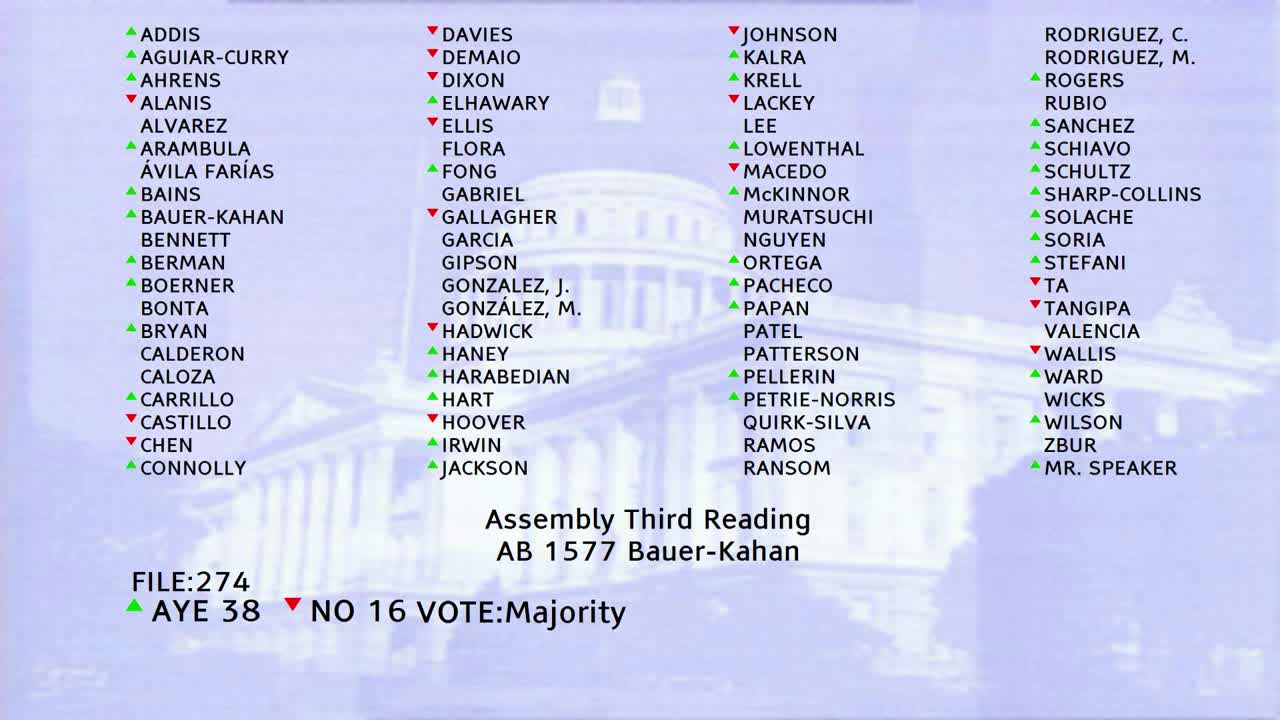 1MIN
Assembly Floor
 14MIN
Assembly Standing Committee on Judiciary
 10MIN