ACR 131: Professions and vocations: licensing fees: equity.
- Session Year: 2015-2016
- House: Assembly
- Latest Version Date: 2016-06-23
This measure would encourage the Department of Consumer Affairs and its boards, bureaus, and committees to create policies that promote fairness and equity to guarantee that each licensee pays a fair amount, especially in regard to initial and ongoing license fees.
This measure would encourage the Department of Consumer Affairs and its boards, bureaus, and committees to create policies that promote fairness and equity to guarantee that each licensee pays a fair amount, especially in regard to initial and ongoing license fees.
This measure would encourage the Department of Consumer Affairs and its boards, bureaus, and committees to create policies that promote fairness and equity to guarantee that each licensee pays a fair amount, especially in regard to initial and ongoing license fees.
This measure would encourage the Department of Consumer Affairs and its boards, bureaus, and commissions committees to create policies that promote fairness and equity to guarantee that each licensee pays a fair amount, especially in regards regard to initial and ongoing license fees.
This measure would encourage the Department of Consumer Affairs and its boards, bureaus, and commissions to create policies that promote fairness and equity to guarantee that each licensee pays a fair amount, especially in regards to initial and ongoing license fees.
WHEREAS, Existing law provides for the licensure and regulation of various professions and vocations by boards, bureaus, and committees within the Department of Consumer Affairs, including, among others, accountants, acupuncturists, architects, athletes, automotive mechanics, barbers and cosmetologists, chiropractors, contractors, court reporters, dental hygienists, dentists, doctors, engineers, fiduciaries, marriage and family therapists, nurses, optometrists, osteopathic physicians and surgeons, pharmacists, physical therapists, physician assistants, private schools, private guards and other security-related jobs, psychologists, real estate salespersons, respiratory care practitioners, speech pathologists, social workers, and veterinarians; and
WHEREAS, The mission of many of the boards, bureaus, and committees within the Department of Consumer Affairs is to protect people and promote the health and safety of Californians by licensing and regulating various professions and vocations; and
WHEREAS, Hardworking individuals must often complete hundreds of hours of professional training requirements, including, but not limited to, education, schooling, internships, or other requirements, to meet professional licensing standards in order to be licensed by the State of California and pursue their profession; and
WHEREAS, Existing law establishes fees for initial licenses, initial temporary and permanent licenses, and original licenses for those various professions and vocations; and
WHEREAS, Licensees may spend up to hundreds of dollars for their initial license and pay thousands of dollars to the State of California over their career to maintain their license, not including the thousands of dollars licensees may pay to put themselves through training or educational programs to gain the skills needed for a given profession; and
WHEREAS, Existing law requires that licenses issued to certain licensees expire at 12 a.m. on either the last day of the birth month of the licensee or at 12 a.m. of the legal birth date of the licensee during the 2nd year of a 2-year term if not renewed, yet fails to provide licensees the opportunity to prorate their initial licensing fee to the specific amount of time actually licensed; and
WHEREAS, The Legislature supports an equitable licensing fee policy that would prorate license fees based on how many months have elapsed between the initial issuance of a license and the time of renewal, as stated in Assembly Bill 483 of the 201516 Regular Session, which was unanimously passed by the Senate and passed by the Assembly with a vote of 78-0; and
WHEREAS, The Legislature recognizes the important and valuable services that those licensees provide to the state; now, therefore, be it
Resolved by the Assembly of the State of California, the Senate thereof concurring, That the Legislature encourages the Department of Consumer Affairs and its boards, bureaus, and commissions committees to create policies that promote fairness and equity to guarantee that each licensee pays a fair amount, especially in regard to initial and ongoing license fees; and be it further
Resolved, That the Chief Clerk of the Assembly transmit copies of this resolution to the author for appropriate distribution.
WHEREAS, Existing law provides for the licensure and regulation of various professions and vocations by boards, bureaus, and committees within the Department of Consumer Affairs, including, among others, accountants, acupuncturists, architects, athletes, automotive mechanics, barbers and cosmetologists, chiropractors, contractors, court reporters, dental hygienists, dentists, doctors, engineers, fiduciaries, marriage and family therapists, nurses, optometrists, osteopathic physicians and surgeons, pharmacists, physical therapists, physician assistants, private schools, private guards and other security-related jobs, psychologists, realtors, real estate salespersons, respiratory care practitioners, speech pathologists, social workers, and veterinarians; and
WHEREAS, The mission of many of the boards, bureaus, and committees within the Department of Consumer Affairs is to protect people and promote the health and safety of Californians by licensing and regulating various professions and vocations; and
WHEREAS, Hardworking individuals must often complete hundreds of hours of professional training requirements, including, but not limited to, education, schooling, internships, or other requirements, to meet professional licensing standards in order to be licensed by the State of California and pursue their profession; and
WHEREAS, Existing law establishes fees for initial licenses, initial temporary and permanent licenses, and original licenses for those various professions and vocations; and
WHEREAS, Licensees may spend up to hundreds of dollars for their initial license and pay thousands of dollars to the State of California over their career to maintain their license, not including the thousands of dollars licensees may pay to put themselves through training or educational programs to gain the skills needed for a given profession; and
WHEREAS, Existing law requires that licenses issued to certain licensees expire at 12 a.m. on either the last day of the birth month of the licensee or at 12 a.m. of the legal birth date of the licensee during the 2nd year of a 2-year term if not renewed, yet fails to provide licensees the opportunity to prorate their initial licensing fee to the specific amount of time actually licensed; and
WHEREAS, The Legislature supports an equitable licensing fee policy that would prorate license fees based on how many months have elapsed between the initial issuance of a license and the time of renewal, as stated in Assembly Bill 483 of the 201516 Regular Session, which was unanimously passed by the Senate and passed by the Assembly with a vote of 78-0; and
WHEREAS, The Legislature recognizes the important and valuable services that those licensees provide to the state; now, therefore, be it
Resolved by the Assembly of the State of California, the Senate thereof concurring, That the Legislature encourages the Department of Consumer Affairs and its boards, bureaus, and commissions to create policies that promote fairness and equity to guarantee that each licensee pays a fair amount, especially in regard to initial and ongoing license fees; and be it further
Resolved, That the Chief Clerk of the Assembly transmit copies of this resolution to the author for appropriate distribution.
WHEREAS, Existing law provides for the licensure and regulation of various professions and vocations by boards, bureaus, and committees within the Department of Consumer Affairs, including, among others, accountants, acupuncturists, architects, athletes, automotive mechanics, barbers and cosmetologists, chiropractors, contractors, court reporters, dental hygienists, dentists, doctors, engineers, fiduciaries, marriage and family therapists, nurses, optometrists, osteopathic physicians and surgeons, pharmacists, physical therapists, physician assistants, private schools, private guards and other security-related jobs, psychologists, realtors, respiratory care practitioners, speech pathologists, social workers, and veterinarians; and
WHEREAS, The mission of many of the boards, bureaus, and committees within the Department of Consumer Affairs is to protect people and promote the health and safety of Californians by licensing and regulating various professions and vocations; and
WHEREAS, Hardworking individuals must often complete hundreds of hours of professional training requirements, including, but not limited to, education, schooling, internships, or other requirements, to meet professional licensing standards in order to be licensed by the State of California and pursue their profession; and
WHEREAS, Existing law establishes fees for initial licenses, initial temporary and permanent licenses, and original licenses for those various professions and vocations; and
WHEREAS, Licensees may spend up to hundreds of dollars for their initial license and pay thousands of dollars to the State of California over their career to maintain their license, not including the thousands of dollars licensees may pay to put themselves through training or educational programs to gain the skills needed for a given profession; and
WHEREAS, Existing law requires that licenses issued to certain licensees expire at 12 a.m. on either the last day of the birth month of the licensee or at 12 a.m. of the legal birth date of the licensee during the 2nd year of a 2-year term if not renewed, yet fails to provide licensees the opportunity to prorate their initial licensing fee to the specific amount of time actually licensed; and
WHEREAS, The Legislature supports an equitable licensing fee policy that would prorate license fees based on how many months have elapsed between the initial issuance of a license and the time of renewal, as stated in Assembly Bill 483 of the 201516 Regular Session, which was unanimously passed by the Senate and passed by the Assembly with a vote of 78-0; and
WHEREAS, The Legislature recognizes the important and valuable services that those licensees provide to the state; now, therefore, be it
Resolved by the Assembly of the State of California, the Senate thereof concurring, That the Legislature encourages the Department of Consumer Affairs and its boards, bureaus, and commissions to create policies that promote fairness and equity to guarantee that each licensee pays a fair amount, especially in regard to initial and ongoing license fees; and be it further
Resolved, That the Chief Clerk of the Assembly transmit copies of this resolution to the author for appropriate distribution.
WHEREAS, Existing law provides for the licensure and regulation of various professions and vocations by boards, bureaus, and committees within the Department of Consumer Affairs, including, among others, accountants, acupuncturists, architects, athletes, automotive mechanics, barbers and cosmologists, cosmetologists, chiropractors, contractors, court reporters, dental hygienists, dentists, doctors, engineers, fiduciaries, marriage and family therapists, nurses, optometrists, osteopathic physicians and surgeons, pharmacists, physical therapists, physician assistants, private schools, private guards and other security-related jobs, psychologists, realtors, respiratory care practitioners, speech pathologists, social workers, and veterinarians; and
WHEREAS, The mission of many of the boards, bureaus, and committees within the Department of Consumer Affairs is to protect people and promote the health and safety of Californians by licensing and regulating various professions and vocations; and
WHEREAS, Hardworking individuals must often complete hundreds of hours of professional training requirements, including, but not limited to, education, schooling, internships, or other requirements, to meet professional licensing standards in order to be licensed by the State of California and pursue their profession; and
WHEREAS, Existing law establishes fees for initial licenses, initial temporary and permanent licenses, and original licenses for those various professions and vocations; and
WHEREAS, Licensees may spend up to hundreds of dollars for their initial license and pay thousands of dollars to the State of California over their career to maintain their license, not including the thousands of dollars licensees may pay to put themselves through training or educational programs to gain the skills needed for a given profession; and
WHEREAS, Existing law requires that licenses issued to certain licensees expire at 12 a.m. on either the last day of the birth month of the licensee or at 12 a.m. of the legal birth date of the licensee during the 2nd year of a 2-year term if not renewed, yet fails to provide licensees the opportunity to prorate their initial licensing fee to the specific amount of time actually licensed; and
WHEREAS, The Governor Legislature supports an equitable licensing fee policy that would prorate license fees based on how many months have elapsed between the initial issuance of a license and the time of renewal, as stated in his message upon vetoing Assembly Bill 483 (Patterson, 2015), of the 201516 Regular Session, which was unanimously passed by the Senate and passed by the Assembly with a vote of 78-0; and
WHEREAS, The Legislature recognizes the important and valuable services that those licensees provide to the state; now, therefore, be it
Resolved by the Assembly of the State of California, the Senate thereof concurring, That the Legislature encourages the Department of Consumer Affairs and its boards, bureaus, and commissions to create policies that promote fairness and equity to guarantee that each licensee pays a fair amount, especially in regards regard to initial and ongoing license fees; and be it further
Resolved, That the Chief Clerk of the Assembly transmit copies of this resolution to the author for appropriate distribution.
WHEREAS, Existing law provides for the licensure and regulation of various professions and vocations by boards, bureaus, and committees within the Department of Consumer Affairs, including, among others, accountants, acupuncturists, architects, athletes, automotive mechanics, barbers and cosmologists, chiropractors, contractors, court reporters, dental hygienists, dentists, doctors, engineers, fiduciaries, marriage and family therapists, nurses, optometrists, osteopathic physicians and surgeons, pharmacists, physical therapists, physician assistants, private schools, private guards and other security-related jobs, psychologists, realtors, respiratory care practitioners, speech pathologists, social workers, and veterinarians; and
WHEREAS, The mission of many of the boards, bureaus, and committees within the Department of Consumer Affairs is to protect people and promote the health and safety of Californians by licensing and regulating various professions and vocations; and
WHEREAS, Hardworking individuals must often complete hundreds of hours of professional training requirements, including, but not limited to, education, schooling, internships, or other requirements, to meet professional licensing standards in order to be licensed by the State of California and pursue their profession; and
WHEREAS, Existing law establishes fees for initial licenses, initial temporary and permanent licenses, and original licenses for those various professions and vocations; and
WHEREAS, Licensees may spend up to hundreds of dollars for their initial license and pay thousands of dollars to the State of California over their career to maintain their license, not including the thousands of dollars licensees may pay to put themselves through training or educational programs to gain the skills needed for a given profession; and
WHEREAS, Existing law requires that licenses issued to certain licensees expire at 12 a.m. on either the last day of the birth month of the licensee or at 12 a.m. of the legal birth date of the licensee during the 2nd year of a 2-year term if not renewed, yet fails to provide licensees the opportunity to prorate their initial licensing fee to the specific amount of time actually licensed; and
WHEREAS, The Governor supports an equitable licensing fee policy that would prorate license fees based on how many months have elapsed between the initial issuance of a license and the time of renewal, as stated in his message upon vetoing Assembly Bill 483 (Patterson, 2015), which was unanimously passed by the Senate and passed the Assembly with a vote of 78-0; and
WHEREAS, The Legislature recognizes the important and valuable services that those licensees provide to the state; now, therefore, be it
Resolved by the Assembly of the State of California, the Senate thereof concurring, That the Legislature encourages the Department of Consumer Affairs and its boards, bureaus, and commissions to create policies that promote fairness and equity to guarantee that each licensee pays a fair amount, especially in regards to initial and ongoing license fees; and be it further
Resolved, That the Chief Clerk of the Assembly transmit copies of this resolution to the author for appropriate distribution.
|
Date
|
Status
|
|---|---|
| Aug 11, 2016 | In committee: Held under submission. |
| Aug 1, 2016 | In committee: Referred to APPR. suspense file. |
| Jun 23, 2016 | Read second time and amended. Re-referred to Com. on APPR. |
| Jun 22, 2016 | From committee: Amend, and be adopted as amended, and re-refer to Com. on APPR. with recommendation: To Consent Calendar. (Ayes 9. Noes 0.) (June 20). |
| Jun 13, 2016 | From committee chair, with author's amendments: Amend, and re-refer to committee. Amended and re-referred to Com. on B., P. & E.D. |
| Jun 9, 2016 | Re-referred to Com. on B., P. & E.D. |
| Jun 6, 2016 | In Senate. To Com. on RLS. |
| Jun 2, 2016 | Amended, adopted, and to Senate. (Ayes 76. Noes 1. Page 5182.) |
| Jun 2, 2016 | Amended, adopted, and to Senate. (Ayes 76. Noes 1.) |
| Jun 2, 2016 | Amended, adopted, and to Senate. |
| May 31, 2016 | Amended. Ordered to third reading. |
| May 27, 2016 | From committee: Amend, and be adopted as amended. (Ayes 20. Noes 0.) (May 27). |
| Apr 13, 2016 | In committee: Referred to APPR. suspense file. |
| Mar 29, 2016 | From committee: Be adopted, and re-refer to Com. on APPR. with recommendation: To Consent Calendar. (Ayes 16. Noes 0.) (March 29). Re-referred to Com. on APPR. |
| Feb 18, 2016 | Referred to Com. on B. & P. |
| Feb 3, 2016 | From printer. |
| Feb 2, 2016 | Introduced. To print. |
|
Date
|
Description
|
Location
|
Votes
|
|
|---|---|---|---|---|
| Aug 1, 2016 | Placed on suspense file | Senate Standing Committee on Appropriations |
Passed |
|
| Jun 20, 2016 | Be adopted as amended, but first amend, and re-refer to the Committee on [Appropriations] with the recommendation: To Consent Calendar | Senate Standing Committee on Business, Professions and Economic Development |
Passed |
|
| Jun 2, 2016 | ACR 131 PATTERSON Assembly Third Reading | Assembly Floor |
Passed |
|
| May 27, 2016 | Be adopted as amended. | Assembly Standing Committee on Appropriations |
Passed |
|
| Mar 29, 2016 | Be adopted, and re-refer to the Committee on [Appropriations] with recommendation: To Consent Calendar | Assembly Standing Committee on Business and Professions |
Passed |
This list shows positions taken on this bill by organizations on the date displayed, which is linked to the original source.
Positions by individuals are not included.
SENATE COMMITTEE ON
Senator Ricardo Lara, Chair
2015 - 2016 Regular Session
ACR 131 (Patterson) - Professions and vocations: licensing fees: equity
Version: | Policy Vote: |
Urgency: No | Mandate: No |
Hearing Date: | Consultant: |
This bill meets the criteria for referral to the Suspense File.
Bill Summary:
ACR 131 would encourage the Department of Consumer Affairs and its licensing entities to create policies to ensure that each licensee pays a fair amount of licensing fees.
Fiscal Impact:
The intention of the resolution is to encourage licensing entities within the Department of Consumer Affairs to prorate the fees charged to licensees for the licensee’s initial license period. To the extent that licensing entities did switch from a fixed initial license fee to a prorated license fee, those licensing entities would experience a reduction in licensing revenue.
The projected revenue reductions for licensing entities not currently using a prorated system for the initial license period are:
- Architects Board - $16,156
- Board of Chiropractic Examiners - $7,563
- Dental Hygiene Committee - $22,401
- Medical Board - $686,348
- Board of Pharmacy - $88,481
- Board of Psychology - $74,891
- Board of Registered Nursing - $378,125
- Veterinary Medical Board - $75,706
In addition there would one-time costs of about $50,000 per licensing entity to make necessary changes to the information technology systems used to process license applications.
Background:
Under current law, various licensing entities within the Department of Consumer Affairs license certain professions and vocations. In general, applicants for licensure pay an initial license fee upon application and pay a fee upon renewal of a license. Professional licenses are typically valid for two years.
Historically, licensing entities experienced a large number of applications for initial licensure based on academic schedules. For example, most applicants for an initial license would apply for licensure soon after undergraduate or graduate training programs are completed and/or accredited professional examinations have taken place. Thus, licensing entities must typically process most of their applications for initial licensure at the same time every year. (However, over time, many licensing entities have experienced a shift in workload as changes in academic requirements or applicant preferences mean that an influx of applications for initial licensure does not always take place at one time of year.)
To avoid the same influx of applications for license renewal, licensing entities often require licensees to renew their license during the licensee’s birth month during the second year, rather than on the anniversary of the initial licensure. This is done to spread out the workload for license renewal across the calendar year.
For example, the initial license granted by the Medical Board is valid for one full year and then expires at the end of the licensee’s birth month in the second year. In practice, this means that the length of the initial license period can vary significantly between licensees, depending on when the licensee’s birth month occurs and when the initial license was granted. The length of the initial license period can vary from 13 months to 24 months. After the initial license period, the renewed license period lasts for two full years (from the licensee’s birth month until the licensee’s birth month two years later).
Proposed Law:
ACR 131 would encourage the Department of Consumer Affairs and its licensing entities to create policies to ensure that each licensee pays a fair amount of licensing fees.
Related Legislation:
- AB 773 (Baker, Statutes of 2015) changed the system for renewing licenses issued by the Board of Psychology from a birth month renewal system to a two-year initial license period.
- AB 483 (Patterson, 2015) would have required initial license fees (and other specified fees) to be assessed by specified entities within the Department of Consumer Affairs on a prorated basis. That bill was vetoed by Governor Brown.
- AB 1758 (Patterson, 2014) would have required initial license fees (and other specified fees) to be prorated on a monthly basis. That bill was held on this committee’s Suspense File.
Staff Comments:
As noted above, for several licensing entities, the revenue reduction is expected to be minor and can likely be absorbed by the licensing entity. However, the projected revenue loss to the Medical Board and the Board of Registered Nursing is substantial.
Typically, licensing fees charged by Department of Consumer affairs licensing entities are either explicitly set in statute or statute provides for the maximum fee that a licensing entity may charge. In cases where the license fee is set at or near the maximum statutory fee, a licensing entity that switches to a prorated system for initial licenses may not be able to raise fees on all license applicants to offset the revenue reduction.
The license fees that the Medical Board may impose on applicants is capped in statute at $790 (with certain additional surcharges for enforcement activities allowed). The current fee level is $783 (plus an additional $25 related to enforcement activities). A shift to a prorated initial license fee is projected to result in reduced revenues of about $690,000 per year to the Medical Board. Under current law, the Medical Board has very limited ability to raise the overall license fee to offset the lost fee revenue that would occur under this bill. Therefore the Medical Board would need to reduce expenditures for licensure activity or enforcement activity to offset the projected revenue loss.
Similarly, the initial license fees charged to registered nurse applicants is set at the statutory maximum.
-- END --
SENATE COMMITTEE ON
BUSINESS, PROFESSIONS AND ECONOMIC DEVELOPMENT
Senator Jerry Hill, Chair
2015 - 2016 Regular
Bill No: ACR 131 Hearing Date: June 20, 2016
Author: | Patterson | ||
Version: |
| ||
Urgency: | Fiscal: | ||
Consultant: | |||
Subject: Professions and vocations: licensing fees: equity
SUMMARY:
Encourages the Department of Consumer Affairs (DCA) and its licensing entities to create policies that promote fairness and equity to guarantee that each licensee pays a fair amount, especially in regards to initial and ongoing license fees.
Existing law:
- Provides for the regulation and licensure of various professions and vocations by the boards, bureaus and other licensing entities within the DCA and establishes fees and schedules for initial licensure and renewal of licenses.
(Business and Professions Code (BPC) §§ 100-11506) - Provides that when the term of any license issued by any agency within DCA exceeds one year, initial license fees for licenses which are issued during a current license term shall be prorated on a yearly basis. (BPC § 134)
- Provides that notwithstanding any other provision within the BPC, each board within the DCA shall, in cooperation with the Director of the DCA, establish such license periods and renewal dates for all licenses in such manner as best to distribute the renewal work of all boards throughout each year and permit the most efficient, and economical use of personnel and equipment. (BPC § 152.6)
- Provides to the extent practicable, provision shall be made for the proration or other adjustment of fees in such manner that no person shall be required to pay a greater or lesser fee than he would have been required to pay if the change in license periods or renewal dates had not occurred. (Id.)
This resolution:
- Declares that existing law provides for the licensure and regulation of various professions and vocations by boards, bureaus, and committees within the DCA.
- Declares that the mission of many of the licensing entities is to protect people and promote the health and safety of Californians through the licensing programs.
- Declares that hardworking individuals must often complete hundreds of hours of professional training requirements, including, but not limited to, education, schooling, internships, or other requirements, to meet professional licensing standards in order to be licensed by the State of California and pursue their profession.
- Declares that existing law establishes fees for initial licenses, initial temporary and permanent licenses, and original licenses for those various professions and vocations.
- Declares that licensees may spend up to hundreds of dollars for their initial license and pay thousands of dollars to the State of California over their career to maintain their license, not including the thousands of dollars licensees may pay to put themselves through training or educational programs to gain the skills needed for a given profession.
- Declares that existing law requires that licenses issued to certain licensees expire at 12 a.m. on either the last day of the birth month of the licensee or at 12 a.m. of the legal birth date of the licensee during the second year of a two-year term if not renewed, yet fails to provide licensees the opportunity to prorate their initial licensing fee to the specific amount of time actually licensed.
- Declares that the Legislature supports an equitable licensing fee policy that would prorate license fees based on how many months have elapsed between the initial issuance of a license and the time of renewal, as stated in AB 483 of 2015-16 Regular Session, which was unanimously passed by the Senate and passed by the Assembly with a vote of 78-0.
- Declares that the Legislature recognizes the important and valuable services that those licensees provide to the state.
- Resolves that the Legislature encourages the DCA and its boards, bureaus, and commissions to create policies that promote fairness and equity to guarantee that each licensee pays a fair amount, especially in regard to initial and ongoing license fees.
- Resolves that the Chief Clerk of the Assembly transmit copies of the resolution to the author for appropriate distribution.
FISCAL EFFECT:
This bill is keyed “fiscal” by the Legislative Counsel. According to the Assembly Appropriations Committee analysis dated April 13, 2016, DCA has identified five programs that issue licenses based on birth months but do not prorate fees, resulting in some licensees having an initial licensure period of just over one year, with others having up to a full two years for the same fee. According to the analysis, should DCA implement changes likely recommended as a result of this resolution, there would be reduced fee revenues of $686,000 to the Medical Board of California, unknown reduced fee revenues, likely exceeding $650,000, to the Board of Registered Nursing, unknown reduced fee revenues, likely less than $100,000, to the Board of Pharmacy, reduced fee revenues of approximately $22,000 to the Dental Hygiene Committee and minor and absorbable costs to the Board of Chiropractic Examiners. The analysis notes that this bill would also result in absorbable costs of approximately $50,000 to DCA to implement necessary IT changes as well as minor and absorbable costs to the impacted boards to change business processes, forms, and materials.
COMMENTS:
- Purpose. This resolution is sponsored by the Author. According to the Author, this resolution recognizes the many professionals in the state of California that provide a variety of services to Californians ranging from barbering and cosmetology to fields of medicine. Licensed professions bring valuable services and are also economic drivers within our state. This resolution expresses that it is the goal and intent of the Legislature to direct government entities in establishing policies that make it fairer for newly licensed Californian’s to enter the workforce.
The Author further states that current law requires that some license expire on either the last day of the birth month of the licensee or at 12:00 am on the birth date of the licensee during the second year of a two year term. Professionals affected by this rule include architects, acupuncturists, dental hygienists, dentists, occupational therapists, osteopathic physicians and surgeons, registered veterinary technicians and veterinarians. Other licenses have different policies that are equitable to each licensee such as a two year licensure from the initial date of licensure with a renewal every two years from that date. As indicated by the Author, “the problem with this current birth month system is that some professionals are required to renew their licenses within just a few months or even weeks after it has been issued to them. This is unfair because they are forced to pay the same amount as somebody who has had their license for an entire 1-2 year term.” - Background. Under existing law, many professional licensing entities under the DCA have either a biennial (two-year) renewal schedule or a biennial renewal schedule that varies based on a licensee’s birthdate. Under the pure biennial renewal schedule, the renewal date is two years from the date the license is issued. For example, if a licensee is issued a license on January 15, 2016, the license would expire on January 15, 2018.
However, this can result in workload issues. For many of the entities, applicants tend to submit applications at the same time because of the timing of exams and training programs. This results in licensing entities receiving a large number of applications for initial licenses during peak times. This means those entities under a biennial renewal schedule will also process a large number of renewals at one time.
As a result, many licensing practice acts have been amended to require entities to stagger the renewals by using licensee birth dates. Under typical birth date renewal programs, licenses expire on the last day of the licensee’s birth month during the second year of the biennial term. However, this means the initial license period can vary from between 12 months to 24 months, depending on how close the applicant's birth month is to the issuance date.
For example, if a licensee is issued a license on February 1, 2016 and the licensee’s birthday is in January, then the license will expire January 30, 2018, a full 24 months. However, if the licensee’s birthday is in February, then the license will expire February 30, 2017, the minimum of 12 months. This is because two years from February 30, 2016 would be February 30, 2018. However, since the issuance date was February 1, 2016, the result would be a 25 month license period that exceeds the biennial term.
Therefore, under a birth month renewal program, there are instances were some licensees have an initial license period that is shorter than other licensees but still pay the full initial license fee and renewal fee. While additional renewal periods inevitably extend to a full two-year cycle, some entities report that licensees find that it is unfair for those licensees with shorter initial license periods to have to pay a full renewal fee. - Potential Changes to Fee Structure. There are a few potential changes which could be made so that some licensees would not have to pay a full renewal or initial license fee when their initial license period is not as long as other licensees: 1) use a pro rata formula to decrease either the initial license fee or the renewal fee based on the length of the licensee’s initial license period; 2) switch back to a biennial renewal schedule; or, 3) adjust the initial application period, such as putting a limit on the number of initial applications allowed per week.
However, each solution has strengths and draw backs. Using a pro rata formula has the benefit of ensuring each licensee is paying a fee that directly correlates to the actual initial license period, eliminating inequities between licensees. It also continues to accommodate the administrative workloads of the entities. However, the licensing entities under the DCA are special fund agencies, meaning that they receive no appropriations from the general fund and are funded solely through licensing and enforcement fees. This means that a pro rata formula could have an impact on revenues.
Alternatively, switching back to a biennial renewal schedule would again cause the large peaks in renewal processing. Although some entities report that the peaks have leveled out over time, it may still impact administrative workload.
Given that the underlying purpose of the birth month renewal program was to stagger the timing of renewals, other solutions might include adjustments to the timing of initial applications. This might include authorizing entities to limit the number of applications accepted during a specified time period or to provide temporary, limited licenses while licensees wait for their birth month. The downside to these mechanisms is that they may have a negative impact on waiting applicants.
Since each licensing entity is unique, the benefit and burden of each change to its fee structure would have to be contemplated by the individual entity and its stakeholders. - Would Licensing Entities Have to Seek Authority to Adjust Fees? Under existing law, it is not clear whether licensing entities under the DCA can promulgate regulations to pro rate or collect variable fees without the statutory authority to do so. For example, BPC § 2435 provides that the biennial renewal fee for a physician and surgeon’s license “shall be fixed by the Medical Board of California (MBC) consistent with this section and shall not exceed seven hundred ninety dollars ($790).” The term “fixed” could be interpreted to mean that the MBC cannot vary the fee between licensees.
Even if the MBC’s authority could be interpreted to allow additional renewal formulas, context suggests otherwise—there are entities that have explicit statutory authority to use pro rata formulas, including the MBC when approving physician and surgeon supervisors of physician assistants (PAs). BPC § 3522 provides that the MBC “shall establish a cyclical renewal program, including, but not limited to, the establishment of a system of staggered expiration dates for approvals and a pro rata formula for the payment of renewal fees by physician and surgeon supervisors.” Therefore, MBC has the specific authority to establish a pro rata formula for that specific class of licensee. This suggests that, since similar language is lacking for other licensees, the MBC’s authority is limited by the statute.
Similarly, BPC § 3523 provides that the Physician Assistant Board (PAB) “shall establish by regulation procedures for the administration of a birthdate renewal program, including, but not limited to, the establishment of a system of staggered license expiration dates and a pro rata formula for the payment of renewal fees by PAs affected by the implementation of the program.”
Further, all entities appear to be required to prorate initial license fees in certain situations. BPC § 134 provides that “[w]hen the term of any license issued by any agency in the department exceeds one year, initial license fees for licenses which are issued during a current license term shall be prorated on a yearly basis.”
Therefore, since there are instances of specific statutory authority for entities to establish pro rata formulas, it is not clear that entities without similar statutory language can promulgate regulations establishing alternative fee formulas without a statutory change. - Impact on BreEZe Program. In 2013, the DCA implemented the BreEZe program, an online information technology program created to assist licensing entities with licensing and other pertinent functions. Last year, the DCA anticipated that implementing a pro rata formula would be impacted by the DCA BreEZe program. During prior sunset review hearings, many entities under the DCA noted that BreEZe can be inflexible. Therefore, it is unclear whether BreEZe can be easily modified to accommodate new renewal formulas in addition to other changes entities might need.
- Prior Legislation. AB 773 (Baker, Chapter 336, Statutes of 2015) switched psychology license renewals from a birth month renewal to a biennial renewal program.
AB 483 (Patterson) of 2015 would have required that the fees for an initial license, an initial temporary or permanent license, an original license, or a renewal for specified regulatory entities, be prorated on a monthly basis. (Status: This bill was vetoed by Governor Brown because an equitable licensing fee policy “can be crafted more carefully and thoughtfully through regulation.”)
AB 1758 (Patterson) of 2014 would have required that the fee for an initial temporary or permanent license or an original license be prorated on a monthly basis and authorized the licensing entities to impose an additional fee to cover the reasonable costs of issuing an initial or original license that expires in less than 12 months. (Status: This bill was held in the Senate Appropriations Committee.)
SB 1236 (Price, Chapter 332, Statutes of 2012) among other things, required the MBC to establish a pro rata formula for the payment of renewal fees by physician and surgeon supervisors of PAs and required the PAB to establish a pro rata formula for the payment of renewal fees by PAs. - Technical Amendment. To assure consistency in the use of the term “committees” rather than use of the term “commissions,” which describes the agencies and entities within the DCA, make the following change:
On page 3, line 12, strike “commissions” and insert instead “committees”
SUPPORT AND OPPOSITION:
Support: None on file as of June 14, 2016.
Opposition: None on file as of June 14, 2016.
-- END --
ASSEMBLY THIRD READING
ATR Bill Id:ACR 131
Author: (Patterson)
As Amended Ver:May 31, 2016
Majority vote
Committee | Votes | Ayes | Noes |
Business & Professions | 16-0 | Salas, Brough, Baker, Bloom, Campos, Chávez, Dahle, Dodd, Burke, Gatto, Gomez, Holden, Jones, Mullin, Ting, Wood | |
Appropriations | 20-0 | Gonzalez, Bigelow, Bloom, Bonilla, Bonta, Calderon, Chang, Daly, Eggman, Gallagher, Eduardo Garcia, Roger Hernández, Holden, Jones, Obernolte, Quirk, Santiago, Wagner, Weber, Wood |
|
SUMMARY: Encourages the Department of Consumer Affairs (DCA) and its licensing entities to create policies that promote fairness and equity to guarantee that each licensee pays a fair amount, especially in regards to initial and ongoing license fees. Specifically, this resolution:
- Declares that existing law provides for the licensure and regulation of various professions by licensing entities within the DCA.
- Declares that the mission of many of the licensing entities is to protect people and promote the health and safety of Californians through the licensing programs.
- Declares that hardworking individuals must often complete hundreds of hours of professional training requirements, including, but not limited to, education, schooling, internships, or other requirements, to meet professional licensing standards in order to be licensed by the State of California and pursue their profession.
- Declares that existing law establishes fees for initial licenses, initial temporary and permanent licenses, and original licenses for those various professions and vocations.
- Declares that licensees may spend up to hundreds of dollars for their initial license and pay thousands of dollars to the State of California over their career to maintain their license, not including the thousands of dollars licensees may pay to put themselves through training or educational programs to gain the skills needed for a given profession.
- Declares that existing law requires that licenses issued to certain licensees expire at 12 a.m. on either the last day of the birth month of the licensee or at 12 a.m. of the legal birth date of the licensee during the second year of a two-year term if not renewed, yet fails to provide licensees the opportunity to prorate their initial licensing fee to the specific amount of time actually licensed.
- Declares that the Legislature supports an equitable licensing fee policy that would prorate license fees based on how many months have elapsed between the initial issuance of a license and the time of renewal, as stated in AB 483 (Patterson) of 2015, which was unanimously passed by the Senate and passed by the Assembly with a vote of 78-0.
- Declares that the Legislature recognizes the important and valuable services that those licensees provide to the state.
- Resolves that the Legislature encourages the DCA and its boards, bureaus, and commissions to create policies that promote fairness and equity to guarantee that each licensee pays a fair amount, especially in regard to initial and ongoing license fees.
- Resolves that the Chief Clerk of the Assembly transmit copies of the resolution to the author for appropriate distribution.
FISCAL EFFECT: According to the Assembly Appropriations Committee:
- DCA has identified five programs that issue licenses based on birth months but do not prorate fees, resulting in some licensees having an initial licensure period of just over one year, with others having up to a full two years for the same fee. Should DCA implement changes likely recommended as a result of this resolution, the following costs would apply.
- Reduced fee revenues of $686,000 to the Medical Board of California (special funds).
- Unknown reduced fee revenues, likely exceeding $650,000, to the Board of Registered Nursing (special funds).
- Unknown reduced fee revenues, likely less than $100,000, to the Board of Pharmacy (special funds).
- Reduced fee revenues of approximately $22,000 to the Dental Hygiene Committee.
- Minor and absorbable costs to the Board of Chiropractic Examiners.
- Absorbable costs of approximately $50,000 to DCA to implement necessary IT changes.
- Minor and absorbable costs to the impacted boards to change business processes, forms, and materials.
COMMENTS:
Background. Under existing law, many professional licensing entities under the DCA have either a biennial (two-year) renewal schedule or a biennial renewal schedule that varies based on a licensee's birthdate. Under the pure biennial renewal schedule, the renewal date is two years from the date the license is issued. For example, if a licensee is issued a license on January 15, 2016, the license would expire on January 15, 2018.
However, this can result in workload issues. For many of the entities, applicants tend to submit applications at the same time because of the timing of exams and training programs. This results in licensing entities receiving a large number of applications for initial licenses during peak times. This means those entities under a biennial renewal schedule will also process a large number of renewals at one time.
As a result, many licensing practice acts have been amended to require entities to stagger the renewals by using licensee birth dates. Under typical birth date renewal programs, licenses expire on the last day of the licensee's birth month during the second year of the biennial term. However, this means the initial license period can vary from between 12 months to 24 months, depending on how close the applicant's birth month is to the issuance date.
For example, if a licensee is issued a license on February 1, 2016 and the licensee's birthday is in January, then the license will expire January 30, 2018, a full 24 months. However, if the licensee's birthday is in February, then the license will expire February 28, 2017, the minimum of 12 months. This is because two years from February 28, 2016 would be February 28, 2018. However, since the issuance date was February 1, 2016, the result would be a 25 month license period that exceeds the biennial term.
Therefore, under a birth month renewal program, there are instances were some licensees have an initial license period that is shorter than other licensees but still pay the full initial license fee and renewal fee. While additional renewal periods inevitably extend to a full two-year cycle, some entities report that licensees find that it is unfair for those licensees with shorter initial license periods to have to pay a full renewal fee.
Impact of BreEZe. In 2013, the DCA implemented the BreEZe program, an online information technology program created to assist licensing entities with licensing and other pertinent functions. Last year, the DCA anticipated that implementing a pro rata formula would be impacted by the DCA BreEZe program. During prior sunset review hearings, many entities under the DCA noted that BreEZe can be inflexible. Therefore, it is unclear whether BreEZe can be easily modified to accommodate new renewal formulas in addition to other changes entities might need.
Analysis Prepared by: Vincent Chee / B. & P. / (916) 319-3301 FN: 0003340
Date of Hearing: April 13, 2016
ASSEMBLY COMMITTEE ON APPROPRIATIONS
Lorena Gonzalez, Chair
ABPCA Bill Id:ACR 131
Author:(Patterson) – As Introduced Ver:February 2, 2016
Policy Committee: | Business and Professions | Vote: | 16 - 0 |
|
|
Urgency: No State Mandated Local Program: No Reimbursable: No
SUMMARY:
This resolution encourages the Department of Consumer Affairs (DCA) and its licensing entities to create policies that promote fairness and equity to guarantee that each licensee pays a fair amount, especially in regards to initial and ongoing license fees.
FISCAL EFFECT:
- DCA has identified five programs that issue licenses based on birth months but do not prorate fees, resulting in some licensees having an initial licensure period of just over one year, with others having up to a full two years for the same fee. Should DCA implement changes likely recommended as a result of this resolution, the following costs would apply.
- Reduced fee revenues of $686,000 to the Medical Board of California (special funds).
- Unknown reduced fee revenues, likely exceeding $650,000, to the Board of Registered Nursing (special funds).
- Unknown reduced fee revenues, likely less than $100,000, to the Board of Pharmacy (special funds).
- Reduced fee revenues of approximately $22,000 to the Dental Hygiene Committee.
- Minor and absorbable costs to the Board of Chiropractic Examiners.
- Absorbable costs of approximately $50,000 to DCA to implement necessary IT changes.
- Minor and absorbable costs to the impacted boards to change business processes, forms, and materials.
COMMENTS:
- Purpose. According to the author, this resolution "recognizes the many professionals in the state of California that provide a variety of services to Californians ranging from barbering and cosmetology to fields of medicine. Licensed professions bring valuable services and are also economic drivers within our state. This resolution expresses that it is the goal and intent of the Legislature to direct government entities in establishing policies that make it fairer for newly licensed Californian’s to enter the workforce.”
- Background. Many boards and bureaus under Department of Consumer Affairs (DCA) operate a birth date renewal program. Instead of basing license renewals on the date of issuance of the initial license, these boards renew licenses based on birth date which allows the boards to spread out their workload throughout the year.
Under the birth date renewal program, the initial license is valid from the license issuance date until the last day of the licensee’s birth month in the second year of the two-year license term. Upon renewal of the license, the license will expire on the last day of the licensee’s birth month, every other year. In practice, this means that the initial licensure period will vary from person to person, depending on when the applicant initially applied for licensure and when the applicant’s birth month occurs. Some licensees will have an initial licensure period of just over one year, whereas others will have up to a full two years. In effect, a licensing board is able to collect a two-year license fee for less than two years of licensure. (On average, this should be about 18 months of licensure.)
In all of the cases where the fee is not prorated, the licensee would be paying the full initial fee amount, regardless of how long their initial license was in effect. Renewal periods extend to a full two-year cycle, but some entities report that licensees find it unfair that those licensees with a shorter initial license period still pay the full fee. This resolution encourages DCA to address this issue.
- Prior Related Legislation.
- AB 773 (Baker), Chapter 336, Statutes of 2015, changed psychology license renewals from a birth month renewal to a biennial renewal program.
- AB 483 (Patterson) of 2015 would have required that the fees for an initial license, an initial temporary or permanent license, an original license, or a renewal for specified regulatory entities, be prorated on a monthly basis. This bill was vetoed by Governor Brown who stated that an equitable licensing fee policy “can be crafted more carefully and thoughtfully through regulation.”
- AB 1758 (Patterson) of 2014 would have required that the fee for an initial temporary or permanent license or an original license be prorated on a monthly basis and authorized the licensing entities to impose an additional fee to cover the reasonable costs of issuing an initial or original license that expires in less than 12 months. This bill was held in the Senate Appropriations Committee.
- SB 1236 (Price), Chapter 332, Statutes of 2012, among other things, required a pro rata formula for the payment of renewal fees by physician and surgeon supervisors of physician assistants (PAs) and required the Board to establish a pro rata formula for the payment of renewal fees by PAs.
Analysis Prepared by: Jennifer Swenson / APPR. / (916) 319-2081
Date of Hearing:
ASSEMBLY COMMITTEE ON BUSINESS AND PROFESSIONS
Rudy Salas, Chair
ABPCA Bill Id:ACR 131
Author:(Patterson) – As Introduced Ver:February 2, 2016
SUBJECT: Professions and vocations: licensing fees: equity.
SUMMARY: Encourages the Department of Consumer Affairs (DCA) and its licensing entities to create policies that promote fairness and equity to guarantee that each licensee pays a fair amount, especially in regards to initial and ongoing license fees.
EXISTING LAW:
- Provides for the regulation and licensure of various professions and vocations by licensing entities within the DCA and establishes fees and schedules for licensing and renewals. (Business and Professions Code (BPC) §§ 100-11506)
THIS RESOLUTION:
- Declares that existing law provides for the licensure and regulation of various professions and vocations by boards, bureaus, and committees within the DCA, including, among others, accountants, acupuncturists, architects, athletes, automotive mechanics, barbers and cosmologists, chiropractors, contractors, court reporters, dental hygienists, dentists, doctors, engineers, fiduciaries, marriage and family therapists, nurses, optometrists, osteopathic physicians and surgeons, pharmacists, physical therapists, physician assistants, private schools, private guards and other security-related jobs, psychologists, realtors, respiratory care practitioners, speech pathologists, social workers, and veterinarians.
- Declares that the mission of many of the boards, bureaus, and committees within the DCA is to protect people and promote the health and safety of Californians by licensing and regulating various professions and vocations.
- Declares that hardworking individuals must often complete hundreds of hours of professional training requirements, including, but not limited to, education, schooling, internships, or other requirements, to meet professional licensing standards in order to be licensed by the State of California and pursue their profession.
- Declares that existing law establishes fees for initial licenses, initial temporary and permanent licenses, and original licenses for those various professions and vocations.
- Declares that licensees may spend up to hundreds of dollars for their initial license and pay thousands of dollars to the State of California over their career to maintain their license, not including the thousands of dollars licensees may pay to put themselves through training or educational programs to gain the skills needed for a given profession.
- Declares that existing law requires that licenses issued to certain licensees expire at 12 a.m. on either the last day of the birth month of the licensee or at 12 a.m. of the legal birth date of the licensee during the second year of a two-year term if not renewed, yet fails to provide licensees the opportunity to prorate their initial licensing fee to the specific amount of time actually licensed.
- Declares that the Governor supports an equitable licensing fee policy that would prorate license fees based on how many months have elapsed between the initial issuance of a license and the time of renewal, as stated in his message upon vetoing Assembly Bill 483 (Patterson) of 2015, which was unanimously passed by the Senate and passed the Assembly with a vote of 78-0.
- Declares that the Legislature recognizes the important and valuable services that those licensees provide to the state.
- Resolves that the Legislature encourages the DCA and its boards, bureaus, and commissions to create policies that promote fairness and equity to guarantee that each licensee pays a fair amount, especially in regards to initial and ongoing license fees.
- Resolves that the Chief Clerk of the Assembly transmit copies of the resolution to the author for appropriate distribution.
FISCAL EFFECT: Unknown. This bill is keyed fiscal by the Legislative Counsel.
COMMENTS:
Purpose. This resolution is author sponsored. According to the author, “[this resolution] recognizes the many professionals in the state of California that provide a variety of services to Californians ranging from [barbering] and cosmetology to fields of medicine. Licensed professions bring valuable services and are also economic drivers within our state. [This resolution] expresses that it is the goal and intent of the Legislature to direct government entities in establishing policies that make it fairer for newly licensed Californian’s to enter the workforce.”
Background. Under existing law, many professional licensing entities under the DCA have either a biennial (two-year) renewal schedule or a biennial renewal schedule that varies based on a licensee’s birthdate. Under the pure biennial renewal schedule, the renewal date is two years from the date the license is issued. For example, if a licensee is issued a license on January 15, 2016, the license would expire on January 15, 2018.
However, this can result in workload issues. For many of the entities, applicants tend to submit applications at the same time because of the timing of exams and training programs. This results in licensing entities receiving a large number of applications for initial licenses during peak times. This means those entities under a biennial renewal schedule will also process a large number of renewals at one time.
As a result, many licensing practice acts have been amended to require entities to stagger the renewals by using licensee birth dates. Under typical birth date renewal programs, licenses expire on the last day of the licensee’s birth month during the second year of the biennial term. However, this means the initial license period can vary from between 12 months to 24 months, depending on how close the applicant's birth month is to the issuance date.
For example, if a licensee is issued a license on February 1, 2016 and the licensee’s birthday is in January, then the license will expire January 30, 2018, a full 24 months. However, if the licensee’s birthday is in February, then the license will expire February 30, 2017, the minimum of 12 months. This is because two years from February 30, 2016 would be February 30, 2018. However, since the issuance date was February 1, 2016, the result would be a 25 month license period that exceeds the biennial term.
Therefore, under a birth month renewal program, there are instances were some licensees have an initial license period that is shorter than other licensees but still pay the full initial license fee and renewal fee. While additional renewal periods inevitably extend to a full two-year cycle, some entities report that licensees find that it is unfair for those licensees with shorter initial license periods to have to pay a full renewal fee.
Potential Solutions. The issue of some licensees paying a full renewal or initial license fee when their initial license period is not as long as other licensees has at least a few potential solutions, for example: 1) using a pro rata formula to decrease either the initial license fee or the renewal fee based on the length of the licensee’s initial license period; 2) switching back to a biennial renewal schedule; or 3) adjusting the initial application period, such as putting a limit on the number of initial applications allowed per week.
However, each solution has strengths and draw backs. Using a pro rata formula has the benefit of ensuring each licensee is paying a fee that directly correlates to the actual initial license period, eliminating inequities between licensees. It also continues to accommodate the administrative workloads of the entities. However, the licensing entities under the DCA are special fund agencies, meaning that they receive no appropriations from the general fund and are funded solely through licensing and enforcement fees. This means that a pro rata formula could have an impact on revenues.
Alternatively, switching back to a biennial renewal schedule would again cause the large peaks in renewal processing. Although some entities report that the peaks have leveled out over time, it may still impact administrative workload.
Given that the underlying purpose of the birth month renewal program was to stagger the timing of renewals, other solutions might include adjustments to the timing of initial applications. This might include authorizing entities to limit the number of applications accepted during a specified time period or to provide temporary, limited licenses while licensees wait for their birth month. The downside to these mechanisms is that they may have a negative impact on waiting applicants.
Since each licensing entity is unique, the benefit and burden of each solution would have to be contemplated by the individual entity and its stakeholders.
Authority to Adjust Fees. Under existing law, it is not clear whether licensing entities under the DCA can promulgate regulations to pro rate or collect variable fees without the statutory authority to do so. For example, BPC § 2435 provides that the biennial renewal fee for a physician and surgeon’s license “shall be fixed by the Medical Board of California (MBC) consistent with this section and shall not exceed seven hundred ninety dollars ($790).” The term “fixed” could be interpreted to mean that the MBC cannot vary the fee between licensees.
Even if the MBC’s or other entities' practice act could be interpreted to allow additional renewal formulas, context suggests otherwise—there are entities that have explicit statutory authority to use pro rata formulas, including the MBC when approving physician and surgeon supervisors of physician assistants (PAs). BPC § 3522 provides that the MBC “shall establish a cyclical renewal program, including, but not limited to, the establishment of a system of staggered expiration dates for approvals and a pro rata formula for the payment of renewal fees by physician and surgeon supervisors.” Therefore, MBC has the specific authority to establish a pro rata formula for that specific class of licensee. This suggests that, since similar language is lacking for other licensees, the MBC’s authority is limited by the statute.
Similarly, BPC § 3523 provides that the Physician Assistant Board (PAB) “shall establish by regulation procedures for the administration of a birthdate renewal program, including, but not limited to, the establishment of a system of staggered license expiration dates and a pro rata formula for the payment of renewal fees by PAs affected by the implementation of the program.”
Further, all entities appear to be required to prorate initial license fees in certain situations. BPC § 134 provides that “[w]hen the term of any license issued by any agency in the department exceeds one year, initial license fees for licenses which are issued during a current license term shall be prorated on a yearly basis.”
Therefore, since there are instances of specific statutory authority for entities to establish pro rata formulas, it is not clear that entities without similar statutory language can promulgate regulations establishing alternative fee formulas without a statutory change.
Impact of BreEZe. In 2013, the DCA implemented the BreEZe program, an online information technology program created to assist licensing entities with licensing and other pertinent functions. Last year, the DCA anticipated that implementing a pro rata formula would be impacted by the DCA BreEZe program. During prior sunset review hearings, many entities under the DCA noted that BreEZe can be inflexible. Therefore, it is unclear whether BreEZe can be easily modified to accommodate new renewal formulas in addition to other changes entities might need.
Prior Related Legislation. AB 773 (Baker), Chapter 336, Statutes of 2015, switched psychology license renewals from a birth month renewal to a biennial renewal program.
AB 483 (Patterson) of 2015 would have required that the fees for an initial license, an initial temporary or permanent license, an original license, or a renewal for specified regulatory entities, be prorated on a monthly basis. NOTE: This bill was vetoed by Governor Brown because an equitable licensing fee policy “can be crafted more carefully and thoughtfully through regulation.”
AB 1758 (Patterson) of 2014 would have required that the fee for an initial temporary or permanent license or an original license be prorated on a monthly basis and authorized the licensing entities to impose an additional fee to cover the reasonable costs of issuing an initial or original license that expires in less than 12 months. NOTE: This bill was held in the Senate Appropriations Committee.
SB 1236 (Price), Chapter 332, Statutes of 2012, among other things, required the MBC to establish a pro rata formula for the payment of renewal fees by physician and surgeon supervisors of PAs and required the PAB to establish a pro rata formula for the payment of renewal fees by PAs.
Analysis Prepared by: Vincent Chee / B. & P. / (916) 319-3301
Discussed in Hearing
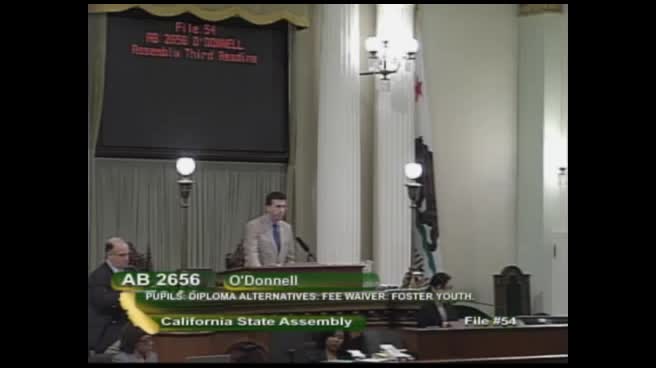 2MIN
Assembly Floor
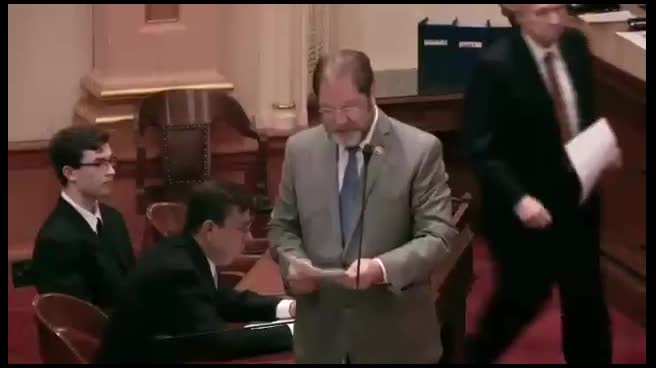 2MIN
Senate Floor
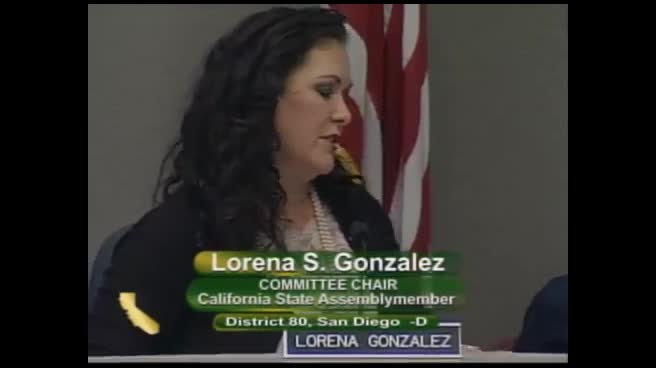 6MIN
Assembly Standing Committee on Appropriations
Bill Author

Bill Co-Author(s):