AB 1950: Civil actions: mediation.
- Session Year: 2025-2026
- House: Assembly
- Latest Version Date: 2026-08-27
Current Status:
Passed
(2026-08-27: Chaptered by Secretary of State - Chapter 135, Statutes of 2026.)
Introduced
In Committee
Awaiting First Chamber Vote
Passed First Chamber
In Committee
Awaiting Second Chamber Vote
Passed Second Chamber
Enacted
Existing law authorizes the presiding judge, or a judge designated as an alternative to judicial arbitration, of the courts of the County of Los Angeles to submit to mediation any civil case in which arbitration is otherwise required, as specified. Beginning on January 1, 2027, existing law will prohibit the court from ordering a case into mediation unless, among other required conditions, the amount in controversy does not exceed $75,000.
This bill would authorize the Superior Court of the County of Los Angeles to issue an order permitting any case into mediation, notwithstanding the $75,000 limitation on the amount in controversy described above. The bill would require any case submitted to mediation pursuant to such order to meet all mandatory conditions to qualify for mediation, other than the limitation on the amount in controversy. The bill would require all cases ordered to mediation to be entitled up to 3 hours of no-cost mediation services provided by a court-sanctioned mediation program. The bill would authorize the parties to appear remotely. The bill would also prohibit a mediation ordered pursuant to these provisions from delaying or serving as grounds to continue the trial date or otherwise to delay or continue any expedited procedures. If the presiding judge issues the order described above, the bill would require the court to transmit a report to the Assembly and Senate Committees on Judiciary on or before January 31, 2028, and annually thereafter, containing specified information about the cases submitted to mediation. The bill would repeal these provisions on January 1, 2032.
This bill would make legislative findings and declarations as to the necessity of a special statute for the County of Los Angeles.
Existing law authorizes the presiding judge, or a judge designated as an alternative to judicial arbitration, of the courts of the County of Los Angeles submit to mediation any civil case in which arbitration is otherwise required, as specified. Beginning on January 1, 2027, existing law will prohibit the court from ordering a case into mediation unless, among other required conditions, the amount in controversy does not exceed $75,000.
This bill would authorize the presiding judge of the Superior Court of the County of Los Angeles to issue an order authorizing that court to order any case into mediation, notwithstanding the $75,000 limitation on the amount in controversy described above. The bill would require any case submitted to mediation pursuant to the presiding judges order to meet all mandatory conditions to qualify for mediation, other than the limitation on the amount in controversy. If the presiding judge issues the order described above, the bill would require the court to transmit a report to the Assembly and Senate Committees on Judiciary on or before January 31, 2028, and annually thereafter, containing specified information about the cases submitted to mediation. The bill would repeal these provisions on January 1, 2032.This bill would authorize the Superior Court of the County of Los Angeles to issue an order permitting any case into mediation, notwithstanding the $75,000 limitation on the amount in controversy described above. The bill would require any case submitted to mediation pursuant to such order to meet all mandatory conditions to qualify for mediation, other than the limitation on the amount in controversy. The bill would require all cases ordered to mediation to be entitled up to 3 hours of no-cost mediation services provided by a court-sanctioned mediation program. The bill would authorize the parties to appear remotely. If the presiding judge issues the order described above, the bill would require the court to transmit a report to the Assembly and Senate Committees on Judiciary on or before January 31, 2028, and annually thereafter, containing specified information about the cases submitted to mediation. The bill would repeal these provisions on January 1, 2032.
This bill would make legislative findings and declarations as to the necessity of a special statute for the County of Los Angeles.
Existing law authorizes the presiding judge, or a judge designated as an alternative to judicial arbitration, of the courts of the County of Los Angeles submit to mediation any civil case in which arbitration is otherwise required, as specified. Beginning on January 1, 2027, existing law will prohibit the court from ordering a case into mediation unless, among other required conditions, the amount in controversy does not exceed $75,000.
This bill would authorize the presiding judge of the Superior Court of the County of Los Angeles to issue an order authorizing that court to order any case into mediation, notwithstanding the $75,000 limitation on the amount in controversy described above. The bill would require any case submitted to mediation pursuant to the presiding judges order to meet all mandatory conditions to qualify for mediation, other than the limitation on the amount in controversy. If the presiding judge issues the order described above, the bill would require the court to transmit a report to the Assembly and Senate Committees on Judiciary on or before January 31, 2028, and annually thereafter, containing specified information about the cases submitted to mediation. The bill would repeal these provisions on January 1, 2032.
(a)Notwithstanding the limitation on the amount in controversy established in paragraph (1) of subdivision (a) of Section 1775.5, the Superior Court of the County of Los Angeles may order any case into mediation.
(b)If the court issues an order pursuant to subdivision (a), all of the conditions prescribed by Section 1775.5, other than the limitation on the amount in controversy specified in paragraph (1) of subdivision (a) of that section, shall apply to a mediation conducted pursuant to the order.
(c)(1)All cases ordered to mediation pursuant to subdivision (a) shall be entitled up to three hours of no-cost mediation services provided by a court-sanctioned mediation program.
(2)Parties subject to the mediation pursuant to subdivision (a) may appear remotely.
(d)A mediation ordered pursuant to this section shall not delay or serve as grounds to continue the trial date or otherwise to delay or continue any expedited procedures, including, but not limited to, procedures pursuant to Section 36.
(e)If the presiding judge of the court issues an order pursuant to subdivision (a), the Superior Court of Los Angeles County shall transmit a report to the Assembly and Senate Committees on Judiciary on or before January 31, 2028, and annually thereafter, containing all of the following:
(1)The number of cases ordered to mediation pursuant to this section.
(2)The number of cases in which the trial date was delayed after being ordered to mediation.
(3)The number of cases in which a full or partial settlement was reached as a result of mediation.
(f)(1)To the extent feasible, the Superior Court of Los Angeles County shall report the data specified in subdivision (d) by case type.
(2)The report required by subdivision (d) shall comply with Section 9795 of the Government Code.
(g)Pursuant to Section 10231.5 of the Government Code, this section shall remain in effect until January 1, 2032, and as of that date is repealed.
SEC. 2.The Legislature finds and declares that a special statute is necessary and that a general statute cannot be made applicable within the meaning of Section 16 of Article IV of the California Constitution because the Superior Court of the County of Los Angeles has robust court-sanctioned and supported mediation resources available to assist with the Courts 67 percent increase in civil filings since 2022.
(a)Notwithstanding the limitation on the amount in controversy established in paragraph (1) of subdivision (a) of Section 1775.5, the Superior Court of the County of Los Angeles may order any case into mediation.
(b)If the court issues an order pursuant to subdivision (a), all of the conditions prescribed by Section 1775.5, other than the limitation on the amount in controversy specified in paragraph (1) of subdivision (a) of that section, shall apply to a mediation conducted pursuant to the order.
(c)(1)All cases ordered to mediation pursuant to subdivision (a) shall be entitled up to three hours of no-cost mediation services provided by a court-sanctioned mediation program.
(2)Parties subject to the mediation pursuant to subdivision (a) may appear remotely.
(d)A mediation ordered pursuant to this section shall not delay or serve as grounds to continue the trial date or otherwise to delay or continue any expedited procedures, including, but not limited to, procedures pursuant to Section 36.
(d)(e)If the presiding judge of the court issues an order pursuant to subdivision (a), the Superior Court of Los Angeles County shall transmit a report to the Assembly and Senate Committees on Judiciary on or before January 31, 2028, and annually thereafter, containing all of the following:
(1)The number of cases ordered to mediation pursuant to this section.
(2)The number of cases in which the trial date was delayed after being ordered to mediation.
(3)The number of cases in which a full or partial settlement was reached as a result of mediation.
(e)(f)(1)To the extent feasible, the Superior Court of Los Angeles County shall report the data specified in subdivision (d) by case type.
(2)The report required by subdivision (d) shall comply with Section 9795 of the Government Code.
(f)(g)Pursuant to Section 10231.5 of the Government Code, this section shall remain in effect until January 1, 2032, and as of that date is repealed.
SEC. 2.The Legislature finds and declares that a special statute is necessary and that a general statute cannot be made applicable within the meaning of Section 16 of Article IV of the California Constitution because the Superior Court of the County of Los Angeles has robust court-sanctioned and supported mediation resources available to assist with the Courts 67 percent increase in civil filings since 2022.
(a)Notwithstanding the limitation on the amount in controversy established in paragraph (1) of subdivision (a) of Section 1775.5, the presiding judge of the Superior Court of the County of Los Angeles may issue an order authorizing that court to order any case into mediation.
(b)If the presiding judge court issues an order pursuant to subdivision (a), all of the conditions prescribed by Section 1775.5, other than the limitation on the amount in controversy specified in paragraph (1) of subdivision (a) of that section, shall apply to a mediation conducted pursuant to the order.
(c)(1)All cases ordered to mediation pursuant to subdivision (a) shall be entitled up to three hours of no-cost mediation services provided by a court-sanctioned mediation program.
(2)Parties subject to the mediation pursuant to subdivision (a) may appear remotely.
(c)(d)If the presiding judge of the court issues an order pursuant to subdivision (a), the Superior Court of Los Angeles County shall transmit a report to the Assembly and Senate Committees on Judiciary on or before January 31, 2028, and annually thereafter, containing all of the following:
(1)The number of cases ordered to mediation. mediation pursuant to this section.
(2)The number of cases in which the trial date was delayed after being ordered to mediation.
(3)The number of cases in which a full or partial settlement was reached as a result of mediation.
(d)(e)(1)To the extent feasible, the Superior Court of Los Angeles County shall report the data specified in subdivision (c) (d) by case type.
(2)The report required by subdivision (c) (d) shall comply with Section 9795 of the Government Code.
(e)(f)Pursuant to Section 10231.5 of the Government Code, this section shall remain in effect until January 1, 2032, and as of that date is repealed.
SEC. 2.The Legislature finds and declares that a special statute is necessary and that a general statute cannot be made applicable within the meaning of Section 16 of Article IV of the California Constitution because the Superior Court of the County of Los Angeles has robust court-sanctioned and supported mediation resources available to assist with the Courts 67 percent increase in civil filings since 2022.
(a)Notwithstanding the limitation on the amount in controversy established in paragraph (1) of subdivision (a) of Section 1775.5, the presiding judge of the Superior Court of the County of Los Angeles may issue an order authorizing that court to order any case into mediation.
(b)If the presiding judge issues an order pursuant to subdivision (a), all of the conditions prescribed by Section 1775.5, other than the limitation on the amount in controversy specified in paragraph (1) of subdivision (a) of that section, shall apply to a mediation conducted pursuant to the order.
(c)If the presiding judge issues an order pursuant to subdivision (a), the Superior Court of Los Angeles County shall transmit a report to the Assembly and Senate Committees on Judiciary on or before January 31, 2028, and annually thereafter, containing all of the following:
(1)The number of cases ordered to mediation.
(2)The number of cases in which the trial date was delayed after being ordered to mediation.
(3)The number of cases in which a full or partial settlement was reached as a result of mediation.
(d)(1)To the extent feasible, the Superior Court of Los Angeles County shall report the data specified in subdivision (c) by case type.
(2)The report required by subdivision (c) shall comply with Section 9795 of the Government Code.
(e)Pursuant to Section 10231.5 of the Government Code, this section shall remain in effect until January 1, 2032, and as of that date is repealed.
|
Date
|
Status
|
|---|---|
| Aug 27, 2026 | Chaptered by Secretary of State - Chapter 135, Statutes of 2026. |
| Aug 27, 2026 | Approved by the Governor. |
| Aug 18, 2026 | Enrolled and presented to the Governor at 3:30 p.m. |
| Aug 11, 2026 | In Assembly. Ordered to Engrossing and Enrolling. |
| Aug 10, 2026 | Read third time. Passed. Ordered to the Assembly. (Ayes 39. Noes 0. Page 5322.). |
| Aug 10, 2026 | Read third time. Passed. Ordered to the Assembly. (Ayes 39. Noes 0.). |
| Aug 4, 2026 | Read second time. Ordered to Consent Calendar. |
| Aug 3, 2026 | From committee: Be ordered to second reading file pursuant to Senate Rule 28.8 and ordered to Consent Calendar. |
| Jun 24, 2026 | From committee: Do pass and re-refer to Com. on APPR. with recommendation: To Consent Calendar. (Ayes 13. Noes 0.) (June 23). Re-referred to Com. on APPR. |
| Jun 3, 2026 | Referred to Com. on JUD. |
| May 22, 2026 | In Senate. Read first time. To Com. on RLS. for assignment. |
| May 22, 2026 | Read third time. Passed. Ordered to the Senate. (Ayes 74. Noes 0. Page 5260.) |
| May 22, 2026 | Read third time. Passed. Ordered to the Senate. (Ayes 74. Noes 0.) |
| May 18, 2026 | Read second time. Ordered to third reading. |
| May 14, 2026 | From committee: Do pass. (Ayes 15. Noes 0.) (May 14). |
| Apr 15, 2026 | In committee: Set, first hearing. Referred to APPR. suspense file. |
| Mar 19, 2026 | Re-referred to Com. on APPR. |
| Mar 18, 2026 | Read second time and amended. |
| Mar 17, 2026 | From committee: Amend, and do pass as amended and re-refer to Com. on APPR. with recommendation: To Consent Calendar. (Ayes 12. Noes 0.) (March 17). |
| Mar 10, 2026 | Re-referred to Com. on JUD. |
| Mar 9, 2026 | From committee chair, with author's amendments: Amend, and re-refer to Com. on JUD. Read second time and amended. |
| Mar 2, 2026 | Referred to Com. on JUD. |
| Feb 14, 2026 | From printer. May be heard in committee March 16. |
| Feb 13, 2026 | Read first time. To print. |
|
Date
|
Description
|
Location
|
Votes
|
|
|---|---|---|---|---|
| Aug 10, 2026 | Consent Calendar 2nd AB1950 Harabedian | Senate Floor |
Passed |
|
| Jun 23, 2026 | Do pass, but first be re-referred to the Committee on [Appropriations] with the recommendation: To Consent Calendar | Senate Standing Committee on Judiciary |
Passed |
|
| May 22, 2026 | AB 1950 Harabedian Assembly Third Reading | Assembly Floor |
Passed |
|
| May 14, 2026 | Do pass. | Assembly Standing Committee on Appropriations |
Passed |
|
| Mar 17, 2026 | Do pass as amended, and be re-referred to the Committee on [Appropriations] with recommendation: To Consent Calendar | Assembly Standing Committee on Judiciary |
Passed |
This list shows positions taken on this bill by organizations on the date displayed, which is linked to the original source.
Positions by individuals are not included.
|
Organization
|
Position
|
Date
|
|---|---|---|
| Judicial Council of California | ** Support | |
| Superior Court of Los Angeles County | ** Support | |
| Superior Court of Los Angeles County (sponsor) | ** Support |
SENATE RULES COMMITTEE Office of Senate Floor Analyses (916) 651-4171 | AB 1950 |
CONSENT
Bill No: AB 1950
Author: Harabedian (D)
Amended: 3/18/26 in Assembly
Vote: 21
SENATE JUDICIARY COMMITTEE: 13-0, 6/23/26
AYES: Umberg, Niello, Allen, Ashby, Caballero, Durazo, Laird, Reyes, Stern, Valladares, Wahab, Weber Pierson, Wiener
SENATE APPROPRIATIONS COMMITTEE: Senate Rule 28.8
ASSEMBLY FLOOR: 74-0, 5/22/26 - See last page for vote
SUBJECT: Civil actions: mediation
SOURCE: Superior Court of Los Angeles County
DIGEST:
This bill establishes a pilot program authorizing the Superior Court of the County of Los Angeles to order a case into mediation, regardless of whether the amount in controversy exceeds the $75,000 limit under existing law.
ANALYSIS:
Existing law:
- Defines “mediation” as a process in which a neutral person or persons facilitate communication between the disputants to assist them in reaching a mutually acceptable agreement. (Code Civ. Proc. § 1775.1.)
- Prohibits the court from ordering a case into mediation where the amount in controversy exceeds $50,000 until January 1, 2027.
- The determination of the amount in controversy shall be made in the same manner as provided in Section 1141.16 and, in making this determination, the court shall not consider the merits of questions of liability, defenses, or comparative negligence. (Code Civ. Proc. § 1775.5.)
- Prohibits the court from ordering a case into mediation where the amount in controversy exceeds $75,000 on and after January 1, 2027.
- The determination of the amount in controversy shall be made in the same manner as provided in Section 1141.16 of the Code of Civil Procedure and, in making this determination, the court shall not consider the merits of questions of liability, defenses, or comparative negligence.
- Prohibits a case from being ordered into mediation unless all of the following conditions are met:
- the case has been set for trial;
- at least one party has notified the court of its interest in mediation;
- there are no ongoing discovery disputes impacting the case;
- the parties have been notified of their option to stipulate to a mutually agreeable mediator; and
- the parties have the ability to mediate through the use of remote technology upon the stipulation of all parties.
- If the parties do not stipulate to a mutually agreeable mediator within 15 days of the date the case is submitted to mediation, the court shall select a mediator, at no cost to the parties, pursuant to standards adopted by the Judicial Council.
- All parties and counsel attending the mediation shall comply with subdivision (a) of Rule 3.894 of the California Rules of Court, except that the parties may utilize any means of remote technology in accordance with the stipulation provided in paragraph (6) of subdivision (a).
- Mediation ordered shall conclude in the form of a mutually acceptable agreement or statement of nonagreement, as described in Section 1775.9 of the Code of Civil Procedure, no later than 120 days before the set trial date.
- Any mediation shall not delay the set trial date.
- The determination and any stipulation of the amount in controversy shall be without prejudice as to any finding on the value of the case. (Code Civ. Proc. § 1775.5.)
- Provides that the determination of the amount in controversy shall be made by the court and the case referred to arbitration after all named parties have appeared or defaulted. The determination shall be made at a case management conference or based upon review of the written submissions of the parties, as provided in rules adopted by the Judicial Council. The determination shall be based on the total amount of damages, and the judge may not consider questions of liability or comparative negligence or any other defense. At that time the court shall also make a determination whether any prayer for equitable relief is frivolous or insubstantial. The determination of the amount in controversy and whether any prayer for equitable relief is frivolous or insubstantial may not be appealable. No determination pursuant to this section shall be made if all parties stipulate in writing that the amount in controversy exceeds the amount specified. The determination and any stipulation of the amount in controversy shall be without prejudice to any finding on the value of the case by an arbitrator or in a subsequent trial de novo. (Code Civ. Proc. § 1141.16.)
- Provides that in the courts of the County of Los Angeles and in other courts that elect to apply this section of law, all at-issue civil actions in which arbitration is otherwise required, whether or not the action includes a prayer for equitable relief, may be submitted to mediation by the presiding judge as an alternative to judicial arbitration. Any civil action otherwise within the scope of this title in which a party to the action is a public agency or public entity may be submitted to mediation. (Code Civ. Proc. § 1775.3.)
This bill:
- Establishes a pilot program for the Superior Court of Los Angeles County that authorizes a court to order cases to mediation regardless of the amount in controversy requirement of $75,000.
- All other requirements under existing Section 1775.5 of the Code of Civil Procedure must still be met.
- Provides that any case ordered to mediation under the pilot program is entitled to up to three hours of no-cost mediation services provided by a court-sanctioned mediation program.
- Authorizes parties subject to mediation to appear remotely.
- Prohibits any mediation ordered from delaying or serving as grounds to continue the set trial date or otherwise delay or continue any expedited procedures.
- Requires the Superior Court of Los Angeles County to transmit a report to the Assembly and Senate Committees on Judiciary on or before January 31, 2028, and annually thereafter, containing all of the following information regarding any case ordered to mediation:
- the number of cases ordered to mediation;
- the number of cases in which the trial date was delayed after being ordered to mediation; and
- the number of cases in which a full or partial settlement was reached as a result of mediation.
- Requires, to the extent feasible, that the Superior Court of Los Angeles report the data in 5) by case type.
- Repeals these provisions on January 1, 2032.
Comments
“Mediation” is the process in which a neutral person or persons facilitate communication between the disputants to assist them in reaching a mutually acceptable agreement. (Code Civ. Proc. § 1775.1.) The law currently provides a narrow authorization for courts to force a case into mediation without the parties consent. (Code Civ. Proc. § 1775.5.) The law provides that in the courts of the County of Los Angeles and in other courts that elect to do so, all at-issue civil actions in which arbitration is otherwise required may be submitted to mediation, as provided. (Code Civ. Proc. § 1775.3.)
Beginning on January 1, 2027, a court is prohibited from ordering a case into meditation if the amount in controversy exceeds $75,000 and certain conditions are not met. These conditions include:
- that the case has been set for trial;
- that at least one party has notified the court of its interest in mediation;
- that there are no ongoing discovery disputes impacting the case;
- that the parties have been notified of their option to stipulate to a mutually agreeable mediator; and
- that the parties have the ability to mediate through the use of remote technology upon the stipulation of all parties. (Code Civ. Proc. § 1775.5.)
If the parties do not stipulate to a mutually agreeable mediator within 15 days of the date the case is submitted to mediation, the court must select a mediator, at no cost to the parties, pursuant to standards adopted by the Judicial Council. If mediation is ordered under these provisions, all parties and attorneys of record must attend all mediation sessions and, if any party is insured under a policy of insurance that provides or may provide coverage for a claim that is a subject of the action, a representative of the insurer with authority to settle or recommend settlement of the claim must attend all mediation sessions. Attendance may be through the use of remote technology upon the stipulation of the parties. Any ordered mediation cannot delay the set trial date. The determination and any stipulation of the amount in controversy is to be without prejudice as to any finding on the value of the case.
This bill seeks to establish a pilot program for the Superior Court of Los Angeles County that would allow cases to be ordered to mediation regardless of the amount in controversy. All other conditions of Section 1775.5 would still apply. Any case ordered to mediation under the pilot program would be entitled to up to three hours of no-cost mediation services provided by a court-sanctioned mediation program. Parties subject to mediation under the bill are allowed to appear remotely. Any mediation ordered cannot delay or serve as grounds to continue the trial date or otherwise delay or continue any expedited procedures.
In order to ensure that data on the pilot program is collected, the Superior Court of Los Angeles County is required to transmit a report to the Assembly and Senate Committees on Judiciary on or before January 31, 2028, and annually thereafter, containing all of the following information regarding any case ordered to mediation:
- the number of cases ordered to mediation;
- the number of cases in which the trial date was delayed after being ordered to mediation; and
- the number of cases in which a full or partial settlement was reached as a result of mediation.
To the extent feasible, the Superior Court of Los Angeles County is also required to report the data by case type. This data will allow the Legislature to review the pilot project and whether or not removing the amount on the case in controversy for mandatory mediation produces positive results. The pilot project sunsets on January 1, 2032.
The sponsor of the bill, the Superior Court of Los Angeles County, notes that over the past three years, “civil filings in Los Angeles County – both limited and unlimited – have surged by approximately 67 percent. In the past year alone, the Court’s Civil Division received more than 110,000 new unlimited civil filings and nearly 175,000 new limited civil filings. On average, a new civil case is filed in our Court approximately every two minutes of every working day.” They argue that the current threshold does not take into account regional differences around the state that affect courts, factors which are significant in Los Angeles County, including case volume, court capacity, and cost of living.
The Superior Court of Los Angeles County, the sponsor of the bill, writes:
[…] Although California’s mandatory mediation threshold will increase to $75,000 on January 1, 2027, most civil filings in Los Angeles County already exceed that amount. As a result, the Court and litigants in our jurisdiction are unlikely to realize substantial benefits from the statutory change. Moreover, a single statewide monetary threshold does not reflect the significant differences in case volume, court capacity, and economic conditions among California’s counties, differences that are particularly pronounced in a jurisdiction as large and complex as Los Angeles County.
This bill builds on the Court’s substantial investment in alternative dispute resolution. Through its Alternative Dispute Resolution (ADR) Office and the launch of its digital ADR platform in 2025, the Court has expanded access to mediation and streamlined the referral process for litigants. A Judicial Council evaluation found that mediation achieved an approximately 50 percent resolution rate, reduced trial rates by 30 percent, and shortened time to resolution by an average of 23 days. These outcomes reduce litigation costs, conserve judicial resources, and improve timely access to justice for all court users. […]
FISCAL EFFECT: Appropriation: No Fiscal Com.: Yes Local: No
Superior Court of Los Angeles County (source)
Judicial Council of California
OPPOSITION: (Verified 8/4/26)
None received
ARGUMENTS IN SUPPORT: The author writes:
AB 1950 establishes a Los Angeles County–specific pilot program to expand access to court-ordered mediation and improve civil case resolution. Between 2022 and 2025, unlimited civil filings increased by 39 percent, causing immense pressure on the court system.
In response to this rapid caseload growth, AB 1950 moves civil cases into early, collaborative mediation thereby reducing trial court dockets and judicial backlog. This approach will accelerate access to justice and lower costs for both litigants and the court system. By expanding access to mediation and prioritizing early resolution, AB 1950 advances a more efficient, equitable, and responsive civil justice system for Los Angeles County.
ASSEMBLY FLOOR: 74-0, 5/22/26
AYES: Addis, Aguiar-Curry, Ahrens, Alanis, Alvarez, Ávila Farías, Bains, Bauer-Kahan, Bennett, Berman, Boerner, Bonta, Bryan, Calderon, Caloza, Carrillo, Castillo, Connolly, Davies, DeMaio, Dixon, Elhawary, Ellis, Flora, Fong, Gallagher, Garcia, Gipson, Jeff Gonzalez, Mark González, Hadwick, Haney, Harabedian, Hart, Hoover, Irwin, Jackson, Johnson, Kalra, Krell, Lackey, Lee, Lowenthal, Macedo, McKinnor, Muratsuchi, Nguyen, Ortega, Pacheco, Papan, Patel, Patterson, Pellerin, Petrie-Norris, Quirk-Silva, Ramos, Ransom, Michelle Rodriguez, Rogers, Blanca Rubio, Sanchez, Schiavo, Schultz, Sharp-Collins, Solache, Soria, Stefani, Tangipa, Valencia, Wallis, Ward, Wilson, Zbur, Rivas
NO VOTE RECORDED: Arambula, Chen, Gabriel, Celeste Rodriguez, Ta, Wicks
Prepared by: Amanda Mattson / JUD. / (916) 651-4113
8/5/26 15:04:14
**** END ****
Senator Thomas Umberg, Chair
2025-2026 Regular Session
Bill No: AB 1950 (Author:Harabedian)
Version: March 18, 2026
Hearing Date: June 23, 2026
Fiscal: Yes
Urgency: No
Consultant: AM
SUBJECT
Civil actions: mediation
DIGEST
This bill establishes a pilot program authorizing the Superior Court of the County of Los Angeles to order a case into mediation, regardless of whether the amount in controversy exceeds the $75,000 limit under existing law.
EXECUTIVE SUMMARY
“Mediation” means a process in which a neutral person or persons facilitate communication between the disputants to assist them in reaching a mutually acceptable agreement. Generally, mediation is entered into voluntarily by the parties to a dispute. However, existing law provides a limited authorization for courts to order the parties to an action into mediation. Beginning January 1, 2027, courts may not order a case into mediation if the amount in controversy exceeds $75,000 and certain conditions are not met. The threshold limit was increased last year in AB 1523 (Judiciary Committee, Ch. 201, Stats. 2025). Despite this recent increase, the author and sponsor of the bill posit that this amount leaves too many cases pending in Los Angeles County ineligible for mandatory mediation. They contend that by allowing the Superior Court of Los Angeles County to order more cases to mandatory mediation, it will grant the court important case management tools while also expanding access to justice for litigants.
The bill is sponsored by the Superior Court of Los Angeles County and supported by the Judicial Council of California. No timely opposition was received by the Committee.
PROPOSED CHANGES TO THE LAW
Existing law:
- Defines “mediation” as a process in which a neutral person or persons facilitate communication between the disputants to assist them in reaching a mutually acceptable agreement. (Code Civ. Proc. § 1775.1.)
- Prohibits the court from ordering a case into mediation where the amount in controversy exceeds $50,000 until January 1, 2027.
- The determination of the amount in controversy shall be made in the same manner as provided in Section 1141.16 and, in making this determination, the court shall not consider the merits of questions of liability, defenses, or comparative negligence. (Code Civ. Proc. § 1775.5.)
- Prohibits the court from ordering a case into mediation where the amount in controversy exceeds $75,000 on and after January 1, 2027.
- The determination of the amount in controversy shall be made in the same manner as provided in Section 1141.16 of the Code of Civil Procedure and, in making this determination, the court shall not consider the merits of questions of liability, defenses, or comparative negligence.
- Prohibits a case from being ordered into mediation unless all of the following conditions are met:
- the case has been set for trial;
- at least one party has notified the court of its interest in mediation;
- there are no ongoing discovery disputes impacting the case;
- the parties have been notified of their option to stipulate to a mutually agreeable mediator; and
- the parties have the ability to mediate through the use of remote technology upon the stipulation of all parties.
- If the parties do not stipulate to a mutually agreeable mediator within 15 days of the date the case is submitted to mediation, the court shall select a mediator, at no cost to the parties, pursuant to standards adopted by the Judicial Council.
- All parties and counsel attending the mediation shall comply with subdivision (a) of Rule 3.894 of the California Rules of Court, except that the parties may utilize any means of remote technology in accordance with the stipulation provided in paragraph (6) of subdivision (a).
- Mediation ordered shall conclude in the form of a mutually acceptable agreement or statement of nonagreement, as described in Section 1775.9 of the Code of Civil Procedure, no later than 120 days before the set trial date.
- Any mediation shall not delay the set trial date.
- The determination and any stipulation of the amount in controversy shall be without prejudice as to any finding on the value of the case. (Code Civ. Proc. § 1775.5.)
- Provides that the determination of the amount in controversy shall be made by the court and the case referred to arbitration after all named parties have appeared or defaulted. The determination shall be made at a case management conference or based upon review of the written submissions of the parties, as provided in rules adopted by the Judicial Council. The determination shall be based on the total amount of damages, and the judge may not consider questions of liability or comparative negligence or any other defense. At that time the court shall also make a determination whether any prayer for equitable relief is frivolous or insubstantial. The determination of the amount in controversy and whether any prayer for equitable relief is frivolous or insubstantial may not be appealable. No determination pursuant to this section shall be made if all parties stipulate in writing that the amount in controversy exceeds the amount specified. The determination and any stipulation of the amount in controversy shall be without prejudice to any finding on the value of the case by an arbitrator or in a subsequent trial de novo. (Code Civ. Proc. § 1141.16.)
- Provides that in the courts of the County of Los Angeles and in other courts that elect to apply this section of law, all at-issue civil actions in which arbitration is otherwise required, whether or not the action includes a prayer for equitable relief, may be submitted to mediation by the presiding judge as an alternative to judicial arbitration. Any civil action otherwise within the scope of this title in which a party to the action is a public agency or public entity may be submitted to mediation. (Code Civ. Proc. § 1775.3.)
This bill:
- Establishes a pilot program for the Superior Court of Los Angeles County that authorizes a court to order cases to mediation regardless of the amount in controversy requirement of $75,000.
- All other requirements under existing Section 1775.5 of the Code of Civil Procedure must still be met.
- Provides that any case ordered to mediation under the pilot program is entitled to up to three hours of no-cost mediation services provided by a court-sanctioned mediation program.
- Authorizes parties subject to mediation to appear remotely.
- Prohibits any mediation ordered from delaying or serving as grounds to continue the set trial date or otherwise delay or continue any expedited procedures.
- Requires the Superior Court of Los Angeles County to transmit a report to the Assembly and Senate Committees on Judiciary on or before January 31, 2028, and annually thereafter, containing all of the following information regarding any case ordered to mediation:
- the number of cases ordered to mediation;
- the number of cases in which the trial date was delayed after being ordered to mediation; and
- the number of cases in which a full or partial settlement was reached as a result of mediation.
- Requires, to the extent feasible, that the Superior Court of Los Angeles report the data in 5) by case type.
- Repeals these provisions on January 1, 2032.
COMMENTS
- Stated need for the bill
The author writes:
AB 1950 establishes a Los Angeles County–specific pilot program to expand access to court-ordered mediation and improve civil case resolution. Between 2022 and 2025, unlimited civil filings increased by 39 percent, causing immense pressure on the court system.
In response to this rapid caseload growth, AB 1950 moves civil cases into early, collaborative mediation thereby reducing trial court dockets and judicial backlog. This approach will accelerate access to justice and lower costs for both litigants and the court system. By expanding access to mediation and prioritizing early resolution, AB 1950 advances a more efficient, equitable, and responsive civil justice system for Los Angeles County.
- This bill establishes a Los Angeles County–specific pilot program to expand access to court-ordered mediation
“Mediation” is the process in which a neutral person or persons facilitate communication between the disputants to assist them in reaching a mutually acceptable agreement. (Code Civ. Proc. § 1775.1.) The law currently provides a narrow authorization for courts to force a case into mediation without the parties consent. (Code Civ. Proc. § 1775.5.) The law provides that in the courts of the County of Los Angeles and in other courts that elect to do so, all at-issue civil actions in which arbitration is otherwise required may be submitted to mediation, as provided. (Code Civ. Proc. § 1775.3.)
Beginning on January 1, 2027, a court is prohibited from ordering a case into meditation if the amount in controversy exceeds $75,000 and certain conditions are not met. These conditions include:
- that the case has been set for trial;
- that at least one party has notified the court of its interest in mediation;
- that there are no ongoing discovery disputes impacting the case;
- that the parties have been notified of their option to stipulate to a mutually agreeable mediator; and
- that the parties have the ability to mediate through the use of remote technology upon the stipulation of all parties. (Code Civ. Proc. § 1775.5.)
If the parties do not stipulate to a mutually agreeable mediator within 15 days of the date the case is submitted to mediation, the court must select a mediator, at no cost to the parties, pursuant to standards adopted by the Judicial Council. If mediation is ordered under these provisions, all parties and attorneys of record must attend all mediation sessions and, if any party is insured under a policy of insurance that provides or may provide coverage for a claim that is a subject of the action, a representative of the insurer with authority to settle or recommend settlement of the claim must attend all mediation sessions. Attendance may be through the use of remote technology upon the stipulation of the parties. Any ordered mediation cannot delay the set trial date. The determination and any stipulation of the amount in controversy is to be without prejudice as to any finding on the value of the case.
This bill seeks to establish a pilot program for the Superior Court of Los Angeles County that would allow cases to be ordered to mediation regardless of the amount in controversy. All other conditions of Section 1775.5 would still apply. Any case ordered to mediation under the pilot program would be entitled to up to three hours of no-cost mediation services provided by a court-sanctioned mediation program. Parties subject to mediation under the bill are allowed to appear remotely. Any mediation ordered cannot delay or serve as grounds to continue the trial date or otherwise delay or continue any expedited procedures.
In order to ensure that data on the pilot program is collected, the Superior Court of Los Angeles County is required to transmit a report to the Assembly and Senate Committees on Judiciary on or before January 31, 2028, and annually thereafter, containing all of the following information regarding any case ordered to mediation:
- the number of cases ordered to mediation;
- the number of cases in which the trial date was delayed after being ordered to mediation; and
- the number of cases in which a full or partial settlement was reached as a result of mediation.
To the extent feasible, the Superior Court of Los Angeles County is also required to report the data by case type. This data will allow the Legislature to review the pilot project and whether or not removing the amount on the case in controversy for mandatory mediation produces positive results. The pilot project sunsets on January 1, 2032.
The sponsor of the bill, the Superior Court of Los Angeles County, notes that over the past three years, “civil filings in Los Angeles County – both limited and unlimited – have surged by approximately 67 percent. In the past year alone, the Court’s Civil Division received more than 110,000 new unlimited civil filings and nearly 175,000 new limited civil filings. On average, a new civil case is filed in our Court approximately every two minutes of every working day.” They argue that the current threshold does not take into account regional differences around the state that affect courts, factors which are significant in Los Angeles County, including case volume, court capacity, and cost of living.
- Stakeholder statements
The Superior Court of Los Angeles County, the sponsor of the bill, writes:
[…] Although California’s mandatory mediation threshold will increase to $75,000 on January 1, 2027, most civil filings in Los Angeles County already exceed that amount. As a result, the Court and litigants in our jurisdiction are unlikely to realize substantial benefits from the statutory change. Moreover, a single statewide monetary threshold does not reflect the significant differences in case volume, court capacity, and economic conditions among California’s counties, differences that are particularly pronounced in a jurisdiction as large and complex as Los Angeles County.
AB 1950 builds on the Court’s substantial investment in alternative dispute resolution. Through its Alternative Dispute Resolution (ADR) Office and the launch of its digital ADR platform in 2025, the Court has expanded access to mediation and streamlined the referral process for litigants. A Judicial Council evaluation found that mediation achieved an approximately 50 percent resolution rate, reduced trial rates by 30 percent, and shortened time to resolution by an average of 23 days. These outcomes reduce litigation costs, conserve judicial resources, and improve timely access to justice for all court users. […]
SUPPORT
Superior Court of Los Angeles County (sponsor)
Judicial Council of California
OPPOSITION
None known
RELATED LEGISLATION
Pending Legislation: None known.
Prior Legislation:
AB 1523 (Judiciary Committee, Ch. 201, Stats. 2025) raised the threshold under which a court may order a case into mediation to $75,000 if certain conditions are met beginning January 1, 2027.
SB 1141 (Niello, 2023) would have raised the threshold under which a court may order a case into mediation to $150,000. SB 1141 failed passage in the Assembly Judiciary Committee.
SB 401 (Lockyer, Ch. 1261, Stats. 1993) required the courts in Los Angeles County and authorized others to implement a prescribed program of mediation of specified civil matters, where the amount in controversy does not exceed $50,000.
PRIOR VOTES
Assembly Floor (Ayes 74, Noes 0)
Assembly Appropriations Committee (Ayes 15, Noes 0)
Assembly Judiciary Committee (Ayes 12, Noes 0)
**************
ASSEMBLY THIRD READING
ATR Bill Id:AB 1950
Author:(Harabedian)
As Amended Ver:March 18, 2026
Majority vote
SUMMARY
Authorizes the Superior Court of Los Angeles County to conduct a pilot program ordering any civil matter into mediation, notwithstanding the general $75,000 amount in controversy limitation permitting civil cases to be ordered to mediation.
Major Provisions
- Provides that notwithstanding the existing $75,000 amount in controversy limit for ordering cases to mediation, the Superior Court of Los Angeles County may order any case into mediation, as specified.
- Provides that if the Los Angeles County Superior Court issues an order permitting the provisions of 1) to take effect, all other restrictions on mandatory mediation in existing law remain in effect.
- Requires all mediations conducted pursuant to 1) to comply with the following:
- All cases ordered to mediation are to be entitled up to three hours of no-cost mediation services provided by a court-sanctioned mediation program;
- Parties subject to the mediation may appear remotely; and
- A mediation ordered pursuant to 1) cannot delay or serve as grounds to continue the trial date or delay or continue any expedited procedures.
- Requires, if the Los Angeles County Superior Court issues an order permitting the provisions of 1) to take effect, the court to transmit a report to the Assembly and Senate Committees on Judiciary on or before January 31, 2028, and annually thereafter, containing all of the following:
- The number of cases ordered to mediation pursuant to 1);
- The number of cases in which the trial date was delayed after being ordered to mediation;
- The number of cases in which a full or partial settlement was reached as a result of mediation.
- Requires, if feasible, the information provided pursuant to 4) to be reported by case type.
- Makes various findings and declarations to declare this bill is a special statute.
- Provides that provisions of the bill are to sunset on January 1, 2032.
COMMENTS
Court-ordered mediation is the process whereby the judge overseeing a civil action sends the dispute to a neutral person or facilitator before trial seeking to promote productive communication between the disputants to assist them in reaching a mutually acceptable agreement. Seeking to ensure that many civil matters remained eligible for mediation following the 2023 adjustment of the amount in controversy levels for unlimited civil cases, last year the Legislature approved AB 1523 (Committee on Judiciary) Chapter 201, Statutes of 2025, to increase the jurisdictional limit on cases that could be referred to mediation.
Notwithstanding AB 1523, the Superior Court of Los Angeles County requested additional flexibility to order matters into mediation given the unique size and nature of the Los Angeles County court system. To that end, this bill authorizes the Superior Court of Los Angeles County to conduct a pilot program to study the impact of removing the jurisdictional limit on ordering civil matters into mediation.
Under the correct circumstances, mediation can facilitate the resolution of a civil dispute without a trial. For over 30 years, California’s civil courts have had the ability to direct some civil actions to mediation before a case proceeds to trial. The mediation process is designed to force all of the parties to a civil action to work with a trained mediator to see if a mutually agreeable solution to the dispute can be reached. When all of the parties to a matter are open to mediation, the process can be successful. However, given the potentially contentious nature of litigation, frequently, the parties are not prepared to amicably resolve their differences, especially if mediation is ordered before all discovery has been conducted and if other procedural disputes are still playing out. In cases in which the parties are not amenable to mediation, the process frequently serves as a waste of time and money that delays the inevitable trial.
Unfortunately, outside of a twenty-plus year old study, there is little information outlining the success or failure rates for mediation in California's civil justice system. While the Judicial Council of California tracks when civil cases are disposed of, and reports that 80 percent of unlimited cases in recent years were disposed of before trial, the Council does not specify how pretrial resolutions were reached. (2024 Court Statistics Report, Judicial Council of California (2024) at p. 51.) Accordingly, the 80 percent of cases resolved before trial may have been settled without mediation, dismissed for lack of evidence, or otherwise resolved. Nonetheless, recognizing that mediation can serve as a useful tool in resolving civil matters, last year the Judiciary Committee authored the aforementioned AB 1523 to ensure that new jurisdictional limits for unlimited civil matters would not forestall the use of mediation.
Due to its size, the Superior Court of Los Angeles County faces unique challenges but has also proved more innovative than many other jurisdictions in California. The Superior Court of Los Angeles County is the largest trial court in the nation. The Superior Court operates 36 courthouses, conducts nearly 2,500 jury trials annually, employes more than 4,600 staff, and maintains an annual budget well in excess of one billion dollars. (Superior Court of Los Angeles County, About the Court, available at: https://www.lacourt.ca.gov/pages/lp/court-communications/tp/about-the-court.) Given the massive workload facing the judicial officers in Los Angeles County, the Superior Court notes that the AB 1523 framework does not enable the court to move a sufficient number of civil matters into mediation, thus causing significant delays in processing civil cases through the justice system. The court also notes that due to the higher cost of living in Los Angeles, when compared to some of the state's smaller and more rural counties, the existing $75,000 amount in controversy cap for mandated mediation also disqualifies a significant number of cases pending before the Superior Court of Los Angeles County's civil departments.
Seeking to manage this massive workload, the Superior Court of Los Angeles County has been far more proactive than other superior courts across the state at utilizing data-driven strategies to generate efficiencies in day-to-day court operations. In a Fall 2025 presentation to Judiciary Committee staff, the Los Angeles County Superior Court highlighted its innovative partnership with Stanford Law School to utilize data backed solutions to promote access to justice. Unlike most superior courts, Los Angeles County has analyzed case filing and outcome data to develop technological tools intended to help litigants. For example, a new system deployed by the court aims to reduce the rate of default judgments in debt collection and unlawful detainer actions. The Superior Court of Los Angeles County is now utilizing data to track the effectiveness of the new system. In conversations with the Committee, the Superior Court of Los Angeles County notes that it has the capacity to bring a similar granular-level data analysis to mandated mediation and associated case outcomes.
This bill authorizes the Superior Court of Los Angeles County to conduct a pilot program to study the effect of eliminating the amount in controversy cap from mediation. The bill maintains all of the procedural safeguards surrounding mediation adopted in AB 1523, provides that litigants must be provided several hours of free mediation services, and clarifies the use of remote technology for conducting mediations. The bill also ensures that trials will not be delayed by mediation. Finally, building on the Superior Court of Los Angeles County's impressive data collection and analysis capabilities, this bill requires the court to submit to the Legislature annual reports on the effectiveness of the pilot program, including data regarding how many cases were sent to mediation, the success rate of mediation, and any scheduling issues caused by the use of mandatory mediation. This bill would sunset in 2032, although the data generated by Los Angeles County may be useful in debating the expanded use of mandatory mediation statewide.
According to the Author
AB 1950 establishes a Los Angeles County–specific pilot program to expand access to court-ordered mediation and improve civil case resolution. Between 2022 and 2025, unlimited civil filings increased by 39 percent, causing immense pressure on the court system.
In response to this rapid caseload growth, AB 1950 moves civil cases into early, collaborative mediation thereby reducing trial court dockets and judicial backlog. This approach will accelerate access to justice and lower costs for both litigants and the court system. By expanding access to mediation and prioritizing early resolution, AB 1950 advances a more efficient, equitable, and responsive civil justice system for Los Angeles County.
Arguments in Support
This bill is supported by the Superior Court of Los Angeles County. In support of the bill, the court writes:
Over the past three years, civil filings in Los Angeles County – both limited and unlimited – have surged by approximately 67 percent. In the past year alone, the Court’s Civil Division received more than 110,000 new unlimited civil filings and nearly 175,000 new limited civil filings. On average, a new civil case is filed in our Court approximately every two minutes of every working day.
Because the amount in controversy in the majority of our civil filings exceeds the recently increased $75,000 threshold for mandatory mediation (effective January 1, 2027), the Court and litigants will be unable to meaningfully benefit from recent statutory changes. In addition, the current ‘one-size-fits-all’ threshold does not adequately account for regional differences in case volume, court capacity, and cost of living. Factors that are particularly significant in a jurisdiction as large and complex as Los Angeles County.
AB 1950 would complement the substantial investments the Court has made in mediation programs. Central to these efforts is the Court’s dedicated Alternative Dispute Resolution (ADR) Office, which oversees a broad network of programs and a custom digital platform launched in 2025 to expand mediation access and efficiency. The return on these investments has been significant. A Judicial Council evaluation of court mediation programs found an approximately 50% resolution rate, a 30% reduction in the trial rate, and a 23-day reduction in the time to resolution. These outcomes translate to into lower litigation costs for parties and more timely access to justice.
From a judicial perspective, AB 1950 provides the bench with an essential case management tool. Rather than being constrained by an arbitrary monetary threshold, judicial officers would be able to exercise their discretion to determine when mediation is appropriate based on the specific circumstances of each case.
The Superior Court of Los Angeles County's mission is to serve our community by providing equal access to justice through the fair, timely, and effective resolution of all cases. AB 1950 would help advance that mission by expanding opportunities for parties to resolve disputes efficiently while preserving their right to trial. For these reasons, the Court respectfully requests your AYE vote for AB 1950.
Arguments in Opposition
None on file
FISCAL COMMENTS
According to the Assembly Appropriations Committee, cost savings (Trial Court Trust Fund) of an unknown, but likely significant amount. Los Angeles Superior Court’s current Alternative Dispute Resolution program is a free three-hour session offered to eligible litigants and funded via base budget funds from its annual trial court budget allocation. The mediators in the program serve pro bono. The court estimates that 500 to 1,000 additional cases would be ordered to mediation if this bill were enacted. Based on historical trends, the court estimates that approximately 50% of those cases will settle, resulting in 250 to 500 fewer cases going to trial. The anticipated cost savings from judicial time and courtroom resources would be significant.
Nonetheless, consistent with the committee rules, this bill is a candidate for the committee’s suspense file because it has the primary purpose of creating a pilot program.
VOTES
ASM JUDICIARY: 12-0-0
YES: Kalra, Macedo, Bauer-Kahan, Bryan, Connolly, Dixon, Harabedian, Pacheco, Papan, Sanchez, Stefani, Zbur
ASM APPROPRIATIONS: 15-0-0
YES: Wicks, Hoover, Aguiar-Curry, Calderon, Caloza, Dixon, Fong, Mark González, Krell, Pacheco, Pellerin, Sharp-Collins, Solache, Ta, Tangipa
UPDATED
VERSION: March 18, 2026
CONSULTANT: Nicholas Liedtke / JUD. / (916) 319-2334 FN: 0002611
Date of Hearing: April 15, 2026
ASSEMBLY COMMITTEE ON APPROPRIATIONS
Buffy Wicks, Chair
ABPCA Bill Id:AB 1950
Author:(Harabedian) – As Amended Ver:March 18, 2026
Policy Committee: | Judiciary | Vote: | 12 - 0 |
|
| ||
|
|
Urgency: No State Mandated Local Program: No Reimbursable: No
SUMMARY:
This bill authorizes the Superior Court of Los Angeles County to conduct a pilot program ordering any civil case into mediation regardless of the amount in controversy, notwithstanding the existing statewide $75,000 cap.
FISCAL EFFECT:
Cost savings (Trial Court Trust Fund) of an unknown, but likely significant amount. Los Angeles Superior Court’s current Alternative Dispute Resolution program is a free three-hour session offered to eligible litigants and funded via base budget funds from its annual trial court budget allocation. The mediators in the program serve pro bono. The court estimates that 500 to 1,000 additional cases would be ordered to mediation if this bill were enacted. Based on historical trends, the court estimates that approximately 50% of those cases will settle, resulting in 250 to 500 fewer cases going to trial. The anticipated cost savings from judicial time and courtroom resources would be significant.
Nonetheless, consistent with the committee rules, this bill is a candidate for the committee’s suspense file because it has the primary purpose of creating a pilot program.
COMMENTS:
Civil filings in Los Angeles County have surged approximately 67% since 2022, and the existing $75,000 mediation threshold leaves the majority of the court’s unlimited civil filings ineligible for court-ordered mediation. In 2025, AB 1523 (Committee on Judiciary), Chapter 201, increased the amount-in-controversy cap for court-ordered mediation from $50,000 to $75,000, effective January 1, 2027. The Superior Court of Los Angeles County — the largest trial court in the nation, processing nearly 294,000 combined civil filings in 2025 — contends that the $75,000 threshold still excludes too many cases from mediation given the county’s case volume and higher cost of living.
Analysis Prepared by: Shiran Zohar / APPR. / (916) 319-2081
Date of Hearing: March 17, 2026
ASSEMBLY COMMITTEE ON JUDICIARY
Ash Kalra, Chair
ABPCA Bill Id:AB 1950
Author:(Harabedian) – As Amended Ver:March 9, 2026
PROPOSED CONSENT (As Proposed to be Amended)
SUBJECT: Civil actions: mediation
KEY ISSUE: should the superior court of los angeles county be permitted to conduct a pilot program where any civil case may be sent to mandatory mediation, notwithstanding the state’s general amount in controversy limit of $75,000 for mandating mediation in civil matters?
SYNOPSIS
Civil litigation can be a costly and contentious undertaking. When conducted properly and commenced with buy-in from all parties, mediation can be a useful tool to resolve civil actions without the need for protracted litigation. When parties are unready or unwilling to mediate a dispute, however, it can be little more than a costly waste of time. Regardless of one’s thoughts about the merits of mediation, when the Legislature increased the amount in controversy limit for unlimited civil cases in 2023, with the passage of SB 71 (Umberg) Chap. 861, Stats. 2023, it inadvertently decreased the amount of unlimited civil cases eligible for court-mandated mediation. Seeking to preserve mandatory mediation as a tool to promote efficiency in the civil justice system, last year this Committee authored AB 1523 (Committee on Judiciary) Chap. 201, Stats. 2025, to increase the amount in controversy cap for sending cases to mediation to $75,000.
Despite the passage of AB 1523, the Superior Court of Los Angeles County contends that the $75,000 threshold still leaves many of the civil matters pending before that court ineligible for mediation. As the largest trial court system in the nation, the court notes that the $75,000 threshold is continuing to result in backlogs in the county’s civil docket as cases cannot be quickly resolved through mediation. To address the unique needs of the Superior Court of Los Angeles County, this bill would authorize the court to conduct a pilot program whereby any civil matter can be referred to mediation. Given that the Superior Court of Los Angeles County maintains a robust data tracking system most other superior courts in this state have not attempted to develop, this bill would task the court with reporting back to the Legislature on the success of the pilot program. This data will, hopefully, inform the statewide discussion on the use of mandatory mediation in civil litigation.
This bill is supported by the Superior Court of Los Angeles County who highlight the need to more effectively manage the court’s civil docket utilizing mediation. The bill has no registered opposition and proposed amendments appear to address any outstanding concerns stakeholders have expressed regarding the bill.
SUMMARY: Authorizes the Superior Court of Los Angeles County to conduct a pilot program ordering any civil matter into mediation, notwithstanding the general $75,000 amount in controversy limitation permitting civil cases to be ordered to mediation. Specifically, this bill:
- Provides that notwithstanding the existing $75,000 amount in controversy limit for ordering cases to mediation, the Superior Court of Los Angeles County may order any case into mediation, as specified.
- Provides that if the Los Angeles County Superior Court issues an order permitting the provisions of 1) to take effect, all other restrictions on mandatory mediation in existing law remain in effect.
- Requires all mediations conducted pursuant to 1) to comply with the following:
- All cases ordered to mediation are to be entitled up to three hours of no-cost mediation services provided by a court-sanctioned mediation program;
- Parties subject to the mediation may appear remotely; and
- A mediation ordered pursuant to 1) cannot delay or serve as grounds to continue the trial date or delay or continue any expedited procedures.
- Requires, if the Los Angeles County Superior Court issues an order permitting the provisions of 1) to take effect, the court to transmit a report to the Assembly and Senate Committees on Judiciary on or before January 31, 2028, and annually thereafter, containing all of the following:
- The number of cases ordered to mediation pursuant to 1);
- The number of cases in which the trial date was delayed after being ordered to mediation;
- The number of cases in which a full or partial settlement was reached as a result of mediation.
- Requires, if feasible, the information provided pursuant to 4) to be reported by case type.
- Makes various findings and declarations to declare this bill is a special statute.
- Provides that provisions of the bill are to sunset on January 1, 2032.
EXISTING LAW:
- Authorizes, beginning January 1, 2027, a court to order a case into mediation if all of the following conditions are met:
- The amount in controversy does not exceed seventy-five thousand dollars ($75,000), as specified;
- The case has been set for trial;
- At least one party has notified the court of its interest in mediation;
- There are no ongoing discovery disputes impacting the case;
- The parties have been notified of their option to stipulate to a mutually agreeable mediator; and
- The parties have the ability to mediate through the use of remote technology upon the stipulation of all parties. (Code of Civil Procedure Section 1775.5 (a).)
- Requires, if a matter has been referred to mediation pursuant to 1) and if the parties do not stipulate to a mutually agreeable mediator within 15 days of the date the case is submitted to mediation, the court to select a mediator, at no cost to the parties, pursuant to standards adopted by the Judicial Council. (Code of Civil Procedure section 1775.5 (b).)
- Requires all parties attending a mediation to adhere to specified Rules of Court except that the parties may utilize any means of remote technology in accordance with the stipulation in 1). (Code of Civil Procedure Section 1775.5 (c).)
- Requires any mediation mandated by 1) to conclude in the form of a mutually acceptable agreement or statement of nonagreement no later than 120 days before the trial date, as specified. (Code of Civil Procedure Section 1775.5 (d).)
- Clarifies that determination and any stipulation of the amount in controversy is to be without prejudice as to any finding on the value of the case. (Code of Civil Procedure Section 1775 (e).)
FISCAL EFFECT: As currently in print this bill is keyed fiscal.
COMMENTS: Court-ordered mediation is the process whereby the judge overseeing a civil action sends the dispute to a neutral person or facilitator before trial seeking to promote productive communication between the disputants to assist them in reaching a mutually acceptable agreement. Seeking to ensure that many civil matters remained eligible for mediation following the 2023 adjustment of the amount in controversy levels for unlimited civil cases, last year this Committee sponsored and approved AB 1523 (Committee on Judiciary) Chap. 201, Stats. 2025, to increase the jurisdictional limit on cases that could be referred to mediation.
Notwithstanding AB 1523, the Superior Court of Los Angeles County requested additional flexibility to order matters into mediation given the unique size and nature of the Los Angeles County court system. To that end, this bill authorizes the Superior Court of Los Angeles County to conduct a pilot program to study the impact of removing the jurisdictional limit on ordering civil matters into mediation. In support of this bill, the author states:
AB 1950 establishes a Los Angeles County–specific pilot program to expand access to court-ordered mediation and improve civil case resolution. Between 2022 and 2025, unlimited civil filings increased by 39 percent, causing immense pressure on the court system.
In response to this rapid caseload growth, AB 1950 moves civil cases into early, collaborative mediation thereby reducing trial court dockets and judicial backlog. This approach will accelerate access to justice and lower costs for both litigants and the court system. By expanding access to mediation and prioritizing early resolution, AB 1950 advances a more efficient, equitable, and responsive civil justice system for Los Angeles County.
Under the correct circumstances, mediation can facilitate the resolution of a civil dispute without a trial. For over 30 years, California’s civil courts have had the ability to direct some civil actions to mediation before a case proceeds to trial. The mediation process is designed to force all of the parties to a civil action to work with a trained mediator to see if a mutually agreeable solution to the dispute can be reached. When all of the parties to a matter are open to mediation, the process can be successful. However, given the potentially contentious nature of litigation, frequently, the parties are not prepared to amicably resolve their differences, especially if mediation is ordered before all discovery has been conducted and if other procedural disputes are still playing out. In cases in which the parties are not amenable to mediation, the process frequently serves as a waste of time and money that delays the inevitable trial.
Unfortunately, outside of a twenty-plus year old study, there is little information outlining the success or failure rates for mediation in California’s civil justice system. While the Judicial Council of California tracks when civil cases are disposed of, and reports that 80 percent of unlimited cases in recent years were disposed of before trial, the Council does not specify how pretrial resolutions were reached. (2024 Court Statistics Report, Judicial Council of California (2024) at p. 51.) Accordingly, the 80 percent of cases resolved before trial may have been settled without mediation, dismissed for lack of evidence, or otherwise resolved. Nonetheless, recognizing that mediation can serve as a useful tool in resolving civil matters, last year the Committee authored the aforementioned AB 1523 to ensure that new jurisdictional limits for unlimited civil matters would not forestall the use of mediation.
Due to its size, the Superior Court of Los Angeles County faces unique challenges but has also proved more innovative than many other jurisdictions in California. The Superior Court of Los Angeles County is the largest trial court in the nation. The Superior Court operates 36 courthouses, conducts nearly 2,500 jury trials annually, employes more than 4,600 staff, and maintains an annual budget well in excess of one billion dollars. (Superior Court of Los Angeles County, About the Court, available at: https://www.lacourt.ca.gov/pages/lp/court-communications/tp/about-the-court.) Given the massive workload facing the judicial officers in Los Angeles County, the Superior Court notes that the AB 1523 framework does not enable the court to move a sufficient number of civil matters into mediation, thus causing significant delays in processing civil cases through the justice system. The court also notes that due to the higher cost of living in Los Angeles, when compared to some of the state’s smaller and more rural counties, the existing $75,000 amount in controversy cap for mandated mediation also disqualifies a significant number of cases pending before the Superior Court of Los Angeles County’s civil departments.
Seeking to manage this massive workload, the Superior Court of Los Angeles County has been far more proactive than other superior courts across the state at utilizing data-driven strategies to generate efficiencies in day-to-day court operations. In a Fall 2025 presentation to Committee staff, the Los Angeles County Superior Court highlighted its innovative partnership with Stanford Law School to utilize data backed solutions to promote access to justice. Unlike most superior courts, Los Angeles County has analyzed case filing and outcome data to develop technological tools intended to help litigants. For example, a new system deployed by the court aims to reduce the rate of default judgments in debt collection and unlawful detainer actions. The Superior Court of Los Angeles County is now utilizing data to track the effectiveness of the new system. In conversations with the Committee, the Superior Court of Los Angeles County notes that it has the capacity to bring a similar granular-level data analysis to mandated mediation and associated case outcomes.
This bill would authorize the Superior Court of Los Angeles County to conduct a pilot program to study the effect of eliminating the amount in controversy cap from mediation. The bill maintains all of the procedural safeguards surrounding mediation adopted in AB 1523, provides that litigants must be provided several hours of free mediation services, and clarifies the use of remote technology for conducting mediations. As proposed to be amended, the bill also ensures that trials will not be delayed by mediation. Finally, building on the Superior Court of Los Angeles County’s impressive data collection and analysis capabilities, this bill requires the court to submit to the Legislature annual reports on the effectiveness of the pilot program, including data regarding how many cases were sent to mediation, the success rate of mediation, and any scheduling issues caused by the use of mandatory mediation. This bill would sunset in 2032, although the data generated by Los Angeles County may be useful in debating the expanded the use of mandatory mediation statewide.
Proposed amendments ensure that mediation does not delay justice. Several stakeholders reiterated concerns regarding the use of mandatory mediation and the potential to delay trial dates. While this issue was extensively addressed in AB 1523 and discussed at length in this Committee’s analysis of that bill, stakeholders nonetheless want to ensure that the pilot program in Los Angeles County does not delay justice. Accordingly, the author is proposing the following amendment to address concerns related to mediation and trial dates. A new subdivision will be added to the bill to read:
(d) A mediation ordered pursuant to this section shall not delay or serve as grounds to continue the trial date or delay or continue any expedited procedures, including but not limited to procedures pursuant to Section 36.
ARGUMENTS IN SUPPORT: This bill is supported by the Superior Court of Los Angeles County. In support of the bill, the court writes:
Over the past three years, civil filings in Los Angeles County – both limited and unlimited – have surged by approximately 67 percent. In the past year alone, the Court’s Civil Division received more than 110,000 new unlimited civil filings and nearly 175,000 new limited civil filings. On average, a new civil case is filed in our Court approximately every two minutes of every working day.
Because the amount in controversy in the majority of our civil filings exceeds the recently increased $75,000 threshold for mandatory mediation (effective January 1, 2027), the Court and litigants will be unable to meaningfully benefit from recent statutory changes. In addition, the current ‘one-size-fits-all’ threshold does not adequately account for regional differences in case volume, court capacity, and cost of living. Factors that are particularly significant in a jurisdiction as large and complex as Los Angeles County.
AB 1950 would complement the substantial investments the Court has made in mediation programs. Central to these efforts is the Court’s dedicated Alternative Dispute Resolution (ADR) Office, which oversees a broad network of programs and a custom digital platform launched in 2025 to expand mediation access and efficiency. The return on these investments has been significant. A Judicial Council evaluation of court mediation programs found an approximately 50% resolution rate, a 30% reduction in the trial rate, and a 23-day reduction in the time to resolution. These outcomes translate to into lower litigation costs for parties and more timely access to justice.
From a judicial perspective, AB 1950 provides the bench with an essential case management tool. Rather than being constrained by an arbitrary monetary threshold, judicial officers would be able to exercise their discretion to determine when mediation is appropriate based on the specific circumstances of each case.
The Superior Court of Los Angeles County’s mission is to serve our community by providing equal access to justice through the fair, timely, and effective resolution of all cases. AB 1950 would help advance that mission by expanding opportunities for parties to resolve disputes efficiently while preserving their right to trial. For these reasons, the Court respectfully requests your AYE vote for AB 1950.
REGISTERED SUPPORT / OPPOSITION:
Support
Superior Court of Los Angeles County
Opposition
None on file
Analysis Prepared by: Nicholas Liedtke / JUD. / (916) 319-2334
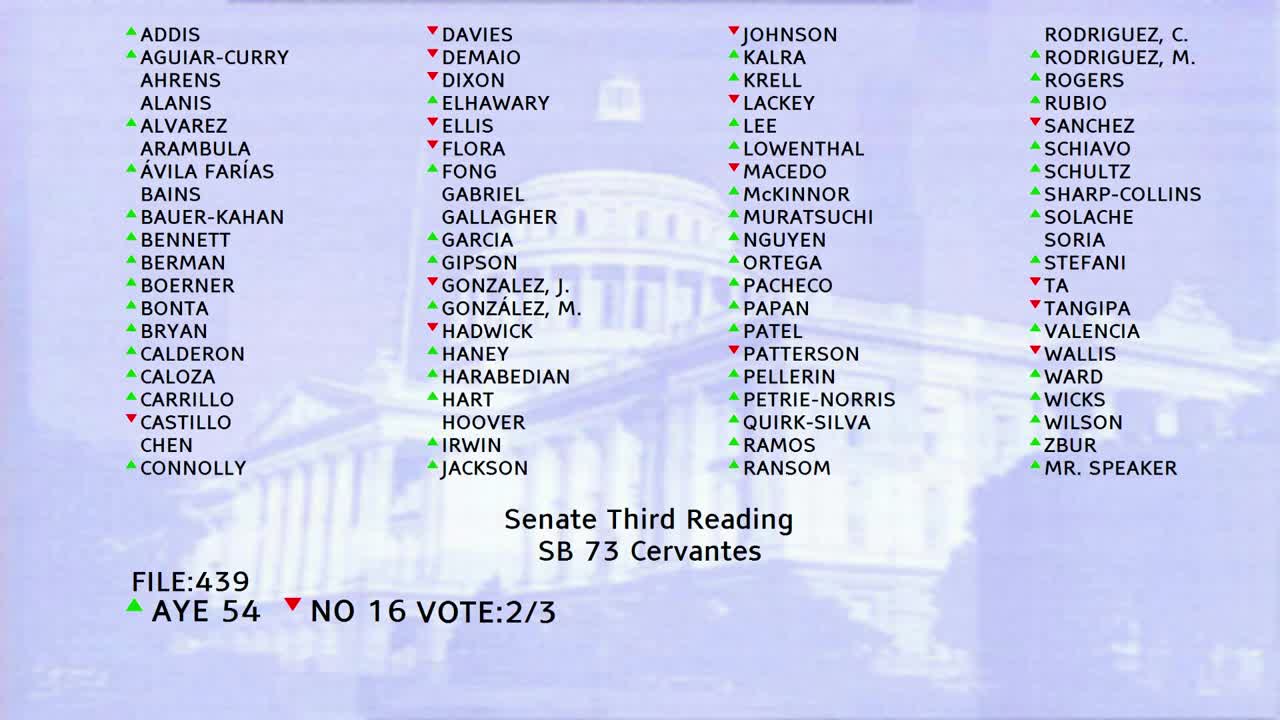
Bill Author

Bill Co-Author(s):