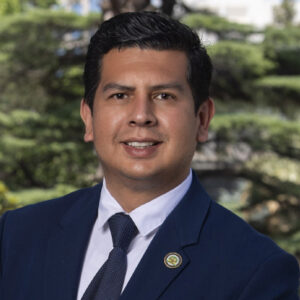
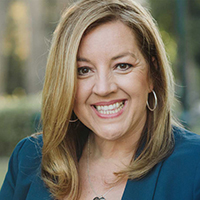
AB 1969: California Community Schools Partnership Program: Promise Neighborhoods.
- Session Year: 2025-2026
- House: Assembly
- Latest Version Date: 2026-09-30
Current Status:
Passed
(2026-09-30: Chaptered by Secretary of State - Chapter 911, Statutes of 2026.)
Introduced
In Committee
Awaiting First Chamber Vote
Passed First Chamber
In Committee
Awaiting Second Chamber Vote
Passed Second Chamber
Enacted
The Budget Act of 2026 appropriates, for the 202627 fiscal year, $1,000,000,000 from the General Fund to the State Department of Education to administer the California Community Schools Partnership Program to distribute funding to local educational agencies, as defined, in accordance with a specified formula, to support a network of their eligible schoolsites to implement new, and provide ongoing support for existing, community schools, as provided. Existing law authorizes a local educational agency who receives funds under these provisions to retain up to 10% of the total funds awarded for its eligible schoolsites each fiscal year to be used for specified activities, including, among other things, administering community schools established at eligible schoolsites.
This bill, to be known as the It Takes a Village Act of 2026, would (1) require any retained funds described above to be used consistent with a specified community schools framework, as provided, and (2) authorize a local educational agency that retains those funds to also use those funds to serve as a network lead for multiple schoolsites located in a Promise Neighborhood, as provided. By expanding the purposes for which previously appropriated moneys may be expended, the bill would make an appropriation.
This bill would incorporate additional changes to Section 8903 of the Education Code proposed by AB 133 or SB 133 to be operative only if this bill and either AB 133 or SB 133 are enacted and this bill is enacted last.
The Budget Act of 2026 appropriates, for the 202627 fiscal year, $1,000,000,000 from the General Fund to the State Department of Education to administer the California Community Schools Partnership Program to distribute funding to local educational agencies, as defined, in accordance with a specified formula, to support a network of their eligible schoolsites to implement new, and provide ongoing support for existing, community schools, as provided. Existing law authorizes a local educational agency who receives funds under these provisions to retain up to 10% of the total funds awarded for its eligible schoolsites each fiscal year to be used for specified activities, including, among other things, administering community schools established at eligible schoolsites.
This bill, to be known as the It Takes a Village Act of 2026, would (1) require any retained funds described above to be used consistent with a specified community schools framework, as provided, and (2) authorize a local educational agency that retains those funds to also use those funds to serve as a network lead for multiple schoolsites located in a Promise Neighborhood, as provided. By expanding the purposes for which previously appropriated moneys may be expended, the bill would make an appropriation.
Existing law requires the Department of Community Services and Development to, among other things, plan and evaluate strategies for overcoming poverty in the state, mobilize resources in support of antipoverty and community services programs, and administer public and private funds designed to support antipoverty programs that are not currently administered by other departments.Existing law establishes the Cradle-to-Career Data System for the purpose of connecting individuals and organizations to trusted information and resources, as a source for actionable data and research on education, economic, and health outcomes for individuals, families, and communities, and to provide for expanded access to tools and services that support the education-to-employment pipeline, as specified.This bill, the It Takes a Village Act of 2026, upon appropriation in the annual Budget Act or another statute for these purposes, would establish the California Coordinated Neighborhood and Community Schools Incentive Grant Program to be administered by the State Department of Social Services or another department within the California Health and Human Services Agency. The bill would require the department to grant awards for the 202627 and 202728 fiscal years to eligible entities that are neighborhood partnerships, Promise Neighborhoods, or regional partnerships, as those terms are defined, to support educational outcomes, reduce child poverty, and advance economic mobility for children and families disproportionately affected by intergenerational poverty. The bill would require the department, in consultation with the State Board of Education and the State Department of Education, to develop an application process and would require the department to establish performance standards to measure progress on indicators and results relevant to the evaluation of the grant program. The bill would require each grant recipient to prepare and submit an annual report to the department that includes information about the number and percentage of children, family members, and community members served by the grant recipient and disaggregated data at population and program levels related to the grant recipients programs success, as specified. The bill would make that data subject to all applicable privacy laws and would require the department to enforce data privacy and protection policies with all grant recipients.Existing law requires the Department of Community Services and Development to, among other things, plan and evaluate strategies for overcoming poverty in the state, mobilize resources in support of antipoverty and community services programs, and administer public and private funds designed to support antipoverty programs that are not currently administered by other departments.
Existing law establishes the Cradle-to-Career Data System for the purpose of connecting individuals and organizations to trusted information and resources, as a source for actionable data and research on education, economic, and health outcomes for individuals, families, and communities, and to provide for expanded access to tools and services that support the education-to-employment pipeline, as specified.
This bill, the It Takes a Village Act of 2026, upon appropriation in the annual Budget Act or another statute for these purposes, would establish the California Coordinated Neighborhood and Community Services Schools Incentive Grant Program to be administered by the State Department of Social Services or another department within the California Health and Human Services Agency. The bill would require the department to grant awards for the 202627 and 202728 fiscal years to eligible entities that are neighborhood partnerships partnerships, Promise Neighborhoods, or regional partnerships, as those terms are defined, to support educational outcomes, reduce child poverty poverty, and advance economic mobility for children and families disproportionately affected by intergenerational poverty. The bill would require the department, in consultation with the State Board of Education and the State Department of Education, to develop an application process and would require the department to establish performance standards to measure progress on indicators and results relevant to the evaluation of the grant program. The bill would require each grant recipient to prepare and submit an annual report to the department that includes information about the number and percentage of children, family members, and community members served by the grant recipient and disaggregated data at population and program levels related to the grant recipients programs success, as specified. The bill would make that data subject to all applicable privacy laws and would require the department to enforce data privacy and protection policies with all grant recipients.
Existing law requires the Department of Community Services and Development to, among other things, plan and evaluate strategies for overcoming poverty in the state, mobilize resources in support of antipoverty and community services programs, and administer public and private funds designed to support antipoverty programs that are not currently administered by other departments.
Existing law establishes the Cradle-to-Career Data System for the purpose of connecting individuals and organizations to trusted information and resources, as a source for actionable data and research on education, economic, and health outcomes for individuals, families, and communities, and to provide for expanded access to tools and services that support the education-to-employment pipeline, as specified.
This bill, the It Takes a Village Act of 2026, subject upon an upon appropriation in the annual Budget Act or another statute for these purposes, would establish the California Coordinated Neighborhood and Community Services Grant Program to be administered by the State Department of Social Services or another department within the California Health and Human Services Agency. The bill would require the department to grant awards for the 202627 and 202728 fiscal years to eligible entities that are neighborhood partnerships or regional partnerships, as those terms are defined, to reduce child poverty and advance economic mobility for children and families disproportionately affected by intergenerational poverty. The bill would require the department, in consultation with the State Department of Education, to develop an application process and would require the department to establish performance standards to measure progress on indicators and results relevant to the evaluation of the grant program. The bill would require each grant recipient to prepare and submit an annual report to the department that includes information about the number and percentage of children, family members, and community members served by the grant recipient and disaggregated data at population and program levels related to the grant recipients programs success, as specified. The bill would make that data subject to all applicable privacy laws and would require the department to enforce data privacy and protection policies with all grant recipients.
Existing law requires the Department of Community Services and Development to, among other things, plan and evaluate strategies for overcoming poverty in the state, mobilize resources in support of antipoverty and community services programs, and administer public and private funds designed to support antipoverty programs that are not currently administered by other departments.
Existing law establishes the Cradle-to-Career Data System for the purpose of connecting individuals and organizations to trusted information and resources, as a source for actionable data and research on education, economic, and health outcomes for individuals, families, and communities, and to provide for expanded access to tools and services that support the education-to-employment pipeline, as specified.
This bill, the It Takes a Village Act of 2026, subject upon an appropriation in the annual Budget Act or another statute for these purposes, would establish the California Coordinated Neighborhood and Community Services Grant Program to be administered by the State Department of Social Services or another department within the California Health and Human Services Agency. The bill would require the department to grant awards for the 202627 and 202728 fiscal years to eligible entities that are neighborhood partnerships or regional partnerships, as those terms are defined, to reduce child poverty and advance economic mobility for children and families disproportionately affected by intergenerational poverty. The bill would require the department, in consultation with the State Department of Education, to develop an application process and would require the department to establish performance standards to measure progress on indicators and results relevant to the evaluation of the grant program.
This act shall be known, and may be cited, as the It Takes a Village Act of 2026.
SEC. 2.The Legislature finds and declares all of the following:
(a)Children and families thrive when communities coordinate the resources and supports they need from birth through adulthood. In Californias diverse society where the persistently high cost of living, including housing, transportation, and food, threatens family stability, the Legislature intends to ensure that children and families, particularly those in economically disadvantaged communities, have equitable access to high-quality education, health care, stable and affordable housing, and other supports that promote well-being, advance economic mobility, and interrupt cycles of intergenerational poverty.
(b)California has made historic investments in supporting the development of communities through integrated, whole-child, and place-based strategies intended to improve long-term outcomes for children and families. These investments include community schools, universal prekindergarten, CalAIM community supports, the Expanded Learning Opportunities Program (ELO-P), the California Kids Investment and Development Savings Program (CalKIDS), the California State Plan for Career Technical Education, behavioral health initiatives, and other statewide efforts designed to strengthen educational success, economic mobility, and family stability. While these investments represent significant progress, many of these initiatives continue to operate in fragmented systems that make it difficult for children and families to access coordinated support.
(c)A proven solution to this problem is to invest in community schools and place-based initiatives that: are equity focused; are data driven and have the capacity to identify the highest needs within the most economically disadvantaged neighborhoods or regions; have the resources and trusted relationships within the communities to align, coordinate, leverage, and enhance services provided by state and local government, community-based organizations, nonprofits, businesses, and other entities active in the local community toward equitable outcomes; and identify systems needs, work with partners to address systemic needs, and measure systemic improvements.
(d)Neighborhood-based partnerships, regional place-based partnerships, and community schools that align and coordinate services and systems have demonstrated significant positive outcomes and strong returns on investment in the communities they serve.
(e)Neighborhood-focused partnerships, such as federal Promise Neighborhoods, have driven substantial improvements in health care access, kindergarten readiness, literacy and mathematics achievement, high school graduation, college and career readiness, child welfare and juvenile justice outcomes, and overall family stability. A recent independent analysis by RTI International found a $3.97 societal return for every $1.00 invested in these programs. Similarly, regional partnerships have contributed to narrowing achievement gaps and enhancing a broad spectrum of outcomes, from preterm birth rates and early childcare quality to early grade reading, middle grade mathematics, high school graduation, and postsecondary completion. Together, these neighborhood and regional strategies illustrate the power of coordinated, place-based approaches to generate meaningful, lasting benefits for children, families, and communities.
(f)This collaborative approach ensures that a continuum of services reach children in communities where they are needed the most. This is especially important in communities experiencing high levels of homelessness. Neighborhood and regional partnerships can coordinate efforts among government agencies and other local organizations to ensure that those experiencing homelessness, or are at risk of becoming homeless, have full access to all programs and services to which they are entitled.
(g)It is the intent of the Legislature that the vital contributions provided by these community-based and regional networks be brought to scale so that all children and families have the opportunities and continuum of services needed to break the cycle of poverty.
SEC. 3.Section 8903 of the Education Code is amended to read:8903.(a)(1)The Legislature finds and declares all of the following:
(A)The California Community Schools Partnership Act, established as part of the Budget Act of 2021, is a key initiative of Californias historic whole-child transformation of public schools built on the state board-adopted California Community Schools Framework. This model of education incorporates state investments in universal free school meals, universal transitional kindergarten, before and after school learning, career and college readiness, and investments in teacher training, coaching, recruitment, and retention, resulting in a cohesive program of instructional quality and removing barriers to learning, and collaborative leadership.
(B)Implementation of the community schools model results in better home-school connections, academic supports, nutrition, after school and summer school enrichment and care, trauma-informed behavioral and physical health services, and access to social services.
(C)The California Community Schools Framework specifies the pillars of a successful community schools model that results in transformational outcomes: integrated pupil supports, family and community engagement, collaborative leadership and practices for educators and administrators, and extended learning time and opportunities. Successful community school models in California implement this framework with fidelity. It is the intent of the Legislature that the California Community Schools Framework be periodically revised to incorporate updated research and identified needs for statewide school and system improvement.
(D)Research indicates that schools that received grants pursuant to the California Community Schools Partnership Act show significant reductions in chronic absenteeism and suspensions, and improvements in test scores and academic achievement, with the largest gains for historically underserved pupils.
(E)Expansion of the community schools model will increase these positive outcomes, especially for schools that have large concentrations of pupils from low-income families, English language learners, and youth in foster care.
(b)(1)(A)For the 202627 fiscal year, the Legislature shall initially appropriate the sum of one billion dollars ($1,000,000,000) from the General Fund to the department to administer the California Community Schools Partnership Program in the manner and for the purposes set forth in this chapter.
(B)This amount may be adjusted each year through Item 6100-115-0001 of the annual Budget Act to provide sufficient funding, pursuant to the formula described in subdivision (c), to all eligible schoolsites that participate in the program.
(2)Funds received pursuant to this section shall be used in accordance with the California Community Schools Framework, as adopted by the state board. These funds shall be used to implement community schools supported by local networks and to implement shared decisionmaking practices with education interestholders and shall not be used for punitive disciplinary practices or the engagement of campus law enforcement.
(3)Funds distributed pursuant to paragraph (1) of subdivision (c) shall supplement, not supplant, funding used for services and supports at eligible schoolsites through the local control funding formula pursuant to Section 2574, 2575, or 42238.02, the Expanded Learning Opportunities Program pursuant to Section 46120, or the Literacy Coaches and Reading Specialists Grant Program established pursuant to Sections 53008.5, 53008.7, 53009, and 53009.1.
(c)Funds appropriated pursuant to subdivision (b) shall be distributed each fiscal year as follows:
(1)(A)(i)To local educational agencies to support a network of their eligible schoolsites to implement new, and provide ongoing support for existing, community schools consistent with subparagraphs (B) and (C).
(ii)The allocation calculated pursuant to subparagraph (B) shall be used as to support either a planning period of up to two years pursuant to paragraph (1) of subdivision (e) or the implementation phase described in paragraph (2) of subdivision (e). Schoolsites that are ready to implement shall submit to the department a community school plan and evidence of ongoing progress as part of the annual formative evaluation requirements specified by the department pursuant to subdivision (m) of Section 8902.
(B)(i)Commencing with the 202627 fiscal year, for each local educational agency with an eligible schoolsite, the department shall make one of the following computations for each eligible schoolsite based on the following as adjusted pursuant to subparagraph (C):
Pupils Enrolled at the Eligible Schoolsite | Amount to be Computed per Eligible Schoolsite |
| 1024 | $75,000 |
| 25150 | $115,000 |
| 151400 | $190,000 |
| 4011,000 | $230,000 |
| 1,0012,000 | $305,000 |
| 2,000+ | $400,000 |
(ii)Commencing with the 202728 fiscal year, the amounts to be computed per eligible schoolsite identified in clause (i) shall be adjusted each fiscal year by the percentage change applied pursuant to paragraph (2) of subdivision (d) of Section 42238.02 for that fiscal year.
(iii)A local educational agency with eligible schoolsites that notifies the department of the intent to receive an allocation, pursuant to subparagraph (E), under this section shall receive annual payments in accordance with this subparagraph, as adjusted pursuant to subparagraph (C), notwithstanding subsequent changes in pupil data submitted through the California Longitudinal Pupil Achievement Data System. The annual payments shall remain the same amount and may be adjusted when eligibility is redetermined during the certification process.
(iv)Notwithstanding clause (iii), the department may establish procedures to determine mid-year adjustments to eligibility in cases of an eligible schoolsite restructuring.
(C)An eligible schoolsite that receives an implementation grant pursuant to Section 8902 shall, for the term of its implementation grant, have the allocation listed in subparagraph (B) reduced consistent with the following:
(i)If the total amount of a schoolsites implementation grant, divided by five, is greater than or equal to the amount listed in subparagraph (B) for the number of pupils enrolled, the schoolsite shall instead receive no funding under this paragraph for that fiscal year.
(ii)If the total amount of a schoolsites implementation grant, divided by five, is less than the amount listed in subparagraph (B) for the number of pupils enrolled, the schoolsite shall instead receive the difference between the total implementation grant amount, divided by five, and the amount specified in subparagraph (B) for the number of pupils enrolled for that fiscal year.
(D)(i)Funds received under this paragraph shall be used for activities consistent with the purposes identified in subdivisions (g) and (h) of Section 8902.
(ii)A schoolsite that, at the time of the receipt of funds, has not conducted the planning needed to develop the schoolsite implementation plan required pursuant to subparagraph (C) of paragraph (2) of subdivision (e), shall use the initial funding to develop an implementation plan that demonstrates alignment with the California Community Schools Framework.
(E)(i)On or before November 1, 2026, a local educational agency with an eligible schoolsite shall notify the department of its intent to receive for each eligible schoolsite an allocation under this paragraph as part of the 202627 fiscal year cohort, in a manner to be determined by the department. The notification shall include an initial attestation to the department of the local educational agencys commitment to implementing the community schools model in accordance with the Community School framework and state law. The notification shall also include assurances declaring the local educational agency collected signed commitment letters from education interestholders, including, but not limited to, the superintendent of the school district, schoolsite principals, and representatives of teachers, noncertificated staff, pupils, and parents.
(ii)A local educational agency with an eligible schoolsite that is not currently receiving funding pursuant to Section 8902 may submit the required notification of its intent to receive an allocation during an annual June 1 opt-in period. Eligible local educational agencies that opt-in by November 1, 2026, or by June 1 of each year shall be eligible to receive apportionment funding as part of a new cohort beginning in the next academic year. A local educational agency shall notify the department about its intent for planning phase or implementation phase status as part of the opt-in process.
(iii)As part of the opt-in process, the department shall notify all local educational agencies of the minimum annual reporting requirements for an annual implementation grant apportionment, and may encourage a local educational agency to pursue a planning period pursuant to subparagraph (A) of paragraph (1) of subdivision (e), as needed, to ensure readiness to implement a new community school.
(2)(A)Ten million dollars ($10,000,000) to the department to select, subject to the approval of the executive director of the state board, at least one local educational agency to implement the technical assistance structure and network described in Section 8902 and support the ongoing certification process. Funds shall also be used to provide support and assistance to local educational agencies on an ongoing basis so they can implement the community schools model in accordance with the Community Schools framework and ultimately help their schoolsites maintain their certification. Preference shall be given to county offices of education that commit to partnering with institutions of higher education, nonprofit community-based organizations, and school districts and schoolsites that demonstrate strong implementation of the community schools approach as outlined in the Community Schools framework, as determined by the department with input from education interestholders. The responsibilities of transformational assistance centers shall be aligned with those identified in paragraph (2) of subdivision (b) of Section 8902.
(B)The department shall determine the terms, including duration, for each transformational assistance center, subject to the approval of the executive director of the state board. The department shall have the authority to renew the selection of the existing transformational assistance centers or reopen the selection process, at the conclusion of each grant term. To determine funding for the transformational assistance structure, the department shall take into consideration the number of community school sites supported by the technical assistance structure.
(C)Technical assistance shall be provided in consultation and collaboration with the statewide system of support established pursuant to Section 52059.5.
(D)Of the amount provided in subparagraph (A), two million dollars ($2,000,000) shall be allocated to the local educational agency serving as the state transformational assistance center. The responsibilities of the state transformational assistance center shall include, but not be limited to, all of the following:
(i)Serve as a lead entity within the statewide system of support and work collaboratively with the California Collaborative for Educational Excellence, the department, lead agencies in the system, and state agencies that support the implementation of community schools.
(ii)Serve as a centralized hub for the transformational assistance structure to facilitate a coordinated and aligned approach for the ongoing implementation of the community schools initiative.
(iii)Collaborate with the department and relevant education interestholders to develop the annual attestation process and certification process required pursuant to subdivision (d).
(iv)On or before October 31, 2029, submit a report to the Legislature, consistent with Section 9795 of the Government Code, outlining the certification process informed by the study.
(E)A local educational agency receiving funding under this paragraph shall commit to providing program and expenditure data to the department, as specified by the department, and participating in program evaluation and improvement efforts.
(d)(1)The department shall allocate funding appropriated in Item 6100-115-0001 of the annual Budget Act to county offices of education to coordinate county-level governmental, nonprofit community-based organizations, and other external partnerships to support community school implementation at grant recipients in their county. This shall include designating a county-level community schools liaison to coordinate with the department and technical assistance centers in capacity building, resource connection, and continuous improvement activities consistent with supporting grant recipients in their county in implementation of community schools, consistent with the Community Schools framework, as specified in subdivision (e). County office of education grant award amounts under this paragraph shall be determined based on the number of community schools funded pursuant to this section, and the number of pupils served in those schools, using an allocation formula determined by the department, and provide at least two hundred thousand dollars ($200,000) and up to five hundred thousand dollars ($500,000) annually, for each qualifying county office of education. These funds are separate from any funds county offices of education receive pursuant to subdivision (f) for serving as qualifying entities to a network of community schools.
(2)A county office of education that receives funds pursuant to this subdivision shall support centralized grant recipient communications with county-level governmental partners and funding sources, which may include, but not be limited to, pupil support and health care service billing and billing practices technical assistance, leading a County Childrens Cabinet, and coordination with Promise Neighborhoods lead organizations and agencies.
(3)A county offices of education that receives funds pursuant to this subdivision shall do all of the following:
(A)Support local educational agency planning and use of pupil and campus data consistent with the guidance of the System of Support Equity Leads, and the state transformational assistance center, for integrating community school, expanded learning, early childhood education, county behavioral health, educator professional development, and other state-funded initiatives integral to the pillars of a community school approach as described in subdivision (b) of Section 8901 and the California Community Schools Partnership Framework described in Section 8901.5, which may be part of the qualifying entitys local control and accountability plan process pursuant to Section 47606.5, 52060, or 52066, as applicable.
(B)Facilitate professional development and continuous improvement practices, consistent with the Transformational Assistance network, including, but not limited to, communities of practice.
(C)Provide fiscal and programmatic reports to the department as requested, regarding the implementation status and needs of local educational agencies in the county.
(D)Coordinate internally with other county offices of education and other county programs and services that can uplift and support the whole child, with the overall goal of moving towards fully integrating county-level community schools implementation supports and services into the larger statewide system of support by embedding these supports and services within the countys universal and targeted assistance approach once one-time coordination grants conclude.
(4)As a condition of receiving funding pursuant to this subdivision, a county office of education shall adhere to the County Coordination key practices consistent with the Community Schools framework, and provide the annual reporting required by the department and the state transformational assistance center.
(e)As a condition of receiving funding pursuant to paragraph (1) of subdivision (c), a local educational agency shall maintain its community schools pursuant to the Community Schools framework and criteria developed by the transformational assistance structure in partnership with education interestholders, consistent with all of the following:
(1)(A)A local educational agency with schoolsites that are new to the community schools model may use up to two years of its initial apportionment funds to conduct the planning needed to develop a community schools implementation plan pursuant to subparagraph (C) paragraph (2). Upon the conclusion of this 24 month planning period, the local educational agency shall be required to provide the implementation plan to department and move into the implementation phase.
(B)Funds for planning shall be used to support any of the following:
(i)Staffing costs for a community school coordinator.
(ii)Conducting a comprehensive school and community needs and asset assessment, including, but not limited to, pupil and community demographics, school climate, integrated support services, expanded learning time, educator, family, pupil, and community engagement, new or existing partnerships with governmental entities or community-based organizations, and available funding sources.
(iii)Grant application support, service billing development, and other administrative costs necessary to launch a community school model at scale.
(iv)Partnership development and coordination support between the grantee and cooperating agencies, including, but not limited to, a Promise Neighborhood lead agency.
(v)Providing training and support to local educational agency and cooperating agency personnel to develop best practices for integrating instruction and pupil supports.
(vi)Preparing a community school implementation plan for submission to the governing board or body of the local educational agency and to the department.
(vii)Up to 10 percent of the annual allocation may be used by the local education agency for agency-wide planning and support needs, consistent with the Community Schools framework, and as a network lead for multiple eligible schoolsites located in a Promise Neighborhood.
(viii)Providing professional development and strengthening instruction through project-based and experiential learning.
(ix)Implementing social-emotional learning and restorative practices.
(x)Strengthening behavioral health care supports, including, but not limited to, implementation of the Children and Youth Behavioral Health Initiative Fee Schedule pursuant to Section 5961.4 of the Welfare and Institutions Code.
(xi)Leveraging partnerships to facilitate the whole-child inventory and integrated supports for pupils and schoolsite staff.
(xii)Supporting secondary community school redesign.
(C)A local educational agency that has not provided the department with a satisfactory implementation plan for an eligible schoolsite, as required pursuant to subparagraph (C) of paragraph (2), within 24 months of initial apportionment, shall have the apportionment for that eligible schoolsite subtracted by the department in the subsequent fiscal year.
(2)A local educational agency that has completed planning and is in the implementation phase shall be required to meet the following requirements annually commencing with its first year of implementation:
(A)Ensure that each funded schoolsite has convened a shared decisionmaking team or council that includes pupils, families, community partners, and educators.
(B)Support each schoolsites shared decisionmaking team or council in developing a schoolsite community school implementation plan that the shared decisionmaking team or council annually presents to its schoolsite.
(C)Provide the department with an implementation plan that was submitted to the governing board or body of the local educational agency. The implementation plan shall include all of the following details:
(i)The prior years program and expenditure data and pupil outcomes if applicable.
(ii)A description of how the local educational agencys approach to community schools aligns with the Community School framework.
(iii)A description of how the local educational agencys approach engages in collaborative leadership with pupils, families, educators, and community partners.
(iv)A description of how the local educational agencys approach expands services to pupils and leverages and braids funds from existing state initiatives, including, but not limited to, the Expanded Learning Opportunities Program, the Children and Youth Behavioral Health Initiative Fee Schedule program, universal school meals program, California State Preschool Program, and universal transitional kindergarten.
(v)A description of how the local educational agencys approach assesses technical assistance needs and identifies a plan to address those needs, which may include a local community of practice and connecting to state-led technical assistance opportunities and resources; and a plan for the school year.
(vi)Each eligible schoolsites community schools implementation plan.
(D)Annually report and publicly present its community schools implementation plan at a meeting of the governing board or body of the local educational agency. The local educational agency shall publicly post its community schools implementation plan on the local educational agencys and the schoolsites internet websites.
(E)A local educational agency with an Expanded Learning Opportunities Program allocation or an After School Education and Safety Program grant may submit those programs respective implementation plans as part of its community school implementation plan.
(F)(i)Submit an annual progress report that includes an attestation that their community schoolsites are providing wraparound supports to pupils and is implementing community schools in accordance with the California Community Schools Framework as adopted by the state board. The technical assistance structure shall utilize the annual progress report to provide support to local educational agencies and schoolsites on implementation and continuous improvement of their community schools models.
(ii)The annual progress report requirements, including the attestation of the community schools commitment to the framework, shall be developed by the state transformational assistance center in collaboration with the department and education interestholders. The annual progress report shall be aligned and consistent with the Community Schools framework and the annual progress report required for recipients of the one-time implementation grants pursuant to Section 8902 to the extent feasible. A local educational agency that received one-time implementation grants may submit the existing annual progress report to fulfill the requirement for the duration of its grant period pursuant to Section 8902.
(3)As a condition of receiving funding pursuant to paragraph (1) of subdivision (c), a local educational agency shall commit to providing program and expenditure data to the department, as specified by the department, and participating in program evaluation and improvement efforts.
(4)(A)It is the intent of the Legislature that, beginning in the 203132 fiscal year, a local educational agencys schoolsites will be required to participate in a seven-year certification process conducted by an external certification entity and managed through the state transformational assistance center to ensure quality community school models are implemented with fidelity. Only schoolsites that are certified through this process shall be eligible to receive ongoing community schools funding under paragraph (1) of subdivision (c).
(B)A local educational agencys apportionment generated for a schoolsite that loses its certification may be deemed ineligible to continue receiving an apportionment for that schoolsite, subject to the determination of the department. If a schoolsite loses its certification, the local educational agency may continue receiving a community schools apportionment for that schoolsite until the schoolsites current certification period expires. A local educational agency shall not receive renewed funding for an uncertified schoolsite until the schoolsite meets certification standards again.
(C)A local educational agency that is interested in establishing a new community school at, or renewing funding for, an eligible schoolsite shall have an opportunity to submit a request to be considered for funding during regular intervals. The details for the requests, including deadlines and timing of the intervals and approval, shall be determined by the department in collaboration with the transformational assistance centers and education interestholders.
(f)A local educational agency may retain up to 10 percent of the total funds awarded pursuant to paragraph (1) of subdivision (c) for its eligible schoolsites consistent with the Community Schools framework each fiscal year. These funds shall be used to administer community schools established at eligible schoolsites, manage professional learning and networking, serve as a network lead for multiple eligible schoolsites located in a Promise Neighborhood, and coordinate services and funding streams for community schools under the local educational agency with eligible schoolsites to support the California Community Schools Partnership Program. Funds retained by the local educational agency to provide direct services to pupils may be retained separately from this administrative set-aside.
(g)A local educational agency receiving funding under paragraph (1) of subdivision (c) shall commit to communicating and collaborating with the transformational assistance centers, as often as the transformational assistance centers may reasonably require, to discuss the implementation of community schoolsites, potential challenges facing the local educational agency during implementation, and best practices that can be shared with peer community schoolsites.
(h)A local educational agency that receives funds under paragraph (1) of subdivision (c) for an eligible schoolsite that has closed, as reported pursuant to paragraph (2) of subdivision (f) of Section 60900, shall return any unspent funds received for that closed schoolsite to the department. The local educational agency shall report the total amount of unspent funds in accordance with instructions and forms prescribed and furnished by the department. Any returned funds that are not reallocated shall revert to the General Fund.
(i)If funds appropriated for the purpose of this section remain after all apportionments pursuant to subdivisions (b) and (c) have been made, the balance that exceeds that amount shall revert to the General Fund by June 30 of each year.
(j)For purposes of making the computations required by Section 8 of Article XVI of the California Constitution, the appropriations made by subdivision (b) shall be deemed to be General Fund revenues appropriated for school districts, as defined in subdivision (c) of Section 41202, for the fiscal year for which the appropriation is made, and included within the total allocations to school districts and community college districts from General Fund proceeds of taxes appropriated pursuant to Article XIIIB, as defined in subdivision (e) of Section 41202, for the fiscal year for which the appropriation is made.
SEC. 3.5.Section 8903 of the Education Code is amended to read:8903.(a)(1)The Legislature finds and declares all of the following:
(A)The California Community Schools Partnership Act, established as part of the Budget Act of 2021, is a key initiative of Californias historic whole-child transformation of public schools built on the state board-adopted California Community Schools Framework. This model of education incorporates state investments in universal free school meals, universal transitional kindergarten, before and after school learning, career and college readiness, and investments in teacher training, coaching, recruitment, and retention, resulting in a cohesive program of instructional quality and removing barriers to learning, and collaborative leadership.
(B)Implementation of the community schools model results in better home-school connections, academic supports, nutrition, after school and summer school enrichment and care, trauma-informed behavioral and physical health services, and access to social services.
(C)The California Community Schools Framework specifies the pillars of a successful community schools model that results in transformational outcomes: integrated pupil supports, family and community engagement, collaborative leadership and practices for educators and administrators, and extended learning time and opportunities. Successful community school models in California implement this framework with fidelity. It is the intent of the Legislature that the California Community Schools Framework be periodically revised to incorporate updated research and identified needs for statewide school and system improvement.
(D)Research indicates that schools that received grants pursuant to the California Community Schools Partnership Act show significant reductions in chronic absenteeism and suspensions, and improvements in test scores and academic achievement, with the largest gains for historically underserved pupils.
(E)Expansion of the community schools model will increase these positive outcomes, especially for schools that have large concentrations of pupils from low-income families, English language learners, and youth in foster care.
(b)(1)(A)For the 202627 fiscal year, the Legislature shall initially appropriate the sum of one billion dollars ($1,000,000,000) from the General Fund to the department to administer the California Community Schools Partnership Program in the manner and for the purposes set forth in this chapter.
(B)This amount may be adjusted each year through Item 6100-115-0001 of the annual Budget Act to provide sufficient funding, pursuant to the formula described in subdivision (c), to all eligible schoolsites that participate in the program.
(2)Funds received pursuant to this section shall be used in accordance with the California Community Schools Framework, as adopted by the state board. These funds shall be used to implement community schools supported by local networks and to implement shared decisionmaking practices with education interestholders and shall not be used for punitive disciplinary practices or the engagement of campus law enforcement.
(3)Funds distributed pursuant to paragraph (1) of subdivision (c) shall supplement, not supplant, funding used for services and supports at eligible schoolsites through the local control funding formula pursuant to Section 2574, 2575, or 42238.02, the Expanded Learning Opportunities Program pursuant to Section 46120, or the Literacy Coaches and Reading Specialists Grant Program established pursuant to Sections 53008.5, 53008.7, 53009, and 53009.1.
(c)Funds appropriated pursuant to subdivision (b) shall be distributed each fiscal year as follows:
(1)(A)(i)To local educational agencies to support a network of their eligible schoolsites to implement new, and provide ongoing support for existing, community schools consistent with subparagraphs (B) and (C).
(ii)The allocation calculated pursuant to subparagraph (B) shall be used as to support either a planning period of up to two years pursuant to paragraph (1) of subdivision (e) or the implementation phase described in paragraph (2) of subdivision (e). Schoolsites that are ready to implement shall submit to the department a community school plan and evidence of ongoing progress as part of the annual formative evaluation requirements specified by the department pursuant to subdivision (m) of Section 8902.
(B)(i)Commencing with the 202627 fiscal year, for each local educational agency with an eligible schoolsite, the department shall make one of the following computations for each eligible schoolsite based on the following as adjusted pursuant to subparagraph (C):
Pupils Enrolled at the Eligible Schoolsite | Amount to be Computed per Eligible Schoolsite |
| 1024 | $75,000 |
| 25150 | $115,000 |
| 151400 | $190,000 |
| 4011,000 | $230,000 |
| 1,0012,000 | $305,000 |
| 2,000+ | $400,000 |
(ii)Commencing with the 202728 fiscal year, the amounts to be computed per eligible schoolsite identified in clause (i) shall be adjusted each fiscal year by the percentage change applied pursuant to paragraph (2) of subdivision (d) of Section 42238.02 for that fiscal year.
(iii)A local educational agency with eligible schoolsites that notifies the department of the intent to receive an allocation, pursuant to subparagraph (E), under this section shall receive annual payments in accordance with this subparagraph, as adjusted pursuant to subparagraph (C), notwithstanding subsequent changes in pupil data submitted through the California Longitudinal Pupil Achievement Data System. The annual payments shall remain the same amount and may be adjusted when eligibility is redetermined during the certification process.
(iv)Notwithstanding clause (iii), the department may establish procedures to determine mid-year adjustments to eligibility in cases of an eligible schoolsite restructuring.
(C)An eligible schoolsite that receives an implementation grant pursuant to Section 8902 shall, for the term of its implementation grant, have the allocation listed in subparagraph (B) reduced consistent with the following:
(i)If the total amount of a schoolsites implementation grant, divided by five, is greater than or equal to the amount listed in subparagraph (B) for the number of pupils enrolled, the schoolsite shall instead receive no funding under this paragraph for that fiscal year.
(ii)If the total amount of a schoolsites implementation grant, divided by five, is less than the amount listed in subparagraph (B) for the number of pupils enrolled, the schoolsite shall instead receive the difference between the total implementation grant amount, divided by five, and the amount specified in subparagraph (B) for the number of pupils enrolled for that fiscal year.
(D)(i)Funds received under this paragraph shall be used for activities consistent with the purposes identified in subdivisions (g) and (h) of Section 8902.
(ii)A schoolsite that, at the time of the receipt of funds, has not conducted the planning needed to develop the schoolsite implementation plan required pursuant to subparagraph (C) of paragraph (2) of subdivision (e), shall use the initial funding to develop an implementation plan that demonstrates alignment with the California Community Schools Framework.
(E)(i)On or before November 1, 2026, a local educational agency with an eligible schoolsite shall notify the department of its intent to receive for each eligible schoolsite an allocation under this paragraph as part of the 202627 fiscal year cohort, in a manner to be determined by the department. The notification shall include an initial attestation to the department of the local educational agencys commitment to implementing the community schools model in accordance with the Community School framework and state law. The notification shall also include assurances declaring the local educational agency collected signed commitment letters from education interestholders, including, but not limited to, the superintendent of the school district, schoolsite principals, and representatives of teachers, noncertificated staff, pupils, and parents.
(ii)A local educational agency with an eligible schoolsite that is not currently receiving funding pursuant to Section 8902 may submit the required notification of its intent to receive an allocation during an annual June 1 opt-in period. Local educational agencies with an eligible schoolsite that opt-in by November 1, 2026, or by June 1 of each year shall be eligible to receive apportionment funding as part of a new cohort beginning in the next fiscal year. A local educational agency shall notify the department about its intent for planning phase or implementation phase status as part of the opt-in process.
(iii)As part of the opt-in process, the department shall notify all local educational agencies of the minimum annual reporting requirements for an annual apportionment, and may encourage a local educational agency to pursue a planning period pursuant to subparagraph (A) of paragraph (1) of subdivision (e), as needed, to ensure readiness to implement a new community school.
(2)(A)Up to ten million dollars ($10,000,000) to the department to select, subject to the approval of the executive director of the state board, at least one local educational agency to implement the technical assistance structure and network described in Section 8902 and, beginning in the 203132 fiscal year, support costs related to the ongoing certification process. Funds shall also be used to provide support and assistance to local educational agencies on an ongoing basis so they can implement the community schools model in accordance with the Community Schools framework and ultimately help their schoolsites maintain their certification. Preference shall be given to county offices of education that commit to partnering with institutions of higher education, nonprofit community-based organizations, and school districts and schoolsites that demonstrate strong implementation of the community schools approach as outlined in the Community Schools framework, as determined by the department with input from education interestholders. The responsibilities of transformational assistance centers shall be aligned with those identified in paragraph (2) of subdivision (b) of Section 8902.
(B)The department shall determine the terms, including duration, for each transformational assistance center, subject to the approval of the executive director of the state board. The department shall have the authority to renew the selection of the existing transformational assistance centers or reopen the selection process, at the conclusion of each grant term. To determine funding for the transformational assistance structure, the department shall take into consideration the number of community school sites supported by the technical assistance structure.
(C)Technical assistance shall be provided in consultation and collaboration with the statewide system of support established pursuant to Section 52059.5.
(D)Of the amount provided in subparagraph (A), at least two million dollars ($2,000,000), subject to the approval of the executive director of the state board, shall be allocated to the local educational agency serving as the state transformational assistance center. The responsibilities of the state transformational assistance center shall include, but not be limited to, all of the following:
(i)Serve as a lead entity within the statewide system of support and work collaboratively with the California Collaborative for Educational Excellence, the department, lead agencies in the system, and state agencies that support the implementation of community schools.
(ii)Serve as a centralized hub for the transformational assistance structure to facilitate a coordinated and aligned approach for the ongoing implementation of the community schools initiative.
(iii)Collaborate with the department and relevant education interestholders to develop the annual attestation process and certification process required pursuant to subdivision (d).
(iv)On or before October 31, 2029, submit a report to the Legislature, consistent with Section 9795 of the Government Code, outlining the certification process informed by the study.
(E)A local educational agency receiving funding under this paragraph shall commit to providing program and expenditure data to the department, as specified by the department, and participating in program evaluation and improvement efforts.
(d)(1)The department shall allocate funding appropriated in Item 6100-115-0001 of the annual Budget Act to county offices of education to coordinate county-level governmental, nonprofit community-based organizations, and other external partnerships to support community school implementation at grant recipients in their county. This shall include designating a county-level community schools liaison to coordinate with the department and technical assistance centers in capacity building, resource connection, and continuous improvement activities consistent with supporting grant recipients in their county in implementation of community schools, consistent with the Community Schools framework, as specified in subdivision (e). County office of education grant award amounts under this paragraph shall be determined based on the number of community schools funded pursuant to this section, and the number of pupils served in those schools, using an allocation formula determined by the department, and provide at least two hundred thousand dollars ($200,000) and up to five hundred thousand dollars ($500,000) annually, for each qualifying county office of education. These funds are separate from any funds county offices of education receive pursuant to subdivision (f) for serving as qualifying entities to a network of community schools.
(2)A county office of education that receives funds pursuant to this subdivision shall support centralized grant recipient communications with county-level governmental partners and funding sources, which may include, but not be limited to, pupil support and health care service billing and billing practices technical assistance, leading a County Childrens Cabinet, and coordination with Promise Neighborhoods lead organizations and agencies.
(3)A county office of education that receives funds pursuant to this subdivision shall do all of the following:
(A)Support local educational agency planning and use of pupil and campus data consistent with the guidance of the System of Support Equity Leads, and the state transformational assistance center, for integrating community school, expanded learning, early childhood education, county behavioral health, educator professional development, and other state-funded initiatives integral to the pillars of a community school approach as described in subdivision (b) of Section 8901 and the California Community Schools Partnership Framework described in Section 8901.5, which may be part of the qualifying entitys local control and accountability plan process pursuant to Section 47606.5, 52060, or 52066, as applicable.
(B)Facilitate professional development and continuous improvement practices, consistent with the Transformational Assistance network, including, but not limited to, communities of practice.
(C)Provide fiscal and programmatic reports to the department as requested, regarding the implementation status and needs of local educational agencies in the county.
(D)Coordinate internally with other county offices of education and other county programs and services that can uplift and support the whole child, with the overall goal of moving towards fully integrating county-level community schools implementation supports and services into the larger statewide system of support by embedding these supports and services within the countys universal and targeted assistance approach once one-time coordination grants conclude.
(4)As a condition of receiving funding pursuant to this subdivision, a county office of education shall adhere to the County Coordination key practices consistent with the Community Schools framework, and provide the annual reporting required by the department and the state transformational assistance center.
(e)As a condition of receiving funding pursuant to paragraph (1) of subdivision (c), a local educational agency shall maintain its community schools pursuant to the Community Schools framework and criteria developed by the transformational assistance structure in partnership with education interestholders, consistent with all of the following:
(1)(A)A local educational agency with schoolsites that are new to the community schools model may use up to two years of its initial apportionment funds to conduct the planning needed to develop a community schools implementation plan pursuant to subparagraph (C) paragraph (2). Upon the conclusion of this 24-month planning period, the local educational agency shall be required to provide the implementation plan to department and move into the implementation phase.
(B)Funds for planning shall be used to support any of the following:
(i)Staffing costs for a community school coordinator.
(ii)Conducting a comprehensive school and community needs and asset assessment, including, but not limited to, pupil and community demographics, school climate, integrated support services, expanded learning time, educator, family, pupil, and community engagement, new or existing partnerships with governmental entities or community-based organizations, and available funding sources.
(iii)Grant application support, service billing development, and other administrative costs necessary to launch a community school model at scale.
(iv)Partnership development and coordination support between the grantee and cooperating agencies, including, but not limited to, a Promise Neighborhood lead agency.
(v)Providing training and support to local educational agency and cooperating agency personnel to develop best practices for integrating instruction and pupil supports.
(vi)Preparing a community school implementation plan for submission to the governing board or body of the local educational agency and to the department. The technical assistance structure and the department may determine the requirements for schoolsite implementation plans.
(vii)Up to 10 percent of the annual allocation may be used by the local education agency for agency-wide planning and support needs, consistent with the Community Schools framework, and as a network lead for multiple eligible schoolsites located in a Promise Neighborhood.
(viii)Providing professional development and strengthening instruction through project-based and experiential learning.
(ix)Implementing social-emotional learning and restorative practices.
(x)Strengthening behavioral health care supports, including, but not limited to, implementation of the Children and Youth Behavioral Health Initiative Fee Schedule pursuant to Section 5961.4 of the Welfare and Institutions Code.
(xi)Leveraging partnerships to facilitate the whole-child inventory and integrated supports for pupils and schoolsite staff.
(xii)Supporting secondary community school redesign.
(xiii)Convening a schoolsites shared decisionmaking team or council that includes pupils, families, community partners, and educators who collaborate with their schoolsite to prepare its community school implementation plan.
(C)(i)A local educational agency that has not provided the department with a satisfactory implementation plan for an eligible schoolsite, as required pursuant to subparagraph (C) of paragraph (2), within 24 months of initial apportionment, shall have the apportionment for that eligible schoolsite subtracted by the department in the subsequent fiscal year.
(ii)The department shall work with the technical assistance structure to evaluate whether a local educational agencys implementation plan is satisfactory.
(2)A local educational agency that has completed planning and is in the implementation phase shall be required to meet the following requirements annually commencing with its first year of implementation:
(A)Ensure that each funded schoolsite has convened a shared decisionmaking team or council that includes pupils, families, community partners, and educators.
(B)Support each schoolsites shared decisionmaking team or council in developing a schoolsite community school implementation plan that the shared decisionmaking team or council annually presents to its schoolsite.
(C)Provide the department with an implementation plan that was submitted to the governing board or body of the local educational agency. The implementation plan shall include all of the following details:
(i)The prior years program and expenditure data and pupil outcomes if applicable.
(ii)A description of how the local educational agencys approach to community schools aligns with the Community School framework.
(iii)A description of how the local educational agencys approach engages in collaborative leadership with pupils, families, educators, and community partners.
(iv)A description of how the local educational agencys approach expands services to pupils and leverages and braids funds from existing state initiatives, including, but not limited to, the Expanded Learning Opportunities Program, the Children and Youth Behavioral Health Initiative Fee Schedule program, universal school meals program, California State Preschool Program, and universal transitional kindergarten.
(v)A description of how the local educational agencys approach assesses technical assistance needs and identifies a plan to address those needs, which may include a local community of practice and connecting to state-led technical assistance opportunities and resources; and a plan for the school year.
(vi)Each eligible schoolsites community schools implementation plan.
(D)Annually report and publicly present its community schools implementation plan at a meeting of the governing board or body of the local educational agency. The local educational agency shall publicly post its community schools implementation plan on the local educational agencys and the schoolsites internet websites.
(E)A local educational agency with an Expanded Learning Opportunities Program allocation or an After School Education and Safety Program grant may submit those programs respective implementation plans as part of its community school implementation plan.
(F)(i)Submit an annual progress report that includes an attestation that their community schoolsites are providing wraparound supports to pupils and is implementing community schools in accordance with the California Community Schools Framework as adopted by the state board. The technical assistance structure shall utilize the annual progress report to provide support to local educational agencies and schoolsites on implementation and continuous improvement of their community schools models.
(ii)The annual progress report requirements, including the attestation of the community schools commitment to the framework, shall be developed by the state transformational assistance center in collaboration with the department and education interestholders. The annual progress report shall be aligned and consistent with the Community Schools framework and the annual progress report required for recipients of the one-time implementation grants pursuant to Section 8902 to the extent feasible. A local educational agency that received one-time implementation grants may submit the existing annual progress report to fulfill the requirement for the duration of its grant period pursuant to Section 8902.
(3)As a condition of receiving funding pursuant to paragraph (1) of subdivision (c), a local educational agency shall commit to providing program and expenditure data to the department, as specified by the department, and participating in program evaluation and improvement efforts.
(4)(A)It is the intent of the Legislature that, beginning in the 203132 fiscal year, a local educational agencys schoolsites will be required to participate in a seven-year certification process conducted by an external certification entity and managed through the state transformational assistance center to ensure quality community school models are implemented with fidelity. Only schoolsites that are certified through this process shall be eligible to receive ongoing community schools funding under paragraph (1) of subdivision (c).
(B)A local educational agencys apportionment generated for a schoolsite that loses its certification may be deemed ineligible to continue receiving an apportionment for that schoolsite, subject to the determination of the department. If a schoolsite loses its certification, the local educational agency may continue receiving a community schools apportionment for that schoolsite until the schoolsites current certification period expires. A local educational agency shall not receive renewed funding for an uncertified schoolsite until the schoolsite meets certification standards again.
(C)A local educational agency that is interested in establishing a new community school at, or renewing funding for, an eligible schoolsite may submit the required notification of its intent to receive an allocation pursuant to clause (i) or (ii) of subparagraph (E) of paragraph (1) of subdivision (c). The details for the requests shall be determined by the department in collaboration with the transformational assistance centers and education interestholders.
(f)A local educational agency may retain up to 10 percent of the total funds awarded pursuant to paragraph (1) of subdivision (c) for its eligible schoolsites consistent with the Community Schools framework each fiscal year. These funds shall be used to administer community schools established at eligible schoolsites, manage professional learning and networking, serve as a network lead for multiple eligible schoolsites located in a Promise Neighborhood, and coordinate services and funding streams for community schools under the local educational agency with eligible schoolsites to support the California Community Schools Partnership Program. Funds retained by the local educational agency to provide direct services to pupils may be retained separately from this administrative set-aside.
(g)A local educational agency receiving funding under paragraph (1) of subdivision (c) shall commit to communicating and collaborating with the transformational assistance centers, as often as the transformational assistance centers may reasonably require, to discuss the implementation of community schoolsites, potential challenges facing the local educational agency during implementation, and best practices that can be shared with peer community schoolsites.
(h)A local educational agency that receives funds under paragraph (1) of subdivision (c) for an eligible schoolsite that has closed, as reported pursuant to paragraph (2) of subdivision (f) of Section 60900, shall return any unspent funds received for that closed schoolsite to the department. The local educational agency shall report the total amount of unspent funds in accordance with instructions and forms prescribed and furnished by the department. Any returned funds that are not reallocated shall revert to the General Fund.
(i)If funds appropriated for the purpose of this section remain after all apportionments pursuant to subdivisions (b) and (c) have been made, the balance that exceeds that amount shall revert to the General Fund by June 30 of each year.
(j)For purposes of making the computations required by Section 8 of Article XVI of the California Constitution, the appropriations made by subdivision (b) shall be deemed to be General Fund revenues appropriated for school districts, as defined in subdivision (c) of Section 41202, for the fiscal year for which the appropriation is made, and included within the total allocations to school districts and community college districts from General Fund proceeds of taxes appropriated pursuant to Article XIIIB, as defined in subdivision (e) of Section 41202, for the fiscal year for which the appropriation is made.
SEC. 4.Section 3.5 of this bill incorporates amendments to Section 8903 of the Education Code proposed by this bill and either Assembly Bill 133 or Senate Bill 133. That section of this bill shall only become operative if (1) this bill and either Assembly Bill 133 or Senate Bill 133 is enacted and becomes effective on or before January 1, 2027, (2) this bill and either Assembly Bill 133 or Senate Bill 133, as enacted, amends Section 8903 of the Education Code, and (3) this bill is enacted last of these bills amending Section 8903 of the Education Code, in which case Section 8903 of the Education Code, as amended by either Assembly Bill 133 or Senate Bill 133, whichever is operative, shall remain operative only until January 1, 2027, at which time Section 3.5 of this bill shall become operative, and Section 3 of this bill shall not become operative.
This act shall be known, and may be cited, as the It Takes a Village Act of 2026.
SEC. 2.The Legislature finds and declares all of the following:
(a)Children and families thrive when communities coordinate the resources and supports they need from birth through adulthood. In Californias diverse society where the persistently high cost of living, including housing, transportation, and food, threatens family stability, the Legislature intends to ensure that children and families, particularly those in economically disadvantaged communities, have equitable access to high-quality education, health care, stable and affordable housing, and other supports that promote well-being, advance economic mobility, and interrupt cycles of intergenerational poverty.
(b)California has made historic investments in supporting the development of communities through integrated, whole-child, and place-based strategies intended to improve long-term outcomes for children and families. These investments include community schools, universal prekindergarten, CalAIM community supports, the Expanded Learning Opportunities Program (ELO-P), the California Kids Investment and Development Savings Program (CalKIDS), the California State Plan for Career Technical Education, behavioral health initiatives, and other statewide efforts designed to strengthen educational success, economic mobility, and family stability. While these investments represent significant progress, many of these initiatives continue to operate in fragmented systems that make it difficult for children and families to access coordinated support.
(c)A proven solution to this problem is to invest in community schools and place-based initiatives that: are equity focused; are data driven and have the capacity to identify the highest needs within the most economically disadvantaged neighborhoods or regions; have the resources and trusted relationships within the communities to align, coordinate, leverage, and enhance services provided by state and local government, community-based organizations, nonprofits, businesses, and other entities active in the local community toward equitable outcomes; and identify systems needs, work with partners to address systemic needs, and measure systemic improvements.
(d)Neighborhood-based partnerships, regional place-based partnerships, and community schools that align and coordinate services and systems have demonstrated significant positive outcomes and strong returns on investment in the communities they serve.
(e)Neighborhood-focused partnerships, such as federal Promise Neighborhoods, have driven substantial improvements in health care access, kindergarten readiness, literacy and mathematics achievement, high school graduation, college and career readiness, child welfare and juvenile justice outcomes, and overall family stability. A recent independent analysis by RTI International found a $3.97 societal return for every $1.00 invested in these programs. Similarly, regional partnerships have contributed to narrowing achievement gaps and enhancing a broad spectrum of outcomes, from preterm birth rates and early childcare quality to early grade reading, middle grade mathematics, high school graduation, and postsecondary completion. Together, these neighborhood and regional strategies illustrate the power of coordinated, place-based approaches to generate meaningful, lasting benefits for children, families, and communities.
(f)This collaborative approach ensures that a continuum of services reach children in communities where they are needed the most. This is especially important in communities experiencing high levels of homelessness. Neighborhood and regional partnerships can coordinate efforts among government agencies and other local organizations to ensure that those experiencing homelessness, or are at risk of becoming homeless, have full access to all programs and services to which they are entitled.
(g)It is the intent of the Legislature that the vital contributions provided by these community-based and regional networks be brought to scale so that all children and families have the opportunities and continuum of services needed to break the cycle of poverty.
SEC. 3.Section 8903 of the Education Code is amended to read:8903.(a)(1)The Legislature finds and declares all of the following:
(A)The California Community Schools Partnership Act, established as part of the Budget Act of 2021, is a key initiative of Californias historic whole-child transformation of public schools built on the state board-adopted California Community Schools Framework. This model of education incorporates state investments in universal free school meals, universal transitional kindergarten, before and after school learning, career and college readiness, and investments in teacher training, coaching, recruitment, and retention, resulting in a cohesive program of instructional quality and removing barriers to learning, and collaborative leadership.
(B)Implementation of the community schools model results in better home-school connections, academic supports, nutrition, after school and summer school enrichment and care, trauma-informed behavioral and physical health services, and access to social services.
(C)The California Community Schools Framework specifies the pillars of a successful community schools model that results in transformational outcomes: integrated pupil supports, family and community engagement, collaborative leadership and practices for educators and administrators, and extended learning time and opportunities. Successful community school models in California implement this framework with fidelity. It is the intent of the Legislature that the California Community Schools Framework be periodically revised to incorporate updated research and identified needs for statewide school and system improvement.
(D)Research indicates that schools that received grants pursuant to the California Community Schools Partnership Act show significant reductions in chronic absenteeism and suspensions, and improvements in test scores and academic achievement, with the largest gains for historically underserved pupils.
(E)Expansion of the community schools model will increase these positive outcomes, especially for schools that have large concentrations of pupils from low-income families, English language learners, and youth in foster care.
(b)(1)(A)For the 202627 fiscal year, the Legislature shall initially appropriate the sum of one billion dollars ($1,000,000,000) from the General Fund to the department to administer the California Community Schools Partnership Program in the manner and for the purposes set forth in this chapter.
(B)This amount may be adjusted each year through Item 6100-115-0001 of the annual Budget Act to provide sufficient funding, pursuant to the formula described in subdivision (c), to all eligible schoolsites that participate in the program.
(2)Funds received pursuant to this section shall be used in accordance with the California Community Schools Framework, as adopted by the state board. These funds shall be used to implement community schools supported by local networks and to implement shared decisionmaking practices with education interestholders and shall not be used for punitive disciplinary practices or the engagement of campus law enforcement.
(3)Funds distributed pursuant to paragraph (1) of subdivision (c) shall supplement, not supplant, funding used for services and supports at eligible schoolsites through the local control funding formula pursuant to Section 2574, 2575, or 42238.02, the Expanded Learning Opportunities Program pursuant to Section 46120, or the Literacy Coaches and Reading Specialists Grant Program established pursuant to Sections 53008.5, 53008.7, 53009, and 53009.1.
(c)Funds appropriated pursuant to subdivision (b) shall be distributed each fiscal year as follows:
(1)(A)(i)To local educational agencies to support a network of their eligible schoolsites to implement new, and provide ongoing support for existing, community schools consistent with subparagraphs (B) and (C).
(ii)The allocation calculated pursuant to subparagraph (B) shall be used as to support either a planning period of up to two years pursuant to paragraph (1) of subdivision (e) or the implementation phase described in paragraph (2) of subdivision (e). Schoolsites that are ready to implement shall submit to the department a community school plan and evidence of ongoing progress as part of the annual formative evaluation requirements specified by the department pursuant to subdivision (m) of Section 8902.
(B)(i)Commencing with the 202627 fiscal year, for each local educational agency with an eligible schoolsite, the department shall make one of the following computations for each eligible schoolsite based on the following as adjusted pursuant to subparagraph (C):
Pupils Enrolled at the Eligible Schoolsite | Amount to be Computed per Eligible Schoolsite |
| 1024 | $75,000 |
| 25150 | $115,000 |
| 151400 | $190,000 |
| 4011,000 | $230,000 |
| 1,0012,000 | $305,000 |
| 2,000+ | $400,000 |
(ii)Commencing with the 202728 fiscal year, the amounts to be computed per eligible schoolsite identified in clause (i) shall be adjusted each fiscal year by the percentage change applied pursuant to paragraph (2) of subdivision (d) of Section 42238.02 for that fiscal year.
(iii)A local educational agency with eligible schoolsites that notifies the department of the intent to receive an allocation, pursuant to subparagraph (E), under this section shall receive annual payments in accordance with this subparagraph, as adjusted pursuant to subparagraph (C), notwithstanding subsequent changes in pupil data submitted through the California Longitudinal Pupil Achievement Data System. The annual payments shall remain the same amount and may be adjusted when eligibility is redetermined during the certification process.
(iv)Notwithstanding clause (iii), the department may establish procedures to determine mid-year adjustments to eligibility in cases of an eligible schoolsite restructuring.
(C)An eligible schoolsite that receives an implementation grant pursuant to Section 8902 shall, for the term of its implementation grant, have the allocation listed in subparagraph (B) reduced consistent with the following:
(i)If the total amount of a schoolsites implementation grant, divided by five, is greater than or equal to the amount listed in subparagraph (B) for the number of pupils enrolled, the schoolsite shall instead receive no funding under this paragraph for that fiscal year.
(ii)If the total amount of a schoolsites implementation grant, divided by five, is less than the amount listed in subparagraph (B) for the number of pupils enrolled, the schoolsite shall instead receive the difference between the total implementation grant amount, divided by five, and the amount specified in subparagraph (B) for the number of pupils enrolled for that fiscal year.
(D)(i)Funds received under this paragraph shall be used for activities consistent with the purposes identified in subdivisions (g) and (h) of Section 8902.
(ii)A schoolsite that, at the time of the receipt of funds, has not conducted the planning needed to develop the schoolsite implementation plan required pursuant to subparagraph (C) of paragraph (2) of subdivision (e), shall use the initial funding to develop an implementation plan that demonstrates alignment with the California Community Schools Framework.
(E)(i)On or before November 1, 2026, a local educational agency with an eligible schoolsite shall notify the department of its intent to receive for each eligible schoolsite an allocation under this paragraph as part of the 202627 fiscal year cohort, in a manner to be determined by the department. The notification shall include an initial attestation to the department of the local educational agencys commitment to implementing the community schools model in accordance with the Community School framework and state law. The notification shall also include assurances declaring the local educational agency collected signed commitment letters from education interestholders, including, but not limited to, the superintendent of the school district, schoolsite principals, and representatives of teachers, noncertificated staff, pupils, and parents.
(ii)A local educational agency with an eligible schoolsite that is not currently receiving funding pursuant to Section 8902 may submit the required notification of its intent to receive an allocation during an annual June 1 opt-in period. Eligible local educational agencies that opt-in by November 1, 2026, or by June 1 of each year shall be eligible to receive apportionment funding as part of a new cohort beginning in the next academic year. A local educational agency shall notify the department about its intent for planning phase or implementation phase status as part of the opt-in process.
(iii)As part of the opt-in process, the department shall notify all local educational agencies of the minimum annual reporting requirements for an annual implementation grant apportionment, and may encourage a local educational agency to pursue a planning period pursuant to subparagraph (A) of paragraph (1) of subdivision (e), as needed, to ensure readiness to implement a new community school.
(2)(A)Ten million dollars ($10,000,000) to the department to select, subject to the approval of the executive director of the state board, at least one local educational agency to implement the technical assistance structure and network described in Section 8902 and support the ongoing certification process. Funds shall also be used to provide support and assistance to local educational agencies on an ongoing basis so they can implement the community schools model in accordance with the Community Schools framework and ultimately help their schoolsites maintain their certification. Preference shall be given to county offices of education that commit to partnering with institutions of higher education, nonprofit community-based organizations, and school districts and schoolsites that demonstrate strong implementation of the community schools approach as outlined in the Community Schools framework, as determined by the department with input from education interestholders. The responsibilities of transformational assistance centers shall be aligned with those identified in paragraph (2) of subdivision (b) of Section 8902.
(B)The department shall determine the terms, including duration, for each transformational assistance center, subject to the approval of the executive director of the state board. The department shall have the authority to renew the selection of the existing transformational assistance centers or reopen the selection process, at the conclusion of each grant term. To determine funding for the transformational assistance structure, the department shall take into consideration the number of community school sites supported by the technical assistance structure.
(C)Technical assistance shall be provided in consultation and collaboration with the statewide system of support established pursuant to Section 52059.5.
(D)Of the amount provided in subparagraph (A), two million dollars ($2,000,000) shall be allocated to the local educational agency serving as the state transformational assistance center. The responsibilities of the state transformational assistance center shall include, but not be limited to, all of the following:
(i)Serve as a lead entity within the statewide system of support and work collaboratively with the California Collaborative for Educational Excellence, the department, lead agencies in the system, and state agencies that support the implementation of community schools.
(ii)Serve as a centralized hub for the transformational assistance structure to facilitate a coordinated and aligned approach for the ongoing implementation of the community schools initiative.
(iii)Collaborate with the department and relevant education interestholders to develop the annual attestation process and certification process required pursuant to subdivision (d).
(iv)On or before October 31, 2029, submit a report to the Legislature, consistent with Section 9795 of the Government Code, outlining the certification process informed by the study.
(E)A local educational agency receiving funding under this paragraph shall commit to providing program and expenditure data to the department, as specified by the department, and participating in program evaluation and improvement efforts.
(d)(1)The department shall allocate funding appropriated in Item 6100-115-0001 of the annual Budget Act to county offices of education to coordinate county-level governmental, nonprofit community-based organizations, and other external partnerships to support community school implementation at grant recipients in their county. This shall include designating a county-level community schools liaison to coordinate with the department and technical assistance centers in capacity building, resource connection, and continuous improvement activities consistent with supporting grant recipients in their county in implementation of community schools, consistent with the Community Schools framework, as specified in subdivision (e). County office of education grant award amounts under this paragraph shall be determined based on the number of community schools funded pursuant to this section, and the number of pupils served in those schools, using an allocation formula determined by the department, and provide at least two hundred thousand dollars ($200,000) and up to five hundred thousand dollars ($500,000) annually, for each qualifying county office of education. These funds are separate from any funds county offices of education receive pursuant to subdivision (f) for serving as qualifying entities to a network of community schools.
(2)A county office of education that receives funds pursuant to this subdivision shall support centralized grant recipient communications with county-level governmental partners and funding sources, which may include, but not be limited to, pupil support and health care service billing and billing practices technical assistance, leading a County Childrens Cabinet, and coordination with Promise Neighborhoods lead organizations and agencies.
(3)A county offices of education that receives funds pursuant to this subdivision shall do all of the following:
(A)Support local educational agency planning and use of pupil and campus data consistent with the guidance of the System of Support Equity Leads, and the state transformational assistance center, for integrating community school, expanded learning, early childhood education, county behavioral health, educator professional development, and other state-funded initiatives integral to the pillars of a community school approach as described in subdivision (b) of Section 8901 and the California Community Schools Partnership Framework described in Section 8901.5, which may be part of the qualifying entitys local control and accountability plan process pursuant to Section 47606.5, 52060, or 52066, as applicable.
(B)Facilitate professional development and continuous improvement practices, consistent with the Transformational Assistance network, including, but not limited to, communities of practice.
(C)Provide fiscal and programmatic reports to the department as requested, regarding the implementation status and needs of local educational agencies in the county.
(D)Coordinate internally with other county offices of education and other county programs and services that can uplift and support the whole child, with the overall goal of moving towards fully integrating county-level community schools implementation supports and services into the larger statewide system of support by embedding these supports and services within the countys universal and targeted assistance approach once one-time coordination grants conclude.
(4)As a condition of receiving funding pursuant to this subdivision, a county office of education shall adhere to the County Coordination key practices consistent with the Community Schools framework, and provide the annual reporting required by the department and the state transformational assistance center.
(e)As a condition of receiving funding pursuant to paragraph (1) of subdivision (c), a local educational agency shall maintain its community schools pursuant to the Community Schools framework and criteria developed by the transformational assistance structure in partnership with education interestholders, consistent with all of the following:
(1)(A)A local educational agency with schoolsites that are new to the community schools model may use up to two years of its initial apportionment funds to conduct the planning needed to develop a community schools implementation plan pursuant to subparagraph (C) paragraph (2). Upon the conclusion of this 24 month planning period, the local educational agency shall be required to provide the implementation plan to department and move into the implementation phase.
(B)Funds for planning shall be used to support any of the following:
(i)Staffing costs for a community school coordinator.
(ii)Conducting a comprehensive school and community needs and asset assessment, including, but not limited to, pupil and community demographics, school climate, integrated support services, expanded learning time, educator, family, pupil, and community engagement, new or existing partnerships with governmental entities or community-based organizations, and available funding sources.
(iii)Grant application support, service billing development, and other administrative costs necessary to launch a community school model at scale.
(iv)Partnership development and coordination support between the grantee and cooperating agencies, including, but not limited to, a Promise Neighborhood lead agency.
(v)Providing training and support to local educational agency and cooperating agency personnel to develop best practices for integrating instruction and pupil supports.
(vi)Preparing a community school implementation plan for submission to the governing board or body of the local educational agency and to the department.
(vii)Up to 10 percent of the annual allocation may be used by the local education agency for agency-wide planning and support needs, consistent with the Community Schools framework, and as a network lead for multiple eligible schoolsites located in a Promise Neighborhood.
(viii)Providing professional development and strengthening instruction through project-based and experiential learning.
(ix)Implementing social-emotional learning and restorative practices.
(x)Strengthening behavioral health care supports, including, but not limited to, implementation of the Children and Youth Behavioral Health Initiative Fee Schedule pursuant to Section 5961.4 of the Welfare and Institutions Code.
(xi)Leveraging partnerships to facilitate the whole-child inventory and integrated supports for pupils and schoolsite staff.
(xii)Supporting secondary community school redesign.
(C)A local educational agency that has not provided the department with a satisfactory implementation plan for an eligible schoolsite, as required pursuant to subparagraph (C) of paragraph (2), within 24 months of initial apportionment, shall have the apportionment for that eligible schoolsite subtracted by the department in the subsequent fiscal year.
(2)A local educational agency that has completed planning and is in the implementation phase shall be required to meet the following requirements annually commencing with its first year of implementation:
(A)Ensure that each funded schoolsite has convened a shared decisionmaking team or council that includes pupils, families, community partners, and educators.
(B)Support each schoolsites shared decisionmaking team or council in developing a schoolsite community school implementation plan that the shared decisionmaking team or council annually presents to its schoolsite.
(C)Provide the department with an implementation plan that was submitted to the governing board or body of the local educational agency. The implementation plan shall include all of the following details:
(i)The prior years program and expenditure data and pupil outcomes if applicable.
(ii)A description of how the local educational agencys approach to community schools aligns with the Community School framework.
(iii)A description of how the local educational agencys approach engages in collaborative leadership with pupils, families, educators, and community partners.
(iv)A description of how the local educational agencys approach expands services to pupils and leverages and braids funds from existing state initiatives, including, but not limited to, the Expanded Learning Opportunities Program, the Children and Youth Behavioral Health Initiative Fee Schedule program, universal school meals program, California State Preschool Program, and universal transitional kindergarten.
(v)A description of how the local educational agencys approach assesses technical assistance needs and identifies a plan to address those needs, which may include a local community of practice and connecting to state-led technical assistance opportunities and resources; and a plan for the school year.
(vi)Each eligible schoolsites community schools implementation plan.
(D)Annually report and publicly present its community schools implementation plan at a meeting of the governing board or body of the local educational agency. The local educational agency shall publicly post its community schools implementation plan on the local educational agencys and the schoolsites internet websites.
(E)A local educational agency with an Expanded Learning Opportunities Program allocation or an After School Education and Safety Program grant may submit those programs respective implementation plans as part of its community school implementation plan.
(F)(i)Submit an annual progress report that includes an attestation that their community schoolsites are providing wraparound supports to pupils and is implementing community schools in accordance with the California Community Schools Framework as adopted by the state board. The technical assistance structure shall utilize the annual progress report to provide support to local educational agencies and schoolsites on implementation and continuous improvement of their community schools models.
(ii)The annual progress report requirements, including the attestation of the community schools commitment to the framework, shall be developed by the state transformational assistance center in collaboration with the department and education interestholders. The annual progress report shall be aligned and consistent with the Community Schools framework and the annual progress report required for recipients of the one-time implementation grants pursuant to Section 8902 to the extent feasible. A local educational agency that received one-time implementation grants may submit the existing annual progress report to fulfill the requirement for the duration of its grant period pursuant to Section 8902.
(3)As a condition of receiving funding pursuant to paragraph (1) of subdivision (c), a local educational agency shall commit to providing program and expenditure data to the department, as specified by the department, and participating in program evaluation and improvement efforts.
(4)(A)It is the intent of the Legislature that, beginning in the 203132 fiscal year, a local educational agencys schoolsites will be required to participate in a seven-year certification process conducted by an external certification entity and managed through the state transformational assistance center to ensure quality community school models are implemented with fidelity. Only schoolsites that are certified through this process shall be eligible to receive ongoing community schools funding under paragraph (1) of subdivision (c).
(B)A local educational agencys apportionment generated for a schoolsite that loses its certification may be deemed ineligible to continue receiving an apportionment for that schoolsite, subject to the determination of the department. If a schoolsite loses its certification, the local educational agency may continue receiving a community schools apportionment for that schoolsite until the schoolsites current certification period expires. A local educational agency shall not receive renewed funding for an uncertified schoolsite until the schoolsite meets certification standards again.
(C)A local educational agency that is interested in establishing a new community school at, or renewing funding for, an eligible schoolsite shall have an opportunity to submit a request to be considered for funding during regular intervals. The details for the requests, including deadlines and timing of the intervals and approval, shall be determined by the department in collaboration with the transformational assistance centers and education interestholders.
(f)A local educational agency may retain up to 10 percent of the total funds awarded pursuant to paragraph (1) of subdivision (c) for its eligible schoolsites consistent with the Community Schools framework each fiscal year. These funds shall be used to administer community schools established at eligible schoolsites, manage professional learning and networking, serve as a network lead for multiple eligible schoolsites located in a Promise Neighborhood, and coordinate services and funding streams for community schools under the local educational agency with eligible schoolsites to support the California Community Schools Partnership Program. Funds retained by the local educational agency to provide direct services to pupils may be retained separately from this administrative set-aside.
(g)A local educational agency receiving funding under paragraph (1) of subdivision (c) shall commit to communicating and collaborating with the transformational assistance centers, as often as the transformational assistance centers may reasonably require, to discuss the implementation of community schoolsites, potential challenges facing the local educational agency during implementation, and best practices that can be shared with peer community schoolsites.
(h)A local educational agency that receives funds under paragraph (1) of subdivision (c) for an eligible schoolsite that has closed, as reported pursuant to paragraph (2) of subdivision (f) of Section 60900, shall return any unspent funds received for that closed schoolsite to the department. The local educational agency shall report the total amount of unspent funds in accordance with instructions and forms prescribed and furnished by the department. Any returned funds that are not reallocated shall revert to the General Fund.
(i)If funds appropriated for the purpose of this section remain after all apportionments pursuant to subdivisions (b) and (c) have been made, the balance that exceeds that amount shall revert to the General Fund by June 30 of each year.
(j)For purposes of making the computations required by Section 8 of Article XVI of the California Constitution, the appropriations made by subdivision (b) shall be deemed to be General Fund revenues appropriated for school districts, as defined in subdivision (c) of Section 41202, for the fiscal year for which the appropriation is made, and included within the total allocations to school districts and community college districts from General Fund proceeds of taxes appropriated pursuant to Article XIIIB, as defined in subdivision (e) of Section 41202, for the fiscal year for which the appropriation is made.
SEC. 3.5.Section 8903 of the Education Code is amended to read:8903.(a)(1)The Legislature finds and declares all of the following:
(A)The California Community Schools Partnership Act, established as part of the Budget Act of 2021, is a key initiative of Californias historic whole-child transformation of public schools built on the state board-adopted California Community Schools Framework. This model of education incorporates state investments in universal free school meals, universal transitional kindergarten, before and after school learning, career and college readiness, and investments in teacher training, coaching, recruitment, and retention, resulting in a cohesive program of instructional quality and removing barriers to learning, and collaborative leadership.
(B)Implementation of the community schools model results in better home-school connections, academic supports, nutrition, after school and summer school enrichment and care, trauma-informed behavioral and physical health services, and access to social services.
(C)The California Community Schools Framework specifies the pillars of a successful community schools model that results in transformational outcomes: integrated pupil supports, family and community engagement, collaborative leadership and practices for educators and administrators, and extended learning time and opportunities. Successful community school models in California implement this framework with fidelity. It is the intent of the Legislature that the California Community Schools Framework be periodically revised to incorporate updated research and identified needs for statewide school and system improvement.
(D)Research indicates that schools that received grants pursuant to the California Community Schools Partnership Act show significant reductions in chronic absenteeism and suspensions, and improvements in test scores and academic achievement, with the largest gains for historically underserved pupils.
(E)Expansion of the community schools model will increase these positive outcomes, especially for schools that have large concentrations of pupils from low-income families, English language learners, and youth in foster care.
(b)(1)(A)For the 202627 fiscal year, the Legislature shall initially appropriate the sum of one billion dollars ($1,000,000,000) from the General Fund to the department to administer the California Community Schools Partnership Program in the manner and for the purposes set forth in this chapter.
(B)This amount may be adjusted each year through Item 6100-115-0001 of the annual Budget Act to provide sufficient funding, pursuant to the formula described in subdivision (c), to all eligible schoolsites that participate in the program.
(2)Funds received pursuant to this section shall be used in accordance with the California Community Schools Framework, as adopted by the state board. These funds shall be used to implement community schools supported by local networks and to implement shared decisionmaking practices with education interestholders and shall not be used for punitive disciplinary practices or the engagement of campus law enforcement.
(3)Funds distributed pursuant to paragraph (1) of subdivision (c) shall supplement, not supplant, funding used for services and supports at eligible schoolsites through the local control funding formula pursuant to Section 2574, 2575, or 42238.02, the Expanded Learning Opportunities Program pursuant to Section 46120, or the Literacy Coaches and Reading Specialists Grant Program established pursuant to Sections 53008.5, 53008.7, 53009, and 53009.1.
(c)Funds appropriated pursuant to subdivision (b) shall be distributed each fiscal year as follows:
(1)(A)(i)To local educational agencies to support a network of their eligible schoolsites to implement new, and provide ongoing support for existing, community schools consistent with subparagraphs (B) and (C).
(ii)The allocation calculated pursuant to subparagraph (B) shall be used as to support either a planning period of up to two years pursuant to paragraph (1) of subdivision (e) or the implementation phase described in paragraph (2) of subdivision (e). Schoolsites that are ready to implement shall submit to the department a community school plan and evidence of ongoing progress as part of the annual formative evaluation requirements specified by the department pursuant to subdivision (m) of Section 8902.
(B)(i)Commencing with the 202627 fiscal year, for each local educational agency with an eligible schoolsite, the department shall make one of the following computations for each eligible schoolsite based on the following as adjusted pursuant to subparagraph (C):
Pupils Enrolled at the Eligible Schoolsite | Amount to be Computed per Eligible Schoolsite |
| 1024 | $75,000 |
| 25150 | $115,000 |
| 151400 | $190,000 |
| 4011,000 | $230,000 |
| 1,0012,000 | $305,000 |
| 2,000+ | $400,000 |
(ii)Commencing with the 202728 fiscal year, the amounts to be computed per eligible schoolsite identified in clause (i) shall be adjusted each fiscal year by the percentage change applied pursuant to paragraph (2) of subdivision (d) of Section 42238.02 for that fiscal year.
(iii)A local educational agency with eligible schoolsites that notifies the department of the intent to receive an allocation, pursuant to subparagraph (E), under this section shall receive annual payments in accordance with this subparagraph, as adjusted pursuant to subparagraph (C), notwithstanding subsequent changes in pupil data submitted through the California Longitudinal Pupil Achievement Data System. The annual payments shall remain the same amount and may be adjusted when eligibility is redetermined during the certification process.
(iv)Notwithstanding clause (iii), the department may establish procedures to determine mid-year adjustments to eligibility in cases of an eligible schoolsite restructuring.
(C)An eligible schoolsite that receives an implementation grant pursuant to Section 8902 shall, for the term of its implementation grant, have the allocation listed in subparagraph (B) reduced consistent with the following:
(i)If the total amount of a schoolsites implementation grant, divided by five, is greater than or equal to the amount listed in subparagraph (B) for the number of pupils enrolled, the schoolsite shall instead receive no funding under this paragraph for that fiscal year.
(ii)If the total amount of a schoolsites implementation grant, divided by five, is less than the amount listed in subparagraph (B) for the number of pupils enrolled, the schoolsite shall instead receive the difference between the total implementation grant amount, divided by five, and the amount specified in subparagraph (B) for the number of pupils enrolled for that fiscal year.
(D)(i)Funds received under this paragraph shall be used for activities consistent with the purposes identified in subdivisions (g) and (h) of Section 8902.
(ii)A schoolsite that, at the time of the receipt of funds, has not conducted the planning needed to develop the schoolsite implementation plan required pursuant to subparagraph (C) of paragraph (2) of subdivision (e), shall use the initial funding to develop an implementation plan that demonstrates alignment with the California Community Schools Framework.
(E)(i)On or before November 1, 2026, a local educational agency with an eligible schoolsite shall notify the department of its intent to receive for each eligible schoolsite an allocation under this paragraph as part of the 202627 fiscal year cohort, in a manner to be determined by the department. The notification shall include an initial attestation to the department of the local educational agencys commitment to implementing the community schools model in accordance with the Community School framework and state law. The notification shall also include assurances declaring the local educational agency collected signed commitment letters from education interestholders, including, but not limited to, the superintendent of the school district, schoolsite principals, and representatives of teachers, noncertificated staff, pupils, and parents.
(ii)A local educational agency with an eligible schoolsite that is not currently receiving funding pursuant to Section 8902 may submit the required notification of its intent to receive an allocation during an annual June 1 opt-in period. Eligible local Local educational agencies with an eligible schoolsite that opt-in by November 1, 2026, or by June 1 of each year shall be eligible to receive apportionment funding as part of a new cohort beginning in the next academic fiscal year. A local educational agency shall notify the department about its intent for planning phase or implementation phase status as part of the opt-in process.
(iii)As part of the opt-in process, the department shall notify all local educational agencies of the minimum annual reporting requirements for an annual implementation grant apportionment, and may encourage a local educational agency to pursue a planning period pursuant to subparagraph (A) of paragraph (1) of subdivision (e), as needed, to ensure readiness to implement a new community school.
(2)(A)Ten Up to ten million dollars ($10,000,000) to the department to select, subject to the approval of the executive director of the state board, at least one local educational agency to implement the technical assistance structure and network described in Section 8902 and and, beginning in the 203132 fiscal year, support costs related to the ongoing certification process. Funds shall also be used to provide support and assistance to local educational agencies on an ongoing basis so they can implement the community schools model in accordance with the Community Schools framework and ultimately help their schoolsites maintain their certification. Preference shall be given to county offices of education that commit to partnering with institutions of higher education, nonprofit community-based organizations, and school districts and schoolsites that demonstrate strong implementation of the community schools approach as outlined in the Community Schools framework, as determined by the department with input from education interestholders. The responsibilities of transformational assistance centers shall be aligned with those identified in paragraph (2) of subdivision (b) of Section 8902.
(B)The department shall determine the terms, including duration, for each transformational assistance center, subject to the approval of the executive director of the state board. The department shall have the authority to renew the selection of the existing transformational assistance centers or reopen the selection process, at the conclusion of each grant term. To determine funding for the transformational assistance structure, the department shall take into consideration the number of community school sites supported by the technical assistance structure.
(C)Technical assistance shall be provided in consultation and collaboration with the statewide system of support established pursuant to Section 52059.5.
(D)Of the amount provided in subparagraph (A), at least two million dollars ($2,000,000) ($2,000,000), subject to the approval of the executive director of the state board, shall be allocated to the local educational agency serving as the state transformational assistance center. The responsibilities of the state transformational assistance center shall include, but not be limited to, all of the following:
(i)Serve as a lead entity within the statewide system of support and work collaboratively with the California Collaborative for Educational Excellence, the department, lead agencies in the system, and state agencies that support the implementation of community schools.
(ii)Serve as a centralized hub for the transformational assistance structure to facilitate a coordinated and aligned approach for the ongoing implementation of the community schools initiative.
(iii)Collaborate with the department and relevant education interestholders to develop the annual attestation process and certification process required pursuant to subdivision (d).
(iv)On or before October 31, 2029, submit a report to the Legislature, consistent with Section 9795 of the Government Code, outlining the certification process informed by the study.
(E)A local educational agency receiving funding under this paragraph shall commit to providing program and expenditure data to the department, as specified by the department, and participating in program evaluation and improvement efforts.
(d)(1)The department shall allocate funding appropriated in Item 6100-115-0001 of the annual Budget Act to county offices of education to coordinate county-level governmental, nonprofit community-based organizations, and other external partnerships to support community school implementation at grant recipients in their county. This shall include designating a county-level community schools liaison to coordinate with the department and technical assistance centers in capacity building, resource connection, and continuous improvement activities consistent with supporting grant recipients in their county in implementation of community schools, consistent with the Community Schools framework, as specified in subdivision (e). County office of education grant award amounts under this paragraph shall be determined based on the number of community schools funded pursuant to this section, and the number of pupils served in those schools, using an allocation formula determined by the department, and provide at least two hundred thousand dollars ($200,000) and up to five hundred thousand dollars ($500,000) annually, for each qualifying county office of education. These funds are separate from any funds county offices of education receive pursuant to subdivision (f) for serving as qualifying entities to a network of community schools.
(2)A county office of education that receives funds pursuant to this subdivision shall support centralized grant recipient communications with county-level governmental partners and funding sources, which may include, but not be limited to, pupil support and health care service billing and billing practices technical assistance, leading a County Childrens Cabinet, and coordination with Promise Neighborhoods lead organizations and agencies.
(3)A county offices office of education that receives funds pursuant to this subdivision shall do all of the following:
(A)Support local educational agency planning and use of pupil and campus data consistent with the guidance of the System of Support Equity Leads, and the state transformational assistance center, for integrating community school, expanded learning, early childhood education, county behavioral health, educator professional development, and other state-funded initiatives integral to the pillars of a community school approach as described in subdivision (b) of Section 8901 and the California Community Schools Partnership Framework described in Section 8901.5, which may be part of the qualifying entitys local control and accountability plan process pursuant to Section 47606.5, 52060, or 52066, as applicable.
(B)Facilitate professional development and continuous improvement practices, consistent with the Transformational Assistance network, including, but not limited to, communities of practice.
(C)Provide fiscal and programmatic reports to the department as requested, regarding the implementation status and needs of local educational agencies in the county.
(D)Coordinate internally with other county offices of education and other county programs and services that can uplift and support the whole child, with the overall goal of moving towards fully integrating county-level community schools implementation supports and services into the larger statewide system of support by embedding these supports and services within the countys universal and targeted assistance approach once one-time coordination grants conclude.
(4)As a condition of receiving funding pursuant to this subdivision, a county office of education shall adhere to the County Coordination key practices consistent with the Community Schools framework, and provide the annual reporting required by the department and the state transformational assistance center.
(e)As a condition of receiving funding pursuant to paragraph (1) of subdivision (c), a local educational agency shall maintain its community schools pursuant to the Community Schools framework and criteria developed by the transformational assistance structure in partnership with education interestholders, consistent with all of the following:
(1)(A)A local educational agency with schoolsites that are new to the community schools model may use up to two years of its initial apportionment funds to conduct the planning needed to develop a community schools implementation plan pursuant to subparagraph (C) paragraph (2). Upon the conclusion of this 24 month 24-month planning period, the local educational agency shall be required to provide the implementation plan to department and move into the implementation phase.
(B)Funds for planning shall be used to support any of the following:
(i)Staffing costs for a community school coordinator.
(ii)Conducting a comprehensive school and community needs and asset assessment, including, but not limited to, pupil and community demographics, school climate, integrated support services, expanded learning time, educator, family, pupil, and community engagement, new or existing partnerships with governmental entities or community-based organizations, and available funding sources.
(iii)Grant application support, service billing development, and other administrative costs necessary to launch a community school model at scale.
(iv)Partnership development and coordination support between the grantee and cooperating agencies, including, but not limited to, a Promise Neighborhood lead agency.
(v)Providing training and support to local educational agency and cooperating agency personnel to develop best practices for integrating instruction and pupil supports.
(vi)Preparing a community school implementation plan for submission to the governing board or body of the local educational agency and to the department. The technical assistance structure and the department may determine the requirements for schoolsite implementation plans.
(vii)Up to 10 percent of the annual allocation may be used by the local education agency for agency-wide planning and support needs, consistent with the Community Schools framework, and as a network lead for multiple eligible schoolsites located in a Promise Neighborhood.
(viii)Providing professional development and strengthening instruction through project-based and experiential learning.
(ix)Implementing social-emotional learning and restorative practices.
(x)Strengthening behavioral health care supports, including, but not limited to, implementation of the Children and Youth Behavioral Health Initiative Fee Schedule pursuant to Section 5961.4 of the Welfare and Institutions Code.
(xi)Leveraging partnerships to facilitate the whole-child inventory and integrated supports for pupils and schoolsite staff.
(xii)Supporting secondary community school redesign.
(xiii)Convening a schoolsites shared decisionmaking team or council that includes pupils, families, community partners, and educators who collaborate with their schoolsite to prepare its community school implementation plan.
(C)(i)A local educational agency that has not provided the department with a satisfactory implementation plan for an eligible schoolsite, as required pursuant to subparagraph (C) of paragraph (2), within 24 months of initial apportionment, shall have the apportionment for that eligible schoolsite subtracted by the department in the subsequent fiscal year.
(ii)The department shall work with the technical assistance structure to evaluate whether a local educational agencys implementation plan is satisfactory.
(2)A local educational agency that has completed planning and is in the implementation phase shall be required to meet the following requirements annually commencing with its first year of implementation:
(A)Ensure that each funded schoolsite has convened a shared decisionmaking team or council that includes pupils, families, community partners, and educators.
(B)Support each schoolsites shared decisionmaking team or council in developing a schoolsite community school implementation plan that the shared decisionmaking team or council annually presents to its schoolsite.
(C)Provide the department with an implementation plan that was submitted to the governing board or body of the local educational agency. The implementation plan shall include all of the following details:
(i)The prior years program and expenditure data and pupil outcomes if applicable.
(ii)A description of how the local educational agencys approach to community schools aligns with the Community School framework.
(iii)A description of how the local educational agencys approach engages in collaborative leadership with pupils, families, educators, and community partners.
(iv)A description of how the local educational agencys approach expands services to pupils and leverages and braids funds from existing state initiatives, including, but not limited to, the Expanded Learning Opportunities Program, the Children and Youth Behavioral Health Initiative Fee Schedule program, universal school meals program, California State Preschool Program, and universal transitional kindergarten.
(v)A description of how the local educational agencys approach assesses technical assistance needs and identifies a plan to address those needs, which may include a local community of practice and connecting to state-led technical assistance opportunities and resources; and a plan for the school year.
(vi)Each eligible schoolsites community schools implementation plan.
(D)Annually report and publicly present its community schools implementation plan at a meeting of the governing board or body of the local educational agency. The local educational agency shall publicly post its community schools implementation plan on the local educational agencys and the schoolsites internet websites.
(E)A local educational agency with an Expanded Learning Opportunities Program allocation or an After School Education and Safety Program grant may submit those programs respective implementation plans as part of its community school implementation plan.
(F)(i)Submit an annual progress report that includes an attestation that their community schoolsites are providing wraparound supports to pupils and is implementing community schools in accordance with the California Community Schools Framework as adopted by the state board. The technical assistance structure shall utilize the annual progress report to provide support to local educational agencies and schoolsites on implementation and continuous improvement of their community schools models.
(ii)The annual progress report requirements, including the attestation of the community schools commitment to the framework, shall be developed by the state transformational assistance center in collaboration with the department and education interestholders. The annual progress report shall be aligned and consistent with the Community Schools framework and the annual progress report required for recipients of the one-time implementation grants pursuant to Section 8902 to the extent feasible. A local educational agency that received one-time implementation grants may submit the existing annual progress report to fulfill the requirement for the duration of its grant period pursuant to Section 8902.
(3)As a condition of receiving funding pursuant to paragraph (1) of subdivision (c), a local educational agency shall commit to providing program and expenditure data to the department, as specified by the department, and participating in program evaluation and improvement efforts.
(4)(A)It is the intent of the Legislature that, beginning in the 203132 fiscal year, a local educational agencys schoolsites will be required to participate in a seven-year certification process conducted by an external certification entity and managed through the state transformational assistance center to ensure quality community school models are implemented with fidelity. Only schoolsites that are certified through this process shall be eligible to receive ongoing community schools funding under paragraph (1) of subdivision (c).
(B)A local educational agencys apportionment generated for a schoolsite that loses its certification may be deemed ineligible to continue receiving an apportionment for that schoolsite, subject to the determination of the department. If a schoolsite loses its certification, the local educational agency may continue receiving a community schools apportionment for that schoolsite until the schoolsites current certification period expires. A local educational agency shall not receive renewed funding for an uncertified schoolsite until the schoolsite meets certification standards again.
(C)A local educational agency that is interested in establishing a new community school at, or renewing funding for, an eligible schoolsite shall have an opportunity to submit a request to be considered for funding during regular intervals. may submit the required notification of its intent to receive an allocation pursuant to clause (i) or (ii) of subparagraph (E) of paragraph (1) of subdivision (c). The details for the requests, including deadlines and timing of the intervals and approval, requests shall be determined by the department in collaboration with the transformational assistance centers and education interestholders.
(f)A local educational agency may retain up to 10 percent of the total funds awarded pursuant to paragraph (1) of subdivision (c) for its eligible schoolsites consistent with the Community Schools framework each fiscal year. These funds shall be used to administer community schools established at eligible schoolsites, manage professional learning and networking, serve as a network lead for multiple eligible schoolsites located in a Promise Neighborhood, and coordinate services and funding streams for community schools under the local educational agency with eligible schoolsites. schoolsites to support the California Community Schools Partnership Program. Funds retained by the local educational agency to provide direct services to pupils may be retained separately from this administrative set-aside.
(g)A local educational agency receiving funding under paragraph (1) of subdivision (c) shall commit to communicating and collaborating with the transformational assistance centers, as often as the transformational assistance centers may reasonably require, to discuss the implementation of community schoolsites, potential challenges facing the local educational agency during implementation, and best practices that can be shared with peer community schoolsites.
(h)A local educational agency that receives funds under paragraph (1) of subdivision (c) for an eligible schoolsite that has closed, as reported pursuant to paragraph (2) of subdivision (f) of Section 60900, shall return any unspent funds received for that closed schoolsite to the department. The local educational agency shall report the total amount of unspent funds in accordance with instructions and forms prescribed and furnished by the department. Any returned funds that are not reallocated shall revert to the General Fund.
(i)If funds appropriated for the purpose of this section remain after all apportionments pursuant to subdivisions (b) and (c) have been made, the balance that exceeds that amount shall revert to the General Fund by June 30 of each year.
(j)For purposes of making the computations required by Section 8 of Article XVI of the California Constitution, the appropriations made by subdivision (b) shall be deemed to be General Fund revenues appropriated for school districts, as defined in subdivision (c) of Section 41202, for the fiscal year for which the appropriation is made, and included within the total allocations to school districts and community college districts from General Fund proceeds of taxes appropriated pursuant to Article XIIIB, as defined in subdivision (e) of Section 41202, for the fiscal year for which the appropriation is made.
SEC. 4.Section 3.5 of this bill incorporates amendments to Section 8903 of the Education Code proposed by this bill and either Assembly Bill 133 or Senate Bill 133. That section of this bill shall only become operative if (1) this bill and either Assembly Bill 133 or Senate Bill 133 is enacted and becomes effective on or before January 1, 2027, (2) this bill and either Assembly Bill 133 or Senate Bill 133, as enacted, amends Section 8903 of the Education Code, and (3) this bill is enacted last of these bills amending Section 8903 of the Education Code, in which case Section 8903 of the Education Code, as amended by either Assembly Bill 133 or Senate Bill 133, whichever is operative, shall remain operative only until January 1, 2027, at which time Section 3.5 of this bill shall become operative, and Section 3 of this bill shall not become operative.
This act shall be known, and may be cited, as the It Takes a Village Act of 2026.
SECTION 1.SEC. 2.The Legislature finds and declares all of the following:
(a)Children and families thrive when communities coordinate the resources and supports they need from birth through adulthood. In Californias diverse society where the persistently high cost of living, including housing, transportation, and food, threatens family stability, the Legislature intends to ensure that children and families, particularly those in economically disadvantaged communities, have equitable access to high-quality education, health care, stable and affordable housing, and other supports that promote well-being, advance economic mobility, and interrupt cycles of intergenerational poverty.
(b)California has made historic investments in supporting the development of communities through integrated, whole-child, and place-based strategies intended to improve long-term outcomes for children and families. These investments include community schools, universal prekindergarten, CalAIM community supports, the Expanded Learning Opportunities Program (ELO-P), the California Kids Investment and Development Savings Program (CalKIDS), the California State Plan for Career Technical Education, behavioral health initiatives, and other statewide efforts designed to strengthen educational success, economic mobility, and family stability. While these investments represent significant progress, many of these initiatives continue to operate in fragmented systems that make it difficult for children and families to access coordinated support.
(c)A proven solution to this problem is to invest in community schools and place-based initiatives that: are equity focused; are data driven and have the capacity to identify the highest needs within the most economically disadvantaged neighborhoods or regions; have the resources and trusted relationships within the communities to align, coordinate, leverage, and enhance services provided by state and local government, community-based organizations, nonprofits, businesses, and other entities active in the local community toward equitable outcomes; and identify systems needs, work with partners to address systemic needs, and measure systemic improvements.
(d)Neighborhood-based partnerships, regional place-based partnerships, and community schools that align and coordinate services and systems have demonstrated significant positive outcomes and strong returns on investment in the communities they serve.
(e)Neighborhood-focused partnerships, such as federal Promise Neighborhoods, have driven substantial improvements in health care access, kindergarten readiness, literacy and mathematics achievement, high school graduation, college and career readiness, child welfare and juvenile justice outcomes, and overall family stability. A recent independent analysis by RTI International found a $3.97 societal return for every $1.00 invested in these programs. Similarly, regional partnerships have contributed to narrowing achievement gaps and enhancing a broad spectrum of outcomes, from preterm birth rates and early childcare quality to early grade reading, middle grade mathematics, high school graduation, and postsecondary completion. Together, these neighborhood and regional strategies illustrate the power of coordinated, place-based approaches to generate meaningful, lasting benefits for children, families, and communities.
(f)This collaborative approach ensures that a continuum of services reach children in communities where they are needed the most. This is especially important in communities experiencing high levels of homelessness. Neighborhood and regional partnerships can coordinate efforts among government agencies and other local organizations to ensure that those experiencing homelessness, or are at risk of becoming homeless, have full access to all programs and services to which they are entitled.
(g)It is the intent of the Legislature that the vital contributions provided by these community-based and regional networks be brought to scale so that all children and families have the opportunities and continuum of services needed to break the cycle of poverty.
SEC. 2.Chapter 10 (commencing with Section 8300) is added to Division 8 of the Welfare and Institutions Code, to read:10.California Coordinated Neighborhood and Community Schools Incentive Grant Program8300.This chapter shall be known, and may be cited, as the It Takes a Village Act of 2026.8301.For purposes of this chapter, the following definitions apply:(a)Community School has the same meaning as defined in Section 8901 of the Education Code. (b)Cradle-to-career means a system of integrated services that begins before birth and leads to appropriate postsecondary success, including academic, occupational, and independent living, that benefits the individual and community as a whole.(c)(1)Eligible entity includes all of the following:(A)A nonprofit organization that is exempt from federal income taxation under Section 501(c)(3) of the Internal Revenue Code of 1986 or from state income taxation under Section 23701d of the Revenue and Taxation Code and that has a strong demonstrated financial record evidencing compliance. A nonprofit organization may be a faith-based organization, to the extent permitted by law.(B)A public or nonprofit institution of higher education.(C)An Indian tribe or tribal organization.(2)An eligible entity shall work in partnership with at least one local educational agency and one social service agency located within the area served by the place-based partnerships.(3)An eligible entity may also work with one or more of the following entities located within the area served by the place-based partnerships:(A)A local government agency.(B)Health organizations.(C)Another eligible entity.(d)Grant program means the California Coordinated Neighborhood and Community Schools Incentive Grant Program.(e)Neighborhood partnership includes nonprofit and faith-based networks that serve geographically defined areas or neighborhoods based on the level of distress in that area as set by indicators of need. The application may propose to serve multiple, noncontiguous areas. Services provided by these networks may include food, housing assistance, access to benefits, mental health, job training, legal services, financial literacy, early childhood development, parenting support, after school enhanced learning, and youth empowerment.(f)Place-based partnership includes neighborhood partnerships, Promise Neighborhoods, and regional partnerships.(g)Promise Neighborhood or PN means a targeted geographic area served by the Promise Neighborhoods program authorized by the federal Every Student Succeeds Act in 2015 (Public Law 114-95), which focuses on revitalizing economically disadvantaged communities through the establishment of a cradle-to-career network of services aimed at improving the health, safety, and education of the occupants in the defined area. (h)Regional partnership supports multiple populations in neighborhoods, cities, counties, and regions by addressing root cause factors behind poverty, institutional misalignment, and opportunities for meaningful community engagement necessary to ensure that equitable outcomes are achieved at scale. These partnerships seek systems change and community engagement, develop evidence-based strategies, and, where strategies prove successful, promote adoption in the full region.8302.(a)(1)The California Coordinated Neighborhood and Community Schools Incentive Grant Program is hereby established to be administered by the State Department of Social Services or another department within the California Health and Human Services Agency, as designated by the Secretary of California Health and Human Services.(2)The purpose of the grant program is to support educational outcomes, reduce child poverty, and advance economic mobility for children and families disproportionately affected by intergenerational poverty by supporting place-based partnerships that align services, address systemic barriers, and improve long-term outcomes through all of the following solutions:(A)Increase community health and safety.(B)Provide cradle-to-career access to high-quality education and care.(C)Connect residents to quality jobs and in-demand occupations.(D)Enable family-sustaining income and access to affordable high-quality housing, childcare, and health care, including reproductive, maternal, behavioral, and mental health care.(E)Provide high-quality support for high-need populations, such as children with disabilities, children experiencing disparity gaps in school performance based on income or racial or ethnic disaggregation, foster youth, child welfare, and justice-involved youth and young adults.(F)Connect individuals to state programs.(G)Leverage federal, local, and private funding for the place-based partnership.(3)Grants shall be awarded to eligible entities that are place-based partnerships.(4)It is the intent of the Legislature that programs in the continuum should improve academic achievement and equitable social outcomes, including improving outcomes of early development, child and youth social and health development, and college and career readiness, as well as build strong family and community supports to help families move out of poverty.(b)(1)The department, in consultation with the State Board of Education and the State Department of Education, shall develop an application process for eligible entities to apply for the grants.(2)The department shall aim to achieve geographic equity by giving priority to applicants serving remote communities, including rural and tribal communities, through the selection process.8303.For the 202627 and 202728 fiscal years, the department shall competitively award grants to place-based partnerships across the state to be expended in accordance with the activities specified in Section 8304.8304.(a)Each implementation grant recipient under this chapter shall use the grant funds for all of the following activities:(1)The development of neighborhood partnerships, Promise Neighborhoods, or regional partnerships, which may include all of the following:(A)Identifying a community lead organization and building local capacity.(B)Convening partner organizations.(C)Engaging community residents.(D)Analyzing existing local data.(2)Plan development, which may include all of the following:(A)Solidifying partnerships.(B)Conducting community asset mapping and a needs assessment.(C)Engaging in community-driven planning and prioritization processes.(D)Developing a plan to implement place-based solutions that address at least two of the purposes of the program listed under paragraph (2) of subdivision (a) of Section 8302.(3)Implementation, which may include all of the following:(A)Launching the approved plan.(B)Leveraging additional federal, state, local, or private funding streams.(C)Conducting progress monitoring and continuous improvement activities.(D)Engaging community residents on an ongoing basis.(E)Implementing the cradle-to-career services based on results of the needs analysis described in the application and plans to build system and organizational capacity.(F)Continuously evaluating the success of the program and improve the program based on data and outcomes.(b)Grant recipients developing new or expanded longitudinal data systems shall coordinate and align their data collection and reporting with the Cradle-to-Career Data System.8305.(a)The department shall establish performance standards to measure progress on indicators and results relevant to the evaluation of the grant program.(b)(1)The State Department of Education, in consultation with the State Board of Education and the State Department of Social Services, shall establish a core set of academic results and indicators by which the grant recipients will be measured.(2)The department shall establish a core set of family and community support results and indicators by which the grant recipient will be measured. A grant recipient shall choose to measure and report on two or more family and community support results and indicators.(c)The department, in consultation with the State Board of Education and the State Department of Education, shall also establish at least two indicators related to health, social and emotional development, mental health, and wellness. A grant recipient may choose to report on additional social or socioemotional indicators, drawn from either of the following:(1)Existing surveys, including the California Healthy Kids Survey or the YouthTruth Student Survey.(2)Other sources, as determined by the eligible entity and their partner agencies.(d)The department may establish other engagement, academic, and social indicators.8306.Each grant recipient shall prepare and submit an annual report to the department that shall include both of the following:(a)Information about the number and percentage of children, family members, and community members in the area served by the place-based partnerships who are served by the grant recipient, including a description of the number and percentage of children accessing each of the pipeline services and the number of family and community members served by each program.(b)Disaggregated data at population and program levels related to the grant recipients programs success in annual growth along program and project indicators. To the extent feasible, data should be disaggregated by all of the following:(1)Gender.(2)Major racial and ethnic groups.(3)Disability status.(4)Economic disadvantage status.(5)Information relating to the performance metrics.(c)The data provided shall meet, at a minimum, all of the following requirements and prohibitions:(1)A program participant identified to share data pursuant to subdivision (b) shall be able to provide their separate and distinct consent to the grant recipient for their provided data to be shared with the State Department of Social Services for the sole purpose of the evaluation of the grant program.(2)The provided data shall not include any personally identifiable information.(3)The provided data, with the separate and distinct consent of the grant recipients programs participants, shall not be shared with any other entity or used for any purpose other than those specified in this chapter.(4)The provided data shall be subject to all applicable privacy laws.(5)No other data elements shall be collected that significantly differ from the data elements specified and authorized in this section without prior authorization from the Legislature.(d)The department shall enforce data privacy and protection policies with all grant recipients.8307.The department, in consultation with the State Board of Education and the State Department of Education, may establish an appropriate method, process, and structure for grant management, fiscal accountability, payments to grant recipients, and technical assistance and supports for grant recipients that ensures transparency and accountability in the use of state funds. The department may, at its discretion, contract with one or more entities, including, but not limited to, community development financial intermediaries, state financial entities, or other community-based organizations, for these purposes.8308.Notwithstanding any other law, and to the extent permitted by federal law, funds utilized by grant recipients to provide guaranteed income payments pursuant to this chapter shall not be considered as income or assets when determining eligibility and benefit amount for any means-tested program, including, but not limited to, CalWORKs, CalFresh, General Assistance, Medi-Cal, Kinship Guardianship Assistance Payment (Kin-GAP), or Adoption Assistance Program (AAP), and Cash Assistance Program for Immigrants (CAPI), and any scholarship for public colleges and universities, including, but not limited to, Cal Grant awards, Chafee grant awards, Middle Class Scholarship Program awards, California College Promise Grants, California State University Educational Opportunity Program (EOP) grants, Community College Extended Opportunity Programs and Services (EOPS) grants, and grants from the University of California, upon approval by the Regents of the University of California, or California State University.8309.Notwithstanding the rulemaking provisions of the Administrative Procedure Act (Chapter 3.5 (commencing with Section 11340) of Part 1 of Division 3 of Title 2 of the Government Code), the department, in consultation with the State Department of Education, may implement, interpret, or make specific this chapter without taking any regulatory action.8310.(a)Contracts or grants awarded pursuant to this chapter are exempt from the personal services contracting requirements of Article 4 (commencing with Section 19130) of Chapter 5 of Part 2 of Division 5 of Title 2 of the Government Code.(b)Contracts or grants awarded pursuant to this chapter are exempt from the Public Contract Code and the State Contracting Manual, and are not subject to the approval of the Department of General Services.8311.Implementation of this chapter shall be subject to an appropriation in the annual Budget Act or another statute for the purposes of this chapter.SEC. 3.Section 8903 of the Education Code is amended to read:8903.(a)(1)The Legislature finds and declares all of the following:
(A)The California Community Schools Partnership Act, established as part of the Budget Act of 2021, is a key initiative of Californias historic whole-child transformation of public schools built on the state board-adopted California Community Schools Framework. This model of education incorporates state investments in universal free school meals, universal transitional kindergarten, before and after school learning, career and college readiness, and investments in teacher training, coaching, recruitment, and retention, resulting in a cohesive program of instructional quality and removing barriers to learning, and collaborative leadership.
(B)Implementation of the community schools model results in better home-school connections, academic supports, nutrition, after school and summer school enrichment and care, trauma-informed behavioral and physical health services, and access to social services.
(C)The California Community Schools Framework specifies the pillars of a successful community schools model that results in transformational outcomes: integrated pupil supports, family and community engagement, collaborative leadership and practices for educators and administrators, and extended learning time and opportunities. Successful community school models in California implement this framework with fidelity. It is the intent of the Legislature that the California Community Schools Framework be periodically revised to incorporate updated research and identified needs for statewide school and system improvement.
(D)Research indicates that schools that received grants pursuant to the California Community Schools Partnership Act show significant reductions in chronic absenteeism and suspensions, and improvements in test scores and academic achievement, with the largest gains for historically underserved pupils.
(E)Expansion of the community schools model will increase these positive outcomes, especially for schools that have large concentrations of pupils from low-income families, English language learners, and youth in foster care.
(b)(1)(A)For the 202627 fiscal year, the Legislature shall initially appropriate the sum of one billion dollars ($1,000,000,000) from the General Fund to the department to administer the California Community Schools Partnership Program in the manner and for the purposes set forth in this chapter.
(B)This amount may be adjusted each year through Item 6100-115-0001 of the annual Budget Act to provide sufficient funding, pursuant to the formula described in subdivision (c), to all eligible schoolsites that participate in the program.
(2)Funds received pursuant to this section shall be used in accordance with the California Community Schools Framework, as adopted by the state board. These funds shall be used to implement community schools supported by local networks and to implement shared decisionmaking practices with education interestholders and shall not be used for punitive disciplinary practices or the engagement of campus law enforcement.
(3)Funds distributed pursuant to paragraph (1) of subdivision (c) shall supplement, not supplant, funding used for services and supports at eligible schoolsites through the local control funding formula pursuant to Section 2574, 2575, or 42238.02, the Expanded Learning Opportunities Program pursuant to Section 46120, or the Literacy Coaches and Reading Specialists Grant Program established pursuant to Sections 53008.5, 53008.7, 53009, and 53009.1.
(c)Funds appropriated pursuant to subdivision (b) shall be distributed each fiscal year as follows:
(1)(A)(i)To local educational agencies to support a network of their eligible schoolsites to implement new, and provide ongoing support for existing, community schools consistent with subparagraphs (B) and (C).
(ii)The allocation calculated pursuant to subparagraph (B) shall be used as to support either a planning period of up to two years pursuant to paragraph (1) of subdivision (e) or the implementation phase described in paragraph (2) of subdivision (e). Schoolsites that are ready to implement shall submit to the department a community school plan and evidence of ongoing progress as part of the annual formative evaluation requirements specified by the department pursuant to subdivision (m) of Section 8902.
(B)(i)Commencing with the 202627 fiscal year, for each local educational agency with an eligible schoolsite, the department shall make one of the following computations for each eligible schoolsite based on the following as adjusted pursuant to subparagraph (C):
Pupils Enrolled at the Eligible Schoolsite | Amount to be Computed per Eligible Schoolsite |
| 1024 | $75,000 |
| 25150 | $115,000 |
| 151400 | $190,000 |
| 4011,000 | $230,000 |
| 1,0012,000 | $305,000 |
| 2,000+ | $400,000 |
(ii)Commencing with the 202728 fiscal year, the amounts to be computed per eligible schoolsite identified in clause (i) shall be adjusted each fiscal year by the percentage change applied pursuant to paragraph (2) of subdivision (d) of Section 42238.02 for that fiscal year.
(iii)A local educational agency with eligible schoolsites that notifies the department of the intent to receive an allocation, pursuant to subparagraph (E), under this section shall receive annual payments in accordance with this subparagraph, as adjusted pursuant to subparagraph (C), notwithstanding subsequent changes in pupil data submitted through the California Longitudinal Pupil Achievement Data System. The annual payments shall remain the same amount and may be adjusted when eligibility is redetermined during the certification process.
(iv)Notwithstanding clause (iii), the department may establish procedures to determine mid-year adjustments to eligibility in cases of an eligible schoolsite restructuring.
(C)An eligible schoolsite that receives an implementation grant pursuant to Section 8902 shall, for the term of its implementation grant, have the allocation listed in subparagraph (B) reduced consistent with the following:
(i)If the total amount of a schoolsites implementation grant, divided by five, is greater than or equal to the amount listed in subparagraph (B) for the number of pupils enrolled, the schoolsite shall instead receive no funding under this paragraph for that fiscal year.
(ii)If the total amount of a schoolsites implementation grant, divided by five, is less than the amount listed in subparagraph (B) for the number of pupils enrolled, the schoolsite shall instead receive the difference between the total implementation grant amount, divided by five, and the amount specified in subparagraph (B) for the number of pupils enrolled for that fiscal year.
(D)(i)Funds received under this paragraph shall be used for activities consistent with the purposes identified in subdivisions (g) and (h) of Section 8902.
(ii)A schoolsite that, at the time of the receipt of funds, has not conducted the planning needed to develop the schoolsite implementation plan required pursuant to subparagraph (C) of paragraph (2) of subdivision (e), shall use the initial funding to develop an implementation plan that demonstrates alignment with the California Community Schools Framework.
(E)(i)On or before November 1, 2026, a local educational agency with an eligible schoolsite shall notify the department of its intent to receive for each eligible schoolsite an allocation under this paragraph as part of the 202627 fiscal year cohort, in a manner to be determined by the department. The notification shall include an initial attestation to the department of the local educational agencys commitment to implementing the community schools model in accordance with the Community School framework and state law. The notification shall also include assurances declaring the local educational agency collected signed commitment letters from education interestholders, including, but not limited to, the superintendent of the school district, schoolsite principals, and representatives of teachers, noncertificated staff, pupils, and parents.
(ii)A local educational agency with an eligible schoolsite that is not currently receiving funding pursuant to Section 8902 may submit the required notification of its intent to receive an allocation during an annual June 1 opt-in period. Eligible local educational agencies that opt-in by November 1, 2026, or by June 1 of each year shall be eligible to receive apportionment funding as part of a new cohort beginning in the next academic year. A local educational agency shall notify the department about its intent for planning phase or implementation phase status as part of the opt-in process.
(iii)As part of the opt-in process, the department shall notify all local educational agencies of the minimum annual reporting requirements for an annual implementation grant apportionment, and may encourage a local educational agency to pursue a planning period pursuant to subparagraph (A) of paragraph (1) of subdivision (e), as needed, to ensure readiness to implement a new community school.
(2)(A)Ten million dollars ($10,000,000) to the department to select, subject to the approval of the executive director of the state board, at least one local educational agency to implement the technical assistance structure and network described in Section 8902 and support the ongoing certification process. Funds shall also be used to provide support and assistance to local educational agencies on an ongoing basis so they can implement the community schools model in accordance with the Community Schools framework and ultimately help their schoolsites maintain their certification. Preference shall be given to county offices of education that commit to partnering with institutions of higher education, nonprofit community-based organizations, and school districts and schoolsites that demonstrate strong implementation of the community schools approach as outlined in the Community Schools framework, as determined by the department with input from education interestholders. The responsibilities of transformational assistance centers shall be aligned with those identified in paragraph (2) of subdivision (b) of Section 8902.
(B)The department shall determine the terms, including duration, for each transformational assistance center, subject to the approval of the executive director of the state board. The department shall have the authority to renew the selection of the existing transformational assistance centers or reopen the selection process, at the conclusion of each grant term. To determine funding for the transformational assistance structure, the department shall take into consideration the number of community school sites supported by the technical assistance structure.
(C)Technical assistance shall be provided in consultation and collaboration with the statewide system of support established pursuant to Section 52059.5.
(D)Of the amount provided in subparagraph (A), two million dollars ($2,000,000) shall be allocated to the local educational agency serving as the state transformational assistance center. The responsibilities of the state transformational assistance center shall include, but not be limited to, all of the following:
(i)Serve as a lead entity within the statewide system of support and work collaboratively with the California Collaborative for Educational Excellence, the department, lead agencies in the system, and state agencies that support the implementation of community schools.
(ii)Serve as a centralized hub for the transformational assistance structure to facilitate a coordinated and aligned approach for the ongoing implementation of the community schools initiative.
(iii)Collaborate with the department and relevant education interestholders to develop the annual attestation process and certification process required pursuant to subdivision (d).
(iv)On or before October 31, 2029, submit a report to the Legislature, consistent with Section 9795 of the Government Code, outlining the certification process informed by the study.
(E)A local educational agency receiving funding under this paragraph shall commit to providing program and expenditure data to the department, as specified by the department, and participating in program evaluation and improvement efforts.
(d)(1)The department shall allocate funding appropriated in Item 6100-115-0001 of the annual Budget Act to county offices of education to coordinate county-level governmental, nonprofit community-based organizations, and other external partnerships to support community school implementation at grant recipients in their county. This shall include designating a county-level community schools liaison to coordinate with the department and technical assistance centers in capacity building, resource connection, and continuous improvement activities consistent with supporting grant recipients in their county in implementation of community schools, consistent with the Community Schools framework, as specified in subdivision (e). County office of education grant award amounts under this paragraph shall be determined based on the number of community schools funded pursuant to this section, and the number of pupils served in those schools, using an allocation formula determined by the department, and provide at least two hundred thousand dollars ($200,000) and up to five hundred thousand dollars ($500,000) annually, for each qualifying county office of education. These funds are separate from any funds county offices of education receive pursuant to subdivision (f) for serving as qualifying entities to a network of community schools.
(2)A county office of education that receives funds pursuant to this subdivision shall support centralized grant recipient communications with county-level governmental partners and funding sources, which may include, but not be limited to, pupil support and health care service billing and billing practices technical assistance, leading a County Childrens Cabinet, and coordination with Promise Neighborhoods lead organizations and agencies.
(3)A county offices of education that receives funds pursuant to this subdivision shall do all of the following:
(A)Support local educational agency planning and use of pupil and campus data consistent with the guidance of the System of Support Equity Leads, and the state transformational assistance center, for integrating community school, expanded learning, early childhood education, county behavioral health, educator professional development, and other state-funded initiatives integral to the pillars of a community school approach as described in subdivision (b) of Section 8901 and the California Community Schools Partnership Framework described in Section 8901.5, which may be part of the qualifying entitys local control and accountability plan process pursuant to Section 47606.5, 52060, or 52066, as applicable.
(B)Facilitate professional development and continuous improvement practices, consistent with the Transformational Assistance network, including, but not limited to, communities of practice.
(C)Provide fiscal and programmatic reports to the department as requested, regarding the implementation status and needs of local educational agencies in the county.
(D)Coordinate internally with other county offices of education and other county programs and services that can uplift and support the whole child, with the overall goal of moving towards fully integrating county-level community schools implementation supports and services into the larger statewide system of support by embedding these supports and services within the countys universal and targeted assistance approach once one-time coordination grants conclude.
(4)As a condition of receiving funding pursuant to this subdivision, a county office of education shall adhere to the County Coordination key practices consistent with the Community Schools framework, and provide the annual reporting required by the department and the state transformational assistance center.
(e)As a condition of receiving funding pursuant to paragraph (1) of subdivision (c), a local educational agency shall maintain its community schools pursuant to the Community Schools framework and criteria developed by the transformational assistance structure in partnership with education interestholders, consistent with all of the following:
(1)(A)A local educational agency with schoolsites that are new to the community schools model may use up to two years of its initial apportionment funds to conduct the planning needed to develop a community schools implementation plan pursuant to subparagraph (C) paragraph (2). Upon the conclusion of this 24 month planning period, the local educational agency shall be required to provide the implementation plan to department and move into the implementation phase.
(B)Funds for planning shall be used to support any of the following:
(i)Staffing costs for a community school coordinator.
(ii)Conducting a comprehensive school and community needs and asset assessment, including, but not limited to, pupil and community demographics, school climate, integrated support services, expanded learning time, educator, family, pupil, and community engagement, new or existing partnerships with governmental entities or community-based organizations, and available funding sources.
(iii)Grant application support, service billing development, and other administrative costs necessary to launch a community school model at scale.
(iv)Partnership development and coordination support between the grantee and cooperating agencies, including, but not limited to, a Promise Neighborhood lead agency.
(v)Providing training and support to local educational agency and cooperating agency personnel to develop best practices for integrating instruction and pupil supports.
(vi)Preparing a community school implementation plan for submission to the governing board or body of the local educational agency and to the department.
(vii)Up to 10 percent of the annual allocation may be used by the local education agency for agency-wide planning and support needs, consistent with the Community Schools framework, and as a network lead for multiple eligible schoolsites located in a Promise Neighborhood.
(viii)Providing professional development and strengthening instruction through project-based and experiential learning.
(ix)Implementing social-emotional learning and restorative practices.
(x)Strengthening behavioral health care supports, including, but not limited to, implementation of the Children and Youth Behavioral Health Initiative Fee Schedule pursuant to Section 5961.4 of the Welfare and Institutions Code.
(xi)Leveraging partnerships to facilitate the whole-child inventory and integrated supports for pupils and schoolsite staff.
(xii)Supporting secondary community school redesign.
(C)A local educational agency that has not provided the department with a satisfactory implementation plan for an eligible schoolsite, as required pursuant to subparagraph (C) of paragraph (2), within 24 months of initial apportionment, shall have the apportionment for that eligible schoolsite subtracted by the department in the subsequent fiscal year.
(2)A local educational agency that has completed planning and is in the implementation phase shall be required to meet the following requirements annually commencing with its first year of implementation:
(A)Ensure that each funded schoolsite has convened a shared decisionmaking team or council that includes pupils, families, community partners, and educators.
(B)Support each schoolsites shared decisionmaking team or council in developing a schoolsite community school implementation plan that the shared decisionmaking team or council annually presents to its schoolsite.
(C)Provide the department with an implementation plan that was submitted to the governing board or body of the local educational agency. The implementation plan shall include all of the following details:
(i)The prior years program and expenditure data and pupil outcomes if applicable.
(ii)A description of how the local educational agencys approach to community schools aligns with the Community School framework.
(iii)A description of how the local educational agencys approach engages in collaborative leadership with pupils, families, educators, and community partners.
(iv)A description of how the local educational agencys approach expands services to pupils and leverages and braids funds from existing state initiatives, including, but not limited to, the Expanded Learning Opportunities Program, the Children and Youth Behavioral Health Initiative Fee Schedule program, universal school meals program, California State Preschool Program, and universal transitional kindergarten.
(v)A description of how the local educational agencys approach assesses technical assistance needs and identifies a plan to address those needs, which may include a local community of practice and connecting to state-led technical assistance opportunities and resources; and a plan for the school year.
(vi)Each eligible schoolsites community schools implementation plan.
(D)Annually report and publicly present its community schools implementation plan at a meeting of the governing board or body of the local educational agency. The local educational agency shall publicly post its community schools implementation plan on the local educational agencys and the schoolsites internet websites.
(E)A local educational agency with an Expanded Learning Opportunities Program allocation or an After School Education and Safety Program grant may submit those programs respective implementation plans as part of its community school implementation plan.
(F)(i)Submit an annual progress report that includes an attestation that their community schoolsites are providing wraparound supports to pupils and is implementing community schools in accordance with the California Community Schools Framework as adopted by the state board. The technical assistance structure shall utilize the annual progress report to provide support to local educational agencies and schoolsites on implementation and continuous improvement of their community schools models.
(ii)The annual progress report requirements, including the attestation of the community schools commitment to the framework, shall be developed by the state transformational assistance center in collaboration with the department and education interestholders. The annual progress report shall be aligned and consistent with the Community Schools framework and the annual progress report required for recipients of the one-time implementation grants pursuant to Section 8902 to the extent feasible. A local educational agency that received one-time implementation grants may submit the existing annual progress report to fulfill the requirement for the duration of its grant period pursuant to Section 8902.
(3)As a condition of receiving funding pursuant to paragraph (1) of subdivision (c), a local educational agency shall commit to providing program and expenditure data to the department, as specified by the department, and participating in program evaluation and improvement efforts.
(4)(A)It is the intent of the Legislature that, beginning in the 203132 fiscal year, a local educational agencys schoolsites will be required to participate in a seven-year certification process conducted by an external certification entity and managed through the state transformational assistance center to ensure quality community school models are implemented with fidelity. Only schoolsites that are certified through this process shall be eligible to receive ongoing community schools funding under paragraph (1) of subdivision (c).
(B)A local educational agencys apportionment generated for a schoolsite that loses its certification may be deemed ineligible to continue receiving an apportionment for that schoolsite, subject to the determination of the department. If a schoolsite loses its certification, the local educational agency may continue receiving a community schools apportionment for that schoolsite until the schoolsites current certification period expires. A local educational agency shall not receive renewed funding for an uncertified schoolsite until the schoolsite meets certification standards again.
(C)A local educational agency that is interested in establishing a new community school at, or renewing funding for, an eligible schoolsite shall have an opportunity to submit a request to be considered for funding during regular intervals. The details for the requests, including deadlines and timing of the intervals and approval, shall be determined by the department in collaboration with the transformational assistance centers and education interestholders.
(f)A local educational agency may retain up to 10 percent of the total funds awarded pursuant to paragraph (1) of subdivision (c) for its eligible schoolsites consistent with the Community Schools framework each fiscal year. These funds shall be used to administer community schools established at eligible schoolsites, manage professional learning and networking, serve as a network lead for multiple eligible schoolsites located in a Promise Neighborhood, and coordinate services and funding streams for community schools under the local educational agency with eligible schoolsites. schoolsites to support the California Community Schools Partnership Program. Funds retained by the local educational agency to provide direct services to pupils may be retained separately from this administrative set-aside.
(g)A local educational agency receiving funding under paragraph (1) of subdivision (c) shall commit to communicating and collaborating with the transformational assistance centers, as often as the transformational assistance centers may reasonably require, to discuss the implementation of community schoolsites, potential challenges facing the local educational agency during implementation, and best practices that can be shared with peer community schoolsites.
(h)A local educational agency that receives funds under paragraph (1) of subdivision (c) for an eligible schoolsite that has closed, as reported pursuant to paragraph (2) of subdivision (f) of Section 60900, shall return any unspent funds received for that closed schoolsite to the department. The local educational agency shall report the total amount of unspent funds in accordance with instructions and forms prescribed and furnished by the department. Any returned funds that are not reallocated shall revert to the General Fund.
(i)If funds appropriated for the purpose of this section remain after all apportionments pursuant to subdivisions (b) and (c) have been made, the balance that exceeds that amount shall revert to the General Fund by June 30 of each year.
(j)For purposes of making the computations required by Section 8 of Article XVI of the California Constitution, the appropriations made by subdivision (b) shall be deemed to be General Fund revenues appropriated for school districts, as defined in subdivision (c) of Section 41202, for the fiscal year for which the appropriation is made, and included within the total allocations to school districts and community college districts from General Fund proceeds of taxes appropriated pursuant to Article XIIIB, as defined in subdivision (e) of Section 41202, for the fiscal year for which the appropriation is made.
The Legislature finds and declares all of the following:
(a)Children and families thrive when communities coordinate the resources and supports they need from birth through adulthood. In Californias diverse society where the persistently high cost of living, including housing, transportation, and food, threatens family stability, the Legislature intends to ensure that children and families, particularly those in economically disadvantaged communities, have equitable access to high-quality education, health care, stable and affordable housing, and other supports that promote well-being, advance economic mobility, and interrupt cycles of intergenerational poverty.
(b)Despite large statewide investments in education, health, social services, and other programs directed at children and their families, California faces persistently high rates of child poverty and educational achievement gaps across the state. Cash payments, food assistance, and crucial services do not reach many children and families who are most in need because of significant access barriers that are often due to inequitable systemic barriers, and when provided, the services are fragmented and offered through organizationally siloed programs without attention to improving those equitable systems.(b)California has made historic investments in supporting the development of communities through integrated, whole-child, and place-based strategies intended to improve long-term outcomes for children and families. These investments include community schools, universal prekindergarten, CalAIM community supports, the Expanded Learning Opportunities Program (ELO-P), the California Kids Investment and Development Savings Program (CalKIDS), the California State Plan for Career Technical Education, behavioral health initiatives, and other statewide efforts designed to strengthen educational success, economic mobility, and family stability. While these investments represent significant progress, many of these initiatives continue to operate in fragmented systems that make it difficult for children and families to access coordinated support.
(c)A proven solution to this problem is to invest in community schools and place-based initiatives that: are equity focused; are data driven and have the capacity to identify the highest needs within the most economically disadvantaged neighborhoods or regions; have the resources and trusted relationships within the communities to align, coordinate, leverage, and enhance services provided by state and local government, community-based organizations, nonprofits, businesses, and other entities active in the local community toward equitable outcomes; and identify systems needs, work with partners to address systemic needs, and measure systemic improvements.
(d)Both neighborhood-based and Neighborhood-based partnerships, regional place-based partnerships partnerships, and community schools that align and coordinate services and systems have demonstrated significant positive outcomes and strong returns on investment in the communities they serve. Neighborhood-focused
(e)Neighborhood-focused partnerships, such as federal Promise Neighborhoods, have driven substantial improvements in health care access, kindergarten readiness, literacy and mathematics achievement, high school graduation, college and career readiness, child welfare and juvenile justice outcomes, and overall family stability. A recent independent analysis by RTI International found a $3.97 societal return for every $1.00 invested in these programs. Similarly, regional partnerships have contributed to narrowing achievement gaps and enhancing a broad spectrum of outcomes, from preterm birth rates and early childcare quality to early grade reading, middle grade mathematics, high school graduation, and postsecondary completion. Together, these neighborhood and regional strategies illustrate the power of coordinated, place-based approaches to generate meaningful, lasting benefits for children, families, and communities.
(e)(f)This collaborative approach ensures that a continuum of services reach children in communities where they are needed the most. This is especially important in communities experiencing high levels of homelessness. Neighborhood and regional partnerships can coordinate efforts among government agencies and other local organizations to ensure that those experiencing homelessness, or are at risk of becoming homeless, have full access to all programs and services to which they are entitled.
(f)(g)It is the intent of the Legislature that the vital contributions provided by these community-based and regional networks be brought to scale, scale so that all children and families have the opportunities and continuum of services needed to break the cycle of poverty.
SEC. 2.Chapter 10 (commencing with Section 8300) is added to Division 8 of the Welfare and Institutions Code, to read:10.California Coordinated Neighborhood and Community Services Schools Incentive Grant Program8300.This chapter shall be known, and may be cited, as the It Takes a Village Act of 2026.
8301.For purposes of this chapter, the following definitions apply:
(a)Community School has the same meaning as defined in Section 8901 of the Education Code.
(a)(b)Cradle-to-career means a system of integrated services that begins before birth and leads to appropriate postsecondary success, including academic, occupational, and independent living, that benefits the individual and community as a whole.
(b)(c)(1)Eligible entity includes all of the following:
(A)A nonprofit organization that is exempt from federal income taxation under Section 501(c)(3) of the Internal Revenue Code of 1986 or from state income taxation under Section 23701d of the Revenue and Taxation Code and that has a strong demonstrated financial record evidencing compliance. A nonprofit organization may be a faith-based organization, to the extent permitted by law.
(B)A public or nonprofit institution of higher education.
(C)An Indian tribe or tribal organization.
(2)An eligible entity shall work in partnership with at least one local educational agency and one social service agency located within the area served by the place-based partnerships.
(3)An eligible entity may also work with one or more of the following entities located within the area served by the place-based partnerships:
(A)A local government agency.
(B)Health organizations.
(C)Another eligible entity.
(c)(d)Grant program means the California Coordinated Neighborhood and Community Services Schools Incentive Grant Program.
(d)(e)Neighborhood partnership includes nonprofit and faith-based networks that serve geographically defined areas or neighborhoods based on the level of distress in that area as set by indicators of need. The application may propose to serve multiple, noncontiguous areas. Services provided by these networks may include food, housing assistance, access to benefits, mental health, job training, legal services, financial literacy, early childhood development, parenting support, after school enhanced learning, and youth empowerment.
(e)(f)Place-based partnership includes neighborhood partnerships partnerships, Promise Neighborhoods, and regional partnerships.
(g)Promise Neighborhood or PN means a targeted geographic area served by the Promise Neighborhoods program authorized by the federal Every Student Succeeds Act in 2015 (Public Law 114-95), which focuses on revitalizing economically disadvantaged communities through the establishment of a cradle-to-career network of services aimed at improving the health, safety, and education of the occupants in the defined area.
(f)(h)Regional partnership supports multiple populations in neighborhoods, cities, counties, and regions by addressing root cause factors behind poverty, institutional misalignment, and opportunities for meaningful community engagement necessary to ensure that equitable outcomes are achieved at scale. These partnerships seek systems change and community engagement, develop evidence-based strategies, and, where strategies prove successful, promote adoption in the full region.
8302.(a)(1)The California Coordinated Neighborhood and Community Services Schools Incentive Grant Program is hereby established to be administered by the State Department of Social Services or another department within the California Health and Human Services Agency, as designated by the Secretary of California Health and Human Services.
(2)The purpose of the grant program is to support educational outcomes, reduce child poverty poverty, and advance economic mobility for children and families disproportionately affected by intergenerational poverty by supporting place-based partnerships that align services, address systemic barriers, and improve long-term outcomes through all of the following solutions:
(A)Increase community health and safety.
(B)Provide cradle-to-career access to high-quality education and care.
(C)Connect residents to quality jobs and in-demand occupations.
(D)Enable family-sustaining income and access to affordable high-quality housing, childcare, and health care, including reproductive, maternal, behavioral, and mental health care.
(E)Provide high-quality support for high-need populations, such as children with disabilities, children experiencing disparity gaps in school performance based on income or racial or ethnic disaggregation, foster youth, child welfare, and justice-involved youth and young adults.
(F)Connect individuals to state programs.
(G)Leverage federal, local, and private funding for the place-based partnership.
(3)Grants shall be awarded to eligible entities that are place-based partnerships.
(4)It is the intent of the Legislature that programs in the continuum should improve academic achievement and equitable social outcomes, including improving outcomes of early development, child and youth social and health development, and college and career readiness, as well as build strong family and community supports to help families move out of poverty.
(b)(1)The department, in consultation with the State Board of Education and the State Department of Education, shall develop an application process for eligible entities to apply for the grants.
(2)The department shall aim to achieve geographic equity by giving priority to applicants serving remote communities, including rural and tribal communities, through the selection process.
8303.For the 202627 and 202728 fiscal years, the department shall competitively award grants to place-based partnerships, partnerships across the state to be expended in accordance with the activities specified in Section 8304.
8304.(a)Each implementation grant recipient under this chapter shall use the grant funds for all of the following activities:
(1)Regional or neighborhood partnership development, The development of neighborhood partnerships, Promise Neighborhoods, or regional partnerships, which may include all of the following:
(A)Identifying a community lead organization and building local capacity.
(B)Convening partner organizations.
(C)Engaging community residents.
(D)Analyzing existing local data.
(2)Plan development, which may include all of the following:
(A)Solidifying partnerships.
(B)Conducting community asset mapping and a needs assessment.
(C)Engaging in community-driven planning and prioritization processes.
(D)Developing a plan to implement place-based solutions that address at least two of the purposes of the program listed under paragraph (2) of subdivision (a) of Section 8302.
(3)Implementation, which may include all of the following:
(A)Launching the approved plan.
(B)Leveraging additional federal, state, local, or private funding streams.
(C)Conducting progress monitoring and continuous improvement activities.
(D)Engaging community residents on an ongoing basis.
(E)Implementing the cradle-to-career services based on results of the needs analysis described in the application and plans to build system and organizational capacity.
(F)Continuously evaluating the success of the program and improve the program based on data and outcomes.
(b)Grant recipients developing new or expanded longitudinal data systems shall coordinate and align their data collection and reporting with the Cradle-to-Career Data System.
8305.(a)The department shall establish performance standards to measure progress on indicators and results relevant to the evaluation of the grant program.
(b)(1)The State Department of Education, in consultation with the State Board of Education and the State Department of Social Services, shall establish a core set of academic results and indicators by which the grant recipients will be measured.
(2)The department shall establish a core set of family and community support results and indicators by which the grant recipient will be measured. A grant recipient shall choose to measure and report on two or more family and community support results and indicators.
(c)The department, in consultation with the State Board of Education and the State Department of Education, shall also establish at least two indicators related to health, social and emotional development, mental health, and wellness. A grant recipient may choose to report on additional social or socioemotional indicators, drawn from either of the following:
(1)Existing surveys, including the California Healthy Kids Survey or the YouthTruth Student Survey.
(2)Other sources, as determined by the eligible entity and their partner agencies.
(d)The department may establish other engagement, academic, and social indicators.
8306.Each grant recipient shall prepare and submit an annual report to the department that shall include both of the following:
(a)Information about the number and percentage of children, family members, and community members in the area served by the place-based partnerships who are served by the grant recipient, including a description of the number and percentage of children accessing each of the pipeline services and the number of family and community members served by each program.
(b)Disaggregated data at population and program levels related to the grant recipients programs success in annual growth along program and project indicators. To the extent feasible, data should be disaggregated by all of the following:
(1)Gender.
(2)Major racial and ethnic groups.
(3)Disability status.
(4)Economic disadvantage status.
(5)Information relating to the performance metrics.
(c)The data provided shall meet, at a minimum, all of the following requirements and prohibitions:
(1)A program participant identified to share data pursuant to subdivision (b) shall be able to provide their separate and distinct consent to the grant recipient for their provided data to be shared with the State Department of Social Services for the sole purpose of the evaluation of the grant program.
(2)The provided data shall not include any personally identifiable information.
(3)The provided data, with the separate and distinct consent of the grant recipients programs participants, shall not be shared with any other entity or used for any purpose other than those specified in this chapter.
(4)The provided data shall be subject to all applicable privacy laws.
(5)No other data elements shall be collected that significantly differ from the data elements specified and authorized in this section without prior authorization from the Legislature.
(d)The department shall enforce data privacy and protection policies with all grant recipients.
8307.The department, in consultation with the State Board of Education and the State Department of Education, may establish an appropriate method, process, and structure for grant management, fiscal accountability, payments to grant recipients, and technical assistance and supports for grant recipients that ensures transparency and accountability in the use of state funds. The department may, at its discretion, contract with one or more entities, including, but not limited to, community development financial intermediaries, state financial entities, or other community-based organizations, for these purposes.
8308.Notwithstanding any other law, and to the extent permitted by federal law, funds utilized by grant recipients to provide guaranteed income payments pursuant to this chapter shall not be considered as income or assets when determining eligibility and benefit amount for any means-tested program, including, but not limited to, CalWORKs, CalFresh, General Assistance, Medi-Cal, Kinship Guardianship Assistance Payment (Kin-GAP), or Adoption Assistance Program (AAP), and Cash Assistance Program for Immigrants (CAPI), and any scholarships scholarship for public colleges and universities, including, but not limited to, Cal Grant awards, Chafee grant awards, Middle Class Scholarship Program awards, California College Promise Grants, California State University Educational Opportunity Program (EOP) grants, Community College Extended Opportunity Programs and Services (EOPS) grants, and grants from the University of California, upon approval by the Regents of the University of California, or California State University.
8309.Notwithstanding the rulemaking provisions of the Administrative Procedure Act (Chapter 3.5 (commencing with Section 11340) of Part 1 of Division 3 of Title 2 of the Government Code), the department, in consultation with the State Department of Education, may implement, interpret, or make specific this chapter without taking any regulatory action.
8310.(a)Contracts or grants awarded pursuant to this chapter are exempt from the personal services contracting requirements of Article 4 (commencing with Section 19130) of Chapter 5 of Part 2 of Division 5 of Title 2 of the Government Code.
(b)Contracts or grants awarded pursuant to this chapter are exempt from the Public Contract Code and the State Contracting Manual, and are not subject to the approval of the Department of General Services.
8311.Implementation of this chapter shall be subject to an appropriation in the annual Budget Act or another statute for the purposes of this chapter.
The Legislature finds and declares all of the following:
(a)Children and families thrive when communities coordinate the resources and supports they need from birth through adulthood. In Californias diverse society where the persistently high cost of living, including housing, transportation, and food, threatens family stability, the Legislature intends to ensure that children and families, particularly those in economically disadvantaged communities, have equitable access to high-quality education, health care, stable and affordable housing, and other supports that promote well-being, advance economic mobility, and interrupt cycles of intergenerational poverty.
(b)Despite large statewide investments in education, health, social services, and other programs directed at children and their families, California faces persistently high rates of child poverty and educational achievement gaps across the state. Cash payments, food assistance, and crucial services do not reach many children and families who are most in need because of significant access barriers that are often due to inequitable systemic barriers, and when provided, the services are fragmented and offered through organizationally siloed programs without attention to improving those equitable systems.
(c)A proven solution to this problem is to invest in place-based initiatives that: are equity focused; are data driven and have the capacity to identify the highest needs within the most economically disadvantaged neighborhoods or regions; have the resources and trusted relationships within the communities to align, coordinate, leverage, and enhance services provided by state and local government, community-based organizations, nonprofits, businesses, and other entities active in the local community toward equitable outcomes; and identify systems needs, work with partners to address systemic needs, and measure systemic improvements.
(d)Both neighborhood-based and regional place-based partnerships that align and coordinate services and systems have demonstrated significant positive outcomes and strong returns on investment in the communities they serve. Neighborhood-focused partnerships, such as federal Promise Neighborhoods, have driven substantial improvements in health care access, kindergarten readiness, literacy and mathematics achievement, high school graduation, college and career readiness, child welfare and juvenile justice outcomes, and overall family stability. A recent analysis by RTI International found a $3.97 societal return for every $1.00 invested in these programs. Similarly, regional partnerships have contributed to narrowing achievement gaps and enhancing a broad spectrum of outcomes, from preterm birth rates and early childcare quality to early grade reading, middle grade mathematics, high school graduation, and postsecondary completion. Together, these neighborhood and regional strategies illustrate the power of coordinated, place-based approaches to generate meaningful, lasting benefits for children, families, and communities.
(e)This collaborative approach ensures that a continuum of services reach children in communities where they are needed the most. This is especially important in communities experiencing high levels of homelessness. Neighborhood and regional partnerships can coordinate efforts among government agencies and other local organizations to ensure that those experiencing homelessness, or are at risk of becoming homeless, have full access to all programs and services to which they are entitled.
(f)It is the intent of the Legislature that the vital contributions provided by these community-based and regional networks be brought to scale, so that all children and families have the opportunities and continuum of services needed to break the cycle of poverty.
SEC. 2.Chapter 10 (commencing with Section 8300) is added to Division 8 of the Welfare and Institutions Code, to read:10.California Coordinated Neighborhood and Community Services Grant Program8300.This chapter shall be known, and may be cited, as the It Takes a Village Act of 2026.
8301.For purposes of this chapter, the following definitions apply:
(a)Cradle-to-career means a system of integrated services that begins before birth and leads to appropriate postsecondary success, including academic, occupational, and independent living, that benefits the individual and community as a whole.
(b)(1)Eligible entity includes all of the following:
(A)A nonprofit organization that is exempt from federal income taxation under Section 501(c)(3) of the Internal Revenue Code of 1986, 1986 or from state income taxation under Section 23701d of the Revenue and Taxation Code and that has a strong demonstrated financial record evidencing compliance. A nonprofit organization may be a faith-based organization, to the extent permitted by law.
(B)A public or nonprofit institution of higher education.
(C)An Indian tribe or tribal organization.
(2)An eligible entity shall work in partnership with at least one local educational agency and one social service agency located within the area served by the place-based partnerships.
(3)An eligible entity may also work with one or more of the following entities located within the area served by the place-based partnerships:
(A)A local government agency.
(B)Health organizations.
(C)Another eligible entity.
(c)Grant program means the California Coordinated Neighborhood and Community Services Grant Program.
(d)Neighborhood partnership includes nonprofit and faith-based networks that serve geographically defined areas or neighborhoods based on the level of distress in that area as set by indicators of need. The application may propose to serve multiple, noncontiguous areas. Services provided by these networks may include food, housing assistance, access to benefits, mental health, job training, legal services, financial literacy, early childhood development, parenting support, after school enhanced learning, and youth empowerment.
(e)Place-based partnership includes neighborhood partnerships and regional partnerships.
(f)Regional partnership supports multiple populations in neighborhoods, cities, counties, and regions by addressing root cause factors behind poverty, institutional misalignment, and opportunities for meaningful community engagement necessary to ensure that equitable outcomes are achieved at scale. These partnerships seek systems change and community engagement, develop evidence-based strategies, and, where strategies prove successful, promote adoption in the full region.
8302.(a)(1)The California Coordinated Neighborhood and Community Services Grant Program is hereby established to be administered by the State Department of Social Services or another department within the California Health and Human Services Agency, as designated by the Secretary of California Health and Human Services.
(2)The purpose of the grant program is to reduce child poverty and advance economic mobility for children and families disproportionately affected by intergenerational poverty by supporting place-based partnerships that align services, address systemic barriers, and improve long-term outcomes through all of the following solutions:
(A)Increase community health and safety.
(B)Provide cradle-to-career access to high-quality education and care.
(C)Connect residents to quality jobs and in-demand occupations.
(D)Enable family-sustaining income and access to affordable high-quality housing, childcare, and health care, including reproductive, maternal, behavioral, and mental health care.
(E)Provide high-quality support for high-need populations, such as children with disabilities, children experiencing disparity gaps in school performance based on income or racial or ethnic disaggregation, foster youth, child welfare, and justice-involved youth and young adults.
(F)Connect individuals to state programs.
(G)Leverage federal, local, and private funding for the place-based partnership.
(3)Grants shall be awarded to eligible entities that are place-based partnerships.
(4)It is the intent of the Legislature that programs in the continuum should improve academic achievement and equitable social outcomes, including improving outcomes of early development, child and youth social and health development, and college and career readiness, as well as build strong family and community supports to help families move out of poverty.
(b)(1)The department, in consultation with the State Department of Education, shall develop an application process for eligible entities to apply for the grants.
(2)The department shall aim to achieve geographic equity by giving priority to applicants serving remote communities, including rural and tribal communities, through the selection process.
8303.For the 202627 and 202728 fiscal years, the department shall competitively award grants to place-based partnerships, across the state to be expended in accordance with the activities specified in Section 8304.
8304.(a)Each implementation grant recipient under this chapter shall use the grant funds for all of the following activities:
(1)Regional or neighborhood partnership development, which may include all of the following:
(A)Identifying a community lead organization and building local capacity.
(B)Convening partner organizations.
(C)Engaging community residents.
(D)Analyzing existing local data.
(2)Plan development, which may include all of the following:
(A)Solidifying partnerships.
(B)Conducting community asset mapping and a needs assessment.
(C)Engaging in community-driven planning and prioritization processes.
(D)Developing a plan to implement place-based solutions that address at least two of the purposes of the program listed under paragraph (2) of subdivision (a) of Section 8302.
(3)Implementation, which may include all of the following:
(A)Launching the approved plan.
(B)Leveraging additional federal, state, local, or private funding streams.
(C)Conducting progress monitoring and continuous improvement activities.
(D)Engaging community residents on an ongoing basis.
(E)Implementing the cradle-to-career services based on results of the needs analysis described in the application and plans to build system and organizational capacity.
(F)Continuously evaluating the success of the program and improve the program based on data and outcomes.
(b)Grant recipients developing new or expanded longitudinal data systems shall coordinate and align their data collection and reporting with the Cradle-to-Career Data System.
8305.(a)The department shall establish performance standards to measure progress on indicators and results relevant to the evaluation of the grant program.
(b)(1)The State Department of Education, in consultation with the State Department of Social Services, shall establish a core set of academic results and indicators by which the grant recipients will be measured.
(2)The department shall establish a core set of family and community support results and indicators by which the grant recipient will be measured. A grant recipient shall choose to measure and report on two or more family and community support results and indicators.
(c)The department, in consultation with the State Department of Education, shall also establish at least two indicators related to health, social and emotional development, mental health, and wellness. A grant recipient may choose to report on additional social or socioemotional indicators, drawn from either of the following:
(1)Existing surveys, including the California Healthy Kids Survey or the YouthTruth Student Survey.
(2)Other sources, as determined by the eligible entity and their partner agencies.
(d)The department may establish other engagement, academic, and social indicators.
8306.Each grant recipient shall prepare and submit an annual report to the department that shall include both of the following:
(a)Information about the number and percentage of children, family members, and community members in the area served by the place-based partnerships who are served by the grant recipient, including a description of the number and percentage of children accessing each of the pipeline services and the number of family and community members served by each program.
(b)Disaggregated data at population and program levels related to the grant recipients programs programs success in annual growth along program and project indicators. To the extent feasible, data should be disaggregated by all of the following:
(1)Gender.
(2)Major racial and ethnic groups.
(3)English proficiency status.(4)Migrant status.(5)(3)Disability status.
(6)(4)Economic disadvantage status.
(7)(5)Information relating to the performance metrics.
(8)Other indicators that may be required by the department.(c)The data provided shall meet, at a minimum, all of the following requirements and prohibitions:
(1)A program participant identified to share data pursuant to subdivision (b) shall be able to provide their separate and distinct consent to the grant recipient for their provided data to be shared with the State Department of Social Services for the sole purpose of the evaluation of the grant program.
(2)The provided data shall not include any personally identifiable information.
(3)The provided data, with the separate and distinct consent of the grant recipients programs participants, shall not be shared with any other entity or used for any purpose other than those specified in this chapter.
(4)The provided data shall be subject to all applicable privacy laws.
(5)No other data elements shall be collected that significantly differ from the data elements specified and authorized in this section without prior authorization from the Legislature.
(d)The department shall enforce data privacy and protection policies with all grant recipients.
8307.The department, in consultation with the State Department of Education, may establish an appropriate method, process, and structure for grant management, fiscal accountability, payments to grant recipients, and technical assistance and supports for grant recipients that ensures transparency and accountability in the use of state funds. The department may, at its discretion, contract with one or more entities, including, but not limited to, community development financial intermediaries, state financial entities, or other community-based organizations, for these purposes.
8308.Notwithstanding any other law, and to the extent permitted by federal law, funds utilized by grant recipients to provide guaranteed income payments pursuant to this chapter shall not be considered as income or assets when determining eligibility and benefit amount for any means-tested program, including, but not limited to, CalWORKs, CalFresh, General Assistance, Medi-Cal, Kinship Guardianship Assistance Payment (Kin-GAP), or Adoption Assistance Program (AAP), and Cash Assistance Program for Immigrants (CAPI), and any scholarships for public colleges and universities, including, but not limited to, Cal Grant awards, Chafee grant awards, Middle Class Scholarship Program awards, California College Promise Grants, California State University Educational Opportunity Program (EOP) grants, Community College Extended Opportunity Programs and Services (EOPS) grants, and grants from the University of California, upon approval by the Regents of the University of California, or California State University.
8309.Notwithstanding the rulemaking provisions of the Administrative Procedure Act (Chapter 3.5 (commencing with Section 11340) of Part 1 of Division 3 of Title 2 of the Government Code), the department, in consultation with the State Department of Education, may implement, interpret, or make specific this chapter without taking any regulatory action.
8310.(a)Contracts or grants awarded pursuant to this chapter are exempt from the personal services contracting requirements of Article 4 (commencing with Section 19130) of Chapter 5 of Part 2 of Division 5 of Title 2 of the Government Code.
(b)Contracts or grants awarded pursuant to this chapter are exempt from the Public Contract Code and the State Contracting Manual, and are not subject to the approval of the Department of General Services.
8311.Implementation of this chapter shall be subject to an appropriation in the annual Budget Act or another statute for the purposes of this chapter.
The Legislature finds and declares all of the following:
(a)Children and families thrive when communities coordinate the resources and supports they need from birth through adulthood. In Californias diverse society where the persistently high cost of living, including housing, transportation, and food, threatens family stability, the Legislature intends to ensure that children and families, particularly those in economically disadvantaged communities, have equitable access to high-quality education, health care, stable and affordable housing, and other supports that promote well-being, advance economic mobility, and interrupt cycles of intergenerational poverty.
(b)Despite large statewide investments in education, health, social services, and other programs directed at children and their families, California faces persistently high rates of child poverty and educational achievement gaps across the state. Cash payments, food assistance, and crucial services do not reach many children and families who are most in need because of significant access barriers that are often due to inequitable systemic barriers, and when provided, the services are fragmented and offered through organizationally siloed programs without attention to improving those equitable systems.
(c)A proven solution to this problem is to invest in place-based initiatives that: are equity focused; are data driven and have the capacity to identify the highest needs within the most economically disadvantaged neighborhoods or regions; have the resources and trusted relationships within the communities to align, coordinate, leverage, and enhance services provided by state and local government, community-based organizations, nonprofits, businesses, and other entities active in the local community toward equitable outcomes; and identify systems needs, work with partners to address systemic needs, and measure systemic improvements.
(d)Both neighborhood-based and regional place-based partnerships that align and coordinate services and systems have demonstrated significant positive outcomes and strong returns on investment in the communities they serve. Neighborhood-focused partnerships, such as federal Promise Neighborhoods, have driven substantial improvements in health care access, kindergarten readiness, literacy and mathematics achievement, high school graduation, college and career readiness, child welfare and juvenile justice outcomes, and overall family stability. A recent analysis by RTI International found a $3.97 societal return for every $1.00 invested in these programs. Similarly, regional partnerships have contributed to narrowing achievement gaps and enhancing a broad spectrum of outcomes, from preterm birth rates and early childcare quality to early grade reading, middle grade mathematics, high school graduation, and postsecondary completion. Together, these neighborhood and regional strategies illustrate the power of coordinated, place-based approaches to generate meaningful, lasting benefits for children, families, and communities.
(e)This collaborative approach ensures that a continuum of services reach children in communities where they are needed the most. This is especially important in communities experiencing high levels of homelessness. Neighborhood and regional partnerships can coordinate efforts among government agencies and other local organizations to ensure that those experiencing homelessness, or are at risk of becoming homeless, have full access to all programs and services to which they are entitled.
(f)It is the intent of the Legislature that the vital contributions provided by these community-based and regional networks be brought to scale, so that all children and families have the opportunities and continuum of services needed to break the cycle of poverty.
SEC. 2.Chapter 10 (commencing with Section 8300) is added to Division 8 of the Welfare and Institutions Code, to read:10.California Coordinated Neighborhood and Community Services Grant Program8300.This chapter shall be known, and may be cited, as the It Takes a Village Act of 2026.
8301.For purposes of this chapter, the following definitions apply:
(a)Cradle-to-career means a system of integrated services that begins before birth and leads to appropriate postsecondary success, including academic, occupational, and independent living, that benefits the individual and community as a whole.
(b)(1)Eligible entity includes all of the following:
(A)A nonprofit organization that is exempt from federal income taxation under Section 501(c)(3) of the Internal Revenue Code of 1986, and that has a strong demonstrated financial record evidencing compliance. A nonprofit organization may be a faith-based organization, to the extent permitted by law.
(B)A public or nonprofit institution of higher education.
(C)An Indian tribe or tribal organization.
(2)An eligible entity shall work in partnership with at least one local educational agency and one social service agency located within the area served by the place-based partnerships.
(3)An eligible entity may also work with one or more of the following entities located within the area served by the place-based partnerships:
(A)A local government agency.
(B)Health organizations.
(C)Another eligible entity.
(c)Grant program means the California Coordinated Neighborhood and Community Services Grant Program.
(d)Neighborhood partnership includes nonprofit and faith-based networks that serve geographically defined areas or neighborhoods based on the level of distress in that area as set by indicators of need. The application may propose to serve multiple, noncontiguous areas. Services provided by these networks may include food, housing assistance, access to benefits, mental health, job training, legal services, financial literacy, early childhood development, parenting support, after school enhanced learning, and youth empowerment.
(e)Place-based partnership includes neighborhood partnerships and regional partnerships.
(f)Regional partnership supports multiple populations in neighborhoods, cities, counties, and regions by addressing root cause factors behind poverty, institutional misalignment, and opportunities for meaningful community engagement necessary to ensure that equitable outcomes are achieved at scale. These partnerships seek systems change and community engagement, develop evidence-based strategies, and, where strategies prove successful, promote adoption in the full region.
8302.(a)(1)The California Coordinated Neighborhood and Community Services Grant Program is hereby established to be administered by the State Department of Social Services or another department within the California Health and Human Services Agency, as designated by the Secretary of California Health and Human Services.
(2)The purpose of the grant program is to reduce child poverty and advance economic mobility for children and families disproportionately affected by intergenerational poverty by supporting place-based partnerships that align services, address systemic barriers, and improve long-term outcomes through all of the following solutions:
(A)Increase community health and safety.
(B)Provide cradle-to-career access to highquality education and care.
(C)Connect residents to quality jobs and indemand occupations.
(D)Enable familysustaining income and access to affordable highquality housing, childcare, and health care, including reproductive, maternal, behavioral, and mental health care.
(E)Provide highquality support for high-need populations, such as children with disabilities, children experiencing disparity gaps in school performance based on income or racial or ethnic disaggregation, foster youth, child welfare, and justice-involved youth and young adults.
(F)Connect individuals to state programs.
(G)Leverage federal, local, and private funding for the place-based partnership.
(3)Grants shall be awarded to eligible entities that are place-based partnerships.
(4)It is the intent of the Legislature that programs in the continuum should improve academic achievement and equitable social outcomes, including improving outcomes of early development, child and youth social and health development, and college and career readiness, as well as build strong family and community supports to help families move out of poverty.
(b)(1)The department, in consultation with the State Department of Education, shall develop an application process for eligible entities to apply for the grants.
(2)The department shall aim to achieve geographic equity by giving priority to applicants serving remote communities, including rural and tribal communities, through the selection process.
8303.For the 202627 and 202728 fiscal years, the department shall competitively award grants to place-based partnerships, across the state to be expended in accordance with the activities specified in Section 8304.
8304.(a)Each implementation grant recipient under this chapter shall use the grant funds for all of the following activities:
(1)Regional or neighborhood partnership development, which may include all of the following:
(A)Identifying a community lead organization and building local capacity.
(B)Convening partner organizations.
(C)Engaging community residents.
(D)Analyzing existing local data.
(2)Plan development, which may include all of the following:
(A)Solidifying partnerships.
(B)Conducting community asset mapping and a needs assessment.
(C)Engaging in community-driven planning and prioritization processes.
(D)Developing a plan to implement place-based solutions that address at least two of the purposes of the program listed under paragraph (2) of subdivision (a) of Section 8302.
(3)Implementation, which may include all of the following:
(A)Launching the approved plan.
(B)Leveraging additional federal, state, local, or private funding streams.
(C)Conducting progress monitoring and continuous improvement activities.
(D)Engaging community residents on an ongoing basis.
(E)Implementing the cradle-to-career services based on results of the needs analysis described in the application and plans to build system and organizational capacity.
(F)Continuously evaluating the success of the program and improve the program based on data and outcomes.
(b)Grant recipients developing new or expanded longitudinal data systems shall coordinate and align their data collection and reporting with the Cradle-to-Career Data System.
8305.(a)The department shall establish performance standards to measure progress on indicators and results relevant to the evaluation of the grant program.
(b)(1)The State Department of Education, in consultation with the State Department of Social Services, shall establish a core set of academic results and indicators by which the grant recipients will be measured.
(2)The department shall establish a core set of family and community support results and indicators by which the grant recipient will be measured. A grant recipient shall choose to measure and report on two or more family and community support results and indicators.
(c)The department, in consultation with the State Department of Education, shall also establish at least two indicators related to health, social and emotional development, mental health, and wellness. A grant recipient may choose to report on additional social or socioemotional indicators, drawn from either of the following:
(1)Existing surveys, including the California Healthy Kids Survey or the YouthTruth Student Survey.
(2)Other sources, as determined by the eligible entity and their partner agencies.
(d)The department may establish other engagement, academic, and social indicators.
8306.Each grant recipient shall prepare and submit an annual report to the department that shall include both of the following:
(a)Information about the number and percentage of children, family members, and community members in the area served by the place-based partnerships who are served by the grant recipient, including a description of the number and percentage of children accessing each of the pipeline services and the number of family and community members served by each program.
(b)Disaggregated data at population and program levels related to the grant recipients programs success in annual growth along program and project indicators. To the extent feasible, data should be disaggregated by all of the following:
(1)Gender.
(2)Major racial and ethnic groups.
(3)English proficiency status.
(4)Migrant status.
(5)Disability status.
(6)Economic disadvantage status.
(7)Information relating to the performance metrics.
(8)Other indicators that may be required by the department.
8307.The department, in consultation with the State Department of Education, may establish an appropriate method, process, and structure for grant management, fiscal accountability, payments to grant recipients, and technical assistance and supports for grant recipients that ensures transparency and accountability in the use of state funds. The department may, at its discretion, contract with one or more entities, including, but not limited to, community development financial intermediaries, state financial entities, or other community-based organizations, for these purposes.
8308.Notwithstanding any other law, and to the extent permitted by federal law, funds utilized by grant recipients to provide guaranteed income payments pursuant to this chapter shall not be considered as income or assets when determining eligibility and benefit amount for any means-tested program, including, but not limited to, CalWORKs, CalFresh, General Assistance, Medi-Cal, Kinship Guardianship Assistance Payment (Kin-GAP), or Adoption Assistance Program (AAP), and Cash Assistance Program for Immigrants (CAPI), and any scholarships for public colleges and universities, including, but not limited to, Cal Grant awards, Chafee grant awards, Middle Class Scholarship Program awards, California College Promise Grants, California State University Educational Opportunity Program (EOP) grants, Community College Extended Opportunity Programs and Services (EOPS) grants, and grants from the University of California, upon approval by the Regents of the University of California, or California State University.
8309.Notwithstanding the rulemaking provisions of the Administrative Procedure Act (Chapter 3.5 (commencing with Section 11340) of Part 1 of Division 3 of Title 2 of the Government Code), the department, in consultation with the State Department of Education, may implement, interpret, or make specific this chapter without taking any regulatory action.
8310.(a)Contracts or grants awarded pursuant to this chapter are exempt from the personal services contracting requirements of Article 4 (commencing with Section 19130) of Chapter 5 of Part 2 of Division 5 of Title 2 of the Government Code.
(b)Contracts or grants awarded pursuant to this chapter are exempt from the Public Contract Code and the State Contracting Manual, and are not subject to the approval of the Department of General Services.
8311.Implementation of this chapter shall be subject to an appropriation in the annual Budget Act or another statute for the purposes of this chapter.
|
Date
|
Status
|
|---|---|
| Sep 30, 2026 | Chaptered by Secretary of State - Chapter 911, Statutes of 2026. |
| Sep 30, 2026 | Approved by the Governor. |
| Sep 14, 2026 | Enrolled and presented to the Governor at 1:30 p.m. |
| Aug 31, 2026 | Senate amendments concurred in. To Engrossing and Enrolling. (Ayes 79. Noes 0. Page 7056.). |
| Aug 31, 2026 | Assembly Rule 63 suspended. (Page 7056.) |
| Aug 31, 2026 | Senate amendments concurred in. To Engrossing and Enrolling. (Ayes 79. Noes 0.). |
| Aug 31, 2026 | Senate amendments concurred in. To Engrossing and Enrolling. |
| Aug 31, 2026 | Assembly Rule 63 suspended. |
| Aug 31, 2026 | In Assembly. Concurrence in Senate amendments pending. |
| Aug 31, 2026 | Read third time. Passed. Ordered to the Assembly. (Ayes 38. Noes 0.). |
| Aug 30, 2026 | Read second time. Ordered to third reading. |
| Aug 28, 2026 | Read third time and amended. Ordered to second reading. |
| Aug 26, 2026 | From committee: That the measure be returned to Senate Floor for consideration. (Ayes 7. Noes 0.) (August 26) |
| Aug 24, 2026 | From committee: Be re-referred to Com. on ED. pursuant to Senate Rule 29.10 (b). (Ayes 5. Noes 0.) Re-referred to Com. on ED. |
| Aug 24, 2026 | Re-referred to Com. on RLS. pursuant to Senate Rule 29.10 (b). |
| Aug 24, 2026 | Read second time. Ordered to third reading. |
| Aug 21, 2026 | Read third time and amended. Ordered to second reading. |
| Aug 13, 2026 | Read second time. Ordered to third reading. |
| Aug 13, 2026 | From committee: Do pass. (Ayes 5. Noes 2.) (August 13). |
| Jun 29, 2026 | In committee: Referred to APPR. suspense file. |
| Jun 16, 2026 | From committee: Do pass and re-refer to Com. on APPR. (Ayes 3. Noes 1.) (June 15). Re-referred to Com. on APPR. |
| Jun 10, 2026 | From committee chair, with author's amendments: Amend, and re-refer to committee. Read second time, amended, and re-referred to Com. on HUMAN S. |
| Jun 3, 2026 | Referred to Com. on HUMAN S. |
| May 21, 2026 | In Senate. Read first time. To Com. on RLS. for assignment. |
| May 21, 2026 | Read third time. Passed. Ordered to the Senate. (Ayes 56. Noes 14. Page 5212.) |
| May 21, 2026 | Read third time. Passed. Ordered to the Senate. (Ayes 56. Noes 14.) |
| May 18, 2026 | Read second time. Ordered to third reading. |
| May 14, 2026 | From committee: Do pass. (Ayes 11. Noes 4.) (May 14). |
| Apr 15, 2026 | In committee: Set, first hearing. Referred to APPR. suspense file. |
| Apr 6, 2026 | Re-referred to Com. on APPR. |
| Mar 26, 2026 | Read second time and amended. |
| Mar 25, 2026 | From committee: Amend, and do pass as amended and re-refer to Com. on APPR. (Ayes 5. Noes 2.) (March 24). |
| Mar 2, 2026 | Referred to Com. on HUM. S. |
| Feb 14, 2026 | From printer. May be heard in committee March 16. |
| Feb 13, 2026 | Read first time. To print. |
|
Date
|
Description
|
Location
|
Votes
|
|
|---|---|---|---|---|
| Aug 31, 2026 | Assembly 3rd Reading AB1969 Bonta et al. By Ashby | Senate Floor |
Passed |
|
| Aug 31, 2026 | AB 1969 BONTA Concurrence in Senate Amendments | Assembly Floor |
Passed |
|
| Aug 26, 2026 | That the measure be returned to Senate Floor for consideration. Ordered to third reading. | Senate Standing Committee on Education |
Passed |
|
| Aug 13, 2026 | Do pass | Senate Standing Committee on Appropriations |
Passed |
|
| Jun 29, 2026 | Placed on suspense file | Senate Standing Committee on Appropriations |
Passed |
|
| Jun 15, 2026 | Do pass, but first be re-referred to the Committee on [Appropriations] | Senate Standing Committee on Human Services |
Passed |
|
| May 21, 2026 | AB 1969 Bonta Assembly Third Reading | Assembly Floor |
Passed |
|
| May 14, 2026 | Do pass. | Assembly Standing Committee on Appropriations |
Passed |
|
| Mar 24, 2026 | Do pass as amended and be re-referred to the Committee on [Appropriations] | Assembly Standing Committee on Human Services |
Passed |
This list shows positions taken on this bill by organizations on the date displayed, which is linked to the original source.
Positions by individuals are not included.
|
Organization
|
Position
|
Date
|
|---|---|---|
| 4Cs of Alameda County | ** Support | |
| California Academy of Child and Adolescent Psychiatry | ** Support | |
| California Cradle to Career Coalition | ** Support | |
| California Primary Care Association | ** Support | |
| CFT – a Union of Educators & Classified Professionals, AFT, AFL-CIO | ** Support | |
| City Of Oakland | ** Support | |
| Courage California | ** Support | |
| Eden Area Communities Collaborative | ** Support | |
| Eden Area Regional Occupational Program | ** Support | |
| Eden Area ROP | ** Support | |
| Emeryville, City Of | ** Support | |
| End Child Poverty CA | ** Support | |
| First 5 Alameda County | ** Support | |
| Grace | ** Support | |
| Grace Inc | ** Support | |
| Greater Sacramento Urban League | ** Support | |
| Inland Empire Children's Cabinet | ** Support | |
| La Familia Counseling Service | ** Support | |
| Marin Promise Partnership | ** Support | |
| Mission Economic Development Agency | ** Support | |
| Mission Economic Development Agency (MEDA) | ** Support | |
| Oakland, City of | ** Support | |
| Resources for Community Development | ** Support | |
| SBCS | ** Support |
CONCURRENCE IN SENATE AMENDMENTS
CSA1 Bill Id:AB 1969
Author:(Bonta, et al.)
As Amended Ver:August 28, 2026
Majority vote
SUMMARY
Authorizes up to 10% of the funds provided to local educational agencies (LEAs) to implement new and provide ongoing support for existing community schools to be used, among other purposes, to serve as a network lead for multiple eligible community schoolsites located in a Promise Neighborhood in support of the California Community Schools Partnership Program.
Senate Amendments
- Authorize up to 10% of the funds provided to LEAs to implement new and provide ongoing support for existing community schools to be used, among other purposes, to serve as a network lead for multiple eligible community schoolsites located in a Promise Neighborhood in support of the California Community Schools Partnership Program.
- Add findings and declarations
COMMENTS
Federal Promise Neighborhoods. Promise Neighborhoods are a holistic, place-based approach to reducing poverty and improving economic, social, and academic outcomes in disadvantaged communities by developing "cradle to career" solutions that support children and families. According to the Lifting Children and Families out of Poverty Task Force, "Promise Neighborhoods tailor their specific set of cradle-to-college-and-career solutions to the local context, but each share the following characteristics: results-driven focus on impacting population-level results; place-based to focus on a specific high-need geography; collective impact is achieved through partnerships; and most importantly, Promise Neighborhoods implement a comprehensive cradle-to-college-and-career continuum that addresses all of a family's needs to help them move out of poverty."
The federal government first established the "Promise Neighborhood Initiative" under the Obama Administration to improve the educational and developmental outcomes for youth in poverty. The vision was for all children and youth growing up in Promise Neighborhoods to have access to great schools and strong systems of family and community support to prepare them to attain an excellent education and successfully transition to college and a career. The Promise Neighborhood program awarded several cycles of grants in 2010, 2011, and 2012 to nonprofit organizations, Indian tribes, and institutions of higher education. There are Promise Neighborhoods in 20 states and the District of Columbia. Programs awarded funding were required to use a variety of metrics to track outcomes.
What is a community school? According to the Coalition for Community Schools, "a community school is both a place and a set of partnerships between the school and other community resources. Its integrated focus on academics, health and social services, youth and community development, and community engagement leads to improved student learning, stronger families, and healthier communities. Community schools offer a curriculum that emphasizes real-world learning and community problem-solving. Schools become centers of the community and are open to everyone – all day, every day, evenings, and weekends."
A paper by the Partnership for Children and Youth, and others, Leveling the Playing Field: Community Schools Confront Poverty to Improve Student Success, identifies the key ingredients of successful community schools as health services, mental health services, family engagement, and after-school programs. Although each service on its own has the power to improve student achievement, in community schools these services are brought together and integrated into a single, reframed educational experiences that has the power to clear the path to success for children in poverty.
According to the Author
"A strong understanding of the community and regional context, as well the effective coordination of services and supports aligned with the needs of the community, are essential to achieving better outcomes for children and families at every stage of life – from cradle to career.
"Over the last 10 years, Promise Neighborhoods, Cradle to Career networks, and similar entities have worked in disadvantaged communities. Utilizing a place-based, equity-focused approach, these networks coordinate services and supports across the public and private sectors and collect and share data to maximize the efficiency and efficacy of programming. Areas where these networks have operated have seen substantial improvements in healthcare access, literacy, and college and career readiness, as well as reduced child welfare and juvenile justice involvement."
Arguments in Support
The Inland Empire Children's Cabinet writes, "[This bill] strongly aligns with this mission by investing in neighborhood partnerships, Promise Neighborhoods, and regional partnerships that coordinate services and resources around the needs of children and families. By supporting educational outcomes, reducing child poverty, and advancing economic mobility, the bill recognizes that children's success is shaped not only by what happens in the classroom, but also by access to stable housing, health care, food, family support, and other community resources.
This approach is particularly important for the Inland Empire, where families across a large and diverse two county region often navigate fragmented systems and significant disparities in access to services. Supporting coordinated regional and neighborhood partnerships can help communities better align with schools, nonprofits, public agencies, and other partners, so families can more easily connect with the resources they need."
Arguments in Opposition
None on file.
FISCAL COMMENTS
This bill version has not been analyzed by a fiscal committee.
VOTES:
ASM HUMAN SERVICES: 5-2-0
YES: Lee, Gipson, Elhawary, Jackson, Solache
NO: Castillo, Tangipa
ASM APPROPRIATIONS: 11-4-0
YES: Wicks, Aguiar-Curry, Calderon, Caloza, Fong, Mark González, Krell, Pacheco, Pellerin, Sharp-Collins, Solache
NO: Hoover, Dixon, Ta, Tangipa
ASSEMBLY FLOOR: 56-14-10
YES: Addis, Aguiar-Curry, Ahrens, Alanis, Alvarez, Ávila Farías, Bains, Bauer-Kahan, Bennett, Berman, Boerner, Bonta, Bryan, Calderon, Caloza, Carrillo, Connolly, Davies, Elhawary, Fong, Gabriel, Gipson, Mark González, Haney, Harabedian, Hart, Irwin, Jackson, Kalra, Krell, Lee, Lowenthal, McKinnor, Muratsuchi, Nguyen, Ortega, Pacheco, Papan, Patel, Pellerin, Petrie-Norris, Quirk-Silva, Ransom, Rogers, Blanca Rubio, Schiavo, Sharp-Collins, Solache, Soria, Stefani, Valencia, Ward, Wicks, Wilson, Zbur, Rivas
NO: Castillo, DeMaio, Dixon, Ellis, Gallagher, Jeff Gonzalez, Hadwick, Johnson, Macedo, Patterson, Sanchez, Ta, Tangipa, Wallis
ABS, ABST OR NV: Arambula, Chen, Flora, Garcia, Hoover, Lackey, Ramos, Celeste Rodriguez, Michelle Rodriguez, Schultz
UPDATED
VERSION: August 28, 2026
CONSULTANT: Bri-Ann Hernandez-Mengual / HUM. S. / (916) 319-2089 FN: 0004552
SENATE RULES COMMITTEE Office of Senate Floor Analyses (916) 651-4171 | AB 1969 |
THIRD READING
Bill No: AB 1969
Author: Bonta (D), Alvarez (D) and Jackson (D), et al.
Amended: 8/28/26 in Senate
Vote: 21
Prior Senate votes not relevant pursuant to Senate Rule 29.10(c)
SENATE EDUCATION COMMITTEE: 7-0, 8/26/26
AYES: Pérez, Ochoa Bogh, Cabaldon, Choi, Cortese, Gonzalez, Reyes
ASSEMBLY FLOOR: 56-14, 5/21/26 - See last page for vote
SUBJECT: California Community Schools Partnership Program: Promise Neighborhoods
SOURCE: GRACE/End Child Poverty CA
DIGEST:
This bill 1) requires a local educational agency (LEA) that elects to retain up to 10% of California Community Schools Partnership Program (CCSPP) funds for its eligible schoolsites to use those funds in a way that is consistent with the Community School framework; and 2) requires LEAs to, among other things, use those funds to serve as a network lead for multiple eligible schoolsites located in a Promise Neighborhood.
Senate floor amendments of 8/28/26 incorporate double-jointing language to avoid chaptering out issues with AB 133 and SB 133.
ANALYSIS:
Existing law:
- Establishes, in federal law, the Promise Neighborhood program, which provides grants to nonprofit organizations, tribal organizations, or institutions of higher education, which, together with partners, develop and implement plans to significantly improve outcomes of children living in a given neighborhood. (Title 20 United States Code (USC) § 7274)
- Defines “community school” to mean a public school serving preschool, transitional kindergarten, kindergarten, or any of grades 1 to 12, inclusive, with strong and intentional community partnerships ensuring pupil learning and whole child and family development, and specifically includes the following:
- Integrated supports services, including the coordination of trauma- informed health, mental health, and social services that ensure coordination and support with county and LEA resources and nongovernmental organizations, and early screening and intervention for learning and other needs.
- Family, pupil, schoolsite staff, and community engagement, which may include home visits, home-school collaboration, culturally responsive community partnerships to strengthen family well-being and stability, and school climate surveys.
- Collaborative leadership and practices for educators and administrators, including professional development to transform school culture and climate, that centers on pupil learning and supports mental and behavioral health, trauma-informed care, social-emotional learning, restorative justice, and other key areas relating to pupil learning and whole child and family development.
- Extended learning time and opportunities, including before and after school care and summer programs. (Education Code (EC) § 8901 (b))
- Defines “Promise Neighborhood” to mean a targeted geographic area served by the Promise Neighborhoods program, as authorized by the federal Every Student Succeeds Act (Public Law 114-95), or a collaborative network of service providers that serves geographically defined areas or neighborhoods and focuses on revitalizing economically-disadvantaged communities through the establishment of a cradle-to-career network of services aimed at improving the health, safety, and education of the occupants in the defined area. (EC § 8901(m))
- Requires the State Board of Education (SBE) to adopt and maintain an implementation Framework for the California Community Schools Partnership Act that is responsive to evidence and research on the CCSPP model and outcomes, which shall include, but not be limited to all of the following:
- The statutory pillars of integrated supports services; family, pupil, schoolsite staff, and community engagement; collaborative leadership and practices for educators and administrators; and extended learning time and opportunities.
- The key conditions of learning, cornerstone commitments, and proven practices consistent with successful community school research, including, but not limited to, embedded instructional and service coordination practices, shared governance, community engagement, and integration with other community-based approaches like Promise Neighborhoods.
- Required data, reporting, and accountability elements necessary for schoolsites, LEAs, and a system of support for continuous improvement, including, but not limited to, measurable indicators for shared governance, community engagement, and integration of services at the county and regional levels.
- Differentiated elements for elementary and secondary community school models.
- Differentiated measures for LEA and schoolsite readiness to implement a new community school, and achieve certification, as specified.
- Key practices for county coordinators and regional transformational assistance centers. (EC § 8901.5)
- Requires the SBE to review and adopt, as necessary, an updated framework, as specified, on or before January 1, 2030, and every five years thereafter, in response to specified CCSPP evaluation results and certification recommendations, and other research on the program’s pupil and system outcomes. (EC § 8901.5)
- Appropriates, for the 2026–27 fiscal year, an initial sum of $1 billion dollars from the General Fund to the California Department of Education (CDE) to administer the CCSPP. (EC § 8903(b))
- Authorizes an LEA to retain up to 10% of funds awarded pursuant to the CCSPP for its eligible schoolsites each fiscal year. Requires that those funds be used to administer community schools established at eligible schoolsites, manage professional learning and networking, and coordinate services and funding streams for community schools under the LEA with eligible schoolsites. (EC § 8903(f))
This bill:
- Makes a series of legislative findings and declarations on the importance of collaborative approaches such as neighborhood-based partnerships, regional place-based partnerships, and community schools in ensuring that a continuum of services reach children in communities where they are needed the most.
- Establish the intent of the Legislature that the vital contributions provided by community-based and regional networks be brought to scale so that all children and families have the opportunities and continuum of services needed to break the cycle of poverty.
- Requires LEAs that elect to retain up to 10% of CCSPP funds for its eligible schoolsites to use those funds in a way that is consistent with the Community Schools Framework.
- Requires LEAs, among other things, to use those retained funds to serve as a network lead for multiple eligible schoolsites located in a Promise Neighborhood.
- Incorporates additional changes to Section 8903 of the Education Code proposed by SB 133 (Committee on Budget and Fiscal Review) and AB 133 (Gabriel, 2026) to be operative only if this bill and SB 133 or AB 133 are enacted, and this bill is enacted last.
Comments
Need for the bill. According to the author, “California has made historic investments in our children through community schools, universal prekindergarten, expanded learning, behavioral health, school meals, and other programs designed to help children thrive. Yet too often, these investments operate in separate systems, leaving schools and families to navigate a complicated web of programs on their own. AB 1969, the It Takes a Village Act of 2026, builds on California’s historic $1 billion investment in community schools by providing technical clarification that strengthens the partnerships and infrastructure necessary to make that investment successful over the long term.
“AB 1969 recognizes that community partnerships and coordination are needed. The bill strengthens coordination between local educational agencies, community-based organizations, county offices of education, and Promise Neighborhoods, and allows LEAs to use existing administrative funding to serve as a network lead for multiple community school sites within a Promise Neighborhood. By better coordinating the resources we already invest in children and families, AB 1969 helps ensure students can access the academic, health, behavioral health, and other supports they need to succeed. It takes a village to raise a child, and AB 1969 helps ensure California’s public systems work like one.”
Promise Neighborhoods. The Promise Neighborhood Initiative is a federal grant program that seeks to create cradle-to-career pipelines in communities historically impacted by poverty. Modeled after the Harlem Children’s Zone in New York City, Promise Neighborhoods serve as a place-based educational approach that connects community members with access to high-quality early care and education, smooth and effective transitions to K-12 schools, and pathways to postsecondary and career success.
Since the first cohort in 2011, Promise Neighborhood program funds have helped grantees establish 46 Promise Neighborhoods across the country, with 356 participating schools. California currently has ten Promise Neighborhood sites located in San Francisco’s Mission District, Oakland, Hayward, Los Angeles, Chula Vista, San Diego, Corning, and Klamath River.
According to the California Promise Neighborhood Network, Promise Neighborhood investments have produced successful outcomes for children and families living in economically disadvantaged communities across California. For examples of outcomes, please refer to the Senate Education Committee analysis.
California Community Schools Partnership Program. As noted in the SBE’s 2022 adopted California Community Schools Framework, a community school is any school serving pre-kindergarten through high school students using a whole-child approach, with an integrated focus on academics, health and social services, youth and community development, and community engagement. As a school improvement strategy, community school initiatives enable LEAs and schools to work closely with educators, students, and families to understand and address the unique needs, assets, and aspirations of the school community.
Community schools often include four evidence-informed programmatic features, which are aligned and integrated into high-quality, rigorous teaching and learning practices and environments:
- Integrated support services;
- Family and community engagement;
- Collaborative leadership and practices for educators and administrators; and
- Extended learning time and opportunities.
Since the passage of the California Community Schools Partnership Act in 2021, the Legislature has allocated over $4.1 billion for the CCSPP. This year’s Budget Act approved an additional $1 billion in ongoing Proposition 98 General Fund for the CCSPP to expand the community school model to more school sites that have large concentrations of students from low-income families, English learners, and youth in foster care.
The CCSPP has long recognized Promise Neighborhoods as a compatible community-based approach, encouraged LEAs to develop partnerships with existing Promise Neighborhood lead agencies, and authorized LEAs that serve as network leads for multiple eligible schoolsites within a Promise Neighborhood to use CCSPP to support planning needs.
This bill amends language from the 2026 Budget Act to require an LEA that elects to retain up to 10% of CCSPP funds for administrative purposes to, among other things, use those funds to serve as a network lead for multiple eligible schoolsites located in a Promise Neighborhood.
FISCAL EFFECT: Appropriation: Yes Fiscal Com.: Yes Local: No
SUPPORT: (Verified 8/28/26)
GRACE/End Child Poverty CA (Source)
OPPOSITION: (Verified 8/28/26)
None received
ASSEMBLY FLOOR: 56-14, 5/21/26
AYES: Addis, Aguiar-Curry, Ahrens, Alanis, Alvarez, Ávila Farías, Bains, Bauer-Kahan, Bennett, Berman, Boerner, Bonta, Bryan, Calderon, Caloza, Carrillo, Connolly, Davies, Elhawary, Fong, Gabriel, Gipson, Mark González, Haney, Harabedian, Hart, Irwin, Jackson, Kalra, Krell, Lee, Lowenthal, McKinnor, Muratsuchi, Nguyen, Ortega, Pacheco, Papan, Patel, Pellerin, Petrie-Norris, Quirk-Silva, Ransom, Rogers, Blanca Rubio, Schiavo, Sharp-Collins, Solache, Soria, Stefani, Valencia, Ward, Wicks, Wilson, Zbur, Rivas
NOES: Castillo, DeMaio, Dixon, Ellis, Gallagher, Jeff Gonzalez, Hadwick, Johnson, Macedo, Patterson, Sanchez, Ta, Tangipa, Wallis
NO VOTE RECORDED: Arambula, Chen, Flora, Garcia, Hoover, Lackey, Ramos, Celeste Rodriguez, Michelle Rodriguez, Schultz
Prepared by: Therresa Austin / ED. / (916) 651-4105
8/30/26 16:05:11
**** END ****
SENATE COMMITTEE ON EDUCATION
Senator Sasha Renée Pérez, Chair
2025 - 2026 Regular
Bill No: AB 1969 Hearing Date: August 26, 2026
Author: | |||
Version: |
| ||
Urgency: | Fiscal: | ||
Consultant: | |||
Subject:
SUMMARY
This bill requires a local educational agency (LEA) that elects to retain up to 10% of California Community Schools Partnership Program (CCSPP) funds for its eligible schoolsites to use those funds in a way that is consistent with the Community School framework. The bill also requires LEAs to, among other things, use those funds to serve as a network lead for multiple eligible schoolsites located in a Promise Neighborhood.
BACKGROUND
Existing law:
- Establishes, in federal law, the Promise Neighborhood program, which provides grants to nonprofit organizations, tribal organizations, or institutions of higher education, which, together with partners, develop and implement plans to significantly improve outcomes of children living in a given neighborhood. (Title 20 United States Code (USC) § 7274)
- Defines “community school” to mean a public school serving preschool, transitional kindergarten, kindergarten, or any of grades 1 to 12, inclusive, with strong and intentional community partnerships ensuring pupil learning and whole child and family development, and specifically includes the following:
- Integrated supports services, including the coordination of trauma- informed health, mental health, and social services that ensure coordination and support with county and LEA resources and nongovernmental organizations, and early screening and intervention for learning and other needs.
- Family, pupil, schoolsite staff, and community engagement, which may include home visits, home-school collaboration, culturally responsive community partnerships to strengthen family well-being and stability, and school climate surveys.
- Collaborative leadership and practices for educators and administrators, including professional development to transform school culture and climate, that centers on pupil learning and supports mental and behavioral health, trauma-informed care, social-emotional learning, restorative justice, and other key areas relating to pupil learning and whole child and family development.
- Extended learning time and opportunities, including before and after school care and summer programs. (Education Code (EC) § 8901 (b))
- Defines “Promise Neighborhood” to mean a targeted geographic area served by the Promise Neighborhoods program, as authorized by the federal Every Student Succeeds Act (Public Law 114-95), or a collaborative network of service providers that serves geographically defined areas or neighborhoods and focuses on revitalizing economically-disadvantaged communities through the establishment of a cradle-to-career network of services aimed at improving the health, safety, and education of the occupants in the defined area. (EC § 8901(m))
- Requires the State Board of Education (SBE) to adopt and maintain an implementation Framework for the California Community Schools Partnership Act that is responsive to evidence and research on the CCSPP model and outcomes, which shall include, but not be limited to all of the following:
- The statutory pillars of integrated supports services; family, pupil, schoolsite staff, and community engagement; collaborative leadership and practices for educators and administrators; and extended learning time and opportunities.
- The key conditions of learning, cornerstone commitments, and proven practices consistent with successful community school research, including, but not limited to, embedded instructional and service coordination practices, shared governance, community engagement, and integration with other community-based approaches like Promise Neighborhoods.
- Required data, reporting, and accountability elements necessary for schoolsites, LEAs, and a system of support for continuous improvement, including, but not limited to, measurable indicators for shared governance, community engagement, and integration of services at the county and regional levels.
- Differentiated elements for elementary and secondary community school models.
- Differentiated measures for LEA and schoolsite readiness to implement a new community school, and achieve certification, as specified.
- Key practices for county coordinators and regional transformational assistance centers. (EC § 8901.5)
- Requires the SBE to review and adopt, as necessary, an updated framework, as specified, on or before January 1, 2030, and every five years thereafter, in response to specified CCSPP evaluation results and certification recommendations, and other research on the program’s pupil and system outcomes. (EC § 8901.5)
- Appropriates, for the 2026–27 fiscal year, an initial sum of one billion dollars ($1,000,000,000) from the General Fund to the California Department of Education (CDE) to administer the CCSPP (EC § 8903(b))
- Authorizes an LEA to retain up to 10% of funds awarded pursuant to the California Community School Partnership Program for its eligible schoolsites each fiscal year. Requires that those funds be used to administer community schools established at eligible schoolsites, manage professional learning and networking, and coordinate services and funding streams for community schools under the LEA with eligible schoolsites. (EC § 8903(f))
ANALYSIS
This bill:
- Makes a series of legislative findings and declarations on the importance of collaborative approaches such as neighborhood-based partnerships, regional place-based partnerships, and community schools in ensuring that a continuum of services reach children in communities where they are needed the most.
- Establish the intent of the Legislature that the vital contributions provided by community-based and regional networks be brought to scale so that all children and families have the opportunities and continuum of services needed to break the cycle of poverty.
- Requires LEAs that elect to retain up to 10% of CCSPP funds for its eligible schoolsites to use those funds in a way that is consistent with the Community Schools Framework.
- Requires LEAs, among other things, use those retained funds to serve as a network lead for multiple eligible schoolsites located in a Promise Neighborhood.
STAFF COMMENTS
- Need for the bill. According to the author, “California has made historic investments in our children through community schools, universal prekindergarten, expanded learning, behavioral health, school meals, and other programs designed to help children thrive. Yet too often, these investments operate in separate systems, leaving schools and families to navigate a complicated web of programs on their own. AB 1969, the It Takes a Village Act of 2026, builds on California’s historic $1 billion investment in community schools by providing technical clarification that strengthens the partnerships and infrastructure necessary to make that investment successful over the long term.
“AB 1969 recognizes that community partnerships and coordination are needed. The bill strengthens coordination between local educational agencies, community-based organizations, county offices of education, and Promise Neighborhoods, and allows LEAs to use existing administrative funding to serve as a network lead for multiple community school sites within a Promise Neighborhood. By better coordinating the resources we already invest in children and families, AB 1969 helps ensure students can access the academic, health, behavioral health, and other supports they need to succeed. It takes a village to raise a child, and AB 1969 helps ensure California’s public systems work like one.”
- Promise Neighborhoods. The Promise Neighborhood Initiative is a federal grant program that seeks to create cradle-to-career pipelines in communities historically impacted by poverty. Modeled after the Harlem Children’s Zone in New York City, Promise Neighborhoods serve as a place-based educational approach that connects community members with access to high-quality early care and education, smooth and effective transitions to K-12 schools, and pathways to postsecondary and career success.
Since the first cohort in 2011, Promise Neighborhood program funds have helped grantees establish 46 Promise Neighborhoods across the country, with 356 participating schools. California currently has ten Promise Neighborhood sites located in San Francisco’s Mission District, Oakland, Hayward, Los Angeles, Chula Vista, San Diego, Corning, and Klamath River.
According to the California Promise Neighborhood Network, Promise Neighborhood investments have produced successful outcomes for children and families living in economically disadvantaged communities across California. Notable highlights include the following.
The Chula Vista + San Diego Promise Neighborhood
- 49,819 adults and 5,170 children served
- Achieved a 15% gain in average daily attendance rates for K-12 students and a 15% decrease in chronic absenteeism
- Improved kindergarten readiness 100% since 2023
Hayward Promise Neighborhood
- 7,375 adults and 29,212 children served
- Achieved a 5% increase in students’ average daily attendance and a decrease in student absenteeism from 52.6% in 2023 to 23% in 2024
Mission Promise Neighborhood
- 15,970 adults and 17,855 children served
- Reduced chronic absences by 10%
- Increased kindergarten readiness by 9%
- California Community Schools Partnership Program. As noted in the SBE’s 2022 adopted California Community Schools Framework, a community school is any school serving pre-kindergarten through high school students using a whole-child approach, with an integrated focus on academics, health and social services, youth and community development, and community engagement. As a school improvement strategy, community school initiatives enable LEAs and schools to work closely with educators, students, and families to understand and address the unique needs, assets, and aspirations of the school community.
Community schools often include four evidence-informed programmatic features, which are aligned and integrated into high-quality, rigorous teaching and learning practices and environments:
- Integrated support services;
- Family and community engagement;
- Collaborative leadership and practices for educators and administrators; and
- Extended learning time and opportunities.
Since the passage of the California Community Schools Partnership Act in 2021, the Legislature has allocated over $4.1 billion for the CCSPP.
This year’s Budget Act approved an additional $1 billion in ongoing Proposition 98 General Fund for the CCSPP to expand the community school model to more school sites that have large concentrations of students from low-income families, English learners, and youth in foster care.
The CCSPP has long recognized Promise Neighborhoods as a compatible community-based approach, encouraged LEAs to develop partnerships with existing Promise Neighborhood lead agencies, and authorized LEAs that serve as network leads for multiple eligible schoolsites within a Promise Neighborhood to use CCSPP to support planning needs.
This bill amends language from the 2026 Budget Act to require an LEA that elects to retain up to 10% of CCSPP funds for administrative purposes to, among other things, use those funds to serve as a network lead for multiple eligible schoolsites located in a Promise Neighborhood.
- Prior and related legislation.
AB 1321 (Bonta, 2023) would have established the California Coordinated Neighborhood and Community Services Grant Program. AB 1321 was substantively similar to AB 1969 prior to its most recent amendments. AB 1321 was held in the Senate Appropriations Committee.
AB 2517 (Bonta, 2022) would have created the California Coordinated Neighborhood and Community Services Grant Program to provide competitive awards to eligible entities to implement comprehensive, integrated continuum of C2C solutions. AB 2517 was vetoed by Governor Newsom with the following veto message:
“The author’s goal of ensuring coordinated investments in services and supports to achieve better outcomes for children and families throughout their lives is laudable, and I note that the 2022 Budget Act includes $12 million one-time General Fund to support specified Promise Neighborhoods in California. However, there would be substantial costs to administer AB 2517 in addition to tens of millions of dollars in grant funding that would be necessary, neither of which are accounted for in the budget.”
AB 132 (Committee on Budget, Chapter 144, Statutes of 2021) establishes the C2C Data System to link data on student progress through education, workforce training, employment, health and social services; establishes a governing board comprised of 21 members; and establishes the Office of C2C Data within Government Operations Agency until July 1, 2026, among other things.
AB 932 (Levine, 2021) would have established the C2C Grant Program to administer public and private funds to address child poverty and achievement gaps in California children. AB 932 was held in the Assembly Appropriations Committee.
SB 686 (Allen, 2019) would have enacted the California Promise Neighborhoods Act of 2019, which would have provided grants, administered by the State Department of Education, to implement a comprehensive integrated continuum of cradle-to-college-to-career solutions, including academic, health, and social programs. AB 686 was set to be heard in the Assembly Education Committee, but the hearing was canceled at the request of the author.
SUPPORT
None received
OPPOSITION
None received
-- END --
SENATE RULES COMMITTEE Office of Senate Floor Analyses (916) 651-4171 | AB 1969 |
THIRD READING
Bill No: AB 1969
Author: Bonta (D)
Amended: 8/21/26 in Senate
Vote: 21
PRIOR SENATE VOTES NOT RELEVANT
SENATE EDUCATION COMMITTEE: 7-0, 8/26/26
AYES: Pérez, Ochoa Bogh, Cabaldon, Choi, Cortese, Gonzalez, Reyes
ASSEMBLY FLOOR: 56-14, 5/21/26 - See last page for vote
SUBJECT: California Community Schools Partnership Program: Promise Neighborhoods
SOURCE: Grace INC
DIGEST:
This bill requires any local education agency that retains funds distributed through the California Community Schools Partnership Program for administration to use the funds consistent with the Community Schools Framework and authorizes the local educational agency to use those funds to make a schoolsite a network lead for multiple schoolsites located in a Promise Neighborhood.
Senate Floor Amendments of 8/21/26 remove the definitions and grant program and instead allow local education agencies to use funds retained from the California Community Schools Partnership Program as specified.
ANALYSIS:
Existing Law:
- Establishes, in federal law, the Promise Neighborhood program, which provides grants to nonprofit organizations, tribal organizations, or institutions of higher education, which, together with partners, develop and implement plans to significantly improve outcomes of children living in a given neighborhood. (20 United States Code (U.S.C.) section 7274)
- Establishes the “California Cradle-to-Career Data Systems Act”, which expresses legislative intent to build a data system that services students and families by identifying and tracking predictive indicators to enable parents, teachers, health and human services providers, and policymakers to provide appropriate interventions and supports to address disparities in opportunities and improve outcomes for all students. (Education Code (EDC) section 10850 et seq.)
- Defines “Community school” to mean a public school serving preschool, transitional kindergarten, kindergarten, or any of grades 1 to 12, inclusive, with strong and intentional community partnerships ensuring pupil learning and whole child and family development, and specifically includes the following:
- Integrated supports services, including the coordination of trauma-informed health, mental health, and social services that ensure coordination and support with county and local educational agency resources and nongovernmental organizations, and early screening and intervention for learning and other needs.
- Family, pupil, schoolsite staff, and community engagement, which may include home visits, home-school collaboration, culturally responsive community partnerships to strengthen family well-being and stability, and school climate surveys.
- Collaborative leadership and practices for educators and administrators, including professional development to transform school culture and climate, that centers on pupil learning and supports mental and behavioral health, trauma-informed care, social-emotional learning, restorative justice, and other key areas relating to pupil learning and whole child and family development.
- Extended learning time and opportunities, including before and after school care and summer programs. (EDC section 8901 (b))
- Allocates funding to the California Community Schools Partnership Program to be spent in accordance with the California Community Schools Framework and used to implement community schools supported by local networks and to implement shared decision-making practices with education interest holders but not be used for punitive disciplinary practices or the engagement of campus law enforcement. (EDC section 8903 (b))
- Allows local education agencies to retain 10% of California Community Schools Partnership Program funds for administration. (EDC section 8903 (f))
This bill:
- Makes findings and declarations about child poverty and the impact of place-based initiatives.
- Authorizes local education agencies that retain the allowable amount of California Community Schools Partnership Program funds for administration to use it to establish a schoolsite as the network lead for multiple schoolsites in a Promise Neighborhood.
Background
According to the author, “A strong understanding of the community and regional context, as well the effective coordination of services and supports aligned with the needs of the community, are essential to achieving better outcomes for children and families at every stage of life – from cradle to career.
“Over the last 10 years, Promise Neighborhoods, Cradle to Career (C2C) networks, and similar entities have worked in disadvantaged communities. Utilizing a place-based, equity-focused approach, these networks coordinate services and supports across the public and private sectors and collect and share data to maximize the efficiency and efficacy of programming. Areas where these networks have operated have seen substantial improvements in healthcare access, literacy, and college and career readiness, as well as reduced child welfare and juvenile justice involvement. To scale these proven cradle- to- career solutions, the state must invest in the “It Takes A Village” strategy by allowing Local Educational Agencies to partner up with these community based networks like Promise Neighborhoods in order to provide community schools with a support network.”
California’s Safety Net. According to End Poverty in California, “the safety net’s job is to undo the poverty and disparities wrought by other institutions” by providing financial and programmatic support to folks already experiencing poverty or economic need. In California, the safety net includes numerous programs that provide a mix of supports and services including cash grants, nutritional support, housing assistance, and tax credits. These programs include CalFresh, CalWORKs, school lunch programs, the Women, Infants and Children Nutrition Program, state and federal Earned Income Tax Credit, the child tax credit, General Assistance, and Supplemental Security Income/State Supplementary Payment.
These programs help millions of Californians each year. According to the Public Policy Institute of California, the federal Earned Income Tax Credit lowered poverty rates in 2023 by 2.3 points among children and CalFresh prevented 3.7% more children from living in poverty. Additionally, CalWORKs and General Assistance together lowered California’s child poverty rate by 0.9%.
The majority of safety net programs have stringent and unique eligibility criteria and different application and access points, which make programs difficult to navigate and attain for families who need support, especially when compounded with the chronic stress of living in poverty.
Community Schools. Community Schools are an educational model that requires schools to provide services that care for the whole student, not just their educational needs. This includes expanded options for before and after school programs, health and wellness services, and services for the student’s family. The schools provide these services with their own funding and through partnerships with community organizations. According to the State Department of Education, community schools usually include four features: (1) integrated support services; (2) family and community engagement; (3) collaborative leadership and practices for educators and administrators; and (4) extended learning time and opportunities. This bill acknowledges the alignment in administration and mission of place-based partnerships and community schools. This year the California budget included $1 billion allocated for the California Community Schools Partnership Program to allow local education agencies to implement new community schools and provide ongoing support for existing community schools. Local education agencies can retain 10% of the funding they receive for specified activities. This bill allows schools that receive funding to also use it to serve as the network lead for multiple school sites in a Promise Neighborhood.
Federal Promise Neighborhoods. Promise Neighborhoods are a holistic, place-based approach to reducing poverty and improving economic, social, and academic outcomes in disadvantaged communities by developing “cradle to career” solutions that support children and families. According to the Lifting Children and Families out of Poverty Task Force, “Promise Neighborhoods tailor their specific set of cradle-to-college-and-career solutions to the local context, but each share the following characteristics: results-driven focus on impacting population-level results; place-based to focus on a specific high-need geography; collective impact is achieved through partnerships.”
Notable examples of Promise Neighborhoods outside of California include the Promise Heights Neighborhood in Baltimore. According to the Urban Institute, “Promise Heights successfully built partnerships with schools, community organizations, and families. These partnerships served as the infrastructure for expanded access to a cradle-to-career pipeline of resources and supports aligned with the goals of the Promise Neighborhoods program. And during the COVID-19 pandemic, the flexibility of grant funding enabled Promise Heights to pivot from its long-term strategy in order to meet urgent needs that arose in the community. Although Promise Heights made a shift toward a partnership-based model and established a childcare center to sustain programming, the initiative faced barriers to sustainability in the final years of the grant.”
Related/Prior Legislation:
AB 1321 (Bonta, 2023) was substantially similar to this bill. AB 1321 was held in the Senate Appropriations Committee.
AB 2517 (Bonta, 2022) was substantially similar to this bill. AB 2517 was vetoed by Governor Newsom, who cited costs concerns and stated, “Bills with significant fiscal impact, such as this measure, should be considered and accounted for as part of the annual budget process.”
AB 132 (Committee on Budget, Chapter 144, Statutes of 2021) establishes the Cradle-to-Career Data System to link data on student progress through education, workforce training, employment, health and social services; establishes a governing board comprised of 21 members; and establishes the Office of Cradle-to-Career Data within Government Operations Agency until July 1, 2026, among other things.
FISCAL EFFECT: Appropriation: Yes Fiscal Com.: Yes Local: No
According to the Senate Appropriations for the 6/10/26 version of this bill: “Unknown General Fund costs, potentially tens of millions, to fund the grant program. Unknown General Fund costs, potentially hundreds of thousands, annually for the California Department of Social Services (CDSS) to administer the grant program. The California Department of Education (CDE) estimates General Fund costs of $384,000 in 2026–27 and $378,000 in 2027–28 for state administration.”
SUPPORT: (Verified 8/21/26)
Grace INC (Source)
California Academy of Child and Adolescent Psychiatry
California Primary Care Association
Cft – a Union of Educators & Classified Professionals, Aft, Afl-cio
Emeryville, City of
Greater Sacramento Urban League
Marin Promise Partnership
Mission Economic Development Agency
Oakland, City of
Resources for Community Development
Sbcs
OPPOSITION: (Verified 8/21/26)
None received
ASSEMBLY FLOOR: 56-14, 5/21/26
AYES: Addis, Aguiar-Curry, Ahrens, Alanis, Alvarez, Ávila Farías, Bains, Bauer-Kahan, Bennett, Berman, Boerner, Bonta, Bryan, Calderon, Caloza, Carrillo, Connolly, Davies, Elhawary, Fong, Gabriel, Gipson, Mark González, Haney, Harabedian, Hart, Irwin, Jackson, Kalra, Krell, Lee, Lowenthal, McKinnor, Muratsuchi, Nguyen, Ortega, Pacheco, Papan, Patel, Pellerin, Petrie-Norris, Quirk-Silva, Ransom, Rogers, Blanca Rubio, Schiavo, Sharp-Collins, Solache, Soria, Stefani, Valencia, Ward, Wicks, Wilson, Zbur, Rivas
NOES: Castillo, DeMaio, Dixon, Ellis, Gallagher, Jeff Gonzalez, Hadwick, Johnson, Macedo, Patterson, Sanchez, Ta, Tangipa, Wallis
NO VOTE RECORDED: Arambula, Chen, Flora, Garcia, Hoover, Lackey, Ramos, Celeste Rodriguez, Michelle Rodriguez, Schultz
Prepared by: Naima Ford Antal / HUMAN S. / (916) 651-1524
8/26/26 19:30:30
**** END ****
SENATE RULES COMMITTEE Office of Senate Floor Analyses (916) 651-4171 | AB 1969 |
THIRD READING
Bill No: AB 1969
Author: Bonta (D)
Amended: 6/10/26 in Senate
Vote: 21
SENATE HUMAN SERVICES COMMITTEE: 3-1, 6/15/26
AYES: Becker, Laird, Pérez
NOES: Ochoa Bogh
NO VOTE RECORDED: Weber Pierson
SENATE APPROPRIATIONS COMMITTEE: 5-2, 8/13/26
AYES: Cervantes, Cabaldon, Grayson, Richardson, Wahab
NOES: Seyarto, Dahle
ASSEMBLY FLOOR: 56-14, 5/21/26 - See last page for vote
SUBJECT: California Coordinated Neighborhood and Community Schools Incentive Grant Program
SOURCE: Grace INC
DIGEST:
This bill creates the California Coordinated Neighborhood and Community Schools Incentive Grant Program which provides grants to support educational outcomes, reduce child poverty, and advance economic mobility for children and families disproportionately affected by intergenerational poverty by supporting place-based partnerships that provide specified services.
ANALYSIS:
Existing law:
- Establishes, in federal law, the Promise Neighborhood program, which provides grants to nonprofit organizations, tribal organizations, or institutions of higher education, which, together with partners, develop and implement plans to significantly improve outcomes of children living in a given neighborhood. (Title 20 United States Code (U.S.C.) § 7274)
- Establishes the “California Cradle-to-Career Data Systems Act”, which expresses legislative intent to build a data system that services students and families by identifying and tracking predictive indicators to enable parents, teachers, health and human services providers, and policymakers to provide appropriate interventions and supports to address disparities in opportunities and improve outcomes for all students. (Education Code (EDC) § 10850 et seq.)
- Defines “Community school” to mean a public school serving preschool, transitional kindergarten, kindergarten, or any of grades 1 to 12, inclusive, with strong and intentional community partnerships ensuring pupil learning and whole child and family development, and specifically includes the following:
- Integrated supports services, including the coordination of trauma-informed health, mental health, and social services that ensure coordination and support with county and local educational agency resources and nongovernmental organizations, and early screening and intervention for learning and other needs.
- Family, pupil, schoolsite staff, and community engagement, which may include home visits, home-school collaboration, culturally responsive community partnerships to strengthen family well-being and stability, and school climate surveys.
- Collaborative leadership and practices for educators and administrators, including professional development to transform school culture and climate, that centers on pupil learning and supports mental and behavioral health, trauma-informed care, social-emotional learning, restorative justice, and other key areas relating to pupil learning and whole child and family development.
- Extended learning time and opportunities, including before and after school care and summer programs. (EDC § 8901 (b))
- Establishes the CalWORKs program to provide cash assistance and other social services for low-income families through the federal Temporary Assistance for Needy Families (TANF) program. Under CalWORKs, each county provides assistance through a combination of state, county, and federal TANF funds. (Welfare and Institutions Code (WIC) § 11200 et seq.)
- Establishes the CalFresh program to administer the provision of federal SNAP benefits to families and individuals meeting specified criteria. (WIC § 18900 et seq.)
- Requires the California Department of Social Services (CDSS) to establish the California Food Assistance Program (CFAP) to provide food assistance to people who are not eligible for federal SNAP benefits due solely to their immigration status. (WIC § 18930 et seq.)
This bill:
- Makes findings and declarations about child poverty and the impact of place-based initiatives.
- Defines “cradle-to-career” to mean a system of integrated services that begins before birth and leads to appropriate postsecondary success, including academic, occupational, and independent living, that benefits the individual and community as a whole.
- Defines “eligible entity” to include all of the following:
- A nonprofit organization that is exempt from federal income taxation under Section 501(c)(3) of the Internal Revenue Code. A nonprofit organization may be a faith-based organization, to the extent permitted by law.
- A public or nonprofit institution of higher education.
- An Indian tribe or tribal organization.
- Requires an eligible entity to work in partnership with at least one local educational agency and one social service agency located within the area served by the place-based partnerships.
- Allows an eligible entity to also work with one or more of the following entities located within the area served by the place-based partnerships:
- A local government agency.
- Health organizations.
- Another eligible entity.
- Defines “grant program” to mean the California Coordinated Neighborhood and Community Schools Incentive Grant Program.
- Defines a “community school” to mean a public school with strong and intentional community partnerships ensuring pupil learning and whole child and family development as defined in Education Code § 8901.
- Defines a “Promise Neighborhood” to mean a targeted geographic area served by the Promise Neighborhoods program authorized by the federal Every Student Succeeds Act in 2015 (Public Law 114-95). The program focuses on revitalizing economically disadvantaged communities through the establishment of a cradle-to-career network of services aimed at improving the health, safety, and education of the occupants in the defined area.
- Defines “neighborhood partnership” to include nonprofit and faith-based networks that serve geographically defined areas or neighborhoods based on the level of distress in that area as set by indicators of need. The application may propose to serve multiple non-contiguous areas. Services provided by these networks may include food, housing assistance, access to benefits, mental health, job training, legal services, financial literacy, early childhood development, parenting support, after school enhanced learning, and youth empowerment.
- Defines “regional partnership” to mean partnerships that support multiple populations in neighborhoods, cities, counties, and regions by addressing root cause factors behind poverty, institutional misalignment, and opportunities for meaningful community engagement necessary to ensure that equitable outcomes are achieved at scale. These partnerships seek systems change and community engagement, develop evidence-based strategies, and, where strategies prove successful, promote adoption in the full region.
- Defines “place-based partnership” to include neighborhood partnerships, Promise Neighborhoods, and regional partnerships.
- Establishes the California Coordinated Neighborhood and Community School Incentive Grant Program to be administered by CDSS or another department within the California Health and Human Services Agency, as designated by the Secretary of California Health and Human Services.
- States the purpose of the grant program is to support educational outcomes, reduce child poverty and advance economic mobility for children and families disproportionately affected by intergenerational poverty by supporting place-based partnerships that align services, address systemic barriers, and improve long-term outcomes through all of the following solutions:
- Increasing community health and safety.
- Providing cradle-to-career access to high-quality education and care.
- Connecting residents to quality jobs and in-demand occupations.
- Enabling family-sustaining income and access to affordable high-quality housing, childcare, and health care, including reproductive, maternal, behavioral, and mental health care.
- Providing high-quality support for high-need populations, such as children with disabilities, children experiencing disparity gaps in school performance based on income or racial or ethnic disaggregation, foster youth, child welfare, and justice-involved youth and young adults.
- Connecting individuals to state programs.
- Leveraging federal, local, and private funding for the place-based partnership.
- Requires grants to be awarded to eligible entities that are place-based partnerships.
- States that it is the intent of the Legislature that programs in the continuum should improve academic achievement and equitable social outcomes, including improving outcomes of early development, child and youth social and health development, and college and career readiness, as well as build strong family and community supports to help families move out of poverty.
- Requires CDSS, in consultation with the State Board of Education and the State Department of Education, to develop an application process for eligible entities to apply for the grants.
- Requires CDSS to aim to achieve geographic equity by giving priority to applicants serving remote communities, including rural and tribal communities, through the selection process.
- Requires, for the 2026–27 and 2027–28 fiscal years, CDSS to competitively award grants to place-based partnerships, Promise Neighborhoods, or regional partnerships across the state to be expended for all of the following activities:
- Regional or neighborhood partnership development, which may include all of the following:
- Identifying a community lead organization and building local capacity.
- Convening partner organizations.
- Engaging community residents.
- Analyzing existing local data.
- Plan development, which may include all of the following:
- Solidifying partnerships.
- Conducting community asset mapping and needs assessment.
- Engaging in community-driven planning and prioritization processes.
- Developing a plan to implement place-based solutions that address at least two of the purposes of the program.
- Implementation, which may include all of the following:
- Launching the approved plan.
- Leveraging additional federal, state, local, or private funding streams.
- Conducting progress monitoring and continuous improvement activities.
- Engaging community residents on an ongoing basis.
- Implementing the cradle-to-career services based on results of the needs analysis described in the application and plans to build system and organizational capacity.
- Continuously evaluating the success of the program and improving the program based on data and outcomes.
- Regional or neighborhood partnership development, which may include all of the following:
- Requires grant recipients developing new or expanded longitudinal data systems to coordinate and align their data collection and reporting with the Cradle-to-Career Data System.
- Requires CDSS to establish performance standards to measure progress on indicators and results relevant to the evaluation of the grant program.
- Requires the State Department of Education, in consultation with CDSS, to establish a core set of academic results and indicators by which the grant recipients will be measured.
- Requires CDSS to establish a core set of family and community support results and indicators by which the grant recipient will be measured. A grant recipient shall choose to measure and report on two or more family and community support results and indicators.
- Requires CDSS, in consultation with the State Department of Education, to also establish at least two indicators related to health, social and emotional development, mental health, and wellness. A grant recipient may choose to report on additional social or socioemotional indicators, drawn from either of the following:
- Existing surveys, including the California Healthy Kids Survey or the YouthTruth Student Survey.
- Other sources, as determined by the eligible entity and their partner agencies.
- Allows CDSS to establish other engagement, academic, and social indicators.
- Requires each grant recipient to prepare and submit an annual report to CDSS that shall include both of the following:
- Information about the number and percentage of children, family members, and community members in the area served by the place-based partnerships who are served by the grant recipient, including a description of the number and percentage of children accessing each of the pipeline services and the number of family and community members served by each program.
- Disaggregated data at population and program levels related to the grant recipient’s program’s success in annual growth along program and project indicators. To the extent feasible, data should be disaggregated by all of the following:
- Gender
- Major racial and ethnic groups
- Disability status
- Economic disadvantaged status
- Information relating to the performance metrics
- Requires the data provided shall meet, at a minimum, all of the following requirements and prohibitions:
- A program participant identified to share must be able to provide their separate and distinct consent to the grant recipient for their provided data to be shared with CDSS for the sole purpose of the evaluation of the grant program.
- The data provided shall not include any personally identifiable information.
- The provided data, with the separate and distinct consent of the grant recipient’s program’s participants, shall not be shared with any other entity or used for any purpose other than those specified in this bill.
- The data provided shall be subject to all applicable privacy laws.
- No other data elements shall be collected that significantly differ from the data elements specified and authorized in this section without prior authorization from the Legislature.
- Requires CDSS to enforce data privacy and protection policies with all grant recipients.
- Allows CDSS, in consultation with the State Department of Education, to establish an appropriate method, process, and structure for grant management, fiscal accountability, payments to grant recipients, and technical assistance and supports for grant recipients that ensures transparency and accountability in the use of state funds. CDSS may, at its discretion, contract with one or more entities, including, but not limited to, community development financial intermediaries, state financial entities, or other community-based organizations, for these purposes.
- Provides that, notwithstanding any other law, and to the extent permitted by federal law, funds utilized by grant recipients to provide guaranteed income payments pursuant to this chapter shall not be considered as income or assets when determining eligibility and benefit amount for any means-tested program, as specified.
- Authorizes, notwithstanding the rulemaking provisions of the Administrative Procedure Act, CDSS, in consultation with the State Department of Education, to implement, interpret, or make specific this bill without taking any regulatory action.
- Requires contracts or grants awarded pursuant to this chapter to be exempt from the personal services contracting requirements mandated by the Government Code.
- Requires contracts or grants awarded pursuant to this chapter to be exempt from the Public Contract Code and the State Contracting Manual and are not subject to the approval of the Department of General Services.
- Makes implementation of the bill subject to an appropriation in the annual Budget Act or another statute for the purposes of this chapter.
Background
According to the author, “A strong understanding of the community and regional context, as well the effective coordination of services and supports aligned with the needs of the community, are essential to achieving better outcomes for children and families at every stage of life – from cradle to career.
“Over the last 10 years, Promise Neighborhoods, Cradle to Career (C2C) networks, and similar entities have worked in disadvantaged communities. Utilizing a place-based, equity-focused approach, these networks coordinate services and supports across the public and private sectors and collect and share data to maximize the efficiency and efficacy of programming. Areas where these networks have operated have seen substantial improvements in healthcare access, literacy, and college and career readiness, as well as reduced child welfare and juvenile justice involvement. To scale these proven cradle-to-career solutions, the state must invest in the “It Takes A Village” strategy by allowing Local Educational Agencies to partner up with these community based networks like Promise Neighborhoods in order to provide community schools with a support network.”
California’s Safety Net. According to End Poverty in California, “the safety net’s job is to undo the poverty and disparities wrought by other institutions” by providing financial and programmatic support to folks already experiencing poverty or economic need.[1] In California, the safety net includes numerous programs that provide a mix of supports and services including cash grants, nutritional support, housing assistance, and tax credits. These programs include CalFresh, CalWORKs, school lunch programs, the Women, Infants and Children Nutrition Program, state and federal Earned Income Tax Credit, the child tax credit, General Assistance, and Supplemental Security Income/State Supplementary Payment.
These programs help millions of Californians each year. According to Public Policy Institute of California (PPIC), the federal Earned Income Tax Credit lowered poverty rates in 2023 by 2.3 points among children and CalFresh prevented 3.7% more children from living in poverty. Additionally, CalWORKs and General Assistance together lowered California’s child poverty rate by 0.9%.[2]
The majority of safety net programs have stringent and unique eligibility criteria and different application and access points, which make programs difficult to navigate and attain for families who need support, especially when compounded with the chronic stress of living in poverty.[3]
Community Schools. Community Schools are an educational model that requires schools to provide services that care for the whole student, not just their educational needs. This includes expanded options for before and after school programs, health and wellness services, and services for the student’s family. The schools provide these services with their own funding and through partnerships with community organizations. According to the State Department of Education, community schools usually include four features: (1) integrated support services; (2) family and community engagement; (3) collaborative leadership and practices for educators and administrators; and (4) extended learning time and opportunities. This bill acknowledges the alignment in administration and mission of place-based partnerships and community schools.
Federal Promise Neighborhoods. Promise Neighborhoods are a holistic, place-based approach to reducing poverty and improving economic, social, and academic outcomes in disadvantaged communities by developing “cradle to career” solutions that support children and families. According to the Lifting Children and Families out of Poverty Task Force, “Promise Neighborhoods tailor their specific set of cradle-to-college-and-career solutions to the local context, but each share the following characteristics: results-driven focus on impacting population-level results; place-based to focus on a specific high-need geography; collective impact is achieved through partnerships.”[4]
Notable examples of Promise Neighborhoods outside of California include the Promise Heights Neighborhood in Baltimore. According to the Urban Institute, “Promise Heights successfully built partnerships with schools, community organizations, and families. These partnerships served as the infrastructure for expanded access to a cradle-to-career pipeline of resources and supports aligned with the goals of the Promise Neighborhoods program. And during the COVID-19 pandemic, the flexibility of grant funding enabled Promise Heights to pivot from its long-term strategy in order to meet urgent needs that arose in the community. Although Promise Heights made a shift toward a partnership-based model and established a childcare center to sustain programming, the initiative faced barriers to sustainability in the final years of the grant.”[5] This bill gives organizations, schools and current Promise Neighborhoods the opportunity to receive funding that allows them to create sustainable place-based partnerships and achieve similar community benefits.
[NOTE: See the Senate Human Services Committee analysis for detailed background of this bill.]
Related/Prior Legislation
AB 1321 (Bonta, 2023) was substantially similar to this bill. AB 1321 was held in the Senate Appropriations Committee.
AB 2517 (Bonta, 2022) was substantially similar to this bill. AB 2517 was vetoed by Governor Newsom, who cited costs concerns and stated, “Bills with significant fiscal impact, such as this measure, should be considered and accounted for as part of the annual budget process.”
AB 132 (Committee on Budget, Chapter 144, Statutes of 2021) establishes the Cradle-to-Career Data System to link data on student progress through education, workforce training, employment, health, and social services; establishes a governing board comprised of 21 members; and establishes the Office of Cradle-to-Career Data within Government Operations Agency until July 1, 2026, among other things.
FISCAL EFFECT: Appropriation: No Fiscal Com.: Yes Local: No
According to the Senate Appropriations Committee: “Unknown General Fund costs, potentially tens of millions, to fund the grant program. Unknown General Fund costs, potentially hundreds of thousands, annually for the California Department of Social Services (CDSS) to administer the grant program. The California Department of Education (CDE) estimates General Fund costs of $384,000 in 2026–27 and $378,000 in 2027–28 for state administration.”
SUPPORT: (Verified 8/14/26)
Grace INC (Source)
California Academy of Child and Adolescent Psychiatry
California Primary Care Association
Cft – a Union of Educators & Classified Professionals, Aft, Afl-cio
Emeryville, City of
Greater Sacramento Urban League
Marin Promise Partnership
Mission Economic Development Agency
Oakland, City of
Resources for Community Development
Sbcs
OPPOSITION: (Verified 8/14/26)
None received
ASSEMBLY FLOOR: 56-14, 5/21/26
AYES: Addis, Aguiar-Curry, Ahrens, Alanis, Alvarez, Ávila Farías, Bains, Bauer-Kahan, Bennett, Berman, Boerner, Bonta, Bryan, Calderon, Caloza, Carrillo, Connolly, Davies, Elhawary, Fong, Gabriel, Gipson, Mark González, Haney, Harabedian, Hart, Irwin, Jackson, Kalra, Krell, Lee, Lowenthal, McKinnor, Muratsuchi, Nguyen, Ortega, Pacheco, Papan, Patel, Pellerin, Petrie-Norris, Quirk-Silva, Ransom, Rogers, Blanca Rubio, Schiavo, Sharp-Collins, Solache, Soria, Stefani, Valencia, Ward, Wicks, Wilson, Zbur, Rivas
NOES: Castillo, DeMaio, Dixon, Ellis, Gallagher, Jeff Gonzalez, Hadwick, Johnson, Macedo, Patterson, Sanchez, Ta, Tangipa, Wallis
NO VOTE RECORDED: Arambula, Chen, Flora, Garcia, Hoover, Lackey, Ramos, Celeste Rodriguez, Michelle Rodriguez, Schultz
Prepared by: Naima Ford Antal / HUMAN S. / (916) 651-1524
8/15/26 15:22:31
**** END ****
https://endpovertyinca.org/wp-content/uploads/2022/02/policy-paper.pdf ↑
Bohn, Sarah, Caroline Danielson, Matt Levin, Marybeth Mattingly, & Christopher Wimer. Poverty in California. August 2025. www.ppic.org/publication/poverty-in-california/ ↑
Francis, L., DePriest, K., Wilson, M., & Gross, D. Child Poverty, Toxic Stress, and Social Determinants of Health: Screening and Care Coordination. Online journal of issues in nursing, 2018. https://doi.org/10.3912/OJIN.Vol23No03Man02 ↑
California Lifting Children and Families Out of Poverty Task Force Report: Recommended Strategies to Address Deep Child Poverty and Child Poverty in California, November 2018. ↑
www.urban.org/research/publication/evaluation-promise-heights-promise-neighborhood ↑
SENATE COMMITTEE ON
Senator Sabrina Cervantes, Chair
2025 - 2026 Regular Session
AB 1969 (Bonta) - California Coordinated Neighborhood and Community Schools Incentive Grant Program
Version: | Policy Vote: |
Urgency: | Mandate: |
Hearing Date: | Consultant: |
Bill Summary:
AB 1969 would establish the California Coordinated Neighborhood and Community Schools Incentive Grant Program.
Fiscal Impact:
- Unknown General Fund costs, potentially tens of millions, to fund the grant program.
- Unknown General Fund costs, potentially hundreds of thousands, annually for the California Department of Social Services (CDSS) to administer the grant program.
- The California Department of Education (CDE) estimates General Fund costs of $384,000 in 2026-27 and $378,000 in 2027-28 for state administration.
Background:
According to the state’s Lifting Children and Families out of Poverty Task Force, “Promise Neighborhoods tailor their specific set of cradle-to-college-and-career solutions to the local context, but each share the following characteristics: results-driven focus on impacting population-level results; place-based to focus on a specific high-need geography; collective impact is achieved through partnerships; the model is community-powered to address local needs and build on local strengths; it relies on both public and private investments and aligns funding streams to achieve shared outcomes; the model is equity-focused and explicit in addressing disparities by race, ethnicity, gender, income, immigration status, or other factors; and most importantly, Promise Neighborhoods implement a comprehensive cradle-to-college-and-career continuum that addresses all of a family’s needs to help them move out of poverty.”
The Budget Act of 2022 included one-time funding of $12 million from the General Fund to support several Promise Neighborhoods in Chula Vista, Corning, Hayward, and Mission.
Proposed Law:
Specific provisions of the bill would:
- Establish the California Coordinated Neighborhood and Community Schools Incentive Grant Program to be administered by the CDSS or another department within the California Health and Human Services Agency, as designated by the Secretary of California Health and Human Services.
- Provide that the purpose of the grant program is to support educational outcomes, reduce child poverty, and advance economic mobility for children and families disproportionately affected by intergenerational poverty by supporting place-based partnerships that align services, address systemic barriers, and improve long-term outcomes through specified solutions.
- Require CDSS, in consultation with the State Board of Education and the CDE, to develop an application process for eligible entities to apply for the grants.
- Require, for the 2026–27 and 2027–28 fiscal years, the CDSS to competitively award grants to place-based partnerships across the state, as specified.
- Require grant recipients to use the grant funds for the development of neighborhood partnerships, Promise Neighborhoods, or regional partnerships, as specified.
- Require CDSS to establish performance standards to measure progress on indicators and results relevant to the evaluation of the grant program.
- Require the CDE, in consultation with the State Board of Education and the CDSS, to establish a core set of academic results and indicators by which the grant recipients will be measured; and require CDSS to establish a core set of family and community support results and indicators by which the grant recipient will be measured.
- Require CDSS, in consultation with the State Board of Education and the CDE, to also establish at least two indicators related to health, social and emotional development, mental health, and wellness.
- Prohibit, to the extent permitted by federal law, funds utilized by grant recipients to provide guaranteed income payments pursuant to these provisions from being considered as income or assets when determining eligibility and benefit amount for any means-tested program, as specified.
- Make implementation subject to an appropriation in the annual Budget Act or another statute.
Related Legislation:
AB 1321 (Bonta, 2023) was similar to this bill. AB 1321 was held on the suspense file in this committee.
-- END --
SENATE COMMITTEE ON HUMAN SERVICES
Senator Becker, Chair
2025 - 2026 Regular
Bill No: | AB 1969 | ||
Author: | Bonta | ||
Version: | June 10, 2026 | Hearing Date: | June 15, 2026 |
Urgency: | No | Fiscal: | Yes |
Consultant: | Naima Ford Antal | ||
Subject: California Coordinated Neighborhood and Community Schools Incentive Grant Program
SUMMARY
This bill creates the California Coordinated Neighborhood and Community Schools Incentive Grant Program which provides grants to support educational outcomes, reduce child poverty, and advance economic mobility for children and families disproportionately affected by intergenerational poverty by supporting place-based partnerships that provide specified services.
ABSTRACT
Existing Law:
- Establishes, in federal law, the Promise Neighborhood program, which provides grants to nonprofit organizations, tribal organizations, or institutions of higher education, which, together with partners, develop and implement plans to significantly improve outcomes of children living in a given neighborhood. (20 United States Code (U.S.C.) 7274)
- Establishes the “California Cradle-to-Career Data Systems Act”, which expresses legislative intent to build a data system that services students and families by identifying and tracking predictive indicators to enable parents, teachers, health and human services providers, and policymakers to provide appropriate interventions and supports to address disparities in opportunities and improve outcomes for all students. (Education Code (EDC) 10850 et seq.)
- Defines “Community school” to mean a public school serving preschool, transitional kindergarten, kindergarten, or any of grades 1 to 12, inclusive, with strong and intentional community partnerships ensuring pupil learning and whole child and family development, and specifically includes the following:
- Integrated supports services, including the coordination of trauma-informed health, mental health, and social services that ensure coordination and support with county and local educational agency resources and nongovernmental organizations, and early screening and intervention for learning and other needs.
- Family, pupil, schoolsite staff, and community engagement, which may include home visits, home-school collaboration, culturally responsive community partnerships to strengthen family well-being and stability, and school climate surveys.
- Collaborative leadership and practices for educators and administrators, including professional development to transform school culture and climate, that centers on pupil learning and supports mental and behavioral health, trauma-informed care, social-emotional learning, restorative justice, and other key areas relating to pupil learning and whole child and family development.
- Extended learning time and opportunities, including before and after school care and summer programs. (EDC 8901 (b))
- Establishes the CalWORKs program to provide cash assistance and other social services for low-income families through the federal TANF program. Under CalWORKs, each county provides assistance through a combination of state, county, and federal TANF funds. (Welfare and Institutions Code (WIC) 11200 et seq.)
- Establishes the CalFresh program to administer the provision of federal SNAP benefits to families and individuals meeting specified criteria. (WIC 18900 et seq.)
- Requires the California Department of Social Services (CDSS) to establish the California Food Assistance Program (CFAP) to provide food assistance to people who are not eligible for federal SNAP benefits due solely to their immigration status. (WIC 18930 et seq.)
This Bill:
- Makes findings and declarations about child poverty and the impact of place-based initiatives.
- Defines “cradle-to-career” to mean a system of integrated services that begins before birth and leads to appropriate postsecondary success, including academic, occupational, and independent living, that benefits the individual and community as a whole.
- Defines “eligible entity” to include all of the following:
- A nonprofit organization that is exempt from federal income taxation under Section 501(c)(3) of the Internal Revenue Code. A nonprofit organization may be a faith-based organization, to the extent permitted by law.
- A public or nonprofit institution of higher education.
- An Indian tribe or tribal organization.
- Requires an eligible entity to work in partnership with at least one local educational agency and one social service agency located within the area served by the place-based partnerships.
- Allows an eligible entity to also work with one or more of the following entities located within the area served by the place-based partnerships:
- A local government agency.
- Health organizations.
- Another eligible entity.
- Defines “grant program” to mean the California Coordinated Neighborhood and Community Schools Incentive Grant Program.
- Defines a “community school” to mean a public school with strong and intentional community partnerships ensuring pupil learning and whole child and family development as defined in Education Code 8901.
- Defines a “Promise Neighborhood” to mean a targeted geographic area served by the Promise Neighborhoods program authorized by the federal Every Student Succeeds Act in 2015 (Public Law 114-95). The program focuses on revitalizing economically disadvantaged communities through the establishment of a cradle-to-career network of services aimed at improving the health, safety, and education of the occupants in the defined area.
- Defines “neighborhood partnership” to include nonprofit and faith-based networks that serve geographically defined areas or neighborhoods based on the level of distress in that area as set by indicators of need. The application may propose to serve multiple non-contiguous areas. Services provided by these networks may include food, housing assistance, access to benefits, mental health, job training, legal services, financial literacy, early childhood development, parenting support, after school enhanced learning, and youth empowerment.
- Defines “regional partnership” to mean partnerships that support multiple populations in neighborhoods, cities, counties, and regions by addressing root cause factors behind poverty, institutional misalignment, and opportunities for meaningful community engagement necessary to ensure that equitable outcomes are achieved at scale. These partnerships seek systems change and community engagement, develop evidence-based strategies, and, where strategies prove successful, promote adoption in the full region.
- Defines “place-based partnership” to include neighborhood partnerships, Promise Neighborhoods, and regional partnerships.
- Establishes the California Coordinated Neighborhood and Community School Incentive Grant Program to be administered by CDSS or another department within the California Health and Human Services Agency, as designated by the Secretary of California Health and Human Services.
- States the purpose of the grant program is to support educational outcomes, reduce child poverty and advance economic mobility for children and families disproportionately affected by intergenerational poverty by supporting place-based partnerships that align services, address systemic barriers, and improve long-term outcomes through all of the following solutions:
- Increasing community health and safety.
- Providing cradle-to-career access to high-quality education and care.
- Connecting residents to quality jobs and in-demand occupations.
- Enabling family-sustaining income and access to affordable high-quality housing, childcare, and health care, including reproductive, maternal, behavioral, and mental health care.
- Providing high-quality support for high-need populations, such as children with disabilities, children experiencing disparity gaps in school performance based on income or racial or ethnic disaggregation, foster youth, child welfare, and justice-involved youth and young adults.
- Connecting individuals to state programs.
- Leveraging federal, local, and private funding for the place-based partnership.
- Requires grants to be awarded to eligible entities that are place-based partnerships.
- States that it is the intent of the Legislature that programs in the continuum should improve academic achievement and equitable social outcomes, including improving outcomes of early development, child and youth social and health development, and college and career readiness, as well as build strong family and community supports to help families move out of poverty.
- Requires CDSS, in consultation with the State Board of Education and the State Department of Education, to develop an application process for eligible entities to apply for the grants.
- Requires CDSS to aim to achieve geographic equity by giving priority to applicants serving remote communities, including rural and tribal communities, through the selection process.
- Requires, for the 2026–27 and 2027–28 fiscal years, CDSS to competitively award grants to place-based partnerships, Promise Neighborhoods, or regional partnerships across the state to be expended for all of the following activities:
- Regional or neighborhood partnership development, which may include all of the following:
- Identifying a community lead organization and building local capacity.
- Convening partner organizations.
- Engaging community residents.
- Analyzing existing local data.
- Plan development, which may include all of the following:
- Solidifying partnerships.
- Conducting community asset mapping and needs assessment.
- Engaging in community-driven planning and prioritization processes.
- Developing a plan to implement place-based solutions that address at least two of the purposes of the program.
- Implementation, which may include all of the following:
- Launching the approved plan.
- Leveraging additional federal, state, local, or private funding streams.
- Conducting progress monitoring and continuous improvement activities.
- Engaging community residents on an ongoing basis.
- Implementing the cradle-to-career services based on results of the needs analysis described in the application and plans to build system and organizational capacity.
- Continuously evaluating the success of the program and improving the program based on data and outcomes.
- Regional or neighborhood partnership development, which may include all of the following:
- Requires grant recipients developing new or expanded longitudinal data systems to coordinate and align their data collection and reporting with the Cradle-to-Career Data System.
- Requires CDSS to establish performance standards to measure progress on indicators and results relevant to the evaluation of the grant program.
- Requires the State Department of Education, in consultation with CDSS, to establish a core set of academic results and indicators by which the grant recipients will be measured.
- Requires CDSS to establish a core set of family and community support results and indicators by which the grant recipient will be measured. A grant recipient shall choose to measure and report on two or more family and community support results and indicators.
- Requires CDSS, in consultation with the State Department of Education, to also establish at least two indicators related to health, social and emotional development, mental health, and wellness. A grant recipient may choose to report on additional social or socioemotional indicators, drawn from either of the following:
- Existing surveys, including the California Healthy Kids Survey or the YouthTruth Student Survey.
- Other sources, as determined by the eligible entity and their partner agencies.
- Allows CDSS to establish other engagement, academic, and social indicators.
- Requires each grant recipient to prepare and submit an annual report to CDSS that shall include both of the following:
- Information about the number and percentage of children, family members, and community members in the area served by the place-based partnerships who are served by the grant recipient, including a description of the number and percentage of children accessing each of the pipeline services and the number of family and community members served by each program.
- Disaggregated data at population and program levels related to the grant recipient’s program’s success in annual growth along program and project indicators. To the extent feasible, data should be disaggregated by all of the following:
- Gender
- Major racial and ethnic groups
- Disability status
- Economic disadvantaged status
- Information relating to the performance metrics
- Requires the data provided shall meet, at a minimum, all of the following requirements and prohibitions:
- A program participant identified to share must be able to provide their separate and distinct consent to the grant recipient for their provided data to be shared with CDSS for the sole purpose of the evaluation of the grant program.
- The data provided shall not include any personally identifiable information.
- The provided data, with the separate and distinct consent of the grant recipient’s program’s participants, shall not be shared with any other entity or used for any purpose other than those specified in this bill.
- The data provided shall be subject to all applicable privacy laws.
- No other data elements shall be collected that significantly differ from the data elements specified and authorized in this section without prior authorization from the Legislature.
- Requires CDSS to enforce data privacy and protection policies with all grant recipients.
- Allows CDSS, in consultation with the State Department of Education, to establish an appropriate method, process, and structure for grant management, fiscal accountability, payments to grant recipients, and technical assistance and supports for grant recipients that ensures transparency and accountability in the use of state funds. CDSS may, at its discretion, contract with one or more entities, including, but not limited to, community development financial intermediaries, state financial entities, or other community-based organizations, for these purposes.
- Provides that, notwithstanding any other law, and to the extent permitted by federal law, funds utilized by grant recipients to provide guaranteed income payments pursuant to this chapter shall not be considered as income or assets when determining eligibility and benefit amount for any means-tested program, as specified.
- Authorizes, notwithstanding the rulemaking provisions of the Administrative Procedure Act, CDSS, in consultation with the State Department of Education, to implement, interpret, or make specific this bill without taking any regulatory action.
- Requires contracts or grants awarded pursuant to this chapter to be exempt from the personal services contracting requirements mandated by the Government Code.
- Requires contracts or grants awarded pursuant to this chapter to be exempt from the Public Contract Code and the State Contracting Manual and are not subject to the approval of the Department of General Services.
- Makes implementation of the bill subject to an appropriation in the annual Budget Act or another statute for the purposes of this chapter.
FISCAL IMPACT
According to the Assembly Appropriations Committee:
- General Fund (GF) cost pressures of an unknown amount, likely in the high tens of millions to low hundreds of millions of dollars, over two years to fund the competitive grants. The exact cost will depend on the number and dollar amount of the grants, which the bill does not specify.
- CDSS estimates GF costs of approximately $1 million to $3 million, over three years for consultant costs, and additional costs, likely in the low hundreds of thousands of dollars annually, for one staff position to implement the program.
- Estimated GF costs to CDE of an unknown amount, likely in the hundreds of thousands of dollars, for two years to establish performance standards, among other tasks.
BACKGROUND AND DISCUSSION
Purpose of the Bill:
According to the author, “A strong understanding of the community and regional context, as well the effective coordination of services and supports aligned with the needs of the community, are essential to achieving better outcomes for children and families at every stage of life – from cradle to career.
“Over the last 10 years, Promise Neighborhoods, Cradle to Career (C2C) networks, and similar entities have worked in disadvantaged communities. Utilizing a place-based, equity-focused approach, these networks coordinate services and supports across the public and private sectors and collect and share data to maximize the efficiency and efficacy of programming. Areas where these networks have operated have seen substantial improvements in healthcare access, literacy, and college and career readiness, as well as reduced child welfare and juvenile justice involvement. To scale these proven cradle- to- career solutions, the state must invest in the “It Takes A Village” strategy by allowing Local Educational Agencies to partner up with these community based networks like Promise Neighborhoods in order to provide community schools with a support network.”
Poverty in California
Poverty impacts the health and well-being of families and, by extension, the neighborhoods and communities in which they live. According to the American Psychological Association, poverty affects children in deep and long-lasting ways both mentally and physically, including being at “greater risk than higher-income children for a range of cognitive, emotional, and health-related problems, including detrimental effects on executive functioning, below average academic achievement, poor social emotional functioning, developmental delays, behavioral problems, asthma, inadequate nutrition, low birth weight, and higher rates of pneumonia.”[1] Poverty not only causes lower academic achievement, but low academic achievement can also lead to poverty. According to the Public Policy Institute of California (PPIC), “28.7% of adults aged 25–64 without a high school diploma lived in poverty, compared to only 7.6% of college graduates aged 25–64. From 2022 to 2023, poverty rose 2.9 points among less-educated adults, but by under a point for college graduates.”[2]
In California, poverty rates are measured using the California Poverty Measure, created by PPIC and Stanford Center on Poverty and Equality. The California Poverty Measure showed that poverty has increased back to pre-pandemic levels, rising from 15.2% in 2022 to 16.9% in 2023 (the most recent data available). The report also estimates that 2.7 million more people would have been in poverty if it were not for safety net programs like CalFresh and the Earned Income Tax Credit. Nationally, children are more likely to live in poverty than adults which is why many safety net programs prioritize families with children.
California’s Safety Net
According to End Poverty in California, “the safety net’s job is to undo the poverty and disparities wrought by other institutions” by providing financial and programmatic support to folks already experiencing poverty or economic need.[3] In California, the safety net includes numerous programs that provide a mix of supports and services including cash grants, nutritional support, housing assistance, and tax credits. These programs include CalFresh, CalWORKs, school lunch programs, the Women, Infants and Children Nutrition Program, state and federal Earned Income Tax Credit, the child tax credit, General Assistance, and Supplemental Security Income/State Supplementary Payment.
These programs help millions of Californians each year. According to PPIC, the federal Earned Income Tax Credit lowered poverty rates in 2023 by 2.3 points among children and CalFresh prevented 3.7% more children from living in poverty. Additionally, CalWORKs and General Assistance together lowered California’s child poverty rate by 0.9%.[4]
The majority of safety net programs have stringent and unique eligibility criteria and different application and access points, which make programs difficult to navigate and attain for families who need support, especially when compounded with the chronic stress of living in poverty.[5]
Community Schools
Community Schools are an educational model that requires schools to provide services that care for the whole student, not just their educational needs. This includes expanded options for before and after school programs, health and wellness services, and services for the student’s family. The schools provide these services with their own funding and through partnerships with community organizations. According to the State Department of Education, community schools usually include four features:
- Integrated support services;
- Family and community engagement;
- Collaborative leadership and practices for educators and administrators; and
- Extended learning time and opportunities.
This bill acknowledges the alignment in administration and mission of place-based partnerships and community schools.
Federal Promise Neighborhoods
Promise Neighborhoods are a holistic, place-based approach to reducing poverty and improving economic, social, and academic outcomes in disadvantaged communities by developing “cradle to career” solutions that support children and families. According to the Lifting Children and Families out of Poverty Task Force, “Promise Neighborhoods tailor their specific set of cradle-to-college-and-career solutions to the local context, but each share the following characteristics: results-driven focus on impacting population-level results; place-based to focus on a specific high-need geography; collective impact is achieved through partnerships; […] and most importantly, Promise Neighborhoods implement a comprehensive cradle-to-college-and-career continuum that addresses all of a family’s needs to help them move out of poverty.” Additionally, the Task Force noted that the model is community-powered, relies on both public and private investments, and is equity-focused.[6]
The federal government first established the “Promise Neighborhood Initiative” under the Obama Administration to improve the educational and developmental outcomes for youth in poverty. The vision was for all children and youth growing up in Promise Neighborhoods to have access to great schools and strong systems of family and community support to prepare them to attain an excellent education and successfully transition to college and a career.[7] The Promise Neighborhood program awarded several cycles of grants in 2010, 2011, and 2012 to nonprofit organizations, Indian tribes, and institutions of higher education. There are Promise Neighborhoods in 20 states and the District of Columbia. Programs awarded funding were required to use a variety of metrics to track outcomes.
Promise Neighborhoods, StriveTogether Networks, and other cradle-to-career networks have created opportunities for children and families living in economically disadvantaged communities across California for over 10 years. These entities have created change such as ensuring pathways for teachers of color, improving kindergarten readiness and student mental health, and provided support in community schools, workforce development, housing support, tax preparation services, and vaccine outreach. Promise Neighborhoods and StriveTogether Networks work locally, in geographically defined areas, to coordinate services provided by public and private sector partners, as well as provide direct services to the public.
Further, current cradle-to-career approaches have achieved impressive results in California. These results include:
- Chula Vista Promise Neighborhood: An average of 91% kindergarten readiness rate for the past six years, and an increase in the number of households that have access to primary care-based medical services from 89% to 97%.
- Corning Everett Freeman Promise Neighborhood: An increase in the number of students grades 3 through 8 and grade 11 who met or exceeded state standards in math from 20% to 24%, and an increase in Corning Union High School District’s graduation rate from 84% to 90%.
- Hayward Promise Neighborhood: A 32% increase in Hayward Unified School District graduates enrolling in or transferring to California State University East Bay, and a decrease of its high school drop-out rate from 22% to 8%.
Notable examples outside of California include the Promise Heights Neighborhood in Baltimore. According to the Urban Institute, “Promise Heights successfully built partnerships with schools, community organizations, and families. These partnerships served as the infrastructure for expanded access to a cradle-to-career pipeline of resources and supports aligned with the goals of the Promise Neighborhoods program. And during the COVID-19 pandemic, the flexibility of grant funding enabled Promise Heights to pivot from its long-term strategy in order to meet urgent needs that arose in the community. Although Promise Heights made a shift toward a partnership-based model and established a childcare center to sustain programming, the initiative faced barriers to sustainability in the final years of the grant.”[8] This bill gives organizations, schools and current Promise Neighborhoods the opportunity to receive funding that allows them to create sustainable place- based partnerships and achieve similar community benefits.
Related/Prior Legislation:
AB 1321 (Bonta, 2023) was substantially similar to this bill. AB 1321 was held in the Senate Appropriations Committee.
AB 2517 (Bonta, 2022) was substantially similar to this bill. AB 2517 was vetoed by Governor Newsom, who cited costs concerns and stated, “Bills with significant fiscal impact, such as this measure, should be considered and accounted for as part of the annual budget process.”
AB 132 (Committee on Budget, Chapter 144, Statutes of 2021) establishes the Cradle-to-Career Data System to link data on student progress through education, workforce training, employment, health and social services; establishes a governing board comprised of 21 members; and establishes the Office of Cradle-to-Career Data within Government Operations Agency until July 1, 2026, among other things.
AB 932 (Levine, 2021) would have established the Cradle-to-Career Grant Program to administer public and private funds to address child poverty and achievement gaps in California children. AB 932 was held in the Assembly Appropriations Committee.
AB 686 (Allen, 2019) would have enacted the California Promise Neighborhoods Act of 2019, which would have provided grants, administered by the State Department of Education, to implement a comprehensive integrated continuum of cradle-to-college-to-career solutions, including academic, health, and social programs. AB 686 was set to be heard in the Assembly Education Committee, but the hearing was canceled at the request of the author.
AB 2555 (Calderon, 2014) would have required the Superintendent of Public Instruction, in collaboration with various other state agencies and private organizations, to develop a five-year plan for expanding Cradle-to-Career initiatives in California. AB 2555 was set to be heard in the Assembly Higher Education Committee, but the hearing was canceled at the request of the author.
COMMENTS
AB 1969 creates a grant program that will help pre-existing community partnerships like Promise Neighborhoods to advance their efforts to fight poverty. Local organizations, public agencies, and educational institutions pull together public and private resources to help their communities. This bill would provide one more funding source and encourage these entities to work together. Partnerships that understand and can address the unique local challenges of a community may be an effective strategy to combat poverty across the state. The impact of currently active Promise Neighborhoods show evidence of that. This bill creates a grant program that allow the state to give incentive grants to partnerships that have shown commitment to addressing the causes and impacts of poverty.
PRIOR VOTES
Assembly Floor: | 56 - 14 |
Assembly Appropriations Committee: | 11 - 4 |
Assembly Human Services Committee: | 5 - 2 |
POSITIONS
Support:
Grace INC (Sponsor)
City of Emeryville
City of Oakland
Marin Promise Partnership
Mission Economic Development Agency (MEDA)
SBCS
Oppose:
None received
-- END --
www.apa.org/topics/socioeconomic-status/poverty-hunger-homelessness-children ↑
Bohn, Sarah, Caroline Danielson, Matt Levin, Marybeth Mattingly, & Christopher Wimer. Poverty in California. August 2025. www.ppic.org/publication/poverty-in-california/ ↑
https://endpovertyinca.org/wp-content/uploads/2022/02/policy-paper.pdf ↑
Bohn, Sarah, Caroline Danielson, Matt Levin, Marybeth Mattingly, & Christopher Wimer. Poverty in California. August 2025. www.ppic.org/publication/poverty-in-california/ ↑
Francis, L., DePriest, K., Wilson, M., & Gross, D. Child Poverty, Toxic Stress, and Social Determinants of Health: Screening and Care Coordination. Online journal of issues in nursing, 2018. https://doi.org/10.3912/OJIN.Vol23No03Man02 ↑
California Lifting Children and Families Out of Poverty Task Force Report: Recommended Strategies to Address Deep Child Poverty and Child Poverty in California, November 2018. ↑
https://www2.ed.gov/programs/promiseneighborhoods/index.html ↑
www.urban.org/research/publication/evaluation-promise-heights-promise-neighborhood ↑
ASSEMBLY THIRD READING
ATR Bill Id:AB 1969
Author:(Bonta)
As Amended Ver:March 26, 2026
Majority vote
SUMMARY
Establishes the It Takes a Village Act and creates the California Coordinated Neighborhood and Community Services Grant Program that funds place-based partnerships to coordinate cradle-to-career services, align community resources, and improve outcomes for children and families experiencing intergenerational poverty.
Major Provisions
- Establishes the It Takes a Village Act of 2026 and creates the California Coordinated Neighborhood and Community Services Grant Program to be administered by the California Department of Social Services (CDSS) or another department within the California Health and Human Services Agency (CalHHS), as designated by the Secretary of CalHHS.
- Specifies the purpose of the grant program is to reduce child poverty and advance economic mobility for children and families disproportionately affected by intergenerational poverty by supporting place-based partnerships that align services, address systemic barriers, and improve long-term outcomes through all of the following solutions:
- Increase community health and safety;
- Provide cradle-to-career access to high-quality education and care;
- Connect residents to quality jobs and in-demand occupations;
- Enable family-sustaining income and access to affordable high-quality housing, childcare, and health care, including reproductive, maternal, behavioral, and mental health care;
- Provide high-quality support for high-need populations, such as children with disabilities, children experiencing disparity gaps in school performance based on income or racial or ethnic disaggregation, foster youth, child welfare, and justice-involved youth and young adults;
- Connect individuals to state programs; and,
- Leverage federal, local, and private funding for the place-based partnership.
- Requires grants to be awarded to eligible entities that are place-based partnerships.
- Requires CDSS, in consultation with the California Department of Education (CDE), to develop an application process for eligible entities to apply for the grants.
- Requires CDSS to aim to achieve geographic equity by giving priority to applicants serving remote communities, including rural and tribal communities, through the selection process.
- Requires CDSS, for the 2026-27 and 2027-28 fiscal years, to competitively award grants to place-based partnerships across the state to be expended in accordance with the activities specified in 7) below.
- Requires each implementation grant recipient under this program to use the grant funds for all of the following activities:
- Regional or neighborhood partnership development, which may include all of the following: identifying a community lead organization and building local capacity; convening partner organizations; engaging community residents; and, analyzing existing local data;
- Plan development, which may include all of the following: solidifying partnerships; conducting community asset mapping and a needs assessment; engaging in community-driven planning and prioritization processes; and, developing a plan to implement place-based solutions that address at least two of the purposes of the program; and,
- Implementation, which may include all of the following: launching the approved plan; leveraging additional federal, state, local, or private funding streams; conducting progress monitoring and continuous improvement activities; engaging community residents on an ongoing basis; implementing the cradle-to-career services based on results of the needs analysis described in the application and plans to build system and organizational capacity; and, continuously evaluating the success of the program and improving the program based on data and outcomes.
- Requires grant recipients developing new or expanded longitudinal data systems to coordinate and align their data collection and reporting with the Cradle-to-Career Data System.
- Requires CDSS to establish performance standards to measure progress on indicators and results relevant to the evaluation of the grant program.
- Requires CDE, in consultation with CDSS, to establish a core set of academic results and indicators by which the grant recipients will be measured.
- Requires CDSS to establish a core set of family and community support results and indicators by which the grant recipient will be measured. Requires a grant recipient to choose to measure and report on two or more family and community support results and indicators.
- Requires CDSS, in consultation with CDE, to also establish at least two indicators related to health, social and emotional development, mental health, and wellness. Authorizes a grant recipient to choose to report on additional social or socioemotional indicators, drawn from either of the following: existing surveys, including the California Healthy Kids Survey or the YouthTruth Student Survey; or, other sources, as determined by the eligible entity and their partner agencies.
- Authorizes CDSS to establish other engagement, academic, and social indicators.
- Requires each grant recipient to prepare and submit an annual report to CDSS that includes both of the following:
- Information about the number and percentage of children, family members, and community members in the area served by the place-based partnerships who are served by the grant recipient, including a description of the number and percentage of children accessing each of the pipeline services and the number of family and community members served by each program; and,
- Disaggregated data at population and program levels related to the grant recipient's program's success in annual growth along program and project indicators. To the extent feasible, data should be disaggregated by all of the following: gender; major racial and ethnic groups; disability status; economic disadvantage status; and, information relating to the performance metrics.
- Requires the provided data, at a minimum, to meet all of the following requirements and prohibitions:
- A program participant identified to share data shall be able to provide their separate and distinct consent to the grant recipient for their provided data to be shared with CDSS for the sole purpose of the evaluation of the grant program;
- The provided data shall not include any personally identifiable information;
- The provided data, with the separate and distinct consent of the grant recipient's program's participants, shall not be shared with any other entity or used for any purpose other than those specified;
- The provided data shall be subject to all applicable privacy laws; and,
- No other data elements shall be collected that significantly differ from the data elements specified and authorized without prior authorization from the Legislature.
- Requires CDSS to enforce data privacy and protection policies with all grant recipients.
- Authorizes CDSS, in consultation with CDE, to establish an appropriate method, process, and structure for grant management, fiscal accountability, payments to grant recipients, and technical assistance and supports for grant recipients that ensure transparency and accountability in the use of state funds. Authorizes CDSS to, at its discretion, contract with one or more entities, including, but not limited to, community development financial intermediaries, state financial entities, or other community-based organizations, for these purposes.
- Exempts, notwithstanding any other law, and to the extent permitted by federal law, funds utilized by grant recipients to provide guaranteed income payments pursuant to this chapter to not be considered as income or assets when determining eligibility and benefit amount for any means-tested program, including, but not limited to, CalWORKs, CalFresh, General Assistance, Medi-Cal, Kinship Guardianship Assistance Payment, Adoption Assistance Program, Cash Assistance Program for Immigrants, and any scholarships for public colleges and universities, including, but not limited to, Cal Grant awards, Chafee grant awards, Middle Class Scholarship Program awards, California College Promise Grants, California State University Educational Opportunity Program grants, Community College Extended Opportunity Programs and Services grants, and grants from the University of California, upon approval by the Regents of the University of California, or California State University.
- Authorizes CDSS, notwithstanding the rulemaking provisions of the Administrative Procedure, in consultation with CDE, to implement, interpret, or make specific this grant program without taking any regulatory action.
- Exempts contracts or grants awarded pursuant to this grant program from the personal services contracting requirements, as specified.
- Exempts contracts or grants awarded pursuant to this grant program from the Public Contract Code and the State Contracting Manual and are not subject to the approval of the California Department of General Services.
- Requires implementation of this grant program to be subject to an appropriation in the annual Budget Act or another statute for the purposes of this program.
COMMENTS
Background: Poverty in California. Despite California's large economy and substantial public investments in programs that support families, many children continue to experience poverty or economic hardship. According to the August 2025 Public Policy Institute of California fact sheet, Poverty in California,[1] the state's poverty rate increased from 15.2% in 2022 to 16.9% in 2023 under the California Poverty Measure, which accounts for the regional cost of living and the effects of safety-net programs. This represents approximately 6.4 million Californians living below the poverty level. Child poverty rose to 17.6% in 2023, returning to roughly its pre-COVID-19 pandemic level after temporary relief programs expired.
Research shows that poverty can significantly affect children's development and long-term outcomes. Children growing up in low-income households are more likely to experience unstable housing, food insecurity, and limited access to quality early learning opportunities and healthcare, which shape early development.[2] Economic hardship can also increase stress within families, affecting children's social-emotional development, cognitive growth, and school readiness. These early disparities can contribute to differences in academic achievement, educational attainment, health outcomes and lifetime earnings. Conversely, safety net programs play a significant role in reducing poverty. In 2023, programs such as CalFresh, tax credits, housing subsidies, and school meals kept an estimated 2.6 million Californians, including about one million children, out of poverty.
Federal Promise Neighborhoods. Evidence suggests that coordinated, place-based approaches can improve outcomes for children and families. One example is the federally funded Promise Neighborhoods program,[3] launched by the United States Department of Education in 2010 to support cradle-to-career services in high-poverty communities. The program provides competitive planning and implementation grants to nonprofit organizations, higher education institutions, and tribal entities to coordinate education, health, and social services in distressed neighborhoods. Since its launch, the program has awarded 46 applicants across at least 30 states and tribal lands. California currently has ten Promise Neighborhood sites located in San Francisco's Mission District, Oakland, Hayward, Los Angeles, Chula Vista, San Diego, Corning, and Klamath River. After federal funding for the program sunset, the Budget Act of 2022 provided a one-time $12 million appropriation to CDSS to prevent the closure of four existing sites.
California's Existing Efforts to Improve Service Coordination. California has undertaken several initiatives in recent years to improve coordination across programs serving children and families. One key example is the C2C Data System, authorized in 2019 and established in statute through AB 132 (Committee on Budget), Chapter 144, Statutes of 2021. C2C is a statewide longitudinal data system that links existing data across education, workforce, and related systems to provide information that supports student success, informs policymaking, and identifies disparities in outcomes.
The state has also invested in community schools, which operate as neighborhood hubs that integrate education with health, social, and family supports. The California Community Schools Partnership Program, established in 2021, includes $4.1 billion to expand this model statewide by providing grants to local educational agencies to develop partnerships with community organizations and service providers. Early findings from a December 2025 evaluation report show reductions in chronic absenteeism, increases in credit accrual, and improvements in student outcomes associated with stronger family engagement and community partnerships.[4] The Governor's January 2026-27 budget proposes $1 billion in ongoing Proposition 98 funding to sustain the existing 2,500 schools that already received one-time funding and expand the model to 3,700 new schools.
This bill seeks to address child poverty by establishing the California Coordinated Neighborhood and Community Service Grant Program to support place-based partnerships that align services and resources in communities with high levels of need. The grant program aims to strengthen coordination across education, health, workforce, housing, and social service systems, improve access to supports, and promote data-informed decision-making to improve outcomes for children and families.
According to the Author
"A strong understanding of the community and regional context, as well the effective coordination of services and supports aligned with the needs of the community, are essential to achieving better outcomes for children and families at every stage of life – from cradle to career."
"Over the last 10 years, Promise Neighborhoods, Cradle to Career (C2C) networks, and similar entities have worked in disadvantaged communities. Utilizing a place-based, equity-focused approach, these networks coordinate services and supports across the public and private sectors and collect and share data to maximize the efficiency and efficacy of programming. Areas where these networks have operated have seen substantial improvements in healthcare access, literacy, and college and career readiness, as well as reduced child welfare and juvenile justice involvement. To scale these proven cradle to career solutions, the state must invest in the "It Takes A Village" strategy. "
"[This bill] will establish a California Coordinated Neighborhood and Community Services grant program to fund the implementation of new, and strengthen existing, neighborhood and regional cradle to career (C2C) networks. By ensuring coordinated investments in services and supports, this bill will expand California's capacity to challenge poverty, address disparities, and provide support for children and their families from cradle to career."
Arguments in Support
According to California Cradle to Career Coalition and End Child Poverty California powered by GRACE, "Communities across the state are urgently seeking stronger local coordination and more effective delivery of social benefits, particularly amid increasing federal instability. This proven model implements state priorities at the neighborhood level, strengthening access to essential benefits, and building long-term economic mobility. This framework provides the collective-impact infrastructure necessary to protect children and families from the consequences of federal actions, including nearly one million CalFresh households losing food benefits, 1.5 million to two million Medi-Cal households losing access to healthcare, and heightened pressures on immigrant communities."
Arguments in Opposition
None on file.
FISCAL COMMENTS
According to the Assembly Appropriations Committee on April 15, 2026:
- General Fund (GF) cost pressures of an unknown amount, likely in the high tens of millions to low hundreds of millions of dollars, over two years to fund the competitive grants. The exact cost will depend on the number and dollar amount of the grants, which the bill does not specify.
- CDSS estimates GF costs of approximately $1 million to $3 million, over three years for consultant costs, and additional costs, likely in the low hundreds of thousands of dollars annually, for one staff position to implement the program.
- Estimated GF costs to CDE of an unknown amount, likely in the hundreds of thousands of dollars, for two years to establish performance standards, among other tasks.
The author is requesting $200 million in one-time funding in the 2026-27 budget in support of this bill.
Specifically, the author is requesting $17.5 million to reestablish state funding that sunset at the end of fiscal year 2024-25, to sustain the state's existing place-based programs. The remainder of the funding would be used to expand the state's Promise Neighborhoods and Regional Partnership model statewide and to sustain CDSS' oversight, data, and evaluation infrastructure
The Legislative Analyst's Office recently warned of General Fund structural deficits of around $35 billion per year in the 2027-28 fiscal year and ongoing.
VOTES
ASM HUMAN SERVICES: 5-2-0
YES: Lee, Gipson, Elhawary, Jackson, Solache
NO: Castillo, Tangipa
ASM APPROPRIATIONS: 11-4-0
YES: Wicks, Aguiar-Curry, Calderon, Caloza, Fong, Mark González, Krell, Pacheco, Pellerin, Sharp-Collins, Solache
NO: Hoover, Dixon, Ta, Tangipa
UPDATED
VERSION: March 26, 2026
CONSULTANT: Bri-Ann Hernández-Mengual / HUM. S. / (916) 319-2089 FN: 0002798
https://www.ppic.org/publication/poverty-in-california/ ↑
https://pmc.ncbi.nlm.nih.gov/articles/PMC12448094/ ↑
https://promiseneighborhoods.ed.gov/ ↑
https://view.officeapps.live.com/op/view.aspx?src=https%3A%2F%2Fwww.cde.ca.gov%2Fci%2Fgs%2Fhs%2Fdocuments%2Fccspp25legreport.docx&wdOrigin=BROWSELINK ↑
Date of Hearing: April 15, 2026
ASSEMBLY COMMITTEE ON APPROPRIATIONS
Buffy Wicks, Chair
ABPCA Bill Id:AB 1969
Author:(Bonta) – As Amended Ver:March 26, 2026
Policy Committee: | Human Services | Vote: | 5 - 2 |
|
| ||
|
|
Urgency: No State Mandated Local Program: No Reimbursable: No
SUMMARY:
This bill, subject to an appropriation in the annual Budget Act, establishes the California Coordinated Neighborhood and Community Services Grant Program to provide competitive awards to eligible entities to implement new, and strengthen existing, cradle-to-career (C2C) networks at the neighborhood and regional level.
Among its provisions, this bill:
- Requires the California Department of Social Services (CDSS), or another department within the California Health and Human Services Agency (CalHHS), to administer the program.
- Specifies the purpose of the program is to reduce child poverty and advance economic mobility for children and families disproportionately affected by intergenerational poverty by supporting place-based partnerships that align services, address systemic barriers, and improve long-term outcomes.
- Requires CDSS, for the 2026-27 and 2027-28 fiscal years, to competitively award grants to eligible entities, including nonprofit organizations, institutions of higher education, and Indian tribes, that are place-based partnerships, including neighborhood or regional partnerships.
- Requires CDSS, in consultation with the Department of Education (CDE), to develop an application process for eligible entities to apply for grants and to prioritize applicants serving remote communities, including rural and tribal communities.
- Delineates the grant funding structure for the program and requires CDSS to establish performance standards to measure progress on indicators and results relevant to the evaluation of the program.
- Requires each grant recipient to prepare and submit to CDSS an annual report that includes specified information and data and states the data must not include personally identifiable information and be subject to all applicable privacy laws.
FISCAL EFFECT:
- General Fund (GF) cost pressures of an unknown amount, likely in the high tens of millions to low hundreds of millions of dollars, over two years to fund the competitive grants. The exact cost will depend on the number and dollar amount of the grants, which the bill does not specify.
- CDSS estimates GF costs of approximately $1 million to $3 million, over three years for consultant costs, and additional costs, likely in the low hundreds of thousands of dollars annually, for one staff position to implement the program.
- Estimated GF costs to CDE of an unknown amount, likely in the hundreds of thousands of dollars, for two years to establish performance standards, among other tasks.
The author is requesting $200 million in one-time funding in the 2026-27 budget in support of this bill.
Specifically, the author is requesting $17.5 million to reestablish state funding that sunset at the end of fiscal year 2024-25, to sustain the state’s existing place-based programs. The remainder of the funding would be used to expand the state’s Promise Neighborhoods and Regional Partnership model statewide and to sustain CDSS’ oversight, data, and evaluation infrastructure
The Legislative Analyst’s Office recently warned of General Fund structural deficits of around $35 billion per year in the 2027-28 fiscal year and ongoing.
COMMENTS:
- Purpose. According to the author:
Over the last 10 years, Promise Neighborhoods, C2C networks, and similar entities have worked in disadvantaged communities. Utilizing a place-based, equity-focused approach, these networks coordinate services and supports across the public and private sectors and collect and share data to maximize the efficiency and efficacy of programming. Areas where these networks have operated have seen substantial improvements in healthcare access, literacy, and college and career readiness, as well as reduced child welfare and juvenile justice involvement.
- Background. C2C approaches are used by local governments and community-based organizations in the state and across the country to coordinate interventions at pivotal stages of a child’s development, from before birth through college and career, to help ensure the child’s success. Evidence suggests these coordinated, place-based approaches can improve outcomes for children and families.
The Promise Neighborhoods program, launched by the United States Department of Education in 2010, supports C2C services in high-poverty communities by providing competitive grants to nonprofit organizations, higher education institutions, and tribal entities to coordinate education, health, and social services in distressed neighborhoods. California has eight Promise Neighborhoods located in San Francisco; Oakland; Hayward; Los Angeles; Chula Vista; San Diego; Corning; and Klamath River. After federal funding for the program sunset, the Budget Act of 2022 provided a one-time $12 million appropriation to CDSS to prevent the closure of four existing sites.
California authorized the California C2C Data System Act in 2019, a statewide data infrastructure to assist with the coordination of the various C2C efforts. In addition, the state established the California Community Schools Partnership Program in 2021, where community schools operate as neighborhood hubs that integrate education with health, social, and family supports. The Governor’s January 2026-27 budget proposes $1 billion in ongoing Proposition 98 funding to sustain the existing 2,500 schools already receiving one-time funding and to expand the model to 3,700 new schools.
There is no statewide entity responsible for the alignment and coordination of various C2C services. This bill establishes a program to provide statewide coordination and to create opportunities for additional entities to implement C2C solutions.
- Related Legislation. AB 2092 (Bonta), of this legislative session, establishes the Early Childhood Integrated Data System under CDSS to link data across programs serving children from birth to five years of age and connect to the C2C Data System. AB 2092 is pending in the Assembly Privacy and Consumer Protection Committee.
- Prior Legislation. Similar legislation has been introduced numerous times since 2018. Most recently, AB 1321 (Bonta), of the 2023-24 Legislative Session, was held on the Senate Appropriations Committee suspense file, and AB 2517 (Bonta), of the 2021-22 Legislative Session, was vetoed by Governor Newsom who cited costs concerns and stated, “Bills with significant fiscal impact, such as this measure, should be considered and accounted for as part of the annual budget process.”
Analysis Prepared by: Jennifer Swenson / APPR. / (916) 319-2081
Date of Hearing: March 24, 2026
ASSEMBLY COMMITTEE ON HUMAN SERVICES
Alex Lee, Chair
ABPCA Bill Id:AB 1969 (
Author:Bonta) – As Introduced Ver:February 13, 2026
SUBJECT: California Coordinated Neighborhood and Community Services Grant Program
SUMMARY: Establishes the It Takes a Village Act and creates the California Coordinated Neighborhood and Community Services Grant Program that funds place-based partnerships to coordinate cradle-to-career services, align community resources, and improve outcomes for children and families experiencing intergenerational poverty. Specifically, this bill:
- Establishes the It Takes a Village Act of 2026 and creates the California Coordinated Neighborhood and Community Services Grant Program to be administered by the California Department of Social Services (CDSS) or another department within the California Health and Human Services Agency (CalHHS), as designated by the Secretary of CalHHS.
- Specifies the purpose of the grant program is to reduce child poverty and advance economic mobility for children and families disproportionately affected by intergenerational poverty by supporting place-based partnerships that align services, address systemic barriers, and improve long-term outcomes through all of the following solutions:
- Increase community health and safety;
- Provide cradle-to-career access to high-quality education and care;
- Connect residents to quality jobs and in-demand occupations;
- Enable family-sustaining income and access to affordable high-quality housing, childcare, and health care, including reproductive, maternal, behavioral, and mental health care;
- Provide high-quality support for high-need populations, such as children with disabilities, children experiencing disparity gaps in school performance based on income or racial or ethnic disaggregation, foster youth, child welfare, and justice-involved youth and young adults;
- Connect individuals to state programs; and,
- Leverage federal, local, and private funding for the place-based partnership.
- Requires grants to be awarded to eligible entities that are place-based partnerships.
- Declares legislative intent that programs in the continuum should improve academic achievement and equitable social outcomes, including improving outcomes of early development, child and youth social and health development, and college and career readiness, as well as build strong family and community supports to help families move out of poverty.
- Requires CDSS, in consultation with the California Department of Education (CDE), to develop an application process for eligible entities to apply for the grants.
- Requires CDSS to aim to achieve geographic equity by giving priority to applicants serving remote communities, including rural and tribal communities, through the selection process.
- Requires CDSS, for the 2026-27 and 2027-28 fiscal years, to competitively award grants to place-based partnerships across the state to be expended in accordance with the activities specified in 8) below.
- Requires each implementation grant recipient under this program to use the grant funds for all of the following activities:
- Regional or neighborhood partnership development, which may include all of the following:
- Identifying a community lead organization and building local capacity;
- Convening partner organizations;
- Engaging community residents; and,
- Analyzing existing local data.
- Plan development, which may include all of the following:
- Solidifying partnerships;
- Conducting community asset mapping and a needs assessment;
- Engaging in community-driven planning and prioritization processes; and,
- Developing a plan to implement place-based solutions that address at least two of the purposes of the program listed under 2) above.
- Implementation, which may include all of the following:
- Launching the approved plan;
- Leveraging additional federal, state, local, or private funding streams;
- Conducting progress monitoring and continuous improvement activities;
- Engaging community residents on an ongoing basis;
- Implementing the cradle-to-career services based on results of the needs analysis described in the application and plans to build system and organizational capacity; and,
- Continuously evaluating the success of the program and improving the program based on data and outcomes.
- Requires grant recipients developing new or expanded longitudinal data systems to coordinate and align their data collection and reporting with the Cradle-to-Career Data System.
- Requires CDSS to establish performance standards to measure progress on indicators and results relevant to the evaluation of the grant program.
- Requires CDE, in consultation with CDSS, to establish a core set of academic results and indicators by which the grant recipients will be measured.
- Requires CDSS to establish a core set of family and community support results and indicators by which the grant recipient will be measured. Requires a grant recipient to choose to measure and report on two or more family and community support results and indicators.
- Requires CDSS, in consultation with CDE, to also establish at least two indicators related to health, social and emotional development, mental health, and wellness. Authorizes a grant recipient to choose to report on additional social or socioemotional indicators, drawn from either of the following:
- Existing surveys, including the California Healthy Kids Survey or the YouthTruth Student Survey; or,
- Other sources, as determined by the eligible entity and their partner agencies.
- Authorizes CDSS to establish other engagement, academic, and social indicators.
- Requires each grant recipient to prepare and submit an annual report to CDSS that includes both of the following:
- Information about the number and percentage of children, family members, and community members in the area served by the place-based partnerships who are served by the grant recipient, including a description of the number and percentage of children accessing each of the pipeline services and the number of family and community members served by each program; and,
- Disaggregated data at population and program levels related to the grant recipient’s programs’ success in annual growth along program and project indicators. To the extent feasible, data should be disaggregated by all of the following:
- Gender;
- Major racial and ethnic groups;
- English proficiency status;
- Migrant status;
- Disability status;
- Economic disadvantage status;
- Information relating to the performance metrics; and,
- Other indicators that may be required by CDSS.
- Authorizes CDSS, in consultation with CDE, to establish an appropriate method, process, and structure for grant management, fiscal accountability, payments to grant recipients, and technical assistance and supports for grant recipients that ensure transparency and accountability in the use of state funds. Authorizes CDSS to, at its discretion, contract with one or more entities, including, but not limited to, community development financial intermediaries, state financial entities, or other community-based organizations, for these purposes.
- Exempts, notwithstanding any other law, and to the extent permitted by federal law, funds utilized by grant recipients to provide guaranteed income payments pursuant to this chapter to not be considered as income or assets when determining eligibility and benefit amount for any means-tested program, including, but not limited to, CalWORKs, CalFresh, General Assistance, Medi-Cal, Kinship Guardianship Assistance Payment, Adoption Assistance Program, Cash Assistance Program for Immigrants, and any scholarships for public colleges and universities, including, but not limited to, Cal Grant awards, Chafee grant awards, Middle Class Scholarship Program awards, California College Promise Grants, California State University Educational Opportunity Program grants, Community College Extended Opportunity Programs and Services grants, and grants from the University of California, upon approval by the Regents of the University of California, or California State University.
- Authorizes CDSS, notwithstanding the rulemaking provisions of the Administrative Procedure, in consultation with CDE, to implement, interpret, or make specific this grant program without taking any regulatory action.
- Exempts contracts or grants awarded pursuant to this grant program from the personal services contracting requirements, as specified.
- Exempts contracts or grants awarded pursuant to this grant program from the Public Contract Code and the State Contracting Manual and are not subject to the approval of the California Department of General Services.
- Requires implementation of this grant program to be subject to an appropriation in the annual Budget Act or another statute for the purposes of this program.
- Defines the following:
- “Cradle-to-career” means a system of integrated services that begins before birth and leads to appropriate postsecondary success, including academic, occupational, and independent living, that benefits the individual and community as a whole;
- “Eligible entity” includes all of the following:
- “Cradle-to-career” means a system of integrated services that begins before birth and leads to appropriate postsecondary success, including academic, occupational, and independent living, that benefits the individual and community as a whole;
- A nonprofit organization that is exempt from federal income taxation under Section 501(c)(3) of the Internal Revenue Code of 1986, and that has a strong demonstrated financial record evidencing compliance; A nonprofit organization may be a faith-based organization, to the extent permitted by law;
- A public or nonprofit institution of higher education;
- An Indian tribe or tribal organization;
- Requires an eligible entity to work in partnership with at least one local educational agency and one social service agency located within the area served by the place-based partnerships; and,
- Authorizes an eligible entity to also work with one or more of the following entities located within the area served by the place-based partnerships: a local government agency; health organizations; or, another eligible entity.
- “Grant program” means the California Coordinated Neighborhood and Community Services Grant Program;
- “Neighborhood partnership” includes nonprofit and faith-based networks that serve geographically defined areas or neighborhoods based on the level of distress in that area as set by indicators of need. The application may propose to serve multiple, noncontiguous areas. Services provided by these networks may include food, housing assistance, access to benefits, mental health, job training, legal services, financial literacy, early childhood development, parenting support, after school enhanced learning, and youth empowerment;
- “Place-based partnership” includes neighborhood partnerships and regional partnerships; and,
- “Regional partnership” supports multiple populations in neighborhoods, cities, counties, and regions by addressing root cause factors behind poverty, institutional misalignment, and opportunities for meaningful community engagement necessary to ensure that equitable outcomes are achieved at scale. These partnerships seek systems change and community engagement, develop evidence-based strategies, and, where strategies prove successful, promote adoption in the full region.
- Makes the following findings and declarations:
- Children and families thrive when communities coordinate the resources and supports they need from birth through adulthood. In California’s diverse society where the persistently high cost of living, including housing, transportation, and food, threatens family stability, the Legislature intends to ensure that children and families, particularly those in economically disadvantaged communities, have equitable access to high-quality education, health care, stable and affordable housing, and other supports that promote well-being, advance economic mobility, and interrupt cycles of intergenerational poverty;
- Despite large statewide investments in education, health, social services, and other programs directed at children and their families, California faces persistently high rates of child poverty and educational achievement gaps across the state. Cash payments, food assistance, and crucial services do not reach many children and families who are most in need because of significant access barriers that are often due to inequitable systemic barriers, and when provided, the services are fragmented and offered through organizationally siloed programs without attention to improving those equitable systems;
- A proven solution to this problem is to invest in place-based initiatives that: are equity focused; are data driven and have the capacity to identify the highest needs within the most economically disadvantaged neighborhoods or regions; have the resources and trusted relationships within the communities to align, coordinate, leverage, and enhance services provided by state and local government, community-based organizations, nonprofits, businesses, and other entities active in the local community toward equitable outcomes; and identify systems’ needs, work with partners to address systemic needs, and measure systemic improvements;
- Both neighborhood-based and regional place-based partnerships that align and coordinate services and systems have demonstrated significant positive outcomes and strong returns on investment in the communities they serve. Neighborhood-focused partnerships, such as federal Promise Neighborhoods, have driven substantial improvements in health care access, kindergarten readiness, literacy and mathematics achievement, high school graduation, college and career readiness, child welfare and juvenile justice outcomes, and overall family stability. A recent analysis by RTI International found a $3.97 societal return for every $1.00 invested in these programs. Similarly, regional partnerships have contributed to narrowing achievement gaps and enhancing a broad spectrum of outcomes, from preterm birth rates and early childcare quality to early grade reading, middle grade mathematics, high school graduation, and postsecondary completion. Together, these neighborhood and regional strategies illustrate the power of coordinated, place-based approaches to generate meaningful, lasting benefits for children, families, and communities;
- This collaborative approach ensures that a continuum of services reach children in communities where they are needed the most. This is especially important in communities experiencing high levels of homelessness. Neighborhood and regional partnerships can coordinate efforts among government agencies and other local organizations to ensure that those experiencing homelessness, or are at risk of becoming homeless, have full access to all programs and services to which they are entitled; and,
- States legislative intent that the vital contributions provided by these community-based and regional networks be brought to scale, so that all children and families have the opportunities and continuum of services needed to break the cycle of poverty.
EXISTING LAW:
State law:
- Establishes the Department of Community Services and Development within CalHHS to employ public and private sector resources to carry out the state’s antipoverty and community services programs. (Government Code [GOV] § 12085 et seq.)
- Provides that although California has reached historical levels of economic well-being, poverty continues to affect a substantial number of residents and establishes state policy to provide services and activities that address the causes of poverty, particularly in communities where poverty is most acute. (GOV § 12085(a)(1))
- Establishes state policy to assist low-income individuals, including homeless individuals and families, migrants, and the elderly poor, in securing and retaining employment, attaining an adequate education, making better use of available income, and obtaining and maintaining adequate housing and a suitable living environment. (GOV § 12085(a)(1))
- Establishes state policy to assist low-income individuals by providing emergency assistance to meet urgent needs such as health services, nutritious food, housing, and employment-related support; coordinating linkages among governmental and social services programs to improve service delivery; and encouraging involvement of private-sector entities in efforts to reduce poverty. (GOV § 12085(a)(2))
- Establishes the California Cradle-to-Career (C2C) Data Systems Act, which expresses legislative intent to build a data system that services students and families by identifying and tracking predictive indicators to enable parents, teachers, health and human services providers, and policymakers to provide appropriate interventions and supports to address disparities in opportunities and improve outcomes for all students. (Education Code Section [EDC] § 10850 et seq.)
- Establishes the California Community Schools Partnership Act, which establishes grants for local educational agencies to implement the community school model, which coordinates education, health and social services through partnerships among schools, community-based organizations, and local agencies to support students and families in a specific community. (EDC § 8900)
Federal law:
- Establishes the Promise Neighborhood Program, which provides grants to nonprofit organizations, tribal organizations, or institutions of higher education, which, together with partners, develop and implement plans to significantly improve outcomes of children living in a given neighborhood. (20 United States Code 7274)
FISCAL EFFECT: Unknown, this bill has not been analyzed by a fiscal committee.
COMMENTS:
Background: Poverty in California. Despite California’s large economy and substantial public investments in programs that support families, many children continue to experience poverty or economic hardship. According to the August 2025 Public Policy Institute of California fact sheet, Poverty in California,[1] the state’s poverty rate increased from 15.2% in 2022 to 16.9% in 2023 under the California Poverty Measure, which accounts for the regional cost of living and the effects of safety-net programs. This represents approximately 6.4 million Californians living below the poverty level. Child poverty rose to 17.6% in 2023, returning to roughly its pre-COVID-19 pandemic level after temporary relief programs expired.
Economic hardship affects an even larger share of the state’s population when including those living near poverty. In 2023, about 34.8% of Californians, about 13.2 million people, lived in poverty or near poverty, defined as having resources below 150% of the poverty line. A significant share of residents also experience deep poverty, meaning they have less than half the resources needed to meet basic needs such as housing, food, and utilities.
Poverty in California is not evenly distributed across the population. Latino Californians experience the highest poverty rate at approximately 21% and represent about half (50.6%) of Californians living in poverty, despite making up about 40.7% of the population. Other groups also experience disproportionate poverty rates, including Black Californians (17.5%) and Asian American and Pacific Islander residents (15.6%), compared to 12.8% among white residents. Poverty rates are also higher among immigrant communities and individuals with lower levels of education. Foreign-born Californians have a poverty rate of roughly 21.9%, compared to 14.8% for United States-born residents, and poverty among undocumented immigrants is estimated at 36%. Educational attainment is also strongly linked to economic stability: about 28.7% of adults without a high school diploma live in poverty, compared to 7.6% of college graduates.
Research shows that poverty can significantly affect children’s development and long-term outcomes. Children growing up in low-income households are more likely to experience unstable housing, food insecurity, and limited access to quality early learning opportunities and healthcare, which shape early development.[2] Economic hardship can also increase stress within families, affecting children’s social-emotional development, cognitive growth, and school readiness. These early disparities can contribute to differences in academic achievement, educational attainment, health outcomes and lifetime earnings. Conversely, safety net programs play a significant role in reducing poverty. In 2023, programs such as CalFresh, tax credits, housing subsidies, and school meals kept an estimated 2.6 million Californians, including about one million children, out of poverty.
Fragmentation of Public Benefits. California administers numerous public programs that support the health, education, and economic stability of children and families, including CalFresh, Medi-Cal, housing assistance, subsidized childcare, workforce supports, and cash-aid. While these programs play an important role in reducing poverty, they are administered across multiple federal, state, and local agencies with distinct eligibility rules, application processes, reporting requirements, and delivery systems. As a result, families often must navigate multiple systems to access the full range of services for which they may qualify.
This fragmentation creates significant barriers for families, particularly those with limited time, transportation, language access, or familiarity with government systems.[3] Families may be required to submit multiple applications, provide duplicative documentation, and interact with different agencies to receive benefits. These administrative burdens can result in eligible families not enrolling in programs, delays in receiving assistance, or interruptions in benefits. Fragmentation also limits coordination among providers making it more difficult to align services, share information, and address the interconnected needs of children and families.
Place-Based Partnerships. In response to these challenges, place-based initiatives have emerged as a strategy to improve outcomes for children and families by coordinating services within specific neighborhoods or regions. These partnerships bring together schools, health providers, social service agencies, community-based organizations, and local governments to align resources, identify service gaps, and implement community-driven solutions.
Place-based partnerships generally operate at two levels. Neighborhood partnerships focus on defined geographic areas and coordinate services such as food and housing assistance, early childhood programs, parenting supports, and job training. In contrast, regional partnerships operate across broader areas, such as multiple cities or counties, and focus on aligning systems and resources to improve outcomes at scale. A central feature of these models is the integration of services across the cradle-to-career continuum,[4] connecting families to supports such as early learning, healthcare, housing, and workforce development through coordinated, data-driven strategies.
Federal Promise Neighborhoods. Evidence from similar initiatives suggests that coordinated, place-based approaches can improve outcomes for children and families. One example is the federally funded Promise Neighborhoods program,[5] launched by the United States Department of Education in 2010 to support cradle-to-career services in high-poverty communities. The program provides competitive planning and implementation grants to nonprofit organizations, higher education institutions, and tribal entities to coordinate education, health, and social services in distressed neighborhoods.
Since its launch, the program has awarded 46 applicants across at least 30 states and tribal lands. California currently has ten Promise Neighborhood sites located in San Francisco’s Mission District, Oakland, Hayward, Los Angeles, Chula Vista, San Diego, Corning, and Klamath River. After federal funding for the program sunset, the Budget Act of 2022 provided a one-time $12 million appropriation to CDSS to prevent the closure of four existing sites.
Promise Neighborhoods have reported measurable successes. The Mission Promise Neighborhood reported serving more than 32,000 individuals connecting residents to jobs, healthcare, and legal services, while increasing graduation rates and kindergarten readiness among participating children. Similarly, the Chula Vista Promise Neighborhood reported improvements in math proficiency and reductions in chronic absenteeism among participating students.
California’s Existing Efforts to Improve Service Coordination. California has undertaken several initiatives in recent years to improve coordination across programs serving children and families. One key example is the C2C Data System, authorized in 2019 and established in statute through AB 132 (Committee on Budget), Chapter 144, Statutes of 2021. C2C is a statewide longitudinal data system that links existing data across education, workforce, and related systems to provide information that supports student success, informs policymaking, and identifies disparities in outcomes.
The state has also invested in community schools, which operate as neighborhood hubs that integrate education with health, social, and family supports. The California Community Schools Partnership Program, established in 2021, includes $4.1 billion to expand this model statewide by providing grants to local educational agencies to develop partnerships with community organizations and service providers. Early findings from a December 2025 evaluation report show reductions in chronic absenteeism, increases in credit accrual, and improvements in student outcomes associated with stronger family engagement and community partnerships.[6] The Governor’s January 2026-27 budget proposes $1 billion in ongoing Proposition 98 funding to sustain the existing 2,500 schools that already received one-time funding and expand the model to 3,700 new schools.
Despite these efforts, challenges remain in coordinating services across systems. Differences in program eligibility rules, administrative structures, and funding streams still create barriers to effective collaboration.[7] This bill seeks to address child poverty by establishing the California Coordinated Neighborhood and Community Service Grant Program to support place-based partnerships that align services and resources in communities with high levels of need. The grant program aims to strengthen coordination across education, health, workforce, housing, and social service systems, improve access to supports, and promote data-informed decision-making to improve outcomes for children and families.
Governor’s Veto Message. This bill is substantially similar to AB 1321 (Bonta) of 2023, which was held on the Senate Appropriations Committee suspense file, and AB 2517 (Bonta) of 2022, which was vetoed by Governor Newsom. The Governor’s veto message stated:
“The bill would, subject to an appropriation, establish a new grant program under which grants would be awarded on a competitive basis to Promise Neighborhoods (PNs) served by the federal program or other eligible entities to either implement a comprehensive, integrated continuum of cradle-to-career solutions at the neighborhood level or support the civic infrastructure and the backbones of cradle-to-career networks that support their network partners to accomplish systems change.
“The author's goal of ensuring coordinated investments in services and supports to achieve better outcomes for children and families throughout their lives is laudable, and I note that the 2022 Budget Act includes $12 million one-time General Fund to support specified PNs in California. However, there would be substantial costs to administer AB 2517 in addition to tens of millions of dollars in grant funding that would be necessary, neither of which are accounted for in the budget.
“With our state facing lower-than-expected revenues over the first few months of this fiscal year, it is important to remain disciplined when it comes to spending, particularly spending that is ongoing. We must prioritize existing obligations and priorities, including education, health care, public safety and safety-net programs.
“The Legislature sent measures with potential costs of well over $20 billion in one-time spending commitments and more than $10 billion in ongoing commitments not accounted for in the state budget. Bills with significant fiscal impact, such as this measure, should be considered and accounted for as part of the annual budget process.”
To address Governor Newsom’s concerns stated above, the Author is requesting $200 million in one-time funding in the 2026-27 budget to sustain and expand California’s Promise Neighborhoods and regional partnerships. Additionally, the Author notes that while Promise Neighborhoods have historically been eligible for federal funding, that funding may no longer be reliable under the current Administration. For example, according to the Author, Hayward Promise Neighborhood has reportedly had its federal funding frozen.
Author’s Statement: According to the Author, “A strong understanding of the community and regional context, as well the effective coordination of services and supports aligned with the needs of the community, are essential to achieving better outcomes for children and families at every stage of life – from cradle to career.
“Over the last 10 years, Promise Neighborhoods, Cradle to Career (C2C) networks, and similar entities have worked in disadvantaged communities. Utilizing a place-based, equity-focused approach, these networks coordinate services and supports across the public and private sectors and collect and share data to maximize the efficiency and efficacy of programming. Areas where these networks have operated have seen substantial improvements in healthcare access, literacy, and college and career readiness, as well as reduced child welfare and juvenile justice involvement. To scale these proven cradle to career solutions, the state must invest in the “It Takes A Village” strategy.
“[This bill] will establish a California Coordinated Neighborhood and Community Services grant program to fund the implementation of new, and strengthen existing, neighborhood and regional cradle to career (C2C) networks. By ensuring coordinated investments in services and supports, this bill will expand California’s capacity to challenge poverty, address disparities, and provide support for children and their families from cradle to career.”
Equity Implications: By supporting place-based partnerships that coordinate education, health, social services, and workforce supports, this bill may help improve access to services for children and families who often face barriers navigating fragmented systems. This bill may also help address disparities in outcomes experienced by certain populations, including children in low-income households, immigrant families, and communities of color that have historically faced higher rates of poverty and reduced access to services.
Policy Considerations: This bill limits eligibility for nonprofit organizations to those recognized as tax-exempt under Internal Revenue Code Section 501(c)(3). While this aligns with federal standards, it may exclude certain organizations that are exempt from state income taxation under Revenue and Taxation Code Section 23701d but may not hold federal 501(c)(3) status, which could restrict participation by locally based organizations that may play a key role in place-based partnerships.
Should this bill move forward, the Author may wish to consider expanding the definition of “nonprofit organization” to also include entities that are exempt from taxation under applicable state law.
By prioritizing data collection and disaggregation by demographic indicators, this bill may provide better information about disparities in outcomes and access to services. However, this bill authorizes the collection and reporting of disaggregated demographic data, including English proficiency status, migrant status, and other indicators determined by CDSS. Without clear parameters regarding how these data may be used, stored, or shared, some communities, particularly immigrant and mixed-status families, may have concerns about providing sensitive information, which could affect participation in programs and services.
Should this bill move forward, the Author may wish to consider striking provisions that authorize the collection and reporting of English proficiency status, migrant status and other unspecified demographic indicators determined by CDSS.
While this bill authorizes grant recipients to collect and share program data with CDSS to support the evaluation of the grant program, it does not currently specify clear safeguards to limit how the data may be used, retained, or shared. Without explicitly providing parameters governing consent, data use and protections against secondary uses, there is a risk that information collected for program evaluation purposes could be used in ways not originally intended or shared without adequate privacy protections.
Should this bill move forward, the Author may wish to consider establishing clearer data privacy and consent requirements.
Proposed Committee Amendments: The Committee proposes amendments to address policy considerations stated above to do the following:
- Add state tax-exempt status to the definition of “nonprofit organization,” in addition to the federal 501(c)(3) status.
- Strike provisions authorizing the collection and reporting of English proficiency status, migrant status, and other indicators determined by CDSS as part of the program’s required data collection for evaluative purposes.
- Require program participants to provide separate and distinct consent before any data may be shared with CDSS for purposes of evaluating the grant program.
- Prohibit the inclusion of personally identifiable information in any data shared with CDSS.
- Require that all shared data be subject to applicable state and federal privacy laws.
- Prohibit the collection of additional data elements that significantly differ from those authorized in the bill without prior legislative approval.
- Require CDSS to enforce data privacy and protection policies for all grant recipients.
Arguments in Support: According to California Cradle to Career Coalition and End Child Poverty California powered by GRACE, “Communities across the state are urgently seeking stronger local coordination and more effective delivery of social benefits, particularly amid increasing federal instability. This proven model implements state priorities at the neighborhood level, strengthening access to essential benefits, and building long-term economic mobility. This framework provides the collective-impact infrastructure necessary to protect children and families from the consequences of federal actions, including nearly 1 million CalFresh households losing food benefits, 1.5 million to 2 million Medi-cal households losing access to healthcare, and heightened pressures on immigrant communities.”
Arguments in Opposition: None on file.
RELATED OR PRIOR LEGISLATION:
AB 2092 (Bonta) of the current legislative session, establishes the Early Childhood Integrated Data System under CDSS to link data across programs serving children from birth five years of age and connect to the C2C and authorizes CDSS to collect and share limited early childhood program data to improve access, coordination, equity, and outcomes for children and families, among other things. AB 2092 is set to be heard in the Assembly Human Services Committee on March 24, 2026.
AB 1321 (Bonta) of 2023, was substantially similar to this bill. AB 1321 was held on the Senate Appropriations Committee suspense file.
AB 2517 (Bonta) of 2022, was substantially similar to this bill. AB 2571 was vetoed by Governor Newsom.
AB 132 (Committee on Budget), Chapter 144, Statutes of 2021, establishes the C2C to link data on student progress through education, workforce training, employment, health and social services; establishes a governing board comprised of 21 members; and, establishes the Office of Cradle-to-Career Data within Government Operations Agency until July 1, 2026, among other things.
AB 932 (Levine) of 2021, would have established the Cradle-to-Career Grant Program to administer public and private funds to address child poverty and achievement gaps in California children. AB 932 was held on the Assembly Appropriations Committee suspense file.
SB 686 (Allen) of 2019, would have enacted the California Promise Neighborhoods Act of 2019, which would have provided grants, administered by CDE, to implement a comprehensive integrated continuum of cradle-to-college-to-career solutions, including academic, health, and social programs. AB 686 was set to be heard in the Assembly Education Committee, but the hearing was canceled at the request of the Author.
AB 2555 (Calderon) of 2014, would have required the Superintendent of Public Instruction, in collaboration with various other state agencies and private organizations, to develop a five-year plan for expanding Cradle-to-Career initiatives in California. AB 2555 was set to be heard in the Assembly Higher Education Committee, but the hearing was canceled at the request of the Author.
REGISTERED SUPPORT / OPPOSITION:
Support
GRACE Inc (Sponsor)
4Cs of Alameda County
Courage California
Eden Area Communities Collaborative
Eden Area Regional Occupational Program
Eden Area Rop
First 5 Alameda County
LA Familia Counseling Service
Marin Promise Partnership
Mission Economic Development Agency (MEDA)
Opposition
None on file.
Analysis Prepared by: Bri-Ann Hernández-Mengual / HUM. S. / (916) 319-2089
https://www.ppic.org/publication/poverty-in-california/ ↑
https://pmc.ncbi.nlm.nih.gov/articles/PMC12448094/ ↑
https://pubs.aeaweb.org/doi/pdfplus/10.1257/jep.20231394 ↑
https://www.strivetogether.org/wp-content/uploads/2021/12/Place-Based-Partnership-Toolkit.pdf ↑
https://promiseneighborhoods.ed.gov/ ↑
https://view.officeapps.live.com/op/view.aspx?src=https%3A%2F%2Fwww.cde.ca.gov%2Fci%2Fgs%2Fhs%2Fdocuments%2Fccspp25legreport.docx&wdOrigin=BROWSELINK ↑
https://www.sciencedirect.com/science/article/pii/S2666535222000611 ↑
Discussed in Hearing
 2MIN
Senate Floor
 1MIN
Assembly Floor
 5MIN
Senate Standing Committee on Education
 10MIN
Senate Standing Committee on Human Services
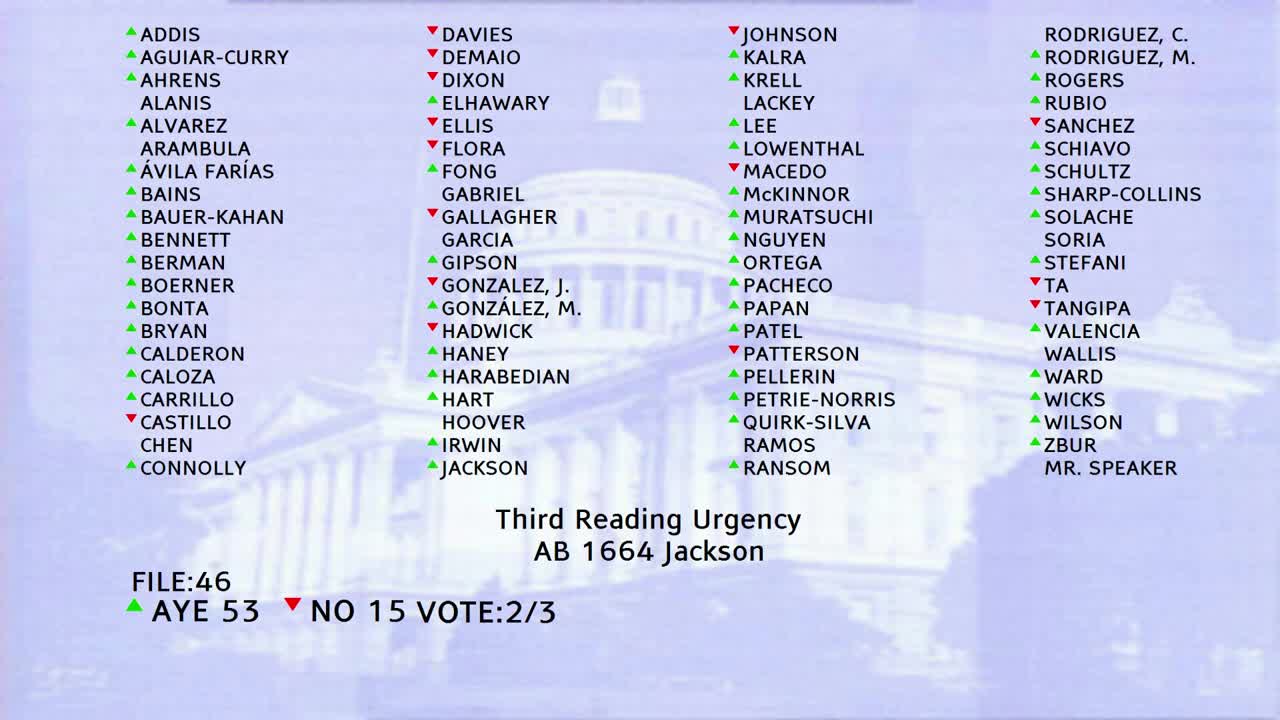 2MIN
Assembly Floor
 10MIN