AB 1980: Labor: apprenticeship: Equal Representation in Construction Apprenticeships Grant Program.
- Session Year: 2025-2026
- House: Assembly
- Latest Version Date: 2026-09-27
Current Status:
Passed
(2026-09-27: Chaptered by Secretary of State - Chapter 566, Statutes of 2026.)
Introduced
In Committee
Awaiting First Chamber Vote
Passed First Chamber
In Committee
Awaiting Second Chamber Vote
Passed Second Chamber
Enacted
Existing law establishes in the Labor and Workforce Development Agency the Department of Industrial Relations. Existing law requires the department, upon appropriation by the Legislature, to establish a Women in Construction Priority Unit to, among other things, provide resources for employers and project owners, including public agencies, to improve construction worksite culture, address barriers to employment, and develop training and materials for workforce pipeline professionals specific to women and nonbinary individuals in construction.
This bill would, upon appropriation by the Legislature, require the department to establish, through the Division of Apprenticeship Standards, the Equal Representation in Construction Apprenticeships Grant Program, and would state the goals of the program, including, among other things, providing women, nonbinary individuals, and underrepresented populations with opportunities to train for a construction career with greater access to preapprenticeship and apprenticeship programs that are registered with the division. The bill would authorize the department to issue rules, regulations, guidelines, policies, or procedures necessary to implement the bills provisions described above.
Existing law establishes in the Labor and Workforce Development Agency the Department of Industrial Relations. Existing law requires the department, upon appropriation by the Legislature, to establish a Women in Construction Priority Unit to, among other things, provide resources for employers and project owners, including public agencies, to improve construction worksite culture, address barriers to employment, and develop training and materials for workforce pipeline professionals specific to women and nonbinary individuals in construction.
This bill would, upon appropriation by the Legislature, require the department to establish, through the Division of Apprenticeship Standards, the Equal Representation in Construction Apprenticeships Grant Program for the purpose of increasing equitable access to building and construction career pathways for Program, and would state the goals of the program, including, among other things, providing women, nonbinary individuals, and underrepresented populations in California. The bill would require the department to issue a competitive request for applications for qualified organizations, as defined. The bill would authorize the grants to be used only for specified purposes, including to provide direct participant stipends to offset lost wages and enable full participation in with opportunities to train for a construction career with greater access to preapprenticeship and apprenticeship programs that are registered with the division.
This bill would require the department to prioritize applications from qualified organizations that have programs serving women, nonbinary individuals, and underrepresented populations who meet specified criteria. The bill would impose reporting requirements on grantees, as applicable, and would require the department to provide a summary report of the data received to the Legislature. The bill would authorize the department to issue rules, regulations, guidelines, policies, or procedures necessary to implement the bills provisions described above, including application criteria, grant requirements, and performance measures. above.
Existing law establishes in the Labor and Workforce Development Agency the Department of Industrial Relations. Existing law requires the department, upon appropriation by the Legislature, to establish a Women in Construction Priority Unit to, among other things, provide resources for employers and project owners, including public agencies, to improve construction worksite culture, address barriers to employment, and develop training and materials for workforce pipeline professionals specific to women and nonbinary individuals in construction.
This bill would, upon appropriation by the Legislature, require the department to establish, through the Division of Apprenticeship Standards, the Equal Representation in Construction Apprenticeships Grant Program for the purpose of increasing equitable access to building and construction career pathways for women, nonbinary individuals, and underrepresented populations in California. The bill would require the department to issue a competitive request for applications for qualified organizations, as defined. The bill would authorize the grants to be used only for specified purposes, including to provide direct participant stipends to offset lost wages and enable full participation in preapprenticeship and apprenticeship programs that are registered with the division.
This bill would require the agency department to prioritize applications from qualified organizations that have programs serving women, nonbinary individuals, and underrepresented populations who meet specified criteria. The bill would impose reporting requirements on grantees, as applicable, and would require the department to provide a summary report of the data received to the Legislature. The bill would authorize the department to issue rules, regulations, guidelines, policies, or procedures necessary to implement the bills provisions described above, including application criteria, grant requirements, and performance measures.
Existing law establishes in the Labor and Workforce Development Agency the Department of Industrial Relations. Existing law requires the department, upon appropriation by the Legislature, to establish a Women in Construction Priority Unit to, among other things, provide resources for employers and project owners, including public agencies, to improve construction worksite culture, address barriers to employment, and develop training and materials for workforce pipeline professionals specific to women and nonbinary individuals in construction.
This bill would, upon appropriation by the Legislature, require the department to establish, through the Division of Apprenticeship Standards, the Equal Representation in Construction Apprenticeships Grant Program for the purpose of increasing equitable access to building and construction career pathways for women, nonbinary individuals, and underrepresented populations in California. The bill would require the department to issue a competitive request for applications for qualified organizations, as defined. The bill would require authorize the grants to be used only for specified purposes, including to provide direct participant stipends to offset lost wages and enable full participation in preapprenticeship and apprenticeship programs that are registered with the division.
This bill would require the agency to prioritize applications from qualified organizations that have programs serving women, nonbinary individuals, and underrepresented populations who meet specified criteria. The bill would impose reporting requirements on grantees grantees, as applicable, and would require the department to provide a summary report of the data received to the Legislature. The bill would authorize the department to issue rules, regulations, guidelines, policies, or procedures necessary to implement the bills provisions described above, including application criteria, grant requirements, and performance measures.
Existing law establishes in the Labor and Workforce Development Agency the Department of Industrial Relations. Existing law requires the department, upon appropriation by the Legislature, to establish a Women in Construction Priority Unit to, among other things, provide resources for employers and project owners, including public agencies, to improve construction worksite culture, address barriers to employment, and develop training and materials for workforce pipeline professionals specific to women and nonbinary individuals in construction.
This bill would establish the California Womens Preapprenticeship and Stipend Program within the Labor and Workforce Development Agency for purposes of awarding competitive grants to eligible entities, as defined, that provide preapprenticeship training programs designed to prepare women for entry into registered apprenticeship programs or other state-approved workforce pathways. would, upon appropriation by the Legislature, require the department to establish, through the Division of Apprenticeship Standards, the Equal Representation in Construction Apprenticeships Grant Program for the purpose of increasing equitable access to building and construction career pathways for women, nonbinary individuals, and underrepresented populations in California. The bill would require the department to issue a competitive request for applications for qualified organizations, as defined. The bill would require the grants to be used for specified purposes, including to provide direct participant stipends to offset lost wages and enable full participation in preapprenticeship training programs. The and apprenticeship programs that are registered with the division.
This bill would require the agency to prioritize applications from eligible entities qualified organizations that have programs serving women women, nonbinary individuals, and underrepresented populations who meet specified criteria. The bill would impose reporting requirements on grantees and would require the agency department to provide a summary report of the data received to the Legislature. The bill would authorize the agency department to issue rules, regulations, guidelines, policies, or procedures necessary to implement the bills provisions described above, including application criteria, grant requirements, and performance measures.
This bill would appropriate $50,000,000 from the General Fund to the agency for purposes of the California Womens Preapprenticeship and Stipend Program. The bill would continuously appropriate moneys made available for purposes of the program. By continuously appropriating moneys made available for the program and by making a one-time appropriation, the bill would make an appropriation.Existing law establishes in the Labor and Workforce Development Agency the Department of Industrial Relations. Existing law requires the Department of Industrial Relations, department, upon appropriation by the Legislature, to establish a Women in Construction Priority Unit, overseen by the Director of Industrial Relations. Existing law requires the unit Unit to, among other things, provide resources for employers and project owners, including public agencies, to improve construction worksite culture, address barriers to employment, and develop training and materials for workforce pipeline professionals specific to women and nonbinary individuals in construction.
This bill would state the intent of the Legislature to enact legislation to promote increasing women in the construction industry by creating incentives that include, but are not limited to, childcare, covered prenatal care, and additional protections from harassment in the workplace.This bill would establish the California Womens Preapprenticeship and Stipend Program within the Labor and Workforce Development Agency for purposes of awarding competitive grants to eligible entities, as defined, that provide preapprenticeship training programs designed to prepare women for entry into registered apprenticeship programs or other state-approved workforce pathways. The bill would require the grants to be used for specified purposes, including to provide direct participant stipends to offset lost wages and enable full participation in preapprenticeship training programs. The bill would require the agency to prioritize applications from eligible entities that have programs serving women who meet specified criteria. The bill would impose reporting requirements on grantees and would require the agency to provide a summary report of the data received to the Legislature. The bill would authorize the agency to issue rules, regulations, guidelines, policies, or procedures necessary to implement the bills provisions described above, including application criteria, grant requirements, and performance measures.
This bill would appropriate $50,000,000 from the General Fund to the agency for purposes of the California Womens Preapprenticeship and Stipend Program. The bill would continuously appropriate moneys made available for purposes of the program. By continuously appropriating moneys made available for the program and by making a one-time appropriation, the bill would make an appropriation.
Existing law requires the Department of Industrial Relations, upon appropriation by the Legislature, to establish a Women in Construction Priority Unit, overseen by the Director of Industrial Relations. Existing law requires the unit to, among other things, provide resources for employers and project owners, including public agencies, to improve construction worksite culture, address barriers to employment, and develop training and materials for workforce pipeline professionals specific to women and nonbinary individuals in construction.
This bill would state the intent of the Legislature to enact legislation to promote increasing women in the construction industry by creating incentives that include, but are not limited to, childcare, covered prenatal care, and additional protections from harassment in the workplace.
For purposes of this chapter, all of the following definitions shall apply:
(a)Department means the Department of Industrial Relations.
(b)Director means the Director of Industrial Relations.
(c)Registered means registered with the Division of Apprenticeship Standards.
(d)Unit means the Women in Construction Priority Unit.
SEC. 2.Section 107.7.3 is added to the Labor Code, immediately following Section 107.7.2, to read:107.7.3.(a)Upon appropriation by the Legislature of funds to the department, the department, through its Division of Apprenticeship Standards, shall establish and administer the Equal Representation in Construction Apprenticeships Grant Program.
(b)The goals of the Equal Representation in Construction Apprenticeships Grant Program shall include all of the following:
(1)Provide women, nonbinary individuals, and underrepresented populations with opportunities to train for a construction career with greater access to registered preapprenticeship and registered apprenticeship programs.
(2)Increase awareness among women, nonbinary individuals, and underrepresented populations of preapprenticeship and apprenticeship programs that create an on-ramp into a career in the building and construction industry.
(3)Increase the number of women, nonbinary individuals, and underrepresented populations registered in, and completing, construction preapprenticeship and apprenticeship programs.
(4)Increase the number of women, nonbinary individuals, and underrepresented populations employed in the construction trades.
(5)Increase retention of women, nonbinary individuals, and underrepresented populations in the construction trades.
(c)The department may issue rules, regulations, guidelines, policies, or procedures necessary to implement this section.
For purposes of this chapter, all of the following definitions shall apply:
(a)Department means the Department of Industrial Relations.
(b)Director means the Director of Industrial Relations.
(c)Registered means registered with the Division of Apprenticeship Standards.
(d)Unit means the Women in Construction Priority Unit.
SEC. 2.Section 107.7.3 is added to the Labor Code, immediately following Section 107.7.2, to read:107.7.3.(a)Upon appropriation by the Legislature of funds to the department, the department, through its Division of Apprenticeship Standards, shall establish and administer the Equal Representation in Construction Apprenticeships Grant Program.
(b)The purpose of the program shall be to increase equitable access to building and construction career pathways for women, nonbinary individuals, and underrepresented populations in California.(c)The department shall issue a competitive request for applications for qualified organizations that provide registered preapprenticeship programs and registered apprenticeship programs designed to prepare women, nonbinary individuals, and underrepresented populations for entry into the building and construction trades.(d)Qualified organizations include community-based organizations, workforce boards, unions, nonprofit organizations, local education agencies, and registered construction apprenticeship and preapprenticeship program sponsors.(1)A qualified organization shall either be a registered preapprenticeship program or apprenticeship program, or be in collaboration with one, as validated with letters of support.(2)A qualified organization shall have a demonstrated history of operating at least two preapprentice or apprentice cohorts focused on equity and inclusion of underrepresented populations in the building and construction industry over the past four years, or marketed, recruited, or advocated for women or nonbinary individuals in registered construction preapprenticeship and apprenticeship programs.(e)In awarding grants, the department shall prioritize applications from qualified organizations that have programs that serve women, nonbinary individuals, and underrepresented populations who meet one or more of the following criteria:(1)Low-income status.(2)Unemployed or underemployed.(3)Single parents or primary caregivers.(4)Residents of communities disproportionately impacted by poverty or unemployment.(5)Individuals from populations historically underrepresented in apprenticeship and skilled trades.(f)Grant funds awarded pursuant to this section may be used only for the following purposes:(1)Direct participant stipends to offset lost wages and enable full participation in registered preapprenticeship and registered apprenticeship programs.(2)Supportive services necessary to improve participant retention and completion, including childcare assistance, transportation support, case management, and referrals for housing or family stabilization services.(3)Career navigation, job placement, and transition supportive services for preapprentices and apprentices to move into registered apprenticeship programs or employment.(4)Outreach to women, nonbinary individuals, and underrepresented populations interested in careers in the building and construction industry.(5)Worksite culture improvements, with a focus on mentoring, community building, and mental health support for apprentices, as well as training for apprentices and journey workers, contractors, and managers on a worksite.(6)Administrative and program management costs, as determined by the department.(g)Each grantee shall report outcome data to the department, including, but not limited to, all of the following, if applicable to the purpose of the grant:(1)Either of the following:(A)Number of participants enrolled in a registered preapprenticeship program, and how many enrollees completed the program.(B)Number of participants enrolled in a registered apprenticeship program, and how many enrollees completed the program.(2)Amount and distribution of stipends.(3)Amount and distribution of supportive services.(4)Amount and uses of outreach funding.(5)Gender demographics for program participants.(6)Employment retention outcomes at 6 and 12 months postprogram exit for registered preapprenticeship and registered apprenticeship programs.(h)The department shall provide a summary report to the Legislature, in accordance with Section 9795 of the Government Code, to support ongoing oversight, budget evaluation, and potential program expansion.(b)The goals of the Equal Representation in Construction Apprenticeships Grant Program shall include all of the following:
(1)Provide women, nonbinary individuals, and underrepresented populations with opportunities to train for a construction career with greater access to registered preapprenticeship and registered apprenticeship programs.
(2)Increase awareness among women, nonbinary individuals, and underrepresented populations of preapprenticeship and apprenticeship programs that create an on-ramp into a career in the building and construction industry.
(3)Increase the number of women, nonbinary individuals, and underrepresented populations registered in, and completing, construction preapprenticeship and apprenticeship programs.
(4)Increase the number of women, nonbinary individuals, and underrepresented populations employed in the construction trades.
(5)Increase retention of women, nonbinary individuals, and underrepresented populations in the construction trades.
(i)(c)The department may issue rules, regulations, guidelines, policies, or procedures necessary to implement this section, including application criteria, grant requirements, and performance measures. section.
For purposes of this chapter, all of the following definitions shall apply:
(a)Department means the Department of Industrial Relations.
(b)Director means the Director of Industrial Relations.
(c)Registered means registered with the Division of Apprenticeship Standards.
(d)Unit means the Women in Construction Priority Unit.
SEC. 2.Section 107.7.3 is added to the Labor Code, immediately following Section 107.7.2, to read:107.7.3.(a)Upon appropriation by the Legislature of funds to the department, the department, through its Division of Apprenticeship Standards, shall establish and administer the Equal Representation in Construction Apprenticeships Grant Program.
(b)The purpose of the program shall be to increase equitable access to building and construction career pathways for women, nonbinary individuals, and underrepresented populations in California.
(c)The department shall issue a competitive request for applications for qualified organizations that provide registered preapprenticeship programs and registered apprenticeship programs designed to prepare women, nonbinary individuals, and underrepresented populations for entry into the building and construction trades.
(d)Qualified organizations include community-based organizations, workforce boards, unions, nonprofit organizations, local education agencies, and registered construction apprenticeship and preapprenticeship program sponsors.
(1)A qualified organization shall either be a registered preapprenticeship program or apprenticeship program, or be in collaboration with one, as validated with letters of support.
(2)A qualified organization shall have a demonstrated history of operating at least two preapprentice or apprentice cohorts focused on equity and inclusion of underrepresented populations in the building and construction industry over the past four years, or marketed, recruited, or advocated for women or nonbinary individuals in registered construction preapprenticeship and apprenticeship programs.
(e)In awarding grants, the department shall prioritize applications from qualified organizations that have programs that serve women, nonbinary individuals, and underrepresented populations who meet one or more of the following criteria:
(1)Low-income status.
(2)Unemployed or underemployed.
(3)Single parents or primary caregivers.
(4)Residents of communities disproportionately impacted by poverty or unemployment.
(5)Individuals from populations historically underrepresented in apprenticeship and skilled trades.
(f)Grant funds awarded pursuant to this section may be used only for the following purposes:
(1)Direct participant stipends to offset lost wages and enable full participation in registered preapprenticeship and registered apprenticeship programs.
(2)Supportive services necessary to improve participant retention and completion, including childcare assistance, transportation support, case management, and referrals for housing or family stabilization services.
(3)Career navigation, job placement, and transition supportive services for preapprentices and apprentices to move into registered apprenticeship programs or employment.
(4)Outreach to women, nonbinary individuals, and underrepresented populations interested in careers in the building and construction industry.
(5)Worksite culture improvements, with a focus on mentoring, community building, and mental health support for apprentices, as well as training for apprentices and journey workers, contractors, and managers on a worksite.
(6)Administrative and program management costs, as determined by the department.
(g)Each grantee shall report outcome data to the agency, department, including, but not limited to, all of the following, if applicable to the purpose of the grant:
(1)Either of the following:
(A)Number of participants enrolled in a registered preapprenticeship program, and how many enrollees completed the program.
(B)Number of participants enrolled in a registered apprenticeship program, and how many enrollees completed the program.
(2)Amount and distribution of stipends.
(3)Amount and distribution of supportive services.
(4)Amount and uses of outreach funding.
(5)Gender demographics for program participants.
(6)Employment retention outcomes at 6 and 12 months postprogram exit for registered preapprenticeship and registered apprenticeship programs.
(h)The department shall provide a summary report to the Legislature, in accordance with Section 9795 of the Government Code, to support ongoing oversight, budget evaluation, and potential program expansion.
(i)The department may issue rules, regulations, guidelines, policies, or procedures necessary to implement this section, including application criteria, grant requirements, and performance measures.
For purposes of this chapter, all of the following definitions shall apply:
(a)Department means the Department of Industrial Relations.
(b)Director means the Director of Industrial Relations.
(c)Registered means registered with the Division of Apprenticeship Standards.
(d)Unit means the Women in Construction Priority Unit.
SEC. 2.Section 107.7.3 is added to the Labor Code, immediately following Section 107.7.2, to read:107.7.3.(a)Upon appropriation by the Legislature of funds to the department, the department, through its Division of Apprenticeship Standards, shall establish and administer the Equal Representation in Construction Apprenticeships Grant Program.
(b)The purpose of the program shall be to increase equitable access to building and construction career pathways for women, nonbinary individuals, and underrepresented populations in California.
(c)The department shall issue a competitive request for applications for qualified organizations that provide registered preapprenticeship programs and registered apprenticeship programs designed to prepare women, nonbinary individuals, and underrepresented populations for entry into the building and construction trades.
(d)Qualified organizations include community-based organizations, workforce boards, unions, nonprofit organizations, local education agencies, and registered construction apprenticeship and preapprenticeship program sponsors.
(1)A qualified organization shall either be a registered preapprenticeship program or apprenticeship program, or be in collaboration with one, as validated with letters of support.
(2)A qualified organization shall have a demonstrated history of operating at least two preapprentice or apprentice cohorts focused on equity and inclusion of underrepresented populations in the building and construction industry over the past four years, or marketed, recruited, or advocated for women or nonbinary individuals in registered construction preapprenticeship and apprenticeship programs.
(e)In awarding grants, the department shall prioritize applications from qualified organizations that have programs that serve women, nonbinary individuals, and underrepresented populations who meet one or more of the following criteria:
(1)Low-income status.
(2)Unemployed or underemployed.
(3)Single parents or primary caregivers.
(4)Residents of communities disproportionately impacted by poverty or unemployment.
(5)Individuals from populations historically underrepresented in apprenticeship and skilled trades.
(f)Grant funds awarded pursuant to this section shall only may be used only for the following purposes:
(1)Direct participant stipends to offset lost wages and enable full participation in registered preapprenticeship and registered apprenticeship programs.
(2)Supportive services necessary to improve participant retention and completion, including childcare assistance, transportation support, case management, and referrals for housing or family stabilization services.
(3)Career navigation, job placement, and transition supportive services for preapprentices and apprentices to move into registered apprenticeship programs or employment.
(4)Outreach to women, nonbinary individuals, and underrepresented populations interested in careers in the building and construction industry.
(5)Worksite culture improvements, with a focus on mentoring, community building, and mental health support for apprentices, as well as training for apprentices and journey workers, contractors, and managers on a worksite.
(6)Administrative and program management costs, as determined by the department.
(g)Each grantee shall report outcome data to the agency, including, but not limited to, all of the following: following, if applicable to the purpose of the grant:
(1)Either of the following:
(A)Number of participants enrolled in a registered preapprenticeship program, and how many enrollees completed the program.
(B)Number of participants enrolled in a registered apprenticeship program, and how many enrollees completed the program.
(2)Amount and distribution of stipends.
(3)Amount and distribution of supportive services.
(4)Amount and uses of outreach funding.
(5)Gender demographics for program participants.
(6)Employment retention outcomes at 6 and 12 months post program postprogram exit for registered preapprenticeship and registered apprenticeship programs.
(h)The department shall provide a summary report to the Legislature, in accordance with Section 9795 of the Government Code, to support ongoing oversight, budget evaluation, and potential program expansion.
(i)The department may issue rules, regulations, guidelines, policies, or procedures necessary to implement this section, including application criteria, grant requirements, and performance measures.
For purposes of this chapter, all of the following definitions shall apply:
(a)Department means the Department of Industrial Relations.
(b)Director means the Director of Industrial Relations.
(c)Registered means registered with the Division of Apprenticeship Standards.
(c)(d)Unit means the Women in Construction Priority Unit.
SEC. 2.Section 107.7.3 is added to the Labor Code, immediately following Section 107.7.2, to read:107.7.3.(a)Upon appropriation by the Legislature of funds to the department, the department, through its Division of Apprenticeship Standards, shall establish and administer the Equal Representation in Construction Apprenticeships Grant Program.
(b)The purpose of the program shall be to increase equitable access to building and construction career pathways for women, nonbinary individuals, and underrepresented populations in California.
(c)The department shall issue a competitive request for applications for qualified organizations that provide registered preapprenticeship programs and registered apprenticeship programs designed to prepare women, nonbinary individuals, and underrepresented populations for entry into the building and construction trades.
(d)Qualified organizations include community-based organizations, workforce boards, unions, nonprofit organizations, local education agencies, and registered construction apprenticeship and preapprenticeship program sponsors.
(1)A qualified organization shall either be a registered preapprenticeship program or apprenticeship program, or be in collaboration with one, as validated with letters of support.
(2)A qualified organization shall have a demonstrated history of operating at least two preapprentice or apprentice cohorts focused on equity and inclusion of underrepresented populations in the building and construction industry over the past four years, or marketed, recruited, or advocated for women or nonbinary individuals in registered construction preapprenticeship and apprenticeship programs.
(e)In awarding grants, the department shall prioritize applications from qualified organizations that have programs that serve women, nonbinary individuals, and underrepresented populations who meet one or more of the following criteria:
(1)Low-income status.
(2)Unemployed or underemployed.
(3)Single parents or primary caregivers.
(4)Residents of communities disproportionately impacted by poverty or unemployment.
(5)Individuals from populations historically underrepresented in apprenticeship and skilled trades.
(f)Grant funds awarded pursuant to this section shall only be used for the following purposes:
(1)Direct participant stipends to offset lost wages and enable full participation in registered preapprenticeship and registered apprenticeship programs.
(2)Supportive services necessary to improve participant retention and completion, including childcare assistance, transportation support, case management, and referrals for housing or family stabilization services.
(3)Career navigation, job placement, and transition supportive services for preapprentices and apprentices to move into registered apprenticeship programs or employment.
(4)Outreach to women, nonbinary individuals, and underrepresented populations interested in careers in the building and construction industry.
(5)Worksite culture improvements, with a focus on mentoring, community building, and mental health support for apprentices, as well as training for apprentices and journey workers, contractors, and managers on a worksite.
(6)Administrative and program management costs, as determined by the department.
(g)Each grantee shall report outcome data to the agency, including, but not limited to, all of the following:
(1)Either of the following:
(A)Number of participants enrolled in a registered preapprenticeship program, and how many enrollees completed the program.
(B)Number of participants enrolled in a registered apprenticeship program, and how many enrollees completed the program.
(2)Amount and distribution of stipends.
(3)Amount and distribution of supportive services.
(4)Amount and uses of outreach funding.
(5)Gender demographics for program participants.
(6)Employment retention outcomes at 6 and 12 months post program exit for registered preapprenticeship and registered apprenticeship programs.
(h)The department shall provide a summary report to the Legislature, in accordance with Section 9795 of the Government Code, to support ongoing oversight, budget evaluation, and potential program expansion.
(i)The department may issue rules, regulations, guidelines, policies, or procedures necessary to implement this section, including application criteria, grant requirements, and performance measures.
SECTION 1.Chapter 5 (commencing with Section 3160) is added to Division 3 of the Labor Code, to read:5.California Womens Preapprenticeship and Stipend Program3160.The Legislature finds and declares all of the following:(a)Californias economy depends on a skilled workforce capable of meeting current and projected labor demands in high-growth industries, including construction and other skilled trades that offer family-sustaining wages and long-term career mobility.(b)Wome, particularly low-income women, women of color, and women who are primarily caregivers, remain significantly underrepresented in registered apprenticeship programs and other high-road workforce pathways due to persistent structural barriers.(c)Preapprenticeship programs are an effective and evidence-based strategy for preparing individuals to enter and succeed in registered apprenticeship programs. However, the lack of income support during training continues to be a primary barrier to participation and completion for women.(d)California does not currently have a dedicated state-funded program to support preapprenticeship training specifically designed to serve women, nor does it provide direct stipends to offset lost wages during training.(e)At the federal level, the Women in Apprenticeship and Nontraditional Occupations (WANTO) grant program is the only funding source nationally dedicated to supporting womens entry into apprenticeship and nontraditional occupations. However, WANTO funding is limited, highly competitive, and insufficient to meet statewide demand.(f)Establishing a state-funded preapprenticeship program that includes participant stipends and supportive services will reduce financial barriers, improve completion and placement outcomes, strengthen Californias apprenticeship pipeline, and advance economic mobility for women and their families.3160.1.For purposes of this chapter, the following definitions apply:(a)Agency means the Labor and Workforce Development Agency.(b)(1)Eligible entities means entities with demonstrated experience in serving women through workforce development programs.(2)Eligible entities may include, but are not limited to, community-based organizations, workforce development organizations, labor-management partnerships, community colleges, and other public education institutions.(c)Program means the California Womens Preapprenticeship and Stipend Program, as established by this chapter.3160.2.(a)The California Womens Preapprenticeship and Stipend Program is hereby established within the Labor and Workforce Development Agency.(b)The agency shall administer a competitive grant program, until exhaustion of all moneys made available for the program, in accordance with this chapter to award funds to eligible entities that provide preapprenticeship training programs designed to prepare women for entry into registered apprenticeship programs or other state-approved workforce pathways.(c)In awarding grants, the agency shall prioritize applications from eligible entities that have programs serving women who meet one or more of the following criteria:(1)Low-income status.(2)Unemployed or underemployed.(3)Single parents or primary caregivers.(4)Residents of communities disproportionately impacted by poverty or unemployment.(5)Individuals from populations historically underrepresented in apprenticeship and skilled trades.3160.3.Grant funds awarded pursuant to this chapter shall only be used for the following purposes:(a)Direct participant stipends to offset lost wages and enable full participation in preapprenticeship training programs.(b)Training-related costs, including instruction, curriculum development, tools, personal protective equipment, certifications, and work-readiness supports.(c)Supportive services necessary to improve participant retention and completion, including childcare assistance, transportation support, case management, and referrals for housing or family stabilization services.(d)Career navigation, job placement, and transition support into registered apprenticeship programs or employment.(e)Administrative and program management costs, as determined by the agency.3160.4.(a)Each grantee shall report outcome data to the agency, including, but not limited to, all of the following:(1)Number of participants enrolled and completed.(2)Amount and distribution of stipends.(3)Placement into registered apprenticeship programs or employment.(4)Retention outcomes at 6 and 12 months.(b)The agency shall provide a summary report to the Legislature, in accordance with Section 9795 of the Government Code, to support ongoing oversight, budget evaluation, and potential program expansion.3160.5.Notwithstanding Section 13340 of the Government Code, moneys made available for purposes of implementing this chapter shall be continuously appropriated for those purposes without regard to fiscal years.3160.6.The agency may issue rules, regulations, guidelines, policies, or procedures necessary to implement this chapter, including application criteria, grant requirements, and performance measures.SEC. 2.The sum of fifty million dollars ($50,000,000) is hereby appropriated from the General Fund to the Labor and Workforce Development Agency for purposes of implementing and awarding grants under Chapter 5 (commencing with Section 3160) of Division 3 of the Labor Code, as added by this act.The Legislature finds and declares all of the following:
(a)Californias economy depends on a skilled workforce capable of meeting current and projected labor demands in high-growth industries, including construction and other skilled trades that offer family-sustaining wages and long-term career mobility.
(b)Wome, particularly low-income women, women of color, and women who are primarily caregivers, remain significantly underrepresented in registered apprenticeship programs and other high-road workforce pathways due to persistent structural barriers.
(c)Preapprenticeship programs are an effective and evidence-based strategy for preparing individuals to enter and succeed in registered apprenticeship programs. However, the lack of income support during training continues to be a primary barrier to participation and completion for women.
(d)California does not currently have a dedicated state-funded program to support preapprenticeship training specifically designed to serve women, nor does it provide direct stipends to offset lost wages during training.
(e)At the federal level, the Women in Apprenticeship and Nontraditional Occupations (WANTO) grant program is the only funding source nationally dedicated to supporting womens entry into apprenticeship and nontraditional occupations. However, WANTO funding is limited, highly competitive, and insufficient to meet statewide demand.
(f)Establishing a state-funded preapprenticeship program that includes participant stipends and supportive services will reduce financial barriers, improve completion and placement outcomes, strengthen Californias apprenticeship pipeline, and advance economic mobility for women and their families.
3160.1.For purposes of this chapter, the following definitions apply:
(a)Agency means the Labor and Workforce Development Agency.
(b)(1)Eligible entities means entities with demonstrated experience in serving women through workforce development programs.
(2)Eligible entities may include, but are not limited to, community-based organizations, workforce development organizations, labor-management partnerships, community colleges, and other public education institutions.
(c)Program means the California Womens Preapprenticeship and Stipend Program, as established by this chapter.
3160.2.(a)The California Womens Preapprenticeship and Stipend Program is hereby established within the Labor and Workforce Development Agency.
(b)The agency shall administer a competitive grant program, until exhaustion of all moneys made available for the program, in accordance with this chapter to award funds to eligible entities that provide preapprenticeship training programs designed to prepare women for entry into registered apprenticeship programs or other state-approved workforce pathways.
(c)In awarding grants, the agency shall prioritize applications from eligible entities that have programs serving women who meet one or more of the following criteria:
(1)Low-income status.
(2)Unemployed or underemployed.
(3)Single parents or primary caregivers.
(4)Residents of communities disproportionately impacted by poverty or unemployment.
(5)Individuals from populations historically underrepresented in apprenticeship and skilled trades.
3160.3.Grant funds awarded pursuant to this chapter shall only be used for the following purposes:
(a)Direct participant stipends to offset lost wages and enable full participation in preapprenticeship training programs.
(b)Training-related costs, including instruction, curriculum development, tools, personal protective equipment, certifications, and work-readiness supports.
(c)Supportive services necessary to improve participant retention and completion, including childcare assistance, transportation support, case management, and referrals for housing or family stabilization services.
(d)Career navigation, job placement, and transition support into registered apprenticeship programs or employment.
(e)Administrative and program management costs, as determined by the agency.
3160.4.(a)Each grantee shall report outcome data to the agency, including, but not limited to, all of the following:
(1)Number of participants enrolled and completed.
(2)Amount and distribution of stipends.
(3)Placement into registered apprenticeship programs or employment.
(4)Retention outcomes at 6 and 12 months.
(b)The agency shall provide a summary report to the Legislature, in accordance with Section 9795 of the Government Code, to support ongoing oversight, budget evaluation, and potential program expansion.
3160.5.Notwithstanding Section 13340 of the Government Code, moneys made available for purposes of implementing this chapter shall be continuously appropriated for those purposes without regard to fiscal years.
3160.6.The agency may issue rules, regulations, guidelines, policies, or procedures necessary to implement this chapter, including application criteria, grant requirements, and performance measures.
SEC. 2.The sum of fifty million dollars ($50,000,000) is hereby appropriated from the General Fund to the Labor and Workforce Development Agency for purposes of implementing and awarding grants under Chapter 5 (commencing with Section 3160) of Division 3 of the Labor Code, as added by this act.
SECTION 1.It is the intent of the Legislature to enact legislation to promote increasing women in the construction industry by creating incentives that include, but are not limited to, childcare, covered prenatal care, and additional protections from harassment in the workplace.It is the intent of the Legislature to enact legislation to promote increasing women in the construction industry by creating incentives that include, but are not limited to, childcare, covered prenatal care, and additional protections from harassment in the workplace.
|
Date
|
Status
|
|---|---|
| Sep 27, 2026 | Chaptered by Secretary of State - Chapter 566, Statutes of 2026. |
| Sep 27, 2026 | Approved by the Governor. |
| Sep 3, 2026 | Enrolled and presented to the Governor at 4 p.m. |
| Aug 26, 2026 | Senate amendments concurred in. To Engrossing and Enrolling. (Ayes 79. Noes 0. Page 6574.). |
| Aug 26, 2026 | Senate amendments concurred in. To Engrossing and Enrolling. (Ayes 79. Noes 0.). |
| Aug 25, 2026 | In Assembly. Concurrence in Senate amendments pending. |
| Aug 25, 2026 | Read third time. Passed. Ordered to the Assembly. (Ayes 40. Noes 0. Page 5768.). |
| Aug 25, 2026 | Read third time. Passed. Ordered to the Assembly. (Ayes 39. Noes 0.). |
| Aug 18, 2026 | Read second time. Ordered to third reading. |
| Aug 17, 2026 | Read third time and amended. Ordered to second reading. |
| Aug 13, 2026 | Read second time. Ordered to third reading. |
| Aug 13, 2026 | From committee: Do pass. (Ayes 7. Noes 0.) (August 13). |
| Jun 29, 2026 | In committee: Referred to APPR. suspense file. |
| Jun 17, 2026 | From committee: Do pass and re-refer to Com. on APPR. with recommendation: To Consent Calendar. (Ayes 5. Noes 0.) (June 17). Re-referred to Com. on APPR. |
| Jun 8, 2026 | From committee chair, with author's amendments: Amend, and re-refer to committee. Read second time, amended, and re-referred to Com. on L., P.E. & R. |
| Jun 3, 2026 | Referred to Com. on L., P.E. & R. |
| May 27, 2026 | In Senate. Read first time. To Com. on RLS. for assignment. |
| May 26, 2026 | Read third time. Passed. Ordered to the Senate. (Ayes 78. Noes 0. Page 5368.) |
| May 26, 2026 | Read third time. Passed. Ordered to the Senate. (Ayes 78. Noes 0.) |
| May 26, 2026 | Read third time. Passed. Ordered to the Senate. |
| May 19, 2026 | Read second time. Ordered to third reading. |
| May 18, 2026 | Read second time and amended. Ordered returned to second reading. |
| May 14, 2026 | From committee: Amend, and do pass as amended. (Ayes 11. Noes 0.) (May 14). |
| May 6, 2026 | In committee: Set, first hearing. Referred to APPR. suspense file. |
| Apr 23, 2026 | From committee: Do pass and re-refer to Com. on APPR. with recommendation: To Consent Calendar. (Ayes 7. Noes 0.) (April 22). Re-referred to Com. on APPR. |
| Apr 20, 2026 | Re-referred to Com. on L. & E. |
| Apr 16, 2026 | From committee chair, with author's amendments: Amend, and re-refer to Com. on L. & E. Read second time and amended. |
| Mar 23, 2026 | Re-referred to Com. on L. & E. |
| Mar 19, 2026 | From committee chair, with author's amendments: Amend, and re-refer to Com. on L. & E. Read second time and amended. |
| Mar 19, 2026 | Referred to Com. on L. & E. |
| Feb 14, 2026 | From printer. May be heard in committee March 16. |
| Feb 13, 2026 | Read first time. To print. |
|
Date
|
Description
|
Location
|
Votes
|
|
|---|---|---|---|---|
| Aug 26, 2026 | AB 1980 Caloza Concurrence in Senate Amendments | Assembly Floor |
Passed |
|
| Aug 25, 2026 | Assembly 3rd Reading AB1980 Caloza By Smallwood-Cuevas | Senate Floor |
Passed |
|
| Aug 13, 2026 | Do pass | Senate Standing Committee on Appropriations |
Passed |
|
| Jun 29, 2026 | Placed on suspense file | Senate Standing Committee on Appropriations |
Passed |
|
| Jun 17, 2026 | Do pass, but first be re-referred to the Committee on [Appropriations] with the recommendation: To Consent Calendar | Senate Standing Committee on Labor, Public Employment and Retirement |
Passed |
|
| May 26, 2026 | AB 1980 Caloza Assembly Third Reading | Assembly Floor |
Passed |
|
| May 14, 2026 | Do pass as amended. | Assembly Standing Committee on Appropriations |
Passed |
|
| Apr 22, 2026 | Do pass and be re-referred to the Committee on [Appropriations] with recommendation: To Consent Calendar | Assembly Standing Committee on Labor and Employment |
Passed |
This list shows positions taken on this bill by organizations on the date displayed, which is linked to the original source.
Positions by individuals are not included.
|
Organization
|
Position
|
Date
|
|---|---|---|
| California Commission on the Status of Women and Girls | ** Support | |
| California EDGE Coalition | ** Support | |
| Career Launch Path | ** Support | |
| Contractors State License Board | ** Support | |
| Equal Rights Advocates | ** Support | |
| Grid Alternatives | ** Support | |
| Rising Sun Center for Opportunity | ** Support | |
| Strategy Workplace Communications | ** Support | |
| TradesWomen Inc. | ** Support | |
| Women in Non Traditional Employment Roles | ** Support |
CONCURRENCE IN SENATE AMENDMENTS
CSA1 Bill Id:AB 1980
Author:(Caloza)
As Amended Ver:August 17, 2026
Majority vote
SUMMARY
Requires, upon appropriation by the Legislature, the Department of Industrial Relations (DIR), through its Division of Apprenticeship Standards (DAS), to establish and administer the Equal Representation in Construction Apprenticeships (ERiCA) Grant Program, as specified, to, among other things, increase the number of women, nonbinary individuals, and underrepresented populations employed in the construction trades.
Senate Amendments
- Delete all provisions in the Assembly version except for:
- The requirement that, upon appropriation by the Legislature, the DIR, through the DAS, establish and administer the ERiCA Grant Program; and
- The authorization for the DIR to issue rules, regulations, guidelines, policies or procedures to implement the bill.
- Establish goals for the ERiCA Grant Program, as specified.
COMMENTS
Women and other populations underrepresented in the construction workforce:
Nationally, women represent just 11 percent of the construction industry. Women make up an even smaller percentage (4.3 percent in 2025) of the hands-on trades jobs such as electricians, carpenters, laborers, and plumbers.[1] Other populations underrepresented in the building and construction trades include non-binary individuals, justice involved, at-risk youth and certain ethnic minorities.
The construction industry, like many others, is facing upcoming retirements of record levels of skilled tradespeople and urgently needs a pipeline of new workers. Furthermore, jobs in the building and construction trades offer individuals meaningful work with good pay. This creates an ideal environment for women and other historically-underrepresented populations to enter into and advance in the industry.
Women in Construction Priority Unit:
To help more women and underrepresented populations enter the trades, the Legislature and Governor, via the 2022-23 Budget Act, established the Women in Construction Priority Unit at the DIR. The unit was tasked with, among other things:
- Assisting and providing resources to women and nonbinary individuals including apprentices and journeypersons in the construction industry
- Providing resources to employers and project owners to improve worksite culture and address barriers to employment
- Developing materials and training for employers and unions to promote recruitment and retention
- Leadership training to increase the upward mobility of women and nonbinary individuals in construction careers
In each of the Budget Acts from 2022 to 2025, $15 million was appropriated to support the unit, for a total of $60 million. That funding was used, in part, to stand up the ERiCA Grant Program.
ERiCA Grant Program:
The ERiCA Grant Program aims to increase outreach to and reduce barriers for women, non-binary individuals, and underrepresented populations to enter the building and construction trades. The program provides funding to pre-apprenticeship and apprenticeship programs for recruitment and outreach, childcare stipends, and improvements to worksite culture.
To date, DIR has awarded approximately $51 million in funding through the ERiCA grants. The remaining $9 million appropriated by the Legislature for the Women in Construction Priority Unit was used for staffing, program evaluation and other administrative costs.
Neither the Women in Construction Priority unit nor the ERiCA Grant Program have remaining funding unless more is appropriated in this or future years' budget acts. This bill would codify the ERiCA Grant Program, as well as establish goals for the program.
According to the Author
"Today, women hold only about 10 percent of construction trade jobs and apprenticeships nationwide. Despite making up more than half of our country's population, the industry has been historically male-dominated, and too many talented and capable women stay on the sidelines, not realizing that these opportunities are within reach. AB 1980 turns opportunity into success, equipping women—especially from historically underrepresented populations—with the training, stipends, and support services they need to provide for their families, while building long-term, thriving careers in skilled trades. Because when we invest in women, we invest in California's future."
Arguments in Support
Women in Non Traditional Employment Roles, co-sponsor of the measure, states that "California faces an urgent workforce challenge. As the state continues to invest in critical infrastructure, housing, transportation, climate resilience, and clean energy projects, demand for a skilled construction workforce continues to grow. Yet women remain significantly underrepresented in registered apprenticeship programs and skilled trades occupations despite the family-sustaining wages, benefits, and long-term career mobility these careers provide. For many women, the barriers to entering apprenticeship programs are not a lack of interest or ability, they are financial and structural. The cost of childcare, transportation, tools, work attire, certifications, and lost wages during training often make participation impossible. Women who are primary caregivers, low-income women, and women returning to the workforce face particularly significant challenges in accessing these opportunities."
Arguments in Opposition
None on file.
FISCAL COMMENTS
According to the Senate Appropriations Committee, "this bill would result in an annual cost pressure of an unknown amount, likely in the tens of millions of dollars annually, to appropriate funds to DIR to continue administering the ERiCA Grant Program (General Fund). DIR's Division of Apprenticeship Standards (DAS) awarded $25 million during the first round of grants for 2023-25 and $26 million during the second round of grants for 2025-27. DIR indicates that its annual costs to administer the Program would total $1.4 million on an ongoing basis (General Fund)."
VOTES:
ASM LABOR AND EMPLOYMENT: 7-0-0
YES: Ortega, Alanis, Chen, Elhawary, Kalra, Lee, Ward
ASM APPROPRIATIONS: 11-0-4
YES: Wicks, Aguiar-Curry, Calderon, Caloza, Fong, Mark González, Krell, Pacheco, Pellerin, Sharp-Collins, Solache
ABS, ABST OR NV: Hoover, Dixon, Ta, Tangipa
ASSEMBLY FLOOR: 78-0-2
YES: Addis, Aguiar-Curry, Ahrens, Alanis, Alvarez, Arambula, Ávila Farías, Bains, Bauer-Kahan, Bennett, Berman, Boerner, Bonta, Bryan, Calderon, Caloza, Carrillo, Castillo, Chen, Connolly, Davies, DeMaio, Dixon, Elhawary, Ellis, Flora, Fong, Gabriel, Gallagher, Garcia, Gipson, Jeff Gonzalez, Mark González, Hadwick, Haney, Harabedian, Hart, Hoover, Irwin, Jackson, Johnson, Kalra, Krell, Lackey, Lee, Lowenthal, Macedo, McKinnor, Nguyen, Ortega, Pacheco, Papan, Patel, Patterson, Pellerin, Petrie-Norris, Quirk-Silva, Ramos, Ransom, Michelle Rodriguez, Rogers, Blanca Rubio, Sanchez, Schiavo, Schultz, Sharp-Collins, Solache, Soria, Stefani, Ta, Tangipa, Valencia, Wallis, Ward, Wicks, Wilson, Zbur, Rivas
ABS, ABST OR NV: Muratsuchi, Celeste Rodriguez
UPDATED
VERSION: August 17, 2026
CONSULTANT: Erin Hickey / L. & E. / (916) 319-2091 FN: 0004062
Labor Force Statistics from the Current Population Survey. 2025. Bureau of Labor Statistics.
Top of Form
https://www.bls.gov/cps/cpsaat11.htm ↑
SENATE RULES COMMITTEE Office of Senate Floor Analyses (916) 651-4171 | AB 1980 |
THIRD READING
Bill No: AB 1980
Author: Caloza (D)
Amended: 6/8/26 in Senate
Vote: 21
SENATE LABOR, PUB. EMP. & RET. COMMITTEE: 5-0, 6/17/26
AYES: Smallwood-Cuevas, Strickland, Cortese, Durazo, Laird
SENATE APPROPRIATIONS COMMITTEE: 7-0, 8/13/26
AYES: Cervantes, Seyarto, Cabaldon, Dahle, Grayson, Richardson, Wahab
ASSEMBLY FLOOR: 78-0, 5/26/26 - See last page for vote
SUBJECT: Labor: apprenticeship: Equal Representation in Construction Apprenticeships Grant Program
SOURCE: California Commission on the Status of Women and Girls
Women in Non Traditional Employment Roles
DIGEST:
This bill directs the Department of Industrial Relations (DIR), upon appropriation by the Legislature, to establish the Equal Representation in Construction Apprenticeships Grant Program (ERiCA Grant Program) to, among other things, provide women, nonbinary individuals, and underrepresented populations with opportunities to train for a construction career.
Senate Floor Amendments of 8/17/26 1) strike provisions of this bill that prescribe exact ERiCA Grant Program criteria and instead authorize DIR to issue regulations necessary to implement the measure; and 2) specify the goals of the ERiCA Grant Program.
ANALYSIS:
Existing law:
- Establishes the DIR within the Labor and Workforce Development Agency to foster, promote, and develop the welfare of the wage earners of California, to improve their working conditions, and to advance their opportunities for profitable employment. (Labor Code §50.5)
- Establishes the Division of Apprenticeship Standards (DAS) within DIR to oversee apprenticeship programs and requires the Chief of the Division (Chief) to perform various functions to promote the welfare of apprentices. (Labor Code §3070 et seq.)
- Provides for preapprenticeship and apprenticeship programs within DAS, sponsored by specific entities and employers, and requires the Chief to perform various functions with respect to apprenticeship programs and the welfare of apprentices. (Labor Code §3070 et seq.)
- Requires DIR, upon appropriation by the Legislature, to establish a Women in Construction Priority Unit to coordinate and help ensure collaboration across DIR’s divisions, and maximize state and federal funding to support women and nonbinary individuals in the construction workforce. (Labor Code §107.7.1)
- Requires the Women in Construction Priority Unit to do all of the following:
- Assist and provide resources to women and nonbinary individuals, including, but not limited to, apprentices and journeypersons in the construction industry, including developing materials for employers and unions to promote the recruitment and retention of women and nonbinary individuals in construction, maintaining an internet website listing workers’ rights, developing training materials specific to women and nonbinary individuals to navigate health and safety and wage and hour laws, and leadership training to increase the upward mobility of women and nonbinary individuals in construction careers.
- Provide resources for employers and project owners, including public agencies, to improve construction worksite culture, address barriers to employment, develop training and materials for workforce pipeline professionals specific to women and nonbinary individuals in construction, and interagency training.
- Upon request by a state agency and approval by the Secretary of Labor and Workforce Development, establish interagency agreements, as specified to promote the recruitment and retention of women and nonbinary individuals in construction. (Labor Code §107.7.2(a-c))
- Provides that preapprenticeship programs shall be eligible for resources provided under 4) and 5). (Labor Code §107.7.2(d))
This bill:
- Requires, upon appropriation by the Legislature, DIR, through DAS, to establish and administer the ERiCA Grant Program.
- Provides that the goals of the ERiCA Grant Program shall include all of the following:
- Provide women, nonbinary individuals, and underrepresented populations with opportunities to train for a construction career with greater access to registered preapprenticeship and registered apprenticeship programs.
- Increase awareness among women, nonbinary individuals, and underrepresented populations of preapprenticeship and apprenticeship programs that create an on-ramp into a career in the building and construction industry.
- Increase the number of women, nonbinary individuals, and underrepresented populations registered in, and completing, construction preapprenticeship and apprenticeship programs.
- Increase the number of women, nonbinary individuals, and underrepresented populations employed in the construction trades.
- Increase retention of women, nonbinary individuals, and underrepresented populations in the construction trades.
- Authorizes DIR to issue rules, regulations, guidelines, policies, or procedures necessary to implement these provisions.
- Defines “registered” as registered with DAS.
Background
Women and Other Underrepresented Populations in the Trades. Careers in the
building and construction trades offer a reliable pathway into the middle class.
Journeypersons and apprentices enjoy high wages, as well as health and pension
benefits. In California, an increasing demand for housing, infrastructure, and
climate-resilient development has led to sustained investments in apprenticeship
programs. In April 2026, for example, the State announced $18.6 million in grants
to support apprenticeship in the building and construction trades. The construction
industry's urgent need for skilled workers creates opportunities to diversify its
workforce. Nationally, women represent just 11% of the construction
industry. Women make up an even smaller percentage (4.3% in 2025) of the
hands-on trades jobs such as electricians, carpenters, laborers, and plumbers.
Other populations underrepresented in the building and construction trades include
non-binary individuals, justice involved, at-risk youth and certain ethnic
minorities.
Women in Construction Priority Unit. As part of the 2022/2023 Budget Act,
Governor Newsom signed into law legislation to create the Women in Construction
Unit at DIR. The goal of the Unit is to support women and nonbinary individuals
in entering the construction workforce. Among other things, the Unit was tasked
with:
- Assisting and providing resources to women and nonbinary individuals including apprentices and journeypersons in the construction industry.
- Providing resources to employers and project owners to improve worksite culture and address barriers to employment.
- Developing materials and training for employers and unions to promote recruitment and retention.
- Leadership training to increase the upward mobility of women and nonbinary individuals in construction careers.
In addition to the Unit, a Women in Construction Advisory Committee was created to develop recommendations to diversify the construction workforce. The Advisory Committee is composed of representatives from certified collective bargaining agents who represent construction workers, construction industry employers, labor-management groups in the industry, and representatives from the Labor Commissioner’s Office, Cal/OSHA, and the Department of Fair Employment and Housing.
Equal Representation in Construction Apprenticeship Grant (ERiCA Grant Program). Using money appropriated in each of the Budget Acts from 2022 to 2025, the Unit established the ERiCA Grant Program. ERiCA grants seek to improve access to training and employment opportunities for underrepresented populations in construction trades throughout the state. Grantees can apply for 3 categories of funding:
- Recruitment: Expanding recruitment efforts to be more inclusive of women and non-binary individuals to better facilitate their entry into construction careers,
- Childcare: supportive resources for childcare and,
- Worksite culture: mentoring and mental health support for apprentices and pre-apprentices and training for all on the worksite to better navigate the worksite interactions.
DAS awarded $25 million in funds during the first round of the ERiCA grant program (2023-2025). The second round of grants is underway, with an expected performance period of June/July 2025- June 30, 2027. DAS awarded $26,169,217 for this round.
Grant Eligibility: Eligible Grant applicants must have a demonstrated history of operating at least two pre-apprentice or apprentice cohorts focusing on equity and inclusion of underrepresented populations in the construction industry over the past four years or marketed, recruited or advocated for women or non-binary individuals in DAS-registered construction pre-apprenticeship and apprenticeship programs. All applicants must be a DAS-registered pre-apprenticeship or apprenticeship program or be in collaboration with one, validated with letters of support. The following are eligible entity types:
- Non-profits
- Community-based Organizations
- Local Education Agencies
- Workforce Development Boards
- Unions
- State Registered construction apprenticeship and pre-apprenticeship program sponsors
Applicants are scored according to five criteria: 1) fulfills eligibility requirements; 2) demonstrated history of serving under-represented populations in construction; 3) effective use of funding; 4) strength of projected outcomes; and 5) feasibility of proposed plan.
*Please see the Senate Labor, Public Employment and Retirement policy analysis for more information on the three categories of funding, eligible activities, and grantee reporting requirements.
This bill Neither the Women in Construction Priority Unit nor the ERiCA Grant Program have remaining funding unless more is appropriated in this or future years’ budget acts. AB 1980 codifies the ERiCA Grant Program and specifies the program’s goals.
FISCAL EFFECT: Appropriation: No Fiscal Com.: Yes Local: No
According to the Senate Appropriations Committee:
“This bill would result in an annual cost pressure of an unknown amount, likely in the tens of millions of dollars annually, to appropriate funds to DIR to continue administering the ERiCA Grant Program (General Fund). DIR’s Division of Apprenticeship Standards (DAS) awarded $25 million during the first round of grants for 2023-25 and $26 million during the second round of grants for 2025-27. DIR indicates that its annual costs to administer the Program would total $1.4 million on an ongoing basis (General Fund).”
SUPPORT: (Verified 8/17/26)
California Commission on the Status of Women and Girls (co-source)
Women in Non Traditional Employment Roles (co-source)
California Edge Coalition
Career Launch Path
Contractors State License Board
Equal Rights Advocates
Grid Alternatives
Rising Sun Center for Opportunity
Strategy Workplace Communications
Tradeswomen INC.
OPPOSITION: (Verified 8/17/26)
None received
ARGUMENTS IN SUPPORT: Women in Non Traditional Roles, a co-source of the measure, argues:
“AB 1980 will institutionalize the Equal Representation in Construction Apprenticeships (ERiCA) Grant Program within the Department of Industrial Relations, ensuring sustained, statewide support for pre-apprenticeship training and workforce entry for women. This action is essential: while pre-apprenticeship programs have proven effective pathways into registered apprenticeship, too many women are unable to complete them due to financial and structural barriers.”
ASSEMBLY FLOOR: 78-0, 5/26/26
AYES: Addis, Aguiar-Curry, Ahrens, Alanis, Alvarez, Arambula, Ávila Farías, Bains, Bauer-Kahan, Bennett, Berman, Boerner, Bonta, Bryan, Calderon, Caloza, Carrillo, Castillo, Chen, Connolly, Davies, DeMaio, Dixon, Elhawary, Ellis, Flora, Fong, Gabriel, Gallagher, Garcia, Gipson, Jeff Gonzalez, Mark González, Hadwick, Haney, Harabedian, Hart, Hoover, Irwin, Jackson, Johnson, Kalra, Krell, Lackey, Lee, Lowenthal, Macedo, McKinnor, Nguyen, Ortega, Pacheco, Papan, Patel, Patterson, Pellerin, Petrie-Norris, Quirk-Silva, Ramos, Ransom, Michelle Rodriguez, Rogers, Blanca Rubio, Sanchez, Schiavo, Schultz, Sharp-Collins, Solache, Soria, Stefani, Ta, Tangipa, Valencia, Wallis, Ward, Wicks, Wilson, Zbur, Rivas
NO VOTE RECORDED: Muratsuchi, Celeste Rodriguez
Prepared by: Emma Bruce / L., P.E. & R. / (916) 651-1556
8/18/26 16:11:58
**** END ****
SENATE RULES COMMITTEE Office of Senate Floor Analyses (916) 651-4171 | AB 1980 |
THIRD READING
Bill No: AB 1980
Author: Caloza (D)
Amended: 6/8/26 in Senate
Vote: 21
SENATE LABOR, PUB. EMP. & RET. COMMITTEE: 5-0, 6/17/26
AYES: Smallwood-Cuevas, Strickland, Cortese, Durazo, Laird
SENATE APPROPRIATIONS COMMITTEE: 7-0, 8/13/26
AYES: Cervantes, Seyarto, Cabaldon, Dahle, Grayson, Richardson, Wahab
ASSEMBLY FLOOR: 78-0, 5/26/26 - See last page for vote
SUBJECT: Labor: apprenticeship: Equal Representation in Construction Apprenticeships Grant Program
SOURCE: California Commission on the Status of Women and Girls
Women in Non Traditional Employment Roles
DIGEST:
This bill directs the Department of Industrial Relations (DIR), upon appropriation by the Legislature, to establish the Equal Representation in Construction Apprenticeships Grant Program (ERiCA Grant Program) to increase equitable access to building and construction career pathways for women, nonbinary individuals, and underrepresented populations in California.
ANALYSIS:
Existing law:
- Establishes the DIR within the Labor and Workforce Development Agency to foster, promote, and develop the welfare of the wage earners of California, to improve their working conditions, and to advance their opportunities for profitable employment. (Labor Code §50.5)
- Establishes the Division of Apprenticeship Standards (DAS) within DIR to oversee apprenticeship programs and requires the Chief of the Division (Chief) to perform various functions to promote the welfare of apprentices. (Labor Code §3070 et seq.)
- Provides for preapprenticeship and apprenticeship programs within DAS, sponsored by specific entities and employers, and requires the Chief to perform various functions with respect to apprenticeship programs and the welfare of apprentices. (Labor Code §3070 et seq.)
- Requires DIR, upon appropriation by the Legislature, to establish a Women in Construction Priority Unit to coordinate and help ensure collaboration across DIR’s divisions, and maximize state and federal funding to support women and nonbinary individuals in the construction workforce. (Labor Code §107.7.1)
- Requires the Women in Construction Priority Unit to do all of the following:
- Assist and provide resources to women and nonbinary individuals, including, but not limited to, apprentices and journeypersons in the construction industry, including developing materials for employers and unions to promote the recruitment and retention of women and nonbinary individuals in construction, maintaining an internet website listing workers’ rights, developing training materials specific to women and nonbinary individuals to navigate health and safety and wage and hour laws, and leadership training to increase the upward mobility of women and nonbinary individuals in construction careers.
- Provide resources for employers and project owners, including public agencies, to improve construction worksite culture, address barriers to employment, develop training and materials for workforce pipeline professionals specific to women and nonbinary individuals in construction, and interagency training.
- Upon request by a state agency and approval by the Secretary of Labor and Workforce Development, establish interagency agreements, as specified to promote the recruitment and retention of women and nonbinary individuals in construction. (Labor Code §107.7.2(a-c))
- Provides that preapprenticeship programs shall be eligible for resources provided under 4) and 5). (Labor Code §107.7.2(d))
This bill:
- Requires, upon appropriation by the Legislature, DIR, through DAS, to establish and administer the ERiCA Grant Program.
- Requires DIR to issue a competitive request for applications for qualified organizations that provide registered preapprenticeship programs and registered apprenticeship programs designed to prepare women, nonbinary individuals, and underrepresented populations for entry into the building and construction trades.
- Requires DIR, when awarding grants, to prioritize applications from qualified organizations that have programs that serve women, nonbinary individuals, and underrepresented populations who meet one or more of the following criteria:
- Low-income status.
- Unemployed or underemployed.
- Single parents or primary caregivers.
- Residents of communities disproportionately impacted by poverty or unemployment.
- Individuals from populations historically underrepresented in apprenticeship and skilled trades.
- Authorizes grant funds to only be used for the following purposes:
- Direct participant stipends to offset lost wages and enable full participation in registered preapprenticeship and registered apprenticeship programs.
- Supportive services necessary to improve participant retention and completion, including childcare assistance, transportation support, case management, and referrals for housing or family stabilization services.
- Career navigation, job placement, and transition supportive services for preapprentices and apprentices to move into registered apprenticeship programs or employment.
- Outreach to women, nonbinary individuals, and underrepresented populations interested in careers in the building and construction industry.
- Worksite culture improvements, with a focus on mentoring, community building, and mental health support for apprentices, as well as training for apprentices and journey workers, contractors, and managers on a worksite.
- Administrative and program management costs, as determined by the department.
- Requires each grantee to report outcome data to DIR, including, but not limited to, all of the following, if applicable to the purpose of the grant:
- The number of participants enrolled in a registered preapprenticeship or apprenticeship program, and how many enrolled completed the program.
- Amount and distribution of stipends.
- Amount and distribution of supportive services.
- Amount and uses of outreach funding.
- Gender demographics for program participants.
- Employment retention outcomes at 6 and 12 months postprogram exit for registered preapprenticeship and registered apprenticeship programs.
- Requires DIR to provide a summary report to the Legislature, as specified, to support ongoing oversight, budget evaluation, and potential program expansion.
- Authorizes DIR to issue rules, regulations, guidelines, policies, or procedures necessary to implement these provisions, including application criteria, grant requirements, and performance measures.
- Provides that “qualified organizations” include community-based organizations, workforce boards, unions, nonprofit organizations, local education agencies, and registered construction apprenticeship and preapprenticeship program sponsors.
- Requires a qualified organization to either be a registered preapprenticeship program or apprenticeship program, or be in collaboration with one, as validated with letters of support.
- Requires a qualified organization to have a demonstrated history of operating at least two preapprentice or apprentice cohorts focused on equity and inclusion of underrepresented populations in the building and construction industry over the past four years, or marketed, recruited, or advocated for women or nonbinary individuals in registered construction preapprenticeship and apprenticeship programs.
- Defines “registered” as registered with DAS.
Background
Women and Other Underrepresented Populations in the Trades. Careers in the
building and construction trades offer a reliable pathway into the middle class.
Journeypersons and apprentices enjoy high wages, as well as health and pension
benefits. In California, an increasing demand for housing, infrastructure, and
climate-resilient development has led to sustained investments in apprenticeship
programs. In April 2026, for example, the State announced $18.6 million in grants
to support apprenticeship in the building and construction trades. The construction
industry's urgent need for skilled workers creates opportunities to diversify its
workforce. Nationally, women represent just 11 percent of the construction
industry. Women make up an even smaller percentage (4.3 percent in 2025) of the
hands-on trades jobs such as electricians, carpenters, laborers, and plumbers.
Other populations underrepresented in the building and construction trades include
non-binary individuals, justice involved, at-risk youth and certain ethnic
minorities.
Women in Construction Priority Unit. As part of the 2022/2023 Budget Act,
Governor Newsom signed into law legislation to create the Women in Construction
Unit at DIR. The goal of the Unit is to support women and nonbinary individuals
in entering the construction workforce. Among other things, the Unit was tasked
with:
- Assisting and providing resources to women and nonbinary individuals including apprentices and journeypersons in the construction industry.
- Providing resources to employers and project owners to improve worksite culture and address barriers to employment.
- Developing materials and training for employers and unions to promote recruitment and retention.
- Leadership training to increase the upward mobility of women and nonbinary individuals in construction careers.
In addition to the Unit, a Women in Construction Advisory Committee was created to develop recommendations to diversify the construction workforce. The Advisory Committee is composed of representatives from certified collective bargaining agents who represent construction workers, construction industry employers, labor-management groups in the industry, and representatives from the Labor Commissioner’s Office, Cal/OSHA, and the Department of Fair Employment and Housing.
Equal Representation in Construction Apprenticeship Grant (ERiCA Grant Program). Using money appropriated in each of the Budget Acts from 2022 to 2025, the Unit established the ERiCA Grant Program. ERiCA grants seek to improve access to training and employment opportunities for underrepresented populations in construction trades throughout the state. Grantees can apply for 3 categories of funding:
- Recruitment: Expanding recruitment efforts to be more inclusive of women and non-binary individuals to better facilitate their entry into construction careers,
- Childcare: supportive resources for childcare and,
- Worksite culture: mentoring and mental health support for apprentices and pre-apprentices and training for all on the worksite to better navigate the worksite interactions.
DAS awarded $25 million in funds during the first round of the ERiCA grant program (2023-2025). The second round of grants is underway, with an expected performance period of June/July 2025- June 30, 2027. DAS awarded $26,169,217 for this round.
*Please see the Senate Labor, Public Employment and Retirement policy analysis for more information on the three categories of funding and eligible activities.
Grant Eligibility: Eligible Grant applicants must have a demonstrated history of operating at least two pre-apprentice or apprentice cohorts focusing on equity and inclusion of underrepresented populations in the construction industry over the past four years or marketed, recruited or advocated for women or non-binary individuals in DAS-registered construction pre-apprenticeship and apprenticeship programs. All applicants must be a DAS-registered pre-apprenticeship or apprenticeship program or be in collaboration with one, validated with letters of support. The following are eligible entity types:
- Non-profits
- Community-based Organizations
- Local Education Agencies
- Workforce Development Boards
- Unions
- State Registered construction apprenticeship and pre-apprenticeship program sponsors
Applicants are scored according to five criteria: 1) fulfills eligibility requirements; 2) demonstrated history of serving under-represented populations in construction; 3) effective use of funding; 4) strength of projected outcomes; and 5) feasibility of proposed plan.
Reporting Requirements: Applicants that are approved as grantees are required to abide by specified reporting requirements. The first reporting period is one month into the grant, at which time grantees provide a narrative progress report towards contracted deliverables. After that, quarterly reporting is required for the duration of the grant. Quarterly reporting includes narrative reporting, fiscal reporting demonstrating use of funds, and participant reporting. The structure and detail of participant reporting varies depending on the type of grant. For example, grantees focused on recruitment need to articulate the number of participants served and clearly identify the type of outreach/recruitment that will be used, along with measurable metrics for success.
This Bill. Neither the Women in Construction Priority Unit nor the ERiCA Grant Program have remaining funding unless more is appropriated in this or future years’ budget acts. AB 1980 codifies the ERiCA Grant Program and require DIR to submit a report to the Legislature to support ongoing oversight, budget evaluation, and potential program expansion. The program criteria outlined in this bill closely align with the program criteria DIR uses to administer ERiCA grants.
FISCAL EFFECT: Appropriation: No Fiscal Com.: Yes Local: No
According to the Senate Appropriations Committee:
“This bill would result in an annual cost pressure of an unknown amount, likely in the tens of millions of dollars annually, to appropriate funds to DIR to continue administering the ERiCA Grant Program (General Fund). DIR’s Division of Apprenticeship Standards (DAS) awarded $25 million during the first round of grants for 2023-25 and $26 million during the second round of grants for 2025-27. DIR indicates that its annual costs to administer the Program would total $1.4 million on an ongoing basis (General Fund).”
SUPPORT: (Verified 8/13/26)
California Commission on the Status of Women and Girls (Co-source)
Women in Non Traditional Employment Roles (Co-source)
California Edge Coalition
Career Launch Path
Contractors State License Board
Equal Rights Advocates
Grid Alternatives
Rising Sun Center for Opportunity
Strategy Workplace Communications
Tradeswomen INC.
OPPOSITION: (Verified 8/13/26)
None received
ARGUMENTS IN SUPPORT:
Women in Non Traditional Roles, a co-source of the measure, argues:
“AB 1980 will institutionalize the Equal Representation in Construction Apprenticeships (ERiCA) Grant Program within the Department of Industrial Relations, ensuring sustained, statewide support for pre-apprenticeship training and workforce entry for women. This action is essential: while pre-apprenticeship programs have proven effective pathways into registered apprenticeship, too many women are unable to complete them due to financial and structural barriers.”
ASSEMBLY FLOOR: 78-0, 5/26/26
AYES: Addis, Aguiar-Curry, Ahrens, Alanis, Alvarez, Arambula, Ávila Farías, Bains, Bauer-Kahan, Bennett, Berman, Boerner, Bonta, Bryan, Calderon, Caloza, Carrillo, Castillo, Chen, Connolly, Davies, DeMaio, Dixon, Elhawary, Ellis, Flora, Fong, Gabriel, Gallagher, Garcia, Gipson, Jeff Gonzalez, Mark González, Hadwick, Haney, Harabedian, Hart, Hoover, Irwin, Jackson, Johnson, Kalra, Krell, Lackey, Lee, Lowenthal, Macedo, McKinnor, Nguyen, Ortega, Pacheco, Papan, Patel, Patterson, Pellerin, Petrie-Norris, Quirk-Silva, Ramos, Ransom, Michelle Rodriguez, Rogers, Blanca Rubio, Sanchez, Schiavo, Schultz, Sharp-Collins, Solache, Soria, Stefani, Ta, Tangipa, Valencia, Wallis, Ward, Wicks, Wilson, Zbur, Rivas
NO VOTE RECORDED: Muratsuchi, Celeste Rodriguez
Prepared by: Emma Bruce / L., P.E. & R. / (916) 651-1556
8/14/26 13:42:52
**** END ****
SENATE COMMITTEE ON
Senator Sabrina Cervantes, Chair
2025 - 2026 Regular Session
AB 1980 (Caloza) - Labor: apprenticeship: Equal Representation in Construction Apprenticeships Grant Program
Version: | Policy Vote: |
Urgency: | Mandate: |
Hearing Date: | Consultant: |
Bill Summary:
AB 1980 would direct the Department of Industrial Relations (DIR), upon appropriation by the Legislature, to establish the Equal Representation in Construction Apprenticeships Grant Program (ERiCA Grant Program), as specified.
Fiscal Impact:
This bill would result in an annual cost pressure of an unknown amount, likely in the tens of millions of dollars annually, to appropriate funds to DIR to continue administering the ERiCA Grant Program (General Fund). DIR’s Division of Apprenticeship Standards (DAS) awarded $25 million during the first round of grants for 2023-25 and $26 million during the second round of grants for 2025-27. DIR indicates that its annual costs to administer the Program would total $1.4 million on an ongoing basis (General Fund).
Background:
The building and construction trades provide a significant pathway to middle-class employment through well-paying careers that typically include health care, retirement benefits, and opportunities for advancement. As California continues to invest in housing production, infrastructure modernization, and climate-resilient development, demand for skilled construction workers remains strong. At the same time, women and other historically underrepresented populations continue to comprise a relatively small share of the construction workforce, particularly within skilled trades occupations. Policymakers and industry stakeholders have increasingly focused on expanding access to apprenticeship and career opportunities in the trades as a means of addressing workforce shortages while promoting greater workforce diversity.
As part of the 2022-23 Budget Act, the Legislature established the Women in Construction Priority Unit within DIR. The Unit was created to support the recruitment, retention, and advancement of women and nonbinary individuals in the construction industry. Its responsibilities include providing resources to workers, employers, labor organizations, and apprenticeship programs; developing educational and training materials; promoting inclusive workplace practices; and supporting career advancement opportunities within the trades.
The budget package also established a Women in Construction Advisory Committee composed of representatives from labor organizations, employers, apprenticeship programs, labor-management groups, and state agencies. The committee is charged with developing recommendations to increase participation by underrepresented populations in the construction workforce and improve industry practices that affect recruitment and retention.
Using funding provided in successive Budget Acts from 2022 through 2025, DIR established the ERiCA Grant Program. The program is intended to increase access to apprenticeship and pre-apprenticeship opportunities for women, nonbinary individuals, and other underrepresented populations by supporting recruitment, retention, and workforce participation efforts.
The program provides grants in three primary areas:
- Recruitment and outreach, including efforts to increase awareness of apprenticeship opportunities and expand participation among historically underrepresented groups.
- Childcare support, including financial assistance to help apprentices and pre-apprentices overcome barriers related to dependent care responsibilities.
- Worksite culture and retention, including mentoring, training, community-building activities, and other efforts designed to foster inclusive and supportive workplace environments.
As noted above, DIR awarded $25 million during the initial grant cycle and has awarded an additional $26 million during the second funding round, which is expected to continue through June 2027.
Grant funding is available to a variety of entities involved in apprenticeship and workforce development, including nonprofit organizations, community-based organizations, workforce development boards, educational institutions, labor organizations, and registered apprenticeship and pre-apprenticeship programs. Applicants must demonstrate experience serving underrepresented populations in the construction industry and are evaluated based on factors such as program effectiveness, projected outcomes, and implementation feasibility.
Grantees are subject to ongoing reporting requirements intended to ensure accountability for the use of state funds. Reporting generally includes narrative progress updates, expenditure information, and performance metrics demonstrating participant engagement and program outcomes.
Since the Women in Construction Priority Unit and the ERiCA Grant Program were established through budget appropriations, both currently have no dedicated funding beyond amounts previously authorized by the Legislature.
Proposed Law:
This bill, among other things, would do the following:
- Require, upon appropriation by the Legislature, DIR, through DAS, to establish and administer the EERiCA Grant Program.
- Require DIR to issue a competitive request for applications for qualified organizations (as specified) that provide registered preapprenticeship programs and registered apprenticeship programs designed to prepare women, nonbinary individuals, and underrepresented populations for entry into the building and construction trades.
- Require DIR, when awarding grants, to prioritize applications from qualified organizations that have programs that serve women, nonbinary individuals, and underrepresented populations who meet specified criteria.
- Authorize grant funds to only be used for specified purposes.
- Require each grantee to report specified outcome data to DIR, including, but not limited to, all of the following, if applicable to the purpose of the grant.
- Require DIR to provide a summary report to the Legislature, as specified, to support ongoing oversight, budget evaluation, and potential program expansion.
- Authorize DIR to issue rules, regulations, guidelines, policies, or procedures necessary to implement these provisions, including application criteria, grant requirements, and performance measures.
Related Legislation:
- AB 2550 (Caloza) would require the Employment Development Department to collect and report to the Legislature specified data related to the state’s construction workforce, including the current number of construction workers who are women. This bill is pending in the Senate Labor, Public Employment and Retirement Committee.
- SB 101 (Committee on Budget and Fiscal Review, Chapter 4, Statutes of 2025) among other provisions, appropriated $14,993,000 to support the Women in Construction Priority Unit within DIR.
- AB 107 (Gabriel, Chapter 22, Statutes of 2024) among other provisions, appropriated $15 million to support the Women in Construction Priority Unit within DIR.
- SB 105 (Committee on Budget and Fiscal Review, Chapter 862, Statutes of 2023) among other provisions, appropriated $15 million to support the Women in Construction Priority Unit within DIR.
- SB 154 (Committee on Budget and Fiscal Review, Chapter 43, Statutes of 2022) among other provisions, appropriated $60 million to DAS and required it to be used, in part, to support the Women in Construction Priority Unit within DIR; provided that it is the intent of the Legislature that $15 million be provided on an ongoing basis to support this unit.
- SB 191 (Committee on Budget and Fiscal Review, Chapter 67, Statutes of 2022) among other provisions, required DIR to establish a Women in Construction Priority Unit to coordinate and help ensure collaboration across DIR’s divisions, and maximize state and federal funding to support women and nonbinary individuals in the construction workforce.
- SB 1115 (Skinner, 2022) would have required, upon appropriation by the Legislature, the DIR to establish a Women in Construction Priority Unit to coordinate and help ensure collaboration across the DIR’s divisions and maximize state and federal funding to support women and non-binary individuals in the construction workforce. This bill was held in the Assembly Appropriations Committee.
- AB 2358 (Carrillo, Chapter 675, Statutes of 2018) prohibited discrimination in any building and construction trades apprenticeship program on the basis of certain enumerated categories with regards to acceptance into or participation in the program as specified.
- AB 2288 (Burke, Chapter 692, Statutes of 2016) required the California Workforce Development Board and local workforce development boards to ensure specified funds go toward programs and services that develop a plan for outreach and retention for women participants in pre-apprenticeship programs.
Staff Comments:
As noted above, this bill would codify the ERiCA Grant Program in statute and require DIR to report to the Legislature on program activities and outcomes. The reporting requirement is intended to support legislative oversight, inform future budget decisions, and provide information regarding the effectiveness and potential expansion of the program. The eligibility criteria, allowable activities, and administrative framework established by the bill largely reflect the structure currently used by DIR to administer ERiCA grants.
-- END --
SENATE COMMITTEE ON LABOR, PUBLIC EMPLOYMENT AND RETIREMENT
Senator Lola Smallwood-Cuevas, Chair
2025 - 2026 Regular
Bill No: AB 1980 Hearing Date: June 17, 2026
Author: | Caloza | ||
Version: | June 8, 2026 | ||
Urgency: | No | Fiscal: | Yes |
Consultant: | Emma Bruce | ||
SUBJECT: Labor: apprenticeship: Equal Representation in Construction Apprenticeships Grant Program
KEY ISSUE
This bill directs the Department of Industrial Relations (DIR), upon appropriation by the Legislature, to establish the Equal Representation in Construction Apprenticeships Grant Program (ERiCA Grant Program) to increase equitable access to building and construction career pathways for women, nonbinary individuals, and underrepresented populations in California.
ANALYSIS
Existing law:
- Establishes the Department of Industrial Relations (DIR) within the Labor and Workforce Development Agency to foster, promote, and develop the welfare of the wage earners of California, to improve their working conditions, and to advance their opportunities for profitable employment. (Labor Code §50.5)
- Establishes the Division of Apprenticeship Standards (DAS) within DIR to oversee apprenticeship programs and requires the Chief of the Division (Chief) to perform various functions to promote the welfare of apprentices. (Labor Code §3070 et seq.)
- Provides for preapprenticeship and apprenticeship programs within DAS, sponsored by specific entities and employers, and requires the Chief to perform various functions with respect to apprenticeship programs and the welfare of apprentices. (Labor Code §3070 et seq.)
- Requires DIR, upon appropriation by the Legislature, to establish a Women in Construction Priority Unit to coordinate and help ensure collaboration across DIR’s divisions, and maximize state and federal funding to support women and nonbinary individuals in the construction workforce. (Labor Code §107.7.1)
- Requires the Women in Construction Priority Unit to do all of the following:
- Assist and provide resources to women and nonbinary individuals, including, but not limited to, apprentices and journeypersons in the construction industry, including developing materials for employers and unions to promote the recruitment and retention of women and nonbinary individuals in construction, maintaining an internet website listing workers’ rights, developing training materials specific to women and nonbinary individuals to navigate health and safety and wage and hour laws, and leadership training to increase the upward mobility of women and nonbinary individuals in construction careers.
- Provide resources for employers and project owners, including public agencies, to improve construction worksite culture, address barriers to employment, develop training and materials for workforce pipeline professionals specific to women and nonbinary individuals in construction, and interagency training.
- Upon request by a state agency and approval by the Secretary of Labor and Workforce Development, establish interagency agreements, as specified to promote the recruitment and retention of women and nonbinary individuals in construction.
(Labor Code §107.7.2(a-c))
- Provides that preapprenticeship programs shall be eligible for resources provided under 4) and 5). (Labor Code §107.7.2(d))
This bill:
- Requires, upon appropriation by the Legislature, DIR, through DAS, to establish and administer the Equal Representation in Construction Apprenticeships Grant Program (ERiCA Grant Program).
- Requires DIR to issue a competitive request for applications for qualified organizations that provide registered preapprenticeship programs and registered apprenticeship programs designed to prepare women, nonbinary individuals, and underrepresented populations for entry into the building and construction trades.
- Requires DIR, when awarding grants, to prioritize applications from qualified organizations that have programs that serve women, nonbinary individuals, and underrepresented populations who meet one or more of the following criteria:
- Low-income status.
- Unemployed or underemployed.
- Single parents or primary caregivers.
- Residents of communities disproportionately impacted by poverty or unemployment.
- Individuals from populations historically underrepresented in apprenticeship and skilled trades.
- Authorizes grant funds to only be used for the following purposes:
- Direct participant stipends to offset lost wages and enable full participation in registered preapprenticeship and registered apprenticeship programs.
- Supportive services necessary to improve participant retention and completion, including childcare assistance, transportation support, case management, and referrals for housing or family stabilization services.
- Career navigation, job placement, and transition supportive services for preapprentices and apprentices to move into registered apprenticeship programs or employment.
- Outreach to women, nonbinary individuals, and underrepresented populations interested in careers in the building and construction industry.
- Worksite culture improvements, with a focus on mentoring, community building, and mental health support for apprentices, as well as training for apprentices and journey workers, contractors, and managers on a worksite.
- Administrative and program management costs, as determined by the department.
- Requires each grantee to report outcome data to DIR, including, but not limited to, all of the following, if applicable to the purpose of the grant:
- The number of participants enrolled in a registered preapprenticeship or apprenticeship program, and how many enrolled completed the program.
- Amount and distribution of stipends.
- Amount and distribution of supportive services.
- Amount and uses of outreach funding.
- Gender demographics for program participants.
- Employment retention outcomes at 6 and 12 months postprogram exit for registered preapprenticeship and registered apprenticeship programs.
- Requires DIR to provide a summary report to the Legislature, as specified, to support ongoing oversight, budget evaluation, and potential program expansion.
- Authorizes DIR to issue rules, regulations, guidelines, policies, or procedures necessary to implement these provisions, including application criteria, grant requirements, and performance measures.
- Provides that ‘“qualified organizations”’ include community-based organizations, workforce boards, unions, nonprofit organizations, local education agencies, and registered construction apprenticeship and preapprenticeship program sponsors.
- Requires a qualified organization to either be a registered preapprenticeship program or apprenticeship program, or be in collaboration with one, as validated with letters of support.
- Requires a qualified organization to have a demonstrated history of operating at least two preapprentice or apprentice cohorts focused on equity and inclusion of underrepresented populations in the building and construction industry over the past four years, or marketed, recruited, or advocated for women or nonbinary individuals in registered construction preapprenticeship and apprenticeship programs.
- Defines “registered” as registered with DAS.
COMMENTS
1. Background:
Women and Other Underrepresented Populations in the Trades
Careers in the building and construction trades offer a reliable pathway into the middle class. Journeypersons and apprentices enjoy high wages, as well as health and pension benefits. In California, an increasing demand for housing, infrastructure, and climate-resilient development has led to sustained investments in apprenticeship programs. In April 2026, for example, the State announced $18.6 million in grants to support apprenticeship in the building and construction trades. The construction industry's urgent need for skilled workers creates opportunities to diversify its workforce. Nationally, women represent just 11 percent of the construction industry. Women make up an even smaller percentage (4.3 percent in 2025) of the hands-on trades jobs such as electricians, carpenters, laborers, and plumbers.[1] Other populations underrepresented in the building and construction trades include non-binary individuals, justice involved, at-risk youth and certain ethnic minorities.
Women in Construction Priority Unit
As part of the 2022/2023 Budget Act, Governor Newsom signed into law legislation to create the Women in Construction Unit at DIR. The goal of the Unit is to support women and nonbinary individuals in entering the construction workforce. Among other things, the Unit was tasked with:
- Assisting and providing resources to women and nonbinary individuals including apprentices and journeypersons in the construction industry.
- Providing resources to employers and project owners to improve worksite culture and address barriers to employment.
- Developing materials and training for employers and unions to promote recruitment and retention.
- Leadership training to increase the upward mobility of women and nonbinary individuals in construction careers.
In addition to the Unit, a Women in Construction Advisory Committee was created to develop recommendations to diversify the construction workforce. The Advisory Committee is composed of representatives from certified collective bargaining agents who represent construction workers, construction industry employers, labor-management groups in the industry, and representatives from the Labor Commissioner’s Office, Cal/OSHA, and the Department of Fair Employment and Housing.
Equal Representation in Construction Apprenticeship Grant (ERiCA Grant Program)
Using money appropriated in each of the Budget Acts from 2022 to 2025, the Unit established the ERiCA Grant Program. ERiCA grants seek to improve access to training and employment opportunities for underrepresented populations in construction trades throughout the state. Grantees can apply for 3 categories of funding:
- Recruitment: Expanding recruitment efforts to be more inclusive of women and non-binary individuals to better facilitate their entry into construction careers,
- Childcare: supportive resources for childcare and,
- Worksite culture: mentoring and mental health support for apprentices and pre-apprentices and training for all on the worksite to better navigate the worksite interactions.
DAS awarded $25 million in funds during the first round of the ERiCA grant program (2023 2025). The second round of grants is underway, with an expected performance period of June/July 2025- June 30, 2027. DAS awarded $26,169,217 for this round.
Recruitment
Eligible activities for recruitment grants include developing more inclusive materials and strategies for career counselors at high schools and community colleges, updating website content to be more inclusive of historically underrepresented populations, attending women’s career fairs, and networking with contractors and employers to address any concerns around hiring women, non-binary individuals, and underrepresented pre- apprentices. Grantees are required to work in collaboration with the DIR Office of Communications & Media Relations to collaborate on marketing campaigns. This may include, but is not limited to, providing content such as videos, pictures, text or graphics for marketing campaigns, cross promoting events and opportunities, and social media and event collaboration. Additionally, grantees should aim to organize or attend at least one in-person and one virtual event per reporting period specifically for tabling or outreach purposes.
Childcare
Childcare grants support participants in DAS-approved pre-apprenticeship and apprenticeship programs who have a demonstrated need for childcare services. Grantees can use the funds for stipends or reimbursements. Pre-apprentices and apprentices must be a parent or legal guardian to children under the age of 13, or to dependent children with disabilities requiring documented specific care needs. Eligible pre-apprentices receive $5,000, while apprentices receive $10,000.
Worksite Culture
Worksite culture funding is new to the second round of the ERiCA Grant Program. Funding for this category is focused on mentoring, community building, and training for apprentices, journeypersons, contractors, and managers to improve worksite culture. Eligible activities include recruiting and training mentors to support women, non-binary and other underrepresented populations, coordinating with public officials at Cal/OSHA and the Labor Commissioner’s Office on trainings on workplace health, safety, and wage and hour rights, supplying mental health support for apprentices, and drafting template worksite culture norms and processes to offer to employers and programs. Funded activities must be in addition to or complement required training already in place.
Grant Eligibility
Eligible Grant applicants must have a demonstrated history of operating at least two pre-apprentice or apprentice cohorts focusing on equity and inclusion of underrepresented populations in the construction industry over the past four years or marketed, recruited or advocated for women or non-binary individuals in DAS-registered construction pre-apprenticeship and apprenticeship programs. All applicants must be a DAS-registered pre-apprenticeship or apprenticeship program or be in collaboration with one, validated with letters of support. The following are eligible entity types:
- Non-profits
- Community-based Organizations
- Local Education Agencies
- Workforce Development Boards
- Unions
- State Registered construction apprenticeship and pre-apprenticeship program sponsors
Applicants are scored according to five criteria: 1) fulfills eligibility requirements; 2) demonstrated history of serving under-represented populations in construction; 3) effective use of funding; 4) strength of projected outcomes; and 5) feasibility of proposed plan.
Reporting Requirements
Applicants that are approved as grantees are required to abide by specified reporting requirements. The first reporting period is one month into the grant, at which time grantees provide a narrative progress report towards contracted deliverables. After that, quarterly reporting is required for the duration of the grant. Quarterly reporting includes narrative reporting, fiscal reporting demonstrating use of funds, and participant reporting. The structure and detail of participant reporting varies depending on the type of grant. For example, grantees focused on recruitment need to articulate the number of participants served and clearly identify the type of outreach/recruitment that will be used, along with measurable metrics for success.
This Bill
Neither the Women in Construction Priority Unit nor the ERiCA Grant Program have remaining funding unless more is appropriated in this or future years’ budget acts. AB 1980 would codify the ERiCA Grant Program and require DIR to submit a report to the Legislature to support ongoing oversight, budget evaluation, and potential program expansion. The program criteria outlined in this bill closely align with the program criteria DIR uses to administer ERiCA grants.
2. Need for this bill?
According to the author:
“California’s growing economy depends on a skilled workforce capable of meeting labor demand in high-growth industries, including construction and other skilled trades that provide family-sustaining wages and long-term career mobility. Women, particularly low-income women, women of color, and women who are primary caregivers, remain significantly underrepresented in registered apprenticeship programs and other high-road workforce pathways due to structural barriers.
Pre-apprenticeship programs have demonstrated to effectively prepare participants for apprenticeship opportunities. However, the lack of financial support, as well as affordable and reliable childcare, during training often prevents women from being able to fully participate in training programs that require consistent attendance on nontraditional hours.
Between January and August of 2025, over 450,000 women left the workforce, underscoring the urgent need to ensure women have the opportunities and support to re-enter public and private industries. Moreover, careers in California’s construction industry offer a starting median annual wage of $55,000, which demonstrates the economic potential of these trades and the importance of equitable access for women.
AB 1980 will institutionalize the Equal Representation in Construction Apprenticeships (ERiCA) Grant Program within the Department of Industrial Relations (DIR) as a State program, and will authorize competitive grants to eligible entities, including community-based organizations, workforce development organizations, labor-management partnerships, and public education institutions.”
3. Proponent Arguments:
Women in Non Traditional Roles, a co-sponsor of the measure, argues:
“AB 1980 will institutionalize the Equal Representation in Construction Apprenticeships (ERiCA) Grant Program within the Department of Industrial Relations, ensuring sustained, statewide support for pre-apprenticeship training and workforce entry for women. This action is essential: while pre-apprenticeship programs have proven effective pathways into registered apprenticeship, too many women are unable to complete them due to financial and structural barriers.
Through our direct service to women entering the skilled trades, WINTER sees these barriers every day. Lost wages, lack of affordable childcare, transportation challenges, and the need for basic training supports prevent otherwise qualified participants from completing programs and transitioning into high-quality careers. AB 1980 directly addresses these gaps by providing:
- Participant stipends to offset lost income
- Training-related resources, including tools, certifications, and curriculum
- Supportive services such as childcare, transportation, and case management
- Career navigation and placement into registered apprenticeships or employment…
The urgency of this investment cannot be overstated. Women remain significantly
underrepresented in apprenticeship pathways, particularly low-income women,
women of color, and caregivers who face compounded structural barriers. At the same time, California’s construction industry offers a starting median wage of approximately $55,000 annually, representing a powerful pathway to economic mobility and family-sustaining careers.
Yet, between January and August 2025 alone, more than 450,000 women exited the workforce. Without targeted, sustained intervention, this talent pool will remain underutilized, at a time when California urgently needs a skilled workforce to meet infrastructure and housing demands.
Current funding mechanisms are insufficient. Existing federal and state programs are limited, inconsistent, and not designed to address the specific barriers women face in entering nontraditional careers. AB 1980 provides the structure, scale, and permanence needed to close this gap.”
The California Commission on the Status of Women and Girls, a co-sponsor of the measure, argues:
“AB 1980 deeply aligns with the Commission’s commitment to supporting the workforce development and advancement of women in industries where they are underrepresented. The bill supports this goal through the program’s aim to award competitive grants to preapprenticeship training programs to offset lost wages and enable full participation in these programs. This program will provide resources, support, and tools that prepare women to enter these pathways that can lead to long-term economic security and fulfillment.”
4. Opponent Arguments:
None received.
5. Prior Legislation:
AB 2550 (Caloza, 2026) would require the Employment Development Department to collect and report to the Legislature specified data related to the state’s construction workforce, including the current number of construction workers who are women. This bill is pending in the Senate Labor, Public Employment and Retirement Committee.
SB 101 (Committee on Budget and Fiscal Review, Chapter 4, Statutes of 2025) among other provisions, appropriated $14,993,000 to support the Women in Construction Priority Unit within DIR.
AB 107 (Gabriel, Chapter 22, Statutes of 2024) among other provisions, appropriated $15 million to support the Women in Construction Priority Unit within DIR.
SB 105 (Committee on Budget and Fiscal Review, Chapter 862, Statutes of 2023) among other provisions, appropriated $15 million to support the Women in Construction Priority Unit within DIR.
SB 154 (Committee on Budget and Fiscal Review, Chapter 43, Statutes of 2022) among other provisions, appropriated $60 million to DAS and required it to be used, in part, to support the Women in Construction Priority Unit within DIR; provided that it is the intent of the Legislature that $15 million be provided on an ongoing basis to support this unit.
SB 191 (Committee on Budget and Fiscal Review, Chapter 67, Statutes of 2022) among other provisions, required DIR to establish a Women in Construction Priority Unit to coordinate and help ensure collaboration across DIR’s divisions, and maximize state and federal funding to support women and nonbinary individuals in the construction workforce.
SB 1115 (Skinner, 2022) would have required, upon appropriation by the Legislature, the DIR to establish a Women in Construction Priority Unit to coordinate and help ensure collaboration across the DIR’s divisions and maximize state and federal funding to support women and non-binary individuals in the construction workforce. This bill was held in the Assembly Appropriations Committee.
AB 2358 (Carrillo, Chapter 675, Statutes of 2018) prohibited discrimination in any building and construction trades apprenticeship program on the basis of certain enumerated categories with regards to acceptance into or participation in the program as specified.
AB 2288 (Burke, Chapter 692, Statutes of 2016) required the California Workforce Development Board and local workforce development boards to ensure specified funds go toward programs and services that develop a plan for outreach and retention for women participants in pre-apprenticeship programs.
SUPPORT
California Commission on the Status of Women and Girls (Co-sponsor)
Women in Non Traditional Employment Roles (Co-sponsor)
California Edge Coalition
Career Launch Path
Contractors State License Board
Equal Rights Advocates
Grid Alternatives
Rising Sun Center for Opportunity
Strategy Workplace Communications
Tradeswomen INC.
OPPOSITION
None received
-- END --
Labor Force Statistics from the Current Population Survey. 2025. Bureau of Labor Statistics.
ASSEMBLY THIRD READING
ATR Bill Id:AB 1980
Author:(Caloza)
As Amended Ver:May 18, 2026
Majority vote
SUMMARY
Requires, upon appropriation by the Legislature, the Department of Industrial Relations (DIR), through its Division of Apprenticeship Standards (DAS), to establish and administer the Equal Representation in Construction Apprenticeships (ERiCA) Grant Program, as specified, to increase equitable access to building and construction career pathways for women, nonbinary individuals, and underrepresented populations.
Major Provisions
- Requires, upon appropriation by the Legislature, the DIR, through the DAS, to establish and administer the ERiCA Grant Program.
- Provides that the purpose of the program is to increase equitable access to building and construction career pathways for women, nonbinary individuals, and underrepresented populations in California.
- Requires the DIR to issue a competitive request for applications for qualified organizations that provide registered preapprenticeship programs and registered apprenticeship programs designed to prepare women, nonbinary individuals, and underrepresented populations for entry into the building and construction trades.
- Provides that ′″qualified organizations′″ include community-based organizations, workforce boards, unions, nonprofit organizations, local education agencies, and registered construction apprenticeship and preapprenticeship program sponsors.
- Requires a qualified organization to either be a registered preapprenticeship program or apprenticeship program, or be in collaboration with one, as validated with letters of support.
- Requires a qualified organization to have a demonstrated history of operating at least two preapprentice or apprentice cohorts focused on equity and inclusion of underrepresented populations in the building and construction industry over the past four years, or marketed, recruited, or advocated for women or nonbinary individuals in registered construction preapprenticeship and apprenticeship programs.
- Requires the DIR, in awarding grants, to prioritize applications from qualified organizations that have programs that serve women, nonbinary individuals, and underrepresented populations who meet one or more of the following criteria:
- Low-income status.
- Unemployed or underemployed.
- Single parents or primary caregivers.
- Residents of communities disproportionately impacted by poverty or unemployment.
- Individuals from populations historically underrepresented in apprenticeship and skilled trades.
- Authorizes grant funds to be used only for the following purposes:
- Direct participant stipends to offset lost wages and enable full participation in registered preapprenticeship and registered apprenticeship programs.
- Supportive services necessary to improve participant retention and completion, including childcare assistance, transportation support, case management, and referrals for housing or family stabilization services.
- Career navigation, job placement, and transition supportive services for preapprentices and apprentices to move into registered apprenticeship programs or employment.
- Outreach to women, nonbinary individuals, and underrepresented populations interested in careers in the building and construction industry.
- Worksite culture improvements, with a focus on mentoring, community building, and mental health support for apprentices, as well as training for apprentices and journey workers, contractors, and managers on a worksite.
- Administrative and program management costs, as determined by the DIR.
- Requires grantees to report certain outcome data to DIR, including the number and gender demographics of program participants, the amount and distribution of stipends and supportive services, the amount and uses of outreach funding, and employment retention outcomes, if applicable to the purpose of the grant.
- Requires the DIR to provide a summary report to the Legislature to support ongoing oversight, budget evaluation, and potential program expansion.
- Authorizes the DIR to issue rules, regulations, guidelines, policies, or procedures necessary to implement this measure, including application criteria, grant requirements, and performance measures.
- Defines certain terms.
COMMENTS
Women and other populations underrepresented in the construction workforce:
Nationally, women represent just 11 percent of the construction industry. Women make up an even smaller percentage (4.3 percent in 2025) of the hands-on trades jobs such as electricians, carpenters, laborers, and plumbers.[1] Other populations underrepresented in the building and construction trades include non-binary individuals, justice involved, at-risk youth and certain ethnic minorities.
The construction industry, like many others, is facing upcoming retirements of record levels of skilled tradespeople and urgently needs a pipeline of new workers. Furthermore, jobs in the building and construction trades offer individuals meaningful work with good pay. This creates an ideal environment for women and other historically-underrepresented populations to enter into and advance in the industry.
Women in Construction Priority Unit:
To help more women and underrepresented populations enter the trades, the Legislature and Governor, via the 2022-23 Budget Act, established the Women in Construction Priority Unit at the DIR. The unit was tasked with, among other things:
- Assisting and providing resources to women and nonbinary individuals including apprentices and journeypersons in the construction industry
- Providing resources to employers and project owners to improve worksite culture and address barriers to employment
- Developing materials and training for employers and unions to promote recruitment and retention
- Leadership training to increase the upward mobility of women and nonbinary individuals in construction careers
In each of the Budget Acts from 2022 to 2025, $15 million was appropriated to support the unit, for a total of $60 million. That funding was used, in part, to stand up the ERiCA grant program.
ERiCA grant program:
The ERiCA grant program aims to increase outreach to and reduce barriers for women, non-binary individuals, and underrepresented populations to enter the building and construction trades. The program provides funding to pre-apprenticeship and apprenticeship programs for recruitment and outreach, childcare stipends, and improvements to worksite culture.
To date, DIR has awarded approximately $51 million in funding through the ERiCA grants. The remaining $9 million appropriated by the Legislature for the Women in Construction Priority Unit was used for staffing, program evaluation and other administrative costs.
Neither the Women in Construction Priority unit nor the ERiCA program have remaining funding unless more is appropriated in this or future years' budget acts. This bill would codify the ERiCA program, as well as expand on how the funding can be used, and the applicant eligibility and prioritization criteria. The author indicates she is pursuing an accompanying budget allocation in this year's budget act.
According to the Author
′″Today, women hold only about 10 percent of construction trade jobs and apprenticeships nationwide. Despite making up more than half of our country’s population, the industry has been historically male-dominated, and too many talented and capable women stay on the sidelines, not realizing that these opportunities are within reach. AB 1980 turns opportunity into success, equipping women—especially from historically underrepresented populations—with the training, stipends, and support services they need to provide for their families, while building long-term, thriving careers in skilled trades. Because when we invest in women, we invest in California’s future.′″
Arguments in Support
Women in Non Traditional Employment Roles, co-sponsor of the measure, states that, ′″As an organization that directly serves women seeking careers in the skilled trades, WINTER has seen firsthand how financial barriers, such as lost wages, lack of childcare, and transportation challenges, prevent capable and motivated women from completing training programs. AB 1980 directly addresses these barriers by providing stipends, supportive services, and career navigation, ensuring that more women can successfully enter and complete pre-apprenticeship programs and transition into registered apprenticeships or employment.′″
Arguments in Opposition
None on file.
FISCAL COMMENTS
According to the Assembly Appropriations Committee: Ongoing cost pressures of an unknown amount, likely in the tens of millions of dollars annually, to appropriate funds to DIR to continue administering a permanent and potentially more expansive ERiCA grant program (General Fund (GF)). The author is requesting a budget appropriation in the 2026-27 state budget to support ERiCA. For reference, DAS awarded approximately $25 million during the first round of grants for program year (PY) 2023-2025 and approximately $26.2 million during the second round of grants for PY 2025-27, and DAS would likely continue to utilize approximately 15% of appropriated funds for ongoing program administration costs.
VOTES
ASM LABOR AND EMPLOYMENT: 7-0-0
YES: Ortega, Alanis, Chen, Elhawary, Kalra, Lee, Ward
ASM APPROPRIATIONS: 11-0-4
YES: Wicks, Aguiar-Curry, Calderon, Caloza, Fong, Mark González, Krell, Pacheco, Pellerin, Sharp-Collins, Solache
ABS, ABST OR NV: Hoover, Dixon, Ta, Tangipa
UPDATED
VERSION: May 18, 2026
CONSULTANT: Erin Hickey / L. & E. / (916) 319-2091 FN: 0002991
Labor Force Statistics from the Current Population Survey. 2025. Bureau of Labor Statistics.
Top of Form
https://www.bls.gov/cps/cpsaat11.htm ↑
Date of Hearing: May 6, 2026
ASSEMBLY COMMITTEE ON APPROPRIATIONS
Buffy Wicks, Chair
ABPCA Bill Id:AB 1980
Author:(Caloza) – As Amended Ver:April 16, 2026
Policy Committee: | Labor and Employment | Vote: | 7 - 0 |
|
| ||
|
|
Urgency: No State Mandated Local Program: No Reimbursable: No
SUMMARY:
This bill requires, upon appropriation, the Department of Industrial Relations (DIR) to establish the Equal Representation in Construction Apprenticeship (ERiCA) grant program.
Specifically, this bill:
- Requires, upon appropriation, DIR to establish through its Division of Apprenticeship Standards (DAS) the ERiCA grant program to increase equitable access to building and construction career pathways for women, non-binary individuals, and underrepresented populations in California.
- Requires DIR to prioritize applications from qualified organizations with registered pre-apprenticeship and apprenticeship programs that serve women, non-binary individuals, and underrepresented populations who also meet additional criteria, such as being low-income, unemployed, or a single parent.
- Provides for the allowable use of grant funds, such as providing direct participant stipends to offset lost wages and enable full apprenticeship participating or providing supportive services necessary to improve participant retention, including childcare assistance, transportation support, case management, and referrals for housing or family stabilization services.
- Requires each grantee to report outcome data to DIR and requires DIR to provide a summary report to the Legislature to support ongoing oversight, budget evaluation, and potential program expansion.
- Authorizes DIR to issue regulations and guidelines to implement the program, including application criteria, grant requirements, and performance measures.
FISCAL EFFECT:
Ongoing cost pressures of an unknown amount, likely in the tens of millions of dollars annually, to appropriate funds to DIR to continue administering a permanent and more expansive ERiCA grant program (General Fund (GF)). The author is requesting a budget appropriation in the 2026-27 state budget to support ERiCA. For reference, DAS awarded approximately $25 million during the first round of grants for program year (PY) 2023-2025 and approximately $26.2 million during the second round of grants for PY 2025-27, and DAS would likely continue to utilize approximately 15% of appropriated funds for ongoing program administration costs.
COMMENTS:
- Purpose. According to the author:
Despite making up more than half of our country’s population, the [construction industry] has been historically male-dominated, and too many talented and capable women stay on the sidelines, not realizing that these opportunities are within reach. AB 1980 turns opportunity into success, equipping women – especially from historically underrepresented populations – with the training, stipends, and support services they need to provide for their families, while building long-term, thriving careers in skilled trades.
This bill is co-sponsored by the California Commission on the Status of Women and Girls and Women in Non Traditional Employment Roles and supported by other workplace equity groups.
- Women in Construction. Nationally, women comprise just 11% of the construction industry, and only 4.3% of hands-on trades jobs, such as electricians, carpenters, and plumbers. SB 191 (Committee on Budget and Fiscal Review), Chapter 67, Statutes of 2022, established the Women in Construction Priority Unit within DIR to assist women and nonbinary individuals in the construction industry, as well as provide resources to employers and project owners to improve worksite culture and address barriers to employment. SB 154 (Committee on Budget and Fiscal Review), Chapter 43, Statutes of 2022, appropriated $60 million GF to DAS to support the Unit and stated the intent of the Legislature that $15 million “will be provided on an ongoing basis to support this unit.”
Since the Unit’s inception, DIR has used approximately $9 million for staffing, program evaluation and outreach, and other administrative costs, with the remaining $51 million awarded through the ERiCA grant program. This bill codifies ERiCA in statute, while also expanding the allowable use of grant funds. Existing program funding has generally been limited to uses related to recruitment, childcare, and worksite culture, but this bill allows funds to be used for direct participant stipends to offset lost wages and transportation support, for example, among other new methods to improve participant retention. This bill also requires DIR to prioritize applications from qualified organizations serving certain populations.
- Related Legislation. AB 2550 (Caloza) requires the Employment Development Department to collect data on construction workers who are women. AB 2550 is pending hearing by this committee.
Analysis Prepared by: Irene Ho / APPR. / (916) 319-2081
Date of Hearing: April 22, 2026
ASSEMBLY COMMITTEE ON LABOR AND EMPLOYMENT
Liz Ortega, Chair
ABPCA Bill Id:AB 1980 (
Author:Caloza) – As Amended Ver:April 16, 2026
SUBJECT: Labor: apprenticeship: Equal Representation in Construction Apprenticeships Grant Program
SUMMARY: Requires, upon appropriation by the Legislature, the Department of Industrial Relations (DIR), through its Division of Apprenticeship Standards (DAS), to establish and administer the Equal Representation in Construction Apprenticeships (ERiCA) Grant Program, as specified, to increase equitable access to building and construction career pathways for women, nonbinary individuals, and underrepresented populations. Specifically, this bill:
- Requires, upon appropriation by the Legislature, the DIR, through the DAS, to establish and administer the ERiCA Grant Program.
- Provides that the purpose of the program is to increase equitable access to building and construction career pathways for women, nonbinary individuals, and underrepresented populations in California.
- Requires the DIR to issue a competitive request for applications for qualified organizations that provide registered preapprenticeship programs and registered apprenticeship programs designed to prepare women, nonbinary individuals, and underrepresented populations for entry into the building and construction trades.
- Provides that “qualified organizations” include community-based organizations, workforce boards, unions, nonprofit organizations, local education agencies, and registered construction apprenticeship and preapprenticeship program sponsors.
- Requires a qualified organization to either be a registered preapprenticeship program or apprenticeship program, or be in collaboration with one, as validated with letters of support.
- Requires a qualified organization to have a demonstrated history of operating at least two preapprentice or apprentice cohorts focused on equity and inclusion of underrepresented populations in the building and construction industry over the past four years, or marketed, recruited, or advocated for women or nonbinary individuals in registered construction preapprenticeship and apprenticeship programs.
- Requires the DIR, in awarding grants, to prioritize applications from qualified organizations that have programs that serve women, nonbinary individuals, and underrepresented populations who meet one or more of the following criteria:
- Low-income status.
- Unemployed or underemployed.
- Single parents or primary caregivers.
- Residents of communities disproportionately impacted by poverty or unemployment.
- Individuals from populations historically underrepresented in apprenticeship and skilled trades.
- Requires grant funds to only be used for the following purposes:
- Direct participant stipends to offset lost wages and enable full participation in registered preapprenticeship and registered apprenticeship programs.
- Supportive services necessary to improve participant retention and completion, including childcare assistance, transportation support, case management, and referrals for housing or family stabilization services.
- Career navigation, job placement, and transition supportive services for preapprentices and apprentices to move into registered apprenticeship programs or employment.
- Outreach to women, nonbinary individuals, and underrepresented populations interested in careers in the building and construction industry.
- Worksite culture improvements, with a focus on mentoring, community building, and mental health support for apprentices, as well as training for apprentices and journey workers, contractors, and managers on a worksite.
- Administrative and program management costs, as determined by the DIR.
- Requires grantees to report certain outcome data to DIR, including the number and gender demographics of program participants, the amount and distribution of stipends and supportive services, the amount and uses of outreach funding, and employment retention outcomes.
- Requires the DIR to provide a summary report to the Legislature to support ongoing oversight, budget evaluation, and potential program expansion.
- Authorizes the DIR to issue rules, regulations, guidelines, policies, or procedures necessary to implement this measure, including application criteria, grant requirements, and performance measures.
- Defines certain terms.
EXISTING LAW:
- Establishes the DIR within the Labor and Workforce Development Agency to foster, promote, and develop the welfare of the wage earners of California, to improve their working conditions, and to advance their opportunities for profitable employment. Labor Code § 50 et seq.
- Provides for preapprenticeship and apprenticeship programs within the DAS, sponsored by specific entities and employers, and requires the Chief of the DAS to perform various functions with respect to apprenticeship programs and the welfare of apprentices. Labor Code § 3070 et seq.
- Requires, upon appropriation by the Legislature, the DIR to establish a Women in Construction Priority Unit to coordinate and help ensure collaboration across the department’s divisions, and maximize state and federal funding to support women and nonbinary individuals in the construction workforce. Labor Code § 107.7.1(a).
- Requires the Women in Construction Priority Unit to do all of the following:
- Assist and provide resources to women and nonbinary individuals, including, but not limited to, apprentices and journeypersons in the construction industry, including developing materials for employers and unions to promote the recruitment and retention of women and nonbinary individuals in construction, maintaining a website listing workers’ rights, developing training materials specific to women and nonbinary individuals to navigate health and safety and wage and hour laws, and leadership training to increase the upward mobility of women and nonbinary individuals in construction careers.
- Provide resources for employers and project owners, including public agencies, to improve construction worksite culture, address barriers to employment, develop training and materials for workforce pipeline professionals specific to women and nonbinary individuals in construction, and interagency training.
- Upon request by a state agency and approval by the Secretary of Labor and Workforce Development, establish interagency agreements as specified to promote the recruitment and retention of women and nonbinary individuals in construction. Labor Code Sec. 107.7.2(a)-(c).
- Provides that preapprenticeship programs shall be eligible for resources provided under (3) and (4) above. Labor Code Sec. 107.7.2(d).
FISCAL EFFECT: Unknown
COMMENTS: Women and other populations underrepresented in the construction workforce:
Nationally, women represent just 11 percent of the construction industry. Women make up an even smaller percentage (4.3 percent in 2025) of the hands-on trades jobs such as electricians, carpenters, laborers, and plumbers.[1] Other populations underrepresented in the building and construction trades include non-binary individuals, justice involved, at-risk youth and certain ethnic minorities.
The construction industry, like many others, is facing upcoming retirements of record levels of skilled tradespeople and urgently needs a pipeline of new workers. Furthermore, jobs in the building and construction trades offer individuals meaningful work with good pay. This creates an ideal environment for women and other historically-underrepresented populations to enter into and advance in the industry.
Women in Construction Priority Unit:
To help more women and underrepresented populations enter the trades, the Legislature and Governor, via the 2022-23 Budget Act, established the Women in Construction Priority Unit at the DIR. The unit was tasked with, among other things:
- Assisting and providing resources to women and nonbinary individuals including apprentices and journeypersons in the construction industry
- Providing resources to employers and project owners to improve worksite culture and address barriers to employment
- Developing materials and training for employers and unions to promote recruitment and retention
- Leadership training to increase the upward mobility of women and nonbinary individuals in construction careers
In each of the Budget Acts from 2022 to 2025, $15 million was appropriated to support the unit, for a total of $60 million. That funding was used, in part, to stand up the ERiCA grant program.
ERiCA grant program:
The ERiCA grant program aims to increase outreach to and reduce barriers for women, non-binary individuals, and underrepresented populations to enter the building and construction trades. The program provides funding to pre-apprenticeship and apprenticeship programs for recruitment and outreach, childcare stipends, and improvements to worksite culture.
To date, DIR has awarded approximately $51 million in funding through the ERiCA grants. The remaining $9 million appropriated by the Legislature for the Women in Construction Priority Unit was used for staffing, program evaluation and other administrative costs.
Neither the Women in Construction Priority unit nor the ERiCA program have remaining funding unless more is appropriated in this or future years’ budget acts. This bill would codify the ERiCA program, as well as expand on how the funding can be used, and the applicant eligibility and prioritization criteria. The author indicates she is pursing an accompanying budget allocation in this year’s budget act.
According to the author:
“Today, women hold only about 10 percent of construction trade jobs and apprenticeships nationwide. Despite making up more than half of our country’s population, the industry has been historically male-dominated, and too many talented and capable women stay on the sidelines, not realizing that these opportunities are within reach. AB 1980 turns opportunity into success, equipping women—especially from historically underrepresented populations—with the training, stipends, and support services they need to provide for their families, while building long-term, thriving careers in skilled trades. Because when we invest in women, we invest in California’s future.”
Arguments in Support
Women in Non Traditional Employment Roles, co-sponsor of the measure, states that, “As an organization that directly serves women seeking careers in the skilled trades, WINTER has seen firsthand how financial barriers, such as lost wages, lack of childcare, and transportation challenges, prevent capable and motivated women from completing training programs. AB 1980 directly addresses these barriers by providing stipends, supportive services, and career navigation, ensuring that more women can successfully enter and complete pre-apprenticeship programs and transition into registered apprenticeships or employment.”
Arguments in Opposition
None on file.
Prior and Related Legislation
AB 2550 (Caloza) of 2026 would require the Employment Development Department to collect and report to the Legislature specified data related to the state’s construction workforce, including the current number of construction workers who are women. Pending in this Committee.
SB 101 (Committee on Budget and Fiscal Review), Chapter 4, Statutes of 2025, among other provisions, appropriated $14,993,000 to support the Women in Construction Priority Unit within the DIR.
AB 107 (Gabriel), Chapter 22, Statutes of 2024, among other provisions, appropriated $15 million to support the Women in Construction Priority Unit within the DIR.
SB 105 (Committee on Budget and Fiscal Review), Chapter 862, Statutes of 2023, among other provisions, appropriated $15 million to support the Women in Construction Priority Unit within the DIR.
SB 154 (Committee on Budget and Fiscal Review), Chapter 43, Statutes of 2022, among other provisions, appropriated $60 million to the DAS and required it to be used, in part, to support the Women in Construction Priority Unit within the DIR; provided that it is the intent of the Legislature that $15 million be provided on an ongoing basis to support this unit.
SB 191 (Committee on Budget and Fiscal Review), Chapter 67, Statutes of 2022, among other provisions, required the DIR to establish a Women in Construction Priority Unit to coordinate and help ensure collaboration across the DIR’s divisions, and maximize state and federal funding to support women and nonbinary individuals in the construction workforce.
SB 1115 (Skinner) of 2022 would have required, upon appropriation by the Legislature, the DIR to establish a Women in Construction Priority Unit to coordinate and help ensure collaboration across the DIR’s divisions and maximize state and federal funding to support women and non-binary individuals in the construction workforce. Died in the Assembly Appropriations Committee.
AB 2358 (Carrillo), Chapter 675, Statutes of 2018, prohibited discrimination in any building and construction trades apprenticeship program on the basis of certain enumerated categories with regards to acceptance into or participation in the program as specified.
AB 2288 (Burke), Chapter 692, Statutes of 2016, required the California Workforce Development Board and local workforce development boards to ensure specified funds go toward programs and services that develop a plan for outreach and retention for women participants in pre-apprenticeship programs.
REGISTERED SUPPORT / OPPOSITION:
Support
California Commission on the Status of Women and Girls (Co-Sponsor)
Women in Non Traditional Employment Roles (Co-Sponsor)
Opposition
None on File
Analysis Prepared by: Erin Hickey / L. & E. /
Labor Force Statistics from the Current Population Survey. 2025. Bureau of Labor Statistics.
Top of Form
https://www.bls.gov/cps/cpsaat11.htm ↑
Discussed in Hearing
View Older Hearings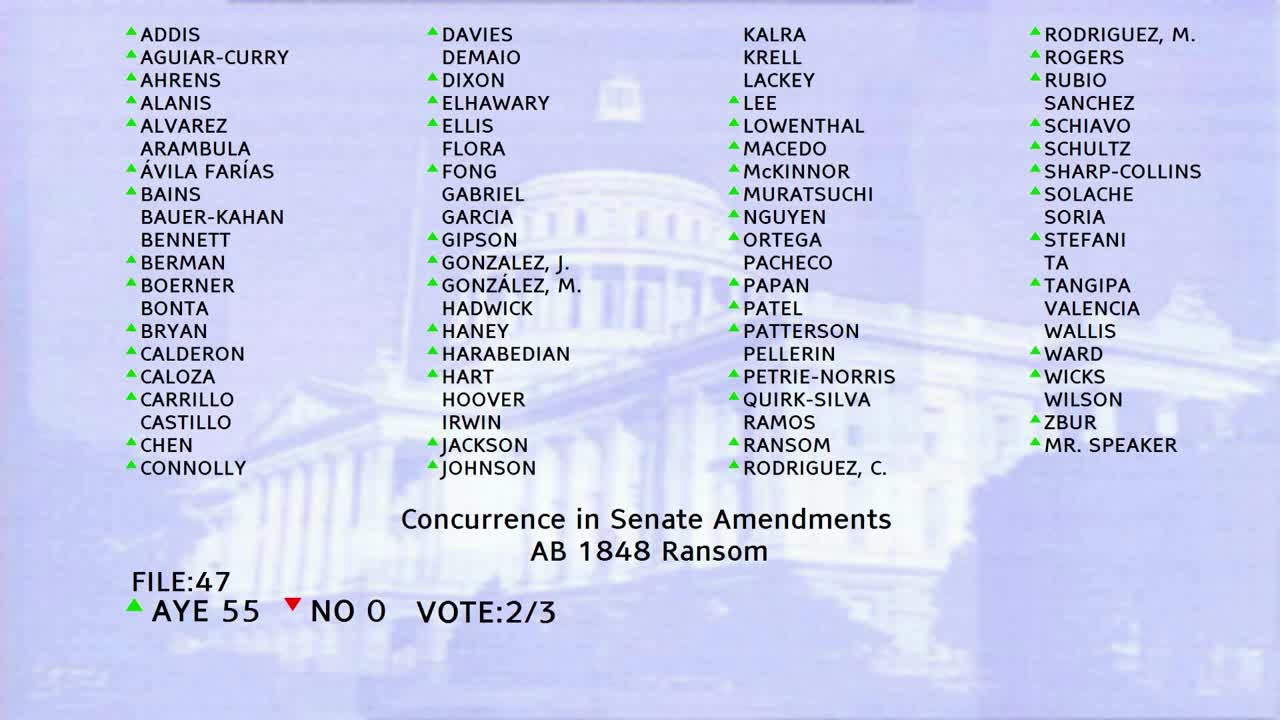
Bill Author

Bill Co-Author(s):