AB 1991: Alcoholic beverages: market research study: taste testing.
- Session Year: 2025-2026
- House: Assembly
- Latest Version Date: 2026-09-18
Current Status:
Passed
(2026-09-18: Chaptered by Secretary of State - Chapter 282, Statutes of 2026.)
Introduced
In Committee
Awaiting First Chamber Vote
Passed First Chamber
In Committee
Awaiting Second Chamber Vote
Passed Second Chamber
Enacted
Existing law, the Alcoholic Beverage Control Act, which is administered by the Department of Alcoholic Beverage Control, regulates the application for, and issuance and suspension of, alcoholic beverage licenses. The Alcoholic Beverage Control Act prohibits a licensee from giving a premium, gift, or free goods in connection with the sale and distribution of any alcoholic beverage, except as provided.
This bill would authorize a licensed winegrower, licensed beer manufacturer, licensed distilled spirits manufacturer, licensed craft distiller, licensed brandy manufacturer, licensed rectifier, or licensed wine rectifier to furnish tastes of alcoholic beverages as part of a bona fide market research study undertaken by or for the licensee for the sole purpose of measuring consumer perceptions with respect to the sensory characteristics of the alcoholic beverages. The bill would authorize the taste testing to be conducted in the state, subject to specified conditions, including, among other things, prohibiting a taste testing participant from being provided more taste samples than is reasonably necessary to formulate an opinion related to the sensory characteristics of an alcoholic beverage.
This bill would repeal these provisions on January 1, 2032.
Existing law, the Alcoholic Beverage Control Act, which is administered by the Department of Alcoholic Beverage Control, regulates the application for, and issuance and suspension of, alcoholic beverage licenses. The Alcoholic Beverage Control Act prohibits a licensee from giving a premium, gift, or free goods in connection with the sale and distribution of any alcoholic beverage, except as provided.
This bill would authorize a licensed winegrower, licensed beer manufacturer, licensed distilled spirits manufacturer, licensed craft distiller, licensed brandy manufacturer, licensed rectifier, or licensed wine rectifier to furnish tastes of alcoholic beverages as part of a bona fide market research study undertaken by or for the licensee for the sole purpose of measuring consumer perceptions with respect to the sensory characteristics of the alcoholic beverages. The bill would authorize the taste testing to be conducted in the state, subject to specified conditions, including that a taste testing participant is, among other things, encouraged to taste only enough alcoholic beverage product to formulate an opinion. including, among other things, prohibiting a taste testing participant from being provided more taste samples than is reasonably necessary to formulate an opinion related to the sensory characteristics of an alcoholic beverage.
This bill would repeal these provisions on January 1, 2032.
Existing law, the Alcoholic Beverage Control Act, which is administered by the Department of Alcoholic Beverage Control, regulates the application for, and issuance and suspension of, alcoholic beverage licenses. The Alcoholic Beverage Control Act prohibits a licensee from giving a premium, gift, or free goods in connection with the sale and distribution of any alcoholic beverage, except as provided.
This bill would authorize a licensed winegrower, licensed beer manufacturer, licensed distilled spirits manufacturer, licensed craft distiller, licensed brandy manufacturer, licensed rectifier, or licensed wine rectifier to furnish tastes of alcoholic beverages as part of a bona fide market research study undertaken by or for the licensee for the sole purpose of measuring consumer perceptions with respect to the sensory characteristics of the alcoholic beverages. The bill would authorize the taste testing to be conducted in the state, subject to specified conditions, including that a taste testing participant is, among other things, encouraged to taste only enough alcoholic beverage product to formulate an opinion.
Existing law provides that if a city council member is absent without permission from all regular city council meetings for a specified number of days from the last regular meeting they attended, their office becomes vacant and shall be filled as any other vacancy.This bill would make nonsubstantive changes to that provision.Existing law provides that if a city council member is absent without permission from all regular city council meetings for a specified number of days from the last regular meeting they attended, their office becomes vacant and shall be filled as any other vacancy.
This bill would make nonsubstantive changes to that provision.
(a)For purposes of this section, the following definitions apply:
(1)Appropriate training means the Responsible Beverage Service (RBS) training course as defined in Section 25680.
(2)Responsible persons are individuals certified under an RBS training program, as described in Article 4 (commencing with Section 25680).
(b)A licensed winegrower, licensed beer manufacturer, licensed distilled spirits manufacturer, licensed craft distiller, licensed brandy manufacturer, licensed rectifier, or licensed wine rectifier may furnish tastes of alcoholic beverages as part of a bona fide market research study undertaken by or for the winegrower, beer manufacturer, distilled spirits manufacturer, craft distiller, brandy manufacturer, rectifier, or wine rectifier for the sole purpose of measuring consumer perceptions with respect to the sensory characteristics of the alcoholic beverages.
(c)The taste testing may be conducted in the state, subject to all of the following conditions:
(1)A licensed winegrower, licensed beer manufacturer, licensed distilled spirits manufacturer, licensed craft distiller, licensed brandy manufacturer, licensed rectifier, or licensed wine rectifier shall strictly adhere to all state, federal, and local statutory and regulatory provisions that apply to furnishing or consumption of an alcoholic beverage.
(2)(A)Only a responsible person qualified by appropriate training shall be employed to administer or assist with the taste testing.
(B)A responsible person, including an interviewer, shall be at least 21 years of age.
(3)(A)A taste testing participant shall be at least 21 years of age.
(B)A taste testing participant shall not be provided more taste samples than is reasonably necessary to formulate an opinion related to the sensory characteristics of an alcoholic beverage.
(4)(A)The winegrower, beer manufacturer, distilled spirits manufacturer, craft distiller, brandy manufacturer, rectifier, or wine rectifier shall not give compensation, other than monetary, to a consumer for participation in the taste testing.
(B)The monetary payment shall not exceed five hundred dollars ($500) per participant.
(C)All participants shall receive the same uniform payment for participation on the day of the taste test study.
(D)The winegrower, beer manufacturer, distilled spirits manufacturer, craft distiller, brandy manufacturer, rectifier, or wine rectifier shall not allow the same person to participate in more than three of the licensees taste tests per year pursuant to this section.
(5)With the exception of the winegrowers, beer manufacturers, distilled spirits manufacturers, craft distillers, brandy manufacturers, rectifiers, or wine rectifiers licensed premises, a winegrower, beer manufacturer, distilled spirits manufacturer, craft distiller, brandy manufacturer, rectifier, or wine rectifier shall not conduct a taste testing in or about any location licensed by the department, or at any location that could be reasonably construed as being associated with a licensed premises.
(6)The taste testing shall not be used as a means or subterfuge for furnishing to consumers alcoholic beverage samples prohibited by this division and the departments rules.
(7)Data, analyses, or conclusions related to the taste testing shall not be used in connection with any advertising or promotional activity. Alcoholic beverages evaluated during a bona fide market research study pursuant to this section shall not be sold on the same day as the bona fide market study to any participant in the bona fide market research study.
(8)The identity of the manufacturer and brands, including packaging, advertising, merchandising concepts, and logos, may be disclosed to participants as part of a bona fide market research study.
(9)The winegrower, beer manufacturer, distilled spirits manufacturer, craft distiller, brandy manufacturer, rectifier, or wine rectifier shall maintain records of a taste testing pursuant to this section for a minimum of three years.
(10)Any person who holds a wholesaler or retail license, is an employee or agent of a wholesaler or retailer, or has an ownership interest in a wholesaler or retail license shall not be included in or participate in a taste testing.
(d)This section shall remain in effect only until January 1, 2032, and as of that date is repealed.
(a)For purposes of this section, the following definitions apply:
(1)Appropriate training means the Responsible Beverage Service (RBS) training course as defined in Section 25680.
(2)Responsible persons are individuals certified under an RBS training program, as described in Article 4 (commencing with Section 25680).
(b)A licensed winegrower, licensed beer manufacturer, licensed distilled spirits manufacturer, licensed craft distiller, licensed brandy manufacturer, licensed rectifier, or licensed wine rectifier may furnish tastes of alcoholic beverages as part of a bona fide market research study undertaken by or for the winegrower, beer manufacturer, distilled spirits manufacturer, craft distiller, brandy manufacturer, rectifier, or wine rectifier for the sole purpose of measuring consumer perceptions with respect to the sensory characteristics of the alcoholic beverages.
(c)The taste testing may be conducted in the state, subject to all of the following conditions:
(1)A licensed winegrower, licensed beer manufacturer, licensed distilled spirits manufacturer, licensed craft distiller, licensed brandy manufacturer, licensed rectifier, or licensed wine rectifier shall strictly adhere to all state, federal, and local statutory and regulatory provisions that apply to furnishing or consumption of an alcoholic beverage.
(2)(A)Only a responsible person qualified by appropriate training shall be employed to administer or assist with the taste testing.
(B)A responsible person, including an interviewer, shall be at least 21 years of age.
(3)(A)A taste testing participant shall be at least 21 years of age.(3)(A)A taste testing participant shall be at least 21 years of age.
(B)A taste testing participant shall not be provided more taste samples than is reasonably necessary to formulate an opinion related to the sensory characteristics of an alcoholic beverage.
(4)(A)The winegrower, beer manufacturer, distilled spirits manufacturer, craft distiller, brandy manufacturer, rectifier, or wine rectifier shall not give inducement or compensation, other than monetary, to a consumer for participation in the taste testing.
(B)A consumer participating in the taste testing may receive monetary inducement or compensation of no greater than five hundred dollars ($500).(C)All consumers participating in the taste testing shall receive the same amount of monetary inducement or compensation on the day of the study.(B)The monetary payment shall not exceed five hundred dollars ($500) per participant.
(C)All participants shall receive the same uniform payment for participation on the day of the taste test study.
(D)The winegrower, beer manufacturer, distilled spirits manufacturer, craft distiller, brandy manufacturer, rectifier, or wine rectifier shall not allow the same person to participate in more than three of the licensees taste tests per year pursuant to this section.
(5)With the exception of the winegrowers, beer manufacturers, distilled spirits manufacturers, craft distillers, brandy manufacturers, rectifiers, or wine rectifiers licensed premises, a winegrower, beer manufacturer, distilled spirits manufacturer, craft distiller, brandy manufacturer, rectifier, or wine rectifier shall not conduct a taste testing in or about any location licensed by the department, or at any location that could be reasonably construed as being associated with a licensed premises.
(6)The taste testing shall not be used as a means or subterfuge for furnishing to consumers alcoholic beverage samples prohibited by this division and the departments rules.
(7)Data, analyses, or conclusions related to the taste testing shall not be used in connection with any advertising or promotional activity. Alcoholic beverages evaluated in the taste testing shall not be sold to any participant in the taste testing on the same day. during a bona fide market research study pursuant to this section shall not be sold on the same day as the bona fide market study to any participant in the bona fide market research study.
(8)The identity of the manufacturer and brands, including packaging, advertising, merchandising concepts, and logos, may be disclosed to participants as part of a taste testing. bona fide market research study.
(9)The winegrower, beer manufacturer, distilled spirits manufacturer, craft distiller, brandy manufacturer, rectifier, or wine rectifier shall maintain records of a taste testing pursuant to this section for a minimum of three years.
(10)Any person who holds a wholesaler or retail license, is an employee or agent of a wholesaler or retailer, or has an ownership interest in a wholesaler or retail license shall not be included in or participate in a taste testing.
(d)This section shall remain in effect only until January 1, 2032, and as of that date is repealed.
(a)For purposes of this section, the following definitions apply:
(1)Appropriate training means the Responsible Beverage Service (RBS) training course as defined in Section 25680.
(2)Responsible persons are individuals certified under an RBS training program, as described in Article 4 (commencing with Section 25680).
(b)A licensed winegrower, licensed beer manufacturer, licensed distilled spirits manufacturer, licensed craft distiller, licensed brandy manufacturer, licensed rectifier, or licensed wine rectifier may furnish tastes of alcoholic beverages as part of a bona fide market research study undertaken by or for the winegrower, beer manufacturer, distilled spirits manufacturer, craft distiller, brandy manufacturer, rectifier, or wine rectifier for the sole purpose of measuring consumer perceptions with respect to the sensory characteristics of the alcoholic beverages.
(c)The taste testing may be conducted in the state, subject to all of the following conditions:
(1)A licensed winegrower, licensed beer manufacturer, licensed distilled spirits manufacturer, licensed craft distiller, licensed brandy manufacturer, licensed rectifier, or licensed wine rectifier shall strictly adhere to all state, federal, and local statutory and regulatory provisions that apply to furnishing or consumption of an alcoholic beverage.
(2)(A)Only a responsible person qualified by appropriate training shall be employed to administer or assist with the taste testing.
(B)A responsible person, including an interviewer, shall be over at least 21 years of age.
(3)(A)A taste testing participant shall be both of the following:
(A)Over 21 be at least 21 years of age.
(B)Encouraged to taste only enough alcoholic beverage product to formulate an opinion. A taste testing participant shall not be provided more taste samples than is reasonably necessary to formulate an opinion related to the sensory characteristics of an alcoholic beverage.
(4)(A)The winegrower, beer manufacturer, distilled spirits manufacturer, craft distiller, brandy manufacturer, rectifier, or wine rectifier shall not give inducement or compensation, other than monetary, to a consumer for participation in the taste testing.
(B)A consumer participating in the taste testing may receive monetary inducement or compensation of no greater than five hundred dollars ($500).
(C)All consumers participating in the taste testing shall receive the same amount of monetary inducement or compensation on the day of the study.
(D)The winegrower, beer manufacturer, distilled spirits manufacturer, craft distiller, brandy manufacturer, rectifier, or wine rectifier shall not allow the same person to participate in more than three of the licensees taste tests per year pursuant to this section.
(5)With the exception of the winegrowers, beer manufacturers, distilled spirits manufacturers, craft distillers, brandy manufacturers, rectifiers rectifiers, or wine rectifiers licensed premises, a winegrower, beer manufacturer, distilled spirits manufacturer, craft distiller, brandy manufacturer, rectifier, or wine rectifier shall not conduct a taste testing in or about any location licensed by the department, or at any location that could be reasonably construed as being associated with a licensed premises.
(6)The taste testing shall not be used as a means or subterfuge for furnishing to consumers alcoholic beverage samples prohibited by this division and the departments rules.
(7)Data, analyses, or conclusions related to the taste testing shall not be used in connection with any advertising or promotional activity. Alcoholic beverages evaluated in the taste testing shall not be sold to any participant in the taste testing on the same day.
(8)The identity of the manufacturer and brands, including packaging, advertising, merchandising concepts, and logos, may be disclosed to participants as part of a taste testing.
(9)The winegrower, beer manufacturer, distilled spirits manufacturer, craft distiller, brandy manufacturer, rectifier, or wine rectifier shall maintain records of a taste testing for a minimum of three years.
(10)Any person who holds a wholesaler or retail license license, is an employee or agent of a wholesaler or retailer, or has an ownership interest in the winegrower, beer manufacturer, distilled spirits manufacturer, craft distiller, brandy manufacturer, rectifier, or wine rectifier a wholesaler or retail license shall not be included in or participate in a taste testing.
(d)This section shall remain in effect only until January 1, 2032, and as of that date is repealed.
(a)For purposes of this section, the following definitions apply:
(1)Appropriate training means the Responsible Beverage Service (RBS) training course as defined in Section 25680.
(2)Responsible persons are individuals certified under an RBS training program, as described in Article 4 (commencing with Section 25680).
(b)A licensed winegrower, licensed beer manufacturer, licensed distilled spirits manufacturer, licensed craft distiller, licensed brandy manufacturer, licensed rectifier, or licensed wine rectifier may furnish tastes of alcoholic beverages as part of a bona fide market research study undertaken by or for the winegrower, beer manufacturer, distilled spirits manufacturer, craft distiller, brandy manufacturer, rectifier, or wine rectifier for the sole purpose of measuring consumer perceptions with respect to the sensory characteristics of the alcoholic beverages.
(c)The taste testing may be conducted in the state, subject to all of the following conditions:
(1)A licensed winegrower, licensed beer manufacturer, licensed distilled spirits manufacturer, licensed craft distiller, licensed brandy manufacturer, licensed rectifier, or licensed wine rectifier shall strictly adhere to all state, federal, and local statutory and regulatory provisions that apply to furnishing or consumption of an alcoholic beverage.
(2)(A)Only a responsible person qualified by appropriate training shall be employed to administer or assist with the taste testing.
(B)A responsible person, including an interviewer, shall be over 21 years of age.
(3)A taste testing participant shall be both of the following:
(A)Over 21 years of age.
(B)Encouraged to taste only enough alcoholic beverage product to formulate an opinion.
(4)(A)The winegrower, beer manufacturer, distilled spirits manufacturer, craft distiller, brandy manufacturer, rectifier, or wine rectifier shall not give inducement or compensation, other than monetary, to a consumer for participation in the taste testing.
(B)A consumer participating in the taste testing may receive monetary inducement or compensation of no greater than five hundred dollars ($500).
(C)All consumers participating in the taste testing shall receive the same amount of monetary inducement or compensation on the day of the study.
(D)The winegrower, beer manufacturer, distilled spirits manufacturer, craft distiller, brandy manufacturer, rectifier, or wine rectifier shall not allow the same person to participate in more than three of the licensees taste tests per year pursuant to this section.
(5)With the exception of the winegrowers, beer manufacturers, distilled spirits manufacturers, craft distillers, brandy manufacturers, rectifiers or wine rectifiers licensed premises, a winegrower, beer manufacturer, distilled spirits manufacturer, craft distiller, brandy manufacturer, rectifier, or wine rectifier shall not conduct a taste testing in or about any location licensed by the department, or at any location that could be reasonably construed as being associated with a licensed premises.
(6)The taste testing shall not be used as a means or subterfuge for furnishing to consumers alcoholic beverage samples prohibited by this division and the departments rules.
(7)Data, analyses, or conclusions related to the taste testing shall not be used in connection with any advertising or promotional activity. Alcoholic beverages evaluated in the taste testing shall not be sold to any participant in the taste testing on the same day.
(8)The identity of the manufacturer and brands, including packaging, advertising, merchandising concepts, and logos, may be disclosed to participants as part of a taste testing.
(9)The winegrower, beer manufacturer, distilled spirits manufacturer, craft distiller, brandy manufacturer, rectifier, or wine rectifier shall maintain records of a taste testing for a minimum of three years.
(10)Any person who holds a wholesaler or retail license or ownership interest in the winegrower, beer manufacturer, distilled spirits manufacturer, craft distiller, brandy manufacturer, rectifier, or wine rectifier shall not participate in a taste testing.
(a)For purposes of this section, the following definitions apply:
(1)Appropriate training means the Responsible Beverage Service (RBS) training course as defined in Section 25680.
(2)Responsible persons are individuals certified under an RBS training program, as described in Article 4 (commencing with Section 25680).
(b)A licensed winegrower, licensed beer manufacturer, licensed distilled spirits manufacturer, licensed craft distiller, licensed brandy manufacturer, licensed rectifier, or licensed wine rectifier may furnish tastes of alcoholic beverages as part of a bona fide market research study undertaken by or for the winegrower, beer manufacturer, distilled spirits manufacturer, craft distiller, brandy manufacturer, rectifier, or wine rectifier for the sole purpose of measuring consumer perceptions with respect to the sensory characteristics of the alcoholic beverages.
(c)The taste testing may be conducted in the state, subject to all of the following conditions:
(1)A licensed winegrower, licensed beer manufacturer, licensed distilled spirits manufacturer, licensed craft distiller, licensed brandy manufacturer, licensed rectifier, or licensed wine rectifier shall strictly adhere to all state, federal, and local statutory and regulatory provisions that apply to furnishing or consumption of an alcoholic beverage.
(2)(A)Only a responsible person qualified by appropriate training shall be employed to administer or assist with the taste testing.
(B)A responsible person, including an interviewer, shall be over 21 years of age.
(3)A taste testing participant shall be both of the following:
(A)Over 21 years of age.
(B)Encouraged to taste only enough alcoholic beverage product to formulate an opinion.
(4)The winegrower, beer manufacturer, distilled spirits manufacturer, craft distiller, brandy manufacturer, rectifier, or wine rectifier shall not give inducement or compensation, other than monetary, to a consumer for participation in the taste testing.
(5)With the exception of the winegrowers, beer manufacturers, distilled spirits manufacturers, craft distillers, brandy manufacturers, rectifiers or wine rectifiers licensed premises, a winegrower, beer manufacturer, distilled spirits manufacturer, craft distiller, brandy manufacturer, rectifier, or wine rectifier shall not conduct a taste testing in or about any location licensed by the department, or at any location that could be reasonably construed as being associated with a licensed premises.
(6)The taste testing shall not be used as a means or subterfuge for furnishing to consumers alcoholic beverage samples prohibited by this division and the departments rules.
(7)Data, analyses, or conclusions related to the taste testing shall not be used in connection with any advertising or promotional activity.
SECTION 1.Section 36513 of the Government Code is amended to read:36513.(a)If a city council member is absent without permission from all regular city council meetings for 60 days consecutively from the last regular meeting they attended, their office becomes vacant and shall be filled as any other vacancy.(b)Notwithstanding subdivision (a), if a city council meets monthly or less frequently than monthly and a city council member is absent without permission from all regular city council meetings for 70 days consecutively from the last regular meeting they attended, their office becomes vacant and shall be filled as any other vacancy.(a)If a city councilmember council member is absent without permission from all regular city council meetings for 60 days consecutively from the last regular meeting he or she they attended, his or her their office becomes vacant and shall be filled as any other vacancy.
(b)Notwithstanding subdivision (a), if a city council meets monthly or less frequently than monthly and a city councilmember council member is absent without permission from all regular city council meetings for 70 days consecutively from the last regular meeting he or she they attended, his or her their office becomes vacant and shall be filled as any other vacancy.
|
Date
|
Status
|
|---|---|
| Sep 18, 2026 | Chaptered by Secretary of State - Chapter 282, Statutes of 2026. |
| Sep 18, 2026 | Approved by the Governor. |
| Aug 31, 2026 | Enrolled and presented to the Governor at 4 p.m. |
| Aug 25, 2026 | Senate amendments concurred in. To Engrossing and Enrolling. (Ayes 77. Noes 0. Page 6508.). |
| Aug 25, 2026 | Senate amendments concurred in. To Engrossing and Enrolling. (Ayes 77. Noes 0.). |
| Aug 25, 2026 | In Assembly. Concurrence in Senate amendments pending. |
| Aug 25, 2026 | Read third time. Passed. Ordered to the Assembly. (Ayes 40. Noes 0. Page 5737.). |
| Aug 25, 2026 | Read third time. Passed. Ordered to the Assembly. (Ayes 40. Noes 0.). |
| Aug 5, 2026 | Read second time. Ordered to third reading. |
| Aug 4, 2026 | Read third time and amended. Ordered to second reading. |
| Aug 4, 2026 | Read second time. Ordered to third reading. |
| Aug 3, 2026 | From committee: Be ordered to second reading pursuant to Senate Rule 28.8. |
| Jun 24, 2026 | Read second time and amended. Re-referred to Com. on APPR. |
| Jun 23, 2026 | From committee: Amend, and do pass as amended and re-refer to Com. on APPR. (Ayes 13. Noes 0.) (June 23). |
| Jun 16, 2026 | From committee chair, with author's amendments: Amend, and re-refer to committee. Read second time, amended, and re-referred to Com. on G.O. |
| Jun 3, 2026 | Referred to Com. on G.O. |
| May 21, 2026 | In Senate. Read first time. To Com. on RLS. for assignment. |
| May 21, 2026 | Read third time. Passed. Ordered to the Senate. (Ayes 73. Noes 0. Page 5215.) |
| May 21, 2026 | Read third time. Passed. Ordered to the Senate. (Ayes 73. Noes 0.) |
| May 18, 2026 | Read second time. Ordered to third reading. |
| May 14, 2026 | From committee: Do pass. (Ayes 15. Noes 0.) (May 14). |
| Apr 22, 2026 | In committee: Set, first hearing. Referred to APPR. suspense file. |
| Apr 9, 2026 | From committee: Do pass and re-refer to Com. on APPR. with recommendation: To Consent Calendar. (Ayes 22. Noes 0.) (April 8). Re-referred to Com. on APPR. |
| Mar 10, 2026 | Re-referred to Com. on G.O. |
| Mar 9, 2026 | From committee chair, with author's amendments: Amend, and re-refer to Com. on G.O. Read second time and amended. |
| Mar 9, 2026 | Referred to Com. on G.O. |
| Feb 18, 2026 | From printer. May be heard in committee March 20. |
| Feb 17, 2026 | Read first time. To print. |
|
Date
|
Description
|
Location
|
Votes
|
|
|---|---|---|---|---|
| Aug 25, 2026 | AB 1991 Aguiar-Curry Concurrence in Senate Amendments | Assembly Floor |
Passed |
|
| Aug 25, 2026 | Assembly 3rd Reading AB1991 Aguiar-Curry By McGuire | Senate Floor |
Passed |
|
| Jun 23, 2026 | Do pass as amended, but first amend, and re-refer to the Committee on [Appropriations] | Senate Standing Committee on Governmental Organization |
Passed |
|
| May 21, 2026 | AB 1991 Aguiar-Curry Assembly Third Reading | Assembly Floor |
Passed |
|
| May 14, 2026 | Do pass. | Assembly Standing Committee on Appropriations |
Passed |
|
| Apr 8, 2026 | Do pass and be re-referred to the Committee on [Appropriations] with recommendation: To Consent Calendar | Assembly Standing Committee on Governmental Organization |
Passed |
This list shows positions taken on this bill by organizations on the date displayed, which is linked to the original source.
Positions by individuals are not included.
|
Organization
|
Position
|
Date
|
|---|---|---|
| Alcohol Justice | ** Against | |
| Anheuser-Busch Companies | ** Support | |
| Distilled Spirits Council Of The United States | ** Support | |
| Insights Association | ** Support | |
| Napa Valley Vintners | ** Support | |
| The Family Winemakers of California | ** Support | |
| The Wine Institute | ** Support |
CONCURRENCE IN SENATE AMENDMENTS
CSA1 Bill Id:AB 1991
Author:(Aguiar-Curry)
As Amended Ver:August 4, 2026
Majority vote
SUMMARY
This bill authorizes, until January 1, 2032, specified alcohol licensees to furnish tastes of alcoholic beverages as part of a bona fide market research study undertaken by or for the licensee for the sole purpose of measuring consumer perceptions with respect to the sensory characteristics of the alcoholic beverages, as specified.
Senate Amendments
1) Provide the monetary payment provided for any bona fide market research study shall not exceed $500 per participant, and all participants shall receive the same uniform payment. No person shall be permitted to participate in more than three taste tests conducted by the same licensee in any calendar year.
2) Prohibit a taste testing participant from being provided more taste samples than is reasonably necessary to formulate an opinion relating to the sensory characteristics of an alcoholic beverage.
3) Provide alcoholic beverages evaluated during a bona fide market research study pursuant to this measure shall not be sold on the same day as the bona fide market study to any participant in the bona fide market research study.
4) State the identity of the manufacturer and brands, including packaging, advertising, merchandising concepts, and logos, may be disclosed to participants as part of a bona fide market research study.
5) Require the licensee to maintain records of all market research taste tests for a minimum of three years.
6) Prohibit a person who holds a wholesaler or retail license, is an employee or agent of a wholesaler or retailer, or has an ownership interest in a wholesaler or retail license from participating in a taste testing.
7) Add a sunset date of January 1, 2032.
8) Make technical and clarifying changes.
COMMENTS
Background.
Prior to 2009, the Department of Alcoholic Beverage Control (ABC) allowed alcoholic beverage manufacturers to conduct supplier-sponsored tastings for market research purposes. These activities enabled manufacturers to evaluate consumer responses to new or existing products in a structured and responsible setting. However, this guidance was rescinded due to the lack of authority from the legislature. California law permits alcohol tastings in certain instructional and limited promotional contexts. These tastings are generally tied to educational activities, retail settings, or other regulated environments. Market research tastings are a common tool across consumer product industries. In the alcoholic beverage sector, sensory evaluations can help manufacturers measure consumer perception of attributes like profile, aroma, balance, mouthfeel, and overall appeal. This data supports informed decision-making related to product innovation, refinement, and competitiveness.
Under this bill, licensed winegrowers, beer manufacturers, distilled spirits manufacturers, craft distillers, brandy manufacturers, and rectifiers would be authorized to provide tastes of alcoholic beverages for market research purposes. All participants would be required to be 21 years of age. Qualifying studies must constitute bona fide market research conducted solely to evaluate consumer perceptions of sensory attributes, including taste, aroma, and mouthfeel. Participants are to be encouraged to sample only the amount necessary to form an informed opinion, rather than consuming full servings. Finally, any data, analyses, or conclusions derived from such tastings may not be used for advertising or promotional purposes.
Additionally, several provisions in the bill are designed to ensure that qualifying studies constitute bona fide market research. Notably, the measure prohibits participation by any person holding a wholesale or retail license or any person with an ownership interest in a wholesale or retail license. This targeted restriction is intended to safeguard the integrity of the three-tier system and prevent retailers and distributors from being improperly influenced to purchase a licensee's brands.
Among other changes, recent amendments established a $500 cap on monetary compensation that may be provided per participant, require licensees to maintain records of all market research taste tests for a minimum of three years, and added a January 1, 2032, sunset date.
Tied-House Laws/Three-Tier System. Existing law, known as the ″tied-house″ law or ″three-tier″ system, separates the alcoholic beverage industry into three component parts: manufacturer/supplier (the first tier), wholesaler (the second tier), and retailer (the third tier). The original policy rationale for this body of law was to: 1) promote the state′s interest in an orderly market; 2) prohibit the vertical integration and dominance by a single producer in the marketplace; 3) prohibit commercial bribery and to protect the public from predatory marketing practices; and 4) discourage and/or prevent the intemperate use of alcoholic beverages.
Allowances for alcohol tastings under the Act. California alcohol sampling laws allow certain licensed entities—such as manufacturers, wholesalers, and nonprofit organizations—to provide limited tastings to consumers in order to promote a product and/or brand. These tastings typically take place at on-sale retail locations (e.g., bars or restaurants) and must be sponsored by a supplier or brand, not the retailer. Only authorized licensees—such as manufacturers, winegrowers, importers, or their designated representatives—may conduct tastings. These representatives must often be properly trained. Strict limits apply to tastings. There are caps on the total amount a consumer may sample per day, as well as per-serving limits depending on the type of alcohol (for example, approximately one ounce of wine or 1/4 ounce of distilled spirits). Tastings must be for the purpose of educating consumers about the product′s nature, quality, and characteristics.
California law also allows licensed alcohol producers—wineries, breweries, and craft distilleries—to offer on-site tastings at their place of production (licensed premises). These tastings can be free or for a fee, but they must be conducted by the licensee or their agent. Strict age verification is mandatory, and sales are regulated by specific privileges for each license type.
What is the Responsible Beverage Service (RBS) Training Program? AB 1221 (Gonzalez Fletcher) Chapter 847, Statutes of 2017 created the Responsible Beverage Service Training Program Act with the intention of reducing alcohol-related harm to local communities. The bill required ABC to create the RBS Training Program to ensure on-premises servers of alcoholic beverages, and their managers are educated on the dangers of serving alcohol to minors and over-serving patrons. Approximately 56,000 ABC licensees have on-premises alcohol sales privileges, which means alcohol can be consumed on site. On-premises locations include, but are not limited to, bars, restaurants, tasting rooms, clubs, stadiums, movie theaters, hotels, and caterers. RBS server certifications are valid for three years.
According to the Author
According to the author's office, "California's alcoholic beverages producers are known around the world for their quality and innovation, but right now, our laws don't allow them to do basic consumer research like tastings to test consumers' perception of sensory characteristics (like taste and smell). Sensory tastings are common practice across the food and beverage industry and give producers valuable feedback to improve products and respond to changing consumer preferences. Alcoholic beverages producers were previously able to conduct these kinds of tastings under ABC's guidance until 2009. This bill restores that ability in a transparent and consistent way. AB 1991 simply creates a clear framework to allow these tastings for legitimate market research, ensuring that California businesses have the tools they need to stay competitive and continue leading in a global marketplace."
Arguments in Support
The Family Winemakers of California states, "our members represent small and growing wineries that rely on innovation, direct consumer engagement, and data-informed decision-making to remain competitive in an increasingly challenging marketplace. California's wine industry continues to struggle amid dozens of local, global, and industry challenges threatening and causing the closure of family-owned wineries across the state. Expanding opportunities for winemakers to stay informed with consumers' preferences is essential to support the industry amid this historic downturn. Sensory tasting to market research offers a responsible and controlled method for producers to evaluate product quality, refine offerings, and responds to evolving consumer tastes."
The Wine Institute notes, "at a challenging time for alcohol beverage manufacturers, the industry is seeking new ways to reach and engage with legal alcohol beverage customers. These market research tastings allow them to hear firsthand what appeals to potential customers at a sensory level and develop products that they would find appealing."
Arguments in Opposition
According to Alcohol Justice, "we stress that there are no guidelines that would dissuade unethical practice. There is no statutory definition of 'bona fide market research,' including no restrictions on recruitment, no boundaries around remuneration, and no limits on the content and duration of the sessions. There is no opportunity for ABC to review research plans, and very limited ability for the department to exercise oversight absent sting operations. This lack of guardrails all but guarantee bad actors will use 'market research' as an opportunity to exert opportunity to exert heretofore proscribed influence over retailers, wholesalers, regulators, and legislators."
FISCAL COMMENTS
According to the Senate Committee on Appropriations Committee, pursuant to Senate Rule 28.8, negligible state costs.
VOTES:
ASM GOVERNMENTAL ORGANIZATION: 22-0-0
YES: Blanca Rubio, Davies, Alvarez, Berman, Bryan, Carrillo, Dixon, Fong, Gabriel, Gallagher, Gipson, Macedo, McKinnor, Nguyen, Pacheco, Ramos, Michelle Rodriguez, Solache, Soria, Ta, Valencia, Wallis
ASM APPROPRIATIONS: 15-0-0
YES: Wicks, Hoover, Aguiar-Curry, Calderon, Caloza, Dixon, Fong, Mark González, Krell, Pacheco, Pellerin, Sharp-Collins, Solache, Ta, Tangipa
ASSEMBLY FLOOR: 73-0-7
YES: Addis, Aguiar-Curry, Ahrens, Alanis, Alvarez, Ávila Farías, Bains, Bauer-Kahan, Bennett, Berman, Boerner, Bonta, Bryan, Calderon, Caloza, Carrillo, Castillo, Connolly, Davies, DeMaio, Dixon, Elhawary, Ellis, Flora, Fong, Gabriel, Gallagher, Gipson, Jeff Gonzalez, Mark González, Hadwick, Haney, Harabedian, Hart, Irwin, Jackson, Johnson, Kalra, Krell, Lee, Lowenthal, Macedo, McKinnor, Muratsuchi, Nguyen, Ortega, Pacheco, Papan, Patel, Patterson, Pellerin, Petrie-Norris, Quirk-Silva, Ransom, Michelle Rodriguez, Rogers, Blanca Rubio, Sanchez, Schiavo, Schultz, Sharp-Collins, Solache, Soria, Stefani, Ta, Tangipa, Valencia, Wallis, Ward, Wicks, Wilson, Zbur, Rivas
ABS, ABST OR NV: Arambula, Chen, Garcia, Hoover, Lackey, Ramos, Celeste Rodriguez
UPDATED
VERSION: August 4, 2026
CONSULTANT: Eric Johnson / G.O. / (916) 319-2531 FN: 0003702
SENATE RULES COMMITTEE Office of Senate Floor Analyses (916) 651-4171 | AB 1991 |
THIRD READING
Bill No: AB 1991
Author: Aguiar-Curry (D)
Amended: 8/4/26 in Senate
Vote: 21
SENATE GOVERNMENTAL ORG. COMMITTEE: 13-0, 6/23/26
AYES: Rubio, Valladares, Archuleta, Ashby, Blakespear, Cervantes, Dahle, Hurtado, Ochoa Bogh, Padilla, Smallwood-Cuevas, Wahab, Weber Pierson
NO VOTE RECORDED: Alvarado-Gil, Richardson
SENATE APPROPRIATIONS COMMITTEE: Senate Rule 28.8
ASSEMBLY FLOOR: 73-0, 5/21/26 - See last page for vote
SUBJECT: Alcoholic beverages: market research study: taste testing
SOURCE: Wine Institute
DIGEST: This bill authorizes, until January 1, 2032, specified alcohol licensees to furnish tastes of alcoholic beverages as part of a bona fide market research study undertaken by or for the licensee for the sole purpose of measuring consumer perceptions with respect to the sensory characteristics of the alcoholic beverages, as specified.
Senate Floor Amendments of 8/4/26 are technical and clarifying.
ANALYSIS:
Existing law:
- Establishes the Department of Alcoholic Beverage Control (ABC) and grants it exclusive authority to administer the provisions of the ABC Act in accordance with laws enacted by the Legislature. This involves licensing individuals and businesses associated with the manufacture, importation, and sale of alcoholic beverages and the collection of license fees for this purpose.
- Provides, under the ABC Act, for the issuance of various alcoholic beverage licenses, including the imposition of fees, conditions, and restrictions in connection with the issuance of those licenses.
- Separates the alcoholic beverage industry into three separate component parts, or tiers, of the manufacturer (including, breweries, and distilleries), wholesaler/distributor, and retailer. This is referred to as the “tied-house” law or “three-tier” system.
- Authorizes licensed manufacturers and retailers to offer free or paid samples, provided they hold the proper license and adhere to specified requirements, including tasting limits. Tastings are permitted on-site at wineries, breweries, or in designated, separated areas of retail stores. In some cases, tastings are limited in quantity and duration, and only authorized personnel may serve alcoholic beverages.
- Establishes the Responsible Beverage Service (RBS) Training Program that requires the Department of ABC to develop, implement, and administer a curriculum for servers of alcohol and their managers, as specified. Alcohol servers are required to successfully complete an RBS training course offered or authorized by the Department of ABC.
This bill:
- Authorizes a licensed winegrower, licensed beer manufacturer, licensed distilled spirits manufacturer, licensed craft distiller, licensed brandy manufacturer, licensed rectifier, or licensed wine rectifier to furnish tastes of alcoholic beverages as part of a bona fide market research study for the sole purpose of measuring consumer perceptions with respect to the sensory characteristics of the alcoholic beverages.
- Provides that the tasting may be conducted, subject to all of the following:
- The licensee shall strictly adhere to all state, federal, and local statutory and regulatory provisions that apply to furnishing or consumption of an alcoholic beverage.
- Only an individual certified under the RBS training program shall be employed to administer or assist with the taste testing.
- Prohibits a taste testing participant from being provided more taste samples than is reasonably necessary to formulate an opinion relates to the sensory characteristics of an alcoholic beverage.
- Prohibits a licensee from giving compensation, other than monetary, to a consumer for participation in the taste testing. The monetary payment for any bona fide market research study shall not exceed $500 per participant and all participants are required to receive the same uniform payment.
- Prohibits the licensee from allowing the same person to participate in more than three of the licensee’s taste tests per year.
- Prohibits a person who holds a wholesaler or retail license, is an employee or agent of a wholesaler or retailer, or has an ownership interest in a wholesaler or retail license from participating in a taste testing.
- Prohibits the taste testing from being used as a means or subterfuge for furnishing to consumers alcoholic beverage samples prohibited by this bill or the Department of ABC’s rules.
- Requires the licensee to maintain records of all market research taste tests for a minimum of three years.
- Includes a sunset date of January 1, 2032.
Background
Author Statement. According to the author’s office, “California’s alcoholic beverages producers are known around the world for their quality and innovation, but right now, our laws don’t allow them to do basic consumer research like tastings to test consumers’ perception of sensory characteristics (like taste and smell). Sensory tastings are common practice across the food and beverage industry and give producers valuable feedback to improve products and respond to changing consumer preferences. Alcoholic beverages producers were previously able to conduct these kinds of tastings under the Department of ABC’s guidance until 2009. This bill restores that ability in a transparent and consistent way. AB 1991 simply creates a clear framework to allow these tastings for legitimate market research, ensuring that California businesses have the tools they need to stay competitive and continue leading in a global marketplace.”
Previous Authorization. Prior to 2009, the Department of ABC allowed alcoholic beverage manufacturers to conduct supplier-sponsored tastings for market research purposes. It should be noted that the previous authorization prohibited market research studies from being conducted at any location licensed by the Department of ABC or any location that could reasonably be construed as associated with a licensed premises. That authorization further required that the identity of the manufacturer not be disclosed to participants and that test samples not be identified by brand or manufacturer.
While this bill does not incorporate those prohibitions, it includes several provisions designed to ensure that qualifying studies constitute bona fide market research. Notably, the bill was recently amended to prohibit participation by any person holding a wholesale or retail license or any person with an ownership interest in a wholesale or retail license. This targeted restriction is intended to safeguard the integrity of the three-tier system and prevent retailers and distributors from being improperly influenced to purchase a licensee's brands.
These previously authorized activities allowed manufacturers to evaluate consumer responses to new and existing products in a structured and controlled setting. However, the underlying guidance was ultimately rescinded by the Department of ABC due to the absence of express legislative authority. Under current law, alcohol tastings are permitted in certain instructional and limited promotional contexts, generally tied to educational activities, retail settings, or other regulated environments. Market research tastings, by contrast, are a well-established tool across consumer product industries. In the alcoholic beverage sector, sensory evaluations enable manufacturers to measure consumer perception of attributes such as flavor profile, aroma, balance, mouthfeel, and overall appeal. The data gathered through these evaluations are designed to support informed decision-making in the areas of product innovation, refinement, and market competitiveness.
Under the bill, licensed winegrowers, beer manufacturers, distilled spirits manufacturers, craft distillers, brandy manufacturers, and rectifiers would be authorized to provide tastes of alcoholic beverages for market research purposes. All participants would be required to be 21 years of age. Qualifying studies must constitute bona fide market research conducted solely to evaluate consumer perceptions of sensory attributes, including taste, aroma, and mouthfeel. Participants are to be encouraged to sample only the amount necessary to form an informed opinion, rather than consuming full servings. Finally, any data, analyses, or conclusions derived from such tastings may not be used for advertising or promotional purposes.
Among other changes, recent amendments established a $500 cap on monetary compensation that may be provided to participants and require licensees to maintain records of all market research taste tests for a minimum of three years.
Prior/Related Legislation
SB 917 (Laird, 2026) increases, among other things, the number of licensees allowed to conduct instructional tastings from one to three licensees at a certified farmers’ market. (Pending in the Assembly Appropriations Committee)
SB 1273 (Cabaldon, 2025) revises various advertising prohibitions for specified alcohol licensees when conducting instructional tastings events at a retailer's location, to, among other things, to include videos of up to 60 seconds and removes the requirement that the specified information and any pictures, illustrations, or depictions in the advertisement be relatively inconspicuous in relation to the advertisement as a whole. (Pending on the Assembly Floor)
AB 89 (Committee on Governmental Organization), Chapter 306, Statutes of 2021. Added distilled spirits wholesalers to the list of licensees that a retailer is not required to purchase or sell alcoholic beverages from when selling marketing data to that wholesaler.
AB 2452 (Aguiar-Curry, Chapter 705, Statutes of 2018) revised various advertising prohibitions for alcohol licensees when conducting instructional events at a retailer’s location, to, among other things, allow for pictures, illustrations, and depictions of the retailer’s premises.
AB 1891 (Levine, Chapter 273, Statutes of 2018) adds craft distillers to the list of licenses authorized to conduct an instructional tasting event at an off-sale retailer’s premises and instruct consumers at on-sale retail licensed premises on the history, nature, values, and characteristics of their distilled spirits.
AB 774 (Levine, Chapter 107, Statutes of 2015) provides that a certified farmers' market beer sales permit shall also authorize an instructional tasting event on the subject of beer at a certified farmers' market, including any permitted community event area adjacent to, and operated in conjunction with, a certified farmers' market, located within the county or an adjacent county of the physical location of the licensed beer manufacturer, under specified conditions.
SB 1101 (Wolk, Chapter 177, Statutes of 2010) clarified that winemakers who participate in instructional events or “meet the winemaker dinners,” held at a retailer’s licensed premises for consumers, may offer minimal samples, no more than three one-ounce tastes, of wine from “bottles.”
AB 605 (Portantino, Chapter 230, Statutes of 2010) added new provisions to the ABC Act authorizing the Department of ABC to issue to the holder of an “off-sale” retail license an “instructional tasting license” for the purpose of furnishing tastings of alcoholic beverages to consumers, subject to certain limitations.
AB 2134 (Chesbro, Chapter 149, Statutes of 2010) created a new tied-house exception in the Act that allows licensed brewers to conduct and participate in events called “Beer Maker Dinners” for consumers held at an on-sale retail licensed premise.
FISCAL EFFECT: Appropriation: No Fiscal Com.: Yes Local: No
SUPPORT: (Verified 8/5/26)
Wine Institute (Source)
Anheuser-Busch Companies
Distilled Spirits Council of the United States
Family Winemakers of California
Insights Association
Napa Valley Vintners
OPPOSITION: (Verified 8/5/26)
Alcohol Justice
ARGUMENTS IN SUPPORT: According to the Wine Institute, “at a challenging time for alcohol beverage manufacturers, the industry is seeking new ways to reach and engage with legal alcohol beverage customers. These market research tastings allow them to hear firsthand what appeals to potential customers at a sensory level and develop products that they would find appealing.”
The Family Winemakers of California state, “our members represent small and growing wineries that rely on innovation, direct consumer engagement, and data-informed decision-making to remain competitive in an increasingly challenging marketplace. California’s wine industry continues to struggle amid dozens of local, global, and industry challenges threatening and causing the closure of family-owned wineries across the state. Expanding opportunities for winemakers to stay informed with consumers’ preferences is essential to support the industry amid this historic downturn. Sensory tasting to market research offers a responsible and controlled method for producers to evaluate product quality, refine offerings, and responds to evolving consumer tastes.”
ARGUMENTS IN OPPOSITION: According to Alcohol Justice, “we stress that there are no guidelines that would dissuade unethical practice. There is no statutory definition of ‘bona fide market research,’ including no restrictions on recruitment, no boundaries around remuneration, and no limits on the content and duration of the sessions. There is no opportunity for the Department of ABC to review research plans, and very limited ability for the department to exercise oversight absent sting operations. This lack of guardrails all but guarantee bad actors will use ‘market research’ as an opportunity to exert opportunity to exert heretofore proscribed influence over retailers, wholesalers, regulators, and legislators.”
ASSEMBLY FLOOR: 73-0, 5/21/26
AYES: Addis, Aguiar-Curry, Ahrens, Alanis, Alvarez, Ávila Farías, Bains, Bauer-Kahan, Bennett, Berman, Boerner, Bonta, Bryan, Calderon, Caloza, Carrillo, Castillo, Connolly, Davies, DeMaio, Dixon, Elhawary, Ellis, Flora, Fong, Gabriel, Gallagher, Gipson, Jeff Gonzalez, Mark González, Hadwick, Haney, Harabedian, Hart, Irwin, Jackson, Johnson, Kalra, Krell, Lee, Lowenthal, Macedo, McKinnor, Muratsuchi, Nguyen, Ortega, Pacheco, Papan, Patel, Patterson, Pellerin, Petrie-Norris, Quirk-Silva, Ransom, Michelle Rodriguez, Rogers, Blanca Rubio, Sanchez, Schiavo, Schultz, Sharp-Collins, Solache, Soria, Stefani, Ta, Tangipa, Valencia, Wallis, Ward, Wicks, Wilson, Zbur, Rivas
NO VOTE RECORDED: Arambula, Chen, Garcia, Hoover, Lackey, Ramos, Celeste Rodriguez
Prepared by: Felipe Lopez / G.O. / (916) 651-1530
8/7/26 13:39:00
**** END ****
SENATE RULES COMMITTEE Office of Senate Floor Analyses (916) 651-4171 | AB 1991 |
THIRD READING
Bill No: AB 1991
Author: Aguiar-Curry (D)
Amended: 6/24/26 in Senate
Vote: 21
SENATE GOVERNMENTAL ORG. COMMITTEE: 13-0, 6/23/26
AYES: Rubio, Valladares, Archuleta, Ashby, Blakespear, Cervantes, Dahle, Hurtado, Ochoa Bogh, Padilla, Smallwood-Cuevas, Wahab, Weber Pierson
NO VOTE RECORDED: Alvarado-Gil, Richardson
SENATE APPROPRIATIONS COMMITTEE: Senate Rule 28.8
ASSEMBLY FLOOR: 73-0, 5/21/26 - See last page for vote
SUBJECT: Alcoholic beverages: market research study: taste testing
SOURCE: Wine Institute
DIGEST: This bill authorizes, until January 1, 2032, specified alcohol licensees to furnish tastes of alcoholic beverages as part of a bona fide market research study undertaken by or for the licensee for the sole purpose of measuring consumer perceptions with respect to the sensory characteristics of the alcoholic beverages, as specified.
ANALYSIS:
Existing law:
- Establishes the Department of Alcoholic Beverage Control (ABC) and grants it exclusive authority to administer the provisions of the ABC Act in accordance with laws enacted by the Legislature. This involves licensing individuals and businesses associated with the manufacture, importation, and sale of alcoholic beverages and the collection of license fees for this purpose.
- Provides, under the ABC Act, for the issuance of various alcoholic beverage licenses, including the imposition of fees, conditions, and restrictions in connection with the issuance of those licenses.
- Separates the alcoholic beverage industry into three separate component parts, or tiers, of the manufacturer (including, breweries, and distilleries), wholesaler/distributor, and retailer. This is referred to as the “tied-house” law or “three-tier” system.
- Authorizes licensed manufacturers and retailers to offer free or paid samples, provided they hold the proper license and adhere to specified requirements, including tasting limits. Tastings are permitted on-site at wineries, breweries, or in designated, separated areas of retail stores. In some cases, tastings are limited in quantity and duration, and only authorized personnel may serve alcoholic beverages.
- Establishes the Responsible Beverage Service (RBS) Training Program that requires the Department of ABC to develop, implement, and administer a curriculum for servers of alcohol and their managers, as specified. Alcohol servers are required to successfully complete an RBS training course offered or authorized by the Department of ABC.
This bill:
- Authorizes a licensed winegrower, licensed beer manufacturer, licensed distilled spirits manufacturer, licensed craft distiller, licensed brandy manufacturer, licensed rectifier, or licensed wine rectifier to furnish tastes of alcoholic beverages as part of a bona fide market research study for the sole purpose of measuring consumer perceptions with respect to the sensory characteristics of the alcoholic beverages.
- Provides that the tasting may be conducted, subject to all of the following:
- The licensee shall strictly adhere to all state, federal, and local statutory and regulatory provisions that apply to furnishing or consumption of an alcoholic beverage.
- Only an individual certified under the RBS training program shall be employed to administer or assist with the taste testing.
- Prohibits a taste testing participant from being provided more taste samples than is reasonably necessary to formulate an opinion relates to the sensory characteristics of an alcoholic beverage.
- Prohibits a licensee from giving an inducement or compensation, other than monetary, to a consumer for participation in the taste testing. The monetary payment for any bona fide market research study shall not exceed $500 per participant and all participants are required to receive the same uniform payment.
- Prohibits the licensee from allowing the same person to participate in more than three of the licensee’s taste tests per year.
- Prohibits a person who holds a wholesaler or retail license, is an employee or agent of a wholesaler or retailer, or has an ownership interest in a wholesaler or retail license from participating in a taste testing.
- Prohibits the taste testing from being used as a means or subterfuge for furnishing to consumers alcoholic beverage samples prohibited by this bill or the Department of ABC’s rules.
- Requires the licensee to maintain records of all market research taste tests for a minimum of three years.
- Includes a sunset date of January 1, 2032.
Background
Author Statement. According to the author’s office, “California’s alcoholic beverages producers are known around the world for their quality and innovation, but right now, our laws don’t allow them to do basic consumer research like tastings to test consumers’ perception of sensory characteristics (like taste and smell). Sensory tastings are common practice across the food and beverage industry and give producers valuable feedback to improve products and respond to changing consumer preferences. Alcoholic beverages producers were previously able to conduct these kinds of tastings under the Department of ABC’s guidance until 2009. This bill restores that ability in a transparent and consistent way. AB 1991 simply creates a clear framework to allow these tastings for legitimate market research, ensuring that California businesses have the tools they need to stay competitive and continue leading in a global marketplace.”
Previous Authorization. Prior to 2009, the Department of ABC allowed alcoholic beverage manufacturers to conduct supplier-sponsored tastings for market research purposes. It should be noted that the previous authorization prohibited market research studies from being conducted at any location licensed by the Department of ABC or any location that could reasonably be construed as associated with a licensed premises. That authorization further required that the identity of the manufacturer not be disclosed to participants and that test samples not be identified by brand or manufacturer.
While this bill does not incorporate those prohibitions, it includes several provisions designed to ensure that qualifying studies constitute bona fide market research. Notably, the bill was recently amended to prohibit participation by any person holding a wholesale or retail license or any person with an ownership interest in a wholesale or retail license. This targeted restriction is intended to safeguard the integrity of the three-tier system and prevent retailers and distributors from being improperly influenced to purchase a licensee's brands.
These previously authorized activities allowed manufacturers to evaluate consumer responses to new and existing products in a structured and controlled setting. However, the underlying guidance was ultimately rescinded by the Department of ABC due to the absence of express legislative authority. Under current law, alcohol tastings are permitted in certain instructional and limited promotional contexts, generally tied to educational activities, retail settings, or other regulated environments. Market research tastings, by contrast, are a well-established tool across consumer product industries. In the alcoholic beverage sector, sensory evaluations enable manufacturers to measure consumer perception of attributes such as flavor profile, aroma, balance, mouthfeel, and overall appeal. The data gathered through these evaluations are designed to support informed decision-making in the areas of product innovation, refinement, and market competitiveness.
Under the bill, licensed winegrowers, beer manufacturers, distilled spirits manufacturers, craft distillers, brandy manufacturers, and rectifiers would be authorized to provide tastes of alcoholic beverages for market research purposes. All participants would be required to be 21 years of age. Qualifying studies must constitute bona fide market research conducted solely to evaluate consumer perceptions of sensory attributes, including taste, aroma, and mouthfeel. Participants are to be encouraged to sample only the amount necessary to form an informed opinion, rather than consuming full servings. Finally, any data, analyses, or conclusions derived from such tastings may not be used for advertising or promotional purposes.
Among other changes, recent amendments established a $500 cap on monetary compensation that may be provided to participants and require licensees to maintain records of all market research taste tests for a minimum of three years.
Related/Prior Legislation
SB 917 (Laird, 2026) increases, among other things, the number of licensees allowed to conduct instructional tastings from one to three licensees at a certified farmers’ market. (Pending in the Assembly Appropriations Committee)
SB 1273 (Cabaldon, 2025) revises various advertising prohibitions for specified alcohol licensees when conducting instructional tastings events at a retailer's location, to, among other things, to include videos of up to 60 seconds and removes the requirement that the specified information and any pictures, illustrations, or depictions in the advertisement be relatively inconspicuous in relation to the advertisement as a whole. (Pending on the Assembly Floor)
AB 89 (Committee on Governmental Organization, Chapter 306, Statutes of 2021) Added distilled spirits wholesalers to the list of licensees that a retailer is not required to purchase or sell alcoholic beverages from when selling marketing data to that wholesaler.
AB 2452 (Aguiar-Curry, Chapter 705, Statutes of 2018) revised various advertising prohibitions for alcohol licensees when conducting instructional events at a retailer’s location, to, among other things, allow for pictures, illustrations, and depictions of the retailer’s premises.
AB 1891 (Levine, Chapter 273, Statutes of 2018) adds craft distillers to the list of licenses authorized to conduct an instructional tasting event at an off-sale retailer’s premises and instruct consumers at on-sale retail licensed premises on the history, nature, values, and characteristics of their distilled spirits.
AB 774 (Levine, Chapter 107, Statutes of 2015) provides that a certified farmers' market beer sales permit shall also authorize an instructional tasting event on the subject of beer at a certified farmers' market, including any permitted community event area adjacent to, and operated in conjunction with, a certified farmers' market, located within the county or an adjacent county of the physical location of the licensed beer manufacturer, under specified conditions.
SB 1101 (Wolk, Chapter 177, Statutes of 2010) clarified that winemakers who participate in instructional events or “meet the winemaker dinners,” held at a retailer’s licensed premises for consumers, may offer minimal samples, no more than three one-ounce tastes, of wine from “bottles.”
AB 605 (Portantino, Chapter 230, Statutes of 2010) added new provisions to the ABC Act authorizing the Department of ABC to issue to the holder of an “off-sale” retail license an “instructional tasting license” for the purpose of furnishing tastings of alcoholic beverages to consumers, subject to certain limitations.
AB 2134 (Chesbro, Chapter 149, Statutes of 2010) created a new tied-house exception in the Act that allows licensed brewers to conduct and participate in events called “Beer Maker Dinners” for consumers held at an on-sale retail licensed premise.
FISCAL EFFECT: Appropriation: No Fiscal Com.: Yes Local: No
SUPPORT: (Verified 8/3/26)
Wine Institute (Source)
Anheuser-Busch Companies
Distilled Spirits Council of the United States
Family Winemakers of California
Insights Association
Napa Valley Vintners
OPPOSITION: (Verified 8/3/26)
Alcohol Justice
ARGUMENTS IN SUPPORT: According to the Wine Institute, “at a challenging time for alcohol beverage manufacturers, the industry is seeking new ways to reach and engage with legal alcohol beverage customers. These market research tastings allow them to hear firsthand what appeals to potential customers at a sensory level and develop products that they would find appealing.”
The Family Winemakers of California state, “our members represent small and growing wineries that rely on innovation, direct consumer engagement, and data-informed decision-making to remain competitive in an increasingly challenging marketplace. California’s wine industry continues to struggle amid dozens of local, global, and industry challenges threatening and causing the closure of family-owned wineries across the state. Expanding opportunities for winemakers to stay informed with consumers’ preferences is essential to support the industry amid this historic downturn. Sensory tasting to market research offers a responsible and controlled method for producers to evaluate product quality, refine offerings, and responds to evolving consumer tastes.”
ARGUMENTS IN OPPOSITION: According to Alcohol Justice, “we stress that there are no guidelines that would dissuade unethical practice. There is no statutory definition of ‘bona fide market research,’ including no restrictions on recruitment, no boundaries around remuneration, and no limits on the content and duration of the sessions. There is no opportunity for the Department of ABC to review research plans, and very limited ability for the department to exercise oversight absent sting operations. This lack of guardrails all but guarantee bad actors will use ‘market research’ as an opportunity to exert opportunity to exert heretofore proscribed influence over retailers, wholesalers, regulators, and legislators.”
ASSEMBLY FLOOR: 73-0, 5/21/26
AYES: Addis, Aguiar-Curry, Ahrens, Alanis, Alvarez, Ávila Farías, Bains, Bauer-Kahan, Bennett, Berman, Boerner, Bonta, Bryan, Calderon, Caloza, Carrillo, Castillo, Connolly, Davies, DeMaio, Dixon, Elhawary, Ellis, Flora, Fong, Gabriel, Gallagher, Gipson, Jeff Gonzalez, Mark González, Hadwick, Haney, Harabedian, Hart, Irwin, Jackson, Johnson, Kalra, Krell, Lee, Lowenthal, Macedo, McKinnor, Muratsuchi, Nguyen, Ortega, Pacheco, Papan, Patel, Patterson, Pellerin, Petrie-Norris, Quirk-Silva, Ransom, Michelle Rodriguez, Rogers, Blanca Rubio, Sanchez, Schiavo, Schultz, Sharp-Collins, Solache, Soria, Stefani, Ta, Tangipa, Valencia, Wallis, Ward, Wicks, Wilson, Zbur, Rivas
NO VOTE RECORDED: Arambula, Chen, Garcia, Hoover, Lackey, Ramos, Celeste Rodriguez
Prepared by: Felipe Lopez / G.O. / (916) 651-1530
8/5/26 15:04:11
**** END ****
SENATE COMMITTEE ON GOVERNMENTAL ORGANIZATION
Senator Susan Rubio
Chair
2025 - 2026 Regular
Bill No: Hearing Date: 6/23/2026
Author: | |||
Version: | Amended | ||
Urgency: | Fiscal: | ||
Consultant: | |||
SUBJECT:
DIGEST: This bill authorizes specified alcohol licensees to furnish tastes of alcoholic beverages as part of a bona fide market research study undertaken by or for the licensee for the sole purpose of measuring consumer perceptions with respect to the sensory characteristics of the alcoholic beverages, as specified.
ANALYSIS:
Existing law:
- Establishes the Department of Alcoholic Beverage Control (ABC) and grants it exclusive authority to administer the provisions of the ABC Act in accordance with laws enacted by the Legislature. This involves licensing individuals and businesses associated with the manufacture, importation, and sale of alcoholic beverages and the collection of license fees for this purpose.
- Provides, under the ABC Act, for the issuance of various alcoholic beverage licenses, including the imposition of fees, conditions, and restrictions in connection with the issuance of those licenses.
- Separates the alcoholic beverage industry into three separate component parts, or tiers, of the manufacturer (including, breweries, and distilleries), wholesaler/distributor, and retailer. This is referred to as the “tied-house” law or “three-tier” system.
- Prohibits an alcoholic beverage licensee from giving a gift or “thing of value” in connection with the sale and distribution of alcoholic beverages, unless there is a statutory exception.
- Authorizes licensed manufacturers and retailers to offer free or paid samples, provided they hold the proper license and adhere to specified requirements, including tasting limits. Tastings are permitted on-site at wineries, breweries, or in designated, separated areas of retail stores. In some cases, tastings are limited in quantity and duration, and only authorized personnel may serve alcoholic beverages.
- Establishes the Responsible Beverage Service (RBS) Training Program that requires the Department of ABC to develop, implement, and administer a curriculum for servers of alcohol and their managers, as specified. Alcohol servers are required to successfully complete an RBS training course offered or authorized by the Department of ABC.
This bill:
- Authorizes a licensed winegrower, licensed beer manufacturer, licensed distilled spirits manufacturer, licensed craft distiller, licensed brandy manufacturer, licensed rectifier, or licensed wine rectifier to furnish tastes of alcoholic beverages as part of a bona fide market research study for the sole purpose of measuring consumer perceptions with respect to the sensory characteristics of the alcoholic beverages.
- Provides that the tasting may be conducted, subject to all of the following:
- The licensee shall strictly adhere to all state, federal, and local statutory and regulatory provisions that apply to furnishing or consumption of an alcoholic beverage.
- Only an individual certified under the RBS training program shall be employed to administer or assist with the taste testing.
- Requires that a taste testing participant shall only be encouraged to taste only enough alcoholic beverage products to formulate an opinion.
- Prohibits a licensee from giving an inducement or compensation, other than monetary, to a consumer for participation in the taste testing. The monetary payment for any bona fide market research study shall not exceed $500 per participant and all participants are required to receive the same uniform payment.
- Prohibits the licensee from allowing the same person to participate in more than three of the licensee’s taste tests per year.
- Prohibits alcoholic beverages that are evaluated during a bona fide market research study from being sold on the same day as the bona fide market study to any participant in the bona fide market research study.
- Prohibits a person who holds a wholesaler or retail license, or ownership interest in the winegrower, beer manufacturer, distilled spirits manufacturer, craft distiller, brandy manufacturer, rectifier, or wine rectifier from participating in a taste testing.
- Provides with the exception of the winegrower′s, beer manufacturer′s, distilled spirits manufacturer′s, craft distiller′s, brandy manufacturer′s, rectifier′s or wine rectifier′s licensed premises, the designated licensees shall not conduct a taste testing in or about any location licensed by the Department of ABC, or at any location that could be reasonably construed as being associated with a licensed premises.
- Prohibits the taste testing from being used as a means or subterfuge for furnishing to consumers alcoholic beverage samples prohibited by this bill or the Department of ABC’s rules.
- Prohibits data, analyses, or conclusions related to the taste testing from being used in connection with any advertising or promotional activity.
- Requires the licensee to maintain records of all market research taste tests for a minimum of three years.
Background
Author Statement. According to the author’s office, “California’s alcoholic beverages producers are known around the world for their quality and innovation, but right now, our laws don’t allow them to do basic consumer research like tastings to test consumers’ perception of sensory characteristics (like taste and smell). Sensory tastings are common practice across the food and beverage industry and give producers valuable feedback to improve products and respond to changing consumer preferences. Alcoholic beverages producers were previously able to conduct these kinds of tastings under the Department of ABC’s guidance until 2009. This bill restores that ability in a transparent and consistent way. AB 1991 simply creates a clear framework to allow these tastings for legitimate market research, ensuring that California businesses have the tools they need to stay competitive and continue leading in a global marketplace.”
Previous Authorization. Prior to 2009, the Department of ABC allowed alcoholic beverage manufacturers to conduct supplier-sponsored tastings for market research purposes. It should be noted that the previous authorization prohibited market research studies from being conducted at any location licensed by the Department of ABC or any location that could reasonably be construed as associated with a licensed premises. That authorization further required that the identity of the manufacturer not be disclosed to participants and that test samples not be identified by brand or manufacturer.
While this bill does not incorporate those prohibitions, it includes several provisions designed to ensure that qualifying studies constitute bona fide market research. Notably, the bill was recently amended to prohibit participation by any person holding a wholesale or retail license or any person with an ownership interest in a wholesale or retail license. This targeted restriction is intended to safeguard the integrity of the three-tier system and prevent retailers and distributors from being improperly influenced to purchase a licensee's brands.
These previously authorized activities allowed manufacturers to evaluate consumer responses to new and existing products in a structured and controlled setting. However, the underlying guidance was ultimately rescinded by the Department of ABC due to the absence of express legislative authority. Under current law, alcohol tastings are permitted in certain instructional and limited promotional contexts, generally tied to educational activities, retail settings, or other regulated environments. Market research tastings, by contrast, are a well-established tool across consumer product industries. In the alcoholic beverage sector, sensory evaluations enable manufacturers to measure consumer perception of attributes such as flavor profile, aroma, balance, mouthfeel, and overall appeal. The data gathered through these evaluations are designed to support informed decision-making in the areas of product innovation, refinement, and market competitiveness.
Under the bill, licensed winegrowers, beer manufacturers, distilled spirits manufacturers, craft distillers, brandy manufacturers, and rectifiers would be authorized to provide tastes of alcoholic beverages for market research purposes. All participants would be required to be over 21 years of age. Qualifying studies must constitute bona fide market research conducted solely to evaluate consumer perceptions of sensory attributes, including taste, aroma, and mouthfeel. Participants are to be encouraged to sample only the amount necessary to form an informed opinion, rather than consuming full servings. Finally, any data, analyses, or conclusions derived from such tastings may not be used for advertising or promotional purposes.
Among other changes, recent amendments established a $500 cap on monetary compensation that may be provided to participants and require licensees to maintain records of all market research taste tests for a minimum of three years.
Responsible Beverage Service Training. AB 1221 (Gonzalez, Chapter 847, Statutes of 2017) created the RBS Training Program Act with the intention of reducing alcohol-related harm to local communities. The bill requires the Department of ABC to create the RBS Training Program to ensure on-premises servers of alcoholic beverages, and their managers are educated on the dangers of serving alcohol to minors and over-serving patrons.
Anyone that is employed at an ABC on-premises licensed establishment who is responsible for checking identifications, taking customer orders, and pouring or delivering alcoholic beverages must have a valid RBS certification from the Department of ABC. Servers and their managers must register in the RBS Portal, take RBS training from an approved training provider, and pass the department’s RBS exam within 60 days of their first date of employment. Courses are typically offered online, in multiple languages, and cover topics like how alcohol affects the body, state laws and liability, checking IDs and spotting fake IDs, and techniques to prevent service to minors or intoxicated customers. RBS certification is valid for three years.
On-premises locations include, but are not limited to, bars, restaurants, tasting rooms, clubs, stadiums, movie theaters, hotels, and caterers. Covered licensees are required to maintain records of their various certifications, and violators are subject to unspecified “disciplinary action.” The RBS training is currently available in several different languages.
Committee Amendments. The committee may wish to amend the bill with the following four amendments.
Amendment 1. The bill currently requires both the testing participant and the interviewer to be over the age of 21. For consistency purposes with the ABC Act, the committee may wish to amend the bill to instead require both the testing participants and the interviewer to be at least 21 years of age.
Amendment 2. The bill currently provides that the taste testing participant shall only be encouraged to taste enough alcoholic beverage products to formulate an opinion. To protect against overconsumption the committee may wish to amend the bill to instead make it clear that a participant “shall not be provided more taste samples than is reasonably necessary to formulate an opinion related to the sensory characteristics of an alcoholic beverage.”
Amendment 3. While recent amendments prohibit a person who holds a wholesaler or retail license from participating in the market research study, the amendments did not prohibit an employee or agent of those licensees from participating. The committee may wish to amend the bill to clarify that an employee or agent of a wholesaler or retailer shall not be included or participate in a bona fide market research study.
Amendment 4. To provide the Legislature with an opportunity to review this new authorization and ensure that it is working as intended, the committee may wish to add a five-year sunset date of January 1, 2032.
Prior/Related Legislation
SB 917 (Laird, 2026) increases, among other things, the number of licensees allowed to conduct instructional tastings from one to three licensees at a certified farmers’ market. (Pending in the Assembly Governmental Organization Committee)
SB 1273 (Cabaldon, 2025) revises various advertising prohibitions for specified alcohol licensees when conducting instructional tastings events at a retailer's location, to, among other things, to include videos of up to 60 seconds and removes the requirement that the specified information and any pictures, illustrations, or depictions in the advertisement be relatively inconspicuous in relation to the advertisement as a whole. (Pending in the Assembly Governmental Organization Committee)
AB 89 (Committee on Governmental Organization), Chapter 306, Statutes of 2021. Added distilled spirits wholesalers to the list of licensees that a retailer is not required to purchase or sell alcoholic beverages from when selling marketing data to that wholesaler.
AB 2452 (Aguiar-Curry, Chapter 705, Statutes of 2018) revised various advertising prohibitions for alcohol licensees when conducting instructional events at a retailer’s location, to, among other things, allow for pictures, illustrations, and depictions of the retailer’s premises.
AB 1891 (Levine, Chapter 273, Statutes of 2018) adds craft distillers to the list of licenses authorized to conduct an instructional tasting event at an off-sale retailer’s premises and instruct consumers at on-sale retail licensed premises on the history, nature, values, and characteristics of their distilled spirits.
AB 774 (Levine, Chapter 107, Statutes of 2015) provides that a certified farmers' market beer sales permit shall also authorize an instructional tasting event on the subject of beer at a certified farmers' market, including any permitted community event area adjacent to, and operated in conjunction with, a certified farmers' market, located within the county or an adjacent county of the physical location of the licensed beer manufacturer, under specified conditions.
SB 1101 (Wolk, Chapter 177, Statutes of 2010) clarified that winemakers who participate in instructional events or “meet the winemaker dinners,” held at a retailer’s licensed premises for consumers, may offer minimal samples, no more than three one-ounce tastes, of wine from “bottles.”
AB 605 (Portantino, Chapter 230, Statutes of 2010) added new provisions to the ABC Act authorizing the Department of ABC to issue to the holder of an “off-sale” retail license an “instructional tasting license” for the purpose of furnishing tastings of alcoholic beverages to consumers, subject to certain limitations.
AB 2134 (Chesbro, Chapter 149, Statutes of 2010) created a new tied-house exception in the Act that allows licensed brewers to conduct and participate in events called “Beer Maker Dinners” for consumers held at an on-sale retail licensed premise.
FISCAL EFFECT: Appropriation: Fiscal Com.: Local:
SUPPORT:
Wine Institute (Source)
Anheuser-Busch Companies
Distilled Spirits Council of the United States
Family Winemakers of California
Insights Association
Napa Valley Vintners
OPPOSITION:
Alcohol Justice
ARGUMENTS IN SUPPORT: According to the Wine Institute, “at a challenging time for alcohol beverage manufacturers, the industry is seeking new ways to reach and engage with legal alcohol beverage customers. These market research tastings allow them to hear firsthand what appeals to potential customers at a sensory level and develop products that they would find appealing.”
The Family Winemakers of California state, “our members represent small and growing wineries that rely on innovation, direct consumer engagement, and data-informed decision-making to remain competitive in an increasingly challenging marketplace. California’s wine industry continues to struggle amid dozens of local, global, and industry challenges threatening and causing the closure of family-owned wineries across the state. Expanding opportunities for winemakers to stay informed with consumers’ preferences is essential to support the industry amid this historic downturn. Sensory tasting to market research offers a responsible and controlled method for producers to evaluate product quality, refine offerings, and responds to evolving consumer tastes.”
ARGUMENTS IN OPPOSITION: According to Alcohol Justice, “we stress that there are no guidelines that would dissuade unethical practice. There is no statutory definition of ‘bona fide market research,’ including no restrictions on recruitment, no boundaries around remuneration, and no limits on the content and duration of the sessions. There is no opportunity for the Department of ABC to review research plans, and very limited ability for the department to exercise oversight absent sting operations. This lack of guardrails all but guarantee bad actors will use ‘market research’ as an opportunity to exert opportunity to exert heretofore proscribed influence over retailers, wholesalers, regulators, and legislators.”
ASSEMBLY THIRD READING
ATR Bill Id:AB 1991
Author:(Aguiar-Curry)
As Amended Ver:March 9, 2026
Majority vote
SUMMARY
This bill would authorize a licensed winegrower, licensed beer manufacturer, licensed distilled spirits manufacturer, licensed craft distiller, licensed brandy manufacturer, licensed rectifier, or licensed wine rectifier to furnish tastes of alcoholic beverages as part of a bona fide market research study undertaken by or for the licensee for the sole purpose of measuring consumer perceptions with respect to the sensory characteristics of the alcoholic beverages. A taste testing participant must be over 21 years of age and is encouraged to taste only enough of the alcoholic beverage product to formulate an opinion.
Major Provisions
1) Provides a licensed winegrower, licensed beer manufacturer, licensed distilled spirits manufacturer, licensed craft distiller, licensed brandy manufacturer, licensed rectifier, or licensed wine rectifier (designated licensees) may furnish tastes of alcoholic beverages as part of a bona fide market research study undertaken by or for the winegrower, beer manufacturer, distilled spirits manufacturer, craft distiller, brandy manufacturer, rectifier, or wine rectifier for the sole purpose of measuring consumer perceptions with respect to the sensory characteristics of the alcoholic beverages.
2) Provides the taste testing may be conducted in the state, subject to the following conditions:
- The designated licensees shall strictly adhere to all state, federal, and local statutory and regulatory provisions that apply to furnishing or consumption of an alcoholic beverage.
- Only a responsible person qualified by appropriate training shall be employed to administer or assist with the taste testing.
3) States a responsible person, including an interviewer, shall be over 21 years of age.
4) Provides a taste testing participant shall be both of the following:
- Over 21 years of age.
- Encouraged to taste only enough alcoholic beverage product to formulate an opinion.
5) Provides the designated licensees shall not give inducement or compensation, other than monetary, to a consumer for participation in the taste testing.
6) Provides with the exception of the winegrower′s, beer manufacturer′s, distilled spirits manufacturer′s, craft distiller′s, brandy manufacturer′s, rectifier′s or wine rectifier′s licensed premises, the designated licensees shall not conduct a taste testing in or about any location licensed by the Department of Alcoholic Beverage Control (ABC or department), or at any location that could be reasonably construed as being associated with a licensed premises.
7) Provides the taste testing shall not be used as a means or subterfuge for furnishing to consumers alcoholic beverage samples prohibited by this bill and the ABC′s rules. Further any data, analyses, or conclusions related to the taste testing shall not be used in connection with any advertising or promotional activity.
COMMENTS
Background.
Under the bill, licensed winegrowers, beer manufacturers, distilled spirits manufacturers, craft distillers, brandy manufacturers, and rectifiers would be permitted to provide ″tastes″ of alcoholic beverages for market‑research purposes. All participants must be at least 21 years old. The studies must constitute bona fide market research conducted solely to evaluate consumer perceptions of sensory attributes such as taste, aroma, and mouthfeel. Participants should be encouraged to sample only the amount necessary to form an opinion, rather than consuming full servings. Additionally, any data, analyses, or conclusions generated from the tastings may not be used for advertising or promotional activities.
Tied-House Laws/Three-Tier System. Existing law, known as the ″tied-house″ law or ″three-tier″ system, separates the alcoholic beverage industry into three component parts: manufacturer/supplier (the first tier), wholesaler (the second tier), and retailer (the third tier). The original policy rationale for this body of law was to: 1) promote the state′s interest in an orderly market; 2) prohibit the vertical integration and dominance by a single producer in the marketplace; 3) prohibit commercial bribery and to protect the public from predatory marketing practices; and 4) discourage and/or prevent the intemperate use of alcoholic beverages.
Allowances for alcohol tastings under the Act. California alcohol sampling laws allow certain licensed entities—such as manufacturers, wholesalers, and nonprofit organizations—to provide limited tastings to consumers in order to promote a product and/or brand. These tastings typically take place at on-sale retail locations (e.g., bars or restaurants) and must be sponsored by a supplier or brand, not the retailer. Only authorized licensees—such as manufacturers, winegrowers, importers, or their designated representatives—may conduct tastings. These representatives must often be properly trained. Strict limits apply to tastings. There are caps on the total amount a consumer may sample per day, as well as per-serving limits depending on the type of alcohol (for example, approximately 1 ounce of wine or 1/4 ounce of distilled spirits). Tastings must be for the purpose of educating consumers about the product′s nature, quality, and characteristics.
California law also allows licensed alcohol producers—wineries, breweries, and craft distilleries—to offer on-site tastings at their place of production (licensed premises). These tastings can be free or for a fee, but they must be conducted by the licensee or their agent. Strict age verification is mandatory, and sales are regulated by specific privileges for each license type.
What is the Responsible Beverage Service (RBS) Training Program? AB 1221 (Gonzalez Fletcher) Chapter 847, Statutes of 2017 created the Responsible Beverage Service Training Program Act with the intention of reducing alcohol-related harm to local communities. The bill required ABC to create the RBS Training Program to ensure on-premises servers of alcoholic beverages and their managers are educated on the dangers of serving alcohol to minors and over-serving patrons. Approximately 56,000 ABC licensees have on-premises alcohol sales privileges, which means alcohol can be consumed on site. On-premises locations include, but are not limited to, bars, restaurants, tasting rooms, clubs, stadiums, movie theaters, hotels, and caterers. RBS server certifications are valid for three years.
According to the Author
According to the author, ″California′s alcoholic beverage producers are known around the world for their quality and innovation, but right now, our laws don′t allow them to do basic consumer research like tastings to test consumer′s perception of sensory characterizes (like taste and smell). Sensory tastings are a common practice across the food and beverage industry and give producers valuable feedback to improve products and respond to changing consumer preferences. Alcoholic beverage producers were previously able to conduct these kinds of tastings under ABC guidance until 2009. This bill restores that ability in a transparent and consistent way. This bill simply creates a clear framework to allow these tastings for legitimate market research, ensuring that California businesses have the tools they need to stay competitive and continue leading in a global marketplace.″
Arguments in Support
The Wine Institute writes, ″This bill would allow an alcohol beverage manufacturer to conduct sensory tastings of alcoholic beverages as part of a bona fide market research study. These types of sensory tastings were allowed in the past with [the Department of Alcoholic Beverage Control] (ABC) guidance, but the department rescinded its guidance due to the lack of underlying statutory authority. This bill provides that authority. At a challenging time for alcohol beverage manufacturers, the industry is seeking new ways to reach and engage with legal alcohol beverage customers. These market research tastings allow them to hear firsthand what appeals to potential customers at a sensory level and develop products that they would find appealing.″
Arguments in Opposition
None on file
FISCAL COMMENTS
According to the Assembly Committee on Appropriations analysis, ″Likely minor and absorbable costs to ABC in the first year of implementation, but costs of an unknown amount, potentially in excess of $150,000, to ABC for enforcement in subsequent years (Alcohol Beverage Control Fund). This committee sees a wide array of bills that propose to modify the scope of alcohol laws. Generally, the majority of proposals do not generate significant new workload for ABC, but taken together, these proposals could lead to significant new costs and future budget requests. In this case, there are approximately 8,500 licensees eligible to furnish tastes of alcohol pursuant to this bill. ABC notes the fiscal impact in future years is largely unknown and may require a budget change proposal, dependent on how frequently licensees utilize the privilege, how many complaints ABC receives, and related enforcement needs.″
VOTES
ASM GOVERNMENTAL ORGANIZATION: 22-0-0
YES: Blanca Rubio, Davies, Alvarez, Berman, Bryan, Carrillo, Dixon, Fong, Gabriel, Gallagher, Gipson, Macedo, McKinnor, Nguyen, Pacheco, Ramos, Michelle Rodriguez, Solache, Soria, Ta, Valencia, Wallis
ASM APPROPRIATIONS: 15-0-0
YES: Wicks, Hoover, Aguiar-Curry, Calderon, Caloza, Dixon, Fong, Mark González, Krell, Pacheco, Pellerin, Sharp-Collins, Solache, Ta, Tangipa
UPDATED
VERSION: March 9, 2026
CONSULTANT: Eric Johnson / G.O. / (916) 319-2531 FN: 0002746
Date of Hearing: April 22, 2026
ASSEMBLY COMMITTEE ON APPROPRIATIONS
Buffy Wicks, Chair
ABPCA Bill Id:AB 1991
Author:(Aguiar-Curry) – As Amended Ver:March 9, 2026
Policy Committee: | Governmental Organization | Vote: | 22 - 0 |
|
| ||
|
|
Urgency: No State Mandated Local Program: No Reimbursable: No
SUMMARY:
This bill authorizes certain alcohol manufacturers licensed by the Department of Alcoholic Beverage Control (ABC) to furnish tastes of alcoholic beverages as part of a bona fide market research study undertaken by the licensee to measure consumer perceptions of the licensee’s alcoholic beverage.
This bill also establishes taste test rules, such as requiring the taste test be administered by an employee certified under a Responsible Beverage Service (RBS) training program; prohibiting the taste test from occurring in a location licensed by ABC except for the authorized licensee’s own premises; and prohibiting taste test data, analyses, or conclusions from being used in connection with advertising or promotional activity.
FISCAL EFFECT:
Likely minor and absorbable costs to ABC in the first year of implementation, but costs of an unknown amount, potentially in excess of $150,000, to ABC for enforcement in subsequent years (Alcohol Beverage Control Fund).
This committee sees a wide array of bills that propose to modify the scope of alcohol laws. Generally, the majority of proposals do not generate significant new workload for ABC, but taken together, these proposals could lead to significant new costs and future budget requests. In this case, there are approximately 8,500 licensees eligible to furnish tastes of alcohol pursuant to this bill. ABC notes the fiscal impact in future years is largely unknown and may require a budget change proposal, dependent on how frequently licensees utilize the privilege, how many complaints ABC receives, and related enforcement needs.
COMMENTS:
- Purpose. According to the author:
Sensory tastings are a common practice across the food and beverage industry and give producers valuable feedback to improve products and respond to changing consumer preferences. Alcoholic beverage producers were previously able to conduct these kinds of tastings under ABC guidance until 2009. This bill restores that ability in a transparent and consistent way.
This bill is supported by alcohol manufacturer associations and the Insights Association.
- Background. Tied-house Law. California’s tied-house law prevents the vertical integration of the alcohol industry by keeping the manufacturer, wholesaler, and retailer separated. Generally, one type of license holder is not permitted to do business as another type of licensee, and licensees are prohibited from directly or indirectly giving away anything of value, such as free goods, services, or advertising, in connection with the sale or distribution of an alcoholic beverage. Over the years, numerous exceptions to this tied-house prohibition have been enacted to authorize licensees to undertake otherwise prohibited activities.
Alcohol Tastings. Existing law allows certain ABC licensees entities to provide limited alcohol tastings to consumers to promote a product or brand. These tastings generally take place at the premises of an on-sale retail licensee, such as a bar or restaurant. The tasting must be sponsored by the alcohol supplier or brand, not the retailer, conducted by a properly trained representative of the sponsoring licensee, and be for the purpose of educating consumers about the product’s quality and characteristics. The tasting is also subject to strict per-serving and per-day limits. Existing law also allows certain ABC manufacturer licensees to conduct their own on-site tastings at their places of production. These tastings may be offered for free or charge, following specific rules for each license type. This bill authorizes and establishes rules for another type of alcohol tasting, allowing certain manufacturer licensees to conduct sensory tastings of the licensee’s product as part of a bona fide market research study.
Analysis Prepared by: Irene Ho / APPR. / (916) 319-2081
Date of Hearing: April 8, 2026
ASSEMBLY COMMITTEE ON GOVERNMENTAL ORGANIZATION
Blanca Rubio, Chair
ABPCA Bill Id:AB 1991 (
Author:Aguiar-Curry) – As Amended Ver:March 9, 2026
SUBJECT: Alcoholic beverages: market research study: taste testing
SUMMARY: This bill would authorize a licensed winegrower, licensed beer manufacturer, licensed distilled spirits manufacturer, licensed craft distiller, licensed brandy manufacturer, licensed rectifier, or licensed wine rectifier to furnish tastes of alcoholic beverages as part of a bona fide market research study undertaken by or for the licensee for the sole purpose of measuring consumer perceptions with respect to the sensory characteristics of the alcoholic beverages. A taste testing participant must be over 21 years of age and is encouraged to taste only enough of the alcoholic beverage product to formulate an opinion. Specifically, this bill:
1) Provides a licensed winegrower, licensed beer manufacturer, licensed distilled spirits manufacturer, licensed craft distiller, licensed brandy manufacturer, licensed rectifier, or licensed wine rectifier (designated licensees) may furnish tastes of alcoholic beverages as part of a bona fide market research study undertaken by or for the winegrower, beer manufacturer, distilled spirits manufacturer, craft distiller, brandy manufacturer, rectifier, or wine rectifier for the sole purpose of measuring consumer perceptions with respect to the sensory characteristics of the alcoholic beverages.
2) Provides the taste testing may be conducted in the state, subject to the following conditions:
- The designated licensees shall strictly adhere to all state, federal, and local statutory and regulatory provisions that apply to furnishing or consumption of an alcoholic beverage.
- Only a responsible person qualified by appropriate training shall be employed to administer or assist with the taste testing.
3) States a responsible person, including an interviewer, shall be over 21 years of age.
4) Provides a taste testing participant shall be both of the following:
- Over 21 years of age.
- Encouraged to taste only enough alcoholic beverage product to formulate an opinion.
5) Provides the designated licensees shall not give inducement or compensation, other than monetary, to a consumer for participation in the taste testing.
6) Provides with the exception of the winegrower’s, beer manufacturer’s, distilled spirits manufacturer’s, craft distiller’s, brandy manufacturer’s, rectifier’s or wine rectifier’s licensed premises, the designated licensees shall not conduct a taste testing in or about any location licensed by the Department of Alcoholic Beverage Control (ABC or department), or at any location that could be reasonably construed as being associated with a licensed premises.
7) Provides the taste testing shall not be used as a means or subterfuge for furnishing to consumers alcoholic beverage samples prohibited by this bill and the ABC’s rules. Further any data, analyses, or conclusions related to the taste testing shall not be used in connection with any advertising or promotional activity.
8) Defines “Appropriate training” to mean the Responsible Beverage Service (RBS) training course, as defined.
9) Defines “Responsible persons” as individuals certified under an RBS training program, as described.
EXISTING LAW:
1) Establishes the Alcoholic Beverage Control Act (Act) and grants it exclusive authority to administer the provisions of the Act in accordance with laws enacted by the Legislature. This involves licensing individuals and businesses associated with the manufacture, importation, and sale of alcoholic beverages in this State and the collection of license fees.
2) Provides, under the Act, for the issuance of various alcoholic beverage licenses, including the imposition of fees, conditions, and restrictions in connection with the issuance of those licenses.
3) Separates the alcoholic beverage industry into three separate component parts, or tiers, of the manufacturer (including, breweries, and distilleries), wholesaler/distributor, and retailer. This is referred to as the “tied-house” law or “three-tier” system.
4) Prohibits an alcohol beverage licensee from giving a gift or “thing of value” in connection with the sale and distribution of alcoholic beverages, unless there is a statutory exception.
5) Provides licensed manufacturers and retailers, as defined, may offer free or paid samples, provided they hold the proper license and adhere to specified requirements. Daily limits apply (e.g., 8 ounces for beer; three samples for wine/spirits per person). Tastings are permitted on-site at wineries, breweries, or in designated, separated areas of retail stores. In some cases, tastings are limited in quantity and duration, and only authorized personnel may serve the alcoholic beverage.
FISCAL EFFECT: This bill is keyed fiscal by Legislative Counsel.
COMMENTS:
Purpose of the bill. According to the author, “California’s alcoholic beverage producers are known around the world for their quality and innovation, but right now, our laws don’t allow them to do basic consumer research like tastings to test consumer’s perception of sensory characterizes (like taste and smell). Sensory tastings are a common practice across the food and beverage industry and give producers valuable feedback to improve products and respond to changing consumer preferences. Alcoholic beverage producers were previously able to conduct these kinds of tastings under ABC guidance until 2009. This bill restores that ability in a transparent and consistent way. This bill simply creates a clear framework to allow these tastings for legitimate market research, ensuring that California businesses have the tools they need to stay competitive and continue leading in a global marketplace.”
What problem does this bill solve? According to information provided by the author’s office. “Alcoholic beverage manufacturers in California are currently unable to conduct consumer tastings for research purposes. While certain instructional tastings are allowed, there is no clear authority for structured sensory evaluations designed strictly to measure consumer perceptions. Without the ability to conduct market research tastings, manufacturers lack access to important consumer feedback needed to improve existing products, develop new products, respond to changing consumer preferences, and maintain competitiveness in a national and global marketplace. This limitation places California manufacturers at a disadvantage compared to producers in other states where such research activities are permitted.
As mentioned above, prior to 2009, the ABC allowed alcoholic beverage manufacturers to conduct supplier-sponsored tastings for market research purposes. These activities enabled manufacturers to evaluate consumer responses to new or existing products in a structured and responsible setting. However, this guidance was rescinded due to the lack of authority from the legislature. California law permits alcohol tastings in certain instructional and limited promotional contexts. These tastings are generally tied to educational activities, retail settings, or other regulated environments. Market research tastings are a common tool across consumer product industries. In the alcoholic beverage sector, sensory evaluations can help manufacturers measure consumer perception of attributes like profile, aroma, balance, mouthfeel, and overall appeal. This data supports informed decision-making related to product innovation, refinement, and competitiveness.”
Background.
Under the bill, licensed winegrowers, beer manufacturers, distilled spirits manufacturers, craft distillers, brandy manufacturers, and rectifiers would be permitted to provide “tastes” of alcoholic beverages for market‑research purposes. All participants must be at least 21 years old. The studies must constitute bona fide market research conducted solely to evaluate consumer perceptions of sensory attributes such as taste, aroma, and mouthfeel. Participants should be encouraged to sample only the amount necessary to form an opinion, rather than consuming full servings. Additionally, any data, analyses, or conclusions generated from the tastings may not be used for advertising or promotional activities.
Tied-House Laws/Three-Tier System. Existing law, known as the “tied-house” law or “three-tier” system, separates the alcoholic beverage industry into three component parts: manufacturer/supplier (the first tier), wholesaler (the second tier), and retailer (the third tier). The original policy rationale for this body of law was to: (1) promote the state’s interest in an orderly market; (2) prohibit the vertical integration and dominance by a single producer in the marketplace; (3) prohibit commercial bribery and to protect the public from predatory marketing practices; and (4) discourage and/or prevent the intemperate use of alcoholic beverages.
Allowances for alcohol tastings under the Act. California alcohol sampling laws allow certain licensed entities—such as manufacturers, wholesalers, and nonprofit organizations—to provide limited tastings to consumers in order to promote a product and/or brand. These tastings typically take place at on-sale retail locations (e.g., bars or restaurants) and must be sponsored by a supplier or brand, not the retailer. Only authorized licensees—such as manufacturers, winegrowers, importers, or their designated representatives—may conduct tastings. These representatives must often be properly trained. Strict limits apply to tastings. There are caps on the total amount a consumer may sample per day, as well as per-serving limits depending on the type of alcohol (for example, approximately 1 ounce of wine or 1/4 ounce of distilled spirits). Tastings must be for the purpose of educating consumers about the product’s nature, quality, and characteristics.
California law also allows licensed alcohol producers—wineries, breweries, and craft distilleries—to offer on-site tastings at their place of production (licensed premises). These tastings can be free or for a fee, but they must be conducted by the licensee or their agent. Strict age verification is mandatory, and sales are regulated by specific privileges for each license type.
What is the RBS Training Program? AB 1221 (Gonzalez Fletcher, Statutes of 2017) created the Responsible Beverage Service Training Program Act with the intention of reducing alcohol-related harm to local communities. The bill required ABC to create the RBS Training Program to ensure on-premises servers of alcoholic beverages and their managers are educated on the dangers of serving alcohol to minors and over-serving patrons. Approximately 56,000 ABC licensees have on-premises alcohol sales privileges, which means alcohol can be consumed on site. On-premises locations include, but are not limited to, bars, restaurants, tasting rooms, clubs, stadiums, movie theaters, hotels, and caterers. RBS server certifications are valid for three years.
In support. The Wine Institute writes, “This bill would allow an alcohol beverage manufacturer to conduct sensory tastings of alcoholic beverages as part of a bona fide market research study. These types of sensory tastings were allowed in the past with ABC guidance, but the department rescinded its guidance due to the lack of underlying statutory authority. This bill provides that authority. At a challenging time for alcohol beverage manufacturers, the industry is seeking new ways to reach and engage with legal alcohol beverage customers. These market research tastings allow them to hear firsthand what appeals to potential customers at a sensory level and develop products that they would find appealing.”
The Distilled Spirits Council of the United States writes, “Tastings are a critical tool that allows manufacturers to evaluate consumer perceptions related to flavor, aroma, balance, and overall product experience. Importantly, the bill establishes guardrails to ensure tastings are conducted in a structured setting and solely for research. At a time when alcohol beverage manufacturers are navigating evolving preferences, this measure offers a practical pathway to better understand and respond to consumer demand.”
Related legislation. SB 1273 (Cabaldon) of 2025. This bill would expand on current provisions in the Act related to advertisements by a winegrower, winegrower’s agent, or wine importer for instructional events for consumers held at a retailer’s premises by allowing that advertisement to contain videos that are up to 60 seconds long. (Senate Committee on Appropriations)
Prior legislation. AB 445 (Aguiar-Curry), Chapter 153, Statutes of 2025. Extended a sunset (January 1, 2029), which was set to expire on January 1, 2026, that allows beer manufacturers to provide free branded glassware to on-sale retailers, as specified.
AB 89 (Committee on Governmental Organization), Chapter 306, Statutes of 2021. Added distilled spirits wholesalers to the list of licensees that a retailer is not required to purchase or sell alcoholic beverages from when selling marketing data to that wholesaler.
AB 2452 (Aguiar-Curry), Chapter 705, Statutes of 2018. Revised various advertising prohibitions for alcohol licensees when conducting instructional events at a retailer’s location, to, among other things, allow for pictures, illustrations, and depictions of the retailer’s premises.
AB 1891 (Levine), Chapter 273, Statutes of 2018. Added craft distillers to the list of licenses
authorized to: 1) conduct an instructional tasting event at an off-sale retailer’s premises;
and 2) instruct consumers at on-sale retail licensed premises on the history, nature, values,
and characteristics of their distilled spirits.
AB 774 (Levine), Chapter 107, Statutes of 2015. Provides that a certified farmers' market beer sales permit shall also authorize an instructional tasting event on the subject of beer at a certified farmers' market, including any permitted community event area adjacent to, and operated in conjunction with, a certified farmers' market, located within the county or an adjacent county of the physical location of the licensed beer manufacturer, under specified conditions.
SB 1101 (Wolk), Chapter 177, Statutes of 2010. Clarified that winemakers who participate in instructional events or “meet the winemaker dinners,” held at a retailer’s licensed premises for consumers, may offer minimal samples, no more than three one-ounce tastes, of wine from “bottles.”
AB 605 (Portantino), Chapter 230, Statutes of 2010. Added new provisions to the Act authorizing the ABC to issue to the holder of an “off-sale” retail license an “instructional tasting license” for the purpose of furnishing tastings of alcoholic beverages to consumers, subject to certain limitations.
AB 2134 (Chesbro), Chapter 149, Statutes of 2010. Created a new tied-house exception in the Act that allows licensed brewers to conduct and participate in events called “Beer Maker Dinners” for consumers held at an on-sale retail licensed premise.
REGISTERED SUPPORT / OPPOSITION:
Support
Anheuser-Busch Companies
Distilled Spirits Council of the United States
Insights Association
Wine Institute
Opposition
None on file
Analysis Prepared by: Eric Johnson / G.O. / (916) 319-2531
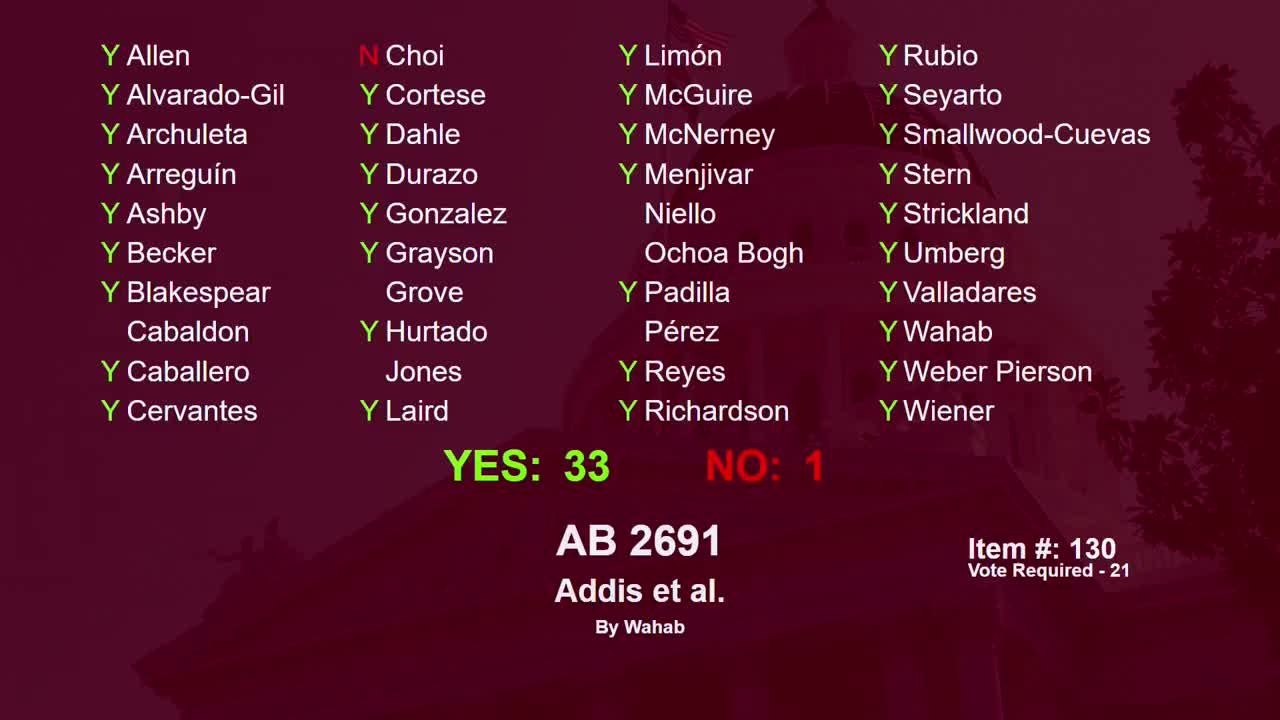
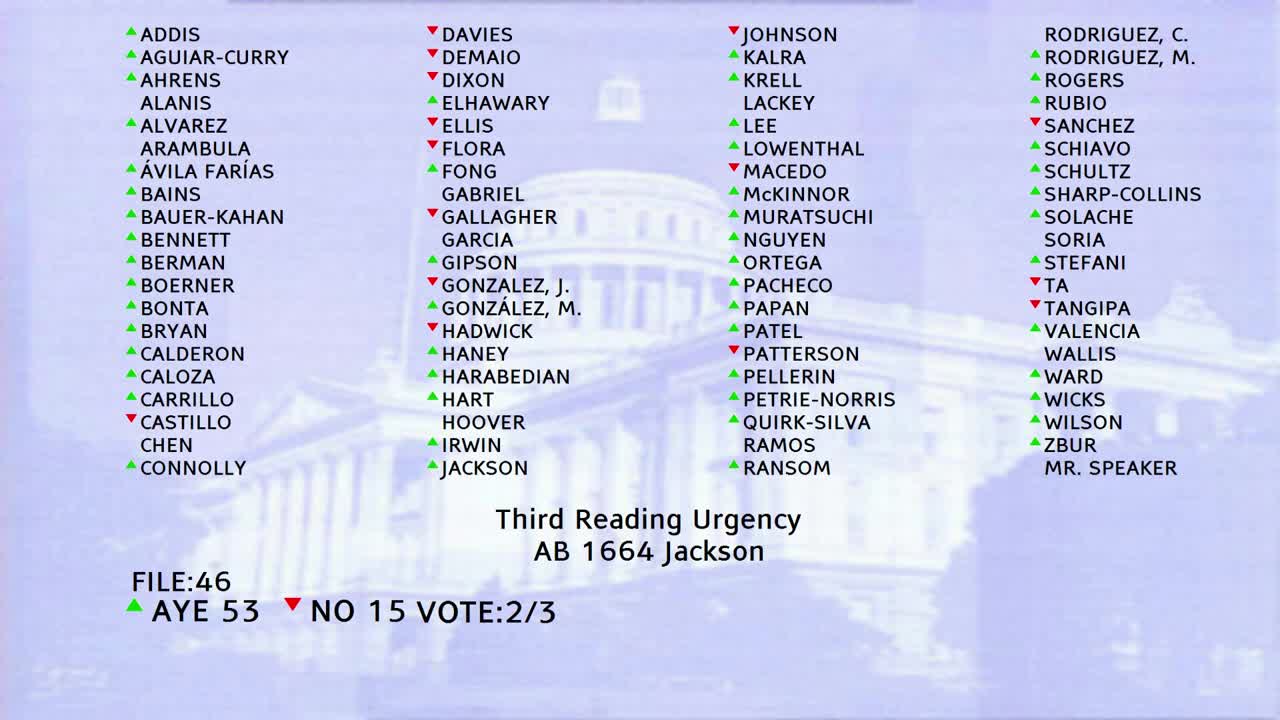


Bill Co-Author(s):