AB 1996: California Child Poverty Reduction Advisory Council.
- Session Year: 2025-2026
- House: Assembly
- Latest Version Date: 2026-09-27
Current Status:
Passed
(2026-09-27: Chaptered by Secretary of State - Chapter 568, Statutes of 2026.)
Introduced
In Committee
Awaiting First Chamber Vote
Passed First Chamber
In Committee
Awaiting Second Chamber Vote
Passed Second Chamber
Enacted
Existing law establishes the California Health and Human Services Agency, headed by the Secretary of California Health and Human Services. Existing law further establishes, within the agency, a number of departments and other entities, including the State Department of Social Services. Under existing law, these departments oversee the provision of various services to children and a number of programs serving children including, among others, the provision of family preservation services.
This bill would establish, within the State Department of Social Services, the California Child Poverty Reduction Advisory Council. The bill would require the State Department of Social Services to staff and administer the council. The bill would require the council to be cochaired by the Secretary of the California Health and Human Services Agency and the Director of Social Services, or their designees, and would specify the membership of the council, which would include 19 members, as specified. The bill would establish the duties of the council, including, among other things, the duty to determine considerations to evaluate whether a policy proposal, budget provisions, or pending legislation increases or decreases child poverty. The bill would also require the council to submit various reports to the Legislature, including, among others, a progress report by January 1, 2030.
This bill would make these provisions inoperative on July 1, 2030, and would repeal them as of January 1, 2031.
Existing law establishes the California Health and Human Services Agency, headed by the Secretary of California Health and Human Services. Existing law further establishes, within the agency, a number of departments and other entities, including the State Department of Social Services. Under existing law, these departments oversee the provision of various services to children and a number of programs serving children including, among others, the provision of family preservation services.
This bill would establish, within the California Health and Human Services Agency, State Department of Social Services, the California Child Poverty Reduction Advisory Council. The bill would require the State Department of Social Services to staff and administer the council. The bill would require the council to be cochaired by the Secretary of the California Health and Human Services Agency and the Director of Social Services, or their designees, and would specify the membership of the council, which would include 19 members, as specified. The bill would establish the duties of the council, including, among other things, the duty to determine metrics to measure considerations to evaluate whether a policy proposal, budget provisions, or pending legislation increases or decreases child poverty. The bill would also require the council to submit various reports to the Legislature, including, among others, an initial report by July 1, 2027. a progress report by January 1, 2030.
This bill would make these provisions inoperative on July 1, 2030, and would repeal them as of January 1, 2031.
Existing law establishes the California Health and Human Services Agency, headed by the Secretary of California Health and Human Services. Existing law further establishes, within the agency, a number of departments and other entities, including the State Department of Social Services. Under existing law, these departments oversee the provision of various services to children and a number of programs serving children including, among others, the provision of family preservation services.
This bill would establish, within the California Health and Human Services Agency, the California Child Poverty Reduction Advisory Council. The bill would require the State Department of Social Services to staff and administer the council. The bill would require the council to be cochaired by the Secretary of the California Health and Human Services Agency and the Director of Social Services, or their designees, and would specify the membership of the council, which would include 18 19 members, as specified. The bill would establish the duties of the council, including, among other things, the duty to evaluate the impacts of various types of policy proposals that would affect children and to submit an analysis of budget provisions expected to affect child poverty and child well-being within 10 days of the release of both the Governors annual budget proposal and the May Revision. determine metrics to measure whether a policy proposal, budget provisions, or pending legislation increases or decreases child poverty. The bill would also require the council to submit various reports to the Legislature, including, among others, an initial report by July 1, 2027.
Existing law establishes the California Health and Human Services Agency, headed by the Secretary of California Health and Human Services. Existing law further establishes, within the agency, a number of departments and other entities, including the State Department of Social Services. Under existing law, these departments oversee the provision of various services to children and a number of programs serving children including, among others, the provision of family preservation services.
This bill would establish, within the California Health and Human Services Agency, the California Child Poverty Reduction Advisory Council. The bill would require the State Department of Social Services to staff and administer the council. The bill would require the council to be cochaired by the Secretary of the California Health and Human Services Agency and the Director of Social Services, or their designees, and would specify the membership of the council, which would include 18 members, as specified. The bill would establish the duties of the council, including, among other things, the duty to evaluate the impacts of various types of policy proposals that would affect children and to submit an analysis of budget provisions expected to affect child poverty and child well-being within 10 days of the release of both the Governors annual budget proposal and the May Revision. The bill would also require the council to submit various reports to the Legislature, including, among others, an initial report by July 1, 2027.
(a)The Legislature finds and declares all of the following:
(1)California is home to millions of children facing economic hardship, health disparities, educational inequities, and gaps in access to essential services.
(2)Child poverty imposes long-term social and economic costs on families, communities, and the state as a whole.
(3)The state lacks a unified structure dedicated to reducing child poverty, coordinating child-serving programs, and reviewing the statewide impacts of budgetary and legislative decisions on children.
(4)The California Health Benefits Review Program provides a proven framework for rapid and independent legislative analysis. A similar framework is needed to analyze the impacts of legislation on children.
(b)It is the intent of the Legislature in enacting this act to reduce child poverty in California by 50 percent within 10 years and to ensure that all major legislation affecting children is reviewed for evidence-based impacts.
SEC. 2.Division 11 (commencing with Section 20000) is added to the Welfare and Institutions Code, to read:11.The California Child Poverty Reduction Advisory Council20000.(a)The California Child Poverty Reduction Advisory Council is hereby established within the State Department of Social Services.
(b)The State Department of Social Services shall provide staff for and administer the council.
(c)The council shall convene no later than April 1, 2027.
(d)The State Department of Social Services shall assist the task force in carrying out its duties to the extent that funding is available.
20001.(a)The council shall be cochaired by both of the following:
(1)The Secretary of California Health and Human Services or their designee.
(2)The Director of Social Services or their designee.
(b)The council shall be made up of 19 members, as follows:
(1)The Governor shall appoint 15 members to the council, including all of the following:
(A)One representative with authority to make executive decisions on behalf of their agency or organization from each of the following:
(i)The State Department of Social Services.
(ii)The State Department of Health Care Services.
(iii)The State Department of Education.
(iv)The Department of Finance.
(v)The State Board of Education.
(vi)The California Interagency Council on Homelessness.
(vii)The California Cradle-to-Career Data System.
(viii)A county organization focused on ending child poverty, including, but not limited to, the First 5 Association of California or a County Childrens Cabinet.
(ix)A county or regional human services agency.
(x)A statewide nonprofit focused on ending child poverty.
(xi)A California Promise Neighborhood or similar place-based initiative.
(xii)An organization representing immigrant families.
(B)Two individuals with lived experience of child or family poverty.
(C)One youth representative who is 16 to 25 years of age, inclusive.
(2)The Speaker of the Assembly shall appoint two members to the council.
(3)The President pro Tempore of the Senate shall appoint two members to the council.
(c)Members of the council shall serve without compensation except for reimbursement of reasonable travel expenses.
(d)(1)A vacancy occurs upon the resignation, death, removal, or failure of a member to attend three consecutive meetings without good cause. An appointing authority may remove a member for misconduct, neglect of duty, chronic nonattendance, change of employment, conflict of interest, or conduct inconsistent with the mission of the council. A vacancy shall be filled by the original appointing authority within 60 days.
(2)A vacant seat shall not count toward a quorum.
20003.The council shall do all of the following:
(a)Determine where there is overlap of existing child poverty reduction or child welfare commissions and reports, and develop and publish a comprehensive plan for reducing redundancy. The plan shall include annual benchmarks to reduce statewide child poverty by 50 percent within 10 years.
(b)(1)(A)Determine considerations to evaluate whether a policy proposal, budget provisions, or pending legislation increases or decreases child poverty.
(B)Determine considerations to evaluate whether a policy proposal, budget provisions, or pending legislation increases or decreases administrative burdens for families with children.
(2)For purposes of this section, policy proposals include, but are not limited to, expansion of refundable tax credits, guaranteed income or cash plus supports, affordable and subsidized childcare, housing and homelessness prevention, nutrition programs, behavioral health supports, workforce pathways, and living wage pathways.
(c)(1)At least once per year, apply the considerations to at least one policy proposal, budget provision, or pending piece of legislation that requires interagency or multiagency collaboration.
(2)The council shall post the application of the considerations required by paragraph (1) on a platform of its choosing. The department may satisfy this requirement by posting on an existing department internet website.
(3)The council may apply the considerations to other relevant policy proposals, budget provisions, and pending pieces of legislation. The council may post the application of considerations under this paragraph on a platform of its choosing, including an existing department internet website.
(d)(1)At least once per year, apply the considerations to at least one interagency or multiagency state program or administrative process that can be modified to reduce barriers to access and improve equity for children and families.
(2)The council shall post the application of the considerations required by paragraph (1) on a platform of its choosing. The department may satisfy this requirement by posting on an existing department internet website.
(3)The council may apply the considerations to other relevant state programs or administrative processes. The council may post the application of considerations under this paragraph on a platform of its choosing, including an existing department internet website.
(e)Meet at least quarterly.
(f)(1)Submit both of the following reports to the Legislature:
(A)Comprehensive recommendations by March 1, 2028.
(B)A progress report by January 1, 2030.
(2)A report to be submitted pursuant to paragraph (1) shall be submitted in compliance with Section 9795 of the Government Code.
20004.This division shall become inoperative on July 1, 2030, and, as of January 1, 2031, is repealed.
(a)The Legislature finds and declares all of the following:
(1)California is home to millions of children facing economic hardship, health disparities, educational inequities, and gaps in access to essential services.
(2)Child poverty imposes long-term social and economic costs on families, communities, and the state as a whole.
(3)The state lacks a unified structure dedicated to reducing child poverty, coordinating child-serving programs, and reviewing the statewide impacts of budgetary and legislative decisions on children.
(4)The California Health Benefits Review Program provides a proven framework for rapid and independent legislative analysis. A similar framework is needed to analyze the impacts of legislation on children.
(b)It is the intent of the Legislature in enacting this act to reduce child poverty in California by 50 percent within 10 years and to ensure that all major legislation affecting children is reviewed for evidence-based impacts.
SEC. 2.Division 11 (commencing with Section 20000) is added to the Welfare and Institutions Code, to read:11.The California Child Poverty Reduction Advisory Council20000.(a)The California Child Poverty Reduction Advisory Council is hereby established within the California Health and Human Services Agency. State Department of Social Services.
(b)The State Department of Social Services shall provide staff for and administer the council.
(c)The council shall convene no later than April 1, 2027.
(d)The State Department of Social Services shall assist the task force in carrying out its duties to the extent that funding is available.
20001.(a)The council shall be cochaired by both of the following:
(1)The Secretary of California Health and Human Services or their designee.
(2)The Director of Social Services or their designee.
(b)The council shall be made up of 19 members, as follows:
(1)The Governor shall appoint 15 members to the council, including all of the following:
(A)One representative with authority to make executive decisions on behalf of their agency or organization from each of the following:
(i)The State Department of Social Services.
(ii)The State Department of Health Care Services.
(iii)The State Department of Education.
(iv)The Department of Finance.
(v)The State Board of Education.
(vi)The California Interagency Council on Homelessness.
(vii)The California Cradle-to-Career Data System.
(viii)First A county organization focused on ending child poverty, including, but not limited to, the First 5 Association of California. California or a County Childrens Cabinet.
(ix)A county or regional human services agency.
(x)A statewide nonprofit focused on ending child poverty.
(xi)A California Promise Neighborhood or similar place-based initiative.
(xii)An organization representing immigrant families.
(B)Two individuals with lived experience of child or family poverty.
(C)One youth representative who is 16 to 25 years of age, inclusive.
(2)The Speaker of the Assembly shall appoint two members to the council.
(3)The President pro Tempore of the Senate shall appoint two members to the council.
(c)Members of the council shall serve without compensation except for reimbursement of reasonable travel expenses.
(d)(1)A vacancy occurs upon the resignation, death, removal, or failure of a member to attend three consecutive meetings without good cause. An appointing authority may remove a member for misconduct, neglect of duty, chronic nonattendance, change of employment, conflict of interest, or conduct inconsistent with the mission of the council. A vacancy shall be filled by the original appointing authority within 60 days.
(2)A vacant seat shall not count toward a quorum.
20003.The council shall do all of the following:
(a)Determine where there is overlap of existing child poverty reduction or child welfare commissions and reports, and develop and publish a comprehensive plan for reducing redundancy. The plan shall include annual benchmarks to reduce statewide child poverty by 50 percent within 10 years.
(b)(1)(A)Determine metrics to measure considerations to evaluate whether a policy proposal, budget provisions, or pending legislation increases or decreases child poverty.
(B)Determine metrics to measure considerations to evaluate whether a policy proposal, budget provisions, or pending legislation increases or decreases administrative burdens for families with children.
(2)For purposes of this subdivision, section, policy proposals include, but are not limited to, expansion of refundable tax credits, guaranteed income or cash plus supports, affordable and subsidized childcare, housing and homelessness prevention, nutrition programs, behavioral health supports, workforce pathways, and living wage pathways.
(c)Identify state programs or administrative processes that can be modified to reduce barriers to access and improve equity for children and families.(c)(1)At least once per year, apply the considerations to at least one policy proposal, budget provision, or pending piece of legislation that requires interagency or multiagency collaboration.
(2)The council shall post the application of the considerations required by paragraph (1) on a platform of its choosing. The department may satisfy this requirement by posting on an existing department internet website.
(3)The council may apply the considerations to other relevant policy proposals, budget provisions, and pending pieces of legislation. The council may post the application of considerations under this paragraph on a platform of its choosing, including an existing department internet website.
(d)(1)At least once per year, apply the considerations to at least one interagency or multiagency state program or administrative process that can be modified to reduce barriers to access and improve equity for children and families.
(2)The council shall post the application of the considerations required by paragraph (1) on a platform of its choosing. The department may satisfy this requirement by posting on an existing department internet website.
(3)The council may apply the considerations to other relevant state programs or administrative processes. The council may post the application of considerations under this paragraph on a platform of its choosing, including an existing department internet website.
(d)(e)Meet at least quarterly.
(e)(f)(1)Submit all both of the following reports to the Legislature:
(A)An initial report by July 1, 2027.(B)(A)Comprehensive recommendations by January March 1, 2028.
(C)(B)A progress report every two years, beginning July 1, 2029. by January 1, 2030.
(2)A report to be submitted pursuant to paragraph (1) shall be submitted in compliance with Section 9795 of the Government Code.
20004.This division shall become inoperative on July 1, 2030, and, as of January 1, 2031, is repealed.
(a)The Legislature finds and declares all of the following:
(1)California is home to millions of children facing economic hardship, health disparities, educational inequities, and gaps in access to essential services.
(2)Child poverty imposes long-term social and economic costs on families, communities, and the state as a whole.
(3)The state lacks a unified structure dedicated to reducing child poverty, coordinating child-serving programs, and reviewing the statewide impacts of budgetary and legislative decisions on children.
(4)The California Health Benefits Review Program provides a proven framework for rapid and independent legislative analysis. A similar framework is needed to analyze the impacts of legislation on children.
(b)It is the intent of the Legislature in enacting this act to reduce child poverty in California by 50 percent within 10 years and to ensure that all major legislation affecting children is reviewed for evidence-based impacts.
SEC. 2.Division 11 (commencing with Section 20000) is added to the Welfare and Institutions Code, to read:11.The California Child Poverty Reduction Advisory Council20000.(a)The California Child Poverty Reduction Advisory Council is hereby established within the California Health and Human Services Agency.
(b)The State Department of Social Services shall provide staff for and administer the council.
(c)The council shall convene no later than April 1, 2027.
20001.(a)The council shall be cochaired by both of the following:
(1)The Secretary of California Health and Human Services or their designee.
(2)The Director of Social Services or their designee.
(b)The council shall be made up of 18 19 members, as follows:
(1)The Governor shall appoint 14 15 members to the council, including all of the following:
(A)One representative with authority to make executive decisions on behalf of their agency or organization from each of the following:
(i)The State Department of Social Services.
(ii)The State Department of Health Care Services.
(iii)The State Department of Education.
(iv)The Department of Finance.
(iv)(v)The State Board of Education.
(v)(vi)The California Interagency Council on Homelessness.
(vi)(vii)The California Cradle-to-Career Data System.
(viii)First 5 Association of California.
(vii)(ix)A county or regional human services agency.
(viii)(x)A statewide nonprofit focused on ending child poverty.
(ix)(xi)A California Promise Neighborhood or similar place-based initiative.
(x)(xii)An organization representing immigrant families.
(B)Two individuals with lived experience of child or family poverty.
(C)One youth representative who is 16 to 25 years of age, inclusive.
(2)The Speaker of the Assembly shall appoint two members to the council.
(3)The President pro Tempore of the Senate shall appoint two members to the council.
(c)Members of the council shall serve without compensation except for reimbursement of reasonable travel expenses.
(d)(1)A vacancy occurs upon the resignation, death, removal, or failure of a member to attend three consecutive meetings without good cause. An appointing authority may remove a member for misconduct, neglect of duty, chronic nonattendance, change of employment, conflict of interest, or conduct inconsistent with the mission of the council. A vacancy shall be filled by the original appointing authority within 60 days.
(2)A vacant seat shall not count toward a quorum.
20003.The council shall do all of the following:
(a)Develop and publish a comprehensive plan with annual benchmarks to reduce statewide child poverty by 50 percent within 10 years.(b)Evaluate the impacts of policy proposals, including, but not limited to, expansion of refundable tax credits, guaranteed income or cash plus supports, affordable and subsidized childcare, housing and homelessness prevention, nutrition programs, behavioral health supports, workforce, and living wage pathways.(c)Submit an analysis of proposed budget provisions expected to affect child poverty and child well-being within 10 days of the release of both the Governors annual Budget Proposal and the May Revision.(d)Review major changes to the state budget for potential impacts on children and families within 90 days of the enactment of the annual Budget Act.(e)Analyze pending legislation for impacts on children upon request of the council chairs, the Governor, the Speaker of the Assembly, or the President pro Tempore of the Senate, or by majority vote of the council.(f)Identify state programs or administrative processes that can be modified to reduce barriers to access and improve equity for children and families.(g)Hold at least four regional public hearings, including hearings during nontraditional hours to maximize participation by working families.(a)Determine where there is overlap of existing child poverty reduction or child welfare commissions and reports, and develop and publish a comprehensive plan for reducing redundancy. The plan shall include annual benchmarks to reduce statewide child poverty by 50 percent within 10 years.
(b)(1)(A)Determine metrics to measure whether a policy proposal, budget provisions, or pending legislation increases or decreases child poverty.
(B)Determine metrics to measure whether a policy proposal, budget provisions, or pending legislation increases or decreases administrative burdens for families with children.
(2)For purposes of this subdivision, policy proposals include, but are not limited to, expansion of refundable tax credits, guaranteed income or cash plus supports, affordable and subsidized childcare, housing and homelessness prevention, nutrition programs, behavioral health supports, workforce pathways, and living wage pathways.
(c)Identify state programs or administrative processes that can be modified to reduce barriers to access and improve equity for children and families.
(d)Meet at least quarterly.
(h)(e)(1)Submit all of the following reports to the Legislature:
(A)An initial report by July 1, 2027.
(B)Comprehensive recommendations by January 1, 2028.
(C)A progress report every two years, beginning July 1, 2029.
(2)A report to be submitted pursuant to paragraph (1) shall be submitted in compliance with Section 9795 of the Government Code.
(a)The Legislature finds and declares all of the following:
(1)California is home to millions of children facing economic hardship, health disparities, educational inequities, and gaps in access to essential services.
(2)Child poverty imposes long-term social and economic costs on families, communities, and the state as a whole.
(3)The state lacks a unified structure dedicated to reducing child poverty, coordinating child-serving programs, and reviewing the statewide impacts of budgetary and legislative decisions on children.
(4)The California Health Benefits Review Program provides a proven framework for rapid and independent legislative analysis. A similar framework is needed to analyze the impacts of legislation on children.
(b)It is the intent of the Legislature in enacting this act to reduce child poverty in California by 50 percent within 10 years and to ensure that all major legislation affecting children is reviewed for evidence-based impacts.
SEC. 2.Division 11 (commencing with Section 20000) is added to the Welfare and Institutions Code, to read:11.The California Child Poverty Reduction Advisory Council20000.(a)The California Child Poverty Reduction Advisory Council is hereby established within the California Health and Human Services Agency.
(b)The State Department of Social Services shall provide staff for and administer the council.
(c)The council shall convene no later than April 1, 2027.
20001.(a)The council shall be cochaired by both of the following:
(1)The Secretary of California Health and Human Services or their designee.
(2)The Director of Social Services or their designee.
(b)The council shall be made up of 18 members, as follows:
(1)The Governor shall appoint 14 members to the council, including all of the following:
(A)One representative from each of the following:
(i)The State Department of Social Services.
(ii)The State Department of Health Care Services.
(iii)The State Department of Education.
(iv)The State Board of Education.
(v)The California Interagency Council on Homelessness.
(vi)The California Cradle-to-Career Data System.
(vii)A county or regional human services agency.
(viii)A statewide nonprofit focused on ending child poverty.
(ix)A California Promise Neighborhood or similar place-based initiative.
(x)An organization representing immigrant families.
(B)Two individuals with lived experience of child or family poverty.
(C)One youth representative who is 16 to 25 years of age, inclusive.
(2)The Speaker of the Assembly shall appoint two members to the council.
(3)The President pro Tempore of the Senate shall appoint two members to the council.
(c)Members of the council shall serve without compensation except for reimbursement of reasonable travel expenses.
(d)(1)A vacancy occurs upon the resignation, death, removal, or failure of a member to attend three consecutive meetings without good cause. An appointing authority may remove a member for misconduct, neglect of duty, chronic nonattendance, change of employment, conflict of interest, or conduct inconsistent with the mission of the council. A vacancy shall be filled by the original appointing authority within 60 days.
(2)A vacant seat shall not count toward a quorum.
20003.The council shall do all of the following:
(a)Develop and publish a comprehensive plan with annual benchmarks to reduce statewide child poverty by 50 percent within 10 years.
(b)Evaluate the impacts of policy proposals, including, but not limited to, expansion of refundable tax credits, guaranteed income or cash plus supports, affordable and subsidized childcare, housing and homelessness prevention, nutrition programs, behavioral health supports, workforce, and living wage pathways.
(c)Submit an analysis of proposed budget provisions expected to affect child poverty and child well-being within 10 days of the release of both the Governors annual Budget Proposal and the May Revision.
(d)Review major changes to the state budget for potential impacts on children and families within 90 days of the enactment of the annual Budget Act.
(e)Analyze pending legislation for impacts on children upon request of the council chairs, the Governor, the Speaker of the Assembly, or the President pro Tempore of the Senate, or by majority vote of the council.
(f)Identify state programs or administrative processes that can be modified to reduce barriers to access and improve equity for children and families.
(g)Hold at least four regional public hearings, including hearings during nontraditional hours to maximize participation by working families.
(h)(1)Submit all of the following reports to the Legislature:
(A)An initial report by July 1, 2027.
(B)Comprehensive recommendations by January 1, 2028.
(C)A progress report every two years, beginning July 1, 2029.
(2)A report to be submitted pursuant to paragraph (1) shall be submitted in compliance with Section 9795 of the Government Code.
|
Date
|
Status
|
|---|---|
| Sep 27, 2026 | Chaptered by Secretary of State - Chapter 568, Statutes of 2026. |
| Sep 27, 2026 | Approved by the Governor. |
| Sep 8, 2026 | Enrolled and presented to the Governor at 3:30 p.m. |
| Aug 28, 2026 | Senate amendments concurred in. To Engrossing and Enrolling. (Ayes 78. Noes 0. Page 6804.). |
| Aug 28, 2026 | Senate amendments concurred in. To Engrossing and Enrolling. (Ayes 78. Noes 0.). |
| Aug 27, 2026 | In Assembly. Concurrence in Senate amendments pending. |
| Aug 27, 2026 | Read third time. Passed. Ordered to the Assembly. (Ayes 39. Noes 0. Page 5984.). |
| Aug 27, 2026 | Read third time. Passed. Ordered to the Assembly. (Ayes 39. Noes 0.). |
| Aug 25, 2026 | Ordered to special consent calendar. |
| Aug 17, 2026 | Read second time. Ordered to third reading. |
| Aug 13, 2026 | Read second time and amended. Ordered returned to second reading. |
| Aug 13, 2026 | From committee: Amend, and do pass as amended. (Ayes 7. Noes 0.) (August 13). |
| Jun 29, 2026 | In committee: Referred to APPR. suspense file. |
| Jun 16, 2026 | From committee: Do pass and re-refer to Com. on APPR. (Ayes 4. Noes 0.) (June 15). Re-referred to Com. on APPR. |
| Jun 10, 2026 | From committee chair, with author's amendments: Amend, and re-refer to committee. Read second time, amended, and re-referred to Com. on HUMAN S. |
| Jun 3, 2026 | Referred to Com. on HUMAN S. |
| May 21, 2026 | In Senate. Read first time. To Com. on RLS. for assignment. |
| May 21, 2026 | Read third time. Passed. Ordered to the Senate. (Ayes 72. Noes 0. Page 5215.) |
| May 21, 2026 | Read third time. Passed. Ordered to the Senate. (Ayes 72. Noes 0.) |
| May 18, 2026 | Read second time. Ordered to third reading. |
| May 14, 2026 | From committee: Do pass. (Ayes 15. Noes 0.) (May 14). |
| Apr 29, 2026 | In committee: Set, first hearing. Referred to APPR. suspense file. |
| Apr 15, 2026 | From committee: Do pass and re-refer to Com. on APPR. with recommendation: To Consent Calendar. (Ayes 7. Noes 0.) (April 14). Re-referred to Com. on APPR. |
| Mar 16, 2026 | Referred to Com. on HUM. S. |
| Feb 18, 2026 | From printer. May be heard in committee March 20. |
| Feb 17, 2026 | Read first time. To print. |
|
Date
|
Description
|
Location
|
Votes
|
|
|---|---|---|---|---|
| Aug 28, 2026 | AB 1996 Bonta Concurrence in Senate Amendments | Assembly Floor |
Passed |
|
| Aug 27, 2026 | Special Consent AB1996 Bonta et al. By Ashby | Senate Floor |
Passed |
|
| Aug 13, 2026 | Do pass as amended | Senate Standing Committee on Appropriations |
Passed |
|
| Jun 29, 2026 | Placed on suspense file | Senate Standing Committee on Appropriations |
Passed |
|
| Jun 15, 2026 | Do pass, but first be re-referred to the Committee on [Appropriations] | Senate Standing Committee on Human Services |
Passed |
|
| May 21, 2026 | AB 1996 Bonta Assembly Third Reading | Assembly Floor |
Passed |
|
| May 14, 2026 | Do pass. | Assembly Standing Committee on Appropriations |
Passed |
|
| Apr 14, 2026 | Do pass and be re-referred to the Committee on [Appropriations] with recommendation: To Consent Calendar | Assembly Standing Committee on Human Services |
Passed |
This list shows positions taken on this bill by organizations on the date displayed, which is linked to the original source.
Positions by individuals are not included.
|
Organization
|
Position
|
Date
|
|---|---|---|
| California Academy of Child and Adolescent Psychiatry | ** Support | |
| California Coalition For Youth | ** Support | |
| California Court Appointed Special Advocate Association | ** Support | |
| California Family Resource Association | ** Support | |
| Child Abuse Prevention Center | ** Support | |
| Child Abuse Prevention Center and its Affiliates Safe Kids California | ** Support | |
| County Welfare Directors Association of California | ** Support | |
| ECPCA Coalition | ** Support | |
| End Child Poverty California | ** Support | |
| End Child Poverty California powered by GRAC | ** Support | |
| First 5 Association Of California | ** Support | |
| Grace Inc | ** Support | |
| GRACE Institute - End Child Poverty in CA (Sponsor) | ** Support | |
| Los Angeles County | ** Support | |
| Mission Economic Development Agency | ** Support | |
| Mission Economic Development Agency (MEDA) | ** Support | |
| Oakland Unified School District | ** Support | |
| Prevent Child Abuse California | ** Support | |
| Safe Kids California | ** Support | |
| Silicon Valley Community Foundation | ** Support |
CONCURRENCE IN SENATE AMENDMENTS
CSA1 Bill Id:AB 1996
Author:(Bonta)
As Amended Ver:August 13, 2026
Majority vote
SUMMARY
Establishes the California Child Poverty Reduction Advisory Council (Council) within the California Department of Social Services (CDSS) to develop and publish a plan to reduce child poverty by 50% within 10 years and to evaluate the impacts of state budgets, legislation, and policies on children and families.
Senate Amendments
- Change the location of the Council to CDSS.
- Add members to the Council."
- Make the Council temporary by adding a July 1, 2030, sunset date for the Council.
- Remove requirements for multiple reports and instead only require one report by January 1, 2030, and recommendations by March 1, 2028.
- Remove Council requirements to analyze proposed budget provisions expected to affect child poverty and child well-being within 10 days of the Governor's annual budget and the May revision, review major changes to the state budget for potential impacts on children and families within 90 days of the enactment of the annual Budget Act, and analyze pending legislation for impacts on children upon request of the council chairs, the Governor, the Speaker of the Assembly, or the President pro Tempore of the Senate, or by majority vote of the council.
- Add Council requirements as follows:
- Determine considerations to evaluate whether a policy proposal, budget provisions, or pending legislation increases or decreases child poverty.
- Determine considerations to evaluate whether a policy proposal, budget provisions, or pending legislation increases or decreases administrative burdens for families with children.
- Meet quarterly instead of holding at least four regional public hearings, including hearings during nontraditional hours to maximize participation by working families.
COMMENTS
Background: Poverty in California. Despite California′s large economy and substantial public investments in programs that support families, many children continue to experience poverty or economic hardship. According to the August 2025 Public Policy Institute of California fact sheet, Poverty in California,[1] the state′s poverty rate increased from 15.2% in 2022 to 16.9% in 2023 under the California Poverty Measure, which accounts for the regional cost of living and the effects of safety-net programs. This represents approximately 6.4 million Californians living below the poverty level. Child poverty rose from 15.2% in 2022 to 17.6% in 2023, returning to roughly its pre-COVID-19 pandemic level after temporary relief programs expired.
Research shows that poverty can significantly affect children's development and long-term outcomes. Children growing up in low-income households are more likely to experience unstable housing, food insecurity, and limited access to quality early learning opportunities and healthcare, which shape early development.[2] Economic hardship can also increase stress within families, affecting children's social-emotional development, cognitive growth, and school readiness. These early disparities can contribute to differences in academic achievement, educational attainment, health outcomes, and lifetime earnings. Conversely, safety net programs play a significant role in reducing poverty. In 2023, programs such as CalFresh, tax credits, housing subsidies, and school meals kept an estimated 2.6 million Californians, including about one million children, out of poverty. Without safety nets, poverty would be even higher, especially among children.
Reducing Child Poverty. California administers a number of public assistance programs to uplift those out of poverty. Many of those programs are federally funded, housed within CDSS and administered by counties, including CalFresh, California Work Opportunity and Responsibility to Kids, and Medi-Cal. Each county works to determine eligibility under federal and state standards and then helps disburse aid to recipients. In addition to core federal programs, California has various state programs aimed at reducing child poverty through income supports, nutrition assistance, and early childhood programs, including tax credits such as the California Earned Income Tax Credit and Young Child Tax Credit, access to subsidized childcare and preschool, and access to food assistance for immigrants, among others.
Impacts of H.R. 1 on Child Poverty. On July 1, 2025, H.R. 1 was signed into law, which is expected to significantly affect children in families receiving public benefits by reducing eligibility, lowering benefit levels, and increasing administrative barriers across key safety net programs. Specifically, H.R. 1 includes substantial cuts to the federal Supplemental Nutrition Assistance Program (SNAP), which provides food assistance benefits to low-income families. It introduced stricter work requirements and eliminated eligibility for certain lawfully present immigrants. These changes may result in reduced or terminated benefits for households with children and are projected to decrease SNAP participation, with estimates indicating that households with approximately 500,000 children could see benefit reductions of about $100 per month and that up to 1.3 million individuals, including children, could lose assistance.[3]
Other changes in H.R. 1 include cuts to Medicaid and restrictions on refundable tax credits, which are expected to increase the number of children facing barriers to health coverage and income supports, compounding economic instability for low-income families. Because participation in SNAP and Medicaid is a pathway for automatic enrollment in free or reduced-price school meals, reductions in program eligibility are expected to decrease the number of children who qualify for school nutrition programs, potentially disrupting access to consistent meals during the school year and summer months.[4] These changes are expected to increase food insecurity, reduce access to essential services, and place additional fiscal and administrative pressure on states, which may further constrain their ability to maintain or expand programs that support children and families.
This bill establishes the California Child Poverty Reduction Advisory Council within CDSS to develop a statewide plan and benchmarks to reduce child poverty by 50% within 10 years, and to evaluate the impacts of state budgets, legislation, and policies on children and families.
According to the Author
"[This bill] is grounded in the principle that every child in California deserves to grow up with stability, dignity, and access to the resources necessary to thrive. Yet today, nearly one in five children lives in a household struggling to afford basic necessities like housing, food, and healthcare—placing immense strain on families and limiting opportunities for youth through no fault of their own. As pandemic-era supports have expired and federal cuts loom, families are being asked to do more with less, and the consequences are immediate and real. The impacts are visible every day: missed meals, delayed care, preventable health inequities, and chronic stress that disproportionately burden communities already facing systemic barriers. While California has demonstrated that targeted investments can reduce child poverty, the state currently lacks a coordinated structure to sustain and build on that progress. [This bill] addresses this gap by establishing a Child Poverty Reduction Advisory Council to promote accountability, align policy efforts, and ensure that the needs of children and families remain central in budget and legislative decisions. By setting a clear goal of reducing child poverty by 50 % over the next 10 years, this bill advances an equity-driven, data-informed approach to improving outcomes for children statewide."
Arguments in Support
End Child Poverty California powered by GRAC writes that, "California must not lose sight of its moral compass and north star agenda to end child poverty across the state. California must continue to utilize a data-driven approach to smart, effective policy development and evaluation. AB 1996 will put us back on a pathway to tracking our progress on ending child poverty."
Arguments in Opposition
None on file.
FISCAL COMMENTS
According to the Senate Committee on Appropriations on June 26, 2026, "Unknown ongoing General Fund costs, likely hundreds of thousands, to support the council."
VOTES:
ASM HUMAN SERVICES: 7-0-0
YES: Lee, Castillo, Calderon, Elhawary, Jackson, Solache, Tangipa
ASM APPROPRIATIONS: 15-0-0
YES: Wicks, Hoover, Aguiar-Curry, Calderon, Caloza, Dixon, Fong, Mark González, Krell, Pacheco, Pellerin, Sharp-Collins, Solache, Ta, Tangipa
ASSEMBLY FLOOR: 72-0-8
YES: Addis, Aguiar-Curry, Ahrens, Alanis, Alvarez, Ávila Farías, Bains, Bauer-Kahan, Bennett, Berman, Boerner, Bonta, Bryan, Calderon, Caloza, Carrillo, Castillo, Connolly, Davies, DeMaio, Dixon, Elhawary, Ellis, Flora, Fong, Gabriel, Gallagher, Gipson, Jeff Gonzalez, Mark González, Hadwick, Haney, Harabedian, Hart, Irwin, Jackson, Johnson, Kalra, Krell, Lee, Lowenthal, Macedo, McKinnor, Muratsuchi, Nguyen, Ortega, Pacheco, Papan, Patel, Patterson, Pellerin, Petrie-Norris, Quirk-Silva, Ransom, Michelle Rodriguez, Rogers, Blanca Rubio, Sanchez, Schiavo, Schultz, Sharp-Collins, Solache, Soria, Stefani, Ta, Tangipa, Valencia, Wallis, Ward, Wicks, Zbur, Rivas
ABS, ABST OR NV: Arambula, Chen, Garcia, Hoover, Lackey, Ramos, Celeste Rodriguez, Wilson
UPDATED
VERSION: June 10, 2026
CONSULTANT: Bri-Ann Hernandez-Mengual / HUM. S. / (916) 319-2089 FN: 0004084
https://www.ppic.org/publication/poverty-in-california/ ↑
https://pmc.ncbi.nlm.nih.gov/articles/PMC12448094/ ↑
https://www.cbpp.org/research/federal-budget/2025-budget-impacts-house-bill-would-cut-assistance-for-children-raise ↑
https://schoolnutrition.org/wp-content/uploads/2025/08/TAM-25-SNA-BBB-Bill-Summary.pdf ↑
SENATE RULES COMMITTEE Office of Senate Floor Analyses (916) 651-4171 | AB 1996 |
THIRD READING
Bill No: AB 1996
Author: Bonta (D), et al.
Amended: 8/13/26 in Senate
Vote: 21
SENATE HUMAN SERVICES COMMITTEE: 4-0, 6/15/26
AYES: Becker, Ochoa Bogh, Laird, Pérez
NO VOTE RECORDED: Weber Pierson
SENATE APPROPRIATIONS COMMITTEE: 7-0, 8/13/26
AYES: Cervantes, Seyarto, Cabaldon, Dahle, Grayson, Richardson, Wahab
ASSEMBLY FLOOR: 72-0, 5/21/26 - See last page for vote
SUBJECT: California Child Poverty Reduction Advisory Council
SOURCE: Grace INC
DIGEST:
This bill establishes the California Child Poverty Reduction Advisory Council and requires the council to create benchmarks and metrics that measure California’s progress toward reducing child poverty by 50% in 10 years.
ANALYSIS:
Existing Law:
- Establishes, in federal law, the Promise Neighborhood program, which provides grants to nonprofit organizations, tribal organizations, or institutions of higher education, which, together with partners, develop and implement plans to significantly improve outcomes of children living in a given neighborhood. (20 United States Code section 7274)
- Establishes the “California Cradle-to-Career Data Systems Act,” which expresses legislative intent to build a data system that services students and families by identifying and tracking predictive indicators to enable parents, teachers, health and human services providers, and policymakers to provide appropriate interventions and supports to address disparities in opportunities and improve outcomes for all students. (Education Code section 10850 et seq.)
- Establishes the California Work Opportunity and Responsibility to Kids (CalWORKs) program to provide cash assistance and other social services for low-income families through the federal Temporary Assistance for Needy Families (TANF) program. Under CalWORKs, each county provides assistance through a combination of state, county, and federal TANF funds. (Welfare and Institutions Code (WIC) 11200 et seq.)
- Establishes the CalFresh program to administer the provision of federal SNAP benefits to families and individuals meeting specified criteria. (WIC section 18900 et seq.)
- Requires the Governor to create an Interagency Council on Homelessness. (WIC section 8257 et seq.)
- Makes findings and declarations establishing the Homeless Youth Act of 2018 to improve prevention and early intervention services for youth at risk of experiencing homelessness and increase access to services for youth experiencing homelessness. (WIC section 8259)
- Requires CDSS to work with the State Department of Education to maximize participation in the federal Summer Electronic Benefit Transfer for Children program (WIC section18901.57)
- Requires public assistance program recipients to be supplied with information regarding their potential eligibility for the federal and California Earned Income Tax Credit, Young Child Tax Credit and Foster Youth Tax Credit. (Revenue and Taxation Code section 19854)
This bill:
- Makes findings and declarations about the impact of child poverty and the intent of the Legislature to reduce child poverty by 50% within 10 years.
- Establishes the California Child Poverty Reduction Advisory Council (Council) within the California Department of Social Services.
- Requires CDSS to provide staff for and administer the Council.
- Requires the Council to convene no later than April 1, 2027.
- Requires CDSS to assist the task force in carrying out its duties to the extent funding is available.
- Requires the Council to be co-chaired by both the Secretary of California Health and Human Services or their designee and the Director of Social Services or their designee.
- Requires the Council to be made up of 19 members, as follows:
- Fifteen members appointed by the Governor including executive-level representatives from each of the following:
- CDSS.
- The State Department of Health Care Services.
- The State Department of Education.
- The State Board of Education.
- The State Department of Finance.
- The California Interagency Council on Homelessness.
- The California Cradle-to-Career Data System.
- A county organization focused on ending child poverty, including, but not limited to, the First 5 Association of California or a County Children’s Cabinet.
- A county or regional human services agency.
- A statewide nonprofit focused on ending child poverty.
- A California Promise Neighborhood or similar place-based initiative.
- An organization representing immigrant families.
- Two individuals with lived experience of child or family poverty.
- One youth representative who is 16 to 25 years of age, inclusive.
- Two members appointed by the Speaker of the Assembly.
- Two members appointed by the President pro Tempore of the Senate.
- Fifteen members appointed by the Governor including executive-level representatives from each of the following:
- Requires members of the Council to serve without compensation except for reimbursement of reasonable travel expenses.
- States that a vacancy occurs upon the resignation, death, removal, or failure of a member to attend three consecutive meetings without good cause.
- Permits an appointing authority to remove a member for misconduct, neglect of duty, chronic nonattendance, change of employment, conflict of interest, or conduct inconsistent with the mission of the council and requires the vacancy to be filled by the original appointing authority within 60 days.
- Prohibits a vacant seat from counting toward a quorum.
- Requires the Council to determine where there is overlap of existing child poverty reduction or child welfare commissions and reports and develop a comprehensive plan for reducing redundancy. The plan shall include annual benchmarks to reduce statewide child poverty by 50% within 10 years.
- Requires the Council to determine considerations to evaluate whether a policy proposal, budget provisions, or pending legislation increases or decreases child poverty. Policy proposals include, but are not limited to, expansion of refundable tax credits, guaranteed income or cash plus supports, affordable and subsidized childcare, housing and homelessness prevention, nutrition programs, behavioral health supports, workforce, and living wage pathways.
- Requires the Council to determine considerations to evaluate whether a policy proposal, budget provision, or pending legislation increases or decreases administrative burdens for families with children.
- Requires the Council to, at least once per year, apply the considerations to at least one policy proposal budget provision, or pending piece of legislation that requires interagency or multiagency collaboration.
- Requires the Council to post the application of the considerations required by the preceding point on a platform of its choosing.
- Allow the Council to apply the considerations to other relevant policy proposals, budget provisions, and pending pieces of legislation. The council may post the application of considerations on a platform of its choosing, including an existing department internet website.
- Requires the Council to, at least once per year, apply the considerations to least one interagency or multiagency state program or administrative process that can be modified to reduce barriers to access and improve equity for children and families.
- Requires the Council to post the application of the considerations required by the preceding point on a platform of its choosing.
- Allow the Council to apply the considerations to other state programs or administrative processes. The council may post the application of considerations on a platform of its choosing, including an existing department internet website.
- Requires the Council to meet at least quarterly.
- Requires the Council to submit both of the following reports to the Legislature:
- Comprehensive recommendations by March 1, 2028.
- A progress report by January 1, 2030.
- Requires all the reports listed above to be submitted in compliance with Section 9795 of the Government Code.
- Makes the bill inoperative on July 1, 2030 and repealed as of January 1, 2031.
Background
According to the author, “AB 1996 is grounded in the principle that every child in California deserves to grow up with stability, dignity, and access to the resources necessary to thrive. Yet today, nearly one in five children lives in a household struggling to afford basic necessities like housing, food, and healthcare—placing immense strain on families and limiting opportunities for youth through no fault of their own. As pandemic-era supports have expired and federal cuts loom, families are being asked to do more with less, and the consequences are immediate and real.
“The impacts are visible every day: missed meals, delayed care, preventable health inequities, and chronic stress that disproportionately burden communities already facing systemic barriers. While California has demonstrated that targeted investments can reduce child poverty, the state currently lacks a coordinated structure to sustain and build on that progress. AB 1996 addresses this gap by establishing a Child Poverty Reduction Advisory Council to promote accountability, align policy efforts, and ensure that the needs of children and families remain central in budget and legislative decisions. By setting a clear goal of reducing child poverty by 50 percent over the next 10 years, this bill advances an equity-driven, data-informed approach to improving outcomes for children statewide.”
California’s Safety Net. The majority of California’s safety net programs have stringent and unique eligibility criteria with different application and access points, which make programs difficult to navigate and attain for families who need support, especially when compounded with the chronic stress of living in poverty.[1] This bill will require the Council to consider whether policy proposals increase or decrease these types of administrative burdens for families with children.
Lifting Children and Families out of Poverty Task Force. AB 1520 (Burke, Chapter 415, Statutes of 2017) created the Lifting Children and Families out of Poverty Task Force (Task Force) to identify comprehensive strategies aimed at addressing deep childhood poverty and reducing child poverty in California. As a part of this effort, the Task Force examined strategies to better coordinate services, noting that families in poverty often have an array of service needs, but linking families with support services can be challenging due to disparate eligibility rules across programs and families’ lack of time to find and apply for services they could be eligible for. The Task Force drew from the research support of Goldman School of Public Policy, University of California, Berkeley, and Stanford Center on Poverty and Inequality as well as state departments and stakeholders. It also convened meetings, discussions, and subcommittees that created a list of recommendations to reduce child poverty by 50%. The final Task Force report, the End Child Poverty Plan, was published in 2018 and notes that:
Recommendations to address both immediate and long-term needs include increased tax credits, larger CalWORKs grants, expanded Medi-Cal eligibility and more child care and early education access. The Task Force reported that the phase-in of their recommendations would cost $1.4 billion in 2019–20, $3.5 billion in 2020–21, and $5.6 billion in 2021–22 but would ultimately create $12 billion in benefits to state and local government as children exit poverty and become successful adults. According to the End Child Poverty California coalition, 41 of the 43 recommendations have now been partially or fully implemented. It should be noted that these estimates are based on the Medi-Cal and CalFresh program before changes in federal law made by H.R. 1 (Public Law 119-21), which will make it harder for families to remain eligible for these programs.
This bill creates a Council that would have a similar mission to the Task Force but be a permanent entity housed in the Health and Human Services Agency. It will also create considerations that can be used to determine whether a policy proposal will increase or decrease childhood poverty and the administrative burden on families in poverty.
Federal Promise Neighborhoods. One recommendation of the Task Force was to create 20 new Promise Neighborhoods throughout California. Promise Neighborhoods are a federally funded effort to provide holistic, place-based approaches to reducing poverty and improving economic, social, and academic outcomes in disadvantaged communities. According to the Lifting Children and Families out of Poverty Task Force, “Promise Neighborhoods tailor their specific set of cradle-to-college-and-career solutions to the local context, but each share the following characteristics: results-driven focus on impacting population-level results; place-based to focus on a specific high-need geography; collective impact is achieved through partnerships; […] and most importantly, Promise Neighborhoods implement a comprehensive cradle-to-college-and-career continuum that addresses all of a family’s needs to help them move out of poverty.” Additionally, the Task Force noted that the model is community-powered, relies on both public and private investments, and is equity-focused.[2] This bill includes representatives from Promise Neighborhoods on the Council.
Related/Prior Legislation:
AB 1969 (Bonta, 2026) would establish the It Takes a Village Act of 2026 which creates the California Coordinated Neighborhood and Community Services Grant Program to be administered by CDSS or another department within the California Health and Human Services Agency, as designated by the Secretary of California Health and Human Services. AB 1969 is pending on the Senate Floor.
AB 132 (Committee on Budget, Chapter 144, Statutes of 2021) establishes the Cradle-to-Career Data System to link data on student progress through education, workforce training, employment, health and social services; establishes a governing board comprised of 21 members; and, establishes the Office of Cradle-to-Career Data within Government Operations Agency until July 1, 2026, among other things.
AB 1520 (Burke, Chapter 415, Statutes of 2017) created the Lifting Children and Families out of Poverty Task Force to identify comprehensive strategies aimed at addressing deep childhood poverty and reducing child poverty in California.
FISCAL EFFECT: Appropriation: No Fiscal Com.: Yes Local: No
Unknown ongoing General Fund costs, likely hundreds of thousands, to support the council.
SUPPORT: (Verified 8/14/26)
Grace INC (source)
California Academy of Child and Adolescent Psychiatry
California Coalition for Youth
California Family Resource Association
Child Abuse Prevention Center and its Affiliates Safe Kids California, Prevent Child Abuse California and the California Family Resource Association; the
County Welfare Directors Association of California
First 5 Association of California
Los Angeles County
Mission Economic Development Agency (MEDA)
Oakland Unified School District
Silicon Valley Community Foundation
OPPOSITION: (Verified 8/14/26)
None received
ASSEMBLY FLOOR: 72-0, 5/21/26
AYES: Addis, Aguiar-Curry, Ahrens, Alanis, Alvarez, Ávila Farías, Bains, Bauer-Kahan, Bennett, Berman, Boerner, Bonta, Bryan, Calderon, Caloza, Carrillo, Castillo, Connolly, Davies, DeMaio, Dixon, Elhawary, Ellis, Flora, Fong, Gabriel, Gallagher, Gipson, Jeff Gonzalez, Mark González, Hadwick, Haney, Harabedian, Hart, Irwin, Jackson, Johnson, Kalra, Krell, Lee, Lowenthal, Macedo, McKinnor, Muratsuchi, Nguyen, Ortega, Pacheco, Papan, Patel, Patterson, Pellerin, Petrie-Norris, Quirk-Silva, Ransom, Michelle Rodriguez, Rogers, Blanca Rubio, Sanchez, Schiavo, Schultz, Sharp-Collins, Solache, Soria, Stefani, Ta, Tangipa, Valencia, Wallis, Ward, Wicks, Zbur, Rivas
NO VOTE RECORDED: Arambula, Chen, Garcia, Hoover, Lackey, Ramos, Celeste Rodriguez, Wilson
Prepared by: Naima Ford Antal / HUMAN S. / (916) 651-1524
8/17/26 10:47:34
**** END ****
SENATE COMMITTEE ON
Senator Sabrina Cervantes, Chair
2025 - 2026 Regular Session
AB 1996 (Bonta) - California Child Poverty Reduction Advisory Council
Version: | Policy Vote: |
Urgency: | Mandate: |
Hearing Date: | Consultant: |
Bill Summary:
AB 1996 would establish the California Child Poverty Reduction Advisory Council within the California Health and Human Services Agency.
*********** ANALYSIS ADDENDUM – SUSPENSE FILE ***********
The following information is revised to reflect amendments
adopted by the committee on August 13, 2026
Fiscal Impact:
Unknown ongoing General Fund costs, likely hundreds of thousands, to support the council.
Author Amendments:
Establish the council within the California Department of Social Services, rather than the California Health and Human Services Agency; modify the duties of the council; and include a sunset date.
-- END --
SENATE COMMITTEE ON
Senator Sabrina Cervantes, Chair
2025 - 2026 Regular Session
AB 1996 (Bonta) - California Child Poverty Reduction Advisory Council
Version: | Policy Vote: |
Urgency: | Mandate: |
Hearing Date: | Consultant: |
Bill Summary:
AB 1996 would establish the California Child Poverty Reduction Advisory Council within the California Health and Human Services Agency.
Fiscal Impact:
Unknown ongoing General Fund costs, likely hundreds of thousands, to support the council.
Background:
In 2017, state law created the Lifting Children and Families out of Poverty Task Force (Task Force) to identify comprehensive strategies aimed at addressing deep childhood poverty and reducing child poverty in California. As part of this effort, the Task Force examined strategies to better coordinate services, noting that families in poverty often have an array of service needs, but linking families with support services can be challenging due to disparate eligibility rules across programs and families’ lack of time to find and apply for services. The Task Force drew from the research support of the Goldman School of Public Policy, University of California, Berkeley, and the Stanford Center on Poverty and Inequality, as well as state departments and stakeholders. The Task Force also convened meetings to create a list of recommendations to reduce child poverty by 50 percent. The final Task Force report, the End Child Poverty Plan, was published in 2018. Recommendations to address both immediate and long-term needs include increased tax credits, larger CalWORKs grants, expanded Medi-Cal eligibility and more child care and early education access.
Proposed Law:
Specific provisions of the bill would:
- Establish the California Child Poverty Reduction Advisory Council within the California Health and Human Services Agency and require CDSS to provide staff for and administer the council.
- Include requirements for the appointment and membership of the council.
- Require the council to do all of the following:
- Determine where there is overlap of existing child poverty reduction or child welfare commissions and reports, and develop and publish a comprehensive plan for reducing redundancy. The plan must include annual benchmarks to reduce statewide child poverty by 50 percent within 10 years.
- Determine metrics to measure whether a policy proposal, budget provisions, or pending legislation increases or decreases child poverty.
- Determine metrics to measure whether a policy proposal, budget provisions, or pending legislation increases or decreases administrative burdens for families with children.
- Identify state programs or administrative processes that can be modified to reduce barriers to access and improve equity for children and families.
- Meet at least quarterly.
- Submit specified reports to the Legislature.
-- END --
SENATE COMMITTEE ON HUMAN SERVICES
Senator Becker, Chair
2025 - 2026 Regular
Bill No: | AB 1996 | ||
Author: | Bonta | ||
Version: | June 10, 2026 | Hearing Date: | June 15, 2026 |
Urgency: | No | Fiscal: | Yes |
Consultant: | Naima Ford Antal | ||
Subject: California Child Poverty Reduction Advisory Council
SUMMARY
This bill establishes the California Child Poverty Reduction Advisory Council and requires the council to create benchmarks and metrics that measure California’s progress toward reducing child poverty by 50% in 10 years.
ABSTRACT
Existing Law:
- Establishes, in federal law, the Promise Neighborhood program, which provides grants to nonprofit organizations, tribal organizations, or institutions of higher education, which, together with partners, develop and implement plans to significantly improve outcomes of children living in a given neighborhood. (20 United States Code 7274)
- Establishes the “California Cradle-to-Career Data Systems Act,” which expresses legislative intent to build a data system that services students and families by identifying and tracking predictive indicators to enable parents, teachers, health and human services providers, and policymakers to provide appropriate interventions and supports to address disparities in opportunities and improve outcomes for all students. (Education Code 10850 et seq.)
- Establishes the California Work Opportunity and Responsibility to Kids (CalWORKs) program to provide cash assistance and other social services for low-income families through the federal Temporary Assistance for Needy Families (TANF) program. Under CalWORKs, each county provides assistance through a combination of state, county, and federal TANF funds. (Welfare and Institutions Code (WIC) 11200 et seq.)
- Establishes the CalFresh program to administer the provision of federal SNAP benefits to families and individuals meeting specified criteria. (WIC 18900 et seq.)
- Requires the Governor to create an Interagency Council on Homelessness. (WIC 8257 et seq.)
- Makes findings and declarations establishing the Homeless Youth Act of 2018 to improve prevention and early intervention services for youth at risk of experiencing homelessness and increase access to services for youth experiencing homelessness. (WIC 8259)
- Requires CDSS to administer the California Guaranteed Income Pilot Program to provide grants to eligible entities for the purpose of administering pilot programs and projects that provide a guaranteed income to participants. (WIC 18997)
- Requires CDSS to work with the State Department of Education to maximize participation in the federal Summer Electronic Benefit Transfer for Children program (WIC 18901.57)
- Requires public assistance program recipients to be supplied with information regarding their potential eligibility for the federal and California Earned Income Tax Credit, Young Child Tax Credit and Foster Youth Tax Credit. (Revenue and Taxation Code 19854)
This Bill:
- Makes findings and declarations about the impact of child poverty and the intent of the Legislature to reduce child poverty by 50% within 10 years.
- Establishes the California Child Poverty Reduction Advisory Council (Council) within the California Health and Human Services Agency.
- Requires CDSS to provide staff for and administer the Council.
- Requires the Council to convene no later than April 1, 2027.
- Requires the Council to be co-chaired by both the Secretary of California Health and Human Services or their designee and the Director of Social Services or their designee.
- Requires the Council to be made up of 19 members, as follows:
- Fourteen members appointed by the Governor including executive-level representatives from each of the following:
- CDSS.
- The State Department of Health Care Services.
- The State Department of Education.
- The State Board of Education.
- The State Department of Finance.
- The California Interagency Council on Homelessness.
- The California Cradle-to-Career Data System.
- The First 5 Association of California.
- A county or regional human services agency.
- A statewide nonprofit focused on ending child poverty.
- A California Promise Neighborhood or similar place-based initiative.
- An organization representing immigrant families.
- Two individuals with lived experience of child or family poverty.
- One youth representative who is 16 to 25 years of age, inclusive.
- Two members appointed by the Speaker of the Assembly.
- Two members appointed by the President pro Tempore of the Senate.
- Fourteen members appointed by the Governor including executive-level representatives from each of the following:
- Requires members of the Council to serve without compensation except for reimbursement of reasonable travel expenses.
- States that a vacancy occurs upon the resignation, death, removal, or failure of a member to attend three consecutive meetings without good cause.
- Permits an appointing authority to remove a member for misconduct, neglect of duty, chronic nonattendance, change of employment, conflict of interest, or conduct inconsistent with the mission of the council and requires the vacancy to be filled by the original appointing authority within 60 days.
- Prohibits a vacant seat from counting toward a quorum.
- Requires the Council to determine where there is overlap of existing child poverty reduction or child welfare commissions and reports and develop a comprehensive plan for reducing redundancy. The plan shall include annual benchmarks to reduce statewide child poverty by 50% within 10 years.
- Requires the Council to determine metrics to measure whether a policy proposal, budget provisions, or pending legislation increases or decreases child poverty. Policy proposals include, but are not limited to, expansion of refundable tax credits, guaranteed income or cash plus supports, affordable and subsidized childcare, housing and homelessness prevention, nutrition programs, behavioral health supports, workforce, and living wage pathways.
- Requires the Council to determine metrics to measure whether a policy proposal, budget provision, or pending legislation increases or decreases administrative burdens for families with children.
- Requires the Council to identify state programs or administrative processes that can be modified to reduce barriers to access and improve equity for children and families.
- Requires the Council to hold at least four regional public hearings, including hearings during nontraditional hours to maximize participation by working families.
- Requires the Council to submit all of the following reports to the Legislature:
- An initial report by July 1, 2027.
- Comprehensive recommendations by January 1, 2028.
- A progress report every two years, beginning July 1, 2029.
- Requires all the reports listed above to be submitted in compliance with Section 9795 of the Government Code.
FISCAL IMPACT
According to the Assembly Appropriations Committee:
- CDSS estimates, beginning April 1, 2027, ongoing General Fund (GF) costs of an unknown amount, but likely in the mid-hundreds of thousands to low millions of dollars annually for three to seven full-time staff positions to staff and administer to Council, including providing research, evaluation, and impact assessments, and supporting the logistics of four annual public hearings.
- Additional GF costs of an unknown amount to provide travel reimbursement to Council members. For context, if each of the 20 Council members received $100 for each of four public hearings, annual costs would be $8,000.
BACKGROUND AND DISCUSSION
Purpose of the Bill:
According to the author, “AB 1996 is grounded in the principle that every child in California deserves to grow up with stability, dignity, and access to the resources necessary to thrive. Yet today, nearly one in five children lives in a household struggling to afford basic necessities like housing, food, and healthcare—placing immense strain on families and limiting opportunities for youth through no fault of their own. As pandemic-era supports have expired and federal cuts loom, families are being asked to do more with less, and the consequences are immediate and real.
“The impacts are visible every day: missed meals, delayed care, preventable health inequities, and chronic stress that disproportionately burden communities already facing systemic barriers. While California has demonstrated that targeted investments can reduce child poverty, the state currently lacks a coordinated structure to sustain and build on that progress. AB 1996 addresses this gap by establishing a Child Poverty Reduction Advisory Council to promote accountability, align policy efforts, and ensure that the needs of children and families remain central in budget and legislative decisions. By setting a clear goal of reducing child poverty by 50 percent over the next 10 years, this bill advances an equity-driven, data-informed approach to improving outcomes for children statewide.”
Poverty in California
Poverty impacts the health and well-being of families and, by extension, the neighborhoods and communities in which they live. According to the American Psychological Association, poverty effects children in deep and long lasting ways both mentally and physically including being at “greater risk than higher-income children for a range of cognitive, emotional, and health-related problems, including detrimental effects on executive functioning, below average academic achievement, poor social emotional functioning, developmental delays, behavioral problems, asthma, inadequate nutrition, low birth weight, and higher rates of pneumonia.”[1]
In California, poverty rates are measured using the California Poverty Measure, created by the Public Privacy Institute of California (PPIC) and Stanford Center on Poverty and Equality. The California Poverty Measure showed that poverty has increased back to pre-pandemic levels, rising from 15.2% in 2022 to 16.9% in 2023 (the most recent data available). The report also estimates that 2.7 million more people would have been in poverty if it were not for safety net programs like CalFresh and the Earned Income Tax Credit. Nationally, children are more likely to live in poverty than adults which is why many safety net programs prioritize families with children.
California’s Safety Net
According to End Poverty in California, “the safety net’s job is to undo the poverty and disparities wrought by other institutions” by providing financial and programmatic support to people already experiencing poverty or economic need.[2] In California, the safety net includes numerous programs that provide a mix of supports and services including cash grants, nutritional support, housing assistance, and tax credits. These programs include CalFresh, CalWORKs, school lunch programs, the Women, Infants and Children Nutrition Program, state and federal Earned Income Tax Credit, the child tax credit, General Assistance, and Supplemental Security Income/State Supplementary Payment.
These programs help millions of Californians each year. According to PPIC, the federal Earned Income Tax Credit lowered poverty rates in 2023, by 2.3 points among children and CalFresh prevented 3.7% more children from living in poverty. Additionally, CalWORKs and General assistance together lowered California’s child poverty rate by 0.9%.[3]
The majority of safety net programs have stringent and unique eligibility criteria with different application and access points, which make programs difficult to navigate and attain for families who need support, especially when compounded with the chronic stress of living in poverty.[4] This bill will require the Council to create metrics that evaluate whether policy proposals increase or decrease these types of administrative burdens for families with children.
Lifting Children and Families out of Poverty Task Force
AB 1520 (Burke, Chapter 415, Statutes of 2017) created the Lifting Children and Families out of Poverty Task Force (Task Force) to identify comprehensive strategies aimed at addressing deep childhood poverty and reducing child poverty in California. As a part of this effort, the Task Force examined strategies to better coordinate services, noting that families in poverty often have an array of service needs, but linking families with support services can be challenging due to disparate eligibility rules across programs and families’ lack of time to find and apply for services they could be eligible for. The Task Force drew from the research support of Goldman School of Public Policy, University of California, Berkeley, and Stanford Center on Poverty and Inequality as well as state departments and stakeholders. It also convened meetings, discussions, and subcommittees that created a list of recommendations to reduce child poverty by 50%. The final Task Force report, the End Child Poverty Plan, was published in 2018 and notes that:
Coordinated services programs aim to combine services for parents and their children to support parent economic security, supportive parenting, and children’s healthy development. By focusing on the immediate risks facing these families (such as medical conditions and income instability) and simultaneously providing parenting education or access to early childhood education, coordinated services programs seek to move families out of poverty in the short-term and decrease the chance that poverty will continue into the next generation. These broad and sustained services are a response to the evidence on brief, narrowly focused programs, which have shown only modest and short-term effects.[5]
Recommendations to address both immediate and long-term needs include increased tax credits, larger CalWORKs grants, expanded Medi-Cal eligibility and more child care and early education access. The Task Force reported that the phase-in of their recommendations would cost $1.4 billion in 2019–20, $3.5 billion in 2020–21, and $5.6 billion in 2021–22 but would ultimately create $12 billion in benefits to state and local government as children exit poverty and become successful adults. According to the End Child Poverty California coalition, 41 of the 43 recommendations have now been partially or fully implemented. It should be noted that these estimates are based on the Medi-Cal and CalFresh program before changes in federal law made by H.R. 1 (Public Law 119-21), which will make it harder for families to remain eligible for these programs.
This bill will create a Council that would have a similar mission to the Task Force but be a permanent entity housed in the Health and Human Services Agency. It will also create metrics that can be used to determine whether a policy proposal will increase or decrease childhood poverty and the administrative burden on families in poverty.
Federal Promise Neighborhoods
One recommendation of the Task Force was to create 20 new Promise Neighborhoods throughout California. Promise Neighborhoods are a federally funded effort to provide holistic, place-based approaches to reducing poverty and improving economic, social, and academic outcomes in disadvantaged communities. According to the Lifting Children and Families out of Poverty Task Force, “Promise Neighborhoods tailor their specific set of cradle-to-college-and-career solutions to the local context, but each share the following characteristics: results-driven focus on impacting population-level results; place-based to focus on a specific high-need geography; collective impact is achieved through partnerships; […] and most importantly, Promise Neighborhoods implement a comprehensive cradle-to-college-and-career continuum that addresses all of a family’s needs to help them move out of poverty.” Additionally, the Task Force noted that the model is community-powered, relies on both public and private investments, and is equity-focused.[6]
Further, current cradle-to-career approaches have achieved impressive results in California. These results include:
- Chula Vista Promise Neighborhood: An average of 91% kindergarten readiness rate for the past six years, and an increase in the number of households that have access to primary care-based medical services from 89% to 97%.
- Corning Everett Freeman Promise Neighborhood: An increase in the number of students grades 3 through 8 and grade 11 who met or exceeded state standards in math from 20% to 24%, and an increase in Corning Union High School District’s graduation rate from 84% to 90%.
- Hayward Promise Neighborhood: A 32% increase in Hayward Unified School District graduates enrolling in or transferring to California State University East Bay, and a decrease of its high school drop-out rate from 22% to 8%.
This bill includes representatives from Promise Neighborhoods on the Council.
Current Commissions and Reports
There are currently several commissions and boards that support child anti-poverty efforts. These groups advise the Governor, the Legislature, and other cabinet level executives and are often required to create reports with recommendations. Some examples of these groups include:
- The Child Welfare Council: The council serves as an advisory body responsible for improving the collaboration and processes of the multiple agencies and the courts that serve the children in the child welfare system.
- The Cradle-to-Career Data System Governing Board: The board oversees the cradle-to-career data system and includes representatives from data providers, policymakers, and the community.
- The Early Childhood Policy Council: The council advises the Governor, Legislature and the Superintendent of Public Instruction on statewide early learning, care and child development. It also provides recommendations on all aspects of the state’s early childhood system.
- The Hope, Opportunity, Perseverance and Empowerment (HOPE) for Children Trust Account Program Board: The Board oversees the implementation of the HOPE Program, a new financial investment program specifically catered to vulnerable children throughout the state.
- The Advisory Committee on Before and After School Programs: The committee provides information and advice to the Superintendent of Public Instruction, and the State Board of Education regarding state and federal policy and funding issues affecting before and after school programs, based on regular and systematic input from providers.
- The Office of Youth and Community Restoration: The office guides the transition from state-run youth incarceration to county care by identifying and sharing best practices to help inform rehabilitative and restorative youth support and offering technical assistance to advise those in the space on how to achieve outcomes and system improvements for youth across the justice system.
This bill would require the California Child Poverty Reduction Advisory Council to analyze the various boards, commissions, and committees in state government that promote child welfare and identify where there is redundancy.
Related/Prior Legislation:
AB 1969 (Bonta, 2026) would establish the It Takes a Village Act of 2026 which creates the California Coordinated Neighborhood and Community Services Grant Program to be administered by CDSS or another department within the California Health and Human Services Agency, as designated by the Secretary of California Health and Human Services. AB 1969 is set to be heard in this committee on June 15, 2026.
AB 132 (Committee on Budget, Chapter 144, Statutes of 2021) establishes the Cradle-to-Career Data System to link data on student progress through education, workforce training, employment, health and social services; establishes a governing board comprised of 21 members; and, establishes the Office of Cradle-to-Career Data within Government Operations Agency until July 1, 2026, among other things.
AB 932 (Levine, 2021) would have established the Cradle-to-Career Grant Program to administer public and private funds to address child poverty and achievement gaps in California children. AB 932 was held on the Assembly Appropriations Committee suspense file.
SB 686 (Allen, 2019) would have enacted the California Promise Neighborhoods Act of 2019, which would have provided grants, administered by the State Department of Education, to implement a comprehensive integrated continuum of cradle-to-college-to-career solutions, including academic, health, and social programs. AB 686 was set to be heard in the Assembly Education Committee, but the hearing was canceled at the request of the author.
AB 1520 (Burke, Chapter 415, Statutes of 2017) created the Lifting Children and Families out of Poverty Task Force to identify comprehensive strategies aimed at addressing deep childhood poverty and reducing child poverty in California.
COMMENTS
AB 1996 creates the California Child Poverty Reduction Advisory Council to oversee the state’s efforts to reduce child poverty. In 2018, the Lifting Children Out of Poverty Task Force created a report and framework of recommendations that led to impactful changes. This bill could continue that work by creating a council that will consider every aspect of a child’s well-being including health, housing, education, nutrition, and community supports with the goal of reducing child poverty by 50%. The Council will also create metrics that can be used to measure how policy decisions will impact child poverty. The Council’s focus on reducing redundancy and creating objective metrics could reinforce and advance the work started by the Lifting Children Out of Poverty Task Force.
PRIOR VOTES
Assembly Floor: | 72 - 0 |
Assembly Appropriations Committee: | 15 - 0 |
Assembly Human Services Committee: | 7 - 0 |
POSITIONS
Support:
Grace INC (Sponsor)
California Academy of Child and Adolescent Psychiatry
First 5 Association of California
Mission Economic Development Agency (MEDA)
Oakland Unified School District
Oppose:
None received
-- END --
www.apa.org/topics/socioeconomic-status/poverty-hunger-homelessness-children ↑
https://endpovertyinca.org/wp-content/uploads/2022/02/policy-paper.pdf ↑
Bohn, Sarah, Caroline Danielson, Matt Levin, Marybeth Mattingly, & Christopher Wimer. Poverty in California. August 2025. www.ppic.org/publication/poverty-in-california/ ↑
Francis, L., DePriest, K., Wilson, M., & Gross, D. Child Poverty, Toxic Stress, and Social Determinants of Health: Screening and Care Coordination. Online journal of issues in nursing, 2018. https://doi.org/10.3912/OJIN.Vol23No03Man02 ↑
California Lifting Children and Families Out of Poverty Task Force Report: Recommended Strategies to Address Deep Child Poverty and Child Poverty in California, November 2018. ↑
ibid ↑
ASSEMBLY THIRD READING
ATR Bill Id:AB 1996
Author:(Bonta)
As Introduced Ver:February 17, 2026
Majority vote
SUMMARY
Establishes the California Child Poverty Reduction Advisory Council (Council) within the California Health and Human Services Agency (CalHHS) to develop and publish a plan with annual benchmarks to reduce child poverty by 50% within 10 years and to evaluate the impacts of state budgets, legislation, and policies on children and families.
Major Provisions
- Establishes the Council within CalHHS and requires the California Department of Social Services (CDSS) to provide staff for, and administer, the Council.
- Requires the Council to convene no later than April 1, 2027, and to be cochaired by the Secretary of CalHHS or their designee and the Director of CDSS or their designee.
- Requires the Council to be made up of 18 members, as follows:
- The Governor shall appoint 14 members to the Council, including all of the following:
- One representative from each of the following: CDSS; the California Department of Health Care Services; the California Department of Education; the State Board of Education; the California Interagency Council on Homelessness; the California Cradle-to-Career Data System; a county or regional human services agency; a statewide nonprofit focused on ending child poverty; a California Promise Neighborhood or similar place-based initiative; and, an organization representing immigrant families;
- Two individuals with lived experience of child or family poverty; and,
- One youth representative who is 16 to 25 years of age, inclusive;
- The Speaker of the Assembly shall appoint two members to the Council; and,
- The President pro Tempore of the Senate shall appoint two members to the Council.
- The Governor shall appoint 14 members to the Council, including all of the following:
- Requires members of the Council to serve without compensation except for reimbursement of reasonable travel expenses.
- Provides that a vacancy occurs upon the resignation, death, removal, or failure of a member to attend three consecutive meetings without good cause. Authorizes an appointing authority to remove a member for misconduct, neglect of duty, chronic nonattendance, change of employment, conflict of interest, or conduct inconsistent with the mission of the Council. Requires a vacancy to be filled by the original appointing authority within 60 days.
- Prohibits a vacant seat from being counted toward a quorum.
- Requires the Council to do all of the following:
- Develop and publish a comprehensive plan with annual benchmarks to reduce statewide child poverty by 50% within 10 years;
- Evaluate the impacts of policy proposals, including, but not limited to, expansion of refundable tax credits, guaranteed income or cash plus supports, affordable and subsidized childcare, housing and homelessness prevention, nutrition programs, behavioral health supports, workforce, and living wage pathways;
- Submit an analysis of proposed budget provisions expected to affect child poverty and child well-being within 10 days of the release of both the Governor′s annual Budget Proposal and the May Revision;
- Review major changes to the state budget for potential impacts on children and families within 90 days of the enactment of the annual Budget Act;
- Analyze pending legislation for impacts on children upon request of the Council chairs, the Governor, the Speaker of the Assembly, or the President pro Tempore of the Senate, or by majority vote of the Council;
- Identify state programs or administrative processes that can be modified to reduce barriers to access and improve equity for children and families;
- Hold at least four regional public hearings, including hearings during nontraditional hours to maximize participation by working families; and,
- Submit all of the following reports to the Legislature: an initial report by July 1, 2027; comprehensive recommendations by January 1, 2028; and, a progress report every two years, beginning July 1, 2029.
COMMENTS
Background: Poverty in California. Despite California′s large economy and substantial public investments in programs that support families, many children continue to experience poverty or economic hardship. According to the August 2025 Public Policy Institute of California fact sheet, Poverty in California,[1] the state′s poverty rate increased from 15.2% in 2022 to 16.9% in 2023 under the California Poverty Measure, which accounts for the regional cost of living and the effects of safety-net programs. This represents approximately 6.4 million Californians living below the poverty level. Child poverty rose from 15.2% in 2022 to 17.6% in 2023, returning to roughly its pre-COVID-19 pandemic level after temporary relief programs expired.
Research shows that poverty can significantly affect children′s development and long-term outcomes. Children growing up in low-income households are more likely to experience unstable housing, food insecurity, and limited access to quality early learning opportunities and healthcare, which shape early development.[2] Economic hardship can also increase stress within families, affecting children′s social-emotional development, cognitive growth, and school readiness. These early disparities can contribute to differences in academic achievement, educational attainment, health outcomes, and lifetime earnings. Conversely, safety net programs play a significant role in reducing poverty. In 2023, programs such as CalFresh, tax credits, housing subsidies, and school meals kept an estimated 2.6 million Californians, including about one million children, out of poverty. Without safety nets, poverty would be even higher, especially among children.
Reducing Child Poverty. California administers a number of public assistance programs to uplift those out of poverty. Many of those programs are federally funded, housed within CDSS and administered by counties, including CalFresh, CalWORKs, and Medi-Cal. Each county works to determine eligibility under federal and state standards and then helps disburse aid to recipients. In addition to core federal programs, California has various state programs aimed at reducing child poverty through income supports, nutrition assistance, and early childhood programs, including tax credits such as the CalEIT and Young Child Tax Credit, access to subsidized childcare and preschool, and access to food assistance for immigrants, among others.
Impacts of H.R. 1 on Child Poverty. On July 1, 2025, H.R. 1 was signed into law, which is expected to significantly affect children in families receiving public benefits by reducing eligibility, lowering benefit levels, and increasing administrative barriers across key safety net programs. Specifically, H.R. 1 includes substantial cuts to the federal Supplemental Nutrition Assistance Program (SNAP), which provides food assistance benefits to low-income families. It introduced stricter work requirements and eliminated eligibility for certain lawfully present immigrants. These changes may result in reduced or terminated benefits for households with children and are projected to decrease SNAP participation, with estimates indicating that households with approximately 500,000 children could see benefit reductions of about $100 per month and that up to 1.3 million individuals, including children, could lose assistance.[3]
Other changes in H.R. 1 include cuts to Medicaid and restrictions on refundable tax credits, which are expected to increase the number of children facing barriers to health coverage and income supports, compounding economic instability for low-income families. Because participation in SNAP and Medicaid is a pathway for automatic enrollment in free or reduced-price school meals, reductions in program eligibility are expected to decrease the number of children who qualify for school nutrition programs, potentially disrupting access to consistent meals during the school year and summer months.[4] These changes are expected to increase food insecurity, reduce access to essential services, and place additional fiscal and administrative pressure on states, which may further constrain their ability to maintain or expand programs that support children and families.
This bill establishes the California Child Poverty Reduction Advisory Council within CalHHS to develop a statewide plan and benchmarks to reduce child poverty by 50% within 10 years, and to evaluate the impacts of state budgets, legislation, and policies on children and families.
According to the Author
″[This bill] is grounded in the principle that every child in California deserves to grow up with stability, dignity, and access to the resources necessary to thrive. Yet today, nearly one in five children lives in a household struggling to afford basic necessities like housing, food, and healthcare—placing immense strain on families and limiting opportunities for youth through no fault of their own. As pandemic-era supports have expired and federal cuts loom, families are being asked to do more with less, and the consequences are immediate and real. The impacts are visible every day: missed meals, delayed care, preventable health inequities, and chronic stress that disproportionately burden communities already facing systemic barriers. While California has demonstrated that targeted investments can reduce child poverty, the state currently lacks a coordinated structure to sustain and build on that progress. [This bill] addresses this gap by establishing a Child Poverty Reduction Advisory Council to promote accountability, align policy efforts, and ensure that the needs of children and families remain central in budget and legislative decisions. By setting a clear goal of reducing child poverty by 50 % over the next 10 years, this bill advances an equity-driven, data-informed approach to improving outcomes for children statewide.″
Arguments in Support
End Child Poverty California, sponsor of the bill, writes, ″The ECPCA Coalition itself was a response to the passage of the Lifting Children and Families Out of Poverty Act (AB 1520, 2017). The culmination of a multi-year advocacy campaign, this legislation was a milestone accomplishment of grassroots activism and community leadership. AB 1520′s main deliverable was a comprehensive framework to reduce child and family poverty in California. This framework, the End Child Poverty Plan, handed the Coalition our first policy agenda. The Lifting Children and Families Out of Poverty Task Force Report, overseen by now Secretary Kim Johnson, identified 43 evidence-based recommendations aimed at reducing child poverty and reducing child poverty in the state.
″As a catalyst for increased investment in child and family-first policies, the End Child Poverty Plan was incredibly successful. Since 2017, our coalition has been able to achieve full or partial progress on 41 of the 43 recommendations. California has invested billions to lift children and families out of poverty.
″However, child poverty rates have already partly rebounded due to one-time solutions fallingaway, many sectors of the economy continued struggle in the post-pandemic era, and now thelatest impact due to H.R. 1 cuts… We are at an inflection point. With the impending ramifications of H.R.1 expected to push millions more into poverty and widen existing racial disparities, California has an opportunity to counter the federal administration′s harmful, regressive policies and continue progress toward a more equitable future. Bold investments are needed to achieve this vision, and the time to act is now.
″California must not lose sight of its moral compass and north star agenda to end child poverty across the state. California must continue to utilize a data-driven approach to smart, effective policy development and evaluation. [This bill] will put us back on a pathway to tracking our progress on ending child poverty.″
Arguments in Opposition
None on file.
FISCAL COMMENTS
According to the Assembly Appropriations Committee on April 29, 2026:
- CDSS estimates, beginning April 1, 2027, ongoing General Fund (GF) costs of an unknown amount, but likely in the mid-hundreds of thousands to low millions of dollars annually for three to seven full-time staff positions to staff and administer to Council, including providing research, evaluation, and impact assessments, and supporting the logistics of four annual public hearings.
- Additional GF costs of an unknown amount to provide travel reimbursement to Council members. For context, if each of the 20 Council members received $100 for each of four public hearings, annual costs would be $8,000.
The Legislative Analyst′s Office recently warned of General Fund structural deficits of around $35 billion per year in the 2027-28 fiscal year and ongoing.
VOTES
ASM HUMAN SERVICES: 7-0-0
YES: Lee, Castillo, Calderon, Elhawary, Jackson, Solache, Tangipa
ASM APPROPRIATIONS: 15-0-0
YES: Wicks, Hoover, Aguiar-Curry, Calderon, Caloza, Dixon, Fong, Mark González, Krell, Pacheco, Pellerin, Sharp-Collins, Solache, Ta, Tangipa
UPDATED
VERSION: February 17, 2026
CONSULTANT: Bri-Ann Hernández-Mengual / HUM. S. / (916) 319-2089 FN: 0002803
https://www.ppic.org/publication/poverty-in-california/ ↑
https://pmc.ncbi.nlm.nih.gov/articles/PMC12448094/ ↑
https://www.cbpp.org/research/federal-budget/2025-budget-impacts-house-bill-would-cut-assistance-for-children-raise ↑
https://schoolnutrition.org/wp-content/uploads/2025/08/TAM-25-SNA-BBB-Bill-Summary.pdf ↑
Date of Hearing: April 29, 2026
ASSEMBLY COMMITTEE ON APPROPRIATIONS
Buffy Wicks, Chair
ABPCA Bill Id:AB 1996
Author:(Bonta) – As Introduced Ver:February 17, 2026
Policy Committee: | Human Services | Vote: | 7 - 0 |
|
| ||
|
|
Urgency: No State Mandated Local Program: No Reimbursable: No
SUMMARY:
This bill establishes the California Child Poverty Reduction Advisory Council (Council) to develop and publish a plan to reduce child poverty by 50% within 10 years and to evaluate the impacts of state budgets, legislation, and policies on children and families.
Specifically, this bill:
- Establishes the Council within the California Health and Human Services Agency (CalHHS) and requires the California Department of Social Services (CDSS) to staff and administer the Council.
- Requires the Council to convene no later than April 1, 2027, be cochaired by the Secretary of CalHHS and the Director of CDSS or their designees, and be comprised of 18 council members, with 14 appointed by the Governor, as specified, and two each appointed by the Speaker of the Assembly and the President Pro Tempore of the Senate.
- Requires members of the Council to serve without compensation except for reimbursement of reasonable travel expenses.
- Requires the Council, among other requirements, to (a) develop and publish a comprehensive plan with annual benchmarks to reduce statewide child poverty by 50% within 10 years; (b) evaluate the impacts of policy proposals, as specified; (c) submit an analysis of proposed budget provisions expected to affect child poverty and child well-being within 10 days of the release of both the Governor’s annual budget proposal and the May revision; and (d) review major changes to the state budget for potential impacts on children and families within 90 days of the enactment of the annual Budget Act.
- Requires the Council to submit to the Legislature an initial report by July 1, 2027, comprehensive recommendations by January 1, 2028, and a progress report every two years, beginning July 1, 2029.
FISCAL EFFECT:
- CDSS estimates, beginning April 1, 2027, ongoing General Fund (GF) costs of an unknown amount, but likely in the mid-hundreds of thousands to low millions of dollars annually for three to seven full-time staff positions to staff and administer to Council, including providing research, evaluation, and impact assessments, and supporting the logistics of four annual public hearings.
- Additional GF costs of an unknown amount to provide travel reimbursement to Council members. For context, if each of the 20 Council members received $100 for each of four public hearings, annual costs would be $8,000.
The Legislative Analyst’s Office recently warned of General Fund structural deficits of around $35 billion per year in the 2027-28 fiscal year and ongoing.
COMMENTS:
- Purpose. According to the author:
While California has demonstrated that targeted investments can reduce child poverty, the state currently lacks a coordinated structure to sustain and build on that progress. [This bill] addresses this gap by establishing a Child Poverty Reduction Advisory Council to promote accountability, align policy efforts, and ensure that the needs of children and families remain central in budget and legislative decisions. By setting a clear goal of reducing child poverty by 50 percent over the next 10 years, this bill advances an equity-driven, data-informed approach to improving outcomes for children statewide.
- Background. Research shows poverty can significantly affect a child’s development and long-term outcomes. Economic hardship can also increase stress within families, affecting children’s social-emotional development, cognitive growth, and school readiness. These early disparities can contribute to differences in academic achievement, educational attainment, health outcomes, and lifetime earnings. Research also shows safety net programs play a significant role in reducing poverty.
California administers a number of federal public assistance programs to address poverty, including CalFresh (food assistance), the California Work Opportunity and Responsibility to Kids (CalWORKs) program, and Medi-Cal. California also has various state programs aimed at reducing child poverty through income supports, nutrition assistance, and early childhood programs, including tax credits such as the California Earned Income Tax Credit (CalEIT) and the Young Child Tax Credit, access to subsidized childcare and preschool, and access to food assistance for immigrants, among others.
AB 1520 (Burke), Chapter 415, Statutes of 2017, established the Lifting Children and Families Out of Poverty Task Force, for purposes of eliminating deep child poverty and reducing the overall child poverty rate in the state by 50% by FY 2039-40. AB 1520 required CDSS to convene the task force and submit a final report by November 1, 2018. The final report outlined priority recommendations, comprehensive recommendations, and cost estimates and projected economic benefits. The Task Force’s work laid the foundation for California’s current child poverty reduction framework, with ongoing monitoring and legislative review every two years.
Child advocates assert this bill fills a critical gap by creating an ongoing body responsible for accountability, coordination, and evidence-based policymaking to build on that progress.
Analysis Prepared by: Jennifer Swenson / APPR. / (916) 319-2081
Date of Hearing: April 14, 2026
ASSEMBLY COMMITTEE ON HUMAN SERVICES
Alex Lee, Chair
ABPCA Bill Id:AB 1996 (
Author:Bonta) – As Introduced Ver:February 17, 2026
SUBJECT: California Child Poverty Reduction Advisory Council
SUMMARY: Establishes the California Child Poverty Reduction Advisory Council (Council) within the California Health and Human Services Agency (CalHHS) to develop and publish a plan with annual benchmarks to reduce child poverty by 50% within 10 years and to evaluate the impacts of state budgets, legislation, and policies on children and families. Specifically, this bill:
- Establishes the Council within CalHHS and requires the California Department of Social Services (CDSS) to provide staff for, and administer, the Council.
- Requires the Council to convene no later than April 1, 2027, and to be cochaired by the Secretary of CalHHS or their designee and the Director of CDSS or their designee.
- Requires the Council to be made up of 18 members, as follows:
- The Governor shall appoint 14 members to the Council, including all of the following:
- One representative from each of the following:
- CDSS;
- The California Department of Health Care Services;
- The California Department of Education;
- The State Board of Education;
- The California Interagency Council on Homelessness;
- The California Cradle-to-Career Data System;
- A county or regional human services agency;
- A statewide nonprofit focused on ending child poverty;
- A California Promise Neighborhood or similar place-based initiative;
- An organization representing immigrant families;
- Two individuals with lived experience of child or family poverty;
- One youth representative who is 16 to 25 years of age, inclusive;
- One representative from each of the following:
- The Speaker of the Assembly shall appoint two members to the Council; and,
- The President pro Tempore of the Senate shall appoint two members to the Council.
- The Governor shall appoint 14 members to the Council, including all of the following:
- Requires members of the Council to serve without compensation except for reimbursement of reasonable travel expenses.
- Provides that a vacancy occurs upon the resignation, death, removal, or failure of a member to attend three consecutive meetings without good cause. Authorizes an appointing authority to remove a member for misconduct, neglect of duty, chronic nonattendance, change of employment, conflict of interest, or conduct inconsistent with the mission of the Council. Requires a vacancy to be filled by the original appointing authority within 60 days.
- Prohibits a vacant seat from being counted toward a quorum.
- Requires the Council to do all of the following:
- Develop and publish a comprehensive plan with annual benchmarks to reduce statewide child poverty by 50% within 10 years;
- Evaluate the impacts of policy proposals, including, but not limited to, expansion of refundable tax credits, guaranteed income or cash plus supports, affordable and subsidized childcare, housing and homelessness prevention, nutrition programs, behavioral health supports, workforce, and living wage pathways;
- Submit an analysis of proposed budget provisions expected to affect child poverty and child well-being within 10 days of the release of both the Governor’s annual Budget Proposal and the May Revision;
- Review major changes to the state budget for potential impacts on children and families within 90 days of the enactment of the annual Budget Act;
- Analyze pending legislation for impacts on children upon request of the Council chairs, the Governor, the Speaker of the Assembly, or the President pro Tempore of the Senate, or by majority vote of the Council;
- Identify state programs or administrative processes that can be modified to reduce barriers to access and improve equity for children and families;
- Hold at least four regional public hearings, including hearings during nontraditional hours to maximize participation by working families;
- Submit all of the following reports to the Legislature:
- An initial report by July 1, 2027;
- Comprehensive recommendations by January 1, 2028; and,
- A progress report every two years, beginning July 1, 2029.
- Makes the following findings and declarations:
- California is home to millions of children facing economic hardship, health disparities, educational inequities, and gaps in access to essential services;
- Child poverty imposes long-term social and economic costs on families, communities, and the state as a whole;
- The state lacks a unified structure dedicated to reducing child poverty, coordinating child-serving programs, and reviewing the statewide impacts of budgetary and legislative decisions on children;
- The California Health Benefits Review Program provides a proven framework for rapid and independent legislative analysis. A similar framework is needed to analyze the impacts of legislation on children; and,
- Legislative intent that in enacting this act to reduce child poverty in California by 50% within 10 years and to ensure that all major legislation affecting children is reviewed for evidence-based impacts.
EXISTING LAW:
- Establishes the California Child Care and Developmental Services Act for the purpose of providing a comprehensive, coordinated, and cost-effective system of childcare and development services, as specified, for children from infancy to 13 years of age, and their parents, through full- and part-time programs. (Welfare and Institutions Code [WIC] § 10207 et seq.)
- Establishes the California Work Opportunity and Responsibility to Kids (CalWORKs) program to provide cash assistance and other social services for low-income families through the federal Temporary Assistance for Needy Families (TANF) program. (WIC § 11200 et seq.; 11320-11329.5)
- Establishes the Medi-Cal program as California’s Medicaid program and is administered by the Department of Health Care Services, under which health care services are provided to qualified, low-income persons. (WIC § 14000 et seq.)
- Establishes the CalFresh program to administer the provisions of federal Supplemental Nutrition Assistance Program (SNAP) benefits to low-income families and individuals meeting specified criteria. (WIC § 18900 et seq.)
- Establishes the state Earned Income Tax Credit for eligible taxpayers based on certain eligibility criteria. (Revenue and Taxation Code § 17052)
FISCAL EFFECT: Unknown, this bill has not been analyzed by a fiscal committee.
COMMENTS:
Background: Poverty in California. Despite California’s large economy and substantial public investments in programs that support families, many children continue to experience poverty or economic hardship. According to the August 2025 Public Policy Institute of California fact sheet, Poverty in California,[1] the state’s poverty rate increased from 15.2% in 2022 to 16.9% in 2023 under the California Poverty Measure, which accounts for the regional cost of living and the effects of safety-net programs. This represents approximately 6.4 million Californians living below the poverty level. Child poverty rose from 15.2% in 2022 to 17.6% in 2023, returning to roughly its pre-COVID-19 pandemic level after temporary relief programs expired.
Economic hardship affects an even larger share of the state’s population when including those living near poverty. In 2023, 34.8% of Californians (13.2 million people) lived in poverty or near poverty, defined as having resources below 150% of the poverty line. A significant share of residents also experiences deep poverty, meaning they have less than half the resources needed to meet basic needs such as housing, food, and utilities.
Poverty in California is not evenly distributed across the population. Latino Californians experience the highest poverty rate at approximately 21% and represent about half (50.6%) of Californians living in poverty, despite making up about 40.7% of the population. Other groups also experience disproportionate poverty rates, including Black Californians (17.5%) and Asian American and Pacific Islander residents (15.6%), compared to 12.8% among white residents. Poverty rates are also higher among immigrant communities and individuals with lower levels of education. Foreign-born Californians have a poverty rate of roughly 21.9%, compared to 14.8% for United States-born residents, and poverty among undocumented immigrants is estimated at 36%. Educational attainment is also strongly linked to economic stability: about 28.7% of adults without a high school diploma live in poverty, compared to 7.6% of college graduates.
Research shows that poverty can significantly affect children’s development and long-term outcomes. Children growing up in low-income households are more likely to experience unstable housing, food insecurity, and limited access to quality early learning opportunities and healthcare, which shape early development.[2] Economic hardship can also increase stress within families, affecting children’s social-emotional development, cognitive growth, and school readiness. These early disparities can contribute to differences in academic achievement, educational attainment, health outcomes, and lifetime earnings. Conversely, safety net programs play a significant role in reducing poverty. In 2023, programs such as CalFresh, tax credits, housing subsidies, and school meals kept an estimated 2.6 million Californians, including about one million children, out of poverty. Without safety nets, poverty would be even higher, especially among children.
Reducing Child Poverty. California administers a number of public assistance programs to uplift those out of poverty. Many of those programs are federally funded, housed within CDSS and administered by counties, including CalFresh, CalWORKs, and Medi-Cal. Each county works to determine eligibility under federal and state standards and then helps disburse aid to recipients.
In addition to core federal programs, California has various state programs aimed at reducing child poverty through income supports, nutrition assistance, and early childhood programs, including tax credits such as the CalEIT and Young Child Tax Credit, access to subsidized childcare and preschool, and access to food assistance for immigrants, among others.
Impacts of H.R. 1 on Child Poverty. On July 1, 2025, H.R. 1 was signed into law, which is expected to significantly affect children in families receiving public benefits by reducing eligibility, lowering benefit levels, and increasing administrative barriers across key safety net programs. Specifically, H.R. 1 includes substantial cuts to the federal SNAP, which provides food assistance benefits to low-income families. It introduced stricter work requirements and eliminated eligibility for certain lawfully present immigrants. These changes may result in reduced or terminated benefits for households with children and are projected to decrease SNAP participation, with estimates indicating that households with approximately 500,000 children could see benefit reductions of about $100 per month and that up to 1.3 million individuals, including children, could lose assistance.[3]
Other changes in H.R. 1 include cuts to Medicaid and restrictions on refundable tax credits, which are expected to increase the number of children facing barriers to health coverage and income supports, compounding economic instability for low-income families. Because participation in SNAP and Medicaid is a pathway for automatic enrollment in free or reduced-price school meals, reductions in program eligibility are expected to decrease the number of children who qualify for school nutrition programs, potentially disrupting access to consistent meals during the school year and summer months.[4] These changes are expected to increase food insecurity, reduce access to essential services, and place additional fiscal and administrative pressure on states, which may further constrain their ability to maintain or expand programs that support children and families.
This bill establishes the California Child Poverty Reduction Advisory Council within CalHHS to develop a statewide plan and benchmarks to reduce child poverty by 50% within 10 years, and to evaluate the impacts of state budgets, legislation, and policies on children and families.
Author’s Statement: According to the Author, “[This bill] is grounded in the principle that every child in California deserves to grow up with stability, dignity, and access to the resources necessary to thrive. Yet today, nearly one in five children lives in a household struggling to afford basic necessities like housing, food, and healthcare—placing immense strain on families and limiting opportunities for youth through no fault of their own. As pandemic-era supports have expired and federal cuts loom, families are being asked to do more with less, and the consequences are immediate and real. The impacts are visible every day: missed meals, delayed care, preventable health inequities, and chronic stress that disproportionately burden communities already facing systemic barriers. While California has demonstrated that targeted investments can reduce child poverty, the state currently lacks a coordinated structure to sustain and build on that progress. [This bill] addresses this gap by establishing a Child Poverty Reduction Advisory Council to promote accountability, align policy efforts, and ensure that the needs of children and families remain central in budget and legislative decisions. By setting a clear goal of reducing child poverty by 50 percent over the next 10 years, this bill advances an equity-driven, data-informed approach to improving outcomes for children statewide.”
Equity Implications: This bill creates a Council that centers around populations disproportionately impacted by poverty, including children of color, immigrant and mixed-status families, and those in high-cost or underserved regions. By requiring the Council to evaluate the impacts of budgets and legislation on children and to identify barriers to access across programs, this bill may help highlight inequities embedded in eligibility rules, administrative processes, and service delivery systems that currently limit access for the most vulnerable families.
Arguments in Support: End Child Poverty California, sponsor of the bill, writes, “The ECPCA Coalition itself was a response to the passage of the Lifting Children and Families Out of Poverty Act (AB 1520, 2017). The culmination of a multi-year advocacy campaign, this legislation was a milestone accomplishment of grassroots activism and community leadership. AB 1520’s main deliverable was a comprehensive framework to reduce child and family poverty in California. This framework, the End Child Poverty Plan, handed the Coalition our first policy agenda. The Lifting Children and Families Out of Poverty Task Force Report, overseen by now Secretary Kim Johnson, identified 43 evidence-based recommendations aimed at reducing child poverty and reducing child poverty in the state.
“As a catalyst for increased investment in child and family-first policies, the End Child Poverty Plan was incredibly successful. Since 2017, our coalition has been able to achieve full or partial progress on 41 of the 43 recommendations. California has invested billions to lift children and families out of poverty.
“Highlights of these bold achievements include:
- Ending Deep Child Poverty for most households by lifting CalWORKs grants above 50% of the federal poverty line unless the household has an excluded member
- First in the nation universal school meals for all, and nation-leading implementation of SUN Bucks to prevent child hunger year round
- Reimagining CalWORKs through a landmark set of initial evidence-based reforms toward a family-centered program
- First in the nation state investment in place-based partnerships through Promise Neighborhoods
- Historic progress toward universal childcare access and the true cost of care, including enabling childcare providers to collectively bargain
- Creating the Young Child and Foster Youth Tax Credits, and expanding all refundable tax credits to ITIN holders
- Establishing HOPE Accounts, the nation’s largest Baby Bonds program
- First in the nation state-funded Guaranteed Income programs
- Nation-leading wages for fast food, healthcare, and other sectors to provide pathways out of poverty
- Significant progress toward Health and Food for All
“These actions resulted in a combined investment of $13 billion in ongoing state funds and led to 300,000 children being lifted out of poverty. This is in addition to the 650,000 children lifted out of poverty by Biden era federal actions taken, including the expanded child tax credits and multiple stimulus payments.
“However, child poverty rates have already partly rebounded due to one-time solutions falling
away, many sectors of the economy continued struggle in the post-pandemic era, and now the
latest impact due to H.R. 1 cuts… We are at an inflection point. With the impending ramifications of H.R.1 expected to push millions more into poverty and widen existing racial disparities, California has an opportunity to counter the federal administration’s harmful, regressive policies and continue progress toward a more equitable future. Bold investments are needed to achieve this vision, and the time to act is now.
“California must not lose sight of its moral compass and north star agenda to end child poverty across the state. California must continue to utilize a data-driven approach to smart, effective policy development and evaluation. [This bill] will put us back on a pathway to tracking our progress on ending child poverty.”
Arguments in Opposition: None on file.
RELATED AND PRIOR LEGISLATION:
AB 114 (Committee on Budget), Chapter 413, Statutes of 2019, established the Early Childhood Policy Council to advise the Governor, the Legislature, and the Superintendent of Public Instruction on statewide early learning and care policy, building on the work of the state’s Master Plan and the 2019 California Blue Ribbon Commission on Early Childhood Education Final Report.
SB 75 (Committee on Budget and Fiscal Review), Chapter 51, Statutes of 2019, was substantially similar to AB 114.
AB 1520 (Burke), Chapter 415, Statutes of 2017, established the Lifting Children and Families Out of Poverty Task Force, consisting of specified stakeholders, for purposes of eliminating deep child poverty and reducing the overall child poverty rate in the state by 50% by 2039-40.
SB 1084 (Liu) of 2010, would have created an Economic Security Task Force and would have required it to develop recommendations for reducing poverty and increasing economic security among Californians. SB 1084 was held on the Assembly Appropriations Committee suspense file.
AB 690 (Jones) of 2007, would have declared that it is the goal of the Legislature to reduce childhood poverty by one half by January 1, 2018, and to eliminate it entirely by January 1, 2028. Would have required the Department of Finance to report, as part of the annual budget process, on how the Governor's Budget proposal would impact the state's goal of reducing childhood poverty and required the Legislative Analyst to analyze the report. AB 690 was held on the Senate Appropriations Committee suspense file.
AB 1118 (Jones) of 2008, would have created the California Child Poverty Council for the purpose of developing a comprehensive plan for reducing child poverty in California by 50% by January 1, 2017, and eliminate it completely by January 1, 2027. AB 1118 was held on the Assembly Appropriations Committee suspense file.
AB 56 (Ma) of 2008, would have created a cabinet-level Secretary to End Poverty who had the responsibility to review all anti-poverty programs within the state and determine whether or not they were operating in an efficient and effective manner. AB 56 was held on the Assembly Appropriations Committee suspense file.
AB 2556 (Jones) of 2006, would have declared that there is a legislative goal to eliminate child poverty by January 1, 2026, and required the Department of Finance and the Legislative Analysts Office to report on the impact of the Governor's proposed budget on the goal of reducing child poverty. AB 2556 was vetoed by Governor Schwarzenegger.
REGISTERED SUPPORT / OPPOSITION:
Support
GRACE Institute - End Child Poverty in CA (Sponsor)
California Court Appointed Special Advocate Association
California Family Resource Association
Child Abuse Prevention Center and its Affiliates Safe Kids California, Prevent Child Abuse California and the California Family Resource Association; the
First 5 Association of California
Opposition
None on file.
Analysis Prepared by: Bri-Ann Hernández-Mengual / HUM. S. / (916) 319-2089
https://www.ppic.org/publication/poverty-in-california/ ↑
https://pmc.ncbi.nlm.nih.gov/articles/PMC12448094/ ↑
https://www.cbpp.org/research/federal-budget/2025-budget-impacts-house-bill-would-cut-assistance-for-children-raise ↑
https://schoolnutrition.org/wp-content/uploads/2025/08/TAM-25-SNA-BBB-Bill-Summary.pdf ↑
Discussed in Hearing
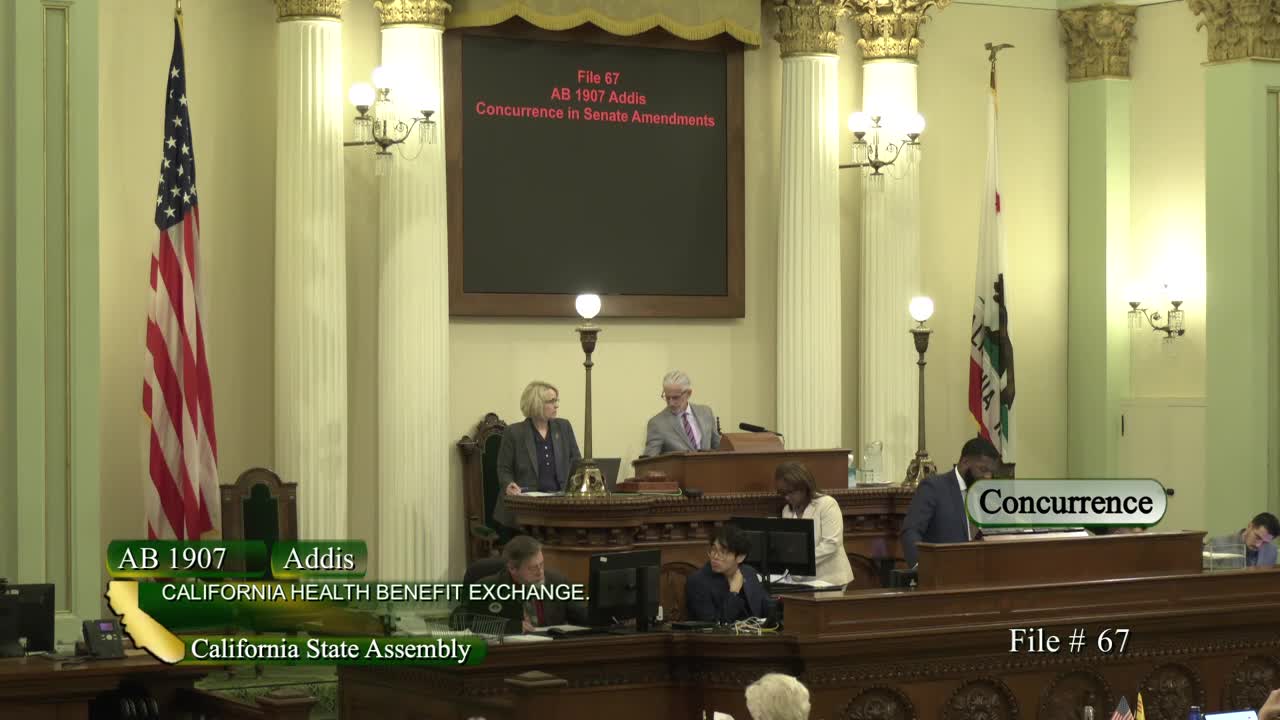 2MIN
Assembly Floor
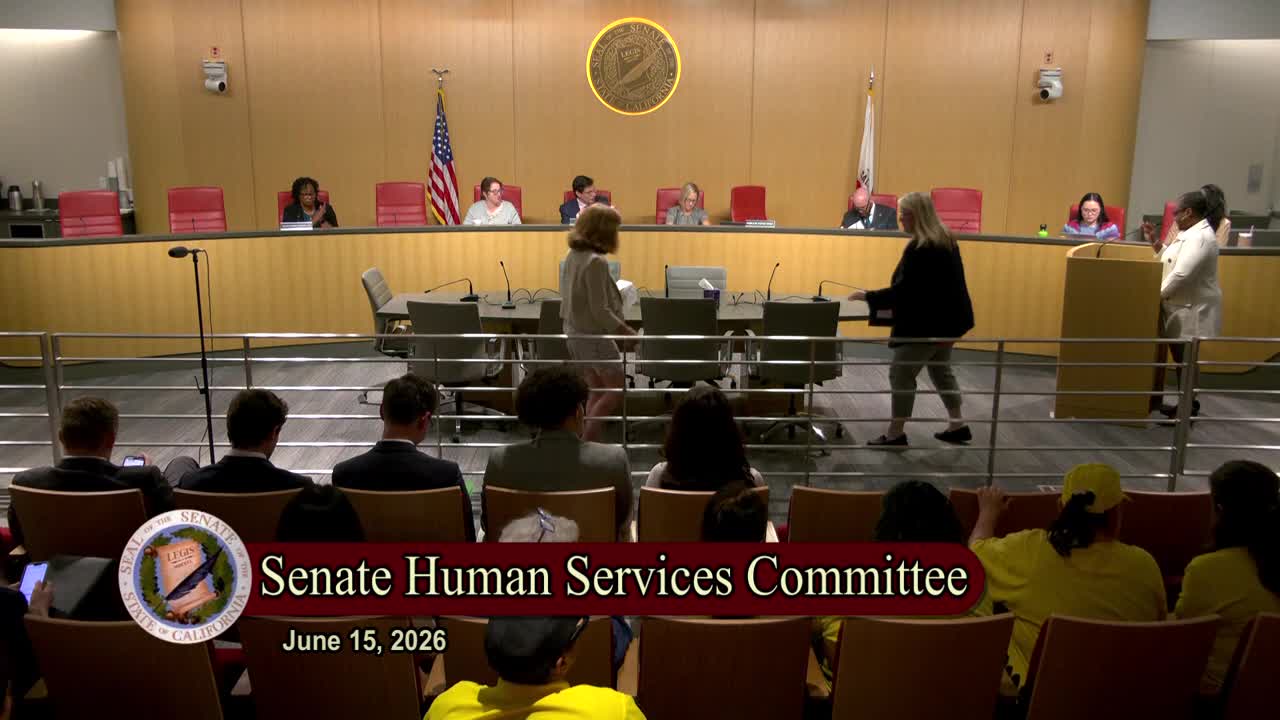 18SEC
Senate Standing Committee on Human Services
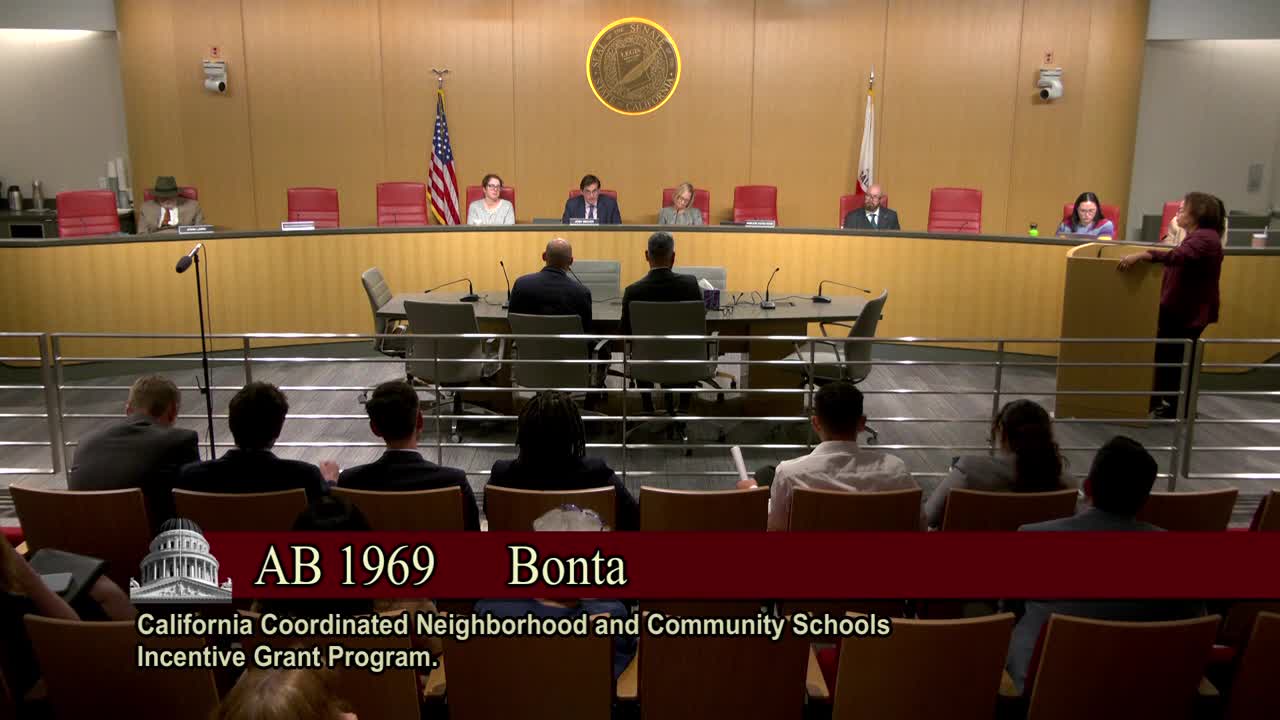 6MIN
Senate Standing Committee on Human Services
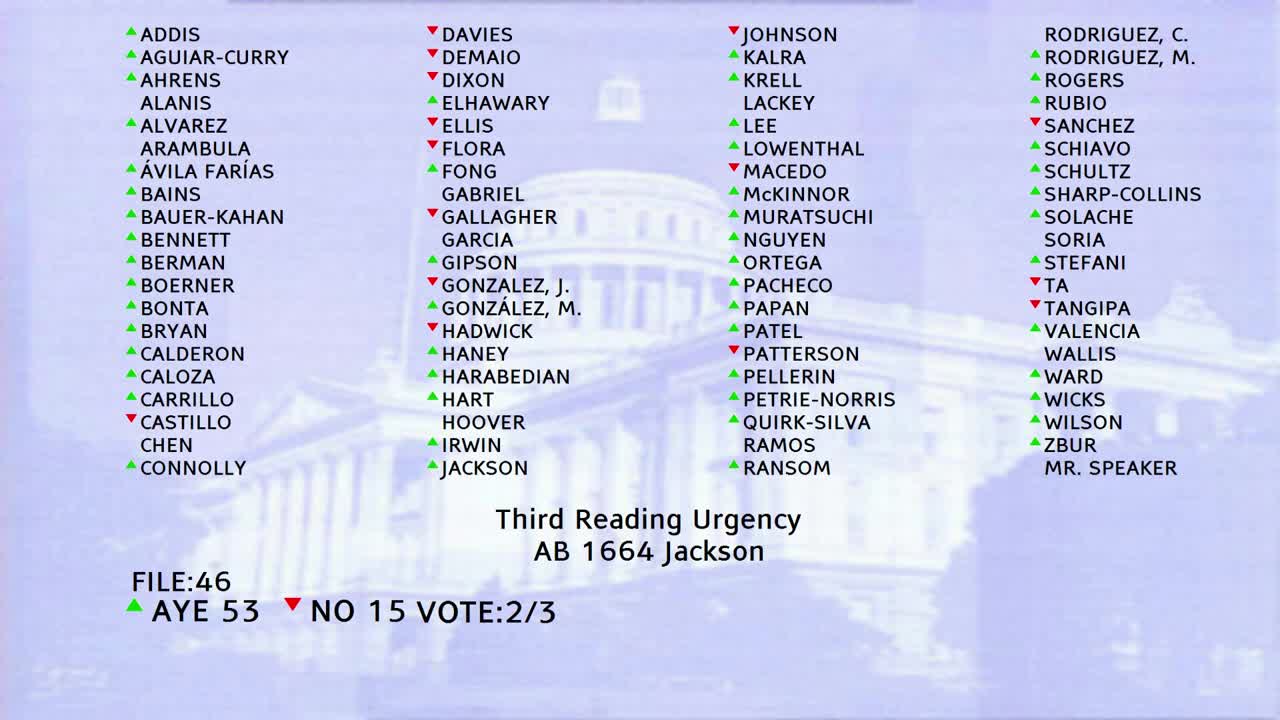 1MIN
Assembly Floor
Bill Author