AB 2002: Local government assistance: Regional Early Action Planning Fund.
- Session Year: 2025-2026
- House: Assembly
- Latest Version Date: 2026-06-18
Current Status:
In Progress
(2026-08-13: In committee: Held under submission.)
Introduced
In Committee
Awaiting First Chamber Vote
Passed First Chamber
In Committee
Awaiting Second Chamber Vote
Passed Second Chamber
Enacted
Existing law, the Planning and Zoning Law, requires each county and each city to adopt a comprehensive, long-term general plan for the physical development of the county or city, and specified land outside its boundaries, that includes, among other specified mandatory elements, a housing element. That law requires the Department of Housing and Community Development, in consultation with each council of governments, to determine the existing and projected need for housing in each region and further requires the appropriate council of governments, or the department for cities and counties without a council of governments, to adopt a final regional housing need plan that allocates a share of the regional housing need to each city, county, or city and county, as provided. Existing law establishes the Local Government Planning Support Grants Program, administered by the department, for the purpose of providing regions and jurisdictions with one-time funding, including grants for planning activities to enable jurisdictions to meet the sixth cycle of the regional housing need assessment, as provided.
This bill would establish the Regional Early Action Planning Fund in the State Treasury for the purpose of providing councils of governments, regional entities, and jurisdictions with one-time funding, including grants for planning activities, to enable those entities to meet the 7th and subsequent cycles of the regional housing need assessment. The bill would require the department to allocate funds, upon appropriation by the Legislature, from the Regional Early Action Planning Fund to each council of governments or regional entity responsible for allocating regional housing need that applies and qualifies for those moneys, as specified. The bill would authorize a council of governments or regional entity to expend funds awarded for certain purposes, including for activities that support the development, improvement, or implementation of the methodology for the 7th and subsequent regional housing needs assessment cycles, and for providing jurisdictions with technical assistance, planning, temporary staffing, or consultant needs associated with updating local planning and zoning documents, as provided. The bill would require a jurisdiction that receives a suballocation of funds to only use that suballocation for housing-related planning activities, as provided. The bill would authorize the department to monitor expenditures and activities of an applicant, as the department deems necessary, to ensure compliance with program requirements. The bill would require each recipient of funds under the program to expend those funds no later than 3 years from the date of award of those funds, subject to an extension by the department.
Existing law, the Administrative Procedure Act, sets forth the requirements for the adoption, publication, review, and implementation of regulations regulations, including emergency regulations, by state agencies.
This bill would require the department department, in collaboration with stakeholders, to issue guidelines adopt emergency regulations to implement the above-described provisions and would exempt those guidelines from the rulemaking provisions of the Administrative Procedure Act. provisions. The bill would also make those emergency regulations effective until nonemergency regulations implementing the above-described provisions become effective.
Existing law, the Planning and Zoning Law, requires each county and each city to adopt a comprehensive, long-term general plan for the physical development of the county or city, and specified land outside its boundaries, that includes, among other specified mandatory elements, a housing element. That law requires the Department of Housing and Community Development, in consultation with each council of governments, to determine the existing and projected need for housing in each region and further requires the appropriate council of governments, or the department for cities and counties without a council of governments, to adopt a final regional housing need plan that allocates a share of the regional housing need to each city, county, or city and county, as provided. Existing law establishes the Local Government Planning Support Grants Program, administered by the department, for the purpose of providing regions and jurisdictions with one-time funding, including grants for planning activities to enable jurisdictions to meet the sixth cycle of the regional housing need assessment, as provided.
This bill would establish the Regional Early Action Planning Fund in the State Treasury for the purpose of providing councils of governments, regional entities, and jurisdictions with one-time funding, including grants for planning activities, to enable those entities to meet the 7th and subsequent cycles of the regional housing need assessment. The bill would require the department to allocate funds, upon appropriation by the Legislature, from the Regional Early Action Planning Fund to each council of governments or regional entity responsible for allocating regional housing need that applies and qualifies for those moneys, as specified. The bill would authorize a council of governments or regional entity to expend funds awarded for certain purposes, including for activities that support the development, improvement, or implementation of the methodology for the 7th and subsequent regional housing needs assessment cycles, and for providing jurisdictions with technical assistance, planning, temporary staffing, or consultant needs associated with updating local planning and zoning documents, as provided. The bill would require a jurisdiction that receives a suballocation of funds to only use that suballocation for housing-related planning activities, as provided. The bill would authorize the department to monitor expenditures and activities of an applicant, as the department deems necessary, to ensure compliance with program requirements.
Existing law, the Administrative Procedure Act, sets forth the requirements for the adoption, publication, review, and implementation of regulations by state agencies.
This bill would require the department to issue guidelines to implement the above-described provisions and would exempt those guidelines from the rulemaking provisions of the Administrative Procedure Act.
The Legislature finds and declares the following:
(a)The regional housing needs assessment (RHNA) is a core component of the states housing planning framework and establishes the basis for local housing element law obligations.
(b)Regional governments perform essential functions in implementing RHNA, including methodology development, public engagement, and distributing regional housing need to local jurisdictions.
(c)RHNA responsibilities have increased in complexity and scope, and regional governments require consistent and adequate resources to fulfill these responsibilities.
(d)Funding provided through the Local Government Planning Support Grants Program (Chapter 3.1 (commencing with Section 50515)) demonstrated that targeted investments in regional planning activities support local housing element implementation and advance state housing goals.
(e)It is the intent of the Legislature to provide councils of governments, regional entities, and jurisdictions with resources to support the seventh and subsequent RHNA cycles.
50515.12.For purposes of this article:
(a)Council of governments means a single-county or multicounty council created pursuant to Chapter 5 (commencing with Section 6500) of Division 7 of Title 1 of the Government Code that is responsible for allocating regional housing need under Sections 65584, 65584.04, and 65584.05 of the Government Code.
(b)Jurisdiction means a city, county, or city and county.
(c)Regional entity means a regional government that is not a council of government governments that is responsible for allocating regional housing need pursuant to Sections 65584, 65584.04, and 65584.05 of the Government Code.
(d)Regional housing need assessment or RHNA means the existing and projected need for housing for each region, as determined by the department pursuant to Section 65584.01 of the Government Code.
50515.13.(a)The Regional Early Action Planning Fund is hereby established in the State Treasury for the purpose of providing councils of governments, regional entities, and jurisdictions with one-time funding, including grants for planning activities to enable those entities to meet the seventh and subsequent cycles of the regional housing need assessment.
(b)Upon appropriation by the Legislature, moneys in the fund shall be made available to the department for allocation in accordance with this chapter.
50515.14.(a)The department shall allocate funds from the Regional Early Action Planning Fund to each council of governments or regional entity responsible for allocating regional housing need, pursuant to Sections 65584, 65584.04, and 65584.05 of the Government Code, in accordance with this section.
(b)A council of governments or regional entity may apply for funds, in a form and manner prescribed by the department, beginning 39 months prior to the next applicable housing element due date pursuant to Section 65588 of the Government Code.
(c)Funds shall be distributed by the department on a population basis based on the most recent population estimates posted on the Department of Finances internet website.
(d)An application shall include, at minimum and in a form and manner prescribed by the department, all of the following information:
(1)An allocation budget for the funds provided pursuant to this section.
(2)Amounts to be retained by the council of governments or regional entity, and any suballocations to jurisdictions.
(3)An explanation of how proposed uses will increase housing planning and facilitate local housing production.
(4)Identification of current best practices at the regional and statewide level that promote sufficient supply of housing affordable to all income levels, and a strategy for increasing adoption of these practices at the regional level, where viable.
(5)An education and outreach strategy to inform jurisdictions of the need and benefits of taking early action related to housing need, as quantified by the regional housing need assessment.
(e)The department shall review an application submitted pursuant to this section within 30 days, otherwise the application shall be deemed approved. Upon approval of an application for funds pursuant to this section, the department shall award the moneys for which the council of governments or regional entity, as applicable, qualify.
50515.15.(a)A council of governments or regional entity may expend funds awarded pursuant to Section 50515.14 for any of the following purposes:
(1)Activities that support the development, improvement, or implementation of the methodology for the seventh and subsequent RHNA cycles, to further the objectives described in subdivision (d) of Section 65584 of the Government Code.
(2)Suballocating moneys directly and equitably to jurisdictions or other subregional entities in the form of grants for planning that will accommodate the development of housing and infrastructure that accelerates housing production in a way that aligns with state planning priorities, and housing, transportation, equity, and climate goals.
(3)Providing jurisdictions with technical assistance, planning, temporary staffing, or consultant needs associated with updating local planning and zoning documents, including any activity related to updating or implementing a jurisdictions housing element, expediting application processing, and other actions to accelerate additional housing production.
(4)Administrative costs necessary to implement this section, which may be up to 5 percent of an entitys total award.
(5)Activities to establish a regional or countywide housing trust, or to allocate a portion of funds to an existing regional or countywide housing trust, for the purpose of supporting planning, predevelopment, or other activities that facilitate the production of housing consistent with this chapter.
(6)Activities, determined in consultation with the department, that support regional or local housing planning priorities consistent with this chapter.
(b)A jurisdiction that receives a suballocation of funds pursuant to paragraph (2) of subdivision (a) shall only use that suballocation for housing-related planning activities, including, but not limited to, the following:
(1)Technical assistance in improving housing permitting processes, tracking systems, and planning tools.
(2)Establishing regional or countywide housing trust funds for affordable housing.
(3)Performing infrastructure planning, including for sewers, water systems, transit, roads, or other public facilities necessary to support new housing and new residents.
(4)Performing feasibility studies to determine the most efficient locations to site housing consistent with Sections 65041.1 and 65080 of the Government Code.
(5)Covering the costs of temporary staffing or consultant needs associated with the activities described in paragraphs (1) to (6), inclusive, of subdivision (a).
(c)A council of governments or regional entity receiving funds shall submit annual reports to the department in a form and manner prescribed by the department. The reports shall include information on expenditures and suballocations to jurisdictions.
(d)A council of governments or regional entity shall submit a final report to the department upon expenditure of all funds, or as otherwise required by the department. The final report shall include information on outcomes achieved, including the corresponding impact on housing within the region.
(e)The department may publish a summary of information received pursuant to this section on its internet website.
(f)The department may monitor expenditures and activities of an applicant, as the department deems necessary, to ensure compliance with program requirements.
(g)The department shall issue guidelines to implement this chapter. The adoption, amendment, or repeal of guidelines authorized by this subdivision is hereby exempted from the rulemaking provisions of the Administrative Procedure Act (Chapter 3.5 (commencing with Section 11340) of Part 1 of Division 3 of Title 2 of the Government Code).(g)(1)Each recipient of funds under the program shall expend those funds no later than three years from the date of award of those funds.
(2)Notwithstanding paragraph (1), the department may provide additional time, as necessary, to ensure the effective use of funds for housing element implementation and related planning activities.
(h)(1)The department, in collaboration with stakeholders, shall adopt emergency regulations, in accordance with Chapter 3.5 (commencing with Section 11340) of Part 1 of Division 3 of Title 2 of the Government Code, to implement this chapter.
(2)Notwithstanding Section 11346.1 of the Government Code, emergency regulations adopted pursuant to this section shall remain in effect until the date that nonemergency regulations to implement this chapter become effective.
The Legislature finds and declares the following:
(a)The regional housing needs assessment (RHNA) is a core component of the states housing planning framework and establishes the basis for local housing element law obligations.
(b)Regional governments perform essential functions in implementing RHNA, including methodology development, public engagement, and distributing regional housing need to local jurisdictions.
(c)RHNA responsibilities have increased in complexity and scope, and regional governments require consistent and adequate resources to fulfill these responsibilities.
(d)Funding provided through the Local Government Planning Support Grants Program (Chapter 3.1 (commencing with Section 50515)) demonstrated that targeted investments in regional planning activities support local housing element implementation and advance state housing goals.
(e)It is the intent of the Legislature to provide councils of governments, regional entities, and jurisdictions with resources to support the seventh and subsequent RHNA cycles.
50515.12.For purposes of this article:
(a)Council of governments means a single-county or multicounty council created pursuant to Chapter 5 (commencing with Section 6500) of Division 7 of Title 1 of the Government Code that is responsible for allocating regional housing need under Sections 65584, 65584.04, and 65584.05 of the Government Code.
(b)Jurisdiction means a city, county, or city and county.
(c)Regional entity means a regional government that is not a council of government that is responsible for allocating regional housing need pursuant to Sections 65584, 65584.04, and 65584.05 of the Government Code.
(d)Regional housing need assessment or RHNA means the existing and projected need for housing for each region, as determined by the department pursuant to Section 65584.01 of the Government Code.
50515.13.(a)The Regional Early Action Planning Fund is hereby established in the State Treasury for the purpose of providing councils of governments, regional entities, and jurisdictions with one-time funding, including grants for planning activities to enable those entities to meet the seventh and subsequent cycles of the regional housing need assessment.
(b)Upon appropriation by the Legislature, moneys in the fund shall be made available to the department for allocation in accordance with this chapter.
50515.14.(a)The department shall allocate funds from the Regional Early Action Planning Fund to each council of governments or regional entity responsible for allocating regional housing need, pursuant to Sections 65584, 65584.04, and 65584.05 of the Government Code, in accordance with this section.
(b)A council of governments or regional entity may apply for funds, in a form and manner prescribed by the department, beginning 39 months prior to the next applicable housing element due date pursuant to Section 65588 of the Government Code.
(c)Funds shall be distributed by the department on a population basis based on the most recent population estimates posted on the Department of Finances internet website.
(d)An application shall include, at minimum and in a form and manner prescribed by the department, all of the following information:
(1)An allocation budget for the funds provided pursuant to this section.
(2)Amounts to be retained by the council of governments or regional entity, and any suballocations to jurisdictions.
(3)An explanation of how proposed uses will increase housing planning and facilitate local housing production.
(4)Identification of current best practices at the regional and statewide level that promote sufficient supply of housing affordable to all income levels, and a strategy for increasing adoption of these practices at the regional level, where viable.
(5)An education and outreach strategy to inform jurisdictions of the need and benefits of taking early action related to housing need, as quantified by the regional housing need assessment.
(e)The department shall review an application submitted pursuant to this section within 30 days, otherwise the application shall be deemed approved. Upon approval of an application for funds pursuant to this section, the department shall award the moneys for which the council of governments or regional entity, as applicable, qualify.
50515.15.(a)A council of governments or regional entity may expend funds awarded pursuant to Section 50515.14 for any of the following purposes:
(1)Activities that support the development, improvement, or implementation of the methodology for the seventh and subsequent RHNA cycles, to further the objectives described in subdivision (d) of Section 65584 of the Government Code.
(2)Suballocating moneys directly and equitably to jurisdictions in the form of grants for planning that will accommodate the development of housing and infrastructure that accelerates housing production in a way that aligns with state planning priorities, and housing, transportation, equity, and climate goals.
(3)Providing jurisdictions with technical assistance, planning, temporary staffing, or consultant needs associated with updating local planning and zoning documents, including any activity related to updating or implementing a jurisdictions housing element, expediting application processing, and other actions to accelerate additional housing production.
(4)Administrative costs necessary to implement this section, which may be up to 5 percent of an entitys total award.
(5)Activities to establish a regional or countywide housing trust, or to allocate a portion of funds to an existing regional or countywide housing trust, for the purpose of supporting planning, predevelopment, or other activities that facilitate the production of housing consistent with this chapter.
(6)Activities, determined in consultation with the department, that support regional or local housing planning priorities consistent with this chapter.
(b)A jurisdiction that receives a suballocation of funds pursuant to paragraph (2) of subdivision (a) shall only use that suballocation for housing-related planning activities, including, but not limited to, the following:
(1)Technical assistance in improving housing permitting processes, tracking systems, and planning tools.
(2)Establishing regional or countywide housing trust funds for affordable housing.
(3)Performing infrastructure planning, including for sewers, water systems, transit, roads, or other public facilities necessary to support new housing and new residents.
(4)Performing feasibility studies to determine the most efficient locations to site housing consistent with Sections 65041.1 and 65080 of the Government Code.
(5)Covering the costs of temporary staffing or consultant needs associated with the activities described in paragraphs (1) to (6), inclusive, of subdivision (a).
(c)A council of governments or regional entity receiving funds shall submit annual reports to the department in a form and manner prescribed by the department. The reports shall include information on expenditures and suballocations to jurisdictions.
(d)A council of governments or regional entity shall submit a final report to the department upon expenditure of all funds, or as otherwise required by the department. The final report shall include information on outcomes achieved, including the corresponding impact on housing within the region.
(e)The department may publish a summary of information received pursuant to this section on its internet website.
(f)The department may monitor expenditures and activities of an applicant, as the department deems necessary, to ensure compliance with program requirements.
(g)The department shall issue guidelines to implement this chapter. The adoption, amendment, or repeal of guidelines authorized by this subdivision is hereby exempted from the rulemaking provisions of the Administrative Procedure Act (Chapter 3.5 (commencing with Section 11340) of Part 1 of Division 3 of Title 2 of the Government Code).
|
Date
|
Status
|
|---|---|
| Aug 13, 2026 | In committee: Held under submission. |
| Jun 29, 2026 | In committee: Referred to APPR. suspense file. |
| Jun 18, 2026 | Read second time and amended. Re-referred to Com. on APPR. |
| Jun 17, 2026 | From committee: Amend, and do pass as amended and re-refer to Com. on APPR. (Ayes 9. Noes 0.) (June 16). |
| Jun 3, 2026 | Referred to Com. on HOUSING. |
| May 21, 2026 | In Senate. Read first time. To Com. on RLS. for assignment. |
| May 21, 2026 | Read third time. Passed. Ordered to the Senate. (Ayes 68. Noes 1. Page 5216.) |
| May 21, 2026 | Read third time. Passed. Ordered to the Senate. (Ayes 68. Noes 1.) |
| May 18, 2026 | Read second time. Ordered to third reading. |
| May 14, 2026 | From committee: Do pass. (Ayes 13. Noes 0.) (May 14). |
| Apr 22, 2026 | In committee: Set, first hearing. Referred to APPR. suspense file. |
| Apr 8, 2026 | From committee: Do pass and re-refer to Com. on APPR. (Ayes 11. Noes 0.) (April 8). Re-referred to Com. on APPR. |
| Mar 9, 2026 | Referred to Com. on H. & C.D. |
| Feb 18, 2026 | From printer. May be heard in committee March 20. |
| Feb 17, 2026 | Read first time. To print. |
|
Date
|
Description
|
Location
|
Votes
|
|
|---|---|---|---|---|
| Jun 29, 2026 | Placed on suspense file | Senate Standing Committee on Appropriations |
Passed |
|
| Jun 16, 2026 | Do pass as amended, but first amend, and re-refer to the Committee on [Appropriations] | Senate Standing Committee on Housing |
Passed |
|
| May 21, 2026 | AB 2002 Solache Assembly Third Reading | Assembly Floor |
Passed |
|
| May 14, 2026 | Do pass. | Assembly Standing Committee on Appropriations |
Passed |
|
| Apr 8, 2026 | Do pass and be re-referred to the Committee on [Appropriations] | Assembly Standing Committee on Housing and Community Development |
Passed |
This list shows positions taken on this bill by organizations on the date displayed, which is linked to the original source.
Positions by individuals are not included.
|
Organization
|
Position
|
Date
|
|---|---|---|
| American Planning Association, California Chapter | ** Support | |
| California Association of Councils of Government (CalGOG) | ** Support | |
| California Association Of Councils Of Governments | ** Support | |
| California Building Industry Association | ** Against | |
| California State Association of Counties (CSAC) | ** Support | |
| City/County Association of Governments of San Mateo County | ** Support | |
| City of Barstow | ** Support | |
| City of Concord | ** Support | |
| City Of Garden Grove | ** Support | |
| City of Grand Terrace | ** Support | |
| City of Montebello | ** Support | |
| City Of Palmdale | ** Support | |
| City of Palm Desert | ** Support | |
| city of paramount | ** Support | |
| City of Pico Rivera | ** Support | |
| City Of Pomona | ** Support | |
| City of Riverside | ** Support | |
| City of Santa Monica | ** Support | |
| City Of South El Monte | ** Support | |
| East Bay Housing Organizations | ** Support | |
| Equitable Land Use Alliance | ** Against | |
| Imperial County | ** Support | |
| LA Forward Institute | ** Support | |
| League Of California Cities | ** Support | |
| Mayor Patricia Lock Dawson, City of Riverside | ** Support | |
| Rural County Representatives of California (RCRC) | ** Support | |
| South Bay Cities Council of Governments | ** Support | |
| Southern California Association Of Governments | ** Support | |
| Urban Counties of California (UCC) | ** Support |
SENATE COMMITTEE ON
Senator Sabrina Cervantes, Chair
2025 - 2026 Regular Session
AB 2002 (Solache) - Local government assistance: Regional Early Action Planning Fund
Version: | Policy Vote: |
Urgency: | Mandate: |
Hearing Date: | Consultant: |
Bill Summary:
AB 2002 would establish the Regional Early Action Planning (REAP) Fund in the State Treasury and require the Department of Housing and Community Development (HCD), upon appropriation by the Legislature, to allocate funds from the REAP Fund to councils of government (COGs) or regional entities for specified planning activities related to the seventh and subsequent cycles of the regional housing needs assessment (RHNA).
Fiscal Impact:
- Ongoing General Fund cost pressures, likely at least in the tens of millions annually, to provide budget appropriations for the REAP Fund, which would be allocated by HCD to COGs and regional entities for planning and other activities related to the current and future RHNA cycles.
- HCD estimates ongoing annual costs of approximately $1.7 million for 8.0 PY of staff resources to administer the permanent program codified in this bill. Specific duties include development and adoption of emergency regulations, issuing notices of funding availability (NOFAs), developing application and technical assistance materials, processing applications, providing technical assistance, and monitoring awardees’ use of REAP Fund allocations. These estimates are based upon previous REAP funding programs, and actual administrative costs and resource needs would depend upon the magnitude of funding appropriated by the Legislature. (General Fund)
Background:
Existing law requires cities and counties to prepare a general plan comprised of seven mandatory elements, including a housing element that identifies existing and projected housing needs. The housing element must include an inventory of adequate sites zoned for housing at all income levels and to accommodate a jurisdiction’s share of the regional housing needs that is sufficient to account for population growth and to overcome existing housing deficiencies over the planning period. The RHNA process is composed of three main stages: (1) development of regional housing need estimates by HCD and the Department of Finance; (2) allocation of housing within each region by councils of government (COGs), or by HCD in an area not within a COG; and (3) incorporation of RHNA allocations into city and county housing elements. If the city or county does not have enough sites within its existing inventory of residentially zoned land to accommodate its share of the regional housing needs, it must adopt a program to rezone land within the first three years of the planning period. Beginning with the 7th cycle housing element planning period, cities and counties must include planning for housing for acutely low-income (ALI, 0-15% of area median income) and extremely low-income (ELI, 0-30% of area median income) households, in addition to other income levels (very low, low, moderate, and above moderate). Housing elements must be updated every eight years in urban areas, and every five years in more rural areas.
The 2019 Budget Act included $250 million in grants for COGs, regions, cities, and counties to fund planning activities that accelerate housing production. This funding was split between the Regional Early Action Planning (REAP) Grant Program and Local Early Action Planning (LEAP) Grant Program. Through REAP, $125 million was allocated to COGs and regional entities for planning activities that will accelerate housing production and facilitate compliance in implementing the sixth cycle of the RHNA. The remaining $125 million went to the LEAP, which provided one-time grants to cities and counties to update their planning documents and implement process improvements that will facilitate the acceleration of housing production and help local governments prepare for their 6th cycle RHNA.
The 2021 Budget Act implemented REAP 2.0, which expanded on the original REAP program by integrating housing and climate goals, and allowing for broader planning and implementation investments (including infrastructural investments that support infill development, which facilitates housing supply, choice, and affordability). REAP 2.0 funds were designed to accelerate infill housing development, reduce Vehicle Miles Traveled (VMT), increase housing supply at all affordability levels, affirmatively further fair housing, and facilitate the implementation of adopted regional and local plans to achieve these goals. REAP 2.0 was administered by HCD in collaboration with the Governor’s Office of Land Use and Climate Innovation (LCI), the Strategic Growth Council (SGC), and the California Air Resources Board (CARB). REAP 2.0 provided an investment to advance implementation of adopted regional plans by funding planning and development activities that accelerate infill housing and reductions in per capita VMT. The 2021 Budget included $480 million for REAP 2.0 to be allocated directly to the state’s 18 Metropolitan Planning Organizations (MPOs), and the MPOs suballocated a portion of the funds to eligible entities (cities, counties, transit/transportation agencies) in their metropolitan region. The remaining funds were split into a set aside for Tribal entities and for eligible entities in smaller counties in non-MPO regions ($30 million), as well as for a Higher Impact Transformative set aside for all eligible entities ($30 million)
Proposed Law:
AB 2002 would establish the REAP Fund in the State Treasury for the purpose of providing COGs, regional entities, and jurisdictions with one-time funding, including grants for planning and other activities to enable those entities to meet the seventh and subsequent cycles of the RHNA. Specifically, this bill would:
- Require HCD to allocate funds on a population basis, upon appropriation by the Legislature, to each COG or regional entity responsible for allocating regional housing need.
- Authorize a COG or regional entity to apply for funds in a form and manner prescribed by HCD, as specified, and require HCD to review an application within 30 days, otherwise the application would be deemed approved.
- Authorize a COG or regional entity to expend funds for any of the following purposes:
- Activities that support the development, improvement, or implementation of the methodology for the seventh and subsequent RHNA cycles.
- Suballocating monies to jurisdictions in the form of grants for planning that will accommodate the development of housing and infrastructure that accelerates housing production in a way that aligns with state planning priorities, and housing, transportation, equity, and climate goals.
- Provide jurisdictions with technical assistance, planning, temporary staffing, or consultant needs associated with updating local planning and zoning documents, including activities related to updating or implementing the housing element, expediting application processing, and other actions to accelerate additional housing production.
- Administrative costs, which may be up to 5% of an entity’s total award.
- Activities to establish a regional or countywide housing trust, or to allocate a portion of funds to an existing housing trust, to support planning, predevelopment, or other activities that facilitate the production of housing.
- Activities, determined in consultation with HCD, that support regional or local housing planning priorities.
- Limit a jurisdiction’s use of suballocated funds to housing related planning activities, including the following:
- Technical assistance in improving housing permitting processes, tracking systems, and planning tools.
- Establishing regional or countywide housing trust funds for affordable housing.
- Performing infrastructure planning for public facilities necessary to support new housing and new residents, as specified.
- Performing feasibility studies to determine the most efficient locations to site housing consistently.
- Covering the costs of temporary staffing or consultant needs associated with allowable program activities, as specified.
- Require recipients of REAP funds to expend those funds within three years from the date of funding awards, and authorize HCD to provide additional time to ensure the effective use of funds for housing element implementation and related planning activities.
- Require a COG or regional entity receiving REAP funds to submit annual reports to HCD that include information on expenditures and suballocations to jurisdictions, and require submittal of a final report upon expenditure of all funds that includes information on outcomes achieved, including corresponding impacts on housing within the region.
- Authorize HCD to publish summary information on its website and monitor expenses and activities of applicants to ensure compliance with program requirements.
- Require HCD, in collaboration with stakeholders, to adopt emergency regulations to implement the bill’s requirements, which would remain in effect until the date that nonemergency regulations go into effect.
Related Legislation:
AB 140 (Committee on Budget) Chap. 111/2021, a housing budget trailer bill, established the expanded REAP 2.0 Grants Program of 2021.
AB 101 (Committee on Budget), Chap. 159/2019, a housing budget trailer bill, established the Local Government Planning Support Grants Program, which included the original REAP and LEAP grant programs.
Staff Comments:
This bill is intended to establish a permanent REAP program for the seventh and subsequent RHNA cycles that would be similar to the 2019 REAP 1.0 Program, but with several modernizing changes, including adding local housing trust fund activities as an eligible use of funds for COGs, automatic approval if HCD fails to review an application within 30 days, and staggering allocations so that COGs become eligible for funding once they begin their RHNA process. This bill does not require the multiagency working groups required under the 2019 REAP and notably, and unlike both prior REAP programs, this bill does not contain a 5% set aside for HCD program administration.
According to previous analyses of this bill, the author has requested $125 million in funding over multiple years in support of the program established by the bill. Staff notes, however, that the 2026-27 state budget actions to date do not include an appropriation for this purpose.
-- END --
SENATE COMMITTEE ON HOUSING
Senator Jesse Arreguín, Chair
2025 - 2026 Regular
Bill No: AB 2002 Hearing Date: 6/10/2026
Author: | Solache | ||
Version: | 2/17/2026 Introduced | ||
Urgency: | No | Fiscal: | Yes |
Consultant: | Alison Hughes | ||
SUBJECT: Local government assistance: Regional Early Action Planning Fund
DIGEST: This bill creates the Regional Early Action Planning (REAP) Fund to provide councils of governments (COGs), regional entities, and jurisdictions with grants for planning and other activities to help those entities meet the seventh and subsequent cycles of the regional housing needs assessment (RHNA).
ANALYSIS:
Existing law:
- Defines a “council of governments” (COGs) to mean a single or multicounty council created by a joint powers agreement that is responsible for allocating regional housing, as specified.
- Established the Local Government Planning Support Grants Program to provide regions and jurisdictions with one-time funding, including grants for planning activities to enable jurisdictions to meet the sixth cycle of the regional housing need assessment.
- Requires the Department of Housing and Community Development (HCD) to administer the Local Government Planning Support Grants Program to provide grants to regions and jurisdictions for technical assistance, preparation and adoption of planning documents, and process improvements to accelerate housing production and facilitate compliance to implement the sixth cycle of the regional housing need assessment.
- Requires HCD to allocate $125 million based on population, as part of the Local Government Planning Support Grants Program, to COGs and regional entities to increase housing planning and accelerate housing production, as follows:
- Develop an improved methodology for the distribution of the sixth cycle regional housing need assessment;
- Suballocating monies directly and equitably to jurisdictions or other subregional entities in the form of grants, for planning that will accommodate the development of housing and infrastructure that will accelerate housing production in a way that aligns with state planning priorities, housing, transportation, equity, and climate goals;
- Providing jurisdictions and other local agencies with technical assistance, planning, temporary staffing or consultant needs associated with updating local planning and zoning documents, expediting application processing, and other actions to accelerate additional housing production; and,
- Cost of administering any programs.
- Requires any funds that are suballocated from COGs to jurisdictions from the Local Government Planning Support Grants Program to use the funds for housing-related planning activities, including, but not limited to, the following:
- Technical assistance in improving housing permitting processes, tracking systems, and planning tools;
- Establishing regional or countywide housing trust funds for affordable housing;
- Performing infrastructure planning, including for sewers, water systems, transit, roads, or other public facilities necessary to support new housing and new residents;
- Performing feasibility studies to determine the most efficient locations to site housing consistent with transportation and environmental planning; and,
- Covering the costs of temporary staffing or consultant needs associated with the above activities.
- Require HCD to make $125 million available to cities and counties using a population formula, to assist in planning for other activities related to meeting the sixth cycle regional housing need assessment. Requires a city or county that receives an allocation to use that allocation for housing-related planning activities, including, but not limited to, the following:
- Rezoning and encouraging development by updating planning documents and zoning ordinances, such as general plans, community plans, specific plans, sustainable communities’ strategies, and local coastal programs;
- Completing environmental clearance to eliminate the need for project-specific review;
- Establishing a workforce housing opportunity zone;
- Performing infrastructure planning, including for sewers, water systems, transit, roads, or other public facilities necessary to support new housing and new residents;
- Partnering with other local entities to identify and prepare excess property for residential development;
- Revamping local planning processes to speed up housing production;
- Developing or improving an accessory dwelling unit ordinance; and,
- Covering the costs of temporary staffing or consultant needs associated with the above activities.
This bill:
- Defines the following:
- “Council of governments (COGs)” means a single-county or multicounty council that is responsible for allocating regional housing need, as specified;
- “Jurisdiction” means a city, county, or city and county; and,
- “Regional entity” means a regional government that is not a council of government that is responsible for allocating regional housing need, as specified.
- Establishes the REAP Fund to provide COGs, regional entities, and jurisdictions with one-time funding, including grants for planning activities to enable those entities to meet the seventh and subsequent cycles of the regional housing need assessment. Provides that upon appropriation by the Legislature, monies in the fund shall be made available to HCD for allocation, as specified.
- Requires HCD to allocate funds from the REAP Fund to each COG or regional entity responsible for allocating regional housing need.
- Provides that a COG or regional entity may apply for funds, in a form and manner prescribed by the department, beginning 39 months prior to the next applicable housing element for the seventh housing element.
- Requires funds to be distributed by HCD on a population basis based on the most recent population estimates posted on the Department of Finance’s (DOF’s) internet website.
- Requires an application to include, at minimum, all of the following information:
- An allocation budget for the funds;
- Amounts to be retained by the COG or regional entity, and any suballocations to jurisdictions;
- An explanation of how proposed uses will increase housing planning and facilitate local housing production;
- Identification of current best practices at the regional and statewide level that promote sufficient supply of housing affordable to all income levels, and a strategy for increasing adoption of these practices at the regional level, where viable; and,
- An education and outreach strategy to inform jurisdictions of the need and benefits of taking early action related to housing need, as quantified by the regional housing need assessment.
- Requires HCD to review an application submitted within 30 days; otherwise, the application shall be deemed approved.
- Allows a COG or regional entity to use REAP program funds for any of the following purposes:
- Activities that support the development, improvement, or implementation of the methodology for the seventh and subsequent Regional Housing Needs Allocation (RHNA) cycles;
- Suballocating monies directly and equitably to jurisdictions in the form of grants for planning that will accommodate the development of housing and infrastructure that accelerates housing production in a way that aligns with state planning priorities, and housing, transportation, equity, and climate goals;
- Provide jurisdictions with technical assistance, planning, temporary staffing, or consultant needs associated with updating local planning and zoning documents, including any activity related to updating or implementing a jurisdiction’s housing element, expediting application processing, and other actions to accelerate additional housing production;
- Administrative costs, which may be up to 5% of an entity’s total award;
- Activities to establish a regional or countywide housing trust, or to allocate a portion of funds to an existing regional or countywide housing trust, for the purpose of supporting planning, predevelopment, or other activities that facilitate the production of housing; and,
- Activities, determined in consultation with HCD, that support regional or local housing planning priorities.
- Provides that a jurisdiction that receives a suballocation of funds from the COG or regional entity shall only use that suballocation for housing-related planning activities, including, but not limited to, the following:
- Technical assistance in improving housing permitting processes, tracking systems, and planning tools;
- Establishing regional or countywide housing trust funds for affordable housing;
- Performing infrastructure planning, including for sewers, water systems, transit, roads, or other public facilities necessary to support new housing and new residents;
- Performing feasibility studies to determine the most efficient locations to site housing consistently; and,
- Covering the costs of temporary staffing or consultant needs associated with the activities allowed for the program.
- A COG or regional entity receiving funds shall submit annual reports to HCD that include information on expenditures and suballocations to jurisdictions.
- Requires a COG or regional entity to submit a final report to HCD upon expenditure of all funds, that includes information on outcomes achieved, including the corresponding impact on housing within the region.
- Allows HCD to publish a summary of information received from the reports submitted by the COGs and regional entities.
- Allows HCD to monitor expenditures and activities of an applicant, as the department deems necessary, to ensure compliance with program requirements.
- Requires HCD to produce guidelines to create REAP funds that are exempt from the Administrative Procedure Act (APA).
Background
RHNA and Housing Elements. The RHNA process is used to determine how many new homes, and the affordability level of those homes, each local government must plan for in its housing element to cover the duration of the next planning cycle. The state is currently in the sixth housing element cycle. The RHND is assigned at the COG level, while RHNA is suballocated to subregions of the COG or directly to local governments. RHNA is currently assigned via six income categories: very low-income (0-50% of AMI), low-income (50-80% of AMI), moderate-income (80-120% of AMI), and above moderate-income (120% or more of AMI). Beginning with the seventh cycle, two new income categories will be incorporated for acutely low-income (0-15% of AMI) and extremely low-income (15-30% of AMI).
The cycle begins with HCD and DOF projecting new RHND numbers every five or eight years, depending on the region. DOF produces population projections, and the COG also develops projections during its Regional Transportation Plan update. Then, 26 months before the housing element due date for the region, HCD must meet and consult with the COG and share the data assumptions and methodology that they will use to produce the RHND. The COG provides HCD with its own regional data on several criteria, including:
- Anticipated household growth associated with projected population increases;
- Household size data and trends in household size;
- The percentage of households that are overcrowded, as defined, and the overcrowding rate for a comparable housing market, as defined;
- The rate of household formation, or headship rates, based on age, gender, ethnicity, or other established demographic measures;
- The vacancy rates in existing housing stock, and the vacancy rates for healthy housing market functioning and regional mobility, as well as housing replacement needs, as specified;
- Other characteristics of the composition of the projected population;
- The relationship between jobs and housing, including any imbalance between jobs and housing;
- The percentage of households that are cost burdened and the rate of housing cost burden for a healthy housing market, as defined; and,
- The loss of units during a declared state of emergency during the planning period immediately preceding the relevant housing element cycle that have yet to be rebuilt or replaced at the time of the data request.
HCD can take this information and use it to modify its own methodology, if it agrees with the data the COG produced, or can reject it if there are other factors or data that HCD feels are better or more accurate. Then, after a consultation with the COG, HCD makes written determinations on the data it is using for each of the factors listed above, and provides that information in writing to the COG. HCD uses that data to produce the final RHND, which must be distributed at least two years prior to the region’s expected housing element due date. The COG must then take the RHND and create an allocation methodology that distributes the housing need equitably amongst all the local governments in its region. The RHNA methodology is statutorily obligated to further all of the following objectives:
- Increase the housing supply and mix of housing types, tenure, and affordability in all cities and counties within the region in an equitable manner, which must result in each jurisdiction receiving an allocation of units for low- and very low-income households;
- Promote infill development, socioeconomic equity, the protection of environmental and agricultural resources, and achievement of regional climate change reduction targets;
- Promote an improved intraregional relationship between jobs and housing, including an improved balance between the number of low-wage jobs and the number of housing units affordable to low-wage workers in each jurisdiction;
- Allocate a lower proportion of housing need to an income category when a jurisdiction already has a disproportionately high share of households in that income category; and,
- Affirmatively further fair housing.
Housing element constraints analysis. Existing law requires each city and each county to include in its housing element an analysis of potential and actual governmental constraints upon the maintenance, improvement, or development of housing for all income levels and housing types. This includes land use controls, building codes and their enforcement, site improvements, fees and other exactions required of developers, local processing and permitting procedures, as well as any locally adopted ordinances that directly impact the cost and supply of residential development. This analysis must also include local efforts to remove governmental constraints that hinder the city or county from meeting its RHNA share and from meeting the need for housing for persons with disabilities, supportive housing, transitional housing, and emergency shelters. Existing law also requires each city and each county to include in its APR information about its efforts to remove governmental constraints to the maintenance, improvement, and development of housing.
Governmental policies that constitute constraints do not necessarily have a net negative impact on housing development potential in a jurisdiction. For example, a jurisdiction that places a housing bond measure on the ballot may subsequently adopt new development standards or impose new affordability requirements in certain areas of the jurisdiction to ensure that a massive influx of public housing funding does not lead to displacement of low-income residents.
Comments
- Author’s statement. “California remains in a severe housing crisis, with millions of units needed to meet current and future demand. The REAP1.0 program was initially established as a one-time investment to help regional governments and local jurisdictions implement the Regional Housing Needs Assessment (RHNA) process. AB 2002 seeks to build off REAP 1.0’s proven success by codifying the program and creating permanent support infrastructure to ensure regional governments, cities, and counties have the technical assistance needed to get their housing elements done right and on time. This cost-effective solution provides regions and local governments the tools needed to strengthen collaboration, and accelerate housing production and prepare for the future. AB 2002 will safeguard the integrity of the state’s housing planning framework, improve the RHNA process, and ensure California can meet its housing goals.”
- State Funding for Planning. Although local governments do not build housing, they are responsible for the planning and zoning necessary to facilitate the production of housing. Prior to the dissolution of redevelopment agencies in 2016, many cities and counties relied upon redevelopment funding to support their planning departments. Beginning in 2019, the state created several one-time General Fund programs to support local planning activities to increase housing production.
SB 2 Planning Grants, the first of these programs was funded by SB 2 (Atkins Chapter 364, Statutes of 2017), the Building Homes and Jobs Act, which imposes a $75 recording fee on real estate documents, excluding those documents recorded at the time of sale. The money raised by SB 2 goes to support affordable housing activities, and in the first year, the money collected was split between planning grants and funding for homelessness programs. The SB 2 Planning Grants made $123 million in grants available to local governments to update general plans, community plans, specific plans, local planning related to implementation of sustainable communities strategies, or local coastal plans, updates to zoning ordinances, environmental analyses that eliminate the need for project-specific review, and local process improvements that expedite local planning and permitting.
In 2019-20, the Budget included $250 million in grants for COGs, regions, cities, and counties to fund planning activities that accelerate housing production. This funding was split between the Regional Early Action Planning Grant Program (REAP) and Local Early Action Planning Grant Program (LEAP). Through REAP, $125 million went to COGs and regional entities for planning activities that will accelerate housing production and facilitate compliance in implementing the sixth cycle of the RHNA. The remaining $125 million went to the REAP, which provided one-time grants to cities and counties to update their planning documents and implement process improvements that will facilitate the acceleration of housing production and help local governments prepare for their 6th cycle RHNA, much like the SB 2 Planning Grants.
In 2020, REAP 2.0 expanded on the REAP program by integrating housing and climate goals, and allowing for broader planning and implementation investments (including infrastructural investments that support infill development, which facilitates housing supply, choice, and affordability). REAP 2.0 funds were designed to accelerate infill housing development, reduce Vehicle Miles Traveled (VMT), increase housing supply at all affordability levels, affirmatively further fair housing (AFFH), and facilitate the implementation of adopted regional and local plans to achieve these goals. REAP 2.0 was administered by HCD in collaboration with the Governor’s Office of Land Use and Climate Innovation (LCI), the Strategic Growth Council (SGC), and the California Air Resources Board (CARB). REAP 2.0 provided an investment to advance implementation of adopted regional plans by funding planning and development activities that accelerate infill housing and reductions in per capita VMT. The 2020-21 Budget included $480 million for REAP 2.0 to be suballocated directly to the state’s 18 Metropolitan Planning Organizations (MPOs), and the MPOs suballocated a portion of the funds to eligible entities (cities, counties, transit/transportation agencies) in their metropolitan region. The remaining funds were split into a set aside for Tribal entities and for eligible entities in smaller counties in non-MPO regions ($30 million), as well as for a Higher Impact Transformative set aside for all eligible entities ($30 million).
- REAP 3.0. This bill creates a program that is similar to the existing statutory program, but with some key differences. The Local Government Planning Support Grants Program provides grants to COGs and local jurisdictions to update the sixth RHNA cycle, which is almost over. This bill would apply to the seventh cycle and subsequent RHNA cycles. In addition, this bill adds local housing trust fund activities as an eligible use for COGs; removes the multiagency working groups required to access funds; adds an automatic approval once HCD's 30-day shot clock to approve a request expires; and staggers allocations so that COGs become eligible for funding once they begin their RHNA process.
The author of this bill submitted a budget request for $125 million over multiple years for the Regional Early Action Planning (REAP 1.0) grant program. If funding was included in the budget for this program, it could not be easily plugged into the existing statute given the differences between what is being proposed and the Local Government Planning Support Grants Program. The Governor’s budget does not include any new funding for housing programs.
- Full transparency. This bill would allow HCD to create REAP 3.0 through guidelines. However, adoption of guidelines does not necessarily require a department to follow public notice and comment processes required by the Administrative Procedures Act (APA). Consistent with other new program creation in recent years, the committee may wish to consider requiring HCD to first adopt emergency regulations consistent with the APA, followed by the adoption of permanent regulations. This allows the program to be created more quickly, while also allowing greater public transparency and engagement from stakeholders.
- Author’s amendments. The committee may wish to consider amending the bill as requested by the author to do the following:
- Authorize COGs to be able to sub-allocate funds to subregions to implement RHNA and housing elements.
- Require fund recipients to expend their funds within 3 years from the date of the awards. Allow HCD to provide extra time to recipients, as necessary.
- Opposition. California Building Industry Association (CBIA) is opposed unless amended to preclude REAP funds from being expended on activities that “increase the stringency of the regulatory barriers to housing production that jurisdictions are already required to identify and address in their housing elements.” Specifically, they are seeking to prevent funds from paying for “potential and actual governmental constraints” upon the maintenance and any locally adopted ordinances that directly impact the cost and supply of residential development, including inclusionary ordinances.
FISCAL EFFECT: Appropriation: Fiscal Com.: Local:
POSITIONS: (Communicated to the committee before noon on Wednesday,
June 10th, 2026.)
SUPPORT:
City of Palm Desert
American Planning Association, California Chapter
California State Association of Counties (CSAC)
City of Concord
City of Palmdale
City/county Association of Governments of San Mateo County
East Bay Housing Organizations
League of California Cities
Rural County Representatives of California (RCRC)
Urban Counties of California (UCC)
OPPOSITION:
California Building Industry Association
-- END --
ASSEMBLY THIRD READING
ATR Bill Id:AB 2002
Author:(Solache)
As Introduced Ver:February 17, 2026
Majority vote
SUMMARY
Creates the Regional Early Action Planning (REAP) Fund to provide councils of governments (COGs), regional entities, and jurisdictions with grants for planning and other activities to help those entities meet the seventh and subsequent cycles of the regional housing need assessment.
Major Provisions
- Establishes the REAP Fund to provide COGs, regional entities, and jurisdictions with one-time funding, including grants for planning activities to enable those entities to meet the seventh and subsequent cycles of the regional housing need assessment. Provides that upon appropriation by the Legislature, moneys in the fund shall be made available to HCD for allocation as specified.
- Requires HCD to allocate funds from the REAP Fund to each COG or regional entity responsible for allocating regional housing need.
- Provides that a COG or regional entity may apply for funds, in a form and manner prescribed by the department, beginning 39 months prior to the next applicable housing element for the seventh housing element.
- Requires funds to be distributed by HCD on a population basis based on the most recent population estimates posted on the Department of Finance’s (DOF’s) internet website.
- Requires an application to include, at minimum, all of the following information:
- An allocation budget for the funds;
- Amounts to be retained by the COG or regional entity, and any suballocations to jurisdictions;
- An explanation of how proposed uses will increase housing planning and facilitate local housing production;
- Identification of current best practices at the regional and statewide level that promote sufficient supply of housing affordable to all income levels, and a strategy for increasing adoption of these practices at the regional level, where viable; and
- An education and outreach strategy to inform jurisdictions of the need and benefits of taking early action related to housing need, as quantified by the regional housing need assessment.
- Requires HCD to review an application submitted within 30 days, otherwise, the application shall be deemed approved.
- Allows a COG or regional entity to use REAP program funds for any of the following purposes:
- Activities that support the development, improvement, or implementation of the methodology for the seventh and subsequent RHNA cycles;
- Suballocating moneys directly and equitably to jurisdictions in the form of grants for planning that will accommodate the development of housing and infrastructure that accelerates housing production in a way that aligns with state planning priorities, and housing, transportation, equity, and climate goals;
- Provide jurisdictions with technical assistance, planning, temporary staffing, or consultant needs associated with updating local planning and zoning documents, including any activity related to updating or implementing a jurisdiction’s housing element, expediting application processing, and other actions to accelerate additional housing production;
- Administrative costs, which may be up to 5% of an entity’s total award;
- Activities to establish a regional or countywide housing trust, or to allocate a portion of funds to an existing regional or countywide housing trust, for the purpose of supporting planning, predevelopment, or other activities that facilitate the production of housing; and
- Activities, determined in consultation with HCD, that support regional or local housing planning priorities.
- Provides that a jurisdiction that receives a suballocation of funds from the COG or regional entity shall only use that suballocation for housing-related planning activities, including, but not limited to, the following:
- Technical assistance in improving housing permitting processes, tracking systems, and planning tools;
- Establishing regional or countywide housing trust funds for affordable housing;
- Performing infrastructure planning, including for sewers, water systems, transit, roads, or other public facilities necessary to support new housing and new residents;
- Performing feasibility studies to determine the most efficient locations to site housing consistent; and
- Covering the costs of temporary staffing or consultant needs associated with the activities allowed for the program.
- A COG or regional entity receiving funds shall submit annual reports to HCD that include information on expenditures and suballocations to jurisdictions.
- Requires a COG or regional entity to submit a final report to HCD upon expenditure of all funds, that includes information on outcomes achieved, including the corresponding impact on housing within the region.
- Allows HCD to publish a summary of information received from the reports submitted by the COGS and regional entities.
- Allows HCD to monitor expenditures and activities of an applicant, as the department deems necessary, to ensure compliance with program requirements.
- Requires HCD to produce guidelines to create REAP that are exempt from the Administrative Procedure Act.
COMMENTS
RHNA and Housing Elements: The RHNA process is used to determine how many new homes, and the affordability level of those homes, each local government must plan for in its housing element to cover the duration of the next planning cycle. The state is currently in the sixth housing element cycle. The RHND is assigned at the COG level, while RHNA is suballocated to subregions of the COG or directly to local governments. RHNA is currently assigned via six income categories: very low-income (0-50% of AMI), low-income (50-80% of AMI), moderate income (80-120% of AMI), and above moderate income (120% or more of AMI). Beginning with the seventh cycle, two new income categories will be incorporated for acutely low-income (0-15% of AMI) and extremely low-income (15-30% of AMI).The cycle begins with HCD and DOF projecting new RHND numbers every five or eight years, depending on the region. DOF produces population projections, and the COG also develops projections during its Regional Transportation Plan update.
State Funding for Planning: Although local governments do not build housing, they are responsible for the planning and zoning necessary to facilitate the production of housing. Prior to the dissolution of redevelopment agencies in 2016, many cities and counties relied upon redevelopment funding to support their planning departments. Beginning in 2019, the state created several one-time General Fund programs to support local planning activities to increase housing production. SB 2 Planning Grants, the first of these programs was funded by SB 2 (Atkins) Chapter 364, Statutes of 2017, the Building Homes and Jobs Act, which imposes a $75 recording fee on real estate documents, excluding those documents recorded at the time of sale. The money raised by SB 2 goes to support affordable housing activities, and in the first year, the money collected was split between planning grants and funding for homelessness programs. The SB 2 Planning Grants made $123 million in grants available to local governments to update general plans, community plans, specific plans, local planning related to implementation of sustainable communities strategies, or local coastal plans, updates to zoning ordinances, environmental analyses that eliminate the need for project-specific review, and local process improvements that expedite local planning and permitting. In 2019-20, the Budget included $250 million in grants for COGs, regions, cities, and counties to fund planning activities that accelerate housing production. This funding was split between the Regional Early Action Planning Grant Program (REAP)and Local Early Action Planning Grant Program (LEAP). Through REAP, $125 million went to COGs and regional entities for planning activities that will accelerate housing production and facilitate compliance in implementing the sixth cycle of the RHNA. The remaining $125 million went to the REAP, which provided one-time grants to cities and counties to update their planning documents and implement process improvements that will facilitate the acceleration of housing production and help local governments prepare for their 6th cycle RHNA, much like the SB2 Planning Grants.
In 2020, REAP 2.0 expanded on the REAP program by integrating housing and climate goals, and allowing for broader planning and implementation investments (including infrastructural investments that support infill development, which facilitates housing supply, choice, and affordability). REAP 2.0 funds were designed to accelerate infill housing development, reduce Vehicle Miles Traveled (VMT), increase housing supply at all affordability levels, affirmatively further fair housing (AFFH), and facilitate the implementation of adopted regional and local plans to achieve these goals. REAP 2.0 was administered by HCD in collaboration with the Governor’s Office of Land Use and Climate Innovation (LCI), the Strategic Growth Council (SGC), and the California Air Resources Board (CARB). REAP 2.0 provided an investment to advance implementation of adopted regional plans by funding planning and development activities that accelerate infill housing and reductions in per capita VMT. The 2020-21 Budget included $480 million for REAP 2.0 to suballocated directly to the state’s 18 Metropolitan Planning Organizations (MPOs), and the MPOs suballocated a portion of the funds to eligible entities (cities, counties, transit/transportation agencies) in their metropolitan region. The remaining funds were split into a set aside for Tribal entities and for eligible entities in smaller counties in non-MPO regions ($30 million), as well as for a Higher Impact Transformative set aside for all eligible entities ($30 million).
This Bill: This bill creates a program that is similar to the existing statutory program but with some key differences. The Local Government Planning Support Grants Program provides grants to COGs and local jurisdictions to update the sixth RHNA cycle, which is almost over, this bill would apply to the seventh cycle. In addition, this bill adds local housing trust fund activities as an eligible use for COGs; removes the multiagency working groups required to access funds; adds an automatic approval once HCD's 30-day shot clock to approve a request expires; and staggers allocations so that COGs become eligible for funding once they begin their RHNA process.
The author of this bill submitted a budget request for $125 million over multiple years for the Regional Early Action Planning (REAP 1.0) grant program. If funding was included in the budget for this program, it could not be easily plugged into the existing statute given the differences between what is being proposed and the Local Government Planning Support Grants Program. It’s worth noting that the Governor’s budget does not include any new funding for housing programs.
According to the Author
“California remains in a severe housing crisis, with millions of units needed to meet current and future demand. The REAP1.0 program was initially established as a one-time investment to help regional governments and local jurisdictions implement the Regional Housing Needs Assessment (RHNA) process. AB 2002 seeks to build off REAP 1.0’s proven success by codifying the program and creating permanent support infrastructure to ensure regional governments, cities, and counties have the technical assistance needed to get their housing elements done right and on time. This cost-effective solution provides regions and local governments the tools needed to strengthen collaboration, and accelerate housing production and prepare for the future. AB 2002 will safeguard the integrity of the state’s housing planning framework, improve the RHNA process, and ensure California can meet its housing goals.”
Arguments in Support
According to the sponsor of this bill, California Association of Councils of Government (CalGOG), “the next RHNA cycle will be the most expensive and complex in California history. Recent statutory changes require regions to analyze additional income categories, conduct expanded outreach to special-needs populations, undergo more rigorous HCD review, and meet heightened equity, environmental, and data standards. These reforms can potentially improve outcomes, but they significantly increase costs for both regional agencies and local jurisdictions. Without a dedicated funding source, regions will struggle to meet statutory requirements, and cities will lose access to the planning assistance that proved essential during REAP 1.0.”
Arguments in Opposition
The California Building Industry Association (CBIA) writes in an oppose unless amended position: “CBIA supports codifying the REAP framework as a permanent program and agrees that regional governments need dedicated resources for the increasingly complex RHNA process. Our concern is focused on ensuring that REAP funds are directed toward planning for and permitting housing, rather than toward regional regulatory frameworks that layer new requirements on top of the state housing accountability system that the Legislature has built over the past decade.”
FISCAL COMMENTS
According to the Assembly Committee on Appropriations:
- Estimated ongoing General Fund cost pressures of an unknown amount, but likely in the low hundreds of thousands of dollars over multiple years to fund the grants to regional entities. The program is contingent on an appropriation by the Legislature. Actual costs will depend on the amount of funding provided.
- HCD estimates General Fund costs of $1.7 million annually for the duration of the program for eight staff positions to establish and administer the grant program, including developing guidelines, issuing Notices of Funding Availability, developing application and technical assistance materials, processing applications, providing technical assistance, and monitoring awardees’ use of REAP Fund allocations. This estimate is based on previous REAP funding programs. Past bills have allowed HCD to set aside up to 5% of the amount appropriated for program administration, which, if allowed under this bill, would cover HCD’s administrative costs.
The author has submitted a state budget request for $125 million over multiple years in support of this bill.
The Legislative Analyst’s Office recently warned of General Fund structural deficits of around $35 billion per year in the 2027-28 fiscal year and ongoing.
VOTES
ASM HOUSING AND COMMUNITY DEVELOPMENT: 11-0-1
YES: Haney, Patterson, Ward, Caloza, Garcia, Kalra, Lee, Quirk-Silva, Tangipa, Wicks, Wilson
ABS, ABST OR NV: Ta
ASM APPROPRIATIONS: 13-0-2
YES: Wicks, Hoover, Aguiar-Curry, Calderon, Caloza, Fong, Mark González, Krell, Pacheco, Pellerin, Sharp-Collins, Solache, Tangipa
ABS, ABST OR NV: Dixon, Ta
UPDATED
VERSION: February 17, 2026
CONSULTANT: Lisa Engel / H. & C.D. / (916) 319-2085 FN: 0002575
Date of Hearing: April 22, 2026
ASSEMBLY COMMITTEE ON APPROPRIATIONS
Buffy Wicks, Chair
ABPCA Bill Id:AB 2002
Author:(Solache) – As Introduced Ver:February 17, 2026
Policy Committee: | Housing and Community Development | Vote: | 11 - 0 |
|
| ||
|
|
Urgency: No State Mandated Local Program: No Reimbursable: No
SUMMARY:
This bill creates the Regional Early Action Planning (REAP) Fund to provide councils of governments (COGs), regional entities, and jurisdictions with one-time funding, including grants for planning and other activities, to help those entities meet the seventh and subsequent cycles of the regional housing needs assessment (RHNA). The bill relies on a General Fund appropriation to fund the program.
Additionally, this bill:
- Establishes the REAP Fund in the State Treasury and requires the Department of Housing and Community Development (HCD) to allocate funds, upon appropriation by the Legislature, from the REAP Fund to each COG or regional entity responsible for allocating regional housing need.
- Specifies application requirements, HCD fund distribution requirements, and allowable fund uses, which include, among others, activities that support the development, improvement, or implementation of the methodology for the seventh and subsequent RHNA cycles; suballocating moneys as planning grants directly and equitably to jurisdictions for specified purposes; technical assistance to local jurisdictions; and administrative costs, which may be up to 5% of an entity’s total award.
- Provides if HCD fails to review a submitted application within 30 days, the application is deemed approved.
- Requires a COG or regional entity receiving funds to submit annual reports to HCD that include information on expenditures and suballocations to jurisdictions and to submit a final report to HCD upon expenditure of all funds that includes information on outcomes achieved, including the corresponding impact on housing within the region.
- Authorizes HCD to publish a summary of information received regarding funds expenditures on its website and to monitor expenditures and activities of an applicant, as it deems necessary, to ensure compliance with program requirements.
FISCAL EFFECT:
- Estimated ongoing General Fund cost pressures of an unknown amount, but likely in the low hundreds of thousands of dollars over multiple years to fund the grants to regional entities. The program is contingent on an appropriation by the Legislature. Actual costs will depend on the amount of funding provided.
- HCD estimates General Fund costs of $1.7 million annually for the duration of the program for eight staff positions to establish and administer the grant program, including developing guidelines, issuing Notices of Funding Availability, developing application and technical assistance materials, processing applications, providing technical assistance, and monitoring awardees’ use of REAP Fund allocations. This estimate is based on previous REAP funding programs. Past bills have allowed HCD to set aside up to 5% of the amount appropriated for program administration, which, if allowed under this bill, would cover HCD’s administrative costs.
The author has submitted a state budget request for $125 million over multiple years in support of this bill.
The Legislative Analyst’s Office recently warned of General Fund structural deficits of around $35 billion per year in the 2027-28 fiscal year and ongoing.
COMMENTS:
- Purpose. According to the author:
The [original] REAP program was initially established as a one-time investment to help regional governments and local jurisdictions implement the RHNA process. [This bill] seeks to build off REAP’s proven success by codifying the program and creating permanent support infrastructure to ensure regional governments, cities, and counties have the technical assistance needed to get their housing elements done right and on time.
- Background. The 2019 Budget Act included $250 million to support the Local Government Planning Support Grants Program, administered by HCD, which provided COGs, regions, cities, and counties with one-time planning grants to help local governments prepare for their 6th RHNA cycle. The funding was split between the Regional Early Action Planning Grant Program (REAP) and Local Early Action Planning Grant Program (LEAP).
Through REAP, $125 million went to COGs and regional entities for planning activities that would accelerate local housing production and facilitate compliance in implementing the sixth RHNA cycle. The remaining $125 million went to LEAP for one-time grants to cities and counties for housing-related planning activities, such as updating planning documents and revamping local planning processes to speed up housing production.
The 2021 Budget Act provided over $500 million for the REAP Grants Program of 2021. This expanded program integrated housing and climate goals and allowed for broader planning and implementation investments, including infill housing.
This bill establishes a program for the seventh RHNA cycle similar to the 2109 REAP but with several modernizing changes, including adding local housing trust fund activities as an eligible use of funds for COGs, automatic approval if HCD fails to review an application within 30 days, and staggering allocations so that COGs become eligible for funding once they begin their RHNA process. This bill does not require the multiagency working groups required under the 2019 REAP and notably, and unlike both prior REAP programs, this bill does not contain a 5% set aside for HCD program administration.
- Support and Opposition. This bill is sponsored by the California Association of Councils of Government (CalGOG) and is supported by numerous regional agencies and local jurisdictions. They assert the next RHNA cycle will be the most expensive and complex in California history due to numerous recent statutory changes. They believe these changes may improve outcomes but will significantly increase costs for both regional agencies and local jurisdictions trying to meet statutory RHNA requirements.
The California Building Industry Association (CBIA) is opposed unless the bill is amended to ensure REAP funds are “directed toward planning for and permitting housing, rather than toward regional regulatory frameworks that layer new requirements on top of the state housing accountability system that the Legislature has built over the past decade.”
- Prior Legislation. AB 140 (Committee on Budget) Chapter 111, Statutes of 2021, a housing budget trailer bill, established the expanded REAP Grants Program of 2021.
AB 101 (Committee on Budget), Chapter 159, Statutes of 2019, a housing budget trailer bill, established the Local Government Planning Support Grants Program, which included the original REAP and LEAP grant programs.
Analysis Prepared by: Jennifer Swenson / APPR. / (916) 319-2081
Date of Hearing: April 8, 2026
ASSEMBLY COMMITTEE ON HOUSING AND COMMUNITY DEVELOPMENT
Matt Haney, Chair
ABPCA Bill Id:AB 2002 (
Author:Solache) – As Introduced Ver:February 17, 2026
SUBJECT: Local government assistance: Regional Early Action Planning Fund
SUMMARY: Creates the Regional Early Action Planning (REAP) Fund to provide councils of governments (COGs), regional entities, and jurisdictions with grants for planning and other activities to help those entities meet the seventh and subsequent cycles of the regional housing need assessment. Specifically, this bill:
- Includes the following definitions:
- “Council of governments (COGs)” means a single-county or multicounty council that is responsible for allocating regional housing need, as specified;
- “Jurisdiction” means a city, county, or city and county;
- “Regional entity” means a regional government that is not a council of government that is responsible for allocating regional housing need, as specified; and
- “Regional housing need assessment” or “RHNA” means the existing and projected need for housing for each region, as determined by the department as specified.
- Establishes the REAP Fund to provide COGs, regional entities, and jurisdictions with one-time funding, including grants for planning activities to enable those entities to meet the seventh and subsequent cycles of the regional housing need assessment. Provides that upon appropriation by the Legislature, moneys in the fund shall be made available to HCD for allocation as specified.
- Requires HCD to allocate funds from the REAP Fund to each COG or regional entity responsible for allocating regional housing need.
- Provides that a COG or regional entity may apply for funds, in a form and manner prescribed by the department, beginning 39 months prior to the next applicable housing element for the seventh housing element.
- Requires funds to be distributed by HCD on a population basis based on the most recent population estimates posted on the Department of Finance’s (DOF’s) internet website.
- Requires an application to include, at minimum, all of the following information:
- An allocation budget for the funds;
- Amounts to be retained by the COG or regional entity, and any suballocations to jurisdictions;
- An explanation of how proposed uses will increase housing planning and facilitate local housing production;
- Identification of current best practices at the regional and statewide level that promote sufficient supply of housing affordable to all income levels, and a strategy for increasing adoption of these practices at the regional level, where viable; and
- An education and outreach strategy to inform jurisdictions of the need and benefits of taking early action related to housing need, as quantified by the regional housing need assessment.
- Requires HCD to review an application submitted within 30 days, otherwise, the application shall be deemed approved.
- Allows a COG or regional entity to use REAP program funds for any of the following purposes:
- Activities that support the development, improvement, or implementation of the methodology for the seventh and subsequent RHNA cycles;
- Suballocating moneys directly and equitably to jurisdictions in the form of grants for planning that will accommodate the development of housing and infrastructure that accelerates housing production in a way that aligns with state planning priorities, and housing, transportation, equity, and climate goals;
- Provide jurisdictions with technical assistance, planning, temporary staffing, or consultant needs associated with updating local planning and zoning documents, including any activity related to updating or implementing a jurisdiction’s housing element, expediting application processing, and other actions to accelerate additional housing production;
- Administrative costs, which may be up to 5 percent of an entity’s total award;
- Activities to establish a regional or countywide housing trust, or to allocate a portion of funds to an existing regional or countywide housing trust, for the purpose of supporting planning, predevelopment, or other activities that facilitate the production of housing; and
- Activities, determined in consultation with HCD, that support regional or local housing planning priorities.
- Provides that a jurisdiction that receives a suballocation of funds from the COG or regional entity shall only use that suballocation for housing-related planning activities, including, but not limited to, the following:
- Technical assistance in improving housing permitting processes, tracking systems, and planning tools;
- Establishing regional or countywide housing trust funds for affordable housing;
- Performing infrastructure planning, including for sewers, water systems, transit, roads, or other public facilities necessary to support new housing and new residents;
- Performing feasibility studies to determine the most efficient locations to site housing consistent; and
- Covering the costs of temporary staffing or consultant needs associated with the activities allowed for the program.
- A COG or regional entity receiving funds shall submit annual reports to HCD that include information on expenditures and suballocations to jurisdictions.
- Requires a COG or regional entity to submit a final report to HCD upon expenditure of all funds, that includes information on outcomes achieved, including the corresponding impact on housing within the region.
- Allows HCD to publish a summary of information received from the reports submitted by the COGS and regional entities.
- Allows HCD to monitor expenditures and activities of an applicant, as the department deems necessary, to ensure compliance with program requirements.
- Requires HCD to produce guidelines to create REAP that are exempt from the Administrative Procedure Act.
EXISTING LAW:
- Defines a “council of governments” to mean a single or multicounty council created by a joint powers agreement that is responsible for allocating regional housing, as specified. (Health and Safety Code (HSC) 0515.07)
- Established the Local Government Planning Support Grants Program to provide regions and jurisdictions with one-time funding, including grants for planning activities to enable jurisdictions to meet the sixth cycle of the regional housing need assessment. (HSC 0515.07)
- Requires HCD to administer the Local Government Planning Support Grants Program to provide grants to regions and jurisdictions for technical assistance, preparation and adoption of planning documents, and process improvements to accelerate housing production and facilitate compliance to implement the sixth cycle of the regional housing need assessment. (HSC 0515.02)
- Requires HCD to allocate $125 million based on population, as part of the Local Government Planning Support Grants Program, to COGs and regional entities to increase housing planning and accelerate housing production, as follows:
- Develop an improved methodology for the distribution of the sixth cycle regional housing need assessment;
- Suballocating moneys directly and equitably to jurisdictions or other subregional entities in the form of grants; for planning that will accommodate the development of housing and infrastructure that will accelerate housing production in a way that aligns with state planning priorities, housing, transportation, equity, and climate goals;
- Providing jurisdictions and other local agencies with technical assistance, planning, temporary staffing or consultant needs associated with updating local planning and zoning documents, expediting application processing, and other actions to accelerate additional housing production; and
- Cost of administering any programs (HCS 50515.02)
- Requires any funds that are suballocated from COGs to jurisdictions from the Local Government Planning Support Grants Program to use the funds for housing-related planning activities, including, but not limited to, the following:
- Technical assistance in improving housing permitting processes, tracking systems, and planning tools;
- Establishing regional or countywide housing trust funds for affordable housing;
- Performing infrastructure planning, including for sewers, water systems, transit, roads, or other public facilities necessary to support new housing and new residents;
- Performing feasibility studies to determine the most efficient locations to site housing consistent with transportation and environmental planning; and
- Covering the costs of temporary staffing or consultant needs associated with the above activities (HCS 50515.02)
- Require HCD to make $125 million available to cities and counties using a population formula, to assist in planning for other activities related to meeting the sixth cycle regional housing need assessment. Requires a city or county that receives an allocation to use that allocation for housing-related planning activities, including, but not limited to, the following:
- Rezoning and encouraging development by updating planning documents and zoning ordinances, such as general plans, community plans, specific plans, sustainable communities’ strategies, and local coastal programs;
- Completing environmental clearance to eliminate the need for project-specific review;
- Establishing a workforce housing opportunity zone;
- Performing infrastructure planning, including for sewers, water systems, transit, roads, or other public facilities necessary to support new housing and new residents;
- Partnering with other local entities to identify and prepare excess property for residential development;
- Revamping local planning processes to speed up housing production;
- Developing or improving an accessory dwelling unit ordinance; and
- Covering the costs of temporary staffing or consultant needs associated with the above activities. (HSC 50515.03)
FISCAL EFFECT: Unknown.
COMMENTS:
Author’s Statement: According to the author, “California remains in a severe housing crisis, with millions of units needed to meet current and future demand. The REAP1.0 program was initially established as a one-time investment to help regional governments and local jurisdictions implement the Regional Housing Needs Assessment (RHNA) process. AB 2002 seeks to build off REAP 1.0’s proven success by codifying the program and creating permanent support infrastructure to ensure regional governments, cities, and counties have the technical assistance needed to get their housing elements done right and on time. This cost-effective solution provides regions and local governments the tools needed to strengthen collaboration, and accelerate housing production and prepare for the future. AB 2002 will safeguard the integrity of the state’s housing planning framework, improve the RHNA process, and ensure California can meet its housing goals.”
RHNA and Housing Elements: The RHNA process is used to determine how many new homes, and the affordability level of those homes, each local government must plan for in its housing element to cover the duration of the next planning cycle. The state is currently in the sixth housing element cycle. The RHND is assigned at the COG level, while RHNA is suballocated to subregions of the COG or directly to local governments. RHNA is currently assigned via six income categories: very low-income (0-50% of AMI), low-income (50-80% of AMI), moderate income (80-120% of AMI), and above moderate income (120% or more of AMI). Beginning with the seventh cycle, two new income categories will be incorporated for acutely low-income (0-15% of AMI) and extremely low-income (15-30% of AMI).
The cycle begins with HCD and DOF projecting new RHND numbers every five or eight years, depending on the region. DOF produces population projections, and the COG also develops projections during its Regional Transportation Plan update. Then, 26 months before the housing element due date for the region, HCD must meet and consult with the COG and share the data assumptions and methodology that they will use to produce the RHND. The COG provides HCD with its own regional data on several criteria, including:
- Anticipated household growth associated with projected population increases;
- Household size data and trends in household size;
- The percentage of households that are overcrowded, as defined, and the overcrowding rate for a comparable housing market, as defined;
- The rate of household formation, or headship rates, based on age, gender, ethnicity, or other established demographic measures;
- The vacancy rates in existing housing stock, and the vacancy rates for healthy housing market functioning and regional mobility, as well as housing replacement needs, as specified;
- Other characteristics of the composition of the projected population;
- The relationship between jobs and housing, including any imbalance between jobs and housing;
- The percentage of households that are cost burdened and the rate of housing cost burden for a healthy housing market, as defined; and
- The loss of units during a declared state of emergency during the planning period immediately preceding the relevant housing element cycle that have yet to be rebuilt or replaced at the time of the data request.
HCD can take this information and use it to modify its own methodology, if it agrees with the data the COG produced, or can reject it if there are other factors or data that HCD feels are better or more accurate. Then, after a consultation with the COG, HCD makes written determinations on the data it is using for each of the factors listed above, and provides that information in writing to the COG. HCD uses that data to produce the final RHND, which must be distributed at least two years prior to the region’s expected housing element due date. The COG must then take the RHND and create an allocation methodology that distributes the housing need equitably amongst all the local governments in its region. The RHNA methodology is statutorily obligated to further all of the following objectives:
- Increase the housing supply and mix of housing types, tenure, and affordability in all cities and counties within the regional in an equitable manner, which must result in each jurisdiction receiving an allocation of units for low- and very low-income households;
- Promote infill development, socioeconomic equity, the protection of environmental and agricultural resources, and achievement of regional climate change reduction targets;
- Promote an improved intraregional relationship between jobs and housing, including an improved balance between the number of low-wage jobs and the number of housing units affordable to low-wage workers in each jurisdiction;
- Allocate a lower proportion of housing need to an income category when a jurisdiction already has a disproportionately high share of households in that income category; and
- Affirmatively further fair housing.
State Funding for Planning: Although local governments do not build housing, they are responsible for the planning and zoning necessary to facilitate the production of housing. Prior to the dissolution of redevelopment agencies in 2016, many cities and counties relied upon redevelopment funding to support their planning departments. Beginning in 2019, the state created several one-time General Fund programs to support local planning activities to increase housing production.
SB 2 Planning Grants, the first of these programs was funded by SB 2 (Atkins) Chapter 364, Statutes of 2017, the Building Homes and Jobs Act, which imposes a $75 recording fee on real estate documents, excluding those documents recorded at the time of sale. The money raised by SB 2 goes to support affordable housing activities, and in the first year, the money collected was split between planning grants and funding for homelessness programs. The SB 2 Planning Grants made $123 million in grants available to local governments to update general plans, community plans, specific plans, local planning related to implementation of sustainable communities strategies, or local coastal plans, updates to zoning ordinances, environmental analyses that eliminate the need for project-specific review, and local process improvements that expedite local planning and permitting.
In 2019-20, the Budget included $250 million in grants for COGs, regions, cities, and counties to fund planning activities that accelerate housing production. This funding was split between the Regional Early Action Planning Grant Program (REAP)and Local Early Action Planning Grant Program (LEAP). Through REAP, $125 million went to COGs and regional entities for planning activities that will accelerate housing production and facilitate compliance in implementing the sixth cycle of the RHNA. The remaining $125 million went to the REAP, which provided one-time grants to cities and counties to update their planning documents and implement process improvements that will facilitate the acceleration of housing production and help local governments prepare for their 6th cycle RHNA, much like the SB2 Planning Grants.
In 2020, REAP 2.0 expanded on the REAP program by integrating housing and climate goals, and allowing for broader planning and implementation investments (including infrastructural investments that support infill development, which facilitates housing supply, choice, and affordability). REAP 2.0 funds were designed to accelerate infill housing development, reduce Vehicle Miles Traveled (VMT), increase housing supply at all affordability levels, affirmatively further fair housing (AFFH), and facilitate the implementation of adopted regional and local plans to achieve these goals. REAP 2.0 was administered by HCD in collaboration with the Governor’s Office of Land Use and Climate Innovation (LCI), the Strategic Growth Council (SGC), and the California Air Resources Board (CARB). REAP 2.0 provided an investment to advance implementation of adopted regional plans by funding planning and development activities that accelerate infill housing and reductions in per capita VMT. The 2020-21 Budget included $480 million for REAP 2.0 to suballocated directly to the state’s 18 Metropolitan Planning Organizations (MPOs), and the MPOs suballocated a portion of the funds to eligible entities (cities, counties, transit/transportation agencies) in their metropolitan region. The remaining funds were split into a set aside for Tribal entities and for eligible entities in smaller counties in non-MPO regions ($30 million), as well as for a Higher Impact Transformative set aside for all eligible entities ($30 million).
This Bill: This bill creates a program that is similar to the existing statutory program but with some key differences. The Local Government Planning Support Grants Program provides grants to COGs and local jurisdictions to update the sixth RHNA cycle, which is almost over, this bill would apply to the seventh cycle. In addition, this bill adds local housing trust fund activities as an eligible use for COGs; removes the multiagency working groups required to access funds; adds an automatic approval once HCD's 30-day shot clock to approve a request expires; and staggers allocations so that COGs become eligible for funding once they begin their RHNA process.
The author of this bill submitted a budget request for $125 million over multiple years for the Regional Early Action Planning (REAP 1.0) grant program. If funding was included in the budget for this program, it could not be easily plugged into the existing statute given the differences between what is being proposed and the Local Government Planning Support Grants Program. It’s worth noting that the Governor’s budget does not include any new funding for housing programs.
Augments in Support: According to the sponsor of this bill, California Association of Councils of Government (CalGOG), “the next RHNA cycle will be the most expensive and complex in California history. Recent statutory changes require regions to analyze additional income categories, conduct expanded outreach to special-needs populations, undergo more rigorous HCD review, and meet heightened equity, environmental, and data standards. These reforms can potentially improve outcomes, but they significantly increase costs for both regional agencies and local jurisdictions. Without a dedicated funding source, regions will struggle to meet statutory requirements, and cities will lose access to the planning assistance that proved essential during REAP 1.0.”
Arguments in Opposition: The California Building Industry Association (CBIA) writes in an oppose unless amended position: “CBIA supports codifying the REAP framework as a permanent program and agrees that regional governments need dedicated resources for the increasingly complex RHNA process. Our concern is focused on ensuring that REAP funds are directed toward planning for and permitting housing, rather than toward regional regulatory frameworks that layer new requirements on top of the state housing accountability system that the Legislature has built over the past decade.”
REGISTERED SUPPORT / OPPOSITION:
Support
Southern California Association of Governments (Sponsor)
American Planning Association, California Chapter
California Association of Councils of Governments
California State Association of Counties
City of Barstow
City of Garden Grove
City of Grand Terrace
City of Montebello
City of Palm Desert
City of Palmdale
City of Paramount
City of Pico Rivera
City of Pomona
City of Riverside
City of Santa Monica
City of South El Monte
City/county Association of Governments of San Mateo County
East Bay Housing Organizations
Imperial County
LA Forward Institute
League of California Cities
Mayor Patricia Lock Dawson, City of Riverside
Rural County Representatives of California
South Bay Cities Council of Governments
South Bay Cities Council of Governments
Urban Counties of California
Opposition
Equitable Land Use Alliance
Oppose Unless Amended
California Building Industry Association
Families and Homes San Jose
Analysis Prepared by: Lisa Engel / H. & C.D. / (916) 319-2085
Discussed in Hearing
 11MIN
Senate Standing Committee on Housing
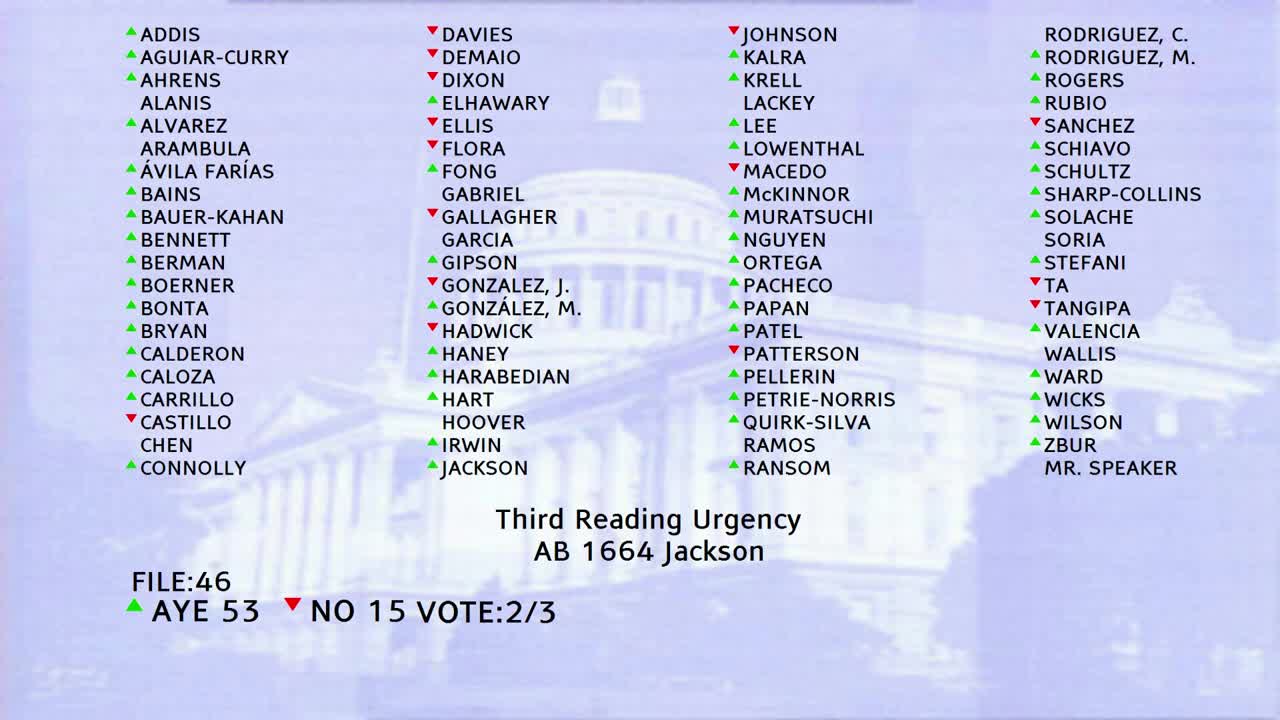 1MIN
Assembly Floor
 32MIN
Assembly Standing Committee on Appropriations
 20MIN
Assembly Standing Committee on Housing and Community Development
Bill Author

Bill Co-Author(s):