AB 2006: State government: office buildings: daycare centers.
- Session Year: 2025-2026
- House: Assembly
- Latest Version Date: 2026-09-27
Current Status:
Passed
(2026-09-27: Chaptered by Secretary of State - Chapter 569, Statutes of 2026.)
Introduced
In Committee
Awaiting First Chamber Vote
Passed First Chamber
In Committee
Awaiting Second Chamber Vote
Passed Second Chamber
Enacted
Existing law, the California Child Day Care Facilities Act, sets forth requirements for licensure as a daycare center.
This bill, except as specified, would authorize on and after January 1, 2027, when the state constructs, acquires, or receives as a gift any office building that can accommodate state employees, or when additions, alterations, or repairs are made to any existing state-owned office building, and the additions, alterations, or repairs both change and affect the use of 25 percent of the net square foot area of the building and include addition to, alteration of, or repair of the first floor, priority to be given to licensed childcare providers, as defined, that seek to contract with the Director of General Services (director) to use a part of the space as a daycare center, as defined. The bill would subject the use of the space as a daycare center to terms and conditions set forth by the director, including as to cost.
This bill would authorize the director to secure other space not attached to a state-owned office building for use as a daycare center if funds are made available for those purposes and the director determines one of certain conditions exist. The bill would also authorize existing state-owned office buildings to be retrofitted to accommodate a daycare center at the directors discretion, to the extent that state funds are made available for those purposes. The bill would set forth priority for enrollment of children in daycare centers established pursuant to the bills provisions.
This bill would require compliance with local and state safety building codes for daycare centers in state-owned office buildings. The bill would exclude from the bills provisions office buildings used or owned by the state that provide care or 24-hour residential care for patients, inmates, or wards of the state.
Existing law, the California Child Day Care Facilities Act, sets forth requirements for licensure as a daycare center.
This bill, except as specified, would require, authorize on and after January 1, 2027, when the state constructs, acquires, or receives as a gift any office building that can accommodate state employees, or when additions, alterations, or repairs are made to any existing state-owned office building, and the additions, alterations, or repairs both change and affect the use of 25 percent of the net square foot area of the building and include addition to, alteration of, or repair of the first floor, priority to be given to licensed childcare providers, as defined, that seek to contract with the Director of General Services (director) to use a part of the space as a daycare center, as defined. The bill would subject the use of the space as a daycare center to terms and conditions set forth by the director, including as to cost.
This bill would authorize the director to secure other space not attached to a state-owned office building for use as a daycare center if funds are made available for those purposes and the director determines one of certain conditions exist. The bill would also authorize existing state-owned office buildings to be retrofitted to accommodate a daycare center at the directors discretion, to the extent that state funds are made available for those purposes. The bill would set forth priority for enrollment of children in daycare centers established pursuant to the bills provisions.
This bill would require compliance with local and state safety building codes for daycare centers in state-owned office buildings. The bill would exclude from the bills provisions office buildings used or owned by the state that provide care or 24-hour residential care for patients, inmates, or wards of the state.
Existing law, the California Child Day Care Facilities Act, sets forth requirements for licensure as a daycare center.
This bill bill, except as specified, would require, on and after January 1, 2027, when the state constructs, acquires, or receives as a gift any office building that can accommodate state employees, or when additions, alterations, or repairs are made to any existing state-owned office building, and the additions, alterations, or repairs both change and affect the use of 25 percent of the net square foot area of the building and include addition to, alteration of, or repair of the first floor, priority to be given to licensed childcare providers, as defined, that seek to contract with the Director of General Services (director) to use a part of the space as a daycare center, as defined. The bill would subject the use of the space as a daycare center to terms and conditions set forth by the director, including as to cost.
This bill would authorize the director to secure other space not attached to a state-owned office building for use as a daycare center if funds are made available for those purposes and the director determines one of certain conditions exist. The bill would also authorize existing state-owned office buildings to be retrofitted to accommodate a daycare center at the directors discretion, to the extent that state funds are made available for those purposes. The bill would set forth priority for enrollment of children in daycare centers established pursuant to the bills provisions.
This bill would require compliance with local and state safety building codes for daycare centers in state-owned office buildings. The bill would exclude from the bills provisions office buildings used or owned by the state that provide care or 24-hour residential care for patients, inmates, or wards of the state.
Existing law, the California Child Day Care Facilities Act, sets forth requirements for licensure as a day care daycare center.
This bill would require, on and after January 1, 2027, when the state constructs, acquires, or receives as a gift any office building that can accommodate state employees, or when additions, alterations, or repairs are made to any existing state-owned office building, priority to be given to licensed child care childcare providers, as defined, that seek to contract with the Director of General Services (director) to use a part of the space as a day care daycare center, as defined. The bill would subject the use of the space as a day care daycare center to terms and conditions set forth by the director, including as to cost. The bill would prohibit the state from charging rent to licensed child care providers using the space as a day care center, as specified, if the provider is a nonprofit entity and accepts subsidies.
This bill would authorize the director to secure other space not attached to a state-owned office building for use as a day care daycare center if funds are made available for those purposes and the director determines one of certain conditions exist. The bill would also authorize existing state-owned office buildings to be retrofitted to accommodate a day care daycare center at the directors discretion, to the extent that state funds are made available for those purposes. The bill would set forth priority for enrollment of children in day care daycare centers established pursuant to the bills provisions.
This bill would require compliance with local and state safety building codes for day care daycare centers in state-owned office buildings. The bill would exclude from the bills provisions office buildings used or owned by the state that provide care or 24-hour residential care for patients, inmates, or wards of the state.
The bill would make related findings and declarations, including findings and declarations related to a gift of public funds.Existing law, the California Child Day Care Facilities Act, sets forth requirements for licensure as a day care center.
This bill would require, on and after January 1, 2027, when the state constructs, acquires, or receives as a gift any office building that can accommodate state employees, or when additions, alterations, or repairs are made to any existing state-owned office building, priority to be given to licensed child care providers, as defined, that seek to contract with the Director of General Services (director) to use a part of the space as a day care center, as defined. The bill would subject the use of the space as a day care center to terms and conditions set forth by the director, including as to cost. The bill would prohibit the state from charging rent to licensed child care providers using the space as a day care center, as specified, if the provider is a nonprofit entity and accepts subsidies.
This bill would authorize the director to secure other space not attached to a state-owned office building for use as a day care center if funds are made available for those purposes and the director determines one of certain conditions exist. The bill would also authorize existing state-owned office buildings to be retrofitted to accommodate a day care center at the directors discretion, to the extent that state funds are made available for those purposes. The bill would set forth priority for enrollment of children in day care centers established pursuant to the bills provisions.
This bill would require compliance with local and state safety building codes for day care centers in state-owned office buildings. The bill would exclude from the bills provisions office buildings used or owned by the state that provide care or 24-hour residential care for patients, inmates, or wards of the state.
The bill would make related findings and declarations, including findings and declarations related to a gift of public funds.
Existing law requires each state department and state agency to enact and maintain a permanent privacy policy, in adherence with the Information Practices Act of 1977 and according to prescribed principles. Existing law requires each state department and state agency to conspicuously post, as defined, its privacy policy on its internet website.This bill would make nonsubstantive changes to those provisions.Existing law requires each state department and state agency to enact and maintain a permanent privacy policy, in adherence with the Information Practices Act of 1977 and according to prescribed principles. Existing law requires each state department and state agency to conspicuously post, as defined, its privacy policy on its internet website.
This bill would make nonsubstantive changes to those provisions.
(a)The Legislature finds and declares all of the following:
(1)There is a substantial need to provide quality childcare facilities for state employees and the communities surrounding state-owned buildings.
(2)Many California families struggle to find the quality and affordable care they need.
(3)State-owned buildings provide a significant opportunity to provide new space for licensed childcare providers in locations that are in proximity to where Californians work and live.
(b)On and after January 1, 2027, when the state constructs, acquires, or receives as a gift any office building that can accommodate state employees, or when additions, alterations, or repairs are made to any existing state-owned office building, and the additions, alterations, or repairs both change and affect the use of 25 percent of the net square foot area of the building and include addition to, alteration of, or repair of the first floor, priority may be given to licensed childcare providers that seek to use a part of the space as a daycare center.
(c)(1)Use of a space described in subdivision (b) by a licensed childcare provider as a daycare center shall be subject to terms and conditions set forth by the Director of General Services, including the cost set by the director under paragraph (2).
(2)The space may be made available at a rate to be established by the Director of General Services based upon the actual cost to the state, the average cost of state-owned space in the area, or the statewide average cost of state-owned space, whichever is less. However, if the director determines that a lower rent must be charged to ensure the viability of a daycare center, the director may charge a lower rate.
(d)(1)Space designed within a state-owned office building for the daycare center shall comply with the prevailing local and state safety building codes for daycare centers.
(2)The indoor activity space and outdoor activity space shall comply with the requirements in Title 22 of the California Code of Regulations.
(e)The Director of General Services may also secure space, that is not subject to subdivision (b) and that is not attached to a state-owned office building, for use as a daycare center run by a licensed childcare provider if funds are made available for those purposes and the director determines that any of the following conditions exist:
(1)All other physical requirements controlling the development of the daycare center within the state-owned office building cannot be utilized.
(2)It is more cost-efficient for the state to provide for equivalent daycare centers within a reasonable distance of the state-owned office building.
(3)Locating the daycare center within a reasonable distance from the state-owned office building would provide an enhanced facility for the children or would mitigate security concerns.
(f)Existing state-owned office buildings may also be retrofitted to accommodate a daycare center at the discretion of the Director of General Services, to the extent that state funds are made available for these purposes.
(g)Priority for enrollment of children in daycare centers established pursuant to this section shall be in the following order:
(1)State employees who work in the state-owned office building.
(2)All other state employees.
(3)Members of the community with a primary residence within a five-mile radius of the state office building.
(h)This section shall not apply to any office buildings used or owned by the state that provide care or 24-hour residential care for patients, inmates, or wards of the state, such as state hospitals and correctional facilities.
(i)This section shall not apply to facilities owned, operated, or occupied by the California Highway Patrol.
(j)For purposes of this section, the following definitions shall apply:
(1) Daycare center has the same meaning as set forth in Section 1596.76 of the Health and Safety Code.
(2)Licensed childcare provider means a person who operates a daycare center and is licensed pursuant to Chapter 3.5 (commencing with Section 1596.90) of Division 2 of the Health and Safety Code or a person who plans to apply for a childcare license.
(a)The Legislature finds and declares all of the following:
(1)There is a substantial need to provide quality childcare facilities for state employees and the communities surrounding state-owned buildings.
(2)Many California families struggle to find the quality and affordable care they need.
(3)State-owned buildings provide a significant opportunity to provide new space for licensed childcare providers in locations that are in proximity to where Californians work and live.
(b)On and after January 1, 2027, when the state constructs, acquires, or receives as a gift any office building that can accommodate state employees, or when additions, alterations, or repairs are made to any existing state-owned office building, and the additions, alterations, or repairs both change and affect the use of 25 percent of the net square foot area of the building and include addition to, alteration of, or repair of the first floor, priority shall may be given to licensed childcare providers that seek to contract with the Director of General Services to use a part of the space as a daycare center.
(c)(1)Use of a space described in subdivision (b) by a licensed childcare provider as a daycare center shall be subject to terms and conditions set forth by the Director of General Services, including the cost set by the director under paragraph (2).
(2)The space shall may be made available at a rate to be established by the Director of General Services based upon the actual cost to the state, the average cost of state-owned space in the area, or the statewide average cost of state-owned space, whichever is less. However, if the director determines that a lower rent must be charged to ensure the viability of a daycare center, the director may charge a lower rate.
(d)(1)Space designed within a state-owned office building for the daycare center shall comply with the prevailing local and state safety building codes for daycare centers.
(2)The indoor activity space and outdoor activity space shall comply with the requirements in Title 22 of the California Code of Regulations.
(e)The Director of General Services may also secure space, that is not subject to subdivision (b) and that is not attached to a state-owned office building, for use as a daycare center run by a licensed childcare provider if funds are made available for those purposes and the director determines that any of the following conditions exist:
(1)All other physical requirements controlling the development of the daycare center within the state-owned office building cannot be utilized.
(2)It is more cost-efficient for the state to provide for equivalent daycare centers within a reasonable distance of the state-owned office building.
(3)Locating the daycare center within a reasonable distance from the state-owned office building would provide an enhanced facility for the children or would mitigate security concerns.
(f)Existing state-owned office buildings may also be retrofitted to accommodate a daycare center at the discretion of the Director of General Services, to the extent that state funds are made available for these purposes.
(g)Priority for enrollment of children in daycare centers established pursuant to this section shall be in the following order:
(1)State employees who work in the state-owned office building.
(2)All other state employees.
(3)Members of the community with a primary residence within a five-mile radius of the state office building.
(h)This section shall not apply to any office buildings used or owned by the state that provide care or 24-hour residential care for patients, inmates, or wards of the state, such as state hospitals and correctional facilities.
(i)This section shall not apply to facilities owned, operated, or occupied by the California Highway Patrol.
(j)For purposes of this section, the following definitions shall apply:
(1) Daycare center has the same meaning as set forth in Section 1596.76 of the Health and Safety Code.
(2)Licensed childcare provider means a person who operates a daycare center and is licensed pursuant to Chapter 3.5 (commencing with Section 1596.90) of Division 2 of the Health and Safety Code or a person who plans to apply for a childcare license.
(a)The Legislature finds and declares all of the following:
(1)There is a substantial need to provide quality childcare facilities for state employees and the communities surrounding state-owned buildings.
(2)Many California families struggle to find the quality and affordable care they need.
(3)State-owned buildings provide a significant opportunity to provide new space for licensed childcare providers in locations that are in proximity to where Californians work and live.
(b)On and after January 1, 2027, when the state constructs, acquires, or receives as a gift any office building that can accommodate state employees, or when additions, alterations, or repairs are made to any existing state-owned office building, and the additions, alterations, or repairs both change and affect the use of 25 percent of the net square foot area of the building and include addition to, alteration of, or repair of the first floor, priority shall be given to licensed childcare providers that seek to contract with the Director of General Services to use a part of the space as a daycare center.
(c)(1)Use of a space described in subdivision (b) by a licensed childcare provider as a daycare center shall be subject to terms and conditions set forth by the Director of General Services, including the cost set by the director under paragraph (2).
(2)The space shall be made available at a rate to be established by the Director of General Services based upon the actual cost to the state, the average cost of state-owned space in the area, or the statewide average cost of state-owned space, whichever is less. However, if the director determines that a lower rent must be charged to ensure the viability of a daycare center, the director may charge a lower rate.
(d)(1)Space designed within a state-owned office building for the daycare center shall comply with the prevailing local and state safety building codes for daycare centers.
(2)The indoor activity space and outdoor activity space shall comply with the requirements in Title 22 of the California Code of Regulations.
(e)The Director of General Services may also secure space, that is not subject to subdivision (b) and that is not attached to a state-owned office building, for use as a daycare center run by a licensed childcare provider if funds are made available for those purposes and the director determines that any of the following conditions exist:
(1)All other physical requirements controlling the development of the daycare center within the state-owned office building cannot be utilized.
(2)It is more cost-efficient for the state to provide for equivalent daycare centers within a reasonable distance of the state-owned office building.
(3)Locating the daycare center within a reasonable distance from the state-owned office building would provide an enhanced facility for the children or would mitigate security concerns.
(f)Existing state-owned office buildings may also be retrofitted to accommodate a daycare center at the discretion of the Director of General Services, to the extent that state funds are made available for these purposes.
(g)Priority for enrollment of children in daycare centers established pursuant to this section shall be in the following order:
(1)State employees who work in the state-owned office building.
(2)All other state employees.
(3)Members of the community with a primary residence within a five mile five-mile radius of the state office building.
(h)This section shall not apply to any office buildings used or owned by the state that provide care or 24-hour residential care for patients, inmates, or wards of the state, such as state hospitals and correctional facilities.
(i)This section shall not apply to facilities owned, operated, or occupied by the California Highway Patrol.
(i)(j)For purposes of this section, the following definitions shall apply:
(1) Daycare center has the same meaning as set forth in Section 1596.76 of the Health and Safety Code.
(2)Licensed childcare provider means a person who operates a daycare center and is licensed pursuant to Chapter 3.5 (commencing with Section 1596.90) of Division 2 of the Health and Safety Code. Code or a person who plans to apply for a childcare license.
(a)The Legislature finds and declares all of the following:
(1)There is a substantial need to provide quality child care childcare facilities for state employees and the communities surrounding state-owned buildings.
(2)Many California families struggle to find the quality and affordable care they need.
(3)State-owned buildings provide a significant opportunity to provide new space for licensed child care childcare providers in locations that are in proximity to where Californians work and live.
(b)On and after January 1, 2027, when the state constructs, acquires, or receives as a gift any office building that can accommodate state employees, or when additions, alterations, or repairs are made to any existing state-owned office building, priority shall be given to licensed child care childcare providers that seek to contract with the Director of General Services to use a part of the space as a day care daycare center.
(c)(1)Use of a space described in subdivision (b) by a licensed child care childcare provider as a day care daycare center shall be subject to terms and conditions set forth by the Director of General Services, including the cost set by the director under paragraph (2).
(2)(A)The space shall be made available at a rate to be established by the Director of General Services based upon the actual cost to the state, the average cost of state-owned space in the area, or the statewide average cost of state-owned space, whichever is less. However, if the director determines that a lower rent must be charged to ensure the viability of a day care daycare center, the director may charge a lower rate.
(B)Notwithstanding subparagraph (A), the state shall not charge rent to licensed child care providers that use the space as a day care center pursuant to this section if the provider is a nonprofit entity and accepts subsidies.(d)(1)Space designed within a state-owned office building for the day care daycare center shall comply with the prevailing local and state safety building codes for day care daycare centers.
(2)The indoor activity space and outdoor activity space shall comply with the requirements in Title 22 of the California Code of Regulations.
(e)The Director of General Services may also secure space, that is not subject to subdivision (b) and that is not attached to a state-owned office building, for use as a day care daycare center run by a licensed child care childcare provider if funds are made available for those purposes and the director determines that any of the following conditions exist:
(1)All other physical requirements controlling the development of the day care daycare center within the state-owned office building cannot be utilized.
(2)It is more cost-efficient for the state to provide for equivalent day care daycare centers within a reasonable distance of the state-owned office building.
(3)Locating the day care daycare center within a reasonable distance from the state-owned office building would provide an enhanced facility for the children or would mitigate security concerns.
(f)Existing state-owned office buildings may also be retrofitted to accommodate a day care daycare center at the discretion of the Director of General Services, to the extent that state funds are made available for these purposes.
(g)Priority for enrollment of children in day care daycare centers established pursuant to this section shall be in the following order:
(1)State employees who work in the state-owned office building.
(2)All other state employees.
(3)Members of the community with a primary residence within a five mile radius of the state office building.
(h)This section shall not apply to any office buildings used or owned by the state that provide care or 24-hour residential care for patients, inmates, or wards of the state, such as state hospitals and correctional facilities.
(i)For purposes of this section, the following definitions shall apply:
(1)Day care Daycare center has the same meaning as set forth in Section 1596.76 of the Health and Safety Code.
(2)Licensed child care childcare provider means a person who operates a day care daycare center and is licensed pursuant to Chapter 3.5 (commencing with Section 1596.90) of Division 2 of the Health and Safety Code.
SEC. 2.The Legislature finds and declares that Section 4564 of the Government Code, as added by this act, is necessary for the public purpose of assisting Californian families who are struggling to find quality and affordable child care, and do not constitute a gift of public funds within the meaning of Section 6 of Article XVI of the California Constitution.(a)The Legislature finds and declares all of the following:
(1)There is a substantial need to provide quality child care facilities for state employees and the communities surrounding state-owned buildings.
(2)Many California families struggle to find the quality and affordable care they need.
(3)State-owned buildings provide a significant opportunity to provide new space for licensed child care providers in locations that are in proximity to where Californians work and live.
(b)On and after January 1, 2027, when the state constructs, acquires, or receives as a gift any office building that can accommodate state employees, or when additions, alterations, or repairs are made to any existing state-owned office building, priority shall be given to licensed child care providers that seek to contract with the Director of General Services to use a part of the space as a day care center.
(c)(1)Use of a space described in subdivision (b) by a licensed child care provider as a day care center shall be subject to terms and conditions set forth by the Director of General Services, including the cost set by the director under paragraph (2).
(2)(A)The space shall be made available at a rate to be established by the Director of General Services based upon the actual cost to the state, the average cost of state-owned space in the area, or the statewide average cost of state-owned space, whichever is less. However, if the director determines that a lower rent must be charged to ensure the viability of a day care center, the director may charge a lower rate.
(B)Notwithstanding subparagraph (A), the state shall not charge rent to licensed child care providers that use the space as a day care center pursuant to this section if the provider is a nonprofit entity and accepts subsidies.
(d)(1)Space designed within a state-owned office building for the day care center shall comply with the prevailing local and state safety building codes for day care centers.
(2)The indoor activity space and outdoor activity space shall comply with the requirements in Title 22 of the California Code of Regulations.
(e)The Director of General Services may also secure space, that is not subject to subdivision (b) and that is not attached to a state-owned office building, for use as a day care center run by a licensed child care provider if funds are made available for those purposes and the director determines that any of the following conditions exist:
(1)All other physical requirements controlling the development of the day care center within the state-owned office building cannot be utilized.
(2)It is more cost-efficient for the state to provide for equivalent day care centers within a reasonable distance of the state-owned office building.
(3)Locating the day care center within a reasonable distance from the state-owned office building would provide an enhanced facility for the children or would mitigate security concerns.
(f)Existing state-owned office buildings may also be retrofitted to accommodate a day care center at the discretion of the Director of General Services, to the extent that state funds are made available for these purposes.
(g)Priority for enrollment of children in day care centers established pursuant to this section shall be in the following order:
(1)State employees who work in the state-owned office building.
(2)All other state employees.
(3)Members of the community with a primary residence within a five mile radius of the state office building.
(h)This section shall not apply to any office buildings used or owned by the state that provide care or 24-hour residential care for patients, inmates, or wards of the state, such as state hospitals and correctional facilities.
(i)For purposes of this section, the following definitions shall apply:
(1)Day care center has the same meaning as set forth in Section 1596.76 of the Health and Safety Code.
(2)Licensed child care provider means a person who operates a day care center and is licensed pursuant to Chapter 3.5 (commencing with Section 1596.90) of Division 2 of the Health and Safety Code.
SEC. 2.The Legislature finds and declares that Section 4564 of the Government Code, as added by this act, is necessary for the public purpose of assisting Californian families who are struggling to find quality and affordable child care, and do not constitute a gift of public funds within the meaning of Section 6 of Article XVI of the California Constitution.
SECTION 1.Section 11019.9 of the Government Code is amended to read:11019.9.(a)Each state department and state agency shall enact and maintain a permanent privacy policy, in adherence with the Information Practices Act of 1977 (Chapter 1 (commencing with Section 1798) of Title 1.8 of Part 4 of Division 3 of the Civil Code). Each state department and state agency shall conspicuously post its privacy policy on its internet website.(b)The privacy policy required by subdivision (a) shall include, but is not limited to, the following principles:(1)Personally identifiable information is only obtained through lawful means.(2)The purposes for which personally identifiable data are collected are specified at or before the time of collection, and any subsequent use is limited to the fulfillment of purposes not inconsistent with those purposes previously specified.(3)Personal data shall not be disclosed, made available, or otherwise used for purposes other than those specified, except with the consent of the subject of the data, or as authorized by law or regulation.(4)Personal data collected must be relevant to the purpose for which it is collected.(5)The general means by which personal data is protected against loss, unauthorized access, use modification, or disclosure shall be posted, unless that disclosure of general means would compromise legitimate state department or state agency objectives or law enforcement purposes.(6)Each state department or state agency shall designate a position within the department or agency, the duties of which shall include, but not be limited to, responsibility for the privacy policy within that department or agency.(c)For purposes of this section, the term conspicuously post shall include posting the privacy policy through any of the following means:(1)An internet webpage on which the actual privacy policy is posted if the internet webpage is the homepage or first significant page after entering the internet website.(2)An icon that hyperlinks to an internet webpage on which the actual privacy policy is posted, if the icon is located on the homepage or the first significant page after entering the internet website, and if the icon contains the word privacy. The icon shall also use a color that contrasts with the background color of the internet webpage or is otherwise distinguishable.(3)A text link that hyperlinks to an internet webpage on which the actual privacy policy is posted, if the text link is located on the homepage or first significant page after entering the internet website, and if the text link does any of the following:(A)Includes the word privacy.(B)Is written in capital letters equal to or greater in size than the surrounding text.(C)Is written in larger type than the surrounding text or in contrasting type, font, or color to the surrounding text of the same size, or is set off from the surrounding text of the same size by symbols or other marks that call attention to the language.(4)Any other functional hyperlink that is so displayed that a reasonable person would notice it and understand it to hyperlink to the actual privacy policy. REVISIONS: HeadingLine 2.(a)Each state department and state agency shall enact and maintain a permanent privacy policy, in adherence with the Information Practices Act of 1977 (Title 1.8 (Chapter 1 (commencing with Section 1798) of Title 1.8 of Part 4 of Division 3 of the Civil Code). Each state department and state agency shall conspicuously post its privacy policy on its Internet Web site. internet website.
(b)The privacy policy required by subdivision (a) shall include, but is not limited to, the following principles:
(1)Personally identifiable information is only obtained through lawful means.
(2)The purposes for which personally identifiable data are collected are specified at or before the time of collection, and any subsequent use is limited to the fulfillment of purposes not inconsistent with those purposes previously specified.
(3)Personal data shall not be disclosed, made available, or otherwise used for purposes other than those specified, except with the consent of the subject of the data, or as authorized by law or regulation.
(4)Personal data collected must be relevant to the purpose for which it is collected.
(5)The general means by which personal data is protected against loss, unauthorized access, use modification modification, or disclosure shall be posted, unless that disclosure of general means would compromise legitimate state department or state agency objectives or law enforcement purposes.
(6)Each state department or state agency shall designate a position within the department or agency, the duties of which shall include, but not be limited to, responsibility for the privacy policy within that department or agency.
(c)For purposes of this section, the term conspicuously post shall include posting the privacy policy through any of the following means:
(1)An Internet Web page internet webpage on which the actual privacy policy is posted if the Internet Web page internet webpage is the homepage or first significant page after entering the Internet Web site. internet website.
(2)An icon that hyperlinks to an Internet Web page internet webpage on which the actual privacy policy is posted, if the icon is located on the homepage or the first significant page after entering the Internet Web site, internet website, and if the icon contains the word privacy. The icon shall also use a color that contrasts with the background color of the Internet Web page internet webpage or is otherwise distinguishable.
(3)A text link that hyperlinks to an Internet Web page internet webpage on which the actual privacy policy is posted, if the text link is located on the homepage or first significant page after entering the Internet Web site, internet website, and if the text link does any of the following:
(A)Includes the word privacy.
(B)Is written in capital letters equal to or greater in size than the surrounding text.
(C)Is written in larger type than the surrounding text or in contrasting type, font, or color to the surrounding text of the same size, or is set off from the surrounding text of the same size by symbols or other marks that call attention to the language.
(4)Any other functional hyperlink that is so displayed that a reasonable person would notice it and understand it to hyperlink to the actual privacy policy.
|
Date
|
Status
|
|---|---|
| Sep 27, 2026 | Chaptered by Secretary of State - Chapter 569, Statutes of 2026. |
| Sep 27, 2026 | Approved by the Governor. |
| Sep 3, 2026 | Enrolled and presented to the Governor at 4 p.m. |
| Aug 26, 2026 | Senate amendments concurred in. To Engrossing and Enrolling. (Ayes 78. Noes 0. Page 6637.). |
| Aug 26, 2026 | In Assembly. Concurrence in Senate amendments pending. |
| Aug 26, 2026 | Senate amendments concurred in. To Engrossing and Enrolling. (Ayes 78. Noes 0.). |
| Aug 26, 2026 | Read third time. Passed. Ordered to the Assembly. (Ayes 39. Noes 0. Page 5846.). |
| Aug 26, 2026 | Read third time. Passed. Ordered to the Assembly. (Ayes 39. Noes 0.). |
| Aug 24, 2026 | Read second time. Ordered to third reading. |
| Aug 21, 2026 | Read third time and amended. Ordered to second reading. |
| Aug 20, 2026 | Ordered to third reading. |
| Aug 20, 2026 | From special consent calendar. |
| Aug 18, 2026 | Ordered to special consent calendar. |
| Aug 13, 2026 | Read second time. Ordered to third reading. |
| Aug 13, 2026 | From committee: Do pass. (Ayes 7. Noes 0.) (August 13). |
| Aug 3, 2026 | In committee: Referred to APPR. suspense file. |
| Jun 29, 2026 | From committee: Do pass and re-refer to Com. on APPR. with recommendation: To Consent Calendar. (Ayes 5. Noes 0.) (June 29). Re-referred to Com. on APPR. |
| Jun 24, 2026 | From committee chair, with author's amendments: Amend, and re-refer to committee. Read second time, amended, and re-referred to Com. on HUMAN S. |
| Jun 9, 2026 | From committee: Do pass and re-refer to Com. on HUMAN S. with recommendation: To Consent Calendar. (Ayes 13. Noes 0.) (June 9). Re-referred to Com. on HUMAN S. |
| Jun 3, 2026 | Referred to Coms. on G.O. and HUMAN S. |
| May 27, 2026 | In Senate. Read first time. To Com. on RLS. for assignment. |
| May 26, 2026 | Read third time. Passed. Ordered to the Senate. (Ayes 77. Noes 0. Page 5370.) |
| May 26, 2026 | Read third time. Passed. Ordered to the Senate. (Ayes 77. Noes 0.) |
| May 26, 2026 | Read third time. Passed. Ordered to the Senate. |
| May 19, 2026 | Read second time. Ordered to third reading. |
| May 18, 2026 | Read second time and amended. Ordered returned to second reading. |
| May 14, 2026 | From committee: Amend, and do pass as amended. (Ayes 11. Noes 0.) (May 14). |
| May 6, 2026 | In committee: Set, first hearing. Referred to APPR. suspense file. |
| Apr 9, 2026 | From committee: Do pass and re-refer to Com. on APPR. with recommendation: To Consent Calendar. (Ayes 22. Noes 0.) (April 8). Re-referred to Com. on APPR. |
| Mar 25, 2026 | From committee: Do pass and re-refer to Com. on G.O. with recommendation: To Consent Calendar. (Ayes 7. Noes 0.) (March 24). Re-referred to Com. on G.O. |
| Mar 25, 2026 | Coauthors revised. |
| Mar 3, 2026 | Re-referred to Com. on HUM. S. |
| Mar 2, 2026 | From committee chair, with author's amendments: Amend, and re-refer to Com. on HUM. S. Read second time and amended. |
| Mar 2, 2026 | Referred to Coms. on HUM. S. and G.O. |
| Feb 18, 2026 | From printer. May be heard in committee March 20. |
| Feb 17, 2026 | Read first time. To print. |
|
Date
|
Description
|
Location
|
Votes
|
|
|---|---|---|---|---|
| Aug 26, 2026 | AB 2006 Michelle Rodriguez Concurrence in Senate Amendments | Assembly Floor |
Passed |
|
| Aug 26, 2026 | Assembly 3rd Reading AB2006 Michelle Rodriguez By Laird | Senate Floor |
Passed |
|
| Aug 13, 2026 | Do pass | Senate Standing Committee on Appropriations |
Passed |
|
| Aug 3, 2026 | Placed on suspense file | Senate Standing Committee on Appropriations |
Passed |
|
| Jun 29, 2026 | Do pass, but first be re-referred to the Committee on [Appropriations] with the recommendation: To Consent Calendar | Senate Standing Committee on Human Services |
Passed |
|
| Jun 9, 2026 | Do pass, but first be re-referred to the Committee on [Human Services] with the recommendation: To Consent Calendar | Senate Standing Committee on Governmental Organization |
Passed |
|
| May 26, 2026 | AB 2006 Michelle Rodriguez Assembly Third Reading | Assembly Floor |
Passed |
|
| May 14, 2026 | Do pass as amended. | Assembly Standing Committee on Appropriations |
Passed |
|
| Apr 8, 2026 | Do pass and be re-referred to the Committee on [Appropriations] with recommendation: To Consent Calendar | Assembly Standing Committee on Governmental Organization |
Passed |
|
| Mar 24, 2026 | Do pass and be re-referred to the Committee on [Governmental Organization] with recommendation: To Consent Calendar | Assembly Standing Committee on Human Services |
Passed |
This list shows positions taken on this bill by organizations on the date displayed, which is linked to the original source.
Positions by individuals are not included.
|
Organization
|
Position
|
Date
|
|---|---|---|
| A Child’s Place Intentional Learning | ** Support | |
| A Child's Place Intentional Learning & Emotional Informed Studio | ** Support | |
| A Child’s Place Intentional Learning & Emotional Informed Studio | ** Support | |
| Brion Economics, Inc. | ** Support | |
| Build Up California | ** Support | |
| Build Up California (Co-source) | ** Support | |
| Build Up California (Sponsor) | ** Support | |
| Build Up San Mateo County | ** Support | |
| California Coalition for Community Investment | ** Support | |
| California Coalition for Community Investment (CCCI) | ** Support | |
| CAMEO Network | ** Support | |
| CDC Small Business Finance | ** Support | |
| CFT – a Union of Educators & Classified Professionals, AFT, AFL-CIO | ** Support | |
| Child Action Inc. | ** Support | |
| Children Now | ** Support | |
| City of Redwood City | ** Support | |
| Consortium for Early Learning Services | ** Support | |
| Crystal Stairs Inc. | ** Support | |
| Crystal Stairs, Inc. | ** Support | |
| Eileen Monahan Consulting | ** Support | |
| Eilieen Monahan Consulting | ** Support | |
| First 5 California | ** Support | |
| Kristen Anderson Consulting | ** Support | |
| LEAP | ** Support | |
| Legislative Action Committee of the Santa Clara Co. School Boards Association | ** Support | |
| Little Blossoms Childcare | ** Support | |
| Long Beach Day Nursery | ** Support | |
| Low Income Investment Fund | ** Support | |
| Low Income Investment Fund (Co-source) | ** Support | |
| Para Los Ninos | ** Support | |
| Pathways LA | ** Support | |
| Seeds of Tomorrow Preschool | ** Support | |
| Thriving Families California | ** Support | |
| Thriving Families California (TFC) | ** Support | |
| YMCA of San Diego | ** Support | |
| YMCA of San Diego County | ** Support |
CONCURRENCE IN SENATE AMENDMENTS
CSA1 Bill Id:AB 2006
Author:(Michelle Rodriguez)
As Amended Ver:August 21, 2026
Majority vote
SUMMARY
Authorizes the state to prioritize space in state-owned office buildings for licensed childcare providers that seek to contract to use a part of the space as a daycare center. Permits the Department of General Services (DGS) Director to make the space available at a rate to be established based upon specified conditions, whichever is less.
Senate Amendments
- Authorize, instead of require, priority to be given to licensed childcare providers seeking to use space as a daycare center.
- Authorize, instead of require, the space to be made available at a rate to be established by the DGS Director based upon the actual cost to the state, the average cost of state-owned space in the area, or the statewide average cost of state-owned space, whichever is less.
- Clarify that when the additions, alterations, or repairs both change and affect the use of 25% of the net square foot area of the building and include addition to, alteration of, or repair of the first floor, priority is required to be given to licensed childcare providers that seek to contract to use part of the space as a daycare center.
- Specify that these provisions do not apply to facilities owned, operated, or occupied by the California Highway Patrol.
- Clarify, under the definition of a "licensed childcare provider," that it includes a person who plans to apply for a childcare license.
COMMENTS
State Employee Childcare Facilities in State-Owned Buildings. SB 764 (Watson), Chapter 913, Statutes of 1980, required the state to include childcare facilities when it constructs or remodels a state office building that accommodates at least 700 state employees, if a review determines there is sufficient need to serve at least 30 children. DGS, in consultation with the Child Development Programs Advisory Committee, conducts this review.
SB 831 (Karnette), Chapter 413, Statutes of 1998, authorized DGS to secure off-site childcare facilities if funds are available and if doing so is more cost-effective, would provide a better facility for children, or would address physical or security constraints associated with locating the center within the office building. Existing state office buildings may also be retrofitted to include childcare facilities if funding is available. Any childcare space in a state-owned office building is required to meet state and local safety and building standards for childcare programs, including indoor and outdoor space requirements established in Title 22 California Code of Regulations.
Existing law authorizes the director to establish the terms for using this space, including rent, financial responsibility, and maintenance. Rent is generally based on the lowest actual cost to the state, the average cost of state-owned space in the area, or the statewide average cost of state-owned space, although the director may charge less if needed to ensure the childcare center operate.
State departments using the building are required to notify employees if space is available for a childcare center prior to occupancy of a new building or completion of renovations. Employees who want to operate a center are required to form a nonprofit organization, deposit two months′ rent, and sign a contract with DGS. In addition, employees must navigate childcare licensing requirements and contract with a provider to operate the center. If employees do not complete these steps, the state is authorized to temporarily use the space for other purposes, such as conference rooms, storage, or office space, as long as the space is not permanently changed. If employees later meet the requirements, the state is required to convert the space for childcare use within 180 days.
Children of state employees receive priority enrollment in these childcare facilities. After a center has operated for five years, the director is required to evaluate the childcare needs of employees and the office space needs of the building. If the assessment determines that the building requires additional office space, the director may close the childcare center after providing at least 90 days′ notice.
Research suggests that converting existing buildings, including unused office or public facilities, into childcare centers may help increase the number of licensed childcare slots while making better use of available infrastructure. Studies also indicate that expanding childcare capacity often requires investments that lower operating costs for providers and reduce barriers to establishing new childcare sites. Additionally, reducing administrative and operational barriers may support the creation and long-term sustainability of childcare programs.
Priority for enrollment of children in daycare centers established by this bill are first to state employees who work in the state-owned office building, followed by all other state employees, and then members of the community who live within a five-mile radius of the state office building.
According to the Author
"Access to safe, reliable, and affordable child care is essential for working families across California. For many parents, the availability of child care determines whether they can remain in the workforce, support their families, and contribute to their communities. Yet California continues to face a significant shortage of child care options, leaving many families struggling to find care they can trust and afford. This bill takes a practical and compassionate step toward addressing that gap by making better use of existing state resources. By prioritizing space within state-owned office buildings for licensed child care providers, the measure helps expand access to care for both state employees and surrounding communities. At its core, this proposal recognizes a simple truth: when families have access to dependable child care, parents are better able to work, children benefit from safe and supportive environments, and our communities grow stronger."
Arguments in Support
A coalition of supporters state, "By streamlining the process for establishing child care centers in state facilities, the bill would reduce administrative barriers, expand access to care for working families, and make more effective use of existing public resources."
Arguments in Opposition
None on file.
FISCAL COMMENTS
According to the Senate Appropriations Committee on August 3, 2026:
- The Department of General Services (DGS) estimates ongoing costs of $1.25 million (General Fund) for up to six permanent personnel years (PYs) (in the Associate Real Estate Officer or Senior Real Estate Officer classifications) to support administrative and oversight functions for a projected five to 10 new qualifying facilities each year.
- The Department of Social Services (DSS) estimates ongoing costs of $551,000 (General Fund) for two PYs (1.0 Licensing Program Analyst and 1.0 Licensing Program Manager) to oversee an increase in childcare provider license applications.
VOTES:
ASM HUMAN SERVICES: 7-0-0
YES: Lee, Castillo, Gipson, Elhawary, Jackson, Solache, Tangipa
ASM GOVERNMENTAL ORGANIZATION: 22-0-0
YES: Blanca Rubio, Davies, Alvarez, Berman, Bryan, Carrillo, Dixon, Fong, Gabriel, Gallagher, Gipson, Macedo, McKinnor, Nguyen, Pacheco, Ramos, Michelle Rodriguez, Solache, Soria, Ta, Valencia, Wallis
ASM APPROPRIATIONS: 11-0-4
YES: Wicks, Aguiar-Curry, Calderon, Caloza, Fong, Mark González, Krell, Pacheco, Pellerin, Sharp-Collins, Solache
ABS, ABST OR NV: Hoover, Dixon, Ta, Tangipa
ASSEMBLY FLOOR: 77-0-3
YES: Addis, Aguiar-Curry, Ahrens, Alanis, Alvarez, Arambula, Ávila Farías, Bains, Bauer-Kahan, Bennett, Berman, Boerner, Bonta, Bryan, Calderon, Caloza, Carrillo, Castillo, Chen, Connolly, Davies, DeMaio, Dixon, Elhawary, Ellis, Flora, Fong, Gabriel, Gallagher, Garcia, Gipson, Jeff Gonzalez, Mark González, Hadwick, Haney, Harabedian, Hart, Hoover, Jackson, Johnson, Kalra, Krell, Lackey, Lee, Lowenthal, Macedo, McKinnor, Nguyen, Ortega, Pacheco, Papan, Patel, Patterson, Pellerin, Petrie-Norris, Quirk-Silva, Ramos, Ransom, Michelle Rodriguez, Rogers, Blanca Rubio, Sanchez, Schiavo, Schultz, Sharp-Collins, Solache, Soria, Stefani, Ta, Tangipa, Valencia, Wallis, Ward, Wicks, Wilson, Zbur, Rivas
ABS, ABST OR NV: Irwin, Muratsuchi, Celeste Rodriguez
UPDATED
VERSION: June 24, 2026
CONSULTANT: Bri-Ann Hernandez-Mengual / HUM. S. / (916) 319-2089 FN: 0004272
SENATE RULES COMMITTEE Office of Senate Floor Analyses (916) 651-4171 | AB 2006 |
THIRD READING
Bill No: AB 2006
Author: Michelle Rodriguez (D), et al.
Amended: 8/21/26 in Senate
Vote: 21
SENATE GOVERNMENTAL ORG. COMMITTEE: 13-0, 6/9/26
AYES: Rubio, Valladares, Archuleta, Ashby, Blakespear, Cervantes, Dahle, Ochoa Bogh, Padilla, Richardson, Smallwood-Cuevas, Wahab, Weber Pierson
NO VOTE RECORDED: Alvarado-Gil, Hurtado
SENATE HUMAN SERVICES COMMITTEE: 5-0, 6/29/26
AYES: Becker, Ochoa Bogh, Laird, Pérez, Weber Pierson
SENATE APPROPRIATIONS COMMITTEE: 7-0, 8/13/26
AYES: Cervantes, Seyarto, Cabaldon, Dahle, Grayson, Richardson, Wahab
ASSEMBLY FLOOR: 77-0, 5/26/26 - See last page for vote
SUBJECT: State government: office buildings: daycare centers
SOURCE: Build Up California
Low Income Investment Fund
DIGEST:
This bill (1) authorizes the state to prioritize space in newly constructed, acquired, or renovated state-owned office buildings for licensed childcare providers to operate daycare centers, as specified; (2) authorizes the Director of the Department of General Services (DGS) to establish lease terms and set rental rates, including reduced rent, and (3) prioritizes enrollment of children for state employees who work in the building, followed by nearby community members.
Senate Floor Amendments of 8/21/26 authorize rather than require that priority be given to a licensed childcare provider and to authorize rather than require the DGS to make space available at a rate established by DGS.
ANALYSIS:
Existing law:
- Establishes the California Child Day Care Facilities Act to create a separate licensing category for child daycare centers and family daycare homes within the existing licensing structure at the California Department of Social Services (CDSS). (Health and Safety Code [HSC] § 1596.70 et seq.)
- Defines “child day care facility” to mean a facility that provides nonmedical care to children under 18 years of age in need of personal services, supervision, or assistance essential for sustaining the activities of daily living or for the protection of the individual on less than a 24-hour basis. Child day care facilities include day care centers, employer-sponsored childcare centers, and family day care homes. (HSC § 1596.750)
- Defines “day care center” to mean a child day care facility other than a family day care home, and includes infant centers, preschools, extended day care facilities, and school age childcare centers, and includes childcare centers with a single license. (HSC § 1596.76)
- Prohibits any person or entity operating a child day care facility from providing care or supervision without a valid license from CDSS.
- Requires an employee-occupant seeking to establish childcare centers in state office buildings to file as a nonprofit corporation with the Secretary of State and to contract with DGS for use of the space.
- Requires adequate space to be designed to meet the childcare needs of state employees within an office building constructed, acquired, received as a gift, or altered by the state that can accommodate at least 700 such employees and if a review of those employees by DGS and the Child Development Programs Advisory Committee indicates those employees have sufficient need for childcare servicers for 30 or more children, as specified.
- Establishes DGS in the Government Operations Agency for purposes of providing centralized services of state government, as provided.
- Provides that DGS serves the public by providing a variety of services to state agencies through procurement and acquisition solutions; real estate management and design, environmentally friendly transportation; professional printing, design and web services; administrative hearings; legal services; building standards; oversight of structural safety, fire/life safety and accessibility for the design and construction of K-12 public schools and community colleges; funding for school construction; disability access.
This bill:
- Authorizes that when the state constructs, acquires, or receives as a gift any office building that can accommodate state employees, or when additions, alterations, or repairs are made to any existing state-owned office building, and when the additions, alterations, or repair both change and affect the use of 25% of the net square foot area of the building and include addition to, alteration of, or repair of the first floor, priority be given to licensed childcare providers that seek to contract with DGS to use a part of the space as a day care center.
- Authorizes the space be made available at a rate established by DGS based upon the actual cost to the state, the average cost of state-owned space in the area, or the statewide average cost of state-owned space, whichever is less. However, if DGS determines that a lower rent must be charged to ensure the viability of a daycare center, DGS may charge a lower rate.
- Requires the space designed for the daycare center to comply with the prevailing local and state safety building codes for daycare centers.
- Authorizes DGS to secure space, that is not subject to the other provisions of this bill, and that is not attached to a state-owned office building, for use as a daycare center run by a licensed childcare provider if funds are made available for those purposes and DGS determines that any of the following conditions exist:
- All other physical requirements controlling the development of the daycare center within the state-owned office building cannot be utilized.
- It is more cost-efficient for the state to provide for equivalent daycare centers within a reasonable distance of the state-owned office building.
- Locating the daycare center within a reasonable distance from the state-owned office building would provide an enhanced facility for the children or would mitigate security concerns.
- Provides that existing state-owned office buildings may also be retrofitted to accommodate a daycare center at the discretion of DGS, to the extent that state funds are made available for these purposes.
- Provides that priority for enrollment of children in daycare centers established under this bill shall be in the following order:
- State employees who work in the state-owned office building.
- All other state employees.
- Members of the community with a primary residence within a five mile radius of the state office building.
- Exempts these provisions from applying to any office buildings used or owned by the state that provide care or 24-hour residential care for patients, inmates, or wards of the state, such as state hospitals and correctional facilities.
- Provides that the provisions of this bill do not apply to facilities owned, operated, or occupied by the California Highway Patrol.
Background
Author Statement. According to the author’s office, “access to safe, reliable, and affordable childcare is essential for working families across California. For many parents, the availability of childcare determines whether they can remain in the workforce, support their families, and contribute to their communities. Yet, California continues to face a significant shortage of childcare options, leaving many families struggling to find care they can trust and afford. This bill takes a practical and compassionate step toward addressing that gap by making better use of existing state resources. By prioritizing space within state-owned office buildings for licensed childcare providers, the measure helps expand access to care for state employees and surrounding communities.”
Daycare Facilities in State-Owned Buildings. State-owned buildings offer an opportunity for daycare facilities near large employee populations. SB 764 (Watson, Chapter 913, Statutes of 1980) required the state to include daycare facilities when constructing or remodeling office buildings housing at least 700 employees, provided a DGS review finds sufficient need to serve 30 or more children.
Subsequent legislation, SB 831 (Karnette, Chapter 413, Statutes of 1998) authorized DGS to secure off-site daycare facilities if funds are available and if doing so is more cost-effective, would provide a better facility for children, or would address physical or security constraints associated with locating the center within the office building. Existing state office buildings may also be retrofitted to include daycare facilities if funding is available. Any daycare facility space in a state-owned office building is required to meet state and local safety and building standards for daycare programs, including indoor and outdoor space requirements established in Title 22 regulations.
The director of DGS sets lease terms — including rent, maintenance, and financial responsibility—with rent generally based on the lowest actual cost or average cost of state-owned space in the area, though reduced rates are permitted to keep centers viable.
Before occupying a new or renovated building, departments must notify employees of available daycare space. Interested employees must form a nonprofit, pay two months' rent, sign a DGS contract, obtain a childcare license, and contract with a provider. If employees don't meet these requirements, the space may be used temporarily for other purposes—but cannot be permanently repurposed—and must be converted to childcare within 180 days once requirements are met.
State employees' children receive enrollment priority. After five years of operation, the Director must evaluate both childcare and office space needs; if additional office space is required, the center may be closed with at least 90 days notice.
This bill proposes changes to how childcare centers may be established in state-owned office buildings. Like existing law, this bill authorizes the director to establish the terms for the use of the space and requires childcare facilities to comply with applicable state and local building and safety standards. However, unlike existing law, which requires state employees to form a nonprofit and assume responsibility for establishing and managing the childcare center, this bill authorizes the director to contract directly with licensed childcare providers to operate centers in these spaces and to establish the terms for their use.
This bill also requires rental rates to be based on the state′s lowest actual cost or comparable state-owned space rates. Additionally, this bill authorizes the use of nearby offsite locations, when necessary, and allows existing buildings to be retrofitted if funding is available, and prioritizes enrollment of children of state employees who work in the building, followed by other state employees and nearby community members.
Licensed Childcare. Childcare facilities in California are regulated under the California Child Day Care Facilities Act, which – along with Tittle 22 of the California Code of Regulations – sets rules for licensing, health and safety, supervision ratios, and staff training requirements. The Community Care Licensing Division within CDSS handles licensing oversight across the state. California has 13,876 licensed childcare centers and 29,693 licensed family childcare homes (FCCHs) as of June 2025.
Childcare centers can range from large corporate-run programs to small local operations and are housed in a variety of settings such as schools, churches, or commercial spaces. They may enroll children from infancy through school age, but each age group requires its own license, and children are grouped separately to ensure age-appropriate care and supervision.
FCCHs by contrast, operate out of the provider’s residence – whether owned, rented, or leased – and can include apartments or mobile homes. They offer home-like environment with everyday domestic activities rather than clinical or institutional care. These homes are classified by size: small FCCHs serve up to eight children, while large FCCHs can accommodate up to 14, with capacity depending on the ages of the children enrolled. In the 2022-23 fiscal year, roughly 159,000 children attended FCCHs and around 125,000 were enrolled in centers, per the January 2024 CDSS Child Care Transition Quarterly Report.
Related/Prior Legislation
AB 1914 (Schiavo, 2026) requires cities and counties to adopt or integrate a childcare plan into the next adoption or revision of the general plan by January 1, 2033, to address the childcare needs of the jurisdiction, and authorizes cities and counties to designate an existing childcare plan as compliant. (Pending in the Assembly Appropriations Committee Suspense File)
AB 2083 (Jackson, 2026) would have established the Moreno Valley-Perris Childcare Special District for a period of five years for the purpose of, among other things, expanding childcare capacity and access through the development, coordination, and operation of universal childcare programs. (Held in the Assembly Appropriations Suspense File)
AB 752 (Farías, Chapter 164, Statutes of 2025) provides that a daycare center that is co-located with multifamily housing shall be considered a residential use of property and a use by right.
AB 772 (Jackson, Chapter 933, Statutes of 2024) exempted drop-in childcare centers from requiring a physician's approval of a written health assessment completed by the child's authorized representative upon admission of a child.
SB 401 (Pan, Chapter 235, Statutes of 2017) removed the existing limit on the allowable area of indoor space that can be used for childcare within state-owned office buildings.
AB 1897 (Mullin, 2016) would have required CDSS, in consultation with stakeholders, to adopt regulations on or before January 1, 2018, to develop and implement a birth to first grade license option for day care centers. (Held in the Assembly Appropriations Committee Suspense File)
FISCAL EFFECT: Appropriation: No Fiscal Com.: Yes Local: No
SUPPORT: (Verified 8/21/26)
Build Up California (Co-source)
Low Income Investment Fund (Co-source)
A Child’s Place Intentional Learning & Emotional Informed Studio
Brion Economics, Inc.
California Coalition for Community Investment
Cameo Network
CFT – a Union of Educators & Classified Professionals, AFT, AFL-CIO
CDC Small Business Finance
Child Action Inc.
Children Now
City of Redwood City
Crystal Stairs Inc.
Consortium for Early Learning Services
Eileen Monahan Consulting
First 5 California
Kristen Anderson Consulting
LEAP
Legislative Action Committee of the Santa Clara Co. School Boards Association
Little Blossoms Childcare
Long Beach Day Nursery
Low Income Investment Fund
Para Los Ninos
Pathways LA
Seeds of Tomorrow Preschool
Thriving Families California
YMCA of San Diego
OPPOSITION: (Verified 8/21/26)
None received
ARGUMENTS IN SUPPORT: According to Build Up California, “California faces a significant childcare shortage driven by a lack of facilities, workforce constraints, and insufficient access to affordable care. Despite recent state investments in childcare infrastructure, demand continues to far exceed available supply, with only a fraction of eligible children receiving subsidized services. For many families, the cost of care consumes a substantial portion of household income. Limited access to reliable childcare also creates challenges for workforce participation, recruitment, and retention across both the public and private sectors. Addressing this gap will require a range of strategies, and expanding the availability of suitable facilities is a critical piece of the solution to help close the growing divide between demand and supply. Leveraging existing public space to support childcare is a practical and cost-effective strategy to increase supply.”
ASSEMBLY FLOOR: 77-0, 5/26/26
AYES: Addis, Aguiar-Curry, Ahrens, Alanis, Alvarez, Arambula, Ávila Farías, Bains, Bauer-Kahan, Bennett, Berman, Boerner, Bonta, Bryan, Calderon, Caloza, Carrillo, Castillo, Chen, Connolly, Davies, DeMaio, Dixon, Elhawary, Ellis, Flora, Fong, Gabriel, Gallagher, Garcia, Gipson, Jeff Gonzalez, Mark González, Hadwick, Haney, Harabedian, Hart, Hoover, Jackson, Johnson, Kalra, Krell, Lackey, Lee, Lowenthal, Macedo, McKinnor, Nguyen, Ortega, Pacheco, Papan, Patel, Patterson, Pellerin, Petrie-Norris, Quirk-Silva, Ramos, Ransom, Michelle Rodriguez, Rogers, Blanca Rubio, Sanchez, Schiavo, Schultz, Sharp-Collins, Solache, Soria, Stefani, Ta, Tangipa, Valencia, Wallis, Ward, Wicks, Wilson, Zbur, Rivas
NO VOTE RECORDED: Irwin, Muratsuchi, Celeste Rodriguez
Prepared by: Felipe Lopez / G.O. / (916) 651-1530
8/24/26 11:15:28
**** END ****
SENATE RULES COMMITTEE Office of Senate Floor Analyses (916) 651-4171 | AB 2006 |
THIRD READING
Bill No: AB 2006
Author: Michelle Rodriguez (D), et al.
Amended: 6/24/26 in Senate
Vote: 21
SENATE GOVERNMENTAL ORG. COMMITTEE: 13-0, 6/9/26
AYES: Rubio, Valladares, Archuleta, Ashby, Blakespear, Cervantes, Dahle, Ochoa Bogh, Padilla, Richardson, Smallwood-Cuevas, Wahab, Weber Pierson
NO VOTE RECORDED: Alvarado-Gil, Hurtado
SENATE HUMAN SERVICES COMMITTEE: 5-0, 6/29/26
AYES: Becker, Ochoa Bogh, Laird, Pérez, Weber Pierson
SENATE APPROPRIATIONS COMMITTEE: 7-0, 8/13/26
AYES: Cervantes, Seyarto, Cabaldon, Dahle, Grayson, Richardson, Wahab
ASSEMBLY FLOOR: 77-0, 5/26/26 - See last page for vote
SUBJECT: State government: office buildings: daycare centers
SOURCE: Build Up California
Low Income Investment Fund
DIGEST: This bill (1) requires the state to prioritize space in newly constructed, acquired, or renovated state-owned office buildings for licensed childcare providers to operate daycare centers, as specified; (2) authorizes the Director of the Department of General Services (DGS) to establish lease terms and set rental rates, including reduced rent, and (3) prioritizes enrollment of children for state employees who work in the building, followed by nearby community members.
ANALYSIS:
Existing law:
- Establishes the California Child Day Care Facilities Act to create a separate licensing category for child daycare centers and family daycare homes within the existing licensing structure at the California Department of Social Services (CDSS). (Health and Safety Code [HSC] § 1596.70 et seq.)
- Defines “child day care facility” to mean a facility that provides nonmedical care to children under 18 years of age in need of personal services, supervision, or assistance essential for sustaining the activities of daily living or for the protection of the individual on less than a 24-hour basis. Child day care facilities include day care centers, employer-sponsored childcare centers, and family day care homes. (HSC § 1596.750)
- Defines “day care center” to mean a child day care facility other than a family day care home, and includes infant centers, preschools, extended day care facilities, and school age childcare centers, and includes childcare centers with a single license. (HSC § 1596.76)
- Prohibits any person or entity operating a child day care facility from providing care or supervision without a valid license from CDSS.
- Requires an employee-occupant seeking to establish childcare centers in state office buildings to file as a nonprofit corporation with the Secretary of State and to contract with DGS for use of the space.
- Requires adequate space to be designed to meet the childcare needs of state employees within an office building constructed, acquired, received as a gift, or altered by the state that can accommodate at least 700 such employees and if a review of those employees by DGS and the Child Development Programs Advisory Committee indicates those employees have sufficient need for childcare servicers for 30 or more children, as specified.
- Establishes DGS in the Government Operations Agency for purposes of providing centralized services of state government, as provided.
- Provides that DGS serves the public by providing a variety of services to state agencies through procurement and acquisition solutions; real estate management and design, environmentally friendly transportation; professional printing, design and web services; administrative hearings; legal services; building standards; oversight of structural safety, fire/life safety and accessibility for the design and construction of K-12 public schools and community colleges; funding for school construction; disability access.
This bill:
- Requires that when the state constructs, acquires, or receives as a gift any office building that can accommodate state employees, or when additions, alterations, or repairs are made to any existing state-owned office building, and when the additions, alterations, or repair both change and affect the use of 25% of the net square foot area of the building and include addition to, alteration of, or repair of the first floor, priority be given to licensed childcare providers that seek to contract with DGS to use a part of the space as a day care center.
- Requires the space be made available at a rate established by DGS based upon the actual cost to the state, the average cost of state-owned space in the area, or the statewide average cost of state-owned space, whichever is less. However, if DGS determines that a lower rent must be charged to ensure the viability of a daycare center, DGS may charge a lower rate.
- Requires the space designed for the daycare center to comply with the prevailing local and state safety building codes for daycare centers.
- Authorizes DGS to secure space, that is not subject to the other provisions of this bill, and that is not attached to a state-owned office building, for use as a daycare center run by a licensed childcare provider if funds are made available for those purposes and DGS determines that any of the following conditions exist:
- All other physical requirements controlling the development of the daycare center within the state-owned office building cannot be utilized.
- It is more cost-efficient for the state to provide for equivalent daycare centers within a reasonable distance of the state-owned office building.
- Locating the daycare center within a reasonable distance from the state-owned office building would provide an enhanced facility for the children or would mitigate security concerns.
- Provides that existing state-owned office buildings may also be retrofitted to accommodate a daycare center at the discretion of DGS, to the extent that state funds are made available for these purposes.
- Provides that priority for enrollment of children in daycare centers established under this bill shall be in the following order:
- State employees who work in the state-owned office building.
- All other state employees.
- Members of the community with a primary residence within a five mile radius of the state office building.
- Exempts these provisions from applying to any office buildings used or owned by the state that provide care or 24-hour residential care for patients, inmates, or wards of the state, such as state hospitals and correctional facilities.
- Provides that the provisions of this bill do not apply to facilities owned, operated, or occupied by the California Highway Patrol.
Background
Author Statement. According to the author’s office, “access to safe, reliable, and affordable childcare is essential for working families across California. For many parents, the availability of childcare determines whether they can remain in the workforce, support their families, and contribute to their communities. Yet, California continues to face a significant shortage of childcare options, leaving many families struggling to find care they can trust and afford. This bill takes a practical and compassionate step toward addressing that gap by making better use of existing state resources. By prioritizing space within state-owned office buildings for licensed childcare providers, the measure helps expand access to care for state employees and surrounding communities.”
Daycare Facilities in State-Owned Buildings. State-owned buildings offer an opportunity for daycare facilities near large employee populations. SB 764 (Watson, Chapter 913, Statutes of 1980) required the state to include daycare facilities when constructing or remodeling office buildings housing at least 700 employees, provided a DGS review finds sufficient need to serve 30 or more children.
Subsequent legislation, SB 831 (Karnette, Chapter 413, Statutes of 1998) authorized DGS to secure off-site daycare facilities if funds are available and if doing so is more cost-effective, would provide a better facility for children, or would address physical or security constraints associated with locating the center within the office building. Existing state office buildings may also be retrofitted to include daycare facilities if funding is available. Any daycare facility space in a state-owned office building is required to meet state and local safety and building standards for daycare programs, including indoor and outdoor space requirements established in Title 22 regulations.
The director of DGS sets lease terms — including rent, maintenance, and financial responsibility—with rent generally based on the lowest actual cost or average cost of state-owned space in the area, though reduced rates are permitted to keep centers viable.
Before occupying a new or renovated building, departments must notify employees of available daycare space. Interested employees must form a nonprofit, pay two months' rent, sign a DGS contract, obtain a childcare license, and contract with a provider. If employees don't meet these requirements, the space may be used temporarily for other purposes—but cannot be permanently repurposed—and must be converted to childcare within 180 days once requirements are met.
State employees' children receive enrollment priority. After five years of operation, the Director must evaluate both childcare and office space needs; if additional office space is required, the center may be closed with at least 90 days notice.
This bill proposes changes to how childcare centers may be established in state-owned office buildings. Like existing law, this bill authorizes the director to establish the terms for the use of the space and requires childcare facilities to comply with applicable state and local building and safety standards. However, unlike existing law, which requires state employees to form a nonprofit and assume responsibility for establishing and managing the childcare center, this bill authorizes the director to contract directly with licensed childcare providers to operate centers in these spaces and to establish the terms for their use.
This bill also requires rental rates to be based on the state′s lowest actual cost or comparable state-owned space rates. Additionally, this bill authorizes the use of nearby offsite locations, when necessary, and allows existing buildings to be retrofitted if funding is available, and prioritizes enrollment of children of state employees who work in the building, followed by other state employees and nearby community members.
Licensed Childcare. Childcare facilities in California are regulated under the California Child Day Care Facilities Act, which – along with Tittle 22 of the California Code of Regulations – sets rules for licensing, health and safety, supervision ratios, and staff training requirements. The Community Care Licensing Division within CDSS handles licensing oversight across the state. California has 13,876 licensed childcare centers and 29,693 licensed family childcare homes (FCCHs) as of June 2025.
Childcare centers can range from large corporate-run programs to small local operations and are housed in a variety of settings such as schools, churches, or commercial spaces. They may enroll children from infancy through school age, but each age group requires its own license, and children are grouped separately to ensure age-appropriate care and supervision.
FCCHs by contrast, operate out of the provider’s residence – whether owned, rented, or leased – and can include apartments or mobile homes. They offer home-like environment with everyday domestic activities rather than clinical or institutional care. These homes are classified by size: small FCCHs serve up to eight children, while large FCCHs can accommodate up to 14, with capacity depending on the ages of the children enrolled. In the 2022-23 fiscal year, roughly 159,000 children attended FCCHs and around 125,000 were enrolled in centers, per the January 2024 CDSS Child Care Transition Quarterly Report.
Prior/Related Legislation
AB 1914 (Schiavo, 2026) requires cities and counties to adopt or integrate a childcare plan into the next adoption or revision of the general plan by January 1, 2033, to address the childcare needs of the jurisdiction, and authorizes cities and counties to designate an existing childcare plan as compliant. (Pending in the Assembly Appropriations Committee Suspense File)
AB 2083 (Jackson, 2026) would have established the Moreno Valley-Perris Childcare Special District for a period of five years for the purpose of, among other things, expanding childcare capacity and access through the development, coordination, and operation of universal childcare programs. (Held in the Assembly Appropriations Suspense File)
AB 752 (Farías, Chapter 164, Statutes of 2025) provides that a daycare center that is co-located with multifamily housing shall be considered a residential use of property and a use by right.
AB 772 (Jackson, Chapter 933, Statutes of 2024) exempted drop-in childcare centers from requiring a physician's approval of a written health assessment completed by the child's authorized representative upon admission of a child.
SB 401 (Pan, Chapter 235, Statutes of 2017) removed the existing limit on the allowable area of indoor space that can be used for childcare within state-owned office buildings.
AB 1897 (Mullin, 2016) would have required CDSS, in consultation with stakeholders, to adopt regulations on or before January 1, 2018, to develop and implement a birth to first grade license option for day care centers. (Held in the Assembly Appropriations Committee Suspense File)
FISCAL EFFECT: Appropriation: No Fiscal Com.: Yes Local: No
According to the Senate Appropriations Committee, DGS estimates ongoing costs of $1.25 million (General Fund) for up to six permanent personnel years (PYs) (in the Associate Real Estate Officer or Senior Real Estate Officer classifications) to support administrative and oversight functions for a projected five to 10 new qualifying facilities each year.
Additionally, The Department of Social Services estimates ongoing costs of $551,000 (General Fund) for two PYs (1.0 Licensing Program Analyst and 1.0 Licensing Program Manager) to oversee an increase in childcare provider license applications.
SUPPORT: (Verified 8/13/26)
Build Up California (Co-source)
Low Income Investment Fund (Co-source)
A Child’s Place Intentional Learning & Emotional Informed Studio
Brion Economics, Inc.
California Coalition for Community Investment
Cameo Network
CFT – a Union of Educators & Classified Professionals, AFT, AFL-CIO
CDC Small Business Finance
Child Action Inc.
Children Now
City of Redwood City
Crystal Stairs Inc.
Consortium for Early Learning Services
Eileen Monahan Consulting
First 5 California
Kristen Anderson Consulting
LEAP
Legislative Action Committee of the Santa Clara Co. School Boards Association
Little Blossoms Childcare
Long Beach Day Nursery
Low Income Investment Fund
Para Los Ninos
Pathways LA
Seeds of Tomorrow Preschool
Thriving Families California
YMCA of San Diego
OPPOSITION: (Verified 8/13/26)
None received
ARGUMENTS IN SUPPORT: According to Build Up California, “California faces a significant childcare shortage driven by a lack of facilities, workforce constraints, and insufficient access to affordable care. Despite recent state investments in childcare infrastructure, demand continues to far exceed available supply, with only a fraction of eligible children receiving subsidized services. For many families, the cost of care consumes a substantial portion of household income. Limited access to reliable childcare also creates challenges for workforce participation, recruitment, and retention across both the public and private sectors. Addressing this gap will require a range of strategies, and expanding the availability of suitable facilities is a critical piece of the solution to help close the growing divide between demand and supply. Leveraging existing public space to support childcare is a practical and cost-effective strategy to increase supply.”
ASSEMBLY FLOOR: 77-0, 5/26/26
AYES: Addis, Aguiar-Curry, Ahrens, Alanis, Alvarez, Arambula, Ávila Farías, Bains, Bauer-Kahan, Bennett, Berman, Boerner, Bonta, Bryan, Calderon, Caloza, Carrillo, Castillo, Chen, Connolly, Davies, DeMaio, Dixon, Elhawary, Ellis, Flora, Fong, Gabriel, Gallagher, Garcia, Gipson, Jeff Gonzalez, Mark González, Hadwick, Haney, Harabedian, Hart, Hoover, Jackson, Johnson, Kalra, Krell, Lackey, Lee, Lowenthal, Macedo, McKinnor, Nguyen, Ortega, Pacheco, Papan, Patel, Patterson, Pellerin, Petrie-Norris, Quirk-Silva, Ramos, Ransom, Michelle Rodriguez, Rogers, Blanca Rubio, Sanchez, Schiavo, Schultz, Sharp-Collins, Solache, Soria, Stefani, Ta, Tangipa, Valencia, Wallis, Ward, Wicks, Wilson, Zbur, Rivas
NO VOTE RECORDED: Irwin, Muratsuchi, Celeste Rodriguez
Prepared by: Felipe Lopez / G.O. / (916) 651-1530
8/14/26 13:46:50
**** END ****
SENATE COMMITTEE ON
Senator Sabrina Cervantes, Chair
2025 - 2026 Regular Session
AB 2006 (Michelle Rodriguez) - State government: office buildings: daycare centers
Version: | Policy Vote: |
Urgency: | Mandate: |
Hearing Date: | Consultant: |
Bill Summary:
AB 2006 requires the state to prioritize space in newly constructed, acquired, or renovated state-owned office buildings for licensed childcare providers to operate daycare centers, as specified.
Fiscal Impact:
- The Department of General Services (DGS) estimates ongoing costs of $1.25 million (General Fund) for up to six permanent personnel years (PYs) (in the Associate Real Estate Officer or Senior Real Estate Officer classifications) to support administrative and oversight functions for a projected five to 10 new qualifying facilities each year.
- The Department of Social Services (DSS) estimates ongoing costs of $551,000 (General Fund) for two PYs (1.0 Licensing Program Analyst and 1.0 Licensing Program Manager) to oversee an increase in childcare provider license applications.
Background:
State-owned buildings offer an opportunity for daycare facilities near large employee populations. SB 764 (Watson, Chapter 913, Statutes of 1980) required the state to include daycare facilities when constructing or remodeling office buildings housing at least 700 employees, provided a DGS review finds sufficient need to serve 30 or more children.
Subsequent legislation, SB 831 (Karnette, Chapter 413, Statutes of 1998) authorized DGS to secure off-site daycare facilities if funds are available and if doing so is more cost-effective, would provide a better facility for children, or would address physical or security constraints associated with locating the center within the office building. Existing state office buildings may also be retrofitted to include daycare facilities if funding is available. Any daycare facility space in a state-owned office building is required to meet state and local safety and building standards for daycare programs, including indoor and outdoor space requirements established in Title 22 regulations.
The director of DGS sets lease terms—including rent, maintenance, and financial responsibility—with rent generally based on the lowest actual cost or average cost of state-owned space in the area, though reduced rates are permitted to keep centers viable.
Before occupying a new or renovated building, departments must notify employees of available daycare space. Interested employees must form a nonprofit, pay two months' rent, sign a DGS contract, obtain a childcare license, and contract with a provider. If employees don't meet these requirements, the space may be used temporarily for other purposes—but cannot be permanently repurposed—and must be converted to childcare within 180 days once requirements are met.
State employees' children receive enrollment priority. After five years of operation, the Director must evaluate both childcare and office space needs; if additional office space is required, the center may be closed with at least 90 days notice.
Proposed Law:
- Requires DGS, beginning January 1, 2027, to give priority to licensed childcare providers seeking to contract for daycare space when the state:
- Constructs, acquires, or receives as a gift any office building that accommodates state employees.
- Makes additions, alterations, or repairs to an existing state-owned office building that both affect the use of at least 25 percent of the building's net square footage and include modifications to the first floor.
- Provides that use of the space by a licensed childcare provider shall be subject to terms set forth by the DGS.
- Requires the space be made available at a rate established by DGS based upon the actual cost to the state, the average cost of state-owned space in the area, or the statewide average cost of state-owned space, whichever is less. However, if DGS determines that a lower rent must be charged to ensure the viability of a daycare center, DGS may charge a lower rate.
- Requires the space designed for the daycare center to comply with the prevailing local and state safety building codes for daycare centers.
- Authorizes DGS to secure space, that is not subject to the other provisions of this bill, and that is not attached to a state-owned office building, for use as a daycare center run by a licensed childcare provider if funds are made available for those purposes and DGS determines that any of the following conditions exist:
- All other physical requirements controlling the development of the daycare center within the state-owned office building cannot be utilized.
- It is more cost-efficient for the state to provide for equivalent daycare centers within a reasonable distance of the state-owned office building.
- Locating the daycare center within a reasonable distance from the state-owned office building would provide an enhanced facility for the children or would mitigate security concerns.
- Provides that existing state-owned office buildings may also be retrofitted to accommodate a daycare center at the discretion of DGS, to the extent that state funds are made available for these purposes.
- Provides that priority for enrollment of children in daycare centers established under this bill shall be in the following order:
- State employees who work in the state-owned office building.
- All other state employees.
- Members of the community with a primary residence within a five-mile radius of the state office building.
- Exempts from these provisions any state office buildings that provide 24-hour residential care for patients, inmates, or wards of the state (such as state hospitals and correctional facilities), as well as facilities owned, operated, or occupied by the California Highway Patrol.
- States legislative findings and declarations.
-- END --
SENATE COMMITTEE ON HUMAN SERVICES
Senator Becker, Chair
2025 - 2026 Regular
Bill No: | AB 2006 | ||
Author: | Michelle Rodriguez | ||
Version: | June 24, 2026 | Hearing Date: | June 29, 2026 |
Urgency: | No | Fiscal: | Yes |
Consultant: | Diana Dominguez | ||
Subject: State government: office buildings: daycare centers
SUMMARY
This bill would authorize a licensed child care provider to contract with the Director of General Services to use space in an office building as a child care center, and require, on and after January 1, 2027, priority to be given to those providers to use space when the state acquires any office building that can accommodate state employees, or when alterations affecting the use of 25% of the building’s square footage are made, as specified.
ABSTRACT
Existing Law:
- Establishes the California Child Day Care Facilities Act to create a separate licensing category for child daycare centers and family day care homes within the existing licensing structure at the California Department of Social Services (CDSS). (Health and Safety Code [HSC] 1596.70 et seq.)
- Prohibits a person, firm, partnership, association, or corporation from operating, establishing, managing, conducting, or maintaining a child day care facility in the state without a current valid license. (HSC 1596.80)
- Defines “day care center” as a child day care facility other than a family day care home, and inclusive of infant centers, preschools, extended day care facilities, and school-age child care centers, and includes child care centers with a single license. (HSC 1596.76)
- Provides licensing requirements specific to day care centers. (HSC 1596.90 et seq.)
- Finds and declares that there is a substantial need to provide adequate childcare facilities for state employees. (Government Code [GOV] 4560(a))
- Requires, when the state constructs, acquires, or receives as a gift any office building that can accommodate 700 or more state employees, or when additions, alterations, or repairs are made to any existing state-owned office building that can accommodate 700 or more state employees, and the additions, alterations, or repairs both change and affect the use of 25% of the net square feet area of the building and include the addition to, alteration of, or repair of the first floor, adequate space to be designated within the building to meet the child care needs of those employees, if a review of employees slated to occupy the building shows sufficient need for child care services for 30 or more children. Requires the review to be conducted by the Department of General Services and the Child Development Programs Advisory Committee. (GOV 4560(b))
- Authorizes the Director of General Services to secure space in any adequate facility for the same purposes if funds for the offsite facilities are made available and the director determines that certain conditions exist, as specified. (GOV 4560(c))
- Authorizes existing state office buildings to be retrofitted, at the discretion of the Director of General Services, to accommodate a child care facility. Provides that state funds required for the retrofitting shall be subject to regular budgetary procedures and approvals. (GOV 4560(d))
- Provides that space designed within a state-owned office building for the child care facility shall comply with the prevailing local and state safety building codes for child care facilities. Provides that the indoor activity space and outdoor activity space shall comply with requirements in Title 22 of the California Code of Regulations. (GOV 4560(e-f))
- Provides that utilization of the space shall be subject to terms and conditions set forth by the Director of General Services. The terms shall include payment of rent, proof of financial responsibility, and maintenance of space. The space shall be made available to employees who wish to establish child care facilities at a rate to be established by the Director of General Services based upon the actual cost to the state, the average cost of state-owned space in the area, or the statewide average cost of state-owned space, whichever is less. If, however, the director determines that a lower rent must be charged to ensure the viability of a child care facility, the director may charge a lower rate. (GOV 4560(g))
- Requires the department or departments occupying the building to notify the employee-occupants in writing of the availability of space to be used for a child care facility no earlier than 180 days prior to the projected date of occupancy of a new building or space provided as the result of additions, alterations, or repairs to an existing state-owned building, and the additions, alterations, or repairs that both change and affect the use of 25% of the net square feet area of the building and include the addition to, alteration of, or repair of the first floor. (GOV 4560(h)(1))
- Provides, if within 30 days after full occupancy of a new office building or 30 days after the completion of additions, alterations, or repairs to an existing state-owned office building, the employee-occupants so desiring have not filed an application with the Secretary of State as a nonprofit corporation for the purpose of organizing a child care center, deposited two months’ rent in a commercial or savings account, and entered into a contract with the Department of General Services, the space may be used for any other purpose, as long as no permanent alteration of the space occurs. (GOV 4560(h)(1))
- Provides that the space for child care shall be held for the employee-occupants’ nonprofit corporation only as long as they pay the monthly rent and meet the terms set forth in the contract. Payment of rent shall commence 30 days after full occupancy of a new office building or 30 days after completion of additions, alterations, or repairs, as specified. (GOV 4560(h)(1))
- Provides, if at a later date the employee-occupants file an application with the Secretary of State as a nonprofit corporation for the purpose of organizing a child care facility, deposit two months’ rent in a commercial or savings account, and notify the Director of General Services of those actions, then the space shall be reconverted for child care purposes within 180 days of the notice. (GOV 4560(h)(2))
- Provides that children from families in which at least one parent or guardian is a state employee shall be given priority admission over other children to the child care facility. (GOV 4560(i))
- Requires the Director of General Services, when a child care center within a state-owned office building has been operative for five years, to assess the child care needs of the state employees using the center and the office space needs of the building within which the center is located. If the assessment demonstrates a greater need for office space than for child care, the Director of General Services may close the child care center. Ninety days’ written notice of the closure shall be given to the director or head teacher of the center. (GOV 4560(j))
- Provides that the above provisions shall not apply to buildings that provide care or 24-hour residential care for patients, inmates, or wards of the state, such as state hospitals and correctional facilities. (GOV 4560(k))
- Provides that the above provisions shall not apply to the design of new state office buildings, additions, alterations, or repairs of existing state-owned office buildings, where the Public Works Board has approved the commencement of the working drawing phase of the new state office building, as specified. (GOV 4562)
- Provides that the above provisions are not applicable to any state-owned transportation facility. Authorizes space at a state-owned transportation facility to be leased, as specified, to a child care operator who has obtained licensure as required by Section 1596.80 of the Health and Safety Code. Provides that first priority for child care services provided by the center shall be given to children of state employees who work at the transportation facility and second priority shall be given to children of users of the transportation facility. Provides that no state funds shall be provided to any child care operator at a state-owned transportation facility unless certain conditions are met. (GOV 4563)
- Authorizes the Director of General Services to lease real property owned by the State for a period not to exceed five years. (GOV 14670(a)(1))
This Bill:
- Finds and declares that state-owned buildings provide a significant opportunity to provide new space for licensed child care providers in locations that are in proximity to where Californians work and live.
- Requires, on and after January 1, 2027, when the state constructs, acquires, or receives as a gift any office building that can accommodate state employees, or when additions, alterations, or repairs are made to any existing state-owned office building, and the additions, alterations, or repairs both change and affect the use of 25% of the net square foot area of the building and include addition to, alteration of, or repair of the first floor, priority to be given to licensed child care providers that seek to contract with the Director of General Services to use a part of the space as a daycare center.
- Provides that use of a space by a licensed child care provider as a daycare center shall be subject to terms and conditions set forth by the Director of General Services, including the cost set by the director.
- Provides that the space shall be made available at a rate to be established by the Director of General Services based upon the actual cost to the state, the average cost of state-owned space in the area, or the statewide average cost of state-owned space, whichever is less. However, if the director determines that a lower rent must be charged to ensure the viability of a daycare center, the director may charge a lower rate.
- Requires space designed within a state-owned office building for the daycare center to comply with the prevailing local and state safety building codes for daycare centers. Requires the indoor and outdoor activity spaces to comply with the requirements in Title 22 of the California Code of Regulations.
- Authorizes the Director of General Services to secure space that is not attached to a state-owned office building for use as a daycare center run by a licensed child care provider if funds are made available for those purposes and the director determines that any of the following conditions exist:
- All other physical requirements controlling the development of the daycare center within the state-owned office building cannot be utilized.
- It is more cost-efficient for the state to provide for equivalent daycare centers within a reasonable distance of the state-owned office building.
- Locating the daycare center within a reasonable distance from the state-owned office building would provide an enhanced facility for the children or would mitigate security concerns.
- Authorizes existing state-owned office buildings to be retrofitted to accommodate a daycare center at the discretion of the Director of General Services, to the extent that state funds are made available for these purposes.
- Provides that priority for enrollment of children in daycare centers established pursuant to this bill shall be in the following order:
- State employees who work in the state-owned office building.
- All other state employees.
- Members of the community with a primary residence within a five-mile radius of the state office building.
- Provides that this bill shall not apply to any office buildings used or owned by the state that provide care or 24-hour residential care for patients, inmates, or wards of the state, such as state hospitals and correctional facilities.
- Provides that this bill shall not apply to facilities owned, operated, or occupied by the California Highway Patrol.
- Defines the following terms for purposes of this bill:
- “Day care center” means a child day care facility other than a family day care home, and includes infant centers, preschools, extended day care facilities, and school-age child care centers, and includes child care centers with a single license, pursuant to Section 1596.76 of the Health and Safety Code.
- “Licensed childcare provider” means a person who operates a daycare center and is licensed pursuant to the California Child Day Care Act or a person who plans to apply for a child care license.
FISCAL IMPACT
According to the Assembly Appropriations Committee:
- DGS estimates ongoing General Fund costs of $1.2 million for up to six staff positions to support administrative and oversight functions for an estimated five to 10 new qualifying facilities each year. DGS also notes potential revenue losses in the millions of dollars as a result of the bill’s requirement that it not charge rent to licensed childcare providers that are nonprofit entities and accept subsidies.
- The Department of Social Services notes if the bill results in increased childcare provider applications and related licensing duties, additional resources would be needed for state operations.
BACKGROUND AND DISCUSSION
Purpose of the Bill:
According to the author, “Affordable and dependable child care is critical for working families throughout California. For countless parents, access to quality child care directly impacts their ability to stay employed, provide for their families, and remain active members of their communities. Despite this need, California continues to experience a severe shortage of accessible and affordable child care options, forcing many families to navigate impossible choices.
“This bill offers a practical, commonsense approach to helping address that shortage by utilizing existing state resources more effectively. By allowing licensed child care providers to operate within state-owned office buildings, the measure expands access to safe and reliable care for state employees as well as nearby families in surrounding communities. Ultimately, the bill is rooted in the understanding that strong child care systems strengthen families, support children’s development, and help build a more stable and productive workforce for California.”
California Child Day Care Facilities Act
The California Child Day Care Facilities Act and Title 22 of the California Code of Regulations establish, among other things, general health and safety requirements, background check requirements, staff-to-child ratios, and documentation for each child enrolled in a child care progam. CDSS is responsible for licensing and regulatory oversight of child day care providers to ensure programs are upholding all applicable health and safety standards. CDSS conducts orientations, pre-licensing inspections, unannounced facility inspections, complaint investigations, consultations, education and technical support, and follow-up inspections. A child care center or family child care home must be licensed to operate, regardless of whether it accepts subsidy payment, private pay, or both. This bill pertains to private child care centers operating in state-owned buildings.
Employee-Organized Child Care Centers in State Buildings
If a review of employees working in a state office building that can accommodate 700 or more employees shows sufficient need for child care services for 30 or more children, existing law requires adequate space to be designated for the purpose of establishing an employee-organized child care center. The law authorizes employees to form a nonprofit corporation, open a bank account, and contract directly with the Department of General Services for use of space in a state office building as a child care center. This must be done within 30 days of full occupancy of a new office building or after the completion of additions, alterations, or repairs to an existing office building. The employee-organized nonprofit corporation must separately contract with child care providers to obtain licensure and provide child care services. The law provides that utilization of the space shall be subject to terms established by the Director of General Services, including the cost of rent. State law authorizes the Director of General Services to lease real property that belongs to the state for a period of up to five years. When an employee-organized child care center has been operative for five years, the Director of General Services must assess the child care needs of state employees using the center and office space needs. If there is a greater need for office space than for child care, the Director of General Services may close the child care center.
According to the Department of General Services, as of June 2026, the Department of General Services is contracted with 18 employee-organized child care centers across the state. Of these, 13 are located in facilities managed by the Department of General Services, and five are located in facilities managed by other state agencies. According to DGS, other than child care centers, other common uses of first floor spaces include lobbies, cafeterias, auditoriums, conference rooms, retail space, vending machines, security desks, public counters, bicycle lockers, and restrooms.
This bill would provide an alternative to employee-organized child care centers by allowing a licensed child care provider to contract directly with the Department of General Services for purposes of establishing a child care center in a state-owned office building. This bill would apply to any office building the state constructs, acquires, or receives as a gift on and after January 1, 2027, or when additions, alterations, or repairs are made to any existing state-owned office building and the additions, alterations, or repairs both change and affect the use of 25% of the net square foot area of the building and include addition to, alteration of, or repair of the first floor. Whereas current law for employee-organized child care centers applies to any state-owned office building that can accommodate 700 or more state employees, this bill makes no such requirement. This bill would provide that children shall be prioritized for enrollment in the following order: state employees who work in the state-owned office building, all other state employes, and members of the community with a primary residence within a five-mile radius of the state office building.
Related/Prior Legislation:
SB 401 (Pan, Chapter 235, Statutes of 2018) required indoor and outdoor activity spaces at a child care facility in a state-owned building to comply with requirements in Title 22 of the California Code of Regulations.
SB 831 (Karnette, Chapter 413, Statutes of 1998) authorized the Director of General Services to secure offsite state employee child care facilities, if funds are available, when it is more cost-efficient to provide equivalent facilities within a reasonable distance of the place of employment, or when locating the facility offsite would provide an enhanced facility for the children or mitigate security concerns.
COMMENTS
This bill seeks to provide more opportunities for child care centers to be established in state-owned office buildings by allowing a licensed child care provider to contract directly with the Department of General Services. Current law allows employees to form and manage a nonprofit corporation to contract separately with the Department of General Services and with a licensed child care provider. According to the bill sponsor, employees organized as a nonprofit corporation are responsible for managing the business affairs for the child care center, such as hiring child care staff and raising funding for facility repairs. Not only are these responsibilities taxing, but due to attrition of children as they age out of child care, there is inherent turnover of the parent employees involved in the nonprofit corporation. This bill would allow a licensed child care provider contracted with the Department of General Services to manage those business affairs themselves. By requiring state employees to be prioritized for child care enrollment, followed by people who live within a five-mile radius, this bill seeks to increase the availability of child care for all community members, not just state employees.
This bill does not specify whether an existing employee-organized child care center may transition to the new model established by this bill. The author may wish to require the Department of General Services to develop guidance for how a child care center can convert from an employee-organized nonprofit corporation contracting model to a licensed child care provider contracting model.
PRIOR VOTES
Senate Governmental Organization Committee: | 13 - 0 |
Assembly Floor: | 77 - 0 |
Assembly Appropriations Committee: | 11 - 0 |
Assembly Human Services Committee: | 7 - 0 |
POSITIONS
Support:
Low Income Investment Fund, Build Up California (Sponsor)
A Child's Place Intentional Learning & Emotional Informed Studio
A Child’s Place Intentional Learning
Brion Economics, INC.
Build Up San Mateo County
California Coalition for Community Investment (CCCI)
Cameo Network
CDC Small Business Finance
Child Action
Children Now
Consortium for Early Learning Services
Crystal Stairs, INC.
Eileen Monahan Consulting
Kristen Anderson Consulting
Little Blossoms Childcare
Long Beach Day Nursery
Low Income Investment Fund
Para Los Ninos
Pathways LA
Seeds of Tomorrow Preschool
Thriving Families California (TFC)
YMCA of San Diego County
Oppose:
None received
-- END --
SENATE COMMITTEE ON GOVERNMENTAL ORGANIZATION
Senator Susan Rubio
Chair
2025 - 2026 Regular
Bill No: Hearing Date: 6/9/2026
Author: | , et al. | ||
Version: | Amended | ||
Urgency: | Fiscal: | ||
Consultant: | |||
SUBJECT:
DIGEST: This bill requires the state to prioritize space in newly constructed, acquired, or renovated state-owned office buildings for licensed childcare providers to operate daycare centers. Additionally, the bill authorizes the Director of the Department of General Services (DGS) to establish lease terms and set rental rates, including reduced rent, and prioritizes enrollment of children for state employees who work in the building, followed by nearby community members.
ANALYSIS:
Existing law:
- Establishes the California Child Day Care Facilities Act to create a separate licensing category for child daycare centers and family daycare homes within the existing licensing structure at the California Department of Social Services (CDSS). (Health and Safety Code [HSC] 1596.70 et seq.)
- Defines “child day care facility” to mean a facility that provides nonmedical care to children under 18 years of age in need of personal services, supervision, or assistance essential for sustaining the activities of daily living or for the protection of the individual on less than a 24-hour basis. Child day care facilities include day care centers, employer-sponsored childcare centers, and family day care homes. (HSC 1596.750)
- Defines “day care center” to mean a child day care facility other than a family day care home, and includes infant centers, preschools, extended day care facilities, and school age childcare centers, and includes childcare centers with a single license. (HSC 1596.76)
- Prohibits any person or entity operating a child day care facility from providing care or supervision without a valid license from CDSS.
- Requires an employee-occupant seeking to establish childcare centers in state office buildings to file as a nonprofit corporation with the Secretary of State and to contract with DGS for use of the space.
- Requires adequate space to be designed to meet the childcare needs of state employees within an office building constructed, acquired, received as a gift, or altered by the state that can accommodate at least 700 such employees and if a review of those employees by DGS and the Child Development Programs Advisory Committee indicates those employees have sufficient need for childcare servicers for 30 or more children, as specified.
- Establishes DGS in the Government Operations Agency for purposes of providing centralized services of state government, as provided.
- Provides that DGS serves the public by providing a variety of services to state agencies through procurement and acquisition solutions; real estate management and design, environmentally friendly transportation; professional printing, design and web services; administrative hearings; legal services; building standards; oversight of structural safety, fire/life safety and accessibility for the design and construction of K-12 public schools and community colleges; funding for school construction; disability access.
This bill:
- Requires that when the state constructs, acquires, or receives as a gift any office building that can accommodate state employees, or when additions, alterations, or repairs are made to any existing state-owned office building, priority be given to licensed childcare providers that seek to contract with DGS to use a part of the space as a day care center.
- Provides that use of the space by a licensed childcare provider shall be subject to terms set forth by the DGS.
- Requires the space be made available at a rate established by DGS based upon the actual cost to the state, the average cost of state-owned space in the area, or the statewide average cost of state-owned space, whichever is less. However, if DGS determines that a lower rent must be charged to ensure the viability of a daycare center, DGS may charge a lower rate.
- Requires the space designed for the daycare center to comply with the prevailing local and state safety building codes for daycare centers.
- Authorizes DGS to secure space, that is not subject to the other provisions of this bill, and that is not attached to a state-owned office building, for use as a daycare center run by a licensed childcare provider if funds are made available for those purposes and DGS determines that any of the following conditions exist:
- All other physical requirements controlling the development of the daycare center within the state-owned office building cannot be utilized.
- It is more cost-efficient for the state to provide for equivalent daycare centers within a reasonable distance of the state-owned office building.
- Locating the daycare center within a reasonable distance from the state-owned office building would provide an enhanced facility for the children or would mitigate security concerns.
- Provides that existing state-owned office buildings may also be retrofitted to accommodate a daycare center at the discretion of DGS, to the extent that state funds are made available for these purposes.
- Provides that priority for enrollment of children in daycare centers established under this bill shall be in the following order:
- State employees who work in the state-owned office building.
- All other state employees.
- Members of the community with a primary residence within a five mile radius of the state office building.
- Exempts these provisions from applying to any office buildings used or owned by the state that provide care or 24-hour residential care for patients, inmates, or wards of the state, such as state hospitals and correctional facilities.
Background
Author Statement. According to the author’s office, “access to safe, reliable, and affordable childcare is essential for working families across California. For many parents, the availability of childcare determines whether they can remain in the workforce, support their families, and contribute to their communities. Yet, California continues to face a significant shortage of childcare options, leaving many families struggling to find care they can trust and afford. This bill takes a practical and compassionate step toward addressing that gap by making better use of existing state resources. By prioritizing space within state-owned office buildings for licensed childcare providers, the measure helps expand access to care for state employees and surrounding communities.”
Daycare Facilities in State-Owned Buildings. State-owned buildings offer an opportunity for daycare facilities near large employee populations. SB 764 (Watson, Chapter 913, Statutes of 1980) required the state to include daycare facilities when constructing or remodeling office buildings housing at least 700 employees, provided a DGS review finds sufficient need to serve 30 or more children.
Subsequent legislation, SB 831 (Karnette, Chapter 413, Statutes of 1998) authorized DGS to secure off-site daycare facilities if funds are available and if doing so is more cost-effective, would provide a better facility for children, or would address physical or security constraints associated with locating the center within the office building. Existing state office buildings may also be retrofitted to include daycare facilities if funding is available. Any daycare facility space in a state-owned office building is required to meet state and local safety and building standards for daycare programs, including indoor and outdoor space requirements established in Title 22 regulations.
The director of DGS sets lease terms — including rent, maintenance, and financial responsibility—with rent generally based on the lowest actual cost or average cost of state-owned space in the area, though reduced rates are permitted to keep centers viable.
Before occupying a new or renovated building, departments must notify employees of available daycare space. Interested employees must form a nonprofit, pay two months' rent, sign a DGS contract, obtain a childcare license, and contract with a provider. If employees don't meet these requirements, the space may be used temporarily for other purposes—but cannot be permanently repurposed—and must be converted to childcare within 180 days once requirements are met.
State employees' children receive enrollment priority. After five years of operation, the Director must evaluate both childcare and office space needs; if additional office space is required, the center may be closed with at least 90 days notice.
This bill proposes changes to how childcare centers may be established in state-owned office buildings. Specifically, this bill requires the state, when constructing, acquiring, or renovating state-owned office buildings that can accommodate state employees, to prioritize space for licensed childcare providers to operate childcare centers.
Like existing law, this bill authorizes the director to establish the terms for the use of the space and requires childcare facilities to comply with applicable state and local building and safety standards. However, unlike existing law, which requires state employees to form a nonprofit and assume responsibility for establishing and managing the childcare center, this bill authorizes the director to contract directly with licensed childcare providers to operate centers in these spaces and to establish the terms for their use.
This bill also requires rental rates to be based on the state′s lowest actual cost or comparable state-owned space rates. Additionally, this bill authorizes the use of nearby offsite locations, when necessary, and allows existing buildings to be retrofitted if funding is available, and prioritizes enrollment of children of state employees who work in the building, followed by other state employees and nearby community members.
Licensed Childcare. Childcare facilities in California are regulated under the California Child Day Care Facilities Act, which – along with Tittle 22 of the California Code of Regulations – sets rules for licensing, health and safety, supervision ratios, and staff training requirements. The Community Care Licensing Division within the California Department of Social Services (CDSS) handles licensing oversight across the state. California has 13,876 licensed childcare centers and 29,693 licensed family childcare homes (FCCHs) as of June 2025.
Childcare centers can range from large corporate-run programs to small local operations and are housed in a variety of settings such as schools, churches, or commercial spaces. They may enroll children from infancy through school age, but each age group requires its own license, and children are grouped separately to ensure age-appropriate care and supervision.
FCCHs by contrast, operate out of the provider’s residence – whether owned, rented, or leased – and can include apartments or mobile homes. They offer home-like environment with everyday domestic activities rather than clinical or institutional care. These homes are classified by size: small FCCHs serve up to eight children, while large FCCHs can accommodate up to 14, with capacity depending on the ages of the children enrolled. In the 2022-23 fiscal year, roughly 159,000 children attended FCCHs and around 125,000 were enrolled in centers, per the January 2024 CDSS Child Care Transition Quarterly Report.
Prior/Related Legislation
AB 1914 (Schiavo, 2026) requires cities and counties to adopt or integrate a childcare plan into the next adoption or revision of the general plan by January 1, 2033, to address the childcare needs of the jurisdiction, and authorizes cities and counties to designate an existing childcare plan as compliant. (Pending in Local Government Committee)
AB 2083 (Jackson, 2026) would have established the Moreno Valley-Perris Childcare Special District for a period of five years for the purpose of, among other things, expanding childcare capacity and access through the development, coordination, and operation of universal childcare programs. (Held in the Assembly Appropriations Suspense File)
AB 752 (Farías, Chapter 164, Statutes of 2025) provides that a daycare center that is co-located with multifamily housing shall be considered a residential use of property and a use by right.
AB 772 (Jackson, Chapter 933, Statutes of 2024) exempted drop-in childcare centers from requiring a physician's approval of a written health assessment completed by the child's authorized representative upon admission of a child.
SB 401 (Pan, Chapter 235, Statutes of 2017) removed the existing limit on the allowable area of indoor space that can be used for childcare within state-owned office buildings.
AB 1897 (Mullin,2016) would have required CDSS, in consultation with stakeholders, to adopt regulations on or before January 1, 2018, to develop and implement a birth to first grade license option for day care centers. (Held in the Assembly Appropriations Committee Suspense File)
FISCAL EFFECT: Appropriation: Fiscal Com.: Local:
SUPPORT:
Build Up California (Co-source)
Low Income Investment Fund (Co-source)
California Coalition for Community Investment
Cameo Network
CDC Small Business Finance
Child Action Inc.
Children Now
City of Redwood City
Consortium for Early Learning Services
Eileen Monahan Consulting
First 5 California
Kristen Anderson Consulting
Legislative Action Committee of the Santa Clara Co. School Boards Association
Little Blossoms Childcare
Long Beach Day Nursery
Pathways LA
Seeds of Tomorrow Preschool
OPPOSITION:
None received
ARGUMENTS IN SUPPORT: According to Build Up California, “California faces a significant childcare shortage driven by a lack of facilities, workforce constraints, and insufficient access to affordable care. Despite recent state investments in childcare infrastructure, demand continues to far exceed available supply, with only a fraction of eligible children receiving subsidized services. For many families, the cost of care consumes a substantial portion of household income. Limited access to reliable childcare also creates challenges for workforce participation, recruitment, and retention across both the public and private sectors. Addressing this gap will require a range of strategies, and expanding the availability of suitable facilities is a critical piece of the solution to help close the growing divide between demand and supply. Leveraging existing public space to support childcare is a practical and cost-effective strategy to increase supply.”
DUAL REFERRAL: Senate Governmental Organization Committee & Senate Human Services Committee
ASSEMBLY THIRD READING
ATR Bill Id:AB 2006
Author:(Michelle Rodriguez)
As Amended Ver:May 18, 2026
Majority vote
SUMMARY
Requires the state, beginning January 1, 2027, to prioritize space in newly constructed, acquired, or renovated state-owned office buildings for licensed childcare providers to operate daycare centers. Authorizes the Director (director) of California Department of General Services (DGS) to establish lease terms and set rental rates, including reduced or no rent for nonprofit providers that accept subsidies, and prioritizes enrollment of children for state employees followed by nearby community members.
Major Provisions
- Requires, on and after January 1, 2027, when the state constructs, acquires, or receives as a gift any office building that can accommodate state employees, or when additions, alterations, or repairs are made to any existing state-owned office building, priority to be given to licensed childcare providers that seek to contract with the director to use a part of the space as a daycare center.
- Requires use of a space described in 1) above by a licensed childcare provider as a daycare center to be subject to terms and conditions set forth by the director, including the cost set by the director under 3) below.
- Requires the space to be made available at a rate to be established by the director based upon the actual cost to the state, the average cost of state-owned space in the area, or the statewide average cost of state-owned space, whichever is less. Authorizes, if the director determines that a lower rent must be charged to ensure the viability of a daycare center, the director to charge a lower rate.
- Prohibits, notwithstanding 3) above, the state from charging rent to licensed childcare providers that use the space as a daycare center if the provider is a nonprofit entity and accepts subsidies.
- Requires space designed within a state-owned office building for the daycare center to comply with the prevailing local and state safety building codes for daycare centers.
- Requires the indoor activity space and outdoor activity space to comply with the requirements in Title 22 of the California Code of Regulations (CCR).
- Authorizes the director to secure space, that is not subject to 1) above, and that is not attached to a state-owned office building, for use as a daycare center run by a licensed childcare provider if funds are made available for those purposes and the director determines that any of the following conditions exist:
- All other physical requirements controlling the development of the daycare center within the state-owned office building cannot be utilized;
- It is more cost-efficient for the state to provide for equivalent daycare centers within a reasonable distance of the state-owned office building; or,
- Locating the daycare center within a reasonable distance from the state-owned office building would provide an enhanced facility for the children or would mitigate security concerns.
- Authorizes existing state-owned office buildings to be retrofitted to accommodate a daycare center at the discretion of the director, to the extent that state funds are made available for these purposes.
- Requires priority for enrollment of children in daycare centers to be in the following order:
- State employees who work in the state-owned office building;
- All other state employees; and,
- Members of the community with a primary residence within a five-mile radius of the state office building.
- Exempts these provisions from applying to any office buildings used or owned by the state that provide care or 24-hour residential care for patients, inmates, or wards of the state, such as state hospitals and correctional facilities.
COMMENTS
State Employee Childcare Facilities in State-Owned Buildings. SB 764 (Watson), Chapter 913, Statutes of 1980, required the state to include childcare facilities when it constructs or remodels a state office building that accommodates at least 700 state employees, if a review determines there is sufficient need to serve at least 30 children. DGS, in consultation with the Child Development Programs Advisory Committee, conducts this review.
SB 831 (Karnette), Chapter 413, Statutes of 1998, authorized DGS to secure off-site childcare facilities if funds are available and if doing so is more cost-effective, would provide a better facility for children, or would address physical or security constraints associated with locating the center within the office building. Existing state office buildings may also be retrofitted to include childcare facilities if funding is available. Any childcare space in a state-owned office building is required to meet state and local safety and building standards for childcare programs, including indoor and outdoor space requirements established in Title 22 CCR.
Existing law authorizes the director to establish the terms for using this space, including rent, financial responsibility, and maintenance. Rent is generally based on the lowest actual cost to the state, the average cost of state-owned space in the area, or the statewide average cost of state-owned space, although the director may charge less if needed to ensure the childcare center operate.
State departments using the building are required to notify employees if space is available for a childcare center prior to occupancy of a new building or completion of renovations. Employees who want to operate a center are required to form a nonprofit organization, deposit two months′ rent, and sign a contract with DGS. In addition, employees must navigate childcare licensing requirements and contract with a provider to operate the center. If employees do not complete these steps, the state is authorized to temporarily use the space for other purposes, such as conference rooms, storage, or office space, as long as the space is not permanently changed. If employees later meet the requirements, the state is required to convert the space for childcare use within 180 days.
Children of state employees receive priority enrollment in these childcare facilities. After a center has operated for five years, the director is required to evaluate the childcare needs of employees and the office space needs of the building. If the assessment determines that the building requires additional office space, the director may close the childcare center after providing at least 90 days′ notice.
Research suggests that converting existing buildings, including unused office or public facilities, into childcare centers may help increase the number of licensed childcare slots while making better use of available infrastructure. Studies also indicate that expanding childcare capacity often requires investments that lower operating costs for providers and reduce barriers to establishing new childcare sites. Additionally, reducing administrative and operational barriers may support the creation and long-term sustainability of childcare programs.
This bill proposes changes to how childcare centers may be established in state-owned office buildings. Specifically, this bill, beginning January 1, 2027, requires the state, when constructing, acquiring, or renovating state-owned office buildings that can accommodate state employees, to prioritize space for licensed childcare providers to operate childcare centers.
Like existing law, this bill authorizes the director to establish the terms for the use of the space and requires childcare facilities to comply with applicable state and local building and safety standards. However, unlike existing law, which requires states employees to form a nonprofit and assume responsibility for establishing and managing the childcare center, this bill authorizes the director to contract directly with licensed childcare providers to operate centers in these spaces and to establish the terms for their use.
This bill also requires rental rates to be based on the state′s lowest actual cost or comparable state-owned space rates and prohibits charging rent to nonprofit providers that accept subsidies. Additionally, this bill authorizes the use of nearby offsite locations when necessary, allows existing buildings to be retrofitted if funding is available, and prioritizes enrollment of children of state employees who work in the building, followed by other state employees and nearby community members.
According to the Author
″Access to safe, reliable, and affordable child care is essential for working families across California. For many parents, the availability of child care determines whether they can remain in the workforce, support their families, and contribute to their communities. Yet California continues to face a significant shortage of child care options, leaving many families struggling to find care they can trust and afford. This bill takes a practical and compassionate step toward addressing that gap by making better use of existing state resources. By prioritizing space within state-owned office buildings for licensed child care providers, the measure helps expand access to care for both state employees and surrounding communities. At its core, this proposal recognizes a simple truth: when families have access to dependable child care, parents are better able to work, children benefit from safe and supportive environments, and our communities grow stronger.″
Arguments in Support
Low Income Investment Fund, Child Action, Children Now, Eilieen Monahan Consulting, Kristen Anderson Consulting, Little Blossoms Childcare, and Pathways LA writes, ″Leveraging existing public space to support child care is a practical and cost-effective strategy to increase supply. Allowing DGS to lease directly to licensed providers removes unnecessary intermediaries, reduces administrative hurdles, and creates a more predictable pathway for providers to establish and operate centers. Prioritizing enrollment for state employees while also allowing providers to serve nearby community members ensures that these facilities support both the state workforce and surrounding neighborhoods.″
Arguments in Opposition
None on file.
FISCAL COMMENTS
According to the Assembly Appropriations Committee on May 6, 2026:
- DGS estimates ongoing General Fund costs of $1.2 million for up to six staff positions to support administrative and oversight functions for an estimated five to 10 new qualifying facilities each year.
- The California Department of Social Services notes if the bill results in increased childcare provider applications and related licensing duties, additional resources would be needed for state operations.
VOTES
ASM HUMAN SERVICES: 7-0-0
YES: Lee, Castillo, Gipson, Elhawary, Jackson, Solache, Tangipa
ASM GOVERNMENTAL ORGANIZATION: 22-0-0
YES: Blanca Rubio, Davies, Alvarez, Berman, Bryan, Carrillo, Dixon, Fong, Gabriel, Gallagher, Gipson, Macedo, McKinnor, Nguyen, Pacheco, Ramos, Michelle Rodriguez, Solache, Soria, Ta, Valencia, Wallis
ASM APPROPRIATIONS: 11-0-4
YES: Wicks, Aguiar-Curry, Calderon, Caloza, Fong, Mark González, Krell, Pacheco, Pellerin, Sharp-Collins, Solache
ABS, ABST OR NV: Hoover, Dixon, Ta, Tangipa
UPDATED
VERSION: May 18, 2026
CONSULTANT: Bri-Ann Hernández-Mengual / HUM. S. / (916) 319-2089 FN: 0002805
Date of Hearing: May 6, 2026
ASSEMBLY COMMITTEE ON APPROPRIATIONS
Buffy Wicks, Chair
ABPCA Bill Id:AB 2006
Author:(Michelle Rodriguez) – As Amended Ver:March 2, 2026
Policy Committee: | Human Services | Vote: | 7 - 0 |
Governmental Organization | 22 - 0 | ||
|
|
Urgency: No State Mandated Local Program: No Reimbursable: No
SUMMARY:
This bill requires the state to prioritize space in a newly constructed, acquired, or renovated state-owned office building for a licensed childcare provider to operate a daycare center, prohibits the state from charging rent to a nonprofit provider that accepts subsidies, and prioritizes enrollment for children of state employees who work in the state-owned building.
Among its provisions, this bill:
- Requires, beginning January 1, 2027, when the state constructs, acquires, or receives as a gift any office building that can accommodate state employees, or when additions, alterations, or repairs are made to any existing state-owned office building, priority to be given to licensed childcare providers that seek to contract with the California Department of General Services (DGS) to use a part of the space as a daycare center.
- Authorizes the Director of DGS to establish lease terms and rental rates, as specified, and requires the use of a space by a licensed childcare provider be subject to the terms and conditions set forth by DGS.
- Prohibits, notwithstanding item 2, above, the state from charging rent to licensed childcare providers that use the space as a daycare center if the provider is a nonprofit entity and accepts subsidies.
- Authorizes DGS to secure other space not attached to a state-owned office building for use as a daycare center, if funds are available and certain conditions exist and authorizes existing state-owned office buildings to be retrofitted to accommodate a daycare center at the discretion of DGS, to the extent state funds are available.
- Requires enrollment priority in daycare centers established pursuant to this bill be given first to children of state employees who work in the state-owned office building, next to children of other state employees and, finally, to children of members of the community with a primary residence within a five-mile radius of the state office building.
- Exempts from these provisions office buildings used or owned by the state that provide care or 24-hour residential care for patients, inmates, or wards of the state, such as state hospitals and correctional facilities.
FISCAL EFFECT:
- DGS estimates ongoing General Fund costs of $1.2 million for up to six staff positions to support administrative and oversight functions for an estimated five to 10 new qualifying facilities each year. DGS also notes potential revenue losses in the millions of dollars as a result of the bill’s requirement that it not charge rent to licensed childcare providers that are nonprofit entities and accept subsidies.
- The Department of Social Services notes if the bill results in increased childcare provider applications and related licensing duties, additional resources would be needed for state operations.
COMMENTS:
- Purpose. According to the author:
Access to safe, reliable, and affordable child care is essential for working families across California. For many parents, the availability of child care determines whether they can remain in the workforce, support their families, and contribute to their communities. Yet, California continues to face a significant shortage of child care options, leaving many families struggling to find care they can trust and afford. By prioritizing space within state-owned office buildings for licensed child care providers, the measure helps expand access to care for both state employees and surrounding communities.
- Background. Existing law requires the state to include childcare facilities when it constructs or remodels a state office building that accommodates at least 700 state employees, if a review by DGS and others determines there is sufficient need to serve at least 30 children. Existing law also authorizes DGS to secure off-site childcare facilities for the same purpose if funds are available and certain conditions exist. Existing state office buildings may also be retrofitted to include childcare facilities if funding is available. Any childcare space in a state-owned office building must meet state and local safety and building standards for childcare programs, including indoor and outdoor space requirements established in Title 22 regulations. DGS establishes the terms for using this space, including rent, financial responsibility, and maintenance.
Existing law requires state departments using a new or renovated building to notify employees if space is available for a childcare center prior to occupancy of a new building or completion of renovations. Employee occupants who want to operate a center are required to form a nonprofit organization, deposit two months’ rent, and sign a contract with DGS. In addition, employees must navigate childcare licensing requirements and contract with a provider to operate the center. Children of state employees are given priority enrollment. After a center has operated for five years, DGS must evaluate the childcare needs of employees and the office space needs of the building. Based on the assessment, DGS may close the childcare center after providing 90 days’ written notice.
This bill requires the state to prioritize space for a daycare center in any new or renovated state office building that can accommodate any number of state employees, rather than 700 or more, when a licensed childcare provider seeks to contract with DGS to use part of the space as a daycare center. The bill authorizes DGS to contract directly with a licensed childcare provider to operate in these buildings rather than requiring state employee-occupants to form a nonprofit and assume responsibility for establishing and managing the childcare center.
- Related Legislation. AB 1914 (Schiavo), of this legislative session, requires cities and counties, beginning with general plan updates on or after January 1, 2028, to integrate childcare into multiple planning elements. AB 1914 is pending in this committee.
AB 2083 (Jackson), of this legislative session, establishes the Moreno Valley-Perris Childcare Special District as a dependent special district governed by local city and school district appointees to expand childcare capacity. AB 2083 is pending in this committee.
Analysis Prepared by: Jennifer Swenson / APPR. / (916) 319-2081
Date of Hearing: April 8, 2026
ASSEMBLY COMMITTEE ON GOVERNMENTAL ORGANIZATION
Blanca Rubio, Chair
ABPCA Bill Id:AB 2006 (
Author:Michelle Rodriguez) – As Amended Ver:March 2, 2026
SUBJECT: State government: office buildings: day care centers
SUMMARY: Requires the state, beginning January 1, 2027, to prioritize space in newly constructed, acquired, or renovated state-owned office buildings for licensed childcare providers to operate daycare centers. Authorizes the Director (Director) of California Department of General Services (DGS) to establish lease terms and set rental rates, including reduced or no rent for nonprofit providers that accept subsidies, and prioritizes enrollment of children for state employees followed by nearby community members. Specifically, this bill:
- Requires, on and after January 1, 2027, when the state constructs, acquires, or receives as a gift any office building that can accommodate state employees, or when additions, alterations, or repairs are made to any existing state-owned office building, priority to be given to licensed childcare providers that seek to contract with the Director to use a part of the space as a daycare center.
- Requires use of a space described in 1) above by a licensed childcare provider as a daycare center to be subject to terms and conditions set forth by the Director, including the cost set by the director under 3) below.
- Requires the space to be made available at a rate to be established by the Director based upon the actual cost to the state, the average cost of state-owned space in the area, or the statewide average cost of state-owned space, whichever is less. Authorizes, if the Director determines that a lower rent must be charged to ensure the viability of a daycare center, the Director to charge a lower rate.
- Prohibits, notwithstanding 3) above, the state from charging rent to licensed childcare providers that use the space as a daycare center if the provider is a nonprofit entity and accepts subsidies.
- Requires space designed within a state-owned office building for the daycare center to comply with the prevailing local and state safety building codes for daycare centers.
- Requires the indoor activity space and outdoor activity space to comply with the requirements in Title 22 of the California Code of Regulations (CCR).
- Authorizes the Director to secure space, that is not subject to 1) above, and that is not attached to a state-owned office building, for use as a daycare center run by a licensed childcare provider if funds are made available for those purposes and the Director determines that any of the following conditions exist:
- All other physical requirements controlling the development of the daycare center within the state-owned office building cannot be utilized;
- It is more cost-efficient for the state to provide for equivalent daycare centers within a reasonable distance of the state-owned office building; or,
- Locating the daycare center within a reasonable distance from the state-owned office building would provide an enhanced facility for the children or would mitigate security concerns.
- Authorizes existing state-owned office buildings to be retrofitted to accommodate a daycare center at the discretion of the Director, to the extent that state funds are made available for these purposes.
- Requires priority for enrollment of children in daycare centers to be in the following order:
- State employees who work in the state-owned office building;
- All other state employees; and,
- Members of the community with a primary residence within a five-mile radius of the state office building.
- Exempts these provisions from applying to any office buildings used or owned by the state that provide care or 24-hour residential care for patients, inmates, or wards of the state, such as state hospitals and correctional facilities.
11) Defines the following terms:
- “Day care center” means a child daycare facility other than a family childcare home (FCCH), and includes infant centers, preschools, extended daycare facilities, and schoolage childcare centers, and includes childcare centers; and,
- “Licensed child care provider” means a person who operates a daycare center and is licensed.
12) Makes related findings and declarations, including findings and declarations related to a gift of public funds.
EXISTING LAW:
1) Establishes the California Child Day Care Facilities Act to create a separate licensing category for child day care centers and family day care homes within the existing licensing structure at the California Department of Social Services (CDSS). (Health and Safety Code (HSC) § 1596.70 et seq.)
2) Defines “child day care facility” to mean a facility that provides nonmedical care to children under 18 years of age in need of personal services, supervision, or assistance essential for sustaining the activities of daily living or for the protection of the individual on less than a 24-hour basis. Child day care facilities include day care centers, employer-sponsored childcare centers, and family day care homes. (HSC 1596.750)
3) Defines “day care center” to mean a child day care facility other than a family day care home, and includes infant centers, preschools, extended day care facilities, and school age childcare centers, and includes childcare centers with a single license. (HSC 1596.76)
4) Prohibits any person or entity operating a child day care facility from providing care or supervision without a valid license from CDSS. (22 CCR 101156(a))
5) Requires employee-occupants seeking to establish childcare centers in state office buildings
to file as a nonprofit corporation with the Secretary of State and to contract with DGS for use
of the space. (GOV § 4560(h)(1))
6) Requires adequate space to be designated to meet the childcare needs of state employees
within an office building constructed, acquired, received as a gift, or altered by the state that
can accommodate at least 700 such employees and if a review of those employees by DGS
and the Child Development Programs Advisory Committee indicates that those employees
have sufficient need for childcare services for 30 or more children, as specified. (GOV §
4560 (b))
7) Establishes the DGS in the Government Operations Agency for purposes of providing centralized services of state government, as provided.
8) Provides that DGS serves the public by providing a variety of services to state agencies through procurement and acquisition solutions; real estate management and design; environmentally friendly transportation; professional printing, design and web services; administrative hearings; legal services; building standards; oversight of structural safety, fire/life safety and accessibility for the design and construction of K-12 public schools and community colleges; funding for school construction; and disability access.
9) Authorizes the DGS to enter into contracts on a bid or negotiated basis with manufacturers and suppliers of single source or multisource drugs, and to obtain from them discounts, rebates, or refunds as permissible under federal law.
FEDERAL LAW:
1) Establishes guidelines for the development of childcare centers for federal employees and
outlines the responsibilities of the General Services Administration to provide guidance and
oversight. (40 United States Code § 590)
FISCAL EFFECT: This bill is keyed fiscal by Legislative Counsel.
COMMENTS:
Purpose of the bill. According to the author, “According to the author, “Access to safe, reliable, and affordable child care is essential for working families across California. For many parents, the availability of child care determines whether they can remain in the workforce, support their families, and contribute to their communities. Yet, California continues to face a significant shortage of child care options, leaving many families struggling to find care they can trust and afford. This bill takes a practical and compassionate step toward addressing that gap by making better use of existing state resources. By prioritizing space within state-owned office buildings for licensed child care providers, the measure helps expand access to care for both state employees and surrounding communities. At its core, this proposal recognizes a simple truth: when families have access to dependable child care, parents are better able to work, children benefit from safe and supportive environments, and our communities grow stronger.”
What problem does this bill solve? According to information provided by the author’s office.
“This bill streamlines the process for establishing childcare centers in state-owned buildings by allowing DGS to contract directly with licensed providers for space within state facilities. By eliminating parent-run intermediaries and reducing administrative barriers, the bill makes it easier to open new sites using existing state assets.
The bill prioritizes access for state employees while allowing providers to also serve families in surrounding communities, expanding overall childcare supply. DGS manages a real estate portfolio of approximately 5,000 state-owned and leased properties statewide, as tracked in its Statewide Property Inventory. Leveraging underutilized public space offers a cost-effective way to increase access to affordable, high-quality childcare. By leveraging underutilized public space, this bill offers a practical and cost-effective way to expand childcare capacity without major new construction. It supports workforce participation, improves employee recruitment and retention, and provides greater stability for working families.”
Background.
Licensed childcare. The California Child Day Care Facilities Act (Act) governs the licensure, maintenance, and operation of childcare facilities across the state. As of June 2025, California had 13,876 licensed childcare centers and 29,693 licensed family child care homes (FCCHs). The Act, along with the regulations set forth in Title 22 of the CCR, establishes requirements related to health and safety standards, staff‑to‑child ratios, provider training, and other operational practices. The CDSS Community Care Licensing Division is responsible for licensing these facilities and conducting ongoing monitoring to ensure compliance statewide.
Centers may be part of a large childcare corporation or locally owned programs and are typically located in commercial buildings, schools, religious facilities, or other public or private buildings. Centers may serve infants, toddlers, preschoolers, and school-age children, though separate licenses are required for each age group. Depending on their age, children receive care in separate areas to ensure appropriate supervision and activities.
FCCHs are operated in the licensee’s own home, which may be rented, leased, or owned, including homes located in apartment buildings or mobile home parks. FCCHs provide non-medical care and supervision in a family-like setting with all the daily activities associated with home. FCCHs are categorized into small homes, serving eight or fewer children, or large homes, serving up to 14 children, depending on the size of the childcare group and the ages of the children served. According to the January 2024 CDSS Child Care Transition Quarterly Report, 158,959 Californian children were enrolled in FCCHs and an additional 124,708 were served in a center in fiscal year 2022-23.
State Employee Childcare Facilities in State-Owned Buildings. State-owned buildings can present an opportunity to locate childcare facilities near large concentrations of employees. Recognizing this potential, SB 764 (Watson), Chapter 913, Statutes of 1980, required the state to include childcare facilities when it constructs or remodels a state office building that accommodates at least 700 state employees, if a review determines there is sufficient need to serve at least 30 children. DGS, in consultation with the Child Development Programs Advisory Committee, conducts this review.
Subsequent legislation, SB 831 (Karnette), Chapter 413, Statutes of 1998, authorized DGS to secure off-site childcare facilities if funds are available and if doing so is more cost-effective, would provide a better facility for children, or would address physical or security constraints associated with locating the center within the office building. Existing state office buildings may also be retrofitted to include childcare facilities if funding is available. Any childcare space in a state-owned office building is required to meet state and local safety and building standards for childcare programs, including indoor and outdoor space requirements established in Title 22 regulations.
Existing law authorizes the Director to establish the terms for using this space, including rent, financial responsibility, and maintenance. Rent is generally based on the lowest actual cost to the state, the average cost of state-owned space in the area, or the statewide average cost of state-owned space, although the Director may charge less if needed to ensure the childcare center operates.
State departments using the building are required to notify employees if space is available for a childcare center prior to occupancy of a new building or completion of renovations. Employees who want to operate a center are required to form a nonprofit organization, deposit two months’ rent, and sign a contract with DGS. In addition, employees must navigate childcare licensing requirements and contract with a provider to operate the center. If employees do not complete these steps, the state is authorized to temporarily use the space for other purposes, such as conference rooms, storage, or office space, as long as the space is not permanently changed. If employees later meet the requirements, the state is required to convert the space for childcare use within 180 days.
Children of state employees receive priority enrollment in these childcare facilities. After a center has operated for five years, the Director is required to evaluate the childcare needs of employees and the office space needs of the building. If the assessment determines that the building requires additional office space, the Director may close the childcare center after providing at least 90 days’ notice.
In comparison, this bill, starting January 1, 2027, states that the state must prioritize space for childcare centers in new, acquired, or renovated state office buildings that house employees. Instead of requiring state employees to create and run a nonprofit childcare center, the bill allows the state to contract directly with licensed childcare providers to operate these centers. The state will set terms for using the space, and all childcare facilities must still meet state and local safety and building requirements. Rent must be based on the lowest actual state cost or comparable state space rates. Nonprofit providers that accept subsidies cannot be charged rent. Childcare services can be located offsite nearby if needed. Present buildings may be retrofitted if funding is available. Enrollment priority will be given to children of employees working in the building, followed by other state employees and nearby community members.
Childcare Access and Affordability. California continues to face a significant shortage of licensed childcare options. In many parts of the state, the number of available licensed childcare slots falls short of the number of children who may need care, particularly for infants and toddlers. Research estimates that approximately 600,000 children between 0 and 5 years of age lack reasonable access to licensed childcare in the state.[1] This limited supply contributes to long waitlists and fewer choices for families seeking care near their homes or workplaces.
At the same time, the cost of childcare remains high relative to many families’ incomes. According to the Public Policy Institute of California report California’s Changing Child Care Landscape, the annual cost of full-time childcare ranges from about $9,000 and $24,000 for preschool care and $11,000 to $29,000 for infants, depending on the county. In many areas of the state, these costs represent between 6% and 28% of median household income, making childcare one of the largest household expenses for families with young children.[2]
Research also finds that high costs and limited availability affect families’ employment decisions. According to the Stanford Institute for Economic Policy Research brief The Economics of the Market of Early Childhood Care and Education in California,[3] childcare expenses can consume up to one-fifth or even one-quarter of a household income in some counties, which can lead families to reduce work hours, decline job opportunities, rely on informal care arrangements, or leave the workplace altogether. Access to stable childcare can therefore play an important role in supporting family economic stability and enabling parents to participate fully in the labor market. Reliable childcare access is linked to higher workforce participation, especially among mothers of young children—and can strengthen the broader economy.
In support. Low Income Investment Fund, Child Action, Children Now, Eilieen Monahan Consulting, Kristen Anderson Consulting, Little Blossoms Childcare, and Pathways LA writes, “Leveraging existing public space to support child care is a practical and cost-effective strategy to increase supply. Allowing DGS to lease directly to licensed providers removes unnecessary intermediaries, reduces administrative hurdles, and creates a more predictable pathway for providers to establish and operate centers. Prioritizing enrollment for state employees while also allowing providers to serve nearby community members ensures that these facilities support both the state workforce and surrounding neighborhoods.”
Double referral. In addition to this Committee, this bill was referred to the Assembly Committee on Human Services, which passed this measure on March 24, 2026, by a vote of 7-to-0.
Related legislation. AB 1914 (Schiavo) of 2026. This bill would require cities and counties, beginning with general plan updates on or after January 1, 2028, to integrate childcare into multiple planning elements and encourage zoning, partnerships, facility planning, and emergency preparedness considerations. (Assembly Committee on Local Government Committee)
AB 2083 (Jackson) of 2026. This bill would establish the Moreno Valley-Perris Childcare Special District as a dependent special district governed by local city and school district appointees to expand childcare capacity through coordinating planning, facility development, partnerships, and direct service provision, subject to Riverside County oversight and voter-approved long-term funding mechanisms. (Assembly Committee on Local Government Committee)
Prior legislation. AB 752 (Farías), Chapter 164, Statutes of 2025. Provided that a daycare center that is colocated with multifamily housing shall be considered a residential use of property and a use by right.
AB 772 (Jackson), Chapter 933, Statutes of 2024. Exempted drop-in childcare centers from requiring a physician's approval of a written health assessment completed by the child's authorized representative upon admission of a child.
AB 2131 (Mullin), Chapter 910, Statutes of 2022. Repealed CDSS ability to implement AB 605
through the adoption of emergency regulations, and instead authorized CDSS to implement and
administer these provisions by all-county letter or similar written instructions until regulations
are adopted.
AB 605 (Mullin), Chapter 574, Statutes of 2018. Required CDSS, in consultation with
stakeholders, to adopt regulations on or before January 1, 2021, to create a single childcare
center license to serve infant, toddler, preschool, and school age children, and required all day
care centers to be licensed as childcare centers before January 1, 2024. AB 605 required
regulations to include certain components.
SB 401 (Pan), Chapter 235, Statutes of 2017. Removed the existing limit on the allowable area
of indoor space that can be used for childcare within state-owned office buildings.
AB 1897 (Mullin) of 2016. Would have required CDSS, in consultation with stakeholders, to adopt regulations on or before January 1, 2018, to develop and implement a birth to first grade license option for day care centers. (Held in the Assembly Appropriations Committee)
REGISTERED SUPPORT / OPPOSITION:
Support
Child Action Inc.
Children Now
Eileen Monahan Consulting
Kristen Anderson Consulting
Little Blossoms Childcare
Low Income Investment Fund
Pathways LA
Opposition
None on file
Analysis Prepared by: Eric Johnson / G.O. / (916) 319-2531
Date of Hearing: March 24, 2026
ASSEMBLY COMMITTEE ON HUMAN SERVICES
Alex Lee, Chair
ABPCA Bill Id:AB 2006 (
Author:Michelle Rodriguez) – As Amended Ver:March 2, 2026
SUBJECT: State government: office buildings: day care centers
SUMMARY: Requires the state, beginning January 1, 2027, to prioritize space in newly constructed, acquired, or renovated state-owned office buildings for licensed childcare providers to operate daycare centers. Authorizes the Director (director) of California Department of General Services (DGS) to establish lease terms and set rental rates, including reduced or no rent for nonprofit providers that accept subsidies, and prioritizes enrollment of children for state employees followed by nearby community members. Specifically, this bill:
- Requires, on and after January 1, 2027, when the state constructs, acquires, or receives as a gift any office building that can accommodate state employees, or when additions, alterations, or repairs are made to any existing state-owned office building, priority to be given to licensed childcare providers that seek to contract with the director to use a part of the space as a daycare center.
- Requires use of a space described in 1) above by a licensed childcare provider as a daycare center to be subject to terms and conditions set forth by the director, including the cost set by the director under 3) below.
- Requires the space to be made available at a rate to be established by the director based upon the actual cost to the state, the average cost of state-owned space in the area, or the statewide average cost of state-owned space, whichever is less. Authorizes, if the director determines that a lower rent must be charged to ensure the viability of a daycare center, the director to charge a lower rate.
- Prohibits, notwithstanding 3) above, the state from charging rent to licensed childcare providers that use the space as a daycare center if the provider is a nonprofit entity and accepts subsidies.
- Requires space designed within a state-owned office building for the daycare center to comply with the prevailing local and state safety building codes for daycare centers.
- Requires the indoor activity space and outdoor activity space to comply with the requirements in Title 22 of the California Code of Regulations (CCR).
- Authorizes the director to secure space, that is not subject to 1) above, and that is not attached to a state-owned office building, for use as a daycare center run by a licensed childcare provider if funds are made available for those purposes and the director determines that any of the following conditions exist:
- All other physical requirements controlling the development of the daycare center within the state-owned office building cannot be utilized;
- It is more cost-efficient for the state to provide for equivalent daycare centers within a reasonable distance of the state-owned office building; or,
- Locating the daycare center within a reasonable distance from the state-owned office building would provide an enhanced facility for the children or would mitigate security concerns.
- Authorizes existing state-owned office buildings to be retrofitted to accommodate a daycare center at the discretion of the director, to the extent that state funds are made available for these purposes.
- Requires priority for enrollment of children in daycare centers to be in the following order:
- State employees who work in the state-owned office building;
- All other state employees; and,
- Members of the community with a primary residence within a five-mile radius of the state office building.
- Exempts these provisions from applying to any office buildings used or owned by the state that provide care or 24-hour residential care for patients, inmates, or wards of the state, such as state hospitals and correctional facilities.
- Defines the following terms:
- “Day care center” means a child daycare facility other than a family childcare home (FCCH), and includes infant centers, preschools, extended daycare facilities, and schoolage childcare centers, and includes childcare centers; and,
- “Licensed child care provider” means a person who operates a daycare center and is licensed.
- Makes the following findings and declarations:
- There is a substantial need to provide quality childcare facilities for state employees and the communities surrounding state-owned buildings;
- Many California families struggle to find the quality and affordable care they need;
- State-owned buildings provide a significant opportunity to provide new space for licensed child care providers in locations that are in proximity to where Californians work and live; and,
- Government Code Section 4564, as added by this act, is necessary for the public purpose of assisting Californian families who are struggling to find quality and affordable child care, and do not constitute a gift of public funds within the meaning of Section 6 of Article XVI of the California Constitution.
EXISTING LAW:
State law:
- Makes the legislative finding and declaration that there is a substantial need to provide adequate childcare facilities for state employees. (Government Code [GOV] § 4560(a))
- Requires adequate space to be designated to meet the childcare needs of state employees within an office building constructed, acquired, received as a gift, or altered by the state that can accommodate at least 700 such employees and if a review of those employees by DGS and the Child Development Programs Advisory Committee indicates that those employees have sufficient need for childcare services for 30 or more children, as specified. (GOV § 4560 (b))
- Specifies the purposes of the California Child Day Care Facilities Act, which include streamlining the administration of childcare licensing and thereby increasing the efficiency and effectiveness of this system; and, encouraging the development of licensing staff with knowledge and understanding of children and childcare needs. (Health and Safety Code [HSC] § 1596.73)
- Requires employee-occupants seeking to establish childcare centers in state office buildings to file as a nonprofit corporation with the Secretary of State and to contract with DGS for use of the space. (GOV § 4560(h)(1))
- Establishes regulations for licensed childcare centers. (Title 22 § CCR)
Federal law:
- Establishes guidelines for the development of childcare centers for federal employees and outlines the responsibilities of the General Services Administration to provide guidance and oversight. (40 United States Code § 590)
FISCAL EFFECT: Unknown, this bill has not been analyzed by a fiscal committee.
COMMENTS: Licensed Childcare. The California Child Day Care Facilities Act (Act) governs the licensure, maintenance, and operation of childcare facilities in the state. As of June 2025, California had 13,876 licensed childcare centers and 29,693 licensed FCCHs. The Act and associated regulations in Title 22 of the CCR establish requirements, among other things, related to health and safety standards, staff-to-child ratios, and provider training. The California Department of Social Services’ (CDSS) Community Care Licensing Division is responsible for licensing and monitoring childcare facilities throughout the state.
Centers may be part of a large childcare corporation or locally owned programs and are typically located in commercial buildings, schools, religious facilities, or other public or private buildings. Centers may serve infants, toddlers, preschoolers, and school-age children, though separate licenses are required for each age group. Depending on their age, children receive care in separate areas to ensure appropriate supervision and activities.
FCCHs are operated in the licensee’s own home, which may be rented, leased, or owned, including homes located in apartment buildings or mobile home parks. FCCHs provide non-medical care and supervision in a family-like setting with all the daily activities associated with home. FCCHs are categorized into small homes, serving eight or fewer children, or large homes, serving up to 14 children, depending on the size of the childcare group and the ages of the children served.
According to the January 2024 CDSS Child Care Transition Quarterly Report, 158,959 Californian children were enrolled in FCCHs and an additional 124,708 were served in a center in fiscal year 2022-23.
Childcare Access and Affordability. California continues to face a significant shortage of licensed childcare options. In many parts of the state, the number of available licensed childcare slots falls short of the number of children who may need care, particularly for infants and toddlers. Research estimates that approximately 600,000 children between 0 and 5 years of age lack reasonable access to licensed childcare in the state.[1] This limited supply contributes to long waitlists and fewer choices for families seeking care near their homes or workplaces.
At the same time, the cost of childcare remains high relative to many families’ incomes. According to the Public Policy Institute of California report California’s Changing Child Care Landscape, the annual cost of full-time childcare ranges from about $9,000 and $24,000 for preschool care and $11,000 to $29,000 for infants, depending on the county. In many areas of the state, these costs represent between 6% and 28% of median household income, making childcare one of the largest household expenses for families with young children.[2]
Research also finds that high costs and limited availability affect families’ employment decisions. According to the Stanford Institute for Economic Policy Research brief The Economics of the Market of Early Childhood Care and Education in California,[3] childcare expenses can consume up to one-fifth or even one-quarter of a household income in some counties, which can lead families to reduce work hours, decline job opportunities, rely on informal care arrangements, or leave the workplace altogether. Access to stable childcare can therefore play an important role in supporting family economic stability and enabling parents to participate fully in the labor market.
Working parents often benefit from childcare options located near their workplace or along their daily commute. Access to reliable childcare supports parents’ ability to maintain employment and balance work and caregiving responsibilities. Research suggests that expanding access to childcare can increase parental workforce participation and generate broader economic benefits by enabling more parents, particularly mothers of young children, to remain or enter the workforce. Locating childcare facilities near employment may therefore help reduce travel time for families while supporting workforce stability and productivity.
State Employee Childcare Facilities in State-Owned Buildings. State-owned buildings can present an opportunity to locate childcare facilities near large concentrations of employees. Recognizing this potential, SB 764 (Watson), Chapter 913, Statutes of 1980, required the state to include childcare facilities when it constructs or remodels a state office building that accommodates at least 700 state employees, if a review determines there is sufficient need to serve at least 30 children. DGS, in consultation with the Child Development Programs Advisory Committee, conducts this review.
Subsequent legislation, SB 831 (Karnette), Chapter 413, Statutes of 1998, authorized DGS to secure off-site childcare facilities if funds are available and if doing so is more cost-effective, would provide a better facility for children, or would address physical or security constraints associated with locating the center within the office building. Existing state office buildings may also be retrofitted to include childcare facilities if funding is available. Any childcare space in a state-owned office building is required to meet state and local safety and building standards for childcare programs, including indoor and outdoor space requirements established in Title 22 regulations.
Existing law authorizes the director to establish the terms for using this space, including rent, financial responsibility, and maintenance. Rent is generally based on the lowest actual cost to the state, the average cost of state-owned space in the area, or the statewide average cost of state-owned space, although the director may charge less if needed to ensure the childcare center operate.
State departments using the building are required to notify employees if space is available for a childcare center prior to occupancy of a new building or completion of renovations. Employees who want to operate a center are required to form a nonprofit organization, deposit two months’ rent, and sign a contract with DGS. In addition, employees must navigate childcare licensing requirements and contract with a provider to operate the center. If employees do not complete these steps, the state is authorized to temporarily use the space for other purposes, such as conference rooms, storage, or office space, as long as the space is not permanently changed. If employees later meet the requirements, the state is required to convert the space for childcare use within 180 days.
Children of state employees receive priority enrollment in these childcare facilities. After a center has operated for five years, the director is required to evaluate the childcare needs of employees and the office space needs of the building. If the assessment determines that the building requires additional office space, the director may close the childcare center after providing at least 90 days’ notice.
Research suggests that converting existing buildings, including unused office or public facilities, into childcare centers may help increase the number of licensed childcare slots while making better use of available infrastructure. Studies also indicate that expanding childcare capacity often requires investments that lower operating costs for providers and reduce barriers to establishing new childcare sites. Additionally, reducing administrative and operational barriers may support the creation and long-term sustainability of childcare programs.
This bill proposes changes to how childcare centers may be established in state-owned office buildings. Specifically, this bill, beginning January 1, 2027, requires the state, when constructing, acquiring, or renovating state-owned office buildings that can accommodate state employees, to prioritize space for licensed childcare providers to operate childcare centers.
Like existing law, this bill authorizes the director to establish the terms for the use of the space and requires childcare facilities to comply with applicable state and local building and safety standards. However, unlike existing law, which requires states employees to form a nonprofit and assume responsibility for establishing and managing the childcare center, this bill authorizes the director to contract directly with licensed childcare providers to operate centers in these spaces and to establish the terms for their use.
This bill also requires rental rates to be based on the state’s lowest actual cost or comparable state-owned space rates and prohibits charging rent to nonprofit providers that accept subsidies. Additionally, this bill authorizes the use of nearby offsite locations when necessary, allows existing buildings to be retrofitted if funding is available, and prioritizes enrollment of children of state employees who work in the building, followed by other state employees and nearby community members.
Author’s Statement: According to the Author, “Access to safe, reliable, and affordable child care is essential for working families across California. For many parents, the availability of child care determines whether they can remain in the workforce, support their families, and contribute to their communities. Yet California continues to face a significant shortage of child care options, leaving many families struggling to find care they can trust and afford. This bill takes a practical and compassionate step toward addressing that gap by making better use of existing state resources. By prioritizing space within state-owned office buildings for licensed child care providers, the measure helps expand access to care for both state employees and surrounding communities. At its core, this proposal recognizes a simple truth: when families have access to dependable child care, parents are better able to work, children benefit from safe and supportive environments, and our communities grow stronger.”
Equity Implications: This bill may improve access to childcare for state employees, which could benefit lower- and moderate-income workers who may otherwise face challenges securing affordable care near their workplace. By allowing licensed providers to operate childcare centers in state-owned buildings and permitting reduced or no rent for nonprofit providers that accept subsidies, this bill may help lower operating costs and support the availability of subsidized childcare.
Double referral: Should this bill pass out of this committee, it will be referred to the Assembly Committee on Governmental Organization.
Arguments in Support: Low Income Investment Fund, Child Action, Children Now, Eilieen Monahan Consulting, Kristen Anderson Consulting, Little Blossoms Childcare, and Pathways LA writes, “Leveraging existing public space to support child care is a practical and cost-effective strategy to increase supply. Allowing DGS to lease directly to licensed providers removes unnecessary intermediaries, reduces administrative hurdles, and creates a more predictable pathway for providers to establish and operate centers. Prioritizing enrollment for state employees while also allowing providers to serve nearby community members ensures that these facilities support both the state workforce and surrounding neighborhoods.”
Arguments in Opposition: None on file.
RELATED AND PRIOR LEGISLATION:
AB 1914 (Schiavo) of the current legislative session, requires cities and counties, beginning with general plan updates on or after January 1, 2028, to integrate childcare into multiple planning elements and encourage zoning, partnerships, facility planning, and emergency preparedness considerations. AB 1914 is set to be heard in the Assembly Local Government Committee on March 25, 2026.
AB 2083 (Jackson) of the current legislative session, establishes the Moreno Valley-Perris Childcare Special District as a dependent special district governed by local city and school district appointees to expand childcare capacity through coordinating planning, facility development, partnerships, and direct service provision, subject to Riverside County oversight and voter-approved long-term funding mechanisms. AB 2083 is pending before the Assembly Committee on Local Government.
AB 752 (Ávila Farías), Chapter 164, Statutes of 2025, revised provisions governing collocated daycare centers by clarifying use by right, prohibiting local charges or fees, striking the California Environmental Quality Act exemptions and references to “legally established community amenities,” maintaining compliance with state safety and licensing laws, and updating definitions of multifamily housing, collocated, local jurisdiction, and use by right.
SB 234 (Skinner), Chapter 244, Statutes of 2019, revised statutes regarding licensed FCCHs pertaining to local zoning laws and housing protections.
SB 401 (Pan), Chapter 235, Statutes of 2017, removed the existing limit on the allowable area of indoor space that can be used for childcare within state-owned office buildings.
SB 764 (Watson), Chapter 913, Statutes of 1980, see comments above.
SB 831 (Karnette), Chapter 413, Statutes of 1998, see comments above.
REGISTERED SUPPORT / OPPOSITION:
Support
Low Income Investment Fund, Build Up California (Sponsor)
Child Action INC
Children Now
Eileen Monahan Consulting
Kristen Anderson Consulting
Little Blossoms Childcare
Pathways LA
Opposition
None on file.
Analysis Prepared by: Bri-Ann Hernández-Mengual / HUM. S. / (916) 319-2089
Discussed in Hearing
View Older Hearings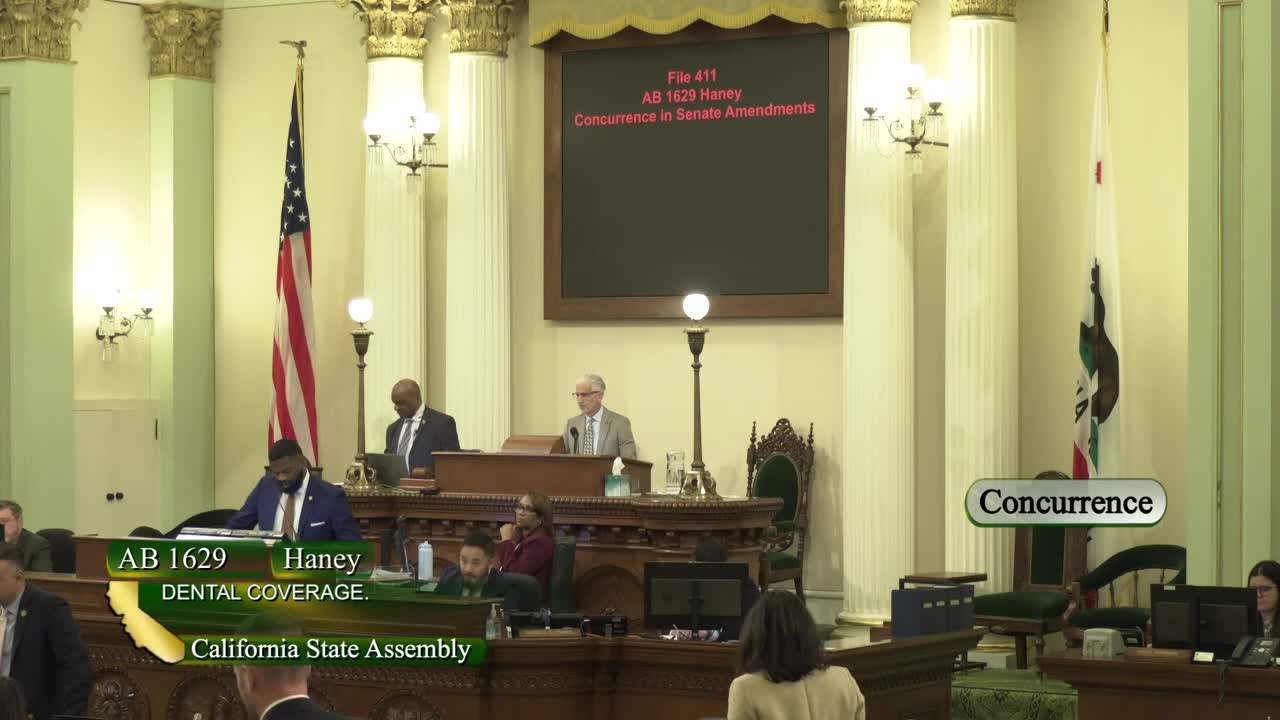
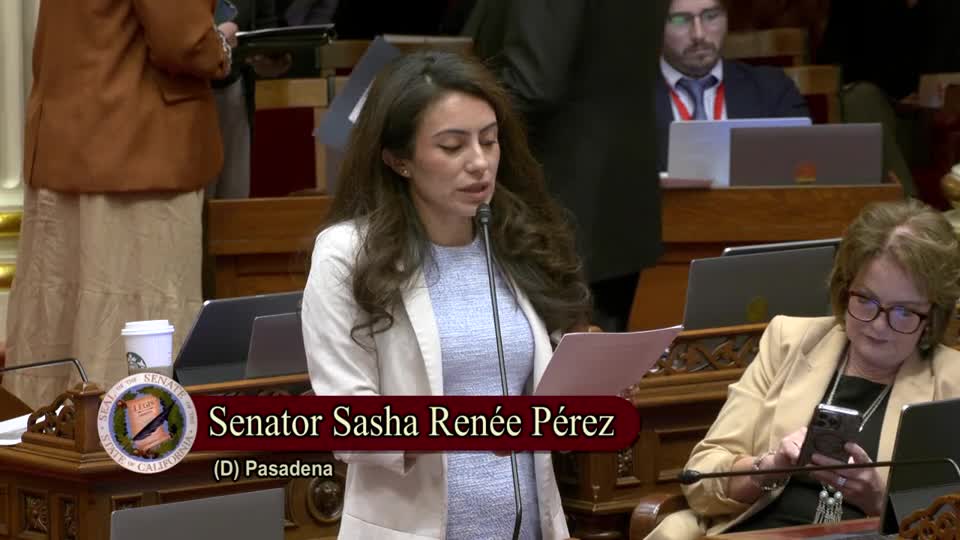
Bill Author
Bill Co-Author(s):