AB 2008: Local educational agencies: planning and reporting requirements: template: repealer.
- Session Year: 2025-2026
- House: Assembly
- Latest Version Date: 2026-09-18
Current Status:
Passed
(2026-09-18: Chaptered by Secretary of State - Chapter 283, Statutes of 2026.)
Introduced
In Committee
Awaiting First Chamber Vote
Passed First Chamber
In Committee
Awaiting Second Chamber Vote
Passed Second Chamber
Enacted
Existing law establishes the State Department of Education and assigns to the department numerous responsibilities relating to the governance of the public elementary and secondary schools in the state.
This bill would require the department, on or before October 1, 2027, to create and post to its internet website a standardized template, as specified, for use by school districts, county offices of education, and charter schools when completing programmatic or expenditure reports for competitive state grant programs, except as provided. In drafting the template, the bill would require the department to ensure that the template creates reporting efficiencies for local educational agencies and schools that receive state grants and to consult relevant stakeholders involved in local educational agency reporting, as specified. The bill would require the department, on or before October 1, 2027, to submit the template to the Legislature, as provided, and, commencing January 1, 2028, to issue the template to local educational agencies as part of the notice of award information and again 6 months before the final report due date, and to prepopulate certain local educational agency administrative information.
Existing law requires a bill that requires a state agency to submit a report on any subject to either house of the Legislature, a committee or office of either house of the Legislature, or the Legislative Counsel Bureau, to include a provision that repeals the reporting requirement, or makes the requirement inoperative, no later than a date 4 years following the operative date of the bill or 4 years after the due date of any report required every 4 or more years. Existing law requires the Legislative Counsel, in drafting a bill or amendment that includes a reporting requirement as described above, to include a provision repealing the reporting requirement or making the requirement inoperative, as specified, unless directed to do otherwise.
This bill, beginning January 1, 2027, would (1) require a bill that would require a school district, county office of education, or charter school to complete a plan or report to include a provision that repeals the planning or reporting requirement, or makes the requirement inoperative, no later than 4 years following the bills operative date if the planning or reporting requirement has an undefined end date or 4 years after the final due date of any plan or report, and (2) require the Legislative Counsel to include a provision in that bill repealing the planning or reporting requirement or making the requirement inoperative, as specified, unless directed to do otherwise. The bill would require, beginning January 1, 2028, the Legislative Counsel, in drafting a bill or amendment that imposes a new programmatic or expenditure reporting requirement for competitive state grant programs on a local educational agency, except as provided, to include a provision that requires the final programmatic or expenditure report be submitted using the template created by the department, as described above, unless directed to do otherwise.
Existing law establishes the State Department of Education under the administration of the Superintendent of Public Instruction and assigns to the department numerous responsibilities relating to the governance of the public elementary and secondary schools in the state.
This bill would require the department, on or before October 1, 2027, to create and post to its internet website a standardized template, as specified, for use by school districts, county offices of education, and charter schools when completing programmatic or expenditure reports for competitive state grant programs, except as provided. In drafting the template, the bill would require the department to ensure that the template creates reporting efficiencies for local educational agencies and schools that receive state grants and to consult relevant stakeholders involved in local educational agency reporting, as specified. The bill would require the department, on or before October 1, 2027, to submit the template to the Legislature, as provided, and, commencing January 1, 2028, to issue the template to local educational agencies as part of the notice of award information, and again 6 months before the final report due date, and to prepopulate certain administrative information of those local educational agencies.
Existing law requires a bill that requires a state agency to submit a report on any subject to either house of the Legislature, a committee or office of either house of the Legislature, or the Legislative Counsel Bureau, to include a provision that repeals the reporting requirement, or makes the requirement inoperative, no later than a date 4 years following the operative date of the bill or 4 years after the due date of any report required every 4 or more years. Existing law requires the Legislative Counsel, in drafting a bill or amendment that includes a reporting requirement as described above, to include a provision repealing the reporting requirement or making the requirement inoperative, as specified, unless directed to do otherwise.
This bill would require, bill, beginning January 1, 2027, those same procedures for would (1) require a bill that would require a school district, county office of education, or charter school to complete a plan or report with an undefined end date. to include a provision that repeals the planning or reporting requirement, or makes the requirement inoperative, no later than 4 years following the bills operative date if the planning or reporting requirement has an undefined end date, or 4 years after the final due date of any plan or report and (2) require the Legislative Counsel to include a provision in that bill repealing the planning or reporting requirement or making the requirement inoperative, as specified, unless directed to do otherwise. The bill would require, beginning January 1, 2028, the Legislative Counsel, in drafting a bill or amendment that imposes a new programmatic or expenditure reporting requirement for competitive state grant programs on a local educational agency, except as provided, to include a provision that requires the final programmatic or expenditure report be submitted using the template created by the department, as described above, unless directed to do otherwise.
Existing law establishes the State Department of Education under the administration of the Superintendent of Public Instruction and assigns to the department numerous responsibilities relating to the governance of the public elementary and secondary schools in the state.
This bill would require the department, on or before October 1, 2027, to release create and post to its internet website a standardized template template, as specified, for use by school districts, county offices of education, and charter schools when completing programmatic or expenditure reports. reports for competitive state grant programs, except as provided. In drafting the template, the bill would require the department to ensure that the template creates reporting efficiencies for local educational agencies and schools that receive state grants and to consult relevant stakeholders involved in local educational agency reporting, as specified. The bill would also require the department, on or before October 1, 2027, to submit the template to the Legislature, as provided. provided, and, commencing January 1, 2028, to issue the template to local educational agencies as part of the notice of award information, and again 6 months before the final report due date, and to prepopulate certain administrative information of those local educational agencies.
Existing law requires a bill that requires a state agency to submit a report on any subject to either house of the Legislature, a committee or office of either house of the Legislature, or the Legislative Counsel Bureau, to include a provision that repeals the reporting requirement, or makes the requirement inoperative, no later than a date 4 years following the operative date of the bill or 4 years after the due date of any report required every 4 or more years. Existing law requires the Legislative Counsel, in drafting a bill or amendment that includes a reporting requirement as described above, to include a provision repealing the reporting requirement or making the requirement inoperative, as specified, unless directed to do otherwise.
This bill would require, beginning January 1, 2027, those same procedures for a bill that would require a school district, county office of education, or charter school to complete a plan or report with an undefined end date. The bill would require, beginning January 1, 2028, the Legislative Counsel, in drafting a bill or amendment that imposes a new programmatic or expenditure reporting requirement for competitive state grant programs on a local educational agency, except as provided, to include a provision that requires the final programmatic or expenditure report be submitted using the template created by the department, as described above. above, unless directed to do otherwise.
Existing law establishes the State Department of Education under the administration of the Superintendent of Public Instruction and assigns to the department numerous responsibilities relating to the governance of the public elementary and secondary schools in the state.
This bill would require the department, on or before October 1, 2027, to release a standardized template for use by school districts, county offices of education, and charter schools when completing programmatic or expenditure reports. In drafting the template, the bill would require the department to consult relevant stakeholders involved in local educational agency reporting, as specified. The bill would also require the department, on or before October 1, 2027, to submit the template to the Legislature, as provided.
Existing law requires a bill that requires a state agency to submit a report on any subject to either house of the Legislature, a committee or office of either house of the Legislature, or the Legislative Counsel Bureau, to include a provision that repeals the reporting requirement, or makes the requirement inoperative, no later than a date 4 years following the operative date of the bill or 4 years after the due date of any report required every 4 or more years. Existing law requires the Legislative Counsel, in drafting a bill or amendment that includes a reporting requirement as described above, to include a provision repealing the reporting requirement or making the requirement inoperative, as specified, unless directed to do otherwise.
This bill would require require, beginning January 1, 2027, those same procedures for a bill that would require a school district, county office of education, or charter school to complete a plan or report with an undefined end date. The bill would provide that those procedures do not apply to routine reporting requirements, including, but not limited to, reporting requirements for the local control funding formula or the California Longitudinal Pupil Achievement Data System. require, beginning January 1, 2028, the Legislative Counsel, in drafting a bill or amendment that imposes a programmatic or expenditure reporting requirement on a local educational agency, as provided, to include a provision that requires the final programmatic or expenditure report be submitted using the template created by the department, as described above.
Existing law requires a bill that requires a state agency to submit a report on any subject to either house of the Legislature, a committee or office of either house of the Legislature, or the Legislative Counsel Bureau, to include a provision that repeals the reporting requirement, or makes the requirement inoperative, no later than a date 4 years following the operative date of the bill or 4 years after the due date of any report required every 4 or more years. Existing law requires the Legislative Counsel, in drafting a bill or amendment that includes a reporting requirement as described above, to include a provision repealing the reporting requirement or making the requirement inoperative, as specified, unless directed to do otherwise.
This bill would require those same procedures for a bill that would require a school district, county office of education, or charter school to complete a plan or report with an undefined end date. The bill would provide that those procedures do not apply to routine reporting requirements, including, but not limited to, reporting requirements for the local control funding formula or the California Longitudinal Pupil Achievement Data System.
(a)On or before October 1, 2027, the department shall create and post to its internet website a standardized template for use by local educational agencies when completing programmatic or expenditure reports for competitive state grant programs, except for grants for technical assistance providers.
(b)(1)In drafting the template pursuant to subdivision (a), the department shall ensure that the template creates reporting efficiencies for local educational agencies and schools that receive state grants. The department shall consult relevant stakeholders involved in local educational agency reporting, including, but not limited to, local educational agency administrators, governing board or body members, and school business officials from small-, medium-, and large-sized local educational agencies, and the department shall ensure stakeholders represent the demographic and geographic diversity of the state.
(2)The consultation shall include solicitation of initial input about the creation of the standardized grant reporting template and opportunities for input on drafts of the template before it is finalized.
(c)The template drafted pursuant to subdivision (a) shall include the minimum information necessary to ascertain all of the following:
(1)Administrative information, which shall include, but not be limited to, the local educational agency and their contact information, the grant number, and reporting period.
(2)Programmatic outcomes, which shall include, but not be limited to, the initial goals of the program, implementation status, key performance indicators, key successes, key challenges, and how the program funding has served unduplicated pupils, as applicable.
(3)Expenditure outcomes, which shall include, but not be limited to, the initial award amount, the amount spent in the reporting period, and itemized expenditures, including their approved budget, actual expenditures, and variance.
(4)The anticipated future of the funded activity. This may include, as applicable, whether the services provided by the grant will be maintained after the funding period ends, including any equipment or assets purchased with the funds.
(5)Additional information if required by statute.
(d)The department shall identify which information is already reported to the department by local educational agencies in order to avoid reporting duplication. The department shall ensure that grant reporting requirements do not exceed statutory or regulatory requirements.
(e)(1)On or before October 1, 2027, the department shall submit the template and a report to the Legislature, consistent with Section 9795 of the Government Code, that (A) details the stakeholder engagement that occurred when designing the template, (B) provides recommendations for how the template is to be used going forward, and (C) provides any additional information.
(2)The requirement for submitting the report under this subdivision shall be inoperative on October 1, 2031, pursuant to Section 10231.5 of the Government Code.
(f)Commencing January 1, 2028, the department shall issue the final programmatic or expenditure report template to local educational agencies as part of the notice of award information, and again six months before the final report due date. The department shall prepopulate the relevant administrative information described in paragraph (1) of subdivision (c).
(g)For purposes of this section, local educational agency means a school district, county office of education, or charter school.
SEC. 2.Section 10231.6 is added to the Government Code, to read:10231.6.(a)Beginning January 1, 2028, a bill that, as introduced or amended in either house of the Legislature, would require a local educational agency to complete a new programmatic or expenditure report for competitive state grant programs, except for grants for technical assistance providers, shall include a provision that requires the final programmatic or expenditure report to be submitted using the template described in Section 33318.6 of the Education Code.
(b)Beginning January 1, 2028, the Legislative Counsel, in drafting a bill for introduction or an amendment to a bill that would impose a programmatic or expenditure reporting requirement on a local educational agency described in subdivision (a), shall include a provision that requires the final programmatic or expenditure report to be submitted using the template described in Section 33318.6 of the Education Code, unless the person requesting the bill or amendment directs the Legislative Counsel to do otherwise.
(c)For purposes of this section, local educational agency means a school district, county office of education, or charter school.
SEC. 3.Section 10231.7 is added to the Government Code, to read:10231.7.(a)(1)Beginning January 1, 2027, a bill that, as introduced or amended in either house of the Legislature, would require a local educational agency to complete a plan or report shall include a provision that repeals the planning or reporting requirement, or makes the requirement inoperative, no later than four years following the date upon which the bill becomes operative if the planning or reporting requirement has an undefined end date, or four years after the final due date of any plan or report.
(2)For purposes of this section, local educational agency means a school district, county office of education, or charter school.
(b)Beginning January 1, 2027, the Legislative Counsel, in drafting a bill for introduction or an amendment to a bill that would impose a planning or reporting requirement described in subdivision (a), shall include a provision that repeals the requirement, or makes the planning or reporting requirement inoperative, consistent with the requirements of subdivision (a), unless the person requesting the bill or amendment directs the Legislative Counsel to do otherwise.
(a)On or before October 1, 2027, the department shall create and post to its internet website a standardized template for use by local educational agencies when completing programmatic or expenditure reports for competitive state grant programs, except for grants for technical assistance providers.
(b)(1)In drafting the template pursuant to subdivision (a), the department shall ensure that the template creates reporting efficiencies for local educational agencies and schools that receive state grants. The department shall consult relevant stakeholders involved in local educational agency reporting, including, but not limited to, local educational agency administrators, governing board or body members, and school business officials from small-, medium-, and large-sized local educational agencies, and the department shall ensure stakeholders represent the demographic and geographic diversity of the state.
(2)The consultation shall include solicitation of initial input about the creation of the standardized grant reporting template and opportunities for input on drafts of the template before it is finalized.
(c)The template drafted pursuant to subdivision (a) shall include the minimum information necessary to ascertain all of the following:
(1)Administrative information, which shall include, but not be limited to, the local educational agency and their contact information, the grant number, and reporting period.
(2)Programmatic outcomes, which shall include, but not be limited to, the initial goals of the program, implementation status, key performance indicators, key successes, key challenges, and how the program funding has served unduplicated pupils, as applicable.
(3)Expenditure outcomes, which shall include, but not be limited to, the initial award amount, the amount spent in the reporting period, and itemized expenditures, including their approved budget, actual expenditures, and variance.
(4)The anticipated future of the funded activity. This may include, as applicable, whether the services provided by the grant will be maintained after the funding period ends, including any equipment or assets purchased with the funds.
(5)Additional information if required by statute.
(d)The department shall identify which information is already reported to the department by local educational agencies in order to avoid reporting duplication. The department shall ensure that grant reporting requirements do not exceed statutory or regulatory requirements.
(e)(1)On or before October 1, 2027, the department shall submit the template and a report to the Legislature, consistent with Section 9795 of the Government Code, that (A) details the stakeholder engagement that occurred when designing the template, (B) provides recommendations for how the template is to be used going forward, and (C) provides any additional information.
(2)The requirement for submitting the report under this subdivision shall be inoperative on October 1, 2031, pursuant to Section 10231.5 of the Government Code.
(f)Commencing January 1, 2028, the department shall issue the final programmatic or expenditure report template to local educational agencies as part of the notice of award information, and again six months before the final report due date. The department shall prepopulate the relevant administrative information described in paragraph (1) of subdivision (c).
(g)For purposes of this section, local educational agency means a school district, county office of education, or charter school.
SEC. 2.Section 10231.6 is added to the Government Code, to read:10231.6.(a)Beginning January 1, 2028, a bill that, as introduced or amended in either house of the Legislature, would require a local educational agency to complete a new programmatic or expenditure report for competitive state grant programs, except for grants for technical assistance providers, shall include a provision that requires the final programmatic or expenditure report to be submitted using the template described in Section 33318.6 of the Education Code.
(b)Beginning January 1, 2028, the Legislative Counsel, in drafting a bill for introduction or an amendment to a bill that would impose a programmatic or expenditure reporting requirement on a local educational agency described in subdivision (a), shall include a provision that requires the final programmatic or expenditure report to be submitted using the template described in Section 33318.6 of the Education Code, unless the person requesting the bill or amendment directs the Legislative Counsel to do otherwise.
(c)For purposes of this section, local educational agency means a school district, county office of education, or charter school.
SEC. 3.Section 10231.7 is added to the Government Code, to read:10231.7.(a)(1)Beginning January 1, 2027, a bill that, as introduced or amended in either house of the Legislature, would require a local educational agency to complete a plan or report with an undefined end date shall include a provision that repeals the planning or reporting requirement, or makes the requirement inoperative, no later than a date four years following the date upon which the bill, as enacted, bill becomes operative if the planning or reporting requirement has an undefined end date, or four years after the final due date of any plan or report required every four or more years. report.
(2)For purposes of this section, local educational agency means a school district, county office of education, or charter school.
(b)Beginning January 1, 2027, the Legislative Counsel, in drafting a bill for introduction or an amendment to a bill that would impose a planning or reporting requirement described in subdivision (a), shall include a provision that repeals the requirement, or makes the planning or reporting requirement inoperative, four years after the date on which the requirement becomes operative, consistent with the requirements of subdivision (a), unless the person requesting the bill or amendment directs the Legislative Counsel to do otherwise.
(a)On or before October 1, 2027, the department shall release create and post to its internet website a standardized template for use by local educational agencies when completing programmatic or expenditure reports. reports for competitive state grant programs, except for grants for technical assistance providers.
(b)(1)In drafting the template pursuant to subdivision (a), the department shall ensure that the template creates reporting efficiencies for local educational agencies and schools that receive state grants. The department shall consult relevant stakeholders involved in local educational agency reporting, including, but not limited to, local educational agency administrators, governing board or body members, and school business officials from small-, medium-, and large-sized local educational agencies, and the department shall ensure stakeholders represent the demographic and geographic diversity of the state.
(2)The consultation shall include solicitation of initial input about the creation of the standardized grant reporting template and opportunities for input on drafts of the template before it is finalized.
(c)The template drafted pursuant to subdivision (a) shall include the minimum information necessary to ascertain all of the following:
(1)Administrative information, which shall include, but not be limited to, the local educational agency and their contact information, the grant number, and reporting period.
(2)Programmatic outcomes, which shall include, but not be limited to, the initial goals of the program, implementation status, key performance indicators, key successes, key challenges, and how the program funding has served unduplicated pupils, as applicable.
(3)Expenditure outcomes, which shall include, but not be limited to, the initial award amount, the amount spent in the reporting period, and itemized expenditures, including their approved budget, actual expenditures, and variance.
(4)Sustainability plans, which shall include, but not be limited to, how The anticipated future of the funded activity. This may include, as applicable, whether the services provided by the grant will be maintained after the funding period ends, including any equipment or assets purchased with the funds.
(5)Additional certifications deemed relevant, which shall include, but not be limited to, maintenance of effort statements, public hearing dates, and governing board or body adoption status. information if required by statute.
(d)The department shall identify which information is already reported to the department by local educational agencies in order to avoid reporting duplication. The department shall ensure that grant reporting requirements do not exceed statutory or regulatory requirements.
(e)(1)On or before October 1, 2027, the department shall submit the template and a report to the Legislature, consistent with Section 9795 of the Government Code, that (A) details the stakeholder engagement that occurred when designing the template, (B) provides recommendations for how the template is to be used going forward, and (C) provides any additional information.
(2)The department shall post the report and template on their internet website.(3)(2)The requirement for submitting the report under this subdivision shall be inoperative on October 1, 2031, pursuant to Section 10231.5 of the Government Code.
(f)Commencing January 1, 2028, the department shall issue the final programmatic or expenditure report template to local educational agencies as part of the notice of award information, and again six months before the final report due date. The department shall prepopulate the relevant administrative information described in paragraph (1) of subdivision (c).
(f)(g)For purposes of this section, local educational agency means a school district, county office of education, or charter school.
SEC. 2.Section 10231.6 is added to the Government Code, to read:10231.6.(a)Beginning January 1, 2028, a bill that, as introduced or amended in either house of the Legislature, would require a local educational agency to complete a new programmatic or expenditure report for competitive state grant programs, except for grants for technical assistance providers, shall include a provision that requires the final programmatic or expenditure report to be submitted using the template described in Section 33318.6 of the Education Code.
(b)Beginning January 1, 2028, the Legislative Counsel, in drafting a bill for introduction or an amendment to a bill that would impose a programmatic or expenditure reporting requirement on a local educational agency, agency described in subdivision (a), shall include a provision that requires the final programmatic or expenditure report to be submitted using the template described in Section 33318.6 of the Education Code, unless the person requesting the bill or amendment directs the Legislative Counsel to do otherwise.
(c)For purposes of this section, local educational agency means a school district, county office of education, or charter school.
SEC. 3.Section 10231.7 is added to the Government Code, to read:10231.7.(a)(1)Beginning January 1, 2027, a bill that, as introduced or amended in either house of the Legislature, would require a local educational agency to complete a plan or report with an undefined end date shall include a provision that repeals the planning or reporting requirement, or makes the requirement inoperative, no later than a date four years following the date upon which the bill, as enacted, becomes operative or four years after the due date of any plan or report required every four or more years.
(2)For purposes of this section, local educational agency means a school district, county office of education, or charter school.
(b)Beginning January 1, 2027, the Legislative Counsel, in drafting a bill for introduction or an amendment to a bill that would impose a planning or reporting requirement described in subdivision (a), shall include a provision that repeals the requirement, or makes the planning or reporting requirement inoperative, four years after the date on which the requirement becomes operative, unless the person requesting the bill or amendment directs the Legislative Counsel to do otherwise.
(a)On or before October 1, 2027, the department shall release a standardized template for use by local educational agencies when completing programmatic or expenditure reports.
(b)In drafting the template pursuant to subdivision (a), the department shall consult relevant stakeholders involved in local educational agency reporting, including, but not limited to, local educational agency administrators, governing board or body members, and school business officials from small-, medium-, and large-sized local educational agencies, and the department shall ensure stakeholders represent the demographic and geographic diversity of the state.
(c)The template drafted pursuant to subdivision (a) shall include the minimum information necessary to ascertain all of the following:
(1)Administrative information, which shall include, but not be limited to, the local educational agency and their contact information, the grant number, and reporting period.
(2)Programmatic outcomes, which shall include, but not be limited to, the initial goals of the program, implementation status, key performance indicators, key successes, key challenges, and how the program funding has served unduplicated pupils, as applicable.
(3)Expenditure outcomes, which shall include, but not be limited to, the initial award amount, the amount spent in the reporting period, and itemized expenditures, including their approved budget, actual expenditures, and variance.
(4)Sustainability plans, which shall include, but not be limited to, how the services provided by the grant will be maintained after the funding period ends, including any equipment or assets purchased with the funds.
(5)Additional certifications deemed relevant, which shall include, but not be limited to, maintenance of effort statements, public hearing dates, and governing board or body adoption status.
(d)The department shall identify which information is already reported to the department by local educational agencies in order to avoid reporting duplication.
(e)(1)On or before October 1, 2027, the department shall submit the template and a report to the Legislature, consistent with Section 9795 of the Government Code, that (A) details the stakeholder engagement that occurred when designing the template, (B) provides recommendations for how the template is to be used going forward, and (C) provides any additional information.
(2)The department shall post the report and template on their internet website.
(3)The requirement for submitting the report under this subdivision shall be inoperative on October 1, 2031, pursuant to Section 10231.5 of the Government Code.
(f)For purposes of this section, local educational agency means a school district, county office of education, or charter school.
SEC. 2.Section 10231.6 is added to the Government Code, to read:10231.6.(a)Beginning January 1, 2028, a bill that, as introduced or amended in either house of the Legislature, would require a local educational agency to complete a programmatic or expenditure report shall include a provision that requires the final programmatic or expenditure report to be submitted using the template described in Section 33318.6 of the Education Code.
(b)Beginning January 1, 2028, the Legislative Counsel, in drafting a bill for introduction or an amendment to a bill that would impose a programmatic or expenditure reporting requirement on a local educational agency, shall include a provision that requires the final programmatic or expenditure report to be submitted using the template described in Section 33318.6 of the Education Code, unless the person requesting the bill or amendment directs the Legislative Counsel to do otherwise.
(c)For purposes of this section, local educational agency means a school district, county office of education, or charter school.
SECTION 1.SEC. 3.Section 10231.7 is added to the Government Code, to read:10231.7.(a)(1)A Beginning January 1, 2027, a bill that, as introduced or amended in either house of the Legislature, would require a local educational agency to complete a plan or report with an undefined end date shall include a provision that repeals the planning or reporting requirement, or makes the requirement inoperative, no later than a date four years following the date upon which the bill, as enacted, becomes operative or four years after the due date of any plan or report required every four or more years.
(2)This section does not apply to routine reporting requirements, including, but not limited to, reporting requirements for purposes of the local control funding formula pursuant to Chapter 12.5 (commencing with Section 2574) of Part 2 of Division 1 of Title 1 of the Education Code or Article 2 (commencing with Section 42238) of Chapter 7 of Part 24 of Division 3 of Title 2 of the Education Code, as applicable, or the California Longitudinal Pupil Achievement Data System pursuant to Chapter 10 (commencing with Section 60900) of Part 33 of Division 4 of Title 2 of the Education Code. (3)(2)For purposes of this section, local educational agency means a school district, county office of education, or charter school.
(b)The Beginning January 1, 2027, the Legislative Counsel, in drafting a bill for introduction or an amendment to a bill that would impose a planning or reporting requirement described in subdivision (a), shall include a provision that repeals the requirement, or makes the planning or reporting requirement inoperative, four years after the date on which the requirement becomes operative, unless the person requesting the bill or amendment directs the Legislative Counsel to do otherwise.
(a)(1)A bill that, as introduced or amended in either house of the Legislature, would require a local educational agency to complete a plan or report with an undefined end date shall include a provision that repeals the reporting requirement, or makes the requirement inoperative, no later than a date four years following the date upon which the bill, as enacted, becomes operative or four years after the due date of any report required every four or more years.
(2)This section does not apply to routine reporting requirements, including, but not limited to, reporting requirements for purposes of the local control funding formula pursuant to Chapter 12.5 (commencing with Section 2574) of Part 2 of Division 1 of Title 1 of the Education Code or Article 2 (commencing with Section 42238) of Chapter 7 of Part 24 of Division 3 of Title 2 of the Education Code, as applicable, or the California Longitudinal Pupil Achievement Data System pursuant to Chapter 10 (commencing with Section 60900) of Part 33 of Division 4 of Title 2 of the Education Code.
(3)For purposes of this section, local educational agency means a school district, county office of education, or charter school.
(b)The Legislative Counsel, in drafting a bill for introduction or an amendment to a bill that would impose a reporting requirement described in subdivision (a), shall include a provision that repeals the requirement, or makes the reporting requirement inoperative, four years after the date on which the requirement becomes operative, unless the person requesting the bill or amendment directs the Legislative Counsel to do otherwise.
|
Date
|
Status
|
|---|---|
| Sep 18, 2026 | Chaptered by Secretary of State - Chapter 283, Statutes of 2026. |
| Sep 18, 2026 | Approved by the Governor. |
| Aug 31, 2026 | Enrolled and presented to the Governor at 4 p.m. |
| Aug 25, 2026 | Senate amendments concurred in. To Engrossing and Enrolling. (Ayes 78. Noes 0. Page 6450.). |
| Aug 25, 2026 | Senate amendments concurred in. To Engrossing and Enrolling. (Ayes 78. Noes 0.). |
| Aug 20, 2026 | In Assembly. Concurrence in Senate amendments pending. |
| Aug 20, 2026 | Read third time. Passed. Ordered to the Assembly. (Ayes 39. Noes 0. Page 5590.). |
| Aug 20, 2026 | Read third time. Passed. Ordered to the Assembly. (Ayes 39. Noes 0.). |
| Aug 18, 2026 | Ordered to special consent calendar. |
| Aug 13, 2026 | Read second time. Ordered to third reading. |
| Aug 13, 2026 | From committee: Do pass. (Ayes 7. Noes 0.) (August 13). |
| Aug 3, 2026 | In committee: Referred to APPR. suspense file. |
| Jun 18, 2026 | Read second time and amended. Re-referred to Com. on APPR. |
| Jun 17, 2026 | From committee: Amend, and do pass as amended and re-refer to Com. on APPR. (Ayes 7. Noes 0.) (June 17). |
| Jun 8, 2026 | From committee chair, with author's amendments: Amend, and re-refer to committee. Read second time, amended, and re-referred to Com. on ED. |
| Jun 3, 2026 | Referred to Com. on ED. |
| May 21, 2026 | In Senate. Read first time. To Com. on RLS. for assignment. |
| May 21, 2026 | Read third time. Passed. Ordered to the Senate. (Ayes 72. Noes 0. Page 5216.) |
| May 21, 2026 | Read third time. Passed. Ordered to the Senate. (Ayes 72. Noes 0.) |
| May 18, 2026 | Read second time. Ordered to third reading. |
| May 14, 2026 | From committee: Do pass. (Ayes 15. Noes 0.) (May 14). |
| May 6, 2026 | In committee: Set, first hearing. Referred to APPR. suspense file. |
| Apr 28, 2026 | Re-referred to Com. on APPR. |
| Apr 27, 2026 | Read second time and amended. |
| Apr 23, 2026 | From committee: Amend, and do pass as amended and re-refer to Com. on APPR. with recommendation: To Consent Calendar. (Ayes 9. Noes 0.) (April 22). |
| Mar 2, 2026 | Referred to Com. on ED. |
| Feb 18, 2026 | From printer. May be heard in committee March 20. |
| Feb 17, 2026 | Read first time. To print. |
|
Date
|
Description
|
Location
|
Votes
|
|
|---|---|---|---|---|
| Aug 25, 2026 | AB 2008 Patel Concurrence in Senate Amendments | Assembly Floor |
Passed |
|
| Aug 20, 2026 | Special Consent AB2008 Patel By Archuleta | Senate Floor |
Passed |
|
| Aug 13, 2026 | Do pass | Senate Standing Committee on Appropriations |
Passed |
|
| Aug 3, 2026 | Placed on suspense file | Senate Standing Committee on Appropriations |
Passed |
|
| Jun 17, 2026 | Do pass as amended, but first amend, and re-refer to the Committee on [Appropriations] | Senate Standing Committee on Education |
Passed |
|
| May 21, 2026 | AB 2008 Patel Assembly Third Reading | Assembly Floor |
Passed |
|
| May 14, 2026 | Do pass. | Assembly Standing Committee on Appropriations |
Passed |
|
| Apr 22, 2026 | Do pass as amended, and be re-referred to the Committee on [Appropriations] with recommendation: To Consent Calendar | Assembly Standing Committee on Education |
Passed |
This list shows positions taken on this bill by organizations on the date displayed, which is linked to the original source.
Positions by individuals are not included.
|
Organization
|
Position
|
Date
|
|---|---|---|
| Association of School Administrators | ** Support | |
| Bellevue Union School District | ** Support | |
| Brentwood Union School District | ** Support | |
| California Association Of School Business Officials | ** Support | |
| California Association Of Suburban School Districts | ** Support | |
| California Charter Schools Association | ** Support | |
| California Federation Of Teachers | ** Support | |
| California It In Education | ** Support | |
| California School Boards Association | ** Support | |
| Campbell Union School District | ** Support | |
| Centralia Elementary School District | ** Support | |
| Denair Unified School District | ** Support | |
| Emery Unified School District | ** Support | |
| Enterprise Elementary School District | ** Support | |
| Escalon Unified School District | ** Support | |
| Fresno County Office Of Education | ** Support | |
| Fresno County Superintendent of Schools | ** Support | |
| Fresno Unified School District | ** Support | |
| Galt Joint Union High School District | ** Support | |
| Garden Grove Unified School District | ** Support | |
| Happy Valley Union Elementary School District | ** Support | |
| Kern County Superintendent of Schools Office | ** Support | |
| Keyes Union Elementary School District | ** Support | |
| LA Honda-Pescadero Unified School District | ** Support | |
| Legislative Action Committee - Santa Clara County School Boards Association | ** Support | |
| Los Angeles Unified School District | ** Support | |
| Modesto City Schools | ** Support | |
| Mother Lode Union School District | ** Support | |
| Nuestro Elementary School District | ** Support | |
| Oxnard Union High School District | ** Support | |
| Riverside County Superintendent of Schools | ** Support | |
| San Bernardino County District Advocates for Better Schools | ** Support | |
| San Diego County Office of Education | ** Support | |
| San Diego Unified School District | ** Support | |
| San Francisco Unified School District | ** Support | |
| Santa Clara County Office Of Education | ** Support | |
| School Employers Association Of California | ** Support | |
| Small School Districts Association | ** Support | |
| Travis Unified School District | ** Support | |
| Tulare Joint Union High School District | ** Support | |
| Vista Del Mar Union School District | ** Support | |
| Waterford Unified School District | ** Support |
CONCURRENCE IN SENATE AMENDMENTS
CSA1 Bill Id:AB 2008
Author:(Patel)
As Amended Ver:June 18, 2026
Majority vote
SUMMARY
Requires a future bill that would require a local education agency (LEA) to complete a plan or report with an unspecified date to include a provision that repeals the reporting requirement four years after it goes into effect, unless the author directs otherwise. Requires the California Department of Education (CDE) to develop a standardized template for use by LEAs when completing programmatic or expenditure competitive state grant reports by October 1, 2027.
Senate Amendments
- Clarify that the standardized report template created by CDE shall specifically apply to programmatic or expenditure reports for competitive state grant programs, except for grants for technical assistance providers.
- Requires the CDE to ensure the template creates efficiencies for LEAs. Requires the CDE to consult relevant stakeholders when creating the template, including soliciting initial input and providing opportunities to provide input on drafts before the template is finalized.
- Require the template to solicit information on the anticipated future of the funded activity, rather than a sustainability plan.
- Require the template to solicit additional information if required by statute, rather than certifications deemed necessary.
- Require the CDE, beginning January 1, 2028, to issue the final report template to LEAs as part of the notice of award information, and again six months before the final report due date. Require the CDE to prepopulate the template with the relevant administrative information.
- Clarify that a bill that would require an LEA to complete a plan or report shall include a provision repealing that requirement no later than four years following enactment if the bill has an undefined end date, or four years after the final specified due date of any plan or report.
COMMENTS
Multiple recent reports have commented on LEA's administrative burden from reporting requirements. This bill attempts to streamline and create structures that help reduce administrative burden for LEAs from a myriad of reporting requirements. In recent years, reports have been published that speak to the reporting burden felt by LEAs and how that takes away from their core educational mission.
- SB 1315 (Archuleta, Chapter 468, Statutes of 2024) required CDE, by March 1, 2025, to provide a report on the number and types of reports that LEAs are required to annually submit, and for that report to include the purpose of each report and recommendations for which reports can be consolidated, eliminated, or truncated. This legislation was sponsored by the California School Boards Association (CSBA) and the California Association of School Business Officials. In CDE's report, they stated the following: "While the CDE recognizes the important role data plays in measuring outcomes, fostering transparency, and supporting accountability; the CDE further recognizes the frustration educators and LEA administrators experience when data collection efforts impact their ability to serve students, especially if those data collections fail to render information that clearly connects to improved student outcomes."
- Shortly after the Governor signed SB 1315, CSBA published a report in October 2024 called "Drowning in Documentation: Toward More Effective and Manageable Reporting for California Districts". The report described the volume and complexity of reporting requirements for LEAs and how it's often underappreciated how a single new reporting requirement can generate thousands of hours of additional work annually across the state. The report also focused on how the myriad of reporting requirements can be especially administratively burdensome for smaller districts with limited staff capacity.
- The Policy Analysis for California Education (PACE) released a policy brief in May 2026 called "California's Balance Between State and Local Control" that stated "administrative burden is pervasive across the system, though its value varies across activities. … Some compliance activities support core governance goals such as equity, civil rights, accountability, and fiscal stewardship. Others are experienced as duplicative, low-value, or disconnected from instructional improvement."
LEA reporting processes are currently fragmented. A full account of the number and types of reports that LEAs must complete each year has been difficult to produce, in part because there is not a single submission platform that processes all reports. A 2025 report by the CDE identified 59 examples of data they collect, which schools report across 39 different submission portals. This does not include federal requirements. The required plans, applications, and reports LEAs submit to the state fall into some of the following categories:
A report by Fresno County Office of Education (COE) identified over 204 reporting requirements, which must be submitted through 36 different collection systems to 17 divisions of the CDE. They report that individual school administrators spend 30% of their time each week on reporting requirements. The 2025/2026 Master Calendar created by Fresno County Superintendent of Schools includes a non-exhaustive list of 28 reports that required data submissions that year.
The utility of a standardized reporting template. In its 2025 report on reports, the CDE noted that there are currently at least 39 distinct data reporting systems that LEAs use to complete required reports. Furthermore, the 2024 CSBA analysis highlights that LEA reporting activities are often highly duplicative, as school administrators are asked to input the same information (e.g., school attendance rates) across multiple different reporting documents. The use of a standardized template could simplify and expedite the reporting process.
The auto-repeal of government reports. In 2010, the State enacted a measure to remove obsolete reports and require an automatic sunset provision be added to all future reports required of state agencies (AB 1585 (Committee on Accountability and Administrative Review), Chapter 7, Statutes of 2010). The Assembly Committee on Business and Professions analysis of the bill noted that, at the time, there were more than 1,200 obsolete reporting requirements in statute.
These obsolete reports were identified by examining the list of reports maintained by the Office of Legislative Counsel. As LEA reports are not submitted to the Office of Legislative Counsel, most LEA reporting requirements were not examined in this cleanup process. Similarly, the sunset provision that this statute applied to future reports from state agencies does not apply to LEAs. AB 2008 would remedy this, providing LEAs with the same protections against obsolete reports that are currently afforded to state agencies.
The bill includes opt-out provision due to not being able to compel a future Legislature. This bill requires a future bill that would require an LEA to complete a plan or report to also include a provision in the bill that repeals the planning or reporting requirement four years after the bill becomes operative or four years after the final due date of a plan or report, unless the person requesting the bill specifies otherwise. Existing law provides a nearly identical automatic repeal of reports for state agencies specifically. This bill and existing law both have an opt-out provision that states that the requirement does not apply if the person requesting the bill directs Legislative Counsel to do otherwise. This opt-out provision is inserted because this bill cannot compel a future Legislature to automatically repeal reporting requirements, but according to the author, this bill aims to prompt the question about when and why reporting requirements may be needed for their bills. Similarly, the bill includes opt-out provisions to use an alternative reporting process if the person requesting the bill directs Legislative Counsel not to reference the standardized reporting template.
According to the Author
California's schools administer an ever-growing number of state and federal programs that help them operate. However, each program requires schools to submit plans and reports on how the money is used. While individually these requirements appear reasonable, their cumulative impact is overwhelming. And while the State often adds new requirements, old ones are rarely removed, even when they become outdated.
AB 2008 would add an automatic sunset to school planning and reporting requirements, making them inoperable four years after they go into effect. This common-sense provision, which already exists for other state government agencies, will allow schools to submit a reasonable amount of data without being bogged down by perpetual requirements.
School administrators from across the state have been asking for 'permission to focus.' They want to spend their time on improving student success, not filling out endless reports. AB 2008 would give them that permission. By automatically sunsetting outdated reporting requirements, AB 2008 would give much-needed time back to school administrators and allow them to better serve our students.
Arguments in Support
According to the Association of School Administrators, "Our organizations strongly support transparency and responsible stewardship of public funds, and we recognize that planning and reporting are essential components of California's education accountability system. At the same time, local educational agencies (LEAs) face an opportunity cost in redirecting limited staff that would otherwise support teachers and students to complete planning and reporting requirements. One way the state can carefully balance these two interests is by considering the appropriate duration of any new reporting and planning requirements it chooses to enact."
Arguments in Opposition
None on file.
FISCAL COMMENTS
According to the Senate Appropriations Committee:
The CDE estimates General Fund costs of $224,000 each year and 1.3 positions to comply with the bill's requirements. The workload activities include the establishment of a standardized reporting template for LEAs, ongoing data governance management, consultation with stakeholders, and completion of the bill's reporting requirement.
VOTES:
ASM EDUCATION: 9-0-0
YES: Patel, Hoover, Alvarez, Bonta, Castillo, Garcia, Lowenthal, Pellerin, Zbur
ASM APPROPRIATIONS: 15-0-0
YES: Wicks, Hoover, Aguiar-Curry, Calderon, Caloza, Dixon, Fong, Mark González, Krell, Pacheco, Pellerin, Sharp-Collins, Solache, Ta, Tangipa
ASSEMBLY FLOOR: 72-0-8
YES: Addis, Aguiar-Curry, Ahrens, Alanis, Alvarez, Ávila Farías, Bains, Bauer-Kahan, Bennett, Berman, Boerner, Bonta, Bryan, Calderon, Caloza, Carrillo, Castillo, Connolly, Davies, DeMaio, Dixon, Elhawary, Ellis, Flora, Fong, Gabriel, Gallagher, Gipson, Jeff Gonzalez, Mark González, Hadwick, Haney, Harabedian, Hart, Irwin, Jackson, Johnson, Kalra, Krell, Lee, Lowenthal, Macedo, McKinnor, Muratsuchi, Nguyen, Ortega, Pacheco, Papan, Patel, Patterson, Pellerin, Petrie-Norris, Quirk-Silva, Ransom, Michelle Rodriguez, Rogers, Blanca Rubio, Sanchez, Schiavo, Schultz, Sharp-Collins, Solache, Soria, Stefani, Ta, Tangipa, Valencia, Wallis, Ward, Wicks, Zbur, Rivas
ABS, ABST OR NV: Arambula, Chen, Garcia, Hoover, Lackey, Ramos, Celeste Rodriguez, Wilson
SENATE FLOOR: 39-0-1
YES: Allen, Alvarado-Gil, Archuleta, Arreguín, Ashby, Becker, Blakespear, Cabaldon, Caballero, Cervantes, Choi, Cortese, Dahle, Durazo, Gonzalez, Grayson, Grove, Hurtado, Jones, Laird, Limón, McGuire, McNerney, Menjivar, Niello, Ochoa Bogh, Padilla, Pérez, Richardson, Rubio, Seyarto, Smallwood-Cuevas, Stern, Strickland, Umberg, Valladares, Wahab, Weber Pierson, Wiener
ABS, ABST OR NV: Reyes
UPDATED
VERSION: June 18, 2026
CONSULTANT: Sarah Cate Hawthorne / ED. / (916) 319-2087 FN: 0003822
SENATE RULES COMMITTEE Office of Senate Floor Analyses (916) 651-4171 | AB 2008 |
THIRD READING
Bill No: AB 2008
Author: Patel (D)
Amended: 6/18/26 in Senate
Vote: 21
SENATE EDUCATION COMMITTEE: 7-0, 6/17/26
AYES: Pérez, Ochoa Bogh, Cabaldon, Choi, Cortese, Gonzalez, Reyes
SENATE APPROPRIATIONS COMMITTEE: 7-0, 8/13/26
AYES: Cervantes, Seyarto, Cabaldon, Dahle, Grayson, Richardson, Wahab
ASSEMBLY FLOOR: 72-0, 5/21/26 - See last page for vote
SUBJECT: Local educational agencies: planning and reporting requirements: template: repealer
SOURCE: Association of California School Administrators
California Association of School Business Officials
California School Boards Association
Small School Districts Association
DIGEST:
This bill requires a future bill that would require a local educational agency (LEA) to complete: (1) a plan or report to include a provision in the bill that repeals the planning or reporting requirement four years after the bill becomes operative, or four years after the final due date of a plan or report, unless the person requesting the bill specifies otherwise, and (2) commencing January 1, 2028, a programmatic or expenditure report for specified competitive state grant programs to include a provision in the bill that requires the use of a specified standardized template, unless the person requesting the bill specifies otherwise.
ANALYSIS:
Existing law:
- Requires the California Department of Education (CDE), by March 1, 2025, to provide a report to the Superintendent of Public Instruction (SPI), the Governor, and the Legislature on the number and types of reports that LEAs are required to annually submit. (Education Code (EC) § 33318.2)
- Requires a bill that, as introduced or amended in either house of the Legislature, would require a state agency to submit a report to the Legislature to include a provision that repeals the reporting requirement, no later than a date four years following the date upon which the bill becomes operative, or four years after the due date of any report required every four or more years. (Government Code (GOV) § 10231.5)
- Requires the Legislative Counsel, in drafting a bill or amendment that would impose a reporting requirement, to include a provision that repeals the reporting requirement, four years after the date on which the requirement becomes operative, unless the person requesting the bill or amendment directs the Legislative Counsel to do otherwise. (GOV § 10231.5)
- Requires the governing board of a school district to adopt a Local Control and Accountability Plan (LCAP) and update it every three years on July 1 of that year. (EC § 52060)
- Establishes the California Longitudinal Pupil Achievement Data System known as CALPADS to:
- Provide school districts and the CDE access to data necessary to comply with federal reporting requirements.
- Provide a better means of evaluating educational progress and investments over time.
- Provide LEAs with the data needed to improve pupil achievement, including college and career readiness.
- Provide an efficient, flexible, and secure means of maintaining longitudinal statewide pupil level data between and among the state’s educational segments and operational tools, as defined.
- Facilitate the ability of the state to publicly report data.
- Ensure that any data access provided to researchers, as required, is provided, only to the extent that the data access is in compliance with the federal Family Educational Rights and Privacy Act of 1974. (EC § 60900)
This bill:
- Requires CDE, by October 1, 2027, to create and post to its website a standardized template for use by LEAs when completing programmatic or expenditure reports for competitive state grant programs, except for grants for technical assistance providers.
- Requires CDE, in drafting the standardized template, to ensure that the template creates reporting efficiencies for LEAs and schools that receive state grants.
- Requires CDE to consult relevant stakeholders involved in LEA reporting, to ensure stakeholders represent the demographic and geographic diversity of the state, and to include solicitation of initial input about the creation of the template and opportunities for input on template drafts before it is finalized.
- Requires the standardized template to include the minimum information necessary to ascertain all of the following:
- Administrative information, which shall include, but not be limited to, the LEA and their contact information, the grant number, and reporting period.
- Programmatic outcomes, which shall include, but not be limited to, the initial goals of the program, implementation status, key performance indicators, key successes, key challenges, and how the program funding has served unduplicated pupils, as applicable.
- Expenditure outcomes, which shall include, but not be limited to, the initial award amount, the amount spent in the reporting period, and itemized expenditures, including their approved budget, actual expenditures, and variance.
- The anticipated future of the funded activity. This may include, as applicable, whether the services provided by the grant will be maintained after the funding period ends, including any equipment or assets purchased with the funds.
- Additional information if required by statute.
- Requires CDE to identify which information is already reported to CDE by LEAs to avoid reporting duplication and to ensure that grant reporting requirements do not exceed statutory or regulatory requirements.
- Requires CDE, by October 1, 2027, to submit the template and a report to the Legislature that (A) details the stakeholder engagement that occurred when designing the template, (B) provides recommendations for how the template is to be used going forward, and (C) provides any additional information.
- Requires that the requirement for submitting the specified report to the Legislature be inoperative on October 1, 2031, pursuant to existing law.
- Requires CDE, beginning January 1, 2028, to issue the final programmatic or expenditure report template to LEAs as part of the notice of award information, and again six months before the final report due date.
- Requires, beginning January 1, 2028, a bill, as introduced or amended in either house of the Legislature, that would require an LEA to complete a new programmatic or expenditure report for competitive state grant programs, except for grants for technical assistance providers, to include a provision that requires the final programmatic or expenditure report be submitted using the specified standardized template.
- Requires, beginning January 1, 2028, the Legislative Counsel, in drafting a bill for introduction or amendment to a bill that would impose a programmatic or expenditure requirement on an LEA, to include a provision that requires the final programmatic or expenditure report be submitted using the specified standardized template, unless the person requesting the bill or amendment directs the Legislative Counsel to do otherwise.
- Requires, beginning January 1, 2027, a bill, as introduced or amended in either house of the Legislature, that would require an LEA to complete a plan or report to include a provision that repeals the planning or reporting requirement, no later than four years following the date upon which the bill becomes operative if the planning or reporting requirement has an undefined end date, or four years after the final due date of any plan or report.
- Requires, beginning January 1, 2027, the Legislative Counsel, in drafting a bill for introduction or an amendment to a bill that would impose a planning or reporting requirement, to include a provision that repeals the requirement consistent with #11, unless the person requesting the bill or amendment directs the Legislative Counsel to do otherwise.
- Defines “local educational agency” as a school district, county office of education, or charter school.
Comments
Need for the bill. According to the author, “AB 2008 would create a standardized reporting template that school administrators can quickly fill out when submitting reports. It would also add an automatic sunset to school planning and reporting requirements, making them inoperable four years after they go into effect. This common-sense provision, which already exists for other state government agencies, will allow schools to submit a reasonable amount of data without being bogged down with perpetual requirements.”
Multiple recent reports commenting on the reporting and administrative burden for LEAs. This bill attempts to streamline and create structures that help reduce administrative burden for LEAs from a myriad of reporting requirements. In recent years, reports have been published that speak to the reporting burden felt by LEAs and how that takes away from their core educational mission.
- SB 1315 (Archuleta, Chapter 468, Statutes of 2024) required CDE, by March 1, 2025, to provide a report on the number and types of reports that LEAs are required to annually submit, and for that report to include the purpose of each report and recommendations for which reports can be consolidated, eliminated, or truncated. This legislation was sponsored by the California School Boards Association (CSBA) and the California Association of School Business Officials. In CDE’s report, they stated the following: “While the CDE recognizes the important role data plays in measuring outcomes, fostering transparency, and supporting accountability; the CDE further recognizes the frustration educators and LEA administrators experience when data collection efforts impact their ability to serve students, especially if those data collections fail to render information that clearly connects to improved student outcomes.”
- Shortly after the Governor signed SB 1315, CSBA published a report in October 2024 called “Drowning in Documentation: Toward More Effective and Manageable Reporting for California Districts”. The report described the volume and complexity of reporting requirements for LEAs and how it’s often underappreciated how a single new reporting requirement can generate thousands of hours of additional work annually across the state. The report also focused on how the myriad of reporting requirements can be especially administratively burdensome for smaller districts with limited staff capacity.
- The Policy Analysis for California Education (PACE) released a policy brief in May 2026 called “California’s Balance Between State and Local Control” that stated “administrative burden is pervasive across the system, though its value varies across activities. … Some compliance activities support core governance goals such as equity, civil rights, accountability, and fiscal stewardship. Others are experienced as duplicative, low-value, or disconnected from instructional improvement.”
The automatic repeal of LEA reports has an opt-out provision due to not being able to compel a future Legislature. This bill requires a future bill that would require an LEA to complete a plan or report to also include a provision in the bill that repeals the planning or reporting requirement four years after the bill becomes operative or four years after the final due date of a plan or report, unless the person requesting the bill specifies otherwise. Existing law provides a nearly identical automatic repeal of reports for state agencies specifically. This bill and existing law both have an opt-out provision that states that the requirement does not apply if the person requesting the bill directs Legislative Counsel to do otherwise. This opt-out provision is inserted because this bill cannot compel a future Legislature to automatically repeal reporting requirements, but according to the author, this bill aims to prompt the question about when and why reporting requirements may be needed for their bills.
FISCAL EFFECT: Appropriation: No Fiscal Com.: Yes Local: No
According to the Senate Appropriations Committee:
The CDE estimates General Fund costs of $224,000 each year and 1.3 positions to comply with the bill’s requirements. The workload activities include the establishment of a standardized reporting template for LEAs, ongoing data governance management, consultation with stakeholders, and completion of the bill’s reporting requirement.
SUPPORT: (Verified 8/14/26)
Association of California School Administrators (co-source)
California Association of School Business Officials (co-source)
California School Boards Association (co-source)
Small School Districts Association (co-source)
Bellevue Union School District
Brentwood Union School District
California Charter Schools Association
California IT in Education
Campbell Union School District
Centralia Elementary School District
CFT — A Union of Educators & Classified Professionals, AFT, AFL-CIO
Claremont Unified School District
Denair Unified School District
Emery Unified School District
Escalon Unified School District
Fresno County Superintendent of Schools
Fresno Unified School District
Galt Joint Union High School District
Garden Grove Unified School District
Happy Valley Union Elementary School District
Kern County Superintendent of Schools Office
Keyes Union Elementary School District
La Honda-Pescadero Unified School District
Los Angeles Unified School District
Modesto City Schools
Mother Lode Union School District
Nuestro Elementary School District
Riverside County Superintendent of Schools
San Bernardino County District Advocates for Better Schools
San Diego County Office of Education
San Diego Unified School District
San Francisco Unified School District
Santa Clara County Office of Education
School Employers Association of California
Travis Unified School District
Tulare Joint Union High School District
Vista Del Mar Union School District
Waterford Unified School District
OPPOSITION: (Verified 8/14/26)
ASSEMBLY FLOOR: 72-0, 5/21/26
AYES: Addis, Aguiar-Curry, Ahrens, Alanis, Alvarez, Ávila Farías, Bains, Bauer-Kahan, Bennett, Berman, Boerner, Bonta, Bryan, Calderon, Caloza, Carrillo, Castillo, Connolly, Davies, DeMaio, Dixon, Elhawary, Ellis, Flora, Fong, Gabriel, Gallagher, Gipson, Jeff Gonzalez, Mark González, Hadwick, Haney, Harabedian, Hart, Irwin, Jackson, Johnson, Kalra, Krell, Lee, Lowenthal, Macedo, McKinnor, Muratsuchi, Nguyen, Ortega, Pacheco, Papan, Patel, Patterson, Pellerin, Petrie-Norris, Quirk-Silva, Ransom, Michelle Rodriguez, Rogers, Blanca Rubio, Sanchez, Schiavo, Schultz, Sharp-Collins, Solache, Soria, Stefani, Ta, Tangipa, Valencia, Wallis, Ward, Wicks, Zbur, Rivas
NO VOTE RECORDED: Arambula, Chen, Garcia, Hoover, Lackey, Ramos, Celeste Rodriguez, Wilson
Prepared by: Michelle Nguyen / ED. / (916) 651-4105
8/15/26 14:13:34
**** END ****
SENATE COMMITTEE ON
Senator Sabrina Cervantes, Chair
2025 - 2026 Regular Session
AB 2008 (Patel) - Local educational agencies: planning and reporting requirements: template: repealer
Version: | Policy Vote: |
Urgency: | Mandate: |
Hearing Date: | Consultant: |
Bill Summary:
This bill requires future legislation with a reporting requirement for local educational agencies (LEAs) to include a provision that repeals the planning or reporting requirement no later than four years after the bill’s operative date. The bill also requires the California Department of Education (CDE) to create a standardized template for use by local educational agencies (LEAs) when completing programmatic or expenditure reports, as specified.
Fiscal Impact:
The CDE estimates General Fund costs of $224,000 each year and 1.3 positions to comply with the bill’s requirements. The workload activities include the establishment of a standardized reporting template for LEAs, ongoing data governance management, consultation with stakeholders, and completion of the bill’s reporting requirement.
Background:
Existing law requires the CDE, by March 1, 2025, to provide a report to the Superintendent of Public Instruction (SPI), the Governor, and the Legislature on the number and types of reports that LEAs are required to annually submit.
Existing law requires a bill that, as introduced or amended in either house of the Legislature, would require a state agency to submit a report to the Legislature to include a provision that repeals the reporting requirement, no later than a date four years following the date upon which the bill becomes operative, or four years after the due date of any report required every four or more years.
Existing law requires the Legislative Counsel, in drafting a bill or amendment that would impose a reporting requirement, to include a provision that repeals the reporting requirement, four years after the date on which the requirement becomes operative, unless the person requesting the bill or amendment directs the Legislative Counsel to do otherwise.
Proposed Law:
This bill requires CDE, by October 1, 2027, to create and post to its website a standardized template for use by LEAs when completing programmatic or expenditure reports for competitive state grant programs, except for grants for technical assistance providers. The bill requires CDE, in drafting the standardized template, to ensure that the template creates reporting efficiencies for LEAs and schools that receive state grants. This bill also requires CDE to consult relevant stakeholders involved in LEA reporting, to ensure stakeholders represent the demographic and geographic diversity of the state, and to include solicitation of initial input about the creation of the template and opportunities for input on template drafts before it is finalized. The standardized template shall include minimum information, as specified.
This bill requires CDE to identify which information is already reported to CDE by LEAs to avoid reporting duplication and to ensure that grant reporting requirements do not exceed statutory or regulatory requirements.
This bill requires CDE, by October 1, 2027, to submit the template and a report to the Legislature that details the stakeholder engagement that occurred when designing the template, provides recommendations for how the template is to be used going forward, and provides any additional information.
This bill requires CDE, beginning January 1, 2028, to issue the final programmatic or expenditure report template to LEAs as part of the notice of award information, and again six months before the final report due date.
This bill requires, beginning January 1, 2028, a bill, as introduced or amended in either house of the Legislature, that would require an LEA to complete a new programmatic or expenditure report for competitive state grant programs, except for grants for technical assistance providers, to include a provision that requires the final programmatic or expenditure report be submitted using the specified standardized template.
This bill requires, beginning January 1, 2028, the Legislative Counsel, in drafting a bill for introduction or amendment to a bill that would impose a programmatic or expenditure requirement on an LEA, to include a provision that requires the final programmatic or expenditure report be submitted using the specified standardized template, unless the person requesting the bill or amendment directs the Legislative Counsel to do otherwise.
This bill provides that, beginning January 1, 2027, a bill, as introduced or amended in either house of the Legislature, that would require an LEA to complete a plan or report shall include a provision that repeals the planning or reporting requirement, no later than four years following the date upon which the bill becomes operative if the planning or reporting requirement has an undefined date, or four years after the final due date of any plan or report.
This bill requires, beginning January 1, 2027, the Legislative Counsel, in drafting a bill for introduction or an amendment to a bill that would impose a planning or reporting requirement, to include a provision that repeals the requirement, as specified.
Related Legislation:
AB 2303 (Muratsuchi, 2025) would have required the Legislative Analyst’s Office, by January 1, 2028, to prepare and submit a report including recommendations for improving the efficiency of reporting requirements for LEAs. AB 2303 was held in the Assembly Appropriations Committee.
SB 1315 (Archuleta, Chapter 468, Statutes of 2024) requires CDE, by March 1, 2025, to provide a report to the SPI, the Governor, and the Legislature on the number and types of reports that LEAs are required to annually submit. The bill requires the report to include, among other things, the purpose of each report and recommendations for which reports can be consolidated, eliminated, or truncated, as provided.
Staff Comments:
This bill attempts to streamline and create structures that help reduce administrative burden for LEAs from a myriad of reporting requirements. It also requires a future bill that would require an LEA to complete a plan or report to include a provision in the bill that repeals the planning or reporting requirement four years after the bill becomes operative or four years after the final due date of a plan or report. Existing law provides a nearly identical automatic repeal of reports for state agencies.
According to the author, “AB 2008 would create a standardized reporting template that school administrators can quickly fill out when submitting reports. It would also add an automatic sunset to school planning and reporting requirements, making them inoperable four years after they go into effect. This common-sense provision, which already exists for other state government agencies, will allow schools to submit a reasonable amount of data without being bogged down with perpetual requirements. School administrators from across the state have been asking for “permission to focus.” They want to spend their time on improving student success, not filling out endless reports. AB 2008 would give them that permission. By standardizing the reporting process and automatically sunsetting outdated requirements, AB 2008 would give much-needed time back to school administrators and allow them to better serve our students.”
-- END --
SENATE COMMITTEE ON EDUCATION
Senator Sasha Renée Pérez, Chair
2025 - 2026 Regular
Bill No: Hearing Date: June 17, 2026
Author: | |||
Version: |
| ||
Urgency: | Fiscal: | ||
Consultant: | |||
Subject:
SUMMARY
This bill requires a future bill that would require a local educational agency (LEA) to complete: (1) a plan or report to include a provision in the bill that repeals the planning or reporting requirement four years after the bill becomes operative or four years after the final due date of a plan or report, unless the person requesting the bill specifies otherwise, and (2) commencing January 1, 2028, a programmatic or expenditure report for specified competitive state grant programs to include a provision in the bill that requires the use of a specified standardized template, unless the person requesting the bill specifies otherwise.
BACKGROUND
Existing law:
- Requires the California Department of Education (CDE), by March 1, 2025, to provide a report to the Superintendent of Public Instruction (SPI), the Governor, and the Legislature on the number and types of reports that LEAs are required to annually submit. (Education Code (EC) § 33318.2)
- Requires a bill that, as introduced or amended in either house of the Legislature, would require a state agency to submit a report to the Legislature to include a provision that repeals the reporting requirement, no later than a date four years following the date upon which the bill becomes operative, or four years after the due date of any report required every four or more years. (Government Code (GOV) § 10231.5)
- Requires the Legislative Counsel, in drafting a bill or amendment that would impose a reporting requirement, to include a provision that repeals the reporting requirement, four years after the date on which the requirement becomes operative, unless the person requesting the bill or amendment directs the Legislative Counsel to do otherwise. (GOV § 10231.5)
- Requires the governing board of a school district to adopt a Local Control and Accountability Plan (LCAP) and update it every three years on July 1 of that year. (EC § 52060)
- Establishes the California Longitudinal Pupil Achievement Data System known as CALPADS to:
- Provide school districts and the CDE access to data necessary to comply with federal reporting requirements.
- Provide a better means of evaluating educational progress and investments over time.
- Provide LEAs with the data needed to improve pupil achievement, including college and career readiness.
- Provide an efficient, flexible, and secure means of maintaining longitudinal statewide pupil level data between and among the state’s educational segments and operational tools, as defined.
- Facilitate the ability of the state to publicly report data.
- Ensure that any data access provided to researchers, as required, is provided, only to the extent that the data access is in compliance with the federal Family Educational Rights and Privacy Act of 1974. (EC § 60900)
ANALYSIS
This bill:
- Requires CDE, by October 1, 2027, to create and post to its website a standardized template for use by LEAs when completing programmatic or expenditure reports for competitive state grant programs, except for grants for technical assistance providers.
- Requires CDE, in drafting the standardized template, to ensure that the template creates reporting efficiencies for LEAs and schools that receive state grants.
- Requires CDE to consult relevant stakeholders involved in LEA reporting, to ensure stakeholders represent the demographic and geographic diversity of the state, and to include solicitation of initial input about the creation of the template and opportunities for input on template drafts before it is finalized.
- Requires the standardized template to include the minimum information necessary to ascertain all of the following:
- Administrative information, which shall include, but not be limited to, the LEA and their contact information, the grant number, and reporting period.
- Programmatic outcomes, which shall include, but not be limited to, the initial goals of the program, implementation status, key performance indicators, key successes, key challenges, and how the program funding has served unduplicated pupils, as applicable.
- Expenditure outcomes, which shall include, but not be limited to, the initial award amount, the amount spent in the reporting period, and itemized expenditures, including their approved budget, actual expenditures, and variance.
- The anticipated future of the funded activity. This may include, as applicable, whether the services provided by the grant will be maintained after the funding period ends, including any equipment or assets purchased with the funds.
- Additional information if required by statute.
- Requires CDE to identify which information is already reported to CDE by LEAs to avoid reporting duplication and to ensure that grant reporting requirements do not exceed statutory or regulatory requirements.
- Requires CDE, by October 1, 2027, to submit the template and a report to the Legislature that (A) details the stakeholder engagement that occurred when designing the template, (B) provides recommendations for how the template is to be used going forward, and (C) provides any additional information.
- Requires that the requirement for submitting the specified report to the Legislature be inoperative on October 1, 2031, pursuant to existing law.
- Requires CDE, beginning January 1, 2028, to issue the final programmatic or expenditure report template to LEAs as part of the notice of award information, and again six months before the final report due date.
- Requires, beginning January 1, 2028, a bill, as introduced or amended in either house of the Legislature, that would require an LEA to complete a new programmatic or expenditure report for competitive state grant programs, except for grants for technical assistance providers, to include a provision that requires the final programmatic or expenditure report be submitted using the specified standardized template.
- Requires, beginning January 1, 2028, the Legislative Counsel, in drafting a bill for introduction or amendment to a bill that would impose a programmatic or expenditure requirement on an LEA, to include a provision that requires the final programmatic or expenditure report be submitted using the specified standardized template, unless the person requesting the bill or amendment directs the Legislative Counsel to do otherwise.
- Requires, beginning January 1, 2027, a bill, as introduced or amended in either house of the Legislature, that would require an LEA to complete a plan or report with an undefined end date to include a provision that repeals the planning or reporting requirement, no later than a date four years following the date upon which the bill, as enacted, becomes operative or four years after the due date of any plan or report required every four or more years.
- Requires, beginning January 1, 2027, the Legislative Counsel, in drafting a bill for introduction or an amendment to a bill that would impose a planning or reporting requirement, to include a provision that repeals the requirement, four years after the date on which the requirement becomes operative, unless the person requesting the bill or amendment directs the Legislative Counsel to do otherwise.
- Defines “local educational agency” as a school district, county office of education, or charter school.
STAFF COMMENTS
- Need for the bill. According to the author, “AB 2008 would create a standardized reporting template that school administrators can quickly fill out when submitting reports. It would also add an automatic sunset to school planning and reporting requirements, making them inoperable four years after they go into effect. This common-sense provision, which already exists for other state government agencies, will allow schools to submit a reasonable amount of data without being bogged down with perpetual requirements.
School administrators from across the state have been asking for “permission to focus.” They want to spend their time on improving student success, not filling out endless reports. AB 2008 would give them that permission. By standardizing the reporting process and automatically sunsetting outdated requirements, AB 2008 would give much-needed time back to school administrators and allow them to better serve our students.”
- Multiple recent reports commenting on the reporting and administrative burden for LEAs. This bill attempts to streamline and create structures that help reduce administrative burden for LEAs from a myriad of reporting requirements. In recent years, reports have been published that speak to the reporting burden felt by LEAs and how that takes away from their core educational mission.
- SB 1315 (Archuleta, Chapter 468, Statutes of 2024) required CDE, by March 1, 2025, to provide a report on the number and types of reports that LEAs are required to annually submit, and for that report to include the purpose of each report and recommendations for which reports can be consolidated, eliminated, or truncated. This legislation was sponsored by the California School Boards Association (CSBA) and the California Association of School Business Officials. In CDE’s report, they stated the following: “While the CDE recognizes the important role data plays in measuring outcomes, fostering transparency, and supporting accountability; the CDE further recognizes the frustration educators and LEA administrators experience when data collection efforts impact their ability to serve students, especially if those data collections fail to render information that clearly connects to improved student outcomes.”
- Shortly after the Governor signed SB 1315, CSBA published a report in October 2024 called “Drowning in Documentation: Toward More Effective and Manageable Reporting for California Districts”. The report described the volume and complexity of reporting requirements for LEAs and how it’s often underappreciated how a single new reporting requirement can generate thousands of hours of additional work annually across the state. The report also focused on how the myriad of reporting requirements can be especially administratively burdensome for smaller districts with limited staff capacity.
- The Policy Analysis for California Education (PACE) released a policy brief in May 2026 called “California’s Balance Between State and Local Control” that stated “administrative burden is pervasive across the system, though its value varies across activities. … Some compliance activities support core governance goals such as equity, civil rights, accountability, and fiscal stewardship. Others are experienced as duplicative, low-value, or disconnected from instructional improvement.”
- The automatic repeal of LEA reports has an opt-out provision due to not being able to compel a future Legislature. This bill requires a future bill that would require an LEA to complete a plan or report to also include a provision in the bill that repeals the planning or reporting requirement four years after the bill becomes operative or four years after the final due date of a plan or report, unless the person requesting the bill specifies otherwise. Existing law provides a nearly identical automatic repeal of reports for state agencies specifically. This bill and existing law both have an opt-out provision that states that the requirement does not apply if the person requesting the bill directs Legislative Counsel to do otherwise. This opt-out provision is inserted because this bill cannot compel a future Legislature to automatically repeal reporting requirements, but according to the author, this bill aims to prompt the question about when and why reporting requirements may be needed for their bills.
- Committee amendments. Committee staff recommends the following technical amendment, and the author’s office concurs, to:
- Clarify phrasing for the automatic repeal of planning and reporting requirements.
- Committee comments. There has been a recent concerted effort to reduce the administrative burden for LEAs, while recognizing that data is sometimes necessary for federal reporting requirements and can measure outcomes and support accountability. The Committee may wish to consider the following questions during discussion of this bill:
- How should the Legislature balance its responsibility for oversight and the need for measurable outcomes against the administrative burden for LEAs, especially smaller LEAs with fewer resources?
- When are ongoing reporting requirements necessary? Should biennial or triennial reports be considered (instead of annual reports) in certain cases, given questions about data availability and staff resources, and especially if the reporting requires ad hoc (as opposed to automated) analysis?
- Programmatic reports and expenditure reports serve different purposes, as programmatic reports track implementation, progress, and outcomes and are usually handled by program implementation staff at an LEA, while expenditure reports track financial spending and are usually handled by budget and accounting staff at an LEA. Should these reports be in a single template, or would it make sense for them to be two separate templates?
- Related and Prior Legislation.
AB 2303 (Muratsuchi, 2025) would have required the Legislative Analyst’s Office, by January 1, 2028, to prepare and submit a report including recommendations for improving the efficiency of reporting requirements for LEAs. AB 2303 was held in the Assembly Appropriations Committee.
SB 1315 (Archuleta, Chapter 468, Statutes of 2024) requires CDE, by March 1, 2025, to provide a report to the SPI, the Governor, and the Legislature on the number and types of reports that LEAs are required to annually submit. The bill requires the report to include, among other things, the purpose of each report and recommendations for which reports can be consolidated, eliminated, or truncated, as provided.
AB 1585 (Committee on Accountability and Administrative Review, Chapter 7, Statutes of 2010) requires any bill that requires a state agency to submit a report on any subject to either house of the Legislature, a committee or office of either house of the Legislature, or the Legislative Counsel Bureau to include a provision that repeals the reporting requirement, or makes the requirement inoperative, no later than a date 4 years following the operative date of the bill or 4 years after the due date of any report required every 4 or more years. This bill also deletes various obsolete reports.
SUPPORT
Association of California School Administrators (co-sponsor)
California Association of School Business Officials (co-sponsor)
California School Boards Association (co-sponsor)
Small School Districts Association (co-sponsor)
Bellevue Union School District
Brentwood Union School District
California Charter Schools Association
California IT in Education
Campbell Union School District
Denair Unified School District
Escalon Unified School District
Fresno Unified School District
Galt Joint Union High School District
Garden Grove Unified School District
Happy Valley Union Elementary School District
Kern County Superintendent of Schools Office
Keyes Union Elementary School District
La Honda-Pescadero Unified School District
Los Angeles Unified School District
Modesto City Schools
Mother Lode Union School District
Nuestro Elementary School District
Riverside County Superintendent of Schools
San Bernardino County District Advocates for Better Schools
San Diego County Office of Education
San Diego Unified School District
San Francisco Unified School District
School Employers Association of California
Travis Unified School District
Tulare Joint Union High School District
Vista Del Mar Union School District
Waterford Unified School District
OPPOSITION
None received
-- END --
ASSEMBLY THIRD READING
ATR Bill Id:AB 2008
Author:(Patel)
As Amended Ver:April 27, 2026
Majority vote
SUMMARY
Requires a bill that would require a local education agency (LEA) to complete a plan or report with an unspecified date to include a provision that repeals the reporting requirement four years after it goes into effect, unless the author directs otherwise. Requires the California Department of Education (CDE) to develop a standardized reporting template for use by LEAs by October 1, 2027.
Major Provisions
- Requires a bill that, as introduced or amended in either house of the Legislature after January 1, 2027, would require an LEA to complete a plan or report with an undefined end date, to include a provision that repeals the reporting requirement four years after the bill becomes operative or four years after the due date of any report required every four or more years.
- Requires the Office of Legislative Counsel, in drafting a bill that would impose a reporting requirement on an LEA, to include a provision that repeals the reporting requirement, or makes the reporting requirement inoperative, four years after the date on which the requirement becomes operative, unless the person requesting the bill or amendment directs the Legislative Counsel to do otherwise.
- Requires the CDE, in consultation with relevant stakeholders, to create a standardized reporting template for use by LEAs that includes the minimum information needed to ascertain administrative information, programmatic and expenditure outcomes, sustainability plans, and required certifications, and exclude information that is already reported to the State to avoid duplicative reporting. Require the CDE to submit the template and a report detailing its development to the Legislature, and post it on its website, by October 1, 2027.
- Requires, beginning January 1, 2028, the Office of Legislative Counsel to reference the standardized reporting template developed by the CDE when drafting a bill amendment that would impose a reporting requirement on an LEA, unless directed to do otherwise.
COMMENTS
Balancing accountability and evaluation with opportunity costs. State reporting requirements serve important purposes, including safeguarding public funds and evaluating policy initiatives. However, the cumulative impact of mandated state and federal reports, data submissions, and planning documents draws resources away from critical tasks and responsibilities of LEA staff.
In a 2024 report, Drowning in Documentation, the California School Boards Association (CSBA) notes several detrimental effects of overly burdensome reporting requirements. These include a high price in time, human capital, and cost to complete the requirements; an ever-growing burden, as new requirements are frequently added but rarely removed; an overwhelming amount of data that is not digestible by LEAs or the state; and a disproportionate burden for small districts, which must meet the same reporting requirements with fewer staffs.
How do LEAs report information to the state? A full account of the number and types of reports that LEAs must complete each year has been difficult to produce, in part because there is not a single submission platform that processes all reports. A 2025 report by the CDE identified 59 examples of data they collect, which schools report across 39 different submission portals. This does not include federal requirements. The required plans, applications, and reports LEAs submit to the state fall into some of the following categories:
A report by Fresno COE identified over 204 reporting requirements, which must be submitted through 36 different collection systems to 17 divisions of the CDE. They report that individual school administrators spend 30% of their time each week on reporting requirements. The 2025/2026 Master Calendar created by Fresno County Superintendent of Schools includes a non-exhaustive list of 28 reports that required data submissions that year.
The auto-repeal of government reports. In 2010, the State enacted a measure to remove obsolete reports and require an automatic sunset provision be added to all future reports required of state agencies (AB 1585 (Committee on Accountability and Administrative Review), Chapter 7, Statutes of 2010). The Assembly Committee on Business and Professions analysis of the bill noted that, at the time, there were more than 1,200 obsolete reporting requirements in statute.
These obsolete reports were identified by examining the list of reports maintained by the Office of Legislative Counsel. As LEA reports are not submitted to the Office of Legislative Counsel, most LEA reporting requirements were not examined in this cleanup process. Similarly, the sunset provision that this statute applied to future reports from state agencies does not apply to LEAs. AB 2008 would remedy this, providing LEAs with the same protections against obsolete reports that are currently afforded to state agencies.
The utility of a standardized reporting template. In its 2025 report on reports, the CDE noted that there are currently at least 39 distinct data reporting systems that LEAs use to complete required reports. Furthermore, the 2024 CSBA analysis highlights that LEA reporting activities are often highly duplicative, as school administrators are asked to input the same information (e.g., school attendance rates) across multiple different reporting documents. The use of a standardized template could simplify and expedite the reporting process.
According to the Author
According to the author, ″California′s schools administer an ever-growing number of state and federal programs that help them operate. However, each program requires schools to submit plans and reports on how the money is used. While individually these requirements appear reasonable, their cumulative impact is overwhelming. And while the State often adds new requirements, old ones are rarely removed, even when they become outdated.
AB 2008 would add an automatic sunset to school planning and reporting requirements, making them inoperable four years after they go into effect. This common-sense provision, which already exists for other state government agencies, will allow schools to submit a reasonable amount of data without being bogged down by perpetual requirements.
School administrators from across the state have been asking for ′permission to focus.′ They want to spend their time on improving student success, not filling out endless reports. AB 2008 would give them that permission. By automatically sunsetting outdated reporting requirements, AB 2008 would give much-needed time back to school administrators and allow them to better serve our students.″
Arguments in Support
According to the Association of School Administrators, ″Our organizations strongly support transparency and responsible stewardship of public funds, and we recognize that planning and reporting are essential components of California′s education accountability system. At the same time, local educational agencies (LEAs) face an opportunity cost in redirecting limited staff that would otherwise support teachers and students to complete planning and reporting requirements. One way the state can carefully balance these two interests is by considering the appropriate duration of any new reporting and planning requirements it chooses to enact. Over the last several years LEAs have experienced a significant increase in reporting requirements, particularly during the COVID-19 pandemic. This reporting burden seems to grow with each new program and mandate, which come from both the state and federal government. Small schools feel a disproportionate burden, as they must comply with the same planning and reporting requirements as the largest schools with extremely limited staff. The burden also affects the state, which may similarly lack staff to analyze plans and reports or provide constructive feedback and technical assistance. If reports are submitted but never meaningfully reviewed or acted upon, the work invested by LEAs produces no benefit for students – making an already burdensome process not just costly, but potentially without purpose. AB 2008 is an important and common-sense step in addressing this issue and balances the interests of policymakers with those of students.″
Arguments in Opposition
None on file.
FISCAL COMMENTS
According to the Assembly Appropriations Committee, ″One-time General Fund costs of an unknown but likely significant amount, possibly in the low hundreds of thousands of dollars, for CDE to release a standardized reporting template and provide recommendations for its use to the Legislature.
Even if Legislature provides funding to CDE to support this work as part of the annual budget act for the 2027-28 fiscal year, it is unlikely CDE would be able to hire additional staff with enough time to complete the required tasks of this bill by October 1, 2027.″
VOTES
ASM EDUCATION: 9-0-0
YES: Patel, Hoover, Alvarez, Bonta, Castillo, Garcia, Lowenthal, Pellerin, Zbur
ASM APPROPRIATIONS: 15-0-0
YES: Wicks, Hoover, Aguiar-Curry, Calderon, Caloza, Dixon, Fong, Mark González, Krell, Pacheco, Pellerin, Sharp-Collins, Solache, Ta, Tangipa
UPDATED
VERSION: April 27, 2026
CONSULTANT: Sarah Cate Hawthorne / ED. / (916) 319-2087 FN: 0002670
Date of Hearing: May 6, 2026
ASSEMBLY COMMITTEE ON APPROPRIATIONS
Buffy Wicks, Chair
ABPCA Bill Id:AB 2008
Author:(Patel) – As Amended Ver:April 27, 2026
Policy Committee: | Education | Vote: | 9 - 0 |
|
| ||
|
|
Urgency: No State Mandated Local Program: No Reimbursable: No
SUMMARY:
This bill requires the California Department of Education (CDE), by October 1, 2027, to release a standardized template for local educational agencies (LEAs) for programmatic or expenditure reports. The bill requires the CDE to also submit the template and a report to the Legislature, by October 1, 2027, detailing the interest holder engagement conducted, providing recommendations for the template’s use, and any additional information.
The bill requires, beginning January 1, 2027, any legislation requiring an LEA to complete a plan or report with an undefined end date to include a provision repealing the planning or reporting requirement within four years following its operative date. Additionally, the bill requires, beginning January 1, 2028, any legislation requiring an LEA to complete a programmatic or expenditure report to include a provision requiring the final report be submitted using the template created pursuant to this bill.
FISCAL EFFECT:
One-time General Fund costs of an unknown but likely significant amount, possibly in the low hundreds of thousands of dollars, for CDE to release a standardized reporting template and provide recommendations for its use to the Legislature.
Even if Legislature provides funding to CDE to support this work as part of the annual budget act for the 2027-28 fiscal year, it is unlikely CDE would be able to hire additional staff with enough time to complete the required tasks of this bill by October 1, 2027.
COMMENTS:
- Purpose. According to the author:
AB 2008 would add an automatic sunset to school planning and reporting requirements, making them inoperable four years after they go into effect. This common-sense provision, which already exists for other state government agencies, will allow schools to submit a reasonable amount of data without being bogged down by perpetual requirements.
School administrators from across the state have been asking for ‘permission to focus.’ They want to spend their time on improving student success, not filling out endless reports. AB 2008 would give them that permission. By automatically sunsetting outdated reporting requirements, AB 2008 would give much-needed time back to school administrators and allow them to better serve our students.
- Background. In 2025, the CDE provided a report to the Legislature identifying a total of 59 examples of data it collects from LEAs reported across 39 different submission portals. This LEA reporting does not include federal program reporting requirements. Generally, these data collections fit into the categories of accountability, safety and transportation, state block grants and special funds, special education, pandemic recovery programs, and discretionary grants. A separate report by Fresno County office of education identified more than 204 reporting requirements submitted to 17 different divisions at CDE with individual school administrators spending an estimated 30% of their time each work on reporting related workload. As a result, many LEA management groups, such as the Association of California School Administrators (ACSA), the California Association of School Business Officials (CASBO), and the California School Boards Association (CSBA), lament the increasing reporting burden experienced by LEAs, especially post the COVID-19 pandemic with the enactment of several new state and federally funded programs. According to CSBA, writing in support of this bill, the bill “is an important and common-sense step in addressing this issue and balances the interests of policymakers with those of students.”
Analysis Prepared by: Aaron Heredia / APPR. / (916) 319-2081
Date of Hearing: April 22, 2026
ASSEMBLY COMMITTEE ON EDUCATION
Darshana R. Patel, Chair
ABPCA Bill Id:AB 2008 (
Author:Patel) – As Introduced Ver:February 17, 2026
SUBJECT: Legislature: local educational agencies: reporting requirements: repealer
SUMMARY: Requires a bill that would require a local education agency (LEA) to complete a plan or report with an unspecified date to include a provision that repeals the reporting requirement four years after it goes into effect, unless the author directs otherwise. Specifically, this bill:
- Defines an LEA as a school district, county office of education (COE), or charter school.
- Requires a bill that, as introduced or amended in either house of the Legislature, would require an LEA to complete a plan or report with an undefined end date, to include a provision that repeals the reporting requirement four years after the bill becomes operative or four years after the due date of any report required every four or more years.
- Exempts routine reporting requirements, including but not limited to reporting requirements for the local control funding formula (LCFF) or the California Longitudinal Pupil Achievement Data System (CALPADS).
- Requires the Office of Legislative Counsel, in drafting a bill that would impose a reporting requirement on an LEA, to include a provision that repeals the reporting requirement, or makes the reporting requirement inoperative, four years after the date on which the requirement becomes operative, unless the person requesting the bill or amendment directs the Legislative Counsel to do otherwise.
EXISTING LAW:
- Requires LEAs to submit numerous reports to the California Department of Education (CDE) on an annual basis. (Education Code (EC))
- Requires the CDE to conduct a report on the number and types of reports that LEAs are required to submit on an annual basis on or before March 1, 2025. (EC 33318.2)
- Requires any bill that would require a state agency to submit a report to the Legislature to include a provision that repeals the reporting requirement, or makes the requirement inoperative, no later than a date four years following the date upon which the bill becomes operative, or four years after the due date of any report required every four or more years. (Government Code (GOV) 10231.5)
- Requires the Office of Legislative Counsel, in drafting a bill that would impose a reporting requirement to include a provision that repeals the reporting requirement, or makes the reporting requirement inoperative, four years after the date on which the requirement becomes operative, unless the person requesting the bill or amendment directs the Legislative Counsel to do otherwise. (GOV 10231.5)
- Requires the governing board of each school district to adopt a local control accountability plan (LCAP) and update it every three years. (EC 5260)
- Requires the CDE to contract for the development of CALPADS, which shall be used to accomplish the following goals:
- Provide school districts and the department access to data necessary to comply with federal reporting requirements;
- Provide a better means of evaluating educational progress and investments over time; and
- Provide LEAs with the data needed to improve pupil achievement, including college and career readiness. (EC 60900)
FISCAL EFFECT: Unknown
COMMENTS:
Need for the bill. According to the author, “California’s schools administer an ever-growing number of state and federal programs that help them operate. However, each program requires schools to submit plans and reports on how the money is used. While individually these requirements appear reasonable, their cumulative impact is overwhelming. And while the State often adds new requirements, old ones are rarely removed, even when they become outdated.
AB 2008 would add an automatic sunset to school planning and reporting requirements, making them inoperable four years after they go into effect. This common-sense provision, which already exists for other state government agencies, will allow schools to submit a reasonable amount of data without being bogged down by perpetual requirements.
School administrators from across the state have been asking for ‘permission to focus.’ They want to spend their time on improving student success, not filling out endless reports. AB 2008 would give them that permission. By automatically sunsetting outdated reporting requirements, AB 2008 would give much-needed time back to school administrators and allow them to better serve our students.”
Balancing accountability and evaluation with opportunity costs. State reporting requirements serve important purposes, including safeguarding public funds and evaluating policy initiatives.
However, according to the California School Boards Association (CSBA), the cumulative impact of mandated state and federal reports, data submissions, and planning documents draws resources away from critical tasks and responsibilities of LEA staff. This is especially true in California’s smaller districts and COEs, which have fewer administrative staff. In a 2024 report, Drowning in Documentation, CSBA notes the following effects of overly burdensome reporting requirements:
- High price in time, human capital, and cost: Administrators’ planning and reporting efforts are so extensive that they cut into time available for instructional leadership, school improvement, school climate, and other critical functions.
- Ever-growing burden: While new programs and mandates add to the long list of reporting requirements, state and federal governments rarely phase out requirements, even when they become duplicative or are no longer actively reviewed by their respective agencies.
- Too much data to digest: Some districts, particularly smaller ones, lack the time and capacity to use the required data for their own purposes. State agencies often lack the staff capacity to analyze required plans, reports, and data submissions, or to provide constructive feedback and technical assistance to LEAs.
- Disproportionate burden for smaller districts: Large districts might have dozens of staff to meet these requirements. Small to medium districts might have a handful to more than a dozen staff available to complete reports, plans, and data submissions. Very small districts might rely on the superintendent, principal, or superintendent/principal to meet these requirements, taking time away from their other administrative and educational leadership responsibilities. Alternatively, very small districts may have to hire outside consultants to do this work, consuming valuable resources that could be spent on student support and instruction. A significant amount of public funding is only available through discretionary grants that require additional time for applying, planning, and reporting. Smaller and less-resourced districts often cannot take on this additional workload, creating opportunity gaps for students, staff, and schools.
How do LEAs report information to the state? A full account of the number and types of reports that LEAs must complete each year has been difficult to produce, in part because there is not a single submission platform that processes all reports. A 2025 report by the CDE identified 59 examples of data they collect, which schools report across 39 different submission portals. This does not include federal requirements. The required plans, applications, and reports LEAs submit to the state fall into some of the following categories:
- Accountability;
- Safety and Transportation;
- State Block Grants and Special Funds;
- Special Education;
- Pandemic Recovery programs; and
- Discretionary Grants.
A report by Fresno COE identified over 204 reporting requirements, which must be submitted through 36 different collection systems to 17 divisions of the CDE. They report that individual school administrators spend 30% of their time each week on reporting requirements. According to one Fresno County school administrator:
One of the most important aspects of accountability is an administrator who goes into classrooms, not all the documents we have to fill out. Those repetitive reports pull me away from the most important part of my job, the kids in the classroom… all we want to do is get back in the field. Let us be part of the very ‘game’ we spend the majority of our jobs now writing about.
The 2025/2026 Master Calendar created by Fresno County Superintendent of Schools includes a non-exhaustive list of 28 reports that required data submissions that year. Some examples of reports and plans submitted to the state include:
- A-G Completion Improvement Grant Program;
- Arts and Music in Schools (Proposition 28);
- Arts, Music, & Instructional Materials Discretionary Block Grant;
- Additional Targeted Support & Improvement;
- Attendance Recovery Program;
- California Community Schools Partnership Program;
- Comprehensive Support & Improvement;
- Comprehensive Schol Safety Plan;
- Educator Effectiveness Funds;
- Elementary and Secondary School Emergency Relief Expenditure Plan;
- Expanded Learning Opportunities Program (LO-P);
- Home to School Transportation Plan;
- Independent Study; and
- Earning Recovery Emergency Block Grant.
This is a non-exhaustive list, and does not include federal requirements or multiyear reporting requirements. In order to help expediate and simplify the reporting process for LEAs, staff recommends the bill be amended to require the CDE to develop, with stakeholder input, a standardized reporting template that could be used by LEAs to complete programmatic and expenditure reports for a variety of grants.
The auto-repeal of government reports. In 2010, the State enacted a measure to remove obsolete reports and require an automatic sunset provision be added to all future reports required of state agencies (AB 1585 (Committee on Accountability and Administrative Review), Chapter 7, Statutes of 2010). The Assembly Committee on Business and Professions analysis of the bill noted that, at the time, there were more than 1,200 obsolete reporting requirements in statute. These obsolete reports were identified by examining the list of reports maintained by the Office of Legislative Counsel. This list of reports spanned 60 government agencies; those related to education included:
- The California State Librarian;
- Joint Committee to Develop a Master Plan for Education;
- K-12 High Speed Network Advisory Board;
- Legislative Analyst Office;
- Office of Education and the Environment;
- Office of the Secretary for Education;
- Quality Education Commission;
- State Board of Education;
- State Department of Education;
- State Teachers' Retirement System;
- Superintendent of Public Instruction; and
- Working Group to Undertake Major Teacher Credential and Accreditation Reform.
As LEA reports are not submitted to the Office of Legislative Counsel, most LEA reporting requirements were not examined in this cleanup process. Similarly, the sunset provision that this statute applied to future reports from state agencies does not apply to LEAs. AB 2008 would remedy this, providing LEAs with the same protections against obsolete reports that are currently afforded to state agencies.
As there is not currently a comprehensive list that documents all reports required of LEAs, it may be difficult to retroactively apply a sunset provision to all existing LEA reporting requirements. .Staff recommends the bill be amended to apply the auto-repeal provision to all future plans and reports, and not to existing ones.
Arguments in Support. According to the Association of School Administrators, “Our organizations strongly support transparency and responsible stewardship of public funds, and we recognize that planning and reporting are essential components of California’s education accountability system. At the same time, local educational agencies (LEAs) face an opportunity cost in redirecting limited staff that would otherwise support teachers and students to complete planning and reporting requirements. One way the state can carefully balance these two interests is by considering the appropriate duration of any new reporting and planning requirements it chooses to enact.
Over the last several years LEAs have experienced a significant increase in reporting requirements, particularly during the COVID-19 pandemic. This reporting burden seems to grow with each new program and mandate, which come from both the state and federal government. Small schools feel a disproportionate burden, as they must comply with the same planning and reporting requirements as the largest schools with extremely limited staff. The burden also affects the state, which may similarly lack staff to analyze plans and reports or provide constructive feedback and technical assistance. If reports are submitted but never meaningfully reviewed or acted upon, the work invested by LEAs produces no benefit for students – making an already burdensome process not just costly, but potentially without purpose.
AB 2008 is an important and common-sense step in addressing this issue and balances the interests of policymakers with those of students.”
Recommended Committee Amendments. Staff recommends the bill be amended as follows:
- Include planning requirements in the scope of the bill.
- Clarify that these provisions only apply to future Legislation, and not to existing plans and reports.
- Require the CDE, in consultation with relevant stakeholders, to create a standardized reporting template for use by LEAs that includes the minimum information needed to ascertain administrative information, programmatic and expenditure outcomes, sustainability plans, and required certifications, and exclude information that is already reported to the State to avoid duplicative reporting. Require the CDE to submit the template and a report detailing its development to the Legislature, and post it on its website, by October 1, 2027.
- Beginning January 1, 2028, require the Office of Legislative Counsel to reference the standardized reporting template developed by the CDE when drafting a bill amendment that would impose a reporting requirement on an LEA, unless directed to do otherwise.
Related Legislation. AB 2303 (Muratsuchi) of the 2025-26 Session would create a task force to evaluate and provide recommendations related to the necessary components of a single, centralized statewide LEA data reporting system.
AB 2496 (Solache) of the 2025-26 Session would consolidate, truncate, or eliminate duplicative or obsolete reports in order to reduce the reporting burden of local educational agencies.
House Resolution 81 (Muratsuchi) of the 2025-26 Session would urge lawmakers to consider specified questions when enacting new reporting requirements.
Senate Bill 1315 (Archuleta), Chapter 468 of the Statutes of 2024, requires the CDE to conduct a report on the number and types of reports that local LEAs are required to submit on an annual basis.
AB 1585 (Committee on Accountability and Administrative Review), Chapter 7, Statutes of 2010, revises the procedure for mandatory and voluntary reporting requirements and deletes obsolete reports.
REGISTERED SUPPORT / OPPOSITION:
Support
Association of California School Administrators
California Association of School Business Officials
California Association of Suburban School Districts
California Charter Schools Association
California School Boards Association
California Federation of Teachers
Enterprise Elementary School District
Fresno County Office of Education
Kern County Superintendent of Schools Office
Legislative Action Committee - Santa Clara County School Boards Association
Los Angeles Unified School District
Office of the Riverside County Superintendent of Schools
Oxnard Union High School District
Small School Districts Association
Opposition
None on file.
Analysis Prepared by: Sarah Cate Hawthorne / ED. / (916) 319-2087
Discussed in Hearing
 1MIN
Assembly Floor
 15MIN
Senate Standing Committee on Education
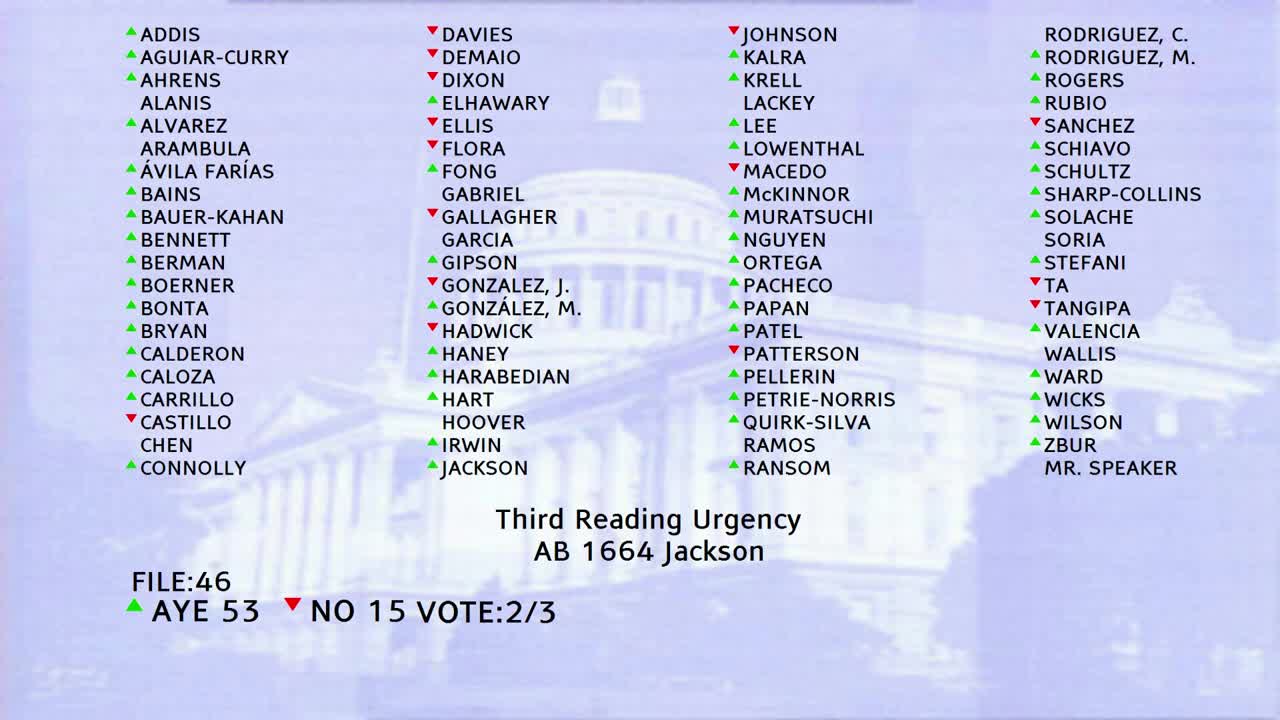 55SEC
Assembly Floor
Bill Author

Bill Co-Author(s):