AB 2017: State holidays: Eid.
- Session Year: 2025-2026
- House: Assembly
- Latest Version Date: 2026-09-27
Current Status:
Passed
(2026-09-27: Chaptered by Secretary of State - Chapter 571, Statutes of 2026.)
Introduced
In Committee
Awaiting First Chamber Vote
Passed First Chamber
In Committee
Awaiting Second Chamber Vote
Passed Second Chamber
Enacted
Existing law designates specific days as holidays in this state. Existing law adopts state holidays as judicial holidays, with certain exceptions, including Admission Day and Columbus Day. Existing law designates holidays on which community colleges and public schools are authorized to close pursuant to a memorandum of understanding between the governing board and represented employees, including Native American Day on the 4th Friday in September.
This bill would add Eid al-Fitr and Eid al-Adha to the list of state holidays. The bill would exclude Eid al-Fitr and Eid al-Adha from designation as judicial holidays. The bill would authorize community colleges and public schools to close on Eid al-Fitr and Eid al-Adha, as specified.
Existing law entitles state employees, with specified exceptions, to be given time off with pay for specified holidays. Existing law, in addition, authorizes state employees to elect to use 8 hours of vacation, annual leave, compensating time off, or personal holiday credit corresponding with specified dates.
This bill would, similarly, permit the employee to elect to receive the holiday credit for the holidays of Eid al-Fitr or Eid al-Adha, as specified. The bill would, for those holidays whose dates vary annually, instead authorize the above-described election to be made on the date designated by their group.
The bill would make findings and declarations related to the purpose of the Eid holidays. The bill would make its provisions severable.
This bill would incorporate additional changes to Section 135 of the Code of Civil Procedure proposed by AB 2294 to be operative only if this bill and AB 2294 are enacted and this bill is enacted last. The bill also would incorporate additional changes to Sections 45203, 79020, and 88203 of the Education Code proposed by SB 1394 to be operative only if this bill and SB 1394 are enacted and this bill is enacted last. The bill further would incorporate additional changes to Section 6700 of the Government Code proposed by AB 2294 and SB 1394 to be operative only if this bill and either or both of those bills are enacted and this bill is enacted last. The bill further would incorporate additional changes to Sections 19853 and 19853.1 of the Government Code proposed by SB 1394 and AB 1841 to be operative only if this bill and either or both of those bills are enacted and this bill is enacted last.
Existing law designates specific days as holidays in this state. Existing law adopts state holidays as judicial holidays, with certain exceptions, including Admission Day and Columbus Day. Existing law designates holidays on which community colleges and public schools are authorized to close pursuant to a memorandum of understanding between the governing board and represented employees, including Native American Day on the 4th Friday in September.
This bill would add Eid al-Fitr and Eid al-Adha to the list of state holidays. The bill would exclude Eid al-Fitr and Eid al-Adha from designation as judicial holidays. The bill would authorize community colleges and public schools to close on Eid al-Fitr and Eid al-Adha, as specified.
Existing law entitles state employees, with specified exceptions, to be given time off with pay for specified holidays. Existing law, in addition, authorizes state employees to elect to use 8 hours of vacation, annual leave, compensating time off, or personal holiday credit corresponding with specified dates.
This bill would, similarly, permit the employee to elect to receive the holiday credit for the holidays of Eid al-Fitr or Eid al-Adha, as specified, and would also permit the employee to, instead, elect to use 8 hours of leave for specified holidays on the dates that their cultural or religious group designates for those holidays. specified. The bill would, for those holidays whose dates vary annually, instead authorize the above-described election to be made on the date designated by their group.
The bill would make findings and declarations related to the purpose of the Eid holidays. The bill would make its provisions severable.
Existing law designates specific days as holidays in this state. Existing law adopts state holidays as judicial holidays, with certain exceptions, including Admission Day and Columbus Day. Existing law designates holidays on which community colleges and public schools are authorized to close pursuant to a memorandum of understanding between the governing board and represented employees, including Native American Day on the 4th Friday in September.
This bill would add Eid al-Fitr and Eid al-Adha to the list of state holidays. The bill would exclude Eid al-Fitr and Eid al-Adha from designation as judicial holidays. The bill would authorize community colleges and public schools to close on Eid al-Fitr and Eid al-Adha, as specified.
Existing law entitles state employees, with specified exceptions, to be given time off with pay for specified holidays. Existing law, in addition, authorizes state employees to elect to use 8 hours of vacation, annual leave, compensating time off, or personal holiday credit corresponding with specified dates.
This bill would, similarly, permit the employee to elect to receive the holiday credit for the holidays of Eid al-Fitr or Eid al-Adha, as specified, and would also permit the employee to, instead, elect to use 8 hours of leave for specified holidays on the dates that their cultural or religious group designates for those holidays.
The California Constitution requires the state to reimburse local agencies and school districts for certain costs mandated by the state. Statutory provisions establish procedures for making that reimbursement.This bill would provide that, if the Commission on State Mandates determines that the bill contains costs mandated by the state, reimbursement for those costs shall be made pursuant to the statutory provisions noted above.Existing law designates specific days as holidays in this state. Existing law adopts state holidays as judicial holidays, with certain exceptions, including Admission Day and Columbus Day. Existing law designates holidays on which community colleges and public schools are authorized to close pursuant to a memorandum of understanding between the governing board and represented employees, including Native American Day on the 4th Friday in September.
This bill would add Eid al-Fitr and Eid al-Adha to the list of state holidays. The bill would exclude Eid al-Fitr and Eid al-Adha from designation as judicial holidays. The bill would authorize community colleges and public schools to close on Eid al-Fitr and Eid al-Adha, as specified.
Existing law, notwithstanding the requirement that each person between 6 and 18 years of age who is not otherwise exempted is subject to compulsory full-time education, requires a pupil to be excused from school for specified types of absences, including, among others, an absence for justifiable personal reasons including, but not limited to, observance of a holiday or ceremony of the pupils religion, if the pupils absence is requested in writing by the parent or guardian and approved by the principal or a designated representative, as specified.This bill would add an absence for purposes of observing Eid al-Fitr or Eid al-Adha to the list of required excused absences. To the extent the bill would impose additional duties on school officials, the bill would impose a state-mandated local program.Existing law entitles state employees, with specified exceptions, to be given time off with pay for specified holidays. Existing law, in addition, authorizes state employees to elect to use 8 hours of vacation, annual leave, compensating time off, or personal holiday credit corresponding with specified dates.
This bill would, similarly, authorize state employees to elect to use 8 hours of vacation, annual leave, compensating time off, or personal holiday credit corresponding with Eid al-Fitr or Eid al-Adha, as specified.This bill would, similarly, permit the employee to elect to receive the holiday credit for the holidays of Eid al-Fitr or Eid al-Adha, as specified, and would also permit the employee to, instead, elect to use 8 hours of leave for specified holidays on the dates that their cultural or religious group designates for those holidays.
The California Constitution requires the state to reimburse local agencies and school districts for certain costs mandated by the state. Statutory provisions establish procedures for making that reimbursement.
This bill would provide that, if the Commission on State Mandates determines that the bill contains costs mandated by the state, reimbursement for those costs shall be made pursuant to the statutory provisions noted above.
Existing law designates specific days as holidays in this state. Existing law adopts state holidays as judicial holidays, with certain exceptions, including Admission Day and Columbus Day. Existing law designates holidays on which community colleges and public schools are authorized to close pursuant to a memorandum of understanding between the governing board and represented employees, including Native American Day on the 4th Friday in September.
This bill would add Eid al-Fitr and Eid al-Adha to the list of state holidays. The bill would exclude Eid al-Fitr and Eid al-Adha from designation as judicial holidays. The bill would authorize community colleges and public schools to close on Eid al-Fitr and Eid al-Adha, as specified.
Existing law, notwithstanding the requirement that each person between 6 and 18 years of age who is not otherwise exempted is subject to compulsory full-time education, requires a pupil to be excused from school for specified types of absences, including, among others, an absence for justifiable personal reasons including, but not limited to, observance of a holiday or ceremony of the pupils religion, if the pupils absence is requested in writing by the parent or guardian and approved by the principal or a designated representative, as specified.
This bill would add an absence for purposes of observing Eid al-Fitr or Eid al-Adha to the list of required excused absences. To the extent the bill would impose additional duties on school officials, the bill would impose a state-mandated local program.
Existing law entitles state employees, with specified exceptions, to be given time off with pay for specified holidays. Existing law, in addition, authorizes state employees to elect to use 8 hours of vacation, annual leave, compensating time off, or personal holiday credit corresponding with specified dates.
This bill would, similarly, authorize state employees to elect to use 8 hours of vacation, annual leave, compensating time off, or personal holiday credit corresponding with Eid al-Fitr or Eid al-Adha, as specified.
The California Constitution requires the state to reimburse local agencies and school districts for certain costs mandated by the state. Statutory provisions establish procedures for making that reimbursement.
This bill would provide that, if the Commission on State Mandates determines that the bill contains costs mandated by the state, reimbursement for those costs shall be made pursuant to the statutory provisions noted above.
(a)California is home to communities with diverse cultural traditions. The state has an interest in administering its public calendars, educational institutions, and workforce policies in a manner that reflects Californias population and provides equal access to public education, public employment, and civic life.
(b)Eid al-Fitr and Eid al-Adha are culturally significant and this act seeks to accommodate individuals abilities to celebrate these holidays.
(c)Predictable, highly concentrated spikes in student and public employee absenteeism occur annually during these periods. California law acknowledges several dates associated with cultural and historical traditions as state holidays. Inclusion in the states civil holiday calendar does not, by itself, require the closure of courts, state offices, public schools, community colleges, local agencies, or private businesses.
(d)The designation of Eid al-Fitr and Eid al-Adha as state holidays is a civil calendar determination that acknowledges their cultural significance to California communities. The designation does not require any person or public institution to participate in a ceremony, event, or other activity.
(e)The civil purposes of this act are to provide predictable notice of dates on which Californians may request leave or an excused absence, facilitate orderly staffing and academic planning, reduce avoidable scheduling conflicts, protect public school average daily attendance funding metrics, and administer state holiday and leave policies consistently across comparable cultural observances.
(f)Following the standard established by the U.S. Supreme Court in Groff v. DeJoy (2023) 600 U.S. 447, public employers face significantly heightened legal burdens when reviewing individual accommodation requests. This act supplements, and does not diminish, existing protections permitting pupils to receive excused absences and permitting employees to use otherwise available leave benefits for personal and cultural observances.
(g)A public school or community college may modify its calendar only through otherwise applicable local decisionmaking and collective bargaining procedures and in compliance with instructional and educational requirements. This local process allows consideration of regional attendance patterns, staffing needs, instructional continuity, fiscal effects, and community circumstances.
(h)Any civil benefit provided under this act shall be available without regard to a persons cultural background or personal beliefs. A person shall not be required to participate in an event or demonstrate adherence to any custom or tradition.
(i)Public educational institutions may provide objective academic instruction concerning the history, cultural traditions, and civic significance of Eid al-Fitr and Eid al-Adha. Nothing in this act requires a pupil or employee to participate in an instructional exercise, ceremony, or cultural activity.
(j)The dates identified pursuant to this act are civil reference dates established for predictable public administration. The designation of a civil reference date does not limit an individuals ability to request leave or an excused absence on another date associated with that individuals cultural practices.
(k)The Legislature intends through this act to acknowledge the cultural significance of Eid al-Fitr and Eid al-Adha while preserving local control, maintaining continuity of public services, and avoiding unnecessary fiscal, educational, and operational burdens.
(l)The Legislature intends this act to be interpreted and implemented consistently with the United States Constitution and the California Constitution.
SEC. 2.Section 135 of the Code of Civil Procedure is amended to read:135.Every full day designated as a holiday by Section 6700 of the Government Code, including that Thursday of November declared by the President to be Thanksgiving Day, is a judicial holiday, except the date corresponding with the second new moon following the winter solstice, or the third new moon following the winter solstice should an intercalary month intervene, known as Lunar New Year, the first day of the month of Shawwal in the Islamic lunar calendar, known as Eid al-Fitr, the 15th day of the month of Kartik in the Hindu lunar calendar of each year, known as Diwali, April 24, known as Genocide Remembrance Day, the 10th day of the month of Dhu al-Hijjah in the Islamic lunar calendar, known as Eid al-Adha, September 9, known as Admission Day, the second Monday in October, known as Columbus Day, and any other day appointed by the President, but not by the Governor, for a public fast, thanksgiving, or holiday. If a judicial holiday falls on a Saturday or a Sunday, the Judicial Council may designate an alternative day for observance of the holiday. Every Saturday and the day after Thanksgiving Day are judicial holidays. Officers and employees of the courts shall observe only the judicial holidays established pursuant to this section.
SEC. 2.5.Section 135 of the Code of Civil Procedure is amended to read:135.Every full day designated as a holiday by Section 6700 of the Government Code, including that Thursday of November declared by the President to be Thanksgiving Day, is a judicial holiday, except the date corresponding with the second new moon following the winter solstice, or the third new moon following the winter solstice should an intercalary month intervene, known as Lunar New Year, the first day of the month of Shawwal in the Islamic lunar calendar, known as Eid al-Fitr, the 15th day of the month of Kartik in the Hindu lunar calendar of each year, known as Diwali, April 14, known as Sylvia Mendez Day, April 24, known as Genocide Remembrance Day, the 10th day of the month of Dhu al-Hijjah in the Islamic lunar calendar, known as Eid al-Adha, September 9, known as Admission Day, the second Monday in October, known as Columbus Day, and any other day appointed by the President, but not by the Governor, for a public fast, thanksgiving, or holiday. If a judicial holiday falls on a Saturday or a Sunday, the Judicial Council may designate an alternative day for observance of the holiday. Every Saturday and the day after Thanksgiving Day are judicial holidays. Officers and employees of the courts shall observe only the judicial holidays established pursuant to this section.
SEC. 3.Section 37220.7 of the Education Code is amended to read:37220.7.(a)In addition to the holidays prescribed in Section 37220, public schools may be closed on the first day of the month of Shawwal in the Islamic lunar calendar, known as Eid al-Fitr, April 24, known as Genocide Remembrance Day, the 15th day of the month of Kartik in the Hindu lunar calendar of each year, known as Diwali, the 10th day of the month of Dhu al-Hijjah in the Islamic lunar calendar, known as Eid al-Adha, and the fourth Friday in September, known as Native American Day, if the governing board, pursuant to a memorandum of understanding reached pursuant to Chapter 10.7 (commencing with Section 3540) of Division 4 of Title 1 of the Government Code, agrees to close schools for that purpose.
(b)On the fourth Friday in September, or if schools are closed on that date as specified in subdivision (a), on an alternate day determined by the governing board, public schools and educational institutions throughout this state may include exercises, funded through existing resources, commemorating and directing attention to the many contributions that Native Americans have made to this country. The State Board of Education may adopt a model curriculum guide to be available for use by public schools for exercises related to Native American Day.
(c)On April 24, or if schools are closed on that date as specified in subdivision (a), on an alternate day determined by the governing board, public schools and educational institutions throughout this state may include exercises, funded through existing resources, remembering and honoring the many contributions that survivors of genocide have made to this country. The State Board of Education may adopt a model curriculum guide to be available for use by public schools for exercises related to Genocide Remembrance Day.
(d)On the 15th day of the month of Kartik in the Hindu lunar calendar of each year, or if schools are closed on that date as specified in subdivision (a), on an alternate day determined by the governing board, public schools and educational institutions throughout this state may include exercises, funded through existing resources, acknowledging and celebrating the meaning and importance of Diwali. The State Board of Education may adopt a model curriculum guide to be available for use by public schools for exercises related to Diwali.
(e)On the first day of the month of Shawwal and the 10th day of the month of Dhu al-Hijjah in the Islamic lunar calendar, known as Eid al-Fitr and Eid al-Adha respectively, or if schools are closed on those dates as specified in subdivision (a), on alternate dates determined by the governing board, public schools and educational institutions throughout this state may include exercises, funded through existing resources, exploring the history of Eid al-Fitr and Eid al-Adha. The State Board of Education may adopt a model curriculum guide to be available for use by public schools for exercises related to Eid al-Fitr and Eid al-Adha.
SEC. 4.Section 45203 of the Education Code is amended to read:45203.All probationary or permanent employees that are a part of the classified service shall be entitled to the following paid holidays provided they are in a paid status during any portion of the working day immediately preceding or succeeding the holiday: January 1, February 12 known as Lincoln Day, the third Monday in February known as Washington Day, the last Monday in May known as Memorial Day, July 4, the first Monday in September known as Labor Day, November 11 known as Veterans Day, that Thursday in November proclaimed by the President as Thanksgiving Day, December 25, every day appointed by the President, or the Governor of this state, as provided for in paragraphs (11) and (12) of subdivision (a) of Section 37220 for a public fast, thanksgiving, or holiday, or any day declared a holiday under Section 1318 or 37222 for classified or certificated employees. School recesses during the Christmas, Easter, and mid-February periods shall not be considered holidays for classified employees who are normally required to work during that period. However, this shall not be construed as affecting vacation rights specified in this section. For purposes of this section, appointed by the President includes the President signing into law legislation that creates a nationwide federal holiday, including the legal public holidays listed in subsection (a) of Section 6103 of Title 5 of the United States Code, but does not include Columbus Day. This definition is declaratory of existing law.
Regular employees of the district who are not normally assigned to duty during the school holidays of December 25 and January 1 shall be paid for those two holidays provided that they were in a paid status during any portion of the working day of their normal assignment immediately preceding or succeeding the holiday period.
When a holiday listed in this section falls on a Sunday, the following Monday shall be deemed to be the holiday in lieu of the day observed. When a holiday listed in this section falls on a Saturday, the preceding Friday shall be deemed to be the holiday in lieu of the day observed. When a classified employee is required to work on any of these holidays, they shall be paid compensation, or given compensating time off, for the work, in addition to the regular pay received for the holiday, at the rate of time and one-half the employees regular rate of pay.
The provisions of Article 3 (commencing with Section 37220) of Chapter 2 of Part 22 shall not be construed to in any way limit the provisions of this section, nor shall anything in this section be construed to prohibit the governing board from adopting separate work schedules for the certificated and the classified services, or from providing holiday pay for employees who have not been in paid status on the days specified herein. Notwithstanding the adoption of separate work schedules for the certificated and the classified services, on any schoolday during which pupils would otherwise have been in attendance but are not and for which certificated personnel receive regular pay, classified personnel shall also receive regular pay whether or not they are required to report for duty that day.
In addition to the other paid holidays specified in this section, the classified service may be entitled to a paid holiday on the first day of the month of Shawwal in the Islamic lunar calendar, known as Eid al-Fitr, a paid holiday on March 31 known as Cesar Chavez Day, a paid holiday on April 24 known as Genocide Remembrance Day, a paid holiday on the 15th day of the month of Kartik in the Hindu lunar calendar of each year, known as Diwali, a paid holiday on the 10th day of the month of Dhu al-Hijjah in the Islamic lunar calendar, known as Eid al-Adha, and a paid holiday on the fourth Friday in September known as Native American Day, provided they are in a paid status during any portion of the working day immediately preceding or succeeding the holiday, if the governing board, pursuant to a memorandum of understanding reached pursuant to Chapter 10.7 (commencing with Section 3540) of Division 4 of Title 1 of the Government Code, agrees to the paid holiday.
This section shall apply to districts that have adopted the merit system in the same manner and effect as if it were a part of Article 6 (commencing with Section 45240).
SEC. 4.5.Section 45203 of the Education Code is amended to read:45203.All probationary or permanent employees that are a part of the classified service shall be entitled to the following paid holidays provided they are in a paid status during any portion of the working day immediately preceding or succeeding the holiday: January 1, February 12 known as Lincoln Day, the third Monday in February known as Washington Day, the last Monday in May known as Memorial Day, July 4, the first Monday in September known as Labor Day, November 11 known as Veterans Day, that Thursday in November proclaimed by the President as Thanksgiving Day, December 25, every day appointed by the President, or the Governor of this state, as provided for in paragraphs (11) and (12) of subdivision (a) of Section 37220 for a public fast, thanksgiving, or holiday, or any day declared a holiday under Section 1318 or 37222 for classified or certificated employees. School recesses during the Christmas, Easter, and mid-February periods shall not be considered holidays for classified employees who are normally required to work during that period. However, this shall not be construed as affecting vacation rights specified in this section. For purposes of this section, appointed by the President includes the President signing into law legislation that creates a nationwide federal holiday, including the legal public holidays listed in subsection (a) of Section 6103 of Title 5 of the United States Code, but does not include Columbus Day. This definition is declaratory of existing law.
Regular employees of the district who are not normally assigned to duty during the school holidays of December 25 and January 1 shall be paid for those two holidays provided that they were in a paid status during any portion of the working day of their normal assignment immediately preceding or succeeding the holiday period.
When a holiday listed in this section falls on a Sunday, the following Monday shall be deemed to be the holiday in lieu of the day observed. When a holiday listed in this section falls on a Saturday, the preceding Friday shall be deemed to be the holiday in lieu of the day observed. When a classified employee is required to work on any of these holidays, they shall be paid compensation, or given compensating time off, for the work, in addition to the regular pay received for the holiday, at the rate of time and one-half the employees regular rate of pay.
The provisions of Article 3 (commencing with Section 37220) of Chapter 2 of Part 22 shall not be construed to in any way limit the provisions of this section, nor shall anything in this section be construed to prohibit the governing board from adopting separate work schedules for the certificated and the classified services, or from providing holiday pay for employees who have not been in paid status on the days specified herein. Notwithstanding the adoption of separate work schedules for the certificated and the classified services, on any schoolday during which pupils would otherwise have been in attendance but are not and for which certificated personnel receive regular pay, classified personnel shall also receive regular pay whether or not they are required to report for duty that day.
In addition to the other paid holidays specified in this section, the classified service may be entitled to a paid holiday on the first day of the month of Shawwal in the Islamic lunar calendar, known as Eid al-Fitr, a paid holiday on April 10, known as Farmworkers Day, a paid holiday on April 24 known as Genocide Remembrance Day, a paid holiday on the 15th day of the month of Kartik in the Hindu lunar calendar of each year, known as Diwali, a paid holiday on the 10th day of the month of Dhu al-Hijjah in the Islamic lunar calendar, known as Eid al-Adha, and a paid holiday on the fourth Friday in September known as Native American Day, provided they are in a paid status during any portion of the working day immediately preceding or succeeding the holiday, if the governing board, pursuant to a memorandum of understanding reached pursuant to Chapter 10.7 (commencing with Section 3540) of Division 4 of Title 1 of the Government Code, agrees to the paid holiday. To the extent that the amendments to this paragraph made by Senate Bill 1394 of the 202526 Regular Session conflict with a provision of a collective bargaining agreement entered into by a public school employer and an exclusive bargaining representative before January 1, 2027, pursuant to Chapter 10.7 (commencing with Section 3540) of Division 4 of Title 1 of the Government Code, those amendments shall not apply until the expiration or renewal of that collective bargaining agreement.
This section shall apply to districts that have adopted the merit system in the same manner and effect as if it were a part of Article 6 (commencing with Section 45240).
SEC. 5.Section 79020 of the Education Code is amended to read:79020.Except as otherwise provided, the community colleges shall continue in session or close on specified holidays as follows:
(a)The community colleges shall close on January 1, the third Monday in January, commencing in the 198990 fiscal year, known as Dr. Martin Luther King, Jr. Day, February 12 known as Lincoln Day, the third Monday in February known as Washington Day, the last Monday in May known as Memorial Day, July 4, the first Monday in September known as Labor Day, November 11 known as Veterans Day, that Thursday in November proclaimed by the President as Thanksgiving Day, and December 25.
(b)Any contractual provision between any community college district and its employees in effect on the effective date of the act that adds this subdivision shall prevail over any conflict regarding Dr. Martin Luther King, Jr. Day until the termination date of the contract or upon termination by mutual agreement of the parties, whichever occurs first.
(c)The Governor in appointing any other day for a public fast, thanksgiving, or holiday may provide whether the community colleges shall close on the day. If the Governor does not provide whether the community colleges shall close, they shall continue in session on all special or limited holidays appointed by the Governor, but shall close on all other days appointed by the Governor for a public fast, thanksgiving, or holiday.
(d)(1)The community colleges shall close on every day appointed by the President as a public fast, thanksgiving, or holiday, unless it is a special or limited holiday.
(2)For purposes of this subdivision, appointed by the President includes the President signing into law legislation that creates a nationwide federal holiday, including the legal public holidays listed in subsection (a) of Section 6103 of Title 5 of the United States Code, but does not include Columbus Day. This definition is declaratory of existing law.
(e)The community colleges shall continue in session on all legal holidays other than those designated by or pursuant to this section, and shall hold proper exercises commemorating the day.
(f)When any of the holidays on which the schools would be closed fall on Sunday, the community colleges shall close on the Monday following, except that (1) if Lincoln Day falls on a Sunday, the community colleges may observe this holiday on the preceding or following Friday, the following Monday, or the following Tuesday, and maintain classes on the date specified in subdivision (a) where applicable, or (2) if Lincoln Day falls on a Monday, the community colleges may observe this holiday on the preceding or following Friday, that Monday, or the following Tuesday, and maintain classes on the date specified in subdivision (a) where applicable.
(g)When any of the holidays on which the schools would be closed, except Lincoln Day, fall on Saturday, the community colleges shall close on the preceding Friday, and that Friday shall be declared a state holiday.
(h)If any holiday on which the community colleges are required to close pursuant to subdivision (a) occurs under federal law on a date different than the date specified in subdivision (a), the governing board of any community college district may close the community colleges of the district on the date recognized by federal law and maintain classes on the date specified in subdivision (a).
(i)When Veterans Day would fall on Tuesday, the governing board of a community college district may close the colleges on the preceding Monday, and maintain classes on the date specified in subdivision (a). When Veterans Day would fall on Wednesday, the governing board of a community college district may close the colleges on either the preceding Monday or the following Friday, and maintain classes on the date specified in subdivision (a). When Veterans Day would fall on Thursday, the governing board of a community college district may close the colleges on the following Friday, and maintain classes on the date specified in subdivision (a).
(j)When Lincoln Day would fall on Tuesday, the governing board of a community college district may close the colleges on the preceding Monday, the preceding Friday, or the following Friday, and maintain classes on the date specified in subdivision (a) where appropriate. When Lincoln Day would fall on Wednesday, the governing board of a community college district may close the colleges on the preceding Monday, the preceding Friday, or the following Friday, and maintain classes on the date specified in subdivision (a). When Lincoln Day would fall on Thursday, the governing board of a community college district may close the colleges on the preceding Friday or the following Friday, and maintain classes on the date specified in subdivision (a). When Lincoln Day falls on Saturday, the governing board of a community college district may close the colleges on the preceding Friday or the following Friday, and maintain classes on the date specified in subdivision (a) where appropriate.
(k)In addition to the holidays specified in subdivision (a), a community college may close on March 31, known as Cesar Chavez Day, if the governing board, pursuant to a memorandum of understanding reached pursuant to Chapter 10.7 (commencing with Section 3540) of Division 4 of Title 1 of the Government Code, agrees to close the community college for that purpose.
(l)In addition to the holidays specified in subdivision (a), a community college may close on the first day of the month of Shawwal in the Islamic lunar calendar, known as Eid al-Fitr, April 24, known as Genocide Remembrance Day, the 15th day of the month of Kartik in the Hindu lunar calendar of each year, known as Diwali, the 10th day of the month of Dhu al-Hijjah in the Islamic lunar calendar, known as Eid al-Adha, and the fourth Friday in September, known as Native American Day, if the governing board, pursuant to a memorandum of understanding reached pursuant to Chapter 10.7 (commencing with Section 3540) of Division 4 of Title 1 of the Government Code, agrees to close the community college for that purpose.
(m)In addition to the holidays specified in subdivision (a), Glendale Community College may close on April 24, known as Genocide Remembrance Day, if the governing board, pursuant to a memorandum of understanding reached pursuant to Chapter 10.7 (commencing with Section 3540) of Division 4 of Title 1 of the Government Code, agrees to close the community college for that purpose.
(n)Notwithstanding subdivision (a), a community college may replace closing on February 12, Lincoln Day, or the third Monday in February, Washington Day, with the date corresponding with the second new moon following the winter solstice, or the third new moon following the winter solstice should an intercalary month intervene, known as Lunar New Year, if the governing board of the community college district, pursuant to a memorandum of understanding reached pursuant to Chapter 10.7 (commencing with Section 3540) of Division 4 of Title 1 of the Government Code, agrees to close the community college for that purpose. When Lunar New Year falls on another holiday, the community college shall observe Lunar New Year on a preceding or following weekday.
(o)This section shall not be interpreted as authorizing a community college district governing board to maintain community colleges in its district for a lesser number of days during the college year than the minimum established by law.
SEC. 5.5.Section 79020 of the Education Code is amended to read:79020.Except as otherwise provided, the community colleges shall continue in session or close on specified holidays as follows:
(a)The community colleges shall close on January 1, the third Monday in January, commencing in the 198990 fiscal year, known as Dr. Martin Luther King, Jr. Day, February 12 known as Lincoln Day, the third Monday in February known as Washington Day, the last Monday in May known as Memorial Day, July 4, the first Monday in September known as Labor Day, November 11 known as Veterans Day, that Thursday in November proclaimed by the President as Thanksgiving Day, and December 25.
(b)Any contractual provision between any community college district and its employees in effect on the effective date of the act that adds this subdivision shall prevail over any conflict regarding Dr. Martin Luther King, Jr. Day until the termination date of the contract or upon termination by mutual agreement of the parties, whichever occurs first.
(c)The Governor in appointing any other day for a public fast, thanksgiving, or holiday may provide whether the community colleges shall close on the day. If the Governor does not provide whether the community colleges shall close, they shall continue in session on all special or limited holidays appointed by the Governor, but shall close on all other days appointed by the Governor for a public fast, thanksgiving, or holiday.
(d)(1)The community colleges shall close on every day appointed by the President as a public fast, thanksgiving, or holiday, unless it is a special or limited holiday.
(2)For purposes of this subdivision, appointed by the President includes the President signing into law legislation that creates a nationwide federal holiday, including the legal public holidays listed in subsection (a) of Section 6103 of Title 5 of the United States Code, but does not include Columbus Day. This definition is declaratory of existing law.
(e)The community colleges shall continue in session on all legal holidays other than those designated by or pursuant to this section, and shall hold proper exercises commemorating the day.
(f)When any of the holidays on which the schools would be closed fall on Sunday, the community colleges shall close on the Monday following, except that (1) if Lincoln Day falls on a Sunday, the community colleges may observe this holiday on the preceding or following Friday, the following Monday, or the following Tuesday, and maintain classes on the date specified in subdivision (a) where applicable, or (2) if Lincoln Day falls on a Monday, the community colleges may observe this holiday on the preceding or following Friday, that Monday, or the following Tuesday, and maintain classes on the date specified in subdivision (a) where applicable.
(g)When any of the holidays on which the schools would be closed, except Lincoln Day, fall on Saturday, the community colleges shall close on the preceding Friday, and that Friday shall be declared a state holiday.
(h)If any holiday on which the community colleges are required to close pursuant to subdivision (a) occurs under federal law on a date different than the date specified in subdivision (a), the governing board of any community college district may close the community colleges of the district on the date recognized by federal law and maintain classes on the date specified in subdivision (a).
(i)When Veterans Day would fall on Tuesday, the governing board of a community college district may close the colleges on the preceding Monday, and maintain classes on the date specified in subdivision (a). When Veterans Day would fall on Wednesday, the governing board of a community college district may close the colleges on either the preceding Monday or the following Friday, and maintain classes on the date specified in subdivision (a). When Veterans Day would fall on Thursday, the governing board of a community college district may close the colleges on the following Friday, and maintain classes on the date specified in subdivision (a).
(j)When Lincoln Day would fall on Tuesday, the governing board of a community college district may close the colleges on the preceding Monday, the preceding Friday, or the following Friday, and maintain classes on the date specified in subdivision (a) where appropriate. When Lincoln Day would fall on Wednesday, the governing board of a community college district may close the colleges on the preceding Monday, the preceding Friday, or the following Friday, and maintain classes on the date specified in subdivision (a). When Lincoln Day would fall on Thursday, the governing board of a community college district may close the colleges on the preceding Friday or the following Friday, and maintain classes on the date specified in subdivision (a). When Lincoln Day falls on Saturday, the governing board of a community college district may close the colleges on the preceding Friday or the following Friday, and maintain classes on the date specified in subdivision (a) where appropriate.
(k)(1)Except as provided in paragraph (2), in addition to the holidays specified in subdivision (a), a community college may close on April 10, known as Farmworkers Day, if the governing board, pursuant to a memorandum of understanding reached pursuant to Chapter 10.7 (commencing with Section 3540) of Division 4 of Title 1 of the Government Code, agrees to close the community college for that purpose.
(2)To the extent that the amendments to this subdivision made by Senate Bill 1394 of the 202526 Regular Session conflict with a provision of a collective bargaining agreement entered into by a higher education employer and an exclusive bargaining representative before January 1, 2027, pursuant to Chapter 12 (commencing with Section 3560) of Division 4 of Title 1 of the Government Code, those amendments shall not apply until the expiration or renewal of that collective bargaining agreement.
(l)In addition to the holidays specified in subdivision (a), a community college may close on the first day of the month of Shawwal in the Islamic lunar calendar, known as Eid al-Fitr, April 24, known as Genocide Remembrance Day, the 15th day of the month of Kartik in the Hindu lunar calendar of each year, known as Diwali, the 10th day of the month of Dhu al-Hijjah in the Islamic lunar calendar, known as Eid al-Adha, and the fourth Friday in September, known as Native American Day, if the governing board, pursuant to a memorandum of understanding reached pursuant to Chapter 10.7 (commencing with Section 3540) of Division 4 of Title 1 of the Government Code, agrees to close the community college for that purpose.
(m)In addition to the holidays specified in subdivision (a), Glendale Community College may close on April 24, known as Genocide Remembrance Day, if the governing board, pursuant to a memorandum of understanding reached pursuant to Chapter 10.7 (commencing with Section 3540) of Division 4 of Title 1 of the Government Code, agrees to close the community college for that purpose.
(n)Notwithstanding subdivision (a), a community college may replace closing on February 12, Lincoln Day, or the third Monday in February, Washington Day, with the date corresponding with the second new moon following the winter solstice, or the third new moon following the winter solstice should an intercalary month intervene, known as Lunar New Year, if the governing board of the community college district, pursuant to a memorandum of understanding reached pursuant to Chapter 10.7 (commencing with Section 3540) of Division 4 of Title 1 of the Government Code, agrees to close the community college for that purpose. When Lunar New Year falls on another holiday, the community college shall observe Lunar New Year on a preceding or following weekday.
(o)This section shall not be interpreted as authorizing a community college district governing board to maintain community colleges in its district for a lesser number of days during the college year than the minimum established by law.
SEC. 6.Section 88203 of the Education Code is amended to read:88203.(a)(1)All probationary or permanent employees who are part of the classified service shall be entitled to the following paid holidays if they are in a paid status during any portion of the working day immediately preceding or succeeding the holiday:
(A)January 1.
(B)February 12 known as Lincoln Day.
(C)The third Monday in February known as Washington Day.
(D)The last Monday in May known as Memorial Day.
(E)July 4.
(F)The first Monday in September known as Labor Day.
(G)November 11 known as Veterans Day.
(H)That Thursday in November proclaimed by the President as Thanksgiving Day.
(I)December 25.
(J)Every day appointed by the President, or the Governor of this state, as provided for in subdivisions (c) and (d) of Section 79020 for a public fast, thanksgiving, or holiday.
(K)Any day declared a holiday under Section 1318 for classified or academic employees.
(2)College recesses during the Christmas and Easter periods shall not be considered holidays for classified employees who are normally required to work during that period; provided, however, that this shall not be construed as affecting vacation rights specified in this section.
(3)For purposes of this section, appointed by the President includes the President signing into law legislation that creates a nationwide federal holiday, including the legal public holidays listed in subsection (a) of Section 6103 of Title 5 of the United States Code, but does not include Columbus Day. This definition is declaratory of existing law.
(b)Regular employees of the community college district who are not normally assigned to duty during the community college holidays of December 25 and January 1 shall be paid for those two holidays if they were in a paid status during any portion of the working day of their normal assignment immediately preceding or succeeding the holiday period.
(c)When a holiday listed in this section falls on a Sunday, the following Monday shall be deemed to be the holiday in lieu of the day observed. When a holiday listed in this section falls on a Saturday, the preceding Friday shall be deemed to be the holiday in lieu of the day observed. When a classified employee is required to work on any of the holidays listed in this section, they shall be paid compensation, or given compensating time off, for such work, in addition to the regular pay received for the holiday, at the rate of time and one-half their regular rate of pay.
(d)Article 3 (commencing with Section 79020) of Chapter 8 of Part 48 shall not be construed to in any way limit this section, nor shall anything in this section be construed to prohibit the governing board of a community college district from adopting separate work schedules for the academic and the classified services, or from providing holiday pay for employees who have not been in paid status on the days specified in this section. Notwithstanding the adoption of separate work schedules for the academic and the classified services, on any schoolday during which students would otherwise have been in attendance, but are not and for which faculty receive regular pay, classified personnel shall also receive regular pay whether or not they are required to report for duty that day.
(e)In addition to the other paid holidays specified in this section, the classified service may be entitled to a paid holiday on the first day of the month of Shawwal in the Islamic lunar calendar, known as Eid al-Fitr, a paid holiday on March 31 known as Cesar Chavez Day, a paid holiday on April 24 known as Genocide Remembrance Day, a paid holiday on the 15th day of the month of Kartik in the Hindu lunar calendar of each year, known as Diwali, a paid holiday on the 10th day of the month of Dhu al-Hijjah in the Islamic lunar calendar, known as Eid al-Adha, and a paid holiday on the fourth Friday in September known as Native American Day, if they are in a paid status during any portion of the working day immediately preceding or succeeding the holiday, if the governing board of the community college district, pursuant to a memorandum of understanding reached pursuant to Chapter 10.7 (commencing with Section 3540) of Division 4 of Title 1 of the Government Code, agrees to the paid holiday.
(f)In lieu of a paid holiday on February 12, Lincoln Day, or the third Monday in February, Washington Day, as specified in this section, the classified service shall be entitled to a paid holiday on the date corresponding to the Lunar New Year holiday selected pursuant to subdivision (n) of Section 79020, if they are in a paid status during any portion of the working day immediately preceding or succeeding the Lunar New Year holiday, if the governing board of the community college district, pursuant to a memorandum of understanding reached pursuant to Chapter 10.7 (commencing with Section 3540) of Division 4 of Title 1 of the Government Code, agrees to the replacement holiday pursuant to subdivision (n) of Section 79020.
(g)This section shall apply to community college districts that have adopted the merit system in the same manner and effect as if it were a part of Article 3 (commencing with Section 88060).
SEC. 6.5.Section 88203 of the Education Code is amended to read:88203.(a)(1)All probationary or permanent employees who are part of the classified service shall be entitled to the following paid holidays if they are in a paid status during any portion of the working day immediately preceding or succeeding the holiday:
(A)January 1.
(B)February 12 known as Lincoln Day.
(C)The third Monday in February known as Washington Day.
(D)The last Monday in May known as Memorial Day.
(E)July 4.
(F)The first Monday in September known as Labor Day.
(G)November 11 known as Veterans Day.
(H)That Thursday in November proclaimed by the President as Thanksgiving Day.
(I)December 25.
(J)Every day appointed by the President, or the Governor of this state, as provided for in subdivisions (c) and (d) of Section 79020 for a public fast, thanksgiving, or holiday.
(K)Any day declared a holiday under Section 1318 for classified or academic employees.
(2)College recesses during the Christmas and Easter periods shall not be considered holidays for classified employees who are normally required to work during that period; provided, however, that this shall not be construed as affecting vacation rights specified in this section.
(3)For purposes of this section, appointed by the President includes the President signing into law legislation that creates a nationwide federal holiday, including the legal public holidays listed in subsection (a) of Section 6103 of Title 5 of the United States Code, but does not include Columbus Day. This definition is declaratory of existing law.
(b)Regular employees of the community college district who are not normally assigned to duty during the community college holidays of December 25 and January 1 shall be paid for those two holidays if they were in a paid status during any portion of the working day of their normal assignment immediately preceding or succeeding the holiday period.
(c)When a holiday listed in this section falls on a Sunday, the following Monday shall be deemed to be the holiday in lieu of the day observed. When a holiday listed in this section falls on a Saturday, the preceding Friday shall be deemed to be the holiday in lieu of the day observed. When a classified employee is required to work on any of the holidays listed in this section, they shall be paid compensation, or given compensating time off, for such work, in addition to the regular pay received for the holiday, at the rate of time and one-half their regular rate of pay.
(d)Article 3 (commencing with Section 79020) of Chapter 8 of Part 48 shall not be construed to in any way limit this section, nor shall anything in this section be construed to prohibit the governing board of a community college district from adopting separate work schedules for the academic and the classified services, or from providing holiday pay for employees who have not been in paid status on the days specified in this section. Notwithstanding the adoption of separate work schedules for the academic and the classified services, on any schoolday during which students would otherwise have been in attendance, but are not and for which faculty receive regular pay, classified personnel shall also receive regular pay whether or not they are required to report for duty that day.
(e)(1)In addition to the other paid holidays specified in this section, the classified service may be entitled to a paid holiday on the first day of the month of Shawwal in the Islamic lunar calendar, known as Eid al-Fitr, a paid holiday on April 10 known as Farmworkers Day, a paid holiday on April 24 known as Genocide Remembrance Day, a paid holiday on the 15th day of the month of Kartik in the Hindu lunar calendar of each year, known as Diwali, a paid holiday on the 10th day of the month of Dhu al-Hijjah in the Islamic lunar calendar, known as Eid al-Adha, and a paid holiday on the fourth Friday in September known as Native American Day, if they are in a paid status during any portion of the working day immediately preceding or succeeding the holiday, if the governing board of the community college district, pursuant to a memorandum of understanding reached pursuant to Chapter 10.7 (commencing with Section 3540) of Division 4 of Title 1 of the Government Code, agrees to the paid holiday.
(2)To the extent that the amendments to this subdivision made by Senate Bill 1394 of the 202526 Regular Session conflict with a provision of a collective bargaining agreement entered into by a higher education employer and an exclusive bargaining representative before January 1, 2027, pursuant to Chapter 12 (commencing with Section 3560) of Division 4 of Title 1 of the Government Code, those amendments shall not apply until the expiration or renewal of that collective bargaining agreement.
(f)In lieu of a paid holiday on February 12, Lincoln Day, or the third Monday in February, Washington Day, as specified in this section, the classified service shall be entitled to a paid holiday on the date corresponding to the Lunar New Year holiday selected pursuant to subdivision (n) of Section 79020, if they are in a paid status during any portion of the working day immediately preceding or succeeding the Lunar New Year holiday, if the governing board of the community college district, pursuant to a memorandum of understanding reached pursuant to Chapter 10.7 (commencing with Section 3540) of Division 4 of Title 1 of the Government Code, agrees to the replacement holiday pursuant to subdivision (n) of Section 79020.
(g)This section shall apply to community college districts that have adopted the merit system in the same manner and effect as if it were a part of Article 3 (commencing with Section 88060).
SEC. 7.Section 6700 of the Government Code, as amended by Section 1 of Chapter 7 of the Statutes of 2026, is amended to read:6700.(a)The holidays in this state are:
(1)Every Sunday.
(2)January 1.
(3)The third Monday in January, known as Dr. Martin Luther King, Jr. Day.
(4)The date corresponding with the second new moon following the winter solstice, or the third new moon following the winter solstice should an intercalary month intervene, known as Lunar New Year.
(5)February 12, known as Lincoln Day.
(6)The third Monday in February.
(7) The first day of the month of Shawwal in the Islamic lunar calendar, known as Eid al-Fitr.
(8)March 31, known as Farmworkers Day.
(9)April 24, known as Genocide Remembrance Day.
(10)The 15th day of the month of Kartik in the Hindu lunar calendar of each year, known as Diwali.
(11) The 10th day of the month of Dhu al-Hijjah in the Islamic lunar calendar, known as Eid al-Adha.
(12)The last Monday in May.
(13)June 19, known as Juneteenth.
(14)July 4.
(15)The first Monday in September.
(16)September 9, known as Admission Day.
(17)The fourth Friday in September, known as Native American Day.
(18)The second Monday in October, known as Columbus Day.
(19)November 11, known as Veterans Day.
(20)December 25.
(21)Good Friday from 12 noon until 3 p.m.
(22)(A)Every day appointed by the President or Governor for a public fast, thanksgiving, or holiday.
(B)Except for the Thursday in November appointed as Thanksgiving Day, this paragraph and paragraphs (3), (4), and (7) shall not apply to a city, county, or district unless made applicable by charter, or by ordinance or resolution of the governing body thereof.
(b)If this section is in conflict with the provisions of a memorandum of understanding reached pursuant to Chapter 12 (commencing with Section 3560) of Division 4 of Title 1, the memorandum of understanding shall be controlling without further legislative action, except that if those provisions of a memorandum of understanding require the expenditure of funds, the provisions shall not become effective unless approved by the Legislature in the annual Budget Act.
SEC. 7.1.Section 6700 of the Government Code is amended to read:6700.(a)The holidays in this state are:
(1)Every Sunday.
(2)January 1.
(3)The third Monday in January, known as Dr. Martin Luther King, Jr. Day.
(4)The date corresponding with the second new moon following the winter solstice, or the third new moon following the winter solstice should an intercalary month intervene, known as Lunar New Year.
(5)February 12, known as Lincoln Day.
(6)The third Monday in February.
(7)The first day of the month of Shawwal in the Islamic lunar calendar, known as Eid al-Fitr.
(8)March 31, known as Farmworkers Day.
(9)April 24, known as Genocide Remembrance Day.
(10)The 15th day of the month of Kartik in the Hindu lunar calendar of each year, known as Diwali.
(11)The 10th day of the month of Dhu al-Hijjah in the Islamic lunar calendar, known as Eid al-Adha.
(12)The last Monday in May.
(13)June 19, known as Juneteenth.
(14)July 4.
(15)The first Monday in September.
(16)September 9, known as Admission Day.
(17)The fourth Friday in September, known as Native American Day.
(18)The second Monday in October, known as Columbus Day.
(19)November 11, known as Veterans Day.
(20)December 25.
(21)Good Friday from 12 noon until 3 p.m.
(22)April 14, known as Sylvia Mendez Day.
(23)(A)Every day appointed by the President or Governor for a public fast, thanksgiving, or holiday.
(B)Except for the Thursday in November appointed as Thanksgiving Day, this paragraph and paragraphs (3), (4), and (7) shall not apply to a city, county, or district unless made applicable by charter, or by ordinance or resolution of the governing body thereof.
(b)If this section is in conflict with the provisions of a memorandum of understanding reached pursuant to Chapter 12 (commencing with Section 3560) of Division 4 of Title 1, the memorandum of understanding shall be controlling without further legislative action, except that if those provisions of a memorandum of understanding require the expenditure of funds, the provisions shall not become effective unless approved by the Legislature in the annual Budget Act.
SEC. 7.2.Section 6700 of the Government Code is amended to read:6700.(a)The holidays in this state are:
(1)Every Sunday.
(2)January 1.
(3)The third Monday in January, known as Dr. Martin Luther King, Jr. Day.
(4)The date corresponding with the second new moon following the winter solstice, or the third new moon following the winter solstice should an intercalary month intervene, known as Lunar New Year.
(5)February 12, known as Lincoln Day.
(6)The third Monday in February.
(7)The first day of the month of Shawwal in the Islamic lunar calendar, known as Eid al-Fitr.
(8)April 10, known as Farmworkers Day.
(9)April 24, known as Genocide Remembrance Day.
(10)The 15th day of the month of Kartik in the Hindu lunar calendar of each year, known as Diwali.
(11)The 10th day of the month of Dhu al-Hijjah in the Islamic lunar calendar, known as Eid al-Adha.
(12)The last Monday in May.
(13)June 19, known as Juneteenth.
(14)July 4.
(15)The first Monday in September.
(16)September 9, known as Admission Day.
(17)The fourth Friday in September, known as Native American Day.
(18)The second Monday in October, known as Columbus Day.
(19)November 11, known as Veterans Day.
(20)December 25.
(21)Good Friday from 12 noon until 3 p.m.
(22)(A)Every day appointed by the President or Governor for a public fast, thanksgiving, or holiday.
(B)Except for the Thursday in November appointed as Thanksgiving Day, this paragraph and paragraphs (3), (4), and (7) shall not apply to a city, county, or district unless made applicable by charter, or by ordinance or resolution of the governing body thereof.
(b)If this section is in conflict with the provisions of a memorandum of understanding reached pursuant to Chapter 12 (commencing with Section 3560) of Division 4 of Title 1, the memorandum of understanding shall be controlling without further legislative action, except that if those provisions of a memorandum of understanding require the expenditure of funds, the provisions shall not become effective unless approved by the Legislature in the annual Budget Act.
SEC. 7.3.Section 6700 of the Government Code is amended to read:6700.(a)The holidays in this state are:
(1)Every Sunday.
(2)January 1.
(3)The third Monday in January, known as Dr. Martin Luther King, Jr. Day.
(4)The date corresponding with the second new moon following the winter solstice, or the third new moon following the winter solstice should an intercalary month intervene, known as Lunar New Year.
(5)February 12, known as Lincoln Day.
(6)The third Monday in February.
(7)The first day of the month of Shawwal in the Islamic lunar calendar, known as Eid al-Fitr.
(8)April 10, known as Farmworkers Day.
(9)April 24, known as Genocide Remembrance Day.
(10)The 15th day of the month of Kartik in the Hindu lunar calendar of each year, known as Diwali.
(11)The 10th day of the month of Dhu al-Hijjah in the Islamic lunar calendar, known as Eid al-Adha.
(12)The last Monday in May.
(13)June 19, known as Juneteenth.
(14)July 4.
(15)The first Monday in September.
(16)September 9, known as Admission Day.
(17)The fourth Friday in September, known as Native American Day.
(18)The second Monday in October, known as Columbus Day.
(19)November 11, known as Veterans Day.
(20)December 25.
(21)Good Friday from 12 noon until 3 p.m.
(22)April 14, known as Sylvia Mendez Day.
(23)(A)Every day appointed by the President or Governor for a public fast, thanksgiving, or holiday.
(B)Except for the Thursday in November appointed as Thanksgiving Day, this paragraph and paragraphs (3), (4), and (7) shall not apply to a city, county, or district unless made applicable by charter, or by ordinance or resolution of the governing body thereof.
(b)If this section is in conflict with the provisions of a memorandum of understanding reached pursuant to Chapter 12 (commencing with Section 3560) of Division 4 of Title 1, the memorandum of understanding shall be controlling without further legislative action, except that if those provisions of a memorandum of understanding require the expenditure of funds, the provisions shall not become effective unless approved by the Legislature in the annual Budget Act.
SEC. 8.Section 19853 of the Government Code is amended to read:19853.(a)All state employees shall be entitled to the following holidays: January 1, the third Monday in January, the third Monday in February, March 31, the last Monday in May, July 4, the first Monday in September, November 11, Thanksgiving Day, the day after Thanksgiving, December 25, the day chosen by an employee pursuant to Section 19854, and every day appointed by the Governor of this state for a public fast, thanksgiving, or holiday.
(b)If a day listed in this subdivision falls on a Sunday, the following Monday shall be deemed to be the holiday in lieu of the day observed. If November 11 falls upon a Saturday, the preceding Friday shall be deemed to be the holiday in lieu of the day observed.
(c)(1)Any state employee who may be required to work on any of the holidays included in this section, and who does work on any of these holidays, shall be entitled to receive straight-time pay and eight hours of holiday credit.
(2)Notwithstanding paragraph (1), an employee who is excluded from the definition of state employee in subdivision (c) of Section 3513 and who is required to work on January 1, the last Monday in May, July 4, the first Monday in September, Thanksgiving Day, or December 25 shall be subject to the following:
(A)Excluded employees who are eligible for overtime payments under the federal Fair Labor Standards Act shall be paid one and one-half times their salary rate for all hours worked on the holiday and up to eight hours of holiday credit. This pay shall count toward any premium overtime compensation earned during the same workweek. Part-time employees shall receive prorated amounts subject to department rules.
(B)Excluded employees who are ineligible for overtime payments under the federal Fair Labor Standards Act shall receive up to eight hours of holiday credit and four hours of informal time off. Part-time employees shall receive prorated amounts of holiday credit and informal time off, subject to department rules.
(d)For the purpose of computing the number of hours worked, time when an employee is excused from work because of holidays, sick leave, vacation, annual leave, compensating time off, or any other leave shall not be considered as time worked by the employee for the purpose of computing cash compensation for overtime or compensating time off for overtime.
(e)Any state employee, as defined in subdivision (c) of Section 3513, may elect to receive eight hours of holiday credit for the date corresponding with the new moon following the winter solstice, or the third new moon following the winter solstice should an intercalary month intervene, known as Lunar New Year, the first day of the month of Shawwal in the Islamic lunar calendar, known as Eid al-Fitr, April 24, known as Genocide Remembrance Day, the 15th day of the month of Kartik in the Hindu lunar calendar of each year, known as Diwali, June 19, known as Juneteenth, the 10th day of the month of Dhu al-Hijjah in the Islamic lunar calendar, known as Eid al-Adha, or the fourth Friday in September, known as Native American Day, in lieu of receiving eight hours of personal holiday credit in accordance with Section 19854. For those holidays whose dates vary annually, the employee may instead make the election on the dates designated by their group.
(f)Persons employed on less than a full-time basis shall receive holidays in accordance with the Department of Human Resources rules.
(g)If subdivision (a), (c), or (d) is in conflict with the provisions of a memorandum of understanding executed or amended pursuant to Section 3517.5 on or after February 1, 2009, or the date that the act adding this section takes effect, whichever is later, the memorandum of understanding shall be controlling without further legislative action, except that if those provisions of the memorandum of understanding require the expenditure of funds, the provisions shall not become effective unless approved by the Legislature in the annual Budget Act.
SEC. 8.1.Section 19853 of the Government Code is amended to read:19853.(a)All state employees shall be entitled to the following holidays: January 1, the third Monday in January, the third Monday in February, April 10, the last Monday in May, July 4, the first Monday in September, November 11, Thanksgiving Day, the day after Thanksgiving, December 25, the day chosen by an employee pursuant to Section 19854, and every day appointed by the Governor of this state for a public fast, thanksgiving, or holiday.
(b)If a day described in subdivision (a) falls on a Sunday, the following Monday shall be deemed to be the holiday in lieu of the day observed. If November 11 falls upon a Saturday, the preceding Friday shall be deemed to be the holiday in lieu of the day observed.
(c)(1)Any state employee who may be required to work on any of the holidays included in this section, and who does work on any of these holidays, shall be entitled to receive straight-time pay and eight hours of holiday credit.
(2)Notwithstanding paragraph (1), an employee who is excluded from the definition of state employee in subdivision (c) of Section 3513 and who is required to work on January 1, the last Monday in May, July 4, the first Monday in September, Thanksgiving Day, or December 25 shall be subject to the following:
(A)Excluded employees who are eligible for overtime payments under the federal Fair Labor Standards Act shall be paid one and one-half times their salary rate for all hours worked on the holiday and up to eight hours of holiday credit. This pay shall count toward any premium overtime compensation earned during the same workweek. Part-time employees shall receive prorated amounts subject to department rules.
(B)Excluded employees who are ineligible for overtime payments under the federal Fair Labor Standards Act shall receive up to eight hours of holiday credit and four hours of informal time off. Part-time employees shall receive prorated amounts of holiday credit and informal time off, subject to department rules.
(d)For the purpose of computing the number of hours worked, time when an employee is excused from work because of holidays, sick leave, vacation, annual leave, compensating time off, or any other leave shall not be considered as time worked by the employee for the purpose of computing cash compensation for overtime or compensating time off for overtime.
(e)Any state employee, as defined in subdivision (c) of Section 3513, may elect to receive eight hours of holiday credit for the date corresponding with the new moon following the winter solstice, or the third new moon following the winter solstice should an intercalary month intervene, known as Lunar New Year, the first day of the month of Shawwal in the Islamic lunar calendar, known as Eid al-Fitr, April 24, known as Genocide Remembrance Day, the 15th day of the month of Kartik in the Hindu lunar calendar of each year, known as Diwali, June 19, known as Juneteenth, the 10th day of the month of Dhu al-Hijjah in the Islamic lunar calendar, known as Eid al-Adha, or the fourth Friday in September, known as Native American Day, in lieu of receiving eight hours of personal holiday credit in accordance with Section 19854. For those holidays whose dates vary annually, the employee may instead make the election on the dates designated by their group.
(f)Persons employed on less than a full-time basis shall receive holidays in accordance with the Department of Human Resources rules.
(g)If subdivision (a), (c), or (d) is in conflict with the provisions of a memorandum of understanding executed or amended pursuant to Section 3517.5 on or after February 1, 2009, or the date that the act adding this section takes effect, whichever is later, the memorandum of understanding shall be controlling without further legislative action, except that if those provisions of the memorandum of understanding require the expenditure of funds, the provisions shall not become effective unless approved by the Legislature in the annual Budget Act.
SEC. 8.2.Section 19853 of the Government Code is amended to read:19853.(a)(1)All state employees shall be entitled to the following holidays: January 1, the third Monday in January, the third Monday in February, March 31, the last Monday in May, July 4, the first Monday in September, November 11, Thanksgiving Day, the day after Thanksgiving, December 25, the day chosen by an employee pursuant to Section 19854, and every day appointed by the Governor of this state for a public fast, thanksgiving, or holiday.
(2)Upon appropriation by the Legislature, all state employees shall be entitled to a holiday on the fourth Friday in September, known as Native American Day, in lieu of the election described in subdivision (e).
(b)If a day described in subdivision (a) falls on a Sunday, the following Monday shall be deemed to be the holiday in lieu of the day observed. If November 11 falls upon a Saturday, the preceding Friday shall be deemed to be the holiday in lieu of the day observed.
(c)(1)Any state employee who may be required to work on any of the holidays included in this section, and who does work on any of these holidays, shall be entitled to receive straight-time pay and eight hours of holiday credit.
(2)Notwithstanding paragraph (1), an employee who is excluded from the definition of state employee in subdivision (c) of Section 3513 and who is required to work on January 1, the last Monday in May, July 4, the first Monday in September, Thanksgiving Day, or December 25 shall be subject to the following:
(A)Excluded employees who are eligible for overtime payments under the federal Fair Labor Standards Act shall be paid one and one-half times their salary rate for all hours worked on the holiday and up to eight hours of holiday credit. This pay shall count toward any premium overtime compensation earned during the same workweek. Part-time employees shall receive prorated amounts subject to department rules.
(B)Excluded employees who are ineligible for overtime payments under the federal Fair Labor Standards Act shall receive up to eight hours of holiday credit and four hours of informal time off. Part-time employees shall receive prorated amounts of holiday credit and informal time off, subject to department rules.
(d)For the purpose of computing the number of hours worked, time when an employee is excused from work because of holidays, sick leave, vacation, annual leave, compensating time off, or any other leave shall not be considered as time worked by the employee for the purpose of computing cash compensation for overtime or compensating time off for overtime.
(e)Any state employee, as defined in subdivision (c) of Section 3513, may elect to receive eight hours of holiday credit for the date corresponding with the new moon following the winter solstice, or the third new moon following the winter solstice should an intercalary month intervene, known as Lunar New Year, the first day of the month of Shawwal in the Islamic lunar calendar, known as Eid al-Fitr, April 24, known as Genocide Remembrance Day, the 15th day of the month of Kartik in the Hindu lunar calendar of each year, known as Diwali, June 19, known as Juneteenth, the 10th day of the month of Dhu al-Hijjah in the Islamic lunar calendar, known as Eid al-Adha, or the fourth Friday in September, known as Native American Day, except as provided in paragraph (2) of subdivision (a), in lieu of receiving eight hours of personal holiday credit in accordance with Section 19854. For those holidays whose dates vary annually, the employee may instead make the election on the dates designated by their group.
(f)Persons employed on less than a full-time basis shall receive holidays in accordance with the Department of Human Resources rules.
(g)If subdivision (a), (c), or (d) is in conflict with the provisions of a memorandum of understanding executed or amended pursuant to Section 3517.5 on or after February 1, 2009, or the date that the act adding this section takes effect, whichever is later, the memorandum of understanding shall be controlling without further legislative action, except that if those provisions of the memorandum of understanding require the expenditure of funds, the provisions shall not become effective unless approved by the Legislature in the annual Budget Act.
SEC. 8.3.Section 19853 of the Government Code is amended to read:19853.(a)(1)All state employees shall be entitled to the following holidays: January 1, the third Monday in January, the third Monday in February, April 10, the last Monday in May, July 4, the first Monday in September, November 11, Thanksgiving Day, the day after Thanksgiving, December 25, the day chosen by an employee pursuant to Section 19854, and every day appointed by the Governor of this state for a public fast, thanksgiving, or holiday.
(2)Upon appropriation by the Legislature, all state employees shall be entitled to a holiday on the fourth Friday in September, known as Native American Day, in lieu of the election described in subdivision (e).
(b)If a day described in subdivision (a) falls on a Sunday, the following Monday shall be deemed to be the holiday in lieu of the day observed. If November 11 falls upon a Saturday, the preceding Friday shall be deemed to be the holiday in lieu of the day observed.
(c)(1)Any state employee who may be required to work on any of the holidays included in this section, and who does work on any of these holidays, shall be entitled to receive straight-time pay and eight hours of holiday credit.
(2)Notwithstanding paragraph (1), an employee who is excluded from the definition of state employee in subdivision (c) of Section 3513 and who is required to work on January 1, the last Monday in May, July 4, the first Monday in September, Thanksgiving Day, or December 25 shall be subject to the following:
(A)Excluded employees who are eligible for overtime payments under the federal Fair Labor Standards Act shall be paid one and one-half times their salary rate for all hours worked on the holiday and up to eight hours of holiday credit. This pay shall count toward any premium overtime compensation earned during the same workweek. Part-time employees shall receive prorated amounts subject to department rules.
(B)Excluded employees who are ineligible for overtime payments under the federal Fair Labor Standards Act shall receive up to eight hours of holiday credit and four hours of informal time off. Part-time employees shall receive prorated amounts of holiday credit and informal time off, subject to department rules.
(d)For the purpose of computing the number of hours worked, time when an employee is excused from work because of holidays, sick leave, vacation, annual leave, compensating time off, or any other leave shall not be considered as time worked by the employee for the purpose of computing cash compensation for overtime or compensating time off for overtime.
(e)Any state employee, as defined in subdivision (c) of Section 3513, may elect to receive eight hours of holiday credit for the date corresponding with the new moon following the winter solstice, or the third new moon following the winter solstice should an intercalary month intervene, known as Lunar New Year, the first day of the month of Shawwal in the Islamic lunar calendar, known as Eid al-Fitr, April 24, known as Genocide Remembrance Day, the 15th day of the month of Kartik in the Hindu lunar calendar of each year, known as Diwali, June 19, known as Juneteenth, the 10th day of the month of Dhu al-Hijjah in the Islamic lunar calendar, known as Eid al-Adha, or the fourth Friday in September, known as Native American Day, except as provided in paragraph (2) of subdivision (a), in lieu of receiving eight hours of personal holiday credit in accordance with Section 19854. For those holidays whose dates vary annually, the employee may instead make the election on the dates designated by their group.
(f)Persons employed on less than a full-time basis shall receive holidays in accordance with the Department of Human Resources rules.
(g)If subdivision (a), (c), or (d) is in conflict with the provisions of a memorandum of understanding executed or amended pursuant to Section 3517.5 on or after February 1, 2009, or the date that the act adding this section takes effect, whichever is later, the memorandum of understanding shall be controlling without further legislative action, except that if those provisions of the memorandum of understanding require the expenditure of funds, the provisions shall not become effective unless approved by the Legislature in the annual Budget Act.
SEC. 9.Section 19853.1 of the Government Code is amended to read:19853.1.(a)Notwithstanding Section 19853, this section shall apply to state employees in State Bargaining Unit 5.
(b)Except as provided in subdivision (c), all employees shall be entitled to the following holidays: January 1, the third Monday in January, the third Monday in February, March 31, the last Monday in May, July 4, the first Monday in September, November 11, the day after Thanksgiving, December 25, and every day appointed by the Governor of this state for a public fast, thanksgiving, or holiday.
If a day listed in this subdivision falls on a Sunday, the following Monday shall be deemed to be the holiday in lieu of the day observed. If November 11 falls upon a Saturday, the preceding Friday shall be deemed to be the holiday in lieu of the day observed. Any employee who may be required to work on any of the holidays included in this section and who does work on any of these holidays shall be entitled to be paid compensation or given compensating time off for that work in accordance with their classifications assigned workweek group.
(c)If the provisions of subdivision (b) are in conflict with the provisions of a memorandum of understanding reached pursuant to Section 3517.5, the memorandum of understanding shall be controlling without further legislative action, except that if the provisions of a memorandum of understanding require the expenditure of funds, the provisions shall not become effective unless approved by the Legislature in the annual Budget Act.
(d)Any employee who either is excluded from the definition of state employee in subdivision (c) of Section 3513, or is a nonelected officer or employee of the executive branch of government who is not a member of the civil service, is entitled to the following holidays, with pay, in addition to any official state holiday appointed by the Governor:
(1)January 1, the third Monday in January, the third Monday in February, March 31, the last Monday in May, July 4, the first Monday in September, November 11, Thanksgiving Day, the day after Thanksgiving, and December 25.
(2)When November 11 falls on a Saturday, employees shall be entitled to the preceding Friday as a holiday with pay.
(3)When a holiday, other than a personal holiday, falls on a Saturday, an employee shall, regardless of whether the employee works on the holiday, accrue only an additional eight hours of personal holiday credit per fiscal year for the holiday. The holiday credit shall be accrued on the actual date of the holiday and shall be used within the same fiscal year.
(4)When a holiday other than a personal holiday falls on Sunday, employees shall be entitled to the following Monday as a holiday with pay.
(5)Employees who are required to work on a holiday shall be entitled to pay or compensating time off for this work in accordance with their classifications assigned workweek group.
(6)Persons employed on less than a full-time basis shall receive holidays in accordance with the Department of Human Resources rules.
(e)Any employee, as defined in subdivision (c) of Section 3513, may elect to use eight hours of vacation, annual leave, or compensating time off consistent with departmental operational needs and collective bargaining agreements for the date corresponding with the second new moon following the winter solstice, or the third new moon following the winter solstice should an intercalary month intervene, known as Lunar New Year, the first day of the month of Shawwal in the Islamic lunar calendar, known as Eid al-Fitr, April 24, known as Genocide Remembrance Day, the 15th day of the month of Kartik in the Hindu lunar calendar of each year, known as Diwali, June 19, known as Juneteenth, the 10th day of the month of Dhu al-Hijjah in the Islamic lunar calendar, known as Eid al-Adha, and the fourth Friday in September, known as Native American Day. For those holidays whose dates vary annually, the employee may instead make the election on the dates designated by their group.
(f)This section shall become effective with regard to the March 31 holiday only when the Department of Human Resources notifies the Legislature that the language contained in this section has been agreed to by all exclusive representatives, and the Department of Human Resources authorizes this holiday to be applied to employees designated as excluded from the Ralph C. Dills Act (Chapter 10.3 (commencing with Section 3512), Division 4, Title 1), and the necessary statutes are amended to reflect this change.
SEC. 9.1.Section 19853.1 of the Government Code is amended to read:19853.1.(a)Notwithstanding Section 19853, this section shall apply to state employees in State Bargaining Unit 5.
(b)Except as provided in subdivision (c), all employees shall be entitled to the following holidays: January 1, the third Monday in January, the third Monday in February, April 10, the last Monday in May, July 4, the first Monday in September, November 11, the day after Thanksgiving, December 25, and every day appointed by the Governor of this state for a public fast, thanksgiving, or holiday.
If a day described in this subdivision falls on a Sunday, the following Monday shall be deemed to be the holiday in lieu of the day observed. If November 11 falls upon a Saturday, the preceding Friday shall be deemed to be the holiday in lieu of the day observed. Any employee who may be required to work on any of the holidays included in this section and who does work on any of these holidays shall be entitled to be paid compensation or given compensating time off for that work in accordance with their classifications assigned workweek group.
(c)If the provisions of subdivision (b) are in conflict with the provisions of a memorandum of understanding reached pursuant to Section 3517.5, the memorandum of understanding shall be controlling without further legislative action, except that if the provisions of a memorandum of understanding require the expenditure of funds, the provisions shall not become effective unless approved by the Legislature in the annual Budget Act.
(d)Any employee who either is excluded from the definition of state employee in subdivision (c) of Section 3513, or is a nonelected officer or employee of the executive branch of government who is not a member of the civil service, is entitled to the following holidays, with pay, in addition to any official state holiday appointed by the Governor:
(1)January 1, the third Monday in January, the third Monday in February, April 10, the last Monday in May, July 4, the first Monday in September, November 11, Thanksgiving Day, the day after Thanksgiving, and December 25.
(2)When November 11 falls on a Saturday, employees shall be entitled to the preceding Friday as a holiday with pay.
(3)When a holiday, other than a personal holiday, falls on a Saturday, an employee shall, regardless of whether the employee works on the holiday, accrue only an additional eight hours of personal holiday credit per fiscal year for the holiday. The holiday credit shall be accrued on the actual date of the holiday and shall be used within the same fiscal year.
(4)When a holiday other than a personal holiday falls on Sunday, employees shall be entitled to the following Monday as a holiday with pay.
(5)Employees who are required to work on a holiday shall be entitled to pay or compensating time off for this work in accordance with their classifications assigned workweek group.
(6)Persons employed on less than a full-time basis shall receive holidays in accordance with the Department of Human Resources rules.
(e)Any employee, as defined in subdivision (c) of Section 3513, may elect to use eight hours of vacation, annual leave, or compensating time off consistent with departmental operational needs and collective bargaining agreements for the date corresponding with the second new moon following the winter solstice, or the third new moon following the winter solstice should an intercalary month intervene, known as Lunar New Year, the first day of the month of Shawwal in the Islamic lunar calendar, known as Eid al-Fitr, April 24, known as Genocide Remembrance Day, the 15th day of the month of Kartik in the Hindu lunar calendar of each year, known as Diwali, June 19, known as Juneteenth, the 10th day of the month of Dhu al-Hijjah in the Islamic lunar calendar, known as Eid al-Adha, and the fourth Friday in September, known as Native American Day. For those holidays whose dates vary annually, the employee may instead make the election on the dates designated by their group.
SEC. 9.2.Section 19853.1 of the Government Code is amended to read:19853.1.(a)Notwithstanding Section 19853, this section shall apply to state employees in State Bargaining Unit 5.
(b)(1)Except as provided in subdivision (c), all employees shall be entitled to the following holidays: January 1, the third Monday in January, the third Monday in February, March 31, the last Monday in May, July 4, the first Monday in September, November 11, the day after Thanksgiving, December 25, and every day appointed by the Governor of this state for a public fast, thanksgiving, or holiday.
If a day described in this subdivision falls on a Sunday, the following Monday shall be deemed to be the holiday in lieu of the day observed. If November 11 falls upon a Saturday, the preceding Friday shall be deemed to be the holiday in lieu of the day observed. Any employee who may be required to work on any of the holidays included in this section and who does work on any of these holidays shall be entitled to be paid compensation or given compensating time off for that work in accordance with their classifications assigned workweek group.
(2)Upon appropriation by the Legislature as described in paragraph (2) of subdivision (a) of Section 19853, all employees shall be entitled to a holiday on the fourth Friday in September, known as Native American Day, in lieu of the election described in subdivision (e).
(c)If the provisions of subdivision (b) are in conflict with the provisions of a memorandum of understanding reached pursuant to Section 3517.5, the memorandum of understanding shall be controlling without further legislative action, except that if the provisions of a memorandum of understanding require the expenditure of funds, the provisions shall not become effective unless approved by the Legislature in the annual Budget Act.
(d)Any employee who either is excluded from the definition of state employee in subdivision (c) of Section 3513, or is a nonelected officer or employee of the executive branch of government who is not a member of the civil service, is entitled to the following holidays, with pay, in addition to any official state holiday appointed by the Governor:
(1)January 1, the third Monday in January, the third Monday in February, March 31, the last Monday in May, July 4, the first Monday in September, November 11, Thanksgiving Day, the day after Thanksgiving, and December 25.
(2)Upon appropriation by the Legislature as described in paragraph (2) of subdivision (a) of Section 19853, the fourth Friday in September, known as Native American Day.
(3)When November 11 falls on a Saturday, employees shall be entitled to the preceding Friday as a holiday with pay.
(4)When a holiday, other than a personal holiday, falls on a Saturday, an employee shall, regardless of whether the employee works on the holiday, accrue only an additional eight hours of personal holiday credit per fiscal year for the holiday. The holiday credit shall be accrued on the actual date of the holiday and shall be used within the same fiscal year.
(5)When a holiday other than a personal holiday falls on Sunday, employees shall be entitled to the following Monday as a holiday with pay.
(6)Employees who are required to work on a holiday shall be entitled to pay or compensating time off for this work in accordance with their classifications assigned workweek group.
(7)Persons employed on less than a full-time basis shall receive holidays in accordance with the Department of Human Resources rules.
(e)Any employee, as defined in subdivision (c) of Section 3513, may elect to use eight hours of vacation, annual leave, or compensating time off consistent with departmental operational needs and collective bargaining agreements for the date corresponding with the second new moon following the winter solstice, or the third new moon following the winter solstice should an intercalary month intervene, known as Lunar New Year, the first day of the month of Shawwal in the Islamic lunar calendar, known as Eid al-Fitr, April 24, known as Genocide Remembrance Day, the 15th day of the month of Kartik in the Hindu lunar calendar of each year, known as Diwali, June 19, known as Juneteenth, the 10th day of the month of Dhu al-Hijjah in the Islamic lunar calendar, known as Eid al-Adha, and the fourth Friday in September, known as Native American Day, except as provided in paragraph (2) of subdivision (b). For those holidays whose dates vary annually, the employee may instead make the election on the dates designated by their group.
(f)This section shall become effective with regard to the March 31 holiday only when the Department of Human Resources notifies the Legislature that the language contained in this section has been agreed to by all exclusive representatives, and the Department of Human Resources authorizes this holiday to be applied to employees designated as excluded from the Ralph C. Dills Act (Chapter 10.3 (commencing with Section 3512), Division 4, Title 1), and the necessary statutes are amended to reflect this change.
SEC. 9.3.Section 19853.1 of the Government Code is amended to read:19853.1.(a)Notwithstanding Section 19853, this section shall apply to state employees in State Bargaining Unit 5.
(b)(1)Except as provided in subdivision (c), all employees shall be entitled to the following holidays: January 1, the third Monday in January, the third Monday in February, April 10, the last Monday in May, July 4, the first Monday in September, November 11, the day after Thanksgiving, December 25, and every day appointed by the Governor of this state for a public fast, thanksgiving, or holiday.
If a day described in this subdivision falls on a Sunday, the following Monday shall be deemed to be the holiday in lieu of the day observed. If November 11 falls upon a Saturday, the preceding Friday shall be deemed to be the holiday in lieu of the day observed. Any employee who may be required to work on any of the holidays included in this section and who does work on any of these holidays shall be entitled to be paid compensation or given compensating time off for that work in accordance with their classifications assigned workweek group.
(2)Upon appropriation by the Legislature as described in paragraph (2) of subdivision (a) of Section 19853, all employees shall be entitled to a holiday on the fourth Friday in September, known as Native American Day, in lieu of the election described in subdivision (e).
(c)If the provisions of subdivision (b) are in conflict with the provisions of a memorandum of understanding reached pursuant to Section 3517.5, the memorandum of understanding shall be controlling without further legislative action, except that if the provisions of a memorandum of understanding require the expenditure of funds, the provisions shall not become effective unless approved by the Legislature in the annual Budget Act.
(d)Any employee who either is excluded from the definition of state employee in subdivision (c) of Section 3513, or is a nonelected officer or employee of the executive branch of government who is not a member of the civil service, is entitled to the following holidays, with pay, in addition to any official state holiday appointed by the Governor:
(1)January 1, the third Monday in January, the third Monday in February, April 10, the last Monday in May, July 4, the first Monday in September, November 11, Thanksgiving Day, the day after Thanksgiving, and December 25.
(2)Upon appropriation by the Legislature as described in paragraph (2) of subdivision (a) of Section 19853, the fourth Friday in September, known as Native American Day.
(3)When November 11 falls on a Saturday, employees shall be entitled to the preceding Friday as a holiday with pay.
(4)When a holiday, other than a personal holiday, falls on a Saturday, an employee shall, regardless of whether the employee works on the holiday, accrue only an additional eight hours of personal holiday credit per fiscal year for the holiday. The holiday credit shall be accrued on the actual date of the holiday and shall be used within the same fiscal year.
(5)When a holiday other than a personal holiday falls on Sunday, employees shall be entitled to the following Monday as a holiday with pay.
(6)Employees who are required to work on a holiday shall be entitled to pay or compensating time off for this work in accordance with their classifications assigned workweek group.
(7)Persons employed on less than a full-time basis shall receive holidays in accordance with the Department of Human Resources rules.
(e)Any employee, as defined in subdivision (c) of Section 3513, may elect to use eight hours of vacation, annual leave, or compensating time off consistent with departmental operational needs and collective bargaining agreements for the date corresponding with the second new moon following the winter solstice, or the third new moon following the winter solstice should an intercalary month intervene, known as Lunar New Year, the first day of the month of Shawwal in the Islamic lunar calendar, known as Eid al-Fitr, April 24, known as Genocide Remembrance Day, the 15th day of the month of Kartik in the Hindu lunar calendar of each year, known as Diwali, June 19, known as Juneteenth, the 10th day of the month of Dhu al-Hijjah in the Islamic lunar calendar, known as Eid al-Adha, and the fourth Friday in September, known as Native American Day, except as provided in paragraph (2) of subdivision (b). For those holidays whose dates vary annually, the employee may instead make the election on the dates designated by their group.
SEC. 10.The provisions of this act are severable. If any provision of this act or its application is held invalid, that invalidity shall not affect other provisions or applications that can be given effect without the invalid provision or application.
SEC. 11.Section 2.5 of this bill incorporates amendments to Section 135 of the Code of Civil Procedure proposed by both this bill and Assembly Bill 2294. That section of this bill shall only become operative if (1) both bills are enacted and become effective on or before January 1, 2027, (2) each bill amends Section 135 of the Code of Civil Procedure, and (3) this bill is enacted after Assembly Bill 2294, in which case Section 2 of this bill shall not become operative.
SEC. 12.Section 4.5 of this bill incorporates amendments to Section 45203 of the Education Code proposed by both this bill and Senate Bill 1394. That section of this bill shall only become operative if (1) both bills are enacted and become effective on or before January 1, 2027, (2) each bill amends Section 45203 of the Education Code, and (3) this bill is enacted after Senate Bill 1394, in which case Section 4 of this bill shall not become operative.
SEC. 13.Section 5.5 of this bill incorporates amendments to Section 79020 of the Education Code proposed by both this bill and Senate Bill 1394. That section of this bill shall only become operative if (1) both bills are enacted and become effective on or before January 1, 2027, (2) each bill amends Section 79020 of the Education Code, and (3) this bill is enacted after Senate Bill 1394, in which case Section 5 of this bill shall not become operative.
SEC. 14.Section 6.5 of this bill incorporates amendments to Section 88203 of the Education Code proposed by both this bill and Senate Bill 1394. That section of this bill shall only become operative if (1) both bills are enacted and become effective on or before January 1, 2027, (2) each bill amends Section 88203 of the Education Code, and (3) this bill is enacted after Senate Bill 1394, in which case Section 6 of this bill shall not become operative.
SEC. 15.(a)Section 7.1 of this bill incorporates amendments to Section 6700 of the Government Code proposed by both this bill and Assembly Bill 2294. That section of this bill shall only become operative if (1) both bills are enacted and become effective on or before January 1, 2027, (2) each bill amends Section 6700 of the Government Code, (3) Senate Bill 1394 is not enacted or as enacted does not amend that section, and (4) this bill is enacted after Assembly Bill 2294, in which case Sections 7, 7.2, and 7.3 of this bill shall not become operative.
(b)Section 7.2 of this bill incorporates amendments to Section 6700 of the Government Code proposed by both this bill and Senate Bill 1394. That section of this bill shall only become operative if (1) both bills are enacted and become effective on or before January 1, 2027, (2) each bill amends Section 6700 of the Government Code, (3) Assembly Bill 2294 is not enacted or as enacted does not amend that section, and (4) this bill is enacted after Senate Bill 1394, in which case Sections 7, 7.1, and 7.3 of this bill shall not become operative.
(c)Section 7.3 of this bill incorporates amendments to Section 6700 of the Government Code proposed by this bill, Assembly Bill 2294, and Senate Bill 1394. That section of this bill shall only become operative if (1) all three bills are enacted and become effective on or before January 1, 2027, (2) all three bills amend Section 6700 of the Government Code, and (3) this bill is enacted after Assembly Bill 2294 and Senate Bill 1394, in which case Section 7, 7.1, and 7.2 of this bill shall not become operative.
SEC. 16.(a)Section 8.1 of this bill incorporates amendments to Section 19853 of the Government Code proposed by both this bill and Senate Bill 1394. That section of this bill shall only become operative if (1) both bills are enacted and become effective on or before January 1, 2027, (2) each bill amends Section 19853 of the Government Code, (3) Assembly Bill 1841 is not enacted or as enacted does not amend that section, and (4) this bill is enacted after Senate Bill 1394, in which case Sections 8, 8.2, and 8.3 of this bill shall not become operative.
(b)Section 8.2 of this bill incorporates amendments to Section 19853 of the Government Code proposed by both this bill and Assembly Bill 1841. That section of this bill shall only become operative if (1) both bills are enacted and become effective on or before January 1, 2027, (2) each bill amends Section 19853 of the Government Code, (3) Senate Bill 1394 is not enacted or as enacted does not amend that section, and (4) this bill is enacted after Assembly Bill 1841, in which case Sections 8, 8.1, and 8.3 of this bill shall not become operative.
(c)Section 8.3 of this bill incorporates amendments to Section 19853 of the Government Code proposed by this bill, Senate Bill 1394, and Assembly Bill 1841. That section of this bill shall only become operative if (1) all three bills are enacted and become effective on or before January 1, 2027, (2) all three bills amend Section 19853 of the Government Code, and (3) this bill is enacted after Senate Bill 1394 and Assembly Bill 1841, in which case Sections 8, 8.1, and 8.2 of this bill shall not become operative.
SEC. 17.(a)Section 9.1 of this bill incorporates amendments to Section 19853.1 of the Government Code proposed by both this bill and Senate Bill 1394. That section of this bill shall only become operative if (1) both bills are enacted and become effective on or before January 1, 2027, (2) each bill amends Section 19853.1 of the Government Code, (3) Assembly Bill 1841 is not enacted or as enacted does not amend that section, and (4) this bill is enacted after Senate Bill 1394, in which case Sections 9, 9.2, and 9.3 of this bill shall not become operative.
(b)Section 9.2 of this bill incorporates amendments to Section 19853.1 of the Government Code proposed by both this bill and Assembly Bill 1841. That section of this bill shall only become operative if (1) both bills are enacted and become effective on or before January 1, 2027, (2) each bill amends Section 19853.1 of the Government Code, (3) Senate Bill 1394 is not enacted or as enacted does not amend that section, and (4) this bill is enacted after Assembly Bill 1841, in which case Sections 9, 9.1, and 9.3 of this bill shall not become operative.
(c)Section 9.3 of this bill incorporates amendments to Section 19853.1 of the Government Code proposed by this bill, Senate Bill 1394, and Assembly Bill 1841. That section of this bill shall only become operative if (1) all three bills are enacted and become effective on or before January 1, 2027, (2) all three bills amend Section 19853.1 of the Government Code, and (3) this bill is enacted after Senate Bill 1394 and Assembly Bill 1841, in which case Sections 9, 9.1, and 9.2 of this bill shall not become operative.
(a)California is home to communities with diverse cultural traditions. The state has an interest in administering its public calendars, educational institutions, and workforce policies in a manner that reflects Californias population and provides equal access to public education, public employment, and civic life.
(b)Eid al-Fitr and Eid al-Adha are culturally significant and this act seeks to accommodate individuals abilities to celebrate these holidays.
(c)Predictable, highly concentrated spikes in student and public employee absenteeism occur annually during these periods. California law acknowledges several dates associated with cultural and historical traditions as state holidays. Inclusion in the states civil holiday calendar does not, by itself, require the closure of courts, state offices, public schools, community colleges, local agencies, or private businesses.
(d)The designation of Eid al-Fitr and Eid al-Adha as state holidays is a civil calendar determination that acknowledges their cultural significance to California communities. The designation does not require any person or public institution to participate in a ceremony, event, or other activity.
(e)The civil purposes of this act are to provide predictable notice of dates on which Californians may request leave or an excused absence, facilitate orderly staffing and academic planning, reduce avoidable scheduling conflicts, protect public school average daily attendance funding metrics, and administer state holiday and leave policies consistently across comparable cultural observances.
(f)Following the standard established by the U.S. Supreme Court in Groff v. DeJoy (2023) 600 U.S. 447, public employers face significantly heightened legal burdens when reviewing individual accommodation requests. This act supplements, and does not diminish, existing protections permitting pupils to receive excused absences and permitting employees to use otherwise available leave benefits for personal and cultural observances.
(g)A public school or community college may modify its calendar only through otherwise applicable local decisionmaking and collective bargaining procedures and in compliance with instructional and educational requirements. This local process allows consideration of regional attendance patterns, staffing needs, instructional continuity, fiscal effects, and community circumstances.
(h)Any civil benefit provided under this act shall be available without regard to a persons cultural background or personal beliefs. A person shall not be required to participate in an event or demonstrate adherence to any custom or tradition.
(i)Public educational institutions may provide objective academic instruction concerning the history, cultural traditions, and civic significance of Eid al-Fitr and Eid al-Adha. Nothing in this act requires a pupil or employee to participate in an instructional exercise, ceremony, or cultural activity.
(j)The dates identified pursuant to this act are civil reference dates established for predictable public administration. The designation of a civil reference date does not limit an individuals ability to request leave or an excused absence on another date associated with that individuals cultural practices.
(k)The Legislature intends through this act to acknowledge the cultural significance of Eid al-Fitr and Eid al-Adha while preserving local control, maintaining continuity of public services, and avoiding unnecessary fiscal, educational, and operational burdens.
(l)The Legislature intends this act to be interpreted and implemented consistently with the United States Constitution and the California Constitution.
SEC. 2.Section 135 of the Code of Civil Procedure is amended to read:135.Every full day designated as a holiday by Section 6700 of the Government Code, including that Thursday of November declared by the President to be Thanksgiving Day, is a judicial holiday, except the date corresponding with the second new moon following the winter solstice, or the third new moon following the winter solstice should an intercalary month intervene, known as Lunar New Year, the first day of the month of Shawwal in the Islamic lunar calendar, known as Eid al-Fitr, the 15th day of the month of Kartik in the Hindu lunar calendar of each year, known as Diwali, April 24, known as Genocide Remembrance Day, the 10th day of the month of Dhu al-Hijjah in the Islamic lunar calendar, known as Eid al-Adha, September 9, known as Admission Day, the second Monday in October, known as Columbus Day, and any other day appointed by the President, but not by the Governor, for a public fast, thanksgiving, or holiday. If a judicial holiday falls on a Saturday or a Sunday, the Judicial Council may designate an alternative day for observance of the holiday. Every Saturday and the day after Thanksgiving Day are judicial holidays. Officers and employees of the courts shall observe only the judicial holidays established pursuant to this section.
SEC. 2.5.Section 135 of the Code of Civil Procedure is amended to read:135.Every full day designated as a holiday by Section 6700 of the Government Code, including that Thursday of November declared by the President to be Thanksgiving Day, is a judicial holiday, except the date corresponding with the second new moon following the winter solstice, or the third new moon following the winter solstice should an intercalary month intervene, known as Lunar New Year, the first day of the month of Shawwal in the Islamic lunar calendar, known as Eid al-Fitr, the 15th day of the month of Kartik in the Hindu lunar calendar of each year, known as Diwali, April 14, known as Sylvia Mendez Day, April 24, known as Genocide Remembrance Day, the 10th day of the month of Dhu al-Hijjah in the Islamic lunar calendar, known as Eid al-Adha, September 9, known as Admission Day, the second Monday in October, known as Columbus Day, and any other day appointed by the President, but not by the Governor, for a public fast, thanksgiving, or holiday. If a judicial holiday falls on a Saturday or a Sunday, the Judicial Council may designate an alternative day for observance of the holiday. Every Saturday and the day after Thanksgiving Day are judicial holidays. Officers and employees of the courts shall observe only the judicial holidays established pursuant to this section.
SEC. 3.Section 37220.7 of the Education Code is amended to read:37220.7.(a)In addition to the holidays prescribed in Section 37220, public schools may be closed on the first day of the month of Shawwal in the Islamic lunar calendar, known as Eid al-Fitr, April 24, known as Genocide Remembrance Day, the 15th day of the month of Kartik in the Hindu lunar calendar of each year, known as Diwali, the 10th day of the month of Dhu al-Hijjah in the Islamic lunar calendar, known as Eid al-Adha, and the fourth Friday in September, known as Native American Day, if the governing board, pursuant to a memorandum of understanding reached pursuant to Chapter 10.7 (commencing with Section 3540) of Division 4 of Title 1 of the Government Code, agrees to close schools for that purpose.
(b)On the fourth Friday in September, or if schools are closed on that date as specified in subdivision (a), on an alternate day determined by the governing board, public schools and educational institutions throughout this state may include exercises, funded through existing resources, commemorating and directing attention to the many contributions that Native Americans have made to this country. The State Board of Education may adopt a model curriculum guide to be available for use by public schools for exercises related to Native American Day.
(c)On April 24, or if schools are closed on that date as specified in subdivision (a), on an alternate day determined by the governing board, public schools and educational institutions throughout this state may include exercises, funded through existing resources, remembering and honoring the many contributions that survivors of genocide have made to this country. The State Board of Education may adopt a model curriculum guide to be available for use by public schools for exercises related to Genocide Remembrance Day.
(d)On the 15th day of the month of Kartik in the Hindu lunar calendar of each year, or if schools are closed on that date as specified in subdivision (a), on an alternate day determined by the governing board, public schools and educational institutions throughout this state may include exercises, funded through existing resources, acknowledging and celebrating the meaning and importance of Diwali. The State Board of Education may adopt a model curriculum guide to be available for use by public schools for exercises related to Diwali.
(e)On the first day of the month of Shawwal and the 10th day of the month of Dhu al-Hijjah in the Islamic lunar calendar, known as Eid al-Fitr and Eid al-Adha respectively, or if schools are closed on those dates as specified in subdivision (a), on alternate dates determined by the governing board, public schools and educational institutions throughout this state may include exercises, funded through existing resources, exploring the history of Eid al-Fitr and Eid al-Adha. The State Board of Education may adopt a model curriculum guide to be available for use by public schools for exercises related to Eid al-Fitr and Eid al-Adha.
SEC. 4.Section 45203 of the Education Code is amended to read:45203.All probationary or permanent employees that are a part of the classified service shall be entitled to the following paid holidays provided they are in a paid status during any portion of the working day immediately preceding or succeeding the holiday: January 1, February 12 known as Lincoln Day, the third Monday in February known as Washington Day, the last Monday in May known as Memorial Day, July 4, the first Monday in September known as Labor Day, November 11 known as Veterans Day, that Thursday in November proclaimed by the President as Thanksgiving Day, December 25, every day appointed by the President, or the Governor of this state, as provided for in paragraphs (11) and (12) of subdivision (a) of Section 37220 for a public fast, thanksgiving, or holiday, or any day declared a holiday under Section 1318 or 37222 for classified or certificated employees. School recesses during the Christmas, Easter, and mid-February periods shall not be considered holidays for classified employees who are normally required to work during that period. However, this shall not be construed as affecting vacation rights specified in this section. For purposes of this section, appointed by the President includes the President signing into law legislation that creates a nationwide federal holiday, including the legal public holidays listed in subsection (a) of Section 6103 of Title 5 of the United States Code, but does not include Columbus Day. This definition is declaratory of existing law.
Regular employees of the district who are not normally assigned to duty during the school holidays of December 25 and January 1 shall be paid for those two holidays provided that they were in a paid status during any portion of the working day of their normal assignment immediately preceding or succeeding the holiday period.
When a holiday listed in this section falls on a Sunday, the following Monday shall be deemed to be the holiday in lieu of the day observed. When a holiday listed in this section falls on a Saturday, the preceding Friday shall be deemed to be the holiday in lieu of the day observed. When a classified employee is required to work on any of these holidays, they shall be paid compensation, or given compensating time off, for the work, in addition to the regular pay received for the holiday, at the rate of time and one-half the employees regular rate of pay.
The provisions of Article 3 (commencing with Section 37220) of Chapter 2 of Part 22 shall not be construed to in any way limit the provisions of this section, nor shall anything in this section be construed to prohibit the governing board from adopting separate work schedules for the certificated and the classified services, or from providing holiday pay for employees who have not been in paid status on the days specified herein. Notwithstanding the adoption of separate work schedules for the certificated and the classified services, on any schoolday during which pupils would otherwise have been in attendance but are not and for which certificated personnel receive regular pay, classified personnel shall also receive regular pay whether or not they are required to report for duty that day.
In addition to the other paid holidays specified in this section, the classified service may be entitled to a paid holiday on the first day of the month of Shawwal in the Islamic lunar calendar, known as Eid al-Fitr, a paid holiday on March 31 known as Cesar Chavez Day, a paid holiday on April 24 known as Genocide Remembrance Day, a paid holiday on the 15th day of the month of Kartik in the Hindu lunar calendar of each year, known as Diwali, a paid holiday on the 10th day of the month of Dhu al-Hijjah in the Islamic lunar calendar, known as Eid al-Adha, and a paid holiday on the fourth Friday in September known as Native American Day, provided they are in a paid status during any portion of the working day immediately preceding or succeeding the holiday, if the governing board, pursuant to a memorandum of understanding reached pursuant to Chapter 10.7 (commencing with Section 3540) of Division 4 of Title 1 of the Government Code, agrees to the paid holiday.
This section shall apply to districts that have adopted the merit system in the same manner and effect as if it were a part of Article 6 (commencing with Section 45240).
SEC. 4.5.Section 45203 of the Education Code is amended to read:45203.All probationary or permanent employees that are a part of the classified service shall be entitled to the following paid holidays provided they are in a paid status during any portion of the working day immediately preceding or succeeding the holiday: January 1, February 12 known as Lincoln Day, the third Monday in February known as Washington Day, the last Monday in May known as Memorial Day, July 4, the first Monday in September known as Labor Day, November 11 known as Veterans Day, that Thursday in November proclaimed by the President as Thanksgiving Day, December 25, every day appointed by the President, or the Governor of this state, as provided for in paragraphs (11) and (12) of subdivision (a) of Section 37220 for a public fast, thanksgiving, or holiday, or any day declared a holiday under Section 1318 or 37222 for classified or certificated employees. School recesses during the Christmas, Easter, and mid-February periods shall not be considered holidays for classified employees who are normally required to work during that period. However, this shall not be construed as affecting vacation rights specified in this section. For purposes of this section, appointed by the President includes the President signing into law legislation that creates a nationwide federal holiday, including the legal public holidays listed in subsection (a) of Section 6103 of Title 5 of the United States Code, but does not include Columbus Day. This definition is declaratory of existing law.
Regular employees of the district who are not normally assigned to duty during the school holidays of December 25 and January 1 shall be paid for those two holidays provided that they were in a paid status during any portion of the working day of their normal assignment immediately preceding or succeeding the holiday period.
When a holiday listed in this section falls on a Sunday, the following Monday shall be deemed to be the holiday in lieu of the day observed. When a holiday listed in this section falls on a Saturday, the preceding Friday shall be deemed to be the holiday in lieu of the day observed. When a classified employee is required to work on any of these holidays, they shall be paid compensation, or given compensating time off, for the work, in addition to the regular pay received for the holiday, at the rate of time and one-half the employees regular rate of pay.
The provisions of Article 3 (commencing with Section 37220) of Chapter 2 of Part 22 shall not be construed to in any way limit the provisions of this section, nor shall anything in this section be construed to prohibit the governing board from adopting separate work schedules for the certificated and the classified services, or from providing holiday pay for employees who have not been in paid status on the days specified herein. Notwithstanding the adoption of separate work schedules for the certificated and the classified services, on any schoolday during which pupils would otherwise have been in attendance but are not and for which certificated personnel receive regular pay, classified personnel shall also receive regular pay whether or not they are required to report for duty that day.
In addition to the other paid holidays specified in this section, the classified service may be entitled to a paid holiday on March 17 known as Farmworkers Day, a paid holiday on the first day of the month of Shawwal in the Islamic lunar calendar, known as Eid al-Fitr, a paid holiday on April 10, known as Farmworkers Day, a paid holiday on April 24 known as Genocide Remembrance Day, a paid holiday on the 15th day of the month of Kartik in the Hindu lunar calendar of each year, known as Diwali, a paid holiday on the 10th day of the month of Dhu al-Hijjah in the Islamic lunar calendar, known as Eid al-Adha, and a paid holiday on the fourth Friday in September known as Native American Day, provided they are in a paid status during any portion of the working day immediately preceding or succeeding the holiday, if the governing board, pursuant to a memorandum of understanding reached pursuant to Chapter 10.7 (commencing with Section 3540) of Division 4 of Title 1 of the Government Code, agrees to the paid holiday. To the extent that the amendments to this paragraph made by Senate Bill 1394 of the 202526 Regular Session conflict with a provision of a collective bargaining agreement entered into by a public school employer and an exclusive bargaining representative before January 1, 2027, pursuant to Chapter 10.7 (commencing with Section 3540) of Division 4 of Title 1 of the Government Code, those amendments shall not apply until the expiration or renewal of that collective bargaining agreement.
This section shall apply to districts that have adopted the merit system in the same manner and effect as if it were a part of Article 6 (commencing with Section 45240).
SEC. 5.Section 79020 of the Education Code is amended to read:79020.Except as otherwise provided, the community colleges shall continue in session or close on specified holidays as follows:
(a)The community colleges shall close on January 1, the third Monday in January, commencing in the 198990 fiscal year, known as Dr. Martin Luther King, Jr. Day, February 12 known as Lincoln Day, the third Monday in February known as Washington Day, the last Monday in May known as Memorial Day, July 4, the first Monday in September known as Labor Day, November 11 known as Veterans Day, that Thursday in November proclaimed by the President as Thanksgiving Day, and December 25.
(b)Any contractual provision between any community college district and its employees in effect on the effective date of the act that adds this subdivision shall prevail over any conflict regarding Dr. Martin Luther King, Jr. Day until the termination date of the contract or upon termination by mutual agreement of the parties, whichever occurs first.
(c)The Governor in appointing any other day for a public fast, thanksgiving, or holiday may provide whether the community colleges shall close on the day. If the Governor does not provide whether the community colleges shall close, they shall continue in session on all special or limited holidays appointed by the Governor, but shall close on all other days appointed by the Governor for a public fast, thanksgiving, or holiday.
(d)(1)The community colleges shall close on every day appointed by the President as a public fast, thanksgiving, or holiday, unless it is a special or limited holiday.
(2)For purposes of this subdivision, appointed by the President includes the President signing into law legislation that creates a nationwide federal holiday, including the legal public holidays listed in subsection (a) of Section 6103 of Title 5 of the United States Code, but does not include Columbus Day. This definition is declaratory of existing law.
(e)The community colleges shall continue in session on all legal holidays other than those designated by or pursuant to this section, and shall hold proper exercises commemorating the day.
(f)When any of the holidays on which the schools would be closed fall on Sunday, the community colleges shall close on the Monday following, except that (1) if Lincoln Day falls on a Sunday, the community colleges may observe this holiday on the preceding or following Friday, the following Monday, or the following Tuesday, and maintain classes on the date specified in subdivision (a) where applicable, or (2) if Lincoln Day falls on a Monday, the community colleges may observe this holiday on the preceding or following Friday, that Monday, or the following Tuesday, and maintain classes on the date specified in subdivision (a) where applicable.
(g)When any of the holidays on which the schools would be closed, except Lincoln Day, fall on Saturday, the community colleges shall close on the preceding Friday, and that Friday shall be declared a state holiday.
(h)If any holiday on which the community colleges are required to close pursuant to subdivision (a) occurs under federal law on a date different than the date specified in subdivision (a), the governing board of any community college district may close the community colleges of the district on the date recognized by federal law and maintain classes on the date specified in subdivision (a).
(i)When Veterans Day would fall on Tuesday, the governing board of a community college district may close the colleges on the preceding Monday, and maintain classes on the date specified in subdivision (a). When Veterans Day would fall on Wednesday, the governing board of a community college district may close the colleges on either the preceding Monday or the following Friday, and maintain classes on the date specified in subdivision (a). When Veterans Day would fall on Thursday, the governing board of a community college district may close the colleges on the following Friday, and maintain classes on the date specified in subdivision (a).
(j)When Lincoln Day would fall on Tuesday, the governing board of a community college district may close the colleges on the preceding Monday, the preceding Friday, or the following Friday, and maintain classes on the date specified in subdivision (a) where appropriate. When Lincoln Day would fall on Wednesday, the governing board of a community college district may close the colleges on the preceding Monday, the preceding Friday, or the following Friday, and maintain classes on the date specified in subdivision (a). When Lincoln Day would fall on Thursday, the governing board of a community college district may close the colleges on the preceding Friday or the following Friday, and maintain classes on the date specified in subdivision (a). When Lincoln Day falls on Saturday, the governing board of a community college district may close the colleges on the preceding Friday or the following Friday, and maintain classes on the date specified in subdivision (a) where appropriate.
(k)In addition to the holidays specified in subdivision (a), a community college may close on March 31, known as Cesar Chavez Day, if the governing board, pursuant to a memorandum of understanding reached pursuant to Chapter 10.7 (commencing with Section 3540) of Division 4 of Title 1 of the Government Code, agrees to close the community college for that purpose.
(l)In addition to the holidays specified in subdivision (a), a community college may close on the first day of the month of Shawwal in the Islamic lunar calendar, known as Eid al-Fitr, April 24, known as Genocide Remembrance Day, the 15th day of the month of Kartik in the Hindu lunar calendar of each year, known as Diwali, the 10th day of the month of Dhu al-Hijjah in the Islamic lunar calendar, known as Eid al-Adha, and the fourth Friday in September, known as Native American Day, if the governing board, pursuant to a memorandum of understanding reached pursuant to Chapter 10.7 (commencing with Section 3540) of Division 4 of Title 1 of the Government Code, agrees to close the community college for that purpose.
(m)In addition to the holidays specified in subdivision (a), Glendale Community College may close on April 24, known as Genocide Remembrance Day, if the governing board, pursuant to a memorandum of understanding reached pursuant to Chapter 10.7 (commencing with Section 3540) of Division 4 of Title 1 of the Government Code, agrees to close the community college for that purpose.
(n)Notwithstanding subdivision (a), a community college may replace closing on February 12, Lincoln Day, or the third Monday in February, Washington Day, with the date corresponding with the second new moon following the winter solstice, or the third new moon following the winter solstice should an intercalary month intervene, known as Lunar New Year, if the governing board of the community college district, pursuant to a memorandum of understanding reached pursuant to Chapter 10.7 (commencing with Section 3540) of Division 4 of Title 1 of the Government Code, agrees to close the community college for that purpose. When Lunar New Year falls on another holiday, the community college shall observe Lunar New Year on a preceding or following weekday.
(o)This section shall not be interpreted as authorizing a community college district governing board to maintain community colleges in its district for a lesser number of days during the college year than the minimum established by law.
SEC. 5.5.Section 79020 of the Education Code is amended to read:79020.Except as otherwise provided, the community colleges shall continue in session or close on specified holidays as follows:
(a)The community colleges shall close on January 1, the third Monday in January, commencing in the 198990 fiscal year, known as Dr. Martin Luther King, Jr. Day, February 12 known as Lincoln Day, the third Monday in February known as Washington Day, the last Monday in May known as Memorial Day, July 4, the first Monday in September known as Labor Day, November 11 known as Veterans Day, that Thursday in November proclaimed by the President as Thanksgiving Day, and December 25.
(b)Any contractual provision between any community college district and its employees in effect on the effective date of the act that adds this subdivision shall prevail over any conflict regarding Dr. Martin Luther King, Jr. Day until the termination date of the contract or upon termination by mutual agreement of the parties, whichever occurs first.
(c)The Governor in appointing any other day for a public fast, thanksgiving, or holiday may provide whether the community colleges shall close on the day. If the Governor does not provide whether the community colleges shall close, they shall continue in session on all special or limited holidays appointed by the Governor, but shall close on all other days appointed by the Governor for a public fast, thanksgiving, or holiday.
(d)(1)The community colleges shall close on every day appointed by the President as a public fast, thanksgiving, or holiday, unless it is a special or limited holiday.
(2)For purposes of this subdivision, appointed by the President includes the President signing into law legislation that creates a nationwide federal holiday, including the legal public holidays listed in subsection (a) of Section 6103 of Title 5 of the United States Code, but does not include Columbus Day. This definition is declaratory of existing law.
(e)The community colleges shall continue in session on all legal holidays other than those designated by or pursuant to this section, and shall hold proper exercises commemorating the day.
(f)When any of the holidays on which the schools would be closed fall on Sunday, the community colleges shall close on the Monday following, except that (1) if Lincoln Day falls on a Sunday, the community colleges may observe this holiday on the preceding or following Friday, the following Monday, or the following Tuesday, and maintain classes on the date specified in subdivision (a) where applicable, or (2) if Lincoln Day falls on a Monday, the community colleges may observe this holiday on the preceding or following Friday, that Monday, or the following Tuesday, and maintain classes on the date specified in subdivision (a) where applicable.
(g)When any of the holidays on which the schools would be closed, except Lincoln Day, fall on Saturday, the community colleges shall close on the preceding Friday, and that Friday shall be declared a state holiday.
(h)If any holiday on which the community colleges are required to close pursuant to subdivision (a) occurs under federal law on a date different than the date specified in subdivision (a), the governing board of any community college district may close the community colleges of the district on the date recognized by federal law and maintain classes on the date specified in subdivision (a).
(i)When Veterans Day would fall on Tuesday, the governing board of a community college district may close the colleges on the preceding Monday, and maintain classes on the date specified in subdivision (a). When Veterans Day would fall on Wednesday, the governing board of a community college district may close the colleges on either the preceding Monday or the following Friday, and maintain classes on the date specified in subdivision (a). When Veterans Day would fall on Thursday, the governing board of a community college district may close the colleges on the following Friday, and maintain classes on the date specified in subdivision (a).
(j)When Lincoln Day would fall on Tuesday, the governing board of a community college district may close the colleges on the preceding Monday, the preceding Friday, or the following Friday, and maintain classes on the date specified in subdivision (a) where appropriate. When Lincoln Day would fall on Wednesday, the governing board of a community college district may close the colleges on the preceding Monday, the preceding Friday, or the following Friday, and maintain classes on the date specified in subdivision (a). When Lincoln Day would fall on Thursday, the governing board of a community college district may close the colleges on the preceding Friday or the following Friday, and maintain classes on the date specified in subdivision (a). When Lincoln Day falls on Saturday, the governing board of a community college district may close the colleges on the preceding Friday or the following Friday, and maintain classes on the date specified in subdivision (a) where appropriate.
(k)(1)Except as provided in paragraph (2), in addition to the holidays specified in subdivision (a), a community college may close on March 17, April 10, known as Farmworkers Day Day, if the governing board, pursuant to a memorandum of understanding reached pursuant to Chapter 10.7 (commencing with Section 3540) of Division 4 of Title 1 of the Government Code, agrees to close the community college for that purpose.
(2)To the extent that the amendments to this subdivision made by Senate Bill 1394 of the 202526 Regular Session conflict with a provision of a collective bargaining agreement entered into by a higher education employer and an exclusive bargaining representative before January 1, 2027, pursuant to Chapter 12 (commencing with Section 3560) of Division 4 of Title 1 of the Government Code, those amendments shall not apply until the expiration or renewal of that collective bargaining agreement.
(l)In addition to the holidays specified in subdivision (a), a community college may close on the first day of the month of Shawwal in the Islamic lunar calendar, known as Eid al-Fitr, April 24, known as Genocide Remembrance Day, the 15th day of the month of Kartik in the Hindu lunar calendar of each year, known as Diwali, the 10th day of the month of Dhu al-Hijjah in the Islamic lunar calendar, known as Eid al-Adha, and the fourth Friday in September, known as Native American Day, if the governing board, pursuant to a memorandum of understanding reached pursuant to Chapter 10.7 (commencing with Section 3540) of Division 4 of Title 1 of the Government Code, agrees to close the community college for that purpose.
(m)In addition to the holidays specified in subdivision (a), Glendale Community College may close on April 24, known as Genocide Remembrance Day, if the governing board, pursuant to a memorandum of understanding reached pursuant to Chapter 10.7 (commencing with Section 3540) of Division 4 of Title 1 of the Government Code, agrees to close the community college for that purpose.
(n)Notwithstanding subdivision (a), a community college may replace closing on February 12, Lincoln Day, or the third Monday in February, Washington Day, with the date corresponding with the second new moon following the winter solstice, or the third new moon following the winter solstice should an intercalary month intervene, known as Lunar New Year, if the governing board of the community college district, pursuant to a memorandum of understanding reached pursuant to Chapter 10.7 (commencing with Section 3540) of Division 4 of Title 1 of the Government Code, agrees to close the community college for that purpose. When Lunar New Year falls on another holiday, the community college shall observe Lunar New Year on a preceding or following weekday.
(o)This section shall not be interpreted as authorizing a community college district governing board to maintain community colleges in its district for a lesser number of days during the college year than the minimum established by law.
SEC. 6.Section 88203 of the Education Code is amended to read:88203.(a)(1)All probationary or permanent employees who are part of the classified service shall be entitled to the following paid holidays if they are in a paid status during any portion of the working day immediately preceding or succeeding the holiday:
(A)January 1.
(B)February 12 known as Lincoln Day.
(C)The third Monday in February known as Washington Day.
(D)The last Monday in May known as Memorial Day.
(E)July 4.
(F)The first Monday in September known as Labor Day.
(G)November 11 known as Veterans Day.
(H)That Thursday in November proclaimed by the President as Thanksgiving Day.
(I)December 25.
(J)Every day appointed by the President, or the Governor of this state, as provided for in subdivisions (c) and (d) of Section 79020 for a public fast, thanksgiving, or holiday.
(K)Any day declared a holiday under Section 1318 for classified or academic employees.
(2)College recesses during the Christmas and Easter periods shall not be considered holidays for classified employees who are normally required to work during that period; provided, however, that this shall not be construed as affecting vacation rights specified in this section.
(3)For purposes of this section, appointed by the President includes the President signing into law legislation that creates a nationwide federal holiday, including the legal public holidays listed in subsection (a) of Section 6103 of Title 5 of the United States Code, but does not include Columbus Day. This definition is declaratory of existing law.
(b)Regular employees of the community college district who are not normally assigned to duty during the community college holidays of December 25 and January 1 shall be paid for those two holidays if they were in a paid status during any portion of the working day of their normal assignment immediately preceding or succeeding the holiday period.
(c)When a holiday listed in this section falls on a Sunday, the following Monday shall be deemed to be the holiday in lieu of the day observed. When a holiday listed in this section falls on a Saturday, the preceding Friday shall be deemed to be the holiday in lieu of the day observed. When a classified employee is required to work on any of the holidays listed in this section, they shall be paid compensation, or given compensating time off, for such work, in addition to the regular pay received for the holiday, at the rate of time and one-half their regular rate of pay.
(d)Article 3 (commencing with Section 79020) of Chapter 8 of Part 48 shall not be construed to in any way limit this section, nor shall anything in this section be construed to prohibit the governing board of a community college district from adopting separate work schedules for the academic and the classified services, or from providing holiday pay for employees who have not been in paid status on the days specified in this section. Notwithstanding the adoption of separate work schedules for the academic and the classified services, on any schoolday during which students would otherwise have been in attendance, but are not and for which faculty receive regular pay, classified personnel shall also receive regular pay whether or not they are required to report for duty that day.
(e)In addition to the other paid holidays specified in this section, the classified service may be entitled to a paid holiday on the first day of the month of Shawwal in the Islamic lunar calendar, known as Eid al-Fitr, a paid holiday on March 31 known as Cesar Chavez Day, a paid holiday on April 24 known as Genocide Remembrance Day, a paid holiday on the 15th day of the month of Kartik in the Hindu lunar calendar of each year, known as Diwali, a paid holiday on the 10th day of the month of Dhu al-Hijjah in the Islamic lunar calendar, known as Eid al-Adha, and a paid holiday on the fourth Friday in September known as Native American Day, if they are in a paid status during any portion of the working day immediately preceding or succeeding the holiday, if the governing board of the community college district, pursuant to a memorandum of understanding reached pursuant to Chapter 10.7 (commencing with Section 3540) of Division 4 of Title 1 of the Government Code, agrees to the paid holiday.
(f)In lieu of a paid holiday on February 12, Lincoln Day, or the third Monday in February, Washington Day, as specified in this section, the classified service shall be entitled to a paid holiday on the date corresponding to the Lunar New Year holiday selected pursuant to subdivision (n) of Section 79020, if they are in a paid status during any portion of the working day immediately preceding or succeeding the Lunar New Year holiday, if the governing board of the community college district, pursuant to a memorandum of understanding reached pursuant to Chapter 10.7 (commencing with Section 3540) of Division 4 of Title 1 of the Government Code, agrees to the replacement holiday pursuant to subdivision (n) of Section 79020.
(g)This section shall apply to community college districts that have adopted the merit system in the same manner and effect as if it were a part of Article 3 (commencing with Section 88060).
SEC. 6.5.Section 88203 of the Education Code is amended to read:88203.(a)(1)All probationary or permanent employees who are part of the classified service shall be entitled to the following paid holidays if they are in a paid status during any portion of the working day immediately preceding or succeeding the holiday:
(A)January 1.
(B)February 12 known as Lincoln Day.
(C)The third Monday in February known as Washington Day.
(D)The last Monday in May known as Memorial Day.
(E)July 4.
(F)The first Monday in September known as Labor Day.
(G)November 11 known as Veterans Day.
(H)That Thursday in November proclaimed by the President as Thanksgiving Day.
(I)December 25.
(J)Every day appointed by the President, or the Governor of this state, as provided for in subdivisions (c) and (d) of Section 79020 for a public fast, thanksgiving, or holiday.
(K)Any day declared a holiday under Section 1318 for classified or academic employees.
(2)College recesses during the Christmas and Easter periods shall not be considered holidays for classified employees who are normally required to work during that period; provided, however, that this shall not be construed as affecting vacation rights specified in this section.
(3)For purposes of this section, appointed by the President includes the President signing into law legislation that creates a nationwide federal holiday, including the legal public holidays listed in subsection (a) of Section 6103 of Title 5 of the United States Code, but does not include Columbus Day. This definition is declaratory of existing law.
(b)Regular employees of the community college district who are not normally assigned to duty during the community college holidays of December 25 and January 1 shall be paid for those two holidays if they were in a paid status during any portion of the working day of their normal assignment immediately preceding or succeeding the holiday period.
(c)When a holiday listed in this section falls on a Sunday, the following Monday shall be deemed to be the holiday in lieu of the day observed. When a holiday listed in this section falls on a Saturday, the preceding Friday shall be deemed to be the holiday in lieu of the day observed. When a classified employee is required to work on any of the holidays listed in this section, they shall be paid compensation, or given compensating time off, for such work, in addition to the regular pay received for the holiday, at the rate of time and one-half their regular rate of pay.
(d)Article 3 (commencing with Section 79020) of Chapter 8 of Part 48 shall not be construed to in any way limit this section, nor shall anything in this section be construed to prohibit the governing board of a community college district from adopting separate work schedules for the academic and the classified services, or from providing holiday pay for employees who have not been in paid status on the days specified in this section. Notwithstanding the adoption of separate work schedules for the academic and the classified services, on any schoolday during which students would otherwise have been in attendance, but are not and for which faculty receive regular pay, classified personnel shall also receive regular pay whether or not they are required to report for duty that day.
(e)(1)In addition to the other paid holidays specified in this section, the classified service may be entitled to a paid holiday on March 17 known as Farmworkers Day, the first day of the month of Shawwal in the Islamic lunar calendar, known as Eid al-Fitr, a paid holiday on April 10 known as Farmworkers Day, a paid holiday on April 24 known as Genocide Remembrance Day, a paid holiday on the 15th day of the month of Kartik in the Hindu lunar calendar of each year, known as Diwali, a paid holiday on the 10th day of the month of Dhu al-Hijjah in the Islamic lunar calendar, known as Eid al-Adha, and a paid holiday on the fourth Friday in September known as Native American Day, if they are in a paid status during any portion of the working day immediately preceding or succeeding the holiday, if the governing board of the community college district, pursuant to a memorandum of understanding reached pursuant to Chapter 10.7 (commencing with Section 3540) of Division 4 of Title 1 of the Government Code, agrees to the paid holiday.
(2)To the extent that the amendments to this subdivision made by Senate Bill 1394 of the 202526 Regular Session conflict with a provision of a collective bargaining agreement entered into by a higher education employer and an exclusive bargaining representative before January 1, 2027, pursuant to Chapter 12 (commencing with Section 3560) of Division 4 of Title 1 of the Government Code, those amendments shall not apply until the expiration or renewal of that collective bargaining agreement.
(f)In lieu of a paid holiday on February 12, Lincoln Day, or the third Monday in February, Washington Day, as specified in this section, the classified service shall be entitled to a paid holiday on the date corresponding to the Lunar New Year holiday selected pursuant to subdivision (n) of Section 79020, if they are in a paid status during any portion of the working day immediately preceding or succeeding the Lunar New Year holiday, if the governing board of the community college district, pursuant to a memorandum of understanding reached pursuant to Chapter 10.7 (commencing with Section 3540) of Division 4 of Title 1 of the Government Code, agrees to the replacement holiday pursuant to subdivision (n) of Section 79020.
(g)This section shall apply to community college districts that have adopted the merit system in the same manner and effect as if it were a part of Article 3 (commencing with Section 88060).
SEC. 7.Section 6700 of the Government Code, as amended by Section 1 of Chapter 7 of the Statutes of 2026, is amended to read:6700.(a)The holidays in this state are:
(1)Every Sunday.
(2)January 1.
(3)The third Monday in January, known as Dr. Martin Luther King, Jr. Day.
(4)The date corresponding with the second new moon following the winter solstice, or the third new moon following the winter solstice should an intercalary month intervene, known as Lunar New Year.
(5)February 12, known as Lincoln Day.
(6)The third Monday in February.
(7) The first day of the month of Shawwal in the Islamic lunar calendar, known as Eid al-Fitr.
(8)March 31, known as Farmworkers Day.
(9)April 24, known as Genocide Remembrance Day.
(10)The 15th day of the month of Kartik in the Hindu lunar calendar of each year, known as Diwali.
(11) The 10th day of the month of Dhu al-Hijjah in the Islamic lunar calendar, known as Eid al-Adha.
(12)The last Monday in May.
(13)June 19, known as Juneteenth.
(14)July 4.
(15)The first Monday in September.
(16)September 9, known as Admission Day.
(17)The fourth Friday in September, known as Native American Day.
(18)The second Monday in October, known as Columbus Day.
(19)November 11, known as Veterans Day.
(20)December 25.
(21)Good Friday from 12 noon until 3 p.m.
(22)(A)Every day appointed by the President or Governor for a public fast, thanksgiving, or holiday.
(B)Except for the Thursday in November appointed as Thanksgiving Day, this paragraph and paragraphs (3), (4), and (7) shall not apply to a city, county, or district unless made applicable by charter, or by ordinance or resolution of the governing body thereof.
(b)If this section is in conflict with the provisions of a memorandum of understanding reached pursuant to Chapter 12 (commencing with Section 3560) of Division 4 of Title 1, the memorandum of understanding shall be controlling without further legislative action, except that if those provisions of a memorandum of understanding require the expenditure of funds, the provisions shall not become effective unless approved by the Legislature in the annual Budget Act.
SEC. 7.1.Section 6700 of the Government Code is amended to read:6700.(a)The holidays in this state are:
(1)Every Sunday.
(2)January 1.
(3)The third Monday in January, known as Dr. Martin Luther King, Jr. Day.
(4)The date corresponding with the second new moon following the winter solstice, or the third new moon following the winter solstice should an intercalary month intervene, known as Lunar New Year.
(5)February 12, known as Lincoln Day.
(6)The third Monday in February.
(7)The first day of the month of Shawwal in the Islamic lunar calendar, known as Eid al-Fitr.
(8)March 31, known as Farmworkers Day.
(9)April 24, known as Genocide Remembrance Day.
(10)The 15th day of the month of Kartik in the Hindu lunar calendar of each year, known as Diwali.
(11)The 10th day of the month of Dhu al-Hijjah in the Islamic lunar calendar, known as Eid al-Adha.
(12)The last Monday in May.
(13)June 19, known as Juneteenth.
(14)July 4.
(15)The first Monday in September.
(16)September 9, known as Admission Day.
(17)The fourth Friday in September, known as Native American Day.
(18)The second Monday in October, known as Columbus Day.
(19)November 11, known as Veterans Day.
(20)December 25.
(21)Good Friday from 12 noon until 3 p.m.
(22)April 14, known as Sylvia Mendez Day.
(23)(A)Every day appointed by the President or Governor for a public fast, thanksgiving, or holiday.
(B)Except for the Thursday in November appointed as Thanksgiving Day, this paragraph and paragraphs (3), (4), and (7) shall not apply to a city, county, or district unless made applicable by charter, or by ordinance or resolution of the governing body thereof.
(b)If this section is in conflict with the provisions of a memorandum of understanding reached pursuant to Chapter 12 (commencing with Section 3560) of Division 4 of Title 1, the memorandum of understanding shall be controlling without further legislative action, except that if those provisions of a memorandum of understanding require the expenditure of funds, the provisions shall not become effective unless approved by the Legislature in the annual Budget Act.
SEC. 7.2.Section 6700 of the Government Code is amended to read:6700.(a)The holidays in this state are:
(1)Every Sunday.
(2)January 1.
(3)The third Monday in January, known as Dr. Martin Luther King, Jr. Day.
(4)The date corresponding with the second new moon following the winter solstice, or the third new moon following the winter solstice should an intercalary month intervene, known as Lunar New Year.
(5)February 12, known as Lincoln Day.
(6)The third Monday in February.
(7)March 17, known as Farmworkers Day.(8)(7)The first day of the month of Shawwal in the Islamic lunar calendar, known as Eid al-Fitr.
(8)April 10, known as Farmworkers Day.
(9)April 24, known as Genocide Remembrance Day.
(10)The 15th day of the month of Kartik in the Hindu lunar calendar of each year, known as Diwali.
(11)The 10th day of the month of Dhu al-Hijjah in the Islamic lunar calendar, known as Eid al-Adha.
(12)The last Monday in May.
(13)June 19, known as Juneteenth.
(14)July 4.
(15)The first Monday in September.
(16)September 9, known as Admission Day.
(17)The fourth Friday in September, known as Native American Day.
(18)The second Monday in October, known as Columbus Day.
(19)November 11, known as Veterans Day.
(20)December 25.
(21)Good Friday from 12 noon until 3 p.m.
(22)(A)Every day appointed by the President or Governor for a public fast, thanksgiving, or holiday.
(B)Except for the Thursday in November appointed as Thanksgiving Day, this paragraph and paragraphs (3), (4), and (7) shall not apply to a city, county, or district unless made applicable by charter, or by ordinance or resolution of the governing body thereof.
(b)If this section is in conflict with the provisions of a memorandum of understanding reached pursuant to Chapter 12 (commencing with Section 3560) of Division 4 of Title 1, the memorandum of understanding shall be controlling without further legislative action, except that if those provisions of a memorandum of understanding require the expenditure of funds, the provisions shall not become effective unless approved by the Legislature in the annual Budget Act.
SEC. 7.3.Section 6700 of the Government Code is amended to read:6700.(a)The holidays in this state are:
(1)Every Sunday.
(2)January 1.
(3)The third Monday in January, known as Dr. Martin Luther King, Jr. Day.
(4)The date corresponding with the second new moon following the winter solstice, or the third new moon following the winter solstice should an intercalary month intervene, known as Lunar New Year.
(5)February 12, known as Lincoln Day.
(6)The third Monday in February.
(7)March 17, known as Farmworkers Day.(8)(7)The first day of the month of Shawwal in the Islamic lunar calendar, known as Eid al-Fitr.
(8)April 10, known as Farmworkers Day.
(9)April 24, known as Genocide Remembrance Day.
(10)The 15th day of the month of Kartik in the Hindu lunar calendar of each year, known as Diwali.
(11)The 10th day of the month of Dhu al-Hijjah in the Islamic lunar calendar, known as Eid al-Adha.
(12)The last Monday in May.
(13)June 19, known as Juneteenth.
(14)July 4.
(15)The first Monday in September.
(16)September 9, known as Admission Day.
(17)The fourth Friday in September, known as Native American Day.
(18)The second Monday in October, known as Columbus Day.
(19)November 11, known as Veterans Day.
(20)December 25.
(21)Good Friday from 12 noon until 3 p.m.
(22)April 14, known as Sylvia Mendez Day.
(23)(A)Every day appointed by the President or Governor for a public fast, thanksgiving, or holiday.
(B)Except for the Thursday in November appointed as Thanksgiving Day, this paragraph and paragraphs (3), (4), and (7) shall not apply to a city, county, or district unless made applicable by charter, or by ordinance or resolution of the governing body thereof.
(b)If this section is in conflict with the provisions of a memorandum of understanding reached pursuant to Chapter 12 (commencing with Section 3560) of Division 4 of Title 1, the memorandum of understanding shall be controlling without further legislative action, except that if those provisions of a memorandum of understanding require the expenditure of funds, the provisions shall not become effective unless approved by the Legislature in the annual Budget Act.
SEC. 8.Section 19853 of the Government Code is amended to read:19853.(a)All state employees shall be entitled to the following holidays: January 1, the third Monday in January, the third Monday in February, March 31, the last Monday in May, July 4, the first Monday in September, November 11, Thanksgiving Day, the day after Thanksgiving, December 25, the day chosen by an employee pursuant to Section 19854, and every day appointed by the Governor of this state for a public fast, thanksgiving, or holiday.
(b)If a day listed in this subdivision falls on a Sunday, the following Monday shall be deemed to be the holiday in lieu of the day observed. If November 11 falls upon a Saturday, the preceding Friday shall be deemed to be the holiday in lieu of the day observed.
(c)(1)Any state employee who may be required to work on any of the holidays included in this section, and who does work on any of these holidays, shall be entitled to receive straight-time pay and eight hours of holiday credit.
(2)Notwithstanding paragraph (1), an employee who is excluded from the definition of state employee in subdivision (c) of Section 3513 and who is required to work on January 1, the last Monday in May, July 4, the first Monday in September, Thanksgiving Day, or December 25 shall be subject to the following:
(A)Excluded employees who are eligible for overtime payments under the federal Fair Labor Standards Act shall be paid one and one-half times their salary rate for all hours worked on the holiday and up to eight hours of holiday credit. This pay shall count toward any premium overtime compensation earned during the same workweek. Part-time employees shall receive prorated amounts subject to department rules.
(B)Excluded employees who are ineligible for overtime payments under the federal Fair Labor Standards Act shall receive up to eight hours of holiday credit and four hours of informal time off. Part-time employees shall receive prorated amounts of holiday credit and informal time off, subject to department rules.
(d)For the purpose of computing the number of hours worked, time when an employee is excused from work because of holidays, sick leave, vacation, annual leave, compensating time off, or any other leave shall not be considered as time worked by the employee for the purpose of computing cash compensation for overtime or compensating time off for overtime.
(e)Any state employee, as defined in subdivision (c) of Section 3513, may elect to receive eight hours of holiday credit for the date corresponding with the new moon following the winter solstice, or the third new moon following the winter solstice should an intercalary month intervene, known as Lunar New Year, the first day of the month of Shawwal in the Islamic lunar calendar, known as Eid al-Fitr, April 24, known as Genocide Remembrance Day, the 15th day of the month of Kartik in the Hindu lunar calendar of each year, known as Diwali, June 19, known as Juneteenth, the 10th day of the month of Dhu al-Hijjah in the Islamic lunar calendar, known as Eid al-Adha, or the fourth Friday in September, known as Native American Day, in lieu of receiving eight hours of personal holiday credit in accordance with Section 19854. For those holidays whose dates vary annually, the employee may instead make the election on the dates designated by their group.
(f)Persons employed on less than a full-time basis shall receive holidays in accordance with the Department of Human Resources rules.
(g)If subdivision (a), (c), or (d) is in conflict with the provisions of a memorandum of understanding executed or amended pursuant to Section 3517.5 on or after February 1, 2009, or the date that the act adding this section takes effect, whichever is later, the memorandum of understanding shall be controlling without further legislative action, except that if those provisions of the memorandum of understanding require the expenditure of funds, the provisions shall not become effective unless approved by the Legislature in the annual Budget Act.
SEC. 8.1.Section 19853 of the Government Code is amended to read:19853.(a)All state employees shall be entitled to the following holidays: January 1, the third Monday in January, the third Monday in February, March 17, April 10, the last Monday in May, July 4, the first Monday in September, November 11, Thanksgiving Day, the day after Thanksgiving, December 25, the day chosen by an employee pursuant to Section 19854, and every day appointed by the Governor of this state for a public fast, thanksgiving, or holiday.
(b)If a day described in subdivision (a) falls on a Sunday, the following Monday shall be deemed to be the holiday in lieu of the day observed. If November 11 falls upon a Saturday, the preceding Friday shall be deemed to be the holiday in lieu of the day observed.
(c)(1)Any state employee who may be required to work on any of the holidays included in this section, and who does work on any of these holidays, shall be entitled to receive straight-time pay and eight hours of holiday credit.
(2)Notwithstanding paragraph (1), an employee who is excluded from the definition of state employee in subdivision (c) of Section 3513 and who is required to work on January 1, the last Monday in May, July 4, the first Monday in September, Thanksgiving Day, or December 25 shall be subject to the following:
(A)Excluded employees who are eligible for overtime payments under the federal Fair Labor Standards Act shall be paid one and one-half times their salary rate for all hours worked on the holiday and up to eight hours of holiday credit. This pay shall count toward any premium overtime compensation earned during the same workweek. Part-time employees shall receive prorated amounts subject to department rules.
(B)Excluded employees who are ineligible for overtime payments under the federal Fair Labor Standards Act shall receive up to eight hours of holiday credit and four hours of informal time off. Part-time employees shall receive prorated amounts of holiday credit and informal time off, subject to department rules.
(d)For the purpose of computing the number of hours worked, time when an employee is excused from work because of holidays, sick leave, vacation, annual leave, compensating time off, or any other leave shall not be considered as time worked by the employee for the purpose of computing cash compensation for overtime or compensating time off for overtime.
(e)Any state employee, as defined in subdivision (c) of Section 3513, may elect to receive eight hours of holiday credit for the date corresponding with the new moon following the winter solstice, or the third new moon following the winter solstice should an intercalary month intervene, known as Lunar New Year, the first day of the month of Shawwal in the Islamic lunar calendar, known as Eid al-Fitr, April 24, known as Genocide Remembrance Day, the 15th day of the month of Kartik in the Hindu lunar calendar of each year, known as Diwali, June 19, known as Juneteenth, the 10th day of the month of Dhu al-Hijjah in the Islamic lunar calendar, known as Eid al-Adha, or the fourth Friday in September, known as Native American Day, in lieu of receiving eight hours of personal holiday credit in accordance with Section 19854. For those holidays whose dates vary annually, the employee may instead make the election on the dates designated by their group.
(f)Persons employed on less than a full-time basis shall receive holidays in accordance with the Department of Human Resources rules.
(g)If subdivision (a), (c), or (d) is in conflict with the provisions of a memorandum of understanding executed or amended pursuant to Section 3517.5 on or after February 1, 2009, or the date that the act adding this section takes effect, whichever is later, the memorandum of understanding shall be controlling without further legislative action, except that if those provisions of the memorandum of understanding require the expenditure of funds, the provisions shall not become effective unless approved by the Legislature in the annual Budget Act.
SEC. 8.2.Section 19853 of the Government Code is amended to read:19853.(a)(1)All state employees shall be entitled to the following holidays: January 1, the third Monday in January, the third Monday in February, March 31, the last Monday in May, July 4, the first Monday in September, November 11, Thanksgiving Day, the day after Thanksgiving, December 25, the day chosen by an employee pursuant to Section 19854, and every day appointed by the Governor of this state for a public fast, thanksgiving, or holiday.
(2)Upon appropriation by the Legislature, all state employees shall be entitled to a holiday on the fourth Friday in September, known as Native American Day, in lieu of the election described in subdivision (e).
(b)If a day described in subdivision (a) falls on a Sunday, the following Monday shall be deemed to be the holiday in lieu of the day observed. If November 11 falls upon a Saturday, the preceding Friday shall be deemed to be the holiday in lieu of the day observed.
(c)(1)Any state employee who may be required to work on any of the holidays included in this section, and who does work on any of these holidays, shall be entitled to receive straight-time pay and eight hours of holiday credit.
(2)Notwithstanding paragraph (1), an employee who is excluded from the definition of state employee in subdivision (c) of Section 3513 and who is required to work on January 1, the last Monday in May, July 4, the first Monday in September, Thanksgiving Day, or December 25 shall be subject to the following:
(A)Excluded employees who are eligible for overtime payments under the federal Fair Labor Standards Act shall be paid one and one-half times their salary rate for all hours worked on the holiday and up to eight hours of holiday credit. This pay shall count toward any premium overtime compensation earned during the same workweek. Part-time employees shall receive prorated amounts subject to department rules.
(B)Excluded employees who are ineligible for overtime payments under the federal Fair Labor Standards Act shall receive up to eight hours of holiday credit and four hours of informal time off. Part-time employees shall receive prorated amounts of holiday credit and informal time off, subject to department rules.
(d)For the purpose of computing the number of hours worked, time when an employee is excused from work because of holidays, sick leave, vacation, annual leave, compensating time off, or any other leave shall not be considered as time worked by the employee for the purpose of computing cash compensation for overtime or compensating time off for overtime.
(e)Any state employee, as defined in subdivision (c) of Section 3513, may elect to receive eight hours of holiday credit for the date corresponding with the new moon following the winter solstice, or the third new moon following the winter solstice should an intercalary month intervene, known as Lunar New Year, the first day of the month of Shawwal in the Islamic lunar calendar, known as Eid al-Fitr, April 24, known as Genocide Remembrance Day, the 15th day of the month of Kartik in the Hindu lunar calendar of each year, known as Diwali, June 19, known as Juneteenth, the 10th day of the month of Dhu al-Hijjah in the Islamic lunar calendar, known as Eid al-Adha, or the fourth Friday in September, known as Native American Day, except as provided in paragraph (2) of subdivision (a), in lieu of receiving eight hours of personal holiday credit in accordance with Section 19854. For those holidays whose dates vary annually, the employee may instead make the election on the dates designated by their group.
(f)Persons employed on less than a full-time basis shall receive holidays in accordance with the Department of Human Resources rules.
(g)If subdivision (a), (c), or (d) is in conflict with the provisions of a memorandum of understanding executed or amended pursuant to Section 3517.5 on or after February 1, 2009, or the date that the act adding this section takes effect, whichever is later, the memorandum of understanding shall be controlling without further legislative action, except that if those provisions of the memorandum of understanding require the expenditure of funds, the provisions shall not become effective unless approved by the Legislature in the annual Budget Act.
SEC. 8.3.Section 19853 of the Government Code is amended to read:19853.(a)(1)All state employees shall be entitled to the following holidays: January 1, the third Monday in January, the third Monday in February, March 17, April 10, the last Monday in May, July 4, the first Monday in September, November 11, Thanksgiving Day, the day after Thanksgiving, December 25, the day chosen by an employee pursuant to Section 19854, and every day appointed by the Governor of this state for a public fast, thanksgiving, or holiday.
(2)Upon appropriation by the Legislature, all state employees shall be entitled to a holiday on the fourth Friday in September, known as Native American Day, in lieu of the election described in subdivision (e).
(b)If a day described in subdivision (a) falls on a Sunday, the following Monday shall be deemed to be the holiday in lieu of the day observed. If November 11 falls upon a Saturday, the preceding Friday shall be deemed to be the holiday in lieu of the day observed.
(c)(1)Any state employee who may be required to work on any of the holidays included in this section, and who does work on any of these holidays, shall be entitled to receive straight-time pay and eight hours of holiday credit.
(2)Notwithstanding paragraph (1), an employee who is excluded from the definition of state employee in subdivision (c) of Section 3513 and who is required to work on January 1, the last Monday in May, July 4, the first Monday in September, Thanksgiving Day, or December 25 shall be subject to the following:
(A)Excluded employees who are eligible for overtime payments under the federal Fair Labor Standards Act shall be paid one and one-half times their salary rate for all hours worked on the holiday and up to eight hours of holiday credit. This pay shall count toward any premium overtime compensation earned during the same workweek. Part-time employees shall receive prorated amounts subject to department rules.
(B)Excluded employees who are ineligible for overtime payments under the federal Fair Labor Standards Act shall receive up to eight hours of holiday credit and four hours of informal time off. Part-time employees shall receive prorated amounts of holiday credit and informal time off, subject to department rules.
(d)For the purpose of computing the number of hours worked, time when an employee is excused from work because of holidays, sick leave, vacation, annual leave, compensating time off, or any other leave shall not be considered as time worked by the employee for the purpose of computing cash compensation for overtime or compensating time off for overtime.
(e)Any state employee, as defined in subdivision (c) of Section 3513, may elect to receive eight hours of holiday credit for the date corresponding with the new moon following the winter solstice, or the third new moon following the winter solstice should an intercalary month intervene, known as Lunar New Year, the first day of the month of Shawwal in the Islamic lunar calendar, known as Eid al-Fitr, April 24, known as Genocide Remembrance Day, the 15th day of the month of Kartik in the Hindu lunar calendar of each year, known as Diwali, June 19, known as Juneteenth, the 10th day of the month of Dhu al-Hijjah in the Islamic lunar calendar, known as Eid al-Adha, or the fourth Friday in September, known as Native American Day, except as provided in paragraph (2) of subdivision (a), in lieu of receiving eight hours of personal holiday credit in accordance with Section 19854. For those holidays whose dates vary annually, the employee may instead make the election on the dates designated by their group.
(f)Persons employed on less than a full-time basis shall receive holidays in accordance with the Department of Human Resources rules.
(g)If subdivision (a), (c), or (d) is in conflict with the provisions of a memorandum of understanding executed or amended pursuant to Section 3517.5 on or after February 1, 2009, or the date that the act adding this section takes effect, whichever is later, the memorandum of understanding shall be controlling without further legislative action, except that if those provisions of the memorandum of understanding require the expenditure of funds, the provisions shall not become effective unless approved by the Legislature in the annual Budget Act.
SEC. 9.Section 19853.1 of the Government Code is amended to read:19853.1.(a)Notwithstanding Section 19853, this section shall apply to state employees in State Bargaining Unit 5.
(b)Except as provided in subdivision (c), all employees shall be entitled to the following holidays: January 1, the third Monday in January, the third Monday in February, March 31, the last Monday in May, July 4, the first Monday in September, November 11, the day after Thanksgiving, December 25, and every day appointed by the Governor of this state for a public fast, thanksgiving, or holiday.
If a day listed in this subdivision falls on a Sunday, the following Monday shall be deemed to be the holiday in lieu of the day observed. If November 11 falls upon a Saturday, the preceding Friday shall be deemed to be the holiday in lieu of the day observed. Any employee who may be required to work on any of the holidays included in this section and who does work on any of these holidays shall be entitled to be paid compensation or given compensating time off for that work in accordance with their classifications assigned workweek group.
(c)If the provisions of subdivision (b) are in conflict with the provisions of a memorandum of understanding reached pursuant to Section 3517.5, the memorandum of understanding shall be controlling without further legislative action, except that if the provisions of a memorandum of understanding require the expenditure of funds, the provisions shall not become effective unless approved by the Legislature in the annual Budget Act.
(d)Any employee who either is excluded from the definition of state employee in subdivision (c) of Section 3513, or is a nonelected officer or employee of the executive branch of government who is not a member of the civil service, is entitled to the following holidays, with pay, in addition to any official state holiday appointed by the Governor:
(1)January 1, the third Monday in January, the third Monday in February, March 31, the last Monday in May, July 4, the first Monday in September, November 11, Thanksgiving Day, the day after Thanksgiving, and December 25.
(2)When November 11 falls on a Saturday, employees shall be entitled to the preceding Friday as a holiday with pay.
(3)When a holiday, other than a personal holiday, falls on a Saturday, an employee shall, regardless of whether the employee works on the holiday, accrue only an additional eight hours of personal holiday credit per fiscal year for the holiday. The holiday credit shall be accrued on the actual date of the holiday and shall be used within the same fiscal year.
(4)When a holiday other than a personal holiday falls on Sunday, employees shall be entitled to the following Monday as a holiday with pay.
(5)Employees who are required to work on a holiday shall be entitled to pay or compensating time off for this work in accordance with their classifications assigned workweek group.
(6)Persons employed on less than a full-time basis shall receive holidays in accordance with the Department of Human Resources rules.
(e)Any employee, as defined in subdivision (c) of Section 3513, may elect to use eight hours of vacation, annual leave, or compensating time off consistent with departmental operational needs and collective bargaining agreements for the date corresponding with the second new moon following the winter solstice, or the third new moon following the winter solstice should an intercalary month intervene, known as Lunar New Year, the first day of the month of Shawwal in the Islamic lunar calendar, known as Eid al-Fitr, April 24, known as Genocide Remembrance Day, the 15th day of the month of Kartik in the Hindu lunar calendar of each year, known as Diwali, June 19, known as Juneteenth, the 10th day of the month of Dhu al-Hijjah in the Islamic lunar calendar, known as Eid al-Adha, and the fourth Friday in September, known as Native American Day. For those holidays whose dates vary annually, the employee may instead make the election on the dates designated by their group.
(f)This section shall become effective with regard to the March 31 holiday only when the Department of Human Resources notifies the Legislature that the language contained in this section has been agreed to by all exclusive representatives, and the Department of Human Resources authorizes this holiday to be applied to employees designated as excluded from the Ralph C. Dills Act (Chapter 10.3 (commencing with Section 3512), Division 4, Title 1), and the necessary statutes are amended to reflect this change.
SEC. 9.1.Section 19853.1 of the Government Code is amended to read:19853.1.(a)Notwithstanding Section 19853, this section shall apply to state employees in State Bargaining Unit 5.
(b)Except as provided in subdivision (c), all employees shall be entitled to the following holidays: January 1, the third Monday in January, the third Monday in February, March 17, April 10, the last Monday in May, July 4, the first Monday in September, November 11, the day after Thanksgiving, December 25, and every day appointed by the Governor of this state for a public fast, thanksgiving, or holiday.
If a day described in this subdivision falls on a Sunday, the following Monday shall be deemed to be the holiday in lieu of the day observed. If November 11 falls upon a Saturday, the preceding Friday shall be deemed to be the holiday in lieu of the day observed. Any employee who may be required to work on any of the holidays included in this section and who does work on any of these holidays shall be entitled to be paid compensation or given compensating time off for that work in accordance with their classifications assigned workweek group.
(c)If the provisions of subdivision (b) are in conflict with the provisions of a memorandum of understanding reached pursuant to Section 3517.5, the memorandum of understanding shall be controlling without further legislative action, except that if the provisions of a memorandum of understanding require the expenditure of funds, the provisions shall not become effective unless approved by the Legislature in the annual Budget Act.
(d)Any employee who either is excluded from the definition of state employee in subdivision (c) of Section 3513, or is a nonelected officer or employee of the executive branch of government who is not a member of the civil service, is entitled to the following holidays, with pay, in addition to any official state holiday appointed by the Governor:
(1)January 1, the third Monday in January, the third Monday in February, March 17, April 10, the last Monday in May, July 4, the first Monday in September, November 11, Thanksgiving Day, the day after Thanksgiving, and December 25.
(2)When November 11 falls on a Saturday, employees shall be entitled to the preceding Friday as a holiday with pay.
(3)When a holiday, other than a personal holiday, falls on a Saturday, an employee shall, regardless of whether the employee works on the holiday, accrue only an additional eight hours of personal holiday credit per fiscal year for the holiday. The holiday credit shall be accrued on the actual date of the holiday and shall be used within the same fiscal year.
(4)When a holiday other than a personal holiday falls on Sunday, employees shall be entitled to the following Monday as a holiday with pay.
(5)Employees who are required to work on a holiday shall be entitled to pay or compensating time off for this work in accordance with their classifications assigned workweek group.
(6)Persons employed on less than a full-time basis shall receive holidays in accordance with the Department of Human Resources rules.
(e)Any employee, as defined in subdivision (c) of Section 3513, may elect to use eight hours of vacation, annual leave, or compensating time off consistent with departmental operational needs and collective bargaining agreements for the date corresponding with the second new moon following the winter solstice, or the third new moon following the winter solstice should an intercalary month intervene, known as Lunar New Year, the first day of the month of Shawwal in the Islamic lunar calendar, known as Eid al-Fitr, April 24, known as Genocide Remembrance Day, the 15th day of the month of Kartik in the Hindu lunar calendar of each year, known as Diwali, June 19, known as Juneteenth, the 10th day of the month of Dhu al-Hijjah in the Islamic lunar calendar, known as Eid al-Adha, and the fourth Friday in September, known as Native American Day. For those holidays whose dates vary annually, the employee may instead make the election on the dates designated by their group.
SEC. 9.2.Section 19853.1 of the Government Code is amended to read:19853.1.(a)Notwithstanding Section 19853, this section shall apply to state employees in State Bargaining Unit 5.
(b)(1)Except as provided in subdivision (c), all employees shall be entitled to the following holidays: January 1, the third Monday in January, the third Monday in February, March 31, the last Monday in May, July 4, the first Monday in September, November 11, the day after Thanksgiving, December 25, and every day appointed by the Governor of this state for a public fast, thanksgiving, or holiday.
If a day described in this subdivision falls on a Sunday, the following Monday shall be deemed to be the holiday in lieu of the day observed. If November 11 falls upon a Saturday, the preceding Friday shall be deemed to be the holiday in lieu of the day observed. Any employee who may be required to work on any of the holidays included in this section and who does work on any of these holidays shall be entitled to be paid compensation or given compensating time off for that work in accordance with their classifications assigned workweek group.
(2)Upon appropriation by the Legislature as described in paragraph (2) of subdivision (a) of Section 19853, all employees shall be entitled to a holiday on the fourth Friday in September, known as Native American Day, in lieu of the election described in subdivision (e).
(c)If the provisions of subdivision (b) are in conflict with the provisions of a memorandum of understanding reached pursuant to Section 3517.5, the memorandum of understanding shall be controlling without further legislative action, except that if the provisions of a memorandum of understanding require the expenditure of funds, the provisions shall not become effective unless approved by the Legislature in the annual Budget Act.
(d)Any employee who either is excluded from the definition of state employee in subdivision (c) of Section 3513, or is a nonelected officer or employee of the executive branch of government who is not a member of the civil service, is entitled to the following holidays, with pay, in addition to any official state holiday appointed by the Governor:
(1)January 1, the third Monday in January, the third Monday in February, March 31, the last Monday in May, July 4, the first Monday in September, November 11, Thanksgiving Day, the day after Thanksgiving, and December 25.
(2)Upon appropriation by the Legislature as described in paragraph (2) of subdivision (a) of Section 19853, the fourth Friday in September, known as Native American Day.
(3)When November 11 falls on a Saturday, employees shall be entitled to the preceding Friday as a holiday with pay.
(4)When a holiday, other than a personal holiday, falls on a Saturday, an employee shall, regardless of whether the employee works on the holiday, accrue only an additional eight hours of personal holiday credit per fiscal year for the holiday. The holiday credit shall be accrued on the actual date of the holiday and shall be used within the same fiscal year.
(5)When a holiday other than a personal holiday falls on Sunday, employees shall be entitled to the following Monday as a holiday with pay.
(6)Employees who are required to work on a holiday shall be entitled to pay or compensating time off for this work in accordance with their classifications assigned workweek group.
(7)Persons employed on less than a full-time basis shall receive holidays in accordance with the Department of Human Resources rules.
(e)Any employee, as defined in subdivision (c) of Section 3513, may elect to use eight hours of vacation, annual leave, or compensating time off consistent with departmental operational needs and collective bargaining agreements for the date corresponding with the second new moon following the winter solstice, or the third new moon following the winter solstice should an intercalary month intervene, known as Lunar New Year, the first day of the month of Shawwal in the Islamic lunar calendar, known as Eid al-Fitr, April 24, known as Genocide Remembrance Day, the 15th day of the month of Kartik in the Hindu lunar calendar of each year, known as Diwali, June 19, known as Juneteenth, the 10th day of the month of Dhu al-Hijjah in the Islamic lunar calendar, known as Eid al-Adha, and the fourth Friday in September, known as Native American Day, except as provided in paragraph (2) of subdivision (b). For those holidays whose dates vary annually, the employee may instead make the election on the dates designated by their group.
(f)This section shall become effective with regard to the March 31 holiday only when the Department of Human Resources notifies the Legislature that the language contained in this section has been agreed to by all exclusive representatives, and the Department of Human Resources authorizes this holiday to be applied to employees designated as excluded from the Ralph C. Dills Act (Chapter 10.3 (commencing with Section 3512), Division 4, Title 1), and the necessary statutes are amended to reflect this change.
SEC. 9.3.Section 19853.1 of the Government Code is amended to read:19853.1.(a)Notwithstanding Section 19853, this section shall apply to state employees in State Bargaining Unit 5.
(b)(1)Except as provided in subdivision (c), all employees shall be entitled to the following holidays: January 1, the third Monday in January, the third Monday in February, March 17, April 10, the last Monday in May, July 4, the first Monday in September, November 11, the day after Thanksgiving, December 25, and every day appointed by the Governor of this state for a public fast, thanksgiving, or holiday.
If a day described in this subdivision falls on a Sunday, the following Monday shall be deemed to be the holiday in lieu of the day observed. If November 11 falls upon a Saturday, the preceding Friday shall be deemed to be the holiday in lieu of the day observed. Any employee who may be required to work on any of the holidays included in this section and who does work on any of these holidays shall be entitled to be paid compensation or given compensating time off for that work in accordance with their classifications assigned workweek group.
(2)Upon appropriation by the Legislature as described in paragraph (2) of subdivision (a) of Section 19853, all employees shall be entitled to a holiday on the fourth Friday in September, known as Native American Day, in lieu of the election described in subdivision (e).
(c)If the provisions of subdivision (b) are in conflict with the provisions of a memorandum of understanding reached pursuant to Section 3517.5, the memorandum of understanding shall be controlling without further legislative action, except that if the provisions of a memorandum of understanding require the expenditure of funds, the provisions shall not become effective unless approved by the Legislature in the annual Budget Act.
(d)Any employee who either is excluded from the definition of state employee in subdivision (c) of Section 3513, or is a nonelected officer or employee of the executive branch of government who is not a member of the civil service, is entitled to the following holidays, with pay, in addition to any official state holiday appointed by the Governor:
(1)January 1, the third Monday in January, the third Monday in February, March 17, April 10, the last Monday in May, July 4, the first Monday in September, November 11, Thanksgiving Day, the day after Thanksgiving, and December 25.
(2)Upon appropriation by the Legislature as described in paragraph (2) of subdivision (a) of Section 19853, the fourth Friday in September, known as Native American Day.
(3)When November 11 falls on a Saturday, employees shall be entitled to the preceding Friday as a holiday with pay.
(4)When a holiday, other than a personal holiday, falls on a Saturday, an employee shall, regardless of whether the employee works on the holiday, accrue only an additional eight hours of personal holiday credit per fiscal year for the holiday. The holiday credit shall be accrued on the actual date of the holiday and shall be used within the same fiscal year.
(5)When a holiday other than a personal holiday falls on Sunday, employees shall be entitled to the following Monday as a holiday with pay.
(6)Employees who are required to work on a holiday shall be entitled to pay or compensating time off for this work in accordance with their classifications assigned workweek group.
(7)Persons employed on less than a full-time basis shall receive holidays in accordance with the Department of Human Resources rules.
(e)Any employee, as defined in subdivision (c) of Section 3513, may elect to use eight hours of vacation, annual leave, or compensating time off consistent with departmental operational needs and collective bargaining agreements for the date corresponding with the second new moon following the winter solstice, or the third new moon following the winter solstice should an intercalary month intervene, known as Lunar New Year, the first day of the month of Shawwal in the Islamic lunar calendar, known as Eid al-Fitr, April 24, known as Genocide Remembrance Day, the 15th day of the month of Kartik in the Hindu lunar calendar of each year, known as Diwali, June 19, known as Juneteenth, the 10th day of the month of Dhu al-Hijjah in the Islamic lunar calendar, known as Eid al-Adha, and the fourth Friday in September, known as Native American Day, except as provided in paragraph (2) of subdivision (b). For those holidays whose dates vary annually, the employee may instead make the election on the dates designated by their group.
SEC. 10.The provisions of this act are severable. If any provision of this act or its application is held invalid, that invalidity shall not affect other provisions or applications that can be given effect without the invalid provision or application.
SEC. 11.Section 2.5 of this bill incorporates amendments to Section 135 of the Code of Civil Procedure proposed by both this bill and Assembly Bill 2294. That section of this bill shall only become operative if (1) both bills are enacted and become effective on or before January 1, 2027, (2) each bill amends Section 135 of the Code of Civil Procedure, and (3) this bill is enacted after Assembly Bill 2294, in which case Section 2 of this bill shall not become operative.
SEC. 12.Section 4.5 of this bill incorporates amendments to Section 45203 of the Education Code proposed by both this bill and Senate Bill 1394. That section of this bill shall only become operative if (1) both bills are enacted and become effective on or before January 1, 2027, (2) each bill amends Section 45203 of the Education Code, and (3) this bill is enacted after Senate Bill 1394, in which case Section 4 of this bill shall not become operative.
SEC. 13.Section 5.5 of this bill incorporates amendments to Section 79020 of the Education Code proposed by both this bill and Senate Bill 1394. That section of this bill shall only become operative if (1) both bills are enacted and become effective on or before January 1, 2027, (2) each bill amends Section 79020 of the Education Code, and (3) this bill is enacted after Senate Bill 1394, in which case Section 5 of this bill shall not become operative.
SEC. 14.Section 6.5 of this bill incorporates amendments to Section 88203 of the Education Code proposed by both this bill and Senate Bill 1394. That section of this bill shall only become operative if (1) both bills are enacted and become effective on or before January 1, 2027, (2) each bill amends Section 88203 of the Education Code, and (3) this bill is enacted after Senate Bill 1394, in which case Section 6 of this bill shall not become operative.
SEC. 15.(a)Section 7.1 of this bill incorporates amendments to Section 6700 of the Government Code proposed by both this bill and Assembly Bill 2294. That section of this bill shall only become operative if (1) both bills are enacted and become effective on or before January 1, 2027, (2) each bill amends Section 6700 of the Government Code, (3) Senate Bill 1394 is not enacted or as enacted does not amend that section, and (4) this bill is enacted after Assembly Bill 2294, in which case Sections 7, 7.2, and 7.3 of this bill shall not become operative.
(b)Section 7.2 of this bill incorporates amendments to Section 6700 of the Government Code proposed by both this bill and Senate Bill 1394. That section of this bill shall only become operative if (1) both bills are enacted and become effective on or before January 1, 2027, (2) each bill amends Section 6700 of the Government Code, (3) Assembly Bill 2294 is not enacted or as enacted does not amend that section, and (4) this bill is enacted after Senate Bill 1394, in which case Sections 7, 7.1, and 7.3 of this bill shall not become operative.
(c)Section 7.3 of this bill incorporates amendments to Section 6700 of the Government Code proposed by this bill, Assembly Bill 2294, and Senate Bill 1394. That section of this bill shall only become operative if (1) all three bills are enacted and become effective on or before January 1, 2027, (2) all three bills amend Section 6700 of the Government Code, and (3) this bill is enacted after Assembly Bill 2294 and Senate Bill 1394, in which case Section 7, 7.1, and 7.2 of this bill shall not become operative.
SEC. 16.(a)Section 8.1 of this bill incorporates amendments to Section 19853 of the Government Code proposed by both this bill and Senate Bill 1394. That section of this bill shall only become operative if (1) both bills are enacted and become effective on or before January 1, 2027, (2) each bill amends Section 19853 of the Government Code, (3) Assembly Bill 1841 is not enacted or as enacted does not amend that section, and (4) this bill is enacted after Senate Bill 1394, in which case Sections 8, 8.2, and 8.3 of this bill shall not become operative.
(b)Section 8.2 of this bill incorporates amendments to Section 19853 of the Government Code proposed by both this bill and Assembly Bill 1841. That section of this bill shall only become operative if (1) both bills are enacted and become effective on or before January 1, 2027, (2) each bill amends Section 19853 of the Government Code, (3) Senate Bill 1394 is not enacted or as enacted does not amend that section, and (4) this bill is enacted after Assembly Bill 1841, in which case Sections 8, 8.1, and 8.3 of this bill shall not become operative.
(c)Section 8.3 of this bill incorporates amendments to Section 19853 of the Government Code proposed by this bill, Senate Bill 1394, and Assembly Bill 1841. That section of this bill shall only become operative if (1) all three bills are enacted and become effective on or before January 1, 2027, (2) all three bills amend Section 19853 of the Government Code, and (3) this bill is enacted after Senate Bill 1394 and Assembly Bill 1841, in which case Sections 8, 8.1, and 8.2 of this bill shall not become operative.
SEC. 17.(a)Section 9.1 of this bill incorporates amendments to Section 19853.1 of the Government Code proposed by both this bill and Senate Bill 1394. That section of this bill shall only become operative if (1) both bills are enacted and become effective on or before January 1, 2027, (2) each bill amends Section 19853.1 of the Government Code, (3) Assembly Bill 1841 is not enacted or as enacted does not amend that section, and (4) this bill is enacted after Senate Bill 1394, in which case Sections 9, 9.2, and 9.3 of this bill shall not become operative.
(b)Section 9.2 of this bill incorporates amendments to Section 19853.1 of the Government Code proposed by both this bill and Assembly Bill 1841. That section of this bill shall only become operative if (1) both bills are enacted and become effective on or before January 1, 2027, (2) each bill amends Section 19853.1 of the Government Code, (3) Senate Bill 1394 is not enacted or as enacted does not amend that section, and (4) this bill is enacted after Assembly Bill 1841, in which case Sections 9, 9.1, and 9.3 of this bill shall not become operative.
(c)Section 9.3 of this bill incorporates amendments to Section 19853.1 of the Government Code proposed by this bill, Senate Bill 1394, and Assembly Bill 1841. That section of this bill shall only become operative if (1) all three bills are enacted and become effective on or before January 1, 2027, (2) all three bills amend Section 19853.1 of the Government Code, and (3) this bill is enacted after Senate Bill 1394 and Assembly Bill 1841, in which case Sections 9, 9.1, and 9.2 of this bill shall not become operative.
(a)California is home to communities with diverse cultural traditions, including one of the largest and most diverse Muslim populations in the nation with up to one million residents who serve vital secular functions as public employees, educators, health care workers, first responders, and students. traditions. The state has an interest in administering its public calendars, educational institutions, and workforce policies in a manner that reflects Californias population and provides equal access to public education, public employment, and civic life.
(b)Eid al-Fitr and Eid al-Adha are widely acknowledged by Californians through family gatherings, charitable activities, community events, meals, and cultural traditions. culturally significant and this act seeks to accommodate individuals abilities to celebrate these holidays.
(c)Predictable, highly concentrated spikes in student and public employee absenteeism occur annually during these periods. California law acknowledges several dates associated with cultural and historical traditions as state holidays. Inclusion in the states civil holiday calendar does not, by itself, require the closure of courts, state offices, public schools, community colleges, local agencies, or private businesses.
(d)The designation of Eid al-Fitr and Eid al-Adha as state holidays is a civil calendar determination that acknowledges their cultural significance to California communities. The designation does not require any person or public institution to participate in a ceremony, event, or other activity.
(e)The civil purposes of this act are to provide predictable notice of dates on which Californians may request leave or an excused absence, facilitate orderly staffing and academic planning, reduce avoidable scheduling conflicts, protect public school average daily attendance funding metrics, and administer state holiday and leave policies consistently across comparable cultural observances.
(f)Following the standard established by the U.S. Supreme Court in Groff v. DeJoy (2023) 600 U.S. 447, public employers face significantly heightened legal burdens when reviewing individual accommodation requests. This act supplements, and does not diminish, existing protections permitting pupils to receive excused absences and permitting employees to use otherwise available leave benefits for personal and cultural observances.
(g)A public school or community college may modify its calendar only through otherwise applicable local decisionmaking and collective bargaining procedures and in compliance with instructional and educational requirements. This local process allows consideration of regional attendance patterns, staffing needs, instructional continuity, fiscal effects, and community circumstances.
(h)Any civil benefit provided under this act shall be available without regard to a persons cultural background or personal beliefs. A person shall not be required to participate in an event or demonstrate adherence to any custom or tradition.
(i)Public educational institutions may provide objective academic instruction concerning the history, cultural traditions, and civic significance of Eid al-Fitr and Eid al-Adha. Nothing in this act requires a pupil or employee to participate in an instructional exercise, ceremony, or cultural activity.
(j)The dates identified pursuant to this act are civil reference dates established for predictable public administration. The designation of a civil reference date does not limit an individuals ability to request leave or an excused absence on another date associated with that individuals cultural practices.
(k)The Legislature intends through this act to acknowledge the cultural significance of Eid al-Fitr and Eid al-Adha while preserving local control, maintaining continuity of public services, and avoiding unnecessary fiscal, educational, and operational burdens.
(l)The Legislature intends this act to be interpreted and implemented consistently with the United States Constitution and the California Constitution.
SEC. 2.Section 135 of the Code of Civil Procedure is amended to read:135.Every full day designated as a holiday by Section 6700 of the Government Code, including that Thursday of November declared by the President to be Thanksgiving Day, is a judicial holiday, except the date corresponding with the second new moon following the winter solstice, or the third new moon following the winter solstice should an intercalary month intervene, known as Lunar New Year, the first day of the month of Shawwal in the Islamic lunar calendar, known as Eid al-Fitr, the 15th day of the month of Kartik in the Hindu lunar calendar of each year, known as Diwali, April 24, known as Genocide Remembrance Day, the 10th day of the month of Dhu al-Hijjah in the Islamic lunar calendar, known as Eid al-Adha, September 9, known as Admission Day, the second Monday in October, known as Columbus Day, and any other day appointed by the President, but not by the Governor, for a public fast, thanksgiving, or holiday. If a judicial holiday falls on a Saturday or a Sunday, the Judicial Council may designate an alternative day for observance of the holiday. Every Saturday and the day after Thanksgiving Day are judicial holidays. Officers and employees of the courts shall observe only the judicial holidays established pursuant to this section.
SEC. 2.5.Section 135 of the Code of Civil Procedure is amended to read:135.Every full day designated as a holiday by Section 6700 of the Government Code, including that Thursday of November declared by the President to be Thanksgiving Day, is a judicial holiday, except the date corresponding with the second new moon following the winter solstice, or the third new moon following the winter solstice should an intercalary month intervene, known as Lunar New Year, the first day of the month of Shawwal in the Islamic lunar calendar, known as Eid al-Fitr, the 15th day of the month of Kartik in the Hindu lunar calendar of each year, known as Diwali, April 14, known as Sylvia Mendez Day, April 24, known as Genocide Remembrance Day, the 10th day of the month of Dhu al-Hijjah in the Islamic lunar calendar, known as Eid al-Adha, September 9, known as Admission Day, the second Monday in October, known as Columbus Day, and any other day appointed by the President, but not by the Governor, for a public fast, thanksgiving, or holiday. If a judicial holiday falls on a Saturday or a Sunday, the Judicial Council may designate an alternative day for observance of the holiday. Every Saturday and the day after Thanksgiving Day are judicial holidays. Officers and employees of the courts shall observe only the judicial holidays established pursuant to this section.
SEC. 3.Section 37220.7 of the Education Code is amended to read:37220.7.(a)In addition to the holidays prescribed in Section 37220, public schools may be closed on the first day of the month of Shawwal in the Islamic lunar calendar, known as Eid al-Fitr, April 24, known as Genocide Remembrance Day, the 15th day of the month of Kartik in the Hindu lunar calendar of each year, known as Diwali, the 10th day of the month of Dhu al-Hijjah in the Islamic lunar calendar, known as Eid al-Adha, and the fourth Friday in September, known as Native American Day, if the governing board, pursuant to a memorandum of understanding reached pursuant to Chapter 10.7 (commencing with Section 3540) of Division 4 of Title 1 of the Government Code, agrees to close schools for that purpose.
(b)On the fourth Friday in September, or if schools are closed on that date as specified in subdivision (a), on an alternate day determined by the governing board, public schools and educational institutions throughout this state may include exercises, funded through existing resources, commemorating and directing attention to the many contributions that Native Americans have made to this country. The State Board of Education may adopt a model curriculum guide to be available for use by public schools for exercises related to Native American Day.
(c)On April 24, or if schools are closed on that date as specified in subdivision (a), on an alternate day determined by the governing board, public schools and educational institutions throughout this state may include exercises, funded through existing resources, remembering and honoring the many contributions that survivors of genocide have made to this country. The State Board of Education may adopt a model curriculum guide to be available for use by public schools for exercises related to Genocide Remembrance Day.
(d)On the 15th day of the month of Kartik in the Hindu lunar calendar of each year, or if schools are closed on that date as specified in subdivision (a), on an alternate day determined by the governing board, public schools and educational institutions throughout this state may include exercises, funded through existing resources, acknowledging and celebrating the meaning and importance of Diwali. The State Board of Education may adopt a model curriculum guide to be available for use by public schools for exercises related to Diwali.
(e)On the first day of the month of Shawwal and the 10th day of the month of Dhu al-Hijjah in the Islamic lunar calendar, known as Eid al-Fitr and Eid al-Adha respectively, or if schools are closed on those dates as specified in subdivision (a), on alternate dates determined by the governing board, public schools and educational institutions throughout this state may include exercises, funded through existing resources, exploring the history of Eid al-Fitr and Eid al-Adha. The State Board of Education may adopt a model curriculum guide to be available for use by public schools for exercises related to Eid al-Fitr and Eid al-Adha.
SEC. 4.Section 45203 of the Education Code is amended to read:45203.All probationary or permanent employees that are a part of the classified service shall be entitled to the following paid holidays provided they are in a paid status during any portion of the working day immediately preceding or succeeding the holiday: January 1, February 12 known as Lincoln Day, the third Monday in February known as Washington Day, the last Monday in May known as Memorial Day, July 4, the first Monday in September known as Labor Day, November 11 known as Veterans Day, that Thursday in November proclaimed by the President as Thanksgiving Day, December 25, every day appointed by the President, or the Governor of this state, as provided for in paragraphs (11) and (12) of subdivision (a) of Section 37220 for a public fast, thanksgiving, or holiday, or any day declared a holiday under Section 1318 or 37222 for classified or certificated employees. School recesses during the Christmas, Easter, and mid-February periods shall not be considered holidays for classified employees who are normally required to work during that period. However, this shall not be construed as affecting vacation rights specified in this section. For purposes of this section, appointed by the President includes the President signing into law legislation that creates a nationwide federal holiday, including the legal public holidays listed in subsection (a) of Section 6103 of Title 5 of the United States Code, but does not include Columbus Day. This definition is declaratory of existing law.
Regular employees of the district who are not normally assigned to duty during the school holidays of December 25 and January 1 shall be paid for those two holidays provided that they were in a paid status during any portion of the working day of their normal assignment immediately preceding or succeeding the holiday period.
When a holiday listed in this section falls on a Sunday, the following Monday shall be deemed to be the holiday in lieu of the day observed. When a holiday listed in this section falls on a Saturday, the preceding Friday shall be deemed to be the holiday in lieu of the day observed. When a classified employee is required to work on any of these holidays, they shall be paid compensation, or given compensating time off, for the work, in addition to the regular pay received for the holiday, at the rate of time and one-half the employees regular rate of pay.
The provisions of Article 3 (commencing with Section 37220) of Chapter 2 of Part 22 shall not be construed to in any way limit the provisions of this section, nor shall anything in this section be construed to prohibit the governing board from adopting separate work schedules for the certificated and the classified services, or from providing holiday pay for employees who have not been in paid status on the days specified herein. Notwithstanding the adoption of separate work schedules for the certificated and the classified services, on any schoolday during which pupils would otherwise have been in attendance but are not and for which certificated personnel receive regular pay, classified personnel shall also receive regular pay whether or not they are required to report for duty that day.
In addition to the other paid holidays specified in this section, the classified service may be entitled to a paid holiday on the first day of the month of Shawwal in the Islamic lunar calendar, known as Eid al-Fitr, a paid holiday on March 31 known as Cesar Chavez Day, a paid holiday on April 24 known as Genocide Remembrance Day, a paid holiday on the 15th day of the month of Kartik in the Hindu lunar calendar of each year, known as Diwali, a paid holiday on the 10th day of the month of Dhu al-Hijjah in the Islamic lunar calendar, known as Eid al-Adha, and a paid holiday on the fourth Friday in September known as Native American Day, provided they are in a paid status during any portion of the working day immediately preceding or succeeding the holiday, if the governing board, pursuant to a memorandum of understanding reached pursuant to Chapter 10.7 (commencing with Section 3540) of Division 4 of Title 1 of the Government Code, agrees to the paid holiday.
This section shall apply to districts that have adopted the merit system in the same manner and effect as if it were a part of Article 6 (commencing with Section 45240).
SEC. 4.5.Section 45203 of the Education Code is amended to read:45203.All probationary or permanent employees that are a part of the classified service shall be entitled to the following paid holidays provided they are in a paid status during any portion of the working day immediately preceding or succeeding the holiday: January 1, February 12 known as Lincoln Day, the third Monday in February known as Washington Day, the last Monday in May known as Memorial Day, July 4, the first Monday in September known as Labor Day, November 11 known as Veterans Day, that Thursday in November proclaimed by the President as Thanksgiving Day, December 25, every day appointed by the President, or the Governor of this state, as provided for in paragraphs (11) and (12) of subdivision (a) of Section 37220 for a public fast, thanksgiving, or holiday, or any day declared a holiday under Section 1318 or 37222 for classified or certificated employees. School recesses during the Christmas, Easter, and mid-February periods shall not be considered holidays for classified employees who are normally required to work during that period. However, this shall not be construed as affecting vacation rights specified in this section. For purposes of this section, appointed by the President includes the President signing into law legislation that creates a nationwide federal holiday, including the legal public holidays listed in subsection (a) of Section 6103 of Title 5 of the United States Code, but does not include Columbus Day. This definition is declaratory of existing law.
Regular employees of the district who are not normally assigned to duty during the school holidays of December 25 and January 1 shall be paid for those two holidays provided that they were in a paid status during any portion of the working day of their normal assignment immediately preceding or succeeding the holiday period.
When a holiday listed in this section falls on a Sunday, the following Monday shall be deemed to be the holiday in lieu of the day observed. When a holiday listed in this section falls on a Saturday, the preceding Friday shall be deemed to be the holiday in lieu of the day observed. When a classified employee is required to work on any of these holidays, they shall be paid compensation, or given compensating time off, for such the work, in addition to the regular pay received for the holiday, at the rate of time and one-half the employees regular rate of pay.
The provisions of Article 3 (commencing with Section 37220) of Chapter 2 of Part 22 shall not be construed to in any way limit the provisions of this section, nor shall anything in this section be construed to prohibit the governing board from adopting separate work schedules for the certificated and the classified services, or from providing holiday pay for employees who have not been in paid status on the days specified herein. Notwithstanding the adoption of separate work schedules for the certificated and the classified services, on any schoolday during which pupils would otherwise have been in attendance but are not and for which certificated personnel receive regular pay, classified personnel shall also receive regular pay whether or not they are required to report for duty that day.
In addition to the other paid holidays specified in this section, the classified service may be entitled to a paid holiday on March 31 17 known as Cesar Chavez Day, Farmworkers Day, a paid holiday on the first day of the month of Shawwal in the Islamic lunar calendar, known as Eid al-Fitr, a paid holiday on April 24 known as Genocide Remembrance Day, a paid holiday on the 15th day of the month of Kartik in the Hindu lunar calendar of each year, known as Diwali, a paid holiday on the 10th day of the month of Dhu al-Hijjah in the Islamic lunar calendar, known as Eid al-Adha, and a paid holiday on the fourth Friday in September known as Native American Day, provided they are in a paid status during any portion of the working day immediately preceding or succeeding the holiday, if the governing board, pursuant to a memorandum of understanding reached pursuant to Chapter 10.7 (commencing with Section 3540) of Division 4 of Title 1 of the Government Code, agrees to the paid holiday. To the extent that the amendments to this paragraph made by Senate Bill 1394 of the 202526 Regular Session conflict with a provision of a collective bargaining agreement entered into by a public school employer and an exclusive bargaining representative before January 1, 2027, pursuant to Chapter 10.7 (commencing with Section 3540) of Division 4 of Title 1 of the Government Code, those amendments shall not apply until the expiration or renewal of that collective bargaining agreement.
This section shall apply to districts that have adopted the merit system in the same manner and effect as if it were a part of Article 6 (commencing with Section 45240).
SEC. 5.Section 79020 of the Education Code is amended to read:79020.Except as otherwise provided, the community colleges shall continue in session or close on specified holidays as follows:
(a)The community colleges shall close on January 1, the third Monday in January, commencing in the 198990 fiscal year, known as Dr. Martin Luther King, Jr. Day, February 12 known as Lincoln Day, the third Monday in February known as Washington Day, the last Monday in May known as Memorial Day, July 4, the first Monday in September known as Labor Day, November 11 known as Veterans Day, that Thursday in November proclaimed by the President as Thanksgiving Day, and December 25.
(b)Any contractual provision between any community college district and its employees in effect on the effective date of the act that adds this subdivision shall prevail over any conflict regarding Dr. Martin Luther King, Jr. Day until the termination date of the contract or upon termination by mutual agreement of the parties, whichever occurs first.
(c)The Governor in appointing any other day for a public fast, thanksgiving, or holiday may provide whether the community colleges shall close on the day. If the Governor does not provide whether the community colleges shall close, they shall continue in session on all special or limited holidays appointed by the Governor, but shall close on all other days appointed by the Governor for a public fast, thanksgiving, or holiday.
(d)(1)The community colleges shall close on every day appointed by the President as a public fast, thanksgiving, or holiday, unless it is a special or limited holiday.
(2)For purposes of this subdivision, appointed by the President includes the President signing into law legislation that creates a nationwide federal holiday, including the legal public holidays listed in subsection (a) of Section 6103 of Title 5 of the United States Code, but does not include Columbus Day. This definition is declaratory of existing law.
(e)The community colleges shall continue in session on all legal holidays other than those designated by or pursuant to this section, and shall hold proper exercises commemorating the day.
(f)When any of the holidays on which the schools would be closed fall on Sunday, the community colleges shall close on the Monday following, except that (1) if Lincoln Day falls on a Sunday, the community colleges may observe this holiday on the preceding or following Friday, the following Monday, or the following Tuesday, and maintain classes on the date specified in subdivision (a) where applicable, or (2) if Lincoln Day falls on a Monday, the community colleges may observe this holiday on the preceding or following Friday, that Monday, or the following Tuesday, and maintain classes on the date specified in subdivision (a) where applicable.
(g)When any of the holidays on which the schools would be closed, except Lincoln Day, fall on Saturday, the community colleges shall close on the preceding Friday, and that Friday shall be declared a state holiday.
(h)If any holiday on which the community colleges are required to close pursuant to subdivision (a) occurs under federal law on a date different than the date specified in subdivision (a), the governing board of any community college district may close the community colleges of the district on the date recognized by federal law and maintain classes on the date specified in subdivision (a).
(i)When Veterans Day would fall on Tuesday, the governing board of a community college district may close the colleges on the preceding Monday, and maintain classes on the date specified in subdivision (a). When Veterans Day would fall on Wednesday, the governing board of a community college district may close the colleges on either the preceding Monday or the following Friday, and maintain classes on the date specified in subdivision (a). When Veterans Day would fall on Thursday, the governing board of a community college district may close the colleges on the following Friday, and maintain classes on the date specified in subdivision (a).
(j)When Lincoln Day would fall on Tuesday, the governing board of a community college district may close the colleges on the preceding Monday, the preceding Friday, or the following Friday, and maintain classes on the date specified in subdivision (a) where appropriate. When Lincoln Day would fall on Wednesday, the governing board of a community college district may close the colleges on the preceding Monday, the preceding Friday, or the following Friday, and maintain classes on the date specified in subdivision (a). When Lincoln Day would fall on Thursday, the governing board of a community college district may close the colleges on the preceding Friday or the following Friday, and maintain classes on the date specified in subdivision (a). When Lincoln Day falls on Saturday, the governing board of a community college district may close the colleges on the preceding Friday or the following Friday, and maintain classes on the date specified in subdivision (a) where appropriate.
(k)In addition to the holidays specified in subdivision (a), a community college may close on March 31, known as Cesar Chavez Day, if the governing board, pursuant to a memorandum of understanding reached pursuant to Chapter 10.7 (commencing with Section 3540) of Division 4 of Title 1 of the Government Code, agrees to close the community college for that purpose.
(l)In addition to the holidays specified in subdivision (a), a community college may close on the first day of the month of Shawwal in the Islamic lunar calendar, known as Eid al-Fitr, April 24, known as Genocide Remembrance Day, the 15th day of the month of Kartik in the Hindu lunar calendar of each year, known as Diwali, the 10th day of the month of Dhu al-Hijjah in the Islamic lunar calendar, known as Eid al-Adha, and the fourth Friday in September, known as Native American Day, if the governing board, pursuant to a memorandum of understanding reached pursuant to Chapter 10.7 (commencing with Section 3540) of Division 4 of Title 1 of the Government Code, agrees to close the community college for that purpose.
(m)In addition to the holidays specified in subdivision (a), Glendale Community College may close on April 24, known as Genocide Remembrance Day, if the governing board, pursuant to a memorandum of understanding reached pursuant to Chapter 10.7 (commencing with Section 3540) of Division 4 of Title 1 of the Government Code, agrees to close the community college for that purpose.
(n)Notwithstanding subdivision (a), a community college may replace closing on February 12, Lincoln Day, or the third Monday in February, Washington Day, with the date corresponding with the second new moon following the winter solstice, or the third new moon following the winter solstice should an intercalary month intervene, known as Lunar New Year, if the governing board of the community college district, pursuant to a memorandum of understanding reached pursuant to Chapter 10.7 (commencing with Section 3540) of Division 4 of Title 1 of the Government Code, agrees to close the community college for that purpose. When Lunar New Year falls on another holiday, the community college shall observe Lunar New Year on a preceding or following weekday.
(o)This section shall not be interpreted as authorizing a community college district governing board to maintain community colleges in its district for a lesser number of days during the college year than the minimum established by law.
SEC. 5.5.Section 79020 of the Education Code is amended to read:79020.Except as otherwise provided, the community colleges shall continue in session or close on specified holidays as follows:
(a)The community colleges shall close on January 1, the third Monday in January, commencing in the 198990 fiscal year, known as Dr. Martin Luther King, Jr. Day, February 12 known as Lincoln Day, the third Monday in February known as Washington Day, the last Monday in May known as Memorial Day, July 4, the first Monday in September known as Labor Day, November 11 known as Veterans Day, that Thursday in November proclaimed by the President as Thanksgiving Day, and December 25.
(b)Any contractual provision between any community college district and its employees in effect on the effective date of the act that adds this subdivision shall prevail over any conflict regarding Dr. Martin Luther King, Jr. Day until the termination date of the contract or upon termination by mutual agreement of the parties, whichever occurs first.
(c)The Governor in appointing any other day for a public fast, thanksgiving, or holiday may provide whether the community colleges shall close on the day. If the Governor does not provide whether the community colleges shall close, they shall continue in session on all special or limited holidays appointed by the Governor, but shall close on all other days appointed by the Governor for a public fast, thanksgiving, or holiday.
(d)(1)The community colleges shall close on every day appointed by the President as a public fast, thanksgiving, or holiday, unless it is a special or limited holiday.
(2)For purposes of this subdivision, appointed by the President includes the President signing into law legislation that creates a nationwide federal holiday, including the legal public holidays listed in subsection (a) of Section 6103 of Title 5 of the United States Code, but does not include Columbus Day. This definition is declaratory of existing law.
(e)The community colleges shall continue in session on all legal holidays other than those designated by or pursuant to this section, and shall hold proper exercises commemorating the day.
(f)When any of the holidays on which the schools would be closed fall on Sunday, the community colleges shall close on the Monday following, except that (1) if Lincoln Day falls on a Sunday, the community colleges may observe this holiday on the preceding or following Friday, the following Monday, or the following Tuesday, and maintain classes on the date specified in subdivision (a) where applicable, or (2) if Lincoln Day falls on a Monday, the community colleges may observe this holiday on the preceding or following Friday, that Monday, or the following Tuesday, and maintain classes on the date specified in subdivision (a) where applicable.
(g)When any of the holidays on which the schools would be closed, except Lincoln Day, fall on Saturday, the community colleges shall close on the preceding Friday, and that Friday shall be declared a state holiday.
(h)If any holiday on which the community colleges are required to close pursuant to subdivision (a) occurs under federal law on a date different than the date specified in subdivision (a), the governing board of any community college district may close the community colleges of the district on the date recognized by federal law and maintain classes on the date specified in subdivision (a).
(i)When Veterans Day would fall on Tuesday, the governing board of a community college district may close the colleges on the preceding Monday, and maintain classes on the date specified in subdivision (a). When Veterans Day would fall on Wednesday, the governing board of a community college district may close the colleges on either the preceding Monday or the following Friday, and maintain classes on the date specified in subdivision (a). When Veterans Day would fall on Thursday, the governing board of a community college district may close the colleges on the following Friday, and maintain classes on the date specified in subdivision (a).
(j)When Lincoln Day would fall on Tuesday, the governing board of a community college district may close the colleges on the preceding Monday, the preceding Friday, or the following Friday, and maintain classes on the date specified in subdivision (a) where appropriate. When Lincoln Day would fall on Wednesday, the governing board of a community college district may close the colleges on the preceding Monday, the preceding Friday, or the following Friday, and maintain classes on the date specified in subdivision (a). When Lincoln Day would fall on Thursday, the governing board of a community college district may close the colleges on the preceding Friday or the following Friday, and maintain classes on the date specified in subdivision (a). When Lincoln Day falls on Saturday, the governing board of a community college district may close the colleges on the preceding Friday or the following Friday, and maintain classes on the date specified in subdivision (a) where appropriate.
(k)In (1)Except as provided in paragraph (2), in addition to the holidays specified in subdivision (a), a community college may close on March 31, 17, known as Cesar Chavez Day, Farmworkers Day if the governing board, pursuant to a memorandum of understanding reached pursuant to Chapter 10.7 (commencing with Section 3540) of Division 4 of Title 1 of the Government Code, agrees to close the community college for that purpose.
(2)To the extent that the amendments to this subdivision made by Senate Bill 1394 of the 202526 Regular Session conflict with a provision of a collective bargaining agreement entered into by a higher education employer and an exclusive bargaining representative before January 1, 2027, pursuant to Chapter 12 (commencing with Section 3560) of Division 4 of Title 1 of the Government Code, those amendments shall not apply until the expiration or renewal of that collective bargaining agreement.
(l)In addition to the holidays specified in subdivision (a), a community college may close on the first day of the month of Shawwal in the Islamic lunar calendar, known as Eid al-Fitr, April 24, known as Genocide Remembrance Day, the 15th day of the month of Kartik in the Hindu lunar calendar of each year, known as Diwali, the 10th day of the month of Dhu al-Hijjah in the Islamic lunar calendar, known as Eid al-Adha, and the fourth Friday in September, known as Native American Day, if the governing board, pursuant to a memorandum of understanding reached pursuant to Chapter 10.7 (commencing with Section 3540) of Division 4 of Title 1 of the Government Code, agrees to close the community college for that purpose.
(m)In addition to the holidays specified in subdivision (a), Glendale Community College may close on April 24, known as Genocide Remembrance Day, if the governing board, pursuant to a memorandum of understanding reached pursuant to Chapter 10.7 (commencing with Section 3540) of Division 4 of Title 1 of the Government Code, agrees to close the community college for that purpose.
(n)Notwithstanding subdivision (a), a community college may replace closing on February 12, Lincoln Day, or the third Monday in February, Washington Day, with the date corresponding with the second new moon following the winter solstice, or the third new moon following the winter solstice should an intercalary month intervene, known as Lunar New Year, if the governing board of the community college district, pursuant to a memorandum of understanding reached pursuant to Chapter 10.7 (commencing with Section 3540) of Division 4 of Title 1 of the Government Code, agrees to close the community college for that purpose. When Lunar New Year falls on another holiday, the community college shall observe Lunar New Year on a preceding or following weekday.
(o)This section shall not be interpreted as authorizing a community college district governing board to maintain community colleges in its district for a lesser number of days during the college year than the minimum established by law.
SEC. 6.Section 88203 of the Education Code is amended to read:88203.(a)(1)All probationary or permanent employees who are part of the classified service shall be entitled to the following paid holidays if they are in a paid status during any portion of the working day immediately preceding or succeeding the holiday:
(A)January 1.
(B)February 12 known as Lincoln Day.
(C)The third Monday in February known as Washington Day.
(D)The last Monday in May known as Memorial Day.
(E)July 4.
(F)The first Monday in September known as Labor Day.
(G)November 11 known as Veterans Day.
(H)That Thursday in November proclaimed by the President as Thanksgiving Day.
(I)December 25.
(J)Every day appointed by the President, or the Governor of this state, as provided for in subdivisions (c) and (d) of Section 79020 for a public fast, thanksgiving, or holiday.
(K)Any day declared a holiday under Section 1318 for classified or academic employees.
(2)College recesses during the Christmas and Easter periods shall not be considered holidays for classified employees who are normally required to work during that period; provided, however, that this shall not be construed as affecting vacation rights specified in this section.
(3)For purposes of this section, appointed by the President includes the President signing into law legislation that creates a nationwide federal holiday, including the legal public holidays listed in subsection (a) of Section 6103 of Title 5 of the United States Code, but does not include Columbus Day. This definition is declaratory of existing law.
(b)Regular employees of the community college district who are not normally assigned to duty during the community college holidays of December 25 and January 1 shall be paid for those two holidays if they were in a paid status during any portion of the working day of their normal assignment immediately preceding or succeeding the holiday period.
(c)When a holiday listed in this section falls on a Sunday, the following Monday shall be deemed to be the holiday in lieu of the day observed. When a holiday listed in this section falls on a Saturday, the preceding Friday shall be deemed to be the holiday in lieu of the day observed. When a classified employee is required to work on any of the holidays listed in this section, they shall be paid compensation, or given compensating time off, for such work, in addition to the regular pay received for the holiday, at the rate of time and one-half their regular rate of pay.
(d)Article 3 (commencing with Section 79020) of Chapter 8 of Part 48 shall not be construed to in any way limit this section, nor shall anything in this section be construed to prohibit the governing board of a community college district from adopting separate work schedules for the academic and the classified services, or from providing holiday pay for employees who have not been in paid status on the days specified in this section. Notwithstanding the adoption of separate work schedules for the academic and the classified services, on any schoolday during which students would otherwise have been in attendance, but are not and for which faculty receive regular pay, classified personnel shall also receive regular pay whether or not they are required to report for duty that day.
(e)In addition to the other paid holidays specified in this section, the classified service may be entitled to a paid holiday on the first day of the month of Shawwal in the Islamic lunar calendar, known as Eid al-Fitr, a paid holiday on March 31 known as Cesar Chavez Day, a paid holiday on April 24 known as Genocide Remembrance Day, a paid holiday on the 15th day of the month of Kartik in the Hindu lunar calendar of each year, known as Diwali, a paid holiday on the 10th day of the month of Dhu al-Hijjah in the Islamic lunar calendar, known as Eid al-Adha, and a paid holiday on the fourth Friday in September known as Native American Day, if they are in a paid status during any portion of the working day immediately preceding or succeeding the holiday, if the governing board of the community college district, pursuant to a memorandum of understanding reached pursuant to Chapter 10.7 (commencing with Section 3540) of Division 4 of Title 1 of the Government Code, agrees to the paid holiday.
(f)In lieu of a paid holiday on February 12, Lincoln Day, or the third Monday in February, Washington Day, as specified in this section, the classified service shall be entitled to a paid holiday on the date corresponding to the Lunar New Year holiday selected pursuant to subdivision (n) of Section 79020, if they are in a paid status during any portion of the working day immediately preceding or succeeding the Lunar New Year holiday, if the governing board of the community college district, pursuant to a memorandum of understanding reached pursuant to Chapter 10.7 (commencing with Section 3540) of Division 4 of Title 1 of the Government Code, agrees to the replacement holiday pursuant to subdivision (n) of Section 79020.
(g)This section shall apply to community college districts that have adopted the merit system in the same manner and effect as if it were a part of Article 3 (commencing with Section 88060).
SEC. 6.5.Section 88203 of the Education Code is amended to read:88203.(a)(1)All probationary or permanent employees who are part of the classified service shall be entitled to the following paid holidays if they are in a paid status during any portion of the working day immediately preceding or succeeding the holiday:
(A)January 1.
(B)February 12 known as Lincoln Day.
(C)The third Monday in February known as Washington Day.
(D)The last Monday in May known as Memorial Day.
(E)July 4.
(F)The first Monday in September known as Labor Day.
(G)November 11 known as Veterans Day.
(H)That Thursday in November proclaimed by the President as Thanksgiving Day.
(I)December 25.
(J)Every day appointed by the President, or the Governor of this state, as provided for in subdivisions (c) and (d) of Section 79020 for a public fast, thanksgiving, or holiday.
(K)Any day declared a holiday under Section 1318 for classified or academic employees.
(2)College recesses during the Christmas and Easter periods shall not be considered holidays for classified employees who are normally required to work during that period; provided, however, that this shall not be construed as affecting vacation rights specified in this section.
(3)For purposes of this section, appointed by the President includes the President signing into law legislation that creates a nationwide federal holiday, including the legal public holidays listed in subsection (a) of Section 6103 of Title 5 of the United States Code, but does not include Columbus Day. This definition is declaratory of existing law.
(b)Regular employees of the community college district who are not normally assigned to duty during the community college holidays of December 25 and January 1 shall be paid for those two holidays if they were in a paid status during any portion of the working day of their normal assignment immediately preceding or succeeding the holiday period.
(c)When a holiday listed in this section falls on a Sunday, the following Monday shall be deemed to be the holiday in lieu of the day observed. When a holiday listed in this section falls on a Saturday, the preceding Friday shall be deemed to be the holiday in lieu of the day observed. When a classified employee is required to work on any of the holidays listed in this section, they shall be paid compensation, or given compensating time off, for such work, in addition to the regular pay received for the holiday, at the rate of time and one-half their regular rate of pay.
(d)Article 3 (commencing with Section 79020) of Chapter 8 of Part 48 shall not be construed to in any way limit this section, nor shall anything in this section be construed to prohibit the governing board of a community college district from adopting separate work schedules for the academic and the classified services, or from providing holiday pay for employees who have not been in paid status on the days specified in this section. Notwithstanding the adoption of separate work schedules for the academic and the classified services, on any schoolday during which students would otherwise have been in attendance, but are not and for which faculty receive regular pay, classified personnel shall also receive regular pay whether or not they are required to report for duty that day.
(e)(1)In addition to the other paid holidays specified in this section, the classified service may be entitled to a paid holiday on March 31 17 known as Cesar Chavez Day, Farmworkers Day, the first day of the month of Shawwal in the Islamic lunar calendar, known as Eid al-Fitr, a paid holiday on April 24 known as Genocide Remembrance Day, a paid holiday on the 15th day of the month of Kartik in the Hindu lunar calendar of each year, known as Diwali, a paid holiday on the 10th day of the month of Dhu al-Hijjah in the Islamic lunar calendar, known as Eid al-Adha, and a paid holiday on the fourth Friday in September known as Native American Day, if they are in a paid status during any portion of the working day immediately preceding or succeeding the holiday, if the governing board of the community college district, pursuant to a memorandum of understanding reached pursuant to Chapter 10.7 (commencing with Section 3540) of Division 4 of Title 1 of the Government Code, agrees to the paid holiday.
(2)To the extent that the amendments to this subdivision made by Senate Bill 1394 of the 202526 Regular Session conflict with a provision of a collective bargaining agreement entered into by a higher education employer and an exclusive bargaining representative before January 1, 2027, pursuant to Chapter 12 (commencing with Section 3560) of Division 4 of Title 1 of the Government Code, those amendments shall not apply until the expiration or renewal of that collective bargaining agreement.
(f)In lieu of a paid holiday on February 12, Lincoln Day, or the third Monday in February, Washington Day, as specified in this section, the classified service shall be entitled to a paid holiday on the date corresponding to the Lunar New Year holiday selected pursuant to subdivision (n) of Section 79020, if they are in a paid status during any portion of the working day immediately preceding or succeeding the Lunar New Year holiday, if the governing board of the community college district, pursuant to a memorandum of understanding reached pursuant to Chapter 10.7 (commencing with Section 3540) of Division 4 of Title 1 of the Government Code, agrees to the replacement holiday pursuant to subdivision (n) of Section 79020.
(g)This section shall apply to community college districts that have adopted the merit system in the same manner and effect as if it were a part of Article 3 (commencing with Section 88060).
SEC. 7.Section 6700 of the Government Code, as amended by Section 1 of Chapter 7 of the Statutes of 2026, is amended to read:6700.(a)The holidays in this state are:
(1)Every Sunday.
(2)January 1.
(3)The third Monday in January, known as Dr. Martin Luther King, Jr. Day.
(4)The date corresponding with the second new moon following the winter solstice, or the third new moon following the winter solstice should an intercalary month intervene, known as Lunar New Year.
(5)February 12, known as Lincoln Day.
(6)The third Monday in February.
(7) The first day of the month of Shawwal in the Islamic lunar calendar, known as Eid al-Fitr.
(8)March 31, known as Farmworkers Day.
(9)April 24, known as Genocide Remembrance Day.
(10)The 15th day of the month of Kartik in the Hindu lunar calendar of each year, known as Diwali.
(11) The 10th day of the month of Dhu al-Hijjah in the Islamic lunar calendar, known as Eid al-Adha.
(12)The last Monday in May.
(13)June 19, known as Juneteenth.
(14)July 4.
(15)The first Monday in September.
(16)September 9, known as Admission Day.
(17)The fourth Friday in September, known as Native American Day.
(18)The second Monday in October, known as Columbus Day.
(19)November 11, known as Veterans Day.
(20)December 25.
(21)Good Friday from 12 noon until 3 p.m.
(22)(A)Every day appointed by the President or Governor for a public fast, thanksgiving, or holiday.
(B)Except for the Thursday in November appointed as Thanksgiving Day, this paragraph and paragraphs (3), (4), and (7) shall not apply to a city, county, or district unless made applicable by charter, or by ordinance or resolution of the governing body thereof.
(b)If this section is in conflict with the provisions of a memorandum of understanding reached pursuant to Chapter 12 (commencing with Section 3560) of Division 4 of Title 1, the memorandum of understanding shall be controlling without further legislative action, except that if those provisions of a memorandum of understanding require the expenditure of funds, the provisions shall not become effective unless approved by the Legislature in the annual Budget Act.
SEC. 7.1.Section 6700 of the Government Code is amended to read:6700.(a)The holidays in this state are:
(1)Every Sunday.
(2)January 1.
(3)The third Monday in January, known as Dr. Martin Luther King, Jr. Day.
(4)The date corresponding with the second new moon following the winter solstice, or the third new moon following the winter solstice should an intercalary month intervene, known as Lunar New Year.
(5)February 12, known as Lincoln Day.
(6)The third Monday in February.
(7)The first day of the month of Shawwal in the Islamic lunar calendar, known as Eid al-Fitr.
(7)(8)March 31, known as Farmworkers Day.
(8)(9)April 24, known as Genocide Remembrance Day.
(9)(10)The 15th day of the month of Kartik in the Hindu lunar calendar of each year, known as Diwali.
(11)The 10th day of the month of Dhu al-Hijjah in the Islamic lunar calendar, known as Eid al-Adha.
(10)(12)The last Monday in May.
(11)(13)June 19, known as Juneteenth.
(12)(14)July 4.
(13)(15)The first Monday in September.
(14)(16)September 9, known as Admission Day.
(15)(17)The fourth Friday in September, known as Native American Day.
(16)(18)The second Monday in October, known as Columbus Day.
(17)(19)November 11, known as Veterans Day.
(18)(20)December 25.
(19)(21)Good Friday from 12 noon until 3 p.m.
(22)April 14, known as Sylvia Mendez Day.
(20)(23)(A)Every day appointed by the President or Governor for a public fast, thanksgiving, or holiday.
(B)Except for the Thursday in November appointed as Thanksgiving Day, this paragraph and paragraphs (3), (4), and (7) shall not apply to a city, county, or district unless made applicable by charter, or by ordinance or resolution of the governing body thereof.
(b)If this section is in conflict with the provisions of a memorandum of understanding reached pursuant to Chapter 12 (commencing with Section 3560) of Division 4 of Title 1, the memorandum of understanding shall be controlling without further legislative action, except that if those provisions of a memorandum of understanding require the expenditure of funds, the provisions shall not become effective unless approved by the Legislature in the annual Budget Act.
SEC. 7.2.Section 6700 of the Government Code is amended to read:6700.(a)The holidays in this state are:
(1)Every Sunday.
(2)January 1.
(3)The third Monday in January, known as Dr. Martin Luther King, Jr. Day.
(4)The date corresponding with the second new moon following the winter solstice, or the third new moon following the winter solstice should an intercalary month intervene, known as Lunar New Year.
(5)February 12, known as Lincoln Day.
(6)The third Monday in February.
(7)March 31, 17, known as Farmworkers Day.
(8)The first day of the month of Shawwal in the Islamic lunar calendar, known as Eid al-Fitr.
(8)(9)April 24, known as Genocide Remembrance Day.
(9)(10)The 15th day of the month of Kartik in the Hindu lunar calendar of each year, known as Diwali.
(11)The 10th day of the month of Dhu al-Hijjah in the Islamic lunar calendar, known as Eid al-Adha.
(10)(12)The last Monday in May.
(11)(13)June 19, known as Juneteenth.
(12)(14)July 4.
(13)(15)The first Monday in September.
(14)(16)September 9, known as Admission Day.
(15)(17)The fourth Friday in September, known as Native American Day.
(16)(18)The second Monday in October, known as Columbus Day.
(17)(19)November 11, known as Veterans Day.
(18)(20)December 25.
(19)(21)Good Friday from 12 noon until 3 p.m.
(20)(22)(A)Every day appointed by the President or Governor for a public fast, thanksgiving, or holiday.
(B)Except for the Thursday in November appointed as Thanksgiving Day, this paragraph and paragraphs (3), (4), and (7) shall not apply to a city, county, or district unless made applicable by charter, or by ordinance or resolution of the governing body thereof.
(b)If this section is in conflict with the provisions of a memorandum of understanding reached pursuant to Chapter 12 (commencing with Section 3560) of Division 4 of Title 1, the memorandum of understanding shall be controlling without further legislative action, except that if those provisions of a memorandum of understanding require the expenditure of funds, the provisions shall not become effective unless approved by the Legislature in the annual Budget Act.
SEC. 7.3.Section 6700 of the Government Code is amended to read:6700.(a)The holidays in this state are:
(1)Every Sunday.
(2)January 1.
(3)The third Monday in January, known as Dr. Martin Luther King, Jr. Day.
(4)The date corresponding with the second new moon following the winter solstice, or the third new moon following the winter solstice should an intercalary month intervene, known as Lunar New Year.
(5)February 12, known as Lincoln Day.
(6)The third Monday in February.
(7)March 31, 17, known as Farmworkers Day.
(8)The first day of the month of Shawwal in the Islamic lunar calendar, known as Eid al-Fitr.
(8)(9)April 24, known as Genocide Remembrance Day.
(9)(10)The 15th day of the month of Kartik in the Hindu lunar calendar of each year, known as Diwali.
(11)The 10th day of the month of Dhu al-Hijjah in the Islamic lunar calendar, known as Eid al-Adha.
(10)(12)The last Monday in May.
(11)(13)June 19, known as Juneteenth.
(12)(14)July 4.
(13)(15)The first Monday in September.
(14)(16)September 9, known as Admission Day.
(15)(17)The fourth Friday in September, known as Native American Day.
(16)(18)The second Monday in October, known as Columbus Day.
(17)(19)November 11, known as Veterans Day.
(18)(20)December 25.
(19)(21)Good Friday from 12 noon until 3 p.m.
(22)April 14, known as Sylvia Mendez Day.
(20)(23)(A)Every day appointed by the President or Governor for a public fast, thanksgiving, or holiday.
(B)Except for the Thursday in November appointed as Thanksgiving Day, this paragraph and paragraphs (3), (4), and (7) shall not apply to a city, county, or district unless made applicable by charter, or by ordinance or resolution of the governing body thereof.
(b)If this section is in conflict with the provisions of a memorandum of understanding reached pursuant to Chapter 12 (commencing with Section 3560) of Division 4 of Title 1, the memorandum of understanding shall be controlling without further legislative action, except that if those provisions of a memorandum of understanding require the expenditure of funds, the provisions shall not become effective unless approved by the Legislature in the annual Budget Act.
SEC. 8.Section 19853 of the Government Code is amended to read:19853.(a)All state employees shall be entitled to the following holidays: January 1, the third Monday in January, the third Monday in February, March 31, the last Monday in May, July 4, the first Monday in September, November 11, Thanksgiving Day, the day after Thanksgiving, December 25, the day chosen by an employee pursuant to Section 19854, and every day appointed by the Governor of this state for a public fast, thanksgiving, or holiday.
(b)If a day listed in this subdivision falls on a Sunday, the following Monday shall be deemed to be the holiday in lieu of the day observed. If November 11 falls upon a Saturday, the preceding Friday shall be deemed to be the holiday in lieu of the day observed.
(c)(1)Any state employee who may be required to work on any of the holidays included in this section, and who does work on any of these holidays, shall be entitled to receive straight-time pay and eight hours of holiday credit.
(2)Notwithstanding paragraph (1), an employee who is excluded from the definition of state employee in subdivision (c) of Section 3513 and who is required to work on January 1, the last Monday in May, July 4, the first Monday in September, Thanksgiving Day, or December 25 shall be subject to the following:
(A)Excluded employees who are eligible for overtime payments under the federal Fair Labor Standards Act shall be paid one and one-half times their salary rate for all hours worked on the holiday and up to eight hours of holiday credit. This pay shall count toward any premium overtime compensation earned during the same workweek. Part-time employees shall receive prorated amounts subject to department rules.
(B)Excluded employees who are ineligible for overtime payments under the federal Fair Labor Standards Act shall receive up to eight hours of holiday credit and four hours of informal time off. Part-time employees shall receive prorated amounts of holiday credit and informal time off, subject to department rules.
(d)For the purpose of computing the number of hours worked, time when an employee is excused from work because of holidays, sick leave, vacation, annual leave, compensating time off, or any other leave shall not be considered as time worked by the employee for the purpose of computing cash compensation for overtime or compensating time off for overtime.
(e)Any state employee, as defined in subdivision (c) of Section 3513, may elect to receive eight hours of holiday credit for the date corresponding with the new moon following the winter solstice, or the third new moon following the winter solstice should an intercalary month intervene, known as Lunar New Year, the first day of the month of Shawwal in the Islamic lunar calendar, known as Eid al-Fitr, April 24, known as Genocide Remembrance Day, the 15th day of the month of Kartik in the Hindu lunar calendar of each year, known as Diwali, June 19, known as Juneteenth, the 10th day of the month of Dhu al-Hijjah in the Islamic lunar calendar, known as Eid al-Adha, or the fourth Friday in September, known as Native American Day, in lieu of receiving eight hours of personal holiday credit in accordance with Section 19854. For those holidays whose dates vary annually, the employee may instead make the election on the dates designated by their group.
(f)Persons employed on less than a full-time basis shall receive holidays in accordance with the Department of Human Resources rules.
(g)If subdivision (a), (c), or (d) is in conflict with the provisions of a memorandum of understanding executed or amended pursuant to Section 3517.5 on or after February 1, 2009, or the date that the act adding this section takes effect, whichever is later, the memorandum of understanding shall be controlling without further legislative action, except that if those provisions of the memorandum of understanding require the expenditure of funds, the provisions shall not become effective unless approved by the Legislature in the annual Budget Act.
SEC. 8.1.Section 19853 of the Government Code is amended to read:19853.(a)All state employees shall be entitled to the following holidays: January 1, the third Monday in January, the third Monday in February, March 31, 17, the last Monday in May, July 4, the first Monday in September, November 11, Thanksgiving Day, the day after Thanksgiving, December 25, the day chosen by an employee pursuant to Section 19854, and every day appointed by the Governor of this state for a public fast, thanksgiving, or holiday.
(b)If a day listed described in this subdivision (a) falls on a Sunday, the following Monday shall be deemed to be the holiday in lieu of the day observed. If November 11 falls upon a Saturday, the preceding Friday shall be deemed to be the holiday in lieu of the day observed.
(c)(1)Any state employee who may be required to work on any of the holidays included in this section, and who does work on any of these holidays, shall be entitled to receive straight-time pay and eight hours of holiday credit.
(2)Notwithstanding paragraph (1), an employee who is excluded from the definition of state employee in subdivision (c) of Section 3513 and who is required to work on January 1, the last Monday in May, July 4, the first Monday in September, Thanksgiving Day, or December 25 shall be subject to the following:
(A)Excluded employees who are eligible for overtime payments under the federal Fair Labor Standards Act shall be paid one and one-half times their salary rate for all hours worked on the holiday and up to eight hours of holiday credit. This pay shall count toward any premium overtime compensation earned during the same workweek. Part-time employees shall receive prorated amounts subject to department rules.
(B)Excluded employees who are ineligible for overtime payments under the federal Fair Labor Standards Act shall receive up to eight hours of holiday credit and four hours of informal time off. Part-time employees shall receive prorated amounts of holiday credit and informal time off, subject to department rules.
(d)For the purpose of computing the number of hours worked, time when an employee is excused from work because of holidays, sick leave, vacation, annual leave, compensating time off, or any other leave shall not be considered as time worked by the employee for the purpose of computing cash compensation for overtime or compensating time off for overtime.
(e)Any state employee, as defined in subdivision (c) of Section 3513, may elect to receive eight hours of holiday credit for the date corresponding with the new moon following the winter solstice, or the third new moon following the winter solstice should an intercalary month intervene, known as Lunar New Year, the first day of the month of Shawwal in the Islamic lunar calendar, known as Eid al-Fitr, April 24, known as Genocide Remembrance Day, the 15th day of the month of Kartik in the Hindu lunar calendar of each year, known as Diwali, June 19, known as Juneteenth, the 10th day of the month of Dhu al-Hijjah in the Islamic lunar calendar, known as Eid al-Adha, or the fourth Friday in September, known as Native American Day, in lieu of receiving eight hours of personal holiday credit in accordance with Section 19854. For those holidays whose dates vary annually, the employee may instead make the election on the dates designated by their group.
(f)Persons employed on less than a full-time basis shall receive holidays in accordance with the Department of Human Resources rules.
(g)If subdivision (a), (c), or (d) is in conflict with the provisions of a memorandum of understanding executed or amended pursuant to Section 3517.5 on or after February 1, 2009, or the date that the act adding this section takes effect, whichever is later, the memorandum of understanding shall be controlling without further legislative action, except that if those provisions of the memorandum of understanding require the expenditure of funds, the provisions shall not become effective unless approved by the Legislature in the annual Budget Act.
SEC. 8.2.Section 19853 of the Government Code is amended to read:19853.(a)(1)All state employees shall be entitled to the following holidays: January 1, the third Monday in January, the third Monday in February, March 31, the last Monday in May, July 4, the first Monday in September, November 11, Thanksgiving Day, the day after Thanksgiving, December 25, the day chosen by an employee pursuant to Section 19854, and every day appointed by the Governor of this state for a public fast, thanksgiving, or holiday.
(2)Upon appropriation by the Legislature, all state employees shall be entitled to a holiday on the fourth Friday in September, known as Native American Day, in lieu of the election described in subdivision (e).
(b)If a day listed described in this subdivision (a) falls on a Sunday, the following Monday shall be deemed to be the holiday in lieu of the day observed. If November 11 falls upon a Saturday, the preceding Friday shall be deemed to be the holiday in lieu of the day observed.
(c)(1)Any state employee who may be required to work on any of the holidays included in this section, and who does work on any of these holidays, shall be entitled to receive straight-time pay and eight hours of holiday credit.
(2)Notwithstanding paragraph (1), an employee who is excluded from the definition of state employee in subdivision (c) of Section 3513 and who is required to work on January 1, the last Monday in May, July 4, the first Monday in September, Thanksgiving Day, or December 25 shall be subject to the following:
(A)Excluded employees who are eligible for overtime payments under the federal Fair Labor Standards Act shall be paid one and one-half times their salary rate for all hours worked on the holiday and up to eight hours of holiday credit. This pay shall count toward any premium overtime compensation earned during the same workweek. Part-time employees shall receive prorated amounts subject to department rules.
(B)Excluded employees who are ineligible for overtime payments under the federal Fair Labor Standards Act shall receive up to eight hours of holiday credit and four hours of informal time off. Part-time employees shall receive prorated amounts of holiday credit and informal time off, subject to department rules.
(d)For the purpose of computing the number of hours worked, time when an employee is excused from work because of holidays, sick leave, vacation, annual leave, compensating time off, or any other leave shall not be considered as time worked by the employee for the purpose of computing cash compensation for overtime or compensating time off for overtime.
(e)Any state employee, as defined in subdivision (c) of Section 3513, may elect to receive eight hours of holiday credit for the date corresponding with the new moon following the winter solstice, or the third new moon following the winter solstice should an intercalary month intervene, known as Lunar New Year, the first day of the month of Shawwal in the Islamic lunar calendar, known as Eid al-Fitr, April 24, known as Genocide Remembrance Day, the 15th day of the month of Kartik in the Hindu lunar calendar of each year, known as Diwali, June 19, known as Juneteenth, the 10th day of the month of Dhu al-Hijjah in the Islamic lunar calendar, known as Eid al-Adha, or the fourth Friday in September, known as Native American Day, except as provided in paragraph (2) of subdivision (a), in lieu of receiving eight hours of personal holiday credit in accordance with Section 19854. For those holidays whose dates vary annually, the employee may instead make the election on the dates designated by their group.
(f)Persons employed on less than a full-time basis shall receive holidays in accordance with the Department of Human Resources rules.
(g)If subdivision (a), (c), or (d) is in conflict with the provisions of a memorandum of understanding executed or amended pursuant to Section 3517.5 on or after February 1, 2009, or the date that the act adding this section takes effect, whichever is later, the memorandum of understanding shall be controlling without further legislative action, except that if those provisions of the memorandum of understanding require the expenditure of funds, the provisions shall not become effective unless approved by the Legislature in the annual Budget Act.
SEC. 8.3.Section 19853 of the Government Code is amended to read:19853.(a)(1)All state employees shall be entitled to the following holidays: January 1, the third Monday in January, the third Monday in February, March 31, 17, the last Monday in May, July 4, the first Monday in September, November 11, Thanksgiving Day, the day after Thanksgiving, December 25, the day chosen by an employee pursuant to Section 19854, and every day appointed by the Governor of this state for a public fast, thanksgiving, or holiday.
(2)Upon appropriation by the Legislature, all state employees shall be entitled to a holiday on the fourth Friday in September, known as Native American Day, in lieu of the election described in subdivision (e).
(b)If a day listed described in this subdivision (a) falls on a Sunday, the following Monday shall be deemed to be the holiday in lieu of the day observed. If November 11 falls upon a Saturday, the preceding Friday shall be deemed to be the holiday in lieu of the day observed.
(c)(1)Any state employee who may be required to work on any of the holidays included in this section, and who does work on any of these holidays, shall be entitled to receive straight-time pay and eight hours of holiday credit.
(2)Notwithstanding paragraph (1), an employee who is excluded from the definition of state employee in subdivision (c) of Section 3513 and who is required to work on January 1, the last Monday in May, July 4, the first Monday in September, Thanksgiving Day, or December 25 shall be subject to the following:
(A)Excluded employees who are eligible for overtime payments under the federal Fair Labor Standards Act shall be paid one and one-half times their salary rate for all hours worked on the holiday and up to eight hours of holiday credit. This pay shall count toward any premium overtime compensation earned during the same workweek. Part-time employees shall receive prorated amounts subject to department rules.
(B)Excluded employees who are ineligible for overtime payments under the federal Fair Labor Standards Act shall receive up to eight hours of holiday credit and four hours of informal time off. Part-time employees shall receive prorated amounts of holiday credit and informal time off, subject to department rules.
(d)For the purpose of computing the number of hours worked, time when an employee is excused from work because of holidays, sick leave, vacation, annual leave, compensating time off, or any other leave shall not be considered as time worked by the employee for the purpose of computing cash compensation for overtime or compensating time off for overtime.
(e)Any state employee, as defined in subdivision (c) of Section 3513, may elect to receive eight hours of holiday credit for the date corresponding with the new moon following the winter solstice, or the third new moon following the winter solstice should an intercalary month intervene, known as Lunar New Year, the first day of the month of Shawwal in the Islamic lunar calendar, known as Eid al-Fitr, April 24, known as Genocide Remembrance Day, the 15th day of the month of Kartik in the Hindu lunar calendar of each year, known as Diwali, June 19, known as Juneteenth, the 10th day of the month of Dhu al-Hijjah in the Islamic lunar calendar, known as Eid al-Adha, or the fourth Friday in September, known as Native American Day, except as provided in paragraph (2) of subdivision (a), in lieu of receiving eight hours of personal holiday credit in accordance with Section 19854. For those holidays whose dates vary annually, the employee may instead make the election on the dates designated by their group.
(f)Persons employed on less than a full-time basis shall receive holidays in accordance with the Department of Human Resources rules.
(g)If subdivision (a), (c), or (d) is in conflict with the provisions of a memorandum of understanding executed or amended pursuant to Section 3517.5 on or after February 1, 2009, or the date that the act adding this section takes effect, whichever is later, the memorandum of understanding shall be controlling without further legislative action, except that if those provisions of the memorandum of understanding require the expenditure of funds, the provisions shall not become effective unless approved by the Legislature in the annual Budget Act.
SEC. 9.Section 19853.1 of the Government Code is amended to read:19853.1.(a)Notwithstanding Section 19853, this section shall apply to state employees in State Bargaining Unit 5.
(b)Except as provided in subdivision (c), all employees shall be entitled to the following holidays: January 1, the third Monday in January, the third Monday in February, March 31, the last Monday in May, July 4, the first Monday in September, November 11, the day after Thanksgiving, December 25, and every day appointed by the Governor of this state for a public fast, thanksgiving, or holiday.
If a day listed in this subdivision falls on a Sunday, the following Monday shall be deemed to be the holiday in lieu of the day observed. If November 11 falls upon a Saturday, the preceding Friday shall be deemed to be the holiday in lieu of the day observed. Any employee who may be required to work on any of the holidays included in this section and who does work on any of these holidays shall be entitled to be paid compensation or given compensating time off for that work in accordance with their classifications assigned workweek group.
(c)If the provisions of subdivision (b) are in conflict with the provisions of a memorandum of understanding reached pursuant to Section 3517.5, the memorandum of understanding shall be controlling without further legislative action, except that if the provisions of a memorandum of understanding require the expenditure of funds, the provisions shall not become effective unless approved by the Legislature in the annual Budget Act.
(d)Any employee who either is excluded from the definition of state employee in subdivision (c) of Section 3513, or is a nonelected officer or employee of the executive branch of government who is not a member of the civil service, is entitled to the following holidays, with pay, in addition to any official state holiday appointed by the Governor:
(1)January 1, the third Monday in January, the third Monday in February, March 31, the last Monday in May, July 4, the first Monday in September, November 11, Thanksgiving Day, the day after Thanksgiving, and December 25.
(2)When November 11 falls on a Saturday, employees shall be entitled to the preceding Friday as a holiday with pay.
(3)When a holiday, other than a personal holiday, falls on a Saturday, an employee shall, regardless of whether the employee works on the holiday, accrue only an additional eight hours of personal holiday credit per fiscal year for the holiday. The holiday credit shall be accrued on the actual date of the holiday and shall be used within the same fiscal year.
(4)When a holiday other than a personal holiday falls on Sunday, employees shall be entitled to the following Monday as a holiday with pay.
(5)Employees who are required to work on a holiday shall be entitled to pay or compensating time off for this work in accordance with their classifications assigned workweek group.
(6)Persons employed on less than a full-time basis shall receive holidays in accordance with the Department of Human Resources rules.
(e)Any employee, as defined in subdivision (c) of Section 3513, may elect to use eight hours of vacation, annual leave, or compensating time off consistent with departmental operational needs and collective bargaining agreements for the date corresponding with the second new moon following the winter solstice, or the third new moon following the winter solstice should an intercalary month intervene, known as Lunar New Year, the first day of the month of Shawwal in the Islamic lunar calendar, known as Eid al-Fitr, April 24, known as Genocide Remembrance Day, the 15th day of the month of Kartik in the Hindu lunar calendar of each year, known as Diwali, June 19, known as Juneteenth, the 10th day of the month of Dhu al-Hijjah in the Islamic lunar calendar, known as Eid al-Adha, and the fourth Friday in September, known as Native American Day. For those holidays whose dates vary annually, the employee may instead make the election on the dates designated by their group.
(f)This section shall become effective with regard to the March 31 holiday only when the Department of Human Resources notifies the Legislature that the language contained in this section has been agreed to by all exclusive representatives, and the Department of Human Resources authorizes this holiday to be applied to employees designated as excluded from the Ralph C. Dills Act (Chapter 10.3 (commencing with Section 3512), Division 4, Title 1), and the necessary statutes are amended to reflect this change.
SEC. 9.1.Section 19853.1 of the Government Code is amended to read:19853.1.(a)Notwithstanding Section 19853, this section shall apply to state employees in State Bargaining Unit 5.
(b)Except as provided in subdivision (c), all employees shall be entitled to the following holidays: January 1, the third Monday in January, the third Monday in February, March 31, 17, the last Monday in May, July 4, the first Monday in September, November 11, the day after Thanksgiving, December 25, and every day appointed by the Governor of this state for a public fast, thanksgiving, or holiday.
If a day listed described in this subdivision falls on a Sunday, the following Monday shall be deemed to be the holiday in lieu of the day observed. If November 11 falls upon a Saturday, the preceding Friday shall be deemed to be the holiday in lieu of the day observed. Any employee who may be required to work on any of the holidays included in this section and who does work on any of these holidays shall be entitled to be paid compensation or given compensating time off for that work in accordance with their classifications assigned workweek group.
(c)If the provisions of subdivision (b) are in conflict with the provisions of a memorandum of understanding reached pursuant to Section 3517.5, the memorandum of understanding shall be controlling without further legislative action, except that if the provisions of a memorandum of understanding require the expenditure of funds, the provisions shall not become effective unless approved by the Legislature in the annual Budget Act.
(d)Any employee who either is excluded from the definition of state employee in subdivision (c) of Section 3513, or is a nonelected officer or employee of the executive branch of government who is not a member of the civil service, is entitled to the following holidays, with pay, in addition to any official state holiday appointed by the Governor:
(1)January 1, the third Monday in January, the third Monday in February, March 31, 17, the last Monday in May, July 4, the first Monday in September, November 11, Thanksgiving Day, the day after Thanksgiving, and December 25.
(2)When November 11 falls on a Saturday, employees shall be entitled to the preceding Friday as a holiday with pay.
(3)When a holiday, other than a personal holiday, falls on a Saturday, an employee shall, regardless of whether the employee works on the holiday, accrue only an additional eight hours of personal holiday credit per fiscal year for the holiday. The holiday credit shall be accrued on the actual date of the holiday and shall be used within the same fiscal year.
(4)When a holiday other than a personal holiday falls on Sunday, employees shall be entitled to the following Monday as a holiday with pay.
(5)Employees who are required to work on a holiday shall be entitled to pay or compensating time off for this work in accordance with their classifications assigned workweek group.
(6)Persons employed on less than a full-time basis shall receive holidays in accordance with the Department of Human Resources rules.
(e)Any employee, as defined in subdivision (c) of Section 3513, may elect to use eight hours of vacation, annual leave, or compensating time off consistent with departmental operational needs and collective bargaining agreements for the date corresponding with the second new moon following the winter solstice, or the third new moon following the winter solstice should an intercalary month intervene, known as Lunar New Year, the first day of the month of Shawwal in the Islamic lunar calendar, known as Eid al-Fitr, April 24, known as Genocide Remembrance Day, the 15th day of the month of Kartik in the Hindu lunar calendar of each year, known as Diwali, June 19, known as Juneteenth, the 10th day of the month of Dhu al-Hijjah in the Islamic lunar calendar, known as Eid al-Adha, and the fourth Friday in September, known as Native American Day. For those holidays whose dates vary annually, the employee may instead make the election on the dates designated by their group.
(f)This section shall become effective with regard to the March 31 holiday only when the Department of Human Resources notifies the Legislature that the language contained in this section has been agreed to by all exclusive representatives, and the Department of Human Resources authorizes this holiday to be applied to employees designated as excluded from the Ralph C. Dills Act (Chapter 10.3 (commencing with Section 3512), Division 4, Title 1), and the necessary statutes are amended to reflect this change.SEC. 9.2.Section 19853.1 of the Government Code is amended to read:19853.1.(a)Notwithstanding Section 19853, this section shall apply to state employees in State Bargaining Unit 5.
(b)(1)Except as provided in subdivision (c), all employees shall be entitled to the following holidays: January 1, the third Monday in January, the third Monday in February, March 31, the last Monday in May, July 4, the first Monday in September, November 11, the day after Thanksgiving, December 25, and every day appointed by the Governor of this state for a public fast, thanksgiving, or holiday.
If a day listed described in this subdivision falls on a Sunday, the following Monday shall be deemed to be the holiday in lieu of the day observed. If November 11 falls upon a Saturday, the preceding Friday shall be deemed to be the holiday in lieu of the day observed. Any employee who may be required to work on any of the holidays included in this section and who does work on any of these holidays shall be entitled to be paid compensation or given compensating time off for that work in accordance with their classifications assigned workweek group.
(2)Upon appropriation by the Legislature as described in paragraph (2) of subdivision (a) of Section 19853, all employees shall be entitled to a holiday on the fourth Friday in September, known as Native American Day, in lieu of the election described in subdivision (e).
(c)If the provisions of subdivision (b) are in conflict with the provisions of a memorandum of understanding reached pursuant to Section 3517.5, the memorandum of understanding shall be controlling without further legislative action, except that if the provisions of a memorandum of understanding require the expenditure of funds, the provisions shall not become effective unless approved by the Legislature in the annual Budget Act.
(d)Any employee who either is excluded from the definition of state employee in subdivision (c) of Section 3513, or is a nonelected officer or employee of the executive branch of government who is not a member of the civil service, is entitled to the following holidays, with pay, in addition to any official state holiday appointed by the Governor:
(1)January 1, the third Monday in January, the third Monday in February, March 31, the last Monday in May, July 4, the first Monday in September, November 11, Thanksgiving Day, the day after Thanksgiving, and December 25.
(2)Upon appropriation by the Legislature as described in paragraph (2) of subdivision (a) of Section 19853, the fourth Friday in September, known as Native American Day.
(2)(3)When November 11 falls on a Saturday, employees shall be entitled to the preceding Friday as a holiday with pay.
(3)(4)When a holiday, other than a personal holiday, falls on a Saturday, an employee shall, regardless of whether the employee works on the holiday, accrue only an additional eight hours of personal holiday credit per fiscal year for the holiday. The holiday credit shall be accrued on the actual date of the holiday and shall be used within the same fiscal year.
(4)(5)When a holiday other than a personal holiday falls on Sunday, employees shall be entitled to the following Monday as a holiday with pay.
(5)(6)Employees who are required to work on a holiday shall be entitled to pay or compensating time off for this work in accordance with their classifications assigned workweek group.
(6)(7)Persons employed on less than a full-time basis shall receive holidays in accordance with the Department of Human Resources rules.
(e)Any employee, as defined in subdivision (c) of Section 3513, may elect to use eight hours of vacation, annual leave, or compensating time off consistent with departmental operational needs and collective bargaining agreements for the date corresponding with the second new moon following the winter solstice, or the third new moon following the winter solstice should an intercalary month intervene, known as Lunar New Year, the first day of the month of Shawwal in the Islamic lunar calendar, known as Eid al-Fitr, April 24, known as Genocide Remembrance Day, the 15th day of the month of Kartik in the Hindu lunar calendar of each year, known as Diwali, June 19, known as Juneteenth, the 10th day of the month of Dhu al-Hijjah in the Islamic lunar calendar, known as Eid al-Adha, and the fourth Friday in September, known as Native American Day. Day, except as provided in paragraph (2) of subdivision (b). For those holidays whose dates vary annually, the employee may instead make the election on the dates designated by their group.
(f)This section shall become effective with regard to the March 31 holiday only when the Department of Human Resources notifies the Legislature that the language contained in this section has been agreed to by all exclusive representatives, and the Department of Human Resources authorizes this holiday to be applied to employees designated as excluded from the Ralph C. Dills Act (Chapter 10.3 (commencing with Section 3512), Division 4, Title 1), and the necessary statutes are amended to reflect this change.
SEC. 9.3.Section 19853.1 of the Government Code is amended to read:19853.1.(a)Notwithstanding Section 19853, this section shall apply to state employees in State Bargaining Unit 5.
(b)(1)Except as provided in subdivision (c), all employees shall be entitled to the following holidays: January 1, the third Monday in January, the third Monday in February, March 31, 17, the last Monday in May, July 4, the first Monday in September, November 11, the day after Thanksgiving, December 25, and every day appointed by the Governor of this state for a public fast, thanksgiving, or holiday.
If a day listed described in this subdivision falls on a Sunday, the following Monday shall be deemed to be the holiday in lieu of the day observed. If November 11 falls upon a Saturday, the preceding Friday shall be deemed to be the holiday in lieu of the day observed. Any employee who may be required to work on any of the holidays included in this section and who does work on any of these holidays shall be entitled to be paid compensation or given compensating time off for that work in accordance with their classifications assigned workweek group.
(2)Upon appropriation by the Legislature as described in paragraph (2) of subdivision (a) of Section 19853, all employees shall be entitled to a holiday on the fourth Friday in September, known as Native American Day, in lieu of the election described in subdivision (e).
(c)If the provisions of subdivision (b) are in conflict with the provisions of a memorandum of understanding reached pursuant to Section 3517.5, the memorandum of understanding shall be controlling without further legislative action, except that if the provisions of a memorandum of understanding require the expenditure of funds, the provisions shall not become effective unless approved by the Legislature in the annual Budget Act.
(d)Any employee who either is excluded from the definition of state employee in subdivision (c) of Section 3513, or is a nonelected officer or employee of the executive branch of government who is not a member of the civil service, is entitled to the following holidays, with pay, in addition to any official state holiday appointed by the Governor:
(1)January 1, the third Monday in January, the third Monday in February, March 31, 17, the last Monday in May, July 4, the first Monday in September, November 11, Thanksgiving Day, the day after Thanksgiving, and December 25.
(2)Upon appropriation by the Legislature as described in paragraph (2) of subdivision (a) of Section 19853, the fourth Friday in September, known as Native American Day.
(2)(3)When November 11 falls on a Saturday, employees shall be entitled to the preceding Friday as a holiday with pay.
(3)(4)When a holiday, other than a personal holiday, falls on a Saturday, an employee shall, regardless of whether the employee works on the holiday, accrue only an additional eight hours of personal holiday credit per fiscal year for the holiday. The holiday credit shall be accrued on the actual date of the holiday and shall be used within the same fiscal year.
(4)(5)When a holiday other than a personal holiday falls on Sunday, employees shall be entitled to the following Monday as a holiday with pay.
(5)(6)Employees who are required to work on a holiday shall be entitled to pay or compensating time off for this work in accordance with their classifications assigned workweek group.
(6)(7)Persons employed on less than a full-time basis shall receive holidays in accordance with the Department of Human Resources rules.
(e)Any employee, as defined in subdivision (c) of Section 3513, may elect to use eight hours of vacation, annual leave, or compensating time off consistent with departmental operational needs and collective bargaining agreements for the date corresponding with the second new moon following the winter solstice, or the third new moon following the winter solstice should an intercalary month intervene, known as Lunar New Year, the first day of the month of Shawwal in the Islamic lunar calendar, known as Eid al-Fitr, April 24, known as Genocide Remembrance Day, the 15th day of the month of Kartik in the Hindu lunar calendar of each year, known as Diwali, June 19, known as Juneteenth, the 10th day of the month of Dhu al-Hijjah in the Islamic lunar calendar, known as Eid al-Adha, and the fourth Friday in September, known as Native American Day. Day, except as provided in paragraph (2) of subdivision (b). For those holidays whose dates vary annually, the employee may instead make the election on the dates designated by their group.
(f)This section shall become effective with regard to the March 31 holiday only when the Department of Human Resources notifies the Legislature that the language contained in this section has been agreed to by all exclusive representatives, and the Department of Human Resources authorizes this holiday to be applied to employees designated as excluded from the Ralph C. Dills Act (Chapter 10.3 (commencing with Section 3512), Division 4, Title 1), and the necessary statutes are amended to reflect this change.SEC. 10.The provisions of this act are severable. If any provision of this act or its application is held invalid, that invalidity shall not affect other provisions or applications that can be given effect without the invalid provision or application.
SEC. 11.Section 2.5 of this bill incorporates amendments to Section 135 of the Code of Civil Procedure proposed by both this bill and Assembly Bill 2294. That section of this bill shall only become operative if (1) both bills are enacted and become effective on or before January 1, 2027, (2) each bill amends Section 135 of the Code of Civil Procedure, and (3) this bill is enacted after Assembly Bill 2294, in which case Section 2 of this bill shall not become operative.
SEC. 12.Section 4.5 of this bill incorporates amendments to Section 45203 of the Education Code proposed by both this bill and Senate Bill 1394. That section of this bill shall only become operative if (1) both bills are enacted and become effective on or before January 1, 2027, (2) each bill amends Section 45203 of the Education Code, and (3) this bill is enacted after Senate Bill 1394, in which case Section 4 of this bill shall not become operative.
SEC. 13.Section 5.5 of this bill incorporates amendments to Section 79020 of the Education Code proposed by both this bill and Senate Bill 1394. That section of this bill shall only become operative if (1) both bills are enacted and become effective on or before January 1, 2027, (2) each bill amends Section 79020 of the Education Code, and (3) this bill is enacted after Senate Bill 1394, in which case Section 5 of this bill shall not become operative.
SEC. 14.Section 6.5 of this bill incorporates amendments to Section 88203 of the Education Code proposed by both this bill and Senate Bill 1394. That section of this bill shall only become operative if (1) both bills are enacted and become effective on or before January 1, 2027, (2) each bill amends Section 88203 of the Education Code, and (3) this bill is enacted after Senate Bill 1394, in which case Section 6 of this bill shall not become operative.
SEC. 15.(a)Section 7.1 of this bill incorporates amendments to Section 6700 of the Government Code proposed by both this bill and Assembly Bill 2294. That section of this bill shall only become operative if (1) both bills are enacted and become effective on or before January 1, 2027, (2) each bill amends Section 6700 of the Government Code, (3) Senate Bill 1394 is not enacted or as enacted does not amend that section, and (4) this bill is enacted after Assembly Bill 2294, in which case Sections 7, 7.2, and 7.3 of this bill shall not become operative.
(b)Section 7.2 of this bill incorporates amendments to Section 6700 of the Government Code proposed by both this bill and Senate Bill 1394. That section of this bill shall only become operative if (1) both bills are enacted and become effective on or before January 1, 2027, (2) each bill amends Section 6700 of the Government Code, (3) Assembly Bill 2294 is not enacted or as enacted does not amend that section, and (4) this bill is enacted after Senate Bill 1394, in which case Sections 7, 7.1, and 7.3 of this bill shall not become operative.
(c)Section 7.3 of this bill incorporates amendments to Section 6700 of the Government Code proposed by this bill, Assembly Bill 2294, and Senate Bill 1394. That section of this bill shall only become operative if (1) all three bills are enacted and become effective on or before January 1, 2027, (2) all three bills amend Section 6700 of the Government Code, and (3) this bill is enacted after Assembly Bill 2294 and Senate Bill 1394, in which case Section 7, 7.1, and 7.2 of this bill shall not become operative.
SEC. 16.(a)Section 8.1 of this bill incorporates amendments to Section 19853 of the Government Code proposed by both this bill and Senate Bill 1394. That section of this bill shall only become operative if (1) both bills are enacted and become effective on or before January 1, 2027, (2) each bill amends Section 19853 of the Government Code, (3) Assembly Bill 1841 is not enacted or as enacted does not amend that section, and (4) this bill is enacted after Senate Bill 1394, in which case Sections 8, 8.2, and 8.3 of this bill shall not become operative.
(b)Section 8.2 of this bill incorporates amendments to Section 19853 of the Government Code proposed by both this bill and Assembly Bill 1841. That section of this bill shall only become operative if (1) both bills are enacted and become effective on or before January 1, 2027, (2) each bill amends Section 19853 of the Government Code, (3) Senate Bill 1394 is not enacted or as enacted does not amend that section, and (4) this bill is enacted after Assembly Bill 1841, in which case Sections 8, 8.1, and 8.3 of this bill shall not become operative.
(c)Section 8.3 of this bill incorporates amendments to Section 19853 of the Government Code proposed by this bill, Senate Bill 1394, and Assembly Bill 1841. That section of this bill shall only become operative if (1) all three bills are enacted and become effective on or before January 1, 2027, (2) all three bills amend Section 19853 of the Government Code, and (3) this bill is enacted after Senate Bill 1394 and Assembly Bill 1841, in which case Sections 8, 8.1, and 8.2 of this bill shall not become operative.
SEC. 17.(a)Section 9.1 of this bill incorporates amendments to Section 19853.1 of the Government Code proposed by both this bill and Senate Bill 1394. That section of this bill shall only become operative if (1) both bills are enacted and become effective on or before January 1, 2027, (2) each bill amends Section 19853.1 of the Government Code, (3) Assembly Bill 1841 is not enacted or as enacted does not amend that section, and (4) this bill is enacted after Senate Bill 1394, in which case Sections 9, 9.2, and 9.3 of this bill shall not become operative.
(b)Section 9.2 of this bill incorporates amendments to Section 19853.1 of the Government Code proposed by both this bill and Assembly Bill 1841. That section of this bill shall only become operative if (1) both bills are enacted and become effective on or before January 1, 2027, (2) each bill amends Section 19853.1 of the Government Code, (3) Senate Bill 1394 is not enacted or as enacted does not amend that section, and (4) this bill is enacted after Assembly Bill 1841, in which case Sections 9, 9.1, and 9.3 of this bill shall not become operative.
(c)Section 9.3 of this bill incorporates amendments to Section 19853.1 of the Government Code proposed by this bill, Senate Bill 1394, and Assembly Bill 1841. That section of this bill shall only become operative if (1) all three bills are enacted and become effective on or before January 1, 2027, (2) all three bills amend Section 19853.1 of the Government Code, and (3) this bill is enacted after Senate Bill 1394 and Assembly Bill 1841, in which case Sections 9, 9.1, and 9.2 of this bill shall not become operative.
(a)California is home to communities with diverse cultural traditions, including one of the largest and most diverse Muslim populations in the nation with up to one million residents who serve vital secular functions as public employees, educators, health care workers, first responders, and students. The state has an interest in administering its public calendars, educational institutions, and workforce policies in a manner that reflects Californias population and provides equal access to public education, public employment, and civic life.
(b)Eid al-Fitr and Eid al-Adha are widely acknowledged by Californians through family gatherings, charitable activities, community events, meals, and cultural traditions.
(c)Predictable, highly concentrated spikes in student and public employee absenteeism occur annually during these periods. California law acknowledges several dates associated with cultural and historical traditions as state holidays. Inclusion in the states civil holiday calendar does not, by itself, require the closure of courts, state offices, public schools, community colleges, local agencies, or private businesses.
(d)The designation of Eid al-Fitr and Eid al-Adha as state holidays is a civil calendar determination that acknowledges their cultural significance to California communities. The designation does not require any person or public institution to participate in a ceremony, event, or other activity.
(e)The civil purposes of this act are to provide predictable notice of dates on which Californians may request leave or an excused absence, facilitate orderly staffing and academic planning, reduce avoidable scheduling conflicts, protect public school average daily attendance funding metrics, and administer state holiday and leave policies consistently across comparable cultural observances.
(f)Following the standard established by the U.S. Supreme Court in Groff v. DeJoy (2023) 600 U.S. 447, public employers face significantly heightened legal burdens when reviewing individual accommodation requests. This act supplements, and does not diminish, existing protections permitting pupils to receive excused absences and permitting employees to use otherwise available leave benefits for personal and cultural observances.
(g)A public school or community college may modify its calendar only through otherwise applicable local decisionmaking and collective bargaining procedures and in compliance with instructional and educational requirements. This local process allows consideration of regional attendance patterns, staffing needs, instructional continuity, fiscal effects, and community circumstances.
(h)Any civil benefit provided under this act shall be available without regard to a persons cultural background or personal beliefs. A person shall not be required to participate in an event or demonstrate adherence to any custom or tradition.
(i)Public educational institutions may provide objective academic instruction concerning the history, cultural traditions, and civic significance of Eid al-Fitr and Eid al-Adha. Nothing in this act requires a pupil or employee to participate in an instructional exercise, ceremony, or cultural activity.
(j)The dates identified pursuant to this act are civil reference dates established for predictable public administration. The designation of a civil reference date does not limit an individuals ability to request leave or an excused absence on another date associated with that individuals cultural practices.
(k)The Legislature intends through this act to acknowledge the cultural significance of Eid al-Fitr and Eid al-Adha while preserving local control, maintaining continuity of public services, and avoiding unnecessary fiscal, educational, and operational burdens.
(l)The Legislature intends this act to be interpreted and implemented consistently with the United States Constitution and the California Constitution.
SECTION 1.SEC. 2.Section 135 of the Code of Civil Procedure is amended to read:135.Every full day designated as a holiday by Section 6700 of the Government Code, including that Thursday of November declared by the President to be Thanksgiving Day, is a judicial holiday, except the date corresponding with the second new moon following the winter solstice, or the third new moon following the winter solstice should an intercalary month intervene, known as Lunar New Year, the first day of the month of Shawwal in the Islamic lunar calendar, known as Eid al-Fitr, the 15th day of the month of Kartik in the Hindu lunar calendar of each year, known as Diwali, April 24, known as Genocide Remembrance Day, the 10th day of the month of Dhu al-Hijjah in the Islamic lunar calendar, known as Eid al-Adha, September 9, known as Admission Day, the second Monday in October, known as Columbus Day, and any other day appointed by the President, but not by the Governor, for a public fast, thanksgiving, or holiday. If a judicial holiday falls on a Saturday or a Sunday, the Judicial Council may designate an alternative day for observance of the holiday. Every Saturday and the day after Thanksgiving Day are judicial holidays. Officers and employees of the courts shall observe only the judicial holidays established pursuant to this section.
SEC. 2.SEC. 3.Section 37220.7 of the Education Code is amended to read:37220.7.(a)In addition to the holidays prescribed in Section 37220, public schools may be closed on the first day of the month of Shawwal in the Islamic lunar calendar, known as Eid al-Fitr, April 24, known as Genocide Remembrance Day, the 15th day of the month of Kartik in the Hindu lunar calendar of each year, known as Diwali, the 10th day of the month of Dhu al-Hijjah in the Islamic lunar calendar, known as Eid al-Adha, and the fourth Friday in September, known as Native American Day, if the governing board, pursuant to a memorandum of understanding reached pursuant to Chapter 10.7 (commencing with Section 3540) of Division 4 of Title 1 of the Government Code, agrees to close schools for that purpose.
(b)On the fourth Friday in September, or if schools are closed on that date as specified in subdivision (a), on an alternate day determined by the governing board, public schools and educational institutions throughout this state may include exercises, funded through existing resources, commemorating and directing attention to the many contributions that Native Americans have made to this country. The State Board of Education may adopt a model curriculum guide to be available for use by public schools for exercises related to Native American Day.
(c)On April 24, or if schools are closed on that date as specified in subdivision (a), on an alternate day determined by the governing board, public schools and educational institutions throughout this state may include exercises, funded through existing resources, remembering and honoring the many contributions that survivors of genocide have made to this country. The State Board of Education may adopt a model curriculum guide to be available for use by public schools for exercises related to Genocide Remembrance Day.
(d)On the 15th day of the month of Kartik in the Hindu lunar calendar of each year, or if schools are closed on that date as specified in subdivision (a), on an alternate day determined by the governing board, public schools and educational institutions throughout this state may include exercises, funded through existing resources, acknowledging and celebrating the meaning and importance of Diwali. The State Board of Education may adopt a model curriculum guide to be available for use by public schools for exercises related to Diwali.
(e)On the first day of the month of Shawwal and the 10th day of the month of Dhu al-Hijjah in the Islamic lunar calendar, known as Eid al-Fitr and Eid al-Adha respectively, or if schools are closed on those dates as specified in subdivision (a), on alternate dates determined by the governing board, public schools and educational institutions throughout this state may include exercises, funded through existing resources, acknowledging and celebrating the meaning and importance exploring the history of Eid al-Fitr and Eid al-Adha. The State Board of Education may adopt a model curriculum guide to be available for use by public schools for exercises related to Eid al-Fitr and Eid al-Adha.
SEC. 3.SEC. 4.Section 45203 of the Education Code is amended to read:45203.All probationary or permanent employees that are a part of the classified service shall be entitled to the following paid holidays provided they are in a paid status during any portion of the working day immediately preceding or succeeding the holiday: January 1, February 12 known as Lincoln Day, the third Monday in February known as Washington Day, the last Monday in May known as Memorial Day, July 4, the first Monday in September known as Labor Day, November 11 known as Veterans Day, that Thursday in November proclaimed by the President as Thanksgiving Day, December 25, every day appointed by the President, or the Governor of this state, as provided for in paragraphs (11) and (12) of subdivision (a) of Section 37220 for a public fast, thanksgiving, or holiday, or any day declared a holiday under Section 1318 or 37222 for classified or certificated employees. School recesses during the Christmas, Easter, and mid-February periods shall not be considered holidays for classified employees who are normally required to work during that period. However, this shall not be construed as affecting vacation rights specified in this section. For purposes of this section, appointed by the President includes the President signing into law legislation that creates a nationwide federal holiday, including the legal public holidays listed in subsection (a) of Section 6103 of Title 5 of the United States Code, but does not include Columbus Day. This definition is declaratory of existing law.
Regular employees of the district who are not normally assigned to duty during the school holidays of December 25 and January 1 shall be paid for those two holidays provided that they were in a paid status during any portion of the working day of their normal assignment immediately preceding or succeeding the holiday period.
When a holiday listed in this section falls on a Sunday, the following Monday shall be deemed to be the holiday in lieu of the day observed. When a holiday listed in this section falls on a Saturday, the preceding Friday shall be deemed to be the holiday in lieu of the day observed. When a classified employee is required to work on any of these holidays, they shall be paid compensation, or given compensating time off, for the work, in addition to the regular pay received for the holiday, at the rate of time and one-half the employees regular rate of pay.
The provisions of Article 3 (commencing with Section 37220) of Chapter 2 of Part 22 shall not be construed to in any way limit the provisions of this section, nor shall anything in this section be construed to prohibit the governing board from adopting separate work schedules for the certificated and the classified services, or from providing holiday pay for employees who have not been in paid status on the days specified herein. Notwithstanding the adoption of separate work schedules for the certificated and the classified services, on any schoolday during which pupils would otherwise have been in attendance but are not and for which certificated personnel receive regular pay, classified personnel shall also receive regular pay whether or not they are required to report for duty that day.
In addition to the other paid holidays specified in this section, the classified service may be entitled to a paid holiday on the first day of the month of Shawwal in the Islamic lunar calendar, known as Eid al-Fitr, a paid holiday on March 31 known as Cesar Chavez Day, a paid holiday on April 24 known as Genocide Remembrance Day, a paid holiday on the 15th day of the month of Kartik in the Hindu lunar calendar of each year, known as Diwali, a paid holiday on the 10th day of the month of Dhu al-Hijjah in the Islamic lunar calendar, known as Eid al-Adha, and a paid holiday on the fourth Friday in September known as Native American Day, provided they are in a paid status during any portion of the working day immediately preceding or succeeding the holiday, if the governing board, pursuant to a memorandum of understanding reached pursuant to Chapter 10.7 (commencing with Section 3540) of Division 4 of Title 1 of the Government Code, agrees to the paid holiday.
This section shall apply to districts that have adopted the merit system in the same manner and effect as if it were a part of Article 6 (commencing with Section 45240).
SEC. 4.SEC. 5.Section 79020 of the Education Code is amended to read:79020.Except as otherwise provided, the community colleges shall continue in session or close on specified holidays as follows:
(a)The community colleges shall close on January 1, the third Monday in January, commencing in the 198990 fiscal year, known as Dr. Martin Luther King, Jr. Day, February 12 known as Lincoln Day, the third Monday in February known as Washington Day, the last Monday in May known as Memorial Day, July 4, the first Monday in September known as Labor Day, November 11 known as Veterans Day, that Thursday in November proclaimed by the President as Thanksgiving Day, and December 25.
(b)Any contractual provision between any community college district and its employees in effect on the effective date of the act that adds this subdivision shall prevail over any conflict regarding Dr. Martin Luther King, Jr. Day until the termination date of the contract or upon termination by mutual agreement of the parties, whichever occurs first.
(c)The Governor in appointing any other day for a public fast, thanksgiving, or holiday may provide whether the community colleges shall close on the day. If the Governor does not provide whether the community colleges shall close, they shall continue in session on all special or limited holidays appointed by the Governor, but shall close on all other days appointed by the Governor for a public fast, thanksgiving, or holiday.
(d)(1)The community colleges shall close on every day appointed by the President as a public fast, thanksgiving, or holiday, unless it is a special or limited holiday.
(2)For purposes of this subdivision, appointed by the President includes the President signing into law legislation that creates a nationwide federal holiday, including the legal public holidays listed in subsection (a) of Section 6103 of Title 5 of the United States Code, but does not include Columbus Day. This definition is declaratory of existing law.
(e)The community colleges shall continue in session on all legal holidays other than those designated by or pursuant to this section, and shall hold proper exercises commemorating the day.
(f)When any of the holidays on which the schools would be closed fall on Sunday, the community colleges shall close on the Monday following, except that (1) if Lincoln Day falls on a Sunday, the community colleges may observe this holiday on the preceding or following Friday, the following Monday, or the following Tuesday, and maintain classes on the date specified in subdivision (a) where applicable, or (2) if Lincoln Day falls on a Monday, the community colleges may observe this holiday on the preceding or following Friday, that Monday, or the following Tuesday, and maintain classes on the date specified in subdivision (a) where applicable.
(g)When any of the holidays on which the schools would be closed, except Lincoln Day, fall on Saturday, the community colleges shall close on the preceding Friday, and that Friday shall be declared a state holiday.
(h)If any holiday on which the community colleges are required to close pursuant to subdivision (a) occurs under federal law on a date different than the date specified in subdivision (a), the governing board of any community college district may close the community colleges of the district on the date recognized by federal law and maintain classes on the date specified in subdivision (a).
(i)When Veterans Day would fall on Tuesday, the governing board of a community college district may close the colleges on the preceding Monday, and maintain classes on the date specified in subdivision (a). When Veterans Day would fall on Wednesday, the governing board of a community college district may close the colleges on either the preceding Monday or the following Friday, and maintain classes on the date specified in subdivision (a). When Veterans Day would fall on Thursday, the governing board of a community college district may close the colleges on the following Friday, and maintain classes on the date specified in subdivision (a).
(j)When Lincoln Day would fall on Tuesday, the governing board of a community college district may close the colleges on the preceding Monday, the preceding Friday, or the following Friday, and maintain classes on the date specified in subdivision (a) where appropriate. When Lincoln Day would fall on Wednesday, the governing board of a community college district may close the colleges on the preceding Monday, the preceding Friday, or the following Friday, and maintain classes on the date specified in subdivision (a). When Lincoln Day would fall on Thursday, the governing board of a community college district may close the colleges on the preceding Friday or the following Friday, and maintain classes on the date specified in subdivision (a). When Lincoln Day falls on Saturday, the governing board of a community college district may close the colleges on the preceding Friday or the following Friday, and maintain classes on the date specified in subdivision (a) where appropriate.
(k)In addition to the holidays specified in subdivision (a), a community college may close on March 31, known as Cesar Chavez Day, if the governing board, pursuant to a memorandum of understanding reached pursuant to Chapter 10.7 (commencing with Section 3540) of Division 4 of Title 1 of the Government Code, agrees to close the community college for that purpose.
(l)In addition to the holidays specified in subdivision (a), a community college may close on the first day of the month of Shawwal in the Islamic lunar calendar, known as Eid al-Fitr, April 24, known as Genocide Remembrance Day, the 15th day of the month of Kartik in the Hindu lunar calendar of each year, known as Diwali, the 10th day of the month of Dhu al-Hijjah in the Islamic lunar calendar, known as Eid al-Adha, and the fourth Friday in September, known as Native American Day, if the governing board, pursuant to a memorandum of understanding reached pursuant to Chapter 10.7 (commencing with Section 3540) of Division 4 of Title 1 of the Government Code, agrees to close the community college for that purpose.
(m)In addition to the holidays specified in subdivision (a), Glendale Community College may close on April 24, known as Genocide Remembrance Day, if the governing board, pursuant to a memorandum of understanding reached pursuant to Chapter 10.7 (commencing with Section 3540) of Division 4 of Title 1 of the Government Code, agrees to close the community college for that purpose.
(n)Notwithstanding subdivision (a), a community college may replace closing on February 12, Lincoln Day, or the third Monday in February, Washington Day, with the date corresponding with the second new moon following the winter solstice, or the third new moon following the winter solstice should an intercalary month intervene, known as Lunar New Year, if the governing board of the community college district, pursuant to a memorandum of understanding reached pursuant to Chapter 10.7 (commencing with Section 3540) of Division 4 of Title 1 of the Government Code, agrees to close the community college for that purpose. When Lunar New Year falls on another holiday, the community college shall observe Lunar New Year on a preceding or following weekday.
(o)This section shall not be interpreted as authorizing a community college district governing board to maintain community colleges in its district for a lesser number of days during the college year than the minimum established by law.
SEC. 5.SEC. 6.Section 88203 of the Education Code is amended to read:88203.(a)(1)All probationary or permanent employees who are part of the classified service shall be entitled to the following paid holidays if they are in a paid status during any portion of the working day immediately preceding or succeeding the holiday:
(A)January 1.
(B)February 12 known as Lincoln Day.
(C)The third Monday in February known as Washington Day.
(D)The last Monday in May known as Memorial Day.
(E)July 4.
(F)The first Monday in September known as Labor Day.
(G)November 11 known as Veterans Day.
(H)That Thursday in November proclaimed by the President as Thanksgiving Day.
(I)December 25.
(J)Every day appointed by the President, or the Governor of this state, as provided for in subdivisions (c) and (d) of Section 79020 for a public fast, thanksgiving, or holiday.
(K)Any day declared a holiday under Section 1318 for classified or academic employees.
(2)College recesses during the Christmas and Easter periods shall not be considered holidays for classified employees who are normally required to work during that period; provided, however, that this shall not be construed as affecting vacation rights specified in this section.
(3)For purposes of this section, appointed by the President includes the President signing into law legislation that creates a nationwide federal holiday, including the legal public holidays listed in subsection (a) of Section 6103 of Title 5 of the United States Code, but does not include Columbus Day. This definition is declaratory of existing law.
(b)Regular employees of the community college district who are not normally assigned to duty during the community college holidays of December 25 and January 1 shall be paid for those two holidays if they were in a paid status during any portion of the working day of their normal assignment immediately preceding or succeeding the holiday period.
(c)When a holiday listed in this section falls on a Sunday, the following Monday shall be deemed to be the holiday in lieu of the day observed. When a holiday listed in this section falls on a Saturday, the preceding Friday shall be deemed to be the holiday in lieu of the day observed. When a classified employee is required to work on any of the holidays listed in this section, they shall be paid compensation, or given compensating time off, for such work, in addition to the regular pay received for the holiday, at the rate of time and one-half their regular rate of pay.
(d)Article 3 (commencing with Section 79020) of Chapter 8 of Part 48 shall not be construed to in any way limit this section, nor shall anything in this section be construed to prohibit the governing board of a community college district from adopting separate work schedules for the academic and the classified services, or from providing holiday pay for employees who have not been in paid status on the days specified in this section. Notwithstanding the adoption of separate work schedules for the academic and the classified services, on any schoolday during which students would otherwise have been in attendance, but are not and for which faculty receive regular pay, classified personnel shall also receive regular pay whether or not they are required to report for duty that day.
(e)In addition to the other paid holidays specified in this section, the classified service may be entitled to a paid holiday on the first day of the month of Shawwal in the Islamic lunar calendar, known as Eid al-Fitr, a paid holiday on March 31 known as Cesar Chavez Day, a paid holiday on April 24 known as Genocide Remembrance Day, a paid holiday on the 15th day of the month of Kartik in the Hindu lunar calendar of each year, known as Diwali, a paid holiday on the 10th day of the month of Dhu al-Hijjah in the Islamic lunar calendar, known as Eid al-Adha, and a paid holiday on the fourth Friday in September known as Native American Day, if they are in a paid status during any portion of the working day immediately preceding or succeeding the holiday, if the governing board of the community college district, pursuant to a memorandum of understanding reached pursuant to Chapter 10.7 (commencing with Section 3540) of Division 4 of Title 1 of the Government Code, agrees to the paid holiday.
(f)In lieu of a paid holiday on February 12, Lincoln Day, or the third Monday in February, Washington Day, as specified in this section, the classified service shall be entitled to a paid holiday on the date corresponding to the Lunar New Year holiday selected pursuant to subdivision (n) of Section 79020, if they are in a paid status during any portion of the working day immediately preceding or succeeding the Lunar New Year holiday, if the governing board of the community college district, pursuant to a memorandum of understanding reached pursuant to Chapter 10.7 (commencing with Section 3540) of Division 4 of Title 1 of the Government Code, agrees to the replacement holiday pursuant to subdivision (n) of Section 79020.
(g)This section shall apply to community college districts that have adopted the merit system in the same manner and effect as if it were a part of Article 3 (commencing with Section 88060).
SEC. 6.SEC. 7.Section 6700 of the Government Code, as amended by Section 1 of Chapter 7 of the Statutes of 2026, is amended to read:6700.(a)The holidays in this state are:
(1)Every Sunday.
(2)January 1.
(3)The third Monday in January, known as Dr. Martin Luther King, Jr. Day.
(4)The date corresponding with the second new moon following the winter solstice, or the third new moon following the winter solstice should an intercalary month intervene, known as Lunar New Year.
(5)February 12, known as Lincoln Day.
(6)The third Monday in February.
(7) The first day of the month of Shawwal in the Islamic lunar calendar, known as Eid al-Fitr.
(8)March 31, known as Farmworkers Day.
(9)April 24, known as Genocide Remembrance Day.
(10)The 15th day of the month of Kartik in the Hindu lunar calendar of each year, known as Diwali.
(11) The 10th day of the month of Dhu al-Hijjah in the Islamic lunar calendar, known as Eid al-Adha.
(12)The last Monday in May.
(13)June 19, known as Juneteenth.
(14)July 4.
(15)The first Monday in September.
(16)September 9, known as Admission Day.
(17)The fourth Friday in September, known as Native American Day.
(18)The second Monday in October, known as Columbus Day.
(19)November 11, known as Veterans Day.
(20)December 25.
(21)Good Friday from 12 noon until 3 p.m.
(22)(A)Every day appointed by the President or Governor for a public fast, thanksgiving, or holiday.
(B)Except for the Thursday in November appointed as Thanksgiving Day, this paragraph and paragraphs (3), (4), and (7) shall not apply to a city, county, or district unless made applicable by charter, or by ordinance or resolution of the governing body thereof.
(b)If this section is in conflict with the provisions of a memorandum of understanding reached pursuant to Chapter 12 (commencing with Section 3560) of Division 4 of Title 1, the memorandum of understanding shall be controlling without further legislative action, except that if those provisions of a memorandum of understanding require the expenditure of funds, the provisions shall not become effective unless approved by the Legislature in the annual Budget Act.
SEC. 7.SEC. 8.Section 19853 of the Government Code is amended to read:19853.(a)All state employees shall be entitled to the following holidays: January 1, the third Monday in January, the third Monday in February, March 31, the last Monday in May, July 4, the first Monday in September, November 11, Thanksgiving Day, the day after Thanksgiving, December 25, the day chosen by an employee pursuant to Section 19854, and every day appointed by the Governor of this state for a public fast, thanksgiving, or holiday.
(b)If a day listed in this subdivision falls on a Sunday, the following Monday shall be deemed to be the holiday in lieu of the day observed. If November 11 falls upon a Saturday, the preceding Friday shall be deemed to be the holiday in lieu of the day observed.
(c)(1)Any state employee who may be required to work on any of the holidays included in this section, and who does work on any of these holidays, shall be entitled to receive straight-time pay and eight hours of holiday credit.
(2)Notwithstanding paragraph (1), an employee who is excluded from the definition of state employee in subdivision (c) of Section 3513 and who is required to work on January 1, the last Monday in May, July 4, the first Monday in September, Thanksgiving Day, or December 25 shall be subject to the following:
(A)Excluded employees who are eligible for overtime payments under the federal Fair Labor Standards Act shall be paid one and one-half times their salary rate for all hours worked on the holiday and up to eight hours of holiday credit. This pay shall count toward any premium overtime compensation earned during the same workweek. Part-time employees shall receive prorated amounts subject to department rules.
(B)Excluded employees who are ineligible for overtime payments under the federal Fair Labor Standards Act shall receive up to eight hours of holiday credit and four hours of informal time off. Part-time employees shall receive prorated amounts of holiday credit and informal time off, subject to department rules.
(d)For the purpose of computing the number of hours worked, time when an employee is excused from work because of holidays, sick leave, vacation, annual leave, compensating time off, or any other leave shall not be considered as time worked by the employee for the purpose of computing cash compensation for overtime or compensating time off for overtime.
(e)(1)Any state employee, as defined in subdivision (c) of Section 3513, may elect to receive eight hours of holiday credit for the date corresponding with the new moon following the winter solstice, or the third new moon following the winter solstice should an intercalary month intervene, known as Lunar New Year, the first day of the month of Shawwal in the Islamic lunar calendar, known as Eid al-Fitr, April 24, known as Genocide Remembrance Day, the 15th day of the month of Kartik in the Hindu lunar calendar of each year, known as Diwali, June 19, known as Juneteenth, the 10th day of the month of Dhu al-Hijjah in the Islamic lunar calendar, known as Eid al-Adha, or the fourth Friday in September, known as Native American Day, in lieu of receiving eight hours of personal holiday credit in accordance with Section 19854. For those holidays whose dates vary annually, the employee may instead make the election on the dates designated by their group.
(2)Any state employee, as defined in subdivision (c) of Section 3513, may instead make the election described in paragraph (1) for holiday credit on the dates that their cultural or religious group designates for those holidays.(f)Persons employed on less than a full-time basis shall receive holidays in accordance with the Department of Human Resources rules.
(g)If subdivision (a), (c), or (d) is in conflict with the provisions of a memorandum of understanding executed or amended pursuant to Section 3517.5 on or after February 1, 2009, or the date that the act adding this section takes effect, whichever is later, the memorandum of understanding shall be controlling without further legislative action, except that if those provisions of the memorandum of understanding require the expenditure of funds, the provisions shall not become effective unless approved by the Legislature in the annual Budget Act.
SEC. 8.SEC. 9.Section 19853.1 of the Government Code is amended to read:19853.1.(a)Notwithstanding Section 19853, this section shall apply to state employees in State Bargaining Unit 5.
(b)Except as provided in subdivision (c), all employees shall be entitled to the following holidays: January 1, the third Monday in January, the third Monday in February, March 31, the last Monday in May, July 4, the first Monday in September, November 11, the day after Thanksgiving, December 25, and every day appointed by the Governor of this state for a public fast, thanksgiving, or holiday.
If a day listed in this subdivision falls on a Sunday, the following Monday shall be deemed to be the holiday in lieu of the day observed. If November 11 falls upon a Saturday, the preceding Friday shall be deemed to be the holiday in lieu of the day observed. Any employee who may be required to work on any of the holidays included in this section and who does work on any of these holidays shall be entitled to be paid compensation or given compensating time off for that work in accordance with their classifications assigned workweek group.
(c)If the provisions of subdivision (b) are in conflict with the provisions of a memorandum of understanding reached pursuant to Section 3517.5, the memorandum of understanding shall be controlling without further legislative action, except that if the provisions of a memorandum of understanding require the expenditure of funds, the provisions shall not become effective unless approved by the Legislature in the annual Budget Act.
(d)Any employee who either is excluded from the definition of state employee in subdivision (c) of Section 3513, or is a nonelected officer or employee of the executive branch of government who is not a member of the civil service, is entitled to the following holidays, with pay, in addition to any official state holiday appointed by the Governor:
(1)January 1, the third Monday in January, the third Monday in February, March 31, the last Monday in May, July 4, the first Monday in September, November 11, Thanksgiving Day, the day after Thanksgiving, and December 25.
(2)When November 11 falls on a Saturday, employees shall be entitled to the preceding Friday as a holiday with pay.
(3)When a holiday, other than a personal holiday, falls on a Saturday, an employee shall, regardless of whether the employee works on the holiday, accrue only an additional eight hours of personal holiday credit per fiscal year for the holiday. The holiday credit shall be accrued on the actual date of the holiday and shall be used within the same fiscal year.
(4)When a holiday other than a personal holiday falls on Sunday, employees shall be entitled to the following Monday as a holiday with pay.
(5)Employees who are required to work on a holiday shall be entitled to pay or compensating time off for this work in accordance with their classifications assigned workweek group.
(6)Persons employed on less than a full-time basis shall receive holidays in accordance with the Department of Human Resources rules.
(e)(1)Any employee, as defined in subdivision (c) of Section 3513, may elect to use eight hours of vacation, annual leave, or compensating time off consistent with departmental operational needs and collective bargaining agreements for the date corresponding with the second new moon following the winter solstice, or the third new moon following the winter solstice should an intercalary month intervene, known as Lunar New Year, the first day of the month of Shawwal in the Islamic lunar calendar, known as Eid al-Fitr, April 24, known as Genocide Remembrance Day, the 15th day of the month of Kartik in the Hindu lunar calendar of each year, known as Diwali, June 19, known as Juneteenth, the 10th day of the month of Dhu al-Hijjah in the Islamic lunar calendar, known as Eid al-Adha, and the fourth Friday in September, known as Native American Day. For those holidays whose dates vary annually, the employee may instead make the election on the dates designated by their group.
(2)Any employee, as defined in subdivision (c) of Section 3513, may instead make the election described in paragraph (1) to use eight hours of vacation, annual leave, or compensating time off consistent with departmental operational needs and collective bargaining agreements, for the holidays described in paragraph (1) on the dates that their cultural or religious group designates for those holidays.(f)This section shall become effective with regard to the March 31 holiday only when the Department of Human Resources notifies the Legislature that the language contained in this section has been agreed to by all exclusive representatives, and the Department of Human Resources authorizes this holiday to be applied to employees designated as excluded from the Ralph C. Dills Act (Chapter 10.3 (commencing with Section 3512), Division 4, Title 1), and the necessary statutes are amended to reflect this change.
SEC. 10.The provisions of this act are severable. If any provision of this act or its application is held invalid, that invalidity shall not affect other provisions or applications that can be given effect without the invalid provision or application.
Every full day designated as a holiday by Section 6700 of the Government Code, including that Thursday of November declared by the President to be Thanksgiving Day, is a judicial holiday, except the date corresponding with the second new moon following the winter solstice, or the third new moon following the winter solstice should an intercalary month intervene, known as Lunar New Year, the first day of the month of Shawwal in the Islamic lunar calendar, known as Eid al-Fitr, the 15th day of the month of Kartik in the Hindu lunar calendar of each year, known as Diwali, April 24, known as Genocide Remembrance Day, the 10th day of the month of Dhu al-Hijjah in the Islamic lunar calendar, known as Eid al-Adha, September 9, known as Admission Day, the second Monday in October, known as Columbus Day, and any other day appointed by the President, but not by the Governor, for a public fast, thanksgiving, or holiday. If a judicial holiday falls on a Saturday or a Sunday, the Judicial Council may designate an alternative day for observance of the holiday. Every Saturday and the day after Thanksgiving Day are judicial holidays. Officers and employees of the courts shall observe only the judicial holidays established pursuant to this section.
SEC. 2.Section 37220.7 of the Education Code is amended to read:37220.7.(a)In addition to the holidays prescribed in Section 37220, public schools may be closed on the first day of the month of Shawwal in the Islamic lunar calendar, known as Eid al-Fitr, April 24, known as Genocide Remembrance Day, the 15th day of the month of Kartik in the Hindu lunar calendar of each year, known as Diwali, the 10th day of the month of Dhu al-Hijjah in the Islamic lunar calendar, known as Eid al-Adha, and the fourth Friday in September, known as Native American Day, if the governing board, pursuant to a memorandum of understanding reached pursuant to Chapter 10.7 (commencing with Section 3540) of Division 4 of Title 1 of the Government Code, agrees to close schools for that purpose.
(b)On the fourth Friday in September, or if schools are closed on that date as specified in subdivision (a), on an alternate day determined by the governing board, public schools and educational institutions throughout this state may include exercises, funded through existing resources, commemorating and directing attention to the many contributions that Native Americans have made to this country. The State Board of Education may adopt a model curriculum guide to be available for use by public schools for exercises related to Native American Day.
(c)On April 24, or if schools are closed on that date as specified in subdivision (a), on an alternate day determined by the governing board, public schools and educational institutions throughout this state may include exercises, funded through existing resources, remembering and honoring the many contributions that survivors of genocide have made to this country. The State Board of Education may adopt a model curriculum guide to be available for use by public schools for exercises related to Genocide Remembrance Day.
(d)On the 15th day of the month of Kartik in the Hindu lunar calendar of each year, or if schools are closed on that date as specified in subdivision (a), on an alternate day determined by the governing board, public schools and educational institutions throughout this state may include exercises, funded through existing resources, acknowledging and celebrating the meaning and importance of Diwali. The State Board of Education may adopt a model curriculum guide to be available for use by public schools for exercises related to Diwali.
(e)On the first day of the month of Shawwal and the 10th day of the month of Dhu al-Hijjah in the Islamic lunar calendar, known as Eid al-Fitr and Eid al-Adha respectively, or if schools are closed on those dates as specified in subdivision (a), on alternate dates determined by the governing board, public schools and educational institutions throughout this state may include exercises, funded through existing resources, acknowledging and celebrating the meaning and importance of Eid al-Fitr and Eid al-Adha. The State Board of Education may adopt a model curriculum guide to be available for use by public schools for exercises related to Eid al-Fitr and Eid al-Adha.
SEC. 3.Section 45203 of the Education Code is amended to read:45203.All probationary or permanent employees that are a part of the classified service shall be entitled to the following paid holidays provided they are in a paid status during any portion of the working day immediately preceding or succeeding the holiday: January 1, February 12 known as Lincoln Day, the third Monday in February known as Washington Day, the last Monday in May known as Memorial Day, July 4, the first Monday in September known as Labor Day, November 11 known as Veterans Day, that Thursday in November proclaimed by the President as Thanksgiving Day, December 25, every day appointed by the President, or the Governor of this state, as provided for in paragraphs (11) and (12) of subdivision (a) of Section 37220 for a public fast, thanksgiving, or holiday, or any day declared a holiday under Section 1318 or 37222 for classified or certificated employees. School recesses during the Christmas, Easter, and mid-February periods shall not be considered holidays for classified employees who are normally required to work during that period. However, this shall not be construed as affecting vacation rights specified in this section. For purposes of this section, appointed by the President includes the President signing into law legislation that creates a nationwide federal holiday, including the legal public holidays listed in subsection (a) of Section 6103 of Title 5 of the United States Code, but does not include Columbus Day. This definition is declaratory of existing law.
Regular employees of the district who are not normally assigned to duty during the school holidays of December 25 and January 1 shall be paid for those two holidays provided that they were in a paid status during any portion of the working day of their normal assignment immediately preceding or succeeding the holiday period.
When a holiday listed in this section falls on a Sunday, the following Monday shall be deemed to be the holiday in lieu of the day observed. When a holiday listed in this section falls on a Saturday, the preceding Friday shall be deemed to be the holiday in lieu of the day observed. When a classified employee is required to work on any of these holidays, they shall be paid compensation, or given compensating time off, for such the work, in addition to the regular pay received for the holiday, at the rate of time and one-half the employees regular rate of pay.
The provisions of Article 3 (commencing with Section 37220) of Chapter 2 of Part 22 shall not be construed to in any way limit the provisions of this section, nor shall anything in this section be construed to prohibit the governing board from adopting separate work schedules for the certificated and the classified services, or from providing holiday pay for employees who have not been in paid status on the days specified herein. Notwithstanding the adoption of separate work schedules for the certificated and the classified services, on any schoolday during which pupils would otherwise have been in attendance but are not and for which certificated personnel receive regular pay, classified personnel shall also receive regular pay whether or not they are required to report for duty that day.
In addition to the other paid holidays specified in this section, the classified service may be entitled to a paid holiday on the first day of the month of Shawwal in the Islamic lunar calendar, known as Eid al-Fitr, a paid holiday on March 31 known as Cesar Chavez Day, a paid holiday on April 24 known as Genocide Remembrance Day, a paid holiday on the 15th day of the month of Kartik in the Hindu lunar calendar of each year, known as Diwali, a paid holiday on the 10th day of the month of Dhu al-Hijjah in the Islamic lunar calendar, known as Eid al-Adha, and a paid holiday on the fourth Friday in September known as Native American Day, provided they are in a paid status during any portion of the working day immediately preceding or succeeding the holiday, if the governing board, pursuant to a memorandum of understanding reached pursuant to Chapter 10.7 (commencing with Section 3540) of Division 4 of Title 1 of the Government Code, agrees to the paid holiday.
This section shall apply to districts that have adopted the merit system in the same manner and effect as if it were a part of Article 6 (commencing with Section 45240).
SEC. 4.Section 79020 of the Education Code is amended to read:79020.Except as otherwise provided, the community colleges shall continue in session or close on specified holidays as follows:
(a)The community colleges shall close on January 1, the third Monday in January, commencing in the 198990 fiscal year, known as Dr. Martin Luther King, Jr. Day, February 12 known as Lincoln Day, the third Monday in February known as Washington Day, the last Monday in May known as Memorial Day, July 4, the first Monday in September known as Labor Day, November 11 known as Veterans Day, that Thursday in November proclaimed by the President as Thanksgiving Day, and December 25.
(b)Any contractual provision between any community college district and its employees in effect on the effective date of the act that adds this subdivision shall prevail over any conflict regarding Dr. Martin Luther King, Jr. Day until the termination date of the contract or upon termination by mutual agreement of the parties, whichever occurs first.
(c)The Governor in appointing any other day for a public fast, thanksgiving, or holiday may provide whether the community colleges shall close on the day. If the Governor does not provide whether the community colleges shall close, they shall continue in session on all special or limited holidays appointed by the Governor, but shall close on all other days appointed by the Governor for a public fast, thanksgiving, or holiday.
(d)(1)The community colleges shall close on every day appointed by the President as a public fast, thanksgiving, or holiday, unless it is a special or limited holiday.
(2)For purposes of this subdivision, appointed by the President includes the President signing into law legislation that creates a nationwide federal holiday, including the legal public holidays listed in subsection (a) of Section 6103 of Title 5 of the United States Code, but does not include Columbus Day. This definition is declaratory of existing law.
(e)The community colleges shall continue in session on all legal holidays other than those designated by or pursuant to this section, and shall hold proper exercises commemorating the day.
(f)When any of the holidays on which the schools would be closed fall on Sunday, the community colleges shall close on the Monday following, except that (1) if Lincoln Day falls on a Sunday, the community colleges may observe this holiday on the preceding or following Friday, the following Monday, or the following Tuesday, and maintain classes on the date specified in subdivision (a) where applicable, or (2) if Lincoln Day falls on a Monday, the community colleges may observe this holiday on the preceding or following Friday, that Monday, or the following Tuesday, and maintain classes on the date specified in subdivision (a) where applicable.
(g)When any of the holidays on which the schools would be closed, except Lincoln Day, fall on Saturday, the community colleges shall close on the preceding Friday, and that Friday shall be declared a state holiday.
(h)If any holiday on which the community colleges are required to close pursuant to subdivision (a) occurs under federal law on a date different than the date specified in subdivision (a), the governing board of any community college district may close the community colleges of the district on the date recognized by federal law and maintain classes on the date specified in subdivision (a).
(i)When Veterans Day would fall on Tuesday, the governing board of a community college district may close the colleges on the preceding Monday, and maintain classes on the date specified in subdivision (a). When Veterans Day would fall on Wednesday, the governing board of a community college district may close the colleges on either the preceding Monday or the following Friday, and maintain classes on the date specified in subdivision (a). When Veterans Day would fall on Thursday, the governing board of a community college district may close the colleges on the following Friday, and maintain classes on the date specified in subdivision (a).
(j)When Lincoln Day would fall on Tuesday, the governing board of a community college district may close the colleges on the preceding Monday, the preceding Friday, or the following Friday, and maintain classes on the date specified in subdivision (a) where appropriate. When Lincoln Day would fall on Wednesday, the governing board of a community college district may close the colleges on the preceding Monday, the preceding Friday, or the following Friday, and maintain classes on the date specified in subdivision (a). When Lincoln Day would fall on Thursday, the governing board of a community college district may close the colleges on the preceding Friday or the following Friday, and maintain classes on the date specified in subdivision (a). When Lincoln Day falls on Saturday, the governing board of a community college district may close the colleges on the preceding Friday or the following Friday, and maintain classes on the date specified in subdivision (a) where appropriate.
(k)In addition to the holidays specified in subdivision (a), a community college may close on March 31, known as Cesar Chavez Day, if the governing board, pursuant to a memorandum of understanding reached pursuant to Chapter 10.7 (commencing with Section 3540) of Division 4 of Title 1 of the Government Code, agrees to close the community college for that purpose.
(l)In addition to the holidays specified in subdivision (a), a community college may close on the first day of the month of Shawwal in the Islamic lunar calendar, known as Eid al-Fitr, April 24, known as Genocide Remembrance Day, the 15th day of the month of Kartik in the Hindu lunar calendar of each year, known as Diwali, the 10th day of the month of Dhu al-Hijjah in the Islamic lunar calendar, known as Eid al-Adha, and the fourth Friday in September, known as Native American Day, if the governing board, pursuant to a memorandum of understanding reached pursuant to Chapter 10.7 (commencing with Section 3540) of Division 4 of Title 1 of the Government Code, agrees to close the community college for that purpose.
(m)In addition to the holidays specified in subdivision (a), Glendale Community College may close on April 24, known as Genocide Remembrance Day, if the governing board, pursuant to a memorandum of understanding reached pursuant to Chapter 10.7 (commencing with Section 3540) of Division 4 of Title 1 of the Government Code, agrees to close the community college for that purpose.
(n)Notwithstanding subdivision (a), a community college may replace closing on February 12, Lincoln Day, or the third Monday in February, Washington Day, with the date corresponding with the second new moon following the winter solstice, or the third new moon following the winter solstice should an intercalary month intervene, known as Lunar New Year, if the governing board of the community college district, pursuant to a memorandum of understanding reached pursuant to Chapter 10.7 (commencing with Section 3540) of Division 4 of Title 1 of the Government Code, agrees to close the community college for that purpose. When Lunar New Year falls on another holiday, the community college shall observe Lunar New Year on a preceding or following weekday.
(o)This section shall not be interpreted as authorizing a community college district governing board to maintain community colleges in its district for a lesser number of days during the college year than the minimum established by law.
SEC. 5.Section 88203 of the Education Code is amended to read:88203.(a)(1)All probationary or permanent employees who are part of the classified service shall be entitled to the following paid holidays if they are in a paid status during any portion of the working day immediately preceding or succeeding the holiday:
(A)January 1.
(B)February 12 known as Lincoln Day.
(C)The third Monday in February known as Washington Day.
(D)The last Monday in May known as Memorial Day.
(E)July 4.
(F)The first Monday in September known as Labor Day.
(G)November 11 known as Veterans Day.
(H)That Thursday in November proclaimed by the President as Thanksgiving Day.
(I)December 25.
(J)Every day appointed by the President, or the Governor of this state, as provided for in subdivisions (c) and (d) of Section 79020 for a public fast, thanksgiving, or holiday.
(K)Any day declared a holiday under Section 1318 for classified or academic employees.
(2)College recesses during the Christmas and Easter periods shall not be considered holidays for classified employees who are normally required to work during that period; provided, however, that this shall not be construed as affecting vacation rights specified in this section.
(3)For purposes of this section, appointed by the President includes the President signing into law legislation that creates a nationwide federal holiday, including the legal public holidays listed in subsection (a) of Section 6103 of Title 5 of the United States Code, but does not include Columbus Day. This definition is declaratory of existing law.
(b)Regular employees of the community college district who are not normally assigned to duty during the community college holidays of December 25 and January 1 shall be paid for those two holidays if they were in a paid status during any portion of the working day of their normal assignment immediately preceding or succeeding the holiday period.
(c)When a holiday listed in this section falls on a Sunday, the following Monday shall be deemed to be the holiday in lieu of the day observed. When a holiday listed in this section falls on a Saturday, the preceding Friday shall be deemed to be the holiday in lieu of the day observed. When a classified employee is required to work on any of the holidays listed in this section, they shall be paid compensation, or given compensating time off, for such work, in addition to the regular pay received for the holiday, at the rate of time and one-half their regular rate of pay.
(d)Article 3 (commencing with Section 79020) of Chapter 8 of Part 48 shall not be construed to in any way limit this section, nor shall anything in this section be construed to prohibit the governing board of a community college district from adopting separate work schedules for the academic and the classified services, or from providing holiday pay for employees who have not been in paid status on the days specified in this section. Notwithstanding the adoption of separate work schedules for the academic and the classified services, on any schoolday during which students would otherwise have been in attendance, but are not and for which faculty receive regular pay, classified personnel shall also receive regular pay whether or not they are required to report for duty that day.
(e)In addition to the other paid holidays specified in this section, the classified service may be entitled to a paid holiday on the first day of the month of Shawwal in the Islamic lunar calendar, known as Eid al-Fitr, a paid holiday on March 31 known as Cesar Chavez Day, a paid holiday on April 24 known as Genocide Remembrance Day, a paid holiday on the 15th day of the month of Kartik in the Hindu lunar calendar of each year, known as Diwali, a paid holiday on the 10th day of the month of Dhu al-Hijjah in the Islamic lunar calendar, known as Eid al-Adha, and a paid holiday on the fourth Friday in September known as Native American Day, if they are in a paid status during any portion of the working day immediately preceding or succeeding the holiday, if the governing board of the community college district, pursuant to a memorandum of understanding reached pursuant to Chapter 10.7 (commencing with Section 3540) of Division 4 of Title 1 of the Government Code, agrees to the paid holiday.
(f)In lieu of a paid holiday on February 12, Lincoln Day, or the third Monday in February, Washington Day, as specified in this section, the classified service shall be entitled to a paid holiday on the date corresponding to the Lunar New Year holiday selected pursuant to subdivision (n) of Section 79020, if they are in a paid status during any portion of the working day immediately preceding or succeeding the Lunar New Year holiday, if the governing board of the community college district, pursuant to a memorandum of understanding reached pursuant to Chapter 10.7 (commencing with Section 3540) of Division 4 of Title 1 of the Government Code, agrees to the replacement holiday pursuant to subdivision (n) of Section 79020.
(g)This section shall apply to community college districts that have adopted the merit system in the same manner and effect as if it were a part of Article 3 (commencing with Section 88060).
SEC. 6.Section 6700 of the Government Code, as amended by Section 1 of Chapter 7 of the Statutes of 2026, is amended to read:6700.(a)The holidays in this state are:
(1)Every Sunday.
(2)January 1.
(3)The third Monday in January, known as Dr. Martin Luther King, Jr. Day.
(4)The date corresponding with the second new moon following the winter solstice, or the third new moon following the winter solstice should an intercalary month intervene, known as Lunar New Year.
(5)February 12, known as Lincoln Day.
(6)The third Monday in February.
(7) The first day of the month of Shawwal in the Islamic lunar calendar, known as Eid al-Fitr.
(8)March 31, known as Farmworkers Day.
(9)April 24, known as Genocide Remembrance Day.
(10)The 15th day of the month of Kartik in the Hindu lunar calendar of each year, known as Diwali.
(11) The 10th day of the month of Dhu al-Hijjah in the Islamic lunar calendar, known as Eid al-Adha.
(12)The last Monday in May.
(13)June 19, known as Juneteenth.
(14)July 4.
(15)The first Monday in September.
(16)September 9, known as Admission Day.
(17)The fourth Friday in September, known as Native American Day.
(18)The second Monday in October, known as Columbus Day.
(19)November 11, known as Veterans Day.
(20)December 25.
(21)Good Friday from 12 noon until 3 p.m.
(22)(A)Every day appointed by the President or Governor for a public fast, thanksgiving, or holiday.
(B)Except for the Thursday in November appointed as Thanksgiving Day, this paragraph and paragraphs (3), (4), and (7) shall not apply to a city, county, or district unless made applicable by charter, or by ordinance or resolution of the governing body thereof.
(b)If this section is in conflict with the provisions of a memorandum of understanding reached pursuant to Chapter 12 (commencing with Section 3560) of Division 4 of Title 1, the memorandum of understanding shall be controlling without further legislative action, except that if those provisions of a memorandum of understanding require the expenditure of funds, the provisions shall not become effective unless approved by the Legislature in the annual Budget Act.
SEC. 7.Section 19853 of the Government Code is amended to read:19853.(a)All state employees shall be entitled to the following holidays: January 1, the third Monday in January, the third Monday in February, March 31, the last Monday in May, July 4, the first Monday in September, November 11, Thanksgiving Day, the day after Thanksgiving, December 25, the day chosen by an employee pursuant to Section 19854, and every day appointed by the Governor of this state for a public fast, thanksgiving, or holiday.
(b)If a day listed in this subdivision falls on a Sunday, the following Monday shall be deemed to be the holiday in lieu of the day observed. If November 11 falls upon a Saturday, the preceding Friday shall be deemed to be the holiday in lieu of the day observed.
(c)(1)Any state employee who may be required to work on any of the holidays included in this section, and who does work on any of these holidays, shall be entitled to receive straight-time pay and eight hours of holiday credit.
(2)Notwithstanding paragraph (1), an employee who is excluded from the definition of state employee in subdivision (c) of Section 3513 and who is required to work on January 1, the last Monday in May, July 4, the first Monday in September, Thanksgiving Day, or December 25 shall be subject to the following:
(A)Excluded employees who are eligible for overtime payments under the federal Fair Labor Standards Act shall be paid one and one-half times their salary rate for all hours worked on the holiday and up to eight hours of holiday credit. This pay shall count toward any premium overtime compensation earned during the same workweek. Part-time employees shall receive prorated amounts subject to department rules.
(B)Excluded employees who are ineligible for overtime payments under the federal Fair Labor Standards Act shall receive up to eight hours of holiday credit and four hours of informal time off. Part-time employees shall receive prorated amounts of holiday credit and informal time off, subject to department rules.
(d)For the purpose of computing the number of hours worked, time when an employee is excused from work because of holidays, sick leave, vacation, annual leave, compensating time off, or any other leave shall not be considered as time worked by the employee for the purpose of computing cash compensation for overtime or compensating time off for overtime.
(e)(1)Any state employee, as defined in subdivision (c) of Section 3513, may elect to receive eight hours of holiday credit for the date corresponding with the new moon following the winter solstice, or the third new moon following the winter solstice should an intercalary month intervene, known as Lunar New Year, the first day of the month of Shawwal in the Islamic lunar calendar, known as Eid al-Fitr, April 24, known as Genocide Remembrance Day, the 15th day of the month of Kartik in the Hindu lunar calendar of each year, known as Diwali, June 19, known as Juneteenth, the 10th day of the month of Dhu al-Hijjah in the Islamic lunar calendar, known as Eid al-Adha, or the fourth Friday in September, known as Native American Day, in lieu of receiving eight hours of personal holiday credit in accordance with Section 19854.
(2)Any state employee, as defined in subdivision (c) of Section 3513, may instead make the election described in paragraph (1) for holiday credit on the dates that their cultural or religious group designates for those holidays.
(f)Persons employed on less than a full-time basis shall receive holidays in accordance with the Department of Human Resources rules.
(g)If subdivision (a), (c), or (d) is in conflict with the provisions of a memorandum of understanding executed or amended pursuant to Section 3517.5 on or after February 1, 2009, or the date that the act adding this section takes effect, whichever is later, the memorandum of understanding shall be controlling without further legislative action, except that if those provisions of the memorandum of understanding require the expenditure of funds, the provisions shall not become effective unless approved by the Legislature in the annual Budget Act.
SEC. 8.Section 19853.1 of the Government Code is amended to read:19853.1.(a)Notwithstanding Section 19853, this section shall apply to state employees in State Bargaining Unit 5.
(b)Except as provided in subdivision (c), all employees shall be entitled to the following holidays: January 1, the third Monday in January, the third Monday in February, March 31, the last Monday in May, July 4, the first Monday in September, November 11, the day after Thanksgiving, December 25, and every day appointed by the Governor of this state for a public fast, thanksgiving, or holiday.
If a day listed in this subdivision falls on a Sunday, the following Monday shall be deemed to be the holiday in lieu of the day observed. If November 11 falls upon a Saturday, the preceding Friday shall be deemed to be the holiday in lieu of the day observed. Any employee who may be required to work on any of the holidays included in this section and who does work on any of these holidays shall be entitled to be paid compensation or given compensating time off for that work in accordance with their classifications assigned workweek group.
(c)If the provisions of subdivision (b) are in conflict with the provisions of a memorandum of understanding reached pursuant to Section 3517.5, the memorandum of understanding shall be controlling without further legislative action, except that if the provisions of a memorandum of understanding require the expenditure of funds, the provisions shall not become effective unless approved by the Legislature in the annual Budget Act.
(d)Any employee who either is excluded from the definition of state employee in subdivision (c) of Section 3513, or is a nonelected officer or employee of the executive branch of government who is not a member of the civil service, is entitled to the following holidays, with pay, in addition to any official state holiday appointed by the Governor:
(1)January 1, the third Monday in January, the third Monday in February, March 31, the last Monday in May, July 4, the first Monday in September, November 11, Thanksgiving Day, the day after Thanksgiving, and December 25.
(2)When November 11 falls on a Saturday, employees shall be entitled to the preceding Friday as a holiday with pay.
(3)When a holiday, other than a personal holiday, falls on a Saturday, an employee shall, regardless of whether the employee works on the holiday, accrue only an additional eight hours of personal holiday credit per fiscal year for the holiday. The holiday credit shall be accrued on the actual date of the holiday and shall be used within the same fiscal year.
(4)When a holiday other than a personal holiday falls on Sunday, employees shall be entitled to the following Monday as a holiday with pay.
(5)Employees who are required to work on a holiday shall be entitled to pay or compensating time off for this work in accordance with their classifications assigned workweek group.
(6)Persons employed on less than a full-time basis shall receive holidays in accordance with the Department of Human Resources rules.
(e)(1)Any employee, as defined in subdivision (c) of Section 3513, may elect to use eight hours of vacation, annual leave, or compensating time off consistent with departmental operational needs and collective bargaining agreements for the date corresponding with the second new moon following the winter solstice, or the third new moon following the winter solstice should an intercalary month intervene, known as Lunar New Year, the first day of the month of Shawwal in the Islamic lunar calendar, known as Eid al-Fitr, April 24, known as Genocide Remembrance Day, the 15th day of the month of Kartik in the Hindu lunar calendar of each year, known as Diwali, June 19, known as Juneteenth, the 10th day of the month of Dhu al-Hijjah in the Islamic lunar calendar, known as Eid al-Adha, and the fourth Friday in September, known as Native American Day.
(2)Any employee, as defined in subdivision (c) of Section 3513, may instead make the election described in paragraph (1) to use eight hours of vacation, annual leave, or compensating time off consistent with departmental operational needs and collective bargaining agreements, for the holidays described in paragraph (1) on the dates that their cultural or religious group designates for those holidays.
(f)This section shall become effective with regard to the March 31 holiday only when the Department of Human Resources notifies the Legislature that the language contained in this section has been agreed to by all exclusive representatives, and the Department of Human Resources authorizes this holiday to be applied to employees designated as excluded from the Ralph C. Dills Act (Chapter 10.3 (commencing with Section 3512), Division 4, Title 1), and the necessary statutes are amended to reflect this change.
SEC. 9.If the Commission on State Mandates determines that this act contains costs mandated by the state, reimbursement to local agencies and school districts for those costs shall be made pursuant to Part 7 (commencing with Section 17500) of Division 4 of Title 2 of the Government Code.Every full day designated as a holiday by Section 6700 of the Government Code, including that Thursday of November declared by the President to be Thanksgiving Day, is a judicial holiday, except the date corresponding with the second new moon following the winter solstice, or the third new moon following the winter solstice should an intercalary month intervene, known as Lunar New Year, the first day of the month of Shawwal in the Islamic lunar calendar, known as Eid al-Fitr, the 15th day of the month of Kartik in the Hindu lunar calendar of each year, known as Diwali, April 24, known as Genocide Remembrance Day, the 10th day of the month of Dhu al-Hijjah in the Islamic lunar calendar, known as Eid al-Adha, September 9, known as Admission Day, the second Monday in October, known as Columbus Day, and any other day appointed by the President, but not by the Governor, for a public fast, thanksgiving, or holiday. If a judicial holiday falls on a Saturday or a Sunday, the Judicial Council may designate an alternative day for observance of the holiday. Every Saturday and the day after Thanksgiving Day are judicial holidays. Officers and employees of the courts shall observe only the judicial holidays established pursuant to this section.
SEC. 2.Section 37220.7 of the Education Code is amended to read:37220.7.(a)In addition to the holidays prescribed in Section 37220, public schools may be closed on the first day of the month of Shawwal in the Islamic lunar calendar, known as Eid al-Fitr, April 24, known as Genocide Remembrance Day, the 15th day of the month of Kartik in the Hindu lunar calendar of each year, known as Diwali, the 10th day of the month of Dhu al-Hijjah in the Islamic lunar calendar, known as Eid al-Adha, and the fourth Friday in September, known as Native American Day, if the governing board, pursuant to a memorandum of understanding reached pursuant to Chapter 10.7 (commencing with Section 3540) of Division 4 of Title 1 of the Government Code, agrees to close schools for that purpose.
(b)On the fourth Friday in September, or if schools are closed on that date as specified in subdivision (a), on an alternate day determined by the governing board, public schools and educational institutions throughout this state may include exercises, funded through existing resources, commemorating and directing attention to the many contributions that Native Americans have made to this country. The State Board of Education may adopt a model curriculum guide to be available for use by public schools for exercises related to Native American Day.
(c)On April 24, or if schools are closed on that date as specified in subdivision (a), on an alternate day determined by the governing board, public schools and educational institutions throughout this state may include exercises, funded through existing resources, remembering and honoring the many contributions that survivors of genocide have made to this country. The State Board of Education may adopt a model curriculum guide to be available for use by public schools for exercises related to Genocide Remembrance Day.
(d)On the 15th day of the month of Kartik in the Hindu lunar calendar of each year, or if schools are closed on that date as specified in subdivision (a), on an alternate day determined by the governing board, public schools and educational institutions throughout this state may include exercises, funded through existing resources, acknowledging and celebrating the meaning and importance of Diwali. The State Board of Education may adopt a model curriculum guide to be available for use by public schools for exercises related to Diwali.
(e)On the first day of the month of Shawwal and the 10th day of the month of Dhu al-Hijjah in the Islamic lunar calendar, known as Eid al-Fitr and Eid al-Adha respectively, or if schools are closed on those dates as specified in subdivision (a), on alternate dates determined by the governing board, public schools and educational institutions throughout this state may include exercises, funded through existing resources, acknowledging and celebrating the meaning and importance of Eid al-Fitr and Eid al-Adha. The State Board of Education may adopt a model curriculum guide to be available for use by public schools for exercises related to Eid al-Fitr and Eid al-Adha.
SEC. 3.Section 45203 of the Education Code is amended to read:45203.All probationary or permanent employees that are a part of the classified service shall be entitled to the following paid holidays provided they are in a paid status during any portion of the working day immediately preceding or succeeding the holiday: January 1, February 12 known as Lincoln Day, the third Monday in February known as Washington Day, the last Monday in May known as Memorial Day, July 4, the first Monday in September known as Labor Day, November 11 known as Veterans Day, that Thursday in November proclaimed by the President as Thanksgiving Day, December 25, every day appointed by the President, or the Governor of this state, as provided for in paragraphs (11) and (12) of subdivision (a) of Section 37220 for a public fast, thanksgiving, or holiday, or any day declared a holiday under Section 1318 or 37222 for classified or certificated employees. School recesses during the Christmas, Easter, and mid-February periods shall not be considered holidays for classified employees who are normally required to work during that period. However, this shall not be construed as affecting vacation rights specified in this section. For purposes of this section, appointed by the President includes the President signing into law legislation that creates a nationwide federal holiday, including the legal public holidays listed in subsection (a) of Section 6103 of Title 5 of the United States Code, but does not include Columbus Day. This definition is declaratory of existing law.
Regular employees of the district who are not normally assigned to duty during the school holidays of December 25 and January 1 shall be paid for those two holidays provided that they were in a paid status during any portion of the working day of their normal assignment immediately preceding or succeeding the holiday period.
When a holiday listed in this section falls on a Sunday, the following Monday shall be deemed to be the holiday in lieu of the day observed. When a holiday listed in this section falls on a Saturday, the preceding Friday shall be deemed to be the holiday in lieu of the day observed. When a classified employee is required to work on any of these holidays, they shall be paid compensation, or given compensating time off, for such work, in addition to the regular pay received for the holiday, at the rate of time and one-half the employees regular rate of pay.
The provisions of Article 3 (commencing with Section 37220) of Chapter 2 of Part 22 shall not be construed to in any way limit the provisions of this section, nor shall anything in this section be construed to prohibit the governing board from adopting separate work schedules for the certificated and the classified services, or from providing holiday pay for employees who have not been in paid status on the days specified herein. Notwithstanding the adoption of separate work schedules for the certificated and the classified services, on any schoolday during which pupils would otherwise have been in attendance but are not and for which certificated personnel receive regular pay, classified personnel shall also receive regular pay whether or not they are required to report for duty that day.
In addition to the other paid holidays specified in this section, the classified service may be entitled to a paid holiday on the first day of the month of Shawwal in the Islamic lunar calendar, known as Eid al-Fitr, a paid holiday on March 31 known as Cesar Chavez Day, a paid holiday on April 24 known as Genocide Remembrance Day, a paid holiday on the 15th day of the month of Kartik in the Hindu lunar calendar of each year, known as Diwali, a paid holiday on the 10th day of the month of Dhu al-Hijjah in the Islamic lunar calendar, known as Eid al-Adha, and a paid holiday on the fourth Friday in September known as Native American Day, provided they are in a paid status during any portion of the working day immediately preceding or succeeding the holiday, if the governing board, pursuant to a memorandum of understanding reached pursuant to Chapter 10.7 (commencing with Section 3540) of Division 4 of Title 1 of the Government Code, agrees to the paid holiday.
This section shall apply to districts that have adopted the merit system in the same manner and effect as if it were a part of Article 6 (commencing with Section 45240).
SEC. 4.Section 48205 of the Education Code is amended to read:48205.(a)Notwithstanding Section 48200, a pupil shall be excused from school when the absence is:(1)Due to the pupils illness, including an absence for the benefit of the pupils mental or behavioral health.(2)Due to quarantine under the direction of a county or city health officer.(3)For purposes of having medical, dental, optometrical, or chiropractic services rendered.(4)For purposes of attending the funeral services or grieving the death of either a member of the pupils immediate family, or of a person that is determined by the pupils parent or guardian to be in such close association with the pupil as to be considered the pupils immediate family, so long as the absence is not more than five days per incident.(5)For purposes of jury duty in the manner provided for by law.(6)Due to the illness or medical appointment during school hours of a child of whom the pupil is the custodial parent, including absences to care for a sick child, for which the school shall not require a note from a doctor.(7)For justifiable personal reasons, including, but not limited to, an attendance or appearance in court, attendance at a funeral service, observance of a holiday or ceremony of the pupils religion, attendance at a religious retreat, attendance at an employment conference, or attendance at an educational conference on the legislative or judicial process offered by a nonprofit organization, when the pupils absence is requested in writing by the parent or guardian and approved by the principal or a designated representative pursuant to uniform standards established by the governing board of the school district.(8)For purposes of observing the first day of the month of Shawwal in the Islamic lunar calendar, known as Eid al-Fitr, or the 10th day of the month of Dhu al-Hijjah in the Islamic lunar calendar, known as Eid al-Adha.(9)For purposes of serving as a member of a precinct board for an election pursuant to Section 12302 of the Elections Code.(10)For purposes of spending time with a member of the pupils immediate family who is an active duty member of the uniformed services, as defined in Section 49701, and has been called to duty for, is on leave from, or has immediately returned from, deployment. Absences granted pursuant to this paragraph shall be granted for a period of time to be determined at the discretion of the superintendent of the school district.(11)For purposes of attending the pupils naturalization ceremony to become a United States citizen.(12)For purposes of participating in a cultural ceremony or event.(13)(A)For purposes of a middle school or high school pupil engaging in a civic or political event, as provided in subparagraph (B), provided that the pupil notifies the school ahead of the absence.(B)(i)A middle school or high school pupil who is absent pursuant to subparagraph (A) is required to be excused for only one schoolday-long absence per school year.(ii)A middle school or high school pupil who is absent pursuant to subparagraph (A) may be permitted additional excused absences in the discretion of a school administrator, as described in subdivision (c) of Section 48260.(14)(A)For any of the purposes described in clauses (i) to (iii), inclusive, if an immediate family member of the pupil, or a person that is determined by the pupils parent or guardian to be in such close association with the pupil as to be considered the pupils immediate family, has died, so long as the absence is not more than three days per incident.(i)To access services from a victim services organization or agency.(ii)To access grief support services.(iii)To participate in safety planning or to take other actions to increase the safety of the pupil or an immediate family member of the pupil, or a person that is determined by the pupils parent or guardian to be in such close association with the pupil as to be considered the pupils immediate family, including, but not limited to, temporary or permanent relocation.(B)Any absences beyond three days for the reasons described in subparagraph (A) shall be subject to the discretion of the school administrator, or their designee, pursuant to Section 48260.(15)Due to the pupils participation in military entrance processing.(16)Authorized at the discretion of a school administrator, as described in subdivision (c) of Section 48260.(b)A pupil absent from school pursuant to this section shall be allowed to complete all assignments and tests missed during the absence that can be reasonably provided and, upon satisfactory completion within a reasonable period of time, shall be given full credit for those assignments and tests. The teacher of the class from which a pupil is absent shall determine which tests and assignments shall be reasonably equivalent to, but not necessarily identical to, the tests and assignments that the pupil missed during the absence.(c)For purposes of this section, attendance at religious retreats shall not exceed one schoolday per semester.(d)Absences pursuant to this section are deemed to be absences in computing average daily attendance and shall not generate state apportionment payments.(e)For purposes of this section, the following definitions apply:(1)A civic or political event includes, but is not limited to, voting, poll working, strikes, public commenting, candidate speeches, political or civic forums, and town halls.(2)Cultural means relating to the practices, habits, beliefs, and traditions of a certain group of people.(3)Immediate family means the parent or guardian, brother or sister, grandparent, or any other relative living in the household of the pupil.(4)Victim services organization or agency has the same meaning as defined in subdivision (j) of Section 12945.8 of the Government Code.SEC. 5.SEC. 4.Section 79020 of the Education Code is amended to read:79020.Except as otherwise provided, the community colleges shall continue in session or close on specified holidays as follows:
(a)The community colleges shall close on January 1, the third Monday in January, commencing in the 198990 fiscal year, known as Dr. Martin Luther King, Jr. Day, February 12 known as Lincoln Day, the third Monday in February known as Washington Day, the last Monday in May known as Memorial Day, July 4, the first Monday in September known as Labor Day, November 11 known as Veterans Day, that Thursday in November proclaimed by the President as Thanksgiving Day, and December 25.
(b)Any contractual provision between any community college district and its employees in effect on the effective date of the act that adds this subdivision shall prevail over any conflict regarding Dr. Martin Luther King, Jr. Day until the termination date of the contract or upon termination by mutual agreement of the parties, whichever occurs first.
(c)The Governor in appointing any other day for a public fast, thanksgiving, or holiday may provide whether the community colleges shall close on the day. If the Governor does not provide whether the community colleges shall close, they shall continue in session on all special or limited holidays appointed by the Governor, but shall close on all other days appointed by the Governor for a public fast, thanksgiving, or holiday.
(d)(1)The community colleges shall close on every day appointed by the President as a public fast, thanksgiving, or holiday, unless it is a special or limited holiday.
(2)For purposes of this subdivision, appointed by the President includes the President signing into law legislation that creates a nationwide federal holiday, including the legal public holidays listed in subsection (a) of Section 6103 of Title 5 of the United States Code, but does not include Columbus Day. This definition is declaratory of existing law.
(e)The community colleges shall continue in session on all legal holidays other than those designated by or pursuant to this section, and shall hold proper exercises commemorating the day.
(f)When any of the holidays on which the schools would be closed fall on Sunday, the community colleges shall close on the Monday following, except that (1) if Lincoln Day falls on a Sunday, the community colleges may observe this holiday on the preceding or following Friday, the following Monday, or the following Tuesday, and maintain classes on the date specified in subdivision (a) where applicable, or (2) if Lincoln Day falls on a Monday, the community colleges may observe this holiday on the preceding or following Friday, that Monday, or the following Tuesday, and maintain classes on the date specified in subdivision (a) where applicable.
(g)When any of the holidays on which the schools would be closed, except Lincoln Day, fall on Saturday, the community colleges shall close on the preceding Friday, and that Friday shall be declared a state holiday.
(h)If any holiday on which the community colleges are required to close pursuant to subdivision (a) occurs under federal law on a date different than the date specified in subdivision (a), the governing board of any community college district may close the community colleges of the district on the date recognized by federal law and maintain classes on the date specified in subdivision (a).
(i)When Veterans Day would fall on Tuesday, the governing board of a community college district may close the colleges on the preceding Monday, and maintain classes on the date specified in subdivision (a). When Veterans Day would fall on Wednesday, the governing board of a community college district may close the colleges on either the preceding Monday or the following Friday, and maintain classes on the date specified in subdivision (a). When Veterans Day would fall on Thursday, the governing board of a community college district may close the colleges on the following Friday, and maintain classes on the date specified in subdivision (a).
(j)When Lincoln Day would fall on Tuesday, the governing board of a community college district may close the colleges on the preceding Monday, the preceding Friday, or the following Friday, and maintain classes on the date specified in subdivision (a) where appropriate. When Lincoln Day would fall on Wednesday, the governing board of a community college district may close the colleges on the preceding Monday, the preceding Friday, or the following Friday, and maintain classes on the date specified in subdivision (a). When Lincoln Day would fall on Thursday, the governing board of a community college district may close the colleges on the preceding Friday or the following Friday, and maintain classes on the date specified in subdivision (a). When Lincoln Day falls on Saturday, the governing board of a community college district may close the colleges on the preceding Friday or the following Friday, and maintain classes on the date specified in subdivision (a) where appropriate.
(k)In addition to the holidays specified in subdivision (a), a community college may close on March 31, known as Cesar Chavez Day, if the governing board, pursuant to a memorandum of understanding reached pursuant to Chapter 10.7 (commencing with Section 3540) of Division 4 of Title 1 of the Government Code, agrees to close the community college for that purpose.
(l)In addition to the holidays specified in subdivision (a), a community college may close on the first day of the month of Shawwal in the Islamic lunar calendar, known as Eid al-Fitr, April 24, known as Genocide Remembrance Day, the 15th day of the month of Kartik in the Hindu lunar calendar of each year, known as Diwali, the 10th day of the month of Dhu al-Hijjah in the Islamic lunar calendar, known as Eid al-Adha, and the fourth Friday in September, known as Native American Day, if the governing board, pursuant to a memorandum of understanding reached pursuant to Chapter 10.7 (commencing with Section 3540) of Division 4 of Title 1 of the Government Code, agrees to close the community college for that purpose.
(m)In addition to the holidays specified in subdivision (a), Glendale Community College may close on April 24, known as Genocide Remembrance Day, if the governing board, pursuant to a memorandum of understanding reached pursuant to Chapter 10.7 (commencing with Section 3540) of Division 4 of Title 1 of the Government Code, agrees to close the community college for that purpose.
(n)Notwithstanding subdivision (a), a community college may replace closing on February 12, Lincoln Day, or the third Monday in February, Washington Day, with the date corresponding with the second new moon following the winter solstice, or the third new moon following the winter solstice should an intercalary month intervene, known as Lunar New Year, if the governing board of the community college district, pursuant to a memorandum of understanding reached pursuant to Chapter 10.7 (commencing with Section 3540) of Division 4 of Title 1 of the Government Code, agrees to close the community college for that purpose. When Lunar New Year falls on another holiday, the community college shall observe Lunar New Year on a preceding or following weekday.
(o)This section shall not be interpreted as authorizing a community college district governing board to maintain community colleges in its district for a lesser number of days during the college year than the minimum established by law.
SEC. 6.SEC. 5.Section 88203 of the Education Code is amended to read:88203.(a)(1)All probationary or permanent employees who are part of the classified service shall be entitled to the following paid holidays if they are in a paid status during any portion of the working day immediately preceding or succeeding the holiday:
(A)January 1.
(B)February 12 known as Lincoln Day.
(C)The third Monday in February known as Washington Day.
(D)The last Monday in May known as Memorial Day.
(E)July 4.
(F)The first Monday in September known as Labor Day.
(G)November 11 known as Veterans Day.
(H)That Thursday in November proclaimed by the President as Thanksgiving Day.
(I)December 25.
(J)Every day appointed by the President, or the Governor of this state, as provided for in subdivisions (c) and (d) of Section 79020 for a public fast, thanksgiving, or holiday.
(K)Any day declared a holiday under Section 1318 for classified or academic employees.
(2)College recesses during the Christmas and Easter periods shall not be considered holidays for classified employees who are normally required to work during that period; provided, however, that this shall not be construed as affecting vacation rights specified in this section.
(3)For purposes of this section, appointed by the President includes the President signing into law legislation that creates a nationwide federal holiday, including the legal public holidays listed in subsection (a) of Section 6103 of Title 5 of the United States Code, but does not include Columbus Day. This definition is declaratory of existing law.
(b)Regular employees of the community college district who are not normally assigned to duty during the community college holidays of December 25 and January 1 shall be paid for those two holidays if they were in a paid status during any portion of the working day of their normal assignment immediately preceding or succeeding the holiday period.
(c)When a holiday listed in this section falls on a Sunday, the following Monday shall be deemed to be the holiday in lieu of the day observed. When a holiday listed in this section falls on a Saturday, the preceding Friday shall be deemed to be the holiday in lieu of the day observed. When a classified employee is required to work on any of the holidays listed in this section, they shall be paid compensation, or given compensating time off, for such work, in addition to the regular pay received for the holiday, at the rate of time and one-half their regular rate of pay.
(d)Article 3 (commencing with Section 79020) of Chapter 8 of Part 48 shall not be construed to in any way limit this section, nor shall anything in this section be construed to prohibit the governing board of a community college district from adopting separate work schedules for the academic and the classified services, or from providing holiday pay for employees who have not been in paid status on the days specified in this section. Notwithstanding the adoption of separate work schedules for the academic and the classified services, on any schoolday during which students would otherwise have been in attendance, but are not and for which faculty receive regular pay, classified personnel shall also receive regular pay whether or not they are required to report for duty that day.
(e)In addition to the other paid holidays specified in this section, the classified service may be entitled to a paid holiday on the first day of the month of Shawwal in the Islamic lunar calendar, known as Eid al-Fitr, a paid holiday on March 31 known as Cesar Chavez Day, a paid holiday on April 24 known as Genocide Remembrance Day, a paid holiday on the 15th day of the month of Kartik in the Hindu lunar calendar of each year, known as Diwali, a paid holiday on the 10th day of the month of Dhu al-Hijjah in the Islamic lunar calendar, known as Eid al-Adha, and a paid holiday on the fourth Friday in September known as Native American Day, if they are in a paid status during any portion of the working day immediately preceding or succeeding the holiday, if the governing board of the community college district, pursuant to a memorandum of understanding reached pursuant to Chapter 10.7 (commencing with Section 3540) of Division 4 of Title 1 of the Government Code, agrees to the paid holiday.
(f)In lieu of a paid holiday on February 12, Lincoln Day, or the third Monday in February, Washington Day, as specified in this section, the classified service shall be entitled to a paid holiday on the date corresponding to the Lunar New Year holiday selected pursuant to subdivision (n) of Section 79020, if they are in a paid status during any portion of the working day immediately preceding or succeeding the Lunar New Year holiday, if the governing board of the community college district, pursuant to a memorandum of understanding reached pursuant to Chapter 10.7 (commencing with Section 3540) of Division 4 of Title 1 of the Government Code, agrees to the replacement holiday pursuant to subdivision (n) of Section 79020.
(g)This section shall apply to community college districts that have adopted the merit system in the same manner and effect as if it were a part of Article 3 (commencing with Section 88060).
SEC. 7.Section 6700 of the Government Code is amended to read:6700.(a)The holidays in this state are:(1)Every Sunday.(2)January 1.(3)The third Monday in January, known as Dr. Martin Luther King, Jr. Day.(4)The date corresponding with the second new moon following the winter solstice, or the third new moon following the winter solstice should an intercalary month intervene, known as Lunar New Year.(5)February 12, known as Lincoln Day.(6)The third Monday in February.(7)The first day of the month of Shawwal in the Islamic lunar calendar, known as Eid al-Fitr.(8)March 31, known as Cesar Chavez Day.(9)April 24, known as Genocide Remembrance Day.(10)The 15th day of the month of Kartik in the Hindu lunar calendar of each year, known as Diwali.(11)The 10th day of the month of Dhu al-Hijjah in the Islamic lunar calendar, known as Eid al-Adha.(12)The last Monday in May.(13)June 19, known as Juneteenth.(14)July 4.(15)The first Monday in September.(16)September 9, known as Admission Day.(17)The fourth Friday in September, known as Native American Day.(18)The second Monday in October, known as Columbus Day.(19)November 11, known as Veterans Day.(20)December 25.(21)Good Friday from 12 noon until 3 p.m.(22)(A)Every day appointed by the President or Governor for a public fast, thanksgiving, or holiday.(B)Except for the Thursday in November appointed as Thanksgiving Day, this paragraph and paragraphs (3), (4), and (7) shall not apply to a city, county, or district unless made applicable by charter, or by ordinance or resolution of the governing body thereof.(b)If this section is in conflict with the provisions of a memorandum of understanding reached pursuant to Chapter 12 (commencing with Section 3560) of Division 4 of Title 1, the memorandum of understanding shall be controlling without further legislative action, except that if those provisions of a memorandum of understanding require the expenditure of funds, the provisions shall not become effective unless approved by the Legislature in the annual Budget Act.SEC. 6.Section 6700 of the Government Code, as amended by Section 1 of Chapter 7 of the Statutes of 2026, is amended to read:6700.(a)The holidays in this state are:
(1)Every Sunday.
(2)January 1.
(3)The third Monday in January, known as Dr. Martin Luther King, Jr. Day.
(4)The date corresponding with the second new moon following the winter solstice, or the third new moon following the winter solstice should an intercalary month intervene, known as Lunar New Year.
(5)February 12, known as Lincoln Day.
(6)The third Monday in February.
(7) The first day of the month of Shawwal in the Islamic lunar calendar, known as Eid al-Fitr.
(7)(8)March 31, known as Farmworkers Day.
(8)(9)April 24, known as Genocide Remembrance Day.
(9)(10)The 15th day of the month of Kartik in the Hindu lunar calendar of each year, known as Diwali.
(11) The 10th day of the month of Dhu al-Hijjah in the Islamic lunar calendar, known as Eid al-Adha.
(10)(12)The last Monday in May.
(11)(13)June 19, known as Juneteenth.
(12)(14)July 4.
(13)(15)The first Monday in September.
(14)(16)September 9, known as Admission Day.
(15)(17)The fourth Friday in September, known as Native American Day.
(16)(18)The second Monday in October, known as Columbus Day.
(17)(19)November 11, known as Veterans Day.
(18)(20)December 25.
(19)(21)Good Friday from 12 noon until 3 p.m.
(20)(22)(A)Every day appointed by the President or Governor for a public fast, thanksgiving, or holiday.
(B)Except for the Thursday in November appointed as Thanksgiving Day, this paragraph and paragraphs (3), (4), and (7) shall not apply to a city, county, or district unless made applicable by charter, or by ordinance or resolution of the governing body thereof.
(b)If this section is in conflict with the provisions of a memorandum of understanding reached pursuant to Chapter 12 (commencing with Section 3560) of Division 4 of Title 1, the memorandum of understanding shall be controlling without further legislative action, except that if those provisions of a memorandum of understanding require the expenditure of funds, the provisions shall not become effective unless approved by the Legislature in the annual Budget Act.
SEC. 8.SEC. 7.Section 19853 of the Government Code is amended to read:19853.(a)All state employees shall be entitled to the following holidays: January 1, the third Monday in January, the third Monday in February, March 31, the last Monday in May, July 4, the first Monday in September, November 11, Thanksgiving Day, the day after Thanksgiving, December 25, the day chosen by an employee pursuant to Section 19854, and every day appointed by the Governor of this state for a public fast, thanksgiving, or holiday.
(b)If a day listed in this subdivision falls on a Sunday, the following Monday shall be deemed to be the holiday in lieu of the day observed. If November 11 falls upon a Saturday, the preceding Friday shall be deemed to be the holiday in lieu of the day observed.
(c)(1)Any state employee who may be required to work on any of the holidays included in this section, and who does work on any of these holidays, shall be entitled to receive straight-time pay and eight hours of holiday credit.
(2)Notwithstanding paragraph (1), an employee who is excluded from the definition of state employee in subdivision (c) of Section 3513 and who is required to work on January 1, the last Monday in May, July 4, the first Monday in September, Thanksgiving Day, or December 25 shall be subject to the following:
(A)Excluded employees who are eligible for overtime payments under the federal Fair Labor Standards Act shall be paid one and one-half times their salary rate for all hours worked on the holiday and up to eight hours of holiday credit. This pay shall count toward any premium overtime compensation earned during the same workweek. Part-time employees shall receive prorated amounts subject to department rules.
(B)Excluded employees who are ineligible for overtime payments under the federal Fair Labor Standards Act shall receive up to eight hours of holiday credit and four hours of informal time off. Part-time employees shall receive prorated amounts of holiday credit and informal time off, subject to department rules.
(d)For the purpose of computing the number of hours worked, time when an employee is excused from work because of holidays, sick leave, vacation, annual leave, compensating time off, or any other leave shall not be considered as time worked by the employee for the purpose of computing cash compensation for overtime or compensating time off for overtime.
(e)(1)Any state employee, as defined in subdivision (c) of Section 3513, may elect to receive eight hours of holiday credit for the date corresponding with the new moon following the winter solstice, or the third new moon following the winter solstice should an intercalary month intervene, known as Lunar New Year, the first day of the month of Shawwal in the Islamic lunar calendar, known as Eid al-Fitr, April 24, known as Genocide Remembrance Day, the 15th day of the month of Kartik in the Hindu lunar calendar of each year, known as Diwali, June 19, known as Juneteenth, the 10th day of the month of Dhu al-Hijjah in the Islamic lunar calendar, known as Eid al-Adha, or the fourth Friday in September, known as Native American Day, in lieu of receiving eight hours of personal holiday credit in accordance with Section 19854.
(2)Any state employee, as defined in subdivision (c) of Section 3513, may instead make the election described in paragraph (1) for the holidays of Eid al-Fitr and Eid al-Adha on holiday credit on the dates that their cultural or religious group designates for those holidays.
(f)Persons employed on less than a full-time basis shall receive holidays in accordance with the Department of Human Resources rules.
(g)If subdivision (a), (c), or (d) is in conflict with the provisions of a memorandum of understanding executed or amended pursuant to Section 3517.5 on or after February 1, 2009, or the date that the act adding this section takes effect, whichever is later, the memorandum of understanding shall be controlling without further legislative action, except that if those provisions of the memorandum of understanding require the expenditure of funds, the provisions shall not become effective unless approved by the Legislature in the annual Budget Act.
SEC. 9.SEC. 8.Section 19853.1 of the Government Code is amended to read:19853.1.(a)Notwithstanding Section 19853, this section shall apply to state employees in State Bargaining Unit 5.
(b)Except as provided in subdivision (c), all employees shall be entitled to the following holidays: January 1, the third Monday in January, the third Monday in February, March 31, the last Monday in May, July 4, the first Monday in September, November 11, the day after Thanksgiving, December 25, and every day appointed by the Governor of this state for a public fast, thanksgiving, or holiday.
If a day listed in this subdivision falls on a Sunday, the following Monday shall be deemed to be the holiday in lieu of the day observed. If November 11 falls upon a Saturday, the preceding Friday shall be deemed to be the holiday in lieu of the day observed. Any employee who may be required to work on any of the holidays included in this section and who does work on any of these holidays shall be entitled to be paid compensation or given compensating time off for that work in accordance with their classifications assigned workweek group.
(c)If the provisions of subdivision (b) are in conflict with the provisions of a memorandum of understanding reached pursuant to Section 3517.5, the memorandum of understanding shall be controlling without further legislative action, except that if the provisions of a memorandum of understanding require the expenditure of funds, the provisions shall not become effective unless approved by the Legislature in the annual Budget Act.
(d)Any employee who either is excluded from the definition of state employee in subdivision (c) of Section 3513, or is a nonelected officer or employee of the executive branch of government who is not a member of the civil service, is entitled to the following holidays, with pay, in addition to any official state holiday appointed by the Governor:
(1)January 1, the third Monday in January, the third Monday in February, March 31, the last Monday in May, July 4, the first Monday in September, November 11, Thanksgiving Day, the day after Thanksgiving, and December 25.
(2)When November 11 falls on a Saturday, employees shall be entitled to the preceding Friday as a holiday with pay.
(3)When a holiday, other than a personal holiday, falls on a Saturday, an employee shall, regardless of whether the employee works on the holiday, accrue only an additional eight hours of personal holiday credit per fiscal year for the holiday. The holiday credit shall be accrued on the actual date of the holiday and shall be used within the same fiscal year.
(4)When a holiday other than a personal holiday falls on Sunday, employees shall be entitled to the following Monday as a holiday with pay.
(5)Employees who are required to work on a holiday shall be entitled to pay or compensating time off for this work in accordance with their classifications assigned workweek group.
(6)Persons employed on less than a full-time basis shall receive holidays in accordance with the Department of Human Resources rules.
(e)(1)Any employee, as defined in subdivision (c) of Section 3513, may elect to use eight hours of vacation, annual leave, or compensating time off consistent with departmental operational needs and collective bargaining agreements for the date corresponding with the second new moon following the winter solstice, or the third new moon following the winter solstice should an intercalary month intervene, known as Lunar New Year, the first day of the month of Shawwal in the Islamic lunar calendar, known as Eid al-Fitr, April 24, known as Genocide Remembrance Day, the 15th day of the month of Kartik in the Hindu lunar calendar of each year, known as Diwali, June 19, known as Juneteenth, the 10th day of the month of Dhu al-Hijjah in the Islamic lunar calendar, known as Eid al-Adha, and the fourth Friday in September, known as Native American Day.
(2)Any employee, as defined in subdivision (c) of Section 3513, may instead make the election described in paragraph (1), (1) to use eight hours of vacation, annual leave, or compensating time off consistent with departmental operational needs and collective bargaining agreements, for the holidays of Eid al-Fitr and Eid al-Adha described in paragraph (1) on the dates that their cultural or religious group designates for those holidays.
(f)This section shall become effective with regard to the March 31 holiday only when the Department of Human Resources notifies the Legislature that the language contained in this section has been agreed to by all exclusive representatives, and the Department of Human Resources authorizes this holiday to be applied to employees designated as excluded from the Ralph C. Dills Act (Chapter 10.3 (commencing with Section 3512), Division 4, Title 1), and the necessary statutes are amended to reflect this change.
SEC. 10.SEC. 9.If the Commission on State Mandates determines that this act contains costs mandated by the state, reimbursement to local agencies and school districts for those costs shall be made pursuant to Part 7 (commencing with Section 17500) of Division 4 of Title 2 of the Government Code.
Every full day designated as a holiday by Section 6700 of the Government Code, including that Thursday of November declared by the President to be Thanksgiving Day, is a judicial holiday, except the date corresponding with the second new moon following the winter solstice, or the third new moon following the winter solstice should an intercalary month intervene, known as Lunar New Year, the first day of the month of Shawwal in the Islamic lunar calendar, known as Eid al-Fitr, the 15th day of the month of Kartik in the Hindu lunar calendar of each year, known as Diwali, April 24, known as Genocide Remembrance Day, the 10th day of the month of Dhu al-Hijjah in the Islamic lunar calendar, known as Eid al-Adha, September 9, known as Admission Day, the second Monday in October, known as Columbus Day, and any other day appointed by the President, but not by the Governor, for a public fast, thanksgiving, or holiday. If a judicial holiday falls on a Saturday or a Sunday, the Judicial Council may designate an alternative day for observance of the holiday. Every Saturday and the day after Thanksgiving Day are judicial holidays. Officers and employees of the courts shall observe only the judicial holidays established pursuant to this section.
SEC. 2.Section 37220.7 of the Education Code is amended to read:37220.7.(a)In addition to the holidays prescribed in Section 37220, public schools may be closed on the first day of the month of Shawwal in the Islamic lunar calendar, known as Eid al-Fitr, April 24, known as Genocide Remembrance Day, the 15th day of the month of Kartik in the Hindu lunar calendar of each year, known as Diwali, the 10th day of the month of Dhu al-Hijjah in the Islamic lunar calendar, known as Eid al-Adha, and the fourth Friday in September, known as Native American Day, if the governing board, pursuant to a memorandum of understanding reached pursuant to Chapter 10.7 (commencing with Section 3540) of Division 4 of Title 1 of the Government Code, agrees to close schools for that purpose.
(b)On the fourth Friday in September, or if schools are closed on that date as specified in subdivision (a), on an alternate day determined by the governing board, public schools and educational institutions throughout this state may include exercises, funded through existing resources, commemorating and directing attention to the many contributions that Native Americans have made to this country. The State Board of Education may adopt a model curriculum guide to be available for use by public schools for exercises related to Native American Day.
(c)On April 24, or if schools are closed on that date as specified in subdivision (a), on an alternate day determined by the governing board, public schools and educational institutions throughout this state may include exercises, funded through existing resources, remembering and honoring the many contributions that survivors of genocide have made to this country. The State Board of Education may adopt a model curriculum guide to be available for use by public schools for exercises related to Genocide Remembrance Day.
(d)On the 15th day of the month of Kartik in the Hindu lunar calendar of each year, or if schools are closed on that date as specified in subdivision (a), on an alternate day determined by the governing board, public schools and educational institutions throughout this state may include exercises, funded through existing resources, acknowledging and celebrating the meaning and importance of Diwali. The State Board of Education may adopt a model curriculum guide to be available for use by public schools for exercises related to Diwali.
(e)On the first day of the month of Shawwal and the 10th day of the month of Dhu al-Hijjah in the Islamic lunar calendar, known as Eid al-Fitr and Eid al-Adha respectively, or if schools are closed on those dates as specified in subdivision (a), on alternate dates determined by the governing board, public schools and educational institutions throughout this state may include exercises, funded through existing resources, acknowledging and celebrating the meaning and importance of Eid al-Fitr and Eid al-Adha. The State Board of Education may adopt a model curriculum guide to be available for use by public schools for exercises related to Eid al-Fitr and Eid al-Adha.
SEC. 3.Section 45203 of the Education Code is amended to read:45203.All probationary or permanent employees that are a part of the classified service shall be entitled to the following paid holidays provided they are in a paid status during any portion of the working day immediately preceding or succeeding the holiday: January 1, February 12 known as Lincoln Day, the third Monday in February known as Washington Day, the last Monday in May known as Memorial Day, July 4, the first Monday in September known as Labor Day, November 11 known as Veterans Day, that Thursday in November proclaimed by the President as Thanksgiving Day, December 25, every day appointed by the President, or the Governor of this state, as provided for in paragraphs (11) and (12) of subdivision (a) of Section 37220 for a public fast, thanksgiving, or holiday, or any day declared a holiday under Section 1318 or 37222 for classified or certificated employees. School recesses during the Christmas, Easter, and mid-February periods shall not be considered holidays for classified employees who are normally required to work during that period. However, this shall not be construed as affecting vacation rights specified in this section. For purposes of this section, appointed by the President includes the President signing into law legislation that creates a nationwide federal holiday, including the legal public holidays listed in subsection (a) of Section 6103 of Title 5 of the United States Code, but does not include Columbus Day. This definition is declaratory of existing law.
Regular employees of the district who are not normally assigned to duty during the school holidays of December 25 and January 1 shall be paid for those two holidays provided that they were in a paid status during any portion of the working day of their normal assignment immediately preceding or succeeding the holiday period.
When a holiday listed in this section falls on a Sunday, the following Monday shall be deemed to be the holiday in lieu of the day observed. When a holiday listed in this section falls on a Saturday, the preceding Friday shall be deemed to be the holiday in lieu of the day observed. When a classified employee is required to work on any of these holidays, they shall be paid compensation, or given compensating time off, for such work, in addition to the regular pay received for the holiday, at the rate of time and one-half the employees regular rate of pay.
The provisions of Article 3 (commencing with Section 37220) of Chapter 2 of Part 22 shall not be construed to in any way limit the provisions of this section, nor shall anything in this section be construed to prohibit the governing board from adopting separate work schedules for the certificated and the classified services, or from providing holiday pay for employees who have not been in paid status on the days specified herein. Notwithstanding the adoption of separate work schedules for the certificated and the classified services, on any schoolday during which pupils would otherwise have been in attendance but are not and for which certificated personnel receive regular pay, classified personnel shall also receive regular pay whether or not they are required to report for duty that day.
In addition to the other paid holidays specified in this section, the classified service may be entitled to a paid holiday on the first day of the month of Shawwal in the Islamic lunar calendar, known as Eid al-Fitr, a paid holiday on March 31 known as Cesar Chavez Day, a paid holiday on April 24 known as Genocide Remembrance Day, a paid holiday on the 15th day of the month of Kartik in the Hindu lunar calendar of each year, known as Diwali, a paid holiday on the 10th day of the month of Dhu al-Hijjah in the Islamic lunar calendar, known as Eid al-Adha, and a paid holiday on the fourth Friday in September known as Native American Day, provided they are in a paid status during any portion of the working day immediately preceding or succeeding the holiday, if the governing board, pursuant to a memorandum of understanding reached pursuant to Chapter 10.7 (commencing with Section 3540) of Division 4 of Title 1 of the Government Code, agrees to the paid holiday.
This section shall apply to districts that have adopted the merit system in the same manner and effect as if it were a part of Article 6 (commencing with Section 45240).
SEC. 4.Section 48205 of the Education Code is amended to read:48205.(a)Notwithstanding Section 48200, a pupil shall be excused from school when the absence is:
(1)Due to the pupils illness, including an absence for the benefit of the pupils mental or behavioral health.
(2)Due to quarantine under the direction of a county or city health officer.
(3)For purposes of having medical, dental, optometrical, or chiropractic services rendered.
(4)For purposes of attending the funeral services or grieving the death of either a member of the pupils immediate family, or of a person that is determined by the pupils parent or guardian to be in such close association with the pupil as to be considered the pupils immediate family, so long as the absence is not more than five days per incident.
(5)For purposes of jury duty in the manner provided for by law.
(6)Due to the illness or medical appointment during school hours of a child of whom the pupil is the custodial parent, including absences to care for a sick child, for which the school shall not require a note from a doctor.
(7)For justifiable personal reasons, including, but not limited to, an attendance or appearance in court, attendance at a funeral service, observance of a holiday or ceremony of the pupils religion, attendance at a religious retreat, attendance at an employment conference, or attendance at an educational conference on the legislative or judicial process offered by a nonprofit organization, when the pupils absence is requested in writing by the parent or guardian and approved by the principal or a designated representative pursuant to uniform standards established by the governing board of the school district.
(8)For purposes of observing the first day of the month of Shawwal in the Islamic lunar calendar, known as Eid al-Fitr, or the 10th day of the month of Dhu al-Hijjah in the Islamic lunar calendar, known as Eid al-Adha.
(8)(9)For purposes of serving as a member of a precinct board for an election pursuant to Section 12302 of the Elections Code.
(9)(10)For purposes of spending time with a member of the pupils immediate family who is an active duty member of the uniformed services, as defined in Section 49701, and has been called to duty for, is on leave from, or has immediately returned from, deployment. Absences granted pursuant to this paragraph shall be granted for a period of time to be determined at the discretion of the superintendent of the school district.
(10)(11)For purposes of attending the pupils naturalization ceremony to become a United States citizen.
(11)(12)For purposes of participating in a cultural ceremony or event.
(12)(13)(A)For purposes of a middle school or high school pupil engaging in a civic or political event, as provided in subparagraph (B), provided that the pupil notifies the school ahead of the absence.
(B)(i)A middle school or high school pupil who is absent pursuant to subparagraph (A) is required to be excused for only one schoolday-long absence per school year.
(ii)A middle school or high school pupil who is absent pursuant to subparagraph (A) may be permitted additional excused absences in the discretion of a school administrator, as described in subdivision (c) of Section 48260.
(13)(14)(A)For any of the purposes described in clauses (i) to (iii), inclusive, if an immediate family member of the pupil, or a person that is determined by the pupils parent or guardian to be in such close association with the pupil as to be considered the pupils immediate family, has died, so long as the absence is not more than three days per incident.
(i)To access services from a victim services organization or agency.
(ii)To access grief support services.
(iii)To participate in safety planning or to take other actions to increase the safety of the pupil or an immediate family member of the pupil, or a person that is determined by the pupils parent or guardian to be in such close association with the pupil as to be considered the pupils immediate family, including, but not limited to, temporary or permanent relocation.
(B)Any absences beyond three days for the reasons described in subparagraph (A) shall be subject to the discretion of the school administrator, or their designee, pursuant to Section 48260.
(14)(15)Due to the pupils participation in military entrance processing.
(15)(16)Authorized at the discretion of a school administrator, as described in subdivision (c) of Section 48260.
(b)A pupil absent from school pursuant to this section shall be allowed to complete all assignments and tests missed during the absence that can be reasonably provided and, upon satisfactory completion within a reasonable period of time, shall be given full credit for those assignments and tests. The teacher of the class from which a pupil is absent shall determine which tests and assignments shall be reasonably equivalent to, but not necessarily identical to, the tests and assignments that the pupil missed during the absence.
(c)For purposes of this section, attendance at religious retreats shall not exceed one schoolday per semester.
(d)Absences pursuant to this section are deemed to be absences in computing average daily attendance and shall not generate state apportionment payments.
(e)For purposes of this section, the following definitions apply:
(1)A civic or political event includes, but is not limited to, voting, poll working, strikes, public commenting, candidate speeches, political or civic forums, and town halls.
(2)Cultural means relating to the practices, habits, beliefs, and traditions of a certain group of people.
(3)Immediate family means the parent or guardian, brother or sister, grandparent, or any other relative living in the household of the pupil.
(4)Victim services organization or agency has the same meaning as defined in subdivision (j) of Section 12945.8 of the Government Code.
SEC. 5.Section 79020 of the Education Code is amended to read:79020.Except as otherwise provided, the community colleges shall continue in session or close on specified holidays as follows:
(a)The community colleges shall close on January 1, the third Monday in January, commencing in the 198990 fiscal year, known as Dr. Martin Luther King, Jr. Day, February 12 known as Lincoln Day, the third Monday in February known as Washington Day, the last Monday in May known as Memorial Day, July 4, the first Monday in September known as Labor Day, November 11 known as Veterans Day, that Thursday in November proclaimed by the President as Thanksgiving Day, and December 25.
(b)Any contractual provision between any community college district and its employees in effect on the effective date of the act that adds this subdivision shall prevail over any conflict regarding Dr. Martin Luther King, Jr. Day until the termination date of the contract or upon termination by mutual agreement of the parties, whichever occurs first.
(c)The Governor in appointing any other day for a public fast, thanksgiving, or holiday may provide whether the community colleges shall close on the day. If the Governor does not provide whether the community colleges shall close, they shall continue in session on all special or limited holidays appointed by the Governor, but shall close on all other days appointed by the Governor for a public fast, thanksgiving, or holiday.
(d)(1)The community colleges shall close on every day appointed by the President as a public fast, thanksgiving, or holiday, unless it is a special or limited holiday.
(2)For purposes of this subdivision, appointed by the President includes the President signing into law legislation that creates a nationwide federal holiday, including the legal public holidays listed in subsection (a) of Section 6103 of Title 5 of the United States Code, but does not include Columbus Day. This definition is declaratory of existing law.
(e)The community colleges shall continue in session on all legal holidays other than those designated by or pursuant to this section, and shall hold proper exercises commemorating the day.
(f)When any of the holidays on which the schools would be closed fall on Sunday, the community colleges shall close on the Monday following, except that (1) if Lincoln Day falls on a Sunday, the community colleges may observe this holiday on the preceding or following Friday, the following Monday, or the following Tuesday, and maintain classes on the date specified in subdivision (a) where applicable, or (2) if Lincoln Day falls on a Monday, the community colleges may observe this holiday on the preceding or following Friday, that Monday, or the following Tuesday, and maintain classes on the date specified in subdivision (a) where applicable.
(g)When any of the holidays on which the schools would be closed, except Lincoln Day, fall on Saturday, the community colleges shall close on the preceding Friday, and that Friday shall be declared a state holiday.
(h)If any holiday on which the community colleges are required to close pursuant to subdivision (a) occurs under federal law on a date different than the date specified in subdivision (a), the governing board of any community college district may close the community colleges of the district on the date recognized by federal law and maintain classes on the date specified in subdivision (a).
(i)When Veterans Day would fall on Tuesday, the governing board of a community college district may close the colleges on the preceding Monday, and maintain classes on the date specified in subdivision (a). When Veterans Day would fall on Wednesday, the governing board of a community college district may close the colleges on either the preceding Monday or the following Friday, and maintain classes on the date specified in subdivision (a). When Veterans Day would fall on Thursday, the governing board of a community college district may close the colleges on the following Friday, and maintain classes on the date specified in subdivision (a).
(j)When Lincoln Day would fall on Tuesday, the governing board of a community college district may close the colleges on the preceding Monday, the preceding Friday, or the following Friday, and maintain classes on the date specified in subdivision (a) where appropriate. When Lincoln Day would fall on Wednesday, the governing board of a community college district may close the colleges on the preceding Monday, the preceding Friday, or the following Friday, and maintain classes on the date specified in subdivision (a). When Lincoln Day would fall on Thursday, the governing board of a community college district may close the colleges on the preceding Friday or the following Friday, and maintain classes on the date specified in subdivision (a). When Lincoln Day falls on Saturday, the governing board of a community college district may close the colleges on the preceding Friday or the following Friday, and maintain classes on the date specified in subdivision (a) where appropriate.
(k)In addition to the holidays specified in subdivision (a), a community college may close on March 31, known as Cesar Chavez Day, if the governing board, pursuant to a memorandum of understanding reached pursuant to Chapter 10.7 (commencing with Section 3540) of Division 4 of Title 1 of the Government Code, agrees to close the community college for that purpose.
(l)In addition to the holidays specified in subdivision (a), a community college may close on the first day of the month of Shawwal in the Islamic lunar calendar, known as Eid al-Fitr, April 24, known as Genocide Remembrance Day, the 15th day of the month of Kartik in the Hindu lunar calendar of each year, known as Diwali, the 10th day of the month of Dhu al-Hijjah in the Islamic lunar calendar, known as Eid al-Adha, and the fourth Friday in September, known as Native American Day, if the governing board, pursuant to a memorandum of understanding reached pursuant to Chapter 10.7 (commencing with Section 3540) of Division 4 of Title 1 of the Government Code, agrees to close the community college for that purpose.
(m)In addition to the holidays specified in subdivision (a), Glendale Community College may close on April 24, known as Genocide Remembrance Day, if the governing board, pursuant to a memorandum of understanding reached pursuant to Chapter 10.7 (commencing with Section 3540) of Division 4 of Title 1 of the Government Code, agrees to close the community college for that purpose.
(n)Notwithstanding subdivision (a), a community college may replace closing on February 12, Lincoln Day, or the third Monday in February, Washington Day, with the date corresponding with the second new moon following the winter solstice, or the third new moon following the winter solstice should an intercalary month intervene, known as Lunar New Year, if the governing board of the community college district, pursuant to a memorandum of understanding reached pursuant to Chapter 10.7 (commencing with Section 3540) of Division 4 of Title 1 of the Government Code, agrees to close the community college for that purpose. When Lunar New Year falls on another holiday, the community college shall observe Lunar New Year on a preceding or following weekday.
(o)This section shall not be interpreted as authorizing a community college district governing board to maintain community colleges in its district for a lesser number of days during the college year than the minimum established by law.
SEC. 6.Section 88203 of the Education Code is amended to read:88203.(a)(1)All probationary or permanent employees who are part of the classified service shall be entitled to the following paid holidays if they are in a paid status during any portion of the working day immediately preceding or succeeding the holiday:
(A)January 1.
(B)February 12 known as Lincoln Day.
(C)The third Monday in February known as Washington Day.
(D)The last Monday in May known as Memorial Day.
(E)July 4.
(F)The first Monday in September known as Labor Day.
(G)November 11 known as Veterans Day.
(H)That Thursday in November proclaimed by the President as Thanksgiving Day.
(I)December 25.
(J)Every day appointed by the President, or the Governor of this state, as provided for in subdivisions (c) and (d) of Section 79020 for a public fast, thanksgiving, or holiday.
(K)Any day declared a holiday under Section 1318 for classified or academic employees.
(2)College recesses during the Christmas and Easter periods shall not be considered holidays for classified employees who are normally required to work during that period; provided, however, that this shall not be construed as affecting vacation rights specified in this section.
(3)For purposes of this section, appointed by the President includes the President signing into law legislation that creates a nationwide federal holiday, including the legal public holidays listed in subsection (a) of Section 6103 of Title 5 of the United States Code, but does not include Columbus Day. This definition is declaratory of existing law.
(b)Regular employees of the community college district who are not normally assigned to duty during the community college holidays of December 25 and January 1 shall be paid for those two holidays if they were in a paid status during any portion of the working day of their normal assignment immediately preceding or succeeding the holiday period.
(c)When a holiday listed in this section falls on a Sunday, the following Monday shall be deemed to be the holiday in lieu of the day observed. When a holiday listed in this section falls on a Saturday, the preceding Friday shall be deemed to be the holiday in lieu of the day observed. When a classified employee is required to work on any of the holidays listed in this section, they shall be paid compensation, or given compensating time off, for such work, in addition to the regular pay received for the holiday, at the rate of time and one-half their regular rate of pay.
(d)Article 3 (commencing with Section 79020) of Chapter 8 of Part 48 shall not be construed to in any way limit this section, nor shall anything in this section be construed to prohibit the governing board of a community college district from adopting separate work schedules for the academic and the classified services, or from providing holiday pay for employees who have not been in paid status on the days specified in this section. Notwithstanding the adoption of separate work schedules for the academic and the classified services, on any schoolday during which students would otherwise have been in attendance, but are not and for which faculty receive regular pay, classified personnel shall also receive regular pay whether or not they are required to report for duty that day.
(e)In addition to the other paid holidays specified in this section, the classified service may be entitled to a paid holiday on the first day of the month of Shawwal in the Islamic lunar calendar, known as Eid al-Fitr, a paid holiday on March 31 known as Cesar Chavez Day, a paid holiday on April 24 known as Genocide Remembrance Day, a paid holiday on the 15th day of the month of Kartik in the Hindu lunar calendar of each year, known as Diwali, a paid holiday on the 10th day of the month of Dhu al-Hijjah in the Islamic lunar calendar, known as Eid al-Adha, and a paid holiday on the fourth Friday in September known as Native American Day, if they are in a paid status during any portion of the working day immediately preceding or succeeding the holiday, if the governing board of the community college district, pursuant to a memorandum of understanding reached pursuant to Chapter 10.7 (commencing with Section 3540) of Division 4 of Title 1 of the Government Code, agrees to the paid holiday.
(f)In lieu of a paid holiday on February 12, Lincoln Day, or the third Monday in February, Washington Day, as specified in this section, the classified service shall be entitled to a paid holiday on the date corresponding to the Lunar New Year holiday selected pursuant to subdivision (n) of Section 79020, if they are in a paid status during any portion of the working day immediately preceding or succeeding the Lunar New Year holiday, if the governing board of the community college district, pursuant to a memorandum of understanding reached pursuant to Chapter 10.7 (commencing with Section 3540) of Division 4 of Title 1 of the Government Code, agrees to the replacement holiday pursuant to subdivision (n) of Section 79020.
(g)This section shall apply to community college districts that have adopted the merit system in the same manner and effect as if it were a part of Article 3 (commencing with Section 88060).
SEC. 7.Section 6700 of the Government Code is amended to read:6700.(a)The holidays in this state are:
(1)Every Sunday.
(2)January 1.
(3)The third Monday in January, known as Dr. Martin Luther King, Jr. Day.
(4)The date corresponding with the second new moon following the winter solstice, or the third new moon following the winter solstice should an intercalary month intervene, known as Lunar New Year.
(5)February 12, known as Lincoln Day.
(6)The third Monday in February.
(7)The first day of the month of Shawwal in the Islamic lunar calendar, known as Eid al-Fitr.
(7)(8)March 31, known as Cesar Chavez Day.
(8)(9)April 24, known as Genocide Remembrance Day.
(9)(10)The 15th day of the month of Kartik in the Hindu lunar calendar of each year, known as Diwali.
(11)The 10th day of the month of Dhu al-Hijjah in the Islamic lunar calendar, known as Eid al-Adha.
(10)(12)The last Monday in May.
(11)(13)June 19, known as Juneteenth.
(12)(14)July 4.
(13)(15)The first Monday in September.
(14)(16)September 9, known as Admission Day.
(15)(17)The fourth Friday in September, known as Native American Day.
(16)(18)The second Monday in October, known as Columbus Day.
(17)(19)November 11, known as Veterans Day.
(18)(20)December 25.
(19)(21)Good Friday from 12 noon until 3 p.m.
(20)(22)(A)Every day appointed by the President or Governor for a public fast, thanksgiving, or holiday.
(B)Except for the Thursday in November appointed as Thanksgiving Day, this paragraph and paragraphs (3), (4), and (7) shall not apply to a city, county, or district unless made applicable by charter, or by ordinance or resolution of the governing body thereof.
(b)If this section is in conflict with the provisions of a memorandum of understanding reached pursuant to Chapter 12 (commencing with Section 3560) of Division 4 of Title 1, the memorandum of understanding shall be controlling without further legislative action, except that if those provisions of a memorandum of understanding require the expenditure of funds, the provisions shall not become effective unless approved by the Legislature in the annual Budget Act.
SEC. 8.Section 19853 of the Government Code is amended to read:19853.(a)All state employees shall be entitled to the following holidays: January 1, the third Monday in January, the third Monday in February, March 31, the last Monday in May, July 4, the first Monday in September, November 11, Thanksgiving Day, the day after Thanksgiving, December 25, the day chosen by an employee pursuant to Section 19854, and every day appointed by the Governor of this state for a public fast, thanksgiving, or holiday.
(b)If a day listed in this subdivision falls on a Sunday, the following Monday shall be deemed to be the holiday in lieu of the day observed. If November 11 falls upon a Saturday, the preceding Friday shall be deemed to be the holiday in lieu of the day observed.
(c)(1)Any state employee who may be required to work on any of the holidays included in this section, and who does work on any of these holidays, shall be entitled to receive straight-time pay and eight hours of holiday credit.
(2)Notwithstanding paragraph (1), an employee who is excluded from the definition of state employee in subdivision (c) of Section 3513 and who is required to work on January 1, the last Monday in May, July 4, the first Monday in September, Thanksgiving Day, or December 25 shall be subject to the following:
(A)Excluded employees who are eligible for overtime payments under the federal Fair Labor Standards Act shall be paid one and one-half times their salary rate for all hours worked on the holiday and up to eight hours of holiday credit. This pay shall count toward any premium overtime compensation earned during the same workweek. Part-time employees shall receive prorated amounts subject to department rules.
(B)Excluded employees who are ineligible for overtime payments under the federal Fair Labor Standards Act shall receive up to eight hours of holiday credit and four hours of informal time off. Part-time employees shall receive prorated amounts of holiday credit and informal time off, subject to department rules.
(d)For the purpose of computing the number of hours worked, time when an employee is excused from work because of holidays, sick leave, vacation, annual leave, compensating time off, or any other leave shall not be considered as time worked by the employee for the purpose of computing cash compensation for overtime or compensating time off for overtime.
(e)(1)Any state employee, as defined in subdivision (c) of Section 3513, may elect to receive eight hours of holiday credit for the date corresponding with the new moon following the winter solstice, or the third new moon following the winter solstice should an intercalary month intervene, known as Lunar New Year, the first day of the month of Shawwal in the Islamic lunar calendar, known as Eid al-Fitr, April 24, known as Genocide Remembrance Day, the 15th day of the month of Kartik in the Hindu lunar calendar of each year, known as Diwali, June 19, known as Juneteenth, the 10th day of the month of Dhu al-Hijjah in the Islamic lunar calendar, known as Eid al-Adha, or the fourth Friday in September, known as Native American Day, in lieu of receiving eight hours of personal holiday credit in accordance with Section 19854.
(2)Any state employee, as defined in subdivision (c) of Section 3513, may instead make the election described in paragraph (1) for the holidays of Eid al-Fitr and Eid al-Adha on the dates that their religious group designates for those holidays.
(f)Persons employed on less than a full-time basis shall receive holidays in accordance with the Department of Human Resources rules.
(g)If subdivision (a), (c), or (d) is in conflict with the provisions of a memorandum of understanding executed or amended pursuant to Section 3517.5 on or after February 1, 2009, or the date that the act adding this section takes effect, whichever is later, the memorandum of understanding shall be controlling without further legislative action, except that if those provisions of the memorandum of understanding require the expenditure of funds, the provisions shall not become effective unless approved by the Legislature in the annual Budget Act.
SEC. 9.Section 19853.1 of the Government Code is amended to read:19853.1.(a)Notwithstanding Section 19853, this section shall apply to state employees in State Bargaining Unit 5.
(b)Except as provided in subdivision (c), all employees shall be entitled to the following holidays: January 1, the third Monday in January, the third Monday in February, March 31, the last Monday in May, July 4, the first Monday in September, November 11, the day after Thanksgiving, December 25, and every day appointed by the Governor of this state for a public fast, thanksgiving, or holiday.
If a day listed in this subdivision falls on a Sunday, the following Monday shall be deemed to be the holiday in lieu of the day observed. If November 11 falls upon a Saturday, the preceding Friday shall be deemed to be the holiday in lieu of the day observed. Any employee who may be required to work on any of the holidays included in this section and who does work on any of these holidays shall be entitled to be paid compensation or given compensating time off for that work in accordance with their classifications assigned workweek group.
(c)If the provisions of subdivision (b) are in conflict with the provisions of a memorandum of understanding reached pursuant to Section 3517.5, the memorandum of understanding shall be controlling without further legislative action, except that if the provisions of a memorandum of understanding require the expenditure of funds, the provisions shall not become effective unless approved by the Legislature in the annual Budget Act.
(d)Any employee who either is excluded from the definition of state employee in subdivision (c) of Section 3513, or is a nonelected officer or employee of the executive branch of government who is not a member of the civil service, is entitled to the following holidays, with pay, in addition to any official state holiday appointed by the Governor:
(1)January 1, the third Monday in January, the third Monday in February, March 31, the last Monday in May, July 4, the first Monday in September, November 11, Thanksgiving Day, the day after Thanksgiving, and December 25.
(2)When November 11 falls on a Saturday, employees shall be entitled to the preceding Friday as a holiday with pay.
(3)When a holiday, other than a personal holiday, falls on a Saturday, an employee shall, regardless of whether the employee works on the holiday, accrue only an additional eight hours of personal holiday credit per fiscal year for the holiday. The holiday credit shall be accrued on the actual date of the holiday and shall be used within the same fiscal year.
(4)When a holiday other than a personal holiday falls on Sunday, employees shall be entitled to the following Monday as a holiday with pay.
(5)Employees who are required to work on a holiday shall be entitled to pay or compensating time off for this work in accordance with their classifications assigned workweek group.
(6)Persons employed on less than a full-time basis shall receive holidays in accordance with the Department of Human Resources rules.
(e)(1)Any employee, as defined in subdivision (c) of Section 3513, may elect to use eight hours of vacation, annual leave, or compensating time off consistent with departmental operational needs and collective bargaining agreements for the date corresponding with the second new moon following the winter solstice, or the third new moon following the winter solstice should an intercalary month intervene, known as Lunar New Year, the first day of the month of Shawwal in the Islamic lunar calendar, known as Eid al-Fitr, April 24, known as Genocide Remembrance Day, the 15th day of the month of Kartik in the Hindu lunar calendar of each year, known as Diwali, June 19, known as Juneteenth, the 10th day of the month of Dhu al-Hijjah in the Islamic lunar calendar, known as Eid al-Adha, and the fourth Friday in September, known as Native American Day.
(2)Any employee, as defined in subdivision (c) of Section 3513, may instead make the election described in paragraph (1), consistent with departmental operational needs and collective bargaining agreements, for the holidays of Eid al-Fitr and Eid al-Adha on the dates that their religious group designates for those holidays.
(f)This section shall become effective with regard to the March 31 holiday only when the Department of Human Resources notifies the Legislature that the language contained in this section has been agreed to by all exclusive representatives, and the Department of Human Resources authorizes this holiday to be applied to employees designated as excluded from the Ralph C. Dills Act (Chapter 10.3 (commencing with Section 3512), Division 4, Title 1), and the necessary statutes are amended to reflect this change.
SEC. 10.If the Commission on State Mandates determines that this act contains costs mandated by the state, reimbursement to local agencies and school districts for those costs shall be made pursuant to Part 7 (commencing with Section 17500) of Division 4 of Title 2 of the Government Code.
REVISIONS: HeadingLines 2 and 4.|
Date
|
Status
|
|---|---|
| Sep 27, 2026 | Chaptered by Secretary of State - Chapter 571, Statutes of 2026. |
| Sep 27, 2026 | Approved by the Governor. |
| Sep 10, 2026 | Enrolled and presented to the Governor at 3 p.m. |
| Aug 30, 2026 | Senate amendments concurred in. To Engrossing and Enrolling. (Ayes 62. Noes 3. Page 6934.). |
| Aug 30, 2026 | Senate amendments concurred in. To Engrossing and Enrolling. (Ayes 62. Noes 3.). |
| Aug 30, 2026 | Senate amendments concurred in. To Engrossing and Enrolling. |
| Aug 30, 2026 | In Assembly. Concurrence in Senate amendments pending. |
| Aug 30, 2026 | Read third time. Passed. Ordered to the Assembly. (Ayes 29. Noes 4.). |
| Aug 28, 2026 | Read second time. Ordered to third reading. |
| Aug 27, 2026 | Read third time and amended. Ordered to second reading. |
| Aug 24, 2026 | Read second time. Ordered to third reading. |
| Aug 21, 2026 | Read third time and amended. Ordered to second reading. |
| Aug 17, 2026 | Read second time. Ordered to third reading. |
| Aug 13, 2026 | Read second time and amended. Ordered returned to second reading. |
| Aug 13, 2026 | From committee: Amend, and do pass as amended. (Ayes 5. Noes 0.) (August 13). |
| Aug 3, 2026 | In committee: Referred to APPR. suspense file. |
| Jul 2, 2026 | From committee: Do pass and re-refer to Com. on APPR. (Ayes 5. Noes 1.) (July 1). Re-referred to Com. on APPR. |
| Jun 23, 2026 | From committee: Do pass and re-refer to Com. on ED. (Ayes 11. Noes 1.) (June 23). Re-referred to Com. on ED. |
| Jun 16, 2026 | From committee chair, with author's amendments: Amend, and re-refer to committee. Read second time, amended, and re-referred to Com. on G.O. |
| Jun 3, 2026 | Referred to Coms. on G.O. and ED. |
| May 27, 2026 | In Senate. Read first time. To Com. on RLS. for assignment. |
| May 26, 2026 | Read third time. Passed. Ordered to the Senate. (Ayes 64. Noes 1. Page 5371.) |
| May 26, 2026 | Read third time. Passed. Ordered to the Senate. (Ayes 64. Noes 1.) |
| May 26, 2026 | Read third time. Passed. Ordered to the Senate. |
| May 19, 2026 | Read second time. Ordered to third reading. |
| May 18, 2026 | Read second time and amended. Ordered returned to second reading. |
| May 14, 2026 | From committee: Amend, and do pass as amended. (Ayes 12. Noes 1.) (May 14). |
| May 6, 2026 | In committee: Set, first hearing. Referred to APPR. suspense file. |
| Apr 22, 2026 | From committee: Do pass and re-refer to Com. on APPR. (Ayes 7. Noes 0.) (April 22). Re-referred to Com. on APPR. |
| Apr 9, 2026 | From committee: Do pass and re-refer to Com. on P. E. & R. (Ayes 19. Noes 0.) (April 8). Re-referred to Com. on P. E. & R. |
| Apr 9, 2026 | Coauthors revised. |
| Mar 2, 2026 | Referred to Coms. on G.O. and P. E. & R. |
| Feb 18, 2026 | From printer. May be heard in committee March 20. |
| Feb 17, 2026 | Read first time. To print. |
|
Date
|
Description
|
Location
|
Votes
|
|
|---|---|---|---|---|
| Aug 30, 2026 | AB 2017 Haney Concurrence in Senate Amendments | Assembly Floor |
Passed |
|
| Aug 30, 2026 | Assembly 3rd Reading AB2017 Haney et al. By Wahab | Senate Floor |
Passed |
|
| Aug 13, 2026 | Do pass as amended | Senate Standing Committee on Appropriations |
Passed |
|
| Aug 3, 2026 | Placed on suspense file | Senate Standing Committee on Appropriations |
Passed |
|
| Jul 1, 2026 | Do pass, but first be re-referred to the Committee on [Appropriations] | Senate Standing Committee on Education |
Passed |
|
| Jun 23, 2026 | Do pass, but first be re-referred to the Committee on [Education] | Senate Standing Committee on Governmental Organization |
Passed |
|
| May 26, 2026 | AB 2017 Haney Assembly Third Reading | Assembly Floor |
Passed |
|
| May 14, 2026 | Do pass as amended. | Assembly Standing Committee on Appropriations |
Passed |
|
| Apr 22, 2026 | Do pass and be re-referred to the Committee on [Appropriations] | Assembly Standing Committee on Public Employment and Retirement |
Passed |
|
| Apr 8, 2026 | Do pass and be re-referred to the Committee on [Public Employment and Retirement] | Assembly Standing Committee on Governmental Organization |
Passed |
This list shows positions taken on this bill by organizations on the date displayed, which is linked to the original source.
Positions by individuals are not included.
|
Organization
|
Position
|
Date
|
|---|---|---|
| Afghan-American Foundation | ** Support | |
| Amal Collective | ** Support | |
| american muslim voice foundation | ** Support | |
| Arab American Caucus CA Dem. | ** Support | |
| Bay Area Muslim Council | ** Support | |
| Board of Supervisors for the City and County of San Francisco | ** Support | |
| Cair California | ** Support | |
| California Commission on Asian and Pacific Islander American Affairs | ** Support | |
| California Democratic Party | ** Support | |
| California Family Council | ** Against | |
| California Federation Of Teachers | ** Support | |
| Center for Arab Narratives | ** Support | |
| Chinatown Community Development Center | ** Support | |
| City of Oakland Mayor Barbara Lee | ** Support | |
| Dana Investment Corp | ** Support | |
| Hindu American Foundation | ** Support | |
| Intercultural Networks Group | ** Support | |
| Interfaith Center at the Presidio | ** Support | |
| Islamic Center of Santa Cruz | ** Support | |
| Islamic Center of Temecula Valley | ** Support | |
| Islamic Circle of North America - Sacramento Chapter | ** Support | |
| Islamic Student Studies Association at UC Santa Cruz | ** Support | |
| Latino & Muslim Unity | ** Support | |
| Los Angeles County Office Of Education | ** Support | |
| Manara West | ** Support | |
| Mindful Parenting Association | ** Support | |
| Mindful Parenting Association (DBA Muslim Parents Association) | ** Support | |
| Monterey Bay Economic Partnership | ** Support | |
| Muslim American Society-social Services Foundation | ** Support | |
| Muslim Community of Folsom | ** Support | |
| Muslim Democrats and Friends | ** Support | |
| Muslim Impact Council | ** Support | |
| Muslim Law Students Association at UC Berkeley | ** Support | |
| Muslim Leadership Council of San Diego | ** Support | |
| Muslim Mosque Association | ** Support | |
| Muslim Parents Association | ** Support | |
| Muslim Public Affairs Council | ** Support | |
| Pakistani Community Members of Sacramento | ** Support | |
| Partnership for the Advancement of New Americans | ** Support | |
| Real Impact | ** Against | |
| Sacramento Area League of Associated Muslims | ** Support | |
| Sacramento Metro Muslim Chamber of Commerce | ** Support | |
| San Francisco Board of Supervisors | ** Support | |
| San Francisco Islamic School | ** Support | |
| SHIA ASSOCIATION OF BAY AREA | ** Support | |
| South Asian Network | ** Support | |
| South Valley Islamic Center | ** Support | |
| The Islamic Society of Simi Valley | ** Support | |
| Vivalon | ** Support |
CONCURRENCE IN SENATE AMENDMENTS
CSA1 Bill Id:AB 2017
Author:(Haney)
As Amended Ver:August 27, 2026
Majority vote
SUMMARY
This bill would add "Eid al-Fitr" and "Eid al-Adha" to the list of state holidays. State employees would be allowed to exchange their personal holiday credit for time off during these observances, as specified. The measure would exclude "Eid al-Fitr" and "Eid al-Adha" from designation as judicial holidays and would authorize community colleges and public schools to close, as specified.
Senate Amendments
- State further legislative findings, declarations, and intent related to the purpose of the Eid holidays.
- Provide that for those holidays whose dates vary annually, a state employee may instead make the election on the dates designated by their group, as specified.
- Make other clarifying and conforming changes.
- Provide the provisions of this act are severable. If any provision of the act or its application is held invalid, that invalidity shall not affect other provisions or applications that can be given effect without the invalid provision or application.
- Add coauthors.
- Add language to avoid chaptering issues between this bill and AB 1841, AB 2294, and SB 1394.
COMMENTS
Background.
Eid al-Fitr and Eid al-Adha. Islam recognizes two principal religious holidays that are celebrated by Muslims around the world: Eid al-Fitr and Eid al-Adha. The dates of both holidays are determined by the Islamic lunar calendar, which is based on the cycles of the moon rather than the solar-based Gregorian calendar. As a result, the Gregorian dates of these observances change each year, occurring approximately 11 days earlier annually.
Eid al-Fitr, meaning the "Festival of Breaking the Fast," marks the conclusion of Ramadan, the month during which Muslims fast from dawn to sunset and commemorate the first revelation of the Quran to the Prophet Muhammad. Ramadan is a period of religious observance, prayer, Quran recitation, self-reflection, and spiritual devotion, including the observance of Laylat al-Qadr, one of the holiest nights in Islam. Eid al-Fitr begins on the first day of Shawwal, the month following Ramadan, and is traditionally marked by special congregational prayers held shortly after sunrise, as well as gatherings with family and community members.
Eid al-Adha, known as the "Festival of Sacrifice," commemorates the Prophet Ibrahim's willingness to sacrifice his son in obedience of Allah. The holiday emphasizes the values of faith, sacrifice, generosity, and service to others. Observed beginning on the tenth day of Dhu al-Hijjah, the final month of the Islamic calendar, Eid al-Adha coincides with the culmination of the annual Hajj pilgrimage and is traditionally celebrated over a three-day period.
While both Eid al-Fitr and Eid al-Adha are significant religious celebrations marked by prayer and community gatherings, they commemorate different events and traditions. Eid al-Fitr celebrates the completion of Ramadan and is commonly associated with feasting, charitable giving, and the exchange of gifts. In contrast, Eid al-Adha coincides with the conclusion of Hajj and focuses on themes of sacrifice, reflection, generosity, and communal worship. Together, these observances are among the most important holidays in Islam and serve as occasions for spiritual renewal, family gatherings, and community engagement.
Unpaid/Paid Holidays. California law does not require a private employer to provide its employees with paid holidays, that it closes its business on any holiday, or that employees be given the day off for any particular holiday. If an employer closes its business on holidays and gives its employees time off from work with pay, that occurred pursuant to a policy or practice adopted by the employer, pursuant to the terms of a collective bargaining agreement, or pursuant to the terms of an employment agreement between the employer and employee, as there is nothing in law that requires such a practice.
At the local level, cities have the liberty to specify by charter, ordinance or resolution what paid holidays the city will provide to its city employees. Similarly, most state employees are bound by the memorandum of understanding that they have negotiated with the Governor.
This bill adds Eid al-Fitr and Eid al-Adha to the list of state holidays and excludes each of those days from designation as judicial holidays. This bill also authorizes community colleges and public schools to close on Eid al-Fitr and Eid al-Adha and authorizes public educational institutions to incorporate exercises celebrating the meaning and importance of those dates. This bill also authorizes state employees to take a certain type of personal leave on those dates.
According to the Author
According to the author's office, "AB 2017 recognizes Eid al-Fitr and Eid al-Adha as official California state holidays. California is home to one of the nation's largest and most diverse Muslim communities, yet our state holiday calendar has not kept pace with that reality. Muslim students and families are often forced to choose between fully observing their holiest days and attending school or work obligations. By adding Eid al-Fitr and Eid al-Adha to California's list of recognized state holidays, consistent with the state's existing recognition of observances such as Lunar New Year and Diwali—AB 2017 promotes inclusion, respect, and a stronger sense of belonging for Muslim Californians while relying on existing law governing school calendars, employee leave, and institutional observance."
Arguments in Support
This bill is sponsored by the California Commission on Asian and Pacific Islander American Affairs, Muslim Impact Council, and CAIR California, with the former arguing, "All Californians deserve to celebrate in their culture without penalty and without needing to choose between either faith or obligation." This bill is also supported by a large coalition of community groups.
Arguments in Opposition
This bill is opposed by Real Impact, which argues, "There are also administrative and fiscal considerations. Adjusting school calendars, staffing schedules, and district operations creates additional complexity and cost, which ultimately impacts taxpayers and public resources. It also raises an important question: where would the line be drawn in adding holidays from the many other religions represented in our state?"
FISCAL COMMENTS
According to the Senate Appropriations Committee, unknown, potentially significant fiscal impact to local educational agencies (LEAs), to the extent their governing boards agree to the paid holiday (Proposition 98 General Fund). The California Department of Education (CDE) notes in Fiscal Year 2023-24, LEAs paid $17.78 billion in classified salaries. Assuming 260 unadjusted working days, the statewide cost of one day of pay for classified employees of school districts, county offices of education, charter schools, and K-12 joint powers authorities is approximately $68.8 million. While CDE anticipates no direct fiscal impact, it estimates $300,000 in costs to develop public school exercises if the State Board of Education (SBE) adopts a model curriculum guide.
Unknown total fiscal impact, potentially ranging in the tens to low hundreds of thousands of dollars to the California Community Colleges (CCCs), to the extent districts enter into memorandums of understanding with faculty or staff unions to observe Eid al-Fitr and Eid al-Adha (Proposition 98 General Fund). The CCC Chancellor's Office notes potential workload costs in the low thousands of dollars per district to develop the policy, plus cost pressures to add a corresponding instructional day. Each of the 73 districts would also incur minor workload costs to update holiday guidance and related documents.
Unknown cost pressures to the SBE if it adopts a model curriculum guide for exercises related to Eid al-Fitr and Eid al-Adha.
CalHR anticipates minor and absorbable costs for workload to revise the state holidays list, update related policies, and inform agencies and employee bargaining units of the change in law."
VOTES:
ASM GOVERNMENTAL ORGANIZATION: 19-0-3
YES: Blanca Rubio, Davies, Alvarez, Berman, Bryan, Carrillo, Dixon, Fong, Gabriel, Gipson, McKinnor, Nguyen, Pacheco, Ramos, Michelle Rodriguez, Solache, Ta, Valencia, Wallis
ABS, ABST OR NV: Gallagher, Macedo, Soria
ASM PUBLIC EMPLOYMENT AND RETIREMENT: 7-0-0
YES: McKinnor, Lackey, Alanis, Boerner, Garcia, Nguyen, Michelle Rodriguez
ASM APPROPRIATIONS: 12-1-2
YES: Wicks, Hoover, Aguiar-Curry, Calderon, Caloza, Fong, Mark González, Krell, Pacheco, Pellerin, Sharp-Collins, Solache
NO: Dixon
ABS, ABST OR NV: Ta, Tangipa
ASSEMBLY FLOOR: 64-1-15
YES: Addis, Aguiar-Curry, Ahrens, Alanis, Alvarez, Arambula, Ávila Farías, Bains, Bauer-Kahan, Bennett, Berman, Boerner, Bonta, Bryan, Calderon, Caloza, Carrillo, Connolly, Elhawary, Fong, Gabriel, Garcia, Gipson, Jeff Gonzalez, Mark González, Haney, Harabedian, Hart, Hoover, Irwin, Jackson, Kalra, Krell, Lackey, Lee, Lowenthal, McKinnor, Nguyen, Ortega, Pacheco, Papan, Patel, Patterson, Pellerin, Petrie-Norris, Quirk-Silva, Ramos, Ransom, Michelle Rodriguez, Rogers, Blanca Rubio, Schiavo, Schultz, Sharp-Collins, Solache, Soria, Stefani, Valencia, Wallis, Ward, Wicks, Wilson, Zbur, Rivas
NO: DeMaio
ABS, ABST OR NV: Castillo, Chen, Davies, Dixon, Ellis, Flora, Gallagher, Hadwick, Johnson, Macedo, Muratsuchi, Celeste Rodriguez, Sanchez, Ta, Tangipa
UPDATED
VERSION: August 21, 2026
CONSULTANT: Eric Johnson / G.O. / (916) 319-2531 FN: 0004440
SENATE RULES COMMITTEE Office of Senate Floor Analyses (916) 651-4171 | AB 2017 |
THIRD READING
Bill No: AB 2017
Author: Haney (D), et al.
Amended: 8/27/26 in Senate
Vote: 21
SENATE GOVERNMENTAL ORG. COMMITTEE: 11-1, 6/23/26
AYES: Rubio, Valladares, Archuleta, Ashby, Blakespear, Cervantes, Hurtado, Padilla, Smallwood-Cuevas, Wahab, Weber Pierson
NOES: Ochoa Bogh
NO VOTE RECORDED: Alvarado-Gil, Dahle, Richardson
SENATE EDUCATION COMMITTEE: 5-1, 7/1/26
AYES: Pérez, Cabaldon, Cortese, Gonzalez, Reyes
NOES: Ochoa Bogh
NO VOTE RECORDED: Choi
SENATE APPROPRIATIONS COMMITTEE: 5-0, 8/13/26
AYES: Cervantes, Cabaldon, Grayson, Richardson, Wahab
NO VOTE RECORDED: Seyarto, Dahle
ASSEMBLY FLOOR: 64-1, 5/26/26 - See last page for vote
SUBJECT: State holidays: Eid
SOURCE: California Commission on Asian and Pacific Islander American Affairs; Council on American Islamic Relations;
California Muslim Impact Council
DIGEST:
This bill adds Eid al-Fitr and Eid al-Adha to the list of state holidays, as specified.
Senate Floor Amendments of 8/27/2026 incorporate additional changes to Government Code proposed by SB 1394.
Senate Floor Amendments of 8/21/26 address statutory chapter issues with similar legislation.
ANALYSIS:
Existing law:
- Authorizes any state employee to elect to receive eight hours of holiday credit for the date known as “Lunar New Year,” the date known as “Genocide Remembrance Day,” the date known as “Diwali,” the date known as “Juneteenth,” or the date known as “Native American Day,” in lieu of receiving eight hours of personal holiday credit, as specified.
- Designates holidays on which community colleges and public schools are authorized to close pursuant to a memorandum of understanding (MOU) between the governing board and represented employees, including “Native American Day” on the fourth Friday in September.
- Entitles state employees, with specified exceptions, to be given time off with pay for specified holidays.
- Authorizes state employees to elect to use eight hours of vacation, annual leave, compensating time off, or personal holiday credit corresponding with specified dates.
This bill:
- Designates the first day of the month of Shawwal in the Islamic lunar calendar, known as “Eid al-Fitr,” and the 10th day of the month of Dhu al-Hijjah in the Islamic lunar calendar, known as “Eid al-Adha,” as state holidays, and excludes those dates from designation as judicial holiday.
- Authorizes community colleges and public schools to close on “Eid al-Fitr” and “Eid al-Adha,” and authorizes public educational institutions to conduct exercises, funded through existing resources exploring the history of Eid al-Fitr and Eid al-Adha, as specified.
- Provides that for those holidays whose dates vary annually, a state employee may instead make the election on the dates designated by their group, as specified.
- Includes related legislative findings and declarations, as specified.
Background
Author Statement. According to the author’s office, “AB 2017 recognizes Eid al-Fitr and Eid al-Adha as official California state holidays. California is home to one of the nation’s largest and most diverse Muslim communities, yet our state holiday calendar has not kept pace with that reality. Muslim students and families are often forced to choose between fully observing their holiest days and attending school or work obligations. By adding Eid al-Fitr and Eid al-Adha to California’s list of recognized state holidays, consistent with the state’s existing recognition of observances such as Lunar New Year and Diwali—AB 2017 promotes inclusion, respect, and a stronger sense of belonging for Muslim Californians while relying on existing law governing school calendars, employee leave, and institutional observance.”
Eid al-Fitr and Eid al-Adha. Islam recognizes two principal religious holidays that are celebrated by Muslims around the world: Eid al-Fitr and Eid al-Adha. The dates of both holidays are determined by the Islamic lunar calendar, which is based on the cycles of the moon rather than the solar-based Gregorian calendar. As a result, the Gregorian dates of these observances change each year, occurring approximately 11 days earlier annually.
Eid al-Fitr, meaning the “Festival of Breaking the Fast,” marks the conclusion of Ramadan, the month during which Muslims fast from dawn to sunset and commemorate the first revelation of the Quran to the Prophet Muhammad. Ramadan is a period of religious observance, prayer, Quran recitation, self-reflection, and spiritual devotion, including the observance of Laylat al-Qadr, one of the holiest nights in Islam. Eid al-Fitr begins on the first day of Shawwal, the month following Ramadan, and is traditionally marked by special congregational prayers held shortly after sunrise, as well as gatherings with family and community members.
Eid al-Adha, known as the “Festival of Sacrifice,” commemorates the Prophet Ibrahim’s willingness to sacrifice his son in obedience of Allah. The holiday emphasizes the values of faith, sacrifice, generosity, and service to others. Observed beginning on the tenth day of Dhu al-Hijjah, the final month of the Islamic calendar, Eid al-Adha coincides with the culmination of the annual Hajj pilgrimage and is traditionally celebrated over a three-day period.
While both Eid al-Fitr and Eid al-Adha are significant religious celebrations marked by prayer and community gatherings, they commemorate different events and traditions. Eid al-Fitr celebrates the completion of Ramadan and is commonly associated with feasting, charitable giving, and the exchange of gifts. In contrast, Eid al-Adha coincides with the conclusion of Hajj and focuses on themes of sacrifice, reflection, generosity, and communal worship. Together, these observances are among the most important holidays in Islam and serve as occasions for spiritual renewal, family gatherings, and community engagement.
Unpaid/Paid Holidays. California law does not require a private employer to provide its employees with paid holidays, that it closes its business on any holiday, or that employees be given the day off for any particular holiday. If an employer closes its business on holidays and gives its employees time off from work with pay, that occurred pursuant to a policy or practice adopted by the employer, pursuant to the terms of a collective bargaining agreement, or pursuant to the terms of an employment agreement between the employer and employee, as there is nothing in law that requires such a practice.
At the local level, cities have the liberty to specify by charter, ordinance or resolution what paid holidays the city will provide to its city employees. Similarly, most state employees are bound by the memorandum of understanding that they have negotiated with the Governor.
This bill adds Eid al-Fitr and Eid al-Adha to the list of state holidays and excludes each of those days from designation as judicial holidays. This bill also authorizes community colleges and public schools to close on Eid al-Fitr and Eid al-Adha and authorizes public educational institutions to incorporate exercises celebrating the meaning and importance of those dates. This bill also authorizes state employees to take a certain type of personal leave on those dates.
Related/Prior Legislation
AB 1841 (Ramos, 2026) entitles state employees to a holiday on the fourth Friday in September, known as “Native American Day,” as specified. (Pending on the Senate Floor)
AB 2294 (Ta, 2026) designates Sylvia Mendez Day as a state holiday, as specified. (Pending on the Senate Floor)
AB 2455 (Haney, Chapter 49, Statutes of 2026) requires the Governor to annually proclaim May 17 as Bruce Lee Day, and designates and sets apart that date each year as having special significance, as specified.
AB 268 (Kalra, Chapter, Statutes of 2025) added Diwali to the list of state holidays, and authorized public schools and community colleges to close on that date, as specified.
FISCAL EFFECT: Appropriation: No Fiscal Com.: Yes Local: No
According to the Senate Appropriations Committee, unknown, potentially significant fiscal impact to local educational agencies (LEAs), to the extent their governing boards agree to the paid holiday (Proposition 98 General Fund). The California Department of Education (CDE) notes in Fiscal Year 2023-24, LEAs paid $17.78 billion in classified salaries. Assuming 260 unadjusted working days, the statewide cost of one day of pay for classified employees of school districts, county offices of education, charter schools, and K-12 joint powers authorities is approximately $68.8 million. While CDE anticipates no direct fiscal impact, it estimates $300,000 in costs to develop public school exercises if the State Board of Education (SBE) adopts a model curriculum guide.
Unknown total fiscal impact, potentially ranging in the tens to low hundreds of thousands of dollars to the California Community Colleges (CCCs), to the extent districts enter into memorandums of understanding with faculty or staff unions to observe Eid al-Fitr and Eid al-Adha (Proposition 98 General Fund). The CCC Chancellor’s Office notes potential workload costs in the low thousands of dollars per district to develop the policy, plus cost pressures to add a corresponding instructional day. Each of the 73 districts would also incur minor workload costs to update holiday guidance and related documents.
Unknown cost pressures to the SBE if it adopts a model curriculum guide for exercises related to Eid al-Fitr and Eid al-Adha.
CalHR anticipates minor and absorbable costs for workload to revise the state holidays list, update related policies, and inform agencies and employee bargaining units of the change in law.
SUPPORT: (Verified 8/27/26)
California Commission on Asian and Pacific Islander American Affairs (Co-source)
Council on American Islamic Relations, California (Co-source)
Muslim Impact Council (Co-source)
Afghan-American Foundation
Amal Collective
American Muslim Voice Foundation
Arab American Caucus CA Dem.
Bay Area Muslim Council
Board of Supervisors for the City and County of San Francisco
CAIR Action
California Democratic Party
California Federation of Teachers
Center for Arab Narratives
Chinatown Community Development Center
City of Oakland Mayor Barbara Lee
Intercultural Networks Group
Interfaith Center At the Presidio
Islamic Center of Santa Cruz
Islamic Center of Temecula Valley
Islamic Circle of North America - Sacramento Chapter
Islamic Student Studies Association At UC Santa Cruz
Latino & Muslim Unity
Los Angeles County Office of Education
Manara West
Mindful Parenting Association
Monterey Bay Economic Partnership
Muslim American Society-social Services Foundation
Muslim Community of Folsom
Muslim Democrats and Friends
Muslim Impact Council
Muslim Law Students Association At UC Berkeley
Muslim Leadership Council of San Diego
Muslim Mosque Association
Muslim Parents Association
Muslim Public Affairs Council
Pakistani Community Members of Sacramento
Partnership for the Advancement of New Americans
Sacramento Area League of Associated Muslims
Sacramento Metro Muslim Chamber of Commerce
San Francisco Board of Supervisors
San Francisco Islamic School
Shia Association of Bay Area
South Asian Network
South Valley Islamic Center
The Islamic Society of Simi Valley
Vivalon
OPPOSITION: (Verified 8/27/26)
California Family Council
Real Impact
ARGUMENTS IN SUPPORT: In support of this bill, the Council on American-Islamic Relations, California (CAIR-CA) writes, in part, “Islam is the world’s second-largest religion, with over 1.9–2 billion followers worldwide. The United States is home to approximately 4.5 million Muslims, and California has one of the largest Muslim populations in the country, with over 1 million estimated Muslim residents. Despite California’s long-standing commitment to diversity and inclusion, the two most important holidays in the Islamic faith are not currently recognized in California statute.
“Eid al-Fitr marks the end of Ramadan, a month of fasting, reflection, prayer, and charitable giving observed by Muslims around the world. Eid al-Adha occurs during the final month of the Islamic lunar calendar and coincides with the completion of the Hajj pilgrimage. Both holidays are deeply significant days of prayer, family gatherings, community celebration, and charitable giving.
“Because Eid follows the Islamic lunar calendar, the dates shift approximately 10 to 11 days earlier each year on the Gregorian calendar. As a result, Muslim students and employees frequently face difficult choices between fulfilling school or workplace obligations and participating in essential religious observances.
“Muslim students often face a no-win situation: attend school and miss communal prayers and religious practices or observe their faith and risk falling behind academically. Even when absences are excused, students can miss instruction and feel excluded from their peers. Employees similarly face challenges when workplaces do not formally recognize these holidays.”
ASSEMBLY FLOOR: 64-1, 5/26/26
AYES: Addis, Aguiar-Curry, Ahrens, Alanis, Alvarez, Arambula, Ávila Farías, Bains, Bauer-Kahan, Bennett, Berman, Boerner, Bonta, Bryan, Calderon, Caloza, Carrillo, Connolly, Elhawary, Fong, Gabriel, Garcia, Gipson, Jeff Gonzalez, Mark González, Haney, Harabedian, Hart, Hoover, Irwin, Jackson, Kalra, Krell, Lackey, Lee, Lowenthal, McKinnor, Nguyen, Ortega, Pacheco, Papan, Patel, Patterson, Pellerin, Petrie-Norris, Quirk-Silva, Ramos, Ransom, Michelle Rodriguez, Rogers, Blanca Rubio, Schiavo, Schultz, Sharp-Collins, Solache, Soria, Stefani, Valencia, Wallis, Ward, Wicks, Wilson, Zbur, Rivas
NOES: DeMaio
NO VOTE RECORDED: Castillo, Chen, Davies, Dixon, Ellis, Flora, Gallagher, Hadwick, Johnson, Macedo, Muratsuchi, Celeste Rodriguez, Sanchez, Ta, Tangipa
Prepared by: Brian Duke / G.O. / (916) 651-1530
8/28/26 11:28:45
**** END ****
SENATE RULES COMMITTEE Office of Senate Floor Analyses (916) 651-4171 | AB 2017 |
THIRD READING
Bill No: AB 2017
Author: Haney (D), et al.
Amended: 8/21/26 in Senate
Vote: 21
SENATE GOVERNMENTAL ORG. COMMITTEE: 11-1, 6/23/26
AYES: Rubio, Valladares, Archuleta, Ashby, Blakespear, Cervantes, Hurtado, Padilla, Smallwood-Cuevas, Wahab, Weber Pierson
NOES: Ochoa Bogh
NO VOTE RECORDED: Alvarado-Gil, Dahle, Richardson
SENATE EDUCATION COMMITTEE: 5-1, 7/1/26
AYES: Pérez, Cabaldon, Cortese, Gonzalez, Reyes
NOES: Ochoa Bogh
NO VOTE RECORDED: Choi
SENATE APPROPRIATIONS COMMITTEE: 5-0, 8/13/26
AYES: Cervantes, Cabaldon, Grayson, Richardson, Wahab
NO VOTE RECORDED: Seyarto, Dahle
ASSEMBLY FLOOR: 64-1, 5/26/26 - See last page for vote
SUBJECT: State holidays: Eid
SOURCE: California Commission on Asian and Pacific Islander American Affairs; Council on American Islamic Relations, California
Muslim Impact Council
DIGEST:
This bill adds Eid al-Fitr and Eid al-Adha to the list of state holidays, as specified.
Senate Floor Amendments of 8/21/26 address statutory chapter issues with similar legislation.
ANALYSIS:
Existing law:
- Authorizes any state employee to elect to receive eight hours of holiday credit for the date known as “Lunar New Year,” the date known as “Genocide Remembrance Day,” the date known as “Diwali,” the date known as “Juneteenth,” or the date known as “Native American Day,” in lieu of receiving eight hours of personal holiday credit, as specified.
- Designates holidays on which community colleges and public schools are authorized to close pursuant to a memorandum of understanding (MOU) between the governing board and represented employees, including “Native American Day” on the fourth Friday in September.
- Entitles state employees, with specified exceptions, to be given time off with pay for specified holidays.
- Authorizes state employees to elect to use eight hours of vacation, annual leave, compensating time off, or personal holiday credit corresponding with specified dates.
This bill:
- Designates the first day of the month of Shawwal in the Islamic lunar calendar, known as “Eid al-Fitr,” and the 10th day of the month of Dhu al-Hijjah in the Islamic lunar calendar, known as “Eid al-Adha,” as state holidays, and excludes those dates from designation as judicial holiday.
- Authorizes community colleges and public schools to close on “Eid al-Fitr” and “Eid al-Adha,” and authorizes public educational institutions to conduct exercises, funded through existing resources exploring the history of Eid al-Fitr and Eid al-Adha, as specified.
- Provides that for those holidays whose dates vary annually, a state employee may instead make the election on the dates designated by their group, as specified.
- Includes related legislative findings and declarations, as specified.
Background
Author Statement. According to the author’s office, “AB 2017 recognizes Eid al-Fitr and Eid al-Adha as official California state holidays. California is home to one of the nation’s largest and most diverse Muslim communities, yet our state holiday calendar has not kept pace with that reality. Muslim students and families are often forced to choose between fully observing their holiest days and attending school or work obligations. By adding Eid al-Fitr and Eid al-Adha to California’s list of recognized state holidays, consistent with the state’s existing recognition of observances such as Lunar New Year and Diwali—AB 2017 promotes inclusion, respect, and a stronger sense of belonging for Muslim Californians while relying on existing law governing school calendars, employee leave, and institutional observance.”
Eid al-Fitr and Eid al-Adha. Islam recognizes two principal religious holidays that are celebrated by Muslims around the world: Eid al-Fitr and Eid al-Adha. The dates of both holidays are determined by the Islamic lunar calendar, which is based on the cycles of the moon rather than the solar-based Gregorian calendar. As a result, the Gregorian dates of these observances change each year, occurring approximately 11 days earlier annually.
Eid al-Fitr, meaning the “Festival of Breaking the Fast,” marks the conclusion of Ramadan, the month during which Muslims fast from dawn to sunset and commemorate the first revelation of the Quran to the Prophet Muhammad. Ramadan is a period of religious observance, prayer, Quran recitation, self-reflection, and spiritual devotion, including the observance of Laylat al-Qadr, one of the holiest nights in Islam. Eid al-Fitr begins on the first day of Shawwal, the month following Ramadan, and is traditionally marked by special congregational prayers held shortly after sunrise, as well as gatherings with family and community members.
Eid al-Adha, known as the “Festival of Sacrifice,” commemorates the Prophet Ibrahim’s willingness to sacrifice his son in obedience of Allah. The holiday emphasizes the values of faith, sacrifice, generosity, and service to others. Observed beginning on the tenth day of Dhu al-Hijjah, the final month of the Islamic calendar, Eid al-Adha coincides with the culmination of the annual Hajj pilgrimage and is traditionally celebrated over a three-day period.
While both Eid al-Fitr and Eid al-Adha are significant religious celebrations marked by prayer and community gatherings, they commemorate different events and traditions. Eid al-Fitr celebrates the completion of Ramadan and is commonly associated with feasting, charitable giving, and the exchange of gifts. In contrast, Eid al-Adha coincides with the conclusion of Hajj and focuses on themes of sacrifice, reflection, generosity, and communal worship. Together, these observances are among the most important holidays in Islam and serve as occasions for spiritual renewal, family gatherings, and community engagement.
Unpaid/Paid Holidays. California law does not require a private employer to provide its employees with paid holidays, that it closes its business on any holiday, or that employees be given the day off for any particular holiday. If an employer closes its business on holidays and gives its employees time off from work with pay, that occurred pursuant to a policy or practice adopted by the employer, pursuant to the terms of a collective bargaining agreement, or pursuant to the terms of an employment agreement between the employer and employee, as there is nothing in law that requires such a practice.
At the local level, cities have the liberty to specify by charter, ordinance or resolution what paid holidays the city will provide to its city employees. Similarly, most state employees are bound by the memorandum of understanding that they have negotiated with the Governor.
This bill adds Eid al-Fitr and Eid al-Adha to the list of state holidays and excludes each of those days from designation as judicial holidays. This bill also authorizes community colleges and public schools to close on Eid al-Fitr and Eid al-Adha and authorizes public educational institutions to incorporate exercises celebrating the meaning and importance of those dates. This bill also authorizes state employees to take a certain type of personal leave on those dates.
Related/Prior Legislation
AB 1841 (Ramos, 2026) entitles state employees to a holiday on the fourth Friday in September, known as “Native American Day,” as specified. (Pending on the Senate Floor)
AB 2294 (Ta, 2026) designates Sylvia Mendez Day as a state holiday, as specified. (Pending on the Senate Floor)
AB 2455 (Haney, Chapter 49, Statutes of 2026) requires the Governor to annually proclaim May 17 as Bruce Lee Day, and designates and sets apart that date each year as having special significance, as specified.
AB 268 (Kalra, Chapter, Statutes of 2025) added Diwali to the list of state holidays, and authorized public schools and community colleges to close on that date, as specified.
FISCAL EFFECT: Appropriation: No Fiscal Com.: Yes Local: No
According to the Senate Appropriations Committee, unknown, potentially significant fiscal impact to local educational agencies (LEAs), to the extent their governing boards agree to the paid holiday (Proposition 98 General Fund). The California Department of Education (CDE) notes in Fiscal Year 2023-24, LEAs paid $17.78 billion in classified salaries. Assuming 260 unadjusted working days, the statewide cost of one day of pay for classified employees of school districts, county offices of education, charter schools, and K-12 joint powers authorities is approximately $68.8 million. While CDE anticipates no direct fiscal impact, it estimates $300,000 in costs to develop public school exercises if the State Board of Education (SBE) adopts a model curriculum guide.
Unknown total fiscal impact, potentially ranging in the tens to low hundreds of thousands of dollars to the California Community Colleges (CCCs), to the extent districts enter into memorandums of understanding with faculty or staff unions to observe Eid al-Fitr and Eid al-Adha (Proposition 98 General Fund). The CCC Chancellor’s Office notes potential workload costs in the low thousands of dollars per district to develop the policy, plus cost pressures to add a corresponding instructional day. Each of the 73 districts would also incur minor workload costs to update holiday guidance and related documents.
Unknown cost pressures to the SBE if it adopts a model curriculum guide for exercises related to Eid al-Fitr and Eid al-Adha.
CalHR anticipates minor and absorbable costs for workload to revise the state holidays list, update related policies, and inform agencies and employee bargaining units of the change in law.
SUPPORT: (Verified 8/21/26)
California Commission on Asian and Pacific Islander American Affairs (Co-source)
Council on American Islamic Relations, California (Co-source)
Muslim Impact Council (Co-source)
Afghan-American Foundation
Amal Collective
American Muslim Voice Foundation
Arab American Caucus CA Dem.
Bay Area Muslim Council
Board of Supervisors for the City and County of San Francisco
CAIR Action
California Democratic Party
California Federation of Teachers
Center for Arab Narratives
Chinatown Community Development Center
City of Oakland Mayor Barbara Lee
Intercultural Networks Group
Interfaith Center At the Presidio
Islamic Center of Santa Cruz
Islamic Center of Temecula Valley
Islamic Circle of North America - Sacramento Chapter
Islamic Student Studies Association At UC Santa Cruz
Latino & Muslim Unity
Los Angeles County Office of Education
Manara West
Mindful Parenting Association
Monterey Bay Economic Partnership
Muslim American Society-social Services Foundation
Muslim Community of Folsom
Muslim Democrats and Friends
Muslim Impact Council
Muslim Law Students Association At UC Berkeley
Muslim Leadership Council of San Diego
Muslim Mosque Association
Muslim Parents Association
Muslim Public Affairs Council
Pakistani Community Members of Sacramento
Partnership for the Advancement of New Americans
Sacramento Area League of Associated Muslims
Sacramento Metro Muslim Chamber of Commerce
San Francisco Board of Supervisors
San Francisco Islamic School
Shia Association of Bay Area
South Asian Network
South Valley Islamic Center
The Islamic Society of Simi Valley
Vivalon
OPPOSITION: (Verified 8/21/26)
California Family Council
Real Impact
ARGUMENTS IN SUPPORT: In support of this bill, the Council on American-Islamic Relations, California (CAIR-CA) writes, in part, “Islam is the world’s second-largest religion, with over 1.9–2 billion followers worldwide. The United States is home to approximately 4.5 million Muslims, and California has one of the largest Muslim populations in the country, with over 1 million estimated Muslim residents. Despite California’s long-standing commitment to diversity and inclusion, the two most important holidays in the Islamic faith are not currently recognized in California statute.
“Eid al-Fitr marks the end of Ramadan, a month of fasting, reflection, prayer, and charitable giving observed by Muslims around the world. Eid al-Adha occurs during the final month of the Islamic lunar calendar and coincides with the completion of the Hajj pilgrimage. Both holidays are deeply significant days of prayer, family gatherings, community celebration, and charitable giving.
“Because Eid follows the Islamic lunar calendar, the dates shift approximately 10 to 11 days earlier each year on the Gregorian calendar. As a result, Muslim students and employees frequently face difficult choices between fulfilling school or workplace obligations and participating in essential religious observances.
“Muslim students often face a no-win situation: attend school and miss communal prayers and religious practices or observe their faith and risk falling behind academically. Even when absences are excused, students can miss instruction and feel excluded from their peers. Employees similarly face challenges when workplaces do not formally recognize these holidays.”
ARGUMENTS IN OPPOSITION: In opposition to this bill, Real Impact writes, in part, “AB 2017 seeks to give official recognition to California’s Muslim holidays, Eid al Fitr and Eid al Adha. The bill would require public schools to excuse student absences for these holidays, allow schools and community colleges to close on these days if local governing boards approve. It would also permit schools to offer educational activities about the significance of the holidays. Additionally, state employees would be allowed to use up to eight hours of leave annually to observe Eid al-Fitr and Eid al-Adha.
“At a time when many California schools are facing challenges in academic performance and accountability, the primary responsibility of government should be to strengthen educational outcomes and uphold high academic standards. This includes evaluating whether additional non-instructional days are consistent with improving student achievement and meeting testing and learning benchmarks.
“There is also a broader concern regarding precedent. When additional holidays are added, it raises ongoing questions about equity and consistency across different cultural and religious observances. While historical and cultural traditions are part of American civic life, public institutions must carefully balance recognition of diversity with the constitutional principle of governmental neutrality in matters of religion.”
ASSEMBLY FLOOR: 64-1, 5/26/26
AYES: Addis, Aguiar-Curry, Ahrens, Alanis, Alvarez, Arambula, Ávila Farías, Bains, Bauer-Kahan, Bennett, Berman, Boerner, Bonta, Bryan, Calderon, Caloza, Carrillo, Connolly, Elhawary, Fong, Gabriel, Garcia, Gipson, Jeff Gonzalez, Mark González, Haney, Harabedian, Hart, Hoover, Irwin, Jackson, Kalra, Krell, Lackey, Lee, Lowenthal, McKinnor, Nguyen, Ortega, Pacheco, Papan, Patel, Patterson, Pellerin, Petrie-Norris, Quirk-Silva, Ramos, Ransom, Michelle Rodriguez, Rogers, Blanca Rubio, Schiavo, Schultz, Sharp-Collins, Solache, Soria, Stefani, Valencia, Wallis, Ward, Wicks, Wilson, Zbur, Rivas
NOES: DeMaio
NO VOTE RECORDED: Castillo, Chen, Davies, Dixon, Ellis, Flora, Gallagher, Hadwick, Johnson, Macedo, Muratsuchi, Celeste Rodriguez, Sanchez, Ta, Tangipa
Prepared by: Brian Duke / G.O. / (916) 651-1530
8/24/26 13:41:51
**** END ****
SENATE RULES COMMITTEE Office of Senate Floor Analyses (916) 651-4171 | AB 2017 |
THIRD READING
Bill No: AB 2017
Author: Haney (D), et al.
Amended: 8/13/26 in Senate
Vote: 21
SENATE GOVERNMENTAL ORG. COMMITTEE: 11-1, 6/23/26
AYES: Rubio, Valladares, Archuleta, Ashby, Blakespear, Cervantes, Hurtado, Padilla, Smallwood-Cuevas, Wahab, Weber Pierson
NOES: Ochoa Bogh
NO VOTE RECORDED: Alvarado-Gil, Dahle, Richardson
SENATE EDUCATION COMMITTEE: 5-1, 7/1/26
AYES: Pérez, Cabaldon, Cortese, Gonzalez, Reyes
NOES: Ochoa Bogh
NO VOTE RECORDED: Choi
SENATE APPROPRIATIONS COMMITTEE: 5-0, 8/13/26
AYES: Cervantes, Cabaldon, Grayson, Richardson, Wahab
NO VOTE RECORDED: Seyarto, Dahle
ASSEMBLY FLOOR: 64-1, 5/26/26 - See last page for vote
SUBJECT: State holidays: Eid
SOURCE: California Commission on Asian and Pacific Islander American Affairs; Council on American Islamic Relations, California
Muslim Impact Council
DIGEST:
This bill adds Eid al-Fitr and Eid al-Adha to the list of state holidays, as specified.
ANALYSIS:
Existing law:
- Authorizes any state employee to elect to receive eight hours of holiday credit for the date known as “Lunar New Year,” the date known as “Genocide Remembrance Day,” the date known as “Diwali,” the date known as “Juneteenth,” or the date known as “Native American Day,” in lieu of receiving eight hours of personal holiday credit, as specified.
- Designates holidays on which community colleges and public schools are authorized to close pursuant to a memorandum of understanding (MOU) between the governing board and represented employees, including “Native American Day” on the fourth Friday in September.
- Entitles state employees, with specified exceptions, to be given time off with pay for specified holidays.
- Authorizes state employees to elect to use eight hours of vacation, annual leave, compensating time off, or personal holiday credit corresponding with specified dates.
This bill:
- Designates the first day of the month of Shawwal in the Islamic lunar calendar, known as “Eid al-Fitr,” and the 10th day of the month of Dhu al-Hijjah in the Islamic lunar calendar, known as “Eid al-Adha,” as state holidays, and excludes those dates from designation as judicial holiday.
- Authorizes community colleges and public schools to close on “Eid al-Fitr” and “Eid al-Adha,” and authorizes public educational institutions to conduct exercises, funded through existing resources exploring the history of Eid al-Fitr and Eid al-Adha, as specified.
- Provides that for those holidays whose dates vary annually, a state employee may instead make the election on the dates designated by their group, as specified.
- Includes related legislative findings and declarations, as specified.
Background
Author Statement. According to the author’s office, “AB 2017 recognizes Eid al-Fitr and Eid al-Adha as official California state holidays. California is home to one of the nation’s largest and most diverse Muslim communities, yet our state holiday calendar has not kept pace with that reality. Muslim students and families are often forced to choose between fully observing their holiest days and attending school or work obligations. By adding Eid al-Fitr and Eid al-Adha to California’s list of recognized state holidays, consistent with the state’s existing recognition of observances such as Lunar New Year and Diwali—AB 2017 promotes inclusion, respect, and a stronger sense of belonging for Muslim Californians while relying on existing law governing school calendars, employee leave, and institutional observance.”
Eid al-Fitr and Eid al-Adha. Islam recognizes two principal religious holidays that are celebrated by Muslims around the world: Eid al-Fitr and Eid al-Adha. The dates of both holidays are determined by the Islamic lunar calendar, which is based on the cycles of the moon rather than the solar-based Gregorian calendar. As a result, the Gregorian dates of these observances change each year, occurring approximately 11 days earlier annually.
Eid al-Fitr, meaning the “Festival of Breaking the Fast,” marks the conclusion of Ramadan, the month during which Muslims fast from dawn to sunset and commemorate the first revelation of the Quran to the Prophet Muhammad. Ramadan is a period of religious observance, prayer, Quran recitation, self-reflection, and spiritual devotion, including the observance of Laylat al-Qadr, one of the holiest nights in Islam. Eid al-Fitr begins on the first day of Shawwal, the month following Ramadan, and is traditionally marked by special congregational prayers held shortly after sunrise, as well as gatherings with family and community members.
Eid al-Adha, known as the “Festival of Sacrifice,” commemorates the Prophet Ibrahim’s willingness to sacrifice his son in obedience of Allah. The holiday emphasizes the values of faith, sacrifice, generosity, and service to others. Observed beginning on the tenth day of Dhu al-Hijjah, the final month of the Islamic calendar, Eid al-Adha coincides with the culmination of the annual Hajj pilgrimage and is traditionally celebrated over a three-day period.
While both Eid al-Fitr and Eid al-Adha are significant religious celebrations marked by prayer and community gatherings, they commemorate different events and traditions. Eid al-Fitr celebrates the completion of Ramadan and is commonly associated with feasting, charitable giving, and the exchange of gifts. In contrast, Eid al-Adha coincides with the conclusion of Hajj and focuses on themes of sacrifice, reflection, generosity, and communal worship. Together, these observances are among the most important holidays in Islam and serve as occasions for spiritual renewal, family gatherings, and community engagement.
Unpaid/Paid Holidays. California law does not require a private employer to provide its employees with paid holidays, that it closes its business on any holiday, or that employees be given the day off for any particular holiday. If an employer closes its business on holidays and gives its employees time off from work with pay, that occurred pursuant to a policy or practice adopted by the employer, pursuant to the terms of a collective bargaining agreement, or pursuant to the terms of an employment agreement between the employer and employee, as there is nothing in law that requires such a practice.
At the local level, cities have the liberty to specify by charter, ordinance or resolution what paid holidays the city will provide to its city employees. Similarly, most state employees are bound by the memorandum of understanding that they have negotiated with the Governor.
This bill adds Eid al-Fitr and Eid al-Adha to the list of state holidays and excludes each of those days from designation as judicial holidays. This bill also authorizes community colleges and public schools to close on Eid al-Fitr and Eid al-Adha and authorizes public educational institutions to incorporate exercises celebrating the meaning and importance of those dates. This bill also authorizes state employees to take a certain type of personal leave on those dates.
Related/Prior Legislation
AB 1841 (Ramos, 2026) entitles state employees to a holiday on the fourth Friday in September, known as “Native American Day,” as specified. (Pending on the Senate Floor)
AB 2294 (Ta, 2026) designates Sylvia Mendez Day as a state holiday, as specified. (Pending on the Senate Floor)
AB 2455 (Haney, Chapter 49, Statutes of 2026) requires the Governor to annually proclaim May 17 as Bruce Lee Day, and designates and sets apart that date each year as having special significance, as specified.
AB 268 (Kalra, Chapter, Statutes of 2025) added Diwali to the list of state holidays, and authorized public schools and community colleges to close on that date, as specified.
FISCAL EFFECT: Appropriation: No Fiscal Com.: Yes Local: No
According to the Senate Appropriations Committee, unknown, potentially significant fiscal impact to local educational agencies (LEAs), to the extent their governing boards agree to the paid holiday (Proposition 98 General Fund). The California Department of Education (CDE) notes in Fiscal Year 2023-24, LEAs paid $17.78 billion in classified salaries. Assuming 260 unadjusted working days, the statewide cost of one day of pay for classified employees of school districts, county offices of education, charter schools, and K-12 joint powers authorities is approximately $68.8 million. While CDE anticipates no direct fiscal impact, it estimates $300,000 in costs to develop public school exercises if the State Board of Education (SBE) adopts a model curriculum guide.
Unknown total fiscal impact, potentially ranging in the tens to low hundreds of thousands of dollars to the California Community Colleges (CCCs), to the extent districts enter into memorandums of understanding with faculty or staff unions to observe Eid al-Fitr and Eid al-Adha (Proposition 98 General Fund). The CCC Chancellor’s Office notes potential workload costs in the low thousands of dollars per district to develop the policy, plus cost pressures to add a corresponding instructional day. Each of the 73 districts would also incur minor workload costs to update holiday guidance and related documents.
Unknown cost pressures to the SBE if it adopts a model curriculum guide for exercises related to Eid al-Fitr and Eid al-Adha.
CalHR anticipates minor and absorbable costs for workload to revise the state holidays list, update related policies, and inform agencies and employee bargaining units of the change in law.
SUPPORT: (Verified 8/13/26)
California Commission on Asian and Pacific Islander American Affairs (Co-source)
Council on American Islamic Relations, California (Co-source)
Muslim Impact Council (Co-source)
Afghan-American Foundation
Amal Collective
American Muslim Voice Foundation
Arab American Caucus CA Dem.
Bay Area Muslim Council
Board of Supervisors for the City and County of San Francisco
CAIR Action
California Federation of Teachers
Center for Arab Narratives
Chinatown Community Development Center
City of Oakland Mayor Barbara Lee
Intercultural Networks Group
Interfaith Center At the Presidio
Islamic Center of Santa Cruz
Islamic Center of Temecula Valley
Islamic Circle of North America - Sacramento Chapter
Islamic Student Studies Association At UC Santa Cruz
Latino & Muslim Unity
Los Angeles County Office of Education
Manara West
Mindful Parenting Association
Monterey Bay Economic Partnership
Muslim American Society-social Services Foundation
Muslim Community of Folsom
Muslim Democrats and Friends
Muslim Impact Council
Muslim Law Students Association At UC Berkeley
Muslim Leadership Council of San Diego
Muslim Mosque Association
Muslim Parents Association
Muslim Public Affairs Council
Pakistani Community Members of Sacramento
Partnership for the Advancement of New Americans
Sacramento Area League of Associated Muslims
Sacramento Metro Muslim Chamber of Commerce
San Francisco Board of Supervisors
San Francisco Islamic School
Shia Association of Bay Area
South Asian Network
South Valley Islamic Center
The Islamic Society of Simi Valley
Vivalon
OPPOSITION: (Verified 8/13/26)
California Family Council
Real Impact
ARGUMENTS IN SUPPORT: In support of the bill, the Council on American-Islamic Relations, California (CAIR-CA) writes, in part, “Islam is the world’s second-largest religion, with over 1.9–2 billion followers worldwide. The United States is home to approximately 4.5 million Muslims, and California has one of the largest Muslim populations in the country, with over 1 million estimated Muslim residents. Despite California’s long-standing commitment to diversity and inclusion, the two most important holidays in the Islamic faith are not currently recognized in California statute.
“Eid al-Fitr marks the end of Ramadan, a month of fasting, reflection, prayer, and charitable giving observed by Muslims around the world. Eid al-Adha occurs during the final month of the Islamic lunar calendar and coincides with the completion of the Hajj pilgrimage. Both holidays are deeply significant days of prayer, family gatherings, community celebration, and charitable giving.
“Because Eid follows the Islamic lunar calendar, the dates shift approximately 10 to 11 days earlier each year on the Gregorian calendar. As a result, Muslim students and employees frequently face difficult choices between fulfilling school or workplace obligations and participating in essential religious observances.
“Muslim students often face a no-win situation: attend school and miss communal prayers and religious practices or observe their faith and risk falling behind academically. Even when absences are excused, students can miss instruction and feel excluded from their peers. Employees similarly face challenges when workplaces do not formally recognize these holidays.”
ARGUMENTS IN OPPOSITION: In opposition to the bill, Real Impact writes, in part, “AB 2017 seeks to give official recognition to California’s Muslim holidays, Eid al Fitr and Eid al Adha. The bill would require public schools to excuse student absences for these holidays, allow schools and community colleges to close on these days if local governing boards approve. It would also permit schools to offer educational activities about the significance of the holidays. Additionally, state employees would be allowed to use up to eight hours of leave annually to observe Eid al-Fitr and Eid al-Adha.
“At a time when many California schools are facing challenges in academic performance and accountability, the primary responsibility of government should be to strengthen educational outcomes and uphold high academic standards. This includes evaluating whether additional non-instructional days are consistent with improving student achievement and meeting testing and learning benchmarks.
“There is also a broader concern regarding precedent. When additional holidays are added, it raises ongoing questions about equity and consistency across different cultural and religious observances. While historical and cultural traditions are part of American civic life, public institutions must carefully balance recognition of diversity with the constitutional principle of governmental neutrality in matters of religion.”
ASSEMBLY FLOOR: 64-1, 5/26/26
AYES: Addis, Aguiar-Curry, Ahrens, Alanis, Alvarez, Arambula, Ávila Farías, Bains, Bauer-Kahan, Bennett, Berman, Boerner, Bonta, Bryan, Calderon, Caloza, Carrillo, Connolly, Elhawary, Fong, Gabriel, Garcia, Gipson, Jeff Gonzalez, Mark González, Haney, Harabedian, Hart, Hoover, Irwin, Jackson, Kalra, Krell, Lackey, Lee, Lowenthal, McKinnor, Nguyen, Ortega, Pacheco, Papan, Patel, Patterson, Pellerin, Petrie-Norris, Quirk-Silva, Ramos, Ransom, Michelle Rodriguez, Rogers, Blanca Rubio, Schiavo, Schultz, Sharp-Collins, Solache, Soria, Stefani, Valencia, Wallis, Ward, Wicks, Wilson, Zbur, Rivas
NOES: DeMaio
NO VOTE RECORDED: Castillo, Chen, Davies, Dixon, Ellis, Flora, Gallagher, Hadwick, Johnson, Macedo, Muratsuchi, Celeste Rodriguez, Sanchez, Ta, Tangipa
Prepared by: Brian Duke / G.O. / (916) 651-1530
8/17/26 10:47:36
**** END ****
SENATE COMMITTEE ON
Senator Sabrina Cervantes, Chair
2025 - 2026 Regular Session
AB 2017 (Haney) - State holidays: Eid
Version: | Policy Vote: |
Urgency: | Mandate: |
Hearing Date: | Consultant: |
Bill Summary:
AB 2017 establishes Eid al-Fitr and Eid al-Adha as state holidays, authorizes related closures for K-12 schools and community colleges, and permits state employees to exchange their personal holiday credit for time off during these observances, as specified.
*********** ANALYSIS ADDENDUM – SUSPENSE FILE ***********
The following information is revised to reflect amendments
adopted by the committee on August 13, 2026
Fiscal Impact:
- Unknown, potentially significant fiscal impact to local educational agencies (LEAs), to the extent their governing boards agree to the paid holiday (Proposition 98 General Fund). The California Department of Education (CDE) notes in Fiscal Year 2023-24, LEAs paid $17.78 billion in classified salaries. Assuming 260 unadjusted working days, the statewide cost of one day of pay for classified employees of school districts, county offices of education, charter schools, and K-12 joint powers authorities is approximately $68.8 million. While CDE anticipates no direct fiscal impact, it estimates $300,000 in costs to develop public school exercises if the State Board of Education (SBE) adopts a model curriculum guide.
- Unknown total fiscal impact, potentially ranging in the tens to low hundreds of thousands of dollars to the California Community Colleges (CCCs), to the extent districts enter into memorandums of understanding with faculty or staff unions to observe Eid al-Fitr and Eid al-Adha (Proposition 98 General Fund). The CCC Chancellor’s Office notes potential workload costs in the low thousands of dollars per district to develop the policy, plus cost pressures to add a corresponding instructional day. Each of the 73 districts would also incur minor workload costs to update holiday guidance and related documents.
- Unknown cost pressures to the SBE if it adopts a model curriculum guide for exercises related to Eid al-Fitr and Eid al-Adha.
- The California Department of Human Resources (CalHR) anticipates minor and absorbable costs for workload to revise the state holidays list, update related policies, and inform agencies and employee bargaining units of the change in law.
Author Amendments:
- State legislative findings, declarations, and intent related to the purpose of the Eid holidays.
- Make other clarifying and conforming changes.
- Provide that the provisions of the bill are severable.
- Add Senator Becker as a coauthor.
Committee Amendments:
- Add Senator Cervantes as a coauthor.
-- END --
SENATE COMMITTEE ON
Senator Sabrina Cervantes, Chair
2025 - 2026 Regular Session
AB 2017 (Haney) - State holidays: Eid
Version: | Policy Vote: |
Urgency: | Mandate: |
Hearing Date: | Consultant: |
Bill Summary:
AB 2017 establishes Eid al-Fitr and Eid al-Adha as state holidays, authorizes related closures for K-12 schools and community colleges, and permits state employees to exchange their personal holiday credit for time off during these observances, as specified.
Fiscal Impact:
- Unknown, potentially significant fiscal impact to local educational agencies (LEAs), to the extent their governing boards agree to the paid holiday (Proposition 98 General Fund). The California Department of Education (CDE) notes in Fiscal Year 2023-24, LEAs paid $17.78 billion in classified salaries. Assuming 260 unadjusted working days, the statewide cost of one day of pay for classified employees of school districts, county offices of education, charter schools, and K-12 joint powers authorities is approximately $68.8 million. While CDE anticipates no direct fiscal impact, it estimates $300,000 in costs to develop public school exercises if the State Board of Education (SBE) adopts a model curriculum guide.
- Unknown total fiscal impact, potentially ranging in the tens to low hundreds of thousands of dollars to the California Community Colleges (CCCs), to the extent districts enter into memorandums of understanding with faculty or staff unions to observe Eid al-Fitr and Eid al-Adha (Proposition 98 General Fund). The CCC Chancellor’s Office notes potential workload costs in the low thousands of dollars per district to develop the policy, plus cost pressures to add a corresponding instructional day. Each of the 73 districts would also incur minor workload costs to update holiday guidance and related documents.
- Unknown cost pressures to the SBE if it adopts a model curriculum guide for exercises related to Eid al-Fitr and Eid al-Adha.
- The California Department of Human Resources (CalHR) anticipates minor and absorbable costs for workload to revise the state holidays list, update related policies, and inform agencies and employee bargaining units of the change in law.
Background:
California law does not require a private employer to provide its employees with paid holidays, that it closes its business on any holiday, or that employees be given the day off for any particular holiday. If an employer closes its business on holidays and gives its employees time off from work with pay, that occurred pursuant to a policy or practice adopted by the employer, pursuant to the terms of a collective bargaining agreement, or pursuant to the terms of an employment agreement between the employer and employee, as there is nothing in law that requires such a practice.
At the local level, cities have the liberty to specify by charter, ordinance or resolution what paid holidays the city will provide to its city employees. Similarly, most state employees are bound by the memorandum of understanding that they have negotiated with the Governor.
Proposed Law:
- Designates the first day of the month of Shawwal in the Islamic lunar calendar, known as “Eid al-Fitr,” and the 10th day of the month of Dhu al-Hijjah in the Islamic lunar calendar, known as “Eid al-Adha,” as state holidays, and excludes those dates from designation as judicial holiday.
- Authorizes community colleges and public schools to close on “Eid al-Fitr” and “Eid al-Adha,” and authorizes public educational institutions to conduct exercises, funded through existing resources, acknowledging and celebrating the meaning and importance of those dates, as specified.
- Permits a state employee to elect to receive the holiday credit for the holidays of “Eid al-Fitr” or “Eid al-Adha,” as specified, and permits a state employee to, instead, elect to use eight hours of leave for specified holidays on the dates that their cultural or religious group designates for those holidays.
Related Legislation:
AB 1841 (Ramos, 2026) upon determination by the California Department of Human Resources (CalHR) that sufficient funds exist to provide a state holiday to all state employees, entitles state employees to a holiday on the fourth Friday in September, known as “Native American Day,” as specified. AB 1841 is pending in this committee.
-- END --
SENATE COMMITTEE ON EDUCATION
Senator Sasha Renée Pérez, Chair
2025 - 2026 Regular
Bill No: Hearing Date: July 1, 2026
Author: | |||
Version: |
| ||
Urgency: | Fiscal: | ||
Consultant: | |||
Subject: .
SUMMARY
This bill (1) authorizes K-12 public schools and community colleges to close on the first day of the month of Shawwal in the Islamic lunar calendar, known as “Eid al-Fitr,” and on the 10th day of the month of Dhu al-Hijjah in the Islamic lunar calendar, known as “Eid al-Adha”; (2) establishes Eid al-Fitr and Eid al-Adha as state holidays; and (3) authorizes any state employee to elect to receive eight hours of holiday credit for each of Eid al-Fitr and Eid al-Adha, in lieu of receiving eight hours of personal holiday credit.
BACKGROUND
Existing law:
K-12 public schools and California Community Colleges (CCCs)
- Requires public schools and CCCs to close on a number of holidays: January 1; Dr. Martin Luther King, Jr. Day; Lincoln Day; Washington Day; Memorial Day; July 4; Labor Day; Veterans Day; Thanksgiving Day; December 25; and any day appointed by the President as a public fast, thanksgiving, or holiday, unless it is a special or limited holiday. (Education Code (EC) § 37220 and 79020)
- Requires public schools close on all days designated by the Governor for a public fast, Thanksgiving, or holiday, all special or limited holidays on which the Governor provides that the schools close, and any other day designated as a holiday by the governing board of a local school district. (EC § 37220)
- Requires CCCs close on any day appointed by the Governor for a public fast, thanksgiving, or holiday if the Governor requires that the CCCs are closed on the day, or if the Governor does not provide whether the CCCs are required to close. (EC § 79020)
- Authorizes public schools and CCCs to be closed, and the classified service of public schools and CCCs to be entitled to a paid holiday, on the following holidays, if the governing board agrees to close schools for that purpose pursuant to a memorandum of understanding (MOU), including:
- April 24, known as “Genocide Remembrance Day.”
- The fourth Friday in September, known as “Native American Day.”
- The 15th day of the month of Kartik in the Hindu lunar calendar, known as “Diwali.” (EC §§ 37220.7, 45203, 79020, and 88203)
- April 24, known as “Genocide Remembrance Day.”
- Requires school districts to offer a minimum of 180 days of instruction per school year, as a condition of apportionment. (EC § 46208)
State holidays
- Provides that holidays in this state are: every Sunday; January 1; Dr. Martin Luther King, Jr. Day; Lincoln Day; Washington Day; Farmworkers Day; April 24, known as “Genocide Remembrance Day”; the 15th day of the month of Kartik in the Hindu lunar calendar of each year, known as “Diwali”; Memorial Day; June 19, known as “Juneteenth”; July 4; Labor Day; September 9, known as “Admission Day”; the fourth Friday in September, known as “Native American Day”; Columbus Day; Veterans Day; December 25; Good Friday from 12 p.m. until 3 p.m.; every day appointed by the President or Governor for a public fast, thanksgiving, or holiday. (Government Code (GOV) § 6700)
- Requires that all state employees be entitled to the following holidays: January 1; Dr. Martin Luther King, Jr. Day; President’s Day; Farmworkers Day; Memorial Day; July 4; Labor Day; Veterans Day; Thanksgiving Day; the day after Thanksgiving; December 25; a personal holiday chosen by an employee after 6 months of work; and every day appointed by the Governor of this state for a public fast, thanksgiving, or holiday. (GOV § 19853)
- Authorizes any state employee to elect to receive eight hours of holiday credit for the date corresponding with the new moon following the winter solstice, or the third new moon following the winter solstice should an intercalary month intervene, known as “Lunar New Year,” April 24, known as “Genocide Remembrance Day,” June 19, known as “Juneteenth,” or the fourth Friday in September, known as “Native American Day,” in lieu of receiving eight hours of personal holiday credit. (GOV § 19853)
ANALYSIS
This bill:
K-12 public schools
- Authorizes public schools to close on the first day of the month of Shawwal in the Islamic lunar calendar, known as “Eid al-Fitr,” and the 10th day of the month of Dhu al-Hijjah in the Islamic lunar calendar, known as “Eid al-Adha,” if the governing board agrees to close schools for these purposes pursuant to an MOU.
- Authorizes public schools and educational institutions throughout the state to include exercises, funded through existing resources, acknowledging and celebrating the meaning and importance of Eid al-Fitr and Eid al-Adha.
- Authorizes the State Board of Education (SBE) to adopt a model curriculum guide to be available for use by public schools for exercises related to Eid al-Fitr and Eid al-Adha.
- Authorizes classified public K-12 school employees to a paid holiday on each of the first day of the month of Shawwal in the Islamic lunar calendar, known as “Eid al-Fitr,” and the 10th day of the month of Dhu al-Hijjah in the Islamic lunar calendar, known as “Eid al-Adha,” if the governing board agrees to close schools for these purposes pursuant to an MOU.
CCCs
- Authorizes a CCC to close on the first day of the month of Shawwal in the Islamic lunar calendar, known as “Eid al-Fitr,” and the 10th day of the month of Dhu al-Hijjah in the Islamic lunar calendar, known as “Eid al-Adha,” if the governing board, agrees to close the CCC for these purposes pursuant to an MOU.
- Authorizes classified CCC employees to a paid holiday on each of the first day of the month of Shawwal in the Islamic lunar calendar, known as “Eid al-Fitr,” and the 10th day of the month of Dhu al-Hijjah in the Islamic lunar calendar, known as “Eid al-Adha,” if the governing board of the community college district agrees to the paid holidays pursuant to a MOU.
State holidays
- Establishes the first day of the month of Shawwal in the Islamic lunar calendar, known as “Eid al-Fitr,” and the 10th day of the month of Dhu al-Hijjah in the Islamic lunar calendar, known as “Eid al-Adha,” as state holidays.
- Authorizes any state employee to elect to receive eight hours of holiday credit for each of the dates corresponding with the first day of the month of Shawwal in the Islamic lunar calendar, known as “Eid al-Fitr,” and the 10th day of the month of Dhu al-Hijjah in the Islamic lunar calendar, known as “Eid al-Adha,” in lieu of receiving eight hours of personal holiday credit.
Other provisions
- Excludes Eid al-Fitr and Eid al-Adha from being judicial holidays.
STAFF COMMENTS
- Need for the bill. According to the author, “AB 2017 recognizes Eid al-Fitr and Eid al-Adha as official California state holidays. California is home to one of the nation’s largest and most diverse Muslim communities, yet our state holiday calendar has not kept pace with that reality. Muslim students and families are often forced to choose between fully observing their holiest days and attending school or work obligations. By adding Eid al-Fitr and Eid al-Adha to California’s list of recognized state holidays, consistent with the state’s existing recognition of observances such as Lunar New Year and Diwali—AB 2017 promotes inclusion, respect, and a stronger sense of belonging for Muslim Californians while relying on existing law governing school calendars, employee leave, and institutional observance.”
- Eid al-Fitr and Eid al-Adha. Eid means “festival” or “feast” in Arabic, and there are two major eids each year that are celebrated by Muslims around the world: Eid al-Fitr and Eid al-Adha. The dates of both holidays are determined by the Islamic lunar calendar, which is based on the cycles of the moon rather than the solar-based Gregorian calendar used in most parts of the world, including the United States. The Islamic lunar calendar consists of 354 or 355 days per year, and as a result, the Gregorian dates of these observances change each year, occurring approximately 11 days earlier in each successive year.
Eid al-Fitr, meaning the “Festival of Breaking the Fast,” is a 3-day festival that marks the conclusion of Ramadan, the month during which Muslims fast from dawn to sunset and commemorate the first revelation of the Quran to the Prophet Muhammad. Ramadan is a period of religious observance, prayer, Quran recitation, self-reflection, and spiritual devotion, including the observance of Laylat al-Qadr, one of the holiest nights in Islam. Eid al-Fitr begins on the first day of Shawwal, the month following Ramadan and the 10th month of the Islamic calendar, and is traditionally marked by special congregational prayers held shortly after sunrise, as well as gatherings with family and community members.
Eid al-Adha, known as the “Festival of Sacrifice,” is a 4-day festival that commemorates the Prophet Ibrahim’s willingness to sacrifice his son in obedience of Allah. The holiday emphasizes the values of faith, sacrifice, generosity, and service to others. Observed beginning on the tenth day of Dhu al-Hijjah, the final and 12th month of the Islamic calendar, Eid al-Adha coincides with the culmination of the annual Hajj pilgrimage and is traditionally celebrated over a three-day period.
Though both Eid al-Fitr and Eid al-Adha are significant religious celebrations marked by prayer and community gatherings, they commemorate different events and traditions. Eid al-Fitr celebrates the completion of Ramadan and is commonly associated with feasting, charitable giving, and the exchange of gifts. In contrast, Eid al-Adha coincides with the conclusion of Hajj and focuses on themes of sacrifice, reflection, generosity, and communal worship. Together, these observances are among the most important holidays in Islam and serve as occasions for spiritual renewal, family gatherings, and community engagement.
- This bill authorizes but does not require a school or CCC holiday. K-12 public schools and CCCs are required to provide a minimum number of days of instruction per year. CCCs specifically are required to continue in session unless closed on specified holidays. This bill grants K-12 public schools and CCCs the authority to close on the first day of the month of Shawwal in the Islamic lunar calendar for Eid al-Fitr, as well as the 10th day of the month of Dhu al-Hijjah in the Islamic lunar calendar for Eid al-Adha. Similarly, this bill establishes these specified days as state holidays and authorizes state employees to elect to receive eight hours of holiday credit on that day in lieu of receiving eight hours of personal holiday credit. Committee staff notes that an additional state holiday does not equate to an additional day off from school or a paid day off, and public employees already earn personal holidays that they may use to take off for any day with pay.
- Resources for schools. This bill authorizes schools to include exercises, funded through existing resources, acknowledging and celebrating the meaning and importance of Eid al-Fitr and Eid al-Adha. This bill further authorizes SBE to adopt a model curriculum guide to be available for use by public schools for exercises related to Eid al-Fitr and Eid al-Adha.
Though the California Constitution prohibits public schools from teaching any sectarian or denominational doctrine, it does not prohibit instruction about religion. Section 51511 of the Education Code states, “Nothing in this code shall be construed to prevent, or exclude from the public schools, references to religion or references to or the use of religious literature, dance, music, theatre, and visual arts or other things having a religious significance when such references or uses do not constitute instruction in religious principles or aid to any religious sect, church, creed, or sectarian purpose and when such references or uses are incidental to or illustrative of matters properly included in the course of study.”
This bill authorizes K-12 public schools to include exercises, funded through existing resources, acknowledging and celebrating the meaning and importance of Eid al-Fitr and Eid al-Adha, but does not authorize religious indoctrination.
- Paid vs. unpaid holidays. As noted in the Senate Governmental Organization Committee’s analysis, California law does not require a private employer to provide its employees with paid holidays, that it closes its business on any holiday, or that employees be given the day off for any particular holiday. If an employer closes its business on holidays and gives its employees time off from work with pay, that occurred pursuant to a policy or practice adopted by the employer, pursuant to the terms of a collective bargaining agreement, or pursuant to the terms of an employment agreement between the employer and employee, as there is nothing in law that requires such a practice.
At the local level, cities have the liberty to specify by charter, ordinance or resolution what paid holidays the city will provide to its city employees. Similarly, most state workers are bound by the MOU that they have negotiated with the Governor.
For all other state employees, they are generally entitled to the following paid holidays: January 1; Dr. Martin Luther King, Jr. Day; President’s Day; Farmworkers Day; Memorial Day; July 4; Labor Day; Veterans Day; Thanksgiving Day; the day after Thanksgiving; December 25; a personal holiday chosen by an employee after 6 months of work; and every day appointed by the Governor of this state for a public fast, thanksgiving, or holiday. - Related and Prior Legislation.
AB 268 (Kalra, Chapter 358, Statutes of 2025) a) authorizes K-12 public schools and community colleges to close on the 15th day of the month of Kartik in the Hindu lunar calendar of each year, known as “Diwali”; b) establishes Diwali as a state holiday; and, c) authorizes any state employee to elect to receive eight hours of holiday credit for Diwali, in lieu of receiving eight hours of personal holiday credit.
SUPPORT
California Commission on Asian and Pacific Islander American Affairs (co-sponsor)
Muslim Impact Council (co-sponsor)
Amal Collective
Chinatown Community Development Center
City of Oakland Mayor Barbara Lee
Dana Investment Corp
Intercultural Networks Group
Interfaith Center at the Presidio
Latino & Muslim Unity
Los Angeles County Office of Education
Manara West
Muslim American Society-Social Services Foundation
Muslim Leadership Council of San Diego
Muslim Parents Association
Muslim Public Affairs Council
San Francisco Board of Supervisors
South Asian Network
Vivalon
Two Individuals
OPPOSITION
California Family Council
Real Impact
-- END --
SENATE COMMITTEE ON GOVERNMENTAL ORGANIZATION
Senator Susan Rubio
Chair
2025 - 2026 Regular
Bill No: Hearing Date: 6/23/2026
Author: | |||
Version: | et al. | ||
Urgency: | Fiscal: | ||
Consultant: | |||
SUBJECT:
DIGEST: This bill adds Eid al-Fitr and Eid al-Adha to the list of state holidays, as specified.
ANALYSIS:
Existing law:
- Authorizes any state employee to elect to receive eight hours of holiday credit for the date known as “Lunar New Year,” the date known as “Genocide Remembrance Day,” the date known as “Diwali,” the date known as “Juneteenth,” or the date known as “Native American Day,” in lieu of receiving eight hours of personal holiday credit, as specified.
- Designates holidays on which community colleges and public schools are authorized to close pursuant to a memorandum of understanding (MOU) between the governing board and represented employees, including “Native American Day” on the fourth Friday in September.
- Entitles state employees, with specified exceptions, to be given time off with pay for specified holidays.
- Authorizes state employees to elect to use eight hours of vacation, annual leave, compensating time off, or personal holiday credit corresponding with specified dates.
- Adopts state holidays as judicial holidays, with certain exceptions including Admission Day and Columbus Day.
This bill:
- Designates the first day of the month of Shawwal in the Islamic lunar calendar, known as “Eid al-Fitr,” and the 10th day of the month of Dhu al-Hijjah in the Islamic lunar calendar, known as “Eid al-Adha,” as state holidays, and excludes those dates from designation as judicial holiday.
- Authorizes community colleges and public schools to close on “Eid al-Fitr” and “Eid al-Adha,” and authorizes public educational institutions to conduct exercises, funded through existing resources, acknowledging and celebrating the meaning and importance of those dates, as specified.
- Permits a state employee to elect to receive the holiday credit for the holidays of “Eid al-Fitr” or “Eid al-Adha,” as specified, and permits a state employee to, instead, elect to use eight hours of leave for specified holidays on the dates that their cultural or religious group designates for those holidays.
Background
Author Statement. According to the author’s office, “AB 2017 recognizes Eid al-Fitr and Eid al-Adha as official California state holidays. California is home to one of the nation’s largest and most diverse Muslim communities, yet our state holiday calendar has not kept pace with that reality. Muslim students and families are often forced to choose between fully observing their holiest days and attending school or work obligations. By adding Eid al-Fitr and Eid al-Adha to California’s list of recognized state holidays, consistent with the state’s existing recognition of observances such as Lunar New Year and Diwali—AB 2017 promotes inclusion, respect, and a stronger sense of belonging for Muslim Californians while relying on existing law governing school calendars, employee leave, and institutional observance.”
Eid al-Fitr and Eid al-Adha. Islam recognizes two principal religious holidays that are celebrated by Muslims around the world: Eid al-Fitr and Eid al-Adha. The dates of both holidays are determined by the Islamic lunar calendar, which is based on the cycles of the moon rather than the solar-based Gregorian calendar. As a result, the Gregorian dates of these observances change each year, occurring approximately 11 days earlier annually.
Eid al-Fitr, meaning the “Festival of Breaking the Fast,” marks the conclusion of Ramadan, the month during which Muslims fast from dawn to sunset and commemorate the first revelation of the Quran to the Prophet Muhammad. Ramadan is a period of religious observance, prayer, Quran recitation, self-reflection, and spiritual devotion, including the observance of Laylat al-Qadr, one of the holiest nights in Islam. Eid al-Fitr begins on the first day of Shawwal, the month following Ramadan, and is traditionally marked by special congregational prayers held shortly after sunrise, as well as gatherings with family and community members.
Eid al-Adha, known as the “Festival of Sacrifice,” commemorates the Prophet Ibrahim’s willingness to sacrifice his son in obedience of Allah. The holiday emphasizes the values of faith, sacrifice, generosity, and service to others. Observed beginning on the tenth day of Dhu al-Hijjah, the final month of the Islamic calendar, Eid al-Adha coincides with the culmination of the annual Hajj pilgrimage and is traditionally celebrated over a three-day period.
While both Eid al-Fitr and Eid al-Adha are significant religious celebrations marked by prayer and community gatherings, they commemorate different events and traditions. Eid al-Fitr celebrates the completion of Ramadan and is commonly associated with feasting, charitable giving, and the exchange of gifts. In contrast, Eid al-Adha coincides with the conclusion of Hajj and focuses on themes of sacrifice, reflection, generosity, and communal worship. Together, these observances are among the most important holidays in Islam and serve as occasions for spiritual renewal, family gatherings, and community engagement.
Unpaid/Paid Holidays. California law does not require a private employer to provide its employees with paid holidays, that it closes its business on any holiday, or that employees be given the day off for any particular holiday. If an employer closes its business on holidays and gives its employees time off from work with pay, that occurred pursuant to a policy or practice adopted by the employer, pursuant to the terms of a collective bargaining agreement, or pursuant to the terms of an employment agreement between the employer and employee, as there is nothing in law that requires such a practice.
At the local level, cities have the liberty to specify by charter, ordinance or resolution what paid holidays the city will provide to its city employees. Similarly, most state employees are bound by the memorandum of understanding that they have negotiated with the Governor.
This bill adds Eid al-Fitr and Eid al-Adha to the list of state holidays and excludes each of those days from designation as judicial holidays. This bill also authorizes community colleges and public schools to close on Eid al-Fitr and Eid al-Adha and authorizes public educational institutions to incorporate exercises celebrating the meaning and importance of those dates. This bill also authorizes state employees to take a certain type of personal leave on those dates.
Prior/Related Legislation
AB 1841 (Ramos, 2026) entitles state employees to a holiday on the fourth Friday in September, known as “Native American Day,” as specified. (Pending in the Senate Governmental Organization Committee)
AB 2294 (Ta, 2026) designates Sylvia Mendez Day as a state holiday, as specified. (Pending on the Senate Floor)
AB 2455 (Haney, 2026) requires the Governor to annually proclaim May 17 as Bruce Lee Day, and designates and sets apart that date each year as having special significance, as specified. (Pending in Engrossing and Enrolling)
AB 268 (Kalra, Chapter, Statutes of 2025) added Diwali to the list of state holidays, and authorized public schools and community colleges to close on that date, as specified.
FISCAL EFFECT: Appropriation: Fiscal Com.: Local:
SUPPORT:
California Commission on Asian and Pacific Islander American Affairs (Co-source)
Council on American Islamic Relations, California (Co-source)
Muslim Impact Council (Co-source)
Afghan-American Foundation
Amal Collective
American Muslim Voice Foundation
Arab American Caucus CA Dem.
Bay Area Muslim Council
Board of Supervisors for the City and County of San Francisco
CAIR Action
California Federation of Teachers, Aft, Afl-cio
Center for Arab Narratives
Chinatown Community Development Center
City of Oakland Mayor Barbara Lee
Intercultural Networks Group
Interfaith Center At the Presidio
Islamic Center of Santa Cruz
Islamic Center of Temecula Valley
Islamic Circle of North America - Sacramento Chapter
Islamic Student Studies Association At UC Santa Cruz
Latino & Muslim Unity
Los Angeles County Office of Education
Mindful Parenting Association
Monterey Bay Economic Partnership
Muslim American Society-social Services Foundation
Muslim Community of Folsom
Muslim Democrats and Friends
Muslim Impact Council
Muslim Law Students Association At UC Berkeley
Muslim Leadership Council of San Diego
Muslim Mosque Association
Muslim Public Affairs Council
Pakistani Community Members of Sacramento
Partnership for the Advancement of New Americans
Sacramento Area League of Associated Muslims
Sacramento Metro Muslim Chamber of Commerce
San Francisco Board of Supervisors
San Francisco Islamic School
Shia Association of Bay Area
South Asian Network
South Valley Islamic Center
The Islamic Society of Simi Valley
Vivalon
OPPOSITION:
California Family Council
Real Impact
ARGUMENTS IN SUPPORT: In support of the bill, the Council on American-Islamic Relations, California (CAIR-CA) writes, in part, “Islam is the world’s second-largest religion, with over 1.9–2 billion followers worldwide. The United States is home to approximately 4.5 million Muslims, and California has one of the largest Muslim populations in the country, with over 1 million estimated Muslim residents. Despite California’s long-standing commitment to diversity and inclusion, the two most important holidays in the Islamic faith are not currently recognized in California statute.
“Eid al-Fitr marks the end of Ramadan, a month of fasting, reflection, prayer, and charitable giving observed by Muslims around the world. Eid al-Adha occurs during the final month of the Islamic lunar calendar and coincides with the completion of the Hajj pilgrimage. Both holidays are deeply significant days of prayer, family gatherings, community celebration, and charitable giving.
“Because Eid follows the Islamic lunar calendar, the dates shift approximately 10 to 11 days earlier each year on the Gregorian calendar. As a result, Muslim students and employees frequently face difficult choices between fulfilling school or workplace obligations and participating in essential religious observances.
“Muslim students often face a no-win situation: attend school and miss communal prayers and religious practices or observe their faith and risk falling behind academically. Even when absences are excused, students can miss instruction and feel excluded from their peers. Employees similarly face challenges when workplaces do not formally recognize these holidays.”
ARGUMENTS IN OPPOSITION: In opposition to the bill, Real Impact writes, in part, “AB 2017 seeks to give official recognition to California’s Muslim holidays, Eid al Fitr and Eid al Adha. The bill would require public schools to excuse student absences for these holidays, allow schools and community colleges to close on these days if local governing boards approve. It would also permit schools to offer educational activities about the significance of the holidays. Additionally, state employees would be allowed to use up to eight hours of leave annually to observe Eid al-Fitr and Eid al-Adha.
“At a time when many California schools are facing challenges in academic performance and accountability, the primary responsibility of government should be to strengthen educational outcomes and uphold high academic standards. This includes evaluating whether additional non-instructional days are consistent with improving student achievement and meeting testing and learning benchmarks.
“There is also a broader concern regarding precedent. When additional holidays are added, it raises ongoing questions about equity and consistency across different cultural and religious observances. While historical and cultural traditions are part of American civic life, public institutions must carefully balance recognition of diversity with the constitutional principle of governmental neutrality in matters of religion.”
DUAL REFERRAL: Senate Governmental Organization Committee and Senate Education Committee
ASSEMBLY THIRD READING
ATR Bill Id:AB 2017
Author:(Haney)
As Amended Ver:May 18, 2026
Majority vote
SUMMARY
This bill adds Eid al-Fitr and Eid al-Adha to the list of state holidays, and authorizes public schools to close and state employees to take a certain type of leave in recognition of those holidays.
Major Provisions
- Adds the first day of the month of Shawwal in the Islamic lunar calendar, known as "Eid al-Fitr," and the tenth day of the month of Dhu al-Hijjah in the Islamic lunar calendar, known as "Eid al-Adha," to the list of state holidays, but provides that neither holiday is a judicial holiday.
- Authorizes K-12 public schools and community colleges to close on Eid al-Fitr and Eid al-Adha, as specified.
- Allows the State Board of Education to adopt a model curriculum guide related to Eid al-Fitr and Eid al-Adha for public schools.
- Allows a state employee to elect to receive eight hours of holiday credit for Eid al-Fitr and Eid al-Adha in lieu of receiving eight hours of personal holiday credit and allows the employee to make the election for the dates that their religious group designates for those holidays.
COMMENTS
Background.
There are two main holidays in Islam that are celebrated by Muslims worldwide: Eid al-Fitr and Eid al Adha. Eid al-Fitr is celebrated starting on the first day of Shawwal following the month of Ramadan. Eid al-Adha is the second of two major holidays observed by Muslims.
The timing of both holidays is set by the lunar Islamic calendar, which is based upon the cycle of the moon, and so is different from the more common, European, solar-based Gregorian calendar. Every year, the Gregorian dates of the Islamic holidays change.
Eid Al-Fitr (meaning "Festival of Breaking the Fast) marks the end of Ramadan, the month when Muslims fast from dawn to sunset and commemorate the first revelation of the Quran to Prophet Muhammad. Ramadan is a time of religious observance, prayer, Quran recitation, and reflection, including the special night known as Laylatul Qadr. Because it follows the lunar (Hijri) calendar, Eid al-Fitr occurs about 11 days earlier each year. Muslims gather in mosques or open spaces for a special congregational prayer shortly after sunrise.
Eid Al-Adha, also known as the 'Festival of Sacrifice', commemorates the story of Prophet Ibrahim willingness to sacrifice his son as an act of obedience to Allah. This festival emphasizes themes of faith, sacrifice, and generosity. Celebrated on the tenth month of Dhu al-Hijja, Eid al-Adha coincides with the last day of Hajj. Eid-al Adha is celebrated for 3 days.
While both Eids are occasions for celebration and prayer, they hold distinct differences. Eid Al-Fitr marks the end of Ramadan and is characterized by feasting, gift-giving, and acts of charity. On the other hand, Eid Al-Adha coincides with the culmination of the Hajj pilgrimage and focuses on sacrifice, reflection, and communal prayers. [1]
Unpaid/Paid holidays. California law does not require private employers to provide paid holidays, to close their business on any holiday, or to give employees the day off for any particular holiday. When an employer chooses to close its business on a holiday and provide paid time off, that practice exists because of an employer‑adopted policy or practice, the terms of a collective bargaining agreement, or the terms of an individual employment agreement. There is no legal requirement that an employer offer paid holidays or close its operations on those days.
At the local level, cities have the liberty to specify by charter, ordinance or resolution what paid holidays the city will provide to its city employees. Similarly, most state workers are bound by the memorandum of understanding that they have negotiated with the Governor. For all other state employees, they are entitled to the holidays prescribed in the Existing Law section of this analysis.
This bill would add Eid al-Fitr and Eid al-Adha to the list of state holidays. The bill would exclude "Eid al-Fitr" and "Eid al-Adha" from designation as judicial holidays. The bill would authorize community colleges and public schools to close on Eid al-Fitr and Eid al-Adha, as specified.
According to the Author
According to the author, "California is home to one of the nation's largest and most diverse Muslim communities, yet our state holiday calendar has not kept pace with that reality. Muslim students and families are often forced to choose between fully observing their holiest days and attending school or work obligations. By adding Eid al-Fitr and Eid al-Adha to California's list of recognized state holidays, consistent with the state's existing recognition of observances such as Lunar New Year and Diwali, AB 2017 promotes inclusion, respect, and a stronger sense of belonging for Muslim Californians while relying on existing law governing school calendars, employee leave, and institutional observance."
Arguments in Support
This bill is sponsored by the California Commission on Asian and Pacific Islander American Affairs, Muslim Impact Council, and CAIR California, with the former arguing, "All Californians deserve to celebrate in their culture without penalty and without needing to choose between either faith or obligation." This bill is also supported by a large coalition of community groups.
Arguments in Opposition
This bill is opposed by Real Impact, which argues, "Adjusting school calendars, staffing schedules, and district operations creates additional complexity and cost, which ultimately impacts taxpayers and public resources."
FISCAL COMMENTS
According to the Assembly Committee on Appropriations, "Costs pressures of an unknown, but potentially significant amount, in excess of $150,000, across school districts and community college districts by entitling classified employees to a paid holiday on Eid al-Fitr and Eid al-Adha, subject to a memorandum of understanding (Proposition 98 General Fund (GF)). Additionally districts that close on Eid al-Fitr and Eid al-Adha would incur costs to update holiday policies and calendar an additional corresponding instructional day. The California Community Colleges expects workload costs to be in the low thousands of dollars per district. There are over 900 school districts and 73 community college districts in California.
Additionally, according to school district officials, when holidays fall on Tuesdays or Thursdays, there is a noticeable reduction in attendance on Mondays (for the Tuesday holiday) and Fridays (for the Thursday holiday) due to parents taking four-day weekends. Since K-12 public schools are funded by student attendance, if Eid falls on a Tuesday or Thursday, this bill could result in reduced school funding. Cost pressures of an unknown amount to the State Board of Education to adopt a model curriculum for Eid al-Fitr and Eid al-Adha. Likely absorbable costs to the California Department of Human Resources (CalHR) to update holiday policies, consistent with departmental operational needs and collective bargaining agreements."
VOTES
ASM GOVERNMENTAL ORGANIZATION: 19-0-3
YES: Blanca Rubio, Davies, Alvarez, Berman, Bryan, Carrillo, Dixon, Fong, Gabriel, Gipson, McKinnor, Nguyen, Pacheco, Ramos, Michelle Rodriguez, Solache, Ta, Valencia, Wallis
ABS, ABST OR NV: Gallagher, Macedo, Soria
ASM PUBLIC EMPLOYMENT AND RETIREMENT: 7-0-0
YES: McKinnor, Lackey, Alanis, Boerner, Garcia, Nguyen, Michelle Rodriguez
ASM APPROPRIATIONS: 12-1-2
YES: Wicks, Hoover, Aguiar-Curry, Calderon, Caloza, Fong, Mark González, Krell, Pacheco, Pellerin, Sharp-Collins, Solache
NO: Dixon
ABS, ABST OR NV: Ta, Tangipa
UPDATED
VERSION: May 18, 2026
CONSULTANT: Eric Johnson / G.O. / (916) 319-2531 FN: 0003008
https://www.twinkl.com/blog/what-is-the-difference-between-eid-al-fitr-and-eid-al-adha-ramadan-early-years ↑
Date of Hearing: May 6, 2026
ASSEMBLY COMMITTEE ON APPROPRIATIONS
Buffy Wicks, Chair
ABPCA Bill Id:AB 2017
Author:(Haney) – As Introduced Ver:February 17, 2026
Policy Committee: | Governmental Organization | Vote: | 19 - 0 |
Public Employment and Retirement | 7 - 0 | ||
|
|
Urgency: No State Mandated Local Program: Yes Reimbursable: Yes
SUMMARY:
This bill adds Eid al-Fitr and Eid al-Adha to the list of state holidays, and authorizes public schools to close and state employees to take a certain type of leave in recognition of those holidays.
Specifically, this bill:
- Adds the first day of the month of Shawwal in the Islamic lunar calendar, known as “Eid al-Fitr,” and the tenth day of the month of Dhu al-Hijjah in the Islamic lunar calendar, known as “Eid al-Adha,” to the list of state holidays, but provides that neither holiday is a judicial holiday.
- Authorizes K-12 public schools and community colleges to close on Eid al-Fitr and Eid al-Adha and adds observance of those holidays to the list of required excused absences, and provides that classified employees may be entitled to a paid holiday on those holidays.
- Allows the State Board of Education to adopt a model curriculum guide related to Eid al-Fitr and Eid al-Adha for public schools.
- Allows a state employee to elect to receive eight hours of holiday credit for Eid al-Fitr and Eid al-Adha in lieu of receiving eight hours of personal holiday credit and allows the employee to make the election for the dates that their religious group designates for those holidays.
FISCAL EFFECT:
- Costs pressures of an unknown, but potentially significant amount, in excess of $150,000, across school districts and community college districts by entitling classified employees to a paid holiday on Eid al-Fitr and Eid al-Adha, subject to a memorandum of understanding (Proposition 98 General Fund (GF)). Additionally districts that close on Eid al-Fitr and Eid al-Adha would incur costs to update holiday policies and calendar an additional corresponding instructional day. The California Community Colleges expects workload costs to be in the low thousands of dollars per district. There are over 900 school districts and 73 community college districts in California.
- Costs of an unknown amount across public schools to add Eid al-Fitr and Eid al-Adha to the list of required excused absences, which involves approval by the principal or designated representative. If the Commission on State Mandates determines this bill’s requirements to be a reimbursable state mandate, the state would need to reimburse these costs to school districts (GF).
Additionally, according to school district officials, when holidays fall on Tuesdays or Thursdays, there is a noticeable reduction in attendance on Mondays (for the Tuesday holiday) and Fridays (for the Thursday holiday) due to parents taking four-day weekends. Since K-12 public schools are funded by student attendance, if Eid falls on a Tuesday or Thursday, this bill could result in reduced school funding.
- Cost pressures of an unknown amount to the State Board of Education to adopt a model curriculum for Eid al-Fitr and Eid al-Adha.
- Minor and absorbable costs to the California Department of Human Resources (CalHR) to update holiday policies, consistent with departmental operational needs and collective bargaining agreements.
The Legislative Analyst’s Office recently warned of GF structural deficits of around $35 billion per year in the 2027-28 fiscal year and ongoing.
COMMENTS:
- Purpose. According to the author:
California is home to one of the nation’s largest and most diverse Muslim communities, yet our state holiday calendar has not kept pace with that reality. Muslim students and families are often forced to choose between fully observing their holiest days and attending school or work obligations. By adding Eid al-Fitr and Eid al-Adha to California’s list of recognized state holidays, consistent with the state’s existing recognition of observances such as Lunar New Year and Diwali, AB 2017 promotes inclusion, respect, and a stronger sense of belonging for Muslim Californians while relying on existing law governing school calendars, employee leave, and institutional observance.
- Religious, Cultural, and Heritage Holidays. Existing law requires public schools to close on certain holidays and designates other holidays on which K-12 public schools and community colleges are authorized to close if agreed to by the governing board and employees pursuant to a memorandum of understanding. The latter holidays are Genocide Remembrance Day, Diwali, and Native American Day. This bill adds Eid al-Fitr and Eid al-Adha to that list.
Existing law provides state employees with paid time off for certain holidays, such as New Year’s Day, Cesar Chavez Day, and Thanksgiving, and also provides state employees with one personal holiday per year. Existing law also authorizes a state employee to elect to receive holiday credit for certain additional holidays in lieu of receiving personal holiday credit. A state employer may require an employee to provide five working days’ advance notice before a personal holiday is taken, and allows the employer to deny use of the personal holiday, subject to operational needs. The eligible additional holidays are Lunar New Year, Genocide Remembrance Day, Diwali, Juneteenth, and Native American Day. This bill adds Eid al-Fitr and Eid al-Adha to that list. However, SB 461 (Wahab), Chapter 398, Statutes of 2023, already broadly authorizes a state employee to elect to holiday credit in lieu of personal holiday credit for the observance of a holiday or ceremony of the employee’s religion, culture, or heritage. To that end, SB 461 listed in the bill’s findings and declarations specific holidays or ceremonies from various religions, cultures, and heritages that have not traditionally received official state recognition, including Eid al-Fitr and Eid al-Adha.
- Support and Opposition. This bill is sponsored by the California Commission on Asian and Pacific Islander American Affairs, Muslim Impact Council, and CAIR California, with the former arguing, “All Californians deserve to celebrate in their culture without penalty and without needing to choose between either faith or obligation.” This bill is also supported by a large coalition of community groups.
This bill is opposed by Real Impact, which argues, “Adjusting school calendars, staffing schedules, and district operations creates additional complexity and cost, which ultimately impacts taxpayers and public resources.”
- Related Legislation. AB 268 (Kalra), Chapter 358, Statutes of 2025, added Diwali to the list of state holidays and authorizes public schools to close and state employees to take a certain type of leave in recognition.
AB 989 (Ramos) makes Native American Day a paid holiday for state employees. AB 989 was held on this committee’s suspense file.
AB 1841 (Ramos) is similar to AB 989, but makes the holiday paid upon CalHR’s determination that sufficient funds exist. AB 1841 is pending on this committee’s suspense file.
AB 2294 (Ta) adds April 14 as Syliva Mendez Day to the list of state holidays only. AB 2294 is pending on the Assembly Consent Calendar.
Analysis Prepared by: Irene Ho / APPR. / (916) 319-2081
Date of Hearing: April 22, 2026
ASSEMBLY COMMITTEE ON PUBLIC EMPLOYMENT AND RETIREMENT
Tina S. McKinnor, Chair
ABPCA Bill Id:AB 2017 (
Author:Haney) – As Introduced Ver:February 17, 2026
SUBJECT: State holidays: Eid
The committee is informed that this bill was also heard and passed by the Assembly Committee on Government Organization (19-0) on April 8, 2026.
SUMMARY: Adds “Eid-al-Fitr” and “Eid al-Adha” to the list of state holidays, but excludes them from designation as a judicial holiday, and authorizes public schools, educational institutions throughout the state, and community colleges to close on these days, among other provisions. Specifically, this bill:
- Adds the first day of the month of Shawwal in the Islamic lunar calendar, known as “Eid al-Fitr,” and the 10th day of the month of Dhu al-Hijjah in the Islamic lunar calendar, known as “Eid al-Adha” to the list of state holidays.
- Authorizes any state employee, as specified, to elect to receive eight hours of holiday credit for these on the dates that their religious group designates for those holidays, and authorizes a state employees in State Bargaining Unit 5 (Highway Patrol) to elect to use eight hours of vacation, annual leave, or compensating time off consistent with departmental operational needs and collective bargaining agreements for these days.
- Authorizes public schools to be closed on these days if the governing board, pursuant to a memorandum of understanding (MOU) under the Educational Employment Relations Act (EERA), agrees to close school for that purpose, or if schools are closed on those dates, on an alternate day determined by the governing board public schools and educational institutions throughout this state may include exercises funded through existing resources acknowledging and celebrating the meaning and importance of these holidays.
- Authorizes the State Board of Education to adopt a model curriculum guide to be available for use by public schools for exercises related to these holidays.
- Authorizes community colleges to close on these days if the governing board, pursuant to a MOU under the EERA, agrees to close the community college for that purpose.
- Provides that probationary and permanent classified service employees may be entitled to a paid holiday on these dates provided they are in paid status during any portion of the working day immediately preceding or succeeding the holiday, if the governing board, pursuant to a MOU under the EERA, agrees to the paid holiday.
EXISTING LAW:
- Day (the third Monday in January); Lunar New Year (date corresponding with the second new moon following the winter solstice, or the third new moon following the winter solstice should an intercalary month intervene); Lincoln Day (February 12); the third Monday in February; Farmworker Day (March 31); Genocide Remembrance Day (April 24); Diwali (the 15th day of the month of Kartik in the Hindu calendar each year); the last Monday in May; Juneteenth (June 19); July 4; the first Monday in September, Admission Day (September 9); Native American Day (the fourth Friday in September); Columbus Day (the second Monday in October); Veterans Day (November 11); December 25; Good Friday (from 12 noon until 3 p.m.); and every day appointed by the President or Governor as a public fast, thanksgiving, or holiday, as provided. (Section 6700, Gov. Code.)
- Entitles state employees to the following holidays: January 1; the third Monday in January; the third Monday in February; March 31; the last Monday in May; July 4; the first Monday in September; November 11; Thanksgiving Day and day after; December 25; the day chosen by an employee as a personal holiday; and every day appointed by the Governor of this state for a public fast, thanksgiving, or holiday. (Section 19853(a), Gov. Code.)
- Allows a state employee to elect to receive eight hours of holiday credit for the Lunar New Year, Genocide Remembrance Day, Juneteenth, Native American Day, and Diwali in lieu of receiving eight hours of personal holiday credit. (Section 19853(e), Government (Gov.) Code.)
- Authorizes certain state employees to elect to receive holiday credit to observe their religion, culture, or heritage, among other provisions, including those relating to collective bargaining. (Section 19853.2, Gov. Code.)
- Includes “Diwali” to the list of state holidays; authorized state employees to elect to take time off with pay for this day; authorized community colleges and public schools to close on Diwali, as specified; and, added this day to the list of holidays excluded from designation as a judicial holiday. (Section 135, CCP; Sections 37220.7, 45203, 79020, and 88203, Educ. Code., and Sections 6700, 19853, and 19853.1Gov. Code.)
- Establishes the day for observance of a state holiday when the holiday falls on a Saturday or Sunday. (Section 6701, Gov. Code.)
- Provides that if specified holidays fall on a Sunday, the following Monday must be deemed to be the holiday in lieu of the day observed. If November 11 falls upon a Saturday, the preceding Friday must be deemed to be the holiday in lieu of the day observed. (Section 19853(b), Gov. Code.)
- Entitles a state employee required to work on specified holidays to receive straight-time pay and eight hours of holiday credit. (Section 19853(c), Gov. Code.)
- Provides for the payment of compensation and specified state employees through the annual Budget Act. (Sections 19829.7 et seq., Gov. Code.)
- Excludes holidays and other specified time off from the calculation for overtime pay or compensating time off. (Section 19853(d), Gov. Code.)
- Governs collective bargaining in the private sector under the federal National Labor Relations Act (NLRA) but leaves to the states the regulation of collective bargaining in their respective public sectors. (Sections 151 et seq., Title 29, United States Code.) While the NLRA and the decisions of its National Labor Relations Board often provide persuasive precedent in interpreting state collective bargaining law, public employees generally have no collective bargaining rights absent specific statutory authority establishing those rights.
- Provides several statutory frameworks under California law to provide public employees collective bargaining rights, govern public employer-employee relations, and limit labor strife and economic disruption in the public sector through a reasonable method of resolving disputes regarding wages, hours, and other terms and conditions of employment between public employers and recognized public employee organizations or their exclusive representatives. These statutory frameworks include the Dills Act governing employment relations for certain executive branch employees, and the EERA governing employment relations for K-12 and community college employers and employees. (Sections 3512 et seq., Gov. Code and Section 3540 et seq., Educ. Code.)
- Establishes the PERB, a quasi-judicial administrative agency charged with administering certain statutory frameworks governing employer-employee relations, resolving disputes, and enforcing the statutory duties and rights of public agency employers, employees, and employee organizations, but provides the City and County of Los Angeles a local alternative to PERB oversight. (Sections 3541 et seq., Gov. Code.)
- Provides that if the current statutory provisions entitling state employees to specified holidays, straight time and a holiday credit for working holidays, and the exclusion of holiday and other time off from overtime calculations conflicts with an MOU pursuant to Ralph C. Dills Act, the MOU shall control, as specified. (Section 19853(g), Gov. Code.)
FISCAL EFFECT: Unknown. This bill is flagged as fiscal by Legislative Counsel.
COMMENTS:
Among other things, information provided by the author states, “[this] bill is needed because California does not currently provide formal statewide recognition of Eid al-Fitr and Eid al-Adha, despite the size and significance of the state’s Muslim community. As a result, many Muslim students, families, and workers must navigate inconsistent local policies or rely on informal accommodations to observe two of the most important holidays in Islam. [This bill] addresses that gap by adding Eid al-Fitr and Eid al-Adha to the relevant state holiday statutes, clarifying that students observing Eid are entitled to excused absences, and allowing these observances to be incorporated into existing public-sector holiday and leave frameworks. In doing so, the bill promotes consistency, inclusion, and equitable treatment while relying on existing legal mechanisms rather than creating a new administrative structure. This bill will recognize Eid al Adha and Eid al Fitr as official state holidays in California and align Eid with the state’s existing treatment of other cultural and religious observances, such as Lunar New Year, Diwali, [Farmworkers Day], Genocide Remembrance Day, and Native American Day.”
Eid al-Fitr
Often shortened as “Eid,” this festival marks the end of the Muslim holy month of Ramadan. Muslims observe Ramadan by reading the Qur’an, emphasizing clarity (zakat), abstaining form food and drink during daylight hours, and concentrating on prayer and study to increase their taqwa – a sacred consciousness. Observance of Ramadan is one of the five pillars of Islam.
Traditionally lasting three days and consisting of a joyous celebration, Muslims mark this occasion with private and community events such as communal prayer (salāt), parties, preparing and eating special foods, giving gifts, and visiting friends and family. A few days before Eid, Muslims make donation of food to the poor (sadaqah al-fitr – charity of fast-breaking) so that all may mark the end of fasting with a special meal for the holiday.
Eid al-Adha
Also known as the “Festival of Sacrifice,” Eid-al-Adha is the second of the two festivals in Islam and marks the culmination of hajj (pilgrimage) rites at Minā, Saudi Arabia, near Mecca. As with Eid, it is distinguished by the performance of communal prayer (salāt) at daybreak on its first day. It begins on the 10th of Dhu al-Hijjah, the last month of the Islamic calendar, and typically also continues for an additional three or four days. The use of the lunar calendar by Muslims means that hajj and Eid al-Adha may occur during any season of the year, and commemorates the profound act of unwavering trust and faith shown by Abraham (Ibrāhīm) who was willing to sacrifice his son Ishmael (Ismā’īl) in obedience to divine command. Eid-al-Adha is a considered a time for reflection, gratitude, unity, and focuses on acts of giving to those who are less fortunate.
Author’s Statement
“[This bill] recognizes Eid al-Fitr and Eid al-Adha as official California state holidays and ensures that students observing these important holidays receive excused absences. California is home to one of the nation’s largest and most diverse Muslim communities, yet our state holiday calendar has not kept pace with that reality. Muslim students and families are often forced to choose between fully observing their holiest days and attending school or work obligations. By adding Eid al-Fitr and Eid al-Adha to California’s list of recognized state holidays, consistent with the state’s existing recognition of observances such as Lunar New Year and Diwali – [this bill] promotes inclusion, respect, and a stronger sense of belonging for Muslim Californians.”
Conflict Notice to the Author
The author is informed that the Office of Legislative Counsel has issued a conflict notice regarding this bill and Assembly Bills 1763 (Lee), 1841 (Ramos), 2156 (Rivas, 2026 – Ch. 7, urgency), and 2294 (Ta).
A conflict exists when two or more bills and/or constitutional amendments amend, add, repeal, or amend and renumber the same section article, chapter, division, title, or heading. The enactment of these measures in their present form could give rise to a serious legal problem that may be avoided by appropriate amendments.
Comments by Supporters
Numerous supporters express that the lack of a designated holiday for Eid creates a recurring inequity for Muslim Californias. Students and employees frequently find themselves having to make the difficult choice between falling behind in professional or academic obligations or participating in essential religious observances, and this bill will help to resolve this challenge.
Comments by Others (Support, if amended)
Among other things, the Hindu American Foundation states, “[while it] supports the addition of Eid-al-Fitr and Eid al-Adha as state holidays in California, [it believes] it is inequitable to provide guaranteed excused school absences to these holidays but not to other religious cultural holidays for other communities in California.
Comments by Opponents
None on file.
Prior or Related Legislation
Assembly Bill 2294 (Ta, 2026) proposes to add April 14th, to be known as “Sylvia Mendez Day,” as a state holiday and includes uncodified legislative findings and declarations for these purposes. This bill is currently pending in the Assembly Committee on Government Organization.
Chapter 7, Statutes of 2026 (Assembly Bill 2156, Rivas) renamed the holiday on March 31st as “Farmworkers Day.”
Assembly Bill 1841 (Ramos, 2026) proposes to entitle state employees to a holiday on the 4th Friday in September, known as “Native American Day,” among other provisions. This bill is currently pending the Assembly Committee on Appropriations.
Assembly Bill 989 (Ramos, 2025) proposed to remove the “fourth Friday in September, known as Native American Day” as an elective holiday for state employees and, instead, make it a paid state holiday for those employees. This bill was held in the Assembly Committee on Appropriations.
Chapter 358, Statutes of 2025 (Assembly Bill 268, Kalra) added “Diwali” to the list of state holidays; authorized state employees to elect to take time off with pay for this day; authorized community colleges and public schools to close on Diwali, as specified; and, added this day to the list of holidays excluded from designation as a judicial holiday.
Resolution Chapter 166, Statutes of 2024 (Assembly Concurrent Resolution 140, Ramos) recognized the importance of California Native American Day, as provided.
Resolution Chapter 164, Statutes of 2023 (Assembly Concurrent Resolution 17, Ramos) recognized the importance of California Native American Day, as provided.
Resolution Chapter 70, Statutes of 2023 (Senate Concurrent Resolution 37, Wahab) celebrates “NowRoz,” Tuesday, March 21, 2023, as the beginning of the Persian New Year and extends best wishes for a peaceful and prosperous “NowRuz” to all Californians.
Resolution Chapter 122, Statutes of 2023 (Assembly Concurrent Resolution 94, Jones-Sawyer) recognizes June 19, 2023, as Juneteenth and urges the people of California to join in celebrating this day as a day of honor and reflect on the significant role that African Americans have played in the history of the United States and how they enriched society through their steadfast commitment to promoting unity and equality.
Chapter 792, Statutes of 2022 (Assembly Bill 2596, Low) recognizes Lunar New Year as a state holiday and authorizes eligible state employees to elect to receive eight hours of holiday credit for that date in lieu of receiving eight hours of personal credit, as provided.
Assembly Bill 1872 (Low, 2022) proposed to make the day of a statewide general election in even-numbered years a state holiday and eliminate Washington Day (sometimes referred to as Presidents’ Day) as a holiday in those years. This bill was held in the Assembly Committee on Appropriations.
Chapter 753, Statutes of 2022 (Assembly Bill 1655, Jones-Sawyer) added June 19, known as “Juneteenth,” to the list of state holidays and authorized state employees to elect to take time off with pay in recognition of Juneteenth, as specified.
Chapter 761, Statutes of 2022 (Assembly Bill 1801, Nazarian), added April 24, known as “Genocide Remembrance Day,” to the list of state holidays and authorized state employees to elect to take time off with pay in recognition of this day, as specified.
Assembly Bill 53 (Low, 2021) was substantially similar to Assembly Bill 1872 (Low, 2022). This bill was held in the Assembly Committee on Appropriations.
Resolution Chapter 95, Statutes of 2021 (Assembly Concurrent Resolution 82, Cooper) recognized June 19, 2021, as “Juneteenth,’ and urged the people of California to join in celebrating Juneteenth as a day to honor and reflect on the significant role that African Americans have played in the history of the United States, and how they have enriched society through their steadfast commitment to promoting unity and equality.
Assembly Bill 177 (Low, 2019) proposed to make the first Tuesday after the first Monday in November of each even-numbered year a state holiday. This bill was held in the Assembly Committee on Appropriations.
Assembly Bill 2165 (Low, 2018) was substantially similar to Assembly Bill 177 (Low, 2019). This bill was held in the Assembly Committee on Appropriations.
Resolution Chapter 112, Statutes of 2018 (Senate Concurrent Resolution 145, Bradford) was substantially similar to Resolution Chapter 95, Statutes of 2021 (Assembly Concurrent Resolution 82, Cooper).
Assembly Bill 674 (Low, 2017) was substantially similar to Assembly Bills 2165 (Low, 2018). This bill was held in the Assembly Committee on Appropriations.
Senate Resolution 47 (Bradford, 2017) recognized June 19, 2017, as “Juneteenth.” This resolution was adopted by the Senate.
Resolution Chapter 116, Statutes of 2017 (Assembly Concurrent Resolution 100, Holden) was substantially similar to Resolution Chapter 112, Statutes of 2018 (Senate Concurrent Resolution 145, Bradford).
Assembly Bill 1023 (Brough, 2017) proposed to recognize February 6 as “Ronald Reagan Day,” as a state holiday, among other provisions. This bill was held in the Assembly Committee on Public Employees, Retirement, and Social Security.
Chapter 114, Statutes of 2010 (Senate Bill 944, Runner), designates February 6 each year as “Ronald Reagan Day;” encourages public schools and educational institutions to engage in exercises remembering the life of Ronald Reagan, and requires the Governor to annually proclaim February 6 as “Ronald Reagan Day.”
Assembly Bill 2634 (Torrico, 2008) proposed to make the first Tuesday after the first Monday in November of each year in which a statewide or national election is held a state holiday. This bill was held in the Assembly Committee on Governmental Organization.
Resolution Chapter 10, Statutes of 2004 (Assembly Concurrent Resolution 164, Haynes) recognized February 6, as “Ronald Reagan Day.”
Resolution Chapter 88, Statutes of 2003 (Senate Concurrent Resolution 37, Vincent) was substantially similar to Resolution Chapter 112, Statutes of 2018 (Senate Concurrent Resolution 145, Bradford).
Chapter 213, Statutes of 2000 (Senate Bill 984, Polanco) established and designated March 31 as what is now known as “Farmworker Day” – a state holiday in which employees receive compensated time off from work.
REGISTERED SUPPORT / OPPOSITION:
Support
California Commission on Asian and Pacific Islander American Affairs (Sponsor)
Muslim Impact Council (Sponsor)
CAIR California (Co-Sponsor)
Afghan-American Foundation
Arab American Caucus CA Dem.
Bay Area Muslim Council
Board of Supervisors for the City and County of San Francisco
CAIR Action
California Federation of Teachers – a Union of Educators & Classified Professionals, AFT,
AFL-CIO
Center for Arab Narratives
Chinatown Community Development Center
Interfaith Center at the Presidio
Islamic Center of Santa Cruz
Islamic Student Studies Association at UC Santa Cruz
Monterey Bay Economic Partnership
Muslim American Society-Social Services Foundation
Muslim Community of Folsom
Muslim Law Students Association at UC Berkeley
Muslim Leadership Council of San Diego
Muslim Mosque Association
Muslim Parents Association
Pakistani Community Members of Sacramento
Sacramento Area League of Associated Muslims
Sacramento Metro Muslim Chamber of Commerce
The Islamic Society of Simi Valley
Support, If Amended
Hindu American Foundation
Opposition
None on file.
Analysis Prepared by: Michael Bolden / P. E. & R. / (916) 319-3957
Date of Hearing: April 8, 2026
ASSEMBLY COMMITTEE ON GOVERNMENTAL ORGANIZATION
Blanca Rubio, Chair
ABPCA Bill Id:AB 2017 (
Author:Haney) – As Introduced Ver:February 17, 2026
SUBJECT: State holidays: Eid
SUMMARY: This bill would add “Eid al-Fitr” and “Eid al-Adha” to the list of state holidays. The bill would exclude “Eid al-Fitr” and “Eid al-Adha” from designation as judicial holidays. The bill would authorize community colleges and public schools to close on “Eid al-Fitr” and “Eid al-Adha,” as specified. Specifically, this bill:
1) Adds the first day of the month of Shawwal in the Islamic lunar calendar, known as “Eid al-Fitr,” and the 10th day of the month of Dhu al-Hijjah in the Islamic lunar calendar, known as “Eid al-Adha,” to the list of state holidays.
2) Excludes Eid al-Fitr and Eid al-Adha from designation as judicial holidays.
3) Authorize community colleges and public schools to close on Eid al-Fitr and Eid al-Adha, as specified.
4) Add an absence from school for purposes of observing Eid al-Fitr or Eid al-Adha to the list of required excused absences by a pupil. (Education Code § 48205)
5) Authorize state employees to elect to use 8 hours of vacation, annual leave, compensating time off, or personal holiday credit corresponding with Eid al-Fitr or Eid al-Adha, as specified.
6) Makes technical and clarifying changes.
EXISTING LAW:
1) Establishes the holidays of the state as: Every Sunday; January 1; Dr. Martin Luther King; Jr.
Day (the third Monday in January); Lunar New Year (date corresponding with the second
new moon following the winter solstice, or the third new moon following the winter solstice
should an intercalary month intervene); Lincoln Day (February 12); the third Monday in
February; Farmworkers Day (March 31); Genocide Remembrance Day (April 24); Diwali
(the 15th day of the month of Kartik in the Hindu calendar each year); the last Monday in
May; Juneteenth (June 19); July 4; the first Monday in September, Admission Day
(September 9); Native American Day (the fourth Friday in September); Columbus Day (the
second Monday in October); Veterans Day (November 11); December 25; Good Friday (from
12 noon until 3 p.m.); and every day appointed by the President or Governor as a public fast,
thanksgiving, or holiday, as provided. (Section 6700, Gov. Code.)
2) Entitles state employees to the following holidays: January 1; the third Monday in January;
the third Monday in February; March 31; the last Monday in May; July 4; the first Monday in
September; November 11; Thanksgiving Day and day after; December 25; the day chosen by
an employee as a personal holiday; and every day appointed by the Governor of this state for
a public fast, thanksgiving, or holiday. (Section 19853(a), Gov. Code.)
3) Specifies that the above holidays, except for “Farmworkers Day” and “Dr. Martin Luther King, Jr. Day,” shall not apply to a city, county, or district unless made applicable by charter, or by ordinance or resolution of the governing body.
4) Allows a state employee to elect to receive eight hours of holiday credit for the Lunar New
Year, Genocide Remembrance Day, Juneteenth, or Native American Day in lieu of receiving
eight hours of personal holiday credit. (Section 19853 (e), Gov. Code.)
5) Authorizes an employee in State Bargaining Unit 5, to elect to use eight hours of vacation, annual leave, or compensating time off consistent with departmental operational needs and collective bargaining agreements for the fourth Friday in September, known as “Native American Day.”
6) Adopts state holidays as judicial holidays, with certain exceptions, including Admission Day and Columbus Day.
7) Authorizes a state employee to elect to receive holiday credit to observe their religion,
culture, or heritage, among other provisions, including those relating to collective bargaining.
(Section 19853.2, Gov. Code.)
8) Requires a pupil to be excused from school for specified types of absences, including, among others, an absence for justifiable personal reasons including, but not limited to, observance of a holiday or ceremony of the pupil’s religion, if the pupil’s absence is requested in writing by the parent or guardian and approved by the principal or a designated representative, as specified. (Education Code § 48205)
FISCAL EFFECT: This bill is keyed fiscal by Legislative Counsel.
COMMENTS:
Purpose of the bill. According to the author, “AB 2017 recognizes Eid al-Fitr and Eid al-Adha as official California state holidays. California is home to one of the nation’s largest and most diverse Muslim communities, yet our state holiday calendar has not kept pace with that reality. Muslim students and families are often forced to choose between fully observing their holiest days and attending school or work obligations. By adding Eid al-Fitr and Eid al-Adha to California’s list of recognized state holidays, consistent with the state’s existing recognition of observances such as Lunar New Year and Diwali, AB 2017 promotes inclusion, respect, and a stronger sense of belonging for Muslim Californians while relying on existing law governing school calendars, employee leave, and institutional observance.”
Background.
There are two main holidays in Islam that are celebrated by Muslims worldwide: Eid al-Fitr and Eid al Adha. Eid al-Fitr is celebrated starting on the first day of Shawwal following the month of Ramadan. Eid al-Adha is the second of two major holidays observed by Muslims.
The timing of both holidays is set by the lunar Islamic calendar, which is based upon the cycle of the moon, and so is different from the more common, European, solar-based Gregorian calendar. Every year, the Gregorian dates of the Islamic holidays change.
Eid Al-Fitr (meaning “Festival of Breaking the Fast) marks the end of Ramadan, the month when Muslims fast from dawn to sunset and commemorate the first revelation of the Quran to Prophet Muhammad. Ramadan is a time of religious observance, prayer, Quran recitation, and reflection, including the special night known as Laylatul Qadr. Because it follows the lunar (Hijri) calendar, Eid al-Fitr occurs about 11 days earlier each year. Muslims gather in mosques or open spaces for a special congregational prayer shortly after sunrise.
Eid Al-Adha, also known as the 'Festival of Sacrifice', commemorates the story of Prophet Ibrahim willingness to sacrifice his son as an act of obedience to Allah. This festival emphasizes themes of faith, sacrifice, and generosity. Celebrated on the tenth month of Dhu al-Hijja, Eid al-Adha coincides with the last day of Hajj. Eid-al Adha is celebrated for 3 days.
While both Eids are occasions for celebration and prayer, they hold distinct differences. Eid Al-Fitr marks the end of Ramadan and is characterized by feasting, gift-giving, and acts of charity. On the other hand, Eid Al-Adha coincides with the culmination of the Hajj pilgrimage and focuses on sacrifice, reflection, and communal prayers. [1]
Unpaid/Paid holidays. California law does not require private employers to provide paid holidays, to close their business on any holiday, or to give employees the day off for any particular holiday. When an employer chooses to close its business on a holiday and provide paid time off, that practice exists because of an employer‑adopted policy or practice, the terms of a collective bargaining agreement, or the terms of an individual employment agreement. There is no legal requirement that an employer offer paid holidays or close its operations on those days.
At the local level, cities have the liberty to specify by charter, ordinance or resolution what paid holidays the city will provide to its city employees. Similarly, most state workers are bound by the memorandum of understanding that they have negotiated with the Governor. For all other state employees, they are entitled to the holidays prescribed in the Existing Law section of this analysis.
This bill adds “Eid al-Fitr” and “Eid al-Adha” to the list of state holidays.
In support. Several supporters of this bill offer information and statements similar to those of the author, including the background information provided to the committee by the author.
The Partnership for the Advancement of New Americans writes, “As one of the most diverse populations in the country, Muslim Californians’ heritage spans South Asian, Arab, African, African American, and Asian and Pacific Islander communities. For most Muslims in the U.S., participating in Eid fully is difficult due to its lack of recognition as an official holiday in schools and workplaces. While the Civil Rights Act affirms that employers must provide “reasonable accommodations” we have seen that many don’t request the holiday due to fear of retaliation. Particularly with the current climate of increased Islamophobia and hate incidents against Muslims, there is fear in expressing their freedom of religion. We all deserve to celebrate our holidays without having to choose between faith or obligation.”
Dual referral. This bill has been double referred to the Assembly Committee on Public Employment and Retirement.
Related legislation. AB 1841 (Ramos) of 2026. This bill would entitle all state employees to a holiday on the fourth Friday in September, known as “Native American Day,” in lieu of that day as an elective holiday under existing law, upon determination by the California Department of Human Resources that sufficient funds exist to provide the holiday for all state employes. The bill authorizes any state bargaining unit to negotiate to receive this day as a paid holiday as part of their memorandum of understanding. (Assembly Committee on Appropriations)
AB 2156 (Rivas and Limón), Chapter 7, Statutes of 2026. Designated March 31 as Farmworkers Day and required the Governor to annually proclaim March 31 as Farmworkers Day.
AB 2294 (Ta) of 2026. This bill would add April 15, to be known as “Sylvia Mendez Day”
as a state holiday and includes uncodified legislative findings and declarations for these purposes. (Assembly Committee on Governmental Organization)
AB 2455 (Haney) of 2026. This bill would require the Governor to annually proclaim May 17 as Bruce Lee Day, would designate and set apart that date each year as having special significance, and would encourage all public schools and educational institutions to observe that date by conducting exercises remembering the life of Bruce Lee and recognizing his accomplishments and the contributions he made to the state. (Assembly Committee on Governmental Organization)
Prior legislation. AB 268 (Kalra), Chapter 358, Statutes of 2025. Added Diwali to the list of state holidays, authorizes public schools and community colleges to close on Diwali, and authorizes state employees to elect to take specified leave in recognition of Diwali.
AB 989 (Ramos) of 2025. This bill proposed to remove the “fourth Friday in September, known
as Native American Day” as an elective holiday for state employees and, instead, make it a paid
state holiday for those employees. (Assembly Appropriations Committee’s – Held on Suspense File)
AB 2156 (Rivas and Limón), Chapter xxx, Statutes of 2026. Designated March 31 as Farmworkers Day and required the Governor to annually proclaim March 31 as Farmworkers Day.
SB 461 (Wahab), Chapter 398, Statures of 2023. Authorized a state employee to choose to receive eight hours of holiday credit specifically for observance of a holiday or ceremony of the state employee’s religion, culture, or heritage in lieu of receiving eight hours of personal holiday
credit.
AB 1655 (Jones-Sawyer), Chapter 753, Statutes of 2022. Added June 19, known as "Juneteenth,"
to the list of state holidays, requires public schools, as specified, to close on June 19, and
authorizes specified state employees to elect to take time off with pay in recognition of
Juneteenth, as specified.
AB1801 (Nazarian), Chapter 761, Statutes of 2022. Added April 24, known as "Genocide
Remembrance Day," to the list of state holidays. The bill would authorize community colleges
and public schools to close on April 24, known as "Genocide Remembrance Day," as specified.
The bill would authorize state employees to elect to take time off with pay in recognition of
"Genocide Remembrance Day," as specified.
AB 1872 (Low) of 2022. This bill would have made the day of a statewide general election in
even-numbered years a state holiday, and eliminates Washington Day (sometimes referred to as
Presidents’ Day) as a holiday in those years. (Held on the Assembly Appropriations Committee’s
Suspense File)
AB 2596 (Low), Chapter 792, Statutes of 2022. Recognized Lunar New Year as a state holiday
and authorizes eligible state employees to elect to receive eight hours of holiday credit for that
date in lieu of receiving eight hours of personal credit, as specified.
AB 53 (Low) of 2021. Makes the day of statewide general elections in even-numbered years a
state holiday, and eliminates Washington Day as a holiday in those years. (Held on the Assembly
Appropriations Committee’s Suspense File)
AB 855 (Ramos), Chapter 283, Statutes of 2021. Deleted the statutory exclusion of "the fourth
Friday in September, known as "Native American Day" from the list of state holidays not
recognized by the courts.
AB 177 (Low) of 2019-2020. Would have made the first Tuesday after the first Monday in
November of each even-numbered year a state holiday. (Held on the Assembly Appropriations
Committee’s Suspense File)
SB 892 (Pan), Chapter 199, Statutes of 2018. Required the Governor to annually proclaim the
“Lunar New Year,” as specified.
AB 2165 (Low) of 2018 and AB 674 (Low) of 2017 were similar to AB 177 (listed above).
(Held on the Assembly Appropriations Committee’s Suspense File)
AB 1023 (Brough) of 2017. Proposed to designate February 6 as Ronald Reagan Day, a state
holiday that would permit any state employee, as defined, to elect to receive this day as a holiday
in lieu of other holidays, among other provisions. (Held in the Assembly Committee on Public
Employees, Retirement, and Social Security)
AB 1973 (R. Hernández), Chapter 537, Statutes of 2014. Established the Fourth Friday in
September as a state holiday to be known as “Native American Day.”
SB 944 (Runner), Chapter 114, Statutes of 2010. Designates February 6 each year as “Ronald
Reagan Day;” encourages public schools and educational institutions to engage in exercises
commemorating the life of Ronald Reagan, and requires the Governor to annually proclaim
February 6 as “Ronald Reagan Day.”
SB 984 (Polanco), Chapter 213, Statutes of 2000. Established a paid holiday for state employees each March 31, which would be designated as "Cesar Chavez Day."
AB 1953 (Baca), Chapter 637, Statutes of 1998. Designated the fourth Friday in September as
"Native American Day" and makes that day a state holiday.
REGISTERED SUPPORT / OPPOSITION:
Support
American Muslim Voice Foundation
Arab American Caucus CA Dem.
CAIR Action
CAIR California
California Commission on Asian and Pacific Islander American Affairs
Center for Arab Narratives
Chinatown Community Development Center
Islamic Center of Santa Cruz
Mindful Parenting Association (DBA Muslim Parents Association)
Monterey Bay Economic Partnership
Muslim American Society-social Services Foundation
Muslim Community of Folsom
Muslim Democrats and Friends
Muslim Impact Council
Muslim Law Students Association at UC Berkeley
Muslim Leadership Council of San Diego
Muslim Mosque Association
Partnership for the Advancement of New Americans
Sacramento Area League of Associated Muslims
Sacramento Metro Muslim Chamber of Commerce
The Islamic Society of Simi Valley
Support If Amended
Hindu American Foundation, Inc.
Opposition
None on file
Analysis Prepared by: Eric Johnson / G.O. / (916) 319-2531
https://www.twinkl.com/blog/what-is-the-difference-between-eid-al-fitr-and-eid-al-adha-ramadan-early-years ↑
Discussed in Hearing
 5MIN
Assembly Floor
 2MIN
Senate Floor
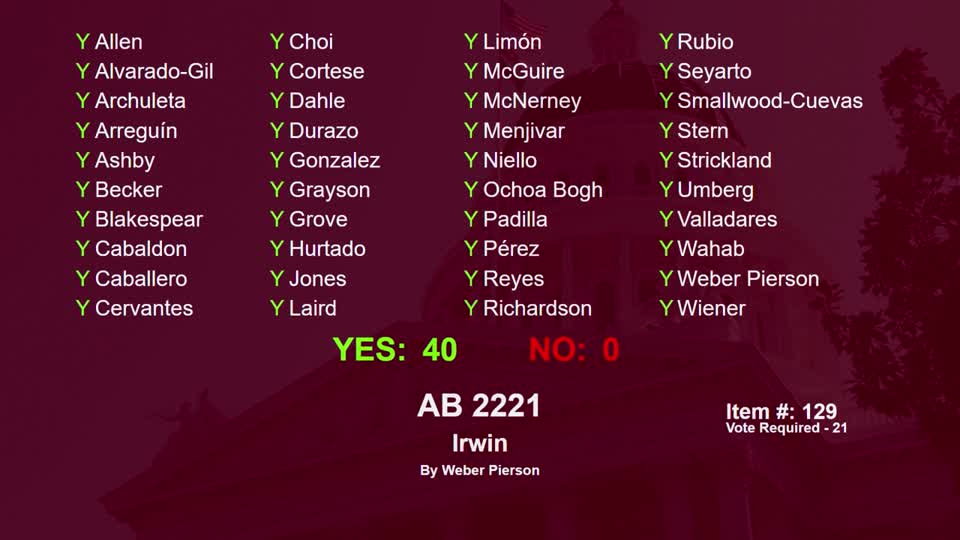 9MIN
Senate Floor
 4MIN
Senate Standing Committee on Appropriations
 27MIN
Senate Standing Committee on Education
 30MIN
Senate Standing Committee on Governmental Organization
 2MIN
Assembly Floor
 14MIN
Assembly Standing Committee on Public Employment and Retirement
Bill Author