AB 2024: Outdoor advertising displays: permits: landscaped freeways: relocation agreements.
- Session Year: 2025-2026
- House: Assembly
- Latest Version Date: 2026-09-14
Current Status:
Passed
(2026-09-15: Chaptered by Secretary of State - Chapter 208, Statutes of 2026.)
Introduced
In Committee
Awaiting First Chamber Vote
Passed First Chamber
In Committee
Awaiting Second Chamber Vote
Passed Second Chamber
Enacted
The Outdoor Advertising Act regulates placement of advertising displays adjacent to and within specified distances of highways that are part of the national system of interstate and defense highways and federal-aid highways. The act prohibits a person, as defined, from placing an advertising display within the areas affected by the act without a permit. The act prohibits the Department of Transportation from denying or delaying the acceptance of a permit application for a new advertising display along a portion of a new alignment of an interstate or primary highway on the basis that the highway project has not been accepted as complete if the section of highway is open to the use of the public for vehicular travel within 1,000 feet of the location specified in the permit application.
This bill would also prohibit the department from denying or delaying the review, processing, or determination of a permit application described above.
The act prohibits, except as provided, placing or maintaining an advertising display on property adjacent to a portion of a freeway that has a specified coverage area of landscaping or trees at the same or elevated grade of the main-traveled way, as provided. The act authorizes removal of an advertising display that violates that prohibition, as provided.
This bill would instead authorize the removal with payment of compensation, or relocation without payment of compensation, of an advertising display that violates that prohibition, as specified.
The act does not prohibit a local governmental entity from entering into an agreement to relocate an advertising display for any purpose. The act requires the department to issue a permit without any additional consideration for a display that is being placed pursuant to a relocation agreement with another governmental entity, as provided.
This bill would instead not prohibit any governmental entity from entering into a relocation agreement and would require the department to issue a permit, without any additional consideration and without requiring a local entity or state agency to pay compensation, for a display that is being placed pursuant to a relocation agreement with another governmental entity, as specified.
The Outdoor Advertising Act regulates placement of advertising displays adjacent to and within specified distances of highways that are part of the national system of interstate and defense highways and federal-aid highways. The act prohibits a person, as defined, from placing an advertising display within the areas affected by the act without a permit. The act prohibits the Department of Transportation from denying or delaying the acceptance of a permit application for a new advertising display along a portion of a new alignment of an interstate or primary highway on the basis that the highway project has not been accepted as complete if the section of highway is open to the use of the public for vehicular travel within 1,000 feet of the location specified in the permit application.
This bill would also prohibit the department from denying or delaying the review, processing, or determination of a permit application described above.
The act prohibits, except as provided, placing or maintaining an advertising display on property adjacent to a portion of a freeway that has a specified coverage area of landscaping or trees at the same or elevated grade of the main-traveled way, as provided. The act authorizes removal of an advertising display that violates that prohibition, as provided.
This bill would instead authorize the removal with payment of compensation compensation, or relocation without payment of compensation, of an advertising display that violates that prohibition, as specified.
The act does not prohibit a local governmental entity from entering into an agreement to relocate an advertising display for any purpose. The act requires the department to issue a permit without any additional consideration for a display that is being placed pursuant to a relocation agreement with another governmental entity, as provided.
This bill would instead not prohibit any governmental entity from entering into a relocation agreement and would require the department to issue a permit, without any additional consideration and without requiring a local entity or state agency to pay compensation, for a display that is being placed pursuant to a relocation agreement with another governmental entity, as specified.
The Outdoor Advertising Act regulates placement of advertising displays adjacent to and within specified distances of highways that are part of the national system of interstate and defense highways and federal-aid highways. The act prohibits a person, as defined, from placing an advertising display within the areas affected by the act without a permit. The act prohibits the Department of Transportation from denying or delaying the acceptance of a permit application for a new advertising display along a portion of a new alignment of an interstate or primary highway on the basis that the highway project has not been accepted as complete if the section of highway is open to the use of the public for vehicular travel within 1,000 feet of the location specified in the permit application.
This bill would also prohibit the department from denying or delaying the review, processing, or determination of a permit application described above.
The act prohibits, except as provided, placing or maintaining an advertising display on property adjacent to a portion of a freeway that has a specified coverage area of landscaping or trees at the same or elevated grade of the main-traveled way, as provided. The act authorizes removal of an advertising display that violates that prohibition, as provided.
This bill would instead authorize the relocation or removal, removal with payment of compensation, compensation or relocation of an advertising display that violates that prohibition, as specified.
The act does not prohibit a local governmental entity from entering into an agreement to relocate an advertising display for any purpose. The act requires the department to issue a permit without any additional consideration for a display that is being placed pursuant to a relocation agreement with another governmental entity, as provided.
This bill would instead not prohibit any governmental entity from entering into a relocation agreement and would require the department to issue a permit, without any additional consideration and without requiring a local entity or state agency to pay compensation, for a display that is being placed pursuant to a relocation agreement with another governmental entity, as specified.
The Outdoor Advertising Act regulates placement of advertising displays adjacent to and within specified distances of highways that are part of the national system of interstate and defense highways and federal-aid highways. The act prohibits a person, as defined, from placing an advertising display within the areas affected by the act without a permit. The act prohibits the Department of Transportation from denying or delaying the acceptance of a permit application for a new advertising display along a portion of a new alignment of an interstate or primary highway on the basis that the highway project has not been accepted as complete if the section of highway is open to the use of the public for vehicular travel within 1,000 feet of the location specified in the permit application.
This bill would also prohibit the department from denying or delaying the review, processing, or determination of a permit application described above.
The act prohibits, except as provided, placing or maintaining an advertising display on property adjacent to a portion of a freeway that has a specified coverage area of landscaping or trees at the same or elevated grade of the main-traveled way, as provided. When a freeway has been classified as meeting these requirements, the act requires that classification to remain in effect until the department receives a request for a new classification review in accordance with applicable regulations. The act authorizes removal of an advertising display that violates that prohibition, as provided.
This bill would instead prohibit, except as provided, placing or maintaining an advertising display on property adjacent to a portion of a state highway that has a specified coverage area of landscaped vegetation, including, but not limited to, trees, with the landscaped vegetation planted at the same or elevated grade of the main-traveled way, as specified. This bill would require a request for a new classification review to identify the postmiles of a section of a freeway that does not meet the criteria for landscaped vegetation. The bill would instead authorize the relocation or removal, with payment of compensation, of an advertising display that violates that prohibition, as specified.
The act does not prohibit a local governmental entity from entering into an agreement to relocate an advertising display for any purpose. The act requires the department to issue a permit without any additional consideration for a display that is being placed pursuant to a relocation agreement with another governmental entity, as provided.
This bill would instead not prohibit any governmental entity from entering into a relocation agreement and would require the department to issue a permit, without any additional consideration and without requiring a local entity or state agency to pay compensation, for a display that is being placed pursuant to a relocation agreement with another governmental entity, as specified.
The Outdoor Advertising Act provides for the regulation by the Department of Transportation of advertising displays, as defined, within view of public highways. The act states that the departments regulation of the placing of advertising displays in unincorporated areas is exclusive of all other regulations, as specified.This bill would make nonsubstantive changes to that provision.The Outdoor Advertising Act provides for the regulation by the Department of Transportation of advertising displays, as defined, within view of public highways. The act states that the departments regulation of the placing of advertising displays in unincorporated areas is exclusive of all other regulations, as specified.
This bill would make nonsubstantive changes to that provision.
The department shall not deny or delay the acceptance, review, processing, or determination of a permit application for a new advertising display along a portion of a new alignment of an interstate or primary highway on the basis that the highway project has not been accepted by the department as complete if the section of highway is open to the use of the public for vehicular travel within 1,000 feet of the location specified in the permit application.
SEC. 2.Section 5441 of the Business and Professions Code is amended to read:5441.An advertising display that is in violation of Section 5440 shall be subject to removal with payment of compensation as described in Sections 5412, or relocation without payment of compensation as described in Section 5443, three years from the date the freeway has been declared a landscaped freeway by the director or the directors designee and the character of the freeway has been changed from a freeway to a landscaped freeway.
SEC. 3.Section 5443 of the Business and Professions Code is amended to read:5443.Nothing in this article prohibits any of the following:
(a)A city, county, or city and county from designating the districts or zones in which advertising displays may be placed or prohibited as part of a city, county, or city and county land use or zoning ordinance.
(b)(1)A governmental entity from entering into a relocation agreement for any purpose, including, but not limited to, those purposes provided in Section 5412, or the department from allowing a lawfully erected display to be increased in height at its permitted location or to be relocated provided the height increase or relocation would not cause a reduction in federal aid highway funds as provided in Section 131 of Title 23 of the United States Code or an increase in the number of displays within the state that does not conform to this article. An increase in height permitted under this subdivision shall not be more than that necessary to restore the visibility of the display to the main-traveled way. Relocated displays may be placed in the same or a different city, county, or city and county, and relocation agreements shall be entered into between the sign and permit owner and the local governmental entity. An advertising display relocated pursuant to this paragraph shall be deemed a placement requiring a new permit and shall comply with all of the provisions of Article 6 (commencing with Section 5350) and Article 7 (commencing with Section 5400). A relocated display shall not result in a net increase of the number of displays adjacent to landscaped freeway segments statewide.
(2)A relocated advertising display may be converted to or replaced with a message center pursuant to a relocation agreement for any purpose, including, but not limited to, the purposes provided pursuant to Section 5412. The department shall issue a permit, without any additional consideration and without requiring a local entity or state agency to pay compensation pursuant to Section 5412 or 5441, for a display that is being placed pursuant to a relocation agreement with another governmental entity if the relocated display conforms with this section. An advertising display converted or replaced with a message center pursuant to this paragraph shall be deemed a placement requiring a new permit and shall comply with all the provisions of Article 6 (commencing with Section 5350) and Article 7 (commencing with Section 5400).
The department shall not deny or delay the acceptance, review, processing, or determination of a permit application for a new advertising display along a portion of a new alignment of an interstate or primary highway on the basis that the highway project has not been accepted by the department as complete if the section of highway is open to the use of the public for vehicular travel within 1,000 feet of the location specified in the permit application.
SEC. 2.Section 5441 of the Business and Professions Code is amended to read:5441.An advertising display that is in violation of Section 5440 shall be subject to removal with payment of compensation as described in Sections 5412 and 5443 or relocation 5412, or relocation without payment of compensation as described in Section 5443, three years from the date the freeway has been declared a landscaped freeway by the director or the directors designee and the character of the freeway has been changed from a freeway to a landscaped freeway.
SEC. 3.Section 5443 of the Business and Professions Code is amended to read:5443.Nothing in this article prohibits any of the following:
(a)A city, county, or city and county from designating the districts or zones in which advertising displays may be placed or prohibited as part of a city, county, or city and county land use or zoning ordinance.
(b)(1)A governmental entity from entering into a relocation agreement for any purpose, including, but not limited to, those purposes provided in Section 5412, or the department from allowing a lawfully erected display to be increased in height at its permitted location or to be relocated provided the height increase or relocation would not cause a reduction in federal aid highway funds as provided in Section 131 of Title 23 of the United States Code or an increase in the number of displays within the state that does not conform to this article. An increase in height permitted under this subdivision shall not be more than that necessary to restore the visibility of the display to the main-traveled way. Relocated displays may be placed in the same or a different city, county, or city and county, and relocation agreements shall be entered into between the sign and permit owner and the local governmental entity. An advertising display relocated pursuant to this paragraph shall be deemed a placement requiring a new permit and shall comply with all of the provisions of Article 6 (commencing with Section 5350) and Article 7 (commencing with Section 5400). A relocated display shall not result in a net increase of the number of displays adjacent to landscaped freeway segments statewide.
(2)A relocated advertising display may be converted to or replaced with a message center pursuant to a relocation agreement for any purpose, including, but not limited to, the purposes provided pursuant to Section 5412. The department shall issue a permit, without any additional consideration and without requiring a local entity or state agency to pay compensation pursuant to Section 5412 or 5441, for a display that is being placed pursuant to a relocation agreement with another governmental entity if the relocated display conforms with this section. An advertising display converted or replaced with a message center pursuant to this paragraph shall be deemed a placement requiring a new permit and shall comply with all the provisions of Article 6 (commencing with Section 5350) and Article 7 (commencing with Section 5400).
The department shall not deny or delay the acceptance, review, processing, or determination of a permit application for a new advertising display along a portion of a new alignment of an interstate or primary highway on the basis that the highway project has not been accepted by the department as complete if the section of highway is open to the use of the public for vehicular travel within 1,000 feet of the location specified in the permit application.
SEC. 2.Section 5441 of the Business and Professions Code is amended to read:5441.An advertising display that is in violation of Section 5440 shall be subject to relocation or removal, removal with payment of compensation as described in Sections 5412 and 5443, 5443 or relocation three years from the date the freeway has been declared a landscaped freeway by the director or the directors designee and the character of the freeway has been changed from a freeway to a landscaped freeway.
SEC. 3.Section 5443 of the Business and Professions Code is amended to read:5443.Nothing in this article prohibits any of the following:
(a)A city, county, or city and county from designating the districts or zones in which advertising displays may be placed or prohibited as part of a city, county, or city and county land use or zoning ordinance.
(b)(1) A governmental entity from entering into a relocation agreement for any purpose, including, but not limited to, those purposes provided in Section 5412, or the department from allowing a lawfully erected display to be increased in height at its permitted location or to be relocated provided the height increase or relocation would not cause a reduction in federal aid highway funds as provided in Section 131 of Title 23 of the United States Code or an increase in the number of displays within the state that does not conform to this article. An increase in height permitted under this subdivision shall not be more than that necessary to restore the visibility of the display to the main-traveled way. Relocated displays may be placed in the same or a different city, county, or city and county, and relocation agreements shall be entered into between the sign and permit owner and the local governmental entity. An advertising display relocated pursuant to this paragraph shall be deemed a placement requiring a new permit and shall comply with all of the provisions of Article 6 (commencing with Section 5350) and Article 7 (commencing with Section 5400). A relocated display shall not result in a net increase of the number of displays adjacent to landscaped freeway segments statewide.
(2)A relocated advertising display may be converted to or replaced with a message center pursuant to a relocation agreement for any purpose, including, but not limited to, the purposes provided pursuant to Section 5412. The department shall issue a permit, without any additional consideration and without requiring a local entity or state agency to pay compensation pursuant to Section 5412 or 5441, for a display that is being placed pursuant to a relocation agreement with another governmental entity if the relocated display conforms with this section. An advertising display converted or replaced with a message center pursuant to this paragraph shall be deemed a placement requiring a new permit and shall comply with all the provisions of Article 6 (commencing with Section 5350) and Article 7 (commencing with Section 5400).
The department shall not deny or delay the acceptance, review, processing, or determination of a permit application for a new advertising display along a portion of a new alignment of an interstate or primary highway on the basis that the highway project has not been accepted by the department as complete if the section of highway is open to the use of the public for vehicular travel within 1,000 feet of the location specified in the permit application.
SEC. 2.Section 5440 of the Business and Professions Code is amended to read:5440.(a)Except as otherwise provided in this article, an advertising display shall not be placed or maintained on property adjacent to a 1,000-foot or greater section of a freeway that has landscaped vegetation with at least an average width of 20 feet of landscaped vegetation, including, but not limited to, trees, on department-owned property and with the landscaped vegetation planted at the same or elevated grade of the main-traveled way if the advertising display is designed to be viewed primarily by persons traveling on the main-traveled way of the landscaped freeway.(b)The department shall determine the average width by dividing the square footage of a landscaped area by its length.(c)(1)All existing classifications shall remain in effect until the department receives a request for a new classification review in accordance with applicable regulations. A request for a new classification review shall identify the postmiles of a section of a freeway that is 1,000 feet or greater that does not meet the criteria for landscaped vegetation described in subdivision (a).(2)The department may charge a fee in an amount not to exceed the reasonable costs incurred by the department in conducting a classification review and not to exceed five hundred dollars ($500).(d)For purposes of this section, average width of 20 feet means that over any 1,000-foot section freeway there averages at least 20 feet of total property contiguous to all sides of the main traveled way between the outer edge of the shoulders and the freeway right-of-way boundaries, including median plantings, that otherwise meets the definition of a landscaped freeway in Section 5216.SEC. 3.SEC. 2.Section 5441 of the Business and Professions Code is amended to read:5441.An advertising display that is in violation of Section 5440 shall be subject to relocation or removal, with payment of compensation as described in Sections 5412 and 5443, three years from the date the freeway has been declared a landscaped freeway by the director or the directors designee and the character of the freeway has been changed from a freeway to a landscaped freeway.
SEC. 4.SEC. 3.Section 5443 of the Business and Professions Code is amended to read:5443.Nothing in this article prohibits any of the following:
(a)A city, county, or city and county from designating the districts or zones in which advertising displays may be placed or prohibited as part of a city, county, or city and county land use or zoning ordinance.
(b)(1) A governmental entity from entering into a relocation agreement for any purpose, including, but not limited to, those purposes provided in Section 5412, or the department from allowing a lawfully erected display to be increased in height at its permitted location or to be relocated provided the height increase or relocation would not cause a reduction in federal aid highway funds as provided in Section 131 of Title 23 of the United States Code or an increase in the number of displays within the state that does not conform to this article. An increase in height permitted under this subdivision shall not be more than that necessary to restore the visibility of the display to the main-traveled way. Relocated displays may be placed in the same or a different city, county, or city and county, and relocation agreements shall be entered into between the sign and permit owner and the local governmental entity. An advertising display relocated pursuant to this paragraph shall be deemed a placement requiring a new permit and shall comply with all of the provisions of Article 6 (commencing with Section 5350) and Article 7 (commencing with Section 5400). A relocated display shall not result in a net increase of the number of displays adjacent to landscaped freeway segments statewide.
(2)A relocated advertising display may be converted to or replaced with a message center pursuant to a relocation agreement for any purpose, including, but not limited to, the purposes provided pursuant to Section 5412. The department shall issue a permit, without any additional consideration and without requiring a local entity or state agency to pay compensation pursuant to Section 5412 or 5441, for a display that is being placed pursuant to a relocation agreement with another governmental entity if the relocated display conforms with this section. An advertising display converted or replaced with a message center pursuant to this paragraph shall be deemed a placement requiring a new permit and shall comply with all the provisions of Article 6 (commencing with Section 5350) and Article 7 (commencing with Section 5400).
REVISIONS: HeadingLine 2.The department shall not deny or delay the acceptance acceptance, review, processing, or determination of a permit application for a new advertising display along a portion of a new alignment of an interstate or primary highway on the basis that the highway project has not been accepted by the department as complete if the section of highway is open to the use of the public for vehicular travel within 1,000 feet of the location specified in the permit application.
SEC. 2.Section 5440 of the Business and Professions Code is amended to read:5440.(a)Except as otherwise provided in this article, no an advertising display may shall not be placed or maintained on property adjacent to a 1,000-foot or greater section of a freeway that has been landscaped vegetation with at least an average width of 20 feet of landscaping or that includes trees, landscaped vegetation, including, but not limited to, trees, on department-owned property and with the landscaped vegetation planted at the same or elevated grade of the main-traveled way if the advertising display is designed to be viewed primarily by persons traveling on the main-traveled way of the landscaped freeway.
(b)The department shall determine the average width by dividing the square footage of a landscaped area by its length.
(c)(1)All existing classifications shall remain in effect until the department receives a request for a new classification review in accordance with applicable regulations. A request for a new classification review shall identify the postmiles of a section of a freeway that is 1,000 feet or greater that does not meet the criteria for landscaped vegetation described in subdivision (a).
(2)The department may charge a fee in an amount not to exceed the reasonable costs incurred by the department in conducting a classification review and not to exceed five hundred dollars ($500).
(d)For purposes of this section, average width of 20 feet means that over any 1,000-foot section freeway there averages at least 20 feet of total property contiguous to all sides of the main traveled way between the outer edge of the shoulders and the freeway right-of-way boundaries, including median plantings, that otherwise meets the definition of a landscaped freeway in Section 5216.
SEC. 3.Section 5441 of the Business and Professions Code is amended to read:5441.Any An advertising display which is now, or hereafter becomes, that is in violation of Section 5440 shall be subject to removal relocation or removal, with payment of compensation as described in Sections 5412 and 5443, three years from the date the freeway has been declared a landscaped freeway by the director or the directors designee and the character of the freeway has been changed from a freeway to a landscaped freeway.
SEC. 4.Section 5443 of the Business and Professions Code is amended to read:5443.Nothing in this article prohibits any of the following:
(a)Any A city, county, or city and county from designating the districts or zones in which advertising displays may be placed or prohibited as part of a city, county, or city and county land use or zoning ordinance.
(b)(1)Any local A governmental entity from entering into a relocation agreement for any purpose, including, but not limited to, those purposes provided in Section 5412, or the department from allowing any a lawfully erected display to be increased in height at its permitted location or to be relocated provided the height increase or relocation would not cause a reduction in federal aid highway funds as provided in Section 131 of Title 23 of the United States Code or an increase in the number of displays within the state that does not conform to this article. Any An increase in height permitted under this subdivision shall not be more than that necessary to restore the visibility of the display to the main-traveled way. Relocated displays may be placed in the same or a different city, county, or city and county, and relocation agreements shall be entered into between the sign and permit owner and the local governmental entity. An advertising display relocated pursuant to this paragraph shall be deemed a placement requiring a new permit and shall comply with all of the provisions of Article 6 (commencing with Section 5350) and Article 7 (commencing with Section 5400). A relocated display shall not result in a net increase of the number of displays adjacent to landscaped freeway segments statewide.
(2)A relocated advertising display may be converted to or replaced with a message center pursuant to a relocation agreement for any purpose, including, but not limited to, the purposes provided pursuant to Section 5412. The department shall issue a permit, without any additional consideration, for any consideration and without requiring a local entity or state agency to pay compensation pursuant to Section 5412 or 5441, for a display that is being placed pursuant to a relocation agreement with another governmental entity if the relocated display conforms with the provisions of this section. An advertising display converted or replaced with a message center pursuant to this paragraph shall be deemed a placement requiring a new permit and shall comply with all the provisions of Article 6 (commencing with Section 5350) and Article 7 (commencing with Section 5400).
SECTION 1.Section 5270 of the Business and Professions Code is amended to read:5270.The regulation of the placing of advertising displays by this chapter, insofar as that regulation may affect the placing of advertising displays within view of the public highways of the state in unincorporated areas, shall be exclusive of all other regulations for the placing of advertising displays within view of the public highways of the state in unincorporated areas whether fixed by a law of this state or by a political subdivision of the state.The regulation of the placing of advertising displays by this chapter, insofar as such that regulation may affect the placing of advertising displays within view of the public highways of this the state in unincorporated areas, shall be exclusive of all other regulations for the placing of advertising displays within view of the public highways of this the state in unincorporated areas whether fixed by a law of this state or by a political subdivision thereof. of the state.
|
Date
|
Status
|
|---|---|
| Sep 15, 2026 | Chaptered by Secretary of State - Chapter 208, Statutes of 2026. |
| Sep 15, 2026 | Approved by the Governor. |
| Sep 14, 2026 | Chaptered by Secretary of State - Chapter 208, Statutes of 2026. |
| Sep 14, 2026 | Approved by the Governor. |
| Aug 31, 2026 | Enrolled and presented to the Governor at 4 p.m. |
| Aug 25, 2026 | Senate amendments concurred in. To Engrossing and Enrolling. (Ayes 74. Noes 0. Page 6446.). |
| Aug 25, 2026 | Senate amendments concurred in. To Engrossing and Enrolling. (Ayes 74. Noes 0.). |
| Aug 19, 2026 | In Assembly. Concurrence in Senate amendments pending. |
| Aug 19, 2026 | Read third time. Passed. Ordered to the Assembly. (Ayes 38. Noes 0. Page 5555.). |
| Aug 19, 2026 | Read third time. Passed. Ordered to the Assembly. (Ayes 38. Noes 0.). |
| Aug 11, 2026 | Read second time. Ordered to third reading. |
| Aug 10, 2026 | Read third time and amended. Ordered to second reading. |
| Aug 4, 2026 | Read second time. Ordered to third reading. |
| Aug 3, 2026 | From committee: Be ordered to second reading pursuant to Senate Rule 28.8. |
| Jun 24, 2026 | From committee: Do pass and re-refer to Com. on APPR. (Ayes 13. Noes 0.) (June 23). Re-referred to Com. on APPR. |
| Jun 15, 2026 | From committee chair, with author's amendments: Amend, and re-refer to committee. Read second time, amended, and re-referred to Com. on TRANS. |
| Jun 3, 2026 | Referred to Com. on TRANS. |
| May 27, 2026 | In Senate. Read first time. To Com. on RLS. for assignment. |
| May 26, 2026 | Read third time. Passed. Ordered to the Senate. (Ayes 71. Noes 3. Page 5291.) |
| May 26, 2026 | Read third time. Passed. Ordered to the Senate. (Ayes 71. Noes 3.) |
| May 26, 2026 | Read third time. Passed. Ordered to the Senate. |
| May 14, 2026 | Read second time. Ordered to third reading. |
| May 13, 2026 | From committee: Do pass. (Ayes 15. Noes 0.) (May 13). |
| Apr 23, 2026 | From committee: Do pass and re-refer to Com. on APPR. (Ayes 21. Noes 0.) (April 22). Re-referred to Com. on APPR. |
| Apr 23, 2026 | Coauthors revised. |
| Apr 7, 2026 | Re-referred to Com. on G.O. |
| Apr 6, 2026 | From committee chair, with author's amendments: Amend, and re-refer to Com. on G.O. Read second time and amended. |
| Mar 23, 2026 | Re-referred to Com. on G.O. |
| Mar 19, 2026 | From committee chair, with author's amendments: Amend, and re-refer to Com. on G.O. Read second time and amended. |
| Mar 19, 2026 | Referred to Com. on G.O. |
| Feb 18, 2026 | From printer. May be heard in committee March 20. |
| Feb 17, 2026 | Read first time. To print. |
|
Date
|
Description
|
Location
|
Votes
|
|
|---|---|---|---|---|
| Aug 25, 2026 | AB 2024 Nguyen Concurrence in Senate Amendments | Assembly Floor |
Passed |
|
| Aug 19, 2026 | Assembly 3rd Reading AB2024 Nguyen et al. By Archuleta | Senate Floor |
Passed |
|
| Jun 23, 2026 | Do pass, but first be re-referred to the Committee on [Appropriations] | Senate Standing Committee on Transportation |
Passed |
|
| May 26, 2026 | AB 2024 Nguyen Assembly Third Reading | Assembly Floor |
Passed |
|
| May 13, 2026 | Do pass. | Assembly Standing Committee on Appropriations |
Passed |
|
| Apr 22, 2026 | Do pass and be re-referred to the Committee on [Appropriations] | Assembly Standing Committee on Governmental Organization |
Passed |
This list shows positions taken on this bill by organizations on the date displayed, which is linked to the original source.
Positions by individuals are not included.
|
Organization
|
Position
|
Date
|
|---|---|---|
| California Association Of Realtors | ** Support | |
| California State Outdoor Advertising Association | ** Support | |
| Scenic America | ** Against |
CONCURRENCE IN SENATE AMENDMENTS
CSA1 Bill Id:AB 2024
Author:(Nguyen)
As Amended Ver:August 10, 2026
Majority vote
SUMMARY
This bill would revise the Department of Transportation′s (Caltrans) review process for permit applications involving new outdoor advertising displays (billboards) along newly aligned interstate or primary highways, as specified. It also makes updates and clarifications to the Outdoor Advertising Act (OAA or Act) regarding the removal and relocation of advertising displays within the state, as described.
Senate Amendments
1) Clarify a provision relating to the removal with payment of compensation, or relocation without payment of compensation, of an advertising display that becomes noncompliant with OAA due to a landscaped freeway designation, as specified.
2) Make technical changes.
COMMENTS
Background.
Since 1933, Caltrans has enforced the State Outdoor Advertising Act (California Business and Professions Code Section 5200 et seq.), which establishes comprehensive standards and regulations for outdoor advertising displays, commonly known as billboards. The department regulates the placement of such displays that are visible from California highways. Outdoor advertising displays require a permit from Caltrans if they are within 660 feet from the edge of the right-of-way and viewed primarily by persons traveling on the main-traveled way of the freeway. In order to enforce the requirements for outdoor advertising under the Highway Beautification Act and the State′s OAA, Caltrans regularly inspects freeways and highways that are part of the National Highway System. If the state fails to properly administer the federal program, the state is subject to a sanction reducing federal highway funding allocations by 10%.The OAA regulates the size, illumination, orientation, and location of advertising displays adjacent to and within specified distances of interstate or primary highways, and, with some exceptions, specifically prohibits any advertising display from being placed or maintained on property adjacent to a section of landscaped highway.
The Act generally does not apply to ″on premises″ advertising displays, which include those advertising the sale of the property upon which it is placed or that advertise the business conducted, services rendered, or goods produced or sold on the property. Local governments regulate on-premises displays, except for certain safety requirements. Lastly, existing law includes a number of exceptions to the OAA and assigns Caltrans the responsibility of reviewing and permitting signs that qualify for these exceptions.
The property owner′s consent is necessary for a display to be permitted. The ownership of the display and permit will be determined by the terms of the agreement between the display and property owner. Permits continue in effect unless terminated or not renewed by the permit holder. Caltrans will accept either a building permit or action of a local agency when applying for a permit. If neither can be provided, Caltrans must deny the permit application.
Relocation of billboards. Over the years, local cities, counties, and billboard companies have collaborated through the OAA to create mutually beneficial relocation agreements. These agreements effectively remove billboards from neighborhoods and main streets and relocate them to industrial or commercial areas along highways. As part of this process, local governments and sign companies often establish revenue‑sharing arrangements that provide important funding for public programs and services. A relocated display may be upgraded to a message center at its new site, provided it complies with spacing rules and all other requirements of the OAA. Caltrans is not required to approve or sign a relocation agreement between a display owner and a local jurisdiction.
A relocation agreement enables a local entity to continue development in a planned manner without expenditure of public funds. The development may be a ″taking″ to accommodate a capital project, such as a street widening, or to give effect to a local law or regulation, such as one that establishes a historic district. Either type of development would require the local entity to pay fair market value for the ″taking″.
However, in practice, relocation provisions have not always been applied consistently, and additional requirements have at times been imposed that are not clearly supported in statute. These inconsistencies have led to increased project costs and delays. AB 1673 (Pacheco), Chapter 590, Statutes of 2023, clarified the definitions of ″relocation,″ ″relocated display,″ and related terms. The bill also explicitly authorizes converting an advertising display to a message center, such as a display that allows changeable digital content rather than a static image.
According to the sponsor, despite recent statutory clarifications, relocation provisions have not always been applied consistently, and additional requirements have at times been imposed that are not clearly supported in statute. This has resulted in increased costs and delays for affected projects.
Caltrans project acceptance. The ″acceptance″ of a highway project is the final step of a project′s timeline when Caltrans confirms the project has been ″completed″ in accordance with agreed upon contract specifications, approved plans, and applicable regulations. Thus, ″acceptance″ is the formal step that marks the transition from a project′s active construction to full operational use.
SB 364 (Strickland), Chapter 313, Statutes of 2025, prohibited Caltrans from denying or delaying the acceptance of a permit application for an advertising display along a new portion of a highway for a project that has not been accepted by Caltrans as complete if the portion of the highway is already open to the public. This bill additionally prohibits Caltrans from denying or delaying the review, processing, or determination of such a permit. This measure is intended to bring further clarity to Business and Professions Code Section 5367.
Landscaped freeways. In keeping with the policy of encouraging highway beautification, advertising is generally prohibited along freeways classified as ″landscaped″, as defined in Caltrans Outdoor Advertising Regulations. The Federal Highway Administration (FHA) generally leaves the determination of ″landscaped″ to the states, which provides some flexibility in permitting advertising. Caltrans has an administrative process to declassify a freeway as non-landscaped, thus permitting an advertising display if all other permit requirements are met. Some are concerned that Caltrans′ process is too rigid, which results in one-off legislation to exempt individual billboards or locations from the state rules (though never from the FHA requirements).
According to the Author
According to the author, "AB 2024 is about making sure existing law is applied consistently. Currently, delays in processing permits and inconsistent handling of relocation create unnecessary setbacks for projects. This bill provides clear direction so permits are processed on time and projects can move forward."
Arguments in Support
This bill is sponsored by the California State Outdoor Advertising Association, which argues:
Current law allows for the relocation of lawful advertising displays when they are removed for public projects, in lieu of monetary compensation. However, inconsistent administrative practices have created uncertainty and, in some cases, limited the ability to utilize relocation as intended under statute.
Arguments in Opposition
This bill is opposed by Scenic America, which argues, "This bill may appear technical, but in practice it represents a significant rollback of regulatory safeguards that currently protect California's communities from unchecked billboard expansion" including permanent retention of non-conforming signs and easier permitting for outdoor advertising.
FISCAL COMMENTS
According to the Senate Committee on Appropriations, pursuant to Senate Rule 28.8, negligible state costs.
VOTES:
ASM GOVERNMENTAL ORGANIZATION: 21-0-1
YES: Blanca Rubio, Davies, Berman, Bryan, Carrillo, Dixon, Fong, Gabriel, Gallagher, Gipson, Macedo, McKinnor, Nguyen, Pacheco, Ramos, Michelle Rodriguez, Solache, Soria, Ta, Valencia, Wallis
ABS, ABST OR NV: Alvarez
ASM APPROPRIATIONS: 15-0-0
YES: Wicks, Hoover, Bauer-Kahan, Calderon, Caloza, Ellis, Fong, Mark González, Krell, Pacheco, Pellerin, Sharp-Collins, Solache, Ta, Tangipa
ASSEMBLY FLOOR: 71-3-6
YES: Addis, Aguiar-Curry, Ahrens, Alanis, Alvarez, Arambula, Ávila Farías, Bains, Bauer-Kahan, Berman, Boerner, Bonta, Bryan, Calderon, Caloza, Carrillo, Castillo, Chen, Connolly, Davies, DeMaio, Dixon, Elhawary, Ellis, Flora, Fong, Gabriel, Gallagher, Garcia, Gipson, Jeff Gonzalez, Mark González, Hadwick, Haney, Harabedian, Hoover, Johnson, Krell, Lackey, Lee, Lowenthal, Macedo, McKinnor, Nguyen, Ortega, Pacheco, Papan, Patel, Patterson, Pellerin, Petrie-Norris, Quirk-Silva, Ramos, Ransom, Michelle Rodriguez, Rogers, Blanca Rubio, Sanchez, Schultz, Sharp-Collins, Solache, Soria, Stefani, Ta, Tangipa, Wallis, Ward, Wicks, Wilson, Zbur, Rivas
NO: Irwin, Schiavo, Valencia
ABS, ABST OR NV: Bennett, Hart, Jackson, Kalra, Muratsuchi, Celeste Rodriguez
SENATE FLOOR: 38-0-2
YES: Allen, Alvarado-Gil, Archuleta, Arreguín, Ashby, Becker, Cabaldon, Caballero, Cervantes, Choi, Cortese, Dahle, Durazo, Gonzalez, Grayson, Grove, Hurtado, Jones, Laird, McGuire, McNerney, Menjivar, Niello, Ochoa Bogh, Padilla, Pérez, Reyes, Richardson, Rubio, Seyarto, Smallwood-Cuevas, Stern, Strickland, Umberg, Valladares, Wahab, Weber Pierson, Wiener
ABS, ABST OR NV: Blakespear, Limón
UPDATED
VERSION: August 10, 2026
CONSULTANT: Eric Johnson / G.O. / (916) 319-2531 FN: 0003837
SENATE RULES COMMITTEE Office of Senate Floor Analyses (916) 651-4171 | AB 2024 |
THIRD READING
Bill No: AB 2024
Author: Nguyen (D), et al.
Amended: 8/10/26 in Senate
Vote: 21
SENATE TRANSPORTATION COMMITTEE: 13-0, 6/23/26
AYES: Cortese, Strickland, Archuleta, Arreguín, Blakespear, Dahle, Gonzalez, Grayson, Menjivar, Richardson, Seyarto, Valladares, Wiener
ASSEMBLY FLOOR: 71-3, 5/26/26 - See last page for vote
SUBJECT: Outdoor advertising displays: permits: landscaped freeways: relocation agreements
SOURCE: Author
DIGEST:
This bill makes various changes to the permit application and removal / relocation processes pertaining to outdoor advertising displays (billboards) along state highways, as specified.
Senate amendments of 8/10/26 provide technical cleanup.
ANALYSIS:
Existing law:
- Provides, under the Outdoor Advertising Act (OAA), for the regulation by the Department of Transportation (Caltrans) of an advertising display, as defined, within view of public highways. OAA regulates the placement of an off‑premises advertising display along highways that generally advertises business conducted or services rendered, or goods produced or sold at a location other than the property where the display is located. OAA prohibits a person, as defined, from placing an advertising display within the areas affected by the Act without a permit.
- Prohibits, via the OAA, Caltrans from denying or delaying the acceptance of a permit application for a new advertising display along a portion of a new alignment of an interstate or primary highway on the basis that the highway project has not been accepted by the department as complete if the section of highway is open to the use of the public for vehicular travel within 1,000 feet of the location specified in the permit application.
- OAA prohibits, except as provided, placing or maintaining an advertising display on property adjacent to a portion of a freeway that has a specified coverage area of landscaping or trees at the same or elevated grade of the main-traveled way. OAA further authorizes removal of an advertising display that violates that prohibition, as specified.
4) Provides any advertising display which is now, or hereafter becomes, in violation of current law (i.e. landscaped freeways), as defined, shall be subject to removal three years from the date the freeway has been declared a landscaped freeway by the director or the director’s designee.
5) Provides the governing body of any city, county, or city and county may enact ordinances, including, but not limited to, land use or zoning ordinances, imposing restrictions on advertising displays adjacent to any street, road, or highway equal to or greater than those imposed by the Act, as specified. No city, county, or city and county may allow an advertising display to be placed or maintained in violation of the OAA.
6) Allows local governments to designate zones where advertising displays may be placed or relocated. Provides that any government entity may enter into a relocation agreement for an advertising display and that the display may be placed in the same location or a different location, including a different city or county. Further provides that a relocated or existing advertising display may be converted to a message center pursuant to a relocation agreement between the sign owner, permit owner and a local government entity that does not result in a net increase in advertising displays on a landscaped freeway.
7) Defines “relocation” for these purposes to include removal of an advertising display and construction of a new display to substitute for the display removed.
- Grants Caltrans the ability to allow any lawfully erected display to be increased in height at its permitted location, provided the height increase or conversion would not cause a reduction in federal aid highway funds or an increase in the number of displays within the state which does not conform to OAA, as described.
This bill:
1) Clarfies that Caltrans shall not deny or delay the acceptance, review, processing, or determination of a permit application for a new advertising display along a portion of a new alignment of an interstate or primary highway on the basis that the highway project has not been accepted by the department as complete if the section of highway is open to the use of the public for vehicular travel within 1,000 feet of the location that is specified in the permit application.
2) Provides an advertising display that becomes noncompliant with OAA due to a landscaped freeway designation shall be subject to removal with payment of compensation, as required under existing law, or to relocation, as authorized by this measure. The landscaped displays would be subject to removal or relocation three years after the adjacent section of freeway is declared landscaped by Caltrans, as specified.
3) States this measure would not prohibit any governmental entity from entering into a relocation agreement and would require Caltrans to issue a permit, without any additional consideration and without requiring a local entity or state agency to pay compensation, as defined, for a display that is being placed pursuant to a relocation agreement with another governmental entity, if the relocated display meets the defined requirements, as specified.
4) Makes technical and clarifying changes.
Comments
Purpose of the bill. According to the author, "AB 2024 is about making sure existing law is applied consistently. Currently, delays in processing permits and inconsistent handling of relocation create unnecessary setbacks for projects. This bill provides clear direction so permits are processed on time and projects can move forward.”
OAA: a history. Since 1933, Caltrans has enforced the OAA which contains comprehensive standards and regulations for outdoor advertising displays. Caltrans regulates the placement of outdoor advertising displays visible from California highways. Outdoor advertising displays require a permit from Caltrans if they are within 660 feet from the edge of the right-of-way and viewed primarily by persons traveling on the main-traveled way of the freeway. In order to enforce the requirements for outdoor advertising under the federal Highway Beautification Act (HBA) and the State's OAA, Caltrans regularly inspects freeways and highways that are part of the National Highway System.
The OAA regulates the size, illumination, orientation, and location of advertising displays adjacent to and within specified distances of interstate or primary highways, and, with some exceptions, specifically prohibits any advertising display from being placed or maintained on property adjacent to a section of landscaped highway.
The Act generally does not apply to “on premises” advertising displays, which include those advertising the sale of the property upon which it is placed or that advertise the business conducted, services rendered, or goods produced or sold on the property. Local governments regulate on-premises displays, except for certain safety requirements. Lastly, existing law includes a number of exceptions to the OAA and assigns Caltrans the responsibility of reviewing and permitting signs that qualify for these exceptions.
Relocation of billboards. Over the years, local cities, counties, and billboard companies have collaborated through the OAA to create mutually beneficial relocation agreements. These agreements effectively remove billboards from neighborhoods and main streets and relocate them to industrial or commercial areas along highways. As part of this process, local governments and sign companies often establish revenue‑sharing arrangements that provide important funding for public programs and services. A relocated display may be upgraded to a message center at its new site, provided it complies with spacing rules and all other requirements of the OAA. Caltrans is not required to approve or sign a relocation agreement between a display owner and a local jurisdiction.
A relocation agreement enables a local entity to continue development in a planned manner without expenditure of public funds. The development may be a "taking" to accommodate a capital project, such as a street widening, or to give effect to a local law or regulation, such as one that establishes a historic district. Either type of development would require the local entity to pay fair market value for the "taking."
However, in practice, relocation provisions have not always been applied consistently, and additional requirements have at times been imposed that are not clearly supported in statute. These inconsistencies have led to increased project costs and delays. AB 1673 (Pacheco, Chapter 590, Statutes of 2023), clarified the definitions of “relocation,” “relocated display,” and related terms. The bill also explicitly authorizes converting an advertising display to a message center, such as a display that allows changeable digital content rather than a static image.
Caltrans project acceptance. The "acceptance" of a highway project is the final step in the project delivery process where Caltrans confirms the construction project has been "completed" in accordance with the agreed contract specifications, approved plans, and applicable regulations. Ultimately, this is the formal step that marks the transition from active construction to full operational use. Several components of the project acceptance process include, but are not limited to, final inspection by Caltrans engineers, "punch list" completion, and the contractor submitting the final documentation for the project. In certain instances, Caltrans may relieve the contractor of the responsibility for maintaining and protecting completed portions of a highway project. This action, otherwise known as "maintenance and protection relief," may occur when Caltrans determines that the work on a specific segment meets contract specifications and is ready for operational use. It's important to note that while this action is available, the Caltrans Construction Manual stresses that this action should only be considered when very specific criteria are met.
Last year, SB 364 (Strickland, Chapter 313, Statutes of 2025) attempted to further clarify Caltrans review process when considering a permit application for a new outdoor advertising display (billboards) along a freeway or highway, as specified. More specifically, the bill was intended to remedy an administrative issue by directing Caltrans to review submitted outdoor advertising applications along highway project segments if the section of highway is open to the use of the public for vehicular travel within 1,000 feet of the location specified in the permit application. According to the sponsor, while prior legislation addressed permit acceptance, applications may still be accepted but not processed, creating unnecessary delays and uncertainty for both public agencies and permit holders. This measure is intended to bring further clarity to Business and Professions Code § 5367.
Landscaped freeways. In keeping with the policy of encouraging highway beautification, advertising is generally prohibited along freeways classified as “landscaped”, as defined in Caltrans Outdoor Advertising Regulations. The Federal Highway Administration (FHA) generally leaves the determination of “landscaped” to the states, which provides some flexibility in permitting advertising. Caltrans has an administrative process to declassify a freeway as non-landscaped, thus permitting an advertising display if all other permit requirements are met. Some are concerned that Caltrans’ process is too rigid, which results in one-off legislation to exempt individual billboards or locations from the state rules (though never from the FHA requirements).
This bill provides that when an advertising display becomes noncompliant with the OAA due to a freeway being designated as a landscaped freeway (meaning it’s upgraded with greenery and stricter visual standards), the display must either be removed with payment of compensation, as required under existing law, or relocated, as authorized by this measure. The removal or relocation must occur three years after the date on which the director (or their designee), declares the freeway to be a landscaped freeway and its character has been changed accordingly. The three‑year period has been part of state law since 1953. It does not require signs to be removed within that timeframe; rather, it establishes the minimum amount of time a sign may remain before it can be required to be removed.
FISCAL EFFECT: Appropriation: No Fiscal Com.: Yes Local: No
SUPPORT: (Verified 8/3/26)
California Association of Realtors
California State Outdoor Advertising Association
OPPOSITION: (Verified 8/3/26)
Scenic America
ASSEMBLY FLOOR: 71-3, 5/26/26
AYES: Addis, Aguiar-Curry, Ahrens, Alanis, Alvarez, Arambula, Ávila Farías, Bains, Bauer-Kahan, Berman, Boerner, Bonta, Bryan, Calderon, Caloza, Carrillo, Castillo, Chen, Connolly, Davies, DeMaio, Dixon, Elhawary, Ellis, Flora, Fong, Gabriel, Gallagher, Garcia, Gipson, Jeff Gonzalez, Mark González, Hadwick, Haney, Harabedian, Hoover, Johnson, Krell, Lackey, Lee, Lowenthal, Macedo, McKinnor, Nguyen, Ortega, Pacheco, Papan, Patel, Patterson, Pellerin, Petrie-Norris, Quirk-Silva, Ramos, Ransom, Michelle Rodriguez, Rogers, Blanca Rubio, Sanchez, Schultz, Sharp-Collins, Solache, Soria, Stefani, Ta, Tangipa, Wallis, Ward, Wicks, Wilson, Zbur, Rivas
NOES: Irwin, Schiavo, Valencia
NO VOTE RECORDED: Bennett, Hart, Jackson, Kalra, Muratsuchi, Celeste Rodriguez
Prepared by: Manny Leon / TRANS. / (916) 651-4121
8/12/26 16:18:55
**** END ****
SENATE RULES COMMITTEE Office of Senate Floor Analyses (916) 651-4171 | AB 2024 |
THIRD READING
Bill No: AB 2024
Author: Nguyen (D), et al.
Amended: 6/15/26 in Senate
Vote: 21
SENATE TRANSPORTATION COMMITTEE: 13-0, 6/23/26
AYES: Cortese, Strickland, Archuleta, Arreguín, Blakespear, Dahle, Gonzalez, Grayson, Menjivar, Richardson, Seyarto, Valladares, Wiener
SENATE APPROPRIATIONS COMMITTEE: Senate Rule 28.8
ASSEMBLY FLOOR: 71-3, 5/26/26 - See last page for vote
SUBJECT: Outdoor advertising displays: permits: landscaped freeways: relocation agreements
SOURCE: Author
DIGEST:
This bill makes various changes to the permit application and removal / relocation processes pertaining to outdoor advertising displays (billboards) along state highways, as specified.
ANALYSIS:
Existing law:
- Provides, under the Outdoor Advertising Act (OAA), for the regulation by the Department of Transportation (Caltrans) of an advertising display, as defined, within view of public highways. OAA regulates the placement of an off‑premises advertising display along highways that generally advertises business conducted or services rendered, or goods produced or sold at a location other than the property where the display is located. OAA prohibits a person, as defined, from placing an advertising display within the areas affected by the Act without a permit.
- Prohibits, via OAA, Caltrans from denying or delaying the acceptance of a permit application for a new advertising display along a portion of a new alignment of an interstate or primary highway on the basis that the highway project has not been accepted by the department as complete if the section of highway is open to the use of the public for vehicular travel within 1,000 feet of the location specified in the permit application.
- Prohibits, via OAA, except as provided, placing or maintaining an advertising display on property adjacent to a portion of a freeway that has a specified coverage area of landscaping or trees at the same or elevated grade of the main-traveled way. OAA further authorizes removal of an advertising display that violates that prohibition, as specified.
4) Provides any advertising display which is now, or hereafter becomes, in violation of current law (i.e. landscaped freeways), as defined, shall be subject to removal three years from the date the freeway has been declared a landscaped freeway by the director or the director’s designee.
5) Provides the governing body of any city, county, or city and county may enact ordinances, including, but not limited to, land use or zoning ordinances, imposing restrictions on advertising displays adjacent to any street, road, or highway equal to or greater than those imposed by the Act, as specified. No city, county, or city and county may allow an advertising display to be placed or maintained in violation of the OAA.
6) Allows local governments to designate zones where advertising displays may be placed or relocated. Provides that any government entity may enter into a relocation agreement for an advertising display and that the display may be placed in the same location or a different location, including a different city or county. Further provides that a relocated or existing advertising display may be converted to a message center pursuant to a relocation agreement between the sign owner, permit owner and a local government entity that does not result in a net increase in advertising displays on a landscaped freeway.
7) Defines “relocation” for these purposes to include removal of an advertising display and construction of a new display to substitute for the display removed.
- Grants Caltrans the ability to allow any lawfully erected display to be increased in height at its permitted location, provided the height increase or conversion would not cause a reduction in federal aid highway funds or an increase in the number of displays within the state which does not conform to OAA, as described.
This bill:
1) Clarfies that Caltrans shall not deny or delay the acceptance, review, processing, or determination of a permit application for a new advertising display along a portion of a new alignment of an interstate or primary highway on the basis that the highway project has not been accepted by the department as complete if the section of highway is open to the use of the public for vehicular travel within 1,000 feet of the location that is specified in the permit application.
2) Provides an advertising display that becomes noncompliant with OAA due to a landscaped freeway designation shall be subject to removal with payment of compensation, as required under existing law, or to relocation, as authorized by this measure. The landscaped displays would be subject to removal or relocation three years after the adjacent section of freeway is declared landscaped by Caltrans, as specified.
3) States this measure would not prohibit any governmental entity from entering into a relocation agreement and would require Caltrans to issue a permit, without any additional consideration and without requiring a local entity or state agency to pay compensation, as defined, for a display that is being placed pursuant to a relocation agreement with another governmental entity, if the relocated display meets the defined requirements, as specified.
4) Makes technical and clarifying changes.
Comments
Purpose of the bill. According to the author, "AB 2024 is about making sure existing law is applied consistently. Currently, delays in processing permits and inconsistent handling of relocation create unnecessary setbacks for projects. This bill provides clear direction so permits are processed on time and projects can move forward.”
OAA: a history. Since 1933, Caltrans has enforced the OAA which contains comprehensive standards and regulations for outdoor advertising displays. Caltrans regulates the placement of outdoor advertising displays visible from California highways. Outdoor advertising displays require a permit from Caltrans if they are within 660 feet from the edge of the right-of-way and viewed primarily by persons traveling on the main-traveled way of the freeway. In order to enforce the requirements for outdoor advertising under the federal Highway Beautification Act and the State's OAA, Caltrans regularly inspects freeways and highways that are part of the National Highway System.
The OAA regulates the size, illumination, orientation, and location of advertising displays adjacent to and within specified distances of interstate or primary highways, and, with some exceptions, specifically prohibits any advertising display from being placed or maintained on property adjacent to a section of landscaped highway.
The Act generally does not apply to “on premises” advertising displays, which include those advertising the sale of the property upon which it is placed or that advertise the business conducted, services rendered, or goods produced or sold on the property. Local governments regulate on-premises displays, except for certain safety requirements. Lastly, existing law includes a number of exceptions to the OAA and assigns Caltrans the responsibility of reviewing and permitting signs that qualify for these exceptions.
Relocation of billboards. Over the years, local cities, counties, and billboard companies have collaborated through the OAA to create mutually beneficial relocation agreements. These agreements effectively remove billboards from neighborhoods and main streets and relocate them to industrial or commercial areas along highways. As part of this process, local governments and sign companies often establish revenue‑sharing arrangements that provide important funding for public programs and services. A relocated display may be upgraded to a message center at its new site, provided it complies with spacing rules and all other requirements of the OAA. Caltrans is not required to approve or sign a relocation agreement between a display owner and a local jurisdiction.
A relocation agreement enables a local entity to continue development in a planned manner without expenditure of public funds. The development may be a "taking" to accommodate a capital project, such as a street widening, or to give effect to a local law or regulation, such as one that establishes a historic district. Either type of development would require the local entity to pay fair market value for the "taking."
However, in practice, relocation provisions have not always been applied consistently, and additional requirements have at times been imposed that are not clearly supported in statute. These inconsistencies have led to increased project costs and delays. AB 1673 (Pacheco, Chapter 590, Statutes of 2023), clarified the definitions of “relocation,” “relocated display,” and related terms. That bill also explicitly authorizes converting an advertising display to a message center, such as a display that allows changeable digital content rather than a static image.
Caltrans project acceptance. The "acceptance" of a highway project is the final step in the project delivery process where Caltrans confirms the construction project has been "completed" in accordance with the agreed contract specifications, approved plans, and applicable regulations. Ultimately, this is the formal step that marks the transition from active construction to full operational use. Several components of the project acceptance process include, but are not limited to, final inspection by Caltrans engineers, "punch list" completion, and the contractor submitting the final documentation for the project. In certain instances, Caltrans may relieve the contractor of the responsibility for maintaining and protecting completed portions of a highway
project. This action, otherwise known as "maintenance and protection relief," may occur when Caltrans determines that the work on a specific segment meets contract specifications and is ready for operational use. It's important to note that while this action is available, the Caltrans Construction Manual stresses that this action should only be considered when very specific criteria are met.
Last year, SB 364 (Strickland, Chapter 313, Statutes of 2025) attempted to further clarify Caltrans review process when considering a permit application for a new outdoor advertising display (billboards) along a freeway or highway, as specified. More specifically, the bill was intended to remedy an administrative issue by directing Caltrans to review submitted outdoor advertising applications along highway project segments if the section of highway is open to the use of the public for vehicular travel within 1,000 feet of the location specified in the permit application. According to the sponsor, while prior legislation addressed permit acceptance, applications may still be accepted but not processed, creating unnecessary delays and uncertainty for both public agencies and permit holders. This measure is intended to bring further clarity to Business and Professions Code § 5367.
Landscaped freeways. In keeping with the policy of encouraging highway beautification, advertising is generally prohibited along freeways classified as “landscaped”, as defined in Caltrans Outdoor Advertising Regulations. The Federal Highway Administration (FHA) generally leaves the determination of “landscaped” to the states, which provides some flexibility in permitting advertising. Caltrans has an administrative process to declassify a freeway as non-landscaped, thus permitting an advertising display if all other permit requirements are met. Some are concerned that Caltrans’ process is too rigid, which results in one-off legislation to exempt individual billboards or locations from the state rules (though never from the FHA requirements).
This bill provides that when an advertising display becomes noncompliant with the OAA due to a freeway being designated as a landscaped freeway (meaning it’s upgraded with greenery and stricter visual standards), the display must either be removed with payment of compensation, as required under existing law, or relocated, as authorized by this measure. The removal or relocation must occur three years after the date on which the director (or their designee), declares the freeway to be a landscaped freeway and its character has been changed accordingly. The three‑year period has been part of state law since 1953. It does not require signs to be removed within that timeframe; rather, it establishes the minimum amount of time a sign may remain before it can be required to be removed.
FISCAL EFFECT: Appropriation: No Fiscal Com.: Yes Local: No
SUPPORT: (Verified 8/3/26)
California Association of Realtors
California State Outdoor Advertising Association
OPPOSITION: (Verified 8/3/26)
Scenic America
ASSEMBLY FLOOR: 71-3, 5/26/26
AYES: Addis, Aguiar-Curry, Ahrens, Alanis, Alvarez, Arambula, Ávila Farías, Bains, Bauer-Kahan, Berman, Boerner, Bonta, Bryan, Calderon, Caloza, Carrillo, Castillo, Chen, Connolly, Davies, DeMaio, Dixon, Elhawary, Ellis, Flora, Fong, Gabriel, Gallagher, Garcia, Gipson, Jeff Gonzalez, Mark González, Hadwick, Haney, Harabedian, Hoover, Johnson, Krell, Lackey, Lee, Lowenthal, Macedo, McKinnor, Nguyen, Ortega, Pacheco, Papan, Patel, Patterson, Pellerin, Petrie-Norris, Quirk-Silva, Ramos, Ransom, Michelle Rodriguez, Rogers, Blanca Rubio, Sanchez, Schultz, Sharp-Collins, Solache, Soria, Stefani, Ta, Tangipa, Wallis, Ward, Wicks, Wilson, Zbur, Rivas
NOES: Irwin, Schiavo, Valencia
NO VOTE RECORDED: Bennett, Hart, Jackson, Kalra, Muratsuchi, Celeste Rodriguez
Prepared by: Manny Leon / TRANS. / (916) 651-4121
8/5/26 15:04:09
**** END ****
SENATE COMMITTEE ON TRANSPORTATION
Senator Dave Cortese, Chair
2025 - 2026 Regular
Bill No: Hearing Date: 6/23/2026
Author: | Nguyen | ||
Version: | 6/15/2026 Amended | ||
Urgency: | No | Fiscal: | Yes |
Consultant: | Manny Leon | ||
SUBJECT:
DIGEST: This bill makes various changes to the permit application and removal / relocation processes pertaining to outdoor advertising displays (billboards) along state highways, as specified.
ANALYSIS:
Existing law:
- Provides, under the Outdoor Advertising Act (OAA), for the regulation by the Department of Transportation (Caltrans) of an advertising display, as defined, within view of public highways. OAA regulates the placement of an off‑premises advertising display along highways that generally advertises business conducted or services rendered, or goods produced or sold at a location other than the property where the display is located. OAA prohibits a person, as defined, from placing an advertising display within the areas affected by the Act without a permit.
- OAA prohibits Caltrans from denying or delaying the acceptance of a permit application for a new advertising display along a portion of a new alignment of an interstate or primary highway on the basis that the highway project has not been accepted by the department as complete if the section of highway is open to the use of the public for vehicular travel within 1,000 feet of the location specified in the permit application.
3) OAA prohibits, except as provided, placing or maintaining an advertising display on property adjacent to a portion of a freeway that has a specified coverage area of landscaping or trees at the same or elevated grade of the main-traveled way. OAA further authorizes removal of an advertising display that violates that prohibition, as specified.
4) Provides any advertising display which is now, or hereafter becomes, in violation of current law (i.e. landscaped freeways), as defined, shall be subject to removal three years from the date the freeway has been declared a landscaped freeway by the director or the director’s designee.
5) Provides the governing body of any city, county, or city and county may enact ordinances, including, but not limited to, land use or zoning ordinances, imposing restrictions on advertising displays adjacent to any street, road, or highway equal to or greater than those imposed by the Act, as specified. No city, county, or city and county may allow an advertising display to be placed or maintained in violation of the OAA.
6) Allows local governments to designate zones where advertising displays may be placed or relocated. Provides that any government entity may enter into a relocation agreement for an advertising display and that the display may be placed in the same location or a different location, including a different city or county. Further provides that a relocated or existing advertising display may be converted to a message center pursuant to a relocation agreement between the sign owner, permit owner and a local government entity that does not result in a net increase in advertising displays on a landscaped freeway.
7) Defines “relocation” for these purposes to include removal of an advertising display and construction of a new display to substitute for the display removed.
- Grants Caltrans the ability to allow any lawfully erected display to be increased in height at its permitted location, provided the height increase or conversion would not cause a reduction in federal aid highway funds or an increase in the number of displays within the state which does not conform to OAA, as described.
This bill:
1) Clarfies that Caltrans shall not deny or delay the acceptance, review, processing, or determination of a permit application for a new advertising display along a portion of a new alignment of an interstate or primary highway on the basis that the highway project has not been accepted by the department as complete if the section of highway is open to the use of the public for vehicular travel within 1,000 feet of the location that is specified in the permit application.
2) Provides an advertising display that becomes noncompliant with OAA due to a landscaped freeway designation shall be subject to removal with payment of compensation, as required under existing law, or to relocation, as authorized by this measure. The landscaped displays would be subject to removal or relocation three years after the adjacent section of freeway is declared landscaped by Caltrans, as specified.
3) States this measure would not prohibit any governmental entity from entering into a relocation agreement and would require Caltrans to issue a permit, without any additional consideration and without requiring a local entity or state agency to pay compensation, as defined, for a display that is being placed pursuant to a relocation agreement with another governmental entity, if the relocated display meets the defined requirements, as specified.
4) Makes technical and clarifying changes.
COMMENTS:
- Purpose of the bill. According to the author, "AB 2024 is about making sure existing law is applied consistently. Currently, delays in processing permits and inconsistent handling of relocation create unnecessary setbacks for projects. This bill provides clear direction so permits are processed on time and projects can move forward.”
- OAA: a history. Since 1933, Caltrans has enforced the OAA which contains comprehensive standards and regulations for outdoor advertising displays. Caltrans regulates the placement of outdoor advertising displays visible from California highways. Outdoor advertising displays require a permit from Caltrans if they are within 660 feet from the edge of the right-of-way and viewed primarily by persons traveling on the main-traveled way of the freeway. In order to enforce the requirements for outdoor advertising under the federal Highway Beautification Act (HBA) and the State's OAA, Caltrans regularly inspects freeways and highways that are part of the National Highway System.
The OAA regulates the size, illumination, orientation, and location of advertising displays adjacent to and within specified distances of interstate or primary highways, and, with some exceptions, specifically prohibits any advertising display from being placed or maintained on property adjacent to a section of landscaped highway.
The Act generally does not apply to “on premises” advertising displays, which include those advertising the sale of the property upon which it is placed or that advertise the business conducted, services rendered, or goods produced or sold on the property. Local governments regulate on-premises displays, except for certain safety requirements. Lastly, existing law includes a number of exceptions to the OAA and assigns Caltrans the responsibility of reviewing and permitting signs that qualify for these exceptions.
- Relocation of billboards. Over the years, local cities, counties, and billboard companies have collaborated through the OAA to create mutually beneficial relocation agreements. These agreements effectively remove billboards from neighborhoods and main streets and relocate them to industrial or commercial areas along highways. As part of this process, local governments and sign companies often establish revenue‑sharing arrangements that provide important funding for public programs and services. A relocated display may be upgraded to a message center at its new site, provided it complies with spacing rules and all other requirements of the OAA. Caltrans is not required to approve or sign a relocation agreement between a display owner and a local jurisdiction.
A relocation agreement enables a local entity to continue development in a planned manner without expenditure of public funds. The development may be a "taking" to accommodate a capital project, such as a street widening, or to give effect to a local law or regulation, such as one that establishes a historic district. Either type of development would require the local entity to pay fair market value for the "taking."
However, in practice, relocation provisions have not always been applied consistently, and additional requirements have at times been imposed that are not clearly supported in statute. These inconsistencies have led to increased project costs and delays. AB 1673 (Pacheco, Chapter 590, Statutes of 2023), clarified the definitions of “relocation,” “relocated display,” and related terms. The bill also explicitly authorizes converting an advertising display to a message center, such as a display that allows changeable digital content rather than a static image.
- Caltrans project acceptance. The "acceptance" of a highway project is the final step in the project delivery process where Caltrans confirms the construction project has been "completed" in accordance with the agreed contract specifications, approved plans, and applicable regulations. Ultimately, this is the formal step that marks the transition from active construction to full operational use. Several components of the project acceptance process include, but are not limited to, final inspection by Caltrans engineers, "punch list" completion, and the contractor submitting the final documentation for the project. In certain instances, Caltrans may relieve the contractor of the responsibility for maintaining and protecting completed portions of a highway
project. This action, otherwise known as "maintenance and protection relief," may occur when Caltrans determines that the work on a specific segment meets contract specifications and is ready for operational use. It's important to note that while this action is available, the Caltrans Construction Manual stresses that this action should only be considered when very specific criteria are met.
Last year, SB 364 (Strickland, Chapter 313, Statutes of 2025) attempted to further clarify Caltrans review process when considering a permit application for a new outdoor advertising display (billboards) along a freeway or highway, as specified. More specifically, the bill was intended to remedy an administrative issue by directing Caltrans to review submitted outdoor advertising applications along highway project segments if the section of highway is open to the use of the public for vehicular travel within 1,000 feet of the location specified in the permit application. According to the sponsor, while prior legislation addressed permit acceptance, applications may still be accepted but not processed, creating unnecessary delays and uncertainty for both public agencies and permit holders. This measure is intended to bring further clarity to Business and Professions Code § 5367.
- Landscaped freeways. In keeping with the policy of encouraging highway beautification, advertising is generally prohibited along freeways classified as “landscaped”, as defined in Caltrans Outdoor Advertising Regulations. The Federal Highway Administration (FHA) generally leaves the determination of “landscaped” to the states, which provides some flexibility in permitting advertising. Caltrans has an administrative process to declassify a freeway as non-landscaped, thus permitting an advertising display if all other permit requirements are met. Some are concerned that Caltrans’ process is too rigid, which results in one-off legislation to exempt individual billboards or locations from the state rules (though never from the FHA requirements).
This bill provides that when an advertising display becomes noncompliant with the OAA due to a freeway being designated as a landscaped freeway (meaning it’s upgraded with greenery and stricter visual standards), the display must either be removed with payment of compensation, as required under existing law, or relocated, as authorized by this measure. The removal or relocation must occur three years after the date on which the director (or their designee), declares the freeway to be a landscaped freeway and its character has been changed accordingly. The three‑year period has been part of state law since 1953. It does not require signs to be removed within that timeframe; rather, it establishes the minimum amount of time a sign may remain before it can be required to be removed.
Related/previous Legislation:
AB 770 (M. González, Chapter 707, Statutes of 2025) – Authorized an ordinance adopted by the City of Los Angeles pertaining to outdoor advertising displays to provide a framework of allowable signage placement, sizing, and sequencing, as specified that is also consistent with provisions of existing outdoor advertising exemptions for Los Angeles. The bill also authorized the city to adopt implementing ordinances that sequence or phase the authorization of advertising displays over time, as specified.
SB 364 (Strickland, Chapter 313, Statutes of 2025) – Made changes to Caltrans’ review process when considering a permit application for a new outdoor advertising display along a freeway or highway, as specified.
SB 783 (S. Rubio, 2025) – This bill would have allowed certain off-premises advertising displays within a redevelopment agency (RDA) project to continue to be considered an on-premises display for an additional three years, until January 1, 2029. This bill was vetoed by the Governor.
SB 1488 (Durazo, Chapter 897, Statutes of 2024) – Reduced the minimum duration (one year to 120 days) of a sponsorship marketing plan for outdoor advertising displays at stadiums and arenas, and requires Caltrans to include among its priorities support for the placement of advertising displays at arenas when renegotiating an agreement with the FHWA, as specified.
AB 1175 (Quirk-Silva, Chapter 361, Statutes of 2023) – Extended until January 1, 2026, the period of time during which an advertising display that was in operation as of December 31, 2022, and located within the boundaries of a former RDA project may continue to be remain, under provisions that permit such signs to be treated as an on-premises display, as specified. Under current law the advertising display could remain only until January 1, 2023.
AB 1415 (Santiago, Chapter 689, Statutes of 2023) – Exempted from OAA displays erected in specified areas of Los Angeles pursuant to specified conditions, including preapproval by Caltrans.
AB 1673 (Pacheco, Chapter 590, Statutes of 2023) – Clarified the definition of the terms "relocation," "relocated display," and all related variants of the terms. It also explicitly allows the conversion of an advertising display into a message center (e.g. an advertising display which allows changeable ads rather than a static display).
SB 1309 (Durazo, 2022) – This bill would have extended the authorization date for advertising displays for designated professional sports arenas with a capacity of 15,000 or more seats to January 1, 2028. The exemption would be limited to arenas constructed or under construction before January 1, 2023, and would require that the display be in accordance with a local ordinance or other discretionary approval, as specified. This bill was vetoed by the Governor.
AB 3168 (Rubio, Chapter 926, Statues of 2018) – Revised OAA to facilitate the relocation and conversion of advertising displays adjacent to freeways. Specifically, the bill narrowed the definition of landscaped freeway and allowed displays to be relocated, increased in height, or converted to a message center, if there is not a net increase in the number of displays statewide or a reduction of federal highway funds.
AB 700 (Jones-Sawyer, Chapter 337, Statues of 2017) – Extended the deadline by an additional two years (January 1, 2019, to January 1, 2021) for a sports arena advertising display to be authorized by local ordinance in order to qualify for an OAA exemption.
SB 1199 (Hall, Chapter 869, Statutes of 2016) – Authorized two existing advertising displays along Interstate 405 in the City of Inglewood to be considered on-premise displays, until January 1, 2023, and therefore exempt from the OAA. This authorization is valid as long as it does not cause a reduction of federal transportation funds.
AB 1373 (Santiago, Chapter 853, Statues of 2016) – Provided an exemption from regulations of the OAA for signs allowed by a City of Los Angeles ordinance in relation to the number and location of billboards in an area bounded by West 8th Street on the northeast, South Figueroa Street on the southeast, Interstate 10 on the southwest, and State Route 110 on the northwest, and a small, adjacent parcel if certain conditions are satisfied.
SB 684 (Hill, Chapter 544, Statutes of 2013) – Provided that an advertising display advertising businesses and activities within the boundary limits of, and as a part of, an individual redevelopment agency project, as the project boundaries existed on December 29, 2011, may remain and be considered an on-premises display, until January 1, 2023, if the advertising display meets specified criteria. This bill would authorize, on and after January 1, 2022, the applicable city, county, or city and county to request from Caltrans an extension for good cause, as specified, beyond January 1, 2023, not to exceed the expiration of the redevelopment project area.
SB 694 (Correa, Chapter 545, Statutes of 2013) – Exempted from the OAA, advertising displays at a publicly owned multimodal transit facility (MTF) that is to serve as a station for the high-speed train system, as specified, and requires revenues from the advertising display to be used to support the construction, operation, and maintenance of the MTF.
SB 31 (Padilla, Chapter 542, Statues of 2013) – Established the current authorization that allows arenas to display advertising for products, goods, or services sold on premises as well as part of a sponsorship marketing plan if the arena is on public land and has a capacity of 15,000 or more seats. The bill established the 2019 deadline for these arenas to qualify for the OAA exemption by obtaining local authorization.
FISCAL EFFECT: Appropriation: Fiscal Com.: Local:
POSITIONS: (Communicated to the committee before noon on Wednesday,
June 17, 2026.)
SUPPORT:
California Association of Realtors
California State Outdoor Advertising Association
OPPOSITION:
Scenic America
-- END --
ASSEMBLY THIRD READING
ATR Bill Id:AB 2024
Author:(Nguyen)
As Amended Ver:April 6, 2026
Majority vote
SUMMARY
This bill would revise the Department of Transportation′s (Caltrans) review process for permit applications involving new outdoor advertising displays (billboards) along newly aligned interstate or primary highways, as specified. It also makes updates and clarifications to the Outdoor Advertising Act (OAA or Act) regarding the removal and relocation of advertising displays within the state, as described.
Major Provisions
1) Clarfies that Caltrans shall not deny or delay the acceptance, review, processing, or determination of a permit application for a new advertising display along a portion of a new alignment of an interstate or primary highway on the basis that the highway project has not been accepted by the department as complete if the section of highway is open to the use of the public for vehicular travel within 1,000 feet of the location that is specified in the permit application.
2) Provides an advertising display that becomes noncompliant with the OAA due to a landscaped freeway designation shall be subject to removal with payment of compensation, as required under existing law, or to relocation, as authorized by this measure. The landscaped displays would be subject to removal or relocation three years after the adjacent section of freeway is
declared landscaped by Caltrans, as specified.
3) States this measure would not prohibit any governmental entity from entering into a relocation agreement and would require Caltrans to issue a permit, without any additional consideration and without requiring a local entity or state agency to pay compensation, as defined, for a display that is being placed pursuant to a relocation agreement with another governmental entity, if the relocated display meets the defined requirements, as specified.
COMMENTS
Background.
Since 1933, Caltrans has enforced the State Outdoor Advertising Act (California Business and Professions Code Section 5200 et seq.), which establishes comprehensive standards and regulations for outdoor advertising displays, commonly known as billboards. The department regulates the placement of such displays that are visible from California highways. Outdoor advertising displays require a permit from Caltrans if they are within 660 feet from the edge of the right-of-way and viewed primarily by persons traveling on the main-traveled way of the freeway. In order to enforce the requirements for outdoor advertising under the Highway Beautification Act and the State′s OAA, Caltrans regularly inspects freeways and highways that are part of the National Highway System. If the state fails to properly administer the federal program, the state is subject to a sanction reducing federal highway funding allocations by 10%.The OAA regulates the size, illumination, orientation, and location of advertising displays
adjacent to and within specified distances of interstate or primary highways, and, with some exceptions, specifically prohibits any advertising display from being placed or maintained on property adjacent to a section of landscaped highway.
The Act generally does not apply to ″on premises″ advertising displays, which include those advertising the sale of the property upon which it is placed or that advertise the business conducted, services rendered, or goods produced or sold on the property. Local governments
regulate on-premises displays, except for certain safety requirements. Lastly, existing law includes a number of exceptions to the OAA and assigns Caltrans the responsibility of reviewing
and permitting signs that qualify for these exceptions.
The property owner′s consent is necessary for a display to be permitted. The ownership of the display and permit will be determined by the terms of the agreement between the display and property owner. Permits continue in effect unless terminated or not renewed by the permit holder. Caltrans will accept either a building permit or action of a local agency when applying for a permit. If neither can be provided, Caltrans must deny the permit application.
Relocation of billboards. Over the years, local cities, counties, and billboard companies have collaborated through the OAA to create mutually beneficial relocation agreements. These agreements effectively remove billboards from neighborhoods and main streets and relocate them to industrial or commercial areas along highways. As part of this process, local governments and sign companies often establish revenue‑sharing arrangements that provide important funding for public programs and services. A relocated display may be upgraded to a message center at its new site, provided it complies with spacing rules and all other requirements of the OAA. Caltrans is not required to approve or sign a relocation agreement between a display owner and a local jurisdiction.
A relocation agreement enables a local entity to continue development in a planned manner without expenditure of public funds. The development may be a ″taking″ to accommodate a capital project, such as a street widening, or to give effect to a local law or regulation, such as one that establishes a historic district. Either type of development would require the local entity to pay fair market value for the ″taking.″
However, in practice, relocation provisions have not always been applied consistently, and additional requirements have at times been imposed that are not clearly supported in statute. These inconsistencies have led to increased project costs and delays. AB 1673 (Pacheco), Chapter 590, Statutes of 2023, clarified the definitions of ″relocation,″ ″relocated display,″ and related terms. The bill also explicitly authorizes converting an advertising display to a message center, such as a display that allows changeable digital content rather than a static image.
According to the sponsor, despite recent statutory clarifications, relocation provisions have not always been applied consistently, and additional requirements have at times been imposed that are not clearly supported in statute. This has resulted in increased costs and delays for affected projects.
This bill would further clarify a governmental entity is not prohibited from entering into a relocation agreement. It would also require Caltrans to issue a permit—without additional consideration and without requiring a local entity or state agency to provide compensation—for any display installed pursuant to a relocation agreement with another governmental entity, as specified.
Caltrans project acceptance. The ″acceptance″ of a highway project is the final step of a project′s timeline when Caltrans confirms the project has been ″completed″ in accordance with agreed upon contract specifications, approved plans, and applicable regulations. Thus, ″acceptance″ is the formal step that marks the transition from a project′s active construction to full operational use.
SB 364 (Strickland), Chapter 313, Statutes of 2025, prohibited Caltrans from denying or delaying the acceptance of a permit application for an advertising display along a new portion of a highway for a project that has not been accepted by Caltrans as complete if the portion of the highway is already open to the public. This bill additionally prohibits Caltrans from denying or delaying the review, processing, or determination of such a permit. This measure is intended to bring further clarity to Business and Professions Code Section 5367.
Landscaped freeways. In keeping with the policy of encouraging highway beautification, advertising is generally prohibited along freeways classified as ″landscaped″, as defined in Caltrans Outdoor Advertising Regulations. The FHA generally leaves the determination of ″landscaped″ to the states, which provides some flexibility in permitting advertising. Caltrans has an administrative process to declassify a freeway as non-landscaped, thus permitting an advertising display if all other permit requirements are met. Some are concerned that Caltrans′ process is too rigid, which results in one-off legislation to exempt individual billboards or locations from the state rules (though never from the FHA requirements).
This bill provides that when an advertising display becomes noncompliant with the OAA due to a freeway being designated as a landscaped freeway (meaning it′s upgraded with greenery and stricter visual standards), the display must either be removed with payment of compensation, as required under existing law, or relocated, as authorized by this measure. The removal or relocation must occur three years after the date on which the director (or their designee), declares the freeway to be a landscaped freeway and its character has been changed accordingly. The three‑year period has been part of state law since 1953. It does not require signs to be removed within that timeframe; rather, it establishes the minimum amount of time a sign may remain before it can be required to be removed.
According to the Author
According to the author, ″AB 2024 is about making sure existing law is applied consistently. Currently, delays in processing permits and inconsistent handling of relocation create unnecessary setbacks for projects. This bill provides clear direction so permits are processed on time and projects can move forward.″
Arguments in Support
The California State Outdoor Advertising Association writes, ″AB 2024 provides important technical clarifications to ensure consistent implementation of the OAA. Current law allows for the relocation of lawful advertising displays when they are removed for public projects, in lieu of monetary compensation. However, inconsistent administrative practices have created uncertainty and, in some cases, limited the ability to utilize relocation as intended under statute. This measure addresses these issues by reinforcing that relocation remains a viable option where permitted, clarifying that one-for-one relocation should not be subject to additional requirements, and ensuring that accepted permit applications are processed in a timely manner. These clarifications will help reduce unnecessary delays, improve regulatory certainty, and support more efficient project delivery. Providing a clear and consistent framework for relocation supports efficient project delivery and helps prevent unnecessary costs and disruptions. This bill provides targeted, common-sense updates that align practice with existing law.″
Arguments in Opposition
Scenic America writes, ″This bill may appear technical, but in practice it represents a significant rollback of regulatory safeguards that currently protect California′s communities from unchecked billboard expansion″ including permanent retention of non-conforming signs and easier permitting for outdoor advertising.″
FISCAL COMMENTS
According to the Committee on Appropriations analysis, ″Minor and absorbable costs to Caltrans to implement these procedures.″
VOTES
ASM GOVERNMENTAL ORGANIZATION: 21-0-1
YES: Blanca Rubio, Davies, Berman, Bryan, Carrillo, Dixon, Fong, Gabriel, Gallagher, Gipson, Macedo, McKinnor, Nguyen, Pacheco, Ramos, Michelle Rodriguez, Solache, Soria, Ta, Valencia, Wallis
ABS, ABST OR NV: Alvarez
ASM APPROPRIATIONS: 15-0-0
YES: Wicks, Hoover, Bauer-Kahan, Calderon, Caloza, Ellis, Fong, Mark González, Krell, Pacheco, Pellerin, Sharp-Collins, Solache, Ta, Tangipa
UPDATED
VERSION: April 6, 2026
CONSULTANT: Eric Johnson / G.O. / (916) 319-2531 FN: 0002552
Date of Hearing: May 13, 2026
ASSEMBLY COMMITTEE ON APPROPRIATIONS
Buffy Wicks, Chair
ABPCA Bill Id:AB 2024
Author:(Nguyen) – As Amended Ver:April 6, 2026
Policy Committee: | Governmental Organization | Vote: | 21 - 0 |
|
| ||
|
|
Urgency: No State Mandated Local Program: No Reimbursable: No
SUMMARY:
This bill revises the Department of Transportation’s (Caltrans’) review processes for certain outdoor advertising displays.
Specifically, this bill:
- Prohibits Caltrans from denying or delaying the review, processing, or determination, not just the acceptance, of a permit application for a new advertising display along a portion of a new alignment of a highway on the basis that the highway project has not been accepted as complete if the section of highway is open for public use.
- Authorizes the relocation, not just the removal, of an advertising display that violates the prohibition of maintaining a display adjacent to certain freeway portions and authorizes payment of compensation for such relocation or removal.
- Does not prohibit any governmental entity, not just a local government, from entering into a relocation agreement and specifies that the permit issued by Caltrans for such relocations must be issued without requiring a local entity or state agency to pay compensation.
FISCAL EFFECT:
Minor and absorbable costs to Caltrans to implement these procedures.
COMMENTS:
- Purpose. According to the author:
AB 2024 is about making sure existing law is applied consistently. Currently, delays in processing permits and inconsistent handling of relocation create unnecessary setbacks for projects. This bill provides clear direction so permits are processed on time and projects can move forward.
- Background. Outdoor Advertising Act (OAA). A combination of federal and state law governs the placement and operation of all outdoor advertising in California. Caltrans is the administrator of the federal Outdoor Advertising Control program, which imposes similar restrictions as the state OAA on the size, illumination, orientation, and location of advertising displays adjacent to and within specified distances of interstate or primary highways. If the state fails to properly administer the federal program, the state is subject to a sanction reducing federal highway funding allocations by 10%.
Caltrans Project Acceptance. The “acceptance” of a highway project is the final step of a project’s timeline when Caltrans confirms the project has been “completed” in accordance with agreed upon contract specifications, approved plans, and applicable regulations. Thus, “acceptance” is the formal step that marks the transition from a project’s active construction to full operational use.
SB 364 (Strickland), Chapter 313, Statutes of 2025, prohibited Caltrans from denying or delaying the acceptance of a permit application for an advertising display along a new portion of a highway for a project that has not been accepted by Caltrans as complete if the portion of the highway is already open to the public. This bill additionally prohibits Caltrans from denying or delaying the review, processing, or determination of such a permit.
Relocated Advertising Displays. The OAA generally prohibits a lawfully placed advertising display from being removed by a governmental entity without the payment of compensation to the owner of the display and the owner of the land upon which the display is located, unless the display is relocated by mutual agreement between the display owner and local governing entity. Existing law encourages relocation agreements that allow local entities to continue “development in a planned manner without expenditure of public funds” while allowing continued maintenance of private investment and a medium of public communication. However, Caltrans must ensure the relocation will not cause a reduction in federal highway funds or increase the number of non-OAA compliant displays.
AB 1673 (Pacheco), Chapter 590, Statutes of 2023, clarified the definitions of “relocation,” “relocated display,” and related terms to facilitate such relocation agreements. This bill allows any governmental entity to enter into a relocation agreement and requires Caltrans to issue a permit for a display pursuant to a relocation agreement without requiring the governmental entity to provide compensation.
- Support and Opposition. This bill is sponsored by the California State Outdoor Advertising Association, which argues:
Current law allows for the relocation of lawful advertising displays when they are removed for public projects, in lieu of monetary compensation. However, inconsistent administrative practices have created uncertainty and, in some cases, limited the ability to utilize relocation as intended under statute.
This bill is also supported by the California Association of Realtors.
This bill is opposed by Scenic America, which argues, “This bill may appear technical, but in practice it represents a significant rollback of regulatory safeguards that currently protect California’s communities from unchecked billboard expansion” including permanent retention of non-conforming signs and easier permitting for outdoor advertising.
Analysis Prepared by: Irene Ho / APPR. / (916) 319-2081
Date of Hearing: April 22, 2026
ASSEMBLY COMMITTEE ON GOVERNMENTAL ORGANIZATION
Blanca Rubio, Chair
ABPCA Bill Id:AB 2024 (
Author:Nguyen) – As Amended Ver:April 6, 2026
SUBJECT: Outdoor advertising displays: permits: landscaped freeways: relocation agreements
SUMMARY: This bill would revise the Department of Transportation’s (Caltrans) review process for permit applications involving new outdoor advertising displays (billboards) along newly aligned interstate or primary highways, as specified. It also makes updates and clarifications to the Outdoor Advertising Act (OAA or Act) regarding the removal and relocation of advertising displays within the state, as described. Specifically, this bill:
1) Clarfies that Caltrans shall not deny or delay the acceptance, review, processing, or determination of a permit application for a new advertising display along a portion of a new alignment of an interstate or primary highway on the basis that the highway project has not been accepted by the department as complete if the section of highway is open to the use of the public for vehicular travel within 1,000 feet of the location that is specified in the permit application.
2) Provides an advertising display that becomes noncompliant with the OAA due to a landscaped freeway designation shall be subject to removal with payment of compensation, as required under existing law, or to relocation, as authorized by this measure. The landscaped displays would be subject to removal or relocation three years after the adjacent section of freeway is declared landscaped by Caltrans, as specified.
3) States this measure would not prohibit any governmental entity from entering into a relocation agreement and would require Caltrans to issue a permit, without any additional consideration and without requiring a local entity or state agency to pay compensation, as defined, for a display that is being placed pursuant to a relocation agreement with another governmental entity, if the relocated display meets the defined requirements, as specified.
4) Makes technical and clarifying changes.
EXISTING LAW:
1) Provides, under the OAA, for the regulation by Caltrans of an advertising display (i.e., billboards), as defined, within view of public highways. The Act regulates the placement of an off-premises advertising display along highways that generally advertises business conducted or services rendered, or goods produced or sold at a location other than the property where the display is located. The OAA prohibits a person, as defined, from placing an advertising display within the areas affected by the Act without a permit.
2) The OAA prohibits Caltrans from denying or delaying the acceptance of a permit application for a new advertising display along a portion of a new alignment of an interstate or primary highway on the basis that the highway project has not been accepted by the department as complete if the section of highway is open to the use of the public for vehicular travel within 1,000 feet of the location specified in the permit application. (Business and Professions Code § 5367)
3) Provides, the OAA prohibits, except as provided, placing or maintaining an advertising display on property adjacent to a portion of a freeway that has a specified coverage area of landscaping or trees at the same or elevated grade of the main-traveled way, as provided. The OAA authorizes removal of an advertising display that violates that prohibition, as provided.
4) Provides any advertising display which is now, or hereafter becomes, in violation of current law (Landscaped Freeways), as defined, shall be subject to removal three years from the date the freeway has been declared a landscaped freeway by the director or the director’s designee and the character of the freeway has been changed from a freeway to a landscaped freeway.
5) Provides the governing body of any city, county, or city and county may enact ordinances, including, but not limited to, land use or zoning ordinances, imposing restrictions on advertising displays adjacent to any street, road, or highway equal to or greater than those imposed by the Act, as specified. No city, county, or city and county may allow an advertising display to be placed or maintained in violation of the OAA. (Business and Professions Code § 5230)
6) Provides nothing prohibits local governments from designating zones where advertising displays may be placed or relocated. Provides that any government entity may enter into a relocation agreement for an advertising display and that the display may be placed in the same location or a different location, including a different city or county. Provides that a relocated or existing advertising display may be converted to a message center pursuant to a relocation agreement between the sign owner, permit owner and a local government entity that does not result in a net increase in advertising displays on a landscaped freeway.
7) Defines “relocation” for these purposes to include removal of an advertising display and
construction of a new display to substitute for the display removed.
8) States that it is a policy of this state to encourage local entities and display owners to enter
into relocation agreements that allow local entities to continue development in a planned manner
without expenditure of public funds while allowing continued maintenance of private investment
and a medium of public communication.
9) Grants Caltrans the ability to allow any lawfully erected display to be increased in height at its permitted location, provided the height increase or conversion would not cause a reduction in
federal aid highway funds or an increase in the number of displays within the state which does
not conform to OAA, as described.
FISCAL EFFECT: This bill is keyed fiscal by Legislative Counsel.
COMMENTS:
Purpose of the bill. According to the author, “AB 2024 is about making sure existing law is applied consistently. Currently, delays in processing permits and inconsistent handling of relocation create unnecessary setbacks for projects. This bill provides clear direction so permits are processed on time and projects can move forward.”
What problem does this bill solve? According to information provided by the author’s office, “Current law allows billboard relocation in lieu of monetary compensation and sets timelines for permitting along state highways. However, in practice, permit applications are often delayed even after a roadway is open to traffic due to how project “acceptance” is interpreted. As a result, applications may be accepted but not processed, creating unnecessary delays.
In addition, relocation provisions have been applied inconsistently, with additional requirements or conditions at times imposed that are not clearly supported in statute. These practices increase costs, delay projects, and create uncertainty for both public agencies and permit holders.
AB 2024 clarifies and reinforces existing law to: 1) Ensure relocation remains a viable alternative to monetary compensation when allowed under state and federal law; 2) Prevent the imposition of additional requirements or compensation not authorized in statute; and 3) Streamline the permitting process by addressing delays tied to project acceptance.
This bill will help to reduce unnecessary state costs by ensuring relocation of outdoor advertising displays remains a viable alternative to monetary compensation where allowed. The measure improves regulatory certainty by clarifying the application of existing law related to the outdoor advertising permitting process.
Background.
Since 1933, Caltrans has enforced the State Outdoor Advertising Act (California Business and
Professions Code Section 5200 et seq.), which establishes comprehensive standards and
regulations for outdoor advertising displays, commonly known as billboards. The department
regulates the placement of such displays that are visible from California highways.
Outdoor advertising displays require a permit from Caltrans if they are within 660 feet from the
edge of the right-of-way and viewed primarily by persons traveling on the main-traveled way of
the freeway. In order to enforce the requirements for outdoor advertising under HBA and the
State's OAA, Caltrans regularly inspects freeways and highways that are part of the National
Highway System. If the state fails to properly administer the federal program, the state is subject
to a sanction reducing federal highway funding allocations by 10%.
The OAA regulates the size, illumination, orientation, and location of advertising displays
adjacent to and within specified distances of interstate or primary highways, and, with some
exceptions, specifically prohibits any advertising display from being placed or maintained on
property adjacent to a section of landscaped highway.
The Act generally does not apply to "on premises" advertising displays, which include those
advertising the sale of the property upon which it is placed or that advertise the business
conducted, services rendered, or goods produced or sold on the property. Local governments
regulate on-premises displays, except for certain safety requirements. Lastly, existing law
includes a number of exceptions to the OAA and assigns Caltrans the responsibility of reviewing
and permitting signs that qualify for these exceptions.
A property owner's consent is necessary for a display to be permitted, and such permits will only
be valid for the duration of having the property owner’s consent. If a property owner withdraws
consent or a consent agreement expires, and the two parties are unable to reach a mutually
agreeable extension or new terms, the display owner is obligated to remove the display.
Caltrans will accept either a building permit or an action of a local agency when applying for a
permit. If neither can be provided, Caltrans must deny the application.
Federal Highway Beautification Act of 1965. The HBA was created to protect public investment, promote the safety and recreational value of public travel, and to preserve the natural beauty of highways in the nation. The HBA specifies that states have the responsibility to enforce provisions regarding the placement and maintenance of outdoor advertising signs, displays and devices along the Interstate and National Highway System. The state of California enforces the provisions of federal law through a compact that was developed between the state and the federal government in 1967. Federal law also includes a penalty for states that violate HBA by reducing all federal highway transportation funds by a designated percentage.
Approximately every four years the Federal Highway Administration (FHWA) audits Caltrans to ensure that it is fulfilling its duties as administrator of the federal laws and regulations regarding billboards. In its latest report1 the FHWA was critical of many California advertising displays, specifically calling out displays erected pursuant to the redevelopment agency display exemption as out of compliance. Ultimately, under HBA, a portion of federal highway funds (up to 10 percent) could be jeopardized through non-compliance of HBA with FHWA potentially “clawing back” a portion of the state’s federal highway funds.
Relocation of billboards. Over the years, local cities, counties, and billboard companies have collaborated through the OAA to create mutually beneficial relocation agreements. These agreements effectively remove billboards from neighborhoods and main streets and relocate them to industrial or commercial areas along highways. As part of this process, local governments and sign companies often establish revenue‑sharing arrangements that provide important funding for public programs and services. A relocated display may be upgraded to a message center at its new site, provided it complies with spacing rules and all other requirements of the OAA. Caltrans is not required to approve or sign a relocation agreement between a display owner and a local jurisdiction.
A relocation agreement enables a local entity to continue development in a planned manner without expenditure of public funds. The development may be a "taking" to accommodate a capital project, such as a street widening, or to give effect to a local law or regulation, such as one that establishes a historic district. Either type of development would require the local entity to pay fair market value for the "taking."
However, in practice, relocation provisions have not always been applied consistently, and additional requirements have at times been imposed that are not clearly supported in statute. These inconsistencies have led to increased project costs and delays. AB 1673 (Pacheco), Chapter 590, Statutes of 2023, clarified the definitions of “relocation,” “relocated display,” and related terms. The bill also explicitly authorizes converting an advertising display to a message center, such as a display that allows changeable digital content rather than a static image.
According to the sponsor, despite recent statutory clarifications, relocation provisions have not always been applied consistently, and additional requirements have at times been imposed that are not clearly supported in statute. This has resulted in increased costs and delays for affected projects.
This bill would further clarify a governmental entity is not prohibited from entering into a relocation agreement. It would also require Caltrans to issue a permit—without additional consideration and without requiring a local entity or state agency to provide compensation—for any display installed pursuant to a relocation agreement with another governmental entity, as specified.
Caltrans project acceptance. The "acceptance" of a highway project is the final step in the project delivery process where Caltrans confirms the construction project has been "completed" in accordance with the agreed contract specifications, approved plans, and applicable regulations.
Ultimately, this is the formal step that marks the transition from active construction to full operational use. Several components of the project acceptance process include, but are not limited to, final inspection by Caltrans engineers, "punch list" completion, and the contractor
submitting the final documentation for the project. In certain instances, Caltrans may relieve the
contractor of the responsibility for maintaining and protecting completed portions of a highway
project. This action, otherwise known as "maintenance and protection relief," may occur when
Caltrans determines that the work on a specific segment meets contract specifications and is
ready for operational use. It's important to note that while this action is available, the Caltrans
Construction Manual stresses that this action should only be considered when very specific
criteria are met.
Last year, SB 364 (Strickland), Chapter 313, Statutes of 2025 attempted to further clarify Caltrans review process when considering a permit application for a new outdoor advertising display (billboards) along a freeway or highway, as specified. More specifically, the bill was intended to remedy an administrative issue by directing Caltrans to review submitted outdoor advertising applications along highway project segments if the section of highway is open to the use of the public for vehicular travel within 1,000 feet of the location specified in the permit application. According to the sponsor, while prior legislation addressed permit acceptance,
applications may still be accepted but not processed, creating unnecessary delays and uncertainty for both public agencies and permit holders. This measure is intended to bring further clarity to Business and Professions Code § 5367.
Landscaped freeways. In keeping with the policy of encouraging highway beautification, advertising is generally prohibited along freeways classified as “landscaped”, as defined in Caltrans Outdoor Advertising Regulations. The FHA generally leaves the determination of “landscaped” to the states, which provides some flexibility in permitting advertising. Caltrans has an administrative process to declassify a freeway as non-landscaped, thus permitting an advertising display if all other permit requirements are met. Some are concerned that Caltrans’ process is too rigid, which results in one-off legislation to exempt individual billboards or locations from the state rules (though never from the FHA requirements).
This bill provides that when an advertising display becomes noncompliant with the OAA due to a freeway being designated as a landscaped freeway (meaning it’s upgraded with greenery and stricter visual standards), the display must either be removed with payment of compensation, as required under existing law, or relocated, as authorized by this measure. The removal or relocation must occur three years after the date on which the director (or their designee), declares the freeway to be a landscaped freeway and its character has been changed accordingly. The three‑year period has been part of state law since 1953. It does not require signs to be removed within that timeframe; rather, it establishes the minimum amount of time a sign may remain before it can be required to be removed.
In support. The California State Outdoor Advertising Association writes, “AB 2024 provides important technical clarifications to ensure consistent implementation of the OAA. Current law allows for the relocation of lawful advertising displays when they are removed for public projects, in lieu of monetary compensation. However, inconsistent administrative practices have created uncertainty and, in some cases, limited the ability to utilize relocation as intended under statute. This measure addresses these issues by reinforcing that relocation remains a viable option where permitted, clarifying that one-for-one relocation should not be subject to additional requirements, and ensuring that accepted permit applications are processed in a timely manner. These clarifications will help reduce unnecessary delays, improve regulatory certainty, and support more efficient project delivery. Providing a clear and consistent framework for relocation supports efficient project delivery and helps prevent unnecessary costs and disruptions. This bill provides targeted, common-sense updates that align practice with existing law.”
In opposition. Scenic America writes, “AB 2024 would prohibit Caltrans from denying or delaying the acceptance of a permit application for a new advertising display along a portion of a new alignment of an interstate or primary highway. This bill may appear technical, but in practice it represents a significant rollback of regulatory safeguards that currently protect California’s communities from unchecked billboard expansion. This bill would undermine the state’s protections against outdoor advertising — making it more difficult and more costly for local governments to enforce existing landscaping protections while simultaneously stripping Caltrans of the ability to conduct meaningful review of billboard permit applications.”
Related legislation. AB 2099 (Mark González) of 2026. This bill would authorize, as part of “customary maintenance”, an activity performed for the purpose of maintaining an advertising
display in its existing physical configuration, including, but not limited to, replacing structural
members, as defined, and using stronger materials, without increasing the number of posts. (Assembly Committee on Appropriations)
AB 2717 (Caloza) of 2026. This bill would extend the authorization date in accordance with a local ordinance or other discretionary approval, as specified, for advertising displays for designated professional sports arenas with a capacity of 15,000 or more seats to January 1, 2032. The exemption would be limited to arenas fully constructed or under construction before January 1, 2027, and would require that the display be in accordance with a local ordinance or other discretionary approval, as specified. (Assembly Committee on Governmental Organization)
SB 1228 (Rubio) of 2026. This bill would exempt previously erected advertising displays in former redevelopment agency project areas from provisions of OAA, as specified.
The measure provides a process for the abovementioned advertising displays to reapply for a
new permit with Caltrans, as specified. (Senate Committee on Appropriations)
Prior legislation. AB 770 (M. González), Chapter 707, Statutes of 2025. Authorized an ordinance adopted by the City of Los Angeles pertaining to outdoor advertising displays to provide a framework of allowable signage placement, sizing, and sequencing, as specified that is also consistent with provisions of existing outdoor advertising exemptions for Los Angeles. The bill also authorized the city to adopt implementing ordinances that sequence or phase the authorization of advertising displays over time, as specified.
SB 364 (Strickland), Chapter 313, Statutes of 2025. Made changes to the Caltrans review process when considering a permit application for a new outdoor advertising display along a freeway or highway, as specified.
SB 783 (S. Rubio) of 2025. This bill would have allowed certain off-premises advertising displays within a redevelopment agency (RDA) project to continue to be considered an on-premises display for an additional three years, until January 1, 2029. (Vetoed by the Governor)
SB 1488 (Durazo), Chapter 897, Statutes of 2024. Reduced the minimum duration (one year to 120 days) of a sponsorship marketing plan for outdoor advertising displays at stadiums and arenas, and require Caltrans to include among its priorities support for the placement of advertising displays at arenas when renegotiating an agreement with the FHWA, as specified.
AB 1175 (Quirk-Silva), Chapter 361 of 2023. Extended until January 1, 2026, the period of time during which an advertising display that was in operation as of December 31, 2022, and located within the boundaries of a former redevelopment agency (RDA) project may continue to be remain, under provisions that permit such signs to be treated as an on-premises display, as specified. Under current law the advertising display could remain only until January 1, 2023.
AB 1415 (Santiago), Chapter 689 of 2023. Exempted from the OAA displays erected in specified areas of Los Angeles pursuant to specified conditions, including preapproval by Caltrans.
AB 1673 (Pacheco), Chapter 590, Statutes of 2023. Clarified the definition of the terms "relocation," "relocated display," and all related variants of the terms. It also explicitly allows the conversion of an advertising display into a message center (e.g. an advertising display which allows changeable ads rather than a static display).
SB 1309 (Durazo) of 2022. This bill would have extended the authorization date for advertising displays for designated professional sports arenas with a capacity of 15,000 or more seats to January 1, 2028. The exemption would be limited to arenas constructed or under construction before January 1, 2023, and would require that the display be in accordance with a local ordinance or other discretionary approval, as specified. (Vetoed by Governor Newsom)
AB 3168 (Rubio), Chapter 926 of 2018. Revised the OAA to facilitate the relocation and conversion of advertising displays adjacent to freeways. Specifically, the bill narrowed the definition of landscaped freeway and allowed displays to be relocated, increased in height, or converted to a message center, if there is not a net increase in the number of displays statewide or a reduction of federal highway funds.
AB 700 (Jones-Sawyer), Chapter 337 of 2017. Extended the deadline by an additional two years (January 1, 2019, to January 1, 2021) for a sports arena advertising display to be authorized by local ordinance in order to qualify for an OAA exemption.
SB 1199 (Hall), Chapter 869 of 2016. Authorized two existing advertising displays along Interstate 405 in the City of Inglewood to be considered on-premise displays, until January 1, 2023, and therefore exempt from the OAA. This authorization is valid as long as it does not cause a reduction of federal transportation funds.
AB 1373 (Santiago), Chapter 853 of 2016. Provided an exemption from regulations of the OAA for signs allowed by a City of Los Angeles ordinance in relation to the number and location of billboards in an area bounded by West 8th Street on the northeast, South Figueroa Street on the southeast, Interstate 10 on the southwest, and State Route 110 on the northwest, and a small, adjacent parcel if certain conditions are satisfied.
SB 684 (Hill), Chapter 544, Statutes of 2013. Provided that an advertising display advertising businesses and activities within the boundary limits of, and as a part of, an individual redevelopment agency project, as the project boundaries existed on December 29, 2011, may remain and be considered an on-premises display, until January 1, 2023, if the advertising display meets specified criteria. This bill would authorize, on and after January 1, 2022, the applicable city, county, or city and county to request from Caltrans an extension for good cause, as specified, beyond January 1, 2023, not to exceed the expiration of the redevelopment project area.
SB 694 (Correa), Chapter 545, Statutes of 2013. Exempted from the OAA, advertising displays at a publicly owned multimodel transit facility (MTF) that is to serve as a station for the high-speed train system, as specified, and requires revenues from the advertising display to be used to support the construction, operation, and maintenance of the MTF.
SB 31 (Padilla), Chapter 542 of 2013. Established the current authorization that allows arenas to display advertising for products, goods, or services sold on premises as well as part of a sponsorship marketing plan if the arena is on public land and has a capacity of 15,000 or more seats. The bill established the 2019 deadline for these arenas to qualify for the OAA exemption by obtaining local authorization.
AB 2756 (Blumenfield), Chapter 615, Statutes of 2010. Defined "mobile billboard advertising display" and allows a local authority to regulate these displays.
SB 2339 (Solorio), Chapter 493 of 2008. Exempted from the OAA displays advertising any products, goods, or services sold by persons on the premise of a publicly owned sports arena located on public land if the arena had a capacity of 5,000 seats and had an advertising display in existence before January 1, 2009.
AB 762 (Núñez), Chapter 725, Statutes of 2003. Created an exemption to the OAA by allowing the National Latino Arts Council to place an advertisement on the roof of a not-for-profit educational academy.
SB 190 (Perata), Chapter 54, Statutes of 2001. Exempted from the OAA the prohibition against placing advertising displays adjacent to landscaped freeways, up to five advertising structures or signs (billboards) used to support the Oakland-Alameda County Coliseum Complex.
REGISTERED SUPPORT / OPPOSITION:
Support
California State Outdoor Advertising Association
Opposition
Scenic America
Analysis Prepared by: Eric Johnson / G.O. / (916) 319-2531
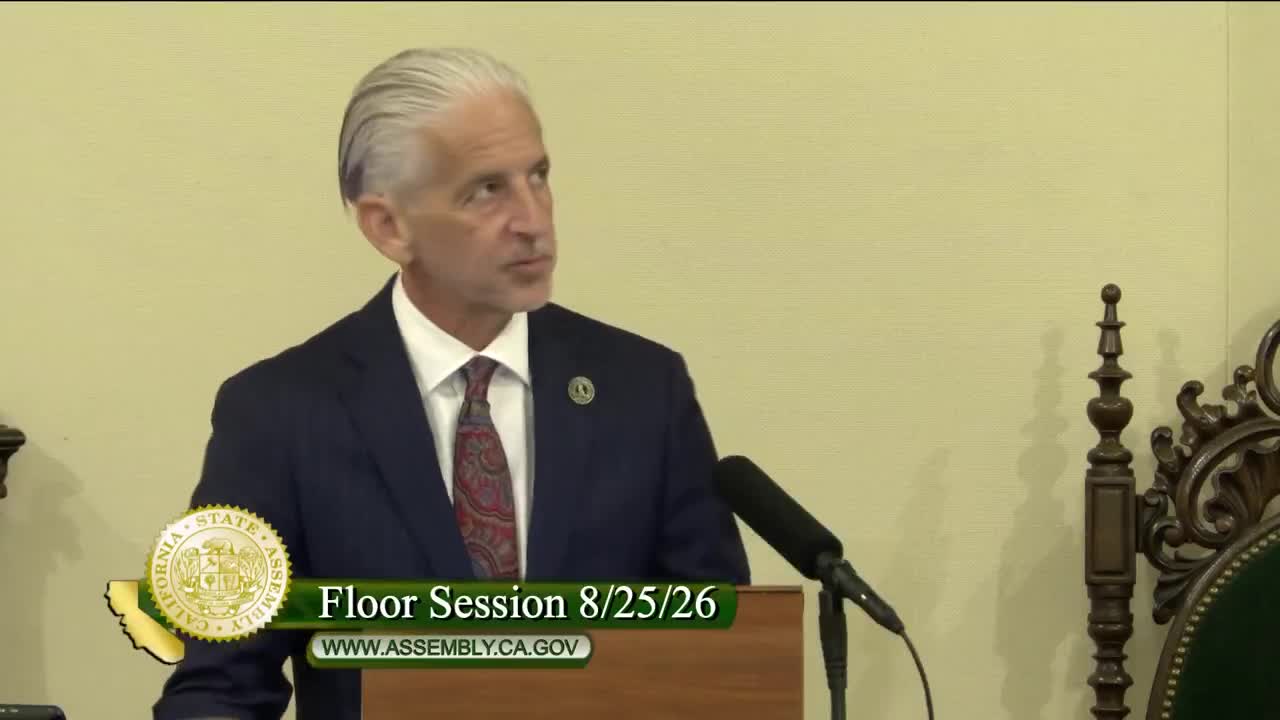

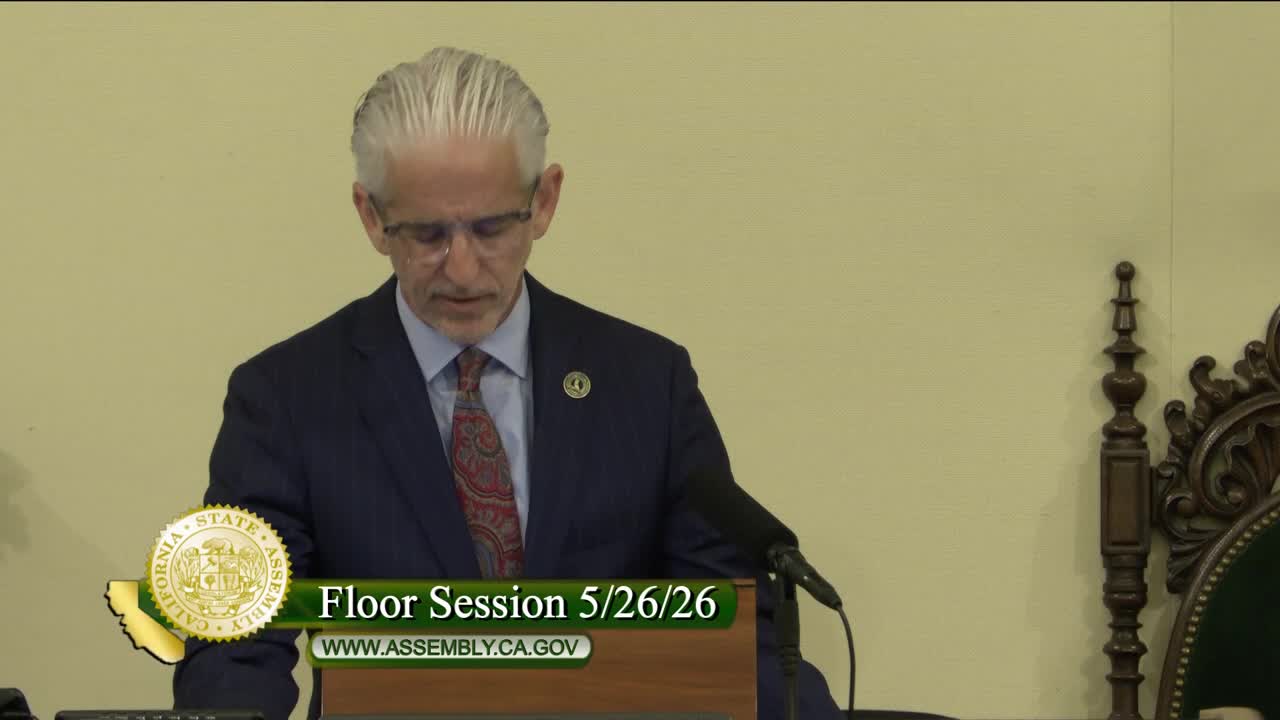

Bill Author