AB 2025: Tenancy: digitally altered images: disclosure.
- Session Year: 2025-2026
- House: Assembly
- Latest Version Date: 2026-09-27
Current Status:
Passed
(2026-09-27: Chaptered by Secretary of State - Chapter 572, Statutes of 2026.)
Introduced
In Committee
Awaiting First Chamber Vote
Passed First Chamber
In Committee
Awaiting Second Chamber Vote
Passed Second Chamber
Enacted
Existing law generally regulates the hiring of real property.
The Real Estate Law generally provides for the licensure and regulation of real estate brokers and salespersons. The law requires a real estate broker or salesperson, or person acting on their behalf, who includes a digitally altered image, as defined, in an advertisement or other promotional material for the sale of real property to include a disclosure, as specified. If the advertisement or promotional material is posted on an internet website, the law requires the same image without digital alteration to be included, as specified. The law defines sell, sale, or sold for these purposes as a transaction for the transfer of real property from a seller to a buyer, and includes, among other things, a leasehold exceeding one years duration. A willful violation of the Real Estate Law is a crime.
This bill would require a person who includes a digitally altered image, as defined, in an advertisement or other promotional material for the rental of real property to include a disclosure, as specified. The bill would require the unaltered image to be included, as specified, unless the image, architectural rendering, or artistic rendering was not originally created through the use of a capture device, as defined. The bill would specify that a violation of these provisions by a person licensed under the Real Estate Law is a violation of that law. By imposing new requirements on real estate licensees, the violation of which is a crime, this bill would impose a state-mandated local program. The bill would specify that the provisions that apply to an advertisement or other promotional material for the sale of real property described above do not apply to an advertisement or other promotional material for a leasehold exceeding one years duration.
The California Constitution requires the state to reimburse local agencies and school districts for certain costs mandated by the state. Statutory provisions establish procedures for making that reimbursement.
This bill would provide that no reimbursement is required by this act for a specified reason.
Existing law generally regulates the hiring of real property.
The Real Estate Law generally provides for the licensure and regulation of real estate brokers and salespersons. The law requires a real estate broker or salesperson, or person acting on their behalf, who includes a digitally altered image, as defined, in an advertisement or other promotional material for the sale of real property to include a disclosure, as specified. If the advertisement or promotional material is posted on an internet website, the law requires the same image without digital alteration to be included, as specified. The law defines sell, sale, or sold for these purposes as a transaction for the transfer of real property from a seller to a buyer, and includes, among other things, a leasehold exceeding one years duration. A willful violation of the Real Estate Law is a crime.
This bill would require a person who includes a digitally altered image, as defined, in an advertisement or other promotional material for the rental of real property to include a disclosure, as specified. If the advertisement or promotional material is posted on an internet website, the The bill would require the same image without digital alteration unaltered image to be included, as specified. specified, unless the image, architectural rendering, or artistic rendering was not originally created through the use of a capture device, as defined. The bill would specify that a violation of these provisions by a person licensed under the Real Estate Law is a violation of that law. By imposing new requirements on real estate licensees, the violation of which is a crime, this bill would impose a state-mandated local program. The bill would specify that the provisions that apply to an advertisement or other promotional material for the sale of real property described above do not apply to an advertisement or other promotional material for a leasehold exceeding one years duration.
The California Constitution requires the state to reimburse local agencies and school districts for certain costs mandated by the state. Statutory provisions establish procedures for making that reimbursement.
This bill would provide that no reimbursement is required by this act for a specified reason.
Existing law generally regulates the hiring of real property.
The Real Estate Law generally provides for the licensure and regulation of real estate brokers and salespersons. The law requires a real estate broker or salesperson, or person acting on their behalf, who includes a digitally altered image, as defined, in an advertisement or other promotional material for the sale of real property to include a disclosure, as specified. If the advertisement or promotional material is posted on an internet website, the law requires the same image without digital alteration to be included, as specified. A willful violation of the Real Estate Law is a crime.
This bill would require a person who includes a digitally altered image, as defined, in an advertisement or other promotional material for the rental of real property to include a disclosure, as specified. If the advertisement or promotional material is posted on an internet website, the bill would require the same image without digital alteration to be included, as specified. The bill would specify that a violation of these provisions by a person licensed under the Real Estate Law is a violation of that law. By imposing new requirements on real estate licensees, the violation of which is a crime, this bill would impose a state-mandated local program.
The California Constitution requires the state to reimburse local agencies and school districts for certain costs mandated by the state. Statutory provisions establish procedures for making that reimbursement.
This bill would provide that no reimbursement is required by this act for a specified reason.
(a)(1)A real estate broker or salesperson, or person acting on their behalf, who includes a digitally altered image in an advertisement or other promotional material for the sale of real property shall include in the advertisement or promotional material a statement disclosing that the image has been altered and a link, URL, or QR code to a publicly accessible internet website that includes, and clearly identifies, the original, unaltered image. The statement shall be reasonably conspicuous and located on or adjacent to the image and shall include language indicating that the unaltered images can be accessed via the link, URL, or QR code.
(2)If an advertisement or promotional material described in paragraph (1) is posted on an internet website over which the real estate broker or salesperson, or person acting on their behalf, has control, they shall include the unaltered version of the images from which the digitally altered images were created in the posting. A person subject to this paragraph may comply with this requirement by including a link or URL to a publicly accessible internet website that includes, and clearly identifies, the original, unaltered image. If the real estate broker or salesperson, or person acting on their behalf, complies with this requirement by including a link or URL to the unaltered images, the statement required by paragraph (1) shall include language indicating the unaltered images can be accessed via the link or URL.
(b)(1)For purposes of this section, digitally altered image means an image, created by or at the direction of the real estate broker or salesperson, or person acting on their behalf, that has been altered through the use of photo editing software or artificial intelligence to add, remove, or change elements in the image, including, but not limited to, fixtures, furniture, appliances, flooring, walls, paint color, hardscape, landscape, facade, floor plans, and elements outside of, or visible from, the property, including, but not limited to, streetlights, utility poles, views through windows, and neighboring properties.
(2)Digitally altered image does not include an image where only lighting, sharpening, white balance, color correction, angle, straightening, cropping, exposure, or other common photo editing adjustments are made that do not change the representation of the real property.
(c)This section does not apply to an advertisement or other promotional material for a leasehold exceeding one years duration.
SEC. 2.Section 1940.11 is added to the Civil Code, to read:1940.11.(a)For purposes of this section:
(1)Capture device has the same meaning as defined in Section 22757.1 of the Business and Professions Code.
(2)(A)Digitally altered image means an image that meets either of the following conditions:
(i)It has been fully generated through artificial intelligence software by or at the direction of a person.
(ii)It was an existing image that has been altered by or at the direction of a person through the use of photo editing software or artificial intelligence to add, remove, or change elements in the image, including, but not limited to, fixtures, furniture, appliances, flooring, walls, paint color, hardscape, landscape, facade, floor plans, and elements outside of, or visible from, the property, including, but not limited to, streetlights, utility poles, views through windows, and neighboring properties.
(B)Digitally altered image does not include an image where only lighting, sharpening, white balance, color correction, angle, straightening, cropping, exposure, or other common photo editing adjustments are made that do not change the representation of the real property.
(b)(1)A person who includes a digitally altered image in an advertisement or other promotional material for rental of real property shall include in the advertisement or promotional material a disclosure that the image has been altered. The disclosure shall be reasonably conspicuous and located on or adjacent to the image.
(2)(A)An advertisement or promotional material described in paragraph (1) shall include the unaltered version of the images from which the digitally altered images were created in the posting. A person subject to this paragraph may comply with this requirement by including a link, URL, or QR code to a publicly accessible internet website that includes, and clearly identifies, the original, unaltered image. If the person complies with this requirement by including a link, URL, or QR code to the unaltered images, the disclosure required by paragraph (1) shall include language indicating the unaltered images can be accessed via the link, URL, or QR code.
(B)Subparagraph (A) does not apply to an image, architectural rendering, or artistic rendering that was not originally created through the use of a capture device.
(c)A person licensed pursuant to Division 4 (commencing with Section 10000) of the Business and Professions Code who violates this section shall be deemed to have violated that persons licensing law.
(d)This section does not alter or abridge any law pertaining to false or misleading advertising.
SEC. 3.No reimbursement is required by this act pursuant to Section 6 of Article XIIIB of the California Constitution because the only costs that may be incurred by a local agency or school district will be incurred because this act creates a new crime or infraction, eliminates a crime or infraction, or changes the penalty for a crime or infraction, within the meaning of Section 17556 of the Government Code, or changes the definition of a crime within the meaning of Section 6 of Article XIIIB of the California Constitution.
(a)(1)A real estate broker or salesperson, or person acting on their behalf, who includes a digitally altered image in an advertisement or other promotional material for the sale of real property shall include in the advertisement or promotional material a statement disclosing that the image has been altered and a link, URL, or QR code to a publicly accessible internet website that includes, and clearly identifies, the original, unaltered image. The statement shall be reasonably conspicuous and located on or adjacent to the image and shall include language indicating that the unaltered images can be accessed via the link, URL, or QR code.
(2)If an advertisement or promotional material described in paragraph (1) is posted on an internet website over which the real estate broker or salesperson, or person acting on their behalf, has control, they shall include the unaltered version of the images from which the digitally altered images were created in the posting. A person subject to this paragraph may comply with this requirement by including a link or URL to a publicly accessible internet website that includes, and clearly identifies, the original, unaltered image. If the real estate broker or salesperson, or person acting on their behalf, complies with this requirement by including a link or URL to the unaltered images, the statement required by paragraph (1) shall include language indicating the unaltered images can be accessed via the link or URL.
(b)(1)For purposes of this section, digitally altered image means an image, created by or at the direction of the real estate broker or salesperson, or person acting on their behalf, that has been altered through the use of photo editing software or artificial intelligence to add, remove, or change elements in the image, including, but not limited to, fixtures, furniture, appliances, flooring, walls, paint color, hardscape, landscape, facade, floor plans, and elements outside of, or visible from, the property, including, but not limited to, streetlights, utility poles, views through windows, and neighboring properties.
(2)Digitally altered image does not include an image where only lighting, sharpening, white balance, color correction, angle, straightening, cropping, exposure, or other common photo editing adjustments are made that do not change the representation of the real property.
(c)This section does not apply to an advertisement or other promotional material for a leasehold exceeding one years duration.
SEC. 2.Section 1940.11 is added to the Civil Code, to read:1940.11.(a)For purposes of this section:
(1)Capture device has the same meaning as defined in Section 22757.1 of the Business and Professions Code.
(2)(A)Digitally altered image means an image created by or at the direction of a person that has been altered or created that meets either of the following conditions:
(i)It has been fully generated through artificial intelligence software by or at the direction of a person.
(ii)It was an existing image that has been altered by or at the direction of a person through the use of photo editing software or artificial intelligence to add, remove, or change elements in the image, including, but not limited to, fixtures, furniture, appliances, flooring, walls, paint color, hardscape, landscape, facade, floor plans, and elements outside of, or visible from, the property, including, but not limited to, streetlights, utility poles, views through windows, and neighboring properties.
(B)Digitally altered image does not include an image where only lighting, sharpening, white balance, color correction, angle, straightening, cropping, exposure, or other common photo editing adjustments are made that do not change the representation of the real property.
(b)(1)A person who includes a digitally altered image in an advertisement or other promotional material for rental of real property shall include in the advertisement or promotional material a disclosure that the image has been altered. The disclosure shall be reasonably conspicuous and located on or adjacent to the image.
(2)(A)An advertisement or promotional material described in paragraph (1) shall include the unaltered version of the images from which the digitally altered images were created in the posting. A person subject to this paragraph may comply with this requirement by including a link, URL, or QR code to a publicly accessible internet website that includes, and clearly identifies, the original, unaltered image. If the person complies with this requirement by including a link, URL, or QR code to the unaltered images, the disclosure required by paragraph (1) shall include language indicating the unaltered images can be accessed via the link, URL, or QR code.
(B)Subparagraph (A) does not apply to an image, architectural rendering, or artistic rendering that was not originally created through the use of a capture device.
(c)A person licensed pursuant to Division 4 (commencing with Section 10000) of the Business and Professions Code who violates this section shall be deemed to have violated that persons licensing law.
(d)This section does not alter or abridge the Attorney Generals enforcement of any law pertaining to false or misleading advertising.
SEC. 3.No reimbursement is required by this act pursuant to Section 6 of Article XIIIB of the California Constitution because the only costs that may be incurred by a local agency or school district will be incurred because this act creates a new crime or infraction, eliminates a crime or infraction, or changes the penalty for a crime or infraction, within the meaning of Section 17556 of the Government Code, or changes the definition of a crime within the meaning of Section 6 of Article XIIIB of the California Constitution.
(a)(1)A real estate broker or salesperson, or person acting on their behalf, who includes a digitally altered image in an advertisement or other promotional material for the sale of real property shall include in the advertisement or promotional material a statement disclosing that the image has been altered and a link link, URL, or QR code to a publicly accessible internet website, URL, or QR code website that includes, and clearly identifies, the original, unaltered image. The statement shall be reasonably conspicuous and located on or adjacent to the image and shall include language indicating that the unaltered images can be accessed on the linked internet website, via the link, URL, or QR code.
(2)If an advertisement or promotional material described in paragraph (1) is posted on an internet website over which the real estate broker or salesperson, or person acting on their behalf, has control, they shall include the unaltered version of the images from which the digitally altered images were created in the posting. A person subject to this paragraph may comply with this requirement by including a link or URL to a publicly accessible internet website that includes, and clearly identifies, the original, unaltered image. If the real estate broker or salesperson, or person acting on their behalf, complies with this requirement by including a link or URL to the unaltered images, the statement required by paragraph (1) shall include language indicating the unaltered images can be accessed on the linked internet website, URL, or QR code. via the link or URL.
(b)(1)For purposes of this section, digitally altered image means an image, created by or at the direction of the real estate broker or salesperson, or person acting on their behalf, that has been altered through the use of photo editing software or artificial intelligence to add, remove, or change elements in the image, including, but not limited to, fixtures, furniture, appliances, flooring, walls, paint color, hardscape, landscape, facade, floor plans, and elements outside of, or visible from, the property, including, but not limited to, streetlights, utility poles, views through windows, and neighboring properties.
(2)Digitally altered image does not include an image where only lighting, sharpening, white balance, color correction, angle, straightening, cropping, exposure, or other common photo editing adjustments are made that do not change the representation of the real property.
(c)This section does not apply to an advertisement or other promotional material for a leasehold exceeding one years duration.
SEC. 2.Section 10175.4 is added to the Business and Professions Code, to read:10175.4.A violation of Section 1940.11 of the Civil Code by a licensee shall be deemed a violation of this part.SEC. 3.SEC. 2.Section 1940.11 is added to the Civil Code, to read:1940.11.(a)For purposes of this section:
(1)Capture device has the same meaning as defined in Section 22757.1 of the Business and Professions Code.
(2)(A)Digitally altered image means an image created by or at the direction of a person that has been altered or created through the use of photo editing software or artificial intelligence to add, remove, or change elements in the image, including, but not limited to, fixtures, furniture, appliances, flooring, walls, paint color, hardscape, landscape, facade, floor plans, and elements outside of, or visible from, the property, including, but not limited to, streetlights, utility poles, views through windows, and neighboring properties.
(B)Digitally altered image does not include an image where only lighting, sharpening, white balance, color correction, angle, straightening, cropping, exposure, or other common photo editing adjustments are made that do not change the representation of the real property.
(b)(1)A person who includes a digitally altered image in an advertisement or other promotional material for rental of real property shall include in the advertisement or promotional material a disclosure that the image has been altered. The disclosure shall be reasonably conspicuous and located on or adjacent to the image.
(2)(A)An advertisement or promotional material described in paragraph (1) shall include the unaltered version of the images from which the digitally altered images were created in the posting. A person subject to this paragraph may comply with this requirement by including a link link, URL, or QR code to a publicly accessible internet website that includes, and clearly identifies, the original, unaltered image. If the person complies with this requirement by including a link link, URL, or QR code to the unaltered images, the disclosure required by paragraph (1) shall include language indicating the unaltered images can be accessed on the linked internet website, via the link, URL, or QR code.
(B)Subparagraph (A) does not apply to an image, architectural rendering, or artistic rendering that was not originally created through the use of a capture device.
(c)A person licensed pursuant to Division 4 (commencing with Section 10000) of the Business and Professions Code who violates this section shall be deemed to have violated that persons licensing law.
(d)This section does not alter or abridge the Attorney Generals enforcement of any law pertaining to false or misleading advertising.
SEC. 4.SEC. 3.No reimbursement is required by this act pursuant to Section 6 of Article XIIIB of the California Constitution because the only costs that may be incurred by a local agency or school district will be incurred because this act creates a new crime or infraction, eliminates a crime or infraction, or changes the penalty for a crime or infraction, within the meaning of Section 17556 of the Government Code, or changes the definition of a crime within the meaning of Section 6 of Article XIIIB of the California Constitution.
(a)(1)A real estate broker or salesperson, or person acting on their behalf, who includes a digitally altered image in an advertisement or other promotional material for the sale of real property shall include in the advertisement or promotional material a statement disclosing that the image has been altered and a link to a publicly accessible internet website, URL, or QR code that includes, and clearly identifies, the original, unaltered image. The statement shall be reasonably conspicuous and located on or adjacent to the image and shall include language indicating that the unaltered images can be accessed on the linked internet website, URL, or QR code.
(2)If an advertisement or promotional material described in paragraph (1) is posted on an internet website over which the real estate broker or salesperson, or person acting on their behalf, has control, they shall include the unaltered version of the images from which the digitally altered images were created in the posting. A person subject to this paragraph may comply with this requirement by including a link to a publicly accessible internet website that includes, and clearly identifies, the original, unaltered image. If the real estate broker or salesperson, or person acting on their behalf, complies with this requirement by including a link to the unaltered images, the statement required by paragraph (1) shall include language indicating the unaltered images can be accessed on the linked internet website, URL, or QR code.
(b)(1)For purposes of this section, digitally altered image means an image, created by or at the direction of the real estate broker or salesperson, or person acting on their behalf, that has been altered through the use of photo editing software or artificial intelligence to add, remove, or change elements in the image, including, but not limited to, fixtures, furniture, appliances, flooring, walls, paint color, hardscape, landscape, facade, floor plans, and elements outside of, or visible from, the property, including, but not limited to, streetlights, utility poles, views through windows, and neighboring properties.
(2)Digitally altered image does not include an image where only lighting, sharpening, white balance, color correction, angle, straightening, cropping, exposure, or other common photo editing adjustments are made that do not change the representation of the real property.
(c)This section does not apply to an advertisement or other promotional material for a leasehold exceeding one years duration.
SECTION 1.SEC. 2.Section 10175.4 is added to the Business and Professions Code, to read:10175.4.A violation of Section 1940.11 of the Civil Code by a licensee shall be deemed a violation of this part.
SEC. 2.SEC. 3.Section 1940.11 is added to the Civil Code, to read:1940.11.(a)For purposes of this section:
(1)Capture device has the same meaning as defined in Section 22757.1. 22757.1 of the Business and Professions Code.
(2)(A)Digitally altered image means an image created by or at the direction of a person that has been altered through the use of photo editing software or artificial intelligence to add, remove, or change elements in the image, including, but not limited to, fixtures, furniture, appliances, flooring, walls, paint color, hardscape, landscape, facade, floor plans, and elements outside of, or visible from, the property, including, but not limited to, streetlights, utility poles, views through windows, and neighboring properties.
(B)Digitally altered image does not include an image where only lighting, sharpening, white balance, color correction, angle, straightening, cropping, exposure, or other common photo editing adjustments are made that do not change the representation of the real property.
(b)(1)A person who includes a digitally altered image in an advertisement or other promotional material for rental of real property shall include in the advertisement or promotional material a statement disclosing disclosure that the image has been altered and a link to a publicly accessible internet website, URL, or QR code that includes, and clearly identifies, the original, unaltered image. The statement altered. The disclosure shall be reasonably conspicuous and located on or adjacent to the image and shall include language indicating that the unaltered images can be accessed on the linked internet website, URL, or QR code. image.
(2)If an (A)An advertisement or promotional material described in paragraph (1) is posted on an internet website over which a person has control, they shall include the unaltered version of the images from which the digitally altered images were created in the posting. A person subject to this paragraph may comply with this requirement by including a link to a publicly accessible internet website that includes, and clearly identifies, the original, unaltered image. If the person complies with this requirement by including a link to the unaltered images, the statement disclosure required by paragraph (1) shall include language indicating the unaltered images can be accessed on the linked internet website, URL, or QR code.
(B)Subparagraph (A) does not apply to an image, architectural rendering, or artistic rendering that was not originally created through the use of a capture device.
(c)Notwithstanding subdivision (b), an unaltered version of an image required to be made available pursuant to subdivision (b) shall not include an image or architectural or artistic rendering that was not originally created through the use of a capture device.SEC. 3.SEC. 4.No reimbursement is required by this act pursuant to Section 6 of Article XIIIB of the California Constitution because the only costs that may be incurred by a local agency or school district will be incurred because this act creates a new crime or infraction, eliminates a crime or infraction, or changes the penalty for a crime or infraction, within the meaning of Section 17556 of the Government Code, or changes the definition of a crime within the meaning of Section 6 of Article XIIIB of the California Constitution.
A violation of Section 1940.11 of the Civil Code by a licensee shall be deemed a violation of this part.
SEC. 2.Section 1940.11 is added to the Civil Code, to read:1940.11.(a)For purposes of this section:
(1)Capture device has the same meaning as defined in Section 22757.1. of the Business and Professions Code.
(2)(A)Digitally altered image means an image created by or at the direction of a person that has been altered through the use of photo editing software or artificial intelligence to add, remove, or change elements in the image, including, but not limited to, fixtures, furniture, appliances, flooring, walls, paint color, hardscape, landscape, facade, floor plans, and elements outside of, or visible from, the property, including, but not limited to, streetlights, utility poles, views through windows, and neighboring properties.
(B)Digitally altered image does not include an image where only lighting, sharpening, white balance, color correction, angle, straightening, cropping, exposure, or other common photo editing adjustments are made that do not change the representation of the real property.
(b)(1)A person who includes a digitally altered image in an advertisement or other promotional material for rental of real property shall include in the advertisement or promotional material a statement disclosing that the image has been altered and a link to a publicly accessible internet website, URL, or QR code that includes, and clearly identifies, the original, unaltered image. The statement shall be reasonably conspicuous and located on or adjacent to the image and shall include language indicating that the unaltered images can be accessed on the linked internet website, URL, or QR code.
(2)If an advertisement or promotional material described in paragraph (1) is posted on an internet website over which a person has control, they shall include the unaltered version of the images from which the digitally altered images were created in the posting. A person subject to this paragraph may comply with this requirement by including a link to a publicly accessible internet website that includes, and clearly identifies, the original, unaltered image. If the person complies with this requirement by including a link to the unaltered images, the statement required by paragraph (1) shall include language indicating the unaltered images can be accessed on the linked internet website, URL, or QR code.
(c)Notwithstanding subdivision (b), an unaltered version of an image required to be made available pursuant to subdivision (b) shall not include an image or architectural or artistic rendering that was not originally created through the use of a capture device.
SEC. 3.No reimbursement is required by this act pursuant to Section 6 of Article XIIIB of the California Constitution because the only costs that may be incurred by a local agency or school district will be incurred because this act creates a new crime or infraction, eliminates a crime or infraction, or changes the penalty for a crime or infraction, within the meaning of Section 17556 of the Government Code, or changes the definition of a crime within the meaning of Section 6 of Article XIIIB of the California Constitution.
|
Date
|
Status
|
|---|---|
| Sep 27, 2026 | Chaptered by Secretary of State - Chapter 572, Statutes of 2026. |
| Sep 27, 2026 | Approved by the Governor. |
| Aug 31, 2026 | Enrolled and presented to the Governor at 4 p.m. |
| Aug 25, 2026 | Senate amendments concurred in. To Engrossing and Enrolling. (Ayes 78. Noes 0. Page 6455.). |
| Aug 25, 2026 | Senate amendments concurred in. To Engrossing and Enrolling. (Ayes 78. Noes 0.). |
| Aug 24, 2026 | In Assembly. Concurrence in Senate amendments pending. |
| Aug 24, 2026 | Read third time. Passed. Ordered to the Assembly. (Ayes 39. Noes 1. Page 5710.). |
| Aug 24, 2026 | Read third time. Passed. Ordered to the Assembly. (Ayes 37. Noes 1.). |
| Aug 18, 2026 | Read second time. Ordered to third reading. |
| Aug 17, 2026 | Read third time and amended. Ordered to second reading. |
| Aug 6, 2026 | Read second time. Ordered to third reading. |
| Aug 5, 2026 | Read third time and amended. Ordered to second reading. |
| Aug 4, 2026 | Read second time. Ordered to third reading. |
| Aug 3, 2026 | From committee: Be ordered to second reading pursuant to Senate Rule 28.8. |
| Jun 23, 2026 | From committee: Do pass and re-refer to Com. on APPR. (Ayes 8. Noes 0.) (June 22). Re-referred to Com. on APPR. |
| Jun 10, 2026 | From committee chair, with author's amendments: Amend, and re-refer to committee. Read second time, amended, and re-referred to Com. on P., D.T., & C.P. |
| Jun 8, 2026 | From committee: Do pass and re-refer to Com. on P., D.T., & C.P. (Ayes 8. Noes 1.) (June 8). Re-referred to Com. on P., D.T., & C.P. |
| May 27, 2026 | Referred to Coms. on B. P. & E.D. and P., D.T., & C.P. |
| May 14, 2026 | In Senate. Read first time. To Com. on RLS. for assignment. |
| May 14, 2026 | Read third time. Passed. Ordered to the Senate. (Ayes 77. Noes 0. Page 5054.) |
| May 14, 2026 | Read third time. Passed. Ordered to the Senate. (Ayes 77. Noes 0.) |
| May 7, 2026 | Read second time. Ordered to Consent Calendar. |
| May 6, 2026 | From committee: Do pass. To Consent Calendar. (Ayes 14. Noes 0.) (May 6). |
| Apr 20, 2026 | From committee: Do pass and re-refer to Com. on APPR. with recommendation: To Consent Calendar. (Ayes 15. Noes 0.) (April 16). Re-referred to Com. on APPR. |
| Mar 31, 2026 | In committee: Hearing postponed by committee. |
| Mar 16, 2026 | Referred to Com. on P. & C.P. |
| Feb 18, 2026 | From printer. May be heard in committee March 20. |
| Feb 17, 2026 | Read first time. To print. |
|
Date
|
Description
|
Location
|
Votes
|
|
|---|---|---|---|---|
| Aug 25, 2026 | AB 2025 Pellerin Concurrence in Senate Amendments | Assembly Floor |
Passed |
|
| Aug 24, 2026 | Assembly 3rd Reading AB2025 Pellerin By Archuleta | Senate Floor |
Passed |
|
| Jun 22, 2026 | Do pass, but first be re-referred to the Committee on [Appropriations] | Senate Standing Committee on Privacy, Digital Technologies, and Consumer Protection |
Passed |
|
| Jun 8, 2026 | Do pass, but first be re-referred to the Committee on [Privacy, Digital Technologies, and Consumer Protection] | Senate Standing Committee on Business, Professions and Economic Development |
Passed |
|
| May 14, 2026 | AB 2025 Pellerin Consent Calendar Second Day Regular Session | Assembly Floor |
Passed |
|
| May 6, 2026 | Do pass. To Consent Calendar. | Assembly Standing Committee on Appropriations |
Passed |
|
| Apr 16, 2026 | Do pass and be re-referred to the Committee on [Appropriations] with recommendation: To Consent Calendar | Assembly Standing Committee on Privacy and Consumer Protection |
Passed |
This list shows positions taken on this bill by organizations on the date displayed, which is linked to the original source.
Positions by individuals are not included.
|
Organization
|
Position
|
Date
|
|---|---|---|
| Consumer Reports | ** Support | |
| Powerca Action | ** Support |
CONCURRENCE IN SENATE AMENDMENTS
CSA1 Bill Id:AB 2025
Author:(Pellerin)
As Amended Ver:August 17, 2026
Majority vote
SUMMARY
This bill would require a person who includes a digitally altered image in an advertisement or other promotional material for the rental of real property to include a disclosure, link, URL, or QR code to the original, unaltered photo.
Senate Amendments
Make technical, conforming, and clarifying changes.
Conform last year′s AB 723 (Pellerin, Chapter 497, Statutes. 2025), which added similar provisions related to the sale of real property, to require that the original, unaltered image be accessible via a website link, URL, or QR code. Specify that legislation does not apply to an advertisement or other promotional material for a leasehold exceeding one year′s duration.
COMMENTS
This bill builds upon the author′s previous legislation, AB 723 (Pellerin, Chapter 497, Statutes. 2025), which requires a disclosure if images of a property have been digitally altered and access to the original images via a link to an internet website, URL, or QR code. AB 2025 extends these requirements to properties for rent or lease. As technologies advance, both AI and the myriad of digital staging services can create photorealistic images in minutes that are becoming more and more difficult for a reasonable person to discern as digitally altered. Without disclosures and an easily accessible way to view the original images of a property, the risk of misrepresentation by the landlord or rental listing company can be significant.
Like its predecessor, the bill has a carve-out for minor digital alterations to touch-up an image: The definition of “digitally altered image” does not include an image where only lighting, sharpening, white balance, color correction, angle, straightening, cropping, exposure, or other common photo editing adjustments are made that do not change the representation of the real property. Additionally, the bill specifies that an unaltered version of an image required to be made available under the bill does not include an image or architectural or artistic rendering that was not originally created through the use of a capture device.
Supporters argue that this straightforward transparency measure, like AB 723, will lead to a more honest and equitable marketplace for California renters.
According to the Author
As both AI and do-it-yourself digital staging services continue to evolve, it becomes harder for the average person to differentiate between digitally staged images and unaltered images. Given the high competition in the rental market, it is not uncommon for renters to commit to a unit without visiting it in person. Without disclosures that a photo has been digitally altered and access to the unaltered original, these images risk unintended misrepresentation and consumer harm.
AB 2025 protects consumers from misleading rental listings by simply requiring disclosure and labeling of virtually staged and altered images and requiring that access be provided to the original image
Arguments in Support
Consumer Reports, writes in support, Consumer Reports writes to express their support for AB 2025, which would require that landlords listing real property for rent to clearly disclose when listing photos have been meaningfully digitally altered, and to provide a link to original, unaltered images. Providing transparency about the actual state of rental property creates a fairer, more truthful marketplace for consumers, saving them time and money by avoiding visiting potential properties whose advertised promotional images do not reflect reality.
While promoting rental properties through misleading images is arguably already illegal under California consumer protection law, that hasn′t stopped many landlords from using artificial intelligence to radically alter the look of certain properties, creating a false inducement for consumers. In some cases, the results are so extreme as to be laughable, but in other cases, more subtle image alteration can still materially mischaracterize the nature of a listing and confuse potential renters about the condition of a property. As a result, Californians looking for a place to live during a housing crisis are having a harder and harder time figuring out how real various representations are. While AI can potentially save landlords money and be reasonably used to help stage properties, consumers deserve to know the actual condition of properties before deciding whether to invest time and money in visiting — or even making offers, for example in the case of someone moving across the country to California. Unfortunately, too many landlords are taking advantage of a grey area in the law and a lack of enforcement to offer listings that are likely to lead to deception and confusion.
AB 2025 takes a reasonable and cautious approach of simply mandating that landlords that promote their properties through the use of digitally altered images must (1) label such images as digitally altered and (2) provide links to original unedited images. The bill reasonably exempts minor alterations such as sharpening, color balancing, and cropping and only applies to images that materially change elements (such as fixtures, furniture, and utility poles). Providing some basic bright-line rules of the road will lead to a more honest and equitable marketplace for California residents.
Arguments in Opposition
None on file.
FISCAL COMMENTS
According to the Appropriations Committee:
- Minor and absorbable costs to the Department of Real Estate (DRE) (Real Estate Fund). The DRE estimates $69,000 in costs in the first year and $67,000 ongoing for attorney time for research, stakeholder engagement, and rulemaking to promulgate regulations defining and providing guidance on the use of digitally altered images in rental advertisements and promotional materials. The DRE is currently engaged in a substantially similar rulemaking process for advertisements for the sale of real property, pursuant to AB 723 (Pellerin), Chapter 497, Statutes of 2025. To the extent this bill is enacted before the AB 723 rulemaking is complete, the DRE reports that the AB 2025 regulations could be folded into the AB 723 rulemaking effort, generating cost savings.
- Minor and absorbable workload costs (Real Estate Fund) for the Department to conduct licensee and consumer education, staff training, external communications review, web system updates, and enforcement data system programming changes to track complaints and potential enforcement actions.
Minor and absorbable workload costs to trial courts (Trial Court Trust Fund, General Fund) and county district attorneys for any misdemeanor prosecutions of real estate licensees. The volume of such prosecutions is expected to be low, as enforcement is most likely to occur through the DRE′s administrative complaint process rather than through criminal proceedings
VOTES:
ASM PRIVACY AND CONSUMER PROTECTION: 15-0-0
YES: Bauer-Kahan, Macedo, Aguiar-Curry, Bryan, DeMaio, Hoover, Irwin, Lowenthal, McKinnor, Ortega, Patterson, Petrie-Norris, Ward, Wicks, Wilson
ASM APPROPRIATIONS: 14-0-1
YES: Wicks, Hoover, Aguiar-Curry, Caloza, Dixon, Fong, Mark González, Krell, Pacheco, Pellerin, Sharp-Collins, Solache, Ta, Tangipa
ABS, ABST OR NV: Arambula
ASSEMBLY FLOOR: 77-0-3
YES: Addis, Aguiar-Curry, Ahrens, Alanis, Alvarez, Ávila Farías, Bains, Bauer-Kahan, Bennett, Berman, Boerner, Bonta, Bryan, Calderon, Caloza, Carrillo, Castillo, Chen, Connolly, Davies, DeMaio, Dixon, Elhawary, Ellis, Fong, Gabriel, Gallagher, Garcia, Gipson, Jeff Gonzalez, Mark González, Hadwick, Haney, Harabedian, Hart, Hoover, Irwin, Jackson, Johnson, Kalra, Krell, Lackey, Lee, Lowenthal, Macedo, McKinnor, Muratsuchi, Nguyen, Ortega, Pacheco, Papan, Patel, Patterson, Pellerin, Petrie-Norris, Quirk-Silva, Ramos, Ransom, Michelle Rodriguez, Rogers, Blanca Rubio, Sanchez, Schiavo, Schultz, Sharp-Collins, Solache, Soria, Stefani, Ta, Tangipa, Valencia, Wallis, Ward, Wicks, Wilson, Zbur, Rivas
ABS, ABST OR NV: Arambula, Flora, Celeste Rodriguez
SENATE FLOOR: 39-1-0
YES: Allen, Alvarado-Gil, Archuleta, Arreguín, Ashby, Becker, Blakespear, Cabaldon, Caballero, Cervantes, Choi, Cortese, Dahle, Durazo, Gonzalez, Grayson, Grove, Hurtado, Jones, Laird, Limón, McGuire, McNerney, Menjivar, Niello, Ochoa Bogh, Padilla, Pérez, Reyes, Richardson, Rubio, Seyarto, Smallwood-Cuevas, Stern, Umberg, Valladares, Wahab, Weber Pierson, Wiener
NO: Strickland
UPDATED
VERSION: August 17, 2026
CONSULTANT: Josh Tosney / P. & C.P. / (916) 319-2200, Mimi Holtkamp / P. & C.P. / (916) 319-2200 FN: 0004095
SENATE RULES COMMITTEE Office of Senate Floor Analyses (916) 651-4171 | AB 2025 |
THIRD READING
Bill No: AB 2025
Author: Pellerin (D)
Amended: 8/17/26 in Senate
Vote: 21
SENATE BUS., PROF. & ECON. DEV. COMMITTEE: 8-1, 6/8/26
AYES: Wahab, Archuleta, Arreguín, Caballero, Grayson, Menjivar, Niello, Smallwood-Cuevas
NOES: Strickland
NO VOTE RECORDED: Choi, Umberg
SENATE PRIV., DIGITAL TECH. & CONS. PROT. COMMITTEE: 8-0, 6/22/26
AYES: Cabaldon, Gonzalez, McNerney, Ochoa Bogh, Padilla, Reyes, Umberg, Wiener
NO VOTE RECORDED: Jones
SENATE APPROPRIATIONS COMMITTEE: Senate Rule 28.8
ASSEMBLY FLOOR: 77-0, 5/14/26 (Consent) - See last page for vote
SUBJECT: Tenancy: digitally altered images: disclosure
SOURCE: Author
DIGEST:
This bill requires a person who includes a digitally altered image to promote a real property rental to disclose that the image has been altered and provide a link, URL, or QR Code to a publicly accessible website to view the original image or to include the unaltered image if the image is posted to a website over which the person has control. This bill provides that a violation of the disclosure and posting requirements by a licensee of the Department of Real Estate is a violation of the Real Estate Law.
Senate Floor Amendments of 8/17/26 specify that a “digitally altered image” could mean an image that has been fully generated through artificial intelligence software in addition to an existing image that was altered. Amendments also remove a statement about this bill’s provisions not altering or abridging Attorney General (AG) of any law pertaining to false or misleading advertising.
ANALYSIS:
Existing Law:
- Prohibits any person from engaging in the business of a prepaid rental listing service unless licensed in that capacity or unless licensed as a real estate broker. (Business and Professions Code [BPC] § 10167.2(a))
- Provides that for any real property offered for sale or lease, any advertisement concerning any land or subdivision containing a written statement that is false or fraudulent, is a public offense punishable by a fine not exceeding $1,000, or by imprisonment in a county jail not exceeding one year. (BPC § 10140)
- Defines “digitally altered image” as an image, created by or at the direction of the real estate broker or salesperson, or person acting on their behalf, that has been altered through the use of photo editing software or artificial intelligence to add, remove, or change elements in the image, including, but not limited to, fixtures, furniture, appliances, flooring, walls, paint color, hardscape, landscape, facade, floor plans, and elements outside of, or visible from, the property, including, but not limited to, streetlights, utility poles, views through windows, and neighboring properties. (BPC § 10140.8(b)(1))
- Exempts from the definition of “digitally altered image” an image where specified common photo editing adjustments are made that do not change the representation of the real property. (BPC § 10140.8(b)(2))
This bill:
- Specifies that a violation is cause for discipline against a licensee of the Department of Real Estate (DRE).
- Defines “digitally altered image” in the Civil Code as an image that meets either of the following conditions:
- It has been fully generated through artificial intelligence software by or at the direction of a person.
- It was an existing image that has been altered by or at the direction of a person through the use of photo editing software or artificial intelligence to add, remove, or change elements in the image, including, but not limited to, fixtures, furniture, appliances, flooring, walls, paint color, hardscape, landscape, facade, floor plans, and elements outside of, or visible from, the property, including, but not limited to, streetlights, utility poles, views through windows, and neighboring properties.
- Requires a person who includes a digitally altered image in an advertisement or other promotional material for rental of real property to provide a link, URL, or QR Code to a publicly accessible website to view the original image.
- Requires a person to include the unaltered version of the images from which the digitally altered images were created in the posting if the advertisement or promotion material is posted on a website over which the person has control. This requirement can be met by complying with 3).
- Specifies that architectural or artistic rendering is not considered an unaltered image for the purposes of this bill.
Background
Digital Staging of Rental Properties. Similar to real estate sales, property managers stage rental properties by moving furniture into an empty property and arranging it in visually pleasing ways to give prospective renters an idea of the home’s potential. However, staging requires the property to be vacant, which results in increased costs and lost income for the property owner or landlord. Alternatively, digital staging is a useful and economical way to portray a property in its best light. Digital staging can insert or change features of a rental, including furniture and décor, to highlight the home’s possibilities. It can also remove items from images including out-of-date furniture and décor, as well as personal belongings.
Virtual staging can become misleading when it is used to substantially alter the condition of the property by improving unappealing views from windows that cannot be changed, removing unsightly features, repairing damage, updating floors and cabinetry, adding non-existent landscaping, and other alterations to the image. As editing tools and artificial intelligence improve and become more user friendly and widely used, the difference between an altered image can be difficult, if not impossible, to distinguish from an unedited image. Misrepresentations can become especially harmful when image alterations hide a state of disrepair or unsafe conditions or when a person commits to move into a rental based solely on the images, such as with a long-distance move.
To promote transparency in advertising, this bill requires any person who posts a digitally altered image to disclose that fact and provide a link, URL, or QR Code to a publicly accessible website to view the original image.
The Real Estate Law and DRE Licensees. The Real Estate Law defines supplying prospective tenants with listings of residential real properties for tenancy as a “prepaid rental listing service,” and requires a person to obtain a broker’s license from the Department to provide these services.
Additionally, the Real Estate Law establishes various causes for discipline when any person acting as a real estate broker or salesperson makes false or misleading statements in advertising. Last year, AB 723 (Pellerin, Chapter 497, Statutes of 2025) addressed the content of images used in an advertisement for the sale of real property; however, the content of images used in rental property is not addressed by existing law. This bill provides that it is a violation of the Real Estate Law when a licensee of the DRE does not comply with posting and disclosure requirements concerning digitally altered images in advertisements for rental properties and subjects the licensee the disciplinary action.
FISCAL EFFECT: Appropriation: No Fiscal Com.: Yes Local: Yes
SUPPORT: (Verified 8/14/26)
Consumer Reports
PowerCA Action
OPPOSITION: (Verified 8/14/26)
None received
ARGUMENTS IN SUPPORT: Consumer Reports writes, “Californians looking for a place to live during a housing crisis are having a harder and harder time figuring out how real various representations are. While AI can potentially save landlords money and be reasonably used to help stage properties, consumers deserve to know the actual condition of properties before deciding whether to invest time and money in visiting — or even making offers, for example in the case of someone moving across the country to California…Providing some basic bright-line rules of the road will lead to a more honest and equitable marketplace for California residents.”
PowerCA Action writes, “As both AI and do-it-yourself digital staging services continue to evolve, it becomes harder for the average person to differentiate between digitally staged images and unaltered images. Given the high competition in the rental market, it is not uncommon for renters to commit to a unit without visiting it in person. Without disclosures, these images risk misrepresentation and consumer harm.”
ASSEMBLY FLOOR: 77-0, 5/14/26
AYES: Addis, Aguiar-Curry, Ahrens, Alanis, Alvarez, Ávila Farías, Bains, Bauer-Kahan, Bennett, Berman, Boerner, Bonta, Bryan, Calderon, Caloza, Carrillo, Castillo, Chen, Connolly, Davies, DeMaio, Dixon, Elhawary, Ellis, Fong, Gabriel, Gallagher, Garcia, Gipson, Jeff Gonzalez, Mark González, Hadwick, Haney, Harabedian, Hart, Hoover, Irwin, Jackson, Johnson, Kalra, Krell, Lackey, Lee, Lowenthal, Macedo, McKinnor, Muratsuchi, Nguyen, Ortega, Pacheco, Papan, Patel, Patterson, Pellerin, Petrie-Norris, Quirk-Silva, Ramos, Ransom, Michelle Rodriguez, Rogers, Blanca Rubio, Sanchez, Schiavo, Schultz, Sharp-Collins, Solache, Soria, Stefani, Ta, Tangipa, Valencia, Wallis, Ward, Wicks, Wilson, Zbur, Rivas
NO VOTE RECORDED: Arambula, Flora, Celeste Rodriguez
Prepared by: Yeaphana La Marr / B., P. & E.D. /
8/18/26 16:12:26
**** END ****
SENATE RULES COMMITTEE Office of Senate Floor Analyses (916) 651-4171 | AB 2025 |
THIRD READING
Bill No: AB 2025
Author: Pellerin (D)
Amended: 8/5/26 in Senate
Vote: 21
SENATE BUS., PROF. & ECON. DEV. COMMITTEE: 8-1, 6/8/26
AYES: Wahab, Archuleta, Arreguín, Caballero, Grayson, Menjivar, Niello, Smallwood-Cuevas
NOES: Strickland
NO VOTE RECORDED: Choi, Umberg
SENATE PRIV., DIGITAL TECH. & CONS. PROT. COMMITTEE: 8-0, 6/22/26
AYES: Cabaldon, Gonzalez, McNerney, Ochoa Bogh, Padilla, Reyes, Umberg, Wiener
NO VOTE RECORDED: Jones
SENATE APPROPRIATIONS COMMITTEE: Senate Rule 28.8
ASSEMBLY FLOOR: 77-0, 5/14/26 (Consent) - See last page for vote
SUBJECT: Tenancy: digitally altered images: disclosure
SOURCE: Author
DIGEST:
This bill requires a person who includes a digitally altered image to promote a real property rental to disclose that the image has been altered and provide a link, URL, or QR Code to a publicly accessible website to view the original image or to include the unaltered image if the image is posted to a website over which the person has control. This bill provides that a violation of the disclosure and posting requirements by a licensee of the Department of Real Estate (DRE) is a violation of the Real Estate Law.
Senate Floor Amendments of 8/5/26 made a technical change to place provisions establishing a violation of the requirements of this bill from the Civil Code to the Real Estate Law and specified that original image posting requirements can be met by using a URL or QR code.
ANALYSIS:
Existing Law:
- Prohibits any person from engaging in the business of a prepaid rental listing service unless licensed in that capacity or unless licensed as a real estate broker. (Business and Professions Code [BPC] § 10167.2(a))
- Provides that for any real property offered for sale or lease, any advertisement concerning any land or subdivision containing a written statement that is false or fraudulent, is a public offense punishable by a fine not exceeding $1,000, or by imprisonment in a county jail not exceeding one year. (BPC § 10140)
- Defines “digitally altered image” as an image, created by or at the direction of the real estate broker or salesperson, or person acting on their behalf, that has been altered through the use of photo editing software or artificial intelligence to add, remove, or change elements in the image, including, but not limited to, fixtures, furniture, appliances, flooring, walls, paint color, hardscape, landscape, facade, floor plans, and elements outside of, or visible from, the property, including, but not limited to, streetlights, utility poles, views through windows, and neighboring properties. (BPC § 10140.8(b)(1))
- Exempts from the definition of “digitally altered image” an image where specified common photo editing adjustments are made that do not change the representation of the real property. (BPC § 10140.8(b)(2))
This bill:
- Specifies that a violation is cause for discipline against a licensee of the DRE.
- Defines “digitally altered image” in the Civil Code.
- Requires a person who includes a digitally altered image in an advertisement or other promotional material for rental of real property to provide a link, URL, or QR Code to a publicly accessible website to view the original image.
- Requires a person to include the unaltered version of the images from which the digitally altered images were created in the posting if the advertisement or promotion material is posted on a website over which the person has control. This requirement can be met by complying with 3).
- Specifies that architectural or artistic rendering is not considered an unaltered image for the purposes of this bill.
Background
Digital Staging of Rental Properties. Similar to real estate sales, property managers stage rental properties by moving furniture into an empty property and arranging it in visually pleasing ways to give prospective renters an idea of the home’s potential. However, staging requires the property to be vacant, which results in increased costs and lost income for the property owner or landlord. Alternatively, digital staging is a useful and economical way to portray a property in its best light. Digital staging can insert or change features of a rental, including furniture and décor, to highlight the home’s possibilities. It can also remove items from images including out-of-date furniture and décor, as well as personal belongings.
Virtual staging can become misleading when it is used to substantially alter the condition of the property by improving unappealing views from windows that cannot be changed, removing unsightly features, repairing damage, updating floors and cabinetry, adding non-existent landscaping, and other alterations to the image. As editing tools and artificial intelligence improve and become more user friendly and widely used, the difference between an altered image can be difficult, if not impossible, to distinguish from an unedited image. Misrepresentations can become especially harmful when image alterations hide a state of disrepair or unsafe conditions or when a person commits to move into a rental based solely on the images, such as with a long-distance move.
To promote transparency in advertising, this bill would require any person who posts a digitally altered image to disclose that fact and provide a link, URL, or QR Code to a publicly accessible website to view the original image.
The Real Estate Law and DRE Licensees. The Real Estate Law defines supplying prospective tenants with listings of residential real properties for tenancy as a “prepaid rental listing service,” and requires a person to obtain a broker’s license from the Department to provide these services.
Additionally, the Real Estate Law establishes various causes for discipline when any person acting as a real estate broker or salesperson makes false or misleading statements in advertising. Last year, AB 723 (Pellerin, Chapter 497, Statues of 2025) addressed the content of images used in an advertisement for the sale of real property; however, the content of images used in rental property is not addressed by existing law. This bill would provide that it is a violation of the Real Estate Law when a licensee of the DRE does not comply with posting and disclosure requirements concerning digitally altered images in advertisements for rental properties and subjects the licensee the disciplinary action.
FISCAL EFFECT: Appropriation: No Fiscal Com.: Yes Local: Yes
SUPPORT: (Verified 8/5/26)
Consumer Reports
PowerCA Action
OPPOSITION: (Verified 8/5/26)
None received
ARGUMENTS IN SUPPORT: Consumer Reports writes, “Californians looking for a place to live during a housing crisis are having a harder and harder time figuring out how real various representations are. While AI can potentially save landlords money and be reasonably used to help stage properties, consumers deserve to know the actual condition of properties before deciding whether to invest time and money in visiting — or even making offers, for example in the case of someone moving across the country to California…Providing some basic bright-line rules of the road will lead to a more honest and equitable marketplace for California residents.”
PowerCA Action writes, “As both AI and do-it-yourself digital staging services continue to evolve, it becomes harder for the average person to differentiate between digitally staged images and unaltered images. Given the high competition in the rental market, it is not uncommon for renters to commit to a unit without visiting it in person. Without disclosures, these images risk misrepresentation and consumer harm.”
ASSEMBLY FLOOR: 77-0, 5/14/26
AYES: Addis, Aguiar-Curry, Ahrens, Alanis, Alvarez, Ávila Farías, Bains, Bauer-Kahan, Bennett, Berman, Boerner, Bonta, Bryan, Calderon, Caloza, Carrillo, Castillo, Chen, Connolly, Davies, DeMaio, Dixon, Elhawary, Ellis, Fong, Gabriel, Gallagher, Garcia, Gipson, Jeff Gonzalez, Mark González, Hadwick, Haney, Harabedian, Hart, Hoover, Irwin, Jackson, Johnson, Kalra, Krell, Lackey, Lee, Lowenthal, Macedo, McKinnor, Muratsuchi, Nguyen, Ortega, Pacheco, Papan, Patel, Patterson, Pellerin, Petrie-Norris, Quirk-Silva, Ramos, Ransom, Michelle Rodriguez, Rogers, Blanca Rubio, Sanchez, Schiavo, Schultz, Sharp-Collins, Solache, Soria, Stefani, Ta, Tangipa, Valencia, Wallis, Ward, Wicks, Wilson, Zbur, Rivas
NO VOTE RECORDED: Arambula, Flora, Celeste Rodriguez
Prepared by: Yeaphana La Marr / B., P. & E.D. /
8/7/26 13:39:56
**** END ****
SENATE RULES COMMITTEE Office of Senate Floor Analyses (916) 651-4171 | AB 2025 |
THIRD READING
Bill No: AB 2025
Author: Pellerin (D)
Amended: 6/10/26 in Senate
Vote: 21
SENATE BUS., PROF. & ECON. DEV. COMMITTEE: 8-1, 6/8/26
AYES: Wahab, Archuleta, Arreguín, Caballero, Grayson, Menjivar, Niello, Smallwood-Cuevas
NOES: Strickland
NO VOTE RECORDED: Choi, Umberg
SENATE PRIV., DIGITAL TECH. & CONS. PROT. COMMITTEE: 8-0, 6/22/26
AYES: Cabaldon, Gonzalez, McNerney, Ochoa Bogh, Padilla, Reyes, Umberg, Wiener
NO VOTE RECORDED: Jones
SENATE APPROPRIATIONS COMMITTEE: Senate Rule 28.8
ASSEMBLY FLOOR: 77-0, 5/14/26 (Consent) - See last page for vote
SUBJECT: Tenancy: digitally altered images: disclosure
SOURCE: Author
DIGEST:
This bill requires a person who includes a digitally altered image to promote a real property rental to disclose that the image has been altered and provide a link to a publicly accessible website to view to original image or to include the unaltered image if the image is posted to a website over which the person has control. This bill provides that a violation of the disclosure and posting requirements by a licensee of the Department of Real Estate is a violation of the Real Estate Law.
ANALYSIS:
Existing Law:
- Prohibits any person from engaging in the business of a prepaid rental listing service unless licensed in that capacity or unless licensed as a real estate broker. (Business and Professions Code (BPC) § 10167.2(a))
- Provides that for any real property offered for sale or lease, any advertisement concerning any land or subdivision containing a written statement that is false or fraudulent, is a public offense punishable by a fine not exceeding $1,000, or by imprisonment in a county jail not exceeding one year. (BPC § 10140)
- Defines “digitally altered image” as an image, created by or at the direction of the real estate broker or salesperson, or person acting on their behalf, that has been altered through the use of photo editing software or artificial intelligence to add, remove, or change elements in the image, including, but not limited to, fixtures, furniture, appliances, flooring, walls, paint color, hardscape, landscape, facade, floor plans, and elements outside of, or visible from, the property, including, but not limited to, streetlights, utility poles, views through windows, and neighboring properties. (BPC § 10140.8(b)(1))
- Exempts from the definition of “digitally altered image” an image where specified common photo editing adjustments are made that do not change the representation of the real property. (BPC § 10140.8(b)(2))
This bill:
- Specifies that a violation of Civil Code § 1940.11, which is added by this bill, is cause for discipline against a licensee of the DRE.
- Defines “digitally altered image” in the Civil Code.
- Requires a person who includes a digitally altered image in an advertisement or other promotional material for rental of real property to include in the advertisement or promotional material disclosure, as specified.
- Requires a person to include the unaltered version of the images from which the digitally altered images were created in the posting if the advertisement or promotion material is posted on a website over which the person has control. This requirement can be met by complying with 3).
- Specifies that architectural or artistic rendering is not considered an unaltered image for the purposes of this bill.
Background
Digital Staging of Rental Properties. Similar to real estate sales, property managers stage rental properties by moving furniture into an empty property and arranging it in visually pleasing ways to give prospective renters an idea of the home’s potential. However, staging requires the property to be vacant, which results in increased costs and lost income for the property owner or landlord. Alternatively, digital staging is a useful and economical way to portray a property in its best light. Digital staging can insert or change features of a rental, including furniture and décor, to highlight the home’s possibilities. It can also remove items from images including out-of-date furniture and décor, as well as personal belongings.
Virtual staging can become misleading when it is used to substantially alter the condition of the property by improving unappealing views from windows that cannot be changed, removing unsightly features, repairing damage, updating floors and cabinetry, adding non-existent landscaping, and other alterations to the image. As editing tools and artificial intelligence improve and become more user friendly and widely used, the difference between an altered image can be difficult, if not impossible, to distinguish from an unedited image. Misrepresentations can become especially harmful when image alterations hide a state of disrepair or unsafe conditions or when a person commits to move into a rental based solely on the images, such as with a long-distance move.
To promote transparency in advertising, this bill would require any person who posts a digitally altered image to disclose that fact and provide a link to the original image or to also include the original image.
The Real Estate Law and DRE Licensees. The Real Estate Law defines supplying prospective tenants with listings of residential real properties for tenancy as a “prepaid rental listing service,” and requires a person to obtain a broker’s license from the Department to provide these services.
Additionally, the Real Estate Law establishes various causes for discipline when any person acting as a real estate broker or salesperson makes false or misleading statements in advertising. Last year, AB 723 (Pellerin, Chapter 497, Statues of 2025) addressed the content of images used in an advertisement for the sale of real property; however, the content of images used in rental property is not addressed by existing law. This bill provides that it is a violation of the Real Estate Law when a licensee of the DRE does not comply with posting and disclosure requirements concerning digitally altered images in advertisements for rental properties and subjects the licensee the disciplinary action.
FISCAL EFFECT: Appropriation: No Fiscal Com.: Yes Local: Yes
SUPPORT: (Verified 08/04/26)
Consumer Reports
PowerCA Action
OPPOSITION: (Verified 08/04/26)
None received
ARGUMENTS IN SUPPORT: Consumer Reports writes, “Californians looking for a place to live during a housing crisis are having a harder and harder time figuring out how real various representations are. While AI can potentially save landlords money and be reasonably used to help stage properties, consumers deserve to know the actual condition of properties before deciding whether to invest time and money in visiting — or even making offers, for example in the case of someone moving across the country to California…Providing some basic bright-line rules of the road will lead to a more honest and equitable marketplace for California residents.”
PowerCA Action writes, “As both AI and do-it-yourself digital staging services continue to evolve, it becomes harder for the average person to differentiate between digitally staged images and unaltered images. Given the high competition in the rental market, it is not uncommon for renters to commit to a unit without visiting it in person. Without disclosures, these images risk misrepresentation and consumer harm.”
ASSEMBLY FLOOR: 77-0, 5/14/26
AYES: Addis, Aguiar-Curry, Ahrens, Alanis, Alvarez, Ávila Farías, Bains, Bauer-Kahan, Bennett, Berman, Boerner, Bonta, Bryan, Calderon, Caloza, Carrillo, Castillo, Chen, Connolly, Davies, DeMaio, Dixon, Elhawary, Ellis, Fong, Gabriel, Gallagher, Garcia, Gipson, Jeff Gonzalez, Mark González, Hadwick, Haney, Harabedian, Hart, Hoover, Irwin, Jackson, Johnson, Kalra, Krell, Lackey, Lee, Lowenthal, Macedo, McKinnor, Muratsuchi, Nguyen, Ortega, Pacheco, Papan, Patel, Patterson, Pellerin, Petrie-Norris, Quirk-Silva, Ramos, Ransom, Michelle Rodriguez, Rogers, Blanca Rubio, Sanchez, Schiavo, Schultz, Sharp-Collins, Solache, Soria, Stefani, Ta, Tangipa, Valencia, Wallis, Ward, Wicks, Wilson, Zbur, Rivas
NO VOTE RECORDED: Arambula, Flora, Celeste Rodriguez
Prepared by: Yeaphana La Marr / B., P. & E.D. /
8/5/26 15:04:08
**** END ****
SENATE PRIVACY, DIGITAL TECHNOLOGIES, AND CONSUMER PROTECTION COMMITTEE
Senator Christopher Cabaldon, Chair
2025-2026 Regular Session
Bill No: AB 2025 (Author:Pellerin)
Version: June 10, 2026
Hearing Date: June 22, 2026
Fiscal: Yes
Urgency: No
Consultant: BD
SUBJECT
Tenancy: digitally altered images: disclosure
DIGEST
This bill requires a person who includes a digitally altered image, as defined, in an advertisement for rental properties to disclose that the image has been altered and provide access to the unaltered image.
EXECUTIVE SUMMARY
Many Californians rely on the rental market to secure housing. Finding these rental properties, however, can be quite the undertaking and often requires substantial time, resources, and commitment. Prospective tenants frequently rely on images of the rental property to aid them in their search. Increasingly, landlords and rental property managers are using AI and digital tools to alter the images. While, when used properly, these altered images can help renters, some images are morphed to the point where the original property is unrecognizable. This can cause real harm to prospective tenants, who may have elected to visit or even rent the property, only to discover on arrival that the property they imagined was a far cry from reality.
This bill seeks to remedy this troubling situation by requiring a person who advertises a digitally altered image of a rental property to disclose that the image has been altered. The bill further requires that the advertisement include the unaltered version of the image and exempts digitally altered images that use common photo editing adjustments that do not change the representation of the rental property from the disclosure requirements. Lastly, this bill provides that images created without a capture device need not include the original, unaltered image.
This bill is author-sponsored and supported by Consumer Reports and PowerCA Action. No timely opposition has been received. The bill passed out of the Senate Business, Professions, and Economic Development Committee on a vote of 8 to 1.
PROPOSED CHANGES TO THE LAW
Existing law:
- Establishes the Real Estate Law, which provides for the licensure and regulation of real estate brokers and real estate salespeople by the Department of Real Estate. (Bus. & Prof. Code §§ 10000 et seq.)
- Provides that any person, including officers, directors, agents, or employees of corporations, who willfully violates or knowingly participates in the violation of the Real Estate Law is guilty of a misdemeanor punishable by a fine not exceeding $10,000, or by imprisonment in county jail not exceeding six months, or by a fine and imprisonment. (Bus. & Prof. Code § 10185.)
- Prohibits, for any real property offered for sale or lease, any advertisement, pamphlet, prospectus or letter concerning any said land or subdivision, to contain any written statement that is false or fraudulent. Makes a violation of this provision a public offense to be punished by a fine not exceeding $1,000, or by imprisonment in a county jail not exceeding one year. (Bus. & Prof. Code § 10140.)
- Authorizes the Real Estate Commissioner to investigate the actions of any person engaged in the business or acting in the capacity of a real estate licensee, and authorizes them to temporarily suspend or permanently revoke a real estate license at any time where a real estate licensee, in performing or attempting to perform any of the acts within the scope of the Real Estate Law, has been found guilty of specified actions, including:
- Making any substantial misrepresentation.
- Making any false promises of a character likely to influence, persuade, or induce.
- Continued and flagrant course of misrepresentation or making of false promises through licensees.
- Any other conduct, whether of the same or of a different character than specified in this section, which constitutes fraud or dishonest dealing.
- Violating any section, division, or article of law which provides that a violation of that section, division, or article of law by a licensed person is a violation of that person’s licensing law, if it occurs within the scope of that person’s duties as a licensee. (Bus. & Prof. Code § 10176.)
- Provides that violations of real estate regulations may result in a license revocation or suspension for any real estate licensee (Bus. & Prof. § 10175.)
- Defines “sell,” “sale,” or “sold” to mean a transaction for the transfer of real property from a buyer to a seller and includes an exchange of real property, a real property sales contract, and a leasehold exceeding one year’s duration. (Bus. & Prof. § 10018.10.)
- Defines “Licensee,” when used without modification, to mean a person, whether broker or salesperson, licensed under any of the provisions of the Real Estate Law. (Bus. & Prof. § 10011.)
- Requires a real estate broker or salesperson, or a person acting on their behalf, who includes a digitally altered image in an advertisement or other promotional material for the sale of real property, to include in the advertisement or promotional material a statement disclosing that the image has been altered. Requires the statement to be reasonably conspicuous and located on or adjacent to the image. (Bus. & Prof. Code § 10140.8.)
- Requires a real estate broker or salesperson, or a person acting on their behalf, when posting a digitally altered image on an internet website they have control over, to include the unaltered version of the images from which the digitally altered images were created. (Bus. & Prof. Code § 10140.8.)
- Defines “digitally altered image” as an image created by or at the direction of a person that has been altered through the use of photo editing or artificial intelligence to add, remove, or change elements in the image, including, but not limited to, fixtures, furniture, appliances, flooring, walls, paint color, hardscape, landscape, façade, floor plans, and elements outside of, or visible from, the property, including by not limited to, streetlights, utility poles, views through windows, and neighboring properties. Provides that “digitally altered image” does not include an image where common photo editing adjustments are made that do not change the representation of the property. (Bus. & Prof. Code § 10140.8.)
- Defines “capture device” as a device that can record photographs, audio, or video content, including, but not limited to, video and still photography cameras, mobile phones with built-in cameras or microphones, and voice recorders. (Bus. & Prof. Code § 22757.1.)
- Defines “artificial intelligence” as an engineered or machine-based system that varies in its level of autonomy and that can, for explicit or implicit objectives, infer from the input it receives how to generate outputs that can influence physical or virtual environments. (Gov. Code § 11547.64.)
This bill:
- Defines the following terms:
- “Capture device” means a device that can record photographs, audio, or video content, including, but not limited to, video and still photography cameras, mobile phones with built-in cameras or microphones, and voice recorders.
- “Digitally altered image” means an image created by or at the direction of a person that has been altered through the use of photo editing or artificial intelligence to add, remove, or change elements in the image, including, but not limited to, fixtures, furniture, appliances, flooring, walls, paint color, hardscape, landscape, façade, floor plans, and elements outside of, or visible from, the property, including by not limited to, streetlights, utility poles, views through windows, and neighboring properties. Provides that “digitally altered image” does not include an image where common photo editing adjustments are made that do not change the representation of the property.
- Requires a person who includes a digitally altered image in an advertisement or other promotional material for the rental of real property to disclose that the image has been altered.
- Requires the above statement to be reasonably conspicuous and located on or adjacent to the image.
- Requires a person who includes a digitally altered image in an advertisement or other promotional material for the rental of real property to include the unaltered version of the images from which the digitally altered images were created. Provides that this may be done by including a link to a publicly accessible internet website that includes the original, unaltered image.
- Provides that the above provision does not apply to an image or architectural or artistic rendering that was not originally created through the use of a capture device.
- Provides that a violation of the above provisions by a licensed real estate broker or salesperson shall be deemed a violation of the Real Estate Law.
- Clarifies that the disclosure requirements for advertisements or other promotional material that include digitally altered images for the sale of real property do not apply to an advertisement for a leasehold exceeding one year’s duration.
COMMENTS
- The rental population and process
Spurred by a variety of factors, California has a growing renter population, with 44 percent of California households consisting of renters.[1] This high demand can lead to fierce competition for desired properties. Additionally, due to various circumstances, renters frequently change residences. Nationwide, 38 percent of apartment dwellers move to a different apartment within 2 years.[2] This makes apartment and house hunting a common occurrence.
Finding a new rental is quite the endeavor. Prospective tenants can take weeks or months to fully commit to renting a property or apartment. This process involves searching online for various properties, scheduling tours, filling out applications, signing a lease, and, eventually, moving into the desired property. Perhaps the most time-consuming portion of this process is the first step: finding the right housing through various search methods. Increasingly, this is being done through online websites and platforms, such as Zillow and Apartments.com. These platforms provide potential tenants with images, videos, and even virtual tours of various residences that can offer renters helpful insights into their options.
- AI takes the stage
Many rental properties will “stage” an apartment to give potential tenants an idea of what their rental could look like when they are fully moved in. Some apartment complexes, for instance, even have a dedicated apartment for this very purpose that is never leased to the public. On many occasions, these staged apartments are posted online, and that is the full extent of this practice. However, with the advent of AI and increasingly accessible digital tools, many landlords are electing to digitally stage their properties. The degree to which these properties are staged varies dramatically. At the simplest level, a property can use various filters, such as lighting adjustments, to give prospective renters higher-quality images that are genuinely useful for their search. On the other end of the spectrum, some landlords have opted to considerably alter their properties to the point where the digitally altered image is nearly unrecognizable from the original. As explained by Futurism:
Real estate sites are filling up with glaringly AI-altered images that dress up run-down properties as being in much better shape than they actually are.
Landlords are using AI to populate rooms with nonexistent furniture, move walls around, dream up imaginary facades, rooflines, and landscaping, and brighten up rooms that are in reality devoid of sunlight.
Case in point, a Zillow listing recently identified by children’s book illustrator DeAnn Wiley, recently interviewed by Slate, shows an AI-yassified facade of a rental property in Detroit, Michigan that’s smoothed over to a comical degree. It was an astonishing makeover: rooms didn’t show the grime the house had accumulated over the decades, thanks to an AI repainting the walls or refinishing floors.[3]
Furthermore, AI staging has the potential to be misleading to prospective tenants. Some rental properties will stage their rooms with AI to make a room seem bigger than it actually is. In these situations, small rooms are depicted as fitting large pieces of furniture; however, upon closer inspection, the dimensions of the room would not accommodate such large items.
AI is used not only on the interiors of properties but also on the exteriors. A different article by Futurism shows the listing image of a rental property (on the left) compared to the actual image of the home (on the right) as depicted by Google Street View:[4]

While it is relatively clear that the image above was edited with AI, in many cases, this distinction is much more difficult. As GenAI advances, it will likely become increasingly challenging to identify when an image has been substantially altered using GenAI and other digital tools. This is exacerbated by the fact that some listings will not disclose whether the images they post have been digitally altered.
This form of digital editing, without disclosure, can have real impacts on prospective tenants. For instance, a renter could see a heavily altered image online and request to tour the rental property. Oftentimes, this happens during work hours, as many leasing offices only operate during business hours. This can result in lost wages and a frustrating experience for prospective tenants, as the property they toured may not be what they expected. In the worst-case scenario, a renter may elect to sign a lease without ever seeing the property, only to be shocked by reality upon their move-in, a practice that the author notes is increasingly common in the low-supply, high-demand rental market.
In recognition of this problem, the Legislature passed AB 723 (Pellerin, Ch. 497, Stats. 2025). AB 723 required real estate brokers, salespeople, or people acting on their behalf to disclose, in an advertisement or other promotional material, if an image was digitally altered. The bill further required that, if an image had been digitally altered, then a real estate broker or salesperson would be required to provide a link to the original, unaltered images. Lastly, the bill specified that simple, non-substantial editing techniques, such as sharpening, cropping, color correction, and lighting adjustments, are excluded from alterations that require compliance with the bill. Importantly, however, AB 723 only applied to the sale of real property; thus, digitally altered images used in advertisements for rental properties were not covered.
- What this bill does
This bill extends the disclosure requirements of AB 723 to advertisements of rental properties, with one distinction. It requires a person who includes a digitally altered image in an advertisement or other promotional material for rental properties to disclose that the image has been digitally altered and to provide the original, unaltered image. The bill further specifies that the disclosure requirements do not apply to architectural or artistic renderings that were not created using a capture device. This bill also provides that a violation of its provisions constitutes a violation of the Real Estate Law if the violator is a real estate licensee holder. Lastly, in recognition that rental properties are often posted on third-party websites, this bill does not require rental property advertisements to include a link to the original image.
This bill also makes some minor clarifications to AB 723. Under existing law, the “sale” of real property also includes leaseholds of more than a year. Recognizing the difference between the transfer of property and leasing property, this bill clarifies that AB 723 does not apply to advertisements for a leasehold extending over a year and, instead, subjects these digitally altered images to the requirements under this bill.
According to the author:
As both AI and do-it-yourself digital staging services continue to evolve, it becomes harder for the average person to differentiate between digitally staged images and unaltered images. Given the high competition in the rental market, it is not uncommon for renters to commit to a unit without visiting it in person. Without disclosures that a photo has been digitally altered and access to the unaltered original, these images risk unintended misrepresentation and consumer harm.
AB 2025 protects consumers from misleading rental listings by simply requiring disclosure and labeling of virtually staged and altered images and requiring that access be provided to the original image.
- Stakeholder Positions
Consumer Reports writes in support:
While promoting rental properties through misleading images is arguably already illegal under California consumer protection law, that hasn’t stopped many landlords from using artificial intelligence to radically alter the look of certain properties, creating a false inducement for consumers.[5] In some cases, the results are so extreme as to be laughable, but in other cases, more subtle image alteration can still materially mischaracterize the nature of a listing and confuse potential renters about the condition of a property.[6] As a result, Californians looking for a place to live during a housing crisis are having a harder and harder time figuring out how real various representations are.[7] While AI can potentially save landlords money and be reasonably used to help stage properties, consumers deserve to know the actual condition of properties before deciding whether to invest time and money in visiting — or even making offers, for example in the case of someone moving across the country to California. Unfortunately, too many landlords are taking advantage of a grey area in the law and a lack of enforcement to offer listings that are likely to lead to deception and confusion.[8]
AB 2025 takes a reasonable and cautious approach of simply mandating that landlords that promote their properties through the use of digitally altered images must (1) label such images as digitally altered and (2) provide links to original unedited images. The bill reasonably exempts minor alterations such as sharpening, color balancing, and cropping and only applies to images that materially change elements (such as fixtures, furniture, and utility poles). Providing some basic bright-line rules of the road will lead to a more honest and equitable marketplace for California residents.
SUPPORT
Consumer Reports
PowerCA Action
OPPOSITION
None received
RELATED LEGISLATION
AB 723 (Pellerin, Ch. 497, Stats. 2025) See Comment 2.
PRIOR VOTES:
Senate Business, Professions and Economic Development Committee (Ayes 8, Noes 1)
Assembly Floor (Ayes 77, Noes 0)
Assembly Appropriations Committee (Ayes 14, Noes 0)
Assembly Privacy and Consumer Protection Committee (Ayes 15, Noes 0)
**************
Eric McGhee et al., California’s Renters (February 27, 2024) Public Policy Institute of California, https://www.ppic.org/blog/californias-renters/. All internet citations are current as of June 12, 2026. ↑
Veronica Grecu, America’s move-easy hotspots: Renters change homes most frequently in the Southeast (October 16, 2025) RentCafe, https://www.rentcafe.com/blog/rental-market/market-snapshots/residential-mobility/. ↑
Victor Tangermann, Landlords Are Using AI to Make Photos of Nasty Apartments Look Clean and Modern (November 2, 2025) Futurism, https://futurism.com/artificial-intelligence/landlords-ai-photos-apartments-clean. ↑
Victor Tangermann, The Listing for a Rental House is Mangled With AI So Badly That You’ll Cackle Out Loud (October 8, 2025) Futurism, https://futurism.com/artificial-intelligence/listing-rental-house-mangled-ai. ↑
Victor Tangermann, Landlords Are Using AI to Make Photos of Nasty Apartments Look Clean and Modern (November. 2, 2025) Futurism, https://futurism.com/artificial-intelligence/landlords-ai-photos-apartments-clean. ↑
X.com, @DeeLaSheeArt (October 6, 2025) https://x.com/DeeLaSheeArt/status/1975285581782597977/. ↑
Tanya Chen, The Housing Market Is Already Terrible. A.I. Is Making It Even Worse (October 17, 2025), Slate,
https://slate.com/business/2025/10/home-buying-artificial-intelligence-slop-real-estate.html?. ↑
Kat Tenbarge, Real Estate Is Entering Its AI Slop Era (Oct. 26, 2025) Wired, https://www.wired.com/story/real-estate-is-entering-its-ai-slop-era/. ↑
SENATE COMMITTEE ON
BUSINESS, PROFESSIONS AND ECONOMIC DEVELOPMENT
Senator Dr. Aisha Wahab, Chair
2025 - 2026 Regular
Bill No: Hearing Date: June 8, 2026
Author: | |||
Version: |
| ||
Urgency: | Fiscal: | ||
Consultant: | |||
Subject:
SUMMARY:
Requires a person who includes a digitally altered image to promote the rental of real property to include a disclosure that the image has been altered and provide a link to a publicly accessible website to view to original image. Requires a person to include the unaltered image if the image is posted to a website over which the person has control. Provides that a violation of the disclosure and posting requirements by a licensee of the Department of Real Estate is a violation of the Real Estate Law.
NOTE:
This bill is double-referred to the Senate Committee on Privacy, Digital Technologies, and Consumer Protection, second.
Existing law:
- Establishes the Department of Real Estate (DRE) to administer the Real Estate Law. (Business and Professions Code (BPC) § 10000 et seq.)
- Defines “prepaid rental listing service” as the business of supplying prospective tenants with listings of residential real properties for tenancy, by publication or otherwise, pursuant to an arrangement under which the prospective tenants are required to pay an advance or contemporaneous fee (1) specifically to obtain listings or (2) to purchase any other product or service in order to obtain listings, but which does not otherwise involve the negotiation of rentals by the person conducting the service. (BPC § 10167(a))
- Prohibits any person from engaging in the business of a prepaid rental listing service unless licensed in that capacity or unless licensed as a real estate broker. (BPC § 10167.2(a))
- Defines “real estate broker” as a person licensed pursuant to BPC section 10130 et seq. (BPC § 10015)
- Defines “responsible broker” as the real estate broker responsible for exercise of control and supervision of real estate salespersons, as specified. (BPC § 10015.1)
- Provides that for any real property offered for sale or lease, any advertisement concerning any land or subdivision containing a written statement that is false or fraudulent, is a public offense punishable by a fine not exceeding $1,000, or by imprisonment in a county jail not exceeding one year. (BPC § 10140)
- Authorizes the Real Estate Commissioner to investigate the actions of any person engaged in the business or acting in the capacity of a real estate licensee and suspend or revoke a license at any time for specified acts that include:
a) Making any substantial misrepresentation.
b) Making any false promises of a character likely to influence, persuade, or induce.
c) Continued and flagrant course of misrepresentation or making of false promises through licensees.
d) Any other conduct, whether of the same or of a different character than specified in this section, which constitutes fraud or dishonest dealing.
e) Violating any section, division, or article of law which provides that a violation of that section, division, or article of law by a licensed person is a violation of that person’s licensing law, if it occurs within the scope of that person’s duties as a licensee.
(BPC § 10176(a), (b), (c), (i), and (m))
- Defines “digitally altered image” as an image, created by or at the direction of the real estate broker or salesperson, or person acting on their behalf, that has been altered through the use of photo editing software or artificial intelligence to add, remove, or change elements in the image, including, but not limited to, fixtures, furniture, appliances, flooring, walls, paint color, hardscape, landscape, facade, floor plans, and elements outside of, or visible from, the property, including, but not limited to, streetlights, utility poles, views through windows, and neighboring properties. (BPC § 10140.8(b)(1))
- Exempts from the definition of “digitally altered image” an image where specified common photo editing adjustments are made that do not change the representation of the real property. (BPC § 10140.8(b)(2))
- Defines “capture device” as a device that can record photographs, audio, or video content, including, but not limited to, video and still photography cameras, mobile phones with built-in cameras or microphones, and voice recorders. (BPC § 22757.1)
This bill:
- Specifies that a violation of Civil Code § 1940.11, which is added by this bill, is cause for discipline against a licensee of the DRE.
- Defines in the Civil Code a “digitally altered image” as an image created by or at the direction of a person that has been altered through the use of photo editing software or artificial intelligence to add, remove, or change elements in the image, including, but not limited to, fixtures, furniture, appliances, flooring, walls, paint color, hardscape, landscape, facade, floor plans, and elements outside of, or visible from, the property, including, but not limited to, streetlights, utility poles, views through windows, and neighboring properties, with exemptions for common photo editing adjustments that do not change the representation of the real property.
- Requires a person who includes a digitally altered image in an advertisement or other promotional material for rental of real property to include in the advertisement or promotional material disclosure, as specified.
- Requires a person to include the unaltered version of the images from which the digitally altered images were created in the posting if the advertisement or promotion material is posted on a website over which the person has control. This requirement can be met by complying with 3).
- Specifies that architectural or artistic rendering is not considered an unaltered image for the purposes of this bill.
FISCAL EFFECT:
According to the Assembly Committee on Appropriations, the bill will result in minor and absorbable costs to DRE. The DRE is currently engaged in a substantially similar rulemaking process for advertisements for the sale of real property, pursuant to AB 723 (Pellerin), Chapter 497, Statutes of 2025. To the extent this bill is enacted before the AB 723 rulemaking is complete, the DRE reports that the AB 2025 regulations could be folded into the AB 723 rulemaking effort, generating cost savings. The bill will also result in minor and absorbable workload costs for DRE to conduct licensee and consumer education, staff training, external communications review, web system updates, and enforcement data system programming changes to track complaints and potential enforcement actions. Minor and absorbable workload costs are also expected to trial courts and county district attorneys for any misdemeanor prosecutions of real estate licensees. The volume of such prosecutions is expected to be low, as enforcement is most likely to occur through the DRE’s administrative complaint process rather than through criminal proceedings.
COMMENTS:
- Purpose. This bill is sponsored by the Author. According to the Author, “As both AI and do-it-yourself digital staging services continue to evolve, it becomes harder for the average person to differentiate between digitally staged images and unaltered images. Given the high competition in the rental market, it is not uncommon for renters to commit to a unit without visiting it in person. Without disclosures that a photo has been digitally altered and access to the unaltered original, these images risk unintended misrepresentation and consumer harm.
AB 2025 protects consumers from misleading rental listings by simply requiring disclosure and labeling of virtually staged and altered images and requiring that access be provided to the original image.”
- Background.
Digital Staging of Rental Properties. Similar to real estate sales, property managers may stage rental properties by moving furniture into an empty property and arranging it in visually pleasing ways to give prospective renters an idea of the home’s potential. However, staging requires the property to be vacant, which results in increased costs and lost income for the property owner or landlord. Alternatively, digital staging is a useful and economical way to portray a property in its best light. Digital staging can insert or change elements of a rental, including furniture, décor, wall color, and bathroom or kitchen elements to highlight the home’s possibilities. It can also remove elements from images including out-of-date furniture and décor, as well as personal belongings.
Virtual staging can become misleading when it is used to substantially alter the condition of the property by improving unappealing views from windows that cannot be changed, removing unsightly features, repairing damage, updating floors and cabinetry, adding non-existent landscaping, and other alterations to the image. As editing tools and artificial intelligence improve and become more user friendly and widely used, the difference between an altered image can be difficult, if not impossible, to distinguish from an unedited image. Misrepresentations can become especially harmful when image alterations hide a state of disrepair or unsafe conditions or when a person commits to move into a rental based solely on the images, such as with a long distance move.
To promote transparency in advertising, this bill would require any person who posts a digitally altered image to disclose that fact and provide a link to the original image or to also include the original image.
The Real Estate Law and DRE Licensees. The Real Estate Law defines supplying prospective tenants with listings of residential real properties for tenancy as a “prepaid rental listing service,” and requires a person to obtain a broker’s license from the Department to provide these services.
Additionally, the Real Estate Law establishes various causes for discipline when any person acting as a real estate broker or salesperson makes false or misleading statements in advertising. Last year, AB 723 (Pellerin, Chapter 497, Statues of 2025) addressed the content of images used in an advertisement for the sale of real property; however, the content of images used in rental property is not addressed by existing law. This bill would provide that it is a violation of the Real Estate Law when a licensee of the DRE does not comply with posting and disclosure requirements concerning digitally altered images in advertisements for rental properties and subjects the licensee the disciplinary action.
- Related Legislation. AB 723 (Pellerin, Chapter 723, Statutes of 2025) requires a licensed real estate broker or salesperson, or person acting on their behalf, who digitally alters an image used to promote the sale of real property to include a conspicuously located disclosure that the image has been altered and requires the posting to include an unaltered version of the image or a link to a publicly available website, URL, or QR code to the original image.
- Arguments in Support. Consumer Reports writes, “Californians looking for a place to live during a housing crisis are having a harder and harder time figuring out how real various representations are. While AI can potentially save landlords money and be reasonably used to help stage properties, consumers deserve to know the actual condition of properties before deciding whether to invest time and money in visiting — or even making offers, for example in the case of someone moving across the country to California…Providing some basic bright-line rules of the road will lead to a more honest and equitable marketplace for California residents.”
PowerCA Action writes, “As both AI and do-it-yourself digital staging services continue to evolve, it becomes harder for the average person to differentiate between digitally staged images and unaltered images. Given the high competition in the rental market, it is not uncommon for renters to commit to a unit without visiting it in person. Without disclosures, these images risk misrepresentation and consumer harm.”
SUPPORT AND OPPOSITION:
Support:
Consumer Reports
PowerCA Action
Opposition:
None received
-- END --
Date of Hearing: May 6, 2026
ASSEMBLY COMMITTEE ON APPROPRIATIONS
Buffy Wicks, Chair
ABPCA Bill Id:AB 2025
Author:(Pellerin) – As Introduced Ver:February 17, 2026
Policy Committee: | Privacy and Consumer Protection | Vote: | 15 - 0 |
|
| ||
|
|
Urgency: No State Mandated Local Program: Yes Reimbursable: No
SUMMARY:
This bill requires a person who includes a digitally altered image in an advertisement or other promotional material for the rental of real property to disclose that the image has been altered and provide a link to a publicly accessible internet website, URL, or QR code with the original, unaltered image. This bill also provides that a violation of the bill by a real estate licensee constitutes a violation of the Real Estate Law, which is punishable as a misdemeanor under existing law.
FISCAL EFFECT:
- Minor and absorbable costs to the Department of Real Estate (DRE) (Real Estate Fund). The DRE estimates $69,000 in costs in the first year and $67,000 ongoing for attorney time for research, stakeholder engagement, and rulemaking to promulgate regulations defining and providing guidance on the use of digitally altered images in rental advertisements and promotional materials. The DRE is currently engaged in a substantially similar rulemaking process for advertisements for the sale of real property, pursuant to AB 723 (Pellerin), Chapter 497, Statutes of 2025. To the extent this bill is enacted before the AB 723 rulemaking is complete, the DRE reports that the AB 2025 regulations could be folded into the AB 723 rulemaking effort, generating cost savings.
- Minor and absorbable workload costs (Real Estate Fund) for the Department to conduct licensee and consumer education, staff training, external communications review, web system updates, and enforcement data system programming changes to track complaints and potential enforcement actions.
- Minor and absorbable workload costs to trial courts (Trial Court Trust Fund, General Fund) and county district attorneys for any misdemeanor prosecutions of real estate licensees. The volume of such prosecutions is expected to be low, as enforcement is most likely to occur through the DRE’s administrative complaint process rather than through criminal proceedings.
COMMENTS:
- Purpose. According to the author:
As both AI and do-it-yourself digital staging services continue to evolve, it becomes harder for the average person to differentiate between digitally staged images and unaltered images. Given the high competition in the rental market, it is not uncommon for renters to commit to a unit without visiting it in person. Without disclosures that a photo has been digitally altered and access to the unaltered original, these images risk unintended misrepresentation and consumer harm.
AB 2025 protects consumers from misleading rental listings by simply requiring disclosure and labeling of virtually staged and altered images and requiring that access be provided to the original image.
- Background. Existing law, enacted by AB 723, requires real estate brokers and salespersons who use digitally altered images in advertisements for the sale of real property to disclose the alteration and provide access to the original image. This bill extends that framework to advertisements for the rental of real property. The framework includes a carve-out for minor digital adjustments — such as lighting, white balance, color correction, and cropping — that do not change the representation of the real property.
Analysis Prepared by: Shiran Zohar / APPR. / (916) 319-2081
Date of Hearing: April 16, 2026
Fiscal:
ASSEMBLY COMMITTEE ON PRIVACY AND CONSUMER PROTECTION
Rebecca Bauer-Kahan, Chair
ABPCA Bill Id:AB 2025 (
Author:Pellerin) – As Introduced Ver:February 17, 2026
SUBJECT: Tenancy: digitally altered images: disclosure
SYNOPSIS
The competition in California’s rental housing market is fierce. Rents are high and inventory is low. As has been standard practice for decades, landlords and businesses offering properties for rent have included images in the marketing of the property to make it look desirable to potential renters. In recent years, digital editing, virtual staging, and artificial intelligence (AI) have become more commonly used in marketing properties for rent due to their speed, affordability, and ease of producing photorealistic images. The difference now is that with many AI virtual staging tools, anyone marketing a property for rent can manipulate or completely fabricate images to show exterior and interior features that can be misleading or even nonexistent. California’s renters deserve to know the actual condition and elements of a property before deciding whether to invest time and money visiting the property or making an offer, site-unseen.
This author-sponsored bill is the rental housing counterpart to last year’s AB 723 (Pellerin, Ch. 497, Stats. 2025), which this Committee passed on a 14-0 vote. AB 723 required realtors who digitally alter images in advertisements of properties for sale to include a statement disclosing that the image has been altered and a link to a publicly accessible internet website, URL, or QR code that includes the original, unaltered image. This bill extends those requirements to the marketing of properties for rent and lease, further protecting California consumers from the harm of misleading advertising.
The bill is supported by Consumer Reports and PowerCA Action. There is no registered opposition.
EXISTING LAW:
- Establishes the Real Estate Law, which generally provides for the licensure and regulation of real estate brokers and salespersons. (Bus. & Prof. Code § 10000 et seq.)
- Defines “digitally altered image” to mean an image, created by or at the direction of the real estate broker or salesperson, or person acting on their behalf, that has been altered through the use of photo editing software or artificial intelligence to add, remove, or change elements in the image, including, but not limited to, fixtures, furniture, appliances, flooring, walls, paint color, hardscape, landscape, facade, floor plans, and elements outside of, or visible from, the property, including, but not limited to, streetlights, utility poles, views through windows, and neighboring properties. (Bus. & Prof. Code § 10140.8(b)(1).)
- Provides that “digitally altered image” does not include an image where only lighting, sharpening, white balance, color correction, angle, straightening, cropping, exposure, or other common photo editing adjustments are made that do not change the representation of the real property. (Bus. & Prof. Code § 10140.8(b)(2).)
- Requires a real estate broker or salesperson, or person acting on their behalf, who includes a digitally altered image in an advertisement or other promotional material for the sale of real property to include in the advertisement or promotional material, a statement disclosing that the image has been altered and a link to a publicly accessible internet website, URL, or QR code that includes the original, unaltered image. (Bus. & Prof. Code § 10140.8(a)(1).)
- Requires that the disclosure additionally indicates that the unaltered images can be accessed on the linked internet website, URL, or QR code, if the advertisement or promotional material is posted on a website that the real estate broker or salesperson controls.
- Provides that any person, including officers, directors, agents or employees of corporations, who willfully violates or knowingly participates in the violation of the Real Estate Law is guilty of a misdemeanor punishable by a fine not exceeding ten thousand dollars ($10,000), or by imprisonment in the county jail not exceeding six months, or by a fine and imprisonment. (Bus. & Prof. Code § 10185.)
- Defines “capture device” means a device that can record photographs, audio, or video content, including, but not limited to, video and still photography cameras, mobile phones with built-in cameras or microphones, and voice recorders.
THIS BILL:
- Enacts provisions virtually identical to those described above for persons who use digitally altered images in advertisements or other promotional material for rental of real property.
- Specifies that an unaltered version of an image required to be made available under the bill does not include an image or architectural or artistic rendering that was not originally created through the use of a capture device.
- Provides that a violation of the bill by a licensee under the Real Estate Law constitutes a violation of that law.
COMMENTS:
1) Author’s statement. According to the author:
As both AI and do-it-yourself digital staging services continue to evolve, it becomes harder for the average person to differentiate between digitally staged images and unaltered images. Given the high competition in the rental market, it is not uncommon for renters to commit to a unit without visiting it in person. Without disclosures that a photo has been digitally altered and access to the unaltered original, these images risk unintended misrepresentation and consumer harm.
AB 2025 protects consumers from misleading rental listings by simply requiring disclosure and labeling of virtually staged and altered images and requiring that access be provided to the original image.
- Background: Digital staging is a useful and economical way to portray a real estate listing, for sale or for rent, in its best light. Digital staging allows a person to insert or update elements of a real property including furniture, décor, landscaping, wall color, and bathroom or kitchen elements to highlight the property’s possibilities. It can also remove elements from images, including out-of-date furniture, appliances, and décor. This can be a valuable way to show the potential of a property. But without disclosure and photos showing the property as is, this practice can be deceiving to prospective renters.
PowerCA Action, a grassroots youth organization that supports the bill, lays out the problem prospective renters can encounter:
Services such as ApplyDesign, Virtual Staging PRO AI, PhotoUP, Virtual Staging AI, Styldod, and AI HomeDesign, among others, advertise that they can create photorealistic staging results in minutes by using any image, taken on any device. The staging of home listings has long been a part of the rental industry, but the increasing popularity and accessibility of photo editing software has given rise to the insertion of major and minor elements into images of homes, in a practice known as “digital” or “virtual” staging.
As both AI and do-it-yourself digital staging services continue to evolve, it becomes harder for the average person to differentiate between digitally staged images and unaltered images. Given the high competition in the rental market, it is not uncommon for renters to commit to a unit without visiting it in person. Without disclosures, these images risk misrepresentation and consumer harm.
We live in an era of house catfishing. “So I’m noticing, as I look at houses to rent, that landlords are using AI to stage the pictures but the AI is also cleaning up the walls, paint, windows, and stuff in the process,” artist DeAnn Wiley tweeted after comparing a rental listing image in Detroit, Michigan, and the Google Street View image of the same property, “so when you go look in person, it looks way more worn and torn than the pics would show.” A commenter to her tweet said, “This is crazy, we live in an era of house catfishing.”[1] To Wiley, the onus shouldn’t fall on those looking for housing. “The focus shouldn’t be on renters to have discernment but on these rental apps to regulate their platform so that users can avoid potential scams or manipulation during their search,” she told Slate.[2]
Approximately 44% of Californians are renters. The primary reasons for the competitive rental market across the state are high lease renewals, high occupancy rates, and dwindling new apartment supplies. In Orange County, over 60% of renters renewed their leases as the limited supply of rental inventory declined to 0.15% growth in apartments in recent months, down from 0.59% last year. In Silicon Valley, the occupancy rate is 95.1%, with up to 10 applicants applying for each available listing. In Los Angeles County, 51.5% of households are renters and stay in their rentals on average 40 months – which is one the longest terms in the country – and the occupancy rate hovers around 96%, with an average of 14 applicants per listing.[3]
We live in a digital world. According to a 2025 RentCafe.com nationwide Rent Your Happy Place Survey, 49% of renters answered that they find that digital photos and videos are the most helpful digital enhancement when searching for, and choosing, a home or apartment to rent. 33% responded with virtual tours.[4]
Given the highly competitive market for rental properties, prospective renters need every advantage they can get to find a property that fits their needs and is available to them. They may not have the time or ability to view a property in person and often must submit an application, site-unseen, relying on provided listing materials and images. This can create an unfair burden on renters to have to discern fact from fiction if property images are altered too far from reality.
Australia is on the same page. In Australia, the New South Wales (NSW) government introduced a bill to Parliament that would impose penalties on those who fail to disclose if photos have been digitally altered, such as with AI, in a way that would “mislead or deceive” a prospective renter. The bill has passed the lower house and is now before the upper house. Other states in Australia are feeling pressure to follow NSW’s lead by rental advocates, or to even ban the use of AI and digitally enhanced photos altogether. [5]
3) What this bill would do. This bill builds upon the author’s previous legislation, AB 723 (Pellerin, Ch. 497, Stats. 2025), which requires a disclosure if images of a property have been digitally altered and access to the original images via a link to an internet website, URL, or QR code. AB 2025 extends these requirements to properties for rent or lease. As technologies advance, both AI and the myriad of digital staging services can create photorealistic images in minutes that are becoming more and more difficult for a reasonable person to discern as digitally altered. Without disclosures and an easily accessible way to view the original images of a property, the risk of misrepresentation by the landlord or rental listing company can be significant.
Like its predecessor, the bill has a carve-out for minor digital alterations to touch-up an image: The definition of “digitally altered image” does not include an image where only lighting, sharpening, white balance, color correction, angle, straightening, cropping, exposure, or other common photo editing adjustments are made that do not change the representation of the real property. Additionally, the bill specifies that an unaltered version of an image required to be made available under the bill does not include an image or architectural or artistic rendering that was not originally created through the use of a capture device.
Supporters argue that this straightforward transparency measure, like AB 723, will lead to a more honest and equitable marketplace for California renters.
ARGUMENTS IN SUPPORT: Consumer Reports writes in support:
Consumer Reports writes to express their support for AB 2025, which would require that landlords listing real property for rent to clearly disclose when listing photos have been meaningfully digitally altered, and to provide a link to original, unaltered images. Providing transparency about the actual state of rental property creates a fairer, more truthful marketplace for consumers, saving them time and money by avoiding visiting potential properties whose advertised promotional images do not reflect reality.
While promoting rental properties through misleading images is arguably already illegal under California consumer protection law, that hasn’t stopped many landlords from using artificial intelligence to radically alter the look of certain properties, creating a false inducement for consumers. In some cases, the results are so extreme as to be laughable, but in other cases, more subtle image alteration can still materially mischaracterize the nature of a listing and confuse potential renters about the condition of a property. As a result, Californians looking for a place to live during a housing crisis are having a harder and harder time figuring out how real various representations are. While AI can potentially save landlords money and be reasonably used to help stage properties, consumers deserve to know the actual condition of properties before deciding whether to invest time and money in visiting — or even making offers, for example in the case of someone moving across the country to California. Unfortunately, too many landlords are taking advantage of a grey area in the law and a lack of enforcement to offer listings that are likely to lead to deception and confusion.
AB 2025 takes a reasonable and cautious approach of simply mandating that landlords that promote their properties through the use of digitally altered images must (1) label such images as digitally altered and (2) provide links to original unedited images. The bill reasonably exempts minor alterations such as sharpening, color balancing, and cropping and only applies to images that materially change elements (such as fixtures, furniture, and utility poles). Providing some basic bright-line rules of the road will lead to a more honest and equitable marketplace for California residents.
REGISTERED SUPPORT / OPPOSITION:
Support
Consumer Reports
PowerCA Action
Opposition
None on file.
Analysis Prepared by: Josh Tosney / P. & C.P. / (916) 319-2200, Mimi Holtkamp / P. & C.P. / (916) 319-2200
This Listing for a Rental House Is Mangled With AI So Badly That You'll Cackle Out Loud, Victor Tangermann, Futurism, October, 8, 2025 https://futurism.com/artificial-intelligence/listing-rental-house-mangled-ai. ↑
Landlords are Using AI to Make Photos of Nasty Apartments Look Clean and Modern, https://futurism.com/artificial-intelligence/landlords-ai-photos-apartments-clean ↑
Roseann Cattani, These California rental markets are the most competitive in the state, https://www.desertsun.com/story/news/nation/california/2025/04/17/california-regions-with-the-most-competitive-rental-market/83121123007/ ↑
Adina Dragos and Florin Petrut, What Renters Want in 2025: Top apartment Amenities & Features, RentCafe.com, https://www.rentcafe.com/blog/rental-amenities/? ↑
Discussed in Hearing
 45SEC
Assembly Floor
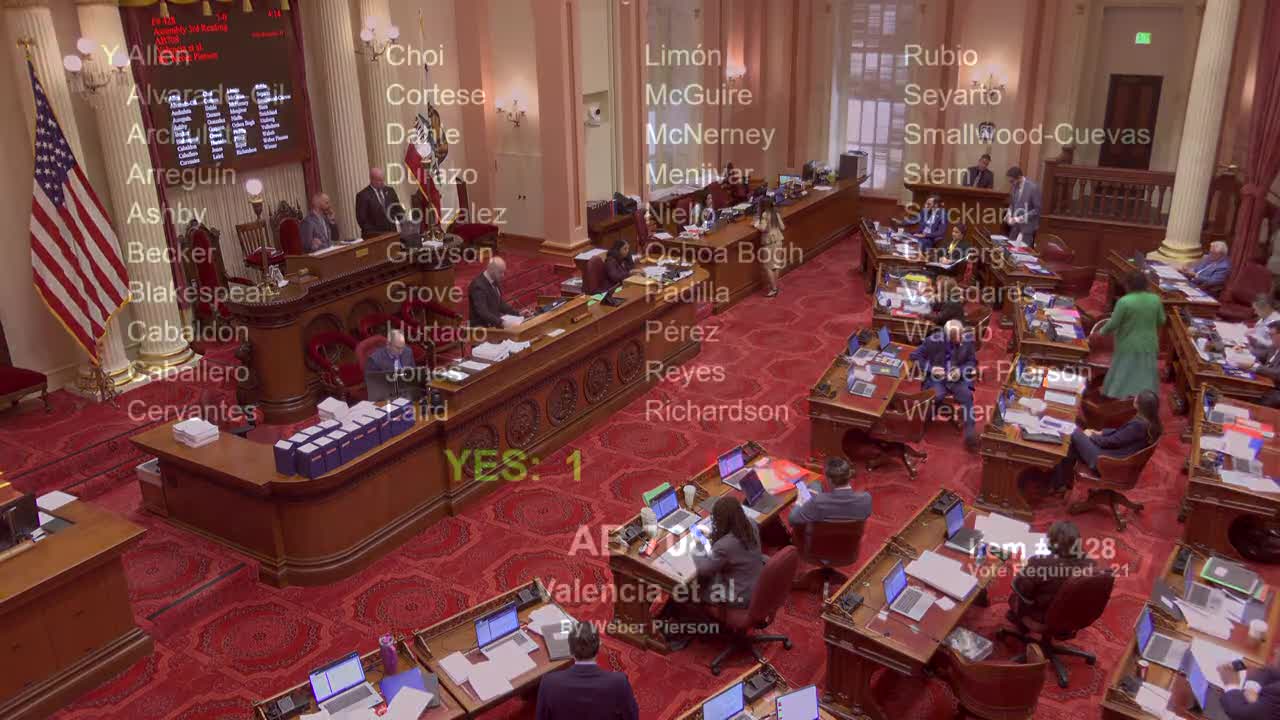 3MIN
Senate Floor
 7MIN
Senate Standing Committee on Privacy, Digital Technologies, and Consumer Protection
 8MIN
Senate Standing Committee on Business, Professions and Economic Development
Bill Author

Bill Co-Author(s):