AB 2037: Wildfire Mitigation Aging and Disability Grant Pilot Program.
- Session Year: 2025-2026
- House: Assembly
- Latest Version Date: 2026-05-18
Current Status:
In Progress
(2026-08-13: In committee: Held under submission.)
Introduced
In Committee
Awaiting First Chamber Vote
Passed First Chamber
In Committee
Awaiting Second Chamber Vote
Passed Second Chamber
Enacted
Existing law, the Mello-Granlund Older Californians Act, establishes the California Department of Aging in the California Health and Human Services Agency and sets forth its mission to provide leadership to the area agencies on aging in developing systems of home- and community-based services that maintain individuals in their own homes or the least restrictive homelike environments.
This bill would establish the Wildfire Mitigation Aging and Disability Grant Pilot Program to be administered by the California Department of Aging through specified area agencies on aging, including Planning and Service Areas 4, 29, and 33. The Upon appropriation by the Legislature for these purposes, the bill would award grants, based on specified criteria, to seniors and individuals with disabilities to mitigate against wildfires on properties they own that they would not otherwise be able to protect with existing resources. The bill would require the area agencies on aging to award grants on a competitive basis and would require applications to contain specified information, including proof of need. The bill would also authorize the grant funding to be used towards the costs associated with hiring contractors or other qualified service providers to perform wildfire mitigation activities. The bill would appropriate the sum of $1,000,000 from the General Fund to the Department of Aging to implement these provisions.
The bill would also require the area agencies on aging to retain specified information and report that information to the department upon the completion of the pilot program, including the number of applicants and the amount of money distributed.
This bill would make these provisions inoperative on January 1, 2030, and would repeal these provisions on that date.
Existing law, the Mello-Granlund Older Californians Act, establishes the California Department of Aging in the California Health and Human Services Agency and sets forth its mission to provide leadership to the area agencies on aging in developing systems of home- and community-based services that maintain individuals in their own homes or the least restrictive homelike environments.
This bill would establish the Wildfire Mitigation Aging and Disability Grant Pilot Program to be administered by the California Department of Aging through specified area agencies on aging, including Area 4 and El Dorado County Area. Planning and Service Areas 4, 29, and 33. The bill would award grants, based on specified criteria, to seniors and individuals with disabilities to mitigate against wildfires on properties they own that they would not otherwise be able to protect with existing resources. The bill would require the area agencies on aging to award grants on a competitive basis and would require applications to contain specified information, including proof of need. The bill would also authorize the grant funding to be used towards the costs associated with hiring contractors or other qualified service providers to perform wildfire mitigation activities. The bill would appropriate the sum of $1,000,000 from the General Fund to the Department of Aging to implement these provisions.
The bill would also require the area agencies on aging to retain specified information and report that information to the department upon the completion of the pilot program, including the number of applicants and the amount of money distributed.
This bill would make these provisions inoperative on January 1, 2030, and would repeal these provisions on that date.
Existing law, the Mello-Granlund Older Californians Act, establishes the California Department of Aging in the California Health and Human Services Agency and sets forth its mission to provide leadership to the area agencies on aging in developing systems of home- and community-based services that maintain individuals in their own homes or the least restrictive homelike environments.
This bill would establish the Wildfire Mitigation Aging and Disability Grant Pilot Program to be administered by the California Department of Aging. Upon an appropriation by the Legislature for these purposes, this Aging through specified area agencies on aging, including Area 4 and El Dorado County Area. The bill would award grants, based on specified criteria, to seniors and individuals with disabilities to mitigate against wildfires on properties they own that they would not otherwise be able to protect with existing resources. The bill would require the department area agencies on aging to award grants on a competitive basis and would require applications to contain specified information, including proof of need. The bill would also authorize the grant funding to be used towards the costs associated with hiring contractors or other qualified service providers to perform wildfire mitigation activities. The bill would appropriate the sum of $1,000,000 from the General Fund to the Department of Aging to implement these provisions.
The bill would also require the area agencies on aging to retain specified information and report that information to the department upon the completion of the pilot program, including the number of applicants and the amount of money distributed.
This bill would make these provisions inoperative on January 1, 2030, and would repeal these provisions on that date.
Existing law, the Mello-Granlund Older Californians Act, establishes the California Department of Aging in the California Health and Human Services Agency and sets forth its mission to provide leadership to the area agencies on aging in developing systems of home- and community-based services that maintain individuals in their own homes or the least restrictive homelike environments.
This bill would establish the Wildfire Mitigation Aging and Disability Grant Program to be administered by the California Department of Aging. Upon an appropriation by the Legislature for these purposes, this bill would award grants, based on specified criteria, to seniors and individuals with disabilities to mitigate against wildfires on properties they own that they would not otherwise be able to protect with existing resources. The bill would require the department to award grants on a competitive basis and would require applications to contain specified information, including proof of need. The bill would also authorize the grant funding to be used towards the costs associated with hiring contractors or other qualified service providers to perform wildfire mitigation activities.
The Legislature finds and declares all of the following:
(a)Fires in California have caused untold harm and suffering.
(b)Fires are especially dangerous to seniors and those with disabilities.
(c)This program is necessary to aid seniors and those with disabilities in protecting themselves and their homes from fires.
9181.(a)The Wildfire Mitigation Aging and Disability Grant Pilot Program is hereby established.
(b)The purpose of this pilot program is to allow seniors and individuals with disabilities to take actions to mitigate against wildfires on properties they own that they would not otherwise be able to take with existing resources.
9182.(a)The Wildfire Mitigation Aging and Disability Grant Pilot Program shall be administered by the California Department of Aging through the Planning and Service Areas 4, 29, and 33.
(b)The area agencies on aging shall award grants on a competitive basis. An applicant shall be eligible for a grant if all of the following criteria are met:
(1)The applicant is an older adult or individual with a disability.
(2)The applicant occupies the property as a primary residence.
(3)The applicant owns or lawfully occupies the property.
(4)The property is in a designated moderate, high, or very high fire hazard severity zone under the CalFire Fire Hazard Severity Zone maps.
9183.An application shall include, at minimum, all of the following:
(a)A verification that an individual is 65 years of age or older or has a disability as defined under the California Fair Employment and Housing Act (Part 2.8 (commencing with Section 12900) of Division 3 of Title 2 of the Government Code).
(b)Identification of the property and its wildfire risk designation under the CalFire Fire Hazard Severity Zone maps.
(c)A description of proposed mitigation measures.
(d)Proof of need, which may be satisfied with proof of income.
9184.Services provided pursuant to this chapter may include, but are not limited to, costs associated with hiring contractors or other qualified service providers to perform wildfire mitigation activities. Grant funding may be used to support any of the following:
(a)Vegetation management and defensible space creation.
(b)Tree trimming or removal of hazardous or dead trees.
(c)Removal and lawful disposal of combustible debris from roofs, gutters, and areas adjacent to structures.
(d)Installation of ember-resistant vents or other exterior hardening measures.
9185.The area agencies on aging shall retain the following information, as available, and upon completion of the pilot program, shall report to the department all of the following:
(a)The number of applicants.
(b)The amount of money distributed.
(c)The mitigation measures proposed as necessary by the applicant.
9186.The sum of one million dollars ($1,000,000) is hereby appropriated from the General Fund to the Department of Aging to implement the provisions of this article.9186.The program provided for under this article shall be implemented only upon an appropriation by the Legislature for these purposes.
9187.This chapter article shall remain in effect only until January 1, 2030, and as of that date is repealed.
The Legislature finds and declares all of the following:
(a)Fires in California have caused untold harm and suffering.
(b)Fires are especially dangerous to seniors and those with disabilities.
(c)This program is necessary to aid seniors and those with disabilities in protecting themselves and their homes from fires.
9181.(a)The Wildfire Mitigation Aging and Disability Grant Pilot Program is hereby established.
(b)The purpose of this pilot program is to allow seniors and individuals with disabilities to take actions to mitigate against wildfires on properties they own that they would not otherwise be able to take with existing resources.
9182.(a)The Wildfire Mitigation Aging and Disability Grant Pilot Program shall be administered by the California Department of Aging through the Area 4 Agency on Aging and the El Dorado County Area Agency on Aging. Planning and Service Areas 4, 29, and 33.
(b)The area agencies on aging shall award grants on a competitive basis. An applicant shall be eligible for a grant if all of the following criteria are met:
(1)The applicant is a senior citizen an older adult or individual with a disability.
(2)The applicant occupies the property as a primary residence.
(3)The applicant owns or lawfully occupies the property.
(4)The property is in a designated moderate, high, or very high fire hazard severity zone under the CalFire Fire Hazard Severity Zone maps.
9183.An application shall include, at minimum, all of the following:
(a)A verification that an individual is 65 years of age or older or has a disability as defined under the California Fair Employment and Housing Act (Part 2.8 (commencing with Section 12900) of Division 3 of Title 2 of the Government Code).
(b)Identification of the property and its wildfire risk designation under the CalFire Fire Hazard Severity Zone maps.
(c)A description of proposed mitigation measures.
(d)Proof of need, which may be satisfied with proof of income.
9184.Services provided pursuant to this chapter may include, but are not limited to, costs associated with hiring contractors or other qualified service providers to perform wildfire mitigation activities. Grant funding may be used to support any of the following:
(a)Vegetation management and defensible space creation.
(b)Tree trimming or removal of hazardous or dead trees.
(c)Removal and lawful disposal of combustible debris from roofs, gutters, and areas adjacent to structures.
(d)Installation of ember-resistant vents or other exterior hardening measures.
9185.The area agencies on aging shall retain the following information, as available, and upon completion of the pilot program, shall report to the department all of the following:
(a)The number of applicants.
(b)The amount of money distributed.
(c)The mitigation measures proposed as necessary by the applicant.
9186.The sum of one million dollars ($1,000,000) is hereby appropriated from the General Fund to the Department of Aging to implement the provisions of this article.
9187.This chapter shall remain in effect only until January 1, 2030, and as of that date is repealed.
The Legislature finds and declares all of the following:
(a)Fires in California have caused untold harm and suffering.
(b)Fires are especially dangerous to seniors and those with disabilities.
(c)This program is necessary to aid seniors and those with disabilities in protecting themselves and their homes from fires.
9181.(a)The Wildfire Mitigation Aging and Disability Grant Pilot Program is hereby established.
(b)The purpose of this pilot program is to allow seniors and individuals with disabilities to take actions to mitigate against wildfires on properties they own that they would not otherwise be able to take with existing resources.
9182.(a)The Wildfire Mitigation Aging and Disability Grant Pilot Program shall be administered by the California Department of Aging. Aging through the Area 4 Agency on Aging and the El Dorado County Area Agency on Aging.
(b)The department area agencies on aging shall award grants on a competitive basis. An applicant shall be eligible for a grant if all of the following criteria are met:
(1)The applicant is a senior citizen or individual with a disability.
(2)The applicant occupies the property as a primary residence.
(3)The applicant owns or lawfully occupies the property.
(4)The property is in a designated moderate, high, or very high fire hazard severity zone under the CalFire Fire Hazard Severity Zone maps.
9183.An application shall include, at minimum, all of the following:
(a)A verification that an individual is 65 years of age or older or has a disability as defined under the California Fair Employment and Housing Act (Part 2.8 (commencing with Section 12900) of Division 3 of Title 2 of the Government Code).
(b)Identification of the property and its wildfire risk designation under the CalFire Fire Hazard Severity Zone maps.
(c)A description of proposed mitigation measures.
(d)Proof of need, which may be satisfied with proof of income.
9184.Services provided pursuant to this chapter may include, but are not limited to, costs associated with hiring contractors or other qualified service providers to perform wildfire mitigation activities. Grant funding may be used to support any of the following:
(a)Vegetation management and defensible space creation.
(b)Tree trimming or removal of hazardous or dead trees.
(c)Removal and lawful disposal of combustible debris from roofs, gutters, and areas adjacent to structures.
(d)Installation of ember-resistant vents or other exterior hardening measures.
9185.The program provided for under this article shall be implemented only upon an appropriation by the Legislature for these purposes.9185.The area agencies on aging shall retain the following information, as available, and upon completion of the pilot program, shall report to the department all of the following:
(a)The number of applicants.
(b)The amount of money distributed.
(c)The mitigation measures proposed as necessary by the applicant.
9186.The sum of one million dollars ($1,000,000) is hereby appropriated from the General Fund to the Department of Aging to implement the provisions of this article.
9187.This chapter shall remain in effect only until January 1, 2030, and as of that date is repealed.
The Legislature finds and declares all of the following:
(a)Fires in California have caused untold harm and suffering.
(b)Fires are especially dangerous to seniors and those with disabilities.
(c)This program is necessary to aid seniors and those with disabilities in protecting themselves and their homes from fires.
9181.(a)The Wildfire Mitigation Aging and Disability Grant Program is hereby established.
(b)The purpose of this program is to allow seniors and individuals with disabilities to take actions to mitigate against wildfires on properties they own that they would not otherwise be able to take with existing resources.
9182.(a)The Wildfire Mitigation Aging and Disability Grant Program shall be administered by the California Department of Aging.
(b)The department shall award grants on a competitive basis. An applicant shall be eligible for a grant if all of the following criteria are met:
(1)The applicant is a senior citizen or individual with a disability.
(2)The applicant occupies the property as a primary residence.
(3)The applicant owns or lawfully occupies the property.
(4)The property is in a designated moderate, high, or very high fire hazard severity zone under the CalFire Fire Hazard Severity Zone maps.
9183.An application shall include, at minimum, all of the following:
(a)A verification that an individual is 65 years of age or older or has a disability as defined under the California Fair Employment and Housing Act (Part 2.8 (commencing with Section 12900) of Division 3 of Title 2 of the Government Code).
(b)Identification of the property and its wildfire risk designation under the CalFire Fire Hazard Severity Zone maps.
(c)A description of proposed mitigation measures.
(d)Proof of need, which may be satisfied with proof of income.
9184.Services provided pursuant to this chapter may include, but are not limited to, costs associated with hiring contractors or other qualified service providers to perform wildfire mitigation activities. Grant funding may be used to support any of the following:
(a)Vegetation management and defensible space creation.
(b)Tree trimming or removal of hazardous or dead trees.
(c)Removal and lawful disposal of combustible debris from roofs, gutters, and areas adjacent to structures.
(d)Installation of ember-resistant vents or other exterior hardening measures.
9185.The program provided for under this article shall be implemented only upon an appropriation by the Legislature for these purposes.
|
Date
|
Status
|
|---|---|
| Aug 13, 2026 | In committee: Held under submission. |
| Aug 3, 2026 | In committee: Referred to APPR. suspense file. |
| Jun 29, 2026 | From committee: Do pass and re-refer to Com. on APPR. (Ayes 5. Noes 0.) (June 29). Re-referred to Com. on APPR. |
| Jun 10, 2026 | Referred to Com. on HUMAN S. |
| May 28, 2026 | In Senate. Read first time. To Com. on RLS. for assignment. |
| May 27, 2026 | Read third time. Passed. Ordered to the Senate. (Ayes 75. Noes 0. Page 5474.) |
| May 27, 2026 | Read third time. Passed. Ordered to the Senate. (Ayes 75. Noes 0.) |
| May 27, 2026 | Read third time. Passed. Ordered to the Senate. |
| May 19, 2026 | Read second time. Ordered to third reading. |
| May 18, 2026 | Read second time and amended. Ordered returned to second reading. |
| May 14, 2026 | From committee: Amend, and do pass as amended. (Ayes 15. Noes 0.) (May 14). |
| May 6, 2026 | In committee: Set, first hearing. Referred to APPR. suspense file. |
| Apr 27, 2026 | Re-referred to Com. on APPR. |
| Apr 23, 2026 | Read second time and amended. |
| Apr 22, 2026 | From committee: Amend, and do pass as amended and re-refer to Com. on APPR. (Ayes 6. Noes 0.) (April 21). |
| Apr 13, 2026 | Re-referred to Com. on AGING & L.T.C. |
| Apr 9, 2026 | From committee chair, with author's amendments: Amend, and re-refer to Com. on AGING & L.T.C. Read second time and amended. |
| Mar 9, 2026 | Referred to Com. on AGING & L.T.C. |
| Feb 18, 2026 | From printer. May be heard in committee March 20. |
| Feb 17, 2026 | Read first time. To print. |
|
Date
|
Description
|
Location
|
Votes
|
|
|---|---|---|---|---|
| Aug 3, 2026 | Placed on suspense file | Senate Standing Committee on Appropriations |
Passed |
|
| Jun 29, 2026 | Do pass, but first be re-referred to the Committee on [Appropriations] | Senate Standing Committee on Human Services |
Passed |
|
| May 27, 2026 | AB 2037 Patterson Assembly Third Reading | Assembly Floor |
Passed |
|
| May 14, 2026 | Do pass as amended. | Assembly Standing Committee on Appropriations |
Passed |
|
| Apr 21, 2026 | Do pass as amended and be re-referred to the Committee on [Appropriations] | Assembly Standing Committee on Aging and Long-Term Care |
Passed |
This list shows positions taken on this bill by organizations on the date displayed, which is linked to the original source.
Positions by individuals are not included.
|
Organization
|
Position
|
Date
|
|---|---|---|
| AARP | ** Support | |
| Alzheimer’s Los Angeles | ** Support | |
| Alzheimer’s Orange County | ** Support | |
| Alzheimer’s San Diego | ** Support | |
| California Elder Justice Coalition | ** Support | |
| California Fire Chiefs Association | ** Support | |
| California Foundation For Independent Living Centers | ** Support | |
| California Senior Legislature | ** Support | |
| City of Thousand Oaks | ** Support | |
| Fire Districts Association Of California | ** Support | |
| Placer County Board of Supervisors | ** Support |
SENATE COMMITTEE ON
Senator Sabrina Cervantes, Chair
2025 - 2026 Regular Session
AB 2037 (Patterson) - Wildfire Mitigation Aging and Disability Grant Pilot Program
Version: | Policy Vote: |
Urgency: | Mandate: |
Hearing Date: | Consultant: |
Bill Summary:
AB 2037 would establish the Wildfire Mitigation Aging and Disability Grant Pilot Program.
Fiscal Impact:
- The California Department of Aging (CDA) estimates costs of $626,000 in 2027-28 and $476,000 in 2028-29 and in 2029-30 for staffing resources and outreach activities (General Fund).
- Unknown General Fund costs to provide grants. The CDA indicates that as a baseline, the average California Wildfire Mitigation Program grant amount per project was $682,000. Also, the Regional Wildfire and Landscape Resilience Grant Program will distribute $30 million to regional awardees to strengthen local capacity, improve landscape health and resilience, and reduce wildfire risk to communities. Each regional awardee is eligible to receive between $5 million and $20 million to fund landscape resilience treatments in forested and non-forested areas, clearing hazardous vegetation near homes and infrastructure, prescribed and cultural fire, pest management, reforestation and revegetation, biomass utilization, and maintenance of prior resilience efforts. The CDA anticipates each of the participating pilots could require similar funding levels, depending on interest and participation.
- Unknown General Fund cost pressures to expand or continue the pilot program beyond the sunset date.
Background:
Area Agencies on Aging. The CDA administers programs that serve older adults and adults with disabilities throughout the State. The CDA contracts with a network of 33 Area Agencies on Aging (AAAs) that directly manage a wide array of federal and state-funded services such as meals; help with finding employment; supportive services to assist older individuals as well as younger adults with disabilities to live as independently as possible; promoting healthy aging and community involvement; and supporting family members in their vital care giving role. Each county is required to have an AAA to ensure all communities have access to local aging programs and provide information and services for older adults. AAAs operate within a Planning and Service Area, which can include multiple counties. Planning and Service Area 4 covers Sacramento, Nevada, Placer, Sierra, Sutter, Yolo, and Yuba counties; Planning and Service Area 29 covers El Dorado County; and Planning and Service Area 33 covers Kern County.
California Wildfire Mitigation Program. Current law requires the California Governor’s Office of Emergency Services (Cal OES) and California Department of Forestry and Fire Protection (CAL FIRE) to oversee the development of the California Wildfire Mitigation Program. The program focuses on cost-effective structure hardening and retrofitting to create fire-resistant homes as well as defensible space and vegetation management activities. The program offers financial assistance to vulnerable populations in wildfire prone areas. Areas to implement this program were chosen after Cal OES and CAL FIRE conducted a statewide analysis of areas with high wildfire risk and high social vulnerability (residents over age 65, residents in poverty, residents with a disability, residents with limited English, and residents without a car).
Proposed Law:
Specific provisions of the bill would:
- Establish the Wildfire Mitigation Aging and Disability Grant Pilot Program to allow seniors and individuals with disabilities to mitigate against wildfires on properties they own that they would not otherwise be able to take with existing resources.
- Require the CDA to administer the pilot program through Planning and Service Areas 4, 29, and 33.
- Require the AAAs to award grants on a competitive basis; and provide that an applicant is eligible for a grant if all of the following criteria are met:
- The applicant is an older adult or individual with a disability.
- The applicant occupies the property as a primary residence.
- The applicant owns or lawfully occupies the property.
- The property is in a designated moderate, high, or very high fire hazard severity zone under the CAL FIRE Fire Hazard Severity Zone maps.
- Provide that services may include, but are not limited to, costs associated with hiring contractors or other qualified service providers to perform wildfire mitigation activities; and specify that grant funding may be used to support any of the following:
- Vegetation management and defensible space creation.
- Tree trimming or removal of hazardous or dead trees.
- Removal and lawful disposal of combustible debris from roofs, gutters, and areas adjacent to structures.
- Installation of ember-resistant vents or other exterior hardening measures.
- Condition implementation only upon an appropriation by the Legislature.
- Sunset the bill’s provisions on January 1, 2030.
-- END --
SENATE COMMITTEE ON HUMAN SERVICES
Senator Becker, Chair
2025 - 2026 Regular
Bill No: | AB 2037 | ||
Author: | Patterson | ||
Version: | May 18, 2026 | Hearing Date: | June 29, 2026 |
Urgency: | No | Fiscal: | Yes |
Consultant: | Heather Hopkins | ||
Subject: Wildfire Mitigation Aging and Disability Grant Pilot Program
SUMMARY
This bill would establish the Wildfire Mitigation Aging and Disability Grant Pilot Program to be administered by the California Department of Aging (CDA) through Planning and Service Areas 4, 29, and 33, with grants awarded by area agencies on aging (AAA), to help older adults and individuals with disabilities mitigate against wildfires on their property.
ABSTRACT
Existing Law:
- Establishes the Mello-Granlund Older Californians Act, which establishes the California Department of Aging, and sets forth its duties and powers. (Welfare and Institutions Code [WIC] 9100 et seq.)
- Establishes an Aging and Disability Resource Connection (ADRC) program to provide information to consumers and their families on available long-term services and supports programs and to assist older adults, caregivers, and persons with disabilities in accessing long-term services and support programs at the local level through Aging and Disability Resource Connection programs operated jointly by area agencies on aging (AAA) and Independent Living Centers (ILC). (WIC 9120)
- Provides that AAAs and ILCs shall be the core local partners in developing ADRC programs. Requires CDA to assist interested and qualified AAAs and ILCs in completing an application to be designated as an ADRC program. (WIC 9120)
- Provides that an ADRC program operated by an AAA and an ILC shall provide all the following:
- Enhanced information and referral services and other assistance at hours that are convenient for the public.
- Options counseling concerning available long-term services and supports programs and public and private benefits programs.
- Short-term service coordination.
- Transition services from hospitals to home and from skilled nursing facilities to the community. (WIC 9120)
- Provides that an ADRC program operated by an AAA and an ILC shall do both of the following:
- Provide services within the geographic area served.
- Provide information to the public about the services provided by the program. (WIC 9120)
- Provides that CDA, in consultation with the ADRC Advisory Committee within CDA, shall develop the core model of Aging and Disability Resource Connection best practices. These best practices shall be implemented by July 1, 2022, by all Aging and Disability Resource Connection programs operated by area agencies on aging and ILCs. To the extent feasible, the best practices shall be considered in the development and continued updating of the master plan on aging. In the development of these best practices, the department and advisory committee shall consider, at a minimum, the following practices:
- A person-centered counseling process.
- Public outreach and coordination with key referral sources, including, but not limited to, caregiver resource centers, the medical centers of the United States Department of Veteran Affairs, acute care systems, local 211 programs, local multipurpose senior service programs, Programs of All-Inclusive Care for the Elderly (PACE), adult day care services, and long-term services and supports providers.
- A formal follow-up procedure to ensure that services for which a person received a referral were received and methods for correcting the service provision, if needed.
- A model for the best ways for area agencies on aging and ILCs to share necessary data and client information.
- A model for the collection and reporting of data to the CDA, which shall include, but not be limited to, the demographic information for each individual counseled, the number of consumers served by category of service, and the number of caregivers served. (WIC 9120)
- Provides that CDA shall review implementation of the ADRC Infrastructure Grants Program for consideration in developing and updating the best practices model. (WIC 9120)
This Bill:
- Makes legislative findings and declarations that fires in California have caused untold harm and suffering and are especially dangerous to seniors and those with disabilities.
- Establishes the Wildlife Mitigation Aging and Disability Grant Pilot Program whose purpose is to allow seniors and individuals with disabilities to take actions to mitigate against wildfires on properties they own that they would not otherwise be able to take with existing resources.
- Provides that this pilot program shall be administered by CDA through the Planning and Service areas 4, 29, and 33.
- Provides that AAAs shall award grants on a competitive basis and an applicant is eligible for a grant if all of the following criteria are met:
- The applicant is an older adult or individual with a disability.
- The applicant occupies the property as a primary residence.
- The applicant owns or lawfully occupies the property.
- The property is in a designated moderate, high, or very high fire hazard severity zone under the CalFire Fire Hazard Severity Zone maps.
- Requires an application include, at minimum, all of the following:
- Verification that an individual is 65 years of age or older or has a specified disability.
- Identification of the property and its wildfire risk designation under the CalFire Fire Hazard Severity Zone maps.
- A description of proposed mitigation measures.
- Proof of need, which may be satisfied with proof of income.
- Provides that services provided pursuant to this pilot program may include, but are not limited to, costs associated with hiring contractors or other qualified service providers to perform wildfire mitigation activities. Grant funding may be used to support any of the following:
- Vegetation management and defensible space creation.
- Tree trimming or removal of hazardous or dead trees.
- Removal and lawful disposal of combustible debris from roofs, gutters, and areas adjacent to structures.
- Installation of ember-resistant vents or other exterior hardening measures.
- Provides that the AAA shall retain the following information, as available, and upon completion of the pilot program, shall report to DCA all of the following:
- The number of applicants.
- The amount of money distributed.
- The mitigation measures proposed as necessary by the applicant.
- Provides that this pilot program shall be implemented only upon an appropriation by the Legislature for these purposes.
- Provides that this pilot program shall sunset January 1, 2030.
FISCAL IMPACT
According to the Assembly Appropriations Committee:
This bill appropriates $1 million from the General Fund (GF) to CDA to implement the three-year pilot program in three AAAs. Anticipated costs for the program include both grant funding and administrative costs to CDA to implement and manage the program. The bill does not specify if the appropriation is to cover both.
For implementation, CDA estimates GF costs of $626,000 in fiscal year (FY) 2027-28, and $476,000 in FY 2028-29 and FY 2029-30. These costs include (a) one-time first year costs of $150,000 to conduct targeted educational outreach to inform eligible individuals regarding the availability of the pilot program, and application procedures, and (b) ongoing costs of $476,000 annually for the duration of the pilot for three additional CDA staff to develop, lead, and manage the proposed pilot program, in consultation with the AAAs. Although the pilot program ends on January 1, 2030, CDA anticipates the need to maintain the identified staffing until the end of FY 2029-30 to successfully wind down the program.
CDA estimated the above costs prior to Area 33 (Kern County) being added to the bill. An updated cost estimate may be slightly higher.
According to the Legislative Analyst’s Office, the General Fund faces a structural deficit in the tens of billions of dollars over the next several fiscal years.
BACKGROUND AND DISCUSSION
Purpose of the Bill:
According to the author, “Wildfires continue to plague California. In the midst of this crisis, it is imperative that the state help the most vulnerable, specifically older adults and individuals with disabilities, to prepare for these wildfires. Mitigation measures have been shown to have an immense benefit not only for the homes that use them, but even for entire neighborhoods. However, our most vulnerable communities are also least able to mitigate for wildfires on their properties. By providing a grant program, AB 2037 ensures older adults and individuals with disabilities can prepare their properties for fires, helping to protect them and their communities from the devastating effects of these disasters.”
Aging Californians
California is projected to be home to 10.8 million people age 60 and older by 2030. This is nearly twice as many people age 60 and older as there were in 2010. Additionally, by 2030 one out of every four Californians will be older adults. The state is making efforts to meet the needs of this growing population. In January 2021, the Newsom Administration published its Master Plan for Aging, which is intended to be a ten-year blueprint for state government, local government, the private sector, and philanthropy to prepare the state for the coming demographic changes and “continue California’s leadership in aging, disability, and equity.” The five goals of the Master Plan are: housing for all ages and stages; health reimagined; inclusion and equity, not isolation; caregiving that works; and affording aging.
California Department of Aging (CDA)
CDA administers programs that serve older adults and adults with disabilities throughout the State. These programs are funded through the federal Older Americans Act, the Older Californians Act, and through the Medi-Cal program. CDA contracts with the network of 33 AAAs who directly manage a wide array of federal and state-funded services that provide meals, help finding employment; supportive services to assist older individuals as well as younger adults with disabilities to live as independently as possible; promote healthy aging and community involvement; and support family members in their vital care giving role. CDA also contracts with 38 agencies that operate the Multipurpose Senior Services Program through the Medi-Cal home and community-based waiver for the elderly and certifies approximately 242 Adult Day Health Care Centers for participation in the Medi-Cal Community Based Adult Services Program.
Area Agencies on Aging
Each county is required to have an AAA to ensure all communities have access to local aging programs and provide information and services for older adults. Some AAAs serve multiple counties at once. AAAs are contracted by the CDA to operate within a Planning and Service Area, the Planning and Service Area can include multiple counties. For example, Planning and Service Area 2 serves Lasson, Modoc, Shasta, Siskiyou and Trinity counties. These AAAs provide a wide array of services on a community level to adults age 60 and over. AAA programs often include long-term care ombudsman services, nutrition services, caregiver support and respite, Medicare counseling, legal referrals, transportation, and case management.
Aging and Disability Resource Connections (ADRC)
Many communities currently have multiple agencies administering long-term services and supports and have complex, fragmented, and often duplicative intake, assessment, and eligibility functions. ADRCs are intended to act as a single coordinated system of information and access for people seeking long-term services and support. The “No Wrong Door” system aims to lower the barriers that older Californians, people with disabilities, caregivers, and families face accessing the information and assistance needed to age well. ADRCs are partnerships between AAAs and ILCs. The establishment of a statewide ADRC program was a key recommendation from the Master Plan for Aging stakeholder committee.
Anyone, regardless of age, income, or disability, may receive ADRC services. ADRC services may include: enhanced information and referral services, such as comprehensive resource information, follow-ups, and “warm hand-off” referrals. It also includes options counseling, such as assisting in identifying goals and needs through person-centered counseling and coordinating access to public and private-funded long-term services and supports in the community; and short-term service coordination, including expedited access to services and supports for individuals at risk of institutionalization, generally for 90 days or less, until a longer-term plan is in place. Transition services are also available for people who are currently in a hospital, nursing facility, or other institution and wish to receive long-term services and supports at home or in a community-based setting.
Through existing local ADRC programs, older adults, people with disabilities, caregivers, and families in some communities can connect to and access multiple services in their community with a single phone call, online contact, and/or walk-in. With this person-centered care model, individuals initially meet with an ADRC navigator who seeks an individual’s needs, goals, and preferences and offers a choice of available options. The navigator/specialist then refers the individual to local programs in their area through warm handoffs and schedules regular follow-up sessions. The ADRC program enables older adults and people with disabilities to navigate and access aging and other programs that already exist in their communities, receive assistance understanding the service options, and have a person-centered professional customize a service plan specifically to meet their needs, goals, and preferences based on initial intake and ongoing follow-up sessions. The ADRC network is growing statewide. Currently, California has 27 ADRCs that serve 30 counties. In Fiscal Year 2024-25 there were 248,298 unduplicated ADRC consumers served across all 30 counties.
California Wildfire Mitigation Program
AB 38 (Woods, 2019) required California Governor’s Office of Emergency Services (Cal OES) and California Department of Forestry and Fire Protection (CAL FIRE) to enter into a joint exercise of powers agreement to oversee the development of the California Wildfire Mitigation Program. Cal OES and CAL FIRE have developed a comprehensive wildfire mitigation program that focuses on cost-effective structure hardening and retrofitting to create fire-resistant homes as well as defensible space and vegetation management activities. The primary goal of his program is to offer financial assistance to vulnerable populations in wildfire prone areas throughout California.
Areas to implement this program were chosen after Cal OES and CAL FIRE conducted a state-wide analysis of areas with high wildfire risk and high social vulnerability (residents over age 65, residents in poverty, residents with a disability, residents with limited English, and residents without a car) at the parcel and census-tract level. Fire risk, climate change, and census data were included in the analyses.
To qualify for the California Wildfire Mitigation Program you must: be the legal property owner in a participating area at the time of the application; be willing to participate in a home assessment to determine the measures which may be taken to safeguard your home; and be willing to sign a right of entry to your property and allow contractors to implement the defensible space and home hardening activities. Currently the California Wildfire Mitigation Program is being implemented in the following project areas:
- El Dorado County – Weber Creek: this program focuses on an area identified as high wildfire risk along the Weber Creek drainage, south of Placerville encompassing 525 homes
- Lake County – Kelseyville Riviera: this program includes approximately 1,500 homes that have been prequalified within a specified area, with the emphasis of the initiative on implementing targeted wildfire cluster resilience strategy
- San Diego County – Dulzura, Campo, and Potrero: the program has begun in Dulzura and Potrero, with the Campo program beginning soon
- Shasta County – Whitmore, Lakehead, and Oak Run: the Shasta Fire Safe Council describes the initiative as focusing on communities with high social vulnerability and provides financial assistance for home hardening activities to low- and moderate-income households.
- Siskiyou County – Mt. Shasta: the goal is to complete defensible space work on approximately 500 homes
- Tuolumne County – Ponderosa Hills, Mira Monte, and Sunrise Subdivisions: there are 398 parcels in this project
This bill would create a separate wildfire mitigation program - Wildfire Mitigation Aging and Disability Grant Pilot Program to be administered by the California Department of Aging through Planning and Service Areas 4, 29, and 33 to assist older adults and individuals with disabilities to mitigate against wildfires on their property. Planning and Service Area 4 covers Sacramento, Nevada, Placer, Sierra, Sutter, Yolo, and Yuba counties, Planning and Service Area 29 covers El Dorado County and Planning and Service Area 33 covers Kern County.
Related/Prior Legislation:
SB 837 (Reyes, 2026) requires ADRC programs to provide disaster and emergency preparedness training specifically designed to help older adults and people with disabilities prepare for emergencies and ensure their safety before, during, and after natural disasters and other emergency events. This bill requires that the training utilize existing emergency preparedness and response tools developed by the Cal OES, CDA, the Department of Rehabilitation, and other relevant community partners. This bill requires that the training raise awareness of existing resources and guidance. This bill is currently pending in the Assembly.
AB 1069 (Bains, Chapter 445, Statutes of 2025) requires as part of disaster planning and response, an AAA, ILC, or an ADRC program have access to an emergency shelter in order to ensure older adults and persons with disabilities receive continuous services and necessary support.
COMMENTS
Recent fires in California have highlighted the need to improve disaster and emergency response and evacuation plans for the elderly for those with disabilities. The median age of those killed in the 2025 Los Angeles fires was 77 and at least one-third had mobility impairments. This bill seeks to address this issue by creating a Wildfire Mitigation Aging and Disability Grant Pilot Program to be administered by the CDA through Planning and Service Areas 4, 29, and 33. This program appears duplicative of the existing California Wildfire Mitigation Program, which offers financial assistance to vulnerable populations in wildfire prone areas throughout California. The California Wildfire Mitigation Program chose areas to implement the program after a state-wide analysis of areas with high wildfire risk and high social vulnerability – including residents over 65 and residents with a disability. Given that CalOES and Cal Fire have an already established infrastructure for reviewing and approving grants, the author may wish to consider administering this pilot grant program through the existing California Wildfire Mitigation Program. Further, the author may with to narrow the eligible criteria to very high and high fire risk to maximize the impact of grant dollars.
PRIOR VOTES
| |
Assembly Floor: | 75 - 0 |
Assembly Appropriations Committee: | 15 - 0 |
Assembly Aging and Long Term Care Committee: | 6 - 0 |
POSITIONS
Support:
AARP
California Fire Chiefs Association
California Foundation for Independent Living Centers
City of Thousand Oaks
Fire Districts Association of California
Oppose:
None received
-- END --
ASSEMBLY THIRD READING
ATR Bill Id:AB 2037
Author:(Patterson)
As Amended Ver:May 18, 2026
Majority vote
SUMMARY
Upon appropriation, establishes the (Pilot Program) to be administered by the California Department of Aging (CDA) through the specified area agencies on aging (AAA).
Major Provisions
- Establishes the Pilot Program in:
- AAA Area 4 a nonprofit joint powers authority serving Nevada, Placer, Sacramento, Sierra, Sutter, Yolo, and Yuba Counties;
- AAA Area 29 a county run AAA serving El Dorado County; and,
- AAA Area 33 a county run AAA serving Kern County.
- Awards grants based on specific criteria to older adults and people with disabilities to mitigate against wildfires on properties they own that they would not otherwise be able to protect using existing resources.
- Requires the designated AAAs to award grants on a competitive basis.
- Requires applications to contain specified information including proof of need.
- Authorizes the grant funding to be used towards costs associated with hiring contractors or other qualified service providers to perform wildfire mitigation activities.
- Requires the AAAs to retain specified information and report the information to CDA upon the completion of the Pilot Program, including the number of applicants and the amount distributed.
COMMENTS
As floods, earthquakes and wildfires, as well as other natural disasters continue to plague California from coasts to deserts and north to south, we continue to identify how well we provide services to older adults.
In recent years, California has experienced an increase in the frequency and severity of wildfires, and experts project that these events will continue to occur more frequently.[1] Consequently, the state will likely need to protect its residents more often and from more dangerous natural disasters in the future than it has in the past.
A scholarly article from the National institute of Health (NIH) reports on the social vulnerability of the people exposed to wildfires in U.S. West Coast states[2] The report used an index from the U.S. Centers for Disease Control and Prevention to assess the social vulnerability of populations exposed to wildfire from 2000–2021 in California, Oregon, and Washington, which accounted for 90% of exposures in the western United States. The results emphasize the importance of integrating the vulnerability of at-risk populations in wildfire mitigation and adaptation plans.
CDA administers programs serving older adults through contracts with local agencies in 33 locations across the state which provide a wide array of services on a community level to seniors and adults with disabilities. AAAs are designated to address the needs and concerns of older adults at the regional and local level. Each county is required to have an AAA to ensure all communities have access to local aging programs and provide information and services for older adults. While California is home to 58 counties, not all counties have a stand-alone AAA. Some AAAs represent multiple counties to serve the region.
California′s Aging Network (CAN) consists of CDA and the 33 AAAs. It is a greater than 50 year-old network. In 2022, the ″California 2030″ program was launched to develop tactics and strategies to prepare CAN for the future. California 2030 report was published in 2024 with recommendations for CAN. This report laid out the eight traits of an ideal future-ready CAN. Some of the traits associated with AB 2307 include:
- Inclusive and Equitable: It addresses ageism, ableism, racism, and implicit biases. Manages resources and programs to meet Californians′ evolving needs, ensuring equitable distribution and reach across populations and rural and isolated geographies.
- Locally Responsive: It adapts and develops services, practices, and programs to address community-specific needs and opportunities.
According to the Author
″Wildfires continue to plague California. In the midst of this crisis, it is imperative that the state help the most vulnerable, specifically older adults and individuals with disabilities, to prepare for these wildfires. Mitigation measures have been shown to have an immense benefit not only for the homes that use them, but even for entire neighborhoods. However, our most vulnerable communities are also least able to mitigate for wildfires on their properties. By providing a grant program, AB 2037 ensures older adults and individuals with disabilities can prepare their properties for fires, helping to protect them and their communities from the devastating effects of these disasters.″
Arguments in Support
California Fire Chiefs Association (CalChiefs) and the Fire Districts Association of California (FDAC), write in support ″Wildfires disproportionately impact seniors and individuals with disabilities, particularly those living in moderate, high, and very high fire hazard severity zones. Many of these residents lack the physical or financial capacity to complete critical mitigation work such as vegetation management, defensible space creation, debris removal, or basic home hardening.″
Arguments in Opposition
None.
FISCAL COMMENTS
According to the Assembly Committee on Appropriations, General Fund (GF) cost pressure to provide funding for the grants and CDA administrative costs to implement and manage the program.
For implementation, CDA estimates GF costs of $626,000 in fiscal year (FY) 2027-28, and $476,000 in FY 2028-29 and FY 2029-30. These costs include (a) one-time first year costs of $150,000 to conduct targeted educational outreach to inform eligible individuals regarding the availability of the pilot program, and application procedures, and (b) ongoing costs of $476,000 annually for the duration of the pilot for three additional CDA staff to develop, lead, and manage the proposed pilot program, in consultation with the AAAs. Although the pilot program ends on January 1, 2030, CDA anticipates the need to maintain the identified staffing until the end of FY 2029-30 to successfully wind down the program.
CDA estimated the above costs prior to Area 33 (Kern County) being added to the bill. An updated cost estimate may be slightly higher.
VOTES
ASM AGING AND LONG-TERM CARE: 6-0-1
YES: Bains, Ellis, Arambula, Patterson, Blanca Rubio, Sharp-Collins
ABS, ABST OR NV: Ávila Farías
ASM APPROPRIATIONS: 15-0-0
YES: Wicks, Hoover, Aguiar-Curry, Calderon, Caloza, Dixon, Fong, Mark González, Krell, Pacheco, Pellerin, Sharp-Collins, Solache, Ta, Tangipa
UPDATED
VERSION: May 18, 2026
CONSULTANT: Elizabeth Fuller / AGING & L.T.C. / (916) 319-3990 FN: 0002626
Date of Hearing: May 6, 2026
ASSEMBLY COMMITTEE ON APPROPRIATIONS
Buffy Wicks, Chair
ABPCA Bill Id:AB 2037
Author:(Patterson) – As Amended Ver:April 23, 2026
Policy Committee: | Aging and Long Term Care | Vote: | 6 - 0 |
|
| ||
|
|
Urgency: No State Mandated Local Program: No Reimbursable: No
SUMMARY:
This bill establishes a three-year pilot program administered by the California Department of Aging (CDA) through specified area agencies on aging (AAAs) to award grants to seniors and individuals with disabilities to mitigate against wildfires on their properties. The bill appropriates $1 million from the General Fund to CDA for this purpose.
Specifically, this bill:
- Establishes the Wildfire Mitigation Aging and Disability Grant Pilot Program to award grants to seniors 65 years of age or older and individuals with disabilities to take actions to mitigate against wildfires on properties they own and would not otherwise be able to take with existing resources.
- Requires CDA to administer the pilot program through AAAs’ Planning and Service Area 4 (Nevada, Placer, Sacramento, Sierra, Sutter, Yolo, and Yuba counties, Area 29 (El Dorado County), and Area 33 (Kern County).
- Requires the designated AAAs to award grants on a competitive basis and specifies eligibility criteria, including the property is in a designated moderate, high, or very high fire hazard severity zone and the applicant is an older adult or individual with a disability, occupies the property as a primary residence, and owns or lawfully occupies the property.
- Requires a grant application to contain, among other items, a description of the proposed mitigation measures and proof of financial need.
- Authorizes the grant funding to be used to hire contractors or other qualified service providers to perform wildfire mitigation activities, including, among others, vegetation management, defensible space creation, tree trimming, removal of combustible debris from roofs and gutters, and exterior hardening measures.
- Requires the AAAs to retain specified information and report the information to CDA upon the completion of the pilot program, including the number of applicants and the amount of funds distributed.
- Appropriates $1 million from the General Fund to CDA to implement the pilot program.
- Repeals these provisions on January 1, 2030.
FISCAL EFFECT:
This bill appropriates $1 million from the General Fund (GF) to CDA to implement the three-year pilot program in three AAAs. Anticipated costs for the program include both grant funding and administrative costs to CDA to implement and manage the program. The bill does not specify if the appropriation is to cover both.
For implementation, CDA estimates GF costs of $626,000 in fiscal year (FY) 2027-28, and $476,000 in FY 2028-29 and FY 2029-30. These costs include (a) one-time first year costs of $150,000 to conduct targeted educational outreach to inform eligible individuals regarding the availability of the pilot program, and application procedures, and (b) ongoing costs of $476,000 annually for the duration of the pilot for three additional CDA staff to develop, lead, and manage the proposed pilot program, in consultation with the AAAs. Although the pilot program ends on January 1, 2030, CDA anticipates the need to maintain the identified staffing until the end of FY 2029-30 to successfully wind down the program.
CDA estimated the above costs prior to Area 33 (Kern County) being added to the bill. An updated cost estimate may be slightly higher.
According to the Legislative Analyst’s Office, the General Fund faces a structural deficit in the tens of billions of dollars over the next several fiscal years.
COMMENTS:
- Purpose. According to the author:
Wildfires continue to plague California. In the midst of this crisis, it is imperative that the state help the most vulnerable, specifically older adults and individuals with disabilities, to prepare for these wildfires. Mitigation measures have been shown to have an immense benefit not only for the homes that use them, but even for entire neighborhoods. However, our most vulnerable communities are also least able to mitigate for wildfires on their properties. By providing a grant program, [this bill] ensures older adults and individuals with disabilities can prepare their properties for fires, helping to protect them and their communities from the devastating effects of these disasters.
- Background. Existing law establishes the CDA in the California Health and Human Services Agency and sets forth its mission to provide leadership to the AAAs in developing systems of home- and community-based services that maintain individuals in their own homes or the least restrictive homelike environments.
CDA administers programs serving older adults through contracts with local AAAs in 33 locations across the state to provide various services. Each county is required to have an AAA, although some AAAs represent multiple counties. AAA Planning and Service Areas 4, 29, and 33 service multiple wildfire-prone counties.
In recent years, California has experienced an increase in the frequency and severity of wildfires, and experts project these events will continue to occur. According to the California Fire Chiefs Association (CalChiefs) and the Fire Districts Association of California (FDAC), who support the bill:
Wildfires disproportionately impact seniors and individuals with disabilities, particularly those living in moderate, high, and very high fire hazard severity zones. Many of these residents lack the physical or financial capacity to complete critical mitigation work such as vegetation management, defensible space creation, debris removal, or basic home hardening.
This bill provides grants to seniors and individuals with disabilities who live in moderate, high, or very high fire hazard severity zones to perform wildfire mitigation activities, such as tree trimming, vegetation management, and home-hardening measures on their property.
In January of 2021, the Governor released his Master Plan for Aging (MPA). The MPA prioritizes the health and well-being of older Californians and the need for policies that promote healthy aging. This bill aligns with those priorities.
Analysis Prepared by: Jennifer Swenson / APPR. / (916) 319-2081
Date of Hearing: April 21, 2026
ASSEMBLY COMMITTEE ON AGING AND LONG-TERM CARE
Jasmeet Bains, Chair
ABPCA Bill Id:AB 2037 (
Author:Patterson) – As Amended Ver:April 9, 2026
SUBJECT: Wildfire Mitigation Aging and Disability Grant Pilot Program (Pilot Program)
SUMMARY: Establishes the Pilot Program to be administered by the California Department of Aging (CDA) through the specified area agencies on aging (AAA), Specifically, this bill:
- Establishes the Pilot Program in:
- AAA Area 4 a nonprofit joint powers authority serving Nevada, Placer, Sacramento, Sierra, Sutter, Yolo, and Yuba Counties; and,
- AAA Area 29 a county run AAA serving El Dorado County.
- Awards grants based on specific criteria to older adults and people with disabilities to mitigate against wildfires on properties they own that they would not otherwise be able to protect using existing resources.
- Requires the designated AAAs to award grants on a competitive basis.
- Requires applications to contain specified information including proof of need.
- Authorizes the grant funding to be used towards costs associated with hiring contractors or other qualified service providers to perform wildfire mitigation activities.
- Requires the AAAs to retain specified information and report the information to CDA upon the completion of the Pilot Program, including the number of applicants and the amount distributed.
- Makes an appropriation therefor.
- Repeals the provisions on January 1, 2030.
EXISTING LAW:
- Establishes, in federal law, the Older Americans Act (OAA), which promotes the well-being of Americans 60 years old and above through services and programs designed to meet their needs. (42 United States Code (USC.) § 3001, et seq.)
- Establishes the Mello-Granlund Older Californians Act (Act), which establishes CDA, and sets forth its duties and powers, including, among other things, entering into a contract for the development of information and materials to educate Californians on the concept of “aging in place.” (WIC § 9100 et seq.)
- Under the Act, requires CDA to designate various private nonprofit or public agencies as AAAs to work within a planning and service area and provide a broad array of social and nutritional services.
- Under the Act directs the CDA’s mission to provide leadership to AAAs to develop systems of home and community-based services that maintain individuals in their own homes or least restrictive homelike environments.
- Defines “older individual” or “elderly” as a person 60 years of age or older, except where this provision is inconsistent with federal requirements. (WIC § 9018)
- Requires the Secretary of the California Health and Human Services Agency, in coordination with the Director of CDA, to lead the development and implementation of the MPA established pursuant to Executive Order N-14-19. (WIC § 9850)
FISCAL EFFECT: This bill has not yet been analyzed by a fiscal committee.
COMMENTS:
Author’s Statement: “Wildfires continue to plague California. In the midst of this crisis, it is imperative that the state help the most vulnerable, specifically older adults and individuals with disabilities, to prepare for these wildfires. Mitigation measures have been shown to have an immense benefit not only for the homes that use them, but even for entire neighborhoods. However, our most vulnerable communities are also least able to mitigate for wildfires on their properties. By providing a grant program, AB 2037 ensures older adults and individuals with disabilities can prepare their properties for fires, helping to protect them and their communities from the devastating effects of these disasters.”
BACKGROUND
Aging in California: A recent compiled data report by the Public Policy Institute of California titled “California’s Aging Population” states:
By 2040, California’s older adult population (aged 65 and over) is projected to increase by a remarkable 59 percent, from 5.7 million to just over 9 million. This growth stands in stark contrast to the projected changes in other age groups. The working-age population (20–64 years old) is expected to increase only 3 percent, while the population under age 20 is anticipated to decrease by 23 percent. California is projected to have 3.4 million more older adults aged 65 and over, and 1.7 million fewer residents less than 65 years old.
This disproportionate growth in the older population will lead to a significant shift in the state’s age structure. Almost one-quarter of Californians (22%) will be age 65 or older by 2040, a substantial increase from 14 percent in 2020. The old-age dependency ratio (the number of older adults per 100 adults of working ages) is projected to grow from 24 to 38. In other words, there will be 38 older adults for every 100 working adults in the state.
The most dramatic growth is projected among the oldest age groups—or the oldest old. The population aged 80 and over is expected to more than double, increasing by nearly 1.8 million in 2040. This rapid growth in the oldest age groups, driven by both the aging of the baby boomers and increases in longevity, is especially significant because of this group’s relatively high personal care and health care needs.[1]
Life expectancy continues to rise,[2] however during 2019-2021 overall life expectancy for Californians fell from 81.4 years to 78.4 years. For Hispanics, life expectancy declined by nearly 6 years, a difference three times greater than their white counterparts. And the difference between those in California’s highest and lowest income brackets increased by three-and-a-half years to greater than 15 years (11.5 years before the pandemic to more than 15 years in 2021).[3]
It is important to note that the COVID-19 pandemic caused a brief (and traumatic) deviation from the long-term pattern of increases in life expectancy. The latest estimates suggest that life expectancy has resumed its pre-pandemic trend of gradually increasing longevity. The Department of Finance projects moderate increases in life expectancies through 2060. [4]
A report the State Auditor from 2019, “California Is Not Adequately Prepared to Protect Its Most Vulnerable Residents From Natural Disasters”[5] cites the three counties audited had not met the needs of vulnerable populations in their emergency planning. As California recovers from the most devastating fires in our history, we know the data shows older adults and people with disabilities perish in higher numbers during disasters.[6]
As floods, earthquakes and wildfires, as well as other natural disasters continue to plague California from coasts to deserts and north to south, we continue to identify how well we provide services to older adults.
In recent years, California has experienced an increase in the frequency and severity of wildfires, and experts project that these events will continue to occur more frequently.[7] Consequently, the state will likely need to protect its residents more often and from more dangerous natural disasters in the future than it has in the past.
A scholarly article from the National institute of Health (NIH) reports on the social vulnerability of the people exposed to wildfires in U.S. West Coast states[8] The report used an index from the U.S. Centers for Disease Control and Prevention to assess the social vulnerability of populations exposed to wildfire from 2000–2021 in California, Oregon, and Washington, which accounted for 90% of exposures in the western United States. The results emphasize the importance of integrating the vulnerability of at-risk populations in wildfire mitigation and adaptation plans.
CDA administers programs serving older adults through contracts with local agencies in 33 locations across the state which provide a wide array of services on a community level to seniors and adults with disabilities. AAAs are designated to address the needs and concerns of older adults at the regional and local level. Each county is required to have an AAA to ensure all communities have access to local aging programs and provide information and services for older adults. While California is home to 58 counties, not all counties have a stand-alone AAA. Some AAAs represent multiple counties to serve the region.
California’s Aging Network (CAN) consists of CDA and the 33 AAAs. It is a greater than 50 year-old network. In 2022, the “California 2030” program was launched to develop tactics and strategies to prepare CAN for the future. California 2030 report was published in 2024 with recommendations for CAN. This report laid out the eight traits of an ideal future-ready CAN. Some of the traits associated with AB 2307 include:
- Inclusive and Equitable: It addresses ageism, ableism, racism, and implicit biases. Manages resources and programs to meet Californians’ evolving needs, ensuring equitable distribution and reach across populations and rural and isolated geographies.
- Locally Responsive: It adapts and develops services, practices, and programs to address community-specific needs and opportunities.
Master Plan for Aging: In January of 2021, the Governor released his Master Plan for Aging (MPA). The MPA prioritizes the health and well-being of older Californians and the need for policies that promote healthy aging. The MPA serves as a blueprint for state government, local government, the private sector, and philanthropy to prepare the state for the coming demographic changes and continue California’s leadership in aging, disability, and equity.
The work plan laid out in the MPA mid-way through its ten year timeline continues to highlight the urgent needs facing California’s older adults, people with disabilities, their families, caregivers, advocates and the workforce supporting these populations..
The MPA for 2025-26 outlines five bold goals and currently seeks to advance 81 initiatives to build a California for All Ages by 2030. Each initiative features a designated area of focus; to deliver, to analyze and to communicate. It also includes a Data Dashboard on Aging to measure progress.[9]
- Goal One: Housing for All Ages and Stages
- Goal Two: Health Reimagined
- Goal Three: Inclusion and Equity, Not Isolation
- Goal Four: Caregiving That Works
- Goal Five: Affording Aging
Argument in Support: California Fire Chiefs Association (CalChiefs) and the Fire Districts Association of California (FDAC), write in support “Wildfires disproportionately impact seniors and individuals with disabilities, particularly those living in moderate, high, and very high fire hazard severity zones. Many of these residents lack the physical or financial capacity to complete critical mitigation work such as vegetation management, defensible space creation, debris removal, or basic home hardening.”
Argument in Opposition: None.
Committee amendments: The committee suggests clarifying amendments and including Area Agency on Aging Area 33 serving Kern County to be included in the Pilot Program.
REGISTERED SUPPORT / OPPOSITION:
Support
Alzheimer’s Los Angeles
Alzheimer’s Orange County
Alzheimer’s San Diego
American Association of Retired Persons (AARP)
California Elder Justice Coalition
California Fire Chiefs Association (CalChiefs)
California Foundation for Independent Living
California Senior Legislature
Fire Districts Association of California
Placer County Board of Supervisors
Opposition
None on file.
Analysis Prepared by: Elizabeth Fuller / AGING & L.T.C. / (916) 319-3990
https://www.ppic.org/publication/californias-aging-population/ ↑
https://longevity.stanford.edu/the-new-map-of-life-initiative/ ↑
https://newsroom.ucla.edu/releases/covid-life-expectancy-drops-by-race-and-income ↑
www.cdc.gov/nchs/data/databriefs/db492.pdf ↑
https://information.auditor.ca.gov/pdfs/reports/2019-103.pdf ↑
https://www.usfa.fema.gov/statistics/deaths-injuries/older-adults.html ↑
https://wildfiretaskforce.org/wp-content/uploads/2022/04/californiawildfireandforestresilienceactionplan.pdf ↑
https://pmc.ncbi.nlm.nih.gov/articles/PMC10511185/pdf/sciadv.adh4615.pdf?utm_source=consensus ↑
https://mpa.aging.ca.gov/DashBoard/ ↑
Discussed in Hearing
 6MIN
Senate Standing Committee on Human Services
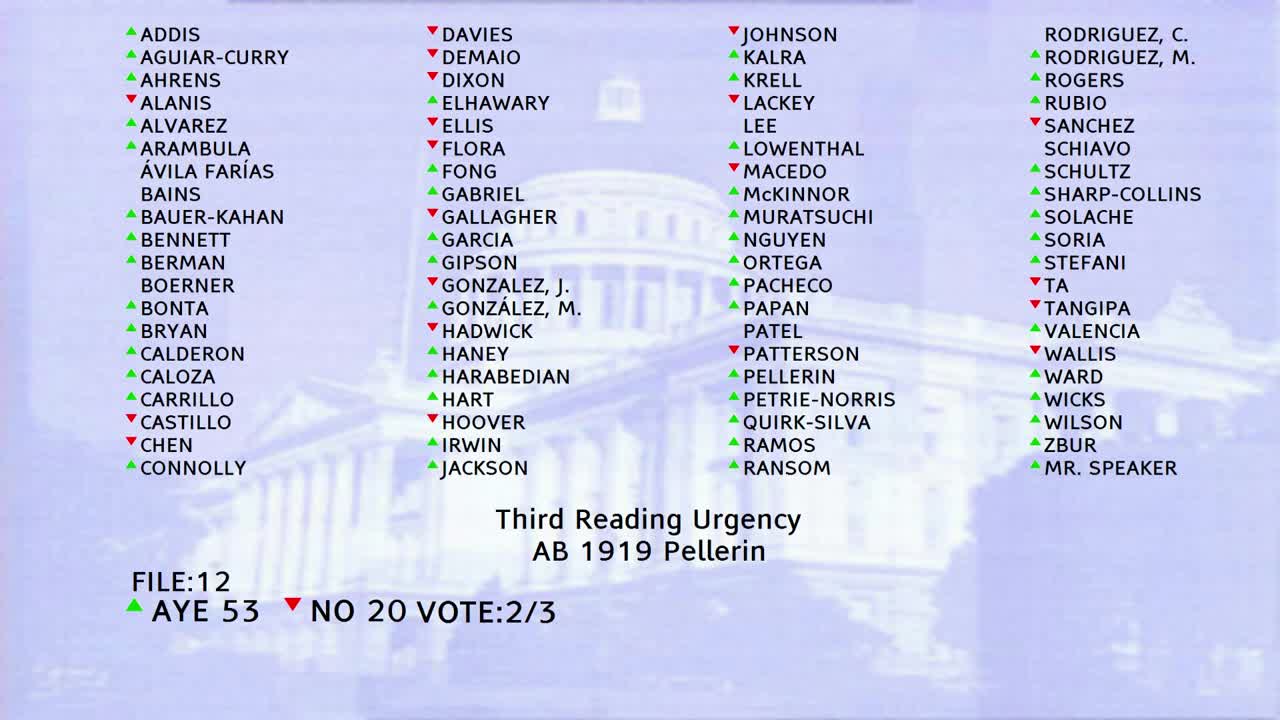 1MIN
Assembly Floor
 5MIN
Assembly Standing Committee on Aging and Long-Term Care
Bill Author

Bill Co-Author(s):