AB 2050: Common interest developments: reserve accounts.
- Session Year: 2025-2026
- House: Assembly
- Latest Version Date: 2026-09-29
Current Status:
Passed
(2026-09-29: Chaptered by Secretary of State - Chapter 796, Statutes of 2026.)
Introduced
In Committee
Awaiting First Chamber Vote
Passed First Chamber
In Committee
Awaiting Second Chamber Vote
Passed Second Chamber
Enacted
Existing law, the Davis-Stirling Common Interest Development Act, governs the management and operation of common interest developments, and requires an association to manage a common interest development, including requiring the association to levy regular and special assessments sufficient to perform its obligations, subject to specified limitations on increases in those assessments. The act requires an association to distribute an annual budget report 30 to 90 days before the end of its fiscal year. Under existing law, that budget report includes, among other things, a summary of the associations reserve accounts. The act requires an association to perform a study of the reserve account requirements, as defined, and, as part of that study, cause to be conducted a visual inspection of the accessible areas of major components that the association is obligated to repair, replace, restore, or maintain.
This bill would, beginning January 1, 2032, revise the requirement to perform a study of the reserve account requirements to, among other things, include the minimum reserve contribution level to prevent the projected association reserve account balance from falling below zero over the following 30 years. The bill would require an association to fund the reserve account on an annual basis in at least the minimum reserve contribution level. If an associations reserve balance account is projected to fall below zero at any time over the following 30 years, the bill would require the association to transfer 15% of its gross annual budget to its reserve account each year, as prescribed. If the association is unable to fund the reserve account in at least the minimum reserve contribution level through its gross annual budget, the bill would require the association to levy a reserve funding special assessment, as provided.
This bill would incorporate additional changes to Section 5550 of the Civil Code proposed by SB 1238 to be operative only if this bill and SB 1238 are enacted and this bill is enacted last.
Existing law, the Davis-Stirling Common Interest Development Act, governs the management and operation of common interest developments, and requires an association to manage a common interest development, including requiring the association to levy regular and special assessments sufficient to perform its obligations, subject to specified limitations on increases in those assessments. The act requires an association to distribute an annual budget report 30 to 90 days before the end of its fiscal year. Under existing law, that budget report includes, among other things, a summary of the associations reserve accounts. The act requires an association to perform a study of the reserve account requirements, as defined, and, as part of that study, cause to be conducted a visual inspection of the accessible areas of major components that the association is obligated to repair, replace, restore, or maintain.
This bill would, beginning January 1, 2032, revise the requirement to perform a study of the reserve account requirements to, among other things, include the minimum reserve contribution level to prevent the projected association reserve account balance from falling below zero over the following 30 years. The bill would require an association to fund the reserve account on an annual basis in at least the minimum reserve contribution level. If an associations reserve balance account is projected to fall below zero at any time over the following 30 years, the bill would require the association to transfer 15% of its gross annual budget to its reserve account each year, as prescribed. If the association is unable to fund the reserve account in at least the minimum reserve contribution level without exceeding the above-described specified limitations on increases on assessments, then, notwithstanding those specified limitations, through its gross annual budget, the bill would require the association to levy a reserve funding special assessment in an amount necessary to allow the association to fund to minimum contribution level without a reserve special assessment within 9 fiscal years, assessment, as provided.
Existing law, the Davis-Stirling Common Interest Development Act, governs the management and operation of common interest developments, and requires an association to manage a common interest development, including requiring the association to levy regular and special assessments sufficient to perform its obligations, subject to specified limitations on increases in those assessments. The act requires an association to distribute an annual budget report 30 to 90 days before the end of its fiscal year. Under existing law, that budget report includes, among other things, a summary of the associations reserve accounts. The act requires an association to perform a study of the reserve account requirements, as defined, and, as part of that study, cause to be conducted a visual inspection of the accessible areas of major components that the association is obligated to repair, replace, restore, or maintain.
This bill would, beginning January 1, 2032, revise the requirement to perform a study of the reserve account requirements to, among other things, include the minimum reserve contribution level to prevent the projected association reserve account balance from falling below zero over the following 30 years. The bill would require an association to fund the reserve account on an annual basis in at least the minimum reserve contribution level. If the association is unable to fund the reserve account in at least the minimum reserve contribution level without exceeding the above-described specified limitations on increases on assessments, then, notwithstanding those specified limitations, the bill would require the association to levy a reserve special assessment in an amount necessary to allow the association to fund to minimum contribution level without a reserve special assessment within 3 9 fiscal years, as provided.
Existing law, the Davis-Stirling Common Interest Development Act, governs the management and operation of common interest developments, and requires an association to manage a common interest development, including requiring the association to levy regular and special assessments sufficient to perform its obligations, subject to specified limitations on increases in those assessments. The act requires an association to distribute an annual budget report 30 to 90 days before the end of its fiscal year. Under existing law, that budget report includes, among other things, a summary of the associations reserve accounts. The act requires an association to perform a study of the reserve account requirements, as defined, and, as part of that study, cause to be conducted a visual inspection of the accessible areas of major components that the association is obligated to repair, replace, restore, or maintain.
This bill would, beginning January 1, 2032, revise the requirement to perform a study of the reserve account requirements to, among other things, include the minimum reserve contribution level to prevent the projected association reserve account balance from falling below zero over the following 30 years. The bill would require an association to fund the reserve account on an annual basis in at least the minimum reserve contribution level. If the association is unable to fund the reserve account in at least the minimum reserve contribution level without exceeding the above-described specified limitations on increases on assessments, then, notwithstanding those specified limitations, the bill would require the association to levy a reserve special assessment in an amount necessary to allow the association to fund to minimum contribution level without a reserve special assessment within 3 fiscal years, as provided.
The Legislature finds and declares all of the following:
(a)Common interest developments are responsible for the ongoing repair, maintenance, and replacement of major common area components, including, but not limited to, roofs, paving, mechanical systems, and critical infrastructure.
(b)To protect the health, safety, and property values of homeowners, it is imperative that homeowners associations proactively and adequately save for these significant long-term structural and operational obligations.
(c)Underfunded reserve accounts pose a severe risk to the physical integrity of common interest developments and place an undue, unexpected financial burden on homeowners by increasing the likelihood of sudden and steep special assessments.
(d)Therefore, it is the intent of the Legislature in enacting this act to establish a minimum reserve contribution level, ensuring that associations maintain long-term financial solvency and that projected reserve account balances do not fall below zero over a 30-year period.
(e)It is further the intent of the Legislature to reaffirm that all moneys collected and transferred into these reserve accounts must be strictly safeguarded. Consistent with existing law, including Section 5510 of the Civil Code, these funds should be used for the repair, restoration, replacement, or maintenance of the major components that the association is obligated to repair, restore, or maintain, and for which the reserve fund was established, or for related litigation, and not for routine operations or any other unauthorized purpose.
SEC. 2.Section 5550 of the Civil Code is amended to read:5550.(a)At least once every three years, the board shall cause to be conducted a reasonably competent and diligent visual inspection of the accessible areas of the major components that the association is obligated to repair, replace, restore, or maintain as part of a study of the reserve account requirements of the common interest development, if the current replacement value of the major components is equal to or greater than one-half of the gross budget of the association, excluding the associations reserve account for that period. The board shall review this study, or cause it to be reviewed, annually and shall consider and implement necessary adjustments to the boards analysis of the reserve account requirements as a result of that review.
(b)The study required by this section shall at a minimum include:
(1)Identification of the major components that the association is obligated to repair, replace, restore, or maintain that, as of the date of the study, have a remaining useful life of less than 30 years.
(2)Identification of the probable remaining useful life of the components identified in paragraph (1) as of the date of the study.
(3)An estimate of the cost of repair, replacement, restoration, or maintenance of the components identified in paragraph (1).
(4)An estimate of the total annual contribution necessary to defray the cost to repair, replace, restore, or maintain the components identified in paragraph (1) during and at the end of their useful life, after subtracting total reserve funds as of the date of the study.
(5)A reserve funding plan that indicates how the association plans to fund the contribution identified in paragraph (4) to meet the associations obligation for the repair and replacement of all major components with an expected remaining life of 30 years or less, not including those components that the board has determined will not be replaced or repaired.
(c)For purposes of this section, major components includes gas, water, and electrical service to the extent that the association is responsible for repair or replacement of those lines pursuant to Section 4775.
(d)This section shall remain in effect only until January 1, 2032, and as of that date is repealed.
SEC. 3.Section 5550 is added to the Civil Code, to read:5550.(a)At least once every three years, the association shall cause to be conducted a reasonably competent and diligent visual inspection of the accessible areas of the major components that the association is obligated to repair, replace, restore, or maintain as part of a study of the reserve account requirements of the common interest development, if the current replacement value of the major components is equal to or greater than one-half of the gross budget of the association. The association shall review and update this study annually and shall consider and implement necessary adjustments to the associations funding of the reserve account as a result of that review.
(b)The study required by this section shall at a minimum include:
(1)Identification of the major components that the association is obligated to repair, replace, restore, or maintain that, as of the date of the study, have a remaining useful life of less than 30 years.
(2)Identification of the probable remaining useful life of the components identified in paragraph (1) as of the date of the study.
(3)An estimate of the cost of repair, replacement, restoration, or maintenance of the components identified in paragraph (1).
(4)An estimate of the total annual reserve account transfer necessary to defray the cost to repair, replace, restore, or maintain the components identified in paragraph (1) during and at the end of their useful life, after subtracting total reserve funds as of the date of the study.
(5)A reserve funding plan that indicates how the association plans to fund the reserve account transfer identified in paragraph (4) to meet the associations obligation for the repair and replacement of all major components with an expected remaining life of 30 years or less, not including those components that the board has determined will not be replaced or repaired.
(6)The minimum reserve contribution level to prevent the projected association reserve account balance from falling below zero over the following 30 years.
(7)A statement informing the association that, beginning January 1, 2032, state law will require an association to take certain actions if the association projects the reserve account balance to fall below zero over a 30-year period, including transferring a minimum of 15 percent of its gross annual budget to the reserve account and, under specified conditions, levying a reserve funding special assessment, as prescribed.
(c)For purposes of this section, major components includes gas, water, and electrical service to the extent that the association is responsible for repair or replacement of those lines pursuant to Section 4775.
(d)This section shall become operative on January 1, 2032.
SEC. 3.1.Section 5550 of the Civil Code is amended to read:5550.(a)At least once every three years, the board shall cause to be conducted a reasonably competent and diligent visual inspection of the accessible areas of the major components that the association is obligated to repair, replace, restore, or maintain as part of a study of the reserve account requirements of the common interest development, if the current replacement value of the major components is equal to or greater than one-half of the gross budget of the association, excluding the associations reserve account for that period. The board shall review this study, or cause it to be reviewed, annually and shall consider and implement necessary adjustments to the boards analysis of the reserve account requirements as a result of that review.
(b)The study required by this section shall at a minimum include:
(1)Identification of the major components that the association is obligated to repair, replace, restore, or maintain that, as of the date of the study, have a remaining useful life of less than 30 years.
(2)Identification of the probable remaining useful life of the components identified in paragraph (1) as of the date of the study.
(3)An estimate of the cost of repair, replacement, restoration, or maintenance of the components identified in paragraph (1).
(4)Cost of repair, replacement, restoration or maintenance of the components identified in the report required in Section 5551.
(5)An estimate of the total annual contribution necessary to defray the cost to repair, replace, restore, or maintain the components identified in paragraph (1) during and at the end of their useful life, after subtracting total reserve funds as of the date of the study.
(6)A reserve funding plan that indicates how the association plans to fund the contribution identified in paragraph (5) to meet the associations obligation for the repair and replacement of all major components with an expected remaining life of 30 years or less, not including those components that the board has determined will not be replaced or repaired.
(c)For purposes of this section, major components includes, but is not limited to, exterior elevated elements defined and inspected pursuant to Section 5551, and gas, water, and electrical service to the extent that the association is responsible for repair or replacement of those lines pursuant to Section 4775.
(d)This section shall remain in effect only until January 1, 2032, and as of that date is repealed.
SEC. 3.2.Section 5550 is added to the Civil Code, to read:5550.(a)At least once every three years, the association shall cause to be conducted a reasonably competent and diligent visual inspection of the accessible areas of the major components that the association is obligated to repair, replace, restore, or maintain as part of a study of the reserve account requirements of the common interest development, if the current replacement value of the major components is equal to or greater than one-half of the gross budget of the association. The association shall review and update this study annually and shall consider and implement necessary adjustments to the associations funding of the reserve account as a result of that review.
(b)The study required by this section shall at a minimum include:
(1)Identification of the major components that the association is obligated to repair, replace, restore, or maintain that, as of the date of the study, have a remaining useful life of less than 30 years.
(2)Identification of the probable remaining useful life of the components identified in paragraph (1) as of the date of the study.
(3)An estimate of the cost of repair, replacement, restoration, or maintenance of the components identified in paragraph (1).
(4)Cost of repair, replacement, restoration or maintenance of the components identified in the report required in Section 5551.
(5)An estimate of the total annual reserve account transfer necessary to defray the cost to repair, replace, restore, or maintain the components identified in paragraph (1) during and at the end of their useful life, after subtracting total reserve funds as of the date of the study.
(6)A reserve funding plan that indicates how the association plans to fund the reserve account transfer identified in paragraph (5) to meet the associations obligation for the repair and replacement of all major components with an expected remaining life of 30 years or less, not including those components that the board has determined will not be replaced or repaired.
(7)The minimum reserve contribution level to prevent the projected association reserve account balance from falling below zero over the following 30 years.
(8)A statement informing the association that, beginning January 1, 2032, state law will require an association to take certain actions if the association projects the reserve account balance to fall below zero over a 30-year period, including transferring a minimum of 15 percent of its gross annual budget to the reserve account and, under specified conditions, levying a reserve funding special assessment, as prescribed.
(c)For purposes of this section, major components includes, but is not limited to, exterior elevated elements defined and inspected pursuant to Section 5551, and gas, water, and electrical service to the extent that the association is responsible for repair or replacement of those lines pursuant to Section 4775.
(d)This section shall become operative on January 1, 2032.
SEC. 4.Section 5552 is added to the Civil Code, to read:5552.(a)An association shall fund the reserve account on an annual basis in at least the minimum reserve contribution level included in the most recent study of the reserve account requirements pursuant to paragraph (6) of subdivision (b) of Section 5550.
(b)If an associations reserve account balance is projected pursuant to paragraph (6) of subdivision (b) of Section 5550 to fall below zero at any time over the following 30 years, the association shall transfer a minimum of 15 percent of its gross annual budget to its reserve account each year until its reserve account balance is no longer projected to fall below zero.
(c)(1)If the association is unable to fund the reserve account in at least the minimum reserve contribution level under subdivision (b) through its gross annual budget, the association shall levy a reserve funding special assessment subject to the same provisions as a standard special assessment in Section 5605.
(2)If the reserve funding special assessment amount in paragraph (1) is insufficient to meet the minimum reserve contribution level due to the cap on special assessments without a vote, the association shall have the membership vote on approving an amount exceeding the cap that is necessary to fund the minimum level.
(d)All funds collected through the reserve funding special assessment shall be deposited in the associations reserve account and considered reserve funds.
(e)An association shall not levy a reserve funding special assessment more than once every nine years.
(f)This section shall become operative on January 1, 2032.
SEC. 5.Sections 3.1 and 3.2 of this bill incorporate amendments to Section 5550 of the Civil Code proposed by both this bill and Senate Bill 1238. Those sections of this bill shall only become operative if (1) both bills are enacted and become effective on or before January 1, 2027, (2) this bill amends, repeals and adds Section 5550 of the Civil Code and Senate Bill 1238 amends Section 5550 of the Civil Code, and (3) this bill is enacted after Senate Bill 1238, in which case Sections 2 and 3 of this bill shall not become operative.
The Legislature finds and declares all of the following:
(a)Common interest developments are responsible for the ongoing repair, maintenance, and replacement of major common area components, including, but not limited to, roofs, paving, mechanical systems, and critical infrastructure.
(b)To protect the health, safety, and property values of homeowners, it is imperative that homeowners associations proactively and adequately save for these significant long-term structural and operational obligations.
(c)Underfunded reserve accounts pose a severe risk to the physical integrity of common interest developments and place an undue, unexpected financial burden on homeowners by increasing the likelihood of sudden and steep special assessments.
(d)Therefore, it is the intent of the Legislature in enacting this act to establish a minimum reserve contribution level, ensuring that associations maintain long-term financial solvency and that projected reserve account balances do not fall below zero over a 30-year period.
(e)It is further the intent of the Legislature to reaffirm that all moneys collected and transferred into these reserve accounts must be strictly safeguarded. Consistent with existing law, including Section 5510 of the Civil Code, these funds should be used for the repair, restoration, replacement, or maintenance of the major components that the association is obligated to repair, restore, or maintain, and for which the reserve fund was established, or for related litigation, and not for routine operations or any other unauthorized purpose.
SECTION 1.SEC. 2.Section 5550 of the Civil Code is amended to read:5550.(a)At least once every three years, the board shall cause to be conducted a reasonably competent and diligent visual inspection of the accessible areas of the major components that the association is obligated to repair, replace, restore, or maintain as part of a study of the reserve account requirements of the common interest development, if the current replacement value of the major components is equal to or greater than one-half of the gross budget of the association, excluding the associations reserve account for that period. The board shall review this study, or cause it to be reviewed, annually and shall consider and implement necessary adjustments to the boards analysis of the reserve account requirements as a result of that review.
(b)The study required by this section shall at a minimum include:
(1)Identification of the major components that the association is obligated to repair, replace, restore, or maintain that, as of the date of the study, have a remaining useful life of less than 30 years.
(2)Identification of the probable remaining useful life of the components identified in paragraph (1) as of the date of the study.
(3)An estimate of the cost of repair, replacement, restoration, or maintenance of the components identified in paragraph (1).
(4)An estimate of the total annual contribution necessary to defray the cost to repair, replace, restore, or maintain the components identified in paragraph (1) during and at the end of their useful life, after subtracting total reserve funds as of the date of the study.
(5)A reserve funding plan that indicates how the association plans to fund the contribution identified in paragraph (4) to meet the associations obligation for the repair and replacement of all major components with an expected remaining life of 30 years or less, not including those components that the board has determined will not be replaced or repaired.
(c)For purposes of this section, major components includes gas, water, and electrical service to the extent that the association is responsible for repair or replacement of those lines pursuant to Section 4775.
(d)This section shall remain in effect only until January 1, 2032, and as of that date is repealed.
SEC. 2.SEC. 3.Section 5550 is added to the Civil Code, to read:5550.(a)At least once every three years, the association shall cause to be conducted a reasonably competent and diligent visual inspection of the accessible areas of the major components that the association is obligated to repair, replace, restore, or maintain as part of a study of the reserve account requirements of the common interest development, if the current replacement value of the major components is equal to or greater than one-half of the gross budget of the association. The association shall review and update this study annually and shall consider and implement necessary adjustments to the associations funding of the reserve account as a result of that review.
(b)The study required by this section shall at a minimum include:
(1)Identification of the major components that the association is obligated to repair, replace, restore, or maintain that, as of the date of the study, have a remaining useful life of less than 30 years.
(2)Identification of the probable remaining useful life of the components identified in paragraph (1) as of the date of the study.
(3)An estimate of the cost of repair, replacement, restoration, or maintenance of the components identified in paragraph (1).
(4)An estimate of the total annual reserve account transfer necessary to defray the cost to repair, replace, restore, or maintain the components identified in paragraph (1) during and at the end of their useful life, after subtracting total reserve funds as of the date of the study.
(5)A reserve funding plan that indicates how the association plans to fund the reserve account transfer identified in paragraph (4) to meet the associations obligation for the repair and replacement of all major components with an expected remaining life of 30 years or less, not including those components that the board has determined will not be replaced or repaired.
(6)The minimum reserve contribution level to prevent the projected association reserve account balance from falling below zero over the following 30 years.
(7)A statement informing the association that, beginning January 1, 2032, state law will require an association to take certain actions if the association projects the reserve account balance to fall below zero over a 30-year period, including transferring a minimum of 15 percent of its gross annual budget to the reserve account and, under specified conditions, levying a reserve funding special assessment, as prescribed.
(c)For purposes of this section, major components includes gas, water, and electrical service to the extent that the association is responsible for repair or replacement of those lines pursuant to Section 4775.
(d)This section shall become operative on January 1, 2032.
SEC. 3.1.Section 5550 of the Civil Code is amended to read:5550.(a)At least once every three years, the board shall cause to be conducted a reasonably competent and diligent visual inspection of the accessible areas of the major components that the association is obligated to repair, replace, restore, or maintain as part of a study of the reserve account requirements of the common interest development, if the current replacement value of the major components is equal to or greater than one-half of the gross budget of the association, excluding the associations reserve account for that period. The board shall review this study, or cause it to be reviewed, annually and shall consider and implement necessary adjustments to the boards analysis of the reserve account requirements as a result of that review.
(b)The study required by this section shall at a minimum include:
(1)Identification of the major components that the association is obligated to repair, replace, restore, or maintain that, as of the date of the study, have a remaining useful life of less than 30 years.
(2)Identification of the probable remaining useful life of the components identified in paragraph (1) as of the date of the study.
(3)An estimate of the cost of repair, replacement, restoration, or maintenance of the components identified in paragraph (1).
(4)Cost of repair, replacement, restoration or maintenance of the components identified in the report required in Section 5551.
(4)(5)An estimate of the total annual contribution necessary to defray the cost to repair, replace, restore, or maintain the components identified in paragraph (1) during and at the end of their useful life, after subtracting total reserve funds as of the date of the study.
(5)(6)A reserve funding plan that indicates how the association plans to fund the contribution identified in paragraph (4) (5) to meet the associations obligation for the repair and replacement of all major components with an expected remaining life of 30 years or less, not including those components that the board has determined will not be replaced or repaired.
(c)For purposes of this section, major components includes includes, but is not limited to, exterior elevated elements defined and inspected pursuant to Section 5551, and gas, water, and electrical service to the extent that the association is responsible for repair or replacement of those lines pursuant to Section 4775.
(d)This section shall remain in effect only until January 1, 2032, and as of that date is repealed.
SEC. 3.2.Section 5550 is added to the Civil Code, to read:5550.(a)At least once every three years, the association shall cause to be conducted a reasonably competent and diligent visual inspection of the accessible areas of the major components that the association is obligated to repair, replace, restore, or maintain as part of a study of the reserve account requirements of the common interest development, if the current replacement value of the major components is equal to or greater than one-half of the gross budget of the association. The association shall review and update this study annually and shall consider and implement necessary adjustments to the associations funding of the reserve account as a result of that review.
(b)The study required by this section shall at a minimum include:
(1)Identification of the major components that the association is obligated to repair, replace, restore, or maintain that, as of the date of the study, have a remaining useful life of less than 30 years.
(2)Identification of the probable remaining useful life of the components identified in paragraph (1) as of the date of the study.
(3)An estimate of the cost of repair, replacement, restoration, or maintenance of the components identified in paragraph (1).
(4)Cost of repair, replacement, restoration or maintenance of the components identified in the report required in Section 5551.
(5)An estimate of the total annual reserve account transfer necessary to defray the cost to repair, replace, restore, or maintain the components identified in paragraph (1) during and at the end of their useful life, after subtracting total reserve funds as of the date of the study.
(6)A reserve funding plan that indicates how the association plans to fund the reserve account transfer identified in paragraph (5) to meet the associations obligation for the repair and replacement of all major components with an expected remaining life of 30 years or less, not including those components that the board has determined will not be replaced or repaired.
(7)The minimum reserve contribution level to prevent the projected association reserve account balance from falling below zero over the following 30 years.
(8)A statement informing the association that, beginning January 1, 2032, state law will require an association to take certain actions if the association projects the reserve account balance to fall below zero over a 30-year period, including transferring a minimum of 15 percent of its gross annual budget to the reserve account and, under specified conditions, levying a reserve funding special assessment, as prescribed.
(c)For purposes of this section, major components includes, but is not limited to, exterior elevated elements defined and inspected pursuant to Section 5551, and gas, water, and electrical service to the extent that the association is responsible for repair or replacement of those lines pursuant to Section 4775.
(d)This section shall become operative on January 1, 2032.
SEC. 3.SEC. 4.Section 5552 is added to the Civil Code, to read:5552.(a)An association shall fund the reserve account on an annual basis in at least the minimum reserve contribution level included in the most recent study of the reserve account requirements pursuant to paragraph (6) of subdivision (b) of Section 5550.
(b)If an associations reserve account balance is projected pursuant to paragraph (6) of subdivision (b) of Section 5550 to fall below zero at any time over the following 30 years, the association shall transfer a minimum of 15 percent of its gross annual budget to its reserve account each year until its reserve account balance is no longer to projected to fall below zero.
(c)(1)If the association is unable to fund the reserve account in at least the minimum reserve contribution level under subdivision (b) through its gross annual budget, the association shall levy a reserve funding special assessment subject to the same provisions as a standard special assessment in Section 5605.
(2)If the reserve funding special assessment amount in paragraph (1) is insufficient to meet the minimum reserve contribution level due to the cap on special assessments without a vote, the association shall have the membership vote on approving an amount exceeding the cap that is necessary to fund the minimum level.
(d)All funds collected through the reserve funding special assessment shall be deposited in the associations reserve account and considered reserve funds.
(e)An association shall not levy a reserve funding special assessment more than once every nine years.
(f)This section shall become operative on January 1, 2032.
SEC. 5.Sections 3.1 and 3.2 of this bill incorporate amendments to Section 5550 of the Civil Code proposed by both this bill and Senate Bill 1238. Those sections of this bill shall only become operative if (1) both bills are enacted and become effective on or before January 1, 2027, (2) this bill amends, repeals and adds Section 5550 of the Civil Code and Senate Bill 1238 amends Section 5550 of the Civil Code, and (3) this bill is enacted after Senate Bill 1238, in which case Sections 2 and 3 of this bill shall not become operative.
(a)At least once every three years, the board shall cause to be conducted a reasonably competent and diligent visual inspection of the accessible areas of the major components that the association is obligated to repair, replace, restore, or maintain as part of a study of the reserve account requirements of the common interest development, if the current replacement value of the major components is equal to or greater than one-half of the gross budget of the association, excluding the associations reserve account for that period. The board shall review this study, or cause it to be reviewed, annually and shall consider and implement necessary adjustments to the boards analysis of the reserve account requirements as a result of that review.
(b)The study required by this section shall at a minimum include:
(1)Identification of the major components that the association is obligated to repair, replace, restore, or maintain that, as of the date of the study, have a remaining useful life of less than 30 years.
(2)Identification of the probable remaining useful life of the components identified in paragraph (1) as of the date of the study.
(3)An estimate of the cost of repair, replacement, restoration, or maintenance of the components identified in paragraph (1).
(4)An estimate of the total annual contribution necessary to defray the cost to repair, replace, restore, or maintain the components identified in paragraph (1) during and at the end of their useful life, after subtracting total reserve funds as of the date of the study.
(5)A reserve funding plan that indicates how the association plans to fund the contribution identified in paragraph (4) to meet the associations obligation for the repair and replacement of all major components with an expected remaining life of 30 years or less, not including those components that the board has determined will not be replaced or repaired.
(c)For purposes of this section, major components includes gas, water, and electrical service to the extent that the association is responsible for repair or replacement of those lines pursuant to Section 4775.
(d)This section shall remain in effect only until January 1, 2032, and as of that date is repealed.
SEC. 2.Section 5550 is added to the Civil Code, to read:5550.(a)At least once every three years, the association shall cause to be conducted a reasonably competent and diligent visual inspection of the accessible areas of the major components that the association is obligated to repair, replace, restore, or maintain as part of a study of the reserve account requirements of the common interest development, if the current replacement value of the major components is equal to or greater than one-half of the gross budget of the association. The association shall review and update this study annually and shall consider and implement necessary adjustments to the associations funding of the reserve account as a result of that review.
(b)The study required by this section shall at a minimum include:
(1)Identification of the major components that the association is obligated to repair, replace, restore, or maintain that, as of the date of the study, have a remaining useful life of less than 30 years.
(2)Identification of the probable remaining useful life of the components identified in paragraph (1) as of the date of the study.
(3)An estimate of the cost of repair, replacement, restoration, or maintenance of the components identified in paragraph (1).
(4)An estimate of the total annual reserve account transfer necessary to defray the cost to repair, replace, restore, or maintain the components identified in paragraph (1) during and at the end of their useful life, after subtracting total reserve funds as of the date of the study.
(5)A reserve funding plan that indicates how the association plans to fund the reserve account transfer identified in paragraph (4) to meet the associations obligation for the repair and replacement of all major components with an expected remaining life of 30 years or less, not including those components that the board has determined will not be replaced or repaired.
(6)The minimum reserve contribution level to prevent the projected association reserve account balance from falling below zero over the following 30 years.
(7)A statement informing the association that, beginning January 1, 2032, state law will require an association to take certain actions if the association projects the reserve account balance to fall below zero over a 30-year period, including transferring a minimum of 15 percent of its gross annual budget to the reserve account and, under specified conditions, levying a reserve funding special assessment, as prescribed.
(c)For purposes of this section, major components includes gas, water, and electrical service to the extent that the association is responsible for repair or replacement of those lines pursuant to Section 4775.
(d)This section shall become operative on January 1, 2032.
SEC. 3.Section 5552 is added to the Civil Code, to read:5552.(a)An association shall fund the reserve account on an annual basis in at least the minimum reserve contribution level included in the most recent study of the reserve account requirements pursuant to paragraph (6) of subdivision (b) of Section 5550.
(b)If an associations reserve account balance is projected pursuant to paragraph (6) of subdivision (b) of Section 5550 to fall below zero at any time over the following 30 years, the association shall transfer a minimum of 15 percent of its gross annual budget to its reserve account each year until its reserve account balance is no longer to projected to fall below zero.
(b)(c)(1)If the association is unable to fund the reserve account in at least the minimum reserve contribution level without exceeding the limitations on assessment increases set forth in Section 5605, then, notwithstanding Section 5605, under subdivision (b) through its gross annual budget, the association shall levy a reserve funding special assessment in an amount necessary to allow the association to fund to minimum contribution level without a reserve special assessment within nine fiscal years. subject to the same provisions as a standard special assessment in Section 5605.
(2)If the reserve funding special assessment amount in paragraph (1) is insufficient to meet the minimum reserve contribution level due to the cap on special assessments without a vote, the association shall have the membership vote on approving an amount exceeding the cap that is necessary to fund the minimum level.
(2)(d)All funds collected through the reserve funding special assessment shall be deposited in the associations reserve account and considered reserve funds. The amount of the reserve funding special assessment shall be the amount necessary to prevent the projected association reserve account balance from falling below zero over the following 30 years.
(3)(e)An association shall not levy a reserve funding special assessment more than once every nine years.
(c)(f)This section shall become operative on January 1, 2032.
(a)At least once every three years, the board shall cause to be conducted a reasonably competent and diligent visual inspection of the accessible areas of the major components that the association is obligated to repair, replace, restore, or maintain as part of a study of the reserve account requirements of the common interest development, if the current replacement value of the major components is equal to or greater than one-half of the gross budget of the association, excluding the associations reserve account for that period. The board shall review this study, or cause it to be reviewed, annually and shall consider and implement necessary adjustments to the boards analysis of the reserve account requirements as a result of that review.
(b)The study required by this section shall at a minimum include:
(1)Identification of the major components that the association is obligated to repair, replace, restore, or maintain that, as of the date of the study, have a remaining useful life of less than 30 years.
(2)Identification of the probable remaining useful life of the components identified in paragraph (1) as of the date of the study.
(3)An estimate of the cost of repair, replacement, restoration, or maintenance of the components identified in paragraph (1).
(4)An estimate of the total annual contribution necessary to defray the cost to repair, replace, restore, or maintain the components identified in paragraph (1) during and at the end of their useful life, after subtracting total reserve funds as of the date of the study.
(5)A reserve funding plan that indicates how the association plans to fund the contribution identified in paragraph (4) to meet the associations obligation for the repair and replacement of all major components with an expected remaining life of 30 years or less, not including those components that the board has determined will not be replaced or repaired.
(c)For purposes of this section, major components includes gas, water, and electrical service to the extent that the association is responsible for repair or replacement of those lines pursuant to Section 4775.
(d)This section shall remain in effect only until January 1, 2032, and as of that date is repealed.
SEC. 2.Section 5550 is added to the Civil Code, to read:5550.(a)At least once every three years, the association shall cause to be conducted a reasonably competent and diligent visual inspection of the accessible areas of the major components that the association is obligated to repair, replace, restore, or maintain as part of a study of the reserve account requirements of the common interest development, if the current replacement value of the major components is equal to or greater than one-half of the gross budget of the association. The association shall review and update this study annually and shall consider and implement necessary adjustments to the associations funding of the reserve account as a result of that review.
(b)The study required by this section shall at a minimum include:
(1)Identification of the major components that the association is obligated to repair, replace, restore, or maintain that, as of the date of the study, have a remaining useful life of less than 30 years.
(2)Identification of the probable remaining useful life of the components identified in paragraph (1) as of the date of the study.
(3)An estimate of the cost of repair, replacement, restoration, or maintenance of the components identified in paragraph (1).
(4)An estimate of the total annual reserve account transfer necessary to defray the cost to repair, replace, restore, or maintain the components identified in paragraph (1) during and at the end of their useful life, after subtracting total reserve funds as of the date of the study.
(5)A reserve funding plan that indicates how the association plans to fund the reserve account transfer identified in paragraph (4) to meet the associations obligation for the repair and replacement of all major components with an expected remaining life of 30 years or less, not including those components that the board has determined will not be replaced or repaired.
(6)The minimum reserve contribution level to prevent the projected association reserve account balance from falling below zero over the following 30 years.
(c)For purposes of this section, major components includes gas, water, and electrical service to the extent that the association is responsible for repair or replacement of those lines pursuant to Section 4775.
(d)This section shall become operative on January 1, 2032.
SEC. 3.Section 5552 is added to the Civil Code, to read:5552.(a)An association shall fund the reserve account on an annual basis in at least the minimum reserve contribution level included in the most recent study of the reserve account requirements pursuant to paragraph (6) of subdivision (b) of Section 5550.
(b)(1)If the association is unable to fund the reserve account in at least the minimum reserve contribution level without exceeding the limitations on assessment increases set forth in Section 5605, then, notwithstanding Section 5605, the association shall levy a reserve special assessment in an amount necessary to allow the association to fund to minimum contribution level without a reserve special assessment within three nine fiscal years.
(2)All funds collected through the reserve special assessment shall be deposited in the associations reserve account and considered reserve funds. The amount of the reserve funding special assessment shall be the amount necessary to prevent the projected association reserve account balance from falling below zero over the following 30 years.
(3)An association shall not levy a reserve funding special assessment more than once every three nine years.
(c)This section shall become operative on January 1, 2032.
REVISIONS: HeadingLine 2.(a)At least once every three years, the board shall cause to be conducted a reasonably competent and diligent visual inspection of the accessible areas of the major components that the association is obligated to repair, replace, restore, or maintain as part of a study of the reserve account requirements of the common interest development, if the current replacement value of the major components is equal to or greater than one-half of the gross budget of the association, excluding the associations reserve account for that period. The board shall review this study, or cause it to be reviewed, annually and shall consider and implement necessary adjustments to the boards analysis of the reserve account requirements as a result of that review.
(b)The study required by this section shall at a minimum include:
(1)Identification of the major components that the association is obligated to repair, replace, restore, or maintain that, as of the date of the study, have a remaining useful life of less than 30 years.
(2)Identification of the probable remaining useful life of the components identified in paragraph (1) as of the date of the study.
(3)An estimate of the cost of repair, replacement, restoration, or maintenance of the components identified in paragraph (1).
(4)An estimate of the total annual contribution necessary to defray the cost to repair, replace, restore, or maintain the components identified in paragraph (1) during and at the end of their useful life, after subtracting total reserve funds as of the date of the study.
(5)A reserve funding plan that indicates how the association plans to fund the contribution identified in paragraph (4) to meet the associations obligation for the repair and replacement of all major components with an expected remaining life of 30 years or less, not including those components that the board has determined will not be replaced or repaired.
(c)For purposes of this section, major components includes gas, water, and electrical service to the extent that the association is responsible for repair or replacement of those lines pursuant to Section 4775.
(d)This section shall remain in effect only until January 1, 2032, and as of that date is repealed.
SEC. 2.Section 5550 is added to the Civil Code, to read:5550.(a)At least once every three years, the association shall cause to be conducted a reasonably competent and diligent visual inspection of the accessible areas of the major components that the association is obligated to repair, replace, restore, or maintain as part of a study of the reserve account requirements of the common interest development, if the current replacement value of the major components is equal to or greater than one-half of the gross budget of the association. The association shall review and update this study annually and shall consider and implement necessary adjustments to the associations funding of the reserve account as a result of that review.
(b)The study required by this section shall at a minimum include:
(1)Identification of the major components that the association is obligated to repair, replace, restore, or maintain that, as of the date of the study, have a remaining useful life of less than 30 years.
(2)Identification of the probable remaining useful life of the components identified in paragraph (1) as of the date of the study.
(3)An estimate of the cost of repair, replacement, restoration, or maintenance of the components identified in paragraph (1).
(4)An estimate of the total annual reserve account transfer necessary to defray the cost to repair, replace, restore, or maintain the components identified in paragraph (1) during and at the end of their useful life, after subtracting total reserve funds as of the date of the study.
(5)A reserve funding plan that indicates how the association plans to fund the reserve account transfer identified in paragraph (4) to meet the associations obligation for the repair and replacement of all major components with an expected remaining life of 30 years or less, not including those components that the board has determined will not be replaced or repaired.
(6)The minimum reserve contribution level to prevent the projected association reserve account balance from falling below zero over the following 30 years.
(c)For purposes of this section, major components includes gas, water, and electrical service to the extent that the association is responsible for repair or replacement of those lines pursuant to Section 4775.
(d)This section shall become operative on January 1, 2032.
SEC. 3.Section 5552 is added to the Civil Code, to read:5552.(a)An association shall fund the reserve account on an annual basis in at least the minimum reserve contribution level included in the most recent study of the reserve account requirements pursuant to paragraph (6) of subdivision (b) of Section 5550.
(b)(1)If the association is unable to fund the reserve account in at least the minimum reserve contribution level without exceeding the limitations on assessment increases set forth in Section 5605, then, notwithstanding Section 5605, the association shall levy a reserve special assessment in an amount necessary to allow the association to fund to minimum contribution level without a reserve special assessment within three fiscal years.
(2)All funds collected through the reserve special assessment shall be deposited in the associations reserve account and considered reserve funds. The amount of the reserve funding special assessment shall be the amount necessary to prevent the projected association reserve account balance from falling below zero over the following 30 years.
(3)An association shall not levy a reserve funding special assessment more than once every three years.
(c)This section shall become operative on January 1, 2032.
|
Date
|
Status
|
|---|---|
| Sep 29, 2026 | Chaptered by Secretary of State - Chapter 796, Statutes of 2026. |
| Sep 29, 2026 | Approved by the Governor. |
| Sep 3, 2026 | Enrolled and presented to the Governor at 4 p.m. |
| Aug 26, 2026 | Senate amendments concurred in. To Engrossing and Enrolling. (Ayes 65. Noes 4. Page 6639.). |
| Aug 26, 2026 | Senate amendments concurred in. To Engrossing and Enrolling. (Ayes 65. Noes 4.). |
| Aug 26, 2026 | In Assembly. Concurrence in Senate amendments pending. |
| Aug 26, 2026 | Read third time. Passed. Ordered to the Assembly. (Ayes 30. Noes 3. Page 5848.). |
| Aug 26, 2026 | Read third time. Passed. Ordered to the Assembly. (Ayes 30. Noes 3.). |
| Aug 24, 2026 | Read second time. Ordered to third reading. |
| Aug 21, 2026 | Read third time and amended. Ordered to second reading. |
| Aug 5, 2026 | Read second time. Ordered to third reading. |
| Aug 4, 2026 | From committee: Do pass. (Ayes 4. Noes 1.) (August 3). |
| Jul 1, 2026 | From committee: Do pass and re-refer to Com. on APPR. (Ayes 12. Noes 0.) (June 30). Re-referred to Com. on APPR. |
| Jun 18, 2026 | Read second time and amended. Re-referred to Com. on JUD. |
| Jun 17, 2026 | From committee: Amend, and do pass as amended and re-refer to Com. on JUD. (Ayes 7. Noes 1.) (June 16). |
| May 20, 2026 | Referred to Coms. on HOUSING, JUD. and APPR. |
| May 12, 2026 | In Senate. Read first time. To Com. on RLS. for assignment. |
| May 11, 2026 | Read third time. Passed. Ordered to the Senate. (Ayes 59. Noes 7. Page 4989.) |
| May 11, 2026 | Read third time. Passed. Ordered to the Senate. (Ayes 59. Noes 7.) |
| May 11, 2026 | Read third time. Passed. Ordered to the Senate. |
| Apr 29, 2026 | Read second time. Ordered to third reading. |
| Apr 28, 2026 | From committee: Do pass. (Ayes 10. Noes 1.) (April 28). |
| Apr 28, 2026 | Coauthors revised. |
| Apr 20, 2026 | Re-referred to Com. on JUD. |
| Apr 16, 2026 | Read second time and amended. |
| Apr 15, 2026 | From committee: Amend, and do pass as amended and re-refer to Com. on JUD. (Ayes 11. Noes 0.) (April 15). |
| Mar 9, 2026 | Referred to Coms. on H. & C.D. and JUD. |
| Feb 19, 2026 | From printer. May be heard in committee March 21. |
| Feb 18, 2026 | Read first time. To print. |
|
Date
|
Description
|
Location
|
Votes
|
|
|---|---|---|---|---|
| Aug 26, 2026 | AB 2050 Caloza Concurrence in Senate Amendments | Assembly Floor |
Passed |
|
| Aug 26, 2026 | Assembly 3rd Reading AB2050 Caloza et al. By Laird | Senate Floor |
Passed |
|
| Aug 3, 2026 | Do pass | Senate Standing Committee on Appropriations |
Passed |
|
| Jun 30, 2026 | Do pass, but first be re-referred to the Committee on [Appropriations] | Senate Standing Committee on Judiciary |
Passed |
|
| Jun 16, 2026 | Do pass as amended, but first amend, and re-refer to the Committee on [Judiciary] | Senate Standing Committee on Housing |
Passed |
|
| May 11, 2026 | AB 2050 Caloza Assembly Third Reading | Assembly Floor |
Passed |
|
| Apr 28, 2026 | Do pass. | Assembly Standing Committee on Judiciary |
Passed |
|
| Apr 15, 2026 | Do pass as amended and be re-referred to the Committee on [Judiciary] | Assembly Standing Committee on Housing and Community Development |
Passed |
This list shows positions taken on this bill by organizations on the date displayed, which is linked to the original source.
Positions by individuals are not included.
|
Organization
|
Position
|
Date
|
|---|---|---|
| CAI-CLAC | ** Support | |
| California Association Of Community Managers | ** Support | |
| California Association Of Realtors | ** Against | |
| Center for California Homeowner Association Law | ** Against | |
| Community Association Institute's California Legislative Action Committee | ** Support | |
| Community Associations Institute – California Legislative Action Committee | ** Support | |
| Consumer Federation Of California | ** Against | |
| Housing and Economic Rights Advocates | ** Against | |
| Housing and Economic Rights Advocates (HERA) | ** Against |
CONCURRENCE IN SENATE AMENDMENTS
CSA1 Bill Id:AB 2050
Author:(Caloza)
As Amended Ver:August 21, 2026
Majority vote
SUMMARY
Requires, beginning January 1, 2032, a homeowners association (HOA) to include in its three-year reserve study the minimum reserve contribution level to prevent the projected association reserve account balance from falling below zero over the following 30 years and to fund the reserve account on an annual basis in at least the minimum reserve contribution level included in the most recent three-year reserve study, as specified.
Senate Amendments
- Delete the provision requiring an HOA to levy a reserve special assessment in any amount necessary to allow the HOA to fund to minimum contribution level without a reserve special assessment within nine fiscal years if the HOA is unable to fund the reserve account in at least the minimum reserve contribution level.
- Specify the order of actions an HOA must take before the required reserved funding special assessment is levied, as follows:
- If an HOA's reserve account balance is projected to fall below zero at any time over the following 30 years, the HOA must transfer a minimum of 15% of its gross annual budget to its reserve account each year until its reserve account balance is no longer projected to fall below zero;
- If the HOA is unable to fund the reserve account in at least the minimum reserve contribution level under a) through its gross annual budget, the HOA must levy a reserve funding special assessment subject to the same limitations as a standard special assessment under the Davis-Stirling Common Interest Development Act (Act); then
- If the reserve funding special assessment amount in b) is insufficient to meet the minimum reserve contribution level due to the cap on special assessments without a vote, the HOA must have the membership vote on approving an amount exceeding the cap that is necessary to fund the minimum level.
- Add a statement to an HOA's reserve study informing an HOA that beginning January 1, 2032, state law will require an HOA to take certain actions if the HOA projects the reserve account balance to fall below zero over a 30-year period, including transferring a minimum 15% of its gross annual budget to the reserve account and, under specified conditions, levying a reserve funding special assessment, as prescribed.
- Make findings and declare the intent of the Legislature to reaffirm that all moneys collected and transferred into these reserve accounts must be strictly safeguarded, and that, consistent with existing law, these funds should be used for the repair, restoration, replacement, or maintenance of the major components that the HOA is obligated to repair, restore, or maintain, and for which the reserve fund was established, or for related litigation, and not for routine operations or any other unauthorized purpose.
- Incorporate nonsubstantive chaptering amendments.
COMMENTS
Davis-Stirling Common Interest Development Act: The Act went into effect in 1986 and is the primary body of law governing common interest developments (CIDs) in California. The Act provides the legal framework for the creation and management of HOAs, including rules related to governance, assessments, dispute resolution, maintenance responsibilities, and member rights. The Act aims to balance the authority of HOAs with the rights of individual property owners, ensuring that communities are managed efficiently and fairly.
Over time, the Act has been amended to address the evolving needs of CIDs and to increase transparency, accountability, and consumer protection. Key provisions include requirements for open meetings, financial disclosures, election procedures, and architectural review processes. The Act also provides mechanisms for resolving disputes, including internal dispute resolution and alternative dispute resolution, before certain legal actions can proceed. As CIDs continue to represent a significant portion of California's housing stock, the Act plays a critical role in shaping the living environment and governance of millions of residents across the state.
HOA Assessments: Under existing law, HOAs are required to levy regular and special assessments sufficient to perform their obligations under the governing documents and the Act. HOAs are prohibited from imposing or collecting an assessment that exceeds the amount necessary to defray the costs for which it is levied. Regular assessments are established in an HOA's annual budget and are paid by members of an HOA usually on a monthly or quarterly basis. Special assessments are generally a one-time or limited-duration charge imposed to pay for expenses not covered by regular assessments or the budget.
There are limitations on the rates at which regular and special assessments may be levied without a vote of the membership. An HOA may increase regular assessments for any fiscal year up to, and including, 20% greater than the regular assessments for the HOA's preceding fiscal year without the approval of a majority of a quorum of members. Existing law allows an HOA to levy a special assessment up to 5% of the current fiscal year's budgeted gross expenses without the approval of a majority of a quorum of members. There are no limitations on the number of special assessments that an HOA may impose. However, the 5% cap is an aggregate of the number of special assessments. For example, an HOA may impose one special assessment of 5% of the budgeted gross expenses or five special assessments of 1% without approval of the membership. With approval from a majority of a quorum of members, an HOA can impose regular or special assessments that exceed either cap.
The Act also provides HOAs with the authority to impose emergency special assessments. Emergency special assessments are for situations in which an extraordinary expense is required by an order of a court; necessary to operate, repair, or maintain the CID or any part for which the HOA is responsible where a threat to personal health or safety or another hazardous condition or circumstance on the property is discovered; or necessary to repair or maintain the CID or any part of it for which the HOA is responsible that could not have been reasonably foreseen by the HOA board in preparing and distributing the annual budget report.
Reserve Studies: HOAs are required to periodically review their long-term repair and replacement obligations through reserve studies. At least once every three years, the HOA board must conduct a reasonably competent and diligent visual inspection of the accessible areas of major components for which the association is responsible, where the replacement value of those components is at least one-half of the association's gross budget, excluding reserves, and must review that study annually and make appropriate adjustments to its reserve analysis. The reserve study must identify major components with less than 30 years of remaining useful life, estimate their remaining life and repair or replacement costs, calculate the annual contribution needed to fund those obligations, and include a reserve funding plan. In this sense, existing law requires HOAs to periodically identify foreseeable capital needs and map out a strategy to pay for them. Although the Act specifies the planning activities an HOA must take, there is no requirement to allocate any portion of the HOA's annual budget to the reserve fund. Generally, any contributions to a reserve fund would come from the collection of regular assessments.
According to the Author
"California is home to thousands of common interest developments (CIDs), where homeowners rely on their association to maintain shared property and ensure long-term safety and financial stability. In my district alone, 70% of associations are 20 years or older and 73% are condominiums. Communities are managing aging buildings that require significant long-term maintenance. While state law requires associations to conduct reserve studies and plan for major repairs, it does not require them to fund those future obligations. By 2027, Fannie Mae and Freddie Mac will raise from 10% to 15% the minimum an association has to focus on reserves. If an association cannot meet this requirement, owners will have trouble selling due to a lack of mortgage financing. Strong neighborhoods are built on financial preparedness. California homeowners deserve the peace of mind knowing their HOAs are equipped with the tools and resources they need to meet the long-term needs of their community. With secure reserve funding, communities can maintain infrastructure proactively, avoid costly special assessments, and support long-term housing affordability."
Arguments in Support
According to the Community Association Institute's California Legislative Action Committee, "This approach reflects a simple but critical principal: pay now or pay later. Adequate reserve funding prevents deferred maintenance, costly emergency repairs, and steep special assessments that place sudden financial burdens on homeowners. By prompting disciplined, forward-looking funding practices, AB 2050 helps protect property values and the long-term affordability of common interest developments. More importantly, stronger reserve funding will also help associations meet secondary mortgage market expectations. For example, Fannie Mae requires condominium associations to allocate at least 10 percent of their total annual budget assessment income towards reserves, and Freddie Mac similarly applies a 10% reserves allocation for established and new condominium projects. These entities are expected to raise the reserves allocation to a 15% starting as early as 2027."
Arguments in Opposition
According to the Center for California Homeowner Association Law, Consumer Federation of California, and other organizations in the opposition coalition, "Homeowner associations (HOAs) collect hundreds of millions of dollars annually from the 14 million Californians who live in them. There is no state oversight of HOAs or what they do with homeowner money. With no state oversight, AB 2050 would let HOAs collect a new type of assessment on top of regular, special, and emergency assessments homeowners already pay. The new assessment to be levied by AB 2050 will make HOA housing even more unaffordable."
FISCAL COMMENTS
According to the Senate Appropriations Committee:
The Department of Real Estate (DRE) estimates minor one-time costs, likely in the tens of thousands of dollars, to conduct stakeholder and consumer education and to conduct training for Subdivisions Division staff. DRE would also incur one-time contract costs of approximately $75,000 to update Subdivision forms, the Operating Costs Manual, and Reserve Study Guidelines related to HOA budgets. (Real Estate Fund)
VOTES:
ASM HOUSING AND COMMUNITY DEVELOPMENT: 11-0-1
YES: Haney, Patterson, Ávila Farías, Caloza, Garcia, Kalra, Lee, Quirk-Silva, Tangipa, Wicks, Wilson
ABS, ABST OR NV: Ta
ASM JUDICIARY: 10-1-1
YES: Kalra, Bauer-Kahan, Bryan, Connolly, Dixon, Harabedian, Pacheco, Papan, Lee, Zbur
NO: Sanchez
ABS, ABST OR NV: Johnson
ASSEMBLY FLOOR: 59-7-14
YES: Addis, Aguiar-Curry, Ahrens, Alanis, Alvarez, Ávila Farías, Bauer-Kahan, Bennett, Berman, Boerner, Bonta, Bryan, Calderon, Caloza, Carrillo, Connolly, Davies, Dixon, Elhawary, Fong, Gabriel, Garcia, Gipson, Jeff Gonzalez, Mark González, Haney, Harabedian, Hart, Irwin, Jackson, Kalra, Krell, Lee, McKinnor, Muratsuchi, Nguyen, Ortega, Pacheco, Papan, Patel, Patterson, Pellerin, Petrie-Norris, Ramos, Ransom, Rogers, Blanca Rubio, Schiavo, Schultz, Sharp-Collins, Stefani, Tangipa, Valencia, Wallis, Ward, Wicks, Wilson, Zbur, Rivas
NO: DeMaio, Ellis, Gallagher, Hadwick, Johnson, Macedo, Sanchez
ABS, ABST OR NV: Arambula, Bains, Castillo, Chen, Flora, Hoover, Lackey, Lowenthal, Quirk-Silva, Celeste Rodriguez, Michelle Rodriguez, Solache, Soria, Ta
UPDATED
VERSION: August 21, 2026
CONSULTANT: Juan Reyes / H. & C.D. / (916) 319-2085 FN: 0004175
SENATE RULES COMMITTEE Office of Senate Floor Analyses (916) 651-4171 | AB 2050 |
THIRD READING
Bill No: AB 2050
Author: Caloza (D), et al.
Amended: 8/21/26 in Senate
Vote: 21
SENATE HOUSING COMMITTEE: 7-1, 6/16/26
AYES: Arreguín, Cabaldon, Caballero, Cortese, Durazo, Ochoa Bogh, Padilla
NOES: Seyarto
NO VOTE RECORDED: Gonzalez, Grayson
SENATE JUDICIARY COMMITTEE: 12-0, 6/30/26
AYES: Umberg, Niello, Allen, Ashby, Caballero, Durazo, Laird, Reyes, Stern, Wahab, Weber Pierson, Wiener
NO VOTE RECORDED: Valladares
SENATE APPROPRIATIONS COMMITTEE: 4-1, 8/3/26
AYES: Cervantes, Cabaldon, Richardson, Wahab
NOES: Seyarto
NO VOTE RECORDED: Dahle, Grayson
ASSEMBLY FLOOR: 59-7, 5/11/26 - See last page for vote
SUBJECT: Common interest developments: reserve accounts
SOURCE: CAI-CLAC
DIGEST:
This bill requires homeowner’s associations (HOAs), beginning January 1, 2032, to fund HOA reserve accounts in accordance with their reserve study and specifies the mechanisms from which the accounts shall be funded.
Senate Floor Amendments of 8/21/26 address chaptering conflicts with SB 1238 (Wahab).
ANALYSIS:
Existing law, related to the Davis-Stirling Act:
- Notwithstanding more restrictive limitations, prohibits an HOA from imposing the following without the approval of a majority of a quorum of members:
- A regular assessment that is more than 20% greater than the regular assessment for the association’s preceding fiscal year; or
- Special assessments which, in the aggregate, exceed 5% of the budgeted gross expenses of the HOA for that fiscal year.
- Allows HOAs to impose emergency assessments without member approval for specified urgent expenses, including court-ordered obligations, disaster-related repairs, or threats to health and safety.
- Requires an HOA board, at least once every three years, to conduct a reasonably competent and diligent visual inspection of the accessible areas of the major components that the HOA is obligated to repair, replace, restore, or maintain as part of a reserve study, when the replacement value of those components meets a specified threshold.
- Requires an HOA board to review the reserve study annually and consider and implement necessary adjustments to reserve fund planning.
- Requires reserve studies to include, at a minimum:
- Identification of major components the HOA is required to repair, replace, restore, or maintain with a remaining useful life of less than 30 years;
- Identification of the probable remaining useful life of the components identified in a).
- Estimated repair, replacement, restoration, and maintenance costs associated with the components identified in a).
- Estimated annual reserve contributions necessary to defray the costs identified in c); and,
- A reserve funding plan to identify how the HOA plans to fund the contributions estimated in d).
- Provides that “major components” include gas, water, and electrical service lines where the HOA is responsible for maintenance or replacement.
This bill:
- Sunsets the existing HOA reserve study requirements on January 1st, 2032, and, beginning on that date, revises the study with the following requirements:
- Requires the HOA, rather than the board, to conduct a reasonably competent and diligent visual inspection of major components at least once every three years as part of a reserve study;
- Requires the HOA to update the reserve study annually; and,
- Requires the HOA to consider and implement necessary adjustments to reserve funding based on the annual review.
- Retains existing reserve study content requirements, including identification of major components, their remaining useful life, cost estimates to repair, replace, restore, or maintain them, and a reserve funding plan, but:
- Revises the calculation from an “annual contribution” to an “annual reserve account transfer;” and,
- Adds a requirement that the study include the minimum reserve contribution level necessary to prevent the reserve account balance from falling below zero over a 30-year period.
- Requires the reserve study to include a statement informing the association that, beginning January 1, 2032, state law will require an association to take certain actions if the HOA projects the reserve account balance to fall below zero over a 30-year period, including transferring a minimum of 15% of its gross annual budget to the reserve account and, under specified conditions, levying a reserve funding special assessment, as prescribed.
- If an HOA’s reserve account balance is expected to fall below zero over a 30-year period, requires the HOA to transfer a minimum of 15% of its gross annual budget to its reserve account each year until its reserve account balance is no longer to projected to fall below zero.
- Requires, if the annual budget transfer is insufficient to meet the projected need, the HOA to levy a one-time reserve funding special assessment, subject to the same provisions of a standard special assessment.
- If that amount is insufficient, the HOA shall have the members vote on an amount exceeding the special assessment cap.
- Provides that a one-time reserve funding special assessment may not be levied again within a 9-year period.
- Provides that all funds collected through the reserve funding special assessment shall be deposited in the HOA’s reserve account and considered reserve funds.
- Provides that the bill’s provisions regarding annual budget transfers and reserve funding special assessments shall become operative on January 1st, 2032.
Background
HOAs. HOAs are the legal governing bodies of common interest developments (CIDs). These developments cover a variety of community arrangements, including apartment complexes, housing cooperatives, condominiums, and planned unit developments. In 1986, California enacted the Davis-Stirling Act, which outlines the requirements for CID and HOA governance, including assessments and other fees, maintenance responsibilities, and elections. There are over 50,000 HOAs throughout California, covering 36.3% of the state’s population. In L.A. County alone, there are over 16,500 HOAs.
Davis-Stirling Act (Act). The Act went into effect in 1986 and is the primary state law governing CIDs and HOAs in California. The Act provides the legal framework for the creation and management of HOAs, including rules related to governance, assessments, dispute resolution, maintenance responsibilities, and member rights. The law aims to balance the authority of HOAs with the rights of individual property owners, ensuring that communities are managed efficiently and fairly. Over time, the Act has been amended to address the evolving needs of CIDs and HOAs, including increased transparency, accountability, and consumer protections. Key provisions of the Act include requirements for open meetings, financial disclosures, election procedures, and architectural review processes. The Act also provides mechanisms for resolving disputes, including internal dispute resolution and alternative dispute resolution before certain legal actions can proceed. As the majority of new housing construction in California is part of an HOA, the Act plays a critical role in shaping the environment and governance of these communities and the tens of millions of residents who reside in them.
Comments
Author’s statement. “California is home to thousands of common interest developments (CIDs), where homeowners rely on their association to maintain shared property and ensure long-term safety and financial stability. In my district alone, 70% of associations are 20 years or older and 73% are condominiums. Communities are managing aging buildings that require significant long-term maintenance. While state law requires associations to conduct reserve studies and plan for major repairs, it does not require them to fund those future obligations. By 2027, Fannie Mae and Freddie Mac will raise from 10% to 15% the minimum an association has to focus on reserves. If an association cannot meet this requirement, owners will have trouble selling due to a lack of mortgage financing. Strong neighborhoods are built on financial preparedness. California homeowners deserve the peace of mind knowing their HOAs are equipped with the tools and resources they need to meet the long-term needs of their community. With secure reserve funding, communities can maintain infrastructure proactively, avoid costly special assessments, and support long-term housing affordability.”
The Importance of Funding HOA Reserves. HOA reserves are funds set aside by an HOA to pay for major components that the association is obligated to repair, replace, restore, or maintain (e.g., residential roof replacement, major pool repairs, paving of association-owned roads, etc.). By carefully planning for reserves and raising funds over time through budgeted regular assessments, HOAs can plan for large, anticipated expenses in a way that does not trigger sudden, burdensome special assessments for HOA members.
When an HOA’s reserves are not well-funded, the association may struggle with deferred maintenance and its associated consequences without new assessments. Additionally, according to the bill’s sponsor, “Many lenders are now refusing to write mortgages for condominiums if the association has underfunded reserves. Fannie Mae and Freddie Mac require an association to have a minimum of 10% in reserves and will increase that level to 15% starting in 2027.” This bill is intended to address those issues by requiring an HOA to fund its reserve to at least the minimum contribution level determined by the reserves study that is already required in existing law.
HOA Reserve Studies. Under existing law, HOAs are required to periodically assess their long-term repair and replacement obligations through reserve studies. At least once every three years, the HOA board must conduct a reasonably competent and diligent visual inspection of the accessible areas of major components for which the association is responsible, where the replacement value of those components is at least one-half of the association’s gross budget, excluding reserves, and must review that study annually and make appropriate adjustments to its reserve analysis. The reserve study must identify major components with less than 30 years of remaining useful life, estimate their remaining life and repair or replacement costs, calculate the annual contribution needed to fund those obligations, and include a reserve funding plan. In this sense, existing law requires HOAs to periodically identify foreseeable capital needs and map out a strategy to pay for them.
However, while the Act requires reserve planning, it does not mandate actual funding at any particular level. As a result, some HOAs may defer reserve contributions to avoid near-term assessment pressure, even if that increases future risk. Rather than spreading costs over time through gradual increases in regular assessments that contribute to the annual budget, this can lead to large, one-time assessments when major components ultimately fail, even when the need for repair or replacement was foreseeable and identified in prior reserve studies. Furthermore, underfunding can then spill into broader financing and insurance problems. For example, Fannie Mae’s current condo project standards treat projects with significant deferred maintenance or unsafe conditions as ineligible until repairs are completed, require lenders to scrutinize special assessments, and note that projects budgeting less than 10% of HOA assessment income toward reserves may be at increased risk of deferred maintenance and special assessments. Fannie Mae also requires adequate master property insurance for condo projects and has suspended waivers for certain project insurance deficiencies, which means deteriorating conditions or weak project finances can make HOA units harder to finance and thus sell.
Unexpected Costs & Other Affordability Issues. In order to balance the need for funding HOA reserves with the desire to protect homeowners from unforeseen large expenses, this bill was amended to change the mechanism for funding reserves. As written, if an HOA’s projected reserve account balance is expected to fall below zero over a 30 year period, the HOA would be required to transfer a minimum of 15% of its gross annual budget to its reserve account each year until its reserve account balance is no longer to projected to fall below zero. This could help ensure that HOAs are using their annual budget more strategically to take reserves into account, which may be more beneficial to homeowners since the budget is funded by more predictable regular assessments. This bill was also amended to require an HOA to levy a one-time reserve funding special assessment—subject to the same cap provisions as a standard special assessment—to make up any gap in funding needed that is not fulfilled by the annual budget transfer. If that amount is still insufficient, then the HOA shall have the HOA membership vote on an amount exceeding the cap. These measures could help improve member participation in consequential financial decisions made by the HOA.
Double-referral. This bill was also heard in the Senate Judiciary Committee on June 30th, 2026, where it received a vote of 12-0.
Related/Prior Legislation
SB 1007 (Menjivar, 2026) —among other things, would cap HOA regular assessments, without a vote of the members, at an increase of no more than 8% from the previous regular assessment. This bill was held in the Assembly Housing and Community Development Committee at the request of the author.
FISCAL EFFECT: Appropriation: No Fiscal Com.: No Local: No
SUPPORT: (Verified 8/21/26)
CAI-CLAC (Source)
California Association of Community Managers
OPPOSITION: (Verified 8/21/26)
California Association of Realtors
Center for California Homeowner Association Law
Consumer Federation of California
Housing and Economic Rights Advocates
ARGUMENTS IN SUPPORT: Supporters of the bill argue that it will help ensure HOAs are actually funding their reserves to prevent major unforeseen expenses that are passed onto homeowners. They also argue that due to evolving federal lending requirements, properly funded HOA reserves are critical to ensure lenders continue to underwrite mortgages for homes in HOAs.
ARGUMENTS IN OPPOSITION: Opponents of the bill argue that setting the minimum reserve funding threshold at an amount not to fall below zero over a 30-year period, rather than a higher defined amount, may not do enough to prevent issues surrounding poorly-funded reserves, such as deferred maintenance. They also argue that requiring reserve funding levels may worsen affordability in HOAs.
ASSEMBLY FLOOR: 59-7, 5/11/26
AYES: Addis, Aguiar-Curry, Ahrens, Alanis, Alvarez, Ávila Farías, Bauer-Kahan, Bennett, Berman, Boerner, Bonta, Bryan, Calderon, Caloza, Carrillo, Connolly, Davies, Dixon, Elhawary, Fong, Gabriel, Garcia, Gipson, Jeff Gonzalez, Mark González, Haney, Harabedian, Hart, Irwin, Jackson, Kalra, Krell, Lee, McKinnor, Muratsuchi, Nguyen, Ortega, Pacheco, Papan, Patel, Patterson, Pellerin, Petrie-Norris, Ramos, Ransom, Rogers, Blanca Rubio, Schiavo, Schultz, Sharp-Collins, Stefani, Tangipa, Valencia, Wallis, Ward, Wicks, Wilson, Zbur, Rivas
NOES: DeMaio, Ellis, Gallagher, Hadwick, Johnson, Macedo, Sanchez
NO VOTE RECORDED: Arambula, Bains, Castillo, Chen, Flora, Hoover, Lackey, Lowenthal, Quirk-Silva, Celeste Rodriguez, Michelle Rodriguez, Solache, Soria, Ta
Prepared by: Ryan Hardmeyer / HOUSING / (916) 651-4124
8/24/26 11:00:27
**** END ****
SENATE RULES COMMITTEE Office of Senate Floor Analyses (916) 651-4171 | AB 2050 |
THIRD READING
Bill No: AB 2050
Author: Caloza (D), et al.
Amended: 6/18/26 in Senate
Vote: 21
SENATE HOUSING COMMITTEE: 7-1, 6/16/26
AYES: Arreguín, Cabaldon, Caballero, Cortese, Durazo, Ochoa Bogh, Padilla
NOES: Seyarto
NO VOTE RECORDED: Gonzalez, Grayson
SENATE JUDICIARY COMMITTEE: 12-0, 6/30/26
AYES: Umberg, Niello, Allen, Ashby, Caballero, Durazo, Laird, Reyes, Stern, Wahab, Weber Pierson, Wiener
NO VOTE RECORDED: Valladares
SENATE APPROPRIATIONS COMMITTEE: 4-1, 8/3/26
AYES: Cervantes, Cabaldon, Richardson, Wahab
NOES: Seyarto
NO VOTE RECORDED: Dahle, Grayson
ASSEMBLY FLOOR: 59-7, 5/11/26 - See last page for vote
SUBJECT: Common interest developments: reserve accounts
SOURCE: CAI-CLAC
DIGEST:
This bill requires homeowner’s associations (HOAs), beginning January 1, 2032, to fund HOA reserve accounts in accordance with their reserve study and specifies the mechanisms from which the accounts shall be funded.
ANALYSIS:
Existing law, related to the Davis-Stirling Act:
- Notwithstanding more restrictive limitations, prohibits an HOA from imposing the following without the approval of a majority of a quorum of members:
- A regular assessment that is more than 20% greater than the regular assessment for the association’s preceding fiscal year; or
- Special assessments which, in the aggregate, exceed 5% of the budgeted gross expenses of the HOA for that fiscal year.
- Allows HOAs to impose emergency assessments without member approval for specified urgent expenses, including court-ordered obligations, disaster-related repairs, or threats to health and safety.
- Requires an HOA board, at least once every three years, to conduct a reasonably competent and diligent visual inspection of the accessible areas of the major components that the HOA is obligated to repair, replace, restore, or maintain as part of a reserve study, when the replacement value of those components meets a specified threshold.
- Requires an HOA board to review the reserve study annually and consider and implement necessary adjustments to reserve fund planning.
- Requires reserve studies to include, at a minimum:
- Identification of major components the HOA is required to repair, replace, restore, or maintain with a remaining useful life of less than 30 years;
- Identification of the probable remaining useful life of the components identified in a).
- Estimated repair, replacement, restoration, and maintenance costs associated with the components identified in a).
- Estimated annual reserve contributions necessary to defray the costs identified in c); and,
- A reserve funding plan to identify how the HOA plans to fund the contributions estimated in d).
- Provides that “major components” include gas, water, and electrical service lines where the HOA is responsible for maintenance or replacement.
This bill:
- Sunsets the existing HOA reserve study requirements on January 1st, 2032, and, beginning on that date, revises the study with the following requirements:
- Requires the HOA, rather than the board, to conduct a reasonably competent and diligent visual inspection of major components at least once every three years as part of a reserve study;
- Requires the HOA to update the reserve study annually; and,
- Requires the HOA to consider and implement necessary adjustments to reserve funding based on the annual review.
- Retains existing reserve study content requirements, including identification of major components, their remaining useful life, cost estimates to repair, replace, restore, or maintain them, and a reserve funding plan, but:
- Revises the calculation from an “annual contribution” to an “annual reserve account transfer;” and,
- Adds a requirement that the study include the minimum reserve contribution level necessary to prevent the reserve account balance from falling below zero over a 30-year period.
- Requires the reserve study to include a statement informing the association that, beginning January 1, 2032, state law will require an association to take certain actions if the HOA projects the reserve account balance to fall below zero over a 30-year period, including transferring a minimum of 15% of its gross annual budget to the reserve account and, under specified conditions, levying a reserve funding special assessment, as prescribed.
- If an HOA’s reserve account balance is expected to fall below zero over a 30-year period, requires the HOA to transfer a minimum of 15% of its gross annual budget to its reserve account each year until its reserve account balance is no longer to projected to fall below zero.
- Requires, if the annual budget transfer is insufficient to meet the projected need, the HOA to levy a one-time reserve funding special assessment, subject to the same provisions of a standard special assessment.
- If that amount is insufficient, the HOA shall have the members vote on an amount exceeding the special assessment cap.
- Provides that a one-time reserve funding special assessment may not be levied again within a 9-year period.
- Provides that all funds collected through the reserve funding special assessment shall be deposited in the HOA’s reserve account and considered reserve funds.
- Provides that the bill’s provisions regarding annual budget transfers and reserve funding special assessments shall become operative on January 1st, 2032.
Background
HOAs. HOAs are the legal governing bodies of common interest developments (CIDs). These developments cover a variety of community arrangements, including apartment complexes, housing cooperatives, condominiums, and planned unit developments. In 1986, California enacted the Davis-Stirling Act, which outlines the requirements for CID and HOA governance, including assessments and other fees, maintenance responsibilities, and elections. There are over 50,000 HOAs throughout California, covering 36.3% of the state’s population. In L.A. County alone, there are over 16,500 HOAs.
Davis-Stirling Act (Act). The Act went into effect in 1986 and is the primary state law governing CIDs and HOAs in California. The Act provides the legal framework for the creation and management of HOAs, including rules related to governance, assessments, dispute resolution, maintenance responsibilities, and member rights. The law aims to balance the authority of HOAs with the rights of individual property owners, ensuring that communities are managed efficiently and fairly. Over time, the Act has been amended to address the evolving needs of CIDs and HOAs, including increased transparency, accountability, and consumer protections. Key provisions of the Act include requirements for open meetings, financial disclosures, election procedures, and architectural review processes. The Act also provides mechanisms for resolving disputes, including internal dispute resolution and alternative dispute resolution before certain legal actions can proceed. As the majority of new housing construction in California is part of an HOA, the Act plays a critical role in shaping the environment and governance of these communities and the tens of millions of residents who reside in them.
Comments
Author’s statement. “California is home to thousands of common interest developments (CIDs), where homeowners rely on their association to maintain shared property and ensure long-term safety and financial stability. In my district alone, 70% of associations are 20 years or older and 73% are condominiums. Communities are managing aging buildings that require significant long-term maintenance. While state law requires associations to conduct reserve studies and plan for major repairs, it does not require them to fund those future obligations. By 2027, Fannie Mae and Freddie Mac will raise from 10% to 15% the minimum an association has to focus on reserves. If an association cannot meet this requirement, owners will have trouble selling due to a lack of mortgage financing. Strong neighborhoods are built on financial preparedness. California homeowners deserve the peace of mind knowing their HOAs are equipped with the tools and resources they need to meet the long-term needs of their community. With secure reserve funding, communities can maintain infrastructure proactively, avoid costly special assessments, and support long-term housing affordability.”
The Importance of Funding HOA Reserves. HOA reserves are funds set aside by an HOA to pay for major components that the association is obligated to repair, replace, restore, or maintain (e.g., residential roof replacement, major pool repairs, paving of association-owned roads, etc.). By carefully planning for reserves and raising funds over time through budgeted regular assessments, HOAs can plan for large, anticipated expenses in a way that does not trigger sudden, burdensome special assessments for HOA members.
When an HOA’s reserves are not well-funded, the association may struggle with deferred maintenance and its associated consequences without new assessments. Additionally, according to the bill’s sponsor, “Many lenders are now refusing to write mortgages for condominiums if the association has underfunded reserves. Fannie Mae and Freddie Mac require an association to have a minimum of 10% in reserves and will increase that level to 15% starting in 2027.” This bill is intended to address those issues by requiring an HOA to fund its reserve to at least the minimum contribution level determined by the reserves study that is already required in existing law.
HOA Reserve Studies. Under existing law, HOAs are required to periodically assess their long-term repair and replacement obligations through reserve studies. At least once every three years, the HOA board must conduct a reasonably competent and diligent visual inspection of the accessible areas of major components for which the association is responsible, where the replacement value of those components is at least one-half of the association’s gross budget, excluding reserves, and must review that study annually and make appropriate adjustments to its reserve analysis. The reserve study must identify major components with less than 30 years of remaining useful life, estimate their remaining life and repair or replacement costs, calculate the annual contribution needed to fund those obligations, and include a reserve funding plan. In this sense, existing law requires HOAs to periodically identify foreseeable capital needs and map out a strategy to pay for them.
However, while the Act requires reserve planning, it does not mandate actual funding at any particular level. As a result, some HOAs may defer reserve contributions to avoid near-term assessment pressure, even if that increases future risk. Rather than spreading costs over time through gradual increases in regular assessments that contribute to the annual budget, this can lead to large, one-time assessments when major components ultimately fail, even when the need for repair or replacement was foreseeable and identified in prior reserve studies. Furthermore, underfunding can then spill into broader financing and insurance problems. For example, Fannie Mae’s current condo project standards treat projects with significant deferred maintenance or unsafe conditions as ineligible until repairs are completed, require lenders to scrutinize special assessments, and note that projects budgeting less than 10% of HOA assessment income toward reserves may be at increased risk of deferred maintenance and special assessments. Fannie Mae also requires adequate master property insurance for condo projects and has suspended waivers for certain project insurance deficiencies, which means deteriorating conditions or weak project finances can make HOA units harder to finance and thus sell.
Unexpected Costs & Other Affordability Issues. In order to balance the need for funding HOA reserves with the desire to protect homeowners from unforeseen large expenses, this bill was amended to change the mechanism for funding reserves. As written, if an HOA’s projected reserve account balance is expected to fall below zero over a 30 year period, the HOA would be required to transfer a minimum of 15% of its gross annual budget to its reserve account each year until its reserve account balance is no longer to projected to fall below zero. This could help ensure that HOAs are using their annual budget more strategically to take reserves into account, which may be more beneficial to homeowners since the budget is funded by more predictable regular assessments. This bill was also amended to require an HOA to levy a one-time reserve funding special assessment—subject to the same cap provisions as a standard special assessment—to make up any gap in funding needed that is not fulfilled by the annual budget transfer. If that amount is still insufficient, then the HOA shall have the HOA membership vote on an amount exceeding the cap. These measures could help improve member participation in consequential financial decisions made by the HOA.
Double-referral. This bill was also heard in the Senate Judiciary Committee on June 30th, 2026, where it received a vote of 12-0.
Related/Prior Legislation
SB 1007 (Menjivar, 2026) —among other things, would cap HOA regular assessments, without a vote of the members, at an increase of no more than 8% from the previous regular assessment. This bill was held in the Assembly Housing and Community Development Committee at the request of the author.
FISCAL EFFECT: Appropriation: No Fiscal Com.: No Local: No
SUPPORT: (Verified 8/5/26)
CAI-CLAC (Source)
California Association of Community Managers (CACM)
OPPOSITION: (Verified 8/5/26)
California Association of Realtors
Center for California Homeowner Association Law
Consumer Federation of California
Housing and Economic Rights Advocates (HERA)
ARGUMENTS IN SUPPORT: Supporters of the bill argue that it will help ensure HOAs are actually funding their reserves to prevent major unforeseen expenses that are passed onto homeowners. They also argue that due to evolving federal lending requirements, properly funded HOA reserves are critical to ensure lenders continue to underwrite mortgages for homes in HOAs.
ARGUMENTS IN OPPOSITION: Opponents of the bill argue that setting the minimum reserve funding threshold at an amount not to fall below zero over a 30-year period, rather than a higher defined amount, may not do enough to prevent issues surrounding poorly-funded reserves, such as deferred maintenance. They also argue that requiring reserve funding levels may worsen affordability in HOAs.
ASSEMBLY FLOOR: 59-7, 5/11/26
AYES: Addis, Aguiar-Curry, Ahrens, Alanis, Alvarez, Ávila Farías, Bauer-Kahan, Bennett, Berman, Boerner, Bonta, Bryan, Calderon, Caloza, Carrillo, Connolly, Davies, Dixon, Elhawary, Fong, Gabriel, Garcia, Gipson, Jeff Gonzalez, Mark González, Haney, Harabedian, Hart, Irwin, Jackson, Kalra, Krell, Lee, McKinnor, Muratsuchi, Nguyen, Ortega, Pacheco, Papan, Patel, Patterson, Pellerin, Petrie-Norris, Ramos, Ransom, Rogers, Blanca Rubio, Schiavo, Schultz, Sharp-Collins, Stefani, Tangipa, Valencia, Wallis, Ward, Wicks, Wilson, Zbur, Rivas
NOES: DeMaio, Ellis, Gallagher, Hadwick, Johnson, Macedo, Sanchez
NO VOTE RECORDED: Arambula, Bains, Castillo, Chen, Flora, Hoover, Lackey, Lowenthal, Quirk-Silva, Celeste Rodriguez, Michelle Rodriguez, Solache, Soria, Ta
Prepared by: Ryan Hardmeyer / HOUSING / (916) 651-4124
8/5/26 16:20:47
**** END ****
SENATE COMMITTEE ON
Senator Sabrina Cervantes, Chair
2025 - 2026 Regular Session
AB 2050 (Caloza) - Common interest developments: reserve accounts
Version: | Policy Vote: |
Urgency: | Mandate: |
Hearing Date: | Consultant: |
Bill Summary:
AB 2050 would require a homeowner’s association (HOA), beginning on January 1, 2032, to annually fund its reserve account in at least the minimum reserve contribution level identified in its reserve study, as specified. If the reserve account is projected to fall below zero at any time over the following 30 years, the HOA must annually transfer 15 percent of its gross annual budget to its reserve account and levy a special assessment if the reserve account is not sufficiently funded, as specified.
Fiscal Impact:
- The Department of Real Estate (DRE) estimates minor one-time costs, likely in the tens of thousands of dollars, to conduct stakeholder and consumer education and to conduct training for Subdivisions Division staff. DRE would also incur one-time contract costs of approximately $75,000 to update Subdivision forms, the Operating Costs Manual, and Reserve Study Guidelines related to HOA budgets. (Real Estate Fund)
Background:
Existing law, the Davis-Sterling Common Interest Development Act, establishes rules and regulations governing the establishment and operation of residential common interest developments (CIDs) and the rights and responsibilities of an HOA and its members. Existing makes an HOA responsible for repairing, replacing, and maintaining the common areas, while the owners of each separate interest are responsible for repairing, replacing, and maintaining their separate interest. The owner of each separate interest is also responsible for maintaining the exclusive use common area appurtenant to that separate interest, and the HOA is responsible for repairing and replacing the exclusive use common area.
The HOA board has a number of duties and powers for the management of the community, including setting the regular, monthly assessments that members must pay in order to cover communal expenses. The board may increase the regular assessments every year by as much as 20 percent without approval of the membership. When a homeowner in the CID does not pay their assessments, the HOA board has the authority to impose a lien and foreclose on the individual’s property. The HOA may also impose fines on individual members for violations of the rules of the HOA.
Existing law requires an HOA board to cause to be conducted, at least once every three years, a reasonably competent and diligent visual inspection of the accessible areas of the major components that the association is obligated to repair, replace, restore, or maintain as part of a study of the reserve account requirements of the CID, if the current replacement value of the major components is equal to or greater than one half of the HOAs gross budget, excluding its reserve account for that period. The HOA board must review the study annually, and consider and implement necessary adjustments to the board’s analysis of the reserve account requirements accordingly. The reserve study must identify major components with less than 30 years of remaining useful life, estimate their remaining life and repair or replacement costs, calculate the annual contribution needed to fund those obligations, and include a reserve funding plan.
While existing law requires the identification of long-term capital needs and reserve planning, it does not mandate funding reserves at a particular level to enable financing future costs to repair, replace, restore, or maintain critical components. This can lead to significant financial and operational issues for the HOA when it needs to actually perform repairs or major maintenance work, as it may then be forced to assess the members a special assessment that runs into the thousands of dollars per member, or else put off needed or essential repairs. In addition, Fannie Mae, one of the main government-sponsored enterprises that backs mortgages in the U.S., recently amended its rules for eligible mortgages on properties in HOAs to require that an HOA allocate 15 percent of its annual budget to replacing its reserves. When an HOA does not meet these requirements, the units within the HOA will not be eligible for a mortgage backed by Fannie Mae, and the owner may have a difficult time selling the property since buyers will not be able to obtain a conventional mortgage for the property.
Proposed Law:
AB 2050 would, beginning on January 1, 2032, make changes to the requirements regarding an HOAs reserve study, and require an HOA to fund its reserve account on an annual basis in at least the minimum contribution identified in the reserve study, and to take specified actions to fund the reserve account if it is expected to fall below zero at any time over the following 30 years. Specifically, beginning on January 1, 2032, this bill would:
- Sunset the existing HOA reserve study on January 1, 3032 and reconstitute them with the specified changes, including the following:
- Include the HOAs reserve account as part of the HOA’s budget when determining whether the current replacement value of major components is equal to or greater than one half of the HOA’s gross budget.
- Require the study to include the minimum reserve contribution level to prevent the projection reserve account balance from falling below zero over the following 30 years.
- Require the study to include a statement informing the HOA that, beginning January 1, 2032, state law will require the HOA to take certain actions if the HOA projects the reserve account balance to fall below zero over a 30-year period, including transferring a minimum of 15 percent of its gross annual budget to the reserve account and, under specified conditions, levying a reserve funding special assessment, as prescribed.
- Require an HOA to fund its reserve account on an annual basis in at least the minimum reserve contribution level included in the most recent study of the reserve account requirements.
- Require an HOA, if its reserve account balance is projected to fall below zero at any time over the following 30 years, to transfer at least 15 percent of its gross annual budget to its reserve account each year until its reserve account balance is no longer projected to fall below zero.
- Require an HOA that is unable to fund the reserve account in at least the minimum reserve contribution level through its gross annual budget to levy a reserve funding special assessment, as specified.
- Require the HOA to have the membership vote on approving an amount exceeding the cap that is necessary to fund the minimum level, if the reserve funding special assessment is insufficient to meet the minimum reserve contribution level due to the cap on special assessments without a vote of the members.
- Require all funds collected through the reserve funding special assessment to be deposited in the HOA’s reserve account and considered reserve funds.
- Prohibit an HOA from levying a reserve funding special assessment more than once every nine years.
Related Legislation:
SB 1007 (Menjivar), which is currently pending in the Assembly Housing and Community Development Committee, would prohibit an HOA board from increasing a regular assessment by more than 8%, without a vote of a majority of a quorum of the board’s members, as specified.
AB 1238 (Wahab), which is currently pending on the Assembly Floor, would make various changes to the laws regarding CIDs, including: requiring HOA managers to provide a duty of care that is prudent and provides the highest good faith effort to the HOA and its members, and expanding disclosure requirements when selling a unit within a CID.
-- END --
Senator Thomas Umberg, Chair
2025-2026 Regular Session
Bill No: AB 2050 (Author:Caloza)
Version: June 18, 2026
Hearing Date: June 30, 2026
Fiscal: No
Urgency: No
Consultant: ID
SUBJECT
Common interest developments: reserve accounts
DIGEST
This bill requires an HOA, beginning January 1, 2032, to fund its reserve account on an annual basis in at least the minimum reserve contribution level, and if the reserve account is projected to fall below zero at any time over the following 30 years, to transfer 15 percent of its gross annual budget to its reserve account each year, and to levy a special assessment if the HOA is unable to fund the reserve account in at least the minimum reserve contribution level through its gross annual budget, as specified.
EXECUTIVE SUMMARY
Common Interest Developments (CIDs) are self-governing housing developments comprised of individually-owned housing units and common space that all homeowners and residents of the CID can enjoy. CIDs are managed and governed by homeowner associations (HOAs), of which every owner within the CID is a member. Current law requires HOAs to inspect every three years the major components of the CID for which the HOA is responsible and conduct a study of the HOA’s reserve account requirements related to the projected maintenance expenditures of the HOA for the next 30 years. However, current law does not require the HOA to fund its reserve account. AB 2050 requires that HOAs, beginning January 1, 2032, to fund their reserve accounts on an annual basis in at least the minimum reserve contribution level, and requires the HOA to transfer 15 percent of its gross annual budget to the reserve account each year if the reserve account balance is projected to fall below zero at any time over the next 30 years. It also requires the HOA to levy a reserve funding special assessment if the HOA is unable to fund the reserve account in at least the minimum reserve contribution level with transfers from the gross annual budget, as provided.
AB 2050 is supported by the Community Associations Institute – California Legislative Action Committee and the California Association of Community Managers (CACM). It is opposed by the Center for California Homeowner Association Law, the Consumer Federation of California, and Housing and Economic Rights Advocates (HERA). It previously passed out of the Senate Housing Committee by a vote of 7 to 1.
PROPOSED CHANGES TO THE LAW
Existing law:
- Establishes the Davis-Stirling Common Interest Development Act, providing rules and regulations governing the establishment and operation of residential common interest developments (CIDs) and the rights and responsibilities of a CID’s homeowner association (HOA) and its members. (Civ. Code §§ 4000 et seq.)
- Specifies that a CID is created whenever a separate interest coupled with an interest in a common area or membership in an association is conveyed, provided that a declaration, condominium plan, if any, and a final map or parcel map are recorded. (Civ. Code § 4200.)
- Requires the declaration to contain a legal description of the CID, a statement that the CID is a community apartment project, condominium project, planned development, stock cooperative, or a combination thereof, and set forth the name of the HOA and the restrictions on the use or enjoyment of any portion of the CID that are intended to be enforceable equitable servitudes. (Civ. Code § 4250.)
- Provides that, unless otherwise provided in the declaration of a CID, the HOA is responsible for repairing, replacing, and maintaining the common area; the owners of each separate interest are responsible for repairing, replacing, and maintaining their separate interest; the owner of each separate interest is responsible for maintaining the exclusive use common area appurtenant to that separate interest; and the association is responsible for repairing and replacing the exclusive use common area. (Civ. Code § 4775.)
- Requires the board of directors of an HOA to cause to be conducted, at least once every three years, a reasonably competent and diligent visual inspection of the accessible areas of the major components that the association is obligated to repair, replace, restore, or maintain as part of a study of the reserve account requirements of the CID. (Civ. Code § 5550.)
- Requires this study pursuant to (5), above, to include the date and amount of any change in regular assessment or special assessments needed to fund the reserve funding plan, and requires that this plan be adopted by the board at an open meeting. (Civ. Code § 5560.)
- Requires the signatures of at least two directors of the HOA, or one officer who is not a director and one who is, for any withdrawal of funds from the HOA’s reserve accounts. Prohibits the board from expending funds from the HOA reserve fund for any purpose other than the repair, restoration, replacement, or maintenance of, or litigation involving the repair, restoration, replacement, or maintenance of, major components for which the HOA is responsible. (Civ. Code § 5510.)
- Permits an HOA board to authorize the temporary transfer of funds from a reserve fund to the HOA’s general operating fund to meet short-term cashflow requirements or other expenses, if the board provides notice of its intent to consider such an action at a board meeting, and requires the HOA board to issue a written finding in the board’s minutes explaining the reasons the transfer is needed, and describing when and how the funds will be repaid in the reserve fund. (Civ. Code § 5515.)
- Specifies that, when a decision is made to use reserve funds or to temporarily transfer funds from the reserve fund, the HOA must provide general notice to the HOA members of that decision, and the availability of an accounting of those expenses, as specified. (Civ. Code § 5520.)
This bill:
- Requires, beginning January 1, 2032, and for the reserves study described in (5), above, that the HOA cause the visual inspection to be conducted every three years, and adjusts this requirement to apply when the current replacement value of the major components is equal to or greater than one-half of the gross budget of the HOA, not excluding the HOA’s reserve account. Requires the board to update the study annually and consider and implement necessary adjustments to the HOA’s funding of the reserve account as a result of that review.
- Requires, beginning January 1, 2032, the reserve study to include, in addition to the requirements described in (5), above:
- The minimum reserve contribution level to prevent the projected HOA reserve account balance from falling below zero over the following 30 years; and
- A statement informing the HOA that, beginning January 1, 2032, state law will require the HOA to take certain actions if the HOA projects the reserve account balance to fall below zero over a 30-year period, including transferring a minimum of 15 percent of its gross annual budget to the reserve account and, under specified conditions, levying a reserve funding special assessment, as prescribed.
- Requires, beginning January 1, 2032, an HOA to fund its reserve account on an annual basis in at least the minimum reserve contribution level included in the most recent study of the reserve account requirements, and requires that, if an HOA’s reserve account balance is projected to fall below zero at any time over the following 30 years, the HOA must transfer at least 15 percent of its gross annual budget to its reserve account each year until its reserve account balance is no longer projected to fall below zero.
- Specifies that, if the HOA is unable to fund the reserve account in at least the minimum reserve contribution level through its gross annual budget, the HOA must levy a reserve funding special assessment subject to the same provisions as a standard special assessment. Specifies that, if the reserve funding special assessment is insufficient to meet the minimum reserve contribution level due to the cap on special assessments without a vote of the members, the HOA must have the membership vote on approving an amount exceeding the cap that is necessary to fund the minimum level.
- Specifies that all funds collected through the reserve funding special assessment must be deposited in the HOA’s reserve account and considered reserve funds.
- Prohibits an HOA from levying a reserve funding special assessment more than once every nine years.
- Makes the provisions described above operative on January 1, 2032.
COMMENTS
- Author’s statement
In support of this measure, the author states:
California is home to thousands of common interest developments (CIDs), where homeowners rely on their association to maintain shared property and ensure long-term safety and financial stability. In my district alone, 70% of associations are more than 20 years old and 73% are condominiums, meaning many communities are managing aging buildings that require significant long-term maintenance. While state law requires associations to conduct reserve studies and plan for major repairs, it does not require them to fund those future obligations.
The lack of reserve funding is also impacting the ability of homeowners to sell. Fannie Mae and Freddie Mac now requires an association to show it has at least 10% of its budget focused on reserves. This amount is likely to increase to 15% by 2027. If an association cannot meet this requirement, owners will have trouble selling their residences due to a lack of mortgage financing.
Strong neighborhoods are built on financial preparedness. California homeowners deserve the peace of mind knowing their HOAs are equipped with the tools and resources they need to meet the long-term needs of their community. With reliable infrastructure, properly managed common areas, and secure reserves, neighborhoods can thrive and homeowners can live with confidence in their community—not just today, but for many years to come. Adequate reserve funding will promote safer homes, encourage proactive maintenance, and help prevent sudden and costly special assessments that burden homeowners and support long-term housing affordability.
- Common Interest Developments
Common Interest Developments (CIDs) are self-governing housing developments comprised of individually-owned housing units and common space that all homeowners and residents of the CID can enjoy. Arrangements of CIDs can vary widely, from condominiums, townhouses, and detached single-family homes, to apartment-like high rises. They may be comprised of only a few housing units, or thousands. CIDs are commonly referred to as homeowner associations, or HOAs, for the body that provides for the CID’s self-governance. There are an estimated 51,700 CIDs in the state, housing an estimated 14,489,00 Californians.[1]
The laws that regulate CIDs are encompassed in the Davis-Sterling Common Interest Development Act (Civ. Code §§ 4000 et seq.). Many of the rules and structural elements of a CID are determined by the Declaration of Covenants, Conditions, and Restrictions (CC&Rs) that are filed with the county recorder when the CID is established by the developer. All homeowners in the CID are members of the HOA, which is often incorporated as a mutual benefit corporation upon the formation of the CID. The HOA manages the CID and maintains its common space. To do so, the HOA elects a board of directors (board), and passes bylaws outlining the governance rules of the HOA and its board of directors.
The board has a number of duties and powers for the management of the community, including setting the regular, monthly assessments that members must pay in order to cover communal expenses. The board may increase the regular assessments every year by as much as 20 percent without approval of the membership. (Civ. Code § 5605.) When a homeowner in the CID does not pay their assessments, the HOA board has the authority to impose a lien and foreclose on the individual’s property. (Civ. Code §§ 5660, 5700.) The HOA may also impose fines on individual members for violations of the rules of the HOA.
An HOA board also can establish rules governing a broad variety of topics relating to the CID and what members can and cannot do with their individual units and in the common areas. The HOA exists as essentially its own, self-governing municipal government for the development, “regulating many aspects of [the homeowners’] daily lives.” (Villa Milano Homeowners Ass’n v. Il Davorge (2000) 84 Cal.App.4th 819, 836.)
There is no agency that oversees HOAs or resolves HOA issues, so typically HOA disputes must be resolved in court. The rules on individual homeowners can be enforced by the association or by other individual homeowners through a lawsuit. In addition, an individual homeowner may sue the HOA for failing to comply with the Davis Sterling Act or the board for failing to fulfill one of its duties, though provisions of the Davis Sterling Act require arbitration in many circumstances before a suit can be brought.
- HOAs must maintain the CID’s facilities and plan for this maintenance
The Davis-Sterling Act also sets out the various responsibilities for the maintenance of the facilities of the CID between the HOA and the individual homeowners. The HOA is generally responsible for repairing, replacing, and maintaining the common area in the CID, while each owner is responsible for repairing, replacing, and maintaining their separate interest in the CID (typically their individual unit). (Civ. Code § 4775.) Exclusive use common areas appurtenant to an owner’s separate interest must be maintained by the owner of the separate interest, while the HOA is responsible for repairing and replacing this exclusive use common area. (Civ. Code § 4775(a)(3).) An exclusive use common area is a portion of the common area designated by the CID’s declaration for the exclusive use of one or more, but fewer than all, owners of a separate interest in the CID, and which is tied to the respective separate interest or interests. (Civ. Code § 4145.) They are typically balconies, patios, exterior entryways, and designated parking spaces.
The Davis-Sterling Act requires that the HOA complete what is called a reserve study at least every three years. (Civ. Code § 5550.) The study must include: an identification of the major components of the CID that the HOA is obligated to repair, replace, restore, or maintain that, as of the date of the study, have a remaining useful life of less than 30 years; identification of the probable remaining useful life of the components with less than 30 years remaining, as identified; an estimate of the cost to repair, replace, restore, or maintain the identified aging components; an estimate of the total annual contributions necessary to defray the cost to repair, replace, restore, or maintain the identified aging components at the end of their useful life, beyond the current total reserves; and a reserve funding plan that indicates how the HOA plans to fund the contributions required to repair, restore, replace, or maintain the identified aging components. (Civ. Code § 5550.) To complete this reserve study, the HOA board must arrange for a visual inspection of the accessible areas of the major components that the HOA is obligated to repair, replace, restore, or maintain.
- AB 2050 requires HOAs to put money into their reserve fund
However, while the Davis-Sterling Act requires an HOA to complete these reserve studies, it does not require that the HOA actually fund its reserves. This can lead to significant financial and operational issues for the HOA when it needs to actually do repairs or major maintenance work, as it may then be forced to assess the members a special assessment that runs into the thousands of dollars per member, or else put off needed or essential repairs. The news is rife with stories of HOAs that have put off important maintenance in aging CIDs only to end up with a major, unavoidable cost and no good way to pay for it outside of a large, unexpected assessment upon their members.[2]
In addition, Fannie Mae, one of the main government-sponsored enterprises that backs mortgages in the U.S., recently amended its rules for eligible mortgages on properties in HOAs to require that an HOA allocate 15 percent of its annual budget to replacing the its reserves.[3] When an HOA does not meet these requirements, the units within the HOA will not be eligible for a mortgage backed by Fannie Mae, and the owner may have a difficult time selling the property since buyers will not be able to obtain a conventional mortgage for the property. Thus, it is in an HOA’s best interest, even if individual members do not want to pay more in monthly dues, for the HOA to put funds aside for their reserves.
AB 2050 adds a requirement into law that HOAs fund their reserves annually to at least the minimum reserve contribution level included in the HOA’s most recent reserve study. If the HOA’s reserve account balance is projected to fall below zero at any time over the next 30 years, AB 2050 requires the HOA to transfer at least 15 percent of its gross annual budget to its reserve funds each year, until the reserve funds balance is no longer projected to fall below zero. If the HOA is unable to fund the reserve fund in at least the minimum reserve contribution level with the regular monthly member dues, AB 2050 would require the HOA to levy a reserve funding special assessment to do so instead. This assessment would still be subject to the five percent cap of the HOA’s budgeted gross expenses, though if a special assessment under that cap limit is still insufficient, AB 2050 would require the HOA to hold a vote of the membership on whether to impose a special assessment above the cap to fund the necessary level for the HOA. AB 2050’s requirements would not go into effect until January 1, 2032, thus giving HOAs five years to prepare for its implementation and hopefully increase their reserves on their own.
These requirements and the appropriate level of involvement of the state in an HOA’s reserve funds raise important questions. HOAs undoubtedly need to put money aside for large, anticipated maintenance and repair projects, and not enough HOAs are currently putting a sufficient amount of funds into their reserves. However, the current system, in which HOAs must conduct reserve studies, but where ultimately the decision of how to fund the reserves is left to the HOA, provides HOAs with the flexibility to determine what best works for their community to raise the funds for their reserves. This flexibility can be helpful, given the great variety of HOAs that exist throughout California. By placing a strict funding requirement on HOAs, AB 2050 will certainly remove some of this flexibility for HOAs. It likely will also contribute to increases in HOA dues, and possibly result in special assessments in certain circumstances, even though the limits on dues increases and the size of special assessments contained in Civil Code section 5605 still apply.
But when an HOA defers maintenance, current owners simply push off the costs of those maintenance projects onto future owners, hoping perhaps that the deferred maintenance does not become an issue before they leave the HOA. Instead of consistent, distributed costs for maintenance, the costs for maintenance then are dumped upon future owners all at once when the maintenance simply cannot be deferred any longer, transferring those costs from the previous owners who benefited from the CID and its common areas onto the future owners. In this way, current owners avoid paying for those costs by placing them upon future owners instead. Yet, in the meantime, the aging facilities slowly become less safe for the residents, the values of units within the property are impacted by the lack of maintenance, and future prospective buyers may be foreclosed from obtaining loans to buy a unit within the HOA altogether. AB 2050 tries to head off these tragedies of the commons by requiring that HOAs consistently fund their reserves.
- Arguments in support
According to the Community Association Institute – California Legislative Action Committee, which is the sponsor of AB 2050:
As amended in the Senate Housing Committee, the bill, beginning January 1, 2032, would require an association to transfer an amount equal to above 15% of its operating budget to reserves, if the association is projected to run a deficit over the 30-year time span of the study conducted by a licensed reserve specialist. These fund transfers would continue until the fund is projected to be in the positive. If necessary, the board could also utilize a reserve special assessment of no more than 5% of the budget once every 9 years to assist the effort of achieving a positive fund balance.
This approach reflects a simple but critical principal: pay now or pay later. Adequate reserve funding prevents deferred maintenance, costly emergency repairs, and steep special assessments that place sudden financial burdens on homeowners. By promoting disciplined, forward-looking funding practices, AB 2050 helps protect property values and the long-term affordability of common interest developments.
More importantly, stronger reserve funding will also help associations meet secondary mortgage market expectations. For example, Fannie Mae requires condominium associations to allocate at least 10 percent of their total annual budget assessment income toward reserves, and Fredde Mac similarly applies a 10 percent reserves allocation for established and new condominium projects. These entities are expected to raise the reserves allocation to a 15 percent starting as early as 2027. The calculation is straight forward: the lender (or professional performing the condominium review) divides the association’s annual budget replacement reserve allocation by its total budgeted assessment income to confirm the required ratio. By encouraging more consistent reserve contributions, AB 2050 supports loan eligibility, market stability, and access to financing for homeowners.
- Arguments in opposition
According to the Center for California Homeowner Association Law, which opposes AB 2050:
The Legislation raises a number of policy questions:
- The requirement to have a reserve funding plan in place has been law since 2005; yet apparently few HOAs have sufficient reserves. Like the original legislation, AB2050 has no enforcement mechanism either. So why would HOAs fund reserves under AB2050 if they haven’t funded them sufficiently in 20+ years? Will HOAs accelerate the use of foreclosure as the “enforcement” tool?
- If required to fund reserves, will California homeowners be able to KEEP their homes? AB2050 will put at risk seniors, homeowners who lost their jobs or had hours cut during covid and first-time buyers of an affordable HOA home purchased through a local government program – homeowners like those in Yorba Linda.
- The chief funding mechanism seems to be the special assessment, which often requires a homeowner vote; there is no mention of homeowner participation in these funding decisions let alone a homeowner vote.
- After HOAs collect the money, who will control the bank accounts? Will the cash be banked in federally-insured financial institutions? OR will industry law firms and property managers continue advising California HOAs to risk it in the capital markets? Many HOAs have already deposited millions of dollars of homeowner money in UNINSURED Merrill Lynch and Morgan Stanley and other investment banking accounts.
- Will the reserves actually be spent to finance the reserve plan? OR – as is happening now – will reserves be REMOVED by property managers and boards for operating costs and by law firms for litigation – and never restored? 6. Will HOAs continue using foreclosure to force payment of special assessments to fund reserves?
SUPPORT
Community Associations Institute – California Legislative Action Committee (sponsor)
California Association of Community Managers (CACM)
OPPOSITION
Center for California Homeowner Association Law
Consumer Federation of California
Housing and Economic Rights Advocates (HERA)
RELATED LEGISLATION
Pending Legislation:
AB 2692 (Irwin, 2026) permits the CC&Rs of a CID that have terminated to be reinstated by approval of the owners of the development’s separate interests, as specified, limits the applicability of its provisions to the County of Los Angeles, and repeals its provisions on January 1, 2028. AB 2692 is currently pending on the Senate floor.
AB 1184 (Patterson, 2025) excludes a vote for an amendment of an HOA’s operating rules from the requirement that the vote be held by secret ballot by the procedures required by the Davis-Sterling Act, among other things. AB 1184 is currently pending before this Committee and will be heard on the same day as this bill.
Prior Legislation:
AB 805 (Torres, Ch. 180, Stats. 2012) comprehensively reorganized and recodified the Davis-Sterling Common Interest Development Act into its current code sections and Civil Code sections 4000 et seq., and made a number of substantive changes to the Act.
(Sterling, Ch. 874, Stats. 1985) established the Davis-Sterling Common Interest Development Act.
PRIOR VOTES:
Senate Housing Committee (Ayes 7, Noes 1)
Assembly Floor (Ayes 59, Noes 7)
Assembly Judiciary Committee (Ayes 10, Noes 1)
Assembly Housing and Community Development Committee (Ayes 11, Noes 0)
**************
Foundation for Community Association Research, Community Association Fact Book 2025: 2025 U.S. National and State Statistical Review (2025). ↑
Nine Burns, “Modesto HOA increases monthly dues at Walnut Orchards as residents launch recall effort of board,” CBS News (Aug. 15, 2025) https://www.cbsnews.com/sacramento/news/modesto-walnut-orchard-hoa-increases-monthly-dues/. ↑
Fannie Mae, Lender Letter LL-2026-03: Updates to Project Standards & Property Insurance Requirements (Mar. 18, 2026) https://singlefamily.fanniemae.com/news-events/lender-letter-ll-2026-03-updates-project-standards-property-insurance-requirements. ↑
SENATE COMMITTEE ON HOUSING
Senator Jesse Arreguín, Chair
2025 - 2026 Regular
Bill No: AB 2050 Hearing Date: 6/16/2026
Author: | Caloza | ||
Version: | 4/16/2026 Amended | ||
Urgency: | No | Fiscal: | No |
Consultant: | Ryan Hardmeyer | ||
SUBJECT: Common interest developments: reserve accounts
DIGEST: This bill requires homeowner’s associations (HOAs), beginning January 1, 2032, to fund HOA reserve accounts in accordance with their reserve study and specifies how assessments shall be levied to fund those accounts.
ANALYSIS:
Existing law, related to the Davis-Stirling Act:
Imposing Regular & Special Assessments
- Notwithstanding more restrictive limitations, prohibits an HOA from imposing the following without the approval of a majority of a quorum of members:
- A regular assessment that is more than 20% greater than the regular assessment for the association’s preceding fiscal year; or
- Special assessments which, in the aggregate, exceed 5% of the budgeted gross expenses of the HOA for that fiscal year.
- Allows HOAs to impose emergency assessments without member approval for specified urgent expenses, including court-ordered obligations, disaster-related repairs, or threats to health and safety.
HOA Reserve Studies
- Requires an HOA board, at least once every three years, to conduct a reasonably competent and diligent visual inspection of the accessible areas of the major components that the HOA is obligated to repair, replace, restore, or maintain as part of a reserve study, when the replacement value of those components meets a specified threshold.
- Requires an HOA board to review the reserve study annually and consider and implement necessary adjustments to reserve fund planning.
- Requires reserve studies to include, at a minimum:
- Identification of major components the HOA is required to repair, replace, restore, or maintain with a remaining useful life of less than 30 years;
- Identification of the probable remaining useful life of the components identified in a).
- Estimated repair, replacement, restoration, and maintenance costs associated with the components identified in a).
- Estimated annual reserve contributions necessary to defray the costs identified in c); and,
- A reserve funding plan to identify how the HOA plans to fund the contributions estimated in d).
- Provides that “major components” include gas, water, and electrical service lines where the HOA is responsible for maintenance or replacement.
This bill:
- Sunsets the existing HOA reserve study requirements on January 1st, 2032, and, beginning on that date, revises the study with the following requirements:
- Requires the HOA, rather than the board, to conduct a reasonably competent and diligent visual inspection of major components at least once every three years as part of a reserve study;
- Requires the HOA to update the reserve study annually; and,
- Requires the HOA to consider and implement necessary adjustments to reserve funding based on the annual review.
- Retains existing reserve study content requirements, including identification of major components, their remaining useful life, cost estimates to repair, replace, restore, or maintain them, and a reserve funding plan, but:
- Revises the calculation from an “annual contribution” to an “annual reserve account transfer;” and,
- Adds a requirement that the study include the minimum reserve contribution level necessary to prevent the reserve account balance from falling below zero over a 30-year period.
- Requires the HOA to annually fund the reserve account at least at the minimum reserve contribution level identified in the most recent reserve study.
- Provides that, if the HOA cannot meet the minimum reserve funding level without exceeding existing statutory assessment increase limits, the HOA shall, notwithstanding those limits:
- Levy a reserve special assessment—in an amount necessary—to allow the HOA to fund the minimum contribution level without another reserve special assessment within nine fiscal years.
- Specifies parameters for reserve special assessments:
- Requires that all funds collected through a reserve special assessment be deposited into the reserve account and treated as reserve funds;
- Requires the amount of the reserve special assessment be sufficient to prevent the reserve account balance from falling below zero over the following 30 years; and,
- Prohibits an HOA from levying a reserve funding special assessment more than once every nine years.
- Provides that the revised reserve study requirements and new reserve funding mandates, including the minimum funding requirement and special assessment provisions, become operative on January 1, 2032.
Background
HOAs. HOAs are the legal governing bodies of common interest developments (CIDs). These developments cover a variety of community arrangements, including apartment complexes, housing cooperatives, condominiums, and planned unit developments. In 1986, California enacted the Davis-Stirling Act, which outlines the requirements for CID and HOA governance, including assessments and other fees, maintenance responsibilities, and elections. There are over 50,000 HOAs throughout California, covering 36.3% of the state’s population. In L.A. County alone, there are over 16,500 HOAs.
Davis-Stirling Act. The Act went into effect in 1986 and is the primary state law governing CIDs and HOAs in California. The Act provides the legal framework for the creation and management of HOAs, including rules related to governance, assessments, dispute resolution, maintenance responsibilities, and member rights. The law aims to balance the authority of HOAs with the rights of individual property owners, ensuring that communities are managed efficiently and fairly. Over time, the Act has been amended to address the evolving needs of CIDs and HOAs, including increased transparency, accountability, and consumer protections. Key provisions of the Act include requirements for open meetings, financial disclosures, election procedures, and architectural review processes. The Act also provides mechanisms for resolving disputes, including internal dispute resolution and alternative dispute resolution before certain legal actions can proceed. As the majority of new housing construction in California is part of an HOA, the Act plays a critical role in shaping the environment and governance of these communities and the tens of millions of residents who reside in them.
Comments
- Author’s statement. “California is home to thousands of common interest developments (CIDs), where homeowners rely on their association to maintain shared property and ensure long-term safety and financial stability. In my district alone, 70% of associations are 20 years or older and 73% are condominiums. Communities are managing aging buildings that require significant long-term maintenance. While state law requires associations to conduct reserve studies and plan for major repairs, it does not require them to fund those future obligations. By 2027, Fannie Mae and Freddie Mac will raise from 10% to 15% the minimum an association has to focus on reserves. If an association cannot meet this requirement, owners will have trouble selling due to a lack of mortgage financing. Strong neighborhoods are built on financial preparedness. California homeowners deserve the peace of mind knowing their HOAs are equipped with the tools and resources they need to meet the long-term needs of their community. With secure reserve funding, communities can maintain infrastructure proactively, avoid costly special assessments, and support long-term housing affordability.”
- The Importance of Funding HOA Reserves. HOA reserves are funds set aside by an HOA to pay for major components that the association is obligated to repair, replace, restore, or maintain (e.g., residential roof replacement, major pool repairs, paving of association-owned roads, etc.). By carefully planning for reserves and raising funds over time through budgeted regular assessments, HOAs can plan for large, anticipated expenses in a way that does not trigger sudden, burdensome special assessments for HOA members.
When an HOA’s reserves are not well-funded, the association may struggle with deferred maintenance and its associated consequences without new assessments. Additionally, according to the bill’s sponsor, “Many lenders are now refusing to write mortgages for condominiums if the association has underfunded reserves. Fannie Mae and Freddie Mac require an association to have a minimum of 10% in reserves and will increase that level to 15% starting in 2027.” This bill is intended to address those issues by requiring an HOA to fund its reserve to at least the minimum contribution level determined by the reserves study that is already required in existing law.
- HOA Reserve Studies. Under existing law, HOAs are required to periodically assess their long-term repair and replacement obligations through reserve studies. At least once every three years, the HOA board must conduct a reasonably competent and diligent visual inspection of the accessible areas of major components for which the association is responsible, where the replacement value of those components is at least one-half of the association’s gross budget, excluding reserves, and must review that study annually and make appropriate adjustments to its reserve analysis. The reserve study must identify major components with less than 30 years of remaining useful life, estimate their remaining life and repair or replacement costs, calculate the annual contribution needed to fund those obligations, and include a reserve funding plan. In this sense, existing law requires HOAs to periodically identify foreseeable capital needs and map out a strategy to pay for them.
However, while the Act requires reserve planning, it does not mandate actual funding at any particular level. As a result, some HOAs may defer reserve contributions to avoid near-term assessment pressure, even if that increases future risk. Rather than spreading costs over time through gradual increases in regular assessments that contribute to the annual budget, this can lead to large, one-time assessments when major components ultimately fail, even when the need for repair or replacement was foreseeable and identified in prior reserve studies. Furthermore, underfunding can then spill into broader financing and insurance problems. For example, Fannie Mae’s current condo project standards treat projects with significant deferred maintenance or unsafe conditions as ineligible until repairs are completed, require lenders to scrutinize special assessments, and note that projects budgeting less than 10% of HOA assessment income toward reserves may be at increased risk of deferred maintenance and special assessments. Fannie Mae also requires adequate master property insurance for condo projects and has suspended waivers for certain project insurance deficiencies, which means deteriorating conditions or weak project finances can make HOA units harder to finance and thus sell.
- Unexpected Costs & Other Affordability Issues. While the need to fund HOA reserves at a proper level, as specified, can be deemed important to prevent deferred maintenance, assure federal mortgage lenders, and control costs, the mechanisms for funding an HOA’s reserves in this bill may result in large, unanticipated one-time assessments on owners. As written, this bill would require an HOA to levy a one-time reserve special assessment—“in an amount necessary”—to allow the association to fund the minimum contribution level without another special assessment within nine fiscal years, if the HOA is unable to fund that amount without exceeding the limitations on assessment increases in existing law. The intent is to prevent multiple special assessments from being levied again within nine years, but it could have the unintended consequence of making the one-time special assessment exorbitant. If the assessment levied on each association member must account for nine years in advance, that could lead to major required expenses, especially when accounting for future rates of inflation and costs of materials.
Another provision refers to caps in existing law on regular and special assessments without a vote of the membership. In practice, this could mean that a one-time reserve special assessment is levied without a cap and without a vote of the membership. In essence, a special assessment could not only exceed the typical cap of 5% of the HOA’s budgeted expenses for the year, but also do so without a majority of the members weighing in. Given the needs on an HOA over a nine-year period, owners could be handed bills for tens of thousands of dollars—raising affordability concerns, even if it’s truly “one time.”
In order to address these concerns, the author has agreed to amend the bill to make the following amendments to the bill:
- Require an HOA include a statement in its reserve study that beginning January 1, 2032, state law will require that an association’s projected reserve account balance does not fall below zero over a thirty year period, and that annual minimum reserve account transfers and special assessments may be necessary to fulfill this obligation.
- If an HOA’s projected reserve account balance is expected to fall below zero over a 30 year period, require the HOA transfer a minimum of 15 percent of its gross annual budget to its reserve account each year until its reserve account balance is no longer to projected to fall below zero.
- If the specified percentage in 2) is insufficient to fund the minimum contribution level, then require HOAs:
- Levy a special assessment to fill the gap.
- If a special assessment, capped at 5% of the annual budget without a vote of the membership, is insufficient to fill the gap, then have members vote to exceed the cap at an amount necessary to fund the minimum contribution level.
- Clarify that all funds collected through the reserve funding special assessment shall be deposited in the association’s reserve account and considered reserve funds.
- Opposition. The primary concerns raised by those writing in opposition are surrounding the reserve funding special assessment funding mechanism, and whether obligating HOAs to actually fund their reserves would worsen affordability issues facing members of HOAs. Another concern raised is whether setting the minimum threshold at zero does enough to prevent issues surrounding poorly-funded reserves, such as deferred maintenance.
- Double-referral. This bill is also referred to the Senate Judiciary Committee.
Related/Prior Legislation
SB 1007 (Menjivar, 2026) — among other things, would cap HOA regular assessments, without a vote of the members, at an increase of no more than 8% from the previous regular assessment. This bill is pending in the Assembly Housing and Community Development Committee.
FISCAL EFFECT: Appropriation: Fiscal Com.: Local:
POSITIONS: (Communicated to the committee before noon on Wednesday,
June 10th, 2026.)
SUPPORT:
CAI-CLAC (Sponsor)
California Association of Community Managers (CACM)
OPPOSITION:
California Association of Realtors
Center for California Homeowner Association Law
Consumer Federation of California
Housing and Economic Rights Advocates (HERA)
-- END --
ASSEMBLY THIRD READING
ATR Bill Id:AB 2050
Author:(Caloza)
As Amended Ver:April 16, 2026
Majority vote
SUMMARY
Requires homeowners associations (HOAs), beginning January 1, 2032, to fund reserve accounts at a minimum level sufficient to prevent insolvency over a 30-year period, and authorizes (and in some cases requires) special assessments notwithstanding existing statutory assessment caps to meet that obligation.
Major Provisions
- Sunsets the existing HOA reserve study requirements on January 1, 2032, and, beginning on that date, establishes the following revised requirements:
- The HOA (rather than the board) to conduct a reasonably competent and diligent visual inspection of major components at least once every three years as part of a reserve study;
- The HOA to review and update the reserve study annually; and
- The HOA to consider and implement necessary adjustments to reserve funding based on that annual review.
- Retains existing reserve study content requirements, including identification of major components, their remaining useful life, cost estimates to repair, replace, restore, or maintain them, and a reserve funding plan, but:
- Revises the calculation from an "annual contribution" to an annual reserve account transfer; and
- Adds a requirement that the study include the minimum reserve contribution level necessary to prevent the reserve account balance from falling below zero over a 30-year period.
- Requires the HOA to annually fund the reserve account at least at the minimum reserve contribution level identified in the most recent reserve study.
- Provides that, if the HOA cannot meet the minimum reserve funding level without exceeding existing statutory assessment increase limits, the HOA shall, notwithstanding those limits:
- Levy a reserve special assessment sufficient to meet the minimum funding level; and
- Structure the assessment such that the HOA can fund it to the minimum level required within nine fiscal years.
- Specifies parameters for reserve special assessments:
- Requires that all funds collected through a reserve special assessment be deposited into the reserve account and treated as reserve funds;
- Requires that the amount of the special assessment be sufficient to prevent the reserve account balance from falling below zero over the following 30 years; and
- Prohibits an HOA from levying a reserve funding special assessment more than once every nine years.
- Provides that the revised reserve study requirements and new reserve funding mandates, including the minimum funding requirement and special assessment provisions, become operative on January 1, 2032
COMMENTS
Common Interest Developments (CIDs): There are over 50,000 CIDs in the state that range in size from three to 27,000 units, with the average CID having 286 residents. CIDs make up roughly 4.7 million housing units, and 36% of Californians (over 14 million Californians) live in a CID. These rates are even higher for homeowners, with approximately 65% of homeowners living in a CID. CIDs include condominiums, community apartment projects, housing cooperatives, and planned unit developments. They are characterized by a separate ownership of dwelling space coupled with an undivided interest in a common property, restricted by covenants and conditions that limit the use of common area, and the separate ownership interests and the management of common property and enforcement of restrictions by an HOA. CIDs are governed by the Davis-Stirling Common Interest Development Act (the Act) as well as the governing documents of the association (Covenants, Conditions, and Restrictions, or CC&Rs), including bylaws, declaration, and operating rules.
Davis-Stirling Common Interest Development Act: The Davis-Stirling Act (Act) went into effect in 1986 and is the primary body of law governing CIDs in California. The Act provides the legal framework for the creation and management of HOAs, including rules related to governance, assessments, dispute resolution, maintenance responsibilities, and member rights. The law aims to balance the authority of HOAs with the rights of individual property owners, ensuring that communities are managed efficiently and fairly.
Over time, the Act has been amended to address the evolving needs of CIDs and to increase transparency, accountability, and consumer protections. Key provisions include requirements for open meetings, financial disclosures, election procedures, and architectural review processes. The Act also provides mechanisms for resolving disputes, including internal dispute resolution and alternative dispute resolution, before certain legal actions can proceed. As CIDs continue to represent a significant portion of California's housing stock, the Act plays a critical role in shaping the living environment and governance of millions of residents across the state.
Reserve Studies and Assessments: Under existing law, HOAs are required to periodically assess their long-term repair and replacement obligations through reserve studies. At least once every three years, the HOA board must conduct a reasonably competent and diligent visual inspection of the accessible areas of major components for which the association is responsible, where the replacement value of those components is at least one-half of the association's gross budget, excluding reserves, and must review that study annually and make appropriate adjustments to its reserve analysis. The reserve study must identify major components with less than 30 years of remaining useful life, estimate their remaining life and repair or replacement costs, calculate the annual contribution needed to fund those obligations, and include a reserve funding plan. In this sense, existing law requires HOAs to periodically identify foreseeable capital needs and map out a strategy to pay for them.
However, while the Act requires reserve planning, it does not mandate actual funding at any particular level. In practice, this may result in HOA boards being constrained, or politically discouraged, from raising assessments enough to match reserve study recommendations. Under the Act, an HOA board generally may not increase regular assessments by more than 20% over the prior year or impose special assessments exceeding 5% of the association's budgeted gross expenses without member approval. This provision is meant to empower homeowners to make decisions that will ultimately affect their monthly payments, and HOA members are often reluctant to approve fee increases even where the long-term need is clear.
As a result, some HOA's may defer reserve contributions to avoid near-term assessment pressure, even if that increases future risk. Rather than spreading costs over time through gradual increases in regular assessments, this can lead to large, one-time assessments when major components ultimately fail, even when the need for repair or replacement was foreseeable and identified in prior reserve studies.
Furthermore, underfunding can then spill into broader financing and insurance problems. For example, Fannie Mae's current condo project standards treat projects with significant deferred maintenance or unsafe conditions as ineligible until repairs are completed, require lenders to scrutinize special assessments, and note that projects budgeting less than 10% of HOA assessment income toward reserves may be at increased risk of deferred maintenance and special assessments. Fannie Mae also requires adequate master property insurance for condo projects and has suspended waivers for certain project insurance deficiencies, which means deteriorating conditions or weak project finances can make units in these HOAs harder to finance and potentially harder to sell.
This Bill: This bill builds on existing reserve study requirements by shifting from a planning framework to a funding requirement. Beginning in 2032, HOAs would be required not only to conduct reserve studies, but to fund reserves at a minimum level sufficient to prevent the reserve account from falling below zero over a 30-year period, as calculated in the study. This bill also requires HOAs to meet that minimum funding level annually and authorizes the use of special assessments, notwithstanding existing statutory caps, where necessary to achieve compliance within nine fiscal years. In doing so, this bill seeks to align reserve funding practices more closely with the long-term obligations identified in reserve studies.
By requiring more consistent reserve funding, this bill may help distribute the cost of major repairs over time, rather than relying on large, one-time special assessments when components fail. This approach could reduce the likelihood of deferred maintenance and improve the financial predictability of HOAs, including in contexts where reserve funding levels are considered in lending or insurance decisions. At the same time, this bill would likely result in higher regular assessments for some homeowners, particularly in HOAs that are currently underfunded, and may reduce the extent to which boards and members can defer or phase in those costs under existing assessment limits.
According to the Author
"California is home to thousands of common interest developments (CIDs), where homeowners rely on their association to maintain shared property and ensure long-term safety and financial stability. In my district alone, 70% of associations are more than 20 years old and 73% are condominiums, meaning many communities are managing aging buildings that require significant long-term maintenance. While state law requires associations to conduct reserve studies and plan for major repairs, it does not require them to fund those future obligations.
The lack of reserve funding is also impacting the ability of homeowners to sell. Fannie Mae and Freddie Mac now requires an association to show it has at least 10% of its budget focused on reserves. This amount is likely to increase to 15% by 2027. If an association cannot meet this requirement, owners will have trouble selling their residences due to a lack of mortgage financing.
Strong neighborhoods are built on financial preparedness. California homeowners deserve the peace of mind knowing their HOAs are equipped with the tools and resources they need to meet the long-term needs of their community. With reliable infrastructure, properly managed common areas, and secure reserves, neighborhoods can thrive and homeowners can live with confidence in their community—not just today, but for many years to come. Adequate reserve funding will promote safer homes, encourage proactive maintenance, and help prevent sudden and costly special assessments that burden homeowners and support long-term housing affordability."
Arguments in Support
The Community Associations Institute's California Legislative Action Committee writes in support: "The bill, beginning January 1, 2032, would require reserve studies to identify a minimum annual reserves contribution necessary to ensure that an association's reserve balance does not fall below zero over a 30-year period. Associations would be required to fund reserves at or above that level annually. If they are unable to do so within statutory limits on assessment increases, the bill appropriately requires a temporary reserve special assessment to restore funding within nine fiscal years.
This approach reflects a simple but critical principle: pay now or pay later. Adequate reserve funding prevents deferred maintenance, costly emergency repairs, and steep special assessments that place sudden financial burdens on homeowners. By promoting disciplined, forward-looking funding practices, AB 2050 helps protect property values and the long-term affordability of common interest developments.
More importantly, stronger reserve funding will also help associations meet secondary mortgage market expectations."
Arguments in Opposition
None on file.
FISCAL COMMENTS
None.
VOTES
ASM HOUSING AND COMMUNITY DEVELOPMENT: 11-0-1
YES: Haney, Patterson, Ávila Farías, Caloza, Garcia, Kalra, Lee, Quirk-Silva, Tangipa, Wicks, Wilson
ABS, ABST OR NV: Ta
ASM JUDICIARY: 10-1-1
YES: Kalra, Bauer-Kahan, Bryan, Connolly, Dixon, Harabedian, Pacheco, Papan, Lee, Zbur
NO: Sanchez
ABS, ABST OR NV: Johnson
UPDATED
VERSION: April 16, 2026
CONSULTANT: Dori Ganetsos / H. & C.D. / (916) 319-2085 FN: 0002436
Date of Hearing: April 28, 2026
ASSEMBLY COMMITTEE ON JUDICIARY
Ash Kalra, Chair
ABPCA Bill Id:AB 2050
Author:(Caloza) – As Amended Ver:April 16, 2026
SUBJECT: Common interest developments: reserve accounts
KEY ISSUE: should homeowner associations be required TO fund their reserve fund in a manner such that the fund balance will not fall below zero in the next thirty years?
SYNOPSIS
Common interest developments, governed by homeowner associations, are developments in which a homeowner is responsible for maintaining their separate property while neighbors communally provide support for the development’s common areas. These common areas can range from simple matters like community landscaping, to the shared roof of a condominium, to a community pool or park. In order to ensure that the association can properly manage its obligations to maintain the common areas, existing law requires the association to conduct a reserve study every three years. This study examines what aspects of the common areas will need repair or replacement and determines when such maintenance is likely to occur. The study also recommends the amount of funding needed to properly capitalize the reserve for the next 30 years. However, existing law does not require an association’s board to actually collect that money or provide a guaranteed manner for the association to seek contributions from members.
Recognizing that most members of a homeowner association will not own their property for the full thirty years of maintenance the reserve study seeks to fund, this bill will adopt several changes to the laws governing reserve accounts. First, commencing in 2032 the bill enhances the reserve study to require the study to produce a specific dollar amount each member of the association must contribute to the account to ensure the account remains solvent for the next thirty years. Secondly, the bill authorizes a reserve fund special assessment to be collected every nine years to ensure that a board cannot avoid funding the reserve account just because such collections are unpopular with the other homeowners in the association. Finally, the bill makes several additional conforming changes to ensure that reserve accounts are funded.
This bill is supported by the Community Associations Institute's California Legislative Action Committee, on behalf of homeowner association boards. The Community Associations Institute notes that due to the length that most Californians stay in one home, existing homeowners do not always have sufficient incentives to adequately fund an association’s future repair needs given that they may not live there by the time the repairs come to fruition. This bill has no opposition and was previously heard and approved by the Committee on Housing and Community Development by a vote of eleven to zero.
SUMMARY: Requires a homeowner association, commencing in 2032, as a part of the regularly occurring reserve study, to include the minimum reserve contribution level necessary to prevent the projected association reserve account balance from falling below zero over the following 30 years. Specifically, this bill:
- Adds the following elements to the reserve study a homeowner association is required to conduct every three years:
- A reserve funding plan that indicates how the association plans to fund the reserve account to meet the association’s obligation for the repair and replacement of all major components with an expected remaining life of 30 years or less, not including those components that the board has determined will not be replaced or repaired, as specified; and
- The minimum reserve contribution level from members of the association to prevent the projected association reserve account balance from falling below zero over the following 30 years.
- Requires a homeowner association to fund the reserve account on an annual basis in at least the minimum reserve contribution level included in the most recent study of the reserve account requirements pursuant to 1).
- Requires, if the association is unable to fund the reserve account in at least the minimum reserve contribution level without exceeding the limitations on assessment increases set forth in existing law, then, notwithstanding the existing law, the association to levy a reserve special assessment in an amount necessary to allow the association to fund to the minimum contribution level without a reserve special assessment within nine fiscal years.
- Requires all funds collected pursuant to 3) to be deposited in the association’s reserve account and considered reserve funds.
- Prohibits a reserve fund special assessment from being levied more than once every nine years.
EXISTING LAW:
- Establishes the Davis-Stirling Common Interest Development Act and provides for the rules and regulations governing the operation of a residential common interest development and the respective rights and duties of the homeowner association and its members. (Civil Code Section 4000 et seq.)
- Requires a homeowner association’s board of directors to cause to be conducted, at least once every three years, a reasonably competent and diligent visual inspection of the accessible areas of the major components that the association is obligated to repair, replace, restore, or maintain as part of a study of the reserve account requirements of the common interest development. (Civil Code Section 5550.)
- Requires a homeowner association’s board of a condominium project with buildings containing three or more multifamily units to cause a reasonably competent and diligent visual inspection to be conducted by a licensed structural engineer or architect of a random and statistically significant sample of the exterior elevated elements of the common interest for which the association has maintenance or repair responsibility. (Civil Code Section 5551 (b).)
- Authorizes a homeowner association to institute, defend, settle, or intervene in litigation, arbitration, mediation, or administrative proceedings in its own name as the real party in interest and without joining with it the members, in matters pertaining to the following:
- Enforcement of the governing documents;
- Damage to the common area;
- Damage to a separate interest that the association is obligated to maintain or repair; and
- Damage to a separate interest that arises out of, or is integrally related to, damage to the common area or a separate interest that the association is obligated to maintain or repair. (Civil Code Section 5980.)
FISCAL EFFECT: As currently in print this bill is keyed non-fiscal.
COMMENTS: Existing law requires a homeowner association to maintain the association’s common areas as well as aspects of separate property integral to the development such that the association is obligated to maintain it (i.e. the plumbing within a condominium). To assist homeowner associations in determining how much this maintenance will cost, existing law requires the association to conduct a study every three years to determine the appropriate amount of reserves needed to pay for maintenance. However, the law does not require the association to fund the reserve.
Recognizing the increasing costs facing homeowner associations, this bill would require a homeowner association to collect dues in an amount adequate to maintain the reserve fund at a balance above $0 for a thirty-year horizon. To assist the association, this bill authorizes the imposition of a reserve fund special assessment once every nine years. In support of this bill, the author states:
California is home to thousands of common interest developments (CIDs), where homeowners rely on their association to maintain shared property and ensure long-term safety and financial stability. In my district alone, 70% of associations are more than 20 years old and 73% are condominiums, meaning many communities are managing aging buildings that require significant long-term maintenance. While state law requires associations to conduct reserve studies and plan for major repairs, it does not require them to fund those future obligations.
The lack of reserve funding is also impacting the ability of homeowners to sell. Fannie Mae and Freddie Mac now requires an association to show it has at least 10% of its budget focused on reserves. This amount is likely to increase to 15% by 2027. If an association cannot meet this requirement, owners will have trouble selling their residences due to a lack of mortgage financing.
Strong neighborhoods are built on financial preparedness. California homeowners deserve the peace of mind knowing their HOAs are equipped with the tools and resources they need to meet the long-term needs of their community. With reliable infrastructure, properly managed common areas, and secure reserves, neighborhoods can thrive and homeowners can live with confidence in their community—not just today, but for many years to come. Adequate reserve funding will promote safer homes, encourage proactive maintenance, and help prevent sudden and costly special assessments that burden homeowners and support long-term housing affordability.
Background on homeowner association governance. There are approximately 50,000 common interest developments in California. They vary in size and structure, but generally are characterized by the following: (1) separate ownership of individual residential units coupled with an undivided interest in common property; (2) covenants, conditions, and restrictions that limit the use of both separate interests and common property; and (3) management of common property and enforcement of restrictions by a homeowner association.
Governance of these developments and the homeowner associations that make up their governing bodies is regulated under the Davis-Stirling Act (Civil Code Section 1350 et seq.), which sets forth general rules governing common interest developments. Beyond the overarching state law, each individual association is also subject to specific rules and regulations set forth by the association’s “governing documents." These governing documents include the recorded declaration and any other documents, such as bylaws, operating rules of the association, or articles of incorporation that govern the operation of the association. Homeowner associations are governed by volunteer boards of directors who are elected by the members of the association and who are responsible for interpreting the governing documents and state law.
Recognizing that most homeowners do not stay in their home for 30 years, homeowner association boards struggle to obtain approvals to generate revenue for long-term maintenance. Although homeowners tend to move far less frequently than renters, data suggested that most Californians will own more than one home in their lifetime. While the length of a stay in an individual home range significantly across regions of the state, according to the San Francisco Chronicle, California homeowners tend to move every 12 to 20 years, with inland residents moving more frequently than those living along the coast. (Jessica Roy, Here’s How Long Californian’s Keep Their Homes, SF Gate (Mar. 15, 2026) available at: https://www.sfchronicle.com/personal-finance/article/home-owner-year-california-21971129.php.) Notably, regardless of the region of the state, these timelines are significantly shorter than the thirty-year planning horizons existing law requires homeowner associations to utilize when examining the financial health of, and potential demands on, reserve accounts used to fund association maintenance and repairs.
The existing law requires homeowner associations to study their reserve needs every three years. Based on the result, presumably, the association board would then vote on modest adjustments to the homeowner association dues to ensure that the association can slowly build up the reserves necessary to make future repairs. These repairs include replacing the roof on condominiums, pool maintenance, even road repairs in some associations. Notably, none of these items are cheap.
However, given that many homeowners within an association will no longer live in the development to see the benefit of these repairs, the present association members have little incentive to help the association save for the benefit of future residents. Accordingly, the author and the proponents of the bill note that many associations currently struggle to adequately fund their reserve accounts. This not only imperils the association’s ability to fund known future needs but also to address any emergency repairs that may arise without being forced to resort to significant special assessments. As the Legislature contemplates shifting significant responsibility for funding construction defect-related repairs away from builders and onto homeowner associations, the proponents of this bill contend adequately funded and stable reserve accounts may become more important than ever.
This bill. Recognizing the financial hardships that may befall many homeowner associations in the future, commencing in 2032, this bill enhances the reserve study requirements of homeowner associations and provides association new tools to raise capital. This bill would require, as a part of the regularly conducted reserve study, a homeowner association to determine what level of funding a reserve account would need to maintain a positive balance for the next 30 years. The bill requires the association board to impose a reserve fund special assessment once every nine years if the present amount collected by the then-existing association dues is insufficient to maintain the solvency of the reserve fund. This bill also makes several technical changes to carry out the above-discussed reforms.
ARGUMENTS IN SUPPORT: This bill is supported by the Community Associations Institute's California Legislative Action Committee, on behalf of homeowner association boards. In support they write:
The bill, beginning January 1, 2032, would require reserve studies to identify a minimum annual reserves contribution necessary to ensure that an association’s reserve balance does not fall below zero over a 30-year period. Associations would be required to fund reserves at or above that level annually. If they are unable to do so within statutory limits on assessment increases, the bill appropriately requires a temporary reserve special assessment to restore funding within nine fiscal years.
This approach reflects a simple but critical principle: pay now or pay later. Adequate reserve funding prevents deferred maintenance, costly emergency repairs, and steep special assessments that place sudden financial burdens on homeowners. By promoting disciplined, forward-looking funding practices, AB 2050 helps protect property values and the long-term affordability of common interest developments.
More importantly, stronger reserve funding will also help associations meet secondary mortgage market expectations.
REGISTERED SUPPORT / OPPOSITION:
Support
Community Associations Institute- California Legislative Action Committee
Opposition
None on file
Analysis Prepared by: Nicholas Liedtke / JUD. / (916) 319-2334
Date of Hearing: April 15, 2026
ASSEMBLY COMMITTEE ON HOUSING AND COMMUNITY DEVELOPMENT
Matt Haney, Chair
ABPCA Bill Id:AB 2050 (
Author:Caloza) – As Introduced Ver:February 18, 2026
SUBJECT: Common interest developments: reserve accounts
SUMMARY: Requires homeowners associations (HOAs), beginning January 1, 2032, to fund reserve accounts at a minimum level sufficient to prevent insolvency over a 30-year period, and authorizes (and in some cases requires) special assessments notwithstanding existing statutory assessment caps to meet that obligation. Specifically, this bill:
- Sunsets the existing HOA reserve study requirements on January 1, 2032, and, beginning on that date, establishes the following revised requirements:
- The HOA (rather than the board) to conduct a reasonably competent and diligent visual inspection of major components at least once every three years as part of a reserve study;
- The HOA to review and update the reserve study annually; and
- The HOA to consider and implement necessary adjustments to reserve funding based on that annual review.
- Retains existing reserve study content requirements, including identification of major components, their remaining useful life, cost estimates to repair, replace, restore, or maintain them, and a reserve funding plan, but:
- Revises the calculation from an “annual contribution” to an annual reserve account transfer; and
- Adds a requirement that the study include the minimum reserve contribution level necessary to prevent the reserve account balance from falling below zero over a 30-year period.
- Requires the HOA to annually fund the reserve account at least at the minimum reserve contribution level identified in the most recent reserve study.
- Provides that, if the HOA cannot meet the minimum reserve funding level without exceeding existing statutory assessment increase limits, the HOA shall, notwithstanding those limits:
- Levy a reserve special assessment sufficient to meet the minimum funding level; and
- Structure the assessment such that the HOA can fund it to the minimum level required within three fiscal years.
- Specifies parameters for reserve special assessments:
- Requires that all funds collected through a reserve special assessment be deposited into the reserve account and treated as reserve funds;
- Requires that the amount of the special assessment be sufficient to prevent the reserve account balance from falling below zero over the following 30 years; and
- Prohibits an HOA from levying a reserve funding special assessment more than once every three years.
- Provides that the revised reserve study requirements and new reserve funding mandates, including the minimum funding requirement and special assessment provisions, become operative on January 1, 2032
EXISTING LAW:
- Requires the HOA board to conduct a reasonably competent and diligent visual inspection of the accessible areas of the major components that the HOA is obligated to repair, replace, restore, or maintain at least once every three years as part of a reserve study, when the replacement value of those components meets a specified threshold. (Civil Code (CIV) 5550).
- Requires the HOA board to review the reserve study annually and consider and implement necessary adjustments to reserve funding planning. (CIV 5550).
- Requires reserve studies to include: identification of major components with a remaining useful life of less than 30 years; estimates of remaining useful life; estimated repair and replacement costs; estimated annual reserve contributions; and a reserve funding plan. (CIV 5550)
- Provides that “major components” include gas, water, and electrical service lines where the association is responsible for maintenance or replacement. (CIV 5550).
- Prohibits an HOA board from imposing the following without approval of a majority of a quorum of members:
- A regular assessment that is more than 20% greater than the regular assessment for the association’s preceding fiscal year; or
- Special assessments which, in the aggregate, exceed 5% of the budgeted gross expenses. (CIV 5605).
- Allows HOAs to impose emergency assessments without member approval for specified urgent expenses, including court-ordered obligations, disaster-related repairs, or threats to health and safety (CIV 5610).
FISCAL EFFECT: Unknown. This bill is keyed non-fiscal by the Legislative Counsel.
COMMENTS:
Author’s Statement: According to the author, “California is home to thousands of common interest developments (CIDs), where homeowners rely on their association to maintain shared property and ensure long-term safety and financial stability. In my district alone, 70% of associations are more than 20 years old and 73% are condominiums, meaning many communities are managing aging buildings that require significant long-term maintenance. While state law requires associations to conduct reserve studies and plan for major repairs, it does not require them to fund those future obligations.
The lack of reserve funding is also impacting the ability of homeowners to sell. Fannie Mae and Freddie Mac now requires an association to show it has at least 10% of its budget focused on reserves. This amount is likely to increase to 15% by 2027. If an association cannot meet this requirement, owners will have trouble selling their residences due to a lack of mortgage financing.
Strong neighborhoods are built on financial preparedness. California homeowners deserve the peace of mind knowing their HOAs are equipped with the tools and resources they need to meet the long-term needs of their community. With reliable infrastructure, properly managed common areas, and secure reserves, neighborhoods can thrive and homeowners can live with confidence in their community—not just today, but for many years to come. Adequate reserve funding will promote safer homes, encourage proactive maintenance, and help prevent sudden and costly special assessments that burden homeowners and support long-term housing affordability.”
Common Interest Developments (CIDs): There are over 50,000 CIDs in the state that range in size from three to 27,000 units, with the average CID having 286 residents. CIDs make up roughly 4.7 million housing units, and 36% of Californians (over 14 million Californians) live in a CID. These rates are even higher for homeowners, with approximately 65% of homeowners living in a CID. CIDs include condominiums, community apartment projects, housing cooperatives, and planned unit developments. They are characterized by a separate ownership of dwelling space coupled with an undivided interest in a common property, restricted by covenants and conditions that limit the use of common area, and the separate ownership interests and the management of common property and enforcement of restrictions by an HOA. CIDs are governed by the Davis-Stirling Common Interest Development Act (the Act) as well as the governing documents of the association (Covenants, Conditions, and Restrictions, or CC&Rs), including bylaws, declaration, and operating rules.
Davis-Stirling Common Interest Development Act: The Davis-Stirling Act (Act) went into effect in 1986 and is the primary body of law governing CIDs in California. The Act provides the legal framework for the creation and management of HOAs, including rules related to governance, assessments, dispute resolution, maintenance responsibilities, and member rights. The law aims to balance the authority of HOAs with the rights of individual property owners, ensuring that communities are managed efficiently and fairly.
Over time, the Act has been amended to address the evolving needs of CIDs and to increase transparency, accountability, and consumer protections. Key provisions include requirements for open meetings, financial disclosures, election procedures, and architectural review processes. The Act also provides mechanisms for resolving disputes, including internal dispute resolution and alternative dispute resolution, before certain legal actions can proceed. As CIDs continue to represent a significant portion of California’s housing stock, the Act plays a critical role in shaping the living environment and governance of millions of residents across the state.
Reserve Studies and Assessments: Under existing law, HOAs are required to periodically assess their long-term repair and replacement obligations through reserve studies. At least once every three years, the HOA board must conduct a reasonably competent and diligent visual inspection of the accessible areas of major components for which the association is responsible, where the replacement value of those components is at least one-half of the association’s gross budget, excluding reserves, and must review that study annually and make appropriate adjustments to its reserve analysis. The reserve study must identify major components with less than 30 years of remaining useful life, estimate their remaining life and repair or replacement costs, calculate the annual contribution needed to fund those obligations, and include a reserve funding plan. In this sense, existing law requires HOAs to periodically identify foreseeable capital needs and map out a strategy to pay for them.
However, while the Act requires reserve planning, it does not mandate actual funding at any particular level. In practice, this may result in HOA boards being constrained, or politically discouraged, from raising assessments enough to match reserve study recommendations. Under the Act, an HOA board generally may not increase regular assessments by more than 20% over the prior year or impose special assessments exceeding 5% of the association’s budgeted gross expenses without member approval. This provision is meant to empower homeowners to make decisions that will ultimately affect their monthly payments, and HOA members are often reluctant to approve fee increases even where the long-term need is clear.
As a result, some HOA’s may defer reserve contributions to avoid near-term assessment pressure, even if that increases future risk. Rather than spreading costs over time through gradual increases in regular assessments, this can lead to large, one-time assessments when major components ultimately fail, even when the need for repair or replacement was foreseeable and identified in prior reserve studies.
Furthermore, underfunding can then spill into broader financing and insurance problems. For example, Fannie Mae’s current condo project standards treat projects with significant deferred maintenance or unsafe conditions as ineligible until repairs are completed, require lenders to scrutinize special assessments, and note that projects budgeting less than 10% of HOA assessment income toward reserves may be at increased risk of deferred maintenance and special assessments. Fannie Mae also requires adequate master property insurance for condo projects and has suspended waivers for certain project insurance deficiencies, which means deteriorating conditions or weak project finances can make units in these HOAs harder to finance and potentially harder to sell.
This Bill: This bill builds on existing reserve study requirements by shifting from a planning framework to a funding requirement. Beginning in 2032, HOAs would be required not only to conduct reserve studies, but to fund reserves at a minimum level sufficient to prevent the reserve account from falling below zero over a 30-year period, as calculated in the study. This bill also requires HOAs to meet that minimum funding level annually and authorizes the use of special assessments, notwithstanding existing statutory caps, where necessary to achieve compliance within three fiscal years. In doing so, this bill seeks to align reserve funding practices more closely with the long-term obligations identified in reserve studies.
By requiring more consistent reserve funding, this bill may help distribute the cost of major repairs over time, rather than relying on large, one-time special assessments when components fail. This approach could reduce the likelihood of deferred maintenance and improve the financial predictability of HOAs, including in contexts where reserve funding levels are considered in lending or insurance decisions. At the same time, this bill would likely result in higher regular assessments for some homeowners, particularly in HOAs that are currently underfunded, and may reduce the extent to which boards and members can defer or phase in those costs under existing assessment limits.
Policy Considerations: The bill’s three-year structure for reserve funding special assessments may raise affordability concerns for homeowners. Existing law places a cap on the amount that an HOA can charge by limiting annual increases in regular assessments to 20% and requiring member approval for special assessments that exceed 5% of the HOA’s budgeted gross expenses. This bill would allow them to exceed that cap for purposes of funding reserves to the minimum contribution level identified in the reserve study, notwithstanding those limits. While the bill limits these assessments to no more than once every three years, it allows each assessment to be sized to bring the HOA into compliance with the minimum funding requirement within that timeframe, which could result in relatively large, lump-sum charges. In practice, this may create periodic spikes in costs that are difficult for homeowners to absorb, particularly for those on fixed or limited incomes.
Extending this period to nine years could improve affordability by allowing HOAs to spread required funding adjustments over a longer horizon, reducing the need for large, near-term special assessments. A longer compliance window may enable boards to phase in increases more gradually, whether through regular assessments or smaller special assessments, resulting in a more manageable and less disruptive cost burden for homeowners.
Arguments in Support: The Community Associations Institute’s California Legislative Action Committee (CAI-CLAC) writes in support: “The bill, beginning January 1, 2032, would require reserve studies to identify a minimum annual reserves contribution necessary to ensure that an association’s reserve balance does not fall below zero over a 30-year period. Associations would be required to fund reserves at or above that level annually. If they are unable to do so within statutory limits on assessment increases, the bill appropriately requires a temporary reserve special assessment to restore funding within three fiscal years.
This approach reflects a simple but critical principle: pay now or pay later. Adequate reserve funding prevents deferred maintenance, costly emergency repairs, and steep special assessments that place sudden financial burdens on homeowners. By promoting disciplined, forward-looking funding practices, AB 2050 helps protect property values and the long-term affordability of common interest developments.
More importantly, stronger reserve funding will also help associations meet secondary mortgage market expectations.”
Arguments in Opposition: None on file.
Committee Amendments: The Committee may wish to consider the following amendment:
- Changing the three-year timeframe for reserve funding special assessments to a nine-year timeframe.
Double-Referred: This bill was also referred to the Assembly Judiciary Committee, where it will be heard should it pass out of this Committee.
REGISTERED SUPPORT / OPPOSITION:
Support
Community Associations Institute – California Legislative Action Committee
Opposition
None on file.
Analysis Prepared by: Dori Ganetsos / H. & C.D. / (916) 319-2085
Discussed in Hearing
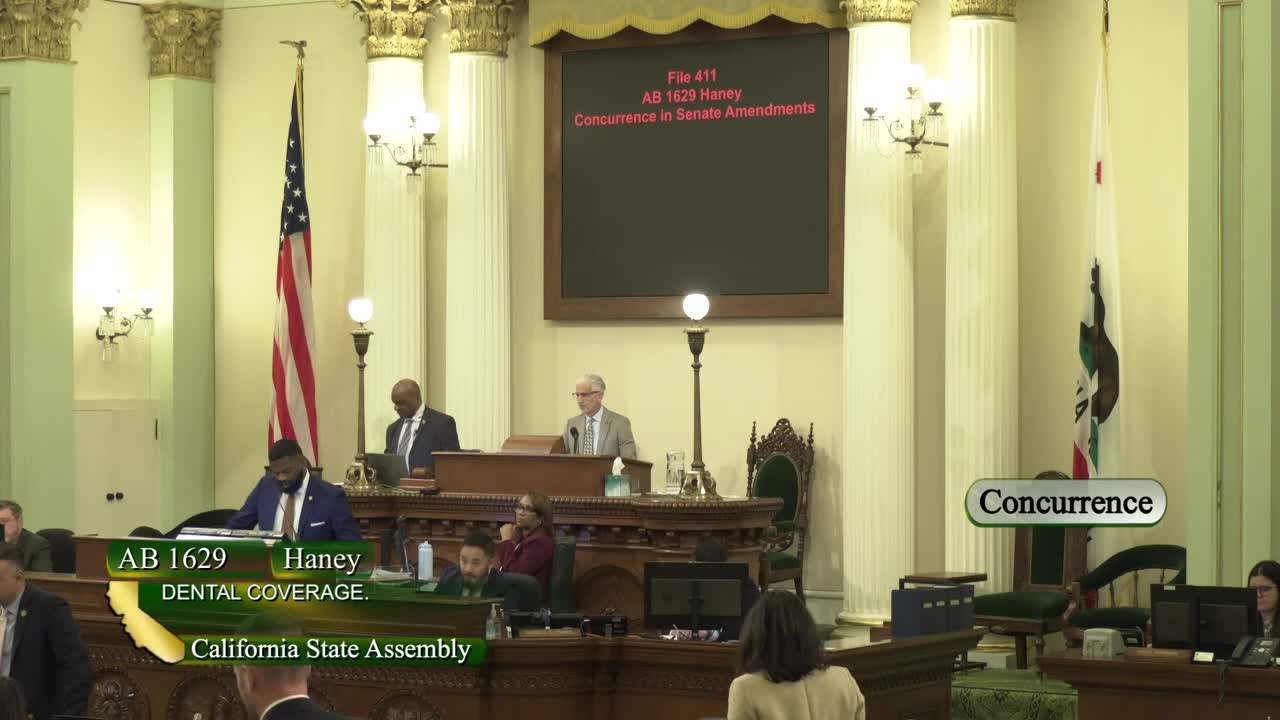 53SEC
Assembly Floor
 2MIN
Senate Floor
 1MIN
Senate Standing Committee on Appropriations
 5MIN
Senate Standing Committee on Appropriations
 11MIN
Senate Standing Committee on Judiciary
 6MIN
Senate Standing Committee on Housing
4MIN
Senate Standing Committee on Housing
 26MIN
Senate Standing Committee on Housing
Bill Author