AB 2066: Triggering event: pregnancy.
- Session Year: 2025-2026
- House: Assembly
- Latest Version Date: 2026-08-30
Current Status:
Failed
(2026-09-30: Vetoed by Governor.)
Introduced
In Committee
Awaiting First Chamber Vote
Passed First Chamber
In Committee
Awaiting Second Chamber Vote
Passed Second Chamber
Enacted
Existing law, the Knox-Keene Health Care Service Plan Act of 1975, provides for the licensure and regulation of health care service plans by the Department of Managed Health Care and makes a willful violation of the act a crime. Existing law provides for the regulation of disability insurers by the Department of Insurance. Existing law requires a health care service plan or disability insurer to allow an individual to enroll in or change their health benefit plan as a result of a specified triggering event.
This bill would make pregnancy a triggering event for purposes of enrollment or changing a health benefit plan. Because a willful violation of this provision by a health care service plan would be a crime, the bill would impose a state-mandated local program.
The California Constitution requires the state to reimburse local agencies and school districts for certain costs mandated by the state. Statutory provisions establish procedures for making that reimbursement.
This bill would provide that no reimbursement is required by this act for a specified reason.
Existing law, the Knox-Keene Health Care Service Plan Act of 1975, provides for the licensure and regulation of health care service plans by the Department of Managed Health Care and makes a willful violation of the act a crime. Existing law provides for the regulation of disability insurers by the Department of Insurance. Existing law requires a health care service plan or disability insurer to allow an individual to enroll in or change their health benefit plan as a result of a specified triggering event.
This bill would make pregnancy a triggering event for purposes of enrollment or changing a health benefit plan. Because a willful violation of this provision by a health care service plan would be a crime, the bill would impose a state-mandated local program.
The California Constitution requires the state to reimburse local agencies and school districts for certain costs mandated by the state. Statutory provisions establish procedures for making that reimbursement.
This bill would provide that no reimbursement is required by this act for a specified reason.
Existing law, the Knox-Keene Health Care Service Plan Act of 1975, provides for the licensure and regulation of health care service plans by the Department of Managed Health Care and makes a willful violation of the act a crime. Existing law provides for the regulation of disability insurers by the Department of Insurance. Existing law requires a health care service plan or disability insurer to allow an individual to enroll in or change their health benefit plan as a result of a specified triggering event.
This bill would make pregnancy a triggering event for purposes of enrollment or changing a health benefit plan. Because a willful violation of this provision by a health care service plan would be a crime, the bill would impose a state-mandated local program.
The California Constitution requires the state to reimburse local agencies and school districts for certain costs mandated by the state. Statutory provisions establish procedures for making that reimbursement.
This bill would provide that no reimbursement is required by this act for a specified reason.
(a)(1)On and after October 1, 2013, a plan shall fairly and affirmatively offer, market, and sell all of the plans health benefit plans that are sold in the individual market for policy years on or after January 1, 2014, to all individuals and dependents in each service area in which the plan provides or arranges for the provision of health care services. A plan shall limit enrollment in individual health benefit plans to open enrollment periods, annual enrollment periods, and special enrollment periods as provided in subdivisions (c) and (d).
(2)A plan shall allow the subscriber of an individual health benefit plan to add a dependent to the subscribers plan at the option of the subscriber, consistent with the open enrollment, annual enrollment, and special enrollment period requirements in this section.
(b)An individual health benefit plan issued, amended, or renewed on or after January 1, 2014, shall not impose any preexisting condition provision upon any individual.
(c)(1)With respect to individual health benefit plans offered outside of the Exchange, a plan shall provide an initial open enrollment period from October 1, 2013, to March 31, 2014, inclusive, an annual enrollment period for the policy year beginning on January 1, 2015, from November 15, 2014, to February 15, 2015, inclusive, annual enrollment periods for policy years beginning on or after January 1, 2016, to December 31, 2018, inclusive, from November 1, of the preceding calendar year, to January 31 of the benefit year, inclusive, and annual enrollment periods for policy years beginning on or after January 1, 2019, from October 15, of the preceding calendar year, to January 15 of the benefit year, inclusive.
(2)With respect to individual health benefit plans offered through the Exchange, a plan shall provide an annual enrollment period for the policy years beginning on January 1, 2016, to December 31, 2018, inclusive, from November 1, of the preceding calendar year, to January 31 of the benefit year, inclusive, and annual enrollment periods for policy years beginning on or after January 1, 2019, from November 1 to December 15 of the preceding calendar year, inclusive.
(3)With respect to individual health benefit plans offered through the Exchange, for policy years beginning on or after January 1, 2019, a plan shall provide a special enrollment period for all individuals selecting an individual health benefit plan through the Exchange from October 15 to October 31 of the preceding calendar year, inclusive, and from December 16, of the preceding calendar year, to January 15 of the benefit year, inclusive. An application for a health benefit plan submitted during these two special enrollment periods shall be treated the same as an application submitted during the annual open enrollment period. The effective date of coverage for plan selections made between October 15 and October 31, inclusive, shall be January 1 of the benefit year, and for plan selections made from December 16 to January 15, inclusive, shall be no later than February 1 of the benefit year.
(4)Pursuant to Section 147.104(b)(2) of Title 45 of the Code of Federal Regulations, for individuals enrolled in noncalendar year individual health plan contracts, a plan shall also provide a limited open enrollment period beginning on the date that is 30 calendar days before the date the policy year ends in 2014.
(d)(1)Subject to paragraph (2), commencing January 1, 2014, a plan shall allow an individual to enroll in or change individual health benefit plans as a result of the following triggering events:
(A)The individual or the individuals dependent loses minimum essential coverage. For purposes of this paragraph, the following definitions shall apply:
(i)Minimum essential coverage has the same meaning as that term is defined in Section 1345.5 or subsection (f) of Section 5000A of the Internal Revenue Code (26 U.S.C. Sec. 5000A).
(ii)Loss of minimum essential coverage includes, but is not limited to, loss of that coverage due to the circumstances described in Section 54.9801-6(a)(3)(i) to (iii), inclusive, of Title 26 of the Code of Federal Regulations and the circumstances described in Section 1163 of Title 29 of the United States Code. Loss of minimum essential coverage also includes loss of that coverage for a reason that is not due to the fault of the individual.
(iii)Loss of minimum essential coverage does not include loss of that coverage due to the individuals failure to pay premiums on a timely basis or situations allowing for a rescission, subject to clause (ii) and Sections 1389.7 and 1389.21.
(B)The individual gains a dependent or becomes a dependent.
(C)The individual is mandated to be covered as a dependent pursuant to a valid state or federal court order.
(D)The individual has been released from incarceration.
(E)The individuals health coverage issuer substantially violated a material provision of the health coverage contract.
(F)The individual gains access to new health benefit plans as a result of a permanent move.
(G)The individual was receiving services from a contracting provider under another health benefit plan, as defined in Section 1399.845 of this code or Section 10965 of the Insurance Code, for one of the conditions described in subdivision (c) of Section 1373.96 of this code and that provider is no longer participating in the health benefit plan.
(H)The individual demonstrates to the Exchange, with respect to health benefit plans offered through the Exchange, or to the department, with respect to health benefit plans offered outside the Exchange, that the individual did not enroll in a health benefit plan during the immediately preceding enrollment period available to the individual because the individual was misinformed that the individual was covered under minimum essential coverage.
(I)The individual is a member of the reserve forces of the United States military returning from active duty or a member of the California National Guard returning from active duty service under Title 32 of the United States Code.
(J)The individual is pregnant.
(K)With respect to individual health benefit plans offered through the Exchange, in addition to the triggering events listed in this paragraph, any other events listed in Section 155.420(d) of Title 45 of the Code of Federal Regulations.
(2)With respect to individual health benefit plans offered outside the Exchange, an individual shall have 60 days from the date of a triggering event identified in paragraph (1) to apply for coverage from a health care service plan subject to this section. With respect to individual health benefit plans offered through the Exchange, an individual shall have 60 days from the date of a triggering event identified in paragraph (1) to select a plan offered through the Exchange, unless a longer period is provided in Part 155 (commencing with Section 155.10) of Subchapter B of Subtitle A of Title 45 of the Code of Federal Regulations.
(e)With respect to individual health benefit plans offered through the Exchange, the effective date of coverage required pursuant to this section shall be consistent with the dates specified in Section 155.410 or 155.420 of Title 45 of the Code of Federal Regulations, as applicable. A dependent who is a registered domestic partner pursuant to Section 297 of the Family Code shall have the same effective date of coverage as a spouse.
(f)With respect to individual health benefit plans offered outside the Exchange, the following provisions shall apply:
(1)After an individual submits a completed application form for a plan contract, the health care service plan shall, within 30 days, notify the individual of the individuals actual premium charges for that plan established in accordance with Section 1399.855. The individual shall have 30 days in which to exercise the right to buy coverage at the quoted premium charges.
(2)With respect to an individual health benefit plan for which an individual applies during the initial open enrollment period described in paragraph (1) of subdivision (c), when the subscriber submits a premium payment, based on the quoted premium charges, and that payment is delivered or postmarked, whichever occurs earlier, by December 15, 2013, coverage under the individual health benefit plan shall become effective no later than January 1, 2014. When that payment is delivered or postmarked within the first 15 days of any subsequent month, coverage shall become effective no later than the first day of the following month. When that payment is delivered or postmarked between December 16, 2013, to December 31, 2013, inclusive, or after the 15th day of any subsequent month, coverage shall become effective no later than the first day of the second month following delivery or postmark of the payment.
(3)With respect to an individual health benefit plan for which an individual applies during the annual open enrollment period described in paragraph (1) of subdivision (c), when the individual submits a premium payment, based on the quoted premium charges, and that payment is delivered or postmarked, whichever occurs later, by December 15 of the preceding calendar year, coverage shall become effective on January 1 of the benefit year. When that payment is delivered or postmarked within the first 15 days of any subsequent month, coverage shall become effective no later than the first day of the following month. When that payment is delivered or postmarked between December 16 to December 31, inclusive, or after the 15th day of any subsequent month, coverage shall become effective no later than the first day of the second month following delivery or postmark of the payment.
(4)With respect to an individual health benefit plan for which an individual applies during a special enrollment period described in subdivision (d), the following provisions shall apply:
(A)When the individual submits a premium payment, based on the quoted premium charges, and that payment is delivered or postmarked, whichever occurs earlier, within the first 15 days of the month, coverage under the plan shall become effective no later than the first day of the following month. When the premium payment is neither delivered nor postmarked until after the 15th day of the month, coverage shall become effective no later than the first day of the second month following delivery or postmark of the payment.
(B)Notwithstanding subparagraph (A), in the case of a birth, adoption, or placement for adoption, the coverage shall be effective on the date of birth, adoption, or placement for adoption.
(C)Notwithstanding subparagraph (A), in the case of marriage or becoming a registered domestic partner or in the case where a qualified individual loses minimum essential coverage, the coverage effective date shall be the first day of the month following the date the plan receives the request for special enrollment.
(g)(1)A health care service plan shall not establish rules for eligibility, including continued eligibility, of any individual to enroll under the terms of an individual health benefit plan based on any of the following factors:
(A)Health status.
(B)Medical condition, including physical and mental illnesses.
(C)Claims experience.
(D)Receipt of health care.
(E)Medical history.
(F)Genetic information.
(G)Evidence of insurability, including conditions arising out of acts of domestic violence.
(H)Disability.
(I)Any other health status-related factor as determined by any federal regulations, rules, or guidance issued pursuant to Section 2705 of the federal Public Health Service Act (Public Law 78-410).
(2)Notwithstanding Section 1389.1, a health care service plan shall not require an individual applicant or the applicants dependent to fill out a health assessment or medical questionnaire prior to enrollment under an individual health benefit plan. A health care service plan shall not acquire or request information that relates to a health status-related factor from the applicant or the applicants dependent or any other source prior to enrollment of the individual.
(h)(1)A health care service plan shall consider as a single risk pool for rating purposes in the individual market the claims experience of all insureds and all enrollees in all nongrandfathered individual health benefit plans offered by that health care service plan in this state, whether offered as health care service plan contracts or individual health insurance policies, including those insureds and enrollees who enroll in individual coverage through the Exchange and insureds and enrollees who enroll in individual coverage outside of the Exchange. Student health insurance coverage, as that coverage is defined in Section 147.145(a) of Title 45 of the Code of Federal Regulations, shall not be included in a health care service plans single risk pool for individual coverage.
(2)Each calendar year, a health care service plan shall establish an index rate for the individual market in the state based on the total combined claims costs for providing essential health benefits, as defined pursuant to Section 1302 of PPACA, within the single risk pool required under paragraph (1). The index rate shall be adjusted on a marketwide basis based on the total expected marketwide payments and charges under the risk adjustment program established for the state pursuant to Section 1343 of PPACA and Exchange user fees, as described in subdivision (d) of Section 156.80 of Title 45 of the Code of Federal Regulations. The premium rate for all of the health benefit plans in the individual market within the single risk pool required under paragraph (1) shall use the applicable marketwide adjusted index rate, subject only to the adjustments permitted under paragraph (3).
(3)A health care service plan may vary premium rates for a particular health benefit plan from its index rate based only on the following actuarially justified plan-specific factors:
(A)The actuarial value and cost-sharing design of the health benefit plan.
(B)The health benefit plans provider network, delivery system characteristics, and utilization management practices.
(C)The benefits provided under the health benefit plan that are in addition to the essential health benefits, as defined pursuant to Section 1302 of PPACA and Section 1367.005. These additional benefits shall be pooled with similar benefits within the single risk pool required under paragraph (1) and the claims experience from those benefits shall be utilized to determine rate variations for plans that offer those benefits in addition to essential health benefits.
(D)With respect to catastrophic plans, as described in subsection (e) of Section 1302 of PPACA, the expected impact of the specific eligibility categories for those plans.
(E)Administrative costs, excluding user fees required by the Exchange.
(i)This section shall only apply with respect to individual health benefit plans for policy years on or after January 1, 2014.
(j)This section shall not apply to a grandfathered health plan.
SEC. 2.Section 10965.3 of the Insurance Code is amended to read:10965.3.(a)(1)On and after October 1, 2013, a health insurer shall fairly and affirmatively offer, market, and sell all of the insurers health benefit plans that are sold in the individual market for policy years on or after January 1, 2014, to all individuals and dependents in each service area in which the insurer provides or arranges for the provision of health care services. A health insurer shall limit enrollment in individual health benefit plans to open enrollment periods, annual enrollment periods, and special enrollment periods as provided in subdivisions (c) and (d).
(2)A health insurer shall allow the policyholder of an individual health benefit plan to add a dependent to the policyholders health benefit plan at the option of the policyholder, consistent with the open enrollment, annual enrollment, and special enrollment period requirements in this section.
(b)An individual health benefit plan issued, amended, or renewed on or after January 1, 2014, shall not impose any preexisting condition provision upon any individual.
(c)(1)With respect to individual health benefit plans offered outside of the Exchange, a health insurer shall provide an initial open enrollment period from October 1, 2013, to March 31, 2014, inclusive, an annual enrollment period for the policy year beginning on January 1, 2015, from November 15, 2014, to February 15, 2015, inclusive, annual enrollment periods for policy years beginning on or after January 1, 2016, to December 31, 2018, inclusive, from November 1, of the preceding calendar year, to January 31 of the benefit year, inclusive, and annual enrollment periods for policy years beginning on or after January 1, 2019, from October 15 of the preceding calendar year, to January 15 of the benefit year, inclusive.
(2)With respect to individual health benefit plans offered through the Exchange, a health insurer shall provide an annual enrollment period for the policy years beginning on January 1, 2016, to December 31, 2018, inclusive, from November 1, of the preceding calendar year, to January 31 of the benefit year, inclusive, and annual enrollment periods for policy years beginning on or after January 1, 2019, from November 1 to December 15 of the preceding calendar year, inclusive.
(3)With respect to individual health benefit plans offered through the Exchange, for policy years beginning on or after January 1, 2019, a health insurer shall provide a special enrollment period for all individuals selecting an individual health benefit plan through the Exchange from October 15 to October 31 of the preceding calendar year, inclusive, and from December 16, of the preceding calendar year, to January 15 of the benefit year, inclusive. An application for a health benefit plan submitted during these two special enrollment periods shall be treated the same as an application submitted during the annual open enrollment period. The effective date of coverage for plan selections made between October 15 and October 31, inclusive, shall be January 1 of the benefit year, and for plan selections made from December 16 to January 15, inclusive, shall be no later than February 1 of the benefit year.
(4)Pursuant to Section 147.104(b)(2) of Title 45 of the Code of Federal Regulations, for individuals enrolled in noncalendar year individual health plan contracts, a health insurer shall also provide a limited open enrollment period beginning on the date that is 30 calendar days before the date the policy year ends in 2014.
(d)(1)Subject to paragraph (2), commencing January 1, 2014, a health insurer shall allow an individual to enroll in or change individual health benefit plans as a result of the following triggering events:
(A)The individual or the individuals dependent loses minimum essential coverage. For purposes of this paragraph, both of the following definitions shall apply:
(i)Minimum essential coverage has the same meaning as that term is defined in Section 1345.5 of the Health and Safety Code or subsection (f) of Section 5000A of the Internal Revenue Code (26 U.S.C. Sec. 5000A).
(ii)Loss of minimum essential coverage includes, but is not limited to, loss of that coverage due to the circumstances described in Section 54.9801-6(a)(3)(i) to (iii), inclusive, of Title 26 of the Code of Federal Regulations and the circumstances described in Section 1163 of Title 29 of the United States Code. Loss of minimum essential coverage also includes loss of that coverage for a reason that is not due to the fault of the individual.
(iii)Loss of minimum essential coverage does not include loss of that coverage due to the individuals failure to pay premiums on a timely basis or situations allowing for a rescission, subject to clause (ii) and Sections 10119.2 and 10384.17.
(B)The individual gains a dependent or becomes a dependent.
(C)The individual is mandated to be covered as a dependent pursuant to a valid state or federal court order.
(D)The individual has been released from incarceration.
(E)The individuals health coverage issuer substantially violated a material provision of the health coverage contract.
(F)The individual gains access to new health benefit plans as a result of a permanent move.
(G)The individual was receiving services from a contracting provider under another health benefit plan, as defined in Section 10965 of this code or Section 1399.845 of the Health and Safety Code, for one of the conditions described in subdivision (a) of Section 10133.56 of this code and that provider is no longer participating in the health benefit plan.
(H)The individual demonstrates to the Exchange, with respect to health benefit plans offered through the Exchange, or to the department, with respect to health benefit plans offered outside the Exchange, that the individual did not enroll in a health benefit plan during the immediately preceding enrollment period available to the individual because the individual was misinformed that the individual was covered under minimum essential coverage.
(I)The individual is a member of the reserve forces of the United States military returning from active duty or a member of the California National Guard returning from active duty service under Title 32 of the United States Code.
(J)The individual is pregnant.
(K)With respect to individual health benefit plans offered through the Exchange, in addition to the triggering events listed in this paragraph, any other events listed in Section 155.420(d) of Title 45 of the Code of Federal Regulations.
(2)With respect to individual health benefit plans offered outside the Exchange, an individual shall have 60 days from the date of a triggering event identified in paragraph (1) to apply for coverage from a health care service plan subject to this section. With respect to individual health benefit plans offered through the Exchange, an individual shall have 60 days from the date of a triggering event identified in paragraph (1) to select a plan offered through the Exchange, unless a longer period is provided in Part 155 (commencing with Section 155.10) of Subchapter B of Subtitle A of Title 45 of the Code of Federal Regulations.
(e)With respect to individual health benefit plans offered through the Exchange, the effective date of coverage required pursuant to this section shall be consistent with the dates specified in Section 155.410 or 155.420 of Title 45 of the Code of Federal Regulations, as applicable. A dependent who is a registered domestic partner pursuant to Section 297 of the Family Code shall have the same effective date of coverage as a spouse.
(f)With respect to an individual health benefit plan offered outside the Exchange, the following provisions shall apply:
(1)After an individual submits a completed application form for a plan, the insurer shall, within 30 days, notify the individual of the individuals actual premium charges for that plan established in accordance with Section 10965.9. The individual shall have 30 days in which to exercise the right to buy coverage at the quoted premium charges.
(2)With respect to an individual health benefit plan for which an individual applies during the initial open enrollment period described in paragraph (1) of subdivision (c), when the policyholder submits a premium payment, based on the quoted premium charges, and that payment is delivered or postmarked, whichever occurs earlier, by December 15, 2013, coverage under the individual health benefit plan shall become effective no later than January 1, 2014. When that payment is delivered or postmarked within the first 15 days of any subsequent month, coverage shall become effective no later than the first day of the following month. When that payment is delivered or postmarked between December 16, 2013, to December 31, 2013, inclusive, or after the 15th day of any subsequent month, coverage shall become effective no later than the first day of the second month following delivery or postmark of the payment.
(3)With respect to an individual health benefit plan for which an individual applies during the annual open enrollment period described in paragraph (1) of subdivision (c), when the individual submits a premium payment, based on the quoted premium charges, and that payment is delivered or postmarked, whichever occurs later, by December 15 of the preceding calendar year, coverage shall become effective on January 1 of the benefit year. When that payment is delivered or postmarked within the first 15 days of any subsequent month, coverage shall become effective no later than the first day of the following month. When that payment is delivered or postmarked between December 16 to December 31, inclusive, or after the 15th day of any subsequent month, coverage shall become effective no later than the first day of the second month following delivery or postmark of the payment.
(4)With respect to an individual health benefit plan for which an individual applies during a special enrollment period described in subdivision (d), the following provisions shall apply:
(A)When the individual submits a premium payment, based on the quoted premium charges, and that payment is delivered or postmarked, whichever occurs earlier, within the first 15 days of the month, coverage under the plan shall become effective no later than the first day of the following month. When the premium payment is neither delivered nor postmarked until after the 15th day of the month, coverage shall become effective no later than the first day of the second month following delivery or postmark of the payment.
(B)Notwithstanding subparagraph (A), in the case of a birth, adoption, or placement for adoption, the coverage shall be effective on the date of birth, adoption, or placement for adoption.
(C)Notwithstanding subparagraph (A), in the case of marriage or becoming a registered domestic partner or in the case where a qualified individual loses minimum essential coverage, the coverage effective date shall be the first day of the month following the date the insurer receives the request for special enrollment.
(g)(1)A health insurer shall not establish rules for eligibility, including continued eligibility, of any individual to enroll under the terms of an individual health benefit plan based on any of the following factors:
(A)Health status.
(B)Medical condition, including physical and mental illnesses.
(C)Claims experience.
(D)Receipt of health care.
(E)Medical history.
(F)Genetic information.
(G)Evidence of insurability, including conditions arising out of acts of domestic violence.
(H)Disability.
(I)Any other health status-related factor as determined by any federal regulations, rules, or guidance issued pursuant to Section 2705 of the federal Public Health Service Act (Public Law 78-410).
(2)Notwithstanding subdivision (c) of Section 10291.5, a health insurer shall not require an individual applicant or the applicants dependent to fill out a health assessment or medical questionnaire prior to enrollment under an individual health benefit plan. A health insurer shall not acquire or request information that relates to a health status-related factor from the applicant or the applicants dependent or any other source prior to enrollment of the individual.
(h)(1)A health insurer shall consider as a single risk pool for rating purposes in the individual market the claims experience of all insureds and enrollees in all nongrandfathered individual health benefit plans offered by that insurer in this state, whether offered as health care service plan contracts or individual health insurance policies, including those insureds and enrollees who enroll in individual coverage through the Exchange and insureds and enrollees who enroll in individual coverage outside the Exchange. Student health insurance coverage, as such coverage is defined in Section 147.145(a) of Title 45 of the Code of Federal Regulations, shall not be included in a health insurers single risk pool for individual coverage.
(2)Each calendar year, a health insurer shall establish an index rate for the individual market in the state based on the total combined claims costs for providing essential health benefits, as defined pursuant to Section 1302 of PPACA, within the single risk pool required under paragraph (1). The index rate shall be adjusted on a marketwide basis based on the total expected marketwide payments and charges under the risk adjustment program established for the state pursuant to Section 1343 of PPACA and Exchange user fees, as described in subdivision (d) of Section 156.80 of Title 45 of the Code of Federal Regulations. The premium rate for all of the health benefit plans in the individual market within the single risk pool required under paragraph (1) shall use the applicable marketwide adjusted index rate, subject only to the adjustments permitted under paragraph (3).
(3)A health insurer may vary premium rates for a particular health benefit plan from its index rate based only on the following actuarially justified plan-specific factors:
(A)The actuarial value and cost-sharing design of the health benefit plan.
(B)The health benefit plans provider network, delivery system characteristics, and utilization management practices.
(C)The benefits provided under the health benefit plan that are in addition to the essential health benefits, as defined pursuant to Section 1302 of PPACA and Section 10112.27. These additional benefits shall be pooled with similar benefits within the single risk pool required under paragraph (1) and the claims experience from those benefits shall be utilized to determine rate variations for plans that offer those benefits in addition to essential health benefits.
(D)With respect to catastrophic plans, as described in subsection (e) of Section 1302 of PPACA, the expected impact of the specific eligibility categories for those plans.
(E)Administrative costs, excluding any user fees required by the Exchange.
(i)This section shall only apply with respect to individual health benefit plans for policy years on or after January 1, 2014.
(j)This section shall not apply to a grandfathered health plan.
SEC. 3.No reimbursement is required by this act pursuant to Section 6 of Article XIIIB of the California Constitution because the only costs that may be incurred by a local agency or school district will be incurred because this act creates a new crime or infraction, eliminates a crime or infraction, or changes the penalty for a crime or infraction, within the meaning of Section 17556 of the Government Code, or changes the definition of a crime within the meaning of Section 6 of Article XIIIB of the California Constitution.
(a)(1)On and after October 1, 2013, a plan shall fairly and affirmatively offer, market, and sell all of the plans health benefit plans that are sold in the individual market for policy years on or after January 1, 2014, to all individuals and dependents in each service area in which the plan provides or arranges for the provision of health care services. A plan shall limit enrollment in individual health benefit plans to open enrollment periods, annual enrollment periods, and special enrollment periods as provided in subdivisions (c) and (d).
(2)A plan shall allow the subscriber of an individual health benefit plan to add a dependent to the subscribers plan at the option of the subscriber, consistent with the open enrollment, annual enrollment, and special enrollment period requirements in this section.
(b)An individual health benefit plan issued, amended, or renewed on or after January 1, 2014, shall not impose any preexisting condition provision upon any individual.
(c)(1)With respect to individual health benefit plans offered outside of the Exchange, a plan shall provide an initial open enrollment period from October 1, 2013, to March 31, 2014, inclusive, an annual enrollment period for the policy year beginning on January 1, 2015, from November 15, 2014, to February 15, 2015, inclusive, annual enrollment periods for policy years beginning on or after January 1, 2016, to December 31, 2018, inclusive, from November 1, of the preceding calendar year, to January 31 of the benefit year, inclusive, and annual enrollment periods for policy years beginning on or after January 1, 2019, from October 15, of the preceding calendar year, to January 15 of the benefit year, inclusive.
(2)With respect to individual health benefit plans offered through the Exchange, a plan shall provide an annual enrollment period for the policy years beginning on January 1, 2016, to December 31, 2018, inclusive, from November 1, of the preceding calendar year, to January 31 of the benefit year, inclusive, and annual enrollment periods for policy years beginning on or after January 1, 2019, from November 1 to December 15 of the preceding calendar year, inclusive.
(3)With respect to individual health benefit plans offered through the Exchange, for policy years beginning on or after January 1, 2019, a plan shall provide a special enrollment period for all individuals selecting an individual health benefit plan through the Exchange from October 15 to October 31 of the preceding calendar year, inclusive, and from December 16, of the preceding calendar year, to January 15 of the benefit year, inclusive. An application for a health benefit plan submitted during these two special enrollment periods shall be treated the same as an application submitted during the annual open enrollment period. The effective date of coverage for plan selections made between October 15 and October 31, inclusive, shall be January 1 of the benefit year, and for plan selections made from December 16 to January 15, inclusive, shall be no later than February 1 of the benefit year.
(4)Pursuant to Section 147.104(b)(2) of Title 45 of the Code of Federal Regulations, for individuals enrolled in noncalendar year individual health plan contracts, a plan shall also provide a limited open enrollment period beginning on the date that is 30 calendar days prior to before the date the policy year ends in 2014.
(d)(1)Subject to paragraph (2), commencing January 1, 2014, a plan shall allow an individual to enroll in or change individual health benefit plans as a result of the following triggering events:
(A)The individual or the individuals dependent loses minimum essential coverage. For purposes of this paragraph, the following definitions shall apply:
(i)Minimum essential coverage has the same meaning as that term is defined in Section 1345.5 or subsection (f) of Section 5000A of the Internal Revenue Code (26 U.S.C. Sec. 5000A).
(ii)Loss of minimum essential coverage includes, but is not limited to, loss of that coverage due to the circumstances described in Section 54.9801-6(a)(3)(i) to (iii), inclusive, of Title 26 of the Code of Federal Regulations and the circumstances described in Section 1163 of Title 29 of the United States Code. Loss of minimum essential coverage also includes loss of that coverage for a reason that is not due to the fault of the individual.
(iii)Loss of minimum essential coverage does not include loss of that coverage due to the individuals failure to pay premiums on a timely basis or situations allowing for a rescission, subject to clause (ii) and Sections 1389.7 and 1389.21.
(B)The individual gains a dependent or becomes a dependent.
(C)The individual is mandated to be covered as a dependent pursuant to a valid state or federal court order.
(D)The individual has been released from incarceration.
(E)The individuals health coverage issuer substantially violated a material provision of the health coverage contract.
(F)The individual gains access to new health benefit plans as a result of a permanent move.
(G)The individual was receiving services from a contracting provider under another health benefit plan, as defined in Section 1399.845 of this code or Section 10965 of the Insurance Code, for one of the conditions described in subdivision (c) of Section 1373.96 of this code and that provider is no longer participating in the health benefit plan.
(H)The individual demonstrates to the Exchange, with respect to health benefit plans offered through the Exchange, or to the department, with respect to health benefit plans offered outside the Exchange, that the individual did not enroll in a health benefit plan during the immediately preceding enrollment period available to the individual because the individual was misinformed that the individual was covered under minimum essential coverage.
(I)The individual is a member of the reserve forces of the United States military returning from active duty or a member of the California National Guard returning from active duty service under Title 32 of the United States Code.
(J)The individual is pregnant.
(K)With respect to individual health benefit plans offered through the Exchange, in addition to the triggering events listed in this paragraph, any other events listed in Section 155.420(d) of Title 45 of the Code of Federal Regulations.
(2)With respect to individual health benefit plans offered outside the Exchange, an individual shall have 60 days from the date of a triggering event identified in paragraph (1) to apply for coverage from a health care service plan subject to this section. With respect to individual health benefit plans offered through the Exchange, an individual shall have 60 days from the date of a triggering event identified in paragraph (1) to select a plan offered through the Exchange, unless a longer period is provided in Part 155 (commencing with Section 155.10) of Subchapter B of Subtitle A of Title 45 of the Code of Federal Regulations.
(e)With respect to individual health benefit plans offered through the Exchange, the effective date of coverage required pursuant to this section shall be consistent with the dates specified in Section 155.410 or 155.420 of Title 45 of the Code of Federal Regulations, as applicable. A dependent who is a registered domestic partner pursuant to Section 297 of the Family Code shall have the same effective date of coverage as a spouse.
(f)With respect to individual health benefit plans offered outside the Exchange, the following provisions shall apply:
(1)After an individual submits a completed application form for a plan contract, the health care service plan shall, within 30 days, notify the individual of the individuals actual premium charges for that plan established in accordance with Section 1399.855. The individual shall have 30 days in which to exercise the right to buy coverage at the quoted premium charges.
(2)With respect to an individual health benefit plan for which an individual applies during the initial open enrollment period described in paragraph (1) of subdivision (c), when the subscriber submits a premium payment, based on the quoted premium charges, and that payment is delivered or postmarked, whichever occurs earlier, by December 15, 2013, coverage under the individual health benefit plan shall become effective no later than January 1, 2014. When that payment is delivered or postmarked within the first 15 days of any subsequent month, coverage shall become effective no later than the first day of the following month. When that payment is delivered or postmarked between December 16, 2013, to December 31, 2013, inclusive, or after the 15th day of any subsequent month, coverage shall become effective no later than the first day of the second month following delivery or postmark of the payment.
(3)With respect to an individual health benefit plan for which an individual applies during the annual open enrollment period described in paragraph (1) of subdivision (c), when the individual submits a premium payment, based on the quoted premium charges, and that payment is delivered or postmarked, whichever occurs later, by December 15 of the preceding calendar year, coverage shall become effective on January 1 of the benefit year. When that payment is delivered or postmarked within the first 15 days of any subsequent month, coverage shall become effective no later than the first day of the following month. When that payment is delivered or postmarked between December 16 to December 31, inclusive, or after the 15th day of any subsequent month, coverage shall become effective no later than the first day of the second month following delivery or postmark of the payment.
(4)With respect to an individual health benefit plan for which an individual applies during a special enrollment period described in subdivision (d), the following provisions shall apply:
(A)When the individual submits a premium payment, based on the quoted premium charges, and that payment is delivered or postmarked, whichever occurs earlier, within the first 15 days of the month, coverage under the plan shall become effective no later than the first day of the following month. When the premium payment is neither delivered nor postmarked until after the 15th day of the month, coverage shall become effective no later than the first day of the second month following delivery or postmark of the payment.
(B)Notwithstanding subparagraph (A), in the case of a birth, adoption, or placement for adoption, the coverage shall be effective on the date of birth, adoption, or placement for adoption.
(C)Notwithstanding subparagraph (A), in the case of marriage or becoming a registered domestic partner or in the case where a qualified individual loses minimum essential coverage, the coverage effective date shall be the first day of the month following the date the plan receives the request for special enrollment.
(g)(1)A health care service plan shall not establish rules for eligibility, including continued eligibility, of any individual to enroll under the terms of an individual health benefit plan based on any of the following factors:
(A)Health status.
(B)Medical condition, including physical and mental illnesses.
(C)Claims experience.
(D)Receipt of health care.
(E)Medical history.
(F)Genetic information.
(G)Evidence of insurability, including conditions arising out of acts of domestic violence.
(H)Disability.
(I)Any other health status-related factor as determined by any federal regulations, rules, or guidance issued pursuant to Section 2705 of the federal Public Health Service Act (Public Law 78-410).
(2)Notwithstanding Section 1389.1, a health care service plan shall not require an individual applicant or the applicants dependent to fill out a health assessment or medical questionnaire prior to enrollment under an individual health benefit plan. A health care service plan shall not acquire or request information that relates to a health status-related factor from the applicant or the applicants dependent or any other source prior to enrollment of the individual.
(h)(1)A health care service plan shall consider as a single risk pool for rating purposes in the individual market the claims experience of all insureds and all enrollees in all nongrandfathered individual health benefit plans offered by that health care service plan in this state, whether offered as health care service plan contracts or individual health insurance policies, including those insureds and enrollees who enroll in individual coverage through the Exchange and insureds and enrollees who enroll in individual coverage outside of the Exchange. Student health insurance coverage, as that coverage is defined in Section 147.145(a) of Title 45 of the Code of Federal Regulations, shall not be included in a health care service plans single risk pool for individual coverage.
(2)Each calendar year, a health care service plan shall establish an index rate for the individual market in the state based on the total combined claims costs for providing essential health benefits, as defined pursuant to Section 1302 of PPACA, within the single risk pool required under paragraph (1). The index rate shall be adjusted on a marketwide basis based on the total expected marketwide payments and charges under the risk adjustment program established for the state pursuant to Section 1343 of PPACA and Exchange user fees, as described in subdivision (d) of Section 156.80 of Title 45 of the Code of Federal Regulations. The premium rate for all of the health benefit plans in the individual market within the single risk pool required under paragraph (1) shall use the applicable marketwide adjusted index rate, subject only to the adjustments permitted under paragraph (3).
(3)A health care service plan may vary premium rates for a particular health benefit plan from its index rate based only on the following actuarially justified plan-specific factors:
(A)The actuarial value and cost-sharing design of the health benefit plan.
(B)The health benefit plans provider network, delivery system characteristics, and utilization management practices.
(C)The benefits provided under the health benefit plan that are in addition to the essential health benefits, as defined pursuant to Section 1302 of PPACA and Section 1367.005. These additional benefits shall be pooled with similar benefits within the single risk pool required under paragraph (1) and the claims experience from those benefits shall be utilized to determine rate variations for plans that offer those benefits in addition to essential health benefits.
(D)With respect to catastrophic plans, as described in subsection (e) of Section 1302 of PPACA, the expected impact of the specific eligibility categories for those plans.
(E)Administrative costs, excluding user fees required by the Exchange.
(i)This section shall only apply with respect to individual health benefit plans for policy years on or after January 1, 2014.
(j)This section shall not apply to a grandfathered health plan.
SEC. 2.Section 10965.3 of the Insurance Code is amended to read:10965.3.(a)(1)On and after October 1, 2013, a health insurer shall fairly and affirmatively offer, market, and sell all of the insurers health benefit plans that are sold in the individual market for policy years on or after January 1, 2014, to all individuals and dependents in each service area in which the insurer provides or arranges for the provision of health care services. A health insurer shall limit enrollment in individual health benefit plans to open enrollment periods, annual enrollment periods, and special enrollment periods as provided in subdivisions (c) and (d).
(2)A health insurer shall allow the policyholder of an individual health benefit plan to add a dependent to the policyholders health benefit plan at the option of the policyholder, consistent with the open enrollment, annual enrollment, and special enrollment period requirements in this section.
(b)An individual health benefit plan issued, amended, or renewed on or after January 1, 2014, shall not impose any preexisting condition provision upon any individual.
(c)(1)With respect to individual health benefit plans offered outside of the Exchange, a health insurer shall provide an initial open enrollment period from October 1, 2013, to March 31, 2014, inclusive, an annual enrollment period for the policy year beginning on January 1, 2015, from November 15, 2014, to February 15, 2015, inclusive, annual enrollment periods for policy years beginning on or after January 1, 2016, to December 31, 2018, inclusive, from November 1, of the preceding calendar year, to January 31 of the benefit year, inclusive, and annual enrollment periods for policy years beginning on or after January 1, 2019, from October 15 of the preceding calendar year, to January 15 of the benefit year, inclusive.
(2)With respect to individual health benefit plans offered through the Exchange, a health insurer shall provide an annual enrollment period for the policy years beginning on January 1, 2016, to December 31, 2018, inclusive, from November 1, of the preceding calendar year, to January 31 of the benefit year, inclusive, and annual enrollment periods for policy years beginning on or after January 1, 2019, from November 1 to December 15 of the preceding calendar year, inclusive.
(3)With respect to individual health benefit plans offered through the Exchange, for policy years beginning on or after January 1, 2019, a health insurer shall provide a special enrollment period for all individuals selecting an individual health benefit plan through the Exchange from October 15 to October 31 of the preceding calendar year, inclusive, and from December 16, of the preceding calendar year, to January 15 of the benefit year, inclusive. An application for a health benefit plan submitted during these two special enrollment periods shall be treated the same as an application submitted during the annual open enrollment period. The effective date of coverage for plan selections made between October 15 and October 31, inclusive, shall be January 1 of the benefit year, and for plan selections made from December 16 to January 15, inclusive, shall be no later than February 1 of the benefit year.
(4)Pursuant to Section 147.104(b)(2) of Title 45 of the Code of Federal Regulations, for individuals enrolled in noncalendar year individual health plan contracts, a health insurer shall also provide a limited open enrollment period beginning on the date that is 30 calendar days prior to before the date the policy year ends in 2014.
(d)(1)Subject to paragraph (2), commencing January 1, 2014, a health insurer shall allow an individual to enroll in or change individual health benefit plans as a result of the following triggering events:
(A)The individual or the individuals dependent loses minimum essential coverage. For purposes of this paragraph, both of the following definitions shall apply:
(i)Minimum essential coverage has the same meaning as that term is defined in Section 1345.5 of the Health and Safety Code or subsection (f) of Section 5000A of the Internal Revenue Code (26 U.S.C. Sec. 5000A).
(ii)Loss of minimum essential coverage includes, but is not limited to, loss of that coverage due to the circumstances described in Section 54.9801-6(a)(3)(i) to (iii), inclusive, of Title 26 of the Code of Federal Regulations and the circumstances described in Section 1163 of Title 29 of the United States Code. Loss of minimum essential coverage also includes loss of that coverage for a reason that is not due to the fault of the individual.
(iii)Loss of minimum essential coverage does not include loss of that coverage due to the individuals failure to pay premiums on a timely basis or situations allowing for a rescission, subject to clause (ii) and Sections 10119.2 and 10384.17.
(B)The individual gains a dependent or becomes a dependent.
(C)The individual is mandated to be covered as a dependent pursuant to a valid state or federal court order.
(D)The individual has been released from incarceration.
(E)The individuals health coverage issuer substantially violated a material provision of the health coverage contract.
(F)The individual gains access to new health benefit plans as a result of a permanent move.
(G)The individual was receiving services from a contracting provider under another health benefit plan, as defined in Section 10965 of this code or Section 1399.845 of the Health and Safety Code, for one of the conditions described in subdivision (a) of Section 10133.56 of this code and that provider is no longer participating in the health benefit plan.
(H)The individual demonstrates to the Exchange, with respect to health benefit plans offered through the Exchange, or to the department, with respect to health benefit plans offered outside the Exchange, that the individual did not enroll in a health benefit plan during the immediately preceding enrollment period available to the individual because the individual was misinformed that the individual was covered under minimum essential coverage.
(I)The individual is a member of the reserve forces of the United States military returning from active duty or a member of the California National Guard returning from active duty service under Title 32 of the United States Code.
(J)The individual is pregnant.
(K)With respect to individual health benefit plans offered through the Exchange, in addition to the triggering events listed in this paragraph, any other events listed in Section 155.420(d) of Title 45 of the Code of Federal Regulations.
(2)With respect to individual health benefit plans offered outside the Exchange, an individual shall have 60 days from the date of a triggering event identified in paragraph (1) to apply for coverage from a health care service plan subject to this section. With respect to individual health benefit plans offered through the Exchange, an individual shall have 60 days from the date of a triggering event identified in paragraph (1) to select a plan offered through the Exchange, unless a longer period is provided in Part 155 (commencing with Section 155.10) of Subchapter B of Subtitle A of Title 45 of the Code of Federal Regulations.
(e)With respect to individual health benefit plans offered through the Exchange, the effective date of coverage required pursuant to this section shall be consistent with the dates specified in Section 155.410 or 155.420 of Title 45 of the Code of Federal Regulations, as applicable. A dependent who is a registered domestic partner pursuant to Section 297 of the Family Code shall have the same effective date of coverage as a spouse.
(f)With respect to an individual health benefit plan offered outside the Exchange, the following provisions shall apply:
(1)After an individual submits a completed application form for a plan, the insurer shall, within 30 days, notify the individual of the individuals actual premium charges for that plan established in accordance with Section 10965.9. The individual shall have 30 days in which to exercise the right to buy coverage at the quoted premium charges.
(2)With respect to an individual health benefit plan for which an individual applies during the initial open enrollment period described in paragraph (1) of subdivision (c), when the policyholder submits a premium payment, based on the quoted premium charges, and that payment is delivered or postmarked, whichever occurs earlier, by December 15, 2013, coverage under the individual health benefit plan shall become effective no later than January 1, 2014. When that payment is delivered or postmarked within the first 15 days of any subsequent month, coverage shall become effective no later than the first day of the following month. When that payment is delivered or postmarked between December 16, 2013, to December 31, 2013, inclusive, or after the 15th day of any subsequent month, coverage shall become effective no later than the first day of the second month following delivery or postmark of the payment.
(3)With respect to an individual health benefit plan for which an individual applies during the annual open enrollment period described in paragraph (1) of subdivision (c), when the individual submits a premium payment, based on the quoted premium charges, and that payment is delivered or postmarked, whichever occurs later, by December 15 of the preceding calendar year, coverage shall become effective on January 1 of the benefit year. When that payment is delivered or postmarked within the first 15 days of any subsequent month, coverage shall become effective no later than the first day of the following month. When that payment is delivered or postmarked between December 16 to December 31, inclusive, or after the 15th day of any subsequent month, coverage shall become effective no later than the first day of the second month following delivery or postmark of the payment.
(4)With respect to an individual health benefit plan for which an individual applies during a special enrollment period described in subdivision (d), the following provisions shall apply:
(A)When the individual submits a premium payment, based on the quoted premium charges, and that payment is delivered or postmarked, whichever occurs earlier, within the first 15 days of the month, coverage under the plan shall become effective no later than the first day of the following month. When the premium payment is neither delivered nor postmarked until after the 15th day of the month, coverage shall become effective no later than the first day of the second month following delivery or postmark of the payment.
(B)Notwithstanding subparagraph (A), in the case of a birth, adoption, or placement for adoption, the coverage shall be effective on the date of birth, adoption, or placement for adoption.
(C)Notwithstanding subparagraph (A), in the case of marriage or becoming a registered domestic partner or in the case where a qualified individual loses minimum essential coverage, the coverage effective date shall be the first day of the month following the date the insurer receives the request for special enrollment.
(g)(1)A health insurer shall not establish rules for eligibility, including continued eligibility, of any individual to enroll under the terms of an individual health benefit plan based on any of the following factors:
(A)Health status.
(B)Medical condition, including physical and mental illnesses.
(C)Claims experience.
(D)Receipt of health care.
(E)Medical history.
(F)Genetic information.
(G)Evidence of insurability, including conditions arising out of acts of domestic violence.
(H)Disability.
(I)Any other health status-related factor as determined by any federal regulations, rules, or guidance issued pursuant to Section 2705 of the federal Public Health Service Act (Public Law 78-410).
(2)Notwithstanding subdivision (c) of Section 10291.5, a health insurer shall not require an individual applicant or the applicants dependent to fill out a health assessment or medical questionnaire prior to enrollment under an individual health benefit plan. A health insurer shall not acquire or request information that relates to a health status-related factor from the applicant or the applicants dependent or any other source prior to enrollment of the individual.
(h)(1)A health insurer shall consider as a single risk pool for rating purposes in the individual market the claims experience of all insureds and enrollees in all nongrandfathered individual health benefit plans offered by that insurer in this state, whether offered as health care service plan contracts or individual health insurance policies, including those insureds and enrollees who enroll in individual coverage through the Exchange and insureds and enrollees who enroll in individual coverage outside the Exchange. Student health insurance coverage, as such coverage is defined in Section 147.145(a) of Title 45 of the Code of Federal Regulations, shall not be included in a health insurers single risk pool for individual coverage.
(2)Each calendar year, a health insurer shall establish an index rate for the individual market in the state based on the total combined claims costs for providing essential health benefits, as defined pursuant to Section 1302 of PPACA, within the single risk pool required under paragraph (1). The index rate shall be adjusted on a marketwide basis based on the total expected marketwide payments and charges under the risk adjustment program established for the state pursuant to Section 1343 of PPACA and Exchange user fees, as described in subdivision (d) of Section 156.80 of Title 45 of the Code of Federal Regulations. The premium rate for all of the health benefit plans in the individual market within the single risk pool required under paragraph (1) shall use the applicable marketwide adjusted index rate, subject only to the adjustments permitted under paragraph (3).
(3)A health insurer may vary premium rates for a particular health benefit plan from its index rate based only on the following actuarially justified plan-specific factors:
(A)The actuarial value and cost-sharing design of the health benefit plan.
(B)The health benefit plans provider network, delivery system characteristics, and utilization management practices.
(C)The benefits provided under the health benefit plan that are in addition to the essential health benefits, as defined pursuant to Section 1302 of PPACA and Section 10112.27. These additional benefits shall be pooled with similar benefits within the single risk pool required under paragraph (1) and the claims experience from those benefits shall be utilized to determine rate variations for plans that offer those benefits in addition to essential health benefits.
(D)With respect to catastrophic plans, as described in subsection (e) of Section 1302 of PPACA, the expected impact of the specific eligibility categories for those plans.
(E)Administrative costs, excluding any user fees required by the Exchange.
(i)This section shall only apply with respect to individual health benefit plans for policy years on or after January 1, 2014.
(j)This section shall not apply to a grandfathered health plan.
SEC. 3.No reimbursement is required by this act pursuant to Section 6 of Article XIIIB of the California Constitution because the only costs that may be incurred by a local agency or school district will be incurred because this act creates a new crime or infraction, eliminates a crime or infraction, or changes the penalty for a crime or infraction, within the meaning of Section 17556 of the Government Code, or changes the definition of a crime within the meaning of Section 6 of Article XIIIB of the California Constitution.
(a)(1)On and after October 1, 2013, a plan shall fairly and affirmatively offer, market, and sell all of the plans health benefit plans that are sold in the individual market for policy years on or after January 1, 2014, to all individuals and dependents in each service area in which the plan provides or arranges for the provision of health care services. A plan shall limit enrollment in individual health benefit plans to open enrollment periods, annual enrollment periods, and special enrollment periods as provided in subdivisions (c) and (d).
(2)A plan shall allow the subscriber of an individual health benefit plan to add a dependent to the subscribers plan at the option of the subscriber, consistent with the open enrollment, annual enrollment, and special enrollment period requirements in this section.
(b)An individual health benefit plan issued, amended, or renewed on or after January 1, 2014, shall not impose any preexisting condition provision upon any individual.
(c)(1)With respect to individual health benefit plans offered outside of the Exchange, a plan shall provide an initial open enrollment period from October 1, 2013, to March 31, 2014, inclusive, an annual enrollment period for the policy year beginning on January 1, 2015, from November 15, 2014, to February 15, 2015, inclusive, annual enrollment periods for policy years beginning on or after January 1, 2016, to December 31, 2018, inclusive, from November 1, of the preceding calendar year, to January 31 of the benefit year, inclusive, and annual enrollment periods for policy years beginning on or after January 1, 2019, from October 15, of the preceding calendar year, to January 15 of the benefit year, inclusive.
(2)With respect to individual health benefit plans offered through the Exchange, a plan shall provide an annual enrollment period for the policy years beginning on January 1, 2016, to December 31, 2018, inclusive, from November 1, of the preceding calendar year, to January 31 of the benefit year, inclusive, and annual enrollment periods for policy years beginning on or after January 1, 2019, from November 1 to December 15 of the preceding calendar year, inclusive.
(3)With respect to individual health benefit plans offered through the Exchange, for policy years beginning on or after January 1, 2019, a plan shall provide a special enrollment period for all individuals selecting an individual health benefit plan through the Exchange from October 15 to October 31 of the preceding calendar year, inclusive, and from December 16, of the preceding calendar year, to January 15 of the benefit year, inclusive. An application for a health benefit plan submitted during these two special enrollment periods shall be treated the same as an application submitted during the annual open enrollment period. The effective date of coverage for plan selections made between October 15 and October 31, inclusive, shall be January 1 of the benefit year, and for plan selections made from December 16 to January 15, inclusive, shall be no later than February 1 of the benefit year.
(4)Pursuant to Section 147.104(b)(2) of Title 45 of the Code of Federal Regulations, for individuals enrolled in noncalendar year individual health plan contracts, a plan shall also provide a limited open enrollment period beginning on the date that is 30 calendar days prior to the date the policy year ends in 2014.
(d)(1)Subject to paragraph (2), commencing January 1, 2014, a plan shall allow an individual to enroll in or change individual health benefit plans as a result of the following triggering events:
(A)The individual or the individuals dependent loses minimum essential coverage. For purposes of this paragraph, the following definitions shall apply:
(i)Minimum essential coverage has the same meaning as that term is defined in Section 1345.5 or subsection (f) of Section 5000A of the Internal Revenue Code (26 U.S.C. Sec. 5000A).
(ii)Loss of minimum essential coverage includes, but is not limited to, loss of that coverage due to the circumstances described in Section 54.9801-6(a)(3)(i) to (iii), inclusive, of Title 26 of the Code of Federal Regulations and the circumstances described in Section 1163 of Title 29 of the United States Code. Loss of minimum essential coverage also includes loss of that coverage for a reason that is not due to the fault of the individual.
(iii)Loss of minimum essential coverage does not include loss of that coverage due to the individuals failure to pay premiums on a timely basis or situations allowing for a rescission, subject to clause (ii) and Sections 1389.7 and 1389.21.
(B)The individual gains a dependent or becomes a dependent.
(C)The individual is mandated to be covered as a dependent pursuant to a valid state or federal court order.
(D)The individual has been released from incarceration.
(E)The individuals health coverage issuer substantially violated a material provision of the health coverage contract.
(F)The individual gains access to new health benefit plans as a result of a permanent move.
(G)The individual was receiving services from a contracting provider under another health benefit plan, as defined in Section 1399.845 of this code or Section 10965 of the Insurance Code, for one of the conditions described in subdivision (c) of Section 1373.96 of this code and that provider is no longer participating in the health benefit plan.
(H)The individual demonstrates to the Exchange, with respect to health benefit plans offered through the Exchange, or to the department, with respect to health benefit plans offered outside the Exchange, that the individual did not enroll in a health benefit plan during the immediately preceding enrollment period available to the individual because the individual was misinformed that the individual was covered under minimum essential coverage.
(I)The individual is a member of the reserve forces of the United States military returning from active duty or a member of the California National Guard returning from active duty service under Title 32 of the United States Code.
(J)The individual is pregnant.
(J)(K)With respect to individual health benefit plans offered through the Exchange, in addition to the triggering events listed in this paragraph, any other events listed in Section 155.420(d) of Title 45 of the Code of Federal Regulations.
(2)With respect to individual health benefit plans offered outside the Exchange, an individual shall have 60 days from the date of a triggering event identified in paragraph (1) to apply for coverage from a health care service plan subject to this section. With respect to individual health benefit plans offered through the Exchange, an individual shall have 60 days from the date of a triggering event identified in paragraph (1) to select a plan offered through the Exchange, unless a longer period is provided in Part 155 (commencing with Section 155.10) of Subchapter B of Subtitle A of Title 45 of the Code of Federal Regulations.
(e)With respect to individual health benefit plans offered through the Exchange, the effective date of coverage required pursuant to this section shall be consistent with the dates specified in Section 155.410 or 155.420 of Title 45 of the Code of Federal Regulations, as applicable. A dependent who is a registered domestic partner pursuant to Section 297 of the Family Code shall have the same effective date of coverage as a spouse.
(f)With respect to individual health benefit plans offered outside the Exchange, the following provisions shall apply:
(1)After an individual submits a completed application form for a plan contract, the health care service plan shall, within 30 days, notify the individual of the individuals actual premium charges for that plan established in accordance with Section 1399.855. The individual shall have 30 days in which to exercise the right to buy coverage at the quoted premium charges.
(2)With respect to an individual health benefit plan for which an individual applies during the initial open enrollment period described in paragraph (1) of subdivision (c), when the subscriber submits a premium payment, based on the quoted premium charges, and that payment is delivered or postmarked, whichever occurs earlier, by December 15, 2013, coverage under the individual health benefit plan shall become effective no later than January 1, 2014. When that payment is delivered or postmarked within the first 15 days of any subsequent month, coverage shall become effective no later than the first day of the following month. When that payment is delivered or postmarked between December 16, 2013, to December 31, 2013, inclusive, or after the 15th day of any subsequent month, coverage shall become effective no later than the first day of the second month following delivery or postmark of the payment.
(3)With respect to an individual health benefit plan for which an individual applies during the annual open enrollment period described in paragraph (1) of subdivision (c), when the individual submits a premium payment, based on the quoted premium charges, and that payment is delivered or postmarked, whichever occurs later, by December 15 of the preceding calendar year, coverage shall become effective on January 1 of the benefit year. When that payment is delivered or postmarked within the first 15 days of any subsequent month, coverage shall become effective no later than the first day of the following month. When that payment is delivered or postmarked between December 16 to December 31, inclusive, or after the 15th day of any subsequent month, coverage shall become effective no later than the first day of the second month following delivery or postmark of the payment.
(4)With respect to an individual health benefit plan for which an individual applies during a special enrollment period described in subdivision (d), the following provisions shall apply:
(A)When the individual submits a premium payment, based on the quoted premium charges, and that payment is delivered or postmarked, whichever occurs earlier, within the first 15 days of the month, coverage under the plan shall become effective no later than the first day of the following month. When the premium payment is neither delivered nor postmarked until after the 15th day of the month, coverage shall become effective no later than the first day of the second month following delivery or postmark of the payment.
(B)Notwithstanding subparagraph (A), in the case of a birth, adoption, or placement for adoption, the coverage shall be effective on the date of birth, adoption, or placement for adoption.
(C)Notwithstanding subparagraph (A), in the case of marriage or becoming a registered domestic partner or in the case where a qualified individual loses minimum essential coverage, the coverage effective date shall be the first day of the month following the date the plan receives the request for special enrollment.
(g)(1)A health care service plan shall not establish rules for eligibility, including continued eligibility, of any individual to enroll under the terms of an individual health benefit plan based on any of the following factors:
(A)Health status.
(B)Medical condition, including physical and mental illnesses.
(C)Claims experience.
(D)Receipt of health care.
(E)Medical history.
(F)Genetic information.
(G)Evidence of insurability, including conditions arising out of acts of domestic violence.
(H)Disability.
(I)Any other health status-related factor as determined by any federal regulations, rules, or guidance issued pursuant to Section 2705 of the federal Public Health Service Act (Public Law 78-410).
(2)Notwithstanding Section 1389.1, a health care service plan shall not require an individual applicant or the applicants dependent to fill out a health assessment or medical questionnaire prior to enrollment under an individual health benefit plan. A health care service plan shall not acquire or request information that relates to a health status-related factor from the applicant or the applicants dependent or any other source prior to enrollment of the individual.
(h)(1)A health care service plan shall consider as a single risk pool for rating purposes in the individual market the claims experience of all insureds and all enrollees in all nongrandfathered individual health benefit plans offered by that health care service plan in this state, whether offered as health care service plan contracts or individual health insurance policies, including those insureds and enrollees who enroll in individual coverage through the Exchange and insureds and enrollees who enroll in individual coverage outside of the Exchange. Student health insurance coverage, as that coverage is defined in Section 147.145(a) of Title 45 of the Code of Federal Regulations, shall not be included in a health care service plans single risk pool for individual coverage.
(2)Each calendar year, a health care service plan shall establish an index rate for the individual market in the state based on the total combined claims costs for providing essential health benefits, as defined pursuant to Section 1302 of PPACA, within the single risk pool required under paragraph (1). The index rate shall be adjusted on a marketwide basis based on the total expected marketwide payments and charges under the risk adjustment program established for the state pursuant to Section 1343 of PPACA and Exchange user fees, as described in subdivision (d) of Section 156.80 of Title 45 of the Code of Federal Regulations. The premium rate for all of the health benefit plans in the individual market within the single risk pool required under paragraph (1) shall use the applicable marketwide adjusted index rate, subject only to the adjustments permitted under paragraph (3).
(3)A health care service plan may vary premium rates for a particular health benefit plan from its index rate based only on the following actuarially justified plan-specific factors:
(A)The actuarial value and cost-sharing design of the health benefit plan.
(B)The health benefit plans provider network, delivery system characteristics, and utilization management practices.
(C)The benefits provided under the health benefit plan that are in addition to the essential health benefits, as defined pursuant to Section 1302 of PPACA and Section 1367.005. These additional benefits shall be pooled with similar benefits within the single risk pool required under paragraph (1) and the claims experience from those benefits shall be utilized to determine rate variations for plans that offer those benefits in addition to essential health benefits.
(D)With respect to catastrophic plans, as described in subsection (e) of Section 1302 of PPACA, the expected impact of the specific eligibility categories for those plans.
(E)Administrative costs, excluding user fees required by the Exchange.
(i)This section shall only apply with respect to individual health benefit plans for policy years on or after January 1, 2014.
(j)This section shall not apply to a grandfathered health plan.
SEC. 2.Section 10965.3 of the Insurance Code is amended to read:10965.3.(a)(1)On and after October 1, 2013, a health insurer shall fairly and affirmatively offer, market, and sell all of the insurers health benefit plans that are sold in the individual market for policy years on or after January 1, 2014, to all individuals and dependents in each service area in which the insurer provides or arranges for the provision of health care services. A health insurer shall limit enrollment in individual health benefit plans to open enrollment periods, annual enrollment periods, and special enrollment periods as provided in subdivisions (c) and (d).
(2)A health insurer shall allow the policyholder of an individual health benefit plan to add a dependent to the policyholders health benefit plan at the option of the policyholder, consistent with the open enrollment, annual enrollment, and special enrollment period requirements in this section.
(b)An individual health benefit plan issued, amended, or renewed on or after January 1, 2014, shall not impose any preexisting condition provision upon any individual.
(c)(1)With respect to individual health benefit plans offered outside of the Exchange, a health insurer shall provide an initial open enrollment period from October 1, 2013, to March 31, 2014, inclusive, an annual enrollment period for the policy year beginning on January 1, 2015, from November 15, 2014, to February 15, 2015, inclusive, annual enrollment periods for policy years beginning on or after January 1, 2016, to December 31, 2018, inclusive, from November 1, of the preceding calendar year, to January 31 of the benefit year, inclusive, and annual enrollment periods for policy years beginning on or after January 1, 2019, from October 15 of the preceding calendar year, to January 15 of the benefit year, inclusive.
(2)With respect to individual health benefit plans offered through the Exchange, a health insurer shall provide an annual enrollment period for the policy years beginning on January 1, 2016, to December 31, 2018, inclusive, from November 1, of the preceding calendar year, to January 31 of the benefit year, inclusive, and annual enrollment periods for policy years beginning on or after January 1, 2019, from November 1 to December 15 of the preceding calendar year, inclusive.
(3)With respect to individual health benefit plans offered through the Exchange, for policy years beginning on or after January 1, 2019, a health insurer shall provide a special enrollment period for all individuals selecting an individual health benefit plan through the Exchange from October 15 to October 31 of the preceding calendar year, inclusive, and from December 16, of the preceding calendar year, to January 15 of the benefit year, inclusive. An application for a health benefit plan submitted during these two special enrollment periods shall be treated the same as an application submitted during the annual open enrollment period. The effective date of coverage for plan selections made between October 15 and October 31, inclusive, shall be January 1 of the benefit year, and for plan selections made from December 16 to January 15, inclusive, shall be no later than February 1 of the benefit year.
(4)Pursuant to Section 147.104(b)(2) of Title 45 of the Code of Federal Regulations, for individuals enrolled in noncalendar year individual health plan contracts, a health insurer shall also provide a limited open enrollment period beginning on the date that is 30 calendar days prior to the date the policy year ends in 2014.
(d)(1)Subject to paragraph (2), commencing January 1, 2014, a health insurer shall allow an individual to enroll in or change individual health benefit plans as a result of the following triggering events:
(A)The individual or the individuals dependent loses minimum essential coverage. For purposes of this paragraph, both of the following definitions shall apply:
(i)Minimum essential coverage has the same meaning as that term is defined in Section 1345.5 of the Health and Safety Code or subsection (f) of Section 5000A of the Internal Revenue Code (26 U.S.C. Sec. 5000A).
(ii)Loss of minimum essential coverage includes, but is not limited to, loss of that coverage due to the circumstances described in Section 54.9801-6(a)(3)(i) to (iii), inclusive, of Title 26 of the Code of Federal Regulations and the circumstances described in Section 1163 of Title 29 of the United States Code. Loss of minimum essential coverage also includes loss of that coverage for a reason that is not due to the fault of the individual.
(iii)Loss of minimum essential coverage does not include loss of that coverage due to the individuals failure to pay premiums on a timely basis or situations allowing for a rescission, subject to clause (ii) and Sections 10119.2 and 10384.17.
(B)The individual gains a dependent or becomes a dependent.
(C)The individual is mandated to be covered as a dependent pursuant to a valid state or federal court order.
(D)The individual has been released from incarceration.
(E)The individuals health coverage issuer substantially violated a material provision of the health coverage contract.
(F)The individual gains access to new health benefit plans as a result of a permanent move.
(G)The individual was receiving services from a contracting provider under another health benefit plan, as defined in Section 10965 of this code or Section 1399.845 of the Health and Safety Code, for one of the conditions described in subdivision (a) of Section 10133.56 of this code and that provider is no longer participating in the health benefit plan.
(H)The individual demonstrates to the Exchange, with respect to health benefit plans offered through the Exchange, or to the department, with respect to health benefit plans offered outside the Exchange, that the individual did not enroll in a health benefit plan during the immediately preceding enrollment period available to the individual because the individual was misinformed that the individual was covered under minimum essential coverage.
(I)The individual is a member of the reserve forces of the United States military returning from active duty or a member of the California National Guard returning from active duty service under Title 32 of the United States Code.
(J)The individual is pregnant.
(J)(K)With respect to individual health benefit plans offered through the Exchange, in addition to the triggering events listed in this paragraph, any other events listed in Section 155.420(d) of Title 45 of the Code of Federal Regulations.
(2)With respect to individual health benefit plans offered outside the Exchange, an individual shall have 60 days from the date of a triggering event identified in paragraph (1) to apply for coverage from a health care service plan subject to this section. With respect to individual health benefit plans offered through the Exchange, an individual shall have 60 days from the date of a triggering event identified in paragraph (1) to select a plan offered through the Exchange, unless a longer period is provided in Part 155 (commencing with Section 155.10) of Subchapter B of Subtitle A of Title 45 of the Code of Federal Regulations.
(e)With respect to individual health benefit plans offered through the Exchange, the effective date of coverage required pursuant to this section shall be consistent with the dates specified in Section 155.410 or 155.420 of Title 45 of the Code of Federal Regulations, as applicable. A dependent who is a registered domestic partner pursuant to Section 297 of the Family Code shall have the same effective date of coverage as a spouse.
(f)With respect to an individual health benefit plan offered outside the Exchange, the following provisions shall apply:
(1)After an individual submits a completed application form for a plan, the insurer shall, within 30 days, notify the individual of the individuals actual premium charges for that plan established in accordance with Section 10965.9. The individual shall have 30 days in which to exercise the right to buy coverage at the quoted premium charges.
(2)With respect to an individual health benefit plan for which an individual applies during the initial open enrollment period described in paragraph (1) of subdivision (c), when the policyholder submits a premium payment, based on the quoted premium charges, and that payment is delivered or postmarked, whichever occurs earlier, by December 15, 2013, coverage under the individual health benefit plan shall become effective no later than January 1, 2014. When that payment is delivered or postmarked within the first 15 days of any subsequent month, coverage shall become effective no later than the first day of the following month. When that payment is delivered or postmarked between December 16, 2013, to December 31, 2013, inclusive, or after the 15th day of any subsequent month, coverage shall become effective no later than the first day of the second month following delivery or postmark of the payment.
(3)With respect to an individual health benefit plan for which an individual applies during the annual open enrollment period described in paragraph (1) of subdivision (c), when the individual submits a premium payment, based on the quoted premium charges, and that payment is delivered or postmarked, whichever occurs later, by December 15 of the preceding calendar year, coverage shall become effective on January 1 of the benefit year. When that payment is delivered or postmarked within the first 15 days of any subsequent month, coverage shall become effective no later than the first day of the following month. When that payment is delivered or postmarked between December 16 to December 31, inclusive, or after the 15th day of any subsequent month, coverage shall become effective no later than the first day of the second month following delivery or postmark of the payment.
(4)With respect to an individual health benefit plan for which an individual applies during a special enrollment period described in subdivision (d), the following provisions shall apply:
(A)When the individual submits a premium payment, based on the quoted premium charges, and that payment is delivered or postmarked, whichever occurs earlier, within the first 15 days of the month, coverage under the plan shall become effective no later than the first day of the following month. When the premium payment is neither delivered nor postmarked until after the 15th day of the month, coverage shall become effective no later than the first day of the second month following delivery or postmark of the payment.
(B)Notwithstanding subparagraph (A), in the case of a birth, adoption, or placement for adoption, the coverage shall be effective on the date of birth, adoption, or placement for adoption.
(C)Notwithstanding subparagraph (A), in the case of marriage or becoming a registered domestic partner or in the case where a qualified individual loses minimum essential coverage, the coverage effective date shall be the first day of the month following the date the insurer receives the request for special enrollment.
(g)(1)A health insurer shall not establish rules for eligibility, including continued eligibility, of any individual to enroll under the terms of an individual health benefit plan based on any of the following factors:
(A)Health status.
(B)Medical condition, including physical and mental illnesses.
(C)Claims experience.
(D)Receipt of health care.
(E)Medical history.
(F)Genetic information.
(G)Evidence of insurability, including conditions arising out of acts of domestic violence.
(H)Disability.
(I)Any other health status-related factor as determined by any federal regulations, rules, or guidance issued pursuant to Section 2705 of the federal Public Health Service Act (Public Law 78-410).
(2)Notwithstanding subdivision (c) of Section 10291.5, a health insurer shall not require an individual applicant or the applicants dependent to fill out a health assessment or medical questionnaire prior to enrollment under an individual health benefit plan. A health insurer shall not acquire or request information that relates to a health status-related factor from the applicant or the applicants dependent or any other source prior to enrollment of the individual.
(h)(1)A health insurer shall consider as a single risk pool for rating purposes in the individual market the claims experience of all insureds and enrollees in all nongrandfathered individual health benefit plans offered by that insurer in this state, whether offered as health care service plan contracts or individual health insurance policies, including those insureds and enrollees who enroll in individual coverage through the Exchange and insureds and enrollees who enroll in individual coverage outside the Exchange. Student health insurance coverage, as such coverage is defined in Section 147.145(a) of Title 45 of the Code of Federal Regulations, shall not be included in a health insurers single risk pool for individual coverage.
(2)Each calendar year, a health insurer shall establish an index rate for the individual market in the state based on the total combined claims costs for providing essential health benefits, as defined pursuant to Section 1302 of PPACA, within the single risk pool required under paragraph (1). The index rate shall be adjusted on a marketwide basis based on the total expected marketwide payments and charges under the risk adjustment program established for the state pursuant to Section 1343 of PPACA and Exchange user fees, as described in subdivision (d) of Section 156.80 of Title 45 of the Code of Federal Regulations. The premium rate for all of the health benefit plans in the individual market within the single risk pool required under paragraph (1) shall use the applicable marketwide adjusted index rate, subject only to the adjustments permitted under paragraph (3).
(3)A health insurer may vary premium rates for a particular health benefit plan from its index rate based only on the following actuarially justified plan-specific factors:
(A)The actuarial value and cost-sharing design of the health benefit plan.
(B)The health benefit plans provider network, delivery system characteristics, and utilization management practices.
(C)The benefits provided under the health benefit plan that are in addition to the essential health benefits, as defined pursuant to Section 1302 of PPACA and Section 10112.27. These additional benefits shall be pooled with similar benefits within the single risk pool required under paragraph (1) and the claims experience from those benefits shall be utilized to determine rate variations for plans that offer those benefits in addition to essential health benefits.
(D)With respect to catastrophic plans, as described in subsection (e) of Section 1302 of PPACA, the expected impact of the specific eligibility categories for those plans.
(E)Administrative costs, excluding any user fees required by the Exchange.
(i)This section shall only apply with respect to individual health benefit plans for policy years on or after January 1, 2014.
(j)This section shall not apply to a grandfathered health plan.
SEC. 3.No reimbursement is required by this act pursuant to Section 6 of Article XIIIB of the California Constitution because the only costs that may be incurred by a local agency or school district will be incurred because this act creates a new crime or infraction, eliminates a crime or infraction, or changes the penalty for a crime or infraction, within the meaning of Section 17556 of the Government Code, or changes the definition of a crime within the meaning of Section 6 of Article XIIIB of the California Constitution.
REVISIONS: HeadingLine 3.|
Date
|
Status
|
|---|---|
| Sep 30, 2026 | Vetoed by Governor. |
| Sep 3, 2026 | Enrolled and presented to the Governor at 4 p.m. |
| Aug 26, 2026 | Senate amendments concurred in. To Engrossing and Enrolling. (Ayes 76. Noes 0. Page 6601.). |
| Aug 26, 2026 | Senate amendments concurred in. To Engrossing and Enrolling. (Ayes 76. Noes 0.). |
| Aug 26, 2026 | In Assembly. Concurrence in Senate amendments pending. |
| Aug 25, 2026 | Read third time. Passed. Ordered to the Assembly. (Ayes 40. Noes 0. Page 5807.). |
| Aug 25, 2026 | Read third time. Passed. Ordered to the Assembly. (Ayes 39. Noes 0.). |
| Aug 24, 2026 | Read second time. Ordered to third reading. |
| Aug 21, 2026 | Read third time and amended. Ordered to second reading. |
| Aug 4, 2026 | Read second time. Ordered to third reading. |
| Aug 3, 2026 | From committee: Be ordered to second reading pursuant to Senate Rule 28.8. |
| Jun 25, 2026 | From committee: Do pass and re-refer to Com. on APPR. (Ayes 11. Noes 0.) (June 24). Re-referred to Com. on APPR. |
| Jun 3, 2026 | Referred to Com. on HEALTH. |
| May 21, 2026 | In Senate. Read first time. To Com. on RLS. for assignment. |
| May 21, 2026 | Read third time. Passed. Ordered to the Senate. (Ayes 70. Noes 0. Page 5219.) |
| May 21, 2026 | Read third time. Passed. Ordered to the Senate. (Ayes 70. Noes 0.) |
| May 18, 2026 | Read second time. Ordered to third reading. |
| May 14, 2026 | From committee: Do pass. (Ayes 14. Noes 0.) (May 14). |
| Apr 8, 2026 | In committee: Set, first hearing. Referred to APPR. suspense file. |
| Mar 25, 2026 | From committee: Do pass and re-refer to Com. on APPR. (Ayes 16. Noes 0.) (March 24). Re-referred to Com. on APPR. |
| Mar 25, 2026 | Coauthors revised. |
| Mar 2, 2026 | Referred to Com. on HEALTH. |
| Feb 19, 2026 | From printer. May be heard in committee March 21. |
| Feb 18, 2026 | Read first time. To print. |
|
Date
|
Description
|
Location
|
Votes
|
|
|---|---|---|---|---|
| Aug 26, 2026 | AB 2066 Celeste Rodriguez Concurrence in Senate Amendments | Assembly Floor |
Passed |
|
| Aug 25, 2026 | Assembly 3rd Reading AB2066 Celeste Rodriguez By Wahab | Senate Floor |
Passed |
|
| Jun 24, 2026 | Do pass, but first be re-referred to the Committee on [Appropriations] | Senate Standing Committee on Health |
Passed |
|
| May 21, 2026 | AB 2066 Celeste Rodriguez Assembly Third Reading By BONTA | Assembly Floor |
Passed |
|
| May 14, 2026 | Do pass. | Assembly Standing Committee on Appropriations |
Passed |
|
| Mar 24, 2026 | Do pass and be re-referred to the Committee on [Appropriations] | Assembly Standing Committee on Health |
Passed |
This list shows positions taken on this bill by organizations on the date displayed, which is linked to the original source.
Positions by individuals are not included.
|
Organization
|
Position
|
Date
|
|---|---|---|
| Alliance for Children's Rights | ** Support | |
| American Academy Of Pediatrics, California | ** Support | |
| AMERICAN COLLEGE OF OBSTETRICIANS & GYNECOLOGISTS - DISTRICT IX | ** Support | |
| American Federation of State, County and Municipal Employees | ** Support | |
| Association Of California Life And Health Insurance Companies | ** Against | |
| Association of California Life and Health Insurance Companies (ACLHIC) | ** Against | |
| California Academy Of Family Physicians | ** Support | |
| California Association of Health Plans (CAHP) | ** Against | |
| California Commission on the Status of Women and Girls | ** Support | |
| California Federation Of Teachers | ** Support | |
| California Legislative Women's Caucus | ** Support | |
| California Medical Association | ** Support | |
| CALIFORNIA PRIMARY CARE ASSOCIATION ADVOCATES | ** Support | |
| California Teachers Association | ** Support | |
| City of Glendale | ** Support | |
| County of Santa Clara | ** Support | |
| Drug Policy Alliance | ** Support | |
| Governor Newsom | ** Against | |
| Planned Parenthood Affiliates Of California | ** Support | |
| Reproductive Freedom for All California | ** Support | |
| The United Nurses Associations of California/Union of Health Care Professionals (UNAC/UHCP) | ** Support |
GOVERNOR'S VETO
GV Bill Id:AB 2066
Author:(Celeste Rodriguez)
As Enrolled Ver:August 30, 2026
2/3 vote
SUMMARY
Requires health plans and health insurers to allow a pregnant individual to enroll in or change individual health benefit plans and policies outside of existing enrollment time periods.
Senate Amendments
Add coauthors.
Governor's Veto Message
Last year, I vetoed a substantially similar bill because it would have set a dangerous precedent for condition-specific special enrollment periods and created substantial in stability in the individual health insurance market. These concerns remain, especially at a time when consumers across the nation face uncertainty about the affordability of their healthcare due to the federal administration's draconian cuts to our safety net.
COMMENTS
Enrollment Periods & Qualifying Life Events. A health plan or health insurer is required to limit enrollment in individual health benefit plans to open enrollment periods, annual enrollment periods, and special enrollment periods. A special enrollment period in the individual market is generally limited to individuals who experience a triggering event (also called a qualifying life event or QLE).
Previously, federal law provided states with flexibility in determining open enrollment periods. However, in 2025 the Centers for Medicare & Medicaid Services (CMS) revoked that flexibility through federal rulemaking. California's open enrollment period historically ran from November 1 through January 31. Under the new federal rules, the state's open enrollment period will run shorter – from November 1 through December 31. Without a qualifying event, individuals must wait until the next open enrollment period to apply for coverage or change health coverage.
Special enrollment periods for qualifying life events remain unchanged under federal law for now. By establishing pregnancy as a qualifying life event, this bill would make a two-fold change. First, it would allow individuals who are pregnant to purchase coverage outside of existing annual open enrollment periods. Second, it would allow pregnant individuals who already have individual insurance coverage to switch coverage.
California Health Benefits Review Program (CHBRP). CHBRP was created in response to AB 1996 (Thomson), Chapter 795, Statutes of 2002, which requests the University of California to assess legislation proposing a mandated benefit or service and prepare a written analysis with relevant data on the medical, economic, and public health impacts of proposed health plan and health insurance benefit mandate legislation. SB 125 (Hernandez), Chapter 9, Statutes of 2015, added an impact assessment on essential health benefits, and legislation that impacts health insurance benefit designs, cost-sharing, premiums, and other health insurance topics to CHBRP's purview. CHBRP reviewed SB 257 (Wahab) of 2025, which contained the provisions of this bill and included the following impact estimates in their analysis:
- Utilization: CHBRP notes that health coverage, by design, distributes risk and expenditures across everyone enrolled in a plan or policy. It does so to help protect each enrollee from the full impact of health care costs that arise from that enrollee's use of prevention, diagnosis, and/or treatment of a covered medical condition, disease, or injury. Changes in utilization among any enrollees in a plan or policy can result in changes to premiums for all enrollees in that plan or policy. CHBRP estimates that 5,303 previously uninsured pregnant people and their dependents would gain coverage.
- Medical Effectiveness: CHBRP found some evidence that special enrollment periods increase take-up of health insurance among pregnant people. However, CHBRP also found that having continuous private health insurance coverage from the preconception to postpartum period is associated with receipt of more adequate and timely prenatal care. CHBRP also found that not enough research has been conducted to draw conclusions about the impact of generosity of coverage on utilization of maternity services or maternal and infant health outcomes.
- Public Health Outcomes: Considering their findings in 2) above, CHBRP determined that the impact of the provisions of this bill on short and long-term public health outcomes is unknown. Although there is strong evidence that maternity services improve outcomes for infants and mothers, not enough research has been conducted to determine if special enrollment periods would improve the utilization of maternity services.
According to the Author
Pregnancy is a significant life event, and when enrollment rules delay timely access to prenatal care, the consequences can include preventable risks for both the pregnant individual and the child. The author argues that this bill focuses on closing a narrow but consequential gap in enrollment policy, informed by lessons learned and the experiences of other states that have advanced policies placing women's health and safety front and center, while remaining attentive to system stability and long-term health outcomes.
Arguments in Support
The United Nurses Associations of California/Union of Health Care Professionals (UNAC/UHCP) are sponsoring this bill, stating that their members care for patients whose pregnancies are complicated by delayed access to care. UNAC/UHCP continues that too often, nurses and other clinicians see patients who learn they are pregnant but cannot obtain health coverage because pregnancy itself is not recognized as a qualifying life event under current law. As a result, UNAC/UHCP states that individuals in the individual insurance market may be forced to wait months for the next open enrollment period before they can obtain coverage. UNAC/UHCP argues that by that time, the most critical window for early prenatal care may have already passed. UNAC/UHCP continues that when pregnant patients are unable to access timely care, clinicians are left treating preventable complications in emergency departments and labor and delivery units, situations that place patients at greater risk and increase costs for the health care system. UNAC/UHCP state that this bill reflects the reality that pregnancy is a significant life event that requires immediate and continuous access to care. UNAC/UHCP concludes that no one who is pregnant should be denied timely access to health coverage simply because they become pregnant outside an arbitrary enrollment window.
Arguments in Opposition
The California Association of Health Plans (CAHP) And Association of California Life and Health Insurance Companies (ACLHIC) are opposed to this bill, stating that currently, special enrollment periods are confined to "qualifying life events," such as relocation, marriage, family expansion, or the loss of employer-sponsored coverage. CAHP and ACLHIC continue that these exceptions, generic and universally applicable, maintain market integrity without tying access to specific medical conditions. CAHP and ACLHIC argue that this bill challenges this equilibrium by introducing condition-based enrollment provisions, potentially setting the precedent for favoring particular medical conditions over others, thereby destabilizing the market. CAHP and ACLHIC state that a significant component of California's strategy to ensure broad access to affordable quality health care is the encouragement and incentivization of insurance purchases even in the absence of immediate medical need. This practice sustains the financial robustness of the insurance market. CAHP and ACLHIC argue that in its current form, this bill risks undermining this objective by potentially permitting individuals to defer purchasing insurance until its necessity becomes apparent. CAHP and ACLHIC conclude that a similar bill was vetoed by Governor Newsom who cited concerns about creating a "dangerous precedent" for condition-specific special enrollment periods as well as affordability concerns.
FISCAL COMMENTS
According to the Senate Appropriations Committee, pursuant to Senate Rule 28.8, negligible state costs.
VOTES
ASM HEALTH: 16-0-0
YES: Bonta, Chen, Addis, Aguiar-Curry, Pacheco, Caloza, Carrillo, Mark González, Johnson, Patel, Patterson, Rogers, Sanchez, Schiavo, Sharp-Collins, Stefani
ASM APPROPRIATIONS: 14-0-1
YES: Wicks, Hoover, Aguiar-Curry, Calderon, Caloza, Dixon, Fong, Mark González, Krell, Pacheco, Pellerin, Sharp-Collins, Solache, Ta
ABS, ABST OR NV: Tangipa
ASSEMBLY FLOOR: 70-0-10
YES: Addis, Aguiar-Curry, Ahrens, Alanis, Alvarez, Ávila Farías, Bains, Bauer-Kahan, Bennett, Berman, Boerner, Bonta, Bryan, Calderon, Caloza, Carrillo, Castillo, Connolly, Davies, DeMaio, Dixon, Elhawary, Flora, Fong, Gabriel, Gallagher, Gipson, Jeff Gonzalez, Mark González, Hadwick, Haney, Harabedian, Hart, Jackson, Johnson, Kalra, Krell, Lee, Lowenthal, Macedo, McKinnor, Muratsuchi, Nguyen, Ortega, Pacheco, Papan, Patel, Patterson, Pellerin, Petrie-Norris, Quirk-Silva, Ransom, Michelle Rodriguez, Rogers, Blanca Rubio, Sanchez, Schiavo, Schultz, Sharp-Collins, Solache, Soria, Stefani, Ta, Valencia, Wallis, Ward, Wicks, Wilson, Zbur, Rivas
ABS, ABST OR NV: Arambula, Chen, Ellis, Garcia, Hoover, Irwin, Lackey, Ramos, Celeste Rodriguez, Tangipa
SENATE FLOOR: 40-0-0
YES: Allen, Alvarado-Gil, Archuleta, Arreguín, Ashby, Becker, Blakespear, Cabaldon, Caballero, Cervantes, Choi, Cortese, Dahle, Durazo, Gonzalez, Grayson, Grove, Hurtado, Jones, Laird, Limón, McGuire, McNerney, Menjivar, Niello, Ochoa Bogh, Padilla, Pérez, Reyes, Richardson, Rubio, Seyarto, Smallwood-Cuevas, Stern, Strickland, Umberg, Valladares, Wahab, Weber Pierson, Wiener
ASSEMBLY FLOOR: 76-0-3
YES: Addis, Aguiar-Curry, Ahrens, Alanis, Alvarez, Arambula, Ávila Farías, Bains, Bauer-Kahan, Bennett, Berman, Boerner, Bonta, Bryan, Calderon, Caloza, Carrillo, Castillo, Chen, Connolly, Davies, DeMaio, Dixon, Elhawary, Flora, Fong, Gabriel, Garcia, Gipson, Jeff Gonzalez, Mark González, Hadwick, Haney, Harabedian, Hart, Hoover, Irwin, Jackson, Johnson, Kalra, Krell, Lee, Lowenthal, Macedo, McKinnor, Muratsuchi, Nguyen, Ortega, Pacheco, Papan, Patel, Patterson, Pellerin, Petrie-Norris, Quirk-Silva, Ramos, Ransom, Celeste Rodriguez, Michelle Rodriguez, Rogers, Blanca Rubio, Sanchez, Schiavo, Schultz, Sharp-Collins, Solache, Soria, Stefani, Ta, Valencia, Wallis, Ward, Wicks, Wilson, Zbur, Rivas
ABS, ABST OR NV: Ellis, Lackey, Tangipa
UPDATED
VERSION: August 30, 2026
CONSULTANT: Riana King / HEALTH / (916) 319-2097 FN: 0004640
CONCURRENCE IN SENATE AMENDMENTS
CSA1 Bill Id:AB 2066
Author:(Celeste Rodriguez)
As Amended Ver:August 21, 2026
Majority vote
SUMMARY
Requires health plans and health insurers to allow a pregnant individual to enroll in or change individual health benefit plans and policies outside of existing enrollment time periods.
Senate Amendments
Add coauthors.
COMMENTS
Enrollment Periods & Qualifying Life Events. A health plan or health insurer is required to limit enrollment in individual health benefit plans to open enrollment periods, annual enrollment periods, and special enrollment periods. A special enrollment period in the individual market is generally limited to individuals who experience a triggering event (also called a qualifying life event or QLE).
Previously, federal law provided states with flexibility in determining open enrollment periods. However, in 2025 the Centers for Medicare & Medicaid Services (CMS) revoked that flexibility through federal rulemaking. California's open enrollment period historically ran from November 1 through January 31. Under the new federal rules, the state's open enrollment period will run shorter – from November 1 through December 31. Without a qualifying event, individuals must wait until the next open enrollment period to apply for coverage or change health coverage.
Special enrollment periods for qualifying life events remain unchanged under federal law for now. By establishing pregnancy as a qualifying life event, this bill would make a two-fold change. First, it would allow individuals who are pregnant to purchase coverage outside of existing annual open enrollment periods. Second, it would allow pregnant individuals who already have individual insurance coverage to switch coverage.
California Health Benefits Review Program (CHBRP). CHBRP was created in response to AB 1996 (Thomson), Chapter 795, Statutes of 2002, which requests the University of California to assess legislation proposing a mandated benefit or service and prepare a written analysis with relevant data on the medical, economic, and public health impacts of proposed health plan and health insurance benefit mandate legislation. SB 125 (Hernandez), Chapter 9, Statutes of 2015, added an impact assessment on essential health benefits, and legislation that impacts health insurance benefit designs, cost-sharing, premiums, and other health insurance topics to CHBRP's purview. CHBRP reviewed SB 257 (Wahab) of 2025, which contained the provisions of this bill and included the following impact estimates in their analysis:
- Utilization: CHBRP notes that health coverage, by design, distributes risk and expenditures across everyone enrolled in a plan or policy. It does so to help protect each enrollee from the full impact of health care costs that arise from that enrollee's use of prevention, diagnosis, and/or treatment of a covered medical condition, disease, or injury. Changes in utilization among any enrollees in a plan or policy can result in changes to premiums for all enrollees in that plan or policy. CHBRP estimates that 5,303 previously uninsured pregnant people and their dependents would gain coverage.
- Medical Effectiveness: CHBRP found some evidence that special enrollment periods increase take-up of health insurance among pregnant people. However, CHBRP also found that having continuous private health insurance coverage from the preconception to postpartum period is associated with receipt of more adequate and timely prenatal care. CHBRP also found that not enough research has been conducted to draw conclusions about the impact of generosity of coverage on utilization of maternity services or maternal and infant health outcomes.
- Public Health Outcomes: Considering their findings in 2) above, CHBRP determined that the impact of the provisions of this bill on short and long-term public health outcomes is unknown. Although there is strong evidence that maternity services improve outcomes for infants and mothers, not enough research has been conducted to determine if special enrollment periods would improve the utilization of maternity services.
According to the Author
Pregnancy is a significant life event, and when enrollment rules delay timely access to prenatal care, the consequences can include preventable risks for both the pregnant individual and the child. The author argues that this bill focuses on closing a narrow but consequential gap in enrollment policy, informed by lessons learned and the experiences of other states that have advanced policies placing women's health and safety front and center, while remaining attentive to system stability and long-term health outcomes.
Arguments in Support
The United Nurses Associations of California/Union of Health Care Professionals (UNAC/UHCP) are sponsoring this bill, stating that their members care for patients whose pregnancies are complicated by delayed access to care. UNAC/UHCP continues that too often, nurses and other clinicians see patients who learn they are pregnant but cannot obtain health coverage because pregnancy itself is not recognized as a qualifying life event under current law. As a result, UNAC/UHCP states that individuals in the individual insurance market may be forced to wait months for the next open enrollment period before they can obtain coverage. UNAC/UHCP argues that by that time, the most critical window for early prenatal care may have already passed. UNAC/UHCP continues that when pregnant patients are unable to access timely care, clinicians are left treating preventable complications in emergency departments and labor and delivery units, situations that place patients at greater risk and increase costs for the health care system. UNAC/UHCP state that this bill reflects the reality that pregnancy is a significant life event that requires immediate and continuous access to care. UNAC/UHCP concludes that no one who is pregnant should be denied timely access to health coverage simply because they become pregnant outside an arbitrary enrollment window.
Arguments in Opposition
The California Association of Health Plans (CAHP) And Association of California Life and Health Insurance Companies (ACLHIC) are opposed to this bill, stating that currently, special enrollment periods are confined to "qualifying life events," such as relocation, marriage, family expansion, or the loss of employer-sponsored coverage. CAHP and ACLHIC continue that these exceptions, generic and universally applicable, maintain market integrity without tying access to specific medical conditions. CAHP and ACLHIC argue that this bill challenges this equilibrium by introducing condition-based enrollment provisions, potentially setting the precedent for favoring particular medical conditions over others, thereby destabilizing the market. CAHP and ACLHIC state that a significant component of California's strategy to ensure broad access to affordable quality health care is the encouragement and incentivization of insurance purchases even in the absence of immediate medical need. This practice sustains the financial robustness of the insurance market. CAHP and ACLHIC argue that in its current form, this bill risks undermining this objective by potentially permitting individuals to defer purchasing insurance until its necessity becomes apparent. CAHP and ACLHIC conclude that a similar bill was vetoed by Governor Newsom who cited concerns about creating a "dangerous precedent" for condition-specific special enrollment periods as well as affordability concerns.
FISCAL COMMENTS
According to the Senate Appropriations Committee, pursuant to Senate Rule 28.8, negligible state costs.
VOTES:
ASM HEALTH: 16-0-0
YES: Bonta, Chen, Addis, Aguiar-Curry, Pacheco, Caloza, Carrillo, Mark González, Johnson, Patel, Patterson, Rogers, Sanchez, Schiavo, Sharp-Collins, Stefani
ASM APPROPRIATIONS: 14-0-1
YES: Wicks, Hoover, Aguiar-Curry, Calderon, Caloza, Dixon, Fong, Mark González, Krell, Pacheco, Pellerin, Sharp-Collins, Solache, Ta
ABS, ABST OR NV: Tangipa
ASSEMBLY FLOOR: 70-0-10
YES: Addis, Aguiar-Curry, Ahrens, Alanis, Alvarez, Ávila Farías, Bains, Bauer-Kahan, Bennett, Berman, Boerner, Bonta, Bryan, Calderon, Caloza, Carrillo, Castillo, Connolly, Davies, DeMaio, Dixon, Elhawary, Flora, Fong, Gabriel, Gallagher, Gipson, Jeff Gonzalez, Mark González, Hadwick, Haney, Harabedian, Hart, Jackson, Johnson, Kalra, Krell, Lee, Lowenthal, Macedo, McKinnor, Muratsuchi, Nguyen, Ortega, Pacheco, Papan, Patel, Patterson, Pellerin, Petrie-Norris, Quirk-Silva, Ransom, Michelle Rodriguez, Rogers, Blanca Rubio, Sanchez, Schiavo, Schultz, Sharp-Collins, Solache, Soria, Stefani, Ta, Valencia, Wallis, Ward, Wicks, Wilson, Zbur, Rivas
ABS, ABST OR NV: Arambula, Chen, Ellis, Garcia, Hoover, Irwin, Lackey, Ramos, Celeste Rodriguez, Tangipa
SENATE FLOOR: 40-0-0
YES: Allen, Alvarado-Gil, Archuleta, Arreguín, Ashby, Becker, Blakespear, Cabaldon, Caballero, Cervantes, Choi, Cortese, Dahle, Durazo, Gonzalez, Grayson, Grove, Hurtado, Jones, Laird, Limón, McGuire, McNerney, Menjivar, Niello, Ochoa Bogh, Padilla, Pérez, Reyes, Richardson, Rubio, Seyarto, Smallwood-Cuevas, Stern, Strickland, Umberg, Valladares, Wahab, Weber Pierson, Wiener
UPDATED
VERSION: August 21, 2026
CONSULTANT: Riana King / HEALTH / (916) 319-2097 FN: 0004109
SENATE RULES COMMITTEE Office of Senate Floor Analyses (916) 651-4171 | AB 2066 |
THIRD READING
Bill No: AB 2066
Author: Celeste Rodriguez (D), et al.
Introduced: 8/21/26 in Senate
Vote: 21
SENATE HEALTH COMMITTEE: 11-0, 6/24/26
AYES: Weber Pierson, Valladares, Caballero, Durazo, Gonzalez, Grove, Menjivar, Padilla, Pérez, Rubio, Smallwood-Cuevas
SENATE APPROPRIATIONS COMMITTEE: Senate Rule 28.8
ASSEMBLY FLOOR: 70-0, 5/21/26 - See last page for vote
SUBJECT: Triggering event: pregnancy
SOURCE: United Nurses Associations of California/Union of Health Care
Professionals
DIGEST:
This bill establishes pregnancy as a triggering event for an individual to enroll in or change individual health plans, or add a dependent, during a special enrollment period.
Senate Floor Amendments of 8/21/2026 add co-authors and make a technical, clarifying change.
ANALYSIS:
Existing law:
- Establishes the Department of Managed Health Care (DMHC) to regulate health plans under the Knox-Keene Health Care Services Plan Act of 1975; the California Department of Insurance (CDI) to regulate health and other insurers; and the Medi-Cal program, administered by the Department of Health Care Services (DHCS), under which low-income individuals are eligible for medical coverage. [Health and Safety Code (HSC) §1340, et seq., Insurance Code (INS) §106, et seq. and Welfare and Institutions Code (WIC) §14000, et seq.]
- Requires health plan and insurers to fairly and affirmatively offer, market, and sell all of their health benefit plans that are sold in the individual health insurance market to all individuals and dependents in each service area in which health care services are provided or arranged, and limits enrollment to specified open enrollment periods, annual enrollment periods, and special enrollment periods, as specified. Prohibits the imposition of any preexisting condition provision upon any individual. [HSC §1399.849 and INS §10965.3]
- Requires a health plan or insurer to allow an individual to enroll in or change individual health plans, or add a dependent, during a special enrollment period, as a result of the following triggering events:
- The individual or the individual’s dependent loses minimum essential coverage;
- The individual gains a dependent or becomes a dependent;
- The individual is mandated to be covered as a dependent pursuant to a valid state or federal court order;
- The individual has been released from incarceration;
- The individual’s health coverage issuer substantially violated a material provision of the health coverage contract;
- The individual gains access to new health benefit plans as a result of a permanent move;
- The individual was receiving services from a contracting provider under another health benefit plan for a specified condition, and that provider is no longer participating in that plan;
- The individual demonstrates to Covered California, with respect to plans offered through Covered California, or to DMHC or CDI, with respect to plans offered outside of Covered California, that the individual did not enroll in a plan during the immediately preceding enrollment period available to the individual because the individual was misinformed that the individual was covered under minimum essential coverage;
- The individual is a member of the reserve forces of the United States military returning from active duty or a member of the California National Guard returning from active duty service; or,
- With respect to Covered California, any triggering events listed in federal regulations. [HSC §1399.849 and INS §10965.3]
- Requires a health plan or insurer to allow an individual 60 days from the date of a triggering event identified in 3) above to apply for coverage from a plan or insurer. [HSC §1399.849 and INS §10965.3]
- Requires coverage under a health plan or insurer to become effective for an individual that applies during a special enrollment period described in 3) above as follows:
- No later than the first day of the following month when an individual submits a premium payment and that payment is delivered or postmarked, whichever occurs earlier, within the first 15 days of the month; or,
- No later than the first day of the second month following delivery or postmark of the payment when the premium payment is neither delivered nor postmarked until after the 15th day of the month. [HSC §1399.849 and INS §10965.3]
- Requires coverage for a pregnant individual who is eligible for and is receiving health care coverage under the Medi-Cal Program and the Medi-Cal Access Program full-scope Medi-Cal benefits for the duration of the pregnancy and for a period of one year following the last day of the individual’s pregnancy. [WIC §14005.185]
This bill establishes pregnancy as a triggering event described in 3) above for purposes of enrolling or changing individual health plans during a special enrollment period.
Background
According to the author of this bill:
Pregnancy is a significant life event, and when enrollment rules delay timely access to prenatal care, the consequences can include preventable risks for both the pregnant individual and the child. This proposal focuses on closing a narrow but consequential gap in enrollment policy, informed by lessons learned and the experiences of other states that have advanced policies placing women’s health and safety front and center, while remaining attentive to system stability and long-term health outcomes.
The Affordable Care Act (ACA). Signed into law in 2010, the ACA, also known as Obamacare, is a comprehensive health care reform law. According to the KFF, prior to the ACA, there were high rates of uninsured Americans due to unaffordability and exclusions based on pre-existing conditions. Some insured individuals also faced extremely high out-of-pocket costs and coverage limits. The ACA aimed to address many of these issues by implementing policies that expanded health insurance coverage across the nation. More relevant to this bill, the ACA created state-based health insurance exchanges and established “open enrollment periods” for individuals to enroll, renew, or change their health insurance plan. California chose to operate its own exchange, now known as “Covered California.” Covered California connects Californians to health and dental insurance from private plans and insurers, no matter their income or health history, and often with financial assistance such as premium tax credits or cost-sharing reductions.
Open enrollment periods. Furthermore, before the signage of the ACA, insurance companies kept costs down by sometimes denying coverage to those who were sick based on a “pre-existing condition.” The ACA prohibits insurance companies from this practice, and requires health plans and insurers to deliver free preventive care for all those with coverage. To help keep the cost of health insurance down, the ACA created the open enrollment period, which is a window of time, from November 1 to January 15, when people can enroll, renew, or change their health insurance plan. If someone misses the open enrollment period, then they may not be able to enroll, renew, or change their health insurance plan until the next open enrollment period. Covered California states that if the enroll-by date did not exist, then people may not sign up for a health benefit plan until they had a pressing health issue. This would, in turn, drive up insurance prices for everyone.
Special enrollment periods. In some instances, individuals may sign up for a health plan or insurer outside of open enrollment by qualifying for a special enrollment period. Certain life events qualify an individual for a special enrollment period (this is also referred to as a “triggering event”). Some of these qualifying life events include: loss of Medi-Cal coverage, marriage, having a baby or adopting a child, gaining citizenship or lawful presence, and permanently moving to California. For most major life changes, the individual has 60 days from the date of the event to apply for coverage from a health plan. Coverage will then often begin on the first day of the following month after the individual selects a plan.
In a 2025 letter from Covered California to the U.S. Department of Health and Human Services, Centers for Medicare & Medicaid Services (CMS) on the ACA and marketplace integrity and affordability, Covered California writes that special enrollment periods serve the critical purpose of ensuring individuals and families who experience significant life changes are not left without coverage as they find themselves in new and often difficult circumstances. Since special enrollment periods promote continuous coverage and access to services, Covered California states that their data demonstrates that these enrollments help maintain the stability and health of the marketplace. Specifically, Covered California notes that the prospective risk scores for consumers enrolling during the special enrollment period have been consistently equal to or lower than those during the open enrollment period. CMS defines “risk scores” as a number representing the predicted cost of treating a specific patient or group of patients compared to the average patient, based on certain characteristics and health conditions.
Medi-Cal coverage. A person can apply for Medi-Cal coverage at any time, as there are no open enrollment periods or special enrollment periods. To qualify for Medi-Cal, there are different eligibility categories which may have different income eligibility limits. For example, a person can apply for full scope Medi-Cal coverage if they are an adult under age 65, parents with incomes up to 138% of the FPL ($29,864 in 2026), or children with family incomes up to 266% of the FPL ($57,563 in 2026). Medi-Cal grants presumptive eligibility to cover prenatal benefits for a pregnant person for the duration of the pregnancy and for a period of one year following the last day of the individual’s pregnancy, regardless of immigration status. A related, but separate program also administered by DHCS, the Medi-Cal Access Program is for pregnant women and infants with family income up to 322% of the FPL ($69,681 in 2026).
CHBRP report. AB 1996 (Thomson, Chapter 795, Statutes of 2002) requests the University of California to assess legislation proposing a mandated benefit or service and prepare a written analysis with relevant data on the medical, economic, and public health impacts of proposed health plan and health insurance benefit mandate legislation. CHBRP was created in response to AB 1996, and reviewed SB 257 (Wahab of 2025), which contained a provision that would have established pregnancy as a triggering event for special enrollment. Key findings relevant to this bill include:
- Medical effectiveness. CHBRP found some evidence that special enrollment periods increase take-up of health insurance among pregnant people, but that not enough research has been conducted to determine whether special enrollment periods improve utilization of maternity services or maternal and infant health outcomes.
- Utilization. In 2026, CHBRP estimates that 5,303 people are expected to be previously uninsured pregnant people and their dependents who would gain full coverage because of the special enrollment period. CHBRP indicates total average annual cost of all health care for pregnant enrollees is $21,700, divided between insurance carriers ($16,217) and enrollee cost-sharing ($5,483). Annual average costs per dependent are $5,545 for insurance carriers and $1,875 for enrollee cost-sharing.
- Long-term impacts. Over the long term, CHBRP predicts small impacts on cost savings due to better prenatal care leading to improved health outcomes for both the person who was pregnant and the child.
Other states. According to CHBRP, New York was the first state to make pregnancy a triggering event for special enrollment in 2015. Seven other states and the District of Columbia have done the same (Connecticut, New Jersey, Maryland, Maine, Rhode Island, Colorado, and Vermont) with Illinois and Virginia recently enacting legislation that took effect in 2026. A 2023 observational study published in the JAMA Health Forum titled, “Association of New York State’s Marketplace Special Enrollment Period for Pregnancy with Prenatal Insurance Coverage,” assessed the effect of New York’s establishment of pregnancy as a triggering event for a special enrollment period. The authors compared the trend in insurance coverage among pregnant people in New York following the establishment of its special enrollment period to trends in 17 other states that do not have a special enrollment period for pregnancy people. In this comparison, they found that, relative to states without a special enrollment period, New York was associated with a 6.3% increase in the number of pregnant persons with coverage, and a 1.4% decrease in the number of pregnant persons without coverage. CHBRP highlights that more research needs to be conducted to determine whether special enrollment periods for pregnant people actually improve utilization of maternity services or maternal and infant health outcomes.
FISCAL EFFECT: Appropriation: No Fiscal Com.: Yes Local: Yes
SUPPORT: (Verified 8/21/2026)
United Nurses Associations of California/Union of Health Care Professionals (source)
Alliance for Children's Rights
American Academy of Pediatrics, California
American College of Obstetricians & Gynecologists - District Ix
American Federation of State, County and Municipal Employees
California Commission on the Status of Women and Girls
California Academy of Family Physicians
California Federation of Teachers
California Legislative Women's Caucus
California Medical Association
California Primary Care Association Advocates
California Teachers Association
City of Glendale
County of Santa Clara
Drug Policy Alliance
Planned Parenthood Affiliates of California
Reproductive Freedom for All California
One individual
OPPOSITION: (Verified 8/21/2026)
Association of California Life & Health Insurance Companies
California Association of Health Plans
ARGUMENTS IN SUPPORT: The source of this bill, the United Nurses Association of California/Union of Health Care Professionals (UNAC/UHCP), states that too often, nurses and other clinicians see patients who learn that they are pregnant but cannot obtain health coverage because pregnancy itself is not recognized as a qualifying life event under current law. As a result, individuals in the individual health insurance market may be forced to wait months for the next open enrollment period before they can obtain coverage. By that time, the most critical window for early prenatal care may have already passed. UNAC/UHCP assert that early prenatal care is one of the most effective and evidence-based ways to prevent pregnancy complications, reduce preterm birth, and improve outcomes for both mothers and infants. Inability to access timely care can lead to preventable complications that place patients at greater risk and increase overall cost burdens on the health care system. The sponsors conclude that this bill reflects the reality that pregnancy is a time-sensitive medical condition that requires immediate and continuous access to care. The Alliance for Children’s Rights points to data posted by the March of Dimes demonstrating that in 2023, approximately 1 in 13 women of child-bearing age in California were uninsured, placing many at risk of entering pregnancy without adequate access to care. Pregnancy can occur outside of annual open enrollment periods, and current law does not consistently provide pregnant individuals with a pathway to enroll in or change coverage once they learn that they are pregnant. Because of this, individuals may remain uninsured or underinsured during a critical period of medical vulnerability. The Alliance for Children’s Rights further states that this bill promotes earlier prenatal care, supports healthier pregnancies, and advances California’s broader maternal and child health goals. The American College of Obstetricians and Gynecologists District IX add that recognizing pregnancy as a triggering event for enrollment aligns health coverage policy with clinical reality. The California Teachers Association highlights that this bill promotes health equity by ensuring that low-income families and communities of color, who are both disproportionately affected by gaps in insurance coverage, can access the care they need regardless of the time of year.
ARGUMENTS IN OPPOSITION: The Association of California Life & Health Insurance Companies (ACLHIC) and the California Association of Health Plans (CAHP) pose concerns on the potential ramifications of this bill on the health insurance market’s stability and affordability. ACLHIC and CAHP note that special enrollment periods are currently confined to “qualifying life events,” such as relocation, marriage, family expansion, or the loss of employer-sponsored coverage. They state that this bill challenges market integrity by introducing condition-based enrollment provisions, which could potentially set precedent for adding other conditions to the list of qualifying life events. Furthermore, ACLHIC and CAHP write that this bill undermines the state’s objective in encouraging and incentivizing insurance purchases even in the absence of immediate medical need to ensure broad access to affordable, quality health care by potentially permitting individuals to defer purchasing insurance until its necessity becomes apparent.
ASSEMBLY FLOOR: 70-0, 5/21/26
AYES: Addis, Aguiar-Curry, Ahrens, Alanis, Alvarez, Ávila Farías, Bains, Bauer-Kahan, Bennett, Berman, Boerner, Bonta, Bryan, Calderon, Caloza, Carrillo, Castillo, Connolly, Davies, DeMaio, Dixon, Elhawary, Flora, Fong, Gabriel, Gallagher, Gipson, Jeff Gonzalez, Mark González, Hadwick, Haney, Harabedian, Hart, Jackson, Johnson, Kalra, Krell, Lee, Lowenthal, Macedo, McKinnor, Muratsuchi, Nguyen, Ortega, Pacheco, Papan, Patel, Patterson, Pellerin, Petrie-Norris, Quirk-Silva, Ransom, Michelle Rodriguez, Rogers, Blanca Rubio, Sanchez, Schiavo, Schultz, Sharp-Collins, Solache, Soria, Stefani, Ta, Valencia, Wallis, Ward, Wicks, Wilson, Zbur, Rivas
NO VOTE RECORDED: Arambula, Chen, Ellis, Garcia, Hoover, Irwin, Lackey, Ramos, Celeste Rodriguez, Tangipa
Prepared by: Margarita Niemann / HEALTH / (916) 651-4111
8/24/26 11:06:44
**** END ****
Office of Senate Floor Analyses (916) 651-4171 | AB 2066 |
THIRD READING
Bill No: AB 2066
Author: Celeste Rodriguez (D), et al.
Introduced: 2/18/26
Vote: 21
SENATE HEALTH COMMITTEE: 11-0, 6/24/26
AYES: Weber Pierson, Valladares, Caballero, Durazo, Gonzalez, Grove, Menjivar, Padilla, Pérez, Rubio, Smallwood-Cuevas
SENATE APPROPRIATIONS COMMITTEE: Senate Rule 28.8
ASSEMBLY FLOOR: 70-0, 5/21/26 - See last page for vote
SUBJECT: Triggering event: pregnancy
SOURCE: United Nurses Associations of California/Union of Health Care Professionals
DIGEST:
This bill establishes pregnancy as a triggering event for an individual to enroll in or change individual health plans, or add a dependent, during a special enrollment period.
ANALYSIS:
Existing law:
- Establishes the Department of Managed Health Care (DMHC) to regulate health plans under the Knox-Keene Health Care Services Plan Act of 1975; the California Department of Insurance (CDI) to regulate health and other insurers; and the Medi-Cal program, administered by the Department of Health Care Services (DHCS), under which low-income individuals are eligible for medical coverage. [Health and Safety Code (HSC) §1340, et seq., Insurance Code (INS) §106, et seq. and Welfare and Institutions Code (WIC) §14000, et seq.]
- Requires health plan and insurers to fairly and affirmatively offer, market, and sell all of their health benefit plans that are sold in the individual health insurance market to all individuals and dependents in each service area in which health care services are provided or arranged, and limits enrollment to specified open enrollment periods, annual enrollment periods, and special enrollment periods, as specified. Prohibits the imposition of any preexisting condition provision upon any individual. [HSC §1399.849 and INS §10965.3]
- Requires a health plan or insurer to allow an individual to enroll in or change individual health plans, or add a dependent, during a special enrollment period, as a result of the following triggering events:
- The individual or the individual’s dependent loses minimum essential coverage;
- The individual gains a dependent or becomes a dependent;
- The individual is mandated to be covered as a dependent pursuant to a valid state or federal court order;
- The individual has been released from incarceration;
- The individual’s health coverage issuer substantially violated a material provision of the health coverage contract;
- The individual gains access to new health benefit plans as a result of a permanent move;
- The individual was receiving services from a contracting provider under another health benefit plan for a specified condition, and that provider is no longer participating in that plan;
- The individual demonstrates to Covered California, with respect to plans offered through Covered California, or to DMHC or CDI, with respect to plans offered outside of Covered California, that the individual did not enroll in a plan during the immediately preceding enrollment period available to the individual because the individual was misinformed that the individual was covered under minimum essential coverage;
- The individual is a member of the reserve forces of the United States military returning from active duty or a member of the California National Guard returning from active duty service; or,
- With respect to Covered California, any triggering events listed in federal regulations. [HSC §1399.849 and INS §10965.3]
- Requires a health plan or insurer to allow an individual 60 days from the date of a triggering event identified in 3) above to apply for coverage from a plan or insurer. [HSC §1399.849 and INS §10965.3]
- Requires coverage under a health plan or insurer to become effective for an individual that applies during a special enrollment period described in 3) above as follows:
- No later than the first day of the following month when an individual submits a premium payment and that payment is delivered or postmarked, whichever occurs earlier, within the first 15 days of the month; or,
- No later than the first day of the second month following delivery or postmark of the payment when the premium payment is neither delivered nor postmarked until after the 15th day of the month. [HSC §1399.849 and INS §10965.3]
- Requires coverage for a pregnant individual who is eligible for and is receiving health care coverage under the Medi-Cal Program and the Medi-Cal Access Program full-scope Medi-Cal benefits for the duration of the pregnancy and for a period of one year following the last day of the individual’s pregnancy. [WIC §14005.185]
This bill establishes pregnancy as a triggering event described in 3) above for purposes of enrolling or changing individual health plans during a special enrollment period.
Background
According to the author of this bill:
Pregnancy is a significant life event, and when enrollment rules delay timely access to prenatal care, the consequences can include preventable risks for both the pregnant individual and the child. This proposal focuses on closing a narrow but consequential gap in enrollment policy, informed by lessons learned and the experiences of other states that have advanced policies placing women’s health and safety front and center, while remaining attentive to system stability and long-term health outcomes.
The Affordable Care Act (ACA). Signed into law in 2010, the ACA, also known as Obamacare, is a comprehensive health care reform law. According to the KFF, prior to the ACA, there were high rates of uninsured Americans due to unaffordability and exclusions based on pre-existing conditions. Some insured individuals also faced extremely high out-of-pocket costs and coverage limits. The ACA aimed to address many of these issues by implementing policies that expanded health insurance coverage across the nation. More relevant to this bill, the ACA created state-based health insurance exchanges and established “open enrollment periods” for individuals to enroll, renew, or change their health insurance plan. California chose to operate its own exchange, now known as “Covered California.” Covered California connects Californians to health and dental insurance from private plans and insurers, no matter their income or health history, and often with financial assistance such as premium tax credits or cost-sharing reductions.
Open enrollment periods. Furthermore, before the signage of the ACA, insurance companies kept costs down by sometimes denying coverage to those who were sick based on a “pre-existing condition.” The ACA prohibits insurance companies from this practice, and requires health plans and insurers to deliver free preventive care for all those with coverage. To help keep the cost of health insurance down, the ACA created the open enrollment period, which is a window of time, from November 1 to January 15, when people can enroll, renew, or change their health insurance plan. If someone misses the open enrollment period, then they may not be able to enroll, renew, or change their health insurance plan until the next open enrollment period. Covered California states that if the enroll-by date did not exist, then people may not sign up for a health benefit plan until they had a pressing health issue. This would, in turn, drive up insurance prices for everyone.
Special enrollment periods. In some instances, individuals may sign up for a health plan or insurer outside of open enrollment by qualifying for a special enrollment period. Certain life events qualify an individual for a special enrollment period (this is also referred to as a “triggering event”). Some of these qualifying life events include: loss of Medi-Cal coverage, marriage, having a baby or adopting a child, gaining citizenship or lawful presence, and permanently moving to California. For most major life changes, the individual has 60 days from the date of the event to apply for coverage from a health plan. Coverage will then often begin on the first day of the following month after the individual selects a plan.
In a 2025 letter from Covered California to the U.S. Department of Health and Human Services, Centers for Medicare & Medicaid Services (CMS) on the ACA and marketplace integrity and affordability, Covered California writes that special enrollment periods serve the critical purpose of ensuring individuals and families who experience significant life changes are not left without coverage as they find themselves in new and often difficult circumstances. Since special enrollment periods promote continuous coverage and access to services, Covered California states that their data demonstrates that these enrollments help maintain the stability and health of the marketplace. Specifically, Covered California notes that the prospective risk scores for consumers enrolling during the special enrollment period have been consistently equal to or lower than those during the open enrollment period. CMS defines “risk scores” as a number representing the predicted cost of treating a specific patient or group of patients compared to the average patient, based on certain characteristics and health conditions.
Medi-Cal coverage. A person can apply for Medi-Cal coverage at any time, as there are no open enrollment periods or special enrollment periods. To qualify for Medi-Cal, there are different eligibility categories which may have different income eligibility limits. For example, a person can apply for full scope Medi-Cal coverage if they are an adult under age 65, parents with incomes up to 138% of the FPL ($29,864 in 2026), or children with family incomes up to 266% of the FPL ($57,563 in 2026). Medi-Cal grants presumptive eligibility to cover prenatal benefits for a pregnant person for the duration of the pregnancy and for a period of one year following the last day of the individual’s pregnancy, regardless of immigration status. A related, but separate program also administered by DHCS, the Medi-Cal Access Program is for pregnant women and infants with family income up to 322% of the FPL ($69,681 in 2026).
CHBRP report. AB 1996 (Thomson, Chapter 795, Statutes of 2002) requests the University of California to assess legislation proposing a mandated benefit or service and prepare a written analysis with relevant data on the medical, economic, and public health impacts of proposed health plan and health insurance benefit mandate legislation. CHBRP was created in response to AB 1996, and reviewed SB 257 (Wahab of 2025), which contained a provision that would have established pregnancy as a triggering event for special enrollment. Key findings relevant to this bill include:
- Medical effectiveness. CHBRP found some evidence that special enrollment periods increase take-up of health insurance among pregnant people, but that not enough research has been conducted to determine whether special enrollment periods improve utilization of maternity services or maternal and infant health outcomes.
- Utilization. In 2026, CHBRP estimates that 5,303 people are expected to be previously uninsured pregnant people and their dependents who would gain full coverage because of the special enrollment period. CHBRP indicates total average annual cost of all health care for pregnant enrollees is $21,700, divided between insurance carriers ($16,217) and enrollee cost-sharing ($5,483). Annual average costs per dependent are $5,545 for insurance carriers and $1,875 for enrollee cost-sharing.
- Long-term impacts. Over the long term, CHBRP predicts small impacts on cost savings due to better prenatal care leading to improved health outcomes for both the person who was pregnant and the child.
Other states. According to CHBRP, New York was the first state to make pregnancy a triggering event for special enrollment in 2015. Seven other states and the District of Columbia have done the same (Connecticut, New Jersey, Maryland, Maine, Rhode Island, Colorado, and Vermont) with Illinois and Virginia recently enacting legislation that took effect in 2026. A 2023 observational study published in the JAMA Health Forum titled, “Association of New York State’s Marketplace Special Enrollment Period for Pregnancy with Prenatal Insurance Coverage,” assessed the effect of New York’s establishment of pregnancy as a triggering event for a special enrollment period. The authors compared the trend in insurance coverage among pregnant people in New York following the establishment of its special enrollment period to trends in 17 other states that do not have a special enrollment period for pregnancy people. In this comparison, they found that, relative to states without a special enrollment period, New York was associated with a 6.3% increase in the number of pregnant persons with coverage, and a 1.4% decrease in the number of pregnant persons without coverage. CHBRP highlights that more research needs to be conducted to determine whether special enrollment periods for pregnant people actually improve utilization of maternity services or maternal and infant health outcomes.
FISCAL EFFECT: Appropriation: No Fiscal Com.: Yes Local: Yes
SUPPORT: (Verified 8/3/2026)
United Nurses Associations of California/Union of Health Care Professionals (source)
Alliance for Children's Rights
American Academy of Pediatrics, California
American College of Obstetricians & Gynecologists - District Ix
American Federation of State, County and Municipal Employees
California Commission on the Status of Women and Girls
California Academy of Family Physicians
California Federation of Teachers
California Legislative Women's Caucus
California Medical Association
California Primary Care Association Advocates
California Teachers Association
City of Glendale
County of Santa Clara
Drug Policy Alliance
Planned Parenthood Affiliates of California
Reproductive Freedom for All California
One individual
OPPOSITION: (Verified 8/3/2026)
Association of California Life & Health Insurance Companies
California Association of Health Plans
ARGUMENTS IN SUPPORT: The source of this bill, the United Nurses Association of California/Union of Health Care Professionals (UNAC/UHCP), states that too often, nurses and other clinicians see patients who learn that they are pregnant but cannot obtain health coverage because pregnancy itself is not recognized as a qualifying life event under current law. As a result, individuals in the individual health insurance market may be forced to wait months for the next open enrollment period before they can obtain coverage. By that time, the most critical window for early prenatal care may have already passed. UNAC/UHCP assert that early prenatal care is one of the most effective and evidence-based ways to prevent pregnancy complications, reduce preterm birth, and improve outcomes for both mothers and infants. Inability to access timely care can lead to preventable complications that place patients at greater risk and increase overall cost burdens on the health care system. The sponsors conclude that this bill reflects the reality that pregnancy is a time-sensitive medical condition that requires immediate and continuous access to care. The Alliance for Children’s Rights points to data posted by the March of Dimes demonstrating that in 2023, approximately 1 in 13 women of child-bearing age in California were uninsured, placing many at risk of entering pregnancy without adequate access to care. Pregnancy can occur outside of annual open enrollment periods, and current law does not consistently provide pregnant individuals with a pathway to enroll in or change coverage once they learn that they are pregnant. Because of this, individuals may remain uninsured or underinsured during a critical period of medical vulnerability. The Alliance for Children’s Rights further states that this bill promotes earlier prenatal care, supports healthier pregnancies, and advances California’s broader maternal and child health goals. The American College of Obstetricians and Gynecologists District IX add that recognizing pregnancy as a triggering event for enrollment aligns health coverage policy with clinical reality. The California Teachers Association highlights that this bill promotes health equity by ensuring that low-income families and communities of color, who are both disproportionately affected by gaps in insurance coverage, can access the care they need regardless of the time of year.
ARGUMENTS IN OPPOSITION: The Association of California Life & Health Insurance Companies (ACLHIC) and the California Association of Health Plans (CAHP) pose concerns on the potential ramifications of this bill on the health insurance market’s stability and affordability. ACLHIC and CAHP note that special enrollment periods are currently confined to “qualifying life events,” such as relocation, marriage, family expansion, or the loss of employer-sponsored coverage. They state that this bill challenges market integrity by introducing condition-based enrollment provisions, which could potentially set precedent for adding other conditions to the list of qualifying life events. Furthermore, ACLHIC and CAHP write that this bill undermines the state’s objective in encouraging and incentivizing insurance purchases even in the absence of immediate medical need to ensure broad access to affordable, quality health care by potentially permitting individuals to defer purchasing insurance until its necessity becomes apparent.
ASSEMBLY FLOOR: 70-0, 5/21/26
AYES: Addis, Aguiar-Curry, Ahrens, Alanis, Alvarez, Ávila Farías, Bains, Bauer-Kahan, Bennett, Berman, Boerner, Bonta, Bryan, Calderon, Caloza, Carrillo, Castillo, Connolly, Davies, DeMaio, Dixon, Elhawary, Flora, Fong, Gabriel, Gallagher, Gipson, Jeff Gonzalez, Mark González, Hadwick, Haney, Harabedian, Hart, Jackson, Johnson, Kalra, Krell, Lee, Lowenthal, Macedo, McKinnor, Muratsuchi, Nguyen, Ortega, Pacheco, Papan, Patel, Patterson, Pellerin, Petrie-Norris, Quirk-Silva, Ransom, Michelle Rodriguez, Rogers, Blanca Rubio, Sanchez, Schiavo, Schultz, Sharp-Collins, Solache, Soria, Stefani, Ta, Valencia, Wallis, Ward, Wicks, Wilson, Zbur, Rivas
NO VOTE RECORDED: Arambula, Chen, Ellis, Garcia, Hoover, Irwin, Lackey, Ramos, Celeste Rodriguez, Tangipa
Prepared by: Margarita Niemann / HEALTH / (916) 651-4111
8/5/26 15:04:23
**** END ****
SENATE COMMITTEE ON HEALTH
Senator Akilah Weber Pierson, Chair
BILL NO: AB 2066
AUTHOR: | Celeste Rodriguez | ||
VERSION: | February 18, 2026 | ||
HEARING DATE: | June 24, 2026 | ||
CONSULTANT: | Margarita Niemann | ||
SUBJECT: Triggering event: pregnancy
SUMMARY:
Establishes pregnancy as a triggering event for an individual to enroll in or change individual health plans, or add a dependent, during a special enrollment period.
Existing law:
- Establishes the Department of Managed Health Care (DMHC) to regulate health plans under the Knox-Keene Health Care Services Plan Act of 1975; the California Department of Insurance (CDI) to regulate health and other insurers; and the Medi-Cal program, administered by the Department of Health Care Services (DHCS), under which low-income individuals are eligible for medical coverage. [HSC §1340, et seq., INS §106, et seq. and WIC §14000, et seq.]
- Requires health plan and insurers to fairly and affirmatively offer, market, and sell all of their health benefit plans that are sold in the individual health insurance market to all individuals and dependents in each service area in which health care services are provided or arranged, and limits enrollment to specified open enrollment periods, annual enrollment periods, and special enrollment periods, as specified. Prohibits the imposition of any preexisting condition provision upon any individual. [HSC §1399.849 and INS §10965.3]
- Requires a health plan or insurer to allow an individual to enroll in or change individual health plans, or add a dependent, during a special enrollment period, as a result of the following triggering events:
- The individual or the individual’s dependent loses minimum essential coverage;
- The individual gains a dependent or becomes a dependent;
- The individual is mandated to be covered as a dependent pursuant to a valid state or federal court order;
- The individual has been released from incarceration;
- The individual’s health coverage issuer substantially violated a material provision of the health coverage contract;
- The individual gains access to new health benefit plans as a result of a permanent move;
- The individual was receiving services from a contracting provider under another health benefit plan for a specified condition, and that provider is no longer participating in that plan;
- The individual demonstrates to Covered California, with respect to plans offered through Covered California, or to DMHC or CDI, with respect to plans offered outside of Covered California, that the individual did not enroll in a plan during the immediately preceding enrollment period available to the individual because the individual was misinformed that the individual was covered under minimum essential coverage;
- The individual is a member of the reserve forces of the United States military returning from active duty or a member of the California National Guard returning from active duty service; or,
- With respect to Covered California, any triggering events listed in federal regulations. [HSC §1399.849 and INS §10965.3]
- Requires a health plan or insurer to allow an individual 60 days from the date of a triggering event identified in 3) above to apply for coverage from a plan or insurer. [HSC §1399.849 and INS §10965.3]
- Requires coverage under a health plan or insurer to become effective for an individual that applies during a special enrollment period described in 3) above as follows:
- No later than the first day of the following month when an individual submits a premium payment and that payment is delivered or postmarked, whichever occurs earlier, within the first 15 days of the month; or,
- No later than the first day of the second month following delivery or postmark of the payment when the premium payment is neither delivered nor postmarked until after the 15th day of the month. [HSC §1399.849 and INS §10965.3]
- Requires coverage for a pregnant individual who is eligible for and is receiving health care coverage under the Medi-Cal Program and the Medi-Cal Access Program full-scope Medi-Cal benefits for the duration of the pregnancy and for a period of one year following the last day of the individual’s pregnancy. [WIC §14005.185]
This bill: Establishes pregnancy as a triggering event described in 3) above for purposes of enrolling or changing individual health plans during a special enrollment period.
FISCAL EFFECT:
According to the Assembly Appropriations Committee:
- The California Public Employees Retirement System (CalPERS) anticipates no fiscal impact. However, the California Health Benefits Review Program (CHBRP) analyzed SB 257 (Wahab), of the current legislative session, which included the provisions in this bill in addition to requirements related to gestational carriers. Assuming CHBRP’s analysis of SB 257 is applicable to this bill, General Fund costs to CalPERS could be in the low to mid hundreds of thousands of dollars per year.
- CDI estimates costs of $6,000 in fiscal year (FY) 2026-27 and $18,000 in FY 2027-28 to review policy forms for compliance, draft and communicate objections to insurers, and to confirm that the policy has been brought into compliance (Insurance Fund).
- DMHC anticipates minor and absorbable costs.
- Likely minor and absorbable systems and outreach costs to Covered California. Based on CHBRP’s analysis of SB 257, this bill will increase annual net expenditures for employers and enrollees for newly covered benefits by tens of millions of dollars.
- The Legislative Analyst’s Office recently warned of General Fund structural deficits of around $35 billion per year in FY 2027-28 and ongoing.
PRIOR VOTES:
Assembly Floor: | 70 - 0 |
Assembly Appropriations Committee: | 14 - 0 |
Assembly Health Committee: | 16 - 0 |
COMMENTS:
- Author’s statement. According to the author, pregnancy is a significant life event, and when enrollment rules delay timely access to prenatal care, the consequences can include preventable risks for both the pregnant individual and the child. This proposal focuses on closing a narrow but consequential gap in enrollment policy, informed by lessons learned and the experiences of other states that have advanced policies placing women’s health and safety front and center, while remaining attentive to system stability and long-term health outcomes.
- The Affordable Care Act (ACA). Signed into law in 2010, the ACA, also known as Obamacare, is a comprehensive health care reform law. According to the KFF, prior to the ACA, there were high rates of uninsured Americans due to unaffordability and exclusions based on pre-existing conditions. Some insured individuals also faced extremely high out-of-pocket costs and coverage limits. The ACA aimed to address many of these issues by implementing policies that expanded health insurance coverage across the nation. More relevant to this bill, the ACA created state-based health insurance exchanges and established “open enrollment periods” for individuals to enroll, renew, or change their health insurance plan. California chose to operate its own exchange, now known as “Covered California.” Covered California connects Californians to health and dental insurance from private plans and insurers, no matter their income or health history, and often with financial assistance such as premium tax credits or cost-sharing reductions.
- Open enrollment periods. Furthermore, before the signage of the ACA, insurance companies kept costs down by sometimes denying coverage to those who were sick based on a “pre-existing condition.” The ACA prohibits insurance companies from this practice, and requires health plans and insurers to deliver free preventive care for all those with coverage. To help keep the cost of health insurance down, the ACA created the open enrollment period, which is a window of time, from November 1 to January 15, when people can enroll, renew, or change their health insurance plan. If someone misses the open enrollment period, then they may not be able to enroll, renew, or change their health insurance plan until the next open enrollment period. Covered California states that if the enroll-by date did not exist, then people may not sign up for a health benefit plan until they had a pressing health issue. This would, in turn, drive up insurance prices for everyone.
- Special enrollment periods. In some instances, individuals may sign up for a health plan or insurer outside of open enrollment by qualifying for a special enrollment period. Certain life events qualify an individual for a special enrollment period (this is also referred to as a “triggering event”). Some of these qualifying life events include: loss of Medi-Cal coverage, marriage, having a baby or adopting a child, gaining citizenship or lawful presence, and permanently moving to California. For most major life changes, the individual has 60 days from the date of the event to apply for coverage from a health plan.
Coverage will then often begin on the first day of the following month after the individual selects a plan.
In a 2025 letter from Covered California to the U.S. Department of Health and Human Services, Centers for Medicare & Medicaid Services (CMS) on the ACA and marketplace integrity and affordability, Covered California writes that special enrollment periods serve the critical purpose of ensuring individuals and families who experience significant life changes are not left without coverage as they find themselves in new and often difficult circumstances. Since special enrollment periods promote continuous coverage and access to services, Covered California states that their data demonstrates that these enrollments help maintain the stability and health of the marketplace. Specifically, Covered California notes that the prospective risk scores for consumers enrolling during the special enrollment period have been consistently equal to or lower than those during the open enrollment period. CMS defines “risk scores” as a number representing the predicted cost of treating a specific patient or group of patients compared to the average patient, based on certain characteristics and health conditions.
- Medi-Cal coverage. A person can apply for Medi-Cal coverage at any time, as there are no open enrollment periods or special enrollment periods. To qualify for Medi-Cal, there are different eligibility categories which may have different income eligibility limits. For example, a person can apply for full scope Medi-Cal coverage if they are an adult under age 65, parents with incomes up to 138% of the FPL ($29,864 in 2026), or children with family incomes up to 266% of the FPL ($57,563 in 2026). Medi-Cal grants presumptive eligibility to cover prenatal benefits for a pregnant person for the duration of the pregnancy and for a period of one year following the last day of the individual’s pregnancy, regardless of immigration status. A related, but separate program also administered by DHCS, the Medi-Cal Access Program is for pregnant women and infants with family income up to 322% of the FPL ($69,681 in 2026).
- CHBRP report. AB 1996 (Thomson, Chapter 795, Statutes of 2002) requests the University of California to assess legislation proposing a mandated benefit or service and prepare a written analysis with relevant data on the medical, economic, and public health impacts of proposed health plan and health insurance benefit mandate legislation. CHBRP was created in response to AB 1996, and reviewed SB 257 (Wahab of 2025), which contained a provision that would have established pregnancy as a triggering event for special enrollment. Key findings relevant to this bill include:
- Medical effectiveness. CHBRP found some evidence that special enrollment periods increase take-up of health insurance among pregnant people, but that not enough research has been conducted to determine whether special enrollment periods improve utilization of maternity services or maternal and infant health outcomes.
- Utilization. In 2026, CHBRP estimates that 5,303 people are expected to be previously uninsured pregnant people and their dependents who would gain full coverage because of the special enrollment period. CHBRP indicates total average annual cost of all health care for pregnant enrollees is $21,700, divided between insurance carriers ($16,217) and enrollee cost-sharing ($5,483). Annual average costs per dependent are $5,545 for insurance carriers and $1,875 for enrollee cost-sharing.
- Long-term impacts. Over the long term, CHBRP predicts small impacts on cost savings due to better prenatal care leading to improved health outcomes for both the person who was pregnant and the child.
- Other states. According to CHBRP, New York was the first state to make pregnancy a triggering event for special enrollment in 2015. Seven other states and the District of Columbia have done the same (Connecticut, New Jersey, Maryland, Maine, Rhode Island, Colorado, and Vermont) with Illinois and Virginia recently enacting legislation that took effect in 2026. A 2023 observational study published in the JAMA Health Forum titled, “Association of New York State’s Marketplace Special Enrollment Period for Pregnancy with Prenatal Insurance Coverage,” assessed the effect of New York’s establishment of pregnancy as a triggering event for a special enrollment period. The authors compared the trend in insurance coverage among pregnant people in New York following the establishment of its special enrollment period to trends in 17 other states that do not have a special enrollment period for pregnancy people. In this comparison, they found that, relative to states without a special enrollment period, New York was associated with a 6.3% increase in the number of pregnant persons with coverage, and a 1.4% decrease in the number of pregnant persons without coverage. CHBRP highlights that more research needs to be conducted to determine whether special enrollment periods for pregnant people actually improve utilization of maternity services or maternal and infant health outcomes.
- Prior legislation. SB 257 (Wahab of 2025), among other provisions, would have established pregnancy as a triggering event for purposes of enrolling or changing a health benefit plan during a special enrollment period. SB 257 was vetoed by Governor Newsom, who stated, in part:
[…] this bill would set a dangerous precedent for condition-specific special enrollment periods. The individual health insurance market can easily become unstable if persons are allowed to enroll when medical expenses first occur. This is why I signed a bill in 2019, SB 78, establishing an individual shared responsibility penalty for people who do not have or maintain their health insurance coverage. Individual market instability will lead to even higher costs in this fragile market.
AB 1102 (Santiago of 2015) would have required a health plan or health insurer to allow an individual to enroll in or change an individual plan or policy as a result of pregnancy. AB 1102 was amended to deal with another subject.
- Support. The sponsor of this bill, the United Nurses Association of California/Union of Health Care Professionals (UNAC/UHCP), states that too often, nurses and other clinicians see patients who learn that they are pregnant but cannot obtain health coverage because pregnancy itself is not recognized as a qualifying life event under current law. As a result, individuals in the individual health insurance market may be forced to wait months for the next open enrollment period before they can obtain coverage. By that time, the most critical window for early prenatal care may have already passed. UNAC/UHCP assert that early prenatal care is one of the most effective and evidence-based ways to prevent pregnancy complications, reduce preterm birth, and improve outcomes for both mothers and infants. Inability to access timely care can lead to preventable complications that place patients at greater risk and increase overall cost burdens on the health care system. The sponsors conclude that this bill reflects the reality that pregnancy is a time-sensitive medical condition that requires immediate and continuous access to care. The Alliance for Children’s Rights points to data posted by the March of Dimes demonstrating that in 2023, approximately 1 in 13 women of child-bearing age in California were uninsured, placing many at risk of entering pregnancy without adequate access to care. Pregnancy can occur outside of annual open enrollment periods, and current law does not consistently provide pregnant individuals with a pathway to enroll in or change coverage once they learn that they are pregnant. Because of this, individuals may remain uninsured or underinsured during a critical period of medical vulnerability. The Alliance for Children’s Rights further states that this bill promotes earlier prenatal care, supports healthier pregnancies, and advances California’s broader maternal and child health goals. The American College of Obstetricians and Gynecologists District IX add that recognizing pregnancy as a triggering event for enrollment aligns health coverage policy with clinical reality. The California Teachers Association highlights that this bill promotes health equity by ensuring that low-income families and communities of color, who are both disproportionately affected by gaps in insurance coverage, can access the care they need regardless of the time of year.
- Opposition. The Association of California Life & Health Insurance Companies (ACLHIC) and the California Association of Health Plans (CAHP) pose concerns on the potential ramifications of this bill on the health insurance market’s stability and affordability. ACLHIC and CAHP note that special enrollment periods are currently confined to “qualifying life events,” such as relocation, marriage, family expansion, or the loss of employer-sponsored coverage. They state that this bill challenges market integrity by introducing condition-based enrollment provisions, which could potentially set precedent for adding other conditions to the list of qualifying life events. Furthermore, ACLHIC and CAHP write that this bill undermines the state’s objective in encouraging and incentivizing insurance purchases even in the absence of immediate medical need to ensure broad access to affordable, quality health care by potentially permitting individuals to defer purchasing insurance until its necessity becomes apparent.
SUPPORT AND OPPOSITION:
Support: United Nurses Associations of California/Union of Health Care Professionals (sponsor)
Alliance for Children's Rights
American Academy of Pediatrics, California
American College of Obstetricians & Gynecologists - District Ix
American Federation of State, County and Municipal Employees
California Commission on the Status of Women and Girls
California Academy of Family Physicians
California Federation of Teachers
California Legislative Women's Caucus
California Primary Care Association Advocates
California Teachers Association
City of Glendale
County of Santa Clara
Drug Policy Alliance
Planned Parenthood Affiliates of California
Oppose: Association of California Life & Health Insurance Companies
California Association of Health Plans
-- END --
ASSEMBLY THIRD READING
ATR Bill Id:AB 2066
Author:(Celeste Rodriguez)
As Introduced Ver:February 18, 2026
Majority vote
SUMMARY
Requires health plans and health insurers to allow a pregnant individual to enroll in or change individual health benefit plans and policies outside of existing enrollment time periods.
Major Provisions
COMMENTS
Enrollment Periods & Qualifying Life Events. A health plan or health insurer is required to limit enrollment in individual health benefit plans to open enrollment periods, annual enrollment periods, and special enrollment periods. A special enrollment period in the individual market is generally limited to individuals who experience a triggering event (also called a qualifying life event or QLE).
Previously, federal law provided states with flexibility in determining open enrollment periods. However, in 2025 the Centers for Medicare & Medicaid Services (CMS) revoked that flexibility through federal rulemaking. California's open enrollment period historically ran from November 1 through January 31. Under the new federal rules, the state's open enrollment period will run shorter – from November 1 through December 31. Without a qualifying event, individuals must wait until the next open enrollment period to apply for coverage or change health coverage.
Special enrollment periods for qualifying life events remain unchanged under federal law for now. By establishing pregnancy as a qualifying life event, this bill would make a two-fold change. First, it would allow individuals who are pregnant to purchase coverage outside of existing annual open enrollment periods. Second, it would allow pregnant individuals who already have individual insurance coverage to switch coverage.
California Health Benefits Review Program (CHBRP). CHBRP was created in response to AB 1996 (Thomson), Chapter 795, Statutes of 2002, which requests the University of California to assess legislation proposing a mandated benefit or service and prepare a written analysis with relevant data on the medical, economic, and public health impacts of proposed health plan and health insurance benefit mandate legislation. SB 125 (Hernandez), Chapter 9, Statutes of 2015, added an impact assessment on essential health benefits, and legislation that impacts health insurance benefit designs, cost-sharing, premiums, and other health insurance topics to CHBRP's purview. CHBRP reviewed SB 257 (Wahab) of 2025, which contained the provisions of this bill and included the following impact estimates in their analysis:
- Utilization: CHBRP notes that health coverage, by design, distributes risk and expenditures across everyone enrolled in a plan or policy. It does so to help protect each enrollee from the full impact of health care costs that arise from that enrollee's use of prevention, diagnosis, and/or treatment of a covered medical condition, disease, or injury. Changes in utilization among any enrollees in a plan or policy can result in changes to premiums for all enrollees in that plan or policy. CHBRP estimates that 5,303 previously uninsured pregnant people and their dependents would gain coverage.
- Medical Effectiveness: CHBRP found some evidence that special enrollment periods increase take-up of health insurance among pregnant people. However, CHBRP also found that having continuous private health insurance coverage from the preconception to postpartum period is associated with receipt of more adequate and timely prenatal care. CHBRP also found that not enough research has been conducted to draw conclusions about the impact of generosity of coverage on utilization of maternity services or maternal and infant health outcomes.
- Public Health Outcomes: Considering their findings in 2) above, CHBRP determined that the impact of the provisions of this bill on short and long-term public health outcomes is unknown. Although there is strong evidence that maternity services improve outcomes for infants and mothers, not enough research has been conducted to determine if special enrollment periods would improve the utilization of maternity services.
According to the Author
Pregnancy is a significant life event, and when enrollment rules delay timely access to prenatal care, the consequences can include preventable risks for both the pregnant individual and the child. The author argues that this bill focuses on closing a narrow but consequential gap in enrollment policy, informed by lessons learned and the experiences of other states that have advanced policies placing women's health and safety front and center, while remaining attentive to system stability and long-term health outcomes.
Arguments in Support
The United Nurses Associations of California/Union of Health Care Professionals (UNAC/UHCP) are sponsoring this bill, stating that their members care for patients whose pregnancies are complicated by delayed access to care. UNAC/UHCP continues that too often, nurses and other clinicians see patients who learn they are pregnant but cannot obtain health coverage because pregnancy itself is not recognized as a qualifying life event under current law. As a result, UNAC/UHCP states that individuals in the individual insurance market may be forced to wait months for the next open enrollment period before they can obtain coverage. UNAC/UHCP argues that by that time, the most critical window for early prenatal care may have already passed. UNAC/UHCP continues that when pregnant patients are unable to access timely care, clinicians are left treating preventable complications in emergency departments and labor and delivery units, situations that place patients at greater risk and increase costs for the health care system. UNAC/UHCP state that this bill reflects the reality that pregnancy is a significant life event that requires immediate and continuous access to care. UNAC/UHCP concludes that no one who is pregnant should be denied timely access to health coverage simply because they become pregnant outside an arbitrary enrollment window.
Arguments in Opposition
The California Association of Health Plans (CAHP) And Association of California Life and Health Insurance Companies (ACLHIC) are opposed to this bill, stating that currently, special enrollment periods are confined to "qualifying life events," such as relocation, marriage, family expansion, or the loss of employer-sponsored coverage. CAHP and ACLHIC continue that these exceptions, generic and universally applicable, maintain market integrity without tying access to specific medical conditions. CAHP and ACLHIC argue that this bill challenges this equilibrium by introducing condition-based enrollment provisions, potentially setting the precedent for favoring particular medical conditions over others, thereby destabilizing the market. CAHP and ACLHIC state that a significant component of California's strategy to ensure broad access to affordable quality health care is the encouragement and incentivization of insurance purchases even in the absence of immediate medical need. This practice sustains the financial robustness of the insurance market. CAHP and ACLHIC argue that in its current form, this bill risks undermining this objective by potentially permitting individuals to defer purchasing insurance until its necessity becomes apparent. CAHP and ACLHIC conclude that a similar bill was vetoed by Governor Newsom who cited concerns about creating a "dangerous precedent" for condition-specific special enrollment periods as well as affordability concerns.
FISCAL COMMENTS
According to the Assembly Committee on Appropriations:
- The California Public Employees Retirement System (CalPERS) anticipates no fiscal impact. However, CHBRP analyzed SB 257, which included the provisions in this bill in addition to requirements related to gestational carriers. Assuming CHBRP's analysis of SB 257 is applicable to this bill, General Fund costs to CalPERS could be in the low to mid hundreds of thousands of dollars per year.
- The California Department of Insurance estimates costs of $6,000 in fiscal year (FY) 2026-27 and $18,000 in FY 2027-28 to review policy forms for compliance, draft and communicate objections to insurers, and to confirm that the policy has been brought into compliance (Insurance Fund).
- The Department of Managed Health Care anticipates minor and absorbable costs.
- Likely minor and absorbable systems and outreach costs to Covered California. Based on CHBRP's analysis of SB 257, this bill will increase annual net expenditures for employers and enrollees for newly covered benefits by tens of millions of dollars.
VOTES
ASM HEALTH: 16-0-0
YES: Bonta, Chen, Addis, Aguiar-Curry, Pacheco, Caloza, Carrillo, Mark González, Johnson, Patel, Patterson, Rogers, Sanchez, Schiavo, Sharp-Collins, Stefani
ASM APPROPRIATIONS: 14-0-1
YES: Wicks, Hoover, Aguiar-Curry, Calderon, Caloza, Dixon, Fong, Mark González, Krell, Pacheco, Pellerin, Sharp-Collins, Solache, Ta
ABS, ABST OR NV: Tangipa
UPDATED
VERSION: February 18, 2026
CONSULTANT: Riana King / HEALTH / (916) 319-2097 FN: 0002924
Date of Hearing: April 8, 2026
ASSEMBLY COMMITTEE ON APPROPRIATIONS
Buffy Wicks, Chair
ABPCA Bill Id:AB 2066
Author:(Celeste Rodriguez) – As Introduced Ver:February 18, 2026
Policy Committee: | Health | Vote: | 16 - 0 |
|
| ||
|
|
Urgency: No State Mandated Local Program: Yes Reimbursable: No
SUMMARY:
This bill makes pregnancy a triggering event for purposes of enrollment in or changing an individual health plan or insurance policy outside of the usual enrollment periods.
FISCAL EFFECT:
The California Public Employees Retirement System (CalPERS) anticipates no fiscal impact. However, the California Health Benefits Review Program (CHBRP) analyzed SB 257 (Wahab), of the current legislative session, which included the provisions in this bill in addition to requirements related to gestational carriers. Assuming CHBRP’s analysis of SB 257 is applicable to this bill, General Fund costs to CalPERS could be in the low to mid hundreds of thousands of dollars per year.
The Department of Insurance estimates costs of $6,000 in fiscal year (FY) 2026-27 and $18,000 in FY 2027-28 to review policy forms for compliance, draft and communicate objections to insurers, and to confirm that the policy has been brought into compliance (Insurance Fund).
The Department of Managed Health Care anticipates minor and absorbable costs.
Likely minor and absorbable systems and outreach costs to Covered California.
Based on CHBRP’s analysis of SB 257, this bill will increase annual net expenditures for employers and enrollees for newly covered benefits by tens of millions of dollars.
The Legislative Analyst’s Office recently warned of General Fund structural deficits of around $35 billion per year in FY 2027-28 and ongoing.
COMMENTS:
- Purpose. This bill is sponsored by United Nurses Associations of California/Union of Health Care Professionals (UNAC/UHCP). According to the author:
Pregnancy is a significant life event, and when enrollment rules delay timely access to prenatal care, the consequences can include preventable risks for both the pregnant individual and the child. This proposal focuses on closing a narrow but consequential gap in enrollment policy, informed by lessons learned and the experiences of other states that have advanced policies placing women’s health and safety front and center, while remaining attentive to system stability and long-term health outcomes.
- Background. CHBRP estimated SB 257 would result in 5,303 previously uninsured pregnant people and their dependents gaining coverage. CHRBP found one study suggesting a special enrollment period for pregnant people is associated with increased enrollment in health insurance among pregnant people, but found no studies of effects on use of maternity services or maternal or infant health outcomes. CHBRP noted a potential benefit of minor cost savings due to better prenatal care leading to improved health outcomes for both the pregnant person and the child.
- Prior Legislation. SB 257 (Wahab), as introduced, included the provisions of this bill and would have also prohibited a health plan or insurance policy that provides coverage for maternity services or newborn and pediatric care services from seeking reimbursement for such services because the enrollee is acting as a gestational carrier. The gestational carrier provisions were removed from the bill and the enrolled version of SB 257 was essentially identical to this bill. Governor Newsom vetoed SB 257, stating in part:
Unfortunately, this bill risks the overall affordability of health care in California, and is projected to increase health care spending by tens of millions of dollars annually - at a time when California is taking steps to control costs, as consumers are facing uncertainty and double-digit rate increases in their health care premiums across the nation…this bill would set a dangerous precedent for condition-specific special enrollment periods. The individual health insurance market can easily become unstable if persons are allowed to enroll when medical expenses first occur. This is why I signed a bill in 2019, SB 78, establishing an individual shared responsibility penalty for people who do not have or maintain their health insurance coverage. Individual market instability will lead to even higher costs in this fragile market.
Analysis Prepared by: Allegra Kim / APPR. / (916) 319-2081
Date of Hearing: March 24, 2026
ASSEMBLY COMMITTEE ON HEALTH
Mia Bonta, Chair
ABPCA Bill Id:AB 2066
Author:(Celeste Rodriguez) – As Introduced Ver:February 18, 2026
SUBJECT: Triggering event: pregnancy.
SUMMARY: Requires health plans and health insurers to allow a pregnant individual to enroll in or change individual health benefit plans and policies outside of existing enrollment time periods.
EXISTING LAW:
- Establishes the Department of Managed Health Care (DMHC) to regulate health plans under the Knox-Keene Health Care Service Plan Act of 1975 (Knox-Keene Act) and the California Department of Insurance (CDI) to regulate health insurers under the Insurance Code. [Health and Safety Code (HSC) § 1340, et seq. and Insurance Code (INS) § 106, et seq.]
- Requires a health plan and health insurer to fairly and affirmatively offer, market, and sell all of the plan’s health plans that are sold in the individual market to all individuals and dependents in each service area in which the plan provides or arranges for the provision of health care services. [HSC § 1399.849 and INS § 10965.3]
- Requires a health plan and health insurer to limit enrollment in individual health benefit plans to open enrollment periods, annual enrollment periods, and special enrollment periods. [Ibid.]
- Requires a health plan and health insurer to allow an individual to enroll in or change individual health benefit plans as a result of the following triggering events:
- The individual or the individual’s dependent loses minimum essential coverage (excluding loss of coverage due to the individual’s failure to pay premiums on a timely basis, or situations allowing for a rescission of coverage);
- The individual gains a dependent or becomes a dependent;
- The individual is mandated to be covered as a dependent pursuant to a valid state or federal court order;
- The individual has been released from incarceration;
- The individual’s health coverage issuer substantially violated a material provision of the health coverage contract;
- The individual gains access to new health benefit plans as a result of a permanent move;
- The individual was receiving services from a contracting provider under another health plan, for a specified condition and that provider is no longer participating in the health benefit plan (the conditions include an acute or serious condition, pregnancy including maternal mental health treatment, terminal illness, newborn care, and surgery);
- The individual demonstrates to Covered California, with respect to health benefit plans offered through the Covered California, or to the DMHC or CDI with respect to health benefit plans offered outside the Covered California, that the individual did not enroll in a health benefit plan during the immediately preceding enrollment period available to the individual because the individual was misinformed that the individual was covered under minimum essential coverage;
- The individual is a member of the reserve forces of the United States military returning from active duty or a member of the California National Guard returning from active-duty service; and,
- With respect to individual coverage offered through Covered California, any triggering events listed in federal regulations. [HSC § 1399.849 and INS § 10965.3]
FISCAL EFFECT: Unknown. This bill has not been analyzed by a fiscal committee.
COMMENTS:
- PURPOSE OF THIS BILL. According to the author, pregnancy is a significant life event, and when enrollment rules delay timely access to prenatal care, the consequences can include preventable risks for both the pregnant individual and the child. The author argues that this bill focuses on closing a narrow but consequential gap in enrollment policy, informed by lessons learned and the experiences of other states that have advanced policies placing women’s health and safety front and center, while remaining attentive to system stability and long-term health outcomes.
- BACKGROUND.
- Enrollment Periods & Qualifying Life Events. A health plan or health insurer is required to limit enrollment in individual health benefit plans to open enrollment periods, annual enrollment periods, and special enrollment periods. A special enrollment period in the individual market is generally limited to individuals who experience a triggering event (also called a qualifying life event or QLE).
Previously, federal law provided states with flexibility in determining open enrollment periods. However, in 2025 the Centers for Medicare & Medicaid Services (CMS) revoked that flexibility through federal rulemaking. California’s open enrollment period historically ran from November 1 through January 31. Under the new federal rules, the state’s open enrollment period will run shorter – from November 1 through December 31. Without a qualifying event, individuals must wait until the next open enrollment period to apply for coverage or change health coverage.
Special enrollment periods for qualifying life events remain unchanged under federal law for now. By establishing pregnancy as a qualifying life event, this bill would make a two-fold change. First, it would allow individuals who are pregnant to purchase coverage outside of existing annual open enrollment periods. Second, it would allow pregnant individuals who already have individual insurance coverage to switch coverage.
- California Health Benefits Review Program (CHBRP). CHBRP was created in response to AB 1996 (Thomson), Chapter 795, Statutes of 2002, which requests the University of California to assess legislation proposing a mandated benefit or service and prepare a written analysis with relevant data on the medical, economic, and public health impacts of proposed health plan and health insurance benefit mandate legislation. SB 125 (Hernandez), Chapter 9, Statutes of 2015, added an impact assessment on essential health benefits, and legislation that impacts health insurance benefit designs, cost-sharing, premiums, and other health insurance topics to CHBRP’s purview. CHBRP reviewed SB 257 (Wahab) of 2025, which contained the provisions of this bill and included the following impact estimates in their analysis:
- Utilization: CHBRP notes that health coverage, by design, distributes risk and expenditures across everyone enrolled in a plan or policy. It does so to help protect each enrollee from the full impact of health care costs that arise from that enrollee’s use of prevention, diagnosis, and/or treatment of a covered medical condition, disease, or injury. Changes in utilization among any enrollees in a plan or policy can result in changes to premiums for all enrollees in that plan or policy. CHBRP estimates that 5,303 previously uninsured pregnant people and their dependents would gain coverage.
- Medical Effectiveness: CHBRP found some evidence that special enrollment periods increase take-up of health insurance among pregnant people. However, CHBRP also found that having continuous private health insurance coverage from the preconception to postpartum period is associated with receipt of more adequate and timely prenatal care. CHBRP also found that not enough research has been conducted to draw conclusions about the impact of generosity of coverage on utilization of maternity services or maternal and infant health outcomes.
- Public Health Outcomes: Considering their findings in ii) above, CHBRP determined that the impact of the provisions of this bill on short and long-term public health outcomes is unknown. Although there is strong evidence that maternity services improve outcomes for infants and mothers, not enough research has been conducted to determine if special enrollment periods would improve the utilization of maternity services.
- California Health Benefits Review Program (CHBRP). CHBRP was created in response to AB 1996 (Thomson), Chapter 795, Statutes of 2002, which requests the University of California to assess legislation proposing a mandated benefit or service and prepare a written analysis with relevant data on the medical, economic, and public health impacts of proposed health plan and health insurance benefit mandate legislation. SB 125 (Hernandez), Chapter 9, Statutes of 2015, added an impact assessment on essential health benefits, and legislation that impacts health insurance benefit designs, cost-sharing, premiums, and other health insurance topics to CHBRP’s purview. CHBRP reviewed SB 257 (Wahab) of 2025, which contained the provisions of this bill and included the following impact estimates in their analysis:
- SUPPORT. The United Nurses Associations of California/Union of Health Care Professionals (UNAC/UHCP) are sponsoring this bill, stating that their members care for patients whose pregnancies are complicated by delayed access to care. UNAC/UHCP continues that too often, nurses and other clinicians see patients who learn they are pregnant but cannot obtain health coverage because pregnancy itself is not recognized as a qualifying life event under current law. As a result, UNAC/UHCP states that individuals in the individual insurance market may be forced to wait months for the next open enrollment period before they can obtain coverage. UNAC/UHCP argues that by that time, the most critical window for early prenatal care may have already passed. UNAC/UHCP continues that when pregnant patients are unable to access timely care, clinicians are left treating preventable complications in emergency departments and labor and delivery units, situations that place patients at greater risk and increase costs for the health care system. UNAC/UHCP state that this bill reflects the reality that pregnancy is a significant life event that requires immediate and continuous access to care. UNAC/UHCP concludes that no one who is pregnant should be denied timely access to health coverage simply because they become pregnant outside an arbitrary enrollment window.
- OPPOSITION. The California Association of Health Plans (CAHP) And Association of California Life and Health Insurance Companies (ACLHIC) are opposed to this bill, stating that currently, special enrollment periods are confined to "qualifying life events," such as relocation, marriage, family expansion, or the loss of employer-sponsored coverage. CAHP and ACLHIC continue that these exceptions, generic and universally applicable, maintain market integrity without tying access to specific medical conditions. CAHP and ACLHIC argue that this bill challenges this equilibrium by introducing condition-based enrollment provisions, potentially setting the precedent for favoring particular medical conditions over others, thereby destabilizing the market. CAHP and ACLHIC state that a significant component of California’s strategy to ensure broad access to affordable quality health care is the encouragement and incentivization of insurance purchases even in the absence of immediate medical need. This practice sustains the financial robustness of the insurance market. CAHP and ACLHIC argue that in its current form, AB this bill risks undermining this objective by potentially permitting individuals to defer purchasing insurance until its necessity becomes apparent. CAHP and ACLHIC conclude that a similar bill was vetoed by Governor Newsom who cited concerns about creating a “dangerous precedent” for condition-specific special enrollment periods as well as affordability concerns.
- PREVIOUS LEGISLATION.
- SB 257 contained the provisions of this bill. SB 257 would have also prohibited a health plan or health insurance policy that provides coverage for maternity services or newborn and pediatric care services from seeking reimbursement for maternity services or newborn and pediatric care services because the enrollee is acting as a gestational carrier. SB 257 was vetoed by Governor Newsom, who stated in part:
“Unfortunately, this bill risks the overall affordability of health care in California, and is projected to increase health care spending by tens of millions of dollars annually - at a time when California is taking steps to control costs, as consumers are facing uncertainty and double-digit rate increases in their health care premiums across the nation…this bill would set a dangerous precedent for condition-specific special enrollment periods. The individual health insurance market can easily become unstable if persons are allowed to enroll when medical expenses first occur. This is why I signed a bill in 2019, SB 78, establishing an individual shared responsibility penalty for people who do not have or maintain their health insurance coverage. Individual market instability will lead to even higher costs in this fragile market.”
- SB 729 (Menjivar), Chapter 930, Statutes of 2024 requires a health plan contract or policy of disability insurance sold in the large group market (employers with more than 100 covered individuals) to provide coverage for the diagnosis and treatment of infertility and fertility services, including services of a maximum of three completed oocyte retrievals with unlimited embryo transfers in accordance with the guidelines of the American Society for Reproductive Medicine using single embryo transfer when recommended and medically appropriate.
- AB 116 (Committee on Budget), Chapter 21, Statutes of 2025, the health budget trailer bill, delays the operative date of SB 729 by six months (from July 1 2025 to January 1, 2026), authorized the DMHC and CDI to issue guidance regarding compliance with the provisions of SB 729 until January 1, 2027, and exempted that guidance from the rulemaking provisions of the Administrative Procedure Act. AB 116 also requires DMHC and CDI to consult with each other and stakeholders in issuing the guidance.
- SB 78 (Committee on Budget), Chapter 38, Statutes of 2019, the health budget trailer bill, created the Minimum Essential Coverage Individual Mandate to require California residents to enroll in and maintain minimum essential coverage for each month. Requires Covered California to grant exemptions for reason of hardship or religious conscience. Imposes the Individual Shared Responsibility Penalty for the failure to maintain minimum essential coverage, as determined and collected by the Franchise Tax Board.
- AB 1102 (Santiago) of 2015 would have required a health plan or health insurer to allow an individual to enroll in or change an individual plan or policy as a result of pregnancy. AB 1102 was later amended to address a different subject matter.
- SB 1471 (Schiff), Chapter 848, Statutes of 2000 prohibits a health plan, insurer, medical group or independent practice association lien for recovery of money paid for health care services for an enrollee or insured from exceeding the amount actually paid for those health care services. This bill was passed in response to health insurers placing liens of judgements in excess of medical costs associated with medical care when there is a judgement or settlement.
REGISTERED SUPPORT / OPPOSITION:
Support
United Nurses Associations of California/Union of Health Care Professionals (sponsor)
Alliance for Children's Rights
American College of Obstetricians & Gynecologists - District IX
American Federation of State, County and Municipal Employees, AFL-CIO
CA Commission on the Status of Women and Girls
California Federation of Teachers
Opposition
Association of California Life & Health Insurance Companies
California Association of Health Plans
Analysis Prepared by: Riana King / HEALTH / (916) 319-2097


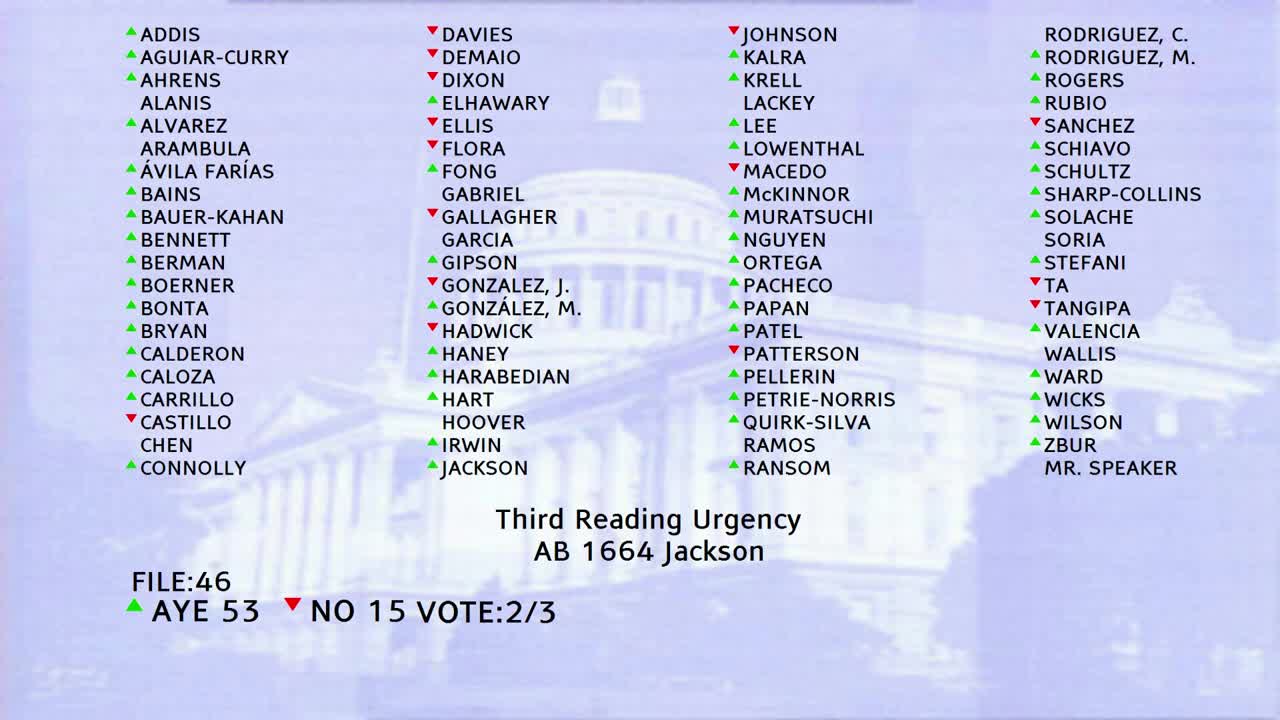
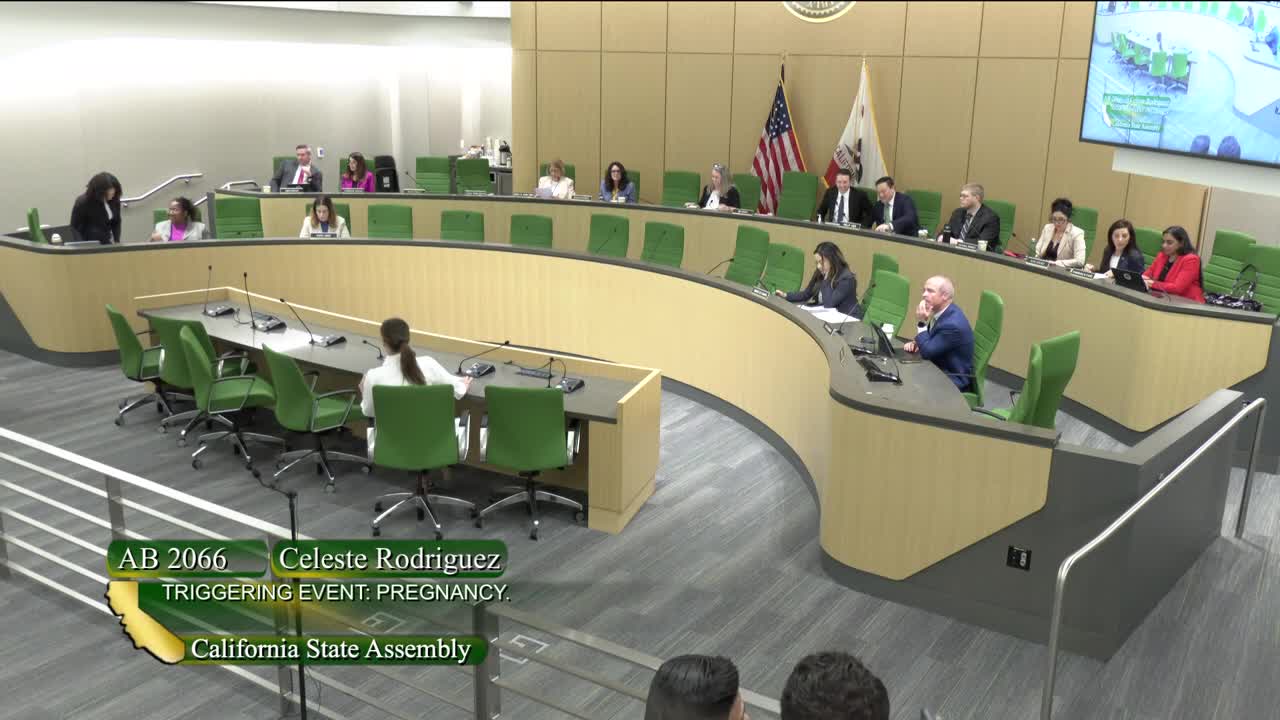
Bill Author

Bill Co-Author(s):