AB 2067: School facilities: leasing real property.
- Session Year: 2025-2026
- House: Assembly
- Latest Version Date: 2026-09-18
Current Status:
Passed
(2026-09-18: Chaptered by Secretary of State - Chapter 286, Statutes of 2026.)
Introduced
In Committee
Awaiting First Chamber Vote
Passed First Chamber
In Committee
Awaiting Second Chamber Vote
Passed Second Chamber
Enacted
Existing law requires the governing board of a school district to adopt a resolution that, among other things: (1) declares its intention to enter into a lease or agreement relating to school property, (2) includes specified information about the property, and (3) fixes a time for a public meeting of the governing board of the school district at which sealed proposals to enter a lease or agreement with the school district will be received from any person, firm, or corporation, and considered by the governing board of the school district, as specified.
Existing law, notwithstanding those provisions, and until July 1, 2027, authorizes the governing board of a school district to lease real property for a minimum rental of $1 per year if the instrument by which this property is leased requires the lessee to construct, or provide for the construction of, a building to be used by the school district and requires the title to the building to vest in the school district at the end of the lease. Existing law requires the instrument created pursuant to these provisions to be awarded based on a competitive solicitation process to the proposer providing the best value to the school district, as specified. Existing law authorizes a school district, for purposes of using preconstruction services, to enter into an instrument before written approval is obtained from the Department of General Services Division of the State Architect under specified circumstances. Existing law authorizes a school district to identify specific types of subcontractors required to be included in a proposal, and imposes specified other procedural requirements on awarding construction subcontracts of a certain value.
This bill would extend the operation of those provisions by 5 years by instead making the provisions described above inoperative on July 1, 2027, and repealing them as of January 1, 2028.
(a)(1)Notwithstanding Section 17417, the governing board of a school district may let, for a minimum rental of one dollar ($1) a year, to a person, firm, or corporation real property that belongs to the school district if the instrument by which this property is let requires the lessee therein to construct on the demised premises, or provide for the construction thereon of, a building or buildings for the use of the school district during the term of the lease, and provides that title to that building shall vest in the school district at the expiration of that term. The instrument may provide for the means or methods by which that title shall vest in the school district before the expiration of that term, and shall contain other terms and conditions as the governing board of the school district may deem to be in the best interest of the school district.
(2)An instrument created pursuant to paragraph (1) shall be awarded based on a competitive solicitation process to the proposer providing the best value to the school district, taking into consideration the proposers demonstrated competence and professional qualifications necessary for the satisfactory performance of the services required. Before awarding an instrument pursuant to this section, the governing board of the school district shall adopt and publish required procedures and guidelines for evaluating the qualifications of proposers that ensure the best value selections by the school district are conducted in a fair and impartial manner. These procedures and guidelines shall be mandatory for the school district when awarding an instrument pursuant to this section. The required procedures shall include, at a minimum, the following:
(A)The school district shall prepare a request for sealed proposals from qualified proposers. The school district shall include in the request for sealed proposals an estimate of price of the project, a clear, precise description of any preconstruction services that may be required and the facilities to be constructed, the key elements of the instrument to be awarded, a description of the format that proposals shall follow and the elements they shall contain, the standards the school district will use in evaluating proposals, the date on which proposals are due, and the timetable the school district will follow in reviewing and evaluating proposals.
(B)The school district shall give notice of the request for sealed proposals in the manner of notice provided in Section 20112 of the Public Contract Code and in a trade paper of general circulation published in the county where the project is located, with the latest notice published at least 10 days before the date for receipt of the proposals.
(C)A proposer shall be prequalified in accordance with subdivisions (b) to (m), inclusive, of Section 20111.6 of the Public Contract Code in order to submit a proposal. If used, electrical, mechanical, and plumbing subcontractors shall be subject to the same prequalification requirements for prospective bidders described in subdivisions (b) to (m), inclusive, of Section 20111.6 of the Public Contract Code, including the requirement for the completion and submission of a standardized prequalification questionnaire and financial statement that is verified under oath and is not a public record. These prequalification requirements shall be included in an instrument created pursuant to paragraph (1).
(D)The request for sealed proposals shall identify all criteria that the school district will consider in evaluating the proposals and qualifications of the proposers, including relevant experience, safety record, price proposal, and other factors specified by the school district. The price proposal shall include, at the school districts discretion, either a lump-sum price for the instrument to be awarded or the proposers proposed fee to perform the services requested, including the proposers proposed fee to perform preconstruction services or any other work related to the facilities to be constructed, as requested by the school district. The request for proposals shall specify whether each criterion will be evaluated pass-fail or will be scored as part of the best value score, and whether proposers must achieve any minimum qualification score for award of the instrument under this section.
(E)For each scored criterion, the school district shall identify the methodology and rating or weighting system that will be used by the school district in evaluating the criterion, including the weight assigned to the criterion and any minimum acceptable score.
(F)Proposals shall be evaluated and the instrument awarded under this section in the following manner:
(i)All proposals received shall be reviewed to determine those that meet the format requirements and the standards specified in the request for sealed proposals.
(ii)The school district shall evaluate the qualifications of the proposers based solely upon the criteria and evaluation methodology set forth in the request for sealed proposals, and shall assign a best value score to each proposal. Once the evaluation is complete, all responsive proposals shall be ranked from the highest best value to the lowest best value to the school district.
(iii)The award of the instrument shall be made by the governing board of the school district to the responsive proposer whose proposal is determined, in writing by the governing board of the school district, to be the best value to the school district.
(iv)If the selected proposer refuses or fails to execute the tendered instrument, the governing board of the school district may award the instrument to the proposer with the second highest best value score if the governing board of the school district deems it to be for the best interest of the school district. If the second selected proposer refuses or fails to execute the tendered instrument, the governing board of the school district may award the instrument to the proposer with the third highest best value score if the governing board of the school district deems it to be for the best interest of the school district.
(v)Notwithstanding any other law, upon issuance of a contract award, the school district shall publicly announce its award, identifying the entity to which the award is made, along with a statement regarding the basis of the award. The statement regarding the school districts contract award and the contract file shall provide sufficient information to satisfy an external audit.
(G)The governing board of the school district, at its discretion, may reject all proposals and request new proposals.
(3)Following the award of an instrument created pursuant to paragraph (1), and if the price proposal is not a lump sum for the instrument awarded, the successful proposer shall provide the school district with objectively verifiable information of its costs to perform the services requested under the instrument and shall select subcontractors as set forth in paragraph (4). Once any preconstruction services are completed and subcontractors are selected, and upon approval of the plans and specifications for work on the site by the Department of General Services Division of the State Architect, if required, the successful proposer and the school district shall finalize the price for the services to be provided under the instrument. The successful proposer shall provide the school district with written rationale for the price, and the school district shall approve or reject the final price at a public meeting before the successful proposer may proceed with any further work under the instrument. The contract file shall include documentation sufficient to support the final price determination.
(4)(A)The school district, in the request for sealed proposals, may identify specific types of subcontractors that must be included in the proposal. All subcontractors that are identified in the proposal shall be afforded the protections of the Subletting and Subcontracting Fair Practices Act (Chapter 4 (commencing with Section 4100) of Part 1 of Division 2 of the Public Contract Code).
(B)Following the award of an instrument created pursuant to paragraph (1) and for subcontractors not identified in the proposal, the successful proposer shall proceed as follows in awarding construction subcontracts with a value exceeding one-half of 1 percent of the price allocable to construction work:
(i)Provide public notice of availability of work to be subcontracted in accordance with the publication requirements applicable to the competitive bidding process of the school district, including a fixed date and time on which qualifications statements, bids, or proposals will be due.
(ii)Establish reasonable qualification criteria and standards.
(iii)Award the subcontract either on a best value basis or to the lowest responsible bidder. The process may include prequalification or short-listing. The process shall not apply to subcontractors listed in the original proposal. Subcontractors awarded construction subcontracts under this subdivision shall be afforded all the protections of the Subletting and Subcontracting Fair Practices Act (Chapter 4 (commencing with Section 4100) of Part 1 of Division 2 of the Public Contract Code).
(5)Paragraph (2) shall not preclude a school district from segregating the request for proposals into a request for qualifications, followed by a request for proposals with price information from the proposers deemed most qualified by the school district, provided that the procedures specified in paragraphs (2), (3), and (4) are otherwise followed.
(b)(1)Notwithstanding Sections 17297 and 17402, for purposes of using preconstruction services, a school district may enter into an instrument created pursuant to paragraph (1) of subdivision (a) before written approval by the Department of General Services Division of the State Architect only if the instrument provides that no work for which a contractor is required to be licensed in accordance with Article 5 (commencing with Section 7065) of Chapter 9 of Division 3 of the Business and Professions Code and for which Division of the State Architect approval is required can be performed before receipt of the required Division of the State Architect approval.
(2)This subdivision does not waive the requirements of Section 17072.30 or Section 17074.16, or any other applicable requirements of Chapter 12.5 (commencing with Section 17070.10) of Part 10.
(c)A rental of property that complies with subdivision (a) as it reads on the day that the lease is entered into shall be deemed to have thereby required the payment of adequate consideration for purposes of Section 6 of Article XVI of the California Constitution.
(d)(1)This subdivision shall apply to a project for the construction, alteration, repair, or improvement of any structure, building, or other improvement of any kind that was leased through an instrument pursuant to this section before July 1, 2015. If at any time the instrument is determined to be invalid by a court of competent jurisdiction because it fails to fall within the competitive bidding exception pursuant to paragraph (1) of subdivision (a), as it read on December 31, 2016, the contractor who entered into the instrument with the school district may be paid the reasonable cost, specifically excluding profit, of the labor, equipment, materials, and services furnished by the contractor before the date of the determination that the instrument is invalid if all of the following conditions, as determined by the court, are met:
(A)The contractor proceeded with construction, alteration, repair, or improvement based upon a good faith belief that the instrument was valid.
(B)The school district has reasonably determined that the work performed is satisfactory.
(C)Contractor fraud did not occur in the obtaining or performance of the instrument.
(D)The instrument does not otherwise violate state law related to the construction or leasing of public works of improvement.
(2)In no event shall payment to the contractor pursuant to this section exceed either of the following:
(A)The contractors costs as included in the instrument plus the cost of any approved change orders.
(B)The lease payments made, less profit, at the point in time the instrument is determined to be invalid by a court of competent jurisdiction.
(3)Notwithstanding paragraph (1), this subdivision shall not affect any protest and legal proceedings, whether contractual, administrative, or judicial, to challenge the award of the public works contract, nor affect any rights under Section 337.1 or 337.15 of the Code of Civil Procedure.
(e)This section shall become inoperative on July 1, 2032, and, as of January 1, 2033, is repealed.
SEC. 2.Section 17406 of the Education Code, as amended by Section 6 of Chapter 666 of the Statutes of 2021, is amended to read:17406.(a)Notwithstanding Section 17417, the governing board of a school district may let, for a minimum rental of one dollar ($1) a year, to any person, firm, or corporation any real property that belongs to the school district if the instrument by which this property is let requires the lessee to construct on the demised premises, or provide for the construction thereon of, a building or buildings for the use of the school district during the term of the lease, and provides that title to that building shall vest in the school district at the expiration of that term. The instrument may provide for the means or methods by which that title shall vest in the school district before the expiration of that term, and shall contain other terms and conditions as the governing board of the school district may deem to be in the best interest of the school district.
(b)Any rental of property that complies with subdivision (a) shall be deemed to have thereby required the payment of adequate consideration for purposes of Section 6 of Article XVI of the California Constitution.
(c)This section shall become operative on July 1, 2032.
(a)(1)Notwithstanding Section 17417, the governing board of a school district may let, for a minimum rental of one dollar ($1) a year, to a person, firm, or corporation real property that belongs to the school district if the instrument by which this property is let requires the lessee therein to construct on the demised premises, or provide for the construction thereon of, a building or buildings for the use of the school district during the term of the lease, and provides that title to that building shall vest in the school district at the expiration of that term. The instrument may provide for the means or methods by which that title shall vest in the school district before the expiration of that term, and shall contain other terms and conditions as the governing board of the school district may deem to be in the best interest of the school district.
(2)An instrument created pursuant to paragraph (1) shall be awarded based on a competitive solicitation process to the proposer providing the best value to the school district, taking into consideration the proposers demonstrated competence and professional qualifications necessary for the satisfactory performance of the services required. Before awarding an instrument pursuant to this section, the governing board of the school district shall adopt and publish required procedures and guidelines for evaluating the qualifications of proposers that ensure the best value selections by the school district are conducted in a fair and impartial manner. These procedures and guidelines shall be mandatory for the school district when awarding an instrument pursuant to this section. The required procedures shall include, at a minimum, the following:
(A)The school district shall prepare a request for sealed proposals from qualified proposers. The school district shall include in the request for sealed proposals an estimate of price of the project, a clear, precise description of any preconstruction services that may be required and the facilities to be constructed, the key elements of the instrument to be awarded, a description of the format that proposals shall follow and the elements they shall contain, the standards the school district will use in evaluating proposals, the date on which proposals are due, and the timetable the school district will follow in reviewing and evaluating proposals.
(B)The school district shall give notice of the request for sealed proposals in the manner of notice provided in Section 20112 of the Public Contract Code and in a trade paper of general circulation published in the county where the project is located, with the latest notice published at least 10 days before the date for receipt of the proposals.
(C)A proposer shall be prequalified in accordance with subdivisions (b) to (m), inclusive, of Section 20111.6 of the Public Contract Code in order to submit a proposal. If used, electrical, mechanical, and plumbing subcontractors shall be subject to the same prequalification requirements for prospective bidders described in subdivisions (b) to (m), inclusive, of Section 20111.6 of the Public Contract Code, including the requirement for the completion and submission of a standardized prequalification questionnaire and financial statement that is verified under oath and is not a public record. These prequalification requirements shall be included in an instrument created pursuant to paragraph (1).
(D)The request for sealed proposals shall identify all criteria that the school district will consider in evaluating the proposals and qualifications of the proposers, including relevant experience, safety record, price proposal, and other factors specified by the school district. The price proposal shall include, at the school districts discretion, either a lump-sum price for the instrument to be awarded or the proposers proposed fee to perform the services requested, including the proposers proposed fee to perform preconstruction services or any other work related to the facilities to be constructed, as requested by the school district. The request for proposals shall specify whether each criterion will be evaluated pass-fail or will be scored as part of the best value score, and whether proposers must achieve any minimum qualification score for award of the instrument under this section.
(E)For each scored criterion, the school district shall identify the methodology and rating or weighting system that will be used by the school district in evaluating the criterion, including the weight assigned to the criterion and any minimum acceptable score.
(F)Proposals shall be evaluated and the instrument awarded under this section in the following manner:
(i)All proposals received shall be reviewed to determine those that meet the format requirements and the standards specified in the request for sealed proposals.
(ii)The school district shall evaluate the qualifications of the proposers based solely upon the criteria and evaluation methodology set forth in the request for sealed proposals, and shall assign a best value score to each proposal. Once the evaluation is complete, all responsive proposals shall be ranked from the highest best value to the lowest best value to the school district.
(iii)The award of the instrument shall be made by the governing board of the school district to the responsive proposer whose proposal is determined, in writing by the governing board of the school district, to be the best value to the school district.
(iv)If the selected proposer refuses or fails to execute the tendered instrument, the governing board of the school district may award the instrument to the proposer with the second highest best value score if the governing board of the school district deems it to be for the best interest of the school district. If the second selected proposer refuses or fails to execute the tendered instrument, the governing board of the school district may award the instrument to the proposer with the third highest best value score if the governing board of the school district deems it to be for the best interest of the school district.
(v)Notwithstanding any other law, upon issuance of a contract award, the school district shall publicly announce its award, identifying the entity to which the award is made, along with a statement regarding the basis of the award. The statement regarding the school districts contract award and the contract file shall provide sufficient information to satisfy an external audit.
(G)The governing board of the school district, at its discretion, may reject all proposals and request new proposals.
(3)Following the award of an instrument created pursuant to paragraph (1), and if the price proposal is not a lump sum for the instrument awarded, the successful proposer shall provide the school district with objectively verifiable information of its costs to perform the services requested under the instrument and shall select subcontractors as set forth in paragraph (4). Once any preconstruction services are completed and subcontractors are selected, and upon approval of the plans and specifications for work on the site by the Department of General Services Division of the State Architect, if required, the successful proposer and the school district shall finalize the price for the services to be provided under the instrument. The successful proposer shall provide the school district with written rationale for the price, and the school district shall approve or reject the final price at a public meeting before the successful proposer may proceed with any further work under the instrument. The contract file shall include documentation sufficient to support the final price determination.
(4)(A)The school district, in the request for sealed proposals, may identify specific types of subcontractors that must be included in the proposal. All subcontractors that are identified in the proposal shall be afforded the protections of the Subletting and Subcontracting Fair Practices Act (Chapter 4 (commencing with Section 4100) of Part 1 of Division 2 of the Public Contract Code).
(B)Following the award of an instrument created pursuant to paragraph (1) and for subcontractors not identified in the proposal, the successful proposer shall proceed as follows in awarding construction subcontracts with a value exceeding one-half of 1 percent of the price allocable to construction work:
(i)Provide public notice of availability of work to be subcontracted in accordance with the publication requirements applicable to the competitive bidding process of the school district, including a fixed date and time on which qualifications statements, bids, or proposals will be due.
(ii)Establish reasonable qualification criteria and standards.
(iii)Award the subcontract either on a best value basis or to the lowest responsible bidder. The process may include prequalification or short-listing. The process shall not apply to subcontractors listed in the original proposal. Subcontractors awarded construction subcontracts under this subdivision shall be afforded all the protections of the Subletting and Subcontracting Fair Practices Act (Chapter 4 (commencing with Section 4100) of Part 1 of Division 2 of the Public Contract Code).
(5)Paragraph (2) shall not preclude a school district from segregating the request for proposals into a request for qualifications, followed by a request for proposals with price information from the proposers deemed most qualified by the school district, provided that the procedures specified in paragraphs (2), (3), and (4) are otherwise followed.
(b)(1)Notwithstanding Sections 17297 and 17402, for purposes of using preconstruction services, a school district may enter into an instrument created pursuant to paragraph (1) of subdivision (a) before written approval by the Department of General Services Division of the State Architect only if the instrument provides that no work for which a contractor is required to be licensed in accordance with Article 5 (commencing with Section 7065) of Chapter 9 of Division 3 of the Business and Professions Code and for which Division of the State Architect approval is required can be performed before receipt of the required Division of the State Architect approval.
(2)This subdivision does not waive the requirements of Section 17072.30 or Section 17074.16, or any other applicable requirements of Chapter 12.5 (commencing with Section 17070.10) of Part 10.
(c)A rental of property that complies with subdivision (a) as it reads on the day that the lease is entered into shall be deemed to have thereby required the payment of adequate consideration for purposes of Section 6 of Article XVI of the California Constitution.
(d)(1)This subdivision shall apply to a project for the construction, alteration, repair, or improvement of any structure, building, or other improvement of any kind that was leased through an instrument pursuant to this section before July 1, 2015. If at any time the instrument is determined to be invalid by a court of competent jurisdiction because it fails to fall within the competitive bidding exception pursuant to paragraph (1) of subdivision (a), as it read on December 31, 2016, the contractor who entered into the instrument with the school district may be paid the reasonable cost, specifically excluding profit, of the labor, equipment, materials, and services furnished by the contractor before the date of the determination that the instrument is invalid if all of the following conditions, as determined by the court, are met:
(A)The contractor proceeded with construction, alteration, repair, or improvement based upon a good faith belief that the instrument was valid.
(B)The school district has reasonably determined that the work performed is satisfactory.
(C)Contractor fraud did not occur in the obtaining or performance of the instrument.
(D)The instrument does not otherwise violate state law related to the construction or leasing of public works of improvement.
(2)In no event shall payment to the contractor pursuant to this section exceed either of the following:
(A)The contractors costs as included in the instrument plus the cost of any approved change orders.
(B)The lease payments made, less profit, at the point in time the instrument is determined to be invalid by a court of competent jurisdiction.
(3)Notwithstanding paragraph (1), this subdivision shall not affect any protest and legal proceedings, whether contractual, administrative, or judicial, to challenge the award of the public works contract, nor affect any rights under Section 337.1 or 337.15 of the Code of Civil Procedure.
(e)This section shall become inoperative on July 1, 2027, 2032, and, as of January 1, 2028, 2033, is repealed, unless a later enacted statute, that becomes operative on or before January 1, 2028, deletes or extends the dates on which it becomes inoperative and is repealed.
SEC. 2.Section 17406 of the Education Code, as amended by Section 6 of Chapter 666 of the Statutes of 2021, is amended to read:17406.(a)Notwithstanding Section 17417, the governing board of a school district may let, for a minimum rental of one dollar ($1) a year, to any person, firm, or corporation any real property that belongs to the school district if the instrument by which this property is let requires the lessee to construct on the demised premises, or provide for the construction thereon of, a building or buildings for the use of the school district during the term of the lease, and provides that title to that building shall vest in the school district at the expiration of that term. The instrument may provide for the means or methods by which that title shall vest in the school district before the expiration of that term, and shall contain other terms and conditions as the governing board of the school district may deem to be in the best interest of the school district.
(b)Any rental of property that complies with subdivision (a) shall be deemed to have thereby required the payment of adequate consideration for purposes of Section 6 of Article XVI of the California Constitution.
(c)This section shall become operative on July 1, 2027. 2032.
|
Date
|
Status
|
|---|---|
| Sep 18, 2026 | Chaptered by Secretary of State - Chapter 286, Statutes of 2026. |
| Sep 18, 2026 | Approved by the Governor. |
| Aug 24, 2026 | Enrolled and presented to the Governor at 4:30 p.m. |
| Aug 18, 2026 | In Assembly. Ordered to Engrossing and Enrolling. |
| Aug 18, 2026 | Read third time. Passed. Ordered to the Assembly. (Ayes 30. Noes 4. Page 5519.). |
| Aug 18, 2026 | Read third time. Passed. Ordered to the Assembly. (Ayes 30. Noes 4.). |
| Jun 8, 2026 | Read second time. Ordered to third reading. |
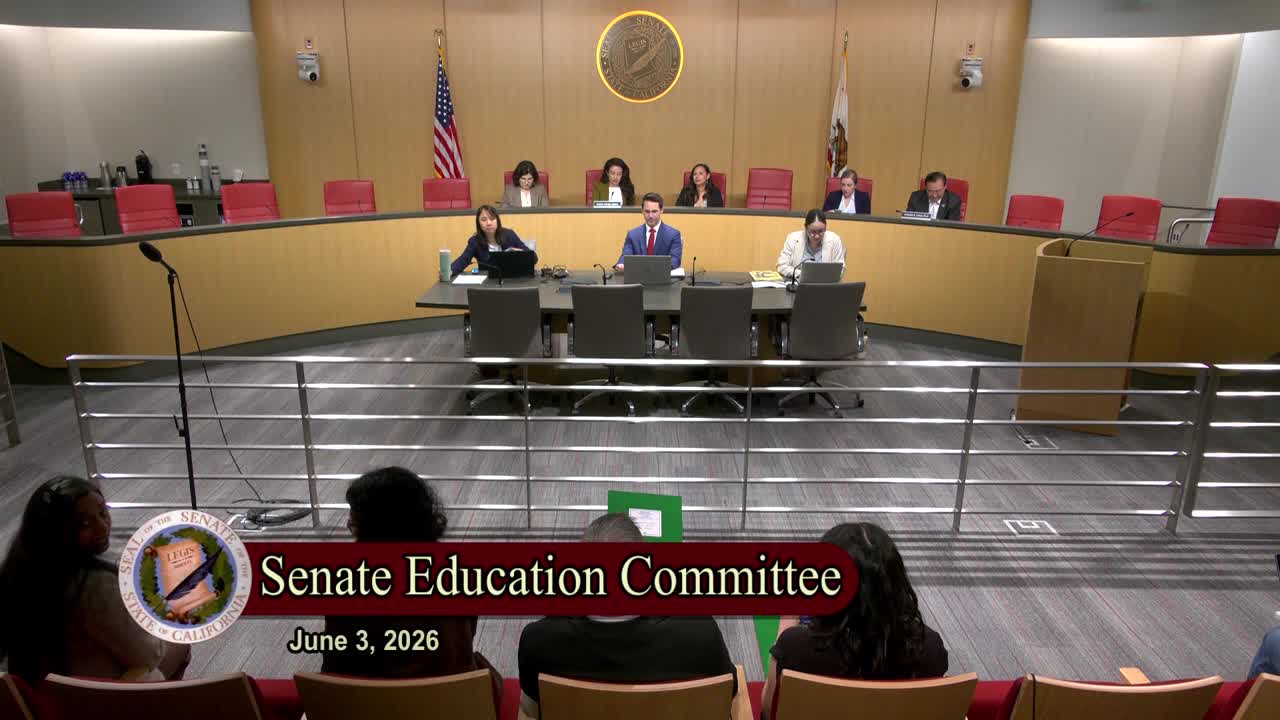
| Jun 4, 2026 | From committee: Do pass. (Ayes 6. Noes 1.) (June 3). |
| May 6, 2026 | Referred to Com. on ED. |
| Apr 9, 2026 | In Senate. Read first time. To Com. on RLS. for assignment. |
| Apr 9, 2026 | Read third time. Passed. Ordered to the Senate. (Ayes 64. Noes 0. Page 4556.) |
| Apr 9, 2026 | Read third time. Passed. Ordered to the Senate. (Ayes 64. Noes 0.) |
| Mar 26, 2026 | Read second time. Ordered to Consent Calendar. |
| Mar 25, 2026 | From committee: Do pass. To Consent Calendar. (Ayes 9. Noes 0.) (March 25). |
| Mar 2, 2026 | Referred to Com. on ED. |
| Feb 19, 2026 | From printer. May be heard in committee March 21. |
| Feb 18, 2026 | Read first time. To print. |
|
Date
|
Description
|
Location
|
Votes
|
|
|---|---|---|---|---|
| Aug 18, 2026 | Assembly 3rd Reading AB2067 Patel By Cabaldon | Senate Floor |
Passed |
|
| Jun 3, 2026 | Do pass | Senate Standing Committee on Education |
Passed |
|
| Apr 9, 2026 | AB 2067 Patel Consent Calendar Second Day Regular Session | Assembly Floor |
Passed |
|
| Mar 25, 2026 | Do pass. To Consent Calendar. | Assembly Standing Committee on Education |
Passed |
This list shows positions taken on this bill by organizations on the date displayed, which is linked to the original source.
Positions by individuals are not included.
|
Organization
|
Position
|
Date
|
|---|---|---|
| Alameda County Office Of Education | ** Support | |
| Antioch Unified School District | ** Support | |
| Associated General Contractors, California Chapters (co-source) | ** Support | |
| Balfour Beatty | ** Support | |
| Blach Construction Company | ** Support | |
| Cajon Valley Union School District | ** Support | |
| Calco Fence INC | ** Support | |
| California Association Of School Business Officials | ** Support | |
| California School Boards Association | ** Support | |
| Castro Valley Unified School District | ** Support | |
| Coalition for Adequate School Housing (CASH) | ** Support | |
| Coalition for Adequate School Housing (co-source) | ** Support | |
| Coalition for Adequate School Housing (co-sponsor) | ** Support | |
| County School Facilities Consortium | ** Support | |
| Del Mar Union School District | ** Support | |
| Elk Grove Unified School District | ** Support | |
| Fieldturf | ** Support | |
| Folsom Cordova Unified School District | ** Support | |
| Harris Construction Co., INC. | ** Support | |
| Hemet Unified School District | ** Support | |
| Jurupa Unified School District | ** Support | |
| Livermore Valley Joint Unified School District | ** Support | |
| Los Angeles Unified School District | ** Support | |
| Manteca Unified School District | ** Support | |
| Oakland Unified School District | ** Support | |
| Petaluma City Schools | ** Support | |
| Poway Unified School District | ** Support | |
| QUATTROCCHI KWOK ARCHITECTS | ** Support | |
| ROBERT A BOTHMAN CONSTRUCTION | ** Support | |
| San Benito High School District | ** Support | |
| Santa Monica-Malibu Unified School District | ** Support | |
| Thermalito Union Elementary School District | ** Support |
SENATE RULES COMMITTEE Office of Senate Floor Analyses (916) 651-4171 | AB 2067 |
THIRD READING
Bill No: AB 2067
Author: Patel (D)
Introduced: 2/18/26
Vote: 21
SENATE EDUCATION COMMITTEE: 6-1, 6/3/26
AYES: Pérez, Cabaldon, Choi, Cortese, Gonzalez, Reyes
NOES: Ochoa Bogh
ASSEMBLY FLOOR: 64-0, 4/9/26 (Consent) - See last page for vote
SUBJECT: School facilities: leasing real property
SOURCE: Associated General Contractors, California Chapters
Coalition for Adequate School Housing
DIGEST:
This bill (1) extends, by five years, the existing authorization for school districts to use the lease-leaseback project delivery method through a competitive best value solicitation process for school construction projects; (2) extends the operative date of these provisions from July 1, 2027, to July 1, 2032.
ANALYSIS:
Existing law:
- Authorizes a school district governing board, notwithstanding specified competitive bidding provisions, to lease district property for a minimum of $1 per year to a person, firm, or corporation if the lease requires the lessee to construct school facilities for district use and requires title to vest in the district at the conclusion of the lease term. Requires the instrument to be awarded through a competitive solicitation process using a best value methodology.
- Provides that the current authorization for school districts to use the lease-leaseback project delivery method through a competitive best value process becomes inoperative on July 1, 2027.
- Authorizes school districts to enter into agreements under which a private entity constructs school facilities and leases the facilities back to the district, with title ultimately vesting in the district, and requires agreements entered into pursuant to specified provisions to be awarded to the lowest responsible bidder.
- Prohibits a school district from entering into a lease-leaseback agreement unless the entity and its subcontractors agree to use a skilled and trained workforce for all apprenticeable occupations on the project.
- Defines “best value” for purposes of lease-leaseback procurement as a competitive procurement process that evaluates proposers based on objective criteria representing the best combination of price and qualifications.
This bill:
- Extends, by five years, the existing authorization for school districts to use the lease-leaseback project delivery method through a competitive best value solicitation process for school construction projects.
- Extends the operative date of these provisions from July 1, 2027, to July 1, 2032.
Comments
Need for the bill. According to the author, “AB 2067 affords the continued use of an existing tool to improve transparency and bring certainty to school districts, contractors, and architects engaged in delivering school construction projects. Most importantly, this authority helps to control project costs and deliver facility projects on time, which directly benefits students and taxpayers.”
Extends a project delivery method that was substantially reformed following litigation and longstanding concerns regarding transparency and competitive bidding. Lease-leaseback has long been used by school districts as an alternative project delivery method for school construction projects. Historically, however, the process generated controversy because prior law authorized districts to enter into lease-leaseback agreements “without advertising for bids,” leading to concerns that some projects were effectively awarded without meaningful competition. These concerns culminated in the Davis v. Fresno Unified School District litigation, which challenged whether certain lease-leaseback arrangements improperly circumvented California’s public contracting laws.
In response, the Legislature enacted AB 2316 (O’Donnell, Chapter 521, Statutes of 2016), which substantially revised the lease-leaseback process by eliminating the authority to proceed without competitive bidding and replacing it with a competitive best value procurement process that included additional transparency, disclosure, workforce, and subcontractor protections.
This bill does not expand the scope of lease-leaseback authority or materially alter the procurement process established in 2016. Instead, it extends the sunset date for the current competitive best value framework for an additional five years.
Reflects a legislative preference for preserving procurement flexibility while maintaining guardrails adopted in 2016. Supporters of this bill argue that lease-leaseback provides districts with additional flexibility compared to traditional design-bid-build procurement methods, including the ability to incorporate preconstruction services, utilize guaranteed maximum pricing structures, and consider qualifications and project approach in addition to cost. They further contend that continuation of the current framework is particularly important for smaller districts that may benefit from early contractor involvement and integrated project delivery approaches.
At the same time, the current statutory framework preserves significant guardrails adopted following the Fresno litigation, including competitive solicitation requirements, public disclosure requirements, skilled and trained workforce provisions, and protections for subcontractors. As a result, this bill can largely be viewed as an extension of the Legislature’s existing policy balance between procurement flexibility and public accountability rather than a reopening of the broader policy debate regarding lease-leaseback authority itself.
Allowing the sunset to occur could create uncertainty regarding continued use of lease-leaseback procurement. If the competitive best value provisions sunset, the statute would revert to a prior version of the Education Code that no longer expressly references the competitive selection process established in 2016.
Supporters argue that allowing the sunset to occur could create uncertainty for districts, architects, and contractors regarding the continued viability and structure of lease-leaseback procurement. While some procurement-related protections adopted in subsequent legislation would remain in effect, the expiration of the current framework could create ambiguity regarding procedural expectations and procurement standards moving forward.
This bill continues a broader legislative trend toward authorizing alternative project delivery methods for school construction. Over the past two decades, the Legislature has increasingly authorized alternative project delivery methods for public infrastructure projects, including lease-leaseback, design-build, progressive design-build, and construction manager/general contractor models. These approaches are generally intended to provide public entities with greater flexibility in addressing project complexity, cost control, scheduling, and risk allocation.
This bill continues that broader trend by preserving an existing alternative delivery authority rather than reverting school districts exclusively to more traditional low-bid procurement structures. However, unlike some newer alternative delivery models, lease-leaseback already represents a mature and heavily litigated procurement framework with significant existing statutory guidance and operational experience among school districts.
FISCAL EFFECT: Appropriation: No Fiscal Com.: No Local: No
SUPPORT: (Verified 6/4/26)
Associated General Contractors, California Chapters (co-source)
Coalition for Adequate School Housing (co-source)
Alameda County Office of Education
Blach Construction Company
California Association of School Business Officials
California School Boards Association
County School Facilities Consortium
Del Mar Union School District
Harris Construction Co., Inc.
Hemet Unified School District
Jurupa Unified School District
Los Angeles Unified School District
Manteca Unified School District
Oakland Unified School District
Poway Unified School District
San Benito High School District
OPPOSITION: (Verified 6/4/26)
None received
ASSEMBLY FLOOR: 64-0, 4/9/26
AYES: Aguiar-Curry, Ahrens, Alanis, Alvarez, Bains, Berman, Boerner, Calderon, Caloza, Carrillo, Castillo, Chen, Connolly, Davies, DeMaio, Dixon, Elhawary, Ellis, Fong, Gabriel, Garcia, Gipson, Mark González, Hadwick, Harabedian, Hart, Hoover, Irwin, Jackson, Johnson, Krell, Lackey, Lee, Lowenthal, Macedo, McKinnor, Muratsuchi, Nguyen, Pacheco, Papan, Patel, Patterson, Pellerin, Petrie-Norris, Quirk-Silva, Ramos, Ransom, Michelle Rodriguez, Rogers, Blanca Rubio, Sanchez, Schiavo, Sharp-Collins, Solache, Soria, Stefani, Ta, Tangipa, Valencia, Wallis, Ward, Wicks, Wilson, Rivas
NO VOTE RECORDED: Addis, Arambula, Ávila Farías, Bauer-Kahan, Bennett, Bonta, Bryan, Flora, Gallagher, Jeff Gonzalez, Haney, Kalra, Ortega, Celeste Rodriguez, Schultz, Zbur
Prepared by: Ian Johnson / ED. / (916) 651-4105
6/8/26 16:04:25
**** END ****
SENATE COMMITTEE ON EDUCATION
Senator Sasha Renée Pérez, Chair
2025 - 2026 Regular
Bill No: Hearing Date: June 3, 2026
Author: | |||
Version: |
| ||
Urgency: | Fiscal: | ||
Consultant: | |||
Subject: .
SUMMARY
This bill extends, by five years, the existing authorization for school districts to use the lease-leaseback project delivery method through a competitive best value solicitation process for school construction projects. Specifically, the bill extends the operative date of these provisions from July 1, 2027, to July 1, 2032.
BACKGROUND
Existing law:
- Authorizes a school district governing board, notwithstanding specified competitive bidding provisions, to lease district property for a minimum of $1 per year to a person, firm, or corporation if the lease requires the lessee to construct school facilities for district use and requires title to vest in the district at the conclusion of the lease term. Requires the instrument to be awarded through a competitive solicitation process using a best value methodology.
- Provides that the current authorization for school districts to use the lease-leaseback project delivery method through a competitive best value process becomes inoperative on July 1, 2027.
- Authorizes school districts to enter into agreements under which a private entity constructs school facilities and leases the facilities back to the district, with title ultimately vesting in the district, and requires agreements entered into pursuant to specified provisions to be awarded to the lowest responsible bidder.
- Prohibits a school district from entering into a lease-leaseback agreement unless the entity and its subcontractors agree to use a skilled and trained workforce for all apprenticeable occupations on the project.
- Defines “best value” for purposes of lease-leaseback procurement as a competitive procurement process that evaluates proposers based on objective criteria representing the best combination of price and qualifications.
ANALYSIS
This bill extends, by five years, the existing authorization for school districts to use the lease-leaseback project delivery method through a competitive best value solicitation process for school construction projects. Specifically, the bill extends the operative date of these provisions from July 1, 2027, to July 1, 2032.
STAFF COMMENTS
- Need for the bill. According to the author, “AB 2067 affords the continued use of an existing tool to improve transparency and bring certainty to school districts, contractors, and architects engaged in delivering school construction projects. Most importantly, this authority helps to control project costs and deliver facility projects on time, which directly benefits students and taxpayers.”
- Extends a project delivery method that was substantially reformed following litigation and longstanding concerns regarding transparency and competitive bidding. Lease-leaseback has long been used by school districts as an alternative project delivery method for school construction projects. Historically, however, the process generated controversy because prior law authorized districts to enter into lease-leaseback agreements “without advertising for bids,” leading to concerns that some projects were effectively awarded without meaningful competition. These concerns culminated in the Davis v. Fresno Unified School District litigation, which challenged whether certain lease-leaseback arrangements improperly circumvented California’s public contracting laws.
In response, the Legislature enacted AB 2316 (O’Donnell, Chapter 521, Statutes of 2016), which substantially revised the lease-leaseback process by eliminating the authority to proceed without competitive bidding and replacing it with a competitive best value procurement process that included additional transparency, disclosure, workforce, and subcontractor protections.
This bill does not expand the scope of lease-leaseback authority or materially alter the procurement process established in 2016. Instead, it extends the sunset date for the current competitive best value framework for an additional five years.
- Reflects a legislative preference for preserving procurement flexibility while maintaining guardrails adopted in 2016. Supporters of this bill argue that lease-leaseback provides districts with additional flexibility compared to traditional design-bid-build procurement methods, including the ability to incorporate preconstruction services, utilize guaranteed maximum pricing structures, and consider qualifications and project approach in addition to cost. They further contend that continuation of the current framework is particularly important for smaller districts that may benefit from early contractor involvement and integrated project delivery approaches.
At the same time, the current statutory framework preserves significant guardrails adopted following the Fresno litigation, including competitive solicitation requirements, public disclosure requirements, skilled and trained workforce provisions, and protections for subcontractors. As a result, the bill can largely be viewed as an extension of the Legislature’s existing policy balance between procurement flexibility and public accountability rather than a reopening of the broader policy debate regarding lease-leaseback authority itself.
- Allowing the sunset to occur could create uncertainty regarding continued use of lease-leaseback procurement. If the competitive best value provisions sunset, the statute would revert to a prior version of the Education Code that no longer expressly references the competitive selection process established in 2016.
Supporters argue that allowing the sunset to occur could create uncertainty for districts, architects, and contractors regarding the continued viability and structure of lease-leaseback procurement. While some procurement-related protections adopted in subsequent legislation would remain in effect, the expiration of the current framework could create ambiguity regarding procedural expectations and procurement standards moving forward.
- This bill continues a broader legislative trend toward authorizing alternative project delivery methods for school construction. Over the past two decades, the Legislature has increasingly authorized alternative project delivery methods for public infrastructure projects, including lease-leaseback, design-build, progressive design-build, and construction manager/general contractor models. These approaches are generally intended to provide public entities with greater flexibility in addressing project complexity, cost control, scheduling, and risk allocation.
This bill continues that broader trend by preserving an existing alternative delivery authority rather than reverting school districts exclusively to more traditional low-bid procurement structures. However, unlike some newer alternative delivery models, lease-leaseback already represents a mature and heavily litigated procurement framework with significant existing statutory guidance and operational experience among school districts.
SUPPORT
Associated General Contractors, California Chapters (co-sponsor)
Coalition for Adequate School Housing (co-sponsor)
Alameda County Office of Education
Blach Construction Company
California Association of School Business Officials
California School Boards Association
County School Facilities Consortium
Del Mar Union School District
Harris Construction Co., Inc.
Hemet Unified School District
Jurupa Unified School District
Los Angeles Unified School District
Manteca Unified School District
Oakland Unified School District
Poway Unified School District
San Benito High School District
OPPOSITION
None received
-- END --
Date of Hearing: March 25, 2026
ASSEMBLY COMMITTEE ON EDUCATION
Darshana R. Patel, Chair
ABPCA Bill Id:AB 2067 (
Author:Patel) – As Introduced Ver:February 18, 2026
SUBJECT: School facilities: leasing real property
SUMMARY: States that the authorization for school district utilization of lease-leaseback based on a competitive, best value solicitation process extends the authorization from July 1, 2027 to July 1, 2032. Specifically, this bill:
- States that the authorization for school district utilization of lease-leaseback based on a competitive, best value solicitation process becomes inoperative on July 1, 2032, extending the authorization from July 1, 2027.
EXISTING LAW:
- Authorizes, notwithstanding Education Code (EC) 17417, the governing board of a school district to let, for a minimum rental of $1 a year, to a person, firm, or corporation real property that belongs to the school district if the instrument by which this property is let requires the lessee therein to construct on the demised premises, or provide for the construction thereon of, a building or buildings for the use of the school district during the term of the lease, and provides that title to that building is required to vest in the school district at the expiration of that term. Requires the instrument to be awarded based on a competitive solicitation process to the proposer providing the best value to the school district. (EC 17406)
- States that the authorization for school district utilization of a lease-leaseback becomes inoperative on July 1, 2027. (EC 17406)
- Authorizes the governing board of any school district to enter into an agreement with any person, firm, or corporation under which that person, firm, or corporation shall construct, or provide for the construction of, a building to be used by the district upon a designated site and lease the building and site to the district. Requires the instrument to provide that the title to the building and site to vest in the district at the expiration of the lease, and is authorized to provide the means or method by which the title to the building and site is required to vest in the district prior to the expiration of the lease, and is required to contain other terms and conditions as the governing board of the district deems to be in the best interest of the district. Requires the agreement entered into to be with the lowest responsible bidder, who is required to give the security that any board requires. (EC 17407)
- Prohibits the governing board of a school district from entering into a lease-leaseback agreement with any entity unless the entity provides to the governing board of the school district an enforceable commitment that the entity and its subcontractors at every tier will use a skilled and trained workforce to perform all work on the project or contract that falls within an apprenticeable occupation in the building and construction trades. (EC 17407.5)
- Defines, for the purpose of lease-leaseback, “best value” to mean a competitive procurement process whereby the selected propose is selected on the basis of objective criteria for evaluating the qualifications of proposers with the resulting selection representing the best combination of price and qualifications. (EC 17400)
FISCAL EFFECT: Unknown
COMMENTS:
Need for the bill. According to the author, “AB 2067 affords the continued use of an existing tool to improve transparency and bring certainty to school districts, contractors, and architects engaged in delivering school construction projects. Most importantly, this authority helps to control project costs and deliver facility projects on time, which directly benefits students and taxpayers.”
Lease-leaseback. Under current law, school districts are required to competitively bid any public works contract over $15,000 and award the contract to the lowest responsible bidder. School districts can choose from a variety of project delivery methods, including lease-leaseback agreements.
Lease-leaseback is a process whereby a governing board of a school district may rent district property for a minimum of $1 a year to any person, firm, or corporation, using a best value competitive bidding process, rather than simply the lowest price. The person, firm or corporation constructs the school building and rents the facility back to the school district. During the construction process, the builder secures the necessary financing, rather than the school district securing funding and acquiring debt. At the end of the multi-year leaseback period, ownership of the property and new facilities vests with the district, and the contractor has been paid in full. At the end of the lease, the district resumes title to the building and site. In practice, some school districts have used state and local bond funds to make construction payments during construction. The lease is terminated when the building is constructed.
Current law prohibits the governing board of a school district from entering into a lease-leaseback agreement with any entity unless the entity provides to the governing board of the school district an enforceable commitment that the entity and its subcontractors at every tier will use a skilled and trained workforce to perform all work on the project or contract that falls within an apprenticeable occupation in the building and construction trades.
Supporters of lease-leaseback state the benefits include the use of best value to select the entity developing the project, integrated project delivery, use of a Guaranteed Maximum Price, and flexibility to set parameters within the project (such as the relationship with the architect, district participation in selecting the trade contractors, and financing options).
AB 2316 (O’Donnell), Chapter 521, Statutes of 2016, created a competitive selection process for K-12 lease-leaseback using the best value methodology. This bill was introduced in response to the Davis vs. Fresno lawsuit, in which plaintiff Davis alleged the Fresno Unified School District entered a contract for the construction of a middle school in violation of California's competitive bidding requirements while using lease-leaseback. AB 2316 (O’Donnell) provided both protections and guardrails when using the method. The bill also protected contracts signed prior to July 1, 2015, from disgorgement; contractors could keep costs of labor, equipment, materials, and services, but return profit for contracts deemed invalid if certain parameters are met, as determined by a court. The competitive selection process component of lease-leaseback had an original sunset date of July 1, 2022. AB 486 (Committee on Education), Chapter 666, Statutes of 2021, the elementary and secondary omnibus bill, extended the competitive selection process sunset until July 1, 2027.
This bill proposes extending the lease-leaseback sunset date based on a competitive, best value solicitation process until July 1, 2032. Should the competitive selection component sunset, the EC would revert to the original EC 17406 with one major change: “without advertising for bids” was struck from the original lease-leaseback statute in 2016 by AB 2361 (O’Donnell). According to supporters of this bill, this change would make it much more difficult to confidently and efficiently use lease-leaseback.
Arguments in support. The Coalition for Adequate School Housing (CASH) writes, “The competitive selection provisions of lease-leaseback (LLB), which this bill would extend, comprise the framework that ensures transparency and accountability to the public, and protects all parties. Specifically, they: allow school districts to incorporate pre-construction services into the contract, giving them—and especially small school districts—the benefit of expert guidance early in the process, control costs by reducing the need for change orders throughout the construction period, require full disclosure of pricing in an open meeting of the school district governing board, reserve skilled and trained labor requirements in LLB, and uphold protections for subcontractors. This bill will maintain a tool that school districts need to ensure they can deliver facilities projects on time and under budget.”
Related legislation. AB 486 (Committee on Education), Chapter 666, Statutes of 2021, extends the lease-leaseback construction project delivery method from July 1, 2022, to July 1, 2027.
AB 2316 (O’Donnell), Chapter 521, Statutes of 2016, eliminates the authority for school districts to issue a lease-leaseback contract without advertising for bid, establishes a competitive selections process for awarding lease-leaseback contracts, and allows a contractor to be paid the reasonable cost of labor, equipment, materials, and services furnished by the contractor meeting specified conditions if a lease-leaseback contract entered into prior to July 1, 2015, is found to be invalid by a court.
AB 566 (O’Donnell), Chapter 214, Statutes of 2015, requires school districts entering into specified school building lease contracts to use a skilled and trained workforce.
AB 1581 (Buchanan), Chapter 408, Statutes of 2014, requires school districts entering into lease-leaseback and lease-to-own contracts to comply with the requirements to prequalify and rate prospective bidders, if the project is funded with state bond funds, the expenditure of the project is $1 million or more, and the average daily attendance of the school district is more than 2,500.
REGISTERED SUPPORT / OPPOSITION:
Support
Alameda County Office of Education
Antioch Unified School District
Balfour Beatty
Blach Construction Company
Cajon Valley Union School District
Calco Fence INC
Castro Valley Unified School District
Coalition for Adequate School Housing (CASH)
Del Mar Union School District
Elk Grove Unified School District
Fieldturf
Folsom Cordova Unified School District
Harris Construction Co., INC.
Hemet Unified School District
Jurupa Unified School District
Livermore Valley Joint Unified School District
Los Angeles Unified School District
Manteca Unified School District
Petaluma City Schools
Quattrocchi Kwok Architects
Robert A Bothman Construction
San Benito High School District
Santa Monica-Malibu Unified School District
Thermalito Union Elementary School District
Opposition
None on file
Analysis Prepared by: Marguerite Ries / ED. / (916) 319-2087
Discussed in Hearing
View Older Hearings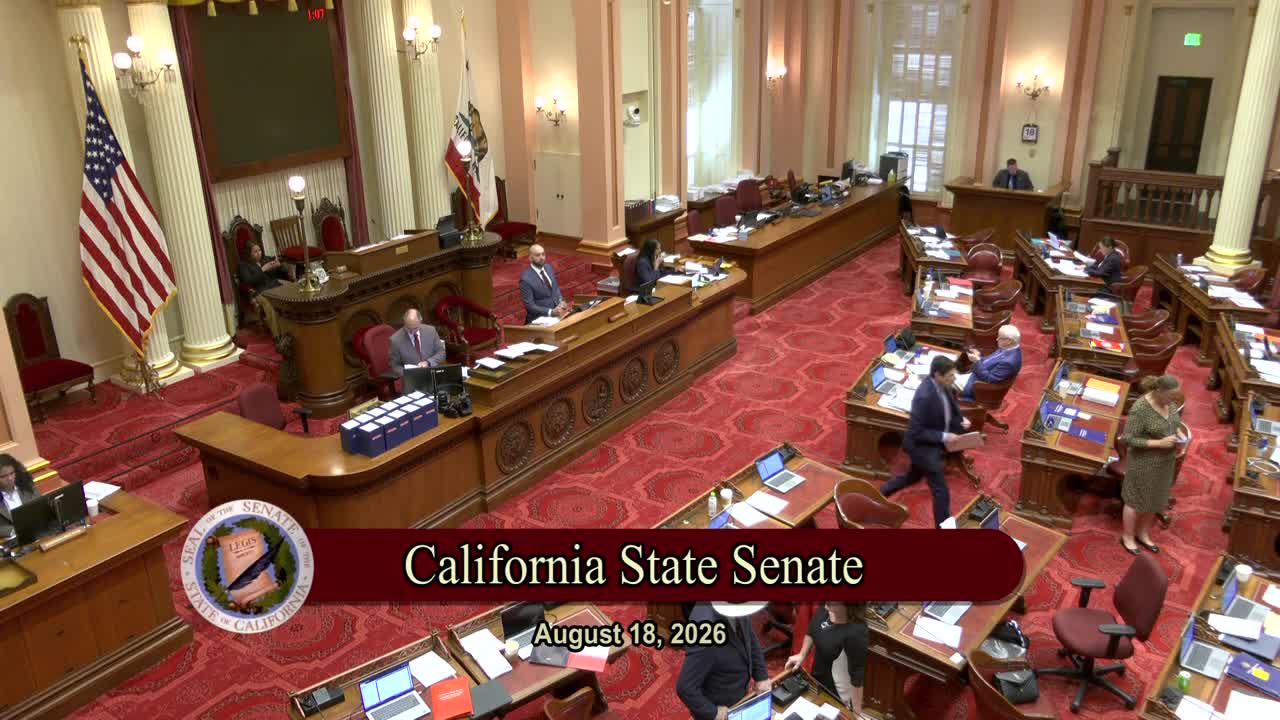
Bill Author

Bill Co-Author(s):