AB 2072: CalFresh and WIC Contingency Fund.
- Session Year: 2025-2026
- House: Assembly
- Latest Version Date: 2026-02-18
Current Status:
In Progress
(2026-05-14: In committee: Held under submission.)
Introduced
In Committee
Awaiting First Chamber Vote
Passed First Chamber
In Committee
Awaiting Second Chamber Vote
Passed Second Chamber
Enacted
Existing federal law establishes the Supplemental Nutrition Assistance Program (SNAP), known in California as CalFresh, under which supplemental nutrition assistance benefits allocated to the state by the federal government are distributed to eligible low-income individuals by each county, as administered by the State Department of Social Services.
Existing law establishes the California Special Supplemental Nutrition Program for Women, Infants, and Children (WIC Program), which is administered by the State Department of Public Health and counties and under which nutrition and other assistance are provided to eligible low-income individuals who have been determined to be at nutritional risk.
This bill would create the CalFresh and WIC Contingency Fund. Under the bill, moneys in the fund would be available, upon appropriation, to the above-described departments for CalFresh and WIC programs, respectively, solely for the purpose of maintaining continuity of CalFresh or WIC benefits, as applicable, during a federal government shutdown or other federal appropriations lapse, subject to certain conditions.
The bill would authorize the State Department of Public Health, during a federal government shutdown or other federal appropriations lapse affecting the WIC Program, to obtain a temporary loan, line of credit, or other short-term financing arrangement for the purpose of maintaining uninterrupted WIC services and benefit issuance. The bill would authorize receipt of a loan for this purpose, subject to approval by the Director of Finance, from certain sources. The bill would set forth terms and conditions for repayment of the loan.
The bill would require the departments to seek federal reimbursement for expenditures made from the fund or for loan repayments. Under the bill, any federal reimbursements received would, as applicable, be used for the loan repayments or be deposited into the fund until the fund is restored to its prewithdrawal balance.
If either of the departments uses moneys in the fund, the bill would require the department to subsequently report that use to the Legislature. The bill would also require the departments to submit a joint report to the Legislature and the Department of Finance detailing certain information.
The bill would make these provisions severable. The bill would make the provisions inoperative on January 20, 2029, and would repeal them as of January 1, 2030. However, the bill would resume any provisions necessary to effectuate the repayment of loans, the receipt of federal reimbursements, or the preparation and submission of required reports, until those obligations are fully satisfied.
The bill would require the Department of Finance to determine the amount of unencumbered funds subject to reversion and to effectuate the transfer to the General Fund as soon as practicable following January 20, 2029.
The Legislature finds and declares all of the following:
(a)The CalFresh program and the California Special Supplemental Nutrition Program for Women, Infants, and Children (WIC Program) are essential nutrition assistance programs that serve millions of Californians, including low-income children, pregnant and postpartum individuals, seniors, and people with disabilities.
(b)These programs are primarily federally funded and are dependent on annual federal appropriations. A lapse in federal appropriations, including a federal government shutdown, may result in the delay, suspension, or uncertainty of benefit issuance.
(c)Interruptions in access to nutrition assistance threaten food security, public health, and economic stability and disproportionately harm vulnerable populations.
(d)The state has a compelling interest in ensuring continuity of essential nutrition assistance programs during periods of federal funding disruption.
(e)It is therefore necessary and appropriate to establish a state contingency funding mechanism to provide temporary financial support to maintain CalFresh and WIC benefits during a federal government shutdown, with the expectation that such funding will be reimbursed when federal appropriations resume, to the extent permitted by federal law.
SEC. 2.Chapter 27 (commencing with Section 28100) is added to Division 20 of the Health and Safety Code, to read:27.CalFresh and WIC Contingency Fund28100.For purposes of this chapter, the following definitions apply:
(a)CalFresh means the CalFresh program established pursuant to Chapter 10 (commencing with Section 18900) of Part 6 of Division 9 of the Welfare and Institutions Code.
(b)Fund means the CalFresh and WIC Contingency Fund created pursuant to Section 28101, unless otherwise specified.
(c)WIC means the California Special Supplemental Nutrition Program for Women, Infants, and Children (WIC Program) established pursuant to Article 2 (commencing with Section 123275) of Chapter 1 of Part 2 of Division 106.
28101.(a)The CalFresh and WIC Contingency Fund is hereby created within the State Treasury.
(b)Notwithstanding any other law, moneys in the fund shall be available, upon appropriation made by the Legislature, to the State Department of Social Services for the CalFresh program and to the State Department of Public Health for the WIC Program, solely for the purpose of maintaining continuity of CalFresh or WIC benefits, as applicable, during a federal government shutdown or other federal appropriations lapse, subject to the conditions set forth in this chapter.
(c)Moneys in the fund may consist of any of the following:
(1)Legislative appropriations.
(2)Transfers authorized in the annual Budget Act.
(3)Federal reimbursements received following the resumption of federal appropriations.
(4)Any other funds authorized by law.
(d)Each of the two departments may elect to use moneys in the fund that are appropriated to the respective department pursuant to subdivision (b). As a prerequisite for use of the moneys, the respective department shall determine that all of the following conditions have been met:
(1)A lapse in federal appropriations has occurred or is imminent.
(2)The lapse has resulted, or is reasonably expected to result, in a disruption, delay, or suspension of CalFresh or WIC benefit issuance, as applicable to the corresponding program.
(3)Use of contingency funds is necessary to protect the public health and welfare.
(e)If either of the departments uses appropriated moneys in the fund pursuant to this chapter, the department shall subsequently report that use to the Legislature in accordance with Section 9795 of the Government Code, in addition to the reporting described in Section 28104.
(f)Moneys in the fund shall not be used to expand eligibility, increase benefit levels beyond federally authorized amounts, or supplant existing state obligations unrelated to a federal funding lapse, as applicable to the corresponding program.
28102.(a)Notwithstanding any other law, during a federal government shutdown or other federal appropriations lapse affecting the WIC Program, the State Department of Public Health may obtain a temporary loan, line of credit, or other short-term financing arrangement for the purpose of maintaining uninterrupted WIC services and benefit issuance.
(b)A loan authorized under this section may be obtained from any of the following sources, subject to approval by the Director of Finance:
(1)The Pooled Money Investment Account, in accordance with Sections 16312 and 16313 of the Government Code.
(2)Another state special fund with available cash balances.
(3)A financial institution, if authorized by the Director of Finance and determined to be in the best fiscal interest of the state.
(c)Any loan obtained pursuant to this section shall be repaid as soon as practicable upon receipt of federal WIC funds or federal reimbursements, and shall not extend beyond the fiscal year in which it is issued unless expressly authorized by the Legislature.
(d)Interest and administrative costs associated with the loan may be paid from the CalFresh and WIC Contingency Fund upon appropriation or from subsequently received federal reimbursements, as permitted by federal law.
28103.(a)To the maximum extent permitted by federal law, the State Department of Social Services and the State Department of Public Health shall seek federal reimbursement for expenditures made from the CalFresh and WIC Contingency Fund or for loan repayments made pursuant to this chapter.
(b)Any federal reimbursements received shall, as applicable, be used for the loan repayments or be deposited into the CalFresh and WIC Contingency Fund until the fund is restored to its prewithdrawal balance.
28104.(a)Within 60 calendar days after the conclusion of a federal government shutdown or other federal appropriations lapse during which contingency funds or loan authority were used, the two administering departments shall submit a joint report to the Legislature and the Department of Finance detailing all of the following:
(1)Duration of the funding lapse.
(2)Amounts expended or borrowed.
(3)Number of households and individuals served.
(4)Federal reimbursements received or anticipated.
(b)Any report submitted pursuant to subdivision (a) shall be submitted in accordance with Section 9795 of the Government Code.
28105.The provisions of this chapter are severable. If any provision or application of this chapter is held invalid, that invalidity shall not affect other provisions or applications that can be given effect without the invalid provision or application.
28106.(a)(1)This chapter shall become inoperative on January 20, 2029, except as described in subdivision (b).
(2)This chapter is repealed as of January 1, 2030.
(b)Notwithstanding paragraph (1) of subdivision (a), any provision of this chapter necessary to effectuate the repayment of loans, the receipt of federal reimbursements, or the preparation and submission of reports required pursuant to this chapter shall continue to apply until those obligations are fully satisfied. It is the intent of the Legislature that implementation of this subdivision can be achieved before the January 1, 2030, repeal date described in subdivision (a).
(c)Upon inoperation of this chapter pursuant to paragraph (1) of subdivision (a), all authority to expend, loan, or encumber moneys from the CalFresh and WIC Contingency Fund shall cease, except as expressly provided for closeout, repayment, and reporting purposes pursuant to subdivision (b).
(d)Upon repeal of this chapter pursuant to paragraph (2) of subdivision (a), any moneys remaining in the CalFresh and WIC Contingency Fund that are not encumbered for repayment of loans, outstanding obligations, or administrative closeout costs shall revert to the General Fund.
(e)The Department of Finance shall determine the amount of unencumbered funds subject to reversion and shall effectuate the transfer to the General Fund as soon as practicable following January 20, 2029.
SEC. 3.Section 123356 is added to the Health and Safety Code, to read:123356.The department may use moneys in the CalFresh and WIC Contingency Fund, as created in Section 28101, for the purpose of maintaining continuity of benefits under the WIC Program during a federal government shutdown or other federal appropriations lapse, subject to the conditions set forth in Chapter 27 (commencing with Section 28100) of Division 20.
SEC. 4.Section 18921 is added to the Welfare and Institutions Code, to read:18921.The department may use moneys in the CalFresh and WIC Contingency Fund, as created in Section 28101 of the Health and Safety Code, for the purpose of maintaining continuity of benefits under the CalFresh program during a federal government shutdown or other federal appropriations lapse, subject to the conditions set forth in Chapter 27 (commencing with Section 28100) of Division 20 of the Health and Safety Code.
|
Date
|
Status
|
|---|---|
| May 14, 2026 | In committee: Held under submission. |
| Apr 22, 2026 | In committee: Set, first hearing. Referred to APPR. suspense file. |
| Mar 25, 2026 | From committee: Do pass and re-refer to Com. on APPR. (Ayes 6. Noes 0.) (March 24). Re-referred to Com. on APPR. |
| Mar 9, 2026 | Referred to Com. on HUM. S. |
| Feb 19, 2026 | From printer. May be heard in committee March 21. |
| Feb 18, 2026 | Read first time. To print. |
|
Date
|
Description
|
Location
|
Votes
|
|
|---|---|---|---|---|
| Mar 24, 2026 | Do pass and be re-referred to the Committee on [Appropriations] | Assembly Standing Committee on Human Services |
Passed |
This list shows positions taken on this bill by organizations on the date displayed, which is linked to the original source.
Positions by individuals are not included.
|
Organization
|
Position
|
Date
|
|---|---|---|
| California Charter Schools Association | ** Support | |
| California Family Resource Association | ** Support | |
| California Retailers Association | ** Support | |
| Child Abuse Prevention Center | ** Support | |
| Indivisible Ca: Statestrong | ** Support | |
| Prevent Child Abuse California | ** Support | |
| Safe Kids California | ** Support |
Date of Hearing: April 22, 2026
ASSEMBLY COMMITTEE ON APPROPRIATIONS
Buffy Wicks, Chair
ABPCA Bill Id:AB 2072
Author:(Solache) – As Introduced Ver:February 18, 2026
Policy Committee: | Human Services | Vote: | 6 - 0 |
|
| ||
|
|
Urgency: No State Mandated Local Program: No Reimbursable: No
SUMMARY:
This bill creates the state CalFresh and WIC Contingency Fund to, upon appropriation, maintain continuity of benefits under the CalFresh and California Special Supplemental Nutrition Program for Women, Infants, and Children (WIC) programs during a federal government shutdown through January 20, 2029.
The bill also authorizes the California Department of Public Health (CDPH) to obtain short-term financing to maintain WIC services with a federal government shutdown.
Among its provisions, this bill:
- Requires moneys in the fund to be available, upon appropriation by the Legislature, to the California Department of Social Services (CDSS) for the CalFresh program and to CDPH for the WIC program, solely for the purpose of maintaining continuity of CalFresh or WIC benefits, as applicable, during a federal government shutdown or other federal appropriations lapse, subject to specified conditions.
- Prohibits moneys in the fund from being used to expand eligibility, increase benefit levels beyond federally authorized amounts, or supplant existing state obligations unrelated to a federal funding lapse.
- Authorizes CDPH, during a federal government shutdown or other funding lapse affecting the WIC program, to obtain a temporary loan, line of credit, or other short-term financing to maintain uninterrupted WIC services and benefit issuance, as specified.
- Requires CDSS and CDPH to seek federal reimbursement for expenditures made from the contingency fund or for loan repayments.
- Requires a loan obtained by CDPH pursuant to this bill to be repaid as soon as practicable upon receipt of federal WIC funds or federal reimbursements and authorizes interest and administrative costs associated with the loan to be paid from the fund or from subsequently received federal reimbursements.
- Requires CDSS and CDPH to submit a joint report to the Legislature and DOF detailing specified information within 60 calendar days after the conclusion of a federal government shutdown or other federal lapse during which contingency funds or loan authority were used.
- Sunsets the bill’s provisions on January 20, 2029, and requires remaining unencumbered funds revert to the General Fund, as specified.
FISCAL EFFECT:
This bill will result in General Fund (GF) cost pressures of an unknown amount, likely in the mid-to-high hundreds of millions to low billions of dollars to sustain the contingency fund and provide for one-time and ongoing automation changes and updates, based on the following:
- One-time GF cost pressures in the range of $535 million to $1.1 billion to fund the contingency fund sufficiently to cover two weeks to one month of CalFresh, California Food Assistance Program (CFAP) and WIC benefits based on the data below. Because issuances for CFAP are processed by the federal government, CFAP monies are included in a contingency fund. Actual costs will depend on the level of funding appropriated to initiate the fund and the frequency with which the fund must be replenished.
In January 2026, CalFresh benefits totaled $1.02 billion, or approximately $238.7 million per week. This total includes federal and state issuances for CalFresh and CFAP. In January 2026, WIC benefits totaled $84.1 million.
- CDSS estimates one-time GF automation costs of $350,000 to $375,000 for changes to the California Statewide Automated Welfare System (CalSAWS) and the Electronic Benefit Transfer (EBT) system, including creation of a new benefit type.
- CDSS estimates potential ongoing, intermittent GF costs of $350,000 to $375,000 for required CalSAWS and EBT system modifications, including updates to code tables and existing batch jobs for each occurrence of a federal shutdown or lapse in funding until the 2029 sunset date.
- CDPH anticipates minor and absorbable costs to access, distribute, and track contingency funds during a federal shutdown or appropriation lapse.
- Administrative costs, likely GF, of an unknown amount to CDPH to obtain and administer a temporary loan to sustain WIC benefits during a federal government shutdown. These costs will occur only if a shutdown occurs and CDPH chooses to obtain a loan. The bill allows administrative costs for this purpose to be funded from the contingency fund or federal reimbursements to the extent permitted by federal law.
The author is requesting $500 million in the 2026-27 state budget to initiate the contingency fund.
The Legislative Analyst’s Office recently warned of General Fund structural deficits of around $35 billion per year in the 2027-28 fiscal year and ongoing.
COMMENTS:
- Purpose. This bill is sponsored by the California Retailers Association. According to the author:
The federal government shutdown in November of 2025 left millions of Californians without access to their CalFresh and WIC benefits. These resources are essential for helping vulnerable Californians put food on the table. [This bill] provides stability for California households and a proactive solution for the state to protect against the uncertainty and hardship experienced during the 2025 federal government shutdown.
- Background. CalFresh. The CalFresh program is California’s version of the federal Supplemental Nutrition Assistance Program (SNAP), which provides monthly food assistance to qualifying low‑income households. CalFresh benefits are 100% federally funded. Costs to administer the program are shared among the federal government, the state and counties. CDSS administers approximately $12.6 billion federal SNAP funds annually through the CalFresh program, serving approximately 5.5 million CalFresh participants.
WIC. The WIC program is a federally funded program administered by CDPH and counties that provides nutrition assistance, breastfeeding support, and referrals to health services for eligible low-income pregnant and postpartum women, infants, and children under five years of age. CDPH receives approximately $1.4 billion in federal funding annually for the WIC program, which serves approximately one million participants statewide each month.
Both the CalFresh and WIC programs are dependent on annual federal appropriations.
Federal Shutdown Impacts. During the federal government shutdown, which began October 1, 2025, after Congress failed to pass a federal budget, the USDA Food and Nutrition Service notified states that available federal funds would be insufficient to fully fund November 2025 federal SNAP benefits nationwide. On November 1, 2025, the federal government withheld SNAP benefits for the first time in the program’s history. Following legal action by California and other states, food benefits were restored on November 6, 2025. However, many households experienced delays or temporary gaps in food assistance.
Similar to SNAP, the WIC program faced uncertainty during the shutdown due to its reliance on federal appropriations. Federal officials warned funding could be depleted within weeks, but more than $1 billion in temporary federal funding actions sustained WIC during the shutdown.
Following the end of the shutdown, the federal government restored full SNAP funding and fully funded WIC through September 30, 2026, the end of the current federal fiscal year.
To protect against potential future loss of federal funding, this bill creates a state contingency fund to be used to maintain CalFresh and WIC benefits during a federal government shutdown or funding lapse through January 20, 2029. The bill also allows CDPH to obtain short-term financing to maintain WIC services, with repayment expected from federal reimbursements.
- Related Legislation. AB 1211 (Sharp-Collins), of this legislative session, would have required CDSS, if the federal government reduced SNAP benefits, to ensure CalFresh benefits remained at least at the level in effect on January 20, 2025, and to use state funds if federal funding was insufficient, among other things. AB 1211 was held on this committee’s suspense file.
Analysis Prepared by: Jennifer Swenson / APPR. / (916) 319-2081
Date of Hearing: March 24, 2026
ASSEMBLY COMMITTEE ON HUMAN SERVICES
Alex Lee, Chair
ABPCA Bill Id:AB 2072 (
Author:Solache) – As Introduced Ver:February 18, 2026
SUBJECT: CalFresh and WIC Contingency Fund
SUMMARY: Creates the CalFresh and WIC Contingency Fund (fund) and authorizes the California Department of Social Services (CDSS) and the California Department of Public Health (CDPH), upon appropriation, to use fund moneys to maintain CalFresh and California Special Supplemental Food Program for Women, Infants, and Children (WIC) benefits during a federal government shutdown or lapse in federal appropriations. Authorizes CDPH to obtain a temporary loan, line of credit, or other short-term financing arrangement to maintain WIC benefits during a federal government shutdown or lapse in federal appropriations, with associated interest and administrative costs payable from the fund. Specifically, this bill:
- Creates the CalFresh and WIC Contingency Fund within the State Treasury.
- Requires, notwithstanding any other law, moneys in the fund to be available, upon appropriation made by the Legislature, to CDSS for the CalFresh program and to CDPH for the WIC program, solely for the purpose of maintaining continuity of CalFresh or WIC benefits, as applicable, during a federal government shutdown or other federal appropriations lapse, subject to the conditions set forth.
- Authorizes moneys in the fund to consist of any of the following:
- Legislative appropriations;
- Transfers authorized in the annual Budget Act;
- Federal reimbursements received following the resumption of federal appropriations; or,
- Any other funds authorized by law.
- Authorizes CDSS and CDPH to elect to use moneys in the fund that are appropriated to the respective department pursuant to 2) above. Requires, as a prerequisite for use of the moneys, the respective department to determine that all of the following conditions have been met:
- A lapse in federal appropriations has occurred or is imminent;
- The lapse has resulted, or is reasonably expected to result, in a disruption, delay, or suspension of CalFresh or WIC benefit issuance, as applicable to the corresponding program; and,
- Use of contingency funds is necessary to protect the public health and welfare.
- Requires, if either of the departments uses appropriated moneys in the fund, the department to subsequently report that use to the Legislature.
- Prohibits moneys in the fund to be used to expand eligibility, increase benefit levels beyond federally authorized amounts, or supplant existing state obligations unrelated to a federal funding lapse, as applicable to the corresponding program.
- Authorizes CDPH, notwithstanding any other law, during a federal government shutdown or other federal appropriations lapse affecting the WIC program, to obtain a temporary loan, line of credit, or other short-term financing arrangement for the purpose of maintaining uninterrupted WIC services and benefit issuance.
- Permits an authorized loan to be obtained from any of the following sources, subject to approval by the Director of Finance:
- The Pooled Money Investment Account, in accordance with state law;
- Another state special fund with available cash balances; or,
- A financial institution, if authorized by the Director of Finance and determined to be in the best fiscal interest of the state.
- Requires any obtained loan to be repaid as soon as practicable upon receipt of federal WIC funds or federal reimbursements, and shall not extend beyond the fiscal year in which it is issued unless expressly authorized by the Legislature.
- Authorizes interest and administrative costs associated with the loan to be paid from the fund upon appropriation or from subsequently received federal reimbursements, as permitted by federal law.
- Requires CDSS and CDPH, to the maximum extent permitted by federal law, to seek federal reimbursement for expenditures made from the fund or for loan repayments.
- Requires any federal reimbursements received to, as applicable, be used for the loan repayments or be deposited into the fund until the fund is restored to its prewithdrawal balance.
- Requires, within 60 calendar days after the conclusion of a federal government shutdown or other federal appropriations lapse during which contingency funds or loan authority were used, the two administering departments to submit a joint report to the Legislature and the Department of Finance (DOF) detailing all of the following:
- Duration of the funding lapse;
- Amounts expended or borrowed;
- Number of households and individuals served; and,
- Federal reimbursements received or anticipated.
- Requires the report to be submitted in accordance with state law.
- Provides that these provisions are severable, and if any provision or application of this fund is held invalid, that invalidity shall not affect other provisions or applications that can be given effect without the invalid provision or application.
- Provides that these provisions become inoperative on January 20, 2029.
- Sunsets these provisions on January 1, 2030.
- Requires, notwithstanding 16) above, any necessary provision to effectuate the repayment of loans, the receipt of federal reimbursements, or the preparation and submission of required reports to continue to apply until those obligations are fully satisfied. Declares legislative intent that implementation can be achieved before January 1, 2030.
- Requires, upon inoperation of this fund, all authority to expend, loan, or encumber moneys from the fund to cease, except as expressly provided for closeout, repayment, and reporting purposes pursuant to 18) above.
- Requires, upon repeal of this fund, any moneys remaining in the fund that are not encumbered for repayment of loans, outstanding obligations, or administrative closeout costs to revert to the General Fund.
- Requires DOF to determine the amount of unencumbered funds subject to reversion and to effectuate the transfer to the General Fund as soon as practicable following January 20, 2029.
- Authorizes CDPH to use moneys in the fund for the purpose of maintaining continuity of benefits under the WIC program during a federal government shutdown or other federal appropriations lapse.
- Authorizes CDSS to use moneys in the fund for the purpose of maintaining continuity of benefits under the CalFresh program during a federal government shutdown or other federal appropriations lapse.
- Defines the following terms:
- “CalFresh” means the CalFresh program established pursuant to 2) in existing law below.
- “Fund” means the CalFresh and WIC Contingency Fund.
- “WIC” means the California Special Supplemental Nutrition Program for Women, Infants, and Children (WIC program) established pursuant to 3) in existing law below.
- Makes the following legislative findings and declarations:
- The CalFresh program and WIC program are essential nutrition assistance programs that serve millions of Californians, including low-income children, pregnant and postpartum individuals, seniors, and people with disabilities;
- These programs are primarily federally funded and are dependent on annual federal appropriations; A lapse in federal appropriations, including a federal government shutdown, may result in the delay, suspension, or uncertainty of benefit issuance;
- Interruptions in access to nutrition assistance threaten food security, public health, and economic stability and disproportionately harm vulnerable populations;
- The state has a compelling interest in ensuring continuity of essential nutrition assistance programs during periods of federal funding disruption; and,
- It is therefore necessary and appropriate to establish a state contingency funding mechanism to provide temporary financial support to maintain CalFresh and WIC benefits during a federal government shutdown, with the expectation that such funding will be reimbursed when federal appropriations resume, to the extent permitted by federal law.
EXISTING LAW:
State law:
- Establishes access to sufficient, affordable, and healthy food as a human right and requires state agencies and departments to consider this state policy when it is pertinent to the distribution of sufficient affordable food. (Welfare and Institutions Code [WIC] § 18700)
- Establishes the CalFresh program to administer the provision of federal Supplemental Nutrition Assistance Program (SNAP) benefits to families and individuals meeting certain criteria, as specified. (WIC § 18900 et seq.)
- Establishes the WIC program to provide nutritional food supplements to low-income pregnant women, low-income postpartum and lactating women, and low-income infants and children under five years of age. (Health and Safety Code § 123275 et seq.)
Federal law:
- Establishes SNAP pursuant to the Food Stamp Act of 1964. (7 United States Code [U.S.C.] § 2011 et seq.)
- Establishes the WIC program to provide nutritious foods, nutrition education, breastfeeding support, and referrals to health services for low-income pregnant, postpartum, and breastfeeding women, infants, and children under five years of age who are determined to be at nutritional risk. (42 U.S.C. § 1786)
FISCAL EFFECT: Unknown, this bill has not been analyzed by a fiscal committee.
COMMENTS:
Background: Food Insecurity. The United States Department of Agriculture (USDA) defines food security as consistent access to enough food for an active, healthy life. Despite California declaring food as a human right through SB 628 (Hurtado), Chapter 879, Statutes of 2023, and producing nearly half of the nation’s fruits and vegetables, an estimated 1.75 million California households (12.5%) experienced food insecurity in 2024, according to the Current Population Survey. Contributing factors include income inequality, geographic barriers, and rising food prices.
Food insecurity has significant lifelong impacts. Households often must choose between food and other necessities such as rent or medication. Poor nutrition during pregnancy and early childhood is associated with adverse birth outcomes, developmental delays, and increased illness. Among older children and adolescents, food insecurity is linked to poorer academic performance, behavioral challenges, and higher-risk behaviors. Over time, it contributes to cycles of poverty and chronic diseases such as diabetes, obesity, and heart disease, as well as stress, anxiety, and depression.
CalFresh. CalFresh, California’s implementation of the federal SNAP, is the state’s largest food assistance program and the primary way of reducing food insecurity. Administered by CDSS and county human services agencies, the program serves low-income families, seniors, people with disabilities, and individuals facing barriers to employment. Recipients receive their monthly benefits via an electronic benefits transfer (EBT) card to purchase eligible food such as fruits and vegetables, meat, dairy products, and seeds and plants that produce food at authorized retailers, including grocery stores, supermarkets, and farmers’ markets. In 2024-25, about 5.5 million Californians received over $12.5 billion in CalFresh benefits, all federally funded, with an average monthly benefit of about $192 per person. Eligibility extends up to 200% of the federal poverty level under broad-based categorical eligibility.
CalFresh significantly reduces food insecurity. Research shows SNAP lowers overall food insecurity by about 20% and by 33% among children. According to the Public Policy Institute of California, CalFresh kept approximately 856,000 Californians out of poverty in 2023, including 312,000 children,[1] making it the state’s largest poverty-reduction program.
Special Supplemental Nutrition Program for Women, Infants, and Children. WIC is a federally funded program that provides nutritious foods, nutrition education, breastfeeding support, and referrals to health services for low-income pregnant and postpartum women, infants, and children under five years of age. The program is designed to prevent poor birth outcomes during critical developmental periods.
Eligibility requires income at or below 185% of the federal poverty level (about $55,500 for a family of four) and a determination of nutritional risk. Participation in programs such as CalFresh, Medi-Cal, or Temporary Assistance for Needy Families are automatically income eligible. In federal fiscal year 2024, WIC served 6.74 million participants monthly nationwide, including nearly one million in California,[2] where roughly 60% of infants are eligible. In California, WIC is administered by CDPH, which contracts with 83 local agencies operating about 500 sites statewide. Benefits are issued through a WIC card redeemable at nearly 4,000 authorized retailers, and many participants also receive farmers’ market benefits.
Recent Federal Government Shutdown Impacts on CalFresh. The nation recently faced the longest federal government shutdown in history, which began on October 1, 2025, after Congress failed to pass a budget or continuing resolution. On October 10, 2025, the USDA Food and Nutrition Service notified states that available federal funds would be insufficient to fully fund November 2025 SNAP benefits nationwide (see All County Letter [ACL] No. 25-75).[3] USDA directed states to pause submission of November benefit issuance files to EBT vendors. In response, CDSS instructed the California Statewide Automated Welfare System to delay sending these files to the state’s EBT contractor, Fidelity Information Services. CDSS confirmed that it could continue covering administrative costs through December 2025. CDSS further warned that if the shutdown persisted beyond October 23, November benefits would be delayed.
On November 1, 2025, SNAP benefits were not issued for the first time in the program’s six-decade history, despite the existence of about $5 billion in contingency funds. In response, California, alongside at least 23 states, filed litigation challenging USDA’s refusal to use those funds, arguing the decision conflicted with federal appropriations law and prior agency practice during the 2019 shutdown.
Federal courts in Massachusetts and Rhode Island ruled that the USDA’s suspension of benefits was unlawful and required the agency to use available funds, at least in part. The Administration responded by announcing it would issue partial benefits (approximately 65% of maximum allotments), citing insufficient contingency funding to cover the roughly $8 billion monthly SNAP cost. USDA also indicated that no benefits would be available for newly certified households in November and warned of significant issuance delays. Subsequent court orders from Rhode Island required full-benefit issuance, prompting the Administration to appeal to the First Circuit Court of Appeals. After a temporary administrative stay by the U.S. Supreme Court, USDA directed states to halt full benefit issuance, undo any full-benefit issuances, and proceed with partial payments. California was among a small number of states that had already issued full benefits prior to the stay.
On November 9, 2025, the First Circuit Court of Appeals upheld the requirement to issue full benefits, though a temporary hold remained in place until November 13. On November 12, 2025, the President signed the FY 2026 Continuing Appropriations Act, restoring full SNAP funding through September 30, 2026. Despite this resolution, many households experienced delays or temporary gaps in food assistance.
Recent Federal Government Shutdown Impacts on the WIC Program. Similar to SNAP, the WIC program faced significant uncertainty during the shutdown due to its reliance on annual congressional appropriations. Federal officials warned that funding could be depleted within weeks, potentially disrupting benefits for roughly 6.7 million participants nationwide.
On October 6, 2025, the USDA notified states that WIC expenditures during the shutdown would be eligible for federal reimbursement and began reallocating unspent funds from fiscal year 2025. USDA released approximately $150 million in contingency funds, which were quickly exhausted in the first week of the shutdown, and reallocated at least $164 million in unused prior-year funds to states. USDA also indicated that additional funds could be recovered if available. States were further permitted to use forward funding authority, allowing them to carry over and spend up to 3% of unused funds from the prior budget period.
On October 10, 2025, the USDA redirected approximately $300 million in Section 32 funds derived from unused tariff revenues, expected to sustain WIC operations for about two weeks. Section 32 funds are often used to purchase surplus agricultural commodities like dairy, meat, and produce for schools, food banks, and nutrition assistance programs. On October 24, 2025, more than 40 national organizations, including the National WIC Association, the American Academy of Pediatricians, and the National Grocers Association, urged the Administration to provide an additional $300 million to cover early November costs. As funding was projected to run out around November 1, the Administration prepared an additional $450 million transfer on October 31, 2025, again using Section 32 funds, extending operations for another two to three weeks. Given that WIC requires about $150 million per week nationwide, these actions were short term but allowed states to continue issuing benefits.
In California, on October 31, 2025, CDPH requested authorization for up to $81 million in short-term General Fund loans to maintain WIC operations. CDPH estimated that $104.3 million in available funds would sustain the program through November 30. DOF proposed an initial $41 million loan to extend operations through December 15, with additional loans as needed up to the $81 million total, potentially sustaining the program through December 31, 2025. The loans were to be repaid upon receipt of federal funds or by June 30, 2026. The Joint Legislative Budget Committee conditionally approved this authority on November 4, 2025, if the shutdown extended beyond November 30. CDPH has not reported whether the loan was ultimately used.
In total, more than $1 billion in temporary federal funding actions sustained WIC during the shutdown. Following the end of the shutdown on November 12, 2025, Congress fully funded WIC through September 30, 2026. In response to these disruptions, House Democrats introduced the WIC Benefits Protection Act (H.R. 5740) in October 2025, which would convert WIC from a discretionary to a mandatory funding program, ensuring stable funding based on participation rather than an annual appropriations process.
This bill establishes a state contingency fund to maintain CalFresh and WIC benefits during a federal government shutdown or funding lapse through January 20, 2029. Upon appropriations, this bill authorizes CDSS and CDPH to use the fund to continue issuing benefits. This bill also authorizes CDPH to obtain short-term financing such as loans or lines of credit to maintain WIC services, with repayment expected from federal reimbursements. The fund may also be used to cover interest and administrative costs associated with any such financing.
Author’s Statement: According to the Author, “The federal government shutdown in November of 2025 left millions of Californians without access to their CalFresh and the supplemental nutrition program for Women, Infants, and Children (WIC) benefits. These resources are essential for helping vulnerable Californians put food on the table. [This bill] provides stability for California households and a proactive solution for the state to protect against the uncertainty and hardship experienced during the 2025 federal government shutdown.”
Equity Implications: Programs such as CalFresh and WIC disproportionately serve communities that have historically faced structural inequities, including households of color. Nationally and in California, participants in these programs are more likely to be Latino and Black, reflecting longstanding disparities in income, food access, housing stability, and health outcomes. Interruptions in benefits may therefore disproportionately harm these communities, as well as pregnant and postpartum women, infants, young children, seniors, and people with disabilities who rely on these programs for consistent access to nutritious food. By establishing a contingency funding mechanism to maintain benefits during periods of federal funding uncertainty, this bill may help prevent gaps in assistance that could exacerbate food insecurity.
Arguments in Support: According to Indivisible CA: StateStrong, “The federal government shutdown on November 1, 2025, cut off food assistance for millions of Californians who rely on the program. Though this assistance was restored on November 6, 2025, following legal action from California and other states, the five-day lapse demonstrated the vulnerability of relying solely on federal appropriations for essential nutrition programs that millions of California families and businesses depend on to support basic daily food needs. The halt in benefits not only affected vulnerable families facing food insecurity but also businesses, as grocery retailers experienced operational and revenue impacts when customers lost access to their food budgets. California currently has no state-level mechanism to backfill CalFresh or WIC benefits when federal funding is delayed or suspended. This lack of a contingency structure exposes families, children, seniors, and businesses to immediate harm during federal government disruptions outside of the state’s control. [This bill] addresses this gap by creating a contingency fund to ensure the continued distribution of CalFresh and WIC benefits during any federal shutdown through January 20, 2029.”
Arguments in Opposition: None on file.
RELATED AND PRIOR LEGISLATION:
AB 1211 (Sharp-Collins) of 2025, would have required CDSS, if the federal government reduced SNAP benefits, to ensure that CalFresh benefits remain at current levels, and to use state funds if federal funding was insufficient, among other things. AB 1211 was held on the Assembly Appropriations Committee suspense file.
REGISTERED SUPPORT / OPPOSITION:
Support
California Retailers Association (Sponsor)
California Charter Schools Association
California Family Resource Association
Child Abuse Prevention Center and its Affiliates Safe Kids California, Prevent Child Abuse California and the California Family Resource Association
Indivisible CA: Statestrong
Opposition
None on file.
Analysis Prepared by: Bri-Ann Hernández-Mengual / HUM. S. / (916) 319-2089
Discussed in Hearing
 32MIN
Assembly Standing Committee on Appropriations
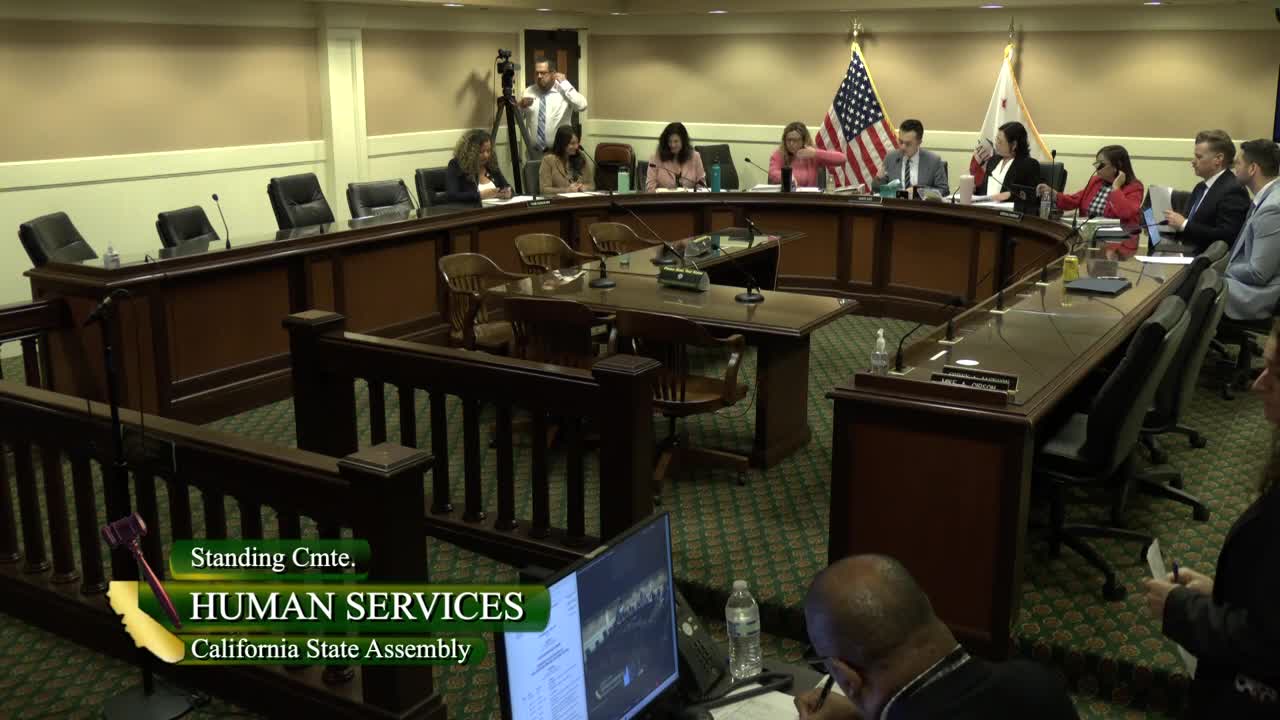 7MIN
Assembly Standing Committee on Human Services
Bill Author

Bill Co-Author(s):