ACR 149: Taxation.
- Session Year: 2015-2016
- House: Assembly
- Latest Version Date: 2016-08-19
This measure, among other things, would encourage state entities to identify and utilize existing and potential public or private partnerships to inform citizens about the availability of the federal and state Earned Income Tax Credit and Volunteer Income Tax Assistance programs, as specified.
This measure, among other things, would encourage state entities to identify and utilize existing and potential public or private partnerships to inform citizens about the availability of the federal and state Earned Income Tax Credit and Volunteer Income Tax Assistance programs, as specified.
This measure measure, among other things, would encourage state entities to identify and utilize existing and potential public or private partnerships to inform citizens and employees about the availability of the federal and state Earned Income Tax Credit and Volunteer Income Tax Assistance programs, as specified.
This measure would encourage state entities to identify and utilize existing and potential public or private partnerships to inform citizens and employees about the availability of the federal and state Earned Income Tax Credit and Volunteer Income Tax Assistance programs, as specified.
This measure would encourage state entities to identify and utilize existing and potential public or private partnerships to inform citizens and employees about the availability of the federal Earned Income Tax Credit and Volunteer Income Tax Assistance programs, as specified.
WHEREAS, Each year, Californians volunteer their time to participate in the federal Volunteer Income Tax Assistance (VITA) program and are trained by public and private partnerships with the Internal Revenue Service to prepare tax returns; and
WHEREAS, VITA is a free tax preparation program that helps low- to moderate-income filers. During tax season, there are free sites accessible across the nation; and
WHEREAS, Insufficient income contributes to many of the social and human service needs in our state; and
WHEREAS, Increasing federal and state Earned Income Tax Credit (EITC) capture through the VITA program represents a highly cost-effective economic development strategy; and
WHEREAS, The Internal Revenue Service and other organizations collaborate with local agencies to offer VITA to raise awareness of the federal and state EITC; and
WHEREAS, Local colleges throughout California serve as instrumental partners of the VITA program, and create ideal and accessible locations for surrounding community residents to receive free tax assistance and family resource services; and
WHEREAS, These colleges generously provide the use of their campus facilities, equipment, and student volunteers, who make up a significant portion of trained and certified tax preparers for VITA events, to enable the success of the VITA program; now, therefore, be it
Resolved by the Assembly of the State of California, the Senate thereof concurring, That the Legislature joins the Controllers office, the State Board of Equalization, the Franchise Tax Board, and the Internal Revenue Service in cost-effectively promoting the federal and state EITC and VITA programs to qualified families and individuals; and be it further
Resolved, That the Legislature encourages each state entity to identify and utilize existing and potential public or private partnerships to inform citizens about the availability of the federal and state EITC and VITA programs; and be it further
Resolved, That the Chief Clerk of the Assembly transmit copies of this resolution to the author for appropriate distribution.
WHEREAS, Each year, Californians volunteer their time to participate in the federal Volunteer Income Tax Assistance (VITA) program and are trained by public and private partnerships with the Internal Revenue Service to prepare tax returns; and
WHEREAS, VITA is a free tax preparation program that helps low- to moderate-income filers. During tax season, there are free sites accessible across the nation; and
WHEREAS, Insufficient income contributes to many of the social and human service needs in our state; and
WHEREAS, Increasing federal and state Earned Income Tax Credit (EITC) capture through the VITA program represents a highly cost-effective economic development strategy; and
WHEREAS, The Internal Revenue Service and other organizations collaborate with local agencies to offer VITA to raise awareness of the federal and state EITC; and
WHEREAS, Local colleges throughout California serve as instrumental partners of the VITA program, and create ideal and accessible locations for surrounding community residents to receive free tax assistance and family resource services; and
WHEREAS, These colleges generously provide the use of their campus facilities, equipment, and student volunteers - volunteers, who make up a significant portion of trained and certified tax preparers for VITA events - events, to enable the success of the VITA program; now, therefore, be it
Resolved by the Assembly of the State of California, the Senate thereof concurring, That the Legislature joins the Controllers office, the State Board of Equalization, the Franchise Tax Board, and the Internal Revenue Service in cost-effectively promoting the federal and state EITC and VITA programs to qualified families and individuals; and be it further
Resolved, That the Legislature encourages each state entity to identify and utilize existing and potential public or private partnerships to inform citizens about the availability of the federal and state EITC and VITA programs; and be it further
Resolved, That the Chief Clerk of the Assembly transmit copies of this resolution to the author for appropriate distribution.
WHEREAS, Each year, Californians volunteer their time to participate in the federal Volunteer Income Tax Assistance (VITA) program and are trained by public and private partnerships with the Internal Revenue Service to prepare tax returns; and
WHEREAS, VITA is a free tax preparation program that helps low- to moderate-income filers. During tax season, there are free sites accessible across the nation; and
WHEREAS, Insufficient income contributes to many of the social and human service needs in our state; and
WHEREAS, Increasing federal and state Earned Income Tax Credit (EITC) capture through the VITA program represents a highly cost-effective economic development strategy; and
WHEREAS, The Internal Revenue Service and other organizations collaborate with local agencies to offer VITA to raise awareness of the federal and state EITC; and
WHEREAS, Local colleges throughout California serve as instrumental partners of the VITA program, and create ideal and accessible locations for surrounding community residents to receive free tax assistance and family resource services; and
WHEREAS, These colleges generously provide the use of their campus facilities, equipment, and student volunteers - who make up a significant portion of trained and certified tax preparers for VITA events - to enable the success of the VITA program; now, therefore, be it
Resolved by the Assembly of the State of California, the Senate thereof concurring, That the Legislature joins the Controllers office, the State Board of Equalization, the Franchise Tax Board, and the Internal Revenue Service in promoting the federal and state EITC and VITA programs to qualified families and individuals; and be it further
Resolved, That the Legislature encourages each state entity to identify and utilize existing and potential public or private partnerships to inform citizens about the availability of the federal and state EITC and VITA programs; and be it further
Resolved, That the Chief Clerk of the Assembly transmit copies of this resolution to the author for appropriate distribution.
WHEREAS, Each year, Californians volunteer their time to participate in the federal Volunteer Income Tax Assistance (VITA) program and are trained by public and private partnerships with the Internal Revenue Service to prepare tax returns; and
WHEREAS, VITA is a free tax preparation program that helps low- to moderate-income filers. During tax season, there are free sites accessible across the nation; and
WHEREAS, Insufficient income contributes to many of the social and human service needs in our state; and
WHEREAS, Increasing Earned Income Tax Credit (EITC) capture through the VITA program represents a highly cost-effective economic development strategy; and
WHEREAS, Each year, as a result of the VITA program, the EITC helps approximately 285,000 low-income households in California and brings more than $347 million into Californias economy; and
WHEREAS, The Internal Revenue Service and other organizations collaborate with local agencies to offer VITA to raise awareness of the EITC; and
WHEREAS, Local colleges throughout California serve as instrumental partners of the VITA program, and create ideal and accessible locations for surrounding community residents to receive free tax assistance and family resource services; and
WHEREAS, These colleges generously provide the use of their campus facilities, equipment, and student volunteers - who make up a significant portion of trained and certified tax preparers for VITA events - to enable the success of the VITA program; now, therefore, be it
Resolved by the Assembly of the State of California, the Senate thereof concurring, That the Legislature joins the Controllers office, the State Board of Equalization, the Franchise Tax Board, and the Internal Revenue Service in promoting the EITC and VITA programs to qualified families and individuals; and be it further
Resolved, That the Legislature encourages each state entity to identify and utilize existing and potential public or private partnerships to inform citizens about the availability of the federal and state EITC and VITA programs; and be it further
Resolved, That the Chief Clerk of the Assembly transmit copies of this resolution to the author for appropriate distribution.
|
Date
|
Status
|
|---|---|
| Aug 19, 2016 | Chaptered by Secretary of State - Res. Chapter 131, Statutes of 2016. |
| Aug 19, 2016 | Enrolled and filed with the Secretary of State at 3:30 p.m. |
| Aug 15, 2016 | Senate amendments concurred in. To Engrossing and Enrolling. (Ayes 78. Noes 0. Page 5808.). |
| Aug 15, 2016 | Senate amendments concurred in. To Engrossing and Enrolling. |
| Aug 11, 2016 | Adopted and to Assembly. (Ayes 37. Noes 0. Page 4879.) |
| Aug 11, 2016 | In Assembly. Concurrence in Senate amendments pending. |
| Aug 11, 2016 | Adopted and to Assembly. |
| Aug 3, 2016 | Ordered to special consent calendar. |
| Jun 29, 2016 | Read second time and amended. Ordered to third reading. |
| Jun 28, 2016 | From committee: Amend, and be adopted as amended. (Ayes 6. Noes 0.) (June 22). |
| May 5, 2016 | Re-referred to Com. on GOV. & F. |
| Apr 28, 2016 | Adopted and to Senate. (Ayes 76. Noes 0. Page 4596.) |
| Apr 28, 2016 | Adopted and to Senate. (Ayes 76. Noes 0.) |
| Apr 28, 2016 | In Senate. To Com. on RLS. |
| Apr 28, 2016 | Adopted and to Senate. |
| Apr 26, 2016 | Amended. Ordered to Consent Calendar. |
| Apr 25, 2016 | From committee: Amend, and be adopted as amended. To Consent Calendar. (Ayes 9. Noes 0.) (April 18). |
| Mar 28, 2016 | Referred to Com. on REV. & TAX. |
| Mar 8, 2016 | From printer. |
| Mar 7, 2016 | Introduced. To print. |
|
Date
|
Description
|
Location
|
Votes
|
|
|---|---|---|---|---|
| Aug 15, 2016 | ACR 149 GIPSON Concurrence in Senate Amendments | Assembly Floor |
Passed |
|
| Aug 11, 2016 | Special Consent ACR149 Gipson | Senate Floor |
Passed |
|
| Jun 22, 2016 | Be adopted as amended | Senate Standing Committee on Governance and Finance |
Passed |
|
| Apr 28, 2016 | ACR 149 GIPSON Consent Calendar Second Day Regular Session | Assembly Floor |
Passed |
|
| Apr 18, 2016 | Be adopted as amended. To Consent Calendar. | Assembly Standing Committee on Revenue and Taxation |
Passed |
This list shows positions taken on this bill by organizations on the date displayed, which is linked to the original source.
Positions by individuals are not included.
CONCURRENCE IN SENATE AMENDMENTS
CSA1 Bill Id:ACR 149
Author:(Gipson)
As Amended Ver:June 29, 2016
Majority vote
ASSEMBLY: | 76-0 | (April 28, 2016) | SENATE: | 37-0 | (August 11, 2016) |
Original Committee Reference: REV. & TAX.
SUMMARY: Encourages state entities to identify and utilize existing and potential public or private partnerships to inform citizens and employees about the availability of the federal and state Earned Income Tax Credit (EITC) and Volunteer Income Tax Assistance (VITA) programs, as specified.
The Senate amendments resolve that state entities promoting the federal and state EITC and VITA programs do so cost-effectively.
EXISTING FEDERAL LAW:
- Allows a refundable EITC to certain eligible individuals. A refundable credit allows for the excess of the credit over the taxpayer's tax liability to be refunded to the taxpayer. The federal EITC amount is based on a percentage of the taxpayer's earned income and is phased out as income increases. The percentage varies depending on whether the taxpayer has qualifying children. Married individuals are eligible for only one credit on their combined earned income and must file a joint return to claim the credit.
- Requires employers to notify their employees that the employees may be eligible for the federal EITC.
EXISTING STATE LAW:
- Allows, in modified conformity with the federal EITC, a refundable EITC for the lowest income Californians for taxable years beginning on or after January 1, 2015.
- Provides that the EITC is only available for taxable years for which resources are authorized in the annual Budget Act for the Franchise Tax Board (FTB) to oversee and audit returns associated with the credit.
- Requires California employers, state departments, and certain state agencies to provide formal notification of possible eligibility for the federal EITC.
AS PASSED BY THE ASSEMBLY, this resolution made the following legislative findings:
- Contained the following recitals:
- Each year, Californians volunteer their time to participate in the federal VITA program and are trained by public and private partnerships with the Internal Revenue Service (IRS) to prepare tax returns;
- VITA is a free tax preparation program that helps low- to moderate-income filers. During tax season, there are free sites accessible across the nation;
- Insufficient income contributes to many of the social and human service needs in our state and increasing federal and state EITC capture through the VITA program represents a highly cost-effective economic development strategy;
- The IRS and other organizations collaborate with local agencies to offer VITA to raise awareness of the federal and state EITC;
- Local colleges throughout California serve as instrumental partners of the VITA program and create ideal and accessible locations for surrounding community residents to receive free tax assistance and family resource services;
- Those colleges generously provide the use of their campus facilities, equipment, and student volunteers – who make up a significant portion of trained and certified tax preparers for VITA events – to enable the success of the VITA program.
- Resolved that the Legislature does both of the following:
- Joins the Controller's office, the State Board of Equalization, the Franchise Tax Board, and the IRS in promoting the federal and state EITC and VITA programs to qualified families and individuals.
- Encourages each state entity to identify and utilize existing and potential public or private partnerships to inform citizens about the availability of the federal and state EITC and VITA programs.
- Directed the Chief Clerk of the Assembly to transmit copies of this resolution to the author for appropriate distribution.
FISCAL EFFECT: None
COMMENTS:
- Federal EITC. The federal EITC is an income tax credit for low- to moderate-income individuals and families. Congress originally approved the tax credit legislation in 1975, in part to offset the burden of Social Security taxes and to provide an incentive to work. To qualify for the EITC an individual must be employed. When EITC exceeds the amount of taxes owed, it results in a tax refund to those who claim and qualify for the credit. The EITC is a percentage of the taxpayer's earned income and is phased out as income increases. The EITC percentage varies depending on whether the taxpayer has qualifying children.
In order for a taxpayer to qualify for the federal EITC in 2016, an individual's adjusted gross income must be less than $47,955 ($53,505 filing jointly) with three or more qualifying children; $44,648 ($50,198 filing jointly) with two qualifying children; $39,296 ($44,846 filing jointly) with one qualifying child; or $14,880 ($20,430 filing jointly) without a qualifying child. The current maximum credit amount for taxpayers with three or more qualifying children is $6,269; for taxpayers with two qualifying children, the maximum is $5,572. For taxpayers with one qualifying child, the maximum credit amount is $3,373; for taxpayers with no qualifying children, the maximum amount is currently $506.
- California EITC. The state EITC was enacted into law in 2015 and is intended to complement the federal EITC to allow a greater benefit per household. Similar to the federal EITC, the California EITC is established as a refundable credit against personal income taxes owed based on earned wage income. However, unlike the Federal Government, California excludes self-employment income from the definition of "earned income" and only workers with earnings subject to wage withholding qualify for the credit.
- The California EITC is available for tax returns filed for wages earned in 2015. A credit amount is calculated according to specified percentages of the earned income based on the number of qualifying children. The credit percentage for 2015 tax year is 7.65% for individuals without qualifying children, 34% for individuals with one qualifying child, 40% for individuals with two or more qualifying children, and 45% for individuals with three or more qualifying children. The maximum 2015 income limitation for both the adjusted gross income and earned income may not be more than $6,580 for individuals with no qualifying children, $9,880 for individuals with one qualifying child, and $13,870 for individuals with two or more qualifying children. Finally, the amount of investment income, such as interest, dividends, royalties, and capital gains, cannot exceed $3,400 for the entire tax year. Thus, unlike most other state EITCs, California's credit only reaches a portion of workers who are eligible for the federal EITC.
- The California EITC is expected to benefit approximately 825,000 families and two million individuals. The estimated mean household benefit is $460 per year, with a maximum credit for a household with three or more dependents of over $2,600. This program, however, is operative only for taxable years for which resources are authorized in the annual Budget Act for the FTB to oversee and audit returns associated with the credit.
- The Notification Requirement Regarding the Federal EITC. According to the IRS, California's federal EITC participation rate in 2014 was 74.3%, which was lower than the estimated national rate of 80%. Both federal and state laws require employers to notify all employees that they may be eligible for the federal EITC. Under federal law, an employer must provide an employee with Form W-2, a substitute of W-2, Notice 797, or a written statement with the same wording as Notice 797.
Under California's law - the Earned Income Tax Credit Information Act (EITC Act), an employer must also notify employees about the federal EITC within one week before or after the employer provides the employees with their annual wage summary (e.g., a Form W-2 or a Form 1099). Employers are required to either hand the notice directly to each employee or mail it to the employee's last known address. Furthermore, all California employers must post a statement about the EITC in the workplace. In addition, state law requires certain specified state departments, agencies and programs serving individuals who may qualify for the federal EITC to notify these individuals of the availability of this credit and the ways to claim it. The current state law encourages departments, agencies, and programs to develop the least costly, as well as the most effective, methods to provide notice.
- Increasing Awareness. Under current state law, employers and certain state agencies are required to notify all of their employees and recipients of state programs, whichever is applicable, of possible eligibility for the federal EITC only. With the passage of the California EITC program, many individuals in California are now entitled to claim the state EITC. As such, sufficient outreach is critical in ensuring that many eligible individuals will benefit from the state EITC as well. This resolution urges state entities to identify public and private partnerships that would inform citizens and employees about the availability of the federal and state EITC and VITA programs.
- Volunteer Income Tax Assistance (VITA) Programs. The VITA program offers free tax help to people who earn $54,000 or less, and persons with disabilities and limited English speaking taxpayers who need assistance in preparing their own tax returns. IRS-certified volunteers provide free basic income tax return preparation with electronic filing to qualified individuals. In addition to VITA, the Tax Counseling for the Elderly program offers free tax help for all taxpayers, particularly those who are 60 years of age and older, specializing in questions about pensions and retirement-related issues unique to seniors. The IRS-certified volunteers who provide tax counseling are often retired individuals associated with non-profit organizations that receive grants from the IRS.
Analysis Prepared by: Irene Ho / REV. & TAX. / (916) 319-2098 FN: 0003630
Office of Senate Floor Analyses (916) 651-1520 Fax: (916) 327-4478 | ACR 149 |
THIRD READING
Bill No: ACR 149
Amended: 6/29/16 in Senate
SENATE GOVERNANCE & FIN. COMMITTEE: 6-0, 6/22/16
AYES: Hertzberg, Nguyen, Beall, Hernandez, Moorlach, Pavley
NO VOTE RECORDED: Lara
ASSEMBLY FLOOR: 76-0, 4/28/16 (Consent) - See last page for vote
DIGEST: This resolution encourages state entities to identify and utilize existing and potential public or private partnerships to inform citizens and employees about the availability of the federal and state Earned Income Tax Credits, and Volunteer Income Tax Assistance programs.
Existing law:
- Allows, pursuant to federal and state law, eligible individuals a refundable earned income tax credit (EITC), which allows the taxpayer to obtain a refund for the excess of the credit over the taxpayer’s liability.
- Requires, pursuant to federal law, employers to notify their employees that the employees may be eligible for the federal EITC.
- Requires, pursuant to state law, California employers, state departments, and certain state agencies to provide formal notification of possible eligibility for the federal EITC.
This resolution encourages state entities to identify and utilize existing and potential public or private partnerships to inform citizens and employees about the availability of the federal and state EITCs, and Volunteer Income Tax Assistance (VITA) programs.
Comments
- The Notification Requirement Regarding the Federal EITC. According to the IRS, California's federal EITC participation rate in 2014 was 74.3%, which was lower than the estimated national rate of 80%. Both federal and state laws require employers to notify all employees that they may be eligible for the federal EITC. Under federal law, an employer must provide an employee with Form W-2, a substitute of W-2, Notice 797, or a written statement with the same wording as Notice 797.
Under California’s Earned Income Tax Credit Information Act (EITC Act), an employer must also notify employees about the federal EITC within one week of providing an employee with their annual wage summary (e.g., a Form W-2 or a Form 1099). Employers are required to either hand the notice directly to each employee or mail it to the employee's last known address. Furthermore, all California employers must post a statement about the EITC in the workplace. In addition, state law requires certain specified state departments, agencies and programs serving individuals who may qualify for the federal EITC to notify these individuals of the availability of this credit and the ways to claim it. The current state law encourages departments, agencies, and programs to develop the least costly, as well as the most effective, methods to provide notice.
- Increasing Awareness. Under current state law, employers and certain state agencies are already required to notify all of their employees and recipients of state programs, whichever is applicable, of possible eligibility for the federal EITC. With the passage of the California EITC program, many individuals in California are now entitled to claim the state EITC. As such, sufficient outreach is critical in ensuring that many eligible individuals will benefit from the state EITC as well.
- VITA Programs. The VITA program offers free tax help to people who earn $54,000 or less, and persons with disabilities and limited English speaking taxpayers who need assistance in preparing their own tax returns. IRS-certified volunteers provide free basic income tax return preparation with electronic filing to qualified individuals. In addition to VITA, the Tax Counseling for the Elderly program offers free tax help for all taxpayers, particularly those who are 60 years of age and older, specializing in questions about pensions and retirement-related issues unique to seniors. The IRS-certified volunteers who provide tax counseling are often retired individuals associated with non-profit organizations that receive grants from the IRS.
FISCAL EFFECT: Appropriation: No Fiscal Com.: Local: No
Board of Equalization Member Jerome Horton
OPPOSITION: (Verified 6/28/16)
None received
ARGUMENTS IN SUPPORT: According to the author, "ACR 149 is intended to raise awareness of an important program that is offered to low-income taxpayers, with the goal of supporting them in gaining the most out of their income tax returns. This program is promoted by a number of state and local governments, non-profits, and higher education institutions across the nation. With the broad range of stakeholders involved, both providing and receiving service, this is a community program that deserves recognition and commendation."
ASSEMBLY FLOOR: 76-0, 4/28/16
AYES: Achadjian, Alejo, Travis Allen, Arambula, Atkins, Baker, Bigelow, Bloom, Bonilla, Bonta, Brough, Brown, Burke, Calderon, Campos, Chang, Chau, Chiu, Chu, Cooley, Cooper, Dababneh, Dahle, Dodd, Eggman, Frazier, Beth Gaines, Gallagher, Cristina Garcia, Eduardo Garcia, Gatto, Gipson, Gomez, Gonzalez, Gordon, Gray, Grove, Hadley, Harper, Roger Hernández, Holden, Irwin, Jones, Jones-Sawyer, Kim, Lackey, Levine, Linder, Lopez, Low, Maienschein, Mayes, McCarty, Medina, Melendez, Mullin, Nazarian, Obernolte, O'Donnell, Patterson, Quirk, Ridley-Thomas, Rodriguez, Salas, Santiago, Steinorth, Mark Stone, Thurmond, Ting, Wagner, Waldron, Weber, Wilk, Williams, Wood, Rendon
NO VOTE RECORDED: Chávez, Daly, Mathis, Olsen
Prepared by: Myriam Bouaziz / GOV. & F. / (916) 651-4119
6/29/16 15:56:29
SENATE COMMITTEE ON GOVERNANCE AND FINANCE
Senator Robert M. Hertzberg, Chair
2015 - 2016 Regular
Bill No: | ACR 149 | Hearing Date: | 6/22/16 |
Author: | Gipson | Tax Levy: |
|
Version: | 4/26/16 | Fiscal: | No |
Consultant: | Bouaziz | ||
Taxation
Encourages state entities to identify and utilize existing and potential public or private partnerships to inform citizens and employees about the availability of the federal and state Earned Income Tax Credits, and Volunteer Income Tax Assistance programs.
Background
Federal law allows eligible individuals a refundable earned income tax credit (EITC), which allows the taxpayer to obtain a refund for the excess of the credit over the taxpayer’s liability. As the name implies, the credit is based on a percentage of the taxpayer's earned income, and phases out as income increases. The percentage varies depending on whether the taxpayer has qualifying children. Married individuals are eligible for only one credit on their combined earned income and must file a joint return to claim the credit.
Federal law specifies that if the federal EITC is denied, and the Internal Revenue Service (IRS) determined that the taxpayer’s error was due to reckless or intentional disregard of EITC rules, the EITC would be denied for the next two years. If the error was due to fraud, the denial period would be ten years.
On June 23, 2015, Governor Brown signed SB 80 (Committee on Budget and Fiscal Review), which established a state EITC. The state EITC is a refundable credit, available to individuals earning less than $6,580, and households with children earning less than $13,870. The state EITC is available to taxpayers beginning January 1, 2015. The maximum credit is $214 for a taxpayer without a qualifying child, $1,428 for a taxpayer with one qualifying child, $2,358 for a taxpayer with two qualifying children, and $2,653 for a taxpayer with three or more qualifying children. The state EITC excludes self-employment income.
Federal law requires employers to notify their employees that the employees may be eligible for the federal EITC. California law requires California employers, state departments, and certain state agencies to provide formal notification of possible eligibility for the federal EITC.
Proposed Law
Assembly Concurrent Resolution 149 encourages state entities to identify and utilize existing and potential public or private partnerships to inform citizens and employees about the availability of the federal and state Earned Income Tax Credits, and Volunteer Income Tax Assistance programs.
State Revenue Impact
Unknown.
Comments
1. Purpose of the bill. According to the author, "ACR 149 is intended to raise awareness of an important program that is offered to low-income taxpayers, with the goal of supporting them in gaining the most out of their income tax returns. This program is promoted by a number of state and local governments, non-profits, and higher education institutions across the nation. With the broad range of stakeholders involved, both providing and receiving service, this is a community program that deserves recognition and commendation."
2. The Notification Requirement Regarding the Federal EITC. According to the IRS, California's federal EITC participation rate in 2014 was 74.3%, which was lower than the estimated national rate of 80%. Both federal and state laws require employers to notify all employees that they may be eligible for the federal EITC. Under federal law, an employer must provide an employee with Form W-2, a substitute of W-2, Notice 797, or a written statement with the same wording as Notice 797.
Under California’s Earned Income Tax Credit Information Act (EITC Act), an employer must also notify employees about the federal EITC within one week of providing an employee with their annual wage summary (e.g., a Form W-2 or a Form 1099). Employers are required to either hand the notice directly to each employee or mail it to the employee's last known address. Furthermore, all California employers must post a statement about the EITC in the workplace. In addition, state law requires certain specified state departments, agencies and programs serving individuals who may qualify for the federal EITC to notify these individuals of the availability of this credit and the ways to claim it. The current state law encourages departments, agencies, and programs to develop the least costly, as well as the most effective, methods to provide notice.
3. Increasing Awareness. Under current state law, employers and certain state agencies are already required to notify all of their employees and recipients of state programs, whichever is applicable, of possible eligibility for the federal EITC. With the passage of the California EITC program, many individuals in California are now entitled to claim the state EITC. As such, sufficient outreach is critical in ensuring that many eligible individuals will benefit from the state EITC as well. But this should be done in the most efficient manner possible. Current state law encourages departments, agencies, and programs to develop the least costly, as well as the most effective, methods to provide notice. This resolution urges state entities to identify public and private partnerships that would inform citizens and employees about the availability of the federal EITC and VITA programs. To stay consistent with existing law, the Committee may wish to consider amending the resolution to ensure promotion of the federal and state EITC is carried out in a cost-effective manner.
4. Volunteer Income Tax Assistance (VITA) Programs. The VITA program offers free tax help to people who earn $54,000 or less, and persons with disabilities and limited English speaking taxpayers who need assistance in preparing their own tax returns. IRS-certified volunteers provide free basic income tax return preparation with electronic filing to qualified individuals. In addition to VITA, the Tax Counseling for the Elderly program offers free tax help for all taxpayers, particularly those who are 60 years of age and older, specializing in questions about pensions and retirement-related issues unique to seniors. The IRS-certified volunteers who provide tax counseling are often retired individuals associated with non-profit organizations that receive grants from the IRS.
5. Related Legislation. AB 1847 (Mark Stone) would expand the employee notification requirement relating to the federal Earned Income Tax Credit to include a reference to the state Earned Income Tax Credit. AB 1847 will be heard in this Committee on June 22, 2016.
6. Prior Legislation.
- SB 80 (Committee on Budget and Fiscal Review, 2015), established the refundable California EITC for taxable years beginning on or after January 1, 2015.
- AB 509 (Skinner, 2011), amended the EITC Information Act by requiring specified state departments and agencies to notify benefit recipients of their eligibility for the federal EITC.
- SCR 12 (Liu, 2011), urged state and local governments and community organizations to promote education and awareness of the federal Earned Income Tax Credit and other tax credits that help working families persevere through difficult economic times.
- AB 650 (Lieu and Jones, 2007), established the EITC Information Act that requires employers to notify their employees that they may be eligible to claim the federal EITC.
Assembly Actions
Assembly Revenue and Taxation 9-0
Assembly Floor 76-0
Support and Opposition
(6/15/16)
Support: Jerome Horton, Board of Equalization Member.
Opposition: Unknown.
-- END --
Date of Hearing: April 18, 2016
ASSEMBLY COMMITTEE ON REVENUE AND TAXATION
Sebastian Ridley-Thomas, Chair
ABPCA Bill Id:ACR 149 (
Author:Gipson) – As Introduced Ver:March 7, 2016
Majority vote. Non-fiscal.
SUBJECT: Taxation
SUMMARY: Encourages state entities to identify and utilize existing and potential public or private partnerships to inform citizens and employees about the availability of the federal Earned Income Tax Credit (EITC) and Volunteer Income Tax Assistance (VITA) programs, as specified. Specifically, this resolution makes the following legislative findings:
- Contains the following recitals:
- Each year, Californians volunteer their time to participate in the federal VITA program and are trained by public and private partnerships with the Internal Revenue Service to prepare tax returns;
- VITA is a free tax preparation program that helps low- to moderate-income filers. During tax season, there are free sites accessible across the nation;
- Insufficient income contributes to many of the social and human service needs in our state and increasing EITC capture through the VITA program represents a highly cost-effective economic development strategy;
- Each year, as a result of the VITA program, the EITC helps approximately 285,000 low-income households in California and brings more than $347 million into California's economy;
- The IRS and other organizations collaborate with local agencies to offer VITA to raise awareness of the EITC;
- Local colleges throughout California serve as instrumental partners of the VITA program and create ideal and accessible locations for surrounding community residents to receive free tax assistance and family resource services;
- Those colleges generously provide the use of their campus facilities, equipment, and student volunteers – who make up a significant portion of trained and certified tax preparers for VITA events – to enable the success of the VITA program.
- Resolves that the Legislature does both of the following:
- Joins the Controller's office, the State Board of Equalization, the Franchise Tax Board, and the IRS in promoting the EITC and VITA programs to qualified families and individuals.
- Encourages each state entity to identify and utilize existing and potential public or private partnerships to inform citizens about the availability of the federal and state EITC and VITA programs.
- Directs the Chief Clerk of the Assembly to transmit copies of this resolution to the author for appropriate distribution.
EXISTING FEDERAL LAW:
- Allows a refundable EITC to certain eligible individuals. A refundable credit allows for the excess of the credit over the taxpayer's tax liability to be refunded to the taxpayer. The federal EITC amount is based on a percentage of the taxpayer's earned income and is phased out as income increases. The percentage varies depending on whether the taxpayer has qualifying children. Married individuals are eligible for only one credit on their combined earned income and must file a joint return to claim the credit.
- Requires employers to notify their employees that the employees may be eligible for the federal EITC.
EXISTING STATE LAW:
- Allows, in modified conformity with the federal EITC, a refundable EITC for the lowest income Californians for taxable years beginning on or after January 1, 2015.
- Provides that the EITC is only available for taxable years for which resources are authorized in the annual Budget Act for the FTB to oversee and audit returns associated with the credit.
- Requires California employers, state departments, and certain state agencies to provide formal notification of possible eligibility for the federal EITC.
FISCAL EFFECT: None
COMMENTS:
- The Author's Statement. The author has provided the following statement in support of this bill:
"ACR 149 is intended to raise awareness of an important program that is offered to low-income taxpayers, with the goal of supporting them in gaining the most out of their income tax returns.
"This program is promoted by a number of state and local governments, non-profits, and higher education institutions across the nation. With the broad range of stakeholders involved, both providing and receiving service, this is a community program that deserves recognition and commendation." - Federal EITC. The federal EITC is an income tax credit for low- to moderate-income individuals and families. Congress originally approved the tax credit legislation in 1975, in part to offset the burden of Social Security taxes and to provide an incentive to work. To qualify for the EITC an individual must be employed. When EITC exceeds the amount of taxes owed, it results in a tax refund to those who claim and qualify for the credit. The EITC is a percentage of the taxpayer's earned income and is phased out as income increases. The EITC percentage varies depending on whether the taxpayer has qualifying children.
In order for a taxpayer to qualify for the federal EITC in 2016, an individual's adjusted gross income must be less than $47,955 ($53,505 filing jointly) with three or more qualifying children; $44,648 ($50,198 filing jointly) with two qualifying children; $39,296 ($44,846 filing jointly) with one qualifying child; or $14,880 ($20,430 filing jointly) without a qualifying child. The current maximum credit amount for taxpayers with three or more qualifying children is $6,269; for taxpayers with two qualifying children, the maximum is $5,572. For taxpayers with one qualifying child, the maximum credit amount is $3,373; for taxpayers with no qualifying children, the maximum amount is currently $506. - California EITC. The state EITC was enacted into law in 2015 and is intended to complement the federal EITC to allow a greater benefit per household. Similar to the federal EITC, the California EITC is established as a refundable credit against personal income taxes owed based on earned wage income. However, unlike the Federal Government, California excludes self-employment income from the definition of "earned income" and only workers with earnings subject to wage withholding qualify for the credit.
The California EITC is available for tax returns filed for wages earned in 2015. A credit amount is calculated according to specified percentages of the earned income based on the number of qualifying children. The credit percentage for 2015 tax year is 7.65% for individuals without qualifying children, 34% for individuals with one qualifying child, 40% for individuals with two or more qualifying children, and 45% for individuals with three or more qualifying children. The maximum 2015 income limitation for both the adjusted gross income and earned income may not be more than $6,580 for individuals with no qualifying children, $9,880 for individuals with one qualifying child, and $13,870 for individuals with two or more qualifying children. Finally, the amount of investment income, such as interest, dividends, royalties, and capital gains, cannot exceed $3,400 for the entire tax year. Thus, unlike most other state EITCs, California's credit only reaches a portion of workers who are eligible for the federal EITC.
The California EITC is expected to benefit approximately 825,000 families and two million individuals. The estimated mean household benefit is $460 per year, with a maximum credit for a household with three or more dependents of over $2,600. This program, however, is operative only for taxable years for which resources are authorized in the annual Budget Act for the FTB to oversee and audit returns associated with the credit. - The Notification Requirement Regarding the Federal EITC. According to the IRS, California's federal EITC participation rate in 2014 was 74.3%, which was lower than the estimated national rate of 80%. Both federal and state laws require employers to notify all employees that they may be eligible for the federal EITC. Under federal law, an employer must provide an employee with Form W-2, a substitute of W-2, Notice 797, or a written statement with the same wording as Notice 797.
Under California's law - the Earned Income Tax Credit Information Act (EITC Act), an employer must also notify employees about the federal EITC within one week before or after the employer provides the employees with their annual wage summary (e.g., a Form W-2 or a Form 1099). Employers are required to either hand the notice directly to each employee or mail it to the employee's last known address. Furthermore, all California employers must post a statement about the EITC in the workplace. In addition, state law requires certain specified state departments, agencies and programs serving individuals who may qualify for the federal EITC to notify these individuals of the availability of this credit and the ways to claim it. The current state law encourages departments, agencies, and programs to develop the least costly, as well as the most effective, methods to provide notice. - Increasing Awareness. Under current state law, employers and certain state agencies are required to notify all of their employees and recipients of state programs, whichever is applicable, of possible eligibility for the federal EITC only. With the passage of the California EITC program, many individuals in California are now entitled to claim the state EITC. As such, sufficient outreach is critical in ensuring that many eligible individuals will benefit from the state EITC as well. This resolution urges state entities to identify public and private partnerships that would inform citizens and employees about the availability of the federal EITC and VITA programs. The Committee may wish to consider amending the resolution to include a reference to the California EITC.
- Volunteer Income Tax Assistance (VITA) Programs. The VITA program offers free tax help to people who earn $54,000 or less, and persons with disabilities and limited English speaking taxpayers who need assistance in preparing their own tax returns. IRS-certified volunteers provide free basic income tax return preparation with electronic filing to qualified individuals. In addition to VITA, the Tax Counseling for the Elderly program offers free tax help for all taxpayers, particularly those who are 60 years of age and older, specializing in questions about pensions and retirement-related issues unique to seniors. The IRS-certified volunteers who provide tax counseling are often retired individuals associated with non-profit organizations that receive grants from the IRS.
- Related Legislation. AB 1847 (Mark Stone) would expand the employee notification requirement relating to the federal Earned Income Tax Credit to include a reference to the EITC. AB 1847 is pending hearing by the Assembly Committee on Appropriations.
- Prior Legislation. SB 80 (Committee on Budget and Fiscal Review), Chapter 21, Statutes of 2015, established the refundable California EITC for taxable years beginning on or after January 1, 2015. AB 1847 is pending hearing by the Assembly Appropriations Committee.
AB 509 (Skinner), Chapter 542, Statutes of 2011, amended the EITC Information Act by requiring specified state departments and agencies to notify benefit recipients of their eligibility for the federal EITC.
SCR 12 (Liu), Chapter 38, Statutes of 2011) urged state and local governments and community organizations to promote education and awareness of the federal Earned Income Tax Credit and other tax credits that help working families persevere through difficult economic times.
AB 650 (Lieu and Jones), Chapter 606, Statutes of 2007, established the EITC Information Act that requires employers to notify their employees that they may be eligible to claim the federal EITC.
REGISTERED SUPPORT / OPPOSITION:
Support
None on file
Opposition
None on file
Analysis Prepared by: Oksana Jaffe / REV. & TAX. / (916) 319-2098
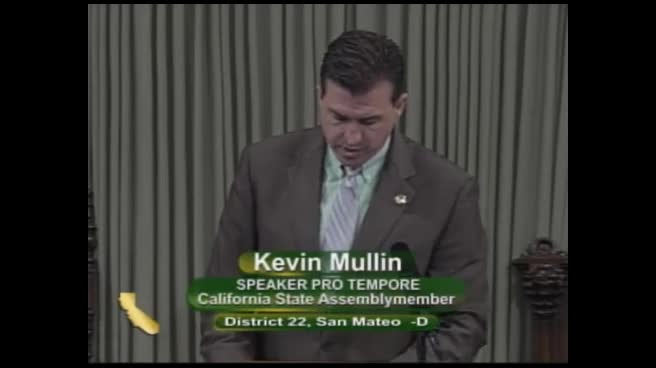
Bill Author

Bill Co-Author(s):