AB 2125: Groundwater basin adjudication: notice.
- Session Year: 2025-2026
- House: Assembly
- Latest Version Date: 2026-08-27
Current Status:
Passed
(2026-08-27: Chaptered by Secretary of State - Chapter 138, Statutes of 2026.)
Introduced
In Committee
Awaiting First Chamber Vote
Passed First Chamber
In Committee
Awaiting Second Chamber Vote
Passed Second Chamber
Enacted
Existing law requires a plaintiff who files an action to comprehensively determine rights to extract groundwater from a basin to provide the court a draft notice of commencement of groundwater basin adjudication and a draft form answer to adjudication complaint, as specified. Existing law also requires a plaintiff to file, within a specified timeframe, a motion for approval of the draft notice and draft form answer. Under existing law, once the court approves the draft notice, the plaintiff is required to serve the notice, as specified. Following a court order approving both the notice and draft form answer and authorizing service thereof, existing law requires the plaintiff to take additional steps to provide notice to defendants including, but not limited to, mailing, by registered mail or certified mail, return receipt requested, the notice, complaint, and form answer to all holders of fee title to real property in the basin. Under existing law, if a return receipt is not received for a parcel of real property, the plaintiff must post a copy of the notice, complaint, and form answer in a conspicuous place on the real property. After completing these notice procedures, existing law requires the plaintiff to file a notice of completion of the mailing with the court. Existing law permits a court to authorize any other procedures it finds appropriate and necessary to provide notice to persons who may hold groundwater rights in basin.
This bill would impose additional requirements on a plaintiff when filing the notice of completion of mailing. The bill would require the plaintiff to include with the notice of completion an affidavit of the person who mailed the notice and the certified or registered mail delivery receipt for each parcel stating the date, time, and place of mailing. The bill would further require the notice to include as an attachment any certified or registered mail delivery receipts received as of the date of the filing. If a return receipt is not received for a parcel of real property, the bill would require the plaintiff to also include with the notice of completion an affidavit of the person who posted the notice specifying the date, time, and physical location of each parcel where the posting occurred, accompanied by a photograph depicting the posted notice. The bill would clarify that the court may authorize additional procedures necessary to provide notice to persons who may hold groundwater rights in basin, including, but not limited to, requiring the plaintiff to utilize restricted delivery of all mailed notices.
Existing law requires a plaintiff who files an action to comprehensively determine rights to extract groundwater from a basin to provide the court a draft notice of commencement of groundwater basin adjudication and a draft form answer to adjudication complaint, as specified. Existing law also requires a plaintiff to file, within a specified timeframe, a motion for approval of the draft notice and draft form answer. Under existing law, once the court approves the draft notice, the plaintiff is required to serve the notice, as specified. Following a court order approving both the notice and draft form answer and authorizing service thereof, existing law requires the plaintiff to take additional steps to provide notice to defendants including, but not limited to, mailing, by registered mail or certified mail, return receipt requested, the notice, complaint, and form answer to all holders of fee title to real property in the basin. Under existing law, if a return receipt is not received for a parcel of real property, the plaintiff must post a copy of the notice, complaint, and form answer in a conspicuous place on the real property. After completing these notice procedures, existing law requires the plaintiff to file a notice of completion of the mailing with the court. Existing law permits a court to authorize any other procedures it finds appropriate and necessary to provide notice to persons who may hold groundwater rights in basin.
This bill would impose additional requirements on a plaintiff when filing the notice of completion of mailing. The bill would require the plaintiff to include with the notice of completion an affidavit of the person who mailed the notice and the certified or registered mail delivery receipt for each parcel showing stating the date, time, and place of mailing. The bill would also require the delivery receipt to be signed by the party served or their legally authorized representative. The bill would further require the notice to include as an attachment any certified or registered mail delivery receipts received as of the date of the filing. If a return receipt is not received for a parcel of real property, the bill would require the plaintiff to also include with the notice of completion an affidavit of the person who posted the notice specifying the date, time, and physical location of each parcel where the posting occurred, accompanied by a photograph depicting the posted notice. The bill would clarify that the court may authorize additional procedures necessary to provide notice to persons who may hold groundwater rights in basin, including, but not limited to, requiring the plaintiff to utilize restricted delivery of all mailed notices.
Existing law requires a plaintiff who files an action to comprehensively determine rights to extract groundwater from a basin to provide the court a draft notice of commencement of groundwater basin adjudication and a draft form answer to adjudication complaint, as specified. Existing law also requires a plaintiff to file, within a specified timeframe, a motion for approval of the draft notice and draft form answer. Under existing law, once the court approves the draft notice, the plaintiff is required to serve the notice, as specified. Following a court order approving both the notice and draft form answer and authorizing service thereof, existing law requires the plaintiff to take additional steps to provide notice to defendants including, but not limited to, mailing, by registered mail or certified mail, return receipt requested, the notice, complaint, and form answer to all holders of fee title to real property in the basin. Under existing law, if a return receipt is not received for a parcel of real property, the plaintiff must post a copy of the notice, complaint, and form answer in a conspicuous place on the real property. After completing these notice procedures, existing law requires the plaintiff to file a notice of completion of the mailing with the court.
This bill would impose additional requirements on a plaintiff when filing the notice of completion of mailing. The bill would require the plaintiff to include with the notice of completion an affidavit of the person who mailed the notice and the certified or registered mail delivery receipt for each parcel showing the date, time, and place of mailing. The bill would also require the affidavit delivery receipt to be signed by the party to be served or their legally authorized representative. If a return receipt is not received for a parcel of real property, the bill would require the plaintiff to also include with the notice of completion an affidavit of the person who posted the notice specifying the date, time, and physical location of each parcel where the posting occurred, accompanied by a photograph depicting the posted notice.
Existing law requires a plaintiff who files an action to comprehensively determine rights to extract groundwater from a basin to provide the court a draft notice of commencement of groundwater basin adjudication and a draft form answer to adjudication complaint, as specified. Existing law also requires a plaintiff to file, within a specified timeframe, a motion for approval of the draft notice and draft form answer. Under existing law, once the court approves the draft notice, the plaintiff is required to serve the notice, as specified. Following a court order approving both the notice and draft form answer and authorizing service thereof, existing law requires the plaintiff to take additional steps to provide notice to defendants including, but not limited to, mailing, by registered mail or certified mail, return receipt requested, the notice, complaint, and form answer to all holders of fee title to real property in the basin. Under existing law, if a return receipt is not received for a parcel of real property, the plaintiff must post a copy of the notice, complaint, and form answer in a conspicuous place on the real property. After completing these notice procedures, existing law requires the plaintiff to file a notice of completion of the mailing with the court.
This bill would impose additional requirements on a plaintiff when filing the notice of completion of mailing. The bill would require the plaintiff to include with the notice of completion an affidavit of the person who mailed the notice and the certified or registered mail delivery receipt for each parcel showing the date, time, and place of mailing. The bill would also require the affidavit to be signed by the party to be served or their legally authorized representative. If a return receipt is not received for a parcel of real property, the bill would require the plaintiff to also include with the notice of completion an affidavit of the person who posted the notice specifying the date, time, and physical location of each parcel where the posting occurred, accompanied by a photograph depicting the posted notice.
(a)When the plaintiff files the complaint, the plaintiff shall also lodge with the court both of the following:
(1)(A)A draft notice titled NOTICE OF COMMENCEMENT OF GROUNDWATER BASIN ADJUDICATION in no less than 20-point font and the following text printed immediately below the draft notice title in no less than 14-point font:
THIS NOTICE IS IMPORTANT. ANY RIGHTS YOU CLAIM TO PUMP OR STORE GROUNDWATER FROM THE BASIN IDENTIFIED IN THIS NOTICE MAY BE AFFECTED BY A LAWSUIT INITIATED BY THE COMPLAINT SUMMARIZED BELOW.
A copy of the complaint may be obtained by contacting the plaintiff or the plaintiffs attorney identified in this notice. If you claim rights to pump or store groundwater within the basin, either now or in the future, you may become a party to this lawsuit by filing an answer to the lawsuit on or before the deadline specified in this notice. You may file an answer by completing the attached form answer, filing it with the court indicated in this notice, and sending a copy of the form answer to the plaintiff or the plaintiffs attorney.
Failing to participate in this lawsuit could have a significant adverse effect on any right to pump or store groundwater that you may have. You may seek the advice of an attorney in relation to this lawsuit. Such attorney should be consulted promptly. A case management conference in this groundwater basin adjudication proceeding shall occur on the date specified in this notice. If you intend to participate in the groundwater adjudication proceeding to which this notice applies, you are advised to attend the initial case management conference in person or have an attorney represent you at the initial case management conference.
Participation requires the production of all information regarding your groundwater use. You must provide this information by the date identified in this notice.
A form answer is provided for your convenience. You may fill out the form answer and file it with the court. Should you choose to file the form answer, it will serve as an answer to all complaints and cross-complaints filed in this case.
(B)The following information shall be provided immediately following the text described in subparagraph (A):
(i)The name of the basin that is the subject of the comprehensive adjudication and a link to the internet website address where the department has posted a map of the basin.
(ii)A space to be completed with the case number assigned to the comprehensive adjudication, and the name and address of the court and department to which the action is assigned.
(iii)The name, address, telephone number, and email address of the plaintiff, or plaintiffs attorney, from whom the complaint may be obtained and to whom a copy of the form answer should be sent.
(iv)A summary of the causes of action alleged in the complaint and the relief sought. The summary shall not exceed 25 lines.
(v)A date by which persons receiving the notice must appear in the comprehensive adjudication.
(2)(A)A draft form answer titled ANSWER TO ADJUDICATION COMPLAINT in no less than 20-point font and the following text printed immediately below the draft form answer title in no less than 14-point font:
The undersigned denies all material allegations in the complaint or cross-complaint in this action that seeks to adjudicate rights in the groundwater basin and asserts all applicable affirmative defenses to that complaint.
(B)Notwithstanding any other law, the filing of an answer in the form described in subparagraph (A) in a comprehensive adjudication is sufficient to put at issue all material allegations and applicable affirmative defenses to the complaint in the comprehensive adjudication. If a party intends to seek adjustment of the basins boundaries, it shall disclose that intention in the form answer described in subparagraph (A).
(b)Within 30 days of the assignment of a judge by the Chairperson of the Judicial Council, the plaintiff shall file a motion for approval of the draft notice and draft form answer filed pursuant to subdivision (a). The plaintiffs motion shall include a copy of the draft notice and draft form answer filed pursuant to subdivision (a).
(c)Once the court approves the draft notice, service of that notice in accordance with this section shall substitute for the summons otherwise provided for in civil actions pursuant to Section 412.20.
(d)(1)Following a court order approving the notice and form answer and authorizing service of landowners pursuant to this section, the plaintiff shall do all of the following:
(A)Identify the assessor parcel numbers and physical addresses of all real property in the basin and the names and addresses of all holders of fee title to real property in the basin using the records of the assessor or assessors of the county or counties in which the basin to be adjudicated lies. The plaintiff shall provide the court and all parties with notice of its acquisition of, or sufficient access to, this information.
(B)Mail, by registered mail or certified mail, return receipt requested, the notice, complaint, and form answer to all holders of fee title to real property in the basin. If the physical address of the real property differs from the address of the holder of fee title, the notice, complaint, and form answer shall be mailed by registered or certified mail, return receipt requested, to the physical address of the real property and the address of the holder of fee title.
(C)If return receipt is not received for a parcel of real property, the plaintiff shall post a copy of the notice, complaint, and form answer in a conspicuous place on the real property.
(D)Within 20 days of the court order, publish the notice at least once per week for four consecutive weeks in one or more newspapers of general circulation in each county overlying the basin in whole or in part.
(2)Service pursuant to this subdivision is not required if the real property is owned by a person in a class of water users that are otherwise noticed in accordance with this chapter. If the owner is part of a class of water users proposed for certification, service is not required until the court acts on the proposal for certification.
(e)(1)After completing the mailing pursuant to subdivision (d), the plaintiff shall file with the court a notice of the completion of the mailing.
(2)If service was made pursuant to subparagraph (B) of paragraph (1) of subdivision (d), the notice of completion of mailing shall include the affidavit of the person who mailed the notice stating the date, time, and place of mailing for each parcel. The notice shall include as an attachment any certified or registered mail delivery receipts received as of the date of the filing.
(3)If service is made pursuant to subparagraph (C) of paragraph (1) of subdivision (d), the notice of completion of mailing shall include the affidavit of the person who posted the notice specifying the date, time, and physical location of each parcel where the posting occurred, accompanied by a photograph depicting the posted notice.
(f)A property owner who has received notice of the comprehensive adjudication and transfers property during the pendency of the comprehensive adjudication shall disclose, on the Real Estate Transfer Disclosure Statement, that the property is subject to a comprehensive adjudication and shall attach the court-approved notice to the Real Estate Transfer Disclosure Statement.
(g)Following a court order authorizing service of landowners pursuant to this section, the plaintiff shall serve any known person that pumps groundwater who would not otherwise be served pursuant to subdivision (d) of this section, except those who have been exempted by the court pursuant to subdivision (d) of Section 833 or those who are part of a class certified pursuant to paragraph (2) of subdivision (d) of this section. Service pursuant to this subdivision shall be by personal delivery or by mail in the manner prescribed by Article 3 (commencing with Section 415.10) of Chapter 4 of Title 5.
(h)Service on the United States shall be made in accordance with Section 666 of Title 43 of the United States Code.
(i)The court may authorize any other procedures it finds appropriate and necessary to provide notice to persons who may hold groundwater rights in the basin, including, but not limited to, requiring the plaintiff to utilize restricted delivery of all mailed notices.
(j)Compliance with the service and notice provisions of this chapter shall be deemed effective service of process of the complaint and notice on all interested parties of the comprehensive adjudication for purposes of establishing in rem jurisdiction and the comprehensive effect of the comprehensive adjudication.
(k)Whenever proceedings are instituted under this chapter, it shall be the duty of all claimants interested in the proceedings and having notice of the proceedings pursuant to this chapter to appear in the proceedings and to submit proof of their claims at the time, and in the manner, required by this chapter.
(l)The court may require notice to be made available in languages other than English.
(m)Within 15 days of the court order approving the notice and form answer, the plaintiff shall provide the notice and form answer to the department and each county and groundwater sustainability agency that overlies the basin or a portion of the basin. The department, and each county and groundwater sustainability agency that overlies the basin or a portion of the basin and has an internet website shall do all of the following:
(1)Within 15 days of receiving the notice and form answer, post those documents on its internet website.
(2)Provide a link to the notice and form answer on the home page of its internet website.
(3)Maintain the posting and link described in paragraphs (1) and (2) for the entire time the comprehensive adjudication is pending. The plaintiff shall notify the department and each county and groundwater sustainability agency when the comprehensive adjudication is no longer pending.
(a)When the plaintiff files the complaint, the plaintiff shall also lodge with the court both of the following:
(1)(A)A draft notice titled NOTICE OF COMMENCEMENT OF GROUNDWATER BASIN ADJUDICATION in no less than 20-point font and the following text printed immediately below the draft notice title in no less than 14-point font:
THIS NOTICE IS IMPORTANT. ANY RIGHTS YOU CLAIM TO PUMP OR STORE GROUNDWATER FROM THE BASIN IDENTIFIED IN THIS NOTICE MAY BE AFFECTED BY A LAWSUIT INITIATED BY THE COMPLAINT SUMMARIZED BELOW.
A copy of the complaint may be obtained by contacting the plaintiff or the plaintiffs attorney identified in this notice. If you claim rights to pump or store groundwater within the basin, either now or in the future, you may become a party to this lawsuit by filing an answer to the lawsuit on or before the deadline specified in this notice. You may file an answer by completing the attached form answer, filing it with the court indicated in this notice, and sending a copy of the form answer to the plaintiff or the plaintiffs attorney.
Failing to participate in this lawsuit could have a significant adverse effect on any right to pump or store groundwater that you may have. You may seek the advice of an attorney in relation to this lawsuit. Such attorney should be consulted promptly. A case management conference in this groundwater basin adjudication proceeding shall occur on the date specified in this notice. If you intend to participate in the groundwater adjudication proceeding to which this notice applies, you are advised to attend the initial case management conference in person or have an attorney represent you at the initial case management conference.
Participation requires the production of all information regarding your groundwater use. You must provide this information by the date identified in this notice.
A form answer is provided for your convenience. You may fill out the form answer and file it with the court. Should you choose to file the form answer, it will serve as an answer to all complaints and cross-complaints filed in this case.
(B)The following information shall be provided immediately following the text described in subparagraph (A):
(i)The name of the basin that is the subject of the comprehensive adjudication and a link to the internet website address where the department has posted a map of the basin.
(ii)A space to be completed with the case number assigned to the comprehensive adjudication, and the name and address of the court and department to which the action is assigned.
(iii)The name, address, telephone number, and email address of the plaintiff, or plaintiffs attorney, from whom the complaint may be obtained and to whom a copy of the form answer should be sent.
(iv)A summary of the causes of action alleged in the complaint and the relief sought. The summary shall not exceed 25 lines.
(v)A date by which persons receiving the notice must appear in the comprehensive adjudication.
(2)(A)A draft form answer titled ANSWER TO ADJUDICATION COMPLAINT in no less than 20-point font and the following text printed immediately below the draft form answer title in no less than 14-point font:
The undersigned denies all material allegations in the complaint or cross-complaint in this action that seeks to adjudicate rights in the groundwater basin and asserts all applicable affirmative defenses to that complaint.
(B)Notwithstanding any other law, the filing of an answer in the form described in subparagraph (A) in a comprehensive adjudication is sufficient to put at issue all material allegations and applicable affirmative defenses to the complaint in the comprehensive adjudication. If a party intends to seek adjustment of the basins boundaries, it shall disclose that intention in the form answer described in subparagraph (A).
(b)Within 30 days of the assignment of a judge by the Chairperson of the Judicial Council, the plaintiff shall file a motion for approval of the draft notice and draft form answer filed pursuant to subdivision (a). The plaintiffs motion shall include a copy of the draft notice and draft form answer filed pursuant to subdivision (a).
(c)Once the court approves the draft notice, service of that notice in accordance with this section shall substitute for the summons otherwise provided for in civil actions pursuant to Section 412.20.
(d)(1)Following a court order approving the notice and form answer and authorizing service of landowners pursuant to this section, the plaintiff shall do all of the following:
(A)Identify the assessor parcel numbers and physical addresses of all real property in the basin and the names and addresses of all holders of fee title to real property in the basin using the records of the assessor or assessors of the county or counties in which the basin to be adjudicated lies. The plaintiff shall provide the court and all parties with notice of its acquisition of, or sufficient access to, this information.
(B)Mail, by registered mail or certified mail, return receipt requested, the notice, complaint, and form answer to all holders of fee title to real property in the basin. If the physical address of the real property differs from the address of the holder of fee title, the notice, complaint, and form answer shall be mailed by registered or certified mail, return receipt requested, to the physical address of the real property and the address of the holder of fee title.
(C)If return receipt is not received for a parcel of real property, the plaintiff shall post a copy of the notice, complaint, and form answer in a conspicuous place on the real property.
(D)Within 20 days of the court order, publish the notice at least once per week for four consecutive weeks in one or more newspapers of general circulation in each county overlying the basin in whole or in part.
(2)Service pursuant to this subdivision is not required if the real property is owned by a person in a class of water users that are otherwise noticed in accordance with this chapter. If the owner is part of a class of water users proposed for certification, service is not required until the court acts on the proposal for certification.
(e)(1)After completing the mailing pursuant to subdivision (d), the plaintiff shall file with the court a notice of the completion of the mailing.
(2)If service was made pursuant to subparagraph (B) of paragraph (1) of subdivision (d), the notice of completion of mailing shall include the affidavit of the person who mailed the notice and the certified or registered mail delivery receipt for each parcel showing stating the date, time, and place of mailing. The delivery receipt shall be signed by the party served or their legally authorized representative. mailing for each parcel. The notice shall include as an attachment any certified or registered mail delivery receipts received as of the date of the filing.
(3)If service is made pursuant to subparagraph (C) of paragraph (1) of subdivision (d), the notice of completion of mailing shall include the affidavit of the person who posted the notice specifying the date, time, and physical location of each parcel where the posting occurred, accompanied by a photograph depicting the posted notice.
(f)A property owner who has received notice of the comprehensive adjudication and transfers property during the pendency of the comprehensive adjudication shall disclose, on the Real Estate Transfer Disclosure Statement, that the property is subject to a comprehensive adjudication and shall attach the court-approved notice to the Real Estate Transfer Disclosure Statement.
(g)Following a court order authorizing service of landowners pursuant to this section, the plaintiff shall serve any known person that pumps groundwater who would not otherwise be served pursuant to subdivision (d) of this section, except those who have been exempted by the court pursuant to subdivision (d) of Section 833 or those who are part of a class certified pursuant to paragraph (2) of subdivision (d) of this section. Service pursuant to this subdivision shall be by personal delivery or by mail in the manner prescribed by Article 3 (commencing with Section 415.10) of Chapter 4 of Title 5.
(h)Service on the United States shall be made in accordance with Section 666 of Title 43 of the United States Code.
(i)The court may authorize any other procedures it finds appropriate and necessary to provide notice to persons who may hold groundwater rights in the basin. basin, including, but not limited to, requiring the plaintiff to utilize restricted delivery of all mailed notices.
(j)Compliance with the service and notice provisions of this chapter shall be deemed effective service of process of the complaint and notice on all interested parties of the comprehensive adjudication for purposes of establishing in rem jurisdiction and the comprehensive effect of the comprehensive adjudication.
(k)Whenever proceedings are instituted under this chapter, it shall be the duty of all claimants interested in the proceedings and having notice of the proceedings pursuant to this chapter to appear in the proceedings and to submit proof of their claims at the time, and in the manner, required by this chapter.
(l)The court may require notice to be made available in languages other than English.
(m)Within 15 days of the court order approving the notice and form answer, the plaintiff shall provide the notice and form answer to the department and each county and groundwater sustainability agency that overlies the basin or a portion of the basin. The department, and each county and groundwater sustainability agency that overlies the basin or a portion of the basin and has an internet website shall do all of the following:
(1)Within 15 days of receiving the notice and form answer, post those documents on its internet website.
(2)Provide a link to the notice and form answer on the home page of its internet website.
(3)Maintain the posting and link described in paragraphs (1) and (2) for the entire time the comprehensive adjudication is pending. The plaintiff shall notify the department and each county and groundwater sustainability agency when the comprehensive adjudication is no longer pending.
(a)When the plaintiff files the complaint, the plaintiff shall also lodge with the court both of the following:
(1)(A)A draft notice titled NOTICE OF COMMENCEMENT OF GROUNDWATER BASIN ADJUDICATION in no less than 20-point font and the following text printed immediately below the draft notice title in no less than 14-point font:
THIS NOTICE IS IMPORTANT. ANY RIGHTS YOU CLAIM TO PUMP OR STORE GROUNDWATER FROM THE BASIN IDENTIFIED IN THIS NOTICE MAY BE AFFECTED BY A LAWSUIT INITIATED BY THE COMPLAINT SUMMARIZED BELOW.
A copy of the complaint may be obtained by contacting the plaintiff or the plaintiffs attorney identified in this notice. If you claim rights to pump or store groundwater within the basin, either now or in the future, you may become a party to this lawsuit by filing an answer to the lawsuit on or before the deadline specified in this notice. You may file an answer by completing the attached form answer, filing it with the court indicated in this notice, and sending a copy of the form answer to the plaintiff or the plaintiffs attorney.
Failing to participate in this lawsuit could have a significant adverse effect on any right to pump or store groundwater that you may have. You may seek the advice of an attorney in relation to this lawsuit. Such attorney should be consulted promptly. A case management conference in this groundwater basin adjudication proceeding shall occur on the date specified in this notice. If you intend to participate in the groundwater adjudication proceeding to which this notice applies, you are advised to attend the initial case management conference in person or have an attorney represent you at the initial case management conference.
Participation requires the production of all information regarding your groundwater use. You must provide this information by the date identified in this notice.
A form answer is provided for your convenience. You may fill out the form answer and file it with the court. Should you choose to file the form answer, it will serve as an answer to all complaints and cross-complaints filed in this case.
(B)The following information shall be provided immediately following the text described in subparagraph (A):
(i)The name of the basin that is the subject of the comprehensive adjudication and a link to the internet website address where the department has posted a map of the basin.
(ii)A space to be completed with the case number assigned to the comprehensive adjudication, and the name and address of the court and department to which the action is assigned.
(iii)The name, address, telephone number, and email address of the plaintiff, or plaintiffs attorney, from whom the complaint may be obtained and to whom a copy of the form answer should be sent.
(iv)A summary of the causes of action alleged in the complaint and the relief sought. The summary shall not exceed 25 lines.
(v)A date by which persons receiving the notice must appear in the comprehensive adjudication.
(2)(A)A draft form answer titled ANSWER TO ADJUDICATION COMPLAINT in no less than 20-point font and the following text printed immediately below the draft form answer title in no less than 14-point font:
The undersigned denies all material allegations in the complaint or cross-complaint in this action that seeks to adjudicate rights in the groundwater basin and asserts all applicable affirmative defenses to that complaint.
(B)Notwithstanding any other law, the filing of an answer in the form described in subparagraph (A) in a comprehensive adjudication is sufficient to put at issue all material allegations and applicable affirmative defenses to the complaint in the comprehensive adjudication. If a party intends to seek adjustment of the basins boundaries, it shall disclose that intention in the form answer described in subparagraph (A).
(b)Within 30 days of the assignment of a judge by the Chairperson of the Judicial Council, the plaintiff shall file a motion for approval of the draft notice and draft form answer filed pursuant to subdivision (a). The plaintiffs motion shall include a copy of the draft notice and draft form answer filed pursuant to subdivision (a).
(c)Once the court approves the draft notice, service of that notice in accordance with this section shall substitute for the summons otherwise provided for in civil actions pursuant to Section 412.20.
(d)(1)Following a court order approving the notice and form answer and authorizing service of landowners pursuant to this section, the plaintiff shall do all of the following:
(A)Identify the assessor parcel numbers and physical addresses of all real property in the basin and the names and addresses of all holders of fee title to real property in the basin using the records of the assessor or assessors of the county or counties in which the basin to be adjudicated lies. The plaintiff shall provide the court and all parties with notice of its acquisition of, or sufficient access to, this information.
(B)Mail, by registered mail or certified mail, return receipt requested, the notice, complaint, and form answer to all holders of fee title to real property in the basin. If the physical address of the real property differs from the address of the holder of fee title, the notice, complaint, and form answer shall be mailed by registered or certified mail, return receipt requested, to the physical address of the real property and the address of the holder of fee title.
(C)If return receipt is not received for a parcel of real property, the plaintiff shall post a copy of the notice, complaint, and form answer in a conspicuous place on the real property.
(D)Within 20 days of the court order, publish the notice at least once per week for four consecutive weeks in one or more newspapers of general circulation in each county overlying the basin in whole or in part.
(2)Service pursuant to this subdivision is not required if the real property is owned by a person in a class of water users that are otherwise noticed in accordance with this chapter. If the owner is part of a class of water users proposed for certification, service is not required until the court acts on the proposal for certification.
(e)(1)After completing the mailing pursuant to subdivision (d), the plaintiff shall file with the court a notice of the completion of the mailing.
(2)If service was made pursuant to subparagraph (B) of paragraph (1) of subdivision (d), the notice of completion of mailing shall include the affidavit of the person who mailed the notice and the certified or registered mail delivery receipt for each parcel showing the date, time, and place of mailing. The affidavit delivery receipt shall be signed by the party to be served or their legally authorized representative.
(3)If service is made pursuant to subparagraph (C) of paragraph (1) of subdivision (d), the notice of completion of mailing shall include the affidavit of the person who posted the notice specifying the date, time, and physical location of each parcel where the posting occurred, accompanied by a photograph depicting the posted notice.
(f)A property owner who has received notice of the comprehensive adjudication and transfers property during the pendency of the comprehensive adjudication shall disclose, on the Real Estate Transfer Disclosure Statement, that the property is subject to a comprehensive adjudication and shall attach the court-approved notice to the Real Estate Transfer Disclosure Statement.
(g)Following a court order authorizing service of landowners pursuant to this section, the plaintiff shall serve any known person that pumps groundwater who would not otherwise be served pursuant to subdivision (d) of this section, except those who have been exempted by the court pursuant to subdivision (d) of Section 833 or those who are part of a class certified pursuant to paragraph (2) of subdivision (d) of this section. Service pursuant to this subdivision shall be by personal delivery or by mail in the manner prescribed by Article 3 (commencing with Section 415.10) of Chapter 4 of Title 5.
(h)Service on the United States shall be made in accordance with Section 666 of Title 43 of the United States Code.
(i)The court may authorize any other procedures it finds appropriate and necessary to provide notice to persons who may hold groundwater rights in the basin.
(j)Compliance with the service and notice provisions of this chapter shall be deemed effective service of process of the complaint and notice on all interested parties of the comprehensive adjudication for purposes of establishing in rem jurisdiction and the comprehensive effect of the comprehensive adjudication.
(k)Whenever proceedings are instituted under this chapter, it shall be the duty of all claimants interested in the proceedings and having notice of the proceedings pursuant to this chapter to appear in the proceedings and to submit proof of their claims at the time, and in the manner, required by this chapter.
(l)The court may require notice to be made available in languages other than English.
(m)Within 15 days of the court order approving the notice and form answer, the plaintiff shall provide the notice and form answer to the department and each county and groundwater sustainability agency that overlies the basin or a portion of the basin. The department, and each county and groundwater sustainability agency that overlies the basin or a portion of the basin and has an internet website shall do all of the following:
(1)Within 15 days of receiving the notice and form answer, post those documents on its internet website.
(2)Provide a link to the notice and form answer on the home page of its internet website.
(3)Maintain the posting and link described in paragraphs (1) and (2) for the entire time the comprehensive adjudication is pending. The plaintiff shall notify the department and each county and groundwater sustainability agency when the comprehensive adjudication is no longer pending.
(a)When the plaintiff files the complaint, the plaintiff shall also lodge with the court both of the following:
(1)(A)A draft notice titled NOTICE OF COMMENCEMENT OF GROUNDWATER BASIN ADJUDICATION in no less than 20-point font and the following text printed immediately below the draft notice title in no less than 14-point font:
THIS NOTICE IS IMPORTANT. ANY RIGHTS YOU CLAIM TO PUMP OR STORE GROUNDWATER FROM THE BASIN IDENTIFIED IN THIS NOTICE MAY BE AFFECTED BY A LAWSUIT INITIATED BY THE COMPLAINT SUMMARIZED BELOW.
A copy of the complaint may be obtained by contacting the plaintiff or the plaintiffs attorney identified in this notice. If you claim rights to pump or store groundwater within the basin, either now or in the future, you may become a party to this lawsuit by filing an answer to the lawsuit on or before the deadline specified in this notice. You may file an answer by completing the attached form answer, filing it with the court indicated in this notice, and sending a copy of the form answer to the plaintiff or the plaintiffs attorney.
Failing to participate in this lawsuit could have a significant adverse effect on any right to pump or store groundwater that you may have. You may seek the advice of an attorney in relation to this lawsuit. Such attorney should be consulted promptly. A case management conference in this groundwater basin adjudication proceeding shall occur on the date specified in this notice. If you intend to participate in the groundwater adjudication proceeding to which this notice applies, you are advised to attend the initial case management conference in person or have an attorney represent you at the initial case management conference.
Participation requires the production of all information regarding your groundwater use. You must provide this information by the date identified in this notice.
A form answer is provided for your convenience. You may fill out the form answer and file it with the court. Should you choose to file the form answer, it will serve as an answer to all complaints and cross-complaints filed in this case.
(B)The following information shall be provided immediately following the text described in subparagraph (A):
(i)The name of the basin that is the subject of the comprehensive adjudication and a link to the Internet Web site internet website address where the department has posted a map of the basin.
(ii)A space to be completed with the case number assigned to the comprehensive adjudication, and the name and address of the court and department to which the action is assigned.
(iii)The name, address, telephone number, and email address of the plaintiff, or plaintiffs attorney, from whom the complaint may be obtained and to whom a copy of the form answer should be sent.
(iv)A summary of the causes of action alleged in the complaint and the relief sought. The summary shall not exceed 25 lines.
(v)A date by which persons receiving the notice must appear in the comprehensive adjudication.
(2)(A)A draft form answer titled ANSWER TO ADJUDICATION COMPLAINT in no less than 20-point font and the following text printed immediately below the draft form answer title in no less than 14-point font:
The undersigned denies all material allegations in the complaint or cross-complaint in this action that seeks to adjudicate rights in the groundwater basin and asserts all applicable affirmative defenses to that complaint.
(B)Notwithstanding any other law, the filing of an answer in the form described in subparagraph (A) in a comprehensive adjudication is sufficient to put at issue all material allegations and applicable affirmative defenses to the complaint in the comprehensive adjudication. If a party intends to seek adjustment of the basins boundaries, it shall disclose that intention in the form answer described in subparagraph (A).
(b)Within 30 days of the assignment of a judge by the Chairperson of the Judicial Council, the plaintiff shall file a motion for approval of the draft notice and draft form answer filed pursuant to subdivision (a). The plaintiffs motion shall include a copy of the draft notice and draft form answer filed pursuant to subdivision (a).
(c)Once the court approves the draft notice, service of that notice in accordance with this section shall substitute for the summons otherwise provided for in civil actions pursuant to Section 412.20.
(d)(1)Following a court order approving the notice and form answer and authorizing service of landowners pursuant to this section, the plaintiff shall do all of the following:
(A)Identify the assessor parcel numbers and physical addresses of all real property in the basin and the names and addresses of all holders of fee title to real property in the basin using the records of the assessor or assessors of the county or counties in which the basin to be adjudicated lies. The plaintiff shall provide the court and all parties with notice of its acquisition of, or sufficient access to, this information.
(B)Mail, by registered mail or certified mail, return receipt requested, the notice, complaint, and form answer to all holders of fee title to real property in the basin. If the physical address of the real property differs from the address of the holder of fee title, the notice, complaint, and form answer shall be mailed by registered or certified mail, return receipt requested, to the physical address of the real property and the address of the holder of fee title.
(C)If return receipt is not received for a parcel of real property, the plaintiff shall post a copy of the notice, complaint, and form answer in a conspicuous place on the real property.
(D)Within 20 days of the court order, publish the notice at least once per week for four consecutive weeks in one or more newspapers of general circulation in each county overlying the basin in whole or in part.
(2)Service pursuant to this subdivision is not required if the real property is owned by a person in a class of water users that are otherwise noticed in accordance with this chapter. If the owner is part of a class of water users proposed for certification, service is not required until the court acts on the proposal for certification.
(e)(1)After completing the mailing pursuant to subdivision (d), the plaintiff shall file with the court a notice of the completion of the mailing.
(2)If service was made pursuant to subparagraph (B) of paragraph (1) of subdivision (d), the notice shall include the affidavit of the person who mailed the notice and the certified or registered mail delivery receipt for each parcel showing the date, time, and place of mailing. The affidavit shall be signed by the party to be served or their legally authorized representative.
(3)If service made pursuant to subparagraph (C) of paragraph (1) of subdivision (d), the notice shall include the affidavit of the person who posted the notice specifying the date, time, and physical location of each parcel where the posting occurred, accompanied by a photograph depicting the posted notice.
(f)A property owner who has received notice of the comprehensive adjudication and transfers property during the pendency of the comprehensive adjudication shall disclose, on the Real Estate Transfer Disclosure Statement, that the property is subject to a comprehensive adjudication and shall attach the court-approved notice to the Real Estate Transfer Disclosure Statement.
(g)Following a court order authorizing service of landowners pursuant to this section, the plaintiff shall serve any known person that pumps groundwater who would not otherwise be served pursuant to subdivision (d) of this section, except those who have been exempted by the court pursuant to subdivision (d) of Section 833 or those who are part of a class certified pursuant to paragraph (2) of subdivision (d) of this section. Service pursuant to this subdivision shall be by personal delivery or by mail in the manner prescribed by Article 3 (commencing with Section 415.10) of Chapter 4 of Title 5.
(h)Service on the United States shall be made in accordance with Section 666 of Title 43 of the United States Code.
(i)The court may authorize any other procedures it finds appropriate and necessary to provide notice to persons who may hold groundwater rights in the basin.
(j)Compliance with the service and notice provisions of this chapter shall be deemed effective service of process of the complaint and notice on all interested parties of the comprehensive adjudication for purposes of establishing in rem jurisdiction and the comprehensive effect of the comprehensive adjudication.
(k)Whenever proceedings are instituted under this chapter, it shall be the duty of all claimants interested in the proceedings and having notice of the proceedings pursuant to this chapter to appear in the proceedings and to submit proof of their claims at the time, and in the manner, required by this chapter.
(l)The court may require notice to be made available in languages other than English.
(m)Within 15 days of the court order approving the notice and form answer, the plaintiff shall provide the notice and form answer to the department and each county and groundwater sustainability agency that overlies the basin or a portion of the basin. The department, and each county and groundwater sustainability agency that overlies the basin or a portion of the basin and has an Internet Web site internet website shall do all of the following:
(1)Within 15 days of receiving the notice and form answer, post those documents on its Internet Web site. internet website.
(2)Provide a link to the notice and form answer on the home page of its Internet Web site. internet website.
(3)Maintain the posting and link described in paragraphs (1) and (2) for the entire time the comprehensive adjudication is pending. The plaintiff shall notify the department and each county and groundwater sustainability agency when the comprehensive adjudication is no longer pending.
|
Date
|
Status
|
|---|---|
| Aug 27, 2026 | Chaptered by Secretary of State - Chapter 138, Statutes of 2026. |
| Aug 27, 2026 | Approved by the Governor. |
| Aug 18, 2026 | Enrolled and presented to the Governor at 3:30 p.m. |
| Aug 11, 2026 | In Assembly. Ordered to Engrossing and Enrolling. |
| Aug 10, 2026 | Read third time. Passed. Ordered to the Assembly. (Ayes 39. Noes 0. Page 5320.). |
| Aug 10, 2026 | Read third time. Passed. Ordered to the Assembly. (Ayes 39. Noes 0.). |
| Jul 2, 2026 | Read second time. Ordered to Consent Calendar. |
| Jul 1, 2026 | From committee: Do pass. To Consent Calendar. (Ayes 7. Noes 0.) (July 1). |
| Jun 10, 2026 | From committee: Do pass and re-refer to Com. on N.R. & W. with recommendation: To Consent Calendar. (Ayes 12. Noes 0.) (June 9). Re-referred to Com. on N.R. & W. |
| May 20, 2026 | Referred to Coms. on JUD. and N.R. & W. |
| May 12, 2026 | In Senate. Read first time. To Com. on RLS. for assignment. |
| May 11, 2026 | Read third time. Passed. Ordered to the Senate. (Ayes 72. Noes 0. Page 4994.) |
| May 11, 2026 | Read third time. Passed. Ordered to the Senate. (Ayes 72. Noes 0.) |
| May 11, 2026 | Read third time. Passed. Ordered to the Senate. |
| Mar 26, 2026 | Read second time. Ordered to third reading. |
| Mar 25, 2026 | Read second time and amended. Ordered returned to second reading. |
| Mar 24, 2026 | From committee: Amend, and do pass as amended. (Ayes 12. Noes 0.) (March 24). |
| Mar 17, 2026 | Re-referred to Com. on JUD. |
| Mar 16, 2026 | From committee chair, with author's amendments: Amend, and re-refer to Com. on JUD. Read second time and amended. |
| Mar 9, 2026 | Referred to Com. on JUD. |
| Feb 19, 2026 | From printer. May be heard in committee March 21. |
| Feb 18, 2026 | Read first time. To print. |
|
Date
|
Description
|
Location
|
Votes
|
|
|---|---|---|---|---|
| Aug 10, 2026 | Consent Calendar 2nd AB2125 Bennett | Senate Floor |
Passed |
|
| Jul 1, 2026 | Do pass and be ordered to the Consent Calendar | Senate Standing Committee on Natural Resources and Water |
Passed |
|
| Jun 9, 2026 | Do pass, but first be re-referred to the Committee on [Natural Resources and Water] with the recommendation: To Consent Calendar | Senate Standing Committee on Judiciary |
Passed |
|
| May 11, 2026 | AB 2125 Bennett Assembly Third Reading | Assembly Floor |
Passed |
|
| Mar 24, 2026 | Do pass as amended. | Assembly Standing Committee on Judiciary |
Passed |
This list shows positions taken on this bill by organizations on the date displayed, which is linked to the original source.
Positions by individuals are not included.
|
Organization
|
Position
|
Date
|
|---|---|---|
| Community Alliance With Family Farmers | ** Support |
SENATE RULES COMMITTEE Office of Senate Floor Analyses (916) 651-4171 | AB 2125 |
CONSENT
Bill No: AB 2125
Author: Bennett (D)
Amended: 3/25/26 in Assembly
Vote: 21
SENATE JUDICIARY COMMITTEE: 12-0, 6/9/26
AYES: Umberg, Niello, Allen, Ashby, Caballero, Durazo, Laird, Reyes, Valladares, Wahab, Weber Pierson, Wiener
NO VOTE RECORDED: Stern
SENATE NATURAL RES. & WATER COMMITTEE: 7-0, 7/1/26
AYES: Becker, Seyarto, Allen, Cabaldon, Grove, Laird, Stern
ASSEMBLY FLOOR: 72-0, 5/11/26 - See last page for vote
SUBJECT: Groundwater basin adjudication: notice
SOURCE: Author
DIGEST:
This bill places new requirements on a plaintiff when filing a notice in a groundwater basin adjudication, including an attachment of any certified or registered mail delivery receipts received as of the date of the filing, as provided. Under the bill, if a return receipt is not received for a parcel of real property, the plaintiff is required to also include an affidavit of the person who posted the notice specifying the date, time, and physical location of each parcel of real property where the posting occurred, accompanied by a photograph depicting the posted notice.
ANALYSIS:
Existing law:
- Establishes the Sustainable Groundwater Management Act (SGMA) with the goal of providing for the sustainable management of groundwater basins, enhancing local management of groundwater consistent with rights to use or store groundwater, providing local groundwater agencies with the authority and the technical and financial assistance necessary to sustainably manage groundwater, and establishing minimum standards for sustainable groundwater management. (Water (Wat.) Code §§ 10720 et seq.)
- Authorizes the creation of local Groundwater Sustainability Agencies (GSAs) and requires GSAs to consider the interests of all beneficial uses and users of groundwater, as well as those responsible for implementing groundwater sustainability plans (GSP). (Wat. Code § 10723.2.)
- Establishes the procedures for a court to use when adjudicating a groundwater basin. (Code of Civil (Civ.) Procedure §§ 830 et seq.)
- Provides that in a comprehensive adjudication, the court may determine all groundwater rights of a basin, whether based on appropriation, overlying right, or other basis of right, and use of storage space in the basin. (Code Civ. Proc. § 834.)
- Provides that a court may enter a judgment in a comprehensive groundwater adjudication if the court finds that the judgment meets all of the following criteria:
- it is consistent with Section 2 of Article X of the California Constitution;
- it is consistent with the water right priorities of all non-stipulating parties and any persons who have claims that are exempted in the basin;
- it treats all objecting parties and any persons who have claims that are exempted as compared to the stipulating parties; and
- it considers the water use of and accessibility of water for small farmers and disadvantaged communities, as provided. (Code Civ. Proc. § 850(a).)
- Requires a court presiding over an adjudication to manage the proceedings in a manner that does not interfere with the completion and implementation of a GSP and that is consistent with sustainable groundwater management under SGMA. (Wat. Code § 10737.2.)
- Provides a court is not to approve entry of judgment in an adjudication action for a basin required to have a GSP unless the court finds that the judgment will not substantially impair the ability of a GSA, the State Water Resources Control Board (SWRCB), or the Department of Water Resources (DWR) to comply with SGMA and to achieve sustainable groundwater management. (Code Civ. Proc. § 850(b); Wat. Code § 10737.8)
- Authorizes a court, if the court finds that claims of right to extract or divert only minor quantities of water (not more than five acre-feet of water per year) would not have a material effect on the groundwater rights of other parties, to do either of the following:
- exempt those claimants, but a person who is exempted may elect to continue as a party to the comprehensive adjudication;
- treat those claimants separately from other parties to the comprehensive adjudication by separately processing and entering orders with respect to those persons, in order to reduce their burden of participation and more efficiently administer the case. (Code Civ. Proc. § 833(d).)
- Requires the plaintiff to take certain actions to serve notice regarding the comprehensive adjudication, including mailing, by registered or certified mail, return receipt requested, the notice, complaint, and form answer to all holders of fee title to real property in the basin. (Code Civ. Proc. § 836(d).)
- Requires the plaintiff, after completing the notice required in 9, to file with the court a notice of the completion of the mailing. (Id. at subd. (e).)
- Provides that the court may authorize any other procedures it finds appropriate and necessary to provide notice to persons who may hold groundwater rights in the basin. (Id. at subd. (i).)
This bill:
- Requires a plaintiff to include in the notice of the completion of mailing described under 10, above, to also include an affidavit of the person who mailed the mailing notice stating the date, time, and place of mailing for each parcel, and the notice must include as an attachment any certified or registered mail delivery receipts received as of the date of the filing.
- Requires, if return receipt is not received for a parcel of real property, the mailing notice to also include an affidavit of the person who posted the notice in a conspicuous place on the real property specifying the date, time, and physical location of each parcel where the posting occurred, accompanied by a photograph depicting the posted notice.
- Clarifies that the court may require the plaintiff to utilize restricted delivery of all mailed notices.
Comment
The adjudication of water rights in the state can be complex and involve many parties. According to the State Water Resources Control Board a “water right” is a legal entitlement authorizing water to be diverted from a specified source and put to beneficial, nonwasteful use. Water rights are property rights, but their holders do not own the water itself.” [1] Existing state law recognizes three types of water rights — riparian rights, appropriative rights, and groundwater rights. With the impacts of climate change affecting the scarcity and availability of water, via droughts and other conditions, litigation around water rights will likely increase in the near future. This bill is focused on addressing concerns with the adjudication of groundwater rights and the sustainability of groundwater basins.
In 2014, the Legislature passed SGMA,[2] which put in place a statewide framework for groundwater management for the first time but specified that it did not alter surface or groundwater rights. The purpose of SGMA was to address overdraft and other adverse effects of excessive pumping of groundwater. SGMA specifically provides that its provisions do not determine or alter surface water rights or groundwater rights under common law or any provision of law that determines or grants surface water rights. (Wat. Code § 10720.5(b).) After the enactment of SGMA, the Legislature passed SB 226 (Pavley, Chapter 676, Statutes of 2015) and AB 1390 (Alejo, Chapter 672, Statutes of 2015) with the intent of streamlining the adjudication process for groundwater rights. Under SB 226, a court must adjudicate rights to groundwater in a basin that is required to have a GSP under SGMA in a manner that minimizes interference with the timely completion and implementation of a GSP, avoids redundancy and unnecessary costs in the development of technical information and a physical solution, and is consistent with the attainment of sustainable groundwater management within the timeframes established by SGMA. (Wat. Code § 10737.2.) AB 1390 authorized a GSA for the basin, a city, county, or city and county that overlies the basin, and certain persons to intervene in a groundwater adjudication. (Code Civ. Proc. § 837 & 837.5.) Last session, AB 779 (Wilson, Chapter 655, Statutes of 2023) was enacted to, among other things, to ensure that the water use of small farmers and disadvantaged communities have been considered by a court before a judgment is entered.
Under state law, every overlying property owner has a potential right in an unadjudicated groundwater basin, which makes adjudication of those rights difficult and often a very lengthy process—sometimes taking more than a decade for water rights holders and basin managers to come to an agreement. Prior to the enactment of SGMA, adjudications were the only form of state oversight on groundwater basins. In a common law adjudication, groundwater basins are managed according to the concept of “safe yield,” and overlying appropriators are limited when total basin groundwater extraction exceeds the basin’s safe yield, leading to basin overdraft. The safe yield of a groundwater basin is “the maximum amount of water that could be extracted annually, year after year, without eventually depleting the underground basin. Safe yield is generally calculated as the net of inflows less subsurface and surface outflows.” (City of Santa Maria v. Adam (2012), 211 Cal.App.4th 266, 279.) The safe yield is used by the court to decide on a physical solution for the basin.
A year after the enactment of SGMA, the Legislature enacted streamlined groundwater adjudication statutes. (Gov. Code §§ 830 et seq.; AB 1390 (Alejo, Chapter 672, Statutes of 2015.) Under these statutes, a court may enter a judgement in a comprehensive groundwater basin adjudication if the judgement is consistent with the reasonable use doctrine, is consistent with the rights of parties exempted from the adjudication, and treats all objecting and exempted parties equitably. (Code Civ. Proc. § 850(a).) Any party to the adjudication may propose a stipulated judgment to the court, and the court may adopt the stipulated judgement if the parties proposing the settlement represent 75 percent of the groundwater pumped in the basin or if 50 percent of the pumpers in the basin agree to the stipulated judgment (Id. at (b).) The party proposing the stipulated judgment may submit the proposed stipulated judgment to DWR for an evaluation and assessment that it satisfies the objects of SGMA for the basin, and DWR can recommend corrective actions. (Wat. Code § 10737.4.) The court may determine it is necessary to amend the judgment to adopt DWR’s recommended corrective actions. (Ibid.). This process, however, is only triggered if a party chooses to submit the proposed settlement. Additionally, a court is not to approve entry of judgment in an adjudication action for a basin required to have a GSP unless the court finds that the judgment will not substantially impair the ability of a GSA, SWRCB, or DWR to comply with SGMA and to achieve sustainable groundwater management. (Wat. Code § 10737.8.) A court is also required to consider the water use of, and accessibility of water for, small farmers and disadvantaged communities when issuing a judgment in a comprehensive water adjudication. (Code Civ. Proc. § 850(a)(4).)
In the Las Posas Groundwater Basin adjudication, the notice method provided for in AB 1390 was used. The author argues that over 15,000 landowners were involved and some of the return receipts were defective, which led to some farmers not receiving notice of the adjudication. However, the court in the Las Posas Groundwater Basin adjudication did not find that proper notice under existing law was not met. (Las Posas Valley Water Rights Coalition et al v. Fox Canyon Groundwater Management Agency et al, Case No. VENC100509700, Statement of Decision, Evid. Hearing on 4/8/2025, a. p. 18-19.) As failure to answer the notice of the adjudication is equivalent to a default judgment, the author posits that too many landowners, especially small farmers and landowners, are losing their water rights in proceedings they did not know were occurring. This bill seeks to bolster the notice requirements in order to ensure that all affected parties in a groundwater basin adjudication are able to secure their water rights.
FISCAL EFFECT: Appropriation: No Fiscal Com.: No Local: No
SUPPORT: (Verified 7/6/26)
Community Alliance with Family Farmers
OPPOSITION: (Verified 7/6/26)
None received
ARGUMENTS IN SUPPORT: The author writes:
AB 2125 protects small farmers and individual water rights holders by making certain that they receive notice of an adjudication that could impact their rights. In Ventura County, the Las Posas case impacted thousands of residents – many of whom never received notification of the case. In something as fundamental as the right to water, a simple addition of providing proof to the court that the mailing had been received, and not just mailed, seems to be a minor burden on the plaintiffs. It is a question of good government: should we ensure that everyone has all the information to ensure a level playing field? I believe we should.
ASSEMBLY FLOOR: 72-0, 5/11/26
AYES: Addis, Aguiar-Curry, Ahrens, Alanis, Alvarez, Ávila Farías, Bains, Bauer-Kahan, Bennett, Berman, Boerner, Bonta, Bryan, Calderon, Caloza, Carrillo, Castillo, Chen, Connolly, Davies, DeMaio, Dixon, Elhawary, Ellis, Flora, Fong, Gabriel, Gallagher, Garcia, Gipson, Jeff Gonzalez, Mark González, Hadwick, Haney, Harabedian, Hart, Hoover, Irwin, Jackson, Johnson, Kalra, Krell, Lackey, Lee, Macedo, Muratsuchi, Nguyen, Ortega, Pacheco, Papan, Patel, Patterson, Pellerin, Petrie-Norris, Ramos, Ransom, Rogers, Blanca Rubio, Sanchez, Schiavo, Schultz, Sharp-Collins, Stefani, Ta, Tangipa, Valencia, Wallis, Ward, Wicks, Wilson, Zbur, Rivas
NO VOTE RECORDED: Arambula, Lowenthal, McKinnor, Quirk-Silva, Celeste Rodriguez, Michelle Rodriguez, Solache, Soria
Prepared by: Amanda Mattson / JUD. / (916) 651-4113
7/30/26 14:49:24
**** END ****
State Wat. Resources Control Bd., The Water Right Process (updated Aug. 20, 2020), available a https://www.waterboards.ca.gov/waterrights/board_info/water_rights_process.html. ↑
Enacted through a three-bill package AB 1739 (Dickinson, Ch. 347, Stats. 2014), SB 1168 (Pavley, Ch.346, Stats. 2014), and SB 1319 (Pavley, Ch. 348, Stats. 2014). ↑
SENATE COMMITTEE ON NATURAL RESOURCES AND WATER
Senator Josh Becker, Chair
2025 - 2026 Regular
Bill No: AB Hearing Date: July 1, 2026
Author: | |||
Version: | Amended | ||
Urgency: | Fiscal: | ||
Consultant: | |||
Subject: Groundwater basin adjudication: notice
SUMMARY
This bill would place additional requirements on a plaintiff while filing a notice in a groundwater basin adjudication.
BACKGROUND AND EXISTING LAW
Sustainable Groundwater Management Act (SGMA). In 2014, to address overdraft and other adverse effects of excessive pumping, the Legislature passed SGMA, a statewide framework for groundwater management with the goal of managing and using groundwater in a manner that can be maintained during the planning and implementation horizon without causing undesirable results.
Under SGMA, a local agency or combination of local agencies overlying a groundwater basin may become a groundwater sustainability agency (GSA) for that basin. A GSA has broad management authority of the groundwater basin or basins under their jurisdiction, including defining the basin’s or basins’ sustainable yield, limiting groundwater extraction, and imposing fees. GSAs are required to consider the interests of all beneficial uses and users of groundwater, including, but not limited to, holders of overlying groundwater rights, municipal well operators, public water systems, local land use planning agencies, environmental users of groundwater, surface water uses, the federal government, California Native American tribes, and disadvantaged communities. GSAs are authorized to perform any act necessary to carry out the purposes of SGMA, including adopting rules, regulations, and ordinances and developing the GSP.
SGMA requires GSAs in medium- and high-priority groundwater basins, which includes 21 critically overdrafted basins, to develop and implement GSPs. GSAs may customize their GSPs to their regional economic and environmental circumstances.
Groundwater adjudications. A groundwater adjudication is when parties ask a court to resolve conflicts over groundwater rights. An adjudication is initiated when one or more groundwater pumpers files a civil action asking the court to intervene to determine groundwater rights and/or limit pumping to a basin’s “safe yield” (the amount of groundwater pumped that is equal to the average replenishment rate of a groundwater basin).
Groundwater adjudications can cover an entire basin, a portion of a basin, or a group of basins, and may include non-basin areas. Groundwater rights are defined for the overlying landowners and appropriators within the adjudicated area. The court decides who is allowed to extract groundwater, how much they are allowed to extract, and designates a watermaster who ensures the adjudicated areas are managed in accordance with the court ruling. According to Bulletin 118, as of 2020, there are 30 adjudicated areas, mostly in Southern California, that cover portions of 42 groundwater basins. Five of the 42 basins are covered with two or more adjudications.
According to the Water Education Foundation, “through adjudication, the courts can assign specific water rights to water users and can compel the cooperation of those who might otherwise refuse to limit their pumping of groundwater."
State law gives every overlying property owner a potential right in an unadjudicated groundwater basin. As such, determining who has groundwater rights that could be affected by an adjudication and the scope of those rights is difficult and can be a lengthy process; adjudications typically take more than a decade to resolve. Identifying and noticing every party that may have a right, completing technical work and sorting through disagreements over this technical work, and determining historic groundwater use which could affect the scope of one's rights are all factors that can contribute to increasing the time and expense of an adjudication.
In an attempt to streamline the groundwater adjudication process in the wake of SGMA’s passage, the Legislature passed SB 226 (Pavley, Chapter 676, Statutes of 2015) and AB 1390 (Alejo, Chapter 672, Statutes of 2015). Together the two bills sought to establish the methods and procedures for a comprehensive adjudication. AB 1390 requires that these adjudication provisions be applied and interpreted consistently with all of the following, amongst others:
- Protecting water rights consistent with the reasonable and beneficial use doctrine;
- Conducting adjudication in a manner that promotes efficiency, reduces unnecessary delays, and provides due process; and
- Conducting adjudication that is consistent with the achievement of groundwater sustainability within the timeframes of SGMA.
SB 226 requires the court, in an adjudication action to determine rights to groundwater in a basin that is required to have a GSP under SGMA, to manage the proceedings in a manner that minimizes interference with the timely completion and implementation of a GSP, avoids redundancy and unnecessary costs in the development of technical information and a physical solution, and is consistent with the attainment of sustainable groundwater management within the timeframes established by SGMA.
Existing law, in actions relating to groundwater rights:
- Requires the plaintiff to provide notice of the comprehensive adjudication to all of the following:
- A GSA that overlies the basin or portion of the basin.
- A city, county, or city and county that overlies the basin or portion of the basin.
- A district with authority to manage or replenish groundwater resources of the basin in whole or in part.
- The operator of a public water system or state small water system that uses groundwater from the basin to supply water service.
- A California Native American tribe that is on the contact list maintained by the Native American Heritage Commission.
- The Attorney General, the State Water Resources Control Board, the Department of Water Resources (DWR), and the Department of Fish and Wildlife.
- A federal department or agency that manages a federal reservation that overlies the basin or portion of the basin.
- A person identified as a person reporting extractions within the basin under SGMA, as specified.
- A person who is on a list, maintained by a GSA, of interested parties that have requested notice under SGMA.
(Code of Civil Procedure (CCP) §835(a)).
- Authorizes the plaintiff to provide notice by either first class mail or electronic mail. (CCP §835(b)).
- Requires the plaintiff to provide notice within specified timeframes. (CCP §835(c)).
- Requires, when the plaintiff files the complaint, to also lodge with the court specific draft notice and draft form answer. (CCP §836(a)).
- After approval of the notice and form answer by the court and authorizing service of landowners, requires the plaintiff to:
- Identify the assessor parcel numbers and physical address of all real property in the basin and names and addresses of all holders of fee title to real property in the basin, as specified.
- Mail, by registered mail or certified mail return receipt requested, the notice, complaint, and form answer to all holders of fee title to real property in the basin.
- If return receipt is not received for a parcel of real property, post a copy of the notice, complaint, and form answer in a conspicuous place on the real property.
- Publish, within 20 days of the court order, the notice at least once per week for four consecutive weeks in one or more newspapers of general circulation in each county overlying the basin in whole or in part.
(CCP §836(d)).
- Requires the plaintiff, after completing the above-described mailing, to file with the court a notice of completion of the mailing. (CCP §836(e)).
- Following a court order authorizing service to landowners, requires the plaintiff to serve any known person that pumps groundwater who would not otherwise be served pursuant to the above-described procedures, except as specified. (CCP §836(g)).
- Allows the court to authorize any other procedures it finds appropriate and necessary to provide notice to persons who may hold groundwater rights in the basin. (CCP §836(i)).
PROPOSED LAW
This bill would:
- Require a plaintiff to include in the notice of the completion of mailing, to also include an affidavit of the person who mailed the mailing notice stating the date, time, and place of mailing for each parcel, and would require the notice to include, as an attachment, any certified or registered mail delivery receipts received as of the date of the filing.
- Require, if return receipt is not received for a parcel of real property, the mailing notice to also include an affidavit of the person who posted the notice specifying the date, time, and physical location of each parcel where the posting occurred, accompanied by a photograph depicting the posted notice.
- Specify that the court may require the plaintiff to utilize restricted delivery of all mailed notices.
ARGUMENTS IN SUPPORT
According to the author, “AB 2125 protects small farmers and individual water rights holders by making certain that they receive notice of an adjudication that could impact their rights. In Ventura County, the Las Posas case impacted thousands of residents – many of whom never received notification of the case. In something as fundamental as the right to water, a simple addition of providing proof to the court that the mailing had been received, and not just mailed, seems to be a minor burden on the plaintiffs. It is a question of good government: should we ensure that everyone has all the information to ensure a level playing field? I believe we should.”
ARGUMENTS IN OPPOSITION
None received
COMMENTS
This bill is double referred. This bill has been referred to both the Senate Judiciary Committee and this Committee for hearing. This Committee is the second committee of referral. This bill was heard in the Senate Judiciary Committee on June 9, 2026, and passed out with a vote of 12-0-1. Elements of this bill under the jurisdiction of the Senate Judiciary Committee are included here for completeness and context only.
This bill. In the Las Posas Groundwater Basin adjudication (No. 4-008), the above-described notice method, which was set by AB 1390, was used. The author argues that over 15,000 landowners were involved and some of the return receipts were defective, which led to some farmers not receiving notice of the adjudication. However, the court in the Las Posas Groundwater Basin adjudication did not find that proper notice under existing law was not met. (Las Posas Valley Water Rights Coalition et al v. Fox Canyon Groundwater Management Agency et al, Case No. VENC100509700, Statement of Decision, Evid. Hearing on 4/8/2025, a. p. 18-19.) As failure to answer the notice of the adjudication is equivalent to a default judgment, the author suggests that too many landowners, especially small farmers and landowners, are losing their water rights in proceedings they did not know were occurring. This bill seeks to bolster the notice requirements in order to ensure that all affected parties in a groundwater basin adjudication are able to secure their water rights.
SUGGESTED AMENDMENTS: none.
SUPPORT
Community Alliance With Family Farmers
7 individuals
OPPOSITION
None received
-- END --
Senator Thomas Umberg, Chair
2025-2026 Regular Session
Bill No: AB 2125 (Author:Bennett)
Version: March 25, 2026
Hearing Date: June 9, 2026
Fiscal: No
Urgency: No
Consultant: AM
SUBJECT
Groundwater basin adjudication: notice
DIGEST
This bill places new requirements on a plaintiff when filing a notice in a groundwater basin adjudication, including an attachment of any certified or registered mail delivery receipts received as of the date of the filing, as provided. Under the bill, if a return receipt is not received for a parcel of real property, the plaintiff is required to also include an affidavit of the person who posted the notice specifying the date, time, and physical location of each parcel of real property where the posting occurred, accompanied by a photograph depicting the posted notice.
EXECUTIVE SUMMARY
Groundwater is a critical source of water supply in this state that meets more than 40 percent of water demand in an average year and more than 60 percent of demand during drought years. The adjudication of groundwater rights in the state can be complex and involve many parties and counterclaims. In 2014, the Sustainable Groundwater Management Act (SGMA) was passed to establish local groundwater sustainability agencies (GSAs), who are responsible for implementing SGMA by bringing their over-drafted groundwater basins into sustainable yield. This bill seeks to protect small farmers and individual water rights holders by ensuring they receive notice of an adjudication that may impact their water rights.
The bill is author sponsored. No timely support or opposition was received by the Committee. Should this bill pass this Committee, it will then be referred to the Senate Natural Resources and Water Committee.
PROPOSED CHANGES TO THE LAW
Existing law:
- Establishes SGMA with the goal of providing for the sustainable management of groundwater basins, enhancing local management of groundwater consistent with rights to use or store groundwater, providing local groundwater agencies with the authority and the technical and financial assistance necessary to sustainably manage groundwater, and establishing minimum standards for sustainable groundwater management. (Wat. Code § 10720 et seq.)
- Authorizes the creation of local GSAs and requires GSAs to consider the interests of all beneficial uses and users of groundwater, as well as those responsible for implementing groundwater sustainability plans (GSP). (Wat. Code § 10723.2.)
- Establishes the procedures for a court to use when adjudicating a groundwater basin. (Code Civ. Proc. §§ 830 et seq.)
- Provides that in a comprehensive adjudication, the court may determine all groundwater rights of a basin, whether based on appropriation, overlying right, or other basis of right, and use of storage space in the basin. (Code Civ. Proc. § 834.)
- Provides that a court may enter a judgment in a comprehensive groundwater adjudication if the court finds that the judgment meets all of the following criteria:
- it is consistent with Section 2 of Article X of the California Constitution;
- it is consistent with the water right priorities of all non-stipulating parties and any persons who have claims that are exempted in the basin;
- it treats all objecting parties and any persons who have claims that are exempted as compared to the stipulating parties; and
- it considers the water use of and accessibility of water for small farmers and disadvantaged communities, as provided. (Code Civ. Proc. § 850(a).)
- Requires a court presiding over an adjudication to manage the proceedings in a manner that does not interfere with the completion and implementation of a GSP and that is consistent with sustainable groundwater management under SGMA. (Wat. Code § 10737.2.)
- Provides a court is not to approve entry of judgment in an adjudication action for a basin required to have a GSP unless the court finds that the judgment will not substantially impair the ability of a GSA, the State Water Resources Control Board (SWRCB), or DWR to comply with SGMA and to achieve sustainable groundwater management. (Code Civ. Proc. § 850(b); Wat. Code § 10737.8)
- Authorizes a court, if the court finds that claims of right to extract or divert only minor quantities of water (not more than five acre-feet of water per year) would not have a material effect on the groundwater rights of other parties, to do either of the following:
- exempt those claimants, but a person who is exempted may elect to continue as a party to the comprehensive adjudication;
- treat those claimants separately from other parties to the comprehensive adjudication by separately processing and entering orders with respect to those persons, in order to reduce their burden of participation and more efficiently administer the case. (Code Civ. Proc. § 833(d).)
- Requires the plaintiff to take certain actions to serve notice regarding the comprehensive adjudication, including mailing, by registered or certified mail, return receipt requested, the notice, complaint, and form answer to all holders of fee title to real property in the basin. (Code Civ. Proc. § 836(d).)
- Requires the plaintiff, after completing the notice required in 9, to file with the court a notice of the completion of the mailing. (Id. at subd. (e).)
- Provides that the court may authorize any other procedures it finds appropriate and necessary to provide notice to persons who may hold groundwater rights in the basin. (Id. at subd. (i).)
This bill:
- Requires a plaintiff to include in the notice of the completion of mailing described under 10, above, to also include an affidavit of the person who mailed the mailing notice stating the date, time, and place of mailing for each parcel, and the notice must include as an attachment any certified or registered mail delivery receipts received as of the date of the filing.
- Requires, if return receipt is not received for a parcel of real property, the mailing notice to also include an affidavit of the person who posted the notice in a conspicuous place on the real property specifying the date, time, and physical location of each parcel where the posting occurred, accompanied by a photograph depicting the posted notice.
- Clarifies that the court may require the plaintiff to utilize restricted delivery of all mailed notices.
COMMENTS
- Stated need for the bill
The author writes:
AB 2125 protects small farmers and individual water rights holders by making certain that they receive notice of an adjudication that could impact their rights. In Ventura County, the Las Posas case impacted thousands of residents – many of whom never received notification of the case. In something as fundamental as the right to water, a simple addition of providing proof to the court that the mailing had been received, and not just mailed, seems to be a minor burden on the plaintiffs. It is a question of good government: should we ensure that everyone has all the information to ensure a level playing field? I believe we should.
- Adjudication of water rights and SGMA
The adjudication of water rights in the state can be complex and involve many parties. According to the State Water Resources Control Board a “water right” is a legal entitlement authorizing water to be diverted from a specified source and put to beneficial, nonwasteful use. Water rights are property rights, but their holders do not own the water itself.” [1] Existing state law recognizes three types of water rights—riparian rights, appropriative rights, and groundwater rights. With the impacts of climate change affecting the scarcity and availability of water, via droughts and other conditions, litigation around water rights will likely increase in the near future. This bill is focused on addressing concerns with the adjudication of groundwater rights and the sustainability of groundwater basins.
- SGMA
In 2014, the Legislature passed SGMA,[2] which put in place a statewide framework for groundwater management for the first time, but specified that it did not alter surface or groundwater rights. The purpose of SGMA was to address overdraft and other adverse effects of excessive pumping of groundwater. SGMA specifically provides that its provisions do not determine or alter surface water rights or groundwater rights under common law or any provision of law that determines or grants surface water rights. (Wat. Code § 10720.5(b).) After the enactment of SGMA, the Legislature passed SB 226 (Pavley, Ch. 676, Stats. 2015) and AB 1390 (Alejo, Ch. 672, Stats. 2015) with the intent of streamlining the adjudication process for groundwater rights. Under SB 226, a court must adjudicate rights to groundwater in a basin that is required to have a GSP under SGMA in a manner that minimizes interference with the timely completion and implementation of a GSP, avoids redundancy and unnecessary costs in the development of technical information and a physical solution, and is consistent with the attainment of sustainable groundwater management within the timeframes established by SGMA. (Wat. Code § 10737.2.) AB 1390 authorized a GSA for the basin, a city, county, or city and county that overlies the basin, and certain persons to intervene in a groundwater adjudication. (Code Civ. Proc. § 837 & 837.5.) Last session, AB 779 (Wilson, Ch. 655, Stats. 2023) was enacted to, among other things, to ensure that the water use of small farmers and disadvantaged communities have been considered by a court before a judgment is entered.
- Groundwater adjudication proceedings
Under state law, every overlying property owner has a potential right in an unadjudicated groundwater basin, which makes adjudication of those rights difficult and often a very lengthy process—sometimes taking more than a decade for water rights holders and basin managers to come to an agreement. Prior to the enactment of SGMA, adjudications were the only form of state oversight on groundwater basins. In a common law adjudication, groundwater basins are managed according to the concept of “safe yield,” and overlying appropriators are limited when total basin groundwater extraction exceeds the basin’s safe yield, leading to basin overdraft. The safe yield of a groundwater basin is “the maximum amount of water that could be extracted annually, year after year, without eventually depleting the underground basin. Safe yield is generally calculated as the net of inflows less subsurface and surface outflows.” (City of Santa Maria v. Adam (2012), 211 Cal.App.4th 266, 279.) The safe yield is used by the court to decide on a physical solution for the basin.
A year after the enactment of SGMA, the Legislature enacted streamlined groundwater adjudication statutes. (Gov. Code §§ 830 et seq.; AB 1390 (Alejo, Ch. 672, Stats. 2015.) Under these statutes, a court may enter a judgement in a comprehensive groundwater basin adjudication if the judgement is consistent with the reasonable use doctrine, is consistent with the rights of parties exempted from the adjudication, and treats all objecting and exempted parties equitably. (Code Civ. Proc. § 850(a).) Any party to the adjudication may propose a stipulated judgment to the court, and the court may adopt the stipulated judgement if the parties proposing the settlement represent 75 percent of the groundwater pumped in the basin or if 50 percent of the pumpers in the basin agree to the stipulated judgment (Id. at (b).) The party proposing the stipulated judgment may submit the proposed stipulated judgment to DWR for an evaluation and assessment that it satisfies the objects of SGMA for the basin, and DWR can recommend corrective actions. (Wat. Code § 10737.4.) The court may determine it is necessary to amend the judgment to adopt DWR’s recommended corrective actions. (Ibid.). This process, however, is only triggered if a party chooses to submit the proposed settlement. Additionally, a court is not to approve entry of judgment in an adjudication action for a basin required to have a GSP unless the court finds that the judgment will not substantially impair the ability of a GSA, SWRCB, or DWR to comply with SGMA and to achieve sustainable groundwater management. (Wat. Code § 10737.8.) A court is also required to consider the water use of, and accessibility of water for, small farmers and disadvantaged communities when issuing a judgment in a comprehensive water adjudication. (Code Civ. Proc. § 850(a)(4).)
- Ensuring notice in a groundwater basin adjudication
In the Las Posas Groundwater Basin adjudication, the notice method provided for in AB 1390 was used. The author argues that over 15,000 landowners were involved and some of the return receipts were defective, which led to some farmers not receiving notice of the adjudication. However, the court in the Las Posas Groundwater Basin adjudication did not find that proper notice under existing law was not met. (Las Posas Valley Water Rights Coalition et al v. Fox Canyon Groundwater Management Agency et al, Case No. VENC100509700, Statement of Decision, Evid. Hearing on 4/8/2025, a. p. 18-19.) As failure to answer the notice of the adjudication is equivalent to a default judgment, the author posits that too many landowners, especially small farmers and landowners, are losing their water rights in proceedings they did not know were occurring. This bill seeks to bolster the notice requirements in order to ensure that all affected parties in a groundwater basin adjudication are able to secure their water rights
SUPPORT
None received
OPPOSITION
None received
RELATED LEGISLATION
Pending Legislation: AB 1413 (Papan, 2025) makes various changes to comprehensive groundwater adjudication procedures and to SGMA including, amongst others, providing that a court’s judgment substantially interferes with the implementation of SGMA if the judgment permits more total pumping from a basin annually or on average than a valid GSP. AB 1413 is currently on the inactive file on the Senate Floor.
Prior Legislation:
AB 1466 (Hart, Ch. 643, Stats. 2025), among other things, authorized a court to exempt or treat separately claimants who extract or divert minor quantities of water, and require a party’s initial disclosure to include information relating to agricultural use in a groundwater adjudication.
AB 560 (Bennett, 2024) would have required parties to a comprehensive groundwater adjudication to submit a proposed settlement to the State Water Board for a nonbinding advisory determination regarding its impact on sustainable groundwater management and small and disadvantaged users prior to filing it with the court, among other provisions. AB 560 died in the Senate Appropriations Committee.
AB 779 (Wilson, Cha. 665, Stats. 2024), made various changes regarding proceedings in a comprehensive groundwater adjudication to increase transparency and account for the needs of disadvantaged communities and small farmers in a final judgment, and provided that groundwater pumpers in a basin subject to an adjudication continue to comply with any applicable GSP while the adjudication is pending.
SB 226 (Pavley, Ch. 676, Stats. 2015) integrated and streamlined the groundwater adjudication process for groundwater basins that are subject to SGMA.
AB 1390 (Alejo, Ch. 672, Stats. 2015) established requirements and procedures for a comprehensive groundwater adjudication to ensure the proceedings and final judgment are consistent with sustainable groundwater management.
SB 1168 (Pavley, Ch.346, Stats. 2014) was part of the three-bill package that enacted SGMA.
SB 1319 (Pavley, Ch. 348, Stats. 2014) was part of the three-bill package that enacted SGMA.
AB 1739 (Dickinson, Ch. 347, Stats. 2014) was part of the three-bill package that enacted SGMA.
PRIOR VOTES
Assembly Floor (Ayes 72, Noes 0)
Assembly Judiciary Committee (Ayes 12, Noes 0)
**************
State Wat. Resources Control Bd., The Water Right Process (updated Aug. 20, 2020), available a https://www.waterboards.ca.gov/waterrights/board_info/water_rights_process.html. ↑
Enacted through a three bill package AB 1739 (Dickinson, Ch. 347, Stats. 2014), SB 1168 (Pavley, Ch.346, Stats. 2014), and SB 1319 (Pavley, Ch. 348, Stats. 2014). ↑
ASSEMBLY THIRD READING
ATR Bill Id:AB 2125
Author:(Bennett)
As Amended Ver:March 25, 2026
Majority vote
SUMMARY
Enhances the requirements imposed upon a plaintiff when filing a notice of completion of the mailing when conducting the specialized service of process provisions utilized in comprehensive groundwater adjudications.
Major Provisions
- Requires, if the notice was mailed, when filing a completion of a notice of mailing in a comprehensive groundwater adjudication, a plaintiff to also file the affidavit of the person who mailed the notice stating the date, time, and place of mailing for each parcel, and shall attach any certified or registered mail delivery receipts received as of the date of the filing.
- Requires, if the notice was posted in the subject property, when filing a completion of a notice of mailing in a comprehensive groundwater adjudication, a plaintiff to also file the affidavit of the person who posted the notice specifying the date, time, and physical location of each parcel where the posting occurred, accompanied by a photograph depicting the posted notice.
- Authorizes a court to require the plaintiff to utilize restricted delivery of any mailed notices if the court finds appropriate and necessary or to ensure those who have not been properly notified of the groundwater adjudication.
COMMENTS
Groundwater supplies between 40 and 60% of California's annual freshwater supply. Unlike surface water rights, which have been highly regulated for over a century, for most of California history groundwater use was not regulated by state or local entities. As a result, most disputes over groundwater rights are forced into adjudication in court whereby a judge can impose pumping restrictions and apportion water rights to various parties in a groundwater basin. Because groundwater adjudications impact the rights of every water user in a basin it is imperative that all property owners are notified of their right to participate in the adjudication to protect their rights. However, despite legislative efforts to properly inform all groundwater users of the need to protect their rights, the author of this bill contends that the existing processes are still leaving too many landowners unaware of the need to protect their rights. Accordingly, this bill seeks to improve the notice and recordkeeping requirements associated with mailing notices to impacted landowners and expand the court's ability to mandate the use of registered mailing of notices.
Given the importance of ensuring full participation in a groundwater adjudication, the Legislature has adopted specialized notice requirement to ensure proper service to all interested parties. As a part of a series of reforms to groundwater law in the early to mid-2010s, in 2015 the Legislature adopted specialized procedures for comprehensive groundwater adjudications with the passage of AB 1390 (Alejo) Chap. 672, Stats. 2015. One of the many aspects of groundwater adjudications that AB 1390 addressed was the unique need to inform all landowners within a groundwater basin of the requirement that the landowner must join the adjudication to protect their rights. Recognizing that personally serving potentially thousands of landowners in a groundwater basin was a time consuming and costly endeavor, AB 1390 enacted streamlined mailing provisions to replace traditional notice and service rules.
Under the AB 1390 framework a plaintiff is required to obtain court approval for a standardized notice of the commence of the action. Upon court approval, the plaintiff is required to identify the assessor parcel numbers and physical addresses of all real property in the basin and the names and addresses of all holders of fee title to real property in the basin using the records of the assessor or assessors of the county or counties in which the basin to be adjudicated lies. Once that list is submitted to the court, the plaintiff must then mail the court-approved notice to those landowners or, if mailing is not feasible, physically post the notice at a conspicuous location on the property. In the event the judge presiding over the matter deems the above process insufficient, the AB 1390 process authorizes the judge to authorize any other procedures that the judge finds appropriate and necessary to effectuate notice. Recognizing that actually serving notice to thousands of landowners is a near-impossible task, the AB 1390 framework legally specified that there was effective service of process of the complaint and notice on all interested parties to the comprehensive adjudication for purposes of establishing in rem jurisdiction and the comprehensive effect of the adjudication, so long as the AB 1390 procedures were utilized properly, whether or not all parties actually received notice.
The author of this measure contends, despite the best intentions of the AB 1390 procedures, that too many small landowners are not being properly notified of groundwater adjudications. Given that the failure to answer the notice of the adjudication is tantamount to a default judgment, the author contends too many landowners are losing their water rights in proceedings they did not know were occurring. Given that the failure of the AB 1390 process either results in the loss of a landowner's water rights, or leads to costly late interventions to a groundwater adjudication, the author contends the AB 1390 process must be strengthened to better ensure that landowners actually receive notice of an adjudication.
Seeking to protect landowners, this bill enhances the AB 1390 adjudication process. When a landowner is not properly notified of a groundwater adjudication, they either lose their rights or must scramble to seek the right to intervene in the adjudication late in the process. Neither outcome is ideal, and late interventions add costs to all parties and delay the outcome of the adjudication, leaving water resources at risk of overdraft for prolonged periods of time. Seeking to improve the adjudication notice process this bill would require a plaintiff to submit an affidavit of the person who sent the mailing or posted the notice. In the case of a mailed notice, the affidavit must state the date, time, and place of mailing for each parcel, and attach any certified or registered mail delivery receipts received as of the date of the filing. For posted notices, the affidavit must include the date, time, and physical location of each parcel where the posting occurred, accompanied by a photograph depicting the posted notice. By filing the affidavits with the court, the author hopes to provide the court with better information that the notice was actually effectuated. The bill also provides new powers for a judge to order mailings to utilize restricted delivery mailings, which requires a signature from the intended recipient and not simply any person at the location where the mail is delivered.
According to the Author
"AB 2125 protects small farmers and individual water rights holders by making certain that they receive notice of an adjudication that could impact their rights. In Ventura County, the Las Posas case impacted thousands of residents – many of whom never received notification of the case. In something as fundamental as the right to water, a simple addition of providing proof to the court that the mailing had been received, and not just mailed, seems to be a minor burden on the plaintiffs. It is a question of good government: should we ensure that everyone has all the information to ensure a level playing field? I believe we should."
Arguments in Support
None on file
Arguments in Opposition
None on file
FISCAL COMMENTS
None
VOTES
ASM JUDICIARY: 12-0-0
YES: Kalra, Macedo, Bauer-Kahan, Bryan, Connolly, Dixon, Harabedian, Pacheco, Papan, Sanchez, Stefani, Zbur
UPDATED
VERSION: March 25, 2026
CONSULTANT: Nicholas Liedtke / JUD. / (916) 319-2334 FN: 0002319
Date of Hearing: March 24, 2026
ASSEMBLY COMMITTEE ON JUDICIARY
Ash Kalra, Chair
ABPCA Bill Id:AB 2125
Author:(Bennett) – As Amended Ver:March 16, 2026
As Proposed to be Amended
SUBJECT: Groundwater basin adjudication: notice
KEY ISSUE: should the specialized notice requirements that are utilized in comprehensive groundwater adjudications be modified in order to ensure that more parties impacted by the adjudication are informed of their rights?
SYNOPSIS
Unlike most civil matters, even complex civil litigation, comprehensive groundwater adjudication involves potentially thousands of parties and impacts critical property and water rights. Accordingly, it is vital to ensure that all landowners in a groundwater basin are aware of the adjudication and informed as to how to vindicate their rights in court. To that end, in 2015, the Legislature adopted a specialized procedure for providing service of process in these adjudication proceedings with the passage of AB 1390 (Alejo) Chap. 672, Stats. 2015. Recognizing the potential costs and inefficiencies associated with personally serving thousands of interested parties, AB 1390 enacted a specialized, court monitored, process for mailing or posting notice so that all property owners could be efficiently informed of the legal proceedings. However, in the decade since the enactment of AB 1390, the author of this measure contends that the procedures are still not adequately notifying impacted landowners of the proceedings, resulting in the unnecessary loss of water rights and increasing the risk of protracting an already lengthy and costly legal process.
This bill would modify the AB 1390 procedures to require a plaintiff to file affidavits with the court outlining specific information pertaining to when and how a notice was mailed or posted. As proposed to be amended, the bill would also provide judicial officers overseeing an adjudication additional authority to order the plaintiff to undertake restricted delivery of mailed notices to ensure the notice reaches, and is signed for by, the named landowner.
This measure is author sponsored and is supported by four individuals within the author’s district. The bill has no registered opposition, however, the California Chamber of Commerce expressed informal concerns with the in-print version of the bill’s signature requirement for mailed notice. Recognizing that the Chamber’s concern about the infeasibility of the in-print mailing requirement is valid, the author proposed amendments seeking to ameliorate their concern. As of the time of the drafting of this analysis the Committee has yet to receive any indication as to whether or not the author’s good faith attempt at compromise has fully satisfied stakeholder concerns.
SUMMARY: Enhances the requirements imposed upon a plaintiff when filing a notice of completion of the mailing when conducting the specialized service of process provisions utilized in comprehensive groundwater adjudications. Specifically, this bill:
- Requires, if the notice was mailed, when filing a completion of a notice of mailing in a comprehensive groundwater adjudication, a plaintiff to also file the affidavit of the person who mailed the notice stating the date, time, and place of mailing for each parcel, and shall attach any certified or registered mail delivery receipts received as of the date of the filing.
- Requires, if the notice was posted in the subject property, when filing a completion of a notice of mailing in a comprehensive groundwater adjudication, a plaintiff to also file the affidavit of the person who posted the notice specifying the date, time, and physical location of each parcel where the posting occurred, accompanied by a photograph depicting the posted notice.
- Authorizes a court to require the plaintiff to utilize restricted delivery of any mailed notices if the court finds appropriate and necessary or to ensure those who have not been properly notified of the groundwater adjudication using the procedure in 1) or 2) receive notice.
EXISTING LAW:
- Establishes the Sustainable Groundwater Management Act to provide for enhanced local management of groundwater resources and to provide for the sustainable management of California’s groundwater resources. (Water Code Section 10720 et seq.)
- Establishes the litigation procedures that guide comprehensive court adjudications of groundwater basins. (Code of Civil Procedure Section 830 et seq.)
- Provides that in a comprehensive adjudication, the court may determine all groundwater rights of a basin, whether based on appropriation, overlying right, or other basis of right, and use of storage space in the basin. (Code of Civil Procedure Section 834.)
- Authorizes any person to intervene in a comprehensive adjudication upon an ex parte application that demonstrates that the person holds fee simple ownership in a parcel in the basin, or extracts or stores water in the basin. (Code of Civil Procedure Section 837.)
- Specifies the contents of the notice that a plaintiff must file with the court for approval, simultaneous with the complaint, to inform potential parties to an adjudication that their rights may be implicated by the adjudication. (Code of Civil Procedure Section 836 (a).)
- Requires, within 30 days of the assignment of a judge by the Chairperson of the Judicial Council, the plaintiff to file a motion for approval of the draft notice and draft form answer filed pursuant to 5). (Code of Civil Procedure Section 836 (b).)
- Provides that once the court approves the draft notice, service of that notice in accordance with 8) serves as a substitute for the summons otherwise provided for in civil actions. (Code of Civil Procedure Section 836 (c).)
- Requires the plaintiff, following a court order approving the notice and form answer and authorizing service of landowners, to do the following:
- Identify the assessor parcel numbers and physical addresses of all real property in the basin and the names and addresses of all holders of fee title to real property in the basin using the records of the assessor or assessors of the county or counties in which the basin to be adjudicated lies, and provide the court and all parties with notice of its acquisition of, or sufficient access to, this information;
- Mail, by registered mail or certified mail, return receipt requested, the notice, complaint, and form answer to all holders of fee title to real property in the basin, and if the physical address of the real property differs from the address of the holder of fee title, the notice, complaint, and form answer is to be mailed by registered or certified mail, return receipt requested, to the physical address of the real property and the address of the holder of fee title;
- If return receipt is not received for a parcel of real property, the plaintiff must post a copy of the notice, complaint, and form answer in a conspicuous place on the real property; and
- Within 20 days of the court order, publish the notice at least once per week for four consecutive weeks in one or more newspapers of general circulation in each county overlying the basin in whole or in part. (Code of Civil Procedure Section 836 (d).)
- Requires, upon completion of the process outlined in 8), the plaintiff to file with the court a notice of completion of mailing. (Code of Civil Procedure Section 836 (e).)
- Provides that notwithstanding the process outlined in 7) though 9) the court may authorize any other procedures it finds appropriate and necessary to provide notice to persons who may hold groundwater rights in the basin. (Code of Civil Procedure Section 836 (i).)
- Provides that compliance with the service and notice provisions of 7) through 10) is to be deemed effective service of process of the complaint and notice on all interested parties of the comprehensive adjudication for purposes of establishing in rem jurisdiction and the comprehensive effect of the comprehensive adjudication. (Code of Civil Procedure Section 836 (j).)
FISCAL EFFECT: As currently in print this bill is keyed non-fiscal.
COMMENTS: Groundwater supplies between 40 and 60 percent of California’s annual freshwater supply. Unlike surface water rights, which have been highly regulated for over a century, for most of California history groundwater use was not regulated by state or local entities. As a result, most disputes over groundwater rights are forced into adjudication in court whereby a judge can impose pumping restrictions and apportion water rights to various parties in a groundwater basin. Because groundwater adjudications impact the rights of every water user in a basin it is imperative that all property owners are notified of their right to participate in the adjudication to protect their rights. However, despite legislative efforts to properly inform all groundwater users of the need to protect their rights, the author of this bill contends that the existing processes are still leaving too many landowners unaware of the need to protect their rights. Accordingly, this bill seeks to improve the notice and recordkeeping requirements associated with mailing notices to impacted landowners and expand the court’s ability to mandate the use of registered mailing of notices. In support of the bill the author states:
AB 2125 protects small farmers and individual water rights holders by making certain that they receive notice of an adjudication that could impact their rights. In Ventura County, the Las Posas case impacted thousands of residents – many of whom never received notification of the case. In something as fundamental as the right to water, a simple addition of providing proof to the court that the mailing had been received, and not just mailed, seems to be a minor burden on the plaintiffs. It is a question of good government: should we ensure that everyone has all the information to ensure a level playing field? I believe we should.
Comprehensive adjudications are the primary method for determining groundwater rights. Given the overlapping priorities of various groundwater rights holders, when a groundwater basin becomes oversubscribed (i.e., the groundwater basin lacks sufficient water supplies to sustainably provide for the needs of all water rights holders), historically, court adjudication was required to establish water rights. The first groundwater basin adjudicated in California was the Raymond Basin underlying the City of Pasadena. Seeking to establish water rights between several municipalities and overlying agricultural water users, the court adopted the doctrine of “mutual prescription” whereby rights were determined based on the highest continuous use during the five-year period in which the basin was over drafted. The court then held that each water user was entitled to a right proportionate to the amount taken during the study period. (Pasadena v. Alhambra (1949) 33 Cal.2d 908, 933.)
Twenty-five years later the courts were forced to deal with the issue of a groundwater basin in which varying water right holders held truly unique priorities to a groundwater basin necessitating the appointment of a water master. In Los Angeles v. San Fernando (1975) 14 Cal.3d 199, the court rejected strict application of mutual prescription and moved toward a “physical solution” whereby the court sought to establish a “true equitable apportionment” through ongoing monitoring of a basin. (Id. at 274.) The Los Angeles court’s preference for establishing a physical solution in groundwater adjudications was reaffirmed in 2000 when the California Supreme Court held that, “If Californians expect to harmonize water shortages with a fair allocation of future use, courts should have some discretion to limit the future groundwater use of an overlying owner who has exercised their water right and to reduce to a reasonable level the amount the overlying user takes from an over drafted basin.” (City of Barstow v. Mojave Water Agency, supra, at 1249.)
Guided by the Los Angeles and Mojave decisions, seeking physical solutions to apportion water rights has been the guiding principal in modern groundwater adjudications. However, these adjudications are time consuming, expensive, and frequently require ongoing monitoring by courts. Furthermore, due to the expense of adjudicating groundwater basins, many small water users are left out of the existing process, as they are unable to afford the expense of obtaining legal counsel and the scientific experts necessary to represent their interests in court. When parties cannot afford to participate in comprehensive groundwater adjudications, they risk forfeiting valid water rights.
Given the importance of ensuring full participation in a groundwater adjudication, the Legislature has adopted specialized notice requirement to ensure proper service to all interested parties. As a part of a series of reforms to groundwater law in the early to mid-2010s, in 2015 the Legislature adopted specialized procedures for comprehensive groundwater adjudications with the passage of AB 1390 (Alejo) Chap. 672, Stats. 2015. One of the many aspects of groundwater adjudications that AB 1390 addressed was the unique need to inform all landowners within a groundwater basin of the requirement that the landowner must join the adjudication to protect their rights. Recognizing that personally serving potentially thousands of landowners in a groundwater basin was a time consuming and costly endeavor, AB 1390 enacted streamlined mailing provisions to replace traditional notice and service rules.
Under the AB 1390 framework a plaintiff is required to obtain court approval for a standardized notice of the commence of the action. Upon court approval, the plaintiff is required to identify the assessor parcel numbers and physical addresses of all real property in the basin and the names and addresses of all holders of fee title to real property in the basin using the records of the assessor or assessors of the county or counties in which the basin to be adjudicated lies. Once that list is submitted to the court, the plaintiff must then mail the court-approved notice to those landowners or, if mailing is not feasible, physically post the notice at a conspicuous location on the property. In the event the judge presiding over the matter deems the above process insufficient, the AB 1390 process authorizes the judge to authorize any other procedures that the judge finds appropriate and necessary to effectuate notice. Recognizing that actually serving notice to thousands of landowners is a near-impossible task, the AB 1390 framework legally specified that there was effective service of process of the complaint and notice on all interested parties to the comprehensive adjudication for purposes of establishing in rem jurisdiction and the comprehensive effect of the adjudication, so long as the AB 1390 procedures were utilized properly, whether or not all parties actually received notice.
The author of this measure contends, despite the best intentions of the AB 1390 procedures, that too many small landowners are not being properly notified of groundwater adjudications. Given that the failure to answer the notice of the adjudication is tantamount to a default judgment, the author contends too many landowners are losing their water rights in proceedings they did not know were occurring. Given that the failure of the AB 1390 process either results in the loss of a landowner’s water rights, or leads to costly late interventions to a groundwater adjudication, the author contends the AB 1390 process must be strengthened to better ensure that landowners actually receive notice of an adjudication.
Seeking to protect landowners, this bill enhances the AB 1390 adjudication process. When a landowner is not properly notified of a groundwater adjudication, they either lose their rights or must scramble to seek the right to intervene in the adjudication late in the process. Neither outcome is ideal, and late interventions add costs to all parties and delay the outcome of the adjudication, leaving water resources at risk of overdraft for prolonged periods of time. Seeking to improve the adjudication notice process this bill would require a plaintiff to submit an affidavit of the person who sent the mailing or posted the notice. As proposed to be amended, in the case of a mailed notice, the affidavit must state the date, time, and place of mailing for each parcel, and attach any certified or registered mail delivery receipts received as of the date of the filing. For posted notices, the affidavit must include the date, time, and physical location of each parcel where the posting occurred, accompanied by a photograph depicting the posted notice. By filing the affidavits with the court, the author hopes to provide the court with better information that the notice was actually effectuated. As proposed to be amended the bill also provides new powers for a judge to order mailings to utilize restricted delivery mailings, which requires a signature from the intended recipient and not simply any person at the location the mail is delivered.
As proposed to be amended this bill seeks to balance cost concerns with the need to ensure proper notice. Although not having a formal position on the measure, the California Chamber of Commerce expressed concerns to the Committee and the author that the in-print mailing requirements, including a requirement that the return receipt be signed by the named party or their agent, would be impossible to achieve given the United States Postal Service’s procedures for obtaining return receipts. The author conceded the point and offered to replace the requirement with a restricted delivery mailing, in which the United States Postal Service will only deliver the parcel to the named recipient. The Chamber then expressed concerns about the costs of such mailings (a brief search by the Committee confirmed that such mailings are nearly $10 more expensive than a simply return receipt), especially when multiplied by the number of mailings that must be sent out to commence a groundwater adjudication.
In an attempt to forge compromise the author agreed to eliminate the requirement that the return receipt be signed by the named property owner and not to mandate restricted delivery, but rather provide it as an explicit option a judge can consider when considering alternative forms of effectuating notice. Accordingly, the author is proposing two amendments. The first amendment will remove the explicit signature requirement by amending paragraph (2) of subdivision (e) of Code of Civil Procedure Section 836 as follows:
(2) If service was made pursuant to subparagraph (B) of paragraph (1) of subdivision (d), the notice of completion of mailing shall include the affidavit of the person who mailed the notice and the certified or registered mail delivery receipt for each parcel showing stating the date, time, and place of mailing for each parcel, and shall attach any certified or registered mail delivery receipts received as of the date of the filing. The delivery receipt shall be signed by the party served or their legally authorized representative.
The second amendment will modify subdivision (i) of Section 836 to permit a judge to mandate the use of restricted delivery if the judge deems fit or to ensure the effectiveness of the enhanced provisions of this bill. That amendment will read:
(i) The court may authorize any other procedures it finds appropriate and necessary to provide notice to persons who may hold groundwater rights in the basin or to those who may not have been notified pursuant to paragraphs (2) and (3) of subdivision (e) , including but not limited to requiring the plaintiff to utilize restricted delivery of any mailed notices.
It should be noted that at the time of the drafting of this analysis the Committee has not heard as to whether or not these amendments fully satisfy the Chamber’s concerns. Nonetheless, it should be noted that the organization never took a formal position on the bill and that these amendments reflect the author’s good faith effort to address the concerns that were informally raised. In the absence of formal opposition, these amendments appear to be a reasonable compromise and a prudent effort to reform the deficiencies that all stakeholders agree exist in the current AB 1390 notice procedures.
REGISTERED SUPPORT / OPPOSITION:
Support
None on file
Opposition
None on file
Analysis Prepared by: Nicholas Liedtke / JUD. / (916) 319-2334
Discussed in Hearing
View Older Hearings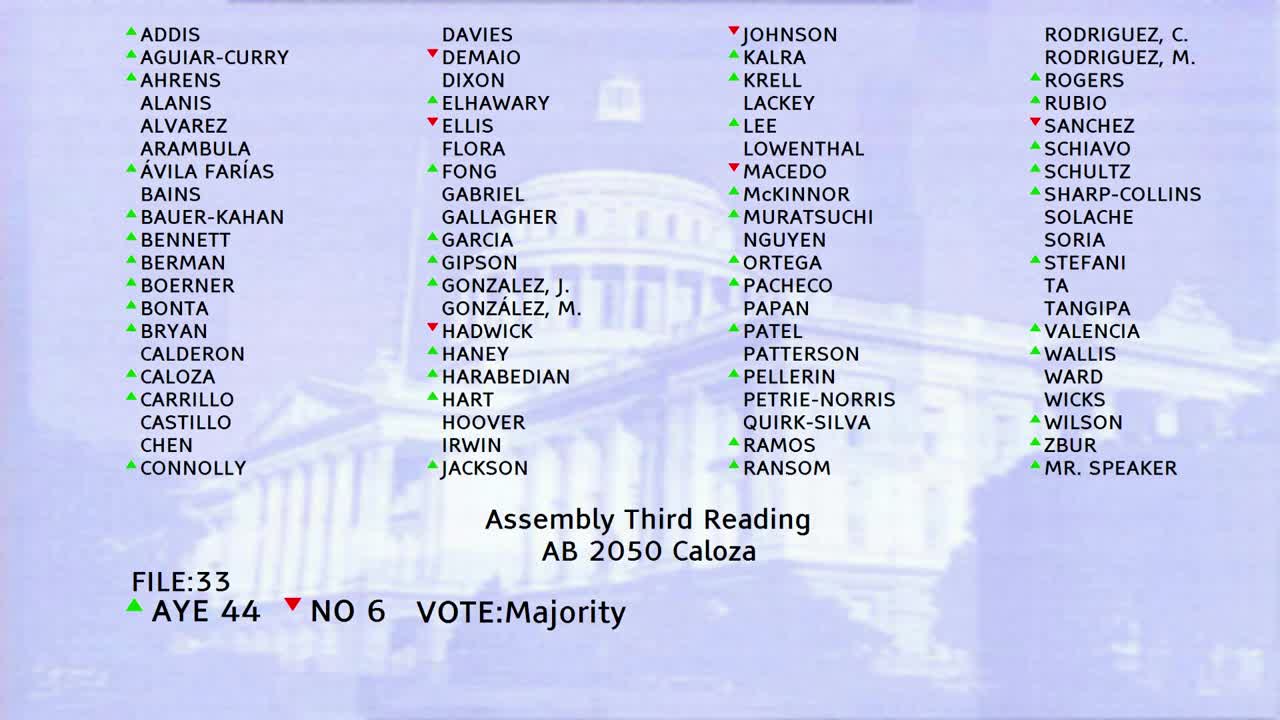
Bill Author

Bill Co-Author(s):