AB 2142: School districts: community college districts: short-term employees: classified service.
- Session Year: 2025-2026
- House: Assembly
- Latest Version Date: 2026-09-02
Current Status:
Failed
(2026-09-20: Vetoed by Governor.)
Introduced
In Committee
Awaiting First Chamber Vote
Passed First Chamber
In Committee
Awaiting Second Chamber Vote
Passed Second Chamber
Enacted
Existing law requires the governing board of a school district and the governing board of a community college district to employ persons for positions not requiring certification qualifications and to classify, as defined, these employees and positions. Existing law requires these employees and positions to be known as the classified service. Existing law prohibits substitute and short-term employees, as defined, employed and paid for less than 75% of a school year or college year, from being part of the classified service.
This bill would establish a rebuttable presumption that a school district or community college district is required to replace a short-term employee position with a position in the classified service if (1) the short-term employee performs the required service of the position beyond 75% of a school year or college year, (2) the short-term employee voluntarily separates or is laid off or terminated from employment for at least 50% but less than 75% of a school year or college year and is then rehired in the next school year or college year to perform substantially the same services for at least 50% of the school year or college year, or (3) the services of the short-term employee position are used at least 50% of a school year or college year for 3 of 5 consecutive school years or college years.
Existing law requires the governing board of a school district and the governing board of a community college district to employ persons for positions not requiring certification qualifications and to classify, as defined, these employees and positions. Existing law requires these employees and positions to be known as the classified service. Existing law prohibits substitute and short-term employees, as defined, employed and paid for less than 75% of a school year or college year, from being part of the classified service.
This bill would establish a rebuttable presumption that a school district or community college district is required to place replace a short-term employee into the position with a position in the classified service if (1) the short-term employee either performs the required service or any other service, or any combination of services, of the position beyond 75% of a school year, or year or college year, (2) the short-term employee voluntarily separates or is laid off or terminated from employment as a short-term employee before a date constituting for at least 50% but less than 75% of a school year or college year and is then rehired by the school district or community college district at any point, including subsequent school years. in the next school year or college year to perform substantially the same services for at least 50% of the school year or college year, or (3) the services of the short-term employee position are used at least 50% of a school year or college year for 3 of 5 consecutive school years or college years.
Existing law requires the governing board of a school district and the governing board of a community college district to employ persons for positions not requiring certification qualifications and to classify, as defined, these employees and positions. Existing law requires these employees and positions to be known as the classified service. Existing law prohibits substitute and short-term employees, as defined, employed and paid for less than 75% of a school year, from being part of the classified service.
This bill would establish a rebuttable presumption that a school district or community college district is required to place a short-term employee into the classified service if the short-term employee either performs required service or any other service, or any combination of services, beyond 75% of a school year, or voluntarily separates or is laid off or terminated from employment as a short-term employee before a date constituting 75% of a school year and is then rehired by the school district or community college district at any point, including subsequent school years.
(a)The governing board of a school district shall employ persons for positions not requiring certification qualifications. The governing board of a school district shall, except where Article 6 (commencing with Section 45240) or Section 45318 applies, classify all of these employees and positions. The employees and positions shall be known as the classified service.
(b)(1)Substitute and short-term employees, employed and paid for less than 75 percent of a school year, shall not be a part of the classified service.
(2)Apprentices and professional experts employed on a temporary basis for a specific project, regardless of length of employment, shall not be a part of the classified service.
(3)Full-time students employed part time, and part-time students employed part time in any college workstudy program, or in a work experience education program conducted by a community college district pursuant to Article 7 (commencing with Section 51760) of Chapter 5 of Part 28 and that is financed by state or federal funds, shall not be a part of the classified service.
(c)Unless otherwise permitted, a person whose position does not require certification qualifications shall not be employed by a governing board of a school district, except as authorized by this section.
(d)As used in this section:
(1)Substitute employee means a person employed to replace a classified employee who is temporarily absent from duty. In addition, if the school district is then engaged in a procedure to hire a permanent employee to fill a vacancy in any classified position, the governing board of the school district may fill the vacancy through the employment, for not more than 60 calendar days, of one or more substitute employees, except to the extent that a collective bargaining agreement then in effect provides for a different period of time.
(2)(A)Short-term employee means a person who is employed to perform a service for the school district, upon the completion of which, the service required or similar services will not be extended or needed on a continuing basis. Before employing a short-term employee, the governing board of a school district, at a regularly scheduled board meeting, shall specify the service required to be performed by the employee pursuant to the definition of classification in subdivision (a) of Section 45101, and shall certify the ending date of the service. The ending date may be shortened or extended by the governing board of a school district, but shall not extend beyond 75 percent of a school year.
(B)There shall be a rebuttable presumption that a school district is required by this section to replace a short-term employee position with a position in the classified service if any of the following occurs:
(i)The short-term employee performs the required service of the position beyond 75 percent of a school year.
(ii)The short-term employee voluntarily separates or is laid off or terminated from employment for at least 50 percent but less than 75 percent of a school year, and the same employee is then rehired in the next school year to perform substantially the same services for at least 50 percent of the school year.
(iii)The services of the short-term employee position are used at least 50 percent of a school year for three of five consecutive school years.
(3)Seventy-five percent of a school year means 195 working days, including holidays, sick leave, vacation, and other leaves of absence, irrespective of number of hours worked per day.
(e)Employment of either full-time or part-time students in any college workstudy program, or in a work experience education program, shall not result in the displacement of classified personnel or impair existing contracts for services.
(f)This section shall apply only to school districts not incorporating the merit system as outlined in Article 6 (commencing with Section 45240).
SEC. 2.Section 88003 of the Education Code is amended to read:88003.(a)The governing board of a community college district shall employ persons for positions that are not academic positions. The governing board of a community college district, except where Article 3 (commencing with Section 88060) or Section 88137 applies, shall classify all those employees and positions. The employees and positions shall be known as the classified service. Substitute and short-term employees, employed and paid for less than 75 percent of a college year, shall not be a part of the classified service. Apprentices and professional experts employed on a temporary basis for a specific project, regardless of length of employment, shall not be a part of the classified service. Full-time students employed part time, and part-time students employed part time in a college workstudy program, or in a work experience education program conducted by a community college district and that is financed by state or federal funds, shall not be a part of the classified service. Unless otherwise permitted, a person whose position does not require certification qualifications shall not be employed by a governing board of a community college district, except as authorized by this section.
(b)Substitute employee, as used in this section, means a person employed to replace a classified employee who is temporarily absent from duty. In addition, if the community college district is then engaged in a procedure to hire a permanent employee to fill a vacancy in a classified position, the governing board of the community college district may fill the vacancy through the employment, for not more than 60 calendar days, of one or more substitute employees, except to the extent that a collective bargaining agreement then in effect provides for a different period of time.
(c)(1)Short-term employee, as used in this section, means a person who is employed to perform a service for the community college district, upon the completion of which, the service required or similar services will not be extended or needed on a continuing basis. Before employing a short-term employee, the governing board of a community college district, at a regularly scheduled meeting of the governing board of the community college district, shall specify the service required to be performed by the employee pursuant to the definition of classification in subdivision (a) of Section 88001, and shall certify the ending date of the service. The ending date may be shortened or extended by the governing board of the community college district, but shall not extend beyond 75 percent of a college year.
(2)There shall be a rebuttable presumption that a community college district is required by this section to replace a short-term employee position with a position in the classified service if any of the following occurs:
(A)The short-term employee performs the required service of the position beyond 75 percent of a college year.
(B)The short-term employee voluntarily separates or is laid off or terminated from employment for at least 50 percent but less than 75 percent of a college year, and the same employee is then rehired in the next college year to perform substantially the same services for at least 50 percent of the college year.
(C)The services of the short-term employee position are used at least 50 percent of a college year for three of five consecutive college years.
(d)Seventy-five percent of a college year means 195 working days, including holidays, sick leave, vacation, and other leaves of absences, irrespective of number of hours worked per day.
(e)Employment of either full-time or part-time students in a college workstudy program or in a work experience education program shall not result in the displacement of classified personnel or impair existing contracts for services.
(f)This section shall apply only to community college districts not incorporating the merit system as outlined in Article 3 (commencing with Section 88060).
(g)An employee employed by a community college district in a part-time playground position as of the effective date of the laws placing part-time playground positions into the classified service shall be deemed a permanent employee of the community college district.
(a)The governing board of a school district shall employ persons for positions not requiring certification qualifications. The governing board of a school district shall, except where Article 6 (commencing with Section 45240) or Section 45318 applies, classify all of these employees and positions. The employees and positions shall be known as the classified service.
(b)(1)Substitute and short-term employees, employed and paid for less than 75 percent of a school year, shall not be a part of the classified service.
(2)Apprentices and professional experts employed on a temporary basis for a specific project, regardless of length of employment, shall not be a part of the classified service.
(3)Full-time students employed part time, and part-time students employed part time in any college workstudy program, or in a work experience education program conducted by a community college district pursuant to Article 7 (commencing with Section 51760) of Chapter 5 of Part 28 and that is financed by state or federal funds, shall not be a part of the classified service.
(c)Unless otherwise permitted, a person whose position does not require certification qualifications shall not be employed by a governing board of a school district, except as authorized by this section.
(d)As used in this section:
(1)Substitute employee means a person employed to replace a classified employee who is temporarily absent from duty. In addition, if the school district is then engaged in a procedure to hire a permanent employee to fill a vacancy in any classified position, the governing board of the school district may fill the vacancy through the employment, for not more than 60 calendar days, of one or more substitute employees, except to the extent that a collective bargaining agreement then in effect provides for a different period of time.
(2)(A)Short-term employee means a person who is employed to perform a service for the school district, upon the completion of which, the service required or similar services will not be extended or needed on a continuing basis. Before employing a short-term employee, the governing board of a school district, at a regularly scheduled board meeting, shall specify the service required to be performed by the employee pursuant to the definition of classification in subdivision (a) of Section 45101, and shall certify the ending date of the service. The ending date may be shortened or extended by the governing board of a school district, but shall not extend beyond 75 percent of a school year.
(B)There shall be a rebuttable presumption that a school district is required by this section to place replace a short-term employee into the position with a position in the classified service if either any of the following occurs:
(i)The short-term employee performs the required service or any other service, or any combination of services, of the position beyond 75 percent of a school year.
(ii)The short-term employee voluntarily separates or is laid off or terminated from employment as a short-term employee before a date constituting for at least 50 percent but less than 75 percent of a school year year, and the same employee is then rehired by the school district at any point, including subsequent school years. in the next school year to perform substantially the same services for at least 50 percent of the school year.
(iii)The services of the short-term employee position are used at least 50 percent of a school year for three of five consecutive school years.
(3)Seventy-five percent of a school year means 195 working days, including holidays, sick leave, vacation, and other leaves of absence, irrespective of number of hours worked per day.
(e)Employment of either full-time or part-time students in any college workstudy program, or in a work experience education program, shall not result in the displacement of classified personnel or impair existing contracts for services.
(f)This section shall apply only to school districts not incorporating the merit system as outlined in Article 6 (commencing with Section 45240).
SEC. 2.Section 88003 of the Education Code is amended to read:88003.(a)The governing board of a community college district shall employ persons for positions that are not academic positions. The governing board of a community college district, except where Article 3 (commencing with Section 88060) or Section 88137 applies, shall classify all those employees and positions. The employees and positions shall be known as the classified service. Substitute and short-term employees, employed and paid for less than 75 percent of a college year, shall not be a part of the classified service. Apprentices and professional experts employed on a temporary basis for a specific project, regardless of length of employment, shall not be a part of the classified service. Full-time students employed part time, and part-time students employed part time in a college work-study workstudy program, or in a work experience education program conducted by a community college district and that is financed by state or federal funds, shall not be a part of the classified service. Unless otherwise permitted, a person whose position does not require certification qualifications shall not be employed by a governing board of a community college district, except as authorized by this section.
(b)Substitute employee, as used in this section, means a person employed to replace a classified employee who is temporarily absent from duty. In addition, if the community college district is then engaged in a procedure to hire a permanent employee to fill a vacancy in a classified position, the governing board of the community college district may fill the vacancy through the employment, for not more than 60 calendar days, of one or more substitute employees, except to the extent that a collective bargaining agreement then in effect provides for a different period of time.
(c)(1)Short-term employee, as used in this section, means a person who is employed to perform a service for the community college district, upon the completion of which, the service required or similar services will not be extended or needed on a continuing basis. Before employing a short-term employee, the governing board of a community college district, at a regularly scheduled meeting of the governing board of the community college district, shall specify the service required to be performed by the employee pursuant to the definition of classification in subdivision (a) of Section 88001, and shall certify the ending date of the service. The ending date may be shortened or extended by the governing board of the community college district, but shall not extend beyond 75 percent of a school college year.
(2)There shall be a rebuttable presumption that a school community college district is required by this section to place replace a short-term employee into the position with a position in the classified service if either any of the following occurs:
(A)The short-term employee performs the required service or any other service, or any combination of services, of the position beyond 75 percent of a school college year.
(B)The short-term employee voluntarily separates or is laid off or terminated from employment as a short-term employee before a date constituting for at least 50 percent but less than 75 percent of a school year college year, and the same employee is then rehired by the school district at any point, including subsequent school years. in the next college year to perform substantially the same services for at least 50 percent of the college year.
(C)The services of the short-term employee position are used at least 50 percent of a college year for three of five consecutive college years.
(d)Seventy-five percent of a college year means 195 working days, including holidays, sick leave, vacation, and other leaves of absences, irrespective of number of hours worked per day.
(e)Employment of either full-time or part-time students in a college work-study workstudy program or in a work experience education program shall not result in the displacement of classified personnel or impair existing contracts for services.
(f)This section shall apply only to community college districts not incorporating the merit system as outlined in Article 3 (commencing with Section 88060).
(g)An employee employed by a community college district in a part-time playground position as of the effective date of the laws placing part-time playground positions into the classified service shall be deemed a permanent employee of the community college district.
(a)The governing board of a school district shall employ persons for positions not requiring certification qualifications. The governing board of a school district shall, except where Article 6 (commencing with Section 45240) or Section 45318 applies, classify all of these employees and positions. The employees and positions shall be known as the classified service.
(b)(1)Substitute and short-term employees, employed and paid for less than 75 percent of a school year, shall not be a part of the classified service.
(2)Apprentices and professional experts employed on a temporary basis for a specific project, regardless of length of employment, shall not be a part of the classified service.
(3)Full-time students employed part time, and part-time students employed part time in any college workstudy program, or in a work experience education program conducted by a community college district pursuant to Article 7 (commencing with Section 51760) of Chapter 5 of Part 28 and that is financed by state or federal funds, shall not be a part of the classified service.
(c)Unless otherwise permitted, a person whose position does not require certification qualifications shall not be employed by a governing board of a school district, except as authorized by this section.
(d)As used in this section:
(1)Substitute employee means a person employed to replace a classified employee who is temporarily absent from duty. In addition, if the school district is then engaged in a procedure to hire a permanent employee to fill a vacancy in any classified position, the governing board of the school district may fill the vacancy through the employment, for not more than 60 calendar days, of one or more substitute employees, except to the extent that a collective bargaining agreement then in effect provides for a different period of time.
(2)(A)Short-term employee means a person who is employed to perform a service for the school district, upon the completion of which, the service required or similar services will not be extended or needed on a continuing basis. Before employing a short-term employee, the governing board of a school district, at a regularly scheduled board meeting, shall specify the service required to be performed by the employee pursuant to the definition of classification in subdivision (a) of Section 45101, and shall certify the ending date of the service. The ending date may be shortened or extended by the governing board of a school district, but shall not extend beyond 75 percent of a school year.
(B)There shall be a rebuttable presumption that a school district is required by this section to place a short-term employee into the classified service if either of the following occurs:
(i)The short-term employee performs required service or any other service, or any combination of services, beyond 75 percent of a school year.
(ii)The short-term employee voluntarily separates or is laid off or terminated from employment as a short-term employee before a date constituting 75 percent of a school year and is then rehired by the school district at any point, including subsequent school years.
(3)Seventy-five percent of a school year means 195 working days, including holidays, sick leave, vacation, and other leaves of absence, irrespective of number of hours worked per day.
(e)Employment of either full-time or part-time students in any college workstudy program, or in a work experience education program, shall not result in the displacement of classified personnel or impair existing contracts for services.
(f)This section shall apply only to school districts not incorporating the merit system as outlined in Article 6 (commencing with Section 45240).
SEC. 2.Section 88003 of the Education Code is amended to read:88003.(a)The governing board of a community college district shall employ persons for positions that are not academic positions. The governing board of a community college district, except where Article 3 (commencing with Section 88060) or Section 88137 applies, shall classify all those employees and positions. The employees and positions shall be known as the classified service. Substitute and short-term employees, employed and paid for less than 75 percent of a college year, shall not be a part of the classified service. Apprentices and professional experts employed on a temporary basis for a specific project, regardless of length of employment, shall not be a part of the classified service. Full-time students employed part time, and part-time students employed part time in a college work-study program, or in a work experience education program conducted by a community college district and that is financed by state or federal funds, shall not be a part of the classified service. Unless otherwise permitted, a person whose position does not require certification qualifications shall not be employed by a governing board of a community college district, except as authorized by this section.
(b)Substitute employee, as used in this section, means a person employed to replace a classified employee who is temporarily absent from duty. In addition, if the community college district is then engaged in a procedure to hire a permanent employee to fill a vacancy in a classified position, the governing board of the community college district may fill the vacancy through the employment, for not more than 60 calendar days, of one or more substitute employees, except to the extent that a collective bargaining agreement then in effect provides for a different period of time.
(c)(1)Short-term employee, as used in this section, means a person who is employed to perform a service for the community college district, upon the completion of which, the service required or similar services will not be extended or needed on a continuing basis. Before employing a short-term employee, the governing board of a community college district, at a regularly scheduled meeting of the governing board of the community college district, shall specify the service required to be performed by the employee pursuant to the definition of classification in subdivision (a) of Section 88001, and shall certify the ending date of the service. The ending date may be shortened or extended by the governing board of the community college district, but shall not extend beyond 75 percent of a school year.
(2)There shall be a rebuttable presumption that a school district is required by this section to place a short-term employee into the classified service if either of the following occurs:
(A)The short-term employee performs required service or any other service, or any combination of services, beyond 75 percent of a school year.
(B)The short-term employee voluntarily separates or is laid off or terminated from employment as a short-term employee before a date constituting 75 percent of a school year and is then rehired by the school district at any point, including subsequent school years.
(d)Seventy-five percent of a college year means 195 working days, including holidays, sick leave, vacation, and other leaves of absences, irrespective of number of hours worked per day.
(e)Employment of either full-time or part-time students in a college work-study program or in a work experience education program shall not result in the displacement of classified personnel or impair existing contracts for services.
(f)This section shall apply only to community college districts not incorporating the merit system as outlined in Article 3 (commencing with Section 88060).
(g)An employee employed by a community college district in a part-time playground position as of the effective date of the laws placing part-time playground positions into the classified service shall be deemed a permanent employee of the community college district.
|
Date
|
Status
|
|---|---|
| Sep 20, 2026 | Vetoed by Governor. |
| Sep 8, 2026 | Enrolled and presented to the Governor at 3:30 p.m. |
| Aug 28, 2026 | In Assembly. Ordered to Engrossing and Enrolling. |
| Aug 28, 2026 | Read third time. Passed. Ordered to the Assembly. (Ayes 30. Noes 10. Page 6083.). |
| Aug 28, 2026 | Read third time. Passed. Ordered to the Assembly. (Ayes 30. Noes 10.). |
| Aug 13, 2026 | Read second time. Ordered to third reading. |
| Aug 13, 2026 | From committee: Do pass. (Ayes 5. Noes 2.) (August 13). |
| Aug 3, 2026 | In committee: Referred to APPR. suspense file. |
| Jul 1, 2026 | From committee: Do pass and re-refer to Com. on APPR. (Ayes 4. Noes 1.) (July 1). Re-referred to Com. on APPR. |
| Jun 10, 2026 | Referred to Coms. on L., P.E. & R. and APPR. |
| May 28, 2026 | In Senate. Read first time. To Com. on RLS. for assignment. |
| May 27, 2026 | Read third time. Passed. Ordered to the Senate. (Ayes 60. Noes 16. Page 5452.) |
| May 27, 2026 | Read third time. Passed. Ordered to the Senate. (Ayes 60. Noes 16.) |
| May 27, 2026 | Read third time. Passed. Ordered to the Senate. |
| May 18, 2026 | Read second time. Ordered to third reading. |
| May 14, 2026 | From committee: Do pass. (Ayes 11. Noes 4.) (May 14). |
| May 6, 2026 | In committee: Set, first hearing. Referred to APPR. suspense file. |
| Apr 27, 2026 | Re-referred to Com. on APPR. |
| Apr 23, 2026 | Read second time and amended. |
| Apr 22, 2026 | From committee: Amend, and do pass as amended and re-refer to Com. on APPR. (Ayes 7. Noes 3.) (April 21). |
| Apr 8, 2026 | From committee: Do pass and re-refer to Com. on HIGHER ED. (Ayes 5. Noes 0.) (April 8). Re-referred to Com. on HIGHER ED. |
| Mar 9, 2026 | Referred to Coms. on P. E. & R. and HIGHER ED. |
| Feb 19, 2026 | From printer. May be heard in committee March 21. |
| Feb 18, 2026 | Read first time. To print. |
|
Date
|
Description
|
Location
|
Votes
|
|
|---|---|---|---|---|
| Aug 28, 2026 | Assembly 3rd Reading AB2142 Garcia By Smallwood-Cuevas | Senate Floor |
Passed |
|
| Aug 13, 2026 | Do pass | Senate Standing Committee on Appropriations |
Passed |
|
| Aug 3, 2026 | Placed on suspense file | Senate Standing Committee on Appropriations |
Passed |
|
| Jul 1, 2026 | Do pass, but first be re-referred to the Committee on [Appropriations] | Senate Standing Committee on Labor, Public Employment and Retirement |
Passed |
|
| May 27, 2026 | AB 2142 Garcia Assembly Third Reading | Assembly Floor |
Passed |
|
| May 14, 2026 | Do pass. | Assembly Standing Committee on Appropriations |
Passed |
|
| Apr 21, 2026 | Do pass as amended and be re-referred to the Committee on [Appropriations] | Assembly Standing Committee on Higher Education |
Passed |
|
| Apr 8, 2026 | Do pass and be re-referred to the Committee on [Higher Education] | Assembly Standing Committee on Public Employment and Retirement |
Passed |
This list shows positions taken on this bill by organizations on the date displayed, which is linked to the original source.
Positions by individuals are not included.
|
Organization
|
Position
|
Date
|
|---|---|---|
| Association Of California School Administrators | ** Against | |
| California Association Of School Business Officials | ** Against | |
| California Association Of Suburban School Districts | ** Against | |
| California County Superintendents | ** Against | |
| California Federation of Labor Unions | ** Support | |
| California Federation Of Teachers | ** Support | |
| California School Boards Association | ** Against | |
| California School Employees Association (Co-source) | ** Support | |
| California Teachers Association | ** Support | |
| Central Valley Education Coalition | ** Against | |
| Chief Executive Officers of the California Community Colleges Board | ** Against | |
| Community College League of California | ** Against | |
| Kern County Superintendent Of Schools | ** Against | |
| Service Employees International Union, California | ** Support | |
| small school districts' association | ** Against | |
| Small Schools Districts’ Association | ** Against | |
| Teamsters California | ** Support |
GOVERNOR'S VETO
GV Bill Id:AB 2142
Author:(Garcia)
As Enrolled Ver:September 2, 2026
2/3 vote
SUMMARY
Establishes a rebuttable presumption for when a "short-term employee" is considered a classified employee for services rendered to a K-12 or community college district (CCD).
Major Provisions
Establish that there must be a rebuttable presumption that a school district or CCD to replace a short-term employee position in a classified service position if any of the following occurs:
- The short-term employee performs the required service of the position beyond 75% of the school year, or
- The short-term employee voluntarily separates, or is laid off or terminated for at least 50% but less than 75% of a school year, and the same employee is rehired in the next school year to perform substantially the same services for at least 50% of the school year, or
- The services of the short-term employee position are used at least 50% of a school year for three of five consecutive school or college years.
Governor's Veto Message
This bill creates a rebuttable presumption that a school district or community college district must replace a short-term employee position with a position in the classified service if specified conditions are met.
I support the author's goal of ensuring "short-term" employees are not hired for multiple years without providing them the benefits of permanent employment. However, by establishing a confusing calculation of thresholds and service days in statute, combined with a complex legal standard, this bill introduces significant implementation challenges for school and college officials. Further, this bill creates hundreds of millions of dollars in additional cost pressures and should be considered within the broader context of the annual state budget process.
In partnership with the Legislature this year, my administration has enacted a balanced budget that recognizes the challenging fiscal landscape our state faces while maintaining our commitment to working families and our most vulnerable communities. With significant cost pressures and the federal government's hostile economic policies, it is vital that we remain disciplined when considering with significant fiscal implications that are not included in the budget, such as this measure.
COMMENTS
Classified Employees – Who They Are and What They Do
Generally, classified employees in the state's public education system are those who are not required to hold certain certification qualifications and provide custodial and maintenance, transportation, office and technical support, food service, and school safety services to students. Individuals in this classification provide basic needs, and help to maintain the social and emotional support of students in school districts. These employees help to keep students safe and schools operational. In some instances, classified employees also may serve as paraeducators where students may require personalized educational support while the paraeducator is under the tutelage of a certificated employee, i.e., teacher.
Personnel Commission and Merit System
A personnel commission is an independent board separate from the governing board and the leadership of school district or CCD. The purpose of the personnel commission is to maintain a "merit system" for the classified employees of the district and to oversee the work of the executive director and personnel commission staff, and its main directive is to ensure fair and objective treatment of all applicants and employees.
A merit system is a set of rules and procedures to ensure that the selection, promotion, and retention of classified staff is conducted in a manner without favoritism or prejudice. The personnel commission provides oversight to ensure a district is hiring, placing, and retaining classified staff in a fair and equitable manner. As part of its role, the personnel commission is tasked with classifying and reclassifying positions and serve as an appeal body for disciplined classified staff.
This Bill
The terms "short-term employee" and "seventy-five percent of a school year" are respectively defined in statute, and Sections 45103(b)(1) and 88003(a), Educ. Code expressly prohibit short-term employees who are paid for less than 75 percent from being part of the classified service.
This bill proposes to address the "revolving door" phenomenon of public K-12 schools and CCDs hiring short-term employees for a period of time then subsequently rehiring them to perform the same or similar duties, which results in these employees not being deemed as within the classified service. Further, such activity may deprive these employees of other benefits associated with employment (e.g., employment protections, health, and retirement, etc.) To address these matters, this bill expressly makes clear that, as a rebuttable presumption, short-term employees who provide services beyond 75 percent of the school year, or those whose employment is terminated prior to attaining work constituting 75 percent of the school year then rehired, must be placed into the classified service.
Please refer to the various policy committee analyses for a full discussion of this bill.
According to the Author
"As an educator and a former school administrator, I understand the importance of all school and college employees and their very important role in shaping the future generations. Whether they are short-term, classified, or permanent, they deserve to be valued for the work they do. Unfortunately, many short-term employees work as long as permanent classified staff without the right classification, protection, or benefits. AB 2142 clarifies that workers needed on a recurring and continuous basis for longer than just 75% of a school year are automatically placed into the classified service, granting them their rightfully earned protections and benefits."
Arguments in Support
In part, the California Federation of Teachers - a Union of Educators and Classified Professionals, AFT, AFL-CIO states, "[in] the education system, workers with jobs not requiring certification qualifications are known as "classified" workers. The descriptor "classified" stems from existing Education Code language requiring local district boards to group these workers into different classifications. Paraeducators, custodians, administrative staff, and maintenance workers are a few examples, but many, many others exist. While types of classified workers are varied, one factor unites them all: schools cannot run without them. When the front office is understaffed, essential school functions begin to collapse. When custodians have too much to do, hazardous conditions arise that threaten school safety. When the classroom needs a paraeducator but doesn't have one, teachers are overwhelmed and educational quality suffers. That's why we must ensure that all possible steps are taken to recruit and retain qualified and effective classified workers throughout our education system, from transitional kindergarten through higher education. Sadly, the often inadequate wages and benefits offered to classified workers mean that the previously described negative outcomes exist in far too many schools across California. These positions commonly pay hourly rates barely above the minimum wage, don't offer anything close to full-time hours, and leave workers unable to even qualify for [California Public Employees' Retirement System] benefits. With [the reforms proposed by this bill], we take a small but significant step toward rewarding classified staff for their essential service. While this bill does not raise wages or create any new benefits, it does help guarantee that workers at least will earn the benefits and rights established by current law. Such a reform will help us keep the classified workers we currently have, attract new ones, and better protect the workers doing and devoting so much to keep our education system running strong."
Others offers similar statements in support of this bill.
Arguments in Opposition
Among other things, a coalition of local education agencies (LEAs) express that, "[we] recognize the intent of the bill but remain deeply concerned due to the technical, fiscal and policy impacts on school districts and community colleges that could limit student service delivery while draining resources from other critical staffing needs. This bill would impair long-standing flexibilities that school districts and community colleges rely on to maximize resources and provide students with relevant services and programs. It also increases legal and grievance risk by potentially accelerating permanent status for roles that are not continuous or full-time in nature. Specifically, [this bill] would drastically change the way that a short-term, temporary or substitute employee may become eligible for permanent classified status by removing the requirement that the minimum service day threshold must be completed in just one school year. Instead, the "75 percent of the school year," also defined at 195 working days, is over the lifetime of that individual. The calculation includes all afforded leave time as well as the undefined term "other services" in the working days calculation. [This bill] also creates a rebuttable presumption that an employee reaches permanent status after completing 195 days of service, including all leave allowances. Given current trends impacting education funding that include declining enrollment, escalating special education costs, and major liability exposure due to AB 218-related claims, a bill that seeks to further restrict flexibility is especially concerning. In TK-12 districts, the needs of the student population can change significantly when there are changes in enrollment. Small school districts feel this even more deeply. In special education, a single student can change staffing needs." Among other concerns, the coalition expresses, "we believe this bill could result in the unintended consequence of experienced, trusted employees not being hired in future school years," [and] "[s]chools will not be able to support the cost of returning employees becoming permanent and will seek other candidates to fill positions.
FISCAL COMMENTS
According to the Senate Committee on Appropriations, this bill would result in ongoing Proposition 98 General Fund cost pressures to school districts, potentially reaching the millions of dollars annually. The magnitude of these costs would depend on the number of temporary employees who, as a result of the bill, must be retained as permanent employees. The Chancellor's Office of the California Community Colleges (CCC) indicates that updating an existing policy to establish a rebuttable presumption when a "short-term employee" is considered a classified employee, would result in costs of $34,000 to $76,000 per district. Accounting for all 72 CCDs, the total costs would range between $2.4 million and $5.4 million (General Fund, Proposition 98). Administrative costs to CCC would be minor and absorbable.
VOTES
ASM PUBLIC EMPLOYMENT AND RETIREMENT: 5-0-2
YES: McKinnor, Boerner, Garcia, Nguyen, Michelle Rodriguez
ABS, ABST OR NV: Lackey, Alanis
ASM HIGHER EDUCATION: 7-3-0
YES: Fong, Boerner, Jackson, Muratsuchi, Patel, Ramos, Sharp-Collins
NO: DeMaio, Macedo, Tangipa
ASM APPROPRIATIONS: 11-4-0
YES: Wicks, Aguiar-Curry, Calderon, Caloza, Fong, Mark González, Krell, Pacheco, Pellerin, Sharp-Collins, Solache
NO: Hoover, Dixon, Ta, Tangipa
ASSEMBLY FLOOR: 60-16-4
YES: Addis, Aguiar-Curry, Ahrens, Alvarez, Arambula, Ávila Farías, Bains, Bauer-Kahan, Bennett, Berman, Boerner, Bonta, Bryan, Calderon, Caloza, Carrillo, Connolly, Davies, Elhawary, Fong, Gabriel, Garcia, Gipson, Mark González, Haney, Harabedian, Hart, Irwin, Jackson, Kalra, Krell, Lee, Lowenthal, McKinnor, Muratsuchi, Nguyen, Ortega, Pacheco, Papan, Patel, Pellerin, Petrie-Norris, Quirk-Silva, Ramos, Ransom, Michelle Rodriguez, Rogers, Blanca Rubio, Schiavo, Schultz, Sharp-Collins, Solache, Soria, Stefani, Valencia, Ward, Wicks, Wilson, Zbur, Rivas
NO: Alanis, DeMaio, Dixon, Ellis, Flora, Gallagher, Jeff Gonzalez, Hadwick, Hoover, Johnson, Macedo, Patterson, Sanchez, Ta, Tangipa, Wallis
ABS, ABST OR NV: Castillo, Chen, Lackey, Celeste Rodriguez
SENATE FLOOR: 30-10-0
YES: Allen, Archuleta, Arreguín, Ashby, Becker, Blakespear, Cabaldon, Caballero, Cervantes, Cortese, Durazo, Gonzalez, Grayson, Hurtado, Laird, Limón, McGuire, McNerney, Menjivar, Padilla, Pérez, Reyes, Richardson, Rubio, Smallwood-Cuevas, Stern, Umberg, Wahab, Weber Pierson, Wiener
NO: Alvarado-Gil, Choi, Dahle, Grove, Jones, Niello, Ochoa Bogh, Seyarto, Strickland, Valladares
UPDATED
VERSION: September 2, 2026
CONSULTANT: Michael Bolden / P. E. & R. / (916) 319-3957 FN: 0004573
SENATE RULES COMMITTEE Office of Senate Floor Analyses (916) 651-4171 | AB 2142 |
THIRD READING
Bill No: AB 2142
Author: Garcia (D)
Amended: 4/23/26 in Assembly
Vote: 21
SENATE LABOR, PUB. EMP. & RET. COMMITTEE: 4-1, 7/1/26
AYES: Smallwood-Cuevas, Cortese, Durazo, Laird
NOES: Strickland
SENATE APPROPRIATIONS COMMITTEE: 5-2, 8/13/26
AYES: Cervantes, Cabaldon, Grayson, Richardson, Wahab
NOES: Seyarto, Dahle
ASSEMBLY FLOOR: 60-16, 5/27/26 - See last page for vote
SUBJECT: School districts: community college districts: short-term employees: classified service
SOURCE: California Federation of Teachers
California School Employees Association
DIGEST:
This bill requires school and community college districts using a merit system to replace short-term positions with permanent classified positions under specified conditions unless the district could rebut the presumption that positions meeting the conditions are classified, not short-term positions.
ANALYSIS:
Existing law:
- Requires the governing board of a school district to employ persons for positions not requiring certification qualifications and classify all of these employees and positions, except as specified. The employees and positions shall be known as the classified service. (Education Code § 45103)
- Allows school districts to employ short-term employees who are employed and paid for less than 75% of a school year, and provides that short-term employees are not part of the classified service. (Education Code § 45103 (b))
- Defines “short-term employee” to mean a person who is employed to perform a service for the school district, upon the completion of which, the service required or similar services will not be extended or needed on a continuing basis. Before employing a short-term employee, the governing board of a school district, at a regularly scheduled board meeting, shall specify the service required to be performed by the employee pursuant to the definition of “classification” in subdivision (a) of Section 45101, and shall certify the ending date of the service. The ending date may be shortened or extended by the governing board of a school district, but shall not extend beyond 75% of a school year. (Education Code 45103 (d)(2))
- Provides that the provisions described above apply only to school districts not incorporating the merit system. (Education Code 45103 (f))
- Requires the governing board of a community college district to employ persons for positions that are not academic positions and classify those employees and positions, as specified, to be known as the classified service. (Education Code § 88003)
- Allows community college districts to employ short-term employees who are employed and paid for less than 75% of a college year, and provides that short-term employees are not part of the classified service. (Education Code § 88003)
- Defines “short-term employee” to mean a person who is employed to perform a service for the community college district, upon the completion of which, the service required or similar services will not be extended or needed on a continuing basis. Before employing a short-term employee, the governing board of a community college district, at a regularly scheduled meeting of the governing board of the community college district, shall specify the service required to be performed by the employee pursuant to the definition of “classification” in subdivision (a) of Section 88001, and shall certify the ending date of the service. The ending date may be shortened or extended by the governing board of the community college district, but shall not extend beyond 75 percent of a school [college] year. (Education Code § 88003 (c)(1))
- Provides that the provisions described above applicable to a community college district, apply only to a community college district not incorporating the merit system. (Education Code 88003 (f))
This bill:
- Provides a rebuttable presumption that a school or community college district is required to replace a short-term employee position with a position in the classified service if any of the following occurs:
- The short-term employee performs the required service of the position beyond 75% of a school year.
- The short-term employee voluntarily separates or is laid off or terminated from employment for at least 50% but less than 75% of a school year, and the same employee is then rehired in the next school year to perform substantially the same services for at least 50% of the school year.
- The services of the short-term employee position are used at least 50% of a school year for three of five consecutive school years.
Comments
Need for this bill? According to the author:
“School districts and community colleges are allowed to hire classified ‘short-term’ workers for a variety of classified positions. These workers are defined largely as anyone who is employed to perform a service for the school, upon the completion of which, the service required will not be extended or needed on a continuing basis. These “short-term” employees may only be employed for 75 percent of a school year.
Although these positions are deemed ‘not needed on a continuing basis’, in theory; they are in fact utilized continuously for many years.
… [The bill’s supporters] have shared many such situations where people are being worked as short-term employees for 10 years or more. The practice denies employees the status and benefits of regular employment.”
Related/ Prior Legislation
AB 1247 (Garcia, 2025) would have required that contracted employees at a school district or community college district (CCD) meet or exceed the minimum qualifications and standards required of direct hires with the same job functions, as prescribed, and would have required a district provide them with the same health care or retirement benefit contributions as a direct hire. The bill also would have required that a school district or CCD compensate classified employees for any time necessary to complete required training at the employee’s regular pay rate. The Assembly Appropriations held the bill in committee.
AB 2413 (Carrillo, Chapter 913, Statutes of 2022) prohibits K-12 and community college (CCC) districts from suspending without pay, suspending with a reduction in pay, demoting, or dismissing a permanent classified employee who timely requests a hearing on the charges against the employee before the district or hearing officer renders a decision on the matter except for certain conduct as specified.
AB 438 (Reyes, Chapter 665, Statutes of 2021) made specified changes related to layoff procedures for classified employees at school and community college districts including requiring district superintendents to provide notice no later than March 15 prior to the ensuing school year of the superintendent’s recommendation to the district governing board to initiate required layoff procedures.
FISCAL EFFECT: Appropriation: No Fiscal Com.: No Local: No
According to the Senate Appropriations Committee:
- This bill would result in ongoing Proposition 98 General Fund cost pressures to school districts, potentially reaching the millions of dollars annually. The magnitude of these costs would depend on the number of temporary employees who, as a result of the bill, must be retained as permanent employees.
- The Chancellor’s Office of the California Community Colleges (CCC) indicates that updating an existing policy to establish a rebuttable presumption when a “short-term employee” is considered a classified employee, would result in costs of $34,000 to $76,000 per district. Accounting for all 72 CCDs, the total costs would range between $2.4 million and $5.4 million (General Fund, Proposition 98). Administrative costs to CCC would be minor and absorbable
SUPPORT: (Verified 8/12/26)
California Federation of Teachers (co-source)
California School Employees Association (co-source)
California Federation of Labor Unions
California Teachers Association
Service Employees International Union, California
Teamsters California
OPPOSITION: (Verified 8/12/26)
Association of California School Administrators
California Association of School Business Officials
California Association of Suburban School Districts
California County Superintendents
California School Boards Association
Central Valley Education Coalition
Chief Executive Officers of the California Community Colleges Board
Community College League of California
Kern County Superintendent of Schools
Small School Districts' Association
ARGUMENTS IN SUPPORT:
According to the California Federation of Teachers:
“EC [Education Code] Sections 45103 and 88103 allow education employers to bring on “short-term employees” for up to 75% of a school year and deny them every single right explicitly guaranteed by law to classified workers. As concerning as this section of law is, the reality is even worse: sometimes these workers are kept on as short-term employees for years if not decades, leaving dedicated employees languishing in unacceptable working conditions for far too long and in clear violation of the law.
For example, classified workers are guaranteed certain rehire rights that reward seniority when bringing workers back on after layoffs. Another section of the Education Code guarantees vacation days, accrued at the rate of 5/6 of a day for each month of work, to those employed for six months or longer. A similar section ensures that classified workers earn 12 sick days for every year on the job. Short-term employees, meanwhile, are denied all of these rights and many more. Action must be taken to ensure that, at a minimum, workers who have passed the aforementioned 75% cutoff are immediately awarded all rights and benefits guaranteed by current law.
AB 2142 (Garcia) clarifies that workers employed for more than 75% of the school year are automatically placed into the classified service. The bill further details that employers cannot skirt the law by bringing workers back in future years and continue refusing to award workers their earned rights and benefits as members of the classified service.”
ARGUMENTS IN OPPOSITION:
According to a coalition of statewide and regional education organizations and local educational agencies, including the Association of California School Administrators and the California School Boards Association:
“AB 2142 would drastically change the way that short-term or temporary classified positions are established and how those positions are filled. Regrettably, it establishes an arbitrary new set of thresholds and minimum days served, with carry-over between multiple years of service in subsequent academic years. AB 2142 also creates a rebuttable presumption that an employee reaches permanent status after completing 195 days of service, including all leave allowances.
…We are also concerned with the potential impact that AB 2142 would have on March 15 layoff notice requirements. Tying permanency to a percentage of an individual’s rolling threshold makes alignment with the fixed layoff notice deadline extremely difficult.
…Finally, we believe this bill could result in the unintended consequence of experienced, trusted employees not being hired in future school years. Episodic hourly costs convert to multi-year salary and benefit obligations funded primarily by the general fund, with substantially increased per-employee costs and long-term fiscal exposure. Schools will not be able to support the cost of returning employees becoming permanent and will seek other candidates to fill positions.”
ASSEMBLY FLOOR: 60-16, 5/27/26
AYES: Addis, Aguiar-Curry, Ahrens, Alvarez, Arambula, Ávila Farías, Bains, Bauer-Kahan, Bennett, Berman, Boerner, Bonta, Bryan, Calderon, Caloza, Carrillo, Connolly, Davies, Elhawary, Fong, Gabriel, Garcia, Gipson, Mark González, Haney, Harabedian, Hart, Irwin, Jackson, Kalra, Krell, Lee, Lowenthal, McKinnor, Muratsuchi, Nguyen, Ortega, Pacheco, Papan, Patel, Pellerin, Petrie-Norris, Quirk-Silva, Ramos, Ransom, Michelle Rodriguez, Rogers, Blanca Rubio, Schiavo, Schultz, Sharp-Collins, Solache, Soria, Stefani, Valencia, Ward, Wicks, Wilson, Zbur, Rivas
NOES: Alanis, DeMaio, Dixon, Ellis, Flora, Gallagher, Jeff Gonzalez, Hadwick, Hoover, Johnson, Macedo, Patterson, Sanchez, Ta, Tangipa, Wallis
NO VOTE RECORDED: Castillo, Chen, Lackey, Celeste Rodriguez
Prepared by: Glenn Miles / L., P.E. & R. / (916) 651-1556
8/15/26 9:23:34
**** END ****
SENATE COMMITTEE ON
Senator Sabrina Cervantes, Chair
2025 - 2026 Regular Session
AB 2142 (Garcia) - School districts: community college districts: short-term employees: classified service
Version: | Policy Vote: |
Urgency: | Mandate: |
Hearing Date: | Consultant: |
Bill Summary:
AB 2142 would require school and community college districts (CCDs) using a merit system to replace short-term positions with permanent classified positions under specified conditions, with specified exceptions.
Fiscal Impact:
- This bill would result in ongoing Proposition 98 General Fund cost pressures to school districts, potentially reaching the millions of dollars annually. The magnitude of these costs would depend on the number of temporary employees who, as a result of the bill, must be retained as permanent employees.
- The Chancellor’s Office of the California Community Colleges (CCC) indicates that updating an existing policy to establish a rebuttable presumption when a “short-term employee” is considered a classified employee, would result in costs of $34,000 to $76,000 per district. Accounting for all 72 CCDs, the total costs would range between $2.4 million and $5.4 million (General Fund, Proposition 98). Administrative costs to CCC would be minor and absorbable.
Background:
Current law requires school districts and CCDs that do not operate under a merit system to classify employees serving in positions that do not require certificated or academic qualifications as part of the classified service. Existing law also authorizes these districts to employ short-term employees, who are excluded from the classified service, provided they are employed and compensated for less than 75 percent of a school or college year. A short-term employee is defined as an individual hired to perform a temporary service that will not be needed on an ongoing basis once completed. Before hiring a short-term employee, the governing board must, at a regularly scheduled meeting, identify the specific service to be performed, classify the position, and establish a termination date for the employment. While the governing board may later shorten or extend the appointment, the duration may not exceed 75 percent of the applicable school or college year. Classified employees represent over 300,000 school district and CCD non-academic staff statewide.
Proposed Law:
This bill would provide a rebuttable presumption that a school or community college district is required to replace a short-term employee position with a position in the classified service if any of the following occurs: (1) the short-term employee performs the required service of the position beyond 75 percent of a school year, (2) the short-term employee voluntarily separates or is laid off or terminated from employment for at least 50 percent but less than 75 percent of a school year, and the same employee is then rehired in the next school year to perform substantially the same services for at least 50 percent of the school year, or (3) the services of the short-term employee position are used at least 50 percent of a school year for three of five consecutive school years.
Related Legislation:
- AB 1247 (Garcia) would have required that contracted employees at a school district or community college district (CCD) meet or exceed the minimum qualifications and standards required of direct hires with the same job functions, as prescribed, and would have required a district provide them with the same health care or retirement benefit contributions as a direct hire. The bills also would have required that a school district or CCD compensate classified employees for any time necessary to complete required training at the employee’s regular pay rate. The bill was held under submission on the Suspense File of the Assembly Appropriations Committee.
- AB 2413 (Carrillo, Chapter 913, Statutes of 2022) prohibits K-12 and community college (CCC) districts from suspending without pay, suspending with a reduction in pay, demoting, or dismissing a permanent classified employee who timely requests a hearing on the charges against the employee before the district or hearing officer renders a decision on the matter except for certain conduct as specified.
- AB 438 (Reyes, Chapter 665, Statutes of 2021) made specified changes related to layoff procedures for classified employees at school and community college districts including requiring district superintendents to provide notice no later than March 15 prior to the ensuing school year of the superintendent’s recommendation to the district governing board to initiate required layoff procedures.
Staff Comments:
The Office of the Legislative Counsel has keyed this bill “non-fiscal.” However, the purview of this Committee, pursuant to Joint Rule 10.5, is to review and analyze bills that would, among other things, result in a substantial expenditure of state money. Thus, even though the bill was keyed “non-fiscal,” the Committee requested the bill to examine the extent to which it might potentially increase costs to the State.
This bill could significantly increase the administrative complexity of calculating classified employee seniority when a short-term position converts to a permanent position after exceeding the bill's one-year or three-out-of-five-year thresholds. Under existing law, seniority determines the order of layoffs, displacement ("bumping") rights, and reemployment rights for classified employees in TK-12 school districts and community college districts. Districts often calculate seniority with great precision—sometimes to the hour worked—based on negotiated measures such as hours in paid status or date of hire. Because employees receive layoff notices, bumping rights, and reemployment opportunities based on seniority, any changes to how service is credited could require districts to recalculate seniority rankings, increasing administrative workload and the potential for disputes. Employees who believe their seniority rights have been violated are entitled to an administrative hearing before a state Administrative Law Judge, which could further increase administrative and legal costs if disputes become more common.
-- END --
SENATE COMMITTEE ON LABOR, PUBLIC EMPLOYMENT AND RETIREMENT
Senator Lola Smallwood-Cuevas, Chair
2025 - 2026 Regular
Bill No: AB 2142 Hearing Date: July 1, 2026
Author: | Garcia | ||
Version: | April 23, 2026 | ||
Urgency: | No | Fiscal: | No |
Consultant: | Glenn Miles | ||
SUBJECT: School districts: community college districts: short-term employees: classified service
KEY ISSUE
This bill would require school and community college districts using a merit system to replace short-term positions with permanent classified positions under specified conditions unless the district could rebut the presumption that positions meeting the conditions are classified, not short-term positions.
ANALYSIS
Existing law:
- Requires the governing board of a school district to employ persons for positions not requiring certification qualifications and classify all of these employees and positions, except as specified. The employees and positions shall be known as the classified service. (Education Code § 45103)
- Allows school districts to employ short-term employees who are employed and paid for less than 75 percent of a school year, and provides that short-term employees are not part of the classified service. (Education Code § 45103 (b))
- Defines “short-term employee” to mean a person who is employed to perform a service for the school district, upon the completion of which, the service required or similar services will not be extended or needed on a continuing basis. Before employing a short-term employee, the governing board of a school district, at a regularly scheduled board meeting, shall specify the service required to be performed by the employee pursuant to the definition of “classification” in subdivision (a) of Section 45101, and shall certify the ending date of the service. The ending date may be shortened or extended by the governing board of a school district, but shall not extend beyond 75 percent of a school year. (Education Code 45103 (d)(2))
- Provides that the provisions described above apply only to school districts not incorporating the merit system. (Education Code 45103 (f))
- Requires the governing board of a community college district to employ persons for positions that are not academic positions and classify those employees and positions, as specified, to be known as the classified service. (Education Code § 88003)
- Allows community college districts to employ short-term employees who are employed and paid for less than 75 percent of a college year, and provides that short-term employees are not part of the classified service. (Education Code § 88003)
- Defines “short-term employee” to mean a person who is employed to perform a service for the community college district, upon the completion of which, the service required or similar services will not be extended or needed on a continuing basis. Before employing a short-term employee, the governing board of a community college district, at a regularly scheduled meeting of the governing board of the community college district, shall specify the service required to be performed by the employee pursuant to the definition of “classification” in subdivision (a) of Section 88001, and shall certify the ending date of the service. The ending date may be shortened or extended by the governing board of the community college district, but shall not extend beyond 75 percent of a school [college] year. (Education Code § 88003 (c)(1))
- Provides that the provisions described above applicable to a community college district, apply only to a community college district not incorporating the merit system. (Education Code 88003 (f))
This bill:
- Provides a rebuttable presumption that a school or community college district is required to replace a short-term employee position with a position in the classified service if any of the following occurs:
- The short-term employee performs the required service of the position beyond 75 percent of a school year.
- The short-term employee voluntarily separates or is laid off or terminated from employment for at least 50 percent but less than 75 percent of a school year, and the same employee is then rehired in the next school year to perform substantially the same services for at least 50 percent of the school year.
- The services of the short-term employee position are used at least 50 percent of a school year for three of five consecutive school years.
COMMENTS
1. Need for this bill?
According to the author:
“School districts and community colleges are allowed to hire classified ‘short-term’ workers for a variety of classified positions. These workers are defined largely as anyone who is employed to perform a service for the school, upon the completion of which, the service required will not be extended or needed on a continuing basis. These “short-term” employees may only be employed for 75 percent of a school year.
Although these positions are deemed ‘not needed on a continuing basis’, in theory; they are in fact utilized continuously for many years.
… [The bill’s supporters] have shared many such situations where people are being worked as short-term employees for 10 years or more. The practice denies employees the status and benefits of regular employment.”
2. Proponent Arguments:
According to the California Federation of Teachers:
“EC [Education Code] Sections 45103 and 88103 allow education employers to bring on “short-term employees” for up to 75% of a school year and deny them every single right explicitly guaranteed by law to classified workers. As concerning as this section of law is, the reality is even worse: sometimes these workers are kept on as short-term employees for years if not decades, leaving dedicated employees languishing in unacceptable working conditions for far too long and in clear violation of the law.
For example, classified workers are guaranteed certain rehire rights that reward seniority when bringing workers back on after layoffs. Another section of the Education Code guarantees vacation days, accrued at the rate of 5/6 of a day for each month of work, to those employed for six months or longer. A similar section ensures that classified workers earn 12 sick days for every year on the job. Short-term employees, meanwhile, are denied all of these rights and many more. Action must be taken to ensure that, at a minimum, workers who have passed the aforementioned 75% cutoff are immediately awarded all rights and benefits guaranteed by current law.
AB 2142 (Garcia) clarifies that workers employed for more than 75% of the school year are automatically placed into the classified service. The bill further details that employers cannot skirt the law by bringing workers back in future years and continue refusing to award workers their earned rights and benefits as members of the classified service.”
3. Opponent Arguments:
According to a coalition of statewide and regional education organizations and local educational agencies, including the Association of California School Administrators and the California School Boards Association:
“AB 2142 would drastically change the way that short-term or temporary classified positions are established and how those positions are filled. Regrettably, it establishes an arbitrary new set of thresholds and minimum days served, with carry-over between multiple years of service in subsequent academic years. AB 2142 also creates a rebuttable presumption that an employee reaches permanent status after completing 195 days of service, including all leave allowances.
…We are also concerned with the potential impact that AB 2142 would have on March 15 layoff notice requirements. Tying permanency to a percentage of an individual’s rolling threshold makes alignment with the fixed layoff notice deadline extremely difficult.
…Finally, we believe this bill could result in the unintended consequence of experienced, trusted employees not being hired in future school years. Episodic hourly costs convert to multi-year salary and benefit obligations funded primarily by the general fund, with substantially increased per-employee costs and long-term fiscal exposure. Schools will not be able to support the cost of returning employees becoming permanent and will seek other candidates to fill positions.”
4. Related/ Prior Legislation:
AB 1247 (Garcia, 2025) would have required that contracted employees at a school district or community college district (CCD) meet or exceed the minimum qualifications and standards required of direct hires with the same job functions, as prescribed, and would have required a district provide them with the same health care or retirement benefit contributions as a direct hire. The bills also would have required that a school district or CCD compensate classified employees for any time necessary to complete required training at the employee’s regular pay rate. The Assembly Appropriations held the bill in committee.
AB 2413 (Carrillo, Chapter 913, Statutes of 2022) prohibits K-12 and community college (CCC) districts from suspending without pay, suspending with a reduction in pay, demoting, or dismissing a permanent classified employee who timely requests a hearing on the charges against the employee before the district or hearing officer renders a decision on the matter except for certain conduct as specified.
AB 438 (Reyes, Chapter 665, Statutes of 2021) made specified changes related to layoff procedures for classified employees at school and community college districts including requiring district superintendents to provide notice no later than March 15 prior to the ensuing school year of the superintendent’s recommendation to the district governing board to initiate required layoff procedures.
SUPPORT
California Federation of Teachers (Co-Sponsor)
California School Employees Association (Co-Sponsor)
California Federation of Labor Unions
California Teachers Association
SEIU, California
Teamsters California
OPPOSITION
Association of California School Administrators
California Association of School Business Officials
California Association of Suburban School Districts
California County Superintendents
California School Boards Association
Central Valley Education Coalition
Chief Executive Officers of the California Community Colleges Board
Community College League of California
Kern County Superintendent of Schools
Small School Districts' Association
-- END --
ASSEMBLY THIRD READING
ATR Bill Id:AB 2142
Author:(Garcia)
As Amended Ver:April 23, 2026
Majority vote
SUMMARY
Establishes a rebuttable presumption for when a ″short-term employee″ is considered a classified employee for services rendered to a K-12 or community college district (CCD).
Major Provisions
Establish that there must be a rebuttable presumption that a school district or CCD to replace a short-term employee position in a classified service position if any of the following occurs:
- The short-term employee performs the required service of the position beyond 75 % of the school year, or
- The short-term employee voluntarily separates, or is laid off or terminated for at least 50 % but less than 75 % of a school year, and the same employee is rehired in the next school year to perform substantially the same services for at least 50 % of the school year, or
- The services of the short-term employee position are used at least 50 % of a school year for three of five consecutive school or college years.
COMMENTS
Classified Employees – Who They Are and What They Do
Generally, classified employees in the state′s public education system are those who are not required to hold certain certification qualifications and provide custodial and maintenance, transportation, office and technical support, food service, and school safety services to students. Individuals in this classification provide basic needs, and help to maintain the social and emotional support of students in school districts. These employees help to keep students safe and schools operational. In some instances, classified employees also may serve as paraeducators where students may require personalized educational support while the paraeducator is under the tutelage of a certificated employee, i.e., teacher.
Personnel Commission and Merit System
A personnel commission is an independent board separate from the governing board and the leadership of school district or CCD. The purpose of the personnel commission is to maintain a ″merit system″ for the classified employees of the district and to oversee the work of the executive director and personnel commission staff, and its main directive is to ensure fair and objective treatment of all applicants and employees.
A merit system is a set of rules and procedures to ensure that the selection, promotion, and retention of classified staff is conducted in a manner without favoritism or prejudice. The personnel commission provides oversight to ensure a district is hiring, placing, and retaining classified staff in a fair and equitable manner. As part of its role, the personnel commission is tasked with classifying and reclassifying positions and serve as an appeal body for disciplined classified staff.
This Bill
The terms ″short-term employee″ and ″seventy-five % of a school year″ are respectively defined in statute, and Sections 45103(b)(1) and 88003(a), Education. Code expressly prohibit short-term employees who are paid for less than 75 % from being part of the classified service.
This bill proposes to address the ″revolving door″ phenomenon of public K-12 schools and CCDs hiring short-term employees for a period of time then subsequently rehiring them to perform the same or similar duties, which results in these employees not being deemed as within the classified service. Further, such activity may deprive these employees of other benefits associated with employment (e.g., employment protections, health, and retirement, etc.) To address these matters, this bill expressly makes clear that, as a rebuttable presumption, short-term employees who provide services beyond 75 % of the school year, or those whose employment is terminated prior to attaining work constituting 75 % of the school year then rehired, must be placed into the classified service.
Please refer to the policy committee analyses for a full discussion of this bill.
According to the Author
″As an educator and a former school administrator, I understand the importance of all school and college employees and their very important role in shaping the future generations. Whether they are short-term, classified, or permanent, they deserve to be valued for the work they do. Unfortunately, many short-term employees work as long as permanent classified staff without the right classification, protection, or benefits. AB 2142 clarifies that workers needed on a recurring and continuous basis for longer than just 75% of a school year are automatically placed into the classified service, granting them their rightfully earned protections and benefits.″
Arguments in Support
In part, the California Federation of Teachers - A Union of Educators and Classified Professionals, AFT, AFL-CIO states, ″[in] the education system, workers with jobs not requiring certification qualifications are known as ″classified″ workers. The descriptor ″classified″ stems from existing Education Code language requiring local district boards to group these workers into different classifications. Paraeducators, custodians, administrative staff, and maintenance workers are a few examples, but many, many others exist. While types of classified workers are varied, one factor unites them all: schools cannot run without them. When the front office is understaffed, essential school functions begin to collapse. When custodians have too much to do, hazardous conditions arise that threaten school safety. When the classroom needs a paraeducator but doesn′t have one, teachers are overwhelmed and educational quality suffers. That′s why we must ensure that all possible steps are taken to recruit and retain qualified and effective classified workers throughout our education system, from transitional kindergarten through higher education. Sadly, the often inadequate wages and benefits offered to classified workers mean that the previously described negative outcomes exist in far too many schools across California. These positions commonly pay hourly rates barely above the minimum wage, don′t offer anything close to full-time hours, and leave workers unable to even qualify for [California Public Employees′ Retirement System] benefits. With [the reforms proposed by this bill], we take a small but significant step toward rewarding classified staff for their essential service. While this bill does not raise wages or create any new benefits, it does help guarantee that workers at least will earn the benefits and rights established by current law. Such a reform will help us keep the classified workers we currently have, attract new ones, and better protect the workers doing and devoting so much to keep our education system running strong.″
Others offers similar statements in support of this bill.
Arguments in Opposition
Among other things, a coalition of local education agencies (LEAs) express that, ″[we] recognize the intent of the bill but remain deeply concerned due to the technical, fiscal and policy impacts on school districts and community colleges that could limit student service delivery while draining resources from other critical staffing needs. This bill would impair long-standing flexibilities that school districts and community colleges rely on to maximize resources and provide students with relevant services and programs. It also increases legal and grievance risk by potentially accelerating permanent status for roles that are not continuous or full-time in nature. Specifically, [this bill] would drastically change the way that a short-term, temporary or substitute employee may become eligible for permanent classified status by removing the requirement that the minimum service day threshold must be completed in just one school year. Instead, the ″75 % of the school year,″ also defined at 195 working days, is over the lifetime of that individual. The calculation includes all afforded leave time as well as the undefined term ″other services″ in the working days calculation. [This bill] also creates a rebuttable presumption that an employee reaches permanent status after completing 195 days of service, including all leave allowances. Given current trends impacting education funding that include declining enrollment, escalating special education costs, and major liability exposure due to AB 218-related claims, a bill that seeks to further restrict flexibility is especially concerning. In TK-12 districts, the needs of the student population can change significantly when there are changes in enrollment. Small school districts feel this even more deeply. In special education, a single student can change staffing needs.″ Among other concerns, the coalition expresses, ″we believe this bill could result in the unintended consequence of experienced, trusted employees not being hired in future school years,″ [and] ″[s]chools will not be able to support the cost of returning employees becoming permanent and will seek other candidates to fill positions.
FISCAL COMMENTS
According to the Assembly Committee on Appropriations, this bill would result in ongoing Proposition 98 General Fund costs of an unknown amount, but possibly in the millions of dollars statewide, to school districts and CCDs. There are nearly 1,000 school districts in the state and 72 community college districts with more than 300,000 classified staff statewide. An exact cost estimate depends on the number of temporary employees that a district must retain as permanent employees as a result of this bill.
The Legislative Analyst′s Office recently warned of General Fund structural deficits of around $35 billion per year in the 2027-28 fiscal year and ongoing.
VOTES
ASM PUBLIC EMPLOYMENT AND RETIREMENT: 5-0-2
YES: McKinnor, Boerner, Garcia, Nguyen, Michelle Rodriguez
ABS, ABST OR NV: Lackey, Alanis
ASM HIGHER EDUCATION: 7-3-0
YES: Fong, Boerner, Jackson, Muratsuchi, Patel, Ramos, Sharp-Collins
NO: DeMaio, Macedo, Tangipa
ASM APPROPRIATIONS: 11-4-0
YES: Wicks, Aguiar-Curry, Calderon, Caloza, Fong, Mark González, Krell, Pacheco, Pellerin, Sharp-Collins, Solache
NO: Hoover, Dixon, Ta, Tangipa
UPDATED
VERSION: April 23, 2026
CONSULTANT: Michael Bolden / P. E. & R. / (916) 319-3957 FN: 0002829
Date of Hearing: May 6, 2026
ASSEMBLY COMMITTEE ON APPROPRIATIONS
Buffy Wicks, Chair
ABPCA Bill Id:AB 2142
Author:(Garcia) – As Amended Ver:April 23, 2026
Policy Committee: | Public Employment and Retirement | Vote: | 5 - 0 |
Higher Education | 7 - 3 | ||
|
|
Urgency: No State Mandated Local Program: No Reimbursable: No
SUMMARY:
This bill amends the circumstances under which a community college district (CCD) or school district temporary employee must be converted into a permanent classified employee and afforded the associated benefits.
FISCAL EFFECT:
Ongoing Proposition 98 General Fund costs of an unknown amount, but possibly in the millions of dollars statewide, to school districts and CCDs. There are nearly 1,000 school districts in the state and 72 community college districts with more than 300,000 classified staff statewide. An exact cost estimate depends on the number of temporary employees that a district must retain as permanent employees as a result of this bill.
The Legislative Analyst’s Office recently warned of General Fund structural deficits of around $35 billion per year in the 2027-28 fiscal year and ongoing.
COMMENTS:
- Purpose. According to the author:
Unfortunately, many short-term employees work as long as permanent classified staff without the right classification, protection, or benefits. AB 2142 clarifies that workers needed on a recurring and continuous basis for longer than just 75% of a school year are automatically placed into the classified service, granting them their rightfully earned protections and benefits.
- Background. Classified employees represent over 300,000 school district and CCD non-academic staff statewide. However, current law does not consider short-term employees performing the same job duties on a temporary basis as permanent or classified employees, except under specified circumstances. According to supporters of this bill, such as the California Federation of Teachers (CFT), this has led to “many examples of employers taking advantage of a certain section of the Education Code to further degrade wage and benefit standards for these struggling workers.” This sentiment is largely based upon the fact that current law allows a school district or CCD to employ a temporary worker for up to 75% of a school year without affording them permanent status and the associated benefits.
This bill amends the 75% requirement, typically 195 days, to operate on a rolling schedule allowing accumulation towards the 195 day total across multiple years instead of being contained to a single school year. Speaking on this point, a coalition of school districts, CCDs, and district management organizations, state the following:
This bill could result in the unintended consequence of experienced, trusted employees not being hired in future school years. Episodic hourly costs convert to multi-year salary and benefit obligations funded primarily by the general fund, with substantially increased per-employee costs and long-term fiscal exposure.
Analysis Prepared by: Aaron Heredia / APPR. / (916) 319-2081
Date of Hearing: April 21, 2026
ASSEMBLY COMMITTEE ON HIGHER EDUCATION
Mike Fong, Chair
ABPCA Bill Id:AB 2142 (
Author:Garcia) – As Introduced Ver:February 18, 2026
SUBJECT: School districts: community college districts: short-term employees: classified service
SUMMARY: Establishes a rebuttable presumption for when a “short-term employee” is considered a classified employee for services rendered to a K-12 or community college district. Specifically, this bill:
- Establishes for non-merit K-12 school districts a rebuttable presumption that a K-12 district is required to employ a “short-term employee” as a classified employee if either of the following occurs:
- The short-term employee voluntarily leaves, is laid off, or is terminated from employment as a short-term employee before a date equaling 195 working days in a school year and is then rehired by the non-merit K-12 school district, at any point; or,
- The short-term employee performs the required contracted service or any other combination of other contracted services that results in their employment for longer than 195 working days in a school year.
- Establishes for non-merit community college district (CCD) a rebuttable presumption that a CCD is required to employ a “short-term employee” as a classified employee if either of the following occurs:
- The short-term employee voluntarily leaves, is laid off, or terminated from employment as a short-term employee before a date equaling 195 working days in a school year and is then rehired by the non-merit CCD, at any point; or,
- The short-term employee performs the required contracted service or any other combination of other contracted services that results in their employment for longer than 195 working days in a school year.
- Defines “short-term employee” as a person who is employed to perform a service to either a K-12 district or a CCD where the service requirement is finite and not on a continuing basis. The service performed is not academic and is service that is recognized by the district as a classified service with a specified ending date that will not extend beyond 75% of the school year or 195 working days.
EXISTING LAW: For a review of existing state laws on public employment, please review the analysis completed by the Assembly Public Employment and Retirement Committee.
State law pertaining to community college districts.
- Establishes the California Community Colleges (CCC) under the administration of the Board of Governors of the CCC, as one of the segments of public postsecondary education in this state. The CCC shall be comprised of community college districts (Education Code (EDC) Section 70900).
- Establishes that community college districts (CCD) are under the control of a board of trustees, known as the governing board, who has the authority to establish, maintain, operate, and govern one or more community colleges, within its district as specified (EDC Section 70902).
- Authorizes a governing board of a CCD to employ a person in positions that are not academic in nature and permits the governing board to classify the employees and their positions. Exempts from the definition of classified service substitute employees, short – term employees, as defined, apprentices, professional experts, and student employees, as defined. Exempts from this provision CCD who have a merit system (EDC Section 88003).
FISCAL EFFECT: This bill has been keyed nonfiscal by Legislative Counsel.
COMMENTS: Double referred. This measure was heard by the Assembly Public Employment and Retirement Committee on April 08, 2026, where it passed with a vote of 5 – 0. A review on the issues germane to the public employment and retirement is addressed in the Committee’s analysis.
Author’s intent. As explained by the author, “as an educator and a former school administrator, I understand the importance of all school and college employees and their very important role in shaping the future generations. Whether they are short-term, classified, or permanent, they deserve to be valued for the work they do. Unfortunately, many short-term employees work as long as permanent classified staff without the right classification, protection, or benefits. AB 2142 clarifies that workers needed on a recurring and continuous basis for longer than just 75% of a school year are automatically placed into the classified service, granting them their rightfully earned protections and benefits.”
Rebuttable presumption. According to the Cornell Law School, Legal Information Institute, a rebuttable presumption is a legal assumption that a court accepts as true unless it is disproven by competent evidence. A rebuttable presumption requires the opposing party (in this case the CCD) to provide sufficient evidence to persuade the court the presumption – that short-term employees are classified employees in specific circumstances– is overcome by clear and convincing evidence to the contrary.[1]
Personnel commission and merit system. A personnel commission is an independent board separate from the governing board and the leadership of a college within a CCD. The purpose of the personnel commission is to maintain a “merit system” for the classified employees of the district and to oversee the work of the executive director and personnel commission staff. The personnel commission’s main directive is to ensure fair and objective treatment of all applicants and employees.
A merit system is a set of rules and procedures to ensure the selection, promotion, and retention of classified staff is conducted in a manner without favoritism or prejudice. The personnel commission provides oversight to ensure a community college district is hiring, placing, and retaining classified staff in a fair and equitable manner. As part of its role, the personnel commission is tasked with classifying and reclassifying positions and serve as an appeal body for disciplined classified staff. In a “merit district” or a CCD that uses a personnel commission and merit system, the CCD is limited in who it can exempt from being a classified employee. Education Code Section 88076 limits the CCD to only exempting the following entities from “classified employment” even if the employee is part-time:
- Academic positions;
- Full-time students employed in part-time positions;
- Part-time students employed in college work-study programs or in work experience education programs conducted by the community college that is financed by either state or federal funds;
- Part-time student employed as student tutors;
- Apprentices; and,
- Professional experts employed on a temporary basis for a specific project.
According to the California School Personnel Commission Association as of 2026, there are only six community college districts with personnel commissions and merit system: Grossmont-Cuyamaca Community College District, Los Angeles Community College District, State Center Community College District, Ventura Community College District, Compton Community College District, and Long Beach Community College District.[2]
These six community colleges would be exempt from implementing the provisions of AB 2142 (Garcia), the remaining 67 CCD would be required to implement the provisions of the measure. AB 2142 (Garcia) seeks to provide parity between merit and non-merit districts by limiting who would be considered exempt from classified employment at non-merit district to substitutes and the merit-district exemption list.
Classified staff. Between the 73 CCD in the fall of 2025, the CCC employed 27,780 classified employees.[3] For a CCD without a personnel commission or a merit system, the governing board of the CCD is tasked with assigning employee designations and the employment of people for the operations of the districts. The term classified staff is recognized in the Education Code as anyone who is employed by a CCD to fulfill a non-academic service for the CCD and is not serving in one of the following capacities:
- An apprentice;
- A full-time or part-time student employed as part of a work-study program or in a work experience education program;
- A professional expert contracted to provide a temporary service for a specific project;
- A substitute employee who is employed to temporarily replace a classified employee who is absent from duty. The substitute is only permitted to be employed for no more than 60 days or to the extent of time permitted by the CCD’s collective bargaining agreement allows; and,
- A short-term employee who is employed to perform a service for a community college district; where, upon the completion of the service the employee will be terminated. The employment for the specific service or services will not be extended beyond 195 working days, including holidays, sick leave, vacation and other leave of absences, irrespective of the number of hours worked per day.
Classified staffing positions are nonacademic positions that have a designated title, regular scheduled work hours and work weeks, specific duties assigned to the classification, and regular monthly salary ranges for each position.[4] Positions that are deemed “classified positions” at a community college include: information technology staff, clerical staff, admission and records assistant, mechanic, custodian, groundkeeper, registered nurse, and in some circumstance non-teaching direct academic support such as a counselor, librarian, disabilities service staff, instructional aides, and lab assistants.[5]
AB 2142 (Garcia) solidifies the spirit of the law for who should be considered a classified employee at a CCD with all the protections enumerated for classified employees in state law and in the CCD’s collective bargaining agreement. Short-term employees were meant to fulfill a specific and finite service for the CCD. The positions was never meant to be a revolving door of staff who continually provide the same services to the CCD year over year. This measure not only provides further parity between merit and non-merit districts, but it strengthens the protections afforded to staff at the CCD by increasing the recognition of who is designated as classified employees.
Arguments in support. As stated by sponsors of the measure, CFT – A union of educators and classified professionals, “we’ve heard many examples of employers taking advantage of a certain section of the Education Code to further degrade wage and benefit standards for these struggling workers. EC Sections 45103 and 88103 allow education employers to bring on ‘short-term employees’ for up to 75% of a school year and deny them every single right explicitly guaranteed by law to classified workers. As concerning as this section of law is, the reality is even worse: sometimes these workers are kept on as short-term employees for years if not decades, leaving dedicated employees languishing in unacceptable working conditions for far too long and in clear violation of the law. For example, classified workers are guaranteed certain rehire rights that reward seniority when bringing workers back on after layoffs. Another section of the Education Code guarantees vacation days, accrued at the rate of 5/6 of a day for each month of work, to those employed for six months or longer. A similar section ensures that classified workers earn 12 sick days for every year on the job. Short-term employees, meanwhile, are denied all of these rights and many more.
CFT, further contends, “action must be taken to ensure that, at a minimum, workers who have passed the aforementioned 75% cutoff are immediately awarded all rights and benefits guaranteed by current law. AB 2142 (Garcia) clarifies that workers employed for more than 75% of the school year are automatically placed into the classified service. The bill further details that employers cannot skirt the law by bringing workers back in future years and continue refusing to award workers their earned rights and benefits as members of the classified service. We strongly believe this language is a clarification of current law and not something new that employers must invest resources assessing how to comply with. If an employer is keeping workers out of the classified service following this 75% cutoff, that employer is in violation of this statute, and this bill does not change that. All this bill does is help employers understand their responsibilities under the law. With these reforms, we take a small but significant step toward rewarding classified staff for their essential service. While this bill does not raise wages or create any new benefits, it does help guarantee that workers at least will earn the benefits and rights established by current law. Such a reform will help us keep the classified workers we currently have, attract new ones, and better protect the workers doing and devoting so much to keep our education system running strong.”
Arguments in opposition. As expressed by Community College League of California, the Association of California School Administrators, the California School Boards Association, Kern County Superintendent of Schools, the California Association of School Business Officials, the Central Valley Education Coalition and the California Association of Suburban School Districts, “AB 2142 would drastically change the way that a short-term, temporary or substitute employee may become eligible for permanent classified status by removing the requirement that the minimum service day threshold must be completed in just one school year. Instead, the “75 percent of the school year,” also defined at 195 working days, is over the lifetime of that individual. The calculation includes all afforded leave time as well as the undefined term “other services” in the working days calculation. AB 2142 also creates a rebuttable presumption that an employee reaches permanent status after completing 195 days of service, including all leave allowances.”
The statewide and regional education organizations further contend, “we are also concerned with the potential impact AB 2142 would have on March 15 layoff notice requirements for TK-12 classified positions. Tying permanency to an individual’s rolling 195-day threshold makes alignment with the fixed layoff notice deadline extremely difficult. Currently, school employers can identify permanent classified positions and incumbents based on established calendars and full-time equivalency calculations. Under AB 2412, an employee’s status could change mid-year depending on accumulated days, including leave. An individual could cross the threshold between January and March 15, or even after March 15, unexpectedly acquiring permanent employee layoff rights. Layoff notice periods are already a difficult time for staff morale. AB 2142 creates the risk that schools may either fail to provide timely notice to someone who became permanent or, alternatively, over-notice employees of potential layoffs.”
In conclusion, the groups identified above, “believe this bill could result in the unintended consequence of experienced, trusted employees not being hired in future school years. Episodic hourly costs convert to multi-year salary and benefit obligations funded primarily by the general fund, with substantially increased per-employee costs and long-term fiscal exposure. Schools will not be able to support the cost of returning employees becoming permanent and will seek other candidates to fill positions.”
Moving forward comments. AB 2142 (Garcia) modifies existing employment laws for K-12 districts and CCD by stating specific short-term employees will be considered classified employees for purposes of employment by the district unless the district can make a clear and convincing argument to the contrary. A short-term employee qualifies as a classified employee if:
- The service(s) they were hired to complete are extended beyond the permissible 195 working days; and,
- If they are re-hired for ANY short-term service, after leaving, being laid off, or terminated by the district.
To address the concerns of the opposition, regarding the new definition of the limitation of service for “short-term employees” from specific services to the lifetime of the employee’s employment by the CCD, the Committee has offered, and the author has agreed to the following amendments:
- Amends Education Code 45103, subdivision (d), paragraph (2), subparagraph (B) to read as follows:
(B) There shall be a rebuttable presumption that a school district is required by this section to replace a short-term employee position with a position in a classified service if any of the following occur:
(i) A short-term employee performs the required service of the position beyond 75 percent of a school year.
(ii) A short-term employee voluntarily separates or is laid off or terminated from employment for at least 50 percent but less than 75 percent of a school year, and the same employee is then rehired in the next school year to perform substantially the same services for at least 50 percent of the school year.
(iii) The services of the short-term employee position are utilized at least 50 percent of a school year for three of five consecutive years.
(B) There shall be a rebuttable presumption that a school district is required by this section to place a short-term employee into the classified service if either of the following occurs:
(i) The short-term employee performs required service or any other service, or any combination of services, beyond 75 percent of a school year.
(ii) The short-term employee voluntarily separates or is laid off or terminated from employment as a short-term employee before a date constituting 75 percent of a school year and is then rehired by the school district at any point, including subsequent school years.
- Amends Education Code Section 88003, subdivision (c), paragraph (2) to read as follows:
(2) There shall be a rebuttable presumption that a school district is required by this section to replace a short-term employee position with a position in a classified service if any of the following occur:
(A) A short-term employee performs the required service of the position beyond 75 percent of a school year.
(B) A short-term employee voluntarily separates or is laid off or terminated from employment for at least 50 percent but less than 75 percent of a school year, and the same employee is then rehired in the next school year to perform substantially the same services for at least 50 percent of the school year.
(C) The services of the short-term employee position are utilized at least 50 percent of a school year for three of five consecutive years.
(2) There shall be a rebuttable presumption that a school district is required by this section to place a short-term employee into the classified service if either of the following occurs:
(A) The short-term employee performs required service or any other service, or any combination of services, beyond 75 percent of a school year.
(B) The short-term employee voluntarily separates or is laid off or terminated from employment as a short-term employee before a date constituting 75 percent of a school year and is then rehired by the school district at any point, including subsequent school years.
REGISTERED SUPPORT / OPPOSITION:
Support
California Federation of Teachers (CFT)– a Union of Educators & Classified Professionals, AFT, AFL-CIO
California Labor Federation, AFL-CIO
California School Employees Association
California State Council of Service Employees International Union (SEIU California)
California Teachers Association
Teamsters California
Opposition
Association of California School Administrators
California Association of School Business Officials (CASBO)
California Association of Suburban School Districts
California School Boards Association
Central Valley Education Coalition
Chief Executive Officers of the California Community Colleges Board
Community College League of California
Kern County Superintendent of Schools
Kern County Superintendent of Schools Office
Small Schools Districts’ Association
Analysis Prepared by: Ellen Cesaretti-Monroy / HIGHER ED. / (916) 319-3960
https://www.law.cornell.edu/wex/rebuttable_presumption ↑
https://meritsystem.org/1092-2/ ↑
CCC Chancellor’s Office Management Information Systems Data Mart – Faculty & Staff – Annual Statewide Staffing Reports – Headcount by District – Fall 2025 ↑
Education Code Section 88001. ↑
https://webdata.cccco.edu/ded/ej/ej01.pdf ↑
Date of Hearing: April 8, 2026
ASSEMBLY COMMITTEE ON PUBLIC EMPLOYMENT AND RETIREMENT
Tina S. McKinnor, Chair
ABPCA Bill Id:AB 2142 (
Author:Garcia) – As Introduced Ver:February 18, 2026
SUBJECT: School districts: community college districts: short-term employees: classified service
SUMMARY: Establishes a specific rebuttable presumption relating to school districts and community college districts (CCDs) and certain classified employees. Specifically, this bill:
- Establishes a mandatory rebuttable presumption for school districts to place a short-term employee into the classified service if either:[1]
- The short-term employee performs required or any other service or combination of services beyond 75 percent of the school year, or
- The short-term employee voluntarily separates, is laid off, or terminated, from employment as a short-term employee before a date constituting 75 percent of a school year and is then rehired by the school district at any point, including subsequent school years.
EXISTING LAW:
- Requires the governing board of a school district and community college district, respectively, and except as provided, to employ persons not requiring certification qualifications or that are not academic positions, and to classify these employees and positions known as the “classified service.” (Sections 45100 et seq. and 88000 et seq. of the Educ. Code.)
- Prohibits a school or community college district that has adopted the merit system from demoting or removing a permanent classified employee, except for reasonable cause designated by rule of the personnel commission, but does not prevent layoffs for lack of work or funds. (Sections 45302, 45303, 88121, and 88122, Educ. Code.)
- Establishes that substitute and short-term employees employed by school districts or CCDs and paid less than 75 percent of a school year must not be part of the classified service. (Section 45103(b)(1) and 88003, respectively, Educ. Code.) Further, establishes that 75 percent of the school year means 195 working days, including holidays, sick leave, vacation, and other leaves of absence, irrespective of number of hours worked per day. (Section 45103(d)(3) and 88003(d), respectively, Educ. Code.)
- Defines and provides, for specific purposes relating to classified employees of school districts, “short term employee” to mean a person who is employed to perform a service for the school district, upon the completion of which, the service required or similar services will not be extended or needed on a continuing basis, and before employing a short-term employee, the school district governing board, at a regularly scheduled board meeting, must specify the service required to be performed by the employee pursuant to the definition of “classification” in existing law, as specified, and must certify the ending date of the service. The ending date may be shortened or extended by the school district governing board, but must not extend beyond 75 percent of a school year. (Section 45103(d)(2) and 88003(c)(1), Educ. Code.)
- Defines and provides, for specific purposes relating to CCDs and employment of classified employees, “short-term employee” to mean a person who is employed to perform a service for a CCD, upon the completion of which, the service required or similar services will not be extended or needed on a continuing basis. Before employing a short-term employee, the governing board of a CCD at a regularly scheduled meeting must specify the service required to be performed by the employee, as provided, and certify the ending date of the service; but the ending date may be shortened or extended by the CCD governing board, but must not exceed 75 percent of a school year. (Section 88003(c)(1), Educ. Code.) Further, “75 percent of the college year” has the same meaning in Section 45103(d)(3), Educ. Code. (Section 88003(d), Educ. Code.)
- Governs collective bargaining in the private sector under the federal National Labor Relations Act (NLRA) but leaves to the states the regulation of collective bargaining in their respective public sectors. (Sections 151 et seq., Title 29, United States Code.)
While the NLRA and the decisions of its National Labor Relations Board (NLRB) often provide persuasive precedent in interpreting state collective bargaining law, public employees generally have no collective bargaining rights absent specific statutory authority establishing those rights.
- Provides several statutory frameworks under California law to provide public employees collective bargaining rights, govern public employer-employee relations, and limit labor strife and economic disruption in the public sector through a reasonable method of resolving disputes regarding wages, hours and other terms and conditions of employment between public employers and recognized public employee organizations or their exclusive representatives. These include the Education Employment Relations Act (EERA), which governs employment relations for California’s K-12 public schools and community colleges. (Sections 3512 et seq., Gov. Code.)
- Establishes the Public Employment Relations Board (PERB) – a quasi-judicial administrative agency charged with administering the several statutory frameworks governing employer-employee relations, resolving disputes, and enforcing the statutory duties and rights of public agency employers, employees, and employee organizations, but provides the City and County of Los Angeles a local alternative to PERB oversight. (Sections 3541 et seq., Government (Gov.) Code.)
FISCAL EFFECT: None. This bill is keyed nonfiscal by Legislative Counsel.
COMMENTS: The committee is informed that this bill is also referred to the Assembly Committee on Higher Education. As such, this writing only discusses matters that are germane to the jurisdiction of this committee and defers to the Assembly Committee on Higher Education to discuss matters that are specifically germane to its jurisdiction.
Background
Among other things, information provided by the author states, Education Code Sections 45103 and 88003 allows school district boards and community college boards, respectively, to employ, in lieu of traditional classified workers, “short-term employees.” Defined largely as anyone doing classified work for up to 75 [percent] of the school year, these individuals are exempt from virtually all protections guaranteed specifically to those in the classified service. These laws describe a short-term employee as someone who doesn’t work past 75 [percent] of the school year. Unfortunately, it doesn’t clearly state that if the short-term employees work more than 75 [percent] of the school year, they need to be classified employees. This has created a loophole for school districts and community colleges to hire short-term employees and keep rehiring them for 75 [percent] of recurring school years for many years, sometimes, even decades. These workers are explicitly and indefinitely excluded from rights for classified workers such as sick leave, seniority rehire rights, retaliation protections, and all other classified worker benefits.
“While existing law was intended to help schools and colleges hire temporary staff during times of need, it has led to the abuse of these employees. As a result of this abuse, employees effectively working permanent jobs are not being offered their rightful benefits and protections. This bill is needed because current legislation is not proving to be enough to protect classified employees from being labeled as short-term staff. Current law addresses short-term employees, classified employees, and permanent employees. But there is a lack of clarification regarding the process of a short-term employee becoming classified, which is what [this bill] does.”
Furter, “[s]chool districts and community colleges are allowed to hire classified ‘short-term’ workers for a variety of classified positions. These workers are defined largely as anyone who is employed to perform a service for the school, upon the completion of which, the service required will not be extended or needed on a continuing basis. These “short-term” employees may only be employed for 75 [percent] of a school year. Although these positions are deemed “not needed on a continuing basis”, in theory; they are in fact utilized continuously for many years… [, and this] practice denies employees the status and benefits of regular employment. Currently, school districts and community colleges are taking advantage of this lack of clarification and rehiring employees on a recurring and continuous basis for longer than just 75 [percent] of a school year. Some of their reasonings include needing them for short-term grant programs or occasional after-school projects. If these programs and projects are not recurring or longer than 75 [percent] of a school year, then this bill will not impact them negatively. This bill simply protects employees from getting rehired on a recurring and continuous basis for longer than 75 [percent] of a school year without the rights of a classified employee. [This bill] creates a rebuttable presumption so that an assignment that is habitually used by jurisdictions as a short-term assignment is now considered a full-time assignment… [, and its provisions] simply [clarify current law] and [does] not [offer] something new that employers must invest resources assessing on how to comply. If an employer is keeping workers out of the classified service following this 75 [percent] cutoff, that employer is in violation of this statute, and this bill does not change that. All this bill does is help employers understand their responsibilities under the law. This clarification removes the ability for schools and community colleges to find loopholes that allow them to hire and keep permatemps [,and] ensures that temporary, classified employees that are employed longer than 75 [percent] of the school year are given the benefits and protections they are entitled to as classified staff.”
Finally, “[w]hile this bill does not raise wages or create any new benefits, it does help guarantee that workers at a minimum will earn the benefits and rights established under current law. Such a reform will help us keep the classified workers we currently have, attract new ones, and better protect the workers doing and devoting so much to keep our education system running strong.”
Classified Employees – Who They Are and What They Do
Generally, classified employees in the state’s public education system are those who are not required to hold certain certification qualifications and provide custodial and maintenance, transportation, office and technical support, food service, and school safety services to students. Individuals in this classification provide basic needs, and help to maintain the social and emotional support of students in school districts. These employees help to keep students safe and schools operational.
In some instances, classified employees also may serve as paraeducators where students may require personalized educational support while the paraeducator is under the tutelage of a certificated employee, i.e., teacher.
Subjects Within the Scope of Representation Under the EERA
As previously enumerated, the purposes for which the EERA exists are well established.
The scope of representation, i.e., matters that are collectively bargained, pursuant to the EERA is expressly limited to “wages, hours of employment, and other terms and conditions of employment.” The subject of “wages” under the scope is relatively self-explanatory. Generally, this refers to pay, salary, wages, compensation, or remuneration for official work performed by the employee for, or on behalf of, the employer. The subject of “hours” under the scope also is relatively self-explanatory. Generally, this refers to the hours in which an employee works to perform official work for, or on behalf of, the employer. However, unlike the Dills Act governing state employer-employee relations, the EERA has certain specificity regarding the category of “other terms of conditions of employment,” as discussed below.
Under the EERA, “terms and conditions of employment” means health and welfare benefits, leave, transfer and reassignment policies, safety conditions of employment, class size, procedures to be used to evaluate employees, organization security, procedures for processing grievances, as specified, the layoff of probationary certificated school district employees, as specified, and alternative compensation or benefits for employees adversely affected by pension limitations, as respectively and applicably specified. (Section 3543.2(a)(1), Educ. Code.) However, all matters not specifically enumerated are reserved to the school employer and may not be a subject of meeting and negotiating, except that this does not limit the right of the employer to consult with any employees or employee organization on any matter outside the scope of representation. (Section 3543.2(a)(4), Educ. Code.)
The PERB’s interpretations of the EERA’s scope of representation, which some have been tested in courts of law, have resulted in a settled rule. That is, a subject not specifically listed as negotiable will be held to be so if: i) it is logically and reasonably related to an enumerated subject; ii) the subject is of such concern to management and employees that it is likely to cause conflict of the sort that collective bargaining is designed to overcome; and, iii) negotiations over the subject would not significantly abridge [management’s] freedom to exercise those managerial prerogatives essential to the achievement of the district’s mission.[2]
To the extent that what this bill proposes may be within the EERA’s scope of representation under “other terms and conditions of employment” (e.g., a short-term employee being placed within the classified service – a required employment classification for school and community college districts), this matter may appropriately be subject to bargaining.
This Bill
The terms “short-term employee” and “seventy-five percent of a school year” are respectively defined in statute,[3] and Sections 45103(b)(1) and 88003(a), Educ. Code expressly prohibit short-term employees who are paid for less than 75 percent from being part of the classified service.
This bill proposes to address the “revolving door” phenomenon of public K-12 schools and CCDs hiring short-term employees for a period of time then subsequently rehiring them to perform the same or similar duties, which results in these employees not being deemed as within the classified service. Further, such activity may deprive these employees of other benefits associated with employment (e.g., employment protections, health, and retirement, etc.) To address these matters, this bill expressly makes clear that, as a rebuttable presumption, short-term employees who provide services beyond 75 percent of the school year, or those whose employment is terminated prior to attaining work constituting 75 percent of the school year then rehired, must be placed into the classified service.
Author’s Statement
“As an educator and a former school administrator, I understand the importance of all school and college employees and their very important role in shaping the future generations. Whether they are short-term, classified, or permanent, they deserve to be valued for the work they do. Unfortunately, many classified employees work as long as permanent staff without the right classification, protection, or benefits. [This bill] clarifies that workers needed on a recurring and continuous basis for longer than just 75 [percent] of a school year are automatically placed into the classified service, granting them their rightfully earned protections and benefits.”
Comments by Supporters
In part, the California Federation of Teachers - A Union of Educators and Classified Professionals, AFT, AFL-CIO states, “[in] the education system, workers with jobs not requiring certification qualifications are known as "classified" workers. The descriptor "classified" stems from existing Education Code language requiring local district boards to group these workers into different classifications. Paraeducators, custodians, administrative staff, and maintenance workers are a few examples, but many, many others exist. While types of classified workers are varied, one factor unites them all: schools cannot run without them. When the front office is understaffed, essential school functions begin to collapse. When custodians have too much to do, hazardous conditions arise that threaten school safety. When the classroom needs a paraeducator but doesn't have one, teachers are overwhelmed and educational quality suffers. That’s why we must ensure that all possible steps are taken to recruit and retain qualified and effective classified workers throughout our education system, from transitional kindergarten through higher education. Sadly, the often inadequate wages and benefits offered to classified workers mean that the previously described negative outcomes exist in far too many schools across California. These positions commonly pay hourly rates barely above the minimum wage, don't offer anything close to full-time hours, and leave workers unable to even qualify for [California Public Employees’ Retirement System] benefits. With [the reforms proposed by this bill], we take a small but significant step toward rewarding classified staff for their essential service. While this bill does not raise wages or create any new benefits, it does help guarantee that workers at least will earn the benefits and rights established by current law. Such a reform will help us keep the classified workers we currently have, attract new ones, and better protect the workers doing and devoting so much to keep our education system running strong.”
Others offers similar statements in support of this bill.
Comments by Opponents
Among other things, a coalition of local education agencies (LEAs) express that, “[we] recognize the intent of the bill but remain deeply concerned due to the technical, fiscal and policy impacts on school districts and community colleges that could limit student service delivery while draining resources from other critical staffing needs. This bill would impair long-standing flexibilities that school districts and community colleges rely on to maximize resources and provide students with relevant services and programs. It also increases legal and grievance risk by potentially accelerating permanent status for roles that are not continuous or full-time in nature. Specifically, [this bill] would drastically change the way that a short-term, temporary or substitute employee may become eligible for permanent classified status by removing the requirement that the minimum service day threshold must be completed in just one school year. Instead, the “75 percent of the school year,” also defined at 195 working days, is over the lifetime of that individual. The calculation includes all afforded leave time as well as the undefined term “other services” in the working days calculation. [This bill] also creates a rebuttable presumption that an employee reaches permanent status after completing 195 days of service, including all leave allowances. Given current trends impacting education funding that include declining enrollment, escalating special education costs, and major liability exposure due to AB 218-related claims, a bill that seeks to further restrict flexibility is especially concerning. In TK-12 districts, the needs of the student population can change significantly when there are changes in enrollment. Small school districts feel this even more deeply. In special education, a single student can change staffing needs.” Among other concerns, the coalition expresses, “we believe this bill could result in the unintended consequence of experienced, trusted employees not being hired in future school years,” [and] “[s]chools will not be able to support the cost of returning employees becoming permanent and will seek other candidates to fill positions.
Prior or Related Legislation
Assembly Bill 2120 (Solache, 2026) proposed to make changes to existing law relating to classified school employees in K-12 public schools in the Los Angeles Unified School District, among other provisions. This bill is currently pending the Assembly Committee on Public Employment and Retirement.
Assembly Bill 1247 (Garcia, 2025) proposed to amend existing laws relating to contracts for personal services by school districts and CCDs by adding certain prescribed conditions. This bill was held in the Assembly Committee on Appropriations.
Assembly Bill 374 (Nguyen, 2025) proposed, similar to the Labor Code as applicable to private sector employers, public school employers, as defined, to provide classified school employees certain information regarding their wages at the time of each payment, and as a detachable part of the check, among other provisions. This bill was vetoed by the Governor stating:
“While the author's goal is laudable, the associated costs of implementation are estimated at tens of millions of dollars and are not accounted for in the state budget. The bill's sponsors have identified a problem with some employers not providing their classified employees with timely wage and leave information, and I encourage them to work with school employers to find a less costly solution. In partnership with the Legislature this year, my Administration has enacted a balanced budget that recognizes the challenging fiscal landscape our state faces while maintaining our commitment to working families and our most vulnerable communities. With significant fiscal pressures and the federal government's hostile economic policies, it is vital that we remain disciplined when considering bills with significant fiscal implications that are not included in the budget, such as this measure.”
Resolution Chapter 141, Statutes of 2025 (Senate Joint Resolution 2, Cortese) requested the United States (U.S.) President and U.S. Congress to approve federal legislation guaranteeing certain rights to classified workers that would, among other things, empower those workers to work in a stable, safe environment and receive livable and competitive wages.
Assembly Bill 2328 (Mike Fong, 2024) proposed to prohibit a K-12 and community college district with a merit system from taking disciplinary action against a permanent employee under specified conditions. This bill was held in the Assembly Committee on Higher Education.
Assembly Bill 383 (Zbur, 2023) proposed to require school employers to grant specified classified school employees a paid leave of absence to complete their required student teaching hours as part of the Classified School Employee Teacher Credentialing Program. This bill was held on the Senate Inactive File.
Chapter 913, Statutes of 2022 (Assembly Bill 2413, Carrillo) subject to certain specified exceptions, prohibits the suspension, demotion, or dismissal without pay of a permanent classified employee employed by a school district or community college district (hereinafter, both referred to as "district") who timely requests a hearing on charges against the employee and before a decision is rendered on the matter, among other provisions.
Chapter 665, Statutes of 2021 (Assembly Bill 438, Reyes) made changes relating to layoffs of certain classified employees of school districts and community college districts to require certain processes and procedures when the employee’s services are no longer required, among other provisions.
Chapter 582, Statutes of 2017 (Assembly Bill 670, Thurmond) removed the provision of law exempting part-time playground positions from the classified service within school districts if the person is not also employed in a classified position.
REGISTERED SUPPORT / OPPOSITION:
Support
California Federation of Teachers – a Union of Educators & Classified Professionals, AFT,
AFL-CIO (Sponsor)
California School Employees Association (Co-Sponsor)
California Teachers Association
Teamsters California
Opposition
Association of California School Administrators
California Association of School Business Officials
California Association of Suburban School Districts
California School Boards Association
Central Valley Education Coalition
Chief Executive Officers of the California Community Colleges Board
Community College League of California
Kern County Superintendent of Schools
Small Schools Districts’ Association
Analysis Prepared by: Michael Bolden / P. E. & R. / (916) 319-3957
A rebuttable presumption, sometimes also referred to as a prima facie presumption, disputable presumption, conditional presumption, or praesumptio juris, is an inference drawn from certain facts that establish a prima facie case, which may be overcome by the introduction of contrary evidence. This is different from a conclusive presumption which cannot be overcome by any additional evidence or argument because it accepted as irrefutable proof that establishes a fact beyond dispute. ↑
Anaheim Unified School District (1981) PERB No. 177. Here, the PERB’s scope of representation test was upheld by the California Supreme Court in San Mateo School Dist. v. PERB (1983) 33 Cal.3d.850. ↑
Ref. “Existing Law,” Nos. “3)” through “5).” ↑
Discussed in Hearing
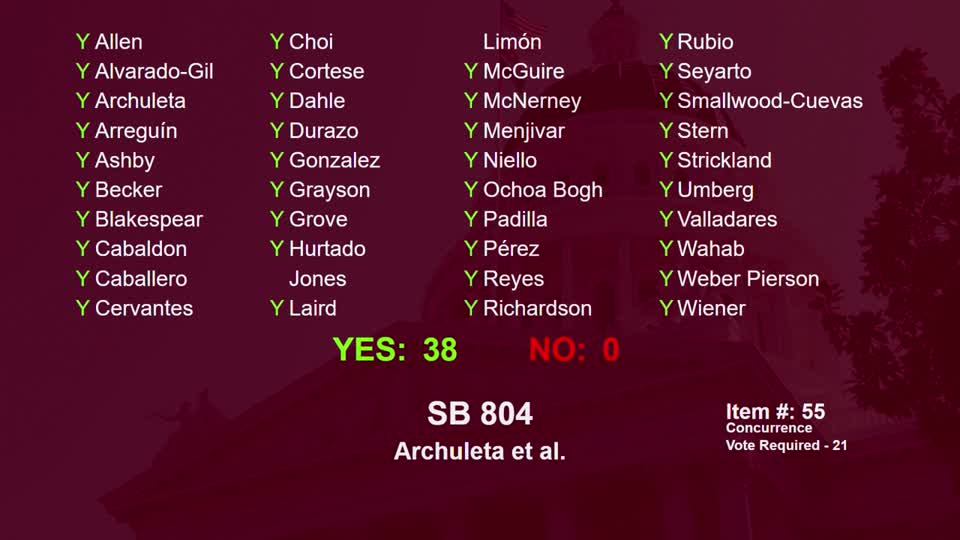 7SEC
Senate Floor
2MIN
Senate Floor
 43SEC
Senate Standing Committee on Appropriations
 10MIN
Senate Standing Committee on Labor, Public Employment and Retirement
 1MIN
Assembly Floor
 11MIN
Assembly Standing Committee on Higher Education
 11MIN
Assembly Standing Committee on Public Employment and Retirement
Bill Author

Bill Co-Author(s):