AB 2152: California Environmental Quality Act: essential local fire station projects: infrastructure project streamlining.
- Session Year: 2025-2026
- House: Assembly
- Latest Version Date: 2026-09-29
Current Status:
Passed
(2026-09-29: Chaptered by Secretary of State - Chapter 767, Statutes of 2026.)
Introduced
In Committee
Awaiting First Chamber Vote
Passed First Chamber
In Committee
Awaiting Second Chamber Vote
Passed Second Chamber
Enacted
The California Environmental Quality Act (CEQA) requires a lead agency, as defined, to prepare, or cause to be prepared, and certify the completion of, an environmental impact report (EIR) on a project that it proposes to carry out or approve that may have a significant effect on the environment or to adopt a negative declaration if it finds that the project will not have that effect. CEQA also requires a lead agency to prepare a mitigated negative declaration for a project that may have a significant effect on the environment if revisions in the project would avoid or mitigate that effect and there is no substantial evidence that the project, as revised, would have a significant effect on the environment.
Existing law authorizes the Governor to certify projects meeting certain requirements as infrastructure projects and provide those certified projects with certain streamlining benefits, including requiring the lead agency to prepare the record of proceedings concurrently with the environmental review process and requiring the resolution of an action or proceeding challenging the certification of an EIR for certified projects or the granting of any project approvals, to the extent feasible, within 270 days of the filing of the record of proceedings with the court, as specified. Existing law requires the lead agency, within 10 days of the certification of an infrastructure project, to provide a public notice of the certification, as provided. If a lead agency fails to approve a project certified as an infrastructure project before January 1, 2033, existing law specifies that the certification is no longer valid. Existing law requires the Office of Land Use and Climate Innovation to make evidence and materials submitted for the certification of a project available to the public on its internet website at least 15 days before the certification of the project.
This bill would also authorize the Governor to certify an essential local fire station project for streamlining as an infrastructure project if the Governor ensures that the project meets specified requirements, including, among others, that the applicant agrees to pay the costs of the trial court and the court of appeal in hearing and deciding any case challenging a lead agencys action on the project, and the applicant agrees to pay the costs of preparing the record of proceedings for the project, as specified. The bill would require a project to meet specified requirements to be eligible for certification as an essential local fire station project, including, among other things, (1) that the project is being undertaken by a city, county, city and county, or local fire agency, as provided, (2) that the project is not located on specified sensitive or hazardous sites, as described, and (3) that the project will employ best practices to avoid or mitigate significant environmental effects, as provided. The bill would require the Office of Land Use and Climate Innovation, for an essential local fire station project, to provide the Governors office with evidence and materials to support consideration of the application no later than 45 days after the Office of Land Use and Climate Innovation posts the evidence and materials submitted for certification on its internet website.
The California Environmental Quality Act (CEQA) requires a lead agency, as defined, to prepare, or cause to be prepared, and certify the completion of, an environmental impact report (EIR) on a project that it proposes to carry out or approve that may have a significant effect on the environment or to adopt a negative declaration if it finds that the project will not have that effect. CEQA also requires a lead agency to prepare a mitigated negative declaration for a project that may have a significant effect on the environment if revisions in the project would avoid or mitigate that effect and there is no substantial evidence that the project, as revised, would have a significant effect on the environment.
Existing law authorizes the Governor to certify projects meeting certain requirements as infrastructure projects and provide those certified projects with certain streamlining benefits, including requiring the lead agency to prepare the record of proceedings concurrently with the environmental review process and requiring the resolution of an action or proceeding challenging the certification of an EIR for certified projects or the granting of any project approvals, to the extent feasible, within 270 days of the filing of the record of proceedings with the court, as specified. Existing law requires the lead agency, within 10 days of the certification of an infrastructure project, to provide a public notice of the certification, as provided. If a lead agency fails to approve a project certified as an infrastructure project before January 1, 2033, existing law specifies that the certification is no longer valid. Existing law requires the Office of Land Use and Climate Innovation to make evidence and materials submitted for the certification of a project available to the public on its internet website at least 15 days before the certification of the project.
This bill would also authorize the Governor to certify an essential local fire station project, as defined, to be eligible for judicial streamlining, if the lead agency, at its discretion, makes specified determinations based upon substantial evidence in the record regarding the project, including the determination that the project for streamlining as an infrastructure project if the Governor ensures that the project meets specified requirements, including, among others, that the applicant agrees to pay the costs of the trial court and the court of appeal in hearing and deciding any case challenging a lead agencys action on the project, and the applicant agrees to pay the costs of preparing the record of proceedings for the project, as specified. The bill would require a project to meet specified requirements to be eligible for certification as an essential local fire station project, including, among other things, (1) that the project is being undertaken by a city, county, city and county, or local fire agency, as provided, (2) that the project is not located on specified sensitive or hazardous sites, as described, and (3) that the project will employ best practices to avoid or mitigate significant environmental effects, as provided. The bill would require the lead agency, upon determination that a project, activity, or approval is eligible for judicial streamlining pursuant to these provisions, to file a notice of determination with specified content with the Office of Land Use and Climate Innovation, as provided. The bill would require the Judicial Council to, on or before July 1, 2027, adopt rules of court that apply to any action or proceeding brought to attack, review, set aside, void, or annul the certification of an environmental impact report, mitigated negative declaration, or negative declaration for an essential local fire station project, including any potential appeals to the court of appeal or the Supreme Court, to be resolved, to the extent feasible, within 270 calendar days of the filing of the certified record of proceedings with the court. for an essential local fire station project, to provide the Governors office with evidence and materials to support consideration of the application no later than 45 days after the Office of Land Use and Climate Innovation posts the evidence and materials submitted for certification on its internet website.
The California Environmental Quality Act (CEQA) requires a lead agency, as defined, to prepare, or cause to be prepared, and certify the completion of, an environmental impact report on a project that it proposes to carry out or approve that may have a significant effect on the environment or to adopt a negative declaration if it finds that the project will not have that effect. CEQA also requires a lead agency to prepare a mitigated negative declaration for a project that may have a significant effect on the environment if revisions in the project would avoid or mitigate that effect and there is no substantial evidence that the project, as revised, would have a significant effect on the environment.
This bill would authorize an essential local fire station project, as defined, to be eligible for judicial streamlining, if the lead agency, at its discretion, makes specified determinations based upon substantial evidence in the record regarding the project, including the determination that the project will employ best practices to avoid or mitigate significant environmental effects, as provided. The bill would require the lead agency, upon determination that a project, activity, or approval is eligible for judicial streamlining pursuant to these provisions, to file a notice of determination with specified content with the Office of Land Use and Climate Innovation, as provided. The bill would require the Judicial Council to, on or before July 1, 2027, adopt rules of court that apply to any action or proceeding brought to attack, review, set aside, void, or annul the certification of an environmental impact report, mitigated negative declaration, or negative declaration for an essential local fire station project, including any potential appeals to the court of appeal or the Supreme Court, to be resolved, to the extent feasible, within 270 calendar days of the filing of the certified record of proceedings with the court. The bill would provide that an environmental impact report for an essential local fire station project that meets specified criteria is not required to include any discussion of alternatives to the local fire station project or the growth-inducing impacts of the local fire station project.
The California Environmental Quality Act (CEQA) requires a lead agency, as defined, to prepare, or cause to be prepared, and certify the completion of, an environmental impact report on a project that it proposes to carry out or approve that may have a significant effect on the environment or to adopt a negative declaration if it finds that the project will not have that effect. CEQA also requires a lead agency to prepare a mitigated negative declaration for a project that may have a significant effect on the environment if revisions in the project would avoid or mitigate that effect and there is no substantial evidence that the project, as revised, would have a significant effect on the environment.
This bill would authorize an essential local fire station project, as defined, to be eligible for judicial streamlining, if the lead agency, at its discretion, makes specified determinations based upon substantial evidence in the record regarding the project, including the determination that the project will employ best practices to avoid or mitigate significant environmental effects, as provided. The bill would require the lead agency, upon determination that a project, activity, or approval is eligible for judicial streamlining pursuant to these provisions, to file a notice of determination with specified content with the Office of Land Use and Climate Innovation, as provided. The bill would require the Judicial Council to, on or before July 1, 2027, adopt rules of court that apply to any action or proceeding brought to attack, review, set aside, void, or annul the certification of an environmental impact report, mitigated negative declaration, or negative declaration for an essential local fire station project, including any potential appeals to the court of appeal or the Supreme Court, to be resolved, to the extent feasible, within 365 270 calendar days of the filing of the certified record of proceedings with the court. The bill would provide that an environmental impact report for an essential local fire station project that meets specified criteria is not required to include any discussion of alternatives to the local fire station project or the growth-inducing impacts of the local fire station project.
The California Environmental Quality Act (CEQA) requires a lead agency, as defined, to prepare, or cause to be prepared, and certify the completion of, an environmental impact report on a project that it proposes to carry out or approve that may have a significant effect on the environment or to adopt a negative declaration if it finds that the project will not have that effect. CEQA also requires a lead agency to prepare a mitigated negative declaration for a project that may have a significant effect on the environment if revisions in the project would avoid or mitigate that effect and there is no substantial evidence that the project, as revised, would have a significant effect on the environment.
This bill would authorize an essential local fire station project, as defined, to be eligible for judicial streamlining, if the lead agency, at its discretion, makes specified determinations based upon substantial evidence in the record regarding the project, including the determination that the project will employ best practices to avoid or mitigate significant environmental effects, as provided. The bill would require the lead agency, upon determination that a project, activity, or approval is eligible for judicial streamlining pursuant to these provisions, to file a notice of determination with specified content with the Office of Land Use and Climate Innovation, as provided. The bill would require the Judicial Council to, on or before July 1, 2027, adopt rules of court that apply to any action or proceeding brought to attack, review, set aside, void, or annul the certification of an environmental impact report, mitigated negative declaration, or negative declaration for an essential local fire station project, including any potential appeals to the court of appeal or the Supreme Court, to be resolved, to the extent feasible, within 365 calendar days of the filing of the certified record of proceedings with the court.
The California Environmental Quality Act (CEQA) requires a lead agency, as defined, to prepare, or cause to be prepared, and certify the completion of, an environmental impact report on a project that it proposes to carry out or approve that may have a significant effect on the environment or to adopt a negative declaration if it finds that the project will not have that effect. CEQA also requires a lead agency to prepare a mitigated negative declaration for a project that may have a significant effect on the environment if revisions in the project would avoid or mitigate that effect and there is no substantial evidence that the project, as revised, would have a significant effect on the environment.
This bill would exempt from the requirements of CEQA a project, activity, or approval necessary for, or incidental to, the planning, design, site acquisition, construction, rehabilitation, or maintenance of a fire station of a public fire agency if the project is not located at certain sites and all construction, rehabilitation, and maintenance contracts in excess of $50,000 for the project are covered by a project labor agreement, as defined. The bill would require the lead agency, upon a determination that a project, activity, or approval is exempt from CEQA pursuant to these provisions, to file a notice of exemption with specified content with the Office of Land Use and Climate Innovation, as provided. Because the bill would impose additional duties on a lead agency in regards to the exemption, this bill would impose a state-mandated local program.The California Constitution requires the state to reimburse local agencies and school districts for certain costs mandated by the state. Statutory provisions establish procedures for making that reimbursement.This bill would provide that no reimbursement is required by this act for a specified reason.This bill would authorize an essential local fire station project, as defined, to be eligible for judicial streamlining, if the lead agency, at its discretion, makes specified determinations based upon substantial evidence in the record regarding the project, including the determination that the project will employ best practices to avoid or mitigate significant environmental effects, as provided. The bill would require the lead agency, upon determination that a project, activity, or approval is eligible for judicial streamlining pursuant to these provisions, to file a notice of determination with specified content with the Office of Land Use and Climate Innovation, as provided. The bill would require the Judicial Council to, on or before July 1, 2027, adopt rules of court that apply to any action or proceeding brought to attack, review, set aside, void, or annul the certification of an environmental impact report, mitigated negative declaration, or negative declaration for an essential local fire station project, including any potential appeals to the court of appeal or the Supreme Court, to be resolved, to the extent feasible, within 365 calendar days of the filing of the certified record of proceedings with the court.
The California Environmental Quality Act (CEQA) requires a lead agency, as defined, to prepare, or cause to be prepared, and certify the completion of, an environmental impact report on a project that it proposes to carry out or approve that may have a significant effect on the environment or to adopt a negative declaration if it finds that the project will not have that effect. CEQA also requires a lead agency to prepare a mitigated negative declaration for a project that may have a significant effect on the environment if revisions in the project would avoid or mitigate that effect and there is no substantial evidence that the project, as revised, would have a significant effect on the environment.
This bill would exempt from the requirements of CEQA a project, activity, or approval necessary for, or incidental to, the planning, design, site acquisition, construction, rehabilitation, or maintenance of a fire station of a public fire agency if the project is not located at certain sites and all construction, rehabilitation, and maintenance contracts in excess of $50,000 for the project are covered by a project labor agreement, as defined. The bill would require the lead agency, upon a determination that a project, activity, or approval is exempt from CEQA pursuant to these provisions, to file a notice of exemption with specified content with the Office of Land Use and Climate Innovation, as provided. Because the bill would impose additional duties on a lead agency in regards to the exemption, this bill would impose a state-mandated local program.
The California Constitution requires the state to reimburse local agencies and school districts for certain costs mandated by the state. Statutory provisions establish procedures for making that reimbursement.
This bill would provide that no reimbursement is required by this act for a specified reason.
For purposes of this chapter, the following definitions apply:
(a)Applicant means a public or private entity or its affiliates, or a person or entity that undertakes a public works project, that proposes a project and its successors, heirs, and assignees.
(b)Disadvantaged community means an area identified by the California Environmental Protection Agency pursuant to Section 39711 of the Health and Safety Code or an area identified as a disadvantaged unincorporated community pursuant to Section 65302.10 of the Government Code.
(c)Electrical transmission facility project means a project for the construction and operation of an electrical transmission facility that meets either of the following:
(1)An electrical transmission facility project identified by the Independent System Operator in its annual transmission planning process that meets either of the following criteria:
(A)The project will facilitate delivery of electricity from renewable energy resources or zero-carbon resources.
(B)The project will facilitate delivery of electricity from energy storage projects.
(2)An electrical transmission facility project identified by a local publicly owned electric utility that would satisfy a transmission expansion need approved by the governing body of the local publicly owned electric utility and that meets either of the following criteria:
(A)The project will facilitate delivery of electricity from renewable energy resources or zero-carbon resources.
(B)The project will facilitate delivery of electricity from energy storage projects.
(d)(1)Energy infrastructure project means any of the following:
(A)An eligible renewable energy resource, as defined in Section 399.12 of the Public Utilities Code, excluding resources that combust biomass fuels.
(B)New energy storage systems of 20 megawatts or more, that are capable of discharging for at least two hours, provided that a pumped hydro facility may qualify only if it is less than or equal to 500 megawatts and has been directly appropriated funding by the state before January 1, 2023.
(C)A project for which the applicant has certified that a capital investment of at least two hundred fifty million dollars ($250,000,000) made over a period of five years and the project is for either of the following:
(i)The manufacture, production, or assembly of an energy storage system or component manufacturing, wind system or component manufacturing, and solar photovoltaic energy system or component manufacturing.
(ii)The manufacture, production, or assembly of specialized products, components, or systems that are integral to renewable energy or energy storage technologies.
(D)An electrical transmission facility project, provided that nothing in this chapter affects the jurisdiction of the California Coastal Commission pursuant to Division 20 (commencing with Section 30000) to regulate such projects if located in the coastal zone.
(E)A hydrogen production facility and associated onsite storage and processing facilities that do not derive hydrogen from a fossil fuel feedstock and that receive funding from any of the following:
(i)The Hydrogen Program established pursuant to Section 25664.1.
(ii)Section 91530, as added by the Safe Drinking Water, Wildfire Prevention, Drought Preparedness, and Clean Air Bond Act of 2024 (Section 2 of Chapter 83 of the Statutes of 2024 (Senate Bill No. 867)), if that act is approved by the voters at the November 5, 2024, statewide general election.
(iii)The Alliance for Renewable Clean Hydrogen Energy Systems (ARCHES) authorized by Article 15 (commencing with Section 12100.160) of Chapter 1.6 of Part 2 of Division 3 of Title 2 of the Government Code, as awarded by the United States Department of Energy Office of Clean Energy Demonstrations.
(2)Any project to develop a facility within the meaning of subdivision (b) of Section 25545 shall meet the requirements of Sections 25545.3.3 and 25545.3.5, except that those requirements shall also apply to solar photovoltaic and terrestrial wind electrical generating power plants with a generating capacity of between 20 and 50 megawatts and energy storage projects capable of storing between 80 and 200 megawatt hours of electrical energy.
(e)Essential local fire station project means a project that meets all of the following requirements:
(1)The project is being undertaken by a city, county, city and county, or local fire agency to plan, design, acquire property for, and construct or replace a fire station.
(2)The project is not located on any of the following sites:
(A)Prime farmland, farmland of statewide importance, or unique farmland as designated by the Department of Conservation.
(B)Wetlands, as defined in Section 328.3(c)(1) of Title 33 of the Code of Federal Regulations.
(C)A hazardous waste site that is included on any list compiled pursuant to Section 65962.5 of the Government Code.
(D)A floodplain, as mapped by the Federal Emergency Management Agency, unless the lead agency determines that the project includes adequate flood protection.
(E)Within a delineated earthquake fault zone, as determined by the State Geologist, in any official maps published by the State Geologist, unless the development complies with applicable seismic protection building code standards adopted by the California Building Standards Commission under the California Building Standards Law (Part 2.5 (commencing with Section 18901) of Division 13 of the Health and Safety Code), and by any local building department under Chapter 12.2 (commencing with Section 8875) of Division 1 of Title 2 of the Government Code.
(F)Lands identified for conservation in an adopted natural community conservation plan pursuant to the Natural Community Conservation Planning Act (Chapter 10 (commencing with Section 2800) of Division 3 of the Fish and Game Code), a habitat conservation plan pursuant to the federal Endangered Species Act of 1973 (16 U.S.C. Sec. 1531 et seq.), or other adopted natural resource protection plan.
(G)Habitat for protected species identified as candidate species, sensitive species, or species of special status by state or federal agencies, fully protected species, or species protected by the federal Endangered Species Act of 1973 (16 U.S.C. Sec. 1531 et seq.), the California Endangered Species Act (Chapter 1.5 (commencing with Section 2050) of Division 3 of the Fish and Game Code), or the Native Plant Protection Act (Chapter 10 (commencing with Section 1900) of Division 2 of the Fish and Game Code).
(H)Lands under conservation easement.
(3)The project will employ best practices, as compared to similar fire station projects previously reviewed under this division, to avoid or mitigate significant environmental effects, including those environmental effects from noise, traffic, and hazardous materials.
(4)The projects construction contracts are covered by a project labor agreement, as that term is defined in Section 2500 of the Public Contract Code.
(f)Infrastructure project means a project that is certified pursuant to Sections 21189.82 and 21189.83 as any of the following:
(1)An energy infrastructure project.
(2)A semiconductor or microelectronic project.
(3)A transportation-related project.
(4)A water-related project.
(5)An essential local fire station project.
(g)Semiconductor or microelectronic project means a project that meets the requirements related to investment in new or expanded facilities and is awarded funds under the federal Creating Helpful Incentives to Produce Semiconductors Act of 2022 (Public Law 117-167), commonly known as the CHIPS Act of 2022, and the requirements of Section 21183.5.
(h)(1)Transportation-related project means a transportation infrastructure project that advances one or more of, and does not conflict with, the following goals related to the Climate Action Plan for Transportation Infrastructure adopted by the Transportation Agency:
(A)Build toward an integrated, statewide rail and transit network.
(B)Invest in networks of safe and accessible bicycle and pedestrian infrastructure.
(C)Include investments in light-, medium-, and heavy-duty zero-emission vehicle infrastructure.
(D)Develop a zero-emission freight transportation system.
(E)Reduce public health and economic harms and maximize community benefits.
(F)Make safety improvements to reduce fatalities and severe injuries of all users towards zero.
(G)Assess and integrate assessments of physical climate risk.
(H)Promote projects that do not significantly increase passenger vehicle travel.
(I)Promote compact infill development while protecting residents and businesses from displacement.
(J)Protect natural and working lands.
(2)Transportation-related projects are public works for the purposes of Section 1720 of the Labor Code and shall comply with the applicable provisions of Chapter 1 (commencing with Section 1720) of Part 7 of Division 2 of the Labor Code.
(i)(1)Water-related project means any of the following:
(A)A project that is approved to implement a groundwater sustainability plan that the Department of Water Resources has determined is in compliance with Sections 10727.2 and 10727.4 of the Water Code or to implement an interim groundwater sustainability plan adopted pursuant to Section 10735.6 of the Water Code.
(B)(i)A water storage project funded by the California Water Commission pursuant to Chapter 8 (commencing with Section 79750) of Division 26.7 of the Water Code.
(ii)In addition to clause (i), the applicant shall demonstrate that the project will minimize the intake or diversion of water except during times of surplus water and prioritizes the discharge of water for ecological benefits or to mitigate an emergency, including, but not limited to, dam repair, levee repair, wetland restoration, marshland restoration, or habitat preservation, or other public benefits described in Section 79753 of the Water Code.
(C)Projects for the development of recycled water, as defined in Section 13050 of the Water Code.
(D)Contaminant and salt removal projects, including groundwater desalination and associated treatment, storage, conveyance, and distribution facilities. This shall not include seawater desalination.
(E)Projects exclusively for canal or other conveyance maintenance and repair.
(2)Water-related projects are public works for purposes of Section 1720 of the Labor Code and shall comply with the applicable provisions of Chapter 1 (commencing with Section 1720) of Part 7 of Division 2 of the Labor Code.
(3)Water-related project does not include the design or construction of through-Delta conveyance facilities of the Sacramento-San Joaquin Delta.
SEC. 2.Section 21189.81.1 of the Public Resources Code is amended to read:21189.81.1.(a)For purposes of subdivision (d) of Section 21189.81, an energy infrastructure project includes the San Vicente Energy Storage Facility project proposed by the San Diego County Water Authority for pumped energy storage located in the eastern portion of the County of San Diego.
(b)For purposes of subdivision (i) of Section 21189.81, a water-related project includes a project for the repair, rehabilitation, or replacement of the South Bay Sewage Treatment Plant in the County of San Diego, operated by the International Boundary and Water Commission.
SEC. 3.Section 21189.82 of the Public Resources Code is amended to read:21189.82.(a)(1)(A)The Governor may certify a project as an energy infrastructure project for purposes of this chapter if the project meets the requirements of subdivision (d) of Section 21189.81.
(B)In addition to subparagraph (A), if the applicant is not the lead agency, the Governor shall ensure all of the following:
(i)The applicant agrees to pay the costs of the trial court and the court of appeal in hearing and deciding any case challenging a lead agencys action on a certified project under this division, including payment of the costs for the appointment of a special master if deemed appropriate by the court, in a form and manner as provided in the rule of court adopted by the Judicial Council under Section 21189.85.
(ii)The applicant agrees to pay the costs of preparing the record of proceedings for the project concurrent with the review and consideration of the project under this division, in a form and manner specified by the lead agency for the project.
(iii)For a project for which environmental review has commenced, the applicant demonstrates that the record of proceedings is being prepared in accordance with Section 21189.86.
(2)(A)The Governor may certify a project as a semiconductor or microelectronic project for purposes of this chapter if the project meets the requirements of subdivision (g) of Section 21189.81.
(B)In addition to subparagraph (A), if the applicant is not the lead agency, the Governor shall ensure all of the following:
(i)The applicant agrees to pay the costs of the trial court and the court of appeal in hearing and deciding any case challenging a lead agencys action on a certified project under this division, including payment of the costs for the appointment of a special master if deemed appropriate by the court, in a form and manner as provided in the rule of court adopted by the Judicial Council under Section 21189.85.
(ii)The applicant agrees to pay the costs of preparing the record of proceedings for the project concurrent with the review and consideration of the project under this division, in a form and manner specified by the lead agency for the project.
(iii)For a project for which environmental review has commenced, the applicant demonstrates that the record of proceedings is being prepared in accordance with Section 21189.86.
(3)The Governor may certify up to 20 transportation-related projects for purposes of this chapter, including up to 10 state projects proposed by the Department of Transportation and up to 10 local or regional projects, that meet the requirements of subdivision (h) of Section 21189.81.
(4)(A)The Governor may certify a project as a water-related project for purposes of this chapter if the project meets the requirements of subdivision (i) of Section 21189.81.
(B)In addition to subparagraph (A), the Governor shall ensure all of the following:
(i)The applicant agrees to pay the costs of the trial court and the court of appeal in hearing and deciding any case challenging a lead agencys action on a certified project under this division, including payment of the costs for the appointment of a special master if deemed appropriate by the court, in a form and manner as provided in the rule of court adopted by the Judicial Council under Section 21189.85.
(ii)The applicant agrees to pay the costs of preparing the record of proceedings for the project concurrent with the review and consideration of the project under this division, in a form and manner specified by the lead agency for the project.
(iii)For a project for which environmental review has commenced, the applicant demonstrates that the record of proceedings is being prepared in accordance with Section 21189.86.
(C)In addition to subparagraphs (A) and (B), the Governor may certify a project as a water-related project for purposes of this chapter only if the Governor finds that greenhouse gas emissions resulting from the project will be mitigated to the extent feasible.
(5)(A)The Governor may certify a project as an essential local fire station project for purposes of this chapter if the project meets the requirements of subdivision (e) of Section 21189.81.
(B)In addition to subparagraph (A), the Governor shall ensure all of the following:
(i)The applicant agrees to pay the costs of the trial court and the court of appeal in hearing and deciding any case challenging a lead agencys action on a certified project under this division, including payment of the costs for the appointment of a special master if deemed appropriate by the court, in a form and manner as provided in the rule of court adopted by the Judicial Council under Section 21189.85.
(ii)The applicant agrees to pay the costs of preparing the record of proceedings for the project concurrent with the review and consideration of the project under this division, in a form and manner specified by the lead agency for the project.
(iii)For a project for which environmental review has commenced, the applicant demonstrates that the record of proceedings is being prepared in accordance with Section 21189.86.
(b)The Office of Land Use and Climate Innovation may consult with other state agencies on and may issue guidelines regarding applications for and the certification of projects under this chapter. Any guidelines issued under this subdivision are not subject to the rulemaking provisions of the Administrative Procedure Act (Chapter 3.5 (commencing with Section 11340) of Part 1 of Division 3 of Title 2 of the Government Code).
(c)An applicant for certification of an infrastructure project under this chapter shall do all of the following:
(1)Avoid or minimize significant environmental impacts in any disadvantaged community.
(2)If measures are required pursuant to this division to mitigate significant environmental impacts in a disadvantaged community, mitigate those impacts consistent with this division, including Section 21002. Mitigation measures required under this subdivision shall be undertaken in, and directly benefit, the affected community.
(3)Enter into a binding and enforceable agreement to comply with this subdivision in its application to the Governor and to the lead agency prior to the agencys certification of the environmental impact report for the project.
(d)The Office of Land Use and Climate Innovation shall make evidence and materials submitted for the certification of a project available to the public on its internet website at least 15 days before the certification of the project.
(e)The Governors decision to certify a project shall not be subject to judicial review.
(f)For projects described in subdivision (e) of Section 21189.81, the Office of Land Use and Climate Innovation shall provide the Governors office with evidence and materials to support consideration of the application no later than 45 days after the Office of Land Use and Climate Innovation posts the evidence and materials on its internet website pursuant to subdivision (d).
For purposes of this chapter, the following definitions apply:
(a)Applicant means a public or private entity or its affiliates, or a person or entity that undertakes a public works project, that proposes a project and its successors, heirs, and assignees.
(b)Disadvantaged community means an area identified by the California Environmental Protection Agency pursuant to Section 39711 of the Health and Safety Code or an area identified as a disadvantaged unincorporated community pursuant to Section 65302.10 of the Government Code.
(c)Electrical transmission facility project means a project for the construction and operation of an electrical transmission facility that meets either of the following:
(1)An electrical transmission facility project identified by the Independent System Operator in its annual transmission planning process that meets either of the following criteria:
(A)The project will facilitate delivery of electricity from renewable energy resources or zero-carbon resources.
(B)The project will facilitate delivery of electricity from energy storage projects.
(2)An electrical transmission facility project identified by a local publicly owned electric utility that would satisfy a transmission expansion need approved by the governing body of the local publicly owned electric utility and that meets either of the following criteria:
(A)The project will facilitate delivery of electricity from renewable energy resources or zero-carbon resources.
(B)The project will facilitate delivery of electricity from energy storage projects.
(d)(1)Energy infrastructure project means any of the following:
(A)An eligible renewable energy resource, as defined in Section 399.12 of the Public Utilities Code, excluding resources that combust biomass fuels.
(B)New energy storage systems of 20 megawatts or more, that are capable of discharging for at least two hours, provided that a pumped hydro facility may qualify only if it is less than or equal to 500 megawatts and has been directly appropriated funding by the state before January 1, 2023.
(C)A project for which the applicant has certified that a capital investment of at least two hundred fifty million dollars ($250,000,000) made over a period of five years and the project is for either of the following:
(i)The manufacture, production, or assembly of an energy storage system or component manufacturing, wind system or component manufacturing, and solar photovoltaic energy system or component manufacturing.
(ii)The manufacture, production, or assembly of specialized products, components, or systems that are integral to renewable energy or energy storage technologies.
(D)An electrical transmission facility project, provided that nothing in this chapter affects the jurisdiction of the California Coastal Commission pursuant to Division 20 (commencing with Section 30000) to regulate such projects if located in the coastal zone.
(E)A hydrogen production facility and associated onsite storage and processing facilities that do not derive hydrogen from a fossil fuel feedstock and that receive funding from any of the following:
(i)The Hydrogen Program established pursuant to Section 25664.1.
(ii)Section 91530, as added by the Safe Drinking Water, Wildfire Prevention, Drought Preparedness, and Clean Air Bond Act of 2024 (Section 2 of Chapter 83 of the Statutes of 2024 (Senate Bill No. 867)), if that act is approved by the voters at the November 5, 2024, statewide general election.
(iii)The Alliance for Renewable Clean Hydrogen Energy Systems (ARCHES) authorized by Article 15 (commencing with Section 12100.160) of Chapter 1.6 of Part 2 of Division 3 of Title 2 of the Government Code, as awarded by the United States Department of Energy Office of Clean Energy Demonstrations.
(2)Any project to develop a facility within the meaning of subdivision (b) of Section 25545 shall meet the requirements of Sections 25545.3.3 and 25545.3.5, except that those requirements shall also apply to solar photovoltaic and terrestrial wind electrical generating power plants with a generating capacity of between 20 and 50 megawatts and energy storage projects capable of storing between 80 and 200 megawatt hours of electrical energy.
(e)Essential local fire station project means a project that meets all of the following requirements:
(1)The project is being undertaken by a city, county, city and county, or local fire agency to plan, design, acquire property for, and construct or replace a fire station.
(2)The project is not located on any of the following sites:
(A)Prime farmland, farmland of statewide importance, or unique farmland as designated by the Department of Conservation.
(B)Wetlands, as defined in Section 328.3(c)(1) of Title 33 of the Code of Federal Regulations.
(C)A hazardous waste site that is included on any list compiled pursuant to Section 65962.5 of the Government Code.
(D)A floodplain, as mapped by the Federal Emergency Management Agency, unless the lead agency determines that the project includes adequate flood protection.
(E)Within a delineated earthquake fault zone, as determined by the State Geologist, in any official maps published by the State Geologist, unless the development complies with applicable seismic protection building code standards adopted by the California Building Standards Commission under the California Building Standards Law (Part 2.5 (commencing with Section 18901) of Division 13 of the Health and Safety Code), and by any local building department under Chapter 12.2 (commencing with Section 8875) of Division 1 of Title 2 of the Government Code.
(F)Lands identified for conservation in an adopted natural community conservation plan pursuant to the Natural Community Conservation Planning Act (Chapter 10 (commencing with Section 2800) of Division 3 of the Fish and Game Code), a habitat conservation plan pursuant to the federal Endangered Species Act of 1973 (16 U.S.C. Sec. 1531 et seq.), or other adopted natural resource protection plan.
(G)Habitat for protected species identified as candidate species, sensitive species, or species of special status by state or federal agencies, fully protected species, or species protected by the federal Endangered Species Act of 1973 (16 U.S.C. Sec. 1531 et seq.), the California Endangered Species Act (Chapter 1.5 (commencing with Section 2050) of Division 3 of the Fish and Game Code), or the Native Plant Protection Act (Chapter 10 (commencing with Section 1900) of Division 2 of the Fish and Game Code).
(H)Lands under conservation easement.
(3)The project will employ best practices, as compared to similar fire station projects previously reviewed under this division, to avoid or mitigate significant environmental effects, including those environmental effects from noise, traffic, and hazardous materials.
(4)The projects construction contracts are covered by a project labor agreement, as that term is defined in Section 2500 of the Public Contract Code.
(f)Infrastructure project means a project that is certified pursuant to Sections 21189.82 and 21189.83 as any of the following:
(1)An energy infrastructure project.
(2)A semiconductor or microelectronic project.
(3)A transportation-related project.
(4)A water-related project.
(5)An essential local fire station project.
(g)Semiconductor or microelectronic project means a project that meets the requirements related to investment in new or expanded facilities and is awarded funds under the federal Creating Helpful Incentives to Produce Semiconductors Act of 2022 (Public Law 117-167), commonly known as the CHIPS Act of 2022, and the requirements of Section 21183.5.
(h)(1)Transportation-related project means a transportation infrastructure project that advances one or more of, and does not conflict with, the following goals related to the Climate Action Plan for Transportation Infrastructure adopted by the Transportation Agency:
(A)Build toward an integrated, statewide rail and transit network.
(B)Invest in networks of safe and accessible bicycle and pedestrian infrastructure.
(C)Include investments in light-, medium-, and heavy-duty zero-emission vehicle infrastructure.
(D)Develop a zero-emission freight transportation system.
(E)Reduce public health and economic harms and maximize community benefits.
(F)Make safety improvements to reduce fatalities and severe injuries of all users towards zero.
(G)Assess and integrate assessments of physical climate risk.
(H)Promote projects that do not significantly increase passenger vehicle travel.
(I)Promote compact infill development while protecting residents and businesses from displacement.
(J)Protect natural and working lands.
(2)Transportation-related projects are public works for the purposes of Section 1720 of the Labor Code and shall comply with the applicable provisions of Chapter 1 (commencing with Section 1720) of Part 7 of Division 2 of the Labor Code.
(i)(1)Water-related project means any of the following:
(A)A project that is approved to implement a groundwater sustainability plan that the Department of Water Resources has determined is in compliance with Sections 10727.2 and 10727.4 of the Water Code or to implement an interim groundwater sustainability plan adopted pursuant to Section 10735.6 of the Water Code.
(B)(i)A water storage project funded by the California Water Commission pursuant to Chapter 8 (commencing with Section 79750) of Division 26.7 of the Water Code.
(ii)In addition to clause (i), the applicant shall demonstrate that the project will minimize the intake or diversion of water except during times of surplus water and prioritizes the discharge of water for ecological benefits or to mitigate an emergency, including, but not limited to, dam repair, levee repair, wetland restoration, marshland restoration, or habitat preservation, or other public benefits described in Section 79753 of the Water Code.
(C)Projects for the development of recycled water, as defined in Section 13050 of the Water Code.
(D)Contaminant and salt removal projects, including groundwater desalination and associated treatment, storage, conveyance, and distribution facilities. This shall not include seawater desalination.
(E)Projects exclusively for canal or other conveyance maintenance and repair.
(2)Water-related projects are public works for purposes of Section 1720 of the Labor Code and shall comply with the applicable provisions of Chapter 1 (commencing with Section 1720) of Part 7 of Division 2 of the Labor Code.
(3)Water-related project does not include the design or construction of through-Delta conveyance facilities of the Sacramento-San Joaquin Delta.
SEC. 2.Section 21189.81.1 of the Public Resources Code is amended to read:21189.81.1.(a)For purposes of subdivision (d) of Section 21189.81, an energy infrastructure project includes the San Vicente Energy Storage Facility project proposed by the San Diego County Water Authority for pumped energy storage located in the eastern portion of the County of San Diego.
(b)For purposes of subdivision (i) of Section 21189.81, a water-related project includes a project for the repair, rehabilitation, or replacement of the South Bay Sewage Treatment Plant in the County of San Diego, operated by the International Boundary and Water Commission.
SEC. 3.Section 21189.82 of the Public Resources Code is amended to read:21189.82.(a)(1)(A)The Governor may certify a project as an energy infrastructure project for purposes of this chapter if the project meets the requirements of subdivision (d) of Section 21189.81.
(B)In addition to subparagraph (A), if the applicant is not the lead agency, the Governor shall ensure all of the following:
(i)The applicant agrees to pay the costs of the trial court and the court of appeal in hearing and deciding any case challenging a lead agencys action on a certified project under this division, including payment of the costs for the appointment of a special master if deemed appropriate by the court, in a form and manner as provided in the rule of court adopted by the Judicial Council under Section 21189.85.
(ii)The applicant agrees to pay the costs of preparing the record of proceedings for the project concurrent with the review and consideration of the project under this division, in a form and manner specified by the lead agency for the project.
(iii)For a project for which environmental review has commenced, the applicant demonstrates that the record of proceedings is being prepared in accordance with Section 21189.86.
(2)(A)The Governor may certify a project as a semiconductor or microelectronic project for purposes of this chapter if the project meets the requirements of subdivision (g) of Section 21189.81.
(B)In addition to subparagraph (A), if the applicant is not the lead agency, the Governor shall ensure all of the following:
(i)The applicant agrees to pay the costs of the trial court and the court of appeal in hearing and deciding any case challenging a lead agencys action on a certified project under this division, including payment of the costs for the appointment of a special master if deemed appropriate by the court, in a form and manner as provided in the rule of court adopted by the Judicial Council under Section 21189.85.
(ii)The applicant agrees to pay the costs of preparing the record of proceedings for the project concurrent with the review and consideration of the project under this division, in a form and manner specified by the lead agency for the project.
(iii)For a project for which environmental review has commenced, the applicant demonstrates that the record of proceedings is being prepared in accordance with Section 21189.86.
(3)The Governor may certify up to 20 transportation-related projects for purposes of this chapter, including up to 10 state projects proposed by the Department of Transportation and up to 10 local or regional projects, that meet the requirements of subdivision (h) of Section 21189.81.
(4)(A)The Governor may certify a project as a water-related project for purposes of this chapter if the project meets the requirements of subdivision (i) of Section 21189.81.
(B)In addition to subparagraph (A), the Governor shall ensure all of the following:
(i)The applicant agrees to pay the costs of the trial court and the court of appeal in hearing and deciding any case challenging a lead agencys action on a certified project under this division, including payment of the costs for the appointment of a special master if deemed appropriate by the court, in a form and manner as provided in the rule of court adopted by the Judicial Council under Section 21189.85.
(ii)The applicant agrees to pay the costs of preparing the record of proceedings for the project concurrent with the review and consideration of the project under this division, in a form and manner specified by the lead agency for the project.
(iii)For a project for which environmental review has commenced, the applicant demonstrates that the record of proceedings is being prepared in accordance with Section 21189.86.
(C)In addition to subparagraphs (A) and (B), the Governor may certify a project as a water-related project for purposes of this chapter only if the Governor finds that greenhouse gas emissions resulting from the project will be mitigated to the extent feasible.
(5)(A)The Governor may certify a project as an essential local fire station project for purposes of this chapter if the project meets the requirements of subdivision (e) of Section 21189.81.
(B)In addition to subparagraph (A), if the applicant is not the lead agency, the Governor shall ensure all of the following:
(i)The applicant agrees to pay the costs of the trial court and the court of appeal in hearing and deciding any case challenging a lead agencys action on a certified project under this division, including payment of the costs for the appointment of a special master if deemed appropriate by the court, in a form and manner as provided in the rule of court adopted by the Judicial Council under Section 21189.85.
(ii)The applicant agrees to pay the costs of preparing the record of proceedings for the project concurrent with the review and consideration of the project under this division, in a form and manner specified by the lead agency for the project.
(iii)For a project for which environmental review has commenced, the applicant demonstrates that the record of proceedings is being prepared in accordance with Section 21189.86.
(b)The Office of Land Use and Climate Innovation may consult with other state agencies on and may issue guidelines regarding applications for and the certification of projects under this chapter. Any guidelines issued under this subdivision are not subject to the rulemaking provisions of the Administrative Procedure Act (Chapter 3.5 (commencing with Section 11340) of Part 1 of Division 3 of Title 2 of the Government Code).
(c)An applicant for certification of an infrastructure project under this chapter shall do all of the following:
(1)Avoid or minimize significant environmental impacts in any disadvantaged community.
(2)If measures are required pursuant to this division to mitigate significant environmental impacts in a disadvantaged community, mitigate those impacts consistent with this division, including Section 21002. Mitigation measures required under this subdivision shall be undertaken in, and directly benefit, the affected community.
(3)Enter into a binding and enforceable agreement to comply with this subdivision in its application to the Governor and to the lead agency prior to the agencys certification of the environmental impact report for the project.
(d)The Office of Land Use and Climate Innovation shall make evidence and materials submitted for the certification of a project available to the public on its internet website at least 15 days before the certification of the project.
(e)The Governors decision to certify a project shall not be subject to judicial review.
(f)For projects described in subdivision (e) of Section 21189.81, the Office of Land Use and Climate Innovation shall provide the Governors office with evidence and materials to support consideration of the application no later than 45 days after the Office of Land Use and Climate Innovation posts the evidence and materials on its internet website pursuant to subdivision (d).
For purposes of this chapter, the following definitions apply:
(a)Applicant means a public or private entity or its affiliates, or a person or entity that undertakes a public works project, that proposes a project and its successors, heirs, and assignees.
(b)Disadvantaged community means an area identified by the California Environmental Protection Agency pursuant to Section 39711 of the Health and Safety Code or an area identified as a disadvantaged unincorporated community pursuant to Section 65302.10 of the Government Code.
(c)Electrical transmission facility project means a project for the construction and operation of an electrical transmission facility that meets either of the following:
(1)An electrical transmission facility project identified by the Independent System Operator in its annual transmission planning process that meets either of the following criteria:
(A)The project will facilitate delivery of electricity from renewable energy resources or zero-carbon resources.
(B)The project will facilitate delivery of electricity from energy storage projects.
(2)An electrical transmission facility project identified by a local publicly owned electric utility that would satisfy a transmission expansion need approved by the governing body of the local publicly owned electric utility and that meets either of the following criteria:
(A)The project will facilitate delivery of electricity from renewable energy resources or zero-carbon resources.
(B)The project will facilitate delivery of electricity from energy storage projects.
(d)(1)Energy infrastructure project means any of the following:
(A)An eligible renewable energy resource, as defined in Section 399.12 of the Public Utilities Code, excluding resources that combust biomass fuels.
(B)New energy storage systems of 20 megawatts or more, that are capable of discharging for at least two hours, provided that a pumped hydro facility may qualify only if it is less than or equal to 500 megawatts and has been directly appropriated funding by the state before January 1, 2023.
(C)A project for which the applicant has certified that a capital investment of at least two hundred fifty million dollars ($250,000,000) made over a period of five years and the project is for either of the following:
(i)The manufacture, production, or assembly of an energy storage system or component manufacturing, wind system or component manufacturing, and solar photovoltaic energy system or component manufacturing.
(ii)The manufacture, production, or assembly of specialized products, components, or systems that are integral to renewable energy or energy storage technologies.
(D)An electrical transmission facility project, provided that nothing in this chapter affects the jurisdiction of the California Coastal Commission pursuant to Division 20 (commencing with Section 30000) to regulate such projects if located in the coastal zone.
(E)A hydrogen production facility and associated onsite storage and processing facilities that do not derive hydrogen from a fossil fuel feedstock and that receive funding from any of the following:
(i)The Hydrogen Program established pursuant to Section 25664.1.
(ii)Section 91530, as added by the Safe Drinking Water, Wildfire Prevention, Drought Preparedness, and Clean Air Bond Act of 2024 (Section 2 of Chapter 83 of the Statutes of 2024 (Senate Bill No. 867)), if that act is approved by the voters at the November 5, 2024, statewide general election.
(iii)The Alliance for Renewable Clean Hydrogen Energy Systems (ARCHES) authorized by Article 15 (commencing with Section 12100.160) of Chapter 1.6 of Part 2 of Division 3 of Title 2 of the Government Code, as awarded by the United States Department of Energy Office of Clean Energy Demonstrations.
(2)Any project to develop a facility within the meaning of subdivision (b) of Section 25545 shall meet the requirements of Sections 25545.3.3 and 25545.3.5, except that those requirements shall also apply to solar photovoltaic and terrestrial wind electrical generating power plants with a generating capacity of between 20 and 50 megawatts and energy storage projects capable of storing between 80 and 200 megawatt hours of electrical energy.
(e)Essential local fire station project means a project that meets all of the following requirements:
(1)The project is being undertaken by a city, county, city and county, or local fire agency to plan, design, acquire property for, and construct or replace a fire station.
(2)The project is not located on any of the following sites:
(A)Prime farmland, farmland of statewide importance, or unique farmland as designated by the Department of Conservation.
(B)Wetlands, as defined in Section 328.3(c)(1) of Title 33 of the Code of Federal Regulations.
(C)A hazardous waste site that is included on any list compiled pursuant to Section 65962.5 of the Government Code.
(D)A floodplain, as mapped by the Federal Emergency Management Agency, unless the lead agency determines that the project includes adequate flood protection.
(E)Within a delineated earthquake fault zone, as determined by the State Geologist, in any official maps published by the State Geologist, unless the development complies with applicable seismic protection building code standards adopted by the California Building Standards Commission under the California Building Standards Law (Part 2.5 (commencing with Section 18901) of Division 13 of the Health and Safety Code), and by any local building department under Chapter 12.2 (commencing with Section 8875) of Division 1 of Title 2 of the Government Code.
(F)Lands identified for conservation in an adopted natural community conservation plan pursuant to the Natural Community Conservation Planning Act (Chapter 10 (commencing with Section 2800) of Division 3 of the Fish and Game Code), a habitat conservation plan pursuant to the federal Endangered Species Act of 1973 (16 U.S.C. Sec. 1531 et seq.), or other adopted natural resource protection plan.
(G)Habitat for protected species identified as candidate species, sensitive species, or species of special status by state or federal agencies, fully protected species, or species protected by the federal Endangered Species Act of 1973 (16 U.S.C. Sec. 1531 et seq.), the California Endangered Species Act (Chapter 1.5 (commencing with Section 2050) of Division 3 of the Fish and Game Code), or the Native Plant Protection Act (Chapter 10 (commencing with Section 1900) of Division 2 of the Fish and Game Code).
(H)Lands under conservation easement.
(3)The project will employ best practices, as compared to similar fire station projects previously reviewed under this division, to avoid or mitigate significant environmental effects, including those environmental effects from noise, traffic, and hazardous materials.
(4)The projects construction contracts are covered by a project labor agreement, as that term is defined in Section 2500 of the Public Contract Code.
(e)(f)Infrastructure project means a project that is certified pursuant to Sections 21189.82 and 21189.83 as any of the following:
(1)An energy infrastructure project.
(2)A semiconductor or microelectronic project.
(3)A transportation-related project.
(4)A water-related project.
(5)An essential local fire station project.
(f)(g)Semiconductor or microelectronic project means a project that meets the requirements related to investment in new or expanded facilities and is awarded funds under the federal Creating Helpful Incentives to Produce Semiconductors Act of 2022 (Public Law 117-167), commonly known as the CHIPS Act of 2022, and the requirements of Section 21183.5.
(g)(h)(1)Transportation-related project means a transportation infrastructure project that advances one or more of, and does not conflict with, the following goals related to the Climate Action Plan for Transportation Infrastructure adopted by the Transportation Agency:
(A)Build toward an integrated, statewide rail and transit network.
(B)Invest in networks of safe and accessible bicycle and pedestrian infrastructure.
(C)Include investments in light-, medium-, and heavy-duty zero-emission vehicle infrastructure.
(D)Develop a zero-emission freight transportation system.
(E)Reduce public health and economic harms and maximize community benefits.
(F)Make safety improvements to reduce fatalities and severe injuries of all users towards zero.
(G)Assess and integrate assessments of physical climate risk.
(H)Promote projects that do not significantly increase passenger vehicle travel.
(I)Promote compact infill development while protecting residents and businesses from displacement.
(J)Protect natural and working lands.
(2)Transportation-related projects are public works for the purposes of Section 1720 of the Labor Code and shall comply with the applicable provisions of Chapter 1 (commencing with Section 1720) of Part 7 of Division 2 of the Labor Code.
(h)(i)(1)Water-related project means any of the following:
(A)A project that is approved to implement a groundwater sustainability plan that the Department of Water Resources has determined is in compliance with Sections 10727.2 and 10727.4 of the Water Code or to implement an interim groundwater sustainability plan adopted pursuant to Section 10735.6 of the Water Code.
(B)(i)A water storage project funded by the California Water Commission pursuant to Chapter 8 (commencing with Section 79750) of Division 26.7 of the Water Code.
(ii)In addition to clause (i), the applicant shall demonstrate that the project will minimize the intake or diversion of water except during times of surplus water and prioritizes the discharge of water for ecological benefits or to mitigate an emergency, including, but not limited to, dam repair, levee repair, wetland restoration, marshland restoration, or habitat preservation, or other public benefits described in Section 79753 of the Water Code.
(C)Projects for the development of recycled water, as defined in Section 13050 of the Water Code.
(D)Contaminant and salt removal projects, including groundwater desalination and associated treatment, storage, conveyance, and distribution facilities. This shall not include seawater desalination.
(E)Projects exclusively for canal or other conveyance maintenance and repair.
(2)Water-related projects are public works for purposes of Section 1720 of the Labor Code and shall comply with the applicable provisions of Chapter 1 (commencing with Section 1720) of Part 7 of Division 2 of the Labor Code.
(3)Water-related project does not include the design or construction of through-Delta conveyance facilities of the Sacramento-San Joaquin Delta.
SEC. 2.Section 21189.81.1 of the Public Resources Code is amended to read:21189.81.1.(a)For purposes of subdivision (d) of Section 21189.81, an energy infrastructure project includes the San Vicente Energy Storage Facility project proposed by the San Diego County Water Authority for pumped energy storage located in the eastern portion of the County of San Diego.
(b)For purposes of subdivision (h) (i) of Section 21189.81, a water-related project includes a project for the repair, rehabilitation, or replacement of the South Bay Sewage Treatment Plant in the County of San Diego, operated by the International Boundary and Water Commission.
SEC. 3.Section 21189.82 of the Public Resources Code is amended to read:21189.82.(a)(1)(A)The Governor may certify a project as an energy infrastructure project for purposes of this chapter if the project meets the requirements of subdivision (d) of Section 21189.81.
(B)In addition to subparagraph (A), if the applicant is not the lead agency, the Governor shall ensure all of the following:
(i)The applicant agrees to pay the costs of the trial court and the court of appeal in hearing and deciding any case challenging a lead agencys action on a certified project under this division, including payment of the costs for the appointment of a special master if deemed appropriate by the court, in a form and manner as provided in the rule of court adopted by the Judicial Council under Section 21189.85.
(ii)The applicant agrees to pay the costs of preparing the record of proceedings for the project concurrent with the review and consideration of the project under this division, in a form and manner specified by the lead agency for the project.
(iii)For a project for which environmental review has commenced, the applicant demonstrates that the record of proceedings is being prepared in accordance with Section 21189.86.
(2)(A)The Governor may certify a project as a semiconductor or microelectronic project for purposes of this chapter if the project meets the requirements of subdivision (f) (g) of Section 21189.81.
(B)In addition to subparagraph (A), if the applicant is not the lead agency, the Governor shall ensure all of the following:
(i)The applicant agrees to pay the costs of the trial court and the court of appeal in hearing and deciding any case challenging a lead agencys action on a certified project under this division, including payment of the costs for the appointment of a special master if deemed appropriate by the court, in a form and manner as provided in the rule of court adopted by the Judicial Council under Section 21189.85.
(ii)The applicant agrees to pay the costs of preparing the record of proceedings for the project concurrent with the review and consideration of the project under this division, in a form and manner specified by the lead agency for the project.
(iii)For a project for which environmental review has commenced, the applicant demonstrates that the record of proceedings is being prepared in accordance with Section 21189.86.
(3)The Governor may certify up to 20 transportation-related projects for purposes of this chapter, including up to 10 state projects proposed by the Department of Transportation and up to 10 local or regional projects, that meet the requirements of subdivision (g) (h) of Section 21189.81.
(4)(A)The Governor may certify a project as a water-related project for purposes of this chapter if the project meets the requirements of subdivision (h) (i) of Section 21189.81.
(B)In addition to subparagraph (A), the Governor shall ensure all of the following:
(i)The applicant agrees to pay the costs of the trial court and the court of appeal in hearing and deciding any case challenging a lead agencys action on a certified project under this division, including payment of the costs for the appointment of a special master if deemed appropriate by the court, in a form and manner as provided in the rule of court adopted by the Judicial Council under Section 21189.85.
(ii)The applicant agrees to pay the costs of preparing the record of proceedings for the project concurrent with the review and consideration of the project under this division, in a form and manner specified by the lead agency for the project.
(iii)For a project for which environmental review has commenced, the applicant demonstrates that the record of proceedings is being prepared in accordance with Section 21189.86.
(C)In addition to subparagraphs (A) and (B), the Governor may certify a project as a water-related project for purposes of this chapter only if the Governor finds that greenhouse gas emissions resulting from the project will be mitigated to the extent feasible.
(5)(A)The Governor may certify a project as an essential local fire station project for purposes of this chapter if the project meets the requirements of subdivision (e) of Section 21189.81.
(B)In addition to subparagraph (A), if the applicant is not the lead agency, the Governor shall ensure all of the following:
(i)The applicant agrees to pay the costs of the trial court and the court of appeal in hearing and deciding any case challenging a lead agencys action on a certified project under this division, including payment of the costs for the appointment of a special master if deemed appropriate by the court, in a form and manner as provided in the rule of court adopted by the Judicial Council under Section 21189.85.
(ii)The applicant agrees to pay the costs of preparing the record of proceedings for the project concurrent with the review and consideration of the project under this division, in a form and manner specified by the lead agency for the project.
(iii)For a project for which environmental review has commenced, the applicant demonstrates that the record of proceedings is being prepared in accordance with Section 21189.86.
(b)The Office of Planning and Research Land Use and Climate Innovation may consult with other state agencies on and may issue guidelines regarding applications for and the certification of projects under this chapter. Any guidelines issued under this subdivision are not subject to the rulemaking provisions of the Administrative Procedure Act (Chapter 3.5 (commencing with Section 11340) of Part 1 of Division 3 of Title 2 of the Government Code).
(c)An applicant for certification of an infrastructure project under this chapter shall do all of the following:
(1)Avoid or minimize significant environmental impacts in any disadvantaged community.
(2)If measures are required pursuant to this division to mitigate significant environmental impacts in a disadvantaged community, mitigate those impacts consistent with this division, including Section 21002. Mitigation measures required under this subdivision shall be undertaken in, and directly benefit, the affected community.
(3)Enter into a binding and enforceable agreement to comply with this subdivision in its application to the Governor and to the lead agency prior to the agencys certification of the environmental impact report for the project.
(d)The Office of Planning and Research Land Use and Climate Innovation shall make evidence and materials submitted for the certification of a project available to the public on its internet website at least 15 days before the certification of the project.
(e)The Governors decision to certify a project shall not be subject to judicial review.
(f)For projects described in subdivision (e) of Section 21189.81, the Office of Land Use and Climate Innovation shall provide the Governors office with evidence and materials to support consideration of the application no later than 45 days after the Office of Land Use and Climate Innovation posts the evidence and materials on its internet website pursuant to subdivision (d).
SECTION 1.Section 21080.74.5 is added to the Public Resources Code, to read:21080.74.5.(a)At the discretion of a lead agency, an essential local fire station project may be eligible for judicial streamlining pursuant to this section if the lead agency makes, based upon substantial evidence in the record, all of the following determinations:(1)The project is not located on any of the following sites:(A)Prime farmland, farmland of statewide importance, or unique farmland as designated by the Department of Conservation.(B)Wetlands, as defined in Section 328.3 of Title 33 of the Code of Federal Regulations.(C)A hazardous waste site that is included on any list compiled pursuant to Section 65962.5 of the Government Code.(D)A floodplain, as mapped by the Federal Emergency Management Agency, unless the project includes adequate flood protection as determined by the lead agency.(E)Within a delineated earthquake fault zone, as determined by the State Geologist, in any official maps published by the State Geologist, unless the development complies with applicable seismic protection building code standards adopted by the California Building Standards Commission under the California Building Standards Law (Part 2.5 (commencing with Section 18901) of Division 13 of the Health and Safety Code), and by any local building department under Chapter 12.2 (commencing with Section 8875) of Division 1 of Title 2 of the Government Code.(F)Lands identified for conservation in an adopted natural community conservation plan pursuant to the Natural Community Conservation Planning Act (Chapter 10 (commencing with Section 2800) of Division 3 of the Fish and Game Code), a habitat conservation plan pursuant to the federal Endangered Species Act of 1973 (16 U.S.C. Sec. 1531 et seq.), or other adopted natural resource protection plan.(G)Habitat for protected species identified as candidate, sensitive, or species of special status by state or federal agencies, fully protected species, or species protected by the federal Endangered Species Act of 1973 (16 U.S.C. Sec. 1531 et seq.), the California Endangered Species Act (Chapter 1.5 (commencing with Section 2050) of Division 3 of the Fish and Game Code), or the Native Plant Protection Act (Chapter 10 (commencing with Section 1900) of Division 2 of the Fish and Game Code).(H)Lands under conservation easement.(2)The project will employ best practices, as compared to similar fire station projects previously reviewed under this division, to avoid or mitigate significant environmental effects, including those environmental effects from noise, traffic, and hazardous materials.(3)The projects construction contracts are covered by a project labor agreement, as that term is defined in Section 2500 of the Public Contract Code.(b)(1)In making a determination under this section, the lead agency may rely on publicly available maps and data from state or federal agencies and shall not be required to prepare biological surveys, geotechnical studies, or other technical analyses.(2)The lead agency shall maintain documentation supporting that determination as part of the record of proceedings for the project. (c)The lead agency shall prepare and certify the record of proceedings pursuant to Section 21167.6.2.(d)Upon making a determination that a project, activity, or approval is eligible for judicial streamlining pursuant to this section, the lead agency shall file a notice of determination described in Section 21108 or 21152, as applicable, with the Office of Land Use and Climate Innovation and the notice shall include a brief description of how the project satisfies the criteria in subdivision (a).(e)On or before July 1, 2027, the Judicial Council shall adopt rules of court that apply to any action or proceeding brought to attack, review, set aside, void, or annul the certification of an environmental impact report, mitigated negative declaration, or negative declaration for an essential local fire station project, including any potential appeals to the court of appeal or the Supreme Court, to be resolved, to the extent feasible, within 270 calendar days of the filing of the certified record of proceedings with the court.(f)The judicial streamlining established pursuant to this section for an essential local fire station project shall apply only if the project applicant agrees to pay the costs of the trial court and the court of appeal in hearing and deciding any action or proceeding brought under this section in a form and manner as provided in a rule of court that the Judicial Council adopts, pursuant to subdivision (e), that shall include, but not be limited to, the costs for the appointment of a special master if deemed appropriate by the court.(g)For purposes of this section, an essential local fire station project or project means a project undertaken by a city, county, or local fire agency to plan, design, and acquire property for, and construct or replace a fire station.(a)At the discretion of a lead agency, an essential local fire station project may be eligible for judicial streamlining pursuant to this section if the lead agency makes, based upon substantial evidence in the record, all of the following determinations:
(1)The project is not located on any of the following sites:
(A)Prime farmland, farmland of statewide importance, or unique farmland as designated by the Department of Conservation.
(B)Wetlands, as defined in Section 328.3 of Title 33 of the Code of Federal Regulations.
(C)A hazardous waste site that is included on any list compiled pursuant to Section 65962.5 of the Government Code.
(D)A floodplain, as mapped by the Federal Emergency Management Agency, unless the project includes adequate flood protection as determined by the lead agency.
(E)Within a delineated earthquake fault zone, as determined by the State Geologist, in any official maps published by the State Geologist, unless the development complies with applicable seismic protection building code standards adopted by the California Building Standards Commission under the California Building Standards Law (Part 2.5 (commencing with Section 18901) of Division 13 of the Health and Safety Code), and by any local building department under Chapter 12.2 (commencing with Section 8875) of Division 1 of Title 2 of the Government Code.
(F)Lands identified for conservation in an adopted natural community conservation plan pursuant to the Natural Community Conservation Planning Act (Chapter 10 (commencing with Section 2800) of Division 3 of the Fish and Game Code), a habitat conservation plan pursuant to the federal Endangered Species Act of 1973 (16 U.S.C. Sec. 1531 et seq.), or other adopted natural resource protection plan.
(G)Habitat for protected species identified as candidate, sensitive, or species of special status by state or federal agencies, fully protected species, or species protected by the federal Endangered Species Act of 1973 (16 U.S.C. Sec. 1531 et seq.), the California Endangered Species Act (Chapter 1.5 (commencing with Section 2050) of Division 3 of the Fish and Game Code), or the Native Plant Protection Act (Chapter 10 (commencing with Section 1900) of Division 2 of the Fish and Game Code).
(H)Lands under conservation easement.
(2)The project will employ best practices, as compared to similar fire station projects previously reviewed under this division, to avoid or mitigate significant environmental effects, including those environmental effects from noise, traffic, and hazardous materials.
(3)The projects construction contracts are covered by a project labor agreement, as that term is defined in Section 2500 of the Public Contract Code.
(b)(1)In making a determination under this section, the lead agency may rely on publicly available maps and data from state or federal agencies and shall not be required to prepare biological surveys, geotechnical studies, or other technical analyses.
(2)The lead agency shall maintain documentation supporting that determination as part of the record of proceedings for the project.
(c)The lead agency shall prepare and certify the record of proceedings pursuant to Section 21167.6.2.
(d)Upon making a determination that a project, activity, or approval is eligible for judicial streamlining pursuant to this section, the lead agency shall file a notice of determination described in Section 21108 or 21152, as applicable, with the Office of Land Use and Climate Innovation and the notice shall include a brief description of how the project satisfies the criteria in subdivision (a).
(e)On or before July 1, 2027, the Judicial Council shall adopt rules of court that apply to any action or proceeding brought to attack, review, set aside, void, or annul the certification of an environmental impact report, mitigated negative declaration, or negative declaration for an essential local fire station project, including any potential appeals to the court of appeal or the Supreme Court, to be resolved, to the extent feasible, within 270 calendar days of the filing of the certified record of proceedings with the court.
(f)The judicial streamlining established pursuant to this section for an essential local fire station project shall apply only if the project applicant agrees to pay the costs of the trial court and the court of appeal in hearing and deciding any action or proceeding brought under this section in a form and manner as provided in a rule of court that the Judicial Council adopts, pursuant to subdivision (e), that shall include, but not be limited to, the costs for the appointment of a special master if deemed appropriate by the court.
(g)An environmental impact report for an essential local fire station project that meets the requirements of subdivision (a) is not required to include any discussion of alternatives to the local fire station project or the growth-inducing impacts of the local fire station project.(h)(g)For purposes of this section, an essential local fire station project or project means a project undertaken by a city, county, or local fire agency to plan, design, and acquire property for, and construct or replace a fire station.
(a)At the discretion of a lead agency, an essential local fire station project may be eligible for judicial streamlining pursuant to this section if the lead agency makes, based upon substantial evidence in the record, all of the following determinations:
(1)The project is not located on any of the following sites:
(A)Prime farmland, farmland of statewide importance, or unique farmland as designated by the Department of Conservation.
(B)Wetlands, as defined in Section 328.3 of Title 33 of the Code of Federal Regulations.
(C)A hazardous waste site that is included on any list compiled pursuant to Section 65962.5 of the Government Code.
(D)A floodplain, as mapped by the Federal Emergency Management Agency, unless the project includes adequate flood protection as determined by the lead agency.
(E)Within a delineated earthquake fault zone, as determined by the State Geologist, in any official maps published by the State Geologist, unless the development complies with applicable seismic protection building code standards adopted by the California Building Standards Commission under the California Building Standards Law (Part 2.5 (commencing with Section 18901) of Division 13 of the Health and Safety Code), and by any local building department under Chapter 12.2 (commencing with Section 8875) of Division 1 of Title 2 of the Government Code.
(F)Lands identified for conservation in an adopted natural community conservation plan pursuant to the Natural Community Conservation Planning Act (Chapter 10 (commencing with Section 2800) of Division 3 of the Fish and Game Code), a habitat conservation plan pursuant to the federal Endangered Species Act of 1973 (16 U.S.C. Sec. 1531 et seq.), or other adopted natural resource protection plan.
(G)Habitat for protected species identified as candidate, sensitive, or species of special status by state or federal agencies, fully protected species, or species protected by the federal Endangered Species Act of 1973 (16 U.S.C. Sec. 1531 et seq.), the California Endangered Species Act (Chapter 1.5 (commencing with Section 2050) of Division 3 of the Fish and Game Code), or the Native Plant Protection Act (Chapter 10 (commencing with Section 1900) of Division 2 of the Fish and Game Code).
(H)Lands under conservation easement.
(2)The project will employ best practices, as compared to similar fire station projects previously reviewed under this division, to avoid or mitigate significant environmental effects, including those environmental effects from noise, traffic, and hazardous materials.
(3)The projects construction, rehabilitation, and maintenance contracts in excess of fifty thousand dollars ($50,000) construction contracts are covered by a project labor agreement, as that term is defined in Section 2500 of the Public Contract Code.
(b)(1)In making a determination under this section, the lead agency may rely on publicly available maps and data from state or federal agencies and shall not be required to prepare biological surveys, geotechnical studies, or other technical analyses.
(2)The lead agency shall maintain documentation supporting that determination as part of the record of proceedings for the project.
(c)The lead agency shall prepare and certify the record of proceedings pursuant to Section 21167.6.2.
(d)Upon making a determination that a project, activity, or approval is eligible for judicial streamlining pursuant to this section, the lead agency shall file a notice of determination described in Section 21108 or 21152, as applicable, with the Office of Land Use and Climate Innovation and the notice shall include a brief description of how the project satisfies the criteria in subdivision (a).
(e)On or before July 1, 2027, the Judicial Council shall adopt rules of court that apply to any action or proceeding brought to attack, review, set aside, void, or annul the certification of an environmental impact report, mitigated negative declaration, or negative declaration for an essential local fire station project, including any potential appeals to the court of appeal or the Supreme Court, to be resolved, to the extent feasible, within 365 270 calendar days of the filing of the certified record of proceedings with the court.
(f)The judicial streamlining established pursuant to this section for an essential local fire station project shall apply only if the project applicant agrees to pay the costs of the trial court and the court of appeal in hearing and deciding any action or proceeding brought under this section in a form and manner as provided in a rule of court that the Judicial Council adopts, pursuant to subdivision (e), that shall include, but not be limited to, the costs for the appointment of a special master if deemed appropriate by the court.
(g)An environmental impact report for an essential local fire station project that meets the requirements of subdivision (a) is not required to include any discussion of alternatives to the local fire station project or the growth-inducing impacts of the local fire station project.
(g)(h)For purposes of this section, an essential local fire station project or project means a project undertaken by a city, county, or local fire agency to plan, design, and acquire property for, and construct, rehabilitate, or maintain, construct or replace a fire station.
(a)At the discretion of a lead agency, an essential local fire station project may be eligible for judicial streamlining pursuant to this section if the lead agency makes, based upon substantial evidence in the record, all of the following determinations:
(1)The project is not located on any of the following sites:
(A)Prime farmland, farmland of statewide importance, or unique farmland as designated by the Department of Conservation.
(B)Wetlands, as defined in Section 328.3 of Title 33 of the Code of Federal Regulations.
(C)A hazardous waste site that is included on any list compiled pursuant to Section 65962.5 of the Government Code.
(D)A floodplain, as mapped by the Federal Emergency Management Agency, unless the project includes adequate flood protection as determined by the lead agency.
(E)Within a delineated earthquake fault zone, as determined by the State Geologist, in any official maps published by the State Geologist, unless the development complies with applicable seismic protection building code standards adopted by the California Building Standards Commission under the California Building Standards Law (Part 2.5 (commencing with Section 18901) of Division 13 of the Health and Safety Code), and by any local building department under Chapter 12.2 (commencing with Section 8875) of Division 1 of Title 2 of the Government Code.
(F)Lands identified for conservation in an adopted natural community conservation plan pursuant to the Natural Community Conservation Planning Act (Chapter 10 (commencing with Section 2800) of Division 3 of the Fish and Game Code), a habitat conservation plan pursuant to the federal Endangered Species Act of 1973 (16 U.S.C. Sec. 1531 et seq.), or other adopted natural resource protection plan.
(G)Habitat for protected species identified as candidate, sensitive, or species of special status by state or federal agencies, fully protected species, or species protected by the federal Endangered Species Act of 1973 (16 U.S.C. Sec. 1531 et seq.), the California Endangered Species Act (Chapter 1.5 (commencing with Section 2050) of Division 3 of the Fish and Game Code), or the Native Plant Protection Act (Chapter 10 (commencing with Section 1900) of Division 2 of the Fish and Game Code).
(H)Lands under conservation easement.
(2)The project will employ best practices, as compared to similar fire station projects previously reviewed under this division, to avoid or mitigate significant environmental effects, including those environmental effects from noise, traffic, and hazardous materials.
(3)The projects construction, rehabilitation, and maintenance contracts in excess of fifty thousand dollars ($50,000) are covered by a project labor agreement, as that term is defined in Section 2500 of the Public Contract Code.
(b)(1)In making a determination under this section, the lead agency may rely on publicly available maps and data from state or federal agencies and shall not be required to prepare biological surveys, geotechnical studies, or other technical analyses.
(2)The lead agency shall maintain documentation supporting that determination as part of the record of proceedings for the project.
(c)The lead agency shall prepare and certify the record of proceeding proceedings pursuant to Section 21167.6.2.
(d)Upon making a determination that a project, activity, or approval is eligible for judicial streamlining pursuant to this section, the lead agency shall file a notice of determination described in Section 21108 or 21152, as applicable, with the Office of Land Use and Climate Innovation and the notice shall include a brief description of how the project satisfies the criteria in subdivision (a).
(e)On or before July 1, 2027, the Judicial Council shall adopt rules of court that apply to any action or proceeding brought to attack, review, set aside, void, or annul the certification of an environmental impact report, mitigated negative declaration, or negative declaration for an essential local fire station project, including any potential appeals to the court of appeal or the Supreme Court, to be resolved, to the extent feasible, within 365 calendar days of the filing of the certified record of proceedings with the court.
(f)The judicial streamlining established pursuant to this section for an essential local fire station project shall apply only if the project applicant agrees to pay the costs of the trial court and the court of appeal in hearing and deciding any action or proceeding brought under this section in a form and manner as provided in a rule of court that the Judicial Council adopts, pursuant to subdivision (e), that shall include, but not be limited to, the costs for the appointment of a special master if deemed appropriate by the court.
(f)(g)For purposes of this section, an essential local fire station project or project means a project undertaken by a city, county, or local fire agency to plan, design, and acquire property for, and construct, rehabilitate, or maintain, a fire station.
(a)At the discretion of a lead agency, an essential local fire station project may be eligible for judicial streamlining pursuant to this section if the lead agency makes, based upon substantial evidence in the record, all of the following determinations:
(1)The project is not located on any of the following sites:
(1)(A)Prime farmland, farmland of statewide importance, or unique farmland as designated by the Department of Conservation.
(2)(B)Wetlands, as defined in Section 328.3 of Title 33 of the Code of Federal Regulations.
(3)(C)A hazardous waste site that is included on any list compiled pursuant to Section 65962.5 of the Government Code.
(4)(D)A floodplain, as mapped by the Federal Emergency Management Agency, unless the project includes adequate flood protection as determined by the lead agency.
(5)(E)Within a delineated earthquake fault zone, as determined by the State Geologist, in any official maps published by the State Geologist, unless the development complies with applicable seismic protection building code standards adopted by the California Building Standards Commission under the California Building Standards Law (Part 2.5 (commencing with Section 18901) of Division 13 of the Health and Safety Code), and by any local building department under Chapter 12.2 (commencing with Section 8875) of Division 1 of Title 2 of the Government Code.
(6)(F)Lands identified for conservation in an adopted natural community conservation plan pursuant to the Natural Community Conservation Planning Act (Chapter 10 (commencing with Section 2800) of Division 3 of the Fish and Game Code), a habitat conservation plan pursuant to the federal Endangered Species Act of 1973 (16 U.S.C. Sec. 1531 et seq.), or other adopted natural resource protection plan.
(7)(G)Habitat for protected species identified as candidate, sensitive, or species of special status by state or federal agencies, fully protected species, or species protected by the federal Endangered Species Act of 1973 (16 U.S.C. Sec. 1531 et seq.), the California Endangered Species Act (Chapter 1.5 (commencing with Section 2050) of Division 3 of the Fish and Game Code), or the Native Plant Protection Act (Chapter 10 (commencing with Section 1900) of Division 2 of the Fish and Game Code).
(8)(H)Lands under conservation easement.
(2)The project will employ best practices, as compared to similar fire station projects previously reviewed under this division, to avoid or mitigate significant environmental effects, including those environmental effects from noise, traffic, and hazardous materials.
(b)A project shall not be exempt from this division pursuant to this section unless all(3)The projects construction, rehabilitation, and maintenance contracts in excess of fifty thousand dollars ($50,000) for the project are covered by a project labor agreement, as that term is defined in Section 2500 of the Public Contract Code.
(c)(1)Before determining that a project is exempt pursuant to this section, the lead agency shall determine, based upon substantial evidence in the record, that the project satisfies the criteria for exemption in subdivisions (a) and (b).(2)(b)(1)In making a determination under this section, the lead agency may rely on publicly available maps and data from state or federal agencies and shall not be required to prepare biological surveys, geotechnical studies, or other technical analyses.
(3)(2)The lead agency shall maintain documentation supporting that determination as part of the record of proceedings for the project.
(c)The lead agency shall prepare and certify the record of proceeding pursuant to Section 21167.6.2.
(d)Upon determining making a determination that a project, activity, or approval is exempt eligible for judicial streamlining pursuant to this section, the lead agency shall file a notice of exemption determination described in subdivision (b) of Section 21108 or subdivision (b) of Section 21152, as applicable, with the Office of Land Use and Climate Innovation and the notice shall include a brief description of how the project satisfies the criteria for exemption in subdivision (a).
(e)On or before July 1, 2027, the Judicial Council shall adopt rules of court that apply to any action or proceeding brought to attack, review, set aside, void, or annul the certification of an environmental impact report, mitigated negative declaration, or negative declaration for an essential local fire station project, including any potential appeals to the court of appeal or the Supreme Court, to be resolved, to the extent feasible, within 365 calendar days of the filing of the certified record of proceedings with the court.
(f)For purposes of this section, an essential local fire station project or project means a project undertaken by a city, county, or local fire agency to plan, design, and acquire property for, and construct, rehabilitate, or maintain, a fire station.
SEC. 2.No reimbursement is required by this act pursuant to Section 6 of Article XIIIB of the California Constitution because this act provides for offsetting savings to local agencies or school districts that result in no net costs to the local agencies or school districts, within the meaning of Section 17556 of the Government Code.(a)This division does not apply to a project, activity, or approval necessary for, or incidental to, the planning, design, site acquisition, construction, rehabilitation, or maintenance of a fire station of a public fire agency if the project is not located in any of the following sites:
(1)Prime farmland, farmland of statewide importance, or unique farmland as designated by the Department of Conservation.
(2)Wetlands, as defined in Section 328.3 of Title 33 of the Code of Federal Regulations.
(3)A hazardous waste site that is included on any list compiled pursuant to Section 65962.5 of the Government Code.
(4)A floodplain, as mapped by the Federal Emergency Management Agency, unless the project includes adequate flood protection as determined by the lead agency.
(5)Within a delineated earthquake fault zone, as determined by the State Geologist, in any official maps published by the State Geologist, unless the development complies with applicable seismic protection building code standards adopted by the California Building Standards Commission under the California Building Standards Law (Part 2.5 (commencing with Section 18901) of Division 13 of the Health and Safety Code), and by any local building department under Chapter 12.2 (commencing with Section 8875) of Division 1 of Title 2 of the Government Code.
(6)Lands identified for conservation in an adopted natural community conservation plan pursuant to the Natural Community Conservation Planning Act (Chapter 10 (commencing with Section 2800) of Division 3 of the Fish and Game Code), a habitat conservation plan pursuant to the federal Endangered Species Act of 1973 (16 U.S.C. Sec. 1531 et seq.), or other adopted natural resource protection plan.
(7)Habitat for protected species identified as candidate, sensitive, or species of special status by state or federal agencies, fully protected species, or species protected by the federal Endangered Species Act of 1973 (16 U.S.C. Sec. 1531 et seq.), the California Endangered Species Act (Chapter 1.5 (commencing with Section 2050) of Division 3 of the Fish and Game Code), or the Native Plant Protection Act (Chapter 10 (commencing with Section 1900) of Division 2 of the Fish and Game Code).
(8)Lands under conservation easement.
(b)A project shall not be exempt from this division pursuant to this section unless all construction, rehabilitation, and maintenance contracts in excess of fifty thousand dollars ($50,000) for the project are covered by a project labor agreement, as that term is defined in Section 2500 of the Public Contract Code.
(c)(1)Before determining that a project is exempt pursuant to this section, the lead agency shall determine, based upon substantial evidence in the record, that the project satisfies the criteria for exemption in subdivisions (a) and (b).
(2)In making a determination under this section, the lead agency may rely on publicly available maps and data from state or federal agencies and shall not be required to prepare biological surveys, geotechnical studies, or other technical analyses.
(3)The lead agency shall maintain documentation supporting that determination as part of the record of proceedings for the project.
(d)Upon determining that a project, activity, or approval is exempt pursuant to this section, the lead agency shall file a notice of exemption described in subdivision (b) of Section 21108 or subdivision (b) of Section 21152, as applicable, with the Office of Land Use and Climate Innovation and the notice shall include a brief description of how the project satisfies the criteria for exemption in subdivision (a).
SEC. 2.No reimbursement is required by this act pursuant to Section 6 of Article XIIIB of the California Constitution because this act provides for offsetting savings to local agencies or school districts that result in no net costs to the local agencies or school districts, within the meaning of Section 17556 of the Government Code.
|
Date
|
Status
|
|---|---|
| Sep 29, 2026 | Chaptered by Secretary of State - Chapter 767, Statutes of 2026. |
| Sep 29, 2026 | Approved by the Governor. |
| Sep 10, 2026 | Enrolled and presented to the Governor at 3 p.m. |
| Aug 30, 2026 | Senate amendments concurred in. To Engrossing and Enrolling. (Ayes 76. Noes 1. Page 6917.). |
| Aug 30, 2026 | Senate amendments concurred in. To Engrossing and Enrolling. (Ayes 76. Noes 1.). |
| Aug 30, 2026 | Senate amendments concurred in. To Engrossing and Enrolling. |
| Aug 30, 2026 | In Assembly. Concurrence in Senate amendments pending. |
| Aug 30, 2026 | Read third time. Passed. Ordered to the Assembly. (Ayes 40. Noes 0.). |
| Aug 28, 2026 | Read second time. Ordered to third reading. |
| Aug 27, 2026 | Read third time and amended. Ordered to second reading. |
| Aug 24, 2026 | Read second time. Ordered to third reading. |
| Aug 21, 2026 | Read third time and amended. Ordered to second reading. |
| Aug 17, 2026 | Read second time. Ordered to third reading. |
| Aug 13, 2026 | Read second time and amended. Ordered returned to second reading. |
| Aug 13, 2026 | From committee: Amend, and do pass as amended. (Ayes 7. Noes 0.) (August 13). |
| Aug 10, 2026 | In committee: Referred to APPR. suspense file. |
| Aug 3, 2026 | From committee chair, with author's amendments: Amend, and re-refer to committee. Read second time, amended, and re-referred to Com. on APPR. |
| Jul 29, 2026 | In committee: Hearing postponed by committee. |
| Jul 1, 2026 | From committee: Do pass and re-refer to Com. on APPR. (Ayes 13. Noes 0.) (June 30). Re-referred to Com. on APPR. |
| Jun 24, 2026 | From committee: Do pass and re-refer to Com. on JUD. (Ayes 7. Noes 0.) (June 24). Re-referred to Com. on JUD. |
| Jun 10, 2026 | Referred to Coms. on E.Q. and JUD. |
| May 28, 2026 | In Senate. Read first time. To Com. on RLS. for assignment. |
| May 27, 2026 | Read third time. Passed. Ordered to the Senate. (Ayes 74. Noes 1. Page 5478.) |
| May 27, 2026 | Read third time. Passed. Ordered to the Senate. (Ayes 74. Noes 1.) |
| May 27, 2026 | Read third time. Passed. Ordered to the Senate. |
| May 19, 2026 | Read second time. Ordered to third reading. |
| May 18, 2026 | Read second time and amended. Ordered returned to second reading. |
| May 14, 2026 | From committee: Amend, and do pass as amended. (Ayes 11. Noes 0.) (May 14). |
| May 6, 2026 | In committee: Set, first hearing. Referred to APPR. suspense file. |
| Apr 23, 2026 | From committee: Do pass and re-refer to Com. on APPR. (Ayes 6. Noes 1.) (April 23). Re-referred to Com. on APPR. |
| Apr 16, 2026 | Re-referred to Com. on E.M. |
| Apr 15, 2026 | Read second time and amended. |
| Apr 14, 2026 | From committee: Amend, and do pass as amended and re-refer to Com. on E.M. (Ayes 13. Noes 0.) (April 13). |
| Mar 9, 2026 | Referred to Coms. on NAT. RES. and E.M. |
| Feb 19, 2026 | From printer. May be heard in committee March 21. |
| Feb 18, 2026 | Read first time. To print. |
|
Date
|
Description
|
Location
|
Votes
|
|
|---|---|---|---|---|
| Aug 30, 2026 | AB 2152 Mark González Concurrence in Senate Amendments | Assembly Floor |
Passed |
|
| Aug 30, 2026 | Assembly 3rd Reading AB2152 Mark González et al. By Pérez | Senate Floor |
Passed |
|
| Aug 13, 2026 | Do pass as amended | Senate Standing Committee on Appropriations |
Passed |
|
| Aug 10, 2026 | Placed on suspense file | Senate Standing Committee on Appropriations |
Passed |
|
| Jun 30, 2026 | Do pass, but first be re-referred to the Committee on [Appropriations] | Senate Standing Committee on Judiciary |
Passed |
|
| Jun 24, 2026 | Do pass, but first be re-referred to the Committee on [Judiciary] | Senate Standing Committee on Environmental Quality |
Passed |
|
| May 27, 2026 | AB 2152 Mark González Assembly Third Reading | Assembly Floor |
Passed |
|
| May 14, 2026 | Do pass as amended. | Assembly Standing Committee on Appropriations |
Passed |
|
| Apr 23, 2026 | Do pass and be re-referred to the Committee on [Appropriations] | Assembly Standing Committee on Emergency Management |
Passed |
|
| Apr 13, 2026 | Do pass as amended and be re-referred to the Committee on [Emergency Management] | Assembly Standing Committee on Natural Resources |
Passed |
This list shows positions taken on this bill by organizations on the date displayed, which is linked to the original source.
Positions by individuals are not included.
|
Organization
|
Position
|
Date
|
|---|---|---|
| Associated General Contractors, California Chapters | ** Against | |
| California Business Roundtable | ** Support | |
| California Professional Firefighters | ** Support | |
| City of Redondo Beach | ** Support | |
| Defenders Of Wildlife | ** Against | |
| Judicial Council of California | ** Against | |
| Mayor Todd Gloria, City of San Diego | ** Support | |
| Sonoma Land Trust | ** Against | |
| State Budling and Construction Trades Council | ** Support | |
| State Building and Construction Trades Council | ** Support | |
| Todd Gloria, Mayor of the City of San Diego | ** Support | |
| UNITED FIREFIGHTERS OF LOS ANGELES CITY LOCAL 112 | ** Support | |
| United Firefighters of Los Angeles City (UFLAC) | ** Support | |
| Western Electrical Contractors Association | ** Against |
CONCURRENCE IN SENATE AMENDMENTS
CSA1 Bill Id:AB 2152
Author:(Mark González and Wicks)
As Amended Ver:August 27, 2026
Majority vote
SUMMARY
Establishes expedited administrative and judicial review procedures under the California Environmental Quality Act (CEQA) for "essential local fire station projects," requiring the courts to resolve lawsuits within 270 days, to the extent feasible.
Senate Amendments
- Move the fire station streamlining provisions into the existing infrastructure project streamlining process established by SB 149 (Caballero), Chapter 60, Statutes of 2023, which requires certification of eligible projects by the Governor.
- Reduce the deadline for the courts to resolve lawsuits from 365 to 270 days.
- Revise project labor agreement requirement to apply only to construction contracts, rather than rehabilitation and maintenance.
COMMENTS
Generally, CEQA actions taken by public agencies can be challenged in superior court once the agency approves or determines to carry out the project. CEQA appeals are subject to unusually short statutes of limitations. Under current law, court challenges of CEQA decisions generally must be filed within 30-35 days, depending on the type of decision. The courts are required to give CEQA actions preference over all other civil actions. However, the schedules for briefing, hearing, and decision are less definite. The petitioner must request a hearing within 90 days of filing the petition and, generally, briefing must be completed within 90 days of the request for hearing. Except for the several project types that have been granted eligibility for judicial streamlining since 2011, there is no deadline specified for the court to render a decision.
A primary cause of fire services struggling to keep pace with population growth, as well as the increased risks associated with development and climate change, is clearly funding. This applies to both infrastructure, including, but not limited to, local fire stations, and, staffing. While the Legislature has addressed state and local fire service funding issues on many occasions, providing funds for both infrastructure and staffing, this bill is the first attempt at fire station-specific CEQA streamlining.
While the author and sponsor have provided some limited examples of fire station project delays that are at least partially attributable to CEQA review, it appears that the majority of local fire station projects (once they are funded) are approved via categorical exemption or negative declaration, and constructed without excessive controversy or delay.
The fire station project where the lead agency requires preparation of an EIR, much less faces litigation, is the exception. The Van Nuys station example occurred, and was resolved, several years ago. In the context of CEQA challenges against the City of Los Angeles, which is relatively high compared to many other areas of the state, the litigation rate for fire station projects appears to be very low.
According to the Author
Across our state, localities struggle to construct new fire stations due to rising costs, procedural delays, and, at times, CEQA litigation. Los Angeles is a prime example of what could happen across this state. In The Tiara Group vs. City of Los Angeles, a group of residents successfully delayed a fire station from being built for over two years – placing lives on the line and wasting nearly $2 million of valuable taxpayer dollars. With the International Association of Fire Fighters determining that LAFD needs 62 new Fire Stations and 4,000 additional Firefighters, and the last attempted fire station built in LAFD being sued twice under frivolous lawsuits, now is the time to ensure our fire departments across the state have the streamlined process they need to bolster fire infrastructure.
Arguments in Support
According to sponsors California Professional Firefighters and United Firefighters of Los Angeles City Local 112, AB 2152 will create a process in CEQA to establish best practices and streamlined legal proceedings for the construction of fire stations. These facilities are not only critical to ensure community safety, updates to old stations are necessary to protect firefighter health and safety. New stations are constructed with the dangers of firefighting as profession in prime consideration, ensuring strong separation between work and living facilities, modern decontamination equipment, and numerous measures in place to ensure that exposure to toxic substances are reduced as much as possible. When the construction of new facilities is delayed, the impact is felt not only by the department's budget but by every firefighter who must continue to live in an older, unsafe station for years. Further, this measure includes a requirement that any projects that utilize this exemption have a project labor agreement in place, which ensures professional, safe construction occurs on these sites.
Arguments in Opposition
According to the Judicial Council of California, (i)mposing the 270-day expedited judicial review timeline on top of existing calendar preferences is arbitrary and likely to be unworkable in practice…setting a timeline for deciding CEQA cases has the practical effect of pushing other cases on a court's docket to the back of the line.
According to Western Electrical Contractors Association, while AB 2152 is offered by the author to accelerate fire station construction through judicial streamlining, it conditions that benefit on the use of a project labor agreement (PLA) for construction contracts. This requirement will increase costs, reduce competition, and ultimately result in fewer projects delivered with available public funds.
FISCAL COMMENTS
According to the Senate Appropriations Committee, this bill could result in potential cost pressure (Trial Court Trust Fund, General Fund) of an unknown amount to the courts to process and hear challenges to environmental reviews for essential local fire station projects on an expedited timeline. Expedited cases generally create costs and staffing pressures on the courts, as each review typically requires a judicial officer, research attorneys, and staff. Cost pressures would likely be offset by the higher filing fee. Under existing rules of court (that Judicial Council may amend to reference the specific projects in this bill), these reviews would be subject to a $180,000 filing fee.
VOTES:
ASM NATURAL RESOURCES: 13-0-1
YES: Bryan, Ellis, Alanis, Connolly, Garcia, Haney, Hoover, Kalra, Muratsuchi, Pellerin, Schultz, Hart, Zbur
ABS, ABST OR NV: Macedo
ASM EMERGENCY MANAGEMENT: 6-1-0
YES: Ransom, Hadwick, Arambula, Bains, Bennett, Calderon
NO: DeMaio
ASM APPROPRIATIONS: 11-0-4
YES: Wicks, Aguiar-Curry, Calderon, Caloza, Fong, Mark González, Krell, Pacheco, Pellerin, Sharp-Collins, Solache
ABS, ABST OR NV: Hoover, Dixon, Ta, Tangipa
ASSEMBLY FLOOR: 74-1-5
YES: Addis, Aguiar-Curry, Ahrens, Alanis, Alvarez, Arambula, Ávila Farías, Bains, Bauer-Kahan, Bennett, Berman, Bonta, Bryan, Calderon, Caloza, Carrillo, Castillo, Chen, Connolly, Davies, Elhawary, Ellis, Flora, Fong, Gabriel, Gallagher, Garcia, Gipson, Jeff Gonzalez, Mark González, Hadwick, Haney, Harabedian, Hart, Hoover, Irwin, Jackson, Kalra, Krell, Lackey, Lee, Lowenthal, Macedo, McKinnor, Muratsuchi, Nguyen, Ortega, Pacheco, Papan, Patel, Patterson, Pellerin, Petrie-Norris, Quirk-Silva, Ramos, Ransom, Michelle Rodriguez, Rogers, Blanca Rubio, Sanchez, Schiavo, Schultz, Sharp-Collins, Solache, Soria, Stefani, Ta, Valencia, Wallis, Ward, Wicks, Wilson, Zbur, Rivas
NO: DeMaio
ABS, ABST OR NV: Boerner, Dixon, Johnson, Celeste Rodriguez, Tangipa
UPDATED
VERSION: August 27, 2026
CONSULTANT: Lawrence Lingbloom / NAT. RES. / (916) 319-2092 FN: 0004506
SENATE RULES COMMITTEE Office of Senate Floor Analyses (916) 651-4171 | AB 2152 |
THIRD READING
Bill No: AB 2152
Author: Mark González (D) and Wicks (D), et al.
Amended: 8/27/26 in Senate
Vote: 21
SENATE ENVIRONMENTAL QUALITY COMMITTEE: 7-0, 6/24/26
AYES: Blakespear, Valladares, Allen, Dahle, Gonzalez, Hurtado, Menjivar
SENATE JUDICIARY COMMITTEE: 13-0, 6/30/26
AYES: Umberg, Niello, Allen, Ashby, Caballero, Durazo, Laird, Reyes, Stern, Valladares, Wahab, Weber Pierson, Wiener
SENATE APPROPRIATIONS COMMITTEE: 7-0, 8/13/26
AYES: Cervantes, Seyarto, Cabaldon, Dahle, Grayson, Richardson, Wahab
ASSEMBLY FLOOR: 74-1, 5/27/26 - See last page for vote
SUBJECT: California Environmental Quality Act: essential local fire station projects: infrastructure project streamlining
DIGEST:
This bill establishes expedited administrative and judicial review procedures under the California Environmental Quality Act (CEQA) for "essential local fire station projects," requiring the courts to resolve lawsuits within 270 days, to the extent feasible.
Senate Floor Amendments of 8/27/2026 specify that the lead agency covers the costs associated with certain aspects of CEQA streamlining for public projects, rather than the Governor’s office.
Senate Floor Amendments of 8/21/2026 revise and recast the provisions of the bill to remove the creation of specific CEQA judicial streamlining program for essential fire stations and instead add essential fire stations, as defined, to the list of programs eligible for CEQA judicial streamlining as part of the Environmental Leadership Develop Program (ELDP): these projects are certified as eligible by the Governor.
ANALYSIS:
Existing law:
- Requires, via CEQA, lead agencies with the principal responsibility for carrying out or approving a project to prepare a negative declaration (ND), mitigated negative declaration (MND), or environmental impact report (EIR) for the project, unless the project is exempt from CEQA. (Public Resources Code (PRC) §21000 et seq.). If a project may have a significant effect on the environment, the lead agency must prepare a draft EIR. (CEQA Guidelines §15064(a)(1), (f)(1))
- Establishes processes and timelines for lawsuits that challenge a public agency's compliance with the requirements of CEQA including:
- Challenges must be filed in the superior court within 30 days of filing the notice of approval;
- The courts are required to give CEQA actions preference over all other civil actions;
- Requires the court to regulate the briefing schedule so that, to the extent feasible, hearings commence within 1 year of the filing of the appeal;
- Requires the plaintiff to request a hearing within 90 days of filing the petition; and
- Requires the court to establish a briefing schedule and a hearing date, requires briefing to be completed within 90 days of the plaintiff’s request for hearing, and requires the hearing, to the extent feasible, to be held within 30 days thereafter. (PRC 21167 et seq.)
- Establishes the Jobs and Economic Improvement Through Environmental Leadership Act of 2011 (AB 900, Buchanan, Chapter 354, Statutes of 2011), which established CEQA administrative and judicial review procedures for an "environmental leadership" project. The Act was later extended and modified in 2021 (SB 7, Atkins, Chapter 19, Statutes of 2021). Establishes expedited judicial and administrative CEQA processes for a broad swath of energy, transportation, water, and semiconductor projects eligible for expedited judicial review under CEQA in SB 149 (Caballero, Chapter 60, Statutes of 2023). (PRC §21178 et seq.)
This bill:
- Defines an essential local fire station project as one meeting the following criteria:
- The project is undertaken by a city, county, city and county, or local fire agency to plan, design, acquire property for, and construct or replace a fire station.
- The project will employ best practices, as compared to similar fire station projects previously reviewed under CEQA
- The project’s construction contracts are covered by a project labor agreement, as that term is defined in Section 2500 of the Public Contract Code.
- The project is not located on the following sensitive sites:
- Prime farmland, farmland of statewide importance, or unique farmland as designated by the Department of Conservation;
- Wetlands, as defined in specified federal regulations;
- A hazardous waste site that is included on any list compiled pursuant to Section 65962.5 of the Government Code (i.e., the “Cortese List”);
- A floodplain, as mapped by the Federal Emergency Management Agency, unless the project includes adequate flood protection as determined by the lead agency;
- Within a delineated earthquake fault zone, as determined by the State Geologist, in any official maps published by the State Geologist, unless the development complies with applicable seismic protection building code standards adopted by the California Building Standards Commission;
- Lands identified for conservation in an adopted natural community conservation plan, a habitat conservation plan, or other adopted natural resource protection plan;
- Habitat for protected species identified as candidate, sensitive, or species of special status by state or federal agencies, fully protected species, or species protected by the federal Endangered Species Act, the California Endangered Species Act, or the Native Plant Protection Act; or
- Lands under conservation easement;
- Makes these ‘essential fire station’ projects eligible for the Environmental Leadership Development Program. Under the ELDP, eligible projects that are certified by the Governor as meeting this criteria are eligible for judicial streamlining of 270 days as feasible, and administrative streamlining wherein the lead agency concurrently prepares the record of proceedings with the EIR.
Background
- The A, B, C’s of CEQA. CEQA is designed to (a) make government agencies and the public aware of the environmental impacts of a proposed project, (b) ensure the public can take part in the review process, and (c) identify and implement measures to mitigate or eliminate any negative impact the project may have on the environment. CEQA is enforced by civil lawsuits that can challenge any project’s environmental review. Nonprofits, private individuals, public agencies, advocacy groups, and other organizations can all file lawsuits under CEQA.
Under CEQA, projects (unless they have a specific exemption) must undergo environmental analysis. This process starts with an initial study which determines what level of further environmental review is needed for a given project. If a project has no significant effects on the environment, or if those effects can be fully mitigated, the project can move forward with an ND or MND. If the initial study finds that the project has potential significant effects on the environment, then a full EIR is conducted. An EIR provides thorough environmental review of a proposed project, analyzing the significant direct and indirect environmental impacts of a proposed project on water quality, transportation, air quality and greenhouse gas emissions, terrestrial and aquatic biological resources, surface and subsurface hydrology, land use and agricultural resources, aesthetics, geology and soils, recreation, public services and utilities such as water supply and wastewater disposal, and cultural resources, among other factors. The EIR also includes proposed mitigation measures for any significant effects that it identifies and considers alternatives to the proposed project.
- CEQA timelines. Under CEQA, state and local agencies must complete and adopt a ND in 180 days, and certify an EIR within a year. If there is a compelling circumstance to extend this timeline, agencies may take longer, but only if the project applicant consents. After the environmental review is completed, the case may be subject to litigation. Judicial Council asserts that it takes over six months just for a CEQA case to get a hearing, let alone reach a decision. To help speed CEQA cases through the court system, current law provides several measures to prioritize CEQA cases and speed up judicial review, including:
- The Superior Court and the Court of Appeal must give CEQA lawsuits preference over all other civil actions;
- If feasible, the Court of Appeal must hear a CEQA appeal within 1 year of filing;
- Discovery is generally not allowed, as CEQA cases are generally restricted to review of the record; and
- Counties with a population of over 200,000 must designate one or more judges to develop expertise on CEQA and hear CEQA cases.
- Judicial and administrative streamlining. The Legislature has developed streamlining measures to speed CEQA lawsuits against specified projects through the courts. In current law, CEQA streamlining entails both judicial and administrative streamlining. Judicial streamlining requires that a CEQA lawsuit be heard in 270 days, including all appeals, as feasible. Administrative streamlining requires projects to prepare the administrative record, the comprehensive document at the heart of a CEQA case, at the same time as the environmental review documents are prepared. Preparing these documents concurrently, instead of sequentially, saves time if there is a lawsuit. These streamlining measures shorten what is potentially the lengthiest portion of the CEQA process—litigation—while retaining the full environmental review and public engagement offered under CEQA.
In 2011, the Legislature passed the first CEQA streamlining certification program with the Jobs and Economic Improvement Through Environmental Leadership Act (Leadership Act), which created CEQA streamlining for residential, retail, commercial, sports, and recreational use projects that were certified as Environmental Leadership Development Projects (ELDP) by the Governor (AB 900, Buchanan, Chapter 354, Statutes of 2011). The ELDP program was further extended and modified in 2021 with (SB 7, Atkins, Chapter 19, Statutes of 2021).
In 2023, The Legislature expanded these same streamlining provisions for certain energy, transportation, and water infrastructure projects (SB 149, Caballero, Chapter 60, Statutes of 2023).
The specific criteria that projects must meet to be eligible for CEQA streamlining varies by project and process, but all are intended to ensure that projects meet high environmental and labor standards. In current law environmental criteria for streamlining includes requirements such as achieving Leadership in Energy and Environmental Design (LEED) Gold certification and being greenhouse gas neutral. SB 149 (Caballero, Chapter 60, Statutes of 2023) also includes a specific equity provision which requires that projects both minimize significant environmental impacts in disadvantaged communities and take mitigation measures that directly benefit the affected community. In offering CEQA streamlining for projects that meet these high standards, California has been able to promote projects that align with the State’s environmental, climate, and labor goals.
- Increasing Need for Fire Stations. According to this bill’s sponsors, California fire agencies have seen significantly increased call volume and population growth, but no corresponding expansion of fire stations in those communities. For example, a recent analysis by the International Association of Fire Fighters found that the Los Angeles Fire Department is in need of 62 new fire stations and 4,000 additional firefighters to meet the needs of the community. National rates suggest most cities are operating at 1.54 to 1.81 firefighters per 1,000 residents. But that is not the trend everywhere, a prominent example of this is the city of Los Angeles, which is operating at .88 firefighters per 1000 residents. In 1960, the Los Angeles Fire Department (LAFD) had 112 fire stations that serviced 2.5 million residents; they now only have 106 stations servicing 3.9 million residents.
Comments
Purpose of Bill. According to the author, “Across our state, localities struggle to construct new fire stations due to rising costs, procedural delays, and, at times, CEQA litigation. Los Angeles is a prime example of what could happen across this state. In The Tiara Group vs. City of Los Angeles, a group of residents successfully delayed a fire station from being built for over 2 years—placing lives on the line and wasting nearly $2 million of valuable taxpayer dollars. With the International Association of Fire Fighters determining that LAFD needs 62 new Fire Stations and 4,000 additional Firefighters, and the last attempted fire station built in LAFD being sued twice under frivolous lawsuits, now is the time to ensure our fire departments across the state have the streamlined process they need to bolster fire infrastructure.”
Streamlining CEQA for Fire Stations. According to CEQAnet, the State’s database of CEQA documents, the vast majority of fire stations are subject to CEQA exemptions or short environmental review through an ND/MND. However, some fire stations are subject to full EIRs. Occasionally, fire stations are subject to lawsuits under CEQA. According to the author’s office, LAFD station 39 in Van Nuys was subject to court challenge over CEQA, delaying the project over three years and costing the City more than $1.9 million.
AB 2152 addresses the issue directly by authorizing CEQA judicial streamlining for fire stations through the existing ELDP program. This retains important environmental review, public transparency, and mitigation measures required under CEQA while also ensuring that essential fire station projects are not delayed in lengthy lawsuits.
Related/Prior Legislation
AB 2231 (Ahrens, 2026) would create expedited administrative and judicial review procedures under the CEQA for "environmental leadership hospital campus projects" in the cities of Emeryville and Santa Clara, requiring the courts to resolve lawsuits within 270 days, to the extent feasible.
FISCAL EFFECT: Appropriation: No Fiscal Com.: Yes Local: No
According to the Senate Appropriations committee:
- This bill could result in potential cost pressure (Trial Court Trust Fund, General Fund) of an unknown amount to the courts to process and hear challenges to environmental reviews for essential local fire station projects on an expedited timeline. Expedited cases generally create costs and staffing pressures on the courts, as each review typically requires a judicial officer, research attorneys, and staff. Cost pressures would likely be offset by the higher filing fee. Under existing rules of court (that Judicial Council may amend to reference the specific projects in this bill), these reviews would be subject to a $180,000 filing fee.
SUPPORT: (Verified 8/14/26)
California Professional Firefighters
Mayor Todd Gloria, City of San Diego
State Building and Construction Trades Council
United Firefighters of Los Angeles City
OPPOSITION: (Verified 8/14/26)
Associated General Contractors, California Chapters
Judicial Council of California
Western Electrical Contractors Association
ASSEMBLY FLOOR: 74-1, 5/27/26
AYES: Addis, Aguiar-Curry, Ahrens, Alanis, Alvarez, Arambula, Ávila Farías, Bains, Bauer-Kahan, Bennett, Berman, Bonta, Bryan, Calderon, Caloza, Carrillo, Castillo, Chen, Connolly, Davies, Elhawary, Ellis, Flora, Fong, Gabriel, Gallagher, Garcia, Gipson, Jeff Gonzalez, Mark González, Hadwick, Haney, Harabedian, Hart, Hoover, Irwin, Jackson, Kalra, Krell, Lackey, Lee, Lowenthal, Macedo, McKinnor, Muratsuchi, Nguyen, Ortega, Pacheco, Papan, Patel, Patterson, Pellerin, Petrie-Norris, Quirk-Silva, Ramos, Ransom, Michelle Rodriguez, Rogers, Blanca Rubio, Sanchez, Schiavo, Schultz, Sharp-Collins, Solache, Soria, Stefani, Ta, Valencia, Wallis, Ward, Wicks, Wilson, Zbur, Rivas
NOES: DeMaio
NO VOTE RECORDED: Boerner, Dixon, Johnson, Celeste Rodriguez, Tangipa
Prepared by: Brynn Cook / E.Q. / (916) 651-4108
8/28/26 11:28:41
**** END ****
SENATE RULES COMMITTEE Office of Senate Floor Analyses (916) 651-4171 | AB 2152 |
THIRD READING
Bill No: AB 2152
Author: Mark González (D) and Wicks (D), et al.
Amended: 8/21/26 in Senate
Vote: 21
SENATE ENVIRONMENTAL QUALITY COMMITTEE: 7-0, 6/24/26
AYES: Blakespear, Valladares, Allen, Dahle, Gonzalez, Hurtado, Menjivar
SENATE JUDICIARY COMMITTEE: 13-0, 6/30/26
AYES: Umberg, Niello, Allen, Ashby, Caballero, Durazo, Laird, Reyes, Stern, Valladares, Wahab, Weber Pierson, Wiener
SENATE APPROPRIATIONS COMMITTEE: 7-0, 8/13/26
AYES: Cervantes, Seyarto, Cabaldon, Dahle, Grayson, Richardson, Wahab
ASSEMBLY FLOOR: 74-1, 5/27/26 - See last page for vote
SUBJECT: California Environmental Quality Act: essential local fire station projects: infrastructure project streamlining
SOURCE: Author
DIGEST:
This bill establishes expedited administrative and judicial review procedures under the California Environmental Quality Act (CEQA) for "essential local fire station projects," requiring the courts to resolve lawsuits within 270 days, to the extent feasible.
Senate Floor Amendments of 8/21/2026 revise and recast the provisions of the bill to remove the creation of specific CEQA judicial streamlining program for essential fire stations and instead add essential fire stations, as defined, to the list of programs eligible for CEQA judicial streamlining as part of the Environmental Leadership Develop Program (ELDP): these projects are certified as eligible by the Governor.
ANALYSIS:
Existing law:
- Requires, via CEQA, lead agencies with the principal responsibility for carrying out or approving a project to prepare a negative declaration (ND), mitigated negative declaration (MND), or environmental impact report (EIR) for the project, unless the project is exempt from CEQA. (Public Resources Code (PRC) §21000 et seq.). If a project may have a significant effect on the environment, the lead agency must prepare a draft EIR. (CEQA Guidelines §15064(a)(1), (f)(1))
- Establishes processes and timelines for lawsuits that challenge a public agency's compliance with the requirements of CEQA including:
- Challenges must be filed in the superior court within 30 days of filing the notice of approval;
- The courts are required to give CEQA actions preference over all other civil actions;
- Requires the court to regulate the briefing schedule so that, to the extent feasible, hearings commence within 1 year of the filing of the appeal;
- Requires the plaintiff to request a hearing within 90 days of filing the petition; and
- Requires the court to establish a briefing schedule and a hearing date, requires briefing to be completed within 90 days of the plaintiff’s request for hearing, and requires the hearing, to the extent feasible, to be held within 30 days thereafter. (Public Resources Code Section (PRC) 21167 et seq.)
- Establishes the Jobs and Economic Improvement Through Environmental Leadership Act of 2011 (AB 900, Buchanan, Chapter 354, Statutes of 2011), which established CEQA administrative and judicial review procedures for an "environmental leadership" project. The Act was later extended and modified in 2021 (SB 7, Atkins, Chapter 19, Statutes of 2021). Establishes expedited judicial and administrative CEQA processes for a broad swath of energy, transportation, water, and semiconductor projects eligible for expedited judicial review under CEQA in SB 149 (Caballero, Chapter 60, Statutes of 2023). (PRC §21178 et seq.)
This bill:
- Defines an essential local fire station project as one meeting the following criteria:
- The project is undertaken by a city, county, city and county, or local fire agency to plan, design, acquire property for, and construct or replace a fire station.
- The project will employ best practices, as compared to similar fire station projects previously reviewed under CEQA
- The project’s construction contracts are covered by a project labor agreement, as that term is defined in Section 2500 of the Public Contract Code.
- The project is not located on the following sensitive sites:
- Prime farmland, farmland of statewide importance, or unique farmland as designated by the Department of Conservation;
- Wetlands, as defined in specified federal regulations;
- A hazardous waste site that is included on any list compiled pursuant to Section 65962.5 of the Government Code (i.e., the “Cortese List”);
- A floodplain, as mapped by the Federal Emergency Management Agency, unless the project includes adequate flood protection as determined by the lead agency;
- Within a delineated earthquake fault zone, as determined by the State Geologist, in any official maps published by the State Geologist, unless the development complies with applicable seismic protection building code standards adopted by the California Building Standards Commission;
- Lands identified for conservation in an adopted natural community conservation plan, a habitat conservation plan, or other adopted natural resource protection plan;
- Habitat for protected species identified as candidate, sensitive, or species of special status by state or federal agencies, fully protected species, or species protected by the federal Endangered Species Act, the California Endangered Species Act, or the Native Plant Protection Act; or
- Lands under conservation easement;
- Makes these ‘essential fire station’ projects eligible for the Environmental Leadership Development Program. Under the ELDP, eligible projects that are certified by the Governor as meeting this criteria are eligible for judicial streamlining of 270 days as feasible, and administrative streamlining wherein the lead agency concurrently prepares the record of proceedings with the EIR.
Background
The A, B, C’s of CEQA. CEQA is designed to (a) make government agencies and the public aware of the environmental impacts of a proposed project, (b) ensure the public can take part in the review process, and (c) identify and implement measures to mitigate or eliminate any negative impact the project may have on the environment. CEQA is enforced by civil lawsuits that can challenge any project’s environmental review. Nonprofits, private individuals, public agencies, advocacy groups, and other organizations can all file lawsuits under CEQA.
Under CEQA, projects (unless they have a specific exemption) must undergo environmental analysis. This process starts with an initial study which determines what level of further environmental review is needed for a given project. If a project has no significant effects on the environment, or if those effects can be fully mitigated, the project can move forward with an ND or MND. If the initial study finds that the project has potential significant effects on the environment, then a full EIR is conducted. An EIR provides thorough environmental review of a proposed project, analyzing the significant direct and indirect environmental impacts of a proposed project on water quality, transportation, air quality and greenhouse gas emissions, terrestrial and aquatic biological resources, surface and subsurface hydrology, land use and agricultural resources, aesthetics, geology and soils, recreation, public services and utilities such as water supply and wastewater disposal, and cultural resources, among other factors. The EIR also includes proposed mitigation measures for any significant effects that it identifies and considers alternatives to the proposed project.
CEQA timelines. Under CEQA, state and local agencies must complete and adopt a ND in 180 days, and certify an EIR within a year. If there is a compelling circumstance to extend this timeline, agencies may take longer, but only if the project applicant consents. After the environmental review is completed, the case may be subject to litigation. Judicial Council asserts that it takes over six months just for a CEQA case to get a hearing, let alone reach a decision. To help speed CEQA cases through the court system, current law provides several measures to prioritize CEQA cases and speed up judicial review, including:
- The Superior Court and the Court of Appeal must give CEQA lawsuits preference over all other civil actions;
- If feasible, the Court of Appeal must hear a CEQA appeal within 1 year of filing;
- Discovery is generally not allowed, as CEQA cases are generally restricted to review of the record; and
- Counties with a population of over 200,000 must designate one or more judges to develop expertise on CEQA and hear CEQA cases.
Judicial and administrative streamlining. The Legislature has developed streamlining measures to speed CEQA lawsuits against specified projects through the courts. In current law, CEQA streamlining entails both judicial and administrative streamlining. Judicial streamlining requires that a CEQA lawsuit be heard in 270 days, including all appeals, as feasible. Administrative streamlining requires projects to prepare the administrative record, the comprehensive document at the heart of a CEQA case, at the same time as the environmental review documents are prepared. Preparing these documents concurrently, instead of sequentially, saves time if there is a lawsuit. These streamlining measures shorten what is potentially the lengthiest portion of the CEQA process—litigation—while retaining the full environmental review and public engagement offered under CEQA.
In 2011, the Legislature passed the first CEQA streamlining certification program with the Jobs and Economic Improvement Through Environmental Leadership Act (Leadership Act), which created CEQA streamlining for residential, retail, commercial, sports, and recreational use projects that were certified as Environmental Leadership Development Projects (ELDP) by the Governor (AB 900, Buchanan, Chapter 354, Statutes of 2011). The ELDP program was further extended and modified in 2021 with (SB 7, Atkins, Chapter 19, Statutes of 2021).
In 2023, The Legislature expanded these same streamlining provisions for certain energy, transportation, and water infrastructure projects (SB 149, Caballero, Chapter 60, Statutes of 2023).
The specific criteria that projects must meet to be eligible for CEQA streamlining varies by project and process, but all are intended to ensure that projects meet high environmental and labor standards. In current law environmental criteria for streamlining includes requirements such as achieving Leadership in Energy and Environmental Design (LEED) Gold certification and being greenhouse gas neutral. SB 149 (Caballero, Chapter 60, Statutes of 2023) also includes a specific equity provision which requires that projects both minimize significant environmental impacts in disadvantaged communities and take mitigation measures that directly benefit the affected community. In offering CEQA streamlining for projects that meet these high standards, California has been able to promote projects that align with the State’s environmental, climate, and labor goals.
Increasing Need for Fire Stations. According to this bill’s sponsors, California fire agencies have seen significantly increased call volume and population growth, but no corresponding expansion of fire stations in those communities. For example, a recent analysis by the International Association of Fire Fighters found that the Los Angeles Fire Department is in need of 62 new fire stations and 4,000 additional firefighters to meet the needs of the community. National rates suggest most cities are operating at 1.54 to 1.81 firefighters per 1,000 residents. But that is not the trend everywhere, a prominent example of this is the city of Los Angeles, which is operating at .88 firefighters per 1000 residents. In 1960, the Los Angeles Fire Department (LAFD) had 112 fire stations that serviced 2.5 million residents; they now only have 106 stations servicing 3.9 million residents.
Comments
Purpose of Bill. According to the author, “Across our state, localities struggle to construct new fire stations due to rising costs, procedural delays, and, at times, CEQA litigation. Los Angeles is a prime example of what could happen across this state. In The Tiara Group vs. City of Los Angeles, a group of residents successfully delayed a fire station from being built for over 2 years—placing lives on the line and wasting nearly $2 million of valuable taxpayer dollars. With the International Association of Fire Fighters determining that LAFD needs 62 new Fire Stations and 4,000 additional Firefighters, and the last attempted fire station built in LAFD being sued twice under frivolous lawsuits, now is the time to ensure our fire departments across the state have the streamlined process they need to bolster fire infrastructure.”
Streamlining CEQA for Fire Stations. According to CEQAnet, the State’s database of CEQA documents, the vast majority of fire stations are subject to CEQA exemptions or short environmental review through an ND/MND. However, some fire stations are subject to full EIRs. Occasionally, fire stations are subject to lawsuits under CEQA. According to the author’s office, LAFD station 39 in Van Nuys was subject to court challenge over CEQA, delaying the project over three years and costing the City more than $1.9 million.
This bill addresses the issue directly by authorizing CEQA judicial streamlining for fire stations through the existing ELDP program. This retains important environmental review, public transparency, and mitigation measures required under CEQA while also ensuring that essential fire station projects are not delayed in lengthy lawsuits.
Related/Prior Legislation
AB 2231 (Ahrens, 2026) would create expedited administrative and judicial review procedures under the CEQA for "environmental leadership hospital campus projects" in the cities of Emeryville and Santa Clara, requiring the courts to resolve lawsuits within 270 days, to the extent feasible.
FISCAL EFFECT: Appropriation: No Fiscal Com.: Yes Local: No
According to the Senate Appropriations committee:
- This bill could result in potential cost pressure (Trial Court Trust Fund, General Fund) of an unknown amount to the courts to process and hear challenges to environmental reviews for essential local fire station projects on an expedited timeline. Expedited cases generally create costs and staffing pressures on the courts, as each review typically requires a judicial officer, research attorneys, and staff. Cost pressures would likely be offset by the higher filing fee. Under existing rules of court (that Judicial Council may amend to reference the specific projects in this bill), these reviews would be subject to a $180,000 filing fee.
SUPPORT: (Verified 8/14/26)
California Professional Firefighters
Mayor Todd Gloria, City of San Diego
State Building and Construction Trades Council
United Firefighters of Los Angeles City
OPPOSITION: (Verified 8/14/26)
Associated General Contractors, California Chapters
Judicial Council of California
Western Electrical Contractors Association
ASSEMBLY FLOOR: 74-1, 5/27/26
AYES: Addis, Aguiar-Curry, Ahrens, Alanis, Alvarez, Arambula, Ávila Farías, Bains, Bauer-Kahan, Bennett, Berman, Bonta, Bryan, Calderon, Caloza, Carrillo, Castillo, Chen, Connolly, Davies, Elhawary, Ellis, Flora, Fong, Gabriel, Gallagher, Garcia, Gipson, Jeff Gonzalez, Mark González, Hadwick, Haney, Harabedian, Hart, Hoover, Irwin, Jackson, Kalra, Krell, Lackey, Lee, Lowenthal, Macedo, McKinnor, Muratsuchi, Nguyen, Ortega, Pacheco, Papan, Patel, Patterson, Pellerin, Petrie-Norris, Quirk-Silva, Ramos, Ransom, Michelle Rodriguez, Rogers, Blanca Rubio, Sanchez, Schiavo, Schultz, Sharp-Collins, Solache, Soria, Stefani, Ta, Valencia, Wallis, Ward, Wicks, Wilson, Zbur, Rivas
NOES: DeMaio
NO VOTE RECORDED: Boerner, Dixon, Johnson, Celeste Rodriguez, Tangipa
Prepared by: Brynn Cook / E.Q. / (916) 651-4108
8/24/26 14:03:26
**** END ****
SENATE RULES COMMITTEE Office of Senate Floor Analyses (916) 651-4171 | AB 2152 |
THIRD READING
Bill No: AB 2152
Author: Mark González (D) and Wicks (D), et al.
Amended: 8/13/26 in Senate
Vote: 21
SENATE ENVIRONMENTAL QUALITY COMMITTEE: 7-0, 6/24/26
AYES: Blakespear, Valladares, Allen, Dahle, Gonzalez, Hurtado, Menjivar
SENATE JUDICIARY COMMITTEE: 13-0, 6/30/26
AYES: Umberg, Niello, Allen, Ashby, Caballero, Durazo, Laird, Reyes, Stern, Valladares, Wahab, Weber Pierson, Wiener
SENATE APPROPRIATIONS COMMITTEE: 7-0, 8/13/26
AYES: Cervantes, Seyarto, Cabaldon, Dahle, Grayson, Richardson, Wahab
ASSEMBLY FLOOR: 74-1, 5/27/26 - See last page for vote
SUBJECT: California Environmental Quality Act: essential local fire station projects: judicial streamlining
SOURCE: Author
DIGEST:
This bill establishes expedited administrative and judicial review procedures under the California Environmental Quality Act (CEQA) for "essential local fire station projects," requiring the courts to resolve lawsuits within 270 days, to the extent feasible.
ANALYSIS:
Existing law:
- Requires, via CEQA, lead agencies with the principal responsibility for carrying out or approving a project to prepare a negative declaration (ND), mitigated negative declaration (MND), or environmental impact report (EIR) for the project, unless the project is exempt from CEQA. (Public Resources Code (PRC) §21000 et seq.). If a project may have a significant effect on the environment, the lead agency must prepare a draft EIR. (CEQA Guidelines §15064(a)(1), (f)(1))
- Establishes processes and timelines for lawsuits that challenge a public agency's compliance with the requirements of CEQA including:
- Challenges must be filed in the superior court within 30 days of filing the notice of approval;
- The courts are required to give CEQA actions preference over all other civil actions;
- Requires the court to regulate the briefing schedule so that, to the extent feasible, hearings commence within 1 year of the filing of the appeal;
- Requires the plaintiff to request a hearing within 90 days of filing the petition; and
- Requires the court to establish a briefing schedule and a hearing date, requires briefing to be completed within 90 days of the plaintiff’s request for hearing, and requires the hearing, to the extent feasible, to be held within 30 days thereafter. (PRC 21167 et seq.)
- Establishes the Jobs and Economic Improvement Through Environmental Leadership Act of 2011 (AB 900, Buchanan, Chapter 354, Statutes of 2011), which established CEQA administrative and judicial review procedures for an "environmental leadership" project. The Act was later extended and modified in 2021 (SB 7, Atkins, Chapter 19, Statutes of 2021). Establishes expedited judicial and administrative CEQA processes for a broad swath of energy, transportation, water, and semiconductor projects eligible for expedited judicial review under CEQA in SB 149 (Caballero, Chapter 60, Statutes of 2023). (PRC §21178 et seq.)
This bill:
- Makes an essential local fire station project, at the discretion of a lead agency, eligible for judicial streamlining of 270 days as feasible, and administrative streamlining wherein the lead agency concurrently prepares the record of proceedings with the EIR for projects meeting the following criteria:
- The project is not located on the following sensitive sites:
- Prime farmland, farmland of statewide importance, or unique farmland as designated by the Department of Conservation;
- Wetlands, as defined in specified federal regulations;
- A hazardous waste site that is included on any list compiled pursuant to Section 65962.5 of the Government Code (i.e., the “Cortese List”);
- A floodplain, as mapped by the Federal Emergency Management Agency, unless the project includes adequate flood protection as determined by the lead agency;
- Within a delineated earthquake fault zone, as determined by the State Geologist, in any official maps published by the State Geologist, unless the development complies with applicable seismic protection building code standards adopted by the California Building Standards Commission;
- Lands identified for conservation in an adopted natural community conservation plan, a habitat conservation plan, or other adopted natural resource protection plan;
- Habitat for protected species identified as candidate, sensitive, or species of special status by state or federal agencies, fully protected species, or species protected by the federal Endangered Species Act, the California Endangered Species Act, or the Native Plant Protection Act; or
- Lands under conservation easement;
- The project will employ best practices, as compared to similar fire station projects previously reviewed under CEQA, to avoid or mitigate significant environmental effects, including those environmental effects from noise, traffic, and hazardous materials; and
- The project's construction, rehabilitation, and maintenance contracts in excess of $50,000 are subject to a project labor agreement, as defined.
- The project is not located on the following sensitive sites:
- Authorizes the lead agency to rely on publicly available maps and data from state or federal agencies in making determinations that the project meets the eligibility criteria for streamlining, and specifies that the lead agency shall not be required to prepare biological surveys, geotechnical studies, or other technical analyses.
- Requires the lead agency to:
- Maintain documentation supporting its determination as part of the record of proceedings for the project; and
- File a notice of determination with the Office of Land Use and Climate Innovation (LCI), upon making a determination that a project is eligible for judicial streamlining.
- Requires the Judicial Council, on or before July 1, 2027, to adopt rules of court that apply to any action or proceeding brought to attack, review, set aside, void, or annul the certification of an environmental impact report, mitigated negative declaration, or negative declaration for an essential local fire station project, including any potential appeals to the court of appeal or the Supreme Court, to be resolved, to the extent feasible, within 270 calendar days of the filing of the certified record of proceedings with the court.
- Requires the project applicant to pay the costs of the trial court and the court of appeal in hearing and deciding any case, including payment of the costs for the appointment of a special master if deemed appropriate by the court, in a form and manner provided in the rules of court adopted by the Judicial Council.
- Defines an "essential local fire station project" or "project" to mean a project undertaken by a city, county, or local fire agency to plan, design, and acquire property for, and construct, rehabilitate, or maintain, a fire station.
Background
The A, B, C’s of CEQA. CEQA is designed to (a) make government agencies and the public aware of the environmental impacts of a proposed project, (b) ensure the public can take part in the review process, and (c) identify and implement measures to mitigate or eliminate any negative impact the project may have on the environment. CEQA is enforced by civil lawsuits that can challenge any project’s environmental review. Nonprofits, private individuals, public agencies, advocacy groups, and other organizations can all file lawsuits under CEQA.
Under CEQA, projects (unless they have a specific exemption) must undergo environmental analysis. This process starts with an initial study which determines what level of further environmental review is needed for a given project. If a project has no significant effects on the environment, or if those effects can be fully mitigated, the project can move forward with an ND or MND. If the initial study finds that the project has potential significant effects on the environment, then a full EIR is conducted. An EIR provides thorough environmental review of a proposed project, analyzing the significant direct and indirect environmental impacts of a proposed project on water quality, transportation, air quality and greenhouse gas emissions, terrestrial and aquatic biological resources, surface and subsurface hydrology, land use and agricultural resources, aesthetics, geology and soils, recreation, public services and utilities such as water supply and wastewater disposal, and cultural resources, among other factors. The EIR also includes proposed mitigation measures for any significant effects that it identifies and considers alternatives to the proposed project.
CEQA timelines. Under CEQA, state and local agencies must complete and adopt a ND in 180 days, and certify an EIR within a year. If there is a compelling circumstance to extend this timeline, agencies may take longer, but only if the project applicant consents. After the environmental review is completed, the case may be subject to litigation. Judicial Council asserts that it takes over six months just for a CEQA case to get a hearing, let alone reach a decision. To help speed CEQA cases through the court system, current law provides several measures to prioritize CEQA cases and speed up judicial review, including:
- The Superior Court and the Court of Appeal must give CEQA lawsuits preference over all other civil actions;
- If feasible, the Court of Appeal must hear a CEQA appeal within 1 year of filing;
- Discovery is generally not allowed, as CEQA cases are generally restricted to review of the record; and
- Counties with a population of over 200,000 must designate one or more judges to develop expertise on CEQA and hear CEQA cases.
CEQA judicial and administrative streamlining. The Legislature has developed streamlining measures to speed CEQA lawsuits against specified projects through the courts. In current law, CEQA streamlining entails both judicial and administrative streamlining. Judicial streamlining requires that a CEQA lawsuit be heard in 270 days, including all appeals, as feasible. Administrative streamlining requires projects to prepare the administrative record, the comprehensive document at the heart of a CEQA case, at the same time as the environmental review documents are prepared. Preparing these documents concurrently, instead of sequentially, saves time if there is a lawsuit. These streamlining measures shorten what is potentially the lengthiest portion of the CEQA process—litigation—while retaining the full environmental review and public engagement offered under CEQA.
In 2011, the Legislature passed the first CEQA streamlining certification program with the Jobs and Economic Improvement Through Environmental Leadership Act (Leadership Act), which created CEQA streamlining for residential, retail, commercial, sports, and recreational use projects that were certified as Environmental Leadership Development Projects (ELDP) by the Governor (AB 900, Buchanan, Chapter 354, Statutes of 2011). The ELDP program was further extended and modified in 2021 with (SB 7, Atkins, Chapter 19, Statutes of 2021).
In 2023, The Legislature expanded these same streamlining provisions for certain energy, transportation, and water infrastructure projects (SB 149, Caballero, Chapter 60, Statutes of 2023).
The specific criteria that projects must meet to be eligible for CEQA streamlining varies by project and process, but all are intended to ensure that projects meet high environmental and labor standards. In current law environmental criteria for streamlining includes requirements such as achieving Leadership in Energy and Environmental Design (LEED) Gold certification and being greenhouse gas neutral. SB 149 (Caballero, Chapter 60, Statutes of 2023) also includes a specific equity provision which requires that projects both minimize significant environmental impacts in disadvantaged communities and take mitigation measures that directly benefit the affected community. In offering CEQA streamlining for projects that meet these high standards, California has been able to promote projects that align with the State’s environmental, climate, and labor goals.
Increasing Need for Fire Stations. According to this bill’s sponsors, California fire agencies have seen significantly increased call volume and population growth, but no corresponding expansion of fire stations in those communities. For example, a recent analysis by the International Association of Fire Fighters found that the Los Angeles Fire Department is in need of 62 new fire stations and 4,000 additional firefighters to meet the needs of the community. National rates suggest most cities are operating at 1.54 to 1.81 firefighters per 1,000 residents. But that is not the trend everywhere, a prominent example of this is the city of Los Angeles, which is operating at .88 firefighters per 1000 residents. In 1960, the Los Angeles Fire Department (LAFD) had 112 fire stations that serviced 2.5 million residents; they now only have 106 stations servicing 3.9 million residents.
Comments
Purpose of Bill. According to the author, “Across our state, localities struggle to construct new fire stations due to rising costs, procedural delays, and, at times, CEQA litigation. Los Angeles is a prime example of what could happen across this state. In The Tiara Group vs. City of Los Angeles, a group of residents successfully delayed a fire station from being built for over 2 years—placing lives on the line and wasting nearly $2 million of valuable taxpayer dollars. With the International Association of Fire Fighters determining that LAFD needs 62 new Fire Stations and 4,000 additional Firefighters, and the last attempted fire station built in LAFD being sued twice under frivolous lawsuits, now is the time to ensure our fire departments across the state have the streamlined process they need to bolster fire infrastructure.”
Streamlining CEQA for Fire Stations. According to CEQAnet, the State’s database of CEQA documents, the vast majority of fire stations are subject to CEQA exemptions or short environmental review through an ND/MND. However, some fire stations are subject to full EIRs. Occasionally, fire stations are subject to lawsuits under CEQA. According to the author’s office, LAFD station 39 in Van Nuys was subject to court challenge over CEQA, delaying the project over three years and costing the City more than $1.9 million.
AB 2152 addresses the issue directly by authorizing CEQA judicial streamlining for fire stations. This retains important environmental review, public transparency, and mitigation measures required under CEQA while also ensuring that essential fire station projects are not delayed in lengthy lawsuits.
Related/Prior Legislation
AB 2231 (Ahrens, 2026) would create expedited administrative and judicial review procedures under the CEQA for "environmental leadership hospital campus projects" in the cities of Emeryville and Santa Clara, requiring the courts to resolve lawsuits within 270 days, to the extent feasible. This bill is pending hearing in this committee.
FISCAL EFFECT: Appropriation: No Fiscal Com.: Yes Local: No
According to the Senate Appropriations committee:
- This bill could result in potential cost pressure (Trial Court Trust Fund, General Fund) of an unknown amount to the courts to process and hear challenges to environmental reviews for essential local fire station projects on an expedited timeline. Expedited cases generally create costs and staffing pressures on the courts, as each review typically requires a judicial officer, research attorneys, and staff. Cost pressures would likely be offset by the higher filing fee. Under existing rules of court (that Judicial Council may amend to reference the specific projects in this bill), these reviews would be subject to a $180,000 filing fee.
SUPPORT: (Verified 8/14/26)
California Professional Firefighters
Mayor Todd Gloria, City of San Diego
State Building and Construction Trades Council
United Firefighters of Los Angeles City
OPPOSITION: (Verified 8/14/26)
Associated General Contractors, California Chapters
Judicial Council of California
Western Electrical Contractors Association
ASSEMBLY FLOOR: 74-1, 5/27/26
AYES: Addis, Aguiar-Curry, Ahrens, Alanis, Alvarez, Arambula, Ávila Farías, Bains, Bauer-Kahan, Bennett, Berman, Bonta, Bryan, Calderon, Caloza, Carrillo, Castillo, Chen, Connolly, Davies, Elhawary, Ellis, Flora, Fong, Gabriel, Gallagher, Garcia, Gipson, Jeff Gonzalez, Mark González, Hadwick, Haney, Harabedian, Hart, Hoover, Irwin, Jackson, Kalra, Krell, Lackey, Lee, Lowenthal, Macedo, McKinnor, Muratsuchi, Nguyen, Ortega, Pacheco, Papan, Patel, Patterson, Pellerin, Petrie-Norris, Quirk-Silva, Ramos, Ransom, Michelle Rodriguez, Rogers, Blanca Rubio, Sanchez, Schiavo, Schultz, Sharp-Collins, Solache, Soria, Stefani, Ta, Valencia, Wallis, Ward, Wicks, Wilson, Zbur, Rivas
NOES: DeMaio
NO VOTE RECORDED: Boerner, Dixon, Johnson, Celeste Rodriguez, Tangipa
Prepared by: Brynn Cook / E.Q. / (916) 651-4108
8/17/26 10:54:45
**** END ****
SENATE COMMITTEE ON
Senator Sabrina Cervantes, Chair
2025 - 2026 Regular Session
AB 2152 (Mark González) - California Environmental Quality Act: essential local fire station projects: judicial streamlining
Version: | Policy Vote: |
Urgency: | Mandate: |
Hearing Date: | Consultant: |
Bill Summary:
This bill would establish expedited administrative and judicial review procedures under the California Environmental Quality Act (CEQA) for "essential local fire station projects," requiring the courts to resolve lawsuits within 270 days, to the extent feasible.
*********** ANALYSIS ADDENDUM – SUSPENSE FILE ***********
The following information is revised to reflect amendments
adopted by the committee on August 13, 2026
Fiscal Impact:
- This bill could result in potential cost pressure (Trial Court Trust Fund, General Fund) of an unknown amount to the courts to process and hear challenges to environmental reviews for essential local fire station projects on an expedited timeline. Expedited cases generally create costs and staffing pressures on the courts, as each review typically requires a judicial officer, research attorneys, and staff. Cost pressures would likely be offset by the higher filing fee. Under existing rules of court (that Judicial Council may amend to reference the specific projects in this bill), these reviews would be subject to a $180,000 filing fee.
Committee Amendments:
Committee amendments would require an environmental impact report for an essential local fire station project to include an assessment of alternatives and growth-inducing impacts.
-- END --
SENATE COMMITTEE ON
Senator Sabrina Cervantes, Chair
2025 - 2026 Regular Session
AB 2152 (Mark González) - California Environmental Quality Act: essential local fire station projects: judicial streamlining
Version: | Policy Vote: |
Urgency: | Mandate: |
Hearing Date: | Consultant: |
Bill Summary:
This bill would establish expedited administrative and judicial review procedures under the California Environmental Quality Act (CEQA) for "essential local fire station projects," requiring the courts to resolve lawsuits within 270 days, to the extent feasible.
Fiscal Impact:
- This bill could result in potential cost pressure (Trial Court Trust Fund, General Fund) of an unknown amount to the courts to process and hear challenges to environmental reviews for essential local fire station projects on an expedited timeline. Expedited cases generally create costs and staffing pressures on the courts, as each review typically requires a judicial officer, research attorneys, and staff. Cost pressures would likely be offset by the higher filing fee. Under existing rules of court (that Judicial Council may amend to reference the specific projects in this bill), these reviews would be subject to a $180,000 filing fee.
Background:
CEQA is an environmental planning law designed to make government agencies and the public aware of the environmental impacts of a proposed project, ensure the public can take part in the review process, and identify and implement measures to mitigate or eliminate any negative impact the project may have on the environment. CEQA is enforced by civil lawsuits that can challenge any project's environmental review, and it is the only state environmental law that allows civil suits. Unless a project has a specific exemption, it must undergo environmental analysis, beginning with an initial study that determines what level of further review is needed. If a project has no significant effects on the environment, or if those effects can be fully mitigated, the project can move forward with a negative declaration or mitigated negative declaration. If the initial study finds potential significant effects, a full environmental impact report (EIR) is conducted, analyzing the significant direct and indirect environmental impacts of the project and proposing mitigation measures.
A project is exempt from CEQA if it is ministerial, or if a specific statutory or categorical exemption applies. Statutory exemptions are created by the Legislature and apply even if a project has the potential to significantly affect the environment. Categorical exemptions, listed in the CEQA guidelines, generally do not apply if there are significant environmental impacts associated with the project.
Proposed Law:
This bill would:
- Make an essential local fire station project, at the discretion of a lead agency, eligible for judicial streamlining and administrative streamlining wherein the lead agency concurrently prepares the record of proceedings with the EIR, for projects meeting the following criteria based upon substantial evidence in the record:
- The project is not located on any of the following sensitive sites:
- Prime farmland, farmland of statewide importance, or unique farmland as designated by the Department of Conservation.
- Wetlands, as defined in specified federal regulations.
- A hazardous waste site included on any list compiled pursuant to Government Code §65962.5 (the "Cortese List").
- A floodplain, as mapped by the Federal Emergency Management Agency, unless the project includes adequate flood protection as determined by the lead agency.
- Within a delineated earthquake fault zone, as determined by the State Geologist, unless the development complies with applicable seismic protection building code standards.
- Lands identified for conservation in an adopted natural community conservation plan, a habitat conservation plan, or other adopted natural resource protection plan.
- Habitat for protected species identified as candidate, sensitive, or species of special status by state or federal agencies, fully protected species, or species protected by the federal Endangered Species Act, the California Endangered Species Act, or the Native Plant Protection Act.
- Lands under conservation easement.
- The project will employ best practices, as compared to similar fire station projects previously reviewed under CEQA, to avoid or mitigate significant environmental effects, including those from noise, traffic, and hazardous materials.
- The project's construction contracts are covered by a project labor agreement, as defined.
- Authorize the lead agency to rely on publicly available maps and data from state or federal agencies in making eligibility determinations, and specify that the lead agency is not required to prepare biological surveys, geotechnical studies, or other technical analyses.
- Require the lead agency to maintain documentation supporting its determination as part of the record of proceedings, and to file a notice of determination with the Office of Land Use and Climate Innovation that includes a brief description of how the project satisfies the eligibility criteria.
- Require the Judicial Council, on or before July 1, 2027, to adopt rules of court that apply to any action or proceeding brought to attack, review, set aside, void, or annul the certification of an environmental impact report, mitigated negative declaration, or negative declaration for an essential local fire station project, including any potential appeals to the court of appeal or the Supreme Court, to be resolved, to the extent feasible, within 270 calendar days of the filing of the certified record of proceedings with the court.
- Require the project applicant to pay the costs of the trial court and the court of appeal in hearing and deciding any case, including the costs for the appointment of a special master if deemed appropriate by the court, in a form and manner provided in the rules of court adopted by the Judicial Council.
- Specify that an environmental impact report for a qualifying essential local fire station project is not required to include any discussion of alternatives to the project or the growth-inducing impacts of the project.
- Define an "essential local fire station project" as a project undertaken by a city, county, or local fire agency to plan, design, and acquire property for, and construct or replace, a fire station.
Related Legislation:
AB 2231 (Ahrens, 2026) would create expedited administrative and judicial review procedures under CEQA for "environmental leadership hospital campus projects" in the cities of Emeryville and Santa Clara, requiring the courts to resolve lawsuits within 270 days, to the extent feasible.
SB 149 (Caballero, 2023) established expedited judicial and administrative CEQA processes for a broad swath of energy, transportation, water, and semiconductor projects eligible for expedited judicial review under CEQA. The bill also included an equity provision requiring that projects both minimize significant environmental impacts in disadvantaged communities and take mitigation measures that directly benefit the affected community.
SB 7 (Atkins, 2021) extended and modified the Environmental Leadership Development Project program established by the Jobs and Economic Improvement Through Environmental Leadership Act.
AB 900 (Buchanan, 2011) established the Jobs and Economic Improvement Through Environmental Leadership Act, which created CEQA streamlining for residential, retail, commercial, sports, and recreational use projects certified as Environmental Leadership Development Projects by the Governor.
Staff Comments:
This bill would define an "essential local fire station project" as a project undertaken by a city, county, or local fire agency to plan, design, and acquire property for, and construct or replace, a fire station. Eligibility for judicial streamlining would rest with the lead agency's discretion, based on determinations that the project is not located on specified sensitive sites, will employ best practices to avoid or mitigate significant environmental effects, and has construction contracts covered by a project labor agreement.
This bill would remove a requirement for an EIR for a qualifying project to include the alternatives analysis or growth-inducing impacts. The lead agency could make eligibility determinations from publicly available maps and data without preparing technical studies, and lawsuits would be resolved, to the extent feasible, within 270 days, including appeals. The fiscal implications would run in both directions: cities, counties, and local fire agencies would avoid litigation delay and a portion of environmental document costs, and project applicants would pay the trial and appellate court costs, while any effects that the omitted analyses would have identified are unknown and would depend upon the specific projects.
-- END --
Senator Thomas Umberg, Chair
2025-2026 Regular Session
Bill No: AB 2152 (Author:Mark González)
Version: May 18, 2026
Hearing Date: June 30, 2026
Fiscal: Yes
Urgency: No
Consultant: AM
SUBJECT
California Environmental Quality Act: essential local fire station projects: judicial streamlining
DIGEST
The bill authorizes an essential local fire station project, as defined, to be eligible for a 365-day judicial review process for litigation involving the California Environmental Quality Act (CEQA).
EXECUTIVE SUMMARY
Under existing law, certain major projects that meet certain environmental standards are eligible for accelerated CEQA review. These provisions are intended to expedite beneficial development but entail potential tradeoffs with respect to the sufficiency of environmental review, the burden on courts, and access to justice for other litigants, a concern magnified by the judicial backlog arising from the COVID-19 pandemic.[1] This bill authorizes an essential local fire station project, as defined, to be eligible for a 365-day judicial review process. The author and sponsors argue that fire stations are critical infrastructure needed to combat the ongoing threat of wildfires and point to a recent analysis by the International Association of Fire Fighters found that the Los Angeles Fire Department needs 62 new fire stations and 4,000 additional firefighters to meet the needs of the community.
The bill is sponsored by the California Professional Firefighters and the United Firefighters of Los Angeles City, Local 112. The bill is supported by the Mayor of the City of San Diego, Todd Gloria and the State Budling and Construction Trades Council. The bill is opposed by the Judicial Council of California. The bill passed the Senate Environmental Quality Committee on a vote of 7 to 0.
PROPOSED CHANGES TO THE LAW
Existing law:
- Requires lead agencies with the principal responsibility for carrying out or approving a proposed discretionary project to prepare a negative declaration, mitigated declaration, or environmental impact report (EIR) for this action, unless the project is exempt from CEQA (CEQA includes various statutory exemptions, as well as categorical exemptions in the CEQA Guidelines). (Pub. Res. Code §§ 21100 et seq.)[2]
- Sets requirements relating to the preparation, review, comment, approval and certification of environmental documents, as well as procedures relating to an action or proceeding to attack, review, set aside, void, or annul various actions of a public agency on the grounds of noncompliance with CEQA. (§§ 21165 et seq.)
- Established the Jobs and Economic Improvement through Environmental Leadership Act (Act), which established CEQA administrative and judicial review procedures for an “environmental leadership” project. These provisions sunset on January 1, 2034. (§§ 21178 et seq.)
- These projects include, among others, certain energy infrastructure projects, a semiconductor or microelectronic project, a transportation-related project, and a water-related project, as defined. (§ 21189.81(e).)
- Authorizes certain transit projects to be eligible for expedited administrative and judicial review under CEQA. (§ 21168.6.9.)
- Authorizes certain environmental leadership media campus projects to be eligible for expedited administrative and judicial review under CEQA. (§ 21168.6.6.)
This bill:
- Authorizes an essential local fire station project to be eligible for streamlining at the discretion of a lead agency if certain determinations are made based on substantial evidence.
- Requires the Judicial Council to adopt rules of court that apply to any action or proceeding brought to attack, review, set aside, void, or annul the certification of an environmental impact report, mitigated negative declaration, or negative declaration for an essential local fire station project, including any potential appeals to the court of appeal or the Supreme Court, to be resolved, to the extent feasible, within 365 calendar days of the filing of the certified record of proceedings with the court.
- The judicial streamlining shall apply only if the project applicant agrees to pay the costs of the trial court and the court of appeal in hearing and deciding any action or proceeding brought in a form and manner as provided in a rule of court that the Judicial Council adopts, that shall include, but not be limited to, the costs for the appointment of a special master if deemed appropriate by the court.
- Specifies how the preparation and certification of the record must be conducted.
- Specifies that the expedited judicial review provisions only apply to a project that is consistent with the applicable zoning and land use ordinances.
- Specifies that the expedited judicial review provisions do not apply to a project that is proposed after the Governor rescinds the declaration of the state of emergency for that geographic area.
COMMENTS
- Stated need for the bill
The author writes:
Across our state, localities struggle to construct new fire stations due to rising costs, procedural delays, and, at times, CEQA litigation. Los Angeles is a prime example of what could happen across this state. In The Tiara Group vs. City of Los Angeles, a group of residents successfully delayed a fire station from being built for over 2 years—placing lives on the line and wasting nearly $2 million of valuable taxpayer dollars. With the International Association of Fire Fighters determining that LAFD needs 62 new Fire Stations and 4,000 additional Firefighters, and the last attempted fire station built in LAFD being sued twice under frivolous lawsuits, now is the time to ensure our fire departments across the state have the streamlined process they need to bolster fire infrastructure.
- CEQA
Enacted in 1970, CEQA requires state and local agencies to follow a set protocol to disclose and evaluate the significant environmental impacts of proposed projects and to adopt feasible measures to mitigate those impacts. CEQA itself applies to projects undertaken or requiring approval by public agencies, and, if more than one agency is involved, CEQA requires one of the agencies to be designated as the “lead agency.” The environmental review process required by CEQA consists of: (1) determining if the activity is a project; (2) determining if the project is exempt from CEQA; and (3) performing an initial study to identify the environmental impacts and, depending on the findings, preparing either a Negative Declaration (for projects with no significant impacts), a Mitigated Negative Declaration (for projects with significant impacts but that are revised in some form to avoid or mitigate those impacts), or an EIR (for projects with significant impacts).
An EIR must accurately describe the proposed project, identify and analyze each significant environmental impact expected to result from the proposed project, identify mitigation measures to reduce those impacts to the extent feasible, and evaluate a range of reasonable alternatives to the proposed project. Before approving any project that has received environmental review, an agency must make certain findings pertaining to the project’s environmental impact and any associated mitigation measures. If mitigation measures are required or incorporated into a project, the public agency must adopt a reporting or monitoring program to ensure compliance with those measures. To enforce the requirements of CEQA, a civil action may be brought under several code sections to attack, review, set aside, void, or annul the acts or decisions of a public agency for noncompliance with the act.
“CEQA operates, not by dictating proenvironmental outcomes, but rather by mandating that ‘decision makers and the public’ study the likely environmental effects of contemplated government actions and thus make fully informed decisions regarding those actions. … In other words, CEQA does not care what decision is made as long as it is an informed one.” (Citizens Coalition Los Angeles v. City of Los Angeles (2018) 26 Cal. App. 5th 561, 577.)
- Expedited judicial review under CEQA
Unlike other environmental laws specific to air resources, water resources, or the control of toxic substances, there is no statewide bureaucracy charged with enforcement of CEQA. Rather, it is enforced through citizen participation and litigation if necessary. Arguably, this makes the implementation of CEQA more efficient and expeditious than if a state agency were created to administer the law. Thus, CEQA litigation could more appropriately be characterized as mere enforcement.
Several provisions streamline judicial review of challenges to projects under CEQA, including:
- discovery is generally not allowed, as CEQA cases are generally restricted to review of the record;[3]
- concurrent preparation of the record of proceedings to enable judicial review to occur sooner;[4]
- counties with a population of over 200,000 must designate one or more judges to develop expertise on CEQA and hear CEQA cases (§ 21167.1 (b));
- both the Superior Court and the Court of Appeal must give CEQA lawsuits preference over all other civil actions (§ 21167.1(a)); and
- if feasible, the Court of Appeal must hear a CEQA appeal within one year of filing (§ 21167.1(a)).
Additionally, several bills have provided for a 270-day judicial review period for environmental leadership projects,[5] as well as for specified stadium projects,[6] a San Diego transit and transportation facilities project,[7] and the Capitol Annex.[8]
The principal framework associated with these provisions is AB 900 (Buchanan, Ch. 354, Stats. 2011), which were extended and revised by SB 7 (Atkins, Ch. 19; Stats. 2021) and SB 149 (Caballero, Ch. 60, Stats. 2023). These provisions establish procedures for 270-day expedited judicial review for “environmental leadership” projects with a minimum investment of $100,000,000 that are certified by the Governor and meet specified conditions. Such projects include clean renewable energy projects, clean energy manufacturing projects, and LEED Gold-certified infill site projects with transportation efficiency 15 percent greater than comparable projects and zero net additional GHG emissions, and housing development projects with a minimum investment of $15,000,000. In 2023, SB 149 made additional infrastructure projects eligible for expedited judicial review, including an energy infrastructure project, a semiconductor or microelectronic project, a transportation-related project, and a water-related project, as defined.
A 2019 report entitled Review of Environmental Leadership Development Projects from the Senate Office of Research reviewed litigation under AB 900 and SB 743 (Steinberg, Ch. 386, Stats. 2013), which provided for 270-day review for the Sacramento Kings arena. The report found the following timelines, which under then-existing law began when the administrative record was certified[9] and include the trial court, court of appeal, and the Supreme Court’s denial of review, for those cases:
Project | Business days | Calendar days |
Kings arena | 243 | 352 |
Warriors arena | 257 | 376 |
8150 Sunset Boulevard | 395 | 578 |
The report concluded that these projects were reviewed under a faster timeline than normally would apply, benefiting the developers and providing upfront financial security. The report also stated that “the impacts to the court from such a short timeline also should be taken into consideration when determining how fast the Legislature would like [AB 900] cases resolved,” and suggested a longer timeline may be appropriate.[10] In 2021, the Legislature enacted SB 44 (Allen, Ch. 663, Stats. 2021) to make certain transit projects eligible for expedited administrative and judicial review under CEQA within 365 calendar days, to the extent feasible. AB 3265 (Bryan, Ch. 255, Stats. 2024) was enacted to make certain environmental leadership media campus projects eligible for expedited administrative and judicial review under CEQA within 365 calendar days, to the extent feasible. Last year, SB 676 (Limón, Ch 550, Stats. 2025) made projects that are located in a geographic area that was damaged by a fire for which the Governor declared a state of emergency on or after January 1, 2023, eligible for expedited administrative and judicial review under CEQA.
- Expedited judicial review entails tradeoffs, including potentially burdening the courts and affecting access to justice for other litigants
As described above, the Legislature has continually expanded projects that qualify for expedited judicial review under CEQA. Additionally, the Legislature has begun applying expedited judicial review to other areas of the law as well. For example, SB 808 (Caballero, Ch. 527, Stats. 2025) established an expedited writ of mandate procedure for judicial review of a local agency decision denying approval of a housing development project, as defined.[11] This Committee will be considering three CEQA expedited judicial review bills this legislative session. (see Pending Legislation Section.)
Under existing law, certain parties are entitled to calendar preference, including a party that is at least 70 years old and in ill health, a party in a personal injury or wrongful death matter who is under the age of 14, or a party that is unlikely to survive beyond another six months. (Code Civ. Proc. § 36). Additionally, certain actions receive calendar preference, including appeals in probate proceedings, contested election cases, and actions for libel or slander by a person who holds any elective public office or a candidate for any such office alleged to have occurred during the course of an election campaign. (Code Civ. Proc. § 44.) Additionally, existing law already provides that the superior court and appeals courts are to give CEQA lawsuits preference over all other civil actions. (Gov. Code § 21167.1(a).) These expedited CEQA judicial review bills taken as one-offs may not seem to cause a major concern for the courts and are intended to expedite beneficial development. However, when taken as a whole, these bills entail potential tradeoffs with respect to not only the sufficiency of environmental review, but increasing pressure on court dockets and access to justice for other litigants. These concerns have only been magnified by the judicial backlog arising from the COVID-19 pandemic.[12]
- Stakeholder statements
The Judicial Council of California writes in opposition stating:
CEQA actions are already entitled to calendaring preference. The Council has previously and consistently opposed these and other unreasonable limitations on the fair administration of justice in courts. CEQA actions are already entitled to calendaring preference “over all other civil actions” in both the superior courts and the Courts of Appeal pursuant to section 21167.1(a) of the Public Resources Code. Imposing the 270-day expedited judicial review timeline on top of existing calendar preferences is arbitrary and likely to be unworkable in practice. This limited timeframe is especially restrictive if the court of appeal or the California Supreme Court must also decide some portion of a CEQA case. Even assuming that no extensions of time are granted for any aspect of the proceedings, it takes an estimated six months to get a case to hearing in the superior court, plus the additional time for the judge to decide and issue a decision.
When everything is a priority, nothing is a priority. The courts are overwhelmed with the task of managing complicated calendars with myriad cases— each of which often comes with delays due to extension requests by counsel— but with finite resources and finite hours in the day. As with other legislation creating or prioritizing calendaring preferences, the expedited judicial review requirements proposed by AB 2125 for an unknown number of fire station projects will likely have an adverse impact on other cases in the courts, so setting a timeline for deciding CEQA cases has the practical effect of pushing other cases on a court’s docket to the back of the line. This means that those other cases—including statutorily mandated calendar preferences, such as juvenile cases, criminal cases, civil cases in which a party is at risk of dying, wage theft cases, election issues—will likely take longer to be calendared and adjudicated.
The Associated General Contractors, California Chapters and the Western Electrical Contractors Association oppose the bill because it conditions the provisions of the bill on the use of project labor agreements (PLAs).
Todd Gloria, Mayor of the City of San Diego writes in support stating:
Fire stations are critical public safety infrastructure, yet the delivery of these projects is often delayed by litigation timelines that extend far beyond my control. These delays increase construction costs, defer service improvements, and ultimately impact response times for residents in need. AB 2152 offers a carefully balanced framework to expedite judicial review while ensuring projects avoid sensitive environmental areas and adhere to robust mitigation standards.
SUPPORT
Todd Gloria, Mayor of the City of San Diego
State Budling and Construction Trades Council
OPPOSITION
Associated General Contractors, California Chapters
Judicial Council of California
Western Electrical Contractors Association
RELATED LEGISLATION
Pending Legislation:
AB 839 (Blanca Rubio, 2025) would authorize the Governor to certify up to three sustainable aviation fuel projects making them eligible for expedited administrative and judicial review under CEQA, as provided. AB 839 is set to be heard in this Committee on the same day as this bill.
AB 2231 (Ahrens, 2026) would make an environmental leadership hospital campus project eligible for streamlined administrative review and expedited judicial review under CEQA, as provided. AB 2231 is set to be heard in this Committee on the same day as this bill.
Prior Legislation:
SB 676 (Limón, Ch 550, Stats. 2025) see Comment 3), above.
AB 3265 (Bryan, Ch. 255, Stats. 2024) see Comment 3), above.
SB 149 (Caballero, Ch. 60; Stats. 2023 see Comment 4), above.
SB 7 (Atkins, Ch. 19; Stats. 2021) see Comment 3), above.
SB 44 (Allen, Ch. 663; Stats. 2021) see Comment 3), above.
AB 900 (Buchanan, Ch. 354, Stats. 2011) see Comment 3), above.
PRIOR VOTES
Senate Environmental Quality Committee (Ayes 7, Noes 0)
Assembly Floor (Ayes 74, Noes 1)
Assembly Appropriations Committee (Ayes 11, Noes 0)
Assembly Emergency Management Committee (Ayes 6, Noes 1)
Assembly Natural Resources Committee (Ayes 13, Noes 0)
**************
Joint Informational Hearing of Ass. and Sen. Comm. on Judiciary: COVID and the Courts: Assessing the Impact on Access to Justice, Identifying Best Practices, and Plotting the Path Forward (Feb. 23, 2021) Background Paper, https://sjud.senate.ca.gov/sites/sjud.senate.ca.gov/files/background_paper_-_ajud_and_sjud_feb_23_2021_joint_informational_hearing_-_covid_and_the_courts.pdf. ↑
All further references are to the Public Resources Code unless otherwise indicated. ↑
See Cadiz Land Co. v. Rail Cycle, LP (2000) 83 Cal.App.4th 74, 122. ↑
SB 122 (Jackson, Ch. 476, Stats. 2016). ↑
AB 900 (Buchanan, Ch. 354, Stats. 2011); SB 7 (Atkins, Ch. 19; Stats. 2021); (Caballero, Ch. 60; Stats. 2023). ↑
SB 292 (Padilla, Ch. 353, Stats. 2011); SB 743 (Steinberg, Ch. 386, Stats. 2013) (see Saltonstall v. City of Sacramento (2014) 231 Cal.App.4th 837, 855-856); AB 734 (Bonta, Ch. 959, Stats. 2018); AB 987 (Kamlager-Dove, Ch. 961, Stats. 2018). ↑
AB 2731 (Gloria, Ch. 291, Stats. 2020). ↑
SB 174 (Committee on Budget, Ch. 74, Stats. 2024.) ↑
See Id. at pp. 6-8 (noting some uncertainties in the calculation methodology). ↑
Id. at p. 15. ↑
Dept. of Finance, Delta Conveyance Project, (updated 5/14/25), available at https://trailerbill.dof.ca.gov/public/trailerBill/pdf/1263 (as of June 24, 2025). ↑
Joint Informational Hearing of Ass. and Sen. Comm. on Judiciary: COVID and the Courts: Assessing the Impact on Access to Justice, Identifying Best Practices, and Plotting the Path Forward (Feb. 23, 2021) Background Paper, https://sjud.senate.ca.gov/sites/sjud.senate.ca.gov/files/background_paper_-_ajud_and_sjud_feb_23_2021_joint_informational_hearing_-_covid_and_the_courts.pdf. ↑
SENATE COMMITTEE ON ENVIRONMENTAL QUALITY
Senator Blakespear, Chair
2025 - 2026 Regular
Bill No: AB 2152
Author: | Mark González and Wicks | ||
Version: | 5/18/2026 | Hearing Date: | 6/24/2026 |
Urgency: | No | Fiscal: | Yes |
Consultant: | Brynn Cook | ||
SUBJECT: California Environmental Quality Act: essential local fire station projects: judicial streamlining
DIGEST: This bill establishes expedited administrative and judicial review procedures under the California Environmental Quality Act (CEQA) for "essential local fire station projects," requiring the courts to resolve lawsuits within 365 days, to the extent feasible.
ANALYSIS:
Existing law:
- CEQA requires lead agencies with the principal responsibility for carrying out or approving a project to prepare a negative declaration (ND), mitigated negative declaration (MND), or environmental impact report (EIR) for the project, unless the project is exempt from CEQA. (Public Resources Code (PRC) §21000 et seq.). If a project may have a significant effect on the environment, the lead agency must prepare a draft EIR. (CEQA Guidelines §15064(a)(1), (f)(1))
- Establishes processes and timelines for lawsuits that challenge a public agency's compliance with the requirements of CEQA including:
- Challenges must be filed in the superior court within 30 days of filing the notice of approval;
- The courts are required to give CEQA actions preference over all other civil actions;
- Requires the court to regulate the briefing schedule so that, to the extent feasible, hearings commence within one year of the filing of the appeal;
- Requires the plaintiff to request a hearing within 90 days of filing the petition; and
- Requires the court to establish a briefing schedule and a hearing date, requires briefing to be completed within 90 days of the plaintiff’s request for hearing, and requires the hearing, to the extent feasible, to be held within 30 days thereafter. (PRC 21167 et seq.)
- Established the Jobs and Economic Improvement Through Environmental Leadership Act of 2011 (AB 900, Buchanan, Chapter 354, Statutes of 2011), which established CEQA administrative and judicial review procedures for an "environmental leadership" project. The Act was later extended and modified in 2021 (SB 7, Atkins, Chapter 19, Statutes of 2021). Establishes expedited judicial and administrative CEQA processes for a broad swath of energy, transportation, water, and semiconductor projects eligible for expedited judicial review under CEQA in SB 149 (Caballero, Chapter 60, Statutes of 2023). (PRC §21178 et seq.)
This bill:
- Makes an essential local fire station project, at the discretion of a lead agency, eligible for judicial streamlining of 270 days as feasible, and administrative streamlining wherein the lead agency concurrently prepares the record of proceedings with the EIR for projects meeting the following criteria:
- The project is not located on the following sensitive sites:
- Prime farmland, farmland of statewide importance, or unique farmland as designated by the Department of Conservation;
- Wetlands, as defined in specified federal regulations;
- A hazardous waste site that is included on any list compiled pursuant to Section 65962.5 of the Government Code (i.e., the “Cortese List”);
- A floodplain, as mapped by the Federal Emergency Management Agency, unless the project includes adequate flood protection as determined by the lead agency;
- Within a delineated earthquake fault zone, as determined by the State Geologist, in any official maps published by the State Geologist, unless the development complies with applicable seismic protection building code standards adopted by the California Building Standards Commission;
- Lands identified for conservation in an adopted natural community conservation plan, a habitat conservation plan, or other adopted natural resource protection plan;
- Habitat for protected species identified as candidate, sensitive, or species of special status by state or federal agencies, fully protected species, or species protected by the federal Endangered Species Act, the California Endangered Species Act, or the Native Plant Protection Act; or
- Lands under conservation easement;
- The project will employ best practices, as compared to similar fire station projects previously reviewed under CEQA, to avoid or mitigate significant environmental effects, including those environmental effects from noise, traffic, and hazardous materials; and
- The project's construction, rehabilitation, and maintenance contracts in excess of $50,000 are subject to a project labor agreement, as defined.
- The project is not located on the following sensitive sites:
- Authorizes the lead agency to rely on publicly available maps and data from state or federal agencies in making determinations that the project meets the eligibility criteria for streamlining, and specifies that the lead agency shall not be required to prepare biological surveys, geotechnical studies, or other technical analyses.
- Requires the lead agency to:
- Maintain documentation supporting its determination as part of the record of proceedings for the project; and
- File a notice of determination with the Office of Land Use and Climate Innovation (LCI), upon making a determination that a project is eligible for judicial streamlining.
- Requires the Judicial Council, on or before July 1, 2027, to adopt rules of court that apply to any action or proceeding brought to attack, review, set aside, void, or annul the certification of an environmental impact report, mitigated negative declaration, or negative declaration for an essential local fire station project, including any potential appeals to the court of appeal or the Supreme Court, to be resolved, to the extent feasible, within 365 calendar days of the filing of the certified record of proceedings with the court.
- Requires the project applicant to pay the costs of the trial court and the court of appeal in hearing and deciding any case, including payment of the costs for the appointment of a special master if deemed appropriate by the court, in a form and manner provided in the rules of court adopted by the Judicial Council.
- Defines an "essential local fire station project" or "project" to mean a project undertaken by a city, county, or local fire agency to plan, design, and acquire property for, and construct, rehabilitate, or maintain, a fire station.
Background
- The A, B, C’s of CEQA. CEQA is designed to (a) make government agencies and the public aware of the environmental impacts of a proposed project, (b) ensure the public can take part in the review process, and (c) identify and implement measures to mitigate or eliminate any negative impact the project may have on the environment. CEQA is enforced by civil lawsuits that can challenge any project’s environmental review. Nonprofits, private individuals, public agencies, advocacy groups, and other organizations can all file lawsuits under CEQA.
Under CEQA, projects (unless they have a specific exemption) must undergo environmental analysis. This process starts with an initial study which determines what level of further environmental review is needed for a given project. If a project has no significant effects on the environment, or if those effects can be fully mitigated, the project can move forward with a negative declaration (ND) or mitigated negative declaration (MND). If the initial study finds that the project has potential significant effects on the environment, then a full EIR is conducted. An EIR provides thorough environmental review of a proposed project, analyzing the significant direct and indirect environmental impacts of a proposed project on water quality, transportation, air quality and greenhouse gas emissions, terrestrial and aquatic biological resources, surface and subsurface hydrology, land use and agricultural resources, aesthetics, geology and soils, recreation, public services and utilities such as water supply and wastewater disposal, and cultural resources, among other factors. The EIR also includes proposed mitigation measures for any significant effects that it identifies and considers alternatives to the proposed project.
- CEQA timelines. Under CEQA, state and local agencies must complete and adopt a ND in 180 days, and certify an EIR within a year. If there is a compelling circumstance to extend this timeline, agencies may take longer, but only if the project applicant consents. After the environmental review is completed, the case may be subject to litigation. Judicial Council asserts that it takes over six months just for a CEQA case to get a hearing, let alone reach a decision. To help speed CEQA cases through the court system, current law provides several measures to prioritize CEQA cases and speed up judicial review, including:
- The Superior Court and the Court of Appeal must give CEQA lawsuits preference over all other civil actions;
- If feasible, the Court of Appeal must hear a CEQA appeal within one year of filing;
- Discovery is generally not allowed, as CEQA cases are generally restricted to review of the record; and
- Counties with a population of over 200,000 must designate one or more judges to develop expertise on CEQA and hear CEQA cases
- CEQA judicial and administrative streamlining. The Legislature has developed streamlining measures to speed CEQA lawsuits against specified projects through the courts. In current law, CEQA streamlining entails both judicial and administrative streamlining. Judicial streamlining requires that a CEQA lawsuit be heard in 270 days, including all appeals, as feasible. Administrative streamlining requires projects to prepare the administrative record, the comprehensive document at the heart of a CEQA case, at the same time as the environmental review documents are prepared. Preparing these documents concurrently, instead of sequentially, saves time if there is a lawsuit. These streamlining measures shorten what is potentially the lengthiest portion of the CEQA process—litigation—while retaining the full environmental review and public engagement offered under CEQA.
In 2011, the Legislature passed the first CEQA streamlining certification program with the Jobs and Economic Improvement Through Environmental Leadership Act (Leadership Act), which created CEQA streamlining for residential, retail, commercial, sports, and recreational use projects that were certified as Environmental Leadership Development Projects (ELDP) by the Governor (AB 900, Buchanan, Chapter 354, Statutes of 2011). The ELDP program was further extended and modified in 2021 with (SB 7, Atkins, Chapter 19, Statutes of 2021).
In 2023, The Legislature expanded these same streamlining provisions for certain energy, transportation, and water infrastructure projects (SB 149, Caballero, Chapter 60, Statutes of 2023).
The specific criteria that projects must meet to be eligible for CEQA streamlining varies by project and process, but all are intended to ensure that projects meet high environmental and labor standards. In current law environmental criteria for streamlining includes requirements such as achieving Leadership in Energy and Environmental Design (LEED) Gold certification and being greenhouse gas neutral. SB 149 (Caballero, Chapter 60, Statutes of 2023) also includes a specific equity provision which requires that projects both minimize significant environmental impacts in disadvantaged communities and take mitigation measures that directly benefit the affected community. In offering CEQA streamlining for projects that meet these high standards, California has been able to promote projects that align with the State’s environmental, climate, and labor goals.
- Increasing Need for Fire Stations. According to the bill sponsors, California fire agencies have seen significantly increased call volume and population growth, but no corresponding expansion of fire stations in those communities. For example, a recent analysis by the International Association of Fire Fighters found that the Los Angeles Fire Department is in need of 62 new fire stations and 4,000 additional firefighters to meet the needs of the community. National rates suggest most cities are operating at 1.54 to 1.81 firefighters per 1,000 residents. But that is not the trend everywhere, a prominent example of this is the city of Los Angeles, which is operating at .88 firefighters per 1000 residents. In 1960, the Los Angeles Fire Department (LAFD) had 112 fire stations that serviced 2.5 million residents; they now only have 106 stations servicing 3.9 million residents.
Comments
- Purpose of Bill. According to the author, “Across our state, localities struggle to construct new fire stations due to rising costs, procedural delays, and, at times, CEQA litigation. Los Angeles is a prime example of what could happen across this state. In The Tiara Group vs. City of Los Angeles, a group of residents successfully delayed a fire station from being built for over 2 years—placing lives on the line and wasting nearly $2 million of valuable taxpayer dollars. With the International Association of Fire Fighters determining that LAFD needs 62 new Fire Stations and 4,000 additional Firefighters, and the last attempted fire station built in LAFD being sued twice under frivolous lawsuits, now is the time to ensure our fire departments across the state have the streamlined process they need to bolster fire infrastructure.”
- Streamlining CEQA for Fire Stations. According to CEQAnet, the State’s database of CEQA documents, the vast majority of fire stations are subject to CEQA exemptions or short environmental review through an ND/MND. However, some fire stations are subject to full EIRs. Occasionally, fire stations are subject to lawsuits under CEQA. According to the author’s office, LAFD station 39 in Van Nuys was subject to court challenge over CEQA, delaying the project over three years and costing the City more than $1.9 million.
AB 2152 addresses the issue directly by authorizing CEQA judicial streamlining for fire stations. This retains important environmental review, public transparency, and mitigation measures required under CEQA while also ensuring that essential fire station projects are not delayed in lengthy lawsuits.
- Amendments incoming. Due to timing constraints, the author was not able to cross author amendments in this committee. Further contemplated amendments related to this committee include a provision that essential fire station projects meeting the criteria in AB 2152 do not need to conduct alternatives analyses or growth-inducing impacts in their EIRs.
DOUBLE REFERRAL:
If this measure is approved by the Senate Environmental Quality Committee, the do pass motion must include the action to re-refer the bill to the Senate Judiciary Committee.
Related/Prior Legislation
AB 2231 (Ahrens, 2026) would create expedited administrative and judicial review procedures under the CEQA for "environmental leadership hospital campus projects" in the cities of Emeryville and Santa Clara, requiring the courts to resolve lawsuits within 270 days, to the extent feasible. This bill is pending hearing in this committee.
SOURCE:
California Professional Firefighters and United Firefighters of Los Angeles City, Local 112
SUPPORT:
California Professional Firefighters
Mayor Todd Gloria, City of San Diego
State Building and Construction Trades Council
United Firefighters of Los Angeles City (UFLAC)
OPPOSITION:
Associated General Contractors, California Chapters
Judicial Council of California
Western Electrical Contractors Association
-- END --
ASSEMBLY THIRD READING
ATR Bill Id:AB 2152
Author:(Mark González and Wicks)
As Amended Ver:May 18, 2026
Majority vote
SUMMARY
Establishes expedited administrative and judicial review procedures under the California Environmental Quality Act (CEQA) for "essential local fire station projects," requiring the courts to resolve lawsuits within 365 days, to the extent feasible.
Major Provisions
- Makes an essential local fire station project, at the discretion of a lead agency, eligible for judicial streamlining pursuant to this bill if the lead agency makes, based upon substantial evidence in the record, all of the following determinations:
- The project is not located on eight specified sites (for example, wetlands and lands under conservation easements.
- The project will employ best practices, as compared to similar fire station projects previously reviewed under CEQA, to avoid or mitigate significant environmental effects, including those environmental effects from noise, traffic, and hazardous materials.
- The project's construction, rehabilitation, and maintenance contracts in excess of $50,000 are covered by a project labor agreement, as defined.
- Authorizes the lead agency, in making a determination under this bill, to rely on publicly available maps and data from state or federal agencies and provides that the lead agency shall not be required to prepare biological surveys, geotechnical studies, or other technical analyses.
- Requires the lead agency to (a) maintain documentation supporting its determination as part of the record of proceedings for the project and (b) prepare and certify the record of proceeding pursuant to Public Resources Code section 21167.6.2 (which establishes an alternative, concurrent method for preparing the administrative record or record of proceedings for environmental reviews).
- Requires the lead agency, upon making a determination that a project, activity, or approval is eligible for judicial streamlining pursuant to this bill, to file a notice of determination with the Office of Land Use and Climate Innovation, as specified.
- Requires the Judicial Council, on or before July 1, 2027, to adopt rules of court that apply to any action or proceeding brought to attack, review, set aside, void, or annul the certification of an environmental impact report, mitigated negative declaration, or negative declaration for an essential local fire station project, including any potential appeals to the court of appeal or the Supreme Court, to be resolved, to the extent feasible, within 365 calendar days of the filing of the certified record of proceedings with the court.
- Requires the project applicant to pay the costs of the trial court and the court of appeal in hearing and deciding any case, including payment of the costs for the appointment of a special master if deemed appropriate by the court, in a form and manner provided in the rules of court adopted by the Judicial Council.
- Defines an "essential local fire station project" or "project" to mean a project undertaken by a city, county, or local fire agency to plan, design, and acquire property for, and construct, rehabilitate, or maintain, a fire station.
COMMENTS
Generally, CEQA actions taken by public agencies can be challenged in superior court once the agency approves or determines to carry out the project. CEQA appeals are subject to unusually short statutes of limitations. Under current law, court challenges of CEQA decisions generally must be filed within 30-35 days, depending on the type of decision. The courts are required to give CEQA actions preference over all other civil actions. However, the schedules for briefing, hearing, and decision are less definite. The petitioner must request a hearing within 90 days of filing the petition and, generally, briefing must be completed within 90 days of the request for hearing. Except for the several project types that have been granted eligibility for judicial streamlining since 2011, there is no deadline specified for the court to render a decision.
A primary cause of fire services struggling to keep pace with population growth, as well as the increased risks associated with development and climate change, is clearly funding. This applies to both infrastructure, including, but not limited to, local fire stations, and, staffing. While the Legislature has addressed state and local fire service funding issues on many occasions, providing funds for both infrastructure and staffing, this bill is the first attempt at fire station-specific CEQA streamlining.
While the author and sponsor have provided some limited examples of fire station project delays that are at least partially attributable to CEQA review, it appears that the majority of local fire station projects (once they are funded) are approved via categorical exemption or negative declaration, and constructed without excessive controversy or delay.
The fire station project where the lead agency requires preparation of an Environmental Impact Report (EIR), much less faces litigation, is the exception. The Van Nuys station example occurred, and was resolved, several years ago. In the context of CEQA challenges against the City of Los Angeles, which is relatively high compared to many other areas of the state, the litigation rate for fire station projects appears to be very low.
According to the Author
"Across our state, localities struggle to construct new fire stations due to rising costs, procedural delays, and, at times, CEQA litigation. Los Angeles is a prime example of what could happen across this state. In The Tiara Group vs. City of Los Angeles, a group of residents successfully delayed a fire station from being built for over two years – placing lives on the line and wasting nearly $2 million of valuable taxpayer dollars. With the International Association of Fire Fighters determining that the Los Angeles Fire Department (LAFD) needs 62 new Fire Stations and 4,000 additional Firefighters, and the last attempted fire station built in LAFD being sued twice under frivolous lawsuits, now is the time to ensure our fire departments across the state have the streamlined process they need to bolster fire infrastructure."
Arguments in Support
According to sponsors California Professional Firefighters and United Firefighters of Los Angeles City Local 112, AB 2152 will create a process in CEQA to establish best practices and streamlined legal proceedings for the construction of fire stations. These facilities are not only critical to ensure community safety, but updates to old stations are also necessary to protect firefighter health and safety. New stations are constructed with the dangers of firefighting as profession in prime consideration, ensuring strong separation between work and living facilities, modern decontamination equipment, and numerous measures in place to ensure that exposure to toxic substances are reduced as much as possible. When the construction of new facilities is delayed, the impact is felt not only by the department's budget but by every firefighter who must continue to live in an older, unsafe station for years. Further, this measure includes a requirement that any projects that utilize this exemption have a project labor agreement in place, which ensures professional, safe construction occurs on these sites.
Arguments in Opposition
According to Western Electrical Contractors Association, while AB 2152 is offered by the author to accelerate fire station construction through judicial streamlining, it conditions that benefit on the use of a project labor agreement (PLA) for contracts exceeding $50,000. This requirement will increase costs, reduce competition, and ultimately result in fewer projects delivered with available public funds.
FISCAL COMMENTS
According to the Assembly Appropriations Committee, potential cost pressure (Trial Court Trust Fund, General Fund) of an unknown amount to the courts to process and hear challenges to essential local fire station projects on an expedited timeline. Expedited cases generally create costs and staffing pressures on the courts, as each review typically requires a judicial officer, research attorneys, and staff. However, under existing rules of court (that Judicial Council may amend to reference the specific projects in this bill), these reviews would be subject to a $180,000 filing fee. With this filing fee, Judicial Council does not anticipate increased costs as a result of this bill.
VOTES
ASM NATURAL RESOURCES: 13-0-1
YES: Bryan, Ellis, Alanis, Connolly, Garcia, Haney, Hoover, Kalra, Muratsuchi, Pellerin, Schultz, Hart, Zbur
ABS, ABST OR NV: Macedo
ASM EMERGENCY MANAGEMENT: 6-1-0
YES: Ransom, Hadwick, Arambula, Bains, Bennett, Calderon
NO: DeMaio
ASM APPROPRIATIONS: 11-0-4
YES: Wicks, Aguiar-Curry, Calderon, Caloza, Fong, Mark González, Krell, Pacheco, Pellerin, Sharp-Collins, Solache
ABS, ABST OR NV: Hoover, Dixon, Ta, Tangipa
UPDATED
VERSION: May 18, 2026
CONSULTANT: Lawrence Lingbloom / NAT. RES. / (916) 319-2092 FN: 0002784
Date of Hearing: May 6, 2026
ASSEMBLY COMMITTEE ON APPROPRIATIONS
Buffy Wicks, Chair
ABPCA Bill Id:AB 2152
Author:(Mark González) – As Amended Ver:April 15, 2026
Policy Committee: | Natural Resources | Vote: | 13 - 0 |
Emergency Management | 6 - 1 | ||
|
|
Urgency: No State Mandated Local Program: No Reimbursable: No
SUMMARY:
This bill makes an “essential local fire station projects” eligible for judicial streamlining under the California Environmental Quality Act (CEQA).
Specifically, this bill:
1) Makes an essential local fire station project, at the discretion of a lead agency, eligible for judicial streamlining pursuant to this bill if the lead agency makes, based upon substantial evidence in the record, all of the following determinations:
a) The project is not located on eight specified sites (for example, wetlands and lands under conservation easements.
b) The project will employ best practices, as compared to similar fire station projects previously reviewed under CEQA, to avoid or mitigate significant environmental effects, including those environmental effects from noise, traffic, and hazardous materials.
c) The project’s construction, rehabilitation, and maintenance contracts in excess of $50,000 are covered by a project labor agreement, as defined.
2) Authorizes the lead agency, in making a determination under this bill, to rely on publicly available maps and data from state or federal agencies and provides that the lead agency shall not be required to prepare biological surveys, geotechnical studies, or other technical analyses.
3) Requires the lead agency to (a) maintain documentation supporting its determination as part of the record of proceedings for the project and (b) prepare and certify the record of proceeding pursuant to Public Resources Code section 21167.6.2 (which establishes an alternative, concurrent method for preparing the administrative record or record of proceedings for environmental reviews).
4) Requires the lead agency, upon making a determination that a project, activity, or approval is eligible for judicial streamlining pursuant to this bill, to file a notice of determination with the Office of Land Use and Climate Innovation, as specified.
5) Requires the Judicial Council, on or before July 1, 2027, to adopt rules of court that apply to any action or proceeding brought to attack, review, set aside, void, or annul the certification of an environmental impact report, mitigated negative declaration, or negative declaration for an essential local fire station project, including any potential appeals to the court of appeal or the Supreme Court, to be resolved, to the extent feasible, within 365 calendar days of the filing of the certified record of proceedings with the court.
6) Defines an “essential local fire station project” or “project” to mean a project undertaken by a city, county, or local fire agency to plan, design, and acquire property for, and construct, rehabilitate, or maintain, a fire station.
FISCAL EFFECT:
1) Ongoing cost pressure (Trial Court Trust Fund, General Fund) of an unknown amount to the courts to process and hear CEQA challenges to essential local fire station projects on an expedited timeline. Expedited cases generally create costs and staffing pressures on the courts, as each review typically requires a judicial officer, research attorneys, a dedicated courtroom, and staff. Many previous bills authorizing CEQA streamlining have required a higher filing fee of $180,000 to ensure the courts have the resources needed to timely adjudicate complicated CEQA cases. This bill does not provide the courts the authority to charge higher filing fees and does not offer the courts additional resources to handle the higher anticipated workload.
Actual costs will depend on the number of cases filed and the amount of court time needed to resolve each case. It generally costs approximately $1,000 to operate a courtroom for one hour. Although courts are not funded on the basis of workload, increased pressure on the Trial Court Trust Fund may create a demand for increased funding for courts from the General Fund. The state budget provides annual General Fund backfills to the Trial Court Trust Fund to offset revenue reductions, totaling approximately $117.3 million in 2025-26.
2) The Judicial Council estimates minor and absorbable costs to amend or adopt a new rule of court to include essential local fire station projects for expedited judicial review, although the council requests delayed implementation of one year to allow for the drafting, approval, and public comment process to adopt or amend a rule of court.
COMMENTS:
1) Purpose. According to the author:
Across our state, localities struggle to construct new fire stations due to rising costs, procedural delays, and, at times, CEQA litigation. Los Angeles is a prime example of what could happen across this state. In The Tiara Group vs. City of Los Angeles, a group of residents successfully delayed a fire station from being built for over 2 years – placing lives on the line and wasting nearly $2 million of valuable taxpayer dollars. With the International Association of Fire Fighters determining that LAFD needs 62 new Fire Stations and 4,000 additional Firefighters, and the last attempted fire station built in LAFD being sued twice under frivolous lawsuits, now is the time to ensure our fire departments across the state have the streamlined process they need to bolster fire infrastructure.
2) Background. CEQA generally requires state and local government agencies to inform decisionmakers and the public about the potential environmental impacts of proposed projects, and to reduce those impacts to the extent feasible.
Generally, CEQA actions taken by a public agency may be challenged in superior court once the agency approves a project or determines to carry it out. CEQA appeals are subject to relatively short statutes of limitations. Under current law, a petitioner generally has 30 to 35 days from the time a public agency makes a CEQA decision to challenge the decision in court. Current law requires courts to give CEQA actions preference over all other civil actions. The petitioner must request a hearing within 90 days of filing the petition and, generally, briefing must be completed within 90 days of the request for hearing. There is no deadline by which the court is to render a decision. Over the past decade, the state has adopted several measures that permit cases involving CEQA to obtain preferred, fast-track treatment in the courts.
AB 900 (Buchanan), Chapter 354, Statutes of 2011, and SB 292 (Padilla), Chapter 353, Statutes of 2011, established expedited CEQA judicial review procedures for a limited number of projects. For AB 900, it was large-scale projects meeting extraordinary environmental standards and providing significant jobs and investment. For SB 292, it was a proposed downtown Los Angeles football stadium and convention center project achieving specified traffic and air quality mitigations. AB 900’s provision granting original jurisdiction to the Court of Appeal was invalidated in 2013 by a decision in the Alameda Superior Court. Statute was subsequently revised to restore jurisdiction to superior courts and require resolution of lawsuits within 270 days, to the extent feasible.
As part of their expedited judicial review procedures, these bills required the lead agency to prepare and certify the record of proceedings concurrently with the administrative process and required the applicant to pay for it. Since 2011, several additional bills have provided similar project-specific concurrent preparation procedures. In addition, SB 122 (Jackson), Chapter 476, Statutes of 2016, established an optional concurrent preparation procedure for any CEQA project, subject to the lead agency agreeing, and the applicant paying the agency’s costs. This bill requires resolution of lawsuits within 365, not 270, days.
This bill is sponsored by the California Professional Firefighters (CPF), which notes that an analysis by the International Association of Fire Fighters found wide swaths of Los Angeles do not have a fire station close enough for the Los Angeles Fire Department to meet the recommended four-minute response time no matter how quickly they deploy, “leaving citizens in numerous communities without the swift and effective public safety response that they deserve.” CPF argues the construction of stations already represents a significant time and resource investment for departments and communities, “and while not every fire station construction project is impacted by CEQA some projects have been delayed for significant periods time with resulting costs.”
Among others in opposition, the Western Electrical Contractors Association argues that by conditioning judicial streamlining on a project labor agreement, this bill “imposes a costly, restrictive mandate that will delay projects, reduce competition, and waste scarce taxpayer dollars.”
Analysis Prepared by: Nikita Koraddi / APPR. / (916) 319-2081
Date of Hearing: April 23, 2026
ASSEMBLY COMMITTEE ON EMERGENCY MANAGEMENT
Rhodesia Ransom, Chair
ABPCA Bill Id:AB 2152 (
Author:Mark González) – As Amended Ver:April 15, 2026
SUBJECT: California Environmental Quality Act: essential local fire station projects: judicial streamlining
SUMMARY: This bill would authorize essential local fire station projects to be eligible for judicial streamlining, requiring the courts to resolve lawsuits within 365 days, to the extent feasible. Specifically, this bill:
- Authorizes eligibility for judicial streamlining at the discretion of a lead agency if the agency makes the determination that the project is not located in any of the following sites:
- Prime farmland, farmland of statewide importance, or unique farmland as designated by the Department of Conservation.
- Wetlands, as defined in specified federal regulations.
- A hazardous waste site that is included on any list compiled pursuant to Government Code § 65962.5.
- A floodplain, as mapped by the Federal Emergency Management Agency, unless the project includes adequate flood protection as determined by the lead agency.
- Within a delineated earthquake fault zone, as determined by the State Geologist, in any official maps published by the State Geologist, unless the development complies with applicable seismic protection building code standards adopted by the California Building Standards Commission.
- Lands identified for conservation in an adopted natural community conservation plan, a habitat conservation plan, or other adopted natural resource protection plan.
- Habitat for protected species identified as candidate, sensitive, or species of special status by state or federal agencies, fully protected species, or species protected by the federal Endangered Species Act, the California Endangered Species Act, or the Native Plant Protection Act.
- Lands under conservation easement.
- Requires projects to employ best practices to avoid or mitigate significant environmental effects, including those environmental effects, including those from noise, traffic, and hazardous materials.
- Requires the project’s construction, rehabilitation, and maintenance contracts in excess of $50,000 to be covered by a project labor agreement.
- Authorizes the lead agency, in making these determinations, to rely on publicly available maps and data from state or federal agencies, in lieu of preparing biological surveys, geotechnical studies, or other technical analyses.
- Requires the lead agency to file a notice of determination with the Office of Land Use and Climate Innovation that must include a brief description of how the project satisfies the criteria outlined above (1).
- Requires the Judicial Council to adopt rules of court, on or before July 1, 2027, that apply to any action or proceeding brought to attack, review, set aside, void, or annul the certification of an environmental impact report, mitigated negative declaration, or negative declaration for an essential local fire station project, including any potential appeals to the court of appeal or the Supreme Court, to be resolved, to the extent feasible, within 365 calendar days of the filing of the certified record of proceedings with the court.
- Defines “essential local fire station project” or “project” to mean a project undertaken by a city, county, or local fire agency to plan, design, and acquire property for, and construct, rehabilitate, or maintain, a fire station.
EXISTING LAW:
- Establishes an alternative, optional procedure for concurrent preparation and certification of the administrative record in electronic form, as follows:
- Requires the lead agency, upon written request by a project applicant and with consent of the lead agency, to concurrently prepare the record of proceedings with the administrative process.
- Requires all documents and other materials placed in the record of proceedings to be posted on a Web site maintained by the lead agency.
- Requires the lead agency to make publicly available, in electronic format, the draft environmental document, and associated documents, for the project.
- Requires the lead agency to make any comment publicly available electronically within five days of its receipt.
- Requires the lead agency to certify the record of proceedings within 30 days after filing notice of determination or approval.
- Requires certain environmental review documents to include a notice, as specified, stating that the document is subject to this section.
Requires the applicant to pay for the lead agency’s cost of concurrently preparing and certifying the record of proceedings. (Public Resources Code § 21167.6.2)
FISCAL EFFECT: Unknown. This bill has not been analyzed by a fiscal committee.
COMMENTS:
Author’s Statement: “Across our state, localities struggle to construct new fire stations due to rising costs, procedural delays, and, at times, CEQA litigation. Los Angeles is a prime example of what could happen across this state. In The Tiara Group vs. City of Los Angeles, a group of residents successfully delayed a fire station from being built for over 2 years—placing lives on the line and wasting nearly $2 million of valuable taxpayer dollars. With the International Association of Fire Fighters determining that LAFD needs 62 new Fire Stations and 4,000 additional Firefighters, and the last attempted fire station built in LAFD being sued twice under frivolous lawsuits, now is the time to ensure our fire departments across the state have the streamlined process they need to bolster fire infrastructure.”
Equity Statement: “From an equity perspective, expediting the development and construction of fire stations will improve community safety in areas of the community who have been identified as needing additional response. So, in the Los Angeles example, the 62 fire stations would go in areas where call volume exceeds response capacity. Moreover, new station construction allows fire departments to develop modern stations that have health, safety and equity in mind. Many fire stations, such as the Montecito Fire Station #9 needed to be completely moved, as it had mold causing chronic illness in the fire fighters.”
Fire Station Construction Approval and Delays: Fire stations serve as operational bases for fire suppression, emergency medical response, evacuations, mutual aid staging, and coordination during disasters and day-to-day incidents. During wildfires, floods, earthquakes, and other emergencies, station location, facility condition, and operational readiness can affect deployment capacity and response times. Fire station construction approval in California may involve multiple public agencies depending on ownership, location, funding source, and applicable law. At the state level, the Office of the State Fire Marshal (OSFM), which is within the California Department of Forestry and Fire Protection (CAL FIRE), administers fire and life safety functions including code development, plan review, inspections, and enforcement for buildings and occupancies within its jurisdiction. OSFM states that it enforces fire and panic safety laws and related building standards for state-owned or state-occupied buildings and other properties assigned by statute. Accordingly, when a proposed fire station falls within those categories, OSFM review may be required as part of the approval process. Construction approval for a fire station therefore depends on which entity owns the facility, what laws apply, and whether state-level review authority has been triggered.
In California, delays in constructing or replacing fire stations have been publicly linked to funding constraints, project costs, siting decisions, and local approval timelines. In San Diego, reporting in 2026 noted that a permanent fire station in the Skyline neighborhood had not been completed more than a decade after it was first promised, with city officials citing funding challenges while operating a temporary facility in the interim. [1] In Orange, the city reported in 2026 that a planned replacement project for Fire Station No. 3 was among capital projects deferred as part of broader budget prioritization. [2] In Brentwood, a proposed downtown fire station application was denied by the Planning Commission in 2025, illustrating how local land-use processes can also affect project timelines. [3]
Judicial Streamlining: As currently constructed, this bill shifts from a broad statutory CEQA exemption to a judicial streamlining framework for “essential local fire station projects.” Qualifying projects undertaken by a city, county, or local fire agency to plan, design, acquire property for, construct, rehabilitate, or maintain a fire station could still undergo environmental review, but any legal challenge to the environmental document would be subject to expedited court procedures. The bill directs the courts to adopt rules intended to resolve litigation, including appeals where feasible, within 365 calendar days after the certified administrative record is filed.
Arguments in Support: California Professional Firefighters and United Firefighters of Los Angeles City (UFLAC) as co-sponsors of the bill write in support, “[t]he increasing impact of wildfire on California in recent decades has been undeniable, with 15 of the 20 most destructive wildfires occurring in just the last decade. Additionally, at the local level fire agencies across the state have seen a significant increase in call volume as their populations have increased. While significant investments have been made in fire prevention and preparedness, investments have lagged in other areas due to a number of barriers, with the most significant being in the construction of new public safety infrastructure. The most striking example is in the City of Los Angeles, where a recent analysis by the International Association of Fire Fighters found that the Los Angeles Fire Department needs 62 new fire stations and 4,000 additional firefighters to meet the needs of the community. This analysis found wide swaths of Los Angeles do not have a fire station close enough for the Department to meet the recommended four-minute response time no matter how quickly they deploy, leaving citizens in numerous communities without the swift and effective public safety response that they deserve. In response to this obvious need, United Firefighters of Los Angeles City Local 112 are championing a ballot measure to raise revenue for Department, but even with an influx of new revenue that can be utilized for the construction of stations, we need to ensure that barriers do not exist to the rapid siting and construction of these stations.”
The California Business Roundtable also writes in support, “California’s emergency response infrastructure is struggling to keep pace with the frequency and intensity of fires and natural disasters. The devastating fires in Altadena and the Palisades underscored how urgently the state needs to expand its fire response capacity. Yet across California, localities face significant barriers to constructing new fire stations, including rising costs, procedural delays, and even
frivolous CEQA litigation. In Los Angeles alone, the number of fire stations has actually declined from 112 to 106 since 1960, while incidents requiring fire department response have surged from roughly 100,000 to over 500,000. AB 2152 addresses these challenges by providing a targeted CEQA exemption for fire station projects not located on environmentally sensitive sites, ensuring fire resources will be available to confront future disasters.”
Arguments in Opposition: The Western Electrical Contractors Association (WECA) write in opposition, stating “while we strongly support investments in critical fire protection infrastructure, the bill’s requirement that projects use a project labor agreement (PLA) to qualify for a California Environmental Quality Act (CEQA) exemption will make it more difficult and more costly for public agencies to build and maintain fire stations. Fire stations are essential public safety facilities. Conditioning CEQA relief on the use of a PLA unnecessarily restricts competition, increases project costs, and risks delaying urgently needed facilities. Public agencies should be encouraged to deliver these projects as efficiently as possible—not required to adopt a specific labor framework as the price of environmental streamlining.”
Sonoma Land Trust and Defenders of Wildlife also write in opposition, “while we appreciate that this exemption includes important protections that disallow this CEQA exemption if the project is site on sensitive natural resource lands or a hazardous site, the bill appears to disallow important biological information to be considered when determining if the project will have an impact on sensitive lands, wildlife corridors, and cultural resources. Further, by exempting these projects from CEQA, the bill raises questions as to whether we can ensure that fire stations are designed to avoid and minimize hazardous and toxic material issues for surrounding communities.”
Double Referral: This bill was first heard in Assembly Natural Resources Committee on April 13th, 2026. It passed on a 13-0-1 vote with amendments removing CEQA exemption and incorporating judicial streamlining.
Related Legislation:
AB 1770 (Committee on Emergency Management), Chapter 212, Statutes of 2024. Authorizes the Alfred E. Alquist Seismic Safety Commission (Commission) to coordinate with the Department of Forestry and Fire Protection (Cal FIRE) and the California Office of Emergency Services (Cal OES) to take actions related to implementing and funding seismic mitigation activities and earthquake early warning technology, as specified. The Commission develops a list of all fire stations in California and each station's status in meeting the standards of the Essential Services Buildings Seismic Safety Act of 1986 (Act) to determine which stations are adequately designed and constructed to minimize fire hazards and to resist the forces generated by earthquakes, gravity, and winds.
SB 734 (Galgiani), Chapter 210, Statutes of 2016. Extended for two years the expedited California Environmental Quality Act (CEQA) judicial review procedures established by the Jobs and Economic Improvement Through Environmental Leadership Act.
REGISTERED SUPPORT / OPPOSITION:
Support
California Business Roundtable
California Professional Firefighters
City of Redondo Beach
United Firefighters of Los Angeles City (UFLAC)
Opposition
Defenders of Wildlife
Sonoma Land Trust
Western Electrical Contractors Association
Analysis Prepared by: Ugbad Farah / E.M. / (916) 319-3802
City Officials Promised to Open a Permanent Fire Station in Skyline. 11 Years Later Firefighters Are Still Running Calls Out of a Tent , https://voiceofsandiego.org/2026/04/15/city-officials-promised-to-open-a-permanent-fire-station-in-skyline-11-years-later-firefighters-are-still-running-calls-out-of-a-tent ↑
Cash-strapped Orange to postpone more than $7 million in needed repair projects, https://www.latimes.com/socal/daily-pilot/entertainment/story/2026-04-18/orange-budget-crisis ↑
Brentwood Planning Commission Denies Downtown Fire Station, https://contracosta.news/2025/05/07/brentwood-planning-commission-denies-downtown-fire-station ↑
Date of Hearing: April 13, 2026
ASSEMBLY COMMITTEE ON NATURAL RESOURCES
Isaac G. Bryan, Chair
ABPCA Bill Id:AB 2152 (
Author:Mark González) – As Introduced Ver:February 18, 2026
SUBJECT: California Environmental Quality Act: exemption: fire stations
SUMMARY: Establishes a California Environmental Quality Act (CEQA) exemption for public agency fire station projects, provided the project is not located on specific sensitive sites and construction, rehabilitation, and maintenance work is covered by a project labor agreement.
EXISTING LAW:
- CEQA requires lead agencies with the principal responsibility for carrying out or approving a proposed project to prepare a negative declaration, mitigated negative declaration, or environmental impact report (EIR) for this action, unless the project is exempt from CEQA (CEQA includes various statutory exemptions, as well as categorical exemptions in the CEQA guidelines). (Public Resources Code (PRC) 21000 et seq.)
- Authorizes judicial review of CEQA actions taken by public agencies, following the agency's decision to carry out or approve the project. Challenges alleging improper determination that a project may have a significant effect on the environment, or alleging an EIR does not comply with CEQA, must be filed in the superior court within 30 days of filing of the notice of approval. The courts are required to give CEQA actions preference over all other civil actions. Requires the court to regulate the briefing schedule so that, to the extent feasible, hearings commence within one year of the filing of the appeal. Requires the plaintiff to request a hearing within 90 days of filing the petition. Requires the court to establish a briefing schedule and a hearing date, requires briefing to be completed within 90 days of the plaintiff’s request for hearing, and requires the hearing, to the extent feasible, to be held within 30 days thereafter. (PRC 21167 et seq.)
- Establishes an alternative, optional procedure for concurrent preparation and certification of the administrative record in electronic form, as follows:
- Requires the lead agency, upon written request by a project applicant and with consent of the lead agency, to concurrently prepare the record of proceedings with the administrative process.
- Requires all documents and other materials placed in the record of proceedings to be posted on a Web site maintained by the lead agency.
- Requires the lead agency to make publicly available, in electronic format, the draft environmental document, and associated documents, for the project.
- Requires the lead agency to make any comment publicly available electronically within five days of its receipt.
- Requires the lead agency to certify the record of proceedings within 30 days after filing notice of determination or approval.
- Requires certain environmental review documents to include a notice, as specified, stating that the document is subject to this section.
- Requires the applicant to pay for the lead agency’s cost of concurrently preparing and certifying the record of proceedings.
(PRC 21167.6.2)
THIS BILL:
- Exempts public agency fire stations projects from CEQA, provided the project is not located in any of the following sites:
- Prime farmland, farmland of statewide importance, or unique farmland as designated by the Department of Conservation.
- Wetlands, as defined in specified federal regulations.
- A hazardous waste site that is included on any list compiled pursuant to Section 65962.5 of the Government Code (i.e., the “Cortese List”).
- A floodplain, as mapped by the Federal Emergency Management Agency, unless the project includes adequate flood protection as determined by the lead agency.
- Within a delineated earthquake fault zone, as determined by the State Geologist, in any official maps published by the State Geologist, unless the development complies with applicable seismic protection building code standards adopted by the California Building Standards Commission.
- Lands identified for conservation in an adopted natural community conservation plan, a habitat conservation plan, or other adopted natural resource protection plan.
- Habitat for protected species identified as candidate, sensitive, or species of special status by state or federal agencies, fully protected species, or species protected by the federal Endangered Species Act, the California Endangered Species Act, or the Native Plant Protection Act.
- Lands under conservation easement.
- Requires all construction, rehabilitation, and maintenance contracts in excess of $50,000 to be covered by a project labor agreement.
- Requires the lead agency to determine, based upon substantial evidence in the record, that the project satisfies both the location and labor criteria above.
- Authorizes the lead agency, in making these determinations, to rely on publicly available maps and data from state or federal agencies, in lieu of preparing biological surveys, geotechnical studies, or other technical analyses.
- Requires the lead agency to file a notice of exemption with the Office of Land Use and Climate Innovation.
FISCAL EFFECT: Unknown
COMMENTS:
- Background. CEQA provides a process for evaluating the environmental effects of applicable projects undertaken or approved by public agencies. If a project is not exempt from CEQA, an initial study is prepared to determine whether the project may have a significant effect on the environment. If the initial study shows that there would not be a significant effect on the environment, the lead agency must prepare a negative declaration. If the initial study shows that the project may have a significant effect on the environment, the lead agency must prepare an EIR.
An EIR must accurately describe the proposed project, identify and analyze each significant environmental impact expected to result from the proposed project, identify mitigation measures to reduce those impacts to the extent feasible, and evaluate a range of reasonable alternatives to the proposed project. If mitigation measures are required or incorporated into a project, the agency must adopt a reporting or monitoring program to ensure compliance with those measures.
Generally, CEQA actions taken by public agencies can be challenged in superior court once the agency approves or determines to carry out the project. CEQA appeals are subject to unusually short statutes of limitations. Under current law, court challenges of CEQA decisions generally must be filed within 30-35 days, depending on the type of decision. The courts are required to give CEQA actions preference over all other civil actions. However, the schedules for briefing, hearing, and decision are less definite. The petitioner must request a hearing within 90 days of filing the petition and, generally, briefing must be completed within 90 days of the request for hearing. Except for the several project types that have been granted eligibility for judicial streamlining since 2011, there is no deadline specified for the court to render a decision.
- A veteran legislator once said, when reviewing a CalFire deficiency bill, “fires are fought with money.” Of course, this quote, borrowed from an old U.S. Forest Service maxim, is only part of the story. Fires are fought, and traffic accidents and medical calls are responded to, by dedicated firefighters who need to be compensated and equipped for a dangerous profession. And people calling 911 in an emergency expect a quick response.
According to California Professional Firefighters:
Many California fire agencies have seen significantly increased call volume and population growth but we have not seen the same expansion of fire stations in those communities. For example, a recent analysis by the International Association of Fire Fighters found that the Los Angeles Fire Department is in need of 62 new fire stations and 4,000 additional firefighters to meet the needs of the community.
A primary cause of fire services struggling to keep pace with population growth, as well as the increased risks associated with development and climate change, is clearly funding. This applies to both infrastructure, including, but not limited to, local fire stations, and, staffing. While the Legislature has addressed state and local fire service funding issues on many occasions, providing funds for both infrastructure and staffing, this bill is the first attempt at a CEQA exemption.
While the author and sponsor have provided some limited examples of fire station project delays that are at least partially attributable to CEQA review, there isn’t a wealth of evidence to justify a permanent, statewide exemption. It appears that the majority of local fire station projects (once they are funded) are approved via categorical exemption or negative declaration, and constructed without excessive controversy or delay.
The fire station project where the lead agency requires preparation of an EIR, much less faces litigation, is the exception. The Van Nuys station example occurred, and was resolved, several years ago. In the context of CEQA challenges against the City of Los Angeles, which is relatively high compared to many other areas of the state, the litigation rate for fire station projects appears to be very low.
This may call for an optional CEQA streamlining approach available to more complicated or controversial fire station projects, rather than an unlimited statewide exemption for all fire station projects.
- Author’s statement:
Across our state, localities struggle to construct new fire stations due to rising costs, procedural delays, and, at times, CEQA litigation. Los Angeles is a prime example of what could happen across this state. In Tiara Group vs. City of Los Angeles, a group of residents successfully delayed a fire station from being built for over 2 years – placing lives on the line and wasting nearly $2 million of valuable taxpayer dollars.
With the International Association of Fire Fighters determining that LAFD needs 62 new Fire Stations and 4,000 additional Firefighters, and the last attempted fire station built in LAFD being sued twice under frivolous lawsuits, now is the time to ensure our fire departments across the state have the streamlined process they need to bolster fire infrastructure.
- Suggested amendments. Rather than an unlimited, statewide, and permanent CEQA exemption, the author and the committee may wish to consider amending this bill to provide CEQA process streamlining tailored to local fire station projects, including expediting the administrative process by using concurrent preparation of the administrative record and expediting the judicial review process for projects that are challenged in court, with a 365-day deadline for the courts to resolve a lawsuit.
- Double referral. This bill has been double-referred to the Emergency Management Committee.
REGISTERED SUPPORT / OPPOSITION:
Support
California Professional Firefighters (co-sponsor)
United Firefighters of Los Angeles City (co-sponsor)
California Business Roundtable
City of Redondo Beach
State Building and Construction Trades Council
Opposition
Associated General Contractors, California Chapters
Defenders of Wildlife
Sonoma Land Trust
Western Electrical Contractors Association
Analysis Prepared by: Lawrence Lingbloom / NAT. RES. /
Date of Hearing: April 13, 2026
ASSEMBLY COMMITTEE ON NATURAL RESOURCES
Isaac G. Bryan, Chair
ABPCA Bill Id:AB 2152 (
Author:Mark González) – As Introduced Ver:February 18, 2026
SUBJECT: California Environmental Quality Act: exemption: fire stations
SUMMARY: Establishes a California Environmental Quality Act (CEQA) exemption for public agency fire station projects, provided the project is not located on specific sensitive sites and construction, rehabilitation, and maintenance work is covered by a project labor agreement.
EXISTING LAW, CEQA, requires lead agencies with the principal responsibility for carrying out or approving a proposed project to prepare a negative declaration, mitigated negative declaration, or environmental impact report (EIR) for this action, unless the project is exempt from CEQA. (Public Resources Code (PRC) 21000 et seq.)
THIS BILL:
- Exempts public agency fire stations projects from CEQA, provided the project is not located in any of the following sites:
- Prime farmland, farmland of statewide importance, or unique farmland as designated by the Department of Conservation.
- Wetlands, as defined in Section 328.3 of Title 33 of the Code of Federal Regulations.
- A hazardous waste site that is included on any list compiled pursuant to Section 65962.5 of the Government Code.
- A floodplain, as mapped by the Federal Emergency Management Agency, unless the project includes adequate flood protection as determined by the lead agency.
- Within a delineated earthquake fault zone, as determined by the State Geologist, in any official maps published by the State Geologist, unless the development complies with applicable seismic protection building code standards adopted by the California Building Standards Commission.
- Lands identified for conservation in an adopted natural community conservation plan, a habitat conservation plan, or other adopted natural resource protection plan.
- Habitat for protected species identified as candidate, sensitive, or species of special status by state or federal agencies, fully protected species, or species protected by the federal Endangered Species Act, the California Endangered Species Act, or the Native Plant Protection Act.
- Lands under conservation easement.
- Requires all construction, rehabilitation, and maintenance contracts in excess of $50,000 for the project are covered by a project labor agreement.
- Requires the lead agency to determine, based upon substantial evidence in the record, that the project satisfies the criteria above.
- Authorizes the lead agency may rely on publicly available maps and data from state or federal agencies, in lieu of preparing biological surveys, geotechnical studies, or other technical analyses.
- Requires the lead agency to file a notice of exemption with the Office of Land Use and Climate Innovation.
FISCAL EFFECT: Unknown
COMMENTS:
- Author’s statement:
Across our state, localities struggle to construct new fire stations due to rising costs, procedural delays, and, at times, CEQA litigation. Los Angeles is a prime example of what could happen across this state. In Tiara Group vs. City of Los Angeles, a group of residents successfully delayed a fire station from being built for over 2 years – placing lives on the line and wasting nearly $2 million of valuable taxpayer dollars.
With the International Association of Fire Fighters determining that LAFD needs 62 new Fire Stations and 4,000 additional Firefighters, and the last attempted fire station built in LAFD being sued twice under frivolous lawsuits, now is the time to ensure our fire departments across the state have the streamlined process they need to bolster fire infrastructure.
- Suggested amendments. Rather than an unlimited, statewide and permanent CEQA exemption, the author and the committee may wish to consider amending this bill to provide CEQA process streamlining tailored to local fire station projects, including expedited the administrative process with concurrent preparation of the administrative record and expedited the judicial review process for projects that are challenged in court, with a 365 day deadline for the courts to resolve a lawsuit.
- Double referral. This bill has been double-referred to the Emergency Management Committee.
REGISTERED SUPPORT / OPPOSITION:
Support
California Professional Firefighters (co-sponsor)
United Firefighters of Los Angeles City (co-sponsor)
California Business Roundtable
City of Redondo Beach
State Building and Construction Trades Council
Opposition
Associated General Contractors, California Chapters
Defenders of Wildlife
Sonoma Land Trust
Western Electrical Contractors Association
Analysis Prepared by: Lawrence Lingbloom / NAT. RES. /
Discussed in Hearing
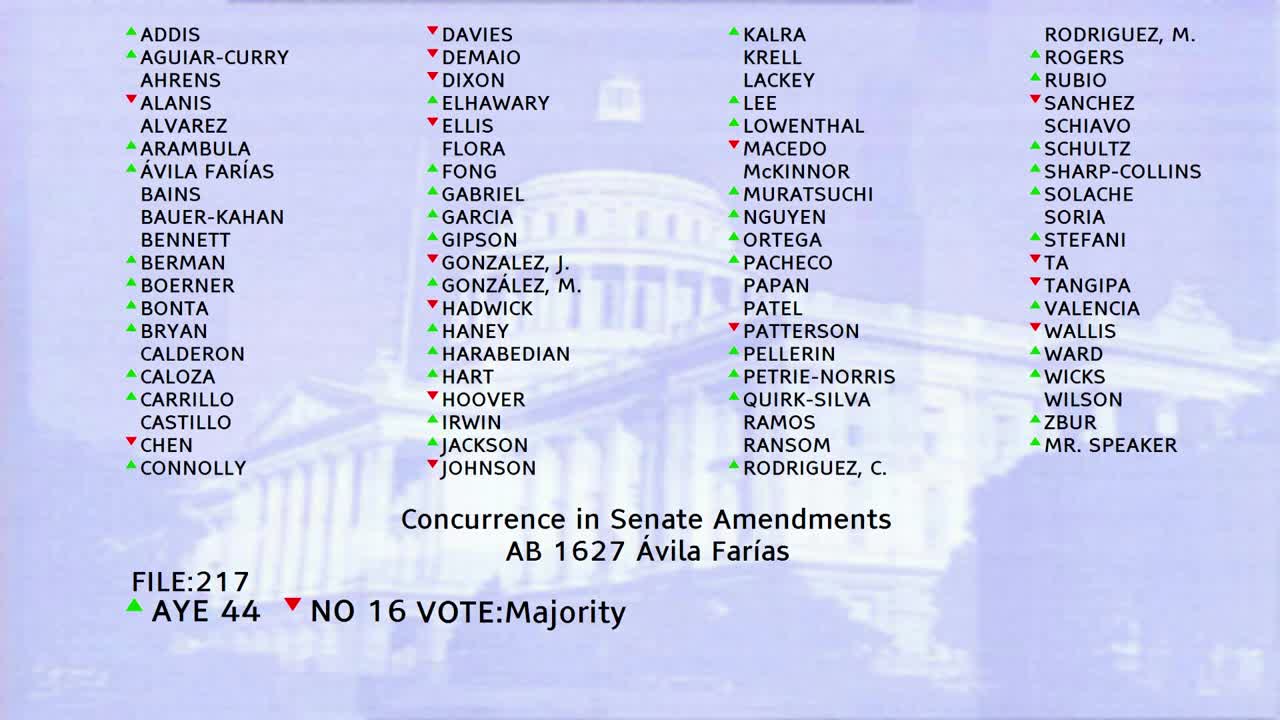 48SEC
Assembly Floor
 2MIN
Senate Floor
 7MIN
Senate Standing Committee on Judiciary
 7MIN
Senate Standing Committee on Environmental Quality
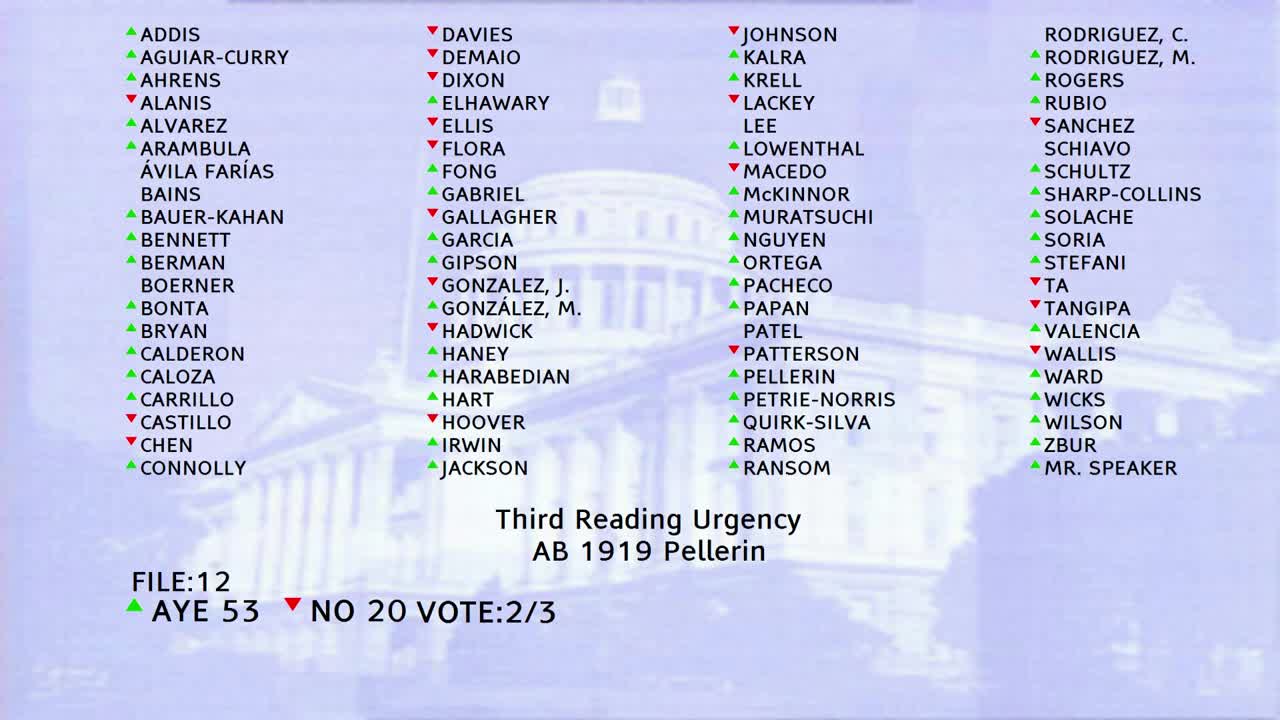 4MIN
Assembly Floor
 8MIN
Assembly Standing Committee on Emergency Management
 15MIN