AB 2176: Student housing: intersegmental working group.
- Session Year: 2025-2026
- House: Assembly
- Latest Version Date: 2026-06-08
Current Status:
In Progress
(2026-08-13: In committee: Held under submission.)
Introduced
In Committee
Awaiting First Chamber Vote
Passed First Chamber
In Committee
Awaiting Second Chamber Vote
Passed Second Chamber
Enacted
Existing law establishes the California Community Colleges, under the administration of the Board of Governors of the California Community Colleges, the California State University, under the administration of the Trustees of the California State University, and the University of California, under the administration of the Regents of the University of California, as the 3 segments of public postsecondary education in the state.
Existing law requires the office of the Chancellor of the California State University, and requests the office of the President of the University of California, on or before July 1, 2022, to conduct a needs assessment to determine the projected student housing needs, by campus, for the 202223 fiscal year to the 202627 fiscal year, inclusive, and create a student housing plan, with a focus on affordable student housing, that outlines how they will meet the projected student housing needs, by campus, as provided. Existing law also requires the chancellors office, and requests the presidents office, to, every 3 years after July 1, 2022, review and update the student housing plan, and include the specific actions to be taken in the next 5 fiscal years.
This bill would require the office of the Chancellor of the California State University and the office of the Chancellor of the California Community Colleges to establish an intersegmental student housing working group, composed of representatives from the 2 chancellors offices, faculty, and students. The bill would request the office of the President of the University of California to join and appoint representatives to the working group. The bill would require the working group to use assessments of unmet demand developed by the respective segments in order to further analyze systemwide, regional, and campus-specific student housing needs. The bill would require the working group to develop a statewide plan that identifies opportunities for intersegmental collaboration to build campus housing and informs future state funding considerations.This bill would require the office of the Chancellor of the California State University, on or before July 1, 2027, to convene a working group to develop recommendations, identify opportunities, and support the sharing of best practices related to student housing, including intersegmental student housing, as provided. The bill would require the working group to include representatives designated by the office of the Chancellor of the California State University, the office of the Chancellor of the California Community Colleges, and the statewide student organizations for the California State University and the California Community Colleges. The bill would request the office of the President of the University of California to participate in the working group and designate representatives and, upon such participation, would require the statewide student organization for the University of California to designate representatives to serve on the working group.
This bill would require the working group to consult with representatives from campuses that have pursued intersegmental student housing projects and representatives from campus and system-level offices responsible for, among other things, housing operations and facilities development. The bill would require the working group to submit a report to the Legislature and the Governor on or before July 1, 2028, that includes, among other things, recommendations related to assessing and determining unmet student housing need and recommended best practices and implementation supports for campuses interested in pursuing intersegmental student housing development.
This bill would repeal its provisions on January 1, 2029.
Existing law establishes the California Community Colleges, under the administration of the Board of Governors of the California Community Colleges, the California State University, under the administration of the Trustees of the California State University, and the University of California, under the administration of the Regents of the University of California, as the 3 segments of public postsecondary education in the state.
Existing law requires the office of the Chancellor of the California State University, and requests the office of the President of the University of California, on or before July 1, 2022, to conduct a needs assessment to determine the projected student housing needs, by campus, for the 202223 fiscal year to the 202627 fiscal year, inclusive, and create a student housing plan, with a focus on affordable student housing, that outlines how they will meet the projected student housing needs, by campus, as provided. Existing law also requires the chancellors office, and requests the presidents office, to, every 3 years after July 1, 2022, review and update the student housing plan, and include the specific actions to be taken in the next 5 fiscal years.
This bill would require the office of the Chancellor of the California State University and the office of the Chancellor of the California Community Colleges to establish an intersegmental student housing working group, composed of representatives from the 2 chancellors offices, faculty, and students. The bill would request the office of the President of the University of California to join and appoint representatives to the working group. The bill would require the working group to use assessments of unmet demand developed by the respective segments in order to further analyze systemwide, regional, and campus-specific student housing needs. The bill would require the working group to develop a statewide plan that identifies opportunities for intersegmental collaboration to build campus housing and informs future state funding considerations.
It is the intent of the Legislature to establish an intersegmental student housing working group to coordinate efforts on developing student housing across the public higher education segments, as recommended by the California State Auditor in Report 2024-111 California Colleges: Californias Systems of Public Higher Education Could Better Address Student Housing Needs (October 14, 2025).
SEC. 2.Section 66221 is added to the Education Code, immediately following Section 66220, to read:66221.(a)On or before July 1, 2027, the office of the Chancellor of the California State University shall convene a working group to develop recommendations for assessing unmet student housing demand, identify opportunities for intersegmental student housing development, and support the sharing of best practices and technical expertise related to intersegmental student housing projects.
(b)The working group shall include representatives designated by each of the following:
(1)The office of the Chancellor of the California State University.
(2)The office of the Chancellor of the California Community Colleges.
(3)The statewide student organization for the California State University.
(4)The statewide student organization for the California Community Colleges.
(c)The office of the President of the University of California is requested to participate in the working group and designate representatives. If the office of the President of the University of California elects to participate in the working group, the statewide student organization for the University of California shall also designate representatives to serve on the working group.
(d)The working group shall consult with representatives from campuses that have pursued intersegmental student housing projects and representatives from campus and system-level offices responsible for housing operations, capital planning, facilities development, and basic needs programs.
(e)The working group may consult with other stakeholders, including, but not limited to, local governments, housing developers, researchers, and subject matter experts.
(f)The working group shall submit a report to the Legislature and the Governor on or before July 1, 2028, in compliance with Section 9795 of the Government Code. The report shall include, but not be limited to, all of the following:
(1)Recommendations regarding metrics, data sources, and reporting practices that may be used to assess and determine unmet student housing demand across the states public postsecondary educational institutions, including a framework of common indicators that may improve the consistency and comparability of assessments across segments and campuses.
(2)An analysis of completed and proposed intersegmental student housing projects, including factors associated with successful project delivery and factors that impeded or prevented project completion.
(3)An assessment of structural barriers to the development of intersegmental student housing, including, but not limited to, financing, governance, land use authority, and transportation access.
(4)Identification of regions and campuses where future intersegmental student housing opportunities may exist based on enrollment trends, housing demand, geographic proximity, and other relevant factors.
(5)Recommended best practices and implementation supports for campuses interested in pursuing intersegmental student housing development, including, as applicable, but not limited to, practices related to project planning, financing, governance structures, student eligibility, project operations, intersegmental partnerships, technical assistance needs, information-sharing mechanisms, and related state policy considerations.
(g)This section shall remain in effect only until January 1, 2029, and as of that date is repealed.
SECTION 1.Section 66221 is added to the Education Code, immediately following Section 66220, to read:66221.(a)The office of the Chancellor of the California State University and the office of the Chancellor of the California Community Colleges shall establish an intersegmental student housing working group, composed of representatives from the two offices, faculty, and students. The Legislature requests the office of the President of the University of California to join and appoint representatives to the intersegmental working group.(b)The working group shall use assessments of unmet demand developed by the California State University and the California Community Colleges, and the University of California, if the University of California joins the intersegmental working group, in order to further analyze systemwide, regional, and campus-specific student housing needs.(c)The working group shall develop a statewide plan that identifies opportunities for intersegmental collaboration to build campus housing and informs future state funding considerations.(a)The office of the Chancellor of the California State University and the office of the Chancellor of the California Community Colleges shall establish an intersegmental student housing working group, composed of representatives from the two offices, faculty, and students. The Legislature requests the office of the President of the University of California to join and appoint representatives to the intersegmental working group.
(b)The working group shall use assessments of unmet demand developed by the California State University and the California Community Colleges, and the University of California, if the University of California joins the intersegmental working group, in order to further analyze systemwide, regional, and campus-specific student housing needs.
(c)The working group shall develop a statewide plan that identifies opportunities for intersegmental collaboration to build campus housing and informs future state funding considerations.
|
Date
|
Status
|
|---|---|
| Aug 13, 2026 | In committee: Held under submission. |
| Jun 29, 2026 | In committee: Referred to APPR. suspense file. |
| Jun 17, 2026 | From committee: Do pass and re-refer to Com. on APPR. with recommendation: To Consent Calendar. (Ayes 7. Noes 0.) (June 17). Re-referred to Com. on APPR. |
| Jun 8, 2026 | From committee chair, with author's amendments: Amend, and re-refer to committee. Read second time, amended, and re-referred to Com. on ED. |
| Jun 3, 2026 | Referred to Com. on ED. |
| May 22, 2026 | In Senate. Read first time. To Com. on RLS. for assignment. |
| May 22, 2026 | Read third time. Passed. Ordered to the Senate. (Ayes 73. Noes 0. Page 5264.) |
| May 22, 2026 | Read third time. Passed. Ordered to the Senate. (Ayes 73. Noes 0.) |
| May 18, 2026 | Read second time. Ordered to third reading. |
| May 14, 2026 | From committee: Do pass. (Ayes 15. Noes 0.) (May 14). |
| May 6, 2026 | In committee: Set, first hearing. Referred to APPR. suspense file. |
| Apr 22, 2026 | From committee: Do pass and re-refer to Com. on APPR. (Ayes 10. Noes 0.) (April 21). Re-referred to Com. on APPR. |
| Apr 7, 2026 | In committee: Set, first hearing. Hearing canceled at the request of author. |
| Mar 2, 2026 | Referred to Com. on HIGHER ED. |
| Feb 20, 2026 | From printer. May be heard in committee March 22. |
| Feb 19, 2026 | Read first time. To print. |
|
Date
|
Description
|
Location
|
Votes
|
|
|---|---|---|---|---|
| Jun 29, 2026 | Placed on suspense file | Senate Standing Committee on Appropriations |
Passed |
|
| Jun 17, 2026 | Do pass, but first be re-referred to the Committee on [Appropriations] with the recommendation: To Consent Calendar | Senate Standing Committee on Education |
Passed |
|
| May 22, 2026 | AB 2176 Fong Assembly Third Reading | Assembly Floor |
Passed |
|
| May 14, 2026 | Do pass. | Assembly Standing Committee on Appropriations |
Passed |
|
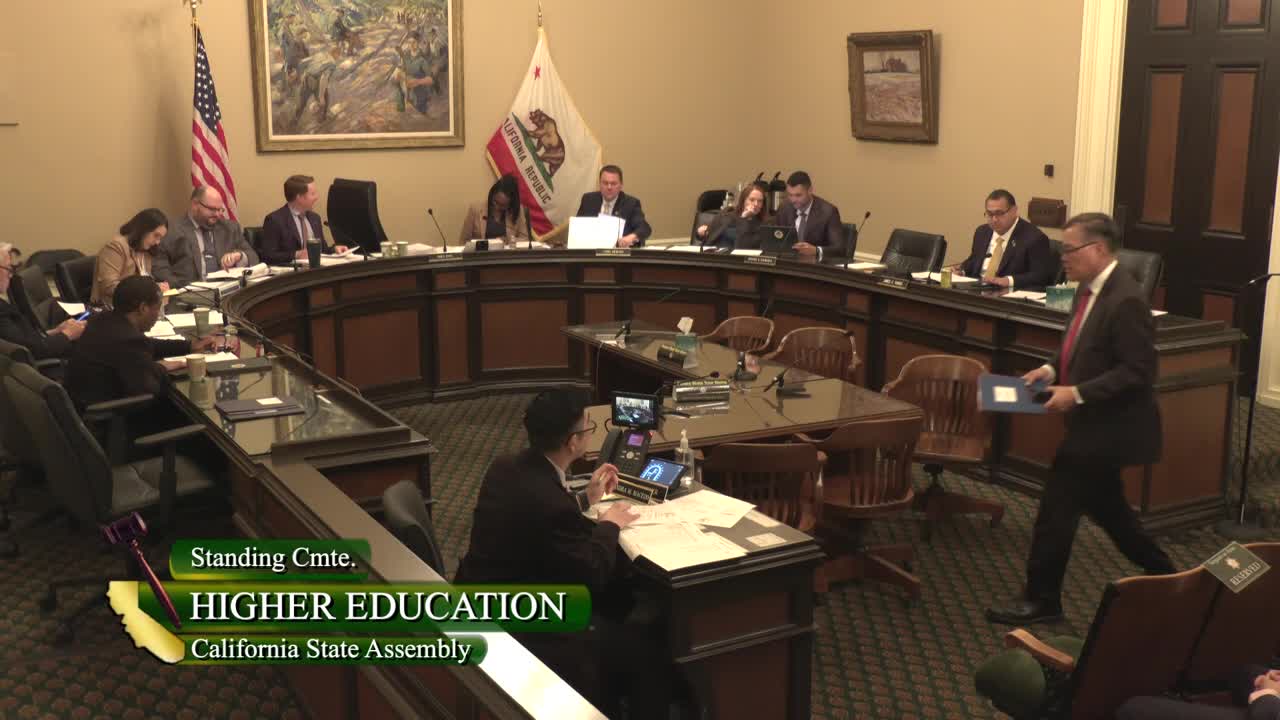
| Apr 21, 2026 | Do pass and be re-referred to the Committee on [Appropriations] | Assembly Standing Committee on Higher Education |
Passed |
This list shows positions taken on this bill by organizations on the date displayed, which is linked to the original source.
Positions by individuals are not included.
|
Organization
|
Position
|
Date
|
|---|---|---|
| Power California Action | ** Support | |
| Student Senate for California Community Colleges | ** Support | |
| University Of California Student Association | ** Support |
SENATE COMMITTEE ON
Senator Sabrina Cervantes, Chair
2025 - 2026 Regular Session
AB 2176 (Fong) - Student housing: intersegmental working group
Version: | Policy Vote: |
Urgency: | Mandate: |
Hearing Date: | Consultant: |
Bill Summary:
This bill requires the California State University (CSU) to convene a work group that includes participation from representatives of the California Community Colleges (CCCs) and the University of California (UC) for the purposes of developing recommendations for assessing unmet student housing demand, identifying opportunities for intersegmental student housing development, and supporting the sharing of information related to intersegmental student housing projects.
Fiscal Impact:
The CSU estimates one-time costs in the low hundreds of thousands of dollars for consulting and staff time to coordinate intersegmental collaboration and stakeholder engagement, and prepare the required report for the Legislature.
Background:
Existing law requires the CSU Chancellor’s Office, and requests the UC Office of the President, to do both of the following:
- Conduct a needs assessment to determine the projected student housing needs, by campus, for the 2022–23 fiscal year to the 2026–27 fiscal year, inclusive, taking into account the projected enrollment growth and the goal of closing the degree gap; and,
- Create a student housing plan, with a focus on affordable student housing, that outlines how they will meet the projected student housing needs, by campus, identified pursuant to (a) above. The student housing plan must include the specific actions to be taken for the 2022–23 fiscal year to the 2026–27 fiscal year, inclusive.
Existing law provides that three years after July 1, 2022, the CSU Chancellor’s Office must, and the UC Office of the President may, review and update the student housing plan described above and include the specific actions to be taken in the next five fiscal years.
Proposed Law:
This bill requires, by July 1, 2027, the CSU Chancellor to convene a work group to develop recommendations for assessing unmet student housing demand, identify opportunities for intersegmental student housing development, and support the sharing of best practices and technical expertise related to intersegmental student housing projects.
This bill requires the work group to include representatives designated by each of the following: CSU Chancellor, CCC Chancellor, the UC President if they elect to participate, the CSU statewide student organization, the CCC statewide student organization, anda the UC statewide student organization if UC elects to participate. The bill requests UC to participate in the working group and designate representatives.
This bill requires the work group to consult with representatives from campuses that have pursued intersegmental student housing projects and representatives from campus and system-level offices responsible for housing operations, capital planning, facilities development, and basic needs programs. It authorizes the working group to consult with other stakeholders, including, but not limited to, local governments, housing developers, researchers, and subject matter experts.
This bill requires that the work group submit a report to the Legislature and the Governor by July 1, 2028, and requires that the report include specific components, including recommendations regarding metrics, data sources, and reporting practices that may be used to assess and determine unmet student housing demand across the state’s public postsecondary educational institutions, including a framework of common indicators that may improve the consistency and comparability of assessments across segments and campuses and an analysis of completed and proposed intersegmental student housing projects, including factors associated with successful project delivery and factors that impeded or prevented project completion.
This bill states legislative intent to establish an intersegmental student housing working group to coordinate efforts on developing student housing across the public higher education segments, as recommended by the specified California State Auditor report.
Staff Comments:
In October 2025, the California State Auditor released a report, California Colleges: California’s Systems of Public Higher Education Could Better Address Student Housing Needs. The audit report examined how the CCC, CSU, and UC assessed student housing needs and planned for their development. It found that the segments could strengthen their oversight and planning efforts to better assess unmet student housing demand and address student housing needs. Among its recommendations, the audit suggested that the Legislature consider clarifying the role of the segments’ offices in housing planning and requiring them to develop and implement processes to periodically assess unmet demand for campus housing. This bill seeks to address the issues identified in the audit by establishing a working group to develop recommendations regarding unmet demand assessments and intersegmental housing opportunities.
-- END --
SENATE COMMITTEE ON EDUCATION
Senator Sasha Renée Pérez, Chair
2025 - 2026 Regular
Bill No: Hearing Date: June 17, 2026
Author: | |||
Version: |
| ||
Urgency: | Fiscal: | ||
Consultant: | |||
Subject: .
SUMMARY
This bill requires, by July 2027, the California State University (CSU) Chancellor to convene a working group that includes participation from representatives of the California Community Colleges (CCC) and the University of California (UC) for the purposes of developing recommendations for assessing unmet student housing demand, identifying opportunities for intersegmental student housing development, and supporting the sharing of information related to intersegmental student housing projects.
BACKGROUND
Existing law:
1) Establishes the CSU, under the administration of the Trustees of the CSU, the
UC, under the administration of the Regents of the UC, the CCC, under the administration of the Board of Governors of the CCC, three public segments of postsecondary education in the state. (Education Code (EC) § 66010.4, et seq.)
2) Requires the CSU Chancellor’s Office, and requests the UC Office of the President to do both of the following:
a) Conduct a needs assessment to determine the projected student housing needs, by campus, for the 2022–23 fiscal year to the 2026–27 fiscal year, inclusive, taking into account the projected enrollment growth and the goal of closing the degree gap; and,
b) Create a student housing plan, with a focus on affordable student housing, that outlines how they will meet the projected student housing needs, by campus, identified pursuant to (a) above. The student housing plan must include the specific actions to be taken for the 2022–23 fiscal year to the 2026–27 fiscal year, inclusive.
Stipulates that three years after July 1, 2022, the CSU Chancellor’s Office must, and the UC Office of the President may, review and update the student housing plan described in (b) above and include the specific actions to be taken in the next five fiscal years. (EC § 66220)
Although the CCC has the largest number of students (over 2 million), existing law precludes the CCC from the provisions contained in EC Section 66220.
ANALYSIS
This bill:
- Requires, by July 1, 2027, the CSU Chancellor to convene a working group to develop recommendations for assessing unmet student housing demand, identify opportunities for intersegmental student housing development, and support the sharing of best practices and technical expertise related to intersegmental student housing projects.
- Requires the working group to include representatives designated by each of the following:
- CSU Chancellor.
- CCC Chancellor.
- UC President, if they elect to participate.
- The CSU statewide student organization.
- The CCC statewide student organization.
- The UC statewide student organization, if UC elects to participate.
- Requests UC to participate in the working group and designate representatives.
- Requires the working group to consult with representatives from campuses that have pursued intersegmental student housing projects and representatives from campus and system-level offices responsible for housing operations, capital planning, facilities development, and basic needs programs.
- Authorizes the working group to consult with other stakeholders, including, but not limited to, local governments, housing developers, researchers, and subject matter experts.
- Requires that the working group submit a report to the Legislature and the Governor by July 1, 2028, and requires that the report include all of the following:
- Recommendations regarding metrics, data sources, and reporting
practices that may be used to assess and determine unmet student housing demand across the state’s public postsecondary educational institutions, including a framework of common indicators that may improve the consistency and comparability of assessments across segments and campuses.
- An analysis of completed and proposed intersegmental student housing
projects, including factors associated with successful project delivery and factors that impeded or prevented project completion.
- An assessment of structural barriers to the development of intersegmental
student housing, including, but not limited to, financing, governance, land use authority, and transportation access.
- Identification of regions and campuses where future intersegmental
student housing opportunities may exist based on enrollment trends, housing demand, geographic proximity, and other relevant factors.
- Recommended best practices and implementation supports for campuses
interested in pursuing intersegmental student housing development, including, as applicable, but not limited to, practices related to project planning, financing, governance structures, student eligibility, project operations, intersegmental partnerships, technical assistance needs, information-sharing mechanisms, and related state policy considerations.
- States that it is the intent of the Legislature to establish an intersegmental student housing working group to coordinate efforts on developing student housing across the public higher education segments, as recommended by the specified California State Auditor report.
- Sunsets the bill’s provisions on January 1, 2029.
STAFF COMMENTS
- Need for the bill. According to the author, “California’s student housing crisis is affecting students across all three public higher education systems, undermining academic success and putting thousands of students at risk of housing insecurity. A recent audit by the California State Auditor found that more than half of students across the University of California, California State University, and California Community Colleges have experienced housing insecurity and that current waitlists significantly underestimate the true level of unmet demand for student housing. Despite the scale of this challenge, the state’s higher education segments largely assess housing needs and plan projects independently, limiting their ability to coordinate solutions or fully understand statewide demand.
“AB 2176 codifies recommendations from the State Auditor’s report by establishing an intersegmental student housing working group to bring stakeholders across all three segments together to jointly assess housing needs and identify opportunities for collaboration. By developing a coordinated analysis of systemwide, regional, and campus-level housing demand, the working group will help inform future student housing investments and identify strategies for intersegmental housing projects that allow institutions to share resources and respond more flexibly to enrollment changes. Strengthening coordination across California’s public higher education systems will help the state better address student housing insecurity and ensure more students have access to safe and affordable housing while pursuing their education.”
- Student housing planning efforts. Current law requires the CSU and requests the UC to conduct student housing needs assessments and develop student housing plans that identify projected housing needs and actions necessary to meet those needs. Existing law requires those plans to be reviewed and updated every three years. These efforts focus on housing planning with individual segments. This bill seeks to identify opportunities for collaboration across the public higher education segments and develop recommendations that may inform future state housing policy, housing development decisions, and financing decisions.
- Housing needs across segments. According to the CSU Housing Plan, CSU has expanded student housing capacity in recent years, adding approximately 2,319 beds since 2022 and currently constructing an additional 3,638 beds, largely supported through the Higher Education Student Housing Grant Program. Despite these investments, CSU projects that by Fall 2030, approximately 38,800 students will still need housing assistance. CSU estimates that roughly 14,700 housing insecure students may require subsidized affordable housing, while another 8,800 low-income students could benefit from affordable housing to improve persistence and graduation outcomes, CSU expects unmet need to decline as additional state-funded housing projects come online.
According to the UC’s 2025 Basic Needs report, UC reports that housing affordability remains a significant challenge despite ongoing investments in basic needs programs and state support. Rising housing costs have outpaced wage growth, and campus emergency aid programs continue to face demand that exceeds available resources. UC notes that existing state basic needs funding is insufficient to address systemwide housing insecurity and that campuses often must prioritize emergency assistances while making difficult tradeoffs among basic needs programs. UC further reports that many students’ receiving basic needs assistance are unable to absorb even modest unexpected expenses, underscoring the financial vulnerability of a portion of the student population.
For community college students, housing affordability remains a significant challenge. The 2025 Real College California Basic Needs Survey found that 58 percent of community college students experience housing insecurity and 20 percent experienced homelessness during the prior year. The CCC Chancellor’s Office also publishes annual reports on student housing projects and housing stock, including projects supported through the Higher Education Student Housing Grant program.
- California State Auditor report on student housing needs. In October 2025, the California State Auditor released its report, California Colleges: California’s Systems of Public Higher Education Could Better Address Student Housing Needs. The audit examined how the CCC, CSU, and UC assessed student housing needs and planned for their development. The audit found that CSU, UC, and CCCs could strengthen their oversight and planning efforts to better assess unmet student housing demand and address student housing needs. Among its recommendations, the audit suggested that the Legislature consider clarifying the role of the segments’ system offices in housing planning and requiring the segments to develop and implement processes to periodically assess unmet demand for campus housing. The bill attempts to respond to issues identified in the audit by establishing a working group to develop recommendations regarding unmet demand assessments and intersegmental housing opportunities.
SUPPORT
University of California Student Association (sponsor)
Power California Action
Student Senate for California Community Colleges
OPPOSITION
None received
-- END --
ASSEMBLY THIRD READING
ATR Bill Id:AB 2176
Author:(Fong)
As Introduced Ver:February 19, 2026
Majority vote
SUMMARY
Establishes an intersegmental working group to analyze student housing needs and develop a statewide plan for collaboration across public higher education segments.
Major Provisions
- Requires the California State University (CSU) Chancellor′s Office and the California Community Colleges (CCC) Chancellor′s Office (CCCCO), and requests the University of California (UC) Office of the President (UCOP), to establish an intersegmental student housing working group.
- Requires the working group, pursuant to (1) above, to include representatives from:
- The CSU Chancellor′s Office;
- The CCCCO;
- The UCOP (should the UCOP decide to participate in the working group);
- Faculty; and,
- Students.
- Requires the working group to use existing assessments of unmet student housing demand developed by CSU, CCC, and UC (if participating) to:
- Analyze systemwide student housing needs;
- Analyze regional student housing needs; and,
- Analyze campus-specific student housing needs.
- Requires the working group to develop a statewide plan that:
- Identifies opportunities for intersegmental collaboration to build campus housing; and,
- Informs future state funding considerations related to student housing.
COMMENTS
Housing needs across the segments. Pursuant to the author, ″according to a 2023 survey conducted by the California Student Aid Commission (CSAC), 53% of college students applying for financial aid experienced housing insecurity, including the inability to pay rent or utilities, a dramatic increase from 2019, when only 36% of respondents were identified as housing insecure.″ Additionally, the author states that, ″in 2025, the California State Auditor released an audit showing significant unmet need for campus-provided student housing. Systemwide data cited in the report found 17,500 students on housing waitlists across the three segments, likely a significant undercount of the actual unmet demand.″
Pursuant to existing law, the 2025 CSU Housing Plan provided the following update since the 2022 plan was published:
- An additional ~2,319 student housing beds were delivered to:
- CSU Fullerton - Student Housing Phase 4;
- CSU, San Marcos - The QUAD Apartments (affiliated P3);
- San Francisco State University - West Campus Green Affordable Student Housing Village; and,
- San José State University - Spartan Village on the Paseo.
- The CSU System has another 3,638 beds currently under construction, largely due to funding awarded through the State of California Higher Education Student Housing Grant Program (HESHGP). The grant amounts totaled nearly $660 million and were matched by an additional $664.5 million in CSU funding.
- Unmet need:
- The CSU estimates that in Fall 2030, there will be approximately 38,800 students needing housing assistance (to be addressed with financial aid or housing grants, student services and support programs, along with construction of additional bed spaces);
- Of this unmet need, 15,370 beds could be supported by market demand and campuses are likely able to construct these projects over time;
- CSU estimates approximately 14,670 housing-insecure students who potentially need subsidized housing, and this represents the most critical need for affordable housing.
- Finally, CSU conservatively estimates an additional 8,760 low-income students who are not graduating within six years could benefit from a subsidized affordable housing bed.
- The CSU is estimating reduced need in the housing insecure and low-income student categories based new beds delivered. CSU expects that figure to continue to go down based on the delivery of additional affordable beds through the HESHGP.
- According to UC′s Basic Needs 2025 Annual Report:
- UC has invested millions of dollars into supporting its students′ basic needs, and the State provides $19.5 million yearly for basic needs and rapid rehousing.
- Of the 2,760 students who received emergency basic needs grants last year, approximately half were funded by University aid and half by the State.
- This funding is inadequate to eliminate either food or housing insecurity systemwide. California has long been a high-cost state, with living costs increasing since the pandemic. Rent increased by over 35% statewide since 2020, while wages increased by 22%. It would take twice the State′s median income to purchase a mid-tier home and 1.5 times the median income to purchase a bottom-tier home.
- A 2023 California Community Poll found that 40% of respondents considered moving out of the State due primarily to the high costs associated with housing, healthcare, and everyday expenses. (The average monthly mortgage for a two-bedroom home is over $4,600, and the average rent is over $2,700.)
- For low-resourced students, those costs are challenging, particularly when considering that the majority of students who used campus basic needs supports could not cover an unexpected emergency expense over $100.
- Nearly one-quarter could not cover an emergency expense of any amount; and,
- The UC does not have the resources to absorb the full financial consequences of these widespread economic challenges.
- State basic needs allocations remain low compared with the need, as a result of flat funding formulas that do not account for rises in the cost of living or other inflationary factors. Budgetary language for UC basic needs is also significantly more restrictive than for CCC, specifying how UC campuses are to spend funds on food and housing supports. The restrictive nature of these requirements does not align with the modern lived experiences of college students.
- This leaves campus basic needs programs to triage emergency needs first for as many students as possible, making difficult spending trade-offs among its programs without the necessary resources to significantly lower food or housing insecurities.
According to the Author
According to the author, ″California′s student housing crisis is affecting students across all three public higher education systems, undermining academic success and putting thousands of students at risk of housing insecurity. A recent audit by the California State Auditor found that more than half of students across the University of California, California State University, and California Community Colleges have experienced housing insecurity, and that current waitlists significantly underestimate the true level of unmet demand for student housing. Despite the scale of this challenge, the state′s higher education segments largely assess housing needs and plan projects independently, limiting their ability to coordinate solutions or fully understand statewide demand.″
The author states that, ″AB 2176 adopts one of the recommendations from the State Auditor′s report by establishing an intersegmental student housing working group to bring stakeholders across all three segments together to jointly assess housing needs and identify opportunities for collaboration. By developing a coordinated analysis of systemwide, regional, and campus-level housing demand, the working group will help inform future student housing investments and identify strategies for intersegmental housing projects that allow institutions to share resources and respond more flexibly to enrollment changes. Strengthening coordination across California′s public higher education systems will help the state better address student housing insecurity and ensure more students have access to safe and affordable housing while pursuing their education.″
Arguments in Support
According to PowerCA Action, ″California′s housing crisis is deeply impacting students across the state. Over half of students in California′s public higher education systems have experienced housing insecurity, including unstable housing or homelessness, with community college students facing some of the highest rates. At the same time, thousands of students remain on housing waitlists, and existing systems lack the coordination needed to effectively assess or meet student housing demand.″
Further, PowerCA Action states that, ″AB 2176 takes a necessary step toward addressing this issue by creating a formal structure for coordination across the University of California, California State University, and California Community Colleges systems. By improving data collection and identifying opportunities for intersegmental housing development, this bill will help ensure that more students can access stable and affordable housing which is especially critical for transfer students, who often face gaps in housing access when moving between systems and campuses. Expanding access to student housing is critical to improving educational outcomes and ensuring that young Californians are able to complete their education without the burden of housing instability. AB 2176 helps lay the groundwork for a more coordinated and equitable approach to meeting student housing needs statewide.″
Arguments in Opposition
None on file.
FISCAL COMMENTS
According to the Assembly Committee on Appropriations:
- Minor and absorbable costs to the CSU to set up the workgroup.
- One-time General Fund costs of an unknown amount but possibly in the tens of thousands of dollars to CCCCO to participate in the working group.
- One-time General Fund costs in the low tens of thousands of dollars for the UCOP to participate in the working group.
VOTES
ASM HIGHER EDUCATION: 10-0-0
YES: Fong, DeMaio, Boerner, Macedo, Jackson, Muratsuchi, Patel, Ramos, Sharp-Collins, Tangipa
ASM APPROPRIATIONS: 15-0-0
YES: Wicks, Hoover, Aguiar-Curry, Calderon, Caloza, Dixon, Fong, Mark González, Krell, Pacheco, Pellerin, Sharp-Collins, Solache, Ta, Tangipa
UPDATED
VERSION: February 19, 2026
CONSULTANT: Jeanice Warden / HIGHER ED. / (916) 319-3960 FN: 0002832
Date of Hearing: May 6, 2026
ASSEMBLY COMMITTEE ON APPROPRIATIONS
Buffy Wicks, Chair
ABPCA Bill Id:AB 2176
Author:(Fong) – As Introduced Ver:February 19, 2026
Policy Committee: | Higher Education | Vote: | 10 - 0 |
|
| ||
|
|
Urgency: No State Mandated Local Program: No Reimbursable: No
SUMMARY:
This bill requires the California Community Colleges Chancellor’s Office (CCCCO) and the Chancellor of the California State University (CSU) to establish an intersegmental housing working group composed of representatives from two offices, faculty and students, and requests the office of the President of the University of California (UCOP) to join and appoint representatives to the working group.
FISCAL EFFECT:
- Minor and absorbable costs to the CSU to set up the workgroup.
- One-time General Fund costs of an unknown amount but possibly in the tens of thousands of dollars to CCCCO to participate in the working group.
- One-time General Fund costs in the low tens of thousands of dollars for the UCOP to participate in the working group.
While the bill does not create a significant fiscal effect, generally, the committee will move to the suspense file any bill with the primary purpose of creating a working group.
COMMENTS:
- Purpose. According to the author:
A recent audit by the California State Auditor found that more than half of students across the University of California, California State University, and California Community Colleges have experienced housing insecurity, and that current waitlists significantly underestimate the true level of unmet demand for student housing.
AB 2176 adopts one of the recommendations from the State Auditor’s report by establishing an intersegmental student housing working group to bring stakeholders across all three segments together to jointly assess housing needs and identify opportunities for collaboration. By developing a coordinated analysis of systemwide, regional, and campus-level housing demand, the working group will help inform future student housing investments and identify strategies for intersegmental housing projects that allow institutions to share resources and respond more flexibly to enrollment changes.
- Background. A 2025 California State Auditor (CSA) report found that the number of students enrolled at each of the public higher education segments vastly exceeded the number of available beds in fall 2024. According to the report, there were a total of 17,500 students on a housing waitlist across all three of the CSU, UC, and CCC systems. The report made several recommendations for the Legislature to consider. This bill codifies the recommendation for all three higher education systems to convene an intersegmental housing working group. Notably, the bill does not task one of the three segments with leading the working group nor does it specify timelines or deliverables other than the development of a statewide plan to identify opportunities for intersegmental campus housing collaboration.
Analysis Prepared by: Aaron Heredia / APPR. / (916) 319-2081
Date of Hearing: April 21, 2026
ASSEMBLY COMMITTEE ON HIGHER EDUCATION
Mike Fong, Chair
ABPCA Bill Id:AB 2176 (
Author:Fong) – As Introduced Ver:February 19, 2026
SUBJECT: Student housing: intersegmental working group.
SUMMARY: Establishes an intersegmental working group to analyze student housing needs and develop a statewide plan for collaboration across public higher education segments. Specifically, this bill:
- Requires the California State University (CSU) Chancellor’s Office and the California Community Colleges (CCC) Chancellor’s Office (CCCCO), and requests the University of California (UC) Office of the President (UCOP), to establish an intersegmental student housing working group.
- Requires the working group, pursuant to (1) above, to include representatives from:
- The CSU Chancellor’s Office;
- The CCCCO;
- The UCOP (should the UCOP decide to participate in the working group);
- Faculty; and,
- Students.
- Requires the working group to use existing assessments of unmet student housing demand developed by CSU, CCC, and UC (if participating) to:
- Analyze systemwide student housing needs;
- Analyze regional student housing needs; and,
- Analyze campus-specific student housing needs.
- Requires the working group to develop a statewide plan that:
- Identifies opportunities for intersegmental collaboration to build campus housing; and,
- Informs future state funding considerations related to student housing.
EXISTING LAW:
- Establishes the CSU, under the administration of the Trustees of the CSU, the UC, under the administration of the Regents of the UC, the CCC, under the administration of the Board of Governors of the CCC, three public segments of postsecondary education in the state (Education Code (EC) Section 66010.4, et seq.).
- Requires the CSU Chancellor’s Office, and requests the UCOP, on or before July 1, 2022, to, do both of the following:
- Conduct a needs assessment to determine the projected student housing needs, by campus, for the 2022–23 fiscal year to the 2026–27 fiscal year, inclusive, taking into account the projected enrollment growth and the goal of closing the degree gap; and,
- Create a student housing plan, with a focus on affordable student housing, that outlines how they will meet the projected student housing needs, by campus, identified pursuant (a) above. The student housing plan must include the specific actions to be taken for the 2022–23 fiscal year to the 2026–27 fiscal year, inclusive.
Stipulates that three years after July 1, 2022, the CSU Chancellor’s Office must, the UCOP may, review and update the student housing plan described in (b) above, and include the specific actions to be taken in the next five fiscal years (EC Section 66220).
Although the CCC has the largest number of students (over 2 million), existing law precludes the CCC from the provisions contained in EC Section 66220.
FISCAL EFFECT: Unknown
COMMENTS: Purpose of this measure. According to the author, “California’s student housing crisis is affecting students across all three public higher education systems, undermining academic success and putting thousands of students at risk of housing insecurity. A recent audit by the California State Auditor found that more than half of students across the University of California, California State University, and California Community Colleges have experienced housing insecurity, and that current waitlists significantly underestimate the true level of unmet demand for student housing. Despite the scale of this challenge, the state’s higher education segments largely assess housing needs and plan projects independently, limiting their ability to coordinate solutions or fully understand statewide demand.”
The author states that, “AB 2176 adopts one of the recommendations from the State Auditor’s report by establishing an intersegmental student housing working group to bring stakeholders across all three segments together to jointly assess housing needs and identify opportunities for collaboration. By developing a coordinated analysis of systemwide, regional, and campus-level housing demand, the working group will help inform future student housing investments and identify strategies for intersegmental housing projects that allow institutions to share resources and respond more flexibly to enrollment changes. Strengthening coordination across California’s public higher education systems will help the state better address student housing insecurity and ensure more students have access to safe and affordable housing while pursuing their education.”
Housing needs across the segments. Pursuant to the author, “according to a 2023 survey conducted by the California Student Aid Commission (CSAC), 53% of college students applying for financial aid experienced housing insecurity, including the inability to pay rent or utilities, a dramatic increase from 2019, when only 36% of respondents were identified as housing insecure.[1] The rates of housing insecurity were highest among community college students (65%) and students at private for-profit institutions (79%) compared to those attending University of California (UC) (27%) or California State University (CSU) (52%) campus.”
Additionally, the author states that, “in 2025, the California State Auditor released an audit showing significant unmet need for campus-provided student housing. Systemwide data cited in the report found 17,500 students on housing waitlists across the three segments, likely a significant undercount of the actual unmet demand.[2]”
Pursuant to existing law, the 2025 CSU Housing Plan provided the following update since the 2022 plan was published:
- An additional ~2,319 student housing beds were delivered to:
- CSU Fullerton - Student Housing Phase 4;
- CSU, San Marcos - The QUAD Apartments (affiliated P3);
- San Francisco State University - West Campus Green Affordable Student Housing Village; and,
- San José State University - Spartan Village on the Paseo.
- The CSU System has another 3,638 beds currently under construction, largely due to funding awarded through the State of California Higher Education Student Housing Grant Program (HESHGP). The grant amounts totaled nearly $660 million and were matched by an additional $664.5 million in CSU funding.
- Unmet need:
- The CSU estimates that in Fall 2030, there will be approximately 38,800 students needing housing assistance (to be addressed with financial aid or housing grants, student services and support programs, along with construction of additional bed spaces);
- Of this unmet need, 15,370 beds could be supported by market demand and campuses are likely able to construct these projects over time;
- CSU estimates approximately 14,670 housing-insecure students who potentially need subsidized housing, and this represents the most critical need for affordable housing.
- Finally, CSU conservatively estimates an additional 8,760 low-income students who are not graduating within six years could benefit from a subsidized affordable housing bed.
- The CSU is estimating reduced need in the housing insecure and low-income student categories based new beds delivered. CSU expects that figure to continue to go down based on the delivery of additional affordable beds through the HESHGP.
According to UC’s Basic Needs 2025 Annual Report:
- UC has invested millions of dollars into supporting its students’ basic needs, and the State provides $19.5 million yearly for basic needs and rapid rehousing.
- Of the 2,760 students who received emergency basic needs grants last year, approximately half were funded by University aid and half by the State.
- This funding is inadequate to eliminate either food or housing insecurity systemwide. California has long been a high-cost state, with living costs increasing since the pandemic. Rent increased by over 35% statewide since 2020, while wages increased by 22%. It would take twice the State’s median income to purchase a mid-tier home and 1.5 times the median income to purchase a bottom-tier home.
- A 2023 California Community Poll found that 40% of respondents considered moving out of the State due primarily to the high costs associated with housing, healthcare, and everyday expenses. (The average monthly mortgage for a two-bedroom home is over $4,600, and the average rent is over $2,700.)
- For low-resourced students, those costs are challenging, particularly when considering that the majority of students who used campus basic needs supports could not cover an unexpected emergency expense over $100.
- Nearly one-quarter could not cover an emergency expense of any amount; and,
- The UC does not have the resources to absorb the full financial consequences of these widespread economic challenges.
- State basic needs allocations remain low compared with the need, as a result of flat funding formulas that do not account for rises in the cost of living or other inflationary factors. Budgetary language for UC basic needs is also significantly more restrictive than for CCC, specifying how UC campuses are to spend funds on food and housing supports. The restrictive nature of these requirements does not align with the modern lived experiences of college students.
- This leaves campus basic needs programs to triage emergency needs first for as many students as possible, making difficult spending trade-offs among its programs without the necessary resources to significantly lower food or housing insecurities.
The chart below, from the California State Auditor’s (CSA) October 2025, audit titled, California Colleges: California’s Systems of Public Higher Education Could Better Address Student Housing, depicts the UC campus and systemwide housing capacity for academic years 2019-20 through 2024-25 and planned new beds by Fall 2029.

The chart below, from the California State Auditor’s (CSA) October 2025, audit titled, California Colleges: California’s Systems of Public Higher Education Could Better Address Student Housing, shows that the number of students enrolled systemwide in the CCC, CSU, and CCC, in Fall 2024, significantly exceeded the number of available beds:

Committee comments. This measure currently calls upon the CCC, CSU, and UC to establish an intersegmental student housing working group; however, the measure does not provide guidance as to the governance structure of the working group. Nor does the measure specify timelines, reporting requirements, or deliverables beyond the development of a statewide plan. The absence of these details may raise questions regarding accountability, implementation timelines, and the intended use of the plan in future policymaking. Further, not knowing what entity will lead and convene the working group could also create challenges for implementation.
Moving forward, the author may wish to provide more specificity as to the overall structure of the working group, thereby ensuring the measure can be fully implemented.
Additionally, the California Education Interagency Council (CEIC), as established by AB 1098 (Fong), Chapter 446, Statutes of 2025, could, in its role to integrate and align efforts across education systems in California could, at a future date (since CEIC is in the early stages of implementation), assume the governance role of the working group established by this measure.
Arguments in support. According to PowerCA Action, “California’s housing crisis is deeply impacting students across the state. Over half of students in California’s public higher education systems have experienced housing insecurity, including unstable housing or homelessness, with community college students facing some of the highest rates. At the same time, thousands of students remain on housing waitlists, and existing systems lack the coordination needed to effectively assess or meet student housing demand.”
Further, PowerCA Action states that, “AB 2176 takes a necessary step toward addressing this issue by creating a formal structure for coordination across the University of California, California State University, and California Community Colleges systems. By improving data collection and identifying opportunities for intersegmental housing development, this bill will help ensure that more students can access stable and affordable housing which is especially critical for transfer students, who often face gaps in housing access when moving between systems and campuses. Expanding access to student housing is critical to improving educational outcomes and ensuring that young Californians are able to complete their education without the burden of housing instability. AB 2176 helps lay the groundwork for a more coordinated and equitable approach to meeting student housing needs statewide.”
Prior legislation. AB 893 (Fong), Chapter 500, Statutes of 2025, created campus development zones to streamline development of student housing within a half mile radius of a UC, CSU, or CCC.
AB 2707 (Fong), of 2024, which was held on the Suspense File in the Senate Committee on Appropriations, would have directed the Legislative Analyst’s Office to study barriers that housing-insecure CCC students face in securing housing.
REGISTERED SUPPORT / OPPOSITION:
Support
PowerCA Action
University of California Student Association
Opposition
None on file.
Analysis Prepared by: Jeanice Warden / HIGHER ED. / (916) 319-3960
California Student Aid Commission, “2023 Food and Housing Survey: Understanding Students’ Basic Needs,” https://www.csac.ca.gov/sites/default/files/file-attachments/food_and_housing_basic_needs_survey_2023.pdf ↑
2024-111 California Colleges - California State Auditor Figure 3 ↑
Discussed in Hearing
View Older Hearings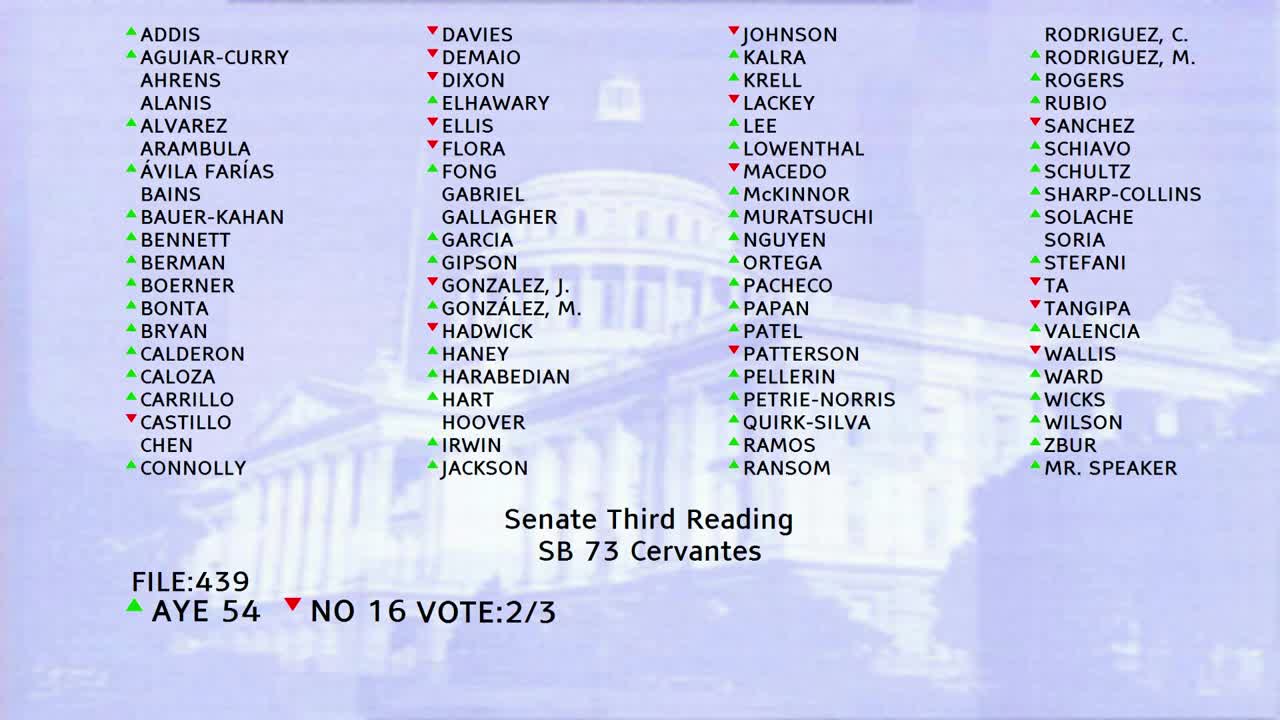
Bill Author