AB 2188: Regional park and open-space districts: Midpeninsula Regional Open Space District.
- Session Year: 2025-2026
- House: Assembly
- Latest Version Date: 2026-06-24
Current Status:
In Progress
(2026-08-06: Ordered to inactive file at the request of Senator Durazo.)
Introduced
In Committee
Awaiting First Chamber Vote
Passed First Chamber
In Committee
Awaiting Second Chamber Vote
Passed Second Chamber
Enacted
Existing law establishes procedures for the formation of regional park, park and open-space, and open-space districts and prescribes the powers, functions, and duties of those districts. Existing law requires the board of directors of these districts to appoint a general manager as chief administrative officer of the district, as provided. Existing law generally authorizes the general manager of a regional park, park and open space, and open-space district, with district board approval, to bind the district, in accordance with board policy, and without advertising, for the payment for supplies, materials, labor, or other valuable consideration for any purpose in amounts not exceeding $50,000. Existing law authorizes the district, by action of the board in an open meeting, to increase the amount by which the general manager of the district may bind the district above that limit.
Existing law authorizes a general manager of a district with a population of 200,000 or more, with the approval of the board, to bind the district, in accordance with board policy that has been adopted in an open meeting, for the payment for equipment, supplies, and materials for any purpose, including new construction of a building, structure, or improvement, excluding labor and services, when the annual aggregate cost does not exceed $150,000.
This bill would authorize, until January 1, 2032, the general manager of the Midpeninsula Regional Open Space District, with the approval of the board, to bind the district, in accordance with board policy that has been adopted in an open meeting, and without advertising, for the payment of equipment, supplies, materials, labor, or other valuable consideration for any purpose, including new construction of a building, structure, or improvement, in amounts not exceeding $150,000, $72,000, as provided.
This bill would make legislative findings and declarations as to the necessity of a special statute for Midpeninsula Regional Open Space District.
Existing law establishes procedures for the formation of regional park, park and open-space, and open-space districts and prescribes the powers, functions, and duties of those districts. Existing law requires the board of directors of these districts to appoint a general manager as chief administrative officer of the district, as provided. Existing law generally authorizes the general manager of a regional park, park and open space, and open-space district, with district board approval, to bind the district, in accordance with board policy, and without advertising, for the payment for supplies, materials, labor, or other valuable consideration for any purpose in amounts not exceeding $50,000. Existing law authorizes the district, by action of the board in an open meeting, to increase the amount by which the general manager of the district may bind the district above that limit.
Existing law authorizes a general manager of a district with a population of 200,000 or more, with the approval of the board, to bind the district, in accordance with board policy that has been adopted in an open meeting, for the payment for equipment, supplies, and materials for any purpose, including new construction of a building, structure, or improvement, excluding labor and services, when the annual aggregate cost does not exceed $150,000.
This bill would authorize authorize, until January 1, 2032, the general manager of the Midpeninsula Regional Open Space District, with the approval of the board, to bind the district, in accordance with board policy that has been adopted in an open meeting, and without advertising, for the payment of equipment, supplies, materials, labor, or other valuable consideration for any purpose, including new construction of a building, structure, or improvement, in amounts not exceeding $150,000, as provided.
This bill would make legislative findings and declarations as to the necessity of a special statute for Midpeninsula Regional Open Space District.
Existing law establishes procedures for the formation of regional park, park and open-space, and open-space districts and prescribes the powers, functions, and duties of those districts. Existing law requires the board of directors of these districts to appoint a general manager as chief administrative officer of the district, as provided. Existing law generally authorizes the general manager of a regional park, park and open space, and open-space district, with district board approval, to bind the district, in accordance with board policy, and without advertising, for the payment for supplies, materials, labor, or other valuable consideration for any purpose in amounts not exceeding $50,000. Existing law authorizes the district, by action of the board in an open meeting, to increase the amount by which the general manager of the district may bind the district above that limit.
Existing law authorizes a general manager of a district with a population of 200,000 or more, with the approval of the board, to bind the district, in accordance with board policy that has been adopted in an open meeting, for the payment for equipment, supplies, and materials for any purpose, including new construction of a building, structure, or improvement, excluding labor and services, when the annual aggregate cost does not exceed $150,000.
This bill would authorize the general manager of the Midpeninsula Regional Open Space District, with the approval of the board, to bind the district, in accordance with board policy that has been adopted in an open meeting, and without advertising, for the payment of equipment, supplies, materials, labor, or other valuable consideration for any purpose, including new construction of a building, structure, or improvement, in amounts not exceeding $150,000, as provided.
This bill would make legislative findings and declarations as to the necessity of a special statute for Midpeninsula Regional Open Space District.
(a)(1)Notwithstanding subdivisions (b) and (c) of Section 5549, with the approval of the board, the general manager of the Midpeninsula Regional Open Space District may bind the district, in accordance with board policy that has been adopted in an open meeting, for the payment of equipment, supplies, materials, labor, or other valuable consideration for any purpose, including new construction of a building, structure, or improvement, in amounts not exceeding one hundred fifty seventy-two thousand dollars ($150,000). ($72,000). All expenditures shall be reported to the board of directors at its next regular meeting.
(2)If the board delegates authority in the manner specified in paragraph (1) for a contract for the construction, completion, maintenance, or repair of any building, structure, or improvement, the decision by the general manager of the Midpeninsula Regional Open Space District shall be binding on the district. Nothing in this paragraph invalidates any existing protest and grievance procedures regarding that decision.
(3)A district may, by action of the board in an open meeting, increase the amount by which the general manager may bind the district above the seventy-two-thousand-dollar ($72,000) limit established in paragraph (1). An increase made pursuant to this paragraph shall not exceed an amount equal to 2 percent, for each fiscal year following the operative date of the last adjustment, of the amount in effect when the boards action is adopted.
(3)(4)If the estimated amount of a contract authorized pursuant to this subdivision exceeds fifty thousand dollars ($50,000), the district shall solicit a minimum of three informal bids that permit prices and other terms to be compared. The district shall award the contract to the lowest responsible bidder, or the district may reject all bids and resolicit new bids or perform the work by force account. All solicitations and results shall be memorialized in writing and all awarded contracts shall be included in the report to the board required pursuant to paragraph (1).
(b)This section shall remain in effect only until January 1, 2032, and as of that date is repealed.
SEC. 2.The Legislature finds and declares that a special statute is necessary and that a general statute cannot be made applicable within the meaning of Section 16 of Article IV of the California Constitution because of the because of the unique financial situations of the Midpeninsula Regional Open Space District affected by this act.
(a)(1)Notwithstanding subdivisions (b) and (c) of Section 5549, with the approval of the board, the general manager of the Midpeninsula Regional Open Space District may bind the district, in accordance with board policy that has been adopted in an open meeting, for the payment of equipment, supplies, materials, labor, or other valuable consideration for any purpose, including new construction of a building, structure, or improvement, in amounts not exceeding one hundred fifty thousand dollars ($150,000). All expenditures shall be reported to the board of directors at its next regular meeting.
(2)If the board delegates authority in the manner specified in paragraph (1) for a contract for the construction, completion, maintenance, or repair of any building, structure, or improvement, the decision by the general manager of the Midpeninsula Regional Open Space District shall be binding on the district. Nothing in this paragraph invalidates any existing protest and grievance procedures regarding that decision.
(3)If the estimated amount of a contract authorized pursuant to this subdivision exceeds fifty thousand dollars ($50,000), the district shall solicit a minimum of three informal bids that permit prices and other terms to be compared. The district shall award the contract to the lowest responsible bidder, or the district may reject all bids and resolicit new bids or perform the work by force account. All solicitations and results shall be memorialized in writing and all awarded contracts shall be included in the report to the board required pursuant to paragraph (1).
(b)This section shall remain in effect only until January 1, 2032, and as of that date is repealed.
SEC. 2.The Legislature finds and declares that a special statute is necessary and that a general statute cannot be made applicable within the meaning of Section 16 of Article IV of the California Constitution because of the because of the unique financial situations of the Midpeninsula Regional Open Space District affected by this act.
(a)The general manager has the following administrative and executive functions, powers, and duties. The general manager shall do all of the following:
(1)Enforce this article and all ordinances and regulations of the district.
(2)Appoint and remove subordinates, clerks, and other employees, and exercise supervision and control over all departments and offices of the district, subject to the personnel rules, civil service or merit system, and policies adopted by the board.
(3)Attend all meetings of the board unless excused by the board.
(4)Submit to the board for adoption any measures, ordinances, and regulations the general manager deems necessary or expedient.
(5)Enforce all terms and conditions imposed in favor of the district or its inhabitants in any contract and report any violations to the board or the police department, as appropriate.
(6)Prepare and submit the annual budget to the board and perform all other duties imposed by this article or by the board.
(b)(1)With the approval of the board, the general manager may bind the district, in accordance with board policy that has been adopted in an open meeting, and without advertising, for the payment for supplies, materials, labor, or other valuable consideration for any purpose, including new construction of a building, structure, or improvement, in amounts not exceeding fifty thousand dollars ($50,000). All expenditures shall be reported to the board of directors at its next regular meeting.
(2)A district may, by action of the board in an open meeting, increase the amount by which the general manager may bind the district above the fifty-thousand-dollar ($50,000) limit established in paragraph (1). An increase made pursuant to this paragraph shall not exceed an amount equal to 2 percent, for each fiscal year following the operative date of the last adjustment, of the amount in effect when the boards action is adopted.
(c)(1)Notwithstanding subdivision (b), in a district with a population of 200,000 or more, and with the approval of the board, the general manager may bind the district, in accordance with board policy that has been adopted in an open meeting, for the payment for equipment, supplies, and materials for any purpose, including new construction of a building, structure, or improvement, excluding labor and services, when the annual aggregate cost does not exceed one hundred fifty thousand dollars ($150,000).
(2)This subdivision applies only to the procurement of tangible equipment, supplies, and materials and shall not be interpreted to authorize the general manager to bind the district for labor or services, in an amount not exceeding one hundred fifty thousand dollars ($150,000), that are customarily or historically performed by district employees.
(d)(1)Notwithstanding subdivisions (b) and (c), with the approval of the board, the general manager of the Midpeninsula Regional Open Space District may bind the district, in accordance with board policy that has been adopted in an open meeting, and without advertising, for the payment of equipment, supplies, materials, labor, or other valuable consideration for any purpose, including new construction of a building, structure, or improvement, in amounts not exceeding one hundred fifty thousand dollars ($150,000). All expenditures shall be reported to the board of directors at its next regular meeting.
(2)If the board delegates authority in the manner specified in paragraph (1) for a contract for the construction, completion, maintenance, or repair of any building, structure, or improvement, the decision by the general manager of the Midpeninsula Regional Open Space District shall be binding on the district. Nothing in this paragraph invalidates any existing protest and grievance procedures regarding that decision.
SEC. 2.The Legislature finds and declares that a special statute is necessary and that a general statute cannot be made applicable within the meaning of Section 16 of Article IV of the California Constitution because of the because of the unique financial situations of the Midpeninsula Regional Open Space District affected by this act.
(a)The general manager has the following administrative and executive functions, powers, and duties. The general manager shall do all of the following:
(1)Enforce this article and all ordinances and regulations of the district.
(2)Appoint and remove subordinates, clerks, and other employees, and exercise supervision and control over all departments and offices of the district, subject to the personnel rules, civil service or merit system, and policies adopted by the board.
(3)Attend all meetings of the board unless excused by the board.
(4)Submit to the board for adoption any measures, ordinances, and regulations the general manager deems necessary or expedient.
(5)Enforce all terms and conditions imposed in favor of the district or its inhabitants in any contract and report any violations to the board or the police department, as appropriate.
(6)Prepare and submit the annual budget to the board and perform all other duties imposed by this article or by the board.
(b)(1)With the approval of the board, the general manager may bind the district, in accordance with board policy that has been adopted in an open meeting, and without advertising, for the payment for supplies, materials, labor, or other valuable consideration for any purpose, including new construction of a building, structure, or improvement, in amounts not exceeding fifty thousand dollars ($50,000). All expenditures shall be reported to the board of directors at its next regular meeting.
(2)A district may, by action of the board in an open meeting, increase the amount by which the general manager may bind the district above the fifty-thousand-dollar ($50,000) limit established in paragraph (1). An increase made pursuant to this paragraph shall not exceed an amount equal to 2 percent, for each fiscal year following the operative date of the last adjustment, of the amount in effect when the boards action is adopted.
(c)(1)Notwithstanding subdivision (b), in a district with a population of 200,000 or more, and with the approval of the board, the general manager may bind the district, in accordance with board policy that has been adopted in an open meeting, for the payment for equipment, supplies, and materials for any purpose, including new construction of a building, structure, or improvement, excluding labor and services, when the annual aggregate cost does not exceed one hundred fifty thousand dollars ($150,000).
(2)This subdivision applies only to the procurement of tangible equipment, supplies, and materials and shall not be interpreted to authorize the general manager to bind the district for labor or services, in an amount not exceeding one hundred fifty thousand dollars ($150,000), that are customarily or historically performed by district employees.
(d)(1)Notwithstanding subdivisions (b) and (c), with the approval of the board, the general manager of the Midpeninsula Regional Open Space District may bind the district, in accordance with board policy that has been adopted in an open meeting, and without advertising, for the payment of equipment, supplies, materials, labor, or other valuable consideration for any purpose, including new construction of a building, structure, or improvement, in amounts not exceeding one hundred fifty thousand dollars ($150,000).
(2)If the board delegates authority in the manner specified in paragraph (1) for a contract for the construction, completion, maintenance, or repair of any building, structure, or improvement, the decision by the general manager of the Midpeninsula Regional Open Space District shall be binding on the district. Nothing in this paragraph invalidates any existing protest and grievance procedures regarding that decision.
SEC. 2.The Legislature finds and declares that a special statute is necessary and that a general statute cannot be made applicable within the meaning of Section 16 of Article IV of the California Constitution because of the because of the unique financial situations of the Midpeninsula Regional Open Space District affected by this act.
|
Date
|
Status
|
|---|---|
| Aug 6, 2026 | Ordered to inactive file at the request of Senator Durazo. |
| Aug 3, 2026 | Read second time. Ordered to third reading. |
| Jul 2, 2026 | From committee: Do pass. (Ayes 7. Noes 0.) (July 1). |
| Jun 24, 2026 | From committee chair, with author's amendments: Amend, and re-refer to committee. Read second time, amended, and re-referred to Com. on L. GOV. |
| May 20, 2026 | Referred to Com. on L. GOV. |
| May 12, 2026 | In Senate. Read first time. To Com. on RLS. for assignment. |
| May 11, 2026 | Read third time. Passed. Ordered to the Senate. (Ayes 71. Noes 1. Page 5002.) |
| May 11, 2026 | Read third time. Passed. Ordered to the Senate. (Ayes 71. Noes 1.) |
| May 11, 2026 | Read third time. Passed. Ordered to the Senate. |
| May 6, 2026 | Read second time. Ordered to third reading. |
| May 5, 2026 | Read second time and amended. Ordered returned to second reading. |
| May 4, 2026 | From committee: Amend, and do pass as amended. (Ayes 10. Noes 0.) (April 29). |
| Apr 20, 2026 | Re-referred to Com. on L. GOV. |
| Apr 16, 2026 | From committee chair, with author's amendments: Amend, and re-refer to Com. on L. GOV. Read second time and amended. |
| Mar 9, 2026 | Referred to Com. on L. GOV. |
| Feb 20, 2026 | From printer. May be heard in committee March 22. |
| Feb 19, 2026 | Read first time. To print. |
|
Date
|
Description
|
Location
|
Votes
|
|
|---|---|---|---|---|
| Jul 1, 2026 | Do pass | Senate Standing Committee on Local Government |
Passed |
|
| May 11, 2026 | AB 2188 Pellerin Assembly Third Reading | Assembly Floor |
Passed |
|
| Apr 29, 2026 | Do pass as amended. | Assembly Standing Committee on Local Government |
Passed |
This list shows positions taken on this bill by organizations on the date displayed, which is linked to the original source.
Positions by individuals are not included.
|
Organization
|
Position
|
Date
|
|---|---|---|
| California Association Of Recreation & Park Districts | ** Support | |
| California Special Districts Association | ** Support | |
| Midpeninsula Regional Open Space District | ** Support | |
| Midpeninsula Regional Open Space District (Midpen) | ** Support | |
| Mrosd Field Employees Association | ** Against | |
| Santa Clara Valley Open Space Authority | ** Support |
SENATE RULES COMMITTEE Office of Senate Floor Analyses (916) 651-4171 | AB 2188 |
THIRD READING
Bill No: AB 2188
Author: Pellerin (D), et al.
Amended: 6/24/26 in Senate
Vote: 21
SENATE LOCAL GOVERNMENT COMMITTEE: 7-0, 7/1/26
AYES: Durazo, Choi, Arreguín, Ashby, Cervantes, Laird, Seyarto
ASSEMBLY FLOOR: 71-1, 5/11/26 - See last page for vote
SUBJECT: Regional park and open-space districts: Midpeninsula Regional Open Space District
SOURCE: Midpeninsula Regional Open Space District
DIGEST:
This bill allows the general manager of the Midpeninsula Regional Open Space District (Midpen) to bind the district for the payment of equipment, supplies, materials, labor, or other value consideration for any purpose without advertising in amounts not exceeding $72,000.
ANALYSIS:
Existing law:
- Allows the general manager of a regional park and open space district (RPOSD), with the approval of its board, to bind the district, in accordance with board policy that has been adopted in an open meeting, and without advertising, for the payment for supplies, materials, labor, or other valuable consideration for any purpose, including new construction of a building, structure, or improvement, in amounts not exceeding $50,000. All expenditures shall be reported to the board of directors at its next regular meeting.
- Allows a RPOSD, by action of the board in an open meeting, to increase the amount by which the general manager may bind the district above the $50,000 limit established pursuant to 1), above. Such an increase shall not exceed an amount equal to 2%, for each fiscal year following the operative date of the last adjustment, of the amount in effect when the board’s action is adopted.
- Allows, in a RPOSD with a population of 200,000 or more, and with the approval of the board, the general manager to bind the district, in accordance with board policy that has been adopted in an open meeting, for the payment for equipment, supplies, and materials for any purpose, including new construction of a building, structure, or improvement, excluding labor and services, when the annual aggregate cost does not exceed $150,000.
- Specifies that 2), above, applies only to the procurement of tangible equipment, supplies, and materials and shall not be interpreted to authorize the general manager to bind the district for labor or services, in an amount not exceeding $150,000, that are customarily or historically performed by district employees.
This bill:
- Allows the general manager of Midpen, with the approval of the board, to bind the district, in accordance to board policy adopted at an open meeting, for the payment of equipment, supplies, materials, labor, or other valuable consideration for any purpose, including new construction of a building, structure, or improvement, in amounts not exceeding $72,000.
- Requires that all expenditures must be reported to the board of directors at its next regular meeting.
- Requires, if the board delegates authority in the manner specified in 1), above, for a contract for the construction, completion, maintenance, or repair of any building, structure, or improvement, the decision by Midpen’s general manager shall be binding on the district. Nothing in this provision invalidates any existing protest and grievance procedures regarding that decision.
- Allows Midpen, by action of the board in an open meeting, to increase the amount by which the general manager may bind the district above the $72,000 limit. The increase must not exceed an amount equal to 2% for each fiscal year following the operative date of the last adjustment.
- Provides that if the estimate amount of a contract exceeds $50,000, the district must solicit a minimum of three informal bids that permit prices and other terms to be compared. The district must award the contract to the lowest responsible bidder or the district can reject all bids and resolicit new bids to perform the work by force account. All solicitations and results must be memorialized in writing and all awarded contracts must be included in the report to the board.
- Sunsets on January 1, 2032.
Background
Regional park and open space districts. The Legislature first authorized the creation of regional park districts in 1933 for the purpose of acquiring improving, and maintaining parks, playgrounds, beaches, parkways, scenic drives, boulevards, and other facilities for public recreation (AB 1114, Roland). State law governs the formation, powers, and governance, of regional park and open space districts. The principal act for these districts allows them to acquire and preserve regional greenbelts of open space land, as well as protect and restore the natural environment. Regional park and open space districts can be governed by a directly-elected board, or the county supervisors, or a board appointed by the county board of supervisors.
Regional parks and open space can acquire and preserve regional open space land, protect and restore the natural environment, and provide opportunities for ecologically sensitive public enjoyment and education. To provide these services, districts can use special taxes, benefit assessments, and general obligation bonds to acquire property by purchase or eminent domain.
Some regional park and open space districts are independent special districts, meaning they are a separate autonomous form of government outside of the control of the city or county, and have their own directly-elected boards of directors with fixed terms. Other special districts are dependent special districts, meaning the relevant governing body serves as the district’s board of directors, and the district acts more like a county or city department.
Contracting. Regional park and open space districts must advertise contracts for supplies, materials, labor, and construction and award them to the lowest responsible bidder. With the board of directors’ approval, a district’s general manager can award smaller jobs without advertising and without written contracts. The manager must report this spending at the board’s next regular meeting.
When the Legislature created open space districts in 1933, the threshold for advertising bids was $500. In 2014, the Legislature approved an increase to nearly to all open space districts can spend up to $25,000 for non-construction supplies, materials, and labor, and up to $25,000 on new construction projects without going through a formal bidding process (AB 745, Levine, Chapter 42, Statutes of 2014). Then in 2015, AB 495 (Gordon, Chapter 149, Statutes of 2015) allowed East Bay Regional Park District and Midpeninsula Regional Open Space District (Midpen) to sign contracts for any purpose of up to $50,000 without bidding. In addition to requiring board approval, AB 495 also required the district’s general manager to report any expenditures in this manner to the board. The Legislature subsequently increased the bid threshold to $50,000 for an additional open space district in 2016: the Sonoma County Agricultural Preservation and Open Space District. Then in 2018, the Legislature approved AB 2137 (Mayes, Chapter 278, Statutes of 2018) which allowed all regional park districts to raise their threshold to $50,000 and included automatic adjustments to reflect increases in construction costs up to 2% each fiscal year.
AB 769 (Wilson, 2025). AB 769 (Wilson, Chapter 166, Statutes of 2025) made many changes to the Regional Park and Open Space Districts act including allowing the general manager of any regional park and open space district with a population of 200,000 or more to bind the district for the payment for equipment, supplies, and materials for any purpose, including new construction of a building, structure, or improvement, when the annual aggregate cost does not exceed $150,000. This authorization required board approval and was required to be in in accordance with board policy adopted in an open meeting. AB 769 contained language specifying that its delegated authority explicitly excluded labor and services, and that the bill applied to tangible equipment, supplies, and materials. This provision applies to East Bay Regional Park District and Midpen only.
Midpen. Midpen has permanently preserved nearly 62,000 acres of mountainous, foothill, and bay land open space, creating 26 open space preserves (24 of which are open to the public). Midpen covers an area of 550 square miles and includes 17 cities, covering parts of Santa Clara County, San Mateo County, and a small portion of Santa Cruz County. In June 2014, more than 2/3 of the district’s voters approved a $300 million general obligation bond measure. Proceeds from bonds, which will be sold in a series over approximately the next 20-30 years, will be used to protect natural open space lands, open preserves or areas of preserves that are currently closed, construct public access improvements such as new trails and staging areas, and restore and enhance open space land, which includes forests, streams, watersheds, and coastal ranch areas.
Comments
According to the author, “The Midpeninsula Regional Open Space District (Midpen) protects more than 73,000 acres of mountainous, foothill, and bayland open space across 27 preserves, featuring more than 265 miles of trails making it an integral conservation district in the bay area. Caring and protecting this beautiful region is expensive, both because of complexity of the projects and the vastness of the area. Under current law, the General Manager is not allowed to enter into contracts valued at more than $50,000 without board approval. The requirement for board approval for these contracts that revolve around specialized professional services and maintenance of infrastructure and vegetation can often delay the projects by several weeks to over a year. AB 2188 increases the cap that the Midpen General Manager is able to enter into before needing to obtain board approval, ensuring timely completion of projects that protect, preserve, and maintain Midpen’s ecosystem.”
Accountability and efficiency. State law regulating local contracting attempts to balance the goals of accountability and efficiency. Accountability asks public officials to spend the public’s money in full view, inviting bids and awarding contracts to the lowest possible bidder is an effective method of ensuring transparency for the expenditures of public funds. At the same time, requiring formal bidding for smaller contracts can delay projects, increase administrative costs, and divert staff resources from other work. Delegating authority to the general manager to procure lower cost goods and services without a formal bidding process allows districts to respond more quickly to operational needs and make more efficient use of public resources. While increasing the limits on the amount for which districts may contract allows for greater efficiency in local government spending, it may also result in a loss of accountability and transparency on the use of public funds.
Next in line. Last year, AB 769 increased the equipment, supplies, and materials contract bid threshold for two park and open space districts: East Bay Regional Park District and Midpen. While AB 769 established an annual aggregate threshold of $150,000, it also provided additional flexibility for the district’s general manager to expediate the procurement of equipment, supplies and materials. However, the last time the general authority was increased for all parks and open space districts was in 2015, when the threshold was raised to $50,000. Although existing law authorizes the district to increase this amount by up to 2% annually, that adjustment mechanism has not kept pace with inflationary increases in costs over time. This bill adjusts the bid threshold to reflect current CPI adjustment for Midpen, not subject to the annual cap under AB 769. This bill raises the issue as to whether there are other park and open space districts facing similar comparable purchasing and procurement challenges that may benefit from similar authority.
FISCAL EFFECT: Appropriation: No Fiscal Com.: No Local: No
SUPPORT: (Verified 7/25/26)
Midpeninsula Regional Open Space District (Source)
California Association of Recreation & Park Districts
California Special Districts Association
OPPOSITION: (Verified 7/25/26)
Mrosd Field Employees Association
ASSEMBLY FLOOR: 71-1, 5/11/26
AYES: Addis, Aguiar-Curry, Ahrens, Alanis, Alvarez, Ávila Farías, Bains, Bauer-Kahan, Bennett, Berman, Boerner, Bonta, Bryan, Calderon, Caloza, Carrillo, Castillo, Chen, Connolly, Davies, Dixon, Elhawary, Ellis, Flora, Fong, Gabriel, Garcia, Gipson, Jeff Gonzalez, Mark González, Hadwick, Haney, Harabedian, Hart, Hoover, Irwin, Jackson, Johnson, Kalra, Krell, Lackey, Lee, Macedo, McKinnor, Muratsuchi, Nguyen, Ortega, Pacheco, Papan, Patel, Patterson, Pellerin, Petrie-Norris, Ramos, Ransom, Rogers, Blanca Rubio, Sanchez, Schiavo, Schultz, Sharp-Collins, Stefani, Ta, Tangipa, Valencia, Wallis, Ward, Wicks, Wilson, Zbur, Rivas
NOES: DeMaio
NO VOTE RECORDED: Arambula, Gallagher, Lowenthal, Quirk-Silva, Celeste Rodriguez, Michelle Rodriguez, Solache, Soria
Prepared by: Itzel Vargas / L. GOV. / (916) 651-4119
8/3/26 17:24:34
**** END ****
SENATE COMMITTEE ON LOCAL GOVERNMENT
Senator María Elena Durazo, Chair
2025 - 2026 Regular
Bill No: | AB 2188 | Hearing Date: | 7/1/26 |
Author: | Pellerin | Fiscal: | No |
Version: | 6/24/26 Amended | Consultant: | Vargas |
Regional park and open-space districts: Midpeninsula Regional Open Space District
Allows the general manager of the Midpeninsula Regional Open Space District to bind the district for the payment of equipment, supplies, materials, labor, or other value consideration for any purpose without advertising in amounts not exceeding $72,000.
Background
Regional park and open space districts. The Legislature first authorized the creation of regional park districts in 1933 for the purpose of acquiring improving, and maintaining parks, playgrounds, beaches, parkways, scenic drives, boulevards, and other facilities for public recreation (AB 1114, Roland). State law governs the formation, powers, and governance, of regional park and open space districts. The principal act for these districts allows them to acquire and preserve regional greenbelts of open space land, as well as protect and restore the natural environment. Regional park and open space districts can be governed by a directly-elected board, or the county supervisors, or a board appointed by the county board of supervisors.
Regional parks and open space can acquire and preserve regional open space land, protect and restore the natural environment, and provide opportunities for ecologically sensitive public enjoyment and education. To provide these services, districts can use special taxes, benefit assessments, and general obligation bonds to acquire property by purchase or eminent domain.
Some regional park and open space districts are independent special districts, meaning they are a separate autonomous form of government outside of the control of the city or county, and have their own directly-elected boards of directors with fixed terms. Other special districts are dependent special districts, meaning the relevant governing body serves as the district’s board of directors, and the district acts more like a county or city department.
Contracting. Regional park and open space districts must advertise contracts for supplies, materials, labor, and construction and award them to the lowest responsible bidder. With the board of directors’ approval, a district’s general manager can award smaller jobs without advertising and without written contracts. The manager must report this spending at the board’s next regular meeting.
When the Legislature created open space districts in 1933, the threshold for advertising bids was $500. In 2014, the Legislature approved an increase to nearly to all open space districts can spend up to $25,000 for non-construction supplies, materials, and labor, and up to $25,000 on new construction projects without going through a formal bidding process (AB 745, Levine). Then in 2015, AB 495 (Gordon) allowed East Bay Regional Park District and Midpeninsula Regional Open Space District (Midpen) to sign contracts for any purpose of up to $50,000 without bidding. In addition to requiring board approval, AB 495 also required the district’s general manager to report any expenditures in this manner to the board. The Legislature subsequently increased the bid threshold to $50,000 for an additional open space district in 2016: the Sonoma County Agricultural Preservation and Open Space District. Then in 2018, the Legislature approved AB 2137 (Mayes) which allowed all regional park districts to raise their threshold to $50,000 and included automatic adjustments to reflect increases in construction costs up to 2% each fiscal year.
AB 769 (Wilson, 2025). AB 769 (Wilson) made many changes to the Regional Park and Open Space Districts act including allowing the general manager of any regional park and open space district with a population of 200,000 or more to bind the district for the payment for equipment, supplies, and materials for any purpose, including new construction of a building, structure, or improvement, when the annual aggregate cost does not exceed $150,000. This authorization required board approval and was required to be in in accordance with board policy adopted in an open meeting. AB 769 contained language specifying that its delegated authority explicitly excluded labor and services, and that the bill applied to tangible equipment, supplies, and materials. This provision applies to East Bay Regional Park District and Midpen only.
Midpen. Midpen has permanently preserved nearly 62,000 acres of mountainous, foothill, and bay land open space, creating 26 open space preserves (24 of which are open to the public). Midpen covers an area of 550 square miles and includes 17 cities, covering parts of Santa Clara County, San Mateo County, and a small portion of Santa Cruz County. In June 2014, more than 2/3 of the district’s voters approved a $300 million general obligation bond measure. Proceeds from bonds, which will be sold in a series over approximately the next 20-30 years, will be used to protect natural open space lands, open preserves or areas of preserves that are currently closed, construct public access improvements such as new trails and staging areas, and restore and enhance open space land, which includes forests, streams, watersheds, and coastal ranch areas.
The formal bid process for public contracts can be time consuming and costly. Because inflation has eroded the districts’ buying power since their $50,000 bid thresholds were enacted, Midpen officials want the Legislature to raise the dollar threshold at which they must seek formal bids for their construction, maintenance, and service contracts.
Proposed Law
Assembly Bill 2188 allows the general manager of Midpen, with the approval of the board, to bind the district, in accordance to board policy adopted at an open meeting, for the payment of equipment, supplies, materials, labor, or other valuable consideration for any purpose, including new construction of a building, structure, or improvement, in amounts not exceeding $72,000. AB 2188 requires that all expenditures must be reported to the board of directors at its next regular meeting. AB 2188 also states if the board delegates authority for a contract for the construction, completion, maintenance or repair of any building, structure, or improvement, the decision of the general manager to be binding on the district. The bill does not invalidate any existing protest and grievance procedures regarding that decision.
AB 2188 also allows Midpen, by action of the board in an open meeting, to increase the amount by which the general manager may bind the district above the $72,000 limit. The increase must not exceed an amount equal to 2% for each fiscal year following the operative date of the last adjustment.
AB 2188 provides that if the estimate amount of a contract exceeds $50,000, the district must solicit a minimum of three informal bids that permit prices and other terms to be compared. The district must award the contract to the lowest responsible bidder or the district can reject all bids and resolicit new bids to perform the work by force account. All solicitations and results must be memorialized in writing and all awarded contracts must be included in the report to the board.
AB 2188 sunsets on January 1, 2032.
Comments
1. Purpose of the bill. According to the author, “The Midpeninsula Regional Open Space District (Midpen) protects more than 73,000 acres of mountainous, foothill, and bayland open space across 27 preserves, featuring more than 265 miles of trails making it an integral conservation district in the bay area. Caring and protecting this beautiful region is expensive, both because of complexity of the projects and the vastness of the area. Under current law, the General Manager is not allowed to enter into contracts valued at more than $50,000 without board approval. The requirement for board approval for these contracts that revolve around specialized professional services and maintenance of infrastructure and vegetation can often delay the projects by several weeks to over a year. AB 2188 increases the cap that the Midpen General Manager is able to enter into before needing to obtain board approval, ensuring timely completion of projects that protect, preserve, and maintain Midpen’s ecosystem.”
2. Accountability and efficiency. State law regulating local contracting attempts to balance the goals of accountability and efficiency. Accountability asks public officials to spend the public’s money in full view, inviting bids and awarding contracts to the lowest possible bidder is an effective method of ensuring transparency for the expenditures of public funds. At the same time, requiring formal bidding for smaller contracts can delay projects, increase administrative costs, and divert staff resources from other work. Delegating authority to the general manager to procure lower cost goods and services without a formal bidding process allows districts to respond more quickly to operational needs and make more efficient use of public resources. While increasing the limits on the amount for which districts may contract allows for greater efficiency in local government spending, it may also result in a loss of accountability and transparency on the use of public funds.
3. Next in line. Last year, AB 769 increased the equipment, supplies, and materials contract bid threshold for two park and open space districts: East Bay Regional Park District and Midpen. While AB 769 established an annual aggregate threshold of $150,000, it also provided additional flexibility for the district’s general manager to expediate the procurement of equipment, supplies and materials. However, the last time the general authority was increased for all parks and open space districts was in 2015, when the threshold was raised to $50,000. Although existing law authorizes the district to increase this amount by up to 2% annually, that adjustment mechanism has not kept pace with inflationary increases in costs over time. AB 2188 adjusts the bid threshold to reflect current CPI adjustment for Midpen, not subject to the annual cap under AB 769. AB 2188 raises the issue as to whether there are other park and open space districts facing similar comparable purchasing and procurement challenges that may benefit from similar authority.
4. Special legislation. The California Constitution prohibits special legislation when a general law can apply (Article IV, §16). AB 2188 contains findings and declarations explaining the need for legislation that applies only to the Midpeninsula Regional Open Space District.
Assembly Actions
Assembly Local Government Committee: 10-0
Assembly Floor: 71-1
Support and Opposition
(6/26/26)
Support: Midpeninsula Regional Open Space District (Sponsor)
California Association of Recreation & Park Districts
California Special Districts Association
Opposition: None Submitted
-- END --
ASSEMBLY THIRD READING
ATR Bill Id:AB 2188
Author:(Pellerin)
As Amended Ver:May 5, 2026
Majority vote
SUMMARY
Allows, until January 1, 2032, the general manager of the Midpeninsula Regional Open Space District (Midpen) to bind the district for the payment of equipment, supplies, materials, labor, or other valuable consideration for any purpose using an informal bidding process for amounts that exceed $50,000 but do not exceed $150,000.
Major Provisions
- Allows Midpen's general manager, with the approval of the board, to bind the district, in accordance with board policy that has been adopted in an open meeting, for the payment of equipment, supplies, materials, labor, or other valuable consideration for any purpose, including new construction of a building, structure, or improvement, in amounts not exceeding $150,000.
- Requires all expenditures authorized by this bill to be reported to the board of directors at its next regular meeting.
- Provides, if the board delegates authority in the manner specified in this bill for a contract for the construction, completion, maintenance, or repair of any building, structure, or improvement, that the decision by the general manager shall be binding on the district and that nothing in this bill invalidates any existing protest and grievance procedures regarding that decision
- Requires, if the estimated amount of a contract authorized pursuant to this bill exceeds $50,000, the district to solicit a minimum of three informal bids that permit prices and other terms to be compared. The district shall award the contract to the lowest responsible bidder, or the district may reject all bids and resolicit new bids or perform the work by force account. All solicitations and results shall be memorialized in writing and all awarded contracts shall be included in the report to the board required pursuant to 2), above.
- Provides that this bill shall remain in effect only until January 1, 2032, and as of that date is repealed.
COMMENTS
Regional Park and Open Space Districts (RPOSDs) generally must comply with state law requiring them to publicly bid new construction and maintenance work that will exceed specified costs. This is consistent with state law for local agencies, based on policy that seeks to balance open and transparent use of public funds with efficient and cost-effective government operations.
Prior law sets bid limits for these districts at $10,000 for non-construction work, and $25,000 for construction contracts. However, the Legislature allowed exceptions to these thresholds for three districts: the East Bay Regional Park District (East Bay RPD), Midpen, and the Sonoma County Agricultural Preservation and Open Space District (Sonoma County APOSD). These districts were allowed to contract for any purpose for up to $25,000 without bidding. These exceptions were based on a recognition that public bidding may not be cost-effective in all cases, particularly when the costs of time delays and resources expended on contract preparation and bidding are disproportionate to a contract's scope and total cost.
AB 745 (Levine), Chapter 42, Statutes of 2014, raised the limit to $25,000 for all RPOSDs for all purposes, both construction and non-construction, resulting once again in a uniform statute for all of these districts. However, two subsequent bills [AB 495 (Gordon), Chapter 149, Statutes of 2015, and SB 1082 (McGuire), Chapter 52, Statutes of 2016] once again created exceptions for East Bay RPD, Midpen, and the Sonoma County APOSD by raising their bid thresholds for both construction and non-construction contracts to $50,000.
AB 2137 (Mayes), Chapter 278, Statutes of 2018, increased, from $25,000 to $50,000, the amount for which all RPOSDs may enter into contracts without a formal bid process. AB 2137 allowed an RPOSD to increase the $50,000 limit up to 2% each fiscal year.
Just last year, AB 769 (Wilson), Chapter 166, Statutes of 2025, made a number of changes to the statutes governing RPOSDs. Among those many changes was a provision allowing the general manager of any RPOSD with a population of 200,000 or more to bind the district for the payment for equipment, supplies, and materials for any purpose, including new construction of a building, structure, or improvement, when the annual aggregate cost does not exceed $150,000. This authorization required board approval and was required to be in in accordance with board policy adopted in an open meeting.
AB 769 contained language specifying that its delegated authority explicitly excluded labor and services, and that the bill applied "only to the procurement of tangible equipment, supplies, and materials and shall not be interpreted to authorize the general manager to bind the district for labor or services that are customarily or historically performed by district employees."
The Assembly Local Government Committee's analysis of AB 769 noted that, according to the sponsors of AB 769, only two RPOSDs met the 200,000 resident threshold: East Bay RPD and Midpen.
According to the Author
The Midpeninsula Regional Open Space District (Midpen) protects more than 73,000 acres of mountainous, foothill, and bayland open space across 27 preserves, featuring more than 265 miles of trails making it an integral conservation district in the bay area. Caring and protecting this beautiful region is expensive, both because of complexity of the projects and the vastness of the area.
Under current law, the General Manager is not allowed to enter into contracts valued at more than $50,000 without board approval. The requirement for board approval for these contracts that revolve around specialized professional services and maintenance of infrastructure and vegetation can often delay the projects by several weeks to over a year.
AB 2188 increases the cap that the Midpen General Manager is able to enter into before needing to obtain board approval, ensuring timely completion of projects that protect, preserve, and maintain Midpen's ecosystem.
Arguments in Support
The Midpeninsula Regional Open Space District (Midpen), sponsor of this bill, writes, "Midpen's General Manager is limited to a $50,000 contracting authority established over a decade ago (AB 495 (Gordon, 2015)). In combination with AB 2137 (Mayes, 2018), which allows this limit to increase by 2% per year, this limit has increased to $53,000. However, since 2015, the cost of doing business in the Bay Area has escalated significantly, and our land management responsibilities have grown by over 10,000 acres – all in the face of increasing threats from climate change. The requirement for Board approval for any contract exceeding $53,000 creates administrative bottlenecks that frequently delay essential projects by several weeks—or even over a year when work must be paused for environmental constraints like nesting seasons.
"AB 2188 proposes to raise this limit to $150,000, aligning our district with modern standards for larger park districts. This change will:
- Accelerate Project Delivery: Ensure timely maintenance of infrastructure and vegetation management crucial for wildfire mitigation.
- Reduce Administrative Costs: Midpen currently spends an estimated $6,000 in administrative overhead per contract; over a five year interval, we have processed roughly 200 contracts that fell just above the current $53,000 threshold.
- Maintain Oversight: All spending will continue to follow Board-adopted policies, ensuring transparency and fiscal responsibility while freeing the Board to focus on high-level strategic priorities.
"Midpen is dedicated to protecting and managing our region's natural resources and providing 'room to breathe' for our residents transparently and responsibly. AB 2188 provides the necessary flexibility to fulfill this mission efficiently for many years to come."
Arguments in Opposition
None on file.
FISCAL COMMENTS
None
VOTES
ASM LOCAL GOVERNMENT: 10-0-0
YES: Carrillo, Ta, Johnson, Pacheco, Ramos, Ransom, Blanca Rubio, Caloza, Ward, Wilson
UPDATED
VERSION: May 5, 2026
CONSULTANT: Angela Mapp / L. GOV. / (916) 319-3958 FN: 0002480
Date of Hearing: April 29, 2026
ASSEMBLY COMMITTEE ON LOCAL GOVERNMENT
Juan Carrillo, Chair
ABPCA Bill Id:AB 2188 (
Author:Pellerin) – As Amended Ver:April 16, 2026
SUBJECT: Regional park and open-space districts: Midpeninsula Regional Open Space District.
SUMMARY: Allows the general manager of the Midpeninsula Regional Open Space District (Midpen) to bind the district for the payment of equipment, supplies, materials, labor, or other valuable consideration for any purpose without advertising in amounts not exceeding $150,000. Specifically, this bill:
- Allows Midpen’s general manager, with the approval of the board, to bind the district, in accordance with board policy that has been adopted in an open meeting, and without advertising, for the payment of equipment, supplies, materials, labor, or other valuable consideration for any purpose, including new construction of a building, structure, or improvement, in amounts not exceeding $150,000.
- Requires all expenditures authorized pursuant to 1), above, to be reported to the board of directors at its next regular meeting.
- Requires, if the board delegates authority in the manner specified in 1), above, for a contract for the construction, completion, maintenance, or repair of any building, structure, or improvement, the decision by Midpen’s general manager shall be binding on the district. Nothing in this provision invalidates any existing protest and grievance procedures regarding that decision.
- Finds and declares that a special statute is necessary and that a general statute cannot be made applicable within the meaning of Section 16 of Article IV of the California Constitution because of the unique financial situations of Midpen affected by this bill.
EXISTING LAW:
- Allows the general manager of a regional park and open space district (RPOSD), with the approval of its board, to bind the district, in accordance with board policy that has been adopted in an open meeting, and without advertising, for the payment for supplies, materials, labor, or other valuable consideration for any purpose, including new construction of a building, structure, or improvement, in amounts not exceeding $50,000. All expenditures shall be reported to the board of directors at its next regular meeting. [Public Resources Code (PRC) 5549]
- Allows a RPOSD, by action of the board in an open meeting, to increase the amount by which the general manager may bind the district above the $50,000 limit established pursuant to 1), above. Such an increase shall not exceed an amount equal to 2%, for each fiscal year following the operative date of the last adjustment, of the amount in effect when the board’s action is adopted. (PRC 5549)
- Allows, in a RPOSD with a population of 200,000 or more, and with the approval of the board, the general manager to bind the district, in accordance with board policy that has been adopted in an open meeting, for the payment for equipment, supplies, and materials for any purpose, including new construction of a building, structure, or improvement, excluding labor and services, when the annual aggregate cost does not exceed $150,000. (PRC 5549)
- Specifies that 2), above, applies only to the procurement of tangible equipment, supplies, and materials and shall not be interpreted to authorize the general manager to bind the district for labor or services, in an amount not exceeding $150,000, that are customarily or historically performed by district employees. (PRC 5549)
FISCAL EFFECT: None
COMMENTS:
- Author’s Statement. According to the author, “The Midpeninsula Regional Open Space District (Midpen) protects more than 73,000 acres of mountainous, foothill, and bayland open space across 27 preserves, featuring more than 265 miles of trails making it an integral conservation district in the bay area. Caring and protecting this beautiful region is expensive, both because of complexity of the projects and the vastness of the area.
“Under current law, the General Manager is not allowed to enter into contracts valued at more than $50,000 without board approval. The requirement for board approval for these contracts that revolve around specialized professional services and maintenance of infrastructure and vegetation can often delay the projects by several weeks to over a year.
“AB 2188 increases the cap that the Midpen General Manager is able to enter into before needing to obtain board approval, ensuring timely completion of projects that protect, preserve, and maintain Midpen’s ecosystem.”
- RPOSDs. The Legislature first authorized the creation of regional park districts in 1933 ‘for the purpose of acquiring, improving, and maintaining parks, playgrounds, beaches, parkways, scenic drives, boulevards, and other facilities for public recreation. [AB 1114 (Roland), Chapter 1043, Statutes of 1933]. To provide these services, RPOSDs can use special taxes, benefit assessments, and general obligation bonds to acquire property by purchase or eminent domain.
Some RPOSDs are classified as independent and have their own directly-elected boards of directors with fixed terms. Independent special districts are a separate, autonomous form of government not controlled by a city or county. Other special districts are defined as dependent and act more comparable to a county or city department. For a dependent RPOSDs, the relevant board of supervisors serves as the district’s board of directors.
RPOSDs have broad authority to develop, improve, and control their property for the purposes of parks, playgrounds, golf courses, trails, and open space preserves, among others. RPOSDs may also select, designate, and acquire land and conduct programs and classes. The Public Resources Code authorizes RPSODs to do all other things necessary or convenient to carry out the purposes for which they were created.
- RPOSD Bid Requirements. RPOSDs generally must comply with state law requiring them to publicly bid new construction and maintenance work that will exceed specified costs. This is consistent with state law for local agencies, based on policy that seeks to balance open and transparent use of public funds with efficient and cost-effective government operations.
Prior law sets bid limits for these districts at $10,000 for non-construction work, and $25,000 for construction contracts. However, the Legislature allowed exceptions to these thresholds for three districts: the East Bay Regional Park District (East Bay RPD), Midpen, and the Sonoma County Agricultural Preservation and Open Space District (Sonoma County APOSD). These districts were allowed to contract for any purpose for up to $25,000 without bidding. These exceptions were based on a recognition that public bidding may not be cost-effective in all cases, particularly when the costs of time delays and resources expended on contract preparation and bidding are disproportionate to a contract’s scope and total cost.
AB 745 (Levine), Chapter 42, Statutes of 2014, raised the limit to $25,000 for all park and open space districts for all purposes, both construction and non-construction, resulting in a uniform statute for all of these districts. However, two subsequent bills [AB 495 (Gordon), Chapter 149, Statutes of 2015, and SB 1082 (McGuire), Chapter 52, Statutes of 2016] once again created exceptions for East Bay RPD, Midpen, and the Sonoma County APOSD by raising their bid thresholds for both construction and non-construction contracts to $50,000.
AB 2137 (Mayes), Chapter 278, Statutes of 2018, increased, from $25,000 to $50,000, the amount for which all RPOSDs may enter into contracts without a formal bid process. AB 2137 allowed an RPOSD to increase the $50,000 limit up to 2% each fiscal year.
- AB 769 (Wilson) of 2025. Just last year, AB 769 (Wilson), Chapter 166, Statutes of 2025, made a number of changes to the statutes governing RPOSDs.
Among those many changes was a provision allowing the general manager of any RPOSD with a population of 200,000 or more to bind the district for the payment for equipment, supplies, and materials for any purpose, including new construction of a building, structure, or improvement, when the annual aggregate cost does not exceed $150,000. This authorization required board approval and was required to be in in accordance with board policy adopted in an open meeting.
AB 769 contained language specifying that its delegated authority explicitly excluded labor and services, and that the bill applied “only to the procurement of tangible equipment, supplies, and materials and shall not be interpreted to authorize the general manager to bind the district for labor or services that are customarily or historically performed by district employees.”
This committee’s analysis of AB 769 noted that, according to the sponsors, only two RPOSDs met the 200,000 resident threshold: East Bay RPD and Midpen.
- Bill Summary. This bill extends the provisions of AB 769 to additionally allow Midpen’s general manager to bind the district for the payment of labor or other valuable consideration for any purpose, as well as the payment of equipment, supplies, and materials in existing law. It also allows the general manager to do so without advertising. This bill also expands this authority to apply to amounts not exceeding $150,000 (rather than when the annual aggregate cost does not exceed $150,000). This bill requires all expenditures to be reported to the board of directors at its next regular meeting.
This bill also specifies that, if Midpen’s board delegates authority in the manner specified in the bill for a contract for the construction, completion, maintenance, or repair of any building, structure, or improvement, the decision by the general manager shall be binding on the district, and that nothing in this provision invalidates any existing protest and grievance procedures regarding that decision.
This bill is sponsored by Midpen.
- Policy Considerations. The Committee may wish to consider the following:
As noted above, AB 769 was approved just last year to allow larger RPOSDs (those with a population of 200,000 or more) a broader delegated authority than smaller RPOSDs by increasing the cap on this authority to $150,000 – nearly three-fold from the then-extant cap of $50,000. Because it meets this population threshold, Midpen is able to use this authority.
Also as noted above, AB 769 explicitly excluded labor or services from this authority. It also did not relieve these districts from the requirement to advertise under this expanded delegated authority.
Lastly, this bill also expands this authority to apply to amounts not exceeding $150,000, rather than when the annual aggregate cost does not exceed $150,000 as in AB 769.
While this bill does require all expenditures to be reported to the board of directors at its next regular meeting, the Committee may wish to consider if Midpen should be granted a broader delegated authority than any other RPOSD in the state – especially in light of the expanded authority that was granted to Midpen just last year. In addition, given the legislative history on this issue, the Committee may wish to consider the precedent this bill could establish for other RPOSDs or other local agencies.
- Committee Amendments. The Committee may wish to consider adopting the following amendments:
- Amend Section 1 of this bill to remove the phrase “without advertising” and add language that requires the district to seek at least three informal bids and include information about that process and its results in the general manager’s report to the board.
- Add a sunset date of January 1, 2032.
- Arguments in Support. The Midpeninsula Regional Open Space District (Midpen), sponsor of this bill, writes, “Midpen’s General Manager is limited to a $50,000 contracting authority established over a decade ago (AB 495 (Gordon, 2015)). In combination with AB 2137 (Mayes, 2018), which allows this limit to increase by 2% per year, this limit has increased to $53,000. However, since 2015, the cost of doing business in the Bay Area has escalated significantly, and our land management responsibilities have grown by over 10,000 acres – all in the face of increasing threats from climate change. The requirement for Board approval for any contract exceeding $53,000 creates administrative bottlenecks that frequently delay essential projects by several weeks—or even over a year when work must be paused for environmental constraints like nesting seasons.
“AB 2188 proposes to raise this limit to $150,000, aligning our district with modern standards for larger park districts. This change will:
- Accelerate Project Delivery: Ensure timely maintenance of infrastructure and vegetation management crucial for wildfire mitigation.
- Reduce Administrative Costs: Midpen currently spends an estimated $6,000 in administrative overhead per contract; over a five year interval, we have processed roughly 200 contracts that fell just above the current $53,000 threshold.
- Maintain Oversight: All spending will continue to follow Board-adopted policies, ensuring transparency and fiscal responsibility while freeing the Board to focus on high-level strategic priorities.
“Midpen is dedicated to protecting and managing our region's natural resources and providing ‘room to breathe’ for our residents transparently and responsibly. AB 2188 provides the necessary flexibility to fulfill this mission efficiently for many years to come.”
- Arguments in Opposition. None on file.
REGISTERED SUPPORT / OPPOSITION:
Support
California Association of Recreation & Park Districts
California Special Districts Association
Midpeninsula Regional Open Space District
Santa Clara Valley Open Space Authority
Opposition
None on file
Analysis Prepared by: Angela Mapp / L. GOV. / (916) 319-3958
Discussed in Hearing
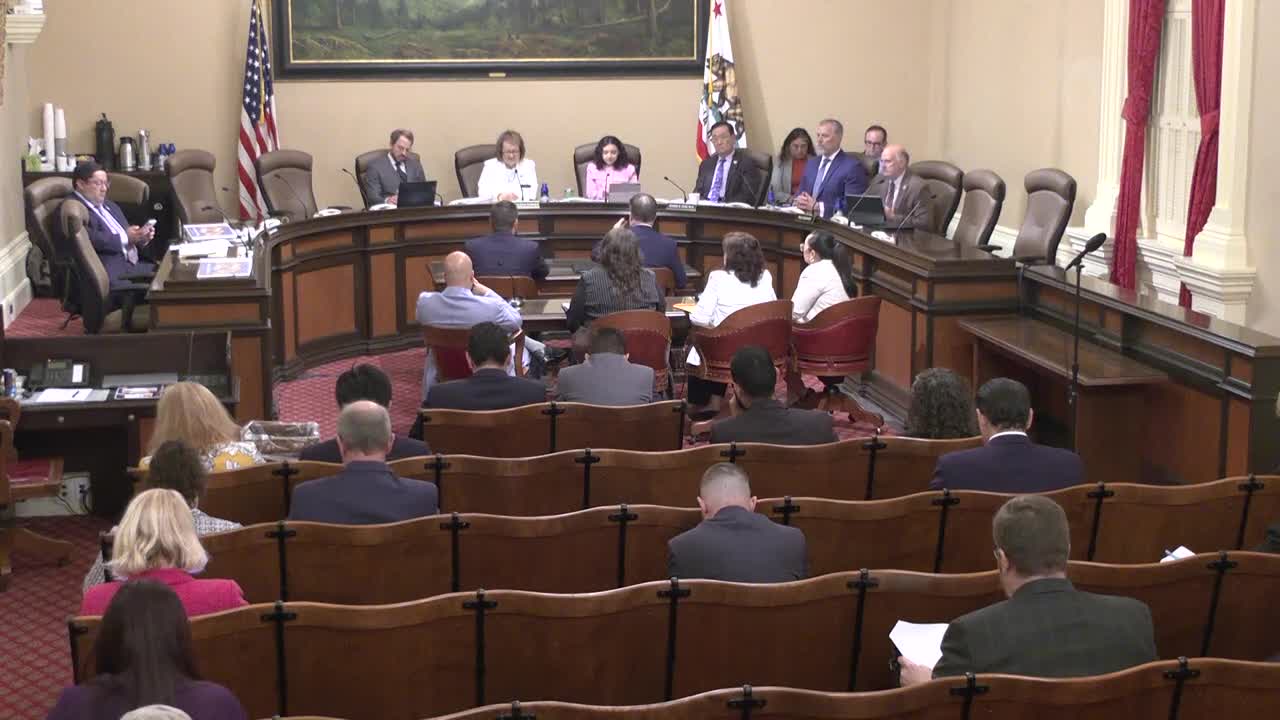 4MIN
Senate Standing Committee on Local Government
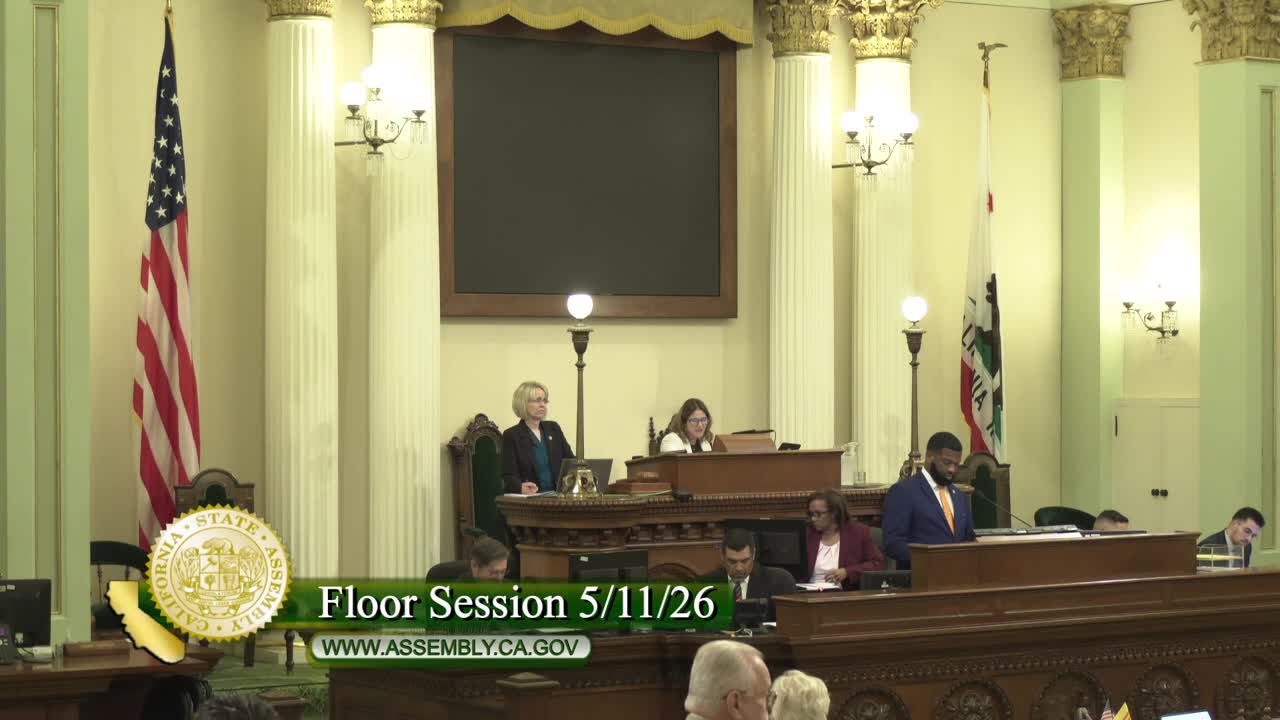 1MIN
Assembly Floor
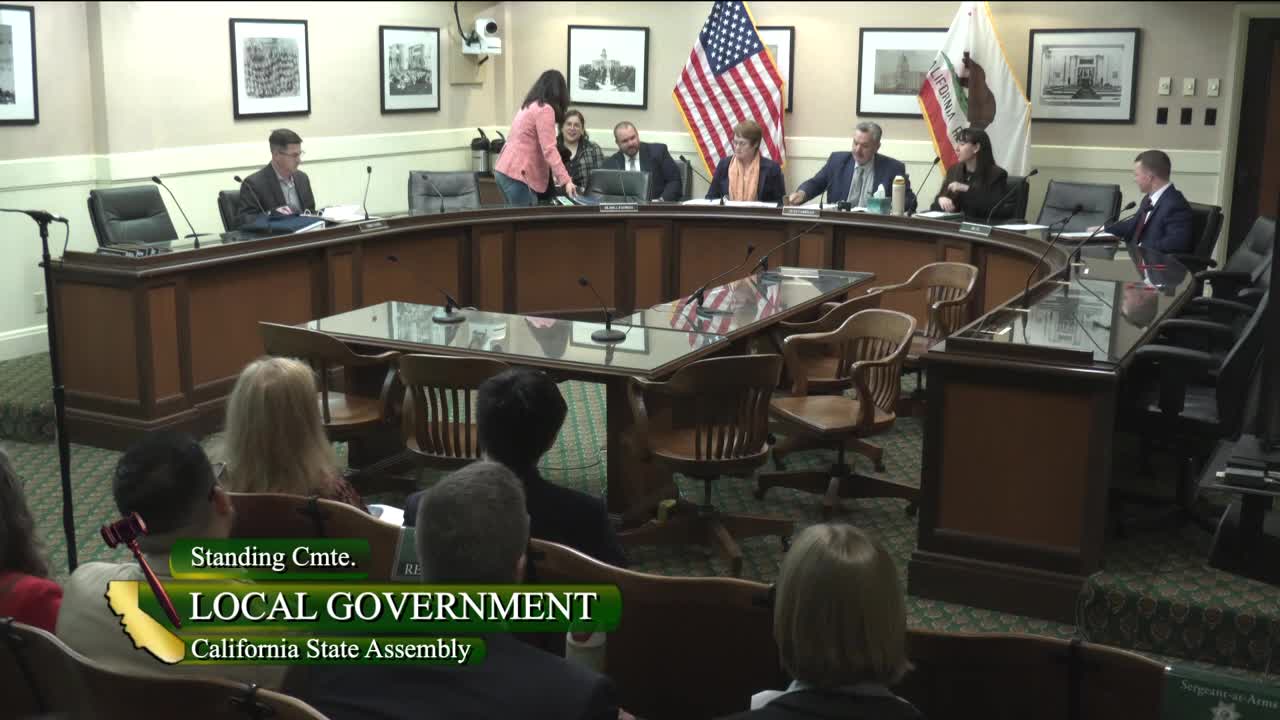 8MIN
Assembly Standing Committee on Local Government
Bill Author