AB 220: Medi-Cal: subacute care services.
- Session Year: 2025-2026
- House: Assembly
- Latest Version Date: 2026-09-03
Current Status:
Failed
(2026-09-27: Vetoed by Governor.)
Introduced
In Committee
Awaiting First Chamber Vote
Passed First Chamber
In Committee
Awaiting Second Chamber Vote
Passed Second Chamber
Enacted
Existing law establishes the Medi-Cal program, which is administered by the State Department of Health Care Services, under which qualified low-income individuals receive health care services. The Medi-Cal program is, in part, governed and funded by federal Medicaid program provisions. Existing law requires the department to establish a subacute care program in health facilities, as specified, to be available to patients in health facilities who meet subacute care criteria. Existing law requires that medical necessity for pediatric subacute care be substantiated by specified criteria. Existing regulations require a treatment authorization request for each admission to a subacute unit.
If a provider substantiates that a patient meets any of the specified criteria for pediatric subacute care, this bill would prohibit a Medi-Cal managed care plan from imposing, or requiring the patient to meet, any additional criteria. If a standard form is developed by the department for purposes of authorization and reauthorization of pediatric or adult subacute care services, the bill would require a Medi-Cal managed care plan to deem as sufficient and accept from a provider that standard form and would prohibit a plan from creating, or requiring a provider to submit, a separate form created by the plan or any other entity. The bill would prohibit a Medi-Cal managed care plan from requiring a subsequent treatment authorization request upon a patients return from a bed hold for acute hospitalization. The bill would authorize the department to impose sanctions on Medi-Cal managed care plans for violations of these provisions, as specified.
Existing law establishes the Medi-Cal program, which is administered by the State Department of Health Care Services, under which qualified low-income individuals receive health care services. The Medi-Cal program is, in part, governed and funded by federal Medicaid program provisions. Existing law requires the department to establish a subacute care program in health facilities, as specified, to be available to patients in health facilities who meet subacute care criteria. Existing law requires that medical necessity for pediatric subacute care be substantiated by specified conditions. criteria. Existing regulations require a treatment authorization request for each admission to a subacute unit.
This bill would require a provider seeking authorization for pediatric subacute or adult subacute care services pursuant to these provisions to submit with a treatment authorization request, including an electronic treatment authorization request, a specified form when requesting authorization for subacute care services. The bill would prohibit a Medi-Cal managed care plan from developing or using its own criteria to substantiate medical necessity for pediatric subacute or adult subacute care services with a condition or standard not enumerated in those forms. The
If a provider substantiates that a patient meets any of the specified criteria for pediatric subacute care, this bill would prohibit a Medi-Cal managed care plan from imposing, or requiring the patient to meet, any additional criteria. If a standard form is developed by the department for purposes of authorization and reauthorization of pediatric or adult subacute care services, the bill would require a Medi-Cal managed care plan to deem as sufficient and accept from a provider that standard form and would prohibit a plan from creating, or requiring a provider to submit, a separate form created by the plan or any other entity. The bill would prohibit a Medi-Cal managed care plan from requiring a subsequent treatment authorization request upon a patients return from a bed hold for acute hospitalization. The bill would authorize the department to impose sanctions on Medi-Cal managed care plans for violations of these provisions, as specified.
Existing law establishes the Medi-Cal program, which is administered by the State Department of Health Care Services, under which qualified low-income individuals receive health care services. The Medi-Cal program is, in part, governed and funded by federal Medicaid program provisions. Existing law requires the department to establish a subacute care program in health facilities, as specified, to be available to patients in health facilities who meet subacute care criteria. Existing law requires that medical necessity for pediatric subacute care be substantiated by specified conditions. Existing regulations require a treatment authorization request for each admission to a subacute unit.
This bill would require a provider seeking authorization for pediatric subacute or adult subacute care services pursuant to these provisions to submit with a treatment authorization request, including an electronic treatment authorization request, a specified form when requesting authorization for subacute care services. The bill would prohibit a Medi-Cal managed care plan from developing or using its own criteria to substantiate medical necessity for pediatric subacute or adult subacute care services with a condition or standard not enumerated in those forms. The bill would prohibit a Medi-Cal managed care plan from requiring a subsequent treatment authorization request upon a patients return from a bed hold for acute hospitalization. The bill would authorize the department to impose sanctions on Medi-Cal managed care plans for violations of these provisions, as specified.
Existing law establishes the Medi-Cal program, which is administered by the State Department of Health Care Services, under which qualified low-income individuals receive health care services. The Medi-Cal program is, in part, governed and funded by federal Medicaid program provisions. Existing law requires the department to establish a subacute care program in health facilities, as specified, to be available to patients in health facilities who meet subacute care criteria. Existing law requires that medical necessity for pediatric subacute care be substantiated by specified conditions. Existing regulations require a treatment authorization request for each admission to a subacute unit.
This bill would require a health facility that provides provider seeking authorization for pediatric subacute or adult subacute care services pursuant to these provisions to submit with a treatment authorization request, including an electronic treatment authorization request, a specified form when requesting authorization for subacute care services. The bill would prohibit a Medi-Cal managed care plan from developing or using its own criteria to substantiate medical necessity for pediatric subacute or adult subacute care services with a condition or standard not enumerated in those forms. The bill would prohibit a Medi-Cal managed care plan from requiring a subsequent treatment authorization request upon a patients return from a bed hold for acute hospitalization. The bill would require the department to develop and implement procedures, and authorize the department to impose sanctions, to ensure that a Medi-Cal managed care plan complies with these provisions. sanctions on Medi-Cal managed care plans for violations of these provisions, as specified.
Existing law establishes the Medi-Cal program, which is administered by the State Department of Health Care Services, under which qualified low-income individuals receive health care services. The Medi-Cal program is, in part, governed and funded by federal Medicaid program provisions. Existing law requires the department to establish a subacute care program in health facilities, as specified, to be available to patients in health facilities who meet subacute care criteria. Existing law requires that medical necessity for pediatric subacute care be substantiated by specified conditions. Existing regulations require a treatment authorization request for each admission to a subacute unit.
This bill would require a health facility that provides pediatric subacute or adult subacute care services pursuant to these provisions to submit with a treatment authorization request, including an electronic treatment authorization request, a specified form when requesting authorization for subacute care services. The bill would prohibit a Medi-Cal managed care plan from developing or using its own criteria to substantiate medical necessity for pediatric subacute or adult subacute care services with a condition or standard not enumerated in those forms. The bill would require the department to develop and implement procedures, and authorize the department to impose sanctions, to ensure that a Medi-Cal managed care plan complies with these provisions.
(a)On or before July 1, 1983, the State Department of Health Care Services shall establish a subacute care program in health facilities to more effectively use the limited Medi-Cal dollars available while at the same time ensuring needed services for these patients. The subacute care program shall be available to patients in health facilities who meet subacute care criteria. Subacute care may be provided by any facility designated by the director as meeting the subacute care criteria that has an approved provider participation agreement with the department.
(b)The department shall develop a rate of reimbursement for this subacute care program. Reimbursement rates shall be determined in accordance with methodology developed by the department, specified in regulation, and may include the following:
(1)All-inclusive per diem rates.
(2)Individual patient-specific rates according to the needs of the individual subacute care patient.
(3)Other rates subject to negotiation with the health facility.
(c)Reimbursement at subacute care rates, as specified in subdivision (b), shall only be implemented if funds are available for this purpose pursuant to the annual Budget Act.
(d)The department may negotiate and execute an agreement with any health facility that meets the standards for providing subacute care. An agreement may be negotiated or established between the health facility and the department for subacute care based on individual patient assessment. The department shall establish level of care criteria and appropriate utilization controls for patients eligible for the subacute care program.
(e)For the purposes of this section, pediatric subacute services are the health care services needed by a person under 21 years of age who uses a medical technology that compensates for the loss of a vital bodily function.
(f)(1)Medical necessity for pediatric subacute care services shall be substantiated in any one of the following ways:
(A)A tracheostomy with dependence on mechanical ventilation for a minimum of six hours each day.
(B)Dependence on tracheostomy care requiring suctioning at least every six hours, and room air mist or oxygen as needed, and dependence on one of the five treatment procedures listed in clauses (ii) to (vi), inclusive:
(i)Dependence on intermittent suctioning at least every eight hours and room air mist and oxygen as needed.
(ii)Dependence on continuous intravenous therapy, including administration of a therapeutic agent necessary for hydration or of intravenous pharmaceuticals, or intravenous pharmaceutical administration of more than one agent, via a peripheral or central line, without continuous infusion.
(iii)Dependence on peritoneal dialysis treatments requiring at least four exchanges every 24 hours.
(iv)Dependence on tube feeding by means of a nasogastric or gastrostomy tube.
(v)Dependence on other medical technologies required continuously, which, in the opinion of the attending physician and the Medi-Cal consultant, require the services of a professional nurse.
(vi)Dependence on biphasic positive airway pressure at least six hours a day, including assessment or intervention every three hours and lacking either cognitive or physical ability of the patient to protect the patients airway.
(C)Dependence on total parenteral nutrition or other intravenous nutritional support, and dependence on one of the treatment procedures specified in clauses (i) to (vi), inclusive, of subparagraph (B).
(D)Dependence on skilled nursing care in the administration of any three of the six treatment procedures specified in clauses (i) to (vi), inclusive, of subparagraph (B).
(E)Dependence on biphasic positive airway pressure or continuous positive airway pressure at least six hours a day, including assessment or intervention every three hours, and lacking either cognitive or physical ability of the patient to protect the patients airway, and dependence on one of the five treatment procedures specified in clauses (i) to (vi), inclusive, of subparagraph (B).
(2)If a provider substantiates that a patient meets any of the criteria under paragraph (1), a Medi-Cal managed care plan shall not impose, nor require the patient to meet, any additional criteria.
(g)The medical necessity determination outlined in paragraph (1) of subdivision (f) is intended solely for the evaluation of a patient who is potentially eligible and meets the criteria to be transferred from an acute care setting to a subacute level of care.
(h)If a standard form is developed by the department for purposes of authorization and reauthorization of pediatric or adult subacute care services, the following shall apply:
(1)A Medi-Cal managed care plan shall deem as sufficient and accept from a provider the standard form developed by the department for purposes of authorization and reauthorization for pediatric or adult subacute care services.
(2)A Medi-Cal managed care plan shall not create, nor require a provider to submit, a separate form created by the Medi-Cal managed care plan or any other entity for purposes of authorization and reauthorization for pediatric or adult subacute care services.
(i)A Medi-Cal managed care plan shall not require a subsequent treatment authorization request for subacute care services upon a patients return from a bed hold for acute hospitalization as described in Section 51535.1 of Title 22 of the California Code of Regulations.
(j)The department may impose sanctions on Medi-Cal managed care plans pursuant to Section 14197.7 for violations of subdivisions (h) and (i).
(a)On or before July 1, 1983, the State Department of Health Care Services shall establish a subacute care program in health facilities to more effectively use the limited Medi-Cal dollars available while at the same time ensuring needed services for these patients. The subacute care program shall be available to patients in health facilities who meet subacute care criteria. Subacute care may be provided by any facility designated by the director as meeting the subacute care criteria that has an approved provider participation agreement with the department.
(b)The department shall develop a rate of reimbursement for this subacute care program. Reimbursement rates shall be determined in accordance with methodology developed by the department, specified in regulation, and may include the following:
(1)All-inclusive per diem rates.
(2)Individual patient-specific rates according to the needs of the individual subacute care patient.
(3)Other rates subject to negotiation with the health facility.
(c)Reimbursement at subacute care rates, as specified in subdivision (b), shall only be implemented if funds are available for this purpose pursuant to the annual Budget Act.
(d)The department may negotiate and execute an agreement with any health facility that meets the standards for providing subacute care. An agreement may be negotiated or established between the health facility and the department for subacute care based on individual patient assessment. The department shall establish level of care criteria and appropriate utilization controls for patients eligible for the subacute care program.
(e)For the purposes of this section, pediatric subacute services are the health care services needed by a person under 21 years of age who uses a medical technology that compensates for the loss of a vital bodily function.
(f)(1)Medical necessity for pediatric subacute care services shall be substantiated in any one of the following ways:
(1)(A)A tracheostomy with dependence on mechanical ventilation for a minimum of six hours each day.
(2)(B)Dependence on tracheostomy care requiring suctioning at least every six hours, and room air mist or oxygen as needed, and dependence on one of the five treatment procedures listed in subparagraphs (B) to (F), clauses (ii) to (vi), inclusive:
(A)(i)Dependence on intermittent suctioning at least every eight hours and room air mist and oxygen as needed.
(B)(ii)Dependence on continuous intravenous therapy, including administration of a therapeutic agent necessary for hydration or of intravenous pharmaceuticals, or intravenous pharmaceutical administration of more than one agent, via a peripheral or central line, without continuous infusion.
(C)(iii)Dependence on peritoneal dialysis treatments requiring at least four exchanges every 24 hours.
(D)(iv)Dependence on tube feeding by means of a nasogastric or gastrostomy tube.
(E)(v)Dependence on other medical technologies required continuously, which, in the opinion of the attending physician and the Medi-Cal consultant, require the services of a professional nurse.
(F)(vi)Dependence on biphasic positive airway pressure at least six hours a day, including assessment or intervention every three hours and lacking either cognitive or physical ability of the patient to protect the patients airway.
(3)(C)Dependence on total parenteral nutrition or other intravenous nutritional support, and dependence on one of the treatment procedures specified in subparagraphs (A) to (F), clauses (i) to (vi), inclusive, of paragraph (2). subparagraph (B).
(4)(D)Dependence on skilled nursing care in the administration of any three of the six treatment procedures specified in subparagraphs (A) to (F), clauses (i) to (vi), inclusive, of paragraph (2). subparagraph (B).
(5)(E)Dependence on biphasic positive airway pressure or continuous positive airway pressure at least six hours a day, including assessment or intervention every three hours hours, and lacking either cognitive or physical ability of the patient to protect the patients airway airway, and dependence on one of the five treatment procedures specified in subparagraphs (A) to (E), clauses (i) to (vi), inclusive, of paragraph (2). subparagraph (B).
(2)If a provider substantiates that a patient meets any of the criteria under paragraph (1), a Medi-Cal managed care plan shall not impose, nor require the patient to meet, any additional criteria.
(g)The medical necessity determination outlined in paragraph (1) of subdivision (f) is intended solely for the evaluation of a patient who is potentially eligible and meets the criteria to be transferred from an acute care setting to a subacute level of care.
(h)(1)A provider seeking authorization for pediatric subacute care services pursuant to this section shall submit with a treatment authorization request, including an electronic treatment authorization request, a completed form DHCS 6200, Information For Authorization/Reauthorization of Subacute Care ServicesPediatric Subacute Program, or a successor form, when requesting authorization for pediatric subacute care services.(2)A Medi-Cal managed care plan shall not develop or use its own criteria to substantiate medical necessity for pediatric subacute care services with a condition or standard not enumerated in the form DHCS 6200, Information For Authorization/Reauthorization of Subacute Care ServicesPediatric Subacute Program, or a successor form.(i)(1)A provider seeking authorization for adult subacute care services pursuant to this section shall submit with a treatment authorization request, including an electronic treatment authorization request, a completed form DHCS 6200A, Information For Authorization/Reauthorization of Subacute Care ServicesAdult Subacute Program, or a successor form, when requesting authorization for adult subacute care services. (2)A Medi-Cal managed care plan shall not develop or use its own criteria to substantiate medical necessity for adult subacute care services with a condition or standard not enumerated in the form DHCS 6200A, Information For Authorization/Reauthorization of Subacute Care ServicesAdult Subacute Program, or a successor form.(h)If a standard form is developed by the department for purposes of authorization and reauthorization of pediatric or adult subacute care services, the following shall apply:
(1)A Medi-Cal managed care plan shall deem as sufficient and accept from a provider the standard form developed by the department for purposes of authorization and reauthorization for pediatric or adult subacute care services.
(2)A Medi-Cal managed care plan shall not create, nor require a provider to submit, a separate form created by the Medi-Cal managed care plan or any other entity for purposes of authorization and reauthorization for pediatric or adult subacute care services.
(j)(i)A Medi-Cal managed care plan shall not require a subsequent treatment authorization request for subacute care services upon a patients return from a bed hold for acute hospitalization as described in Section 51535.1 of Title 22 of the California Code of Regulations.
(k)(j)The department may impose sanctions on Medi-Cal managed care plans pursuant to Section 14197.7 for violations of subdivisions (h), (i), and (j). (h) and (i).
(a)On or before July 1, 1983, the State Department of Health Care Services shall establish a subacute care program in health facilities in order to more effectively use the limited Medi-Cal dollars available while at the same time ensuring needed services for these patients. The subacute care program shall be available to patients in health facilities who meet subacute care criteria. Subacute care may be provided by any facility designated by the director as meeting the subacute care criteria that has an approved provider participation agreement with the department.
(b)The department shall develop a rate of reimbursement for this subacute care program. Reimbursement rates shall be determined in accordance with methodology developed by the department, specified in regulation, and may include the following:
(1)All-inclusive per diem rates.
(2)Individual patient-specific rates according to the needs of the individual subacute care patient.
(3)Other rates subject to negotiation with the health facility.
(c)Reimbursement at subacute care rates, as specified in subdivision (b), shall only be implemented if funds are available for this purpose pursuant to the annual Budget Act.
(d)The department may negotiate and execute an agreement with any health facility that meets the standards for providing subacute care. An agreement may be negotiated or established between the health facility and the department for subacute care based on individual patient assessment. The department shall establish level of care criteria and appropriate utilization controls for patients eligible for the subacute care program.
(e)For the purposes of this section, pediatric subacute services are the health care services needed by a person under 21 years of age who uses a medical technology that compensates for the loss of a vital bodily function.
(f)Medical necessity for pediatric subacute care services shall be substantiated in any one of the following ways:
(1)A tracheostomy with dependence on mechanical ventilation for a minimum of six hours each day.
(2)Dependence on tracheostomy care requiring suctioning at least every six hours, and room air mist or oxygen as needed, and dependence on one of the five treatment procedures listed in subparagraphs (B) to (F), inclusive:
(A)Dependence on intermittent suctioning at least every eight hours and room air mist and oxygen as needed.
(B)Dependence on continuous intravenous therapy, including administration of a therapeutic agent necessary for hydration or of intravenous pharmaceuticals, or intravenous pharmaceutical administration of more than one agent, via a peripheral or central line, without continuous infusion.
(C)Dependence on peritoneal dialysis treatments requiring at least four exchanges every 24 hours.
(D)Dependence on tube feeding by means of a nasogastric or gastrostomy tube.
(E)Dependence on other medical technologies required continuously, which, in the opinion of the attending physician and the Medi-Cal consultant, require the services of a professional nurse.
(F)Dependence on biphasic positive airway pressure at least six hours a day, including assessment or intervention every three hours and lacking either cognitive or physical ability of the patient to protect the patients airway.
(3)Dependence on total parenteral nutrition or other intravenous nutritional support, and dependence on one of the treatment procedures specified in subparagraphs (A) to (F), inclusive, of paragraph (2).
(4)Dependence on skilled nursing care in the administration of any three of the six treatment procedures specified in subparagraphs (A) to (F), inclusive, of paragraph (2).
(5)Dependence on biphasic positive airway pressure or continuous positive airway pressure at least six hours a day, including assessment or intervention every three hours and lacking either cognitive or physical ability of the patient to protect the patients airway and dependence on one of the five treatment procedures specified in subparagraphs (A) to (E), inclusive, of paragraph (2).
(g)The medical necessity determination outlined in subdivision (f) is intended solely for the evaluation of a patient who is potentially eligible and meets the criteria to be transferred from an acute care setting to a subacute level of care.
(h)(1)A provider seeking authorization for pediatric subacute care services pursuant to this section shall submit with a treatment authorization request, including an electronic treatment authorization request, a completed form DHCS 6200, Information For Authorization/Reauthorization of Subacute Care ServicesPediatric Subacute Program, or a successor form, when requesting authorization for pediatric subacute care services.
(2)A Medi-Cal managed care plan shall not develop or use its own criteria to substantiate medical necessity for pediatric subacute care services with a condition or standard not enumerated in the form DHCS 6200, Information For Authorization/Reauthorization of Subacute Care ServicesPediatric Subacute Program, or a successor form.
(i)(1)A provider seeking authorization for adult subacute care services pursuant to this section shall submit with a treatment authorization request, including an electronic treatment authorization request, a completed form DHCS 6200A, Information For Authorization/Reauthorization of Subacute Care ServicesAdult Subacute Program, or a successor form, when requesting authorization for adult subacute care services.
(2)A Medi-Cal managed care plan shall not develop or use its own criteria to substantiate medical necessity for adult subacute care services with a condition or standard not enumerated in the form DHCS 6200A, Information For Authorization/Reauthorization of Subacute Care ServicesAdult Subacute Program, or a successor form.
(j)A Medi-Cal managed care plan shall not require a subsequent treatment authorization request for subacute care services upon a patients return from a bed hold for acute hospitalization as described in Section 51535.1 of Title 22 of the California Code of Regulations.
(k)The department may impose sanctions on Medi-Cal managed care plans pursuant to Section 14197.7 for violations of subdivisions (h), (i), and (j).
(a)On or before July 1, 1983, the State Department of Health Care Services shall establish a subacute care program in health facilities in order to more effectively use the limited Medi-Cal dollars available while at the same time ensuring needed services for these patients. The subacute care program shall be available to patients in health facilities who meet subacute care criteria. Subacute care may be provided by any facility designated by the director as meeting the subacute care criteria that has an approved provider participation agreement with the department.
(b)The department shall develop a rate of reimbursement for this subacute care program. Reimbursement rates shall be determined in accordance with methodology developed by the department, specified in regulation, and may include the following:
(1)All-inclusive per diem rates.
(2)Individual patient-specific rates according to the needs of the individual subacute care patient.
(3)Other rates subject to negotiation with the health facility.
(c)Reimbursement at subacute care rates, as specified in subdivision (b), shall only be implemented if funds are available for this purpose pursuant to the annual Budget Act.
(d)The department may negotiate and execute an agreement with any health facility that meets the standards for providing subacute care. An agreement may be negotiated or established between the health facility and the department for subacute care based on individual patient assessment. The department shall establish level of care criteria and appropriate utilization controls for patients eligible for the subacute care program.
(e)For the purposes of this section, pediatric subacute services are the health care services needed by a person under 21 years of age who uses a medical technology that compensates for the loss of a vital bodily function.
(f)Medical necessity for pediatric subacute care services shall be substantiated in any one of the following ways:
(1)A tracheostomy with dependence on mechanical ventilation for a minimum of six hours each day.
(2)Dependence on tracheostomy care requiring suctioning at least every six hours, and room air mist or oxygen as needed, and dependence on one of the five treatment procedures listed in subparagraphs (B) to (F), inclusive:
(A)Dependence on intermittent suctioning at least every eight hours and room air mist and oxygen as needed.
(B)Dependence on continuous intravenous therapy, including administration of a therapeutic agent necessary for hydration or of intravenous pharmaceuticals, or intravenous pharmaceutical administration of more than one agent, via a peripheral or central line, without continuous infusion.
(C)Dependence on peritoneal dialysis treatments requiring at least four exchanges every 24 hours.
(D)Dependence on tube feeding by means of a nasogastric or gastrostomy tube.
(E)Dependence on other medical technologies required continuously, which, in the opinion of the attending physician and the Medi-Cal consultant, require the services of a professional nurse.
(F)Dependence on biphasic positive airway pressure at least six hours a day, including assessment or intervention every three hours and lacking either cognitive or physical ability of the patient to protect the patients airway.
(3)Dependence on total parenteral nutrition or other intravenous nutritional support, and dependence on one of the treatment procedures specified in subparagraphs (A) to (F), inclusive, of paragraph (2).
(4)Dependence on skilled nursing care in the administration of any three of the six treatment procedures specified in subparagraphs (A) to (F), inclusive, of paragraph (2).
(5)Dependence on biphasic positive airway pressure or continuous positive airway pressure at least six hours a day, including assessment or intervention every three hours and lacking either cognitive or physical ability of the patient to protect the patients airway and dependence on one of the five treatment procedures specified in subparagraphs (A) to (E), inclusive, of paragraph (2).
(g)The medical necessity determination outlined in subdivision (f) is intended solely for the evaluation of a patient who is potentially eligible and meets the criteria to be transferred from an acute care setting to a subacute level of care.
(h)(1)A health facility providing provider seeking authorization for pediatric subacute care services pursuant to this section shall submit with a treatment authorization request, including an electronic treatment authorization request, a completed form DHCS 6200 6200, Information For Authorization/Reauthorization of Subacute Care ServicesPediatric Subacute Program, or a successor form, when requesting authorization for pediatric subacute care services.
(2)A Medi-Cal managed care plan shall not develop or use its own criteria to substantiate medical necessity for pediatric subacute care services with a condition or standard not enumerated in the form DHCS 6200. 6200, Information For Authorization/Reauthorization of Subacute Care ServicesPediatric Subacute Program, or a successor form.
(i)(1)A health facility providing provider seeking authorization for adult subacute care services pursuant to this section shall submit with a treatment authorization request, including an electronic treatment authorization request, a completed form DHCS 6200a 6200A, Information For Authorization/Reauthorization of Subacute Care ServicesAdult Subacute Program, or a successor form, when requesting authorization for adult subacute care services.
(2)A Medi-Cal managed care plan shall not develop or use its own criteria to substantiate medical necessity for adult subacute care services with a condition or standard not enumerated in the form DHCS 6200a. 6200A, Information For Authorization/Reauthorization of Subacute Care ServicesAdult Subacute Program, or a successor form.
(j)A Medi-Cal managed care plan shall not require a subsequent treatment authorization request for subacute care services upon a patients return from a bed hold for acute hospitalization as described in Section 51535.1 of Title 22 of the California Code of Regulations.
(j)(k)The department shall develop and implement procedures, and may impose sanctions on Medi-Cal managed care plans pursuant to Section 14197.7, to ensure that a Medi-Cal managed care plan complies with 14197.7 for violations of subdivisions (h) and (i). (h), (i), and (j).
(a)On or before July 1, 1983, the State Department of Health Care Services shall establish a subacute care program in health facilities in order to more effectively use the limited Medi-Cal dollars available while at the same time ensuring needed services for these patients. The subacute care program shall be available to patients in health facilities who meet subacute care criteria. Subacute care may be provided by any facility designated by the director as meeting the subacute care criteria that has an approved provider participation agreement with the department.
(b)The department shall develop a rate of reimbursement for this subacute care program. Reimbursement rates shall be determined in accordance with methodology developed by the department, specified in regulation, and may include the following:
(1)All-inclusive per diem rates.
(2)Individual patient-specific rates according to the needs of the individual subacute care patient.
(3)Other rates subject to negotiation with the health facility.
(c)Reimbursement at subacute care rates, as specified in subdivision (b), shall only be implemented if funds are available for this purpose pursuant to the annual Budget Act.
(d)The department may negotiate and execute an agreement with any health facility that meets the standards for providing subacute care. An agreement may be negotiated or established between the health facility and the department for subacute care based on individual patient assessment. The department shall establish level of care criteria and appropriate utilization controls for patients eligible for the subacute care program.
(e)For the purposes of this section, pediatric subacute services are the health care services needed by a person under 21 years of age who uses a medical technology that compensates for the loss of a vital bodily function.
(f)Medical necessity for pediatric subacute care services shall be substantiated in any one of the following ways:
(1)A tracheostomy with dependence on mechanical ventilation for a minimum of six hours each day.
(2)Dependence on tracheostomy care requiring suctioning at least every six hours, and room air mist or oxygen as needed, and dependence on one of the five treatment procedures listed in subparagraphs (B) to (F), inclusive:
(A)Dependence on intermittent suctioning at least every eight hours and room air mist and oxygen as needed.
(B)Dependence on continuous intravenous therapy, including administration of a therapeutic agent necessary for hydration or of intravenous pharmaceuticals, or intravenous pharmaceutical administration of more than one agent, via a peripheral or central line, without continuous infusion.
(C)Dependence on peritoneal dialysis treatments requiring at least four exchanges every 24 hours.
(D)Dependence on tube feeding by means of a nasogastric or gastrostomy tube.
(E)Dependence on other medical technologies required continuously, which, in the opinion of the attending physician and the Medi-Cal consultant, require the services of a professional nurse.
(F)Dependence on biphasic positive airway pressure at least six hours a day, including assessment or intervention every three hours and lacking either cognitive or physical ability of the patient to protect his or her the patients airway.
(3)Dependence on total parenteral nutrition or other intravenous nutritional support, and dependence on one of the treatment procedures specified in subparagraphs (A) to (F), inclusive, of paragraph (2).
(4)Dependence on skilled nursing care in the administration of any three of the six treatment procedures specified in subparagraphs (A) to (F), inclusive, of paragraph (2).
(5)Dependence on biphasic positive airway pressure or continuous positive airway pressure at least six hours a day, including assessment or intervention every three hours and lacking either cognitive or physical ability of the patient to protect his or her the patients airway and dependence on one of the five treatment procedures specified in subparagraphs (A) to (E), inclusive, of paragraph (2).
(g)The medical necessity determination outlined in subdivision (f) is intended solely for the evaluation of a patient who is potentially eligible and meets the criteria to be transferred from an acute care setting to a subacute level of care.
(h)(1)A health facility providing pediatric subacute care services pursuant to this section shall submit with a treatment authorization request, including an electronic treatment authorization request, a completed form DHCS 6200 when requesting authorization for pediatric subacute care services.
(2)A Medi-Cal managed care plan shall not develop or use its own criteria to substantiate medical necessity for pediatric subacute care services with a condition or standard not enumerated in the form DHCS 6200.
(i)(1)A health facility providing adult subacute care services pursuant to this section shall submit with a treatment authorization request, including an electronic treatment authorization request, a completed form DHCS 6200a when requesting authorization for adult subacute care services.
(2)A Medi-Cal managed care plan shall not develop or use its own criteria to substantiate medical necessity for adult subacute care services with a condition or standard not enumerated in the form DHCS 6200a.
(j)The department shall develop and implement procedures, and may impose sanctions pursuant to Section 14197.7, to ensure that a Medi-Cal managed care plan complies with subdivisions (h) and (i).
|
Date
|
Status
|
|---|---|
| Sep 27, 2026 | Vetoed by Governor. |
| Sep 9, 2026 | Enrolled and presented to the Governor at 1 p.m. |
| Aug 30, 2026 | Senate amendments concurred in. To Engrossing and Enrolling. (Ayes 78. Noes 0. Page 6911.). |
| Aug 30, 2026 | Senate amendments concurred in. To Engrossing and Enrolling. (Ayes 78. Noes 0.). |
| Aug 30, 2026 | Senate amendments concurred in. To Engrossing and Enrolling. |
| Aug 30, 2026 | In Assembly. Concurrence in Senate amendments pending. |
| Aug 30, 2026 | Read third time. Passed. Ordered to the Assembly. (Ayes 39. Noes 0.). |
| Aug 26, 2026 | Read second time. Ordered to third reading. |
| Aug 25, 2026 | (Ayes 30. Noes 7. Page 5773.) |
| Aug 25, 2026 | Ordered to third reading. |
| Aug 25, 2026 | Read third time and amended. Ordered to second reading. |
| Aug 25, 2026 | (Ayes 29. Noes 7.) |
| Aug 25, 2026 | Action rescinded whereby the bill was read third time, passed, and to Assembly. |
| Sep 4, 2025 | In Senate. Held at Desk. |
| Sep 4, 2025 | Ordered to the Senate. |
| Sep 4, 2025 | In Assembly. Concurrence in Senate amendments pending. |
| Sep 4, 2025 | Read third time. Passed. Ordered to the Assembly. (Ayes 39. Noes 0. Page 2520.). |
| Sep 2, 2025 | Ordered to special consent calendar. |
| Aug 29, 2025 | Read second time. Ordered to third reading. |
| Aug 29, 2025 | From committee: Do pass. (Ayes 7. Noes 0.) (August 29). |
| Jul 14, 2025 | In committee: Referred to APPR. suspense file. |
| Jul 8, 2025 | From committee chair, with author's amendments: Amend, and re-refer to committee. Read second time, amended, and re-referred to Com. on APPR. |
| Jun 26, 2025 | From committee: Do pass and re-refer to Com. on APPR. (Ayes 11. Noes 0.) (June 25). Re-referred to Com. on APPR. |
| Jun 16, 2025 | From committee chair, with author's amendments: Amend, and re-refer to committee. Read second time, amended, and re-referred to Com. on HEALTH. |
| Jun 11, 2025 | Referred to Com. on HEALTH. |
| May 29, 2025 | In Senate. Read first time. To Com. on RLS. for assignment. |
| May 29, 2025 | Read third time. Passed. Ordered to the Senate. (Ayes 70. Noes 0. Page 1781.) |
| May 27, 2025 | Read second time. Ordered to third reading. |
| May 23, 2025 | From committee: Do pass. (Ayes 14. Noes 0.) (May 23). |
| May 7, 2025 | In committee: Set, first hearing. Referred to APPR. suspense file. |
| Apr 23, 2025 | From committee: Do pass and re-refer to Com. on APPR. (Ayes 16. Noes 0.) (April 22). Re-referred to Com. on APPR. |
| Feb 3, 2025 | Referred to Com. on HEALTH. |
| Jan 9, 2025 | From printer. May be heard in committee February 8. |
| Jan 8, 2025 | Read first time. To print. |
|
Date
|
Description
|
Location
|
Votes
|
|
|---|---|---|---|---|
| Aug 30, 2026 | AB 220 Jackson Concurrence in Senate Amendments | Assembly Floor |
Passed |
|
| Aug 30, 2026 | Assembly 3rd Reading AB220 Jackson et al. By Weber Pierson | Senate Floor |
Passed |
|
| Sep 4, 2025 | Special Consent AB220 Jackson et al. | Senate Floor |
Passed |
|
| Aug 29, 2025 | Do pass | Senate Standing Committee on Appropriations |
Passed |
|
| Jul 14, 2025 | Placed on suspense file | Senate Standing Committee on Appropriations |
Passed |
|
| Jun 25, 2025 | Do pass, but first be re-referred to the Committee on [Appropriations] | Senate Standing Committee on Health |
Passed |
|
| May 29, 2025 | AB 220 Jackson Assembly Third Reading | Assembly Floor |
Passed |
|
| May 23, 2025 | Do pass. | Assembly Standing Committee on Appropriations |
Passed |
|
| Apr 22, 2025 | Do pass and be re-referred to the Committee on [Appropriations] | Assembly Standing Committee on Health |
Passed |
This list shows positions taken on this bill by organizations on the date displayed, which is linked to the original source.
Positions by individuals are not included.
|
Organization
|
Position
|
Date
|
|---|---|---|
| American Academy Of Pediatrics, California | ** Support | |
| California Advocates for Nursing Home Reform | ** Support | |
| California Alliance Of Child And Family Services | ** Support | |
| California Association Of Health Facilities | ** Support | |
| California Association Of Medical Product Suppliers | ** Support | |
| California Children’s Hospital Association | ** Support | |
| California Hospital Association | ** Support | |
| California Long Term Care Ombudsman Association | ** Support | |
| Canhr | ** Support | |
| Children's Healthcare of Northern California | ** Support | |
| Children’s Healthcare of Northern California | ** Support | |
| Children’s Specialty Care Coalition | ** Support | |
| ChildrenS Specialty Care Coalition | ** Support | |
| District Hospital Leadership Forum | ** Support | |
| The Arc and United Cerebral Palsy California Collaboration | ** Support | |
| Totally Kids Rehabilitation Center | ** Support | |
| Totally Kids Rehabilitation Hospital | ** Support |
GOVERNOR'S VETO
GV Bill Id:AB 220
Author:(Jackson)
As Enrolled Ver:September 3, 2026
2/3 vote
SUMMARY
Aligns authorizations for pediatric or adult subacute care services provided through Medi-Cal managed care plans with authorizations used in the fee-for-service Medi-Cal system. Prohibits a Medi-Cal managed care plan from developing or using its own criteria to substantiate medical necessity for purposes of authorization and reauthorization for pediatric or adult subacute care service, and requires a plan to deem as sufficient and accept from a provider a standard form, if one is developed by the Department of Health Care Services (DHCS).
Senate Amendments
- Delete references to a specific numbered form and make provisions related to a standardized form contingent on DHCS's development of such a form.
- Clarifies the requirements established by the bill also apply to a Medi-Cal managed care plan's authorization request for subacute care services upon a patient's return from a bed hold for acute hospitalization, as specified.
- Strike the requirement for DHCS to develop and implement procedures to ensure that managed care plans comply with the bill's requirements, and clarifies DHCS is authorized to impose sanctions for violations of the bill's requirements.
Governor's Veto Message
I appreciate the author's intent to ensure that patients who require subacute services receive the care and support they need. However, Medi-Cal managed care plans (MCPs) are already obligated to apply subacute medical necessity criteria in alignment with Medi-Cal policy. In response to the introduction of this bill, DHCS published clarifying guidance in June of this year to Medi-Cal MCPs regarding their responsibilities related to subacute care services - without limiting a Medi-Cal MCP's ability to use utilization management or increasing costs to the General Fund. Therefore, this bill is no longer necessary.
COMMENTS
Subacute Care. In Medi-Cal, adult subacute care is defined as a level of care needed by a patient who does not require hospital acute care, but who requires more intensive skilled nursing care than is provided to the majority of patients in a skilled nursing facility. Subacute patients require special medical equipment, supplies, and treatments such as ventilators, tracheostomies, total parenteral nutrition, tube feeding, and complex wound management care.
Pediatric subacute care is defined in statute as a level of care needed by a person less than 21 years of age who uses a medical technology that compensates for the loss of a vital bodily function. Pediatric subacute care facilities care for children who have experienced illnesses and injuries resulting from, for instance, congenital birth defects, neurologic injuries, cardiac and respiratory illness seizure disorders, or premature birth complications. As an example of the type of patients who are seen in a pediatric subacute care facility, a hypothetical patient would be a ten year-old child with developmental delay across several domains, who is dependent on a ventilator, wears hearing aids, is wheelchair dependent and is in recovery from a spinal surgery and has corresponding wound care needs.
Managed Care Transition. Prior to January 1, 2024, adult and pediatric subacute care services were "carved out" of Medi-Cal managed care, meaning they were provided as a separate, fee-for-service benefit contracted and paid for directly by DHCS. As a component of the California Advancing and Innovating Medi-Cal (CalAIM) initiative, effective January 1, 2024, a number of institutional long-term care services, including adult and pediatric subacute care services, were "carved in" to Medi-Cal managed care. This means Medi-Cal managed care plans are now responsible for contracting with these facilities and paying them for medically necessary subacute care services. Plans also took on the role of reviewing prior authorization requests for subacute care services. DHCS has provided training for providers and managed care plans to prepare for and troubleshoot aspects of this transition.
DHCS Guidance on Subacute Care. On September 16, 2024, DHCS issued "All-Plan Letter 24-010" to provide updated guidance on the transition of subacute care to Medi-Cal managed care. DHCS specifies plans must determine medical necessity consistent with definitions in current statute and regulation. DHCS further specifies that members in need of adult or pediatric subacute care services are to be placed in a health care facility that provides the level of care most appropriate to the member's medical needs, as outlined in the managed care plan contract and as documented by the member's provider. DHCS requires, effective January 1, 2024, all plans in all counties to expedite prior authorization requests for members who are transitioning from an acute care hospital to a subacute care facility. DHCS also requires plans to make all authorization decisions in a timeframe appropriate for the nature of the member's condition, and requires all authorization decisions to be made within 72 hours after the plan receives relevant information needed to make an authorization decision.
According to the Author
This bill is crucial for enhancing the care and support provided to patients who require subacute medical services. The author asserts care for medically fragile children with disabilities is being delayed and denied by managed care plans. The author concludes this bill is a vital step toward improving patient outcomes by ensuring patients receive services aligned with their medical needs within an appropriate facility.
Arguments in Support
The sponsor of this legislation, Totally Kids Rehabilitation Center, writes in support that medical necessity criteria for subacute care services is well-established, particularly for pediatric subacute care. The sponsor explains that prior to the transition to Medi-Cal managed care, DHCS used a simple form with a checklist in the fee-for-service (FFS) Medi-Cal program to establish medical necessity, and the determination was straightforward: if a facility provided medical chart information that verified a child met one of a number of criteria specified in statute, medical necessity was established. With the recent inclusion of these services into Medi-Cal managed care, the sponsor explains this process has grown so complicated and burdensome that their facility had to hire two additional case managers to handle the demands of managed care plans.
California Association of Health Facilities (CAHF) writes in support that as California transitioned from a FFS model to the Medi-Cal managed care model, plans in essence became case managers determining when, how, and if pediatric patients receive care without proper training and knowledge of long-term care regulations and laws. CAHF argues this bill will streamline the authorization process for patients needing subacute care while ensuring they receive the appropriate, adequate care they deserve, and return case management to the appropriate authority. Other organizations representing individuals with disabilities, consumers, and specialty care providers also support this bill.
Arguments in Opposition
None on file.
FISCAL COMMENTS
According to the Senate Committee on Appropriations, unknown ongoing costs, potentially low hundreds of thousands, for DHCS for state administration for oversight of Medi-Cal plans (General Fund and federal funds).
VOTES
ASM HEALTH: 16-0-0
YES: Bonta, Chen, Addis, Aguiar-Curry, Rogers, Carrillo, Flora, Mark González, Krell, Patel, Patterson, Celeste Rodriguez, Sanchez, Schiavo, Sharp-Collins, Stefani
ASM APPROPRIATIONS: 14-0-1
YES: Wicks, Arambula, Calderon, Caloza, Dixon, Elhawary, Fong, Mark González, Hart, Pacheco, Pellerin, Solache, Ta, Tangipa
ABS, ABST OR NV: Sanchez
ASSEMBLY FLOOR: 70-0-9
YES: Addis, Aguiar-Curry, Ahrens, Alanis, Arambula, Ávila Farías, Bains, Bauer-Kahan, Bennett, Berman, Boerner, Bonta, Calderon, Caloza, Carrillo, Castillo, Connolly, Davies, DeMaio, Dixon, Elhawary, Ellis, Flora, Fong, Gabriel, Gallagher, Garcia, Gipson, Jeff Gonzalez, Mark González, Hadwick, Haney, Harabedian, Hart, Hoover, Irwin, Jackson, Kalra, Krell, Lackey, Lee, Lowenthal, Macedo, McKinnor, Muratsuchi, Ortega, Pacheco, Papan, Patel, Patterson, Pellerin, Petrie-Norris, Quirk-Silva, Ramos, Ransom, Celeste Rodriguez, Michelle Rodriguez, Rogers, Blanca Rubio, Sanchez, Schiavo, Schultz, Stefani, Ta, Valencia, Wallis, Wicks, Wilson, Zbur, Rivas
ABS, ABST OR NV: Alvarez, Bryan, Chen, Nguyen, Sharp-Collins, Solache, Soria, Tangipa, Ward
SENATE FLOOR: 39-0-1
YES: Allen, Alvarado-Gil, Archuleta, Arreguín, Ashby, Becker, Blakespear, Cabaldon, Caballero, Cervantes, Choi, Cortese, Dahle, Durazo, Gonzalez, Grayson, Grove, Hurtado, Jones, Laird, Limón, McGuire, McNerney, Menjivar, Ochoa Bogh, Padilla, Pérez, Reyes, Richardson, Rubio, Seyarto, Smallwood-Cuevas, Stern, Strickland, Umberg, Valladares, Wahab, Weber Pierson, Wiener
ABS, ABST OR NV: Niello
SENATE FLOOR: 39-0-1
YES: Allen, Alvarado-Gil, Archuleta, Arreguín, Ashby, Becker, Blakespear, Cabaldon, Caballero, Cervantes, Choi, Cortese, Dahle, Durazo, Gonzalez, Grayson, Grove, Hurtado, Jones, Laird, Limón, McGuire, McNerney, Menjivar, Niello, Ochoa Bogh, Padilla, Pérez, Richardson, Rubio, Seyarto, Smallwood-Cuevas, Stern, Strickland, Umberg, Valladares, Wahab, Weber Pierson, Wiener
ABS, ABST OR NV: Reyes
ASSEMBLY FLOOR: 78-0-1
YES: Addis, Aguiar-Curry, Ahrens, Alanis, Alvarez, Arambula, Ávila Farías, Bains, Bauer-Kahan, Bennett, Berman, Boerner, Bonta, Bryan, Calderon, Caloza, Carrillo, Castillo, Chen, Connolly, Davies, DeMaio, Dixon, Elhawary, Ellis, Flora, Fong, Gabriel, Garcia, Gipson, Jeff Gonzalez, Mark González, Hadwick, Haney, Harabedian, Hart, Hoover, Irwin, Jackson, Johnson, Kalra, Lackey, Lee, Lowenthal, Macedo, McKinnor, Muratsuchi, Nguyen, Ortega, Pacheco, Papan, Patel, Patterson, Pellerin, Petrie-Norris, Quirk-Silva, Ramos, Ransom, Celeste Rodriguez, Michelle Rodriguez, Rogers, Blanca Rubio, Sanchez, Schiavo, Schultz, Sharp-Collins, Solache, Soria, Stefani, Ta, Tangipa, Valencia, Wallis, Ward, Wicks, Wilson, Zbur, Rivas
ABS, ABST OR NV: Krell
UPDATED
VERSION: September 3, 2026
CONSULTANT: Lisa Murawski / HEALTH / (916) 319-2097 FN: 0004638
CONCURRENCE IN SENATE AMENDMENTS
CSA1 Bill Id:AB 220
Author:(Jackson)
As Amended Ver:August 25, 2026
Majority vote
SUMMARY
Aligns authorizations for pediatric or adult subacute care services provided through Medi-Cal managed care plans with authorizations used in the fee-for-service Medi-Cal system. Prohibits a Medi-Cal managed care plan from developing or using its own criteria to substantiate medical necessity for purposes of authorization and reauthorization for pediatric or adult subacute care service, and requires a plan to deem as sufficient and accept from a provider a standard form, if one is developed by the Department of Health Care Services (DHCS).
Senate Amendments
- Delete references to a specific numbered form and makes provisions related to a standardized form contingent on DHCS's development of such a form.
- Clarifies the requirements established by the bill also apply to a Medi-Cal managed care plan's authorization request for subacute care services upon a patient's return from a bed hold for acute hospitalization, as specified.
- Strike the requirement for DHCS to develop and implement procedures to ensure that managed care plans comply with the bill's requirements, and clarifies DHCS is authorized to impose sanctions for violations of the bill's requirements.
COMMENTS
Subacute Care. In Medi-Cal, adult subacute care is defined as a level of care needed by a patient who does not require hospital acute care, but who requires more intensive skilled nursing care than is provided to the majority of patients in a skilled nursing facility. Subacute patients require special medical equipment, supplies, and treatments such as ventilators, tracheostomies, total parenteral nutrition, tube feeding, and complex wound management care.
Pediatric subacute care is defined in statute as a level of care needed by a person less than 21 years of age who uses a medical technology that compensates for the loss of a vital bodily function. Pediatric subacute care facilities care for children who have experienced illnesses and injuries resulting from, for instance, congenital birth defects, neurologic injuries, cardiac and respiratory illness seizure disorders, or premature birth complications. As an example of the type of patients who are seen in a pediatric subacute care facility, a hypothetical patient would be a ten year-old child with developmental delay across several domains, who is dependent on a ventilator, wears hearing aids, is wheelchair dependent and is in recovery from a spinal surgery and has corresponding wound care needs.
Managed Care Transition. Prior to January 1, 2024, adult and pediatric subacute care services were "carved out" of Medi-Cal managed care, meaning they were provided as a separate, fee-for-service benefit contracted and paid for directly by DHCS. As a component of the California Advancing and Innovating Medi-Cal (CalAIM) initiative, effective January 1, 2024, a number of institutional long-term care services, including adult and pediatric subacute care services, were "carved in" to Medi-Cal managed care. This means Medi-Cal managed care plans are now responsible for contracting with these facilities and paying them for medically necessary subacute care services. Plans also took on the role of reviewing prior authorization requests for subacute care services.
According to DHCS, the stated goals of the carve-in of subacute care services into managed care are as follows:
- Standardize subacute care services coverage under managed care statewide;
- Advance a more consistent, seamless, and integrated system of managed care that reduces complexity and increases flexibility; and,
- Increase access to comprehensive care coordination, care management, and a broad array of services for Medi-Cal members in subacute care.
DHCS has conducted significant stakeholder engagement and has provided training for providers and managed care plans to prepare for and troubleshoot aspects of this transition.
DHCS Guidance on Subacute Care. On September 16, 2024, DHCS issued "All-Plan Letter 24-010" to provide updated guidance on the transition of subacute care to Medi-Cal managed care. DHCS specifies plans must determine medical necessity consistent with definitions in current statute and regulation. DHCS further specifies that members in need of adult or pediatric subacute care services are to be placed in a health care facility that provides the level of care most appropriate to the member's medical needs, as outlined in the managed care plan contract and as documented by the member's provider. DHCS requires, effective January 1, 2024, all plans in all counties to expedite prior authorization requests for members who are transitioning from an acute care hospital to a subacute care facility. DHCS also requires plans to make all authorization decisions in a timeframe appropriate for the nature of the member's condition, and requires all authorization decisions to be made within 72 hours after the plan receives relevant information needed to make an authorization decision.
According to the Author
This bill is crucial for enhancing the care and support provided to patients who require subacute medical services. The author asserts care for medically fragile children with disabilities is being delayed and denied by managed care plans. The author concludes this bill is a vital step toward improving patient outcomes by ensuring patients receive services aligned with their medical needs within an appropriate facility.
Arguments in Support
The sponsor of this legislation, Totally Kids Rehabilitation Center, writes in support that medical necessity criteria for subacute care services is well-established, particularly for pediatric subacute care. The sponsor explains that prior to the transition to Medi-Cal managed care, DHCS used a simple form with a checklist in the fee-for-service (FFS) Medi-Cal program to establish medical necessity, and the determination was straightforward: if a facility provided medical chart information that verified a child met one of a number of criteria specified in statute, medical necessity was established. With the recent inclusion of these services into Medi-Cal managed care, the sponsor explains this process has grown so complicated and burdensome that their facility had to hire two additional case managers to handle the demands of managed care plans.
California Association of Health Facilities (CAHF) writes in support that as California transitioned from a FFS model to the Medi-Cal managed care model, plans in essence became case managers determining when, how, and if pediatric patients receive care without proper training and knowledge of long-term care regulations and laws. CAHF argues this bill will streamline the authorization process for patients needing subacute care while ensuring they receive the appropriate, adequate care they deserve, and return case management to the appropriate authority. Other organizations representing individuals with disabilities, consumers, and specialty care providers also support this bill.
Arguments in Opposition
None on file.
FISCAL COMMENTS
According to the Senate Committee on Appropriations, unknown ongoing costs, potentially low hundreds of thousands, for DHCS for state administration for oversight of Medi-Cal plans (General Fund and federal funds).
VOTES:
ASM HEALTH: 16-0-0
YES: Bonta, Chen, Addis, Aguiar-Curry, Rogers, Carrillo, Flora, Mark González, Krell, Patel, Patterson, Celeste Rodriguez, Sanchez, Schiavo, Sharp-Collins, Stefani
ASM APPROPRIATIONS: 14-0-1
YES: Wicks, Arambula, Calderon, Caloza, Dixon, Elhawary, Fong, Mark González, Hart, Pacheco, Pellerin, Solache, Ta, Tangipa
ABS, ABST OR NV: Sanchez
ASSEMBLY FLOOR: 70-0-9
YES: Addis, Aguiar-Curry, Ahrens, Alanis, Arambula, Ávila Farías, Bains, Bauer-Kahan, Bennett, Berman, Boerner, Bonta, Calderon, Caloza, Carrillo, Castillo, Connolly, Davies, DeMaio, Dixon, Elhawary, Ellis, Flora, Fong, Gabriel, Gallagher, Garcia, Gipson, Jeff Gonzalez, Mark González, Hadwick, Haney, Harabedian, Hart, Hoover, Irwin, Jackson, Kalra, Krell, Lackey, Lee, Lowenthal, Macedo, McKinnor, Muratsuchi, Ortega, Pacheco, Papan, Patel, Patterson, Pellerin, Petrie-Norris, Quirk-Silva, Ramos, Ransom, Celeste Rodriguez, Michelle Rodriguez, Rogers, Blanca Rubio, Sanchez, Schiavo, Schultz, Stefani, Ta, Valencia, Wallis, Wicks, Wilson, Zbur, Rivas
ABS, ABST OR NV: Alvarez, Bryan, Chen, Nguyen, Sharp-Collins, Solache, Soria, Tangipa, Ward
SENATE FLOOR: 39-0-1
YES: Allen, Alvarado-Gil, Archuleta, Arreguín, Ashby, Becker, Blakespear, Cabaldon, Caballero, Cervantes, Choi, Cortese, Dahle, Durazo, Gonzalez, Grayson, Grove, Hurtado, Jones, Laird, Limón, McGuire, McNerney, Menjivar, Niello, Ochoa Bogh, Padilla, Pérez, Richardson, Rubio, Seyarto, Smallwood-Cuevas, Stern, Strickland, Umberg, Valladares, Wahab, Weber Pierson, Wiener
ABS, ABST OR NV: Reyes
UPDATED
VERSION: August 25, 2026
CONSULTANT: Lisa Murawski / HEALTH / (916) 319-2097 FN: 0004321
SENATE RULES COMMITTEE Office of Senate Floor Analyses (916) 651-4171 | AB 220 |
THIRD READING
Bill No: AB 220
Author: Jackson (D), et al.
Amended: 8/25/26 in Senate
Vote: 21
SENATE HEALTH COMMITTEE: 11-0, 6/25/25
AYES: Menjivar, Valladares, Durazo, Gonzalez, Grove, Limón, Padilla, Richardson, Rubio, Weber Pierson, Wiener
SENATE APPROPRIATIONS COMMITTEE: 7-0, 8/29/25
AYES: Caballero, Seyarto, Cabaldon, Dahle, Grayson, Richardson, Wahab
PRIOR SENATE FLOOR VOTE NOT RELEVANT
ASSEMBLY FLOOR: 70-0, 5/29/25 - See last page for vote
SUBJECT: Medi-Cal: subacute care services
SOURCE: Totally Kids Rehabilitation Hospital
DIGEST:
This bill requires a provider seeking authorization for subacute care services to submit a specified form with the treatment authorization request. Prohibits Medi-Cal managed care plans from developing or using their own criteria to substantiate medical necessity for subacute care services or from requiring subsequent treatment authorization requests for subacute care services after a patient returns from a bed hold for acute hospitalization.
Senate Floor Amendments of 8/25/26 remove the requirement that Medi-Cal managed care plans use specified Department of Health Care Services (DHCS) forms to authorize subacute care services and instead require plans to authorize such services should a provider substantiate that a patient meets the specified criteria for subacute care services; require plans to use only a standard form developed by DHCS for the authorization of subacute care services if DHCS develops such a form; and make additional organizational changes to more clearly delineate the criteria for these services.
ANALYSIS:
Existing law:
- Establishes the Medi-Cal program, which is administered by the DHCS, and under which qualified low-income individuals receive health care services. [Welfare and Institutions Code [WIC] §14000, et seq.]
- Establishes a schedule of benefits under the Medi-Cal program, which includes benefits required under federal law and benefits provided at the state’s option, both of which are funded with federal and state dollars. [WIC §14132]
- Establishes that a health care service is medically necessary when it is reasonable and necessary to protect life, prevent significant illness or significant disability, or to alleviate severe pain, as well as all services covered under the federal early and periodic screening, diagnosis, and treatment for individuals under 21 years of age. [WIC §14059.5]
- Requires DHCS to establish a subacute care program in health facilities to patients who meet subacute care criteria. [WIC §14132.25]
- Requires medical necessity for pediatric subacute care services to be substantiated in one of five specific ways that specify the combinations of treatment upon which a patient is dependent. [WIC §14132.25]
- Specifies that the pediatric medical necessity determination is intended solely for the evaluation of a patient who is potentially eligible and meets the criteria to be transferred from an acute care setting to a subacute level of care. [WIC §14132.25]
- Allows bed holds of up to seven days for patients in skilled nursing and intermediate care facilities who are ordered by the attending physician into acute hospitalization. [Title 22 California Code of Regulations (CCR) §51535.1]
- Allows the DHCS director to terminate contracts with or impose sanctions on Medi-Cal managed care plans for failing to comply with contract requirements, federal or state law or regulations, the state plan or approved waivers or for other good cause. Sanctions include temporary or permanent suspension orders of enrollment, marketing, personnel, or subcontractors, and monetary sanctions of up to $25,000 for first violations, up to $50,000 for second violations, and up to $100,000 for subsequent violations. [WIC §14197.7]
- Establishes the California Advancing and Innovating Medi-Cal (CalAIM) initiative effective from January 1, 2022 until December 31, 2026, which includes new requirements on Medi-Cal plans, new Medi-Cal populations subject to mandatory Medi-Cal plan enrollment, and new mandatory plan benefits, including subacute care services. [WIC §14184.100 et seq., WIC]
This bill:
- Prohibits a Medi-Cal plan from imposing additional criteria for subacute care services if a provider substantiates that a patient meets any of the criteria specified in state law.
- Requires a Medi-Cal plan to deem as sufficient a standardized form developed by DHCS for purposes of authorization and reauthorization of subacute care services, should DHCS develop such a form. Also prohibits Medi-Cal plans from developing their own subacute care services authorization or reauthorization form if a DHCS form exists.
- Prohibits a Medi-Cal plan from requiring a subsequent treatment authorization request for subacute care services when a patient returns from a bed hold for acute hospitalization as described in existing regulation.
- Specifies that DHCS may impose sanctions on Medi-Cal plans for violations of 2) and 3) above, in accordance with existing law.
Background
According to the author of this bill:
This bill is crucial for enhancing the care and support provided to patients who require subacute medical services. The bill aims to optimize the use of limited Medi-Cal funds while ensuring that patients receive the necessary medical attention tailored to their specific needs. Furthermore, it addresses the unique needs of pediatric patients relying on complex medical technologies, underscoring the commitment to provide comprehensive and equitable health care services. Overall, this legislation is a vital step toward improving patient outcomes by ensuring patients receive services aligned with their medical needs within an appropriate facility.
Medi-Cal subacute care program. According to DHCS, subacute care facility services include those provided to both adult and pediatric populations that are provided by a licensed general acute care hospital with distinct-part skilled nursing beds, or by a freestanding certified nursing facility. In each case, the facility must have the necessary contract with DHCS. Subacute care patients are medically fragile and require special services, such as inhalation therapy, tracheotomy care, intravenous tube feeding, and complex wound management care. Adult subacute care is defined as a level of care needed by a patient who does not require hospital acute care but who requires more intensive licensed skilled nursing care than is provided to the majority of patients in a skilled nursing facility. Pediatric subacute care is a level of care needed by a person less than 21 years of age who uses a medical technology that compensates for the loss of a vital bodily function.
Recently, as part of the CalAIM initiative, DHCS moved many populations into mandatory managed care who were previously receiving services through the Medi-Cal fee-for-service delivery system, including some pediatric or adult subacute care services, depending on the county the individual lived in, that were not already part of Medi-Cal managed care. As of January 1, 2024, many individuals who were previously receiving subacute care services through the fee-for-service system were moved into managed care plans. According to the DHCS All Plan Letter 24-010, as part of the transition, Medi-Cal plans were required to offer contracts to all subacute care facilities within their service area that had a contract with DHCS. They were also required to develop sufficient network capacity to enable member placement in subacute care facilities within five working days, seven working days, or 14 calendar days depending on the county of residence. The letter also outlined requirements to allow Medi-Cal recipients to return to a facility after a leave of absence or a bed hold, which generally occurs when a patient temporarily needs a higher level of care in a hospital. While the guidance required Medi-Cal plans to honor DHCS treatment approvals for either six months or the duration of approval of services, whichever is shorter, Medi-Cal plans are now responsible for treatment authorization. The guidance also required all prior authorization requests to be expedited for Medi-Cal recipients transitioning from an acute care hospital to a subacute care facility and all decisions to be made within 72 hours after the Medi-Cal plan receives relevant information from the plan.
When subacute care services were part of the fee-for-service delivery system, providers used either form DHCS 6200, “Information For Authorization/Reauthorization of Subacute Care Services—Pediatric Subacute Program” or form DHCS 6200A, “Information For Authorization/Reauthorization of Subacute Care Services—Adult Subacute Program” to establish whether the services were medically necessary in order to receive authorization for the services. The forms specified the services that a patient needed that necessitated subacute care services. Now that the program is part of Medi-Cal managed care, each plan has its own forms and methods of documenting medical necessity. Providers report these forms and processes are leading to delays in moving patients from acute care settings to subacute care settings.
FISCAL EFFECT: Appropriation: No Fiscal Com.: Yes Local: No
According to the Senate Appropriations Committee, this bill has unknown ongoing costs, potentially low hundreds of thousands, for DHCS for state administration for oversight of Medi-Cal plans (General Fund and federal funds).
SUPPORT: (Verified 8/20/26)
Totally Kids Rehabilitation Hospital (source)
American Academy of Pediatrics, California
California Advocates for Nursing Home Reform
California Alliance of Child and Family Services
California Association of Health Facilities
California Association of Medical Product Suppliers
California Children’s Hospital Association
California Hospital Association
California Long Term Care Ombudsman Association
Children’s Healthcare of Northern California
Children’s Specialty Care Coalition
District Hospital Leadership Forum
The Arc and United Cerebral Palsy California Collaboration
OPPOSITION: (Verified 8/20/26)
None received
ARGUMENTS IN SUPPORT: Sponsor, Totally Kids Rehabilitation, a pediatric subacute facility, writes that this bill closes loopholes used by Medi-Cal plans to delay and deny care to children and adults who utilize Medi-Cal for payment. Totally Kids Rehabilitation was involved in determining the original criteria for ‘medical necessity’ when their program was implemented. However, in January 2024, CalAIM transitioned subacute care services and Medi-Cal plans have redefined ‘medical necessity’ for subacute care, as complex and some cases now require stacks of paperwork to resolve. These demands mean that people in need of care must wait in acute care hospitals for weeks waiting for transfer to the appropriate facility. Additionally, when they finally did establish medical necessity for care, they only authorized this for two weeks rather than a year as had been done previously.
ASSEMBLY FLOOR: 70-0, 5/29/25
AYES: Addis, Aguiar-Curry, Ahrens, Alanis, Arambula, Ávila Farías, Bains, Bauer-Kahan, Bennett, Berman, Boerner, Bonta, Calderon, Caloza, Carrillo, Castillo, Connolly, Davies, DeMaio, Dixon, Elhawary, Ellis, Flora, Fong, Gabriel, Gallagher, Garcia, Gipson, Jeff Gonzalez, Mark González, Hadwick, Haney, Harabedian, Hart, Hoover, Irwin, Jackson, Kalra, Krell, Lackey, Lee, Lowenthal, Macedo, McKinnor, Muratsuchi, Ortega, Pacheco, Papan, Patel, Patterson, Pellerin, Petrie-Norris, Quirk-Silva, Ramos, Ransom, Celeste Rodriguez, Michelle Rodriguez, Rogers, Blanca Rubio, Sanchez, Schiavo, Schultz, Stefani, Ta, Valencia, Wallis, Wicks, Wilson, Zbur, Rivas
NO VOTE RECORDED: Alvarez, Bryan, Chen, Nguyen, Sharp-Collins, Solache, Soria, Tangipa, Ward
Prepared by: Jen Flory / HEALTH / (916) 651-4111
8/25/26 18:56:30
**** END ****
CONCURRENCE IN SENATE AMENDMENTS
CSA1 Bill Id:AB 220
Author:(Jackson)
As Amended Ver:July 8, 2025
Majority vote
SUMMARY
Requires a health facility providing pediatric or adult subacute care services under the Medi-Cal program to submit a specified form to request authorization for these services, and prohibits a Medi-Cal managed care plan from developing or using its own criteria to substantiate medical necessity. Requires the Department of Health Care Services (DHCS) to develop and implement procedures, and specifies DHCS may impose sanctions, to ensure that a Medi-Cal managed care plan complies with the aforementioned requirements.
Senate Amendments
- Clarify terms related to providers seeking authorization for pediatric subacute care services and the authorization form a provider must use;
- Prohibit a Medi-Cal managed care plan from requiring a subsequent treatment authorization request for subacute care services upon a patient′s return from a bed hold for acute hospitalization, as specified; and,
- Strike the requirement for DHCS to develop and implement procedures to ensure that managed care plans comply with the bill′s requirements, and clarifies DHCS is authorized to impose sanctions for violations of the bill′s requirements.
COMMENTS
Subacute Care. In Medi-Cal, adult subacute care is defined as a level of care needed by a patient who does not require hospital acute care, but who requires more intensive skilled nursing care than is provided to the majority of patients in a skilled nursing facility. Subacute patients require special medical equipment, supplies, and treatments such as ventilators, tracheostomies, total parenteral nutrition, tube feeding, and complex wound management care.
Pediatric subacute care is defined in statute as a level of care needed by a person less than 21 years of age who uses a medical technology that compensates for the loss of a vital bodily function. Pediatric subacute care facilities care for children who have experienced illnesses and injuries resulting from, for instance, congenital birth defects, neurologic injuries, cardiac and respiratory illness seizure disorders, or premature birth complications. As an example of the type of patients who are seen in a pediatric subacute care facility, a hypothetical patient would be a ten year-old child with developmental delay across several domains, who is dependent on a ventilator, wears hearing aids, is wheelchair dependent and is in recovery from a spinal surgery and has corresponding wound care needs.
Managed Care Transition. Prior to January 1, 2024, adult and pediatric subacute care services were "carved out" of Medi-Cal managed care, meaning they were provided as a separate, fee-for-service benefit contracted and paid for directly by DHCS. As a component of the California Advancing and Innovating Medi-Cal (CalAIM) initiative, effective January 1, 2024, a number of institutional long-term care services, including adult and pediatric subacute care services, were "carved in" to Medi-Cal managed care. This means Medi-Cal managed care plans are now responsible for contracting with these facilities and paying them for medically necessary subacute care services. Plans also took on the role of reviewing prior authorization requests for subacute care services.
According to DHCS, the stated goals of the carve-in of subacute care services into managed care are as follows:
- Standardize subacute care services coverage under managed care statewide;
- Advance a more consistent, seamless, and integrated system of managed care that reduces complexity and increases flexibility; and,
- Increase access to comprehensive care coordination, care management, and a broad array of services for Medi-Cal members in subacute care.
DHCS has conducted significant stakeholder engagement and has provided training for providers and managed care plans to prepare for and troubleshoot aspects of this transition.
DHCS Guidance on Subacute Care. On September 16, 2024, DHCS issued "All-Plan Letter 24-010" to provide updated guidance on the transition of subacute care to Medi-Cal managed care. DHCS specifies plans must determine medical necessity consistent with definitions in current statute and regulation. DHCS further specifies that members in need of adult or pediatric subacute care services are to be placed in a health care facility that provides the level of care most appropriate to the member′s medical needs, as outlined in the managed care plan contract and as documented by the member′s provider. DHCS requires, effective January 1, 2024, all plans in all counties to expedite prior authorization requests for members who are transitioning from an acute care hospital to a subacute care facility. DHCS also requires plans to make all authorization decisions in a timeframe appropriate for the nature of the member′s condition, and requires all authorization decisions to be made within 72 hours after the plan receives relevant information needed to make an authorization decision.
According to the Author
This bill is crucial for enhancing the care and support provided to patients who require subacute medical services. The author asserts care for medically fragile children with disabilities is being delayed and denied by managed care plans. The author concludes this bill is a vital step toward improving patient outcomes by ensuring patients receive services aligned with their medical needs within an appropriate facility.
Arguments in Support
The sponsor of this legislation, Totally Kids Rehabilitation Center, writes in support that medical necessity criteria for subacute care services is well-established, particularly for pediatric subacute care. The sponsor explains that prior to the transition to Medi-Cal managed care, DHCS used a simple form with a checklist in the fee-for-service (FFS) Medi-Cal program to establish medical necessity, and the determination was straightforward: if a facility provided medical chart information that verified a child met one of a number of criteria specified in statute, medical necessity was established. With the recent inclusion of these services into Medi-Cal managed care, the sponsor explains this process has grown so complicated and burdensome that their facility had to hire two additional case managers to handle the demands of managed care plans.
California Association of Health Facilities (CAHF) writes in support that as California transitioned from a FFS model to the Medi-Cal managed care model, plans in essence became case managers determining when, how, and if pediatric patients receive care without proper training and knowledge of long-term care regulations and laws. CAHF argues this bill will streamline the authorization process for patients needing subacute care while ensuring they receive the appropriate, adequate care they deserve, and return case management to the appropriate authority. Other organizations representing individuals with disabilities, consumers, and specialty care providers also support this bill.
Arguments in Opposition
None.
FISCAL COMMENTS
According to the Senate Committee on Appropriations, unknown ongoing costs, potentially low hundreds of thousands, for the Department of Health Care Services (DHCS) for state administration for oversight of Medi-Cal plans (General Fund and federal funds).
VOTES:
ASM HEALTH: 16-0-0
YES: Bonta, Chen, Addis, Aguiar-Curry, Rogers, Carrillo, Flora, Mark González, Krell, Patel, Patterson, Celeste Rodriguez, Sanchez, Schiavo, Sharp-Collins, Stefani
ASM APPROPRIATIONS: 14-0-1
YES: Wicks, Arambula, Calderon, Caloza, Dixon, Elhawary, Fong, Mark González, Hart, Pacheco, Pellerin, Solache, Ta, Tangipa
ABS, ABST OR NV: Sanchez
ASSEMBLY FLOOR: 70-0-9
YES: Addis, Aguiar-Curry, Ahrens, Alanis, Arambula, Ávila Farías, Bains, Bauer-Kahan, Bennett, Berman, Boerner, Bonta, Calderon, Caloza, Carrillo, Castillo, Connolly, Davies, DeMaio, Dixon, Elhawary, Ellis, Flora, Fong, Gabriel, Gallagher, Garcia, Gipson, Jeff Gonzalez, Mark González, Hadwick, Haney, Harabedian, Hart, Hoover, Irwin, Jackson, Kalra, Krell, Lackey, Lee, Lowenthal, Macedo, McKinnor, Muratsuchi, Ortega, Pacheco, Papan, Patel, Patterson, Pellerin, Petrie-Norris, Quirk-Silva, Ramos, Ransom, Celeste Rodriguez, Michelle Rodriguez, Rogers, Blanca Rubio, Sanchez, Schiavo, Schultz, Stefani, Ta, Valencia, Wallis, Wicks, Wilson, Zbur, Rivas
ABS, ABST OR NV: Alvarez, Bryan, Chen, Nguyen, Sharp-Collins, Solache, Soria, Tangipa, Ward
SENATE FLOOR: 39-0-1
YES: Allen, Alvarado-Gil, Archuleta, Arreguín, Ashby, Becker, Blakespear, Cabaldon, Caballero, Cervantes, Choi, Cortese, Dahle, Durazo, Gonzalez, Grayson, Grove, Hurtado, Jones, Laird, Limón, McGuire, McNerney, Menjivar, Niello, Ochoa Bogh, Padilla, Pérez, Richardson, Rubio, Seyarto, Smallwood-Cuevas, Stern, Strickland, Umberg, Valladares, Wahab, Weber Pierson, Wiener
ABS, ABST OR NV: Reyes
UPDATED
VERSION: July 8, 2025
CONSULTANT: Lisa Murawski / HEALTH / (916) 319-2097 FN: 0001647
SENATE RULES COMMITTEE Office of Senate Floor Analyses (916) 651-1520 Fax: (916) 327-4478 | AB 220 |
THIRD READING
Bill No: AB 220
Author: Jackson (D), et al.
Amended: 7/8/25 in Senate
Vote: 21
SENATE HEALTH COMMITTEE: 11-0, 6/25/25
AYES: Menjivar, Valladares, Durazo, Gonzalez, Grove, Limón, Padilla, Richardson, Rubio, Weber Pierson, Wiener
SENATE APPROPRIATIONS COMMITTEE: 7-0, 8/29/25
AYES: Caballero, Seyarto, Cabaldon, Dahle, Grayson, Richardson, Wahab
ASSEMBLY FLOOR: 70-0, 5/29/25 - See last page for vote
SUBJECT: Medi-Cal: subacute care services
SOURCE: Totally Kids Rehabilitation Hospital
DIGEST:
This bill requires a provider seeking authorization for subacute care services to submit a specified form with the treatment authorization request. Prohibits Medi-Cal managed care plans from developing or using their own criteria to substantiate medical necessity for subacute care services or from requiring subsequent treatment authorization requests for subacute care services after a patient returns from a bed hold for acute hospitalization.
ANALYSIS:
Existing law:
- Establishes the Medi-Cal program, which is administered by the Department of Health Care Services (DHCS), and under which qualified low-income individuals receive health care services. [Welfare and Institutions Code [WIC] §14000, et seq.]
- Establishes a schedule of benefits under the Medi-Cal program, which includes benefits required under federal law and benefits provided at the state’s option, both of which are funded with federal and state dollars. [WIC §14132]
- Establishes that a health care service is medically necessary when it is reasonable and necessary to protect life, prevent significant illness or significant disability, or to alleviate severe pain, as well as all services covered under the federal early and periodic screening, diagnosis, and treatment for individuals under 21 years of age. [WIC §14059.5]
- Requires DHCS to establish a subacute care program in health facilities to patients who meet subacute care criteria. [WIC §14132.25]
- Requires medical necessity for pediatric subacute care services to be substantiated in one of five specific ways that specify the combinations of treatment upon which a patient is dependent. [WIC §14132.25]
- Specifies that the pediatric medical necessity determination is intended solely for the evaluation of a patient who is potentially eligible and meets the criteria to be transferred from an acute care setting to a subacute level of care. [WIC §14132.25]
- Allows bed holds of up to seven days for patients in skilled nursing and intermediate care facilities who are ordered by the attending physician into acute hospitalization. [22 CCR §51535.1]
- Allows the DHCS director to terminate contracts with or impose sanctions on Medi-Cal managed care plans for failing to comply with contract requirements, federal or state law or regulations, the state plan or approved waivers or for other good cause. Sanctions include temporary or permanent suspension orders of enrollment, marketing, personnel, or subcontractors, and monetary sanctions of up to $25,000 for first violations, up to $50,000 for second violations, and up to $100,000 for subsequent violations. [WIC §14197.7]
- Establishes the California Advancing and Innovating Medi-Cal (CalAIM) initiative effective from January 1, 2022 until December 31, 2026, which includes new requirements on Medi-Cal plans, new Medi-Cal populations subject to mandatory Medi-Cal plan enrollment, and new mandatory plan benefits, including subacute care services. [WIC §14184.100 et seq., WIC]
This bill:
- Requires a health facility providing pediatric subacute care services or adult subacute care services to submit with a treatment authorization request, a completed specified DHCS form or a successor form when requesting authorization for pediatric or adult subacute care services.
- Prohibits a Medi-Cal plan from developing its own criteria to substantiate medical necessity for pediatric or adult subacute care services with a condition or standard not enumerated in a specified DHCS form, or a successor form.
- Prohibits a Medi-Cal plan from requiring a subsequent treatment authorization request for subacute care services when a patient returns from a bed hold for acute hospitalization as described in existing regulation.
- Specifies that DHCS may impose sanctions on Medi-Cal plans for violations of 2) and 3) above, in accordance with existing law.
Background
Medi-Cal subacute care program. According to DHCS, subacute care facility services include those provided to both adult and pediatric populations that are provided by a licensed general acute care hospital with distinct-part skilled nursing beds, or by a freestanding certified nursing facility. In each case, the facility must have the necessary contract with DHCS. Subacute care patients are medically fragile and require special services, such as inhalation therapy, tracheotomy care, intravenous tube feeding, and complex wound management care. Adult subacute care is defined as a level of care needed by a patient who does not require hospital acute care but who requires more intensive licensed skilled nursing care than is provided to the majority of patients in a skilled nursing facility. Pediatric subacute care is a level of care needed by a person less than 21 years of age who uses a medical technology that compensates for the loss of a vital bodily function.
Recently, as part of the CalAIM initiative, DHCS moved many populations into mandatory managed care who were previously receiving services through the Medi-Cal fee-for-service delivery system, including some pediatric or adult subacute care services, depending on the county the individual lived in, that were not already part of Medi-Cal managed care. As of January 1, 2024, many individuals who were previously receiving subacute care services through the fee-for-service system were moved into managed care plans. According to the DHCS All Plan Letter 24-010, as part of the transition, Medi-Cal plans were required to offer contracts to all subacute care facilities within their service area that had a contract with DHCS. They were also required to develop sufficient network capacity to enable member placement in subacute care facilities within five working days, seven working days, or 14 calendar days depending on the county of residence. The letter also outlined requirements to allow Medi-Cal recipients to return to a facility after a leave of absence or a bed hold, which generally occurs when a patient temporarily needs a higher level of care in a hospital. While the guidance required Medi-Cal plans to honor DHCS treatment approvals for either six months or the duration of approval of services, whichever is shorter, Medi-Cal plans are now responsible for treatment authorization. The guidance also required all prior authorization requests to be expedited for Medi-Cal recipients transitioning from an acute care hospital to a subacute care facility and all decisions to be made within 72 hours after the Medi-Cal plan receives relevant information from the plan.
When subacute care services were part of the fee-for-service delivery system, providers used either form DHCS 6200, “Information For Authorization/Reauthorization of Subacute Care Services—Pediatric Subacute Program” or form DHCS 6200A, “Information For Authorization/Reauthorization of Subacute Care Services—Adult Subacute Program” to establish whether the services were medically necessary in order to receive authorization for the services. The forms specified the services that a patient needed that necessitated subacute care services. Now that the program is part of Medi-Cal managed care, each plan has its own forms and methods of documenting medical necessity. Providers report these forms and processes are leading to delays in moving patients from acute care settings to subacute care settings.
Comments
According to the author of this bill:
This bill is crucial for enhancing the care and support provided to patients who require subacute medical services. The bill aims to optimize the use of limited Medi-Cal funds while ensuring that patients receive the necessary medical attention tailored to their specific needs. Furthermore, it addresses the unique needs of pediatric patients relying on complex medical technologies, underscoring the commitment to provide comprehensive and equitable health care services. Overall, this legislation is a vital step toward improving patient outcomes by ensuring patients receive services aligned with their medical needs within an appropriate facility.
FISCAL EFFECT: Appropriation: No Fiscal Com.: Yes Local: No
According to the Senate Appropriations Committee, this bill has unknown ongoing costs, potentially low hundreds of thousands, for DHCS for state administration for oversight of Medi-Cal plans (General Fund and federal funds).
SUPPORT: (Verified 8/29/25)
Totally Kids Rehabilitation Hospital (source)
American Academy of Pediatrics, California
California Advocates for Nursing Home Reform
California Alliance of Child and Family Services
California Association of Health Facilities
California Association of Medical Product Suppliers
California Children’s Hospital Association
California Hospital Association
California Long Term Care Ombudsman Association
Children’s Healthcare of Northern California
Children’s Specialty Care Coalition
District Hospital Leadership Forum
The Arc and United Cerebral Palsy California Collaboration
OPPOSITION: (Verified 8/29/25)
None received
ARGUMENTS IN SUPPORT: Sponsor, Totally Kids Rehabilitation, a pediatric subacute facility, writes that this bill closes loopholes used by Medi-Cal plans to delay and deny care to children and adults who utilize Medi-Cal for payment. Totally Kids Rehabilitation was involved in determining the original criteria for ‘medical necessity’ when their program was implemented. However, in January 2024, CalAIM transitioned subacute care services and Medi-Cal plans have redefined ‘medical necessity’ for subacute care, as complex and some cases now require stacks of paperwork to resolve. These demands mean that people in need of care must wait in acute care hospitals for weeks waiting for transfer to the appropriate facility. Additionally, when they finally did establish medical necessity for care, they only authorized this for two weeks rather than a year as had been done previously.
ASSEMBLY FLOOR: 70-0, 5/29/25
AYES: Addis, Aguiar-Curry, Ahrens, Alanis, Arambula, Ávila Farías, Bains, Bauer-Kahan, Bennett, Berman, Boerner, Bonta, Calderon, Caloza, Carrillo, Castillo, Connolly, Davies, DeMaio, Dixon, Elhawary, Ellis, Flora, Fong, Gabriel, Gallagher, Garcia, Gipson, Jeff Gonzalez, Mark González, Hadwick, Haney, Harabedian, Hart, Hoover, Irwin, Jackson, Kalra, Krell, Lackey, Lee, Lowenthal, Macedo, McKinnor, Muratsuchi, Ortega, Pacheco, Papan, Patel, Patterson, Pellerin, Petrie-Norris, Quirk-Silva, Ramos, Ransom, Celeste Rodriguez, Michelle Rodriguez, Rogers, Blanca Rubio, Sanchez, Schiavo, Schultz, Stefani, Ta, Valencia, Wallis, Wicks, Wilson, Zbur, Rivas
NO VOTE RECORDED: Alvarez, Bryan, Chen, Nguyen, Sharp-Collins, Solache, Soria, Tangipa, Ward
Prepared by: Jen Flory / HEALTH / (916) 651-4111
8/31/25 16:34:14
**** END ****
SENATE COMMITTEE ON
Senator Anna Caballero, Chair
2025 - 2026 Regular Session
AB 220 (Jackson) - Medi-Cal: subacute care services
Version: | Policy Vote: |
Urgency: | Mandate: |
Hearing Date: | Consultant: |
Bill Summary:
AB 220 would specify a process for a provider seeking authorization for adult or pediatric subacute care services in the Medi-Cal program.
Fiscal Impact:
Unknown ongoing costs, potentially low hundreds of thousands, for the Department of Health Care Services (DHCS) for state administration for oversight of Medi-Cal plans (General Fund and federal funds).
Background:
Subacute care patients are medically fragile and require special services, such as inhalation therapy, tracheotomy care, intravenous tube feeding, and complex wound management care. Under Medi-Cal, adult subacute care is defined as a level of care needed by a patient who does not require hospital acute care, but who requires more intensive skilled nursing care than is provided to the majority of patients in a skilled nursing facility. Pediatric subacute care is defined as a level of care needed by a person less than 21 years of age who uses a medical technology that compensates for the loss of a vital bodily function.
DHCS guidance specifies that Medi-Cal plans must ensure that members in need of adult or pediatric subacute care services are placed in a health care facility that provides the level of care most appropriate to the member's medical needs, as outlined in the Medi-Cal plan contract and as documented by the member’s provider. DHCS requires Medi-Cal plans to expedite prior authorization requests for members who are transitioning from an acute care hospital to a subacute care facility. DHCS also requires Medi-Cal plans to make all authorization decisions in a timeframe appropriate for the nature of the member’s condition, and requires all authorization decisions to be made within 72 hours after the Medi-Cal plan receives relevant information needed to make an authorization decision.
Proposed Law:
Specific provisions of the bill would:
- Require a Medi-Cal provider seeking authorization for adult or pediatric subacute care services to submit with a treatment authorization request, including an electronic treatment authorization request, a completed form, as specified, for adult or pediatric subacute care services.
- Prohibit a Medi-Cal plan from developing or using its own criteria to substantiate medical necessity for adult or pediatric subacute care services with a condition or standard not enumerated in the form, as specified.
- Prohibit a Medi-Cal plan from requiring a subsequent treatment authorization request for subacute care services upon a patient’s return from a bed hold for acute hospitalization, as described.
- Authorize DHCS to impose sanctions on Medi-Cal plans for violations of these provisions, as specified.
-- END --
SENATE COMMITTEE ON HEALTH
Senator Caroline Menjivar, Chair
BILL NO: AB 220
AUTHOR: | Jackson | ||
VERSION: | June 16, 2025 | ||
HEARING DATE: | June 25, 2025 | ||
CONSULTANT: | Jen Flory | ||
SUBJECT: Medi-Cal: subacute care services.
SUMMARY:
Requires a provider seeking authorization for subacute care services to submit a specified form with the treatment authorization request. Prohibits Medi-Cal managed care plans from developing or using their own criteria to substantiate medical necessity for subacute care services or from requiring subsequent treatment authorization requests for subacute care services after a patient returns from a bed hold for acute hospitalization.
Existing law:
- Establishes the Medi-Cal program, which is administered by the Department of Health Care Services (DHCS), and under which qualified low-income individuals receive health care services. [WIC §14000, et seq.]
- Establishes a schedule of benefits under the Medi-Cal program, which includes benefits required under federal law and benefits provided at the state’s option, both of which are funded with federal and state dollars. [WIC §14132]
- Establishes that a health care service is medically necessary when it is reasonable and necessary to protect life, prevent significant illness or significant disability, or to alleviate severe pain, as well as all services covered under the federal early and periodic screening, diagnosis, and treatment for individuals under 21 years of age. [WIC §14059.5]
- Requires DHCS to establish a subacute care program in health facilities to patients who meet subacute care criteria. [WIC §14132.25]
- Requires medical necessity for pediatric subacute care services to be substantiated in one of five specific ways that specify the combinations of treatment upon which a patient is dependent. [WIC §14132.25]
- Specifies that the pediatric medical necessity determination is intended solely for the evaluation of a patient who is potentially eligible and meets the criteria to be transferred from an acute care setting to a subacute level of care. [WIC §14132.25]
- Allows bed holds of up to seven days for patients in skilled nursing and intermediate care facilities who are ordered by the attending physician into acute hospitalization. [22 CCR §51535.1]
- Allows the DHCS director to terminate contracts with or impose sanctions on Medi-Cal managed care plans for failing to comply with contract requirements, federal or state law or regulations, the state plan or approved waivers or for other good cause. Sanctions include temporary or permanent suspension orders of enrollment, marketing, personnel, or subcontractors, and monetary sanctions of up to $25,000 for first violations, up to $50,000 for second violations, and up to $100,000 for subsequent violations. [WIC §14197.7]
- Establishes the California Advancing and Innovating Medi-Cal (CalAIM) initiative effective from January 1, 2022 until December 31, 2026, which includes new requirements on Medi-Cal plans, new Medi-Cal populations subject to mandatory Medi-Cal plan enrollment, and new mandatory plan benefits, including subacute care services. [WIC §14184.100 et seq., WIC]
This bill:
- Requires a health facility providing pediatric subacute care services or adult subacute care services to submit with a treatment authorization request, a completed specified DHCS form or a successor form when requesting authorization for pediatric or adult subacute care services.
- Prohibits a Medi-Cal plan from developing its own criteria to substantiate medical necessity for pediatric or adult subacute care services with a condition or standard not enumerated in a specified DHCS form, or a successor form.
- Prohibits a Medi-Cal plan from requiring a subsequent treatment authorization request for subacute care services when a patient returns from a bed hold for acute hospitalization as described in existing regulation.
- Specifies that DHCS may impose sanctions on Medi-Cal plans for violations of 2) and 3) above, in accordance with existing law.
FISCAL EFFECT:
According to the Assembly Appropriations Committee, DHCS did not provide a fiscal analysis at the time the Appropriations analysis was prepared. The committee assumes the bill could result in one-time costs of over $150,000 for DHCS to develop and implement procedures to ensure Medi-Cal plan compliance (General Fund, federal funds).
PRIOR VOTES:
Assembly Floor: | 70 - 0 |
Assembly Appropriations Committee: | 14 - 0 |
Assembly Health Committee: | 16 - 0 |
COMMENTS:
- Author’s statement. According to the author, this bill is crucial for enhancing the care and support provided to patients who require subacute medical services. The bill aims to optimize the use of limited Medi-Cal funds while ensuring that patients receive the necessary medical attention tailored to their specific needs. Furthermore, it addresses the unique needs of pediatric patients relying on complex medical technologies, underscoring the commitment to provide comprehensive and equitable health care services. Overall, this legislation is a vital step toward improving patient outcomes by ensuring patients receive services aligned with their medical needs within an appropriate facility.
- Medi-Cal subacute care program. According to DHCS, subacute care facility services include those provided to both adult and pediatric populations that are provided by a licensed general acute care hospital with distinct-part skilled nursing beds, or by a freestanding certified nursing facility. In each case, the facility must have the necessary contract with DHCS. Subacute care patients are medically fragile and require special services, such as inhalation therapy, tracheotomy care, intravenous tube feeding, and complex wound management care. Adult subacute care is defined as a level of care needed by a patient who does not require hospital acute care but who requires more intensive licensed skilled nursing care than is provided to the majority of patients in a skilled nursing facility. Pediatric subacute care is a level of care needed by a person less than 21 years of age who uses a medical technology that compensates for the loss of a vital bodily function.
Recently, as part of the CalAIM initiative, DHCS moved many populations into mandatory managed care who were previously receiving services through the Medi-Cal fee-for-service delivery system, including some pediatric or adult subacute care services, depending on the county the individual lived in, that were not already part of Medi-Cal managed care. As of January 1, 2024, many individuals who were previously receiving subacute care services through the fee-for-service system were moved into managed care plans. According to the DHCS All Plan Letter 24-010, as part of the transition, Medi-Cal plans were required to offer contracts to all subacute care facilities within their service area that had a contract with DHCS. They were also required to develop sufficient network capacity to enable member placement in subacute care facilities within five working days, seven working days, or 14 calendar days depending on the county of residence. The letter also outlined requirements to allow Medi-Cal recipients to return to a facility after a leave of absence or a bed hold, which generally occurs when a patient temporarily needs a higher level of care in a hospital. While the guidance required Medi-Cal plans to honor DHCS treatment approvals for either six months or the duration of approval of services, whichever is shorter, Medi-Cal plans are now responsible for treatment authorization. The guidance also required all prior authorization requests to be expedited for Medi-Cal recipients transitioning from an acute care hospital to a subacute care facility and all decisions to be made within 72 hours after the Medi-Cal plan receives relevant information from the plan.
When subacute care services were part of the fee-for-service delivery system, providers used either form DHCS 6200, “Information For Authorization/Reauthorization of Subacute Care Services—Pediatric Subacute Program” or form DHCS 6200A, “Information For Authorization/Reauthorization of Subacute Care Services—Adult Subacute Program” to establish whether the services were medically necessary in order to receive authorization for the services. The forms specified the services that a patient needed that necessitated subacute care services. Now that the program is part of Medi-Cal managed care, each plan has its own forms and methods of documenting medical necessity. Providers report these forms and processes are leading to delays in moving patients from acute care settings to subacute care settings.
- Related legislation. AB 517 (Krell) would have prohibited DHCS from requiring certain criteria to be met prior to Medi-Cal payment for repair of complex rehabilitation technology such as powered wheelchairs. AB 517 was held on the Assembly Appropriations Committee suspense file.
AB 835 (Calderon) requires plans to pay skilled nursing facilities specified directed payments retroactively regardless of whether the facility’s contracted with the plan. AB 835 was made a two-year bill in the Assembly Appropriations Committee.
AB 974 (Patterson) would have implemented technical changes regarding the coordination of commercial health coverage and Medi-Cal for enrollees with both as they transition from Medi-Cal fee-for-service to a Medi-Cal plan. AB 974 was held on the Assembly Appropriations Committee suspense file.
- Prior legislation. AB 133 (Committee on Budget, Chapter 143, Statutes of 2021) establishes, among other things, authority for DHCS to standardize enrollment of most populations in managed care, with limited exceptions.
AB 667 (Mitchell, Chapter 294, Statutes of 2011) established the medical necessity standards for the Medi-Cal subacute care program.
- Support. Sponsor, Totally Kids Rehabilitation, a pediatric subacute facility, writes that this bill closes loopholes used by Medi-Cal plans to delay and deny care to children and adults who utilize Medi-Cal for payment. Totally Kids Rehabilitation was involved in determining the original criteria for ‘medical necessity’ when their program was implemented. However, in January 2024, CalAIM transitioned subacute care services and Medi-Cal plans have redefined ‘medical necessity’ for subacute care, as complex and some cases now require stacks of paperwork to resolve. These demands mean that people in need of care must wait in acute care hospitals for weeks waiting for transfer to the appropriate facility. Additionally, when they finally did establish medical necessity for care, they only authorized this for two weeks rather than a year as had been done previously.
SUPPORT AND OPPOSITION:
Support: Totally Kids Rehabilitation Hospital (sponsor)
American Academy of Pediatrics, California
California Advocates for Nursing Home Reform
California Alliance of Child and Family Services
California Association of Health Facilities
California Association of Medical Product Suppliers
California Hospital Association
California Long Term Care Ombudsman Association
Children’s Healthcare of Northern California
Children’s Specialty Care Coalition
District Hospital Leadership Forum
The Arc and United Cerebral Palsy California Collaboration
Oppose: None received.
-- END --
ASSEMBLY THIRD READING
ATR Bill Id:AB 220
Author:(Jackson)
As Introduced Ver:January 8, 2025
Majority vote
SUMMARY
Requires a health facility providing pediatric or adult subacute care services under the Medi-Cal program to submit a specified form to request authorization for these services, and prohibits a Medi-Cal managed care plan from developing or using its own criteria to substantiate medical necessity. Requires the Department of Health Care Services (DHCS) to develop and implement procedures, and specifies DHCS may impose sanctions, to ensure that a Medi-Cal managed care plan complies with the aforementioned requirements.
Major Provisions
COMMENTS
Subacute Care. In Medi-Cal, adult subacute care is defined as a level of care needed by a patient who does not require hospital acute care, but who requires more intensive skilled nursing care than is provided to the majority of patients in a skilled nursing facility. Subacute patients require special medical equipment, supplies, and treatments such as ventilators, tracheostomies, total parenteral nutrition, tube feeding, and complex wound management care.
Pediatric subacute care is defined in statute as a level of care needed by a person less than 21 years of age who uses a medical technology that compensates for the loss of a vital bodily function. Pediatric subacute care facilities care for children who have experienced illnesses and injuries resulting from, for instance, congenital birth defects, neurologic injuries, cardiac and respiratory illness seizure disorders, or premature birth complications. As an example of the type of patients who are seen in a pediatric subacute care facility, a hypothetical patient would be a ten year-old child with developmental delay across several domains, who is dependent on a ventilator, wears hearing aids, is wheelchair dependent and is in recovery from a spinal surgery and has corresponding wound care needs.
Managed Care Transition. Prior to January 1, 2024, adult and pediatric subacute care services were "carved out" of Medi-Cal managed care, meaning they were provided as a separate, fee-for-service benefit contracted and paid for directly by DHCS. As a component of the California Advancing and Innovating Medi-Cal (CalAIM) initiative, effective January 1, 2024, a number of institutional long-term care services, including adult and pediatric subacute care services, were "carved in" to Medi-Cal managed care. This means Medi-Cal managed care plans are now responsible for contracting with these facilities and paying them for medically necessary subacute care services. Plans also took on the role of reviewing prior authorization requests for subacute care services.
According to DHCS, the stated goals of the carve-in of subacute care services into managed care are as follows:
- Standardize subacute care services coverage under managed care statewide;
- Advance a more consistent, seamless, and integrated system of managed care that reduces complexity and increases flexibility; and,
- Increase access to comprehensive care coordination, care management, and a broad array of services for Medi-Cal members in subacute care.
DHCS has conducted significant stakeholder engagement and has provided training for providers and managed care plans to prepare for and troubleshoot aspects of this transition.
DHCS Guidance on Subacute Care. On September 16, 2024, DHCS issued "All-Plan Letter 24-010" to provide updated guidance on the transition of subacute care to Medi-Cal managed care. DHCS specifies plans must determine medical necessity consistent with definitions in current statute and regulation. DHCS further specifies that members in need of adult or pediatric subacute care services are to be placed in a health care facility that provides the level of care most appropriate to the member's medical needs, as outlined in the managed care plan contract and as documented by the member's provider. DHCS requires, effective January 1, 2024, all plans in all counties to expedite prior authorization requests for members who are transitioning from an acute care hospital to a subacute care facility. DHCS also requires plans to make all authorization decisions in a timeframe appropriate for the nature of the member's condition, and requires all authorization decisions to be made within 72 hours after the plan receives relevant information needed to make an authorization decision.
According to the Author
This bill is crucial for enhancing the care and support provided to patients who require subacute medical services. The author asserts care for medically fragile children with disabilities is being delayed and denied by managed care plans. The author concludes this bill is a vital step toward improving patient outcomes by ensuring patients receive services aligned with their medical needs within an appropriate facility.
Arguments in Support
The sponsor of this legislation, Totally Kids Rehabilitation Center, writes in support that medical necessity criteria for subacute care services is well-established, particularly for pediatric subacute care. The sponsor explains that prior to the transition to Medi-Cal managed care, DHCS used a simple form with a checklist in the fee-for-service (FFS) Medi-Cal program to establish medical necessity, and the determination was straightforward: if a facility provided medical chart information that verified a child met one of a number of criteria specified in statute, medical necessity was established. With the recent inclusion of these services into Medi-Cal managed care, the sponsor explains this process has grown so complicated and burdensome that their facility had to hire two additional case managers to handle the demands of managed care plans.
California Association of Health Facilities (CAHF) writes in support that as California transitioned from a FFS model to the Medi-Cal managed care model, plans in essence became case managers determining when, how, and if pediatric patients receive care without proper training and knowledge of long-term care regulations and laws. CAHF argues this bill will streamline the authorization process for patients needing subacute care while ensuring they receive the appropriate, adequate care they deserve, and return case management to the appropriate authority. Other organizations representing individuals with disabilities, consumers, and specialty care providers also support this bill.
Arguments in Opposition
None.
FISCAL COMMENTS
According to the Assembly Appropriations Committee, costs to DHCS of an unknown amount, likely less than $150,000 per year, to prepare the report using existing data and to make policy recommendations (General Fund, federal funds). DHCS has already issued a report that is consistent with the requirements of this bill, and plans to release a telehealth utilization report bi-annually.
VOTES
ASM HEALTH: 16-0-0
YES: Bonta, Chen, Addis, Aguiar-Curry, Rogers, Carrillo, Flora, Mark González, Krell, Patel, Patterson, Celeste Rodriguez, Sanchez, Schiavo, Sharp-Collins, Stefani
ASM APPROPRIATIONS: 14-0-1
YES: Wicks, Arambula, Calderon, Caloza, Dixon, Elhawary, Fong, Mark González, Hart, Pacheco, Pellerin, Solache, Ta, Tangipa
ABS, ABST OR NV: Sanchez
UPDATED
VERSION: January 8, 2025
CONSULTANT: Lisa Murawski / HEALTH / (916) 319-2097 FN: 0000812
Date of Hearing: May 7, 2025
ASSEMBLY COMMITTEE ON APPROPRIATIONS
Buffy Wicks, Chair
ABPCA Bill Id:AB 220
Author:(Jackson) – As Introduced Ver:January 8, 2025
Policy Committee: | Health | Vote: | 16 - 0 |
|
| ||
|
|
Urgency: No State Mandated Local Program: No Reimbursable: No
SUMMARY:
This bill requires, when a health facility requests authorization for subacute care services in the Medi-Cal program, the facility submit a specified medical necessity form with the treatment authorization request. This bill also prohibits a Medi-Cal managed care (MCMC) plan from developing its own criteria to substantiate medical necessity, as specified. The bill requires the Department of Health Care Services (DHCS) to develop and implement procedures to ensure a MCMC plan complies with the above prohibition.
FISCAL EFFECT:
At the time this analysis was prepared, DHCS had not provided a fiscal estimate. The committee assumes the bill could result in one-time costs of over $150,000 for DHCS to develop and implement procedures to ensure MCMC plan compliance (General Fund, federal funds).
COMMENTS:
- Background.
Subacute Care. In Medi-Cal, adult subacute care is defined as a level of care needed by a patient who does not require hospital acute care, but who requires more intensive skilled nursing care than is provided to the majority of patients in a skilled nursing facility. Subacute patients require special medical equipment, supplies, and treatments such as ventilators, tracheostomies, total parenteral nutrition, tube feeding, and complex wound management care. This bill addresses both pediatric and adult subacute care.
Transition to Managed Care. Prior to January 1, 2024, adult and pediatric subacute care services were “carved out” of Medi-Cal managed care, meaning DHCS contracted and paid for the services as a separate, fee-for-service benefit. Effective January 1, 2024, subacute care services, among others, were “carved in” to MCMC, and MCMC plans became responsible for contracting with and paying facilities for medically necessary subacute care services. MCMC plans also took on the role of reviewing prior authorization requests for subacute care services.
In September 2024, DHCS issued updated guidance on the transition of subacute care to MCMC. DHCS specified plans must determine medical necessity consistent with definitions in current statute and regulation. DHCS requires all MCMC plans to expedite prior authorization requests for members who are transitioning from an acute care hospital to a subacute care facility. DHCS also requires plans to make all authorization decisions in a timeframe appropriate for the member's condition, and within 72 hours after the plan receives information needed to make an authorization decision. - Purpose. With the recent inclusion of subacute care services into MCMC, the sponsor of this bill, Totally Kids Rehabilitation Hospital, explains the process for establishing medical necessity has grown so complicated and burdensome that its facility had to hire two additional case managers to handle the demands of MCMC plans. The sponsor writes:
The transitioning of care planning and financial payments to [MCMC plans] in 2024 led to [MCMC plans] performing the case management and payment for pediatric subacute services. Since January 1, 2024 they have each developed their own criteria for authorizing this care. …[the MCMC plans] require reams of paper to justify medical necessity, then often deny care.
- Support. The California Association of Health Facilities (CAHF) writes in support that as California transitioned from a fee-for-service model to the MCMC model, plans in essence became case managers determining when, how, and if pediatric patients receive care, without proper training and knowledge of long-term care regulations and laws. CAHF argues this bill will streamline the authorization process for patients needing subacute care while ensuring they receive the appropriate, adequate care they deserve, and return case management to the appropriate authority.
Analysis Prepared by: Allegra Kim / APPR. / (916) 319-2081
Date of Hearing: April 22, 2025
ASSEMBLY COMMITTEE ON HEALTH
Mia Bonta, Chair
ABPCA Bill Id:AB 220
Author:(Jackson) – As Introduced Ver:January 8, 2025
SUBJECT: Medi-Cal: subacute care services.
SUMMARY: Requires a health facility providing pediatric or adult subacute care services under the Medi-Cal program to submit a specified form to request authorization for these services, and prohibits a Medi-Cal managed care plan from developing or using its own criteria to substantiate medical necessity. Requires the Department of Health Care Services (DHCS) to develop and implement procedures, and specifies DHCS may impose sanctions, to ensure that a Medi-Cal managed care plan complies with the aforementioned requirements.
EXISTING LAW:
- Establishes the Medi-Cal Program, administered by DHCS, to provide comprehensive health benefits to low-income individuals who meet specified eligibility criteria. [Welfare and Institutions Code (WIC) § 14000 et seq.]
- Establishes a schedule of benefits under the Medi-Cal program, which includes subacute care services. [WIC § 14132 (c)]
- Establishes the subacute care program as a Medi-Cal benefit available to patients in health facilities who meet subacute care criteria. Requires DHCS to establish level of care criteria and appropriate utilization controls for patients eligible for the subacute care program. [WIC § 14132.25]
- Defines pediatric subacute services as health care services needed by a person under 21 years of age who uses a medical technology that compensates for the loss of a vital bodily function. [Ibid.]
- Requires medical necessity for pediatric subacute care services to be substantiated in one of five specifically enumerated ways, for instance, requiring a tracheostomy with dependence on mechanical ventilation for a minimum of six hours each day. [Ibid.]
- Specifies that the medical necessity determination outlined in 5) above is intended solely for the evaluation of a patient who is potentially eligible and meets the criteria to be transferred from an acute care setting to a subacute level of care. [Ibid.]
- Establishes the California Advancing and Innovating Medi-Cal (CalAIM) Act as a set of Medi-Cal transformation initiatives, and requires implementation of the CalAIM initiative to support a number of goals, including transitioning and transforming the Medi-Cal program to a more consistent and seamless system by reducing complexity and increasing flexibility. [WIC § 14184.100]
- Establishes a CalAIM term of January 1, 2022, to December 31, 2026, inclusive, and any extensions. [WIC § 14184.101]
- Under CalAIM, commencing January 1, 2024, and subject to federal approval and the availability of federal matching funds, requires DHCS to include, or continue to include, institutional long-term care services, which is defined to include subacute and pediatric subacute facility services, as capitated benefits in Medi-Cal managed care. Specifies reimbursement requirements during a two-year transitional period ending December 31, 2025. [WIC § 14184.201 (c) and (g)]
- Mirrors statutory requirements for Medi-Cal subacute care in regulations. [Title 22, Code of California Regulations § 51124.5 and § 51124.6]
FISCAL EFFECT: Unknown. This bill has not yet been analyzed by a fiscal committee.
COMMENTS:
- PURPOSE OF THIS BILL. According to the author, this bill is crucial for enhancing the care and support provided to patients who require subacute medical services. The author asserts care for medically fragile children with disabilities is being delayed and denied by managed care plans. The author concludes this bill is a vital step toward improving patient outcomes by ensuring patients receive services aligned with their medical needs within an appropriate facility.
- BACKGROUND.
- Subacute Care. In Medi-Cal, adult subacute care is defined as a level of care needed by a patient who does not require hospital acute care, but who requires more intensive skilled nursing care than is provided to the majority of patients in a skilled nursing facility. Subacute patients require special medical equipment, supplies, and treatments such as ventilators, tracheostomies, total parenteral nutrition, tube feeding, and complex wound management care.
Pediatric subacute care is defined in statute as a level of care needed by a person less than 21 years of age who uses a medical technology that compensates for the loss of a vital bodily function. Pediatric subacute care facilities care for children who have experienced illnesses and injuries resulting from, for instance, congenital birth defects, neurologic injuries, cardiac and respiratory illness seizure disorders, or premature birth complications. As an example of the type of patients who are seen in a pediatric subacute care facility, a hypothetical patient would be a ten year-old child with developmental delay across several domains, who is dependent on a ventilator, wears hearing aids, is wheelchair dependent and is in recovery from a spinal surgery and has corresponding wound care needs.
- Managed Care Transition. Prior to January 1, 2024, adult and pediatric subacute care services were “carved out” of Medi-Cal managed care, meaning they were provided as a separate, fee-for-service benefit contracted and paid for directly by DHCS. As a component of the CalAIM initiative, effective January 1, 2024, a number of institutional long-term care services, including adult and pediatric subacute care services, were “carved in” to Medi-Cal managed care. This means Medi-Cal managed care plans are now responsible for contracting with these facilities and paying them for medically necessary subacute care services. Plans also took on the role of reviewing prior authorization requests for subacute care services.
According to DHCS, the stated goals of the carve-in of subacute care services into managed care are as follows:
- Standardize subacute care services coverage under managed care statewide.
- Advance a more consistent, seamless, and integrated system of managed care that reduces complexity and increases flexibility.
- Increase access to comprehensive care coordination, care management, and a broad array of services for Medi-Cal members in subacute care.
DHCS has conducted significant stakeholder engagement and has provided training for providers and managed care plans to prepare for and troubleshoot aspects of this transition.
- DHCS Guidance on Subacute Care. On September 16, 2024, DHCS issued “All-Plan Letter 24-010” to provide updated guidance on the transition of subacute care to Medi-Cal managed care. DHCS specifies plans must determine medical necessity consistent with definitions in current statute and regulation discussed in Existing Law, above. DHCS further specifies that members in need of adult or pediatric subacute care services are to be placed in a health care facility that provides the level of care most appropriate to the member's medical needs, as outlined in the managed care plan contract and as documented by the member’s provider. DHCS requires, effective January 1, 2024, all plans in all counties to expedite prior authorization requests for members who are transitioning from an acute care hospital to a subacute care facility. DHCS also requires plans to make all authorization decisions in a timeframe appropriate for the nature of the member’s condition, and requires all authorization decisions to be made within 72 hours after the plan receives relevant information needed to make an authorization decision
- SUPPORT. The sponsor of this legislation, Totally Kids Rehabilitation Center, writes in support that medical necessity criteria for subacute care services is well-established, particularly for pediatric subacute care. The sponsor explains that prior to the transition to Medi-Cal managed care, DHCS used a simple form with a checklist in the fee-for-service (FFS) Medi-Cal program to establish medical necessity, and the determination was straightforward: if a facility provided medical chart information that verified a child met one of a number of criteria specified in statute, medical necessity was established. With the recent inclusion of these services into Medi-Cal managed care, the sponsor explains this process has grown so complicated and burdensome that their facility had to hire two additional case managers to handle the demands of managed care plans.
California Association of Health Facilities (CAHF) writes in support that as California transitioned from a FFS model to the Medi-Cal managed care model, plans in essence became case managers determining when, how, and if pediatric patients receive care without proper training and knowledge of long-term care regulations and laws (LTC). CAHF argues this bill will streamline the authorization process for patients needing subacute care while ensuring they receive the appropriate, adequate care they deserve, and return case management to the appropriate authority. Other organizations representing individuals with disabilities, consumers, and specialty care providers also support this bill.
- RELATED LEGISLATION. Other legislation seeks to address prior authorization in Medi-Cal and various specific pressure points related to DHCS’s transition of populations and services into managed care.
- AB 517 (Krell), pending in the Assembly Appropriations Committee, would prohibit DHCS from requiring certain criteria to be met prior to Medi-Cal payment for repair of complex rehabilitation technology, generally powered wheelchairs and related mobility products.
- AB 835 (Calderon), pending in this committee, would address contracting delays between Medi-Cal managed care plans and skilled nursing facilities (SNFs) related to the carve-in of SNF services into managed care by requiring plans to pay SNFs specified “directed payments” retroactively regardless of a facility’s status as a network (contracted) provider with the plan.
- AB 974 (Patterson), pending in this committee, would implement several changes to help beneficiaries enrolled in commercial health coverage and who use Medi-Cal as a payer of last resort to maintain their providers as they transition from FFS Medi-Cal to Medi-Cal managed care.
- A large number of other bills this year are seeking to address various issues related to prior authorization and utilization review in the commercial market and Medi-Cal program, which consumers and providers say impedes access to care in various ways. These bills include: AB 384 (Connolly), AB 510 (Addis), AB 512 (Harabedian), AB 539 (Schiavo), AB 574 (Mark González), and AB 669 (Haney), which are all pending in the Assembly Health Committee, and SB 306 (Becker), which is pending in the Senate Health Committee.
- PREVIOUS LEGISLATION.
- AB 133 (Committee on Budget), Chapter 143, Statutes of 2021, establishes statutory authority for various aspects of the CalAIM initiative, including the carve-in of institutional LTC services into Medi-Cal managed care.
- AB 667 (Mitchell), Chapter 294, Statutes of 2011, updated and codified medical necessity criteria for pediatric subacute care in Medi-Cal.
- POLICY COMMENT. Pursuant to CalAIM, DHCS has been transitioning numerous services, as well as Medi-Cal enrolled populations, into managed care. Although this transition has certain benefits and streamlines aspects of the Medi-Cal program from the state perspective, it has not come without tradeoffs in other parts of the system. In addition to various administrative issues related to the transition itself, from a provider perspective, working within the managed care system often increases complexity and administrative burden as compared to providing Medi-Cal services through FFS. Specifically, in order to provide services to Medi-Cal enrollees, providers must continue to be enrolled with DHCS but also be credentialed by, maintain contracts with, bill, and receive payment from a large number of plans, versus dealing with DHCS as a single entity.
In the case of pediatric subacute care in particular, providers argue that the process of demonstrating medical necessity has become unnecessarily complex and administratively burdensome, even though medical necessity criteria, in the case of pediatric subacute care, are clearly laid out in statute. Administrative processes and documentation requirements to demonstrate medical necessity are not standardized across plans, meaning plans may require slightly different forms of proof or have different means to accept this information.
There is a careful balance between providing plans sufficient authority to coordinate care and tethering plans to a rigid standard. It is not clear whether Medi-Cal is striking the right balance as the state transitions more services to managed care overall. It is worth considering the value in creating more standardization for services like subacute care in particular, as this bill proposes, where medical necessity standards are more clearly laid out in statute and there is little room for differing interpretations. Conversely, this bill’s more narrow and rigid approach risks being too prescriptive in statute.
As this bill moves forward, the author is encouraged, at a minimum, to seek technical assistance from DHCS to re-draft the bill language to refer to a standardized prior authorization form or process without referencing a specific numbered form in statute (this bill currently specifies “form DHCS 6200” and “form DHCS 6200a”). Because forms can change, statute should avoid referencing specific numbered forms when possible. Further, the author should consider, and seek DHCS and stakeholder input on, replacing this bill’s more specific language with a more general approach of providing DHCS with broader authority and direction to standardize prior authorization and medical necessity where DHCS judges there is an overall benefit to doing so. This approach would allow more DHCS flexibility and discretion to address individual circumstances with appropriate nuance and to keep requirements up to date without making additional statutory changes.
REGISTERED SUPPORT / OPPOSITION:
Support
Totally Kids Rehabilitation Hospital (sponsor)
California Alliance of Child and Family Services
California Association of Health Facilities
California Hospital Association
CANHR
Children's Healthcare of Northern California
Children's Specialty Care Coalition
District Hospital Leadership Forum
The Arc and United Cerebral Palsy California Collaboration
One individual
Opposition
None on file
Analysis Prepared by: Lisa Murawski / HEALTH / (916) 319-2097
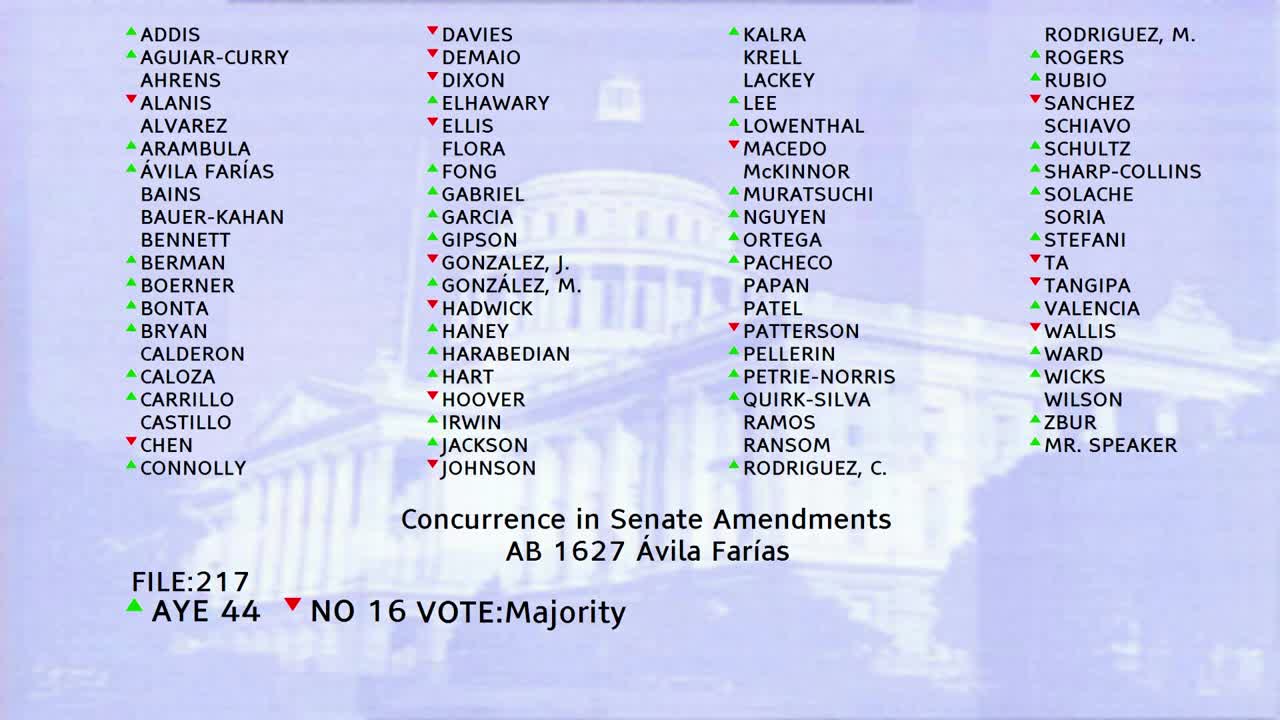
Bill Author

Bill Co-Author(s):