AB 2202: Pupil achievement: Closing the Achievement Gap Commission.
- Session Year: 2025-2026
- House: Assembly
- Latest Version Date: 2026-06-30
Current Status:
In Progress
(2026-08-13: In committee: Held under submission.)
Introduced
In Committee
Awaiting First Chamber Vote
Passed First Chamber
In Committee
Awaiting Second Chamber Vote
Passed Second Chamber
Enacted
Existing law establishes the State Board of Education and requires the state board to study educational conditions and needs of the state and to make plans for the improvement of the administration and efficiency of the public schools of the state. Existing law establishes the State Department of Education under the administration of the Superintendent of Public Instruction and assigns to the department numerous responsibilities relating to the governance of the public elementary and secondary schools in the state.
This bill would establish the Closing the Achievement Gap Commission as an advisory body to the state board. The bill would require the membership of the commission to consist of 17 voting members and one nonvoting member with an advisory vote, as provided. The bill would require 11 members of the commission to be appointed by the Governor and one member each to be appointed by the President pro Tempore of the Senate and the Speaker of the Assembly, pursuant to a specified application process and would require those members to reflect geographic, demographic, and local educational agency-type diversity. The bill would limit members appointed to the commission to one 4-year term, as provided. The bill would require the commission to annually elect a chair and vice chair and meet at least 2 times annually in the first year after its creation, and as needed thereafter, at the call of the chair or the state board. The bill would require the commission to, among other things, continually assess the extent to which there are gaps in state support for local educational agencies in their efforts to close achievement gaps. The bill would require the commission, on or before December 1, 2028, and every 2 years thereafter, to submit a report to the Governor, the appropriate policy and fiscal committees of the Legislature, the state board, and the department with recommendations and proposed actions that the state can take to help and support local educational agencies in closing the achievement gap. The bill would require the state board to consider those reports as an agenda item at a regularly scheduled public meeting or as provided and would require the department to post those reports on the departments internet website.
This bill would become operative only if AB 2225 of the 202526 Regular Session is enacted and takes effect on or before January 1, 2027, and adds Section 52090 to the Education Code.
Existing law establishes the State Board of Education and requires the state board to study educational conditions and needs of the state and to make plans for the improvement of the administration and efficiency of the public schools of the state. Existing law establishes the State Department of Education under the administration of the Superintendent of Public Instruction and assigns to the department numerous responsibilities relating to the governance of the public elementary and secondary schools in the state.
This bill would establish the Closing the Achievement Gap Commission as an advisory body to the state board. The bill would require the membership of the commission to consist of 17 voting members and one nonvoting member with an advisory vote, as provided. The bill would require 13 11 members of the commission to be appointed by the President pro Tempore of the Senate, the Speaker of the Assembly, and the Governor the Governor and one member each to be appointed by the President pro Tempore of the Senate and the Speaker of the Assembly, pursuant to a specified application process and would require those members to reflect geographic, demographic, and local educational agency-type diversity. The bill would limit members appointed to the commission to one 4-year term, as provided. The bill would require the commission to annually elect a chair and vice chair and meet at least 4 2 times annually in the first year after its creation, and as needed thereafter, at the call of the chair or the state board. The bill would require the commission to, among other things, continually assess the extent to which there are gaps in state support for local educational agencies in their efforts to close achievement gaps. The bill would require the commission, on or before December 1, 2028, and annually every 2 years thereafter, to submit a report to the Governor, the appropriate policy and fiscal committees of the Legislature, the state board, and the department with recommendations and proposed actions that the state can take to help and support local educational agencies in closing the achievement gap. The bill would require the state board to consider those reports as an agenda item at a regularly scheduled public meeting or as provided and would require the department to post those reports on the departments internet website.
Existing law establishes the State Board of Education and requires the state board to study educational conditions and needs of the state and to make plans for the improvement of the administration and efficiency of the public schools of the state. Existing law establishes the State Department of Education under the administration of the Superintendent of Public Instruction and assigns to the department numerous responsibilities relating to the governance of the public elementary and secondary schools in the state.
This bill would establish the Closing the Achievement Gap Commission as an advisory body to the state board. The bill would require the membership of the commission to consist of 13 17 voting members and one nonvoting member with an advisory vote, as provided. The bill would require 9 13 members of the commission to be appointed by the President pro Tempore of the Senate, the Speaker of the Assembly, and the Governor pursuant to a specified application process and would require those members to reflect geographic, demographic, and district-type local educational agency-type diversity. The bill would limit members appointed to the commission to one 4-year term, as provided. The bill would require the commission to annually elect a chair and vice chair and meet at least 4 times annually in the first year after its creation, and as needed thereafter, at the call of the chair or the state board. The bill would require the commission to, among other things, continually assess the extent to which there are gaps in state support for local educational agencies in their efforts to close achievement gaps. The bill would require the commission, on or before December 1 of each year, 1, 2028, and annually thereafter, to submit a report to the Governor, the appropriate policy and fiscal committees of the Legislature, the state board, and the department with recommendations and proposed actions that the state can take to help and support local educational agencies in closing the achievement gap. The bill would require the state board to consider those reports as an agenda item at a regularly scheduled public meeting or as provided and would require the department to post those reports on the departments internet website.
Existing law establishes the State Board of Education and requires the state board to study educational conditions and needs of the state and to make plans for the improvement of the administration and efficiency of the public schools of the state. Existing law establishes the State Department of Education under the administration of the Superintendent of Public Instruction and assigns to the department numerous responsibilities relating to the governance of the public elementary and secondary schools in the state.
This bill would establish the Closing the Achievement Gap Commission as an advisory body to the state board. The bill would require the membership of the commission to consist of 13 voting members and one nonvoting member with an advisory vote, as provided. The bill would require 9 members of the commission to be appointed by the Governor pursuant to a specified application process and would require those members to reflect geographic, demographic, and district-type diversity. The bill would limit members appointed to the commission to one 4-year term, as provided. The bill would require the commission to annually elect a chair and vice chair and meet at least 4 times annually in the first year after its creation, and as needed thereafter, at the call of the chair or the state board. The bill would require the commission to, among other things, continually assess the extent to which there are gaps in state support for local educational agencies in their efforts to close achievement gaps. The bill would require the commission, on or before December 1 of each year, to submit a report to the Governor, the appropriate policy and fiscal committees of the Legislature, the state board, and the department with recommendations and proposed actions that the state can take to help and support local educational agencies in closing the achievement gap. The bill would require the state board to consider those reports as an agenda item at a regularly scheduled public meeting or as provided and would require the department to post those reports on the departments internet website.
(a)The Legislature finds and declares all of the following:
(1)Data on pupil academic performance demonstrates the existence of persistent pupil achievement gaps between pupil populations in California and underscores the need for stronger alignment and accountability across state educational entities, state educational programs, and educational reports and programs mandated for local educational agencies in order to ensure meaningful academic growth for all pupil groups.
(2)Persistent disparities in opportunities and outcomes among pupil groups require a focused, cross-system response that mandates continuous improvement by state educational agencies and departments, and in related statewide programs that emphasize providing support to local educational agencies instead of compliance monitoring.
(3)Californias accountability system is grounded in sound principles, including support rather than sanctions, respect for local governance, equitable resource allocation, continuous improvement, and fostering collaborative relationships. However, the system is not functioning as intended, as local educational agencies must navigate fragmented initiatives and compliance demands that dilute focus on the improvement of teaching and learning required to address achievement gaps. Further, identification for state assistance is inconsistent and overly broad, with state and county agency roles not clearly defined and, at times, conflicting, and the quality of support provided to local educational agencies varying widely. As a result, the state lacks a coherent and effective framework to ensure that local educational agencies have the targeted, consistent support they need to develop the capacity to equitably serve all pupils.
(4)Local educational agencies have uneven access to state-level support, which requires the state to take measures to remove barriers for local educational agencies, improve state-level coordination to support local educational agency leadership, and provide accountability for pupil achievement at the state level.
(5)These conditions call for the creation of an independent commission to examine how state accountability systems and other state programs under the purview of the State Board of Education and the State Department of Education enable or inhibit local efforts to close the pupil achievement gap and to advise the state board and the department on ways to improve support for local educational agencies.
(6)Addressing persistent achievement gaps requires a coherent and aligned statewide system in which goals, policies, roles, and tools are mutually reinforced and the responsibility for outcomes is shared across state, county, and local educational agencies. Effective reform requires a limited number of clear statewide goals, clarified roles and authority, streamlined reporting and compliance, and identification of differentiated and intensive support that focuses on essential academic outcomes. Effective reform needs to be informed by comprehensive reviews, strengthened expectations, and a capacity for high-quality district support, a transparent and graduated pathway for escalating support, and a statewide learning infrastructure that uses evidence from local implementation to continuously improve policy and practice.
(7)The state must be accountable for ensuring that California has state-required programs operating as a coherent education system that prioritizes pupil achievement and continuous improvement through local support over compliance-only approaches.
(b)It is the intent of the Legislature that a commission dedicated to closing the achievement gap is established and adheres to all of the following:
(1)Uses the Closing the Achievement Gap State Operations and Support Plan developed by the working group established pursuant to subdivision (b) of Section 52090 of the Education Code, added by Assembly Bill 2225 of the 202526 Regular Session, as the commissions guiding document.
(2)Assesses the efficacy of the states support to local educational agencies identified under the statewide system of support established pursuant to Section 52059.5 of the Education Code.
(3)Evaluates whether current law, regulations, and statewide initiatives, including local control and accountability plans, are effective in closing the achievement gap.
(4)Provides recommendations for coordinated state action to help local educational agencies improve pupil achievement.
SEC. 2.Article 7 (commencing with Section 33600) is added to Chapter 4 of Part 20 of Division 2 of Title 2 of the Education Code, to read:7.Closing the Achievement Gap Commission33600.There is in the state government the Closing the Achievement Gap Commission, an advisory body to the state board. The purposes of the commission are all of the following:
(a)Advises the state board and the department on existing board and department policies and practices related to closing the achievement gap.
(b)Makes recommendations for improving the support that the state provides to local educational agencies to close the achievement gap.
(c)Uses the Closing the Achievement Gap State Operations and Support Plan developed pursuant to subdivision (c) of Section 52090, added by Assembly Bill 2225 of the 202526 Regular Session, as a guiding document for reviewing and developing the commissions priorities and recommendations.
33601.(a)The Closing the Achievement Gap Commission shall consist of 18 members, as follows:
(1)Six voting members consisting of all of the following:
(A)The President of the State Board of Education or the presidents designee.
(B)The Superintendent of Public Instruction or the Superintendents designee.
(C)The Executive Director of the Commission on Teacher Credentialing or the executive directors designee.
(D)The Executive Director of the California Collaborative for Educational Excellence or the executive directors designee.
(E)One parent of a child enrolled in a California public school appointed by the President pro Tempore of the Senate.
(F)One parent of a child enrolled in a California public school appointed by the Speaker of the Assembly.
(2)Eleven voting members appointed by the Governor as follows:
(A)One governing board member from a school district with 2,500 or less units of average daily attendance.
(B)One governing board member from a school district with 2,501 or more units of average daily attendance.
(C)One governing board member from a county board of education.
(D)One administrator from a school district with 2,500 or less units of average daily attendance.
(E)One county superintendent of schools.
(F)One superintendent of a school district.
(G)One certificated employee employed by a school district or a county office of education.
(H)One classified employee employed by a school district or a county office of education.
(I)One charter school educator.
(J)One representative from an education equity organization.
(K)One special education local plan area administrator.
(3)(A)One nonvoting pupil member appointed by the Governor.
(B)The pupil member shall have an advisory vote.
(b)(1)Members appointed to the commission by the President pro Tempore of the Senate, the Speaker of the Assembly, and the Governor shall reflect geographic, demographic, and local educational agency-type diversity and shall serve no more than one four-year term, based on the calendar year.
(2)The President pro Tempore of the Senate, the Speaker of the Assembly, and the Governor shall appoint members following an application process for gubernatorial appointments on their respective internet websites.
(3)To the extent practicable, appointments shall be made in alternating even- and odd-numbered years so that no more than one-half of the appointed positions expire at the end of a calendar year.
(4)A vacancy on the commission shall be filled for the remainder of the unexpired term of the position vacated in the same manner as the original appointment.
33602.(a)The Closing the Achievement Gap Commission shall annually elect a chair and vice chair from among its members by a majority of the voting members of the commission.
(b)Nine voting members of the commission shall constitute a quorum. The commission shall act by a majority vote of the members present at a meeting. In the absence of a quorum, the commission may discuss business but shall not take action on any items of business.
(c)The commission shall meet at least two times annually in the first year after its creation, and as needed thereafter, at the call of the chair or the state board, consistent with the Closing the Achievement Gap State Operations and Support Plan developed pursuant to subdivision (c) of Section 52090, added by Assembly Bill 2225 of the 202526 Regular Session.
(d)The commission may establish subcommittees or ad hoc committees as needed to perform its duties as set forth in Section 33603.
(e)Members shall serve without compensation but shall be reimbursed by the state for necessary and reasonable travel and per diem expenses incurred in the discharge of the members duties.
33603.The Closing the Achievement Gap Commission shall do all of the following:
(a)Consult with the California Collaborative for Educational Excellence to identify and assess the states efficacy in providing assistance and support to local educational agencies identified as part of the statewide system of support established pursuant to Section 52059.5.
(b)(1)Identify opportunities to strengthen continuous improvement support, which shall include the development of a program, to be known as the Statewide Improvement Pathways Program, that provides examples of best practices and programs that can be scaled and modified to adapt to the needs of local educational agencies.
(2)The Statewide Improvement Pathways Program shall identify local educational agencies and programs that have demonstrated measurable progress and proven strategies to close the achievement gap.
(3)In identifying examples of best practices, the program shall include assessments of promising practices, programmatic coherence for closing the achievement gap, and instances where the state acted in a supportive, rather than compliance-oriented, manner with respect to local educational agency support.
(c)(1)Identify opportunities to strengthen the California Collaborative for Educational Excellence, which shall be bolstered to become a central hub for best practices and programs to serve the needs of local educational agencies.
(2)In consultation with the California Collaborative for Educational Excellence and other state entities, develop and recommend recurring mechanisms to collect, synthesize, and present findings from differentiated assistance and direct technical assistance outcome reviews and other implementation studies.
(d)Continually assess the extent to which there are gaps in state support for local educational agencies in their efforts to close achievement gaps. This assessment shall include feedback from local educational agency staff to reflect their experiences within the statewide system of support.
(e)Identify instances where state educational agencies are operating primarily as a compliance monitor in ways that inhibit local educational agencies ability to serve pupil needs.
(f)Evaluate the extent to which state statutes, the implementation of those statutes, state regulations, and state initiatives, including, but not limited to, the local control and accountability plan and related local control funding formula accountability tools, help to close the achievement gap, and develop recommendations for improvements.
(g)Review existing local educational agency and school accountability requirements and recommend modifications for enabling local educational agencies to address the achievement gap.
33604.(a)(1)Notwithstanding Section 10231.5 of the Government Code, on or before December 1, 2028, and every two years thereafter, the Closing the Achievement Gap Commission shall submit a report to the Governor, the appropriate policy and fiscal committees of the Legislature, the state board, and the department with recommendations and proposed actions that the state can take to help and support local educational agencies in closing the achievement gap. The report shall also contain a status of recommendations from prior years, if applicable.
(2)A report required by paragraph (1) shall be submitted in compliance with Section 9795 of the Government Code.
(b)The state board shall consider reports submitted by the commission pursuant to subdivision (a), including the recommendations and proposed actions contained in the report, as an agenda item at a regularly scheduled public meeting or at a meeting of the state board that includes public discussion and consideration.
(c)The department shall post reports submitted by the commission pursuant to subdivision (a) on the departments internet website.
SEC. 3.This act shall become operative only if Assembly Bill 2225 of the 202526 Regular Session is enacted and takes effect on or before January 1, 2027, and adds Section 52090 to the Education Code.
(a)The Legislature finds and declares all of the following:
(1)Data on pupil academic performance demonstrates the existence of persistent pupil achievement gaps between pupil populations in California and underscores the need for stronger alignment and accountability across state educational entities, state educational programs, and educational reports and programs mandated for local educational agencies in order to ensure meaningful academic growth for all pupil groups.
(2)Persistent disparities in opportunities and outcomes among pupil groups require a focused, cross-system response that mandates continuous improvement by state educational agencies and departments, and in related statewide programs that emphasize providing support to local educational agencies instead of compliance monitoring.
(3)Californias accountability system is grounded in sound principles, including support rather than sanctions, respect for local governance, equitable resource allocation, continuous improvement, and fostering collaborative relationships. However, the system is not functioning as intended, as local educational agencies must navigate fragmented initiatives and compliance demands that dilute focus on the improvement of teaching and learning required to address achievement gaps. Further, identification for state assistance is inconsistent and overly broad, with state and county agency roles not clearly defined and, at times, conflicting, and the quality of support provided to local educational agencies varying widely. As a result, the state lacks a coherent and effective framework to ensure that local educational agencies have the targeted, consistent support they need to develop the capacity to equitably serve all pupils.
(4)Local educational agencies have uneven access to state-level support, which requires the state to take measures to remove barriers for local educational agencies, improve state-level coordination to support local educational agency leadership, and provide accountability for pupil achievement at the state level.
(5)These conditions call for the creation of an independent commission to examine how state accountability systems and other state programs under the purview of the State Board of Education and the State Department of Education enable or inhibit local efforts to close the pupil achievement gap and to advise the state board and the department on ways to improve support for local educational agencies.
(6)Addressing persistent achievement gaps requires a coherent and aligned statewide system in which goals, policies, roles, and tools are mutually reinforced and the responsibility for outcomes is shared across state, county, and local educational agencies. Effective reform requires a limited number of clear statewide goals, clarified roles and authority, streamlined reporting and compliance, and identification of differentiated and intensive support that focuses on essential academic outcomes. Effective reform needs to be informed by comprehensive reviews, strengthened expectations, and a capacity for high-quality district support, a transparent and graduated pathway for escalating support, and a statewide learning infrastructure that uses evidence from local implementation to continuously improve policy and practice.
(7)The state must be accountable for ensuring that California has state-required programs operating as a coherent education system that prioritizes pupil achievement and continuous improvement through local support over compliance-only approaches.
(b)It is the intent of the Legislature that a commission dedicated to closing the achievement gap is established and adheres to all of the following:
(1)Uses the Closing the Achievement Gap State Operations and Support Plan developed by the working group established pursuant to subdivision (b) of Section 52090 of the Education Code, added by Assembly Bill 2225 of the 202526 Regular Session, as the commissions guiding document.
(2)Assesses the efficacy of the states support to local educational agencies identified under the statewide system of support established pursuant to Section 52059.5 of the Education Code.
(3)Evaluates whether current law, regulations, and statewide initiatives, including local control and accountability plans, are effective in closing the achievement gap.
(4)Provides recommendations for coordinated state action to help local educational agencies improve pupil achievement.
SEC. 2.Article 7 (commencing with Section 33600) is added to Chapter 4 of Part 20 of Division 2 of Title 2 of the Education Code, to read:7.Closing the Achievement Gap Commission33600.There is in the state government the Closing the Achievement Gap Commission, an advisory body to the state board. The purposes of the commission are all of the following:
(a)Advises the state board and the department on existing board and department policies and practices related to closing the achievement gap.
(b)Makes recommendations for improving the support that the state provides to local educational agencies to close the achievement gap.
(c)Uses the Closing the Achievement Gap State Operations and Support Plan developed pursuant to subdivision (c) of Section 52090, added by Assembly Bill 2225 of the 202526 Regular Session, as a guiding document for reviewing and developing the commissions priorities and recommendations.
33601.(a)The Closing the Achievement Gap Commission shall consist of 18 members, as follows:
(1)Six voting members consisting of all of the following:
(A)The President of the State Board of Education or the presidents designee.
(B)The Superintendent of Public Instruction or the Superintendents designee.
(C)The Executive Director of the Commission on Teacher Credentialing or the executive directors designee.
(D)The Executive Director of the California Collaborative for Educational Excellence or the executive directors designee.
(E)One parent of a child enrolled in a California public school appointed by the President pro Tempore of the Senate.
(F)One parent of a child enrolled in a California public school appointed by the Speaker of the Assembly.
(2)Eleven voting members appointed by the Governor as follows:
(A)One governing board member from a school district with 2,500 or less units of average daily attendance.
(B)One governing board member from a school district with 2,501 or more units of average daily attendance.
(C)One governing board member from a county board of education.
(D)One administrator from a school district with 2,500 or less units of average daily attendance.
(E)One county superintendent of schools.
(F)One superintendent of a school district.
(G)One certificated employee employed by a school district or a county office of education.
(H)One classified employee employed by a school district or a county office of education.
(I)One charter school educator.
(J)One representative from an education equity organization.
(K)One special education local plan area administrator.
(3)(A)One nonvoting pupil member appointed by the Governor.
(B)The pupil member shall have an advisory vote.
(b)(1)Members appointed to the commission by the President pro Tempore of the Senate, the Speaker of the Assembly, and the Governor shall reflect geographic, demographic, and local educational agency-type diversity and shall serve no more than one four-year term, based on the calendar year.
(2)The President pro Tempore of the Senate, the Speaker of the Assembly, and the Governor shall appoint members following an application process for gubernatorial appointments on their respective internet websites.
(3)To the extent practicable, appointments shall be made in alternating even- and odd-numbered years so that no more than one-half of the appointed positions expire at the end of a calendar year.
(4)A vacancy on the commission shall be filled for the remainder of the unexpired term of the position vacated in the same manner as the original appointment.
33602.(a)The Closing the Achievement Gap Commission shall annually elect a chair and vice chair from among its members by a majority of the voting members of the commission.
(b)Nine voting members of the commission shall constitute a quorum. The commission shall act by a majority vote of the members present at a meeting. In the absence of a quorum, the commission may discuss business but shall not take action on any items of business.
(c)The commission shall meet at least four two times annually in the first year after its creation, and as needed thereafter, at the call of the chair or the state board, consistent with the Closing the Achievement Gap State Operations and Support Plan developed pursuant to subdivision (c) of Section 52090, added by Assembly Bill 2225 of the 202526 Regular Session.
(d)The commission may establish subcommittees or ad hoc committees as needed to perform its duties as set forth in Section 33603.
(e)Members shall serve without compensation but shall be reimbursed by the state for necessary and reasonable travel and per diem expenses incurred in the discharge of the members duties.
33603.The Closing the Achievement Gap Commission shall do all of the following:
(a)Consult with the California Collaborative for Educational Excellence to identify and assess the states efficacy in providing assistance and support to local educational agencies identified as part of the statewide system of support established pursuant to Section 52059.5.
(b)(1)Identify opportunities to strengthen continuous improvement support, which shall include the development of a program, to be known as the Statewide Improvement Pathways Program, that provides examples of best practices and programs that can be scaled and modified to adapt to the needs of local educational agencies.
(2)The Statewide Improvement Pathways Program shall identify local educational agencies and programs that have demonstrated measurable progress and proven strategies to close the achievement gap.
(3)In identifying examples of best practices, the program shall include assessments of promising practices, programmatic coherence for closing the achievement gap, and instances where the state acted in a supportive, rather than compliance-oriented, manner with respect to local educational agency support.
(c)(1)Identify opportunities to strengthen the California Collaborative for Educational Excellence, which shall be bolstered to become a central hub for best practices and programs to serve the needs of local educational agencies.
(2)In consultation with the California Collaborative for Educational Excellence and other state entities, develop and recommend recurring mechanisms to collect, synthesize, and present findings from differentiated assistance and direct technical assistance outcome reviews and other implementation studies.
(d)Continually assess the extent to which there are gaps in state support for local educational agencies in their efforts to close achievement gaps. This assessment shall include feedback from local educational agency staff to reflect their experiences within the statewide system of support.
(e)Identify instances where state educational agencies are operating primarily as a compliance monitor in ways that inhibit local educational agencies ability to serve pupil needs.
(f)Evaluate the extent to which state statutes, the implementation of those statutes, state regulations, and state initiatives, including, but not limited to, the local control and accountability plan and related local control funding formula accountability tools, help to close the achievement gap, and develop recommendations for improvements.
(g)Review existing local educational agency and school accountability requirements and recommend modifications for enabling local educational agencies to address the achievement gap.
33604.(a)(1)Notwithstanding Section 10231.5 of the Government Code, on or before December 1, 2028, and annually every two years thereafter, the Closing the Achievement Gap Commission shall submit a report to the Governor, the appropriate policy and fiscal committees of the Legislature, the state board, and the department with recommendations and proposed actions that the state can take to help and support local educational agencies in closing the achievement gap. The report shall also contain a status of recommendations from prior years, if applicable.
(2)The A report required by paragraph (1) shall be submitted in compliance with Section 9795 of the Government Code.
(b)The state board shall consider reports submitted by the commission pursuant to subdivision (a), including the recommendations and proposed actions contained in the report, as an agenda item at a regularly scheduled public meeting or at a meeting of the state board that includes public discussion and consideration.
(c)The department shall post reports submitted by the commission pursuant to subdivision (a) on the departments internet website.
(a)The Legislature finds and declares all of the following:
(1)Data on pupil academic performance demonstrates the existence of persistent pupil achievement gaps between pupil populations in California and underscores the need for stronger alignment and accountability across state educational entities, state educational programs, and educational reports and programs mandated for local educational agencies in order to ensure meaningful academic growth for all pupil groups.
(2)Persistent disparities in opportunities and outcomes among pupil groups require a focused, cross-system response that mandates continuous improvement by state educational agencies and departments, and in related statewide programs that emphasize providing support to local educational agencies instead of compliance monitoring.
(3)Californias accountability system is grounded in sound principles, including support rather than sanctions, respect for local governance, equitable resource allocation, continuous improvement, and fostering collaborative relationships. However, the system is not functioning as intended, as local educational agencies must navigate fragmented initiatives and compliance demands that dilute focus on the improvement of teaching and learning required to address achievement gaps. Further, identification for state assistance is inconsistent and overly broad, with state and county agency roles not clearly defined and, at times, conflicting, and the quality of support provided to local educational agencies varying widely. As a result, the state lacks a coherent and effective framework to ensure that local educational agencies have the targeted, consistent support they need to develop the capacity to equitably serve all pupils.
(4)Local educational agencies have uneven access to state-level support, which requires the state to take measures to remove barriers for local educational agencies, improve state-level coordination to support local educational agency leadership, and provide accountability for pupil achievement at the state level.
(5)These conditions call for the creation of an independent commission to examine how state accountability systems and other state programs under the purview of the State Board of Education and the State Department of Education enable or inhibit local efforts to close the pupil achievement gap and to advise the state board and the department on ways to improve support for local educational agencies.
(6)Addressing persistent achievement gaps requires a coherent and aligned statewide system in which goals, policies, roles, and tools are mutually reinforced and the responsibility for outcomes is shared across state, county, and local educational agencies. Effective reform requires a limited number of clear statewide goals, clarified roles and authority, streamlined reporting and compliance, and identification of differentiated and intensive support that focuses on essential academic outcomes. Effective reform needs to be informed by comprehensive reviews, strengthened expectations, and a capacity for high-quality district support, a transparent and graduated pathway for escalating support, and a statewide learning infrastructure that uses evidence from local implementation to continuously improve policy and practice.
(7)The state must be accountable for ensuring that California has state-required programs operating as a coherent education system that prioritizes pupil achievement and continuous improvement through local support over compliance-only approaches.
(b)It is the intent of the Legislature that a commission dedicated to closing the achievement gap is established and adheres to all of the following:
(1)Uses the Closing the Achievement Gap State Operations and Support Plan developed by the working group established pursuant to subdivision (b) of Section ____ 52090 of the Education Code, as proposed by ____ added by Assembly Bill 2225 of the 202526 Regular Session, as the commissions guiding document.
(2)Assesses the efficacy of the states support to local educational agencies identified under the statewide system of support established pursuant to Section 52059.5 of the Education Code.
(3)Evaluates whether current law, regulations, and statewide initiatives, including local control and accountability plans, are effective in closing the achievement gap.
(4)Provides recommendations for coordinated state action to help local educational agencies improve pupil achievement.
SEC. 2.Article 7 (commencing with Section 33600) is added to Chapter 4 of Part 20 of Division 2 of Title 2 of the Education Code, to read:7.Closing the Achievement Gap Commission33600.There is in the state government the Closing the Achievement Gap Commission, an advisory body to the state board. The purposes of the commission are all of the following:
(a)Advises the state board and the department on existing board and department policies and practices. practices related to closing the achievement gap.
(b)Makes recommendations for improving the support that the state provides to local educational agencies to close the achievement gap.
(c)Uses the Closing the Achievement Gap State Operations and Support Plan developed pursuant to subdivision (c) of Section ____, as proposed by ____ 52090, added by Assembly Bill 2225 of the 202526 Regular Session, as a guiding document for reviewing and developing the commissions priorities and recommendations.
33601.(a)The Closing the Achievement Gap Commission shall consist of 14 18 members, as follows:
(1)Five Six voting members consisting of all of the following:
(A)The President of the State Board of Education or the presidents designee.
(B)The Superintendent of Public Instruction or the Superintendents designee.
(C)The Executive Director of the Commission on Teacher Credentialing or the executive directors designee.
(D)The Executive Director of the California Collaborative for Educational Excellence or the executive directors designee.
(E)The President of the California State Parent Teacher Association or the presidents designee.(E)One parent of a child enrolled in a California public school appointed by the President pro Tempore of the Senate.
(F)One parent of a child enrolled in a California public school appointed by the Speaker of the Assembly.
(2)Eight Eleven voting members appointed by the Governor as follows:
(A)One governing board member from a school district with 2,500 or less units of average daily attendance.
(B)One governing board member from a school district with 2,501 or more units of average daily attendance.
(C)One governing board member from a county board of education.
(D)One administrator from a school district with 2,500 or less units of average daily attendance.
(E)One county superintendent of schools.
(F)One superintendent of a school district.
(G)One certificated employee employed by a school district or a county office of education.
(H)One classified employee employed by a school district or a county office of education.
(I)One charter school educator.
(J)One representative from an education equity organization.
(K)One special education local plan area administrator.
(3)(A)One nonvoting pupil member appointed by the Governor.
(B)The pupil member shall have an advisory vote.
(b)(1)Members appointed to the commission by the President pro Tempore of the Senate, the Speaker of the Assembly, and the Governor shall reflect geographic, demographic, and district-type local educational agency-type diversity and shall serve no more than one four-year term, based on the calendar year.
(2)The President pro Tempore of the Senate, the Speaker of the Assembly, and the Governor shall appoint members following an application process for gubernatorial appointments on the Governors their respective internet website. websites.
(3)To the extent practicable, the Governor shall appoint members appointments shall be made in alternating even- and odd-numbered years so that no more than one-half of the appointed positions expire at the end of a calendar year.
(4)A vacancy on the commission shall be filled for the remainder of the unexpired term of the position vacated in the same manner as the original appointment.
33602.(a)The Closing the Achievement Gap Commission shall annually elect a chair and vice chair from among its members by a majority of the voting members of the commission.
(b)Seven Nine voting members of the commission shall constitute a quorum. The commission shall act by a majority vote of the members present at a meeting. In the absence of a quorum, the commission may discuss business but shall not take action on any items of business.
(c)The commission shall meet at least four times annually in the first year after its creation, and as needed thereafter, at the call of the chair or the state board, consistent with the Closing the Achievement Gap State Operations and Support Plan developed pursuant to subdivision (c) of Section ____, as 52090, added by ____ Assembly Bill 2225 of the 202526 Regular Session.
(d)The commission may establish subcommittees or ad hoc committees as needed to perform its duties as set forth in Section 33603.
(e)Members shall serve without compensation but shall be reimbursed by the state for necessary and reasonable travel and per diem expenses incurred in the discharge of the members duties.
33603.The Closing the Achievement Gap Commission shall do all of the following:
(a)Consult with the California Collaborative for Educational Excellence to identify and assess the states efficacy in providing assistance and support to local educational agencies identified as part of the statewide system of support established pursuant to Section 52059.5.
(b)(1)Identify opportunities to strengthen continuous improvement support, which shall include the development of a program, to be known as the Statewide Improvement Pathways Program, that provides examples of best practices and programs that can be scaled and modified to adapt to the needs of local educational agencies.
(2)The Statewide Improvement Pathways Program shall identify local educational agencies and programs that have demonstrated measurable progress and proven strategies to close the achievement gap.
(3)In identifying examples of best practices, the program shall include assessments of promising practices, programmatic coherence for closing the achievement gap, and instances where the state acted in a supportive, rather than compliance-oriented, manner with respect to local educational agency support.
(c)(1)Identify opportunities to strengthen the California Collaborative for Educational Excellence, which shall be bolstered to become a central hub for best practices and programs to serve the needs of local educational agencies.
(2)In consultation with the California Collaborative for Educational Excellence and other state entities, develop and recommend recurring mechanisms to collect, synthesize, and present findings from differentiated assistance and direct technical assistance outcome reviews and other implementation studies.
(d)Continually assess the extent to which there are gaps in state support for local educational agencies in their efforts to close achievement gaps. This assessment shall include feedback from local educational agency staff to reflect their experiences within the statewide system of support.
(e)Identify instances where state educational agencies are operating primarily as a compliance monitor in ways that inhibit local educational agencies ability to serve pupil needs.
(f)Evaluate the extent to which state statutes, the implementation of those statutes, state regulations, and state initiatives, including, but not limited to, the local control and accountability plan and related local control funding formula accountability tools, help to close the achievement gap, and develop recommendations for improvements.
(g)Review existing local educational agency and school accountability requirements and recommend modifications for enabling local educational agencies to address the achievement gap.
33604.(a)(1)Notwithstanding Section 10231.5 of the Government Code, on or before December 1 of each year, 1, 2028, and annually thereafter, the Closing the Achievement Gap Commission shall submit a report to the Governor, the appropriate policy and fiscal committees of the Legislature, the state board, and the department with recommendations and proposed actions that the state can take to help and support local educational agencies in closing the achievement gap. The report shall also contain a status of recommendations from prior years, if applicable.
(2)The report required by paragraph (1) shall be submitted in compliance with Section 9795 of the Government Code.
(b)The state board shall consider reports submitted by the commission pursuant to subdivision (a), including the recommendations and proposed actions contained in the report, as an agenda item at a regularly scheduled public meeting or at a meeting of the state board that includes public discussion and consideration.
(c)The department shall post reports submitted by the commission pursuant to subdivision (a) on the departments internet website.
(a)The Legislature finds and declares all of the following:
(1)Data on pupil academic performance demonstrates the existence of persistent pupil achievement gaps between pupil populations in California and underscores the need for stronger alignment and accountability across state educational entities, state educational programs, and educational reports and programs mandated for local educational agencies in order to ensure meaningful academic growth for all pupil groups.
(2)Persistent disparities in opportunities and outcomes among pupil groups require a focused, cross-system response that mandates continuous improvement by state educational agencies and departments, and in related statewide programs that emphasize providing support to local educational agencies instead of compliance monitoring.
(3)Californias accountability system is grounded in sound principles, including support rather than sanctions, respect for local governance, equitable resource allocation, continuous improvement, and fostering collaborative relationships. However, the system is not functioning as intended, as local educational agencies must navigate fragmented initiatives and compliance demands that dilute focus on the improvement of teaching and learning required to address achievement gaps. Further, identification for state assistance is inconsistent and overly broad, with state and county agency roles not clearly defined and, at times, conflicting, and the quality of support provided to local educational agencies varying widely. As a result, the state lacks a coherent and effective framework to ensure that local educational agencies have the targeted, consistent support they need to develop the capacity to equitably serve all pupils.
(4)Local educational agencies have uneven access to state-level support, which requires the state to take measures to remove barriers for local educational agencies, improve state-level coordination to support local educational agency leadership, and provide accountability for pupil achievement at the state level.
(5)These conditions call for the creation of an independent commission to examine how state accountability systems and other state programs under the purview of the State Board of Education and the State Department of Education enable or inhibit local efforts to close the pupil achievement gap and to advise the state board and the department on ways to improve support for local educational agencies.
(6)Addressing persistent achievement gaps requires a coherent and aligned statewide system in which goals, policies, roles, and tools are mutually reinforced and the responsibility for outcomes is shared across state, county, and local educational agencies. Effective reform requires a limited number of clear statewide goals, clarified roles and authority, streamlined reporting and compliance, and identification of differentiated and intensive support that focuses on essential academic outcomes. Effective reform needs to be informed by comprehensive reviews, strengthened expectations, and a capacity for high-quality district support, a transparent and graduated pathway for escalating support, and a statewide learning infrastructure that uses evidence from local implementation to continuously improve policy and practice.
(7)The state must be accountable for ensuring that California has state-required programs operating as a coherent education system that prioritizes pupil achievement and continuous improvement through local support over compliance-only approaches.
(b)It is the intent of the Legislature that a commission dedicated to closing the achievement gap is established and adheres to all of the following:
(1)Uses the Closing the Achievement Gap State Operations and Support Plan developed by the working group established pursuant to Section ____ of the Education Code, as proposed by ____ of the 202526 Regular Session, as the commissions guiding document.
(2)Assesses the efficacy of the states support to local educational agencies identified under the statewide system of support established pursuant to Section 52059.5 of the Education Code.
(3)Evaluates whether current law, regulations, and statewide initiatives, including local control and accountability plans, are effective in closing the achievement gap.
(4)Provides recommendations for coordinated state action to help local educational agencies improve pupil achievement.
SEC. 2.Article 7 (commencing with Section 33600) is added to Chapter 4 of Part 20 of Division 2 of Title 2 of the Education Code, to read:7.Closing the Achievement Gap Commission33600.There is in the state government the Closing the Achievement Gap Commission, an advisory body to the state board. The purposes of the commission are all of the following:
(a)Advises the state board and the department on existing board and department policies and practices.
(b)Makes recommendations for improving the support that the state provides to local educational agencies to close the achievement gap.
(c)Uses the Closing the Achievement Gap State Operations and Support Plan developed pursuant to Section ____, as proposed by ____ of the 202526 Regular Session, as a guiding document for reviewing and developing the commissions priorities and recommendations.
33601.(a)The Closing the Achievement Gap Commission shall consist of 14 members, as follows:
(1)Five voting members consisting of all of the following:
(A)The President of the State Board of Education or the presidents designee.
(B)The Superintendent of Public Instruction or the Superintendents designee.
(C)The Executive Director of the Commission on Teacher Credentialing or the executive directors designee.
(D)The Executive Director of the California Collaborative for Educational Excellence or the executive directors designee.
(E)The President of the California State Parent Teacher Association or the presidents designee.
(2)Eight voting members appointed by the Governor as follows:
(A)One governing board member from a school district with 2,500 or less units of average daily attendance.
(B)One governing board member from a school district with 2,501 or more units of average daily attendance.
(C)One governing board member from a county board of education.
(D)One administrator from a school district with 2,500 or less units of average daily attendance.
(E)One county superintendent of schools.
(F)One superintendent of a school district.
(G)One certificated employee employed by a school district or a county office of education.
(H)One classified employee employed by a school district or a county office of education.
(3)(A)One nonvoting pupil member appointed by the Governor.
(B)The pupil member shall have an advisory vote.
(b)(1)Members appointed to the commission by the Governor shall reflect geographic, demographic, and district-type diversity and shall serve no more than one four-year term, based on the calendar year.
(2)The Governor shall appoint members following an application process for gubernatorial appointments on the Governors internet website.
(3)To the extent practicable, the Governor shall appoint members in alternating even- and odd-numbered years so that no more than one-half of the appointed positions expire at the end of a calendar year.
(4)A vacancy on the commission shall be filled for the remainder of the unexpired term of the position vacated in the same manner as the original appointment.
33602.(a)The Closing the Achievement Gap Commission shall annually elect a chair and vice chair from among its members by a majority of the voting members of the commission.
(b)Seven voting members of the commission shall constitute a quorum. The commission shall act by a majority vote of the members present at a meeting. In the absence of a quorum, the commission may discuss business but shall not take action on any items of business.
(c)The commission shall meet at least four times annually in the first year after its creation, and as needed thereafter, at the call of the chair or the state board, consistent with the Closing the Achievement Gap State Operations and Support Plan developed pursuant to Section ____, as added by ____ of the 202526 Regular Session.
(d)The commission may establish subcommittees or ad hoc committees as needed to perform its duties as set forth in Section 33603.
(e)Members shall serve without compensation but shall be reimbursed by the state for necessary and reasonable travel and per diem expenses incurred in the discharge of the members duties.
33603.The Closing the Achievement Gap Commission shall do all of the following:
(a)Consult with the California Collaborative for Educational Excellence to identify and assess the states efficacy in providing assistance and support to local educational agencies identified as part of the statewide system of support established pursuant to Section 52059.5.
(b)(1)Identify opportunities to strengthen continuous improvement support, which shall include the development of a program, to be known as the Statewide Improvement Pathways Program, that provides examples of best practices and programs that can be scaled and modified to adapt to the needs of local educational agencies.
(2)The Statewide Improvement Pathways Program shall identify local educational agencies and programs that have demonstrated measurable progress and proven strategies to close the achievement gap.
(3)In identifying examples of best practices, the program shall include assessments of promising practices, programmatic coherence for closing the achievement gap, and instances where the state acted in a supportive, rather than compliance-oriented, manner with respect to local educational agency support.
(c)(1)Identify opportunities to strengthen the California Collaborative for Educational Excellence, which shall be bolstered to become a central hub for best practices and programs to serve the needs of local educational agencies.
(2)In consultation with the California Collaborative for Educational Excellence and other state entities, develop and recommend recurring mechanisms to collect, synthesize, and present findings from differentiated assistance and direct technical assistance outcome reviews and other implementation studies.
(d)Continually assess the extent to which there are gaps in state support for local educational agencies in their efforts to close achievement gaps. This assessment shall include feedback from local educational agency staff to reflect their experiences within the statewide system of support.
(e)Identify instances where state educational agencies are operating primarily as a compliance monitor in ways that inhibit local educational agencies ability to serve pupil needs.
(f)Evaluate the extent to which state statutes, the implementation of those statutes, state regulations, and state initiatives, including, but not limited to, the local control and accountability plan and related local control funding formula accountability tools, help to close the achievement gap, and develop recommendations for improvements.
(g)Review existing local educational agency and school accountability requirements and recommend modifications for enabling local educational agencies to address the achievement gap.
33604.(a)(1)Notwithstanding Section 10231.5 of the Government Code, on or before December 1 of each year, the Closing the Achievement Gap Commission shall submit a report to the Governor, the appropriate policy and fiscal committees of the Legislature, the state board, and the department with recommendations and proposed actions that the state can take to help and support local educational agencies in closing the achievement gap. The report shall also contain a status of recommendations from prior years, if applicable.
(2)The report required by paragraph (1) shall be submitted in compliance with Section 9795 of the Government Code.
(b)The state board shall consider reports submitted by the commission pursuant to subdivision (a), including the recommendations and proposed actions contained in the report, as an agenda item at a regularly scheduled public meeting or at a meeting of the state board that includes public discussion and consideration.
(c)The department shall post reports submitted by the commission pursuant to subdivision (a) on the departments internet website.
|
Date
|
Status
|
|---|---|
| Aug 13, 2026 | In committee: Held under submission. |
| Aug 3, 2026 | In committee: Referred to APPR. suspense file. |
| Jun 30, 2026 | Read second time and amended. Re-referred to Com. on APPR. |
| Jun 29, 2026 | From committee: Amend, and do pass as amended and re-refer to Com. on APPR. (Ayes 6. Noes 0.) (June 24). |
| Jun 10, 2026 | Referred to Com. on ED. |
| May 28, 2026 | In Senate. Read first time. To Com. on RLS. for assignment. |
| May 27, 2026 | Read third time. Passed. Ordered to the Senate. (Ayes 79. Noes 0. Page 5479.) |
| May 27, 2026 | Read third time. Passed. Ordered to the Senate. (Ayes 79. Noes 0.) |
| May 27, 2026 | Read third time. Passed. Ordered to the Senate. |
| May 19, 2026 | Read second time. Ordered to third reading. |
| May 18, 2026 | Read second time and amended. Ordered returned to second reading. |
| May 14, 2026 | From committee: Amend, and do pass as amended. (Ayes 11. Noes 0.) (May 14). |
| May 6, 2026 | In committee: Set, first hearing. Referred to APPR. suspense file. |
| Apr 14, 2026 | Re-referred to Com. on APPR. |
| Apr 13, 2026 | Read second time and amended. |
| Apr 9, 2026 | From committee: Amend, and do pass as amended and re-refer to Com. on APPR. (Ayes 9. Noes 0.) (April 8). |
| Mar 9, 2026 | Referred to Com. on ED. |
| Feb 20, 2026 | From printer. May be heard in committee March 22. |
| Feb 19, 2026 | Read first time. To print. |
|
Date
|
Description
|
Location
|
Votes
|
|
|---|---|---|---|---|
| Aug 3, 2026 | Placed on suspense file | Senate Standing Committee on Appropriations |
Passed |
|
| Jun 24, 2026 | Do pass as amended, but first amend, and re-refer to the Committee on [Appropriations] | Senate Standing Committee on Education |
Passed |
|
| May 27, 2026 | AB 2202 Muratsuchi Assembly Third Reading | Assembly Floor |
Passed |
|
| May 14, 2026 | Do pass as amended. | Assembly Standing Committee on Appropriations |
Passed |
|
| Apr 8, 2026 | Do pass as amended and be re-referred to the Committee on [Appropriations] | Assembly Standing Committee on Education |
Passed |
This list shows positions taken on this bill by organizations on the date displayed, which is linked to the original source.
Positions by individuals are not included.
|
Organization
|
Position
|
Date
|
|---|---|---|
| ABC Unified School District | ** Support | |
| Alisal Union School District | ** Support | |
| American Association Of University Women - California | ** Support | |
| Anaheim Unified School District | ** Support | |
| Anaheim Union High School District | ** Support | |
| Antioch Unified School District | ** Support | |
| Brentwood Union School District | ** Support | |
| Cajon Valley Union School District | ** Support | |
| Calexico Unified School District | ** Support | |
| California Association Of Suburban School Districts | ** Support | |
| California Chamber Of Commerce | ** Support | |
| California Charter Schools Association | ** Support | |
| California School Boards Association | ** Support | |
| California State PTA | ** Support | |
| Campbell Union School District | ** Support | |
| Capistrano Unified School District | ** Support | |
| Castro Valley Unified School District | ** Support | |
| CFT – a Union of Educators & Classified Professionals, AFT, AFL-CIO | ** Support | |
| Chowchilla Elementary School District | ** Support | |
| Contra Costa County | ** Support | |
| Cupertino Union School District | ** Support | |
| Downey Unified School District | ** Support | |
| El Monte Union High School District | ** Support | |
| El Rancho Unified School District | ** Support | |
| Encinitas Union School District | ** Support | |
| Escondido Union School District | ** Support | |
| Fresno County Office Of Education | ** Support | |
| Gilroy Unified School District | ** Support | |
| Hanford Elementary School District | ** Support | |
| Huntington Beach Union High School District | ** Support | |
| Imperial County Office Of Education | ** Support | |
| Irvine Unified School District | ** Support | |
| Jefferson Union High School District | ** Support | |
| Lammersville Unified School District | ** Support | |
| Legislative Action Committee - San Mateo County School Boards Association | ** Support | |
| Liberty Union High School District | ** Support | |
| Long Beach Unified School District | ** Support | |
| Los Angeles County School Trustee Association | ** Support | |
| Los Angeles Unified School District | ** Support | |
| Madera County Superintendent Of Schools | ** Support | |
| Milpitas Unified School District | ** Support | |
| Monterey County Office Of Education | ** Support | |
| Monterey County Superintendent of Schools | ** Support | |
| Monterey Peninsula Unified School District | ** Support | |
| Moreno Valley Unified School District | ** Support | |
| Mountain View Whisman School District | ** Support | |
| Mount Pleasant Elementary School District | ** Support | |
| Napa Valley Unified School District | ** Support | |
| Needles Unified School District | ** Support | |
| Newark Unified School District | ** Support | |
| Newport-Mesa Unified School District | ** Support | |
| Parlier Unified School District | ** Support | |
| Perris Elementary School District | ** Support | |
| Placer County Office Of Education | ** Support | |
| Pleasanton Unified School District | ** Support | |
| Rim of the World Unified School District | ** Support | |
| Rincon Valley Union School District | ** Support | |
| Ripon Unified School District | ** Support | |
| San Benito County Board of Education | ** Support | |
| San Francisco Unified School District | ** Support | |
| San Lorenzo Unified School District | ** Support | |
| San Lorenzo Valley Unified School District | ** Support | |
| San Mateo County School Boards Association | ** Support | |
| San Mateo Union High School District | ** Support | |
| San Ramon Valley Unified School District | ** Support | |
| Santa Clara County Office Of Education | ** Support | |
| Santa Clara County School Boards Association – Legislative Action Committee | ** Support | |
| Santa Cruz City Schools | ** Support | |
| Santa Paula Unified School District | ** Support | |
| Santa Rosa City Schools | ** Support | |
| Scotts Valley Unified School District | ** Support | |
| Sierra Sands Unified School District | ** Support | |
| Solana Beach School District | ** Support | |
| Soledad Unified School District | ** Support | |
| South Monterey County Joint Union High School District | ** Support | |
| Spreckels Union School District | ** Support | |
| Turlock Unified School District | ** Support | |
| Val Verde Unified School District | ** Support | |
| Ventura Unified School District Superintendent | ** Support | |
| Warner Unified School District | ** Support | |
| Westmorland Union Elementary School District | ** Support |
SENATE COMMITTEE ON
Senator Sabrina Cervantes, Chair
2025 - 2026 Regular Session
AB 2202 (Muratsuchi) - Pupil achievement: Closing the Achievement Gap Commission
Version: | Policy Vote: |
Urgency: | Mandate: |
Hearing Date: | Consultant: |
Bill Summary:
This bill establishes the Closing the Achievement Gap (CTAG) Commission to serve as an advisory body to the State Board of Education (SBE).
Fiscal Impact:
The California Department of Education (CDE) estimates one-time General Fund costs of about $750,000 and ongoing costs of $372,000 and 2.0 positions for various administrative expenses to staff and support the commission.
Background:
Existing law establishes a single system for providing support (System of Support) to local educational agencies (LEAs) and schools for programs established by the federal Every Student Succeeds Act to do all of the following:
- Support the continuous improvement of pupil performance within the state priorities;
- Address the gaps in achievement between pupil subgroups;
- Improve outreach and collaboration with stakeholders to ensure that the goals, actions, and services described in school district and COE local control accountability plans (LCAPs) reflect the needs of pupils and the community, especially for historically underrepresented or low-achieving populations.
Existing law requires LEAs to adopt and annually revise LCAPs. The LCAPs are required to address how school districts will address and improve in eight state priority areas, including pupil achievement as measured by, among other things, the percentage of pupils who have successfully completed courses that satisfy the requirements for entrance to the University of California (UC) and the California State University (CSU), or the completion of career pathways.
Existing law establishes the California Collaborative for Educational Excellence (CCEE), whose purpose is to advise and assist school districts, county superintendents of schools, and charter schools in achieving the goals set forth in their LCAPs. The CCEE is required to achieve this purpose by facilitating continuous improvement for LEAs within California’s system of public school support.
Existing law requires, for any school district for which one or more pupil subgroups meets specified criteria, the county superintendent of schools to provide technical assistance for a minimum of two years following the identification that shall be focused on building the school district’s capacity to develop and implement actions and services responsive to pupil and community needs.
Proposed Law:
This bill establishes the CTAG Commission as an advisory body to the SBE for the following purposes:
- Advising the SBE and CDE on the existing board and department policies and practices related to closing the achievement gap.
- Making recommendations for improving the support that the state provides to LEAs to close the achievement gap.
- Using the Closing the Achievement Gap State Operations and Support Plan (CTAG Plan), as specified, as a guiding document for reviewing and developing the Commission’s priorities and recommendations.
This bill requires the CTAG Commission consist of 18 members, as specified, including the President of the SBE, the Superintendent of Public Instruction (SPI), the Executive Director of the Commission on Teacher Credentialing, the Executive Director of the CCEE or the executive director’s designee, one parent of a child enrolled in a California public school appointed by the President pro Tempore of the Senate, and one parent of a child enrolled in a California public school appointed by the Speaker of the Assembly.
This bill requires that the members appointed to the commission by the President pro Tempore of the Senate, the Speaker of the Assembly, and the Governor reflect geographic demographic, and LEA-type diversity, and serve no more than one four-year term, based on the calendar year. It also requires the President pro Tempore of the Senate, the Speaker of the Assembly, and the Governor to appoint members following an application process on their respective internet websites.
This bill requires that the appointments be made, to the greatest extent practicable, in alternating even- and odd-numbered years so that no more than one-half of the appointed persons expire at the end of a calendar year. It also requires that a vacancy on the Commission be billed for the remainder of the unexpired term of the position vacated in the same manner as the original appointment.
This bill requires the CTAG Commission to annually elect a chair and vice chair from among its members by a majority of the voting members of the Commission. It also specifies that nine voting members shall constitute a quorum and that the Commission shall act by a majority of the members present at a meeting.
This bill specifies that members of the commission shall serve without compensation but shall be reimbursed by the state for necessary and reasonable travel and per diem expenses incurred in the discharge of the member’s duties.
This bill requires the CTAG Commission to do all of the following:
- Consult with the CCEE to identify and assess the state’s efficacy in providing assistance and support to LEAs identified as part of the statewide system of support (SSOS), as specified.
- Identify opportunities to strengthen continuous improvement support, which shall include the development of a program, to be known as the Statewide Improvement Pathways Program, that provides examples of best practices and programs that can be scaled and modified to adapt to the needs of LEAs. The Statewide Improvement Pathways Program shall identify LEAs and programs that have demonstrated measurable progress and proven strategies to close the achievement gap. This bill also requires the Statewide Improvement Pathways Program, in identifying examples of best practices, to include assessments of promising practices, programmatic coherence for closing the achievement gap, and instances where the state acted in a supportive, rather than compliance-oriented, manner with respect to LEA support.
- Identifying opportunities to strengthen the CCEE, which shall be bolstered to become a central hub for best practices and programs to serve the needs of LEAs. It requires the CTAG Commission, in consultation with the CCEE and other state entities, to develop and recommend recurring mechanisms to collect, synthesize, and present findings from differentiated assistance (DA) and direct technical assistance outcome reviews and other implementation studies.
- Continually assess the extent to which there are gaps in state support for LEAs in their efforts to close achievement gaps. Requires that this assessment include feedback from LEA staff to reflect their experiences within the SSOS.
- Identify instances where state educational agencies are operating primarily as a compliance monitor on ways that inhibit LEAs abilities to serve pupil needs.
- Evaluate the extent to which state statutes, the implementation of those statutes, regulations, and state initiatives, including, but not limited to the LCAP and related Local Control Funding Formula (LCFF) accountability tools, help close the achievement gap, and develop recommendations for improvements.
- Review existing LEA and school accountability requirements and recommend modifications for enabling LEAs to address the achievement gap.
This bill requires the CTAG Commission to, on or before December 1, 2028, and every two years thereafter, submit a report to the Governor, the appropriate policy and fiscal committees of the Legislature, the SBE, and the CDE with recommendations and proposed actions that the state can take to help and support LEAs in closing the achievement gap. Requires that the report also contain a status of recommendations from prior years, if applicable.
This bill requires the SBE to consider reports submitted by the Commission, including the recommendations and proposed actions contained in the report, as agenda items at a regularly scheduled public meeting or at a meeting of the SBE that includes public discussion and consideration.
This bill requires the CDE to post reports submitted by the CTAG Commission on the CDE’s internet website.
This bill provides that it shall only become operative if AB 2225 (Patel, 2026) is enacted and becomes effective on or before January 1, 2027.
Related Legislation:
AB 2225 (Patel, 2026) would convene a working group to develop a CTAG Plan, that includes specific goals and benchmarks for the state to support school districts, COEs, and charter schools in closing the achievement gap. The bill is pending in this committee.
AB 2149 (Garcia, 2026) would require the LAO to assess and publicly report to the Legislature and the Governor the state’s progress in closing pupil academic achievement gaps and to include recommendations on actions that the state can take to meet its performance targets to be established pursuant to AB 2225 (Patel, 2026). The bill is pending in this committee.
AB 2514 (Ransom, 2026) would require the working group and CTAG Plan to be established by AB 2225 (Patel, 2026) to include recommendations for the development of a State of the Achievement Gap Dashboard. The bill is pending in this committee.
Staff Comments:
This bill is one of four bills sponsored by the California School Boards Association that seek to establish “a comprehensive state-level operations and support plan that clearly defines how the state will help LEAs close achievement gaps.” The other bills are AB 2225 (Patel), AB 2149 (Garcia) and AB 2514 (Ransom). This bill would require a newly established CTAG Commission to use the CTAG Plan developed pursuant to AB 2225 (Patel, 2026) as its guiding document. According to the author, “Despite billions in targeted funding, performance for our most vulnerable subgroups, including Black, Latino, and low-income students, as well as foster and homeless youth, remains stubbornly low. The current fragmented approach has failed to move the needle at the pace our students deserve. We cannot continue to identify disparities year after year without a coordinated, state-level strategy to eliminate them. AB 2202 establishes the Closing the Achievement Gap Commission to move the state from a culture of monitoring to a culture of action. If we expect our local school districts to close the gap, the state must be held accountable for providing the resources, administrative flexibility and alignment they need to succeed.”
-- END --
SENATE COMMITTEE ON EDUCATION
Senator Sasha Renée Pérez, Chair
2025 - 2026 Regular
Bill No: Hearing Date: June 24, 2026
Author: | |||
Version: |
| ||
Urgency: | Fiscal: | ||
Consultant: | |||
Subject:
SUMMARY
This bill establishes a Closing the Achievement Gap (CTAG) Commission to serve as an advisory body to the State Board of Education (SBE).
BACKGROUND
Existing law:
- Establishes the single multiple measures public school accountability system, which must measure the overall performance of numerically significant pupil subgroups in schools, including charter schools, school districts, and county offices of education (COEs). Numerically significant pupil subgroups include: ethnic subgroups, socioeconomic disadvantaged pupils, English learners, long-term English learners, pupils with disabilities, foster youth, and homeless youth. (Education Code (EC) § 52052)
- Establishes a single system for providing support (System of Support) to local educational agencies (LEAs) and schools for programs established by the federal Every Student Succeeds Act to do all of the following:
- Support the continuous improvement of pupil performance within the state priorities;
- Address the gaps in achievement between pupil subgroups;
- Improve outreach and collaboration with stakeholders to ensure that the goals, actions, and services described in school district and COE local control accountability plans (LCAPs) reflect the needs of pupils and the community, especially for historically underrepresented or low-achieving populations. (EC § 52059.5)
- Requires LEAs to adopt and annually revise LCAPs. (EC §§ 47604.33, 52060, and 52066)
- Requires LCAPs to address how the district will address and improve in eight state priority areas, including pupil achievement as measured by, among other things, the percentage of pupils who have successfully completed courses that satisfy the requirements for entrance to the University of California (UC) and the California State University (CSU), or the completion of career pathways. (EC § 52060)
- Establishes the California Collaborative for Educational Excellence (CCEE), whose purpose is to advise and assist school districts, county superintendents of schools, and charter schools in achieving the goals set forth in their LCAPs. The CCEE is required to achieve this purpose by facilitating continuous improvement for LEAs within California’s system of public school support. (EC § 52074)
- Requires, for any school district for which one or more pupil subgroups meets specified criteria, the county superintendent of schools to provide technical assistance for a minimum of two years following the identification that shall be focused on building the school district’s capacity to develop and implement actions and services responsive to pupil and community needs. (EC § 52071(c))
- Requires the SBE to determine all questions of policy within its powers. (EC § 33030)
- Requires the SBE to adopt rules and regulations not inconsistent with the laws of this state for its own government, for the government of its appointees and employees, for the government of the day and evening elementary schools, the day and evening secondary schools, and the technical and vocational schools of the state, and for the government of other schools, excepting the UC, the CSU, and the California Community Colleges, as may receive in whole or in part financial support from the state. (EC § 33031)
- Establishes the Center to Close Achievement Gaps, to be located in the CSU system, with a mission to provide resources and assistance to LEAs in order to eliminate gaps in academic achievement between subgroups of pupils enrolled in kindergarten and grades 1 to 12, inclusive, as identified on the California School Dashboard through both of the following: providing professional preparation of educators in the CSU system and serving as a resource for LEAs on strategies for closing achievement gaps. (EC § 89420 - 89426)
ANALYSIS
This bill:
- Establishes the CTAG Commission as an advisory body to the SBE for the following purposes:
- Advising the SBE and the California Department of Education (CDE) on the existing board and department policies and practices related to closing the achievement gap.
- Making recommendations for improving the support that the state provides to LEAs to close the achievement gap.
- Using the Closing the Achievement Gap State Operations and Support Plan (CTAG Plan), as specified, as a guiding document for reviewing and developing the Commission’s priorities and recommendations.
- Requires that the CTAG Commission consist of 18 members, as follows:
- Six voting members consisting of all of the following:
- The President of the SBE or the president’s designee.
- The Superintendent of Public Instruction (SPI) or the SPI’s designee.
- The Executive Director of the Commission on Teacher Credentialing (CTC) or the executive director’s designee.
- The Executive Director of the CCEE or the executive director’s designee.
- One parent of a child enrolled in a California public school appointed by the President pro Tempore of the Senate.
- One parent of a child enrolled in a California public school appointed by the Speaker of the Assembly.
- Eleven voting members appointed by the Governor as follows:
- One governing board member from a school district with 2,500 or less units of average daily attendance (ADA).
- One governing board member from a school district with 2,501 or more units of ADA.
- One governing member from a county board of education.
- One administrator from a school district with 2,500 or less units of ADA.
- One county superintendent of schools.
- One certificated employee employed by a school district or a COE.
- One classified employee employed by a school district or COE.
- One charter school educator.
- One representative from an education equity organization.
- One special education local plan area (SELPA) administrator.
- One nonvoting pupil member appointed by the Governor. Specifies that the pupil member shall have an advisory vote.
- Six voting members consisting of all of the following:
- Requires that the members appointed to the Commission by the President pro Tempore of the Senate, the Speaker of the Assembly, and the Governor reflect geographic demographic, and LEA-type diversity, and serve no more than one four-year term, based on the calendar year.
- Requires the President pro Tempore of the Senate, the Speaker of the Assembly, and the Governor to appoint members following an application process for gubernatorial appointments on their respective internet websites.
- Requires that the appointments be made, to the greatest extent practicable, in alternating even- and odd-numbered years so that no more than one-half of the appointed persons expire at the end of a calendar year.
- Requires that a vacancy on the Commission be billed for the remainder of the unexpired term of the position vacated in the same manner as the original appointment.
- Requires the CTAG Commission to annually elect a chair and vice chair from among its members by a majority of the voting members of the Commission.
- Specifies that nine voting members shall constitute a quorum and that the Commission shall act by a majority of the members present at a meeting. Authorizes the Commission, in the absence of a quorum, to discuss business but prohibits them from taking action on any item of business.
- Requires the CTAG Commission to meet at least two times annually in the first year after its creation, and as needed thereafter, upon the call of the chair or the SBE, consistent with the CTAG Plan, as specified.
- Authorizes the Commission to establish subcommittees or ad hoc committees as needed to perform its duties, as specified.
- Specifies that members of the Commission shall serve without compensation but shall be reimbursed by the state for necessary and reasonable travel and per diem expenses incurred in the discharge of the member’s duties.
- Requires the CTAG Commission to do all of the following:
- Consult with the CCEE to identify and assess the state’s efficacy in providing assistance and support to LEAs identified as part of the statewide system of support (SSOS), as specified.
- Identify opportunities to strengthen continuous improvement support, which shall include the development of a program, to be known as the Statewide Improvement Pathways Program, that provides examples of best practices and programs that can be scaled and modified to adapt to the needs of LEAs.
- The Statewide Improvement Pathways Program shall identify LEAs and programs that have demonstrated measurable progress and proven strategies to close the achievement gap.
- Requires the Statewide Improvement Pathways Program, in identifying examples of best practices, to include assessments of promising practices, programmatic coherence for closing the achievement gap, and instances where the state acted in a supportive, rather than compliance-oriented, manner with respect to LEA support.
- Identifying opportunities to strengthen the CCEE, which shall be bolstered to become a central hub for best practices and programs to serve the needs of LEAs.
- Requires the CTAG Commission, in consultation with the CCEE and other state entities, to develop and recommend recurring mechanisms to collect, synthesize, and present findings from differentiated assistance (DA) and direct technical assistance outcome reviews and other implementation studies.
- Continually assess the extent to which there are gaps in state support for LEAs in their efforts to close achievement gaps. Requires that this assessment include feedback from LEA staff to reflect their experiences within the SSOS.
- Identify instances where state educational agencies are operating primarily as a compliance monitor on ways that inhibit LEAs abilities to serve pupil needs.
- Evaluate the extent to which state statutes, the implementation of those statutes, regulations, and state initiatives, including, but not limited to the LCAP and related Local Control Funding Formula (LCFF) accountability tools, help close the achievement gap, and develop recommendations for improvements.
- Review existing LEA and school accountability requirements and recommend modifications for enabling LEAs to address the achievement gap.
- Requires the CTAG Commission to, on or before December 1, 2028, and every two years thereafter, submit a report to the Governor, the appropriate policy and fiscal committees of the Legislature, the SBE, and the CDE with recommendations and proposed actions that the state can take to help and support LEAs in closing the achievement gap. Requires that the report also contain a status of recommendations from prior years, if applicable.
- Requires the SBE to consider reports submitted by the Commission, including the recommendations and proposed actions contained in the report, as agenda items at a regularly scheduled public meeting or at a meeting of the SBE that includes public discussion and consideration.
- Requires the CDE to post reports submitted by the CTAG Commission on the CDE’s internet website.
- Makes a series of findings and declarations related to the existence of persistent pupil achievement gaps between pupil populations in California and the need for stronger alignment and accountability across state educational entities, programs, reports, and mandates.
- States the intent of the Legislature that a commission dedicated to closing the achievement gap is established and adheres to the following:
- Uses the CTAG Plan, as specified, as the Commission’s guiding document.
- Assesses the efficacy of the state’s support to LEAs identified under the SSOS, as specified.
- Evaluates whether current law, regulations, and statewide initiatives, including LCAPs, are effective in closing the achievement gap.
- Provides recommendations for coordinated state action to help LEAs improve pupil achievement.
STAFF COMMENTS
- Need for the bill. According to the author, “Despite billions in targeted funding, performance for our most vulnerable subgroups, including Black, Latino, and low-income students, as well as foster and homeless youth, remains stubbornly low. The current fragmented approach has failed to move the needle at the pace our students deserve. We cannot continue to identify disparities year after year without a coordinated, state-level strategy to eliminate them. AB 2202 establishes the Closing the Achievement Gap Commission to move the state from a culture of monitoring to a culture of action. If we expect our local school districts to close the gap, the state must be held accountable for providing the resources, administrative flexibility and alignment they need to succeed.”
- The Closing the Achievement Gap legislative package. This bill is one of four bills sponsored by the California School Boards Association in the 2025-26 Legislative Session that seek to establish “a comprehensive state-level operations and support plan that clearly defines how the state will help LEAs close achievement gaps.”
- AB 2225 (Patel, 2026) would convene a working group to develop a CTAG Plan, that includes, among other things, specific goals and benchmarks for the state to support school districts, COEs, and charter schools in closing the achievement gap; an assessment of state entities tasked with meeting the state’s public education goals; and recommendations for appropriate remedial action if the state does not meet those benchmarks and goals.
- AB 2149 (Garcia, 2026) would require the Legislative Analyst’s Office (LAO) to annually assess and publicly report to the Legislature and the Governor the state’s progress in closing pupil academic achievement gaps and to include recommendations on actions that the state can take to meet the performance targets proposed to be established in the CTAG Plan; and
- AB 2514 (Ransom, 2026) would require the working group established by AB 2225 to include recommendations for the development of a State of the Achievement Gap Dashboard within the CTAG Plan.
This bill would require a newly established CTAG Commission to use the CTAG Plan developed pursuant to AB 2225 (Patel, 2026) as its guiding document.
- California Collaborative for Educational Excellence. This bill requires the CTAG Commission to consult with the CCEE to identify and assess the state’s efficacy in providing assistance and support to LEAs identified as part of the SSOS and identify opportunities to strengthen the CCEE as a central hub for best practices and programs to serve the needs of LEAs. The CCEE was established as part of the LCFF to advise and assist LEAs in achieving the goals set forth in their LCAP by facilitating continuous improvement for LEAs within the SSOS. The CCEE provides universal, targeted, and intensive supports and resources for LEAs through the work of their three Centers for Educational Excellence:
- The Center for Teaching, Learning, and Leading (TTLC) – Builds capacity and support for LEAs currently receiving and in need of direct technical assistance to effectively address the systemic and instructional needs of students historically underserved.
- The Center for Innovation, Instruction, and Impact (I3) – Implements a statewide approach to improving LEAs’ capacity by collaboratively developing, delivering, sharing, and spotlighting research-based practices that demonstrate the power to improve outcomes.
- The Center for Transformative Systems (TSEE) – Facilitates the development of a shared vision for implementation of the SSOS that develops coordinated actions resulting in equitable educational outcomes.
- California’s Statewide Systems of Support. The SSOS was established as part of the LCFF to provide varying levels of assistance to meet the unique needs of LEAs. This system ensures that all educational agencies have access to the resources and support they need to improve student outcomes. The purpose of the SSOS, as articulated in statute, is to build the capacity of LEAs in each of the following ways:
- Based on the results of the Dashboard, support continuous improvement of student performance in each of the eight state priority areas.
- Address the gaps in achievement between student groups; and
- Improve outreach and collaboration with stakeholders to ensure that goals, actions, and services described in school district and COE LCAPs reflect the needs of students and the community, especially for historically underrepresented or low-achieving groups.
The SSOS is based on a three-level framework:
- Level 1 - Universal Support: This foundational level of support is available to all districts, charters, COEs, and SELPAs in California. This level of support is available to all and at no cost. Universal supports include access to tools and resources, professional learning, and services provided by various technical assistance providers within the SSOS, coordinated by the CCEE and the CDE.
- Level 2 – Targeted/Supplemental Assistance or DA: Targeted support is available to LEAs with an identified area of need that meet the eligibility requirements set by the SBE. In this level, COEs, the CDE, and the Geographic Lead Agencies (Geo Leads) provide DA for eligible LEAs, in the form of individually designed assistance, to address identified performance issues, including significant disparities in performance among student groups. Targeted supports often include specialized professional learning, coaching, consultation, and/or strategic planning.
- Level 3 – Intensive (Direct Technical Assistance): Intensive support is provided to districts and charters identified as requiring an extra level of hands-on partnership, often due to persistent performance challenges and a lack of improvement over three out of four consecutive years. Intensive supports often involve a collaborative process with the CCEE, COE, SELPA, the CDE, and/or Geo Leads to determine the most effective support strategies. This tier of support may include identifying a technical assistance provider with relevant expertise to work closely with the district or charter to improve student outcomes.
Outside of the three levels of support, a referral to the SPI may occur with approval from the SBE if the LEA has failed or is unable to implement the recommendations of the CCEE or the inadequate performance of the LEA is either so persistent or acute as to require intervention by the SPI.
- Existing advisory bodies to the SBE. This bill creates a new advisory body to the SBE to, among other things, assess the efficacy of the state’s support to LEAs identified under the SSOS; evaluate whether current law, regulations, and statewide initiatives, including LCAPs and LCFF accountability tools, are effective in closing the achievement gap; and provide recommendations for coordinated state action to help LEAs improve pupil achievement. SBE currently has a handful of advisory commissions, committees, and panels—each with specifically defined roles. They include the following:
- The Advisory Commission on Charter Schools (ACCS) advises the SBE on its role of ensuring that charter schools realize higher student achievement within the context of sound educational programs and practices, proper financial management, and other specific requirements of law.
- The Advisory Commission on Special Education (ACSE) advises the SBE, the SPI, the Legislature, and the Governor in new or continuing areas of research, program development, and evaluation in California special education. This focuses on student outcomes, incarcerated youth, interagency agreements, and integrated services.
- The Instructional Quality Commission (IQC) advises the SBE on matters related to curriculum and instruction. This includes developing and recommending curriculum frameworks and evaluation criteria for instructional materials, as well as advising and making recommendations on implementing the state’s academic content standards, professional development, pupil assessments, and academic accountability systems alignments to the standards.
- The California Practitioners Advisory Group (CPAG) advises the SBE on ongoing efforts to establish a single coherent local, state, and federal accountability system and reviews any state rules and regulations relating to Title I of the Elementary and Secondary Education Act (ESEA), as amended by the ESSA, in order to advise the state in carrying out its Title I responsibilities. This work includes providing input on LCFF and LCAP implementation and template design, Dashboard components, the SSOS, and DA eligibility criteria.
The Committee may wish to consider that some of the advisory roles envisioned for the CTAG Commission established by this bill may overlap with those of existing SBE advisory bodies.
- Statewide Improvement Pathways Program. This bill requires the CTAG Commission to develop a new Statewide Improvement Pathways Program that identifies LEAs and programs that have demonstrated measurable progress and proven strategies to close the achievement gap, and identifies instances in which the state acted in a supportive, rather than compliance-oriented, manner with respect to LEA support.
As previously discussed, the CCEE’s primary role as a state agency is to assist LEAs in need of support. As part of this assistance, the CCEE maintains several targeted resource hubs and collections to help LEAs find information on state-funded initiatives, professional development opportunities, evidence-based best practices, and contacts for SSOS partners.
The CCEE also collaborates with LEAs and partner organizations to host Open Door Sessions—highlighting LEAs, educational practitioners, and strategies that have improved student learning and outcomes by leveraging and integrating state supports and initiatives.
The Committee may wish to consider whether developing a new Statewide Improvement Pathways Program would be duplicative of programs and initiatives currently led by the CCEE, and whether establishing a new program could lead to further confusion and competing guidance.
- Practical effect. This bill seeks to address the frustrations felt by LEAs that the existing system of state supports is fragmented, piecemeal, and lacks state-level accountability. It does so by establishing a new commission to provide the SBE and the Legislature with policy recommendations to eliminate disparities in academic performance among pupil subgroups and to identify gaps in state support for LEAs in their efforts to close achievement gaps. As discussed above, California’s existing education system has several facets that aim to improve student outcomes by providing direct assistance to LEAs and convening experts to recommend evidence-based strategies for historically underserved students.
The Committee may wish to consider the following:
- Are the roles envisioned for the new CTAG Commission sufficiently distinct from existing bodies to warrant creating a new entity in an already fragmented ecosystem?
- Would the creation of a new CTAG Commission substantively guide policy to close student achievement gaps, or would it add yet another layer of bureaucracy?
- How would the CTAG Commission compel the SBE or the legislature to align new proposals with the CTAG Plan?
- Arguments in support. The California School Boards Association, the sponsor of this bill, states in their letter of support submitted to this Committee:
“This legislative package proposes that the state, similar to local school district and county office of education boards, must adopt clear goals, measurable benchmarks and transparent and understandable reporting to the public on the state’s progress towards a more aligned state system that improves outcomes for California students. This north star would guide the state’s public education entities and serve as a common throughline to a shared goal of closing achievement gaps. Together, they represent a landmark effort by the Legislature to help further focus and align the state’s policy, fiscal and operational efforts to support schools and establish a new level of shared accountability between state entities and local educational agencies for closing achievement gaps. The goal of these measures is to create the conditions needed to close achievement gaps by aligning state policy, funding and oversight around a clear operations and support plan that empowers LEAs.”
- Committee amendments.
- Specify that the provisions of this bill shall only become operative if AB 2225 is enacted and becomes effective on or before January 1, 2027.
- Resolve the following drafting error related to the appointment application process bill: (2) The President pro Tempore of the Senate, the Speaker of the Assembly, and the Governor shall appoint members following an application process for
gubernatorialappointments on their respective internet websites.
- Prior and related legislation.
AB 2225 (Patel, 2026) would convene a working group to develop a CTAG Plan, that includes, among other things, specific goals and benchmarks for the state to support school districts, COEs, and charter schools in closing the achievement gap; an assessment of state entities tasked with meeting the state’s public education goals; and recommendations for appropriate remedial action if the state does not meet those benchmarks and goals. AB 2225 is set for the same hearing as AB 2202 in this Committee.
AB 2149 (Garcia, 2026) would require the LAO to assess and publicly report to the Legislature and the Governor the state’s progress in closing pupil academic achievement gaps and to include recommendations on actions that the state can take to meet its performance targets to be established pursuant to AB 2225 (Patel, 2026). AB 2149 is set for the same hearing as AB 2202 in this Committee.
AB 2514 (Ransom, 2026) would require the working group and CTAG Plan to be established by AB 2225 (Patel, 2026) to include recommendations for the development of a State of the Achievement Gap Dashboard. AB 2514 is set for the same hearing as AB 2202 in this Committee.
SB 153 (Committee on Budget and Fiscal Review, Chapter 38, Statutes of 2024) established the LCFF Equity Multiplier to provide additional funding to LEAs for allocation to schoolsites with prior year nonstability rates greater than 25% and prior year socioeconomically disadvantaged pupil rates greater than 70%.
SB 77 (Committee on Budget and Fiscal Review, Chapter 53, Statutes of 2019) established the Center to Close Achievement Gaps. This bill required the center to seek to fulfill its mission and improve the capacity of teachers, education specialists, and school administrators to close gaps in academic achievement through both of the following: strengthening professional preparation on effective instructional practices, effective school leadership practices, effective LEA leadership practices, and the use of data and continuous improvement strategies; and serving LEAs as a clearinghouse for evidence-based strategies and promising practices for closing academic achievement gaps.
SUPPORT
California School Boards Association (sponsor)
ABC Unified School District
Alisal Union School District
American Association of University Women - California
Anaheim Union High School District
Antioch Unified School District
Brentwood Union School District
Calexico Unified School District
California Association of Suburban School Districts
California Chamber of Commerce
California Charter Schools Association
California State PTA
Castro Valley Unified School District
Chowchilla Elementary School District
Contra Costa County
Downey Unified School District
El Monte Union High School District
El Rancho Unified School District
Fresno County Office of Education
Huntington Beach Union High School District
Irvine Unified School District
Jefferson Union High School District
Legislative Action Committee - San Mateo County School Boards Association
Liberty Union High School District
Long Beach Unified School District
Los Angeles County School Trustee Association
Los Angeles Unified School District
Monterey County Office of Education
Monterey County Superintendent of Schools
Moreno Valley Unified School District
Mount Pleasant Elementary School District
Napa Valley Unified School District
Needles Unified School District
Newark Unified School District
Newport-Mesa Unified School District
Parlier Unified School District
Perris Elementary School District
Placer County Office of Education
Pleasanton Unified School District
Rim of the World Unified School District
Rincon Valley Union School District
Ripon Unified School District
San Benito County Board of Education
San Francisco Unified School District
San Lorenzo Unified School District
San Lorenzo Valley Unified School District
San Ramon Valley Unified School District
Santa Clara County Office of Education
Santa Cruz City Schools
Santa Paula Unified School District
Santa Rosa City Schools
Scotts Valley Unified School District
Sierra Sands Unified School District
Solana Beach School District
Soledad Unified School District
South Monterey County Joint Union High School District
Spreckels Union School District
Turlock Unified School District
Val Verde Unified School District
OPPOSITION
None received
-- END --
ASSEMBLY THIRD READING
ATR Bill Id:AB 2202
Author:(Muratsuchi, et al.)
As Amended Ver:May 18, 2026
Majority vote
SUMMARY
Establishes the Closing the Achievement Gap Commission (Commission), an advisory body to the State Board of Education (SBE).
Major Provisions
- States the purposes of the Commission are to: advise the SBE and the California Department of Education (CDE) on existing SBE and CDE policies and practices related to closing the achievement gap; make recommendations for improving the support that the state provides to local educational agencies (LEAs) to close the achievement gap; and use the Closing the Achievement Gap State Operations and Support Plan developed as proposed by AB 2225 (Patel) of the current session, as a guiding document for reviewing and developing the Commission's priorities and recommendations.
- Requires the Commission to consist of 17 specified members appointed by the Governor to reflect geographic, demographic, and district-type diversity and to serve no more than one four-year term, based on the calendar year.
- Requires the Commission to consult with the California Collaborative for Educational Excellence (CCEE) to identify and assess the state's efficacy in providing assistance and support to LEAs identified for assistance as part of the statewide system of support; identify opportunities to strengthen continuous improvement support, including the development of a program, to be known as the Statewide Improvement Pathways Program, that provides examples of best practices and programs that can be scaled and modified to adapt to the needs of LEAs; and continually assess the extent to which there are gaps in state support for LEAs in their efforts to close achievement gaps.
- Requires, on December 1, 2028, and annually every two years thereafter on December 1st, the Commission to submit a report to the Governor, the appropriate policy and fiscal committees of the Legislature, the SBE, and the CDE with recommendations and proposed actions that the state can take to help and support LEAs in closing the achievement gap. Requires the SBE to consider reports submitted by the Commission as an agenda item at a regularly scheduled public meeting or at a meeting of the SBE that includes public discussion and consideration. Requires the CDE to post reports submitted by the Commission on the CDE's website.
COMMENTS
Key provisions of the bill. This bill would establish the Closing the Achievement Gap Commission, an advisory body to the SBE, with 17 specified Commission members. The Commission's stated purpose would include: advising the SBE and the CDE on existing SBE and CDE policies and practices; making recommendations for improving the support that the state provides to LEAs to close the achievement gap; and using the Closing the Achievement Gap State Operations and Support Plan, developed as proposed by AB 2225 (Patel) of the current legislative session, as a guiding document for reviewing and developing the Commission's priorities and recommendations.
This bill is one of four bills sponsored by the California School Boards Association (CSBA) in the 2025-26 Session to establish "a comprehensive state-level operations and support plan that clearly defines how the state will help LEAs close achievement gaps" (CSBA Closing the Achievement Gap Legislative Package Overview). Other bills include: AB 2149 (Garcia) would require the Legislative Analyst's Office (LAO) to assess and publicly report to the Legislature and the Governor the state's progress in closing pupil academic achievement gaps and to include recommendations on actions that the state can take to meet its performance targets established pursuant to AB 2225 (Patel) of the current legislative session; AB 2225 (Patel) would establish a working group to develop a Plan; and AB 2514 (Ransom) of the current legislative session would require the working group and Plan to be established by AB 2225 (Patel) of the current legislative session to include recommendations for the development of a State of the Achievement Gap Dashboard.
Achievement gaps. Achievement gaps are significant and persistent disparities in student performance and educational attainment between student groups. Achievement gaps exist between different student ethnic and racial groups, as well as between students from different socioeconomic backgrounds. In California, achievement levels between student groups on nearly every indicator of student performance has been making progress in closing the achievement gap, but several student groups still fall behind state averages.
According to a 2015 report from the Economic Policy Institute, "Early Education Gaps by Social Class and Race Start United States Children Out on Unequal Footing: A Summary of the Major Findings in Inequalities at the Starting Gate," achievement gaps begin as early as birth, particularly among students with different socioeconomic backgrounds. The key foundations for learning begin as soon as a child is born, and starting school behind their peers typically persists as children progress through school. Studies show that the black-white achievement gap has persisted but changed over time. It narrowed in both reading and math from the early 1970s to the late 1980s, then widened in the early 1990s, but has been narrowing consistently since 1999 (Reardon, 2014). In addition, even though the Black/African American subgroup includes pupils at all income levels, its scores are below the scores of economically disadvantaged pupils, which suggests that poverty alone does not explain this outcome. According to Reardon et al., a relatively common question addressed in studies of racial/ethnic achievement gaps (particularly the black-white gap) is the extent to which the observed gaps can be explained by socioeconomic differences between the groups.
A 2004 Review of Economics and Statistics report, described that socioeconomic factors explain almost all (85%) of the black-white math gap, and all of the reading gap at the start of kindergarten. By the third grade, however, the same socioeconomic factors account for only about 60% of both the math and reading black-white gaps. This finding suggests that socioeconomic factors explain, in large part, the black-white differences in cognitive skills at the start of formal schooling, but do not account for the growth of the black-white gap as children progress through elementary school.
Student achievement on standardized test results in California demonstrates achievement gaps between different race and ethnic groups, students with disabilities and students without disabilities, and students of different socioeconomic statuses. For example, the 2025 California Assessment of Student Performance and Progress (CAASPP) English Language Arts (ELA) results for all grades assessed included 32.8% of Black or African American students and 38.84% of Latino students that met or exceeded targeted benchmarks for mathematics, compared to 61.8% of White students, and 74.4% of Asian students. The statewide average was 48.8%. 2025 CAASPP Math results for all grades assessed included 20.1% of Black or African American students and 25.74% of Latino students that met or exceeded targeted benchmarks for mathematics, compared to 51% of White students, and 70.3% of Asian students. The statewide average was 37.3%.
Academic achievement gaps have consequences beyond school. A 2018 Equality of Opportunity Project at Stanford University report, Race and Economic Opportunity in the United States: An Intergenerational Perspective states, "Black children born to parents in the bottom household income quintile have a 2.5% chance of rising to the top quintile of household income, compared with 10.6% for whites," and "American Indian and black children have a much higher rate of downward mobility than other groups [emphasis in original]."
Statewide efforts to close achievement gaps in California. Since the creation of the Local Control Funding Formula (LCFF) and the related accountability measures in 2013, California has developed the "Statewide System of Support" for all LEAs, including school districts, COEs and charter schools. The goal for support at all levels is to assist LEAs and their schools in meeting the needs of each student served, with a focus on building capacity to sustain improvement and effectively address inequities in student opportunities and outcomes. The System of Support is comprised of four entities in current law: the CDE, SBE, county offices of education (COEs), and CCEE. Current law articulates a system of policymaking (the Governor, Legislature and SBE), data collection (CDE and LEAs), technical assistance (CDE, COEs, and CCEE), and practice (LEAs), but there is no entity formally tasked with collecting research related to achievement gaps and supporting undergraduate and preservice preparation of educators programs. Although achievement gaps are widely studied both at the national and statewide levels, few supports exist to collect, distill and distribute the findings from that research to practitioners and technical assistance providers in order to change statewide policies and local practice. Please refer to the Assembly Education Committee analysis of this bill for additional information about state efforts underway to close the achievement gap.
According to the Author
According to the author, "Despite billions in targeted funding, performance for our most vulnerable subgroups, including Black, Latino, and low-income students, as well as foster and homeless youth, remains stubbornly low. The current fragmented approach has failed to move the needle at the pace our students deserve. We cannot continue to identify disparities year after year without a coordinated, state-level strategy to eliminate them.
AB 2202 establishes the Closing the Achievement Gap Commission to move the state from a culture of monitoring to a culture of action. If we expect our local school districts to close the gap, the state must be held accountable for providing the resources, administrative flexibility and alignment they need to succeed."
Arguments in Support
The CSBA writes, "This legislative package proposes that the state, similar to local school district and county office of education boards, must adopt clear goals, measurable benchmarks and transparent and understandable reporting to the public on the state's progress towards a more aligned state system that improves outcomes for California students. This north star would guide the state's public education entities and serve as a common throughline to a shared goal of closing achievement gaps. Together, they represent a landmark effort by the Legislature to help further focus and align the state's policy, fiscal and operational efforts to support schools and establish a new level of shared accountability between state entities and local educational agencies for closing achievement gaps."
Arguments in Opposition
None on file
FISCAL COMMENTS
According to the Assembly Appropriations Committee:
Ongoing General Fund costs of an unknown but significant amount, likely in the mid-hundreds of thousands of dollars, for the CDE to staff and support the commission.
VOTES
ASM EDUCATION: 9-0-0
YES: Patel, Hoover, Alvarez, Bonta, Castillo, Garcia, Lowenthal, Pellerin, Zbur
ASM APPROPRIATIONS: 11-0-4
YES: Wicks, Aguiar-Curry, Calderon, Caloza, Fong, Mark González, Krell, Pacheco, Pellerin, Sharp-Collins, Solache
ABS, ABST OR NV: Hoover, Dixon, Ta, Tangipa
UPDATED
VERSION: May 18, 2026
CONSULTANT: Marguerite Ries / ED. / (916) 319-2087 FN: 0002749
Date of Hearing: May 6, 2026
ASSEMBLY COMMITTEE ON APPROPRIATIONS
Buffy Wicks, Chair
ABPCA Bill Id:AB 2202
Author:(Muratsuchi) – As Amended Ver:April 13, 2026
Policy Committee: | Education | Vote: | 9 - 0 |
|
| ||
|
|
Urgency: No State Mandated Local Program: No Reimbursable: No
SUMMARY:
This bill establishes the Closing the Achievement Gap Commission as an advisory body to the State Board of Education (SBE), with 14 members, as specified, to advise the SBE on existing policies and practices related to closing the achievement gap and make recommendations for improving state support for local educational agencies (LEAs) in closing the achievement gap using the Closing the Achievement Gap State Operations and Support Plan.
The bill requires the commission to annually report to the Legislature, the SBE, and the California Department of Education (CDE), beginning December 1, 2028, with recommendations and proposed actions to support LEAs in closing the achievement gap.
FISCAL EFFECT:
Ongoing General Fund costs of approximately $1.1 million for the CDE to staff and support the commission.
The Legislative Analyst’s Office recently warned of General Fund structural deficits of around $35 billion per year in the 2027-28 fiscal year and ongoing.
COMMENTS:
- Purpose. According to the author:
Despite billions in targeted funding, performance for our most vulnerable subgroups, including Black, Latino, and low-income students, as well as foster and homeless youth, remains stubbornly low. The current fragmented approach has failed to move the needle at the pace our students deserve. We cannot continue to identify disparities year after year without a coordinated, state-level strategy to eliminate them. AB 2202 establishes the Closing the Achievement Gap Commission to move the state from a culture of monitoring to a culture of action.
- Background. Much research conducted on the academic outcomes of different subgroups demonstrates persistent disparities in achievement for Black or African American students and Latino students compared to White and Asian students, commonly known as the “achievement gap.” Results from California’s standardized testing of students in English Language Arts (ELA) and math on the California Assessment of Student Performance and Progress (CAASPP) in 2025 demonstrated only 32.8% and 38.8% of Black or African American and Latino students, respectively, met or exceeded targeted benchmarks for ELA, compared to 61.8% and 74.4% for White and Asian students, respectively. Similarly, 2025 CAASPP math results demonstrated 20.1% and 25.7% of Black or African American and Latino students, respectively, met or exceeded targeted benchmarks for math, compared to 51% and 70.3% for White and Asian students. The statewide average for each assessment was 48.8% for ELA and 37.3% for math. Therefore, while the state has made several policy attempts to help LEAs meet the unique and diverse needs of their respective student populations, through legislation such as the Local Control Funding Formula (LCFF), Local Control Accountability Plans, the LCFF Equity Multiplier, and the Statewide System of Support, the achievement gap persists. By creating the commission and having it leverage the Closing the Achievement Gap State Operations and Support Plan, the California School Boards Association (CSBA), sponsors of the bill, claim this bill, in conjunction with three other pieces of legislation discussed in comment #3, would “focus and align the state’s policy, fiscal and operational efforts to support schools and establish a new level of shared accountability between state entities and local educational agencies for closing achievement gaps.”
- Related Legislation. AB 2149 (Garcia), of the current legislative session, requires the Legislative Analyst’s Office to assess and report on the state’s progress in closing pupil academic achievement gaps, including recommendations for actions the state can take to meet its performance targets to be established pursuant to AB 2225 (Patel), of the current legislative session. AB 2149 is on Assembly third reading.
AB 2225 (Patel), of the current legislative session, establishes a working group to develop a Closing the Achievement Gap State Operations and Support Plan. AB 2225 is pending hearing in this committee.
AB 2514 (Ransom), of the current legislative session, requires the working group and Closing the Achievement Gap State Operations and Support Plan established by AB 2225 (Patel), of the current legislative session, to include recommendations for the development of a State of the Achievement Gap Dashboard. AB 2514 is pending hearing in this committee.
Analysis Prepared by: Aaron Heredia / APPR. / (916) 319-2081
Date of Hearing: April 8, 2026
ASSEMBLY COMMITTEE ON EDUCATION
Darshana R. Patel, Chair
ABPCA Bill Id:AB 2202 (
Author:Muratsuchi) – As Introduced Ver:February 19, 2026
SUBJECT: Pupil achievement: Closing the Achievement Gap Commission
SUMMARY: Establishes the Closing the Achievement Gap Commission (Commission), an advisory body to the State Board of Education (SBE). Specifically, this bill:
- Establishes the Commission, an advisory body to the SBE.
- States the purposes of the Commission are all of the following:
- Advise the SBE and the California Department of Education (CDE) on existing SBE and CDE policies and practices;
- Make recommendations for improving the support that the state provides to local educational agencies (LEAs) to close the achievement gap; and
- Use the Closing the Achievement Gap State Operations and Support Plan developed as proposed by AB 2225 (Patel) of the 2025–26 Regular Session, as a guiding document for reviewing and developing the Commission’s priorities and recommendations.
- Requires the Commission to consist of 14 members, as follows:
- Five voting members consisting of all of the following:
- The President of the SBE or the President’s designee;
- The Superintendent of Public Instruction (SPI) or the SPI’s designee;
- The Executive Director of the Commission on Teacher Credentialing (CTC) or the executive director’s designee;
- The Executive Director of the California Collaborative for Educational Excellence (CCEE) or the executive director’s designee; and
- The President of the California State Parent Teacher Association or the president’s designee.
- Eight voting members appointed by the Governor as follows:
- One governing board member from a school district with 2,500 or less units of average daily attendance (ADA);
- One governing board member from a school district with 2,501 or more units of ADA;
- One governing board member from a county board of education;
- One administrator from a school district with 2,500 or less units of average daily attendance;
- One county superintendent of schools;
- One superintendent of a school district;
- One certificated employee employed by a school district or a county office of education (COE); and
- One classified employee employed by a school district or a COE;
- One nonvoting pupil member appointed by the Governor, with an advisory vote.
- Five voting members consisting of all of the following:
- Requires members appointed to the Commission by the Governor to reflect geographic, demographic, and district-type diversity and to serve no more than one four-year term, based on the calendar year.
- Requires Commission to annually elect a chair and vice chair from among its members by a majority of the voting members of the Commission.
- Requires the Commission to meet at least four times annually in the first year after its creation, and as needed thereafter, at the call of the chair or the SBE, consistent with the Closing the Achievement Gap State Operations and Support Plan.
- Requires the Commission to do all of the following:
- Consult with the CCEE to identify and assess the state’s efficacy in providing assistance and support to LEAs identified for assistance as part of the statewide system of support;
- Identify opportunities to strengthen continuous improvement support, including the development of a program, to be known as the Statewide Improvement Pathways Program, that provides examples of best practices and programs that can be scaled and modified to adapt to the needs of LEAs;
- Require the Statewide Improvement Pathways Program to identify LEAs and programs that have demonstrated measurable progress and proven strategies to close the achievement gap;
- Requires, in identifying examples of best practices, the program to include assessments of promising practices, programmatic coherence for closing the achievement gap, and instances where the state acted in a supportive, rather than compliance-oriented, manner with respect to LEA support;
- Identify opportunities to strengthen the CCEE, to be bolstered to become a central hub for best practices and programs to serve the needs of LEAs;
- In consultation with the CCEE and other state entities, develop and recommend recurring mechanisms to collect, synthesize, and present findings from differentiated assistance and direct technical assistance outcome reviews and other implementation studies;
- Continually assess the extent to which there are gaps in state support for LEAs in their efforts to close achievement gaps. Require this to include feedback from LEA staff to reflect their experiences within the statewide system of support;
- Identify instances where state educational agencies are operating primarily as a compliance monitor in ways that inhibit LEA’s ability to serve pupil needs;
- Evaluate the extent to which state statutes, the implementation of those statutes, state regulations, and state initiatives, including, but not limited to, the local control and accountability plan (LCAP) and related local control funding formula (LCFF) accountability tools, help to close the achievement gap, and develop recommendations for improvements; and
- Review existing LEA and school accountability requirements and recommend modifications for enabling LEAs to address the achievement gap.
- Requires, on or before December 1 of each year, the Commission to submit a report to the Governor, the appropriate policy and fiscal committees of the Legislature, the SBE, and the CDE with recommendations and proposed actions that the state can take to help and support LEAs in closing the achievement gap. Requires the SBE to consider reports submitted by the Commission as an agenda item at a regularly scheduled public meeting or at a meeting of the SBE that includes public discussion and consideration. Requires the CDE to post reports submitted by the Commission on the CDE’s website.
EXISTING LAW:
- Establishes the single multiple measures public school accountability system, which must measure the overall performance of numerically significant pupil subgroups in schools, including charter schools, school districts, and COEs. Numerically significant pupil subgroups include: ethnic subgroups, socioeconomic disadvantaged pupils, English learners, long-term English learners, pupils with disabilities, foster youth, and homeless youth. (Education Code (EC) 52052)
- Establishes a single system for providing support (System of Support) to LEAs and schools and for programs established by the federal Every Student Succeeds Act to do all of the following:
- Support the continuous improvement of pupil performance within the state priorities;
- Address the gaps in achievement between pupil subgroups;
- Improve outreach and collaboration with stakeholders to ensure that the goals, actions and services described in school district and COE LCAPs reflect the needs of pupils and the community, especially for historically underrepresented or low-achieving populations (EC 52059.5)
- Requires LEAs to adopt and annually revise LCAPs. (EC 47604.33, 52060, and 52066)
- Requires LCAPs to address how the district will address and improve in eight state priority areas, including pupil achievement as measured by, among other things, the percentage of pupils who have successfully completed courses that satisfy the requirements for entrance to the University of California (UC) and the California State University (CSU), or the completion of career pathways. (EC 52060)
- Establishes the CCEE, whose purpose is to advise and assist school districts, county superintendents of schools, and charter schools in achieving the goals set forth in their LCAPs. The CCEE is required to achieve this purpose by facilitating continuous improvement for LEAs within California’s system of public school support. (EC 52074)
- Requires, for any school district for which one or more pupil subgroups meets specified criteria, the county superintendent of schools to provide technical assistance for a minimum of two years following the identification that shall be focused on building the school district’s capacity to develop and implement actions and services responsive to pupil and community needs. (EC 52071(c))
- Requires the SBE to determine all questions of policy within its powers. (EC 33030)
- Requires the SBE to adopt rules and regulations not inconsistent with the laws of this state for its own government, for the government of its appointees and employees, for the government of the day and evening elementary schools, the day and evening secondary schools, and the technical and vocational schools of the state, and for the government of other schools, excepting the University of California, the California State University, and the California Community Colleges, as may receive in whole or in part financial support from the state. (EC 33031)
- Establishes the Center to Close Achievement Gaps, to be located in the CSU system, with a mission to provide resources and assistance to local educational agencies in order to eliminate gaps in academic achievement between subgroups of pupils enrolled in kindergarten and grades 1 to 12, inclusive, as identified on the California School Dashboard through both of the following: providing professional preparation of educators in the CSU system and serving as a resource for LEAs on strategies for closing achievement gaps. (EC 89420 – 89426)
FISCAL EFFECT: Unknown
COMMENTS:
Need for the bill. According to the author, “Despite billions in targeted funding, performance for our most vulnerable subgroups, including Black, Latino, and low-income students, as well as foster and homeless youth, remains stubbornly low. The current fragmented approach has failed to move the needle at the pace our students deserve. We cannot continue to identify disparities year after year without a coordinated, state-level strategy to eliminate them.
AB 2202 establishes the Closing the Achievement Gap Commission to move the state from a culture of monitoring to a culture of action. If we expect our local school districts to close the gap, the state must be held accountable for providing the resources, administrative flexibility and alignment they need to succeed.”
Key provisions of the bill. This bill would establish the Closing the Achievement Gap Commission, an advisory body to the SBE, with 14 specified Commission members. The Commission’s stated purpose would include: advising the SBE and the CDE on existing SBE and CDE policies and practices; making recommendations for improving the support that the state provides to LEAs to close the achievement gap; and using the Closing the Achievement Gap State Operations and Support Plan, developed as proposed by AB 2225 (Patel) of the 2025-26 Session, as a guiding document for reviewing and developing the Commission’s priorities and recommendations.
Further, the Commission would be required to:
- Consult with the CCEE to identify and assess the state’s efficacy in providing assistance and support to LEAs identified for assistance as part of the Statewide System of Support;
- Identify opportunities to strengthen continuous improvement support, including the development of the Statewide Improvement Pathways Program, a new program that provides examples of best practices of closing the achievement gap;
- Develop and recommend recurring mechanisms to collect, synthesize, and present findings from Differentiated Assistance (DA) and direct technical assistance outcome reviews and other implementation studies;
- Assess the extent to which there are gaps in state support for LEAs in their efforts to close achievement gaps;
- Identify instances where state educational agencies are operating primarily as a compliance monitor in ways that inhibit LEA’s ability to serve pupil needs;
- Evaluate the extent to which state statutes, the implementation of those statutes, state regulations, and state initiatives;
- Review existing LEA and school accountability requirements and recommend modifications for enabling LEAs to address the achievement gap; and
- Submit an annual report to the Governor, the appropriate policy and fiscal committees of the Legislature, the SBE, and the CDE with recommendations and proposed actions that the state can take to help and support LEAs in closing the achievement gap.
The Committee may wish to consider that this bill is one of four bills sponsored by the CSBA in the 2025-26 Session to, according to the bill sponsors, establish “a comprehensive state-level operations and support plan that clearly defines how the state will help LEAs close achievement gaps.” Other bills include:
- AB 2149 (Garcia) would require the Legislative Analyst’s Office (LAO) to assess and publicly report to the Legislature and the Governor the state’s progress in closing pupil academic achievement gaps and to include recommendations on actions that the state can take to meet its performance targets established pursuant to AB 2225 (Patel) of the 2025–26 Session;
- AB 2225 (Patel) would establish a working group to develop a Closing the Achievement Gap State Operations and Support Plan (Plan); and
- AB 2514 (Ransom) would require the working group Plan to be established by AB 2225 (Patel) to include recommendations for the development of a State of the Achievement Gap Dashboard.
Achievement gaps. Achievement gaps are significant and persistent disparities in student performance and educational attainment between student groups. Achievement gaps exist between different student ethnic and racial groups, as well as between students from different socioeconomic backgrounds. In California, achievement levels between student groups on nearly every indicator of student performance have been making progress in closing the achievement gap, but several student groups still fall behind state averages.
According to a 2015 report from the Economic Policy Institute, “Early Education Gaps by Social Class and Race Start U.S. Children Out on Unequal Footing: A Summary of the Major Findings in Inequalities at the Starting Gate,” achievement gaps begin as early as birth, particularly among students with different socioeconomic backgrounds. The key foundations for learning begin as soon as a child is born, and starting school behind their peers typically persists as children progress through school.
Studies show that the black-white achievement gap has persisted but changed over time. It narrowed in both reading and math from the early 1970s to the late 1980s, then widened in the early 1990s, but has been narrowing consistently since 1999 (Reardon, 2014). In addition, even though the Black/African American subgroup includes pupils at all income levels, its scores are below the scores of economically disadvantaged pupils, which suggests that poverty alone does not explain this outcome. According to Reardon et al., a relatively common question addressed in studies of racial/ethnic achievement gaps (particularly the black-white gap) is the extent to which the observed gaps can be explained by socioeconomic differences between the groups.
A 2004 Review of Economics and Statistics report, described that socioeconomic factors explain almost all (85%) of the black-white math gap, and all of the reading gap at the start of kindergarten. By the third grade, however, the same socioeconomic factors account for only about 60% of both the math and reading black-white gaps. This finding suggests that socioeconomic factors explain, in large part, the black-white differences in cognitive skills at the start of formal schooling, but do not account for the growth of the black-white gap as children progress through elementary school.
The Getting Down to Facts II Current Conditions and Paths Forward for California Schools Summary Report 2018, states: “Difference between black and white students, and Latino and white students, are…greater in California than in most other states. However…family income is more predictive of achievement differences than race/ethnicity. The size of the [achievement] gap shrinks noticeably when student socioeconomic status is considered—and California’s white-Latino gap become smaller than in other states. But the black-white gap persists and exceeds the gap in other states.”
According to a 2022 Policy Analysis for California Education report, California Test Scores Show the Devastating Effect of the Pandemic on Student Learning, the first California Assessment of Student Performance and Progress (CAASPP) scores released since before the COVID-19 pandemic showed a substantial decline in student learning in both English language arts/literacy (ELA) and mathematics between the 2018–19 and 2021–22 academic years across all student groups. Low-income students, Black students and other students of color, and English learners were severely affected, as shown by student scores. The performance of Black students is particularly concerning; in 2021–22, only 15.9% of students met or exceeded state standards in math (a decline of 4.62 points), and 30.3% met or exceeded them in ELA (a 2.86 point decline). Similarly concerning is the performance of English learners; in 2021–22, only 9.7% of these students met or exceeded state standards in math (a decline of 2.86 points), and 12.5% did in ELA (a 0.35 point decline). Results for other student subgroups are included in Table 1.

Source: PACE
Student achievement on standardized test results in California demonstrates achievement gaps between different race and ethnic groups, students with disabilities and students without disabilities, and students of different socioeconomic statuses. For example, the 2025 CAASPP ELA results for all grades assessed included 32.8% of Black or African American students and 38.84% of Latino students that met or exceeded targeted benchmarks for mathematics, compared to 61.8% of White students, and 74.4% of Asian students. The statewide average was 48.8%. 2025 CAASPP Math results for all grades assessed included 20.1% of Black or African American students and 25.74% of Latino students that met or exceeded targeted benchmarks for mathematics, compared to 51% of White students, and 70.3% of Asian students. The statewide average was 37.3%.
Academic achievement gaps have consequences beyond school. A 2018 Equality of Opportunity Project at Stanford University report, Race and Economic Opportunity in the United States: An Intergenerational Perspective states, "Black children born to parents in the bottom household income quintile have a 2.5% chance of rising to the top quintile of household income, compared with 10.6% for whites," and "American Indian and black children have a much higher rate of downward mobility than other groups [emphasis in original]."
Statewide efforts to close achievement gaps in California. Since the creation of the Local Control Funding Formula (LCFF) and the related accountability measures in 2013, California has developed the “Statewide System of Support” for all LEAs, including school districts, COEs, and charter schools. The goal for support at all levels is to assist LEAs and their schools in meeting the needs of each student served, with a focus on building capacity to sustain improvement and effectively address inequities in student opportunities and outcomes. The System of Support is comprised of four entities in current law: the CDE, SBE, COEs, and CCEE.
The Committee may wish to consider that current law articulates a system of policymaking (the Governor, Legislature and SBE), data collection (CDE and LEAs), technical assistance (CDE, COEs, and CCEE), and practice (LEAs), but there is no entity formally tasked with collecting research related to achievement gaps, and supporting undergraduate and preservice preparation of educators programs. Although achievement gaps are widely studied both at the national and statewide levels, few supports exist to collect, distill, and distribute the findings from that research to practitioners and technical assistance providers in order to change statewide policies and local practice.
Several initiatives described below, including Differentiated Assistance (DA), Direct Technical Assistance, and projects facilitated by the CCEE, are all aimed at closing the achievement gap. Further, California’s K-12 accountability system is based on identifying gaps in student achievement.
LCAPs. The LCFF was established in the 2013-14 fiscal year to address the achievement gap by providing more equitable funding among LEAs, that is, to provide a higher level of funding to LEAs that enroll larger numbers of English learners, foster youth, and students eligible for free-or reduced-price meals (unduplicated pupils) so they could provide those students with additional services and support. The reforms to the funding system were accompanied by changes to the state accountability system, including LCAPs. The LCAP is a three-year plan that describes the goals, actions, services, and expenditures to support positive student outcomes that address state and local priorities. The LCAP provides an opportunity for LEAs (school districts, COEs, and charter schools) to share their stories of how, what, and why programs and services are selected to meet their local needs. Current law requires that, before the governing board of a school district considers the adoption of an LCAP, numerous and specific steps be taken to ensure public input in the development of the LCAP, including consulting with parents and soliciting input from the public.
California School Dashboard (Dashboard). The Dashboard is an online tool that reports school and LEA performance and progress on both state and local measures. State measures apply to LEAs, charter schools, and student groups, and are based on data that is collected consistently across the state. Local measures apply at the LEA and charter school level and are based on data collected at the local level. Charter schools are displayed as their own LEA on the Dashboard, independent of their authorizer. 
The state and local measures are drawn from the eight priority areas of the LCFF (see section on DA). The Dashboard is updated annually. LEAs receive one of five color-coded performance levels on the state indicators. From highest to lowest, the five performance levels are: Blue, Green, Yellow, Orange, and Red. The data displayed on the Dashboard is used to determine which LEAs and charter schools receive DA by COEs and the Statewide System of Support. Eligibility for DA is based on the LEA and school performance on the state (colors) and local indicators on the Dashboard. To a large degree, eligibility is based on gaps in achievement.
Equity Multiplier. The LCFF Equity Multiplier provides additional funding to LEAs for allocation to schoolsites with prior year nonstability rates greater than 25% and prior year socioeconomically disadvantaged pupil rates greater than 70%. Equity Multiplier funding is required to be used to provide evidence-based services and supports for students at these schoolsites, and LEAs are also required to document the efforts to improve outcomes for students at these schoolsites in their LCAP. LEA LCAPs are required to establish one or more goals for each school generating Equity Multiplier funding and to address all student groups that have the lowest performance level on one or more state indicators on the Dashboard. In addition, the LEA is required to address any underlying issues in the credentialing, subject matter preparation, and retention of the school’s educators. The goals for each Equity Multiplier school site are required to identify specific metrics for each identified student group.
California’s System of Support. California’s System of Support is focused on improving the outcomes of California’s students. Current law establishes that the purpose of the System of Support is to build the capacity of LEAs in each of the following areas:
- Based on the results of the Dashboard: support the continuous improvement of student performance in each of the eight state priority areas;
- Address the gaps in achievement between student groups; and
- Improve outreach and collaboration with stakeholders to ensure that goals, actions, and services described in school district and COE LCAPs reflect the needs of students and the community, especially for historically underrepresented or low-achieving groups.
The System of Support provides three levels of support to LEAs and schools. The first level, Universal or Support for All, is made up of resources and assistance that are available to all LEAs and schools. The second level of support, Targeted/Supplemental Support or DA, is individually designed support available to LEAs that meet the eligibility requirements set by the SBE. The third level of support, Intensive Direct Technical Assistance, may be provided to LEAs by the CCEE that are identified as having persistent performance issues and a lack of improvement over three out of four consecutive years.
Outside of the three levels of support, a referral to the Superintendent of Public Instruction (SPI) Office may occur with approval from the SBE if there is a lack of implementation or significant improvement after working through eligible levels of support. A description of the supports available to LEAs at each level are described below:
- Level 1 – Universal Support for All: Supports available to LEAs include various state and local agencies provide an array of support resources, tools, and technical assistance that all LEAs may use to improve student performance at the LEA and school level and to narrow disparities among student groups across the LCFF priorities, including recognition for success and the ability to share promising practices.
- Level 2 – Targeted/Supplemental DA: Supports available to LEAs include COEs, the CDE, and the Geographic Lead Agencies provide DA for eligible LEAs, in the form of individually designed assistance, to address identified performance issues, including significant disparities or gaps in performance among student groups.
- Level 3 – Intensive (Direct Technical Assistance): The CCEE provides more intensive and customized support for eligible LEAs. Determination for acceptance of the referral is made by CCEE after consultation with the eligible LEA and any provider of technical assistance/DA.
- State Level Intervention: The SPI may, with the approval of the SBE, intervene where the CCEE determines that the LEA meets either of the following criteria: 1) the LEA has failed or is unable to implement the recommendations of the CCEE; or 2) inadequate performance of the LEA is either so persistent or acute as to require intervention by the SSPI.
Differentiated Assistance. For districts and COEs to be eligible for DA, the same student group must meet the criteria in two different State Priority Areas. For 2024 DA determinations, districts and COEs became eligible based on:
- Student group performance in two or more LCFF state priority areas;
- Performance on local indicators in two or more priority areas;
- A combination of student group performance in one state priority area and local indicator performance in one different priority area; or
- Failing to submit California Longitudinal Pupil Achievement Data System (CALPADS) data on time (only applicable to districts and COEs).
The eligibility criteria for charter schools are the same as for districts and COEs, except that charter schools must meet them for two years. Results from the 2023 and 2024 Dashboards are used in DA determinations for charter schools.
In 2024, 436 districts and COEs are eligible for DA. This is a decrease from 2023, in which approximately 466 or 47% of all COEs and school districts were eligible for DA. In 2024, 153 or 15.4% of the COEs and school districts eligible for DA in 2023 made significant improvements and are no longer eligible for DA. An additional 123 new districts and COEs are eligible for assistance in 2024. The top three student groups meeting the eight state priority area criteria in the highest frequency are: long-term English learners, students with disabilities, and homeless youth.
In 2024, 173 or 13.6% of charter schools are eligible to receive DA. This is a decrease from 2023, in which approximately 203 or 16% of all charter schools were eligible for DA. In 2024, 94 or 7.4% of the charter schools eligible for DA in 2023 made significant improvements and are no longer eligible for DA. An additional 67 new charter schools are eligible for assistance in 2024. Across the 2023 and 2024 Dashboards, the top three student groups meeting the eight state priority area criteria in the highest frequency for charter schools are students with disabilities, socioeconomically disadvantaged, and Hispanic.
Evaluation of Differentiated Assistance provided several recommendations and found district and county leaders were generally positive about DA and its potential to improve student outcomes in the state. A 2022 WestEd report, Evaluation of California’s Differentiated Assistance, demonstrated findings from a triangulation of data across different sources indicate that DA has room for improvement, particularly in some districts and counties, but that it is broadly supported by system leaders. Findings showed early signs of improving student outcomes. Report recommendations included developing and distributing guidance on best practices for providing DA, evaluating local capacity to provide DA, and targeting state and regional supports where capacity needs are greatest, and reducing administrative burden to free up system leaders’ time to focus on improvement. Authors of the report also noted a need for a specific post-pandemic study to evaluate impacts on student achievement.
California Collaborative on Educational Excellence. Current law establishes the CCEE with a purpose to advise and assist school districts, county superintendents of schools, and charter schools in achieving the goals set forth in their LCAPs. According to the CCEE’s website, “The CCEE is a statewide agency that works to strengthen California's public school system so that districts can build their capacity to improve student outcomes. Our agency does this by working collaboratively with other statewide agencies, COEs, and stakeholders so we — as a collective group — can tackle challenges as a team. In some cases, the CCEE can also offer one-on-one support to districts through direct technical assistance.” The CCEE is governed by a board that includes: the SPI, the President of the SBE, a county superintendent of schools appointed by the Senate Committee on Rules, a teacher appointed by the Speaker of the Assembly, and a superintendent of a school district appointed by the Governor.
Arguments in support. The CSBA writes, “This legislative package proposes that the state, similar to local school district and county office of education boards, must adopt clear goals, measurable benchmarks and transparent and understandable reporting to the public on the state’s progress towards a more aligned state system that improves outcomes for California students. This north star would guide the state’s public education entities and serve as a common throughline to a shared goal of closing achievement gaps. Together, they represent a landmark effort by the Legislature to help further focus and align the state’s policy, fiscal and operational efforts to support schools and establish a new level of shared accountability between state entities and local educational agencies for closing achievement gaps.”
Recommended Committee Amendments. Staff recommends that the bill be amended as follows:
- Clarify that the first stated purpose of the Commission is to advise the SBE and the CDE on existing board and department policies and practices related to closing the achievement gap.
- Add to the required members of the Commission:
- One member selected by the Senate pro Tempore that is a parent of a child enrolled in California public schools, one member selected by the Speaker of the Assembly that is a parent of a child enrolled in California public schools, and remove the President of the California State Parent Teacher Association or the president’s designee in order not to name third party organizations in the EC;
- One charter school educator appointed by the Governor;
- One individual representing a public school equity advocacy organization appointed by the Governor; and
- One Special Education Local Plan Area (SELPA) administrator.
- Require the annual report of the Commission for the Governor and Legislature for the first time on December 1, 2028, and annually each year thereafter.
Related legislation. AB 2149 (Garcia) of the 2025-26 Session requires the LAO to assess and publicly report to the Legislature and the Governor the state’s progress in closing pupil academic achievement gaps and to include recommendations on actions that the state can take to meet its performance targets to be established pursuant to AB 2225 (Patel) of the 2025–26 Session.
AB 2225 (Patel) of the 2025-26 Session would establish a working group to develop a Closing the Achievement Gap State Operations and Support Plan.
AB 2514 (Ransom) of the 2025-26 Session would require the working group and Closing the Achievement Gap State Operations and Support Plan to be established by AB 2225 (Patel) of the 2025-26 Session to include recommendations for the development of a State of the Achievement Gap Dashboard.
SB 153 (Committee on Budget and Fiscal Review), Chapter 38, Statutes of 2024, established the LCFF Equity Multiplier to provide additional funding to LEAs for allocation to schoolsites with prior year nonstability rates greater than 25% and prior year socioeconomically disadvantaged pupil rates greater than 70%.
SB 77 (Committee on Budget and Fiscal Review), Chapter 53, Statutes of 2019, established the Center to Close Achievement Gaps. This bill required the center to seek to fulfill its mission and improve the capacity of teachers, education specialists, and school administrators to close gaps in academic achievement through both of the following: strengthening professional preparation on effective instructional practices, effective school leadership practices, effective LEA leadership practices, and the use of data and continuous improvement strategies; and serving LEAs as a clearinghouse for evidence-based strategies and promising practices for closing academic achievement gaps.
AB 1173 (O’Donnell) of the 2019-20 Session would have required, within one year of appropriation, the establishment of the Center to Close Achievement Gaps at a CSU campus to be chosen by the CSU chancellor. Stated that the mission of the Center would be to provide resources and assistance to LEAs to eliminate academic achievement gaps as identified by the state’s accountability system, the Dashboard. This bill was held in the Assembly Appropriations Committee.
REGISTERED SUPPORT / OPPOSITION:
Support
Anaheim Unified School District
Cajon Valley Union School District
California School Boards Association
Campbell Union School District
Capistrano Unified School District
CFT – a Union of Educators & Classified Professionals, AFT, AFL-CIO
Chowchilla Elementary School District
Cupertino Union School District
El Monte Union High School District
El Rancho Unified School District
Encinitas Union School District
Escondido Union School District
Gilroy Unified School District
Hanford Elementary School District
Imperial County Office of Education
Irvine Unified School District
Lammersville Unified School District
Los Angeles County School Trustee Association
Madera County Superintendent of Schools
Milpitas Unified School District
Monterey Peninsula Unified School District
Mountain View Whisman School District
Napa Valley Unified School District
San Mateo County School Boards Association
San Mateo Union High School District
Santa Clara County Office of Education
Santa Clara County School Boards Association – Legislative Action Committee
Sierra Sands Unified School District
Spreckels Union School District
Ventura Unified School District Superintendent
Warner Unified School District
Westmorland Union Elementary School District
35 individuals
Opposition
None on file
Analysis Prepared by: Marguerite Ries / ED. / (916) 319-2087
Discussed in Hearing
 36MIN
Senate Standing Committee on Education
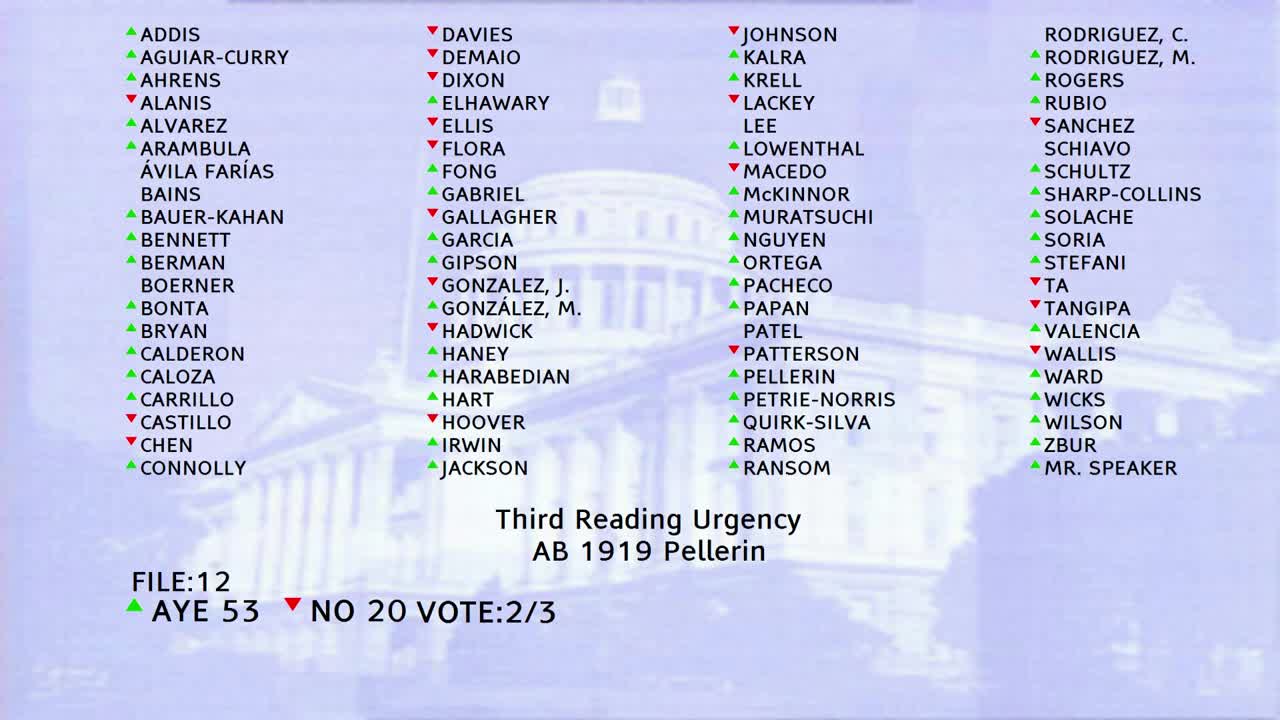 1MIN
Assembly Floor
 10MIN
Assembly Standing Committee on Education

Bill Co-Author(s):