AB 2204: Prisons: organized sports programming.
- Session Year: 2025-2026
- House: Assembly
- Latest Version Date: 2026-09-30
Current Status:
Passed
(2026-09-30: Chaptered by Secretary of State - Chapter 925, Statutes of 2026.)
Introduced
In Committee
Awaiting First Chamber Vote
Passed First Chamber
In Committee
Awaiting Second Chamber Vote
Passed Second Chamber
Enacted
Existing law establishes the Department of Corrections and Rehabilitation to administer the state prison system under the direction of the Secretary of the Department of Corrections and Rehabilitation. Existing California constitutional provisions grant the department the authority to award credits earned for good behavior and approved rehabilitative or educational achievements in order to enhance public safety, improve rehabilitation, and avoid the release of prisoners by federal court order.
This bill, the Second Chance Sports Act, would, until January 1, 2036, require the department to formalize, in consultation with specified individuals and organizations, a policy on organized sports programming. The bill would authorize the department to solicit and accept proposals and negotiate and enter into agreements with specified entities for the purposes of expanding access to sports programming as described above. The bill would establish the Second Chance Sports Fund within the State Treasury. The bill would require the department to seek advisement from the Legislature on the priorities for utilizing the moneys in the fund. The bill would make funds available, upon appropriation by the Legislature in the annual Budget Act, for the above-described purposes. The bill would require the Controller, on or before January 1, 2029, and annually thereafter, to provide a report to the Legislature on the amounts deposited into the fund. The bill would make related findings and declarations.
Existing law establishes the Department of Corrections and Rehabilitation to administer the state prison system under the direction of the Secretary of the Department of Corrections and Rehabilitation. Existing California constitutional provisions grant the department the authority to award credits earned for good behavior and approved rehabilitative or educational achievements in order to enhance public safety, improve rehabilitation, and avoid the release of prisoners by federal court order.
This bill, the Second Chance Sports Act, would, until a specified date, January 1, 2036, require the department to establish, formalize, in consultation with specified individuals and organizations, a policy on organized sports programming at facilities operated by the department. programming. The bill would authorize the department to solicit and accept proposals and negotiate and enter into agreements with specified entities for the purposes of expanding access to sports programming as described above. The bill would establish the Second Chance Sports Fund within the State Treasury. The bill would require the Government Operations Agency department to seek advisement from the Legislature and the department on the priorities for utilizing the moneys in the fund and to approve the uses of the moneys. fund. The bill would make funds available, upon appropriation and approval by the agency, by the Legislature in the annual Budget Act, for the above-described purposes. The bill would require the Treasurer, Controller, on or before January 1, 2028, 2029, and annually thereafter, to provide a report to the Legislature on the amounts deposited into the fund. The bill would make related findings and declarations.
Existing law establishes the Department of Corrections and Rehabilitation to administer the state prison system under the direction of the Secretary of the Department of Corrections and Rehabilitation. Existing California constitutional provisions grant the department the authority to award credits earned for good behavior and approved rehabilitative or educational achievements in order to enhance public safety, improve rehabilitation, and avoid the release of prisoners by federal court order.
This bill, the Second Chance Sports Act, would would, until a specified date, require the department to establish, in consultation with specified individuals and organizations, a policy on organized sports programming at facilities operated by the department. The bill would authorize the department to solicit and accept proposals and negotiate and enter into agreements with specified entities for the purposes of expanding access to sports programming as described above. The bill would establish the Second Chance Sports Fund within the State Treasury. The bill would require the Government Operations Agency to seek advisement from the Legislature and the department on the priorities for utilizing the moneys in the fund and to approve the uses of the moneys. The bill would make funds available, upon appropriation and approval by the agency, for the above-described purposes. The bill would require the Treasurer, on or before January 1, 2028, and annually thereafter, to provide a report to the Legislature on the amounts deposited into the fund. The bill would make related findings and declarations.
Existing law establishes the Department of Corrections and Rehabilitation to administer the state prison system under the direction of the Secretary of the Department of Corrections and Rehabilitation. Existing California constitutional provisions grant the department the authority to award credits earned for good behavior and approved rehabilitative or educational achievements in order to enhance public safety, improve rehabilitation, and avoid the release of prisoners by federal court order.
This bill, the Second Chance Sports Act, would require the department to establish, in consultation with specified individuals and organizations, a policy on organized sports programming at facilities operated by the department. The bill would authorize the department to solicit and accept proposals and negotiate and enter into agreements with specified entities for the purposes of expanding access to sports programming as described above. The bill would establish the Second Chance Sports Fund within the State Treasury. The bill would require the Government Operations Agency to seek advisement from the Legislature and the department on the priorities for utilizing the moneys in the fund and to approve the uses of the moneys. The bill would make funds available, upon appropriation and approval by the agency, for the above-described purposes. The bill would require the Treasurer, on or before January 1, 2028, and annually thereafter, to provide a report to the Legislature on the amounts deposited into the fund. The bill would make related findings and declarations.
Existing law allows for an application authorizing the interception of a wire or electronic communication to be made by certain prosecutors to a judge of a superior court. Existing law authorizes the judge to enter an ex parte order authorizing the interception of wire or electronic communications and requires each of those orders to include specific information, including, among other things, the identity of the agency authorized to intercept the communications and of the person making the application.This bill would make technical, nonsubstantive changes to those provisions.Existing law allows for an application authorizing the interception of a wire or electronic communication to be made by certain prosecutors to a judge of a superior court. Existing law authorizes the judge to enter an ex parte order authorizing the interception of wire or electronic communications and requires each of those orders to include specific information, including, among other things, the identity of the agency authorized to intercept the communications and of the person making the application.
This bill would make technical, nonsubstantive changes to those provisions.
The Legislature finds and declares all of the following:
(a)Studies have shown that an incarcerated persons participation in sports is positively correlated with reduced rates of recidivism and negative interventions needed from correctional staff, improving safety at facilities, preserving state resources, and enhancing public safety.
(b)Regular participation in sports and physical activities has numerous additional benefits, including increased physical fitness, improved mental health outcomes, and the development of stronger discipline and self-esteem.
(c)Participation in sports also provides opportunities for individuals to develop stronger communication skills, learn to navigate conflict and adversity, and create deeper bonds with teammates, other athletes, and their community.
(d)Sports programming can also serve as an important gateway to participation in educational, therapeutic, vocational, restorative justice, and other rehabilitative programming that supports successful community reintegration and reduces recidivism.
(e)Meaningful rehabilitation policies should be developed in consultation with directly impacted people, including, but not limited to, currently and formerly incarcerated individuals and their families.
(f)It is the intent of the Legislature in enacting this chapter to reduce recidivism and to help individuals more successfully reintegrate into society by requiring the Department of Corrections and Rehabilitation to create and implement a policy to meaningfully expand access to organized sports programming for incarcerated persons at facilities operated by the department.
3111.(a)It is the policy of the State of California that participation in organized sports programming is recognized as a form of rehabilitation.
(b)(1)On or before January 1, 2028, the department shall formalize a policy on organized sports programming.
(2)The policy described in paragraph (1) shall be developed in consultation with researchers and experts in sports and rehabilitation, organizations dedicated to criminal justice reform, athletic organizations, including professional and semi-professional sports teams and leagues, department staff, including correctional line staff, and organizations representing incarcerated persons and their families.
(3)In developing the policy described in paragraph (1), the department shall consider all of the following:
(A)The safety of incarcerated persons, correctional line staff, and other participants.
(B)The appropriate use of state resources and facilities by incarcerated persons.
(C)Eligibility requirements for participation.
(D)Any broader impacts on public safety.
(E)Geographic, climate, and infrastructure differences across department facilities that may affect equitable access to organized sports programming.
(F)How to maximize access to sports programming using existing recreational spaces and infrastructure.
(c)Notwithstanding any other law, the department may solicit proposals, accept unsolicited proposals, negotiate, and enter into agreements with public or private entities, including, but not limited to, professional sports teams and leagues, the University of California, the California State University, the California Community Colleges, and private universities for the purpose of expanding access to organized sports programming at facilities operated by the department.
3112.(a)The Second Chance Sports Fund is hereby established within the State Treasury.
(b)Moneys deposited into the fund shall be available, upon appropriation by the Legislature in the annual Budget Act, to the department to support the expansion of organized sports programming at facilities operated by the department.
(c)The department shall seek advisement from the Legislature on the priorities for utilizing the moneys made available pursuant to this section.
(d)The fund may receive moneys from any source, including private donations.
(e)The moneys in the fund shall supplement, not replace, existing funding for the programming described in this chapter.
(f)Not more than 5 percent of the moneys made available pursuant to this section shall be utilized for administrative purposes.
(g)(1)On or before January 1, 2029, and annually thereafter, the Controller shall provide a report to the Legislature on the amounts deposited into the fund.
(2)A report submitted pursuant to this subdivision shall be submitted in compliance with Section 9795 of the Government Code.
3113.This chapter shall remain in effect only until January 1, 2036, and as of that date is repealed.
The Legislature finds and declares all of the following:
(a)Studies have shown that an incarcerated persons participation in sports is positively correlated with reduced rates of recidivism and negative interventions needed from correctional staff, improving safety at facilities, preserving state resources, and enhancing public safety.
(b)Regular participation in sports and physical activities has numerous additional benefits, including increased physical fitness, improved mental health outcomes, and the development of stronger discipline and self-esteem.
(c)Participation in sports also provides opportunities for individuals to develop stronger communication skills, learn to navigate conflict and adversity, and create deeper bonds with teammates, other athletes, and their community.
(d)Sports programming can also serve as an important gateway to participation in educational, therapeutic, vocational, restorative justice, and other rehabilitative programming that supports successful community reintegration and reduces recidivism.
(e)Meaningful rehabilitation policies should be developed in consultation with directly impacted people, including, but not limited to, currently and formerly incarcerated individuals and their families.
(d)(f)It is the intent of the Legislature in enacting this chapter to reduce recidivism and to help individuals more successfully reintegrate into society by requiring the Department of Corrections and Rehabilitation to create and implement a policy to meaningfully expand access to organized sports programming for incarcerated persons at facilities operated by the department.
3111.(a)It is the policy of the State of California that participation in organized sports programming is recognized as a form of rehabilitation.
(b)(1)On or before July 1, 2027, January 1, 2028, the department shall establish formalize a policy on organized sports programming at facilities operated by the department. programming.
(2)The policy described in paragraph (1) shall be developed in consultation with researchers and experts in sports and rehabilitation, organizations dedicated to criminal justice reform, athletic organizations, including professional and semi-professional sports teams and leagues, department facility staff, including correctional line staff, and organizations representing incarcerated persons and their families.
(3)In developing the policy described in paragraph (1), the department shall consider all of the following:
(A)The safety of incarcerated persons, correctional line staff, and other participants.
(B)The appropriate use of state resources and facilities by incarcerated persons.
(C)Eligibility requirements for participation.
(D)Any broader impacts on public safety.
(E)Geographic, climate, and infrastructure differences across department facilities that may affect equitable access to organized sports programming.
(F)How to maximize access to sports programming using existing recreational spaces and infrastructure.
(c)Notwithstanding any other law, the department may solicit proposals, accept unsolicited proposals, negotiate, and enter into agreements with public or private entities, including, but not limited to, professional sports teams and leagues, the University of California, the California State University, the California Community Colleges, and private universities for the purpose of expanding access to organized sports programming at facilities operated by the department.
3112.(a)The Second Chance Sports Fund is hereby established within the State Treasury.
(b)Moneys deposited into the fund shall be available, upon appropriation and approval by the Government Operations Agency pursuant to subdivision (c), appropriation by the Legislature in the annual Budget Act, to the department to support the expansion of organized sports programming at facilities operated by the department.
(c)The agency department shall seek advisement from the Legislature and the department on the priorities for utilizing the moneys made available pursuant to this section and shall approve the uses of the moneys. section.
(d)The fund may receive moneys from any source, including private donations.
(e)The moneys in the fund shall supplement, not replace, existing funding for the programming described in this chapter.
(f)Not more than 5 percent of the moneys made available pursuant to this section shall be utilized for administrative purposes.
(g)(1)On or before January 1, 2028, 2029, and annually thereafter, the Treasurer Controller shall provide a report to the Legislature on the amounts deposited into the fund.
(2)A report submitted pursuant to this subdivision shall be submitted in compliance with Section 9795 of the Government Code.
3113.(a)This chapter shall remain operative until January 1, 2030, or until the funds appropriated pursuant to this chapter are exhausted, whichever occurs first.(b)This chapter shall be repealed on January 1, 2030, or January 1 following the date when the funds appropriated pursuant to this chapter are exhausted, whichever occurs first.3113.This chapter shall remain in effect only until January 1, 2036, and as of that date is repealed.
The Legislature finds and declares all of the following:
(a)Studies have shown that an incarcerated persons participation in sports is positively correlated with reduced rates of recidivism and negative interventions needed from correctional staff, improving safety at facilities, preserving state resources, and enhancing public safety.
(b)Regular participation in sports and physical activities has numerous additional benefits, including increased physical fitness, improved mental health outcomes, and the development of stronger discipline and self-esteem.
(c)Participation in sports also provides opportunities for individuals to develop stronger communication skills, learn to navigate conflict and adversity, and create deeper bonds with teammates, other athletes, and their community.
(d)It is the intent of the Legislature in enacting this chapter to reduce recidivism and to help individuals more successfully reintegrate into society by requiring the Department of Corrections and Rehabilitation to create and implement a policy to meaningfully expand access to organized sports programming for incarcerated persons at facilities operated by the department.
3111.(a)It is the policy of the State of California that participation in organized sports programming is recognized as a form of rehabilitation.
(b)(1)On or before July 1, 2027, the department shall establish a policy on organized sports programming at facilities operated by the department.
(2)The policy described in paragraph (1) shall be developed in consultation with researchers and experts in sports and rehabilitation, organizations dedicated to criminal justice reform, athletic organizations, including professional and semi-professional sports teams and leagues, department facility staff, including correctional line staff, and organizations representing incarcerated persons and their families.
(3)In developing the policy described in paragraph (1), the department shall consider all of the following:
(A)The safety of incarcerated persons, correctional line staff, and other participants.
(B)The appropriate use of state resources and facilities by incarcerated persons.
(C)Eligibility requirements for participation.
(D)Any broader impacts on public safety.
(c)Notwithstanding any other law, the department may solicit proposals, accept unsolicited proposals, negotiate, and enter into agreements with public or private entities, including, but not limited to, professional sports teams and leagues, the University of California, the California State University, the California Community Colleges, and private universities for the purpose of expanding access to organized sports programming at facilities operated by the department.
3112.(a)The Second Chance Sports Fund is hereby established within the State Treasury.
(b)Moneys deposited into the fund shall be available, upon appropriation and approval by the Government Operations Agency pursuant to subdivision (c), to the department to support the expansion of organized sports programming at facilities operated by the department.
(c)The agency shall seek advisement from the Legislature and the department on the priorities for utilizing the moneys made available pursuant to this section and shall approve the uses of the moneys.
(d)The fund may receive moneys from any source, including private donations.
(e)The moneys in the fund shall supplement, not replace, existing funding for the programming described in this chapter.
(f)Not more than 5 percent of the moneys made available pursuant to this section shall be utilized for administrative purposes.
(g)(1)On or before January 1, 2028, and annually thereafter, the Treasurer shall provide a report to the Legislature on the amounts deposited into the fund.
(2)A report submitted pursuant to this subdivision shall be submitted in compliance with Section 9795 of the Government Code.
3113.(a)This chapter shall remain operative until January 1, 2030, or until the funds appropriated pursuant to this chapter are exhausted, whichever occurs first.
(b)This chapter shall be repealed on January 1, 2030, or January 1 following the date when the funds appropriated pursuant to this chapter are exhausted, whichever occurs first.
The Legislature finds and declares all of the following:
(a)Studies have shown that an incarcerated persons participation in sports is positively correlated with reduced rates of recidivism and negative interventions needed from correctional staff, improving safety at facilities, preserving state resources, and enhancing public safety.
(b)Regular participation in sports and physical activities has numerous additional benefits, including increased physical fitness, improved mental health outcomes, and the development of stronger discipline and self-esteem.
(c)Sports also provide Participation in sports also provides opportunities for individuals to develop stronger communication skills, learn to navigate conflict and adversity, and create deeper bonds with teammates, other athletes, and their community.
(d)It is the intent of the Legislature in enacting this chapter to reduce recidivism and to help individuals more successfully reintegrate into society by requiring the Department of Corrections and Rehabilitation to create and implement a policy to meaningfully expand access to organized sports programming for incarcerated persons at facilities operated by the department.
3111.(a)It is the policy of the State of California that participation in organized sports programming is recognized as a form of rehabilitation.
(b)(1)On or before July 1, 2027, the department shall establish a policy on organized sports programming at facilities operated by the department.
(2)The policy described in paragraph (1) shall be developed in consultation with researchers and experts in sports and rehabilitation, organizations dedicated to criminal justice reform, athletic organizations, including professional and semi-professional sports teams and leagues, department facility staff, including correctional line staff, and organizations representing incarcerated persons and their families.
(3)In developing the policy described in paragraph (1), the department shall consider all of the following:
(A)The safety of incarcerated persons, correctional line staff, and other participants.
(B)The appropriate use of state resources and facilities by incarcerated persons.
(C)Eligibility requirements for participation.
(D)Any broader impacts on public safety.
(c)Notwithstanding any other law, the department may solicit proposals, accept unsolicited proposals, negotiate, and enter into agreements with public or private entities, including, but not limited to, professional sports teams and leagues, the University of California, the California State University, the California Community Colleges, and private universities for the purpose of expanding access to organized sports programming at facilities operated by the department.
3112.(a)The Second Chance Sports Fund is hereby established within the State Treasury.
(b)Moneys deposited into the fund shall be available, upon appropriation and approval by the Government Operations Agency pursuant to subdivision (c), to the department to support the expansion of organized sports programming at facilities operated by the department.
(c)The agency shall seek advisement from the Legislature and the department on the priorities for utilizing the moneys made available pursuant to this section and shall approve the uses of the moneys.
(d)The fund may receive moneys from any source, including private donations.
(e)The moneys in the fund shall supplement, not replace, existing funding for the programming described in this chapter.
(f)Not more than 5 percent of the moneys made available pursuant to this section shall be utilized for administrative purposes.
(g)(1)On or before January 1, 2028, and annually thereafter, the Treasurer shall provide a report to the Legislature on the amounts deposited into the fund.
(2)A report submitted pursuant to this subdivision shall be submitted in compliance with Section 9795 of the Government Code.
The Legislature finds and declares all of the following:
(a)Studies have shown that an incarcerated persons participation in sports is positively correlated with reduced rates of recidivism and negative interventions needed from correctional staff, improving safety at facilities, preserving state resources, and enhancing public safety.
(b)Regular participation in sports and physical activities has numerous additional benefits, including increased physical fitness, improved mental health outcomes, and the development of stronger discipline and self-esteem.
(c)Sports also provide opportunities for individuals to develop stronger communication skills, learn to navigate conflict and adversity, and create deeper bonds with teammates, other athletes, and their community.
(d)It is the intent of the Legislature in enacting this chapter to reduce recidivism and to help individuals more successfully reintegrate into society by requiring the Department of Corrections and Rehabilitation to create and implement a policy to meaningfully expand access to organized sports programming for incarcerated persons at facilities operated by the department.
3111.(a)It is the policy of the State of California that participation in organized sports programming is recognized as a form of rehabilitation.
(b)(1)On or before July 1, 2027, the department shall establish a policy on organized sports programming at facilities operated by the department.
(2)The policy described in paragraph (1) shall be developed in consultation with researchers and experts in sports and rehabilitation, organizations dedicated to criminal justice reform, athletic organizations, including professional and semi-professional sports teams and leagues, department facility staff, including correctional line staff, and organizations representing incarcerated persons and their families.
(3)In developing the policy described in paragraph (1), the department shall consider all of the following:
(A)The safety of incarcerated persons, correctional line staff, and other participants.
(B)The appropriate use of state resources and facilities by incarcerated persons.
(C)Eligibility requirements for participation.
(D)Any broader impacts on public safety.
(c)Notwithstanding any other law, the department may solicit proposals, accept unsolicited proposals, negotiate, and enter into agreements with public or private entities, including, but not limited to, professional sports teams and leagues, the University of California, the California State University, the California Community Colleges, and private universities for the purpose of expanding access to organized sports programming at facilities operated by the department.
3112.(a)The Second Chance Sports Fund is hereby established within the State Treasury.
(b)Moneys deposited into the fund shall be available, upon appropriation and approval by the Government Operations Agency pursuant to subdivision (c), to the department to support the expansion of organized sports programming at facilities operated by the department.
(c)The agency shall seek advisement from the Legislature and the department on the priorities for utilizing the moneys made available pursuant to this section and shall approve the uses of the moneys.
(d)The fund may receive moneys from any source, including private donations.
(e)The moneys in the fund shall supplement, not replace, existing funding for the programming described in this chapter.
(f)Not more than 5 percent of the moneys made available pursuant to this section shall be utilized for administrative purposes.
(g)(1)On or before January 1, 2028, and annually thereafter, the Treasurer shall provide a report to the Legislature on the amounts deposited into the fund.
(2)A report submitted pursuant to this subdivision shall be submitted in compliance with Section 9795 of the Government Code.
SECTION 1.Section 629.54 of the Penal Code is amended to read:629.54.Each order authorizing the interception of any wire or electronic communication shall specify all of the following:(a)The identity, if known, of the person whose communications are to be intercepted or, if the identity is not known, then that information relating to the persons identity known to the applicant.(b)The nature and location of the communication facilities as to which, or the place where, authority to intercept is granted.(c)A particular description of the type of communication sought to be intercepted, and a statement of the illegal activities to which the communication sought to be intercepted relates.(d)The identity of the agency authorized to intercept the communications and of the person making the application.(e)The period of time during which the interception is authorized including a statement as to whether or not the interception shall automatically terminate when the described communication has been first obtained.Each order authorizing the interception of any wire or electronic communication shall specify all of the following:
(a)The identity, if known, of the person whose communications are to be intercepted, or intercepted or, if the identity is not known, then that information relating to the persons identity known to the applicant.
(b)The nature and location of the communication facilities as to which, or the place where, authority to intercept is granted.
(c)A particular description of the type of communication sought to be intercepted, and a statement of the illegal activities to which it the communication sought to be intercepted relates.
(d)The identity of the agency authorized to intercept the communications and of the person making the application.
(e)The period of time during which the interception is authorized including a statement as to whether or not the interception shall automatically terminate when the described communication has been first obtained.
|
Date
|
Status
|
|---|---|
| Sep 30, 2026 | Chaptered by Secretary of State - Chapter 925, Statutes of 2026. |
| Sep 30, 2026 | Approved by the Governor. |
| Sep 15, 2026 | Enrolled and presented to the Governor at 3 p.m. |
| Aug 31, 2026 | Senate amendments concurred in. To Engrossing and Enrolling. (Ayes 79. Noes 0. Page 7006.). |
| Aug 31, 2026 | Senate amendments concurred in. To Engrossing and Enrolling. (Ayes 79. Noes 0.). |
| Aug 31, 2026 | Senate amendments concurred in. To Engrossing and Enrolling. |
| Aug 31, 2026 | In Assembly. Concurrence in Senate amendments pending. |
| Aug 31, 2026 | Read third time. Passed. Ordered to the Assembly. (Ayes 39. Noes 0.). |
| Aug 25, 2026 | Read second time. Ordered to third reading. |
| Aug 24, 2026 | Read third time and amended. Ordered to second reading. |
| Aug 24, 2026 | Joint Rule 61(b)(16) suspended. |
| Aug 21, 2026 | Read third time and amended. Ordered to second reading. |
| Aug 17, 2026 | Read second time. Ordered to third reading. |
| Aug 13, 2026 | Read second time and amended. Ordered returned to second reading. |
| Aug 13, 2026 | From committee: Amend, and do pass as amended. (Ayes 7. Noes 0.) (August 13). |
| Aug 3, 2026 | In committee: Referred to APPR. suspense file. |
| Jun 24, 2026 | From committee: Do pass and re-refer to Com. on APPR. with recommendation: To Consent Calendar. (Ayes 6. Noes 0.) (June 23). Re-referred to Com. on APPR. |
| Jun 11, 2026 | From committee chair, with author's amendments: Amend, and re-refer to committee. Read second time, amended, and re-referred to Com. on PUB. S. |
| Jun 10, 2026 | Referred to Com. on PUB. S. |
| May 28, 2026 | In Senate. Read first time. To Com. on RLS. for assignment. |
| May 27, 2026 | Read third time. Passed. Ordered to the Senate. (Ayes 78. Noes 0. Page 5493.) |
| May 27, 2026 | Read third time. Passed. Ordered to the Senate. (Ayes 78. Noes 0.) |
| May 27, 2026 | Read third time. Passed. Ordered to the Senate. |
| May 18, 2026 | Read second time. Ordered to third reading. |
| May 14, 2026 | From committee: Do pass. (Ayes 15. Noes 0.) (May 14). |
| May 14, 2026 | Joint Rule 62(a), file notice suspended. (Page 5030.) |
| May 14, 2026 | Joint Rule 62(a), file notice suspended. |
| May 13, 2026 | In committee: Set, first hearing. Referred to APPR. suspense file. |
| Apr 8, 2026 | From committee: Do pass and re-refer to Com. on APPR. with recommendation: To Consent Calendar. (Ayes 9. Noes 0.) (April 7). Re-referred to Com. on APPR. |
| Mar 17, 2026 | Re-referred to Com. on PUB. S. |
| Mar 16, 2026 | From committee chair, with author's amendments: Amend, and re-refer to Com. on PUB. S. Read second time and amended. |
| Mar 16, 2026 | Referred to Com. on PUB. S. |
| Feb 20, 2026 | From printer. May be heard in committee March 22. |
| Feb 19, 2026 | Read first time. To print. |
|
Date
|
Description
|
Location
|
Votes
|
|
|---|---|---|---|---|
| Aug 31, 2026 | AB 2204 Gabriel Concurrence in Senate Amendments | Assembly Floor |
Passed |
|
| Aug 31, 2026 | Assembly 3rd Reading AB2204 Gabriel et al. By Becker | Senate Floor |
Passed |
|
| Aug 13, 2026 | Do pass as amended | Senate Standing Committee on Appropriations |
Passed |
|
| Aug 3, 2026 | Placed on suspense file | Senate Standing Committee on Appropriations |
Passed |
|
| Jun 23, 2026 | Do pass, but first be re-referred to the Committee on [Appropriations] with the recommendation: To Consent Calendar | Senate Standing Committee on Public Safety |
Passed |
|
| May 27, 2026 | AB 2204 Gabriel Assembly Third Reading | Assembly Floor |
Passed |
|
| May 14, 2026 | Do pass. | Assembly Standing Committee on Appropriations |
Passed |
|
| Apr 7, 2026 | Do pass and be re-referred to the Committee on [Appropriations] with recommendation: To Consent Calendar | Assembly Standing Committee on Public Safety |
Passed |
This list shows positions taken on this bill by organizations on the date displayed, which is linked to the original source.
Positions by individuals are not included.
|
Organization
|
Position
|
Date
|
|---|---|---|
| All Of Us Or None Orange County | ** Support | |
| Anti-Recidivism Coalition | ** Support | |
| California Correctional Peace Officers Association (Ccpoa) | ** Support | |
| California Democratic Party | ** Support | |
| Californians for Safety and Justice (CSJ) | ** Support | |
| California Police Chiefs Association | ** Support | |
| California Public Defenders Association | ** Support | |
| Courage California | ** Support | |
| Ella Baker Center For Human Rights | ** Support | |
| Families Inspiring Reentry & Reunification 4 Everyone (FIR4E) | ** Support | |
| Felony Murder Elimination Project | ** Support | |
| Jesse's Place Org | ** Support | |
| Rubicon Programs | ** Support | |
| Sacramento Mayor Kevin McCarty | ** Support | |
| San Quentin Skunkworks | ** Support | |
| Smart Justice California | ** Support | |
| Transformative Programming Works | ** Support |
CONCURRENCE IN SENATE AMENDMENTS
CSA1 Bill Id:AB 2204
Author:(Gabriel and Bryan)
As Amended Ver:August 24, 2026
Majority vote
SUMMARY
Requires the Department of Corrections and Rehabilitation (CDCR) to establish a policy on organized sports programming at facilities operated by the department and establishes the Second Chance Sports Fund.
Senate Amendments
- Changed the date by which CDCR must formalize a policy on organized sports programming from July 1, 2027, to July 1, 2028.
- Add that CDCR, in developing its organized sports programing policy, must also consider geographic, climate, and infrastructure differences across department facilities that may affect equitable access to organized sports programing, and how to maximize access to sports programming using existing recreational spaces and infrastructure.
- Establish a sunset date of January 1, 2036.
- Add additional legislative findings and declarations.
- Make a technical change.
COMMENTS
As Passed by the Assembly, this bill: Required the Department of Corrections and Rehabilitation (CDCR) to establish a policy on organized sports programming at facilities operated by the department.
Major Provisions
- Established a policy in California to recognize participation in organized sports programming in state prisons as a form of rehabilitation.
- Required CDCR to adopt a department-wide policy on organized sports programming to be applied to all CDCR facilities by July 1, 2027.
- Required CDCR to consult with a wide-range of stakeholders when creating the policy, including researchers and experts in sports and rehabilitation, criminal justice reform organizations, professional and semi-professional sports teams and leagues, CDCR staff, and organizations representing incarcerated persons and their families.
- Required CDCR to consider the following topics when adopting the policy:
- The safety of CDCR staff, incarcerated persons, and other participants;
- The appropriate use of CDCR resources and facilities by incarcerated persons;
- Eligibility requirements for participation; and,
- Broader impacts to public safety.
- Permitted CDCR to solicit proposals, accept unsolicited proposals, negotiate, and enter into agreements with public and private entities including, professional sports teams, the University of California, the California State University, the California Community Colleges, and private universities for the purpose of expanding access to organized sports programming at CDCR facilities.
- Established the Second Chance Sports Fund within the State Treasury, and required:
- Funds deposited into the fund to be available, upon appropriation and approval of the Government Operations Agency, to support the expansion of organized sports programming at facilities operated by CDCR;
- The Government Operations Agency must seek advisement from the Legislature and CDCR on how to prioritize the use of the funds, and shall approve the uses of the moneys;
- The fund to receive money from any source, including private donations;
- The funds to supplement, not replace, existing funding for recreational sports programming at CDCR.
- No more than 5% of the funds be used for administrative purposes.
- Required the State Treasurer to provide a report to the Legislature on the amounts deposited into the fund before January 1, 2028, and annually thereafter.
- Included legislative findings and declarations.
According to the Author
″Structured sports programming is a powerful tool to promote rehabilitation and help individuals successfully reintegrate into their communities. Sports help build discipline, teamwork, and accountability. AB 2204 – The Second Chance Sports Act – seeks to harness this power by requiring the California Department of Corrections and Rehabilitation to adopt a policy to expand opportunities for organized sports for incarcerated persons and establishes a dedicated fund to support this effort. Through the transformative power of sports, The Second Chance Sports Act will make our prisons safer, support correctional staff, and help reduce crime when people return home, all while leveraging critical public-private partnerships to avoid burdening taxpayers.″
Arguments in Support
According to According to the California Correctional Peace Officers Association (CCPOA), ″Correctional peace officers see firsthand the importance of effective rehabilitation programs in improving institutional safety and supporting successful reentry. AB 2204 takes a thoughtful step in that direction by expanding access to organized sports programming, which has been shown to improve physical and mental health, build discipline, and support positive behavioral outcomes.
″By directing CDCR to establish a structured policy and encouraging partnerships with colleges, universities, and professional organizations, this bill helps bring consistency and broader access to programs that are currently limited and uneven across facilities. The creation of a fund to support public-private partnerships will further strengthen these efforts without placing undue pressure on state resources.″
Arguments in Opposition
None submitted.
FISCAL COMMENTS
According to the Senate Committee on Appropriations, "Moderate to significant costs to CDCR to establish the Second Chance Sports Act (General Fund).
"Unknown annual costs to CDCR and the Gov Ops Agency to establish and operate organized sports programming (private)."
VOTES:
ASM PUBLIC SAFETY: 9-0-0
YES: Schultz, Alanis, Mark González, Haney, Harabedian, Lackey, Nguyen, Ramos, Sharp-Collins
ASM APPROPRIATIONS: 15-0-0
YES: Wicks, Hoover, Aguiar-Curry, Calderon, Caloza, Dixon, Fong, Mark González, Krell, Pacheco, Pellerin, Sharp-Collins, Solache, Ta, Tangipa
ASSEMBLY FLOOR: 78-0-2
YES: Addis, Aguiar-Curry, Ahrens, Alanis, Alvarez, Arambula, Ávila Farías, Bains, Bauer-Kahan, Bennett, Berman, Boerner, Bonta, Bryan, Calderon, Caloza, Carrillo, Castillo, Chen, Connolly, Davies, DeMaio, Dixon, Elhawary, Ellis, Flora, Fong, Gabriel, Gallagher, Garcia, Gipson, Jeff Gonzalez, Mark González, Hadwick, Haney, Harabedian, Hart, Hoover, Irwin, Jackson, Johnson, Kalra, Krell, Lackey, Lee, Lowenthal, Macedo, McKinnor, Muratsuchi, Nguyen, Ortega, Pacheco, Papan, Patel, Patterson, Pellerin, Petrie-Norris, Ramos, Ransom, Michelle Rodriguez, Rogers, Blanca Rubio, Sanchez, Schiavo, Schultz, Sharp-Collins, Solache, Soria, Stefani, Ta, Tangipa, Valencia, Wallis, Ward, Wicks, Wilson, Zbur, Rivas
ABS, ABST OR NV: Quirk-Silva, Celeste Rodriguez
UPDATED
VERSION: August 24, 2026
CONSULTANT: Andrew Ironside / PUB. S. / (916) 319-3744 FN: 0004553
SENATE RULES COMMITTEE Office of Senate Floor Analyses (916) 651-4171 | AB 2204 |
THIRD READING
Bill No: AB 2204
Author: Gabriel (D) and Bryan (D), et al.
Amended: 8/24/26 in Senate
Vote: 21
SENATE PUBLIC SAFETY COMMITTEE: 6-0, 6/23/26
AYES: Arreguín, Seyarto, Caballero, Cortese, Pérez, Wiener
SENATE APPROPRIATIONS COMMITTEE: 7-0, 8/13/26
AYES: Cervantes, Seyarto, Cabaldon, Dahle, Grayson, Richardson, Wahab
ASSEMBLY FLOOR: 78-0, 5/27/26 - See last page for vote
SUBJECT: Prisons: organized sports programming
SOURCE: Anti-Recidivism Coalition
DIGEST:
This bill requires the Department of Corrections and Rehabilitation (CDCR) to establish a policy on organized sports programming at facilities operated by the department.
Senate Floor Amendments of 8/24/26 clarify that moneys deposited into the Second Chance Sports Fund shall be available upon appropriation by the Legislature in the annual Budget, rather than requiring approval by the Government Operations Agency; and add a sunset date applying to the bill’s provisions of January 1, 2036.
Senate Floor Amendments of 8/21/26:
- Extend the deadline by which CDCR must formalize a policy on organized sports programming from July 1, 2027 to January 1, 2028;
- Require that in developing the policy, CDCR must consider additional factors, including geographic, climate, and infrastructure differences across department facilities that may affect equitable access to organized sports programming and how to maximize access to sports programming using existing recreational spaces and infrastructure;
- Clarify that monies deposited into the Second Chance sports Fund are available upon appropriation;
- Clarify that the Controller, rather than the Treasurer, must annually report on the amount deposited in the fund;
- Extend the deadline for the first report from the Controller to January 1, 2029;
- Delete the sunset date that applies to the provisions of the bill.
ANALYSIS:
Existing law:
- Establishes the position of Secretary of CDCR and vests in that position responsibility for the care, custody, treatment, training, discipline, and employment of persons confined in state prisons. (Penal (Pen.) Code, § 5054.)
- Authorizes CDCR to adopt regulations as necessary to implement the department’s administrative duties. (Pen. Code, § 5058.)
- Provides that any amendments to existing regulations and any future regulations adopted by CDCR that may impact visitation of incarcerated persons shall do all of the following:
- Recognize and consider the value of visiting as a means to improve the safety of prisons for both staff and incarcerated persons;
- Recognize and consider the important role of incarcerated person visitation in establishing and maintaining a meaningful connection with family and community; and
- Recognize and consider the important role of incarcerated person visitation in preparing an incarcerated person for successful release and rehabilitation. (Pen. Code, § 6400, subds. (a)-(c).)
- Provides that the essential purpose of incarceration is rehabilitation and successful community reintegration, which should be achieved through education, treatment, and active participation in rehabilitative and restorative justice programs. (Pen. Code, § 1170.)
- Requires CDCR to develop and implement policies for contraband interdiction at institutional entry points, including standardized screening procedures applicable to all individuals entering facilities, such as visitors, staff, volunteers, and contract employees. (Pen. Code, § 6402.)
- Establishes the Inmate Welfare Fund, which authorizes CDCR to fund programs for the benefit of incarcerated persons, including recreational and physical education activities, hobby programs, and other leisure-time services. (Pen. Code, § 5006.)
- Requires CDCR to provide incarcerated persons with access to recreational and physical education programs under safe and secure conditions, consistent with custodial classification and institutional operations. (Cal. Code Regs., tit. 15, § 3220.)
- Permits CDCR to allow competitions between outside public teams and teams of incarcerated individuals if competitions take place within the facility and under the direct supervision of staff. (Cal. Code Regs., tit. 15, § 3220, subd. (e).)
- Provides that incarcerated persons may voluntarily participate in athletic activities, contests, and games only if those activities are specifically authorized by the institution head or their designee. (Cal. Code Regs., tit. 15, § 3220, subd. (f).)
- Authorizes CDCR to regulate recreational programming, including restricting activities that present safety risks and requiring supervision and medical clearance for certain activities. (Cal. Code Regs., tit. 15, § 3220.1.)
- Authorizes CDCR to regulate and control access to its institutions through a visitor approval process, including establishing conditions necessary to ensure institutional safety and security. (Cal. Code Regs., tit. 15, § 3170.)
This bill:
- Establishes a policy in California to recognize participation in organized sports programming in state prisons as a form of rehabilitation.
- Requires CDCR to adopt a department-wide policy on organized sports programming to be applied to all CDCR facilities by July 1, 2027.
- Requires CDCR to consult with a wide range of stakeholders when creating the policy, including researchers and experts in sports and rehabilitation, criminal justice reform organizations, professional and semi-professional sports teams and leagues, CDCR staff, and organizations representing incarcerated persons and their families.
- Requires CDCR to consider the following topics when adopting the policy:
- The safety of CDCR staff, incarcerated persons, and other participants;
- The appropriate use of CDCR resources and facilities by incarcerated persons;
- Eligibility requirements for participation; and
- Broader impacts to public safety.
- Permits CDCR to solicit proposals, accept unsolicited proposals, negotiate, and enter into agreements with public and private entities, including professional sports teams, the University of California, the California State University, the California Community Colleges, and private universities for the purpose of expanding access to organized sports programming at CDCR facilities.
- Establishes the Second Chance Sports Fund within the State Treasury and requires:
- Funds deposited into the fund to be available, upon appropriation and approval of the Government Operations Agency, to support the expansion of organized sports programming at facilities operated by CDCR;
- The Government Operations Agency to seek advisement from the Legislature and CDCR on how to prioritize the use of the funds, and to approve the uses of the moneys;
- The fund to receive money from any source, including private donations;
- The funds to supplement, not replace, existing funding for recreational sports programming at CDCR; and
- No more than 5 percent of the funds to be used for administrative purposes.
- Requires the State Treasurer to provide a report to the Legislature on the amounts deposited into the fund before January 1, 2028, and annually thereafter.
- States that the provisions of this bill will remain operative until January 1, 2030, or until the funds appropriated pursuant to this bill are exhausted, whichever occurs first.
- Includes legislative findings and declarations.
Background
Although there is limited research on the positive impact of sports programming, there are some studies that suggest structured sports programming in correctional settings may support improvements in institutional behavior, mental health, and post-release outcomes for incarcerated individuals. For example, the Twinning Project, a partnership between correctional systems and professional soccer clubs in England and Wales, was recently evaluated in collaboration with researchers at the University of Oxford. The evaluation found that participation in their soccer-based programming was associated with a significant reduction in disciplinary infractions, as well as increased social bonding and optimism regarding post-release outcomes.
More broadly, a systematic review and meta-analysis of sports-based interventions found that participation in such programs was associated with moderate improvements across a range of outcomes, including recidivism, anger control, substance use, and attitudes toward offending. Additional research suggests that sports participation may contribute to improved mental health outcomes among incarcerated individuals, including reduced stress, improved emotional regulation, and increased social connection.
Existing regulations already provide for rehabilitative programming, including recreational and physical activities. (Cal. Code Regs., tit. 15, § 3220.) CDCR currently states on its website that “Physical Education and Recreation programs are provided at each institution.” Additionally, existing regulations provide that incarcerated persons may participate in athletic activities, contests, and games, even with outside organizations, so long as the program is authorized by institutional leadership. (Cal. Code Regs., tit. 15, § 3220, subd. (f).) CDCR also permits access to approved visitors and outside organizations, including for the provision of recreational programs and activities, subject to institutional security requirements. (Cal. Code Regs., tit. 15, § 3220, subd. (e).)
This bill seeks to expand access to organized sports programming in state prisons by directing CDCR to develop a department-wide policy, facilitate partnerships with outside organizations, and establish a fund to support such programming. The bill is intended to increase opportunities for incarcerated persons to participate in structured athletic activities through collaboration with public and private entities, including colleges, universities, and professional sports teams. Specifically, the bill is intended to create more opportunities for incarcerated individuals to participate in programs like the San Quentin Giants, where outside organizations visit the prisons for sports programming.
The primary effect of this bill is to require CDCR to formalize and standardize a policy on organized sports programming and to consult with specified stakeholders in doing so. While the bill encourages expanded collaboration with outside entities and establishes a funding mechanism to support such efforts, it does not mandate that CDCR enter into specific partnerships, implement particular programs, or ensure that organized sports involving outside participants are available at a specific number of facilities.
Therefore, while the bill may provide additional structure, guidance, and potential funding opportunities for organized sports programming, its practical impact will largely depend on how CDCR exercises its existing discretion to implement and expand existing recreational sports programs.
FISCAL EFFECT: Appropriation: No Fiscal Com.: Yes Local: No
The Senate Appropriations Committee writes:
Moderate to significant costs to CDCR to establish the Second Chance Sports Act (General Fund). Unknown annual costs to CDCR and the Gov Ops Agency to establish and operate organized sports programming (private).
SUPPORT: (Verified 8/21/26)
Anti-recidivism Coalition (source)
California Democratic Party
California Police Chiefs Association
California Public Defenders Association
Ella Baker Center for Human Rights
Sacramento Mayor Kevin McCarty
San Quentin Skunkworks
Smart Justice California
OPPOSITION: (Verified 8/21/26)
None received
ARGUMENTS IN SUPPORT:
Smart Justice California writes:
AB 2204 would direct the California Department of Corrections (“CDCR”) to establish a policy on organized sports, in collaboration with researchers, nonprofits, athletic organizations, and correctional line staff. The legislation would allow CDCR to collaborate with public and private entities, such as colleges and universities or professional sports teams, to implement this sports policy. Additionally, the legislation would establish a state fund to support the expansion of rehabilitative sports programs. The fund would be able to receive donations from a variety of sources, including private philanthropy, further facilitating public-private partnerships like those at San Quentin Rehabilitation Center.
By providing additional support, investment, and collaboration, AB 2204 will provide meaningful opportunities for incarcerated people to participate in sports. Not only will this improve physical and mental health at CDCR facilities, but it will also help improve outcomes for our state’s incarcerated population, helping to make California a safer place.
ASSEMBLY FLOOR: 78-0, 5/27/26
AYES: Addis, Aguiar-Curry, Ahrens, Alanis, Alvarez, Arambula, Ávila Farías, Bains, Bauer-Kahan, Bennett, Berman, Boerner, Bonta, Bryan, Calderon, Caloza, Carrillo, Castillo, Chen, Connolly, Davies, DeMaio, Dixon, Elhawary, Ellis, Flora, Fong, Gabriel, Gallagher, Garcia, Gipson, Jeff Gonzalez, Mark González, Hadwick, Haney, Harabedian, Hart, Hoover, Irwin, Jackson, Johnson, Kalra, Krell, Lackey, Lee, Lowenthal, Macedo, McKinnor, Muratsuchi, Nguyen, Ortega, Pacheco, Papan, Patel, Patterson, Pellerin, Petrie-Norris, Ramos, Ransom, Michelle Rodriguez, Rogers, Blanca Rubio, Sanchez, Schiavo, Schultz, Sharp-Collins, Solache, Soria, Stefani, Ta, Tangipa, Valencia, Wallis, Ward, Wicks, Wilson, Zbur, Rivas
NO VOTE RECORDED: Quirk-Silva, Celeste Rodriguez
Prepared by: Marshal Lawler / PUB. S. /916-651-4118
8/25/26 10:43:48
SENATE RULES COMMITTEE Office of Senate Floor Analyses (916) 651-4171 | AB 2204 |
THIRD READING
Bill No: AB 2204
Author: Gabriel (D) and Bryan (D), et al.
Amended: 8/13/26 in Senate
Vote: 21
SENATE PUBLIC SAFETY COMMITTEE: 6-0, 6/23/26
AYES: Arreguín, Seyarto, Caballero, Cortese, Pérez, Wiener
SENATE APPROPRIATIONS COMMITTEE: 7-0, 8/13/26
AYES: Cervantes, Seyarto, Cabaldon, Dahle, Grayson, Richardson, Wahab
ASSEMBLY FLOOR: 78-0, 5/27/26 - See last page for vote
SUBJECT: Prisons: organized sports programming
SOURCE: Anti-Recidivism Coalition
DIGEST:
This bill requires the Department of Corrections and Rehabilitation (CDCR) to establish a policy on organized sports programming at facilities operated by the department.
ANALYSIS:
Existing Law:
- Establishes the position of Secretary of CDCR and vests in that position responsibility for the care, custody, treatment, training, discipline, and employment of persons confined in state prisons. (Penal (Pen.) Code, § 5054.)
- Authorizes CDCR to adopt regulations as necessary to implement the department’s administrative duties. (Pen. Code, § 5058.)
- Provides that any amendments to existing regulations and any future regulations adopted by CDCR that may impact visitation of incarcerated persons shall do all of the following:
- Recognize and consider the value of visiting as a means to improve the safety of prisons for both staff and incarcerated persons;
- Recognize and consider the important role of incarcerated person visitation in establishing and maintaining a meaningful connection with family and community; and
- Recognize and consider the important role of incarcerated person visitation in preparing an incarcerated person for successful release and rehabilitation. (Pen. Code, § 6400, subds. (a)-(c).)
- Provides that the essential purpose of incarceration is rehabilitation and successful community reintegration, which should be achieved through education, treatment, and active participation in rehabilitative and restorative justice programs. (Pen. Code, § 1170.)
- Requires CDCR to develop and implement policies for contraband interdiction at institutional entry points, including standardized screening procedures applicable to all individuals entering facilities, such as visitors, staff, volunteers, and contract employees. (Pen. Code, § 6402.)
- Establishes the Inmate Welfare Fund, which authorizes CDCR to fund programs for the benefit of incarcerated persons, including recreational and physical education activities, hobby programs, and other leisure-time services. (Pen. Code, § 5006.)
- Requires CDCR to provide incarcerated persons with access to recreational and physical education programs under safe and secure conditions, consistent with custodial classification and institutional operations. (California Code of Regulations (Cal. Code Regs.), tit. 15, § 3220.)
- Permits CDCR to allow competitions between outside public teams and teams of incarcerated individuals if competitions take place within the facility and under the direct supervision of staff. (Cal. Code Regs., tit. 15, § 3220, subd. (e).)
- Provides that incarcerated persons may voluntarily participate in athletic activities, contests, and games only if those activities are specifically authorized by the institution head or their designee. (Cal. Code Regs., tit. 15, § 3220, subd. (f).)
- Authorizes CDCR to regulate recreational programming, including restricting activities that present safety risks and requiring supervision and medical clearance for certain activities. (Cal. Code Regs., tit. 15, § 3220.1.)
- Authorizes CDCR to regulate and control access to its institutions through a visitor approval process, including establishing conditions necessary to ensure institutional safety and security. (Cal. Code Regs., tit. 15, § 3170.)
This bill:
- Establishes a policy in California to recognize participation in organized sports programming in state prisons as a form of rehabilitation.
- Requires CDCR to adopt a department-wide policy on organized sports programming to be applied to all CDCR facilities by July 1, 2027.
- Requires CDCR to consult with a wide range of stakeholders when creating the policy, including researchers and experts in sports and rehabilitation, criminal justice reform organizations, professional and semi-professional sports teams and leagues, CDCR staff, and organizations representing incarcerated persons and their families.
- Requires CDCR to consider the following topics when adopting the policy:
- The safety of CDCR staff, incarcerated persons, and other participants;
- The appropriate use of CDCR resources and facilities by incarcerated persons;
- Eligibility requirements for participation; and
- Broader impacts to public safety.
- Permits CDCR to solicit proposals, accept unsolicited proposals, negotiate, and enter into agreements with public and private entities, including professional sports teams, the University of California, the California State University, the California Community Colleges, and private universities for the purpose of expanding access to organized sports programming at CDCR facilities.
- Establishes the Second Chance Sports Fund within the State Treasury and requires:
- Funds deposited into the fund to be available, upon appropriation and approval of the Government Operations Agency, to support the expansion of organized sports programming at facilities operated by CDCR;
- The Government Operations Agency to seek advisement from the Legislature and CDCR on how to prioritize the use of the funds, and to approve the uses of the moneys;
- The fund to receive money from any source, including private donations;
- The funds to supplement, not replace, existing funding for recreational sports programming at CDCR; and
- No more than 5% of the funds to be used for administrative purposes.
- Requires the State Treasurer to provide a report to the Legislature on the amounts deposited into the fund before January 1, 2028, and annually thereafter.
- States that the provisions of this bill will remain operative until January 1, 2030, or until the funds appropriated pursuant to this bill are exhausted, whichever occurs first.
- Includes legislative findings and declarations.
Background
Although there is limited research on the positive impact of sports programming, there are some studies that suggest structured sports programming in correctional settings may support improvements in institutional behavior, mental health, and post-release outcomes for incarcerated individuals. For example, the Twinning Project, a partnership between correctional systems and professional soccer clubs in England and Wales, was recently evaluated in collaboration with researchers at the University of Oxford. The evaluation found that participation in their soccer-based programming was associated with a significant reduction in disciplinary infractions, as well as increased social bonding and optimism regarding post-release outcomes.
More broadly, a systematic review and meta-analysis of sports-based interventions found that participation in such programs was associated with moderate improvements across a range of outcomes, including recidivism, anger control, substance use, and attitudes toward offending. Additional research suggests that sports participation may contribute to improved mental health outcomes among incarcerated individuals, including reduced stress, improved emotional regulation, and increased social connection.
Existing regulations already provide for rehabilitative programming, including recreational and physical activities. (Cal. Code Regs., tit. 15, § 3220.) CDCR currently states on its website that “Physical Education and Recreation programs are provided at each institution.” Additionally, existing regulations provide that incarcerated persons may participate in athletic activities, contests, and games, even with outside organizations, so long as the program is authorized by institutional leadership. (Cal. Code Regs., tit. 15, § 3220, subd. (f).) CDCR also permits access to approved visitors and outside organizations, including for the provision of recreational programs and activities, subject to institutional security requirements. (Cal. Code Regs., tit. 15, § 3220, subd. (e).)
This bill seeks to expand access to organized sports programming in state prisons by directing CDCR to develop a department-wide policy, facilitate partnerships with outside organizations, and establish a fund to support such programming. This bill is intended to increase opportunities for incarcerated persons to participate in structured athletic activities through collaboration with public and private entities, including colleges, universities, and professional sports teams. This bill is intended to create more opportunities for incarcerated individuals to participate in programs like the San Quentin Giants, where outside organizations visit the prisons for sports programming.
The primary effect of this bill is to require CDCR to formalize and standardize a policy on organized sports programming and to consult with specified stakeholders in doing so. While this bill encourages expanded collaboration with outside entities and establishes a funding mechanism to support such efforts, it does not mandate that CDCR enter into specific partnerships, implement particular programs, or ensure that organized sports involving outside participants are available at a specific number of facilities.
Therefore, while this bill may provide additional structure, guidance, and potential funding opportunities for organized sports programming, its practical impact will largely depend on how CDCR exercises its existing discretion to implement and expand existing recreational sports programs.
FISCAL EFFECT: Appropriation: No Fiscal Com.: Yes Local: No
The Senate Appropriations Committee writes:
Moderate to significant costs to CDCR to establish the Second Chance Sports Act (General Fund). Unknown annual costs to CDCR and the Gov Ops Agency to establish and operate organized sports programming (private).
SUPPORT: (Verified 8/11/26)
Anti-recidivism Coalition (source)
California Police Chiefs Association
California Public Defenders Association
Ella Baker Center for Human Rights
Sacramento Mayor Kevin McCarty
San Quentin Skunkworks
Smart Justice California
OPPOSITION: (Verified 8/11/26)
None received
ARGUMENTS IN SUPPORT:
Smart Justice California writes:
AB 2204 would direct the California Department of Corrections (“CDCR”) to establish a policy on organized sports, in collaboration with researchers, nonprofits, athletic organizations, and correctional line staff. The legislation would allow CDCR to collaborate with public and private entities, such as colleges and universities or professional sports teams, to implement this sports policy. Additionally, the legislation would establish a state fund to support the expansion of rehabilitative sports programs. The fund would be able to receive donations from a variety of sources, including private philanthropy, further facilitating public-private partnerships like those at San Quentin Rehabilitation Center.
By providing additional support, investment, and collaboration, AB 2204 will provide meaningful opportunities for incarcerated people to participate in sports. Not only will this improve physical and mental health at CDCR facilities, but it will also help improve outcomes for our state’s incarcerated population, helping to make California a safer place.
ASSEMBLY FLOOR: 78-0, 5/27/26
AYES: Addis, Aguiar-Curry, Ahrens, Alanis, Alvarez, Arambula, Ávila Farías, Bains, Bauer-Kahan, Bennett, Berman, Boerner, Bonta, Bryan, Calderon, Caloza, Carrillo, Castillo, Chen, Connolly, Davies, DeMaio, Dixon, Elhawary, Ellis, Flora, Fong, Gabriel, Gallagher, Garcia, Gipson, Jeff Gonzalez, Mark González, Hadwick, Haney, Harabedian, Hart, Hoover, Irwin, Jackson, Johnson, Kalra, Krell, Lackey, Lee, Lowenthal, Macedo, McKinnor, Muratsuchi, Nguyen, Ortega, Pacheco, Papan, Patel, Patterson, Pellerin, Petrie-Norris, Ramos, Ransom, Michelle Rodriguez, Rogers, Blanca Rubio, Sanchez, Schiavo, Schultz, Sharp-Collins, Solache, Soria, Stefani, Ta, Tangipa, Valencia, Wallis, Ward, Wicks, Wilson, Zbur, Rivas
NO VOTE RECORDED: Quirk-Silva, Celeste Rodriguez
Prepared by: Marshal Lawler / PUB. S. /
8/17/26 10:54:46
**** END ****
SENATE COMMITTEE ON
Senator Sabrina Cervantes, Chair
2025 - 2026 Regular Session
AB 2204 (Gabriel) - Prisons: organized sports programming
Version: | Policy Vote: |
Urgency: | Mandate: |
Hearing Date: | Consultant: |
Bill Summary:
AB 2204 would establish the Second Chance Sports Act and would require the California Department of Corrections and Rehabilitation (CDCR) to establish a policy on organized sports programming at facilities operated by CDCR. The bill would establish the Second Chance Sports Fund and would require the Government Operations (Gov Ops) Agency to seek advisement from the Legislature and CDCR on the priorities for utilizing the moneys.
*********** ANALYSIS ADDENDUM – SUSPENSE FILE ***********
The following information is revised to reflect amendments
adopted by the committee on August 13, 2026
Fiscal Impact:
Moderate to significant costs to CDCR to establish the Second Chance Sports Act (General Fund).
Unknown annual costs to CDCR and the Gov Ops Agency to establish and operate organized sports programming (private).
Author Amendments:
Make technical and clarifying changes.
Committee Amendments:
Provide that the bill shall remain operative until January 1, 2030, or until funds appropriated are exhausted, whichever occurs first. Suset the bill on January 1, 2030, or January 1 following the date when the funds appropriated are exhausted, whichever comes first.
-- END --
SENATE COMMITTEE ON
Senator Sabrina Cervantes, Chair
2025 - 2026 Regular Session
AB 2204 (Gabriel) - Prisons: organized sports programming
Version: | Policy Vote: |
Urgency: | Mandate: |
Hearing Date: | Consultant: |
Bill Summary:
AB 2204 would establish the Second Chance Sports Act and would require the California Department of Corrections and Rehabilitation (CDCR) to establish a policy on organized sports programming at facilities operated by CDCR. The bill would establish the Second Chance Sports Fund and would require the Government Operations (Gov Ops) Agency to seek advisement from the Legislature and CDCR on the priorities for utilizing the moneys.
Fiscal Impact:
Moderate to significant costs to CDCR to establish the Second Chance Sports Act (General Fund).
Unknown annual costs to CDCR and the Gov Ops Agency to establish and operate organized sports programming (private).
Background:
CDCR currently provides physical education and recreation programs at each institution under existing regulations, which authorize incarcerated persons to participate in athletic activities with outside organizations subject to institutional approval.
Proposed Law:
By July 1, 2027, CDCR shall establish a policy on organized sports programming at facilities operated by CDCR. The policy shall consider:
(A) The safety of incarcerated persons, correctional line staff, and other participants.
(B) The appropriate use of state resources and facilities by incarcerated persons.
(C) Eligibility requirements for participation.
(D) Any broader impacts on public safety.
Moneys deposited into the Second Chance Sports Fund would be available upon appropriation and approval of the Gov Ops Agency. The funds shall supplement, not replace, existing funding and no more than five percent of the moneys shall be used for administrative purposes.
Staff Comments:
Any and all funds received by the state for any purpose should be available for appropriation by the Legislature.
It is unclear if the five percent cap on administrative expenses applies to the Gov Ops Agency or to the programs administered by CDCR in the Second Chance Sports Act.
Fund balance reporting is the responsibility of the Controller’s Office or the administering department.
Proposed Author Amendments:
The author has suspense file amendments which make technical and clarifying policy changes to the bill.
Recommended Amendments:
Amend Penal Code 3112 to read:
3112. (a) The Second Chance Sports Fund is hereby established within the State Treasury.
(b) Moneys deposited into the fund shall be available, upon appropriation and approval by the Government Operations Agency pursuant to subdivision (c), to the department to support the expansion of organized sports programming at facilities operated by the department.
(c) The agency shall seek advisement from the Legislature and the department on the priorities for utilizing the moneys made available pursuant to this section and shall approve the uses of the moneys.
(d) The fund may receive moneys from any source, including private donations.
(e) The moneys in the fund shall supplement, not replace, existing funding for the programming described in this chapter.
(f) Not more than 5 percent of the moneys made available pursuant to this section shall be utilized by the agency and the department for administrative purposes.
(g) (1) On or before January 1, 2028, and annually thereafter, the Treasurer State Controller shall provide a report to the Legislature on the amounts deposited into the fund.
(g) (2) Moneys in the fund shall be available upon appropriation by Legislature.
(2) A report submitted pursuant to this subdivision shall be submitted in compliance with Section 9795 of the Government Code.
SENATE COMMITTEE ON PUBLIC SAFETY
Senator Jesse Arreguín, Chair
2025 - 2026 Regular
Bill No: AB 2204 Hearing Date: June 23, 2026
Author: | Gabriel | ||
Version: | June 11, 2026 | ||
Urgency: | No | Fiscal: | Yes |
Consultant: | ML | ||
Subject: Prisons: organized sports programming
HISTORY
Source: Anti-Recidivism Coalition
Prior Legislation: SB 551 (Cortese), Ch. 225, Stats. of 2025
AB 1104 (Bonta), Ch. 560, Stats. of 2023
AB 292 (Stone), Ch. 579, Stats. of 2021
AB 2590 (S. Weber), Ch. 696, Stats. of 2016
Support: California Police Chiefs Association; California Public Defenders Association; Ella Baker Center for Human Rights; San Quentin Skunkworks; Smart Justice California
Opposition: None known
Assembly Floor Vote: 78 - 0
PURPOSE
The purpose of this bill is to require the Department of Corrections and Rehabilitation (CDCR) to establish a policy on organized sports programming at facilities operated by the department.
Existing law establishes the position of Secretary of CDCR and vests in that position responsibility for the care, custody, treatment, training, discipline, and employment of persons confined in state prisons. (Pen. Code, § 5054.)
Existing law authorizes CDCR to adopt regulations as necessary to implement the department’s administrative duties. (Pen. Code, § 5058.)
Existing law provides that any amendments to existing regulations and any future regulations adopted by CDCR that may impact visitation of incarcerated persons shall do all of the following:
- Recognize and consider the value of visiting as a means to improve the safety of prisons for both staff and incarcerated persons;
- Recognize and consider the important role of incarcerated person visitation in establishing and maintaining a meaningful connection with family and community;
- Recognize and consider the important role of incarcerated person visitation in preparing an incarcerated person for successful release and rehabilitation. (Pen. Code, § 6400, subds. (a)-(c).)
Existing law provides that the essential purpose of incarceration is rehabilitation and successful community reintegration, which should be achieved through education, treatment, and active participation in rehabilitative and restorative justice programs. (Pen. Code, § 1170.)
Existing law requires CDCR to develop and implement policies for contraband interdiction at institutional entry points, including standardized screening procedures applicable to all individuals entering facilities, such as visitors, staff, volunteers, and contract employees. (Pen. Code, § 6402.)
Existing law establishes the Inmate Welfare Fund, which authorizes CDCR to fund programs for the benefit of incarcerated persons, including recreational and physical education activities, hobby programs, and other leisure-time services. (Pen. Code, § 5006.)
Existing law requires CDCR to provide incarcerated persons with access to recreational and physical education programs under safe and secure conditions, consistent with custodial classification and institutional operations. (Cal. Code Regs., tit. 15, § 3220.)
Existing law permits CDCR to allow competitions between outside public teams and teams of incarcerated individuals if competitions take place within the facility and under the direct supervision of staff. (Cal. Code Regs., tit. 15, § 3220, subd. (e).)
Existing law allows that incarcerated persons may voluntarily participate in athletic activities, contests, and games only if those activities are specifically authorized by the institution head or their designee. (Cal. Code Regs., tit. 15, § 3220, subd. (f).)
Existing law authorizes CDCR to regulate recreational programming, including restricting activities that present safety risks and requiring supervision and medical clearance for certain activities. (Cal. Code Regs., tit. 15, § 3220.1.)
Existing law authorizes CDCR to regulate and control access to its institutions through a visitor approval process, including establishing conditions necessary to ensure institutional safety and security. (Cal. Code Regs., tit. 15, § 3170.)
This bill establishes a policy in California to recognize participation in organized sports programming in state prisons as a form of rehabilitation.
This bill requires CDCR to adopt a department-wide policy on organized sports programming to be applied to all CDCR facilities by July 1, 2027.
This bill requires CDCR to consult with a wide range of stakeholders when creating the policy, including researchers and experts in sports and rehabilitation, criminal justice reform organizations, professional and semi-professional sports teams and leagues, CDCR staff, and organizations representing incarcerated persons and their families.
This bill requires CDCR to consider the following topics when adopting the policy:
- The safety of CDCR staff, incarcerated persons, and other participants;
- The appropriate use of CDCR resources and facilities by incarcerated persons;
- Eligibility requirements for participation; and
- Broader impacts to public safety.
This bill permits CDCR to solicit proposals, accept unsolicited proposals, negotiate, and enter into agreements with public and private entities, including professional sports teams, the University of California, the California State University, the California Community Colleges, and private universities for the purpose of expanding access to organized sports programming at CDCR facilities.
This bill establishes the Second Chance Sports Fund within the State Treasury, and requires:
- Funds deposited into the fund to be available, upon appropriation and approval of the Government Operations Agency, to support the expansion of organized sports programming at facilities operated by CDCR;
- The Government Operations Agency to seek advisement from the Legislature and CDCR on how to prioritize the use of the funds, and to approve the uses of the moneys;
- The fund to receive money from any source, including private donations;
- The funds to supplement, not replace, existing funding for recreational sports programming at CDCR; and
- No more than 5 percent of the funds to be used for administrative purposes.
This bill requires the State Treasurer to provide a report to the Legislature on the amounts deposited into the fund before January 1, 2028, and annually thereafter.
This bill includes legislative findings and declarations.
COMMENTS
- Need for This Bill
The author writes:
Structured sports programming is a powerful tool to promote rehabilitation and help individuals successfully reintegrate into their communities. Sports help build discipline, teamwork, and accountability. AB 2204 – The Second Chance Sports Act – seeks to harness this power by requiring the California Department of Corrections and Rehabilitation to adopt a policy to expand opportunities for organized sports for incarcerated persons and establishes a dedicated fund to support this effort. Through the transformative power of sports, The Second Chance Sports Act will make our prisons safer, support correctional staff, and help reduce crime when people return home, all while leveraging critical public-private partnerships to avoid burdening taxpayers.
- Sports as Rehabilitation
Although there is limited research on the positive impact of sports programming, there are some studies that suggest structured sports programming in correctional settings may support improvements in institutional behavior, mental health, and post-release outcomes for incarcerated individuals. For example, the Twinning Project, a partnership between correctional systems and professional soccer clubs in England and Wales, was recently evaluated in collaboration with researchers at the University of Oxford. The evaluation found that participation in their soccer-based programming was associated with a significant reduction in disciplinary infractions, as well as increased social bonding and optimism regarding post-release outcomes.[1]
More broadly, a systematic review and meta-analysis of sports-based interventions found that participation in such programs was associated with moderate improvements across a range of outcomes, including recidivism, anger control, substance use, and attitudes toward offending.[2] Additional research suggests that sports participation may contribute to improved mental health outcomes among incarcerated individuals, including reduced stress, improved emotional regulation, and increased social connection.[3]
- Existing Law
Existing regulations already provide for rehabilitative programming, including recreational and physical activities. (Cal. Code Regs., tit. 15, § 3220.) CDCR currently states on its website that “Physical Education and Recreation programs are provided at each institution.”[4] Additionally, existing regulations provide that incarcerated persons may participate in athletic activities, contests, and games, even with outside organizations, so long as the program is authorized by institutional leadership. (Cal. Code Regs., tit. 15, § 3220, subd. (f).) CDCR also permits access to approved visitors and outside organizations, including for the provision of recreational programs and activities, subject to institutional security requirements. (Cal. Code Regs., tit. 15, § 3220, subd. (e).)
- Effect of This Bill
This bill seeks to expand access to organized sports programming in state prisons by directing CDCR to develop a department-wide policy, facilitate partnerships with outside organizations, and establish a fund to support such programming. The bill is intended to increase opportunities for incarcerated persons to participate in structured athletic activities through collaboration with public and private entities, including colleges, universities, and professional sports teams. Specifically, the bill is intended to create more opportunities for incarcerated individuals to participate in programs like the San Quentin Giants,[5] where outside organizations visit inside the prisons for sports programming.
The primary effect of this bill is to require CDCR to formalize and standardize a policy on organized sports programming and to consult with specified stakeholders in doing so. While the bill encourages expanded collaboration with outside entities and establishes a funding mechanism to support such efforts, it does not mandate that CDCR enter into specific partnerships, implement particular programs, or ensure that organized sports involving outside participants are available at a specific number of facilities.
Therefore, while the bill may provide additional structure, guidance, and potential funding opportunities for organized sports programming, its practical impact will largely depend on how CDCR exercises its existing discretion to implement and expand existing recreational sports programs.
- Argument in Support
Smart Justice California writes:
AB 2204 would direct the California Department of Corrections (“CDCR”) to establish a policy on organized sports, in collaboration with researchers, nonprofits, athletic organizations, and correctional line staff. The legislation would allow CDCR to collaborate with public and private entities, such as colleges and universities or professional sports teams, to implement this sports policy. Additionally, the legislation would establish a state fund to support the expansion of rehabilitative sports programs. The fund would be able to receive donations from a variety of sources, including private philanthropy, further facilitating public-private partnerships like those at San Quentin Rehabilitation Center.
By providing additional support, investment, and collaboration, AB 2204 will provide meaningful opportunities for incarcerated people to participate in sports. Not only will this improve physical and mental health at CDCR facilities, but it will also help improve outcomes for our state’s incarcerated population, helping to make California a safer place.
-- END –
Football-based social intervention found to improve chances of rehabilitation for prisoners (Oct. 15, 2024) University of Oxford <https://www.ox.ac.uk/news/2024-10-15-football-based-social-intervention-found-improve-chances-rehabilitation-prisoners> [as of June 12, 2026]. ↑
Jugl, Bender & Lösel, Do Sports Programs Prevent Crime and Reduce Reoffending? A Systematic Review and Meta-Analysis on the Effectiveness of Sports Programs (2021) 39 Journal of Quantitative Criminology 333 <https://doi.org/10.1007/s10940-021-09536-3> [as of June 12, 2026]. ↑
Hilpisch, Müller & Mutz, Physical, Mental, and Social Health of Incarcerated Men: The Relevance of Organized and Informal Sports Activities (2023) Journal of Correctional Health Care <https://doi.org/10.1089/jchc.22.12.0093> [as of June 12, 2026]. ↑
<https://www.cdcr.ca.gov/rehabilitation/oce/physical-education/> ↑
Tan, The Best Baseball Team Behind Bars (Nov. 24, 2025) N.Y. Times <https://www.nytimes.com/2025/11/24/us/san-quentin-prison-baseball-team.html> [as of June 12, 2026]. ↑
ASSEMBLY THIRD READING
ATR Bill Id:AB 2204
Author:(Gabriel and Bryan)
As Amended Ver:March 16, 2026
Majority vote
SUMMARY
Requires the Department of Corrections and Rehabilitation (CDCR) to establish a policy on organized sports programming at facilities operated by the department.
Major Provisions
- Establishes a policy in California to recognize participation in organized sports programming in state prisons as a form of rehabilitation.
- Requires CDCR to adopt a department-wide policy on organized sports programming to be applied to all CDCR facilities by July 1, 2027.
- Requires CDCR to consult with a wide-range of stakeholders when creating the policy, including researchers and experts in sports and rehabilitation, criminal justice reform organizations, professional and semi-professional sports teams and leagues, CDCR staff, and organizations representing incarcerated persons and their families.
- Requires CDCR to consider the following topics when adopting the policy:
- The safety of CDCR staff, incarcerated persons, and other participants;
- The appropriate use of CDCR resources and facilities by incarcerated persons;
- Eligibility requirements for participation; and,
- Broader impacts to public safety.
- Permits CDCR to solicit proposals, accept unsolicited proposals, negotiate, and enter into agreements with public and private entities including, professional sports teams, the University of California, the California State University, the California Community Colleges, and private universities for the purpose of expanding access to organized sports programming at CDCR facilities.
- Establishes the Second Chance Sports Fund within the State Treasury, and requires:
- Funds deposited into the fund to be available, upon appropriation and approval of the Government Operations Agency, to support the expansion of organized sports programming at facilities operated by CDCR;
- The Government Operations Agency must seek advisement from the Legislature and CDCR on how to prioritize the use of the funds, and shall approve the uses of the moneys;
- The fund to receive money from any source, including private donations;
- The funds to supplement, not replace, existing funding for recreational sports programming at CDCR.
- No more than 5% of the funds be used for administrative purposes.
- Requires the State Treasurer to provide a report to the Legislature on the amounts deposited into the fund before January 1, 2028, and annually thereafter.
- Includes legislative findings and declarations.
COMMENTS
According to the Author
″Structured sports programming is a powerful tool to promote rehabilitation and help individuals successfully reintegrate into their communities. Sports help build discipline, teamwork, and accountability. AB 2204 – The Second Chance Sports Act – seeks to harness this power by requiring the California Department of Corrections and Rehabilitation to adopt a policy to expand opportunities for organized sports for incarcerated persons and establishes a dedicated fund to support this effort. Through the transformative power of sports, The Second Chance Sports Act will make our prisons safer, support correctional staff, and help reduce crime when people return home, all while leveraging critical public-private partnerships to avoid burdening taxpayers.″
Arguments in Support
According to According to the California Correctional Peace Officers Association (CCPOA), ″Correctional peace officers see firsthand the importance of effective rehabilitation programs in improving institutional safety and supporting successful reentry. AB 2204 takes a thoughtful step in that direction by expanding access to organized sports programming, which has been shown to improve physical and mental health, build discipline, and support positive behavioral outcomes.
″By directing CDCR to establish a structured policy and encouraging partnerships with colleges, universities, and professional organizations, this bill helps bring consistency and broader access to programs that are currently limited and uneven across facilities. The creation of a fund to support public-private partnerships will further strengthen these efforts without placing undue pressure on state resources.″
Arguments in Opposition
None submitted.
FISCAL COMMENTS
According to the Assembly Appropriations Committee:
- Costs of an unknown but potentially significant amount (General Fund) to CDCR for staffing — including additional custody staff for supervision and movement, and program and administrative staff for coordination, oversight, and statewide implementation — to operate organized sports programming under the new policy. CDCR reports that costs depend on the policy developed, expectations for implementation, and fund availability, and that it is unclear whether CDCR would be expected to use General Fund money if fund money created by this bill is inconsistent or inadequate.
- Likely one-time facility costs (General Fund and) to CDCR for infrastructure updates following an evaluation of space available for organized sports activities across CDCR facilities.
- Minor ongoing costs to the Government Operations Agency to approve uses of fund money, and to the State Controller′s Office or CDCR to administer the fund and produce the annual report. The State Treasurer′s Office reports that fund balance reporting falls under the State Controller′s Office or the administering department rather than the Treasurer.
- Potential offsetting funding from private donations deposited into the Second Chance Sports Fund. The fund is structured to supplement, not replace, existing programming funding, with no more than 5% available for administrative purposes.
VOTES
ASM PUBLIC SAFETY: 9-0-0
YES: Schultz, Alanis, Mark González, Haney, Harabedian, Lackey, Nguyen, Ramos, Sharp-Collins
ASM APPROPRIATIONS: 15-0-0
YES: Wicks, Hoover, Aguiar-Curry, Calderon, Caloza, Dixon, Fong, Mark González, Krell, Pacheco, Pellerin, Sharp-Collins, Solache, Ta, Tangipa
UPDATED
VERSION: March 16, 2026
CONSULTANT: Andrew Ironside / PUB. S. / (916) 319-3744 FN: 0002859
Date of Hearing: May 13, 2026
ASSEMBLY COMMITTEE ON APPROPRIATIONS
Buffy Wicks, Chair
ABPCA Bill Id:AB 2204
Author:(Gabriel) – As Amended Ver:March 16, 2026
Policy Committee: | Public Safety | Vote: | 9 - 0 |
|
| ||
|
|
Urgency: No State Mandated Local Program: No Reimbursable: No
SUMMARY:
This bill enacts the Second Chance Sports Act, establishing a state policy recognizing organized sports programming as a form of rehabilitation, and requires the California Department of Corrections and Rehabilitation (CDCR) to adopt a department-wide policy on organized sports programming by July 1, 2027, in consultation with specified stakeholders. The bill authorizes CDCR to enter into agreements with public and private entities, including UC, CSU, the Community Colleges, private universities, and professional sports organizations, to expand programming. The bill establishes the Second Chance Sports Fund within the State Treasury, available upon appropriation and approval by the Government Operations Agency, and requires annual reporting on fund deposits beginning January 1, 2028.
FISCAL EFFECT:
- Costs of an unknown but potentially significant amount (General Fund) to CDCR for staffing — including additional custody staff for supervision and movement, and program and administrative staff for coordination, oversight, and statewide implementation — to operate organized sports programming under the new policy. CDCR reports that costs depend on the policy developed, expectations for implementation, and fund availability, and that it is unclear whether CDCR would be expected to use General Fund money if fund money created by this bill is inconsistent or inadequate.
- Likely one-time facility costs (General Fund and) to CDCR for infrastructure updates following an evaluation of space available for organized sports activities across CDCR facilities.
- Minor ongoing costs to the Government Operations Agency to approve uses of fund money, and to the State Controller’s Office or CDCR to administer the fund and produce the annual report. The State Treasurer’s Office reports that fund balance reporting falls under the State Controller’s Office or the administering department rather than the Treasurer.
- Potential offsetting funding from private donations deposited into the Second Chance Sports Fund. The fund is structured to supplement, not replace, existing programming funding, with no more than 5% available for administrative purposes.
COMMENTS:
- Purpose. According to the author:
Structured sports programming is a powerful tool to promote rehabilitation and help individuals successfully reintegrate into their communities… AB 2204 — The Second Chance Sports Act — seeks to harness this power by requiring the California Department of Corrections and Rehabilitation to adopt a policy to expand opportunities for organized sports for incarcerated persons and establishes a dedicated fund to support this effort.
- Background. CDCR currently provides physical education and recreation programs at each institution under existing regulations, which also authorize incarcerated persons to participate in athletic activities with outside organizations subject to institutional approval. The Public Safety analysis observes that the primary effect of the bill is to require CDCR to formalize and standardize a department-wide policy, and that the bill’s practical impact will depend on how CDCR exercises its discretion to expand programming. The bill is intended in part to support programs like the San Quentin Giants. Research on sports programming in correctional settings — including the Twinning Project in England and Wales and a University of Southampton study — suggests associations with reduced disciplinary infractions, improved mental health, and in some studies lower reconviction rates, though much of the research has been conducted in international settings and program effects vary with design and post-release support.
Analysis Prepared by: Shiran Zohar / APPR. / (916) 319-2081
Date of Hearing:
Chief Counsel: Andrew Ironside
ASSEMBLY COMMITTEE ON
Nick Schultz, Chair
ABPCA Bill Id:
Author:() – As Ver:
SUMMARY:
Requires the Department of Corrections and Rehabilitation (CDCR) to establish a policy on organized sports programming at facilities operated by the department. Specifically, this bill:
- Establishes a policy in California to recognize participation in organized sports programming in state prisons as a form of rehabilitation.
- Requires CDCR to adopt a department-wide policy on organized sports programming to be applied to all CDCR facilities by July 1, 2027.
- Requires CDCR to consult with a wide-range of stakeholders when creating the policy, including researchers and experts in sports and rehabilitation, criminal justice reform organizations, professional and semi-professional sports teams and leagues, CDCR staff, and organizations representing incarcerated persons and their families.
- Requires CDCR to consider the following topics when adopting the policy:
- The safety of CDCR staff, incarcerated persons, and other participants;
- The appropriate use of CDCR resources and facilities by incarcerated persons;
- Eligibility requirements for participation; and,
- Broader impacts to public safety.
- Permits CDCR to solicit proposals, accept unsolicited proposals, negotiate, and enter into agreements with public and private entities including, professional sports teams, the University of California, the California State University, the California Community Colleges, and private universities for the purpose of expanding access to organized sports programming at CDCR facilities.
- Establishes the Second Chance Sports Fund within the State Treasury, and requires:
- Funds deposited into the fund to be available, upon appropriation and approval of the Government Operations Agency, to support the expansion of organized sports programming at facilities operated by CDCR;
- The Government Operations Agency must seek advisement from the Legislature and CDCR on how to prioritize the use of the funds, and shall approve the uses of the moneys;
- The fund to receive money from any source, including private donations;
- The funds to supplement, not replace, existing funding for recreational sports programming at CDCR.
- No more than 5 percent of the funds be used for administrative purposes.
- Requires the State Treasurer to provide a report to the Legislature on the amounts deposited into the fund before January 1, 2028, and annually thereafter.
- Includes legislative findings and declarations.
EXISTING LAW:
- Establishes the Secretary of CDCR and vests responsibility for the care, custody, treatment, training, discipline, and employment of persons confined in state prisons. (Pen. Code, § 5054.)
- Authorizes CDCR to adopt regulations as necessary to implement the department’s administrative duties. (Pen. Code, § 5058.)
- Provides that any amendments to existing regulations and any future regulations adopted by CDCR that may impact visitation of incarcerated persons shall do all of the following:
- Recognize and consider the value of visiting as a means to improve the safety of prisons for both staff and incarcerated persons;
- Recognize and consider the important role of incarcerated person visitation in establishing and maintaining a meaningful connection with family and community;
- Recognize and consider the important role of incarcerated person visitation in preparing an incarcerated person for successful release and rehabilitation. (Pen. Code, § 6400, subds. (a)-(c).)
- Provides that the essential purpose of incarceration is rehabilitation and successful community reintegration which should be achieved through education, treatment, and active participation in rehabilitative and restorative justice programs (Pen. Code, § 1170.)
- Requires CDCR to develop and implement policies for contraband interdiction at institutional entry points, including standardized screening procedures applicable to all individuals entering facilities, such as visitors, staff, volunteers, and contract employees. (Pen. Code, § 6402.)
- Establishes the Inmate Welfare Fund, which authorizes CDCR to fund programs for the benefit of incarcerated persons, including recreational and physical education activities, hobby programs, and other leisure-time services. (Pen. Code, § 5006.)
- Requires CDCR to provide incarcerated persons with access to recreational and physical education programs under safe and secure conditions, consistent with custodial classification and institutional operations. (Cal. Code Regs., tit. 15, § 3220.)
- Permits CDCR to allow competitions between outside public teams and teams of incarcerated individuals if competitions take place within the facility and under the direct supervision of staff. (Cal. Code Regs., tit. 15, § 3220, subd. (e).)
- Provides that incarcerated persons may voluntarily participate in athletic activities, contests, and games only if those activities are specifically authorized by the institution head or their designee. (Cal. Code Regs., tit. 15, § 3220, subd. (f).)
- Authorizes CDCR to regulate recreational programming, including restricting activities that present safety risks and requiring supervision and medical clearance for certain activities. (Cal. Code Regs., tit. 15, § 3220.1.)
- Authorizes CDCR to regulate and control access to its institutions through a visitor approval process, including establishing conditions necessary to ensure institutional safety and security. (Cal. Code Regs., tit. 15, § 3170.)>
FISCAL EFFECT:
Unknown
COMMENTS:
>
- Author's Statement: According to the author, “Structured sports programming is a powerful tool to promote rehabilitation and help individuals successfully reintegrate into their communities. Sports help build discipline, teamwork, and accountability. AB 2204 – The Second Chance Sports Act – seeks to harness this power by requiring the California Department of Corrections and Rehabilitation to adopt a policy to expand opportunities for organized sports for incarcerated persons and establishes a dedicated fund to support this effort. Through the transformative power of sports, The Second Chance Sports Act will make our prisons safer, support correctional staff, and help reduce crime when people return home, all while leveraging critical public-private partnerships to avoid burdening taxpayers.”
- Effect of the Bill: This bill seeks to expand access to organized sports programming in state prisons by directing CDCR to develop a department-wide policy, facilitate partnerships with outside organizations, and establish a fund to support such programming. The bill is intended to increase opportunities for incarcerated persons to participate in structured athletic activities through collaboration with public and private entities, including colleges, universities, and professional sports teams. Specifically, the bill is intended to create more opportunities for incarcerated individuals to participate in programs like the San Quentin Giants[1], where outside organizations visit inside the prisons for sports programming.
However, the extent to which this bill would substantively change existing law may be limited. Existing regulations already provide for rehabilitative programming, including recreational and physical activities. (Cal. Code Regs., tit. 15, § 3220.) CDCR currently boasts on its website that, “Physical Education and Recreation programs are provided at each institution.”[2] Additionally, existing regulations provide that incarcerated persons may participate in athletic activities, contests, and games, even with outside organizations, so long as the program is authorized by institutional leadership. (Cal. Code Regs., tit. 15, § 3220, subd. (f).) CDCR also permits access to approved visitors and outside organizations, including for the provision of recreational programs and activities, subject to institutional security requirements. (Cal. Code Regs., tit. 15, § 3220, subd. (e).)
The primary effect of this bill is to require CDCR to formalize and standardize a policy on organized sports programming and to consult with specified stakeholders in doing so. While the bill encourages expanded collaboration with outside entities and establishes a funding mechanism to support such efforts, it does not mandate that CDCR enter into specific partnerships, implement particular programs, or ensure that organized sports involving outside participants are available at a specific number of facilities.
Therefore, while the bill may provide additional structure, guidance, and potential funding opportunities for organized sports programming, its practical impact will largely depend on how CDCR exercises its existing discretion to implement and expand existing recreational sports programs.
- Sports as Rehabilitation?: Although there is limited research on the positive impact of sports programming, there are some studies that suggest structured sports programming in correctional settings may support improvements in institutional behavior, mental health, and post-release outcomes for incarcerated individuals. For example, the Twinning Project, a partnership between correctional systems and professional soccer clubs in England and Wales, was recently evaluated in collaboration with researchers at the University of Oxford. The evaluation found that participation in their soccer-based programming was associated with a significant reduction in disciplinary infractions, as well as increased social bonding and optimism regarding post-release outcomes.[3]
Similarly, a study conducted by the University of Southampton examining intensive sports programs for young adult offenders found that participants had a lower reconviction rate compared to typical prison populations and other improvements in behavioral indicators such as aggression, impulsivity, and conflict resolution.[4]
More broadly, a systematic review and meta-analysis of sports-based interventions found that participation in such programs was associated with moderate improvements across a range of outcomes, including recidivism, anger control, substance use, and attitudes toward offending.[5] Additional research suggests that sports participation may contribute to improved mental health outcomes among incarcerated individuals, including reduced stress, improved emotional regulation, and increased social connection.[6]
However, the extent to which this limited data supports a finding that sports programming is correlated with long-term reductions in recidivism remains uncertain. Reported reductions in reoffending vary across studies and appear to depend significantly on various factors such as program design, duration and intensity of participation, and the availability of post-release support services. Additionally, much of the existing research has been conducted in international settings, including the United Kingdom and other jurisdictions, raising questions about how these findings would apply within CDCR’s institutional structure, population, and resource constraints. As a result, while the research on positive impacts of sports programming may be promising, it remains unclear how recreational sports programming would impact important public safety concerns like recidivism.
- Argument in Support: According to According to the California Correctional Peace Officers Association (CCPOA), “Correctional peace officers see firsthand the importance of effective rehabilitation programs in improving institutional safety and supporting successful reentry. AB 2204 takes a thoughtful step in that direction by expanding access to organized sports programming, which has been shown to improve physical and mental health, build discipline, and support positive behavioral outcomes.
“By directing CDCR to establish a structured policy and encouraging partnerships with colleges, universities, and professional organizations, this bill helps bring consistency and broader access to programs that are currently limited and uneven across facilities. The creation of a fund to support public-private partnerships will further strengthen these efforts without placing undue pressure on state resources.”
- Related Legislation:
- AB 1759 (Elhawary) would require CDCR to complete a study to reassess its security classification system. AB 1759 is set to be heard today in this committee.
- AB 2499 (Gipson) would enact the Climate Justice in Prisons Act to address conditions of confinement within state correctional facilities. AB 2499 is pending a hearing in the Assembly Labor and Employment Committee.
- AB 1645 (M. Gonzalez) would expand access to physical contact visits for incarcerated individuals. AB 1645 is pending a hearing in the Assembly Appropriations Committee.
- AB 1759 (Elhawary) would require CDCR to complete a study to reassess its security classification system. AB 1759 is set to be heard today in this committee.
- Prior Legislation:
- SB 551 (Cortese), Chapter 225, Statutes of 2025, codified the Legislature’s intent that the California Department of Corrections and Rehabilitation (CDCR) integrate the principles of normalization and dynamic security to create safer conditions for incarcerated people and correctional staff.
- AB 1104 (Bonta), Chapter 560, Statutes of 2023, stated that the deprivation of liberty to due to incarceration, in and of itself, satisfies the punishment aspect of sentencing, and that the purpose of incarceration is to rehabilitate a person so they can be successfully reintegrated into the community.
- AB 292 (Stone), Chapter 579, Statutes of 2021…
- AB 2590 (S. Weber), Chapter 696, Statutes of 2016, revised existing legislative declarations concerning the purpose of punishment to instead state that the purpose of sentencing is public safety achieved through accountability, rehabilitation, and restorative justice, as specified.
- SB 551 (Cortese), Chapter 225, Statutes of 2025, codified the Legislature’s intent that the California Department of Corrections and Rehabilitation (CDCR) integrate the principles of normalization and dynamic security to create safer conditions for incarcerated people and correctional staff.
REGISTERED SUPPORT / OPPOSITION:
Support
All of US or None Orange County
California Correctional Peace Officers Association (CCPOA)
California Police Chiefs Association
California Public Defenders Association
Californians for Safety and Justice (CSJ)
Courage California
Ella Baker Center for Human Rights
Families Inspiring Reentry & Reunification 4 Everyone (FIR4E)
Felony Murder Elimination Project
Jesse's Place Org
Rubicon Programs
Smart Justice California, a Project of Beyond Impact
Transformative Programming Works
Opposition
None submitted
Analysis Prepared by:
“The Best Baseball Team Behind Bars” (N.Y. Times, Nov. 24, 2025) ↑
https://www.cdcr.ca.gov/rehabilitation/oce/physical-education/ ↑
Football-based social intervention found to improve chances of rehabilitation for prisoners | University of Oxford ↑
Do Sports Programs Prevent Crime and Reduce Reoffending? A Systematic Review and Meta-Analysis on the Effectiveness of Sports Programs | Journal of Quantitative Criminology ↑
Physical, Mental, and Social Health of Incarcerated Men: The Relevance of Organized and Informal Sports Activities | Journal of Correctional Health Care ↑
Discussed in Hearing
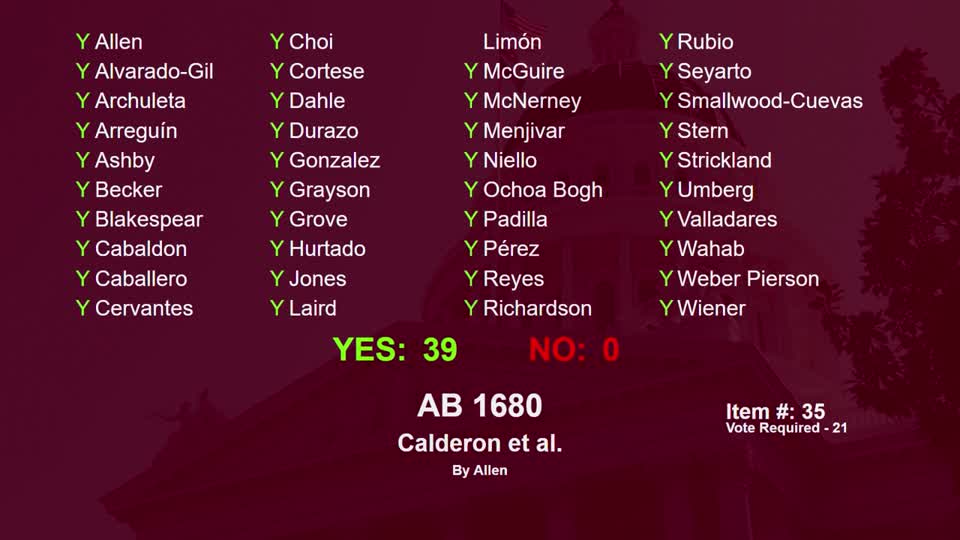 2MIN
Senate Floor
 1MIN
Assembly Floor
 1MIN
Senate Standing Committee on Appropriations
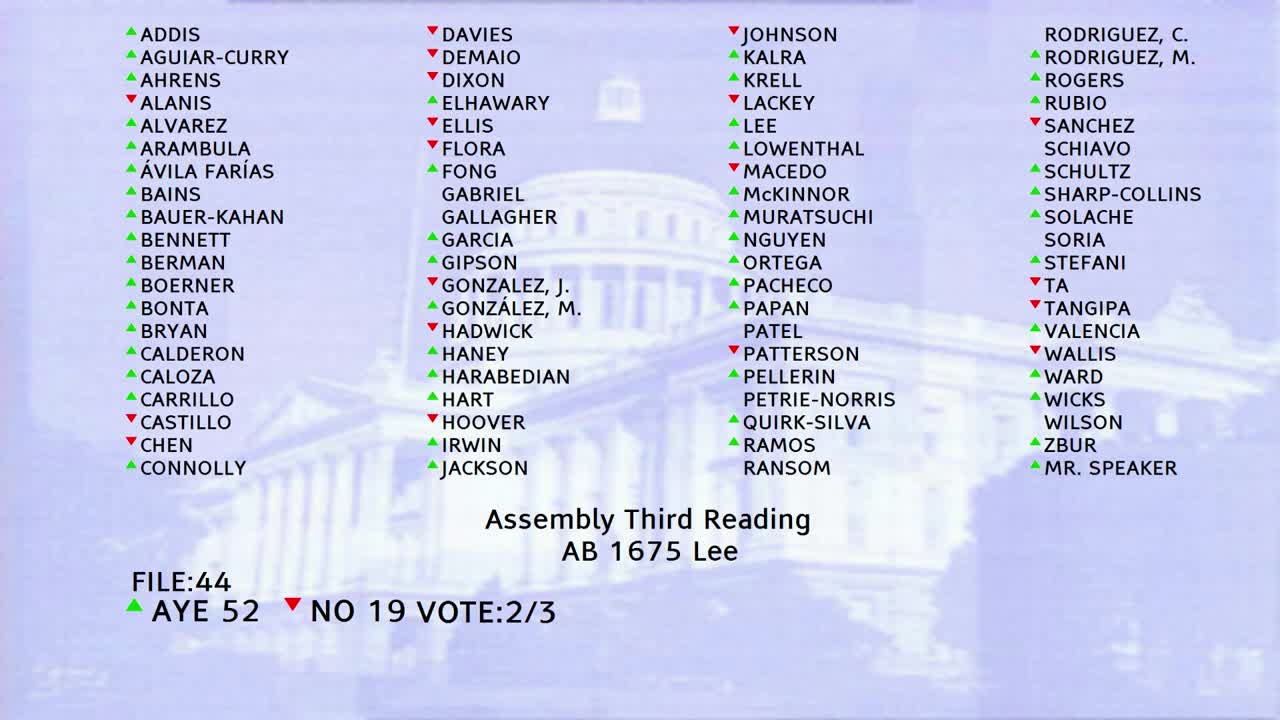 1MIN
Assembly Floor


Bill Co-Author(s):
