AB 221: Tribal Nation Grant Fund.
- Session Year: 2025-2026
- House: Assembly
- Latest Version Date: 2025-09-26
Current Status:
Passed
(2025-09-26: Chaptered by Secretary of State - Chapter 129, Statutes of 2025.)
Introduced
In Committee
Awaiting First Chamber Vote
Passed First Chamber
In Committee
Awaiting Second Chamber Vote
Passed Second Chamber
Enacted
Existing law establishes the Tribal Nation Grant Fund, administered by the California Gambling Control Commission, for the receipt and deposit of moneys received by the state from Indian tribes pursuant to the terms of tribal-state gaming compacts. Under existing law, moneys in the Tribal Nation Grant Fund are available, upon appropriation by the Legislature, for the discretionary distribution of funds to nongaming and limited-gaming tribes, as specified. Existing law establishes the Tribal Nation Grant Fund Program and authorizes Tribal Nation Grant Fund Panel to award grants from available moneys within the fund and make other distributions from the fund to eligible tribes, as specified. Existing law requires an eligible tribe requesting a grant to submit an application on a form approved by the panel and provided by the commission. Existing law authorizes the panel to distribute of the available moneys in the fund to all eligible tribes that submitted a completed grant application, as specified. Existing law authorizes the panel, in its discretion and based upon the purpose or project set forth in the application, to require an eligible tribe to encumber or expend any or all of a grant within a specified period of time, as described. Existing law requires each eligible tribe and each individual applying on behalf of each eligible tribe to agree to return to the fund any amount of a grant not encumbered or expended, as specified.
This bill would additionally establish the fund for the receipt and deposit of moneys received by the state from Indian tribes pursuant to the terms of class III gaming secretarial procedures. The bill would revise the grant distribution provisions described above to authorize the panel to award grants as specific distribution grants to fund a specifically described purpose or project, or as equal shares grants for distribution to eligible tribes in equal amounts, as specified. The bill would require the panel to develop application forms for the specific distribution grants and the equal shares grants, as described, and would require the equal shares grants application form to include, among other things, a certification from the eligible tribe that the funds will be used for specified purposes. The bill would require the panel to distribute as equal shares grants $600,000 per eligible tribe, or at least 85% of the available moneys in the fund, whichever is greater, as specified. The bill would authorize the panel to distribute as specific distribution grants the remaining available moneys in the fund, as specified. The bill would no longer authorize the panel to require an eligible tribe to encumber or expend any or all of a grant within a specified period of time and would make a related conforming change. The bill would no longer require each eligible tribe and each individual applying on behalf of each eligible tribe to return to the fund any amount of a grant not encumbered or expended, as specified. The bill would make a related statement of legislative intent.
Existing law establishes the Tribal Nation Grant Fund, administered by the California Gambling Control Commission, for the receipt and deposit of moneys received by the state from Indian tribes pursuant to the terms of tribal-state gaming compacts. Under existing law, moneys in the Tribal Nation Grant Fund are available, upon appropriation by the Legislature, for the discretionary distribution of funds to nongaming and limited-gaming tribes, as specified. Existing law establishes the Tribal Nation Grant Fund Program and authorizes Tribal Nation Grant Fund Panel to award grants from available moneys within the fund and make other distributions from the fund to eligible tribes, as specified. Existing law requires an eligible tribe requesting a grant to submit an application on a form approved by the panel and provided by the commission. Existing law authorizes the panel to distribute of the available moneys in the fund to all eligible tribes that submitted a completed grant application, as specified. Existing law authorizes the panel, in its discretion and based upon the purpose or project set forth in the application, to require an eligible tribe to encumber or expend any or all of a grant within a specified period of time, as described. Existing law requires each eligible tribe and each individual applying on behalf of each eligible tribe to agree to return to the fund any amount of a grant not encumbered or expended, as specified.
This bill would additionally establish the fund for the receipt and deposit of moneys received by the state from Indian tribes pursuant to the terms of class III gaming secretarial procedures. The bill would revise the grant distribution provisions described above to authorize the panel to award grants as specific distribution grants to fund a specifically described purpose or project, or as equal shares grants for distribution to eligible tribes in equal amounts, as specified. The bill would require the panel to develop application forms for the specific distribution grants and the equal shares grants, as described, and would require the equal shares grants application form to include, among other things, a certification from the eligible tribe that the funds will be used for specified purposes. The bill would require the panel to distribute as equal shares grants $600,000 per eligible tribe, or at least 85% of the available moneys in the fund, whichever is greater, as specified. The bill would authorize the panel to distribute as specific distribution grants the remaining available moneys in the fund, as specified. The bill would no longer authorize the panel to require an eligible tribe to encumber or expend any or all of a grant within a specified period of time and would make a related conforming change. The bill would no longer require each eligible tribe and each individual applying on behalf of each eligible tribe to return to the fund any amount of a grant not encumbered or expended, as specified.
It is the intent of the Legislature to maximize the amount of funds distributed as equal shares grants each year and for such grants to exceed $600,000 when there is sufficient available moneys in the fund. It is not the intent of the Legislature to authorize the California Gambling Control Commission to intentionally limit equal shares grants to $600,000 or less, or another static amount, by purposefully limiting the money deposited into the fund.
SEC. 2.Section 12019.30 of the Government Code is amended to read:12019.30.Unless the context requires otherwise, for purposes of this article, the following terms shall have the following meanings:
(a)Advisor means the Governors Tribal Advisor.
(b)Bureau means the Bureau of Gambling Control within the Department of Justice.
(c)Commission means the California Gambling Control Commission.
(d)Eligible tribe means a nongaming or limited-gaming federally recognized tribe in California as defined in applicable tribal-state gaming compacts or applicable class III gaming secretarial procedures.
(e)Equal shares grant means an annual grant awarded by the panel to an eligible tribe in an amount that is equal to that which is awarded to other eligible tribes pursuant to this article.
(f)Fund means the Tribal Nation Grant Fund established by Section 12019.35.
(g)Grant means an amount of money paid to an eligible tribe from the fund awarded by the panel pursuant to this article.
(h)Panel means the Tribal Nation Grant Panel established by Section 12019.60.
(i)Program means the Tribal Nation Grant Fund Program established by this article.
(j)Specific distribution grant means a grant awarded by the panel to an eligible tribe for a specific purpose or project pursuant to this article.
SEC. 3.Section 12019.35 of the Government Code is amended to read:12019.35.(a)There is in the State Treasury the Tribal Nation Grant Fund for the receipt and deposit of moneys received by the state from Indian tribes pursuant to the terms of tribal-state gaming compacts and class III gaming secretarial procedures. The fund reflects a vision of facilitating tribal self-governance and improving the quality of life of tribal people throughout the state.
(b)The Tribal Nation Grant Fund shall be administered by the California Gambling Control Commission, which shall act as the limited trustee as provided under the terms of applicable tribal-state gaming compacts and class III gaming secretarial procedures and shall not be subject to the duties and liabilities provided in the Probate Code, common law, or equitable principles. Moneys in the fund shall be available, upon appropriation by the Legislature, for the discretionary distribution of funds to nongaming tribes and limited-gaming tribes upon application of those tribes for purposes related to effective self-governance, self-determined community, and economic development.
(c)The California Gambling Control Commission shall deposit money into the fund only after it determines there are sufficient moneys in the Indian Gaming Revenue Sharing Trust Fund to distribute the quarterly payments described in Section 12012.90.
SEC. 4.Section 12019.40 of the Government Code is amended to read:12019.40.(a)There is in state government the Tribal Nation Grant Fund Program whereby the panel is authorized to award grants from available moneys within the fund and make other distributions from the fund to eligible tribes as set forth in this article.
(b)Grants may be made as specific distribution grants to fund a specifically described purpose or project, or as equal shares grants for distribution to eligible tribes in equal amounts. An eligible tribe may apply for both types of grants.
(c)(1)A request for a specific distribution grant shall be made by submitting a specific distribution grant application on a form developed by the panel pursuant to subdivisions (a) and (b) of Section 12019.45.
(2)Unless prohibited by a tribal-state gaming compact, class III gaming secretarial procedures, or the panel, an eligible tribe may apply for more than one specific distribution grant, but shall submit a separate specific distribution grant application for each grant proposal. Two or more eligible tribes may apply for one specific distribution grant by submitting a joint application.
(3)A specific distribution grant shall be used to fund a specifically described purpose or project generally relating to self-governance, developing or sustaining a self-determined community, and economic development. Eligible purposes or projects for specific distribution grants may include, but are not limited to, development of curricula in a tribal language or culture, housing, support for compliance with the federal Indian Child Welfare Act, vocational training, community development, investments in tribal schools and colleges, support of tribal government institutions and tribal courts, nongaming economic diversification, or investment in public health, information technology, renewable energy, water conservation, cultural preservation or awareness, educational programs, or scholarships.
(d)(1)(A)A request for an equal shares grant shall initially be made by submitting an equal shares grant application on a form developed by the panel pursuant to subdivisions (a) and (c) of Section 12019.45.
(B)Each year thereafter, the eligible tribes equal shares grant application shall automatically renew for the eligible tribe to receive equal shares grants on a rolling basis, subject to the panels annual independent verification that the applicant is an eligible tribe as of the application deadline set by the panel.
(2)An equal shares grant shall be used to fund purposes generally related to self-governance, developing or sustaining a self-determined community, and economic development.
(e)A grant shall not be used to pay a per capita distribution to tribal members or an investment in a purpose or project related to any gaming operation or activity.
SEC. 5.Section 12019.45 of the Government Code is amended to read:12019.45.(a)The advisor and panel, with administrative support from the commission and in consultation with federally recognized tribes in California, shall develop concise application forms for one or more eligible tribes to apply for a grant.
(b)The application form developed for specific distribution grants shall include, but not be limited to, all of the following:
(1)An identification of every eligible tribe applying for the grant and the name, signature, and contact information of every individual who is authorized by each eligible tribes governing body to apply for the grant.
(2)A description of the purpose or project for which the grant is intended to be used.
(3)An assessment of the nature and extent of the potential benefits from the described purpose or project to each applying eligible tribe.
(4)The safeguards in place to ensure that the grant would be applied only to the described purpose or project.
(5)The amount and source of other moneys or in-kind services or goods, if any, that are available to be additionally applied to the described purpose or project and when those moneys or in-kind services or goods are intended to be applied.
(6)A list of every grant awarded or other distribution from the fund previously awarded or distributed to each eligible tribe applying for the grant and the results achieved as a result of those prior awards or distributions.
(7)A strategy for how the benefits from the described purpose or project will be sustainably maintained.
(8)A signed acceptance of the terms described in Section 12019.75 from an authorized representative of every eligible tribe applying in the application.
(9)Identification of the information provided in the application that each eligible tribe proposes is confidential and not subject to public disclosure pursuant to subdivision (a) of Section 12019.55, and a statement, in bold, that the panel may consider, but is not required to comply with, an eligible tribes identification of information as confidential when responding to a request for public records pursuant to the California Public Records Act (Division 10 (commencing with Section 7920.000) of Title 1).
(10)Any other information the advisor and panel deem valuable to evaluating the merits of awarding a grant.
(c)The application form developed for equal shares grants shall include both of the following:
(1)Information necessary to establish that the applicant is an eligible tribe.
(2)A certification from the eligible tribe that the funds shall be used for self-governance, developing or sustaining a self-determined community, or economic development, and shall not be used for purposes prohibited by subdivision (e) of Section 12019.40.
SEC. 6.Section 12019.50 of the Government Code is amended to read:12019.50.(a)The staff of the commission shall provide all of the following services:
(1)Assistance to the individuals applying for a grant on behalf of every eligible tribe in understanding the application process. This assistance shall not include completing an application for a grant on behalf of an eligible tribe.
(2)All administrative support necessary to implement this article, including, but not limited to, processing applications for grants, administrative services to the advisor, the panel, and technical experts retained by the panel, if any, and administrative assistance to the panel allocating and disbursing grants and making other distributions from the fund to eligible tribes.
(b)To the extent prohibited by applicable tribal-state gaming compacts or class III gaming secretarial procedures, the commission and its staff shall not exercise discretion or control over the approval or disapproval of grant applications or the use of grants or other distributions from the fund by eligible tribes.
SEC. 7.Section 12019.65 of the Government Code is amended to read:12019.65.(a)The panel shall meet to consider grant applications at least annually. To the extent required by applicable tribal-state gaming compacts or class III gaming secretarial procedures, the panel shall award grants on a competitive application basis, meaning the panel shall consider completed grant applications that were submitted or automatically renewed by a deadline established by the panel.
(b)The panel shall distribute as equal shares grants six hundred thousand dollars ($600,000) per eligible tribe, or at least eighty-five percent (85%) of the available moneys in the fund, whichever is greater, to all eligible tribes that submitted a completed grant application or whose application was automatically renewed by the deadline established by the panel. In the event that equal shares of six hundred thousand dollars ($600,000) per eligible tribe exceeds 100 percent of the available moneys in the fund, the panel shall distribute as equal shares grants a proportional amount per eligible tribe that in total equals 100 percent of the available moneys in the fund. The panel shall distribute amounts awarded as annual equal shares grants in quarterly distributions within 45 days of the end of each fiscal quarter. The distributions shall be made at or around the same time as the California Gambling Control Commission makes its quarterly payments from the Indian Gaming Revenue Sharing Trust Fund under subdivision (b) of Section 12012.90.
(c)The panel may distribute as specific distribution grants the remaining available moneys in the fund that were not distributed pursuant to subdivision (b) to eligible tribes that submitted a completed specific distribution grant application by the deadline established by the panel. The panel may award a specific distribution grant in an amount less than requested in an application.
(d)The panel may decline to award future grants or distributions to an eligible tribe for a specified period of time if the panel, in its sole discretion, determines that the eligible tribe had previously received and used a grant in a manner inconsistent with the described purpose or project set forth in the grant application or in compliance with conditions and limitations imposed by the panel.
(e)The advisor and panel, with administrative support from the commission and in consultation with federally recognized tribes in California, shall develop an appropriate process to reasonably ensure that grants are used in a manner consistent with this article, applicable tribal-state gaming compacts and class III gaming secretarial procedures, the application, and the conditions and limitation imposed on the award of a grant, if any. The process shall be respectful and promotive of tribal sovereignty.
(f)The advisor and panel, with administrative support from the commission and in consultation with federally recognized tribes in California, may develop a process to use technical experts with relevant experience to review and score applications. The technical experts may be compensated up to a one-hundred-dollar ($100) per diem for each day spent reviewing and scoring applications.
(g)(1)The advisor and panel, with administrative support from the commission and in consultation with federally recognized tribes in California, shall develop procedures to govern the business of the panel, including, but not limited to, the procedures for meetings, a process for evaluating and resolving potential conflicts of interest of members of the panel, the process for auditing the use of grants, and all other processes that may be required to award grants or make other distributions from the fund.
(2)Only the bureau shall conduct audits of the use of grant funds.
(h)All activities of the advisor, panel, bureau, and commission pursuant to this article are exempt from the Administrative Procedure Act (Chapter 3.5 (commencing with Section 11340) of Part 1).
SEC. 8.Section 12019.70 of the Government Code is amended to read:12019.70.The panel may, in its discretion, modify any deadline it established for the use of a grant.
SEC. 9.Section 12019.75 of the Government Code is amended to read:12019.75.By applying for a grant, each eligible tribe and each individual applying on behalf of each eligible tribe shall agree to all of the following:
(a)The terms and conditions the panel imposes as a condition of awarding the grant, including the limitations set forth in this section and article.
(b)To cooperate with the panel, advisor, commission, bureau, or other state entity designated by the Governor to ensure that the grant is used in a manner consistent with the assertions in the application and any condition or limitations imposed on the award of the grant.
(c)To provide access to the panel, advisor, commission, bureau, or other state entity designated by the Governor to all documents relevant to the use of the grant to allow a comprehensive audit, to ensure a grant is used for the purpose or project set forth in the application, in compliance with the conditions or limitations on the grant, and applicable tribal-state gaming compacts and class III gaming secretarial procedures.
SEC. 10.Section 12019.85 of the Government Code is amended to read:12019.85.The activities authorized and required by this article, including, but not limited to, the administrative and procedural support services provided by the commission, its staff, and the advisor, the costs and compensation of members of the panel, and the costs of audits, are regulatory costs in connection with the implementation and administration of responsibilities imposed by tribal-state gaming compacts and class III gaming secretarial procedures, and shall be funded by moneys in the Indian Gaming Special Distribution Fund, and shall not be funded from the Indian Gaming Revenue Sharing Trust Fund or the fund.
SEC. 11.Section 12019.90 of the Government Code is amended to read:12019.90.Actions taken under this article shall be consistent with the provisions of tribal-state gaming compacts and class III gaming secretarial procedures.
It is the intent of the Legislature to maximize the amount of funds distributed as equal shares grants each year and for such grants to exceed $600,000 when there is sufficient available moneys in the fund. It is not the intent of the Legislature to authorize the California Gambling Control Commission to intentionally limit equal shares grants to $600,000 or less, or another static amount, by purposefully limiting the money deposited into the fund.
SECTION 1.SEC. 2.Section 12019.30 of the Government Code is amended to read:12019.30.Unless the context requires otherwise, for purposes of this article, the following terms shall have the following meanings:
(a)Advisor means the Governors Tribal Advisor.
(b)Bureau means the Bureau of Gambling Control within the Department of Justice.
(c)Commission means the California Gambling Control Commission.
(d)Eligible tribe means a nongaming or limited-gaming federally recognized tribe in California as defined in applicable tribal-state gaming compacts or applicable class III gaming secretarial procedures.
(e)Equal shares grant means an annual grant awarded by the panel to an eligible tribe in an amount that is equal to that which is awarded to other eligible tribes pursuant to this article.
(f)Fund means the Tribal Nation Grant Fund established by Section 12019.35.
(g)Grant means an amount of money paid to an eligible tribe from the fund awarded by the panel pursuant to this article.
(h)Panel means the Tribal Nation Grant Panel established by Section 12019.60.
(i)Program means the Tribal Nation Grant Fund Program established by this article.
(j)Specific distribution grant means a grant awarded by the panel to an eligible tribe for a specific purpose or project pursuant to this article.
SEC. 2.SEC. 3.Section 12019.35 of the Government Code is amended to read:12019.35.(a)There is in the State Treasury the Tribal Nation Grant Fund for the receipt and deposit of moneys received by the state from Indian tribes pursuant to the terms of tribal-state gaming compacts and class III gaming secretarial procedures. The fund reflects a vision of facilitating tribal self-governance and improving the quality of life of tribal people throughout the state.
(b)The Tribal Nation Grant Fund shall be administered by the California Gambling Control Commission, which shall act as the limited trustee as provided under the terms of applicable tribal-state gaming compacts and class III gaming secretarial procedures and shall not be subject to the duties and liabilities provided in the Probate Code, common law, or equitable principles. Moneys in the fund shall be available, upon appropriation by the Legislature, for the discretionary distribution of funds to nongaming tribes and limited-gaming tribes upon application of those tribes for purposes related to effective self-governance, self-determined community, and economic development.
(c)The California Gambling Control Commission shall deposit money into the fund only after it determines there are sufficient moneys in the Indian Gaming Revenue Sharing Trust Fund to distribute the quarterly payments described in Section 12012.90.
SEC. 3.SEC. 4.Section 12019.40 of the Government Code is amended to read:12019.40.(a)There is in state government the Tribal Nation Grant Fund Program whereby the panel is authorized to award grants from available moneys within the fund and make other distributions from the fund to eligible tribes as set forth in this article.
(b)Grants may be made as specific distribution grants to fund a specifically described purpose or project, or as equal shares grants for distribution to eligible tribes in equal amounts. An eligible tribe may apply for both types of grants.
(c)(1)A request for a specific distribution grant shall be made by submitting a specific distribution grant application on a form developed by the panel pursuant to subdivisions (a) and (b) of Section 12019.45.
(2)Unless prohibited by a tribal-state gaming compact, class III gaming secretarial procedures, or the panel, an eligible tribe may apply for more than one specific distribution grant, but shall submit a separate specific distribution grant application for each grant proposal. Two or more eligible tribes may apply for one specific distribution grant by submitting a joint application.
(3)A specific distribution grant shall be used to fund a specifically described purpose or project generally relating to self-governance, developing or sustaining a self-determined community, and economic development. Eligible purposes or projects for specific distribution grants may include, but are not limited to, development of curricula in a tribal language or culture, housing, support for compliance with the federal Indian Child Welfare Act, vocational training, community development, investments in tribal schools and colleges, support of tribal government institutions and tribal courts, nongaming economic diversification, or investment in public health, information technology, renewable energy, water conservation, cultural preservation or awareness, educational programs, or scholarships.
(d)(1)(A)A request for an equal shares grant shall initially be made by submitting an equal shares grant application on a form developed by the panel pursuant to subdivisions (a) and (c) of Section 12019.45.
(B)Each year thereafter, the eligible tribes equal shares grant application shall automatically renew for the eligible tribe to receive equal shares grants on a rolling basis, subject to the panels annual independent verification that the applicant is an eligible tribe as of the application deadline set by the panel.
(2)An equal shares grant shall be used to fund purposes generally related to self-governance, developing or sustaining a self-determined community, and economic development.
(e)A grant shall not be used to pay a per capita distribution to tribal members or an investment in a purpose or project related to any gaming operation or activity.
SEC. 4.SEC. 5.Section 12019.45 of the Government Code is amended to read:12019.45.(a)The adviser advisor and panel, with administrative support from the commission and in consultation with federally recognized tribes in California, shall develop concise application forms for one or more eligible tribes to apply for a grant.
(b)The application form developed for specific distribution grants shall include, but not be limited to, all of the following:
(1)An identification of every eligible tribe applying for the grant and the name, signature, and contact information of every individual who is authorized by each eligible tribes governing body to apply for the grant.
(2)A description of the purpose or project for which the grant is intended to be used.
(3)An assessment of the nature and extent of the potential benefits from the described purpose or project to each applying eligible tribe.
(4)The safeguards in place to ensure that the grant would be applied only to the described purpose or project.
(5)The amount and source of other moneys or in-kind services or goods, if any, that are available to be additionally applied to the described purpose or project and when those moneys or in-kind services or goods are intended to be applied.
(6)A list of every grant awarded or other distribution from the fund previously awarded or distributed to each eligible tribe applying for the grant and the results achieved as a result of those prior awards or distributions.
(7)A strategy for how the benefits from the described purpose or project will be sustainably maintained.
(8)A signed acceptance of the terms described in Section 12019.75 from an authorized representative of every eligible tribe applying in the application.
(9)Identification of the information provided in the application that each eligible tribe proposes is confidential and not subject to public disclosure pursuant to subdivision (a) of Section 12019.55, and a statement, in bold, that the panel may consider, but is not required to comply with, an eligible tribes identification of information as confidential when responding to a request for public records pursuant to the California Public Records Act (Division 10 (commencing with Section 7920.000) of Title 1).
(10)Any other information the adviser advisor and panel deem valuable to evaluating the merits of awarding a grant.
(c)The application form developed for equal shares grants shall include both of the following:
(1)Information necessary to establish that the applicant is an eligible tribe.
(2)A certification from the eligible tribe that the funds shall be used for self-governance, developing or sustaining a self-determined community, or economic development, and shall not be used for purposes prohibited by subdivision (e) of Section 12019.40.
SEC. 5.SEC. 6.Section 12019.50 of the Government Code is amended to read:12019.50.(a)The staff of the commission shall provide all of the following services:
(1)Assistance to the individuals applying for a grant on behalf of every eligible tribe in understanding the application process. This assistance shall not include completing an application for a grant on behalf of an eligible tribe.
(2)All administrative support necessary to implement this article, including, but not limited to, processing applications for grants, administrative services to the advisor, the panel, and technical experts retained by the panel, if any, and administrative assistance to the panel allocating and disbursing grants and making other distributions from the fund to eligible tribes.
(b)To the extent prohibited by applicable tribal-state gaming compacts or class III gaming secretarial procedures, the commission and its staff shall not exercise discretion or control over the approval or disapproval of grant applications or the use of grants or other distributions from the fund by eligible tribes.
SEC. 6.SEC. 7.Section 12019.65 of the Government Code is amended to read:12019.65.(a)The panel shall meet to consider grant applications at least annually. To the extent required by applicable tribal-state gaming compacts or class III gaming secretarial procedures, the panel shall award grants on a competitive application basis, meaning the panel shall consider completed grant applications that were submitted or automatically renewed by a deadline established by the panel.
(b)The panel shall distribute as equal shares grants six hundred thousand dollars ($600,000) per eligible tribe, or at least eighty-five percent (85%) of the available moneys in the fund, whichever is greater, to all eligible tribes that submitted a completed grant application or whose application was automatically renewed by the deadline established by the panel. In the event that equal shares of six hundred thousand dollars ($600,000) per eligible tribe exceeds 100 percent of the available moneys in the fund, the panel shall distribute as equal shares grants a proportional amount per eligible tribe that in total equals 100 percent of the available moneys in the fund. The panel shall distribute amounts awarded as annual equal shares grants in quarterly distributions. distributions within 45 days of the end of each fiscal quarter. The distributions shall be made at or around the same time as the California Gambling Control Commission makes its quarterly payments from the Indian Gaming Revenue Sharing Trust Fund under subdivision (b) of Section 12012.90.
(c)The panel may distribute as specific distribution grants the remaining available moneys in the fund that were not distributed pursuant to subdivision (b) to eligible tribes that submitted a completed specific distribution grant application by the deadline established by the panel. The panel may award a specific distribution grant in an amount less than requested in an application.
(d)The panel may decline to award future grants or distributions to an eligible tribe for a specified period of time if the panel, in its sole discretion, determines that the eligible tribe had previously received and used a grant in a manner inconsistent with the described purpose or project set forth in the grant application or in compliance with conditions and limitations imposed by the panel.
(e)The advisor and panel, with administrative support from the commission and in consultation with federally recognized tribes in California, shall develop an appropriate process to reasonably ensure that grants are used in a manner consistent with this article, applicable tribal-state gaming compacts and class III gaming secretarial procedures, the application, and the conditions and limitation imposed on the award of a grant, if any. The process shall be respectful and promotive of tribal sovereignty.
(f)The advisor and panel, with administrative support from the commission and in consultation with federally recognized tribes in California, may develop a process to use technical experts with relevant experience to review and score applications. The technical experts may be compensated up to a one-hundred-dollar ($100) per diem for each day spent reviewing and scoring applications.
(g)(1)The advisor and panel, with administrative support from the commission and in consultation with federally recognized tribes in California, shall develop procedures to govern the business of the panel, including, but not limited to, the procedures for meetings, a process for evaluating and resolving potential conflicts of interest of members of the panel, the process for auditing the use of grants, and all other processes that may be required to award grants or make other distributions from the fund.
(2)Only the bureau shall conduct audits of the use of grant funds.
(h)All activities of the advisor, panel, bureau, and commission pursuant to this article are exempt from the Administrative Procedure Act (Chapter 3.5 (commencing with Section 11340) of Part 1).
SEC. 7.SEC. 8.Section 12019.70 of the Government Code is amended to read:12019.70.The panel may, in its discretion, modify any deadline it established for the use of a grant.
SEC. 8.SEC. 9.Section 12019.75 of the Government Code is amended to read:12019.75.By applying for a grant, each eligible tribe and each individual applying on behalf of each eligible tribe shall agree to all of the following:
(a)The terms and conditions the panel imposes as a condition of awarding the grant, including the limitations set forth in this section and article.
(b)To cooperate with the panel, advisor, commission, bureau, or other state entity designated by the Governor to ensure that the grant is used in a manner consistent with the assertions in the application and any condition or limitations imposed on the award of the grant.
(c)To provide access to the panel, advisor, commission, bureau, or other state entity designated by the Governor to all documents relevant to the use of the grant to allow a comprehensive audit, to ensure a grant is used for the purpose or project set forth in the application, in compliance with the conditions or limitations on the grant, and applicable tribal-state gaming compacts and class III gaming secretarial procedures.
SEC. 9.SEC. 10.Section 12019.85 of the Government Code is amended to read:12019.85.The activities authorized and required by this article, including, but not limited to, the administrative and procedural support services provided by the commission, its staff, and the advisor, the costs and compensation of members of the panel, and the costs of audits, are regulatory costs in connection with the implementation and administration of responsibilities imposed by tribal-state gaming compacts and class III gaming secretarial procedures, and shall be funded by moneys in the Indian Gaming Special Distribution Fund, and shall not be funded from the Indian Gaming Revenue Sharing Trust Fund or the fund.
SEC. 10.SEC. 11.Section 12019.90 of the Government Code is amended to read:12019.90.Actions taken under this article shall be consistent with the provisions of tribal-state gaming compacts and class III gaming secretarial procedures.
Unless the context requires otherwise, for purposes of this article, the following terms shall have the following meanings:
(a)Advisor means the Governors Tribal Advisor.
(b)Bureau means the Bureau of Gambling Control within the Department of Justice.
(c)Commission means the California Gambling Control Commission.
(d)Eligible tribe means a nongaming or limited-gaming federally recognized tribe in California as defined in applicable tribal-state gaming compacts. compacts or applicable class III gaming secretarial procedures.
(e)Equal shares grant means an annual grant awarded by the panel to an eligible tribe in an amount that is equal to that which is awarded to other eligible tribes pursuant to this article.
(e)(f)Fund means the Tribal Nation Grant Fund established by Section 12019.35.
(f)(g)Grant means an amount of money paid to an eligible tribe from the fund awarded by the panel through a competitive process pursuant to this article.
(g)(h)Panel means the Tribal Nation Grant Panel established by Section 12019.60.
(h)(i)Program means the Tribal Nation Grant Fund Program established by this article.
(j)Specific distribution grant means a grant awarded by the panel to an eligible tribe for a specific purpose or project pursuant to this article.
SEC. 2.Section 12019.35 of the Government Code is amended to read:12019.35.(a)There is in the State Treasury the Tribal Nation Grant Fund for the receipt and deposit of moneys received by the state from Indian tribes pursuant to the terms of tribal-state gaming compacts. compacts and class III gaming secretarial procedures. The fund reflects a vision of facilitating tribal self-governance and improving the quality of life of tribal people throughout the state.
(b)The Tribal Nation Grant Fund shall be administered by the California Gambling Control Commission, which shall act as the limited trustee as provided under the terms of applicable tribal-state gaming compacts and class III gaming secretarial procedures and shall not be subject to the duties and liabilities provided in the Probate Code, common law, or equitable principles. Moneys in the fund shall be available, upon appropriation by the Legislature, for the discretionary distribution of funds to nongaming tribes and limited-gaming tribes upon application of those tribes for purposes related to effective self-governance, self-determined community, and economic development.
(c)The California Gambling Control Commission shall deposit money into the fund only after it determines there are sufficient moneys in the Indian Gaming Revenue Sharing Trust Fund to distribute the quarterly payments described in Section 12012.90.
SEC. 3.Section 12019.40 of the Government Code is amended to read:12019.40.(a)There is in state government the Tribal Nation Grant Fund Program whereby the panel is authorized to award grants from available moneys within the fund and make other distributions from the fund to eligible tribes as set forth in this article.
(b)Grants may be made as specific distribution grants to fund a specifically described purpose or project, or as equal shares grants for distribution to eligible tribes in equal amounts. An eligible tribe may apply for both types of grants.
(b)(c)(1)A request for a specific distribution grant shall be made by submitting an a specific distribution grant application to the commission on a form approved developed by the panel and provided by the commission. Unless pursuant to subdivisions (a) and (b) of Section 12019.45.
(2)Unless prohibited by a tribal-state gaming compact compact, class III gaming secretarial procedures, or the panel, an eligible tribe may apply for more than one specific distribution grant, but shall submit a separate specific distribution grant application for each grant proposal. Two or more eligible tribes may apply for one specific distribution grant by submitting a joint application.
(c)(3)A specific distribution grant shall be used to fund a specifically described purpose or project generally relating to self-governance, developing or sustaining a self-determined community, and economic development in the application. development. Eligible purposes or projects for specific distribution grants may include, but are not limited to, development of curricula in a tribal language or culture, housing, support for compliance with the federal Indian Child Welfare Act, vocational training, community development, investments in tribal schools and colleges, support of tribal government institutions and tribal courts, nongaming economic diversification, or investment in public health, information technology, renewable energy, water conservation, cultural preservation or awareness, educational programs, or scholarships.
(d)(1)(A)A request for an equal shares grant shall initially be made by submitting an equal shares grant application on a form developed by the panel pursuant to subdivisions (a) and (c) of Section 12019.45.
(B)Each year thereafter, the eligible tribes equal shares grant application shall automatically renew for the eligible tribe to receive equal shares grants on a rolling basis, subject to the panels annual independent verification that the applicant is an eligible tribe as of the application deadline set by the panel.
(2)An equal shares grant shall be used to fund purposes generally related to self-governance, developing or sustaining a self-determined community, and economic development.
(d)(e)A grant shall not be used to pay a per capita distribution to tribal members or an investment in a purpose or project related to any gaming operation or activity.
SEC. 4.Section 12019.45 of the Government Code is amended to read:12019.45.(a)The adviser and panel, with administrative support from the commission and in consultation with federally recognized tribes in California, shall develop a concise application form forms for one or more eligible tribes to apply for a grant.
(b)The application form developed pursuant to subdivision (a) for specific distribution grants shall include, but not be limited to, all of the following:
(1)An identification of every eligible tribe applying for the grant and the name, signature, and contact information of every individual who is authorized by each eligible tribes governing body to apply for the grant.
(2)A description of the purpose or project for which the grant is intended to be used.
(3)An assessment of the nature and extent of the potential benefits from the described purpose or project to each applying eligible tribe.
(4)The safeguards in place to ensure that the grant would be applied only to the described purpose or project.
(5)The amount and source of other moneys or in-kind services or goods, if any, that are available to be additionally applied to the described purpose or project and when those moneys or in-kind services or goods are intended to be applied.
(6)A list of every grant awarded or other distribution from the fund previously awarded or distributed to each eligible tribe applying for the grant and the results achieved as a result of those prior awards or distributions.
(7)A strategy for how the benefits from the described purpose or project will be sustainably maintained.
(8)A signed acceptance of the terms described in Section 12019.75 from an authorized representative of every eligible tribe applying in the application.
(9)Identification of the information provided in the application that each eligible tribe proposes is confidential and not subject to public disclosure pursuant to subdivision (a) of Section 12019.55, and a statement, in bold, that the panel may consider, but is not required to comply with, an eligible tribes identification of information as confidential when responding to a request for public records pursuant to the California Public Records Act (Division 10 (commencing with Section 7920.000) of Title 1).
(10)Any other information the adviser and panel deem valuable to evaluating the merits of awarding a grant.
(c)The application form developed for equal shares grants shall include both of the following:
(1)Information necessary to establish that the applicant is an eligible tribe.
(2)A certification from the eligible tribe that the funds shall be used for self-governance, developing or sustaining a self-determined community, or economic development, and shall not be used for purposes prohibited by subdivision (e) of Section 12019.40.
SEC. 5.Section 12019.50 of the Government Code is amended to read:12019.50.(a)The staff of the commission shall provide all of the following services:
(1)Assistance to the individuals applying for a grant on behalf of every eligible tribe in understanding the application process. This assistance shall not include completing an application for a grant on behalf of an eligible tribe.
(2)All administrative support necessary to implement this article, including, but not limited to, processing applications for grants, administrative services to the advisor, the panel, and technical experts retained by the panel, if any, and administrative assistance to the panel allocating and disbursing grants and making other distributions from the fund to eligible tribes.
(b)To the extent prohibited by applicable tribal-state gaming compacts, compacts or class III gaming secretarial procedures, the commission and its staff shall not exercise discretion or control over the approval or disapproval of grant applications or the use of grants or other distributions from the fund by eligible tribes.
SEC. 6.Section 12019.65 of the Government Code is amended to read:12019.65.(a)The panel shall meet to consider grant applications at least annually and annually. To the extent required by applicable tribal-state gaming compacts or class III gaming secretarial procedures, the panel shall award grants on a competitive application basis, meaning the panel shall consider at a meeting all completed grant applications that were submitted or automatically renewed by a deadline established by the panel. The panel may award a grant in an amount less than requested in an application.
(b)The panel may distribute, in equal amounts, a portion shall distribute as equal shares grants six hundred thousand dollars ($600,000) per eligible tribe, or at least eighty-five percent (85%) of the available moneys in the fund fund, whichever is greater, to all eligible tribes that submitted a completed grant application within or whose application was automatically renewed by the deadline established by the panel. The panel shall not distribute all available moneys in the fund through an equal distribution pursuant to this subdivision. amounts awarded as annual equal shares grants in quarterly distributions.
(c)The panel may distribute as specific distribution grants the remaining available moneys in the fund that were not distributed pursuant to subdivision (b) to eligible tribes that submitted a completed specific distribution grant application by the deadline established by the panel. The panel may award a specific distribution grant in an amount less than requested in an application.
(c)(d)The panel may decline to award future grants or distributions to an eligible tribe for a specified period of time if the panel, in its sole discretion, determines that the eligible tribe had previously received and used a grant in a manner inconsistent with the described purpose or project set forth in the grant application or in compliance with conditions and limitations imposed by the panel.
(d)(e)The advisor and panel, with administrative support from the commission and in consultation with federally recognized tribes in California, shall develop an appropriate process to reasonably ensure that grants are used in a manner consistent with this article, applicable tribal-state gaming compacts, compacts and class III gaming secretarial procedures, the application, and the conditions and limitation imposed on the award of a grant, if any. The process shall be respectful and promotive of tribal sovereignty.
(e)(f)The advisor and panel, with administrative support from the commission and in consultation with federally recognized tribes in California, may develop a process to use technical experts with relevant experience to review and score applications. The technical experts may be compensated up to a one-hundred-dollar ($100) per diem for each day spent reviewing and scoring applications.
(f)(g)(1)The advisor and panel, with administrative support from the commission and in consultation with federally recognized tribes in California, shall develop procedures to govern the business of the panel, including, but not limited to, the procedures for meetings, a process for evaluating and resolving potential conflicts of interest of members of the panel, the process for auditing the use of grants, and all other processes that may be required to award grants or make other distributions from the fund.
(2)Only the bureau shall conduct audits of the use of grant funds.
(g)(h)All activities of the advisor, panel, bureau, and commission pursuant to this article are exempt from the Administrative Procedure Act (Chapter 3.5 (commencing with Section 11340) of Part 1).
SEC. 7.Section 12019.70 of the Government Code is amended to read:12019.70.(a)The panel may, in its discretion and based upon the purpose or project set forth in the application, require an eligible tribe to encumber or expend any or all of a grant within a specified period of time from the date that the panel awarded the grant.(b)The12019.70.The panel may, in its discretion, modify any deadline it established for the use of a grant.
SEC. 8.Section 12019.75 of the Government Code is amended to read:12019.75.By applying for a grant, each eligible tribe and each individual applying on behalf of each eligible tribe shall agree to all of the following:
(a)The terms and conditions the panel imposes as a condition of awarding the grant, including the limitations set forth in this section and article.
(b)To cooperate with the panel, advisor, commission, bureau, or other state entity designated by the Governor to ensure that the grant is used in a manner consistent with the assertions in the application and any condition or limitations imposed on the award of the grant.
(c)To provide access to the panel, advisor, commission, bureau, or other state entity designated by the Governor to all documents relevant to the use of the grant to allow a comprehensive audit, to ensure a grant is used for the purpose or project set forth in the application, in compliance with the conditions or limitations on the grant, and applicable tribal-state gaming compacts. compacts and class III gaming secretarial procedures.
(d)To return to the fund any amount of a grant not encumbered or expended in compliance with Section 12019.70. Any returned funds shall be provided to the commission for deposit into the fund.SEC. 9.Section 12019.85 of the Government Code is amended to read:12019.85.The activities authorized and required by this article, including, but not limited to, the administrative and procedural support services provided by the commission, its staff, and the advisor, the costs and compensation of members of the panel, and the costs of audits, are regulatory costs in connection with the implementation and administration of responsibilities imposed by tribal-state gaming compacts, compacts and class III gaming secretarial procedures, and shall be funded by moneys in the Indian Gaming Special Distribution Fund, and shall not be funded from the Indian Gaming Revenue Sharing Trust Fund or the fund.
SEC. 10.Section 12019.90 of the Government Code is amended to read:12019.90.Actions taken under this article shall be consistent with the provisions of tribal-state gaming compacts. compacts and class III gaming secretarial procedures.
REVISIONS: HeadingLines 1 and 2.|
Date
|
Status
|
|---|---|
| Sep 26, 2025 | Chaptered by Secretary of State - Chapter 129, Statutes of 2025. |
| Sep 26, 2025 | Approved by the Governor. |
| Sep 15, 2025 | Enrolled and presented to the Governor at 4:30 p.m. |
| Sep 8, 2025 | Senate amendments concurred in. To Engrossing and Enrolling. (Ayes 79. Noes 0. Page 2975.). |
| Sep 3, 2025 | In Assembly. Concurrence in Senate amendments pending. |
| Sep 3, 2025 | Read third time. Passed. Ordered to the Assembly. (Ayes 40. Noes 0. Page 2466.). |
| Sep 2, 2025 | Read second time. Ordered to third reading. |
| Aug 29, 2025 | Read second time and amended. Ordered returned to second reading. |
| Aug 29, 2025 | From committee: Amend, and do pass as amended. (Ayes 7. Noes 0.) (August 29). |
| Aug 18, 2025 | In committee: Referred to suspense file. |
| Jul 9, 2025 | In committee: Hearing postponed by committee. |
| Jun 24, 2025 | From committee: Do pass and re-refer to Com. on APPR. with recommendation: To Consent Calendar. (Ayes 15. Noes 0.) (June 24). Re-referred to Com. on APPR. |
| Jun 11, 2025 | Referred to Com. on G.O. |
| May 29, 2025 | In Senate. Read first time. To Com. on RLS. for assignment. |
| May 29, 2025 | Read third time. Passed. Ordered to the Senate. (Ayes 70. Noes 0. Page 1781.) |
| May 27, 2025 | Read second time. Ordered to third reading. |
| May 23, 2025 | From committee: Do pass. (Ayes 14. Noes 0.) (May 23). |
| May 7, 2025 | In committee: Set, first hearing. Referred to APPR. suspense file. |
| Apr 24, 2025 | From committee: Do pass and re-refer to Com. on APPR. (Ayes 22. Noes 0.) (April 23). Re-referred to Com. on APPR. |
| Apr 24, 2025 | Coauthors revised. |
| Feb 3, 2025 | Referred to Com. on G.O. |
| Jan 9, 2025 | From printer. May be heard in committee February 8. |
| Jan 8, 2025 | Read first time. To print. |
|
Date
|
Description
|
Location
|
Votes
|
|
|---|---|---|---|---|
| Sep 8, 2025 | AB 221 Ramos Concurrence in Senate Amendments | Assembly Floor |
Passed |
|
| Sep 3, 2025 | Assembly 3rd Reading AB221 Ramos et al. By Richardson | Senate Floor |
Passed |
|
| Aug 29, 2025 | Do pass as amended | Senate Standing Committee on Appropriations |
Passed |
|
| Aug 18, 2025 | Placed on suspense file | Senate Standing Committee on Appropriations |
Passed |
|
| Jun 24, 2025 | Do pass, but first be re-referred to the Committee on [Appropriations] with the recommendation: To Consent Calendar | Senate Standing Committee on Governmental Organization |
Passed |
|
| May 29, 2025 | AB 221 Ramos Assembly Third Reading | Assembly Floor |
Passed |
|
| May 23, 2025 | Do pass. | Assembly Standing Committee on Appropriations |
Passed |
|
| Apr 23, 2025 | Do pass and be re-referred to the Committee on [Appropriations] | Assembly Standing Committee on Governmental Organization |
Passed |
This list shows positions taken on this bill by organizations on the date displayed, which is linked to the original source.
Positions by individuals are not included.
|
Organization
|
Position
|
Date
|
|---|---|---|
| Agua Caliente Band Of Cahuilla Indians | ** Support | |
| Barona Band Of Mission Indians | ** Support | |
| Big Valley Band of Pomo Indians | ** Support | |
| cahuilla band of indians | ** Support | |
| California Chamber Of Commerce | ** Support | |
| California Nations Indian Gaming Association | ** Support | |
| CDP Rural Caucus | ** Support | |
| Elk Valley Rancheria, California | ** Support | |
| Enterprise Rancheria | ** Support | |
| Federated Indians Of Graton Rancheria | ** Support | |
| Habematolel Pomo Of Upper Lake | ** Support | |
| Iipay Nation Of Santa Ysabel | ** Support | |
| Karuk Tribe | ** Support | |
| Middletown Rancheria | ** Support | |
| Morongo Band Of Mission Indians | ** Support | |
| North Fork Rancheria Of Mono Indians Of California | ** Support | |
| Pechanga Band of Indians | ** Support | |
| Pit River Band | ** Support | |
| Pulikla Tribe of Yurok People | ** Support | |
| Redding Rancheria | ** Support | |
| San Manuel Band Of Mission Indians | ** Support | |
| Santa Rosa Rancheria of Tachi Yokuts Tribe | ** Support | |
| Santa Ynez Band Of Chumash Indians | ** Support | |
| Scotts Valley Band of Pomo Indians | ** Support | |
| Soboba Band Of Luiseno Indians | ** Support | |
| Strategic Solutions Advisors | ** Support | |
| Sycuan Band Of The Kumeyaay Nation | ** Support | |
| Table Mountain Rancheria | ** Support | |
| Tejon Indian Tribe | ** Support | |
| Tribal Alliance of Sovereign Indian Nations | ** Support | |
| Tule River Indian Tribe of California | ** Support | |
| Twenty-Nine Palms Band Of Mission Indians | ** Support | |
| Viejas Band of Kumeyaay Indians | ** Support | |
| Yocha Dehe Wintun Nation | ** Support | |
| Yuhaaviatam of San Manuel Nation | ** Support | |
| Yurok Tribe | ** Support |
CONCURRENCE IN SENATE AMENDMENTS
CSA1 Bill Id:AB 221
Author:(Ramos and Valencia)
As Amended Ver:August 29, 2025
Majority vote
SUMMARY
This bill makes various changes to the Tribal Nation Grant Fund (TNGF) and the processes used by the TNGF Panel (Panel) for awarding grants from the fund′s available resources and for distributing funds to eligible tribes, as specified. Specifically, this bill revises the grant distribution by authorizing the Panel to award grants as specific distribution grants to fund a specifically described purpose or project, or as equal shares grants for distribution to eligible tribes in equal amounts, as specified
Senate Amendments
1) Clarify that in the event that equal shares of $600,000 per eligible tribe exceeds 100 percent of the available moneys in the TNGF, the panel shall distribute as equal shares grants a proportional amount per eligible tribe that in total equals 100 percent of the available moneys in the fund.
2) Provide the Panel shall distribute amounts awarded as annual equal shares grants in quarterly distributions within 45 days of the end of each fiscal quarter. The distributions shall be made at or around the same time as the California Gambling Control Commission makes its quarterly payments from the Indian Gaming Revenue Sharing Trust Fund, as specified.
3) Make a related statement of legislative intent.
4) Make technical changes.
5) Add co-authors.
COMMENTS
Background.
The federal Indian Gaming Regulatory Act (IGRA) of 1998 distinguishes between three classes of gaming: (a) class I gaming includes social games for minor prizes, (b) class II gaming includes bingo and card games not explicitly prohibited by state law, and (c) class III gaming includes all other games, such as blackjack and slot machines. California currently has tribal-state class III gaming compacts signed and ratified with 66 tribes. Additionally, the U.S. Department of the Interior secretary has issued ″secretarial procedures″ by which certain tribes may conduct class III gaming without a tribal-state compact. There are currently 15 tribes with secretarial procedures in California.
The TNGF is a fund of tribal dollars created through many of the California tribal-state compacts for the purposes of effective self-governance, self-determined community, and economic development.
The 2012 tribal-state gaming compact between the State of California and the Federated Indians of Graton Rancheria was the first compact to provide for the TNGF. Since that time, numerous tribal-state compacts have included the TNGF.
In September 2018, Governor Jerry Brown signed AB 880 (Gray, Chapter 801) which established the TNGF in law. The bill also established, within state government, the Tribal Nation Grant Fund Panel that is composed of nine total members, and the Tribal Nation Grant Fund program, through which the panel may award grants and make other distributions from the fund to eligible tribes, as defined, with the assistance from the Tribal Advisor, the Bureau of Gambling Control, and the CGCC, as specified.
Only non-gaming and limited gaming (350 or fewer gaming devices) tribes in California are eligible for these funds. Approximately 72 tribes are eligible for participation in the TNGFP.
Eligible tribes can apply for more than one grant, and more than one eligible tribe can apply jointly, but the funds cannot be used for gaming or per capita payments. Eligible purposes or projects may include, but are not limited to, development of curricula in a tribal language or culture, housing, support for compliance with the federal Indian Child Welfare Act, vocational training, community development, investments in tribal schools and colleges, support of tribal government institutions and tribal courts, non-gaming economic diversification, or investment in public health, information technology, renewable energy, water conservation, cultural preservation or awareness, educational programs, or scholarships.
The Panel of tribal leaders, with the assistance of the Governor′s Tribal Advisor, is responsible for awarding grants and other distributions from the fund to eligible tribes and for creating the policies for the administration of the TNGF program, pursuant to the provisions of the TNGF authorizing legislation.
In fiscal year 2019-20, the Panel established the Equal Distribution Grant of $400,000 per eligible tribe. The Panel awarded 65 grants that year to eligible tribes, a total distribution of $26 million. The Panel has continued to award an Equal Distribution Grant each year, ranging from $450,000 to $600,000 per eligible tribe. Over the years, the Panel has also created other grant awards for specific purposes, such as the COVID-19 Emergency Grant and Capacity Building Grant to support eligible tribes in pursuing sustainable community and economic development.
In 2024, Equal Distribution Grants were designed to ensure maximum accessibility while adhering to legal requirements. The approved amount was set at $600,000 per eligible tribe. Applications meeting the Grant′s minimum requirements were approved through a vote by the Panel during their June 2024 meeting. Eligible tribes were required to be in compliance with all outstanding TNGF grants.
This bill updates the TNGF statute to include a class III gaming tribe with secretarial procedures as both a contributor to and beneficiary of the program, and requires the Panel to annually award each eligible tribe an Equal Distribution Grant of $600,000, or at least 85% of available TNGF funds, whichever is greater, and authorizes the Panel to distribute remaining funds as specific distribution grants.
The author states that ″a consistent equal distribution grant from the TNGF would help stabilize funding for eligible tribal governments. This would augment the existing $1.1 million distribution from the RSTF, pursuant to tribal-state gaming compacts, by $600,000 or more per year. This bill will not result in new costs to the state.″
According to the Author
According to the author, ″The TNGF was established as a means for federally recognized tribes to fund effective self-governance and other vital tribal programs. However, the current structure in place has struggled to provide the consistent funding needed to sustain these programs, which include housing, support for compliance with the Indian Child Welfare Act, investments in tribal schools and colleges, investment in public health, public safety, cultural preservation, or educational programs. With AB 221, we aim to streamline the system to provide equal annual grants to eligible federally recognized tribes, which would support funding for these vital tribal programs. This is crucial for economically disadvantaged tribes, which only emphasizes the importance of streamlining the system to ensure they get the funding needed.″
Arguments in Support
According to the California Nations Indian Gaming Association, ″following months of statewide discussions, tribal leaders reached consensus on the need to simplify and streamline the TNGF grant process. This new streamlined system would provide equal annual grants, paid quarterly, to all eligible federally recognized nongaming and limited gaming tribes that apply. Under AB 221, eligible tribes who apply would receive annual equal grants of $600,000, or at least 85% of the available moneys in the fund - a nearly 55% increase in revenue sharing payments to eligible tribal governments. This funding would support vital tribal programs including effective self-governance, economic development, housing, vocational training, tribal education, public health and safety, renewable energy, water conservation, cultural preservation, and scholarships.″
Arguments in Opposition
None on file
FISCAL COMMENTS
According to the Senate Committee on Appropriations, ″unknown fiscal impact to the Gambling Control Commission for workload associated with administering the TNGF. The Commission notes there may be workload associated with managing and tracking an ever-growing number of grants. This increased workload may be absorbable, to the extent the Commission may streamline TNGF distribution workload with its other fund distribution responsibilities.″
VOTES:
ASM GOVERNMENTAL ORGANIZATION: 22-0-0
YES: Blanca Rubio, Davies, Alvarez, Berman, Bryan, Carrillo, Dixon, Fong, Gabriel, Gipson, Macedo, McKinnor, Nguyen, Pacheco, Ramos, Michelle Rodriguez, Sanchez, Solache, Soria, Ta, Valencia, Wallis
ASM APPROPRIATIONS: 14-0-1
YES: Wicks, Arambula, Calderon, Caloza, Dixon, Elhawary, Fong, Mark González, Hart, Pacheco, Pellerin, Solache, Ta, Tangipa
ABS, ABST OR NV: Sanchez
ASSEMBLY FLOOR: 70-0-9
YES: Addis, Aguiar-Curry, Ahrens, Alanis, Arambula, Ávila Farías, Bains, Bauer-Kahan, Bennett, Berman, Boerner, Bonta, Calderon, Caloza, Carrillo, Castillo, Connolly, Davies, DeMaio, Dixon, Elhawary, Ellis, Flora, Fong, Gabriel, Gallagher, Garcia, Gipson, Jeff Gonzalez, Mark González, Hadwick, Haney, Harabedian, Hart, Hoover, Irwin, Jackson, Kalra, Krell, Lackey, Lee, Lowenthal, Macedo, McKinnor, Muratsuchi, Ortega, Pacheco, Papan, Patel, Patterson, Pellerin, Petrie-Norris, Quirk-Silva, Ramos, Ransom, Celeste Rodriguez, Michelle Rodriguez, Rogers, Blanca Rubio, Sanchez, Schiavo, Schultz, Stefani, Ta, Valencia, Wallis, Wicks, Wilson, Zbur, Rivas
ABS, ABST OR NV: Alvarez, Bryan, Chen, Nguyen, Sharp-Collins, Solache, Soria, Tangipa, Ward
SENATE FLOOR: 40-0-0
YES: Allen, Alvarado-Gil, Archuleta, Arreguín, Ashby, Becker, Blakespear, Cabaldon, Caballero, Cervantes, Choi, Cortese, Dahle, Durazo, Gonzalez, Grayson, Grove, Hurtado, Jones, Laird, Limón, McGuire, McNerney, Menjivar, Niello, Ochoa Bogh, Padilla, Pérez, Reyes, Richardson, Rubio, Seyarto, Smallwood-Cuevas, Stern, Strickland, Umberg, Valladares, Wahab, Weber Pierson, Wiener
UPDATED
VERSION: August 29, 2025
CONSULTANT: Eric Johnson / G.O. / (916) 319-2531 FN: 0001630
SENATE RULES COMMITTEE Office of Senate Floor Analyses (916) 651-1520 Fax: (916) 327-4478 | AB 221 |
THIRD READING
Bill No: AB 221
Author: Ramos (D) and Valencia (D), et al.
Amended: 8/29/25 in Senate
Vote: 21
SENATE GOVERNMENTAL ORG. COMMITTEE: 15-0, 6/24/25
AYES: Padilla, Archuleta, Ashby, Blakespear, Cervantes, Choi, Dahle, Hurtado, Jones, Ochoa Bogh, Richardson, Rubio, Smallwood-Cuevas, Wahab, Weber Pierson
ASSEMBLY FLOOR: 70-0, 5/29/25 - See last page for vote
SUBJECT: Tribal Nation Grant Fund
SOURCE: California Nations Indian Gaming Association
Tribal Alliance of Sovereign Indian Nations
DIGEST: This bill makes various changes to the Tribal Nation Grant Fund (TNGF) and the processes used by the TNGF Panel (Panel) for awarding grants from the fund’s available resources and for distributing funds to eligible tribes, as specified. Specifically, this bill revises the grant distribution by authorizing the Panel to award grants as specific distribution grants to fund a specifically described purpose or project, or as equal shares grants for distribution to eligible tribes in equal amounts, as specified.
ANALYSIS:
Existing law:
- Provides, under the Indian Gaming Regulatory Act (IGRA), for the negotiation and conclusion of compacts between federally recognized Indian tribes and the State for the purpose of conducting Class III gaming activities on Indian lands within a State as a means of promoting tribal economic development, self-sufficiency, and strong tribal governments.
- Authorizes the conduct of Class III gaming activities to the extent such activities are permitted by state law, a gaming compact has been concluded by a federally recognized tribe and the State, and the compact has been approved by the Secretary of the Interior.
- Authorizes the Governor, under the California Constitution, to negotiate and conclude compacts, subject to ratification by the Legislature.
- Establishes the TNGF, administered by the California Gambling Control Commission (commission), for the receipt and deposit of moneys received by the state from Indian tribes pursuant to the terms of tribal-state gaming compacts. Under existing law, moneys in the TNGF are available, upon appropriation by the Legislature, for the discretionary distribution of funds to nongaming and limited-gaming tribes, as specified. The law requires an eligible tribe requesting a grant to submit an application on a form approved by the Panel and provided by the commission.
- Provides a request for a grant shall be made by submitting an application to the commission on a form approved by the panel and provided by the commission. Unless prohibited by a tribal-state gaming compact or the panel, an eligible tribe may apply for more than one grant, but shall submit a separate application for each grant proposal. Two or more eligible tribes may apply for one grant by submitting a joint application.
- Specifies that a grant shall be used to fund a specifically described purpose or project generally relating to self-governance, developing a self-determined community, and economic development in the application, as defined.
- Provides that an eligible purpose may include, but not limited to, development of curricula in a tribal language or culture, housing, support for compliance with the federal Indian Child Welfare Act, vocational training, community development, investments in tribal schools and colleges, support of tribal government institutions and tribal courts, nongaming economic diversification, or investment in public health, information technology, renewable energy, water conservation, cultural preservation or awareness, educational programs, or scholarships.
- Authorizes the Panel, in its discretion and based upon the purpose or project set forth in the application, to require an eligible tribe to encumber or expend any or all of a grant within a specified period of time, as described. Existing law requires each eligible tribe and each individual applying on behalf of each eligible tribe to agree to return to the fund any amount of a grant not encumbered or expended, as specified.
- Prohibits grants from being used to pay a per capita distribution to tribal members or an investment in a purpose or project related to any gaming operation or activity.
- Requires the Commission to prepare and post on its Internet Web site a report detailing the status of grants and other distributions made from the TNGF for the previous fiscal year.
- Requires the Governor’s Tribal Advisor, to provide an annual report to the Legislature on the status of the TNGF relating to the program’s activities and resources needed to maintain the program, as specified.
- Establishes the Indian Gaming Revenue Sharing Trust Fund (RSTF) and the Indian Gaming Special Distribution Fund (SDF) in the State Treasury for the receipt and deposit of money’s received by the state from Indian tribes pursuant to terms of tribal-state gaming compacts entered into with the State of California, as specified.
This bill:
- Provides that grants may be made as specific distribution grants to fund a specifically described purpose or projects, or as equal shares grants for distribution to eligible tribes in equal amounts. An eligible tribe may apply for both types of grants.
- Requires that a request for a specific distribution grant shall be made by submitting a specific distribution grant application on a form developed by the Panel.
- Provides that a specific distribution grant shall be used to fund specifically described purposes or project generally relating to self-governance, developing or sustaining a self-determined community, and economic development, as specified.
- Requires that a request for an equal shares grant shall be initially be made by submitting an equal shares grant application on a form developed by the Panel, as specified. Each year thereafter, the application shall automatically renew subject to the Panel’s annual independent verification that the applicant is an eligible tribe.
- Requires that an equal shares grant shall be used to fund purposes generally related to self-governance, developing or sustaining a self-determined community, and economic development.
- Requires that an application form developed for an equal shares grant shall include both of the following:
- Information necessary to establish that the applicant is an eligible tribe.
- A certification from the eligible tribe that the funds shall be used for self-governance, developing or sustaining a self-determined community, or economic development, and shall not be used for prohibited purposes, as defined.
- Requires the Panel to meet to consider grant applications at least annually. To the extent required by applicable tribal-state gaming compacts or Class III gaming secretarial procedures, the Panel shall award grants on a competitive application basis, as specified.
- Requires the Panel to distribute as equal shares grants $600,000 per eligible tribe, or at least 85% of the available moneys in the fund, whichever is greater, to all eligible tribes that submitted a completed grant application or whose application was automatically renewed by the deadline established by the Panel.
- Authorizes the Panel to distribute as specific distribution grants the remaining available moneys in the fund that were not distributed to eligible tribes that submitted a completed specific distribution grant application by the deadline established by the Panel. The Panel may award a specific distribution grant in an amount less than requested in an application.
- Removes the authority of the Panel to require an eligible tribe to encumber or expend any or all of a grant within specified period of time.
- Redefines “eligible tribe” to also include a tribe with a class III gaming secretarial procedures.
- Defines “equal shares grant” to mean an annual grant awarded by the Panel to an eligible tribe in an amount that is equal to that which is awarded to other eligible tribes.
- Defines “specific grant” to mean a grant awarded by the Panel to an eligible tribe for a specific purpose.
- Makes technical and clarifying changes.
Background
Author’s Statement. According to the author’s office, “the Tribal Nation Grant Fund was established as a means for federally recognized tribes to fund effective self-governance and other vital tribal programs. However, the current structure in place has struggled to provide the consistent funding needed to sustain these programs, which include housing, support for compliance with the Indian Child Welfare Act, investments in tribal schools and colleges, investment in public health, public safety, cultural preservation, or educational programs. With AB 221, we aim to streamline the system to provide equal annual grants to eligible federally recognized tribes, which would support funding for these vital tribal programs. This is crucial for economically disadvantaged tribes, which only emphasizes the importance of streamlining the system to ensure they get the funding needed.”
Indian Gaming Regulatory Act. In 1988, Congress enacted IGRA to provide a statutory basis for the operation and regulation of gaming on Indian lands. IGRA provides that an Indian tribe may conduct gaming activity on Indian lands if the activity “is not specifically prohibited by federal law and is conducted within a State, which does not prohibit such gaming activity.”
IGRA distinguishes between three classes of gaming (Class I, Class II, and Class III) and provides for different forms of regulation for each class. Class I gaming includes “social games” for minor prizes or “traditional forms of Indian gaming.” Class II gaming is defined to include bingo and card games that are explicitly authorized by the laws of the state, or that are not explicitly prohibited by the laws of the state and are played at any location in the State, so long as the card games are played in conformity with those laws and regulations. Class III gaming includes such things as slot machines, casino games, and banked card games such as black jack and baccarat. Class III gaming may only be conducted under terms of a compact negotiated between an Indian tribe and a State.
IGRA was enacted against a legal background in which Indian tribes and individuals generally are exempt from state taxation within their own territory. IGRA provides that with the exception of assessments permitted under the statute, to defray the State’s costs of regulating gaming activity, IGRA shall not be interpreted as conferring upon a State authority to impose any tax, fee, charge, or other assessment upon an Indian tribe to engage in Class III activity. Nor may a State refuse to enter into negotiations based on the lack of authority to impose such a tax, fee, charge, or other assessment.
When a tribe requests negotiations for a Class III compact, IGRA requires the State to negotiate with the Indian tribe in good faith. IGRA provides a comprehensive process to prevent an impasse in compact negotiations, which is triggered when a tribe files suit alleging that the State has refused to negotiate or has failed to negotiate in good faith.
Before 2000, the California Constitution prohibited Class III gaming. In 2000, California voters approved Proposition 1A, which had been proposed by the Governor and passed by the Legislature. Proposition 1A amended the California Constitution to permit the State to negotiate compacts with federally recognized Indian tribes for certain Class III gaming activities. Because non-Indian parties were still forbidden from operating gaming facilities, Proposition 1A granted Indian tribes a “constitutionally protected monopoly on most types of Class III games in California.”
Compact Ratification in California. The California State Constitution, as amended by Proposition 1A in 2000, permits Indian tribes to conduct and operate slot machines, lottery games, and banked and percentage card games on Indian land. These gambling activities can only occur if 1) the Governor and an Indian tribe reach agreement on a compact; 2) the Legislature approves the compact; and 3) the federal Government approves the compact.
The Governor is responsible for negotiating and executing, on behalf of the State, Tribal-State gaming compacts with federally recognized Indian tribes located within the State of California. Following completion of negotiations, the Governor is required to submit a copy of any executed Tribal-State compact to both houses of the Legislature for ratification and shall submit a copy of the executed compact to the Secretary of State.
Tribal Nation Grant Fund. The TNGF is a fund created through many of the California tribal-state compacts for the purposes of effective self-governance, self-determined community, and economic development. The 2012 tribal-state gaming compact between the State of California and the Federated Indians of Graton Rancheria was the first compact to provide for the TNGF. Since that time, numerous tribal-state compacts have included the TNGF.
In September 2018, Governor Jerry Brown signed AB 880 (Gray, Chapter 801, Statutes of 2018) which established the TNGF in law. The bill also established, within state government, the Panel that is composed of nine total members, and the Tribal Nation Grant Fund program, through which the panel may award grants and make other distributions from the fund to eligible tribes, as defined, with the assistance from the Tribal Advisor, the Bureau of Gambling Control, and the Commission, as specified. Only non-gaming and limited gaming (350 or fewer gaming devices) tribes in California are eligible for these funds. Approximately 72 tribes are eligible for participation in the program.
Eligible tribes can apply for more than one grant, and more than one eligible tribe can apply jointly, but the funds cannot be used for gaming or per capita payments. Eligible purposes or projects may include, but are not limited to, development of curricula in a tribal language or culture, housing, support for compliance with the federal Indian Child Welfare Act, vocational training, community development, investments in tribal schools and colleges, support of tribal government institutions and tribal courts, non-gaming economic diversification, or investment in public health, information technology, renewable energy, water conservation, cultural preservation or awareness, educational programs, or scholarships.
The Panel of tribal leaders, with the assistance of the Governor’s Tribal Advisor, is responsible for awarding grants and other distributions from the fund to eligible tribes and for creating the policies for the administration of the TNGF program, pursuant to the provisions of the TNGF authorizing legislation.
In fiscal year 2019-20, the Panel established the Equal Distribution Grant as the first grant under the TNGF program. Designed to be as accessible as possible while remaining compliant with the law, the initial grant was approved at $400,000 per eligible tribe. Tribes were encouraged to apply based on the priorities, needs, and opportunities specific to their communities. The Panel awarded 65 grants of $400,000 each to eligible tribes, funding various programs and projects for a total distribution of $26 million. Several of these grants were later redirected to eligible purposes to address challenges related to COVID-19, as specified. Since fiscal year 2021-22, the Panel has continued to award Equal Distribution Grants annually through the TNGF program. The grants have ranged each year from $450,000 to $600,000 per eligible tribe.
The Panel created the COVID-19 Emergency Grant to enable tribes to quickly prepare for and respond to the threat of the COVID-19 virus. Funds from this grant were allocated to develop programs, procure essential supplies, and implement measures based on public health guidance to address the pandemic's impact. Under this initiative, 62 tribes each received $245,000 in funding.
In fiscal year 2022-23, the Panel created the Emergency Response Grant for eligible tribes to respond to and provide relief for the immediate impacts of unexpected situations that threaten the health and safety of tribal communities and require emergency action. Tribes were able to use Emergency Response Grant funds to fund programs, procure supplies, and respond to or provide relief for the immediate impacts of unexpected situations that threaten the health and safety of tribal communities and require emergency action. This grant was available on a rolling basis and tribes could apply for up to $100,000 per emergency event. Nine tribes were awarded grants by the Panel.
In fiscal year 2022-23, a Capacity Building Grant was established to support eligible tribes in strengthening their ability to pursue and secure sustainable community and economic development. The Panel awarded $500,000 to 37 eligible tribes, resulting in a total grant distribution of $18.5 million. Additionally, the Panel approved an Equal Distribution Grant for eligible tribes. Each tribe received $450,000, with a total of more than $11 million awarded among 25 eligible tribes. Eligible tribes were required to be in compliance with all outstanding TNGF grants.
In 2024, Equal Distribution Grants were designed to ensure maximum accessibility while adhering to legal requirements. The approved amount was set at $600,000 per eligible tribe. Applications meeting the Grant's minimum requirements were approved through a vote by the Panel during their June 2024 meeting. Eligible tribes were required to be in compliance with all outstanding TNGF grants.
Under AB 221, eligible non-gaming and limited gaming tribes who apply would receive annual equal grants of $600,000, or at least 85% of the available monies in the fund, whichever is greater. The grants would be used to fund effective self-governance, self-determined community, economic development, and other vital tribal programs and services including housing, support for compliance with the Indian Child Welfare Act, vocational training, investments in tribal schools and colleges, investment in public health, public safety, renewable energy, water conservation, cultural preservation or awareness, educational programs, or scholarships, and more. These equal grants would be distributed on a quarterly basis and are projected to increase revenue sharing payments to eligible tribal governments by nearly 55%.
The author states that “a consistent equal distribution grant from the TNGF would help stabilize funding for eligible tribal governments. This would augment the existing $1.1 million distribution from the RSTF, pursuant to tribal-state gaming compacts, by $600,000 or more per year. AB 221 will not result in new costs to the state.”
Definitions of Gaming or Non-Gaming Tribe. A “Non-Gaming Tribe” is a federally recognized tribe in California, with or without a tribal-state Class III gaming compact or Secretarial Procedures, that has not engaged in, or offered, Class II gaming or Class III gaming in any location whether within or without California, as of the date of distribution to such tribe from the Revenue Sharing Trust Fund or the Tribal Nation Grant Fund, or during the immediately preceding 365 days.
A “Limited-Gaming Tribe” is a federally recognized tribe in California that has a Class III gaming compact with the State or Secretarial Procedures but is operating fewer than a combined total of 350 gaming devices in all of its gaming facilities or other facilities wherever located, or does not have a Class III gaming compact but is engaged in Class II gaming, whether within or without California, during the immediately preceding 365 days.
Revenue Sharing Trust Fund. Existing law creates in the State Treasury the RSTF for the receipt and deposit of moneys derived from gaming device license fees that are paid into the RSTF pursuant to the terms of specified tribal-state gaming compacts for the purpose of making distributions to non-compacted California tribes (e.g., federally-recognized non-gaming tribes and tribes that operate casinos with fewer than 350 slot machines). Revenue in the RSTF is available to the Commission, upon appropriation by the Legislature, for making distributions of $1.1 million annually to non-compact tribes. The RSTF was created as part of the 1999 compacts, which, in conjunction with the passage of Proposition 1A, created gaming compacts with approximately 60 California tribes. Non-compact tribes are considered third-party beneficiaries of the 1999 compacts.
FISCAL EFFECT: Appropriation: No Fiscal Com.: Yes Local: No
According to the Senate Appropriations Committee, unknown fiscal impact to the Gambling Control Commission for workload associated with administering the TNGF. The Commission notes there may be workload associated with managing and tracking an ever-growing number of grants. This increased workload may be absorbable, to the extent the Commission may streamline TNGF distribution workload with its other fund distribution responsibilities.
SUPPORT: (Verified 8/28/25)
California Nations Indian Gaming Association (Co-source)
Tribal Alliance of Sovereign Indian Nations (Co-source)
Agua Caliente Band of Cahuilla Indians
Barona Band of Mission Indians
Big Valley Band of Pomo Indians
Cahuilla Band of Indians
California Chamber of Commerce
CDP Rural Caucus
Elk Valley Rancheria, California
Enterprise Rancheria
Federated Indians of Graton Rancheria
Habematolel Pomo of Upper Lake
Iipay Nation of Santa Ysabel
Karuk Tribe
Middletown Rancheria
Morongo Band of Mission Indians
North Fork Rancheria of Mono Indians of Califorina
Pechanga Band of Indians
Pit River Band
Pulikla Tribe of Yurok People
Redding Rancheria
Santa Rosa Rancheria of Tachi Yokuts Tribe
Santa Ynez Band of Chumash Indians
Scotts Valley Band of Pomo Indians
Soboba Band of Luiseno Indians
Sycuan Band of the Kumeyaay Nation
Table Mountain Rancheria
Tejon Indian Tribe
Tule River Indian Tribe of California
Twenty-nine Palms Band of Mission Indians
Viejas Band of Kumeyaay Indians
Yocha Dehe Wintun Nation
Yuhaaviatam of San Manuel Nation
Yurok Tribe
OPPOSITION: (Verified 8/28/25)
None received
ARGUMENTS IN SUPPORT: According to the California Nations Indian Gaming Association, “following months of statewide discussions, tribal leaders reached consensus on the need to simplify and streamline the TNGF grant process. This new streamlined system would provide equal annual grants, paid quarterly, to all eligible federally recognized nongaming and limited gaming tribes that apply. Under AB 221, eligible tribes who apply would receive annual equal grants of $600,000, or at least 85% of the available moneys in the fund - a nearly 55% increase in revenue sharing payments to eligible tribal governments. This funding would support vital tribal programs including effective self-governance, economic development, housing, vocational training, tribal education, public health and safety, renewable energy, water conservation, cultural preservation, and scholarships.”
ASSEMBLY FLOOR: 70-0, 5/29/25
AYES: Addis, Aguiar-Curry, Ahrens, Alanis, Arambula, Ávila Farías, Bains, Bauer-Kahan, Bennett, Berman, Boerner, Bonta, Calderon, Caloza, Carrillo, Castillo, Connolly, Davies, DeMaio, Dixon, Elhawary, Ellis, Flora, Fong, Gabriel, Gallagher, Garcia, Gipson, Jeff Gonzalez, Mark González, Hadwick, Haney, Harabedian, Hart, Hoover, Irwin, Jackson, Kalra, Krell, Lackey, Lee, Lowenthal, Macedo, McKinnor, Muratsuchi, Ortega, Pacheco, Papan, Patel, Patterson, Pellerin, Petrie-Norris, Quirk-Silva, Ramos, Ransom, Celeste Rodriguez, Michelle Rodriguez, Rogers, Blanca Rubio, Sanchez, Schiavo, Schultz, Stefani, Ta, Valencia, Wallis, Wicks, Wilson, Zbur, Rivas
NO VOTE RECORDED: Alvarez, Bryan, Chen, Nguyen, Sharp-Collins, Solache, Soria, Tangipa, Ward
Prepared by: Felipe Lopez / G.O. / (916) 651-1530
9/2/25 17:50:00
**** END ****
SENATE COMMITTEE ON
Senator Anna Caballero, Chair
2025 - 2026 Regular Session
AB 221 (Ramos) - Tribal Nation Grant Fund
Version: | Policy Vote: |
Urgency: | Mandate: |
Hearing Date: | Consultant: |
Bill Summary:
AB 221 makes various changes to the Tribal Nation Grant Fund (TNGF) and the processes used by the TNGF Panel (Panel) for awarding grants from the fund’s available resources and for distributing funds to eligible tribes, as specified.
*********** ANALYSIS ADDENDUM – SUSPENSE FILE ***********
The following information is revised to reflect amendments
adopted by the committee on August 29, 2025
Fiscal Impact:
Unknown fiscal impact to the Gambling Control Commission for workload associated with administering the TNGF (Gambling Control Fund). The Commission notes there may be workload associated with managing and tracking an ever-growing number of grants. This increased workload may be absorbable, to the extent the Commission may streamline TNGF distribution workload with its other fund distribution responsibilities.
Author Amendments:
- State legislative intent to maximize the amount of funds distributed as equal shares grants each year, to exceed $600,000 when there is sufficient moneys available in the TNGF. Specify that it is not the intent of the Legislature to authorize the Commission to intentionally limit equal shares grants to $600,000 or less by purposefully limiting the money deposited into the fund.
- In the event there is not sufficient moneys available in the TNGF to distribute equal shares of $600,000 per eligible tribe, require the Panel to distribute the entirety of the available moneys in the TNGF as equal shares.
- Specify TNGF grant distributions be made within 45 days of the end of each fiscal quarter, and at or around the same time as the Commission makes its quarterly Indian Gaming Revenue Sharing Trust Fund distributions.
- Add Assemblymember Hadwick and Senator Rubio as coauthors.
-- END --
SENATE COMMITTEE ON APPROPRIATIONS
Senator Anna Caballero, Chair
2025 - 2026 Regular Session
AB 221 (Ramos) - Tribal Nation Grant Fund
Version: January 8, 2025 | Policy Vote: G.O. 15 - 0 |
Urgency: No | Mandate: No |
Hearing Date: August 18, 2025 | Consultant: Janelle Miyashiro |
Bill Summary:
AB 221 makes various changes to the Tribal Nation Grant Fund (TNGF) and the processes used by the TNGF Panel (Panel) for awarding grants from the fund’s available resources and for distributing funds to eligible tribes, as specified.
Fiscal Impact:
Unknown, potentially significant fiscal impact to the Gambling Control Commission for workload associated with administering the TNGF. The Commission notes the bill removes the Panel’s ability to establish grant expenditure deadlines for new or recurring grants, which may compound workload increases associated with managing and tracking an ever-growing number of grants. To the extent this workload is significant, there will be cost pressures to the Commission (Gambling Control Fund).
Background:
The TNGF is a fund created through many of the California tribal-state compacts for the purposes of effective self-governance, self-determined community, and economic development. The 2012 tribal-state gaming compact between the State of California and the Federated Indians of Graton Rancheria was the first compact to provide for the TNGF. Since that time, numerous tribal-state compacts have included the TNGF.
In September 2018, Governor Jerry Brown signed AB 880 (Gray, Chapter 801, Statutes of 2018) which established the TNGF in law. The bill also established, within state government, the Panel that is composed of nine total members, and the Tribal Nation Grant Fund program, through which the Panel may award grants and make other distributions from the fund to eligible tribes, as defined, with the assistance from the Tribal Advisor, the Bureau of Gambling Control, and the Commission, as specified. Only non-gaming and limited gaming (350 or fewer gaming devices) tribes in California are eligible for these funds. Approximately 72 tribes are eligible for participation in the program.
Eligible tribes can apply for more than one grant, and more than one eligible tribe can apply jointly, but the funds cannot be used for gaming or per capita payments. Eligible purposes or projects may include, but are not limited to, development of curricula in a tribal language or culture, housing, support for compliance with the federal Indian Child Welfare Act, vocational training, community development, investments in tribal schools and colleges, support of tribal government institutions and tribal courts, non-gaming economic diversification, or investment in public health, information technology, renewable energy, water conservation, cultural preservation or awareness, educational programs, or scholarships.
The Panel of tribal leaders, with the assistance of the Governor’s Tribal Advisor, is responsible for awarding grants and other distributions from the fund to eligible tribes and for creating the policies for the administration of the TNGF program, pursuant to the provisions of the TNGF authorizing legislation.
In Fiscal Year 2019-20, the Panel established the Equal Distribution Grant as the first grant under the TNGF program. Designed to be as accessible as possible while remaining compliant with the law, the initial grant was approved at $400,000 per eligible tribe. Tribes were encouraged to apply based on the priorities, needs, and opportunities specific to their communities. The Panel awarded 65 grants of $400,000 each to eligible tribes, funding various programs and projects for a total distribution of $26 million. Several of these grants were later redirected to eligible purposes to address challenges related to COVID-19, as specified. Since fiscal year 2021-22, the Panel has continued to award Equal Distribution Grants annually through the TNGF program. The grants have ranged each year from $450,000 to $600,000 per eligible tribe.
Proposed Law:
- Expands the definition of “eligible tribe” to also include a tribe with a class III gaming secretarial procedures.
- Defines “equal shares grant” to mean an annual grant awarded by the Panel to an eligible tribe in an amount that is equal to that which is awarded to other eligible tribes.
- Defines “specific distribution grant” to mean a grant awarded by the Panel to an eligible tribe for a specific purpose.
- Provides that grants may be made as specific distribution grants to fund a specifically described purpose or projects, or as equal shares grants for distribution to eligible tribes in equal amounts. An eligible tribe may apply for both types of grants.
- Requires that a request for a specific distribution grant shall be made by submitting a specific distribution grant application on a form developed by the Panel.
- Provides that a specific distribution grant shall be used to fund specifically described purposes or project generally relating to self-governance, developing or sustaining a self-determined community, and economic development, as specified.
- Requires that a request for an equal shares grant shall be initially be made by submitting an equal shares grant application on a form developed by the Panel, as specified. Each year thereafter, the application shall automatically renew subject to the Panel’s annual independent verification that the applicant is an eligible tribe. Requires that an application form developed for an equal shares grant shall include both of the following:
- Information necessary to establish that the applicant is an eligible tribe.
- A certification from the eligible tribe that the funds shall be used for self-governance, developing or sustaining a self-determined community, or economic development, and shall not be used for prohibited purposes, as defined.
- Requires that an equal shares grant shall be used to fund purposes generally related to self-governance, developing or sustaining a self-determined community, and economic development.
- Requires the Panel to meet to consider grant applications at least annually. To the extent required by applicable tribal-state gaming compacts or class III gaming secretarial procedures, the Panel shall award grants on a competitive application basis, as specified.
- Requires the Panel to distribute as equal shares grants $600,000 per eligible tribe, or at least 85% of the available moneys in the fund, whichever is greater, to all eligible tribes that submitted a completed grant application or whose application was automatically renewed by the deadline established by the Panel.
- Authorizes the Panel to distribute as specific distribution grants the remaining available moneys in the fund that were not distributed to eligible tribes that submitted a completed specific distribution grant application by the deadline established by the Panel. The Panel may award a specific distribution grant in an amount less than requested in an application.
- Removes the authority of the Panel to require an eligible tribe to encumber or expend any or all of a grant within specified period of time.
- Makes technical and conforming changes.
-- END --
SENATE COMMITTEE ON GOVERNMENTAL ORGANIZATION
Senator Steve Padilla
Chair
2025 - 2026 Regular
Bill No: AB Hearing Date: 6/24/2025
Author: | Ramos, et al. | ||
Version: | Introduced | ||
Urgency: | Fiscal: | ||
Consultant: | |||
SUBJECT:
DIGEST: This bill makes various changes to the Tribal Nation Grant Fund (TNGF) and the processes used by the TNGF Panel (Panel) for awarding grants from the fund’s available resources and for distributing funds to eligible tribes, as specified. Specifically, the bill revises the grant distribution by authorizing the Panel to award grants as specific distribution grants to fund a specifically described purpose or project, or as equal shares grants for distribution to eligible tribes in equal amounts, as specified.
ANALYSIS:
Existing law:
- Provides, under the Indian Gaming Regulatory Act (IGRA), for the negotiation and conclusion of compacts between federally recognized Indian tribes and the State for the purpose of conducting Class III gaming activities on Indian lands within a State as a means of promoting tribal economic development, self-sufficiency, and strong tribal governments.
- Authorizes the conduct of Class III gaming activities to the extent such activities are permitted by state law, a gaming compact has been concluded by a federally recognized tribe and the State, and the compact has been approved by the Secretary of the Interior.
- Authorizes the Governor, under the California Constitution, to negotiate and conclude compacts, subject to ratification by the Legislature.
- Establishes the TNGF, administered by the California Gambling Control Commission (Commission), for the receipt and deposit of moneys received by the state from Indian tribes pursuant to the terms of tribal-state gaming compacts. Under existing law, moneys in the TNGF are available, upon appropriation by the Legislature, for the discretionary distribution of funds to nongaming and limited-gaming tribes, as specified. The law requires an eligible tribe requesting a grant to submit an application on a form approved by the Panel and provided by the commission.
- Provides a request for a grant shall be made by submitting an application to the commission on a form approved by the panel and provided by the commission. Unless prohibited by a tribal-state gaming compact or the panel, an eligible tribe may apply for more than one grant, but shall submit a separate application for each grant proposal. Two or more eligible tribes may apply for one grant by submitting a joint application.
- Specifies that a grant shall be used to fund a specifically described purpose or project generally relating to self-governance, developing a self-determined community, and economic development in the application, as defined.
- Provides that an eligible purpose may include, but not limited to, development of curricula in a tribal language or culture, housing, support for compliance with the federal Indian Child Welfare Act, vocational training, community development, investments in tribal schools and colleges, support of tribal government institutions and tribal courts, nongaming economic diversification, or investment in public health, information technology, renewable energy, water conservation, cultural preservation or awareness, educational programs, or scholarships.
- Authorizes the Panel, in its discretion and based upon the purpose or project set forth in the application, to require an eligible tribe to encumber or expend any or all of a grant within a specified period of time, as described. Existing law requires each eligible tribe and each individual applying on behalf of each eligible tribe to agree to return to the fund any amount of a grant not encumbered or expended, as specified.
- Prohibits grants from being used to pay a per capita distribution to tribal members or an investment in a purpose or project related to any gaming operation or activity.
- Requires the Commission to prepare and post on its Internet Web site a report detailing the status of grants and other distributions made from the TNGF for the previous fiscal year.
- Requires the Governor’s Tribal Advisor, to provide an annual report to the Legislature on the status of the TNGF relating to the program’s activities and resources needed to maintain the program, as specified.
- Establishes the Indian Gaming Revenue Sharing Trust Fund (RSTF) and the Indian Gaming Special Distribution Fund (SDF) in the State Treasury for the receipt and deposit of money’s received by the state from Indian tribes pursuant to terms of tribal-state gaming compacts entered into with the State of California, as specified.
This bill:
- Provides that grants may be made as specific distribution grants to fund a specifically described purpose or projects, or as equal shares grants for distribution to eligible tribes in equal amounts. An eligible tribe may apply for both types of grants.
- Requires that a request for a specific distribution grant shall be made by submitting a specific distribution grant application on a form developed by the Panel.
- Provides that a specific distribution grant shall be used to fund specifically described purposes or project generally relating to self-governance, developing or sustaining a self-determined community, and economic development, as specified.
- Requires that a request for an equal shares grant shall be initially be made by submitting an equal shares grant application on a form developed by the Panel, as specified. Each year thereafter, the application shall automatically renew subject to the Panel’s annual independent verification that the applicant is an eligible tribe.
- Requires that an equal shares grant shall be used to fund purposes generally related to self-governance, developing or sustaining a self-determined community, and economic development.
- Requires that an application form developed for an equal shares grant shall include both of the following:
- Information necessary to establish that the applicant is an eligible tribe.
- A certification from the eligible tribe that the funds shall be used for self-governance, developing or sustaining a self-determined community, or economic development, and shall not be used for prohibited purposes, as defined.
- Requires the Panel to meet to consider grant applications at least annually. To the extent required by applicable tribal-state gaming compacts or Class III gaming secretarial procedures, the Panel shall award grants on a competitive application basis, as specified.
- Requires the Panel to distribute as equal shares grants $600,000 per eligible tribe, or at least 85% of the available moneys in the fund, whichever is greater, to all eligible tribes that submitted a completed grant application or whose application was automatically renewed by the deadline established by the Panel.
- Authorizes the Panel to distribute as specific distribution grants the remaining available moneys in the fund that were not distributed to eligible tribes that submitted a completed specific distribution grant application by the deadline established by the Panel. The Panel may award a specific distribution grant in an amount less than requested in an application.
- Removes the authority of the Panel to require an eligible tribe to encumber or expend any or all of a grant within specified period of time.
- Redefines “eligible tribe” to also include a tribe with a class III gaming secretarial procedures.
- Defines “equal shares grant” to mean an annual grant awarded by the Panel to an eligible tribe in an amount that is equal to that which is awarded to other eligible tribes.
- Defines “specific grant” to mean a grant awarded by the Panel to an eligible tribe for a specific purpose.
- Makes technical and clarifying changes.
Background
Author’s Statement. According to the author’s office, “the Tribal Nation Grant Fund was established as a means for federally recognized tribes to fund effective self-governance and other vital tribal programs. However, the current structure in place has struggled to provide the consistent funding needed to sustain these programs, which include housing, support for compliance with the Indian Child Welfare Act, investments in tribal schools and colleges, investment in public health, public safety, cultural preservation, or educational programs. With AB 221, we aim to streamline the system to provide equal annual grants to eligible federally recognized tribes, which would support funding for these vital tribal programs. This is crucial for economically disadvantaged tribes, which only emphasizes the importance of streamlining the system to ensure they get the funding needed.”
Indian Gaming Regulatory Act. In 1988, Congress enacted IGRA to provide a statutory basis for the operation and regulation of gaming on Indian lands. IGRA provides that an Indian tribe may conduct gaming activity on Indian lands if the activity “is not specifically prohibited by federal law and is conducted within a State, which does not prohibit such gaming activity.”
IGRA distinguishes between three classes of gaming (Class I, Class II, and Class III) and provides for different forms of regulation for each class. Class I gaming includes “social games” for minor prizes or “traditional forms of Indian gaming.” Class II gaming is defined to include bingo and card games that are explicitly authorized by the laws of the state, or that are not explicitly prohibited by the laws of the state and are played at any location in the State, so long as the card games are played in conformity with those laws and regulations. Class III gaming includes such things as slot machines, casino games, and banked card games such as black jack and baccarat. Class III gaming may only be conducted under terms of a compact negotiated between an Indian tribe and a State.
IGRA was enacted against a legal background in which Indian tribes and individuals generally are exempt from state taxation within their own territory. IGRA provides that with the exception of assessments permitted under the statute, to defray the State’s costs of regulating gaming activity, IGRA shall not be interpreted as conferring upon a State authority to impose any tax, fee, charge, or other assessment upon an Indian tribe to engage in Class III activity. Nor may a State refuse to enter into negotiations based on the lack of authority to impose such a tax, fee, charge, or other assessment.
When a tribe requests negotiations for a Class III compact, IGRA requires the State to negotiate with the Indian tribe in good faith. IGRA provides a comprehensive process to prevent an impasse in compact negotiations, which is triggered when a tribe files suit alleging that the State has refused to negotiate or has failed to negotiate in good faith.
Before 2000, the California Constitution prohibited Class III gaming. In 2000, California voters approved Proposition 1A, which had been proposed by the Governor and passed by the Legislature. Proposition 1A amended the California Constitution to permit the State to negotiate compacts with federally recognized Indian tribes for certain Class III gaming activities. Because non-Indian parties were still forbidden from operating gaming facilities, Proposition 1A granted Indian tribes a “constitutionally protected monopoly on most types of Class III games in California.”
Compact Ratification in California. The California State Constitution, as amended by Proposition 1A in 2000, permits Indian tribes to conduct and operate slot machines, lottery games, and banked and percentage card games on Indian land. These gambling activities can only occur if 1) the Governor and an Indian tribe reach agreement on a compact; 2) the Legislature approves the compact; and 3) the federal Government approves the compact.
The Governor is responsible for negotiating and executing, on behalf of the State, Tribal-State gaming compacts with federally recognized Indian tribes located within the State of California. Following completion of negotiations, the Governor is required to submit a copy of any executed Tribal-State compact to both houses of the Legislature for ratification and shall submit a copy of the executed compact to the Secretary of State.
Tribal Nation Grant Fund. The TNGF is a fund created through many of the California tribal-state compacts for the purposes of effective self-governance, self-determined community, and economic development. The 2012 tribal-state gaming compact between the State of California and the Federated Indians of Graton Rancheria was the first compact to provide for the TNGF. Since that time, numerous tribal-state compacts have included the TNGF.
In September 2018, Governor Jerry Brown signed AB 880 (Gray, Chapter 801, Statutes of 2018) which established the TNGF in law. The bill also established, within state government, the Panel that is composed of nine total members, and the Tribal Nation Grant Fund program, through which the panel may award grants and make other distributions from the fund to eligible tribes, as defined, with the assistance from the Tribal Advisor, the Bureau of Gambling Control, and the Commission, as specified. Only non-gaming and limited gaming (350 or fewer gaming devices) tribes in California are eligible for these funds. Approximately 72 tribes are eligible for participation in the program.
Eligible tribes can apply for more than one grant, and more than one eligible tribe can apply jointly, but the funds cannot be used for gaming or per capita payments. Eligible purposes or projects may include, but are not limited to, development of curricula in a tribal language or culture, housing, support for compliance with the federal Indian Child Welfare Act, vocational training, community development, investments in tribal schools and colleges, support of tribal government institutions and tribal courts, non-gaming economic diversification, or investment in public health, information technology, renewable energy, water conservation, cultural preservation or awareness, educational programs, or scholarships.
The Panel of tribal leaders, with the assistance of the Governor’s Tribal Advisor, is responsible for awarding grants and other distributions from the fund to eligible tribes and for creating the policies for the administration of the TNGF program, pursuant to the provisions of the TNGF authorizing legislation.
In fiscal year 2019-20, the Panel established the Equal Distribution Grant as the first grant under the TNGF program. Designed to be as accessible as possible while remaining compliant with the law, the initial grant was approved at $400,000 per eligible tribe. Tribes were encouraged to apply based on the priorities, needs, and opportunities specific to their communities. The Panel awarded 65 grants of $400,000 each to eligible tribes, funding various programs and projects for a total distribution of $26 million. Several of these grants were later redirected to eligible purposes to address challenges related to COVID-19, as specified. Since fiscal year 2021-22, the Panel has continued to award Equal Distribution Grants annually through the TNGF program. The grants have ranged each year from $450,000 to $600,000 per eligible tribe.
The Panel created the COVID-19 Emergency Grant to enable tribes to quickly prepare for and respond to the threat of the COVID-19 virus. Funds from this grant were allocated to develop programs, procure essential supplies, and implement measures based on public health guidance to address the pandemic's impact. Under this initiative, 62 tribes each received $245,000 in funding.
In fiscal year 2022-23, the Panel created the Emergency Response Grant for eligible tribes to respond to and provide relief for the immediate impacts of unexpected situations that threaten the health and safety of tribal communities and require emergency action. Tribes were able to use Emergency Response Grant funds to fund programs, procure supplies, and respond to or provide relief for the immediate impacts of unexpected situations that threaten the health and safety of tribal communities and require emergency action. This grant was available on a rolling basis and tribes could apply for up to $100,000 per emergency event. Nine tribes were awarded grants by the Panel.
In fiscal year 2022-23, a Capacity Building Grant was established to support eligible tribes in strengthening their ability to pursue and secure sustainable community and economic development. The Panel awarded $500,000 to 37 eligible tribes, resulting in a total grant distribution of $18.5 million. Additionally, the Panel approved an Equal Distribution Grant for eligible tribes. Each tribe received $450,000, with a total of more than $11 million awarded among 25 eligible tribes. Eligible tribes were required to be in compliance with all outstanding TNGF grants.
In 2024, Equal Distribution Grants were designed to ensure maximum accessibility while adhering to legal requirements. The approved amount was set at $600,000 per eligible tribe. Applications meeting the Grant's minimum requirements were approved through a vote by the Panel during their June 2024 meeting. Eligible tribes were required to be in compliance with all outstanding TNGF grants.
Under AB 221, eligible non-gaming and limited gaming tribes who apply would receive annual equal grants of $600,000, or at least 85% of the available monies in the fund, whichever is greater. The grants would be used to fund effective self-governance, self-determined community, economic development, and other vital tribal programs and services including housing, support for compliance with the Indian Child Welfare Act, vocational training, investments in tribal schools and colleges, investment in public health, public safety, renewable energy, water conservation, cultural preservation or awareness, educational programs, or scholarships, and more. These equal grants would be distributed on a quarterly basis and are projected to increase revenue sharing payments to eligible tribal governments by nearly 55%.
The author states that “a consistent equal distribution grant from the TNGF would help stabilize funding for eligible tribal governments. This would augment the existing $1.1 million distribution from the RSTF, pursuant to tribal-state gaming compacts, by $600,000 or more per year. AB 221 will not result in new costs to the state.”
Definitions of Gaming or Non-Gaming Tribe. A “Non-Gaming Tribe” is a federally recognized tribe in California, with or without a tribal-state Class III gaming compact or Secretarial Procedures, that has not engaged in, or offered, Class II gaming or Class III gaming in any location whether within or without California, as of the date of distribution to such tribe from the Revenue Sharing Trust Fund or the Tribal Nation Grant Fund, or during the immediately preceding 365 days.
A “Limited-Gaming Tribe” is a federally recognized tribe in California that has a Class III gaming compact with the State or Secretarial Procedures but is operating fewer than a combined total of 350 gaming devices in all of its gaming facilities or other facilities wherever located, or does not have a Class III gaming compact but is engaged in Class II gaming, whether within or without California, during the immediately preceding 365 days.
Revenue Sharing Trust Fund. Existing law creates in the State Treasury the RSTF for the receipt and deposit of moneys derived from gaming device license fees that are paid into the RSTF pursuant to the terms of specified tribal-state gaming compacts for the purpose of making distributions to non-compacted California tribes (e.g., federally-recognized non-gaming tribes and tribes that operate casinos with fewer than 350 slot machines). Revenue in the RSTF is available to the Commission, upon appropriation by the Legislature, for making distributions of $1.1 million annually to non-compact tribes. The RSTF was created as part of the 1999 compacts, which, in conjunction with the passage of Proposition 1A, created gaming compacts with approximately 60 California tribes. Non-compact tribes are considered third-party beneficiaries of the 1999 compacts.
Prior/Related Legislation
AB 1935 (Blanca Rubio, Chapter 93, Statutes of 2024) suspended, from July 1, 2023, through June 30, 2025, the payment or collection of any quarterly payments required to be made by any gaming tribe to the SDF pursuant to tribal-state gaming compact. The bill also required the Commission to refund any payment already paid by a tribe into the SDF that was due during the specified time period.
AB 880 (Gray, Chapter 801, Statues of 2018) establishes the Panel and the TNGF program, and authorizes the Panel to award grants from available funds in the TNGF to nongaming, and limited-gaming tribes, as specified.
AB 1355 (Gray, Chapter 118, Statutes of 2016) provided that the TNGF reflects a vision of facilitating the development of tribal institutions and improving the quality of life of tribal people throughout the state.
AB 1916 (Hall, Chapter 600, statutes of 2014) created the TNGF in the State Treasury, to be administered by the Commission, for the receipt and deposit of moneys received by the state from Indian tribes, pursuant to the terms of tribal-state gaming compacts.
FISCAL EFFECT: Appropriation: No Fiscal Com.: Yes Local: No
SUPPORT:
California Nations Indian Gaming Association (Co-source)
Tribal Alliance of Sovereign Indian Nations (Co-source)
Agua Caliente Band of Cahuilla Indians
Barona Band of Mission Indians
Big Valley Band of Pomo Indians
Cahuilla Band of Indians
California Chamber of Commerce
CDP Rural Caucus
Elk Valley Rancheria, California
Enterprise Rancheria
Federated Indians of Graton Rancheria
Habematolel Pomo of Upper Lake
Iipay Nation of Santa Ysabel
Karuk Tribe
Middletown Rancheria
Morongo Band of Mission Indians
Pechanga Band of Indians
Pit River Band
Pulikla Tribe of Yurok People
Redding Rancheria
Santa Ynez Band of Chumash Indians
Scotts Valley Band of Pomo Indians
Soboba Band of Luiseno Indians
Sycuan Band of the Kumeyaay Nation
Tejon Indian Tribe
Tule River Indian Tribe of California
Twenty-nine Palms Band of Mission Indians
Viejas Band of Kumeyaay Indians
Yocha Dehe Wintun Nation
Yuhaaviatam of San Manuel Nation
Yurok Tribe
OPPOSITION:
None received
ARGUMENTS IN SUPPORT: According to the California Nations Indian Gaming Association, “following months of statewide discussions, tribal leaders reached consensus on the need to simplify and streamline the TNGF grant process. This new streamlined system would provide equal annual grants, paid quarterly, to all eligible federally recognized nongaming and limited gaming tribes that apply. Under AB 221, eligible tribes who apply would receive annual equal grants of $600,000, or at least 85% of the available moneys in the fund - a nearly 55% increase in revenue sharing payments to eligible tribal governments. This funding would support vital tribal programs including effective self-governance, economic development, housing, vocational training, tribal education, public health and safety, renewable energy, water conservation, cultural preservation, and scholarships.”
ASSEMBLY THIRD READING
ATR Bill Id:AB 221
Author:(Ramos and Valencia)
As Introduced Ver:January 8, 2025
Majority vote
SUMMARY
This bill would make changes to existing law pertaining to the Tribal Nation Grant Fund (TNGF) and the processes used by the Tribal Nation Grant Fund Panel (TNGFP or Panel) for awarding grants from the fund's available resources and for distributing funds to eligible tribes, as specified.
Major Provisions
- Expands the definition of "eligible tribe" to include a non-gaming or limited-gaming tribe established by applicable class III gaming secretarial procedures.
- Provides for deposit into the TNGF moneys received by the state from tribes with class III gaming secretarial procedures.
- Authorizes the TNGEP to award two types of grants to an eligible tribe: (a) a "specific distribution grant" to fund a specially described purpose or project, or (b) an "equal shares grant" for distribution to eligible tribes in equal amounts, which automatically renews each year. The Panel must develop application forms for the two types of grants, with an eligible tribe's equal shares grant application automatically renewing each subsequent year.
- Requires the TNGEP to distribute $600,000 per eligible tribe, or at least 85% of available TNGF funds, whichever is greater, as equal shares grants and authorizes the Panel to distribute remaining funds as specific distribution grants.
- Provides a specific distribution grant shall be used to fund a specifically described purpose or project generally relating to self-governance, developing or sustaining a self-determined community, and economic development, as specified.
- Repeals existing provisions allowing the Panel to require an eligible tribe to encumber or expend all or a portion of the grant within a specified time period and requiring an eligible tribe to return the amount of a grant not encumbered or expended.
- Makes technical and clarifying changes.
COMMENTS
Background.
The federal Indian Gaming Regulatory Act distinguishes between three classes of gaming: (a) class I gaming includes social games for minor prizes, (b) class II gaming includes bingo and card games not explicitly prohibited by state law, and (c) class III gaming includes all other games, such as blackjack and slot machines. California currently has tribal-state class III gaming compacts signed and ratified with 66 tribes. Additionally, the U.S. Department of the Interior secretary has issued "secretarial procedures" by which certain tribes may conduct class III gaming without a tribal-state compact. There are currently 15 tribes with secretarial procedures in California.
The TNGF is a fund of tribal dollars created through many of the California tribal-state compacts for the purposes of effective self-governance, self-determined community, and economic development.
The 2012 tribal-state gaming compact between the State of California and the Federated Indians of Graton Rancheria was the first compact to provide for the TNGF. Since that time, numerous tribal-state compacts have included the TNGF.
In September 2018, Governor Jerry Brown signed AB 880 (Gray, Chapter 801) which established the TNGF in law. The bill also established, within state government, the Tribal Nation Grant Fund Panel that is composed of nine total members, and the Tribal Nation Grant Fund program, through which the panel may award grants and make other distributions from the fund to eligible tribes, as defined, with the assistance from the Tribal Advisor, the Bureau of Gambling Control, and the CGCC, as specified.
Only non-gaming and limited gaming (350 or fewer gaming devices) tribes in California are eligible for these funds. Approximately 72 tribes are eligible for participation in the TNGFP.
Eligible tribes can apply for more than one grant, and more than one eligible tribe can apply jointly, but the funds cannot be used for gaming or per capita payments. Eligible purposes or projects may include, but are not limited to, development of curricula in a tribal language or culture, housing, support for compliance with the federal Indian Child Welfare Act, vocational training, community development, investments in tribal schools and colleges, support of tribal government institutions and tribal courts, non-gaming economic diversification, or investment in public health, information technology, renewable energy, water conservation, cultural preservation or awareness, educational programs, or scholarships.
The Panel of tribal leaders, with the assistance of the Governor's Tribal Advisor, is responsible for awarding grants and other distributions from the fund to eligible tribes and for creating the policies for the administration of the TNGF program, pursuant to the provisions of the TNGF authorizing legislation.
In fiscal year 2019-20, the Panel established the Equal Distribution Grant of $400,000 per eligible tribe. The Panel awarded 65 grants that year to eligible tribes, a total distribution of $26 million. The Panel has continued to award an Equal Distribution Grant each year, ranging from $450,000 to $600,000 per eligible tribe. Over the years, the Panel has also created other grant awards for specific purposes, such as the COVID-19 Emergency Grant and Capacity Building Grant to support eligible tribes in pursuing sustainable community and economic development.
In 2024, Equal Distribution Grants were designed to ensure maximum accessibility while adhering to legal requirements. The approved amount was set at $600,000 per eligible tribe. Applications meeting the Grant's minimum requirements were approved through a vote by the Panel during their June 2024 meeting. Eligible tribes were required to be in compliance with all outstanding TNGF grants.
This bill updates the TNGF statute to include a class III gaming tribe with secretarial procedures as both a contributor to and beneficiary of the program, and requires the Panel to annually award each eligible tribe an Equal Distribution Grant of $600,000, or at least 85% of available TNGF funds, whichever is greater, and authorizes the Panel to distribute remaining funds as specific distribution grants.
According to the Author
According to the author, "The TNGF was established as a means for federally recognized tribes to fund effective self-governance and other vital tribal programs. However, the current structure in place has struggled to provide the consistent funding needed to sustain these programs, which include housing, support for compliance with the Indian Child Welfare Act, investments in tribal schools and colleges, investment in public health, public safety, cultural preservation, or educational programs. With AB 221, we aim to streamline the system to provide equal annual grants to eligible federally recognized tribes, which would support funding for these vital tribal programs. This is crucial for economically disadvantaged tribes, which only emphasizes the importance of streamlining the system to ensure they get the funding needed."
Arguments in Support
This bill is supported by numerous tribes who write, "AB 221 is vital for economically disadvantaged tribes as it would provide a consistent equal distribution grant from the TNGF would help stabilize funding for eligible tribal governments. This would augment the existing $1.1 million distribution from the Revenue Sharing Trust Fund, pursuant to tribal-state gaming compacts, by $600,000 or more per year. From 2000 through the fourth quarter of 2024, gaming tribes have contributed more than $1.8 billion in RSTF payments to eligible nongaming and limited gaming tribes, pursuant to tribal-state compacts. Notably, pursuant to state law, TNGF monies must be used exclusively for tribal purposes, thus AB 221 will not result in new costs to the State."
Arguments in Opposition
None on file
FISCAL COMMENTS
According to the Assembly Committee on Appropriations analysis:
- Annual costs of approximately $17,000, beginning in fiscal year 2026-27, to the California Gambling Control Commission (CGCC) to administer an increased number of grants over time (Indian Gaming Special Distribution Fund). Additionally, the CGCC notes that the repeal of the Panel's ability to establish grant expenditure deadlines for new or automatically renewed grants may compound workload to manage and track an ever-growing number of grants, requiring the CGCC to seek additional budget resources. The magnitude of these ongoing costs depends on the volume of protracted grants, which is undeterminable at this time, but may approach $150,000.
- TNGF revenue gain of an unknown amount by providing for the deposit of moneys from an additional classification of tribes, with increased revenues used to support grant awards to additional eligible tribes. To the extent the new distribution rules result in a tribe receiving less grant funds than in prior years, this bill may result in cost pressures of an unknown amount to appropriate additional non-TNGF moneys to augment grant awards (General Fund or special fund).
VOTES
ASM GOVERNMENTAL ORGANIZATION: 22-0-0
YES: Blanca Rubio, Davies, Alvarez, Berman, Bryan, Carrillo, Dixon, Fong, Gabriel, Gipson, Macedo, McKinnor, Nguyen, Pacheco, Ramos, Michelle Rodriguez, Sanchez, Solache, Soria, Ta, Valencia, Wallis
ASM APPROPRIATIONS: 14-0-1
YES: Wicks, Arambula, Calderon, Caloza, Dixon, Elhawary, Fong, Mark González, Hart, Pacheco, Pellerin, Solache, Ta, Tangipa
ABS, ABST OR NV: Sanchez
UPDATED
VERSION: January 8, 2025
CONSULTANT: Eric Johnson / G.O. / (916) 319-2531 FN: 0000593
Date of Hearing: May 7, 2025
ASSEMBLY COMMITTEE ON APPROPRIATIONS
Buffy Wicks, Chair
ABPCA Bill Id:AB 221
Author:(Ramos) – As Introduced Ver:January 8, 2025
Policy Committee: | Governmental Organization | Vote: | 22 - 0 |
|
| ||
|
|
Urgency: No State Mandated Local Program: No Reimbursable: No
SUMMARY:
This bill requires additional tribes to contribute to Tribal Nation Grant Fund (TNGF) program and revises how grants are awarded from the TNGF.
Specifically, this bill:
- Expands the definition of “eligible tribe” to include a non-gaming or limited-gaming tribe established by applicable class III gaming secretarial procedures.
- Provides for deposit into the TNGF moneys received by the state from tribes with class III gaming secretarial procedures.
- Authorizes the Tribal Nation Grant Fund Panel (Panel) to award two types of grants to an eligible tribe: (a) a “specific distribution grant” to fund a specially described purpose or project, or (b) an “equal shares grant” for distribution to eligible tribes in equal amounts, which automatically renews each year. The Panel must develop application forms for the two types of grants, with an eligible tribe’s equal shares grant application automatically renewing each subsequent year.
- Requires the Panel to distribute $600,000 per eligible tribe, or at least 85% of available TNGF funds, whichever is greater, as equal shares grants and authorizes the Panel to distribute remaining funds as specific distribution grants.
- Repeals existing provisions allowing the Panel to require an eligible tribe to encumber or expend all or a portion of the grant within a specified time period and requiring an eligible tribe to return the amount of a grant not encumbered or expended.
FISCAL EFFECT:
- Annual costs of approximately $17,000, beginning in fiscal year 2026-27, to the California Gambling Control Commission (CGCC) to administer an increased number of grants over time (Indian Gaming Special Distribution Fund). Additionally, the CGCC notes that the repeal of the Panel’s ability to establish grant expenditure deadlines for new or automatically renewed grants may compound workload to manage and track an ever-growing number of grants, requiring the CGCC to seek additional budget resources. The magnitude of these ongoing costs depends on the volume of protracted grants, which is undeterminable at this time, but may approach $150,000.
- TNGF revenue gain of an unknown amount by providing for the deposit of moneys from an additional classification of tribes, with increased revenues used to support grant awards to additional eligible tribes. To the extent the new distribution rules result in a tribe receiving less grant funds than in prior years, this bill may result in cost pressures of an unknown amount to appropriate additional non-TNGF moneys to augment grant awards (General Fund or special fund).
COMMENTS:
- Purpose. According to the author:
The [TNGF] was established as a means for federally recognized tribes to fund effective self-governance and other vital tribal programs. However, the current structure in place has struggled to provide the consistent funding needed to sustain these programs…With AB 221, we aim to streamline the system to provide equal annual grants to eligible federally recognized tribes, which would support funding for these vital tribal programs.
This bill is supported by numerous tribes.
- Background. Tribal Compact Ratification. The federal Indian Gaming Regulatory Act distinguishes between three classes of gaming: (a) class I gaming includes social games for minor prizes, (b) class II gaming includes bingo and card games not explicitly prohibited by state law, and (c) class III gaming includes all other games, such as blackjack and slot machines. California currently has tribal-state class III gaming compacts signed and ratified with 66 tribes. Additionally, the U.S. Department of the Interior secretary has issued “secretarial procedures” by which certain tribes may conduct class III gaming without a tribal-state compact. There are currently 15 tribes with secretarial procedures in California.
TNGF Program. The TNGF is a fund of tribal dollars created through various California tribal-state compacts to support effective self-governance, self-determined community, and economic development. The 2012 compact between the state and the Federated Indians of Graton Rancheria was the first compact to provide for the TNGF. AB 880 (Gray), Chapter 801, Statutes of 2018, subsequently established the TNGF in statute, along with the Panel to award grants and other distributions to eligible tribes. TNGF grant eligibility is limited to approximately 72 non-game and limited gaming tribes for projects such as housing, vocational training, information technology, water conservation, and cultural preservation.
In fiscal year 2019-20, the Panel established the Equal Distribution Grant of $400,000 per eligible tribe. The Panel awarded 65 grants that year to eligible tribes, a total distribution of $26 million. The Panel has continued to award an Equal Distribution Grant each year, ranging from $450,000 to $600,000 per eligible tribe. Over the years, the Panel has also created other grant awards for specific purposes, such as the COVID-19 Emergency Grant and Capacity Building Grant to support eligible tribes in pursuing sustainable community and economic development. This bill updates the TNGF statute to include a class III gaming tribe with secretarial procedures as both a contributor to and beneficiary of the program, and requires the Panel to annually award each eligible tribe an Equal Distribution Grant of $600,000, or at least 85% of available TNGF funds, whichever is greater, and authorizes the Panel to distribute remaining funds as specific distribution grants.
Analysis Prepared by: Irene Ho / APPR. / (916) 319-2081
Date of Hearing: April 23, 2025
ASSEMBLY COMMITTEE ON GOVERNMENTAL ORGANIZATION
Blanca Rubio, Chair
ABPCA Bill Id:AB 221 (
Author:Ramos) – As Introduced Ver:January 8, 2025
SUBJECT: Tribal Nation Grant Fund
SUMMARY: This bill would make changes to existing law pertaining to the Tribal Nation Grant Fund (TNGF) and the processes used by the Tribal Nation Grant Fund Panel (TNGFP) for awarding grants from the fund’s available resources and for distributing funds to eligible tribes, as specified.
Revises the grant distribution by authorizing the TNGFP to award grants as specific distribution grants to fund a specifically described purpose or project, or as equal shares grants for distribution to eligible tribes in equal amounts, as specified. The bill would require the TNGFP to develop application forms for the specific distribution grants and the equal shares grants, as described, and would require the equal shares grants application form to include, among other things, a certification from the eligible tribe that the funds will be used for specified purposes.
The bill would require the TNGFP to distribute as equal shares grants $600,000 per eligible tribe, or at least 85% of the available moneys in the fund, whichever is greater, as specified. The bill would authorize the TNGFP to distribute as specific distribution grants the remaining available moneys in the fund, as specified. Specifically, this bill:
1) Provides that a request for a specific distribution grant shall be made by submitting a specific distribution grant application on a form developed by the TNGFP, as specified.
2) Provides grants may be made as specific distribution grants to fund a specifically described purpose or project, or as equal shares grants for distribution to eligible tribes in equal amounts. An eligible tribe may apply for both types of grants.
3) States unless prohibited by a tribal-state gaming compact, class III gaming secretarial procedures, or the panel, an eligible tribe may apply for more than one specific distribution grant, but shall submit a separate specific distribution grant application for each grant proposal. Two or more eligible tribes may apply for one specific distribution grant by submitting a joint application.
4) Provides a specific distribution grant shall be used to fund a specifically described purpose or project generally relating to self-governance, developing or sustaining a self-determined community, and economic development, as specified.
5) Provides a request for an equal shares grant shall initially be made by submitting an equal shares grant application on a form developed by the panel, as specified.
6) Provides that each year thereafter, the eligible tribe’s equal shares grant application shall automatically renew for the eligible tribe to receive equal shares grants on a rolling basis, subject to the panel’s annual independent verification that the applicant is an eligible tribe as of the application deadline set by the panel.
7) Provides an equal shares grant shall be used to fund purposes generally related to self-governance, developing or sustaining a self-determined community, and economic development.
8) Provides that the application form developed for equal shares grants shall include both of the following:
- Information necessary to establish that the applicant is an eligible tribe.
- A certification from the eligible tribe that the funds shall be used for self-governance, developing or sustaining a self-determined community, or economic development, and shall not be used for prohibited purposes, as defined.
9) Provides the panel shall meet to consider grant applications at least annually. To the extent required by applicable tribal-state gaming compacts or class III gaming secretarial procedures, the panel shall award grants on a competitive application basis, meaning the panel shall consider completed grant applications that were submitted or automatically renewed by a deadline established by the panel.
10) Provides the panel shall distribute as equal shares grants six hundred thousand dollars ($600,000) per eligible tribe, or at least eighty-five percent (85%) of the available moneys in the fund, whichever is greater, to all eligible tribes that submitted a completed grant application or whose application was automatically renewed by the deadline established by the panel. The panel shall distribute amounts awarded as annual equal shares grants in quarterly distributions.
11) States that the panel may distribute as specific distribution grants the remaining available moneys in the fund that were not distributed, as described, to eligible tribes that submitted a completed specific distribution grant application by the deadline established by the panel. The panel may award a specific distribution grant in an amount less than requested in an application.
12) Provides each eligible tribe and each individual applying on behalf of each eligible tribe would no longer be required to return to the fund any amount of a grant not encumbered or expended, as specified.
13) Clarifies “Eligible tribe” means a nongaming or limited-gaming federally recognized tribe in California as defined in applicable tribal-state gaming compacts or applicable class III gaming secretarial procedures. Defines “Equal shares grant” to mean an annual grant awarded by the panel to an eligible tribe in an amount that is equal to that which is awarded to other eligible tribes pursuant to this article. Defines “Specific distribution grant” to mean a grant awarded by the panel to an eligible tribe for a specific purpose or project pursuant to this article.
16) Makes technical and clarifying amendments.
EXISTING LAW:
1) Through federal law, provides for the negotiation and execution of tribal-state gaming compacts for the purpose of authorizing certain types of gaming on Indian lands within the state Indian Gaming Regulatory Act of 1988 (IGRA), 18 U.S.C. Sections 1166 to 1168, inclusive and 25 U.S.C. Section 2701, et. seq.
2) Authorizes the Governor to negotiate and conclude gaming compacts, subject to ratification by the Legislature, with specified Indian tribes.
3) Establishes the TNGF, administered by the California Gambling Control Commission (CGCC), for the receipt and deposit of moneys received by the state from Indian tribes pursuant to the terms of tribal-state gaming compacts. Under existing law, moneys in the TNGF are available, upon appropriation by the Legislature, for the discretionary distribution of funds to nongaming and limited-gaming tribes, as specified. The law requires an eligible tribe requesting a grant to submit an application on a form approved by the panel and provided by the commission.
4) Provides a request for a grant shall be made by submitting an application to the commission on a form approved by the panel and provided by the commission. Unless prohibited by a tribal-state gaming compact or the panel, an eligible tribe may apply for more than one grant, but shall submit a separate application for each grant proposal. Two or more eligible tribes may apply for one grant by submitting a joint application.
5) Specifies a grant shall be used to fund a specifically described purpose or project generally relating to self-governance, developing a self-determined community, and economic development in the application, as defined.
6) Specifies that an eligible purpose may include, but not limited to, development of curricula in a tribal language or culture, housing, support for compliance with the federal Indian Child Welfare Act, vocational training, community development, investments in tribal schools and colleges, support of tribal government institutions and tribal courts, nongaming economic diversification, or investment in public health, information technology, renewable energy, water conservation, cultural preservation or awareness, educational programs, or scholarships.
7) Authorizes the TNGFP to distribute of the available moneys in the fund to all eligible tribes that submitted a completed grant application, as specified.
8) Authorizes the TNGFP, in its discretion and based upon the purpose or project set forth in the application, to require an eligible tribe to encumber or expend any or all of a grant within a specified period of time, as described. The law requires each eligible tribe and each individual applying on behalf of each eligible tribe to agree to return to the fund any amount of a grant not encumbered or expended, as specified.
9) Specifies that a grant shall not be used to pay a per capita distribution to tribal members or an investment in a purpose or project related to any gaming operation or activity.
10) Establishes the Office of the Governor's Tribal Advisor (Advisor).
11) Requires, on or before July 15, 2020, and annually thereafter, the CGCC to prepare and post on its Internet Web site a report detailing the status of grants and other distributions made from the TNGF for the previous fiscal year.
12) Requires the Advisor to provide an annual report to the Legislature on the status of the TNGF relating to the program's activities and resources needed to maintain the program, as specified.
13) Establishes the Indian Gaming Revenue Sharing Trust Fund (RSTF) and the Indian Gaming Special Distribution Fund (SDF) in the State Treasury for the receipt and deposit of moneys received by the state from Indian tribes pursuant to the terms of the gaming compacts entered into with the State of California and authorizes moneys in those funds to be used for certain purposes.
FISCAL EFFECT: This bill is keyed fiscal by Legislative Counsel.
COMMENTS:
Purpose of the bill. According to the author, “The Tribal Nation Grant Fund was established as a means for federally recognized tribes to fund effective self-governance and other vital tribal programs. However, the current structure in place has struggled to provide the consistent funding needed to sustain these programs, which include housing, support for compliance with the Indian Child Welfare Act, investments in tribal schools and colleges, investment in public health, public safety, cultural preservation, or educational programs. With AB 221, we aim to streamline the system to provide equal annual grants to eligible federally recognized tribes, which would support funding for these vital tribal programs. This is crucial for economically disadvantaged tribes, which only emphasizes the importance of streamlining the system to ensure they get the funding needed.”
What problem does this bill solve? According to information supplied by the author’s office, “the TNGF has struggled to provide the consistent, broad funding needed to sustain tribal government programs and services. Tribal leaders emphasize that the existing grant application and distribution process undermines the development of tribal communities and strong tribal governments. After all, how can any government effectively deliver services to its constituents and plan for the future without reliable funding?
Under AB 221, eligible nongaming and limited gaming tribes who apply would receive annual equal grants of $600,000, or at least 85% of the available monies in the fund, whichever is greater. The grants would be used to fund effective self-governance, self-determined community, economic development, and other vital tribal programs and services including housing, support for compliance with the Indian Child Welfare Act, vocational training, investments in tribal schools and colleges, investment in public health, public safety, renewable energy, water conservation, cultural preservation or awareness, educational programs, or scholarships, and more. These equal grants would be distributed on a quarterly basis and are projected to increase revenue sharing payments to eligible tribal governments by nearly 55%.”
The author states that “a consistent equal distribution grant from the TNGF would help stabilize funding for eligible tribal governments. This would augment the existing $1.1 million distribution from the RSTF, pursuant to tribal-state gaming compacts, by $600,000 or more per year. AB 221 will not result in new costs to the state.”
Background:
The TNGF is a fund of tribal dollars created through many of the California tribal-state compacts for the purposes of effective self-governance, self-determined community, and economic development.
The 2012 tribal-state gaming compact between the State of California and the Federated Indians of Graton Rancheria was the first compact to provide for the TNGF. Since that time, numerous tribal-state compacts have included the TNGF.
In September 2018, Governor Jerry Brown signed AB 880 (Gray, Chapter 801) which established the TNGF in law. The bill also established, within state government, the Tribal Nation Grant Fund Panel that is composed of nine total members, and the Tribal Nation Grant Fund program, through which the panel may award grants and make other distributions from the fund to eligible tribes, as defined, with the assistance from the Tribal Advisor, the Bureau of Gambling Control, and the CGCC, as specified.
Only non-gaming and limited gaming (350 or fewer gaming devices) tribes in California are eligible for these funds. Approximately 72 tribes are eligible for participation in the TNGFP.
Eligible tribes can apply for more than one grant, and more than one eligible tribe can apply jointly, but the funds cannot be used for gaming or per capita payments. Eligible purposes or projects may include, but are not limited to, development of curricula in a tribal language or culture, housing, support for compliance with the federal Indian Child Welfare Act, vocational training, community development, investments in tribal schools and colleges, support of tribal government institutions and tribal courts, non-gaming economic diversification, or investment in public health, information technology, renewable energy, water conservation, cultural preservation or awareness, educational programs, or scholarships.
The Panel of tribal leaders, with the assistance of the Governor’s Tribal Advisor, is responsible for awarding grants and other distributions from the fund to eligible tribes and for creating the policies for the administration of the TNGF program, pursuant to the provisions of the TNGF authorizing legislation.
In fiscal year 2019-20, the Panel established the Equal Distribution Grant as the first grant under the TNGF program. Designed to be as accessible as possible while remaining compliant with the law, the initial grant was approved at $400,000 per eligible tribe. Tribes were encouraged to apply based on the priorities, needs, and opportunities specific to their communities. The Panel awarded 65 grants of $400,000 each to eligible tribes, funding various programs and projects for a total distribution of $26 million. Several of these grants were later redirected to eligible purposes to address challenges related to COVID-19, as specified.
Since fiscal year 2021-22, the Panel has continued to award Equal Distribution Grants annually through the TNGF program. The grants have ranged each year from $450,000 to $600,000 per eligible tribe.
The Panel created the COVID-19 Emergency Grant to enable tribes to quickly prepare for and respond to the threat of the COVID-19 virus. Funds from this grant were allocated to develop programs, procure essential supplies, and implement measures based on public health guidance to address the pandemic's impact. Under this initiative, 62 tribes each received $245,000 in funding.
In fiscal year 2022-23, the Panel created the Emergency Response Grant for eligible tribes to respond to and provide relief for the immediate impacts of unexpected situations that threaten the health and safety of tribal communities and require emergency action. Tribes were able to use Emergency Response Grant funds to fund programs, procure supplies, and respond to or provide relief for the immediate impacts of unexpected situations that threaten the health and safety of tribal communities and require emergency action. This grant was available on a rolling basis and tribes could apply for up to $100,000 per emergency event. Nine tribes were awarded grants by the Panel.
In fiscal year 2022-23, a Capacity Building Grant was established to support eligible tribes in strengthening their ability to pursue and secure sustainable community and economic development. The Panel awarded $500,000 to 37 eligible tribes, resulting in a total grant distribution of $18.5 million.
Additionally, the Panel approved an Equal Distribution Grant for eligible tribes. Each tribe received $450,000, with a total of more than $11 million awarded among 25 eligible tribes. Eligible tribes were required to be in compliance with all outstanding TNGF grants.
In 2024, Equal Distribution Grants were designed to ensure maximum accessibility while adhering to legal requirements. The approved amount was set at $600,000 per eligible tribe. Applications meeting the Grant's minimum requirements were approved through a vote by the Panel during their June 2024 meeting. Eligible tribes were required to be in compliance with all outstanding TNGF grants.
Compact Ratification. The State Constitution, as amended by Proposition 1A of March 2000, permits Indian tribes to conduct and operate slot machines, lottery games, and banked and percentage card games on Indian land. These gambling activities shall only occur if:
1) The Governor and an Indian tribe reach agreement on a compact;
2) The Legislature approves the compact, and
3) The federal government approves the compact.
The Governor is the designated State officer responsible for negotiating and executing, on behalf of the State, Tribal-State gaming compacts with federally recognized Indian tribes located within the State of California. Following completion of negotiations, the Governor shall submit a copy of any executed Tribal-State compact to both houses of the Legislature for ratification and shall submit a copy of the executed compact to the Secretary of State. The compact provides that it shall not be presented to the Legislature for a ratification vote until the Tribe has provided the written proof and will provide written proof to the Governor the tribal governing body has ratified it.
The State of California has signed and ratified tribal-state Class III gaming compacts that are currently in effect with 66 Tribes. There are currently 65 casinos operated by 62 tribes. Of the 62 tribes, 50 have tribal-state compacts and 12 have Secretarial Procedures.
Indian Gaming Regulatory Act. In 1988, Congress enacted the IGRA to provide a statutory basis for the operation and regulation of gaming on Indian lands. IGRA provides that an Indian tribe may conduct gaming activity on Indian lands if the activity "is not specifically prohibited by federal law and is conducted within a State which does not prohibit such gaming activity." IGRA further provided for general regulatory oversight at the federal level and created the National Indian Gaming Commission.
IGRA distinguishes between three classes of gaming (Class I, Class II, and Class III) and provides for different forms of regulation for each class. Class I gaming includes "social games" for minor prizes or "traditional forms of Indian gaming." Class II gaming is defined to include bingo and card games that are explicitly authorized by the laws of the state, or that are not explicitly prohibited by the laws of the state and are played at any location in the State, so long as the card games are played in conformity with those laws and regulations. All other games are Class III, except for certain social or traditional forms of gaming. Class III games include, but are not limited to the following: baccarat, blackjack, slot machines, and electronic or electromechanical facsimiles of any game of chance. Class III gaming may only be conducted under terms of a compact negotiated between an Indian tribe and a State.
IGRA was enacted against a legal background in which Indian tribes and individuals generally are exempt from state taxation within their own territory. IGRA provides that with the exception of assessments permitted under the statute, to defray the State's costs of regulating gaming activity, IGRA shall not be interpreted as conferring upon a State authority to impose any tax, fee, charge, or other assessment upon an Indian tribe to engage in Class III activity. Nor may a State refuse to enter into negotiations based on the lack of authority to impose such a tax, fee, charge, or other assessment.
When a tribe requests negotiations for a Class III compact, IGRA requires the State to negotiate with the Indian tribe in good faith. IGRA provides a comprehensive process to prevent an impasse in compact negotiations, which is triggered when a tribe files suit alleging that the State has refused to negotiate or has failed to negotiate in good faith.
General State Agency Roles and Responsibilities Related to Tribal Gaming. The Governor’s Office generally does the following: 1) Oversees and implements government-to-government consultation between the Governor’s administration and California tribes; 2) Negotiates and executes compacts with tribes; and 3) Facilitates communication and consultations between tribes and state agencies.
The CGCC generally does the following: 1) Assures that licenses, approvals, and permits are not issued to or held by unqualified or disqualified persons; 2) Serves as the administrator of the IGSDF; 3) Distributing tribal gaming revenues to tribes without compacts or limited gaming, and 4) Determines whether specific tribal employees and tribal vendors are suitable for employment.
The Bureau typically performs the following functions: 1) Conducts background investigations on specific tribal employees and vendors, offering hiring recommendations to the CGCC; 2) Investigates complaints from the public regarding gambling license holders; and 3) Audits distribution fund fees."
Definition of Gaming or Non-Gaming Tribe. A “Non-Gaming Tribe” is a federally recognized tribe in California, with or without a tribal-state Class III gaming compact or Secretarial Procedures, that has not engaged in, or offered, Class II gaming or Class III gaming in any location whether within or without California, as of the date of distribution to such tribe from the Revenue Sharing Trust Fund or the Tribal Nation Grant Fund, or during the immediately preceding 365 days.
A “Limited-Gaming Tribe” is a federally recognized tribe in California that has a Class III gaming compact with the State or Secretarial Procedures but is operating fewer than a combined total of 350 gaming devices in all of its gaming facilities or other facilities wherever located, or does not have a Class III gaming compact but is engaged in Class II gaming, whether within or without California, during the immediately preceding 365 days.
Special Distribution Fund. The Tribal-State gaming compacts and existing law also establish the Indian Gaming Special Distribution Fund, which is available to the Legislature for appropriation for the following purposes:
• Make grants for programs to address gambling addiction;
• Support impacted state and local government agencies;
• Compensate state regulatory costs;
• Make up shortfalls in the RSTF, or;
• For other purposes as determined by the Legislature.
Existing law establishes the method of calculating the distribution of appropriations from the SDF for grants to local government agencies impacted by tribal gaming.
Revenue Sharing Trust Fund. Existing law creates in the State Treasury the RSTF for the receipt and deposit of moneys derived from gaming device license fees that are paid into the RSTF pursuant to the terms of specified tribal-state gaming compacts for the purpose of making distributions to non-compacted California tribes (e.g., federally-recognized non-gaming tribes and tribes that operate casinos with fewer than 350 gaming devices). Revenue in the RSTF is available to CGCC, upon appropriation by the Legislature, for making distributions of $1.1 million annually to eligible tribes. The RSTF was created as part of the 1999 compacts, which, in conjunction with the passage of Proposition 1A, created gaming compacts with approximately 60 California tribes. Non-compact tribes are considered third-party beneficiaries of the 1999 compacts.
From 2000 through the fourth quarter of 2024, gaming tribes have contributed more than $1.8 billion in Revenue Sharing Trust Fund (RSTF) payments to eligible nongaming and limited gaming tribes, pursuant to tribal-state compacts. For FY 2024-25, an estimated 72 Tribes will be eligible for RSTF distributions, totaling approximately $79.2 million.
In support. The Santa Ynez Band of Chumash Indians writes, “After months of discussions and statewide meetings, tribal leaders reached consensus on the need to change state law to simplify and streamline the TNGF grant process. This new streamlined system would provide equal annual grants, paid quarterly, to all eligible federally recognized nongaming and limited gaming tribes that apply. Under AB 221, eligible tribes who apply would receive annual equal grants of $600,000, or at least 85% of the available moneys in the fund - a nearly 55% increase in revenue sharing payments to eligible tribal governments. This funding would support vital tribal programs including effective self-governance, economic development, housing, vocational training, tribal education, public health and safety, renewable energy, water conservation, cultural preservation, and scholarships.”
Supporters of the bill write that, “AB 221 is vital for economically disadvantaged tribes as it would provide a consistent equal distribution grant from the TNGF would help stabilize funding for eligible tribal governments. This would augment the existing $1.1 million distribution from the Revenue Sharing Trust Fund (RSTF), pursuant to tribal-state gaming compacts, by $600,000 or more per year. From 2000 through the fourth quarter of 2024, gaming tribes have contributed more than $1.8 billion in RSTF payments to eligible nongaming and limited gaming tribes, pursuant to tribal-state compacts. Notably, pursuant to state law, TNGF monies must be used exclusively for tribal purposes, thus AB 221 will not result in new costs to the State.”
Prior legislation. AB 1935 (B. Rubio), Chapter 93, Statutes of 2024. Suspended, from July 1, 2023 through June 30, 2025, the payment or collection of any quarterly payments required to be made by any gaming tribe to the SDF pursuant to a tribal-state gaming compact. The bill also required the CGCC to refund any payment already paid by a tribe into the SDF that was due during the specified time period.
AB 553 (Ramos), Chapter 533, Statutes of 2023. Required, by June 1, 2025, the DOJ to develop and implement a policy and procedure for employees assigned to the BGC to formally track those hours and other expenses that can be charged to the IGSDF, as specified.
AB 880 (Gray), Chapter 801, Statutes of 2018. Established the TNGF Panel and the TNGF program, and authorized the Panel to award grants from available funds in the TNGF to nongaming and limited-gaming tribes, as specified. In addition, this bill established the Office of the Governor’s Tribal Advisor.
AB 1355 (Gray), Chapter 118, Statutes of 2016, specified that the TNGF reflects a vision of facilitating the development of tribal institutions and improving the quality of life of tribal people throughout the state.
AB 2914 (Governmental Organization Committee), Chapter 110, Statutes of 2016, clarified provisions in current law relating to the RSTF for the purpose of making distributions to eligible Indian tribes.
AB 1916 (Hall), Chapter 600, Statutes of 2014, created the TNGF in the State Treasury, to be administered by the CGCC, for the receipt and deposit of moneys received by the state from Indian tribes, pursuant to the terms of tribal-state gaming compacts.
REGISTERED SUPPORT / OPPOSITION:
Support
Agua Caliente Band of Cahuilla Indians
Barona Band of Mission Indians
Cahuilla Band of Indians
California Chamber of Commerce
Elk Valley Rancheria, California
Enterprise Rancheria
Federated Indians of Graton Rancheria
Habematolel Pomo of Upper Lake
Middletown Rancheria
Morongo Band of Mission Indians
Pechanga Band of Indians
Pulikla Tribe of Yurok People
Redding Rancheria
San Manuel Band of Mission Indians
Santa Ynez Band of Chumash Indians
Strategic Solutions Advisors
Tejon Indian Tribe
Tribal Alliance of Sovereign Indian Nations
Tule River Indian Tribe of California
Yocha Dehe Wintun Nation
Yurok Tribe
Opposition
None on file
Analysis Prepared by: Eric Johnson / G.O. / (916) 319-2531
Discussed in Hearing
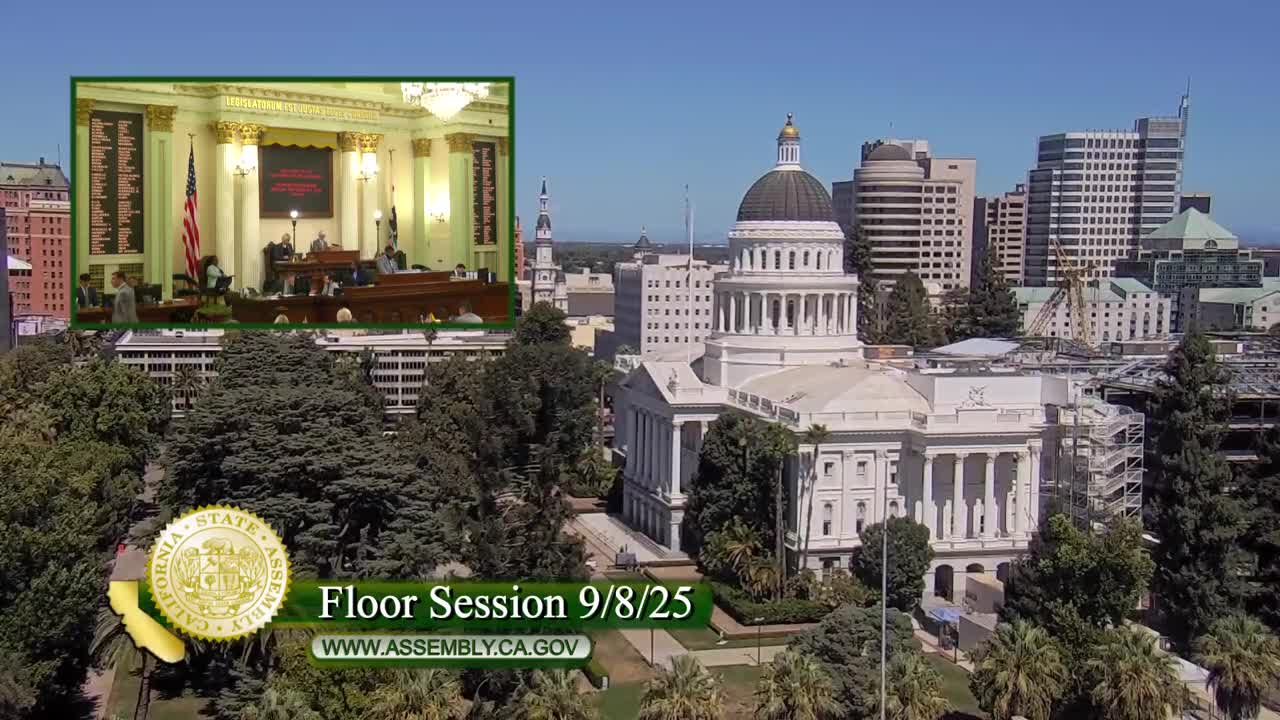 59SEC
Assembly Floor
 2MIN
Senate Floor
 1MIN
Assembly Floor
 10MIN