AB 2221: Supervision of Trustees and Fundraisers for Charitable Purposes Act.
- Session Year: 2025-2026
- House: Assembly
- Latest Version Date: 2026-09-27
Current Status:
Passed
(2026-09-27: Chaptered by Secretary of State - Chapter 590, Statutes of 2026.)
Introduced
In Committee
Awaiting First Chamber Vote
Passed First Chamber
In Committee
Awaiting Second Chamber Vote
Passed Second Chamber
Enacted
Existing law, the Supervision of Trustees and Fundraisers for Charitable Purposes Act, requires the Attorney General to, among other things, establish and maintain a register of charitable corporations, unincorporated associations, and trustees subject to the act and of the particular trust or other relationship under which they hold property for charitable purposes. Existing law requires the Attorney General to establish rules and regulations necessary for the administration of these provisions.
Existing law requires a charitable fundraising platform, as defined, before soliciting, permitting, or otherwise enabling charitable solicitations, to register with the Attorney Generals Registry of Charities and Fundraisers, under oath, on a form provided by the Attorney General. Existing law requires a platform charity to have good standing, as defined, in order to facilitate acts of solicitation on a charitable fundraising platform. Existing law permits a charitable fundraising platform or platform charity to solicit, permit, or otherwise enable solicitations, or to receive, control, or distribute funds from donations, only for recipient charitable organizations or other charitable organizations in good standing. Existing law authorizes a charitable fundraising platform or platform charity to rely upon electronic lists periodically published by the Internal Revenue Service, the Franchise Tax Board, and the Attorney Generals Registry of Charities and Fundraisers to determine good standing of recipient charitable organizations or other charitable organizations, however, if those lists are not published, then a charitable fundraising platform or platform charity is not required to comply with this provision for that applicable agency for the length of time that agencys list is unavailable.
This bill would remove lists periodically published by the Internal Revenue Service from the electronic lists that a charitable fundraising platform or platform charity may rely upon to determine good standing of recipient charitable organizations or other charitable organizations.
Existing law requires a charitable fundraising platform or platform charity that performs, permits, or otherwise enables acts of solicitation to, before a person can complete a donation or select or change a recipient charitable organization, provide conspicuous disclosures, including, among other things, a statement that a recipient charitable organization may not receive donations or grants or recommended donations, with an explanation identifying the most pertinent reasons why a recipient charitable organization may not receive the funds.
This bill would also require the statement described above to include an explanation of what alternative disposition will occur for the donated funds that are not sent to a recipient charitable organization. The bill would provide that a charitable fundraising platform or platform charity that performs, permits, or otherwise enables specified acts of solicitation, when soliciting platform users at the time of checkout to make a donation of no more than $10, or higher if adjusted for inflation, may make certain disclosures through a conspicuous hyperlink, as prescribed, and is not required to comply with specified regulations. The bill would also make other conforming changes.
Existing law requires that the rules and regulations established by the Attorney General for the administration of the registry include, among other things, provisions that specify the contents of the form and other information to be provided by a charitable fundraising platform for registration and in annual reports filed with the registry.
This bill would require a person or entity that is required to file registration, reporting, or other submissions with the registry to do so through the Attorney Generals online filing service in accordance with rules and regulations of the Attorney General. The bill would require the online filing service, by January 1, 2028, to support comprehensive electronic administration, as prescribed. The bill would make various other clarifying and technical changes to the act.
Existing law, the Supervision of Trustees and Fundraisers for Charitable Purposes Act, requires the Attorney General to, among other things, establish and maintain a register of charitable corporations, unincorporated associations, and trustees subject to the act and of the particular trust or other relationship under which they hold property for charitable purposes. Existing law requires the Attorney General to establish rules and regulations necessary for the administration of these provisions.
Existing law requires a charitable fundraising platform, as defined, before soliciting, permitting, or otherwise enabling charitable solicitations, to register with the Attorney Generals Registry of Charities and Fundraisers, under oath, on a form provided by the Attorney General. Existing law requires a platform charity to have good standing, as defined, in order to facilitate acts of solicitation on a charitable fundraising platform. Existing law permits a charitable fundraising platform or platform charity to solicit, permit, or otherwise enable solicitations, or to receive, control, or distribute funds from donations, only for recipient charitable organizations or other charitable organizations in good standing. Existing law authorizes a charitable fundraising platform or platform charity to rely upon specified electronic lists periodically published by the Internal Revenue Service, the Franchise Tax Board, and the Attorney Generals Registry of Charities and Fundraisers to determine good standing of recipient charitable organizations or other charitable organizations, however, if those lists are not published, then a charitable fundraising platform or platform charity is not required to comply with this provision for that applicable agency for the length of time that agencys list is unavailable.
This bill would remove the provisions described above that authorize a charitable fundraising platform or platform charity to rely upon specified lists periodically published by the Internal Revenue Service from the electronic lists that a charitable fundraising platform or platform charity may rely upon to determine good standing of recipient charitable organizations, organizations or other charitable organizations and excuse compliance if the list is not published. organizations.
Existing law requires a charitable fundraising platform or platform charity that performs, permits, or otherwise enables acts of solicitation to, before a person can complete a donation or select or change a recipient charitable organization, provide conspicuous disclosures, including, among other things, a statement that a recipient charitable organization may not receive donations or grants or recommended donations, with an explanation identifying the most pertinent reasons why a recipient charitable organization may not receive the funds.
This bill would also require the statement described above to include an explanation of what alternative disposition will occur for the funds, as specified, and would make other conforming changes. donated funds that are not sent to a recipient charitable organization. The bill would provide that a charitable fundraising platform or platform charity that performs, permits, or otherwise enables specified acts of solicitation, when soliciting platform users at the time of checkout to make a donation of no more than $10, or higher if adjusted for inflation, may make certain disclosures through a conspicuous hyperlink, as prescribed, and is not required to comply with specified regulations. The bill would also make other conforming changes.
Existing law requires that the rules and regulations established by the Attorney General for the administration of the registry include, among other things, provisions that specify the contents of the form and other information to be provided by a charitable fundraising platform for registration and in annual reports filed with the registry.
This bill would require a person or entity that is required to file registration, reporting, or other submissions with the registry to do so through the Attorney Generals online filing service in accordance with rules and regulations of the Attorney General. The bill would require the online filing service, by January 1, 2028, to support comprehensive electronic administration, as prescribed. The bill would make various other clarifying and technical changes to the act.
Existing law, the Supervision of Trustees and Fundraisers for Charitable Purposes Act, requires the Attorney General to, among other things, establish and maintain a register of charitable corporations, unincorporated associations, and trustees subject to the act and of the particular trust or other relationship under which they hold property for charitable purposes. Existing law requires the Attorney General to establish rules and regulations necessary for the administration of these provisions.
Existing law requires a charitable fundraising platform, as defined, before soliciting, permitting, or otherwise enabling charitable solicitations, to register with the Attorney Generals Registry of Charities and Fundraisers, under oath, on a form provided by the Attorney General. Existing law requires a platform charity to have good standing, as defined, in order to facilitate acts of solicitation on a charitable fundraising platform. Existing law permits a charitable fundraising platform or platform charity to solicit, permit, or otherwise enable solicitations, or to receive, control, or distribute funds from donations, only for recipient charitable organizations or other charitable organizations in good standing. Existing law authorizes a charitable fundraising platform or platform charity to rely upon specified electronic lists to determine good standing of recipient charitable organizations or other charitable organizations, however, if those lists are not published, then a charitable fundraising platform or platform charity is not required to comply with this provision for that applicable agency for the length of time that agencys list is unavailable.
This bill would remove the provisions described above that authorize a charitable fundraising platform or platform charity to rely upon specified electronic lists to determine good standing of recipient charitable organizations, or other charitable organizations and excuse compliance if the list is not published. Instead, the bill would specify that the directive that charitable fundraising platforms or platform charities only solicit, permit, or otherwise enable solicitations, or receive, control, or distribute funds from donations for recipient charitable organizations or other charitable organizations in good standing does not apply to charitable organizations that are not subject to the registration requirements of the act.
Existing law requires a charitable fundraising platform or platform charity that performs, permits, or otherwise enables acts of solicitation to, before a person can complete a donation or select or change a recipient charitable organization, provide conspicuous disclosures, including, among other things, a statement that a recipient charitable organization may not receive donations or grants or recommended donations, with an explanation identifying the most pertinent reasons why a recipient charitable organization may not receive the funds.
This bill would also require the statement described above to include an explanation of what alternative disposition will occur for the funds, as specified, and would make other conforming changes.
Existing law requires that the rules and regulations established by the Attorney General for the administration of the registry include, among other things, provisions that specify the contents of the form and other information to be provided by a charitable fundraising platform for registration and in annual reports filed with the registry.
This bill would make clarifying and technical changes to those provisions, including updating a reference to the name of the registry.This bill would provide that if the registry does not process a filing submitted by a person or entity who is not registered or whose registration is expired or delinquent within 10 days from the date of filing, the registration would be deemed in good standing. The bill would require a written notice to be sent to the registrant if the filing is found deficient, indicating the reasons for deficiency. The bill would establish related procedures and timelines for registration filings, notices, and responses. The bill would also require the Attorney General to modernize the online registry to support comprehensive electronic administration, as prescribed.This bill would require a person or entity that is required to file registration, reporting, or other submissions with the registry to do so through the Attorney Generals online filing service in accordance with rules and regulations of the Attorney General. The bill would require the online filing service, by January 1, 2028, to support comprehensive electronic administration, as prescribed. The bill would make various other clarifying and technical changes to the act.
Existing law, the Supervision of Trustees and Fundraisers for Charitable Purposes Act, requires the Attorney General to, among other things, establish and maintain a register of charitable corporations, unincorporated associations, and trustees subject to the act and of the particular trust or other relationship under which they hold property for charitable purposes. Existing law requires the Attorney General to establish rules and regulations necessary for the administration of these provisions.
Existing law requires a charitable fundraising platform, as defined, before soliciting, permitting, or otherwise enabling charitable solicitations, to register with the Attorney Generals Registry of Charities and Fundraisers, under oath, on a form provided by the Attorney General. Existing law requires a platform charity to have good standing, as defined, in order to facilitate acts of solicitation on a charitable fundraising platform. Existing law permits a charitable fundraising platform or platform charity to solicit, permit, or otherwise enable solicitations, or to receive, control, or distribute funds from donations, only for recipient charitable organizations or other charitable organizations in good standing. Existing law authorizes a charitable fundraising platform or platform charity to rely upon specified electronic lists to determine good standing of recipient charitable organizations or other charitable organizations, however, if those lists are not published, then a charitable fundraising platform or platform charity is not required to comply with this provision for that applicable agency for the length of time that agencys list is unavailable.
This bill would remove the provisions described above that authorize a charitable fundraising platform or platform charity to rely upon specified electronic lists to determine good standing of recipient charitable organizations, or other charitable organizations and excuse compliance if the list is not published. Instead, the bill would specify that the directive that charitable fundraising platforms or platform charities only solicit, permit, or otherwise enable solicitations, or receive, control, or distribute funds from donations for recipient charitable organizations or other charitable organizations in good standing does not apply to charitable organizations that are not subject to the registration requirements of the act.
Existing law requires a charitable fundraising platform or platform charity that performs, permits, or otherwise enables acts of solicitation to, before a person can complete a donation or select or change a recipient charitable organization, provide conspicuous disclosures, including, among other things, a statement that a recipient charitable organization may not receive donations or grants or recommended donations, with an explanation identifying the most pertinent reasons why a recipient charitable organization may not receive the funds.
This bill would also require the statement described above to include an explanation of what alternative disposition will occur for the funds, as specified, and would make other conforming changes.
Existing law requires that the rules and regulations established by the Attorney General for the administration of the registry include, among other things, provisions that specify the requirements for holding donations or distributing donations and grants of recommended donations, including the maximum length of times it takes to send the donated funds, as specified. contents of the form and other information to be provided by a charitable fundraising platform for registration and in annual reports filed with the registry.
This bill would instead require that the adopted rules and regulations specify the maximum amount of time it takes to send the donated funds to a recipient charitable organization that has not provided consent for a solicitation. make clarifying and technical changes to those provisions, including updating a reference to the name of the registry.
This bill would require that registration statements, notices, or reports and supporting documents filed by any individual or legal entity subject to the act be deemed approved, and that the approval be included in the Registry of Charities and Fundraisers, within 10 business days from the date of filing, unless the Attorney General notifies a filer of a determination that the requirements of the act have not been met, and notes the specific deficiencies. The bill would authorize an individual or entity that receives a notification that a registration, notice, or reporting requirement is not satisfied to request a hearing within 15 days to determine the sufficiency of the filing, as specified. provide that if the registry does not process a filing submitted by a person or entity who is not registered or whose registration is expired or delinquent within 10 days from the date of filing, the registration would be deemed in good standing. The bill would require a written notice to be sent to the registrant if the filing is found deficient, indicating the reasons for deficiency. The bill would establish related procedures and timelines for registration filings, notices, and responses. The bill would also require the Attorney General to modernize the online registry to support comprehensive electronic administration, as prescribed.
Existing law, the Supervision of Trustees and Fundraisers for Charitable Purposes Act, requires the Attorney General to, among other things, establish and maintain a register of charitable corporations, unincorporated associations, and trustees subject to the act and of the particular trust or other relationship under which they hold property for charitable purposes. Existing law requires the Attorney General to establish rules and regulations necessary for the administration of these provisions.
Existing law requires a charitable fundraising platform, as defined, before soliciting, permitting, or otherwise enabling charitable solicitations, to register with the Attorney Generals Registry of Charities and Fundraisers, under oath, on a form provided by the Attorney General. Existing law requires a platform charity to have good standing, as defined, in order to facilitate acts of solicitation on a charitable fundraising platform. Existing law permits a charitable fundraising platform or platform charity to solicit, permit, or otherwise enable solicitations, or to receive, control, or distribute funds from donations, only for recipient charitable organizations or other charitable organizations in good standing. Existing law authorizes a charitable fundraising platform or platform charity to rely upon specified electronic lists to determine good standing of recipient charitable organizations or other charitable organizations, however, if those lists are not published, then a charitable fundraising platform or platform charity is not required to comply with this provision for that applicable agency for the length of time that agencys list is unavailable.
This bill would remove the provisions described above that authorize a charitable fundraising platform or platform charity to rely upon specified electronic lists to determine good standing of recipient charitable organizations, or other charitable organizations and excuse compliance if the list is not published. Instead, the bill would specify that the directive that charitable fundraising platforms or platform charities only solicit, permit, or otherwise enable solicitations, or receive, control, or distribute funds from donations for recipient charitable organizations or other charitable organizations in good standing does not apply to charitable organizations that are not subject to the registration requirements of the act.
Existing law requires a charitable fundraising platform or platform charity that performs, permits, or otherwise enables acts of solicitation to, before a person can complete a donation or select or change a recipient charitable organization, provide conspicuous disclosures, including, among other things, a statement that a recipient charitable organization may not receive donations or grants or recommended donations, with an explanation identifying the most pertinent reasons why a recipient charitable organization may not receive the funds.
This bill would also require the statement described above to include an explanation of what alternative disposition will occur for the funds, as specified, and make other conforming changes.
Existing law requires that the rules and regulations established by the Attorney General for the administration of the registry include, among other things, provisions that specify the requirements for holding donations or distributing donations and grants of recommended donations, including the maximum length of times it takes to send the donated funds, as specified.
This bill would instead require that the adopted rules and regulations specify the maximum amount of time it takes to send the donated funds to a recipient charitable organization that has not provided consent for a solicitation.
This bill would require that registration statements, notices, or reports and supporting documents filed by any individual or legal entity subject to the act be deemed approved, and that the approval be included in the Registry of Charities and Fundraisers, within 10 business days from the date of filing, unless the Attorney General notifies a filer of a determination that the requirements of the act have not been met, and notes the specific deficiencies. The bill would authorize an individual or entity that receives a notification that a registration, notice, or reporting requirement is not satisfied to request a hearing within 15 days to determine the sufficiency of the filing, as specified.
(a)For purposes of this section:
(1)Charitable fundraising platform means any person, corporation, unincorporated association, or other legal entity that uses the internet to provide an internet website, service, or other platform to persons in this state, and performs, permits, or otherwise enables acts of solicitation to occur, which includes the following and any similar activity:
(A)Lists or references by name one or more recipient charitable organizations to receive donations or grants of recommended donations made by donors who use the platform.
(B)Permits persons who use the platform to solicit donations for or recommend donations to be granted to one or more recipient charitable organizations through peer-to-peer charitable fundraising.
(C)Permits persons who use the platform to select one or more recipient charitable organizations to receive donations or grants of recommended donations made by a platform, platform charity, or other third party person, based on purchases made or other activity performed by persons who use the platform.
(D)Lists or references by name of one or more recipient charitable organizations to receive donations or grants of recommended donations made by the platform based on purchases made or other activity performed by persons who use the platform.
(E)Provides to charitable organizations a customizable internet-based website, software as a service, or other platform that allows charitable organizations to solicit or receive donations on or through the platform, including through peer-to-peer charitable fundraising. The customizable platform provided by the charitable fundraising platform does not include the charitable organizations own platform, but may integrate with the charitable organizations platform.
(2)Charitable fundraising platform does not include:
(A)A charitable organizations own platform that solicits donations only for itself.
(B)A vendor that solely provides technical or supportive services to a charitable fundraising platform so that the charitable fundraising platform can function and operate, including vendors used for hosting or domain services, security certificates, internet access, internet application development, or digital payment processing. If that vendor also performs, permits, or otherwise enables acts of solicitation described by paragraph (1) on its own platform to persons in this state, it is a charitable fundraising platform for its own platform.
(C)A sponsoring organization of donor-advised funds, as defined in subdivision (d) of Section 4966 of the Internal Revenue Code, that solicits donors to open donor-advised fund accounts or similar accounts, receives recommendations from donors on charitable organizations that may receive grants of funds previously contributed to the sponsoring organization for a donors donor-advised fund account, and the sponsoring organization does not list or reference by name one or more recipient charitable organizations for solicitation purposes on its platform for persons who do not have advisory privileges with respect to the granting of funds in a donor-advised fund of the sponsoring organization.
(D)A person or entity that meets the definition of both a commercial fundraiser for charitable purposes and a charitable fundraising platform shall be only a commercial fundraiser for charitable purposes when the person or entity for compensation performs any of the following acts of solicitation:
(i)Direct mail solicitation, excluding electronic mail or messages.
(ii)Estate gift or estate planning solicitation.
(iii)In-person solicitation through a fundraising event, door-to-door or other public spaces, or a vending machine or similar equipment that does not use a person to perform the solicitation.
(iv)Noncash solicitation.
(v)Nonincidental acts of solicitation that are not internet based, including solicitation through print, radio, or television.
(vi)Solicitation involving receiving something of value, or a chance to win something of value, in connection with a donation.
(vii)Telephone solicitation.
(E)A person or entity that meets the definition of both a commercial coventurer and a charitable fundraising platform solely under subparagraph (D) of paragraph (1) shall be only a commercial coventurer when the acts of solicitation through an internet website, service, or other platform to persons in this state are for six or fewer recipient charitable organizations per calendar year, and the commercial coventurer complies with subdivision (b) of Section 12599.2.
(3)Good standing means that a platform charity, recipient charitable organization, or other charitable organizations tax-exempt status has not been revoked by the Franchise Tax Board, or the platform charity or charitable organization is not prohibited from soliciting or operating in the state by the Attorney General on the basis of a cease and desist order, delinquency, suspension, or revocation by the Attorney General pursuant to the procedures in Section 12599.12.
(4)Peer-to-peer charitable fundraising means a solicitation campaign created by a person to support a recipient charitable organization, through or with other assistance provided by a charitable fundraising platform or platform charity.
(5)Platform charity means a trustee as defined in Section 12582 or a charitable corporation as defined in Section 12582.1 that facilitates acts of solicitation on a charitable fundraising platform that includes either of the following and any similar activity:
(A)Solicits donations through a charitable fundraising platform for itself from donors who use the charitable fundraising platform with the implied or express representation that the platform charity may grant donations to recipient charitable organizations.
(B)Grants funds to recipient charitable organizations based on purchases made or other activity performed by persons who use a charitable fundraising platform.
(6)Platform charity does not include a sponsoring organization of donor-advised funds, as defined in subdivision (d) of Section 4966 of the Internal Revenue Code, that solicits donors to open donor-advised fund accounts or similar accounts, receives recommendations from donors on charitable organizations that may receive grants of funds previously contributed to the sponsoring organization for a donors donor-advised fund account, and the sponsoring organization does not list or reference by name one or more recipient charitable organizations for solicitation purposes on its platform for persons who do not have advisory privileges with respect to the granting of funds in a donor-advised fund of the sponsoring organization.
(7)Recipient charitable organization means a trustee as defined in Section 12582 or a charitable corporation as defined in Section 12582.1, that is listed or referenced by name on a charitable fundraising platform or by a platform charity for solicitation purposes.
(b)(1)A charitable fundraising platform is a trustee for charitable purposes subject to the Attorney Generals supervision. A charitable fundraising platform shall, before soliciting, permitting, or otherwise enabling solicitations, register with the Attorney Generals Registry of Charities and Fundraisers, under oath, on a form provided by the Attorney General. Persons or entities that meet the definition of a charitable fundraising platform and platform charity shall register as a charitable fundraising platform.
(2)Registration shall be renewed each year. The Attorney General shall impose a registration and renewal fee that shall be deposited and used in accordance with Section 12587.1.
(3)A platform charity is a trustee for charitable purposes subject to the Attorney Generals supervision. A platform charity shall register as a trustee in accordance with Section 12585 if not already registered. When a charitable fundraising platform partners with a platform charity, the platform charity shall promptly notify the Attorney Generals Registry of Charities and Fundraisers of the partnership, unless previously specified through the registration of the platform charity or charitable fundraising platform.
(c)A charitable fundraising platform or platform charity shall file annual reports, under oath, with the Attorney Generals Registry of Charities and Fundraisers on a form provided by the Attorney General. The reports shall:
(1)Enable the Attorney General to ascertain whether charitable funds have been properly solicited, received, held, controlled, or distributed in compliance with this article, including, but not limited to, providing information on the number of donations made, the amounts raised, the length of time for distributing donations or grants of recommended donations, the fees charged by or through a charitable fundraising platform or platform charity, and information on recipient charitable organizations or other charitable organizations that were sent or were not sent donations or grants of recommended donations.
(2)Not require the disclosure of personally identifiable information of donors or other persons using a charitable fundraising platform.
(d)(1)A platform charity shall have good standing in order to facilitate acts of solicitation on a charitable fundraising platform.
(2)A charitable fundraising platform or platform charity shall only solicit, permit, or otherwise enable solicitations, or receive, control, or distribute funds from donations for recipient charitable organizations or other charitable organizations in good standing. To determine good standing of recipient charitable organizations or other charitable organizations, a charitable fundraising platform or platform charity may rely on electronic lists periodically published by the Franchise Tax Board and the Attorney Generals Registry of Charities and Fundraisers provided that the lists are in a machine-readable structured data format. If any such agency does not publish such a list, then a charitable fundraising platform or platform charity is not required to comply with this paragraph for that applicable agency for the length of time that agencys list is unavailable.
(e)(1)A charitable fundraising platform or platform charity that performs, permits, or otherwise enables acts of solicitation described by subparagraph (A), (B), or (C), of paragraph (1) of subdivision (a) shall, before a person can complete a donation or select or change a recipient charitable organization, provide conspicuous disclosures that prevent a likelihood of deception, confusion, or misunderstanding, including, but not limited to, the following:
(A)A statement that donations are made to the charitable fundraising platform, the platform charity, the recipient charitable organization, or the person engaging in peer-to-peer charitable fundraising, whichever is applicable.
(B)A statement that a recipient charitable organization may not receive donations or grants of recommended donations, with an explanation identifying the most pertinent reasons why a recipient charitable organization may not receive donated funds, and an explanation of what alternative disposition will occur for donated funds that are not sent to a recipient charitable organization. This disclosure is not required if there are no circumstances under which a recipient charitable organization may not receive the donated funds. The explanation may be provided through a conspicuous hyperlink, so long as the disclosure is conspicuous when the hyperlink is selected.
(C)The maximum length of time it takes to send the donation or a grant of the recommended donation to a recipient charitable organization with an explanation as to the length of time, unless the donation is sent contemporaneously to a recipient charitable organization after the donation is made. The explanation as to the maximum length of time may be provided through a conspicuous hyperlink, so long as the disclosure is conspicuous when the hyperlink is selected.
(D)The fees or other amounts, if any, deducted from or added to the donation or a grant of the recommended donation that are charged or retained by the charitable fundraising platform, platform charity, or any other partnering vendor, other than digital payment processing fees. This disclosure is not required for acts of solicitation described in subparagraph (C) of paragraph (1) of subdivision (a) when no fees or amounts are deducted or added.
(E)A statement as to the tax deductibility of the donation. This disclosure is not required for acts of solicitation described by subparagraph (C) of paragraph (1) of subdivision (a).
(2)A charitable fundraising platform or platform charity that performs, permits, or otherwise enables acts of solicitation described by subparagraph (A), (C), or (D) of paragraph (1) of subdivision (a), when soliciting platform users at the time of checkout to make a donation of no more than ten dollars ($10), or a higher amount if periodically adjusted for inflation pursuant to rules and regulations adopted under Section 12599.10, may provide the disclosures required by subparagraphs (B), (C), (D), and (E) of paragraph (1) of subdivision (e) through a conspicuous hyperlink, so long as the disclosures are conspicuous when the hyperlink is selected. Such solicitations shall only be permitted for recipient charitable organizations that have provided written consent pursuant to paragraph (1) of subdivision (f).
(f)(1)A charitable fundraising platform or platform charity that solicits, permits, or otherwise enables solicitations shall obtain the written consent of a recipient charitable organization before using its name in a solicitation. Written consent shall be provided directly to the charitable fundraising platform or platform charity, or may be provided to a charitable fundraising platform or platform charity and apply to any partnering charitable fundraising platforms expressly identified in an agreement providing consent, by one authorized officer, director, trustee, or other duly authorized representative of the recipient charitable organization.
(2)Written consent pursuant to paragraph (1) shall not be required for acts of solicitation described in subparagraphs (A), (B), or (C), of paragraph (1) of subdivision (a) if, in addition to all provisions of this section and rules or regulations established under Section 12599.10, all of the following are met:
(A)The charitable fundraising platform or platform charity shall only reference the recipient charitable organizations name, address, telephone number, internet website, including through a hyperlink, employer identification number, corporation or organization number, or registration number with the Attorney Generals Registry of Charities and Fundraisers, classification in the National Taxonomy of Exempt Entities system, publicly available information from the recipient charitable organizations tax or information returns filed with the Internal Revenue Service, publicly available information from the recipient charitable organizations reports filed with the Attorney Generals Registry of Charities and Fundraisers, or other information set forth in rules or regulations established under Section 12599.10, if any.
(B)The charitable fundraising platform or platform charity shall conspicuously disclose before persons can complete a donation, or select or change a recipient charitable organization, that the recipient charitable organization has not provided consent or permission for the solicitation, and has not reviewed or approved the content generated by persons engaging in peer-to-peer charitable fundraising, when applicable.
(C)The charitable fundraising platform or platform charity shall remove any recipient charitable organization from its list or any solicitation regarding the recipient charitable organization upon written request by the recipient charitable organization, and verification that the request is legitimate. Requests shall be promptly verified and it shall take no longer than three business days for removal to occur after verification is completed.
(D)The charitable fundraising platform or platform charity shall not require that a recipient charitable organization consent to any solicitations as a condition for accepting a donation or grant of a recommended donation.
(g)After donors contribute donations based on solicitations described by subparagraph (A) or (B) of paragraph (1) of subdivision (a), the charitable fundraising platform or platform charity shall promptly provide a tax donation receipt in accordance with Sections 17510.3 and 17510.4 of the Business and Professions Code.
(h)(1)The charitable fundraising platform or platform charity shall not divert or otherwise misuse the donations received through solicitation on the charitable fundraising platform, and shall hold them in a separate account or accounts from other funds belonging to the charitable fundraising platform or platform charity.
(2)The charitable fundraising platform or platform charity shall promptly ensure donations and grants of recommended donations are disposed of in one of the following ways, and in accordance with any rules and regulations established pursuant to Section 12599.10:
(A)They are promptly sent to recipient charitable organizations with an accounting of any fees imposed for processing the funds.
(B)They are promptly sent to an alternate recipient charitable organization as disclosed pursuant to subparagraphs (B) and (C) of paragraph (1) of subdivision (e).
(C)For acts of solicitation described in subparagraph (A), (B), or (E) of paragraph (1) of subdivision (a), donations and grants of recommended donations that are ten dollars ($10) or less may be refunded as disclosed pursuant to subparagraph (B) of paragraph (1) of subdivision (e).
(i)If a charitable fundraising platform or platform charity contracts with vendors to solicit, receive, control, process, distribute, and otherwise account for donations on the charitable fundraising platform, the contracts shall be available for inspection by the Attorney General.
(j)Subdivision (a) of Section 317, paragraph (6) of subdivision (a) of Section 321, and Section 322 of Title 11 of the California Code of Regulations do not apply to a charitable fundraising platform or platform charity that performs, permits, or otherwise enables acts of solicitation described by subparagraph (A), (C), or (D) of paragraph (1) of subdivision (a), when soliciting platform users at the time of checkout to make a donation of no more than ten dollars ($10), or a higher amount if periodically adjusted for inflation pursuant to rules and regulations adopted under Section 12599.10.
SEC. 2.Section 12599.10 of the Government Code is amended to read:12599.10.(a)The Attorney General shall establish rules and regulations necessary for the administration of Section 12599.9, which shall include, but are not limited to, provisions that specify all of the following:
(1)The additional acts of solicitation that meet the definition of a charitable fundraising platform or platform charity, as needed, in order to address changes in technology and charitable fundraising through platforms.
(2)The content of the form and other information to be provided by a charitable fundraising platform for registration and in annual reports filed with the Attorney Generals Registry of Charities and Fundraisers, including all of the following:
(A)The manner and timing of the filing of registration and reports.
(B)The handling of confidential, trade secret, or personal information provided.
(C)The circumstances under which partnering charitable fundraising platforms or platform charities may submit an annual report on behalf of other charitable fundraising platforms, taking into consideration the benefits and expenses of submitting individual reports for charitable fundraising platforms as compared to consolidated reports for charitable fundraising platforms that partner with platform charities.
(D)The payment of fees to cover the reasonable costs to administer and enforce Section 12599.9.
(3)The requirements for any written agreement between a recipient charitable organization and a charitable fundraising platform or a platform charity that provides consent for or otherwise applies to solicitations for donations, including permitting those agreements to be entered into electronically.
(4)The requirements for holding donations or distributing donations and grants of recommended donations, including all of the following:
(A)(i)The maximum length of times it takes to send the donated funds, taking into consideration the acts of solicitation described in paragraph (1) of subdivision (a), the number of donations made through a charitable fundraising platform or platform charity, whether donations are made to the charitable fundraising platform, platform charity, recipient charitable organizations, other charitable organizations, or persons engaging in peer-to-peer charitable fundraising, whether the recipient charitable organization has provided consent for a solicitation, whether further verification information is requested to prevent fraud, and whether donations are sent to alternate recipient charitable organizations.
(ii)For charitable fundraising platforms as defined in subparagraph (C) or (D) of paragraph (1) of subdivision (a) of Section 12599.9, the length of time to send donated funds to the recipient charitable organization shall be no less than on a quarterly basis and may be subject to any minimum threshold amounts, not to exceed ten dollars ($10), as disclosed pursuant to subparagraphs (B) and (C) of paragraph (1) of subdivision (e) of Section 12599.9. Donated funds not meeting a minimum threshold amount shall be sent to the recipient charitable organization after four consecutive quarters, unless the recipient charitable organization is not eligible to receive the funds, as disclosed pursuant to subparagraphs (B) and (C) of paragraph (1) of subdivision (e) of Section 12599.9.
(iii)For charitable fundraising platforms as defined in subparagraph (A) or (B) of paragraph (1) of subdivision (a) of Section 12599.9, the length of time to send donated funds to the recipient charitable organization may be subject to any minimum threshold amount not to exceed ten dollars ($10), as disclosed pursuant to subparagraphs (B) and (C) of paragraph (1) of subdivision (e) of Section 12599.9. If a minimum threshold amount applies, donated funds not meeting the minimum threshold amount shall be sent to the recipient charitable organization within 12 months after a donation is made, unless the recipient charitable organization is not eligible to receive the funds, as disclosed pursuant to subparagraphs (B) and (C) of paragraph (1) of subdivision (e) of Section 12599.9.
(B)The circumstances under which donors or persons may be contacted to provide alternate recipient charitable organizations or notified when the donated funds are sent.
(C)The circumstances when donor or personal information may be provided to recipient charitable organizations.
(b)This section shall become operative on January 1, 2022.
SEC. 3.Section 12599.11 is added to the Government Code, to read:12599.11.A person or entity subject to this article that is required to file registration, reporting, or other submissions with the Attorney Generals Registry of Charities and Fundraisers, including the submission of supporting documents and payment of fees, shall do so through the Attorney Generals online filing service in accordance with rules and regulations of the Attorney General. By January 1, 2028, the Attorney Generals online filing service and related systems shall also support comprehensive electronic administration, including prompt confirmation and automated processing of filings required by Sections 12585 and 12586.
SEC. 4.Section 12599.12 is added to the Government Code, to read:12599.12.(a)The grounds for which a registration may become delinquent include, but are not limited to:
(1)Failure to timely file completed periodic written reports as required by Section 12586.
(2)Failure to timely file completed annual fundraiser reports as required by subdivision (c) of Section 12599.9.
(3)Failure to timely pay late fees as required by Section 12586.1.
(b)Before a person or entitys registration becomes delinquent, written notice shall be sent to the registrant indicating the reason or reasons for deficiency. If a filing responsive to the notice is not submitted within 60 days from the date of the notice, or a timely filing remains deficient, a second written notice shall be sent to the registrant indicating the reason or reasons for deficiency. If a filing responsive to the second notice is not submitted within 60 days from the date of the second notice, or a timely filing remains deficient, a third written notice shall be sent to the registrant indicating that the registration has become delinquent.
(c)(1)If the Attorney Generals Registry of Charities and Fundraisers does not process a filing submitted by a person or entity who is not registered or whose registration is expired or delinquent within 15 calendar days from the date of filing, the registration shall be deemed in good standing. If the filing is found deficient, a written notice shall be sent to the registrant indicating the reasons for deficiency. If a filing responsive to the notice is not submitted within 30 days from the date of the notice, the registration shall revert to not being in good standing. If a filing responsive to the notice is submitted within 30 days from the date of the notice, the registration shall remain in good standing. If the timely filing remains deficient, a second written notice shall be sent to the registrant indicating the reasons for deficiency. If a filing responsive to the second notice is not submitted within 30 days from the date of the second notice, or the timely filing remains deficient, a third written notice shall be sent to the registrant indicating that the registration is not in good standing. The process set forth in this subdivision is not applicable to a person or entity that is not in good standing because the person or entitys registration is suspended, revoked, or the person or entity is subject to a cease and desist order.
(2)This subdivision shall become operative on January 1, 2028.
(d)Before a person or entitys registration becomes suspended or revoked, or the person or entity is subject to a cease and desist order, an administrative action shall be taken in accordance with Article 3 (commencing with Section 336) of Chapter 4 of Division 1 of Title 11 of the California Code of Regulations.
(a)For purposes of this section:
(1)Charitable fundraising platform means any person, corporation, unincorporated association, or other legal entity that uses the internet to provide an internet website, service, or other platform to persons in this state, and performs, permits, or otherwise enables acts of solicitation to occur, which includes the following and any similar activity:
(A)Lists or references by name one or more recipient charitable organizations to receive donations or grants of recommended donations made by donors who use the platform.
(B)Permits persons who use the platform to solicit donations for or recommend donations to be granted to one or more recipient charitable organizations through peer-to-peer charitable fundraising.
(C)Permits persons who use the platform to select one or more recipient charitable organizations to receive donations or grants of recommended donations made by a platform, platform charity, or other third party person, based on purchases made or other activity performed by persons who use the platform.
(D)Lists or references by name of one or more recipient charitable organizations to receive donations or grants of recommended donations made by the platform based on purchases made or other activity performed by persons who use the platform.
(E)Provides to charitable organizations a customizable internet-based website, software as a service, or other platform that allows charitable organizations to solicit or receive donations on or through the platform, including through peer-to-peer charitable fundraising. The customizable platform provided by the charitable fundraising platform does not include the charitable organizations own platform, but may integrate with the charitable organizations platform.
(2)Charitable fundraising platform does not include:
(A)A charitable organizations own platform that solicits donations only for itself.
(B)A vendor that solely provides technical or supportive services to a charitable fundraising platform so that the charitable fundraising platform can function and operate, including vendors used for hosting or domain services, security certificates, internet access, internet application development, or digital payment processing. If that vendor also performs, permits, or otherwise enables acts of solicitation described by paragraph (1) on its own platform to persons in this state, it is a charitable fundraising platform for its own platform.
(C)A sponsoring organization of donor-advised funds, as defined in subdivision (d) of Section 4966 of the Internal Revenue Code, that solicits donors to open donor-advised fund accounts or similar accounts, receives recommendations from donors on charitable organizations that may receive grants of funds previously contributed to the sponsoring organization for a donors donor-advised fund account, and the sponsoring organization does not list or reference by name one or more recipient charitable organizations for solicitation purposes on its platform for persons who do not have advisory privileges with respect to the granting of funds in a donor-advised fund of the sponsoring organization.
(D)A person or entity that meets the definition of both a commercial fundraiser for charitable purposes and a charitable fundraising platform shall be only a commercial fundraiser for charitable purposes when the person or entity for compensation performs any of the following acts of solicitation:
(i)Direct mail solicitation, excluding electronic mail or messages.
(ii)Estate gift or estate planning solicitation.
(iii)In-person solicitation through a fundraising event, door-to-door or other public spaces, or a vending machine or similar equipment that does not use a person to perform the solicitation.
(iv)Noncash solicitation.
(v)Nonincidental acts of solicitation that are not internet based, including solicitation through print, radio, or television.
(vi)Solicitation involving receiving something of value, or a chance to win something of value, in connection with a donation.
(vii)Telephone solicitation.
(E)A person or entity that meets the definition of both a commercial coventurer and a charitable fundraising platform solely under subparagraph (D) of paragraph (1) shall be only a commercial coventurer when the acts of solicitation through an internet website, service, or other platform to persons in this state are for six or fewer recipient charitable organizations per calendar year, and the commercial coventurer complies with subdivision (b) of Section 12599.2.
(3)Good standing means that a platform charity, recipient charitable organization, or other charitable organizations tax-exempt standing status has not been revoked by the Franchise Tax Board, or the platform charity or charitable organization is not prohibited from soliciting or operating in the state by the Attorney General on the basis of a cease and desist order, delinquency, suspension, or revocation by the Attorney General pursuant to the procedures in Section 12599.12.
(4)Peer-to-peer charitable fundraising means a solicitation campaign created by a person to support a recipient charitable organization, through or with other assistance provided by a charitable fundraising platform or platform charity.
(5)Platform charity means a trustee as defined in Section 12582 or a charitable corporation as defined in Section 12582.1 that facilitates acts of solicitation on a charitable fundraising platform that includes either of the following and any similar activity:
(A)Solicits donations through a charitable fundraising platform for itself from donors who use the charitable fundraising platform with the implied or express representation that the platform charity may grant donations to recipient charitable organizations.
(B)Grants funds to recipient charitable organizations based on purchases made or other activity performed by persons who use a charitable fundraising platform.
(6)Platform charity does not include a sponsoring organization of donor-advised funds, as defined in subdivision (d) of Section 4966 of the Internal Revenue Code, that solicits donors to open donor-advised fund accounts or similar accounts, receives recommendations from donors on charitable organizations that may receive grants of funds previously contributed to the sponsoring organization for a donors donor-advised fund account, and the sponsoring organization does not list or reference by name one or more recipient charitable organizations for solicitation purposes on its platform for persons who do not have advisory privileges with respect to the granting of funds in a donor-advised fund of the sponsoring organization.
(7)Recipient charitable organization means a trustee as defined in Section 12582 or a charitable corporation as defined in Section 12582.1, that is listed or referenced by name on a charitable fundraising platform or by a platform charity for solicitation purposes.
(b)(1)A charitable fundraising platform is a trustee for charitable purposes subject to the Attorney Generals supervision. A charitable fundraising platform shall, before soliciting, permitting, or otherwise enabling solicitations, register with the Attorney Generals Registry of Charities and Fundraisers, under oath, on a form provided by the Attorney General. Persons or entities that meet the definition of a charitable fundraising platform and platform charity shall register as a charitable fundraising platform.
(2)Registration shall be renewed each year. The Attorney General shall impose a registration and renewal fee that shall be deposited and used in accordance with Section 12587.1.
(3)A platform charity is a trustee for charitable purposes subject to the Attorney Generals supervision. A platform charity shall register as a trustee in accordance with Section 12585 if not already registered. When a charitable fundraising platform partners with a platform charity, the platform charity shall promptly notify the Attorney Generals Registry of Charities and Fundraisers of the partnership, unless previously specified through the registration of the platform charity or charitable fundraising platform.
(c)A charitable fundraising platform or platform charity shall file annual reports, under oath, with the Attorney Generals Registry of Charities and Fundraisers on a form provided by the Attorney General. The reports shall:
(1)Enable the Attorney General to ascertain whether charitable funds have been properly solicited, received, held, controlled, or distributed in compliance with this article, including, but not limited to, providing information on the number of donations made, the amounts raised, the length of time for distributing donations or grants of recommended donations, the fees charged by or through a charitable fundraising platform or platform charity, and information on recipient charitable organizations or other charitable organizations that were sent or were not sent donations or grants of recommended donations.
(2)Not require the disclosure of personally identifiable information of donors or other persons using a charitable fundraising platform.
(d)(1)A platform charity shall have good standing in order to facilitate acts of solicitation on a charitable fundraising platform.
(2)A charitable fundraising platform or platform charity shall only solicit, permit, or otherwise enable solicitations, or receive, control, or distribute funds from donations for recipient charitable organizations or other charitable organizations in good standing. To determine good standing of recipient charitable organizations or other charitable organizations, a charitable fundraising platform or platform charity may rely on electronic lists periodically published by the Franchise Tax Board and the Attorney Generals Registry of Charities and Fundraisers provided that the lists are in a machine-readable structured data format. If any such agency does not publish such a list, then a charitable fundraising platform or platform charity is not required to comply with this paragraph for that applicable agency for the length of time that agencys list is unavailable.
(e)(1)A charitable fundraising platform or platform charity that performs, permits, or otherwise enables acts of solicitation described by subparagraph (A), (B), or (C), of paragraph (1) of subdivision (a) shall, before a person can complete a donation or select or change a recipient charitable organization, provide conspicuous disclosures that prevent a likelihood of deception, confusion, or misunderstanding, including, but not limited to, the following:
(1)(A)A statement that donations are made to the charitable fundraising platform, the platform charity, the recipient charitable organization, or the person engaging in peer-to-peer charitable fundraising, whichever is applicable.
(2)(B)A statement that a recipient charitable organization may not receive donations or grants or of recommended donations, with an explanation identifying the most pertinent reasons why a recipient charitable organization may not receive donated funds, and an explanation of what alternative disposition will occur for the funds, which may include, but is not limited to, a refund to the donor, redirection to an alternate recipient charitable organization of the donors choice, or a redirection to an alternate recipient charitable organization of the charitable fundraising platform or platform charitys choice. donated funds that are not sent to a recipient charitable organization. This disclosure is not required if there are no circumstances under which a recipient charitable organization may not receive the donated funds. The explanation may be provided through a conspicuous hyperlink, so long as the disclosure is conspicuous when the hyperlink is selected.
(3)(C)The maximum length of time it takes to send the donation or a grant of the recommended donation to a recipient charitable organization with an explanation as to the length of time, unless the donation is sent contemporaneously to a recipient charitable organization after the donation is made. The explanation as to the maximum length of time may be provided through a conspicuous hyperlink, so long as the disclosure is conspicuous when the hyperlink is selected.
(4)(D)The fees or other amounts, if any, deducted from or added to the donation or a grant of the recommended donation that are charged or retained by the charitable fundraising platform, platform charity, or any other partnering vendor, other than digital payment processing fees. This disclosure is not required for acts of solicitation described in subparagraph (C) of paragraph (1) of subdivision (a) when no fees or amounts are deducted or added.
(5)(E)A statement as to the tax deductibility of the donation. This disclosure is not required for acts of solicitation described by subparagraph (C) of paragraph (1) of subdivision (a).
(2)A charitable fundraising platform or platform charity that performs, permits, or otherwise enables acts of solicitation described by subparagraph (A), (C), or (D) of paragraph (1) of subdivision (a), when soliciting platform users at the time of checkout to make a donation of no more than ten dollars ($10), or a higher amount if periodically adjusted for inflation pursuant to rules and regulations adopted under Section 12599.10, may provide the disclosures required by subparagraphs (B), (C), (D), and (E) of paragraph (1) of subdivision (e) through a conspicuous hyperlink, so long as the disclosures are conspicuous when the hyperlink is selected. Such solicitations shall only be permitted for recipient charitable organizations that have provided written consent pursuant to paragraph (1) of subdivision (f).
(f)(1)A charitable fundraising platform or platform charity that solicits, permits, or otherwise enables solicitations shall obtain the written consent of a recipient charitable organization before using its name in a solicitation. Written consent shall be provided directly to the charitable fundraising platform or platform charity, or may be provided to a charitable fundraising platform or platform charity and apply to any partnering charitable fundraising platforms expressly identified in an agreement providing consent, by one authorized officer, director, trustee, or other duly authorized representative of the recipient charitable organization.
(2)Written consent pursuant to paragraph (1) shall not be required for acts of solicitation described in subparagraphs (A), (B), or (C), of paragraph (1) of subdivision (a) if, in addition to all provisions of this section and rules or regulations established under Section 12599.10, all of the following are met:
(A)The charitable fundraising platform or platform charity shall only reference the recipient charitable organizations name, address, telephone number, internet website, including through a hyperlink, employer identification number, corporation or organization number, or registration number with the Attorney Generals Registry of Charities and Fundraisers, classification in the National Taxonomy of Exempt Entities system, publicly available information from the recipient charitable organizations tax or information returns filed with the Internal Revenue Service, publicly available information from the recipient charitable organizations reports filed with the Attorney Generals Registry of Charities and Fundraisers, or other information set forth in rules or regulations established under Section 12599.10, if any.
(B)The charitable fundraising platform or platform charity shall conspicuously disclose before persons can complete a donation, or select or change a recipient charitable organization, that the recipient charitable organization has not provided consent or permission for the solicitation, and has not reviewed or approved the content generated by persons engaging in peer-to-peer charitable fundraising, when applicable.
(C)The charitable fundraising platform or platform charity shall remove any recipient charitable organization from its list or any solicitation regarding the recipient charitable organization upon written request by the recipient charitable organization, and verification that the request is legitimate. Requests shall be promptly verified and it shall take no longer than three business days for removal to occur after verification is completed.
(D)The charitable fundraising platform or platform charity shall not require that a recipient charitable organization consent to any solicitations as a condition for accepting a donation or grant of a recommended donation.
(g)After donors contribute donations based on solicitations described by subparagraph (A) or (B) of paragraph (1) of subdivision (a), the charitable fundraising platform or platform charity shall promptly provide a tax donation receipt in accordance with Sections 17510.3 and 17510.4 of the Business and Professions Code.
(h)(1)The charitable fundraising platform or platform charity shall not divert or otherwise misuse the donations received through solicitation on the charitable fundraising platform, and shall hold them in a separate account or accounts from other funds belonging to the charitable fundraising platform or platform charity.
(2)The charitable fundraising platform or platform charity shall promptly ensure donations and grants of recommended donations are disposed of in one of the following ways, and in accordance with any rules and regulations established pursuant to Section 12599.10:
(A)They are promptly sent to recipient charitable organizations with an accounting of any fees imposed for processing the funds.
(B)They are promptly sent to an alternate recipient charitable organization as disclosed pursuant to paragraph (2) subparagraphs (B) and (C) of paragraph (1) of subdivision (e).
(C)For acts of solicitation described in subparagraph (A), (B), or (E) of paragraph (1) of subdivision (a), donations and grants of recommended donations that are ten dollars ($10) or less may be refunded as disclosed pursuant to paragraph (2) subparagraph (B) of paragraph (1) of subdivision (e).
(i)If a charitable fundraising platform or platform charity contracts with vendors to solicit, receive, control, process, distribute, and otherwise account for donations on the charitable fundraising platform, the contracts shall be available for inspection by the Attorney General.
(j)Subdivision (a) of Section 317, paragraph (6) of subdivision (a) of Section 321, and Section 322 of Title 11 of the California Code of Regulations do not apply to a charitable fundraising platform or platform charity that performs, permits, or otherwise enables acts of solicitation described by subparagraph (A), (C), or (D) of paragraph (1) of subdivision (a), when soliciting platform users at the time of checkout to make a donation of no more than ten dollars ($10), or a higher amount if periodically adjusted for inflation pursuant to rules and regulations adopted under Section 12599.10.
SEC. 2.Section 12599.10 of the Government Code is amended to read:12599.10.(a)The Attorney General shall establish rules and regulations necessary for the administration of Section 12599.9, which shall include, but are not limited to, provisions that specify all of the following:
(1)The additional acts of solicitation that meet the definition of a charitable fundraising platform or platform charity, as needed, in order to address changes in technology and charitable fundraising through platforms.
(2)The content of the form and other information to be provided by a charitable fundraising platform for registration and in annual reports filed with the Attorney Generals Registry of Charities and Fundraisers, including all of the following:
(A)The manner and timing of the filing of registration and reports.
(B)The handling of confidential, trade secret, or personal information provided.
(C)The circumstances under which partnering charitable fundraising platforms or platform charities may submit an annual report on behalf of other charitable fundraising platforms, taking into consideration the benefits and expenses of submitting individual reports for charitable fundraising platforms as compared to consolidated reports for charitable fundraising platforms that partner with platform charities.
(D)The payment of fees to cover the reasonable costs to administer and enforce Section 12599.9.
(3)The requirements for any written agreement between a recipient charitable organization and a charitable fundraising platform or a platform charity that provides consent for or otherwise applies to solicitations for donations, including permitting those agreements to be entered into electronically.
(4)The requirements for holding donations or distributing donations and grants of recommended donations, including all of the following:
(A)(i)The maximum length of times it takes to send the donated funds, taking into consideration the acts of solicitation described in paragraph (1) of subdivision (a), the number of donations made through a charitable fundraising platform or platform charity, whether donations are made to the charitable fundraising platform, platform charity, recipient charitable organizations, other charitable organizations, or persons engaging in peer-to-peer charitable fundraising, whether the recipient charitable organization has provided consent for a solicitation, whether further verification information is requested to prevent fraud, and whether donations are sent to alternate recipient charitable organizations.
(ii)For charitable fundraising platforms as defined in subparagraph (C) or (D) of paragraph (1) of subdivision (a) of Section 12599.9, the length of time to send donated funds to the recipient charitable organization shall be no less than on a quarterly basis and may be subject to any minimum threshold amounts, not to exceed ten dollars ($10), as disclosed pursuant to paragraphs (2) and (3) subparagraphs (B) and (C) of paragraph (1) of subdivision (e) of Section 12599.9. Donated funds not meeting a minimum threshold amount shall be sent to the recipient charitable organization after four consecutive quarters, unless the recipient charitable organization is not eligible to receive the funds, as disclosed pursuant to paragraphs (2) and (3) subparagraphs (B) and (C) of paragraph (1) of subdivision (e) of Section 12599.9.
(iii)For charitable fundraising platforms as defined in subparagraph (A) or (B) of paragraph (1) of subdivision (a) of Section 12599.9, the length of time to send donated funds to the recipient charitable organization shall be no less than on a quarterly basis and may be subject to any minimum threshold amount not to exceed ten dollars ($10), as disclosed pursuant to paragraphs (2) and (3) subparagraphs (B) and (C) of paragraph (1) of subdivision (e) of Section 12599.9. Donated If a minimum threshold amount applies, donated funds not meeting a the minimum threshold amount shall be sent to the recipient charitable organization within 12 months after a donation is made, unless the recipient charitable organization is not eligible to receive the funds, as disclosed pursuant to paragraphs (2) and (3) subparagraphs (B) and (C) of paragraph (1) of subdivision (e) of Section 12599.9.
(B)The circumstances under which donors or persons may be contacted to provide alternate recipient charitable organizations or notified when the donated funds are sent.
(C)The circumstances when donor or personal information may be provided to recipient charitable organizations.
(b)This section shall become operative on January 1, 2022.
SEC. 3.Section 12599.11 is added to the Government Code, to read:12599.11.A person or entity subject to this article that is required to file registration, reporting, or other submissions with the Attorney Generals Registry of Charities and Fundraisers, including the submission of supporting documents and payment of fees, shall do so through the Attorney Generals online filing service in accordance with rules and regulations of the Attorney General. By January 1, 2028, the Attorney Generals online filing service and related systems shall also support comprehensive electronic administration, including prompt confirmation and automated processing of filings required by Sections 12585 and 12586.
SEC. 4.Section 12599.12 is added to the Government Code, to read:12599.12.(a)The grounds for which a registration may become delinquent include, but are not limited to:
(1)Failure to timely file completed periodic written reports as required by Section 12586.
(2)Failure to timely file completed annual fundraiser reports as required by subdivision (c) of Section 12599.9.
(3)Failure to timely pay late fees as required by Section 12586.1.
(b)Before a person or entitys registration becomes delinquent, written notice shall be sent to the registrant indicating the reason or reasons for deficiency. If a filing responsive to the notice is not submitted within 60 days from the date of the notice, or a timely filing remains deficient, a second written notice shall be sent to the registrant indicating the reason or reasons for deficiency. If a filing responsive to the second notice is not submitted within 60 days from the date of the second notice, or a timely filing remains deficient, a third written notice shall be sent to the registrant indicating that the registration has become delinquent.
(c)(1)If the Attorney Generals Registry of Charities and Fundraisers does not process a filing submitted by a person or entity who is not registered or whose registration is expired or delinquent within 10 15 calendar days from the date of filing, the registration shall be deemed in good standing. If the filing is found deficient, a written notice shall be sent to the registrant indicating the reasons for deficiency. If a filing responsive to the notice is not submitted within 30 days from the date of the notice, the registration shall revert to not being in good standing. If a filing responsive to the notice is submitted within 30 days from the date of the notice, the registration shall remain in good standing. If the timely filing remains deficient, a second written notice shall be sent to the registrant indicating the reasons for deficiency. If a filing responsive to the second notice is not submitted within 30 days from the date of the second notice, or the timely filing remains deficient, a third written notice shall be sent to the registrant indicating that the registration is not in good standing. The process set forth in this subdivision is not applicable to a person or entity that is not in good standing because the person or entitys registration is suspended, revoked, or the person or entity is subject to a cease and desist order.
(2)This subdivision shall become operative on January 1, 2028.
(d)Before a person or entitys registration becomes suspended or revoked, or the person or entity is subject to a cease and desist order, an administrative action shall be taken in accordance with Article 3 (commencing with Section 336) of Chapter 4 of Division 1 of Title 11 of the California Code of Regulations.
(a)For purposes of this section:
(1)Charitable fundraising platform means any person, corporation, unincorporated association, or other legal entity that uses the internet to provide an internet website, service, or other platform to persons in this state, and performs, permits, or otherwise enables acts of solicitation to occur, which includes the following and any similar activity:
(A)Lists or references by name one or more recipient charitable organizations to receive donations or grants of recommended donations made by donors who use the platform.
(B)Permits persons who use the platform to solicit donations for or recommend donations to be granted to one or more recipient charitable organizations through peer-to-peer charitable fundraising.
(C)Permits persons who use the platform to select one or more recipient charitable organizations to receive donations or grants of recommended donations made by a platform, platform charity, or other third party person, based on purchases made or other activity performed by persons who use the platform.
(D)Lists or references by name of one or more recipient charitable organizations to receive donations or grants of recommended donations made by the platform based on purchases made or other activity performed by persons who use the platform.
(E)Provides to charitable organizations a customizable internet-based website, software as a service, or other platform that allows charitable organizations to solicit or receive donations on or through the platform, including through peer-to-peer charitable fundraising. The customizable platform provided by the charitable fundraising platform does not include the charitable organizations own platform, but may integrate with the charitable organizations platform.
(2)Charitable fundraising platform does not include:
(A)A charitable organizations own platform that solicits donations only for itself.
(B)A vendor that solely provides technical or supportive services to a charitable fundraising platform so that the charitable fundraising platform can function and operate, including vendors used for hosting or domain services, security certificates, internet access, internet application development, or digital payment processing. If that vendor also performs, permits, or otherwise enables acts of solicitation described by paragraph (1) on its own platform to persons in this state, it is a charitable fundraising platform for its own platform.
(C)A sponsoring organization of donor-advised funds, as defined in subdivision (d) of Section 4966 of the Internal Revenue Code, that solicits donors to open donor-advised fund accounts or similar accounts, receives recommendations from donors on charitable organizations that may receive grants of funds previously contributed to the sponsoring organization for a donors donor-advised fund account, and the sponsoring organization does not list or reference by name one or more recipient charitable organizations for solicitation purposes on its platform for persons who do not have advisory privileges with respect to the granting of funds in a donor-advised fund of the sponsoring organization.
(D)A person or entity that meets the definition of both a commercial fundraiser for charitable purposes and a charitable fundraising platform shall be only a commercial fundraiser for charitable purposes when the person or entity for compensation performs any of the following acts of solicitation:
(i)Direct mail solicitation, excluding electronic mail or messages.
(ii)Estate gift or estate planning solicitation.
(iii)In-person solicitation through a fundraising event, door-to-door or other public spaces, or a vending machine or similar equipment that does not use a person to perform the solicitation.
(iv)Noncash solicitation.
(v)Nonincidental acts of solicitation that are not internet based, including solicitation through print, radio, or television.
(vi)Solicitation involving receiving something of value, or a chance to win something of value, in connection with a donation.
(vii)Telephone solicitation.
(E)A person or entity that meets the definition of both a commercial coventurer and a charitable fundraising platform solely under subparagraph (D) of paragraph (1) shall be only a commercial coventurer when the acts of solicitation through an internet website, service, or other platform to persons in this state are for six or fewer recipient charitable organizations per calendar year, and the commercial coventurer complies with subdivision (b) of Section 12599.2.
(3)Good standing means that a platform charity, recipient charitable organization, or other charitable organizations tax-exempt standing has not been revoked by the Franchise Tax Board, or the charity or organization is not prohibited from soliciting or operating in the state by the Attorney General on the basis of a cease an and desist order, delinquency pursuant to the procedure contained in Section 12599.11, delinquency, suspension, or revocation by the Attorney Generals office. General pursuant to the procedures in Section 12599.12.
(4)Peer-to-peer charitable fundraising means a solicitation campaign created by a person to support a recipient charitable organization, through or with other assistance provided by a charitable fundraising platform or platform charity.
(5)Platform charity means a trustee as defined in Section 12582 or a charitable corporation as defined in Section 12582.1 that facilitates acts of solicitation on a charitable fundraising platform that includes either of the following and any similar activity:
(A)Solicits donations through a charitable fundraising platform for itself from donors who use the charitable fundraising platform with the implied or express representation that the platform charity may grant donations to recipient charitable organizations.
(B)Grants funds to recipient charitable organizations based on purchases made or other activity performed by persons who use a charitable fundraising platform.
(6)Platform charity does not include a sponsoring organization of donor-advised funds, as defined in subdivision (d) of Section 4966 of the Internal Revenue Code, that solicits donors to open donor-advised fund accounts or similar accounts, receives recommendations from donors on charitable organizations that may receive grants of funds previously contributed to the sponsoring organization for a donors donor-advised fund account, and the sponsoring organization does not list or reference by name one or more recipient charitable organizations for solicitation purposes on its platform for persons who do not have advisory privileges with respect to the granting of funds in a donor-advised fund of the sponsoring organization.
(7)Recipient charitable organization means a trustee as defined in Section 12582 or a charitable corporation as defined in Section 12582.1, that is listed or referenced by name on a charitable fundraising platform or by a platform charity for solicitation purposes.
(b)(1)A charitable fundraising platform is a trustee for charitable purposes subject to the Attorney Generals supervision. A charitable fundraising platform shall, before soliciting, permitting, or otherwise enabling solicitations, register with the Attorney Generals Registry of Charities and Fundraisers, under oath, on a form provided by the Attorney General. Persons or entities that meet the definition of a charitable fundraising platform and platform charity shall register as a charitable fundraising platform.
(2)Registration shall be renewed each year. The Attorney General shall impose a registration and renewal fee that shall be deposited and used in accordance with Section 12587.1.
(3)A platform charity is a trustee for charitable purposes subject to the Attorney Generals supervision. A platform charity shall register as a trustee in accordance with Section 12585 if not already registered. When a charitable fundraising platform partners with a platform charity, the platform charity shall promptly notify the Attorney Generals Registry of Charities and Fundraisers of the partnership, unless previously specified through the registration of the platform charity or charitable fundraising platform.
(c)A charitable fundraising platform or platform charity shall file annual reports, under oath, with the Attorney Generals Registry of Charities and Fundraisers on a form provided by the Attorney General. The reports shall:
(1)Enable the Attorney General to ascertain whether charitable funds have been properly solicited, received, held, controlled, or distributed in compliance with this article, including, but not limited to, providing information on the number of donations made, the amounts raised, the length of time for distributing donations or grants of recommended donations, the fees charged by or through a charitable fundraising platform or platform charity, and information on recipient charitable organizations or other charitable organizations that were sent or were not sent donations or grants of recommended donations.
(2)Not require the disclosure of personally identifiable information of donors or other persons using a charitable fundraising platform.
(d)(1)A platform charity shall have good standing in order to facilitate acts of solicitation on a charitable fundraising platform.
(2)(A)A charitable fundraising platform or platform charity shall only solicit, permit, or otherwise enable solicitations, or receive, control, or distribute funds from donations for recipient charitable organizations or other charitable organizations in good standing.
(B)Subparagraph (A) shall not apply to charitable organizations that are not subject to the registration requirements of this article.(e)A charitable fundraising platform or platform charity that performs, permits, or otherwise enables acts of solicitation described by subparagraph (A), (B), or (C), of paragraph (1) of subdivision (a) shall, before a person can complete a donation or select or change a recipient charitable organization, provide conspicuous disclosures that prevent a likelihood of deception, confusion, or misunderstanding, including, but not limited to, the following:
(1)A statement that donations are made to the charitable fundraising platform, the platform charity, the recipient charitable organization, or the person engaging in peer-to-peer charitable fundraising, whichever is applicable.
(2)A statement that a recipient charitable organization may not receive donations or grants or recommended donations, with an explanation identifying the most pertinent reasons why a recipient charitable organization may not receive funds, and an explanation of what alternative disposition will occur for the funds, which may include, but is not limited to, a refund to the donor, redirection to an alternate recipient charitable organization of the donors choice, or a redirection to an alternate recipient charitable organization of the charitable fundraising platform or platform charitys choice. This disclosure is not required if there are no circumstances under which a recipient charitable organization may not receive the funds. The explanation may be provided through a conspicuous hyperlink, so long as the disclosure is conspicuous when the hyperlink is selected.
(3)The maximum length of time it takes to send the donation or a grant of the recommended donation to a recipient charitable organization with an explanation as to the length of time, unless the donation is sent contemporaneously to a recipient charitable organization after the donation is made. The explanation as to the maximum length of time may be provided through a conspicuous hyperlink, so long as the disclosure is conspicuous when the hyperlink is selected.
(4)The fees or other amounts, if any, deducted from or added to the donation or a grant of the recommended donation that are charged or retained by the charitable fundraising platform, platform charity, or any other partnering vendor, other than digital payment processing fees. This disclosure is not required for acts of solicitation described in subparagraph (C) of paragraph (1) of subdivision (a) when no fees or amounts are deducted or added.
(5)A statement as to the tax deductibility of the donation. This disclosure is not required for acts of solicitation described by subparagraph (C) of paragraph (1) of subdivision (a).
(f)(1)A charitable fundraising platform or platform charity that solicits, permits, or otherwise enables solicitations shall obtain the written consent of a recipient charitable organization before using its name in a solicitation. Written consent shall be provided directly to the charitable fundraising platform or platform charity, or may be provided to a charitable fundraising platform or platform charity and apply to any partnering charitable fundraising platforms expressly identified in an agreement providing consent, by one authorized officer, director, trustee, or other duly authorized representative of the recipient charitable organization.
(2)Written consent pursuant to paragraph (1) shall not be required for acts of solicitation described in subparagraphs (A), (B), or (C), of paragraph (1) of subdivision (a) if, in addition to all provisions of this section and rules or regulations established under Section 12599.10, all of the following are met:
(A)The charitable fundraising platform or platform charity shall only reference the recipient charitable organizations name, address, telephone number, internet website, including through a hyperlink, employer identification number, corporation or organization number, or registration number with the Attorney Generals Registry of Charities and Fundraisers, classification in the National Taxonomy of Exempt Entities system, publicly available information from the recipient charitable organizations tax or information returns filed with the Internal Revenue Service, publicly available information from the recipient charitable organizations reports filed with the Attorney Generals Registry of Charities and Fundraisers, or other information set forth in rules or regulations established under Section 12599.10, if any.
(B)The charitable fundraising platform or platform charity shall conspicuously disclose before persons can complete a donation, or select or change a recipient charitable organization, that the recipient charitable organization has not provided consent or permission for the solicitation, and has not reviewed or approved the content generated by persons engaging in peer-to-peer charitable fundraising, when applicable.
(C)The charitable fundraising platform or platform charity shall remove any recipient charitable organization from its list or any solicitation regarding the recipient charitable organization upon written request by the recipient charitable organization, and verification that the request is legitimate. Requests shall be promptly verified and it shall take no longer than three business days for removal to occur after verification is completed.
(D)The charitable fundraising platform or platform charity shall not require that a recipient charitable organization consent to any solicitations as a condition for accepting a donation or grant of a recommended donation.
(g)After donors contribute donations based on solicitations described by subparagraph (A) or (B) of paragraph (1) of subdivision (a), the charitable fundraising platform or platform charity shall promptly provide a tax donation receipt in accordance with Sections 17510.3 and 17510.4 of the Business and Professions Code.
(h)(1)The charitable fundraising platform or platform charity shall not divert or otherwise misuse the donations received through solicitation on the charitable fundraising platform, and shall hold them in a separate account or accounts from other funds belonging to the charitable fundraising platform or platform charity.
(2)The charitable fundraising platform or platform charity shall promptly ensure donations and grants of recommended donations are disposed of in one of the following ways, and in accordance with any rules and regulations established pursuant to Section 12599.10:
(A)They are promptly sent to recipient charitable organizations with an accounting of any fees imposed for processing the funds.
(B)They are promptly sent to an alternate recipient charitable organization as disclosed pursuant to paragraph (2) of subdivision (e).
(C)For acts of solicitation described in subparagraph (A), (B), or (E) of paragraph (1) of subdivision (a), donations and grants of recommended donations that are ten dollars ($10) or less may be refunded as disclosed pursuant to paragraph (2) of subdivision (e).
(i)If a charitable fundraising platform or platform charity contracts with vendors to solicit, receive, control, process, distribute, and otherwise account for donations on the charitable fundraising platform, the contracts shall be available for inspection by the Attorney General.
SEC. 2.Section 12599.10 of the Government Code is amended to read:12599.10.(a)The Attorney General shall establish rules and regulations necessary for the administration of Section 12599.9, which shall include, but are not limited to, provisions that specify all of the following:
(1)The additional acts of solicitation that meet the definition of a charitable fundraising platform or platform charity, as needed, in order to address changes in technology and charitable fundraising through platforms.
(2)The content of the form and other information to be provided by a charitable fundraising platform for registration and in annual reports filed with the Attorney Generals Registry of Charities and Fundraisers, including all of the following:
(A)The manner and timing of the filing of registration and reports.
(B)The handling of confidential, trade secret, or personal information provided.
(C)The circumstances under which partnering charitable fundraising platforms or platform charities may submit an annual report on behalf of other charitable fundraising platforms, taking into consideration the benefits and expenses of submitting individual reports for charitable fundraising platforms as compared to consolidated reports for charitable fundraising platforms that partner with platform charities.
(D)The payment of fees to cover the reasonable costs to administer and enforce Section 12599.9.
(3)The requirements for any written agreement between a recipient charitable organization and a charitable fundraising platform or a platform charity that provides consent for or otherwise applies to solicitations for donations, including permitting those agreements to be entered into electronically.
(4)The requirements for holding donations or distributing donations and grants of recommended donations, including all of the following:
(A)(i)The maximum length of times it takes to send the donated funds, taking into consideration the acts of solicitation described in paragraph (1) of subdivision (a), the number of donations made through a charitable fundraising platform or platform charity, whether donations are made to the charitable fundraising platform, platform charity, recipient charitable organizations, other charitable organizations, or persons engaging in peer-to-peer charitable fundraising, whether the recipient charitable organization has provided consent for a solicitation, whether further verification information is requested to prevent fraud, and whether donations are sent to alternate recipient charitable organizations.
(ii)For charitable fundraising platforms as defined in subparagraph (C) or (D) of paragraph (1) of subdivision (a) of Section 12599.9, the length of time to send donations or grants of recommended donations donated funds to the recipient charitable organization shall be no less than on a quarterly basis and may be subject to any minimum threshold amounts, not to exceed ten dollars ($10), as disclosed pursuant to paragraphs (2) and (3) of subdivision (e) of Section 12599.9. Regardless of the minimum amount, donations or grants of recommended donations Donated funds not meeting a minimum threshold amount shall be sent to the recipient charitable organization shall be sent after four consecutive quarters, unless the recipient charitable organization is not eligible to receive the funds, as disclosed pursuant to paragraphs (2) and (3) of subdivision (e) of Section 12599.9.
(iii)For charitable fundraising platforms as defined in subparagraph (A) or (B) of paragraph (1) of subdivision (a) of Section 12599.9, the length of time to send donated funds to the recipient charitable organization shall be no less than on a quarterly basis and may be subject to any minimum threshold amount not to exceed ten dollars ($10), as disclosed pursuant to paragraphs (2) and (3) of subdivision (e) of Section 12599.9. Donated funds not meeting a minimum threshold amount shall be sent to the recipient charitable organization within 12 months after a donation is made, unless the recipient charitable organization is not eligible to receive the funds, as disclosed pursuant to paragraphs (2) and (3) of subdivision (e) of Section 12599.9.
(B)The circumstances under which donors or persons may be contacted to provide alternate recipient charitable organizations or notified when the donated funds are sent.
(C)The circumstances when donor or personal information may be provided to recipient charitable organizations.
(b)This section shall become operative on January 1, 2022.
SEC. 3.Section 12599.11 is added to the Government Code, to read:12599.11.(a)If the Attorney Generals Registry of Charities and Fundraisers does not process a filing submitted by a person or entity who is not registered or whose registration is expired or delinquent within 10 days from the date of filing, the registration shall be deemed in good standing. If the filing is found deficient, a written notice shall be sent to the registrant indicating the reasons for deficiency. If a filing responsive to the notice is not submitted within 30 days from the date of the notice, the registration shall revert to not being in good standing. If a filing responsive to the notice is submitted within 30 days from the date of the notice, the registration shall remain in good standing. If the timely filing remains deficient, a second written notice shall be sent to the registrant indicating the reasons for deficiency. If a filing responsive to the second notice is not submitted within 30 days from the date of the second notice, or the timely filing remains deficient, a third written notice shall be sent to the registrant indicating that the registration is not in good standing. The process set forth in this subdivision is not applicable to a person or entity that is not in good standing because it is suspended, revoked, or subject to a cease and desist order.(b)(1)Before a person or entitys registration becomes delinquent, written notice shall be sent to the registrant indicating the reasons for deficiency. If a filing responsive to the notice is not submitted within 60 days from the date of the notice, or a timely filing remains deficient, a second written notice shall be sent to the registrant indicating the reasons for deficiency. If a filing responsive to the second notice is not submitted within 60 days from the date of the second notice, or a timely filing remains deficient, a third written notice shall be sent to the registrant indicating that the registration has become delinquent.(2)If a filing that is responsive to a notice is submitted within the timeframe outlined, the registry shall process the filing within 30 days from the date of filing. If the Attorney Generals Registry of Charities and Fundraisers fails to issue any notice, the individual or entity may continue to solicit and operate and there is no change in status on the Registry of Charities and Fundraisers.(3)The grounds for which a registration may become delinquent include, but are not limited to, the following:(A)Failure to timely file completed periodic written reports as required by Section 12586.(B)Failure to timely file completed annual financial reports as required by subdivision (c) of Section 12599.(C)Failure to timely file completed annual financial reports as required by subdivision (c) of Section 12599.2.(D)Failure to timely file completed annual fundraiser reports as required by subdivision (c) of Section 12599.9.(E)Failure to timely pay late fees as required by Section 12586.1.(c)(1)The Attorney General shall modernize the online Registry of Charities and Fundraisers to support comprehensive electronic administration. On or before ____, the registry system shall be configured to automatically approve compliant filings and provide immediate electronic confirmation of receipt for submissions, including forms, supporting documents, and payments.(2)To facilitate this transition, the Attorney General shall adopt regulations mandating the electronic submission of all required filings and payments by ____.(3)Until the modernized registry is fully operational with automatic approval capabilities and mandated electronic submissions and payments, the Department of Justice shall ensure that no entity is penalized for administrative processing delays.(d)Before a person or entitys registration becomes suspended or revoked, or the person or entity is subject to a cease and desist order, an administrative action shall be taken in accordance with Article 3 (commencing with Section 336) of Chapter 4 of Division 1 of Title 11 of the California Code of Regulations.SEC. 3.Section 12599.11 is added to the Government Code, to read:12599.11.A person or entity subject to this article that is required to file registration, reporting, or other submissions with the Attorney Generals Registry of Charities and Fundraisers, including the submission of supporting documents and payment of fees, shall do so through the Attorney Generals online filing service in accordance with rules and regulations of the Attorney General. By January 1, 2028, the Attorney Generals online filing service and related systems shall also support comprehensive electronic administration, including prompt confirmation and automated processing of filings required by Sections 12585 and 12586.
SEC. 4.Section 12599.12 is added to the Government Code, to read:12599.12.(a)The grounds for which a registration may become delinquent include, but are not limited to:
(1)Failure to timely file completed periodic written reports as required by Section 12586.
(2)Failure to timely file completed annual fundraiser reports as required by subdivision (c) of Section 12599.9.
(3)Failure to timely pay late fees as required by Section 12586.1.
(b)Before a person or entitys registration becomes delinquent, written notice shall be sent to the registrant indicating the reason or reasons for deficiency. If a filing responsive to the notice is not submitted within 60 days from the date of the notice, or a timely filing remains deficient, a second written notice shall be sent to the registrant indicating the reason or reasons for deficiency. If a filing responsive to the second notice is not submitted within 60 days from the date of the second notice, or a timely filing remains deficient, a third written notice shall be sent to the registrant indicating that the registration has become delinquent.
(c)If the Attorney Generals Registry of Charities and Fundraisers does not process a filing submitted by a person or entity who is not registered or whose registration is expired or delinquent within 10 days from the date of filing, the registration shall be deemed in good standing. If the filing is found deficient, a written notice shall be sent to the registrant indicating the reasons for deficiency. If a filing responsive to the notice is not submitted within 30 days from the date of the notice, the registration shall revert to not being in good standing. If a filing responsive to the notice is submitted within 30 days from the date of the notice, the registration shall remain in good standing. If the timely filing remains deficient, a second written notice shall be sent to the registrant indicating the reasons for deficiency. If a filing responsive to the second notice is not submitted within 30 days from the date of the second notice, or the timely filing remains deficient, a third written notice shall be sent to the registrant indicating that the registration is not in good standing. The process set forth in this subdivision is not applicable to a person or entity that is not in good standing because the person or entitys registration is suspended, revoked, or the person or entity is subject to a cease and desist order.
(d)Before a person or entitys registration becomes suspended or revoked, or the person or entity is subject to a cease and desist order, an administrative action shall be taken in accordance with Article 3 (commencing with Section 336) of Chapter 4 of Division 1 of Title 11 of the California Code of Regulations.
(a)For purposes of this section:
(1)Charitable fundraising platform means any person, corporation, unincorporated association, or other legal entity that uses the internet to provide an internet website, service, or other platform to persons in this state, and performs, permits, or otherwise enables acts of solicitation to occur, which includes the following and any similar activity:
(A)Lists or references by name one or more recipient charitable organizations to receive donations or grants of recommended donations made by donors who use the platform.
(B)Permits persons who use the platform to solicit donations for or recommend donations to be granted to one or more recipient charitable organizations through peer-to-peer charitable fundraising.
(C)Permits persons who use the platform to select one or more recipient charitable organizations to receive donations or grants of recommended donations made by a platform, platform charity, or other third party person, based on purchases made or other activity performed by persons who use the platform.
(D)Lists or references by name of one or more recipient charitable organizations to receive donations or grants of recommended donations made by the platform based on purchases made or other activity performed by persons who use the platform.
(E)Provides to charitable organizations a customizable internet-based website, software as a service, or other platform that allows charitable organizations to solicit or receive donations on or through the platform, including through peer-to-peer charitable fundraising. The customizable platform provided by the charitable fundraising platform does not include the charitable organizations own platform, but may integrate with the charitable organizations platform.
(2)Charitable fundraising platform does not include:
(A)A charitable organizations own platform that solicits donations only for itself.
(B)A vendor that solely provides technical or supportive services to a charitable fundraising platform so that the charitable fundraising platform can function and operate, including vendors used for hosting or domain services, security certificates, internet access, internet application development, or digital payment processing. If that vendor also performs, permits, or otherwise enables acts of solicitation described by paragraph (1) on its own platform to persons in this state, it is a charitable fundraising platform for its own platform.
(C)A sponsoring organization of donor-advised funds, as defined in subdivision (d) of Section 4966 of the Internal Revenue Code, that solicits donors to open donor-advised fund accounts or similar accounts, receives recommendations from donors on charitable organizations that may receive grants of funds previously contributed to the sponsoring organization for a donors donor-advised fund account, and the sponsoring organization does not list or reference by name one or more recipient charitable organizations for solicitation purposes on its platform for persons who do not have advisory privileges with respect to the granting of funds in a donor-advised fund of the sponsoring organization.
(D)A person or entity that meets the definition of both a commercial fundraiser for charitable purposes and a charitable fundraising platform shall be only a commercial fundraiser for charitable purposes when the person or entity for compensation performs any of the following acts of solicitation:
(i)Direct mail solicitation, excluding electronic mail or messages.
(ii)Estate gift or estate planning solicitation.
(iii)In-person solicitation through a fundraising event, door-to-door or other public spaces, or a vending machine or similar equipment that does not use a person to perform the solicitation.
(iv)Noncash solicitation.
(v)Nonincidental acts of solicitation that are not internet based, including solicitation through print, radio, or television.
(vi)Solicitation involving receiving something of value, or a chance to win something of value, in connection with a donation.
(vii)Telephone solicitation.
(E)A person or entity that meets the definition of both a commercial coventurer and a charitable fundraising platform solely under subparagraph (D) of paragraph (1) shall be only a commercial coventurer when the acts of solicitation through an internet website, service, or other platform to persons in this state are for six or fewer recipient charitable organizations per calendar year, and the commercial coventurer complies with subdivision (b) of Section 12599.2.
(3)Good standing means that a platform charity, recipient charitable organization, or other charitable organization is not prohibited from soliciting or operating in the state by the Attorney General on the basis of a cease and desist order, suspension, or revocation by the Attorney Generals office, following appropriate due process procedure, including written notice, an opportunity for a hearing, and prompt examination of any filings submitted to address any deficiencies. organizations tax-exempt standing has not been revoked by the Franchise Tax Board, or the charity or organization is not prohibited from soliciting or operating in the state by the Attorney General on the basis of a cease an desist order, delinquency pursuant to the procedure contained in Section 12599.11, suspension, or revocation by the Attorney Generals office.
(4)Peer-to-peer charitable fundraising means a solicitation campaign created by a person to support a recipient charitable organization, through or with other assistance provided by a charitable fundraising platform or platform charity.
(5)Platform charity means a trustee as defined in Section 12582 or a charitable corporation as defined in Section 12582.1 that facilitates acts of solicitation on a charitable fundraising platform that includes either of the following and any similar activity:
(A)Solicits donations through a charitable fundraising platform for itself from donors who use the charitable fundraising platform with the implied or express representation that the platform charity may grant donations to recipient charitable organizations.
(B)Grants funds to recipient charitable organizations based on purchases made or other activity performed by persons who use a charitable fundraising platform.
(6)Platform charity does not include a sponsoring organization of donor-advised funds, as defined in subdivision (d) of Section 4966 of the Internal Revenue Code, that solicits donors to open donor-advised fund accounts or similar accounts, receives recommendations from donors on charitable organizations that may receive grants of funds previously contributed to the sponsoring organization for a donors donor-advised fund account, and the sponsoring organization does not list or reference by name one or more recipient charitable organizations for solicitation purposes on its platform for persons who do not have advisory privileges with respect to the granting of funds in a donor-advised fund of the sponsoring organization.
(7)Recipient charitable organization means a trustee as defined in Section 12582 or a charitable corporation as defined in Section 12582.1, that is listed or referenced by name on a charitable fundraising platform or by a platform charity for solicitation purposes.
(b)(1)A charitable fundraising platform is a trustee for charitable purposes subject to the Attorney Generals supervision. A charitable fundraising platform shall, before soliciting, permitting, or otherwise enabling solicitations, register with the Attorney Generals Registry of Charities and Fundraisers, under oath, on a form provided by the Attorney General. Persons or entities that meet the definition of a charitable fundraising platform and platform charity shall register as a charitable fundraising platform.
(2)Registration shall be renewed each year. The Attorney General shall impose a registration and renewal fee that shall be deposited and used in accordance with Section 12587.1.
(3)A platform charity is a trustee for charitable purposes subject to the Attorney Generals supervision. A platform charity shall register as a trustee in accordance with Section 12585 if not already registered. When a charitable fundraising platform partners with a platform charity, the platform charity shall promptly notify the Attorney Generals Registry of Charities and Fundraisers of the partnership, unless previously specified through the registration of the platform charity or charitable fundraising platform.
(c)A charitable fundraising platform or platform charity shall file annual reports, under oath, with the Attorney Generals Registry of Charities and Fundraisers on a form provided by the Attorney General. The reports shall:
(1)Enable the Attorney General to ascertain whether charitable funds have been properly solicited, received, held, controlled, or distributed in compliance with this article, including, but not limited to, providing information on the number of donations made, the amounts raised, the length of time for distributing donations or grants of recommended donations, the fees charged by or through a charitable fundraising platform or platform charity, and information on recipient charitable organizations or other charitable organizations that were sent or were not sent donations or grants of recommended donations.
(2)Not require the disclosure of personally identifiable information of donors or other persons using a charitable fundraising platform.
(d)(1)A platform charity shall have good standing in order to facilitate acts of solicitation on a charitable fundraising platform.
(2)(A)A charitable fundraising platform or platform charity shall only solicit, permit, or otherwise enable solicitations, or receive, control, or distribute funds from donations for recipient charitable organizations or other charitable organizations in good standing.
(B)Subparagraph (A) shall not apply to charitable organizations that are not subject to the registration requirements of this article.
(e)A charitable fundraising platform or platform charity that performs, permits, or otherwise enables acts of solicitation described by subparagraph (A), (B), or (C), of paragraph (1) of subdivision (a) shall, before a person can complete a donation or select or change a recipient charitable organization, provide conspicuous disclosures that prevent a likelihood of deception, confusion, or misunderstanding, including, but not limited to, the following:
(1)A statement that donations are made to the charitable fundraising platform, the platform charity, the recipient charitable organization, or the person engaging in peer-to-peer charitable fundraising, whichever is applicable.
(2)A statement that a recipient charitable organization may not receive donations or grants or recommended donations, with an explanation identifying the most pertinent reasons why a recipient charitable organization may not receive funds, and an explanation of what alternative disposition will occur for the funds, which may include, but is not limited to, a refund to the donor, redirection to an alternate recipient charitable organization of the donors choice, or a redirection to an alternate recipient charitable organization of the charitable fundraising platform or platform charitys choice. This disclosure is not required if there are no circumstances under which a recipient charitable organization may not receive the funds. The explanation may be provided through a conspicuous hyperlink, so long as the disclosure is conspicuous when the hyperlink is selected.
(3)The maximum length of time it takes to send the donation or a grant of the recommended donation to a recipient charitable organization with an explanation as to the length of time, unless the donation is sent contemporaneously to a recipient charitable organization after the donation is made. The explanation as to the maximum length of time may be provided through a conspicuous hyperlink, so long as the disclosure is conspicuous when the hyperlink is selected.
(4)The fees or other amounts, if any, deducted from or added to the donation or a grant of the recommended donation that are charged or retained by the charitable fundraising platform, platform charity, or any other partnering vendor, other than digital payment processing fees. This disclosure is not required for acts of solicitation described in subparagraph (C) of paragraph (1) of subdivision (a) when no fees or amounts are deducted or added.
(5)A statement as to the tax deductibility of the donation. This disclosure is not required for acts of solicitation described by subparagraph (C) of paragraph (1) of subdivision (a).
(f)(1)A charitable fundraising platform or platform charity that solicits, permits, or otherwise enables solicitations shall obtain the written consent of a recipient charitable organization before using its name in a solicitation. Written consent shall be provided directly to the charitable fundraising platform or platform charity, or may be provided to a charitable fundraising platform or platform charity and apply to any partnering charitable fundraising platforms expressly identified in an agreement providing consent, by one authorized officer, director, trustee, or other duly authorized representative of the recipient charitable organization.
(2)Written consent pursuant to paragraph (1) shall not be required for acts of solicitation described in subparagraphs (A), (B), or (C), of paragraph (1) of subdivision (a) if, in addition to all provisions of this section and rules or regulations established under Section 12599.10, all of the following are met:
(A)The charitable fundraising platform or platform charity shall only reference the recipient charitable organizations name, address, telephone number, internet website, including through a hyperlink, employer identification number, corporation or organization number, or registration number with the Attorney Generals Registry of Charities and Fundraisers, classification in the National Taxonomy of Exempt Entities system, publicly available information from the recipient charitable organizations tax or information returns filed with the Internal Revenue Service, publicly available information from the recipient charitable organizations reports filed with the Attorney Generals Registry of Charities and Fundraisers, or other information set forth in rules or regulations established under Section 12599.10, if any.
(B)The charitable fundraising platform or platform charity shall conspicuously disclose before persons can complete a donation, or select or change a recipient charitable organization, that the recipient charitable organization has not provided consent or permission for the solicitation, and has not reviewed or approved the content generated by persons engaging in peer-to-peer charitable fundraising, when applicable.
(C)The charitable fundraising platform or platform charity shall remove any recipient charitable organization from its list or any solicitation regarding the recipient charitable organization upon written request by the recipient charitable organization, and verification that the request is legitimate. Requests shall be promptly verified and it shall take no longer than three business days for removal to occur after verification is completed.
(D)The charitable fundraising platform or platform charity shall not require that a recipient charitable organization consent to any solicitations as a condition for accepting a donation or grant of a recommended donation.
(g)After donors contribute donations based on solicitations described by subparagraph (A) or (B) of paragraph (1) of subdivision (a), the charitable fundraising platform or platform charity shall promptly provide a tax donation receipt in accordance with Sections 17510.3 and 17510.4 of the Business and Professions Code.
(h)(1)The charitable fundraising platform or platform charity shall not divert or otherwise misuse the donations received through solicitation on the charitable fundraising platform, and shall hold them in a separate account or accounts from other funds belonging to the charitable fundraising platform or platform charity.
(2)The charitable fundraising platform or platform charity shall promptly ensure donations and grants of recommended donations are disposed of in one of the following ways: ways, and in accordance with any rules and regulations established pursuant to Section 12599.10:
(A)They are promptly sent to recipient charitable organizations with an accounting of any fees imposed for processing the funds.
(B)They are promptly sent to an alternate recipient charitable organization in accordance with the disclosure to the donor required by as disclosed pursuant to paragraph (2) of subdivision (e).
(C)They are refunded in accordance with the disclosure to the donor required by paragraph (2) of subdivision (e).(C)For acts of solicitation described in subparagraph (A), (B), or (E) of paragraph (1) of subdivision (a), donations and grants of recommended donations that are ten dollars ($10) or less may be refunded as disclosed pursuant to paragraph (2) of subdivision (e).
(i)If a charitable fundraising platform or platform charity contracts with vendors to solicit, receive, control, process, distribute, and otherwise account for donations on the charitable fundraising platform, the contracts shall be available for inspection by the Attorney General.
SEC. 2.Section 12599.10 of the Government Code is amended to read:12599.10.(a)The Attorney General shall establish rules and regulations necessary for the administration of Section 12599.9, which shall include, but are not limited to, provisions that specify all of the following:
(1)The additional acts of solicitation that meet the definition of a charitable fundraising platform or platform charity, as needed, in order to address changes in technology and charitable fundraising through platforms.
(2)The content of the form and other information to be provided by a charitable fundraising platform for registration and in annual reports filed with the Attorney Generals Registry of Charitable Trusts, Charities and Fundraisers, including all of the following:
(A)The manner and timing of the filing of registration and reports.
(B)The handling of confidential, trade secret, or personal information provided.
(C)The circumstances under which partnering charitable fundraising platforms or platform charities may submit an annual report on behalf of other charitable fundraising platforms, taking into consideration the benefits and expenses of submitting individual reports for charitable fundraising platforms as compared to consolidated reports for charitable fundraising platforms that partner with platform charities.
(D)The payment of fees to cover the reasonable costs to administer and enforce Section 12599.9.
(3)The requirements for any written agreement between a recipient charitable organization and a charitable fundraising platform or a platform charity that provides consent for or otherwise applies to solicitations for donations, including permitting those agreements to be entered into electronically.
(4)The requirements for holding donations or distributing donations and grants of recommended donations, including all of the following:
(A)(i)The maximum length of times it takes to send the donated funds to a recipient charitable organization that has not provided consent for a solicitation, funds, taking into consideration the acts of solicitation described in paragraph (1) of subdivision (a), the number of donations made through a charitable fundraising platform or platform charity, whether donations are made to the charitable fundraising platform, platform charity, recipient charitable organizations, other charitable organizations, or persons engaging in peer-to-peer charitable fundraising, whether the recipient charitable organization has provided consent for a solicitation, whether further verification information is requested to prevent fraud, and whether donations are sent to alternate recipient charitable organizations.
(ii)For charitable fundraising platforms as defined in subparagraph (C) or (D) of paragraph (1) of subdivision (a) of Section 12599.9, the length of time to send donations or grants of recommended donations to the recipient charitable organization shall be no less than on a quarterly basis and subject to any minimum amounts, not to exceed ten dollars ($10), as disclosed pursuant to paragraphs (2) and (3) of subdivision (e) of Section 12599.9. Regardless of the minimum amount, donations or grants of recommended donations to the recipient charitable organization shall be sent after four consecutive quarters, unless the recipient charitable organization is not eligible to receive the funds, as disclosed pursuant to paragraphs (2) and (3) of subdivision (e) of Section 12599.9.
(B)The circumstances under which donors or persons may be contacted to provide alternate recipient charitable organizations or notified when the donated funds are sent.
(C)The circumstances when donor or personal information may be provided to recipient charitable organizations.
(b)This section shall become operative on January 1, 2022.
SEC. 3.Section 12599.11 is added to the Government Code, to read:12599.11.(a)Registration statements, notices, or reports, and supporting documents filed by any individual or legal entity subject to this article shall be deemed approved, and the approval shall be included in the Registry of Charities and Fundraisers, within 10 business days from the date of filing, unless the Attorney General notifies a filer of a determination that the requirements of this article have not been met and notes the specific deficiencies.(b)If the Attorney General determines that the registration, notice, or reporting requirements of this article are not satisfied, the individual or legal entity shall have a 30-day period after notification to cure any deficiencies, during which time the individual or entity may continue to solicit and operate. (c)Within 15 business days after receipt of a notification that the registration, notice, or reporting requirements are not satisfied, the individual or legal entity may request a hearing. The hearing shall be held within 15 business days of receipt of the request, and a determination of the sufficiency of the filing shall be rendered within 3 business days of the hearing.12599.11.(a)If the Attorney Generals Registry of Charities and Fundraisers does not process a filing submitted by a person or entity who is not registered or whose registration is expired or delinquent within 10 days from the date of filing, the registration shall be deemed in good standing. If the filing is found deficient, a written notice shall be sent to the registrant indicating the reasons for deficiency. If a filing responsive to the notice is not submitted within 30 days from the date of the notice, the registration shall revert to not being in good standing. If a filing responsive to the notice is submitted within 30 days from the date of the notice, the registration shall remain in good standing. If the timely filing remains deficient, a second written notice shall be sent to the registrant indicating the reasons for deficiency. If a filing responsive to the second notice is not submitted within 30 days from the date of the second notice, or the timely filing remains deficient, a third written notice shall be sent to the registrant indicating that the registration is not in good standing. The process set forth in this subdivision is not applicable to a person or entity that is not in good standing because it is suspended, revoked, or subject to a cease and desist order.
(b)(1)Before a person or entitys registration becomes delinquent, written notice shall be sent to the registrant indicating the reasons for deficiency. If a filing responsive to the notice is not submitted within 60 days from the date of the notice, or a timely filing remains deficient, a second written notice shall be sent to the registrant indicating the reasons for deficiency. If a filing responsive to the second notice is not submitted within 60 days from the date of the second notice, or a timely filing remains deficient, a third written notice shall be sent to the registrant indicating that the registration has become delinquent.
(2)If a filing that is responsive to a notice is submitted within the timeframe outlined, the registry shall process the filing within 30 days from the date of filing. If the Attorney Generals Registry of Charities and Fundraisers fails to issue any notice, the individual or entity may continue to solicit and operate and there is no change in status on the Registry of Charities and Fundraisers.
(3)The grounds for which a registration may become delinquent include, but are not limited to, the following:
(A)Failure to timely file completed periodic written reports as required by Section 12586.
(B)Failure to timely file completed annual financial reports as required by subdivision (c) of Section 12599.
(C)Failure to timely file completed annual financial reports as required by subdivision (c) of Section 12599.2.
(D)Failure to timely file completed annual fundraiser reports as required by subdivision (c) of Section 12599.9.
(E)Failure to timely pay late fees as required by Section 12586.1.
(c)(1)The Attorney General shall modernize the online Registry of Charities and Fundraisers to support comprehensive electronic administration. On or before ____, the registry system shall be configured to automatically approve compliant filings and provide immediate electronic confirmation of receipt for submissions, including forms, supporting documents, and payments.
(2)To facilitate this transition, the Attorney General shall adopt regulations mandating the electronic submission of all required filings and payments by ____.
(3)Until the modernized registry is fully operational with automatic approval capabilities and mandated electronic submissions and payments, the Department of Justice shall ensure that no entity is penalized for administrative processing delays.
(d)Before a person or entitys registration becomes suspended or revoked, or the person or entity is subject to a cease and desist order, an administrative action shall be taken in accordance with Article 3 (commencing with Section 336) of Chapter 4 of Division 1 of Title 11 of the California Code of Regulations.
(a)For purposes of this section:
(1)Charitable fundraising platform means any person, corporation, unincorporated association, or other legal entity that uses the internet to provide an internet website, service, or other platform to persons in this state, and performs, permits, or otherwise enables acts of solicitation to occur, which includes the following and any similar activity:
(A)Lists or references by name one or more recipient charitable organizations to receive donations or grants of recommended donations made by donors who use the platform.
(B)Permits persons who use the platform to solicit donations for or recommend donations to be granted to one or more recipient charitable organizations through peer-to-peer charitable fundraising.
(C)Permits persons who use the platform to select one or more recipient charitable organizations to receive donations or grants of recommended donations made by a platform, platform charity, or other third party person, based on purchases made or other activity performed by persons who use the platform.
(D)Lists or references by name of one or more recipient charitable organizations to receive donations or grants of recommended donations made by the platform based on purchases made or other activity performed by persons who use the platform.
(E)Provides to charitable organizations a customizable internet-based website, software as a service, or other platform that allows charitable organizations to solicit or receive donations on or through the platform, including through peer-to-peer charitable fundraising. The customizable platform provided by the charitable fundraising platform does not include the charitable organizations own platform, but may integrate with the charitable organizations platform.
(2)Charitable fundraising platform does not include:
(A)A charitable organizations own platform that solicits donations only for itself.
(B)A vendor that solely provides technical or supportive services to a charitable fundraising platform so that the charitable fundraising platform can function and operate, including vendors used for hosting or domain services, security certificates, internet access, internet application development, or digital payment processing. If that vendor also performs, permits, or otherwise enables acts of solicitation described by paragraph (1) on its own platform to persons in this state, it is a charitable fundraising platform for its own platform.
(C)A sponsoring organization of donor-advised funds, as defined in subdivision (d) of Section 4966 of the Internal Revenue Code, that solicits donors to open donor-advised fund accounts or similar accounts, receives recommendations from donors on charitable organizations that may receive grants of funds previously contributed to the sponsoring organization for a donors donor-advised fund account, and the sponsoring organization does not list or reference by name one or more recipient charitable organizations for solicitation purposes on its platform for persons who do not have advisory privileges with respect to the granting of funds in a donor-advised fund of the sponsoring organization.
(D)A person or entity that meets the definition of both a commercial fundraiser for charitable purposes and a charitable fundraising platform shall be only a commercial fundraiser for charitable purposes when the person or entity for compensation performs any of the following acts of solicitation:
(i)Direct mail solicitation, excluding electronic mail or messages.
(ii)Estate gift or estate planning solicitation.
(iii)In-person solicitation through a fundraising event, door-to-door or other public spaces, or a vending machine or similar equipment that does not use a person to perform the solicitation.
(iv)Noncash solicitation.
(v)Nonincidental acts of solicitation that are not internet based, including solicitation through print, radio, or television.
(vi)Solicitation involving receiving something of value, or a chance to win something of value, in connection with a donation.
(vii)Telephone solicitation.
(E)A person or entity that meets the definition of both a commercial coventurer and a charitable fundraising platform solely under subparagraph (D) of paragraph (1) shall be only a commercial coventurer when the acts of solicitation through an internet website, service, or other platform to persons in this state are for six or fewer recipient charitable organizations per calendar year, and the commercial coventurer complies with subdivision (b) of Section 12599.2.
(3)Good standing means that a platform charity, recipient charitable organization, or other charitable organizations tax-exempt status has not been revoked by the Internal Revenue Service, or the Franchise Tax Board, or organization is not prohibited from soliciting or operating in the state by the Attorney General. General on the basis of a cease and desist order, suspension, or revocation by the Attorney Generals office, following appropriate due process procedure, including written notice, an opportunity for a hearing, and prompt examination of any filings submitted to address any deficiencies.
(4)Peer-to-peer charitable fundraising means a solicitation campaign created by a person to support a recipient charitable organization, through or with other assistance provided by a charitable fundraising platform or platform charity.
(5)Platform charity means a trustee as defined in Section 12582 or a charitable corporation as defined in Section 12582.1 that facilitates acts of solicitation on a charitable fundraising platform, which platform that includes either of the following and any similar activity:
(A)Solicits donations through a charitable fundraising platform for itself from donors who use the charitable fundraising platform with the implied or express representation that the platform charity may grant donations to recipient charitable organizations.
(B)Grants funds to recipient charitable organizations based on purchases made or other activity performed by persons who use a charitable fundraising platform.
(6)Platform charity does not include a sponsoring organization of donor-advised funds, as defined in subdivision (d) of Section 4966 of the Internal Revenue Code, that solicits donors to open donor-advised fund accounts or similar accounts, receives recommendations from donors on charitable organizations that may receive grants of funds previously contributed to the sponsoring organization for a donors donor-advised fund account, and the sponsoring organization does not list or reference by name one or more recipient charitable organizations for solicitation purposes on its platform for persons who do not have advisory privileges with respect to the granting of funds in a donor-advised fund of the sponsoring organization.
(7)Recipient charitable organization means a trustee as defined in Section 12582 or a charitable corporation as defined in Section 12582.1, that is listed or referenced by name on a charitable fundraising platform or by a platform charity for solicitation purposes.
(b)(1)A charitable fundraising platform is a trustee for charitable purposes subject to the Attorney Generals supervision. A charitable fundraising platform shall, before soliciting, permitting, or otherwise enabling solicitations, register with the Attorney Generals Registry of Charities and Fundraisers, under oath, on a form provided by the Attorney General. Persons or entities that meet the definition of a charitable fundraising platform and platform charity shall register as a charitable fundraising platform.
(2)Registration shall be renewed each year. The Attorney General shall impose a registration and renewal fee, which fee that shall be deposited and used in accordance with Section 12587.1.
(3)A platform charity is a trustee for charitable purposes subject to the Attorney Generals supervision. A platform charity shall register as a trustee in accordance with Section 12585 when if not already registered. When a charitable fundraising platform partners with a platform charity, the platform charity shall promptly notify the Attorney Generals Registry of Charities and Fundraisers of the partnership, unless previously specified through the registration of the platform charity or charitable fundraising platform.
(c)A charitable fundraising platform or platform charity shall file annual reports, under oath, with the Attorney Generals Registry of Charities and Fundraisers on a form provided by the Attorney General. The reports shall:
(1)Enable the Attorney General to ascertain whether charitable funds have been properly solicited, received, held, controlled, or distributed in compliance with this article, including, but not limited to, providing information on the number of donations made, the amounts raised, the length of time for distributing donations or grants of recommended donations, the fees charged by or through a charitable fundraising platform or platform charity, and information on recipient charitable organizations or other charitable organizations that were sent or were not sent donations or grants of recommended donations.
(2)Not require the disclosure of personally identifiable information of donors or other persons using a charitable fundraising platform.
(d)(1)A platform charity shall have good standing in order to facilitate acts of solicitation on a charitable fundraising platform.
(2)(A)A charitable fundraising platform or platform charity shall only solicit, permit, or otherwise enable solicitations, or receive, control, or distribute funds from donations for recipient charitable organizations or other charitable organizations in good standing. To determine good standing of recipient charitable organizations or other charitable organizations, a charitable fundraising platform or platform charity may rely on electronic lists periodically published by the Internal Revenue Service, the Franchise Tax Board, and the Attorney Generals Registry of Charities and Fundraisers provided that the lists are in a machine-readable structured data format. If any such agency does not publish such a list, then a charitable fundraising platform or platform charity is not required to comply with this paragraph for that applicable agency for the length of time that agencys list is unavailable.
(B)Subparagraph (A) shall not apply to charitable organizations that are not subject to the registration requirements of this article.
(e)A charitable fundraising platform or platform charity that performs, permits, or otherwise enables acts of solicitation described by subparagraph (A), (B), or (C), of paragraph (1) of subdivision (a) shall, before a person can complete a donation or select or change a recipient charitable organization, provide conspicuous disclosures that prevent a likelihood of deception, confusion, or misunderstanding, including, but not limited to, the following:
(1)A statement that donations are made to the charitable fundraising platform, the platform charity, the recipient charitable organization, or the person engaging in peer-to-peer charitable fundraising, whichever is applicable.
(2)A statement that a recipient charitable organization may not receive donations or grants or recommended donations, with an explanation identifying the most pertinent reasons under which why a recipient charitable organization may not receive the funds. funds, and an explanation of what alternative disposition will occur for the funds, which may include, but is not limited to, a refund to the donor, redirection to an alternate recipient charitable organization of the donors choice, or a redirection to an alternate recipient charitable organization of the charitable fundraising platform or platform charitys choice. This disclosure is not required when if there are no circumstances under which a recipient charitable organization may not receive the funds. The explanation may be provided through a conspicuous hyperlink, so long as the disclosure is conspicuous when the hyperlink is selected.
(3)The maximum length of time it takes to send the donation or a grant of the recommended donation to a recipient charitable organization with an explanation as to the length of time, unless the donation is sent contemporaneously to a recipient charitable organization after the donation is made. The explanation as to the maximum length of time may be provided through a conspicuous hyperlink, so long as the disclosure is conspicuous when the hyperlink is selected.
(4)The fees or other amounts, if any, deducted from or added to the donation or a grant of the recommended donation that are charged or retained by the charitable fundraising platform, platform charity, or any other partnering vendor, other than digital payment processing fees. This disclosure is not required for acts of solicitation described in subparagraph (C) of paragraph (1) of subdivision (a) when no fees or amounts are deducted or added.
(5)A statement as to the tax deductibility of the donation. This disclosure is not required for acts of solicitation described by subparagraph (C) of paragraph (1) of subdivision (a).
(f)(1)A charitable fundraising platform or platform charity that solicits, permits, or otherwise enables solicitations shall obtain the written consent of a recipient charitable organization before using its name in a solicitation. Written consent shall be provided directly to the charitable fundraising platform or platform charity, or may be provided to a charitable fundraising platform or platform charity and apply to any partnering charitable fundraising platforms expressly identified in an agreement providing consent, by one authorized officer, director, trustee, or other duly authorized representative of the recipient charitable organization.
(2)Written consent pursuant to paragraph (1) shall not be required for acts of solicitation described in subparagraphs (A), (B), or (C), of paragraph (1) of subdivision (a) if, in addition to all provisions of this section and rules or regulations established under Section 12599.10, all of the following are met:
(A)The charitable fundraising platform or platform charity shall only reference the recipient charitable organizations name, address, telephone number, internet website, including through a hyperlink, employer identification number, corporation or organization number, or registration number with the Attorney Generals Registry of Charities and Fundraisers, classification in the National Taxonomy of Exempt Entities system, publicly available information from the recipient charitable organizations tax or information returns filed with the Internal Revenue Service, publicly available information from the recipient charitable organizations reports filed with the Attorney Generals Registry of Charities and Fundraisers, or other information set forth in rules or regulations established under Section 12599.10, if any.
(B)The charitable fundraising platform or platform charity shall conspicuously disclose before persons can complete a donation, or select or change a recipient charitable organization, that the recipient charitable organization has not provided consent or permission for the solicitation, and has not reviewed or approved the content generated by persons engaging in peer-to-peer charitable fundraising, when applicable.
(C)The charitable fundraising platform or platform charity shall remove any recipient charitable organization from its list or any solicitation regarding the recipient charitable organization upon written request by the recipient charitable organization, and verification that the request is legitimate. Requests shall be promptly verified and it shall take no longer than three business days for removal to occur after verification is completed.
(D)The charitable fundraising platform or platform charity shall not require that a recipient charitable organization consent to any solicitations as a condition for accepting a donation or grant of a recommended donation.
(g)After donors contribute donations based on solicitations described by subparagraph (A) or (B) of paragraph (1) of subdivision (a), the charitable fundraising platform or platform charity shall promptly provide a tax donation receipt in accordance with Sections 17510.3 and 17510.4 of the Business and Professions Code.
(h)(1)The charitable fundraising platform or platform charity shall not divert or otherwise misuse the donations received through solicitation on the charitable fundraising platform, and shall hold them in a separate account or accounts from other funds belonging to the charitable fundraising platform or platform charity. The
(2)The charitable fundraising platform or platform charity shall promptly ensure donations and grants of recommended donations are sent to recipient charitable organizations with an accounting of any fees imposed for processing the funds, and in accordance with any rules and regulations established under Section 12599.10. disposed of in one of the following ways:
(A)They are sent to recipient charitable organizations with an accounting of any fees imposed for processing the funds.
(B)They are sent to an alternate recipient charitable organization in accordance with the disclosure to the donor required by paragraph (2) of subdivision (e).
(C)They are refunded in accordance with the disclosure to the donor required by paragraph (2) of subdivision (e).
(i)When If a charitable fundraising platform or platform charity contracts with vendors to solicit, receive, control, process, distribute, and otherwise account for donations on the charitable fundraising platform, the contracts shall be available for inspection by the Attorney General.
SEC. 2.Section 12599.10 of the Government Code is amended to read:12599.10.(a)The Attorney General shall establish rules and regulations necessary for the administration of Section 12599.9, which shall include, but are not limited to, provisions that specify all of the following:
(1)The additional acts of solicitation that meet the definition of a charitable fundraising platform or platform charity, as needed, in order to address changes in technology and charitable fundraising through platforms.
(2)The content of the form and other information to be provided by a charitable fundraising platform for registration and in annual reports filed with the Attorney Generals Registry of Charitable Trusts, including all of the following:
(A)The manner and timing of the filing of registration and reports.
(B)The handling of confidential, trade secret, or personal information provided.
(C)The circumstances under which partnering charitable fundraising platforms or platform charities may submit an annual report on behalf of other charitable fundraising platforms, taking into consideration the benefits and expenses of submitting individual reports for charitable fundraising platforms as compared to consolidated reports for charitable fundraising platforms that partner with platform charities.
(D)The payment of fees to cover the reasonable costs to administer and enforce Section 12599.9.
(3)The requirements for any written agreement between a recipient charitable organization and a charitable fundraising platform or a platform charity that provides consent for or otherwise applies to solicitations for donations, including permitting those agreements to be entered into electronically.
(4)The requirements for holding donations or distributing donations and grants of recommended donations, including all of the following:
(A)(i)The maximum length of times it takes to send the donated funds, funds to a recipient charitable organization that has not provided consent for a solicitation, taking into consideration the acts of solicitation described in paragraph (1) of subdivision (a), the number of donations made through a charitable fundraising platform or platform charity, whether donations are made to the charitable fundraising platform, platform charity, recipient charitable organizations, other charitable organizations, or persons engaging in peer-to-peer charitable fundraising, whether the recipient charitable organization has provided consent for a solicitation, whether further verification information is requested to prevent fraud, and whether donations are sent to alternate recipient charitable organizations.
(ii)For charitable fundraising platforms as defined in subparagraph (C) or (D) of paragraph (1) of subdivision (a) of Section 12599.9, the length of time to send donations or grants of recommended donations to the recipient charitable organization shall be no less than on a quarterly basis and subject to any minimum amounts, not to exceed ten dollars ($10), as disclosed pursuant to paragraphs (2) and (3) of subdivision (e) of Section 12599.9. Regardless of the minimum amount, donations or grants of recommended donations to the recipient charitable organization shall be sent after four consecutive quarters, unless the recipient charitable organization is not eligible to receive the funds, as disclosed pursuant to paragraphs (2) and (3) of subdivision (e) of Section 12599.9.
(B)The circumstances under which donors or persons may be contacted to provide alternate recipient charitable organizations or notified when the donated funds are sent.
(C)The circumstances when donor or personal information may be provided to recipient charitable organizations.
(b)This section shall become operative on January 1, 2022.
SEC. 3.Section 12599.11 is added to the Government Code, to read:12599.11.(a)Registration statements, notices, or reports, and supporting documents filed by any individual or legal entity subject to this article shall be deemed approved, and the approval shall be included in the Registry of Charities and Fundraisers, within 10 business days from the date of filing, unless the Attorney General notifies a filer of a determination that the requirements of this article have not been met and notes the specific deficiencies.
(b)If the Attorney General determines that the registration, notice, or reporting requirements of this article are not satisfied, the individual or legal entity shall have a 30-day period after notification to cure any deficiencies, during which time the individual or entity may continue to solicit and operate.
(c)Within 15 business days after receipt of a notification that the registration, notice, or reporting requirements are not satisfied, the individual or legal entity may request a hearing. The hearing shall be held within 15 business days of receipt of the request, and a determination of the sufficiency of the filing shall be rendered within 3 business days of the hearing.
|
Date
|
Status
|
|---|---|
| Sep 27, 2026 | Chaptered by Secretary of State - Chapter 590, Statutes of 2026. |
| Sep 27, 2026 | Approved by the Governor. |
| Sep 10, 2026 | Enrolled and presented to the Governor at 3 p.m. |
| Aug 30, 2026 | Senate amendments concurred in. To Engrossing and Enrolling. (Ayes 78. Noes 0. Page 6918.). |
| Aug 30, 2026 | Senate amendments concurred in. To Engrossing and Enrolling. (Ayes 78. Noes 0.). |
| Aug 30, 2026 | Senate amendments concurred in. To Engrossing and Enrolling. |
| Aug 30, 2026 | In Assembly. Concurrence in Senate amendments pending. |
| Aug 30, 2026 | Read third time. Passed. Ordered to the Assembly. (Ayes 40. Noes 0.). |
| Aug 28, 2026 | Read second time. Ordered to third reading. |
| Aug 27, 2026 | Action rescinded whereby the bill was read third time, passed, and to Assembly. |
| Aug 27, 2026 | Ordered to third reading. |
| Aug 27, 2026 | Read third time and amended. Ordered to second reading. |
| Aug 24, 2026 | In Senate. Held at Desk. |
| Aug 24, 2026 | Ordered to the Senate. |
| Aug 24, 2026 | Withdrawn from Engrossing and Enrolling. |
| Aug 20, 2026 | In Assembly. Ordered to Engrossing and Enrolling. |
| Aug 20, 2026 | Read third time. Passed. Ordered to the Assembly. (Ayes 39. Noes 0. Page 5591.). |
| Aug 20, 2026 | Read third time. Passed. Ordered to the Assembly. (Ayes 39. Noes 0.). |
| Aug 18, 2026 | Ordered to special consent calendar. |
| Aug 13, 2026 | Read second time. Ordered to third reading. |
| Aug 13, 2026 | From committee: Do pass. (Ayes 7. Noes 0.) (August 13). |
| Aug 3, 2026 | In committee: Referred to APPR. suspense file. |
| Jun 24, 2026 | From committee: Do pass and re-refer to Com. on APPR. with recommendation: To Consent Calendar. (Ayes 13. Noes 0.) (June 23). Re-referred to Com. on APPR. |
| Jun 3, 2026 | Referred to Com. on JUD. |
| May 22, 2026 | In Senate. Read first time. To Com. on RLS. for assignment. |
| May 22, 2026 | Read third time. Passed. Ordered to the Senate. (Ayes 73. Noes 0. Page 5265.) |
| May 22, 2026 | Read third time. Passed. Ordered to the Senate. (Ayes 73. Noes 0.) |
| May 18, 2026 | Read second time. Ordered to third reading. |
| May 14, 2026 | From committee: Do pass. (Ayes 15. Noes 0.) (May 14). |
| May 14, 2026 | Joint Rule 62(a), file notice suspended. (Page 5030.) |
| May 14, 2026 | Joint Rule 62(a), file notice suspended. |
| May 13, 2026 | In committee: Set, first hearing. Referred to APPR. suspense file. |
| Apr 27, 2026 | Re-referred to Com. on APPR. |
| Apr 23, 2026 | Read second time and amended. |
| Apr 22, 2026 | From committee: Amend, and do pass as amended and re-refer to Com. on APPR. (Ayes 15. Noes 0.) (April 21). |
| Apr 14, 2026 | Re-referred to Com. on P. & C.P. |
| Apr 13, 2026 | From committee chair, with author's amendments: Amend, and re-refer to Com. on P. & C.P. Read second time and amended. |
| Mar 16, 2026 | Referred to Com. on P. & C.P. |
| Feb 20, 2026 | From printer. May be heard in committee March 22. |
| Feb 19, 2026 | Read first time. To print. |
|
Date
|
Description
|
Location
|
Votes
|
|
|---|---|---|---|---|
| Aug 30, 2026 | AB 2221 Irwin Concurrence in Senate Amendments | Assembly Floor |
Passed |
|
| Aug 30, 2026 | Assembly 3rd Reading AB2221 Irwin By Weber Pierson | Senate Floor |
Passed |
|
| Aug 20, 2026 | Special Consent AB2221 Irwin By Weber Pierson | Senate Floor |
Passed |
|
| Aug 13, 2026 | Do pass | Senate Standing Committee on Appropriations |
Passed |
|
| Aug 3, 2026 | Placed on suspense file | Senate Standing Committee on Appropriations |
Passed |
|
| Jun 23, 2026 | Do pass, but first be re-referred to the Committee on [Appropriations] with the recommendation: To Consent Calendar | Senate Standing Committee on Judiciary |
Passed |
|
| May 22, 2026 | AB 2221 Irwin Assembly Third Reading | Assembly Floor |
Passed |
|
| May 14, 2026 | Do pass. | Assembly Standing Committee on Appropriations |
Passed |
|
| Apr 21, 2026 | Do pass as amended and be re-referred to the Committee on [Appropriations] | Assembly Standing Committee on Privacy and Consumer Protection |
Passed |
This list shows positions taken on this bill by organizations on the date displayed, which is linked to the original source.
Positions by individuals are not included.
|
Organization
|
Position
|
Date
|
|---|---|---|
| 1 individual | ** Support | |
| 805 UndocuFund | ** Support | |
| About Productions | ** Support | |
| ACE Los Angeles | ** Support | |
| Adventure Risk Challenge | ** Support | |
| Advocates for the Environment | ** Support | |
| A Faery Hunt Inc. | ** Support | |
| Affinity Fundraising Registration | ** Support | |
| African-American Shakespeare Company | ** Support | |
| Alliance for Change | ** Support | |
| Allmed of Los Angeles Inc. | ** Support | |
| American Institute of Architects Monterey Bay | ** Support | |
| Armenian Museum of Fresno | ** Support | |
| Arts Habitat | ** Support | |
| Ascend Wilderness Experience | ** Support | |
| Associates of Idyllwild Arts Foundation | ** Support | |
| Atheists United | ** Support | |
| Axiom Repertory Theatre | ** Support | |
| Ballet Afsaneh Art & Culture Society | ** Support | |
| Bay Area Creative | ** Support | |
| Bay Area Theatresports dba BATS Improv | ** Support | |
| Baykeeper | ** Support | |
| Beta Alpha Mu Inc. | ** Support | |
| Big Brothers Big Sisters Northern Sierra | ** Support | |
| Black Humboldt | ** Support | |
| Books by Rachel | ** Support | |
| Boys & Girls Clubs of Mid Central Coast | ** Support | |
| Buddhanusorn Inc. | ** Support | |
| Buen Vecino | ** Support | |
| Cakecutter Institute | ** Support | |
| California Affordable Lodging Solutions | ** Support | |
| California Affordable Lodging Solutions (CALS) | ** Support | |
| California Association of Nonprofits (Co-Sponsor) | ** Support | |
| California Bicycle Coalition | ** Support | |
| California Mountain Biking Coalition | ** Support | |
| California Parenting Institute | ** Support | |
| California Society Of Association Executives | ** Support | |
| California Womens Recovery Inc. | ** Support | |
| CalNonprofits | ** Support | |
| CalNonprofits (source) | ** Support | |
| Cambodia Town | ** Support | |
| CAMEO Network | ** Support | |
| Candid. | ** Support | |
| Capital Stage | ** Support | |
| Captain Care Shelter Intervention | ** Support | |
| Carpinteria Children's Project | ** Support | |
| Carpinteria Children\'s Project | ** Support | |
| Casa Youth Shelter | ** Support | |
| Catalyst of San Diego & Imperial Counties | ** Support | |
| Catalyst of San Diego & Imperial Counties | ** Support | |
| Celiac Disease Foundation | ** Support | |
| Center for Nonprofit Leadership | ** Support | |
| Centro Legal de la Raza | ** Support | |
| Chimineas Ranch Foundation | ** Support | |
| Claremont Meals on Wheels | ** Support | |
| Coachella Valley Classical Voices | ** Support | |
| Coleman advocates for Children & Youth | ** Support | |
| Community Resource Project | ** Support | |
| concerned off-road bicyclists association | ** Support | |
| Confronting Domestic Violence | ** Support | |
| C.o.p.e. Family Support Center, Inc. | ** Support | |
| Creative Crisis Leadership | ** Support | |
| Cultural Heritage Imaging | ** Support | |
| Davis East Consulting | ** Support | |
| Domanger Alternative to Violence Program | ** Support | |
| Duc Learning Center | ** Support | |
| Echoher | ** Support | |
| Entrenous Community Empowerment | ** Support | |
| Esperance Center | ** Support | |
| Eureka Symphony | ** Support | |
| Every Day Action | ** Support | |
| Exclusively First Responders | ** Support | |
| Eyeshine.org | ** Support | |
| Family Community Inc. | ** Support | |
| Family Service Association | ** Support | |
| Fandom Charities Inc. | ** Support | |
| Feed My Flock INC. | ** Support | |
| Foodshare Ventura County | ** Support | |
| Forests Forever | ** Support | |
| Friends of Auburn Ravine | ** Support | |
| Friends of Avila Pier (FOAP), Inc. | ** Support | |
| Friends Outside | ** Support | |
| Generation Music & Arts Academy | ** Support | |
| Ghost Pine Native Plant Nursery | ** Support | |
| Gidan Karan Dawa-youth Development Initiatives | ** Support | |
| Girls on the Run Inland Empire | ** Support | |
| Global Climate Collective | ** Support | |
| Globalgiving Foundation, INC. | ** Support | |
| Gofundme, INC. | ** Support | |
| Haitelmex Foundation Inc. | ** Support | |
| HRTC | ** Support | |
| Idyllwild Forest Health Project | ** Support | |
| I.m.a.g.e. Makers Academy | ** Support | |
| Imperial Beach Arts Bureau | ** Support | |
| Innocent Voices | ** Support | |
| Institute for Rural Psychedelic Care | ** Support | |
| Jewish Family Service of San Diego | ** Support | |
| Jon R. Parsons Law Firm | ** Support | |
| Joseph & Co. | ** Support | |
| Justice At Last | ** Support | |
| Kids Kasa Foster Care | ** Support | |
| Kitka, INC. | ** Support | |
| Kitty’s Wildlife Refuge & ResCue 501(c)3 | ** Support | |
| la forward | ** Support | |
| Lavender Computing Collective, Inc. | ** Support | |
| League Of California Community Foundations | ** Support | |
| Learning Rights Law Center | ** Support | |
| LegacyMakers | ** Support | |
| Livable City | ** Support | |
| Live Abundant My Beloved | ** Support | |
| Livermore Art Association | ** Support | |
| Livermore Chamber Of Commerce | ** Support | |
| Long Beach Gray Panthers | ** Support | |
| Los Angeles Neighborhood Initiative | ** Support | |
| Los Angeles Police Museum | ** Support | |
| Los Angeles Robotics | ** Support | |
| Lucky Penny Productions | ** Support | |
| Lumina Alliance | ** Support | |
| Making Hope Happen Foundation | ** Support | |
| Mavericks Community Foundation | ** Support | |
| Meadowview Urban Tree Project | ** Support | |
| Meals on Wheels Diablo Valley Region | ** Support | |
| Mendo Food Network | ** Support | |
| Mesa, Inc. | ** Support | |
| MicroEnterprise Collaborative of Inland Southern California | ** Support | |
| Middletown Art Center | ** Support | |
| Mission Scholars | ** Support | |
| Monterey Off Road Cycling Association | ** Support | |
| Monterey Off Road Cycling Association (MORCA) | ** Support | |
| Monteverde School | ** Support | |
| Moorpark Friends of the Library | ** Support | |
| Mother Lode Trail Stewardship | ** Support | |
| Mountain High Recovery Center | ** Support | |
| Mount Diablo Music Education Foundation | ** Support | |
| MPK Advisors & CPAS | ** Support | |
| Multi-ethnic Collaborative of Community Agencies | ** Support | |
| National Association of Voice Actors Foundation | ** Support | |
| National Sobering Collaborative | ** Support | |
| New Haven Schools Foundation | ** Support | |
| Norcal German Shorthaired Pointer Rescue, Inc. | ** Support | |
| North County Rape Crisis and Child Protection Center | ** Support | |
| Olivewood Gardens & Learning Center | ** Support | |
| Orange County Women's Chorus | ** Support | |
| Orange County Women\'s Chorus | ** Support | |
| Palm Springs Gay Men's Chorus | ** Support | |
| Palm Springs Gay Men\'s Chorus | ** Support | |
| Palo Alto Humane Society | ** Support | |
| Pasadena Society of Artists | ** Support | |
| PathPoint | ** Support | |
| Patient Advocate Program | ** Support | |
| Paypal | ** Support | |
| Placer Artists Tour | ** Support | |
| Plumas Corporation | ** Support | |
| Post 3919 | ** Support | |
| Project Heart, Inc. | ** Support | |
| Redeemer Community Partnership | ** Support | |
| Redirect Nuevo Camino | ** Support | |
| Redwood Discovery Museum | ** Support | |
| Resonant Equity, Inc. | ** Support | |
| Riverside Development Organization | ** Support | |
| Riverside Development Organization (RDO) | ** Support | |
| Sacramento Region Community Foundation | ** Support | |
| Safety Town of Santa Barbara County | ** Support | |
| San Diego Humane Society | ** Support | |
| Sansum Diabetes Research Institute | ** Support | |
| Santa Barbara County Fire Safe Council | ** Support | |
| Santa Barbara School of Squash | ** Support | |
| Second Chance for Women and Children INC | ** Support | |
| Self-eSTEM | ** Support | |
| Senior Coastsiders | ** Support | |
| SF Card | ** Support | |
| Shasta Cascade Health Centers | ** Support | |
| Sierra Curtis Neighborhood Association | ** Support | |
| Sierra Service Project | ** Support | |
| Silicon Valley Bicycle Exchange | ** Support | |
| Siskiyou Community Food Bank | ** Support | |
| SLO Review | ** Support | |
| Smokefree Air for Everyone | ** Support | |
| Smokefree Air For Everyone (SAFE) | ** Support | |
| Snap Cats | ** Support | |
| SoCal Water Babies | ** Support | |
| Solano Dignity and Care Foundation, Inc. | ** Support | |
| Soulful Soil Farms | ** Support | |
| Squareone Affordable Housing Advocacy | ** Support | |
| St. John's Retirement Village | ** Support | |
| St. John\'s Retirement Village | ** Support | |
| Stockton Earth Day | ** Support | |
| Storyteller Children's Center | ** Support | |
| Storyteller Children\'s Center | ** Support | |
| Studio Ace | ** Support | |
| Success In Challenges, Inc. | ** Support | |
| Sugar Pine Foundation | ** Support | |
| Tahoe Youth And Family Services | ** Support | |
| Team Rubicon | ** Support | |
| Teatro Visión | ** Support | |
| Technet | ** Support | |
| The Association for the Advancement of Filipino American Arts and Culture | ** Support | |
| Theatre of Hearts/Youth First | ** Support | |
| Theatre on the Ridge | ** Support | |
| The Body Positive | ** Support | |
| The Center in Hollywood | ** Support | |
| The Feather House | ** Support | |
| The G.r.e.e.n Foundation | ** Support | |
| The Ivy Heritage Foundation, Inc. | ** Support | |
| The Nonprofit Alliance | ** Support | |
| The Nonprofit Partnership | ** Support | |
| The Summertree Institute | ** Support | |
| Three Valleys Community Foundation | ** Support | |
| Touched by an Angel, Inc. | ** Support | |
| Tri-Valley Reach | ** Support | |
| Tuleyome | ** Support | |
| Tustin Community Foundation | ** Support | |
| Upwardly Global | ** Support | |
| Valley Humane Society | ** Support | |
| Veras Open Arms INC. | ** Support | |
| Viet Voices | ** Support | |
| Visit Tri Valley | ** Support | |
| VIVIENDASLEON | ** Support | |
| Warrior Dog Spirit Foundation | ** Support | |
| Westside Family Preservation Services Network | ** Support | |
| Westside Food Bank | ** Support | |
| Wild Iris Family Counseling & Crisis Center | ** Support | |
| Wildlife Madagascar | ** Support | |
| Worksafe | ** Support | |
| Ww Consulting for Good | ** Support | |
| Your Children's Trees | ** Support | |
| Your Children\'s Trees | ** Support |
CONCURRENCE IN SENATE AMENDMENTS
CSA1 Bill Id:AB 2221
Author:(Irwin)
As Amended Ver:August 27, 2026
Majority vote
SUMMARY
Updates and clarifies the regulatory framework governing online charitable fundraising.
Senate Amendments
- Change the trigger in the provision that deems registration automatically approved from 10 days to 15 days. Delay operation of this and related provisions until January 1, 2028.
- Restore language in existing law that enables charitable fundraising platforms and platform charities to determine a charity′s good standing by relying on electronic lists published by the Franchise Tax Board or the Attorney General.
- Allow a charitable fundraising platform or platform charity to comply with specified disclosure requirements by providing a conspicuous hyperlink if the solicitation is for donations of no more than $10.
COMMENTS
Background. AB 488 (Irwin), Chapter 616, Statutes of 2021) expanded statutory provisions governing the Attorney General′s (AG) supervision of charities to include a new regulatory framework specific to charitable fundraising platforms and platform charities. AB 488 was the product of extensive, multi-year legislative efforts, culminating in its passage in 2021. The bill became operative in 2023, and the AG adopted implementing regulations in 2024.
This bill, which is sponsored by CalNonprofits, and supported by other nonprofit associations and online platforms that participate in fundraising, follows on the heels of the Privacy and Consumer Protection Committee′s Outcomes Review hearing on AB 488, in which several frustrations – particularly with relation to the lack of adequate safeguards in the process for removing entities from ″good standing″ status – were expressed by stakeholders in relation to the bill′s implementation.
To address those challenges, the bill would, among other things: ensure that charities lose good standing status only after a final cease and desist order, suspension, or revocation by the Department of Justice; add flexibility for platforms with respect to alternative dispositions of donations when the intended recipient charity is not in good standing; mandate online filing and payments; establish tiered notice-and-cure procedures for delinquencies and registration deficiencies, during which entities may remain in good standing; deem registrations approved automatically after 15 days if no deficiencies are identified within that time period; and mandate administrative hearings before suspensions, revocations, and cease and desist orders.
According to the Author
AB 2221 is the latest step in an eight-year effort to update and modernize California′s online charitable giving laws. While implementation of AB 488 (2021) has been largely successful, issues remain. For example, some charities were removed from digital fundraising platforms due to minor clerical errors, preventing them from raising funds during critical periods. In addition, certain policy issues left to the regulatory process have created challenges for both charities and fundraising platforms. AB 2221 addresses these issues to help complete the modernization of the law.
Arguments in Support
CalNonprofits, the sponsor of this bill, writes:
California′s Registry processes are out of step with the rest of the country, and AB 2221 proposes to improve state law to align with national standards and end the unconstitutional restrictions currently stifling charitable operations. AB 2221 provides a necessary correction, shifting the DOJ′s focus away from administrative minutiae and toward violations that actually threaten public trust. Under the current approach, nonprofits are trapped in a cycle of months-long delays associated with simple ministerial paperwork—a status quo that is both unsustainable and detrimental to the nonprofit sector′s health. Despite much appreciated efforts by the DOJ to modernize the Registry, we remain very concerned with the Registry′s response times, customer service, and adverse impacts on nonprofits from delayed and time-consuming processing of annual renewals and initial registrations. We urge you to champion this systemic change to ensure California can finally balance rigorous asset protection with a thriving, compliant nonprofit community.
Arguments in Opposition
None on file.
FISCAL COMMENTS
The Senate Appropriations Committee analysis states ″[e]stimated $830,000 in FY 2026-27 to the Charitable Trusts Section of DOJ for limited-term, increased workload and an external consultant to maintain the online filing service. These services would be to assist a person or entity that is required to file registration, reporting, or other submissions with the registry (Registry of Charitable Trusts Fund).″
VOTES:
ASM PRIVACY AND CONSUMER PROTECTION: 15-0-0
YES: Bauer-Kahan, Macedo, Bryan, DeMaio, Hoover, Irwin, Lowenthal, McKinnor, Ortega, Patterson, Pellerin, Petrie-Norris, Ward, Wicks, Wilson
ASM APPROPRIATIONS: 15-0-0
YES: Wicks, Hoover, Aguiar-Curry, Calderon, Caloza, Dixon, Fong, Mark González, Krell, Pacheco, Pellerin, Sharp-Collins, Solache, Ta, Tangipa
ASSEMBLY FLOOR: 73-0-7
YES: Addis, Aguiar-Curry, Ahrens, Alanis, Alvarez, Ávila Farías, Bains, Bennett, Berman, Boerner, Bonta, Bryan, Calderon, Caloza, Carrillo, Castillo, Connolly, Davies, DeMaio, Dixon, Elhawary, Ellis, Flora, Fong, Gallagher, Garcia, Gipson, Jeff Gonzalez, Mark González, Hadwick, Haney, Harabedian, Hart, Hoover, Irwin, Jackson, Johnson, Kalra, Krell, Lackey, Lee, Lowenthal, Macedo, McKinnor, Muratsuchi, Nguyen, Ortega, Pacheco, Papan, Patel, Patterson, Pellerin, Petrie-Norris, Quirk-Silva, Ramos, Ransom, Michelle Rodriguez, Rogers, Blanca Rubio, Sanchez, Schiavo, Schultz, Sharp-Collins, Solache, Soria, Stefani, Tangipa, Valencia, Wallis, Ward, Wilson, Zbur, Rivas
ABS, ABST OR NV: Arambula, Bauer-Kahan, Chen, Gabriel, Celeste Rodriguez, Ta, Wicks
SENATE FLOOR: 39-0-1
YES: Allen, Alvarado-Gil, Archuleta, Arreguín, Ashby, Becker, Blakespear, Cabaldon, Caballero, Cervantes, Choi, Cortese, Dahle, Durazo, Gonzalez, Grayson, Grove, Hurtado, Jones, Laird, Limón, McGuire, McNerney, Menjivar, Niello, Ochoa Bogh, Padilla, Pérez, Richardson, Rubio, Seyarto, Smallwood-Cuevas, Stern, Strickland, Umberg, Valladares, Wahab, Weber Pierson, Wiener
ABS, ABST OR NV: Reyes
UPDATED
VERSION: August 27, 2026
CONSULTANT: Josh Tosney / P. & C.P. / (916) 319-2200 FN: 0004519
SENATE RULES COMMITTEE Office of Senate Floor Analyses (916) 651-4171 | AB 2221 |
THIRD READING
Bill No: AB 2221
Author: Irwin (D)
Amended: 8/27/26 in Assembly
Vote: 21
SENATE JUDICIARY COMMITTEE: 13-0, 6/23/26
AYES: Umberg, Niello, Allen, Ashby, Caballero, Durazo, Laird, Reyes, Stern, Valladares, Wahab, Weber Pierson, Wiener
ASSEMBLY FLOOR: 73-0, 5/22/26 - See last page for vote
SUBJECT: Supervision of Trustees and Fundraisers for Charitable Purposes Act
SOURCE: CalNonprofits
DIGEST:
This bill makes various changes to the Supervision of Trustees and Fundraisers for Charitable Purposes Act, including requiring registration, reporting, or other submissions to the Attorney General (AG) to be done through the AG’s online filing service, specifying grounds for which a registration may become delinquent, and providing that if the AG does not process a filing or registration within 10 days it is deemed in good standing.
Senate floor amendments of 8/27/26 change the 10 days to be deemed in good standing to 15 days, make the processing requirement on the AG operative on January 1, 2028, and make exceptions to certain disclosure requirements for donations under $10, as provided.
ANALYSIS: Existing law:
- Establishes the Supervision of Trustees and Fundraisers for Charitable Purposes Act (Act) under the supervision of the AG. (Government (Gov.) Code §§ 12580-12599.8.)
- Requires the AG to maintain a register of charitable corporations, unincorporated associations, and trustees subject to the Act and of the particular trust or other relationship under which they hold property for charitable purposes. (Gov. Code §§ 12584.)
- Requires, generally, every charitable corporation, unincorporated association, and trustee subject to the Act to file with the AG periodic written reports, under oath, setting forth information as to the nature of the assets held for charitable purposes and the administration thereof by the corporation, unincorporated association, or trustee, in accordance with rules and regulations of the AG. Requires the AG to make rules and regulations as to the time for filing reports, the contents thereof, and the manner of executing and filing the reports. (Gov. Code § 12586(a) & (b).)
- Provides that charitable fundraising platforms and platform charities are trustees for charitable purposes subject to the AG’s supervision. Before soliciting or enabling solicitations, charitable fundraising platforms are required to register with the AG’s Registry of Charities and Fundraisers. Registration must be renewed yearly. Platform charities must also register with the AG, and if they partner with charitable fundraising platforms, the platform must promptly notify the AG’s Registry of Charities and Fundraisers (Registry), except as specified. (Id. at (b).)
- Requires charitable fundraising platforms and platform charities to file annual reports with the Registry to enable the AG to ensure compliance. (Id. at (c).)
- Requires platform charities to have good standing in order to facilitate acts of solicitation on a charitable fundraising platform. Prohibits charitable fundraising platforms or platform charities from soliciting or enabling solicitations or receiving, controlling, or distributing donations for recipient charitable organizations or other charitable organizations that are not in good standing. Provides that charitable fundraising platforms and platform charities may determine good standing by relying on electronic lists periodically published by the Internal Revenue Service (IRS), Franchise Tax Board (FTB), and the Registry, provided that the lists are in a machine-readable structured data format. If an agency does not publish such a list, the charitable fundraising platform or platform charity is not required to comply with the verification requirement with respect to that agency while the list is unavailable. (Id. at (d).)
- Requires charitable fundraising platforms and platform charities to provide certain disclosures to potential donors before they can complete the donation or select or change a recipient charitable organization. Includes a statement that a recipient charitable organization may not receive donations with an explanation identifying the most pertinent reasons why the charity may not receive the funds. (Id. at (e).)
- Prohibits charitable fundraising platforms and platform charities from misusing donations and requires them to promptly ensure donations and grants of recommended donations are sent to recipient charitable organizations with an accounting of any fees imposed. (Id. at (h).)
- Requires the AG to establish rules and regulations necessary for the administration of the provisions described above. (Gov. Code § 12599.10(a).)
This bill:
- Provides that, before a person or entity’s registration becomes delinquent, written notice shall be sent to the registrant indicating the reason or reasons for deficiency.
- If a filing responsive to the notice is not submitted within 60 days from the date of the notice, or a timely filing remains deficient, a second written notice shall be sent to the registrant indicating the reason or reasons for deficiency.
- If a filing responsive to the second notice is not submitted within 60 days from the date of the second notice, or a timely filing remains deficient, a third written notice shall be sent to the registrant indicating that the registration has become delinquent.
- Provides, beginning on January 1, 2028, that, if the Registry does not process a filing submitted by a person or entity who is not registered or whose registration is expired or delinquent within 15 days from the date of filing, the registration shall be deemed in good standing.
- If the filing is found deficient, a written notice shall be sent to the registrant indicating the reasons for deficiency.
- If a filing responsive to the notice is not submitted within 30 days from the date of the notice, the registration shall revert to not being in good standing.
- If a filing responsive to the notice is submitted within 30 days from the date of the notice, the registration shall remain in good standing.
- If the timely filing remains deficient, a second written notice shall be sent to the registrant indicating the reasons for deficiency.
- If a filing responsive to the second notice is not submitted within 30 days from the date of the second notice, or the timely filing remains deficient, a third written notice shall be sent to the registrant indicating that the registration is not in good standing.
- This process is not applicable to a person or entity that is not in good standing because the person or entity’s registration is suspended, revoked, or the person or entity is subject to a cease-and-desist order.
- Requires an administrative action to be taken in accordance with specified regulations governing administrative enforcement of the Act before a person or entity’s registration becomes suspended or revoked or the person or entity is subject to a cease-and-desist order.
- Provides that the grounds for which a registration may become delinquent include, but are not limited to:
- failure to timely file completed periodic written reports;
- failure to timely file completed annual fundraiser reports; and
- failure to timely pay late fees.
- Requires submissions with the Registry to be made through the AG’s online filing service, which is expected to be operational by the end of this year. By January 1, 2028, the AG’s online filing service and related systems are required to support comprehensive electronic administration, including prompt confirmation and automated processing of filings.
- Makes changes to requirements for how a charitable fundraising platform or platform charity is to promptly ensure donations and grants of recommended donations are disposed of.
- Defines “good standing” to mean that a platform charity, recipient charitable organization, or other charitable organization’s tax-exempt standing has not been revoked by the FTB, or the charity or organization is not prohibited from soliciting or operating in the state by the AG on the basis of a cease and desist order, delinquency, suspension, or revocation.
- Recasts the requirement to promptly ensure donations are sent to recipient charitable organizations to additionally allow them to be promptly sent to an alternate recipient charitable organization, in accordance with required disclosures.
- Provides exception to certain disclosure requirements for donations that are $10 or less.
Comments
The AG has oversight of charities operating in the state to ensure that funds received are properly managed and devoted to charitable programs. Charities are required to annually file reports with the AG’s Registry of Charities and Fundraisers (Registry) to ensure compliance with the Act, including specified financial documents. In 2021, AB 488 (Irwin, Chapter 616, Statutes of 2021) was enacted to expand the AG’s oversight to platform charities and charitable fundraising platforms in response to the increase in online donations being collected and the advent of websites such as GoFundMe. A major component of AB 488 was prohibiting platform charities and charitable fundraising platforms from soliciting or assisting with donations on behalf of charitable organizations that are not in good standing. Good standing means that the charity’s tax-exemption status has not been revoked by the IRS or FTB, and the organization is not prohibited from soliciting or operating in the state by the AG. Registering with the Registry, filing all annual paperwork, and getting AG approval is required to be in good standing. Under AB 488, charitable fundraising platforms and platform charities may determine good standing by relying on electronic lists periodically published by the IRS, FTB, or AG, provided that the lists are in a machine-readable structured data format. The AG’s list of charities that are barred from operating in California is updated every two weeks.
The proponents of this bill argue that the good standing requirement in AB 488 has led to various unintended consequences for charities, as charities can lose their good standing status from the AG for technical issues related to missing filing deadlines or required forms, even when there are no concerns that the charity is acting fraudulently. The loss of good standing affects their ability to continue to receive donations online and can also affect their ability to continue to receive grants. One such example provided to the Committee was related to the World Central Kitchen (WCK) a world-renowned charity that is respected for providing chef-prepared meals to communities impacted by natural disasters and humanitarian crises. In April 2024, WCK lost its good standing status because of filing delays and paperwork issues. There were no allegations by the AG that WCK was acting improperly or misusing funds. In order to address this issue, WCK staff had to divert their resources and time to remedy the technical issues with the AG and lost millions of dollars in donations during this period all while in the midst of several active responses worldwide.
The loss of good standing can also affect a charity’s ability to receive grants, which is what happened to Fresno Building Healthy Communities (FBHC). According to the sponsor of this bill, FBHC was required by the federal government to complete a complex “single audit” for two fiscal years as a result of being a recipient of COVID-relief funds. This process inhibited FBHC from finalizing their Form 990, which is required to be provided to the AG. FBHC received an extended IRS filing deadline for their Form 990, but the AG’s office denied their request to submit all other required paperwork during their annual filing with the finalized Form 990 to follow. FBHC was marked delinquent in the Registry and had a “may not operate” status. This led to a major funder of FBHC notifying them that a grant renewal payment could not be funded due to their status, which had an immediate impact on program funding. FBHC rushed its audit through and sent all required paperwork to the AG in June 2025; however, due to delay of processing paperwork their status was not changed until September 2025. FBHC was also informed that they were denied a California Community Reinvestment Grant from the Governor’s Office of Business and Economic Development (GO-Biz) due to their status on the registry. This eight-month inability to fundraise or receive grants severely impacted the charity, even though they were never found to be acting in a manner detrimental to the public.
This bill seeks to address the issue raised above in several ways. Most importantly, it provides that if the Registry does not process a filing submitted by a person or entity who is not registered or whose registration is expired or delinquent within 15 days from the date of filing, the registration will be deemed in good standing. This essentially allows charities to be deemed good actors by the state unless proven otherwise. This bill establishes a framework that would allow charities to be notified when there are errors in their submissions and provided an opportunity to correct those errors before their standing can be changed. This bill makes this requirement operative on January 1, 2028.
The sponsor of this bill points to a U.S. Supreme Court case to bolster their revisions to the Registry process, arguing that the current regulatory framework may very well be unconstitutional. In Riley v. National Federation of the Blind (hereafter Riley) the U.S. Supreme Court found that charitable solicitation was protected under the First Amendment in a similar manner to political or religious speech, and therefore strict scrutiny would apply to any state law or regulation of charitable solicitations.[1] In the Riley, case the court noted that protecting the public from fraud could be considered a substantial interest if the regulation was narrowly tailored.[2] However, the court further noted that “the First Amendment does not permit the State to sacrifice speech for efficiency” and that a statute cannot permit a delay in issuing a permit without any time limit if it will limit protected speech (such as charitable solicitation).[3] The court noted that a regulatory system that permits solicitation as soon as an application is filed permits speech, but one that permits delay without limit silences speech.[4]
This bill revises the definition of “good standing” to provide that it is revoked only following a final cease-and-desist order, suspension, or delinquency notice after following the framework for notice and an opportunity to correct. This bill also removes the organization’s tax-exempt status with the IRS as a consideration of good standing. The proponents of this bill argue this framework provides more due process to charities in the state as they would be presumed to be in good standing unless the AG was able to demonstrate otherwise after an administrative hearing that provides for notice and opportunity to be heard. This bill makes various other changes to the Act.
FISCAL EFFECT: Appropriation: No Fiscal Com.: Yes Local: No
The Senate Appropriations Committee analysis states “[e]stimated $830,000 in FY 2026-27 to the Charitable Trusts Section of DOJ for limited-term, increased workload and an external consultant to maintain the online filing service. These services would be to assist a person or entity that is required to file registration, reporting, or other submissions with the registry (Registry of Charitable Trusts Fund).”
SUPPORT: (Verified 8/24/26)
CalNonprofits (source)
805 Undocufund
A Faery Hunt Inc.
About Productions
Ace Los Angeles
Adventure Risk Challenge
Advocates for the Environment
Affinity Fundraising Registration
African-American Shakespeare Company
Alliance for Change
Allmed of Los Angeles Inc.
American Institute of Architects Monterey Bay
Armenian Museum of Fresno
Arts Habitat
Ascend Wilderness Experience
Associates of Idyllwild Arts Foundation
Atheists United
Axiom Repertory Theatre
Ballet Afsaneh Art & Culture Society
Bay Area Creative
Bay Area Theatresports Dba Bats Improv
Baykeeper
Beta Alpha Mu Inc.
Big Brothers Big Sisters Northern Sierra
Black Humboldt
Books by Rachel
Boys & Girls Clubs of Mid Central Coast
Buddhanusorn Inc.
Buen Vecino
C.O.P.E. Family Support Center, Inc.
Cakecutter Institute
California Affordable Lodging Solutions
California Association of Nonprofits
California Bicycle Coalition
California Mountain Biking Coalition
California Parenting Institute
California Society of Association Executives
California Womens Recovery Inc.
Cambodia Town
Cameo Network
Capital Stage
Captain Care Shelter Intervention
Carpinteria Children's Project
Casa Youth Shelter
Catalyst of San Diego & Imperial Counties
Celiac Disease Foundation
Center for Nonprofit Leadership
Centro Legal De LA Raza
Chimineas Ranch Foundation
Claremont Meals on Wheels
Coachella Valley Classical Voices
Coleman Advocates for Children & Youth
Community Resource Project
Concerned Off-road Bicyclists Association
Confronting Domestic Violence
Creative Crisis Leadership
Cultural Heritage Imaging
Davis East Consulting
Domanger Alternative to Violence Program
Duc Learning Center
Echoher
Entrenous Community Empowerment
Esperance Center
Eureka Symphony
Every Day Action
Exclusively First Responders
Eyeshine.org
Family Community Inc.
Family Service Association
Fandom Charities Inc.
Feed My Flock Inc.
Foodshare Ventura County
Forests Forever
Friends of Auburn Ravine
Friends of Avila Pier (FOAP), Inc.
Friends Outside
Generation Music & Arts Academy
Ghost Pine Native Plant Nursery
Gidan Karan Dawa-youth Development Initiatives
Girls on the Run Inland Empire
Global Climate Collective
GoFundMe, Inc.
Haitelmex Foundation Inc.
HRTC
I.M.A.G.E. Makers Academy
Idyllwild Forest Health Project
Imperial Beach Arts Bureau
Innocent Voices
Institute for Rural Psychedelic Care
Jewish Family Service of San Diego
Jon R. Parsons Law Firm
Joseph & Co.
Justice At Last
Kids Kasa Foster Care
Kitka, Inc.
Kitty’s Wildlife Refuge & ResCue 501(c)3
LA Forward
Lavender Computing Collective, Inc.
Learning Rights Law Center
LegacyMakers
Livable City
Live Abundant My Beloved
Livermore Art Association
Livermore Chamber of Commerce
Long Beach Gray Panthers
Los Angeles Neighborhood Initiative
Los Angeles Police Museum
Los Angeles Robotics
Lucky Penny Productions
Lumina Alliance
Making Hope Happen Foundation
Mavericks Community Foundation
Meadowview Urban Tree Project
Meals On Wheels Diablo Valley Region
Mendo Food Network
Mesa, Inc.
Microenterprise Collaborative of Inland Southern California
Middletown Art Center
Mission Scholars
Monterey Off Road Cycling Association
Monteverde School
Moorpark Friends of the Library
Mother Lode Trail Stewardship
Mount Diablo Music Education Foundation
Mountain High Recovery Center
MPK Advisors & CPAS
Multi-ethnic Collaborative of Community Agencies
National Association of Voice Actors Foundation
National Sobering Collaborative
New Haven Schools Foundation
NORCAL German Shorthaired Pointer Rescue, Inc.
North County Rape Crisis and Child Protection Center
Olivewood Gardens & Learning Center
Orange County Women's Chorus
Palm Springs Gay Men's Chorus
Palo Alto Humane Society
Pasadena Society of Artists
Pathpoint
Patient Advocate Program
PayPal
Placer Artists Tour
Plumas Corporation
Post 3919
Project Heart, Inc.
Redeemer Community Partnership
Redirect Nuevo Camino
Redwood Discovery Museum
Resonant Equity, Inc.
Riverside Development Organization
Sacramento Region Community Foundation
Safety Town of Santa Barbara County
San Diego Humane Society
Sansum Diabetes Research Institute
Santa Barbara County Fire Safe Council
Santa Barbara School of Squash
Second Chance for Women and Children INC
Self-eSTEM
Senior Coastsiders
SF Card
Shasta Cascade Health Centers
Sierra Curtis Neighborhood Association
Sierra Service Project
Silicon Valley Bicycle Exchange
Siskiyou Community Food Bank
SLO Review
Smokefree Air For Everyone
SNAP CATS
SoCal Water Babies
Solano Dignity and Care Foundation, Inc.
Soulful Soil Farms
Squareone Affordable Housing Advocacy
St. John's Retirement Village
Stockton Earth Day
Storyteller Children's Center
Studio Ace
Success in Challenges, Inc.
Sugar Pine Foundation
Tahoe Youth and Family Services
Team Rubicon
Teatro Visión
The Association for the Advancement of Filipino American Arts and Culture
The Body Positive
The Center in Hollywood
The Feather House
The G.r.e.e.n Foundation
The Ivy Heritage Foundation, Inc.
The Nonprofit Partnership
The Summertree Institute
Theatre of Hearts/Youth First
Theatre on the Ridge
Three Valleys Community Foundation
Touched by an Angel, Inc.
Tri-Valley Reach
Tuleyome
Tustin Community Foundation
Upwardly Global
Valley Humane Society
Veras Open Arms Inc.
Viet Voices
Visit Tri Valley
VIVIENDASLEON
Warrior Dog Spirit Foundation
Westside Family Preservation Services Network
Westside Food Bank
Wild Iris Family Counseling & Crisis Center
Wildlife Madagascar
Worksafe
WW Consulting for Good
Your Children's Trees
1 individual
OPPOSITION: (Verified 8/24/26)
None received
ARGUMENTS IN SUPPORT: The author writes: “AB 2221 is the latest step in an eight-year effort to update and modernize California's online charitable giving laws. While implementation of AB 488 (2021) has been largely successful, issues remain. For example, some charities were removed from digital fundraising platforms due to minor clerical errors, preventing them from raising funds during critical periods. In addition, certain policy issues left to the regulatory process have created challenges for both charities and fundraising platforms. AB 2221 addresses these issues to help complete the modernization of the law.”
CalNonprofits, the sponsor of this bill, writes:
“California’s Registry processes are out of step with the rest of the country, and AB 2221 proposes to improve state law to align with national standards and end the unconstitutional restrictions currently stifling charitable operations. AB 2221 provides a necessary correction, shifting the DOJ’s focus away from administrative minutiae and toward violations that actually threaten public trust. Under the current approach, nonprofits are trapped in a cycle of months-long delays associated with simple ministerial paperwork—a status quo that is both unsustainable and detrimental to the nonprofit sector's health. Despite much appreciated efforts by the DOJ to modernize the Registry, we remain very concerned with the Registry’s response times, customer service, and adverse impacts on nonprofits from delayed and time-consuming processing of annual renewals and initial registrations. We urge you to champion this systemic change to ensure California can finally balance rigorous asset protection with a thriving, compliant nonprofit community.”
ASSEMBLY FLOOR: 73-0, 5/22/26
AYES: Addis, Aguiar-Curry, Ahrens, Alanis, Alvarez, Ávila Farías, Bains, Bennett, Berman, Boerner, Bonta, Bryan, Calderon, Caloza, Carrillo, Castillo, Connolly, Davies, DeMaio, Dixon, Elhawary, Ellis, Flora, Fong, Gallagher, Garcia, Gipson, Jeff Gonzalez, Mark González, Hadwick, Haney, Harabedian, Hart, Hoover, Irwin, Jackson, Johnson, Kalra, Krell, Lackey, Lee, Lowenthal, Macedo, McKinnor, Muratsuchi, Nguyen, Ortega, Pacheco, Papan, Patel, Patterson, Pellerin, Petrie-Norris, Quirk-Silva, Ramos, Ransom, Michelle Rodriguez, Rogers, Blanca Rubio, Sanchez, Schiavo, Schultz, Sharp-Collins, Solache, Soria, Stefani, Tangipa, Valencia, Wallis, Ward, Wilson, Zbur, Rivas
NO VOTE RECORDED: Arambula, Bauer-Kahan, Chen, Gabriel, Celeste Rodriguez, Ta, Wicks
Prepared by: Amanda Mattson / JUD. / (916) 651-4113
8/28/26 12:42:45
**** END ****
SENATE RULES COMMITTEE Office of Senate Floor Analyses (916) 651-4171 | AB 2221 |
THIRD READING
Bill No: AB 2221
Author: Irwin (D)
Amended: 4/23/26 in Assembly
Vote: 21
SENATE JUDICIARY COMMITTEE: 13-0, 6/23/26
AYES: Umberg, Niello, Allen, Ashby, Caballero, Durazo, Laird, Reyes, Stern, Valladares, Wahab, Weber Pierson, Wiener
SENATE APPROPRIATIONS COMMITTEE: 7-0, 8/13/26
AYES: Cervantes, Seyarto, Cabaldon, Dahle, Grayson, Richardson, Wahab
ASSEMBLY FLOOR: 73-0, 5/22/26 - See last page for vote
SUBJECT: Supervision of Trustees and Fundraisers for Charitable Purposes Act
SOURCE: CalNonprofits
DIGEST:
This bill makes various changes to the Supervision of Trustees and Fundraisers for Charitable Purposes Act, including requiring registration, reporting, or other submissions to the Attorney General (AG) to be done through the AG’s online filing service, specifying grounds for which a registration may become delinquent, and providing that if the AG does not process a filing or registration within 10 days it is deemed in good standing.
ANALYSIS: Existing law:
- Establishes the Supervision of Trustees and Fundraisers for Charitable Purposes Act (Act) under the supervision of the Attorney General (AG). (Government [Gov.] Code §§ 12580-12599.8.)
- Requires the AG to maintain a register of charitable corporations, unincorporated associations, and trustees subject to the Act and of the particular trust or other relationship under which they hold property for charitable purposes. (Gov. Code §§ 12584.)
- Requires, generally, every charitable corporation, unincorporated association, and trustee subject to the Act to file with the AG periodic written reports, under oath, setting forth information as to the nature of the assets held for charitable purposes and the administration thereof by the corporation, unincorporated association, or trustee, in accordance with rules and regulations of the AG. Requires the AG to make rules and regulations as to the time for filing reports, the contents thereof, and the manner of executing and filing the reports. (Gov. Code § 12586(a) & (b).)
- Provides that charitable fundraising platforms and platform charities are trustees for charitable purposes subject to the AG’s supervision. Before soliciting or enabling solicitations, charitable fundraising platforms are required to register with the AG’s Registry of Charities and Fundraisers. Registration must be renewed yearly. Platform charities must also register with the AG, and if they partner with charitable fundraising platforms, the platform must promptly notify the AG’s Registry of Charities and Fundraisers (Registry), except as specified. (Id. at (b).)
- Requires charitable fundraising platforms and platform charities to file annual reports with the Registry to enable the AG to ensure compliance. (Id. at (c).)
- Requires platform charities to have good standing in order to facilitate acts of solicitation on a charitable fundraising platform. Prohibits charitable fundraising platforms or platform charities from soliciting or enabling solicitations or receiving, controlling, or distributing donations for recipient charitable organizations or other charitable organizations that are not in good standing. Provides that charitable fundraising platforms and platform charities may determine good standing by relying on electronic lists periodically published by the Internal Revenue Service (IRS), Franchise Tax Board (FTB), and the Registry, provided that the lists are in a machine-readable structured data format. If an agency does not publish such a list, the charitable fundraising platform or platform charity is not required to comply with the verification requirement with respect to that agency while the list is unavailable. (Id. at (d).)
- Requires charitable fundraising platforms and platform charities to provide certain disclosures to potential donors before they can complete the donation or select or change a recipient charitable organization. Includes a statement that a recipient charitable organization may not receive donations with an explanation identifying the most pertinent reasons why the charity may not receive the funds. (Id. at (e).)
- Prohibits charitable fundraising platforms and platform charities from misusing donations and requires them to promptly ensure donations and grants of recommended donations are sent to recipient charitable organizations with an accounting of any fees imposed. (Id. at (h).)
- Requires the AG to establish rules and regulations necessary for the administration of the provisions described above. (Gov. Code § 12599.10(a).)
This bill:
- Provides that, before a person or entity’s registration becomes delinquent, written notice shall be sent to the registrant indicating the reason or reasons for deficiency.
- If a filing responsive to the notice is not submitted within 60 days from the date of the notice, or a timely filing remains deficient, a second written notice shall be sent to the registrant indicating the reason or reasons for deficiency.
- If a filing responsive to the second notice is not submitted within 60 days from the date of the second notice, or a timely filing remains deficient, a third written notice shall be sent to the registrant indicating that the registration has become delinquent.
- Provides that, if the Registry does not process a filing submitted by a person or entity who is not registered or whose registration is expired or delinquent within 10 days from the date of filing, the registration shall be deemed in good standing.
- If the filing is found deficient, a written notice shall be sent to the registrant indicating the reasons for deficiency.
- If a filing responsive to the notice is not submitted within 30 days from the date of the notice, the registration shall revert to not being in good standing.
- If a filing responsive to the notice is submitted within 30 days from the date of the notice, the registration shall remain in good standing.
- If the timely filing remains deficient, a second written notice shall be sent to the registrant indicating the reasons for deficiency.
- If a filing responsive to the second notice is not submitted within 30 days from the date of the second notice, or the timely filing remains deficient, a third written notice shall be sent to the registrant indicating that the registration is not in good standing.
- This process is not applicable to a person or entity that is not in good standing because the person or entity’s registration is suspended, revoked, or the person or entity is subject to a cease-and-desist order.
- Requires an administrative action to be taken in accordance with specified regulations governing administrative enforcement of the Act before a person or entity’s registration becomes suspended or revoked or the person or entity is subject to a cease-and-desist order.
- Provides that the grounds for which a registration may become delinquent include, but are not limited to:
- failure to timely file completed periodic written reports;
- failure to timely file completed annual fundraiser reports; and
- failure to timely pay late fees.
- Requires submissions with the Registry to be made through the AG’s online filing service, which is expected to be operational by the end of this year. By January 1, 2028, the AG’s online filing service and related systems are required to support comprehensive electronic administration, including prompt confirmation and automated processing of filings.
- Makes changes to requirements for how a charitable fundraising platform or platform charity is to promptly ensure donations and grants of recommended donations are disposed of.
- Defines “good standing” to mean that a platform charity, recipient charitable organization, or other charitable organization’s tax-exempt standing has not been revoked by the FTB, or the charity or organization is not prohibited from soliciting or operating in the state by the AG on the basis of a cease and desist order, delinquency, suspension, or revocation.
- Recasts the requirement to promptly ensure donations are sent to recipient charitable organizations to additionally allow them to be promptly sent to an alternate recipient charitable organization, in accordance with required disclosures.
Comments
The AG has oversight of charities operating in the state to ensure that funds received are properly managed and devoted to charitable programs. Charities are required to annually file reports with the AG’s Registry of Charities and Fundraisers (Registry) to ensure compliance with the Act, including specified financial documents. In 2021, AB 488 (Irwin, Ch. 616, Stats. 2021) was enacted to expand the AG’s oversight to platform charities and charitable fundraising platforms in response to the increase in online donations being collected and the advent of websites such as GoFundMe. A major component of AB 488 was prohibiting platform charities and charitable fundraising platforms from soliciting or assisting with donations on behalf of charitable organizations that are not in good standing. Good standing means that the charity’s tax-exemption status has not been revoked by the IRS or FTB, and the organization is not prohibited from soliciting or operating in the state by the AG. Registering with the Registry, filing all annual paperwork, and getting AG approval is required to be in good standing. Under AB 488, charitable fundraising platforms and platform charities may determine good standing by relying on electronic lists periodically published by the IRS, FTB, or AG, provided that the lists are in a machine-readable structured data format. The AG’s list of charities that are barred from operating in California is updated every two weeks.
The proponents of this bill argue that the good standing requirement in AB 488 has led to various unintended consequences for charities, as charities can lose their good standing status from the AG for technical issues related to missing filing deadlines or required forms, even when there are no concerns that the charity is acting fraudulently. The loss of good standing affects their ability to continue to receive donations online and can also affect their ability to continue to receive grants. One such example provided to the Committee was related to the World Central Kitchen (WCK) a world-renowned charity that is respected for providing chef-prepared meals to communities impacted by natural disasters and humanitarian crises. In April 2024, WCK lost its good standing status because of filing delays and paperwork issues. There were no allegations by the AG that WCK was acting improperly or misusing funds. In order to address this issue, WCK staff had to divert their resources and time to remedy the technical issues with the AG and lost millions of dollars in donations during this period all while in the midst of several active responses worldwide.
The loss of good standing can also affect a charity’s ability to receive grants, which is what happened to Fresno Building Healthy Communities (FBHC). According to the sponsor of the bill, FBHC was required by the federal government to complete a complex “single audit” for two fiscal years as a result of being a recipient of COVID-relief funds. This process inhibited FBHC from finalizing their Form 990, which is required to be provided to the AG. FBHC received an extended IRS filing deadline for their Form 990, but the AG’s office denied their request to submit all other required paperwork during their annual filing with the finalized Form 990 to follow. FBHC was marked delinquent in the Registry and had a “may not operate” status. This led to a major funder of FBHC notifying them that a grant renewal payment could not be funded due to their status, which had an immediate impact on program funding. FBHC rushed its audit through and sent all required paperwork to the AG in June 2025; however, due to delay of processing paperwork their status was not changed until September 2025. FBHC was also informed that they were denied a California Community Reinvestment Grant from GO-Biz due to their status on the registry. This eight-month inability to fundraise or receive grants severely impacted the charity, even though they were never found to be acting in a manner detrimental to the public.
This bill seeks to address the issue raised above in several ways. Most importantly, it provides that if the Registry does not process a filing submitted by a person or entity who is not registered or whose registration is expired or delinquent within 10 days from the date of filing, the registration will be deemed in good standing. This essentially allows charities to be deemed good actors by the state unless proven otherwise. This bill establishes a framework that would allow charities to be notified when there are errors in their submissions and provided an opportunity to correct those errors before their standing can be changed.
The sponsor of this bill points to a U.S. Supreme Court case to bolster their revisions to the Registry process, arguing that the current regulatory framework may very well be unconstitutional. In Riley v. National Federation of the Blind (hereafter Riley) the U.S. Supreme Court found that charitable solicitation was protected under the First Amendment in a similar manner to political or religious speech, and therefore strict scrutiny would apply to any state law or regulation of charitable solicitations.[1] In the Riley, case the court noted that protecting the public from fraud could be considered a substantial interest if the regulation was narrowly tailored.[2] However, the court further noted that “the First Amendment does not permit the State to sacrifice speech for efficiency” and that a statute cannot permit a delay in issuing a permit without any time limit if it will limit protected speech (such as charitable solicitation).[3] The court noted that a regulatory system that permits solicitation as soon as an application is filed permits speech, but one that permits delay without limit silences speech.[4]
This bill revises the definition of “good standing” to provide that it is revoked only following a final cease-and-desist order, suspension, or delinquency notice after following the framework for notice and an opportunity to correct. This bill also removes the organization’s tax-exempt status with the IRS as a consideration of good standing. The proponents of this bill argue this framework provides more due process to charities in the state as they would be presumed to be in good standing unless the AG was able to demonstrate otherwise after an administrative hearing that provides for notice and opportunity to be heard. This bill makes various other changes to the Act.
FISCAL EFFECT: Appropriation: No Fiscal Com.: Yes Local: No
The Senate Appropriations Committee analysis states “[e]stimated $830,000 in FY 2026-27 to the Charitable Trusts Section of DOJ for limited-term, increased workload and an external consultant to maintain the online filing service. These services would be to assist a person or entity that is required to file registration, reporting, or other submissions with the registry (Registry of Charitable Trusts Fund).”
SUPPORT: (Verified 8/13/26)
CalNonprofits (source)
805 Undocufund
A Faery Hunt Inc.
About Productions
Ace Los Angeles
Adventure Risk Challenge
Advocates for the Environment
Affinity Fundraising Registration
African-American Shakespeare Company
Alliance for Change
Allmed of Los Angeles Inc.
American Institute of Architects Monterey Bay
Armenian Museum of Fresno
Arts Habitat
Ascend Wilderness Experience
Associates of Idyllwild Arts Foundation
Atheists United
Axiom Repertory Theatre
Ballet Afsaneh Art & Culture Society
Bay Area Creative
Bay Area Theatresports Dba Bats Improv
Baykeeper
Beta Alpha Mu Inc.
Big Brothers Big Sisters Northern Sierra
Black Humboldt
Books by Rachel
Boys & Girls Clubs of Mid Central Coast
Buddhanusorn Inc.
Buen Vecino
C.O.P.E. Family Support Center, Inc.
Cakecutter Institute
California Affordable Lodging Solutions (CALS)
California Association of Nonprofits
California Bicycle Coalition
California Mountain Biking Coalition
California Parenting Institute
California Society of Association Executives
California Womens Recovery Inc.
Cambodia Town
Cameo Network
Capital Stage
Captain Care Shelter Intervention
Carpinteria Children's Project
Casa Youth Shelter
Catalyst of San Diego & Imperial Counties
Celiac Disease Foundation
Center for Nonprofit Leadership
Centro Legal De LA Raza
Chimineas Ranch Foundation
Claremont Meals on Wheels
Coachella Valley Classical Voices
Coleman Advocates for Children & Youth
Community Resource Project
Concerned Off-road Bicyclists Association
Confronting Domestic Violence
Creative Crisis Leadership
Cultural Heritage Imaging
Davis East Consulting
Domanger Alternative to Violence Program
Duc Learning Center
Echoher
Entrenous Community Empowerment
Esperance Center
Eureka Symphony
Every Day Action
Exclusively First Responders
Eyeshine.org
Family Community Inc.
Family Service Association
Fandom Charities Inc.
Feed My Flock Inc.
Foodshare Ventura County
Forests Forever
Friends of Auburn Ravine
Friends of Avila Pier (FOAP), Inc.
Friends Outside
Generation Music & Arts Academy
Ghost Pine Native Plant Nursery
Gidan Karan Dawa-youth Development Initiatives
Girls on the Run Inland Empire
Global Climate Collective
GoFundMe, Inc.
Haitelmex Foundation Inc.
HRTC
I.M.A.G.E. Makers Academy
Idyllwild Forest Health Project
Imperial Beach Arts Bureau
Innocent Voices
Institute for Rural Psychedelic Care
Jewish Family Service of San Diego
Jon R. Parsons Law Firm
Joseph & Co.
Justice At Last
Kids Kasa Foster Care
Kitka, Inc.
Kitty’s Wildlife Refuge & ResCue 501(c)3
LA Forward
Lavender Computing Collective, Inc.
Learning Rights Law Center
LegacyMakers
Livable City
Live Abundant My Beloved
Livermore Art Association
Livermore Chamber of Commerce
Long Beach Gray Panthers
Los Angeles Neighborhood Initiative
Los Angeles Police Museum
Los Angeles Robotics
Lucky Penny Productions
Lumina Alliance
Making Hope Happen Foundation
Mavericks Community Foundation
Meadowview Urban Tree Project
Meals On Wheels Diablo Valley Region
Mendo Food Network
Mesa, Inc.
Microenterprise Collaborative of Inland Southern California
Middletown Art Center
Mission Scholars
Monterey Off Road Cycling Association (MORCA)
Monteverde School
Moorpark Friends of the Library
Mother Lode Trail Stewardship
Mount Diablo Music Education Foundation
Mountain High Recovery Center
MPK Advisors & CPAS
Multi-ethnic Collaborative of Community Agencies
National Association of Voice Actors Foundation
National Sobering Collaborative
New Haven Schools Foundation
NORCAL German Shorthaired Pointer Rescue, Inc.
North County Rape Crisis and Child Protection Center
Olivewood Gardens & Learning Center
Orange County Women's Chorus
Palm Springs Gay Men's Chorus
Palo Alto Humane Society
Pasadena Society of Artists
Pathpoint
Patient Advocate Program
Placer Artists Tour
Plumas Corporation
Post 3919
Project Heart, Inc.
Redeemer Community Partnership
Redirect Nuevo Camino
Redwood Discovery Museum
Resonant Equity, Inc.
Riverside Development Organization (RDO)
Sacramento Region Community Foundation
Safety Town of Santa Barbara County
San Diego Humane Society
Sansum Diabetes Research Institute
Santa Barbara County Fire Safe Council
Santa Barbara School of Squash
Second Chance for Women and Children INC
Self-eSTEM
Senior Coastsiders
SF Card
Shasta Cascade Health Centers
Sierra Curtis Neighborhood Association
Sierra Service Project
Silicon Valley Bicycle Exchange
Siskiyou Community Food Bank
SLO Review
Smokefree Air For Everyone (SAFE)
SNAP CATS
SoCal Water Babies
Solano Dignity and Care Foundation, Inc.
Soulful Soil Farms
Squareone Affordable Housing Advocacy
St. John's Retirement Village
Stockton Earth Day
Storyteller Children's Center
Studio Ace
Success in Challenges, Inc.
Sugar Pine Foundation
Tahoe Youth and Family Services
Team Rubicon
Teatro Visión
The Association for the Advancement of Filipino American Arts and Culture
The Body Positive
The Center in Hollywood
The Feather House
The G.r.e.e.n Foundation
The Ivy Heritage Foundation, Inc.
The Nonprofit Partnership
The Summertree Institute
Theatre of Hearts/Youth First
Theatre on the Ridge
Three Valleys Community Foundation
Touched by an Angel, Inc.
Tri-Valley Reach
Tuleyome
Tustin Community Foundation
Upwardly Global
Valley Humane Society
Veras Open Arms Inc.
Viet Voices
Visit Tri Valley
VIVIENDASLEON
Warrior Dog Spirit Foundation
Westside Family Preservation Services Network
Westside Food Bank
Wild Iris Family Counseling & Crisis Center
Wildlife Madagascar
Worksafe
WW Consulting for Good
Your Children's Trees
1 individual
OPPOSITION: (Verified 8/13/26)
None received
ARGUMENTS IN SUPPORT: The author writes:
AB 2221 is the latest step in an eight-year effort to update and modernize California's online charitable giving laws. While implementation of AB 488 (2021) has been largely successful, issues remain. For example, some charities were removed from digital fundraising platforms due to minor clerical errors, preventing them from raising funds during critical periods. In addition, certain policy issues left to the regulatory process have created challenges for both charities and fundraising platforms. AB 2221 addresses these issues to help complete the modernization of the law.
CalNonprofits, the sponsor of the bill, writes:
California’s Registry processes are out of step with the rest of the country, and AB 2221 proposes to improve state law to align with national standards and end the unconstitutional restrictions currently stifling charitable operations. AB 2221 provides a necessary correction, shifting the DOJ’s focus away from administrative minutiae and toward violations that actually threaten public trust. Under the current approach, nonprofits are trapped in a cycle of months-long delays associated with simple ministerial paperwork—a status quo that is both unsustainable and detrimental to the nonprofit sector's health. Despite much appreciated efforts by the DOJ to modernize the Registry, we remain very concerned with the Registry’s response times, customer service, and adverse impacts on nonprofits from delayed and time-consuming processing of annual renewals and initial registrations. We urge you to champion this systemic change to ensure California can finally balance rigorous asset protection with a thriving, compliant nonprofit community.
ASSEMBLY FLOOR: 73-0, 5/22/26
AYES: Addis, Aguiar-Curry, Ahrens, Alanis, Alvarez, Ávila Farías, Bains, Bennett, Berman, Boerner, Bonta, Bryan, Calderon, Caloza, Carrillo, Castillo, Connolly, Davies, DeMaio, Dixon, Elhawary, Ellis, Flora, Fong, Gallagher, Garcia, Gipson, Jeff Gonzalez, Mark González, Hadwick, Haney, Harabedian, Hart, Hoover, Irwin, Jackson, Johnson, Kalra, Krell, Lackey, Lee, Lowenthal, Macedo, McKinnor, Muratsuchi, Nguyen, Ortega, Pacheco, Papan, Patel, Patterson, Pellerin, Petrie-Norris, Quirk-Silva, Ramos, Ransom, Michelle Rodriguez, Rogers, Blanca Rubio, Sanchez, Schiavo, Schultz, Sharp-Collins, Solache, Soria, Stefani, Tangipa, Valencia, Wallis, Ward, Wilson, Zbur, Rivas
NO VOTE RECORDED: Arambula, Bauer-Kahan, Chen, Gabriel, Celeste Rodriguez, Ta, Wicks
Prepared by: Amanda Mattson / JUD. / (916) 651-4113
8/14/26 15:24:05
**** END ****
SENATE COMMITTEE ON
Senator Sabrina Cervantes, Chair
2025 - 2026 Regular Session
AB 2221 (Irwin) - Supervision of Trustees and Fundraisers for Charitable Purposes Act
Version: | Policy Vote: |
Urgency: | Mandate: |
Hearing Date: | Consultant: |
Bill Summary:
AB 2221 would amend the Supervision of Trustees and Fundraisers for Charitable Purposes Act to require registration, reporting and other submissions to the Attorney General (AG) be submitted through the Department of Justice (DOJ) online filing service. The bill would clarify grounds for when a registration has become delinquent.
Fiscal Impact:
Estimated $830,000 in FY 2026-27 to the Charitable Trusts Section of DOJ for limited-term, increased workload and an external consultant to maintain the online filing service. These services would be to assist a person or entity that is required to file registration, reporting, or other submissions with the registry (Registry of Charitable Trusts Fund).
Background:
AB 2221 is the latest step in an eight-year effort to update and modernize California's online charitable giving laws. While implementation of AB 488 (Irwin) Chapter 616/2021 has been largely successful, issues remain. For example, some charities were removed from digital fundraising platforms due to minor clerical errors, preventing them from raising funds during critical periods. In addition, certain policy issues left to the regulatory process have created challenges for both charities and fundraising platforms.
Proposed Law:
- The bill would make the following changes to the Supervision of Trustees and Fundraisers for Charitable Purposes Act:
- Provides that, before a person or entity’s registration becomes delinquent, written notice shall be sent to the registrant indicating the reason or reasons for deficiency.
- Provides that, if the Registry does not process a filing submitted by a person or entity who is not registered or whose registration is expired or delinquent within 10 days from the date of filing, the registration shall be deemed in good standing.
- Requires administrative action to be taken in accordance with specified regulations governing administrative enforcement of the Act before a person or entity’s registration becomes suspended or revoked or the person or entity is subject to a cease-and-desist order.
- Specifies the grounds for which a registration may become delinquent.
- Requires submissions with the Registry to be made through the AG’s online filing service, which is expected to be operational by the end of this year.
- Makes changes to requirements for how a charitable fundraising platform or platform charity is to promptly ensure donations and grants of recommended donations are disposed of.
- Defines “good standing” to mean that a platform charity, recipient charitable organization, or other charitable organization’s tax-exempt standing has not been revoked by the Franchise Tax Board, or the charity or organization is not prohibited from soliciting or operating in the state by the AG on the basis of a cease and desist order, delinquency, suspension, or revocation.
- Recasts the requirement to promptly ensure donations are sent to recipient charitable organizations to additionally allow them to be promptly sent to an alternate recipient charitable organization, in accordance with required disclosures.
Senator Thomas Umberg, Chair
2025-2026 Regular Session
Bill No: AB 2221 (Author:Irwin)
Version: April 23, 2026
Hearing Date: June 23, 2026
Fiscal: Yes
Urgency: No
Consultant: AM
SUBJECT
Supervision of Trustees and Fundraisers for Charitable Purposes Act
DIGEST
This bill makes various changes to the Supervision of Trustees and Fundraisers for Charitable Purposes Act, including requiring registration, reporting, or other submissions to the Attorney General (AG) to be done through the AG’s online filing service, specifying grounds for which a registration may become delinquent, and providing that if the AG does not process a filing or registration within 10 days it is deemed in good standing.
EXECUTIVE SUMMARY
This bill seeks to address long-standing issues with the AG’s registry for charities and fundraisers that have detrimentally affected the ability of some charities to operate and in some cases resulted in the loss of grants and millions of dollars in donations for technical issues, not because of any actions of malfeasance on behalf of the charity.
The bill is sponsored by CalNonprofits and supported by numerous charities. No timely opposition was received by the Committee.
PROPOSED CHANGES TO THE LAW
Existing law:
- Establishes the Supervision of Trustees and Fundraisers for Charitable Purposes Act (Act) under the supervision of the Attorney General (AG). (Gov. Code §§ 12580-12599.8.)
- Provides for regulation of charitable corporations, unincorporated associations, trustees, and other legal entities holding property for charitable purposes, commercial fundraisers for charitable purposes, fundraising counsel for charitable purposes, and commercial covertures. (Gov. Code §§ 12581.)
- Vests the primary responsibility for supervising charitable trusts in California, for ensuring compliance with trusts and articles of incorporation, and for protection of assets held by charitable trusts and public benefit corporations, in the AG, and provides that the AG has broad powers under common law and California statutory law to carry out these charitable trust enforcement responsibilities. (Gov. Code § 12598(a).)
- Requires the AG to maintain a register of charitable corporations, unincorporated associations, and trustees subject to the Act and of the particular trust or other relationship under which they hold property for charitable purposes. (Gov. Code §§ 12584.)
- Requires, generally, every charitable corporation, unincorporated association, and trustee subject to the Act to file with the AG periodic written reports, under oath, setting forth information as to the nature of the assets held for charitable purposes and the administration thereof by the corporation, unincorporated association, or trustee, in accordance with rules and regulations of the AG. Requires the AG to make rules and regulations as to the time for filing reports, the contents thereof, and the manner of executing and filing the reports. (Gov. Code § 12586(a) & (b).)
- Provides that charitable fundraising platforms and platform charities are trustees for charitable purposes subject to the AG’s supervision. Before soliciting or enabling solicitations, charitable fundraising platforms are required to register with the AG’s Registry of Charities and Fundraisers. Registration must be renewed yearly. Platform charities must also register with the AG, and if they partner with charitable fundraising platforms, the platform must promptly notify the AG’s Registry of Charities and Fundraisers (Registry), except as specified. (Id. at (b).)
- Requires charitable fundraising platforms and platform charities to file annual reports with the Registry to enable the AG to ensure compliance. (Id. at (c).)
- Requires platform charities to have good standing in order to facilitate acts of solicitation on a charitable fundraising platform. Prohibits charitable fundraising platforms or platform charities from soliciting or enabling solicitations or receiving, controlling, or distributing donations for recipient charitable organizations or other charitable organizations that are not in good standing. Provides that charitable fundraising platforms and platform charities may determine good standing by relying on electronic lists periodically published by the Internal Revenue Service (IRS), Franchise Tax Board (FTB), and the Registry, provided that the lists are in a machine-readable structured data format. If an agency does not publish such a list, the charitable fundraising platform or platform charity is not required to comply with the verification requirement with respect to that agency while the list is unavailable. (Id. at (d).)
- Requires charitable fundraising platforms and platform charities to provide certain disclosures to potential donors before they can complete the donation or select or change a recipient charitable organization. Includes a statement that a recipient charitable organization may not receive donations with an explanation identifying the most pertinent reasons why the charity may not receive the funds. (Id. at (e).)
- Prohibits charitable fundraising platforms and platform charities from misusing donations and requires them to promptly ensure donations and grants of recommended donations are sent to recipient charitable organizations with an accounting of any fees imposed. (Id. at (h).)
- Requires the AG to establish rules and regulations necessary for the administration of the provisions described above. (Gov. Code § 12599.10(a).)
This bill:
- Provides that, before a person or entity’s registration becomes delinquent, written notice shall be sent to the registrant indicating the reason or reasons for deficiency.
- If a filing responsive to the notice is not submitted within 60 days from the date of the notice, or a timely filing remains deficient, a second written notice shall be sent to the registrant indicating the reason or reasons for deficiency.
- If a filing responsive to the second notice is not submitted within 60 days from the date of the second notice, or a timely filing remains deficient, a third written notice shall be sent to the registrant indicating that the registration has become delinquent.
- Provides that, if the Registry does not process a filing submitted by a person or entity who is not registered or whose registration is expired or delinquent within 10 days from the date of filing, the registration shall be deemed in good standing.
- If the filing is found deficient, a written notice shall be sent to the registrant indicating the reasons for deficiency.
- If a filing responsive to the notice is not submitted within 30 days from the date of the notice, the registration shall revert to not being in good standing.
- If a filing responsive to the notice is submitted within 30 days from the date of the notice, the registration shall remain in good standing.
- If the timely filing remains deficient, a second written notice shall be sent to the registrant indicating the reasons for deficiency.
- If a filing responsive to the second notice is not submitted within 30 days from the date of the second notice, or the timely filing remains deficient, a third written notice shall be sent to the registrant indicating that the registration is not in good standing.
- This process is not applicable to a person or entity that is not in good standing because the person or entity’s registration is suspended, revoked, or the person or entity is subject to a cease-and-desist order.
- Requires an administrative action to be taken in accordance with specified regulations governing administrative enforcement of the Act before a person or entity’s registration becomes suspended or revoked or the person or entity is subject to a cease-and-desist order.
- Provides that the grounds for which a registration may become delinquent include, but are not limited to:
- failure to timely file completed periodic written reports;
- failure to timely file completed annual fundraiser reports; and
- failure to timely pay late fees.
- Requires submissions with the Registry to be made through the AG’s online filing service, which is expected to be operational by the end of this year. By January 1, 2028, the AG’s online filing service and related systems are required to support comprehensive electronic administration, including prompt confirmation and automated processing of filings.
- Makes changes to requirements for how a charitable fundraising platform or platform charity is to promptly ensure donations and grants of recommended donations are disposed of.
- Defines “good standing” to mean that a platform charity, recipient charitable organization, or other charitable organization’s tax-exempt standing has not been revoked by the FTB, or the charity or organization is not prohibited from soliciting or operating in the state by the AG on the basis of a cease and desist order, delinquency, suspension, or revocation.
- Recasts the requirement to promptly ensure donations are sent to recipient charitable organizations to additionally allow them to be promptly sent to an alternate recipient charitable organization, in accordance with required disclosures.
COMMENTS
- Author statement
The author writes:
AB 2221 is the latest step in an eight-year effort to update and modernize California's online charitable giving laws. While implementation of AB 488 (2021) has been largely successful, issues remain. For example, some charities were removed from digital fundraising platforms due to minor clerical errors, preventing them from raising funds during critical periods. In addition, certain policy issues left to the regulatory process have created challenges for both charities and fundraising platforms. AB 2221 addresses these issues to help complete the modernization of the law.
- This bill seeks to address major deficiencies with the current Registry process for charities in the state
The AG has oversight of charities operating in the state to ensure that funds received are properly managed and devoted to charitable programs. Charities are required to annually file reports with the AG’s Registry of Charities and Fundraisers (Registry) to ensure compliance with the Act, including specified financial documents. In 2021, AB 488 (Irwin, Ch. 616, Stats. 2021) was enacted to expand the AG’s oversight to platform charities and charitable fundraising platforms in response to the increase in online donations being collected and the advent of websites such as GoFundMe. A major component of AB 488 was prohibiting platform charities and charitable fundraising platforms from soliciting or assisting with donations on behalf of charitable organizations that are not in good standing. Good standing means that the charity’s tax-exemption status has not been revoked by the IRS or FTB, and the organization is not prohibited from soliciting or operating in the state by the AG. Registering with the Registry, filing all annual paperwork, and getting AG approval is required to be in good standing. Under AB 488, charitable fundraising platforms and platform charities may determine good standing by relying on electronic lists periodically published by the IRS, FTB, or AG, provided that the lists are in a machine-readable structured data format. The AG’s list of charities that are barred from operating in California is updated every two weeks.
The proponents of the bill argue that the good standing requirement in AB 488 has led to various unintended consequences for charities, as charities can lose their good standing status from the AG for technical issues related to missing filing deadlines or required forms, even when there are no concerns that the charity is acting fraudulently. The loss of good standing affects their ability to continue to receive donations online and can also affect their ability to continue to receive grants. One such example provided to the Committee was related to the World Central Kitchen (WCK) a world-renowned charity that is respected for providing chef-prepared meals to communities impacted by natural disasters and humanitarian crises. In April 2024, WCK lost its good standing status because of filing delays and paperwork issues. There were no allegations by the AG that WCK was acting improperly or misusing funds. In order to address this issue, WCK staff had to divert their resources and time to remedy the technical issues with the AG and lost millions of dollars in donations during this period all while in the midst of several active responses worldwide.
The loss of good standing can also affect a charity’s ability to receive grants, which is what happened to Fresno Building Healthy Communities (FBHC). According to the sponsor of the bill, FBHC was required by the federal government to complete a complex “single audit” for two fiscal years as a result of being a recipient of COVID-relief funds. This process inhibited FBHC from finalizing their Form 990, which is required to be provided to the AG. FBHC received an extended IRS filing deadline for their Form 990, but the AG’s office denied their request to submit all other required paperwork during their annual filing with the finalized Form 990 to follow. FBHC was marked delinquent in the Registry and had a “may not operate” status. This led to a major funder of FBHC notifying them that a grant renewal payment could not be funded due to their status, which had an immediate impact on program funding. FBHC rushed its audit through and sent all required paperwork to the AG in June 2025; however, due to delay of processing paperwork their status was not changed until September 2025. FBHC was also informed that they were denied a California Community Reinvestment Grant from GO-Biz due to their status on the registry. This eight-month inability to fundraise or receive grants severely impacted the charity, even though they were never found to be acting in a manner detrimental to the public.
This bill seeks to address the issue raised above in several ways. Most importantly, it provides that if the Registry does not process a filing submitted by a person or entity who is not registered or whose registration is expired or delinquent within 10 days from the date of filing, the registration will be deemed in good standing. This essentially allows charities to be deemed good actors by the state unless proven otherwise. The bill establishes a framework that would allow charities to be notified when there are errors in their submissions and provided an opportunity to correct those errors before their standing can be changed.
The sponsor of the bill points to a U.S. Supreme Court case to bolster their revisions to the Registry process, arguing that the current regulatory framework may very well be unconstitutional. In Riley v. National Federation of the Blind (hereafter Riley) the U.S. Supreme Court found that charitable solicitation was protected under the First Amendment in a similar manner to political or religious speech, and therefore strict scrutiny would apply to any state law or regulation of charitable solicitations.[1] In the Riley, case the court noted that protecting the public from fraud could be considered a substantial interest if the regulation was narrowly tailored.[2] However, the court further noted that “the First Amendment does not permit the State to sacrifice speech for efficiency” and that a statute cannot permit a delay in issuing a permit without any time limit if it will limit protected speech (such as charitable solicitation).[3] The court noted that a regulatory system that permits solicitation as soon as an application is filed permits speech, but one that permits delay without limit silences speech.[4]
The bill revises the definition of “good standing” to provide that it is revoked only following a final cease-and-desist order, suspension, or delinquency notice after following the framework for notice and an opportunity to correct. The bill also removes the organization’s tax-exempt status with the IRS as a consideration of good standing. The proponents of this bill argue this framework provides more due process to charities in the state as they would be presumed to be in good standing unless the AG was able to demonstrate otherwise after an administrative hearing that provides for notice and opportunity to be heard.
The bill requires submissions with the Registry to be done through the AG’s online filing service, which is expected to be operational by the end of this year. By January 1, 2028, the AG’s online filing service and related systems are required to support comprehensive electronic administration, including prompt confirmation and automated processing of filings.
The bill makes various other changes to the Act, including requirements for how a charitable fundraising platform or platform charity is to promptly ensure donations and grants of recommended donations are disposed of, and the requirement to promptly ensure that donations are sent to recipient charitable organizations by additionally allowing them to be promptly sent to an alternate recipient charitable organization, in accordance with required disclosures.
- Statements in support
CalNonprofits, the sponsor of the bill, writes:
California’s Registry processes are out of step with the rest of the country, and AB 2221 proposes to improve state law to align with national standards and end the unconstitutional restrictions currently stifling charitable operations. AB 2221 provides a necessary correction, shifting the DOJ’s focus away from administrative minutiae and toward violations that actually threaten public trust. Under the current approach, nonprofits are trapped in a cycle of months-long delays associated with simple ministerial paperwork—a status quo that is both unsustainable and detrimental to the nonprofit sector's health. Despite much appreciated efforts by the DOJ to modernize the Registry, we remain very concerned with the Registry’s response times, customer service, and adverse impacts on nonprofits from delayed and time-consuming processing of annual renewals and initial registrations. We urge you to champion this systemic change to ensure California can finally balance rigorous asset protection with a thriving, compliant nonprofit community.
A large coalition of nonprofits throughout the state write in support stating:
AB 2221 delivers a vital regulatory "reboot" designed to uplift California’s essential nonprofit sector. By establishing firm operational timelines and introducing common-sense definitions of "good standing," this legislation ensures that minor administrative errors will no longer trigger immediate, severe delinquency statuses—punishments that currently freeze vital government funding and paralyze charitable fundraising overnight.
At a time when community needs continue to rise, these reforms dismantle the exact bureaucratic gridlocks that ultimately harm our state’s most vulnerable populations. AB 2221 fully upholds the rigorous donor protections established under AB 488, but shifts the Registry's operational culture toward collaborative, administrative resolution. This ensures California can robustly protect public assets without inadvertently jeopardizing the financial viability of the very organizations serving our communities.
Candid writes in a support if amended position seeking an amendment to remove FTB revocation as a disqualifying factor in the definition of good standing without creating a reliable, scalable way for charitable fundraising platforms to verify FTB compliance status.
SUPPORT
CalNonprofits (sponsor)
805 Undocufund
A Faery Hunt Inc.
About Productions
Ace Los Angeles
Adventure Risk Challenge
Advocates for the Environment
Affinity Fundraising Registration
African-American Shakespeare Company
Alliance for Change
Allmed of Los Angeles Inc.
American Institute of Architects Monterey Bay
Armenian Museum of Fresno
Arts Habitat
Ascend Wilderness Experience
Associates of Idyllwild Arts Foundation
Atheists United
Axiom Repertory Theatre
Ballet Afsaneh Art & Culture Society
Bay Area Creative
Bay Area Theatresports Dba Bats Improv
Baykeeper
Beta Alpha Mu Inc.
Big Brothers Big Sisters Northern Sierra
Black Humboldt
Books by Rachel
Boys & Girls Clubs of Mid Central Coast
Buddhanusorn Inc.
Buen Vecino
C.o.p.e. Family Support Center, Inc.
Cakecutter Institute
California Affordable Lodging Solutions (CALS)
California Association of Nonprofits
California Bicycle Coalition
California Mountain Biking Coalition
California Parenting Institute
California Society of Association Executives
California Womens Recovery Inc.
Cambodia Town
Cameo Network
Capital Stage
Captain Care Shelter Intervention
Carpinteria Children's Project
Casa Youth Shelter
Catalyst of San Diego & Imperial Counties
Celiac Disease Foundation
Center for Nonprofit Leadership
Centro Legal De LA Raza
Chimineas Ranch Foundation
Claremont Meals on Wheels
Coachella Valley Classical Voices
Coleman Advocates for Children & Youth
Community Resource Project
Concerned Off-road Bicyclists Association
Confronting Domestic Violence
Creative Crisis Leadership
Cultural Heritage Imaging
Davis East Consulting
Domanger Alternative to Violence Program
Duc Learning Center
Echoher
Entrenous Community Empowerment
Esperance Center
Eureka Symphony
Every Day Action
Exclusively First Responders
Eyeshine.org
Family Community Inc.
Family Service Association
Fandom Charities Inc.
Feed My Flock Inc.
Foodshare Ventura County
Forests Forever
Friends of Auburn Ravine
Friends of Avila Pier (FOAP), Inc.
Friends Outside
Generation Music & Arts Academy
Ghost Pine Native Plant Nursery
Gidan Karan Dawa-youth Development Initiatives
Girls on the Run Inland Empire
Global Climate Collective
GoFundMe, Inc.
Haitelmex Foundation Inc.
HRTC
I.m.a.g.e. Makers Academy
Idyllwild Forest Health Project
Imperial Beach Arts Bureau
Innocent Voices
Institute for Rural Psychedelic Care
Jewish Family Service of San Diego
Jon R. Parsons Law Firm
Joseph & Co.
Justice At Last
Kids Kasa Foster Care
Kitka, Inc.
Kitty’s Wildlife Refuge & ResCue 501(c)3
LA Forward
Lavender Computing Collective, Inc.
Learning Rights Law Center
LegacyMakers
Livable City
Live Abundant My Beloved
Livermore Art Association
Livermore Chamber of Commerce
Long Beach Gray Panthers
Los Angeles Neighborhood Initiative
Los Angeles Police Museum
Los Angeles Robotics
Lucky Penny Productions
Lumina Alliance
Making Hope Happen Foundation
Mavericks Community Foundation
Meadowview Urban Tree Project
Meals on Wheels Diablo Valley Region
Mendo Food Network
Mesa, Inc.
Microenterprise Collaborative of Inland Southern California
Middletown Art Center
Mission Scholars
Monterey Off Road Cycling Association (MORCA)
Monteverde School
Moorpark Friends of the Library
Mother Lode Trail Stewardship
Mount Diablo Music Education Foundation
Mountain High Recovery Center
MPK Advisors & CPAS
Multi-ethnic Collaborative of Community Agencies
National Association of Voice Actors Foundation
National Sobering Collaborative
New Haven Schools Foundation
Norcal German Shorthaired Pointer Rescue, Inc.
North County Rape Crisis and Child Protection Center
Olivewood Gardens & Learning Center
Orange County Women's Chorus
Palm Springs Gay Men's Chorus
Palo Alto Humane Society
Pasadena Society of Artists
Pathpoint
Patient Advocate Program
Placer Artists Tour
Plumas Corporation
Post 3919
Project Heart, Inc.
Redeemer Community Partnership
Redirect Nuevo Camino
Redwood Discovery Museum
Resonant Equity, Inc.
Riverside Development Organization (RDO)
Sacramento Region Community Foundation
Safety Town of Santa Barbara County
San Diego Humane Society
Sansum Diabetes Research Institute
Santa Barbara County Fire Safe Council
Santa Barbara School of Squash
Second Chance for Women and Children INC
Self-eSTEM
Senior Coastsiders
SF Card
Shasta Cascade Health Centers
Sierra Curtis Neighborhood Association
Sierra Service Project
Silicon Valley Bicycle Exchange
Siskiyou Community Food Bank
SLO Review
Smokefree Air For Everyone (SAFE)
SNAP CATS
SoCal Water Babies
Solano Dignity and Care Foundation, Inc.
Soulful Soil Farms
Squareone Affordable Housing Advocacy
St. John's Retirement Village
Stockton Earth Day
Storyteller Children's Center
Studio Ace
Success in Challenges, Inc.
Sugar Pine Foundation
Tahoe Youth and Family Services
Team Rubicon
Teatro Visión
The Association for the Advancement of Filipino American Arts and Culture
The Body Positive
The Center in Hollywood
The Feather House
The G.r.e.e.n Foundation
The Ivy Heritage Foundation, Inc.
The Nonprofit Partnership
The Summertree Institute
Theatre of Hearts/Youth First
Theatre on the Ridge
Three Valleys Community Foundation
Touched by an Angel, Inc.
Tri-Valley Reach
Tuleyome
Tustin Community Foundation
Upwardly Global
Valley Humane Society
Veras Open Arms Inc.
Viet Voices
Visit Tri Valley
VIVIENDASLEON
Warrior Dog Spirit Foundation
Westside Family Preservation Services Network
Westside Food Bank
Wild Iris Family Counseling & Crisis Center
Wildlife Madagascar
Worksafe
WW Consulting for Good
Your Children's Trees
1 individual
OPPOSITION
None received
RELATED LEGISLATION
Pending Legislation: None known.
Prior Legislation: AB 488 (Irwin, Ch. 616, Stats. 2021) expanded statutory provisions governing the Attorney General’s (AG) supervision of charities to include a new regulatory framework specific to charitable fundraising platforms and platform charities. See Comment 2.
PRIOR VOTES
Assembly Floor (Ayes 73, Noes 0)
Assembly Appropriations Committee (Ayes 15, Noes 0)
Assembly Privacy and Consumer Protection Committee (Ayes 15, Noes 0)
**************
ASSEMBLY THIRD READING
ATR Bill Id:AB 2221
Author:(Irwin)
As Amended Ver:April 23, 2026
Majority vote
SUMMARY
Updates and clarifies the regulatory framework governing online charitable fundraising.
Major Provisions
- Recasts the definition of "good standing" to include those organizations whose tax-exempt standing has been revoked by the Internal Revenue Service (IRS). Limits AG prohibitions on soliciting and operating in the state for purposes of good standing to those entities subject to a cease and desist order, delinquency, suspension, or revocation by the AG.
- Deletes the provision enabling entities to determine good standing of recipient charities by relying on electronic lists periodically published by the IRS, Franchise Tax Board, and AG.
- Adds in a currently-required disclosure an explanation of what alternative disposition will occur for the funds, which may include, but is not limited to, a refund to the donor, redirection to an alternate recipient charitable organization of the donor's choice, or a redirection to an alternate recipient charitable organization of the charitable fundraising platform or platform charity's choice.
- Recasts the existing requirement to promptly ensure donations are sent to recipient charitable organizations to additionally allow them to be promptly sent to an alternate recipient charitable organization, in accordance with required disclosures. This process must be in accordance with rules and regulations adopted by the AG. Allows for donations that are $10 or less to be refunded in accordance with disclosure requirements.
- Requires an entity subject to online charitable fundraising requirements to submit required documents and fee payments through the Attorney General's online filing service in accordance with rules and regulations of the Attorney General. Requires, by January 1, 2028, the AG's online filing service and related system to support comprehensive electronic administration, including prompt confirmation and automated processing of filings, as specified.
- Provides that the grounds for which a registration may become delinquent include, but are not limited to, failure to timely file periodic written reports or annual fundraiser reports and failure to timely pay late fees.
- Requires, before a registration becomes delinquent, written notice to be sent to the registrant indicating the reason(s) for deficiency. If a responsive filing is not submitted within 60 days from the date of the notice, or a timely filing remains deficient, requires a second written notice to be sent to the registrant indicating the reason for deficiency. If a filing responsive to the second written notice is not submitted within 60 days from the date of the second notice, or a timely filing remains deficient, requires a third written notice to be sent to the registrant indicating that the registration has become delinquent.
- Requires that if the AG's registry does not process a filing submitted by a person or entity who is not registered, or whose registration is expired or delinquent, within 10 days from the date of the filing, that the registration be deemed in good standing. If the filing is found deficient, requires a written notice to be sent to the registrant indicating the reasons for the deficiency. If a filing responsive to the notice is not submitted within 30 days from the date of the notice, requires the registration to revert to not being in good standing. If a responsive filing is submitted within 30 days from the date of the notice, the registration must remain in good standing. If the timely filing remains deficient, a second written notice must be sent to the registrant indicating the reasons for deficiency. If a filing responsive to the second notice is not submitted within 30 days from the date of the second notice, or the timely filing remains deficient, a third written notice shall be sent to the registrant indicating that the registration is not in good standing. States that this provision is not applicable to a person or entity that is not in good standing because the person or entity's registration is suspended, revoked, or the person or entity is subject to a cease and desist order.
- Requires, before a person or entity's registration becomes suspended or revoked, or the person or entity is subject to a cease and desist order, that an administrative action be taken pursuant to existing law.
COMMENTS
Background. AB 488 (Irwin) Chapter 616, Statutes of 2021 expanded statutory provisions governing the Attorney General's (AG) supervision of charities to include a new regulatory framework specific to charitable fundraising platforms and platform charities. AB 488 was the product of extensive, multi-year legislative efforts, culminating in its passage in 2021. The bill became operative in 2023, and the AG adopted implementing regulations in 2024.
This bill, which is sponsored by CalNonprofits, and supported by other nonprofit associations and online platforms that participate in fundraising, follows on the heels of the Privacy and Consumer Protection Committee's Outcomes Review hearing on AB 488, in which several frustrations – particularly with relation to the lack of adequate safeguards in the process for removing entities from "good standing" status – were expressed by stakeholders in relation to the bill's implementation.
To address those challenges, the bill would, among other things: ensure that charities lose good standing status only after a final cease and desist order, suspension, or revocation by the Department of Justice; add flexibility for platforms with respect to alternative dispositions of donations when the intended recipient charity is not in good standing; mandate online filing and payments; establish tiered notice-and-cure procedures for delinquencies and registration deficiencies, during which entities may remain in good standing; deem registrations approved automatically after 10 days if no deficiencies are identified within that time period; and mandate administrative hearings before suspensions, revocations, and cease and desist orders.
According to the Author
AB 2221 is the latest step in a seven-year effort to update and modernize California's online charitable giving laws. While implementation of AB 488 (2021) has been largely successful, it also produced unintended consequences. For example, some charities were removed from digital fundraising platforms due to minor clerical errors, preventing them from raising funds during critical periods. In addition, certain policy issues left to the regulatory process have created challenges for both charities and fundraising platforms. AB 2221 addresses these issues to help complete the modernization of the law.
Arguments in Support
CalNonprofits, sponsors of the bill, write:
Foundational changes to the law governing the Registry's operations are long overdue and remain a top priority for California's nonprofit sector. AB 2221's reforms present the opportunity to evolve the DOJ's approach into one that better supports nonprofits while still robustly protecting donor assets. California must – and can – do better to promote nonprofit compliance with Registry registration and renewals in a manner that is fair, efficient, and without excessive administrative barriers that impair nonprofits' ability to fundraise and operate. AB 2221's comprehensive and immediate reforms address Registry issues that have long plagued the nonprofit sector. AB 2221 also tackles critical unintended consequences associated with AB 488 (2021), which CalNonprofits helped to negotiate to support the state's transparency and fraud deterrence goals.
Arguments in Opposition
None on file.
FISCAL COMMENTS
According to the Appropriations Committee:
One-time costs to DOJ for limited-term, increased workload to enforce AB 2221 by obtaining services of an external consultant to maintain the Attorney General's online filing service in accordance with rules and regulations of the Attorney General. These services would be to assist a person or entity that is required to file registration, reporting, or other submissions with the registry. These are one-time expenses that will impact the Registry of Charities and Fundraisers Fund.
VOTES
ASM PRIVACY AND CONSUMER PROTECTION: 15-0-0
YES: Bauer-Kahan, Macedo, Bryan, DeMaio, Hoover, Irwin, Lowenthal, McKinnor, Ortega, Patterson, Pellerin, Petrie-Norris, Ward, Wicks, Wilson
ASM APPROPRIATIONS: 15-0-0
YES: Wicks, Hoover, Aguiar-Curry, Calderon, Caloza, Dixon, Fong, Mark González, Krell, Pacheco, Pellerin, Sharp-Collins, Solache, Ta, Tangipa
UPDATED
VERSION: April 23, 2026
CONSULTANT: Josh Tosney / P. & C.P. / (916) 319-2200 FN: 0002967
Date of Hearing: May 13, 2026
ASSEMBLY COMMITTEE ON APPROPRIATIONS
Buffy Wicks, Chair
ABPCA Bill Id:AB 2221
Author:(Irwin) – As Amended Ver:April 23, 2026
Policy Committee: | Privacy and Consumer Protection | Vote: | 15 - 0 |
|
| ||
|
|
Urgency: No State Mandated Local Program: No Reimbursable: No
SUMMARY:
This bill amends the Supervision of Trustees and Fundraisers for Charitable Purposes Act to revise the regulatory framework for charitable fundraising platforms and platform charities, and to establish notice-and-cure procedures and procedural protections for charity registrants overseen by the Department of Justice (DOJ).
FISCAL EFFECT:
One-time costs to DOJ for limited-term, increased workload to enforce AB 2221 by obtaining services of an external consultant to maintain the Attorney General’s online filing service in accordance with rules and regulations of the Attorney General. These services would be to assist a person or entity that is required to file registration, reporting, or other submissions with the registry. These are one-time expenses that will impact the Registry of Charities and Fundraisers Fund.
COMMENTS:
- Purpose. According to the author:
AB 2221 is the latest step in a seven-year effort to update and modernize California's online charitable giving laws. While implementation of AB 488 (2021) has been largely successful, it also produced unintended consequences. For example, some charities were removed from digital fundraising platforms due to minor clerical errors, preventing them from raising funds during critical periods…AB 2221 addresses these issues to help complete the modernization of the law.
- Background. AB 488 (Irwin), Chapter 616, Statutes of 2021, established a regulatory framework for charitable fundraising platforms (for example, GoFundMe, PayPal, Meta) and platform charities under DOJ supervision. The bill became operative in 2023 and DOJ adopted implementing regulations in 2024. Under existing law, platforms and platform charities may only solicit or assist with donations on behalf of charities in “good standing” — meaning, among other things, the charity’s tax-exempt status has not been revoked by the Internal Revenue Service or Franchise Tax Board and the charity is not prohibited from soliciting or operating in the state by the Attorney General. Stakeholders raised concerns at the policy committee’s recent Outcomes Review hearing on AB 488 that the good standing requirement, as currently implemented, removes charities from platforms based on minor administrative errors and lacks adequate procedural safeguards. This bill responds to those concerns by narrowing when DOJ may remove a charity from good standing — limiting it to instances of a cease-and-desist order, delinquency, suspension, or revocation following new statutory procedures — and by removing IRS revocation as an independent factor. The bill establishes tiered notice-and-cure procedures (three 60-day windows for delinquencies; two 30-day windows after a 10-day deemed-approved processing window) and requires administrative action before any suspension, revocation, or cease and desist order. It also mandates online filing of all registrations, reports, and fees — with full electronic administration by January 1, 2028 — and adds flexibility for platforms to refund or redirect donations when the intended recipient charity is not in good standing.
Analysis Prepared by: Shiran Zohar / APPR. / (916) 319-2081
Date of Hearing: April 21, 2026
Fiscal:
ASSEMBLY COMMITTEE ON PRIVACY AND CONSUMER PROTECTION
Rebecca Bauer-Kahan, Chair
ABPCA Bill Id:AB 2221 (
Author:Irwin) – As Amended Ver:April 13, 2026
AS PROPOSED TO BE AMENDED
SUBJECT: Supervision of Trustees and Fundraisers for Charitable Purposes Act
SYNOPSIS
AB 488 (Irwin, Ch. 616, Stats. 2021) expanded statutory provisions governing the Attorney General’s (AG) supervision of charities to include a new regulatory framework specific to charitable fundraising platforms and platform charities. AB 488 was the product of extensive, multi-year legislative efforts, culminating in its passage in 2021. The bill became operative in 2023, and the AG adopted implementing regulations in 2024.
This bill, which is sponsored by CalNonprofits, and supported by other nonprofit associations and online platforms that participate in fundraising, follows on the heels of this Committee’s Outcomes Review hearing on AB 488, in which several frustrations – particularly with relation to the lack of adequate safeguards in the process for removing entities from “good standing” status – were expressed by stakeholders in relation to the bill’s implementation. To address those challenges, the bill would, among other things: ensure that charities lose good standing status only after a final cease and desist order, suspension, or revocation by the Department of Justice (DOJ); add flexibility for platforms with respect to alternative dispositions of donations when the intended recipient charity is not in good standing; mandate online filing and payments; establish tiered notice-and-cure procedures for delinquencies and registration deficiencies, during which entities may remain in good standing; deem registrations approved automatically after 10 days if no deficiencies are identified within that time period; and mandate administrative hearings before suspensions, revocations, and cease and desist orders.
Supporters contend the bill ensures constitutional safeguards for First Amendment-protected charitable solicitation and brings California in line with best practices from other states. DOJ writes to indicate they have a neutral position, are encouraged by ongoing productive negotiations, and have concerns with a few remaining provisions, including the 10-day deemed-approved provision.
Prolonged negotiations between CalNonprofits and the DOJ have yielded substantial progress in the form of two major sets of amendments, the second of which are proposed Committee amendments. Due to the complexity and extensiveness of the proposed amendments, this analysis focuses on the version of the bill that will be in print should the Committee pass the bill. The full text of the amended portions of the bill is set forth in Comment # 4.
EXISTING LAW:
- Establishes the Supervision of Trustees and Fundraisers for Charitable Purposes Act. (Gov. Code § 12580 et seq.)
- Defines:
- “Charitable fundraising platform” as a legal entity, with certain exceptions, that uses the internet to provide an internet website, service, or other platform that enables acts of solicitation, such as:
- Providing lists or references of recipient charitable organizations to receive donations or grants or recommended donations made by donors who use the platform.
- Permitting persons who use the platform to solicit donations for or recommend donations to be granted to one or more recipient charitable organizations through peer-to-peer charitable fundraising.
- Permitting persons who use the platform to select one or more recipient charitable organizations to receive donations or grants of recommended donations made by a platform, platform charity, or other third party person, based on purchases made or other activity performed by persons who use the platform.
- Providing lists or references by name one or more recipient charitable organizations to receive donations or grants of recommended donations made by the platform based on purchases made or other activity performed by persons who use the platform.
- Providing to charitable organizations a customizable internet-based website, software as a service, or other platform that allows charitable organizations to solicit or receive donations on or through the platform, including through peer-to-peer charitable fundraising. (Gov. Code § 12599.9(a)(1).)
- “Platform charity” as a trustee or charitable corporation, with certain exceptions, that facilitates acts of solicitation on a charitable fundraising platform, including:
- Soliciting donations through a charitable fundraising platform for itself from donors who use the charitable fundraising platform with the implied or express representation that the platform charity may grant donations to recipient charitable organizations.
- Granting funds to recipient charitable organizations based on purchases made or other activity performed by persons who use a charitable fundraising platform. (Id. at (a)(5).)
- “Good standing” to mean that a platform charity, recipient charitable organization, or other charitable organization’s tax-exempt status has not been revoked by the Internal Revenue Service, or the Franchise Tax Board, and is not prohibited from soliciting or operating in the state by the Attorney General. (Id. at (a)(3).)
- “Charitable fundraising platform” as a legal entity, with certain exceptions, that uses the internet to provide an internet website, service, or other platform that enables acts of solicitation, such as:
- Provides that charitable fundraising platforms and platform charities are trustees for charitable purposes subject to the AG’s supervision. Before soliciting or enabling solicitations, requires that charitable fundraising platforms register with the AG’s Registry of Charities and Fundraisers. Registration must be renewed yearly. Platform charities must also register with the AG, and if they partner with charitable fundraising platforms, the platform must promptly notify the AG’s Registry of Charities and Fundraisers, except as specified. (Id. at (b).)
- Requires charitable fundraising platforms and platform charities to file annual reports with the AG’s Registry of Charities and Fundraisers to enable the AG to ensure compliance. (Id. at (c).)
- Requires platform charities to have good standing in order to facilitate acts of solicitation on a charitable fundraising platform. Prohibits charitable fundraising platforms or platform charities from soliciting or enabling solicitations or receiving, controlling, or distributing donations for recipient charitable organizations or other charitable organizations that are not in good standing. Provides that charitable fundraising platforms and platform charities may determine good standing by relying on electronic lists periodically published by the IRS, FTB, and the AG’s Registry of Charities and Fundraisers, provided that the lists are in a machine-readable structured data format. If an agency does not publish such a list, the charitable fundraising platform or platform charity is not required to comply with the verification requirement with respect to that agency while the list is unavailable. (Id. at (d).)
- Requires charitable fundraising platforms and platform charities to provide certain disclosures to potential donors before they can complete the donation or select or change a recipient charitable organization. Includes a statement that a recipient charitable organization may not receive donations with an explanation identifying the most pertinent reasons why the charity may not receive the funds. (Id. at (e).)
- Prohibits charitable fundraising platforms and platform charities from misusing donations and requires them to promptly ensure donations and grants of recommended donations are sent to recipient charitable organizations with an accounting of any fees imposed. (Id. at (h).)
- Requires the AG to establish rules and regulations necessary for the administration of the provisions described above. (Gov. Code § 12599.10(a).)
THIS BILL:
- Recasts the definition of “good standing” to include those organizations whose tax-exempt standing has been revoked by the Internal Revenue Service. Limits AG prohibitions on soliciting and operating in the state for purposes of good standing to those entities subject to a cease and desist order, delinquency, suspension, or revocation by the AG.
- Deletes the provision enabling entities to determine good standing of recipient charities by relying on electronic lists periodically published by the IRS, FTB, and AG.
- Adds in the currently-required disclosure in 6) above an explanation of what alternative disposition will occur for the funds, which may include, but is not limited to, a refund to the donor, redirection to an alternate recipient charitable organization of the donor’s choice, or a redirection to an alternate recipient charitable organization of the charitable fundraising platform or platform charity’s choice.
- Recasts the requirement to promptly ensure donations are sent to recipient charitable organizations to additionally allow them to be promptly sent to an alternate recipient charitable organization, in accordance with required disclosures. This process must be in accordance with rules and regulations adopted by the AG. Allows for donations that are $10 or less to be refunded in accordance with disclosure requirements.
- Requires an entity subject to online charitable fundraising requirements to submit required documents and fee payments through the Attorney General’s online filing service in accordance with rules and regulations of the Attorney General. Requires, by January 1, 2028, the AG’s online filing service and related system to support comprehensive electronic administration, including prompt confirmation and automated processing of filings, as specified.
- Provides that the grounds for which a registration may become delinquent include, but are not limited to, failure to timely file periodic written reports or annual fundraiser reports and failure to timely pay late fees.
- Requires, before a registration becomes delinquent, written notice to be sent to the registrant indicating the reason(s) for deficiency. If a responsive filing is not submitted within 60 days from the date of the notice, or a timely filing remains deficient, requires a second written notice to be sent to the registrant indicating the reason for deficiency. If a filing responsive to the second written notice is not submitted within 60 days from the date of the second notice, or a timely filing remains deficient, requires a third written notice to be sent to the registrant indicating that the registration has become delinquent.
- Requires that if the AG’s registry does not process a filing submitted by a person or entity who is not registered, or whose registration is expired or delinquent, within 10 days from the date of the filing, that the registration be deemed in good standing. If the filing is found deficient, requires a written notice to be sent to the registrant indicating the reasons for the deficiency. If a filing responsive to the notice is not submitted within 30 days from the date of the notice, requires the registration to revert to not being in good standing. If a responsive filing is submitted within 30 days from the date of the notice, the registration must remain in good standing. If the timely filing remains deficient, a second written notice must be sent to the registrant indicating the reasons for deficiency. If a filing responsive to the second notice is not submitted within 30 days from the date of the second notice, or the timely filing remains deficient, a third written notice shall be sent to the registrant indicating that the registration is not in good standing. States that this provision is not applicable to a person or entity that is not in good standing because the person or entity’s registration is suspended, revoked, or the person or entity is subject to a cease and desist order.
- Requires, before a person or entity’s registration becomes suspended or revoked, or the person or entity is subject to a cease and desist order, that an administrative action be taken pursuant to existing law.
COMMENTS:
1) Author’s statement. According to the author:
AB 2221 is the latest step in a seven-year effort to update and modernize California’s online charitable giving laws. While implementation of AB 488 (2021) has been largely successful, it also produced unintended consequences. For example, some charities were removed from digital fundraising platforms due to minor clerical errors, preventing them from raising funds during critical periods. In addition, certain policy issues left to the regulatory process have created challenges for both charities and fundraising platforms. AB 2221 addresses these issues to help complete the modernization of the law.
2) Background. The rise of online giving. The internet has drastically shifted the way people communicate, work, shop, and even donate. Many charities followed their for-profit counterparts in creating an online presence and began using third party fundraising platforms, such as GoFundMe and PayPal, to simplify the process of soliciting and collecting donations. However, charitable solicitation laws adopted before the internet did not have specific regulations that spoke to these fundraising platforms as they did for mail or telephone solicitations, leaving donors and charities vulnerable to potential abuses. For instance, some fundraising platforms were accused of withholding donations from charities.[1] Additionally, in 2020, PayPal Giving Fund settled a class action lawsuit that was filed by almost two dozen states claiming that the platform did not provide adequate transparency to donors about where donations were being sent.[2] All of these issues and others were amplified during the COVID-19 pandemic, when online fundraising became the primary source of donations for many charities.[3]
Past legislative efforts. Under California law, the AG oversees registered charities to ensure that funds received are properly managed and devoted to charitable programs. During her career, Assemblymember Irwin has spearheaded multiple legislative efforts to modernize the AG’s general enforcement authority over third-party charitable solicitations. AB 556 (Irwin, Ch. 299, Stats. 2015) strengthened the AG’s ability to enforce disclosure requirements for commercial fundraisers for charities by establishing a 10-year statute of limitations for enforcement actions against these commercial fundraisers. In 2018, Assemblymember Irwin introduced AB 2556, which would have added “charitable crowdfunding solicitations” to the AG’s regulatory oversight. The bill was held in the Appropriations Committee. In 2019, Assemblymember Irwin introduced AB 1539, which would have required written consent from a charitable organization before its name can be used in online solicitation. The bill was held in the Privacy and Consumer Protection Committee. And in 2020, Assemblymember Irwin introduced AB 2208, the predecessor to AB 488. AB 2208 was held in the Senate Appropriations Committee.
AB 488. As stated by Assemblymember Irwin, “AB 488 is meant to address the recent growth of online charity giving platforms which has outpaced statute in a traditionally heavily regulated area of law. The bill provides new definitions to appropriately register, regulate and receive reports from these new entrants to the charitable solicitation field.”
The bill established that charitable fundraising platforms and platform charities are trustees for charitable purposes, subject to the AG’s supervision. “Charitable fundraising platform” refers to businesses that provide an online platform to Californians that enables acts of solicitation to occur. These acts can include soliciting donations intended for recipient charitable organizations, referencing charitable organizations to receive donations, permitting persons who use the platform to solicit donations intended for recipient charitable organizations, and providing a customizable platform to charitable organizations to solicit or receive donations through the platform. Charitable fundraising platforms are therefore typically consumer-facing websites or platforms that solicit donations on behalf of charitable organizations. Examples include GoFundMe, PayPal, Meta, and Givebutter.
Charitable fundraising platforms often partner with “platform charities,” which are actual charities that facilitate acts of solicitation on a charitable fundraising platform. Platform charities can enable donations to be made on a charitable fundraising platform without the active participation of the recipient charity itself:
[T]he platform charity may be responsible for obtaining consent from other charities referenced on a charitable fundraising platform for solicitation purposes, may receive and hold donations made on the platform, may provide tax donation receipts to those who made donations on the platform, may determine whether charities referenced in solicitations are eligible to be sent donations, and may send donations to the charities referenced in solicitations, among other responsibilities. Thus, it is possible that charities may not be actively involved in solicitations through charitable fundraising platforms, and that charities may not directly receive donations made through them. In some instances, charities may not have consented to the solicitations.[4]
For instance, PayPal is a registered charitable fundraising platform whereas PayPal Giving Fund, a registered 501(c)(3) that partners with PayPal to collect donations on behalf of recipient charitable organizations, is considered a platform charity.
AB 488 restricts platform charities and charitable fundraising platforms from soliciting or assisting with donations on behalf of charitable organizations that are in “good standing” – that is, the organization’s tax-exemption status has not been revoked by the Internal Revenue Service (IRS) or Franchise Tax Board (FTB), and the organization is not prohibited from soliciting or operating in the state by the AG. Platform charities must also register with the AG, and any partnership between platform charities and charitable fundraising platforms must be disclosed to the AG. Additionally, charitable fundraising platforms and platform charities must file annual reports with the AG’s Registry of Charities and Fundraisers (Registry) to ensure compliance, and these entities are required to provide conspicuous disclosures to potential donors prior to completion of the donation. These entities are prohibited from misusing donation funds and must promptly ensure that donations and grants are sent to recipient charitable organizations with an accounting of any fees imposed.
As described above, AB 488 was the culmination of an intensive, multi-year engagement with diverse stakeholders to address multiple concerns from differing parties, garnering large-scale support from multiple stakeholders. AB 488 was sponsored by Attorney General Rob Bonta, whose office said of the bill:
AB 488 would enable the Attorney General to exercise proper supervision over Internet platform operators. First, the bill ensures a level playing field for all platforms, regardless of business model, by defining two new groups of entities, “charitable fundraising platforms” and “platform charities” that are subject to the Act. This bill would also require platform entities to provide meaningful and conspicuous disclosures on the platforms, promptly distribute donations made through platforms, and prohibit solicitations for charities not in good standing with the Attorney General’s Registry. Third, AB 488 would permit some instances of soliciting for a charity without prior consent if certain criteria that safeguard against harm to charities and the public are met. Finally, the bill would authorize the AGO to promulgate regulations to require donor notification and reporting requirements, and to encourage transparency and accountability.
Attorney General Bonta is proud to sponsor AB 488, and reaffirms his commitment to promote transparency, guard the public from fraud or misrepresentation, and ensure a level playing field.
The California Association of Nonprofits, which supported the bill, stated that: “AB 488 is closely aligned with CalNonprofits’ online fundraising principles and will provide much-needed oversight of online fundraising platforms.”
PayPal, which also supported the bill, stated that:
During these unprecedented times, the work and vital services provided by non-profits and charities are needed by the public more than ever. Innovative policies and timely resources will ensure that these necessary relief efforts continue through the challenging times ahead. Responding charities and non-profits are in urgent need of the funding we, and other platforms like ours, can provide. We believe AB 488 provides a path forward to offer California charities and non-profits a critical source of funding.
AB 488 was signed into law in 2021 and became operative January 1, 2023. The AG’s office issued final regulations on AB 488 in March 2024.[5] The regulations define various terms, set forth registration and filing requirements, specify the requirements for certain forms, establish procedures for solicitation and disbursement of donations, and require disclosures in certain circumstances. In September 2024, the AG’s office released updated guidelines for charities that provided an overview of the regulatory requirements for charitable fundraising platforms.[6]
Challenges with the good standing requirement. As mentioned above, AB 488 restricts platform charities and charitable fundraising platforms to enabling solicitations or assisting with donations for charitable organizations that are in “good standing” – that is, the organization’s tax-exempt status must not have been revoked by the IRS or the FTB, and the organization cannot be prohibited from soliciting or operating in the state by the AG. Charitable fundraising platforms and platform charities may determine good standing by relying on electronic lists periodically published by these agencies, provided that the lists are in a machine-readable structured data format.
According to some stakeholders, AB 488’s good-standing requirement has inadvertently placed charitable fundraising platforms in a difficult position.[7] Theses stakeholders report that the AG’s list of charities that are barred from operating in California, which is updated every two weeks, often contains charities that have committed relatively minor transgressions, such as failing to file an annual registration form on time. These charities are frequently unaware of their ineligibility. Meanwhile, platforms often must take corrective action with respect to donations intended for ineligible charities, including seeking an acceptable alternative charity within specified regulatory timelines. As this process is unfolding, the original charity may have restored its good standing, although its updated status will not be reflected until a new list is issued.[8] This process can leave charities in the lurch and frustrate donor intent.[9]
These concerns, among others, were articulated by a range of stakeholders at this Committee’s Outcomes Review hearing on AB 488 earlier this year. This bill was introduced shortly thereafter.
3) What this bill would do. Good standing requirement. Existing law does not place any express procedural restrictions on the AG’s ability to revoke good standing, leading to a massive backlog of entities being unable to fundraise due to minor administrative errors. This bill limits the AG’s ability to change an entity’s good standing to instances in which the entity is subject to a cease and desist order, delinquency, suspension, or revocation pursuant to newly established notice-and-cure procedures described below. Additionally, the bill removes an organization’s tax-exempt status with the IRS as a factor in good standing. An organization’s status can still affect good standing if the FTB changes the status.
Changes regarding alternative dispositions for donations. Existing law requires, among other disclosures, a statement that a recipient charitable organization may not receive donations with an explanation identifying the most pertinent reasons why the charity may not receive the funds. This bill adds to that disclosure an explanation of what alternative disposition will occur for the funds, which may include, but is not limited to, a refund to the donor, redirection to an alternate recipient charitable organization of the donor’s choice, or a redirection to an alternate recipient charitable organization of the charitable fundraising platform or platform charity’s choice.
Additionally, existing law prohibits charitable fundraising platforms and platform charities from misusing donations and requires them to promptly ensure donations are sent to recipient charitable organizations with an accounting of any fees imposed. This bill would additionally allow donations to be promptly sent to an alternate recipient charitable organization, in accordance with required disclosures. This process must be in accordance with rules and regulations adopted by the AG. Additionally, the bill allows for donations that are $10 or less to be refunded in accordance with disclosure requirements.
These provisions are supported by platforms, including PayPal, which writes that “author[izing] charitable fundraising platforms and platform charities to refund or redirect (with or without donor consultation) donations if the original recipient charity is not in good standing, which provides much-needed flexibility for platforms and platform charities.”
Mandated online filing and payments. The AG is in the process of adopting an online filing service, a long-overdue modernization. This bill requires an entity subject to online charitable fundraising requirements to submit required documents and fee payments through the Attorney General’s online filing service in accordance with rules and regulations of the Attorney General. The bill also requires, by January 1, 2028, the AG’s online filing service and related system to support comprehensive electronic administration, including prompt confirmation and automated processing of filings, as specified.
Notice-and-cure procedures for delinquency. Existing law allows for entities to be deemed delinquent without sufficient notice and process. The bill expressly provides that the grounds for which a registration may become delinquent include, but are not limited to, failure to timely file periodic written reports or annual fundraiser reports and failure to timely pay late fees. Before a registration becomes delinquent, written notice must be sent to the registrant indicating the reason(s) for deficiency. The registrant has 60 days to respond. If the issue is not resolved during that window, a second notice must be sent, leading to another 60-day grace period. If, again, the issue is not resolved, a third notice must be sent to the registrant indicating the registration has become delinquent.
10-day deemed-approved window for filings. For entities that are otherwise in good standing, the bill provides, if the AG fails to process a registration or re-registration within 10 days of the filing, the registration must be deemed to be in good standing. This 10-day period remains a point of contention between CalNonprofits and DOJ. CalNonprofits points to other states that use 10 or 15 day-periods and assert this period is necessary to ensure the constitutionality of these procedures, pointing to Riley v. National Federation of the Blind,[10] which found that indefinite processing times unconstitutionally infringe on charitable solicitations – a protected speech right – and that states must act within a “specified brief period.”[11] The case does not, however, establish a specific timeframe that satisfies this requirement. DOJ contends that 10 days is administratively unworkable given the large volume of filings California has. On the other hand, the online filing system is expected to expedite this process.
If the filing is found deficient, the bill would require two 30-day notice-and-cure windows. During these periods, if the registrant submits a responsive filing, they will remain in good standing. If the issue is not resolved in those two windows, the AG must send written notice indicating the registration is not in good standing.
Administrative hearing requirement. The bill also requires, before a person or entity’s registration becomes suspended or revoked, or the person or entity is subject to a cease and desist order, that an administrative action be taken pursuant to existing law.
4) Amendments. Prolonged negotiations between CalNonprofits and the DOJ have thus far yielded substantial progress in the form of two major sets of amendments, the second of which will be adopted as Committee amendments, described below:
Amendment 1: Amend section 12599.9(a)(3) as follows:
(3) “Good standing” means that a platform charity, recipient charitable organization, or other charitable organization’s tax-exempt status standing has not been revoked by the Internal Revenue Service, or the Franchise Tax Board, or the charity or organization is not prohibited from soliciting or operating in the state by the Attorney General on the basis of a cease an and desist order, delinquency pursuant to the procedure contained in Section 12599.11, suspension, or revocation by the Attorney General’s office pursuant to the procedures in Section 12599.12.
Amendment 2: Strike section 12599.9(d)(2)(B). This provision would have exempted from the good standing requirements charitable organizations that are not required to register in California. The intent is to enable fundraising for certain out-of-state organizations, but this raised concerns if, for instance, an exempt charity is subject to a cease-and-desist order for fraudulent activity. The author has indicated an intent to work on a narrower approach with all interested stakeholders.
Amendment 3: Amend section 12599.10(a)(4)(A) as follows:
(ii) For charitable fundraising platforms as defined in subparagraph (C) or (D) of paragraph (1) of subdivision (a) of Section 12599.9, the length of time to send donations or grants of recommended donations donated funds to the recipient charitable organization shall be no less than on a quarterly basis and may be subject to any minimum threshold amounts, not to exceed ten dollars ($10), as disclosed pursuant to paragraphs (2) and (3) of subdivision (e) of Section 12599.9. Donated funds not meeting a minimum threshold amount shall be sent Regardless of the minimum amount, donations or grants of recommended donations to the recipient charitable organization shall be sent after four consecutive quarters, unless the recipient charitable organization is not eligible to receive the funds, as disclosed pursuant to paragraphs (2) and (3) of subdivision (e) of Section 12599.9.
(iii) For charitable fundraising platforms as defined in subparagraph (A) or (B) of paragraph (1) of subdivision (a) of Section 12599.9, the length of time to send donated funds to the recipient charitable organization may be subject to any minimum threshold amount not to exceed ten dollars ($10), as disclosed pursuant to paragraphs (2) and (3) of subdivision (e) of Section 12599.9. Donated funds not meeting a minimum threshold amount shall be sent to the recipient charitable organization within 12 months after a donation is made, unless the recipient charitable organization is not eligible to receive the funds, as disclosed pursuant to paragraphs (2) and (3) of subdivision (e) of Section 12599.9.
Amendment 4: Strike section 12599.11 and replace it with the following language:
12599.11. A person or entity subject to this article that is required to file registration, reporting, or other submissions with the Attorney General’s Registry of Charities and Fundraisers, including the submission of supporting documents and payment of fees, shall do so through the Attorney General’s online filing service in accordance with rules and regulations of the Attorney General. By January 1, 2028, the Attorney General’s online filing service and related systems shall also support comprehensive electronic administration, including prompt confirmation and automated processing of filings required by Sections 12585 and 12586.
Amendment 5: Add a new section 12599.12:
(a) The grounds for which a registration may become delinquent include, but are not limited to:
(1) Failure to timely file completed periodic written reports as required by Section 12586.
(2) Failure to timely file completed annual fundraiser reports as required by Section 12599.9, subdivision (c).
(3) Failure to timely pay late fees as required by Section 12586.1.
(b) Before a person or entity’s registration becomes delinquent, written notice shall be sent to the registrant indicating the reason(s) for deficiency. If a filing responsive to the notice is not submitted within 60 days from the date of the notice, or a timely filing remains deficient, a second written notice shall be sent to the registrant indicating the reason(s) for deficiency. If a filing responsive to the second notice is not submitted within 60 days from the date of the second notice, or a timely filing remains deficient, a third written notice shall be sent to the registrant indicating that the registration has become delinquent.
(c) If the Attorney General’s Registry of Charities and Fundraisers does not process a filing submitted by a person or entity who is not registered or whose registration is expired or delinquent within 10 days from the date of filing, the registration shall be deemed in good standing. If the filing is found deficient, a written notice shall be sent to the registrant indicating the reasons for deficiency. If a filing responsive to the notice is not submitted within 30 days from the date of the notice, the registration shall revert to not being in good standing. If a filing responsive to the notice is submitted within 30 days from the date of the notice, the registration shall remain in good standing. If the timely filing remains deficient, a second written notice shall be sent to the registrant indicating the reasons for deficiency. If a filing responsive to the second notice is not submitted within 30 days from the date of the second notice, or the timely filing remains deficient, a third written notice shall be sent to the registrant indicating that the registration is not in good standing. The process set forth in this subdivision is not applicable to a person or entity that is not in good standing because the person or entity’s registration is suspended or revoked, or the person or entity is subject to a cease and desist order.
(d) Before a person or entity’s registration becomes suspended or revoked, or the person or entity is subject to a cease and desist order, an administrative action shall be taken in accordance with Article 3 (commencing with Section 336) of Chapter 4 of Division 1 of Title 11 of the California Code of Regulations.[12]
These amendments are the product of extensive stakeholder negotiations and represent a significant step forward. It is understood that this process will continue as stakeholders seek to reach a final consensus. In this regard, the Office of Attorney General Rob Bonta writes:
I write to inform you that California Department of Justice (DOJ) has no official position on AB 2221 (Irwin) at this time, and that we have been in regular and good faith discussions with the author and CalNonprofits (CNP), the bill sponsor, to try to facilitate agreement on certain issues in the bill that are of high priority for DOJ, CNP, and the author.
Because of these efforts, we have reached agreement on a number of proposed amendments to the bill that reflect the collaborative nature of the talks. There is more progress to be made, however, as we have not yet come to a consensus on certain provisions affecting requirements of charitable fundraising platforms under Section 1 of the bill. And we have not reached agreement yet on the length of time after filing (currently specified as 10 days) in which a registration is deemed approved under Sec. 4 of the bill.
The purpose of this letter is to note for the record that DOJ will continue to engage with the author and sponsor to discuss and resolve outstanding issues, and to convey that the level of progress to date has been encouraging.
ARGUMENTS IN SUPPORT: CalNonprofits, sponsors of the bill, write:
Foundational changes to the law governing the Registry’s operations are long overdue and remain a top priority for California’s nonprofit sector. AB 2221's reforms present the opportunity to evolve the DOJ’s approach into one that better supports nonprofits while still robustly protecting donor assets. California must – and can – do better to promote nonprofit compliance with Registry registration and renewals in a manner that is fair, efficient, and without excessive administrative barriers that impair nonprofits’ ability to fundraise and operate. AB 2221's comprehensive and immediate reforms address Registry issues that have long plagued the nonprofit sector. AB 2221 also tackles critical unintended consequences associated with AB 488 (2021), which CalNonprofits helped to negotiate to support the state’s transparency and fraud deterrence goals.
TechNet writes in support:
Impact on Digital Platforms and Innovation
Technology platforms that facilitate charitable giving are directly affected by these inefficiencies. Platforms must verify nonprofit eligibility through the DOJ’s “May Not Operate or Solicit” list before allowing fundraising or disbursing funds.
Because of delays and communication gaps, nonprofits may experience sudden suspension of online fundraising, often as the first indication of a compliance issue. This creates uncertainty for platforms, nonprofits, and donors alike, and undermines trust in digital giving ecosystems.
AB 2221 addresses these concerns by establishing clear timelines and procedural safeguards that improve reliability for all stakeholders, including the technology platforms that support charitable fundraising at scale.
Key Reforms
AB 2221 introduces several important improvements:
- Defined Review Timelines: Requires the Registry to review filings within 10 business days and notify organizations of deficiencies within that timeframe.
- Default Approval Mechanism: Deems compliant filings approved if no response is provided within the review period, allowing nonprofits to proceed without disruption.
- Grace Period Protections: Provides nonprofits with 30 days to correct errors before losing “good standing.”
- Targeted Enforcement: Limits severe penalties, such as “may not operate” status, to serious violations rather than minor administrative issues.
These reforms align California with national best practices and reduce unnecessary administrative burdens that currently hinder both nonprofit operations and the digital tools that support them.
REGISTERED SUPPORT / OPPOSITION:
Support
California Association of Nonprofits (Co-Sponsor)
Candid.
Globalgiving Foundation, INC.
Gofundme, INC.
League of California Community Foundations
Paypal
Technet
The Nonprofit Alliance
Opposition
None on file.
Analysis Prepared by: Josh Tosney / P. & C.P. / (916) 319-2200
Zoe Ferguson, “PayPal faces class action over undelivered charity money,” https://www.abc.net.au/news/2017-03-01/paypal-faces-class-action-over-undelivered-charity-money/8316024 ↑
Linda J. Rosenthal, “PayPal Giving Fund Settles Big Case,” https://www.fplglaw.com/insights/paypal-giving-fund-settles-big-case/ ↑
Abigail Morse, “5 Years Since COVID: How Fundraising’s Changed and What It Means for You,” https://virtuous.org/blog/5-years-since-covid-how-fundraisings-changed-and-what-it-means-for-you/. ↑
California Department of Justice, Attorney General’s Guide for Charities (Sep. 26, 2024) p. 76, https://oag.ca.gov/system/files/media/Guide%20for%20Charities.pdf. ↑
State of California Office of Administrative Law, Notice of Approval of Regulatory Action (Mar. 26, 2024), https://oag.ca.gov/system/files/media/pf-oal-approval-letter.pdf. ↑
California Department of Justice, Attorney General’s Guide for Charities (Sep. 26, 2024), https://oag.ca.gov/system/files/media/Guide%20for%20Charities.pdf. ↑
California Center for Nonprofit Law, “Charities Blocked from Receiving Online Donations for Failing to Meet CA Good Standing Requirement,” https://npolawyers.com/blog/charities-blocked-from-receiving-online-donations-for-failing-to-meet-ca-good-standing-requirement/. ↑
Karen I. Wu, “Has Your Organization been Blocked by Charitable Fundraising Platforms? It is likely due to California’s new ‘Good Standing’ requirement,” https://perlmanandperlman.com/ab488-good-standing/. ↑
To reduce delay and uncertainty in ascertaining good standing, in 2025, Assemblymember Irwin introduced AB 576, which would have enabled charitable fundraising platforms and platform charities to rely on application programming interfaces provided by the IRS, FTB, or AG. This would have allowed for real-time updates on good standing, reducing friction and uncertainty in online charitable giving. However, the bill was held in the Appropriations Committee. ↑
(1988) 487 U.S. 781. ↑
Id. at p. 802, quoting Freedman v. Maryland (1965) 380 U.S. 51, 59. ↑
The amendments may include any technical, nonsubstantive changes recommended by the Office of Legislative Counsel. ↑
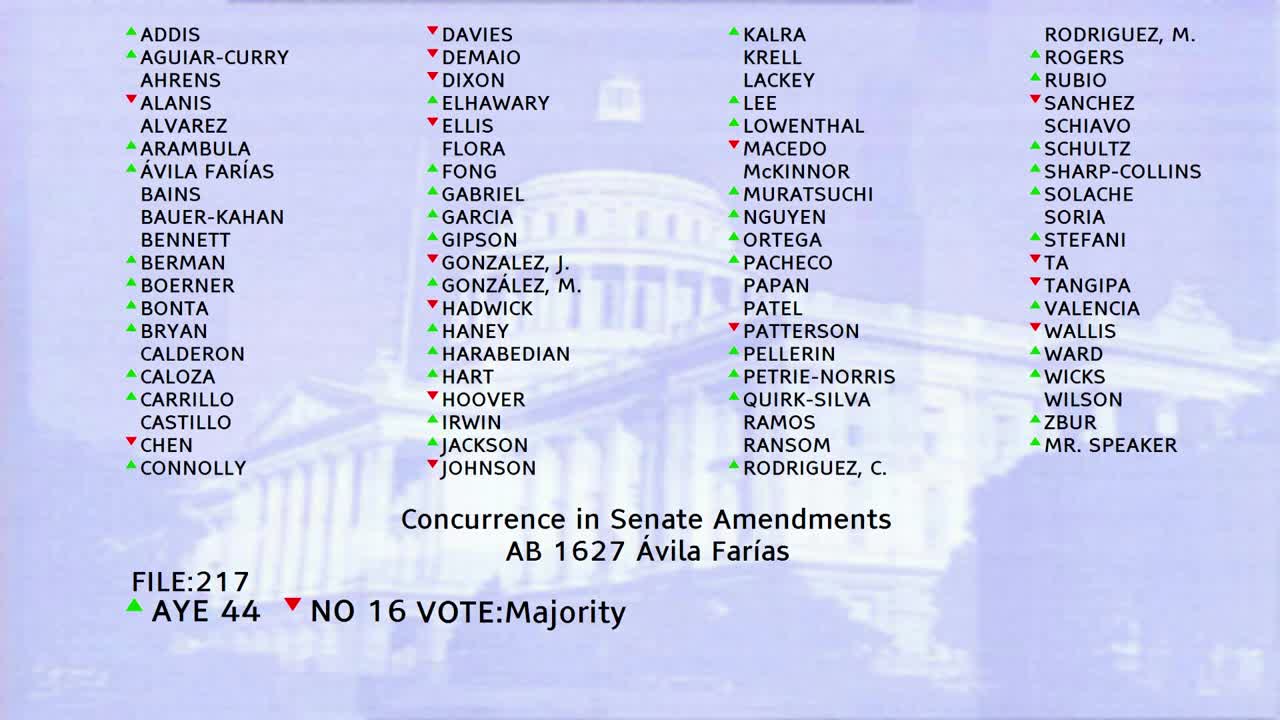
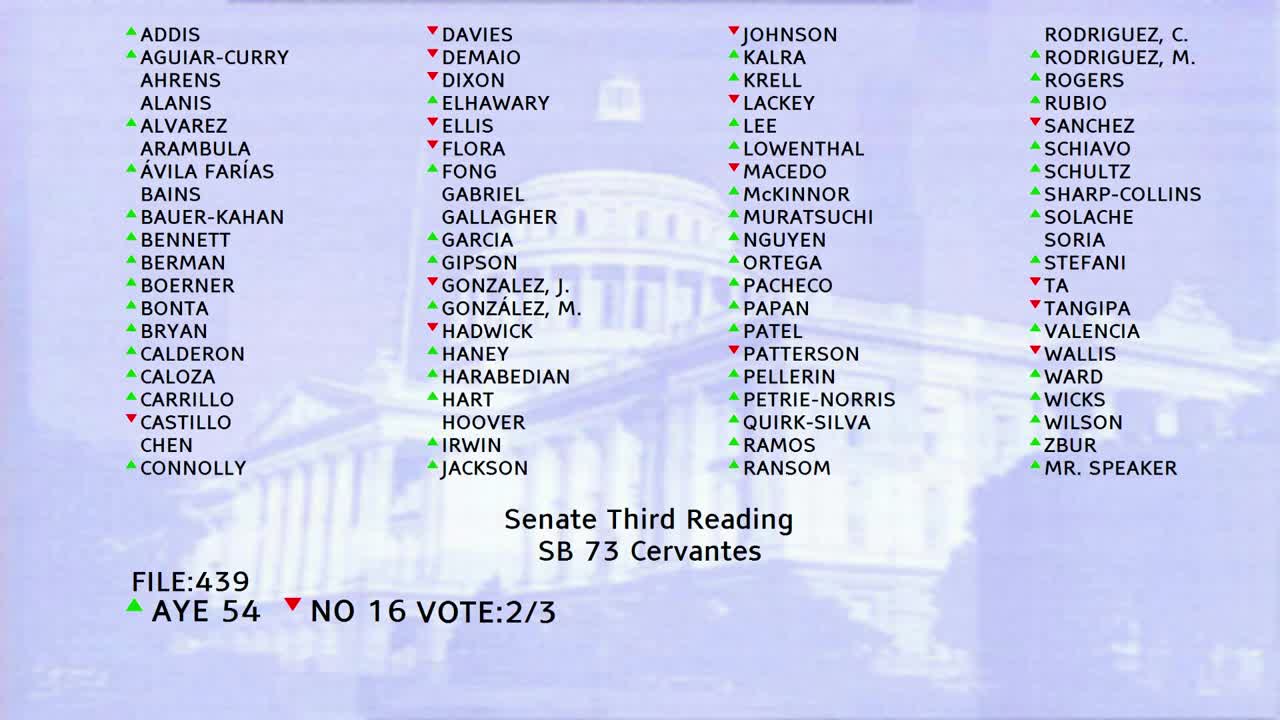
Bill Author

Bill Co-Author(s):