AB 2240: Medi-Cal: private duty nursing.
- Session Year: 2025-2026
- House: Assembly
- Latest Version Date: 2026-04-16
Current Status:
In Progress
(2026-05-14: In committee: Held under submission.)
Introduced
In Committee
Awaiting First Chamber Vote
Passed First Chamber
In Committee
Awaiting Second Chamber Vote
Passed Second Chamber
Enacted
Existing law, the Medi-Cal Act, establishes the Medi-Cal program, which is administered by the State Department of Health Care Services and under which qualified low-income individuals receive health care services. Under existing law, early and periodic screening, diagnostic, and treatment (EPSDT) services, including private duty nursing services, are covered under Medi-Cal for an individual under 21 years of age in accordance with certain federal provisions. The Medi-Cal program is in part governed by, and funded pursuant to, federal Medicaid program provisions. Existing law sets forth various requirements for private duty nursing for purposes of coverage under certain waiver programs within the Medi-Cal program.
Under this bill, private duty nursing services, provided to a child under 21 years of age by a home health agency, would be considered specialty care for purposes of Medi-Cal reimbursement under the provisions of the Medi-Cal Act. The bill would not apply this designation for purposes of Medi-Cal reimbursement under the provisions of the Protect Access to Health Care Act of 2024, an initiative measure enacted by Proposition 35, as approved by the voters at the November 5, 2024, statewide general election.This bill would require the department to measure and assess whether private duty nursing services provided as part of the EPSDT benefit are in compliance with federal Medicaid requirements, as specified. The bill would require the assessment to include a comparison of the hours of EPSDT private duty nursing services authorized by the Medi-Cal program to the hours actually provided to eligible beneficiary children and a determination of whether the reimbursement rates for those services are sufficient to ensure that all authorized hours are able to be provided. The bill would require the department to prepare and submit a report to the Legislature on the findings of the assessment by no later than March 1, 2027.
Existing law provides for the licensure of private duty nursing agencies and home health agencies by the State Department of Public Health. Existing law defines private duty nursing services as skilled nursing services provided on a shift basis for patients who require individual and continuous nursing care in the patients temporary or permanent place of residence or other community-based setting, as specified.
Existing law, the Medi-Cal Act, establishes the Medi-Cal program, which is administered by the State Department of Health Care Services and under which qualified low-income individuals receive health care services. The Medi-Cal program is in part governed by, and funded pursuant to, federal Medicaid program provisions. Existing law sets forth various requirements for private duty nursing for purposes of coverage under certain waiver programs within the Medi-Cal program.
Under this bill, private duty nursing services, provided to a child under 21 years of age by a home health agency, would be considered specialty care for purposes of Medi-Cal reimbursement under the provisions of the Medi-Cal Act. The bill would not apply this designation for purposes of Medi-Cal reimbursement under the provisions of the Protect Access to Health Care Act of 2024, an initiative measure enacted by Proposition 35, as approved by the voters at the November 5, 2024, statewide general election.
(a)The department shall measure and assess whether private duty nursing services provided as part of the early periodic screening, diagnostic, and treatment (EPSDT) benefit are in compliance with federal Medicaid requirements for the provision of private duty nursing services to children under 21 years of age. The assessment shall include, but is not limited to, both of the following:
(1)A comparison of the number of hours of EPSDT private duty nursing services authorized by the Medi-Cal program to the hours actually provided to eligible beneficiary children.
(2)A determination of whether the reimbursement rates for EPSDT private duty nursing services are sufficient to ensure that all authorized hours are able to be provided to eligible beneficiary children.
(b)By no later than March 1, 2027, the department shall prepare and submit a report to the Legislature on the findings of the assessment described in subdivision (a) in compliance with Section 9795 of the Government Code.
SECTION 1.Section 1743.2 of the Health and Safety Code is amended to read:1743.2.(a) Private duty nursing agency means a private or public organization, including, but not limited to, any partnership, corporation, political subdivision of the state, or other government agency within the state, that provides, or arranges for the provision of, private duty nursing services, as described in Section 1743.3.(b) Private duty nursing services means skilled nursing services provided on a shift basis for patients who require individual and continuous nursing care, and that meets all of the following requirements:(1) Is provided by a registered nurse or a licensed vocational nurse, except that any person accepted for service whose care requires medical orders shall be under the care of a physician, dentist, podiatrist, or other licensed practitioner within their scope of practice.(2) Is provided to the patient in their temporary or permanent place of residence or other community-based setting and includes, one or both of the following locations:(A) The patients home.(B) Outside of the patients home, as necessitated by normal life activities.(c)Private duty nursing services, provided to a child under 21 years of age by a home health agency, as defined in Section 1727, shall be considered specialty care for purposes of Medi-Cal reimbursement under Chapter 7 (commencing with Section 14000) of, but not Chapter 7.5 (commencing with Section 14199.100) of, Part 3 of Division 9 of the Welfare and Institutions Code.(a) Private duty nursing agency means a private or public organization, including, but not limited to, any partnership, corporation, political subdivision of the state, or other government agency within the state, that provides, or arranges for the provision of, private duty nursing services, as described in Section 1743.3.
(b) Private duty nursing services means skilled nursing services provided on a shift basis for patients who require individual and continuous nursing care, and that meets all of the following requirements:
(1) Is provided by a registered nurse or a licensed vocational nurse, except that any person accepted for service whose care requires medical orders shall be under the care of a physician, dentist, podiatrist, or other licensed practitioner within his or her their scope of practice.
(2) Is provided to the patient in his or her their temporary or permanent place of residence or other community-based setting and includes, one or both of the following locations:
(A) The patients home.
(B) Outside of the patients home, as necessitated by normal life activities.
(c)Private duty nursing services, provided to a child under 21 years of age by a home health agency, as defined in Section 1727, shall be considered specialty care for purposes of Medi-Cal reimbursement under Chapter 7 (commencing with Section 14000) of, but not Chapter 7.5 (commencing with Section 14199.100) of, Part 3 of Division 9 of the Welfare and Institutions Code.
|
Date
|
Status
|
|---|---|
| May 14, 2026 | In committee: Held under submission. |
| May 6, 2026 | In committee: Set, first hearing. Referred to APPR. suspense file. |
| Apr 22, 2026 | From committee: Do pass and re-refer to Com. on APPR. with recommendation: To Consent Calendar. (Ayes 16. Noes 0.) (April 21). Re-referred to Com. on APPR. |
| Apr 20, 2026 | Re-referred to Com. on HEALTH. |
| Apr 16, 2026 | From committee chair, with author's amendments: Amend, and re-refer to Com. on HEALTH. Read second time and amended. |
| Apr 8, 2026 | In committee: Hearing postponed by committee. |
| Mar 9, 2026 | Referred to Com. on HEALTH. |
| Feb 20, 2026 | From printer. May be heard in committee March 22. |
| Feb 19, 2026 | Read first time. To print. |
|
Date
|
Description
|
Location
|
Votes
|
|
|---|---|---|---|---|
| Apr 21, 2026 | Do pass and be re-referred to the Committee on [Appropriations] with recommendation: To Consent Calendar | Assembly Standing Committee on Health |
Passed |
This list shows positions taken on this bill by organizations on the date displayed, which is linked to the original source.
Positions by individuals are not included.
|
Organization
|
Position
|
Date
|
|---|---|---|
| Aveanna Healthcare | ** Support | |
| California Association For Health Services At Home | ** Support | |
| California Association for Health Services at Home (CAHSAH) | ** Support | |
| Maxim Healthcare Services | ** Support | |
| Prime Home Health | ** Support |
Date of Hearing: May 6, 2026
ASSEMBLY COMMITTEE ON APPROPRIATIONS
Buffy Wicks, Chair
ABPCA Bill Id:AB 2240
Author:(Stefani) – As Amended Ver:April 16, 2026
Policy Committee: | Health | Vote: | 16 - 0 |
|
| ||
|
|
Urgency: No State Mandated Local Program: No Reimbursable: No
SUMMARY:
This bill requires the Department of Health Care Services (DHCS) assess whether private duty nursing (PDN) services provided under the Early and Periodic Screening, Diagnostic, and Treatment (EPSDT) benefit are in compliance with federal Medicaid requirements, and whether reimbursement rates are sufficient to ensure all authorized hours can be provided.
The bill requires DHCS to report on the findings of the assessment to the Legislature by March 1, 2027.
FISCAL EFFECT:
One-time costs to DHCS of an unknown amount, potentially in the hundreds of thousands of dollars, or more, to assess use of PDN services, conduct a rate study, and prepare a report (General Fund, federal funds).
The Legislative Analyst’s Office recently warned of General Fund structural deficits of around $35 billion per year in the 2027-28 fiscal year and ongoing.
COMMENTS:
- Purpose. This bill is sponsored by California Association for Health Services at Home (CAHSAH). According to the author:
In recent years, over 1000 children with complex medical conditions and their families have been on waiting lists across the state for medical services that will allow them to remain in their homes and out of institutional settings. Even more children do receive care at home but are receiving hours of service that are less than authorized and insufficient to meet their needs. Keeping these children in their homes promotes their highest quality of life and allows them the opportunity to be with their families and engage in their communities. The stark reality of poor reimbursement rates in private duty nursing has resulted in a workforce shortage that forces parents and families of children with complex medical conditions to make impossible choices; they can bring their child to a hospital for long term care or provide care they are not trained or qualified to provide themselves, supplementing any private duty nursing hours they do receive. Children with complex medical conditions deserve dignity and quality of life afforded by appropriate health care services in their home. [This bill] aims to address the stagnant reimbursement rates that exacerbate the shortage of private duty nurses in the state by identifying it as a specialty care for purposes of Medi-Cal reimbursement.
- Background. According to a report commissioned by the sponsor of this bill, the state would save money by increasing reimbursement rates for PDN services by 40% because doing so would allow children to be served at home instead of in institutional settings. The report notes the current shortage of nursing personnel and the related rise in wages paid to nurses present a challenge to the viability of care at home.
- Related Legislation. AB 315 (Bonta), of the current legislative session, would have required a rate study of Home and Community-Based Alternatives waiver providers (of which PDN Agencies are one type), including whether the current method of rate-setting for a service provides an adequate supply of service providers. AB 315 was held on this committee’s suspense file.
Analysis Prepared by: Allegra Kim / APPR. / (916) 319-2081
Date of Hearing: April 21, 2026
ASSEMBLY COMMITTEE ON HEALTH
Mia Bonta, Chair
ABPCA Bill Id:AB 2240
Author:(Stefani) – As Amended Ver:April 16, 2026
SUBJECT: Medi-Cal: private duty nursing.
SUMMARY: Requires the Department of Health Care Services (DHCS) assess the provision of private duty nursing (PDN) services to children in Medi-Cal. Specifically, this bill:
- Requires DHCS to compare the number of hours of PDN services authorized by the Medi-Cal program under the Early and Periodic Screening, Diagnostic, and Treatment (EPSDT) benefit to the hours actually provided to eligible beneficiary children.
- Requires DHCS to determine whether the reimbursement rates for EPSDT PDN services are sufficient to ensure that all authorized hours are able to be provided to eligible beneficiary children.
- Requires, by no later than March 1, 2027, DHCS to report to Legislature on the findings of the assessment.
EXISTING FEDERAL LAW: Defines EPSDT to include vision, dental, hearing and other screening and preventive services at regular intervals, as well as such other diagnostic and treatment services federally allowable under Medicaid to correct or ameliorate defects and physical and mental illnesses and conditions, whether or not those services are covered under the Medicaid State plan. [Title 42 United States Code § 1396d(r)]
EXISTING STATE LAW:
- Establishes the Medi-Cal Program, administered by DHCS, to provide comprehensive health benefits to low-income individuals who meet specified eligibility criteria. [Welfare and Institutions Code (WIC) § 14000, et seq.]
- Establishes a schedule of benefits under the Medi-Cal program, which includes federally required and optional Medicaid benefits, subject to utilization controls. [WIC § 14132]
- Establishes EPSDT as a Medi-Cal benefit for any individual under 21 years of age is covered, consistent with the requirements of federal law, as specified. [WIC § 14132(v)]
- Establishes PDN agencies as a provider of skilled nursing services provided on a shift basis covered under the EPSDT supplemental [sic] and home- and community-based waiver programs, subject to federal approval and availability of federal financial participation. Establishes standards for participating PDNs. [WIC § 14105.13]
- Establishes licensure under the Department of Public Health for PDN agencies. Defines “PDN agency” as a private or public organization, including, but not limited to, any partnership, corporation, political subdivision of the state, or other government agency within the state, that provides, or arranges for the provision of, PDN services. Defines “PDN services” to mean skilled nursing services provided on a shift basis for patients who require individual and continuous nursing care, and that meets all of the following requirements:
- Is provided by a registered nurse or a licensed vocational nurse, except that any person accepted for service whose care requires medical orders must be under the care of a physician, dentist, podiatrist, or other licensed practitioner within their scope of practice; and,
- Is provided to the patient in their temporary or permanent place of residence or other community-based setting. [Health and Safety Code § 1743, et seq.]
FISCAL EFFECT: Unknown. This bill has not been analyzed by a fiscal committee.
COMMENTS:
- PURPOSE OF THIS BILL. According to the author, in recent years, over 1000 children with complex medical conditions and their families have been on waiting lists across the state for medical services that will allow them to remain in their homes and out of institutional settings. The author states that even more children do receive care at home but are receiving hours of service that are less than authorized and insufficient to meet their needs. The author laments that without enough nurses available, parents are often forced to make impossible choices between bringing their child into a hospital or institutional setting or trying to provide highly specialized medical care on their own without the training or support they need. The author argues this bill takes a practical step toward fixing this problem. It will require the state to look at whether children who are approved for in-home nursing are actually receiving the care they are promised, and whether current payment rates are strong enough to recruit and retain the nurses that families depend on. The author concludes that children with complex medical needs deserve dignity, stability, and the chance to grow up at home with their families, and this bill is about making sure our system delivers on that promise.
- BACKGROUND.
- PDN Services. PDN providers care for critically ill children in California suffering from complex medical conditions, such as spastic quadriplegic cerebral palsy, muscular dystrophy, and anoxic brain injury. These patients require skilled nursing services performed in the home usually by a Licensed Vocational Nurse (LVN), typically for 8-12 hours per day every day to manage their chronic condition and keep them safe in their homes. PDN agencies are licensed by DPH. PDN services are covered as a benefit for children in Medi-Cal under EPSDT and are also covered for some adults and persons with disabilities under certain Medi-Cal “home-and-community-based waiver” programs. These waiver programs allow individuals who would medically qualify to receive hospital or skilled nursing facility care to instead receive similar services at home or in community settings.
- EPSDT. Federal law establishes an entitlement to the EPSDT benefit, forming the foundation for children’s coverage under Medicaid. The EPSDT benefit provides a comprehensive array of prevention, diagnostic, and treatment services for individuals under the age of 21 who are enrolled in Medi-Cal. Under EPSDT, Medi-Cal covers periodic screening assessments for infants, children, and adolescents under 21 years of age, as specified in the AAP Bright Futures preventive healthcare periodicity schedule.
EPSDT is an expansive entitlement for children. In addition to screening, vision, dental, hearing and other preventive services, coverage also includes such other diagnostic and treatment services federally allowable under Medicaid to “correct or ameliorate defects and physical and mental illnesses and conditions,” whether or not those services are covered under the Medicaid State Plan. Limits, such as caps on the number of covered visits, on EPSDT services are not allowed when those services are medically necessary. Case law also has established states’ responsibility to provide medically necessary health care services under EPSDT, including rulings that “states have an obligation to cover every type of health care or service necessary for EPSDT corrective or ameliorative purposes that is allowable under [federal Medicaid law]” and that the state is required to provide or to ensure the provision of services under EPSDT.
- Shortage of PDN Providers and Stagnant Reimbursement Rates. Keeping children in their homes promotes their quality of life and allows them the opportunity to be with their families and engage in their communities. According to providers of PDN services, current reimbursement rates have resulted in a severe shortage of nurses. According to a report by California Health Policy Strategies commissioned by the California Association of Health Services at Home (CAHSAH), “Estimating the Cost of Caring for Children with Complex Medical Conditions During a Nursing Shortage,” the state would save money by increasing reimbursement rates for PDN services by 40% because it would allow children to be served at home instead of in institutional settings. The report notes the current shortage of nursing personnel and the related rise in wages paid to nurses present a challenge to the viability of care at home. The report notes the nursing shortage has a particularly strong impact on home care for children with complex medical conditions whose parents are doing their best to care for their children at home and that for these children, who are hospitalized regularly, a shortage of nurses means longer hospital stays because of difficulties securing appropriate home care upon discharge.
On the request of committee staff, one PDN provider submitted data for the last 13 weeks of their operations. For the children they serve, 461,187 hours were authorized by Medi-Cal and they were only able to fill 308,484, or 67% of the authorized hours. PDN providers note that children who cannot return to their homes because of a lack of available services have no choice but to be served long-term or routinely in an institutional setting.
- SUPPORT. CAHSAH supports this bill, arguing we are talking about are children with serious, lifelong medical needs. CAHSAH states these families are not asking for anything extraordinary — they want to bring their kids home, and in many cases, they cannot. CAHSAH explains the nurses who once staffed these cases have moved on to better-paying work in hospitals and clinics, and the pipeline of replacements has not kept pace. CAHSAH notes providers cannot close that wage gap under the current reimbursement structure, and that we need accountability to ensure children are getting the care they are guaranteed under federal law and regulation. This bill is also supported by other providers of PDN services, who argue it is good fiscal policy, because a child receiving skilled nursing care at home costs the Medi-Cal program a fraction of what that same child costs in a hospital bed.
- PREVIOUS LEGISLATION. AB 315 (Bonta) of 2025 would have required, among other things, a rate study of Home and Community-Based Alternatives waiver providers (of which PDN Agencies are one type), including whether the current method of rate-setting for a service provides an adequate supply of service providers. AB 315 was held on the suspense file of the Assembly Appropriations Committee.
REGISTERED SUPPORT / OPPOSITION:
Support
California Association for Health Services at Home (sponsor)
Aveanna Healthcare
Maxim Healthcare Services
Prime Home Health
Opposition
None on file
Analysis Prepared by: Lisa Murawski / HEALTH / (916) 319-2097
Bill Author
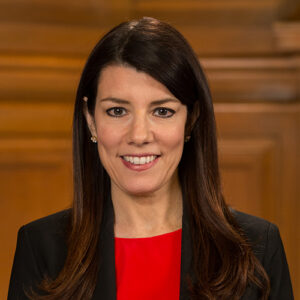
Bill Co-Author(s):