AB 2246: Online service, product, or feature: access by children.
- Session Year: 2025-2026
- House: Assembly
- Latest Version Date: 2026-09-10
Current Status:
Passed
(2026-09-10: Chaptered by Secretary of State - Chapter 187, Statutes of 2026.)
Introduced
In Committee
Awaiting First Chamber Vote
Passed First Chamber
In Committee
Awaiting Second Chamber Vote
Passed Second Chamber
Enacted
Existing law, the California Age-Appropriate Design Code Act, requires a business that provides an online service, product, or feature likely to be accessed by children to comply with certain requirements, including, among other things, prohibiting the business from collecting, selling, sharing, or retaining any personal information that is not necessary to provide the online service, product, or feature, except as specified. Existing law imposes specified civil penalties upon a business that violates these provisions.
This bill would repeal the above-described act and would instead impose similar provisions without the above-referenced exceptions and would impose civil penalties for a violation of these provisions. The bill would require a business that provides an online service, product, or feature likely to be accessed by children to take reasonable steps to prevent specified risks of harm to children. The bill would authorize a child to void any provision of a contract that was entered into by the child or their parent or guardian as a result of a design feature of the online service, product, or feature. The bill would authorize the Attorney General or a public prosecutor to bring a civil action for a violation of these provisions, as specified.
Existing law, the California Age-Appropriate Design Code Act, requires a business that provides an online service, product, or feature likely to be accessed by children to comply with certain requirements, including, among other things, prohibiting the business from profiling a child by default or using personal information for any reason other than the reason for which that information was collected, collecting, selling, sharing, or retaining any personal information that is not necessary to provide the online service, product, or feature, except as specified. Existing law imposes specified civil penalties upon a business that violates these provisions.
This bill would repeal the above-described act and would instead impose similar provisions without the above-referenced exceptions and would impose civil penalties for a violation of these provisions. The bill would require a business that provides an online product or service likely to be accessed by children to take reasonable steps to prevent specified risks of harm to children. The bill would authorize a child to void any provision of a contract that was entered into by the child or their parent or guardian as a result of a design feature of the online product or service. The bill would authorize the Attorney General or a public prosecutor to bring a civil action for a violation of these provisions, as specified.
Existing law, the California Age-Appropriate Design Code Act, requires a business that provides an online service, product, or feature likely to be accessed by children to comply with certain requirements, including, among other things, prohibiting the business from profiling a child by default or using personal information for any reason other than the reason for which that information was collected, except as specified. Existing law imposes specified civil penalties upon a business that violates these provisions.
This bill would impose similar provisions without the above-referenced exceptions and would impose civil penalties for a violation of these provisions.
The Youth Social Media Protection Act requires a large social media platform to create a process by which a verified reporter can make a report of a social media-related threat or a violation of the large social media platforms terms of service that in the verified reporters opinion poses a risk or a severe risk to the health and safety of a minor, as specified.This bill would require the Attorney General to submit a report to the Legislature on childrens safety features on social media platforms.The Youth Social Media Protection Act requires a large social media platform to create a process by which a verified reporter can make a report of a social media-related threat or a violation of the large social media platforms terms of service that in the verified reporters opinion poses a risk or a severe risk to the health and safety of a minor, as specified.
This bill would require the Attorney General to submit a report to the Legislature on childrens safety features on social media platforms.
The Medicinal and Adult-Use Cannabis Regulation and Safety Act generally regulates the manufacture and sale of cannabis products in the state and requires a licensed manufacturer to only use cannabinoid concentrates and extracts that are manufactured or processed exclusively from cannabis obtained from a licensed cannabis cultivator.This bill would make nonsubstantive changes to that provision.The Medicinal and Adult-Use Cannabis Regulation and Safety Act generally regulates the manufacture and sale of cannabis products in the state and requires a licensed manufacturer to only use cannabinoid concentrates and extracts that are manufactured or processed exclusively from cannabis obtained from a licensed cannabis cultivator.
This bill would make nonsubstantive changes to that provision.
(a)For purposes of this chapter, the definitions in Section 1798.140 shall apply unless otherwise specified in this chapter.
(b)For the purposes of this chapter:
(1)Child or children, unless otherwise specified, means a consumer or consumers who are under 18 years of age.
(2)Default means a preselected option adopted by the business for the online service, product, or feature.
(3)Likely to be accessed by children means it is reasonable to expect, based on the following indicators, that the online service, product, or feature would be accessed by children:
(A)The online service, product, or feature is directed to children as defined by the Childrens Online Privacy Protection Act (15 U.S.C. Sec. 6501 et seq.).
(B)The online service, product, or feature is determined, based on competent and reliable evidence regarding audience composition, to be routinely accessed by a significant number of children.
(C)An online service, product, or feature with advertisements marketed to children.
(D)An online service, product, or feature that is substantially similar to or the same as an online service, product, or feature subject to subparagraph (B).
(E)An online service, product, or feature that has design elements that are known to be of interest to children, including, but not limited to, games, cartoons, music, and celebrities who appeal to children.
(F)A significant amount of the audience of the online service, product, or feature is determined, based on internal company research, to be children.
(4)Online service, product, or feature does not mean any of the following:
(A)A broadband internet access service, as defined in Section 3100.
(B)A telecommunications service, as defined in Section 153 of Title 47 of the United States Code.
(C)The delivery or use of a physical product.
(5)Profiling means any form of automated processing of personal information that uses personal information to evaluate certain aspects relating to a natural person, including analyzing or predicting aspects concerning a natural persons performance at work, economic situation, health, personal preferences, interests, reliability, behavior, location, or movements.
1798.99.29.(a)A business that provides an online service, product, or feature likely to be accessed by children shall take all of the following actions:
(1)Estimate the age of child users with a reasonable level of certainty appropriate to the risks that arise from the data management practices of the business pursuant to subdivision (b) of Section 1798.501 of the Civil Code or apply the privacy and data protections afforded to children to all consumers.
(2)Configure all default privacy settings provided to children by the online service, product, or feature to settings that offer a high level of privacy.
(3)Provide any privacy information, terms of service, policies, and community standards concisely, prominently, and using clear language suited to the age of children likely to access that online service, product, or feature.
(4)If the online service, product, or feature allows the childs parent, guardian, or any other consumer to monitor the childs online activity or track the childs location, provide an obvious signal to the child when the child is being monitored or tracked.
(5)Provide prominent, accessible, and responsive tools to help children, or if applicable their parents or guardians, exercise their privacy rights and report concerns.
(b)A business that provides an online service, product, or feature likely to be accessed by children shall not take any of the following actions:
(1)Profile a child by default unless the both of the following criteria are met:
(A)The business can demonstrate it has appropriate safeguards in place to protect children.
(B)Either of the following is true:
(i)Profiling is necessary to provide the online service, product, or feature with which the child is actively and knowingly engaged.
(ii)The profiling is necessary to enhance the safety, privacy, or education of a child.
(2)Collect, sell, share, or retain any personal information that is not necessary to provide an online service, product, or feature with which a child is actively and knowingly engaged, or as described in subparagraphs (A) to (D), inclusive, of paragraph (1) of subdivision (a) of Section 1798.145.
(3)(A)If the end user is a child, use personal information for any reason other than a reason for which that personal information was collected.
(B)This paragraph does not prohibit a business from processing personal data necessary to ensure the safety, integrity, or security of the service, for measurement, auditing, and system improvement, or to comply with this title.
(4)Collect, sell, or share any precise geolocation information of children by default unless the collection of that precise geolocation information is strictly necessary for the business to provide the service, product, or feature requested and then only for the limited time that the collection of precise geolocation information is necessary to provide the service, product, or feature.
(5)Collect any precise geolocation information of a child without providing an obvious sign to the child for the duration of that collection that precise geolocation information is being collected.
(6)Use dark patterns to lead or encourage children to provide personal information beyond what is reasonably expected to provide that online service, product, or feature to forego privacy protections.
(7)Retain any personal information collected to estimate age or age range for any other purpose or retain that personal information longer than necessary to estimate age. Age assurance shall be proportionate to the risks and data practice of an online service, product, or feature.
(c)Nothing in this section shall be construed to require a business to prevent or preclude a child from accessing or viewing any piece of media or category of media.
1798.99.30.(a)A business that provides an online service, product, or feature likely to be accessed by children shall take reasonable steps to prevent the following risks of harm to children:
(1)Reasonably foreseeable physical or financial harm.
(2)Severe and reasonably foreseeable psychological or emotional harm to a reasonable child.
(3)A highly offensive intrusion on privacy rights protected by state or federal law.
(4)Adverse discrimination in violate of state or federal law.
(b)Nothing in this section shall be construed to impose a duty to monitor, screen, or remove third-party content; to restrict lawful speech; or to require any specific content ranking, recommendation, or editorial outcomes.
1798.99.31.Any provision of a contract entered into by a child or a childs parent or guardian is voidable at the childs election if the contract was entered into as a result of a design feature of an online service, product, or feature likely to be accessed by children, including, but not limited to, the provisions of a contract or other agreement governing the terms of service for that online service, product, or feature.
1798.99.32.(a)Any business that violates this chapter shall be subject to an injunction and liable for a civil penalty of not more than five thousand dollars ($5,000) per affected child for each negligent violation or not more than fifteen thousand dollars ($15,000) per affected child for each intentional violation, which shall be assessed and recovered only in a civil action brought by either of the following:
(1)In the name of the people of the State of California by the Attorney General.
(2)A public prosecutor.
(b)Any penalties, fees, and expenses recovered in an action brought by the Attorney General under this chapter shall be deposited in the Consumer Privacy Fund, created within the General Fund pursuant to subdivision (a) of Section 1798.160, with the intent that they be used to fully offset costs incurred by the Attorney General in connection with this chapter.
(c)Nothing in this chapter shall be interpreted to serve as the basis for a private right of action under this chapter or any other law.
(d)The Attorney General may solicit broad public participation and adopt regulations to clarify the requirements of this chapter.
1798.99.33.This chapter does not apply to the information or entities described in subdivision (c) of Section 1798.145.
1798.99.34.The provisions of this title are severable. If any provision of this title or its application is held invalid, that invalidity shall not affect other provisions or applications that can be given effect without the invalid provision or application.
SECTION 1.Chapter 22.1.5 (commencing with Section 22583) is added to Division 8 of the Business and Professions Code, to read:22.1.5.Online Services, Products, or Features Likely to be Accessed by Children22583.(a)For purposes of this chapter, the definitions in Section 1798.140 of the Civil Code shall apply unless otherwise specified in this chapter.(b)For the purposes of this chapter:(1)Child or children, unless otherwise specified, means a consumer or consumers who are under 18 years of age.(2)Default means a preselected option adopted by the business for the online service, product, or feature.(3)Likely to be accessed by children means it is reasonable to expect, based on the following indicators, that the online service, product, or feature would be accessed by children:(A)The online service, product, or feature is directed to children as defined by the Childrens Online Privacy Protection Act (15 U.S.C. Sec. 6501 et seq.).(B)The online service, product, or feature is determined, based on competent and reliable evidence regarding audience composition, to be routinely accessed by a significant number of children.(C)An online service, product, or feature with advertisements marketed to children.(D)An online service, product, or feature that is substantially similar or the same as an online service, product, or feature subject to subparagraph (B).(E)An online service, product, or feature that has design elements that are known to be of interest to children, including, but not limited to, games, cartoons, music, and celebrities who appeal to children.(F)A significant amount of the audience of the online service, product, or feature is determined, based on internal company research, to be children.(4)Online service, product, or feature does not mean any of the following:(A)A broadband internet access service, as defined in Section 3100 of the Civil Code.(B)A telecommunications service, as defined in Section 153 of Title 47 of the United States Code.(C)The delivery or use of a physical product.(5)Profiling means any form of automated processing of personal information that uses personal information to evaluate certain aspects relating to a natural person, including analyzing or predicting aspects concerning a natural persons performance at work, economic situation, health, personal preferences, interests, reliability, behavior, location, or movements.22583.1.(a)A business that provides an online service, product, or feature likely to be accessed by children shall take all of the following actions:(1)Estimate the age of child users with a reasonable level of certainty appropriate to the risks that arise from the data management practices of the business pursuant to subdivision (b) of Section 1798.501 of the Civil Code or apply the privacy and data protections afforded to children to all consumers.(2)Configure all default privacy settings provided to children by the online service, product, or feature to settings that offer a high level of privacy.(3)Provide any privacy information, terms of service, policies, and community standards concisely, prominently, and using clear language suited to the age of children likely to access that online service, product, or feature.(4)If the online service, product, or feature allows the childs parent, guardian, or any other consumer to monitor the childs online activity or track the childs location, provide an obvious signal to the child when the child is being monitored or tracked.(5)Provide prominent, accessible, and responsive tools to help children, or if applicable their parents or guardians, exercise their privacy rights and report concerns.(b)A business that provides an online service, product, or feature likely to be accessed by children shall not take any of the following actions:(1)Use the personal information of any child in a way that the business knows, or has reason to know, will cause an average child likely to access the online service, product, or feature either of the following harms:(A)Significant mental suffering or distress that may, but does not necessarily, require medical or other professional treatment or counseling.(B)Discrimination against the child on the basis of race, ethnicity, sex, disability, sexual orientation, gender identity, gender expression, religion, or national origin.(2)Profile a child by default.(3)Collect, sell, share, or retain any personal information that is not necessary to provide an online service, product, or feature with which a child is actively and knowingly engaged, or as described in subparagraphs (A) to (D), inclusive, of paragraph (1) of subdivision (a) of Section 1798.145 of the Civil Code.(4)If the end user is a child, use personal information for any reason other than a reason for which that personal information was collected.(5)Collect, sell, or share any precise geolocation information of children by default unless the collection of that precise geolocation information is strictly necessary for the business to provide the service, product, or feature requested and then only for the limited time that the collection of precise geolocation information is necessary to provide the service, product, or feature.(6)Collect any precise geolocation information of a child without providing an obvious sign to the child for the duration of that collection that precise geolocation information is being collected.(7)Use dark patterns to lead or encourage children to provide personal information beyond what is reasonably expected to provide that online service, product, or feature to forego privacy protections.(8)Use any personal information collected to estimate age or age range for any other purpose or retain that personal information longer than necessary to estimate age. Age assurance shall be proportionate to the risks and data practice of an online service, product, or feature.(c)Nothing in this section shall be construed to require a business to prevent or preclude a child from accessing or viewing any piece of media or category of media.22583.2.(a)Any business that violates this chapter shall be subject to an injunction and liable for a civil penalty of not more than five thousand dollars ($5,000) per affected child for each negligent violation or not more than fifteen thousand dollars ($15,000) per affected child for each intentional violation, which shall be assessed and recovered only in a civil action brought in the name of the people of the State of California by the Attorney General.(b)Any penalties, fees, and expenses recovered in an action brought under this chapter shall be deposited in the Consumer Privacy Fund, created within the General Fund pursuant to subdivision (a) of Section 1798.160 of the Civil Code, with the intent that they be used to fully offset costs incurred by the Attorney General in connection with this chapter.(c)Nothing in this chapter shall be interpreted to serve as the basis for a private right of action under this chapter or any other law.(d)The Attorney General may solicit broad public participation and adopt regulations to clarify the requirements of this chapter.22583.3.This chapter does not apply to the information or entities described in subdivision (c) of Section 1798.145 of the Civil Code.22583.4.The provisions of this chapter are severable. If any provision of this chapter or its application is held invalid, that invalidity shall not affect other provisions or applications that can be given effect without the invalid provision or application.(a)For purposes of this chapter, the definitions in Section 1798.140 of the Civil Code shall apply unless otherwise specified in this chapter.
(b)For the purposes of this chapter:
(1)Child or children, unless otherwise specified, means a consumer or consumers who are under 18 years of age.
(2)Default means a preselected option adopted by the business for the online service, product, or feature.
(3)Likely to be accessed by children means it is reasonable to expect, based on the following indicators, that the online service, product, or feature would be accessed by children:
(A)The online service, product, or feature is directed to children as defined by the Childrens Online Privacy Protection Act (15 U.S.C. Sec. 6501 et seq.).
(B)The online service, product, or feature is determined, based on competent and reliable evidence regarding audience composition, to be routinely accessed by a significant number of children.
(C)An online service, product, or feature with advertisements marketed to children.
(D)An online service, product, or feature that is substantially similar or the same as an online service, product, or feature subject to subparagraph (B).
(E)An online service, product, or feature that has design elements that are known to be of interest to children, including, but not limited to, games, cartoons, music, and celebrities who appeal to children.
(F)A significant amount of the audience of the online service, product, or feature is determined, based on internal company research, to be children.
(4)Online service, product, or feature does not mean any of the following:
(A)A broadband internet access service, as defined in Section 3100 of the Civil Code.
(B)A telecommunications service, as defined in Section 153 of Title 47 of the United States Code.
(C)The delivery or use of a physical product.
(5)Profiling means any form of automated processing of personal information that uses personal information to evaluate certain aspects relating to a natural person, including analyzing or predicting aspects concerning a natural persons performance at work, economic situation, health, personal preferences, interests, reliability, behavior, location, or movements.
22583.1.(a)A business that provides an online service, product, or feature likely to be accessed by children shall take all of the following actions:
(1)Estimate the age of child users with a reasonable level of certainty appropriate to the risks that arise from the data management practices of the business pursuant to subdivision (b) of Section 1798.501 of the Civil Code or apply the privacy and data protections afforded to children to all consumers.
(2)Configure all default privacy settings provided to children by the online service, product, or feature to settings that offer a high level of privacy, unless the business can demonstrate a compelling reason that a different setting is in the best interests of children. privacy.
(3)Provide any privacy information, terms of service, policies, and community standards concisely, prominently, and using clear language suited to the age of children likely to access that online service, product, or feature.
(4)If the online service, product, or feature allows the childs parent, guardian, or any other consumer to monitor the childs online activity or track the childs location, provide an obvious signal to the child when the child is being monitored or tracked.
(5)Provide prominent, accessible, and responsive tools to help children, or if applicable their parents or guardians, exercise their privacy rights and report concerns.
(b)A business that provides an online service, product, or feature likely to be accessed by children shall not take any of the following actions:
(1)Use the personal information of any child in a way that the business knows, or has reason to know, will cause an average child likely to access the online service, product, or feature either of the following harms:
(A)Significant mental suffering or distress that may, but does not necessarily, require medical or other professional treatment or counseling.
(B)Discrimination against the child on the basis of race, ethnicity, sex, disability, sexual orientation, gender identity, gender expression, religion, or national origin.
(2)Profile a child by default.
(3)Collect, sell, share, or retain any personal information that is not necessary to provide an online service, product, or feature with which a child is actively and knowingly engaged, or as described in subparagraphs (A) to (D), inclusive, of paragraph (1) of subdivision (a) of Section 1798.145 of the Civil Code.
(4)If the end user is a child, use personal information for any reason other than a reason for which that personal information was collected.
(5)Collect, sell, or share any precise geolocation information of children by default unless the collection of that precise geolocation information is strictly necessary for the business to provide the service, product, or feature requested and then only for the limited time that the collection of precise geolocation information is necessary to provide the service, product, or feature.
(6)Collect any precise geolocation information of a child without providing an obvious sign to the child for the duration of that collection that precise geolocation information is being collected.
(7)Use dark patterns to lead or encourage children to provide personal information beyond what is reasonably expected to provide that online service, product, or feature to forego privacy protections.
(8)Use any personal information collected to estimate age or age range for any other purpose or retain that personal information longer than necessary to estimate age. Age assurance shall be proportionate to the risks and data practice of an online service, product, or feature.
(c)Nothing in this section shall be construed to require a business to prevent or preclude a child from accessing or viewing any piece of media or category of media.
22583.2.(a)Any business that violates this chapter shall be subject to an injunction and liable for a civil penalty of not more than two thousand five hundred dollars ($2,500) five thousand dollars ($5,000) per affected child for each negligent violation or not more than seven thousand five hundred dollars ($7,500) fifteen thousand dollars ($15,000) per affected child for each intentional violation, which shall be assessed and recovered only in a civil action brought in the name of the people of the State of California by the Attorney General.
(b)Any penalties, fees, and expenses recovered in an action brought under this chapter shall be deposited in the Consumer Privacy Fund, created within the General Fund pursuant to subdivision (a) of Section 1798.160 of the Civil Code, with the intent that they be used to fully offset costs incurred by the Attorney General in connection with this chapter.
(c)Nothing in this chapter shall be interpreted to serve as the basis for a private right of action under this chapter or any other law.
(d)The Attorney General may solicit broad public participation and adopt regulations to clarify the requirements of this chapter.
22583.3.This chapter does not apply to the information or entities described in subdivision (c) of Section 1798.145 of the Civil Code.
22583.4.The provisions of this chapter are severable. If any provision of this chapter or its application is held invalid, that invalidity shall not affect other provisions or applications that can be given effect without the invalid provision or application.
CORRECTIONS: HeadingLines 2 and 3.(a)For purposes of this chapter, the definitions in Section 1798.140 of the Civil Code shall apply unless otherwise specified in this chapter.
(b)For the purposes of this chapter:
(1)Child or children, unless otherwise specified, means a consumer or consumers who are under 18 years of age.
(2)Default means a preselected option adopted by the business for the online service, product, or feature.
(3)Likely to be accessed by children means it is reasonable to expect, based on the following indicators, that the online service, product, or feature would be accessed by children:
(A)The online service, product, or feature is directed to children as defined by the Childrens Online Privacy Protection Act (15 U.S.C. Sec. 6501 et seq.).
(B)The online service, product, or feature is determined, based on competent and reliable evidence regarding audience composition, to be routinely accessed by a significant number of children.
(C)An online service, product, or feature with advertisements marketed to children.
(D)An online service, product, or feature that is substantially similar or the same as an online service, product, or feature subject to subparagraph (B).
(E)An online service, product, or feature that has design elements that are known to be of interest to children, including, but not limited to, games, cartoons, music, and celebrities who appeal to children.
(F)A significant amount of the audience of the online service, product, or feature is determined, based on internal company research, to be children.
(4)Online service, product, or feature does not mean any of the following:
(A)A broadband internet access service, as defined in Section 3100 of the Civil Code.
(B)A telecommunications service, as defined in Section 153 of Title 47 of the United States Code.
(C)The delivery or use of a physical product.
(5)Profiling means any form of automated processing of personal information that uses personal information to evaluate certain aspects relating to a natural person, including analyzing or predicting aspects concerning a natural persons performance at work, economic situation, health, personal preferences, interests, reliability, behavior, location, or movements.
22583.1.(a)A business that provides an online service, product, or feature likely to be accessed by children shall take all of the following actions:
(1)Estimate the age of child users with a reasonable level of certainty appropriate to the risks that arise from the data management practices of the business or apply the privacy and data protections afforded to children to all consumers.
(2)Configure all default privacy settings provided to children by the online service, product, or feature to settings that offer a high level of privacy, unless the business can demonstrate a compelling reason that a different setting is in the best interests of children.
(3)Provide any privacy information, terms of service, policies, and community standards concisely, prominently, and using clear language suited to the age of children likely to access that online service, product, or feature.
(4)If the online service, product, or feature allows the childs parent, guardian, or any other consumer to monitor the childs online activity or track the childs location, provide an obvious signal to the child when the child is being monitored or tracked.
(5)Provide prominent, accessible, and responsive tools to help children, or if applicable their parents or guardians, exercise their privacy rights and report concerns.
(b)A business that provides an online service, product, or feature likely to be accessed by children shall not take any of the following actions:
(1)Use the personal information of any child in a way that the business knows, or has reason to know, will cause an average child likely to access the online service, product, or feature either of the following harms:
(A)Significant mental suffering or distress that may, but does not necessarily, require medical or other professional treatment or counseling.
(B)Discrimination against the child on the basis of race, ethnicity, sex, disability, sexual orientation, gender identity, gender expression, religion, or national origin.
(2)Profile a child by default.
(3)Collect, sell, share, or retain any personal information that is not necessary to provide an online service, product, or feature with which a child is actively and knowingly engaged, or as described in subparagraphs (A) to (D), inclusive, of paragraph (1) of subdivision (a) of Section 1798.145 of the Civil Code.
(4)If the end user is a child, use personal information for any reason other than a reason for which that personal information was collected.
(5)Collect, sell, or share any precise geolocation information of children by default unless the collection of that precise geolocation information is strictly necessary for the business to provide the service, product, or feature requested and then only for the limited time that the collection of precise geolocation information is necessary to provide the service, product, or feature.
(6)Collect any precise geolocation information of a child without providing an obvious sign to the child for the duration of that collection that precise geolocation information is being collected.
(7)Use dark patterns to lead or encourage children to provide personal information beyond what is reasonably expected to provide that online service, product, or feature to forego privacy protections.
(8)Use any personal information collected to estimate age or age range for any other purpose or retain that personal information longer than necessary to estimate age. Age assurance shall be proportionate to the risks and data practice of an online service, product, or feature.
(c)Nothing in this section shall be construed to require a business to prevent or preclude a child from accessing or viewing any piece of media or category of media.
22583.2.(a)Any business that violates this chapter shall be subject to an injunction and liable for a civil penalty of not more than two thousand five hundred dollars ($2,500) per affected child for each negligent violation or not more than seven thousand five hundred dollars ($7,500) per affected child for each intentional violation, which shall be assessed and recovered only in a civil action brought in the name of the people of the State of California by the Attorney General.
(b)Any penalties, fees, and expenses recovered in an action brought under this chapter shall be deposited in the Consumer Privacy Fund, created within the General Fund pursuant to subdivision (a) of Section 1798.160 of the Civil Code, with the intent that they be used to fully offset costs incurred by the Attorney General in connection with this chapter.
(c)Nothing in this chapter shall be interpreted to serve as the basis for a private right of action under this chapter or any other law.
(d)The Attorney General may solicit broad public participation and adopt regulations to clarify the requirements of this chapter.
22583.3.This chapter does not apply to the information or entities described in subdivision (c) of Section 1798.145 of the Civil Code.
22583.4.The provisions of this chapter are severable. If any provision of this chapter or its application is held invalid, that invalidity shall not affect other provisions or applications that can be given effect without the invalid provision or application.
SECTION 1.Section 22588.3.5 is added to the Business and Professions Code, to read:22588.3.5.The Attorney General shall submit a report to the Legislature on childrens safety features on social media platforms. REVISIONS: HeadingLine 2.The Attorney General shall submit a report to the Legislature on childrens safety features on social media platforms.
SECTION 1.Section 26000.5 of the Business and Professions Code is amended to read:26000.5.Until January 1, 2028, both of the following shall apply:(a)A licensed manufacturer shall use only cannabinoid concentrates and extracts that are manufactured or processed exclusively from cannabis obtained from a licensed cannabis cultivator.(b)A licensee shall not possess, transport, distribute, manufacture, or sell industrial hemp on or from a licensed premises, except that a licensed testing laboratory may test industrial hemp.Until January 1, 2028, both of the following shall apply:
(a)A licensed manufacturer shall only use use only cannabinoid concentrates and extracts that are manufactured or processed exclusively from cannabis obtained from a licensed cannabis cultivator.
(b)A licensee shall not possess, transport, distribute, manufacture, or sell industrial hemp on or from a licensed premises, except that a licensed testing laboratory may test industrial hemp.
|
Date
|
Status
|
|---|---|
| Sep 10, 2026 | Chaptered by Secretary of State - Chapter 187, Statutes of 2026. |
| Sep 10, 2026 | Approved by the Governor. |
| Sep 9, 2026 | Enrolled and presented to the Governor at 1 p.m. |
| Aug 30, 2026 | Senate amendments concurred in. To Engrossing and Enrolling. (Ayes 73. Noes 1. Page 6887.). |
| Aug 30, 2026 | Senate amendments concurred in. To Engrossing and Enrolling. (Ayes 73. Noes 1.). |
| Aug 30, 2026 | Senate amendments concurred in. To Engrossing and Enrolling. |
| Aug 28, 2026 | In Assembly. Concurrence in Senate amendments pending. |
| Aug 27, 2026 | Read third time. Passed. Ordered to the Assembly. (Ayes 39. Noes 0. Page 5991.). |
| Aug 27, 2026 | Read third time. Passed. Ordered to the Assembly. (Ayes 39. Noes 0.). |
| Aug 24, 2026 | Read second time. Ordered to third reading. |
| Aug 21, 2026 | Read third time and amended. Ordered to second reading. |
| Aug 13, 2026 | Read second time. Ordered to third reading. |
| Aug 13, 2026 | From committee: Do pass. (Ayes 7. Noes 0.) (August 13). |
| Aug 3, 2026 | In committee: Referred to APPR. suspense file. |
| Jul 1, 2026 | From committee: Do pass and re-refer to Com. on APPR. (Ayes 13. Noes 0.) (June 30). Re-referred to Com. on APPR. |
| Jun 16, 2026 | From committee: Do pass and re-refer to Com. on JUD. (Ayes 8. Noes 0.) (June 15). Re-referred to Com. on JUD. |
| Jun 3, 2026 | Referred to Coms. on P., D.T., & C.P. and JUD. |
| May 27, 2026 | In Senate. Read first time. To Com. on RLS. for assignment. |
| May 26, 2026 | Read third time. Passed. Ordered to the Senate. (Ayes 71. Noes 1. Page 5310.) |
| May 26, 2026 | Read third time. Passed. Ordered to the Senate. (Ayes 71. Noes 1.) |
| May 26, 2026 | Read third time. Passed. Ordered to the Senate. |
| May 18, 2026 | Read second time. Ordered to third reading. |
| May 14, 2026 | From committee: Do pass. (Ayes 13. Noes 0.) (May 14). |
| May 14, 2026 | Joint Rule 62(a), file notice suspended. (Page 5030.) |
| May 14, 2026 | Joint Rule 62(a), file notice suspended. |
| May 13, 2026 | In committee: Set, first hearing. Referred to APPR. suspense file. |
| Apr 27, 2026 | Measure version as amended on April 23 corrected. |
| Apr 27, 2026 | Re-referred to Com. on APPR. |
| Apr 23, 2026 | Read second time and amended. |
| Apr 22, 2026 | From committee: Amend, and do pass as amended and re-refer to Com. on APPR. (Ayes 11. Noes 0.) (April 21). |
| Apr 16, 2026 | From committee: Do pass and re-refer to Com. on JUD. (Ayes 13. Noes 0.) (April 16). Re-referred to Com. on JUD. |
| Apr 16, 2026 | Coauthors revised. |
| Apr 7, 2026 | Re-referred to Com. on P. & C.P. |
| Apr 6, 2026 | From committee chair, with author's amendments: Amend, and re-refer to Com. on P. & C.P. Read second time and amended. |
| Mar 23, 2026 | Re-referred to Com. on P. & C.P. |
| Mar 19, 2026 | From committee chair, with author's amendments: Amend, and re-refer to Com. on P. & C.P. Read second time and amended. |
| Mar 19, 2026 | Referred to Coms. on P. & C.P. and JUD. |
| Feb 20, 2026 | From printer. May be heard in committee March 22. |
| Feb 19, 2026 | Read first time. To print. |
|
Date
|
Description
|
Location
|
Votes
|
|
|---|---|---|---|---|
| Aug 30, 2026 | AB 2246 Wicks Concurrence in Senate Amendments | Assembly Floor |
Passed |
|
| Aug 27, 2026 | Assembly 3rd Reading AB2246 Wicks et al. By Padilla | Senate Floor |
Passed |
|
| Aug 13, 2026 | Do pass | Senate Standing Committee on Appropriations |
Passed |
|
| Aug 3, 2026 | Placed on suspense file | Senate Standing Committee on Appropriations |
Passed |
|
| Jun 30, 2026 | Do pass, but first be re-referred to the Committee on [Appropriations] | Senate Standing Committee on Judiciary |
Passed |
|
| Jun 15, 2026 | Do pass, but first be re-referred to the Committee on [Judiciary] | Senate Standing Committee on Privacy, Digital Technologies, and Consumer Protection |
Passed |
|
| May 26, 2026 | AB 2246 Wicks Assembly Third Reading | Assembly Floor |
Passed |
|
| May 14, 2026 | Do pass. | Assembly Standing Committee on Appropriations |
Passed |
|
| Apr 21, 2026 | Do pass as amended and be re-referred to the Committee on [Appropriations] | Assembly Standing Committee on Judiciary |
Passed |
|
| Apr 16, 2026 | Do pass and be re-referred to the Committee on [Judiciary] | Assembly Standing Committee on Privacy and Consumer Protection |
Passed |
This list shows positions taken on this bill by organizations on the date displayed, which is linked to the original source.
Positions by individuals are not included.
|
Organization
|
Position
|
Date
|
|---|---|---|
| American Academy Of Pediatrics, California | ** Support | |
| Bright Light Strategies | ** Support | |
| California Academy of Child and Adolescent Psychiatry | ** Support | |
| California Chamber Of Commerce | ** Against | |
| Children Now | ** Support | |
| Common Sense Media | ** Support | |
| Computer And Communications Industry Association | ** Against | |
| Los Angeles Unified School District | ** Support | |
| Omidyar Network | ** Support | |
| Project Liberty LLC | ** Support | |
| Technet | ** Against | |
| Tech Oversight California | ** Support |
CONCURRENCE IN SENATE AMENDMENTS
CSA1 Bill Id:AB 2246
Author:(Wicks)
As Amended Ver:August 21, 2026
Majority vote
SUMMARY
Establishes child privacy and design requirements for businesses providing online services, products, or features likely to be accessed by children. Replicates many provisions of the California Age-Appropriate Design Code Act (AADC) of 2022, while omitting and recasting the provisions enjoined or invalidated by the Ninth Circuit. Additionally requires that businesses subject to the AADC take reasonable steps to prevent specified risks, provides that any contract provision entered as the result of a design feature is voidable, and expands public enforcement, among other changes.
Senate Amendments
- Repeal the existing AADC provisions.
- Require a business that provides an online product or service likely to be accessed by children to take reasonable steps to prevent specified risks of harm to children.
- Authorize a child to void any provision of a contract that was entered into by the child or their parent or guardian as a result of a design feature of the online product or service.
- Authorize public prosecutors, in addition to the Attorney General, to bring a civil action for a violation of the bill's provisions.
COMMENTS
Background. In 2022, the Legislature, drawing on a similar law adopted in the United Kingdom, enacted the California Age-Appropriate Design Code Act (AADC), a bipartisan measure intended to protect the privacy, safety, and well-being of children when engaging with online products and services that children are likely to access. This Committee's analysis emphasized that the AADC is distinct from other federal and state efforts to protect children online because those statutes permit online platforms to treat all consumers as adults, unless there is actual knowledge that a consumer is a child, and therefore do not offer the highest privacy protections by design or default. The AADC inverted this scheme by instead requiring that if a platform is likely to be accessed by children, it should be safe for kids.
In broad strokes, the AADC requires covered businesses to perform data protection impact assessments (DPIA) and mitigate identified harms, estimate the age of users, and provide default privacy settings, among other protections. The law also prohibits businesses from using a child’s personal information in a materially detrimental way, profiling the child, collecting and sharing more personal information than is necessary, collecting precise geolocation information, and using dark patterns. The AADC also provides for the creation of a Data Protection Working Group (DPWG) and is enforceable only by the Attorney General.
Shortly after the passage of the AADC, NetChoice, a trade association whose members include Google, Meta, and Amazon, initiated a litigation saga that continues to this day. Last month, however, the Ninth Circuit issued a decision that suggests that the bulk of the law’s provisions may be constitutional or can be so by excising vague language. This bill broadly replicates the provisions of the AADC, other than those governing the DPWG, while omitting and recasting the portions that the Ninth Circuit has deemed unconstitutional – namely, the DPIA and related provisions, and vague language in the data use restriction, prohibition on profiling, data minimization, and dark patterns prohibition.
According to the Author
As new technology continues to emerge and evolve, there needs to be comprehensive guardrails that protect children and their privacy while they are interacting and consuming content online. Providing more safeguards for children and their privacy is important because its misuse can expose children to harmful material, risks to their mental and physical health, and other challenges. AB 2246 would help make technology and online products safer for children and protect them from risks and features that may be harmful to them.
Arguments in Support
Children Now, a co-sponsor of the bill, writes:
Since the enactment of the California AADC, at least a dozen states have followed with similar legislation. Many of those states have had the benefit of adapting their legislation to align with the findings of the Ninth Circuit Court of Appeals. With the introduction of AB 2246, California can also adapt its most expansive child online protection law to similarly withstand constitutional scrutiny and continue to lead the country in preventing harms stemming from online activities.
Arguments in Opposition
A group of industry associations, including TechNet, writes:
Personalization is not simply a commercial feature — it is a critical tool that enables platforms to tailor experiences to individual users in ways that benefit teens and actively reduce their exposure to harmful or inappropriate content. Removing this capability as a default has real consequences:
- Algorithmic filtering is a form of personalization that many platforms use to prevent harmful or borderline content from reaching minor users. Restricting this could make teens more, not less, likely to encounter age-inappropriate content. This is precisely the kind of safety tool parents want platforms to deploy.
- Personalization helps teens connect with like-minded communities, including school friends, local religious organizations, and sports teams. A nonpersonalized experience undermines these connections and reduces the meaningful value these platforms offer young people.
We respectfully request that this provision be amended to restore an exception consistent with the existing AADC, or alternatively that it be struck from the bill.
FISCAL COMMENTS
According to the Senate Appropriations Committee:
Estimated $840,000 in FY 2026-27, increasing to $1.5 million annually to the Consumer Protection Section of the Department of Justice (DOJ) to conduct legal research, prepare documents for appeals, writs, trials and arbitration proceedings, including discovery, court appearances, and conducting complex and sensitive investigations. (Consumer Privacy Fund, General Fund)
Potentially significant costs to the courts to adjudicate civil actions. Expanding civil penalties could lead to lengthier and more complex court proceedings with attendant workload and resource costs to the court. While the courts are not funded on a workload basis, an increase in workload could result in delayed court services and would put pressure on the General Fund to fund additional staff and resources. The FY 2026-27 Budget appropriated $70 million General Fund for this purpose (Trial Court Trust Fund, General Fund).
VOTES:
ASM PRIVACY AND CONSUMER PROTECTION: 13-0-2
YES: Bauer-Kahan, Aguiar-Curry, Bryan, Hoover, Irwin, Lowenthal, McKinnor, Ortega, Patterson, Petrie-Norris, Ward, Wicks, Wilson
ABS, ABST OR NV: Macedo, DeMaio
ASM JUDICIARY: 11-0-1
YES: Kalra, Bauer-Kahan, Bryan, Connolly, Dixon, Harabedian, Pacheco, Papan, Sanchez, Stefani, Zbur
ABS, ABST OR NV: Macedo
ASM APPROPRIATIONS: 13-0-2
YES: Wicks, Hoover, Aguiar-Curry, Calderon, Caloza, Dixon, Fong, Mark González, Krell, Pacheco, Pellerin, Sharp-Collins, Solache
ABS, ABST OR NV: Ta, Tangipa
ASSEMBLY FLOOR: 71-1-8
YES: Addis, Aguiar-Curry, Ahrens, Alanis, Alvarez, Arambula, Ávila Farías, Bains, Bauer-Kahan, Bennett, Berman, Boerner, Bonta, Bryan, Calderon, Caloza, Carrillo, Castillo, Chen, Connolly, Davies, Dixon, Elhawary, Ellis, Flora, Fong, Gabriel, Gallagher, Garcia, Gipson, Mark González, Hadwick, Haney, Harabedian, Hart, Hoover, Irwin, Jackson, Kalra, Krell, Lee, Lowenthal, McKinnor, Nguyen, Ortega, Pacheco, Papan, Patel, Patterson, Pellerin, Petrie-Norris, Quirk-Silva, Ramos, Ransom, Michelle Rodriguez, Rogers, Blanca Rubio, Sanchez, Schiavo, Schultz, Sharp-Collins, Solache, Soria, Stefani, Valencia, Wallis, Ward, Wicks, Wilson, Zbur, Rivas
NO: DeMaio
ABS, ABST OR NV: Jeff Gonzalez, Johnson, Lackey, Macedo, Muratsuchi, Celeste Rodriguez, Ta, Tangipa
UPDATED
VERSION: August 21, 2026
CONSULTANT: Josh Tosney / P. & C.P. / (916) 319-2200 FN: 0004385
SENATE RULES COMMITTEE Office of Senate Floor Analyses (916) 651-4171 | AB 2246 |
THIRD READING
Bill No: AB 2246
Author: Wicks (D), et al.
Amended: 8/21/26 in Senate
Vote: 21
SENATE PRIV., DIGITAL TECH. & CONS. PROT. COMMITTEE: 8-0, 6/15/26
AYES: Cabaldon, Gonzalez, McNerney, Ochoa Bogh, Padilla, Reyes, Umberg, Wiener
NO VOTE RECORDED: Jones
SENATE JUDICIARY COMMITTEE: 13-0, 6/30/26
AYES: Umberg, Niello, Allen, Ashby, Caballero, Durazo, Laird, Reyes, Stern, Valladares, Wahab, Weber Pierson, Wiener
SENATE APPROPRIATIONS COMMITTEE: 7-0, 8/13/26
AYES: Cervantes, Seyarto, Cabaldon, Dahle, Grayson, Richardson, Wahab
ASSEMBLY FLOOR: 71-1, 5/26/26 - See last page for vote
SUBJECT: Online service, product, or feature: access by children
SOURCE: Children Now
DIGEST:
This bill replicates portions of the California Age-Appropriate Design Code Act (AADC), removing provisions found unconstitutional by federal courts.
Senate Floor Amendments of 8/21/26 repeal relevant portions of the existing AADC, provide that a business subject to the AADC take reasonable steps to prevent specified risks, provide that any contract provision entered as the result of a design feature, as specified, is voidable, and expand public enforcement, among other changes.
ANALYSIS:
Existing law:
- Establishes the federal Children’s Online Privacy Protection Act (COPPA) to provide protections and regulations regarding the collection of personal information from children under the age of 13. (Title 15 United States Code (U.S.C.) § 6501 et seq.)
- Establishes the AADC. (Civil (Civ.) Code § 1798.99.28 et seq.)[1]
- Defines relevant terms within the AADC. (§ 1798.99.30.)
- Requires a business that provides an online service, product, or feature likely to be accessed by children to take all the following actions:
- Before offering a new online service, product, or feature to the public, complete a DPIA. The business must biennially review the DPIA and maintain documentation of the assessment as long as the online service, products, or features are likely to be accessed by children.
- Make DPIAs available to the Attorney General within 5 days of a request, as specified.
- Document any risk of material detriment to children that arises from the data management practices of the business identified in the DPIA and create a timed plan to mitigate or eliminate the risk before the online service, product, or feature is accessed by children.
- Estimate the age of child users with a reasonable level of certainty appropriate to the risks that arise from the data management practices of the business or apply the privacy and data protections afforded to children to all consumers.
- Configure all default privacy settings provided to children by the online service, product, or feature to settings that offer a high level of privacy, unless the business can demonstrate a compelling reason that a different setting is in the best interests of children.
- Provide any privacy information, terms of service, policies, and community standards concisely, prominently, and using clear language suited to the age of children likely to access that online service, product, or feature.
- If the online service, product, or feature allows the child’s parent, guardian, or any other consumer to monitor the child’s online activity or track the child’s location, provide an obvious signal to the child when the child is being monitored or tracked.
- Enforce published terms, policies, and community standards established by the business, including, but not limited to, privacy policies and those concerning children.
- Provide prominent, accessible, and responsive tools to help children, or if applicable their parents or guardians, exercise their privacy rights and report concerns. (§ 1798.99.30(a).)
- Prohibits a business that provides an online service, product, or feature likely to be accessed by children from taking any of the following actions:
- Using the personal information of any child in a way that the business knows, or has reason to know, is materially detrimental to the physical health, mental health, or well-being of a child.
- Profiling a child by default unless (1) the business can demonstrate it has appropriate safeguards in place to protect children, and (2) profiling is necessary for the service, product or feature, and the business can demonstrate a compelling reason that profiling is in the best interests of children.
- Collect, sell, share, or retain any personal information that is not necessary to provide an online service, product, or feature with which a child is actively and knowingly engaged, unless the business can demonstrate a compelling reason that doing so is in the best interests of children.
- Use personal information for any reason other than a reason for which that personal information was collected, unless the business can demonstrate a compelling reason that use of the personal information is in the best interests of children.
- Collect, sell, or share any precise geolocation information of children by default unless the collection of that precise geolocation information is strictly necessary for the business to provide the service, product, or feature requested and then only for the limited time that the collection of precise geolocation information is necessary to provide the service, product, or feature.
- Collect any precise geolocation information of a child without providing an obvious sign to the child for the duration of that collection that precise geolocation information is being collected.
- Use dark patterns to lead or encourage children to provide personal information beyond what is reasonably expected to provide that online service, product, or feature, to forego privacy protections, or to take any action that the business knows, or has reason to know, is materially detrimental to the child’s physical health, mental health, or well-being.
- Use any personal information collected to estimate age or age range for any other purpose or retain that personal information longer than necessary to estimate age. (§ 1798.99.30(b).)
- Establishes the California Children’s Data Protection Working Group (CDPWG) within the Office of the Attorney General to deliver a report to the Legislature regarding best practices for the implementation of the AADC. (§ 1798.99.32.)
- Subjects any business that violates the AADC to an injunction and liability for a civil penalty of not more than $2,500 per affected child for each negligent violation or not more than $7,500 per affected child for each intentional violation, to be assessed and recovered in a civil action brought by the Attorney General. Allows for a 90-day notice-and-cure period in which a business may avoid liability under the AADC. Authorizes the AG to adopt regulations to clarify the requirements of the AADC. (§ 1798.99.35.)
- Establishes the Digital Age Assurance Act, which requires a developer to request a signal with respect to a particular user from an operating system provider or a covered application store when the application is downloaded and launched. A developer that receives such a signal is deemed to have actual knowledge of the age range of the user across all platforms and points of access of the application. (§ 1798.501(b).)
This bill:
- Reworks provisions of the AADC, as described below, and repeals the corresponding sections of the existing AADC.
- Requires a business that provides an online service, product, or feature likely to be accessed by children to take all of the following actions:
- Estimate the age of child users with a reasonable level of certainty appropriate to the risks that arise from the data management practices of the business pursuant to subdivision (b) of Section 1798.501 or apply the privacy and data protections afforded to children to all consumers.
- Configure all default privacy settings provided to children by the online service, product, or feature to settings that offer a high level of privacy.
- Provide any privacy information, terms of service, policies, and community standards concisely, prominently, and using clear language suited to the age of children likely to access that online service, product, or feature.
- If the online service, product, or feature allows the child’s parent, guardian, or any other consumer to monitor the child’s online activity or track the child’s location, provide an obvious signal to the child when the child is being monitored or tracked.
- Provide prominent, accessible, and responsive tools to help children, or if applicable their parents or guardians, exercise their privacy rights and report concerns.
- Prohibits a business that provides an online service, product, or feature likely to be accessed by children from taking any of the following actions:
- Profile a child by default, unless profiling is necessary to provide the online service, product, or feature or necessary to enhance the safety, privacy, or education of a child.
- Collect, sell, share, or retain any personal information that is not necessary to provide an online service, product, or feature with which a child is actively and knowingly engaged, or as described in subparagraphs (A) to (D), inclusive, of paragraph (1) of subdivision (a) of Section 1798.145 of the Civil Code.
- If the end user is a child, use personal information for any reason other than a reason for which that personal information was collected.
- Collect, sell, or share any precise geolocation information of children by default unless the collection of that precise geolocation information is strictly necessary for the business to provide the service, product, or feature requested and then only for the limited time that the collection of precise geolocation information is necessary to provide the service, product, or feature.
- Collect any precise geolocation information of a child without providing an obvious sign to the child for the duration of that collection that precise geolocation information is being collected.
- Use dark patterns to lead or encourage children to provide personal information beyond what is reasonably expected to provide that online service, product, or feature to forego privacy protections.
- Retain any personal information collected to estimate age or age range for any other purpose or retain that personal information longer than necessary to estimate age. Age assurance shall be proportionate to the risks and data practice of an online service, product, or feature.
- Clarifies that nothing therein shall be construed to require a business to prevent or preclude a child from accessing or viewing any piece of media or category of media.
- Requires a business that provides an online service, product, or feature, likely to be access by children, to take reasonable steps to prevent the following risks of harm to children:
- Reasonably foreseeable physical or financial harm.
- Severe and reasonably foreseeable psychological or emotional harm to a reasonable child.
- A highly offensive intrusion on privacy rights protected by state or federal law.
- Adverse discrimination in violation of state or federal law.
- Provides that any provision of contract entered into by a child or a child’s parent or guardian is voidable at the child’s election if the contract was entered into as a result of a design feature likely to be access by children.
- Provides for enforcement by public prosecutors as well as the Attorney General and doubles the penalties that are provided for under the AADC.
- Includes a severability clause.
Background
AB 2273 (Wicks, Chapter 320, Statutes of 2022) established the AADC, placing a series of obligations and restrictions on businesses that provide online services, products, or features likely to be accessed by children. This includes a prohibition on using the personal information of any child in a way that the business knows or has reason to know is materially detrimental to the physical health, mental health, or well-being of a child. The law also requires these businesses to “[e]stimate the age of child users with a reasonable level of certainty appropriate to the risks that arise from the data management practices of the business or apply the privacy and data protections afforded to children to all consumers.” The AADC requires specified businesses to perform data protection impact assessments (DPIA) and to provide default privacy settings and other protections. The law also calls for the creation of a Children’s Data Protection Working Group (CDPWG) tasked with delivering a report on best practices for AADC implementation. Violations are enforceable by the Attorney General. The law was challenged shortly after going into effect and although a number of opinions have been issued from the Ninth Circuit, the legal battle continues. Those opinions have upheld certain provisions of the law but found others unconstitutional.
This bill repeals and reworks portions of the AADC, excising parts found unconstitutional and further narrowing other provisions. The bill also adds in a duty of care, public prosecutor enforcement, and contract protections, as specified. The bill is sponsored by Children Now. It is supported by the American Academy of Pediatrics, California, among other groups. It is opposed by several industry associations. For a more thorough analysis of this bill, please see the Senate Privacy, Digital Technologies, and Consumer Protection Committee analysis.
Comment
According to the author:
As new technology continues to emerge and evolve, there needs to be comprehensive guardrails that protect children and their privacy while they are interacting and consuming content online. Providing more safeguards for children and their privacy is important because its misuse can expose children to harmful material, risks to their mental and physical health, and other challenges. AB 2246 would help make technology and online products safer for children and protect them from risks and features that may be harmful to them.
FISCAL EFFECT: Appropriation: No Fiscal Com.: Yes Local: No
According to the Senate Appropriations Committee:
Estimated $840,000 in FY 2026-27, increasing to $1.5 million annually to the Consumer Protection Section of the Department of Justice (DOJ) to conduct legal research, prepare documents for appeals, writs, trials and arbitration proceedings, including discovery, court appearances, and conducting complex and sensitive investigations. (Consumer Privacy Fund, General Fund)
Potentially significant costs to the courts to adjudicate civil actions. Expanding civil penalties could lead to lengthier and more complex court proceedings with attendant workload and resource costs to the court. While the courts are not funded on a workload basis, an increase in workload could result in delayed court services and would put pressure on the General Fund to fund additional staff and resources. The FY 2026-27 Budget appropriated $70 million General Fund for this purpose (Trial Court Trust Fund, General Fund).
SUPPORT: (Verified 8/24/26)
Children Now (source)
American Academy of Pediatrics, California
Bright Light Strategies
California Academy of Child and Adolescent Psychiatry
Los Angeles Unified School District
Omidyar Network
Project Liberty LLC
OPPOSITION: (Verified 8/24/26)
California Chamber of Commerce
Computer and Communications Industry Association
Technet
ARGUMENTS IN SUPPORT: Children Now writes:
Since the enactment of the California AADC, at least a dozen states have followed with similar legislation. Many of those states have had the benefit of adapting their legislation to align with the findings of the Ninth Circuit Court of Appeals. With the introduction of AB 2246, California can also adapt its most expansive child online protection law to similarly withstand constitutional scrutiny and continue to lead the country in preventing harms stemming from online activities.
ARGUMENTS IN OPPOSITION: A group of industry associations, including Technet, writes:
Personalization is not simply a commercial feature — it is a critical tool that enables platforms to tailor experiences to individual users in ways that benefit teens and actively reduce their exposure to harmful or inappropriate content. Removing this capability as a default has real consequences:
- Algorithmic filtering is a form of personalization that many platforms use to prevent harmful or borderline content from reaching minor users. Restricting this could make teens more, not less, likely to encounter age-inappropriate content. This is precisely the kind of safety tool parents want platforms to deploy.
- Personalization helps teens connect with like-minded communities, including school friends, local religious organizations, and sports teams. A nonpersonalized experience undermines these connections and reduces the meaningful value these platforms offer young people.
We respectfully request that this provision be amended to restore an exception consistent with the existing AADC, or alternatively that it be struck from the bill.
ASSEMBLY FLOOR: 71-1, 5/26/26
AYES: Addis, Aguiar-Curry, Ahrens, Alanis, Alvarez, Arambula, Ávila Farías, Bains, Bauer-Kahan, Bennett, Berman, Boerner, Bonta, Bryan, Calderon, Caloza, Carrillo, Castillo, Chen, Connolly, Davies, Dixon, Elhawary, Ellis, Flora, Fong, Gabriel, Gallagher, Garcia, Gipson, Mark González, Hadwick, Haney, Harabedian, Hart, Hoover, Irwin, Jackson, Kalra, Krell, Lee, Lowenthal, McKinnor, Nguyen, Ortega, Pacheco, Papan, Patel, Patterson, Pellerin, Petrie-Norris, Quirk-Silva, Ramos, Ransom, Michelle Rodriguez, Rogers, Blanca Rubio, Sanchez, Schiavo, Schultz, Sharp-Collins, Solache, Soria, Stefani, Valencia, Wallis, Ward, Wicks, Wilson, Zbur, Rivas
NOES: DeMaio
NO VOTE RECORDED: Jeff Gonzalez, Johnson, Lackey, Macedo, Muratsuchi, Celeste Rodriguez, Ta, Tangipa
Prepared by: Christian Kurpiewski / P., D.T., & C.P. / (916) 651-1548, Benjamin Diaz / P., D.T., & C.P. / (916) 651-1548
8/24/26 13:06:40
**** END ****
All further statutory references are to the Civil Code unless specified otherwise. ↑
SENATE RULES COMMITTEE Office of Senate Floor Analyses (916) 651-4171 | AB 2246 |
THIRD READING
Bill No: AB 2246
Author: Wicks (D), et al.
Amended: 4/23/26 in Assembly
Vote: 21
SENATE PRIV., DIGITAL TECH. & CONS. PROT. COMMITTEE: 8-0, 6/15/26
AYES: Cabaldon, Gonzalez, McNerney, Ochoa Bogh, Padilla, Reyes, Umberg, Wiener
NO VOTE RECORDED: Jones
SENATE JUDICIARY COMMITTEE: 13-0, 6/30/26
AYES: Umberg, Niello, Allen, Ashby, Caballero, Durazo, Laird, Reyes, Stern, Valladares, Wahab, Weber Pierson, Wiener
SENATE APPROPRIATIONS COMMITTEE: 7-0, 8/13/26
AYES: Cervantes, Seyarto, Cabaldon, Dahle, Grayson, Richardson, Wahab
ASSEMBLY FLOOR: 71-1, 5/26/26 - See last page for vote
SUBJECT: Online service, product, or feature: access by children
SOURCE: Children Now
DIGEST:
This bill replicates portions of the California Age-Appropriate Design Code Act (AADC), removing provisions found unconstitutional by federal courts.
ANALYSIS:
Existing law:
- Establishes the federal Children’s Online Privacy Protection Act (COPPA) to provide protections and regulations regarding the collection of personal information from children under the age of 13. (15 U.S.C. § 6501 et seq.)
- Establishes the AADC. (Civil [Civ.] Code § 1798.99.28 et seq.)[1]
- Defines relevant terms within the AADC, including:
- “Data Protection Impact Assessment” (DPIA) means a systematic survey to assess and mitigate risks that arise from the data management practices of the business to children who are reasonably likely to access the online service, product, or feature at issue that arises from the provision of that online service, product, or feature.
- “Profiling” means any form of automated processing of personal information that uses personal information to evaluate certain aspects relating to a natural person, including analyzing or predicting aspects concerning a natural person’s performance at work, economic situation, health, personal preferences, interests, reliability, behavior, location, or movements. (§ 1798.99.30.)
- Requires a business that provides an online service, product, or feature likely to be accessed by children to take all the following actions:
- Before offering a new online service, product, or feature to the public, complete a DPIA. The business must biennially review the DPIA and maintain documentation of the assessment as long as the online service, products, or features are likely to be accessed by children.
- Make DPIAs available to the Attorney General within 5 days of a request, as specified.
- Document any risk of material detriment to children that arises from the data management practices of the business identified in the DPIA and create a timed plan to mitigate or eliminate the risk before the online service, product, or feature is accessed by children.
- Estimate the age of child users with a reasonable level of certainty appropriate to the risks that arise from the data management practices of the business or apply the privacy and data protections afforded to children to all consumers.
- Configure all default privacy settings provided to children by the online service, product, or feature to settings that offer a high level of privacy, unless the business can demonstrate a compelling reason that a different setting is in the best interests of children.
- Provide any privacy information, terms of service, policies, and community standards concisely, prominently, and using clear language suited to the age of children likely to access that online service, product, or feature.
- If the online service, product, or feature allows the child’s parent, guardian, or any other consumer to monitor the child’s online activity or track the child’s location, provide an obvious signal to the child when the child is being monitored or tracked.
- Enforce published terms, policies, and community standards established by the business, including, but not limited to, privacy policies and those concerning children.
- Provide prominent, accessible, and responsive tools to help children, or if applicable their parents or guardians, exercise their privacy rights and report concerns. (§ 1798.99.30(a).)
- Prohibits a business that provides an online service, product, or feature likely to be accessed by children from taking any of the following actions:
- Using the personal information of any child in a way that the business knows, or has reason to know, is materially detrimental to the physical health, mental health, or well-being of a child.
- Profiling a child by default unless (1) the business can demonstrate it has appropriate safeguards in place to protect children, and (2) profiling is necessary for the service, product or feature, and the business can demonstrate a compelling reason that profiling is in the best interests of children.
- Collect, sell, share, or retain any personal information that is not necessary to provide an online service, product, or feature with which a child is actively and knowingly engaged, unless the business can demonstrate a compelling reason that doing so is in the best interests of children.
- Use personal information for any reason other than a reason for which that personal information was collected, unless the business can demonstrate a compelling reason that use of the personal information is in the best interests of children.
- Collect, sell, or share any precise geolocation information of children by default unless the collection of that precise geolocation information is strictly necessary for the business to provide the service, product, or feature requested and then only for the limited time that the collection of precise geolocation information is necessary to provide the service, product, or feature.
- Collect any precise geolocation information of a child without providing an obvious sign to the child for the duration of that collection that precise geolocation information is being collected.
- Use dark patterns to lead or encourage children to provide personal information beyond what is reasonably expected to provide that online service, product, or feature, to forego privacy protections, or to take any action that the business knows, or has reason to know, is materially detrimental to the child’s physical health, mental health, or well-being.
- Use any personal information collected to estimate age or age range for any other purpose or retain that personal information longer than necessary to estimate age. (§ 1798.99.30(b).)
- Establishes the California Children’s Data Protection Working Group (CDPWG) within the Office of the Attorney General to deliver a report to the Legislature regarding best practices for the implementation of the AADC. (§ 1798.99.32.)
- Subjects any business that violates the AADC to an injunction and liability for a civil penalty of not more than $2,500 per affected child for each negligent violation or not more than $7,500 per affected child for each intentional violation, to be assessed and recovered in a civil action brought by the Attorney General. Allows for a 90-day notice-and-cure period in which a business may avoid liability under the AADC. Authorizes the AG to adopt regulations to clarify the requirements of the AADC. (§ 1798.99.35.)
- Establishes the Digital Age Assurance Act, which requires a developer to request a signal with respect to a particular user from an operating system provider or a covered application store when the application is downloaded and launched. A developer that receives such a signal is deemed to have actual knowledge of the age range of the user to whom that signal pertains across all platforms of the application and points of access of the application even if the developer willfully disregards the signal. (§ 1798.501(b).)
This bill:
- Replicates many of the provisions of the AADC, as described below, in new code sections.
- Requires a business that provides an online service, product, or feature likely to be accessed by children to take all of the following actions:
- Estimate the age of child users with a reasonable level of certainty appropriate to the risks that arise from the data management practices of the business pursuant to subdivision (b) of Section 1798.501 or apply the privacy and data protections afforded to children to all consumers.
- Configure all default privacy settings provided to children by the online service, product, or feature to settings that offer a high level of privacy.
- Provide any privacy information, terms of service, policies, and community standards concisely, prominently, and using clear language suited to the age of children likely to access that online service, product, or feature.
- If the online service, product, or feature allows the child’s parent, guardian, or any other consumer to monitor the child’s online activity or track the child’s location, provide an obvious signal to the child when the child is being monitored or tracked.
- Provide prominent, accessible, and responsive tools to help children, or if applicable their parents or guardians, exercise their privacy rights and report concerns.
- Prohibits a business that provides an online service, product, or feature likely to be accessed by children from taking any of the following actions:
- Use the personal information of any child in a way that the business knows, or has reason to know, will cause an average child likely to access the online service, product, or feature either of the following harms:
- Significant mental suffering or distress that may, but does not necessarily, require medical or other professional treatment or counseling.
- Discrimination against the child on the basis of race, ethnicity, sex, disability, sexual orientation, gender identity, gender expression, religion, or national origin.
- Profile a child by default.
- Collect, sell, share, or retain any personal information that is not necessary to provide an online service, product, or feature with which a child is actively and knowingly engaged, or as described in subparagraphs (A) to (D), inclusive, of paragraph (1) of subdivision (a) of Section 1798.145 of the Civil Code.
- If the end user is a child, use personal information for any reason other than a reason for which that personal information was collected.
- Collect, sell, or share any precise geolocation information of children by default unless the collection of that precise geolocation information is strictly necessary for the business to provide the service, product, or feature requested and then only for the limited time that the collection of precise geolocation information is necessary to provide the service, product, or feature.
- Collect any precise geolocation information of a child without providing an obvious sign to the child for the duration of that collection that precise geolocation information is being collected.
- Use dark patterns to lead or encourage children to provide personal information beyond what is reasonably expected to provide that online service, product, or feature to forego privacy protections.
- Use any personal information collected to estimate age or age range for any other purpose or retain that personal information longer than necessary to estimate age. Age assurance shall be proportionate to the risks and data practice of an online service, product, or feature.
- Use the personal information of any child in a way that the business knows, or has reason to know, will cause an average child likely to access the online service, product, or feature either of the following harms:
- Clarifies that nothing therein shall be construed to require a business to prevent or preclude a child from accessing or viewing any piece of media or category of media.
- Provides for enforcement by the Attorney General and doubles the penalties that are provided for under the AADC.
- Includes a severability clause.
Background
AB 2273 (Wicks, Ch. 320, Stats. 2022) established the AADC, placing a series of obligations and restrictions on businesses that provide online services, products, or features likely to be accessed by children. This includes a prohibition on using the personal information of any child in a way that the business knows or has reason to know is materially detrimental to the physical health, mental health, or well-being of a child. The law also requires these businesses to “[e]stimate the age of child users with a reasonable level of certainty appropriate to the risks that arise from the data management practices of the business or apply the privacy and data protections afforded to children to all consumers.” The AADC requires specified businesses to perform data protection impact assessments (DPIA) and to provide default privacy settings and other protections. The law also calls for the creation of a Children’s Data Protection Working Group (CDPWG) tasked with delivering a report on best practices for AADC implementation. Violations are enforceable by the Attorney General. The law was challenged shortly after going into effect and although a number of opinions have been issued from the Ninth Circuit, the legal battle continues. Those opinions have upheld certain provisions of the law but found others unconstitutional.
This bill replicates the AADC but excises the parts found unconstitutional and further narrows other provisions. It is sponsored by Children Now. It is supported by the American Academy of Pediatrics, California, among other groups. It is opposed by several industry associations. For a more thorough analysis of this bill, please see the Senate Privacy, Digital Technologies, and Consumer Protection Committee analysis.
Comments
According to the author:
As new technology continues to emerge and evolve, there needs to be comprehensive guardrails that protect children and their privacy while they are interacting and consuming content online. Providing more safeguards for children and their privacy is important because its misuse can expose children to harmful material, risks to their mental and physical health, and other challenges. AB 2246 would help make technology and online products safer for children and protect them from risks and features that may be harmful to them.
FISCAL EFFECT: Appropriation: No Fiscal Com.: Yes Local: No
According to the Senate Appropriations Committee:
Estimated $840,000 in FY 2026-27, increasing to $1.5 million annually to the Consumer Protection Section of the Department of Justice (DOJ) to conduct legal research, prepare documents for appeals, writs, trials and arbitration proceedings, including discovery, court appearances, and conducting complex and sensitive investigations. (Consumer Privacy Fund, General Fund)
Potentially significant costs to the courts to adjudicate civil actions. Expanding civil penalties could lead to lengthier and more complex court proceedings with attendant workload and resource costs to the court. While the courts are not funded on a workload basis, an increase in workload could result in delayed court services and would put pressure on the General Fund to fund additional staff and resources. The FY 2026-27 Budget appropriated $70 million General Fund for this purpose (Trial Court Trust Fund, General Fund).
SUPPORT: (Verified 8/13/26)
Children Now (source)
American Academy of Pediatrics, California
Bright Light Strategies
California Academy of Child and Adolescent Psychiatry
Los Angeles Unified School District
Omidyar Network
Project Liberty LLC
OPPOSITION: (Verified 8/13/2026)
California Chamber of Commerce
Computer and Communications Industry Association
Technet
ARGUMENTS IN SUPPORT: Children Now writes:
Since the enactment of the California AADC, at least a dozen states have followed with similar legislation. Many of those states have had the benefit of adapting their legislation to align with the findings of the Ninth Circuit Court of Appeals. With the introduction of AB 2246, California can also adapt its most expansive child online protection law to similarly withstand constitutional scrutiny and continue to lead the country in preventing harms stemming from online activities.
ARGUMENTS IN OPPOSITION: A group of industry associations, including Technet, writes:
Personalization is not simply a commercial feature — it is a critical tool that enables platforms to tailor experiences to individual users in ways that benefit teens and actively reduce their exposure to harmful or inappropriate content. Removing this capability as a default has real consequences:
- Algorithmic filtering is a form of personalization that many platforms use to prevent harmful or borderline content from reaching minor users. Restricting this could make teens more, not less, likely to encounter age-inappropriate content. This is precisely the kind of safety tool parents want platforms to deploy.
- Personalization helps teens connect with like-minded communities, including school friends, local religious organizations, and sports teams. A nonpersonalized experience undermines these connections and reduces the meaningful value these platforms offer young people.
We respectfully request that this provision be amended to restore an exception consistent with the existing AADC, or alternatively that it be struck from the bill.
ASSEMBLY FLOOR: 71-1, 5/26/26
AYES: Addis, Aguiar-Curry, Ahrens, Alanis, Alvarez, Arambula, Ávila Farías, Bains, Bauer-Kahan, Bennett, Berman, Boerner, Bonta, Bryan, Calderon, Caloza, Carrillo, Castillo, Chen, Connolly, Davies, Dixon, Elhawary, Ellis, Flora, Fong, Gabriel, Gallagher, Garcia, Gipson, Mark González, Hadwick, Haney, Harabedian, Hart, Hoover, Irwin, Jackson, Kalra, Krell, Lee, Lowenthal, McKinnor, Nguyen, Ortega, Pacheco, Papan, Patel, Patterson, Pellerin, Petrie-Norris, Quirk-Silva, Ramos, Ransom, Michelle Rodriguez, Rogers, Blanca Rubio, Sanchez, Schiavo, Schultz, Sharp-Collins, Solache, Soria, Stefani, Valencia, Wallis, Ward, Wicks, Wilson, Zbur, Rivas
NOES: DeMaio
NO VOTE RECORDED: Jeff Gonzalez, Johnson, Lackey, Macedo, Muratsuchi, Celeste Rodriguez, Ta, Tangipa
Prepared by: Christian Kurpiewski / P., D.T., & C.P. / (916) 651-1548 / Benjamin Diaz/ P., D.T., & C.P. / (916) 651-1548
8/14/26 14:58:16
**** END ****
All further statutory references are to the Civil Code unless specified otherwise. ↑
SENATE COMMITTEE ON
Senator Sabrina Cervantes, Chair
2025 - 2026 Regular Session
AB 2246 (Wicks) - Online service, product, or feature: access by children
Version: | Policy Vote: |
Urgency: | Mandate: |
Hearing Date: | Consultant: |
Bill Summary:
AB 2246 would establish child privacy and design requirements for businesses providing online services, products or features likely to be accessible by children. The bill replicates portions of the California Age-Appropriate Design Code Act (AADC) and removes provisions found unconstitutional by federal courts.
Fiscal Impact:
Estimated $840,000 in FY 2026-27, increasing to $1.5 million annually to the Consumer Protection Section of the Department of Justice (DOJ) to conduct legal research, prepare documents for appeals, writs, trials and arbitration proceedings, including discovery, court appearances, and conducting complex and sensitive investigations. (Consumer Privacy Fund, General Fund)
Potentially significant costs to the courts to adjudicate civil actions. Expanding civil penalties could lead to lengthier and more complex court proceedings with attendant workload and resource costs to the court. While the courts are not funded on a workload basis, an increase in workload could result in delayed court services and would put pressure on the General Fund to fund additional staff and resources. The FY 2026-27 Budget appropriated $70 million General Fund for this purpose (Trial Court Trust Fund, General Fund).
Background:
In 2022, the Legislature enacted AB 2273 (Wicks) Chapter 320/2022, which established the AADC. The AADC places a series of obligations and restrictions on businesses that provide online services, products, or features likely to be accessed by children, including a prohibition on using the personal information of any child in a way that the business knows, or has reason to know, is materially detrimental to the physical health, mental health, or well-being of a child. The AADC also requires specified businesses to perform data protection impact assessments (DPIA) and to provide default privacy settings and other protections. Additionally, the AADC calls for the creation of a Children’s Data Protection Working Group (CDPWG) tasked with delivering a report on best practices for AADC implementation.
The AADC was challenged in court shortly after going into effect. Portions of the AADC have been enjoined, including the creation of the CDPWG, but large portions of the AADC remain in effect. The case is ongoing.
This bill replicates, in different code sections, the portions of the AADC that have not been enjoined and further narrows certain provisions in order to ensure their constitutionality.
Proposed Law:
Although the legal challenges to AB 2273 (Wicks) continue, this bill applies the court’s past guidance to implement a version of the AADC without the enjoined provisions and with additional changes to avoid First Amendment pitfalls. Unlike the original AADC, this bill does not include data protection impact assessment requirements or require the creation of a working group to address children’s data protection. This bill incorporates a different age verification than the one in the original AADC.
The bill, which is enforceable only by the Attorney General (AG) increases the civil penalties that were available under the original AADC: for a negligent violation, $5,000 instead of $2,500; and for an intentional violation, $15,000 instead of $7,500.
Any penalties, fees, and expenses recovered in an action brought by the AG shall be deposited in the Consumer Privacy Fund, created within the General Fund, with the intent that the revenues be used to fully offset costs incurred by the AG.
Related Legislation:
AB 1043 (Wicks) Chapter 675/2025 established the Digital Age Assurance Act, which requires a developer to request a signal with respect to a particular user from an operating system provider or a covered application store when the application is downloaded and launched. A developer that receives such a signal is deemed to have actual knowledge of the age range of the user to whom that signal pertains across all platforms of the application and points of access of the application even if the developer willfully disregards the signal.
Senator Thomas Umberg, Chair
2025-2026 Regular Session
Bill No: AB 2246 (Author:Wicks)
Version: April 23, 2026
Hearing Date: June 30, 2026
Fiscal: Yes
Urgency: No
Consultant: AWM
SUBJECT
Online service, product, or feature: access by children
DIGEST
This bill replicates portions of the California Age-Appropriate Design Code Act (AADC), removing provisions found unconstitutional by federal courts.
EXECUTIVE SUMMARY
In 2022, the Legislature enacted AB 2273 (Wicks, Ch. 320, Stats. 2022), which established the AADC. The AADC places a series of obligations and restrictions on businesses that provide online services, products, or features likely to be accessed by children, including a prohibition on using the personal information of any child in a way that the business knows, or has reason to know, is materially detrimental to the physical health, mental health, or well-being of a child. The AADC also requires specified businesses to perform data protection impact assessments (DPIA) and to provide default privacy settings and other protections. Additionally, the AADC calls for the creation of a Children’s Data Protection Working Group (CDPWG) tasked with delivering a report on best practices for AADC implementation.
The AADC was challenged in court by NetChoice, a trade group representing most of the major social media platforms, shortly after going into effect. Portions of the AADC have been enjoined, including the creation of the CDPWG, but large portions of the AADC remain in effect. The case is ongoing. (See NetChoice LLC v. Bonta (N.D. Cal.) Case No. 22-cv-08861-BLF.)
This bill replicates, in different code sections, the portions of the AADC that have not been enjoined, and further narrows certain provisions in order to ensure their constitutionality.
This bill is sponsored by Children Now and is supported by the American Academy of Pediatrics, the California Academy of Child and Adolescent Psychiatry, Common Sense Media, the Los Angeles Unified School District, and the Omidyar Network. This bill is opposed by the California Chamber of Commerce, the Computer Communications Industry Association, and TechNet. The Senate Privacy, Digital Technologies, and Consumer Protection Committee passed this bill with a vote of 8-0.
PROPOSED CHANGES TO THE LAW
Existing constitutional law:
- Provides that Congress shall make no law abridging the freedom of speech. (U.S. Const., 1st amend. (the First Amendment) & 14th amend.; see Gitlow v. People of State of New York (1925) 268 U.S. 652, 666 (First Amendment guarantees apply to the states through the due process clause of the Fourteenth Amendment).)
- Provides that every person may freely speak, write, and publish their sentiments on all subjects, and that a law may not restrain or abridge liberty of speech. (Cal. Const., art. I, § 2.)
Existing federal law establishes the federal Children’s Online Privacy Protection Act (COPPA) to provide protections and regulations regarding the collection of personal information from children under the age of 13. (15 U.S.C. §§ 6501 et seq.)
Existing state law:
- Establishes the AADC. (Civ. Code, div. 3, pt. 4, tit. 1.81.47, §§ 1798.99.28 et seq.)[1]
- Defines relevant terms within the AADC, including:
- “Child or children” means a consumer or consumers under 18 years of age.
- “Data Protection Impact Assessment” (DPIA) means a systematic survey to assess and mitigate risks that arise from the data management practices of the business to children who are reasonably likely to access the online service, product, or feature at issue that arises from the provision of that online service, product, or feature.
- “Default” means a preselected option adopted by the business for the online service, product, or feature.
- “Likely to be accessed by children” means it is reasonable to expect, based on the following indicators, that the online service, product, or feature would be accessed by children:
- The online service, product, or feature is directed to children as defined by the Children’s Online Privacy Protection Act (15 U.S.C. Sec. 6501 et seq.).
- The online service, product, or feature is determined, based on competent and reliable evidence regarding audience composition, to be routinely accessed by a significant number of children.
- An online service, product, or feature with advertisements marketed to children.
- An online service, product, or feature that is substantially similar or the same as an online service, product, or feature subject to (ii).
- An online service, product, or feature that has design elements that are known to be of interest to children, including, but not limited to, games, cartoons, music, and celebrities who appeal to children.
- A significant amount of the audience of the online service, product, or feature is determined, based on internal company research, to be children.
- “Profiling” means any form of automated processing of personal information that uses personal information to evaluate certain aspects relating to a natural person, including analyzing or predicting aspects concerning a natural person’s performance at work, economic situation, health, personal preferences, interests, reliability, behavior, location, or movements. (Civ. Code, § 1798.99.30.)
- Requires a business that provides an online service, product, or feature likely to be accessed by children to take all the following actions:
- Before offering a new online service, product, or feature to the public, complete a DPIA. The business must biennially review the DPIA and maintain documentation of the assessment as long as the online service, products, or features are likely to be accessed by children. A DPIA must address the following, as applicable:
- Whether the design of the online product, service, or feature could harm children, including by exposing children to harmful, or potentially harmful, content on the online product, service, or feature.
- Whether the design of the online product, service, or feature could lead to children experiencing or being targeted by harmful, or potentially harmful, contacts on the online product, service, or feature.
- Whether the design of the online product, service, or feature could permit children to witness, participate in, or be subject to harmful, or potentially harmful, conduct on the online product, service, or feature.
- Whether the design of the online product, service, or feature could allow children to be party to or exploited by a harmful, or potentially harmful, contact on the online product, service, or feature.
- Whether algorithms used by the online product, service, or feature could harm children.
- Whether targeted advertising systems used by the online product, service, or feature could harm children.
- Whether and how the online product, service, or feature uses system design features to increase, sustain, or extend use of the online product, service, or feature by children, including the automatic playing of media, rewards for time spent, and notifications.
- Whether, how, and for what purpose the online product, service, or feature collects or processes sensitive personal information of children.
- Make DPIAs available to the Attorney General within 5 days of a request, as specified.
- Document any risk of material detriment to children that arises from the data management practices of the business identified in the DPIA and create a timed plan to mitigate or eliminate the risk before the online service, product, or feature is accessed by children.
- Estimate the age of child users with a reasonable level of certainty appropriate to the risks that arise from the data management practices of the business or apply the privacy and data protections afforded to children to all consumers.
- Configure all default privacy settings provided to children by the online service, product, or feature to settings that offer a high level of privacy, unless the business can demonstrate a compelling reason that a different setting is in the best interests of children.
- Provide any privacy information, terms of service, policies, and community standards concisely, prominently, and using clear language suited to the age of children likely to access that online service, product, or feature.
- If the online service, product, or feature allows the child’s parent, guardian, or any other consumer to monitor the child’s online activity or track the child’s location, provide an obvious signal to the child when the child is being monitored or tracked.
- Enforce published terms, policies, and community standards established by the business, including, but not limited to, privacy policies and those concerning children.
- Provide prominent, accessible, and responsive tools to help children, or if applicable, their parents or guardians, exercise their privacy rights and report concerns. (Civ. Code, § 1798.99.30(a).)
- Before offering a new online service, product, or feature to the public, complete a DPIA. The business must biennially review the DPIA and maintain documentation of the assessment as long as the online service, products, or features are likely to be accessed by children. A DPIA must address the following, as applicable:
- Prohibits a business that provides an online service, product, or feature likely to be accessed by children from taking any of the following actions:
- Using the personal information of any child in a way that the business knows, or has reason to know, is materially detrimental to the physical health, mental health, or well-being of a child.
- Profiling a child by default unless (1) the business can demonstrate it has appropriate safeguards in place to protect children, and (2) profiling is necessary for the service, product or feature, and the business can demonstrate a compelling reason that profiling is in the best interests of children.
- Collect, sell, share, or retain any personal information that is not necessary to provide an online service, product, or feature with which a child is actively and knowingly engaged, unless the business can demonstrate a compelling reason that doing so is in the best interests of children.
- Use personal information for any reason other than a reason for which that personal information was collected, unless the business can demonstrate a compelling reason that use of the personal information is in the best interests of children.
- Collect, sell, or share any precise geolocation information of children by default unless the collection of that precise geolocation information is strictly necessary for the business to provide the service, product, or feature requested and then only for the limited time that the collection of precise geolocation information is necessary to provide the service, product, or feature.
- Collect any precise geolocation information of a child without providing an obvious sign to the child for the duration of that collection that precise geolocation information is being collected.
- Use dark patterns to lead or encourage children to provide personal information beyond what is reasonably expected to provide that online service, product, or feature, to forego privacy protections, or to take any action that the business knows, or has reason to know, is materially detrimental to the child’s physical health, mental health, or well-being.
- Use any personal information collected to estimate age or age range for any other purpose or retain that personal information longer than necessary to estimate age. (Civ. Code, § 1798.99.30(b).)
- Establishes the California Children’s Data Protection Working Group within the Office of the Attorney General to deliver a report to the Legislature regarding best practices for the implementation of the AADC. (Civ. Code, § 1798.99.32.)
- Subjects any business that violates the AADC to an injunction and liability for a civil penalty of not more than $2,500 per affected child for each negligent violation or not more than $7,500 per affected child for each intentional violation, to be assessed and recovered in a civil action brought by the Attorney General.
- The bill provides a 90-day notice-and-cure period in which a business may avoid liability under the AADC.
- The Attorney General may adopt regulations to clarify the requirements of the AADC. (Civ. Code, § 1798.99.35.)
- Establishes the Digital Age Assurance Act (DAAA), which requires a developer to request a signal with respect to a particular user from an operating system provider or a covered application store when the application is downloaded and launched. A developer that receives such a signal is deemed to have actual knowledge of the age range of the user to whom that signal pertains across all platforms of the application and points of access of the application even if the developer willfully disregards the signal. (Civ. Code, div. 3, pt. 4, tit. 1.81.9, §§ 1798.500 et seq.)
This bill:
- Sets forth the same definitions as in the AADC, except “data protection impact assessment” is not defined because there is no DPIA included in this bill.
- Requires a business that provides an online service, product, or feature likely to be accessed by children to take all of the following actions:
- Estimate the age of child users with a reasonable level of certainty appropriate to the risks that arise from the data management practices of the business pursuant to the DAAA or apply the privacy and data protections afforded to children to all consumers.
- Configure all default privacy settings provided to children by the online service, product, or feature to settings that offer a high level of privacy.
- Provide any privacy information, terms of service, policies, and community standards concisely, prominently, and using clear language suited to the age of children likely to access that online service, product, or feature.
- If the online service, product, or feature allows the child’s parent or guardian, or any other consumer to monitor the child’s online activity or track the child’s location, provide an obvious signal to the child when the child is being monitored or tracked.
- Provide prominent, accessible, and responsive tools to help children or, if applicable, their parents or guardians, exercise their privacy rights and report concerns.
- Prohibits a business that provides an online service, product, or feature likely to be accessed by children from taking any of the following actions:
- Using the personal information of any child in any way that the business knows, or has reason to know, will cause an average child likely to access the online service, product, or feature either of the following harms:
- Significant mental suffering or distress that may, but does not necessarily, require medical or other professional treatment or counseling.
- Discrimination against the child on the basis of race, ethnicity, sex, disability, sexual orientation, gender identity, gender expression, religion, or national origin.
- Profile a child by default.
- Collect, sell, share, or retain any personal information that is not necessary to provide an online service, product, or feature with which the child is actively and knowingly engaged, or as described in the California Consumer Privacy Act (CCPA).
- If the end user is a child, use personal information for any reason other than a reason for which that personal information was collected.
- Collect, sell, or share any precise geolocation information of children by default unless the collection of that precise geolocation information is strictly necessary for the business to provide the service, product, or feature requested and then only for the limited time that the collection of precise geolocation information is necessary to provide the service, product, or feature.
- Collect any precise geolocation information of a child without providing an obvious sign to the child for the duration of that collection that precise geolocation information is being collected.
- Use dark patterns to lead or encourage children to provide personal information beyond what is reasonably expected to provide that online service, product, or feature to forego privacy protections.
- Use any personal information collected to estimate the age or age range for any other purpose or retain that personal information longer than necessary to estimate age; age assurance shall be proportional to the risks and data practice of an online service, product, or feature.
- Using the personal information of any child in any way that the business knows, or has reason to know, will cause an average child likely to access the online service, product, or feature either of the following harms:
- Provides that nothing in 2) or 3) shall be construed to require a business to prevent or preclude a child from accessing or viewing any piece of media or a category of media.
- Provides that any business that violates this bill’s requirements shall be subject to an injunction and liable for a civil penalty of not more than $5,000 per affected child for each negligent violation, or not more than $15,000 per affected child for each intentional violation, which shall be assessed and recovered only in a civil action brought in the name of the people of the State of California by the Attorney General.
- Provides that any penalties, fees, and expenses recovered in an action under 5) shall be deposited in the Consumer Privacy Fund within the General Fund with the intent that they be used to fully offset costs incurred by the Attorney General in connection with this bill.
- Provides that nothing in this bill shall be interpreted to serve as the basis for a private right of action under the bill or any other law.
- Permits the Attorney General to solicit broad public participation and adopt regulations to clarify the bill’s requirements.
- Provides that the bill does not apply to information or entities exempt from the CCPA, as specified.
- Includes a severability clause.
COMMENTS
- Author’s comment
According to the author:
As new technology continues to emerge and evolve, there needs to be comprehensive guardrails that protect children and their privacy while they are interacting and consuming content online. Providing more safeguards for children and their privacy is important because its misuse can expose children to harmful material, risks to their mental and physical health, and other challenges. AB 2246 would help make technology and online products safer for children and protect them from risks and features that may be harmful to them.
2. Background on the AADC and its legal status
In 2022, the Legislature enacted AB 2273 (Wicks, Ch. 320, Stats. 2022), which established the AADC. According to the Senate Privacy, Digital Technologies, and Consumer Protection Committee’s analysis of this bill, the AADC was modeled after the British Age Appropriate Design Code. The AADC imposes a number of obligations on businesses with online services or platforms “likely to be accessed by a child,” including performing a DPIA for any new online service to be offered to the public; documenting whether certain practices result in harm to a child; and estimating the age of child users with reasonable certainty and configuring privacy settings accordingly. The bill was enforceable only by the Attorney General.[2]
NetChoice, an internet trade group “whose members consist of large technology companies like Amazon, Google, Meta, and Netflix” sued to challenge the AADC on constitutional grounds before it even took effect and sought a preliminary injunction to prevent the AADC’s enforcement.[3] The district court agreed with NetChoice and enjoined the AADC in full, and California appealed.[4]
While that appeal was pending, the United States Supreme Court issued Moody v. NetChoice, which clarified the legal standard for a facial challenge under the First Amendment.[5] The thrust of that opinion was that lower courts were treating “as-applied [First Amendment] claims more like facial ones” and, as a result, improperly enjoining laws without “address[ing] the full range of activities the laws cover, [or] measur[ing] the constitutional claims against the unconstitutional applications.”[6]
Fresh off of the Supreme Court’s judicial scolding, the Ninth Circuit affirmed the district court’s injunction in part and remanded the case for further proceedings, in which the district court was instructed to apply the standard for facial challenges articulated in Moody and to determine whether the unconstitutional parts of the AADC could be severed from the constitutional parts.[7] On remand, NetChoice asserted additional First Amendment challenges to the AADC.[8] The district court analyzed NetChoice’s claims under the strict scrutiny test and again enjoined large portions of the AADC.[9] California again appealed. The Ninth Circuit again agreed with the district court in part and reversed in part.[10] In reversing parts of the district court’s injunction order, the Ninth Circuit relied heavily on Moody to hold that NetChoice had not carried its burden to succeed on a facial challenge.[11]
The provisions of the AADC that are currently enjoined are:
- The DPIA requirement and provisions related to the DPIA.
- Some of the prohibitions on the use of a child’s personal information by a business with an online service or product, including:
- Use of a child’s information in a way that a business knows, or has reason to know, is materially detrimental to the physical health, mental health, or wellbeing of a child.
- Profiling a child.
- Collecting, selling, sharing, or retaining a child’s personal information that is not necessary to provide the online service or product, as specified.
- Using a child user’s personal information for any reason other than the reason for which the information was collected, as specified.
- Using dark patterns to lead or encourage children to provide more information than reasonably expected to provide the service, as specified.[12]
After its second decision, the Ninth Circuit remanded the case to the district court for further proceedings, including for further development of the facts to determine whether NetChoice’s First Amendment claims have merit. The case is ongoing.
3. The new and improved AADC
Although the district court has not fully ruled on NetChoice’s challenge, this bill applies the courts’ past guidance to implement a version of the AADC without the enjoined provisions and with additional changes to avoid First Amendment pitfalls. Unlike the original AADC, this bill does not include a DPIA requirement or require the creation of a working group to address children’s data protection.[13] Instead, the bill merely imposes obligations and restrictions on businesses that offer an online product, service, or feature that is likely to be accessed by children.
Additionally, this bill incorporates a different age verification than the one in the original AADC. Last year, AB 1043 (Wicks, Ch. 675, Stats. 2025) established the Digital Age Assurance Act, which requires a developer to request a signal with respect to a particular user from an operating system provider or a covered application store when the application is downloaded and launched. A developer that receives such a signal is deemed to have actual knowledge of the age range of the user to whom that signal pertains across all platforms of the application and points of access of the application even if the developer willfully disregards the signal.
Finally, the bill increases the civil penalties that were available under the original AADC: for a negligent violation, $5,000 per violation instead of $2,500; and for an intentional violation, $15,000 instead of $7,500. The bill is still enforceable only by the Attorney General.
The Senate Privacy, Digital Technologies, and Consumer Protection Committee considered this bill from an overall policy standpoint and passed it with a vote of 8-0. This analysis focuses on the constitutional issues presented by the bill, discussed below.
4. Constitutional issues
As discussed in Comment 2, the Ninth Circuit affirmed the district court’s injunction to the extent that it enjoined some of the obligations and restrictions relating to a child user’s data. The Ninth Circuit based its decision on the “void for vagueness” doctrine, which “requires the invalidation of laws that are impermissibly vague.”[14]
None of this bill’s language replicates, word-for-word, currently enjoined provisions of the AADC. The bill does, however, use language similar to some of the enjoined provisions, with the apparent intention of achieving the same result. These include:
- The original AADC prohibited the use of a child’s personal information in a way that the business knows, or has reason to know, is materially detrimental to the physical health, mental health, or wellbeing of a child. This bill prohibits the use of a child’s personal information in a way that the business knows, or has reason to know, will cause an average child likely to access the online service, product, or feature significant mental distress or discrimination against the child on specified bases.
- The original AADC prohibited a business from profiling a child unless specific criteria were met, including that the business could demonstrate a compelling reason that profiling is in the best interests of children. This bill straightforwardly prohibits profiling a child.
- The original AADC prohibited collecting, selling, sharing, or retaining a child’s personal information not necessary to provide the online service, unless the business can demonstrate that doing so was in the best interests of children likely to access the service. This bill prevents these data practices where they are not necessary to provide the online service, product, or feature with which a child is actively and knowingly engaged, or for purposes exempted from the CCPA.
- The original AADC prohibited, where the end user is a child, the use of their personal information for any reason other than the reason for which it was collected, unless the business can demonstrate that the use is in the best interests of children. This bill simply prohibits uses other than the reason for which it was collected.
- The original AADC prohibited the use of dark patterns to lead children to take actions that the business knows, or has reason to know, is materially detrimental to the child’s physical health, mental health, or wellbeing. This bill prohibits a business from using dark patterns to lead or encourage children to provide personal information beyond what is reasonably expected or to forego privacy protections.
The bill’s changes excise the concepts that the court found unconstitutionally vague, particularly the “best interests” standard.[15] The bill’s opponents argue that some of the bill’s terms remain vague, however. According to the bill’s opponents:
[T]he bill's prohibition on using personal information in ways that cause an "average child" to suffer "significant mental suffering, distress or discrimination on the basis of a protected class" raises ongoing concerns about vagueness. The Ninth Circuit recently found the term "mental suffering and distress" to be unconstitutionally vague in a related context. Apart from the clear intent to protect children, it is not clear what specific harms or business practices this provision is designed to prevent. The reference to discrimination may also be duplicative of the Unruh Civil Rights Act.
Additionally, because the lawsuit involving the original AADC is ongoing, it is possible that provisions of the original AADC, and this one, could be found unconstitutional as part of the pending as-applied challenge or after the development of facts to support the facial challenge. That is, however, a question for the courts, and there does not appear to be any harm in recodifying those existing provisions.
5. Arguments in support
According to the American Academy of Pediatrics:
Strengthening protections against secondary uses of children's data is especially important given growing evidence that digital platforms continue to collect and leverage extensive information about young users. Recent federal enforcement actions have alleged that major social media companies collected data from children without appropriate consent and failed to adequately protect children's privacy rights. These cases underscore the need for strong state-level safeguards that prioritize children's well-being over commercial interests.
AB 2246 will help ensure that California's privacy framework reflects a simple and commonsense principle: information collected from children should be used only for the purpose for which it was collected unless a parent or guardian affirmatively authorizes otherwise. By narrowing opportunities for misuse of children's data, the bill will reduce risks associated with profiling, targeted advertising, behavioral manipulation, and long-term digital surveillance.
At a time when parents, educators, pediatricians, and youth advocates are increasingly concerned about the effects of pervasive digital tracking on children's health, safety, and development, California should continue to lead the nation in establishing strong, enforceable protections for young people online.
6. Arguments in opposition
According to the California Chamber of Commerce, the Computer & Communications Industry Association, and TechNet:
As we noted in our earlier correspondence with the Assembly Committee on Privacy, we want to flag the broader legislative landscape as important context. California has enacted 23 laws related to online safety since the Age-Appropriate Design Code (AADC) passed in 2022, including SB 976 (2024), SB 243 (2025), AB 56 (2025), and AB 1043 (2025), in addition to the significant protections the California Consumer Privacy Act (CCPA) provides for users of all ages. AB 2246, rather than amending the existing AADC, would create a new law in a different section of the California code. If passed in its current form, the result would be two laws with similar — though not identical — requirements. It is essential that all of these laws are consistent and minimize overlapping requirements to the greatest extent possible…
We remain concerned about the bill's prohibition on profiling and personalization as a default for minor users, and in particular the absence of the safety valve that exists under the current AADC allowing companies to demonstrate that profiling is necessary to provide the service requested or that it is in the best interests of the child. Personalization is not simply a commercial feature — it is a critical tool that enables platforms to tailor experiences to individual users in ways that benefit teens and actively reduce their exposure to harmful or inappropriate content. Removing this capability as a default has real consequences:
- Algorithmic filtering is a form of personalization that many platforms use to prevent harmful or borderline content from reaching minor users. Restricting this could make teens more, not less, likely to encounter age-inappropriate content. This is precisely the kind of safety tool parents want platforms to deploy.
- Personalization helps teens connect with like-minded communities, including school friends, local religious organizations, and sports teams. A nonpersonalized experience undermines these connections and reduces the meaningful value these platforms offer young people.
SUPPORT
Children Now (sponsor)
American Academy of Pediatrics
California Academy of Child and Adolescent Psychiatry
Common Sense Media
Los Angeles Unified School District
Omidyar Network
OPPOSITION
California Chamber of Commerce
Computer & Communications Industry Association
TechNet
RELATED LEGISLATION
Pending legislation:
AB 2 (Lowenthal, 2026) increases the penalties that can be sought against a social media platform, as defined, if the platform fails to exercise ordinary care or skill and injures a child. AB 2 is pending before this Committee and is set to be heard on the same date as this bill.
AB 1709 (Lowenthal, 2026) prohibits online platforms that offer “addictive feeds” from allowing users under 16 years of age to create accounts. It requires these “covered platforms” to verify the age of users and implement reasonable measures to prevent users under 16 from accessing or using accounts on the platform. AB 1709 also creates an e-Safety Advisory Commission within the Department of Justice. AB 1709 is pending before this Committee and is set to be heard on the same date as this bill.
Prior legislation:
AB 1043 (Wicks, Ch. 675, Stats. 2025) is discussed in Comment 3 of this analysis.
SB 976 (Skinner, Ch. 321, Stats. 2024) prohibited operators of “internet-based services or applications” from providing “addictive feeds,” as those terms are defined, to minors without parental consent and from sending notifications to minors at night and during school hours without parental consent, as provided.
AB 2273 (Wicks, Ch. 320, Stats. 2022) See Executive Summary.
PRIOR VOTES
Senate Privacy, Digital Technologies, and Consumer Protection Committee (Ayes 8, Noes 0)
Assembly Floor (Ayes 71, Noes 1)
Assembly Appropriations Committee (Ayes 13, Noes 0)
Assembly Judiciary Committee (Ayes 11, Noes 0)
Assembly Privacy and Consumer Protection Committee (Ayes 13, Noes 0)
**************
This portion of the analysis sets forth the text of the AADC as it is currently in statute; the portions which have been preliminarily enjoined are discussed in Comment 2, below. ↑
Civ. Code, § 1798.99.35. ↑
NetChoice, LLC v. Bonta (9th Cir. 2026) 170 F.4th 744, 751-752 (NetChoice II). ↑
Id. at p. 752. ↑
See Moody v. NetChoice LLC (2024) 603 U.S. 707, 723. ↑
Id. at p. 724. ↑
NetChoice, LLC v. Bonta (9th Cir. 2024) 113 F.4th 1101, 1108 (NetChoice I). ↑
NetChoice II, supra, 170 F.4th at p. 752. ↑
Ibid. ↑
Id. at p. 751. ↑
Id. at pp. 755, 760, 761. ↑
NetChoice I, supra, 113 F.4th at p. 1125; NetChoice II, supra, 170 F.4th at p. 770. ↑
The Ninth Circuit’s most recent AADC decision vacated the district court’s order enjoining the working group statute, so it’s not clear that the current AADC statute can’t go into effect. (See NetChoice II, supra, 170 F.4th at p. 770.) ↑
Id. at p. 763 (internal quotation marks omitted). ↑
See id. at pp. 764-767. ↑
SENATE PRIVACY, DIGITAL TECHNOLOGIES, AND CONSUMER PROTECTION COMMITTEE
Senator Christopher Cabaldon, Chair
2025-2026 Regular Session
Bill No: AB 2246 (Author:Wicks)
Version: April 23, 2026
Hearing Date: June 15, 2026
Fiscal: Yes
Urgency: No
Consultant: CK
SUBJECT
Online service, product, or feature: access by children
DIGEST
This bill replicates portions of the California Age-Appropriate Design Code Act (AADC), removing provisions found unconstitutional by federal courts.
EXECUTIVE SUMMARY
AB 2273 (Wicks, Ch. 320, Stats. 2022) established the AADC, placing a series of obligations and restrictions on businesses that provide online services, products, or features likely to be accessed by children. This includes a prohibition on using the personal information of any child in a way that the business knows or has reason to know is materially detrimental to the physical health, mental health, or well-being of a child. The law also requires these businesses to “[e]stimate the age of child users with a reasonable level of certainty appropriate to the risks that arise from the data management practices of the business or apply the privacy and data protections afforded to children to all consumers.” The AADC requires specified businesses to perform data protection impact assessments (DPIA) and to provide default privacy settings and other protections. The law also calls for the creation of a Children’s Data Protection Working Group (CDPWG) tasked with delivering a report on best practices for AADC implementation. Violations are enforceable by the Attorney General. The law was challenged shortly after going into effect and although a number of opinions have been issued from the Ninth Circuit, the legal battle continues. Those opinions have upheld certain provisions of the law but found others unconstitutional.
This bill replicates the AADC but excises the parts found unconstitutional and further narrows other provisions. It is sponsored by Children Now. It is supported by the American Academy of Pediatrics, California, among other groups. It is opposed by several industry associations. Should it pass out of this Committee, it will next be heard by the Senate Judiciary Committee.
PROPOSED CHANGES TO THE LAW
Existing law:
- Establishes the federal Children’s Online Privacy Protection Act (COPPA) to provide protections and regulations regarding the collection of personal information from children under the age of 13. (15 U.S.C. § 6501 et seq.)
- Establishes the AADC. (Civ. Code § 1798.99.28 et seq.)[1]
- Defines relevant terms within the AADC, including:
- “Child or children” means a consumer or consumers under 18 years of age.
- “Data Protection Impact Assessment” (DPIA) means a systematic survey to assess and mitigate risks that arise from the data management practices of the business to children who are reasonably likely to access the online service, product, or feature at issue that arises from the provision of that online service, product, or feature.
- “Default” means a preselected option adopted by the business for the online service, product, or feature.
- “Likely to be accessed by children” means it is reasonable to expect, based on the following indicators, that the online service, product, or feature would be accessed by children:
- The online service, product, or feature is directed to children as defined by the Children’s Online Privacy Protection Act (15 U.S.C. Sec. 6501 et seq.).
- The online service, product, or feature is determined, based on competent and reliable evidence regarding audience composition, to be routinely accessed by a significant number of children.
- An online service, product, or feature with advertisements marketed to children.
- An online service, product, or feature that is substantially similar or the same as an online service, product, or feature subject to (ii).
- An online service, product, or feature that has design elements that are known to be of interest to children, including, but not limited to, games, cartoons, music, and celebrities who appeal to children.
- A significant amount of the audience of the online service, product, or feature is determined, based on internal company research, to be children.
- “Profiling” means any form of automated processing of personal information that uses personal information to evaluate certain aspects relating to a natural person, including analyzing or predicting aspects concerning a natural person’s performance at work, economic situation, health, personal preferences, interests, reliability, behavior, location, or movements. (§ 1798.99.30.)
- Requires a business that provides an online service, product, or feature likely to be accessed by children to take all the following actions:
- Before offering a new online service, product, or feature to the public, complete a DPIA. The business must biennially review the DPIA and maintain documentation of the assessment as long as the online service, products, or features are likely to be accessed by children. A DPIA must address the following, as applicable:
- Whether the design of the online product, service, or feature could harm children, including by exposing children to harmful, or potentially harmful, content on the online product, service, or feature.
- Whether the design of the online product, service, or feature could lead to children experiencing or being targeted by harmful, or potentially harmful, contacts on the online product, service, or feature.
- Whether the design of the online product, service, or feature could permit children to witness, participate in, or be subject to harmful, or potentially harmful, conduct on the online product, service, or feature.
- Whether the design of the online product, service, or feature could allow children to be party to or exploited by a harmful, or potentially harmful, contact on the online product, service, or feature.
- Whether algorithms used by the online product, service, or feature could harm children.
- Whether targeted advertising systems used by the online product, service, or feature could harm children.
- Whether and how the online product, service, or feature uses system design features to increase, sustain, or extend use of the online product, service, or feature by children, including the automatic playing of media, rewards for time spent, and notifications.
- Whether, how, and for what purpose the online product, service, or feature collects or processes sensitive personal information of children.
- Make DPIAs available to the Attorney General within 5 days of a request, as specified.
- Document any risk of material detriment to children that arises from the data management practices of the business identified in the DPIA and create a timed plan to mitigate or eliminate the risk before the online service, product, or feature is accessed by children.
- Estimate the age of child users with a reasonable level of certainty appropriate to the risks that arise from the data management practices of the business or apply the privacy and data protections afforded to children to all consumers.
- Configure all default privacy settings provided to children by the online service, product, or feature to settings that offer a high level of privacy, unless the business can demonstrate a compelling reason that a different setting is in the best interests of children.
- Provide any privacy information, terms of service, policies, and community standards concisely, prominently, and using clear language suited to the age of children likely to access that online service, product, or feature.
- If the online service, product, or feature allows the child’s parent, guardian, or any other consumer to monitor the child’s online activity or track the child’s location, provide an obvious signal to the child when the child is being monitored or tracked.
- Enforce published terms, policies, and community standards established by the business, including, but not limited to, privacy policies and those concerning children.
- Provide prominent, accessible, and responsive tools to help children, or if applicable their parents or guardians, exercise their privacy rights and report concerns. (§ 1798.99.30(a).)
- Before offering a new online service, product, or feature to the public, complete a DPIA. The business must biennially review the DPIA and maintain documentation of the assessment as long as the online service, products, or features are likely to be accessed by children. A DPIA must address the following, as applicable:
- Prohibits a business that provides an online service, product, or feature likely to be accessed by children from taking any of the following actions:
- Using the personal information of any child in a way that the business knows, or has reason to know, is materially detrimental to the physical health, mental health, or well-being of a child.
- Profiling a child by default unless (1) the business can demonstrate it has appropriate safeguards in place to protect children, and (2) profiling is necessary for the service, product or feature, and the business can demonstrate a compelling reason that profiling is in the best interests of children.
- Collect, sell, share, or retain any personal information that is not necessary to provide an online service, product, or feature with which a child is actively and knowingly engaged, unless the business can demonstrate a compelling reason that doing so is in the best interests of children.
- Use personal information for any reason other than a reason for which that personal information was collected, unless the business can demonstrate a compelling reason that use of the personal information is in the best interests of children.
- Collect, sell, or share any precise geolocation information of children by default unless the collection of that precise geolocation information is strictly necessary for the business to provide the service, product, or feature requested and then only for the limited time that the collection of precise geolocation information is necessary to provide the service, product, or feature.
- Collect any precise geolocation information of a child without providing an obvious sign to the child for the duration of that collection that precise geolocation information is being collected.
- Use dark patterns to lead or encourage children to provide personal information beyond what is reasonably expected to provide that online service, product, or feature, to forego privacy protections, or to take any action that the business knows, or has reason to know, is materially detrimental to the child’s physical health, mental health, or well-being.
- Use any personal information collected to estimate age or age range for any other purpose or retain that personal information longer than necessary to estimate age. (§ 1798.99.30(b).)
- Establishes the California Children’s Data Protection Working Group (CDPWG) within the Office of the Attorney General to deliver a report to the Legislature regarding best practices for the implementation of the AADC. (§ 1798.99.32.)
- Subjects any business that violates the AADC to an injunction and liability for a civil penalty of not more than $2,500 per affected child for each negligent violation or not more than $7,500 per affected child for each intentional violation, to be assessed and recovered in a civil action brought by the Attorney General. Allows for a 90-day notice-and-cure period in which a business may avoid liability under the AADC. Authorizes the AG to adopt regulations to clarify the requirements of the AADC. (§ 1798.99.35.)
- Establishes the Digital Age Assurance Act, which requires a developer to request a signal with respect to a particular user from an operating system provider or a covered application store when the application is downloaded and launched. A developer that receives such a signal is deemed to have actual knowledge of the age range of the user to whom that signal pertains across all platforms of the application and points of access of the application even if the developer willfully disregards the signal. (§ 1798.501(b).)
This bill:
- Replicates many of the provisions of the AADC, as described below, in new code sections.
- Requires a business that provides an online service, product, or feature likely to be accessed by children to take all of the following actions:
- Estimate the age of child users with a reasonable level of certainty appropriate to the risks that arise from the data management practices of the business pursuant to subdivision (b) of Section 1798.501 or apply the privacy and data protections afforded to children to all consumers.
- Configure all default privacy settings provided to children by the online service, product, or feature to settings that offer a high level of privacy.
- Provide any privacy information, terms of service, policies, and community standards concisely, prominently, and using clear language suited to the age of children likely to access that online service, product, or feature.
- If the online service, product, or feature allows the child’s parent, guardian, or any other consumer to monitor the child’s online activity or track the child’s location, provide an obvious signal to the child when the child is being monitored or tracked.
- Provide prominent, accessible, and responsive tools to help children, or if applicable their parents or guardians, exercise their privacy rights and report concerns.
- Prohibits a business that provides an online service, product, or feature likely to be accessed by children from taking any of the following actions:
- Use the personal information of any child in a way that the business knows, or has reason to know, will cause an average child likely to access the online service, product, or feature either of the following harms:
- Significant mental suffering or distress that may, but does not necessarily, require medical or other professional treatment or counseling.
- Discrimination against the child on the basis of race, ethnicity, sex, disability, sexual orientation, gender identity, gender expression, religion, or national origin.
- Profile a child by default.
- Collect, sell, share, or retain any personal information that is not necessary to provide an online service, product, or feature with which a child is actively and knowingly engaged, or as described in subparagraphs (A) to (D), inclusive, of paragraph (1) of subdivision (a) of Section 1798.145 of the Civil Code.
- If the end user is a child, use personal information for any reason other than a reason for which that personal information was collected.
- Collect, sell, or share any precise geolocation information of children by default unless the collection of that precise geolocation information is strictly necessary for the business to provide the service, product, or feature requested and then only for the limited time that the collection of precise geolocation information is necessary to provide the service, product, or feature.
- Collect any precise geolocation information of a child without providing an obvious sign to the child for the duration of that collection that precise geolocation information is being collected.
- Use dark patterns to lead or encourage children to provide personal information beyond what is reasonably expected to provide that online service, product, or feature to forego privacy protections.
- Use any personal information collected to estimate age or age range for any other purpose or retain that personal information longer than necessary to estimate age. Age assurance shall be proportionate to the risks and data practice of an online service, product, or feature.
- Use the personal information of any child in a way that the business knows, or has reason to know, will cause an average child likely to access the online service, product, or feature either of the following harms:
- Clarifies that nothing therein shall be construed to require a business to prevent or preclude a child from accessing or viewing any piece of media or category of media.
- Provides for enforcement by the Attorney General and doubles the penalties that are provided for under the AADC.
- Including a severability clause.
COMMENTS
- Legal status of the AADC
The AADC was modeled after the Age Appropriate Design Code enacted in the United Kingdom. It instituted a series of obligations and restrictions on businesses that provide an online service, product, or feature likely to be accessed by a child (“covered business”). That term, “likely to be accessed by a child,” means it is reasonable to expect, based on specified indicators, such as the nature of the content, the associated marketing, and the online context, that the online service, product, or feature would be accessed by children.
The AADC was almost immediately challenged on constitutional and federal preemption grounds by NetChoice, a tech trade association with members such as Google, Meta, OpenAI, TikTok, and Amazon. The federal district court applied the facial First Amendment challenge analysis prescribed in Moody v. NetChoice, LLC (2024) 603 U.S. 707, a case challenging social media laws in Florida and Texas. The court enjoined much of the law on First Amendment grounds. In the preliminary injunction order, the federal district court acknowledged the goal of the AADC is to protect children when they are online and noted the unanimous support by California’s legislature and Governor of the law. However, the Court concluded that the plaintiff “has shown that it is likely to succeed on the merits of its argument that the provisions of the CAADCA intended to achieve that purpose [protect children when online] do not pass constitutional muster.” The Court examined at length Netchoice’s First Amendment claim and agreed that “[l]oss of free speech rights resulting from a threat of enforcement rather than actual enforcement constitutes irreparable harm.”[2]
That initial ruling was appealed to the Ninth Circuit. That court upheld the preliminary injunction insofar as it enjoined enforcement of provisions relating to the DPIA:
Although the district court stopped short of concluding that strict scrutiny governed its review of the DPIA report requirement, the court's ultimate conclusion that the DPIA report requirement is likely to fail First Amendment scrutiny was correct.
Assuming arguendo that the State has a compelling interest in protecting children from "being pushed . . . unwanted material, such as videos promoting self-harm," as the State itself contends, the State is unlikely to show that the DPIA report requirement is "the least restrictive means" available for advancing that interest. As Amici American Civil Liberties Union and American Civil Liberties Union of Northern California (together, the ACLU) note in their amicus brief, the CAADCA's broad requirement that companies identify the risk of children being exposed to potentially harmful content necessarily compels companies to "assess the potential for [online] material to instigate grief, sorrow, pain, hurt, distress, or affliction in a minor." Such material
includes online mental health resources and communities that many children turn to for support. It touches reporting about school shootings, war, climate change, and teen suicide. And it reaches minors' own political or religious speech, as well as their personal updates about deaths in the family, rejection from a college, or a breakup.[3]
The Ninth Circuit panel found that the state could have “easily employed less restrictive means to accomplish its protective goals, such as by (1) incentivizing companies to offer voluntary content filters or application blockers, (2) educating children and parents on the importance of using such tools, and (3) relying on existing criminal laws that prohibit related unlawful conduct.”[4]
The court also noted that “the relevant provisions are worded at such a high level of generality that they provide little help to businesses in identifying which of those practices or designs may actually harm children.”[5] The court went on:
In addition, a disclosure regime that requires the forced creation and disclosure of highly subjective opinions about content-related harms to children is unnecessary for fostering a proactive environment in which companies, the State, and the general public work to protect children's safety online. For instance, the State could have developed a disclosure regime that defined data management practices and product designs without reference to whether children would be exposed to harmful or potentially harmful content or proxies for content. Instead, the State attempts to indirectly censor the material available to children online, by delegating the controversial question of what content may "harm to children" to the companies themselves, thereby raising further questions about the onerous DPIA report requirement's efficacy in achieving its goals. And while the State may be correct the DPIA reports' confidentiality reflect a degree of narrow tailoring by minimizing the burden of forcing businesses to speak on controversial issues, that feature may also cut against the DPIA report requirement's effectiveness at informing the greater public about how covered businesses use and exploit children's data.
Ultimately, the DPIA report requirement falls well short of satisfying strict First Amendment scrutiny. The district court was therefore correct to conclude that NetChoice is likely to succeed in showing that the DPIA report requirement facially violates the First Amendment.[6]
Despite finding these provisions failed strict scrutiny, the Ninth Circuit sent the case back to the lower court to determine whether the DPIA provisions could be severed from the rest of the AADC.
On remand, the district court again blocked enforcement of the AADC.[7] The decision was again appealed to the Ninth Circuit. There, the court partially upheld and partially vacated the injunction.[8] The panel invalidated certain obligations, such as data use restrictions and dark patterns restrictions on the grounds that key statutory terms – "materially detrimental," "best interests" and "well-being" – were unconstitutionally vague. However, the court found Netchoice’s challenge to the coverage definition failed as it did not take into consideration the entire scope of the definition – online products, services, and features likely to be accessed by children. The court removed the injunction on enforcement of this provision. The court also vacated the injunction as to the age estimation requirement and found the lower court inadequately assessed whether the notice-and-cure provision was severable from the AADC’s remaining provisions. The Ninth Circuit instructed the lower court to more comprehensively assess the facts but affirmed the lower court’s order enjoining enforcement of §§ 1798.99.31(b)(1)-(4) and 1798.99.31(b)(7).
- Trimming the (unconstitutional) fat
This bill simply replicates the AADC in new code sections,[9] removing the various provisions or terms in the law that the Ninth Circuit has found unconstitutional, such as the DPIA requirements (and their attendant provisions) and the terms found unconstitutionally vague, such as “the best interests of the child” and “materially detrimental.” The bill also omits the CDPWG provisions.
Last year, AB 1043 (Wicks, Ch. 675, Stats. 2025) established the Digital Age Assurance Act. That Act requires a developer to request a signal with respect to a particular user from an operating system provider or a covered application store when the application is downloaded and launched. A developer that receives such a signal is deemed to have actual knowledge of the age range of the user to whom that signal pertains across all platforms of the application and points of access of the application even if the developer willfully disregards the signal. This bill reworks the age verification requirement of the AADC to align it with the Digital Age Assurance Act.
The bill also doubles the available civil penalties to $5,000 for negligent violations and $15,000 for intentional violations. It also includes a severability clause.
According to the author:
As new technology continues to emerge and evolve, there needs to be comprehensive guardrails that protect children and their privacy while they are interacting and consuming content online. Providing more safeguards for children and their privacy is important because its misuse can expose children to harmful material, risks to their mental and physical health, and other challenges. AB 2246 would help make technology and online products safer for children and protect them from risks and features that may be harmful to them.
- Stakeholder positions
Children Now, a sponsor of the bill, writes:
Shortly after the AADC was signed into law by the Governor, an industry trade association sued to block its implementation, resulting in years of litigation. Recent rulings from the Ninth Circuit Court of Appeals (March 2026) have narrowed the scope of the legal dispute. While certain provisions—particularly those related to data protection impact assessments (DPIAs) and vague data-use restrictions—have been enjoined, the court upheld key structural elements of the law. Notably, the court found that the central "reasonably likely to be accessed by children" standard is likely constitutional on its face and upheld the age verification requirements. The ruling solidified the AADC as the most significant legislation to benefit and protect children since the enactment of the federal Children's Online Privacy Protection Act (COPPA) in 1994. It has turned the internet on its head and mandated that young people are able to navigate the internet safely in ways they have never been permitted.
Since the enactment of the California AADC, at least a dozen states have followed with similar legislation. Many of those states have had the benefit of adapting their legislation to align with the findings of the Ninth Circuit Court of Appeals. With the introduction of AB 2246, California can also adapt its most expansive child online protection law to similarly withstand constitutional scrutiny and continue to lead the country in preventing harms stemming from online activities.
Several industry associations, including Technet, write jointly in opposition:
We remain concerned about the bill's prohibition on profiling and personalization as a default for minor users, and in particular the absence of the safety valve that exists under the current AADC allowing companies to demonstrate that profiling is necessary to provide the service requested or that it is in the best interests of the child.
Personalization is not simply a commercial feature — it is a critical tool that enables platforms to tailor experiences to individual users in ways that benefit teens and actively reduce their exposure to harmful or inappropriate content. Removing this capability as a default has real consequences:
- Algorithmic filtering is a form of personalization that many platforms use to prevent harmful or borderline content from reaching minor users. Restricting this could make teens more, not less, likely to encounter age-inappropriate content. This is precisely the kind of safety tool parents want platforms to deploy.
- Personalization helps teens connect with like-minded communities, including school friends, local religious organizations, and sports teams. A nonpersonalized experience undermines these connections and reduces the meaningful value these platforms offer young people.
We respectfully request that this provision be amended to restore an exception
consistent with the existing AADC, or alternatively that it be struck from the bill.
The American Academy of Pediatrics, California writes in support:
Children and adolescents are among the most active internet users in the nation. According to national surveys, nearly all teenagers use online platforms daily, and many report online use almost constantly. At the same time, children often lack the developmental capacity to fully understand how their personal information is collected, shared, and monetized. Research consistently demonstrates that young users are less likely than adults to recognize sophisticated data collection practices, targeted advertising, behavioral profiling, and algorithmic tracking.
These concerns are particularly significant because children's data can be used to build detailed behavioral profiles that persist for years. Academic studies examining online services used by children and adolescents have found evidence of extensive data sharing, tracking, and transmission of personal information to third parties, including advertising and marketing services, often before meaningful consent is obtained. Other research has identified shortcomings in age-specific privacy protections and found that online platforms do not always differentiate appropriately between child and adult users when collecting and processing personal data.
Children Now (co-sponsor)
American Academy of Pediatrics, California
Bright Light Strategies
Los Angeles Unified School District
Project Liberty LLC
OPPOSITION
California Chamber of Commerce
Computer and Communications Industry Association
Technet
RELATED LEGISLATION
AB 2 (Lowenthal, 2026) increases the penalties that can be sought against a social media platform, as defined, if the platform fails to exercise ordinary care or skill and injures a child. AB 2 is set to be heard in this Committee the same day as this bill.
AB 1709 (Lowenthal, 2026) prohibits online platforms that offer “addictive feeds” from allowing users under 16 years of age to create accounts. It requires these “covered platforms” to verify the age of users and implement reasonable measures to prevent users under 16 from accessing or using accounts on the platform. AB 1709 also creates an e-Safety Advisory Commission within the Department of Justice. AB 1709 is currently pending in this Committee.
AB 1043 (Wicks, Ch. 675, Stats. 2025) See Comment 2.
SB 976 (Skinner, Ch. 321, Stats. 2024) prohibited operators of “internet-based services or applications” from providing “addictive feeds,” as those terms are defined, to minors without parental consent and from sending notifications to minors at night and during school hours without parental consent, as provided. SB 976 required operators to make available to parents a series of protective measures for controlling access to and features of the platform for their children. It also required reporting on data regarding children on their platforms, as specified.
AB 2273 (Wicks, Ch. 320, Stats. 2022) See Executive Summary.
PRIOR VOTES:
Assembly Floor (Ayes 71, Noes 1)
Assembly Appropriations Committee (Ayes 13, Noes 0)
Assembly Judiciary Committee (Ayes 11, Noes 0)
Assembly Privacy and Consumer Protection Committee (Ayes 13, Noes 0)
**************
All further statutory references are to the Civil Code unless specified otherwise. ↑
Netchoice, LLC v. Bonta (N.D.Cal. 2023) 692 F. Supp. 3d 924. ↑
NetChoice, LLC v. Bonta (9th Cir. 2024) 113 F.4th 1101, 1121. ↑
Ibid. ↑
Id. at 1122. ↑
Ibid. ↑
NetChoice, LLC v. Bonta (N.D.Cal. 2025) 770 F. Supp. 3d 1164. ↑
NetChoice, LLC v. Bonta (9th Cir. 2026) 170 F.4th 744. ↑
Currently the bill creates a parallel, if narrowed, AADC in code. The author may wish to consider repealing the existing AADC to avoid any confusing overlap between the two statutes. ↑
ASSEMBLY THIRD READING
ATR Bill Id:AB 2246
Author:(Wicks)
As Amended Ver:April 23, 2026
Majority vote
SUMMARY
Establishes child privacy and design requirements for businesses providing online services, products, or features likely to be accessed by children. Replicates many provisions of the California Age-Appropriate Design Code Act (AADC) of 2022 in a new section of the Business and Professions Code, while omitting and recasting the provisions enjoined or invalidated by the Ninth Circuit.
Major Provisions
- Requires covered businesses to estimate the age of child users (using the device-based age verification system established by AB 1043 (Wicks), Chapter 675, Statutes of 2025 or apply child-level privacy protections to all users, configure default privacy settings to a high level of privacy, provide privacy disclosures in clear language suited to the age of children likely to access the service, provide an obvious signal to a child when the child is being monitored or tracked, and provide tools for children and parents to exercise privacy rights.
- Prohibits covered businesses from using a child′s personal information in a way the business knows or has reason to know will cause an average child to experience significant mental suffering or distress, or discrimination on the basis of a protected characteristic; profiling a child by default; collecting, selling, sharing, or retaining personal information not necessary to provide the service; collecting or sharing precise geolocation information by default; using dark patterns to encourage children to provide personal information beyond what is reasonably expected; or using age-estimation information for any other purpose.
- Authorizes the Attorney General to bring civil actions for civil penalties of $5,000 per affected child for negligent violations and $15,000 per affected child for intentional violations.
COMMENTS
Background. In 2022, the Legislature, drawing on a similar law adopted in the United Kingdom, enacted the California Age-Appropriate Design Code Act (AADC), a bipartisan measure intended to protect the privacy, safety, and well-being of children when engaging with online products and services that children are likely to access. This Committee′s analysis emphasized that the AADC is distinct from other federal and state efforts to protect children online because those statutes permit online platforms to treat all consumers as adults, unless there is actual knowledge that a consumer is a child, and therefore do not offer the highest privacy protections by design or default. The AADC inverted this scheme by instead requiring that if a platform is likely to be accessed by children, it should be safe for kids.
In broad strokes, the AADC requires covered businesses to perform data protection impact assessments (DPIA) and mitigate identified harms, estimate the age of users, and provide default privacy settings, among other protections. The law also prohibits businesses from using a child′s personal information in a materially detrimental way, profiling the child, collecting and sharing more personal information than is necessary, collecting precise geolocation information, and using dark patterns. The AADC also provides for the creation of a Data Protection Working Group (DPWG) and is enforceable only by the Attorney General.
Shortly after the passage of the AADC, NetChoice, a trade association whose members include Google, Meta, and Amazon, initiated a litigation saga that continues to this day. Last month, however, the Ninth Circuit issued a decision that suggests that the bulk of the law′s provisions may be constitutional or can be so by excising vague language. This bill broadly replicates the provisions of the AADC, other than those governing the DPWG, while omitting and recasting the portions that the Ninth Circuit has deemed unconstitutional – namely, the DPIA and related provisions, and vague language in the data use restriction, prohibition on profiling, data minimization, and dark patterns prohibition.
According to the Author
As new technology continues to emerge and evolve, there needs to be comprehensive guardrails that protect children and their privacy while they are interacting and consuming content online. Providing more safeguards for children and their privacy is important because its misuse can expose children to harmful material, risks to their mental and physical health, and other challenges. AB 2246 would help make technology and online products safer for children and protect them from risks and features that may be harmful to them.
Arguments in Support
Children Now, the bill′s sponsor, writes:
Shortly after the AADC was signed into law by the Governor, an industry trade association sued to block its implementation, resulting in years of litigation. Recent rulings from the Ninth Circuit Court of Appeals (March 2026) have narrowed the scope of the legal dispute. While certain provisions—particularly those related to data protection impact assessments (DPIAs) and vague data-use restrictions—have been enjoined, the court upheld key structural elements of the law. Notably, the court found that the central ″reasonably likely to be accessed by children″ standard is likely constitutional on its face, and upheld the age verification requirements. The ruling solidified the CA AADC as the most significant legislation to benefit and protect children since the enactment of the federal Children′s Online Privacy Protection Act (COPPA) in 1994. It has turned the internet on its head and mandated that young people are able to navigate the internet safely in ways they have never been permitted.
Since the enactment of the CA AADC, at least another dozen states have followed with similar legislation. Many of those states have had the benefit of adapting their legislation to align with the findings of the Ninth Circuit Court of Appeals. With the introduction of AB 2243, California can also adapt its most expansive child online protection law to similarly withstand constitutional scrutiny and continue to lead the country in preventing harms stemming from online activities.
Arguments in Opposition
None on file.
FISCAL COMMENTS
According to the Appropriations Committee:
- Possible costs (General Fund, Consumer Protection Fund) to the Department of Justice (DOJ) of an unknown amount. Actual costs will depend on whether the Attorney General pursues enforcement actions, and, if so, the level of additional staffing needed by DOJ to handle the related workload. If DOJ hires staff to handle enforcement actions authorized by this bill, the department would incur significant workload costs, likely in the low hundreds of thousands of dollars annually at a minimum. If DOJ does not pursue enforcement as authorized by this bill, the department would likely not incur costs.
- Cost pressures (Trial Court Trust Fund, General Fund) of an unknown but potentially significant amount to the courts to adjudicate any additional filings. Actual costs will depend on the number of cases filed and the amount of court time needed to resolve each case. It generally costs approximately $1,000 to operate a courtroom for one hour. Although courts are not funded on the basis of workload, increased pressure on the Trial Court Trust Fund may create a demand for increased funding for courts from the General Fund. The state budget provides annual General Fund backfills to the Trial Court Trust Fund to offset revenue reductions, totaling approximately $117.3 million in 2025-26.
VOTES
ASM PRIVACY AND CONSUMER PROTECTION: 13-0-2
YES: Bauer-Kahan, Aguiar-Curry, Bryan, Hoover, Irwin, Lowenthal, McKinnor, Ortega, Patterson, Petrie-Norris, Ward, Wicks, Wilson
ABS, ABST OR NV: Macedo, DeMaio
ASM JUDICIARY: 11-0-1
YES: Kalra, Bauer-Kahan, Bryan, Connolly, Dixon, Harabedian, Pacheco, Papan, Sanchez, Stefani, Zbur
ABS, ABST OR NV: Macedo
ASM APPROPRIATIONS: 13-0-2
YES: Wicks, Hoover, Aguiar-Curry, Calderon, Caloza, Dixon, Fong, Mark González, Krell, Pacheco, Pellerin, Sharp-Collins, Solache
ABS, ABST OR NV: Ta, Tangipa
UPDATED
VERSION: April 23, 2026
CONSULTANT: Josh Tosney / P. & C.P. / (916) 319-2200 FN: 0002968
Date of Hearing: April 16, 2026
Fiscal:
ASSEMBLY COMMITTEE ON PRIVACY AND CONSUMER PROTECTION
Rebecca Bauer-Kahan, Chair
ABPCA Bill Id:AB 2246 (
Author:Wicks) – As Amended Ver:April 6, 2026
PROPOSED AMENDMENTS
SUBJECT: Online service, product, or feature: access by children
SYNOPSIS
In 2022, the Legislature, drawing on a similar law adopted in the United Kingdom, enacted the California Age-Appropriate Design Code Act (AADC), a bipartisan measure intended to protect the privacy, safety, and well-being of children when engaging with online products and services that children are likely to access. This Committee’s analysis emphasized that the AADC is distinct from other federal and state efforts to protect children online because those statutes permit online platforms to treat all consumers as adults, unless there is actual knowledge that a consumer is a child, and therefore do not offer the highest privacy protections by design or default. The AADC inverted this scheme by instead requiring that if a platform is likely to be accessed by children, it should be safe for kids.
In broad strokes, the AADC requires covered businesses to perform data protection impact assessments (DPIA) and mitigate identified harms, estimate the age of users, and provide default privacy settings, among other protections. The law also prohibits businesses from using a child’s personal information in a materially detrimental way, profiling the child, collecting and sharing more personal information than is necessary, collecting precise geolocation information, and using dark patterns. The AADC also provides for the creation of a Data Protection Working Group (DPWG) and is enforceable only by the Attorney General.
Shortly after the passage of the AADC, NetChoice, a trade association whose members include Google, Meta, and Amazon, initiated a litigation saga that continues to this day. Last month, however, the Ninth Circuit issued a decision that suggests that the bulk of the law’s provisions may be constitutional or can be so by excising vague language. This bill broadly replicates the provisions of the AADC, other than those governing the DPWG, while omitting and recasting the portions that the Ninth Circuit has deemed unconstitutional – namely, the DPIA and related provisions, and vague language in the data use restriction, prohibition on profiling, data minimization, and dark patterns prohibition.
The bill is sponsored by Children Now and is supported by Tech Oversight California. TechNet, Computer & Communications Industry Association, and California Chamber of Commerce have a “concerns” position.
Amendments described in Comment #6 would align the age estimation provision with AB 1043 (Wicks; Ch. 675, Stats. 2025), augment civil penalties, and make other conforming changes.
Should the bill pass this Committee, it will next be referred to the Judiciary Committee.
EXISTING LAW:
- Establishes the AADC. (Civ. Code § 1798.99.28 et seq.)
- Defines for purpose of the AADC key terms, including:
- “Child or children” means a consumer or consumers under 18 years of age.
- “Data Protection Impact Assessment” (DPIA) means a systematic survey to assess and mitigate risks that arise from the data management practices of the business to children who are reasonably likely to access the online service, product, or feature at issue that arises from the provision of that online service, product, or feature.
- “Default” means a preselected option adopted by the business for the online service, product, or feature.
- “Likely to be accessed by children” means it is reasonable to expect, based on the following indicators, that the online service, product, or feature would be accessed by children:
- The online service, product, or feature is directed to children as defined by the Children’s Online Privacy Protection Act (15 U.S.C. Sec. 6501 et seq.).
- The online service, product, or feature is determined, based on competent and reliable evidence regarding audience composition, to be routinely accessed by a significant number of children.
- An online service, product, or feature with advertisements marketed to children.
- An online service, product, or feature that is substantially similar or the same as an online service, product, or feature subject to (ii).
- An online service, product, or feature that has design elements that are known to be of interest to children, including, but not limited to, games, cartoons, music, and celebrities who appeal to children.
- A significant amount of the audience of the online service, product, or feature is determined, based on internal company research, to be children.
- “Profiling” means any form of automated processing of personal information that uses personal information to evaluate certain aspects relating to a natural person, including analyzing or predicting aspects concerning a natural person’s performance at work, economic situation, health, personal preferences, interests, reliability, behavior, location, or movements. (§ 1798.99.30.)
- Requires a business to provide an online service, product, or feature likely to be accessed by children to take all the following actions:
- Before offering a new online service, product, or feature to the public, complete a DPIA. The business must biennially review the DPIA and maintain documentation of the assessment as long as the online service, products, or features are likely to be accessed by children. A DPIA must address the following, as applicable:
- Whether the design of the online product, service, or feature could harm children, including by exposing children to harmful, or potentially harmful, content on the online product, service, or feature.
- Whether the design of the online product, service, or feature could lead to children experiencing or being targeted by harmful, or potentially harmful, contacts on the online product, service, or feature.
- Whether the design of the online product, service, or feature could permit children to witness, participate in, or be subject to harmful, or potentially harmful, conduct on the online product, service, or feature.
- Whether the design of the online product, service, or feature could allow children to be party to or exploited by a harmful, or potentially harmful, contact on the online product, service, or feature.
- Whether algorithms used by the online product, service, or feature could harm children.
- Whether targeted advertising systems used by the online product, service, or feature could harm children.
- Whether and how the online product, service, or feature uses system design features to increase, sustain, or extend use of the online product, service, or feature by children, including the automatic playing of media, rewards for time spent, and notifications.
- Whether, how, and for what purpose the online product, service, or feature collects or processes sensitive personal information of children.
- Make DPIAs available to the Attorney General within 5 days of a request, as specified.
- Document any risk of material detriment to children that arises from the data management practices of the business identified in the DPIA and create a timed plan to mitigate or eliminate the risk before the online service, product, or feature is accessed by children.
- Estimate the age of child users with a reasonable level of certainty appropriate to the risks that arise from the data management practices of the business or apply the privacy and data protections afforded to children to all consumers.
- Configure all default privacy settings provided to children by the online service, product, or feature to settings that offer a high level of privacy, unless the business can demonstrate a compelling reason that a different setting is in the best interests of children.
- Provide any privacy information, terms of service, policies, and community standards concisely, prominently, and using clear language suited to the age of children likely to access that online service, product, or feature.
- If the online service, product, or feature allows the child’s parent, guardian, or any other consumer to monitor the child’s online activity or track the child’s location, provide an obvious signal to the child when the child is being monitored or tracked.
- Enforce published terms, policies, and community standards established by the business, including, but not limited to, privacy policies and those concerning children.
- Provide prominent, accessible, and responsive tools to help children, or if applicable their parents or guardians, exercise their privacy rights and report concerns. (§ 1798.99.30(a).)
- Before offering a new online service, product, or feature to the public, complete a DPIA. The business must biennially review the DPIA and maintain documentation of the assessment as long as the online service, products, or features are likely to be accessed by children. A DPIA must address the following, as applicable:
- Prohibits a business that provides an online service, product, or feature likely to be accessed by children from taking any of the following actions:
- Using the personal information of any child in a way that the business knows, or has reason to know, is materially detrimental to the physical health, mental health, or well-being of a child.
- Profiling a child by default unless (1) the business can demonstrate it has appropriate safeguards in place to protect children, and (2) profiling is necessary for the service, product or feature, and the business can demonstrate a compelling reason that profiling is in the best interests of children.
- Collect, sell, share, or retain any personal information that is not necessary to provide an online service, product, or feature with which a child is actively and knowingly engaged, unless the business can demonstrate a compelling reason that doing so is in the best interests of children.
- Use personal information for any reason other than a reason for which that personal information was collected, unless the business can demonstrate a compelling reason that use of the personal information is in the best interests of children.
- Collect, sell, or share any precise geolocation information of children by default unless the collection of that precise geolocation information is strictly necessary for the business to provide the service, product, or feature requested and then only for the limited time that the collection of precise geolocation information is necessary to provide the service, product, or feature.
- Collect any precise geolocation information of a child without providing an obvious sign to the child for the duration of that collection that precise geolocation information is being collected.
- Use dark patterns to lead or encourage children to provide personal information beyond what is reasonably expected to provide that online service, product, or feature, to forego privacy protections, or to take any action that the business knows, or has reason to know, is materially detrimental to the child’s physical health, mental health, or well-being.
- Use any personal information collected to estimate age or age range for any other purpose or retain that personal information longer than necessary to estimate age. (§ 1798.99.30(b).)
- Establishes the California Children’s Data Protection Working Group (DPWG) within the Office of the Attorney General to deliver a report to the Legislature regarding best practices for the implementation of the AADC. (§ 1798.99.32.)
- Any business that violates the AADC is subject to an injunction and liable for a civil penalty of not more than two thousand five hundred dollars ($2,500) per affected child for each negligent violation or not more than seven thousand five hundred dollars ($7,500) per affected child for each intentional violation, to be assessed and recovered only in a civil action brought in the name of the people of the State of California by the Attorney General. Allows for a 90-day notice-and-cure period in which a business may avoid liability under the AADC. Authorizes the AG to adopt regulations to clarify the requirements of the AADC. (§ 1798.99.35.)
THIS BILL:
- Broadly replicates the provisions of the AADC, other than the provisions governing the DPWG, while omitting the portions that the Ninth Circuit has deemed unconstitutional: data protection impact assessments and related provisions; and “materially detrimental” and “best interests” language in various provisions.
- Provides that a business cannot use the personal information of any child in a way that the business knows, or has reason to know, will cause an average child likely to access the online service, product, or feature either of the following harms:
- Significant mental suffering or distress that may, but does not necessarily, require medical or other professional treatment or counseling.
- Discrimination against the child on the basis of race, ethnicity, sex, disability, sexual orientation, gender identity, gender expression, religion, or national origin.
- Omits the provision described above that requires a business to enforce published terms, policies, and community standards established by the business, including, but not limited to, privacy policies and those concerning children.
- Includes a severability clause.
COMMENTS:
1) Author’s statement. According to the author:
As new technology continues to emerge and evolve, there needs to be comprehensive guardrails that protect children and their privacy while they are interacting and consuming content online. Providing more safeguards for children and their privacy is important because its misuse can expose children to harmful material, risks to their mental and physical health, and other challenges. AB 2246 would help make technology and online products safer for children and protect them from risks and features that may be harmful to them.
2) The Age Appropriate Design Code. In 2022, the Legislature, drawing on a similar law adopted in the United Kingdom, enacted the AADC to protect the privacy, safety, and well-being of children when engaging with online products and services that children are likely to access.[1] Key provisions are described below.
Coverage definition. The AADC applies to CCPA covered-businesses[2] that provide online services, products, or features “likely to be accessed by children” under age 18. A covered business is “likely to be accessed by children” when “it is reasonable to expect, based on [specified] indicators, that the online service, product, or feature would be accessed by children.”[3] Such indicators include whether the platform is directed, routinely accessed by, advertises to, or has design elements known to be of interest to children.[4]
Requirements. The AADC requires covered businesses to do, among other things, the following:
- Data protection impact assessments: Conduct a systematic survey to identify and mitigate “any risk of material detriment to children that arises from the data management practices of the business”[5] including whether the design of the product, service, or feature could lead children to experience “potentially harmful” content, contacts, conduct, or whether algorithms, targeted advertising, engagement optimizing features, and processing sensitive information may harm children.[6] DPIAs were to be completed by July 1, 2024.
- Age estimation: Businesses must “[e]stimate the age of child users with a reasonable level of certainty appropriate to the risks that arise from the data management practices of the business” or, in the alternative, “apply the privacy and data protections afforded to children to all consumers.”[7] Businesses are also prohibited from using personal information used to estimate age for any other purpose and retaining it longer than necessary to estimate age.[8]
- Default privacy settings: Configure all settings by default to “a high level of privacy,” unless it can demonstrate that a different setting “is in the best interests of children.”[9]
- Age-appropriate disclosures: Provide privacy information, terms of service, policies, and community standards in language suited to the age of children likely to access the service, product, or feature.[10]
- Parental monitoring/tracking signal for children: Provide an obvious signal to children when a parent, guardian, or other consumer monitors the child’s online activity or tracks the child’s location.[11]
- Policy enforcement: Enforce published terms, policies, and community standards established by the business, including, but not limited to, privacy policies and those concerning children.[12]
- Accessible tools: Provide prominent, accessible, and responsive tools to help children, or if applicable their parents or guardians, exercise their privacy rights and report concerns.[13]
Prohibitions. The AADC prohibits covered businesses from doing, among other things, the following:
- Data use restrictions: Using the child’s personal information in a way that the business “knows, or has reason to know, is materially detrimental to the physical health, mental health, or well-being of a child.” [14]
- Profiling: Using automated processing of personal information to evaluate a child and predict preferences or behavior unless (1) the business can demonstrate it has “appropriate safeguards” and (2) profiling is necessary to provide service, product, or feature, or the business can demonstrate profiling is in the “best interests” of children.”[15]
- Data minimization: Collecting, selling, sharing, retaining or using more personal information than is necessary, unless the business can demonstrate doing so is in the “best interests” of the child.[16]
- Precise geolocation protections: Collecting precise geolocation information of a child unless it is “strictly necessary” and an obvious sign is provided to the child.[17]
- Dark patterns: Using techniques that encourage children to provide more personal information than is necessary or to “take any action that the business knows, or has reason to know, is materially detrimental to the child’s physical health, mental health, or well-being.” [18]
Children’s Data Protection Working Group. The AADC provides for the creation of a working group in the AG’s Office to deliver a report regarding best practices for implementing the act. The working group consists of appointees from the Governor, Legislature, AG, and Privacy Agency. Subjects of the report include identifying covered businesses, evaluating and prioritizing the best interests of children, implementing age assurance, assessing and mitigating risks, publishing age-appropriate disclosures, and leveraging the expertise of the Privacy Agency.[19]
Enforcement and notice-and-cure provision. The AG has authority to enforce the AADC. Id. § 1798.99.35(a). Violators face civil penalties of up to $2,500 per child for each negligent violation and up to $7,500 for each intentional violation. The law contains a provision that allows businesses to cure an alleged violation with respect to DPIA requirements within 90 days of written notice from the Attorney General of the alleged violation.[20]
3) Litigation saga. The AADC was challenged by NetChoice, a trade association representing major tech companies, including Meta, Google, Amazon, and Netflix. The case has twice been heard by the District Court for the Northern District of California and twice appealed to a three-judge panel of the Ninth Circuit Court of Appeals, which recently issued a decision partially overruling the lower court and remanding the case for a third set of proceedings. To understand the current state of the law, which is partially blocked pending those proceedings, this section highlights the two Ninth Circuit panel decisions.
NetChoice v. Bonta, Part I (2024): DPIA provisions blocked on First Amendment grounds. Following the Northern District’s ruling that blocked enforcement of the AADC on First Amendment grounds,[21] the Ninth Circuit panel upheld the block on the DPIA requirement, along with related provisions, including the notice-and-cure provision.[22] The panel found that compelling platforms to identify harmful content, document it, and publish the assessments constitutes content-specific compelled speech on a matter of public controversy, as opposed to commercial speech (advertisements, labels, etc.). As a result, the DPIA requirement triggered the most exacting form of judicial review known as “strict scrutiny,” which requires the government to show the speech restriction is narrowly tailored to serve a compelling interest and does so by the least restrictive means. The panel noted that “potentially harmful content” swept in mental health support communities, school shooting coverage, climate reporting, and teenagers’ own posts about grief and rejection. The panel concluded that less restrictive alternatives like parentally-controlled content filters and parental educational tools exist, and the State of California had not shown why they were inadequate. The panel sent the case back to the lower court to determine whether the DPIA provisions could be severed from the rest of the AADC.[23]
NetChoice v. Bonta, Part II (March 2026): Data use restrictions and dark patterns prohibitions blocked on vagueness grounds; coverage and age estimation unblocked. After the lower court once again blocked enforcement of the AADC,[24] the case returned to the same panel of the Ninth Circuit. The panel issued a mixed ruling, upholding the block on the law for some provisions while holding that others could go into effect pending further proceedings.
First, with respect to the AADC’s coverage definition – online products, services, and features likely to be accessed by children – the panel ruled that NetChoice had failed to show that the provision is unconstitutional on its face. A facial challenge seeks to strike down a law in all its applications (as opposed to asserting that the law, as applied to a particular case, is unconstitutional) by showing that the law’s unconstitutional applications substantially outweigh constitutional ones. NetChoice failed to make this showing because it only submitted evidence relating to social media companies, while the law’s scope broadly encompasses a range of businesses like ridesharing, ticketing, and financial services. Concluding the coverage definition was “likely constitutional,” the panel lifted the block on enforcement of this provision and ordered the lower court to address this issue more comprehensively.[25]
Second, the panel also found that the evidentiary record was underdeveloped on whether the age estimation provision actually burdens protected speech. Covered businesses can opt out of this requirement entirely by defaulting to child-level privacy protections for all users, a fact that the lower court had not properly considered. The court lifted the block on the age estimation provision and ordered the lower court to address the issue more comprehensively.[26]
Third, the panel affirmed the lower court’s block on the data use restrictions and dark patterns prohibitions on vagueness grounds. The panel agreed that terms like “materially detrimental,” “well-being,” and “best interests of children” provide insufficient guidance to businesses about what conduct is prohibited. As the panel noted, “best interests” is a concept imported from family law in which judges make considered decisions on a case-by-case basis – a task for which businesses are ill-equipped.[27] With respect to the “materially detrimental” standard, the panel observed that “the range of harms that could plausibly qualify as ‘materially detrimental’ is vast, spanning everything from financial exploitation to sleep loss, distraction, or hurt feelings.”[28]
Finally, the panel vacated the district court’s determination that the notice-and-cure provision was not “volitionally” severable from the AADC’s valid remainder. An invalid statutory provision may be severed if it is “grammatically, functionally, and volitionally severable.”[29] A provision is volitionally severable if the remainder would not have been adopted by the Legislature in its absence. Finding the record underdeveloped on whether the Legislature considered the notice-and-cure provision – which was added on the Senate floor, along with other substantive changes, shortly before both houses passed the bill with zero “no” votes – necessary to the AADC’s passage, the panel ordered the lower court to address this issue more comprehensively.[30]
The current status of the AADC’s provisions is summarized in the table below.
4) This bill excises the unconstitutional provisions of the AADC. This bill broadly replicates the provisions of the AADC, other than those governing the DPWG, while omitting and recasting the portions that the Ninth Circuit has deemed unconstitutional – namely, the DPIA and related provisions, and the vague “materially detrimental” and “best interests” language in the data use restriction, prohibition on profiling, data minimization, and dark patterns prohibition. The bill omits the provision requiring businesses to enforce their own policies. And the data use restriction has been recast to instead provide that a business cannot use the personal information of the average child likely to access the platform, product, or service in a way that the business knows or has reason to know will cause the child to experience significant mental suffering or distress or discrimination on the basis of a protected characteristic.
The omission of the offending provisions does not itself render the bill constitutional. Rather, excising those provisions means the bill is not unconstitutional on issues that have been settled in the ongoing litigation saga described above – although there are some strong indications that further challenges against many of the provisions are unlikely to succeed. Going forward, the author may wish to continue refining the language or adding additional definitions of key terms to protect the bill against litigation. Additionally, the author may wish to consider whether the current provisions of the AADC, other than the section establishing the DPWG, should be deleted to avoid overlapping schemes.
5) Concerns. TechNet, Computer & Communications Industry Association, and California Chamber of Commerce jointly write:
We want to highlight a couple of initial concerns for consideration. First, AB 2246
doesn’t appear to take into account the numerous bills that have passed since the Age
Appropriate Design Code (AADC) passed in 2022. California has enacted 23 laws related
to online safety since then including SB 976 (2024), SB 243 (2025), AB 56 (2025), and
AB 1043 (2025), not to mention the dozens of proposals being considered this year
alone. This is all in addition to the significant protections afforded users of all ages by
the California Consumer Privacy Act (CCPA). Moreover, rather than amend the existing
AADC, AB 2246 would create a new law in a different section of the California code. If
AB 2246 were to pass in its current form, the end result would be two laws in place with similar—though not identical—requirements. It is crucial that all of these laws are
consistent and minimize overlapping requirements to the greatest extent possible.
Second, it appears that AB 2246 is perhaps intended to respond to judicial findings as
part of the ongoing litigation over the AADC. It is important to note that, from a
procedural standpoint, the findings to date in this case are preliminary. We thus
encourage the legislature allow the judicial process to run its course and await
conclusive decisions on the AADC before beginning to amend the law’s substantive
terms.
Third, a couple of changes warrant further review and discussion to minimize
unintended consequences. In particular, the prohibition against profiling by default
excludes the exception under the AADC for companies to demonstrate that proper
safeguards have been put in place, that profiling is necessary to provide the service
requested or that it is in the best interests of the child. Profiling is often used to help
provide a consistent, safe, and age-appropriate experience online. Furthermore, AB
2246 prohibits companies from using a minor’s personal information in any way that
the business knows or should reasonably know will cause an average child to suffer
significant mental suffering, distress or discrimination on the basis of a protected class.
Apart from the obvious intent of protecting children, it’s not clear what harms or
business actions this section is trying to prevent, particularly since discrimination may
be duplicative of the Unruh Civil Rights Act.
6) Amendments. The author has agreed to amend the bill to do the following:
- Update the age estimation provision to align with AB 1043 (Wicks; Ch. 675, Stats. 2025), which establishes a device-based age-verification system.
- Omit the “best interests” clause in the default privacy setting provision.
- Double the amount of the civil penalties.
ARGUMENTS IN SUPPORT: Children Now, the bill’s sponsor, writes:
Shortly after the AADC was signed into law by the Governor, an industry trade association sued to block its implementation, resulting in years of litigation. Recent rulings from the Ninth Circuit Court of Appeals (March 2026) have narrowed the scope of the legal dispute. While certain provisions—particularly those related to data protection impact assessments (DPIAs) and vague data-use restrictions—have been enjoined, the court upheld key structural elements of the law. Notably, the court found that the central “reasonably likely to be accessed by children” standard is likely constitutional on its face, and upheld the age verification requirements. The ruling solidified the CA AADC as the most significant legislation to benefit and protect children since the enactment of the federal Children’s Online Privacy Protection Act (COPPA) in 1994. It has turned the internet on its head and mandated that young people are able to navigate the internet safely in ways they have never been permitted.
Since the enactment of the CA AADC, at least another dozen states have followed with similar legislation. Many of those states have had the benefit of adapting their legislation to align with the findings of the Ninth Circuit Court of Appeals. With the introduction of AB 2243, California can also adapt its most expansive child online protection law to similarly withstand constitutional scrutiny and continue to lead the country in preventing harms stemming from online activities.
Tech Oversight California writes:
Proof young people need better protections couldn’t be more conclusive: in the span of 24
hours last month, juries in California and New Mexico delivered the first monetary verdicts
in American history holding social media companies liable for design-driven harm to young
users. TOC worked closely on the Los Angeles bellwether case, in which a jury found Meta
and Google liable for designing platforms whose addictive features -- algorithmic
amplification, infinite scroll, social comparison mechanics -- caused lasting psychological
harm to a young woman who began using these products as a child. The day before, a New
Mexico jury ordered Meta to pay $375 million in civil penalties for misleading the public
about platform safety and enabling child sexual exploitation.
These verdicts confirm what parents and advocates have known for years: the harms are
rooted in product design, and design-centered solutions are exactly the right response. The
Los Angeles case was the first bellwether in litigation involving thousands of plaintiffs –
families, school districts, states, and localities – with additional trials scheduled through
2026 and beyond, continuing to shine a spotlight on the severity of this problem and the
urgency to act.
The 9th Circuit has clarified the path forward. The court's March 12, 2026 ruling in
NetChoice v. Bonta rejected the industry's attempt to strike down the AADC in its entirety.
The court found that NetChoice failed to show the law's coverage definition or age
estimation requirement facially violates the First Amendment. It also identified with
precision the provisions that need tightening on vagueness grounds. AB 2246 incorporates
those lessons directly, with statutory language designed to be clear and concise to
withstand future constitutional challenges from Big Tech.
The threat is evolving, and the legislation must evolve with it. The scope and severity of the
AI chatbot problem has grown dramatically since the original AADC was enacted. Multiple
lawsuits against Character.AI -- including cases tied to the deaths of children who formed
destructive emotional attachments to AI companions -- resulted in settlements earlier this
year. A separate lawsuit against OpenAI over the death of California teenager Adam Raine
is ongoing. These cases have exposed a category of design-driven harm that did not exist at
scale in 2022: products that create the illusion of talking with a human being and
deliberately elicit feelings of intimacy from young users, often with devastating
consequences.
Because the Kids Code approach is purposely platform-neutral, the AADC laws already
going into effect in other states offer some of the first protections in the country for kids
interacting with AI. AB 2246 offers us the opportunity to go further by incorporating new
legislative language that more directly addresses chatbot-specific risks, including
expanding covered design features to capture an even wider array of online products and
services. We can continue to build on design-centered solutions to design-centered
problems, and place responsibility where it belongs: on the companies that build these
products and profit from our kids' engagement.
We have been honored to work alongside families affected by these harms to amplify their
stories and seek the design-centered reforms that these cases prove are necessary. We
applaud your continued leadership in this space and look forward to working with you to
ensure California continues to lead the country in the protection of kids online.
REGISTERED SUPPORT / OPPOSITION:
Support
Children Now (Co-Sponsor)
Tech Oversight CA (Co-Sponsor)
Opposition
California Chamber of Commerce
Computer and Communications Industry Association
Technet
Analysis Prepared by: Josh Tosney / P. & C.P. / (916) 319-2200
§ 1798.99.29 ↑
Covered businesses are those that earn more than $25,000,000 annually or share at least 100,000 consumers’ information annually. (§ 1798.140(d).) The AADC incorporates the CCPA’s definitions. (§ 1798.99.30(a).) ↑
§ 1798.99.30(b)(4). ↑
Ibid. ↑
§ 1798.99.31(a)(2). ↑
§ 1798.99.31(a)(1). ↑
§ 1798.99.31(a)(5). ↑
§ 1798.99.31(b)(8). ↑
§ 1798.99.31(a)(6). ↑
§ 1798.99.31(a)(7). ↑
§ 1798.99.31(a)(8). ↑
§ 1798.99.31(a)(9). ↑
§ 1798.99.31(a)(10). ↑
§ 1798.99.31(b)(1). ↑
§ 1798.99.31(b)(2). ↑
§ 1798.99.31(b)(3), (4). ↑
§ 1798.99.31(b)(5), (6). ↑
§ 1798.99.31(b)(7). ↑
§ 1798.99.32. ↑
§ 1798.99.35. ↑
Netchoice, LLC v. Bonta (N.D.Cal. 2023) 692 F. Supp. 3d 924, 936. ↑
NetChoice, LLC v. Bonta (9th Cir. 2024) 113 F.4th 1101, 1125 (NetChoice I). ↑
See NetChoice I, supra, 113 F.4th at 1123-24. ↑
NetChoice, LLC v. Bonta (N.D.Cal. 2025) 770 F. Supp. 3d 1164, 1177. ↑
Netchoice, LLC v. Bonta (9th Cir. Mar. 12, 2026, No. 25-2366) 2026 LX 177668, at *29. (NetChoice II.) ↑
Id. at *36. ↑
Id. at *42. ↑
Id. at *46. ↑
California Redevelopment Assn. v. Matosantos (2011) 53 Cal.4th 231, 271. ↑
NetChoice II, supra, LX 177668 at *54. ↑
Date of Hearing: May 13, 2026
ASSEMBLY COMMITTEE ON APPROPRIATIONS
Buffy Wicks, Chair
ABPCA Bill Id:AB 2246
Author:(Wicks) – As Amended Ver:April 23, 2026
Policy Committee: | Privacy and Consumer Protection | Vote: | 13 - 0 |
Judiciary | 11 - 0 | ||
|
|
Urgency: No State Mandated Local Program: No Reimbursable: No
SUMMARY:
This bill establishes child privacy and design requirements for businesses providing online services, products, or features likely to be accessed by children. The bill replicates many provisions of the California Age-Appropriate Design Code Act (AADC) of 2022 in a new section of the Business and Professions Code, while omitting and recasting the provisions enjoined or invalidated by the Ninth Circuit in NetChoice v. Bonta.
Specifically, this bill:
- Requires covered businesses to estimate the age of child users (using the device-based age verification system established by AB 1043 (Wicks), Chapter 675, Statutes of 2025) or apply child-level privacy protections to all users, configure default privacy settings to a high level of privacy, provide privacy disclosures in clear language suited to the age of children likely to access the service, provide an obvious signal to a child when the child is being monitored or tracked, and provide tools for children and parents to exercise privacy rights.
- Prohibits covered businesses from using a child’s personal information in a way the business knows or has reason to know will cause an average child to experience significant mental suffering or distress, or discrimination on the basis of a protected characteristic; profiling a child by default; collecting, selling, sharing, or retaining personal information not necessary to provide the service; collecting or sharing precise geolocation information by default; using dark patterns to encourage children to provide personal information beyond what is reasonably expected; or using age-estimation information for any other purpose.
- Authorizes the Attorney General to bring civil actions for civil penalties of $5,000 per affected child for negligent violations and $15,000 per affected child for intentional violations.
- Provides that penalties, fees, and expenses recovered shall be deposited in the existing Consumer Privacy Fund, with the intent that they offset costs incurred by the Attorney General.
- Provides that the bill does not establish a private right of action.
- Authorizes the Attorney General to adopt regulations to clarify the bill’s requirements.
- Includes a severability clause.
FISCAL EFFECT:
- Possible costs (General Fund, Consumer Protection Fund) to the Department of Justice (DOJ) of an unknown amount. Actual costs will depend on whether the Attorney General pursues enforcement actions, and, if so, the level of additional staffing needed by DOJ to handle the related workload. If DOJ hires staff to handle enforcement actions authorized by this bill, the department would incur significant workload costs, likely in the low hundreds of thousands of dollars annually at a minimum. If DOJ does not pursue enforcement as authorized by this bill, the department would likely not incur costs.
- Cost pressures (Trial Court Trust Fund, General Fund) of an unknown but potentially significant amount to the courts to adjudicate any additional filings. Actual costs will depend on the number of cases filed and the amount of court time needed to resolve each case. It generally costs approximately $1,000 to operate a courtroom for one hour. Although courts are not funded on the basis of workload, increased pressure on the Trial Court Trust Fund may create a demand for increased funding for courts from the General Fund. The state budget provides annual General Fund backfills to the Trial Court Trust Fund to offset revenue reductions, totaling approximately $117.3 million in 2025-26.
The Legislative Analyst’s Office recently warned of General Fund structural deficits of around $35 billion per year beginning in the 2027-28 fiscal year.
COMMENTS:
- Purpose. According to the author:
As new technology continues to emerge and evolve, there needs to be comprehensive guardrails that protect children and their privacy while they are interacting and consuming content online. Providing more safeguards for children and their privacy is important because its misuse can expose children to harmful material, risks to their mental and physical health, and other challenges. AB 2246 would help make technology and online products safer for children and protect them from risks and features that may be harmful to them.
- Background. The California Age-Appropriate Design Code Act (AADC) of 2022, (AB 2273, (Wicks), Chapter 320, Statutes of 2022), codified at Civil Code Section 1798.99.28 et seq., requires businesses providing online services, products, or features likely to be accessed by children to perform data protection impact assessments (DPIAs), estimate the age of users, configure default privacy settings to a high level of privacy, and observe enumerated prohibitions including a ban on using children's personal information in materially detrimental ways, profiling, collecting unnecessary information, collecting precise geolocation by default, and using dark patterns. The AADC is enforceable only by the Attorney General. NetChoice, an industry trade association, challenged the AADC shortly after enactment. In NetChoice v. Bonta (9th Circuit 2024) 113 F.4th 1101, the Ninth Circuit upheld a preliminary injunction against the DPIA requirement and related provisions on First Amendment grounds, finding that compelling platforms to identify and document harmful content amounts to content-specific compelled noncommercial speech subject to strict scrutiny. In NetChoice v. Bonta (9th Circuit 2026) 170 F.4th 744, the Ninth Circuit upheld a further injunction against the AADC’s data use restriction and dark patterns prohibition on vagueness grounds, finding that terms like “materially detrimental and “best interests of children” provide insufficient guidance to businesses about prohibited conduct. The Ninth Circuit did not enjoin the AADC’s coverage definition or age estimation requirement, and concluded that the coverage definition was likely constitutional on its face.
This bill replicates many of the AADC’s provisions in a new section of the Business and Professions Code, while excising the provisions the court enjoined. Specifically, the bill omits the DPIA requirement and the provisions requiring businesses to enforce their own published policies, and recasts the data use restriction to prohibit use of a child’s personal information in a way that will cause significant mental suffering or distress, or discrimination on the basis of a protected characteristic — a more concrete formulation than the existing AADC's “materially detrimental” standard. The Privacy and Consumer Protection committee analysis notes that the omission of the offending provisions does not by itself render the bill constitutional, and that further challenges to the bill’s provisions are likely. To the extent the bill is challenged in court, any defense costs would be borne by the Department of Justice.
Analysis Prepared by: Shiran Zohar / APPR. / (916) 319-2081
Date of Hearing: April 21, 2026
ASSEMBLY COMMITTEE ON JUDICIARY
Ash Kalra, Chair
ABPCA Bill Id:AB 2246
Author:(Wicks) – As Amended Ver:April 6, 2026
As Proposed to be Amended
SUBJECT: Online service, product, or feature: access by children
KEY ISSUE: SHOULD PLATFORMS THAT ARE LIKELY TO BE ACCESSED BY CHILDREN BE REQUIRED TO IMPLEMENT SAFETY PROTECTIONS for those children?
SYNOPSIS
In 2022, California attempted to take a major step in protecting children’s privacy by enacting the California Age Appropriate Design Code (AADC). This comprehensive law would have provided guardrails for children as they used online products, goods, and services. However, the law was challenged in federal court and after appeals, partially enjoined. This bill replicates AB 2273 (Wicks, 2022), while clarifying some of the language. Specifically, this bill omits portions of the AADC that the Ninth Circuit found to be unconstitutional, such as the data protection impact assessment (DPIA) and its notice and cure provision. Also, this bill clarifies language that the Ninth Circuit found to be vague.
This bill is co-sponsored by Children Now and Tech Oversight California. TechNet, Computer & Communications Industry Association, and California Chamber of Commerce have a “concerns” position. Proposed amendments would align the age estimation provision with AB 1043 (Wicks, Ch. 675, Stats. 2025), augment civil penalties, and make other conforming changes. This bill passed out of the Assembly Committee on Privacy and Consumer Protection on a 13-0 vote.
SUMMARY: Replicates the provisions of AADC while also clarifying language the Ninth Circuit found to be vague. Omits the DPIA requirement. Specifically, this bill:
- Requires a business that provides an online service, product or feature likely to be accessed by children to:
- Estimate the age of child users using the process detailed under the Digital Age Assurance Act, or apply the data and privacy protections for children to all users;
- Set the default privacy settings for child users to the highest level of privacy;
- Provide any terms, policies, or standards in clear language suitable for the age of the children likely to access the service, product or feature;
- If the service, product or feature allows for monitoring or tracking of the child user’s activity or location, provide an obvious signal to the child when monitoring or tracking is occurring.
- Provide tools for children and parents, if applicable, to report concerns or exercise privacy rights.
- Prohibits a business that provides an online service, product or feature likely to be accessed by children from:
- Use the personal information of any child in a way that will cause significant mental health suffering or distress, or discrimination based on a protected characteristic;
- Profiling a child by default;
- Collect, sell, share, or retain any personal information that is not necessary to provide the service, product, or feature, unless it is for an exemption under the California Consumer Privacy Act of 2018;
- Collect, sell, or share precise geolocation information of children, unless it is strictly necessary to provide the service, product, or feature, then it must be for the limited time required to provide the service, product, or feature;
- Use dark patterns to lead or encourage children to provide personal information beyond what is reasonably expected to provide that online service, product, or feature to forego privacy protections;
- Use any personal information collected to estimate age or age range for any purpose other than age estimation, or for any longer than necessary for age estimation.
- Establishes civil penalties for violations of this bill, enforceable by the Attorney General, in the amount of $5,000 per affected child for a negligent violation, and $15,000 for a knowing violation.
- Clarifies nothing in the bill establishes a private right of action.
- Allows the Attorney General to solicit public participation and adopt regulations to clarify the requirements of the bill.
- Specifies that provisions of this bill are severable, and that if any provision of this bill or its application is held invalid, that invalidity shall not affect other provisions or applications that can be given effect without the invalid provision or application.
- Defines the following terms:
- “Child” or “children,” unless otherwise specified, means a consumer or consumers who are under 18 years of age;
- “Default” means a preselected option adopted by the business for the online service, product, or feature;
- “Likely to be accessed by children” means it is reasonable to expect, based on the following indicators, that the online service, product, or feature would be accessed by children:
- The online service, product, or feature is directed to children as defined by the Children’s Online Privacy Protection Act;
- The online service, product, or feature is determined, based on competent and reliable evidence regarding audience composition, to be routinely accessed by a significant number of children;
- An online service, product, or feature with advertisements marketed to children;
- An online service, product, or feature that is substantially similar or the same as an online service, product, or feature subject to ii);
- An online service, product, or feature that has design elements that are known to be of interest to children, including, but not limited to, games, cartoons, music, and celebrities who appeal to children;
- A significant amount of the audience of the online service, product, or feature is determined, based on internal company research, to be children.
- “Online service, product, or feature” does not mean a broadband internet access service, a telecommunications service, or the deliver or use of a physical product;
- “Profiling” means any form of automated processing of personal information that uses personal information to evaluate certain aspects relating to a natural person, including analyzing or predicting aspects concerning a natural person’s performance at work, economic situation, health, personal preferences, interests, reliability, behavior, location, or movements.
EXISTING LAW:
- Establishes the California Age-Appropriate Design Code Act (AADC). (Civil Code Section 1798.99.28.)
- Defines the terms as used under the AADC, including “Data Protection Impact Assessment” which means a systematic survey to assess and mitigate risks that arise from the data management practices of the business to children who are reasonably likely to access the online service, product, or feature at issue that arises from the provision of that online service, product, or feature. (Civil Code Section 1798.99.30.)
- Requires a business that provides an online service, product, or feature likely to be accessed by children to:
- Conduct a Data Protection Impact Assessment (DPIA);
- Document any risk of material detriment to children that are identified from the DPIA;
- Provide the DPIA to the Attorney General;
- Enforce published terms, policies, and community standards established by the business, including privacy policies and policies concerning children. (Civil Code Section 1798.99.31.)
- Creates the California Children’s Data Protection Working Group. (Civil Code Section 1798.99.32.)
- Establishes civil penalties for violations of the AADC, enforceable by the Attorney General, in the amount of $2,500 per affected child for a negligent violation, and $7,500 for an intentional violation. Provides a notice and cure provision that allows a business to remedy any violation related to a failure to properly submit the DPIA. (Civil Code Section 1798.99.35.)
- Defines terms as used under the California Consumer Privacy Act of 2018. (Civil Code Section 1798.140.)
- Specifies the exemptions for business obligations under the California Consumer Privacy Act of 2018. (Civil Code Section 1798.145.)
- Requires, under the Digital Age Assurance Act, a developer to request a signal from users who are utilizing age verification applications. Upon receipt of the signal, a developer is required to use the signal information as an indicator of the user’s age bracket, unless the developer has clear and convincing information the user’s age differs from the signal information. (Civil Code Section 1798.501 (b).)
- Defines “broadband internet access service” as a mass-market retail service by wire or radio provided to customers in California that provides the capability to transmit data to, and receive data from, all or substantially all Internet endpoints, including, but not limited to, any capabilities that are incidental to and enable the operation of the communications service, excluding dial-up Internet access service. (Civil Code Section 3100 (b).)
- Defines, pursuant to federal law, “website or online service directed to children” as:
- A commercial website or online service that is targeted to children; or
- That portion of a commercial website or online service that is targeted to children. (15 U.S.C. Section 6501.)
- Defines “telecommunications service” as the offering of telecommunications for a fee directly to the public, or to such classes of users as to be effectively available directly to the public, regardless of the facilities used. (47 U.S.C. Section 153.)
FISCAL EFFECT: As currently in print this bill is keyed fiscal.
COMMENTS: In 2022, California attempted to take a major step in protecting children’s privacy by enacting the California Age Appropriate Design Code (AADC). This comprehensive law would have provided guardrails for children as they used online products, goods, and services. However, the law was challenged in federal court and after appeals, partially enjoined. This bill clarifies language from AB 2273 (Wicks, 2022). According to author:
As new technology continues to emerge and evolve, there needs to be comprehensive guardrails that protect children and their privacy while they are interacting and consuming content online. Providing more safeguards for children and their privacy is important because its misuse can expose children to harmful material, risks to their mental and physical health, and other challenges. AB 2246 would help make technology and online products safer for children and protect them from risks and features that may be harmful to them.
AB 2246 will clarify language and include the majority of the provisions found in AB 2273, such as default privacy settings, age estimation, privacy disclosures, upholding published terms, polices, and community standards, and prohibiting businesses from certain activities, including using children’s personal information, collection and retention of personal information, collection of geolocation information, and use of dark patterns. AB 2246 will also include a severability clause.
California Age-Appropriate Design Code Act (AADC). Enacted in 2022, the AADC requires businesses that provide online services, products, or features likely to be accessed by children (“covered businesses”) to comply with specific requirements and prohibitions. (Chap. 320, Stats. 2022.) These include age estimation, data use restrictions, and prohibitions on dark patterns. One major requirement of the AADC is that covered businesses submit a Data Protection Impact Assessment (DPIA), which examines the practices and methods of the business, such as their algorithms, data collection methods, advertising techniques, and whether or not these are potentially harmful to children. The DPIA would then need to be shared with the Attorney General.
NetChoice v. Bonta. NetChoice, an internet trade association that includes Google, Meta, and X, challenged the AADC in court. The first challenge came when NetChoice filed a motion for a preliminary injunction in the U.S. District Court for the Northen District of California. (Netchoice, LLC v. Bonta (N.D. Cal. 2023) 692 F. Supp. 3d 924.) The Court granted the motion, holding that the AADC likely violates the First Amendment. Specifically, the AADC’s prohibition on collecting, selling, sharing, or retaining personal information—other than for limited purposes—by covered businesses is a regulation of speech, triggering the First Amendment. (Id. at 944.) The Court analyzed the AADC’s restrictions under a commercial speech scrutiny standard and found the AADC failed to meet the standard. (Id. at 959.) Lastly, the Court determined that the unconstitutional provisions of the AADC could not be severed from the constitutional portions, and therefore, enjoined the entire law. (Id. at 962.)
On appeal, the Ninth Circuit Court of Appeals found that, although the district court was correct in its assessment that the DPIA requirement of the AADC likely violates the First Amendment, the district court failed to properly analyze the severability of the DPIA portion of the AADC with the remainder of the law. (NetChoice, LLC v. Bonta (9th Cir. 2024) 113 F.4th 1101.) The Ninth Circuit affirmed the preliminary injunction to the DPIA requirement but remanded the case back to the district court for further review of severability. The district court again granted NetChoice a preliminary injunction. (NetChoice, LLC v. Bonta (N.D.Cal. 2025) 770 F. Supp. 3d 1164.)
On second appeal the Ninth Circuit upheld the preliminary injunction against portions of the AADC but allowed other portions of it to go into effect. (NetChoice, LLC v. Bonta (9th Cir. 2026) 170 F.4th 744.) The portions of the AADC that the Ninth Circuit blocked are the data use restrictions and prohibitions on dark patterns. Specifically, the Court held that the language in those prohibitions was vague and provided no guidance for compliance. (Id. at 30.) But the Court did allow the age estimation requirement to go into effect and ruled that the AADC’s coverage definition was not facially unconstitutional. The litigation thus far has only concerned preliminary injunctions and is therefore ongoing.
This bill largely mirrors the AADC’s provisions but removes and revises the sections the Ninth Circuit found unconstitutional. Specifically, it eliminates the DPIA and related requirements, along with the “materially detrimental” and “best interests” language used in the data use restriction, profiling ban, data minimization rule, and dark patterns prohibition. It also drops the requirement that businesses enforce their own policies. The revised data use restriction instead prohibits a business from using a typical child user’s personal information in any way the business knows or should know would cause that child significant mental suffering, distress, or discrimination that will cause mental health suffering or distress or based on a protected characteristic.
Considerations. As mentioned in the letter provided by TechNet, Computer & Communications Industry Association, and California Chamber of Commerce jointly, if enacted, this bill would create new laws in a different section of code from the original AADC. It is likely the author’s intent not to wait for pending litigation, which can take years (more than it has already taken). The joint letter highlights this issue of two separate areas of code having the same or similar laws. However, if the original AADC is upheld, the Legislature would likely be able to pass amendments, clarifying and removing any duplicative statutes.
Author’s Amendments. The author proposes to amend the bill as follows:
On page 3, in line 26, after “business” insert: “pursuant to subdivision (b) of Section 1798.501 of the Civil Code”
On page 3, in line 30, strike out “privacy, unless the business can demonstrate a”, strike out lines 31 and 32 and insert: “privacy.”
On page 5, in line 11, strike out “two thousand five hundred dollars ($2,500)” and insert: “five thousand dollars ($5,000)”
On page 5, in lines 12 and 13, strike out “seven thousand five hundred dollars ($7,500)” and insert: “fifteen thousand dollars ($15,000)”
ARGUMENTS IN SUPPORT: This bill is co-sponsored by Children Now and Tech Oversight California (TOC). Children Now write in support:
Shortly after the AADC was signed into law by the Governor, an industry trade association sued to block its implementation, resulting in years of litigation. Recent rulings from the Ninth Circuit Court of Appeals (March 2026) have narrowed the scope of the legal dispute. While certain provisions—particularly those related to data protection impact assessments (DPIAs) and vague data-use restrictions—have been enjoined, the court upheld key structural elements of the law. Notably, the court found that the central “reasonably likely to be accessed by children” standard is likely constitutional on its face, and upheld the age verification requirements. The ruling solidified the CA AADC as the most significant legislation to benefit and protect children since the enactment of the federal Children’s Online Privacy Protection Act (COPPA) in 1994. It has turned the internet on its head and mandated that young people are able to navigate the internet safely in ways they have never been permitted.
Since the enactment of the CA AADC, at least another dozen states have followed with similar legislation. Many of those states have had the benefit of adapting their legislation to align with the findings of the Ninth Circuit Court of Appeals. With the introduction of AB 2243, California can also adapt its most expansive child online protection law to similarly withstand constitutional scrutiny and continue to lead the country in preventing harms stemming from online activities.
TOC writes in support:
TOC is an advocacy organization that champions meaningful tech accountability reforms to address Big Tech's toxic business model and provide powerful online protections for Californians. As longstanding advocates for privacy-by-default and safety-by-design legislation and platform accountability, we were proud to support your original AADC legislation, which set a high-water mark for the nation when it passed with near unanimous bipartisan support in 2022. In the years since, we have built on this work alongside advocates, families, and lawmakers across the country by enacting AADC laws in four additional states -- Maryland, Nebraska, Vermont, and South Carolina – with legislation introduced or advancing in more than a dozen others. The model has become the go-to framework for design-centered online safety efforts across the country because it is purposely platform-neutral, meaning it protects kids across all types of digital products and services, not only social media. AB 2246 builds on that strong foundation, incorporates lessons we have learned over the past four years, and offers the opportunity to more directly confront design-based problems connected to A.I. chatbots.
REGISTERED SUPPORT / OPPOSITION:
Support
Children Now (co-sponsor)
Tech Oversight California (co-sponsor)
Concern
California Chamber of Commerce
Computer and Communications Industry Association
Technet
Analysis Prepared by: Griff Ryan-Roberts / JUD. / (916) 319-2334
Date of Hearing: April 16, 2026
Fiscal:
ASSEMBLY COMMITTEE ON PRIVACY AND CONSUMER PROTECTION
Rebecca Bauer-Kahan, Chair
ABPCA Bill Id:AB 2246 (
Author:Wicks) – As Amended Ver:April 6, 2026
PROPOSED AMENDMENTS
SUBJECT: Online service, product, or feature: access by children
SYNOPSIS
In 2022, the Legislature, drawing on a similar law adopted in the United Kingdom, enacted the California Age-Appropriate Design Code Act (AADC), a bipartisan measure intended to protect the privacy, safety, and well-being of children when engaging with online products and services that children are likely to access. This Committee’s analysis emphasized that the AADC is distinct from other federal and state efforts to protect children online because those statutes permit online platforms to treat all consumers as adults, unless there is actual knowledge that a consumer is a child, and therefore do not offer the highest privacy protections by design or default. The AADC inverted this scheme by instead requiring that if a platform is likely to be accessed by children, it should be safe for kids.
In broad strokes, the AADC requires covered businesses to perform data protection impact assessments (DPIA) and mitigate identified harms, estimate the age of users, and provide default privacy settings, among other protections. The law also prohibits businesses from using a child’s personal information in a materially detrimental way, profiling the child, collecting and sharing more personal information than is necessary, collecting precise geolocation information, and using dark patterns. The AADC also provides for the creation of a Data Protection Working Group (DPWG) and is enforceable only by the Attorney General.
Shortly after the passage of the AADC, NetChoice, a trade association whose members include Google, Meta, and Amazon, initiated a litigation saga that continues to this day. Last month, however, the Ninth Circuit issued a decision that suggests that the bulk of the law’s provisions may be constitutional or can be so by excising vague language. This bill broadly replicates the provisions of the AADC, other than those governing the DPWG, while omitting and recasting the portions that the Ninth Circuit has deemed unconstitutional – namely, the DPIA and related provisions, and vague language in the data use restriction, prohibition on profiling, data minimization, and dark patterns prohibition.
The bill is sponsored by Children Now and is supported by Tech Oversight California. TechNet, Computer & Communications Industry Association, and California Chamber of Commerce have a “concerns” position.
Amendments described in Comment #6 would align the age estimation provision with AB 1043 (Wicks; Ch. 675, Stats. 2025), augment civil penalties, and make other conforming changes.
Should the bill pass this Committee, it will next be referred to the Judiciary Committee.
EXISTING LAW:
- Establishes the AADC. (Civ. Code § 1798.99.28 et seq.)
- Defines for purpose of the AADC key terms, including:
- “Child or children” means a consumer or consumers under 18 years of age.
- “Data Protection Impact Assessment” (DPIA) means a systematic survey to assess and mitigate risks that arise from the data management practices of the business to children who are reasonably likely to access the online service, product, or feature at issue that arises from the provision of that online service, product, or feature.
- “Default” means a preselected option adopted by the business for the online service, product, or feature.
- “Likely to be accessed by children” means it is reasonable to expect, based on the following indicators, that the online service, product, or feature would be accessed by children:
- The online service, product, or feature is directed to children as defined by the Children’s Online Privacy Protection Act (15 U.S.C. Sec. 6501 et seq.).
- The online service, product, or feature is determined, based on competent and reliable evidence regarding audience composition, to be routinely accessed by a significant number of children.
- An online service, product, or feature with advertisements marketed to children.
- An online service, product, or feature that is substantially similar or the same as an online service, product, or feature subject to (ii).
- An online service, product, or feature that has design elements that are known to be of interest to children, including, but not limited to, games, cartoons, music, and celebrities who appeal to children.
- A significant amount of the audience of the online service, product, or feature is determined, based on internal company research, to be children.
- “Profiling” means any form of automated processing of personal information that uses personal information to evaluate certain aspects relating to a natural person, including analyzing or predicting aspects concerning a natural person’s performance at work, economic situation, health, personal preferences, interests, reliability, behavior, location, or movements. (§ 1798.99.30.)
- Requires a business to provide an online service, product, or feature likely to be accessed by children to take all the following actions:
- Before offering a new online service, product, or feature to the public, complete a DPIA. The business must biennially review the DPIA and maintain documentation of the assessment as long as the online service, products, or features are likely to be accessed by children. A DPIA must address the following, as applicable:
- Whether the design of the online product, service, or feature could harm children, including by exposing children to harmful, or potentially harmful, content on the online product, service, or feature.
- Whether the design of the online product, service, or feature could lead to children experiencing or being targeted by harmful, or potentially harmful, contacts on the online product, service, or feature.
- Whether the design of the online product, service, or feature could permit children to witness, participate in, or be subject to harmful, or potentially harmful, conduct on the online product, service, or feature.
- Whether the design of the online product, service, or feature could allow children to be party to or exploited by a harmful, or potentially harmful, contact on the online product, service, or feature.
- Whether algorithms used by the online product, service, or feature could harm children.
- Whether targeted advertising systems used by the online product, service, or feature could harm children.
- Whether and how the online product, service, or feature uses system design features to increase, sustain, or extend use of the online product, service, or feature by children, including the automatic playing of media, rewards for time spent, and notifications.
- Whether, how, and for what purpose the online product, service, or feature collects or processes sensitive personal information of children.
- Make DPIAs available to the Attorney General within 5 days of a request, as specified.
- Document any risk of material detriment to children that arises from the data management practices of the business identified in the DPIA and create a timed plan to mitigate or eliminate the risk before the online service, product, or feature is accessed by children.
- Estimate the age of child users with a reasonable level of certainty appropriate to the risks that arise from the data management practices of the business or apply the privacy and data protections afforded to children to all consumers.
- Configure all default privacy settings provided to children by the online service, product, or feature to settings that offer a high level of privacy, unless the business can demonstrate a compelling reason that a different setting is in the best interests of children.
- Provide any privacy information, terms of service, policies, and community standards concisely, prominently, and using clear language suited to the age of children likely to access that online service, product, or feature.
- If the online service, product, or feature allows the child’s parent, guardian, or any other consumer to monitor the child’s online activity or track the child’s location, provide an obvious signal to the child when the child is being monitored or tracked.
- Enforce published terms, policies, and community standards established by the business, including, but not limited to, privacy policies and those concerning children.
- Provide prominent, accessible, and responsive tools to help children, or if applicable their parents or guardians, exercise their privacy rights and report concerns. (§ 1798.99.30(a).)
- Before offering a new online service, product, or feature to the public, complete a DPIA. The business must biennially review the DPIA and maintain documentation of the assessment as long as the online service, products, or features are likely to be accessed by children. A DPIA must address the following, as applicable:
- Prohibits a business that provides an online service, product, or feature likely to be accessed by children from taking any of the following actions:
- Using the personal information of any child in a way that the business knows, or has reason to know, is materially detrimental to the physical health, mental health, or well-being of a child.
- Profiling a child by default unless (1) the business can demonstrate it has appropriate safeguards in place to protect children, and (2) profiling is necessary for the service, product or feature, and the business can demonstrate a compelling reason that profiling is in the best interests of children.
- Collect, sell, share, or retain any personal information that is not necessary to provide an online service, product, or feature with which a child is actively and knowingly engaged, unless the business can demonstrate a compelling reason that doing so is in the best interests of children.
- Use personal information for any reason other than a reason for which that personal information was collected, unless the business can demonstrate a compelling reason that use of the personal information is in the best interests of children.
- Collect, sell, or share any precise geolocation information of children by default unless the collection of that precise geolocation information is strictly necessary for the business to provide the service, product, or feature requested and then only for the limited time that the collection of precise geolocation information is necessary to provide the service, product, or feature.
- Collect any precise geolocation information of a child without providing an obvious sign to the child for the duration of that collection that precise geolocation information is being collected.
- Use dark patterns to lead or encourage children to provide personal information beyond what is reasonably expected to provide that online service, product, or feature, to forego privacy protections, or to take any action that the business knows, or has reason to know, is materially detrimental to the child’s physical health, mental health, or well-being.
- Use any personal information collected to estimate age or age range for any other purpose or retain that personal information longer than necessary to estimate age. (§ 1798.99.30(b).)
- Establishes the California Children’s Data Protection Working Group (DPWG) within the Office of the Attorney General to deliver a report to the Legislature regarding best practices for the implementation of the AADC. (§ 1798.99.32.)
- Any business that violates the AADC is subject to an injunction and liable for a civil penalty of not more than two thousand five hundred dollars ($2,500) per affected child for each negligent violation or not more than seven thousand five hundred dollars ($7,500) per affected child for each intentional violation, to be assessed and recovered only in a civil action brought in the name of the people of the State of California by the Attorney General. Allows for a 90-day notice-and-cure period in which a business may avoid liability under the AADC. Authorizes the AG to adopt regulations to clarify the requirements of the AADC. (§ 1798.99.35.)
THIS BILL:
- Broadly replicates the provisions of the AADC, other than the provisions governing the DPWG, while omitting the portions that the Ninth Circuit has deemed unconstitutional: data protection impact assessments and related provisions; and “materially detrimental” and “best interests” language in various provisions.
- Provides that a business cannot use the personal information of any child in a way that the business knows, or has reason to know, will cause an average child likely to access the online service, product, or feature either of the following harms:
- Significant mental suffering or distress that may, but does not necessarily, require medical or other professional treatment or counseling.
- Discrimination against the child on the basis of race, ethnicity, sex, disability, sexual orientation, gender identity, gender expression, religion, or national origin.
- Omits the provision described above that requires a business to enforce published terms, policies, and community standards established by the business, including, but not limited to, privacy policies and those concerning children.
- Includes a severability clause.
COMMENTS:
1) Author’s statement. According to the author:
As new technology continues to emerge and evolve, there needs to be comprehensive guardrails that protect children and their privacy while they are interacting and consuming content online. Providing more safeguards for children and their privacy is important because its misuse can expose children to harmful material, risks to their mental and physical health, and other challenges. AB 2246 would help make technology and online products safer for children and protect them from risks and features that may be harmful to them.
2) The Age Appropriate Design Code. In 2022, the Legislature, drawing on a similar law adopted in the United Kingdom, enacted the AADC to protect the privacy, safety, and well-being of children when engaging with online products and services that children are likely to access.[1] Key provisions are described below.
Coverage definition. The AADC applies to CCPA covered-businesses[2] that provide online services, products, or features “likely to be accessed by children” under age 18. A covered business is “likely to be accessed by children” when “it is reasonable to expect, based on [specified] indicators, that the online service, product, or feature would be accessed by children.”[3] Such indicators include whether the platform is directed, routinely accessed by, advertises to, or has design elements known to be of interest to children.[4]
Requirements. The AADC requires covered businesses to do, among other things, the following:
- Data protection impact assessments: Conduct a systematic survey to identify and mitigate “any risk of material detriment to children that arises from the data management practices of the business”[5] including whether the design of the product, service, or feature could lead children to experience “potentially harmful” content, contacts, conduct, or whether algorithms, targeted advertising, engagement optimizing features, and processing sensitive information may harm children.[6] DPIAs were to be completed by July 1, 2024.
- Age estimation: Businesses must “[e]stimate the age of child users with a reasonable level of certainty appropriate to the risks that arise from the data management practices of the business” or, in the alternative, “apply the privacy and data protections afforded to children to all consumers.”[7] Businesses are also prohibited from using personal information used to estimate age for any other purpose and retaining it longer than necessary to estimate age.[8]
- Default privacy settings: Configure all settings by default to “a high level of privacy,” unless it can demonstrate that a different setting “is in the best interests of children.”[9]
- Age-appropriate disclosures: Provide privacy information, terms of service, policies, and community standards in language suited to the age of children likely to access the service, product, or feature.[10]
- Parental monitoring/tracking signal for children: Provide an obvious signal to children when a parent, guardian, or other consumer monitors the child’s online activity or tracks the child’s location.[11]
- Policy enforcement: Enforce published terms, policies, and community standards established by the business, including, but not limited to, privacy policies and those concerning children.[12]
- Accessible tools: Provide prominent, accessible, and responsive tools to help children, or if applicable their parents or guardians, exercise their privacy rights and report concerns.[13]
Prohibitions. The AADC prohibits covered businesses from doing, among other things, the following:
- Data use restrictions: Using the child’s personal information in a way that the business “knows, or has reason to know, is materially detrimental to the physical health, mental health, or well-being of a child.” [14]
- Profiling: Using automated processing of personal information to evaluate a child and predict preferences or behavior unless (1) the business can demonstrate it has “appropriate safeguards” and (2) profiling is necessary to provide service, product, or feature, or the business can demonstrate profiling is in the “best interests” of children.”[15]
- Data minimization: Collecting, selling, sharing, retaining or using more personal information than is necessary, unless the business can demonstrate doing so is in the “best interests” of the child.[16]
- Precise geolocation protections: Collecting precise geolocation information of a child unless it is “strictly necessary” and an obvious sign is provided to the child.[17]
- Dark patterns: Using techniques that encourage children to provide more personal information than is necessary or to “take any action that the business knows, or has reason to know, is materially detrimental to the child’s physical health, mental health, or well-being.” [18]
Children’s Data Protection Working Group. The AADC provides for the creation of a working group in the AG’s Office to deliver a report regarding best practices for implementing the act. The working group consists of appointees from the Governor, Legislature, AG, and Privacy Agency. Subjects of the report include identifying covered businesses, evaluating and prioritizing the best interests of children, implementing age assurance, assessing and mitigating risks, publishing age-appropriate disclosures, and leveraging the expertise of the Privacy Agency.[19]
Enforcement and notice-and-cure provision. The AG has authority to enforce the AADC. Id. § 1798.99.35(a). Violators face civil penalties of up to $2,500 per child for each negligent violation and up to $7,500 for each intentional violation. The law contains a provision that allows businesses to cure an alleged violation with respect to DPIA requirements within 90 days of written notice from the Attorney General of the alleged violation.[20]
3) Litigation saga. The AADC was challenged by NetChoice, a trade association representing major tech companies, including Meta, Google, Amazon, and Netflix. The case has twice been heard by the District Court for the Northern District of California and twice appealed to a three-judge panel of the Ninth Circuit Court of Appeals, which recently issued a decision partially overruling the lower court and remanding the case for a third set of proceedings. To understand the current state of the law, which is partially blocked pending those proceedings, this section highlights the two Ninth Circuit panel decisions.
NetChoice v. Bonta, Part I (2024): DPIA provisions blocked on First Amendment grounds. Following the Northern District’s ruling that blocked enforcement of the AADC on First Amendment grounds,[21] the Ninth Circuit panel upheld the block on the DPIA requirement, along with related provisions, including the notice-and-cure provision.[22] The panel found that compelling platforms to identify harmful content, document it, and publish the assessments constitutes content-specific compelled speech on a matter of public controversy, as opposed to commercial speech (advertisements, labels, etc.). As a result, the DPIA requirement triggered the most exacting form of judicial review known as “strict scrutiny,” which requires the government to show the speech restriction is narrowly tailored to serve a compelling interest and does so by the least restrictive means. The panel noted that “potentially harmful content” swept in mental health support communities, school shooting coverage, climate reporting, and teenagers’ own posts about grief and rejection. The panel concluded that less restrictive alternatives like parentally-controlled content filters and parental educational tools exist, and the State of California had not shown why they were inadequate. The panel sent the case back to the lower court to determine whether the DPIA provisions could be severed from the rest of the AADC.[23]
NetChoice v. Bonta, Part II (March 2026): Data use restrictions and dark patterns prohibitions blocked on vagueness grounds; coverage and age estimation unblocked. After the lower court once again blocked enforcement of the AADC,[24] the case returned to the same panel of the Ninth Circuit. The panel issued a mixed ruling, upholding the block on the law for some provisions while holding that others could go into effect pending further proceedings.
First, with respect to the AADC’s coverage definition – online products, services, and features likely to be accessed by children – the panel ruled that NetChoice had failed to show that the provision is unconstitutional on its face. A facial challenge seeks to strike down a law in all its applications (as opposed to asserting that the law, as applied to a particular case, is unconstitutional) by showing that the law’s unconstitutional applications substantially outweigh constitutional ones. NetChoice failed to make this showing because it only submitted evidence relating to social media companies, while the law’s scope broadly encompasses a range of businesses like ridesharing, ticketing, and financial services. Concluding the coverage definition was “likely constitutional,” the panel lifted the block on enforcement of this provision and ordered the lower court to address this issue more comprehensively.[25]
Second, the panel also found that the evidentiary record was underdeveloped on whether the age estimation provision actually burdens protected speech. Covered businesses can opt out of this requirement entirely by defaulting to child-level privacy protections for all users, a fact that the lower court had not properly considered. The court lifted the block on the age estimation provision and ordered the lower court to address the issue more comprehensively.[26]
Third, the panel affirmed the lower court’s block on the data use restrictions and dark patterns prohibitions on vagueness grounds. The panel agreed that terms like “materially detrimental,” “well-being,” and “best interests of children” provide insufficient guidance to businesses about what conduct is prohibited. As the panel noted, “best interests” is a concept imported from family law in which judges make considered decisions on a case-by-case basis – a task for which businesses are ill-equipped.[27] With respect to the “materially detrimental” standard, the panel observed that “the range of harms that could plausibly qualify as ‘materially detrimental’ is vast, spanning everything from financial exploitation to sleep loss, distraction, or hurt feelings.”[28]
Finally, the panel vacated the district court’s determination that the notice-and-cure provision was not “volitionally” severable from the AADC’s valid remainder. An invalid statutory provision may be severed if it is “grammatically, functionally, and volitionally severable.”[29] A provision is volitionally severable if the remainder would not have been adopted by the Legislature in its absence. Finding the record underdeveloped on whether the Legislature considered the notice-and-cure provision – which was added on the Senate floor, along with other substantive changes, shortly before both houses passed the bill with zero “no” votes – necessary to the AADC’s passage, the panel ordered the lower court to address this issue more comprehensively.[30]
The current status of the AADC’s provisions is summarized in the table below.
4) This bill excises the unconstitutional provisions of the AADC. This bill broadly replicates the provisions of the AADC, other than those governing the DPWG, while omitting and recasting the portions that the Ninth Circuit has deemed unconstitutional – namely, the DPIA and related provisions, and the vague “materially detrimental” and “best interests” language in the data use restriction, prohibition on profiling, data minimization, and dark patterns prohibition. The bill omits the provision requiring businesses to enforce their own policies. And the data use restriction has been recast to instead provide that a business cannot use the personal information of the average child likely to access the platform, product, or service in a way that the business knows or has reason to know will cause the child to experience significant mental suffering or distress or discrimination on the basis of a protected characteristic.
The omission of the offending provisions does not itself render the bill constitutional. Rather, excising those provisions means the bill is not unconstitutional on issues that have been settled in the ongoing litigation saga described above – although there are some strong indications that further challenges against many of the provisions are unlikely to succeed. Going forward, the author may wish to continue refining the language or adding additional definitions of key terms to protect the bill against litigation. Additionally, the author may wish to consider whether the current provisions of the AADC, other than the section establishing the DPWG, should be deleted to avoid overlapping schemes.
5) Concerns. TechNet, Computer & Communications Industry Association, and California Chamber of Commerce jointly write:
We want to highlight a couple of initial concerns for consideration. First, AB 2246
doesn’t appear to take into account the numerous bills that have passed since the Age
Appropriate Design Code (AADC) passed in 2022. California has enacted 23 laws related
to online safety since then including SB 976 (2024), SB 243 (2025), AB 56 (2025), and
AB 1043 (2025), not to mention the dozens of proposals being considered this year
alone. This is all in addition to the significant protections afforded users of all ages by
the California Consumer Privacy Act (CCPA). Moreover, rather than amend the existing
AADC, AB 2246 would create a new law in a different section of the California code. If
AB 2246 were to pass in its current form, the end result would be two laws in place with similar—though not identical—requirements. It is crucial that all of these laws are
consistent and minimize overlapping requirements to the greatest extent possible.
Second, it appears that AB 2246 is perhaps intended to respond to judicial findings as
part of the ongoing litigation over the AADC. It is important to note that, from a
procedural standpoint, the findings to date in this case are preliminary. We thus
encourage the legislature allow the judicial process to run its course and await
conclusive decisions on the AADC before beginning to amend the law’s substantive
terms.
Third, a couple of changes warrant further review and discussion to minimize
unintended consequences. In particular, the prohibition against profiling by default
excludes the exception under the AADC for companies to demonstrate that proper
safeguards have been put in place, that profiling is necessary to provide the service
requested or that it is in the best interests of the child. Profiling is often used to help
provide a consistent, safe, and age-appropriate experience online. Furthermore, AB
2246 prohibits companies from using a minor’s personal information in any way that
the business knows or should reasonably know will cause an average child to suffer
significant mental suffering, distress or discrimination on the basis of a protected class.
Apart from the obvious intent of protecting children, it’s not clear what harms or
business actions this section is trying to prevent, particularly since discrimination may
be duplicative of the Unruh Civil Rights Act.
6) Amendments. The author has agreed to amend the bill to do the following:
- Update the age estimation provision to align with AB 1043 (Wicks; Ch. 675, Stats. 2025), which establishes a device-based age-verification system.
- Omit the “best interests” clause in the default privacy setting provision.
- Double the amount of the civil penalties.
ARGUMENTS IN SUPPORT: Children Now, the bill’s sponsor, writes:
Shortly after the AADC was signed into law by the Governor, an industry trade association sued to block its implementation, resulting in years of litigation. Recent rulings from the Ninth Circuit Court of Appeals (March 2026) have narrowed the scope of the legal dispute. While certain provisions—particularly those related to data protection impact assessments (DPIAs) and vague data-use restrictions—have been enjoined, the court upheld key structural elements of the law. Notably, the court found that the central “reasonably likely to be accessed by children” standard is likely constitutional on its face, and upheld the age verification requirements. The ruling solidified the CA AADC as the most significant legislation to benefit and protect children since the enactment of the federal Children’s Online Privacy Protection Act (COPPA) in 1994. It has turned the internet on its head and mandated that young people are able to navigate the internet safely in ways they have never been permitted.
Since the enactment of the CA AADC, at least another dozen states have followed with similar legislation. Many of those states have had the benefit of adapting their legislation to align with the findings of the Ninth Circuit Court of Appeals. With the introduction of AB 2243, California can also adapt its most expansive child online protection law to similarly withstand constitutional scrutiny and continue to lead the country in preventing harms stemming from online activities.
Tech Oversight California writes:
Proof young people need better protections couldn’t be more conclusive: in the span of 24
hours last month, juries in California and New Mexico delivered the first monetary verdicts
in American history holding social media companies liable for design-driven harm to young
users. TOC worked closely on the Los Angeles bellwether case, in which a jury found Meta
and Google liable for designing platforms whose addictive features -- algorithmic
amplification, infinite scroll, social comparison mechanics -- caused lasting psychological
harm to a young woman who began using these products as a child. The day before, a New
Mexico jury ordered Meta to pay $375 million in civil penalties for misleading the public
about platform safety and enabling child sexual exploitation.
These verdicts confirm what parents and advocates have known for years: the harms are
rooted in product design, and design-centered solutions are exactly the right response. The
Los Angeles case was the first bellwether in litigation involving thousands of plaintiffs –
families, school districts, states, and localities – with additional trials scheduled through
2026 and beyond, continuing to shine a spotlight on the severity of this problem and the
urgency to act.
The 9th Circuit has clarified the path forward. The court's March 12, 2026 ruling in
NetChoice v. Bonta rejected the industry's attempt to strike down the AADC in its entirety.
The court found that NetChoice failed to show the law's coverage definition or age
estimation requirement facially violates the First Amendment. It also identified with
precision the provisions that need tightening on vagueness grounds. AB 2246 incorporates
those lessons directly, with statutory language designed to be clear and concise to
withstand future constitutional challenges from Big Tech.
The threat is evolving, and the legislation must evolve with it. The scope and severity of the
AI chatbot problem has grown dramatically since the original AADC was enacted. Multiple
lawsuits against Character.AI -- including cases tied to the deaths of children who formed
destructive emotional attachments to AI companions -- resulted in settlements earlier this
year. A separate lawsuit against OpenAI over the death of California teenager Adam Raine
is ongoing. These cases have exposed a category of design-driven harm that did not exist at
scale in 2022: products that create the illusion of talking with a human being and
deliberately elicit feelings of intimacy from young users, often with devastating
consequences.
Because the Kids Code approach is purposely platform-neutral, the AADC laws already
going into effect in other states offer some of the first protections in the country for kids
interacting with AI. AB 2246 offers us the opportunity to go further by incorporating new
legislative language that more directly addresses chatbot-specific risks, including
expanding covered design features to capture an even wider array of online products and
services. We can continue to build on design-centered solutions to design-centered
problems, and place responsibility where it belongs: on the companies that build these
products and profit from our kids' engagement.
We have been honored to work alongside families affected by these harms to amplify their
stories and seek the design-centered reforms that these cases prove are necessary. We
applaud your continued leadership in this space and look forward to working with you to
ensure California continues to lead the country in the protection of kids online.
REGISTERED SUPPORT / OPPOSITION:
Support
Children Now (Sponsor)
Tech Oversight Project Dba Tech Oversight California
Opposition
California Chamber of Commerce
Computer and Communications Industry Association
Technet
Analysis Prepared by: Josh Tosney / P. & C.P. / (916) 319-2200
§ 1798.99.29 ↑
Covered businesses are those that earn more than $25,000,000 annually or share at least 100,000 consumers’ information annually. (§ 1798.140(d).) The AADC incorporates the CCPA’s definitions. (§ 1798.99.30(a).) ↑
§ 1798.99.30(b)(4). ↑
Ibid. ↑
§ 1798.99.31(a)(2). ↑
§ 1798.99.31(a)(1). ↑
§ 1798.99.31(a)(5). ↑
§ 1798.99.31(b)(8). ↑
§ 1798.99.31(a)(6). ↑
§ 1798.99.31(a)(7). ↑
§ 1798.99.31(a)(8). ↑
§ 1798.99.31(a)(9). ↑
§ 1798.99.31(a)(10). ↑
§ 1798.99.31(b)(1). ↑
§ 1798.99.31(b)(2). ↑
§ 1798.99.31(b)(3), (4). ↑
§ 1798.99.31(b)(5), (6). ↑
§ 1798.99.31(b)(7). ↑
§ 1798.99.32. ↑
§ 1798.99.35. ↑
Netchoice, LLC v. Bonta (N.D.Cal. 2023) 692 F. Supp. 3d 924, 936. ↑
NetChoice, LLC v. Bonta (9th Cir. 2024) 113 F.4th 1101, 1125 (NetChoice I). ↑
See NetChoice I, supra, 113 F.4th at 1123-24. ↑
NetChoice, LLC v. Bonta (N.D.Cal. 2025) 770 F. Supp. 3d 1164, 1177. ↑
Netchoice, LLC v. Bonta (9th Cir. Mar. 12, 2026, No. 25-2366) 2026 LX 177668, at *29. (NetChoice II.) ↑
Id. at *36. ↑
Id. at *42. ↑
Id. at *46. ↑
California Redevelopment Assn. v. Matosantos (2011) 53 Cal.4th 231, 271. ↑
NetChoice II, supra, LX 177668 at *54. ↑
Discussed in Hearing
 1MIN
Assembly Floor
 2MIN
Senate Floor
 5MIN
Senate Standing Committee on Judiciary
 13MIN
Senate Standing Committee on Privacy, Digital Technologies, and Consumer Protection
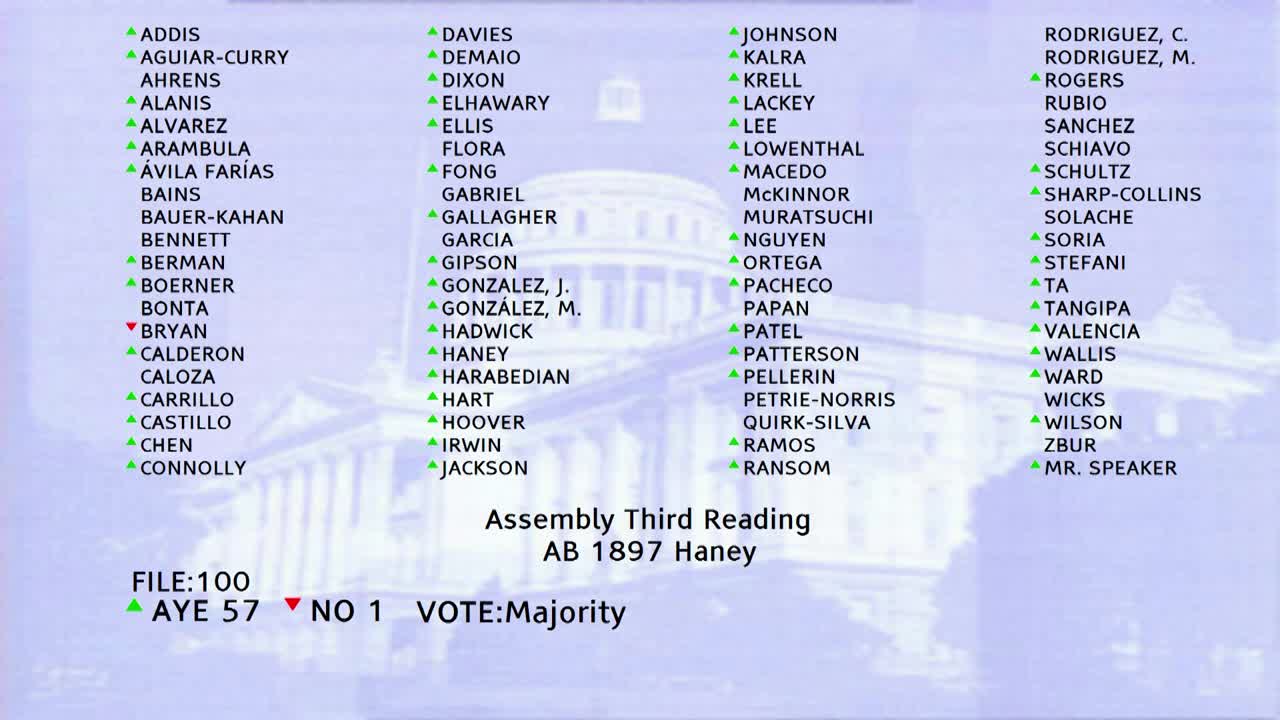 1MIN
Assembly Floor
 8MIN
Assembly Standing Committee on Judiciary
 21SEC
Assembly Standing Committee on Privacy and Consumer Protection
7MIN
Assembly Standing Committee on Privacy and Consumer Protection
Bill Author

Bill Co-Author(s):