AB 2257: Corrections: jail administrators.
- Session Year: 2025-2026
- House: Assembly
- Latest Version Date: 2026-09-30
Current Status:
Passed
(2026-09-30: Chaptered by Secretary of State - Chapter 929, Statutes of 2026.)
Introduced
In Committee
Awaiting First Chamber Vote
Passed First Chamber
In Committee
Awaiting Second Chamber Vote
Passed Second Chamber
Enacted
Existing law authorizes a board of supervisors of any county to, by resolution, establish a department of corrections, to be headed by an officer appointed by the board, which has jurisdiction over all county functions, personnel, and facilities, or so many as the board names in its resolution, relating to institutional punishment, care, treatment, and rehabilitation of prisoners, including, but not limited to, the county jail and industrial farms and road camps, their functions and personnel. Existing law, except as specified, requires the sheriff to take charge of and be the sole and exclusive authority to keep the county jail and the prisoners in it, as specified, and generally imposes requirements and duties on sheriffs for the keeping of jails.
This bill would authorize a board of supervisors to, by resolution, establish the position of jail administrator and impose procedures for the nomination and confirmation or denial of a candidate for the position. The bill would prescribe the powers and duties of jail administrators. The bill would provide that the sheriff retains specified authority with respect to the jail administrator, including the authority to remove the jail administrator, as specified. The bill would also revise the provision requiring the sheriff to take charge of and be the sole and exclusive authority to keep the county jail and the incarcerated persons to state that the provision does not apply in counties that have appointed a jail administrator pursuant to the authority described above. The bill would also specify that sheriff includes a jail administrator for the purposes of requirements and duties imposed on sheriffs for the keeping of jails, as specified.
Existing law authorizes a board of supervisors of any county to, by resolution, establish a department of corrections, to be headed by an officer appointed by the board, which has jurisdiction over all county functions, personnel, and facilities, or so many as the board names in its resolution, relating to institutional punishment, care, treatment, and rehabilitation of prisoners, including, but not limited to, the county jail and industrial farms and road camps, their functions and personnel. Existing law, except as specified, requires the sheriff to take charge of and be the sole and exclusive authority to keep the county jail and the prisoners in it, as specified, and generally imposes requirements and duties on sheriffs for the keeping of jails.
This bill would authorize a board of supervisors to, by resolution, majority vote, establish the position of jail administrator and impose procedures for the nomination and confirmation or denial of a candidate for the position. The bill would prescribe the powers and duties of jail administrators. The bill would provide that the sheriff retains specified authority with respect to the jail administrator, including the authority to remove the jail administrator, as specified. The bill would also revise the provision requiring the sheriff to take charge of and be the sole and exclusive authority to keep the county jail and the incarcerated persons to state that the provision does not apply in counties that have appointed a jail administrator pursuant to the authority described above. The bill would also specify that sheriff includes a jail administrator for the purposes of requirements and duties imposed on sheriffs for the keeping of jails, as specified.
Existing law authorizes a board of supervisors of any county to, by resolution, establish a department of corrections, to be headed by an officer appointed by the board, which has jurisdiction over all county functions, personnel, and facilities, or so many as the board names in its resolution, relating to institutional punishment, care, treatment, and rehabilitation of prisoners, including, but not limited to, the county jail and industrial farms and road camps, their functions and personnel. Existing law, except as specified, requires the sheriff to take charge of and be the sole and exclusive authority to keep the county jail and the prisoners in it, as specified, and generally imposes requirements and duties on sheriffs for the keeping of jails.
This bill would authorize a board of supervisors to, by resolution, establish the position of jail administrator and impose procedures for the nomination and confirmation or denial of a candidate for the position. The bill would prescribe the powers and duties of jail administrators. The bill would provide that the sheriff retains specified authority with respect to the jail administrator, including the authority to remove the jail administrator, as specified. The bill would also revise the provision requiring the sheriff to take charge of and be the sole and exclusive authority to keep the county jail and the incarcerated persons to state that the provision does not apply in counties that have appointed a jail administrator pursuant to the authority described above. The bill would also specify that sheriff includes a jail administrator for the purposes of requirements and duties imposed on sheriffs for the keeping of jails, as specified.
Existing law authorizes a board of supervisors of any county to, by resolution, establish a department of corrections, to be headed by an officer appointed by the board, which has jurisdiction over all county functions, personnel, and facilities, or so many as the board names in its resolution, relating to institutional punishment, care, treatment, and rehabilitation of prisoners, including, but not limited to, the county jail and industrial farms and road camps, their functions and personnel. Existing law, except as specified, requires the sheriff to take charge of and be the sole and exclusive authority to keep the county jail and the prisoners in it, as specified. specified, and generally imposes requirements and duties on sheriffs for the keeping of jails.
This bill would require a board exercising the authority to establish a department of corrections and rehabilitation described above to set forth its reasons for doing so. The bill would specifically include fire camps within the jurisdiction of the county department of corrections and rehabilitation and would clarify that a county department of corrections and rehabilitation may employ peace officers. The bill would also require the executive officer appointed by the board to head the department of corrections and rehabilitation to meet specified qualifications and to assume specified duties over county jails, including ensuring that personnel working in the above-described facilities and settings meet minimum requirements. authorize a board of supervisors to, by resolution, establish the position of jail administrator and impose procedures for the nomination and confirmation or denial of a candidate for the position. The bill would prescribe the powers and duties of jail administrators. The bill would provide that the sheriff retains specified authority with respect to the jail administrator, including the authority to remove the jail administrator, as specified. The bill would also revise the provision requiring the sheriff to take charge of and be the sole and exclusive authority to keep the county jail and the incarcerated persons to state that the provision does not apply in counties that have established a department of corrections and rehabilitation appointed a jail administrator pursuant to the authority described above. The bill would also specify that sheriff includes a jail administrator for the purposes of requirements and duties imposed on sheriffs for the keeping of jails, as specified.
Existing law authorizes a board of supervisors of any county to, by resolution, establish a department of corrections, to be headed by an officer appointed by the board, which has jurisdiction over all county functions, personnel, and facilities, or so many as the board names in its resolution, relating to institutional punishment, care, treatment, and rehabilitation of prisoners, including, but not limited to, the county jail and industrial farms and road camps, their functions and personnel. Existing law, except as specified, requires the sheriff to take charge of and be the sole and exclusive authority to keep the county jail and the prisoners in it, as specified.
This bill would require a board exercising the authority to establish a department of corrections and rehabilitation described above to set forth its reasons for doing so. The bill would specifically include fire camps within the jurisdiction of the county department of corrections and rehabilitation. rehabilitation and would clarify that a county department of corrections and rehabilitation may employ peace officers. The bill would also require the executive officer appointed by the board to head the department of corrections and rehabilitation to meet specified qualifications and to assume specified duties over county jails. jails, including ensuring that personnel working in the above-described facilities and settings meet minimum requirements. The bill would also revise the provision requiring the sheriff to take charge of and be the sole and exclusive authority to keep the county jail and the incarcerated persons to state that the provision does not apply in counties that have established a department of corrections and rehabilitation pursuant to the authority described above.
Existing law authorizes a board of supervisors of any county to, by resolution, establish a department of corrections, to be headed by an officer appointed by the board, which has jurisdiction over all county functions, personnel, and facilities, or so many as the board names in its resolution, relating to institutional punishment, care, treatment, and rehabilitation of prisoners, including, but not limited to, the county jail and industrial farms and road camps, their functions and personnel. Existing law, except as specified, requires the sheriff to take charge of and be the sole and exclusive authority to keep the county jail and the prisoners in it, as specified.
This bill would require a board exercising the authority to establish a department of corrections and rehabilitation described above to set forth its reasons for doing so. The bill would specifically include fire camps within the jurisdiction of the department of corrections and rehabilitation. The bill would also require the executive officer appointed by the board to head the department of corrections and rehabilitation to meet specified qualifications and to assume specified duties over county jails. The bill would also revise the provision requiring the sheriff to take charge of and be the sole and exclusive authority to keep the county jail and the incarcerated persons to state that the provision does not apply in counties that have established a department of corrections and rehabilitation pursuant to the authority described above.
(a)A board of supervisors may, by resolution, establish the position of jail administrator.
(b)If the board establishes the position of jail administrator, the sheriff of the county shall nominate a qualified candidate to fill the position and submit that nomination to the board within 90 days of the establishment of the position.
(c)(1)The board shall confirm or deny the appointment of the candidate submitted pursuant to subdivision (b) by majority vote within 60 days of the submission.
(2)In determining whether to confirm or deny the appointment pursuant to paragraph (1), the board may consider any relevant factor, including, but not limited to, any of the following:
(A)Professional experience in corrections management.
(B)Experience managing public budgets.
(C)Extensive familiarity with Title 15 of the California Code of Regulations and national standards for jail accreditation.
(D)Extensive familiarity with the requirements for appropriate medical and mental health care within a correctional setting.
(E)Demonstrated commitment to protecting the civil and human rights of incarcerated individuals.
(F)Knowledge of best practices and evidence-based approaches to rehabilitation.
(3)Before determining whether to confirm or deny the appointment pursuant to paragraph (1), the board shall hold a public hearing on the topic of jail operations.
(d)(1)If the board denies the candidate pursuant to subdivision (c), the sheriff shall nominate a different candidate to fill the position and submit that nomination to the board within 60 days of the denial.
(2)The board shall confirm or deny the appointment of the new candidate pursuant to the procedures described in subdivision (c).
(e)A jail administrator appointed pursuant to this section shall have all of the following powers and duties:
(1)They shall be the executive officer of all county jails and have supervisory authority over all staff and incarcerated individuals.
(2)(A)Subject to subdivision (f), they shall serve a term of three years.
(B)If an acting jail administrator appointed pursuant to paragraph (1) of subdivision (g) is confirmed, their time spent as acting jail administrator before being confirmed does not count towards the three-year term described in subparagraph (A).
(3)If they are a peace officer, they shall retain peace officer status to the extent allowable under Section 830.1 of the Penal Code.
(f)If a jail administrator is appointed pursuant to this section, the sheriff shall retain authority to supervise, direct the day-to-day operations of, evaluate, discipline, or remove the jail administrator.
(g)Subject to subdivision (h), if there is a vacancy in the jail administrator position for any reason following the establishment of the position and the boards initial decision to confirm or deny the appointment of a candidate, including, but not limited to, expiration of the term as described in paragraph (2) of subdivision (e), removal of the jail administrator by the sheriff pursuant to subdivision (f), or resignation of the jail administrator, all of the following apply:
(1)(A)The sheriff shall appoint an acting jail administrator within three days of the vacancy.
(B)Subject to subparagraph (C), the acting jail administrator shall not serve for more than 150 days.
(C)The board may authorize the acting jail administrator to serve additional 60-day terms.
(D)If an acting jail administrators term expires and a candidate has not been confirmed pursuant to paragraph (2), the sheriff shall appoint a different jail administrator within three days of the expiration, who shall serve consistent with subparagraphs (B) and (C).
(2)(A)The sheriff shall nominate a candidate to fill the position and submit that nomination to the board within 90 days of the vacancy.
(B)The sheriff may, but is not required to, nominate the acting jail administrator appointed pursuant to paragraph (1) as the candidate.
(C)The confirmation or denial of the candidate shall proceed consistent with the procedures described in subdivisions (c) and (d).
(h)(1)Up to six months before a jail administrators term expires pursuant to paragraph (2) of subdivision (e), the sheriff may nominate and submit to the board a candidate to serve when the term expires.
(2)The confirmation or denial of the candidate shall proceed consistent with the procedures described in subdivisions (c) and (d).
SEC. 2.Section 26605 of the Government Code is amended to read:26605.(a)Notwithstanding any other provision of law, the sheriff shall take charge of and be the sole and exclusive authority to keep the county jail and the incarcerated persons in it including persons confined to the county jail pursuant to subdivision (b) of Section 3454 of the Penal Code for a violation of the terms and conditions of their postrelease community supervision, except for work furlough facilities where by county ordinance the work furlough administrator is someone other than the sheriff.
(b)Subdivision (a) does not apply to either of the following:
(1)A county in which the sheriff, as of July 1, 1993, is not in charge of, and does not have the sole and exclusive authority to keep, the county jail and the incarcerated persons in it.
(2)A county that has appointed a jail administrator pursuant to Section 23016.
SEC. 3.Section 4034 is added to the Penal Code, to read:4034.For purposes of this chapter, sheriff includes a jail administrator appointed pursuant to Section 23016 of the Government Code.
(a)A board of supervisors may, by resolution, establish the position of jail administrator.
(b)If the board establishes the position of jail administrator, the sheriff of the county shall nominate a qualified candidate to fill the position and submit that nomination to the board within 90 days of the establishment of the position.
(c)(1)The board shall confirm or deny the appointment of the candidate submitted pursuant to subdivision (b) by resolution majority vote within 60 days of the submission.
(2)In determining whether to confirm or deny the appointment pursuant to paragraph (1), the board may consider any relevant factor, including, but not limited to, any of the following:
(A)Professional experience in corrections management.
(B)Experience managing public budgets.
(C)Extensive familiarity with Title 15 of the California Code of Regulations and national standards for jail accreditation.
(D)Extensive familiarity with the requirements for appropriate medical and mental health care within a correctional setting.
(E)Demonstrated commitment to protecting the civil and human rights of incarcerated individuals.
(F)Knowledge of best practices and evidence-based approaches to rehabilitation.
(3)Before determining whether to confirm or deny the appointment pursuant to paragraph (1), the board shall hold a public hearing on the topic of jail operations.
(d)(1)If the board denies the candidate pursuant to subdivision (c), the sheriff shall nominate a different candidate to fill the position and submit that nomination to the board within 60 days of the denial.
(2)The board shall confirm or deny the appointment of the new candidate pursuant to the procedures described in subdivision (c).
(e)A candidate that is nominated for a jail administrator position that has never been filled but has not been confirmed or denied by the board shall serve as the interim jail administrator during the review process. (f)(e)A jail administrator appointed pursuant to this section shall have all of the following powers and duties:
(1)They shall be the executive officer of all county jails and have supervisory authority over all staff and incarcerated individuals.
(2)(A)Subject to subdivision (g), (f), they shall serve a term of three years.
(B)If an interim jail administrator serving pursuant to subdivision (e) or an acting jail administrator appointed pursuant to paragraph (1) of subdivision (h) (g) is confirmed, their time spent as interim or acting jail administrator before being confirmed does not count towards the three-year term described in subparagraph (A).
(3)If they are a peace officer, they shall retain peace officer status to the extent allowable under Section 830.1 of the Penal Code.
(g)(f)If a jail administrator is appointed pursuant to this section, the sheriff shall retain authority to supervise, direct the day-to-day operations of, evaluate, discipline, or remove the jail administrator.
(h)(g)Subject to subdivision (i), (h), if there is a vacancy in the jail administrator position for any reason, reason following the establishment of the position and the boards initial decision to confirm or deny the appointment of a candidate, including, but not limited to, expiration of the term as described in paragraph (2) of subdivision (f), (e), removal of the jail administrator by the sheriff pursuant to subdivision (g), (f), or resignation of the jail administrator, all of the following apply:
(1)(A)The sheriff shall appoint an acting jail administrator within three days of the vacancy.
(B)Subject to subparagraph (C), the acting jail administrator shall not serve for more than 150 days.
(C)The board may authorize the acting jail administrator to serve additional 60-day terms.
(D)If an acting jail administrators term expires and a candidate has not been confirmed pursuant to paragraph (2), the sheriff shall appoint a different jail administrator within three days of the expiration, who shall serve consistent with subparagraphs (B) and (C).
(2)(A)The sheriff shall nominate a candidate to fill the position and submit that nomination to the board within 90 days of the vacancy.
(B)The sheriff may, but is not required to, nominate the acting jail administrator appointed pursuant to paragraph (1) as the candidate.
(C)The confirmation or denial of the candidate shall proceed consistent with the procedures described in subdivisions (c) and (d).
(i)(h)(1)Up to six months before a jail administrators term expires pursuant to paragraph (2) of subdivision (f), (e), the sheriff may nominate and submit to the board a candidate to serve when the term expires.
(2)The confirmation or denial of the candidate shall proceed consistent with the procedures described in subdivisions (c) and (d).
SEC. 2.Section 26605 of the Government Code is amended to read:26605.(a)Notwithstanding any other provision of law, the sheriff shall take charge of and be the sole and exclusive authority to keep the county jail and the incarcerated persons in it including persons confined to the county jail pursuant to subdivision (b) of Section 3454 of the Penal Code for a violation of the terms and conditions of their postrelease community supervision, except for work furlough facilities where by county ordinance the work furlough administrator is someone other than the sheriff.
(b)Subdivision (a) does not apply to either of the following:
(1)A county in which the sheriff, as of July 1, 1993, is not in charge of, and does not have the sole and exclusive authority to keep, the county jail and the incarcerated persons in it.
(2)A county that has appointed a jail administrator pursuant to Section 23016.
SEC. 3.Section 4034 is added to the Penal Code, to read:4034.For purposes of this chapter, sheriff includes a jail administrator appointed pursuant to Section 23016 of the Government Code.
(a)A board of supervisors may, by resolution, establish the position of jail administrator.
(b)If the board establishes the position of jail administrator, the sheriff of the county shall nominate a candidate to fill the position and submit that nomination to the board within 90 days of the establishment of the position.
(c)(1)The board shall confirm or deny the appointment of the candidate submitted pursuant to subdivision (b) by resolution within 60 days of the submission.
(2)In determining whether to confirm or deny the appointment pursuant to paragraph (1), the board may consider any relevant factor, including, but not limited to, any of the following:
(A)Professional experience in corrections management.
(B)Experience managing public budgets.
(C)Extensive familiarity with Title 15 of the California Code of Regulations and national standards for jail accreditation.
(D)Extensive familiarity with the requirements for appropriate medical and mental health care within a correctional setting.
(E)Demonstrated commitment to protecting the civil and human rights of incarcerated individuals.
(F)Knowledge of best practices and evidence-based approaches to rehabilitation.
(d)(1)If the board denies the candidate pursuant to subdivision (c), the sheriff shall nominate a different candidate to fill the position and submit that nomination to the board within 60 days of the denial.
(2)The board shall confirm or deny the appointment of the new candidate pursuant to the procedures described in subdivision (c).
(e)A candidate that is nominated for the a jail administrator position that has never been filled but has not been approved confirmed or denied by the board shall serve as the acting interim jail administrator during the review process.
(f)A jail administrator appointed pursuant to this section shall have all of the following powers and duties:
(1)They shall be the executive officer of all county jails and have supervisory authority over all staff and incarcerated individuals.
(2)(A)Subject to subdivision (g), they shall serve a term of three years.
(B)If an interim jail administrator serving pursuant to subdivision (e) or an acting jail administrator appointed pursuant to paragraph (1) of subdivision (h) is confirmed pursuant to paragraph (2) of subdivision (h), confirmed, their time spent as interim or acting jail administrator before being confirmed does not count towards the three-year term described in subparagraph (A).
(3)If they are a peace officer, they shall retain peace officer status to the extent allowable under Section 830.1 of the Penal Code.
(g)If a jail administrator is appointed pursuant to this section, the sheriff shall retain authority to supervise, direct the day-to-day operations of, evaluate, discipline, or remove the jail administrator.
(h)Subject to subdivision (i), if there is a vacancy in the jail administrator position for any reason, including, but not limited to, expiration of the term as described in paragraph (2) of subdivision (f), removal of the jail administrator by the sheriff pursuant to subdivision (g), or resignation of the jail administrator, all of the following apply:
(1)(A)The sheriff shall appoint an acting jail administrator within three days of the vacancy.
(B)Subject to subparagraph (C), the acting jail administrator shall not serve for more than 150 days.
(C)The board may authorize the acting jail administrator to serve additional 60-day terms.
(D)If an acting jail administrators term expires and a new candidate has not been confirmed pursuant to paragraph (2), the sheriff shall appoint a different jail administrator within three days of the expiration, who shall serve consistent with subparagraphs (B) and (C).
(2)(A)The sheriff shall nominate a new candidate to fill the position and submit that nomination to the board within 90 days of the vacancy.
(B)The sheriff may, but is not required to, nominate the acting jail administrator appointed pursuant to paragraph (1) as the new candidate.
(C)The confirmation or denial of the candidate shall proceed consistent with the procedures described in subdivisions (c) and (d).
(i)(1)Up to six months before a jail administrators term expires pursuant to paragraph (2) of subdivision (f), the sheriff may nominate and submit to the board a new candidate to replace that jail administrator serve when the term expires.
(2)The confirmation or denial of the candidate shall proceed consistent with the procedures described in subdivisions (c) and (d).
SEC. 2.Section 26605 of the Government Code is amended to read:26605.(a)Notwithstanding any other provision of law, the sheriff shall take charge of and be the sole and exclusive authority to keep the county jail and the incarcerated persons in it including persons confined to the county jail pursuant to subdivision (b) of Section 3454 of the Penal Code for a violation of the terms and conditions of their postrelease community supervision, except for work furlough facilities where by county ordinance the work furlough administrator is someone other than the sheriff.
(b)Subdivision (a) does not apply to either of the following:
(1)A county in which the sheriff, as of July 1, 1993, is not in charge of, and does not have the sole and exclusive authority to keep, the county jail and the incarcerated persons in it.
(2)A county that has appointed a jail administrator pursuant to Section 23016.
SEC. 3.Section 4034 is added to the Penal Code, to read:4034.For purposes of this chapter, sheriff includes a jail administrator appointed pursuant to Section 23016 of the Government Code.
(a)A board of supervisors may, by resolution, establish the position of jail administrator.
(b)If the board establishes the position of jail administrator, the sheriff of the county shall nominate a candidate to fill the position and submit that nomination to the board within 90 days of the establishment of the position.
(c)(1)The board shall confirm or deny the appointment of the candidate submitted pursuant to subdivision (b) by resolution within 60 days of the submission.
(2)In determining whether to confirm or deny the appointment pursuant to paragraph (1), the board may consider any relevant factor, including, but limited to, any of the following:
(A)Professional experience in corrections management.
(B)Experience managing public budgets.
(C)Extensive familiarity with Title 15 of the California Code of Regulations and national standards for jail accreditation.
(D)Extensive familiarity with the requirements for appropriate medical and mental health care within a correctional setting.
(E)Demonstrated commitment to protecting the civil and human rights of incarcerated individuals.
(F)Knowledge of best practices and evidence-based approaches to rehabilitation.
(d)(1)If the board denies the candidate pursuant to subdivision (c), the sheriff shall nominate a different candidate to fill the position and submit that nomination to the board within 60 days of the denial.
(2)The board shall confirm or deny the appointment of the new candidate pursuant to the procedures described in subdivision (c).
(e)A candidate that is nominated for the position but has not been approved or denied by the board shall serve as the acting jail administrator during the review process.
(f)A jail administrator appointed pursuant to this section shall have all of the following powers and duties:
(1)They shall be the executive officer of all county jails and have supervisory authority over all staff and incarcerated individuals.
(2)(A)Subject to subdivision (g), they shall serve a term of three years.
(B)If an acting jail administrator appointed pursuant to paragraph (1) of subdivision (h) is confirmed pursuant to paragraph (2) of subdivision (h), their time spent as acting jail administrator before being confirmed does not count towards the three-year term described in subparagraph (A).
(3)If they are a peace officer, they shall retain peace officer status to the extent allowable under Section 830.1 of the Penal Code.
(g)If a jail administrator is appointed pursuant to this section, the sheriff shall retain authority to supervise, direct the day-to-day operations of, evaluate, discipline, or remove the jail administrator.
(h)Subject to subdivision (i), if there is a vacancy in the jail administrator position for any reason, including, but not limited to, expiration of the term as described in paragraph (2) of subdivision (f), removal of the jail administrator by the sheriff pursuant to subdivision (g), or resignation of the jail administrator, all of the following apply:
(1)(A)The sheriff shall appoint an acting jail administrator within three days of the vacancy.
(B)Subject to subparagraph (C), the acting jail administrator shall not serve for more than 150 days.
(C)The board may authorize the acting jail administrator to serve additional 60-day terms.
(D)If an acting jail administrators term expires and a new candidate has not been confirmed pursuant to paragraph (2), the sheriff shall appoint a different jail administrator within three days of the expiration, who shall serve consistent with subparagraphs (B) and (C).
(2)(A)The sheriff shall nominate a new candidate to fill the position and submit that nomination to the board within 90 days of the vacancy.
(B)The sheriff may, but is not required to, nominate the acting jail administrator appointed pursuant to paragraph (1) as the new candidate.
(C)The confirmation or denial of the candidate shall proceed consistent with the procedures described in subdivisions (c) and (d).
(i)(1)Up to six months before a jail administrators term expires pursuant to paragraph (2) of subdivision (f), the sheriff may nominate and submit to the board a new candidate to replace that jail administrator when the term expires.
(2)The confirmation or denial of the candidate shall proceed consistent with the procedures described in subdivisions (c) and (d).
SEC. 3.SEC. 2.Section 26605 of the Government Code is amended to read:26605.(a)Notwithstanding any other provision of law, the sheriff shall take charge of and be the sole and exclusive authority to keep the county jail and the incarcerated persons in it including persons confined to the county jail pursuant to subdivision (b) of Section 3454 of the Penal Code for a violation of the terms and conditions of their postrelease community supervision, except for work furlough facilities where by county ordinance the work furlough administrator is someone other than the sheriff.
(b)Subdivision (a) does not apply to either of the following:
(1)A county in which the sheriff, as of July 1, 1993, is not in charge of and of, and does not have the sole and exclusive authority to keep keep, the county jail and the incarcerated persons in it.
(2)A county that has established a department of corrections and rehabilitation pursuant to Section 23013.(2)A county that has appointed a jail administrator pursuant to Section 23016.
SEC. 3.Section 4034 is added to the Penal Code, to read:4034.For purposes of this chapter, sheriff includes a jail administrator appointed pursuant to Section 23016 of the Government Code.
It is the intent of the Legislature that the amendments made by this act do not require a change in workforce at the county jail, industrial farms, and fire or road camps. Existing peace officers working in those facilities may maintain their status as peace officers.
SECTION 1.SEC. 2.Section 23013 of the Government Code is amended to read:23013.(a)The board of supervisors of any county may, by resolution, establish a department of corrections and rehabilitation, to be headed by an executive officer appointed by the board, which shall have jurisdiction over all county functions, personnel, and facilities, or so many as the board names in its resolution, relating to institutional punishment, care, treatment, and rehabilitation of incarcerated persons, including, but not limited to, the county jail, industrial farms, and fire or road camps, their functions and personnel. A county department of corrections and rehabilitation may employ peace officers, as described in Chapter 4.5 (commencing with Section 830) of Title 3 of Part 2 of the Penal Code.
(b)If a board of supervisors exercises the authority conferred by subdivision (a), the board shall set forth its reasons for establishing a department of corrections and rehabilitation, which may include, but are not limited to, any of the following findings:
(1)A department of corrections and rehabilitation will better protect public health and safety.
(2)There has been a disproportionate increase in deaths within the county jail.
(3)There is persistent unequal treatment of individuals within a protected class under the Unruh Civil Rights Act (Section 51 of the Civil Code).
(4)A department of corrections and rehabilitation will provide better administration or operation of the county jail.
(5)There has been persistent abuse or disregard of the civil and human rights of individuals within the county jail.
(6)There has been a violation of a federal decree or settlement relating to institutional punishment and rehabilitation.
(7)County jail operations have failed to adhere to Title 15 of the California Code of Regulations.
(8)The county jail failed to secure accreditation by one or more national corrections associations.
(c)If a board of supervisors exercises the authority conferred by subdivision (a), the executive officer appointed by the board shall meet all of the following qualifications:
(1)Either of the following:
(A)Professional experience in corrections management.
(B)Extensive familiarity with Title 15 of the California Code of Regulations and national standards for jail accreditation.
(2)Extensive familiarity with the requirements of appropriate medical and mental health care within a corrections setting.
(3)Demonstrated commitment to protecting the civil and human rights of incarcerated individuals.
(4)Knowledge of best practice and evidence-based approaches to rehabilitation.
(d)If a board of supervisors exercises the authority conferred by subdivision (a), the executive officer appointed by the board shall assume a sheriffs duties under Chapter 1 (commencing with Section 4000) of Title 4 of Part 3 of the Penal Code and under the provisions of Article 1 (commencing with Section 26600) of Chapter 2 of Part 3 of Division 2 of Title 3 pertaining to a county jail. The executive officer shall ensure that personnel, including peace officers, working in a county jail, industrial farms, and fire or road camps, meet all minimum requirements and are assigned in compliance with the law.
(e)The boards of supervisors of two or more counties may, by agreement and the enactment of ordinances in conformity thereto, establish a joint department of corrections and rehabilitation to serve all the counties included in the agreement, to be headed by an executive officer appointed by the boards jointly.
SEC. 2.SEC. 3.Section 26605 of the Government Code is amended to read:26605.(a)Notwithstanding any other provision of law, the sheriff shall take charge of and be the sole and exclusive authority to keep the county jail and the incarcerated persons in it including persons confined to the county jail pursuant to subdivision (b) of Section 3454 of the Penal Code for a violation of the terms and conditions of their postrelease community supervision, except for work furlough facilities where by county ordinance the work furlough administrator is someone other than the sheriff.
(b)Subdivision (a) does not apply to either of the following:
(1)A county in which the sheriff, as of July 1, 1993, is not in charge of and the sole and exclusive authority to keep the county jail and the incarcerated persons in it.
(2)A county that has established a department of corrections and rehabilitation pursuant to Section 23013.
(a)The board of supervisors of any county may, by resolution, establish a department of corrections, corrections and rehabilitation, to be headed by an executive officer appointed by the board, which shall have jurisdiction over all county functions, personnel, and facilities, or so many as the board names in its resolution, relating to institutional punishment, care, treatment, and rehabilitation of prisoners, incarcerated persons, including, but not limited to, the county jail and jail, industrial farms farms, and fire or road camps, their functions and personnel.
(b)If a board of supervisors exercises the authority conferred by subdivision (a), the board shall set forth its reasons for establishing a department of corrections and rehabilitation, which may include, but are not limited to, any of the following findings:
(1)A department of corrections and rehabilitation will better protect public health and safety.
(2)There has been a disproportionate increase in deaths within the county jail.
(3)There is persistent unequal treatment of individuals within a protected class under the Unruh Civil Rights Act (Section 51 of the Civil Code).
(4)A department of corrections and rehabilitation will provide better administration or operation of the county jail.
(5)There has been persistent abuse or disregard of the civil and human rights of individuals within the county jail.
(6)There has been a violation of a federal decree or settlement relating to institutional punishment and rehabilitation.
(7)County jail operations have failed to adhere to Title 15 of the California Code of Regulations.
(8)The county jail failed to secure accreditation by one or more national corrections associations.
(c)If a board of supervisors exercises the authority conferred by subdivision (a), the executive officer appointed by the board shall meet all of the following qualifications:
(1)Either of the following:
(A)Professional experience in corrections management.
(B)Extensive familiarity with Title 15 of the California Code of Regulations and national standards for jail accreditation.
(2)Extensive familiarity with the requirements of appropriate medical and mental health care within a corrections setting.
(3)Demonstrated commitment to protecting the civil and human rights of incarcerated individuals.
(4)Knowledge of best practice and evidence-based approaches to rehabilitation.
(d)If a board of supervisors exercises the authority conferred by subdivision (a), the executive officer appointed by the board shall assume a sheriffs duties under Chapter 1 (commencing with Section 4000) of Title 4 of Part 3 of the Penal Code and under the provisions of Article 1 (commencing with Section 26600) of Chapter 2 of Part 3 of Division 2 of Title 3 pertaining to a county jail.
(e)The boards of supervisors of two or more counties may, by agreement and the enactment of ordinances in conformity thereto, establish a joint department of corrections and rehabilitation to serve all the counties included in the agreement, to be headed by an executive officer appointed by the boards jointly.
SEC. 2.Section 26605 of the Government Code is amended to read:26605.(a)Notwithstanding any other provision of law, except in counties in which the sheriff, as of July 1, 1993, is not in charge of and the sole and exclusive authority to keep the county jail and the prisoners in it, the sheriff shall take charge of and be the sole and exclusive authority to keep the county jail and the prisoners incarcerated persons in it including persons confined to the county jail pursuant to subdivision (b) of Section 3454 of the Penal Code for a violation of the terms and conditions of their postrelease community supervision, except for work furlough facilities where by county ordinance the work furlough administrator is someone other than the sheriff.
(b)Subdivision (a) does not apply to either of the following:
(1)A county in which the sheriff, as of July 1, 1993, is not in charge of and the sole and exclusive authority to keep the county jail and the incarcerated persons in it.
(2)A county that has established a department of corrections and rehabilitation pursuant to Section 23013.
|
Date
|
Status
|
|---|---|
| Sep 30, 2026 | Chaptered by Secretary of State - Chapter 929, Statutes of 2026. |
| Sep 30, 2026 | Approved by the Governor. |
| Sep 3, 2026 | Enrolled and presented to the Governor at 4 p.m. |
| Aug 26, 2026 | Senate amendments concurred in. To Engrossing and Enrolling. (Ayes 41. Noes 24. Page 6618.). |
| Aug 26, 2026 | Senate amendments concurred in. To Engrossing and Enrolling. (Ayes 41. Noes 24.). |
| Aug 24, 2026 | In Assembly. Concurrence in Senate amendments pending. |
| Aug 24, 2026 | Read third time. Passed. Ordered to the Assembly. (Ayes 24. Noes 12. Page 5695.). |
| Aug 24, 2026 | Read third time. Passed. Ordered to the Assembly. (Ayes 24. Noes 11.). |
| Aug 3, 2026 | Read second time and amended. Ordered to third reading. |
| Jul 2, 2026 | From committee: Amend, and do pass as amended. (Ayes 5. Noes 2.) (July 1). |
| Jun 24, 2026 | From committee: Do pass and re-refer to Com. on L. GOV. (Ayes 5. Noes 1.) (June 23). Re-referred to Com. on L. GOV. |
| Jun 10, 2026 | Referred to Coms. on PUB. S. and L. GOV. |
| Jun 1, 2026 | In Senate. Read first time. To Com. on RLS. for assignment. |
| May 28, 2026 | Read third time. Passed. Ordered to the Senate. (Ayes 41. Noes 25. Page 5543.) |
| May 28, 2026 | Read third time. Passed. Ordered to the Senate. (Ayes 41. Noes 25.) |
| May 22, 2026 | Read third time and amended. Ordered to third reading. (Page 5273.) |
| May 22, 2026 | Read third time and amended. Ordered to third reading. |
| May 19, 2026 | Read third time and amended. Ordered to third reading. (Page 5153.) |
| May 19, 2026 | Read third time and amended. Ordered to third reading. |
| Apr 23, 2026 | Read second time. Ordered to third reading. |
| Apr 22, 2026 | From committee: Do pass. (Ayes 5. Noes 3.) (April 21). |
| Apr 16, 2026 | Re-referred to Com. on PUB. S. |
| Apr 15, 2026 | From committee chair, with author's amendments: Amend, and re-refer to Com. on PUB. S. Read second time and amended. |
| Apr 9, 2026 | In committee: Hearing postponed by committee. |
| Mar 16, 2026 | Referred to Com. on PUB. S. |
| Feb 20, 2026 | From printer. May be heard in committee March 22. |
| Feb 19, 2026 | Read first time. To print. |
|
Date
|
Description
|
Location
|
Votes
|
|
|---|---|---|---|---|
| Aug 26, 2026 | AB 2257 Hart Concurrence in Senate Amendments | Assembly Floor |
Passed |
|
| Aug 24, 2026 | Assembly 3rd Reading AB2257 Hart By Laird | Senate Floor |
Passed |
|
| Jul 1, 2026 | Do pass as amended | Senate Standing Committee on Local Government |
Passed |
|
| Jun 23, 2026 | Do pass, but first be re-referred to the Committee on [Local Government] | Senate Standing Committee on Public Safety |
Passed |
|
| May 28, 2026 | AB 2257 Hart Assembly Third Reading | Assembly Floor |
Passed |
|
| Apr 21, 2026 | Do pass. | Assembly Standing Committee on Public Safety |
Passed |
This list shows positions taken on this bill by organizations on the date displayed, which is linked to the original source.
Positions by individuals are not included.
|
Organization
|
Position
|
Date
|
|---|---|---|
| 805 UndocuFund | ** Support | |
| Advocacy on the 101 | ** Support | |
| ALADS | ** Against | |
| Association For Los Angeles Deputy Sheriffs | ** Against | |
| Buen Vecino | ** Support | |
| California Coalition for Sheriff Oversight | ** Support | |
| California Coalition for Sheriff Oversight (CCSO) | ** Support | |
| Californians for Safety and Justice | ** Support | |
| California Public Defenders Association | ** Support | |
| California State Sheriff's Association | ** Against | |
| California State Sheriffs’ Association | ** Against | |
| Central Coast Alliance United for a Sustainable Economy | ** Support | |
| Clergy and Laity United for Economic Justice - Ventura County | ** Support | |
| Coastal Legal Center | ** Support | |
| County of Fresno | ** Against | |
| County of San Diego Fourth District Supervisor Monica Montgomery Steppe | ** Support | |
| County of Santa Barbara | ** Support | |
| Diversity Coalition San Luis Obispo County | ** Support | |
| Fixin San Mateo County | ** Support | |
| Freedom 4 Youth | ** Support | |
| Future Leaders Of America | ** Support | |
| Indivisible Santa Barbara | ** Support | |
| Indivisible Santa Maria | ** Support | |
| Kingston, Martinez, and Hogan LLP | ** Support | |
| LA Raza Community Resource Center | ** Support | |
| Laura Capps, Supervisor, Santa Barbara County | ** Support | |
| LAW OFFICE OF RICHARD WAGNER | ** Support | |
| League Of Women Voters Of California | ** Support | |
| Legal Services for Prisoners with Children | ** Support | |
| Los Angeles County Professional Peace Officers Association | ** Against | |
| Mariposa Advocacy and Legal Services | ** Support | |
| Mixteco/Indígena Community Organizing Project | ** Support | |
| Mixteco/Indigena Community Organizing Project (MICOP) | ** Support | |
| Monica Montgomery Steppe, Supervisor, San Diego County | ** Support | |
| NextGen California | ** Support | |
| Noelia Corzo, Supervisor, San Mateo County | ** Support | |
| Oakland Privacy | ** Support | |
| Oasis Legal Services | ** Support | |
| O.L.A. Raza | ** Support | |
| One individual | ** Support | |
| One Step a La Vez | ** Support | |
| Peace Officers Research Association Of California | ** Against | |
| Prosecutors Alliance Action | ** Support | |
| San Luis Obispo Unitarian Universalist | ** Support | |
| San Quentin Skunkworks | ** Support | |
| Santa Barbara County Immigrant Legal Defense Center | ** Support | |
| Santa Paula Latino Town Hall | ** Support | |
| Smart Justice California | ** Support | |
| The Fund for Santa Barbara | ** Support | |
| Unitarian Society of Santa Barbara - Justice and Equity Team | ** Support |
CONCURRENCE IN SENATE AMENDMENTS
CSA1 Bill Id:AB 2257
Author:(Hart)
As Amended Ver:August 3, 2026
Majority vote
SUMMARY
Authorizes a county board of supervisors (BOS) to establish the position of jail administrator to be the executive officer of all county jails, and to have supervisory authority over all staff and incarcerated individuals, although the sheriff shall retain authority to supervise, direct, discipline, or remove the jail administrator.
Senate Amendments
- Require the BOS' confirmation or denial of the appointment of the candidate to be made by majority vote, rather than by a resolution.
- Require the BOS, before determining whether to confirm or deny the appointment, as specified, to hold a public hearing on the topic of jail operations.
- Remove a provision requiring a candidate who is nominated for a jail administrator position that has never been filled, but has not been confirmed or denied by the BOS, to serve as the interim jail administrator during the review process, as specified.
- Specify that the procedures governing a vacancy in the jail administrator position apply following the establishment of the position and the BOS's initial decision to confirm or deny the appointment of a candidate.
- Make technical confirming changes.
COMMENTS
As Passed by the Assembly, this bill: Authorized a county board of supervisors (BOS) to establish the position of jail administrator to be the executive officer of all county jails, and to have supervisory authority over all staff and incarcerated individuals, although the sheriff shall retain authority to supervise, direct, discipline, or remove the jail administrator.
Major Provisions
- Authorized a BOS to, by resolution, establish the position of jail administrator.
- Provided that if the BOS establishes the position of jail administrator, the sheriff of the county shall nominate a candidate to fill the position and submit that nomination to the BOS within 90 days of the establishment of the position.
- Required the BOS to confirm or deny the appointment of the candidate, by resolution, within 60 days of the submission.
- Provided that in determining whether to confirm or deny the appointment, the BOS may consider any relevant factor, including, but not limited to, any of the following:
- Professional experience in corrections management.
- Experience managing public budgets.
- Extensive familiarity with specified California regulations and national standards for jail accreditation.
- Extensive familiarity with the requirements for appropriate medical and mental health care within a correctional setting.
- Demonstrated commitment to protecting the civil and human rights of incarcerated individuals.
- Knowledge of best practices and evidence-based approaches to rehabilitation.
- Required the sheriff, if the BOS denies the candidate pursuant to the above, to nominate a different candidate to fill the position and submit that nomination to the BOS within 60 days of the denial.
- Required the BOS to confirm or deny the appointment of the new candidate pursuant to the procedures requiring the BOS to confirm or deny the appointment, as specified.
- Required a candidate who is nominated for a jail administrator position that has never been filled but has not been confirmed or denied by the BOS to serve as the interim jail administrator during the review process.
- Required a jail administrator to have the following powers and duties:
- They shall be the executive officer of all county jails and have supervisory authority over all staff and incarcerated individuals.
- Subject to the sheriff's supervision, as specified, they shall serve a term of three years.
- If an interim jail administrator, as specified, or an acting jail administrator appointed within three days of a vacancy, as specified, is confirmed, their time spent as interim or acting jail administrator before being confirmed does not count towards the three-year term.
- If the person is a peace officer, they shall retain peace officer status to the extent allowable, as specified.
- Provided that if a jail administrator is appointed, the sheriff shall retain authority to supervise, direct the day-to-day operations of, evaluate, discipline, or remove the jail administrator.
- Provided that subject to the below provision permitting a sheriff to nominate a new candidate to replace the jail administrator when the term expires, if there is a vacancy in the jail administrator position for any reason, including, but not limited to, expiration of the three-year term, removal of the jail administrator by the sheriff, as specified, or resignation of the jail administrator, all of the following apply:
- The sheriff shall appoint an acting jail administrator within three days of the vacancy.
- Subject to the immediately subsequent provision, the acting jail administrator shall not serve for more than 150 days.
- The BOS may authorize the acting jail administrator to serve additional 60-day terms.
- Required the sheriff, if an acting jail administrator's term expires and a candidate has not been confirmed, as specified, to appoint a different jail administrator within three days of the expiration, who shall serve consistent with the below.
- Required the sheriff to nominate a candidate to fill the position and submit that nomination to the board within 90 days of the vacancy.
- Authorized the sheriff to nominate the acting jail administrator, as specified, as the candidate.
- Required the confirmation or denial of the candidate to proceed, consistent with the procedures requiring the BOS to confirm or deny the appointment and the sheriff to nominate a different candidate if the BOS denies the candidate.
- Specified that up to six months before a jail administrator's three-year term expires, the sheriff may nominate and submit to the BOS a candidate to serve when the term expires.
- Required the confirmation or denial of the candidate to proceed, consistent with the procedures requiring the BOS to confirm or deny the appointment and the sheriff to nominate a different candidate if the board denies the candidate.
- Provided that the provision of existing law that requires the sheriff to take charge of and be the sole and exclusive authority to keep the county jail and the incarcerated persons in it, as specified, does not apply to a county that has appointed a jail administrator.
- Provided that "sheriff" includes a jail administrator appointed pursuant to this bill, for purposes of the Penal Code chapter outlining specified sheriff duties related to county jails.
According to the Author
"California's county jails are in crisis. Deaths are occurring at record-high levels, people with mental illness are languishing, and costs are skyrocketing without improved outcomes.
"Sheriffs are responsible for operating jails. Boards of supervisors are responsible for funding jails and bearing legal liability. While boards of supervisors are required to fund the day-to-day operations of county jails — and pay massive legal settlements when things go wrong — boards of supervisors have no direct authority to improve jail practices. Boards of supervisors are prevented from exercising their statutory budgetary and oversight responsibilities over jails.
"AB 2257 seeks to bring balance to the shared governance responsibilities that boards of supervisors and sheriffs have in administering county jails, for the benefit of the public, people in custody, and the correctional workforce.
"This modest bill will give boards of supervisors the authority to confirm a sheriff-nominated jail administrator to a three-year term, while leaving the day-to-day management of the jail within the sheriff's office. By giving boards of supervisors a direct, limited policy lever to influence jail administration, this bill will incentivize greater collaboration between sheriffs and boards of supervisors in operating county jails.
"This bill fills a gap in existing law and builds on the Legislature's recent sheriff oversight bills to provide counties with a practical tool to address known jail issues and work proactively to improve outcomes."
Arguments in Support
According to the County of Santa Barbara, "Under the provisions of AB 2257, the sheriff would nominate candidates for the position, subject to confirmation by the Board of Supervisors. The Board could consider factors such as corrections management experience, knowledge of jail regulations and health care requirements, commitment to civil rights protections, and familiarity with rehabilitation best practices. The bill also would establish appointment timelines, acting administrator procedures, and three-year terms for confirmed jail administrators.
"A confirmed jail administrator would serve as the executive officer of county jails with supervisory authority over jail staff and incarcerated individuals. The bill also sets forth a structured process for vacancies, denials, interim appointments, and reappointments, including limits on acting appointments and requirements for ongoing board review and confirmation. Taken together, the provisions of AB 2257 would establish a new, shared governance model in which sheriffs retain operational oversight authority, but county boards of supervisors are granted a formal confirmation role and greater involvement in jail leadership selection and accountability.
"The County of Santa Barbara has long supported criminal justice reforms that advance public safety while promoting rehabilitation, diversion, and successful reentry. The County's policy platform emphasizes reducing recidivism and strengthening behavioral health and supportive services for justice-involved individuals.
"By giving boards of supervisors the authority to establish the position of county jail administrator and pursue a collaborative governance model as contemplated in the bill, AB 2257 would create greater opportunities for counties to align jail leadership with broader public safety, rehabilitation, behavioral health, and reentry objectives. While preserving the sheriff's operational authority, AB 2257 recognizes the significant fiscal, policy, and service delivery responsibilities counties bear for detention facilities and promotes stronger coordination between custody operations and the county programs that support successful treatment, education, and reentry outcomes."
Arguments in Opposition
According to the California State Sheriff's Association, AB 2257 "would allow a county board of supervisors to establish the position of jail administrator and provide that such person would be the executive officer of all county jails and have supervisory authority over all staff and incarcerated individuals.
"Many if not most sheriffs already employ a chief deputy or assistant sheriff over corrections. The passage of this bill and the choice by a county board to exert the authority it creates would likely put the sheriff in a position of having to take into account whether the board would confirm their choice to serve as the jail administrator. This vital role should be filled by the person best suited to do the work, without having to worry about what boils down to a popularity contest.
"The bill's supporting materials indicate this new version of AB 2257 is still intended to give leverage over the operations of the county's jails to the board. In reality, it imposes a labyrinth of rules about how a sheriff's choice for jail administrator is selected, confirmed, overseen, and replaced. It is unclear whether this bill requires a different jail administrator to be appointed and confirmed every three years, but even if the incumbent can be reappointed, the county would have to repeat the confirmation process. And given that only the sheriff can remove the jail administrator, any leverage perceived to be obtained by the board effectively disappears as soon as the appointee is confirmed.
"Sheriffs are elected county officials subject to specific yet broad oversight from entities including state and federal courts, the California Attorney General, the civil grand jury, the Board of State and Community Corrections, and others, not to mention the voters who elect the sheriff every four years. The legislature should not politicize an important position within the Sheriff's office, especially when there is no indication that the complicated governance change contemplated by this bill will lead to better outcomes in the jail.
"In the end, this awkward, vague, and confusing measure will only impede meaningful efforts to appropriately oversee the jails while serving as a backdoor attempt by the board to control sheriff operations."
FISCAL COMMENTS
Unknown. This bill is keyed non-fiscal by the Legislative Counsel.
VOTES:
ASM PUBLIC SAFETY: 5-3-1
YES: Schultz, Mark González, Haney, Harabedian, Sharp-Collins
NO: Alanis, Lackey, Ramos
ABS, ABST OR NV: Nguyen
ASSEMBLY FLOOR: 41-25-14
YES: Addis, Aguiar-Curry, Ahrens, Alvarez, Arambula, Bauer-Kahan, Bennett, Berman, Boerner, Bonta, Bryan, Caloza, Connolly, Elhawary, Fong, Gabriel, Garcia, Gipson, Mark González, Haney, Harabedian, Hart, Jackson, Kalra, Lee, Lowenthal, McKinnor, Muratsuchi, Ortega, Papan, Pellerin, Ransom, Rogers, Schiavo, Schultz, Sharp-Collins, Solache, Ward, Wicks, Zbur, Rivas
NO: Alanis, Ávila Farías, Castillo, Chen, Davies, DeMaio, Dixon, Ellis, Flora, Gallagher, Jeff Gonzalez, Hadwick, Hoover, Johnson, Lackey, Macedo, Patterson, Ramos, Michelle Rodriguez, Sanchez, Soria, Ta, Tangipa, Valencia, Wallis
ABS, ABST OR NV: Bains, Calderon, Carrillo, Irwin, Krell, Nguyen, Pacheco, Patel, Petrie-Norris, Quirk-Silva, Celeste Rodriguez, Blanca Rubio, Stefani, Wilson
SENATE FLOOR: 24-12-4
YES: Allen, Arreguín, Ashby, Becker, Blakespear, Cabaldon, Caballero, Cervantes, Cortese, Durazo, Gonzalez, Laird, Limón, McGuire, McNerney, Menjivar, Padilla, Pérez, Richardson, Rubio, Smallwood-Cuevas, Wahab, Weber Pierson, Wiener
NO: Alvarado-Gil, Choi, Dahle, Grove, Hurtado, Jones, Niello, Ochoa Bogh, Seyarto, Stern, Strickland, Valladares
ABS, ABST OR NV: Archuleta, Grayson, Reyes, Umberg
UPDATED
VERSION: August 3, 2026
CONSULTANT: Ilan Zur / PUB. S. / (916) 319-3744 FN: 0004045
CONCURRENCE IN SENATE AMENDMENTS
CSA1 Bill Id:AB 2257
Author:(Hart)
As Amended Ver:August 3, 2026
Majority vote
SUMMARY
Authorizes a county board of supervisors (BOS) to establish the position of jail administrator to be the executive officer of all county jails, and to have supervisory authority over all staff and incarcerated individuals, although the sheriff shall retain authority to supervise, direct, discipline, or remove the jail administrator.
Senate Amendments
- Require the BOS' confirmation or denial of the appointment of the candidate to be made by majority vote, rather than by a resolution.
- Require the BOS, before determining whether to confirm or deny the appointment, as specified, to hold a public hearing on the topic of jail operations.
- Remove a provision requiring a candidate who is nominated for a jail administrator position that has never been filled, but has not been confirmed or denied by the BOS, to serve as the interim jail administrator during the review process, as specified.
- Specify that the procedures governing a vacancy in the jail administrator position apply following the establishment of the position and the BOS's initial decision to confirm or deny the appointment of a candidate.
- Make technical confirming changes.
COMMENTS
As Passed by the Assembly, this bill: Authorized a county board of supervisors (BOS) to establish the position of jail administrator to be the executive officer of all county jails, and to have supervisory authority over all staff and incarcerated individuals, although the sheriff shall retain authority to supervise, direct, discipline, or remove the jail administrator.
Major Provisions
- Authorized a BOS to, by resolution, establish the position of jail administrator.
- Provided that if the BOS establishes the position of jail administrator, the sheriff of the county shall nominate a candidate to fill the position and submit that nomination to the BOS within 90 days of the establishment of the position.
- Required the BOS to confirm or deny the appointment of the candidate, by resolution, within 60 days of the submission.
- Provided that in determining whether to confirm or deny the appointment, the BOS may consider any relevant factor, including, but not limited to, any of the following:
- Professional experience in corrections management.
- Experience managing public budgets.
- Extensive familiarity with specified California regulations and national standards for jail accreditation.
- Extensive familiarity with the requirements for appropriate medical and mental health care within a correctional setting.
- Demonstrated commitment to protecting the civil and human rights of incarcerated individuals.
- Knowledge of best practices and evidence-based approaches to rehabilitation.
- Required the sheriff, if the BOS denies the candidate pursuant to the above, to nominate a different candidate to fill the position and submit that nomination to the BOS within 60 days of the denial.
- Required the BOS to confirm or deny the appointment of the new candidate pursuant to the procedures requiring the BOS to confirm or deny the appointment, as specified.
- Required a candidate who is nominated for a jail administrator position that has never been filled but has not been confirmed or denied by the BOS to serve as the interim jail administrator during the review process.
- Required a jail administrator to have the following powers and duties:
- They shall be the executive officer of all county jails and have supervisory authority over all staff and incarcerated individuals.
- Subject to the sheriff's supervision, as specified, they shall serve a term of three years.
- If an interim jail administrator, as specified, or an acting jail administrator appointed within three days of a vacancy, as specified, is confirmed, their time spent as interim or acting jail administrator before being confirmed does not count towards the three-year term.
- If the person is a peace officer, they shall retain peace officer status to the extent allowable, as specified.
- Provided that if a jail administrator is appointed, the sheriff shall retain authority to supervise, direct the day-to-day operations of, evaluate, discipline, or remove the jail administrator.
- Provided that subject to the below provision permitting a sheriff to nominate a new candidate to replace the jail administrator when the term expires, if there is a vacancy in the jail administrator position for any reason, including, but not limited to, expiration of the three-year term, removal of the jail administrator by the sheriff, as specified, or resignation of the jail administrator, all of the following apply:
- The sheriff shall appoint an acting jail administrator within three days of the vacancy.
- Subject to the immediately subsequent provision, the acting jail administrator shall not serve for more than 150 days.
- The BOS may authorize the acting jail administrator to serve additional 60-day terms.
- Required the sheriff, if an acting jail administrator's term expires and a candidate has not been confirmed, as specified, to appoint a different jail administrator within three days of the expiration, who shall serve consistent with the below.
- Required the sheriff to nominate a candidate to fill the position and submit that nomination to the board within 90 days of the vacancy.
- Authorized the sheriff to nominate the acting jail administrator, as specified, as the candidate.
- Required the confirmation or denial of the candidate to proceed, consistent with the procedures requiring the BOS to confirm or deny the appointment and the sheriff to nominate a different candidate if the BOS denies the candidate.
- Specified that up to six months before a jail administrator's three-year term expires, the sheriff may nominate and submit to the BOS a candidate to serve when the term expires.
- Required the confirmation or denial of the candidate to proceed, consistent with the procedures requiring the BOS to confirm or deny the appointment and the sheriff to nominate a different candidate if the board denies the candidate.
- Provided that the provision of existing law that requires the sheriff to take charge of and be the sole and exclusive authority to keep the county jail and the incarcerated persons in it, as specified, does not apply to a county that has appointed a jail administrator.
- Provided that "sheriff" includes a jail administrator appointed pursuant to this bill, for purposes of the Penal Code chapter outlining specified sheriff duties related to county jails.
According to the Author
"California's county jails are in crisis. Deaths are occurring at record-high levels, people with mental illness are languishing, and costs are skyrocketing without improved outcomes.
"Sheriffs are responsible for operating jails. Boards of supervisors are responsible for funding jails and bearing legal liability. While boards of supervisors are required to fund the day-to-day operations of county jails — and pay massive legal settlements when things go wrong — boards of supervisors have no direct authority to improve jail practices. Boards of supervisors are prevented from exercising their statutory budgetary and oversight responsibilities over jails.
"AB 2257 seeks to bring balance to the shared governance responsibilities that boards of supervisors and sheriffs have in administering county jails, for the benefit of the public, people in custody, and the correctional workforce.
"This modest bill will give boards of supervisors the authority to confirm a sheriff-nominated jail administrator to a three-year term, while leaving the day-to-day management of the jail within the sheriff's office. By giving boards of supervisors a direct, limited policy lever to influence jail administration, this bill will incentivize greater collaboration between sheriffs and boards of supervisors in operating county jails.
"This bill fills a gap in existing law and builds on the Legislature's recent sheriff oversight bills to provide counties with a practical tool to address known jail issues and work proactively to improve outcomes."
Arguments in Support
According to the County of Santa Barbara, "Under the provisions of AB 2257, the sheriff would nominate candidates for the position, subject to confirmation by the Board of Supervisors. The Board could consider factors such as corrections management experience, knowledge of jail regulations and health care requirements, commitment to civil rights protections, and familiarity with rehabilitation best practices. The bill also would establish appointment timelines, acting administrator procedures, and three-year terms for confirmed jail administrators.
"A confirmed jail administrator would serve as the executive officer of county jails with supervisory authority over jail staff and incarcerated individuals. The bill also sets forth a structured process for vacancies, denials, interim appointments, and reappointments, including limits on acting appointments and requirements for ongoing board review and confirmation. Taken together, the provisions of AB 2257 would establish a new, shared governance model in which sheriffs retain operational oversight authority, but county boards of supervisors are granted a formal confirmation role and greater involvement in jail leadership selection and accountability.
"The County of Santa Barbara has long supported criminal justice reforms that advance public safety while promoting rehabilitation, diversion, and successful reentry. The County's policy platform emphasizes reducing recidivism and strengthening behavioral health and supportive services for justice-involved individuals.
"By giving boards of supervisors the authority to establish the position of county jail administrator and pursue a collaborative governance model as contemplated in the bill, AB 2257 would create greater opportunities for counties to align jail leadership with broader public safety, rehabilitation, behavioral health, and reentry objectives. While preserving the sheriff's operational authority, AB 2257 recognizes the significant fiscal, policy, and service delivery responsibilities counties bear for detention facilities and promotes stronger coordination between custody operations and the county programs that support successful treatment, education, and reentry outcomes."
Arguments in Opposition
According to the California State Sheriff's Association, AB 2257 "would allow a county board of supervisors to establish the position of jail administrator and provide that such person would be the executive officer of all county jails and have supervisory authority over all staff and incarcerated individuals.
"Many if not most sheriffs already employ a chief deputy or assistant sheriff over corrections. The passage of this bill and the choice by a county board to exert the authority it creates would likely put the sheriff in a position of having to take into account whether the board would confirm their choice to serve as the jail administrator. This vital role should be filled by the person best suited to do the work, without having to worry about what boils down to a popularity contest.
"The bill's supporting materials indicate this new version of AB 2257 is still intended to give leverage over the operations of the county's jails to the board. In reality, it imposes a labyrinth of rules about how a sheriff's choice for jail administrator is selected, confirmed, overseen, and replaced. It is unclear whether this bill requires a different jail administrator to be appointed and confirmed every three years, but even if the incumbent can be reappointed, the county would have to repeat the confirmation process. And given that only the sheriff can remove the jail administrator, any leverage perceived to be obtained by the board effectively disappears as soon as the appointee is confirmed.
"Sheriffs are elected county officials subject to specific yet broad oversight from entities including state and federal courts, the California Attorney General, the civil grand jury, the Board of State and Community Corrections, and others, not to mention the voters who elect the sheriff every four years. The legislature should not politicize an important position within the Sheriff's office, especially when there is no indication that the complicated governance change contemplated by this bill will lead to better outcomes in the jail.
"In the end, this awkward, vague, and confusing measure will only impede meaningful efforts to appropriately oversee the jails while serving as a backdoor attempt by the board to control sheriff operations."
FISCAL COMMENTS
Unknown. This bill is keyed non-fiscal by the Legislative Counsel.
VOTES:
ASM PUBLIC SAFETY: 5-3-1
YES: Schultz, Mark González, Haney, Harabedian, Sharp-Collins
NO: Alanis, Lackey, Ramos
ABS, ABST OR NV: Nguyen
ASSEMBLY FLOOR: 41-25-14
YES: Addis, Aguiar-Curry, Ahrens, Alvarez, Arambula, Bauer-Kahan, Bennett, Berman, Boerner, Bonta, Bryan, Caloza, Connolly, Elhawary, Fong, Gabriel, Garcia, Gipson, Mark González, Haney, Harabedian, Hart, Jackson, Kalra, Lee, Lowenthal, McKinnor, Muratsuchi, Ortega, Papan, Pellerin, Ransom, Rogers, Schiavo, Schultz, Sharp-Collins, Solache, Ward, Wicks, Zbur, Rivas
NO: Alanis, Ávila Farías, Castillo, Chen, Davies, DeMaio, Dixon, Ellis, Flora, Gallagher, Jeff Gonzalez, Hadwick, Hoover, Johnson, Lackey, Macedo, Patterson, Ramos, Michelle Rodriguez, Sanchez, Soria, Ta, Tangipa, Valencia, Wallis
ABS, ABST OR NV: Bains, Calderon, Carrillo, Irwin, Krell, Nguyen, Pacheco, Patel, Petrie-Norris, Quirk-Silva, Celeste Rodriguez, Blanca Rubio, Stefani, Wilson
UPDATED
VERSION: August 3, 2026
CONSULTANT: Ilan Zur / PUB. S. / (916) 319-3744 FN: 0004045
SENATE RULES COMMITTEE Office of Senate Floor Analyses (916) 651-4171 | AB 2257 |
THIRD READING
Bill No: AB 2257
Author: Hart (D)
Amended: 5/22/26 in Assembly
Vote: 21
SENATE PUBLIC SAFETY COMMITTEE: 5-1, 6/23/26
AYES: Arreguín, Caballero, Cortese, Pérez, Wiener
NOES: Seyarto
SENATE LOCAL GOVERNMENT COMMITTEE: 5-2, 7/1/26
AYES: Durazo, Arreguín, Ashby, Cervantes, Laird
NOES: Choi, Seyarto
ASSEMBLY FLOOR: 41-25, 5/28/26 - See last page for vote
SUBJECT: Corrections: jail administrators
SOURCE: Author
DIGEST:
This bill authorizes a county board of supervisors (BOS) to establish the position of jail administrator, nominated by the sheriff and confirmed by the BOS, to serve a three-year term as the executive officer of the county jail, under the direction of the sheriff.
ANALYSIS:
Existing law:
- Requires the Legislature to provide for county powers, an elected county sheriff, an elected district attorney, an elected assessor, and an elected governing body in each county. (California (Cal.) Constitution (Const.), art. XI, § 1, subd. (b).)
- Requires a county charter to provide for, among other things, an elected sheriff and other officers, their election or appointment, compensation, terms and removal, the powers and duties of governing bodies and all other county officers, and for consolidation and segregation of county officers, and for the manner of filling all vacancies occurring therein. (Cal. Const., art. XI, § 4, subds. (c) & (e).)
- Requires, notwithstanding any other law, that the office of sheriff be filled by election as provided for elective county officers, and vacancies shall be filled as provided by law for filling elective county offices, unless the county or city and county is chartered and such charter provides for election of the sheriff by vote of the electors. (Government (Gov.) Code, § 24205.)
- Requires the BOS to supervise the official conduct of all county officers, and particularly insofar as the functions and duties of such county officers relate to the assessing, collecting, safekeeping, management, or disbursement of public funds, and shall see that they faithfully perform their duties, direct prosecutions for delinquencies, and when necessary, require them to renew their official bond, make reports and present their books and accounts for inspection, although this shall not be construed to affect the independent and constitutionally and statutorily designated investigative and prosecutorial functions of the sheriff and district attorney of a county. (Gov. Code, § 25303.)
- Prohibits the BOS from obstructing the investigative function of the sheriff of the county. (Gov. Code, § 25303.)
- Provides that the common jails in the several counties of this state are kept by the sheriffs of the counties in which they are respectively situated, and are used as follows: for the detention of persons committed in order to secure their attendance as witnesses in criminal cases; for the detention of persons charged with crime and committed for trial; for the confinement of persons committed for contempt, or upon civil process, or by other authority of law; for the confinement of persons sentenced to imprisonment therein upon a conviction for a crime; and for the confinement of persons pursuant to a violation of the terms and conditions of their post-release community supervision, as specified. (Penal (Pen.) Code, § 4000.)
- Establishes numerous obligations on sheriffs pertaining to county jails, including, among other things, that the sheriff receive all persons committed to jail by competent authority, and receive and keep in the county jail any prisoner committed thereto by process or order issued under the authority of the United States. (Pen. Code, §§ 4005, 4015, subd. (a).)
- Establishes the duties and authority of the sheriff, among other things, as follows:
- To preserve peace, and to accomplish this object, may sponsor, supervise, or participate in any project of crime prevention, rehabilitation of persons previously convicted of crime, or the suppression of delinquency. (Gov. Code, § 26600.)
- To arrest and take before the nearest magistrate for examination all persons who attempt to commit or who have committed a public offense. (Gov. Code, § 26601.)
- To prevent and suppress any affrays, breaches of the peace, riots, and insurrections that come to their knowledge, investigate public offenses which have been committed, and execute all orders of the local health officer issued for the purpose of preventing the spread of any contagious or communicable disease. (Gov. Code, § 26602.)
- To command the aid of as many inhabitants of the sheriff’s county as they think necessary in the execution of their duties. (Gov. Code, § 26604.)
This bill:
- Authorizes a county BOS to establish the position of jail administrator, to be headed by an executive officer nominated by the sheriff and confirmed by the BOS, to serve a three-year term as the executive officer of the county jail, under the direction of the sheriff.
- States that if the BOS establishes the position of jail administrator, the sheriff of the county shall nominate a candidate to fill the position and submit that nomination to the board within 90 days of the establishment of the position. States that the BOS shall confirm or deny the appointment of the candidate submitted by resolution within 60 days of the submission.
- States that prior to determining whether to confirm or deny the appointment, the board must hold a public hearing on the topic of jail operations
- This bill authorizes the BOS, when determining whether to confirm or deny the appointment, to consider any relevant factor, including, but not limited to, any of the following:
- Professional experience in corrections management.
- Experience managing public budgets.
- Extensive familiarity with Title 15 of the California Code of Regulations and national standards for jail accreditation.
- Extensive familiarity with the requirements for appropriate medical and mental health care within a correctional setting.
- Demonstrated commitment to protecting the civil and human rights of incarcerated individuals.
- Knowledge of best practices and evidence-based approaches to rehabilitation.
- This bill states that if the BOS denies the candidate, the sheriff shall nominate a different candidate to fill the position and submit that nomination to the BOS within 60 days of the denial. States that the BOS shall confirm or deny the appointment of the new candidate pursuant to the procedures described above.
- This bill states that a jail administrator appointed pursuant to this section shall have all of the following powers and duties:
- They shall be the executive officer of all county jails and have supervisory authority over all staff and incarcerated individuals.
- They shall serve a term of three years.
- If a currently serving acting jail administrator is confirmed, their time spent as acting jail administrator before being confirmed does not count towards the three-year term.
- If they are a peace officer, they shall retain peace officer status to the extent allowable.
- If a jail administrator is appointed pursuant to this section, the sheriff shall retain authority to supervise, direct the day-to-day operations of, evaluate, discipline, or remove the jail administrator.
- If there is a vacancy in the jail administrator position for any reason following the establishment of the position and the board’s initial decision to confirm or deny the appointment of a candidate, including, but not limited to, expiration of the term, removal of the jail administrator by the sheriff, or resignation of the jail administrator, all of the following apply:
- The sheriff shall appoint an acting jail administrator within three days of the vacancy.
- The acting jail administrator shall not serve for more than 150 days.
- The board may authorize the acting jail administrator to serve additional 60-day terms.
- If an acting jail administrator’s term expires and a candidate has not been confirmed, the sheriff shall appoint a different jail administrator within three days of the expiration.
- The sheriff shall nominate a candidate to fill the position and submit that nomination to the board within 90 days of the vacancy.
- The sheriff may, but is not required to, nominate the acting jail administrator as the candidate.
- This bill states that up to six months before a jail administrator’s term expires, the sheriff may nominate and submit to the board a candidate to serve when the term expires.
Background
There has been a significant increase in in-custody county jail deaths in recent years. According to the California Department of Justice, “Since the passage of Public Safety Realignment in 2011 - which mandated that individuals sentenced for specific non-violent offenses be housed in county jails rather than state prisons - the share of deaths in custody reported from county sheriff's departments (who manage county jail systems) has grown from 17.1 percent in 2010 to 22.2 percent in 2014….” (Dept. of Justice, Death in Custody from 2010 to 2019 (July 5, 2023) <https://openjustice.doj.ca.gov/data-stories/2019/death-custody-2010-2019 [as of June 12, 2026].)
This bill authorizes a county BOS to establish the position of jail administrator, to be headed by an executive officer nominated by the sheriff and confirmed by the BOS, to serve a three-year term as the executive officer of the county jail, under the direction of the sheriff. A jail administrator appointed pursuant to this bill will have supervisory authority over all jail staff and incarcerated individuals. If a jail administrator is appointed, the sheriff shall retain authority to supervise, direct the day-to-day operations of, evaluate, discipline, or remove the jail administrator.
If the BOS establishes the position of jail administrator, the sheriff of the county must nominate a candidate to fill the position and submit that nomination to the board within 90 days of the establishment of the position. The BOS must confirm or deny the appointment of the candidate submitted by resolution within 60 days of the submission.
The BOS, when determining whether to confirm or deny the appointment, may consider any relevant factor, including, but not limited to, any of the following:
- Professional experience in corrections management.
- Experience managing public budgets.
- Extensive familiarity with Title 15 of the California Code of Regulations and national standards for jail accreditation.
- Extensive familiarity with the requirements for appropriate medical and mental health care within a correctional setting.
- Demonstrated commitment to protecting the civil and human rights of incarcerated individuals.
- Knowledge of best practices and evidence-based approaches to rehabilitation.
A candidate who is confirmed will serve a term of three years. If the BOS denies the candidate, the sheriff must nominate a different candidate to fill the position and submit that nomination to the BOS within 60 days of the denial. The BOS must confirm or deny the appointment of the new candidate pursuant to the procedures described above.
If there is a vacancy in the jail administrator position for any reason, including, but not limited to, expiration of the term, removal of the jail administrator by the sheriff, or resignation of the jail administrator, the sheriff shall appoint an acting jail administrator within three days of the vacancy. The acting jail administrator shall not serve for more than 150 days. The BOS may authorize the acting jail administrator to serve additional 60-day terms. If an acting jail administrator’s term expires and a candidate has not been confirmed, the sheriff must appoint a different jail administrator within three days of the expiration. The sheriff must nominate a candidate to fill the position and submit that nomination to the board within 90 days of the vacancy. The sheriff may, but is not required to, nominate the acting jail administrator as the candidate. If an acting jail administrator is confirmed, their time spent as acting jail administrator before being confirmed does not count towards the three-year term.
Up to six months before a jail administrator’s term expires, the sheriff may nominate and submit to the board a candidate to serve when the term expires.
Notably, while this bill may be intended to create additional accountability, transparency, and oversight in the management of county jails, its practical effect may be limited because the sheriff retains the authority to supervise and terminate the jail administrator. Additionally, the sheriff can appoint an acting jail administrator if the BOS fails to confirm an appointee, and there is no limit to the number of consecutive acting jail administrators. Practically speaking, therefore, the sheriff would still retain almost complete control over the jail system under this bill.
FISCAL EFFECT: Appropriation: No Fiscal Com.: No Local: No
SUPPORT: (Verified 7/20/26)
805 Undocufund
Advocacy on the 101
Buen Vecino
California Coalition for Sheriff Oversight
California Public Defenders Association
Californians for Safety and Justice
Central Coast Alliance United for a Sustainable Economy
Clergy and Laity United for Economic Justice - Ventura County
Coastal Legal Center
County of San Diego Fourth District Supervisor Monica Montgomery Steppe
County of Santa Barbara
Diversity Coalition San Luis Obispo County
Freedom 4 Youth
Indivisible Santa Barbara
Indivisible Santa Maria
Kingston, Martinez, and Hogan LLP
LA Raza Community Resource Center
Law Office of Richard Wagner
Legal Services for Prisoners With Children
Mariposa Advocacy and Legal Services
Mixteco/Indigena Community Organizing Project
Nextgen California
O.L.A. Raza
Oakland Privacy
One Step a LA Vez
Prosecutors Alliance Action
San Luis Obispo Unitarian Universalist
San Quentin Skunkworks
Santa Barbara County Immigrant Legal Defense Center
Santa Paula Latino Town Hall
Smart Justice California
The Fund for Santa Barbara
Unitarian Society of Santa Barbara - Justice and Equity Team
OPPOSITION: (Verified 7/20/26)
California State Sheriffs' Association
Los Angeles County Professional Peace Officers Association
Peace Officers Research Association of California
ASSEMBLY FLOOR: 41-25, 5/28/26
AYES: Addis, Aguiar-Curry, Ahrens, Alvarez, Arambula, Bauer-Kahan, Bennett, Berman, Boerner, Bonta, Bryan, Caloza, Connolly, Elhawary, Fong, Gabriel, Garcia, Gipson, Mark González, Haney, Harabedian, Hart, Jackson, Kalra, Lee, Lowenthal, McKinnor, Muratsuchi, Ortega, Papan, Pellerin, Ransom, Rogers, Schiavo, Schultz, Sharp-Collins, Solache, Ward, Wicks, Zbur, Rivas
NOES: Alanis, Ávila Farías, Castillo, Chen, Davies, DeMaio, Dixon, Ellis, Flora, Gallagher, Jeff Gonzalez, Hadwick, Hoover, Johnson, Lackey, Macedo, Patterson, Ramos, Michelle Rodriguez, Sanchez, Soria, Ta, Tangipa, Valencia, Wallis
NO VOTE RECORDED: Bains, Calderon, Carrillo, Irwin, Krell, Nguyen, Pacheco, Patel, Petrie-Norris, Quirk-Silva, Celeste Rodriguez, Blanca Rubio, Stefani, Wilson
Prepared by: Marshal Lawler / PUB. S. /
8/3/26 17:24:35
**** END ****
SENATE COMMITTEE ON LOCAL GOVERNMENT
Senator María Elena Durazo, Chair
2025 - 2026 Regular
Bill No: | AB 2257 | Hearing Date: | 7/1/26 |
Author: | Hart | Fiscal: | No |
Version: | 5/22/26 | Consultant: | Peterson |
Corrections: jail administrators
Allows a county board of supervisors to establish the position of jail administrator.
Background
County governance. Counties fall into two types: “general law” and “charter.” General law counties are organized according to the generally applicable laws for county governance established by the Legislature that set the number, appointment, and election procedures for county officials, including the board of supervisors.
Charter counties have greater leeway to determine their own governance structure, including to elect additional supervisors and appoint or elect additional officers. A new charter, or the amendment of an existing charter, may be proposed by the board of supervisors, a charter commission, or an initiative petition. There are 14 charter counties: Alameda, Butte, El Dorado, Fresno, Los Angeles, Orange, Placer, Sacramento, San Bernardino, San Diego, San Francisco, San Mateo, Santa Clara, and Tehama. Most large counties are charter counties: eight of the ten largest counties by population have adopted charters.
All counties elect or appoint a variety of county officials. The California Constitution requires all counties to elect a sheriff, district attorney, assessor, and board of supervisors, and state law lists the officers that general law counties must have. State law gives county boards of supervisors the authority to consolidate the duties of certain county offices by ordinance.
Duties of the sheriff. Sheriffs have three primary duties: (1) police unincorporated areas, (2) operate the county jail, and (3) attend to and execute orders of the courts. In large counties, they manage thousands of employees, including both sworn peace officers and other non-sworn staff. Some counties have enacted ordinances to consolidate the sheriff and coroner into a single office.
SB 1356 (Campbell, 1988) added eligibility requirements to run for county sheriff. To justify the need for qualifications, the California State Sheriffs Association, who sponsored the legislation, argued:
- The position of sheriff is a complex law enforcement position and it is only reasonable to require a minimum amount of law enforcement education and experience for this important position; and
- Without these qualifications, unqualified persons regularly seek access to a position that is responsible for the administration and operation of a county sheriff's office. This unqualified access has cluttered the campaign process with office seekers who have no law enforcement experience. If elected, these individuals are either unqualified to hold office or of such a questionable background as to have a negative impact on the office.
SB 1356 provided that no person is eligible to become a candidate for the office of sheriff in any county unless, at the time of the final filing date for election, he or she meets one of the following criteria:
- An active or inactive advanced certificate issued by the Commission on Peace Officer Standards and Training (POST).
- One year of full-time, salaried law enforcement experience at least a portion of which shall have been accomplished within five years prior to the date of filing, and possesses a master’s degree from an accredited college or university.
- Two years of full-time, salaried law enforcement experience at least a portion of which shall have been accomplished within five years prior to the date of filing, and possesses a bachelor’s degree from an accredited college or university.
- Three years of full-time, salaried law enforcement experience at least a portion of which shall have been accomplished within five years prior to the date of filing, and possesses an associate in arts or associate in science degree, or the equivalent, from an accredited college.
- Four years of full-time, salaried law enforcement experience at least a portion of which shall have been accomplished within five years prior to the date of filing, and possesses a high school diploma or the equivalent.
All individuals holding the office of sheriff on January 1, 1989, were deemed to have met all qualifications required for candidates seeking election. These requirements have remained unchanged since.
Until 1957, sheriffs had the sole authority to manage jails. In 1957, the Legislature enacted SB 865 (Richards), which allowed a board of supervisors to adopt a resolution to establish a department of corrections to take over the jail. The board of supervisors would appoint a director who had jurisdiction over the county’s roles relating to punishment, care, treatment, and rehabilitation of incarcerated persons, including the county jail, industrial farms, and road camps. In 1975, the Napa County Board of Supervisors adopted a resolution to establish their department of corrections that continues to operate their jail to this day.
In 1993, SB 991 (Calderon) prevented other counties from shifting the management of the county jail away from the sheriff by requiring that the sheriff be the sole and exclusive authority to keep the county jail, except for those under the supervision of a work furlough administrator, and except in counties that shifted these responsibilities away from the sheriff before July 1, 1993. Napa County remains the only county with a jail managed by a department of corrections, not the sheriff. Even in counties where the sheriff operates the jail, the county board of supervisors determines the level of funding it provides to the sheriff’s department in its annual budget process.
The author wants to give county boards of supervisors more oversight over the county officers running the jail.
Proposed Law
Assembly Bill 2257 allows a county board of supervisors to establish the position of jail administrator by resolution to serve as the executive officer of all county jails and possess supervisory authority over all staff and incarcerated individuals.
After the board establishes the position, the county sheriff has 90 days to submit their nomination to fill the position. The board has 60 days to confirm or deny the appointment. The board can consider any relevant factor, including:
- Professional experience in corrections management;
- Experience managing public budgets;
- Extensive familiarity with state and national standards for jail accreditation;
- Extensive familiarity with the requirements for appropriate medical and mental health care within a correctional setting;
- Demonstrated commitment to protecting the civil and human rights of incarcerated individuals; and
- Knowledge of best practices and evidence-based approaches to rehabilitation.
If the board denies the candidate, the sheriff must nominate a different candidate, and has another 60 days to confirm or deny that candidate. A nominee for a jail administrator position that has never been filled can serve as interim jail administrator during the review process.
Jail administrators serve three-year terms and retain their peace officer status while serving in that office. The sheriff supervises the day-to-day operations of, evaluates, disciplines, and can remove the jail administrator. Up to six months before a jail administrator’s term expires, the sheriff may nominate a new jail administrator.
Comments
1. Purpose of the bill. According to the author, “California's county jails are in crisis. Jail deaths are at record highs. People with mental illness languish without adequate care. Staffing shortages persist, while financial mismanagement threatens essential public services.
“Since the passage of Senate Bill 911 in 1993, elected sheriffs have held sole and exclusive authority over the operation of county jails. At the same time, county boards of supervisors have remained legally obligated to fund those jails — without authority to compel needed changes. With their policymaking authority ending at the jail door, boards of supervisors are put in the position of writing blank checks while jail issues persist. AB 2257 will reintroduce local choice over jail administration and encourage collaboration and accountability. If a sheriff-run model is serving the community well, it should continue. If not—and particularly in the face of longstanding issues—a board of supervisors should have the authority to evaluate and pursue a structure that better serves the community. Whether counties act to change their jail governance systems or not, having a second option raises the incentive for all parties to improve jail operations and management.”
2. Not so big. AB 2257 does not change who runs the jail. The sheriff remains in charge, but requires their deputy that runs the day-to-day jail operations to come before the board every three years. If the county is not satisfied, they can choose not to confirm the sheriff’s nomination. That said, the sheriff continues to have the authority to nominate a jail administrator. It is unlikely the sheriff will decide to nominate a change agent to the role. In other words, AB 2257 serves more to ensure the county board continues to be informed about jail operations, not to replace the organization structure of the jail.
3. Back to the future. Until 1993, the state gave counties the option of establishing a department of corrections run by an appointed county official rather than the sheriff or their deputies. In fact, Napa County still operates its jail in this fashion. This gives county boards of supervisors more or less complete control over jail operations. AB 2257 does not go that far. It preserves the sheriff’s oversight of jail operations intact. If a county truly wanted to shake up jail operations, AB 2257 would not give them this authority. The Committee may wish to consider whether to give counties back the authority to create departments of corrections outside of the sheriff’s control if they are not satisfied with the direction of jail operations.
4. What’s the procedure? AB 2257 requires the county board to confirm the sheriff’s nomination of the jail administrator but does not spell out how a county should do so. Existing law allows a local agency to hold closed session during a regular or special meeting to consider the appointment, employment, evaluation of performance, discipline, or dismissal of a public employee. This appointment would seem to fit this definition, meaning the appointment could happen in closed session without giving the public an opportunity to convey what they think about jail operations. The Committee may wish to consider amending the bill to require the county board to hold a public hearing on jail operations before they consider the nomination of the jail administrator.
5. Incoming! The Senate Rules Committee has ordered a double referral of AB 2257: first to the Committee on Public Safety, which approved the bill at its June 23rd hearing on a vote of 5-1, and second to the Committee on Local Government.
Assembly Actions
Assembly Public Safety Committee: 5-3
Assembly Floor: 41-25
Support and Opposition
(6/26/26)
Support: Laura Capps, Supervisor, Santa Barbara County
Monica Montgomery Steppe, Supervisor, San Diego County
Noelia Corzo, Supervisor, San Mateo County
805 Undocufund
Advocacy on the 101
Buen Vecino
California Coalition for Sheriff Oversight
California for Safety and Justice
California Public Defenders Association
Central Coast Alliance United for a Sustainable Economy
Clergy and Laity United for Economic Justice - Ventura County
Coastal Legal Center
County of Santa Barbara
Diversity Coalition San Luis Obispo County
Freedom 4 Youth
Future Leaders of America
Indivisible Santa Barbara
Indivisible Santa Maria
Kingston, Martinez, and Hogan Llp
LA Raza Community Resource Center
Law Office of Richard Wagner
Legal Services for Prisoners With Children
Mariposa Advocacy and Legal Services
Mixteco/indigena Community Organizing Project (MICOP)
Nextgen California
O.l.a. Raza
Oakland Privacy
Oasis Legal Services
One Step a LA Vez
Prosecutors Alliance Action
San Luis Obispo Unitarian Universalist
San Quentin Skunkworks
Santa Barbara County Immigrant Legal Defense Center
Santa Paula Latino Town Hall
Smart Justice California, a Project of Beyond Impact
The Fund for Santa Barbara
Unitarian Society of Santa Barbara - Justice and Equity Team
One individual
Opposition: California State Sheriffs' Association
County of Fresno
Los Angeles County Professional Peace Officers Association
Peace Officers Research Association of California (PORAC)
-- END --
SENATE COMMITTEE ON PUBLIC SAFETY
Senator Jesse Arreguín, Chair
2025 - 2026 Regular
Bill No: AB 2257 Hearing Date: June 23, 2026
Author: | Hart | ||
Version: | May 22, 2026 | ||
Urgency: | No | Fiscal: | No |
Consultant: | ML | ||
Subject: Corrections: jail administrators
HISTORY
Source: Author
Prior Legislation: SB 519 (Atkins), Ch. 306, Stats. of 2023
SB 1137 (Gonzalez), Ch. 365, Stats. of 2022
SB 16 (Skinner), Ch. 402, Stats. of 2021
AB 1185 (McCarty), Ch. 342, Stats. of 2019
SB 1421 (Skinner), Ch. 988, Stats. of 2018
SB 911 (Calderon), Ch. 1236, Stats. of 1993
Support: 805 Undocufund; Advocacy on the 101; Buen Vecino; California Coalition for Sheriff Oversight; California Public Defenders Association; Californians for Safety and Justice; Central Coast Alliance United for a Sustainable Economy; Clergy and Laity United for Economic Justice - Ventura County; Coastal Legal Center; County of San Diego Fourth District Supervisor Monica Montgomery Steppe; County of Santa Barbara; Diversity Coalition San Luis Obispo County; Freedom 4 Youth; Indivisible Santa Barbara; Indivisible Santa Maria; Kingston, Martinez, and Hogan LLP; La Raza Community Resource Center; Law Office of Richard Wagner; Legal Services for Prisoners With Children; Mariposa Advocacy and Legal Services; Mixteco/Indigena Community Organizing Project; Nextgen California; O.L.A. Raza; Oakland Privacy; One Step a La Vez;
Prosecutors Alliance Action; San Luis Obispo Unitarian Universalist; San Quentin Skunkworks; Santa Barbara County Immigrant Legal Defense Center; Santa Paula Latino Town Hall; Smart Justice California; The Fund for Santa Barbara; Unitarian Society of Santa Barbara - Justice and Equity Team
Opposition: California State Sheriffs’ Association; Los Angeles County Professional Peace Officers Association; Peace Officers Research Association of California
Assembly Floor Vote: 41 - 25
PURPOSE
The purpose of this bill is to authorize a county board of supervisors (BOS) to establish the position of jail administrator, to be headed by an executive officer nominated by the sheriff and confirmed by the BOS, to assume the sheriff's duties under California law pertaining to the county jail.
Existing law requires the Legislature to provide for county powers, an elected county sheriff, an elected district attorney, an elected assessor, and an elected governing body in each county. (Cal. Const., art. XI, § 1, subd. (b).)
Existing law requires a county charter to provide for, among other things, an elected sheriff and other officers, their election or appointment, compensation, terms and removal, the powers and duties of governing bodies and all other county officers, and for consolidation and segregation of county officers, and for the manner of filling all vacancies occurring therein. (Cal. Const., art. XI, § 4, subds. (c) & (e).)
Existing law requires, notwithstanding any other law, that the office of sheriff be filled by election as provided for elective county officers, and vacancies shall be filled as provided by law for filling elective county offices, unless the county or city and county is chartered and such charter provides for election of the sheriff by vote of the electors. (Gov. Code, § 24205.)
Existing law requires the BOS to supervise the official conduct of all county officers, and particularly insofar as the functions and duties of such county officers relate to the assessing, collecting, safekeeping, management, or disbursement of public funds, and shall see that they faithfully perform their duties, direct prosecutions for delinquencies, and when necessary, require them to renew their official bond, make reports and present their books and accounts for inspection, although this shall not be construed to affect the independent and constitutionally and statutorily designated investigative and prosecutorial functions of the sheriff and district attorney of a county. (Gov. Code, § 25303.)
Existing law prohibits the BOS from obstructing the investigative function of the sheriff of the county. (Gov. Code, § 25303.)
Existing law authorizes the BOS of any county to, by resolution, establish a department of corrections, to be headed by an officer appointed by the BOS, which shall have jurisdiction over all county functions, personnel, and facilities, or so many as the BOS names in its resolution, relating to institutional punishment, care, treatment, and rehabilitation of prisoners, including, but not limited to, the county jail and industrial farms and road camps, their functions, and personnel. (Gov. Code, § 23013.)
Existing law authorizes the BOS of two or more counties to, by agreement and the enactment of ordinances in conformity thereto, establish a joint department of corrections to serve all the counties included in the agreement, to be headed by an officer appointed by the boards jointly. (Gov. Code, § 23013.)
Existing law provides that notwithstanding any other provision of law, except in counties in which the sheriff, as of July 1, 1993, is not in charge of and the sole and exclusive authority to keep the county jail and the prisoners in it, the sheriff shall take charge of and be the sole and exclusive authority to keep the county jail and the prisoners in it including persons confined to the county jail for a violation of the terms and conditions of their post-release community supervision, as specified, except for work furlough facilities where by county ordinance the work furlough administrator is someone other than the sheriff. (Gov. Code, § 26605.)
Existing law provides that the common jails in the several counties of this state are kept by the sheriffs of the counties in which they are respectively situated, and are used as follows: for the detention of persons committed in order to secure their attendance as witnesses in criminal cases; for the detention of persons charged with crime and committed for trial; for the confinement of persons committed for contempt, or upon civil process, or by other authority of law; for the confinement of persons sentenced to imprisonment therein upon a conviction for a crime; and for the confinement of persons pursuant to a violation of the terms and conditions of their post-release community supervision, as specified. (Pen. Code, § 4000.)
Existing law establishes numerous obligations on sheriffs pertaining to county jails, including, among other things, that the sheriff receive all persons committed to jail by competent authority, and receive and keep in the county jail any prisoner committed thereto by process or order issued under the authority of the United States. (Pen. Code, §§ 4005, 4015, subd. (a).)
Existing law authorizes a county sheriff to contract for healthcare services, as specified, and provides that in those counties in which the sheriff does not administer a jail facility, a director or administrator of a local department of corrections established by the BOS is the person who may contract for services provided to jail inmates in the facilities they administer in those counties. (Pen. Code, § 4011.10, subds. (a) & (h).)
Existing law establishes the duties and authority of the sheriff, among other things, as follows:
- To preserve peace, and to accomplish this object, may sponsor, supervise, or participate in any project of crime prevention, rehabilitation of persons previously convicted of crime, or the suppression of delinquency. (Gov. Code, § 26600.)
- To arrest and take before the nearest magistrate for examination all persons who attempt to commit or who have committed a public offense. (Gov. Code, § 26601.)
- To prevent and suppress any affrays, breaches of the peace, riots, and insurrections that come to their knowledge, investigate public offenses which have been committed, and execute all orders of the local health officer issued for the purpose of preventing the spread of any contagious or communicable disease. (Gov. Code, § 26602.)
- To command the aid of as many inhabitants of the sheriff’s county as they think necessary in the execution of their duties. (Gov. Code, § 26604.)
Existing law provides that, notwithstanding any other provision of law, no deputy sheriff shall be required to become a custodial or other officer involuntarily. (Gov. Code, § 26605.1.)
Existing law authorizes the sheriff, after conferring with a specified physician, to release from a county correctional facility for transfer to a medical facility or residential care facility, a prisoner whose physical condition is such that they are rendered incapable of causing harm to others upon or after release from custody. (Gov. Code, § 26605.5, subd. (a).)
Existing law authorizes the sheriff or their designee, after conferring with a specified physician, to release from a county correctional facility a prisoner sentenced to a county jail if the sheriff determines that the prisoner would not reasonably pose a threat to public safety and the prisoner is deemed to have a life expectancy of six months or less. (Gov. Code, § 26605.6, subd. (a).)
Existing law authorizes the sheriff, or their designee, after conferring with a specified physician, to request the court to grant medical probation or to resentence a prisoner to medical probation in lieu of jail time for specified prisoners sentenced to a county jail. (Gov. Code, § 26605.7, subd. (a).)
Existing law provides that custodial officers of a county shall be employees of, and under the authority of, the sheriff, except in counties in which the sheriff, as of July 1, 1993, is not in charge of and the sole and exclusive authority to keep the county jail and the prisoners in it. (Pen. Code, § 831.5, subd. (a).)
This bill authorizes a county BOS to establish the position of jail administrator, to be headed by an executive officer nominated by the sheriff and confirmed by the BOS, to assume the sheriff's duties under California law pertaining to the county jail.
This bill states that if the BOS establishes the position of jail administrator, the sheriff of the county shall nominate a candidate to fill the position and submit that nomination to the board within 90 days of the establishment of the position. States that the BOS shall confirm or deny the appointment of the candidate submitted by resolution within 60 days of the submission.
This bill authorizes the BOS, when determining whether to confirm or deny the appointment, to consider any relevant factor, including, but not limited to, any of the following:
- Professional experience in corrections management.
- Experience managing public budgets.
- Extensive familiarity with Title 15 of the California Code of Regulations and national standards for jail accreditation.
- Extensive familiarity with the requirements for appropriate medical and mental health care within a correctional setting.
- Demonstrated commitment to protecting the civil and human rights of incarcerated individuals.
- Knowledge of best practices and evidence-based approaches to rehabilitation.
This bill states that if the BOS denies the candidate, the sheriff shall nominate a different candidate to fill the position and submit that nomination to the BOS within 60 days of the denial. States that the BOS shall confirm or deny the appointment of the new candidate pursuant to the procedures described above.
This bill states that a candidate that is nominated for a jail administrator position that has never been filled but has not been confirmed or denied by the BOS shall serve as the interim jail administrator during the review process.
This bill states that a jail administrator appointed pursuant to this section shall have all of the following powers and duties:
- They shall be the executive officer of all county jails and have supervisory authority over all staff and incarcerated individuals.
- They shall serve a term of three years.
- If a currently serving interim jail administrator or an acting jail administrator is confirmed, their time spent as interim or acting jail administrator before being confirmed does not count towards the three-year term.
- If they are a peace officer, they shall retain peace officer status to the extent allowable.
- If a jail administrator is appointed pursuant to this section, the sheriff shall retain authority to supervise, direct the day-to-day operations of, evaluate, discipline, or remove the jail administrator.
- If there is a vacancy in the jail administrator position for any reason, including, but not limited to, expiration of the term, removal of the jail administrator by the sheriff, or resignation of the jail administrator, all of the following apply:
- The sheriff shall appoint an acting jail administrator within three days of the vacancy.
- The acting jail administrator shall not serve for more than 150 days.
- The board may authorize the acting jail administrator to serve additional 60-day terms.
- If an acting jail administrator’s term expires and a candidate has not been confirmed, the sheriff shall appoint a different jail administrator within three days of the expiration.
- The sheriff shall nominate a candidate to fill the position and submit that nomination to the board within 90 days of the vacancy.
- The sheriff may, but is not required to, nominate the acting jail administrator as the candidate.
This bill states that up to six months before a jail administrator’s term expires, the sheriff may nominate and submit to the board a candidate to serve when the term expires.
COMMENTS
- Need for This Bill
The author writes:
California’s county jails are in crisis. Deaths are occurring at record-high levels, people with mental illness are languishing, and costs are skyrocketing without improved outcomes.
Sheriffs are responsible for operating jails. Boards of supervisors are responsible for funding jails and bearing legal liability. While boards of supervisors are required to fund the day-to-day operations of county jails — and pay massive legal settlements when things go wrong — boards of supervisors have no direct authority to improve jail practices. Boards of supervisors are prevented from exercising their statutory budgetary and oversight responsibilities over jails.
AB 2257 seeks to bring balance to the shared governance responsibilities that boards of supervisors and sheriffs have in administering county jails, for the benefit of the public, people in custody, and the correctional workforce.
This modest bill will give boards of supervisors the authority to confirm a sheriff-nominated jail administrator to a three-year term, while leaving the day-to-day management of the jail within the sheriff’s office. By giving boards of supervisors a direct, limited policy lever to influence jail administration, this bill will incentivize greater collaboration between sheriffs and boards of supervisors in operating county jails.
This bill fills a gap in existing law and builds on the Legislature’s recent sheriff oversight bills to provide counties with a practical tool to address known jail issues and work proactively to improve outcomes.
- County Jail In-Custody Deaths
There has been a significant increase in in-custody county jail deaths in recent years. According to the California Department of Justice, “Since the passage of Public Safety Realignment in 2011 - which mandated that individuals sentenced for specific non-violent offenses be housed in county jails rather than state prisons - the share of deaths in custody reported from county sheriff's departments (who manage county jail systems) has grown from 17.1 percent in 2010 to 22.2 percent in 2014….”[1] The percentage of county jail deaths rose to 20.6 percent in 2019. (Id.) Notably, between 2006 and 2020, 185 people died in San Diego County jails – one of the highest numbers of in-custody deaths among counties in the state.[2] In 2022, 215 persons died in California jails, a record high considering data going back to 2005.[3]
- County Departments of Corrections and Rehabilitation
Government Code section 23013, enacted in 1957, authorizes the BOS of any county to establish a department of corrections, to be headed by an officer appointed by the board, which shall have jurisdiction over all county functions, personnel, and facilities, or so many as the board names in its resolution, relating to institutional punishment, care, treatment, and rehabilitation of prisoners. (Gov. Code, § 23013.) This statute has survived legal challenges to its constitutionality. A 1969 Attorney General opinion found that this authority does not create irreconcilable differences with the sheriff’s authority over county jails established in Penal Code section 4000 and does not violate the prohibition against delegation of legislative powers, as specified. (Ops. Cal. Atty. Gen., No. 69-169 (Nov. 7, 1969) p. 7. [finding, “if a board of supervisors of any county in this state elects to establish a county department of corrections under the mandate of section 23013, the chief officer of such department rather than the sheriff will have the responsibility for administering the county jail.”].) Similarly, in 1988, a California Court of Appeal rejected a challenge that this statute unconstitutionally infringed on electoral power and unconstitutionally modified the office of the sheriff, among other claims, and held that the statute was a valid exercise of legislative power. (Beck v. County of Santa Clara (1988) 204 Cal.App.3d 789, 797.)
However, elsewhere, the Government Code provides that notwithstanding any other provision of law, except in counties in which the sheriff, as of July 1, 1993, is not in charge of and the sole and exclusive authority to keep the county jail and the prisoners in it, the sheriff shall take charge of and be the sole and exclusive authority to keep the county jail and the prisoners in it. (Gov. Code, § 26605.) Read together, up until 1993, counties had the authority to establish a department of corrections to be headed by an officer appointed by the BOS. However, SB 911 (Calderon), Chapter 1236, Statutes of 1993, largely eliminated this authority by establishing that a county sheriff’s authority over the jails and their inmates shall be the sole and exclusive authority. (Gov. Code, § 26605.) At the time, proponents of the bill argued that county sheriffs, as elected officials, are more directly accountable to the voters whose interest is for jails to run safely and efficiently.[4] SB 911 preserved Government Code Section 23013’s language authorizing counties to create a separate department of corrections, but suspended indefinitely the ability of counties to exercise that authority, provided they had not already done so.
This Committee is only aware of one county—Napa County—that operates a Department of Corrections that does not operate under the authority of the Napa County Sheriff’s Office.[5] The Napa County BOS established the Department of Corrections as a separate entity from the Sheriff’s office in 1975.[6] Because SB 911 contained an exemption for counties where the sheriff, as of July 1, 1993, was not the sole or exclusive authority of the county jail, Napa County continues to operate its Department of Corrections today.
- Effect of This Bill
After recent amendments, this bill does not “unfreeze” the authority of counties to establish a department of corrections. Instead, this bill authorizes a county BOS to establish the position of jail administrator, to be headed by an executive officer nominated by the sheriff and confirmed by the BOS, to assume the sheriff's duties under California law pertaining to the county jail. A jail administrator appointed pursuant to this bill will be the executive officer of all county jails and have supervisory authority over all staff and incarcerated individuals. If a jail administrator is appointed, the sheriff shall retain authority to supervise, direct the day-to-day operations of, evaluate, discipline, or remove the jail administrator.
If the BOS establishes the position of jail administrator, the sheriff of the county must nominate a candidate to fill the position and submit that nomination to the board within 90 days of the establishment of the position. The BOS must confirm or deny the appointment of the candidate submitted by resolution within 60 days of the submission.
The BOS, when determining whether to confirm or deny the appointment, may consider any relevant factor, including, but not limited to, any of the following:
- Professional experience in corrections management.
- Experience managing public budgets.
- Extensive familiarity with Title 15 of the California Code of Regulations and national standards for jail accreditation.
- Extensive familiarity with the requirements for appropriate medical and mental health care within a correctional setting.
- Demonstrated commitment to protecting the civil and human rights of incarcerated individuals.
- Knowledge of best practices and evidence-based approaches to rehabilitation.
A candidate who is confirmed will serve a term of three years.
A candidate that is nominated for a jail administrator position that has never been filled will serve as the interim jail administrator during the review process, if that candidate has not previously been confirmed or denied by the board. If the BOS denies the candidate, the sheriff must nominate a different candidate to fill the position and submit that nomination to the BOS within 60 days of the denial. The BOS must confirm or deny the appointment of the new candidate pursuant to the procedures described above.
If there is a vacancy in the jail administrator position for any reason, including, but not limited to, expiration of the term, removal of the jail administrator by the sheriff, or resignation of the jail administrator, the sheriff shall appoint an acting jail administrator within three days of the vacancy. The acting jail administrator shall not serve for more than 150 days. The BOS may authorize the acting jail administrator to serve additional 60-day terms. If an acting jail administrator’s term expires and a candidate has not been confirmed, the sheriff must appoint a different jail administrator within three days of the expiration. The sheriff must nominate a candidate to fill the position and submit that nomination to the board within 90 days of the vacancy. The sheriff may, but is not required to, nominate the acting jail administrator as the candidate.
If an interim jail administrator or an acting jail administrator is confirmed, their time spent as interim or acting jail administrator before being confirmed does not count towards the three-year term.
Up to six months before a jail administrator’s term expires, the sheriff may nominate and submit to the board a candidate to serve when the term expires.
Notably, while this bill may be intended to create additional accountability, transparency, and oversight in the management of county jails, its practical effect may be limited because the sheriff retains the authority to supervise and terminate the jail administrator. Additionally, the sheriff can appoint an interim jail administrator if the BOS fails to confirm an appointee. Practically speaking, therefore, the sheriff would still retain almost complete control over the jail system under this bill. The author and Committee may consider amendments that would eliminate the authority of the sheriff to supervise and terminate the jail administrator, to better ensure the position’s independence. Additionally, the Committee may consider amendments that would allow the BOS to appoint an interim jail administrator, rather than the Sheriff.
- Argument in Support
Buen Vecino writes:
Boards of supervisors are responsible for funding the operation of the jails and paying legal settlements when things go wrong, but they currently have no meaningful authority to compel changes to jail practices. Boards of supervisors today are effectively required to write blank checks to sheriffs while jail issues persist.
This modest reform would give boards of supervisors a formal policy lever to address jail issues. The reform would also incentivize sheriffs to work collaboratively with boards of supervisors, as boards would have the authority to confirm the appointment of jail administrators for three-year terms. The reform is permissive, allowing each county to decide whether to exercise this authority.
The bill leaves day-to-day supervision of the jail administrator with the sheriff, but requires that the jail administrator come back to the board for confirmation every three years or whenever a vacancy occurs.
California’s county jails have too often operated outside of meaningful public accountability, despite the serious consequences jail conditions have for incarcerated people, families, and communities. For immigrant communities, the stakes are especially high. Jail decisions can contribute to family separation, undermine trust in local government, and expose vulnerable community members to unsafe or unjust conditions.
- Argument in Opposition
The Peace Officers’ Research Association of California writes:
By separating jail operations from the authority of the elected sheriff, the bill may create fragmentation, reduce accountability, and lead to coordination challenges, inconsistent policies, and operational inefficiencies. These impacts are not merely structural; they directly affect the day-to-day work of peace officers operating in and alongside custody environments. The bill also diminishes the authority of an elected sheriff while placing operational control in the hands of an appointed administrator, potentially blurring accountability for jail management, officer safety, and public safety outcomes.
AB 2257 also introduces uncertainty for correctional peace officers. Changes to governance structures can affect staffing, training, supervision, and chain of command, all of which are critical to maintaining safe and effective correctional operations and ensuring officer safety.
-- END --
Dept. of Justice, Death in Custody from 2010 to 2019 (July 5, 2023) <https://openjustice.doj.ca.gov/data-stories/2019/death-custody-2010-2019> [as of June 12, 2026]. ↑
Cal. State Auditor, Rep. 2021-109, San Diego County Sheriff’s Department – It Has Failed to Adequately Prevent and Respond to the Deaths of Individuals in Its Custody (Feb. 3, 2022) <https://www.auditor.ca.gov/reports/2021-109/index.html> [as of June 12, 2026]. ↑
Duara & Kimelman, California jails are holding thousands fewer people, but far more are dying in them, CalMatters (Mar. 25, 2024) <https://calmatters.org/justice/2024/03/death-in-california-jails/> [as of Mar. 26, 2024]. ↑
Assem. Com. on Public Safety, Analysis of Sen. Bill No. 911 (1993-1994 Reg. Sess.) <http://www.leginfo.ca.gov/pub/93-94/bill/sen/sb_0901-0950/sb_911_cfa_930824_152041_asm_comm> [as of June 12, 2026]. ↑
Napa County, About Corrections <https://www.napacounty.gov/251/About-Corrections> [as of June 12, 2026]. ↑
Ibid. ↑
ASSEMBLY THIRD READING
ATR Bill Id:AB 2257
Author:(Hart)
As Amended Ver:May 22, 2026
Majority vote
SUMMARY
Authorizes a county board of supervisors (BOS) to establish the position of jail administrator to be the executive officer of all county jails, and to have supervisory authority over all staff and incarcerated individuals, although the sheriff shall retain authority to supervise, direct, discipline, or remove the jail administrator.
Major Provisions
- Authorizes a BOS to, by resolution, establish the position of jail administrator.
- Provides that if the BOS establishes the position of jail administrator, the sheriff of the county shall nominate a candidate to fill the position and submit that nomination to the BOS within 90 days of the establishment of the position.
- Requires the BOS to confirm or deny the appointment of the candidate, by resolution, within 60 days of the submission.
- Provides that in determining whether to confirm or deny the appointment, the BOS may consider any relevant factor, including, but not limited to, any of the following:
- Professional experience in corrections management.
- Experience managing public budgets.
- Extensive familiarity with specified California regulations and national standards for jail accreditation.
- Extensive familiarity with the requirements for appropriate medical and mental health care within a correctional setting.
- Demonstrated commitment to protecting the civil and human rights of incarcerated individuals.
- Knowledge of best practices and evidence-based approaches to rehabilitation.
- Requires the sheriff, if the BOS denies the candidate pursuant to the above, to nominate a different candidate to fill the position and submit that nomination to the BOS within 60 days of the denial.
- Requires the BOS to confirm or deny the appointment of the new candidate pursuant to the procedures requiring the BOS to confirm or deny the appointment, as specified.
- Requires a candidate who is nominated for a jail administrator position that has never been filled but has not been confirmed or denied by the BOS to serve as the interim jail administrator during the review process.
- Requires a jail administrator to have the following powers and duties:
- They shall be the executive officer of all county jails and have supervisory authority over all staff and incarcerated individuals.
- Subject to the sheriff's supervision, as specified, they shall serve a term of three years.
- If an interim jail administrator, as specified, or an acting jail administrator appointed within three days of a vacancy, as specified, is confirmed, their time spent as interim or acting jail administrator before being confirmed does not count towards the three-year term.
- If the person is a peace officer, they shall retain peace officer status to the extent allowable, as specified.
- Provides that if a jail administrator is appointed, the sheriff shall retain authority to supervise, direct the day-to-day operations of, evaluate, discipline, or remove the jail administrator.
- Provides that subject to the below provision permitting a sheriff to nominate a new candidate to replace the jail administrator when the term expires, if there is a vacancy in the jail administrator position for any reason, including, but not limited to, expiration of the three-year term, removal of the jail administrator by the sheriff, as specified, or resignation of the jail administrator, all of the following apply:
- The sheriff shall appoint an acting jail administrator within three days of the vacancy.
- Subject to the immediately subsequent provision, the acting jail administrator shall not serve for more than 150 days.
- The BOS may authorize the acting jail administrator to serve additional 60-day terms.
- Requires the sheriff, if an acting jail administrator's term expires and a candidate has not been confirmed, as specified, to appoint a different jail administrator within three days of the expiration, who shall serve consistent with the below.
- Requires the sheriff to nominate a candidate to fill the position and submit that nomination to the board within 90 days of the vacancy.
- Authorizes the sheriff to nominate the acting jail administrator, as specified, as the candidate.
- Requires the confirmation or denial of the candidate to proceed, consistent with the procedures requiring the BOS to confirm or deny the appointment and the sheriff to nominate a different candidate if the BOS denies the candidate.
- Specifies that up to six months before a jail administrator's three-year term expires, the sheriff may nominate and submit to the BOS a candidate to serve when the term expires.
- Requires the confirmation or denial of the candidate to proceed, consistent with the procedures requiring the BOS to confirm or deny the appointment and the sheriff to nominate a different candidate if the board denies the candidate.
- Provides that the provision of existing law that requires the sheriff to take charge of and be the sole and exclusive authority to keep the county jail and the incarcerated persons in it, as specified, does not apply to a county that has appointed a jail administrator.
- Provides that "sheriff" includes a jail administrator appointed pursuant to this bill, for purposes of the Penal Code chapter outlining specified sheriff duties related to county jails.
COMMENTS
According to the Author
"California's county jails are in crisis. Jail deaths are at record highs. People with mental illness languish without adequate care. Staffing shortages persist, while financial mismanagement threatens essential public services.
"Since the passage of Senate Bill 911 in 1993, elected sheriffs have held sole and exclusive authority over the operation of county jails. At the same time, county boards of supervisors have remained legally obligated to fund those jails — without authority to compel needed changes. With their policymaking authority ending at the jail door, boards of supervisors are put in the position of writing blank checks while jail issues persist. AB 2257 will reintroduce local choice over jail administration and encourage collaboration and accountability. If a sheriff-run model is serving the community well, it should continue. If not—and particularly in the face of longstanding issues—a board of supervisors should have the authority to evaluate and pursue a structure that better serves the community. Whether counties act to change their jail governance systems or not, having a second option raises the incentive for all parties to improve jail operations and management."
Arguments in Support
No longer applicable.
Arguments in Opposition
No longer applicable.
FISCAL COMMENTS
Unknown. This bill is keyed non-fiscal by the Legislative Counsel.
VOTES
ASM PUBLIC SAFETY: 5-3-1
YES: Schultz, Mark González, Haney, Harabedian, Sharp-Collins
NO: Alanis, Lackey, Ramos
ABS, ABST OR NV: Nguyen
UPDATED
VERSION: May 22, 2026
CONSULTANT: Ilan Zur / PUB. S. / (916) 319-3744 FN: 0003113
ASSEMBLY THIRD READING
ATR Bill Id:AB 2257
Author:(Hart)
As Amended Ver:May 19, 2026
Majority vote
SUMMARY
Authorizes a county board of supervisors (BOS) to establish the position of jail administrator to be the executive officer of all county jails, and to have supervisory authority over all staff and incarcerated individuals, although the sheriff shall retain authority to supervise, direct, discipline, or remove the jail administrator.
Major Provisions
- Authorizes a BOS to, by resolution, establish the position of jail administrator.
- Provides that if the BOS establishes the position of jail administrator, the sheriff of the county shall nominate a candidate to fill the position and submit that nomination to the BOS within 90 days of the establishment of the position.
- Requires the BOS to confirm or deny the appointment of the candidate, by resolution, within 60 days of the submission.
- Provides that in determining whether to confirm or deny the appointment, the BOS may consider any relevant factor, including, but limited to, any of the following:
- Professional experience in corrections management.
- Experience managing public budgets.
- Extensive familiarity with specified California regulations and national standards for jail accreditation.
- Extensive familiarity with the requirements for appropriate medical and mental health care within a correctional setting.
- Demonstrated commitment to protecting the civil and human rights of incarcerated individuals.
- Knowledge of best practices and evidence-based approaches to rehabilitation.
- Requires the sheriff, if the BOS denies the candidate pursuant to the above, to nominate a different candidate to fill the position and submit that nomination to the BOS within 60 days of the denial.
- Requires the BOS to confirm or deny the appointment of the new candidate pursuant to the procedures requiring the BOS to confirm or deny the appointment, as specified.
- Requires a candidate who is nominated for the position, but has not been approved or denied by the BOS, to serve as the acting jail administrator during the review process.
- Requires a jail administrator to have the following powers and duties:
- They shall be the executive officer of all county jails and have supervisory authority over all staff and incarcerated individuals.
- Subject to the sheriff's supervision, as specified, they shall serve a term of three years.
- If an acting jail administrator appointed within three days of a vacancy is confirmed, as specified below, their time spent as acting jail administrator before being confirmed does not count towards the three-year term.
- If the person is a peace officer, they shall retain peace officer status to the extent allowable, as specified.
- Provides that if a jail administrator is appointed, the sheriff shall retain authority to supervise, direct the day-to-day operations of, evaluate, discipline, or remove the jail administrator.
- Provides that subject to the below provision permitting a sheriff to nominate a new candidate to replace the jail administrator when the term expires, if there is a vacancy in the jail administrator position for any reason, including, but not limited to, expiration of the three-year term, removal of the jail administrator by the sheriff, as specified, or resignation of the jail administrator, all of the following apply:
- The sheriff shall appoint an acting jail administrator within three days of the vacancy.
- Subject to the immediately subsequent provision, the acting jail administrator shall not serve for more than 150 days.
- The BOS may authorize the acting jail administrator to serve additional 60-day terms.
- Requires the sheriff, if an acting jail administrator's term expires and a new candidate has not been confirmed, as specified, to appoint a different jail administrator within three days of the expiration, who shall serve consistent with the below.
- Requires the sheriff to nominate a new candidate to fill the position and submit that nomination to the board within 90 days of the vacancy.
- Authorizes the sheriff to nominate the acting jail administrator, as specified, as the new candidate.
- Requires the confirmation or denial of the candidate to proceed consistent with the procedures requiring the BOS to confirm or deny the appointment and the sheriff to nominate a different candidate if the BOS denies the candidate.
- Specifies that up to six months before a jail administrator's three-year term expires, the sheriff may nominate and submit to the BOS a new candidate to replace that jail administrator when the term expires.
- Requires the confirmation or denial of the candidate to proceed consistent with the procedures requiring the BOS to confirm or deny the appointment and the sheriff to nominate a different candidate if the board denies the candidate.
- Provides that the provision of existing law that requires the sheriff to take charge of and be the sole and exclusive authority to keep the county jail and the incarcerated persons in it, as specified, does not apply to a county that has appointed a jail administrator.
- Provides that "sheriff" includes a jail administrator appointed pursuant to this bill, for purposes of the Penal Code chapter outlining specified sheriff duties related to county jails.
COMMENTS
According to the Author
"California's county jails are in crisis. Jail deaths are at record highs. People with mental illness languish without adequate care. Staffing shortages persist, while financial mismanagement threatens essential public services.
"Since the passage of Senate Bill 911 in 1993, elected sheriffs have held sole and exclusive authority over the operation of county jails. At the same time, county boards of supervisors have remained legally obligated to fund those jails — without authority to compel needed changes. With their policymaking authority ending at the jail door, boards of supervisors are put in the position of writing blank checks while jail issues persist. AB 2257 will reintroduce local choice over jail administration and encourage collaboration and accountability. If a sheriff-run model is serving the community well, it should continue. If not—and particularly in the face of longstanding issues—a board of supervisors should have the authority to evaluate and pursue a structure that better serves the community. Whether counties act to change their jail governance systems or not, having a second option raises the incentive for all parties to improve jail operations and management."
Arguments in Support
No longer applicable.
Arguments in Opposition
No longer applicable.
FISCAL COMMENTS
Unknown. This bill is keyed non-fiscal by the Legislative Counsel.
VOTES
ASM PUBLIC SAFETY: 5-3-1
YES: Schultz, Mark González, Haney, Harabedian, Sharp-Collins
NO: Alanis, Lackey, Ramos
ABS, ABST OR NV: Nguyen
UPDATED
VERSION: May 19, 2026
CONSULTANT: Ilan Zur / PUB. S. / (916) 319-3744 FN: 0003086
ASSEMBLY THIRD READING
ATR Bill Id:AB 2257
Author:(Hart)
As Amended Ver:April 15, 2026
Majority vote
SUMMARY
Authorizes a county board of supervisors (BOS) to establish a department of corrections and rehabilitation, to be headed by an executive officer appointed by the BOS, to assume the sheriff′s duties under California law pertaining to the county jail.
Major Provisions
- Clarifies, for purposes of the authority of a BOS of any county to establish a department of corrections to be headed by an officer appointed by the board, that the established department must be a department of corrections and rehabilitation, and the officer appointed by the board must be an executive officer.
- Specifies that a county department of corrections and rehabilitation may employ peace officers, as specified.
- Requires a BOS that exercises its authority to establish a department of corrections and rehabilitation to set forth its reasons for establishing the department, which may include, but are not limited to, any of the following findings:
- A department of corrections and rehabilitation will better protect public health and safety.
- There has been a disproportionate increase in deaths within the county jail.
- There is persistent unequal treatment of individuals within a protected class under the Unruh Civil Rights Act.
- A department of corrections and rehabilitation will provide better administration or operation of the county jail.
- There has been persistent abuse or disregard of the civil and human rights of individuals within the county jail.
- There has been a violation of a federal decree or settlement relating to institutional punishment and rehabilitation.
- County jail operations have failed to adhere to Title 15 of the California Code of Regulations, regarding crime prevention and corrections.
- The county jail failed to secure accreditation by one or more national corrections associations.
- Provides that if a BOS exercises its authority to establish a department of corrections and rehabilitation, the executive officer appointed by the BOS shall meet all of the following qualifications:
- Either have professional experience in corrections management or extensive familiarity with Title 15 of the California Code of Regulations, regarding crime prevention and corrections, and national standards for jail accreditation.
- Extensive familiarity with the requirements of appropriate medical and mental health care within a corrections setting.
- Demonstrated commitment to protecting the civil and human rights of incarcerated individuals.
- Knowledge of best practice and evidence-based approaches to rehabilitation.
- Provides that if a BOS exercises its authority to establish a department of corrections and rehabilitation, the executive officer appointed by the board shall assume a sheriff′s duties established in California law, as specified, pertaining to a county jail.
- Specifies that the executive officer must ensure that personnel, including peace officers, working in a county jail, industrial farms, and fire or road camps, meet all minimum requirements and are assigned in compliance with the law.
- Provides that the provision of existing law that requires the sheriff to take charge of and be the sole and exclusive authority to keep the county jail and the incarcerated persons in it, as specified, does not apply to a county that has established a department of corrections and rehabilitation, as described above.
- Specifies that it is the intent of the Legislature that this bill does not require a change in workforce at the county jail, industrial farms, and fire or road camps, and that existing peace officers working in those facilities may maintain their status as peace officers.
COMMENTS
According to the Author
″California′s county jails are in crisis. Jail deaths are at record highs. People with mental illness languish without adequate care. Staffing shortages persist, while financial mismanagement threatens essential public services.
″Since the passage of Senate Bill 911 in 1993, elected sheriffs have held sole and exclusive authority over the operation of county jails. At the same time, county boards of supervisors have remained legally obligated to fund those jails — without authority to compel needed changes. With their policymaking authority ending at the jail door, boards of supervisors are put in the position of writing blank checks while jail issues persist. AB 2257 will reintroduce local choice over jail administration and encourage collaboration and accountability. If a sheriff-run model is serving the community well, it should continue. If not—and particularly in the face of longstanding issues—a board of supervisors should have the authority to evaluate and pursue a structure that better serves the community. Whether counties act to change their jail governance systems or not, having a second option raises the incentive for all parties to improve jail operations and management.″
Arguments in Support
According to Smart Justice California, AB 2257 ″would give counties the option to maintain sheriff-run jails or appoint an official other than the sheriff to operate the county jail system, if warranted by the need for improved jail operations and administration. This bill restores local choice in jail governance – a flexibility counties had prior to 1993. This bill also updates existing Government Code section 26605 language for consistency with today′s practice…
″AB 1185 (McCarty - 2020) granted counties the authority to oversee sheriff′s departments and to investigate matters within their jurisdiction. This authority has been largely underutilized or otherwise severely obstructed in a way that defeats its limited purpose.
″Providing county boards of supervisors the option of removing jail operations from the Sheriff serves as an alternative solution in addressing California′s jail crisis. When left to the sheriff′s sole discretion, jail issues have persisted across many counties in California for far too long.
″California needs smarter solutions for the myriad problems plaguing its jails. This bill moves California forward in providing counties an option for advancing elected sheriff accountability and much needed improvements in operating county jails. In-custody jail deaths are at record highs. Many local governments are struggling with this crisis and the public is frustrated with the lack of accountability and answers. Many families are left devastated by the sudden and unexplained death of a loved one in custody.
″This bill provides county governments with greater leverage to advance jail policy changes aimed at saving lives and safeguarding taxpayer dollars. While this bill does not require counties to change their jail governance structure, it does encourage accountability and results by ensuring that county leaders have local discretion to ensure safe, effective and responsible jail operations.″
Arguments in Opposition
According to the Association for Los Angeles Deputy Sheriffs, AB 2257 ″proposes to create a process to shift oversight and jurisdiction of county jails from the elected county sheriff to an appointed executive officer appointed by a Board of Supervisors.
″AB 2257 implicitly advances a policy direction that could undermine the long-standing statutory authority of the sheriff to maintain custody and control of county jail facilities. California law has historically recognized the sheriff as the sole and exclusive authority responsible for the county jail and the prisoners within it, a structure that promotes clear accountability, operational efficiency, and public safety.
″Creating a separate department of corrections opens the door to shifting jail operations away from the sheriff and toward politically appointed administrators who may lack the training, experience, and operational perspective necessary to safely manage custodial facilities. Jail operations involve complex security, medical, classification, and rehabilitation responsibilities that require experienced sworn leadership and clear lines of command.
″In large jurisdictions such as Los Angeles County, where jail facilities house thousands of inmates and staff, introducing new bureaucratic layers or governance structures risks fragmentation of authority and confusion regarding responsibility for safety and operations. Rather than improving transparency or accountability, this structural change could weaken it.
″ALADS believes that any proposal to fundamentally alter jail governance should involve extensive consultation with the deputies and custody personnel who operate these facilities daily and bear the responsibility for maintaining safety for staff, inmates, and the public.″
FISCAL COMMENTS
Unknown. This bill is keyed non-fiscal by the Legislative Counsel.
VOTES
ASM PUBLIC SAFETY: 5-3-1
YES: Schultz, Mark González, Haney, Harabedian, Sharp-Collins
NO: Alanis, Lackey, Ramos
ABS, ABST OR NV: Nguyen
UPDATED
VERSION: April 15, 2026
CONSULTANT: Ilan Zur / PUB. S. / (916) 319-3744 FN: 0002398
Date of Hearing:
Counsel: Ilan Zur
ASSEMBLY COMMITTEE ON
Nick Schultz, Chair
ABPCA Bill Id:
Author:() – As Ver:
SUMMARY:
Authorizes a county board of supervisors (BOS) to establish a department of corrections and rehabilitation, to be headed by an executive officer appointed by the BOS, to assume the sheriff's duties under California law pertaining to the county jail. Specifically, this bill:
- Clarifies, for purposes of the authority of a BOS of any county to establish a department of corrections to be headed by an officer appointed by the board, that the established department must be a department of corrections and rehabilitation, and the officer appointed by the board must be an executive officer.
- Specifies that a county department of corrections and rehabilitation may employ peace officers, as specified.
- Requires a BOS that exercises its authority to establish a department of corrections and rehabilitation to set forth its reasons for establishing the department, which may include, but are not limited to, any of the following findings:
- A department of corrections and rehabilitation will better protect public health and safety.
- There has been a disproportionate increase in deaths within the county jail.
- There is persistent unequal treatment of individuals within a protected class under the Unruh Civil Rights Act.
- A department of corrections and rehabilitation will provide better administration or operation of the county jail.
- There has been persistent abuse or disregard of the civil and human rights of individuals within the county jail.
- There has been a violation of a federal decree or settlement relating to institutional punishment and rehabilitation.
- County jail operations have failed to adhere to Title 15 of the California Code of Regulations, regarding crime prevention and corrections.
- The county jail failed to secure accreditation by one or more national corrections associations.
- Provides that if a BOS exercises its authority to establish a department of corrections and rehabilitation, the executive officer appointed by the BOS shall meet all of the following qualifications:
- Either have professional experience in corrections management or extensive familiarity with Title 15 of the California Code of Regulations, regarding crime prevention and corrections, and national standards for jail accreditation.
- Extensive familiarity with the requirements of appropriate medical and mental health care within a corrections setting.
- Demonstrated commitment to protecting the civil and human rights of incarcerated individuals.
- Knowledge of best practice and evidence-based approaches to rehabilitation.
- Provides that if a BOS exercises its authority to establish a department of corrections and rehabilitation, the executive officer appointed by the board shall assume a sheriff’s duties established in California law, as specified, pertaining to a county jail.
- Specifies that the executive officer must ensure that personnel, including peace officers, working in a county jail, industrial farms, and fire or road camps, meet all minimum requirements and are assigned in compliance with the law.
- Provides that the provision of existing law that requires the sheriff to take charge of and be the sole and exclusive authority to keep the county jail and the incarcerated persons in it, as specified, does not apply to a county that has established a department of corrections and rehabilitation, as described above.
- Specifies that it is the intent of the Legislature that this bill does not require a change in workforce at the county jail, industrial farms, and fire or road camps, and that existing peace officers working in those facilities may maintain their status as peace officers.
EXISTING LAW:
- Requires the Legislature to provide for county powers, an elected county sheriff, an elected district attorney, an elected assessor, and an elected governing body in each county. (Cal. Const., art. XI, § 1, subd. (b).)
- Requires a county charter to provide for, among other things, an elected sheriff and other officers, their election or appointment, compensation, terms and removal, the powers and duties of governing bodies and all other county officers, and for consolidation and segregation of county officers, and for the manner of filling all vacancies occurring therein. (Cal. Const., art. XI, § 4, subds. (c) & (e).)
- Requires, notwithstanding any other law, that the office of sheriff be filled by election as provided for elective county officers, and vacancies shall be filled as provided by law for filling elective county offices, unless the county or city and county is chartered and such charter provides for election of the sheriff by vote of the electors. (Gov. Code, § 24205.)
- Requires the BOS board to supervise the official conduct of all county officers, and particularly insofar as the functions and duties of such county officers relate to the assessing, collecting, safekeeping, management, or disbursement of public funds, and shall see that they faithfully perform their duties, direct prosecutions for delinquencies, and when necessary, require them to renew their official bond, make reports and present their books and accounts for inspection, although this shall not be construed to affect the independent and constitutionally and statutorily designated investigative and prosecutorial functions of the sheriff and district attorney of a county. (Gov. Code, § 25303.)
- Prohibits the BOS from obstructing the investigative function of the sheriff of the county. (Gov. Code, § 25303.)
- Authorizes the BOS of any county to, by resolution, establish a department of corrections, to be headed by an officer appointed by the board, which shall have jurisdiction over all county functions, personnel, and facilities, or so many as the board names in its resolution, relating to institutional punishment, care, treatment, and rehabilitation of prisoners, including, but not limited to, the county jail and industrial farms and road camps, their functions and personnel. (Gov. Code, § 23013.)
- Authorizes the BOS of two or more counties to, by agreement and the enactment of ordinances in conformity thereto, establish a joint department of corrections to serve all the counties included in the agreement, to be headed by an officer appointed by the boards jointly. (Gov. Code, § 23013.)
- Provides that notwithstanding any other provision of law, except in counties in which the sheriff, as of July 1, 1993, is not in charge of and the sole and exclusive authority to keep the county jail and the prisoners in it, the sheriff shall take charge of and be the sole and exclusive authority to keep the county jail and the prisoners in it including persons confined to the county jail for a violation of the terms and conditions of their post release community supervision, as specified, except for work furlough facilities where by county ordinance the work furlough administrator is someone other than the sheriff. (Gov. Code, § 26605.)
- Provides that the common jails in the several counties of this state are kept by the sheriffs of the counties in which they are respectively situated, and are used as follows:
- For the detention of persons committed in order to secure their attendance as witnesses in criminal cases.
- For the detention of persons charged with crime and committed for trial.
- For the confinement of persons committed for contempt, or upon civil process, or by other authority of law.
- For the confinement of persons sentenced to imprisonment therein upon a conviction for a crime.
- For the confinement of persons pursuant to a violation of the terms and conditions of their post-release community supervision, as specified. (Pen. Code, § 4000.)
- Establishes numerous obligations on sheriffs pertaining to county jails, including, among other things, that the sheriff receive all persons committed to jail by competent authority, and receive and keep in the county jail any prisoner committed thereto by process or order issued under the authority of the United States. (Pen. Code, §§ 4005; 4015, subd. (a).)
- Authorizes a county sheriff to contract for healthcare services, as specified, and provides that in those counties in which the sheriff does not administer a jail facility, a director or administrator of a local department of corrections established by the BOS is the person who may contract for services provided to jail inmates in the facilities they administer in those counties. (Pen. Code, § 4011.10, subds. (a) & (h).)
- Establishes the duties and authority of the sheriff, among other things, as follows:
- Requires the sheriff to preserve peace, and to accomplish this object, may sponsor, supervise, or participate in any project of crime prevention, rehabilitation of persons previously convicted of crime, or the suppression of delinquency. (Gov. Code, § 26600.)
- Requires the sheriff to arrest and take before the nearest magistrate for examination all persons who attempt to commit or who have committed a public offense. (Gov. Code, § 26601.)
- Requires the sheriff to prevent and suppress any affrays, breaches of the peace, riots, and insurrections that come to their knowledge, investigate public offenses which have been committed, and execute all orders of the local health officer issued for the purpose of preventing the spread of any contagious or communicable disease. (Gov. Code, § 26602.)
- Requires the sheriff to command the aid of as many inhabitants of the sheriff’s county as they think necessary in the execution of their duties. (Gov. Code, § 26604.)
- Provides that, notwithstanding any other provision of law, no deputy sheriff shall be required to become a custodial or other officer involuntarily. (Gov. Code, § 26605.1.)
- Authorizes the sheriff, after conferring with a specified physician, to release from a county correctional facility for transfer to a medical facility or residential care facility, a prisoner whose physical condition is such that they are rendered incapable of causing harm to others upon or after release from custody. (Gov. Code, § 26605.5, subd. (a).)
- Authorizes the sheriff or their designee the authority, after conferring with a specified physician, to release from a county correctional facility, a prisoner sentenced to a county jail if the sheriff determines that the prisoner would not reasonably pose a threat to public safety and the prisoner is deemed to have a life expectancy of six months or less. (Gov. Code, § 26605.6, subd. (a).)
- Authorizes the sheriff, or his or her designee, after conferring with a specified physician, to request the court to grant medical probation or to resentence a prisoner to medical probation in lieu of jail time for specified prisoners sentenced to a county jail. (Gov. Code, § 26605.7, subd. (a).)
- Provides that custodial officers of a county shall be employees of, and under the authority of, the sheriff, except in counties in which the sheriff, as of July 1, 1993, is not in charge of and the sole and exclusive authority to keep the county jail and the prisoners in it. (Pen. Code, § 831.5, subd. (a).)
FISCAL EFFECT:
Unknown
COMMENTS:
- Author's Statement: According to the author, “California's county jails are in crisis. Jail deaths are at record highs. People with mental illness languish without adequate care. Staffing shortages persist, while financial mismanagement threatens essential public services.
“Since the passage of Senate Bill 911 in 1993, elected sheriffs have held sole and exclusive authority over the operation of county jails. At the same time, county boards of supervisors have remained legally obligated to fund those jails — without authority to compel needed changes. With their policymaking authority ending at the jail door, boards of supervisors are put in the position of writing blank checks while jail issues persist. AB 2257 will reintroduce local choice over jail administration and encourage collaboration and accountability. If a sheriff-run model is serving the community well, it should continue. If not—and particularly in the face of longstanding issues—a board of supervisors should have the authority to evaluate and pursue a structure that better serves the community. Whether counties act to change their jail governance systems or not, having a second option raises the incentive for all parties to improve jail operations and management.”
- County Jail In-Custody Deaths: There has been a significant increase in in-custody county jail deaths in recent years. According to the California Department of Justice, “Since the passage of Public Safety Realignment in 2011 - which mandated that individuals sentenced for specific non-violent offenses be housed in county jails rather than state prisons - the share of deaths in custody reported from county sheriff's departments (who manage county jail systems) has grown from 17.1 percent in 2010 to 22.2 percent in 2014….”[1] The percentage of county jail deaths rose to 20.6 percent in 2019. (Id.) Notably, between 2006 and 2020, 185 people died in San Diego County jails – one of the highest numbers of in-custody deaths among counties in the state.[2] In 2022, 215 persons died in California jails, a record high considering data going back to 2005.[3]
- County Departments of Corrections and Rehabilitation: Government Code section 23013, enacted in 1957, authorizes the BOS of any county to establish a department of corrections, to be headed by an officer appointed by the board, which shall have jurisdiction over all county functions, personnel, and facilities, or so many as the board names in its resolution, relating to institutional punishment, care, treatment, and rehabilitation of prisoners. (Gov. Code, § 23013.) This statute has survived legal challenges to its constitutionality. A 1969 Attorney General opinion found that this authority does not create irreconcilable differences between the sheriff’s authority over county jails established in Penal Code section 4000 and does not violate the prohibition against delegation of legislative powers, as specified. (Ops. Cal. Atty. Gen., No. 69-169 (Nov. 7, 1969) p. 7) (finding, “if a board of supervisors of any county in this state elects to establish a county department of corrections under the mandate of section 23013, the chief officer of such department rather than the sheriff will have the responsibility for administering the county jail.”) Similarly, in 1988, a California Court of Appeals rejected a challenge that this statute unconstitutionally infringed on electoral power and unconstitutionally modified the office of the sheriff, among other claims, and held that the statute was a valid exercise of legislative power. (Beck v. County of Santa Clara (1988) 204 Cal.App.3d 789, 797.)
However, elsewhere, the Government Code provides that notwithstanding any other provision of law, except in counties in which the sheriff, as of July 1, 1993, is not in charge of and the sole and exclusive authority to keep the county jail and the prisoners in it, the sheriff shall take charge of and be the sole and exclusive authority to keep the county jail and the prisoners in it. (Gov. Code, § 26605.) Read together, up until 1993, counties had the authority to establish a department of corrections to be headed by an officer appointed by the BOS. However, SB 911 (Calderon), Chapter 1236, Statutes of 1993, largely eliminated this authority by establishing that a county sheriff’s authority over the jails and their inmates shall be the sole and exclusive authority. (Gov. Code, § 26605.) At the time, proponents of the bill argued that county sheriffs, as elected officials, are more directly accountable to the voters whose interest is for jails to run safely and efficiently.[4] SB 911 preserved Government Code Section 23013’s language authorizing counties to create a separate department of corrections, but suspended indefinitely the ability of counties to exercise that authority, provided they had not already.
This Committee is only aware of one county – Napa County – that operates a Department of Corrections that does not operate under the authority of the Napa County Sheriff’s Office.[5] The Napa County BOS established the Department of Corrections as a separate entity from the Sheriff’s office in 1975.[6] Because SB 911 contained an exemption for counties where the sheriff, as of July 1, 1993, was not the sole or exclusive authority of the county jail, Napa County continues to operate its Department of Corrections to this day.
- Effect of this Bill: This bill effectively “unfreezes” the authority of counties to establish a department of corrections. First, it clarifies for purposes of this authority that the established department must be a department of corrections and rehabilitation, and the officer appointed by the board must be an executive officer. The bill also clarifies that a county department of corrections and rehabilitation may employ peace officers, as specified. Any executive officer appointed by the board must meet certain qualifications, including having relevant professional correctional experience or familiarity with California regulations relating to crime prevention and corrections. Second, it requires a BOS that exercises its authority to establish a department of corrections and rehabilitation to set forth its reasons for establishing the department, which may include findings such as the department will better protect public health and safety, there is a disproportionate increase in deaths within the county jail, or there is persistent unequal treatment of individuals within a protected class under the Unruh Civil Rights Act, among other basis. Third, it provides that if a BOS establishes a department of corrections and rehabilitation, the executive officer appointed by the board shall assume a sheriff’s duties established in California law, as specified, pertaining to a county jail. The executive officer must ensure that personnel, including peace officers, working in a county jail, industrial farms, and fire or road camps, meet all minimum requirements and are assigned in compliance with the law. Finally, to effectuate the above changes, it amends the provision of law establishing the sheriff as the sole and exclusive authority to keep the county jail and the incarcerated persons in it, to state that this does not apply to a county that has established a department of corrections and rehabilitation.
Requiring the appointed executive to “assume” a sheriff’s duties relating to the county jail goes a step further than the more general authority to establish a department of corrections to be headed by an officer appointed by the board that is provided for in Government Code section 23013. It is somewhat unclear what an elected sheriff’s responsibility would be after their duties relating to the county jail have been “assum[ed].” As previously noted, the legality of Government Code section 23013 has largely withstood legal scrutiny. However, because this bill not only reinstates the authority under Section 23013, but additionally requires any appointed executive to assume the sheriff’s duties, it is possible this bill could invite new legal challenges on the ground that this unlawfully transfers the powers of an elected official to an unelected individual, modifies a constitutionally created office, or infringes upon separation of powers. (Beck v. County of Santa Clara, supra, 204 Cal.App.3d at pp. 794-801.)
The California Legislature has enacted numerous statutes that refer – either directly or indirectly – to a sheriff’s exclusive authority over county jails, as established in 1993. (See e.g., Pen. Code, § 4000 [“providing that the common jails in the several counties of this state are kept by the sheriffs of the counties in which they are respectively situated]; Pen. Code, § 831.5 [stating that “custodial officers of a county shall be…under the authority of, the sheriff, except in counties in which the sheriff, as of July 1, 1993, is not in charge of and the sole and exclusive authority to keep the county jail and the prisoners in it”].) To avoid confusion and conflicts with these separate statutes, the author may wish to amend and update references to the sheriff’s exclusive authority, to effectuate the possibility that this authority may be given to an executive officer of a county department of corrections and rehabilitation.
- Argument in Support: According to Smart Justice California, AB 2257 “would give counties the option to maintain sheriff-run jails or appoint an official other than the sheriff to operate the county jail system, if warranted by the need for improved jail operations and administration. This bill restores local choice in jail governance – a flexibility counties had prior to 1993. This bill also updates existing Government Code section 26605 language for consistency with today’s practice…
“AB 1185 (McCarty - 2020) granted counties the authority to oversee sheriff’s departments and to investigate matters within their jurisdiction. This authority has been largely underutilized or otherwise severely obstructed in a way that defeats its limited purpose.
“Providing county boards of supervisors the option of removing jail operations from the Sheriff serves as an alternative solution in addressing California’s jail crisis. When left to the sheriff’s sole discretion, jail issues have persisted across many counties in California for far too long.
“California needs smarter solutions for the myriad problems plaguing its jails. This bill moves California forward in providing counties an option for advancing elected sheriff accountability and much needed improvements in operating county jails. In-custody jail deaths are at record highs. Many local governments are struggling with this crisis and the public is frustrated with the lack of accountability and answers. Many families are left devastated by the sudden and unexplained death of a loved one in custody.
“This bill provides county governments with greater leverage to advance jail policy changes aimed at saving lives and safeguarding taxpayer dollars. While this bill does not require counties to change their jail governance structure, it does encourage accountability and results by ensuring that county leaders have local discretion to ensure safe, effective and responsible jail operations.”
- Argument in Opposition: According to the Association for Los Angeles Deputy Sheriffs, AB 2257 “proposes to create a process to shift oversight and jurisdiction of county jails from the elected county sheriff to an appointed executive officer appointed by a Board of Supervisors.
“AB 2257 implicitly advances a policy direction that could undermine the long-standing statutory authority of the sheriff to maintain custody and control of county jail facilities. California law has historically recognized the sheriff as the sole and exclusive authority responsible for the county jail and the prisoners within it, a structure that promotes clear accountability, operational efficiency, and public safety.
“Creating a separate department of corrections opens the door to shifting jail operations away from the sheriff and toward politically appointed administrators who may lack the training, experience, and operational perspective necessary to safely manage custodial facilities. Jail operations involve complex security, medical, classification, and rehabilitation responsibilities that require experienced sworn leadership and clear lines of command.
“In large jurisdictions such as Los Angeles County, where jail facilities house thousands of inmates and staff, introducing new bureaucratic layers or governance structures risks fragmentation of authority and confusion regarding responsibility for safety and operations. Rather than improving transparency or accountability, this structural change could weaken it.
“ALADS believes that any proposal to fundamentally alter jail governance should involve extensive consultation with the deputies and custody personnel who operate these facilities daily and bear the responsibility for maintaining safety for staff, inmates, and the public.”
- Prior Legislation:
- SB 519 (Atkins), Chapter 306, Statutes of 2023, was substantially similar to this bill, before being amended, among other things, to make records relating to an investigation conducted by a local detention facility into a death incident available to the public, as specified.
- SB 1137 (Gonzalez), Chapter 365, Statutes of 2022, would have expanded the BSCC’s mission to include the promotion of legal and safe conditions for youth, inmates, and staff in local detention facilities, but was gutted and amended to establish health protection zones that are 3,200 feet in all directions from a sensitive receptor, among other things.
- SB 16 (Skinner), Chapter 402, Statutes of 2021, expanded the categories of police personnel records that are subject to disclosure under the California Public Records Act (CPRA) and modified existing provisions regarding the release of records subject to disclosure.
- AB 1185 (McCarty), Chapter 342, Statutes of 2019, authorized a county to create a sheriff oversight board and an inspector general's office and further authorized those entities to issue a subpoena whenever they deem it necessary or important to examine any person or witness upon any subject matter within the jurisdiction of the board, any officer of the county in relation to the discharge of their official duties on behalf of the sheriff's department, or any books, papers, or documents in the possession of or under the control of a person or officer relating to the affairs of the sheriff's department.
- AB 748 (Ting), Chapter 960, Statutes of 2017, established a standard for the release of body-worn camera footage by balancing privacy interests with the public's interest in the footage.
- SB 1421 (Skinner), Chapter 988, Statutes of 2018, permitted inspection of specified peace and custodial officer records pursuant to the CPRA, as specified.
- SB 911 (Calderon), Chapter 1236, Statutes of 1993, provided an exemption to counties whose jail operations as of July 1, 1993, are not under the sole and exclusive authority of the sheriff from having to shift their jail operations and custodial officers to the sheriff.
REGISTERED SUPPORT / OPPOSITION:
Support
All of US or None (HQ)
California Coalition for Sheriff Oversight (CCSO)
California Public Defenders Association
Central Coast Alliance United for a Sustainable Economy
County of San Diego Fourth District Supervisor Monica Montgomery Steppe
Fixin San Mateo County
League of Women Voters of California
Legal Services for Prisoners With Children
Nextgen California
Oakland Privacy
San Quentin Skunkworks
Smart Justice California, a Project of Beyond Impact
Opposition
Association for Los Angeles Deputy Sheriffs (ALADS)
California State Sheriffs' Association
Peace Officers Research Association of California (PORAC)
Analysis Prepared by:
Department of Justice, Death in Custody from 2010 to 2019. (July 5, 2023). Available at: <https://openjustice.doj.ca.gov/data-stories/2019/death-custody-2010-2019> [as of March 26, 20240. ↑
California State Auditor, Report 2021-109, San Diego County Sheriff’s Department – It Has Failed to Adequately Prevent and Respond to the Deaths of Individuals in Its Custody. (Feb. 3, 2022). Available at: <https://www.auditor.ca.gov/reports/2021-109/index.html> [as of March 26, 2024]. ↑
Duara and Kimelman, California jails are holding thousands fewer people, but far more are dying in them. (March 25, 2024). Available at <https://calmatters.org/justice/2024/03/death-in-california-jails/> [as of March 26, 2024]. ↑
“Bill Analysis – SB 911.” Prepared by the Assembly Committee on Public Safety. http://www.leginfo.ca.gov/pub/93-94/bill/sen/sb_0901-0950/sb_911_cfa_930824_152041_asm_comm ↑
Napa County, About Corrections (accessed April 12,2026), available at: https://www.napacounty.gov/251/About-Corrections ↑
Ibid. ↑
Discussed in Hearing
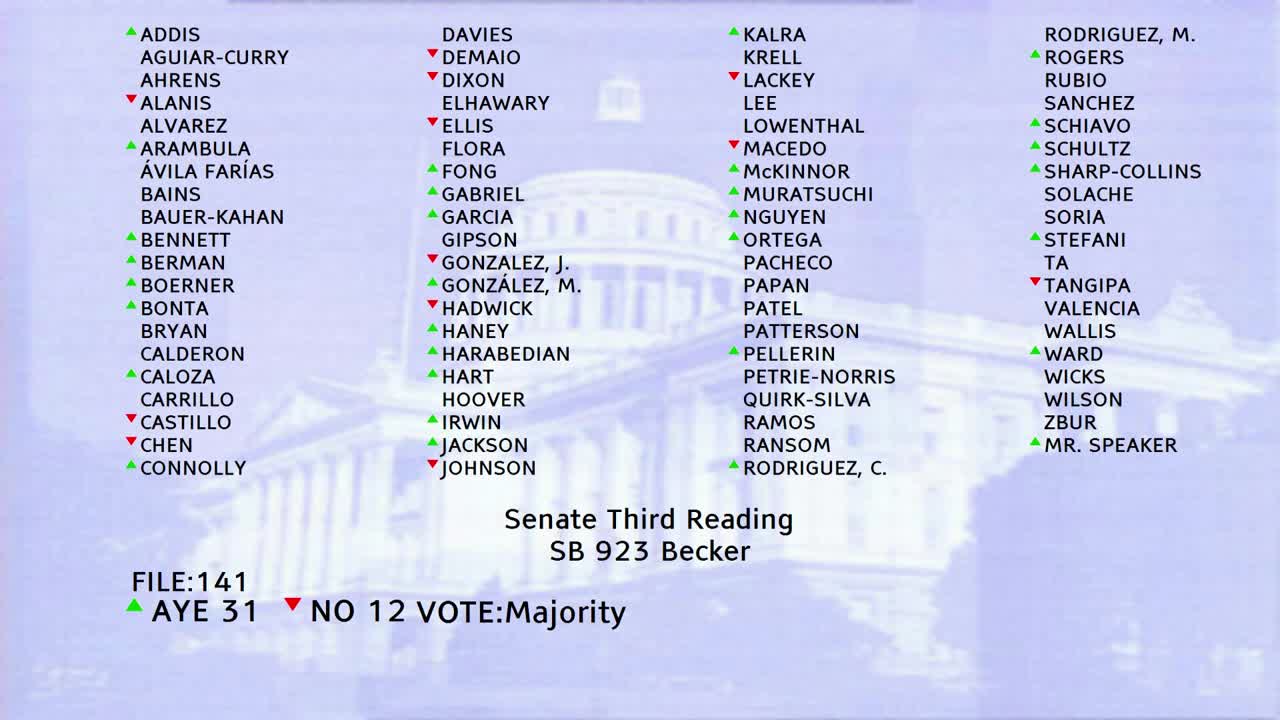 1MIN
Assembly Floor
 2MIN
Senate Floor
 24MIN
Senate Standing Committee on Local Government
 18MIN
Senate Standing Committee on Public Safety
 4MIN
Assembly Floor
 20MIN
Assembly Standing Committee on Public Safety
Bill Author

Bill Co-Author(s):