AB 2274: Crimes: plea deals.
- Session Year: 2025-2026
- House: Assembly
- Latest Version Date: 2026-09-30
Current Status:
Passed
(2026-09-30: Chaptered by Secretary of State - Chapter 840, Statutes of 2026.)
Introduced
In Committee
Awaiting First Chamber Vote
Passed First Chamber
In Committee
Awaiting Second Chamber Vote
Passed Second Chamber
Enacted
Existing law prohibits human trafficking, defined as, among other things, violating the personal liberty of another person with the intent to engage in specified sex offenses. Existing law prohibits pimping, defined as deriving support from the earnings of another persons prostitution, and pandering, defined as procuring another for purposes of prostitution or persuading someone to become a prostitute.
This bill would, in any prosecution for a violation of those crimes in which the victim was a minor, prohibit any plea agreement, nonprosecution agreement, immunity agreement, anonymity, or other disposition from granting immunity to any person other than the defendant unless that person is specifically named in the written agreement, and the agreement is approved by the court after a hearing in which victims are given notice and an opportunity to be heard.
By increasing duties on local prosecutors, this bill would impose a state-mandated local program.
The California Constitution requires the state to reimburse local agencies and school districts for certain costs mandated by the state. Statutory provisions establish procedures for making that reimbursement.
This bill would provide that, if the Commission on State Mandates determines that the bill contains costs mandated by the state, reimbursement for those costs shall be made pursuant to the statutory provisions noted above.
Existing law prohibits human trafficking, defined as, among other things, violating the personal liberty of another person with the intent to engage in specified sex offenses. Existing law prohibits pimping, defined as deriving support from the earnings of another persons prostitution, and pandering, defined as procuring another for purposes of prostitution or persuading someone to become a prostitute.
This bill would, in any prosecution for a violation of those crimes in which the victim was a minor, prohibit any plea agreement, nonprosecution agreement, immunity agreement, anonymity, or other disposition from granting immunity to any person other than the defendant unless that person is specifically named in the written agreement, and the agreement is approved by the court after a hearing in which victims are given notice and an opportunity to be heard. The bill would additionally require any plea agreement or disposition for those crimes involving a minor to include at least 5 years in the state prison actually served, as specified, unless the court finds on the record, by clear and convincing evidence, that the disposition is required in the interests of justice due to extraordinary circumstances that outweigh the need to protect child victims and the public.
Existing law authorizes a court to grant pretrial diversion to a defendant suffering from a mental disorder, on an accusatory pleading alleging the commission of a misdemeanor or felony offense, in order to allow the defendant to undergo mental health treatment. Existing law makes a defendant ineligible for this diversion program if the defendant is charged with specified offenses, including, among other offenses, any sex offense except indecent exposure.This bill would make a defendant ineligible for pretrial diversion if the court determines that the facts alleged in the accusatory pleading or disclosed in the preliminary hearing transcript, police reports, or other evidence would constitute any of the offenses prohibited from receiving diversion, regardless of whether the prosecution formally charges or ultimately proceeds on those offenses.By increasing duties on local prosecutors, this bill would impose a state-mandated local program.
The California Constitution requires the state to reimburse local agencies and school districts for certain costs mandated by the state. Statutory provisions establish procedures for making that reimbursement.
This bill would provide that, if the Commission on State Mandates determines that the bill contains costs mandated by the state, reimbursement for those costs shall be made pursuant to the statutory provisions noted above.
Existing law prohibits human trafficking, defined as, among other things, violating the personal liberty of another person with the intent to engage in specified sex offenses. Existing law prohibits pimping, defined as deriving support from the earnings of another persons prostitution, and pandering, defined as procuring another for purposes of prostitution or persuading someone to become a prostitute.
This bill would, in any prosecution for a violation of those crimes in which the victim was a minor, prohibit any plea agreement, nonprosecution agreement, immunity agreement, or other disposition from granting immunity to any person other than the defendant unless that person is specifically named in the written agreement, and the agreement is approved by the court after a hearing in which victims are given notice and an opportunity to be heard. The bill would additionally require any plea agreement or disposition for those crimes involving a minor to include at least 5 years in the state prison actually served, as specified, unless the court finds on the record, by clear and convincing evidence, that the disposition is required in the interests of justice due to extraordinary circumstances that outweigh the need to protect child victims and the public.
Existing law authorizes a court to grant pretrial diversion to a defendant suffering from a mental disorder, on an accusatory pleading alleging the commission of a misdemeanor or felony offense, in order to allow the defendant to undergo mental health treatment. Existing law makes a defendant ineligible for this diversion program if the defendant is charged with specified offenses, including, among other offenses, any sex offense except indecent exposure.
This bill would make a defendant ineligible for pretrial diversion if the court determines that the facts alleged in the accusatory pleading or disclosed in the preliminary hearing transcript, police reports, or other evidence would constitute any of the offenses prohibited from receiving diversion, regardless of whether the prosecution formally charges or ultimately proceeds on those offenses.
By increasing duties on local prosecutors, this bill would impose a state-mandated local program.
The California Constitution requires the state to reimburse local agencies and school districts for certain costs mandated by the state. Statutory provisions establish procedures for making that reimbursement.
This bill would provide that, if the Commission on State Mandates determines that the bill contains costs mandated by the state, reimbursement for those costs shall be made pursuant to the statutory provisions noted above.
This act shall be known, and may be cited, as the Epstein Loophole Act.
SEC. 2.The Legislature finds and declares all of the following:
(a)In 2008, Jeffrey Epstein, a serial child sex trafficker who victimized dozens of underage girls, was permitted to plead guilty in Florida to grossly inadequate state charges. He received an 18-month county jail sentence, of which he served less than 13 months, with extensive work release and private wing privileges.
(b)That plea agreement also granted blanket immunity from federal prosecution to all unnamed potential co-conspirators, shielding multiple facilitators of his crimes for over a decade.
(c)The Epstein plea deal is widely regarded as one of the most egregious miscarriages of justice in modern American history. It allowed a predator to continue offending and denied dozens of child victims their day in court.
(d)California must ensure that no prosecutor can ever again offer, and no court can ever again approve, an Epstein loophole in cases involving the commercial sexual exploitation or sexual abuse of minors.
(e)Existing California law already imposes severe penalties for these crimes, but prosecutors retain excessive discretion to down-charge, offer blanket immunity to uncharged accomplices, or agree to dispositions that result in little or no prison time.
(f)Child victims of sexual trafficking and exploitation deserve the certainty that the full weight of the law will be brought against every adult who participates in their victimization.
SEC. 3.Section 266l is added to the Penal Code, to read:266l.In any prosecution for a violation of subdivision (b) or (c) of Section 236.1, or of Section 266h or 266i, in which the victim was a minor, no plea agreement, nonprosecution agreement, immunity agreement, or other disposition shall grant immunity, leniency, anonymity, or nonprosecution to any person other than the defendant unless that person is specifically named in the written agreement and the agreement is approved by the court after a hearing in which victims are given notice and an opportunity to be heard.
SEC. 4.If the Commission on State Mandates determines that this act contains costs mandated by the state, reimbursement to local agencies and school districts for those costs shall be made pursuant to Part 7 (commencing with Section 17500) of Division 4 of Title 2 of the Government Code.
This act shall be known, and may be cited, as the Epstein Loophole Act.
SEC. 2.The Legislature finds and declares all of the following:
(a)In 2008, Jeffrey Epstein, a serial child sex trafficker who victimized dozens of underage girls, was permitted to plead guilty in Florida to grossly inadequate state charges. He received an 18-month county jail sentence, of which he served less than 13 months, with extensive work release and private wing privileges.
(b)That plea agreement also granted blanket immunity from federal prosecution to all unnamed potential co-conspirators, shielding multiple facilitators of his crimes for over a decade.
(c)The Epstein plea deal is widely regarded as one of the most egregious miscarriages of justice in modern American history. It allowed a predator to continue offending and denied dozens of child victims their day in court.
(d)California must ensure that no prosecutor can ever again offer, and no court can ever again approve, an Epstein loophole in cases involving the commercial sexual exploitation or sexual abuse of minors.
(e)Existing California law already imposes severe penalties for these crimes, but prosecutors retain excessive discretion to down-charge, offer blanket immunity to uncharged accomplices, or agree to dispositions that result in little or no prison time.
(f)Child victims of sexual trafficking and exploitation deserve the certainty that the full weight of the law will be brought against every adult who participates in their victimization.
SEC. 3.Section 266l is added to the Penal Code, to read:266l.(a)In any prosecution for a violation of subdivision (b) or (c) of Section 236.1, or of Section 266h or 266i, in which the victim was a minor, no plea agreement, nonprosecution agreement, immunity agreement, or other disposition shall grant immunity, leniency, anonymity, or nonprosecution to any person other than the defendant unless that person is specifically named in the written agreement and the agreement is approved by the court after a hearing in which victims are given notice and an opportunity to be heard.
(b)A plea agreement or disposition for a violation of subdivision (b) or (c) of Section 236.1, or of Section 266h or 266i, in which the victim was a minor shall not result in a sentence of fewer than five years in the state prison actually served, without suspension, probation, or alternative custody, including home detention or work release, unless the court finds on the record, by clear and convincing evidence, that the disposition is required in the interests of justice due to extraordinary circumstances that outweigh the need to protect child victims and the public. That finding shall be reviewable for abuse of discretion on appeal.SEC. 4.Section 1001.36 of the Penal Code is amended to read:1001.36.(a)On an accusatory pleading alleging the commission of a misdemeanor or felony offense not set forth in subdivision (d), the court may, in its discretion, and after considering the positions of the defense and prosecution, grant pretrial diversion to a defendant pursuant to this section if the defendant satisfies the eligibility requirements for pretrial diversion set forth in subdivision (b) and the court determines that the defendant is suitable for that diversion under the factors set forth in subdivision (c).(b)A defendant is eligible for pretrial diversion pursuant to this section if both of the following criteria are met:(1)The defendant has been diagnosed with a mental disorder as identified in the most recent edition of the Diagnostic and Statistical Manual of Mental Disorders, including, but not limited to, bipolar disorder, schizophrenia, schizoaffective disorder, or post-traumatic stress disorder, but excluding antisocial personality disorder and pedophilia. Evidence of the defendants mental disorder shall be provided by the defense and shall include a diagnosis or treatment for a diagnosed mental disorder within the last five years by a qualified mental health expert. In opining that a defendant suffers from a qualifying disorder, the qualified mental health expert may rely on an examination of the defendant, the defendants medical records, arrest reports, or any other relevant evidence.(2)The defendants mental disorder was a significant factor in the commission of the charged offense. If the defendant has been diagnosed with a mental disorder, the court shall find that the defendants mental disorder was a significant factor in the commission of the offense unless there is clear and convincing evidence that it was not a motivating factor, causal factor, or contributing factor to the defendants involvement in the alleged offense. A court may consider any relevant and credible evidence, including, but not limited to, police reports, preliminary hearing transcripts, witness statements, statements by the defendants mental health treatment provider, medical records, records or reports by qualified medical experts, or evidence that the defendant displayed symptoms consistent with the relevant mental disorder at or near the time of the offense.(c)For any defendant who satisfies the eligibility requirements in subdivision (b), the court must consider whether the defendant is suitable for pretrial diversion. A defendant is suitable for pretrial diversion if all of the following criteria are met:(1)In the opinion of a qualified mental health expert, the defendants symptoms of the mental disorder causing, contributing to, or motivating the criminal behavior would respond to mental health treatment.(2)The defendant consents to diversion and waives the defendants right to a speedy trial, or a defendant has been found to be an appropriate candidate for diversion in lieu of commitment pursuant to clause (iii) of subparagraph (B) of, or clause (v) of subparagraph (C), of, paragraph (1) of subdivision (a) of Section 1370, or subparagraph (A) of paragraph (1) of subdivision (b) of Section 1370.01 and, as a result of the defendants mental incompetence, cannot consent to diversion or give a knowing and intelligent waiver of the defendants right to a speedy trial.(3)The defendant agrees to comply with treatment as a condition of diversion, or the defendant has been found to be an appropriate candidate for diversion in lieu of commitment for restoration of competency treatment pursuant to clause (iii) of subparagraph (B) of, or clause (v) of subparagraph (C) of, paragraph (1) of subdivision (a) of Section 1370 or subparagraph (A) of paragraph (1) of subdivision (b) of Section 1370.01 and, as a result of the defendants mental incompetence, cannot agree to comply with treatment.(4)The defendant will not pose an unreasonable risk of danger to public safety, as defined in Section 1170.18, if treated in the community. The court may consider the opinions of the district attorney, the defense, or a qualified mental health expert, and may consider the defendants treatment plan, the defendants violence and criminal history, the current charged offense, and any other factors that the court deems appropriate.(d)(1)A defendant shall not be placed into a diversion program, pursuant to this section, for the following current charged offenses:(A)Murder or voluntary manslaughter.(B)An offense for which a person, if convicted, would be required to register pursuant to Section 290, except for a violation of Section 314.(C)Rape.(D)Lewd or lascivious act on a child under 14 years of age.(E)Assault with intent to commit rape, sodomy, or oral copulation, in violation of Section 220.(F)Commission of rape or sexual penetration in concert with another person, in violation of Section 264.1.(G)Continuous sexual abuse of a child, in violation of Section 288.5.(H)A violation of subdivision (b) or (c) of Section 11418.(2)For purposes of this subdivision, a defendant shall be deemed ineligible for pretrial diversion when the facts alleged in the accusatory pleading or disclosed in the preliminary hearing transcript, police reports, or other evidence would constitute any of the offenses enumerated in this subdivision, regardless of whether the prosecution formally charges or ultimately proceeds on those offenses. The court shall make this eligibility determination based on the factual conduct underlying the case, not solely on the specific charges filed.(e)At any stage of the proceedings, the court may require the defendant to make a prima facie showing that the defendant will meet the minimum requirements of eligibility for diversion and that the defendant and the offense are suitable for diversion. The hearing on the prima facie showing shall be informal and may proceed on offers of proof, reliable hearsay, and argument of counsel. If a prima facie showing is not made, the court may summarily deny the request for diversion or grant any other relief as may be deemed appropriate.(f)As used in this chapter, the following terms have the following meanings:(1)Pretrial diversion means the postponement of prosecution, either temporarily or permanently, at any point in the judicial process from the point at which the accused is charged until adjudication, to allow the defendant to undergo mental health treatment, subject to all of the following:(A)(i)The court is satisfied that the recommended inpatient or outpatient program of mental health treatment will meet the specialized mental health treatment needs of the defendant.(ii)The defendant may be referred to a program of mental health treatment utilizing existing inpatient or outpatient mental health resources. Before approving a proposed treatment program, the court shall consider the request of the defense, the request of the prosecution, the needs of the defendant, and the interests of the community. The treatment may be procured using private or public funds, and a referral may be made to a county mental health agency, existing collaborative courts, or assisted outpatient treatment only if that entity has agreed to accept responsibility for the treatment of the defendant, and mental health services are provided only to the extent that resources are available and the defendant is eligible for those services.(iii)If the court refers the defendant to a county mental health agency pursuant to this section and the agency determines that it is unable to provide services to the defendant, the court shall accept a written declaration to that effect from the agency in lieu of requiring live testimony. That declaration shall serve only to establish that the program is unable to provide services to the defendant at that time and does not constitute evidence that the defendant is unqualified or unsuitable for diversion under this section.(B)The provider of the mental health treatment program in which the defendant has been placed shall provide regular reports to the court, the defense, and the prosecutor on the defendants progress in treatment.(C)The period during which criminal proceedings against the defendant may be diverted is limited as follows:(i)If the defendant is charged with a felony, the period shall be no longer than two years.(ii)If the defendant is charged with a misdemeanor, the period shall be no longer than one year.(D)Upon request, the court shall conduct a hearing to determine whether restitution, as defined in subdivision (f) of Section 1202.4, is owed to any victim as a result of the diverted offense and, if owed, order its payment during the period of diversion. However, a defendants inability to pay restitution due to indigence or mental disorder shall not be grounds for denial of diversion or a finding that the defendant has failed to comply with the terms of diversion.(2)Qualified mental health expert includes, but is not limited to, a psychiatrist, psychologist, a person described in Section 5751.2 of the Welfare and Institutions Code, or a person whose knowledge, skill, experience, training, or education qualifies them as an expert.(g)If any of the following circumstances exists, the court shall, after notice to the defendant, defense counsel, and the prosecution, hold a hearing to determine whether the criminal proceedings should be reinstated, whether the treatment should be modified, or whether the defendant should be conserved and referred to the conservatorship investigator of the county of commitment to initiate conservatorship proceedings for the defendant pursuant to Chapter 3 (commencing with Section 5350) of Part 1 of Division 5 of the Welfare and Institutions Code:(1)The defendant is charged with an additional misdemeanor allegedly committed during the pretrial diversion and that reflects the defendants propensity for violence.(2)The defendant is charged with an additional felony allegedly committed during the pretrial diversion.(3)The defendant is engaged in criminal conduct rendering the defendant unsuitable for diversion.(4)Based on the opinion of a qualified mental health expert whom the court may deem appropriate, either of the following circumstances exists:(A)The defendant is performing unsatisfactorily in the assigned program.(B)The defendant is gravely disabled, as defined in subparagraph (B) of paragraph (1) of subdivision (h) of Section 5008 of the Welfare and Institutions Code. A defendant shall only be conserved and referred to the conservatorship investigator pursuant to this finding.(h)If the defendant has performed satisfactorily in diversion, at the end of the period of diversion, the court shall dismiss the defendants criminal charges that were the subject of the criminal proceedings at the time of the initial diversion. A court may conclude that the defendant has performed satisfactorily if the defendant has substantially complied with the requirements of diversion, has avoided significant new violations of law unrelated to the defendants mental health condition, and has a plan in place for long-term mental health care. If the court dismisses the charges, the clerk of the court shall file a record with the Department of Justice indicating the disposition of the case diverted pursuant to this section. Upon successful completion of diversion, if the court dismisses the charges, the arrest upon which the diversion was based shall be deemed never to have occurred, and the court shall order access to the record of the arrest restricted in accordance with Section 1001.9, except as specified in subdivisions (j) and (k). The defendant who successfully completes diversion may indicate in response to any question concerning the defendants prior criminal record that the defendant was not arrested or diverted for the offense, except as specified in subdivision (j).(i)A record pertaining to an arrest resulting in successful completion of diversion, or any record generated as a result of the defendants application for or participation in diversion, shall not, without the defendants consent, be used in any way that could result in the denial of any employment, benefit, license, or certificate.(j)The defendant shall be advised that, regardless of the defendants completion of diversion, both of the following apply:(1)The arrest upon which the diversion was based may be disclosed by the Department of Justice to any peace officer application request and that, notwithstanding subdivision (i), this section does not relieve the defendant of the obligation to disclose the arrest in response to any direct question contained in any questionnaire or application for a position as a peace officer, as defined in Section 830.(2)An order to seal records pertaining to an arrest made pursuant to this section has no effect on a criminal justice agencys ability to access and use those sealed records and information regarding sealed arrests, as described in Section 851.92.(k)A finding that the defendant suffers from a mental disorder, any progress reports concerning the defendants treatment, including, but not limited to, any finding that the defendant be prohibited from owning or controlling a firearm because they are a danger to themselves or others pursuant to subdivision (m), or any other records related to a mental disorder that were created as a result of participation in, or completion of, diversion pursuant to this section or for use at a hearing on the defendants eligibility for diversion under this section may not be used in any other proceeding without the defendants consent, unless that information is relevant evidence that is admissible under the standards described in paragraph (2) of subdivision (f) of Section 28 of Article I of the California Constitution. However, when determining whether to exercise its discretion to grant diversion under this section, a court may consider previous records of participation in diversion under this section.(l)The county agency administering the diversion, the defendants mental health treatment providers, the public guardian or conservator, and the court shall, to the extent not prohibited by federal law, have access to the defendants medical and psychological records, including progress reports, during the defendants time in diversion, as needed, for the purpose of providing care and treatment and monitoring treatment for diversion or conservatorship.(m)(1)The prosecution may request an order from the court that the defendant be prohibited from owning or possessing a firearm until they successfully complete diversion because they are a danger to themselves or others pursuant to subdivision (i) of Section 8103 of the Welfare and Institutions Code.(2)The prosecution shall bear the burden of proving, by clear and convincing evidence, both of the following are true:(A)The defendant poses a significant danger of causing personal injury to themselves or another by having in their custody or control, owning, purchasing, possessing, or receiving a firearm.(B)The prohibition is necessary to prevent personal injury to the defendant or any other person because less restrictive alternatives either have been tried and found to be ineffective or are inadequate or inappropriate for the circumstances of the defendant.(3)(A)If the court finds that the prosecution has not met that burden, the court shall not order that the person is prohibited from having, owning, purchasing, possessing, or receiving a firearm.(B)If the court finds that the prosecution has met the burden, the court shall order that the person is prohibited, and shall inform the person that they are prohibited, from owning or controlling a firearm until they successfully complete diversion because they are a danger to themselves or others.(4)An order imposed pursuant to this subdivision shall be in effect until the defendant has successfully completed diversion or until their firearm rights are restored pursuant to paragraph (4) of subdivision (g) of Section 8103 of the Welfare and Institutions Code.SEC. 5.SEC. 4.If the Commission on State Mandates determines that this act contains costs mandated by the state, reimbursement to local agencies and school districts for those costs shall be made pursuant to Part 7 (commencing with Section 17500) of Division 4 of Title 2 of the Government Code.
This act shall be known, and may be cited, as the Epstein Loophole Act.
SEC. 2.The Legislature finds and declares all of the following:
(a)In 2008, Jeffrey Epstein, a serial child sex trafficker who victimized dozens of underage girls, was permitted to plead guilty in Florida to grossly inadequate state charges. He received an 18-month county jail sentence, of which he served less than 13 months, with extensive work release and private wing privileges.
(b)That plea agreement also granted blanket immunity from federal prosecution to all unnamed potential co-conspirators, shielding multiple facilitators of his crimes for over a decade.
(c)The Epstein plea deal is widely regarded as one of the most egregious miscarriages of justice in modern American history. It allowed a predator to continue offending and denied dozens of child victims their day in court.
(d)California must ensure that no prosecutor can ever again offer, and no court can ever again approve, an Epstein loophole in cases involving the commercial sexual exploitation or sexual abuse of minors.
(e)Existing California law already imposes severe penalties for these crimes, but prosecutors retain excessive discretion to down-charge, offer blanket immunity to uncharged accomplices, or agree to dispositions that result in little or no prison time.
(f)Child victims of sexual trafficking and exploitation deserve the certainty that the full weight of the law will be brought against every adult who participates in their victimization.
SEC. 3.Section 266l is added to the Penal Code, to read:266l.(a)In any prosecution for a violation of subdivision (b) or (c) of Section 236.1, or of Section 266h or 266i, in which the victim was a minor, no plea agreement, nonprosecution agreement, immunity agreement, or other disposition shall grant immunity, leniency, or nonprosecution to any person other than the defendant unless that person is specifically named in the written agreement and the agreement is approved by the court after a hearing in which victims are given notice and an opportunity to be heard.
(b)A plea agreement or disposition for a violation of subdivision (b) or (c) of Section 236.1, or of Section 266h or 266i, in which the victim was a minor shall not result in a sentence of fewer than five years in the state prison actually served, without suspension, probation, or alternative custody, including home detention or work release, unless the court finds on the record, by clear and convincing evidence, that the disposition is required in the interests of justice due to extraordinary circumstances that outweigh the need to protect child victims and the public. That finding shall be reviewable for abuse of discretion on appeal.
SEC. 4.Section 1001.36 of the Penal Code is amended to read:1001.36.(a)On an accusatory pleading alleging the commission of a misdemeanor or felony offense not set forth in subdivision (d), the court may, in its discretion, and after considering the positions of the defense and prosecution, grant pretrial diversion to a defendant pursuant to this section if the defendant satisfies the eligibility requirements for pretrial diversion set forth in subdivision (b) and the court determines that the defendant is suitable for that diversion under the factors set forth in subdivision (c).
(b)A defendant is eligible for pretrial diversion pursuant to this section if both of the following criteria are met:
(1)The defendant has been diagnosed with a mental disorder as identified in the most recent edition of the Diagnostic and Statistical Manual of Mental Disorders, including, but not limited to, bipolar disorder, schizophrenia, schizoaffective disorder, or post-traumatic stress disorder, but excluding antisocial personality disorder and pedophilia. Evidence of the defendants mental disorder shall be provided by the defense and shall include a diagnosis or treatment for a diagnosed mental disorder within the last five years by a qualified mental health expert. In opining that a defendant suffers from a qualifying disorder, the qualified mental health expert may rely on an examination of the defendant, the defendants medical records, arrest reports, or any other relevant evidence.
(2)The defendants mental disorder was a significant factor in the commission of the charged offense. If the defendant has been diagnosed with a mental disorder, the court shall find that the defendants mental disorder was a significant factor in the commission of the offense unless there is clear and convincing evidence that it was not a motivating factor, causal factor, or contributing factor to the defendants involvement in the alleged offense. A court may consider any relevant and credible evidence, including, but not limited to, police reports, preliminary hearing transcripts, witness statements, statements by the defendants mental health treatment provider, medical records, records or reports by qualified medical experts, or evidence that the defendant displayed symptoms consistent with the relevant mental disorder at or near the time of the offense.
(c)For any defendant who satisfies the eligibility requirements in subdivision (b), the court must consider whether the defendant is suitable for pretrial diversion. A defendant is suitable for pretrial diversion if all of the following criteria are met:
(1)In the opinion of a qualified mental health expert, the defendants symptoms of the mental disorder causing, contributing to, or motivating the criminal behavior would respond to mental health treatment.
(2)The defendant consents to diversion and waives the defendants right to a speedy trial, or a defendant has been found to be an appropriate candidate for diversion in lieu of commitment pursuant to clause (iii) of subparagraph (B) of, or clause (v) of subparagraph (C), of, paragraph (1) of subdivision (a) of Section 1370, or subparagraph (A) of paragraph (1) of subdivision (b) of Section 1370.01 and, as a result of the defendants mental incompetence, cannot consent to diversion or give a knowing and intelligent waiver of the defendants right to a speedy trial.
(3)The defendant agrees to comply with treatment as a condition of diversion, or the defendant has been found to be an appropriate candidate for diversion in lieu of commitment for restoration of competency treatment pursuant to clause (iii) of subparagraph (B) of, or clause (v) of subparagraph (C) of, paragraph (1) of subdivision (a) of Section 1370 or subparagraph (A) of paragraph (1) of subdivision (b) of Section 1370.01 and, as a result of the defendants mental incompetence, cannot agree to comply with treatment.
(4)The defendant will not pose an unreasonable risk of danger to public safety, as defined in Section 1170.18, if treated in the community. The court may consider the opinions of the district attorney, the defense, or a qualified mental health expert, and may consider the defendants treatment plan, the defendants violence and criminal history, the current charged offense, and any other factors that the court deems appropriate.
(d)(1)A defendant may shall not be placed into a diversion program, pursuant to this section, for the following current charged offenses:
(1)(A)Murder or voluntary manslaughter.
(2)(B)An offense for which a person, if convicted, would be required to register pursuant to Section 290, except for a violation of Section 314.
(3)(C)Rape.
(4)(D)Lewd or lascivious act on a child under 14 years of age.
(5)(E)Assault with intent to commit rape, sodomy, or oral copulation, in violation of Section 220.
(6)(F)Commission of rape or sexual penetration in concert with another person, in violation of Section 264.1.
(7)(G)Continuous sexual abuse of a child, in violation of Section 288.5.
(8)(H)A violation of subdivision (b) or (c) of Section 11418.
(2)For purposes of this subdivision, a defendant shall be deemed ineligible for pretrial diversion when the facts alleged in the accusatory pleading or disclosed in the preliminary hearing transcript, police reports, or other evidence would constitute any of the offenses enumerated in this subdivision, regardless of whether the prosecution formally charges or ultimately proceeds on those offenses. The court shall make this eligibility determination based on the factual conduct underlying the case, not solely on the specific charges filed.
(e)At any stage of the proceedings, the court may require the defendant to make a prima facie showing that the defendant will meet the minimum requirements of eligibility for diversion and that the defendant and the offense are suitable for diversion. The hearing on the prima facie showing shall be informal and may proceed on offers of proof, reliable hearsay, and argument of counsel. If a prima facie showing is not made, the court may summarily deny the request for diversion or grant any other relief as may be deemed appropriate.
(f)As used in this chapter, the following terms have the following meanings:
(1)Pretrial diversion means the postponement of prosecution, either temporarily or permanently, at any point in the judicial process from the point at which the accused is charged until adjudication, to allow the defendant to undergo mental health treatment, subject to all of the following:
(A)(i)The court is satisfied that the recommended inpatient or outpatient program of mental health treatment will meet the specialized mental health treatment needs of the defendant.
(ii)The defendant may be referred to a program of mental health treatment utilizing existing inpatient or outpatient mental health resources. Before approving a proposed treatment program, the court shall consider the request of the defense, the request of the prosecution, the needs of the defendant, and the interests of the community. The treatment may be procured using private or public funds, and a referral may be made to a county mental health agency, existing collaborative courts, or assisted outpatient treatment only if that entity has agreed to accept responsibility for the treatment of the defendant, and mental health services are provided only to the extent that resources are available and the defendant is eligible for those services.
(iii)If the court refers the defendant to a county mental health agency pursuant to this section and the agency determines that it is unable to provide services to the defendant, the court shall accept a written declaration to that effect from the agency in lieu of requiring live testimony. That declaration shall serve only to establish that the program is unable to provide services to the defendant at that time and does not constitute evidence that the defendant is unqualified or unsuitable for diversion under this section.
(B)The provider of the mental health treatment program in which the defendant has been placed shall provide regular reports to the court, the defense, and the prosecutor on the defendants progress in treatment.
(C)The period during which criminal proceedings against the defendant may be diverted is limited as follows:
(i)If the defendant is charged with a felony, the period shall be no longer than two years.
(ii)If the defendant is charged with a misdemeanor, the period shall be no longer than one year.
(D)Upon request, the court shall conduct a hearing to determine whether restitution, as defined in subdivision (f) of Section 1202.4, is owed to any victim as a result of the diverted offense and, if owed, order its payment during the period of diversion. However, a defendants inability to pay restitution due to indigence or mental disorder shall not be grounds for denial of diversion or a finding that the defendant has failed to comply with the terms of diversion.
(2)Qualified mental health expert includes, but is not limited to, a psychiatrist, psychologist, a person described in Section 5751.2 of the Welfare and Institutions Code, or a person whose knowledge, skill, experience, training, or education qualifies them as an expert.
(g)If any of the following circumstances exists, the court shall, after notice to the defendant, defense counsel, and the prosecution, hold a hearing to determine whether the criminal proceedings should be reinstated, whether the treatment should be modified, or whether the defendant should be conserved and referred to the conservatorship investigator of the county of commitment to initiate conservatorship proceedings for the defendant pursuant to Chapter 3 (commencing with Section 5350) of Part 1 of Division 5 of the Welfare and Institutions Code:
(1)The defendant is charged with an additional misdemeanor allegedly committed during the pretrial diversion and that reflects the defendants propensity for violence.
(2)The defendant is charged with an additional felony allegedly committed during the pretrial diversion.
(3)The defendant is engaged in criminal conduct rendering the defendant unsuitable for diversion.
(4)Based on the opinion of a qualified mental health expert whom the court may deem appropriate, either of the following circumstances exists:
(A)The defendant is performing unsatisfactorily in the assigned program.
(B)The defendant is gravely disabled, as defined in subparagraph (B) of paragraph (1) of subdivision (h) of Section 5008 of the Welfare and Institutions Code. A defendant shall only be conserved and referred to the conservatorship investigator pursuant to this finding.
(h)If the defendant has performed satisfactorily in diversion, at the end of the period of diversion, the court shall dismiss the defendants criminal charges that were the subject of the criminal proceedings at the time of the initial diversion. A court may conclude that the defendant has performed satisfactorily if the defendant has substantially complied with the requirements of diversion, has avoided significant new violations of law unrelated to the defendants mental health condition, and has a plan in place for long-term mental health care. If the court dismisses the charges, the clerk of the court shall file a record with the Department of Justice indicating the disposition of the case diverted pursuant to this section. Upon successful completion of diversion, if the court dismisses the charges, the arrest upon which the diversion was based shall be deemed never to have occurred, and the court shall order access to the record of the arrest restricted in accordance with Section 1001.9, except as specified in subdivisions (j) and (k). The defendant who successfully completes diversion may indicate in response to any question concerning the defendants prior criminal record that the defendant was not arrested or diverted for the offense, except as specified in subdivision (j).
(i)A record pertaining to an arrest resulting in successful completion of diversion, or any record generated as a result of the defendants application for or participation in diversion, shall not, without the defendants consent, be used in any way that could result in the denial of any employment, benefit, license, or certificate.
(j)The defendant shall be advised that, regardless of the defendants completion of diversion, both of the following apply:
(1)The arrest upon which the diversion was based may be disclosed by the Department of Justice to any peace officer application request and that, notwithstanding subdivision (i), this section does not relieve the defendant of the obligation to disclose the arrest in response to any direct question contained in any questionnaire or application for a position as a peace officer, as defined in Section 830.
(2)An order to seal records pertaining to an arrest made pursuant to this section has no effect on a criminal justice agencys ability to access and use those sealed records and information regarding sealed arrests, as described in Section 851.92.
(k)A finding that the defendant suffers from a mental disorder, any progress reports concerning the defendants treatment, including, but not limited to, any finding that the defendant be prohibited from owning or controlling a firearm because they are a danger to themselves or others pursuant to subdivision (m), or any other records related to a mental disorder that were created as a result of participation in, or completion of, diversion pursuant to this section or for use at a hearing on the defendants eligibility for diversion under this section may not be used in any other proceeding without the defendants consent, unless that information is relevant evidence that is admissible under the standards described in paragraph (2) of subdivision (f) of Section 28 of Article I of the California Constitution. However, when determining whether to exercise its discretion to grant diversion under this section, a court may consider previous records of participation in diversion under this section.
(l)The county agency administering the diversion, the defendants mental health treatment providers, the public guardian or conservator, and the court shall, to the extent not prohibited by federal law, have access to the defendants medical and psychological records, including progress reports, during the defendants time in diversion, as needed, for the purpose of providing care and treatment and monitoring treatment for diversion or conservatorship.
(m)(1)The prosecution may request an order from the court that the defendant be prohibited from owning or possessing a firearm until they successfully complete diversion because they are a danger to themselves or others pursuant to subdivision (i) of Section 8103 of the Welfare and Institutions Code.
(2)The prosecution shall bear the burden of proving, by clear and convincing evidence, both of the following are true:
(A)The defendant poses a significant danger of causing personal injury to themselves or another by having in their custody or control, owning, purchasing, possessing, or receiving a firearm.
(B)The prohibition is necessary to prevent personal injury to the defendant or any other person because less restrictive alternatives either have been tried and found to be ineffective or are inadequate or inappropriate for the circumstances of the defendant.
(3)(A)If the court finds that the prosecution has not met that burden, the court shall not order that the person is prohibited from having, owning, purchasing, possessing, or receiving a firearm.
(B)If the court finds that the prosecution has met the burden, the court shall order that the person is prohibited, and shall inform the person that they are prohibited, from owning or controlling a firearm until they successfully complete diversion because they are a danger to themselves or others.
(4)An order imposed pursuant to this subdivision shall be in effect until the defendant has successfully completed diversion or until their firearm rights are restored pursuant to paragraph (4) of subdivision (g) of Section 8103 of the Welfare and Institutions Code.
SEC. 5.If the Commission on State Mandates determines that this act contains costs mandated by the state, reimbursement to local agencies and school districts for those costs shall be made pursuant to Part 7 (commencing with Section 17500) of Division 4 of Title 2 of the Government Code.
|
Date
|
Status
|
|---|---|
| Sep 30, 2026 | Chaptered by Secretary of State - Chapter 840, Statutes of 2026. |
| Sep 30, 2026 | Approved by the Governor. |
| Aug 27, 2026 | Enrolled and presented to the Governor at 4 p.m. |
| Aug 20, 2026 | In Assembly. Ordered to Engrossing and Enrolling. |
| Aug 20, 2026 | Read third time. Passed. Ordered to the Assembly. (Ayes 38. Noes 0. Page 5581.). |
| Aug 20, 2026 | Read third time. Passed. Ordered to the Assembly. (Ayes 38. Noes 0.). |
| Aug 4, 2026 | Read second time. Ordered to third reading. |
| Aug 3, 2026 | From committee: Be ordered to second reading pursuant to Senate Rule 28.8. |
| Jun 24, 2026 | From committee: Do pass and re-refer to Com. on APPR. (Ayes 6. Noes 0.) (June 23). Re-referred to Com. on APPR. |
| Jun 11, 2026 | In committee: Set, second hearing. Hearing canceled at the request of author. |
| Jun 9, 2026 | In committee: Set, first hearing. Hearing canceled at the request of author. |
| May 27, 2026 | Referred to Com. on PUB. S. |
| May 18, 2026 | In Senate. Read first time. To Com. on RLS. for assignment. |
| May 18, 2026 | Read third time. Passed. Ordered to the Senate. (Ayes 69. Noes 0. Page 5129.) |
| May 18, 2026 | Read third time. Passed. Ordered to the Senate. (Ayes 69. Noes 0.) |
| May 7, 2026 | Read second time. Ordered to third reading. |
| May 6, 2026 | From committee: Do pass. (Ayes 14. Noes 0.) (May 6). |
| Apr 22, 2026 | From committee: Do pass and re-refer to Com. on APPR. (Ayes 9. Noes 0.) (April 21). Re-referred to Com. on APPR. |
| Apr 16, 2026 | Re-referred to Com. on PUB. S. |
| Apr 15, 2026 | From committee chair, with author's amendments: Amend, and re-refer to Com. on PUB. S. Read second time and amended. |
| Apr 7, 2026 | In committee: Set, first hearing. Hearing canceled at the request of author. |
| Mar 9, 2026 | Referred to Com. on PUB. S. |
| Feb 20, 2026 | From printer. May be heard in committee March 22. |
| Feb 19, 2026 | Read first time. To print. |
|
Date
|
Description
|
Location
|
Votes
|
|
|---|---|---|---|---|
| Aug 20, 2026 | Assembly 3rd Reading AB2274 Bains By Caballero | Senate Floor |
Passed |
|
| Jun 23, 2026 | Do pass, but first be re-referred to the Committee on [Appropriations] | Senate Standing Committee on Public Safety |
Passed |
|
| May 18, 2026 | AB 2274 Bains Assembly Third Reading | Assembly Floor |
Passed |
|
| May 6, 2026 | Do pass. | Assembly Standing Committee on Appropriations |
Passed |
|
| Apr 21, 2026 | Do pass and be re-referred to the Committee on [Appropriations] | Assembly Standing Committee on Public Safety |
Passed |
This list shows positions taken on this bill by organizations on the date displayed, which is linked to the original source.
Positions by individuals are not included.
|
Organization
|
Position
|
Date
|
|---|---|---|
| Aclu California Action | ** Against | |
| Arcadia Police Officers' Association | ** Support | |
| Brea Police Association | ** Support | |
| Burbank Police Officers' Association | ** Support | |
| California Association of School Police Chiefs | ** Support | |
| California Coalition of School Safety Professionals | ** Support | |
| California Narcotic Officers' Association | ** Support | |
| California Police Chiefs Association | ** Support | |
| California Public Defenders Association | ** Against | |
| California Reserve Peace Officers Association | ** Support | |
| Claremont Police Officers' Association | ** Support | |
| Corona Police Officers' Association | ** Support | |
| Culver City Police Officers' Association | ** Support | |
| Ella Baker Center For Human Rights | ** Against | |
| Friends Committee On Legislation Of California | ** Against | |
| Fullerton Police Officers' Association | ** Support | |
| Initiate Justice | ** Against | |
| Justice2jobs Coalition | ** Against | |
| LA Defensa | ** Against | |
| Los Angeles County District Attorney'S Office | ** Support | |
| Los Angeles School Police Management Association | ** Support | |
| los angeles school police officers association | ** Support | |
| Murrieta Police Officers' Association | ** Support | |
| Newport Beach Police Association | ** Support | |
| Palos Verdes Police Officers' Association | ** Support | |
| Peace Officers Research Association Of California | ** Support | |
| Placer County Deputy Sheriffs' Association | ** Support | |
| Pomona Police Officers' Association | ** Support | |
| Riverside Police Officers' Association | ** Support | |
| Riverside Sheriffs' Association | ** Support | |
| San Francisco Public Defender | ** Against |
SENATE RULES COMMITTEE Office of Senate Floor Analyses (916) 651-4171 | AB 2274 |
THIRD READING
Bill No: AB 2274
Author: Bains (D)
Amended: 4/15/26 in Assembly
Vote: 21
SENATE PUBLIC SAFETY COMMITTEE: 6-0, 6/23/26
AYES: Arreguín, Seyarto, Caballero, Cortese, Pérez, Wiener
SENATE APPROPRIATIONS COMMITTEE: Senate Rule 28.8
ASSEMBLY FLOOR: 69-0, 5/18/26 - See last page for vote
SUBJECT: Crimes: plea deals
SOURCE: Author
DIGEST:
This bill prohibits, in any prosecution for human trafficking, pimping or pandering, where the victim is a minor, any plea agreement from granting immunity, leniency, anonymity, or nonprosecution to any person other than the defendant, except as specified.
ANALYSIS:
Existing law:
- Defines “plea bargaining” as “any bargaining, negotiation, or discussion between a criminal defendant, or their counsel, and a prosecuting attorney or judge, whereby the defendant agrees to plead guilty or nolo contendere, in exchange for any promises, commitments, concessions, assurances, or consideration by the prosecuting attorney or judge relating to any charge against the defendant or to the sentencing of the defendant.” (Penal (Pen.) Code, § 1192.7, subd. (b).)
- Provides that every plea must be made in open court, and may be oral or in writing, shall be entered upon the minutes of the court, and shall be taken down in shorthand by the official reporter if one is present. Requires all pleas of guilty or nolo contendere to misdemeanors or felonies to be oral or in writing. (Pen. Code, § 1017.)
- States that unless otherwise provided by law, every plea shall be entered or withdrawn by the defendant personally in open court. (Pen. Code, § 1018.)
- Provides that on application of the defendant at any time before judgment or within six months after an order granting probation is made if entry of judgment is suspended, the court may, and in case of a defendant who appeared without counsel at the time of the plea the court shall, for a good cause shown, permit the plea of guilty to be withdrawn and a plea of not guilty substituted. (Ibid.)
- Specifies that if the public offense charged is a felony not punishable with death, the magistrate shall immediately upon the appearance of counsel for the defendant read the complaint to the defendant and ask whether they plead guilty or not guilty to the offenses charged and to a previous conviction or convictions if charged. (Pen. Code, § 859a, subd. (a).)
- Provides that while the charge remains pending before the magistrate and when the defendant is present, the defendant may plead guilty to the offense charged, or with the consent of the magistrate and the prosecuting attorney, plead nolo contendere to the offense charged, or to any other offense that is necessarily included in the charged offense, or to an attempt to commit the charged offense, or to any previous convictions charged. (Ibid.)
- Provides that if the defendant subsequently files a written motion to withdraw the plea, the motion shall be heard and determined by the court before which the plea was entered. (Ibid.)
- Provides that where the plea is accepted by the prosecuting attorney in open court and is approved by the court, the defendant, except as provided, cannot be sentenced on the plea to a punishment more severe than that specified in the plea and the court may not proceed as to the plea other than as specified in the plea. (Pen. Code, § 1192.5.)
- Provides that if the court approves of the plea, it shall inform the defendant prior to the making of the plea that (1) its approval is not binding, (2) it may, at the time set for the hearing on the application for probation or pronouncement of judgment, withdraw its approval in the light of further consideration of the matter, and (3) in that case, the defendant shall be permitted to withdraw his or her plea if he or she desires to do so. The court shall also cause an inquiry to be made of the defendant to satisfy itself that the plea is freely and voluntarily made, and that there is a factual basis for the plea. (Ibid.)
- Provides that in the interest of justice, and in order to reach a just resolution during plea negotiations, the prosecutor shall consider during plea negotiations, among other factors, the specified circumstances as factors in support of a mitigated sentence. (Pen. Code, § 1016.7.)
- Provides that a provision of a plea bargain that requires a defendant to generally waive future benefits of legislative enactments, initiatives, appellate decisions, or other changes in the law that may retroactively apply after the date of the plea is void as against public policy. (Pen. Code, § 1016.8.)
- Provides that the prosecution shall not negotiate a plea agreement with a defendant in a career criminal prosecution, as defined, where “plea agreement” is defined as “an agreement by the defendant to plead guilty or nolo contendere in exchange for any or all of the following: a dismissal of charges, a reduction in the degree of a charge, a change of a charge to a lesser or different crime, a specific manner or extent of punishment. (Pen. Code, § 999f, subd. (c).)
- States that a person who deprives or violates the personal liberty of another with the intent to commit specified sex crimes including pimping, pandering, or child pornography, is guilty of human trafficking and shall be punished by imprisonment in the state prison for 8, 14, or 20 years and a fine of not more than $500,000. (Pen. Code, § 236.1, subd. (b).)
- Specifies that a person who causes, induces, or persuades, or attempts to cause, induce, or persuade, a person who is a minor at the time of commission of the offense to engage in a commercial sex act, with the intent to commit specified crimes including pimping, pandering, or child pornography, is guilty of human trafficking, punishable as specified.
- Provides that who, knowing another person is a prostitute, lives or derives support or maintenance in whole or in part from the earnings or proceeds of the person’s prostitution, or from money loaned or advanced to or charged against that person by any keeper or manager or inmate of a house or other place where prostitution is practiced or allowed, or who solicits or receives compensation for soliciting for the person, is guilty of pimping, a felony, punishable as provided. (Pen. Code, § 266h, subd. (a).)
- Provides that any person who, knowing another person is a prostitute, lives or derives support or maintenance in whole or in part from the earnings or proceeds of the person’s prostitution, or from money loaned or advanced to or charged against that person by any keeper or manager or inmate of a house or other place where prostitution is practiced or allowed, or who solicits or receives compensation for soliciting for the person, when the prostitute is a minor, is guilty of pimping a minor, a felony, punishable as provided. (Pen. Code, § 266h, subd. (b).)
- Provides that any person who does any of the following is guilty of pandering, a felony, punishable by imprisonment in state prison:
- Procures another person for the purpose of prostitution.
- By promises, threats, violence, or by any device or scheme, causes, induces, persuades, or encourages another person to become a prostitute.
- Procures for another person a place as an inmate in a house of prostitution or as an inmate of any place in which prostitution is encouraged or allowed within this state.
- By promises, threats, violence, or by any device or scheme, causes, induces, persuades, or encourages an inmate of a house of prostitution, or any other place in which prostitution is encouraged or allowed, to remain therein as an inmate.
- By fraud or artifice, or by duress of person or goods, or by abuse of any position of confidence or authority, procures another person for the purpose of prostitution, or to enter any place in which prostitution is encouraged or allowed within this state, or to come into this state or leave this state for the purpose of prostitution.
- Receives or gives, or agrees to receive or give, any money or thing of value for procuring, or attempting to procure, another person for the purpose of prostitution, or to come into this state or leave this state for the purpose of prostitution. (Pen. Code, § 266i).
This bill:
- Provides that in any prosecution for human trafficking, pimping or pandering in which the victim was a minor, no plea agreement, nonprosecution agreement, immunity agreement, or other disposition shall grant immunity, leniency, anonymity, or nonprosecution to any person other than the defendant unless that person is specifically named in the written agreement and the agreement is approved by the court after a hearing in which victims are given notice and an opportunity to be heard.
Comments
Epstein Sweetheart Deal. Today, the multifarious and abhorrent crimes of Jeffrey Epstein are well documented and well known to the public, but nearly three decades ago, when the FBI first received a complaint about his possible criminal misconduct, Epstein was a successful financial consultant building relationships with some of the world’s richest and most powerful individuals. Epstein’s criminal enterprise started to come to light in March 2005, when the police in Palm Beach, Florida started investigating Epstein after the family of a 14-year-old girl reported that she was molested at his mansion. As more heinous crimes were exposed over the subsequent year, police in Palm Beach built a case against Epstein that resulted in his arrest in July 2006 after a grand jury indicted him on one count of soliciting prostitution. This relatively minor charge in the face of Epstein’s alleged sexual misconduct infuriated local leaders, prompting a federal investigation, which resulted in the preparation of a 53-page, 60-count indictment based on evidence involving over 30 underage victims.
However, despite this overwhelming evidence of wrongdoing, federal prosecutors, led by United States Attorney for the Southern District of Florida Alex Acosta, entered into a secretive (and upon being made public, highly controversial) plea agreement with Epstein in which he would plead guilty to two state-level prostitution charges, register as a sex offender, and serve 18 months in county jail (of which he ultimately served 13 months) with nearly unrestricted daily work release. This plea deal also included a non-prosecution agreement that extended immunity from prosecution for federal crimes not only to Epstein but to four named co-conspirators and any unnamed “potential co-conspirators.” This non-prosecution agreement essentially shut down an ongoing FBI probe into whether there were more victims and other perpetrators. As part of the arrangement, Acosta agreed that the deal would be sealed until after it was approved by the judge, keeping it from victims and preventing them from appearing in court to challenge it. It was this lenient agreement with federal prosecutors that allowed Epstein to quickly return to his life of luxury and resume his sinister criminal enterprises.
Plea Bargaining in California. California law defines “plea bargaining” as any bargaining, negotiation, or discussion between a criminal defendant, or their counsel, and a prosecuting attorney or judge, whereby the defendant agrees to plead guilty or nolo contendere, in exchange for any promises, commitments, concessions, assurances, or consideration by the prosecuting attorney or judge relating to any charge against the defendant or to the sentencing of the defendant. When the parties agree on a plea deal, that plea must be made in open court and may be oral or in writing. When the plea is accepted by the prosecutor in open court and is approved by the judge, the defendant is barred from being sentenced more severely than specified in the plea and the court may not proceed on the plea other than specified therein. Moreover, when the court approves of a plea deal, the judge must inform the defendant prior to the making of the plea that its approval is not binding and may be withdrawn, in which case the defendant is entitled to withdraw from the agreement. The court is also required to ensure that the plea is voluntarily and freely made, and that there is a factual basis for the plea.
This bill includes several legislative findings and declarations, including an assertion that “California must ensure that no prosecutor can ever again offer, and no court can ever again approve, an “Epstein loophole” in cases involving the commercial sexual exploitation or sexual abuse of minors,” and that while “existing California law already imposes severe penalties for these crimes […] prosecutors retain excessive discretion to down-charge, offer blanket immunity to uncharged accomplices, or agree to dispositions that result in little or no prison time.” Accordingly, this bill prohibits, in prosecutions of human trafficking, pimping or pandering in which the victim was a minor, any plea agreement, non-prosecution agreement, immunity agreement, or other disposition from granting immunity, leniency, anonymity, or non-prosecution to any person other than the defendant unless that person is specifically named in the written agreement and the agreement is approved by the court after a hearing in which victims are given notice and an opportunity to be heard.
FISCAL EFFECT: Appropriation: No Fiscal Com.: Yes Local: Yes
SUPPORT: (Verified 8/3/26)
Arcadia Police Officers' Association
Brea Police Association
Burbank Police Officers' Association
California Association of School Police Chiefs
California Coalition of School Safety Professionals
California Narcotic Officers' Association
California Police Chiefs Association
California Reserve Peace Officers Association
Claremont Police Officers Association
Corona Police Officers Association
Culver City Police Officers' Association
Fullerton Police Officers' Association
Los Angeles County District Attorney's Office
Los Angeles School Police Management Association
Los Angeles School Police Officers Association
Murrieta Police Officers' Association
Newport Beach Police Association
Palos Verdes Police Officers Association
Peace Officers Research Association of California
Placer County Deputy Sheriffs' Association
Pomona Police Officers' Association
Riverside Police Officers Association
Riverside Sheriffs' Association
OPPOSITION: (Verified 8/3/26)
ACLU California Action
Initiate Justice
ASSEMBLY FLOOR: 69-0, 5/18/26
AYES: Addis, Aguiar-Curry, Ahrens, Alanis, Alvarez, Arambula, Ávila Farías, Bains, Bauer-Kahan, Bennett, Berman, Boerner, Bonta, Carrillo, Castillo, Chen, Connolly, Davies, DeMaio, Ellis, Flora, Fong, Gabriel, Gallagher, Garcia, Gipson, Jeff Gonzalez, Mark González, Hadwick, Haney, Harabedian, Hart, Hoover, Irwin, Jackson, Johnson, Krell, Lackey, Lowenthal, Macedo, McKinnor, Muratsuchi, Nguyen, Ortega, Pacheco, Papan, Patel, Patterson, Pellerin, Petrie-Norris, Ramos, Ransom, Michelle Rodriguez, Rogers, Blanca Rubio, Sanchez, Schiavo, Schultz, Sharp-Collins, Solache, Soria, Ta, Tangipa, Valencia, Wallis, Ward, Wilson, Zbur, Rivas
NO VOTE RECORDED: Bryan, Calderon, Caloza, Dixon, Elhawary, Kalra, Lee, Quirk-Silva, Celeste Rodriguez, Stefani, Wicks
Prepared by: Alex Barnett / PUB. S. /
8/5/26 15:04:35
**** END ****
SENATE COMMITTEE ON PUBLIC SAFETY
Senator Jesse Arreguín, Chair
2025 - 2026 Regular
Bill No: AB 2274 Hearing Date: June 23, 2026
Author: | Bains | ||
Version: | April 15, 2026 | ||
Urgency: | No | Fiscal: | Yes |
Consultant: | AB | ||
Subject: Crimes: plea deals
HISTORY
Source: Author
Prior Legislation: AB 124 (Kamlager), Ch. 695, Stats. of 2021
AB 1618 (Jones-Sawyer), Ch. 586, Stats. of 2019
AB 1343 (Thurmond), Ch. 705, Stats. of 2015
AB 267 (Jones-Sawyer), vetoed, 2015
Support: Arcadia Police Officers’ Association; Brea Police Association; Burbank Police Officers’ Association; California Association of School Police Chiefs; California Coalition of School Safety Professionals; California Narcotic Officers’ Association; California Police Chiefs Association; California Reserve Peace Officers Association; Claremont Police Officers Association; Corona Police Officers Association; Culver City Police Officers’ Association; Fullerton Police Officers’ Association; Los Angeles School Police Management Association; Los Angeles School Police Officers Association; Murrieta Police Officers’ Association; Newport Beach Police Association; Palos Verdes Police Officers Association; Peace Officers Research Association of California; Placer County Deputy Sheriffs’ Association; Pomona Police Officers’ Association; Riverside Police Officers Association; Riverside Sheriffs’ Association
Opposition: ACLU California Action; Initiate Justice
Assembly Floor Vote: 69 - 0
PURPOSE
The purpose of this bill is to prohibit, in any prosecution for human trafficking, pimping or pandering, where the victim is a minor, any plea agreement from granting immunity, leniency, anonymity, or nonprosecution to any person other than the defendant, except as specified.
Existing law defines “plea bargaining” as “any bargaining, negotiation, or discussion between a criminal defendant, or their counsel, and a prosecuting attorney or judge, whereby the defendant agrees to plead guilty or nolo contendere, in exchange for any promises, commitments, concessions, assurances, or consideration by the prosecuting attorney or judge relating to any charge against the defendant or to the sentencing of the defendant.” (Pen. Code, § 1192.7, subd. (b).)
Existing law provides that every plea must be made in open court, and may be oral or in writing, shall be entered upon the minutes of the court, and shall be taken down in shorthand by the official reporter if one is present. Requires all pleas of guilty or nolo contendere to misdemeanors or felonies to be oral or in writing. (Pen. Code, § 1017.)
Existing law states that unless otherwise provided by law, every plea shall be entered or withdrawn by the defendant personally in open court. (Pen. Code, § 1018.)
Existing law provides that on application of the defendant at any time before judgment or within six months after an order granting probation is made if entry of judgment is suspended, the court may, and in case of a defendant who appeared without counsel at the time of the plea the court shall, for a good cause shown, permit the plea of guilty to be withdrawn and a plea of not guilty substituted. (Ibid.)
Existing law specifies that if the public offense charged is a felony not punishable with death, the magistrate shall immediately upon the appearance of counsel for the defendant read the complaint to the defendant and ask whether they plead guilty or not guilty to the offenses charged and to a previous conviction or convictions if charged. (Pen. Code, § 859a, subd. (a).)
Existing law provides that while the charge remains pending before the magistrate and when the defendant is present, the defendant may plead guilty to the offense charged, or with the consent of the magistrate and the prosecuting attorney, plead nolo contendere to the offense charged, or to any other offense that is necessarily included in the charged offense, or to an attempt to commit the charged offense, or to any previous convictions charged. (Ibid.)
Existing law provides that if the defendant subsequently files a written motion to withdraw the plea, the motion shall be heard and determined by the court before which the plea was entered. (Ibid.)
Existing law provides that where the plea is accepted by the prosecuting attorney in open court and is approved by the court, the defendant, except as provided, cannot be sentenced on the plea to a punishment more severe than that specified in the plea and the court may not proceed as to the plea other than as specified in the plea. (Pen. Code, § 1192.5.)
Existing law provides that if the court approves of the plea, it shall inform the defendant prior to the making of the plea that (1) its approval is not binding, (2) it may, a the time set for the hearing on the application for probation or pronouncement of judgment, withdraw its approval in the light of further consideration of the matter, and (3) in that case, the defendant shall be permitted to withdraw his or her plea if he or she desires to do so. The court shall also cause an inquiry to be made of the defendant to satisfy itself that the plea is freely and voluntarily made, and that there is a factual basis for the plea. (Ibid.)
Existing law provides that in the interest of justice, and in order to reach a just resolution during plea negotiations, the prosecutor shall consider during plea negotiations, among other factors, the specified circumstances as factors in support of a mitigated sentence. (Pen. Code, § 1016.7.)
Existing law provides that a provision of a plea bargain that requires a defendant to generally waive future benefits of legislative enactments, initiatives, appellate decisions, or other changes in the law that may retroactively apply after the date of the plea is void as against public policy. (Pen. Code, § 1016.8.)
Existing law provides that the prosecution shall not negotiate a plea agreement with a defendant in a career criminal prosecution, as defined, where “plea agreement” is defined as “an agreement by the defendant to plead guilty or nolo contendere in exchange for any or all of the following: a dismissal of charges, a reduction in the degree of a charge, a change of a charge to a lesser or different crime, a specific manner or extent of punishment. (Pen. Code, § 999f, subd. (c).)
Existing law states that a person who deprives or violates the personal liberty of another with the intent to commit specified sex crimes including pimping, pandering, or child pornography, is guilty of human trafficking and shall be punished by imprisonment in the state prison for 8, 14, or 20 years and a fine of not more than $500,000. (Pen. Code, § 236.1, subd. (b).)
Existing law specifies that a person who causes, induces, or persuades, or attempts to cause, induce, or persuade, a person who is a minor at the time of commission of the offense to engage in a commercial sex act, with the intent to commit specified crimes including pimping, pandering, or child pornography, is guilty of human trafficking. Provides that a violation is punishable by imprisonment in the state prison as follows:
- Five, 8, or 12 years and a fine of not more than $500,000; or,
- Fifteen-years-to-life and a fine of not more than $500,000 when the offense involves force, fear, fraud, deceit, coercion, violence, duress, menace, or threat of unlawful injury to the victim or to another person. (Pen. Code, § 236.1, subd. (c).)
Existing law provides that who, knowing another person is a prostitute, lives or derives support or maintenance in whole or in part from the earnings or proceeds of the person’s prostitution, or from money loaned or advanced to or charged against that person by any keeper or manager or inmate of a house or other place where prostitution is practiced or allowed, or who solicits or receives compensation for soliciting for the person, is guilty of pimping, a felony, punishable as provided. (Pen. Code, § 266h, subd. (a).)
Existing law provides that any person who, knowing another person is a prostitute, lives or derives support or maintenance in whole or in part from the earnings or proceeds of the person’s prostitution, or from money loaned or advanced to or charged against that person by any keeper or manager or inmate of a house or other place where prostitution is practiced or allowed, or who solicits or receives compensation for soliciting for the person, when the prostitute is a minor, is guilty of pimping a minor, a felony, punishable as provided. (Pen. Code, § 266h, subd. (b).)
Existing law provides that any person who does any of the following is guilty of pandering, a felony, punishable by imprisonment in state prison:
- Procures another person for the purpose of prostitution.
- By promises, threats, violence, or by any device or scheme, causes, induces, persuades, or encourages another person to become a prostitute.
- Procures for another person a place as an inmate in a house of prostitution or as an inmate of any place in which prostitution is encouraged or allowed within this state.
- By promises, threats, violence, or by any device or scheme, causes, induces, persuades, or encourages an inmate of a house of prostitution, or any other place in which prostitution is encouraged or allowed, to remain therein as an inmate.
- By fraud or artifice, or by duress of person or goods, or by abuse of any position of confidence or authority, procures another person for the purpose of prostitution, or to enter any place in which prostitution is encouraged or allowed within this state, or to come into this state or leave this state for the purpose of prostitution.
- Receives or gives, or agrees to receive or give, any money or thing of value for procuring, or attempting to procure, another person for the purpose of prostitution, or to come into this state or leave this state for the purpose of prostitution. (Pen. Code, § 266i)
This bill provides that in any prosecution for human trafficking, pimping or pandering in which the victim was a minor, no plea agreement, nonprosecution agreement, immunity agreement, or other disposition shall grant immunity, leniency, anonymity, or nonprosecution to any person other than the defendant unless that person is specifically named in the written agreement and the agreement is approved by the court after a hearing in which victims are given notice and an opportunity to be heard.
This bill includes related legislative findings and declarations.
COMMENTS
- Need for This Bill
According to the author:
My ‘Lords of Bakersfield’ legislative package addresses the systemic failures in our criminal justice system highlighted by cases like those involving Jeffrey Epstein and former Kern County Supervisor Zachary Scrivner. For too long, the wealthy, the politically connected, and the powerful have played by a completely different set of rules in our justice system.
We have seen the ways in which legal loopholes have protected monsters like Jeffrey Epstein and his accomplices. These loopholes are allowing sexual abusers to remain anonymous, while victims are left unheard, and justice is not served. All defendants must be held to the same standard regardless of their wealth, their political connections, or their influence.
- Background – Jeffrey Epstein’s 2008 Sweetheart Deal and 2020 DOJ Investigation
Today, the multifarious and abhorrent crimes of Jeffrey Epstein are well documented and well known to the public, but nearly three decades ago, when the FBI first received a complaint about his possible criminal misconduct, Epstein was a successful financial consultant building relationships with some of the world’s richest and most powerful individuals.[1] Epstein’s criminal enterprise started to come to light in March 2005, when the police in Palm Beach, Florida started investigating Epstein after the family of a 14-year-old girl reported that she was molested at his mansion. As more heinous crimes were exposed over the subsequent year, police in Palm Beach built a case against Epstein that resulted in his arrest in July 2006 after a grand jury indicted him on one count of soliciting prostitution. This relatively minor charge in the face of Epstein’s alleged sexual misconduct infuriated local leaders, prompting a federal investigation, which resulted in the preparation of a 53-page, 60-count indictment based on evidence involving over 30 underage victims.[2]
However, despite this overwhelming evidence of wrongdoing, federal prosecutors, led by United States Attorney for the Southern District of Florida Alex Acosta, entered into a secretive (and upon being made public, highly controversial) plea agreement with Epstein in which he would plead guilty to two state-level prostitution charges, register as a sex offender, and serve 18 months in county jail (of which he ultimately served 13 months) with nearly unrestricted daily work release.[3] This plea deal also included a non-prosecution agreement that extended immunity from prosecution for federal crimes not only to Epstein but to four named co-conspirators and any unnamed “potential co-conspirators.”[4] This non-prosecution agreement essentially shut down an ongoing FBI probe into whether there were more victims and other perpetrators. As part of the arrangement, Acosta agreed that the deal would be sealed until after it was approved by the judge, keeping it from victims and preventing them from appearing in court to challenge it.[5] It was this lenient agreement with federal prosecutors that allowed Epstein to quickly return to his life of luxury and resume his sinister criminal enterprises.
After the plea deal became known, victims filed a lawsuit, known as the federal Crime Victims’ Rights suit, seeking to invalidate the non-prosecution agreement in hopes of sending Epstein to federal prison. A federal district court judge in West Palm Beach, Florida ruled that the agreement violated the federal Crime Victims’ Rights Act, and gave the government and the two victims who sued 15 days to discuss what remedy should apply in the case. This ruling left open the possibility that the plea deal could be nullified, but after Epstein committed suicide in his jail cell in 2019, the federal judge in the Crime Victims’ Rights suit ruled that his death rendered moot attempts by victims to invalidate the 2008 nonprosecution agreement.[6]
In 2020, the U.S. Department of Justice (USDOJ) announced it would launch an investigation into whether prosecutors in the U.S. Attorney’s Office for the Southern District of Florida improperly resolved a federal investigation into the criminal conduct of Jeffrey Epstein by negotiating and executing a federal non-prosecution agreement.[7] In this investigation, the USDOJ’s Office of Professional Responsibility (OPR) considered two distinct sets of allegations. The first relates to the negotiation, execution, and implementation of the non-prosecution agreement (NPA). The second relates to the USAO’s interactions with Epstein’s victims and adherence to the requirements of the Crime Victims’ Rights Act. According to OPR’s report:
With respect to all five subjects of OPR’s investigation, OPR concludes that the subjects did not commit professional misconduct with respect to the development, negotiation, and approval of the NPA. Under OPR’s framework, professional misconduct requires a finding that a subject attorney intentionally or recklessly violated a clear and unambiguous standard governing the conduct at issue. OPR found no clear and unambiguous standard that required Acosta to indict Epstein on federal charges or that prohibited his decision to defer prosecution to the state. Furthermore, none of the individual terms of the NPA violated Department or other applicable standards. […]
Nevertheless, OPR concludes that Acosta’s decision to resolve the federal investigation through the NPA constitutes poor judgment. Although this decision was within the scope of Acosta’s broad discretion and OPR does not find that it resulted from improper factors, the NPA was a flawed mechanism for satisfying the federal interest that caused the government to open its investigation of Epstein.[…] OPR concludes that the decision to postpone notifying victims about the terms of the NPA after it was signed and the omission of information about the NPA during victim interviews and conversations with victims’ attorneys in 2008 do not constitute professional misconduct. […]
After examining the full scope and context of the government’s interactions with victims, OPR concludes that the government’s lack of transparency and its inconsistent messages led to victims feeling confused and ill-treated by the government; gave victims and the public the misimpression that the government had colluded with Epstein’s counsel to keep the NPA secret from the victims; and undercut public confidence in the legitimacy of the resulting agreement. The overall result of the subjects’ anomalous handling of this case understandably left many victims feeling ignored and frustrated and resulted in extensive public criticism. In sum, OPR concludes that the victims were not treated with the forthrightness and sensitivity expected by the Department.[8]
- Effect of This Bill
California law defines “plea bargaining” as any bargaining, negotiation, or discussion between a criminal defendant, or their counsel, and a prosecuting attorney or judge, whereby the defendant agrees to plead guilty or nolo contendere, in exchange for any promises, commitments, concessions, assurances, or consideration by the prosecuting attorney or judge relating to any charge against the defendant or to the sentencing of the defendant.[9] When the parties agree on a plea deal, that plea must be made in open court and may be oral or in writing.[10] When the plea is accepted by the prosecutor in open court and is approved by the judge, the defendant is barred from being sentenced more severely than specified in the plea and the court may not proceed on the plea other than specified therein. Moreover, when the court approves of a plea deal, the judge must inform the defendant prior to the making of the plea that its approval is not binding and may be withdrawn, in which case the defendant is entitled to withdraw from the agreement. The court is also required to ensure that the plea is voluntarily and freely made, and that there is a factual basis for the plea.[11]
This bill includes several legislative findings and declarations, including an assertion that “California must ensure that no prosecutor can ever again offer, and no court can ever again approve, an “Epstein loophole” in cases involving the commercial sexual exploitation or sexual abuse of minors,” and that while “existing California law already imposes severe penalties for these crimes […] prosecutors retain excessive discretion to down-charge, offer blanket immunity to uncharged accomplices, or agree to dispositions that result in little or no prison time.” Accordingly, this bill prohibits, in prosecutions of human trafficking, pimping or pandering in which the victim was a minor, any plea agreement, non-prosecution agreement, immunity agreement, or other disposition from granting immunity, leniency, anonymity, or non-prosecution to any person other than the defendant unless that person is specifically named in the written agreement and the agreement is approved by the court after a hearing in which victims are given notice and an opportunity to be heard.
- Argument in Support
According to the Peace Officers Research Association of California:
AB 2274 strengthens accountability in cases involving the exploitation of minors by ensuring transparency in plea agreements and establishing appropriate consequences for those convicted of pimping or pandering involving a minor. By requiring court approval and victim notification for certain agreements, the bill helps ensure that victims are given a voice in the process. Additionally, the bill establishes a clear baseline for sentencing, while preserving judicial discretion in extraordinary circumstances. These provisions reinforce the seriousness of crimes involving the exploitation of children and support consistent, meaningful outcomes. PORAC supports efforts that enhance protections for minors and improve accountability for those who exploit them. AB 2274 advances these goals and strengthens the integrity of the justice system.
- Argument in Opposition
According to ACLU California Action:
While the protection of minors and accountability for those who exploit them are critically important goals, this bill adopts rigid measures that undermine fundamental principles of fairness, due process, and individualized justice. By limiting the ability of prosecutors and courts to resolve cases through negotiated dispositions, AB 2274 removes essential tools that are routinely used to secure cooperation, hold higher-level offenders accountable, and reach appropriate case-specific outcomes. The proposed restrictions in this bill may have the unintended consequence of making it more difficult — not easier — to effectively prosecute complex, multi-defendant cases.
AB 2274 is a misguided response to one sensational case. The bill’s provisions create a system that is less flexible, less equitable, and less responsive to the individualized circumstances of each case. This high-profile case is being used to justify a rigid state-level policy that will restrict leniency and dramatically increase the filing of formal criminal charges in California. We oppose all legislative efforts that deepen dependence on carceral responses over tailored, individualized justice.
-- END --
In 1996, Maria Farmer filed a report with the FBI alleging that Epstein had stolen photographs she had taken of her underage siblings, then threatened her. “Jeffrey Epstein survivor 'redeemed' by release of her 1996 FBI complaint.” USA Today. 21 December 2025. https://www.usatoday.com/story/news/politics/2025/12/21/fbi-complaint-epstein-child-pornography-1996/87854678007/ ↑
“A timeline of the Jeffrey Epstein investigation and the fight to make the government’s files public.” Associated Press. 5 February 2026. https://apnews.com/article/epstein-investigation-files-timeline-aa2455f2b0097753393570aa938757b8. “For years, Jeffrey Epstein abused teen girls, police say. A timeline of his case.” Miami Herald. 28 November 2018. htpps://www.miamiherald.com/news/local/article221404845.html ↑
“How Jeffrey Epstein Worked the South Florida Legal System.” The New Republic. 26 February 2026. https://newrepublic.com/post/207088/how-epstein-plea-deal-happened ↑
“In Re: Investigation of Jeffrey Epstein: Non-Prosecution Agreement.” Page 5. https://www.nationalreview.com/wp-content/uploads/2025/09/Epstein-Acosta-Agreement.pdf ↑
“How Jeffrey Epstein sought to infiltrate the justice system.” The Miami Herald. 20 March 2026. https://www.miamiherald.com/news/politics-government/article314546750.html ↑
“Prosecutors Broke Law in Agreement Not to Prosecute Jeffrey Epstein, Judge Rules.” The New York Times. 21 February 2019. https://www.nytimes.com/2019/02/21/us/jeffrey-epstein-judge-prosecution-agreement.html ; “Florida Judge Denies Bid by Epstein Victims to Nullify Non-Prosecution Deal.” The New York Times. 16 Sept 2019. https://www.nytimes.com/2019/09/16/us/epstein-ruling-florida.html ↑
“Investigation into the U.S. Attorney’s Office for the Southern District of Florida’s Resolution of Its 2006–2008 Federal Criminal Investigation of Jeffrey Epstein and Its Interactions with Victims during the Investigation.” United States Department of Justice Office of Professional Responsibility. https://www.justice.gov/opr/page/file/1336471/dl ↑
Id. at pp. ix-xi. ↑
Pen. Code, § 1192.7, subd. (b). ↑
Pen. Code, §§ 1017-1018 ↑
Pen. Code, § 1192.5, subds. (b), (c). ↑
SENATE COMMITTEE ON PUBLIC SAFETY
Senator Jesse Arreguín, Chair
2025 - 2026 Regular
Bill No: AB 2274 Hearing Date: June 9, 2026
Author: | Bains | ||
Version: | April 15, 2026 | ||
Urgency: | No | Fiscal: | Yes |
Consultant: | AB | ||
Subject: Crimes: plea deals
HISTORY
Source: Author
Prior Legislation: AB 124 (Kamlager), Ch. 695, Stats. of 2021
AB 1618 (Jones-Sawyer), Ch. 586, Stats. of 2019
AB 1343 (Thurmond), Ch. 705, Stats. of 2015
AB 267 (Jones-Sawyer), vetoed by the Governor, 2015
Support: Arcadia Police Officers’ Association; Brea Police Association; Burbank Police Officers’ Association; California Association of School Police Chiefs; California Coalition of School Safety Professionals; California Narcotic Officers’ Association; California Police Chiefs Association; California Reserve Peace Officers Association; Claremont Police Officers Association; Corona Police Officers Association; Culver City Police Officers’ Association; Fullerton Police Officers’ Association; Los Angeles School Police Management Association; Los Angeles School Police Officers Association; Murrieta Police Officers’ Association; Newport Beach Police Association; Palos Verdes Police Officers Association; Peace Officers Research Association of California; Placer County Deputy Sheriffs’ Association; Pomona Police Officers’ Association; Riverside Police Officers Association; Riverside Sheriffs’ Association
Opposition: ACLU California Action
Assembly Floor Vote: 69 - 0
PURPOSE
The purpose of this bill is to prohibit, in any prosecution for human trafficking, pimping or pandering, where the victim is a minor, any plea agreement from granting immunity, leniency, anonymity, or nonprosecution to any person other than the defendant, except as specified.
Existing law defines “plea bargaining” as “any bargaining, negotiation, or discussion between a criminal defendant, or their counsel, and a prosecuting attorney or judge, whereby the defendant agrees to plead guilty or nolo contendere, in exchange for any promises, commitments, concessions, assurances, or consideration by the prosecuting attorney or judge relating to any charge against the defendant or to the sentencing of the defendant.” (Pen. Code, § 1192.7, subd. (b).)
Existing law provides that every plea must be made in open court, and may be oral or in writing, shall be entered upon the minutes of the court, and shall be taken down in shorthand by the official reporter if one is present. Requires all pleas of guilty or nolo contendere to misdemeanors or felonies to be oral or in writing. (Pen. Code, § 1017.)
Existing law states that unless otherwise provided by law, every plea shall be entered or withdrawn by the defendant personally in open court. (Pen. Code, § 1018.)
Existing law provides that on application of the defendant at any time before judgment or within six months after an order granting probation is made if entry of judgment is suspended, the court may, and in case of a defendant who appeared without counsel at the time of the plea the court shall, for a good cause shown, permit the plea of guilty to be withdrawn and a plea of not guilty substituted. (Ibid.)
Existing law specifies that if the public offense charged is a felony not punishable with death, the magistrate shall immediately upon the appearance of counsel for the defendant read the complaint to the defendant and ask whether they plead guilty or not guilty to the offenses charged and to a previous conviction or convictions if charged. (Pen. Code, § 859a, subd. (a).)
Existing law provides that while the charge remains pending before the magistrate and when the defendant is present, the defendant may plead guilty to the offense charged, or with the consent of the magistrate and the prosecuting attorney, plead nolo contendere to the offense charged, or to any other offense that is necessarily included in the charged offense, or to an attempt to commit the charged offense, or to any previous convictions charged. (Ibid.)
Existing law provides that if the defendant subsequently files a written motion to withdraw the plea, the motion shall be heard and determined by the court before which the plea was entered. (Ibid.)
Existing law provides that where the plea is accepted by the prosecuting attorney in open court and is approved by the court, the defendant, except as provided, cannot be sentenced on the plea to a punishment more severe than that specified in the plea and the court may not proceed as to the plea other than as specified in the plea. (Pen. Code, § 1192.5.)
Existing law provides that if the court approves of the plea, it shall inform the defendant prior to the making of the plea that (1) its approval is not binding, (2) it may, a the time set for the hearing on the application for probation or pronouncement of judgment, withdraw its approval in the light of further consideration of the matter, and (3) in that case, the defendant shall be permitted to withdraw his or her plea if he or she desires to do so. The court shall also cause an inquiry to be made of the defendant to satisfy itself that the plea is freely and voluntarily made, and that there is a factual basis for the plea. (Ibid.)
Existing law provides that in the interest of justice, and in order to reach a just resolution during plea negotiations, the prosecutor shall consider during plea negotiations, among other factors, the specified circumstances as factors in support of a mitigated sentence. (Pen. Code, § 1016.7.)
Existing law provides that a provision of a plea bargain that requires a defendant to generally waive future benefits of legislative enactments, initiatives, appellate decisions, or other changes in the law that may retroactively apply after the date of the plea is void as against public policy. (Pen. Code, § 1016.8.)
Existing law provides that the prosecution shall not negotiate a plea agreement with a defendant in a career criminal prosecution, as defined, where “plea agreement” is defined as “an agreement by the defendant to plead guilty or nolo contendere in exchange for any or all of the following: a dismissal of charges, a reduction in the degree of a charge, a change of a charge to a lesser or different crime, a specific manner or extent of punishment. (Pen. Code, § 999f, subd. (c).)
Existing law states that a person who deprives or violates the personal liberty of another with the intent to commit specified sex crimes including pimping, pandering, or child pornography, is guilty of human trafficking and shall be punished by imprisonment in the state prison for 8, 14, or 20 years and a fine of not more than $500,000. (Pen. Code, § 236.1, subd. (b).)
Existing law specifies that a person who causes, induces, or persuades, or attempts to cause, induce, or persuade, a person who is a minor at the time of commission of the offense to engage in a commercial sex act, with the intent to commit specified crimes including pimping, pandering, or child pornography, is guilty of human trafficking. Provides that a violation is punishable by imprisonment in the state prison as follows:
- Five, 8, or 12 years and a fine of not more than $500,000; or,s
- Fifteen-years-to-life and a fine of not more than $500,000 when the offense involves force, fear, fraud, deceit, coercion, violence, duress, menace, or threat of unlawful injury to the victim or to another person. (Pen. Code, § 236.1, subd. (c).)
Existing law provides that who, knowing another person is a prostitute, lives or derives support or maintenance in whole or in part from the earnings or proceeds of the person’s prostitution, or from money loaned or advanced to or charged against that person by any keeper or manager or inmate of a house or other place where prostitution is practiced or allowed, or who solicits or receives compensation for soliciting for the person, is guilty of pimping, a felony, punishable as provided. (Pen. Code, § 266h, subd. (a).)
Existing law provides that any person who, knowing another person is a prostitute, lives or derives support or maintenance in whole or in part from the earnings or proceeds of the person’s prostitution, or from money loaned or advanced to or charged against that person by any keeper or manager or inmate of a house or other place where prostitution is practiced or allowed, or who solicits or receives compensation for soliciting for the person, when the prostitute is a minor, is guilty of pimping a minor, a felony, punishable as provided. (Pen. Code, § 266h, subd. (b).)
Existing law provides that any person who does any of the following is guilty of pandering, a felony, punishable by imprisonment in state prison:
- Procures another person for the purpose of prostitution.
- By promises, threats, violence, or by any device or scheme, causes, induces, persuades, or encourages another person to become a prostitute.
- Procures for another person a place as an inmate in a house of prostitution or as an inmate of any place in which prostitution is encouraged or allowed within this state.
- By promises, threats, violence, or by any device or scheme, causes, induces, persuades, or encourages an inmate of a house of prostitution, or any other place in which prostitution is encouraged or allowed, to remain therein as an inmate.
- By fraud or artifice, or by duress of person or goods, or by abuse of any position of confidence or authority, procures another person for the purpose of prostitution, or to enter any place in which prostitution is encouraged or allowed within this state, or to come into this state or leave this state for the purpose of prostitution.
- Receives or gives, or agrees to receive or give, any money or thing of value for procuring, or attempting to procure, another person for the purpose of prostitution, or to come into this state or leave this state for the purpose of prostitution. (Pen. Code, § 266i)
This bill provides that in any prosecution for human trafficking, pimping or pandering in which the victim was a minor, no plea agreement, nonprosecution agreement, immunity agreement, or other disposition shall grant immunity, leniency, anonymity, or nonprosecution to any person other than the defendant unless that person is specifically named in the written agreement and the agreement is approved by the court after a hearing in which victims are given notice and an opportunity to be heard.
This bill includes related legislative findings and declarations.
COMMENTS
- Need for This Bill
According to the author:
My ‘Lords of Bakersfield’ legislative package addresses the systemic failures in our criminal justice system highlighted by cases like those involving Jeffrey Epstein and former Kern County Supervisor Zachary Scrivner. For too long, the wealthy, the politically connected, and the powerful have played by a completely different set of rules in our justice system.
We have seen the ways in which legal loopholes have protected monsters like Jeffrey Epstein and his accomplices. These loopholes are allowing sexual abusers to remain anonymous, while victims are left unheard, and justice is not served. All defendants must be held to the same standard regardless of their wealth, their political connections, or their influence.
- Background – Jeffrey Epstein’s 2008 Sweetheart Deal and 2020 DOJ Investigation
Today, the multifarious and abhorrent crimes of Jeffrey Epstein are well documented and well known to the public, but nearly three decades ago, when the FBI first received a complaint about his possible criminal misconduct, Epstein was a successful financial consultant building relationships with some of the world’s richest and most powerful individuals.[1] Epstein’s criminal enterprise started to come to light in March 2005, when the police in Palm Beach, Florida started investigating Epstein after the family of a 14-year-old girl reported that she was molested at his mansion. As more heinous crimes were exposed over the subsequent year, police in Palm Beach built a case against Epstein that resulted in his arrest in July 2006 after a grand jury indicted him on one count of soliciting prostitution. This relatively minor charge in the face of Epstein’s alleged sexual misconduct infuriated local leaders, prompting a federal investigation, which resulted in the preparation of a 53-page, 60-count indictment based on evidence involving over 30 underage victims.[2]
However, despite this overwhelming evidence of wrongdoing, federal prosecutors, led by United States Attorney for the Southern District of Florida Alex Acosta, entered into a secretive (and upon being made public, highly controversial) plea agreement with Epstein in which he would plead guilty to two state-level prostitution charges, register as a sex offender, and serve 18 months in county jail (of which he ultimately served 13 months) with nearly unrestricted daily work release.[3] This plea deal also included a non-prosecution agreement that extended immunity from prosecution for federal crimes not only to Epstein but to four named co-conspirators and any unnamed “potential co-conspirators.”[4] This non-prosecution agreement essentially shut down an ongoing FBI probe into whether there were more victims and other perpetrators. As part of the arrangement, Acosta agreed that the deal would be sealed until after it was approved by the judge, keeping it from victims and preventing them from appearing in court to challenge it.[5] It was this lenient agreement with federal prosecutors that allowed Epstein to quickly return to his life of luxury and resume his sinister criminal enterprises.
After the plea deal became known, victims filed a lawsuit, known as the federal Crime Victims’ Rights suit, seeking to invalidate the non-prosecution agreement in hopes of sending Epstein to federal prison. A federal district court judge in West Palm Beach, Florida ruled that the agreement violated the federal Crime Victims’ Rights Act, and gave the government and the two victims who sued 15 days to discuss what remedy should apply in the case. This ruling left open the possibility that the plea deal could be nullified, but after Epstein committed suicide in his jail cell in 2019, the federal judge in the Crime Victims’ Rights suit ruled that his death rendered moot attempts by victims to invalidate the 2008 nonprosecution agreement.[6]
In 2020, the U.S. Department of Justice (USDOJ) announced it would launch an investigation into whether prosecutors in the U.S. Attorney’s Office for the Southern District of Florida improperly resolved a federal investigation into the criminal conduct of Jeffrey Epstein by negotiating and executing a federal non-prosecution agreement.[7] In this investigation, the USDOJ’s Office of Professional Responsibility (OPR) considered two distinct sets of allegations. The first relates to the negotiation, execution, and implementation of the non-prosecution agreement (NPA). The second relates to the USAO’s interactions with Epstein’s victims and adherence to the requirements of the Crime Victims’ Rights Act. According to OPR’s report:
With respect to all five subjects of OPR’s investigation, OPR concludes that the subjects did not commit professional misconduct with respect to the development, negotiation, and approval of the NPA. Under OPR’s framework, professional misconduct requires a finding that a subject attorney intentionally or recklessly violated a clear and unambiguous standard governing the conduct at issue. OPR found no clear and unambiguous standard that required Acosta to indict Epstein on federal charges or that prohibited his decision to defer prosecution to the state. Furthermore, none of the individual terms of the NPA violated Department or other applicable standards. […]
Nevertheless, OPR concludes that Acosta’s decision to resolve the federal investigation through the NPA constitutes poor judgment. Although this decision was within the scope of Acosta’s broad discretion and OPR does not find that it resulted from improper factors, the NPA was a flawed mechanism for satisfying the federal interest that caused the government to open its investigation of Epstein.[…] OPR concludes that the decision to postpone notifying victims about the terms of the NPA after it was signed and the omission of information about the NPA during victim interviews and conversations with victims’ attorneys in 2008 do not constitute professional misconduct. […]
After examining the full scope and context of the government’s interactions with victims, OPR concludes that the government’s lack of transparency and its inconsistent messages led to victims feeling confused and ill-treated by the government; gave victims and the public the misimpression that the government had colluded with Epstein’s counsel to keep the NPA secret from the victims; and undercut public confidence in the legitimacy of the resulting agreement. The overall result of the subjects’ anomalous handling of this case understandably left many victims feeling ignored and frustrated and resulted in extensive public criticism. In sum, OPR concludes that the victims were not treated with the forthrightness and sensitivity expected by the Department.[8]
- Effect of This Bill
California law defines “plea bargaining” as any bargaining, negotiation, or discussion between a criminal defendant, or their counsel, and a prosecuting attorney or judge, whereby the defendant agrees to plead guilty or nolo contendere, in exchange for any promises, commitments, concessions, assurances, or consideration by the prosecuting attorney or judge relating to any charge against the defendant or to the sentencing of the defendant.[9] When the parties agree on a plea deal, that plea must be made in open court and may be oral or in writing.[10] When the plea is accepted by the prosecutor in open court and is approved by the judge, the defendant is barred from being sentenced more severely than specified in the plea and the court may not proceed on the plea other than specified therein. Moreover, when the court approves of a plea deal, the judge must inform the defendant prior to the making of the plea that its approval is not binding and may be withdrawn, in which case the defendant is entitled to withdraw from the agreement. The court is also required to ensure that the plea is voluntarily and freely made, and that there is a factual basis for the plea.[11]
This bill includes several legislative findings and declarations, including an assertion that “California must ensure that no prosecutor can ever again offer, and no court can ever again approve, an “Epstein loophole” in cases involving the commercial sexual exploitation or sexual abuse of minors,” and that while “existing California law already imposes severe penalties for these crimes […] prosecutors retain excessive discretion to down-charge, offer blanket immunity to uncharged accomplices, or agree to dispositions that result in little or no prison time.” Accordingly, this bill prohibits, in prosecutions of human trafficking, pimping or pandering in which the victim was a minor, any plea agreement, non-prosecution agreement, immunity agreement, or other disposition from granting immunity, leniency, anonymity, or non-prosecution to any person other than the defendant unless that person is specifically named in the written agreement and the agreement is approved by the court after a hearing in which victims are given notice and an opportunity to be heard.
- Argument in Support
According to the Peace Officers Research Association of California:
AB 2274 strengthens accountability in cases involving the exploitation of minors by ensuring transparency in plea agreements and establishing appropriate consequences for those convicted of pimping or pandering involving a minor. By requiring court approval and victim notification for certain agreements, the bill helps ensure that victims are given a voice in the process. Additionally, the bill establishes a clear baseline for sentencing, while preserving judicial discretion in extraordinary circumstances. These provisions reinforce the seriousness of crimes involving the exploitation of children and support consistent, meaningful outcomes. PORAC supports efforts that enhance protections for minors and improve accountability for those who exploit them. AB 2274 advances these goals and strengthens the integrity of the justice system.
- Argument in Opposition
According to ACLU California Action:
While the protection of minors and accountability for those who exploit them are critically important goals, this bill adopts rigid measures that undermine fundamental principles of fairness, due process, and individualized justice. By limiting the ability of prosecutors and courts to resolve cases through negotiated dispositions, AB 2274 removes essential tools that are routinely used to secure cooperation, hold higher-level offenders accountable, and reach appropriate case-specific outcomes. The proposed restrictions in this bill may have the unintended consequence of making it more difficult — not easier — to effectively prosecute complex, multi-defendant cases.
AB 2274 is a misguided response to one sensational case. The bill’s provisions create a system that is less flexible, less equitable, and less responsive to the individualized circumstances of each case. This high-profile case is being used to justify a rigid state-level policy that will restrict leniency and dramatically increase the filing of formal criminal charges in California. We oppose all legislative efforts that deepen dependence on carceral responses over tailored, individualized justice.
-- END --
In 1996, Maria Farmer filed a report with the FBI alleging that Epstein had stolen photographs she had taken of her underage siblings, then threatened her. “Jeffrey Epstein survivor 'redeemed' by release of her 1996 FBI complaint.” USA Today. 21 December 2025. https://www.usatoday.com/story/news/politics/2025/12/21/fbi-complaint-epstein-child-pornography-1996/87854678007/ ↑
“A timeline of the Jeffrey Epstein investigation and the fight to make the government’s files public.” Associated Press. 5 February 2026. https://apnews.com/article/epstein-investigation-files-timeline-aa2455f2b0097753393570aa938757b8. “For years, Jeffrey Epstein abused teen girls, police say. A timeline of his case.” Miami Herald. 28 November 2018. htpps://www.miamiherald.com/news/local/article221404845.html ↑
“How Jeffrey Epstein Worked the South Florida Legal System.” The New Republic. 26 February 2026. https://newrepublic.com/post/207088/how-epstein-plea-deal-happened ↑
“In Re: Investigation of Jeffrey Epstein: Non-Prosecution Agreement.” Page 5. https://www.nationalreview.com/wp-content/uploads/2025/09/Epstein-Acosta-Agreement.pdf ↑
“How Jeffrey Epstein sought to infiltrate the justice system.” The Miami Herald. 20 March 2026. https://www.miamiherald.com/news/politics-government/article314546750.html ↑
“Prosecutors Broke Law in Agreement Not to Prosecute Jeffrey Epstein, Judge Rules.” The New York Times. 21 February 2019. https://www.nytimes.com/2019/02/21/us/jeffrey-epstein-judge-prosecution-agreement.html ; “Florida Judge Denies Bid by Epstein Victims to Nullify Non-Prosecution Deal.” The New York Times. 16 Sept 2019. https://www.nytimes.com/2019/09/16/us/epstein-ruling-florida.html ↑
“Investigation into the U.S. Attorney’s Office for the Southern District of Florida’s Resolution of Its 2006–2008 Federal Criminal Investigation of Jeffrey Epstein and Its Interactions with Victims during the Investigation.” United States Department of Justice Office of Professional Responsibility. https://www.justice.gov/opr/page/file/1336471/dl ↑
Id. at pp. ix-xi. ↑
Pen. Code, § 1192.7, subd. (b). ↑
Pen. Code, §§ 1017-1018 ↑
Pen. Code, § 1192.5, subds. (b), (c). ↑
ASSEMBLY THIRD READING
ATR Bill Id:AB 2274
Author:(Bains)
As Amended Ver:April 15, 2026
Majority vote
SUMMARY
Prohibits, in any prosecution for sex trafficking, pimping or pandering, where the victim is a minor, any plea agreement from granting immunity, leniency, anonymity, or nonprosecution to any person other than the defendant, except as provided.
Major Provisions
- States that in any prosecution for sex trafficking, pimping or pandering, where the victim is a minor, no plea agreement, nonprosecution agreement, immunity agreement, or other disposition shall grant immunity, leniency, anonymity, or nonprosecution to any person other than the defendant unless that person is specifically named in the written agreement and the agreement is approved by the court after a hearing in which victims are given notice and an opportunity to be heard.
- Declares this bill to be called the "Epstein Loophole Act."
- Contain Legislative findings and declarations regarding the 2008 Jeffrey Epstein prosecution.
COMMENTS
According to the Author
"My 'Lords of Bakersfield' legislative package addresses the systemic failures in our criminal justice system highlighted by cases like those involving Jeffrey Epstein and former Kern County Supervisor Zachary Scrivner. For too long, the wealthy, the politically connected, and the powerful have played by a completely different set of rules in our justice system. We have watched mental health diversion be weaponized to shield abusers and keep victims in the dark, while loopholes protect monsters like Jeffrey Epstein and his accomplices. All defendants must be held to the same standard regardless of their wealth, their political connections, or their influence."
Arguments in Support
According to the California Police Chiefs Association, "AB 2274 addresses a critical gap in current law by prohibiting plea agreements or related dispositions that grant immunity or leniency to unnamed co-conspirators in cases involving the sexual exploitation of minors. By requiring that any such agreements explicitly identify individuals and be subject to court approval following a hearing with victim input, the bill enhances transparency and prevents the type of sweeping, undisclosed immunity that has undermined public confidence in past high-profile cases."
Arguments in Opposition
According to the California Public Defenders Association, "While the protection of minors and accountability for those who exploit them are critically important goals, this bill adopts rigid measures that undermine fundamental principles of fairness, due process, and individualized justice. By limiting the ability of prosecutors and courts to resolve cases through negotiated dispositions, AB 2274 removes essential tools that are routinely used to secure cooperation, hold higher-level offenders accountable, and reach appropriate case-specific outcomes. These restrictions may have the unintended consequence of making it more difficult—not easier—to effectively prosecute complex, multi-defendant cases."
FISCAL COMMENTS
According to the Assembly Appropriations Committee:
- Minor and absorbable workload costs to the trial courts (Trial Court Trust Fund, General Fund) to conduct hearings on plea agreements covered by this bill and to provide victim notice. The Public Safety Committee analysis indicates it is unaware of any instances in California where a defendant in these cases was offered a plea deal granting immunity or nonprosecution to third parties, suggesting the hearing requirement would be triggered rarely, if ever. Any costs to the judicial branch are likely absorbable within existing resources.
- Minor and absorbable workload costs to the Department of Justice (General Fund) and county district attorneys to ensure that any plea agreements in covered cases comply with the bill's naming, written-agreement, and victim-notice requirements. To the extent the bill imposes new duties on local prosecuting agencies — for example, drafting written agreements that specifically name covered persons or coordinating victim notice for required hearings — the Commission on State Mandates would determine whether those duties constitute a reimbursable state-mandated local program. Given the narrow scope of the bill and the apparent rarity of the underlying conduct in California, any reimbursable costs are expected to be minor.
VOTES
ASM PUBLIC SAFETY: 9-0-0
YES: Schultz, Alanis, Mark González, Haney, Harabedian, Lackey, Nguyen, Ramos, Sharp-Collins
ASM APPROPRIATIONS: 14-0-1
YES: Wicks, Hoover, Aguiar-Curry, Caloza, Dixon, Fong, Mark González, Krell, Pacheco, Pellerin, Sharp-Collins, Solache, Ta, Tangipa
ABS, ABST OR NV: Arambula
UPDATED
VERSION: April 15, 2026
CONSULTANT: Stella Choe / PUB. S. / (916) 319-3744 FN: 0002505
Date of Hearing: May 6, 2026
ASSEMBLY COMMITTEE ON APPROPRIATIONS
Buffy Wicks, Chair
ABPCA Bill Id:AB 2274
Author:(Bains) – As Amended Ver:April 15, 2026
Policy Committee: | Public Safety | Vote: | 9 - 0 |
|
| ||
|
|
Urgency: No State Mandated Local Program: Yes Reimbursable: Yes
SUMMARY:
This bill prohibits, in any prosecution for sex trafficking, pimping, or pandering where the victim is a minor, any plea agreement, nonprosecution agreement, immunity agreement, or other disposition from granting immunity, leniency, anonymity, or nonprosecution to any person other than the defendant, unless that person is specifically named in the written agreement and the agreement is approved by the court after a hearing in which the victim is given notice and an opportunity to be heard.
FISCAL EFFECT:
- Minor and absorbable workload costs to the trial courts (Trial Court Trust Fund, General Fund) to conduct hearings on plea agreements covered by this bill and to provide victim notice. The Public Safety Committee analysis indicates it is unaware of any instances in California where a defendant in these cases was offered a plea deal granting immunity or nonprosecution to third parties, suggesting the hearing requirement would be triggered rarely, if ever. Any costs to the judicial branch are likely absorbable within existing resources.
- Minor and absorbable workload costs to the Department of Justice (General Fund) and county district attorneys to ensure that any plea agreements in covered cases comply with the bill'’s naming, written-agreement, and victim-notice requirements. To the extent the bill imposes new duties on local prosecuting agencies — for example, drafting written agreements that specifically name covered persons or coordinating victim notice for required hearings — the Commission on State Mandates would determine whether those duties constitute a reimbursable state-mandated local program. Given the narrow scope of the bill and the apparent rarity of the underlying conduct in California, any reimbursable costs are expected to be minor.
COMMENTS:
- Purpose. According to the author:
For too long, the wealthy, the politically connected, and the powerful have played by a completely different set of rules in our justice system. We have watched mental health diversion be weaponized to shield abusers and keep victims in the dark, while loopholes protect monsters like Jeffrey Epstein and his accomplices. All defendants must be held to the same standard regardless of their wealth, their political connections, or their influence.
- Background. The bill responds to the 2008 federal nonprosecution agreement entered into by Jeffrey Epstein in the Southern District of Florida, which granted immunity to unnamed “potential co-conspirators” and was negotiated and finalized without notice to victims. A subsequent U.S. Department of Justice Office of Professional Responsibility review concluded that the agreement reflected poor judgment and that the government’s handling of victim notification left victims feeling ignored, but did not constitute professional misconduct. The Public Safety Committee analysis indicates the committee is unaware of any California prosecution in which a comparable third-party immunity or anonymous co-conspirator provision was included in a plea agreement. This bill would foreclose that possibility prospectively in covered cases by statute.
- Support and Opposition. The California Police Chiefs Association, in support, writes that the bill addresses a gap in current law by prohibiting plea agreements that grant immunity or leniency to unnamed co-conspirators in cases involving the sexual exploitation of minors, and that requiring agreements to specifically name individuals and be subject to court approval following a hearing with victim input enhances transparency and prevents the type of sweeping, undisclosed immunity that has undermined public confidence in past high-profile cases. The opposition, including ACLU California Action and the California Public Defenders Association, state that the bill adopts rigid measures that undermine principles of fairness, due process, and individualized justice, and that by limiting the ability of prosecutors and courts to resolve cases through negotiated dispositions, the bill removes tools routinely used to secure cooperation, hold higher-level offenders accountable, and reach case-specific outcomes.
Analysis Prepared by: Shiran Zohar / APPR. / (916) 319-2081
Date of Hearing:
Deputy Chief Counsel: Stella Choe
ASSEMBLY COMMITTEE ON PUBLIC SAFETY
Nick Schultz, Chair
ABPCA Bill Id:AB 2274
Author:(Bains) – As Amended Ver:April 15, 2026
SUMMARY:
Prohibits, in any prosecution for sex trafficking, pimping or pandering, where the victim is a minor, any plea agreement from granting immunity, leniency, anonymity, or nonprosecution to any person other than the defendant, except as provided. Specifically, this bill:
- States that in any prosecution for sex trafficking, pimping or pandering, where the victim is a minor, no plea agreement, nonprosecution agreement, immunity agreement, or other disposition shall grant immunity, leniency, anonymity, or nonprosecution to any person other than the defendant unless that person is specifically named in the written agreement and the agreement is approved by the court after a hearing in which victims are given notice and an opportunity to be heard.
- Declares this bill to be called the “Epstein Loophole Act.”
- Contain Legislative findings and declarations regarding the 2008 Jeffrey Epstein prosecution.
EXISTING LAW:
- Defines “plea bargaining” to mean “any bargaining, negotiation, or discussion between a criminal defendant, or their counsel, and a prosecuting attorney or judge, whereby the defendant agrees to plead guilty or nolo contendere, in exchange for any promises, commitments, concessions, assurances, or consideration by the prosecuting attorney or judge relating to any charge against the defendant or to the sentencing of the defendant.” (Pen. Code, § 1192.7, subd. (b).)
- States that every plea must be made in open court, and may be oral or in writing, shall be entered upon the minutes of the court, and shall be taken down in shorthand by the official reporter if one is present. All pleas of guilty or nolo contendere to misdemeanors or felonies shall be oral or in writing. (Pen. Code, § 1017.)
- States that unless otherwise provided by law, every plea shall be entered or withdrawn by the defendant personally in open court. (Pen. Code, § 1018.)
- Provides that on application of the defendant at any time before judgment or within six months after an order granting probation is made if entry of judgment is suspended, the court may, and in case of a defendant who appeared without counsel at the time of the plea the court shall, for a good cause shown, permit the plea of guilty to be withdrawn and a plea of not guilty substituted. (Ibid.)
- States that if the public offense charged is a felony not punishable with death, the magistrate shall immediately upon the appearance of counsel for the defendant read the complaint to the defendant and ask whether they plead guilty or not guilty to the offenses charged and to a previous conviction or convictions if charged. (Pen. Code, § 859a, subd. (a).)
- Provides that while the charge remains pending before the magistrate and when the defendant is present, the defendant may plead guilty to the offense charged, or with the consent of the magistrate and the prosecuting attorney, plead nolo contendere to the offense charged, or to any other offense that is necessarily included in the charged offense, or to an attempt to commit the charged offense, or to any previous convictions charged. (Ibid.)
- Provides that if the defendant subsequently files a written motion to withdraw the plea, the motion shall be heard and determined by the court before which the plea was entered. (Ibid.)
- States that where the plea is accepted by the prosecuting attorney in open court and is approved by the court, the defendant, except as provided, cannot be sentenced on the plea to a punishment more severe than that specified in the plea and the court may not proceed as to the plea other than as specified in the plea. (Pen. Code, § 1192.5.)
- Provides that if the court approves of the plea, it shall inform the defendant prior to the making of the plea that (1) its approval is not binding, (2) it may, a the time set for the hearing on the application for probation or pronouncement of judgment, withdraw its approval in the light of further consideration of the matter, and (3) in that case, the defendant shall be permitted to withdraw his or her plea if he or she desires to do so. The court shall also cause an inquiry to be made of the defendant to satisfy itself that the plea is freely and voluntarily made, and that there is a factual basis for the plea. (Ibid.)
- States that in the interest of justice, and in order to reach a just resolution during plea negotiations, the prosecutor shall consider during plea negotiations, among other factors, the specified circumstances as factors in support of a mitigated sentence. (Pen. Code, § 1016.7.)
FISCAL EFFECT:
Unknown
COMMENTS:
- Author's Statement: According to the author, “My ‘Lords of Bakersfield’ legislative package addresses the systemic failures in our criminal justice system highlighted by cases like those involving Jeffrey Epstein and former Kern County Supervisor Zachary Scrivner. For too long, the wealthy, the politically connected, and the powerful have played by a completely different set of rules in our justice system. We have watched mental health diversion be weaponized to shield abusers and keep victims in the dark, while loopholes protect monsters like Jeffrey Epstein and his accomplices. All defendants must be held to the same standard regardless of their wealth, their political connections, or their influence.”
- Impetus for this Bill: As indicated by the bill’s title, the impetus for this bill is the 2008 plea deal Jeffrey Epstein received to end a federal investigation he was facing in Florida arising out of allegations that he sexually abused dozens of underage girls in exchange for pleading guilty to prostitution charges in state court. According to the Miami Herald[1]:
Not only would Epstein serve just 13 months in the county jail, but the deal — called a non-prosecution agreement— essentially shut down an ongoing FBI probe into whether there were more victims and other powerful people who took part in Epstein’s sex crimes, according to a Miami Herald examination of thousands of emails, court documents and FBI records.
The pact required Epstein to plead guilty to two prostitution charges in state court. Epstein and four of his accomplices named in the agreement received immunity from all federal criminal charges. But even more unusual, the deal included wording that granted immunity to “any potential co-conspirators’’ who were also involved in Epstein’s crimes. These accomplices or participants were not identified in the agreement, leaving it open to interpretation whether it possibly referred to other influential people who were having sex with underage girls at Epstein’s various homes or on his plane.
As part of the arrangement, [Alexander] Acosta [then U.S. attorney for Southern Florida] agreed, despite a federal law to the contrary, that the deal would be kept from the victims. As a result, the non-prosecution agreement was sealed until after it was approved by the judge, thereby averting any chance that the girls — or anyone else — might show up in court and try to derail it.
. . . .
As part of Epstein’s agreement, he was required to register as a sex offender, and pay restitution to the three dozen victims identified by the FBI.
The non-prosecution agreement was filed under seal in state court. After the plea deal became known, victims filed a lawsuit, known as the federal Crime Victims’ Rights suit, seeking to invalidate the non-prosecution agreement in hopes of sending Epstein to federal prison. A federal district court judge in West Palm Beach, Florida ruled that the agreement violated the federal Crime Victims’ Rights Act, and gave the government and the two victims who sued 15 days to discuss what remedy should apply in the case.[2] This ruling left open the possibility that the plea deal could be nullified.
Epstein was subsequently arrested on charges of sex trafficking brought by the U.S. Attorney’s Office in Manhattan and detained in a New York jail. While awaiting trial, Epstein committed suicide. Subsequently, the federal judge in the Crime Victims’ Rights suit ruled that his death rendered moot the attempts by his victims to invalidate a 12-year-old agreement not to prosecute him on federal charges.[3]
Epstein’s 2008 non-prosecution agreement was subject to public outrage and media scrutiny. The media and Congress increasingly focused attention on Acosta as the government official responsible for the non-prosecution agreement and ultimately Acosta resigned from his position as the U.S. Labor Secretary, appointed by President Trump.
This bill would prohibit, in prosecutions of sex trafficking, pimping or pandering, of a minor, any plea agreement, non-prosecution agreement, immunity agreement, or other disposition from granting immunity, leniency, anonymity, or non-prosecution to any person other than the defendant unless that person is specifically named in the written agreement and the agreement is approved by the court after a hearing in which victims are given notice and an opportunity to be heard. This committee is unaware of any instances in California where a defendant was offered a plea deal that includes a non-prosecution agreement or immunity for any third parties or anonymous persons other than the defendant.
- U.S. Department of Justice Inquiry: In 2020, the U.S. Department of Justice (USDOJ) announced it would launch an investigation into whether prosecutors in the U.S. Attorney’s Office for the Southern District of Florida improperly resolved a federal investigation into the criminal conduct of Jeffrey Epstein by negotiating and executing a federal non-prosecution agreement.[4] In this investigation, the USDOJ’s Office of Professional Responsibility (OPR) considered two distinct sets of allegations. The first relates to the negotiation, execution, and implementation of the non-prosecution agreement (NPA). The second relates to the USAO’s interactions with Epstein’s victims and adherence to the requirements of the Crime Victims’ Rights Act. According to OPR’s report[5]:
With respect to all five subjects of OPR’s investigation, OPR concludes that the subjects did not commit professional misconduct with respect to the development, negotiation, and approval of the NPA. Under OPR’s framework, professional misconduct requires a finding that a subject attorney intentionally or recklessly violated a clear and unambiguous standard governing the conduct at issue. OPR found no clear and unambiguous standard that required Acosta to indict Epstein on federal charges or that prohibited his decision to defer prosecution to the state. Furthermore, none of the individual terms of the NPA violated Department or other applicable standards.
As the U.S. Attorney, Acosta had the “plenary authority” under established federal law and Department policy to resolve the case as he deemed necessary and appropriate, as long as his decision was not motivated or influenced by improper factors. Acosta’s decision to decline to initiate a federal prosecution of Epstein was within the scope of his authority, and OPR did not find evidence that his decision was based on corruption or other impermissible considerations, such as Epstein’s wealth, status, or associations.
. . . .
Nevertheless, OPR concludes that Acosta’s decision to resolve the federal investigation through the NPA constitutes poor judgment. Although this decision was within the scope of Acosta’s broad discretion and OPR does not find that it resulted from improper factors, the NPA was a flawed mechanism for satisfying the federal interest that caused the government to open its investigation of Epstein.
. . . .
OPR concludes that the decision to postpone notifying victims about the terms of the NPA after it was signed and the omission of information about the NPA during victim interviews and conversations with victims’ attorneys in 2008 do not constitute professional misconduct. Contemporaneous records show that these actions were based on strategic concerns about creating impeachment evidence that Epstein’s victims had financial motives to make claims against him, evidence that could be used against victims at a trial, and were not for the purpose of silencing victims. Nonetheless, the failure to reevaluate the strategy prior to interviews of victims and discussions with victims’ attorneys occurring in 2008 led to interactions that contributed to victims’ feelings that the government was intentionally concealing information from them.
After examining the full scope and context of the government’s interactions with victims, OPR concludes that the government’s lack of transparency and its inconsistent messages led to victims feeling confused and ill-treated by the government; gave victims and the public the misimpression that the government had colluded with Epstein’s counsel to keep the NPA secret from the victims; and undercut public confidence in the legitimacy of the resulting agreement. The overall result of the subjects’ anomalous handling of this case understandably left many victims feeling ignored and frustrated and resulted in extensive public criticism. In sum, OPR concludes that the victims were not treated with the forthrightness and sensitivity expected by the Department.
According to information provided by the author’s office, having a clear, unambiguous statute on the books prohibiting such agreements would avoid any potential agreements from happening in the future.
- Argument in Support: According to the California Police Chiefs Association, “AB 2274 addresses a critical gap in current law by prohibiting plea agreements or related dispositions that grant immunity or leniency to unnamed co-conspirators in cases involving the sexual exploitation of minors. By requiring that any such agreements explicitly identify individuals and be subject to court approval following a hearing with victim input, the bill enhances transparency and prevents the type of sweeping, undisclosed immunity that has undermined public confidence in past high-profile cases.”
- Argument in Opposition: According to the California Public Defenders Association, “While the protection of minors and accountability for those who exploit them are critically important goals, this bill adopts rigid measures that undermine fundamental principles of fairness, due process, and individualized justice. By limiting the ability of prosecutors and courts to resolve cases through negotiated dispositions, AB 2274 removes essential tools that are routinely used to secure cooperation, hold higher-level offenders accountable, and reach appropriate case-specific outcomes. These restrictions may have the unintended consequence of making it more difficult—not easier—to effectively prosecute complex, multi-defendant cases.”
- Related Legislation: None
- Prior Legislation:
- AB 124 (Kamlager), Chapter 695, Statutes of 2021, relevant to this bill, required the prosecutor, during plea negotiations, to consider in support of a mitigated sentence whether the person has experienced psychological, physical, or childhood trauma, was a youth, as defined, at the time of the commission of the offense, or was a victim of intimate partner violence or human trafficking.
- AB 1618 (Jones-Sawyer), Chapter 586, Statutes of 2019, made a provision of a plea bargain that requires a defendant to generally waive future benefits of legislative enactments, initiatives, appellate decisions, or other changes in the law that may retroactively apply after the date of the plea, void as against public policy.
- AB 1343 (Thurmond), Chapter 705, Statutes of 2015, required defense counsel to provide accurate and affirmative advice about the immigration consequences of a proposed disposition and requires the prosecution, in the interests of justice, to consider the avoidance of adverse immigration consequences in the plea negotiation process as one factor in an effort to reach a just resolution.
- AB 267 (Jones-Sawyer), of the 2015-2016 Legislative Session, would have required the court, prior to acceptance of a guilty or nolo contendere plea to a felony offense, to inform the defendant that a conviction for a felony may result in various consequences, including, among others, the loss of certain professional licenses, prohibitions against owning or possessing a firearm, and eligibility for enlisting in the military. AB 267 was vetoed.
REGISTERED SUPPORT / OPPOSITION:
Support
California Police Chiefs Association
Peace Officers Research Association of California (PORAC)
Opposition
ACLU California Action
California Public Defenders Association
Ella Baker Center for Human Rights
Friends Committee on Legislation of California
Justice2jobs Coalition
LA Defensa
San Francisco Public Defender
Analysis Prepared by:
Stella Choe / PUB. S. / (916) 319-3744
See https://www.miamiherald.com/news/local/article220097825.html#storylink=cpy ↑
See https://www.nytimes.com/2019/02/21/us/jeffrey-epstein-judge-prosecution-agreement.html ↑
See https://www.nytimes.com/2019/09/16/us/epstein-ruling-florida.html ↑
See https://www.justice.gov/opr/page/file/1336471/dl ↑
Id. at pp. ix-xi. ↑
Discussed in Hearing
 1MIN
Senate Floor
 4MIN
Senate Standing Committee on Public Safety
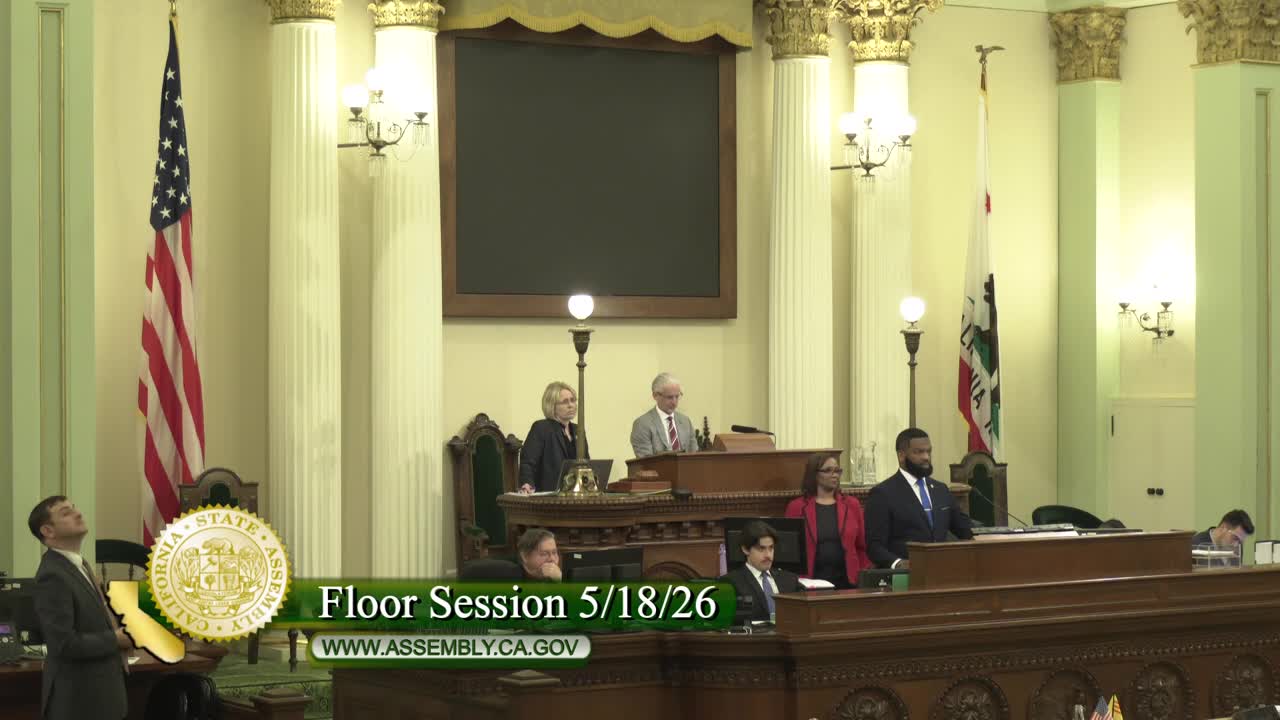 2MIN
Assembly Floor
 5MIN
Assembly Standing Committee on Public Safety
Bill Author

Bill Co-Author(s):