AB 2280: Vehicle liens.
- Session Year: 2025-2026
- House: Assembly
- Latest Version Date: 2026-08-17
Current Status:
In Progress
(2026-08-26: In Assembly. Concurrence in Senate amendments pending.)
Introduced
In Committee
Awaiting First Chamber Vote
Passed First Chamber
In Committee
Awaiting Second Chamber Vote
Passed Second Chamber
Enacted
Existing law authorizes a person to place a lien on a registered vehicle for authorized towing, storage, or labor associated with recovery or load salvage of the vehicle, among other things.
This bill would clarify that provisions relating to vehicle liens do not prohibit a licensed repossession agency from filing a lien, if a lien is not in place. The bill would authorize a repossession agency to file a lien on behalf of the repossession agency, if a lien is currently in place, under specified conditions.
This bill would make its provisions operative on January 1, 2029.
Existing law authorizes a person to place a lien on a registered vehicle for authorized towing, storage, or labor associated with recovery or load salvage of the vehicle, among other things.
This bill would clarify that provisions relating to vehicle liens do not prohibit a licensed repossession agency from filing a lien, if a lien is not in place. The bill would authorize a repossession agency to file a lien on behalf of the repossession agency, if a lien is currently in place, under specified conditions.
Existing law authorizes a person to place a lien on a registered vehicle for authorized towing, storage, or labor associated with recovery or load salvage of the vehicle, among other things.
This bill would clarify that provisions relating to vehicle liens do not prohibit a licensed repossession agency from filing a lien, if a lien is not in place. The bill would also authorize a repossession agency to file a lien on behalf of the repossession agency, if a lien is currently in place, and the lienholder affirmatively waives the right to the lien in writing, or does not respond to a specified request for waiver. under specified conditions.
Existing law authorizes a person to place a lien on a registered vehicle for authorized towing, storage, or labor associated with recovery or load salvage of the vehicle, among other things.
This bill would clarify that provisions relating to vehicle liens do not prohibit a licensed repossession agency from filing a lien. lien, if a lien is not in place. The bill would also authorize a repossession agency to file a lien on behalf of the repossession agency, if a lien is currently in place, and the lienholder affirmatively waives the right to the lien in writing, or does not respond to a specified request for waiver.
Existing law authorizes a person to place a lien on a registered vehicle for authorized towing, storage, or labor associated with recovery or load salvage of the vehicle, among other things.
This bill would clarify that provisions relating to vehicle liens do not prohibit a licensed repossession agency from filing a lien.
Under existing law, the Department of Consumer Affairs is composed of boards that license and regulate various professions and vocations. Existing law requires these boards to meet at least 2 times each calendar year, as specified.This bill would make a nonsubstantive change to that provision.Under existing law, the Department of Consumer Affairs is composed of boards that license and regulate various professions and vocations. Existing law requires these boards to meet at least 2 times each calendar year, as specified.
This bill would make a nonsubstantive change to that provision.
(a)This chapter does not prohibit a repossession agency licensed pursuant to Chapter 11 (commencing with Section 7500) of Division 3 of the Business and Professions Code from filing a lien, if a lien is not in place.
(b)If a lien is currently in place, and the lienholder affirmatively waives the right to the lien in writing, or does not respond to a request for waiver within 30 days of notice being mailed to the lienholder, a repossession agency may file the lien on behalf of the repossession agency, consistent with this chapter.
(c)This section shall become operative on January 1, 2029.
(a)This chapter does not prohibit a repossession agency licensed pursuant to Chapter 11 (commencing with Section 7500) of Division 3 of the Business and Professions Code from filing a lien, if a lien is not in place.
(b)If a lien is currently in place, and the lienholder affirmatively waives the right to the lien in writing, or does not respond to a request for waiver within 30 days of notice being mailed to the lienholder, a repossession agency may file the lien on behalf of the repossession agency. agency, consistent with this chapter.
(a)This chapter does not prohibit a repossession agency licensed pursuant to Chapter 11 (commencing with Section 7500) of Division 3 of the Business and Professions Code from filing a lien, if a lien is not in place.
(b)(1)If a lien is currently in place, and the lienholder affirmatively waives the right to the lien in writing, or does not respond to a request for waiver pursuant to paragraph (2), within 30 days of notice being mailed to the lienholder, a repossession agency may file the lien on behalf of the repossession agency.
(2)If a repossession agency requests a waiver of a lien from the lienholder by certified mail and does not receive a response within 30 days from the date on which the request was delivered, the lien shall be deemed waived for the purposes of paragraph (1).(a)This chapter does not prohibit a repossession agency licensed pursuant to Chapter 11 (commencing with Section 7500) of Division 3 of the Business and Professions Code from filing a lien. lien, if a lien is not in place.
(b)(1)If a lien is currently in place, and the lienholder affirmatively waives the right to the lien in writing, or does not respond to a request for waiver pursuant to paragraph (2), a repossession agency may file the lien on behalf of the repossession agency.
(2)If a repossession agency requests a waiver of a lien from the lienholder by certified mail and does not receive a response within 30 days from the date on which the request was delivered, the lien shall be deemed waived for the purposes of paragraph (1).
This chapter does not prohibit a repossession agency licensed pursuant to Chapter 11 (commencing with Section 7500) of Division 3 of the Business and Professions Code from filing a lien.
SECTION 1.Section 101.7 of the Business and Professions Code is amended to read:101.7.(a)Notwithstanding any other law, boards shall meet at least two times each calendar year. Boards shall meet at least once each calendar year in northern California and once each calendar year in southern California in order to facilitate participation by the public and its licensees.(b)The director has discretion to exempt any board from the requirement in subdivision (a) upon a showing of good cause that the board is not able to meet at least two times in a calendar year.(c)The director may call for a special meeting of the board when a board is not fulfilling its duties.(d)An agency within the department that is required to provide a written notice pursuant to subdivision (a) of Section 11125 of the Government Code, may provide that notice by regular mail, email, or by both regular mail and email. An agency shall give a person who requests a notice the option of receiving the notice by regular mail, email, or by both regular mail and email. The agency shall comply with the requesters chosen form or forms of notice.(e)An agency that plans to webcast a meeting shall include in the meeting notice required pursuant to subdivision (a) of Section 11125 of the Government Code a statement of the boards intent to webcast the meeting. An agency may webcast a meeting even if the agency fails to include that statement of intent in the notice.(a)Notwithstanding any other provision of law, boards shall meet at least two times each calendar year. Boards shall meet at least once each calendar year in northern California and once each calendar year in southern California in order to facilitate participation by the public and its licensees.
(b)The director has discretion to exempt any board from the requirement in subdivision (a) upon a showing of good cause that the board is not able to meet at least two times in a calendar year.
(c)The director may call for a special meeting of the board when a board is not fulfilling its duties.
(d)An agency within the department that is required to provide a written notice pursuant to subdivision (a) of Section 11125 of the Government Code, may provide that notice by regular mail, email, or by both regular mail and email. An agency shall give a person who requests a notice the option of receiving the notice by regular mail, email, or by both regular mail and email. The agency shall comply with the requesters chosen form or forms of notice.
(e)An agency that plans to webcast a meeting shall include in the meeting notice required pursuant to subdivision (a) of Section 11125 of the Government Code a statement of the boards intent to webcast the meeting. An agency may webcast a meeting even if the agency fails to include that statement of intent in the notice.
|
Date
|
Status
|
|---|---|
| Aug 26, 2026 | In Assembly. Concurrence in Senate amendments pending. |
| Aug 25, 2026 | Read third time. Passed. Ordered to the Assembly. (Ayes 40. Noes 0. Page 5813.). |
| Aug 25, 2026 | Read third time. Passed. Ordered to the Assembly. (Ayes 39. Noes 0.). |
| Aug 18, 2026 | Read second time. Ordered to third reading. |
| Aug 17, 2026 | Read third time and amended. Ordered to second reading. |
| Aug 3, 2026 | Ordered to third reading. |
| Aug 3, 2026 | From Consent Calendar. |
| Jul 2, 2026 | Read second time and amended. Ordered to consent calendar. |
| Jul 1, 2026 | From committee: Amend, and do pass as amended. To Consent Calendar. (Ayes 13. Noes 0.) (June 30). |
| Jun 16, 2026 | From committee chair, with author's amendments: Amend, and re-refer to committee. Read second time, amended, and re-referred to Com. on JUD. |
| Jun 8, 2026 | In committee: Set, first hearing. Hearing canceled at the request of author. |
| May 6, 2026 | Referred to Com. on JUD. |
| Apr 28, 2026 | In Senate. Read first time. To Com. on RLS. for assignment. |
| Apr 27, 2026 | Read third time. Passed. Ordered to the Senate. (Ayes 67. Noes 0. Page 4839.) |
| Apr 27, 2026 | Read third time. Passed. Ordered to the Senate. (Ayes 67. Noes 0.) |
| Apr 22, 2026 | Read second time. Ordered to Consent Calendar. |
| Apr 21, 2026 | From committee: Do pass. To Consent Calendar. (Ayes 15. Noes 0.) (April 20). |
| Apr 14, 2026 | Re-referred to Com. on TRANS. |
| Apr 13, 2026 | From committee chair, with author's amendments: Amend, and re-refer to Com. on TRANS. Read second time and amended. |
| Mar 23, 2026 | Re-referred to Com. on TRANS. |
| Mar 19, 2026 | From committee chair, with author's amendments: Amend, and re-refer to Com. on TRANS. Read second time and amended. |
| Mar 19, 2026 | Referred to Com. on TRANS. |
| Feb 20, 2026 | From printer. May be heard in committee March 22. |
| Feb 19, 2026 | Read first time. To print. |
|
Date
|
Description
|
Location
|
Votes
|
|
|---|---|---|---|---|
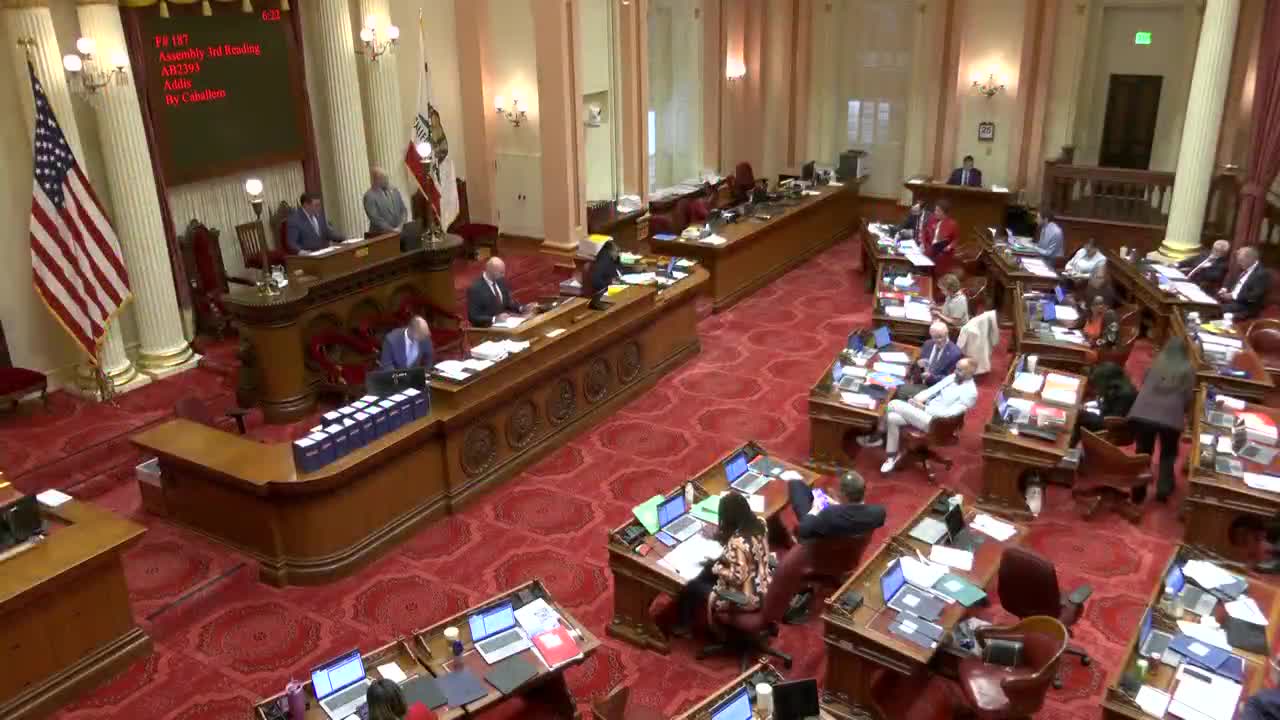
| Aug 25, 2026 | Assembly 3rd Reading AB2280 Johnson By Seyarto | Senate Floor |
Passed |
|
| Jun 30, 2026 | Do pass as amended, and be ordered to the Consent Calendar | Senate Standing Committee on Judiciary |
Passed |
|
| Apr 27, 2026 | AB 2280 Johnson Consent Calendar Second Day | Assembly Floor |
Passed |
|
| Apr 20, 2026 | Do pass. To Consent Calendar. | Assembly Standing Committee on Transportation |
Passed |
This list shows positions taken on this bill by organizations on the date displayed, which is linked to the original source.
Positions by individuals are not included.
|
Organization
|
Position
|
Date
|
|---|---|---|
| California Association for Licensed Repossessors | ** Support | |
| California Association Of Licensed Repossessors | ** Support | |
| The California Association for Licensed Repossessors | ** Support |
CONCURRENCE IN SENATE AMENDMENTS
CSA1 Bill Id:AB 2280
Author:(Johnson)
As Amended Ver:August 17, 2026
Majority vote
SUMMARY
Authorizes a repossession agency to file a lien against a vehicle if a lien is not in place.
Senate Amendments
Delay implementation until January 1, 2029.
COMMENTS
Bureau of Security and Investigative Services (BSIS) and collateral recovery. A repossession agency contracts with a legal owner (e.g., credit grantor of personal property) to locate and/or recover property sold under a security agreement. The most common property recovered is a motor vehicle. Each repossession agency licensee must designate a person, who is associated with the license in the Bureau of Security and Investigative Services' (Bureau) records, to serve as the qualified manager. The qualified manager is responsible for managing and directing the day-to-day activities of the licensed business, and may be the licensee, an agent of the licensee (e.g., officer of a corporation), or any other person designated by the licensee to serve in this capacity. A repossession agent is the employee of the repossession agency whose duties entail locating and recovering the property.
The Act specifies that a repossession agency must hold a repossession agency license, persons serving as the qualified manager must hold a qualified manager certificate, and employees of a repossession company who locate and repossess property must hold a repossession agent registration issued by the Bureau.
Repossessors filing liens. Under existing law, once a vehicle has been repossessed, a repossession agency may not release the vehicle unless expressly authorized to do so by the legal owner. However, in many cases, after determining that a repossessed vehicle is not worth sending to auction, the legal owner abandons the vehicle on the repossession agency's lot, leaving repossession agencies burdened with the indefinite storage of unclaimed vehicles. Civil Code Section 3067-3074 establishes a process for filing liens on vehicles, however some repossession agencies report being told by the Department of Motor Vehicles that they are not permitted to file such liens. This bill clarifies that the repossession agency can file a lien under the Civil Code.
According to the Author
"AB 2280 is a simple clarification bill that ensures licensed repossession agencies can lien sale vehicles that are no longer wanted by the original lienholder or financial institution that requested repossession. This codifies an existing practice that had been in place for decades, until a change in DMV policy starting in 2024. Without this change, licensed repossessors are stuck with unwanted repossessed vehicles on their lots indefinitely. As recently amended, AB 2280 strikes the necessary balance between mere clarification of law and protection of private property rights for financial intuitions and consumers."
Arguments in Support
The California Association for Licensed Repossessors, the sponsors of this bill, argue, "For years, the DMV allowed repossession companies to lien sale vehicles that were abandoned by the registered owners of the vehicle and legal owners of the vehicle (banks or finance companies) and were being stored on the repossession company private property lots. In 2024, the DMV abruptly disallowed repossession companies from filing these liens on the vehicles without explanation or a change in statute. As a result, repossession companies now have abandoned vehicles sitting in storage on their lots that they have no means of disposing of. This clarification of statute will ensure that the proper procedures of lien sales are followed, giving legal and registered owners' opportunity to dispute any proposed sale, if desired, while also giving a repossessor a means of disposing of undisputed abandoned vehicles."
Arguments in Opposition
None on file.
FISCAL COMMENTS
This bill was keyed nonfiscal by Legislative Counsel.
VOTES:
ASM TRANSPORTATION: 15-0-1
YES: Wilson, Davies, Aguiar-Curry, Ahrens, Carrillo, Harabedian, Hart, Hoover, Jackson, Lackey, Macedo, Papan, Ransom, Rogers, Sharp-Collins
ABS, ABST OR NV: Ávila Farías
ASSEMBLY FLOOR: 67-0-13
YES: Addis, Aguiar-Curry, Ahrens, Alanis, Alvarez, Arambula, Ávila Farías, Bauer-Kahan, Berman, Calderon, Caloza, Carrillo, Castillo, Chen, Connolly, Davies, DeMaio, Dixon, Elhawary, Fong, Gallagher, Garcia, Gipson, Jeff Gonzalez, Mark González, Hadwick, Haney, Harabedian, Hart, Hoover, Irwin, Jackson, Johnson, Kalra, Krell, Lackey, Lee, Lowenthal, McKinnor, Muratsuchi, Nguyen, Ortega, Pacheco, Papan, Patel, Patterson, Pellerin, Quirk-Silva, Ramos, Ransom, Michelle Rodriguez, Rogers, Blanca Rubio, Sanchez, Schiavo, Schultz, Solache, Soria, Ta, Tangipa, Valencia, Wallis, Ward, Wicks, Wilson, Zbur, Rivas
ABS, ABST OR NV: Bains, Bennett, Boerner, Bonta, Bryan, Ellis, Flora, Gabriel, Macedo, Petrie-Norris, Celeste Rodriguez, Sharp-Collins, Stefani
UPDATED
VERSION: August 17, 2026
CONSULTANT: David Sforza / TRANS. / (916) 319-2093 FN: 0003877
SENATE RULES COMMITTEE Office of Senate Floor Analyses (916) 651-4171 | AB 2280 |
THIRD READING
Bill No: AB 2280
Author: Johnson (R)
Amended: 8/17/26 in Senate
Vote: 21
SENATE JUDICIARY COMMITTEE: 13-0, 6/30/26
AYES: Umberg, Niello, Allen, Ashby, Caballero, Durazo, Laird, Reyes, Stern, Valladares, Wahab, Weber Pierson, Wiener
ASSEMBLY FLOOR: 67-0, 4/27/26 (Consent) - See last page for vote
SUBJECT: Vehicle liens
SOURCE: California Association of Licensed Repossessors
DIGEST:
This bill specifies that, on and after January 1, 2029, a repossession agency licensed under the Collateral Recovery Act is not prohibited from filing a lien on a motor vehicle if a lien is not in place. This bill provides that, if a lien is currently in place and the lienholder does not affirmatively waive the right to the lien in writing or does not respond to a request for waiver within 30 days of notice being mailed to the lienholder, a repossession agency may file the lien on their own behalf.
Senate floor amendments of 8/17/26 add a delayed operative date of January 1, 2029.
ANALYSIS:
Existing law:
- Establishes the Collateral Recovery Act (Act) to provide for the regulation of repossession agencies and repossessors by the for Bureau of Security and Investigative Services (Bureau) within the Department of Consumer Affairs. (Business and Professions Code §§ 7500 et seq.)
- Establishes procedures for filing vehicle liens, including the circumstances under which a lien may be filed, who may file a lien, what notice is required, and that a lienholder is required to apply to the Department of Motor Vehicles (DMV) for authorization to conduct a lien sale. (Civil (Civ.) Code §§ 3067 et seq.)
- Provides that every person has a lien dependent upon possession for the compensation to which the person is legally entitled for making repairs or performing labor upon, and furnishing supplies or materials for, and for the storage, repair, or safekeeping of, and for the rental of parking space for, any vehicle of a type subject to registration under the Vehicle Code, subject to specified limitations. (Civ. Code § 3068.)
- Provides that every person has a lien dependent upon possession for the compensation to which the person is legally entitled for towing, storage, or labor associated with recovery or load salvage of any vehicle subject to registration that has been authorized to be removed by a public agency, a private property owner pursuant to Section 22658 of the Vehicle Code, or a lessee, operator, or registered owner of the vehicle. The lien is deemed to arise on the date of possession of the vehicle. (Civ. Code § 3068.1.)
- Requires a lienholder to apply to the DMV for the issuance of an authorization to conduct a lien sale for any vehicle with a value determined to be over $4,000, and requires notice to be made that allows for a declaration of opposition to the sale, as provided. The application is to be executed under penalty of perjury. (Civ. Code § 3071.)
This bill:
- Specifies that a repossession agency licensed under the Act is not prohibited from filing a lien on a motor vehicle if a lien is not in place.
- Provides that, if a lien is currently in place and the lienholder does not affirmatively waive the right to the lien in writing or does not respond to a request for waiver within 30 days of notice being mailed to the lienholder, a repossession agency may file the lien on its own behalf.
- Provides these provisions become operative on January 1, 2029.
Comments
A repossession agency contracts with a legal owner, such as a credit grantor of personal property, to locate and recover property sold under a security agreement, such as a car loan. The most common property recovered is a motor vehicle. Under existing law, a repossession agency may not release a vehicle it has repossessed unless expressly authorized to do so by the legal owner. According to the sponsor of this bill, often after determining that a repossessed vehicle is not worth sending to auction, the legal owner abandons the vehicle on the repossession agency’s lot. This leaves repossession agencies burdened with the indefinite storage of unclaimed vehicles if they cannot obtain a lien on the vehicle and sell them. This bill seeks to specify that repossession agencies are allowed to file a lien on a motor vehicle.
The Civil Code establishes a detailed process for filing liens on vehicles, including getting permission from the DMV to conduct a lien sale of the vehicle. The sponsor states that prior to 2024, repossession agencies were able to get approval from the DMV to place a lien on these abandoned vehicles and eventually sell them. However, the sponsor states that the DMV has told repossession agencies that they are not permitted to file such liens and has not explained why the policy has changed, even though the underlying vehicle lien statutes have not. This bill seeks to clarify that the repossession agency can file a lien under the Civil Code. This bill provides that if there is a lien currently in place and the lienholder does not either affirmatively waive the right to the lien in writing, or respond to a request for waiver within 30 days of notice being mailed to the lienholder, a repossession agency may file the lien on their own behalf. This bill specifies that all other provisions related to placing a lien on a motor vehicle, including getting permission from the DMV to conduct a lien sale, must still be complied with. Under the bill, these provisions become operative on January 1, 2029.
FISCAL EFFECT: Appropriation: No Fiscal Com.: No Local: No
SUPPORT: (Verified 8/17/26)
California Association of Licensed Repossessors (source)
OPPOSITION: (Verified 8/17/26)
None received
ARGUMENTS IN SUPPORT: The author writes:
AB 2280 is a simple clarification bill that ensures licensed repossession agencies can lien sale vehicles that are no longer wanted by the original lienholder or financial institution that requested repossession. This codifies an existing practice that had been in place for decades, until a change in DMV policy starting in 2024. Without this change, licensed repossessors are stuck with unwanted repossessed vehicles on their lots indefinitely. Through stakeholder feedback and amendments, AB 2280 strikes the necessary balance between simple clarification of law and protection of private property rights for financial intuitions and consumers.”
ASSEMBLY FLOOR: 67-0, 4/27/26
AYES: Addis, Aguiar-Curry, Ahrens, Alanis, Alvarez, Arambula, Ávila Farías, Bauer-Kahan, Berman, Calderon, Caloza, Carrillo, Castillo, Chen, Connolly, Davies, DeMaio, Dixon, Elhawary, Fong, Gallagher, Garcia, Gipson, Jeff Gonzalez, Mark González, Hadwick, Haney, Harabedian, Hart, Hoover, Irwin, Jackson, Johnson, Kalra, Krell, Lackey, Lee, Lowenthal, McKinnor, Muratsuchi, Nguyen, Ortega, Pacheco, Papan, Patel, Patterson, Pellerin, Quirk-Silva, Ramos, Ransom, Michelle Rodriguez, Rogers, Blanca Rubio, Sanchez, Schiavo, Schultz, Solache, Soria, Ta, Tangipa, Valencia, Wallis, Ward, Wicks, Wilson, Zbur, Rivas
NO VOTE RECORDED: Bains, Bennett, Boerner, Bonta, Bryan, Ellis, Flora, Gabriel, Macedo, Petrie-Norris, Celeste Rodriguez, Sharp-Collins, Stefani
Prepared by: Amanda Mattson / JUD. / (916) 651-4113
8/18/26 16:13:05
**** END ****
SENATE RULES COMMITTEE Office of Senate Floor Analyses (916) 651-4171 | AB 2280 |
THIRD READING
Bill No: AB 2280
Author: Johnson (R)
Amended: 7/2/26 in Senate
Vote: 21
SENATE JUDICIARY COMMITTEE: 13-0, 6/30/26
AYES: Umberg, Niello, Allen, Ashby, Caballero, Durazo, Laird, Reyes, Stern, Valladares, Wahab, Weber Pierson, Wiener
ASSEMBLY FLOOR: 67-0, 4/27/26 (Consent) - See last page for vote
SUBJECT: Vehicle liens
SOURCE: California Association of Licensed Repossessors
DIGEST:
This bill 1) specifies that a repossession agency licensed under the Collateral Recovery Act is not prohibited from filing a lien on a motor vehicle if a lien is not in place; and 2) provides that, if a lien is currently in place and the lienholder does not affirmatively waive the right to the lien in writing or does not respond to a request for waiver within 30 days of notice being mailed to the lienholder, a repossession agency may file the lien on their own behalf.
ANALYSIS:
Existing law:
- Establishes the Collateral Recovery Act (Act) to provide for the regulation of repossession agencies and repossessors by the for Bureau of Security and Investigative Services (Bureau) within the Department of Consumer Affairs. (Business and Professions Code §§ 7500 et seq.)
- Establishes procedures for filing vehicle liens, including the circumstances under which a lien may be filed, who may file a lien, what notice is required, and that a lienholder is required to apply to the Department of Motor Vehicles (DMV) for authorization to conduct a lien sale. (Civil (Civ.) Code §§ 3067 et seq.)
- Provides that every person has a lien dependent upon possession for the compensation to which the person is legally entitled for making repairs or performing labor upon, and furnishing supplies or materials for, and for the storage, repair, or safekeeping of, and for the rental of parking space for, any vehicle of a type subject to registration under the Vehicle Code, subject to specified limitations. (Civ. Code § 3068.)
- Provides that every person has a lien dependent upon possession for the compensation to which the person is legally entitled for towing, storage, or labor associated with recovery or load salvage of any vehicle subject to registration that has been authorized to be removed by a public agency, a private property owner pursuant to Section 22658 of the Vehicle Code, or a lessee, operator, or registered owner of the vehicle. The lien is deemed to arise on the date of possession of the vehicle. (Civ. Code § 3068.1.)
- Requires a lienholder to apply to the DMV for the issuance of an authorization to conduct a lien sale for any vehicle with a value determined to be over $4,000, and requires notice to be made that allows for a declaration of opposition to the sale, as provided. The application is to be executed under penalty of perjury. (Civ. Code § 3071.)
This bill:
- Specifies that a repossession agency licensed under the Act is not prohibited from filing a lien on a motor vehicle if a lien is not in place.
- Provides that, if a lien is currently in place and the lienholder does not affirmatively waive the right to the lien in writing or does not respond to a request for waiver within 30 days of notice being mailed to the lienholder, a repossession agency may file the lien on its own behalf.
Comments
A repossession agency contracts with a legal owner, such as a credit grantor of personal property, to locate and recover property sold under a security agreement, such as a car loan. The most common property recovered is a motor vehicle. Under existing law, a repossession agency may not release a vehicle it has repossessed unless expressly authorized to do so by the legal owner. According to the sponsor of the bill, often after determining that a repossessed vehicle is not worth sending to auction, the legal owner abandons the vehicle on the repossession agency’s lot. This leaves repossession agencies burdened with the indefinite storage of unclaimed vehicles if they cannot obtain a lien on the vehicle and sell them. This bill seeks to specify that repossession agencies are allowed to file a lien on a motor vehicle.
The Civil Code establishes a detailed process for filing liens on vehicles, including getting permission from the DMV to conduct a lien sale of the vehicle. The sponsor states that prior to 2024, repossession agencies were able to get approval from the DMV to place a lien on these abandoned vehicles and eventually sell them. However, the sponsor states that the DMV has told repossession agencies that they are not permitted to file such liens and has not explained why the policy has changed, even though the underlying vehicle lien statutes have not. This bill seeks to clarify that the repossession agency can file a lien under the Civil Code. The bill provides that if there is a lien currently in place and the lienholder does not either affirmatively waive the right to the lien in writing, or respond to a request for waiver within 30 days of notice being mailed to the lienholder, a repossession agency may file the lien on their own behalf. The bill specifies that all other provisions related to placing a lien on a motor vehicle, including getting permission from the DMV to conduct a lien sale, must still be complied with.
FISCAL EFFECT: Appropriation: No Fiscal Com.: No Local: No
SUPPORT: (Verified 7/6/26)
California Association of Licensed Repossessors (source)
OPPOSITION: (Verified 7/6/26)
None received
ARGUMENTS IN SUPPORT: The author writes:
AB 2280 is a simple clarification bill that ensures licensed repossession agencies can lien sale vehicles that are no longer wanted by the original lienholder or financial institution that requested repossession. This codifies an existing practice that had been in place for decades, until a change in DMV policy starting in 2024. Without this change, licensed repossessors are stuck with unwanted repossessed vehicles on their lots indefinitely. Through stakeholder feedback and amendments, AB 2280 strikes the necessary balance between simple clarification of law and protection of private property rights for financial intuitions and consumers.
ASSEMBLY FLOOR: 67-0, 4/27/26
AYES: Addis, Aguiar-Curry, Ahrens, Alanis, Alvarez, Arambula, Ávila Farías, Bauer-Kahan, Berman, Calderon, Caloza, Carrillo, Castillo, Chen, Connolly, Davies, DeMaio, Dixon, Elhawary, Fong, Gallagher, Garcia, Gipson, Jeff Gonzalez, Mark González, Hadwick, Haney, Harabedian, Hart, Hoover, Irwin, Jackson, Johnson, Kalra, Krell, Lackey, Lee, Lowenthal, McKinnor, Muratsuchi, Nguyen, Ortega, Pacheco, Papan, Patel, Patterson, Pellerin, Quirk-Silva, Ramos, Ransom, Michelle Rodriguez, Rogers, Blanca Rubio, Sanchez, Schiavo, Schultz, Solache, Soria, Ta, Tangipa, Valencia, Wallis, Ward, Wicks, Wilson, Zbur, Rivas
NO VOTE RECORDED: Bains, Bennett, Boerner, Bonta, Bryan, Ellis, Flora, Gabriel, Macedo, Petrie-Norris, Celeste Rodriguez, Sharp-Collins, Stefani
Prepared by: Amanda Mattson / JUD. / (916) 651-4113
8/3/26 15:20:44
**** END ****
SENATE RULES COMMITTEE Office of Senate Floor Analyses (916) 651-4171 | AB 2280 |
CONSENT
Bill No: AB 2280
Author: Johnson (R)
Amended: 7/2/26 in Senate
Vote: 21
SENATE JUDICIARY COMMITTEE: 13-0, 6/30/26
AYES: Umberg, Niello, Allen, Ashby, Caballero, Durazo, Laird, Reyes, Stern, Valladares, Wahab, Weber Pierson, Wiener
ASSEMBLY FLOOR: 67-0, 4/27/26 (Consent) - See last page for vote
SUBJECT: Vehicle liens
SOURCE: California Association of Licensed Repossessors
DIGEST:
This bill 1) specifies that a repossession agency licensed under the Collateral Recovery Act is not prohibited from filing a lien on a motor vehicle if a lien is not in place; and 2) provides that, if a lien is currently in place and the lienholder does not affirmatively waive the right to the lien in writing or does not respond to a request for waiver within 30 days of notice being mailed to the lienholder, a repossession agency may file the lien on their own behalf.
ANALYSIS:
Existing law:
- Establishes the Collateral Recovery Act (Act) to provide for the regulation of repossession agencies and repossessors by the for Bureau of Security and Investigative Services (Bureau) within the Department of Consumer Affairs. (Business and Professions Code §§ 7500 et seq.)
- Establishes procedures for filing vehicle liens, including the circumstances under which a lien may be filed, who may file a lien, what notice is required, and that a lienholder is required to apply to the Department of Motor Vehicles (DMV) for authorization to conduct a lien sale. (Civil (Civ.) Code §§ 3067 et seq.)
- Provides that every person has a lien dependent upon possession for the compensation to which the person is legally entitled for making repairs or performing labor upon, and furnishing supplies or materials for, and for the storage, repair, or safekeeping of, and for the rental of parking space for, any vehicle of a type subject to registration under the Vehicle Code, subject to specified limitations. (Civ. Code § 3068.)
- Provides that every person has a lien dependent upon possession for the compensation to which the person is legally entitled for towing, storage, or labor associated with recovery or load salvage of any vehicle subject to registration that has been authorized to be removed by a public agency, a private property owner pursuant to Section 22658 of the Vehicle Code, or a lessee, operator, or registered owner of the vehicle. The lien is deemed to arise on the date of possession of the vehicle. (Civ. Code § 3068.1.)
- Requires a lienholder to apply to the DMV for the issuance of an authorization to conduct a lien sale for any vehicle with a value determined to be over $4,000, and requires notice to be made that allows for a declaration of opposition to the sale, as provided. The application is to be executed under penalty of perjury. (Civ. Code § 3071.)
This bill:
- Specifies that a repossession agency licensed under the Act is not prohibited from filing a lien on a motor vehicle if a lien is not in place.
- Provides that, if a lien is currently in place and the lienholder does not affirmatively waive the right to the lien in writing or does not respond to a request for waiver within 30 days of notice being mailed to the lienholder, a repossession agency may file the lien on its own behalf.
Comments
A repossession agency contracts with a legal owner, such as a credit grantor of personal property, to locate and recover property sold under a security agreement, such as a car loan. The most common property recovered is a motor vehicle. Under existing law, a repossession agency may not release a vehicle it has repossessed unless expressly authorized to do so by the legal owner. According to the sponsor of the bill, often after determining that a repossessed vehicle is not worth sending to auction, the legal owner abandons the vehicle on the repossession agency’s lot. This leaves repossession agencies burdened with the indefinite storage of unclaimed vehicles if they cannot obtain a lien on the vehicle and sell them. This bill seeks to specify that repossession agencies are allowed to file a lien on a motor vehicle.
The Civil Code establishes a detailed process for filing liens on vehicles, including getting permission from the DMV to conduct a lien sale of the vehicle. The sponsor states that prior to 2024, repossession agencies were able to get approval from the DMV to place a lien on these abandoned vehicles and eventually sell them. However, the sponsor states that the DMV has told repossession agencies that they are not permitted to file such liens and has not explained why the policy has changed, even though the underlying vehicle lien statutes have not. This bill seeks to clarify that the repossession agency can file a lien under the Civil Code. The bill provides that if there is a lien currently in place and the lienholder does not either affirmatively waive the right to the lien in writing, or respond to a request for waiver within 30 days of notice being mailed to the lienholder, a repossession agency may file the lien on their own behalf. The bill specifies that all other provisions related to placing a lien on a motor vehicle, including getting permission from the DMV to conduct a lien sale, must still be complied with.
FISCAL EFFECT: Appropriation: No Fiscal Com.: No Local: No
SUPPORT: (Verified 7/6/26)
California Association of Licensed Repossessors (source)
OPPOSITION: (Verified 7/6/26)
None received
ARGUMENTS IN SUPPORT: The author writes:
AB 2280 is a simple clarification bill that ensures licensed repossession agencies can lien sale vehicles that are no longer wanted by the original lienholder or financial institution that requested repossession. This codifies an existing practice that had been in place for decades, until a change in DMV policy starting in 2024. Without this change, licensed repossessors are stuck with unwanted repossessed vehicles on their lots indefinitely. Through stakeholder feedback and amendments, AB 2280 strikes the necessary balance between simple clarification of law and protection of private property rights for financial intuitions and consumers.
ASSEMBLY FLOOR: 67-0, 4/27/26
AYES: Addis, Aguiar-Curry, Ahrens, Alanis, Alvarez, Arambula, Ávila Farías, Bauer-Kahan, Berman, Calderon, Caloza, Carrillo, Castillo, Chen, Connolly, Davies, DeMaio, Dixon, Elhawary, Fong, Gallagher, Garcia, Gipson, Jeff Gonzalez, Mark González, Hadwick, Haney, Harabedian, Hart, Hoover, Irwin, Jackson, Johnson, Kalra, Krell, Lackey, Lee, Lowenthal, McKinnor, Muratsuchi, Nguyen, Ortega, Pacheco, Papan, Patel, Patterson, Pellerin, Quirk-Silva, Ramos, Ransom, Michelle Rodriguez, Rogers, Blanca Rubio, Sanchez, Schiavo, Schultz, Solache, Soria, Ta, Tangipa, Valencia, Wallis, Ward, Wicks, Wilson, Zbur, Rivas
NO VOTE RECORDED: Bains, Bennett, Boerner, Bonta, Bryan, Ellis, Flora, Gabriel, Macedo, Petrie-Norris, Celeste Rodriguez, Sharp-Collins, Stefani
Prepared by: Amanda Mattson / JUD. / (916) 651-4113
7/30/26 14:49:25
**** END ****
Senator Thomas Umberg, Chair
2025-2026 Regular Session
Bill No: AB 2280 (Author:Johnson)
Version: June 16, 2026
Hearing Date: June 30, 2026
Fiscal: No
Urgency: No
Consultant: AM
SUBJECT
Vehicle liens
DIGEST
This bill specifies that a repossession agency licensed under the Collateral Recovery Act is not prohibited from filing a lien on a motor vehicle if a lien is not in place. The bill provides that, if a lien is currently in place and the lienholder does not affirmatively waive the right to the lien in writing or does not respond to a request for waiver within 30 days of notice being mailed to the lienholder, a repossession agency may file the lien on their own behalf.
EXECUTIVE SUMMARY
A repossession agency contracts with a legal owner, such as a credit grantor of personal property, to locate and recover property sold under a security agreement, such as a car loan. The most common property recovered is a motor vehicle. Under existing law, a repossession agency may not release a vehicle it has repossessed unless expressly authorized to do so by the legal owner. According to the sponsor of the bill, often after determining that a repossessed vehicle is not worth sending to auction, the legal owner abandons the vehicle on the repossession agency’s lot. This leaves repossession agencies burdened with the indefinite storage of unclaimed vehicles if they cannot obtain a lien on the vehicle and sell them. This bill seeks to specify that repossession agencies are allowed to file a lien on a motor vehicle.
The bill is sponsored by the California Association of Licensed Repossessors. There was opposition to a prior version of this bill, however the author has taken amendments that have moved the opposition to neutral. The Committee has received no other timely opposition.
PROPOSED CHANGES TO THE LAW
Existing law:
- Establishes the Collateral Recovery Act (Act) to provide for the regulation of repossession agencies and repossessors by the for Bureau of Security and Investigative Services (Bureau) within the Department of Consumer Affairs. (Bus. & Prof. Code §§ 7500 et seq.)
- Establishes procedures for filing vehicle liens, including the circumstances under which a lien may be filed, who may file a lien, what notice is required, and that a lienholder is required to apply to the Department of Motor Vehicles (DMV) for authorization to conduct a lien sale. (Civ. Code §§ 3067 et seq.)
- Provides that every person has a lien dependent upon possession for the compensation to which the person is legally entitled for making repairs or performing labor upon, and furnishing supplies or materials for, and for the storage, repair, or safekeeping of, and for the rental of parking space for, any vehicle of a type subject to registration under the Vehicle Code, subject to specified limitations. (Civ. Code § 3068.)
- Provides that every person has a lien dependent upon possession for the compensation to which the person is legally entitled for towing, storage, or labor associated with recovery or load salvage of any vehicle subject to registration that has been authorized to be removed by a public agency, a private property owner pursuant to Section 22658 of the Vehicle Code, or a lessee, operator, or registered owner of the vehicle. The lien is deemed to arise on the date of possession of the vehicle. (Civ. Code § 3068.1.)
- Requires a lienholder to apply to the DMV for the issuance of an authorization to conduct a lien sale for any vehicle with a value determined to be over $4,000, and requires notice to be made that allows for a declaration of opposition to the sale, as provided. The application is to be executed under penalty of perjury. (Civ. Code § 3071.)
This bill:
- Specifies that a repossession agency licensed under the Act is not prohibited from filing a lien on a motor vehicle if a lien is not in place.
- Provides that, if a lien is currently in place and the lienholder does not affirmatively waive the right to the lien in writing or does not respond to a request for waiver within 30 days of notice being mailed to the lienholder, a repossession agency may file the lien on its own behalf.
COMMENTS
- Stated need for the bill
The author writes:
AB 2280 is a simple clarification bill that ensures licensed repossession agencies can lien sale vehicles that are no longer wanted by the original lienholder or financial institution that requested repossession. This codifies an existing practice that had been in place for decades, until a change in DMV policy starting in 2024. Without this change, licensed repossessors are stuck with unwanted repossessed vehicles on their lots indefinitely. Through stakeholder feedback and amendments, AB 2280 strikes the necessary balance between simple clarification of law and protection of private property rights for financial intuitions and consumers.”
- This bill seeks to clarify that the repossession agency can file a lien under the Civil Code
The Civil Code establishes a detailed process for filing liens on vehicles, including getting permission from the DMV to conduct a lien sale of the vehicle. The sponsor states that prior to 2024, repossession agencies were able to get approval from the DMV to place a lien on these abandoned vehicles and eventually sell them. However, the sponsor states that the DMV has told repossession agencies that they are not permitted to file such liens and has not explained why the policy has changed, even though the underlying vehicle lien statutes have not. This bill seeks to clarify that the repossession agency can file a lien under the Civil Code. The bill provides that if there is a lien currently in place and the lienholder does not either affirmatively waive the right to the lien in writing, or respond to a request for waiver within 30 days of notice being mailed to the lienholder, a repossession agency may file the lien on their own behalf.
- Proposed Amendment
The author has agreed to take a clarifying amendment to ensure that all other provisions related to placing a lien on a motor vehicle, including getting permission from the DMV to conduct a lien sale, must still be complied with. The specific amendment is:
Amendment
SECTION 1. Section 3075 as added to the Civil Code, immediately following Section 3074, is amended to read:
3075. (a) This chapter does not prohibit a repossession agency licensed pursuant to Chapter 11 (commencing with Section 7500) of Division 3 of the Business and Professions Code from filing a lien, if a lien is not in place.
(b) If a lien is currently in place, and the lienholder affirmatively waives the right to the lien in writing, or does not respond to a request for waiver within 30 days of notice being mailed to the lienholder, a repossession agency may file the lien on behalf of the repossession agency agency, consistent with this chapter.
- Statements in support
The sponsor of the bill, the California Association of Licensed Repossessors, writes:
For years, the DMV allowed repossession companies to lien sale vehicles that were abandoned by the registered owners of the vehicle and legal owners of the vehicle (banks or finance companies) and were being stored on the repossession company private property lots. In 2024, the DMV abruptly disallowed repossession companies from filing these liens on the vehicles without explanation or a change in statute. As a result, repossession companies now have abandoned vehicles sitting in storage on their lots that they have no means of disposing of.
This clarification of statute will ensure that the proper procedures of lien sales are followed, giving regal and registered owners' opportunity to dispute any proposed sale, if desired, while also giving a repossessor a means of disposing of undisputed abandoned vehicles.
As licensed repossessors, we hold our profession to the highest integrity and support the consumer protections mandated by law. It is because of this that we seek this statutory clarification regarding lien sales of vehicles.
SUPPORT
California Association of Licensed Repossessors
OPPOSITION
None received
PRIOR VOTES
Assembly Floor (Ayes 67, Noes 0)
Assembly Transportation Committee (Ayes 15, Noes 0)
**************
Date of Hearing: April 20, 2026
ASSEMBLY COMMITTEE ON TRANSPORTATION
Lori D. Wilson, Chair
ABPCA Bill Id:AB 2280 (
Author:Johnson) – As Amended Ver:April 13, 2026
SUBJECT: Vehicle liens
SUMMARY: Authorizes a repossession agency to file a lien against a vehicle if a lien is not in place. Specifically, this bill:
- Specifies that if a lien is in place, and the lienholder affirmatively waives the right to the lien in writing, or does not respond to a request for waiver, a repossession agency my file the lien on behalf of the repossession agency.
- If a repossession agency requests a waiver from a lien from the lienholder by certified mail and does not receive a response within 30 days from the date on which the request was delivered, the lien shall be deemed waived.
EXISTING LAW:
- Establishes the Collateral Recovery Act (Act) to provide for Bureau of Security and Investigative Services (BSIS or Bureau) within the Department of Consumer Affairs to regulate repossession agencies and repossessors. (Business and Professions Code section [BPC] 7500 et seq.)
- Defines an “Assignment” or “repossession order” as any written authorization by the legal owner, lienholder, lessor, lessee, or registered owner, or the agent of any of them, to skip trace, locate, or repossess any collateral, including, but not limited to, collateral registered under the Vehicle Code that is subject to a security agreement that contains a repossession clause. Defines “Assignment” or “repossession order” to also mean any written authorization by an employer to recover any collateral entrusted to an employee or former employee in possession of the collateral. Assigns a photocopy of an assignment or repossession order, facsimile copy of an assignment or repossession order, or electronic format of an assignment or repossession order the same force and effect as an original written assignment or repossession order. (BPC 7500.1(b))
- Defines collateral as any specific vehicle, trailer, boat, recreational vehicle, motor home, appliance, or other property that is subject to a security agreement. (BPC
7500.1(e)) - Defines a repossession agency as any person who, for any consideration whatsoever, engages in business or accepts employment to locate or recover collateral, whether voluntarily or involuntarily, including, but not limited to, collateral registered under the provisions of the Vehicle Code which is subject to a security agreement, with specified exclusions. (BPC 7500.2)
- Prohibits any person from engaging in the activities of a repossession agency as defined in Section 7500.2 unless the person holds a valid repossession agency license from the Bureau or is exempt from licensure pursuant to BPC 7500.2 or 7500.3. (BPC 7502)
- Requires every person entering the employ of, or contracting with, a licensee or multiple licensees to complete an application for an initial registration or a reregistration and file the appropriate application with the Bureau within 15 working days after the commencement of employment or contracted services for the licensee or multiple licensee for whom the applicant is employed or contracted. (BPC 7506.3)
- Provides that any person who violates any provision of the Act, or who conspires with another person to violate any provision of this chapter, or who knowingly engages a nonexempt unlicensed person to repossess collateral on that person’s behalf is guilty of a misdemeanor, and is punishable by a fine of five thousand dollars ($5,000), or by imprisonment in the county jail for not more than one year, or by both the fine and imprisonment. (BPC 7502.1(a))
- Requires personal effects to be removed from the collateral, including any personal effect that is mounted but detachable from the collateral by a release mechanism. Requires a complete and accurate inventory of the personal effects to be made, and the personal effects to be labeled and stored by the licensee for a minimum of 60 days in a secure manner, except those personal effects removed by or in the presence of the debtor or the party in possession of the collateral at the time of the repossession. Requires the licensee or agent to note on the inventory if the licensee or the licensee’s agent cannot determine whether the property attached to the collateral is a personal effect or a part of the collateral and relieves the licensee or agent from the obligation to remove the item from the collateral, unless the item can be removed without the use of tools, in which case it shall be removed and inventoried. Requires the licensee or the licensee’s agent to notify the debtor that if the debtor takes the position that an item is a personal effect, then the debtor shall contact the legal owner to resolve the issue. (BPC 7507.9)
- Requires the repossession agency to receive written authorization from the debtor to release personal effects or other personal property not covered by a security agreement to someone other than the debtor. (BPC 7507.9(i))
- Prohibits a licensee from selling personal effects or other personal property not covered by a security agreement and remitting money from the sale to a third party, including, but not limited to, any lending institution. (BPC 7507.9(j))
- Requires the inventory to be a confidential document. Allows a licensee to disclose the contents of the inventory only under the following circumstances:
a) In response to the order of a court having jurisdiction to issue the order;
b) In compliance with a lawful subpoena issued by a court of competent jurisdiction;
c) When the debtor has consented in writing to the release and the written consent is signed and dated by the debtor subsequent to the repossession and states the entity or entities to whom the contents of the inventory may be disclosed; or,
d) To the debtor. (BPC 7507.9(k))
- Requires a licensed repossessor to serve a debtor with a notice of seizure as soon as possible after the recovery of collateral and not later than 48 hours, with specified exceptions, after the repossession of collateral. Requires the notice to include specified information and disclosures including a disclosure of the charges payable by the debtor to the repossession agency for the storage of the collateral and personal effects from the date of repossession until release of the property from storage. (BPC 75070.10(a)(6))
- Prohibits a storage fee for the first week on any personal effects. (BPC 7507.125)
- Provides a framework for filing vehicle liens, the circumstances under which a lien may be filed, and identifies who may file a lien. (Civil Code (CIV) 3067-3074)
- Prohibits any tow yard, impounding agency, or governmental agency, or any person acting on behalf of those entities, from refusing to release a vehicle or other collateral to anyone that is legally entitled to that vehicle or other collateral, except when the vehicle is being held for evidence by law enforcement or a prosecuting attorney. (Vehicle Code [VEH] 10856(b))
- Defines a legal owner as a motor vehicle dealer, bank, credit union, acceptance corporation, or other licensed financial institution legally operating in this state or is another person, not the registered owner, holding a security interest in the vehicle. (VEH 14602.6(f)(1), VEH 14602.7(e)(1) and VEH 14602.8(f)(1))
- Allows a vehicle removed and seized by a peace officer for driving a vehicle while his or her driving privilege was suspended or revoked, driving a vehicle while his or her driving privilege is restricted and the vehicle is not equipped with a functioning, certified interlock device, or driving a vehicle without ever having been issued a driver’s license to be released to the legal owner of the vehicle or the legal owner’s agent before the end of the impoundment period if the legal owner or the legal owner’s agent provides to the law enforcement agency, impounding agency, person in possession of the vehicle, or any person acting on behalf of those agencies:
a) A copy of the assignment, as defined in BPC 7500.1(b);
b) A release from the one responsible governmental agency, only if required by the agency;
c) A government-issued photographic identification card; and,
d) One of the following as determined by the legal owner or the legal owner’s agent, to show proof of legal ownership for the vehicle:
- A certificate of repossession for the vehicle;
- A security agreement for the vehicle; or.
- The title. (VEH 14602.6(f)(3)(A))
- Prohibits a law enforcement agency, impounding agency, or other governmental agency, or any person acting on behalf of those agencies, from requiring any documents other than those specified by VEH 14602.6(f). (VEH 14602.6(f)(3)(B))
- Allows a vehicle removed and seized by a peace officer for evading or fleeing the police, exhibiting wanton disregard for the safety of persons or property while fleeing, causing bodily injury while fleeing, recklessly driving, racing, or engaging in exhibition of speed to be released to the legal owner of the vehicle or the legal owner’s agent before the end of the impoundment period if the legal owner or the legal owner’s agent presents, to the law enforcement agency, impounding agency, person in possession of the vehicle, or any person acting on behalf of those agencies:
a) A copy of the assignment, as defined in BPC 7500.1(b);
b) A release from the one responsible governmental agency, only if required by the agency;
c) A government-issued photographic identification card; and,
d) One of the following, as determined by the legal owner or the legal owner’s agent to show ownership of the vehicle:
- A certificate of repossession for the vehicle;
- A security agreement for the vehicle; or.
- The title. (VEH 14602.7(e)(3)(A))
- Prohibits a law enforcement agency, impounding agency, or other governmental agency, or any person acting on behalf of those agencies, from requiring any documents other than those specified by VEH 14602.7(e). (VEH 14602.6 (e)(3)(B))
- Allows a vehicle removed and seized by a peace officer for driving after convicted of driving with a blood alcohol content of .05 percent or more by weight while under the age of 21, driving with a blood alcohol content of .08 percent or more, or to cause bodily injury to any person other than the driver while having a blood alcohol content of .08 percent or more, as specified, to be released to the agent of the legal owner of the vehicle or the legal owner’s agent before the end of the impoundment period if the agent presents a photocopy or facsimile copy of its repossession agency license or registration issued by the Bureau. (VEH 14602.8(f)(3)(C))
- Prohibits a law enforcement agency, impounding agency, or other governmental agency, or any person acting on behalf of those agencies, from requiring any documents other than those specified by VEH 14602.8(f). (VEH 14602.8(f)(3)(D))
FISCAL EFFECT: Unknown
COMMENTS: BSIS and collateral recovery. A repossession agency contracts with a legal owner (e.g., credit grantor of personal property) to locate and/or recover property sold under a security agreement. The most common property recovered is a motor vehicle. Each repossession agency licensee must designate a person, who is associated with the license in the Bureau of Security and Investigative Services’ (Bureau) records, to serve as the qualified manager. The qualified manager is responsible for managing and directing the day-to-day activities of the licensed business, and may be the licensee, an agent of the licensee (e.g., officer of a corporation), or any other person designated by the licensee to serve in this capacity. A repossession agent is the employee of the repossession agency whose duties entail locating and recovering the property.
The Act specifies that a repossession agency must hold a repossession agency license, persons serving as the qualified manager must hold a qualified manager certificate, and employees of a repossession company who locate and repossess property must hold a repossession agent registration issued by the Bureau.
Repossessors filing liens. Under existing law, once a vehicle has been repossessed, a repossession agency may not release the vehicle unless expressly authorized to do so by the legal owner. However, in many cases, after determining that a repossessed vehicle is not worth sending to auction, the legal owner abandons the vehicle on the repossession agency’s lot, leaving repossession agencies burdened with the indefinite storage of unclaimed vehicles. Civil Code Section 3067-3074 establishes a process for filing liens on vehicles, however some repossession agencies report being told by the Department of Motor Vehicles that they are not permitted to file such liens. This bill clarifies that the repossession agency can file a lien under the Civil Code.
According to the author, “AB 2280 is a simple clarification bill that ensures licensed repossession agencies can lien sale vehicles that are no longer wanted by the original lienholder or financial institution that requested repossession. This codifies an existing practice that had been in place for decades, until a change in DMV policy starting in 2024. Without this change, licensed repossessors are stuck with unwanted repossessed vehicles on their lots indefinitely. As recently amended, AB 2280 strikes the necessary balance between mere clarification of law and protection of private property rights for financial intuitions and consumers.”
The California Association for Licensed Repossessors, the sponsors of this bill, argue, “For years, the DMV allowed repossession companies to lien sale vehicles that were abandoned by the registered owners of the vehicle and legal owners of the vehicle (banks or finance companies) and were being stored on the repossession company private property lots. In 2024, the DMV abruptly disallowed repossession companies from filing these liens on the vehicles without explanation or a change in statute. As a result, repossession companies now have abandoned vehicles sitting in storage on their lots that they have no means of disposing of. This clarification of statute will ensure that the proper procedures of lien sales are followed, giving legal and registered owners’ opportunity to dispute any proposed sale, if desired, while also giving a repossessor a means of disposing of undisputed abandoned vehicles.”
Previous Legislation. SB 382 (Strickland) of 2025 included a similar provision as this bill to clarify that repossesors can file a lien for a vehicle. That bill died in Senate Business, Professions Committee.
Support
California Association of Licensed Repossessors (sponsors)
Opposition
None on file
Analysis Prepared by: David Sforza / TRANS. / (916) 319-2093
Bill Author

Bill Co-Author(s):