AB 2283: State Public Guardian.
- Session Year: 2025-2026
- House: Assembly
- Latest Version Date: 2026-03-25
Current Status:
In Progress
(2026-05-14: Joint Rule 62(a), file notice suspended. (Page 5030.))
Introduced
In Committee
Awaiting First Chamber Vote
Passed First Chamber
In Committee
Awaiting Second Chamber Vote
Passed Second Chamber
Enacted
Existing law establishes the State Department of Social Services in the California Health and Human Services Agency.
Existing law authorizes the public guardian, a county position, to apply for appointment as guardian or conservator of the person, estate, or both, of any person domiciled in the county requiring a guardian or conservator if there is no one else who is qualified and willing to act and whose appointment would be in the best interest of the person, or if there is an imminent threat to a persons health or safety or the persons estate. The public guardian is required to apply for appointment if ordered by the court.
This bill would require, upon appropriation by the Legislature, the Judicial Council State Department of Social Services to establish the position of the State Public Guardian to assist counties with performing their duties as a public guardian or public conservator. The bill would require the State Public Guardian to perform specified duties, including, among other things, providing guidance and technical assistance to local public guardians and public conservators to ensure compliance with applicable state and federal laws and promoting access to training materials necessary to perform the duties of a public guardian or public conservator, including materials required for compliance with continuing education requirements. The bill would limit the duties of the State Public Guardian to support of public guardianships and public conservatorships under the Probate Code and, to the extent possible, not those conservatorships for persons with a grave disability pursuant to the Lanterman-Petris-Short Act. The bill would make related findings and declarations.
Existing law authorizes the public guardian, a county position, to apply for appointment as guardian or conservator of the person, estate, or both, of any person domiciled in the county requiring a guardian or conservator if there is no one else who is qualified and willing to act and whose appointment would be in the best interest of the person, or if there is an imminent threat to a persons health or safety or the persons estate. The public guardian is required to apply for appointment if ordered by the court.
This bill would require, upon appropriation by the Legislature, the Judicial Council to establish the position of the State Public Guardian to assist counties with performing their duties as a public guardian or public conservator. The bill would require the State Public Guardian to perform specified duties, including, among other things, providing guidance and technical assistance to local public guardians and public conservators to ensure compliance with applicable state and federal laws and promoting access to training materials necessary to perform the duties of a public guardian or public conservator, including materials required for compliance with continuing education requirements. The bill would limit the duties of the State Public Guardian to support of public guardianships and public conservatorships under the Probate Code and, to the extent possible, not those conservatorships for persons with a grave disability pursuant to the Lanterman-Petris-Short Act. The bill would make related findings and declarations.
The Legislature finds and declares all of the following:
(a)Public guardians and public conservators are a critical component to ensuring those who are unable to provide for their basic needs or financial affairs and are without an available family member, friend, or other relationship are given the advocacy to protect their interests and manage their care.
(b)Public guardians and public conservators are facing overwhelming caseloads with limited support from local governments and without guidance from the state.
(c)The need for public guardians and public conservators is likely to grow as Californias aging population increases and as older Californians face increasing isolation.
SEC. 2.Chapter 6 (commencing with Section 2960) is added to Part 5 of Division 4 of the Probate Code, to read:6.State Public Guardian2960.(a)The Judicial Council State Department of Social Services shall, upon appropriation by the Legislature, establish a full-time position known as the State Public Guardian.
(b)The State Public Guardian shall report to the Judicial Council. department. The State Public Guardian shall assist counties with performing their duties as a public guardian or public conservator.
(c)The duties of the State Public Guardian shall include the following:
(1)Provide guidance and technical assistance to local public guardians and public conservators to ensure compliance with state and federal laws related to guardianship and conservatorship.
(2)Promote access to training materials necessary to perform the duties of a public guardian or public conservator, including those materials required for compliance with continuing education requirements as set forth in Section 2923.
(3)Review existing policies related to probate guardianship and conservatorship and provide recommendations to the Legislature for statutory changes.
(4)In consultation with the State Department of Social Services, develop Develop a standardized referral form for use by individuals and agencies to submit to their local public guardian or public conservator to request the initiation of a public guardianship or public conservatorship.
(5)Explore the development of a single standardized reporting system to identify gaps in caseload management and provide recommendations to the Judicial Council to address the needs of local public guardians and public conservators.
(d)(1)The duties of the State Public Guardian described in subdivision (c) shall be limited to the support of implementation and execution of the duties of local public guardians and public conservators pursuant to the Probate Code.
(2)To the extent possible, the State Public Conservator shall not provide support with conservatorships for persons with a grave disability pursuant to the Lanterman-Petris-Short Act, as described in Chapter 3 (commencing with Section 5350) of Part 1 of Division 5 of the Welfare and Institutions Code.
The Legislature finds and declares all of the following:
(a)Public guardians and public conservators are a critical component to ensuring those who are unable to provide for their basic needs or financial affairs and are without an available family member, friend, or other relationship are given the advocacy to protect their interests and manage their care.
(b)Public guardians and public conservators are facing overwhelming caseloads with limited support from local governments and without guidance from the state.
(c)The need for public guardians and public conservators is likely to grow as Californias aging population increases and as older Californians face increasing isolation.
SEC. 2.Chapter 6 (commencing with Section 2960) is added to Part 5 of Division 4 of the Probate Code, to read:6.State Public Guardian2960.(a)The Judicial Council shall, upon appropriation by the Legislature, establish a full-time position known as the State Public Guardian.
(b)The State Public Guardian shall report to the Judicial Council. The State Public Guardian shall assist counties with performing their duties as a public guardian or public conservator.
(c)The duties of the State Public Guardian shall include the following:
(1)Provide guidance and technical assistance to local public guardians and public conservators to ensure compliance with state and federal laws related to guardianship and conservatorship.
(2)Promote access to training materials necessary to perform the duties of a public guardian or public conservator, including those materials required for compliance with continuing education requirements as set forth in Section 2923.
(3)Review existing policies related to probate guardianship and conservatorship and provide recommendations to the Legislature for statutory changes.
(4)In consultation with the State Department of Social Services, develop a standardized referral form for use by individuals and agencies to submit to their local public guardian or public conservator to request the initiation of a public guardianship or public conservatorship.
(5)Explore the development of a single standardized reporting system to identify gaps in caseload management and provide recommendations to the Judicial Council to address the needs of local public guardians and public conservators.
(d)(1)The duties of the State Public Guardian described in subdivision (c) shall be limited to the support of implementation and execution of the duties of local public guardians and public conservators pursuant to the Probate Code.
(2)To the extent possible, the State Public Conservator shall not provide support with conservatorships for persons with a grave disability pursuant to the Lanterman-Petris-Short Act, as described in Chapter 3 (commencing with Section 5350) of Part 1 of Division 5 of the Welfare and Institutions Code.
|
Date
|
Status
|
|---|---|
| May 14, 2026 | Joint Rule 62(a), file notice suspended. (Page 5030.) |
| May 14, 2026 | In committee: Held under submission. |
| May 14, 2026 | Joint Rule 62(a), file notice suspended. |
| May 13, 2026 | In committee: Set, first hearing. Referred to APPR. suspense file. |
| Mar 26, 2026 | Re-referred to Com. on APPR. |
| Mar 25, 2026 | Read second time and amended. |
| Mar 24, 2026 | From committee: Amend, and do pass as amended and re-refer to Com. on APPR. with recommendation: To Consent Calendar. (Ayes 12. Noes 0.) (March 24). |
| Mar 9, 2026 | Referred to Com. on JUD. |
| Feb 20, 2026 | From printer. May be heard in committee March 22. |
| Feb 19, 2026 | Read first time. To print. |
|
Date
|
Description
|
Location
|
Votes
|
|
|---|---|---|---|---|
| Mar 24, 2026 | Do pass as amended, and be re-referred to the Committee on [Appropriations] with recommendation: To Consent Calendar | Assembly Standing Committee on Judiciary |
Passed |
This list shows positions taken on this bill by organizations on the date displayed, which is linked to the original source.
Positions by individuals are not included.
|
Organization
|
Position
|
Date
|
|---|---|---|
| California Commission on Aging | ** Support |
Date of Hearing: May 13, 2026
ASSEMBLY COMMITTEE ON APPROPRIATIONS
Buffy Wicks, Chair
ABPCA Bill Id:AB 2283
Author:(Jeff Gonzalez) – As Amended Ver:March 25, 2026
Policy Committee: | Judiciary | Vote: | 12 - 0 |
|
| ||
|
|
Urgency: No State Mandated Local Program: No Reimbursable: No
SUMMARY:
This bill requires the California Department of Social Services (CDSS), upon appropriation by the Legislature, to establish a full-time position known as the State Public Guardian to assist county public guardians and public conservators in performing their duties under the Probate Code, including by providing technical assistance, developing a standardized referral form, and exploring a standardized statewide reporting system.
FISCAL EFFECT:
CDSS estimates significant ongoing General Fund costs in the low-to-mid-millions for the creation of an Office of the State Public Guardian within CDSS. A more direct intervention would involve state assistance in expanding county public guardian staffing capacity, which would be likely be more expensive than this bill’s approach.
The Legislative Analyst’s Office recently warned of General Fund structural deficits of around $35 billion per year beginning in the 2027-28 fiscal year.
COMMENTS:
County public guardians and public conservators are appointed under the Probate Code to serve as guardians or conservators of last resort for individuals — typically elderly, disabled, or otherwise incapacitated — who have no available family member, friend, or other person to serve. Typical duties include authorizing medical treatment, monitoring personal care and medications, managing finances, and arranging appropriate residential care. All 58 counties operate public guardian and public conservator offices, generally within health and human services or county counsel structures, and operations vary considerably across counties. There is currently no state-level entity providing centralized technical assistance, training coordination, or policy support specifically for Probate Code guardianship and conservatorship work. According to the California Master Plan for Aging, nearly 10 million Californians — approximately 25% of the state’s population — will be age 60 or older by 2030. Because cognitive decline is a common feature of aging, demand for public guardian and public conservator services is expected to grow substantially, compounding existing caseload pressures. The policy committee has observed that the core problem described in the bill’s findings — overwhelming caseloads and limited local funding — is not directly addressed by creating a state-level office that provides technical assistance, training coordination, and policy recommendations. Compliance support and training access may be useful, but the policy analysis notes they are unlikely to materially reduce caseload burden or remedy local staffing shortages.
Analysis Prepared by: Shiran Zohar / APPR. / (916) 319-2081
Date of Hearing: March 24, 2026
ASSEMBLY COMMITTEE ON JUDICIARY
Ash Kalra, Chair
ABPCA Bill Id:AB 2283
Author:(Jeff Gonzalez) – As Introduced Ver:February 19, 2026
Proposed consent (As Proposed to be Amended)
SUBJECT: State Public Guardian
KEY ISSUE: should the California Department of Social Services establish the position of state public guardian to provide assistance to county public guardians and public conservators?
SYNOPSIS
Existing law establishes the office of the “public guardian” as a county-level office. The public guardian acts as the guardian of a minor or dependent adult when assets are substantial and there are no parents or persons qualified and willing to serve the best interests of the minor or dependent adult. The public guardian can also act as a “public conservator” to arrange for the personal care and estate management for people who are unable to provide for their physical needs or manage their financial resources. While public guardians and public conservators play a critical role in protecting vulnerable minors and dependent adults, the author and sponsor contend that they face overwhelming caseloads and have limited material support from local governments.
This bill requires the California Department of Social Services, upon an appropriation by the Legislature, to establish the position of State Public Guardian. This new office would not perform the tasks of a guardian or conservator; rather, it would provide “guidance and technical assistance” to local public guardians and public conservators to ensure compliance with state and federal laws and to ensure access to training materials, including those necessary to meet continuing education requirements. The State Public Guardian will also review existing policies relating to probate guardianships and conservatorships and make recommendations to the Legislature.
The bill is sponsored by the California Commission on Aging. There is no registered opposition to this measure. The author will take amendments in this Committee. The amendments are reflected in the bill SUMMARY below and discussed in the analysis.
SUMMARY: Requires the California Department of Social Services (DSS) to establish, upon appropriation, the position of the State Public Guardian. Specifically, this bill:
- Finds and declares that public guardians and public conservators, who play a critical role in protecting those who cannot care for themselves or manage their finances, currently face overwhelming caseloads and have limited support from local governments. Finds further that the demands on public guardians and public conservators will only grow as the state’s population ages.
- Requires DSS, upon appropriation by the Legislature, to establish the position of the State Public Guardian to assist county public guardians and county public conservators. Specifies that duties will include providing guidance and technical assistance to ensure compliance with applicable state and federal laws; promoting access to training materials necessary to perform the duties of public guardian and public conservator, including those materials required for compliance with continuing education requirements; reviewing existing policies relating to probate guardians and conservators; and providing recommendations to the Legislature for statutory changes.
- Requires DSS to develop a standardized referral form for use by individuals and agencies to submit a request to their local public guardian or public conservator to initiate a public guardianship or public conservatorship.
- Requires DSS to explore the development of a single standardized reporting system to identify gaps in caseload management and provide recommendations to address the needs of local public guardians and public conservators.
- Limits the duties of the State Public Guardian to support of public guardianships and public conservatorships under the Probate Code and, to the extent possible, not those conservatorships for persons with a grave disability under the Lanterman-Petris-Short Act.
EXISTING LAW establishes the office of the public guardian and requires a county public guardian to apply for appointment as a guardian or conservator of the person, the estate, or the person and the estate, if there is an imminent threat to a person’s health or safety or the person’s estate, there is no one else who is qualified and willing to act, as specified, and the appointment would be in the best interests of the person. (Probate Code Section 2920.)
FISCAL EFFECT: As currently in print this bill is keyed fiscal.
COMMENTS: This bill, upon appropriation, establishes the State Public Guardian. According to the author, the new office “would be responsible for providing policy updates and technical assistance to local county Public Guardian offices, promoting access to training materials necessary to perform the duties of a Public Guardian, reviewing existing policies and providing recommendations to the Legislature for the statutory changes, developing a standardized referral form. . . to streamline referrals to local Public Guardians, exploring the development of a single data reporting system to reduce gaps in caseload management.”
Background. Existing law establishes the office of the “public guardian” as a county-level office. The public guardian acts as the guardian of a minor or dependent adult when assets are substantial and there are no parents or other persons qualified and willing to serve the best interests of the minor or dependent adult. The public guardian can also act as a “public conservator” to arrange for the personal care and estate management for people who are unable to provide for their physical needs or manage their financial resources. Typical duties might include such critical tasks as authorizing medical treatment, monitoring personal care and medications, paying bills and managing money, and arranging residential treatment that is the least restrictive and offers the greatest degree of independence. Ideally, these tasks would be performed by a loving friend or family member, but when friends and family are unable or unwilling to assume these responsibilities, public guardians and public conservators must fill the gap.
Unfortunately, as the author and sponsor note, despite their critical role in protecting our most vulnerable residents, local public guardians and public conservators face overwhelming caseloads and limited local funding. According to the California Master Plan For Aging, published by the California Department of Aging (within the California Health and Human Services Agency), by 2030 nearly 10 million Californians (about 25% of the state’s population) will be 60 years of age or older. Because aging is sometimes associated with loss of cognitive function, it is likely that an aging population will create an even greater need for public guardians and public conservators, thereby exacerbating problems of caseload management. (See California Department of Aging, Master Plan for Aging, available at www.mps.aging.ca.gov.)
This bill requires the California Department of Social Services, upon an appropriation by the Legislature, to establish the position of the State Public Guardian. This new office would not perform the tasks of a guardian or conservator; rather, it would provide “guidance and technical assistance” to county public guardians and county public conservators to ensure compliance with state and federal laws. The office would also ensure and facilitate access to training materials, including those necessary to meet continuing educational requirements. The bill would also require DSS to develop standardized forms and reporting systems, review existing practices, and make recommendations to the Legislature.
Is this bill the most efficient way to address the root problem? Although the author has not identified specific areas where the work of public guardians and public conservators is hampered by a lack of information about compliance or access to adequate training materials, presumably any help that the State Public Guardian could provide would be welcome. However, if the problem is one of excessively large caseloads and a shortage for local funding to provide more public guardians and public conservator, it is difficult to see how compliance information and technical assistance will address this deeper problem. In other words, it might be more efficient – albeit more expensive – for the state to help counties hire more public guardians and public conservators rather than create a new office information and technical assistance on compliance and training requirements.
Proposed author amendments. The bill in print requires the Judicial Council to establish the State Public Guardian. However, the Judicial Council has informed the Committee and the author’s office that the Judicial Council is not the proper entity to do this because the office of the public guardian is an executive, not a judicial branch function. Therefore, the author will amend the bill to re-assign responsibility for establishing the position of State Public Guardian from the Judicial Council to the California Department of Social Services. Specifically, those amendments are as follows:
- On page 2, line 19 delete “Judicial Council” and insert: California Department of Social Services
- On page 2, lines 22-23, delete “Judicial Council” and insert: California Department of Social Services
- On page 3, line 6, delete “In consultation with the Department of Social Services.”
- On page 3, line 13, delete “to the Judicial Council.”
ARGUMENTS IN SUPPORT: The California Commission on Aging (CCA), the bill’s sponsor, writes that “California's Public Guardian system currently operates at the discretion of county governments, without clear state guidance or the additional resources needed to remain current with changes in conservatorship law. Currently, no direct line between the state and county Public Guardians exists for collaborative efforts or technical assistance.” CCA adds that the “need for Public Guardians is expected to increase as California’s aging population increases. Without guidance from the state, the fragmented system that currently exists will struggle to provide services under increasing caseloads. California must prepare for this by providing the leadership needed at the state level to ensure that local Public Guardians are supported.”
REGISTERED SUPPORT / OPPOSITION:
Support
California Commission on Aging (sponsor)
Opposition
None on file
Analysis Prepared by: Tom Clark / JUD. / (916) 319-2334
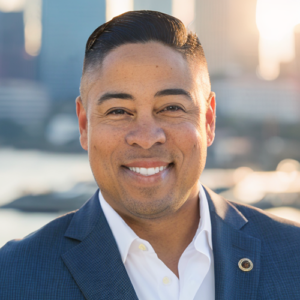
Bill Author
Bill Co-Author(s):