AB 2284: Electric bicycles: Attorney General list.
- Session Year: 2025-2026
- House: Assembly
- Latest Version Date: 2026-04-06
Current Status:
In Progress
(2026-04-20: In committee: Set, first hearing. Failed passage. Reconsideration granted.)
Introduced
In Committee
Awaiting First Chamber Vote
Passed First Chamber
In Committee
Awaiting Second Chamber Vote
Passed Second Chamber
Enacted
Existing law establishes the Department of Justice under the direction and control of the Attorney General. Existing law requires each state and local agency that employs peace officers to annually report to the Attorney General data on all stops conducted by that agencys peace officers for the preceding calendar year, in accordance with a specified procedure.
This bill would require, on or before June 1, 2027, the department, office of the Attorney General, in partnership with biking nonprofit groups, to compile a list of electric two-wheeled devices that do not comply with the definition of any single class of electric bicycles and that are labeled, advertised, or commonly perceived by riders or peace officers as electric bicycles or electric bicycle products. The bill would require the department Attorney General to make the list available on its internet website and to update the list and internet website, when necessary.
Under existing law, the Department of the California Highway Patrol is responsible for enforcement of all laws regulating the operation of vehicles and use of the highways, as specified. Existing law requires the department to develop, on or before September 1, 2023, statewide safety and training programs based on evidence-based practices for users of electric bicycles, as defined, including, but not limited to, general electric bicycle riding safety, emergency maneuver skills, rules of the road, and laws pertaining to electric bicycles.
This bill would require, on or before June 1, 2027, the department, in partnership with biking nonprofit groups, to compile a list of electric bicycles and electric bicycle products that do not comply with statutory and regulatory requirements for the labeling or advertising of electric bicycles or electric bicycle products. two-wheeled devices that do not comply with the definition of any single class of electric bicycles and that are labeled, advertised, or commonly perceived by riders or peace officers as electric bicycles or electric bicycle products. The bill would require the department to make the list available on its internet website and to update the list and internet website, when necessary.
Under existing law, the Department of the California Highway Patrol is responsible for enforcement of all laws regulating the operation of vehicles and use of the highways, as specified. Existing law requires the department to develop, on or before September 1, 2023, statewide safety and training programs based on evidence-based practices for users of electric bicycles, as defined, including, but not limited to, general electric bicycle riding safety, emergency maneuver skills, rules of the road, and laws pertaining to electric bicycles.
This bill would require, on or before June 1, 2027, the department, in partnership with biking nonprofit groups, to compile a list of electric bicycles and electric bicycle products that do not comply with statutory and regulatory requirements for the labeling or advertising of electric bicycles or electric bicycle products. The bill would require the department to make the list available on its internet website and to update the list and internet website, when necessary.
(a)On or before June 1, 2027, the Attorney General shall, in partnership with biking nonprofit groups, compile a list of electric two-wheeled devices that do not comply with the definition of any single class of electric bicycles, as defined in Section 312.5 of the Vehicle Code, and that are labeled, advertised, or commonly perceived by riders or peace officers as electric bicycles or electric bicycle products.
(b)(1)The office of the Attorney General shall make the list publicly available on its internet website.
(2)The Attorney General shall update the list and the internet website, when necessary.
SECTION 1.Section 2425 is added to the Vehicle Code, to read:2425.(a)On or before June 1, 2027, the Department of the California Highway Patrol shall, in partnership with biking nonprofit groups, compile a list of electric two-wheeled devices that do not comply with the definition of any single class of electric bicycles, as defined in Section 312.5 and that are labeled, advertised, or commonly perceived by riders or peace officers as electric bicycles or electric bicycle products.(b)(1)The department shall make the list publicly available on its internet website.(2)The department shall update the list and the internet website, when necessary.(a)On or before June 1, 2027, the Department of the California Highway Patrol shall, in partnership with biking nonprofit groups, compile a list of electric bicycles and electric bicycle products that do not comply with the statutory or regulatory requirements for the labeling or advertising of electric bicycles or electric bicycle products. two-wheeled devices that do not comply with the definition of any single class of electric bicycles, as defined in Section 312.5 and that are labeled, advertised, or commonly perceived by riders or peace officers as electric bicycles or electric bicycle products.
(b)(1)The department shall make the list publicly available on its internet website.
(2)The department shall update the list and the internet website, when necessary.
(a)On or before June 1, 2027, the Department of the California Highway Patrol shall, in partnership with biking nonprofit groups, compile a list of electric bicycles and electric bicycle products that do not comply with the statutory or regulatory requirements for the labeling or advertising of electric bicycles or electric bicycle products.
(b)(1)The department shall make the list publicly available on its internet website.
(2)The department shall update the list and the internet website, when necessary.
|
Date
|
Status
|
|---|---|
| Apr 20, 2026 | In committee: Set, first hearing. Failed passage. Reconsideration granted. |
| Apr 7, 2026 | Re-referred to Com. on TRANS. |
| Apr 6, 2026 | From committee chair, with author's amendments: Amend, and re-refer to Com. on TRANS. Read second time and amended. |
| Mar 17, 2026 | Re-referred to Com. on TRANS. |
| Mar 16, 2026 | From committee chair, with author's amendments: Amend, and re-refer to Com. on TRANS. Read second time and amended. |
| Mar 9, 2026 | Referred to Com. on TRANS. |
| Feb 20, 2026 | From printer. May be heard in committee March 22. |
| Feb 19, 2026 | Read first time. To print. |
|
Date
|
Description
|
Location
|
Votes
|
|
|---|---|---|---|---|
| Apr 20, 2026 | Reconsideration. | Assembly Standing Committee on Transportation |
Passed |
|
| Apr 20, 2026 | Do pass and be re-referred to the Committee on [Appropriations] | Assembly Standing Committee on Transportation |
Failed |
This list shows positions taken on this bill by organizations on the date displayed, which is linked to the original source.
Positions by individuals are not included.
|
Organization
|
Position
|
Date
|
|---|---|---|
| California Orthopedic Association | ** Support | |
| city of carlsbad | ** Support | |
| City Of Huntington Beach | ** Support | |
| City Of San Mateo | ** Support | |
| PeopleforBikes | ** Support | |
| Streets for All | ** Support |
Date of Hearing: April 20, 2026
ASSEMBLY COMMITTEE ON TRANSPORTATION
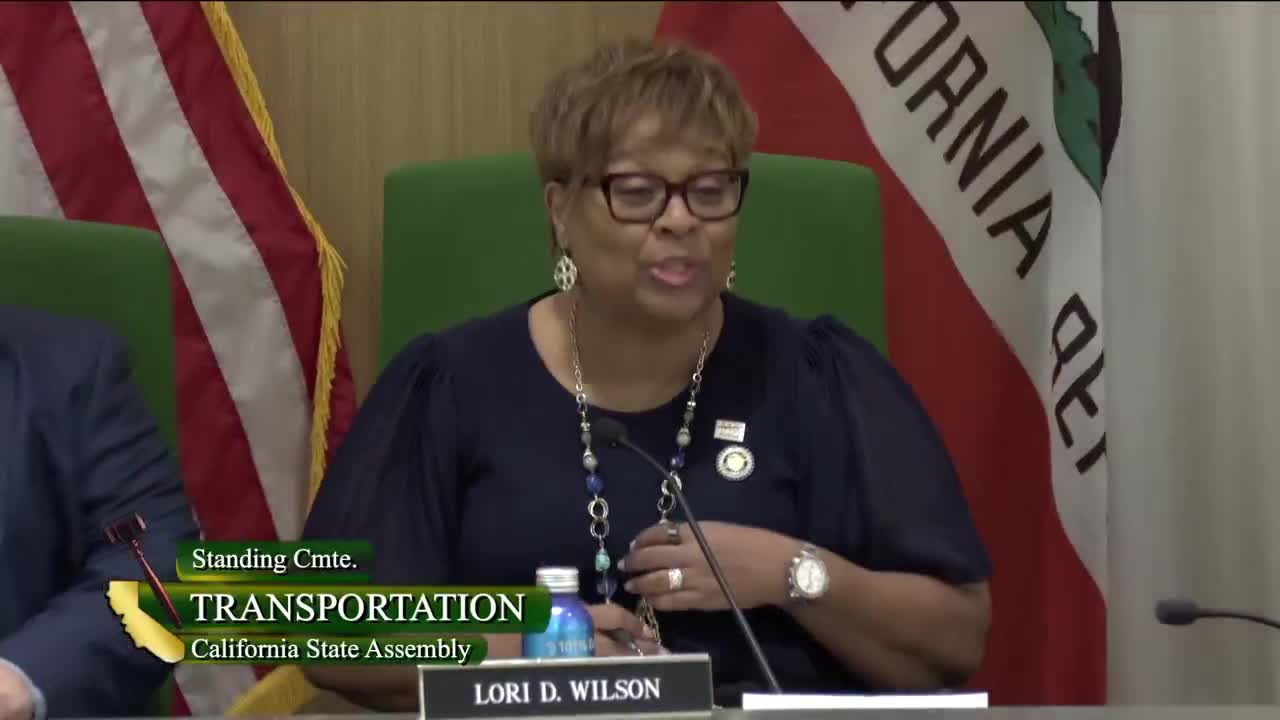
Lori D. Wilson, Chair
ABPCA Bill Id:AB 2284 (
Author:Dixon) – As Amended Ver:April 6, 2026
SUBJECT: Electric bicycles: Attorney General list
SUMMARY: Requires the Attorney General (AG), in partnership with nonprofit biking groups, to compile, update, and make public on its website a list of electric two-wheeled devices that do not comply with the definition of any single class of electric bicycles, and that are labeled, advertised, or commonly perceived by riders or peace officers as electric bicycles or electric bicycle products.
EXISTING LAW:
- Defines an e-bike as a bicycle equipped with fully operational pedals and an electric motor that is not physically capable of exceeding 750 watts of power. (Vehicle Code (VEH) 312.5)
- Defines a class 1 e-bike as a bicycle equipped with a motor that provides assistance only when the rider is pedaling, that is not capable of exclusively propelling the bicycle, that ceases to provide assistance when the bicycle reaches the speed of 20 miles per hour (mph), and is not capable of providing assistance to reach speeds greater than 20 miles per hour. (VEH 312.5)
- Defines a class 2 e-bike as a bicycle equipped with a motor that may be used exclusively to propel the bicycle, and that is not capable of providing assistance when the bicycle reaches the speed of 20 mph. (VEH 312.5)
- Defines a class 3 electric bicycle as a bicycle equipped with a motor that provides assistance only when the rider is pedaling, that is not capable of exclusively propelling the bicycle, and that ceases to provide assistance when the bicycle reaches the speed of 28 mph, and equipping with a speedometer. (VEH 312.5)
- Prohibits a person from tampering with or modifying an electric bicycle as to change the speed capability of the bicycle unless the modification keeps within the existing speed allowances of an electric bicycle. (VEH 24016)
- Prohibits a person from selling a product, device or application that can modify the speed capability of an electric bicycle such that it no longer meets the definition of an electric bicycle. (VEH 24016)
- Authorizes a peace officer to impound a vehicle that does not meet the definition of an electric bicycle and is both powered by an electric motor capable of exclusively propelling the vehicle in excess of 20 mph on a highway and is being operated without a license to operate that vehicle, or a person operating a vehicle that is a class 2 electric bicycle and is not 16 years of age. (VEH 22651.08)
- Prohibits the advertisement or sale of a device as an electric bicycle if it is:
- A vehicle with two or three wheels powered by an electric motor that is intended by the manufacturer to be modifiable to attain a speed greater than 20 miles per hour on motor power alone or to attain more than 750 watts of power.
- A vehicle that is modified to attain a speed greater than 20 miles per hour on motor power alone or to have motor power of more than 750 watts.
- A vehicle that is modified to have its operable pedals removed (VEH 312.5)
FISCAL EFFECT: Unknown
COMMENTS: More than half of all trips made in the United States are shorter than three miles. To cover these distances, e-bikes are surging in popularity, evolving from recreational devices into genuine car replacements. The speed of these devices, coupled with the reduced physical strain they require, makes them a convenient, low-cost choice for short-range commuting. Furthermore, with average prices ranging from $1,000 to $3,500, e-bikes offer a significantly more affordable alternative to traditional motor vehicles. Their expanded use supports California’s environmental goals while potentially reducing traffic-related injuries and fatalities—which claimed over 4,400 lives in the state in 2024.
The lack of licensing and insurance requirements has further fueled this proliferation. In fact, e-bikes are now outselling electric cars: according to Kelley Blue Book, while 800,000 electric cars were purchased in the U.S. in 2022, e-bike imports reached 1.1 million. Projections indicate U.S. sales could reach 6.4 million units by 2025 due to rising demand. A 2024 survey by the Mineta Transportation Institute (MTI) found that 16% of U.S. adults had ridden an e-bike in the previous year, with 6% riding weekly. Additionally, the North American Bikeshare and Scootershare Association (NABSA) reported that riders logged 59 million trips on 76,000 shared e-bikes in 2024.
Growth in e-bike use has been accompanied by a rise in e-bike-related injuries and frustration from communities about potentially dangerous use of these devices. A new wave of high-speed electric motors has entered the California market, often exceeding the speed capabilities originally intended by California law. In response to the rising number of hospitalizations across the state, several bills have been introduced this year to address safety and regulation.
Meeting California’s environmental goals. In California, the transportation sector is the leading contributor of greenhouse gas (GHG) emissions and is responsible for about 40% of the state’s emissions with light-duty passenger vehicles being the single leading contributor. The Legislature has set several goals to reduce greenhouse (GHG) emissions and address climate change. The Global Warming Solutions Act of 2006 [AB 32 (Nunez), Chapter 488, Statutes of 2006] and subsequent companion legislation SB 32 (Pavley), Chapter 249, Statutes of 2016, requires California to reduce statewide GHG emissions to 40% below the 1990 level by 2030.
Reducing the number of miles people drive every day will have a significant impact on reducing GHG emissions. Providing alternative modes of transportation such as public transit, e-bikes, or other shared ride approaches could significantly reduce the number of vehicle miles traveled (VMT) in California. California has targeted a 15% reduction in VMT by 2050 as part of its larger strategy to reduce GHG emissions by 80% from 1990 levels by 2050.
In the 2023 study titled "Impacts of E-bike Ownership on Travel Behavior: Evidence from three Northern California rebate programs," researchers from UC Davis found that e-bike ownership leads to a measurable reduction in vehicle use. E-bike owners reported replacing one to three car trips per week with an e-bike, diverting between 12 and 44 kilograms of CO2 per month, or roughly equivalent to not burning five gallons of gasoline or the total emissions produced by running an average refrigerator for four months. If 1 million Californians (roughly 3% of the population) used e-bikes at the "high end" rate of this study, the state would reduce emissions by 528,000 metric tons of CO2 per year, The equivalent of taking 125,000 gas-powered cars off the road entirely.
Electric bicycle safety. As electric bicycle popularity has gone up, so have injuries. In 2023, the Legislature passed SB 381 (Min), Chapter 869, which directed the MTI at San Jose State University to study electric bicycles and the safety of riders and pedestrians.
MTI released the report Exploring Electric Bicycle Safety Performance Policy Options for California in December of 2025. That report provided a comprehensive review of how California and other states and countries regulate electric bicycles, a review of the electric bicycle safety literature, and strategies that the state could adopt to promote the safe use of electric bicycles.
According to the report, “In 2023, a total of 461,062 patients were treated at California hospitals with transportation-related injuries. Only 4,757 patients were identified as electric bicycle riders. Thus, electric bicycle riders comprised just 1% of all patients with transportation-related injury. Comparatively, 44,039 patients were identified as conventional bicycle riders, or 10% of all transportation-related patients. Overall, there were more than 9 times more injured conventional bicycle riders than injured electric bicycle riders. By far the most patients were injured in motor vehicle incidents: 62%.”
The report found that electric bicycle-related injuries may result in slightly more hospitalizations than conventional bicycle incidents, specifically “In the National Electronic Injury Surveillance System (NEISS) injury dataset of U.S. hospital patients, electric bicycle patients were hospitalized at only a three-percentage point greater rate than conventional bicycle patients (16% vs. 13%). Also, that gap disappeared when making an apples-to apples comparison of only those injuries occurring on streets. Finally, while the California hospital data did show more electric bicycle than conventional bicycle hospitalizations, the difference was a relatively modest six percentage points (17% vs. 11%). Looking at just injuries that took place on streets, conventional bicycles and electric bicycles had virtually identical hospitalization rates (18% vs 17%, respectively).”
In addition, most of the people involved in electric bicycle incidents are adults. NEISS reported that one in five electric bicycle patients (20%) were minors, almost identical to their share of the U.S. population. In comparison, 43% of conventional bicycle patients were minors. Slightly over half of the electric bicycle patients (54%) were adults aged 18 to 49 years. Electric bicycle patients had the oldest median age (34 years), a full decade higher than conventional bicycles (24 years). Mopeds/power-assisted cycles have the second highest median age, 30 years.
Most e-bike injuries are caused by the operators of the devices. According to NEISS data, 92% of patients were operating the device when injured, while 4% were bystanders. Bystanders struck by electric bicycles were hospitalized 12% of time, and bystanders struck by conventional bicycles were hospitalized 5% of the time.
The cause of the injuries while on an e-bikes was found to be nearly identical to the cause of injuries for riders of traditional bicycles. For e-bikes, 20% of injuries were caused by a collision with a motor vehicle, 4% were caused by a collision with another road user, and 51% were solo crashes. (The report notes that some of the solo crashes may have been caused by cyclists trying to avoid collisions with vehicles.) Twenty-five percent of the collisions were unspecified.
Illegal e-bikes are likely the problem. Illegal e-bikes are electric bicycles that exceed 750 watts of motor power, have a top speed greater than 20 mph (for Class 1 and 2) or 28 mph (for Class 3), or lack fully operable pedals. These vehicles are generally legally classified as electric motorcycles or mopeds, requiring registration, insurance, and proper licensing.
The e-bike landscape today is very challenging because many of the e-bikes that are causing crashes and creating a perceived nuisance in communities are illegal and it is very difficult to determine if an e-bike is legal or illegal by simply looking at it. In addition, illegal e-bikes, while they can be a nuisance and dangerous may not be the highest priority of local law enforcement. As a result, passing legislation targeting electric bicycles is unlikely to address the problems caused by illegal devices.
As part of the Mineta Institute report, surveys were conducted at Marin and San Mateo County middle and high schools to see what types of devices children were riding. Those surveys found that 88% of the devices at Marin County Schools and 87% of the devices at San Mateo County Schools were bicycles with electric motors that did not meet the definition of an electric bicycle, suggesting a significant proliferation of illegal devices into the marketplace, particularly for devices marketed towards children.
Legislative attempts to address electric bicycles and bicycle-shaped devices. The increased popularity of e-bikes and the rise of bicycle-shaped devices with electric motors has lead to an influx of legislation. Over the last several years this committee has heard many bills trying to address e-bike safety and curb the abuse of devices that look like an electric bicycle, but travel at speeds much greater than permitted by existing law.
State law prohibits people from modifying their e-bikes to operate at speeds greater than what is allowed. AB 1774 (Dixon), Chapter 55, Statutes of 2024 prohibited a person from selling a product or device that can modify the speed capability of an e-bike. AB 545 (Davies), Chapter 37, Statutes of 2025 prohibited the sale of applications that can boost an electric bicycle’s speed greater than permitted by law. SB 1271 (Min), Chapter 891, Statutes of 2024 modifies the definition of an e-bike to make it clear that it cannot be capable of going greater than 20 miles per hour (class 1 or 2) or 28 miles per hour on pedal assist (class 3). AB 965 (Dixon), Chapter 65, Statutes of 2025 prohibits the sale of a class 3 electric bicycle to a person under the age of 16.
AB 875 (Muratsuchi), Chapter 168, Statutes of 2025 Authorized a peace officer to remove a vehicle with fewer than four wheels that does not meet the definition of an e-bike and is powered by an electric motor capable of exclusively propelling the vehicle in excess of 20 mph and is being operated without a current vehicle registration or by an operator who is not licensed to operate the vehicle.
In addition, there are two ongoing legislatively authorized pilots with age prohibitions on persons allowed to ride e-bikes. AB 2234 (Boerner), Chapter 823, Statutes of 2024 authorized cities within San Diego County and the county of San Diego to prohibit a person under the age of 12 from riding a class 1 or 2 electric bicycle. AB 1778 (Connolly) authorized cities in Marin and the county of Marin to prohibit persons under 16 from riding a class 2 electric bicycle and require everyone riding a class 2 electric bicycle to wear a helmet.
This year at least nine bills have been introduced to address concerns surrounding electric bicycles and bicycle shaped devices with electric motors. AB 1942 (Bauer-Kahan) requires class 2 and 3 electric bicycles to have a license plate. AB 1557 (Papan) makes changes to the definition of an electric bicycle around their speed capabilities and the wattage of the motor. AB 2346 (Wilson) sets speed limits for electric bicycles and various equipment requirements. AB 2595 (Papan) expands the San Diego pilot program to San Mateo, prohibiting those under 12 years old from riding a class 1 or 2 electric bicycle. AB 1569 (Davies) requires the Department of Education to work with CHP to develop an online e-bike safety course that is developmentally appropriate for students in the 7th through the 12th grade.
In the Senate, SB 1167 (Blakespear) redefines motordriven cycle and mopeds, and creates disclosure requirements for selling such devices. SB 956 (Choi) would authorize local authorities to adopt and enforce speed limits, age requirements, and equipment requirements for electric bicycles.
According to the author, “AB 2284 requires the Attorney General, in partnership with biking nonprofit groups, to maintain and publish an online list of e-bike products that do not comply with the state’s labeling or advertising standards. In doing so, AB 2284 is a common-sense measure that will improve rider safety by easily allowing consumers to identify e-bike products that do not meet California standards or requirements. Furthermore, this measure will provide a useful resource for both law enforcement and school districts when identifying non-compliant or potentially dangerous devices.”
Streets for All, the sponsor of this bill, argues “In recent years, the rapid growth of the e-bike market has led to confusion about which devices comply with California’s e-bike laws. Some manufacturers and retailers have marketed higher powered electric motorcycles or noncompliant devices as e-bikes, even when they exceed the state’s limits on motor power and speed. This mislabeling can mislead consumers, create safety risks, and undermine confidence in legitimate e-bikes.
By increasing transparency and providing information to the public, this bill will help consumers understand which devices meet California’s e-bike standards and encourage manufacturers and sellers to comply with state law. This bill will also help local law enforcement and school districts in the process of identifying what device is being ridden or parked, respectively.”
Committee comments. The Mineta Transportation Institute’s 2025 report identified a significant market disconnect: 88% of devices observed at certain schools did not meet California’s legal definition of an electric bicycle. However, it is an oversimplification to assume these devices are "illegal." Under VEH 406, many high-wattage devices are permitted to operate as "motorized bicycles" (mopeds) provided they are equipped with standard safety features (headlamps, mirrors, horns), are registered with the DMV, and the operator holds an M1 or M2 license. In addition, because of the ability to tamper with the electronics of an e-bike to make it go faster than legally allowed under California law, some e-bikes can be legal and illegal at the same time depending on how they are being used.
Requiring the Attorney General to maintain a list of "non-compliant" devices would be a nearly impossible task and one that would result in a list of noncompliant devices that is always out of date. Electric bicycles are manufactured around the world and are frequently being updated with new designs. For example, s a manufacturer may update motor's "peak" vs. "continuous" wattage to achieve compliance, or a rider may properly register a device as a moped, however an outdated AG list could lead to the unlawful seizure of property under AB 875 (Muratsuchi). This creates a potential "notice" and "due process" liability for both the AG and local law enforcement.
Furthermore, the Legislature recently addressed the mislabeling of these devices through SB 1271 (Min, 2024). Rather than creating a static, resource-intensive list that may be obsolete upon publication, the Committee may wish to consider whether existing Unfair Competition Laws (UCL) and false advertising statutes provide a more efficient pathway for enforcement. Advocating for the AG to pursue manufacturers for deceptive labeling targets the root of the problem without the administrative burden of cataloging an ever-changing global inventory of devices.
Related and previous legislation. AB 1557 (Papan) of 2025 makes changes to the definition of an electric bicycle around their speed capabilities and the wattage of the motor. That bill is pending before this committee.
AB 1942 (Bauer-Kahan) requires class 2 and 3 electric bicycles to have a license plate. That bill is pending before this committee.
AB 2346 (Wilson) sets speed limits for electric bicycles and various equipment requirements. That bill is pending before Assembly Judiciary Committee.
AB 2595 (Papan) expands the San Diego pilot program to San Mateo, prohibiting those under 12 years old from riding a class 1 or 2 electric bicycle. That bill is pending before this committee.
AB 1569 (Davies) requires the Department of Education to work with CHP to develop an online e-bike safety course that is developmentally appropriate for students in the 7th through the 12th grade. That bill is pending before this committee.
SB 1167 (Blakespear) redefines motordriven cycle and mopeds, and creates disclosure requirements for selling such devices. That bill is pending before Senate Transportation Committee.
SB 956 (Choi) would authorize local authorities to adopt and enforce speed limits, age requirements, and equipment requirements for electric bicycles. That bill is pending before Senate Transportation Committee.
AB 965 (Dixon) Chapter 65, Statutes of 2025 prohibits the sale of a class 3 electric bicycle to a person under the age of 16.
AB 875 (Muratsuchi) Chapter 168, Statutes of 2025 authorized a peace officer to remove a vehicle with fewer than four wheels that does not meet the definition of an electric bicycle (e-bike) and is powered by an electric motor capable of exclusively propelling the vehicle in excess of 20 mph and is being operated without a current vehicle registration or by an operator who is not licensed to operate the vehicle.
AB 545 (Davies) Chapter 37, Statutes of 2025 prohibited the sale of applications that can boost an electric bicycle’s speed greater than permitted by law.
AB 1774 (Dixon), Chapter 55, Statutes of 2024 prohibits the sale of a device that makes it someone can increase the speed of an e-bike beyond the speed permitted by law (28 mph).
SB 1271 (Min), Chapter 891, Statutes of 2024 modifies the definition of an e-bike to make it clear that it cannot be capable of going speeds greater than 20 miles per hour (class 1 or 2) or 28 miles per hour on pedal assist (class 3).
SB 381 (Min), Chapter 869, Statutes of 2023 requires the Mineta Transportation Institute at San Jose State University, in consultation with relevant stakeholders, to conduct a study on electric bicycles and the safety of riders and pedestrians by January 1, 2026.
AB 1909 (Friedman) chapter 343, Statutes of 2022, removed the prohibition against class 3 electric bicycles on bicycle paths and removed the authority for locals to prohibit class 1 and 2 electric bicycles on bicycle paths.
AB 1096 (Chiu), Chapter 568, Statutes of 2015 established the definitions, classification, and requirements for the operation, sale, and manufacturing of e-bikes.
REGISTERED SUPPORT / OPPOSITION:
Support
California Orthopedic Association
City of Carlsbad
City of Huntington Beach
City of San Mateo
Peopleforbikes
Streets for All
Opposition
None on file
Analysis Prepared by: David Sforza / TRANS. / (916) 319-2093
Discussed in Hearing
 17MIN
Assembly Standing Committee on Transportation
Bill Author

Bill Co-Author(s):