AB 2290: Civil discovery: oral depositions: transcriptions.
- Session Year: 2025-2026
- House: Assembly
- Latest Version Date: 2026-09-20
Current Status:
Passed
(2026-09-20: Chaptered by Secretary of State - Chapter 391, Statutes of 2026.)
Introduced
In Committee
Awaiting First Chamber Vote
Passed First Chamber
In Committee
Awaiting Second Chamber Vote
Passed Second Chamber
Enacted
The Civil Discovery Act authorizes a party to obtain discovery by taking the oral deposition of any person. Oral depositions must be conducted under the supervision of a deposition officer, as specified, and, unless otherwise agreed or ordered, the testimony must be taken stenographically and then transcribed. The act provides procedures for the deponent to read, correct, approve, and sign the original deposition transcript and requires the deposition officer to certify and promptly transmit the transcript to the attorney of the party who noticed the deposition in a securely sealed envelope or package.
This bill would permit the deposition officer or entity retained to perform deposition reporting or transcription services to instead securely encrypt and transmit a certified deposition transcript to the attorney of the party who noticed the deposition via electronic means, when requested by that attorney. The bill would require an electronically transmitted transcript to be in a format that ensures it is authentic and has not been altered. The bill would authorize the court to accept a transcript that has been formatted, stored, and transmitted in compliance with these provisions as an original certified transcript where the attorney presenting it certifies that it is a true and correct copy of the transcript that they received electronically.
The Civil Discovery Act authorizes a party to obtain discovery by taking the oral deposition of any person. Oral depositions must be conducted under the supervision of a deposition officer, as specified, and, unless otherwise agreed or ordered, the testimony must be taken stenographically and then transcribed. The act provides procedures for the deponent to read, correct, approve, and sign the original deposition transcript and requires the deposition officer to certify and promptly transmit the transcript to the attorney of the party who noticed the deposition in a securely sealed envelope or package.
This bill would permit the deposition officer or entity retained to perform deposition reporting or transcription services to instead securely encrypt and transmit a certified deposition transcript to the attorney of the party who noticed the deposition via electronic means, when requested by that attorney. The bill would require an electronically transmitted transcript to be in a format that ensures it is authentic and has not been altered. The bill would require authorize the court to accept a transcript that has been formatted, stored, and transmitted in compliance with these provisions as an original certified transcript where the attorney presenting it certifies that it is a true and correct copy of the transcript that they received electronically.
The Civil Discovery Act authorizes a party to obtain discovery by taking the oral deposition of any person. Oral depositions must be conducted under the supervision of a deposition officer, as specified, and, unless otherwise agreed or ordered, the testimony must be taken stenographically and then transcribed. The act provides procedures for the deponent to read, correct, approve, and sign the original deposition transcript and requires the deposition officer to certify and promptly transmit the transcript to the attorney of the party who noticed the deposition in a securely sealed envelope or package.
This bill would permit the deposition officer or entity retained to perform deposition reporting or transcription services to instead securely encrypt and transmit a certified deposition transcript to the attorney of the party who noticed the deposition via electronic means, when requested by that attorney. The bill would require an electronically transmitted transcript to be in a format that ensures it is authentic and has not been altered. The bill would make an electronically stored transcript admissible require the court to accept a transcript that has been formatted, stored, and transmitted in compliance with these provisions as an original certified transcript where the attorney presenting it certifies that it is a true and correct copy of the transcript that they received electronically.
The Civil Discovery Act authorizes a party to obtain discovery by taking the oral deposition of any person. Oral depositions must be conducted under the supervision of a deposition officer, as specified, and, unless otherwise agreed or ordered, the testimony must be taken stenographically and then transcribed. The act provides procedures for the deponent to read, correct, approve, and sign the original deposition transcript and requires the deposition officer to certify and promptly transmit the transcript to the attorney of the party who noticed the deposition in a securely sealed envelope or package.
This bill would permit the deposition officer to instead transmit a certified deposition transcript to the attorney of the party who noticed the deposition via secure electronic means, when requested by that attorney. The bill would require an electronically transmitted transcript to be in a format that ensures it is authentic and has not been altered. The bill would make an electronically stored transcript admissible as an original transcript where the attorney presenting it certifies that it is a true and correct copy of the transcript that they received electronically.
The Civil Discovery Act authorizes a party to obtain discovery by taking the oral deposition of any person. Oral depositions must be conducted under the supervision of a deposition officer, as specified, and, unless otherwise agreed or ordered, the testimony must be taken stenographically and then transcribed. The act provides procedures for the deponent to read, correct, approve, and sign the original deposition transcript and requires the deposition officer to certify and promptly transmit the transcript to the attorney of the party who noticed the deposition in a securely sealed envelope or package.
This bill would permit the deposition officer to instead transmit a certified deposition transcript to the attorney of the party who noticed the deposition via secure electronic means, when requested by that attorney.
Existing law requires the testimony at a deposition recorded by stenographic means to be transcribed, and requires stenographic notes of depositions to be retained by the reporter for not less than 8 years from the date of the deposition if no transcript is produced.This bill would make technical, nonsubstantive changes to these provisions.Existing law requires the testimony at a deposition recorded by stenographic means to be transcribed, and requires stenographic notes of depositions to be retained by the reporter for not less than 8 years from the date of the deposition if no transcript is produced.
This bill would make technical, nonsubstantive changes to these provisions.
(a)(1)The certified transcript of a deposition shall not be filed with the court. Instead, the deposition officer or, if the noticing attorney or noticing party has retained an entity registered pursuant to Section 8051 of the Business and Professions Code, the registered entity, shall securely seal that transcript in an envelope or package endorsed with the title of the action and marked: Deposition of (here insert name of deponent), and shall promptly transmit it to the attorney for the party or party who noticed the deposition.
(2)Upon request of the attorney for the party who noticed the deposition, the deposition officer or registered entity may instead transmit the certified transcript electronically to the attorneys who noticed the deposition, subject to all of the following:
(A)The deposition officer or registered entity shall notify the other parties that the certified transcript will be transmitted electronically.
(B)The deposition officer or registered entity shall transmit the transcript to the attorney using end-to-end encryption or an application that provides, at a minimum, encryption of the file while at rest and in transit.
(C)The electronic transcript shall be in a format that prevents the transcript or any aspect of the file from being modified and that enables the parties and the court to verify that the transcript is authentic and has not been altered after it was certified by the deposition officer.
(D)The attorney or party shall store the transcript under conditions that will protect it against loss, destruction, or tampering.
(E)When presenting an electronically stored transcript to a court for any purpose, the attorney shall certify that the transcript is a true and correct copy of the transcript received electronically and stored pursuant to this subdivision.
(3)A court may accept a transcript transmitted, formatted, stored, and certified pursuant to this subdivision as an original certified transcript kept under seal.
(b)The attorney to whom the transcript of a deposition is transmitted shall retain custody of it until six months after final disposition of the action. At that time, the transcript may be destroyed, unless the court, on motion of any party and for good cause shown, orders that the transcript be preserved for a longer period.
(a)(1)The certified transcript of a deposition shall not be filed with the court. Instead, the deposition officer or, if the noticing attorney or noticing party has retained an entity registered pursuant to Section 8051 of the Business and Professions Code, the registered entity, shall securely seal that transcript in an envelope or package endorsed with the title of the action and marked: Deposition of (here insert name of deponent), and shall promptly transmit it to the attorney for the party or party who noticed the deposition.
(2)Upon request of the attorney for the party who noticed the deposition, the deposition officer or registered entity may instead transmit the certified transcript electronically to the attorneys who noticed the deposition, subject to all of the following:
(A)The deposition officer or registered entity shall notify the other parties that the certified transcript will be transmitted electronically.
(B)The deposition officer or registered entity shall transmit the transcript to the attorney using end-to-end encryption or an application that provides, at a minimum, encryption of the file while at rest and in transit.
(C)The electronic transcript shall be in a format that prevents the transcript or any aspect of the file from being modified and that enables the parties and the court to verify that the transcript is authentic and has not been altered after it was certified by the deposition officer.
(D)The attorney or party shall store the transcript under conditions that will protect it against loss, destruction, or tampering.
(E)When presenting an electronically stored transcript to a court for any purpose, the attorney shall certify that the transcript is a true and correct copy of the transcript received electronically and stored pursuant to this subdivision.
(3)A court shall may accept a transcript transmitted, formatted, stored, and certified pursuant to this subdivision as an original certified transcript kept under seal.
(b)The attorney to whom the transcript of a deposition is transmitted shall retain custody of it until six months after final disposition of the action. At that time, the transcript may be destroyed, unless the court, on motion of any party and for good cause shown, orders that the transcript be preserved for a longer period.
(a)(1)The certified transcript of a deposition shall not be filed with the court. Instead, the deposition officer or, if the noticing attorney or noticing party has retained an entity registered pursuant to Section 8051 of the Business and Professions Code, the registered entity, shall securely seal that transcript in an envelope or package endorsed with the title of the action and marked: Deposition of (here insert name of deponent), and shall promptly transmit it to the attorney for the party or party who noticed the deposition. Upon
(2)Upon request of the attorney for the party who noticed the deposition, the deposition officer or registered entity may instead transmit the certified transcript electronically in an encrypted format to that attorney. The to the attorneys who noticed the deposition, subject to all of the following:
(A)The deposition officer or registered entity shall notify the other parties that the certified transcript will be transmitted electronically.
(B)The deposition officer or registered entity shall transmit the transcript to the attorney using end-to-end encryption or an application that provides, at a minimum, encryption of the file while at rest and in transit.
(C)The electronic transcript shall be in a format that prevents the transcript or any aspect of the file from being modified and that enables the attorney parties and the court to verify that the transcript is authentic and has not been altered after it was certified by the deposition officer. The
(D)The attorney or party shall store the transcript under conditions that will protect it against loss, destruction, or tampering. When
(E)When presenting an electronically stored transcript to a court for any purpose, the attorney shall certify that the transcript is a true and correct copy of the transcript received electronically and stored pursuant to this subdivision, and the transcript shall be admissible as an original transcript. subdivision.
(3)A court shall accept a transcript transmitted, formatted, stored, and certified pursuant to this subdivision as an original certified transcript kept under seal.
(b)The attorney to whom the transcript of a deposition is transmitted shall retain custody of it until six months after final disposition of the action. At that time, the transcript may be destroyed, unless the court, on motion of any party and for good cause shown, orders that the transcript be preserved for a longer period.
(a)The certified transcript of a deposition shall not be filed with the court. Instead, the deposition officer shall securely seal that transcript in an envelope or package endorsed with the title of the action and marked: Deposition of (here insert name of deponent), and shall promptly transmit it to the attorney for the party who noticed the deposition. Upon request of the attorney for the party who noticed the deposition, the deposition officer may instead securely transmit the transcript electronically in an encrypted format to that attorney. This The electronic transcript shall be in a format that enables the attorney and the court to verify that the transcript is authentic and has not been altered after it was certified by the deposition officer. The attorney shall store the transcript under conditions that will protect it against loss, destruction, or tampering. When presenting an electronically stored transcript to a court for any purpose, the attorney shall certify that the transcript is a true and correct copy of the transcript received electronically pursuant to this subdivision, and the transcript shall be admissible as an original transcript.
(b)The attorney to whom the transcript of a deposition is transmitted shall retain custody of it until six months after final disposition of the action. At that time, the transcript may be destroyed, unless the court, on motion of any party and for good cause shown, orders that the transcript be preserved for a longer period.
(a)The certified transcript of a deposition shall not be filed with the court. Instead, the deposition officer shall securely seal that transcript in an envelope or package endorsed with the title of the action and marked: Deposition of (here insert name of deponent), and shall promptly transmit it to the attorney for the party who noticed the deposition. Upon request of the attorney for the party who noticed the deposition, the deposition officer may instead securely transmit the transcript electronically to that attorney. This attorney shall store it the transcript under conditions that will protect it against loss, destruction, or tampering.
(b)The attorney to whom the transcript of a deposition is transmitted shall retain custody of it until six months after final disposition of the action. At that time, the transcript may be destroyed, unless the court, on motion of any party and for good cause shown, orders that the transcript be preserved for a longer period.
SECTION 1.Section 2025.510 of the Code of Civil Procedure is amended to read:2025.510.(a)Unless the parties agree otherwise, the testimony at a deposition recorded by stenographic means shall be transcribed.(b) The party noticing the deposition shall bear the cost of the transcription, unless the court, on motion and for good cause shown, orders that the cost be borne or shared by another party.(c)Notwithstanding subdivision (b) of Section 2025.320, any other party or the deponent, at the expense of that party or deponent, may obtain a copy of the transcript.(d)If the deposition officer receives a request from a party for an original or a copy of the deposition transcript, or any portion thereof, and the full or partial transcript will be available to that party prior to the time the original or copy would be available to any other party, the deposition officer shall immediately notify all other parties attending the deposition of the request, and shall, upon request by any party other than the party making the original request, make that copy of the full or partial deposition transcript available to all parties at the same time.(e)Stenographic notes of depositions shall be retained by the reporter for a period of not less than eight years from the date of the deposition, if no transcript is produced, and not less than one year from the date on which the transcript is produced. The notes may be either on paper or electronic media, as long as it allows for satisfactory production of a transcript at any time during the periods specified.(f)At the request of any other party to the action, including a party who did not attend the taking of the deposition testimony, any party who records or causes the recording of that testimony by means of audio or video technology shall promptly do both of the following:(1)Permit that other party to hear the audio recording or to view the video recording.(2)Furnish a copy of the audio or video recording to that other party on receipt of payment of the reasonable cost of making that copy of the recording.(g)If the testimony at the deposition is recorded both stenographically and by audio or video technology, the stenographic transcript shall be the official record of that testimony for the purpose of the trial and any subsequent hearing or appeal.(h)(1)The requesting attorney or party appearing in propria persona shall timely pay the deposition officer or the entity providing the services of the deposition officer for the transcription or copy of the transcription described in subdivision (b) or (c), and any other deposition product or service that is requested either orally or in writing.(2)This subdivision shall apply unless responsibility for the payment is otherwise provided by law or unless the deposition officer or entity is notified in writing at the time the services or products are requested that the party or another identified person will be responsible for payment.(3)This subdivision does not prohibit or supersede an agreement between an attorney and a party allocating responsibility for the payment of deposition costs to the party.(4)The case of Serrano v. Stefan Merli Plastering Co., Inc. (2008) 162 Cal.App.4th 1014 shall not be construed to alter the standards by which a court acquires personal jurisdiction over a nonparty to an action.(5)The requesting attorney or party appearing in propria persona, upon the written request of a deposition officer who has obtained a final judgment for payment of services provided pursuant to this subdivision, shall provide to the deposition officer an address that can be used to effectuate service for the purpose of Section 708.110 in the manner specified in Section 415.10.(i)For purposes of this section, deposition product or service means any product or service provided in connection with a deposition that qualifies as shorthand reporting, as described in Section 8017 of the Business and Professions Code, and any product or service derived from that shorthand reporting.(a)Unless the parties agree otherwise, the testimony at a deposition recorded by stenographic means shall be transcribed.
(b) The party noticing the deposition shall bear the cost of the transcription, unless the court, on motion and for good cause shown, orders that the cost be borne or shared by another party.
(c)Notwithstanding subdivision (b) of Section 2025.320, any other party or the deponent, at the expense of that party or deponent, may obtain a copy of the transcript.
(d)If the deposition officer receives a request from a party for an original or a copy of the deposition transcript, or any portion thereof, and the full or partial transcript will be available to that party prior to the time the original or copy would be available to any other party, the deposition officer shall immediately notify all other parties attending the deposition of the request, and shall, upon request by any party other than the party making the original request, make that copy of the full or partial deposition transcript available to all parties at the same time.
(e)Stenographic notes of depositions shall be retained by the reporter for a period of not less than eight years from the date of the deposition, where if no transcript is produced, and not less than one year from the date on which the transcript is produced. The notes may be either on paper or electronic media, as long as it allows for satisfactory production of a transcript at any time during the periods specified.
(f)At the request of any other party to the action, including a party who did not attend the taking of the deposition testimony, any party who records or causes the recording of that testimony by means of audio or video technology shall promptly do both of the following:
(1)Permit that other party to hear the audio recording or to view the video recording.
(2)Furnish a copy of the audio or video recording to that other party on receipt of payment of the reasonable cost of making that copy of the recording.
(g)If the testimony at the deposition is recorded both stenographically and by audio or video technology, the stenographic transcript shall be the official record of that testimony for the purpose of the trial and any subsequent hearing or appeal.
(h)(1)The requesting attorney or party appearing in propria persona shall timely pay the deposition officer or the entity providing the services of the deposition officer for the transcription or copy of the transcription described in subdivision (b) or (c), and any other deposition product or service that is requested either orally or in writing.
(2)This subdivision shall apply unless responsibility for the payment is otherwise provided by law or unless the deposition officer or entity is notified in writing at the time the services or products are requested that the party or another identified person will be responsible for payment.
(3)This subdivision does not prohibit or supersede an agreement between an attorney and a party allocating responsibility for the payment of deposition costs to the party.
(4)Nothing in the The case of Serrano v. Stefan Merli Plastering Co., Inc. (2008) 162 Cal.App.4th 1014 shall not be construed to alter the standards by which a court acquires personal jurisdiction over a nonparty to an action.
(5)The requesting attorney or party appearing in propria persona, upon the written request of a deposition officer who has obtained a final judgment for payment of services provided pursuant to this subdivision, shall provide to the deposition officer an address that can be used to effectuate service for the purpose of Section 708.110 in the manner specified in Section 415.10.
(i)For purposes of this section, deposition product or service means any product or service provided in connection with a deposition that qualifies as shorthand reporting, as described in Section 8017 of the Business and Professions Code, and any product or service derived from that shorthand reporting.
|
Date
|
Status
|
|---|---|
| Sep 20, 2026 | Chaptered by Secretary of State - Chapter 391, Statutes of 2026. |
| Sep 20, 2026 | Approved by the Governor. |
| Sep 3, 2026 | Enrolled and presented to the Governor at 4 p.m. |
| Aug 26, 2026 | Senate amendments concurred in. To Engrossing and Enrolling. (Ayes 77. Noes 0. Page 6557.). |
| Aug 26, 2026 | Senate amendments concurred in. To Engrossing and Enrolling. (Ayes 77. Noes 0.). |
| Aug 24, 2026 | In Assembly. Concurrence in Senate amendments pending. |
| Aug 24, 2026 | Read third time. Passed. Ordered to the Assembly. (Ayes 40. Noes 0. Page 5714.). |
| Aug 24, 2026 | Read third time. Passed. Ordered to the Assembly. (Ayes 39. Noes 0.). |
| Aug 19, 2026 | Read second time. Ordered to third reading. |
| Aug 18, 2026 | Read third time and amended. Ordered to second reading. |
| Aug 3, 2026 | Read second time and amended. Ordered to third reading. |
| Jul 2, 2026 | From committee: Amend, and do pass as amended. (Ayes 13. Noes 0.) (June 30). |
| Jun 19, 2026 | In committee: Hearing postponed by committee. |
| Jun 11, 2026 | From committee chair, with author's amendments: Amend, and re-refer to committee. Read second time, amended, and re-referred to Com. on JUD. |
| May 6, 2026 | Referred to Com. on JUD. |
| Apr 6, 2026 | In Senate. Read first time. To Com. on RLS. for assignment. |
| Apr 6, 2026 | Read third time. Passed. Ordered to the Senate. (Ayes 68. Noes 0. Page 4471.) |
| Apr 6, 2026 | Read third time. Passed. Ordered to the Senate. (Ayes 68. Noes 0.) |
| Mar 25, 2026 | Read second time. Ordered to Consent Calendar. |
| Mar 24, 2026 | From committee: Do pass. To Consent Calendar. (Ayes 12. Noes 0.) (March 24). |
| Mar 3, 2026 | Re-referred to Com. on JUD. |
| Mar 2, 2026 | From committee chair, with author's amendments: Amend, and re-refer to Com. on JUD. Read second time and amended. |
| Mar 2, 2026 | Referred to Com. on JUD. |
| Feb 20, 2026 | From printer. May be heard in committee March 22. |
| Feb 19, 2026 | Read first time. To print. |
|
Date
|
Description
|
Location
|
Votes
|
|
|---|---|---|---|---|
| Aug 26, 2026 | AB 2290 Lackey Concurrence in Senate Amendments | Assembly Floor |
Passed |
|
| Aug 24, 2026 | Assembly 3rd Reading AB2290 Lackey By Stern | Senate Floor |
Passed |
|
| Jun 30, 2026 | Do pass as amended | Senate Standing Committee on Judiciary |
Passed |
|
| Apr 6, 2026 | AB 2290 Lackey Consent Calendar Second Day Regular Session | Assembly Floor |
Passed |
|
| Mar 24, 2026 | Do pass. To Consent Calendar. | Assembly Standing Committee on Judiciary |
Passed |
This list shows positions taken on this bill by organizations on the date displayed, which is linked to the original source.
Positions by individuals are not included.
|
Organization
|
Position
|
Date
|
|---|---|---|
| California Court Reporters Association | ** Against | |
| Deposition Reporters Association Of California | ** Against | |
| Deposition Reporters of California | ** Against | |
| Esquire Deposition Solutions LLC | ** Support | |
| Esquire Deposition Solutions, LLC | ** Support | |
| Kuziora Deposition Reporters | ** Against | |
| Magna Legal Services | ** Support | |
| Protect Your Record Project | ** Against | |
| Three individuals | ** Against | |
| U.S. Legal Support, Inc. | ** Support | |
| US Legal Support, INC | ** Support | |
| Veritext, LLC | ** Support |
CONCURRENCE IN SENATE AMENDMENTS
CSA1 Bill Id:AB 2290
Author:(Lackey)
As Amended Ver:August 18, 2026
Majority vote
SUMMARY
Authorizes a certified transcript of a deposition to be transmitted electronically.
Major Provision
- Clarifies that, upon request of the attorney for the party who noticed the deposition or a retained shorthand reporting organization hired by the party, the deposition officer may securely transmit the transcript of the deposition electronically to that attorney in lieu of sending a paper copy.
- Provides that the provisions of 1) are subject to the following requirements:
- The deposition officer or registered entity notifies the other parties that the certified transcript will be transmitted electronically;
- The deposition officer or registered entity transmits the transcript to the attorney using end-to-end encryption or an application that provides, at a minimum, encryption of the file while at rest and in transit;
- The electric transcript is in a format that prevents the transcript or any aspect of the file from being modified and that enables the parties and the court to verify that the transcript is authentic and has not been altered after it was certified by the deposition office;
- The transcript is stored in a matter to protect it against loss, destruction, or tampering; and
- When presenting an electronically stored transcript to a court for any purpose, the attorney certifies that the transcript is a true and correct copy of the transcript received electronically and stored in accordance with this bill.
Senate Amendments
Adopt additional security requirements for electronic deposition transcripts.
COMMENTS
Recognizing that many portions of the Code of Civil Procedure were originally enacted long before the widely accepted use of electronic communications, many statutes still reflect a bygone era where paper documents drove the legal profession. Although this Committee has passed dozens of measures in recent years to modernize aspects of the Code of Civil Procedure, some relics of the past remain in the Code. One area of the law reflecting the era of pre-electronic communications is the existing requirement that all deposition transcripts must be transmitted to attorneys via a paper transcript in a secured envelope. This straightforward bill permits deposition transcripts to be transmitted electronically.
The accuracy and legitimacy of deposition transcripts is critical to the civil justice system. Depositions are a critical tool for conducting civil discovery. Depositions are conducted under oath and are a means by which attorneys for various parties can get the litigants or witnesses to an incident on record explaining their version of a given event. Litigators then make strategic decisions on the direction of litigation based on the contents of a disposition, and the deposition transcript can be utilized to support or undercut a witness's credibility at trial. Given the many uses of a deposition, it is vital that the record is accurate and protected. To ensure the validity of the record, and to ensure that no parties can alter the transcript, the existing law requires a deposition transcript to be provided to the attorney who requested the disposition as a printed copy that is then placed into a sealed and secured envelope. That envelope is then delivered to the attorney who sought the deposition with other copies transmitted to other parties who request a copy.
The author and sponsor of this bill note that this process is time consuming and costly. Because the deposition must be transmitted as a hard copy, the deposition officer must print out the deposition, seal it, and transmit the document to an attorney who must then retain the paper copy of the document for a minimum of six months. The proponents of this measure contend that these steps could be lessened if the deposition officer was permitted to transmit a secured electronic copy of the document. This would eliminate the need for printing and shipping the document and the need for the document to be physically stored somewhere in the attorney's custody for at least six months. The proponents of this bill note that the federal rules of civil procedure already permit the use of electronic deposition transcripts.
This bill maintains the law's protections of deposition transcripts while modernizing the code. Recognizing that the validity of the deposition transcripts is critical, this bill would maintain the existing law's certification and document security requirements but permit the deposition transcript to be sent electronically. Given that the technology is readily available to "secure" PDFs and other electronic files, this bill simply modifies the California Code of Civil Procedure regarding deposition transcripts to mirror its federal counterpart. In order to protect the accuracy of the transcript, the bill outlines several security measures that must be taken by various parties to ensure the transmission and storage of the transcript is secure and that the document cannot be altered.
According to the Author
AB 2290 is important because it modernizes California's deposition procedures to align with current technology while preserving the integrity and security of the official record. This bill permits the deposition officer to transmit the transcript electronically to the attorney, if requested by the attorney. By authorizing the electronic transmission of certified transcripts, the bill reduces delays, lowers costs, and improves efficiency in the discovery process. This commonsense update helps attorneys move cases forward more quickly and supports timely resolution of disputes.
Arguments in Support
This bill is jointly sponsored by four deposition reporting companies. In support of the bill the coalition writes:
AB 2290 modernizes California's deposition procedures by allowing certified deposition
transcripts to be securely transmitted electronically to the attorney who noticed the deposition when that attorney requests electronic delivery. Under current law, a deposition officer must seal the certified transcript in an envelope or package and transmit it to the noticing attorney by physical delivery or mail, even when the attorney prefers to receive the transcript electronically.
Depositions are a critical component of the civil discovery process. During a deposition, a witness provides sworn testimony that is recorded by a deposition reporter and later transcribed into the official record. These transcripts are essential for case preparation, evaluating claims and defenses, and facilitating settlement discussions.
However, the statutory requirement that transcripts be transmitted in a sealed physical package reflects procedures developed before the widespread use of secure electronic communication and cloud-based document management systems. As a result, attorneys who prefer electronic delivery must still wait for physical shipment of the transcript, creating unnecessary delays and administrative costs.
AB 2290 provides a commonsense update to the Code of Civil Procedure by authorizing deposition officers to securely transmit certified transcripts electronically when requested by the noticing attorney. The bill preserves the integrity of the official record while improving efficiency in the discovery process by reducing mailing delays and allowing attorneys to review testimony more quickly.
Arguments in Opposition
This bill is opposed by several organizations representing deposition reporters. In opposition, the Deposition Reporters Association of California writes:
As this bill would permit a court reporter or deposition officer to send an unsealed transcript to an attorney instead of a sealed one that complies with the statute, an attorney may later discover to their unwelcome surprise that a court will refuse to admit the transcript into evidence.
Granted, the bill says that a reporter must "securely" electronically send the transcript to the attorney, but what is "secure" and what is not is not defined. Attorneys might, pursuant to an as-yet unknown showing of "security," persuade a judge to admit a transcript that was not sealed by the neutral court reporter-deposition officer, but whether that is so will unpredictably vary judge by judge, and California has about 2,000 judges.
Thus, AB 2290 as currently written could unwittingly prompt attorneys to ask for transcripts in a form that cannot predictably be admitted into evidence, to their detriment, their client's detriment, and the detriment of the interests of justice. It likewise could compromise the current reliability of a sealed hard copy original transcript.
FISCAL COMMENTS
None
VOTES:
ASM JUDICIARY: 12-0-0
YES: Kalra, Macedo, Bauer-Kahan, Bryan, Connolly, Dixon, Harabedian, Pacheco, Papan, Sanchez, Stefani, Zbur
ASSEMBLY FLOOR: 68-0-12
YES: Addis, Aguiar-Curry, Ahrens, Alanis, Alvarez, Arambula, Bains, Berman, Boerner, Bonta, Bryan, Calderon, Carrillo, Castillo, Chen, Connolly, Davies, DeMaio, Dixon, Elhawary, Ellis, Fong, Gallagher, Garcia, Gipson, Jeff Gonzalez, Mark González, Hadwick, Haney, Hart, Hoover, Irwin, Jackson, Johnson, Kalra, Krell, Lee, Lowenthal, Macedo, McKinnor, Nguyen, Ortega, Pacheco, Papan, Patel, Patterson, Pellerin, Petrie-Norris, Ramos, Ransom, Michelle Rodriguez, Rogers, Blanca Rubio, Sanchez, Schiavo, Sharp-Collins, Solache, Soria, Stefani, Ta, Tangipa, Valencia, Wallis, Ward, Wicks, Wilson, Zbur, Rivas
ABS, ABST OR NV: Ávila Farías, Bauer-Kahan, Bennett, Caloza, Flora, Gabriel, Harabedian, Lackey, Muratsuchi, Quirk-Silva, Celeste Rodriguez, Schultz
SENATE FLOOR: 40-0-0
YES: Allen, Alvarado-Gil, Archuleta, Arreguín, Ashby, Becker, Blakespear, Cabaldon, Caballero, Cervantes, Choi, Cortese, Dahle, Durazo, Gonzalez, Grayson, Grove, Hurtado, Jones, Laird, Limón, McGuire, McNerney, Menjivar, Niello, Ochoa Bogh, Padilla, Pérez, Reyes, Richardson, Rubio, Seyarto, Smallwood-Cuevas, Stern, Strickland, Umberg, Valladares, Wahab, Weber Pierson, Wiener
UPDATED
VERSION: August 18, 2026
CONSULTANT: Nicholas Liedtke / JUD. / (916) 319-2334 FN: 0004057
CONCURRENCE IN SENATE AMENDMENTS
CSA1 Bill Id:AB 2290
Author:(Lackey)
As Amended Ver:August 18, 2026
Majority vote
SUMMARY
Authorizes a certified transcript of a deposition to be transmitted electronically.
Major Provision
- Clarifies that, upon request of the attorney for the party who noticed the deposition or a retained shorthand reporting organization hired by the party, the deposition officer may securely transmit the transcript of the deposition electronically to that attorney in lieu of sending a paper copy.
- Provides that the provisions of 1) are subject to the following requirements:
- The deposition officer or registered entity notifies the other parties that the certified transcript will be transmitted electronically;
- The deposition officer or registered entity transmits the transcript to the attorney using end-to-end encryption or an application that provides, at a minimum, encryption of the file while at rest and in transit;
- The electric transcript is in a format that prevents the transcript or any aspect of the file from being modified and that enables the parties and the court to verify that the transcript is authentic and has not been altered after it was certified by the deposition office;
- The transcript is stored in a matter to protect it against loss, destruction, or tampering; and
- When presenting an electronically stored transcript to a court for any purpose, the attorney certifies that the transcript is a true and correct copy of the transcript received electronically and stored in accordance with this bill.
Senate Amendments
Adopt additional security requirements for electronic deposition transcripts.
COMMENTS
Recognizing that many portions of the Code of Civil Procedure were originally enacted long before the widely accepted use of electronic communications, many statutes still reflect a bygone era where paper documents drove the legal profession. Although this Committee has passed dozens of measures in recent years to modernize aspects of the Code of Civil Procedure, some relics of the past remain in the Code. One area of the law reflecting the era of pre-electronic communications is the existing requirement that all deposition transcripts must be transmitted to attorneys via a paper transcript in a secured envelope. This straightforward bill permits deposition transcripts to be transmitted electronically.
The accuracy and legitimacy of deposition transcripts is critical to the civil justice system. Depositions are a critical tool for conducting civil discovery. Depositions are conducted under oath and are a means by which attorneys for various parties can get the litigants or witnesses to an incident on record explaining their version of a given event. Litigators then make strategic decisions on the direction of litigation based on the contents of a disposition, and the deposition transcript can be utilized to support or undercut a witness's credibility at trial. Given the many uses of a deposition, it is vital that the record is accurate and protected. To ensure the validity of the record, and to ensure that no parties can alter the transcript, the existing law requires a deposition transcript to be provided to the attorney who requested the disposition as a printed copy that is then placed into a sealed and secured envelope. That envelope is then delivered to the attorney who sought the deposition with other copies transmitted to other parties who request a copy.
The author and sponsor of this bill note that this process is time consuming and costly. Because the deposition must be transmitted as a hard copy, the deposition officer must print out the deposition, seal it, and transmit the document to an attorney who must then retain the paper copy of the document for a minimum of six months. The proponents of this measure contend that these steps could be lessened if the deposition officer was permitted to transmit a secured electronic copy of the document. This would eliminate the need for printing and shipping the document and the need for the document to be physically stored somewhere in the attorney's custody for at least six months. The proponents of this bill note that the federal rules of civil procedure already permit the use of electronic deposition transcripts.
This bill maintains the law's protections of deposition transcripts while modernizing the code. Recognizing that the validity of the deposition transcripts is critical, this bill would maintain the existing law's certification and document security requirements but permit the deposition transcript to be sent electronically. Given that the technology is readily available to "secure" PDFs and other electronic files, this bill simply modifies the California Code of Civil Procedure regarding deposition transcripts to mirror its federal counterpart. In order to protect the accuracy of the transcript, the bill outlines several security measures that must be taken by various parties to ensure the transmission and storage of the transcript is secure and that the document cannot be altered.
According to the Author
AB 2290 is important because it modernizes California's deposition procedures to align with current technology while preserving the integrity and security of the official record. This bill permits the deposition officer to transmit the transcript electronically to the attorney, if requested by the attorney. By authorizing the electronic transmission of certified transcripts, the bill reduces delays, lowers costs, and improves efficiency in the discovery process. This commonsense update helps attorneys move cases forward more quickly and supports timely resolution of disputes.
Arguments in Support
This bill is jointly sponsored by four deposition reporting companies. In support of the bill the coalition writes:
AB 2290 modernizes California's deposition procedures by allowing certified deposition
transcripts to be securely transmitted electronically to the attorney who noticed the deposition when that attorney requests electronic delivery. Under current law, a deposition officer must seal the certified transcript in an envelope or package and transmit it to the noticing attorney by physical delivery or mail, even when the attorney prefers to receive the transcript electronically.
Depositions are a critical component of the civil discovery process. During a deposition, a witness provides sworn testimony that is recorded by a deposition reporter and later transcribed into the official record. These transcripts are essential for case preparation, evaluating claims and defenses, and facilitating settlement discussions.
However, the statutory requirement that transcripts be transmitted in a sealed physical package reflects procedures developed before the widespread use of secure electronic communication and cloud-based document management systems. As a result, attorneys who prefer electronic delivery must still wait for physical shipment of the transcript, creating unnecessary delays and administrative costs.
AB 2290 provides a commonsense update to the Code of Civil Procedure by authorizing deposition officers to securely transmit certified transcripts electronically when requested by the noticing attorney. The bill preserves the integrity of the official record while improving efficiency in the discovery process by reducing mailing delays and allowing attorneys to review testimony more quickly.
Arguments in Opposition
This bill is opposed by several organizations representing deposition reporters. In opposition, the Deposition Reporters Association of California writes:
As this bill would permit a court reporter or deposition officer to send an unsealed transcript to an attorney instead of a sealed one that complies with the statute, an attorney may later discover to their unwelcome surprise that a court will refuse to admit the transcript into evidence.
Granted, the bill says that a reporter must "securely" electronically send the transcript to the attorney, but what is "secure" and what is not is not defined. Attorneys might, pursuant to an as-yet unknown showing of "security," persuade a judge to admit a transcript that was not sealed by the neutral court reporter-deposition officer, but whether that is so will unpredictably vary judge by judge, and California has about 2,000 judges.
Thus, AB 2290 as currently written could unwittingly prompt attorneys to ask for transcripts in a form that cannot predictably be admitted into evidence, to their detriment, their client's detriment, and the detriment of the interests of justice. It likewise could compromise the current reliability of a sealed hard copy original transcript.
FISCAL COMMENTS
None
VOTES:
ASM JUDICIARY: 12-0-0
YES: Kalra, Macedo, Bauer-Kahan, Bryan, Connolly, Dixon, Harabedian, Pacheco, Papan, Sanchez, Stefani, Zbur
ASSEMBLY FLOOR: 68-0-12
YES: Addis, Aguiar-Curry, Ahrens, Alanis, Alvarez, Arambula, Bains, Berman, Boerner, Bonta, Bryan, Calderon, Carrillo, Castillo, Chen, Connolly, Davies, DeMaio, Dixon, Elhawary, Ellis, Fong, Gallagher, Garcia, Gipson, Jeff Gonzalez, Mark González, Hadwick, Haney, Hart, Hoover, Irwin, Jackson, Johnson, Kalra, Krell, Lee, Lowenthal, Macedo, McKinnor, Nguyen, Ortega, Pacheco, Papan, Patel, Patterson, Pellerin, Petrie-Norris, Ramos, Ransom, Michelle Rodriguez, Rogers, Blanca Rubio, Sanchez, Schiavo, Sharp-Collins, Solache, Soria, Stefani, Ta, Tangipa, Valencia, Wallis, Ward, Wicks, Wilson, Zbur, Rivas
ABS, ABST OR NV: Ávila Farías, Bauer-Kahan, Bennett, Caloza, Flora, Gabriel, Harabedian, Lackey, Muratsuchi, Quirk-Silva, Celeste Rodriguez, Schultz
UPDATED
VERSION: August 18, 2026
CONSULTANT: Nicholas Liedtke / JUD. / (916) 319-2334 FN: 0004057
SENATE RULES COMMITTEE Office of Senate Floor Analyses (916) 651-4171 | AB 2290 |
THIRD READING
Bill No: AB 2290
Author: Lackey (R)
Amended: 8/18/26 in Senate
Vote: 21
SENATE JUDICIARY COMMITTEE: 13-0, 6/30/26
AYES: Umberg, Niello, Allen, Ashby, Caballero, Durazo, Laird, Reyes, Stern, Valladares, Wahab, Weber Pierson, Wiener
ASSEMBLY FLOOR: 68-0, 4/6/26 (Consent) - See last page for vote
SUBJECT: Civil discovery: oral depositions: transcriptions
SOURCE: Esquire Deposition Solutions, LLC
Magna Legal Services
U.S. Legal Support, Inc.
Veritext, LLC
DIGEST:
This bill permits a deposition officer to transmit a certified deposition transcript electronically to the party who noticed the deposition, provided that specified conditions are met.
Senate Floor amendments of 8/18/26 permit, rather than require, a court to accept a properly electronically transmitted and stored deposition transcript as an original certified transcript kept under seal.
ANALYSIS:
Existing law:
- Establishes the Civil Discovery Act, which governs the conduct of discovery in civil cases in the state. (Code of Civil Procedure (Code Civ. Proc.), pt. 4, tit. 4, §§ 2016.010 et seq.)
- Provides for the taking of testimony through an oral deposition within the state, recorded through stenographic means and, unless otherwise agreed by the parties, transcribed; the deposition must be conducted by a deposition officer, who is authorized to administer an oath. (Code Civ. Proc., pt. 4, tit. 4, ch. 9, §§ 2025.010 et seq.)
- Requires the deposition officer, after the completion of the transcript of a deposition, to notify the deponent and all parties attending the deposition when the original transcript of the testimony is available for reading, correcting, and signing; the deponent has 30 days, unless otherwise agreed to by the parties, to make corrections to the transcript. (Code Civ. Proc., § 2025.520.)
- Requires the deposition officer to certify on the transcript of the deposition that the deponent was duly sworn and that the transcript is a true record of the testimony given; if the transcript is prepared as a rough draft, the transcript may not be certified and may not be used, cited, or transcribed as the certified transcript of the deposition proceedings. (Code Civ. Proc., § 2025.540.)
- Provides that the certified transcript shall not be filed with the court, and instead shall be transmitted to the attorney for the party who noticed the deposition, as follows:
- The deposition officer shall securely seal that transcript in an envelope or package endorsed with the title of the action and marked “Deposition of [name of deponent]”.
- The deposition officer shall promptly transmit the certified transcript to the party who noticed the deposition.
- The attorney shall store the certified transcript under conditions that will protect it against loss, destruction, or tampering.
- The attorney shall retain custody of the certified transcript until six months after final disposition of the action, at which time the transcript may be destroyed, unless the court finds good cause to order the preservation of the transcript for a longer period. (Code Civ. Proc., § 2025.550.)
- Provides that any part or all of a deposition taken in an action may be used against any party who was present or represented at the taking of the deposition, or who had due notice of the deposition and did not serve a valid objection, so far as admissible under the rules of evidence applied as though the deponent were then present and testifying as a witness, in accordance with the following:
- Any party may use a deposition for the purpose of contradicting or impeaching the testimony of the deponent as a witness, or for any purpose permitted by the Evidence Code.
- An adverse party may use, for any purpose, a deposition of the party to the action or a person who was, at the time of the deposition, an officer, director, managing agent, employee, agent, or designee of a party, even if the deponent is available to testify, has testified, or will testify in the trial or hearing.
- Any party may use for any purpose the deposition of any person or organization, including a party, if the court finds that the deponent is, through no fault of the proponent of the deposition, unavailable to testify in the action, as specified.
- Any party may use a video recording of deposition testimony of a treating or consulting physician or of any expert witness, as specified.
- If any party offers any part of a deposition, any other party may introduce other parts of the deposition that are relevant to the parts introduced. (Code Civ. Proc., § 2025.620.)
This bill:
- Clarifies that, if a party retained an entity to provide deposition services in connection with a noticed deposition, the entity has the obligation to deliver an official certified transcript to the noticing party.
- Provides that, upon request of the attorney for the party who noticed the deposition, the deposition officer or registered entity may instead transmit the certified transcript electronically to the attorneys who noticed the deposition, subject to all of the following:.
- The deposition officer or registered entity shall notify the other parties that the certified transcript will be transmitted electronically.
- The deposition officer or registered entity shall transmit the transcript to the attorneys using end-to-end encryption or an application that provides, at a minimum, encryption of the file while at rest and in transit.
- The electronic transcript shall be in a format that prevents the transcript or any aspect of the file from being modified and that enables the parties and the court to verify that the transcript is authentic and has not been altered after it was certified by the deposition officer.
- The attorney or party shall store the transcript under conditions that will protect it against loss, destruction, or tampering.
- When presenting an electronically stored transcript to a court for any purpose, the attorney shall certify that the transcript is a true and correct copy of the transcript received electronically and stored as required by this measure.
- Permits a court to accept a transcript transmitted, formatted, stored, and certified pursuant to 2) as an original certified transcript kept under seal.
Comments
The transcript of a deposition taken in a civil action can serve a number of purposes, including preserving testimony for trial and impeaching witnesses. Because the transcript of a deposition taken in an action can be offered as testimony for any purpose consistent with the Evidence Code, the integrity of the transcript is paramount. Current law requires the deposition officer to transmit the official certified copy of a deposition transcript to the attorney who noticed the deposition in sealed envelope; the attorney must keep the official copy in the sealed envelope until trial, at which point it is lodged with the court and can become part of the official record.
This bill permits the attorney or party who noticed a deposition, on request, to receive the official certified transcript in electronic form rather than as a tangible copy, provided that certain transmission, formatting, and storage requirements are met. This bill also requires an attorney to certify that an electronically stored transcript satisfies the requirements of this bill at every instance the attorney presents the transcript to the court, and permits the court to accept such a certified electronic copy as an original certified copy kept under seal. Additionally, this bill clarifies that, if a party retained an entity to provide deposition services in connection with a noticed deposition, the entity has the obligation to deliver an official certified transcript to the noticing party.
FISCAL EFFECT: Appropriation: No Fiscal Com.: No Local: No
SUPPORT: (Verified 8/18/26)
Esquire Deposition Solutions, LLC (co-source)
Magna Legal Services (co-source)
U.S. Legal Support, Inc. (co-source)
Veritext, LLC (co-source)
OPPOSITION: (Verified 8/18/26)
California Court Reporters Association
Deposition Reporters of California
Kuziora Deposition Reporters
Protect Your Record Project
Three individuals
ARGUMENTS IN SUPPORT: According to the bill’s co-sponsors:
AB 2290 modernizes California’s deposition procedures by allowing certified deposition transcripts to be securely transmitted electronically to the attorney who noticed the deposition when that attorney requests electronic delivery. Under current law, a deposition officer must seal the certified transcript in an envelope or package and transmit it to the noticing attorney by physical delivery or mail, even when the attorney prefers to receive the transcript electronically.
Depositions are a critical component of the civil discovery process. During a deposition, a witness provides sworn testimony that is recorded by a deposition reporter and later transcribed into the official record. These transcripts are essential for case preparation, evaluating claims and defenses, and facilitating settlement discussions.
However, the statutory requirement that transcripts be transmitted in a sealed physical package reflects procedures developed before the widespread use of secure electronic communication and cloud-based document management systems. As a result, attorneys who prefer electronic delivery must still wait for physical shipment of the transcript, creating unnecessary delays and administrative costs.
AB 2290 provides a commonsense update to the Code of Civil Procedure by authorizing deposition officers to securely transmit certified transcripts electronically when requested by the noticing attorney. The bill preserves the integrity of the official record while improving efficiency in the discovery process by reducing mailing delays and allowing attorneys to review testimony more quickly.
ARGUMENTS IN OPPOSITION: According to the Deposition Reporters of California:
Current law requires a neutral party court reporter to print and seal the original printed transcript in an envelope. For many, many decades, this simple requirement has successfully and uncontroversially protected original deposition transcripts from being tampered with.
Presumably to respond to objections that the prior version of AB 2290 did not offer an adequate no-tampering substitute to current law, the amendments to AB 2290 require the original transcript to be “encrypted”.
Encryption, however, does not prevent the electronic document, once received by someone with the key, from being purposefully or accidentally lost or altered. Encryption may only protect the transcript from being abused by someone who, without the key, intercepts it. If an encrypted electronic document is received by someone with the key, is opened, and then stored in a computer or database, the document is as vulnerable to being altered or deleted while electronically stored as if it had not been encrypted while in transit at all.
And what that means is that, unless the document itself is rendered somehow comparably tamperproof by anyone with access to the computers where the sole original is electronically stored – and no part of AB 2290 even addresses this -- it is as vulnerable either to being accidentally or purposefully tampered with or accidentally deleted as an unencrypted document.
ASSEMBLY FLOOR: 68-0, 4/6/26
AYES: Addis, Aguiar-Curry, Ahrens, Alanis, Alvarez, Arambula, Bains, Berman, Boerner, Bonta, Bryan, Calderon, Carrillo, Castillo, Chen, Connolly, Davies, DeMaio, Dixon, Elhawary, Ellis, Fong, Gallagher, Garcia, Gipson, Jeff Gonzalez, Mark González, Hadwick, Haney, Hart, Hoover, Irwin, Jackson, Johnson, Kalra, Krell, Lee, Lowenthal, Macedo, McKinnor, Nguyen, Ortega, Pacheco, Papan, Patel, Patterson, Pellerin, Petrie-Norris, Ramos, Ransom, Michelle Rodriguez, Rogers, Blanca Rubio, Sanchez, Schiavo, Sharp-Collins, Solache, Soria, Stefani, Ta, Tangipa, Valencia, Wallis, Ward, Wicks, Wilson, Zbur, Rivas
NO VOTE RECORDED: Ávila Farías, Bauer-Kahan, Bennett, Caloza, Flora, Gabriel, Harabedian, Lackey, Muratsuchi, Quirk-Silva, Celeste Rodriguez, Schultz
Prepared by: Allison Whitt Meredith / JUD. / (916) 651-4113
8/19/26 9:55:51
**** END ****
SENATE RULES COMMITTEE Office of Senate Floor Analyses (916) 651-4171 | AB 2290 |
THIRD READING
Bill No: AB 2290
Author: Lackey (R)
Amended: 6/11/26 in Senate
Vote: 21
SENATE JUDICIARY COMMITTEE: 13-0, 6/30/26
AYES: Umberg, Niello, Allen, Ashby, Caballero, Durazo, Laird, Reyes, Stern, Valladares, Wahab, Weber Pierson, Wiener
ASSEMBLY FLOOR: 68-0, 4/6/26 (Consent) - See last page for vote
SUBJECT: Civil discovery: oral depositions: transcriptions
SOURCE: Esquire Deposition Solutions, LLC
Magna Legal Services
U.S. Legal Support, Inc.
Veritext, LLC
DIGEST:
This bill permits a deposition officer to transmit a certified deposition transcript electronically to the party who noticed the deposition, provided that specified conditions are met.
ANALYSIS:
Existing law:
- Establishes the Civil Discovery Act, which governs the conduct of discovery in civil cases in the state. (Code of Civil Procedure (Civ. Proc.), pt. 4, tit. 4, §§ 2016.010 et seq.)
- Provides for the taking of testimony through an oral deposition within the state, recorded through stenographic means and, unless otherwise agreed by the parties, transcribed; the deposition must be conducted by a deposition officer, who is authorized to administer an oath. (Code Civ. Proc., pt. 4, tit. 4, ch. 9, §§ 2025.010 et seq.)
- Requires the deposition officer, after the completion of the transcript of a deposition, to notify the deponent and all parties attending the deposition when the original transcript of the testimony is available for reading, correcting, and signing; the deponent has 30 days, unless otherwise agreed to by the parties, to make corrections to the transcript. (Code Civ. Proc., § 2025.520.)
- Requires the deposition officer to certify on the transcript of the deposition that the deponent was duly sworn and that the transcript is a true record of the testimony given; if the transcript is prepared as a rough draft, the transcript may not be certified and may not be used, cited, or transcribed as the certified transcript of the deposition proceedings. (Code Civ. Proc., § 2025.540.)
- Provides that the certified transcript shall not be filed with the court, and instead shall be transmitted to the attorney for the party who noticed the deposition, as follows:
- The deposition officer shall securely seal that transcript in an envelope or package endorsed with the title of the action and marked “Deposition of [name of deponent]”.
- The deposition officer shall promptly transmit the certified transcript to the party who noticed the deposition.
- The attorney shall store the certified transcript under conditions that will protect it against loss, destruction, or tampering.
- The attorney shall retain custody of the certified transcript until six months after final disposition of the action, at which time the transcript may be destroyed, unless the court finds good cause to order the preservation of the transcript for a longer period. (Code Civ. Proc., § 2025.550.)
- Provides that any part or all of a deposition taken in an action may be used against any party who was present or represented at the taking of the deposition, or who had due notice of the deposition and did not serve a valid objection, so far as admissible under the rules of evidence applied as though the deponent were then present and testifying as a witness, in accordance with the following:
- Any party may use a deposition for the purpose of contradicting or impeaching the testimony of the deponent as a witness, or for any purpose permitted by the Evidence Code.
- An adverse party may use, for any purpose, a deposition of the party to the action or a person who was, at the time of the deposition, an officer, director, managing agent, employee, agent, or designee of a party, even if the deponent is available to testify, has testified, or will testify in the trial or hearing.
- Any party may use for any purpose the deposition of any person or organization, including a party, if the court finds that the deponent is, through no fault of the proponent of the deposition, unavailable to testify in the action, as specified.
- Any party may use a video recording of deposition testimony of a treating or consulting physician or of any expert witness, as specified.
- If any party offers any part of a deposition, any other party may introduce other parts of the deposition that are relevant to the parts introduced. (Code Civ. Proc., § 2025.620.)
This bill:
- Clarifies that, if a party retained an entity to provide deposition services in connection with a noticed deposition, the entity has the obligation to deliver an official certified transcript to the noticing party.
- Provides that, upon request of the attorney for the party who noticed the deposition, the deposition officer or registered entity may instead transmit the certified transcript electronically to the attorneys who noticed the deposition, subject to all of the following:.
- The deposition officer or registered entity shall notify the other parties that the certified transcript will be transmitted electronically.
- The deposition officer or registered entity shall transmit the transcript to the attorneys using end-to-end encryption or an application that provides, at a minimum, encryption of the file while at rest and in transit.
- The electronic transcript shall be in a format that prevents the transcript or any aspect of the file from being modified and that enables the parties and the court to verify that the transcript is authentic and has not been altered after it was certified by the deposition officer.
- The attorney or party shall store the transcript under conditions that will protect it against loss, destruction, or tampering.
- When presenting an electronically stored transcript to a court for any purpose, the attorney shall certify that the transcript is a true and correct copy of the transcript received electronically and stored as required by this measure.
- Requires a court to accept a transcript transmitted, formatted, stored, and certified pursuant to 2) as an original certified transcript kept under seal.
Comments
The transcript of a deposition taken in a civil action can serve a number of purposes, including preserving testimony for trial and impeaching witnesses. Because the transcript of a deposition taken in an action can be offered as testimony for any purpose consistent with the Evidence Code, the integrity of the transcript is paramount. Current law requires the deposition officer to transmit the official certified copy of a deposition transcript to the attorney who noticed the deposition in sealed envelope; the attorney must keep the official copy in the sealed envelope until trial, at which point it is lodged with the court and can become part of the official record.
This bill permits the attorney or party who noticed a deposition, on request, to receive the official certified transcript in electronic form rather than as a tangible copy, provided that certain transmission, formatting, and storage requirements are met. This bill also requires an attorney to certify that an electronically stored transcript satisfies the requirements of this bill at every instance the attorney presents the transcript to the court. Additionally, this bill clarifies that, if a party retained an entity to provide deposition services in connection with a noticed deposition, the entity has the obligation to deliver an official certified transcript to the noticing party.
FISCAL EFFECT: Appropriation: No Fiscal Com.: No Local: No
SUPPORT: (Verified 7/27/26)
Esquire Deposition Solutions, LLC (co-source)
Magna Legal Services (co-source)
U.S. Legal Support, Inc. (co-source)
Veritext, LLC (co-source)
OPPOSITION: (Verified 7/27/26)
California Court Reporters Association
Deposition Reporters of California
Kuziora Deposition Reporters
Protect Your Record Project
Three individuals
ARGUMENTS IN SUPPORT: According to the bill’s co-sponsors:
AB 2290 modernizes California’s deposition procedures by allowing certified deposition transcripts to be securely transmitted electronically to the attorney who noticed the deposition when that attorney requests electronic delivery. Under current law, a deposition officer must seal the certified transcript in an envelope or package and transmit it to the noticing attorney by physical delivery or mail, even when the attorney prefers to receive the transcript electronically.
Depositions are a critical component of the civil discovery process. During a deposition, a witness provides sworn testimony that is recorded by a deposition reporter and later transcribed into the official record. These transcripts are essential for case preparation, evaluating claims and defenses, and facilitating settlement discussions.
However, the statutory requirement that transcripts be transmitted in a sealed physical package reflects procedures developed before the widespread use of secure electronic communication and cloud-based document management systems. As a result, attorneys who prefer electronic delivery must still wait for physical shipment of the transcript, creating unnecessary delays and administrative costs.
AB 2290 provides a commonsense update to the Code of Civil Procedure by authorizing deposition officers to securely transmit certified transcripts electronically when requested by the noticing attorney. The bill preserves the integrity of the official record while improving efficiency in the discovery process by reducing mailing delays and allowing attorneys to review testimony more quickly.
ARGUMENTS IN OPPOSITION: According to the Deposition Reporters of California:
Current law requires a neutral party court reporter to print and seal the original printed transcript in an envelope. For many, many decades, this simple requirement has successfully and uncontroversially protected original deposition transcripts from being tampered with.
Presumably to respond to objections that the prior version of AB 2290 did not offer an adequate no-tampering substitute to current law, the amendments to AB 2290 require the original transcript to be “encrypted”.
Encryption, however, does not prevent the electronic document, once received by someone with the key, from being purposefully or accidentally lost or altered. Encryption may only protect the transcript from being abused by someone who, without the key, intercepts it. If an encrypted electronic document is received by someone with the key, is opened, and then stored in a computer or database, the document is as vulnerable to being altered or deleted while electronically stored as if it had not been encrypted while in transit at all.
And what that means is that, unless the document itself is rendered somehow comparably tamperproof by anyone with access to the computers where the sole original is electronically stored – and no part of AB 2290 even addresses this -- it is as vulnerable either to being accidentally or purposefully tampered with or accidentally deleted as an unencrypted document.
ASSEMBLY FLOOR: 68-0, 4/6/26
AYES: Addis, Aguiar-Curry, Ahrens, Alanis, Alvarez, Arambula, Bains, Berman, Boerner, Bonta, Bryan, Calderon, Carrillo, Castillo, Chen, Connolly, Davies, DeMaio, Dixon, Elhawary, Ellis, Fong, Gallagher, Garcia, Gipson, Jeff Gonzalez, Mark González, Hadwick, Haney, Hart, Hoover, Irwin, Jackson, Johnson, Kalra, Krell, Lee, Lowenthal, Macedo, McKinnor, Nguyen, Ortega, Pacheco, Papan, Patel, Patterson, Pellerin, Petrie-Norris, Ramos, Ransom, Michelle Rodriguez, Rogers, Blanca Rubio, Sanchez, Schiavo, Sharp-Collins, Solache, Soria, Stefani, Ta, Tangipa, Valencia, Wallis, Ward, Wicks, Wilson, Zbur, Rivas
NO VOTE RECORDED: Ávila Farías, Bauer-Kahan, Bennett, Caloza, Flora, Gabriel, Harabedian, Lackey, Muratsuchi, Quirk-Silva, Celeste Rodriguez, Schultz
Prepared by: Allison Whitt Meredith / JUD. / (916) 651-4113
8/3/26 17:24:35
**** END ****
Senator Thomas Umberg, Chair
2025-2026 Regular Session
Bill No: AB 2290 (Author:Lackey)
Version: June 11, 2026
Hearing Date: June 30, 2026
Fiscal: No
Urgency: No
Consultant: AWM
SUBJECT
Civil discovery: oral depositions: transcriptions
DIGEST
This bill permits a deposition officer to transmit a certified deposition transcript to the party who noticed the deposition through electronic means, provided that the transcript is transmitted in an encrypted format that allows verification that the transcript is authentic and has not been altered.
EXECUTIVE SUMMARY
The transcript of a deposition taken in a civil action can serve a number of purposes, including preserving testimony for trial and impeaching witnesses. Because the transcript of a deposition taken in an action can be offered as testimony for any purpose consistent with the Evidence Code, the integrity of the transcript is paramount. Current law requires the deposition officer to transmit the official certified copy of a deposition transcript to the attorney who noticed the deposition in sealed envelope; the attorney must keep the official copy in the sealed envelope until trial, at which point it is lodged with the court and can become part of the official record.
This bill permits the attorney who noticed a deposition, on request, to receive the official certified transcript in electronic form rather than as a tangible copy. The bill requires an electronic official certified copy to be transmitted in an encrypted format that enables the attorney and the court to verify that the transcript is authentic and has not been altered. The bill also requires an attorney to certify that an electronically stored transcript is authentic at every instance the attorney presents the transcript to the court. The author has agreed to amendments to enhance the security measures necessary for transmission and storage of an electronic official certified copy.
This bill is sponsored by Esquire, Magna, U.S. Legal, and Veritext. This bill is opposed by the California Court Reporters Association, the Deposition Reporters of California, Kuziora Deposition Reporters, Protect Your Record Project, and three individuals.
PROPOSED CHANGES TO THE LAW
Existing law:
- Establishes the Civil Discovery Act, which governs the conduct of discovery in civil cases in the state. (Code Civ. Proc., pt. 4, tit. 4, §§ 2016.010 et seq.)
- Provides for the taking of testimony through an oral deposition within the state, recorded through stenographic means and, unless otherwise agreed by the parties, transcribed; the deposition must be conducted by a deposition officer, who is authorized to administer an oath. (Code Civ. Proc., pt. 4, tit. 4, ch. 9, §§ 2025.010 et seq.)
- Requires the deposition officer, after the completion of the transcript of a deposition, to notify the deponent and all parties attending the deposition when the original transcript of the testimony is available for reading, correcting, and signing; the deponent has 30 days, unless otherwise agreed to by the parties, to make corrections to the transcript. (Code Civ. Proc., § 2025.520.)
- Requires the deposition officer to certify on the transcript of the deposition that the deponent was duly sworn and that the transcript is a true record of the testimony given; if the transcript is prepared as a rough draft, the transcript may not be certified and may not be used, cited, or transcribed as the certified transcript of the deposition proceedings. (Code Civ. Proc., § 2025.540.)
- Provides that the certified transcript shall not be filed with the court, and instead shall be transmitted to the attorney for the party who noticed the deposition, as follows:
- The deposition officer shall securely seal that transcript in an envelope or package endorsed with the title of the action and marked “Deposition of [name of deponent]”.
- The deposition officer shall promptly transmit the certified transcript to the party who noticed the deposition.
- The attorney shall store the certified transcript under conditions that will protect it against loss, destruction, or tampering.
- The attorney shall retain custody of the certified transcript until six months after final disposition of the action, at which time the transcript may be destroyed, unless the court finds good cause to order the preservation of the transcript for a longer period. (Code Civ. Proc., § 2025.550.)
- Provides that any part or all of a deposition taken in an action may be used against any party who was present or represented at the taking of the deposition, or who had due notice of the deposition and did not serve a valid objection, so far as admissible under the rules of evidence applied as though the deponent were then present and testifying as a witness, in accordance with the following:
- Any party may use a deposition for the purpose of contradicting or impeaching the testimony of the deponent as a witness, or for any purpose permitted by the Evidence Code.
- An adverse party may use, for any purpose, a deposition of the party to the action or a person who was, at the time of the deposition, an officer, director, managing agent, employee, agent, or designee of a party, even if the deponent is available to testify, has testified, or will testify in the trial or hearing.
- Any party may use for any purpose the deposition of any person or organization, including a party, if the court finds that the deponent is, through no fault of the proponent of the deposition, unavailable to testify in the action, as specified.
- Any party may use a video recording of deposition testimony of a treating or consulting physician or of any expert witness, as specified.
- If any party offers any part of a deposition, any other party may introduce other parts of the deposition that are relevant to the parts introduced. (Code Civ. Proc., § 2025.620.)
This bill:
- Permits a deposition officer, at the request of the attorney who noticed the deposition, to transmit the certified transcript of a deposition electronically in an encrypted format, and in a format that enables the attorney and the court to verify that the transcript is authentic and has not been altered after it was certified by the deposition officer.
- Requires an attorney, when presenting an electronically stored transcript to a court for any purpose, to certify that the transcript is a true and correct copy of the transcript received electronically; the electronically stored transcript shall then be admissible as an original transcript.
COMMENTS
- Author’s comment
According to the author:
AB 2290 modernizes California’s deposition procedures to align with current technology while preserving the integrity and security of the official record. By authorizing the electronic transmission of certified transcripts, the bill reduces delays, lowers costs, and improves efficiency in the discovery process. This commonsense update helps attorneys move cases forward more quickly and supports timely resolution of disputes.
2. This bill permits a certified deposition transcript to be transmitted electronically in a secured format, rather than as a paper copy
Depositions are a key tool in civil actions. Depositions are conducted under oath and enable attorneys to learn more about a case, obtain testimony from persons who might not be able (or willing) to attend the trial, and lock in potential impeachment material. Given the many uses of a deposition, it is vital that the record is accurate and protected.
To ensure the validity of the record, and to ensure that no parties can alter the transcript, current law requires a deposition transcript to be provided to the attorney who requested the deposition as a printed copy within a sealed and secured envelope.[1] That envelope is then delivered to the attorney who sought the deposition, who must keep that version securely stored as the original certified transcript of the deposition.[2] That attorney, and other parties of the action, can also obtain certified copies for use at trial.
The paper-only rule for certified original transcripts dates back to the pre-digital era. The method prescribed, i.e., requiring the original certified transcript to live in a sealed envelope until trial, is intended to give the court and the parties assurances that the certified original transcript has not been tampered with; given that deposition testimony can be used at trial in lieu of original testimony or as impeachment testimony, transcript integrity is of the utmost importance.
This bill permits the attorney who noticed a deposition, on request, to receive the official certified transcript in electronic form rather than as a tangible copy. The bill requires an electronic official certified copy to be transmitted in an encrypted format that enables the attorney and the court to verify that the transcript is authentic and has not been altered. The bill also requires an attorney to certify that an electronically stored transcript is authentic at every instance the attorney presents the transcript to the court.
Opponents of the bill are, understandably, concerned about insufficiently secure electronic copies of deposition transcripts. The author has agreed to amend the bill to provide for enhanced transmission and storage requirements, as well as to clarify the certification requirement. The amendments are set forth in Part 3, below.
3. Amendments
As noted above, the author has agreed to amend the bill to provide for additional security measures and to clarify the certification requirement. The amendments are set forth below, subject to any nonsubstantive changes the Office of Legislative Counsel may make.
Amendment
Modify subdivision (a) of Section 2025.550 of the Code of Civil Procedure as follows:
2025.550. (a) The certified transcript of a deposition shall not be filed with the court. Instead, the deposition officer or, if the noticing attorney or noticing party has retained an entity registered pursuant to Section 8051 of the Business and Professions Code, the registered entity shall securely seal that transcript in an envelope or package endorsed with the title of the action and marked: “Deposition of (here insert name of deponent),” and shall promptly transmit it to the attorney for the party or party who noticed the deposition.
(2) Upon request of the attorney for the party or party who noticed the deposition, the deposition officer or registered entity may instead transmit the certified transcript electronically to the attorney or party who noticed the deposition, subject to all of the following: in an encrypted format to that attorney.
(A) The deposition officer or registered entity shall notify the other parties that the certified transcript will be transmitted electronically.
(B) The deposition officer or registered entity shall transmit the transcript to the attorney using end-to-end encryption or an application that provides, at a minimum, encryption of the file while at rest and in transit.
(C) The electronic transcript shall be in a format that prevents the transcript or any aspect of the file from being modified and that enables the attorney and the court to verify that the transcript is authentic and has not been altered after it was certified by the deposition officer.
(D) The attorney or party shall store the transcript under conditions that will protect it against loss, destruction, or tampering.
(E) When presenting an electronically stored transcript to a court for any purpose, the attorney shall certify that the transcript is a true and correct copy of the transcript received electronically and stored pursuant to this subdivision, and the transcript shall be admissible as an original transcript.
(2) A court shall accept a transcript transmitted, formatted, stored, and certified pursuant to this subdivision as an original certified transcript kept under seal.
4. Arguments in support
According to the bill’s co-sponsors:
AB 2290 modernizes California’s deposition procedures by allowing certified deposition transcripts to be securely transmitted electronically to the attorney who noticed the deposition when that attorney requests electronic delivery. Under current law, a deposition officer must seal the certified transcript in an envelope or package and transmit it to the noticing attorney by physical delivery or mail, even when the attorney prefers to receive the transcript electronically.
Depositions are a critical component of the civil discovery process. During a deposition, a witness provides sworn testimony that is recorded by a deposition reporter and later transcribed into the official record. These transcripts are essential for case preparation, evaluating claims and defenses, and facilitating settlement discussions.
However, the statutory requirement that transcripts be transmitted in a sealed physical package reflects procedures developed before the widespread use of secure electronic communication and cloud-based document management systems. As a result, attorneys who prefer electronic delivery must still wait for physical shipment of the transcript, creating unnecessary delays and administrative costs.
AB 2290 provides a commonsense update to the Code of Civil Procedure by authorizing deposition officers to securely transmit certified transcripts electronically when requested by the noticing attorney. The bill preserves the integrity of the official record while improving efficiency in the discovery process by reducing mailing delays and allowing attorneys to review testimony more quickly.
5. Arguments in opposition
According to the Deposition Reporters of California:
Current law requires a neutral party court reporter to print and seal the original printed transcript in an envelope. For many, many decades, this simple requirement has successfully and uncontroversially protected original deposition transcripts from being tampered with.
Presumably to respond to objections that the prior version of AB 2290 did not offer an adequate no-tampering substitute to current law, the amendments to AB 2290 require the original transcript to be “encrypted”.
Encryption, however, does not prevent the electronic document, once received by someone with the key, from being purposefully or accidentally lost or altered. Encryption may only protect the transcript from being abused by someone who, without the key, intercepts it. If an encrypted electronic document is received by someone with the key, is opened, and then stored in a computer or database, the document is as vulnerable to being altered or deleted while electronically stored as if it had not been encrypted while in transit at all.
And what that means is that, unless the document itself is rendered somehow comparably tamperproof by anyone with access to the computers where the sole original is electronically stored – and no part of AB 2290 even addresses this -- it is as vulnerable either to being accidentally or purposefully tampered with or accidentally deleted as an unencrypted document.
SUPPORT
Esquire Deposition Solutions, LLC (co-sponsor)
Magna Legal Services (co-sponsor)
U.S. Legal Support, Inc. (co-sponsor)
Veritext, LLC (co-sponsor)
OPPOSITION
California Court Reporters Association
Deposition Reporters of California
Kuziora Deposition Reporters
Protect Your Record Project
Three individuals
RELATED LEGISLATION
Pending legislation: None known.
Prior legislation: AB 1189 (Lackey, 2025) would have authorized the testimony taken in a deposition under the Civil Discovery Act to be recorded by a digital reporter, as defined, and transcribed by a legal transcriptionist, as defined. AB 1189 died in the Assembly Judiciary Committee.
PRIOR VOTES:
Assembly Floor (Ayes 68, Noes 0)
Assembly Judiciary Committee (Ayes 12, Noes 0)
**************
Date of Hearing: March 24, 2026
ASSEMBLY COMMITTEE ON JUDICIARY
Ash Kalra, Chair
ABPCA Bill Id:AB 2290
Author:(Lackey) – As Amended Ver:March 2, 2026
PROPOSED CONSENT
SUBJECT: Civil discovery: oral depositions: transcriptions
KEY ISSUE: should a certified transcript of the deposition be permitted to be transmitted electronically, if requested by the attorney who noticed a deposition?
SYNOPSIS
Depositions of witnesses and parties to a case are a critical discovery tool in the civil litigation system. Because deposition testimony may be utilized later at a trial to test the credibility of a witness, ensuring the accuracy of a deposition transcript is paramount. Acknowledging the vital role of deposition transcripts, existing provisions of the Code of Civil Procedure require enhanced security be taken when providing final deposition transcripts to parties, including a requirement that the official transcript be securely sealed in an envelope or package and a physical copy of the deposition be delivered to the attorney who requested the deposition. The proponents of this bill argue that the physical transmission requirement is antiquated and that improvements in technology permit depositions to be securely transmitted to parties using electronic means.
To that end, this bill would authorize the electronic transmission of a certified transcript in lieu of the existing requirements for a delivery of a paper copy of the document. The author notes that this will speed delivery and better enable the counsel for the parties to the litigation to search the document and incorporate the document into digital case management systems utilized by law firms.
This measure is jointly sponsored by four deposition reporting firms who note that the technology now exists to securely transmit deposition transcripts and that this bill simply modernizes the law to meet existing technological capabilities. The bill has no registered opposition.
SUMMARY: Authorizes a certified transcript of a deposition to be transmitted electronically. Specifically, this bill:
- Clarifies that, upon request of the attorney for the party who noticed the deposition, the deposition officer may securely transmit the transcript of the deposition electronically to that attorney in lieu of sending a paper copy.
EXISTING LAW:
- Authorizes any party to a civil action to obtain discovery by taking in California the oral deposition of any person, including any party to the action. (Code of Civil Procedure Section 2025.010.)
- Requires a party desiring to take the oral deposition of any person to give notice in writing, and requires the deposition notice to contain the following information:
- The address where the deposition will be taken;
- The date of the deposition, and the time it will commence;
- The name of each deponent, and the address and telephone number, if known, of any deponent who is not a party to the action;
- The specification with reasonable particularity of any materials or category of materials, including any electronically stored information, to be produced by the deponent;
- Any intention by the party noticing the deposition to record the testimony by audio or video technology, in addition to recording the testimony by the stenographic method, and any intention to record the testimony by stenographic method through the instant visual display of the testimony, as specified;
- Any intention to reserve the right to use at trial a video recording of the deposition testimony of a treating or consulting physician or of an expert witness, as specified;
- The form in which any electronically stored information is to be produced, if a particular form is desired; and
- A statement disclosing the existence of a contract, if any is known to the noticing party, between the noticing party or a third party who is financing all or part of the action and either the deposition officer or the entity providing deposition services for any service beyond the noticed deposition, as specified. (Code of Civil Procedure Section 2025.220 (a).)
- Requires, unless the parties agree otherwise, the testimony at a deposition recorded by stenographic means to be transcribed. (Code of Civil Procedure Section 2025.510 (a).)
- Authorizes any other party or the deponent, at the expense of that party or deponent, to obtain a copy of the transcript. (Code of Civil Procedure Section 2025.510 (c).)
- Requires the deposition officer to certify on the transcript of the deposition, or in a writing accompanying an audio or video record of deposition testimony, that the deponent was duly sworn and that the transcript or recording is a true record of the testimony given. (Code of Civil Procedure Section 2025.540 (a).)
- Provides that the certified transcript of a deposition is not to be filed with the court but rather be securely sealed in an envelope or package endorsed with the title of the action and marked: “Deposition of (here insert name of deponent),” and the disposition officer must promptly transmit it to the attorney for the party who noticed the deposition. (Code of Civil Procedure Section 2025.550 (a).)
- Requires the attorney to whom the transcript of a deposition is transmitted to retain custody of it until six months after final disposition of the action, as specified. (Code of Civil Procedure Section 2025.550.)
FISCAL EFFECT: As currently in print this bill is keyed non-fiscal.
COMMENTS: Recognizing that many portions of the Code of Civil Procedure were originally enacted long before the widely accepted use of electronic communications, many statutes still reflect a bygone era where paper documents drove the legal profession. Although this Committee has passed dozens of measures in recent years to modernize aspects of the Code of Civil Procedure, some relics of the past remain in the Code. One area of the law reflecting the era of pre-electronic communications is the existing requirement that all deposition transcripts must be transmitted to attorneys via a paper transcript in a secured envelope. This straightforward bill permits deposition transcripts to be transmitted electronically. In support of this common sense measure, the author states:
AB 2290 is important because it modernizes California’s deposition procedures to align with current technology while preserving the integrity and security of the official record. This bill permits the deposition officer to transmit the transcript electronically to the attorney, if requested by the attorney. By authorizing the electronic transmission of certified transcripts, the bill reduces delays, lowers costs, and improves efficiency in the discovery process. This commonsense update helps attorneys move cases forward more quickly and supports timely resolution of disputes.
The accuracy and legitimacy of deposition transcripts is critical to the civil justice system. Depositions are a critical tool for conducting civil discovery. Depositions are conducted under oath and are a means by which attorneys for various parties can get the litigants or witnesses to an incident on record explaining their version of a given event. Litigators then make strategic decisions on the direction of litigation based on the contents of a disposition, and the deposition transcript can be utilized to support or undercut a witness’s credibility at trial. Given the many uses of a deposition, it is vital that the record is accurate and protected. To ensure the validity of the record, and to ensure that no parties can alter the transcript, the existing law requires a deposition transcript to be provided to the attorney who requested the disposition as a printed copy that is then placed into a sealed and secured envelope. That envelope is then delivered to the attorney who sought the deposition with other copies transmitted to other parties who request a copy.
The author and sponsor of this bill note that this process is time consuming and costly. Because the deposition must be transmitted as a hard copy, the deposition officer must print out the deposition, seal it, and transmit the document to an attorney who must then retain the paper copy of the document for a minimum of six months. The proponents of this measure contend that these steps could be lessened if the deposition officer was permitted to transmit a secured electronic copy of the document. This would eliminate the need for printing and shipping the document and the need for the document to be physically stored somewhere in the attorney’s custody for at least six months. The proponents of this bill note that the federal rules of civil procedure already permit the use of electronic deposition transcripts.
This bill maintains the law’s protections of deposition transcripts while modernizing the code. Recognizing that the validity of the deposition transcripts is critical, this bill would maintain the existing law’s certification and document security requirements but permit the deposition transcript to be sent electronically. Given that the technology is readily available to “secure” PDFs and other electronic files, this bill simply modifies the California Code of Civil Procedure regarding deposition transcripts to mirror its federal counterpart. This Committee has found no evidence that the federal rules have lessened the security, validity, or accuracy of deposition transcripts in federal matters and thus the Committee does not see a significant risk in modernizing state policy.
ARGUMENTS IN SUPPORT: This bill is jointly sponsored by four deposition reporting companies. In support of the bill the coalition writes:
AB 2290 modernizes California’s deposition procedures by allowing certified deposition
transcripts to be securely transmitted electronically to the attorney who noticed the deposition when that attorney requests electronic delivery. Under current law, a deposition officer must seal the certified transcript in an envelope or package and transmit it to the noticing attorney by physical delivery or mail, even when the attorney prefers to receive the transcript electronically.
Depositions are a critical component of the civil discovery process. During a deposition, a witness provides sworn testimony that is recorded by a deposition reporter and later transcribed into the official record. These transcripts are essential for case preparation, evaluating claims and defenses, and facilitating settlement discussions.
However, the statutory requirement that transcripts be transmitted in a sealed physical package reflects procedures developed before the widespread use of secure electronic communication and cloud-based document management systems. As a result, attorneys who prefer electronic delivery must still wait for physical shipment of the transcript, creating unnecessary delays and administrative costs.
AB 2290 provides a commonsense update to the Code of Civil Procedure by authorizing deposition officers to securely transmit certified transcripts electronically when requested by the noticing attorney. The bill preserves the integrity of the official record while improving efficiency in the discovery process by reducing mailing delays and allowing attorneys to review testimony more quickly.
REGISTERED SUPPORT / OPPOSITION:
Support
Esquire Deposition Solutions LLC (co-sponsor)
Magna Legal Services (co-sponsor)
US Legal Support, INC. (co-sponsor)
Veritext, LLC (co-sponsor)
Opposition
None on file
Analysis Prepared by: Nicholas Liedtke / JUD. / (916) 319-2334
Discussed in Hearing
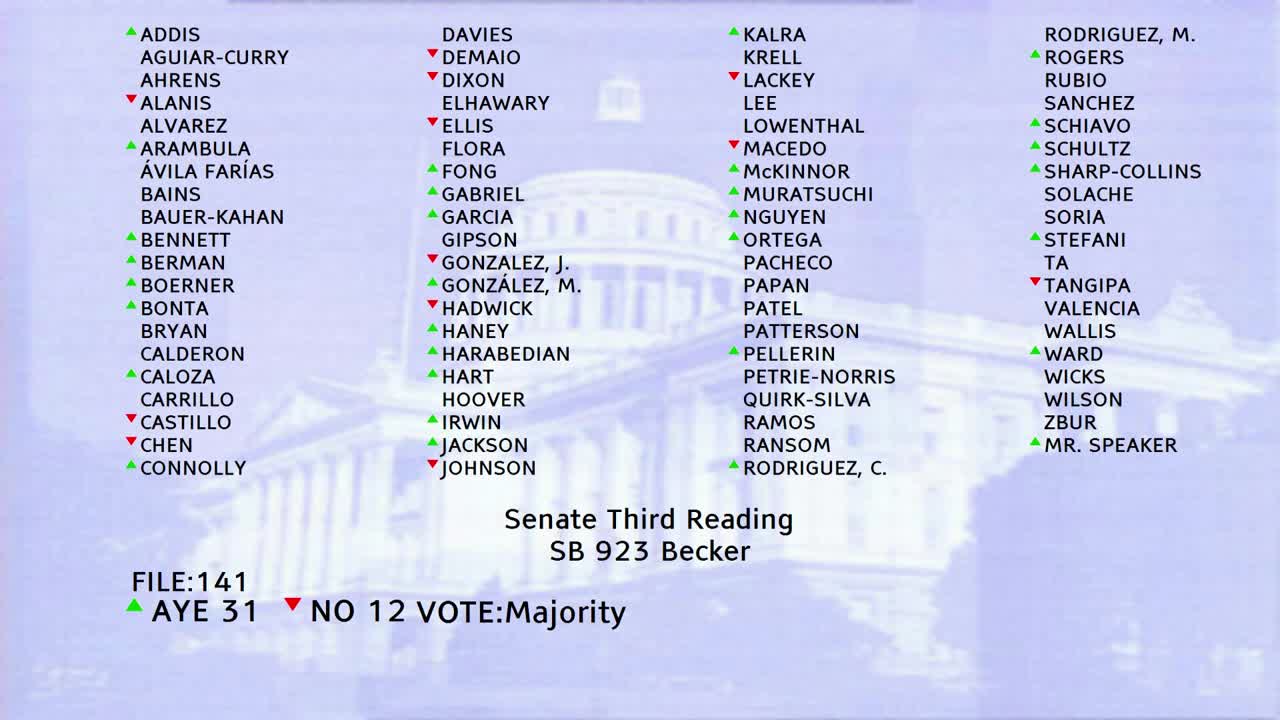 49SEC
Assembly Floor
 38SEC
Senate Floor
 3MIN
Senate Standing Committee on Judiciary
Bill Author

Bill Co-Author(s):