AB 2304: Social workers.
- Session Year: 2025-2026
- House: Assembly
- Latest Version Date: 2026-09-20
Current Status:
Passed
(2026-09-20: Chaptered by Secretary of State - Chapter 392, Statutes of 2026.)
Introduced
In Committee
Awaiting First Chamber Vote
Passed First Chamber
In Committee
Awaiting Second Chamber Vote
Passed Second Chamber
Enacted
Existing law makes it a crime for a person having the custody of any record, map, or book, or of any paper or proceeding of any court, filed or deposited in any public office, or placed in their hands for any purpose to steal, remove, secrete, destroy, mutilate, deface, alter, or falsify, or to allow another to do any of those acts, with regard to the whole, or any part of, the record, map, book, paper, or proceeding. Existing law provides that if those acts are done by an officer, it is a felony, punishable by imprisonment in the county jail for 2, 3, or 4 years, and, if done by a person who is not an officer, it is either a felony, punishable by imprisonment in the county jail for 16 months or 2 or 3 years, or a misdemeanor, punishable by imprisonment in the county jail not exceeding one year, by a fine not exceeding $1,000, or by both.
This bill would clarify that, for the purposes of these provisions, a social worker employed by a county child welfare department is not an officer.
Existing law establishes the jurisdiction of the juvenile court, which may adjudge a child to be a dependent or ward of the court under certain circumstances. Under existing law, if a child has been, or has a petition filed with the court to be, adjudged a dependent child of the court, and it appears the child needs immediate emergency treatment, a social worker may, without court order, authorize medical and other care for a child, to be provided by a licensed physician and surgeon or dentist, as applicable. Existing law requires, in this situation, the social worker to make reasonable efforts to obtain the consent of, or to notify, the parent, guardian, or person standing in loco parentis prior to authorizing care.
This bill would require, if it reasonably appears that the child is in that situation, the social worker to take reasonable steps to obtain emergency care for the child. The bill would additionally require the social worker, if the social worker knows, or there is reason for the social worker to know, that the child is an Indian child, the social worker to notify the childs tribe as soon as reasonably possible when securing emergency care. By increasing the duties of social workers, this bill would impose a state-mandated local program.
The California Constitution requires the state to reimburse local agencies and school districts for certain costs mandated by the state. Statutory provisions establish procedures for making that reimbursement.
This bill would provide that, if the Commission on State Mandates determines that the bill contains costs mandated by the state, reimbursement for those costs shall be made pursuant to the statutory provisions noted above.
Existing law makes it a crime for a person having the custody of any record, map, or book, or of any paper or proceeding of any court, filed or deposited in any public office, or placed in their hands for any purpose to steal, remove, secrete, destroy, mutilate, deface, alter, or falsify, or to allow another to do any of those acts, with regard to the whole, or any part of, the record, map, book, paper, or proceeding. Existing law provides that if those acts are done by an officer, it is a felony, punishable by imprisonment in the county jail for 2, 3, or 4 years, and, if done by a person who is not an officer, it is either a felony, punishable by imprisonment in the county jail for 16 months or 2 or 3 years, or a misdemeanor, punishable by imprisonment in the county jail not exceeding one year, by a fine not exceeding $1,000, or by both.
This bill would clarify that, for the purposes of these provisions, a social worker employed by a county child welfare department is not an officer.
Existing law establishes the jurisdiction of the juvenile court, which may adjudge a child to be a dependent or ward of the court under certain circumstances. Under existing law, if a child has been, or has a petition filed with the court to be, adjudged a dependent child of the court, and it appears the child needs immediate emergency treatment, a social worker may, without court order, authorize medical and other care for a child, to be provided by a licensed physician and surgeon or dentist, as applicable. Existing law requires, in this situation, the social worker to make reasonable efforts to obtain the consent of, or to notify, the parent, guardian, or person standing in loco parentis prior to authorizing care.
This bill would require, if it reasonably appears that the child is in that situation, the social worker to secure take reasonable steps to obtain emergency care for the child. The bill would additionally require the social worker, if the social worker knows, or there is reason for the social worker to know, that the child is an Indian child, the social worker to notify the childs tribe as soon as reasonably possible when securing emergency care. By increasing the duties of social workers, this bill would impose a state-mandated local program.
The California Constitution requires the state to reimburse local agencies and school districts for certain costs mandated by the state. Statutory provisions establish procedures for making that reimbursement.
This bill would provide that, if the Commission on State Mandates determines that the bill contains costs mandated by the state, reimbursement for those costs shall be made pursuant to the statutory provisions noted above.
Existing law makes it a crime for a person having the custody of any record, map, or book, or of any paper or proceeding of any court, filed or deposited in any public office, or placed in their hands for any purpose to steal, remove, secrete, destroy, mutilate, deface, alter, or falsify, or to allow another to do any of those acts, with regard to the whole, or any part of, the record, map, book, paper, or proceeding. Existing law provides that if those acts are done by an officer, it is a felony, punishable by imprisonment in the county jail for 2, 3, or 4 years, and, if done by a person who is not an officer, it is either a felony, punishable by imprisonment in the county jail for 16 months or 2 or 3 years, or a misdemeanor, punishable by imprisonment in the county jail not exceeding one year, by a fine not exceeding $1,000, or by both.
This bill would clarify that, for the purposes of these provisions, a social worker employed by a county child welfare department is not an officer.
Existing law establishes the jurisdiction of the juvenile court, which may adjudge a child to be a dependent or ward of the court under certain circumstances. Under existing law, if a minor child has been, or has a petition filed with the court to be, adjudged a dependent child of the court, and it appears the minor child needs immediate emergency treatment, a social worker may, without court order, authorize medical and other care for a minor, child, to be provided by a licensed physician and surgeon or dentist, as applicable.
This bill would require, if it reasonably appears that the child is in that situation, the social worker to secure care for the child. By increasing the duties of social workers, this bill would impose a state-mandated local program.
The California Constitution requires the state to reimburse local agencies and school districts for certain costs mandated by the state. Statutory provisions establish procedures for making that reimbursement.
This bill would provide that, if the Commission on State Mandates determines that the bill contains costs mandated by the state, reimbursement for those costs shall be made pursuant to the statutory provisions noted above.
Existing law makes it a crime for a person having the custody of any record, map, or book, or of any paper or proceeding of any court, filed or deposited in any public office, or placed in their hands for any purpose to steal, remove, secrete, destroy, mutilate, deface, alter, or falsify, or to allow another to do any of those acts, with regard to the whole, or any part of, the record, map, book, paper, or proceeding. Existing law provides that if those acts are done by an officer, it is a felony, punishable by imprisonment in the county jail for 2, 3, or 4 years, and, if done by a person who is not an officer, it is either a felony, punishable by imprisonment in the county jail for 16 months or 2 or 3 years, or a misdemeanor, punishable by imprisonment in the county jail not exceeding one year, by a fine not exceeding $1,000, or by both.
This bill would clarify that, for the purposes of these provisions, a social worker employed by a county child welfare department is not an officer.
Existing law establishes the jurisdiction of the juvenile court, which may adjudge a child to be a dependent or ward of the court under certain circumstances. Under existing law, if a minor has been, or has a petition filed with the court to be, adjudged a dependent child of the court, and it appears the minor needs immediate emergency treatment, a social worker may, without court order, authorize medical and other care for a minor, to be provided by a licensed physician and surgeon or dentist, as applicable.
This bill would require, in that situation, the social worker to secure care for the child. By increasing the duties of social workers, this bill would impose a state-mandated local program.
The California Constitution requires the state to reimburse local agencies and school districts for certain costs mandated by the state. Statutory provisions establish procedures for making that reimbursement.
This bill would provide that, if the Commission on State Mandates determines that the bill contains costs mandated by the state, reimbursement for those costs shall be made pursuant to the statutory provisions noted above.
Existing law makes it a crime for a person having the custody of any record, map, or book, or of any paper or proceeding of any court, filed or deposited in any public office, or placed in their hands for any purpose to steal, remove, secrete, destroy, mutilate, deface, alter, or falsify, or to allow another to do any of those acts, with regard to the whole, or any part of, the record, map, book, paper, or proceeding. Existing law provides that if those acts are done by an officer, it is a felony, punishable by imprisonment in the county jail for 2, 3, or 4 years, and, if done by a person who is not an officer, it is either a felony, punishable by imprisonment in the county jail for 16 months or 2 or 3 years, or a misdemeanor, punishable by imprisonment in the county jail not exceeding one year, by a fine not exceeding $1,000, or by both.
This bill would clarify that, for the purposes of these provisions, a social worker employed by a county is not an officer.
Existing law establishes the jurisdiction of the juvenile court, which may adjudge a child to be a dependent or ward of the court under certain circumstances. Under existing law, if a minor has been, or has a petition filed with the court to be, adjudged a dependent child of the court, and it appears the minor needs immediate emergency treatment, a social worker may, without court order, authorize medical and other care for a minor, to be provided by a licensed physician and surgeon or dentist, as applicable.
This bill would require, in that situation, the social worker to secure care for the child. By increasing the duties of social workers, this bill would impose a state-mandated local program.
The California Constitution requires the state to reimburse local agencies and school districts for certain costs mandated by the state. Statutory provisions establish procedures for making that reimbursement.
This bill would provide that, if the Commission on State Mandates determines that the bill contains costs mandated by the state, reimbursement for those costs shall be made pursuant to the statutory provisions noted above.
Existing law makes it a felony for a person to offer in evidence, as genuine or true, any book, paper, document, record, or other instrument in writing, knowing that it has been forged or fraudulently altered or antedated.This bill would make a technical, nonsubstantive change to that provision.Existing law makes it a felony for a person to offer in evidence, as genuine or true, any book, paper, document, record, or other instrument in writing, knowing that it has been forged or fraudulently altered or antedated.
This bill would make a technical, nonsubstantive change to that provision.
This act shall be known, and may be cited, as Gabriels Law.
SEC. 2.Section 6201 of the Government Code is amended to read:6201.A person who is not an officer referred to in Section 6200, including, but not limited to, a social worker employed by a county child welfare department, who is guilty of any of the acts specified in that section, is punishable by imprisonment pursuant to subdivision (h) of Section 1170 of the Penal Code, or in a county jail not exceeding one year, or by a fine not exceeding one thousand dollars ($1,000), or by both that fine and imprisonment.
SEC. 3.Section 369 of the Welfare and Institutions Code is amended to read:369.(a)(1)If a person is taken into temporary custody under Article 7 (commencing with Section 305) and is in need of medical, surgical, dental, or other remedial care, the social worker may, upon the recommendation of the attending physician and surgeon or, if the person needs dental care and there is an attending dentist, the attending dentist, authorize the performance of the medical, surgical, dental, or other remedial care.
(2)The social worker shall notify the parent, guardian, or person standing in loco parentis of the person, if any, of the care found to be needed before that care is provided, and if the parent, guardian, or person standing in loco parentis objects, that care shall be given only upon order of the court in the exercise of its discretion.
(b)If it appears to the juvenile court that a person concerning whom a petition has been filed with the court is in need of medical, surgical, dental, or other remedial care, and that there is no parent, guardian, or person standing in loco parentis capable of authorizing or willing to authorize the remedial care or treatment for that person, the court, upon the written recommendation of a licensed physician and surgeon or, if the person needs dental care, a licensed dentist, and after due notice to the parent, guardian, or person standing in loco parentis, if any, may make an order authorizing the performance of the necessary medical, surgical, dental, or other remedial care for that person.
(c)If a dependent child of the juvenile court is placed by order of the court within the care and custody or under the supervision of a social worker of the county where the dependent child resides, and it appears to the court that there is no parent, guardian, or person standing in loco parentis capable of authorizing or willing to authorize medical, surgical, dental, or other remedial care or treatment for the dependent child, the court may, after due notice to the parent, guardian, or person standing in loco parentis, if any, order that the social worker may authorize the medical, surgical, dental, or other remedial care for the dependent child, by licensed practitioners, as necessary.
(d)(1)If it reasonably appears that a child otherwise within subdivision (a), (b), or (c) requires immediate emergency medical, surgical, or other remedial care in an emergency situation, the social worker shall take reasonable steps to obtain emergency care for the child. The care shall be provided by a licensed physician and surgeon or, if the child needs dental care in an emergency situation, by a licensed dentist. This care may be provided without a court order.
(2)The social worker shall make reasonable efforts to obtain the consent of, or to notify, the parent, guardian, or person standing in loco parentis prior to authorizing emergency medical, surgical, dental, or other remedial care. If the social worker knows, or there is reason for the social worker to know, that the child is an Indian child, the social worker shall notify the childs tribe as soon as reasonably possible when securing emergency care.
(3)For purposes of this subdivision, the following terms have the following meanings:
(A)Emergency situation means a child requires immediate treatment for the alleviation of severe pain or an immediate diagnosis and treatment of an unforeseeable medical, surgical, dental, or other remedial condition or contagious disease that, if not immediately diagnosed and treated, would lead to serious disability or death.
(B)Obtain emergency care means to summon emergency medical services, arrange transportation to a provider if no other person is available to do so, or otherwise take reasonable steps to connect a child with a licensed provider, and to authorize care. Obtain emergency care does not require a person to personally transport the child, to remain present during the provision of care to the child, or to personally provide followup care to the child.
(e)If the court orders the performance of a medical, surgical, dental, or other remedial care pursuant to this section, the court may also make an order authorizing the release of information concerning that care to a social worker, parole officer, or other qualified individual or agency caring for or acting in the interest and welfare of the child under order, commitment, or approval of the court.
(f)(1)Notwithstanding any other provision within this section, a dependent child of the juvenile court who is 16 years of age or older may consent to receive medications for opioid use disorder from a licensed narcotic treatment program as replacement narcotic therapy without the consent of their parent, guardian, person standing in loco parentis, or social worker, and without a court order, only if, and to the extent, expressly permitted by federal law.
(2)Notwithstanding any other law, a dependent child of the juvenile court who is 16 years of age or older may consent to opioid use disorder treatment that uses buprenorphine at a physicians office, clinic, or health facility, by a licensed physician and surgeon or other health care provider acting within the scope of their practice, whether or not they have the consent of their parent, guardian, person standing in loco parentis, or social worker and without a court order.
(g)This section does not limit the right of a parent, guardian, or person standing in loco parentis, who has not been deprived of the custody or control of the child by order of the court, in providing a medical, surgical, dental, or other remedial treatment recognized or permitted under the laws of this state.
(h)(1)The parent of a person described in this section may authorize the performance of medical, surgical, dental, or other remedial care provided for in this section notwithstanding their age or marital status.
(2)In a nonemergency situation, the parent authorizing the care shall notify the other parent prior to the administration of that care.
(i)(1)This section does not limit the rights of a dependent child, pursuant to Chapter 3 (commencing with Section 6920) of Part 4 of Division 11 of the Family Code, to consent to, among other things, the diagnosis and treatment of sexual assault, medical care relating to the prevention or treatment of pregnancy, including contraception, abortion, and prenatal care, treatment of infectious, contagious, or communicable diseases, mental health treatment, and treatment for alcohol and drug abuse.
(2)If a dependent child is 10 years of age or older, their social worker is authorized to inform the child of their right as a minor to consent to and receive those health services, as necessary, and their confidentiality rights regarding those services.
(3)A social worker for a dependent child may do either or both of the following:
(A)Provide access to age-appropriate, medically accurate information about sexual development, reproductive health, and prevention of unplanned pregnancies and sexually transmitted infections and how to access reproductive and sexual health care services.
(B)Facilitate access to the care described in subparagraph (A), including assisting with any barriers to care.
SEC. 4.If the Commission on State Mandates determines that this act contains costs mandated by the state, reimbursement to local agencies and school districts for those costs shall be made pursuant to Part 7 (commencing with Section 17500) of Division 4 of Title 2 of the Government Code.
This act shall be known, and may be cited, as Gabriels Law.
SEC. 2.Section 6201 of the Government Code is amended to read:6201.A person who is not an officer referred to in Section 6200, including, but not limited to, a social worker employed by a county child welfare department, who is guilty of any of the acts specified in that section, is punishable by imprisonment pursuant to subdivision (h) of Section 1170 of the Penal Code, or in a county jail not exceeding one year, or by a fine not exceeding one thousand dollars ($1,000), or by both that fine and imprisonment.
SEC. 3.Section 369 of the Welfare and Institutions Code is amended to read:369.(a)(1)If a person is taken into temporary custody under Article 7 (commencing with Section 305) and is in need of medical, surgical, dental, or other remedial care, the social worker may, upon the recommendation of the attending physician and surgeon or, if the person needs dental care and there is an attending dentist, the attending dentist, authorize the performance of the medical, surgical, dental, or other remedial care.
(2)The social worker shall notify the parent, guardian, or person standing in loco parentis of the person, if any, of the care found to be needed before that care is provided, and if the parent, guardian, or person standing in loco parentis objects, that care shall be given only upon order of the court in the exercise of its discretion.
(b)If it appears to the juvenile court that a person concerning whom a petition has been filed with the court is in need of medical, surgical, dental, or other remedial care, and that there is no parent, guardian, or person standing in loco parentis capable of authorizing or willing to authorize the remedial care or treatment for that person, the court, upon the written recommendation of a licensed physician and surgeon or, if the person needs dental care, a licensed dentist, and after due notice to the parent, guardian, or person standing in loco parentis, if any, may make an order authorizing the performance of the necessary medical, surgical, dental, or other remedial care for that person.
(c)If a dependent child of the juvenile court is placed by order of the court within the care and custody or under the supervision of a social worker of the county where the dependent child resides, and it appears to the court that there is no parent, guardian, or person standing in loco parentis capable of authorizing or willing to authorize medical, surgical, dental, or other remedial care or treatment for the dependent child, the court may, after due notice to the parent, guardian, or person standing in loco parentis, if any, order that the social worker may authorize the medical, surgical, dental, or other remedial care for the dependent child, by licensed practitioners, as necessary.
(d)(1)If it reasonably appears that a child otherwise within subdivision (a), (b), or (c) requires immediate emergency medical, surgical, or other remedial care in an emergency situation, the social worker shall secure care take reasonable steps to obtain emergency care for the child. The care shall be provided by a licensed physician and surgeon or, if the child needs dental care in an emergency situation, by a licensed dentist. This care may be provided without a court order.
(2)The social worker shall make reasonable efforts to obtain the consent of, or to notify, the parent, guardian, or person standing in loco parentis prior to authorizing emergency medical, surgical, dental, or other remedial care. If the social worker knows, or there is reason for the social worker to know, that the child is an Indian child, the social worker shall notify the childs tribe as soon as reasonably possible when securing emergency care.
(3)For purposes of this subdivision, emergency the following terms have the following meanings:
(A)Emergency situation means a child requires immediate treatment for the alleviation of severe pain or an immediate diagnosis and treatment of an unforeseeable medical, surgical, dental, or other remedial condition or contagious disease that, if not immediately diagnosed and treated, would lead to serious disability or death.
(B)Obtain emergency care means to summon emergency medical services, arrange transportation to a provider if no other person is available to do so, or otherwise take reasonable steps to connect a child with a licensed provider, and to authorize care. Obtain emergency care does not require a person to personally transport the child, to remain present during the provision of care to the child, or to personally provide followup care to the child.
(e)If the court orders the performance of a medical, surgical, dental, or other remedial care pursuant to this section, the court may also make an order authorizing the release of information concerning that care to a social worker, parole officer, or other qualified individual or agency caring for or acting in the interest and welfare of the child under order, commitment, or approval of the court.
(f)(1)Notwithstanding any other provision within this section, a dependent child of the juvenile court who is 16 years of age or older may consent to receive medications for opioid use disorder from a licensed narcotic treatment program as replacement narcotic therapy without the consent of their parent, guardian, person standing in loco parentis, or social worker, and without a court order, only if, and to the extent, expressly permitted by federal law.
(2)Notwithstanding any other law, a dependent child of the juvenile court who is 16 years of age or older may consent to opioid use disorder treatment that uses buprenorphine at a physicians office, clinic, or health facility, by a licensed physician and surgeon or other health care provider acting within the scope of their practice, whether or not they have the consent of their parent, guardian, person standing in loco parentis, or social worker and without a court order.
(g)This section does not limit the right of a parent, guardian, or person standing in loco parentis, who has not been deprived of the custody or control of the child by order of the court, in providing a medical, surgical, dental, or other remedial treatment recognized or permitted under the laws of this state.
(h)(1)The parent of a person described in this section may authorize the performance of medical, surgical, dental, or other remedial care provided for in this section notwithstanding their age or marital status.
(2)In a nonemergency situation, the parent authorizing the care shall notify the other parent prior to the administration of that care.
(i)(1)This section does not limit the rights of a dependent child, pursuant to Chapter 3 (commencing with Section 6920) of Part 4 of Division 11 of the Family Code, to consent to, among other things, the diagnosis and treatment of sexual assault, medical care relating to the prevention or treatment of pregnancy, including contraception, abortion, and prenatal care, treatment of infectious, contagious, or communicable diseases, mental health treatment, and treatment for alcohol and drug abuse.
(2)If a dependent child is 10 years of age or older, their social worker is authorized to inform the child of their right as a minor to consent to and receive those health services, as necessary, and their confidentiality rights regarding those services.
(3)A social worker for a dependent child may do either or both of the following:
(A)Provide access to age-appropriate, medically accurate information about sexual development, reproductive health, and prevention of unplanned pregnancies and sexually transmitted infections and how to access reproductive and sexual health care services.
(B)Facilitate access to the care described in subparagraph (A), including assisting with any barriers to care.
SEC. 4.If the Commission on State Mandates determines that this act contains costs mandated by the state, reimbursement to local agencies and school districts for those costs shall be made pursuant to Part 7 (commencing with Section 17500) of Division 4 of Title 2 of the Government Code.
This act shall be known, and may be cited, as Gabriels Law.
SEC. 2.Section 6201 of the Government Code is amended to read:6201.A person who is not an officer referred to in Section 6200, including, but not limited to, a social worker employed by a county child welfare department, who is guilty of any of the acts specified in that section, is punishable by imprisonment pursuant to subdivision (h) of Section 1170 of the Penal Code, or in a county jail not exceeding one year, or by a fine not exceeding one thousand dollars ($1,000), or by both that fine and imprisonment.
SEC. 3.Section 369 of the Welfare and Institutions Code is amended to read:369.(a)(1)If a person is taken into temporary custody under Article 7 (commencing with Section 305) and is in need of medical, surgical, dental, or other remedial care, the social worker may, upon the recommendation of the attending physician and surgeon or, if the person needs dental care and there is an attending dentist, the attending dentist, authorize the performance of the medical, surgical, dental, or other remedial care.
(2)The social worker shall notify the parent, guardian, or person standing in loco parentis of the person, if any, of the care found to be needed before that care is provided, and if the parent, guardian, or person standing in loco parentis objects, that care shall be given only upon order of the court in the exercise of its discretion.
(b)If it appears to the juvenile court that a person concerning whom a petition has been filed with the court is in need of medical, surgical, dental, or other remedial care, and that there is no parent, guardian, or person standing in loco parentis capable of authorizing or willing to authorize the remedial care or treatment for that person, the court, upon the written recommendation of a licensed physician and surgeon or, if the person needs dental care, a licensed dentist, and after due notice to the parent, guardian, or person standing in loco parentis, if any, may make an order authorizing the performance of the necessary medical, surgical, dental, or other remedial care for that person.
(c)If a dependent child of the juvenile court is placed by order of the court within the care and custody or under the supervision of a social worker of the county where the dependent child resides, and it appears to the court that there is no parent, guardian, or person standing in loco parentis capable of authorizing or willing to authorize medical, surgical, dental, or other remedial care or treatment for the dependent child, the court may, after due notice to the parent, guardian, or person standing in loco parentis, if any, order that the social worker may authorize the medical, surgical, dental, or other remedial care for the dependent child, by licensed practitioners, as necessary.
(d)(1)If it reasonably appears that a child otherwise within subdivision (a), (b), or (c) requires immediate emergency medical, surgical, or other remedial care in an emergency situation, the social worker shall secure care for the child. The care shall be provided by a licensed physician and surgeon or, if the child needs dental care in an emergency situation, by a licensed dentist, dentist. This care may be provided without a court order.
(2)The social worker shall make reasonable efforts to obtain the consent of, or to notify, the parent, guardian, or person standing in loco parentis prior to authorizing emergency medical, surgical, dental, or other remedial care.
(3)For purposes of this subdivision, emergency situation means a child requires immediate treatment for the alleviation of severe pain or an immediate diagnosis and treatment of an unforeseeable medical, surgical, dental, or other remedial condition or contagious disease that, if not immediately diagnosed and treated, would lead to serious disability or death.
(e)If the court orders the performance of a medical, surgical, dental, or other remedial care pursuant to this section, the court may also make an order authorizing the release of information concerning that care to a social worker, parole officer, or other qualified individual or agency caring for or acting in the interest and welfare of the child under order, commitment, or approval of the court.
(f)(1)Notwithstanding any other provision within this section, a dependent child of the juvenile court who is 16 years of age or older may consent to receive medications for opioid use disorder from a licensed narcotic treatment program as replacement narcotic therapy without the consent of their parent, guardian, person standing in loco parentis, or social worker, and without a court order, only if, and to the extent, expressly permitted by federal law.
(2)Notwithstanding any other law, a dependent child of the juvenile court who is 16 years of age or older may consent to opioid use disorder treatment that uses buprenorphine at a physicians office, clinic, or health facility, by a licensed physician and surgeon or other health care provider acting within the scope of their practice, whether or not they have the consent of their parent, guardian, person standing in loco parentis, or social worker and without a court order.
(g)This section does not limit the right of a parent, guardian, or person standing in loco parentis, who has not been deprived of the custody or control of the child by order of the court, in providing a medical, surgical, dental, or other remedial treatment recognized or permitted under the laws of this state.
(h)(1)The parent of a person described in this section may authorize the performance of medical, surgical, dental, or other remedial care provided for in this section notwithstanding their age or marital status.
(2)In a nonemergency situation, the parent authorizing the care shall notify the other parent prior to the administration of that care.
(i)(1)This section does not limit the rights of a dependent child, pursuant to Chapter 3 (commencing with Section 6920) of Part 4 of Division 11 of the Family Code, to consent to, among other things, the diagnosis and treatment of sexual assault, medical care relating to the prevention or treatment of pregnancy, including contraception, abortion, and prenatal care, treatment of infectious, contagious, or communicable diseases, mental health treatment, and treatment for alcohol and drug abuse.
(2)If a dependent child is 10 years of age or older, their social worker is authorized to inform the child of their right as a minor to consent to and receive those health services, as necessary, and their confidentiality rights regarding those services.
(3)A social worker for a dependent child may do either or both of the following:
(A)Provide access to age-appropriate, medically accurate information about sexual development, reproductive health, and prevention of unplanned pregnancies and sexually transmitted infections and how to access reproductive and sexual health care services.
(B)Facilitate access to the care described in subparagraph (A), including assisting with any barriers to care.
SEC. 4.If the Commission on State Mandates determines that this act contains costs mandated by the state, reimbursement to local agencies and school districts for those costs shall be made pursuant to Part 7 (commencing with Section 17500) of Division 4 of Title 2 of the Government Code.
This act shall be known, and may be cited, as Gabriels Law.
SECTION 1.SEC. 2.Section 6201 of the Government Code is amended to read:6201.A person who is not an officer referred to in Section 6200, including, but not limited to, a social worker employed by a county child welfare department, who is guilty of any of the acts specified in that section, is punishable by imprisonment pursuant to subdivision (h) of Section 1170 of the Penal Code, or in a county jail not exceeding one year, or by a fine not exceeding one thousand dollars ($1,000), or by both that fine and imprisonment.
SEC. 2.SEC. 3.Section 369 of the Welfare and Institutions Code is amended to read:369.(a)(1)If a person is taken into temporary custody under Article 7 (commencing with Section 305) and is in need of medical, surgical, dental, or other remedial care, the social worker may, upon the recommendation of the attending physician and surgeon or, if the person needs dental care and there is an attending dentist, the attending dentist, authorize the performance of the medical, surgical, dental, or other remedial care.
(2)The social worker shall notify the parent, guardian, or person standing in loco parentis of the person, if any, of the care found to be needed before that care is provided, and if the parent, guardian, or person standing in loco parentis objects, that care shall be given only upon order of the court in the exercise of its discretion.
(b)If it appears to the juvenile court that a person concerning whom a petition has been filed with the court is in need of medical, surgical, dental, or other remedial care, and that there is no parent, guardian, or person standing in loco parentis capable of authorizing or willing to authorize the remedial care or treatment for that person, the court, upon the written recommendation of a licensed physician and surgeon or, if the person needs dental care, a licensed dentist, and after due notice to the parent, guardian, or person standing in loco parentis, if any, may make an order authorizing the performance of the necessary medical, surgical, dental, or other remedial care for that person.
(c)If a dependent child of the juvenile court is placed by order of the court within the care and custody or under the supervision of a social worker of the county where the dependent child resides, and it appears to the court that there is no parent, guardian, or person standing in loco parentis capable of authorizing or willing to authorize medical, surgical, dental, or other remedial care or treatment for the dependent child, the court may, after due notice to the parent, guardian, or person standing in loco parentis, if any, order that the social worker may authorize the medical, surgical, dental, or other remedial care for the dependent child, by licensed practitioners, as necessary.
(d)(1)If it appears that a child otherwise within subdivision (a), (b), or (c) requires immediate emergency medical, surgical, or other remedial care in an emergency situation, the social worker shall secure care for the child. The care shall be provided by a licensed physician and surgeon or, if the child needs dental care in an emergency situation, by a licensed dentist, without a court order.
(2)The social worker shall make reasonable efforts to obtain the consent of, or to notify, the parent, guardian, or person standing in loco parentis prior to authorizing emergency medical, surgical, dental, or other remedial care.
(3)For purposes of this subdivision, emergency situation means a child requires immediate treatment for the alleviation of severe pain or an immediate diagnosis and treatment of an unforeseeable medical, surgical, dental, or other remedial condition or contagious disease that, if not immediately diagnosed and treated, would lead to serious disability or death.
(e)If the court orders the performance of a medical, surgical, dental, or other remedial care pursuant to this section, the court may also make an order authorizing the release of information concerning that care to a social worker, parole officer, or other qualified individual or agency caring for or acting in the interest and welfare of the child under order, commitment, or approval of the court.
(f)(1)Notwithstanding any other provision within this section, a dependent child of the juvenile court who is 16 years of age or older may consent to receive medications for opioid use disorder from a licensed narcotic treatment program as replacement narcotic therapy without the consent of their parent, guardian, person standing in loco parentis, or social worker, and without a court order, only if, and to the extent, expressly permitted by federal law.
(2)Notwithstanding any other law, a dependent child of the juvenile court who is 16 years of age or older may consent to opioid use disorder treatment that uses buprenorphine at a physicians office, clinic, or health facility, by a licensed physician and surgeon or other health care provider acting within the scope of their practice, whether or not they have the consent of their parent, guardian, person standing in loco parentis, or social worker and without a court order.
(g)This section does not limit the right of a parent, guardian, or person standing in loco parentis, who has not been deprived of the custody or control of the child by order of the court, in providing a medical, surgical, dental, or other remedial treatment recognized or permitted under the laws of this state.
(h)(1)The parent of a person described in this section may authorize the performance of medical, surgical, dental, or other remedial care provided for in this section notwithstanding their age or marital status.
(2)In a nonemergency situation, the parent authorizing the care shall notify the other parent prior to the administration of that care.
(i)(1)This section does not limit the rights of a dependent child, pursuant to Chapter 3 (commencing with Section 6920) of Part 4 of Division 11 of the Family Code, to consent to, among other things, the diagnosis and treatment of sexual assault, medical care relating to the prevention or treatment of pregnancy, including contraception, abortion, and prenatal care, treatment of infectious, contagious, or communicable diseases, mental health treatment, and treatment for alcohol and drug abuse.
(2)If a dependent child is 10 years of age or older, their social worker is authorized to inform the child of their right as a minor to consent to and receive those health services, as necessary, and their confidentiality rights regarding those services.
(3)A social worker for a dependent child may do either or both of the following:
(A)Provide access to age-appropriate, medically accurate information about sexual development, reproductive health, and prevention of unplanned pregnancies and sexually transmitted infections and how to access reproductive and sexual health care services.
(B)Facilitate access to the care described in subparagraph (A), including assisting with any barriers to care.
SEC. 3.SEC. 4.If the Commission on State Mandates determines that this act contains costs mandated by the state, reimbursement to local agencies and school districts for those costs shall be made pursuant to Part 7 (commencing with Section 17500) of Division 4 of Title 2 of the Government Code.
A person who is not an officer referred to in Section 6200, including, but not limited to, a social worker employed by a county, county child welfare department, who is guilty of any of the acts specified in that section, is punishable by imprisonment pursuant to subdivision (h) of Section 1170 of the Penal Code, or in a county jail not exceeding one year, or by a fine not exceeding one thousand dollars ($1,000), or by both that fine and imprisonment.
SEC. 2.Section 369 of the Welfare and Institutions Code is amended to read:369.(a)(1)If a person is taken into temporary custody under Article 7 (commencing with Section 305) and is in need of medical, surgical, dental, or other remedial care, the social worker may, upon the recommendation of the attending physician and surgeon or, if the person needs dental care and there is an attending dentist, the attending dentist, authorize the performance of the medical, surgical, dental, or other remedial care.
(2)The social worker shall notify the parent, guardian, or person standing in loco parentis of the person, if any, of the care found to be needed before that care is provided, and if the parent, guardian, or person standing in loco parentis objects, that care shall be given only upon order of the court in the exercise of its discretion.
(b)If it appears to the juvenile court that a person concerning whom a petition has been filed with the court is in need of medical, surgical, dental, or other remedial care, and that there is no parent, guardian, or person standing in loco parentis capable of authorizing or willing to authorize the remedial care or treatment for that person, the court, upon the written recommendation of a licensed physician and surgeon or, if the person needs dental care, a licensed dentist, and after due notice to the parent, guardian, or person standing in loco parentis, if any, may make an order authorizing the performance of the necessary medical, surgical, dental, or other remedial care for that person.
(c)If a dependent child of the juvenile court is placed by order of the court within the care and custody or under the supervision of a social worker of the county where the dependent child resides resides, and it appears to the court that there is no parent, guardian, or person standing in loco parentis capable of authorizing or willing to authorize medical, surgical, dental, or other remedial care or treatment for the dependent child, the court may, after due notice to the parent, guardian, or person standing in loco parentis, if any, order that the social worker may authorize the medical, surgical, dental, or other remedial care for the dependent child, by licensed practitioners, as necessary.
(d)(1)If it appears that a child otherwise within subdivision (a), (b), or (c) requires immediate emergency medical, surgical, or other remedial care in an emergency situation, the social worker shall secure care for the child. The care shall be provided by a licensed physician and surgeon or, if the child needs dental care in an emergency situation, by a licensed dentist, without a court order.
(2)The social worker shall make reasonable efforts to obtain the consent of, or to notify, the parent, guardian, or person standing in loco parentis prior to authorizing emergency medical, surgical, dental, or other remedial care.
(3)For purposes of this subdivision, emergency situation means a child requires immediate treatment for the alleviation of severe pain or an immediate diagnosis and treatment of an unforeseeable medical, surgical, dental, or other remedial condition or contagious disease that, if not immediately diagnosed and treated, would lead to serious disability or death.
(e)If the court orders the performance of a medical, surgical, dental, or other remedial care pursuant to this section, the court may also make an order authorizing the release of information concerning that care to a social worker, parole officer, or other qualified individual or agency caring for or acting in the interest and welfare of the child under order, commitment, or approval of the court.
(f)(1)Notwithstanding any other provision within this section, a dependent child of the juvenile court who is 16 years of age or older may consent to receive medications for opioid use disorder from a licensed narcotic treatment program as replacement narcotic therapy without the consent of their parent, guardian, person standing in loco parentis, or social worker, and without a court order, only if, and to the extent, expressly permitted by federal law.
(2)Notwithstanding any other law, a dependent child of the juvenile court who is 16 years of age or older may consent to opioid use disorder treatment that uses buprenorphine at a physicians office, clinic, or health facility, by a licensed physician and surgeon or other health care provider acting within the scope of their practice, whether or not they have the consent of their parent, guardian, person standing in loco parentis, or social worker and without a court order.
(g)This section does not limit the right of a parent, guardian, or person standing in loco parentis, who has not been deprived of the custody or control of the child by order of the court, in providing a medical, surgical, dental, or other remedial treatment recognized or permitted under the laws of this state.
(h)(1)The parent of a person described in this section may authorize the performance of medical, surgical, dental, or other remedial care provided for in this section notwithstanding their age or marital status.
(2)In a nonemergency situation, the parent authorizing the care shall notify the other parent prior to the administration of that care.
(i)(1)This section does not limit the rights of a dependent child, pursuant to Chapter 3 (commencing with Section 6920) of Part 4 of Division 11 of the Family Code, to consent to, among other things, the diagnosis and treatment of sexual assault, medical care relating to the prevention or treatment of pregnancy, including contraception, abortion, and prenatal care, treatment of infectious, contagious, or communicable diseases, mental health treatment, and treatment for alcohol and drug abuse.
(2)If a dependent child is 10 years of age or older, their social worker is authorized to inform the child of their right as a minor to consent to and receive those health services, as necessary, and their confidentiality rights regarding those services.
(3)A social worker for a dependent child may do either or both of the following:
(A)Provide access to age-appropriate, medically accurate information about sexual development, reproductive health, and prevention of unplanned pregnancies and sexually transmitted infections and how to access reproductive and sexual health care services.
(B)Facilitate access to the care described in subparagraph (A), including assisting with any barriers to care.
SEC. 3.If the Commission on State Mandates determines that this act contains costs mandated by the state, reimbursement to local agencies and school districts for those costs shall be made pursuant to Part 7 (commencing with Section 17500) of Division 4 of Title 2 of the Government Code.
Every A person who is not an officer referred to in Section 6200, including, but not limited to, a social worker employed by a county, who is guilty of any of the acts specified in that section, is punishable by imprisonment pursuant to subdivision (h) of Section 1170 of the Penal Code, or in a county jail not exceeding one year, or by a fine not exceeding one thousand dollars ($1,000), or by both that fine and imprisonment.
SEC. 2.Section 369 of the Welfare and Institutions Code is amended to read:369.(a)(1)If a person is taken into temporary custody under Article 7 (commencing with Section 305) and is in need of medical, surgical, dental, or other remedial care, the social worker may, upon the recommendation of the attending physician and surgeon or, if the person needs dental care and there is an attending dentist, the attending dentist, authorize the performance of the medical, surgical, dental, or other remedial care.
(2)The social worker shall notify the parent, guardian, or person standing in loco parentis of the person, if any, of the care found to be needed before that care is provided, and if the parent, guardian, or person standing in loco parentis objects, that care shall be given only upon order of the court in the exercise of its discretion.
(b)If it appears to the juvenile court that a person concerning whom a petition has been filed with the court is in need of medical, surgical, dental, or other remedial care, and that there is no parent, guardian, or person standing in loco parentis capable of authorizing or willing to authorize the remedial care or treatment for that person, the court, upon the written recommendation of a licensed physician and surgeon or, if the person needs dental care, a licensed dentist, and after due notice to the parent, guardian, or person standing in loco parentis, if any, may make an order authorizing the performance of the necessary medical, surgical, dental, or other remedial care for that person.
(c)If a dependent child of the juvenile court is placed by order of the court within the care and custody or under the supervision of a social worker of the county where the dependent child resides and it appears to the court that there is no parent, guardian, or person standing in loco parentis capable of authorizing or willing to authorize medical, surgical, dental, or other remedial care or treatment for the dependent child, the court may, after due notice to the parent, guardian, or person standing in loco parentis, if any, order that the social worker may authorize the medical, surgical, dental, or other remedial care for the dependent child, by licensed practitioners, as necessary.
(d)(1)If it appears that a child otherwise within subdivision (a), (b), or (c) requires immediate emergency medical, surgical, or other remedial care in an emergency situation, that care may be the social worker shall secure care for the child. The care shall be provided by a licensed physician and surgeon or, if the child needs dental care in an emergency situation, by a licensed dentist, without a court order and upon authorization of a social worker. order.
(2)The social worker shall make reasonable efforts to obtain the consent of, or to notify, the parent, guardian, or person standing in loco parentis prior to authorizing emergency medical, surgical, dental, or other remedial care.
(3)For purposes of this subdivision, emergency situation means a child requires immediate treatment for the alleviation of severe pain or an immediate diagnosis and treatment of an unforeseeable medical, surgical, dental, or other remedial condition or contagious disease that, if not immediately diagnosed and treated, would lead to serious disability or death.
(e)If the court orders the performance of a medical, surgical, dental, or other remedial care pursuant to this section, the court may also make an order authorizing the release of information concerning that care to a social worker, parole officer, or other qualified individual or agency caring for or acting in the interest and welfare of the child under order, commitment, or approval of the court.
(f)(1)Notwithstanding any other provision within this section, a dependent child of the juvenile court who is 16 years of age or older may consent to receive medications for opioid use disorder from a licensed narcotic treatment program as replacement narcotic therapy without the consent of their parent, guardian, person standing in loco parentis, or social worker, and without a court order, only if, and to the extent, expressly permitted by federal law.
(2)Notwithstanding any other law, a dependent child of the juvenile court who is 16 years of age or older may consent to opioid use disorder treatment that uses buprenorphine at a physicians office, clinic, or health facility, by a licensed physician and surgeon or other health care provider acting within the scope of their practice, whether or not they have the consent of their parent, guardian, person standing in loco parentis, or social worker and without a court order.
(g)This section does not limit the right of a parent, guardian, or person standing in loco parentis, who has not been deprived of the custody or control of the child by order of the court, in providing a medical, surgical, dental, or other remedial treatment recognized or permitted under the laws of this state.
(h)(1)The parent of a person described in this section may authorize the performance of medical, surgical, dental, or other remedial care provided for in this section notwithstanding their age or marital status.
(2)In a nonemergency situation, the parent authorizing the care shall notify the other parent prior to the administration of that care.
(i)(1)This section does not limit the rights of a dependent child, pursuant to Chapter 3 (commencing with Section 6920) of Part 4 of Division 11 of the Family Code, to consent to, among other things, the diagnosis and treatment of sexual assault, medical care relating to the prevention or treatment of pregnancy, including contraception, abortion, and prenatal care, treatment of infectious, contagious, or communicable diseases, mental health treatment, and treatment for alcohol and drug abuse.
(2)If a dependent child is 10 years of age or older, their social worker is authorized to inform the child of their right as a minor to consent to and receive those health services, as necessary, and their confidentiality rights regarding those services.
(3)A social worker for a dependent child may do either or both of the following:
(A)Provide access to age-appropriate, medically accurate information about sexual development, reproductive health, and prevention of unplanned pregnancies and sexually transmitted infections and how to access reproductive and sexual health care services.
(B)Facilitate access to the care described in subparagraph (A), including assisting with any barriers to care.
SEC. 3.If the Commission on State Mandates determines that this act contains costs mandated by the state, reimbursement to local agencies and school districts for those costs shall be made pursuant to Part 7 (commencing with Section 17500) of Division 4 of Title 2 of the Government Code.
SECTION 1.Section 132 of the Penal Code is amended to read:132.A person who upon any trial, proceeding, inquiry, or investigation whatever, authorized or permitted by law, offers in evidence, as genuine or true, any book, paper, document, record, or other instrument in writing, knowing the same to have been forged or fraudulently altered or ante-dated, is guilty of felony.Every A person who upon any trial, proceeding, inquiry, or investigation whatever, authorized or permitted by law, offers in evidence, as genuine or true, any book, paper, document, record, or other instrument in writing, knowing the same to have been forged or fraudulently altered or ante-dated, is guilty of felony.
|
Date
|
Status
|
|---|---|
| Sep 20, 2026 | Chaptered by Secretary of State - Chapter 392, Statutes of 2026. |
| Sep 20, 2026 | Approved by the Governor. |
| Sep 4, 2026 | Enrolled and presented to the Governor at 4 p.m. |
| Aug 27, 2026 | Senate amendments concurred in. To Engrossing and Enrolling. (Ayes 76. Noes 0. Page 6679.). |
| Aug 27, 2026 | Senate amendments concurred in. To Engrossing and Enrolling. (Ayes 76. Noes 0.). |
| Aug 26, 2026 | In Assembly. Concurrence in Senate amendments pending. |
| Aug 25, 2026 | Read third time. Passed. Ordered to the Assembly. (Ayes 40. Noes 0. Page 5810.). |
| Aug 25, 2026 | Read third time. Passed. Ordered to the Assembly. (Ayes 39. Noes 0.). |
| Aug 17, 2026 | Read second time. Ordered to third reading. |
| Aug 13, 2026 | Read second time and amended. Ordered returned to second reading. |
| Aug 13, 2026 | From committee: Amend, and do pass as amended. (Ayes 6. Noes 0.) (August 13). |
| Aug 3, 2026 | In committee: Referred to APPR. suspense file. |
| Jul 1, 2026 | From committee: Do pass and re-refer to Com. on APPR. (Ayes 6. Noes 0.) (June 30). Re-referred to Com. on APPR. |
| Jun 29, 2026 | From committee: Do pass and re-refer to Com. on PUB. S. (Ayes 5. Noes 0.) (June 29). Re-referred to Com. on PUB. S. |
| Jun 24, 2026 | From committee chair, with author's amendments: Amend, and re-refer to committee. Read second time, amended, and re-referred to Com. on HUMAN S. |
| Jun 15, 2026 | From committee chair, with author's amendments: Amend, and re-refer to committee. Read second time, amended, and re-referred to Com. on HUMAN S. |
| Jun 10, 2026 | Referred to Coms. on HUMAN S. and PUB. S. |
| May 28, 2026 | In Senate. Read first time. To Com. on RLS. for assignment. |
| May 27, 2026 | Read third time. Passed. Ordered to the Senate. (Ayes 78. Noes 0. Page 5488.) |
| May 27, 2026 | Read third time. Passed. Ordered to the Senate. (Ayes 78. Noes 0.) |
| May 27, 2026 | Read third time. Passed. Ordered to the Senate. |
| May 18, 2026 | Read second time. Ordered to third reading. |
| May 14, 2026 | From committee: Do pass. (Ayes 15. Noes 0.) (May 14). |
| May 6, 2026 | In committee: Set, first hearing. Referred to APPR. suspense file. |
| Apr 22, 2026 | From committee: Do pass and re-refer to Com. on APPR. with recommendation: To Consent Calendar. (Ayes 9. Noes 0.) (April 21). Re-referred to Com. on APPR. |
| Apr 20, 2026 | Re-referred to Com. on PUB. S. |
| Apr 16, 2026 | Read second time and amended. |
| Apr 15, 2026 | From committee: Amend, and do pass as amended and re-refer to Com. on PUB. S. with recommendation: To Consent Calendar. (Ayes 7. Noes 0.) (April 14). |
| Mar 24, 2026 | Re-referred to Com. on HUM. S. |
| Mar 23, 2026 | From committee chair, with author's amendments: Amend, and re-refer to Com. on HUM. S. Read second time and amended. |
| Mar 23, 2026 | Referred to Coms. on HUM. S. and PUB. S. |
| Feb 20, 2026 | From printer. May be heard in committee March 22. |
| Feb 19, 2026 | Read first time. To print. |
|
Date
|
Description
|
Location
|
Votes
|
|
|---|---|---|---|---|
| Aug 27, 2026 | AB 2304 Lackey Concurrence in Senate Amendments | Assembly Floor |
Passed |
|
| Aug 25, 2026 | Assembly 3rd Reading AB2304 Lackey et al. By Valladares | Senate Floor |
Passed |
|
| Aug 13, 2026 | Do pass as amended | Senate Standing Committee on Appropriations |
Passed |
|
| Aug 3, 2026 | Placed on suspense file | Senate Standing Committee on Appropriations |
Passed |
|
| Jun 30, 2026 | Do pass, but first be re-referred to the Committee on [Appropriations] | Senate Standing Committee on Public Safety |
Passed |
|
| Jun 29, 2026 | Do pass, but first be re-referred to the Committee on [Public Safety] | Senate Standing Committee on Human Services |
Passed |
|
| May 27, 2026 | AB 2304 Lackey Assembly Third Reading | Assembly Floor |
Passed |
|
| May 14, 2026 | Do pass. | Assembly Standing Committee on Appropriations |
Passed |
|
| Apr 21, 2026 | Do pass and be re-referred to the Committee on [Appropriations] with recommendation: To Consent Calendar | Assembly Standing Committee on Public Safety |
Passed |
|
| Apr 14, 2026 | Do pass as amended, and be re-referred to the Committee on [Public Safety] with recommendation: To Consent Calendar | Assembly Standing Committee on Human Services |
Passed |
This list shows positions taken on this bill by organizations on the date displayed, which is linked to the original source.
Positions by individuals are not included.
|
Organization
|
Position
|
Date
|
|---|---|---|
| Echoria Advocacy | ** Support | |
| Los Angeles County District Attorney'S Office | ** Support | |
| Los Angeles County Sheriff'S Department | ** Support | |
| Los Angeles Dependency Lawyers | ** Against | |
| Los Angeles Dependency Lawyers, INC | ** Against | |
| Los Angeles District Attorney's Office | ** Support | |
| Minted Content | ** Support |
CONCURRENCE IN SENATE AMENDMENTS
CSA1 Bill Id:AB 2304
Author:(Lackey)
As Amended Ver:August 13, 2026
Majority vote
SUMMARY
Specifies that social workers employed by a county child welfare department who are guilty of specified crimes related to falsifying or altering public records or documents are punishable by felony imprisonment. Requires a social worker to take reasonable steps to obtain emergency care for a child who has been taken into protective custody, as specified, if it reasonably appears that the child requires immediate emergency care.
Senate Amendments
- Specify this act shall be known, and may be cited, as Gabriel′s Law.
- Clarify that if a child in protective custody reasonably appears to require immediate emergency care in an emergency situation, the social worker is required to take reasonable steps to ″obtain emergency care″ instead of ″securing″ that care.
- Clarify that the care may obtain care without a court order.
- Define ″obtain emergency care″ to mean to summon emergency medical services, arrange transportation to a provider if no other person is available to do so, or otherwise take reasonable steps to connect a child with a licensed provider, and to authorize care. ″Obtain emergency care″ does not require a person to personally transport the child, to remain present during the provision of care to the child, or to personally provide follow-up care to the child.
- Require the social worker to notify the child′s tribe as soon as reasonably possible when securing emergency care if the social worker knows, or there is reason for the social worker to know, that the child is an Indian child.
COMMENTS
Background: Child Welfare Services (CWS) System. The purpose of California′s CWS system is to protect children from abuse and neglect and provide for their health and safety. When children are identified as being at risk of abuse, neglect or abandonment, county juvenile courts hold legal jurisdiction; these children are served by the CWS system through the appointment of a social worker. Through this system, there are multiple opportunities for the custody of the child, or their placement outside of the home, to be evaluated, reviewed and determined by the judicial system, in consultation with the child′s social worker, to help provide the best possible services to the child. The CWS system seeks to help children who have been removed from their homes reunify with their parents or guardians, whenever appropriate. However, the court may determine that an alternate permanent placement is more fitting and give preference to relatives or nonrelative extended family members. As of January 1, 2026, in California there are 36,999 youth placed in foster care.
Gabriel Fernandez: The Author has introduced this bill in honor of Gabriel Fernandez, an 8-year-old boy from Palmdale, California who tragically died in May of 2013 after he was brutally abused and tortured by his mother and her boyfriend. Upon his death, it was discovered that his skull was fractured and 12 of his ribs were broken, although this was just among many of the horrific abuses he suffered in his short life. His mother pleaded guilty to first-degree murder and was sentenced to life in prison without the possibility of parole. Her boyfriend was also convicted of first-degree murder and sentenced to death.
After calls from Gabriel′s teacher, who reported the visible signs of abuse to the county child abuse hotline, the allegations of abuse were investigated by the county, who, despite multiple visits to the boy′s home, did not remove him from his mother′s custody and decided to end the investigation. Instead, Gabriel′s family was recommended for voluntary family maintenance which allows children to remain in the home while the family works to resolve their issues. In addition, caseworkers were sent to the Fernandez home every two weeks, along with providing family and individual counseling sessions. Despite the ongoing abuse, the decision was made by the county to close the case.
Nearly three years after his death, four former social workers with the Los Angeles County Department of Children and Family Services (DCFS) were eventually charged with one felony count each of child abuse and falsifying public records in connection with his death. According to prosecutors from the Los Angeles County District Attorney′s Office, the social workers and their supervisors allegedly filed reports that failed to document clear signs of escalating physical abuse, omitted the fact that Gabriel′s parents had stopped participating in mandatory services, and it was suggested that some documents were incomplete at the time of the events but updated with new entries with details after Gabriel had died. These charges were later dismissed and DCFS issued a statement that stated in part, ″Over the years, the Los Angeles County Department of Children and Family Services has taken significant steps to mitigate risk and improve our capacity countywide in order to best serve vulnerable children and families and as a department we remain committed to ensuring that reform continues.″
County Child Welfare Social Workers are professionals employed by county child welfare agencies who have been assigned to supervise or provide services for a minor in the juvenile dependency system. Existing law assigns these social workers with several authorities regarding a minor′s health including routine care authorizations, or emergency interventions. Currently, for children who are either in temporary custody, are the subject of a court petition, or are already a dependent of the court, if it appears they require immediate emergency care, that care is permitted to be provided without a court order and upon authorization of a social worker. It is not required. This bill would require a social worker to take reasonable steps to obtain emergency care for a child under these circumstances.
While state law provides the legal authority for medical screenings, individual county policies such as the LA County DCFS Policy[1] mandate the use of specific forms such as the DCFS Body Chart that requires social workers to complete this form ″any time marks or bruises are observed and/or when investigating physical abuse allegations.″ The chart is required to record the location, color, and relative size of marks, and it must be placed in the child′s physical case file and uploaded to the Child Welfare Services/Case Management System. The Author contends that in Gabriel′s case, even though the four social workers and supervisors assigned were called out to see him multiple times for various injuries, they did not take the necessary precautions needed.
This bill would include social workers employed by a county child welfare department in the requirement that a person who is guilty of any crimes related to stealing, removing, destroying, altering, or falsifying public records or documents is punishable by imprisonment or by a fine of up to $1,000, or both.
According to the Author
″The death of Gabriel Fernandez served as a wakeup call to focus our collective conscious on the systemic failure to protect innocent children. It revealed that there are many cracks within the child welfare system that malign the interest of children. Over the years, multiple people have made the statement that if he was just seen by one medical professional, all of this could have been prevented. [This bill] helps to ensure this statement isn′t said about another child by requiring social workers to have children seen by a medical professional in emergency situations.″
Arguments in Support
According to the Los Angeles District Attorney′s Office, ″[This bill] would also include social workers employed by a county child welfare department within the meaning of a person covered under Government Code Section 6201 that shall be punished by a wobbler penalty for stealing, removing, secreting, destroying, mutilating, defacing, altering or falsifying any public records or documents.
″This bill has been introduced in honor of Gabriel Fernandez, an 8- year-old boy from Palmdale, California who tragically died in May of 2013 after he was brutally abused and tortured by his mother and her boyfriend. The death of Gabriel Fernandez served as a wakeup call to focus our collective conscious on the systemic failure to protect innocent children. It revealed that there are many cracks within the child welfare system that place vulnerable children at risk.
″Far too often in cases involving the unnecessary and senseless death of a child in the child welfare system we hear statements that only if the child was seen by just one medical professional, this tragedy could have been avoided. AB 2304 helps to ensure this statement isn′t said about another child by requiring social workers to have children seen by a medical professional in emergency situations.″
Arguments in Opposition
Los Angeles Dependency Lawyers, Inc asserts that, ″This bill interferes with child protection by shielding social workers from accountability for acts of wrongdoing. Social workers for county child welfare agencies in the state of California are able to obtain health and other related care for children within their temporary care and custody pursuant to the Welfare and Institutions Code. This bill seeks to exclude social workers as ″officers″ as defined in the CA Government Code to shield them from accountability for bad acts. However, as government employees acting on behalf of the state to care for children, social workers are not, and should not be allowed to falsify documents regarding children. This bill would deny families accountability when social workers engage in such bad acts. As a result, we oppose this bill.″
FISCAL COMMENTS
According to the Senate Committee on Appropriations, ″Unknown ongoing costs, potentially hundreds of thousands, for county social workers to obtain emergency care (General Fund and federal funds). Costs to counties would be potentially reimbursable by the state, subject to a determination by the Commission on State Mandates.″
VOTES:
ASM HUMAN SERVICES: 7-0-0
YES: Lee, Castillo, Calderon, Elhawary, Jackson, Solache, Tangipa
ASM PUBLIC SAFETY: 9-0-0
YES: Schultz, Alanis, Mark González, Haney, Harabedian, Lackey, Nguyen, Ramos, Sharp-Collins
ASM APPROPRIATIONS: 15-0-0
YES: Wicks, Hoover, Aguiar-Curry, Calderon, Caloza, Dixon, Fong, Mark González, Krell, Pacheco, Pellerin, Sharp-Collins, Solache, Ta, Tangipa
ASSEMBLY FLOOR: 78-0-2
YES: Addis, Aguiar-Curry, Ahrens, Alanis, Alvarez, Arambula, Ávila Farías, Bains, Bauer-Kahan, Bennett, Berman, Boerner, Bonta, Bryan, Calderon, Caloza, Carrillo, Castillo, Chen, Connolly, Davies, DeMaio, Dixon, Elhawary, Ellis, Flora, Fong, Gabriel, Gallagher, Garcia, Gipson, Jeff Gonzalez, Mark González, Hadwick, Haney, Harabedian, Hart, Hoover, Irwin, Jackson, Johnson, Kalra, Krell, Lackey, Lee, Lowenthal, Macedo, McKinnor, Muratsuchi, Nguyen, Ortega, Pacheco, Papan, Patel, Patterson, Pellerin, Petrie-Norris, Ramos, Ransom, Michelle Rodriguez, Rogers, Blanca Rubio, Sanchez, Schiavo, Schultz, Sharp-Collins, Solache, Soria, Stefani, Ta, Tangipa, Valencia, Wallis, Ward, Wicks, Wilson, Zbur, Rivas
ABS, ABST OR NV: Quirk-Silva, Celeste Rodriguez
SENATE FLOOR: 40-0-0
YES: Allen, Alvarado-Gil, Archuleta, Arreguín, Ashby, Becker, Blakespear, Cabaldon, Caballero, Cervantes, Choi, Cortese, Dahle, Durazo, Gonzalez, Grayson, Grove, Hurtado, Jones, Laird, Limón, McGuire, McNerney, Menjivar, Niello, Ochoa Bogh, Padilla, Pérez, Reyes, Richardson, Rubio, Seyarto, Smallwood-Cuevas, Stern, Strickland, Umberg, Valladares, Wahab, Weber Pierson, Wiener
′
UPDATED
VERSION: August 13, 2026
CONSULTANT: Jessica Langtry / HUM. S. / (916) 319-2089 FN: 0004218
https://policy.dcfs.lacounty.gov/Policy?id=5955 ↑
SENATE RULES COMMITTEE Office of Senate Floor Analyses (916) 651-4171 |
|
THIRD READING
Bill No: AB 2304
Author:
:
Vote:
SENATE HUMAN SERVICES COMMITTEE: 5-0, 6/29/26
AYES: Becker, Ochoa Bogh, Laird, Pérez, Weber Pierson
SENATE PUBLIC SAFETY COMMITTEE: 6-0, 6/30/26
AYES: Arreguín, Seyarto, Caballero, Cortese, Pérez, Wiener
SENATE APPROPRIATIONS COMMITTEE: 6-0, 8/13/26
AYES: Cervantes, Seyarto, Cabaldon, Dahle, Grayson, Richardson
NO VOTE RECORDED: Wahab
ASSEMBLY FLOOR: 78-0, 5/27/26 - See last page for vote
SUBJECT:
SOURCE: Author
DIGEST:
This bill requires a social worker to take reasonable steps to obtain emergency care for a child who has been taken into temporary custody if they reasonably appear to require emergency medical or surgical care. Specifies that county social workers who are guilty of specified crimes related to stealing, falsifying, altering or destroying public records or documents are punishable by felony imprisonment, or in a county jail or by both a fine and imprisonment.
ANALYSIS:
Existing Law:
- Provides that every officer having the custody of any record, map, or book, or of any paper or proceeding of any court, filed or deposited in any public office, or placed in his or her hands for any purpose, is punishable by imprisonment pursuant to subdivision (h) of Section 1170 of the Penal Code for two, three, or four years if, as to the whole or any part of the record, map, book, paper, or proceeding, the officer willfully does or permits any other person to do any of the following:
- Steal, remove, or secrete.
- Destroy, mutilate, or deface.
- Alter or falsify. (Government Code [GOV] 6200)
- Provides that every person not an officer referred to in Government Code Section 6200, who is guilty of any of the acts specified in that section, is punishable by imprisonment pursuant to subdivision (h) of Section 1170 of the Penal Code, or in a county jail not exceeding one year, or by a fine not exceeding $1,000, or by both that fine and imprisonment. (GOV 6201)
- Specifies that if a minor is taken into temporary custody and is in need of medical, surgical, dental, or other remedial care, the social worker may, upon the recommendation of the attending physician and surgeon or, if the person needs dental care and there is an attending dentist, the attending dentist, authorize the performance of the medical, surgical, dental, or other remedial care. (Welfare and Institutions Code [WIC] 369(a)(1))
- Requires the social worker to notify the parent, guardian, or person standing in loco parentis of the person, if any, of the care found to be needed before that care is provided, and if the parent, guardian, or person standing in loco parentis objects, requires that care to be given only upon order of the court in the exercise of its discretion. (WIC 369(a)(2))
- Authorizes the court, if it appears to the juvenile court that a person concerning whom a petition has been filed with the court is in need of medical, surgical, dental, or other remedial care, and that there is no parent, guardian, or person standing in loco parentis capable of authorizing or willing to authorize the remedial care or treatment for that person, upon the written recommendation of a licensed physician and surgeon or, if the person needs dental care, a licensed dentist, and after due notice to the parent, guardian, or person standing in loco parentis, if any, to make an order authorizing the performance of the necessary medical, surgical, dental, or other remedial care for that person. (WIC 369(b))
- Authorizes the court, if a dependent child of the juvenile court is placed by order of the court within the care and custody or under the supervision of a social worker of the county where the dependent child resides and it appears to the court that there is no parent, guardian, or person standing in loco parentis capable of authorizing or willing to authorize medical, surgical, dental, or other remedial care or treatment for the dependent child, to, after due notice to the parent, guardian, or person standing in loco parentis, if any, order that the social worker may authorize the medical, surgical, dental, or other remedial care for the dependent child, by licensed practitioners, as necessary. (WIC 369(c))
- Authorizes care to be provided by a licensed physician and surgeon, or, if the child needs dental care in an emergency situation, by a licensed dentist, without a court order and upon authorization of a social worker if it appears that a child otherwise described above, requires immediate emergency medical, surgical, or other remedial care in an emergency situation. (WIC 369(d))
This Bill:
- Explicitly includes social workers employed by a county child welfare department in the requirement that a person who is guilty of any crimes related to stealing, removing, destroying, altering, or falsifying public records or documents is punishable by either a felony or a misdemeanor.
- Requires a social worker to take reasonable steps to obtain emergency care for a child who has been taken into temporary custody, has a dependency petition in juvenile court, or has already been adjudged as a dependent of the court, if it reasonably appears that the child requires immediate emergency medical, surgical, or other remedial care in an emergency situation.
- Defines “obtain emergency care” to mean to summon emergency medical services, arrange transportation to a provider if no other person is available to do so, or otherwise take reasonable steps to connect a child with a licensed provider and to authorize care. It does not require a person to personally transport the child, to remain present during the provision of care or the child, or to personally provide followup care to the child.
Background
Author Statement. According to the author, "The death of Gabriel Fernandez served as a wakeup call to focus our collective conscious on the systemic failure to protect innocent children. It revealed that there are many cracks within the child welfare system that malign the interest of children. Over the years, multiple people have made the statement that if he was just seen by one medical professional, all of this could have been prevented. AB 2304 helps to ensure this statement isn't said about another child by requiring social workers to have children seen by a medical professional in emergency situations."
Child Welfare System The CWS is the system of intervention of child abuse and neglect. This system provides services to children who have been abused or neglected and their families. The goal of this system is to keep children in their home when it is safe, and when the child is at risk, to develop an alternative plan as quickly as possible[1]. Social workers in each county receive reports of abuse or neglect, and work to investigate and resolve those reports. When the investigation substantiates the allegations of abuse or neglect, a family is either provided with services to ensure a child’s wellbeing and avoid court involvement, or a child is removed from the family and placed into foster care. In 2025, the state’s child welfare agencies received 398,861 reports of abuse or neglect. Of these, 45,856 reports contained substantiated allegations, and 17,886 children were removed from their homes and placed into foster care via the CWS.
Emergency Medical Care Counties are responsible for the care and placement of children in the CWS, including medical care. Existing law provides for various avenues to secure medical care for a child taken in the CWS. If a child is taken into temporary custody and a doctor recommends they need medical, surgical or dental care, the social worker may authorize the care. The social worker must notify the parent or guardian before the care is provided and if the parent or guardian objects, the care may only be given upon order of the court. If a petition has been filed in a dependency case and the child needs medical, surgical or dental care and there is no parent or guardian capable of authorizing such care, the court may make an order authorizing that care on the written recommendation of a physical or dentist. If a dependent child is placed in the care and custody or under the supervision of a social worker and there is no parent or guardian capable or willing to authorize medical, surgical or dental care, the court may, after due notice to the parent or guardian, order that the social worker may authorize the care.
This bill deals with a fourth situation in which a child is in temporary custody, is the subject of a court petition, or is already a dependent of the court and requires immediate medical, surgical or dental care in an emergency situation. Under existing law the social worker may secure such care and it may be done without a court order. Under this bill, a social worker is required to take reasonable steps to obtain emergency care for a child if it reasonably appears that the child requires immediate emergency medical, surgical, or other remedial care in an emergency situation. For this circumstance the law defines “emergency situation” to mean that a child requires immediate treatment for the alleviation of severe pain or an immediate diagnosis and treatment of an unforeseeable medical, surgical, dental, or other remedial condition or contagious disease that, if not immediately diagnosed and treated, would lead to serious disability or death. This bill defines “obtain emergency care” to mean to summon emergency medical services, arrange transportation to a provider if no other person is available to do so, or otherwise take reasonable steps to connect a child with a licensed provider and to authorize care. It does not require a person to personally transport the child, to remain present during the provision of care or the child, or to personally provide followup care to the child.
Incident Leading to This Bill The author has introduced this bill in response to the tragic case of Gabriel Fernandez, an eight-year-old boy in Antelope Valley who was tortured and murdered by his mother and her boyfriend in 2013. His death was not only horrific in the abuse he suffered, but also in how the system failed to protect him. According to grand jury testimony, several agencies investigated allegations of abuse before Gabriel’s death without removing the boy from the home. On multiple occasions, deputies went to the family’s apartment or to Gabriel’s school to investigate reports of abuse and of the boy being suicidal. Each time, they concluded there was no evidence of abuse and did not write a detailed report.[2] Grand jury testimony indicated deputies never removed any of Gabriel’s clothing to check for signs of abuse. Teachers called the county to report Gabriel was being abused numerous times, and while social workers followed up on the complaints, he was never removed from the home.
In response to the Gabriel Fernandez tragedy, Los Angeles County took steps to improve their CWS, including convening a special commission to study the county’s response to child welfare issues and ordering a reorganization that includes setting up a child welfare czar to better coordinate communication between departments charged with protecting children and responding to reports of abuse. The Los Angeles County Department of Children and Family Services issued a statement[3] in March 2020 regarding reforms taken since Gabriel’s death, including:
- Hiring 3,573 new social workers since 2013. This expansion means lower caseloads for workers.
- Achieving a 5:1 ratio of supervisors to social workers. The Antelope Valley offices currently have a ratio lower than this.
- Implementing a plan to station social workers at 14 community schools in the Antelope Valley, expected to launch in April 2020, with the goal to ultimately roll out countywide.
- Implementing a Criminal Clearance Tracking System to enable social workers in the field to use mobile devices to immediately access basic criminal history data in abuse or neglect cases.
- Developing and investing in new social work trainings, including simulation labs and experiential learning.
- Retraining workers on how to interview witnesses, recognition of physical injuries, when to use forensic exams, and how to handle a child’s recanted allegations.
- Dispatching a Deputy Sheriff and social worker together on calls that involve suspected child abuse or neglect.
- Co-locating Department of Children and Family Services workers in several County Sheriff’s patrol stations to further build our relationships with law enforcement and collaborate in connecting families to critical resources.
- Instituting a Continuous Quality Improvement team to help identify concerns and possible systemic issues early.
- Increasing use and adoption of technology tools that help social workers complete more rapid review of extensive case histories.
Gabriel’s death was a tragedy, and the entire system failed him, from law enforcement to social services. It is unclear if this bill would have impacted whether or not Gabriel would have received medical care. The language in this bill only applies to children in the custody of the dependency system, and Gabriel never was.
Related/Prior Legislation:
AB 2654 (Lackey, 2022) would have reconvened the California State Child Death Review Council by removing the requirement for funds to be appropriated in order to be operative. AB 2654 was held in the Assembly Appropriations Committee.
AB 31 (Lackey, of 2021) would have established the Office of the State Child Protection Ombudsperson within the California Department of Social Services for the purpose of reviewing individual casework, observing management structures, and suggesting systematic alteration of CWS. AB 31 was held in the Assembly Appropriations Committee.
AB 1450 (Lackey, 2019) would have authorized a police or sheriff’s department receiving a report of, or investigating an open case for, known or suspected child abuse or severe neglect to forward a substantiated report of child abuse or severe neglect to the Department of Justice for inclusion in the Child Abuse Central Index. This bill failed passage in the Senate Public Safety Committee.
AB 1911 (Lackey, 2018) would have required every county to establish an online database for specified agencies to track the reporting of allegations of child abuse and neglect by 2029. This bill failed passage in the Assembly Public Safety Committee.
FISCAL EFFECT: Appropriation: Fiscal Com.: Local:
According to the Senate Appropriations Committee:
Unknown ongoing costs, potentially hundreds of thousands, for county social workers to obtain emergency care (General Fund and federal funds). Costs to counties would be potentially reimbursable by the state, subject to a determination by the Commission on State Mandates.
SUPPORT: (Verified 8/14/26)
Los Angeles County District Attorney's Office
Los Angeles County Sheriff's Department
OPPOSITION: (Verified 8/14/26)
Los Angeles Dependency Lawyers, INC
ASSEMBLY FLOOR: 78-0, 5/27/26
AYES: Addis, Aguiar-Curry, Ahrens, Alanis, Alvarez, Arambula, Ávila Farías, Bains, Bauer-Kahan, Bennett, Berman, Boerner, Bonta, Bryan, Calderon, Caloza, Carrillo, Castillo, Chen, Connolly, Davies, DeMaio, Dixon, Elhawary, Ellis, Flora, Fong, Gabriel, Gallagher, Garcia, Gipson, Jeff Gonzalez, Mark González, Hadwick, Haney, Harabedian, Hart, Hoover, Irwin, Jackson, Johnson, Kalra, Krell, Lackey, Lee, Lowenthal, Macedo, McKinnor, Muratsuchi, Nguyen, Ortega, Pacheco, Papan, Patel, Patterson, Pellerin, Petrie-Norris, Ramos, Ransom, Michelle Rodriguez, Rogers, Blanca Rubio, Sanchez, Schiavo, Schultz, Sharp-Collins, Solache, Soria, Stefani, Ta, Tangipa, Valencia, Wallis, Ward, Wicks, Wilson, Zbur, Rivas
NO VOTE RECORDED: Quirk-Silva, Celeste Rodriguez
Prepared by:
8/17/26 10:13:51
**** END ****
https://www.cdss.ca.gov/inforesources/child-welfare-protection/policies ↑
https://www.latimes.com/local/countygovernment/la-me-gabriel-fernandez-20140819-story.html ↑
https://dcfs.lacounty.gov/statement-from-the-department-of-children-and-family-services-on-the-trials-of-gabriel-fernandez-netflix-documentary-series/ ↑
SENATE COMMITTEE ON
Senator Sabrina Cervantes, Chair
2025 - 2026 Regular Session
AB 2304 (Lackey) - Social workers
Version: | Policy Vote: |
Urgency: | Mandate: |
Hearing Date: | Consultant: |
Bill Summary:
AB 2304 would require a county child welfare services social worker to secure emergency medical services for a child, if it reasonably appears the child requires immediate care, as specified.
*********** ANALYSIS ADDENDUM – SUSPENSE FILE ***********
The following information is revised to reflect amendments
adopted by the committee on August 13, 2026
Fiscal Impact:
Unknown ongoing costs, potentially hundreds of thousands, for county social workers to obtain emergency care (General Fund and federal funds). Costs to counties would be potentially reimbursable by the state, subject to a determination by the Commission on State Mandates.
Author Amendments:
Clarify the requirements for social workers related to obtaining emergency care; and require that if the social worker knows, or there is reason for the social worker to know, that the child is an Indian child, the social worker must notify the child’s tribe as soon as reasonably possible when securing emergency care.
-- END --
SENATE COMMITTEE ON
Senator Sabrina Cervantes, Chair
2025 - 2026 Regular Session
AB 2304 (Lackey) - Social workers
Version: | Policy Vote: |
Urgency: | Mandate: |
Hearing Date: | Consultant: |
Bill Summary:
AB 2304 would require a county child welfare services social worker to secure emergency medical services for a child, if it reasonably appears the child requires immediate care, as specified.
Fiscal Impact:
- The California Department of Social Services (CDSS) estimates costs of $71,000 ($52,000 General Fund and $19,000 federal funds) per 100 cases for the costs associated with county social workers to secure immediate emergency medical, surgical, dental, or other remedial care. CDSS indicates that the actual fiscal impact is unknown at this time due to the lack of data on how many cases this would affect, as it is dependent on how many children would require immediate emergency care.
- Costs to counties for administration would be potentially reimbursable by the state, subject to a determination by the Commission on State Mandates.
Background:
Child Welfare Services. Under the child welfare services (CWS) system, social workers in each county receive reports of abuse or neglect, and investigate and resolve those reports. If it is determined that a child cannot remain in the home, even with family preservation and support services, the child comes under the jurisdiction of the county’s juvenile dependency court while the family is served by a CWS system social worker. The system seeks to ensure the safety and protection of these children, and where possible, preserve and strengthen families through visitation and family reunification. It is the state’s goal to reunify a foster child or youth with their biological family whenever possible.
Current law provides that for a child taken into temporary custody, a child for whom a petition has been filed with the juvenile court, or a dependent child of the juvenile court, if it appears the child requires immediate emergency medical, surgical, or other remedial care in an emergency situation, that care may be provided by a licensed physician and surgeon or, if the child needs dental care in an emergency situation, by a licensed dentist, without a court order and upon authorization of a social worker.
Crimes Related to Public Records. Current law provides that every officer that has custody of any public record and steals, destroys, defaces, alters or falsifies that record is guilty of a felony. Current law also provides that every person who is “not an officer” who is guilty of the same conduct is subject to misdemeanor penalties.
Proposed Law:
Specific provisions of the bill would:
- Revise the current provision that allows a county CWS social worker to authorize emergency care for a child, and instead require that if it reasonably appears that the child requires immediate emergency medical, surgical, or other remedial care in an emergency situation, the social worker must secure care for the child, as specified.
- Specify that for the purposes of existing law related to the crime of stealing, altering, falsifying or destroying a public record, a social worker employed by a county welfare department is not an officer.
-- END --
SENATE COMMITTEE ON PUBLIC SAFETY
Senator Jesse Arreguín, Chair
2025 - 2026 Regular
Bill No: AB 2304 Hearing Date: June 30, 2026
Author: | Lackey | ||
Version: | June 24, 2026 Amended | ||
Urgency: | No | Fiscal: | Yes |
Consultant: | AB | ||
Subject: Social workers
HISTORY
Source: Author
Prior Legislation: AB 866 (Rubio), Ch. 936, Stats. of 2023
AB 1544 (Lackey), not heard in Senate Public Safety, 2023
SB 47 (Roth), not heard in Senate Public Safety, 2023
AB 31 (Lackey), held in Assembly Appropriations, 2021
AB 1450 (Lackey), failed in Senate Public Safety, 2019
Support: Los Angeles County District Attorney’s Office; Minted Content
Opposition: Los Angeles Dependency Lawyers
Assembly Floor Vote: 78 - 0
PURPOSE
The purpose of this bill is to clarify that a social worker employed by a county child welfare department is not an officer for the purposes of the crime of destroying, altering or falsifying public records, which imposes a higher penalty on public officers, and to require social workers to obtain specified medical care for a minor under certain circumstances.
Existing law provides that if a person is taken into temporary custody, as specified, and is in need of medical, surgical, dental, or other remedial care, the social worker may, upon the recommendation of the attending physician and surgeon or, if the person needs dental care and there is an attending dentist, the attending dentist, authorize the performance of the medical, surgical, dental, or other remedial care. (Welf. & Inst. Code, § 369, subd. (a)(1).)
Existing law provides that if it appears that a child, as specified, requires immediate emergency medical, surgical, or other remedial care in an emergency situation, that care may be provided by a licensed physician and surgeon or, if the child needs dental care in an emergency situation, by a licensed dentist, without a court order and upon authorization of a social worker. (Welf. & Inst. Code, § 369, subd. (d)(1).)
Existing law requires the social worker to make reasonable efforts to obtain the consent of, or to notify, the parent, guardian, or person standing in loco parentis prior to authorizing emergency medical, surgical, dental, or other remedial care. (Welf. & Inst. Code, § 369, subd. (d)(2).)
Existing law specifies that if the court orders the performance of a medical, surgical, dental, or other remedial care, the court may also make an order authorizing the release of information concerning that care to a social worker, parole officer, or other qualified individual or agency caring for or acting in the interest and welfare of the child under order, commitment, or approval of the court. (Welf. & Inst. Code, § 369, subd. (e).)
Existing law states that defined laws do not limit the right of a parent, guardian, or person standing in loco parentis, who has not been deprived of the custody or control of the child by order of the court, in providing a medical, surgical, dental, or other remedial treatment recognized or permitted under the laws of this state. (Welf. & Inst. Code, § 369, subd. (g).)
Existing law provides that every person who upon any trial, proceeding, inquiry, or investigation whatever, authorized or permitted by law, offers in evidence, as genuine or true, any book, paper, document, record, or other instrument in writing, knowing the same to have been forged or fraudulently altered or ante-dated, is guilty of felony. (Pen. Code, § 132.)
Existing law provides that every person guilty of preparing any false or ante-dated book, paper, record, instrument in writing, or other matter or thing, with intent to produce it, or allow it to be produced for any fraudulent or deceitful purpose, as genuine or true, upon any trial, proceeding, or inquiry whatever, authorized by law, is guilty of felony. (Pen. Code, § 134.)
Existing law provides that that every officer having the custody of any record, map, or book, or of any paper or proceeding of any court, filed or deposited in any public office, or placed in his or her hands for any purpose, is punishable by imprisonment for two, three, or four years if, as to the whole or any part of the record, map, book, paper, or proceeding, the officer willfully does or permits any other person to do any of the following:
- Steal, remove, or secrete.
- Destroy, mutilate, or deface.
- Alter or falsify. (Gov. Code, § 6200.)
Existing law provides that every person not an officer who is guilty of the acts specified above, is guilty of a crime punishable as a wobbler. (Gov. Code, § 6201.)
Existing law provides that every officer authorized by law to make or give any certificate or other writing is guilty of a misdemeanor if he or she makes and delivers as true any certificate or writing containing statements which he or she knows to be false. (Gov. Code, § 6203, subd. (a).)
Existing law provides that, notwithstanding any other statute of limitations, or any other provision of law, prosecution for a violation of this offense shall be commenced within four years after discovery of the commission of the offense, or within four years after the completion of the offense, whichever is later. (Gov. Code, § 6203, subd. (b).)
This bill requires a social worker to secure care for a child when a petition has been filed with a court to adjudge the minor a dependent, and it reasonably appears the minor needs emergency medical treatment.
This bill specifies that the care provided pursuant to the above provision may be provided without a court order.
This bill specifies that for the purposes of the crime of stealing, altering, falsifying or destroying a public record, a social worker employed by a county welfare department is not an officer.
COMMENTS
- Need for This Bill
According to the author:
The death of Gabriel Fernandez served as a wakeup call to focus our collective conscious on the systemic failure to protect innocent children. It revealed that there are many cracks within the child welfare system that malign the interest of children. Over the years, multiple people have made the statement that if he was just seen by one medical professional, all of this could have been prevented. AB 2304 helps to ensure this statement isn't said about another child by requiring social workers to have children seen by a medical professional in emergency situations.
- Gabriel Fernandez Case and Effect of This Bill
The impetus for this measure, as well as its namesake, Gabriel’s Law, are rooted in the tragic case of Gabriel Fernandez, who died in 2013 after months of abuse at the hands of his mother and her boyfriend. After a trial in 2017, Gabriel’s mother and her boyfriend received sentences of life without the possibility of parole and death, respectively. In addition, four social workers were charged with felony child abuse and falsifying public records, with prosecutors alleging that two caseworkers and their supervisors ignored evidence of repeated abuse and minimized Gabriel’s injuries.[1] The social workers sought to have the charges dismissed, and ultimately appealed an order by the trial court judge upholding the charges.[2] On appeal, justices of the Second District California Court of Appeal reasoned that because the child abuse charge required prosecutors to prove that the social workers either had the duty and ability to control Gabriel’s abusers or had custody or control of Gabriel, and the social workers never had that duty nor care or custody of Gabriel, the trial judge erred in holding them to answer on those charges.[3] Moreover, and more apposite to the instant case, the appellate court held that because the social workers were not public “officers,” they could be charged with the felony of falsifying public records.[4]
Turning to the bill before the Committee, existing law provides that every officer that has custody of any public record and steals, destroys, defaces, alters or falsifies that record is guilty of a felony.[5] This was the charge used by prosecutors against the social workers in Gabriel’s case. A separate but related provision of existing law, and the one modified by this bill, provides that every person “not an officer” who is guilty of the same conduct is subject to misdemeanor penalties.[6] The court in Bom (the social workers’ appeal), attempting to parse whether social workers were indeed “officers” for the purposes of the aforementioned felony, cited that “courts have construed the term to mean one who holds a position ‘created by the Constitution or authorized by some statute,’ and who is ‘clothed with a part of the sovereignty of the state to be exercised in the interest of the public.’”[7] The court also adduced a century-old case decided by the California Supreme Court, explaining:
Where the [L]egislature creates the position, prescribes the duties, and fixes the compensation, and these duties pertain to the public and are continuing and permanent, not occasional or temporary, such position or employment is an office and he who occupies it is an officer. In such a case, there is an unmistakable declaration by the [L]egislature that some portion, great or small, of the sovereign functions of government are to be exercised for the benefit of the public, and the [L]egislature has decided for itself that the employment is of sufficient dignity and importance to be deemed to be an office.[8]
Concluding that the social workers in Gabriel’s case did not meet these standards of what constitutes an “officer,” the court ultimately held that the social workers were not in fact “officers” for the purposes of the felony falsification of public records statute, and remanded the case to the trial court, where the charge was eventually thrown out.[9] This bill effectively codifies the holding in Bom with regard to the falsification charges by explicitly stating that the misdemeanor crime of falsifying a public record applies to a social worker employed by a county child welfare department.
- Double Referral
This bill will be heard in Human Services Committee on June 29, one day before it is scheduled to be heard in this Committee, and well after this analysis was finalized. For discussion of changes made by the bill regarding social worker obligations to secure medical care for a child, see the analysis prepared by the Human Services Committee.
- Argument in Support
According to the Los Angeles District Attorney’s Office:
AB 2304 clarifies that, in situations where a child taken into temporary custody needs emergency care, the social worker shall secure the needed care for the child, rather than being simply authorized to secure it; and also clarifies that county social workers who are guilty of specified crimes related to stealing, falsifying, altering or destroying public records or documents are punishable by felony imprisonment, or in a county jail or by both a fine and imprisonment.
Existing law merely authorizes but does not require a social worker secure medical care for a child when it appears that the child requires immediate emergency medical, surgical, or other remedial care in an emergency situation. This bill would mandate that the social worker secure medical care for the child from a licensed physician and surgeon or, if the child needs dental care in an emergency situation, by a licensed dentist, without a court order.
AB 2304 would also include social workers employed by a county child welfare department within the meaning of a person covered under Government Code Section 6201 that shall be punished by a wobbler penalty for stealing, removing, secreting, destroying, mutilating, defacing, altering or falsifying any public records or documents.
This bill has been introduced in honor of Gabriel Fernandez, an 8- year-old boy from Palmdale, California who tragically died in May of 2013 after he was brutally abused and tortured by his mother and her boyfriend. The death of Gabriel Fernandez served as a wakeup call to focus our collective conscious on the systemic failure to protect innocent children. It revealed that there are many cracks within the child welfare system that place vulnerable children at risk.
Far too often in cases involving the unnecessary and senseless death of a child in the child welfare system we hear statements that only if the child was seen by just one medical professional, this tragedy could have been avoided. AB 2304 helps to ensure this statement isn't said about another child by requiring social workers to have children seen by a medical professional in emergency situations.
- Argument in Opposition
According to Los Angeles Dependency Lawyers:
Firstly, the bill does not accomplish what it purports to with regards to increasing accountability for social workers who falsify records. The current state of the law is that social workers are non-officers under Government Code Sec. 6201, meaning that they are eligible for lighter penalties than officers when they falsify records. The proposed bill does not change that; in fact, it seeks to enshrine it by specifically enumerating social workers as non-officers. A bill truly seeking to increase accountability would instead advocate for social workers to be considered officers pursuant to Government Code Sec. 6200, which imposes harsher penalties for falsifying records. Similarly, the changes proposed to Welfare and Institutions Code (“WIC”) Sec. 369 fail to make meaningful change. The current law is that social workers may obtain emergency care without court order for children taken into temporary custody, children pending adjudication of a filed petition without a parent willing to authorize care, or suitably placed dependent children without a parent willing to authorize care. This proposed change would merely require that emergency care be provided. However, there are no penalties associated with a social worker’s failure to procure care, making this amendment toothless. Therefore, we oppose AB 2304.
The Author states that the impetus behind this bill is the tragic case of Gabriel Fernandez. Notably, the proposed changes would have had no effect for Gabriel, either in securing care for him before his death, or imposing criminal liability after it. This lack of impact highlights the inadequacy of AB 2304. The Author states that “Over the years, multiple people have made the statement that if [Gabriel] was just seen by one medical professional, all of this could have been prevented.” But Gabriel was not subject to WIC Sec. 369, because he was not taken into DCFS custody, did not have a filed petition, and was not a dependent of the juvenile court. Therefore, the change to WIC Sec. 369 would not have affected him, and it does nothing to prevent social worker misconduct from happening again. Further, the social workers in Gabriel Fernandez’s case escaped criminal liability because they were only charged pursuant to Government Code Sec. 6200, and a Court of Appeal found that they did not qualify as officers in Bom v. Superior Court (2020) 44 Cal.App.5th 1. They presumably could have been found criminally liable under Government Code Sec. 6201 as non-officers, but the State failed to bring these charges against them; therefore, an amendment to Government Code Sec. 6201 would not have imposed liability on these social workers.
As Judge Chaney said in her dissent in Bom v. Superior Court, “Petitioners’ actions here prevented the system from working in whatever way it might have had they done their jobs honestly, and offers no incentive for either DCFS or individual social workers to work to reform and repair the parts of the system that may fail the children it is intended to protect. We have, in effect, encouraged DCFS and its social workers to cover their tracks if they stumble on the cracks in the system.” This bill does nothing to pave over those cracks, nor to disincentive social workers from covering their tracks if they find them. Gabriel Fernandez was failed by the Department of Children and Family Services as a whole, and by the social workers as individuals. His name should be a rallying cry to increase accountability for DCFS and its employees, and LADL would enthusiastically support such a bill. However, this bill is ineffectual at best, and at worst provides safe harbor for social workers when they falsify reports.
-- END --
“Charges upheld against L.A. social workers in death of 8-year-old Gabriel Fernandez.” Los Angeles Times. 13 September 2018. https://www.latimes.com/local/lanow/la-me-ln-gabriel-fernandez-social-workers-abuse-20180913-story.html ↑
Ibid. ↑
Bom v. Superior Court (2020) 44 Cal.App 5th 1, 4-5. ↑
Id. at p. 5. ↑
Gov. Code, § 6200. ↑
Gov. Code, § 6201. ↑
Bom, supra, at 23, quoting Bennett v. Superior Court (1955) 131 Cal.App.2d 841, 844. ↑
Id., quoting Patton v. Board of Health (1899) 127 Cal. 388, 398. ↑
“Charges dismissed against social workers linked to Gabriel Fernandez’s killing.” Los Angeles Times. 15 July 2020. https://www.latimes.com/california/story/2020-07-15/charges-against-the-social-workers-linked-to-gabriel-fernandez-killing-will-be-dropped ↑
SENATE COMMITTEE ON HUMAN SERVICES
Senator Becker, Chair
2025 - 2026 Regular
Bill No: | AB 2304 | ||
Author: | Lackey | ||
Version: | June 24, 2026 | Hearing Date: | June 29, 2026 |
Urgency: | No | Fiscal: | Yes |
Consultant: | Heather Hopkins | ||
Subject: Social workers
SUMMARY
This bill requires a social worker to secure specified medical care for a child who has been taken into temporary custody if they reasonably appear to require emergency medical or surgical care in an emergency. Specifies that county social workers who are guilty of specified crimes related to stealing, falsifying, altering or destroying public records or documents are punishable by felony imprisonment, or in a county jail or by both a fine and imprisonment.
ABSTRACT
Existing Law:
- Provides that every officer having the custody of any record, map, or book, or of any paper or proceeding of any court, filed or deposited in any public office, or placed in his or her hands for any purpose, is punishable by imprisonment pursuant to subdivision (h) of Section 1170 of the Penal Code for two, three, or four years if, as to the whole or any part of the record, map, book, paper, or proceeding, the officer willfully does or permits any other person to do any of the following:
- Steal, remove, or secrete.
- Destroy, mutilate, or deface.
- Alter or falsify. (Government Code [GOV] 6200)
- Provides that every person not an officer referred to in Government Code Section 6200, who is guilty of any of the acts specified in that section, is punishable by imprisonment pursuant to subdivision (h) of Section 1170 of the Penal Code, or in a county jail not exceeding one year, or by a fine not exceeding $1,000, or by both that fine and imprisonment. (GOV 6201)
- Specifies that if a minor is taken into temporary custody and is in need of medical, surgical, dental, or other remedial care, the social worker may, upon the recommendation of the attending physician and surgeon or, if the person needs dental care and there is an attending dentist, the attending dentist, authorize the performance of the medical, surgical, dental, or other remedial care. (Welfare and Institutions Code [WIC] 369(a)(1))
- Requires the social worker to notify the parent, guardian, or person standing in loco parentis of the person, if any, of the care found to be needed before that care is provided, and if the parent, guardian, or person standing in loco parentis objects, requires that care to be given only upon order of the court in the exercise of its discretion. (WIC 369(a)(2))
- Authorizes the court, if it appears to the juvenile court that a person concerning whom a petition has been filed with the court is in need of medical, surgical, dental, or other remedial care, and that there is no parent, guardian, or person standing in loco parentis capable of authorizing or willing to authorize the remedial care or treatment for that person, upon the written recommendation of a licensed physician and surgeon or, if the person needs dental care, a licensed dentist, and after due notice to the parent, guardian, or person standing in loco parentis, if any, to make an order authorizing the performance of the necessary medical, surgical, dental, or other remedial care for that person. (WIC 369(b))
- Authorizes the court, if a dependent child of the juvenile court is placed by order of the court within the care and custody or under the supervision of a social worker of the county where the dependent child resides and it appears to the court that there is no parent, guardian, or person standing in loco parentis capable of authorizing or willing to authorize medical, surgical, dental, or other remedial care or treatment for the dependent child, to, after due notice to the parent, guardian, or person standing in loco parentis, if any, order that the social worker may authorize the medical, surgical, dental, or other remedial care for the dependent child, by licensed practitioners, as necessary. (WIC 369(c))
- Authorizes care to be provided by a licensed physician and surgeon, or, if the child needs dental care in an emergency situation, by a licensed dentist, without a court order and upon authorization of a social worker if it appears that a child otherwise described above, requires immediate emergency medical, surgical, or other remedial care in an emergency situation. (WIC 369(d))
This Bill:
- Explicitly includes social workers employed by a county child welfare department in the requirement that a person who is guilty of any crimes related to stealing, removing, destroying, altering, or falsifying public records or documents is punishable by either a felony or a misdemeanor.
- Requires, rather than authorizes, a social worker to secure care for a child who has been taken into temporary custody, has a dependency petition in juvenile court, or has already been adjudged as a dependent of the court, if it reasonably appears that the child requires immediate emergency medical, surgical, or other remedial care in an emergency situation. Requires the care to be provided by a licensed physician and surgeon or, if the child needs dental care in an emergency situation, by a licensed dentist. This care may be provided without a court order.
FISCAL IMPACT
According to the Assembly Appropriations Committee:
The California Department of Social Services (CDSS) estimates ongoing costs to county social workers of an unknown amount, potentially significant and likely in excess of $150,000 statewide, to the extent county social workers statewide secure emergency care for children in temporary custody. CDSS indicates this directive may require a social worker to transport the child to and from the hospital, supervise the care the child receives, and document the incident and care in the case file. CDSS notes it is difficult to track how often this situation occurs, and that typically, foster or resource parents are expected to obtain emergency medical care for a child in their care, though the social worker does often help to facilitate this process or conduct follow-up.
Although these county costs are state-mandated costs, they are not reimbursable but instead must be funded by the state pursuant to Proposition 30. Proposition 30 (2012) requires legislation enacted after September 30, 2012, that has an overall effect of increasing the costs already borne by a local agency for programs or levels of service mandated by realignment (including child welfare services and foster care) to apply to local agencies only to the extent the state provides annual funding for the cost increase.
The Legislative Analyst’s Office recently warned of General Fund structural deficits of around $35 billion per year in the 2027-28 fiscal year and ongoing.
BACKGROUND AND DISCUSSION
Purpose of the Bill:
According to the author, "The death of Gabriel Fernandez served as a wakeup call to focus our collective conscious on the systemic failure to protect innocent children. It revealed that there are many cracks within the child welfare system that malign the interest of children. Over the years, multiple people have made the statement that if he was just seen by one medical professional, all of this could have been prevented. AB 2304 helps to ensure this statement isn't said about another child by requiring social workers to have children seen by a medical professional in emergency situations."
Child Welfare System
The CWS is the system of intervention of child abuse and neglect. This system provides services to children who have been abused or neglected and their families. The goal of this system is to keep children in their home when it is safe, and when the child is at risk, to develop an alternative plan as quickly as possible[1]. Social workers in each county receive reports of abuse or neglect, and work to investigate and resolve those reports. When the investigation substantiates the allegations of abuse or neglect, a family is either provided with services to ensure a child’s wellbeing and avoid court involvement, or a child is removed from the family and placed into foster care. In 2025, the state’s child welfare agencies received 398,861 reports of abuse or neglect. Of these, 45,856 reports contained substantiated allegations, and 17,886 children were removed from their homes and placed into foster care via the CWS.
Emergency Medical Care
Counties are responsible for the care and placement of children in the CWS, including medical care. Existing law provides for various avenues to secure medical care for a child taken in the CWS. If a child is taken into temporary custody and a doctor recommends they need medical, surgical or dental care, the social worker may authorize the care. The social worker must notify the parent or guardian before the care is provided and if the parent or guardian objects, the care may only be given upon order of the court. If a petition has been filed in a dependency case and the child needs medical, surgical or dental care and there is no parent or guardian capable of authorizing such care, the court may make an order authorizing that care on the written recommendation of a physical or dentist. If a dependent child is placed in the care and custody or under the supervision of a social worker and there is no parent or guardian capable or willing to authorize medical, surgical or dental care, the court may, after due notice to the parent or guardian, order that the social worker may authorize the care.
This bill deals with a fourth situation in which a child is in temporary custody, is the subject of a court petition, or is already a dependent of the court and requires immediate medical, surgical or dental care in an emergency situation. Under existing law the social worker may secure such care and it may be done without a court order. Under this bill, if it reasonably appears the child requires immediate emergency care, the social worker must secure that care and that care is permitted to be provided without a court order. For this circumstance the law defines “emergency situation” to mean that a child requires immediate treatment for the alleviation of severe pain or an immediate diagnosis and treatment of an unforeseeable medical, surgical, dental, or other remedial condition or contagious disease that, if not immediately diagnosed and treated, would lead to serious disability or death.
Incident Leading to This Bill
The author has introduced this bill in response to the tragic case of Gabriel Fernandez, an eight-year-old boy in Antelope Valley who was tortured and murdered by his mother and her boyfriend in 2013. His death was not only horrific in the abuse he suffered, but also in how the system failed to protect him. According to grand jury testimony, several agencies investigated allegations of abuse before Gabriel’s death without removing the boy from the home. On multiple occasions, deputies went to the family’s apartment or to Gabriel’s school to investigate reports of abuse and of the boy being suicidal. Each time, they concluded there was no evidence of abuse and did not write a detailed report.[2] Grand jury testimony indicated deputies never removed any of Gabriel’s clothing to check for signs of abuse. Teachers called the county to report Gabriel was being abused numerous times, and while social workers followed up on the complaints, he was never removed from the home.
In response to the Gabriel Fernandez tragedy, Los Angeles County took steps to improve their CWS, including convening a special commission to study the county’s response to child welfare issues and ordering a reorganization that includes setting up a child welfare czar to better coordinate communication between departments charged with protecting children and responding to reports of abuse. The Los Angeles County Department of Children and Family Services issued a statement[3] in March 2020 regarding reforms taken since Gabriel’s death, including:
- Hiring 3,573 new social workers since 2013. This expansion means lower caseloads for workers.
- Achieving a 5:1 ratio of supervisors to social workers. The Antelope Valley offices currently have a ratio lower than this.
- Implementing a plan to station social workers at 14 community schools in the Antelope Valley, expected to launch in April 2020, with the goal to ultimately roll out countywide.
- Implementing a Criminal Clearance Tracking System to enable social workers in the field to use mobile devices to immediately access basic criminal history data in abuse or neglect cases.
- Developing and investing in new social work trainings, including simulation labs and experiential learning.
- Retraining workers on how to interview witnesses, recognition of physical injuries, when to use forensic exams, and how to handle a child’s recanted allegations.
- Dispatching a Deputy Sheriff and social worker together on calls that involve suspected child abuse or neglect.
- Co-locating Department of Children and Family Services workers in several County Sheriff’s patrol stations to further build our relationships with law enforcement and collaborate in connecting families to critical resources.
- Instituting a Continuous Quality Improvement team to help identify concerns and possible systemic issues early.
- Increasing use and adoption of technology tools that help social workers complete more rapid review of extensive case histories.
Gabriel’s death was a tragedy, and the entire system failed him, from law enforcement to social services. It is unclear if this bill would have impacted whether or not Gabriel would have received medical care. The language in this bill only applies to children in the custody of the dependency system, and Gabriel never was.
Related/Prior Legislation:
AB 2654 (Lackey, 2022) would have reconvened the California State Child Death Review Council by removing the requirement for funds to be appropriated in order to be operative. AB 2654 was held in the Assembly Appropriations Committee.
AB 31 (Lackey, of 2021) would have established the Office of the State Child Protection Ombudsperson within the California Department of Social Services for the purpose of reviewing individual casework, observing management structures, and suggesting systematic alteration of CWS. AB 31 was held in the Assembly Appropriations Committee.
AB 1450 (Lackey, 2019) would have authorized a police or sheriff’s department receiving a report of, or investigating an open case for, known or suspected child abuse or severe neglect to forward a substantiated report of child abuse or severe neglect to the Department of Justice for inclusion in the Child Abuse Central Index. This bill failed passage in the Senate Public Safety Committee.
AB 1911 (Lackey, 2018) would have required every county to establish an online database for specified agencies to track the reporting of allegations of child abuse and neglect by 2029. This bill failed passage in the Assembly Public Safety Committee.
COMMENTS
Counties have policies and procedures in place to direct social workers in what to do when dealing with cases involving allegations of physical abuse. For example, San Diego County requires social workers do a same-day consultation their supervisor on all allegations of physical abuse, sexual abuse, and/or medical neglect. Further, social workers must get a same-day medical opinion and/or medical exam when one or more of the following is present: child under 1 year of age with bruises, burns, breaks, traumatic head injury due to child maltreatment, or suspicious injuries; a child under 3 years of age with burns, breaks, or bruising to head, face or torso; suspicious bite marks; developmentally delayed or emotionally/physically challenged child who has suspicious breaks or burns, or injuries that are traumatic enough to require medical attention; any siblings and other children who reside in the home of a child whose death is suspicious or of a non-accidental cause; siblings of a child with documented serious non-accidental injuries; or other high-risk factors related to medical and/or physical issues are present.
This bill requires, rather than allows, a social worker to secure care for a child in the custody of the dependency system when it reasonably appears the child requires immediate emergency medical, surgical, or other remedial care in an emergency situation. This bill is in response to the tragic death of Gabriel Fernandez. Gabriel, despite repeated visits by law enforcement and social workers, was never in the custody of the dependency system, so it is unclear if the language of this bill would have resulted in him receiving medical care.
SUPPORT/OPPOSITION
Arguments in Support:
The Los Angeles District Attorney’s Office writes, “AB 2304 clarifies that, in situations where a child taken into temporary custody needs emergency care, the social worker shall secure the needed care for the child, rather than being simply authorized to secure it; and also clarifies that county social workers who are guilty of specified crimes related to stealing, falsifying, altering or destroying public records or documents are punishable by felony imprisonment, or in a county jail or by both a fine and imprisonment. Existing law merely authorizes but does not require a social worker secure medical care for a child when it appears that the child requires immediate emergency medical, surgical, or other remedial care in an emergency situation. This bill would mandate that the social worker secure medical care for the child from a licensed physician and surgeon or, if the child needs dental care in an emergency situation, by a licensed dentist, without a court order.”
Arguments in Opposition:
Los Angeles Dependency Lawyers, Inc. writes, “The Author states that the impetus behind this bill is the tragic case of Gabriel Fernandez. Notably, the proposed changes would have had no effect for Gabriel, either in securing care for him before his death, or imposing criminal liability after it. This lack of impact highlights the inadequacy of AB 2304… [Gabriel] was not subject to WIC Sec. 369, because he was not taken into DCFS custody, did not have a filed petition, and was not a dependent of the juvenile court. Therefore, the change to WIC Sec. 369 would not have affected him, and it does nothing to prevent social worker misconduct from happening again… Gabriel Fernandez was failed by the Department of Children and Family Services as a whole, and by the social workers as individuals. His name should be a rallying cry to increase accountability for DCFS and its employees, and LADL would enthusiastically support such a bill. However, this bill is ineffectual at best, and at worst provides safe harbor for social workers when they falsify reports.”
PRIOR VOTES
Assembly Floor: | 78 - 0 |
Assembly Appropriations Committee: | 15 - 0 |
Assembly Human Services Committee: | 7 - 0 |
POSITIONS
Support:
Los Angeles County District Attorney's Office
Oppose:
Los Angeles Dependency Lawyers, INC
-- END --
https://www.cdss.ca.gov/inforesources/child-welfare-protection/policies ↑
https://www.latimes.com/local/countygovernment/la-me-gabriel-fernandez-20140819-story.html ↑
https://dcfs.lacounty.gov/statement-from-the-department-of-children-and-family-services-on-the-trials-of-gabriel-fernandez-netflix-documentary-series/ ↑
ASSEMBLY THIRD READING
ATR Bill Id:AB 2304
Author:(Lackey)
As Amended Ver:April 16, 2026
Majority vote
SUMMARY
Specifies that county social workers who are guilty of specified crimes related to stealing, falsifying, altering or destroying public records or documents are punishable by felony imprisonment, or in a county jail or by both a fine and imprisonment. Requires a social worker to secure care for a child who has been taken into temporary custody as specified, if it appears that the child requires immediate emergency medical, or surgical care in an emergency. Requires the care to be provided by a licensed physician without a court order.
Major Provisions
- Includes a social worker employed by a county child welfare department in the requirement that a person who is not an officer having the custody of any record, or of any paper or proceeding of any court, filed or deposited in any public office, or placed in their hands for any purpose, who is guilty of any of crimes related to stealing, removing, secreting, destroying, mutilating, defacing, altering, or falsifying public records, documents, or certificates, is punishable by imprisonment as specified, or in a county jail not exceeding one year, or by a fine not exceeding $1,000, or by both that fine and imprisonment.
- Requires a social worker to secure care for a child who has been taken into temporary custody, has a dependency petition in juvenile court, or has already been adjudged a dependent of the court, if it appears that the child requires immediate emergency medical, surgical, or other remedial care in an emergency situation. Requires the care to be provided by a licensed physician and surgeon or, if the child needs dental care in an emergency situation, by a licensed dentist, without a court order.
COMMENTS
Background: Child Welfare Services (CWS) System. The purpose of California's CWS system is to protect children from abuse and neglect and provide for their health and safety. When children are identified as being at risk of abuse, neglect or abandonment, county juvenile courts hold legal jurisdiction; these children are served by the CWS system through the appointment of a social worker. Through this system, there are multiple opportunities for the custody of the child, or their placement outside of the home, to be evaluated, reviewed and determined by the judicial system, in consultation with the child's social worker, to help provide the best possible services to the child. The CWS system seeks to help children who have been removed from their homes reunify with their parents or guardians, whenever appropriate. However, the court may determine that an alternate permanent placement is more fitting and give preference to relatives or nonrelative extended family members. As of January 1, 2026, in California there are 36,999 youth placed in foster care.
Gabriel Fernandez: The Author has introduced this bill in honor of Gabriel Fernandez, an 8-year-old boy from Palmdale, California who tragically died in May of 2013 after he was brutally abused and tortured by his mother and her boyfriend. Upon his death, it was discovered that his skull was fractured and 12 of his ribs were broken, although this was just among many of the horrific abuses he suffered in his short life. His mother pleaded guilty to first-degree murder and was sentenced to life in prison without the possibility of parole. Her boyfriend was also convicted of first-degree murder and sentenced to death.
After calls from Gabriel's teacher, who reported the visible signs of abuse to the county child abuse hotline, the allegations of abuse were investigated by the county, who, despite multiple visits to the boy's home, did not remove him from his mother's custody and decided to end the investigation. Instead, Gabriel's family was recommended for voluntary family maintenance which allows children to remain in the home while the family works to resolve their issues. In addition, caseworkers were sent to the Fernandez home every two weeks, along with providing family and individual counseling sessions. Despite the ongoing abuse, the decision was made by the county to close the case.
Nearly three years after his death, four former social workers with the Los Angeles County Department of Children and Family Services (DCFS) were eventually charged with one felony count each of child abuse and falsifying public records in connection with his death. According to prosecutors from the Los Angeles County District Attorney’s Office, the social workers and their supervisors allegedly filed reports that failed to document clear signs of escalating physical abuse, omitted the fact that Gabriel's parents had stopped participating in mandatory services, and it was suggested that some documents were incomplete at the time of the events but updated with new entries with details after Gabriel had died. These charges were later dismissed and DCFS issued a statement that stated in part, "Over the years, the Los Angeles County Department of Children and Family Services has taken significant steps to mitigate risk and improve our capacity countywide in order to best serve vulnerable children and families and as a department we remain committed to ensuring that reform continues."
County Child Welfare Social Workers are professionals employed by county child welfare agencies who have been assigned to supervise or provide services for a minor in the juvenile dependency system. Existing law assigns these social workers with several authorities regarding a minor's health including routine care authorizations, or emergency interventions. Currently, for children who are either in temporary custody, are the subject of a court petition, or are already a dependent of the court, if it appears they require immediate emergency care, that care is permitted to be provided without a court order and upon authorization of a social worker. It is not required. This bill would require a social worker to secure care for a child under these circumstances.
While state law provides the legal authority for medical screenings, individual county policies such as the LA County DCFS Policy[1] mandate the use of specific forms such as the DCFS Body Chart that requires social workers to complete this form "any time marks or bruises are observed and/or when investigating physical abuse allegations." The chart is required to record the location, color, and relative size of marks, and it must be placed in the child's physical case file and uploaded to the Child Welfare Services/Case Management System . The Author contends that in Gabriel's case, even though the four social workers and supervisors assigned were called out to see him multiple times for various injuries, they did not take the necessary precautions needed.
This bill would include social workers employed by a county in the requirement that a person who is guilty of any crimes related to stealing, removing, destroying, altering, or falsifying public records or documents is punishable by imprisonment or by a fine of up to $1,000, or both.
According to the Author
"The death of Gabriel Fernandez served as a wakeup call to focus our collective conscious on the systemic failure to protect innocent children. It revealed that there are many cracks within the child welfare system that malign the interest of children. Over the years, multiple people have made the statement that if he was just seen by one medical professional, all of this could have been prevented. [This bill] helps to ensure this statement isn't said about another child by requiring social workers to have children seen by a medical professional in emergency situations."
Arguments in Support
Echoria Advocacy states, "Gabriel's Law reflects ongoing efforts to strengthen child welfare protections in California. Over the years, different versions of this legislation have been introduced to address gaps in the system that can place children at risk of abuse and neglect. Each iteration has aimed to clarify the responsibilities of social workers in emergency situations, ensure timely medical intervention for children in need, and establish accountability for falsifying or mishandling official records.
"The current version builds upon prior proposals by codifying clear mandates for social workers and enhancing enforcement provisions to prevent systemic failures like those that led to the tragic death of Gabriel Fernandez."
Arguments in Opposition
According to Los Angeles Dependency Lawyers, Inc., "The bill shields social workers from accountability for falsifying documents related to the care of the children within their temporary custody, and this lack of accountability puts children’s health and safety at risk."
FISCAL COMMENTS
According to the Assembly Appropriations Committee on May 6, 2026:
- Estimated General Fund (GF) costs to counties of an unknown amount, potentially in the mid-tens of thousands of dollars annually to meet the notification requirements. Costs will depend on the number of reported incidents of abuse in foster homes or licensed facilities and the amount of time needed to identify contact information and prepare and send notices to multiple attorneys. For context, data from 2022 indicates approximately 170 children were victims of abuse by their foster parents. If a social worker spent three hours on each of the 170 cases, annual costs would be approximately $51,000.
Although these are state-mandated costs, they are not reimbursable, but instead must be funded by the state pursuant to Proposition 30, which requires legislation enacted after September 30, 2012, that has an overall effect of increasing the costs already borne by a local agency for programs or levels of service mandated by realignment (including child welfare services and foster care) to apply to local agencies only to the extent the state provides annual funding for the cost increase.
- Estimated one-time automation costs to CDSS of an unknown amount but likely in the low- to mid-hundreds of thousands of dollars to generate a notice of the report to attorneys.
VOTES
ASM HUMAN SERVICES: 7-0-0
YES: Lee, Castillo, Calderon, Elhawary, Jackson, Solache, Tangipa
ASM PUBLIC SAFETY: 9-0-0
YES: Schultz, Alanis, Mark González, Haney, Harabedian, Lackey, Nguyen, Ramos, Sharp-Collins
ASM APPROPRIATIONS: 15-0-0
YES: Wicks, Hoover, Aguiar-Curry, Calderon, Caloza, Dixon, Fong, Mark González, Krell, Pacheco, Pellerin, Sharp-Collins, Solache, Ta, Tangipa
UPDATED
VERSION: April 16, 2026
CONSULTANT: Jessica Langtry / HUM. S. / (916) 319-2089 FN: 0003019
https://policy.dcfs.lacounty.gov/Policy?id=5955 ↑
Date of Hearing: May 6, 2026
ASSEMBLY COMMITTEE ON APPROPRIATIONS
Buffy Wicks, Chair
ABPCA Bill Id:AB 2304
Author:(Lackey) – As Amended Ver:April 16, 2026
Policy Committee: | Human Services | Vote: | 7 - 0 |
Public Safety | 9 - 0 | ||
|
|
Urgency: No State Mandated Local Program: Yes Reimbursable: No
SUMMARY:
This bill requires a social worker to secure care for a child who has been taken into temporary custody if it appears the child requires immediate emergency care.
This bill also clarifies, for purposes of crimes relating to public records, a social worker employed by a county child welfare department is subject to the same penalties as other non-officer employees, allowing the offense to be charged as either a felony or a misdemeanor.
Specifically, this bill:
- Requires, rather than authorizes, a social worker to secure care for a child who has been taken into temporary custody, has a dependency petition in juvenile court, or has already been adjudged as a dependent of the court, if it appears that the child requires immediate emergency medical, surgical, or other remedial care in an emergency situation. Requires the care to be provided by a licensed physician and surgeon or, if the child needs dental care in an emergency situation, by a licensed dentist, without a court order.
- Explicitly includes social workers employed by a county child welfare department in the requirement that a person who is guilty of any crimes related to stealing, removing, destroying, altering, or falsifying public records or documents is punishable by either a felony or a misdemeanor.
FISCAL EFFECT:
The California Department of Social Services (CDSS) estimates ongoing costs to county social workers of an unknown amount, potentially significant and likely in excess of $150,000 statewide, to the extent county social workers statewide secure emergency care for children in temporary custody. CDSS indicates this directive may require a social worker to transport the child to and from the hospital, supervise the care the child receives, and document the incident and care in the case file. CDSS notes it is difficult to track how often this situation occurs, and that typically, foster or resource parents are expected to obtain emergency medical care for a child in their care, though the social worker does often help to facilitate this process or conduct follow-up.
Although these county costs are state-mandated costs, they are not reimbursable but instead must be funded by the state pursuant to Proposition 30. Proposition 30 (2012) requires legislation enacted after September 30, 2012, that has an overall effect of increasing the costs already borne by a local agency for programs or levels of service mandated by realignment (including child welfare services and foster care) to apply to local agencies only to the extent the state provides annual funding for the cost increase.
The Legislative Analyst’s Office recently warned of General Fund structural deficits of around $35 billion per year in the 2027-28 fiscal year and ongoing.
COMMENTS:
- Purpose. According to the author:
The death of Gabriel Fernandez served as a wakeup call to focus our collective conscious on the systemic failure to protect innocent children. It revealed that there are many cracks within the child welfare system that malign the interest of children. Over the years, multiple people have made the statement that if he was just seen by one medical professional, all of this could have been prevented. [This bill] helps to ensure this statement isn't said about another child by requiring social workers to have children seen by a medical professional in emergency situations.
- Background. County Child Welfare Social Workers are professionals employed by county child welfare agencies who have been assigned to supervise or provide services for a minor in the juvenile dependency system. Under existing law, if a minor has been, or has a petition filed with the court to be, adjudged a dependent child of the court, and it appears the minor needs immediate emergency treatment, a social worker may, without court order, authorize medical and other care for a minor, to be provided by a licensed physician and surgeon or dentist, as applicable. This bill requires a social worker to secure care for a child under these circumstances.
Under existing law, every officer having the custody of any record, map, or book, or of any paper or proceeding of any court, filed or deposited in any public office, or placed in their hands for any purpose, is punishable by felony imprisonment for two, three, or four years if, the officer willfully or permits any other person to steal, remove, secrete, destroy, mutilate, deface, alter or falsify the whole or any part of the record, map, book, paper, or proceeding.
Existing law also provides that every person who is not an officer, as specified, who is guilty of any of the acts specified above, is punishable by either as a felony or a misdemeanor. This bill clarifies, for these purposes, a social worker employed by a county child welfare department is not an officer.
- Related Legislation. AB 2654 (Lackey), of the 2021-22 Legislative Session, would have reconvened the California State Child Death Review Council by removing the requirement for funds to be appropriated in order to be operative. AB 2654 was held on this committee’s suspense file.
Analysis Prepared by: Jennifer Swenson / APPR. / (916) 319-2081
Date of Hearing:
Counsel: Dustin Weber
ASSEMBLY COMMITTEE ON
Nick Schultz, Chair
ABPCA Bill Id:
Author:() – As Ver:
SUMMARY:
Clarifies that, in situations where a child taken into temporary custody needs emergency care, the social worker shall secure the needed care for the child, rather than being simply authorized to secure it; and also clarifies that, for purposes of acts relating to public records, a social worker employed by a county child welfare department is punishable consistent with those who are not officers, as specified.
EXISTING LAW:
- States that every officer having the custody of any record, map, or book, or of any paper or proceeding of any court, filed or deposited in any public office, or placed in his or her hands for any purpose, is punishable by imprisonment for two, three, or four years if, as to the whole or any part of the record, map, book, paper, or proceeding, the officer willfully does or permits any other person to do any of the following:
- Steal, remove, or secrete.
- Destroy, mutilate, or deface.
- Alter or falsify. (Gov. Code, § 6200.)
- Provides that every person not an officer, as specified, who is guilty of any of the acts specified in that section, is punishable by a wobbler. (Gov. Code, § 6201.)
- States that every officer authorized by law to make or give any certificate or other writing is guilty of a misdemeanor if he or she makes and delivers as true any certificate or writing containing statements which he or she knows to be false. (Gov. Code, § 6203, subd. (a).)
- Provides that, notwithstanding any other limitation of time specified, or any other provision of law, prosecution for a violation of this offense shall be commenced within four years after discovery of the commission of the offense, or within four years after the completion of the offense, whichever is later. (Gov. Code, § 6203, subd. (b).)
- States that if a person is taken into temporary custody, as specified, and is in need of medical, surgical, dental, or other remedial care, the social worker may, upon the recommendation of the attending physician and surgeon or, if the person needs dental care and there is an attending dentist, the attending dentist, authorize the performance of the medical, surgical, dental, or other remedial care. (Welf. & Inst. Code, § 369, subd. (a)(1).)
- Establishes that if it appears that a child, as specified, requires immediate emergency medical, surgical, or other remedial care in an emergency situation, that care may be provided by a licensed physician and surgeon or, if the child needs dental care in an emergency situation, by a licensed dentist, without a court order and upon authorization of a social worker. (Welf. & Inst. Code, § 369, subd. (d)(1).)
- Specifies that if the court orders the performance of a medical, surgical, dental, or other remedial care, the court may also make an order authorizing the release of information concerning that care to a social worker, parole officer, or other qualified individual or agency caring for or acting in the interest and welfare of the child under order, commitment, or approval of the court. (Welf. & Inst. Code, § 369, subd. (e).)
- States that defined laws do not limit the right of a parent, guardian, or person standing in loco parentis, who has not been deprived of the custody or control of the child by order of the court, in providing a medical, surgical, dental, or other remedial treatment recognized or permitted under the laws of this state. (Welf. & Inst. Code, § 369, subd. (g).)
FISCAL EFFECT:
Unknown
COMMENTS:
- Author's Statement: According to the author, “The death of Gabriel Fernandez served as a wakeup call to focus our collective conscious on the systemic failure to protect innocent children. It revealed that there are many cracks within the child welfare system that malign the interest of children. Over the years, multiple people have made the statement that if he was just seen by one medical professional, all of this could have been prevented. AB 2304 helps to ensure this statement isn't said about another child by requiring social workers to have children seen by a medical professional in emergency situations.”
- Effect of the Bill: AB 2304 would establish that a social worker with care or custody of a child in specified situations would be required to provide the needed care, rather than simply be permitted to acquire the care for the child. Additionally, this bill would explicitly include social workers employed by a county child welfare department in the requirement that a person who is guilty of any crimes related to stealing, removing, destroying, altering, or falsifying public records or documents is punishable by a wobbler.
The author notes that under existing law, “social workers are authorized to have a child seen for medical treatment in an emergency if they believe the child appears to be in need . . . However, it is not mandated in current law.” This appears to be accurate as current law uses the permissive term “may” when referencing whether care can be sought for a child in need rather than “shall.”
The author additionally addresses the use of “body charts,” which are used to precisely document physical injuries or abuse. While use of these charts serves as sound, evidence-based practice for documenting injury, the author states, “[I]n Gabriel's case, even though the four social workers and supervisors assigned were called out to see him multiple times for various injuries, they did not take the necessary precautions needed.”
By updating the law to establish a required course of conduct for social workers who have temporary care or custody of an injured child, and clarifying how the law applies to social workers in these cases, AB 2304 may help better address, or even prevent, future tragic outcomes.
- Need for the Bill: AB 2304 would modify existing law to require certain conduct when in temporary custody of a child in specific situations. Existing law assigns these social workers with several authorities regarding a minor’s health, including routine care authorizations and emergency interventions. (See Welf. & Inst. Code, § 369.) Currently, for children who are either in temporary custody, are the subject of a court petition, or are already a dependent of the court, if it appears they require immediate emergency care, that care is permitted to be provided without a court order and upon authorization of a social worker. (Welf. & Inst. Code, § 369, subd. (d)(1).) However, taking this action is not required under existing law.
The author notes the tragic case of Gabriel Fernandez and suggests that in Gabriel's case, even though the four social workers and supervisors assigned were called out to see him multiple times for various injuries, they did not take necessary precautions. Gabriel Fernandez, an 8-year-old boy from Palmdale, California, tragically died in May of 2013 after he was brutally abused and tortured by his mother and her boyfriend.[1] Upon his death, it was discovered that his skull was fractured and 12 of his ribs were broken, which was not even the full extent of abuse suffered by Fernandez.[2]
According to the Assembly Human Services Committee Analysis for this bill:
Nearly three years after his death, four former social workers with the Los Angeles County Department of Children and Family Services (DCFS) were eventually charged with one felony count each of child abuse and falsifying public records in connection with his death. According to prosecutors from the Los Angeles County District Attorney’s Office, the social workers and their supervisors allegedly filed reports that failed to document clear signs of escalating physical abuse, omitted the fact that Gabriel’s parents had stopped participating in mandatory services, and it was suggested that some documents were incomplete at the time of the events but updated with new entries with details after Gabriel had died.
The horrifying case of Gabriel Fernandez arguably demonstrates failure across various times and with the multiple points of contact he had in his life outside the home. The updates to the law offered by AB 2304 may contribute to ensuring this type of case is not seen again.
- Argument in Support: According to Echoria Advocacy, “AB 2304 clarifies when a child requires immediate emergency medical, surgical or other remedial care in an emergency situation, social workers shall have a child seen by the appropriate medical professionals. This bill additionally clarifies existing law that social workers can be held accountable for falsifying records.
“In 2013, 8-year-old Gabriel Fernandez was tortured and killed by his mother and her boyfriend. Despite multiple reports of abuse from teachers and others, social workers failed to act: his body charts were incomplete, and records were falsified. His mother and her boyfriend were ultimately convicted of murder.
“Gabriel’s Law reflects ongoing efforts to strengthen child welfare protections in California. Over the years, different versions of this legislation have been introduced to address gaps in the system that can place children at risk of abuse and neglect. Each iteration has aimed to clarify the responsibilities of social workers in emergency situations, ensure timely medical intervention for children in need, and establish accountability for falsifying or mishandling official records.
“The current version builds upon prior proposals by codifying clear mandates for social workers and enhancing enforcement provisions to prevent systemic failures like those that led to the tragic death of Gabriel Fernandez.
“For these reasons stated above I/we support AB 2304.”
- Argument in Opposition: None submitted.
- Related Legislation: AB 1688 (Carrillo), of the 2025-26 Legislative Session, would have required an employee of those agencies to additionally send a copy of the mandated report about the child to the attorney who represents a parent or legal guardian of the child, as specified. AB 1688 is pending hearing in the Assembly Appropriations Committee.
- Prior Legislation:
- SB 848 (Perez), Chapter 460, Statutes of 2025, required a comprehensive school plan to instead include child abuse or neglect reporting procedures and would additionally require a comprehensive school safety plan, when it is next reviewed and updated, or by no later than July 1, 2026, to include procedures specifically designed to address the supervision and protection of children from child abuse or neglect and sex offenses.
- AB 1192 (Carrillo), of the 2025-26 Legislative Session, would have required an employee of an agency that received a mandated report to send a copy of the mandated report about the child to the attorney who represents a parent or legal guardian of the child, as specified. AB 1192 was held in the Assembly Appropriations Committee.
- AB 391 (Jones-Sawyer), Chapter 434, Statutes of 2023, required an agency receiving a report from a nonmandated reporter to ask the reporter to provide specified information, including their name, telephone number, and the information that gave rise to the knowledge or reasonable suspicion of child abuse or neglect.
- AB 1913 (Addis), Chapter 814, Statutes of 2024, required, among other things, school districts, county offices of education, state special schools and diagnostic centers operated by the State Department of Education, and charter schools to provide annual training to their employees on the prevention of abuse, including sexual abuse, of children on school grounds, by school personnel, or in school-sponsored programs, as provided.
- SB 47 (Roth), of the 2023-24 Legislative Session, would have required a county child welfare services department that receives a report of a child being endangered by abuse, neglect, or exploitation in which the alleged perpetrator is a person responsible for the child, as specified, to evaluate the report immediately. SB 47 was held in the Senate Public Safety Committee.
- AB 1544 (Lackey), of the 2023-24 Legislative Session, would have would authorized a police or sheriff’s department to which a report of suspected child abuse or severe neglect is made on or after January 1, 2024, to forward to the Department of Justice a report in writing of its investigation of known or suspected child abuse or severe neglect that is determined to be substantiated. AB 1544 was held in the Senate Public Safety Committee.
- AB 1799 (Jackson), of the 2023-24 Legislative Session, would have authorized a mandated reporter who knows or reasonably suspects that a child has been the victim of general neglect to make a report to one or more community-based agencies or service providers that will provide the parent, guardian, or Indian custodian of the child with services and supports the reporter reasonably believes will ameliorate the conditions impacting that individual’s ability to provide adequate food, shelter, medical care, or supervision to the child. AB 1799 was heard for presentation only in this committee.
- AB 1450 (Lackey), of 2019-20 Legislative Session, was substantially similar to AB 1544. AB 1450 failed passage in the Senate Public Safety Committee.
- AB 1911 (Lackey), of 2018-19 Legislative Session, would have required every county to establish an online database for specified agencies to track the reporting of allegations of child abuse and neglect by 2029. AB 1911 failed passage in the Assembly Public Safety Committee.
REGISTERED SUPPORT / OPPOSITION:
Support
Echoria Advocacy
Opposition
None submitted.
Analysis Prepared by:
Mother, Boyfriend Sentenced For Torture-Murder of 8-Year-Old Gabriel Fernandez (June 7, 2018) Los Angeles County District Attorney’s Office <https://da.lacounty.gov/sites/default/files/press/060718_Mother_Boyfriend_Sentenced_For_Torture-Murder_of_8-Year-Old_Gabriel_Fernandez.pdf> [as of Apr. 15, 2026]. ↑
Ibid. ↑
Date of Hearing: April 14, 2026
ASSEMBLY COMMITTEE ON HUMAN SERVICES
Alex Lee, Chair
ABPCA Bill Id:AB 2304 (
Author:Lackey) – As Amended Ver:March 23, 2026
SUBJECT: Social workers
SUMMARY: Specifies that county social workers who are guilty of specified crimes related to stealing, falsifying, altering or destroying public records or documents are punishable by felony imprisonment, or in a county jail or by both a fine and imprisonment. Requires a social worker to secure care for a child who has been taken into temporary custody as specified, if it appears that the child requires immediate emergency medical, or surgical care in an emergency. Requires the care to be provided by a licensed physician without a court order. Specifically, this bill:
- Includes a social worker employed by a county in the requirement that a person who is not an officer having the custody of any record, or of any paper or proceeding of any court, filed or deposited in any public office, or placed in their hands for any purpose, who is guilty of any of crimes related to stealing, removing, secreting, destroying, mutilating, defacing, altering, or falsifying public records, documents, or certificates, is punishable by imprisonment as specified, or in a county jail not exceeding one year, or by a fine not exceeding $1,000, or by both that fine and imprisonment.
- Requires a social worker to secure care for a child who has been taken into temporary custody, has a dependency petition in juvenile court, or has already been adjudged a dependent of the court, if it appears that the child requires immediate emergency medical, surgical, or other remedial care in an emergency situation. Requires the care to be provided by a licensed physician and surgeon or, if the child needs dental care in an emergency situation, by a licensed dentist, without a court order.
EXISTING LAW:
- Specifies that if a minor is taken into temporary custody and is in need of medical, surgical, dental, or other remedial care, the social worker may, upon the recommendation of the attending physician and surgeon or, if the person needs dental care and there is an attending dentist, the attending dentist, authorize the performance of the medical, surgical, dental, or other remedial care. (Welfare and Institutions Code [WIC] § 369(a)(1)
- Requires the social worker to notify the parent, guardian, or person standing in loco parentis of the person, if any, of the care found to be needed before that care is provided, and if the parent, guardian, or person standing in loco parentis objects, requires that care to be given only upon order of the court in the exercise of its discretion. (WIC § 369(a)(2))
- Authorizes the court, if it appears to the juvenile court that a person concerning whom a petition has been filed with the court is in need of medical, surgical, dental, or other remedial care, and that there is no parent, guardian, or person standing in loco parentis capable of authorizing or willing to authorize the remedial care or treatment for that person, upon the written recommendation of a licensed physician and surgeon or, if the person needs dental care, a licensed dentist, and after due notice to the parent, guardian, or person standing in loco parentis, if any, to make an order authorizing the performance of the necessary medical, surgical, dental, or other remedial care for that person. (WIC § 369(b))
- Authorizes the court, if a dependent child of the juvenile court is placed by order of the court within the care and custody or under the supervision of a social worker of the county where the dependent child resides and it appears to the court that there is no parent, guardian, or person standing in loco parentis capable of authorizing or willing to authorize medical, surgical, dental, or other remedial care or treatment for the dependent child, to, after due notice to the parent, guardian, or person standing in loco parentis, if any, order that the social worker may authorize the medical, surgical, dental, or other remedial care for the dependent child, by licensed practitioners, as necessary. (WIC § 369(c))
- Authorizes care to be provided by a licensed physician and surgeon, or, if the child needs dental care in an emergency situation, by a licensed dentist, without a court order and upon authorization of a social worker if it appears that a child otherwise described within 1) through 4) above, requires immediate emergency medical, surgical, or other remedial care in an emergency situation. (WIC § 369(d))
- Specifies that every officer having the custody of any record, map, or book, or of any paper or proceeding of any court, filed or deposited in any public office, or placed in their hands for any purpose, is punishable by imprisonment pursuant to 2) below for two, three, or four years if, as to the whole or any part of the record, map, book, paper, or proceeding, the officer willfully does or permits any other person to do any of the following:
a) Steal, remove, or secrete;
b) Destroy, mutilate, or deface.
c) Alter or falsify. (Government Code § 6200)
- Requires a specified punishable felony where the term is not specified in the underlying offense to be punishable by a term of imprisonment in a county jail for 16 months, or two or three years. Requires a specified punishable felony to be punishable by imprisonment in a county jail for the term described in the underlying offense. (Penal Code § 1170(h))
FISCAL EFFECT: Unknown, this bill has not been analyzed by a fiscal committee.
COMMENTS: This analysis only discusses policy issues germane to the Assembly Committee on Human Services.
Background: Child Welfare Services (CWS) System. The purpose of California’s CWS system is to protect children from abuse and neglect and provide for their health and safety. When children are identified as being at risk of abuse, neglect or abandonment, county juvenile courts hold legal jurisdiction; these children are served by the CWS system through the appointment of a social worker. Through this system, there are multiple opportunities for the custody of the child, or their placement outside of the home, to be evaluated, reviewed and determined by the judicial system, in consultation with the child’s social worker, to help provide the best possible services to the child. The CWS system seeks to help children who have been removed from their homes reunify with their parents or guardians, whenever appropriate. However, the court may determine that an alternate permanent placement is more fitting and give preference to relatives or nonrelative extended family members. As of January 1, 2026, in California there are 36,999 youth placed in foster care.
Gabriel Fernandez: The Author has introduced this bill in honor of Gabriel Fernandez, an 8-year-old boy from Palmdale, California who tragically died in May of 2013 after he was brutally abused and tortured by his mother and her boyfriend. Upon his death, it was discovered that his skull was fractured and 12 of his ribs were broken, although this was just among many of the horrific abuses he suffered in his short life. His mother pleaded guilty to first-degree murder and was sentenced to life in prison without the possibility of parole. Her boyfriend was also convicted of first-degree murder and sentenced to death.
After calls from Gabriel’s teacher, who reported the visible signs of abuse to the county child abuse hotline, the allegations of abuse were investigated by the county, who, despite multiple visits to the boy’s home, did not remove him from his mother’s custody and decided to end the investigation. Instead, Gabriel’s family was recommended for voluntary family maintenance which allows children to remain in the home while the family works to resolve their issues. In addition, caseworkers were sent to the Fernandez home every two weeks, along with providing family and individual counseling sessions. Despite the ongoing abuse, the decision was made by the county to close the case.
Nearly three years after his death, four former social workers with the Los Angeles County Department of Children and Family Services (DCFS) were eventually charged with one felony count each of child abuse and falsifying public records in connection with his death. According to prosecutors from the Los Angeles County District Attorney’s Office, the social workers and their supervisors allegedly filed reports that failed to document clear signs of escalating physical abuse, omitted the fact that Gabriel’s parents had stopped participating in mandatory services, and it was suggested that some documents were incomplete at the time of the events but updated with new entries with details after Gabriel had died. These charges were later dismissed and DCFS issued a statement that stated in part, "Over the years, the Los Angeles County Department of Children and Family Services has taken significant steps to mitigate risk and improve our capacity countywide in order to best serve vulnerable children and families and as a department we remain committed to ensuring that reform continues."
County Child Welfare Social Workers are professionals employed by county child welfare agencies who have been assigned to supervise or provide services for a minor in the juvenile dependency system. Existing law assigns these social workers with several authorities regarding a minor’s health including routine care authorizations, or emergency interventions. Currently, for children who are either in temporary custody, are the subject of a court petition, or are already a dependent of the court, if it appears they require immediate emergency care, that care is permitted to be provided without a court order and upon authorization of a social worker. It is not required. This bill would require a social worker to secure care for a child under these circumstances.
While state law provides the legal authority for medical screenings, individual county policies such as the LA County DCFS Policy[1] mandate the use of specific forms such as the DCFS Body Chart that requires social workers to complete this form "any time marks or bruises are observed and/or when investigating physical abuse allegations." The chart is required to record the location, color, and relative size of marks, and it must be placed in the child's physical case file and uploaded to the Child Welfare Services/Case Management System . The Author contends that in Gabriel's case, even though the four social workers and supervisors assigned were called out to see him multiple times for various injuries, they did not take the necessary precautions needed.
This bill would include social workers employed by a county in the requirement that a person who is guilty of any crimes related to stealing, removing, destroying, altering, or falsifying public records or documents is punishable by imprisonment or by a fine of up to $1,000, or both.
Author’s Statement: According to the Author, "The death of Gabriel Fernandez served as a wakeup call to focus our collective conscious on the systemic failure to protect innocent children. It revealed that there are many cracks within the child welfare system that malign the interest of children. Over the years, multiple people have made the statement that if he was just seen by one medical professional, all of this could have been prevented. [This bill] helps to ensure this statement isn't said about another child by requiring social workers to have children seen by a medical professional in emergency situations."
Equity Implications: The provisions of this bill seek to require county social workers to secure emergency treatment for youth involved with the CWS system, which could reduce discretionary delays that affect children in the child welfare system. In a traditional family, a parent can immediately consent to emergency care. For foster youth, a social worker currently has the power to authorize care, but not a statutory requirement to secure it immediately. By establishing a mandatory duty, the bill would create a uniform standard of care, ensuring that a child’s access to life-saving medical intervention is determined by clinical urgency rather than a caseworker’s subjective interpretation or unconscious bias. While both foster youth and non-foster youth theoretically have equal health rights, the state acts as the in loco parentis for foster youth, creating unique structural barriers that do not exist for children in traditional families. The provisions of this bill could address this disproportionality.
Policy Considerations: This bill includes social workers employed by a county in the requirement that a person who is guilty of any crimes related to stealing, removing, destroying, altering, or falsifying public records or documents is punishable by imprisonment or by a fine of up to $1,000, or both. The term “social workers employed by a county” within the Government Code is overly broad and does not specifically address social workers working with youth involved in the CWS system.
Should this bill move forward, the Author may wish to consider narrowing this category to specifically apply to social workers who work with youth in the CWS system.
Proposed Committee Amendments:
- Narrow “social worker employed by a county” to “social worker employed by a county child welfare department.”
Double referral: Should this bill pass out of this Committee it will be heard in the Assembly Committee on Public Safety.
Arguments in Support: Echoria Advocacy states, “Gabriel’s Law reflects ongoing efforts to strengthen child welfare protections in California. Over the years, different versions of this legislation have been introduced to address gaps in the system that can place children at risk of abuse and neglect. Each iteration has aimed to clarify the responsibilities of social workers in emergency situations, ensure timely medical intervention for children in need, and establish accountability for falsifying or mishandling official records.
“The current version builds upon prior proposals by codifying clear mandates for social workers and enhancing enforcement provisions to prevent systemic failures like those that led to the tragic death of Gabriel Fernandez.”
Arguments in Opposition: None on file.
RELATED AND PRIOR LEGISLATION:
AB 2654 (Lackey) of 2022 would have reconvened the California State Child Death Review Council by removing the requirement for funds to be appropriated in order to be operative. AB 2654 was held on the Assembly Appropriations Committee suspense file.
AB 31 (Lackey) of 2021, would have established the Office of the State Child Protection Ombudsperson within the California Department of Social Services for the purpose of reviewing individual casework, observing management structures, and suggesting systematic alteration of CWS. AB 31 was placed on the Assembly Appropriations Committee suspense file.
AB 1450 (Lackey) of 2019, would have authorized a police or sheriff’s department receiving a report of, or investigating an open case for, known or suspected child abuse or severe neglect to forward a substantiated report of child abuse or severe neglect to the Department of Justice for inclusion in the Child Abuse Central Index. AB 1450 failed passage in the Senate Public Safety Committee.
AB 1911 (Lackey) of 2018, would have required every county to establish an online database for specified agencies to track the reporting of allegations of child abuse and neglect by 2029. AB 1911 failed passage in the Assembly Public Safety Committee.
REGISTERED SUPPORT / OPPOSITION:
Support
Echoria Advocacy
65 private citizens
Opposition
None on file.
Analysis Prepared by: Jessica Langtry / HUM. S. / (916) 319-2089
https://policy.dcfs.lacounty.gov/Policy?id=5955 ↑
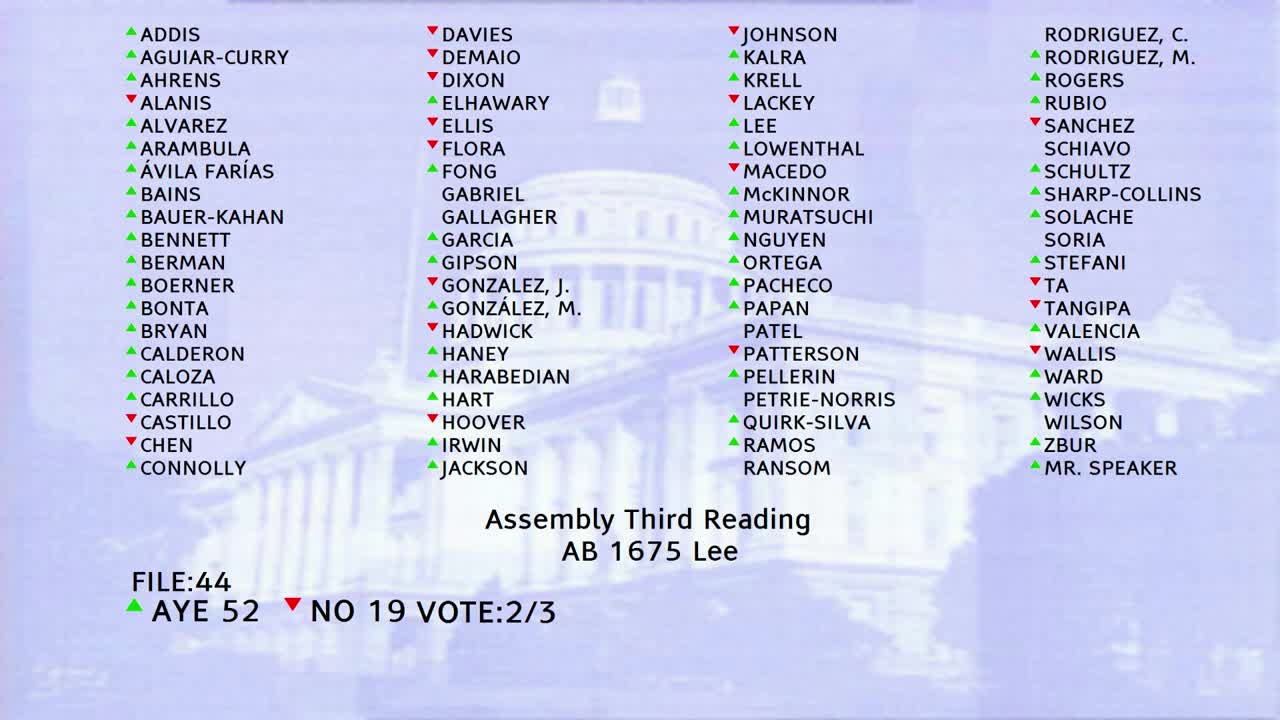
Bill Author

Bill Co-Author(s):