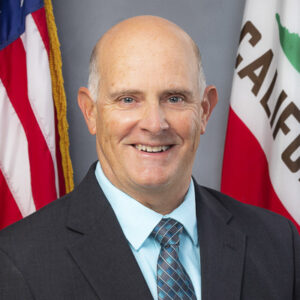
AB 2307: Transportation: traffic signal synchronization pilot program: Western Riverside Council of Governments.
- Session Year: 2025-2026
- House: Assembly
- Latest Version Date: 2026-08-27
Current Status:
Passed
(2026-08-27: Chaptered by Secretary of State - Chapter 140, Statutes of 2026.)
Introduced
In Committee
Awaiting First Chamber Vote
Passed First Chamber
In Committee
Awaiting Second Chamber Vote
Passed Second Chamber
Enacted
Existing law vests the Department of Transportation with possession and control of all state highways, and authorizes the department to do any act necessary, convenient, or proper for the construction, improvement, maintenance, or use of all highways that are under its jurisdiction, possession, or control.
This bill would, until January 1, 2032, authorize the Western Riverside Council of Governments, in required coordination with the department, to establish and administer a traffic signal synchronization pilot program for its member local agencies to evaluate a regional model for coordinating traffic signal timing between state highways and local street and road systems, as specified. The bill would require the Western Riverside Council of Governments, in coordination with the department, to evaluate the effectiveness of the pilot program, including assessing its impacts on congestion, travel time reliability, operational efficiency, and vehicle emissions, and to submit, on or before January 1, 2028, a specified report to the Legislature relating to the pilot program.
This bill would make legislative findings and declarations as to the necessity of a special statute for the local agencies that constitute the Western Riverside Council of Governments.
Existing law vests the Department of Transportation with possession and control of all state highways, and authorizes the department to do any act necessary, convenient, or proper for the construction, improvement, maintenance, or use of all highways that are under its jurisdiction, possession, or control.
This bill would, until January 1, 2032, require the department authorize the Western Riverside Council of Governments, in required coordination with the department, to establish and administer a traffic signal synchronization pilot program for the its member local agencies constituting the Western Riverside Council of Governments to evaluate a regional model for coordinating traffic signal timing between state highways and local street and road systems, as specified. The bill would require the department, Western Riverside Council of Governments, in coordination with participating agencies, the department, to evaluate the effectiveness of the pilot program, including measurable assessing its impacts on congestion, travel time reliability, operational efficiency, and vehicle emissions, emissions and to submit, on or before January 1, 2028, to submit a specified report to the Legislature relating to the pilot program. If the department determines, based on the evaluation, that the pilot program has demonstrated measurable transportation and operational benefits, the bill would authorize department to expand the pilot program, as provided.
This bill would make legislative findings and declarations as to the necessity of a special statute for the local agencies that constitute the Western Riverside Council of Governments.
Existing law vests the Department of Transportation with possession and control of all state highways, and authorizes the department to do any act necessary, convenient, or proper for the construction, improvement, maintenance, or use of all highways that are under its jurisdiction, possession, or control.
This bill would, until January 1, 2032, require the department to establish and administer a traffic signal synchronization pilot program for the local agencies constituting the Western Riverside Council of Governments to evaluate a regional model for coordinating traffic signal timing between state highways and local street and road systems, as specified. The bill would require the department, in coordination with participating agencies, to evaluate the effectiveness of the pilot program, including measurable impacts on congestion, travel time reliability, operational efficiency, and vehicle emissions, and on or before January 1, 2028, to submit a specified report to the Legislature relating to the pilot program. If the department determines, based on the evaluation, that the pilot program has demonstrated measurable transportation and operational benefits, the bill would authorize department to expand the pilot program, as provided.
This bill would make legislative findings and declarations as to the necessity of a special statute for the local agencies that constitute the Western Riverside Council of Governments.
The Legislature finds and declares all of the following:
(a)The efficient operation of the state highway system and local street and road systems can support housing development, economic activity, and the effective use of public infrastructure.
(b)Traffic congestion and unmanaged vehicle idling on existing roadways adversely affect travel time reliability, system efficiency, air quality, and greenhouse gas emissions.
(c)Expansion of state highways and major roadways can be constrained by fiscal, environmental, and community considerations and, as a result, transportation strategies that optimize the performance of existing infrastructure are necessary.
(d)Coordinated traffic signal timing and operational management between state highways and local streets can improve traffic flow, reduce delay and vehicle idling, enhance safety, and increase the effectiveness of existing transportation infrastructure.
SEC. 2.Section 101.16 is added to the Streets and Highways Code, to read:101.16.(a)The Western Riverside Council of Governments, in coordination with the department, may establish and administer a traffic signal synchronization pilot program for its member local agencies to evaluate a regional model for coordinating traffic signal timing between state highways and local street and road systems.
(b)The pilot program shall be implemented in coordination with member local agencies. The department shall participate in the pilot program, including the review of work plans, data standards, and evaluation methodologies.
(c)The participating member local agencies, at their own cost, and in coordination with the Western Riverside Council of Governments, may conduct studies, implement coordinated signal timing plans, and deploy technology or communication upgrades necessary to improve traffic signal synchronization and operational coordination between state highways and local arterials.
(d)Eligible activities under the pilot program may include, but are not limited to, traffic signal synchronization studies, corridor-level operational analyses, implementation of coordinated and adaptive signal timing plans, upgrades to traffic signal hardware or software, deployment of detection and communications infrastructure, and data collection and performance monitoring related to travel time reliability, congestion reduction, safety, and emissions outcomes.
(e)The Western Riverside Council of Governments, in coordination with the department, shall evaluate the effectiveness of the pilot program, including assessing its impacts on congestion, travel time reliability, operational efficiency, and vehicle emissions.
(f)On or before January 1, 2028, the Western Riverside Council of Governments shall submit a report to the Legislature, consistent with Section 9795 of the Government Code, describing the pilot program, summarizing outcomes and performance data, identifying best practices and implementation challenges, and making recommendations regarding the applicability of the pilot program statewide.
(g)For purposes of this section, member local agencies means the local agencies constituting the Western Riverside Council of Governments.
(h)This section shall remain in effect only until January 1, 2032, and as of that date is repealed.
SEC. 3.The Legislature finds and declares that a special statute is necessary and that a general statute cannot be made applicable within the meaning of Section 16 of Article IV of the California Constitution because of the unique traffic needs of the local agencies that constitute the Western Riverside Council of Governments.
The Legislature finds and declares all of the following:
(a)The efficient operation of the state highway system and local street and road systems can support housing development, economic activity, and the effective use of public infrastructure.
(b)Traffic congestion and unmanaged vehicle idling on existing roadways adversely affect travel time reliability, system efficiency, air quality, and greenhouse gas emissions.
(c)Expansion of state highways and major roadways can be constrained by fiscal, environmental, and community considerations and, as a result, transportation strategies that optimize the performance of existing infrastructure are necessary.
(d)Coordinated traffic signal timing and operational management between state highways and local streets can improve traffic flow, reduce delay and vehicle idling, enhance safety, and increase the effectiveness of existing transportation infrastructure.
SECTION 1.SEC. 2.Section 101.16 is added to the Streets and Highways Code, to read:101.16.(a)The department shall Western Riverside Council of Governments, in coordination with the department, may establish and administer a traffic signal synchronization pilot program for the local agencies constituting the Western Riverside Council of Governments its member local agencies to evaluate a regional model for coordinating traffic signal timing between state highways and local street and road systems.
(b)The pilot program shall be implemented in voluntary coordination with the Western Riverside Council of Governments and its member local agencies. The department shall retain oversight authority over participate in the pilot program, including approval the review of work plans, data standards, and evaluation methodologies.
(c)The participating member local agencies, at their own cost, and through voluntary in coordination with the regional transportation planning agency, Western Riverside Council of Governments, may conduct studies, implement coordinated signal timing plans, and deploy technology or communication upgrades necessary to improve traffic signal synchronization and operational coordination between state highways and local arterials.
(d)Eligible activities under the pilot program may include, but are not necessarily limited to, traffic signal synchronization studies, corridor-level operational analyses, implementation of coordinated and adaptive signal timing plans, upgrades to traffic signal hardware or software, deployment of detection and communications infrastructure, and data collection and performance monitoring related to travel time reliability, congestion reduction, safety, and emissions outcomes.
(e)The department, Western Riverside Council of Governments, in coordination with participating agencies, the department, shall evaluate the effectiveness of the pilot program, including measurable assessing its impacts on congestion, travel time reliability, operational efficiency, and vehicle emissions.
(f)On or before January 1, 2028, the department Western Riverside Council of Governments shall submit a report to the Legislature in accordance Legislature, consistent with Section 9795 of the Government Code Code, describing the pilot program, summarizing outcomes and performance data, identifying best practices and implementation challenges, and making recommendations regarding the feasibility of statewide application of the traffic signal synchronization model. applicability of the pilot program statewide.
(g)If the department determines, based on the evaluation required by subdivision (e), that the pilot program has demonstrated measurable transportation and operational benefits, the department may expand the traffic signal synchronization pilot program in voluntary coordination with other local agencies, prioritizing corridors with high traffic volumes, significant congestion, or multimodal transportation activity.(g)For purposes of this section, member local agencies means the local agencies constituting the Western Riverside Council of Governments.
(h)This section shall remain in effect only until January 1, 2032, and as of that date is repealed.
SEC. 2.SEC. 3.The Legislature finds and declares that a special statute is necessary and that a general statute cannot be made applicable within the meaning of Section 16 of Article IV of the California Constitution because of the unique traffic needs of the local agencies that constitute the Western Riverside Council of Governments.
(a)The department shall establish and administer a traffic signal synchronization pilot program for the local agencies constituting the Western Riverside Council of Governments to evaluate a regional model for coordinating traffic signal timing between state highways and local street and road systems.
(b)The pilot program shall be implemented in voluntary coordination with the Western Riverside Council of Governments and its local agencies. The department shall retain oversight authority over the pilot program, including approval of work plans, data standards, and evaluation methodologies.
(c)The participating local agencies, at their own cost, and through voluntary coordination with the regional transportation planning agency, may conduct studies, implement coordinated signal timing plans, and deploy technology or communication upgrades necessary to improve traffic signal synchronization and operational coordination between state highways and local arterials.
(d)Eligible activities under the pilot program may include, but are not necessarily limited to, traffic signal synchronization studies, corridor-level operational analyses, implementation of coordinated and adaptive signal timing plans, upgrades to traffic signal hardware or software, deployment of detection and communications infrastructure, and data collection and performance monitoring related to travel time reliability, congestion reduction, safety, and emissions outcomes.
(e)The department, in coordination with participating agencies, shall evaluate the effectiveness of the pilot program, including measurable impacts on congestion, travel time reliability, operational efficiency, and vehicle emissions.
(f)On or before January 1, 2028, the department shall submit a report to the Legislature in accordance with Section 9795 of the Government Code describing the pilot program, summarizing outcomes and performance data, identifying best practices and implementation challenges, and making recommendations regarding the feasibility of statewide application of the traffic signal synchronization model.
(g)If the department determines, based on the evaluation required by subdivision (e), that the pilot program has demonstrated measurable transportation and operational benefits, the department may expand the traffic signal synchronization pilot program in voluntary coordination with other local agencies, prioritizing corridors with high traffic volumes, significant congestion, or multimodal transportation activity.
(h)This section shall remain in effect only until January 1, 2032, and as of that date is repealed.
SEC. 2.The Legislature finds and declares that a special statute is necessary and that a general statute cannot be made applicable within the meaning of Section 16 of Article IV of the California Constitution because of the unique traffic needs of the local agencies that constitute the Western Riverside Council of Governments.
|
Date
|
Status
|
|---|---|
| Aug 27, 2026 | Chaptered by Secretary of State - Chapter 140, Statutes of 2026. |
| Aug 27, 2026 | Approved by the Governor. |
| Aug 18, 2026 | Enrolled and presented to the Governor at 3:30 p.m. |
| Aug 11, 2026 | In Assembly. Ordered to Engrossing and Enrolling. |
| Aug 10, 2026 | Read third time. Passed. Ordered to the Assembly. (Ayes 39. Noes 0. Page 5323.). |
| Aug 10, 2026 | Read third time. Passed. Ordered to the Assembly. (Ayes 39. Noes 0.). |
| Aug 4, 2026 | Read second time. Ordered to Consent Calendar. |
| Aug 3, 2026 | From committee: Be ordered to second reading file pursuant to Senate Rule 28.8 and ordered to Consent Calendar. |
| Jun 24, 2026 | From committee: Do pass and re-refer to Com. on APPR. with recommendation: To Consent Calendar. (Ayes 13. Noes 0.) (June 23). Re-referred to Com. on APPR. |
| May 27, 2026 | Referred to Com. on TRANS. |
| May 14, 2026 | In Senate. Read first time. To Com. on RLS. for assignment. |
| May 14, 2026 | Read third time. Passed. Ordered to the Senate. (Ayes 77. Noes 0. Page 5055.) |
| May 14, 2026 | Read third time. Passed. Ordered to the Senate. (Ayes 77. Noes 0.) |
| May 7, 2026 | Read second time. Ordered to Consent Calendar. |
| May 6, 2026 | From committee: Do pass. To Consent Calendar. (Ayes 14. Noes 0.) (May 6). |
| Apr 14, 2026 | From committee: Do pass and re-refer to Com. on APPR. with recommendation: To Consent Calendar. (Ayes 16. Noes 0.) (April 13). Re-referred to Com. on APPR. |
| Apr 7, 2026 | Re-referred to Com. on TRANS. |
| Apr 6, 2026 | From committee chair, with author's amendments: Amend, and re-refer to Com. on TRANS. Read second time and amended. |
| Mar 9, 2026 | Referred to Com. on TRANS. |
| Feb 20, 2026 | From printer. May be heard in committee March 22. |
| Feb 19, 2026 | Read first time. To print. |
|
Date
|
Description
|
Location
|
Votes
|
|
|---|---|---|---|---|
| Aug 10, 2026 | Consent Calendar 2nd AB2307 Sanchez et al. By Seyarto | Senate Floor |
Passed |
|
| Jun 23, 2026 | Do pass, but first be re-referred to the Committee on [Appropriations] with the recommendation: To Consent Calendar | Senate Standing Committee on Transportation |
Passed |
|
| May 14, 2026 | AB 2307 Sanchez Consent Calendar Second Day Regular Session | Assembly Floor |
Passed |
|
| May 6, 2026 | Do pass. To Consent Calendar. | Assembly Standing Committee on Appropriations |
Passed |
|
| Apr 13, 2026 | Do pass and be re-referred to the Committee on [Appropriations] with recommendation: To Consent Calendar | Assembly Standing Committee on Transportation |
Passed |
This list shows positions taken on this bill by organizations on the date displayed, which is linked to the original source.
Positions by individuals are not included.
|
Organization
|
Position
|
Date
|
|---|---|---|
| City of Lake Elsinore | ** Support | |
| City Of Menifee | ** Support | |
| City of Moreno Valley | ** Support | |
| City of Murrieta | ** Support | |
| City Of Temecula | ** Support | |
| City Of Wildomar | ** Support | |
| County of Riverside | ** Support | |
| Lake Elsinore Chamber of Commerce | ** Support | |
| Menifee Valley Chamber of Commerce | ** Support | |
| Murrieta/Wildomar Chamber of Commerce | ** Support | |
| Riverside County Transportation Commission | ** Support | |
| Riverside Transit Agency | ** Support | |
| Southwest California Legislative Council | ** Support | |
| Temecula Chamber of Commerce | ** Support | |
| Western Riverside Council Of Governments | ** Support |
SENATE RULES COMMITTEE Office of Senate Floor Analyses (916) 651-4171 | AB 2307 |
CONSENT
Bill No: AB 2307
Author: Sanchez (R), et al.
Amended: 4/6/26 in Assembly
Vote: 21
SENATE TRANSPORTATION COMMITTEE: 13-0, 6/23/26
AYES: Cortese, Strickland, Archuleta, Arreguín, Blakespear, Dahle, Gonzalez, Grayson, Menjivar, Richardson, Seyarto, Valladares, Wiener
SENATE APPROPRIATIONS COMMITTEE: Senate Rule 28.8
ASSEMBLY FLOOR: 77-0, 5/14/26 (Consent) - See last page for vote
SUBJECT: Transportation: traffic signal synchronization pilot program: Western Riverside Council of Governments
SOURCE: Author
DIGEST:
This bill authorizes the Western Riverside Council of Governments (WRCOG), in coordination with the California Department of Transportation (Caltrans), to establish and administer a traffic signal synchronization pilot program until January 1, 2032.
ANALYSIS:
Existing law:
- Authorizes local governments to time traffic signals to permit the movement of traffic in an orderly and safe manner at speeds slightly at variance from maximum speed limits. (Vehicle Code [VEH] § 22401)
- Allocates $250 million in revenues from the Highway Safety, Traffic Reduction, Air Quality, and Port Security Bond Act of 2006 (Proposition 1B) for the Traffic Light Synchronization Program. (Government Code [GOV] 8879.23(k))
- Allocates $150 million of Traffic Light Synchronization Program funds to the City of Los Angeles. (GOV 8879.64)
- Makes traffic signal synchronization projects eligible, as part of a sustainable infrastructure project, for Greenhouse Gas Reduction Fund (GGRF) moneys under certain conditions. (SHC 2581)
This bill:
- Makes findings and declarations regarding the importance of coordinated traffic signal timing.
- Authorizes WRCOG, in coordination with Caltrans, to establish a traffic signal synchronization pilot program in western Riverside County to evaluate a regional model for coordinating traffic signal timing between state highways and local street and road systems.
- Requires Caltrans to participate in the pilot program and review work plans, data standards, and evaluation methodologies.
- Authorizes WRCOG’s local member agencies to conduct studies, implement coordinated signal timing plans, and deploy technology or communication upgrades necessary to implement the pilot.
- Specifies that eligible activities under the pilot program include, but are not limited to:
- Traffic signal synchronization studies;
- Corridor-level operational analyses;
- Implementation of coordinated and adaptive signal timing plans;
- Upgrades to traffic signal hardware or software;
- Deployment of detection and communications infrastructure; and,
- Data collection and performance monitoring related to travel time reliability, congestion reduction, safety, and emissions outcomes.
- Requires WRCOG, in coordination with Caltrans, to evaluate the effectiveness of the pilot program, including assessing impacts on congestion, travel time reliability, operational efficiency, and vehicle emissions.
- Requires WRCOG, by January 1, 2028, to submit a report to the Legislature summarizing the pilot’s outcomes and performance, identifying best practices and implementation challenges, and making recommendations regarding the applicability of the pilot program statewide.
- Sunsets and repeals the bill’s language on January 1, 2032.
Comments
Purpose of the bill. According to the author, “Riverside County is one of the fastest-growing regions in California, with cities like Murrieta consistently meeting their state-mandated RHNA housing targets. This growth increases the need for efficient traffic systems. Traffic signal synchronization can reduce emissions, save time, and ease congestion. AB 2307 is a commonsense solution to support the region’s continued growth.”
Traffic Signal Synchronization. Traffic signal synchronization (also referred to as traffic light synchronization or signal/light retiming) generally refers to an engineering practice of sequencing the timing of traffic lights via vehicle detectors along a corridor to improve traffic flow. This is in contrast to fixed-time signals which run at specified intervals, only accounting for time-of-day differences. Signal retiming at these intersections typically requires manual data collection and is generally only done every three to five years.
Synchronization, in contrast, calculates in real-time when a group of vehicles traveling at a set speed will reach each intersection. When signals are strategically timed, drivers arrive at the next light just as it turns green, allowing traffic to flow smoothly with minimal delay. Overall, studies show that signal synchronization reduces both travel delay and greenhouse gas and other emissions. Exact numbers vary widely based on the study, but generally accepted travel delay reductions are in the 15-20% range.
Unfortunately, high installation and maintenance costs of vehicle detectors have deterred the widespread use of detector-based systems. The installation costs of a detection system at a single intersection can cost several thousand dollars, including in some cases up to $50,000. Thus, a large proportion of signalized intersections in the United States do not have detection capabilities and are still controlled by fixed-time traffic signals.
Traffic Signal Synchronization in California. California law allows local authorities to employ traffic signal synchronization to permit the safe and orderly movement of traffic. Increasingly, over the past decades, many jurisdictions across the state have taken advantage of this to engage in widespread traffic signal synchronization projects. These include most prominently Los Angeles and cities across Orange County.
In 2006, as part of Proposition 1B, the state created the Traffic Light Synchronization Program to support synchronization projects across the state. $250 million of Proposition 1B funds were set aside for the project, with $150 million of that going to the City of Los Angeles. According to the Los Angeles Department of Transportation, the city synchronized all of its more than 4,500 traffic lights by 2013, increasing travel speeds by 16% and reducing travel times by 12%. Sixty other jurisdictions also received grant funding under this program including, of relevance to this bill, the Cities of Murrieta, Corona, and Temecula.
Many of these projects have been able to synchronize lights not just in particular cities, but across regions as well, including on state highways owned by Caltrans. In many of these cases, Caltrans worked collaboratively with local jurisdictions on synchronization. For example, Caltrans has executed memoranda of understanding (MOUs) with local jurisdictions such as the Coachella Valley Association of Governments, the City of Hesperia, and the City of Riverside, itself a member of WRCOG. These MOUs generally require a local government to procure and install synchronization technology on Caltrans owned signals and authorize the local government to develop signal timing plans in coordination with Caltrans.
Traffic Signal Synchronization across WRCOG. WRCOG is comprised of 18 cities including the cities of Riverside, Corona, Moreno Valley, Lake Elsinore, Murrieta and Temecula. Due to high rates of population growth and an increase in the number of commuters both within and originating from the region, WRCOG has seen a notable increase in traffic congestion in recent years. WRCOG has identified particular corridors of concern, primarily located near the Interstate (I-15) and I-215 freeways. There are over 400 signalized intersections throughout this area, of which only roughly 130 intersections are currently synchronized.
Based on the benefits seen from previous synchronization projects in the region, including in the aforementioned City of Temecula, WRCOG would like to synchronize the rest of the signals in this region. However, of the remaining signals, roughly 80 of them are controlled by Caltrans, primarily along State Routes 74 and 79. Furthermore, 30 of these signals are directly at I-15 and I‑215 interchanges, where much of the congestion originates.
According to WRCOG, they have had difficulty reaching an agreement with Caltrans to implement traffic signal synchronization across this area, particularly at these Caltrans controlled intersection of concern. AB 2307 seeks to address this issue by requiring Caltrans to work with WRCOG on implementing traffic signal synchronization. Thus, although legislation is not technically necessary as existing law already authorizes these types of projects, AB 2307 will provide firm guidance to both WRCOG and Caltrans on how to move forward with the pilot program.
Specifically, AB 2307 permits WRCOG to implement a pilot program, with required participation from local agencies and Caltrans. WRCOG and its member agencies are also required to fully fund the program. Finally, by January 1, 2028, WRCOG is required to submit a report to the Legislature on the outcomes of the pilot. According to WRCOG, they have the required funds available and are ready to proceed with the project once Caltrans allows them access to the signals Caltrans controls.
FISCAL EFFECT: Appropriation: No Fiscal Com.: Yes Local: No
SUPPORT: (Verified 8/3/26)
City of Menifee
City of Moreno Valley
City of Murrieta
City of Temecula
Southwest California Legislative Council
OPPOSITION: (Verified 8/3/26)
None received
ASSEMBLY FLOOR: 77-0, 5/14/26
AYES: Addis, Aguiar-Curry, Ahrens, Alanis, Alvarez, Ávila Farías, Bains, Bauer-Kahan, Bennett, Berman, Boerner, Bonta, Bryan, Calderon, Caloza, Carrillo, Castillo, Chen, Connolly, Davies, DeMaio, Dixon, Elhawary, Ellis, Fong, Gabriel, Gallagher, Garcia, Gipson, Jeff Gonzalez, Mark González, Hadwick, Haney, Harabedian, Hart, Hoover, Irwin, Jackson, Johnson, Kalra, Krell, Lackey, Lee, Lowenthal, Macedo, McKinnor, Muratsuchi, Nguyen, Ortega, Pacheco, Papan, Patel, Patterson, Pellerin, Petrie-Norris, Quirk-Silva, Ramos, Ransom, Michelle Rodriguez, Rogers, Blanca Rubio, Sanchez, Schiavo, Schultz, Sharp-Collins, Solache, Soria, Stefani, Ta, Tangipa, Valencia, Wallis, Ward, Wicks, Wilson, Zbur, Rivas
NO VOTE RECORDED: Arambula, Flora, Celeste Rodriguez
Prepared by: Samuel Myers / TRANS. / (916) 651-4121
8/5/26 15:04:37
**** END ****
SENATE COMMITTEE ON TRANSPORTATION
Senator Dave Cortese, Chair
2025 - 2026 Regular
Bill No: Hearing Date: 6/23/2026
Author: | Sanchez | ||
Version: | 4/6/2026 Amended | ||
Urgency: | No | Fiscal: | Yes |
Consultant: | Samuel Myers | ||
SUBJECT:
DIGEST: This bill authorizes the Western Riverside Council of Governments (WRCOG), in coordination with the California Department of Transportation (Caltrans), to establish and administer a traffic signal synchronization pilot program until January 1, 2032.
ANALYSIS:
Existing law:
- Authorizes local governments to time traffic signals to permit the movement of traffic in an orderly and safe manner at speeds slightly at variance from maximum speed limits. (VEH 22401)
- Allocates $250 million in revenues from the Highway Safety, Traffic Reduction, Air Quality, and Port Security Bond Act of 2006 (Proposition 1B) for the Traffic Light Synchronization Program. (GOV 8879.23(k))
- Allocates $150 million of Traffic Light Synchronization Program funds to the City of Los Angeles. (GOV 8879.64)
- Makes traffic signal synchronization projects eligible, as part of a sustainable infrastructure project, for Greenhouse Gas Reduction Fund (GGRF) moneys under certain conditions. (SHC 2581)
This bill:
- Makes findings and declarations regarding the importance of coordinated traffic signal timing.
- Authorizes WRCOG, in coordination with Caltrans, to establish a traffic signal synchronization pilot program in western Riverside County to evaluate a regional model for coordinating traffic signal timing between state highways and local street and road systems.
- Requires Caltrans to participate in the pilot program and review work plans, data standards, and evaluation methodologies.
- Authorizes WRCOG’s local member agencies to conduct studies, implement coordinated signal timing plans, and deploy technology or communication upgrades necessary to implement the pilot.
- Specifies that eligible activities under the pilot program include, but are not limited to:
- Traffic signal synchronization studies;
- Corridor-level operational analyses;
- Implementation of coordinated and adaptive signal timing plans;
- Upgrades to traffic signal hardware or software;
- Deployment of detection and communications infrastructure; and,
- Data collection and performance monitoring related to travel time reliability, congestion reduction, safety, and emissions outcomes.
- Traffic signal synchronization studies;
- Requires WRCOG, in coordination with Caltrans, to evaluate the effectiveness of the pilot program, including assessing impacts on congestion, travel time reliability, operational efficiency, and vehicle emissions.
- Requires WRCOG, by January 1, 2028, to submit a report to the Legislature summarizing the pilot’s outcomes and performance, identifying best practices and implementation challenges, and making recommendations regarding the applicability of the pilot program statewide.
- Sunsets and repeals the bill’s language on January 1, 2032.
COMMENTS:
- Purpose of the bill. According to the author, “Riverside County is one of the fastest-growing regions in California, with cities like Murrieta consistently meeting their state-mandated RHNA housing targets. This growth increases the need for efficient traffic systems. Traffic signal synchronization can reduce emissions, save time, and ease congestion. AB 2307 is a commonsense solution to support the region’s continued growth.”
- Traffic Signal Synchronization. Traffic signal synchronization (also referred to as traffic light synchronization or signal/light retiming) generally refers to an engineering practice of sequencing the timing of traffic lights via vehicle detectors along a corridor to improve traffic flow. This is in contrast to fixed-time signals which run at specified intervals, only accounting for time-of-day differences. Signal retiming at these intersections typically requires manual data collection and is generally only done every three to five years.
Synchronization, in contrast, calculates in real-time when a group of vehicles traveling at a set speed will reach each intersection. When signals are strategically timed, drivers arrive at the next light just as it turns green, allowing traffic to flow smoothly with minimal delay. Overall, studies show that signal synchronization reduces both travel delay and greenhouse gas and other emissions. Exact numbers vary widely based on the study, but generally accepted travel delay reductions are in the 15-20% range.
Unfortunately, high installation and maintenance costs of vehicle detectors have deterred the widespread use of detector-based systems. The installation costs of a detection system at a single intersection can cost several thousand dollars, including in some cases up to $50,000. Thus, a large proportion of signalized intersections in the United States do not have detection capabilities and are still controlled by fixed-time traffic signals. - Traffic Signal Synchronization in California. California law allows local authorities to employ traffic signal synchronization to permit the safe and orderly movement of traffic. Increasingly, over the past decades, many jurisdictions across the state have taken advantage of this to engage in widespread traffic signal synchronization projects. These include most prominently Los Angeles and cities across Orange County.
In 2006, as part of Proposition 1B, the state created the Traffic Light Synchronization Program to support synchronization projects across the state. $250 million of Proposition 1B funds were set aside for the project, with $150 million of that going to the City of Los Angeles. According to the Los Angeles Department of Transportation, the city synchronized all of its more than 4,500 traffic lights by 2013, increasing travel speeds by 16% and reducing travel times by 12%. Sixty other jurisdictions also received grant funding under this program including, of relevance to this bill, the Cities of Murrieta, Corona, and Temecula.
Many of these projects have been able to synchronize lights not just in particular cities, but across regions as well, including on state highways owned by Caltrans. In many of these cases, Caltrans worked collaboratively with local jurisdictions on synchronization. For example, Caltrans has executed memoranda of understanding (MOUs) with local jurisdictions such as the Coachella Valley Association of Governments, the City of Hesperia, and the City of Riverside, itself a member of WRCOG. These MOUs generally require a local government to procure and install synchronization technology on Caltrans owned signals and authorize the local government to develop signal timing plans in coordination with Caltrans. - Traffic Signal Synchronization across WRCOG. WRCOG is comprised of 18 cities including the cities of Riverside, Corona, Moreno Valley, Lake Elsinore, Murrieta and Temecula. Due to high rates of population growth and an increase in the number of commuters both within and originating from the region, WRCOG has seen a notable increase in traffic congestion in recent years. WRCOG has identified particular corridors of concern, primarily located near the Interstate (I-15) and I-215 freeways. There are over 400 signalized intersections throughout this area, of which only roughly 130 intersections are currently synchronized.
Based on the benefits seen from previous synchronization projects in the region, including in the aforementioned City of Temecula, WRCOG would like to synchronize the rest of the signals in this region. However, of the remaining signals, roughly 80 of them are controlled by Caltrans, primarily along State Routes 74 and 79. Furthermore, 30 of these signals are directly at I-15 and I‑215 interchanges, where much of the congestion originates.
According to WRCOG, they have had difficulty reaching an agreement with Caltrans to implement traffic signal synchronization across this area, particularly at these Caltrans controlled intersection of concern. AB 2307 seeks to address this issue by requiring Caltrans to work with WRCOG on implementing traffic signal synchronization. Thus, although legislation is not technically necessary as existing law already authorizes these types of projects, AB 2307 will provide firm guidance to both WRCOG and Caltrans on how to move forward with the pilot program.
Specifically, AB 2307 permits WRCOG to implement a pilot program, with required participation from local agencies and Caltrans. WRCOG and its member agencies are also required to fully fund the program. Finally, by January 1, 2028, WRCOG is required to submit a report to the Legislature on the outcomes of the pilot. According to WRCOG, they have the required funds available and are ready to proceed with the project once Caltrans allows them access to the signals Caltrans controls.
Related/previous Legislation:
AB 1447 (Waldron, Chapter 594, Statutes of 2014) – Authorized GGRF moneys to be allocated for investments in traffic signal synchronization projects under certain conditions.
SB 88 (Committee on Budget, Chapter 181, Statues of 2007) – Allocated $150 million to the City of Los Angeles for traffic synchronization technology.
SB 1266 (Perata, Chapter 25, Statutes of 2006) – Authorized, following voter approval of Proposition 1B, the issuance of nearly $20 billion in state general obligation bonds for particular transportation related purposes, including $250 million for traffic signal synchronization.
FISCAL EFFECT: Appropriation: Fiscal Com.: Local:
POSITIONS: (Communicated to the committee before noon on Wednesday,
June 17, 2026.)
SUPPORT:
City of Menifee
City of Moreno Valley
City of Murrieta
City of Temecula
Southwest California Legislative Council
OPPOSITION:
None received
-- END --
Date of Hearing: May 6, 2026
ASSEMBLY COMMITTEE ON APPROPRIATIONS
Buffy Wicks, Chair
ABPCA Bill Id:AB 2307
Author:(Sanchez) – As Amended Ver:April 6, 2026
Policy Committee: | Transportation | Vote: | 16 - 0 |
|
| ||
|
|
Urgency: No State Mandated Local Program: No Reimbursable: No
SUMMARY:
This bill authorizes the Western Riverside Council of Governments (COG), in coordination with the Department of Transportation (Caltrans), to establish a pilot program to synchronize traffic signals for purposes of evaluating a regional model for coordinating traffic signal timing between state highways and local road systems.
If the COG undertakes the pilot program, the bill requires Caltrans, generally, to participate in the pilot program and, specifically, to review work plans, data standards and evaluation methodologies and to evaluate the effectiveness of the pilot program.
The bill requires the COG, should it undertake the pilot program, to submit a program outcome report to the Legislature by January 1, 2028.
FISCAL EFFECT:
Any costs to local government as a result of the bill will be because the COG chose to undertake the pilot program; therefore, such costs are not eligible for reimbursement from the state.
Caltrans reports that it views the work required of it by this bill as part of its existing, ongoing workload.
COMMENTS:
While not defined by this bill or by existing state law, traffic signal synchronization generally refers to, as the Orange County Transportation Agency puts it, technology that “allows a series of lights to turn green in advance of arriving traffic based on synchronized timers set to current traffic conditions and congestion levels.”
The state has funded traffic signal synchronization efforts. Specifically, The Highway Safety, Traffic Reduction, Air Quality, and Port Security Bond Act of 2006 (Proposition 1B) created the Traffic Light Synchronization Program and authorized $250 million to fund traffic light synchronization projects and other technology-based improvements to ameliorate safety operations and the effective capacity of local streets and roads. The bond act directed $150 million of the funds to the City of Los Angeles and the remaining $100 million to other agencies. According to the California Transportation Commission (administrator of the bond funds), as of June 30, 2020, the commission had allocated $150 million to 22 projects sponsored by the City of Los Angeles and the remaining $100 million to 59 projects sponsored by other agencies. Many of the agencies that undertook traffic signal synchronization projects found significant reductions in travel time and increases in travel speed.
As described above, this bill authorizes the COG to establish a pilot program to synchronize traffic signals for purposes of evaluating a regional model for coordinating traffic signal timing between state highways and local road systems. And area local governments express support for the bill. Yet, nothing in state law prevents the COG from undertaking a traffic signal synchronization pilot program today.
According to the author, this bill is needed because “signal coordination between local agencies and Caltrans is often limited by jurisdictional boundaries and administrative delays.” The primary effect of this bill, then, is to obligate Caltrans to coordinate with the COG on such a pilot program, should the COG elect to undertake one.
There is no opposition registered against this bill.
Analysis Prepared by: Jay Dickenson / APPR. / (916) 319-2081
Date of Hearing: April 13, 2026
ASSEMBLY COMMITTEE ON TRANSPORTATION
Lori D. Wilson, Chair
ABPCA Bill Id:AB 2307 (
Author:Sanchez) – Amended Ver:April 6, 2026
SUBJECT: Transportation: traffic signal synchronization pilot program: Western Riverside Council of Governments.
SUMMARY: Authorizes the Western Riverside Council of Governments, in coordination with the California Department of Transportation to establish and administer a traffic signal synchronization pilot program until January 1, 2032. Specifically, this bill:
- Authorizes the Western Riverside Council of Governments (WRCOG), in coordination with the California Department of Transportation (Caltrans) to establish and administer a traffic signal synchronization pilot program for the local agencies constituting the WRCOG to evaluate a regional model for coordinating traffic signal timing between state highways and local street and road systems.
- Requires Caltrans to participate in the pilot program and review work plans, data standards, and evaluation methodologies.
- Authorizes WRCOG’s member local agencies, at their own cost and in coordination with WRCOG, to conduct studies, implement coordinated signal timing plans, and deploy technology or communication upgrades necessary to improve traffic signal synchronization and operational coordination between state highways and local arterials.
- Specifies the following eligible activities under the pilot program, including but not limited to: traffic signal synchronization studies, corridor-level operational analyses, implementation of coordinated and adaptive signal timing plans, upgrades to traffic signal hardware or software, deployment of detection and communications infrastructure, and data collection and performance monitoring related to travel time reliability, congestion reduction, safety, and emissions outcomes.
- Requires WRCOG, in coordination with Caltrans, to evaluate the effectiveness of the pilot program, including assessing impacts on congestion, travel time reliability, operational efficiency, and vehicle emissions.
- On or before January 1, 2028, requires WRCOG to submit a report to the Legislature summarizing the pilot’s outcomes and performance, identifying best practices and implementation challenges, and making recommendations regarding the applicability of the pilot program statewide.
- Sunsets and repeals the bill’s language on January 1, 2032.
EXISTING LAW:
- Authorizes local governments to time traffic signals to permit the movement of traffic in an orderly and safe manner at speeds slightly at variance from maximum speed limits (Vehicle Code §22401).
- Pursuant to the Highway Safety, Traffic Reduction, Air Quality, and Port Security Bond Act of 2006 (Proposition 1B), approved by the voters on November 7, 2006, created the Traffic Light Synchronization Program, which authorized $250 million to fund traffic light synchronization projects and other technology-based improvements to improve safety operations and the effective capacity of local streets and roads.
- Makes eligible for cap and invest auction revenues investments in traffic signal synchronization as a component of an eligible sustainable infrastructure project if a governing body finds that the traffic signal synchronization component is designed and implemented to achieve cost-effective reductions in greenhouse gas emissions (Streets and Highways Code §2581).
FISCAL EFFECT: Unknown
COMMENTS: According to a 2024 University of Michigan study, traffic congestion at more than 320,000 signalized intersections in the U.S. is estimated to cost drivers nearly $23 billion annually in direct and indirect costs. These costs include wasted fuel and excess time waiting at lights that are not synchronized.
Traffic signal retiming or synchronization generally refers to an engineering practice of sequencing the timing of traffic lights via vehicle detectors along a corridor to improve traffic flow. Synchronization calculates when a group of vehicles traveling at a set speed will reach each intersection. When signals are strategically timed, drivers arrive at the next light just as it turns green, allowing traffic to flow smoothly with minimal delay. Synchronization is widely considered one of the most cost-effective solutions for reducing congestion and fuel consumption given that few changes to infrastructure are required. Studies show that signal synchronization reduces travel delay between 13% and 94%, decreases travel times, and reduces greenhouse gas and other emissions.
Unfortunately, high installation and maintenance costs of vehicle detectors have deterred widespread use of detector-based systems. The installation costs of a detection system at a single intersection can be as high as $50,000. Thus, a large proportion of signalized intersections in the U.S. do not have detection capabilities and are still controlled by fixed-time traffic signals. Signal retiming at these intersections typically requires manual data collections and is typically only done every three to five years.
According to the author. “Riverside County is one of the fastest-growing regions in California, with cities like Murrieta consistently meeting their state-mandated Regional Housing Needs Allocation (RHNA) housing targets. This growth increases the need for efficient traffic systems. Traffic signal synchronization remains one of the most cost-effective strategies to lower drive time, improve traffic flow, and reduce emissions. However, signal coordination between local agencies and Caltrans is often limited by jurisdictional boundaries and administrative delays. AB 2307 is a commonsense solution to support the region’s continued growth.”
Western Riverside Council of Governments (WRCOG) Pilot. WRCOG, comprised of 18 cities including the cities of Riverside, Corona, Moreno Valley, Lake Elsinore, Murrieta and Temecula, believes that this bill is necessary because many if not all of its priority intersections (e.g., east-west corridors which cross one or more freeways like I-15 and I-215) involve Caltrans’ controlled signals at or adjacent to freeways. WRCOG states that while Caltrans’ signals are operated to minimize delays on freeways they have the effect of exacerbating congestion on local roads. In fact, of the more than 400 signalized intersections in the southwest area of the WRCOG (20% of which are reportedly controlled by Caltrans), only about one-third are synchronized. WRCOG also asserts that Caltrans does not inform its members when they change the timing of state signals potentially impacting local traffic congestion.
Prop 1B Funded the Traffic Light Synchronization Program. The Highway Safety, Traffic Reduction, Air Quality, and Port Security Bond Act of 2006 (Proposition 1B) authorized $250 million to fund traffic light synchronization and other similar projects. Of this amount, $150 million was earmarked for the City of Los Angeles and the balance to other projects across the state. According to the Los Angeles Department of Transportation, the city synchronized all of its more than 4,500 traffic lights by 2013, increasing travel speeds by 16% and reducing travel times by 12%. Sixty other jurisdictions also receive grant funding under this program including, of relevance to this bill, the Cities of Murrieta, Corona, and Temecula.
Committee comments. While this bill is not necessary to implement a local pilot program, WRCOG has expressed frustration about Caltrans’ alleged lack of responsiveness or commitment to participate in synchronization coordination efforts. This bill could serve as a tool to help ensure Caltrans works constructively with WRCOG on signal synchronization efforts. To minimize state costs, this bill requires the pilot to be 100% locally funded though it is unclear if there would be additional costs to Caltrans.
At the same time, precedents exist of Caltrans working collaboratively with local jurisdictions on synchronization. For example, Caltrans has executed MOUs with local jurisdictions such as the Coachella Valley Association of Governments, the City of Hesperia, and the City of Riverside, a member of WRCOG. These MOUs generally require a local government to procure and install synchronization technology on Caltrans’ owned signals and authorize the local government to develop signal “timing plans” in coordination with Caltrans.
Given the benefits of signal synchronization, this pilot and the required report could inform whether the Legislature should codify a statewide policy on signal synchronization to streamline local-state coordination and avoid bills requiring region-specific pilots.
The Southwest Elected Leaders Collaborative, sponsor of this bill, writes in support, “This bill establishes a carefully structured pilot program that is funded entirely by [WRCOG], leverages local expertise and real-time data, and includes CalTrans collaboration. The pilot’s reporting requirements will provide the Legislature with meaningful performance data to evaluate outcomes and inform future signal synchronization policies and funding decisions. For the Southwest Riverside region, this pilot represents an opportunity to improve mobility, support economic activity, and reduce environmental impacts without costly roadway expansion. For the state, it offers a replicable model of regional collaboration that can be evaluated before broader implementation.”
Related legislation. AB 1447 (Waldron), Chapter 594, Statutes of 2014 authorized moneys in the Greenhouse Gas Reduction Fund to be allocated for investments in a traffic signal synchronization component that is part of a sustainable infrastructure project if the component is designed and implemented to achieve cost-effective reductions in greenhouse gas emissions and includes specific emissions reduction targets and metrics to evaluate the project’s effect.
SB 88 (Committee on Budget), Chapter 181, Statues of 2007 allocated $150 million to any city in the state with a population of over 3.5 million persons as of January 1, 2007 to upgrade and install traffic synchronization technology.
REGISTERED SUPPORT / OPPOSITION:
Support
City of Lake Elsinore
City of Menifee
City of Murrieta
City of Temecula
City of Wildomar
County of Riverside
Lake Elsinore Chamber of Commerce
Menifee Valley Chamber of Commerce
Murrieta/Wildomar Chamber of Commerce
Riverside County Transportation Commission
Riverside Transit Agency
Temecula Chamber of Commerce
Western Riverside Council of Governments
Opposition
None on file
Analysis Prepared by: Dan Chia / TRANS. / (916) 319-2093
Bill Author