AB 2313: Gas corporations: gas distribution service line replacements: alternatives.
- Session Year: 2025-2026
- House: Assembly
- Latest Version Date: 2026-09-30
Current Status:
Passed
(2026-09-30: Chaptered by Secretary of State - Chapter 934, Statutes of 2026.)
Introduced
In Committee
Awaiting First Chamber Vote
Passed First Chamber
In Committee
Awaiting Second Chamber Vote
Passed Second Chamber
Enacted
Existing law vests the Public Utilities Commission with regulatory authority over public utilities, including gas corporations. Existing law requires, until January 1, 2031, gas corporations to submit to the commission an annual map that includes, among other things, the location of all potential gas distribution line replacement projects identified in its distribution integrity management plan and any foreseeable gas distribution pipeline replacements.
This bill, the Home Energy Choice Act, would require the commission, in a new or existing proceeding, to solicit proposals for, and require each gas corporation to offer, a Gas Distribution Service Line Replacement Alternatives Program, on or before January 1, 2028, to provide certain residential gas customers served by a gas distribution service line that will be replaced with a monetary incentive to deploy gas distribution service line replacement alternatives, as defined, and cease gas service to avoid the gas distribution service line replacement, as specified. The bill would require the commission to exempt from the program the emergency replacement of a gas distribution service line. The bill would require the commission to annually review the program to determine whether adjustments should be made to program design to increase program participation. The bill would require the commission, on or before January 1, 2029, and annually thereafter, to report to the Legislature on the progress of each implemented program, as provided.
The bill would repeal its provisions on January 1, 2035.
Under existing law, a violation of any order, decision, rule, direction, demand, or requirement of the commission is a crime.
Because a violation of a commission action implementing the bills requirements would be a crime, the bill would impose a state-mandated local program.
The California Constitution requires the state to reimburse local agencies and school districts for certain costs mandated by the state. Statutory provisions establish procedures for making that reimbursement.
This bill would provide that no reimbursement is required by this act for a specified reason.
Existing law vests the Public Utilities Commission with regulatory authority over public utilities, including gas corporations. Existing law requires, until January 1, 2031, gas corporations to submit to the commission an annual map that includes, among other things, the location of all potential gas distribution line replacement projects identified in its distribution integrity management plan and any foreseeable gas distribution pipeline replacements.
This bill, the Home Energy Choice Act, would require the commission, in a new or existing proceeding, to solicit proposals for, and require each gas corporation to offer, a Gas Distribution Service Line Replacement Alternatives Program, on or before January 1, 2028, to provide certain residential gas customers served by a gas distribution service line that will be replaced with a monetary incentive to deploy gas distribution service line replacement alternatives, as defined, and cease gas service to avoid the gas distribution service line replacement, as specified. The bill would require the commission to exempt from its provisions the program the emergency replacement of a gas distribution service line. The bill would require the commission to annually review the program to determine whether adjustments should be made to program design to increase program participation. The bill would require the commission, on or before January 1, 2029, and annually thereafter, to report to the Legislature on the progress of each implemented program, as provided.
The bill would repeal its provisions on January 1, 2035.
Under existing law, a violation of any order, decision, rule, direction, demand, or requirement of the commission is a crime.
Because a violation of a commission action implementing the bills requirements would be a crime, the bill would impose a state-mandated local program.
The California Constitution requires the state to reimburse local agencies and school districts for certain costs mandated by the state. Statutory provisions establish procedures for making that reimbursement.
This bill would provide that no reimbursement is required by this act for a specified reason.
Existing law vests the Public Utilities Commission with regulatory authority over public utilities, including gas corporations. Existing law requires, until January 1, 2031, gas corporations to submit to the commission an annual map that includes, among other things, the location of all potential gas distribution line replacement projects identified in its distribution integrity management plan and any foreseeable gas distribution pipeline replacements.
This bill, the Home Energy Choice Act, would require the commission, in a new or existing proceeding, to solicit proposals for, and require each gas corporation to offer, a Gas Distribution Service Line Replacement Alternatives Program, on or before January 1, 2028, to provide certain residential gas customers served by a gas distribution service line that will be replaced with a monetary incentive to deploy gas distribution service line replacement alternatives, as defined, and cease gas service to avoid the gas distribution service line replacement, as specified. The bill would exempt from its provisions emergency replacement of a gas distribution service line. The bill would require the commission to annually review the program to determine whether adjustments should be made to program design to increase program participation. The bill would require the commission, on or before January 1, 2029, and annually thereafter, to report to the Legislature on the progress of each implemented program, as provided.
The bill would repeal its provisions on January 1, 2035.
Under existing law, a violation of any order, decision, rule, direction, demand, or requirement of the commission is a crime.
Because a violation of a commission action implementing the bills requirements would be a crime, the bill would impose a state-mandated local program.
The California Constitution requires the state to reimburse local agencies and school districts for certain costs mandated by the state. Statutory provisions establish procedures for making that reimbursement.
This bill would provide that no reimbursement is required by this act for a specified reason.
Existing law vests the Public Utilities Commission with regulatory authority over public utilities, including gas corporations. Existing law requires, until January 1, 2031, gas corporations to submit to the commission an annual map that includes, among other things, the location of all potential gas distribution line replacement projects identified in its distribution integrity management plan and any foreseeable gas distribution pipeline replacements.
This bill, the Home Energy Choice Act, would require the commission, in a new or existing proceeding, to solicit proposals for, and require each gas corporation to offer offer, a Gas Distribution Service Line Replacement Alternatives Program, on or before January 1, 2028, to provide certain residential gas customers served by a gas distribution service line that will be replaced with a monetary incentive to deploy gas distribution service line replacement alternatives, as defined, and cease gas service to avoid the gas distribution service line replacement, as specified. The bill would exempt from its provisions emergency replacement of a gas distribution service line. The bill would require the commission to annually review the program to determine whether adjustments should be made to program design to increase program participation. The bill would require the commission, on or before January 1, 2029, and annually thereafter, to report to the Legislature on the progress of each implemented program, as provided.
The bill would repeal its provisions on January 1, 2035.
Under existing law, a violation of any order, decision, rule, direction, demand, or requirement of the commission is a crime.
Because a violation of a commission action implementing the bills requirements would be a crime, the bill would impose a state-mandated local program.
The California Constitution requires the state to reimburse local agencies and school districts for certain costs mandated by the state. Statutory provisions establish procedures for making that reimbursement.
This bill would provide that no reimbursement is required by this act for a specified reason.
Existing law vests the Public Utilities Commission with regulatory authority over public utilities, including gas corporations. Existing law requires, until January 1, 2031, gas corporations to submit to the commission an annual map that includes, among other things, the location of all potential gas distribution line replacement projects identified in its distribution integrity management plan and any foreseeable gas distribution pipeline replacements.
This bill, the Home Energy Choice Act, would require the commission, in a new or existing proceeding, to require each gas corporation to offer a Gas Distribution Service Line Replacement Alternatives Program, on or before January 1, 2028, to provide gas customers served by a gas distribution service line, planned or forecasted for replacement over the next 5 years, or prioritized for replacement by the commission, line that will be replaced with a monetary incentive to deploy gas distribution service line replacement alternatives, as defined, and cease gas service to avoid the gas distribution service line replacement, as specified. The bill would exempt from its provisions emergency replacement of a gas distribution service line.
Under existing law, a violation of any order, decision, rule, direction, demand, or requirement of the commission is a crime.
Because a violation of a commission action implementing the bills requirements would be a crime, the bill would impose a state-mandated local program.
The California Constitution requires the state to reimburse local agencies and school districts for certain costs mandated by the state. Statutory provisions establish procedures for making that reimbursement.
This bill would provide that no reimbursement is required by this act for a specified reason.
Existing law vests the Public Utilities Commission with regulatory authority over public utilities, including gas corporations. Existing law requires, until January 1, 2031, gas corporations to submit to the commission an annual map that includes, among other things, the location of all potential gas distribution line replacement projects identified in its distribution integrity management plan and any foreseeable gas distribution pipeline replacements.
This bill, the Home Energy Choice Act, would require the commission, in a new or existing proceeding, to require each gas corporation to offer a Gas Distribution Service Line Replacement Alternatives Program, on or before January 1, 2028, to provide gas customers served by a gas distribution service line, planned or forecasted for replacement over the next 5 years, or prioritized for replacement by the commission, with a monetary incentive to deploy gas distribution service line replacement alternatives, as defined, and cease gas service to avoid the gas distribution service line replacement, as specified.
Under existing law, a violation of any order, decision, rule, direction, demand, or requirement of the commission is a crime.
Because a violation of a commission action implementing the bills requirements would be a crime, the bill would impose a state-mandated local program.
The California Constitution requires the state to reimburse local agencies and school districts for certain costs mandated by the state. Statutory provisions establish procedures for making that reimbursement.
This bill would provide that no reimbursement is required by this act for a specified reason.
This act shall be known, and may be cited, as the Home Energy Choice Act.
SEC. 2.(a)The Legislature finds and declares all of the following:
(1)Natural gas demand is already declining as California transitions away from natural gas to zero-emission electric alternatives to achieve the states energy efficiency, climate, and air quality objectives.
(2)Without active planning and management, reduced demand for natural gas will result in higher gas rates, with a disproportionate burden on vulnerable customers.
(3)Alternatives that avoid new capital investment in the gas system should be pursued where safe, feasible, and cost effective.
(4)California gas corporations replace thousands of gas distribution service lines each year, with the significant majority connected to a single gas meter.
(5)Gas distribution service line replacement costs are paid by all gas customers as capital costs over a period that often exceeds 50 years.
(6)Gas customers are currently not given a choice regarding the replacement of service lines connected to their homes.
(b)It is the intent of the Legislature that the Public Utilities Commission establish a program requiring gas corporations to offer residential gas customers the choice to cease gas service and electrify as an alternative to a planned service line replacement through a monetary incentive to support this transition.
SEC. 3.Section 785.3 is added to the Public Utilities Code, to read:785.3.(a)For purposes of this section, all of the following definitions apply:
(1)Disadvantaged community means a community identified pursuant to Section 39711 of the Health and Safety Code.
(2)Eligible gas customer means the owner of a residential property receiving gas service that is served by a gas distribution service line planned or forecasted for replacement during the next five years.
(3)Emergency has the same meaning as defined in Section 21060.3 of the Public Resources Code.
(4)Gas distribution service line has the same meaning as service line as set forth in Section 192.3 of Title 49 of the Code of Federal Regulations.
(5)Gas distribution service line replacement alternatives means measures to provide residential gas customers with energy service that does not require gas use.
(6)Program means the Gas Distribution Service Line Replacement Alternatives Program.
(b)(1)In a new or existing proceeding, the commission shall solicit proposals for, and require each gas corporation to offer, a Gas Distribution Service Line Replacement Alternatives Program on or before January 1, 2028. The program shall provide an eligible gas customer with a monetary incentive to deploy gas distribution service line replacement alternatives and cease gas service to avoid a gas distribution service line replacement.
(2)A gas corporation that offers a program that is substantially similar to the Gas Distribution Service Line Replacement Alternatives Program and has been approved by the commission on or before January 1, 2028, shall not be required to update its program to meet the requirements of this section until January 1, 2031.
(c)(1)In developing the program, the commission shall establish at least all of the following:
(A)A standard incentive level for eligible gas customers that is less than the avoided cost of the gas distribution service line replacement, not including any cost associated with the gas distribution main line.
(B)An enhanced incentive level for eligible gas customers located in a disadvantaged community.
(C)A mechanism to ensure gas customers benefit from the reduction in capital spending on gas distribution service lines that would otherwise have occurred in the absence of the program.
(D)A process for program design, development, and implementation, including, but not limited to:
(i)(I)The timeframe by which a gas corporation shall do both of the following:
(ia)Notify eligible gas customers of their eligibility for the program.
(ib)Reach agreements with eligible gas customers regarding participation in the program.
(II)The timeframe shall provide adequate time for outreach and implementation of the gas distribution service line replacement alternatives while ensuring gas distribution service line safety, consistent with the gas corporations safety-related priority, and all state and federal compliance timelines for service line replacement are addressed.
(ii)Notice requirements for eligible gas customers. Notice shall include information about the climate and health benefits of zero-emission buildings and the potential availability of any additional incentives from other programs, including programs offered by community choice aggregators and regional energy networks.
(iii)Potential use of a third-party program administrator.
(iv)Development of a list of contractors.
(v)Development of a means through which gas customers can determine their eligibility for the program.
(vi)Communication of measures to prevent unnecessary electrical service or panel upsizing.
(vii)Coordination and information-sharing requirements with electrical corporations, local publicly owned electric utilities, load-serving entities, and local governments.
(viii)A requirement for gas disconnection and gas meter removal as a condition of program participation.
(ix)An acknowledgment from the participating customer that waives the gas corporations obligation to serve their property.
(x)Additional outreach requirements for gas distribution service line replacements in disadvantaged communities.
(xi)Coordination with low-income energy efficiency and electrification programs to maximize available incentives for low-income customers.
(xii)Tenant protections and requirements to ensure any tenants living in the eligible gas customers property receive adequate notification and engagement.
(E)An exemption for emergency replacement of a gas distribution service line.
(2)Program enrollment shall not exceed 1 percent of each gas corporations customers within their service territory, including customers enrolled in zonal decarbonization pilot projects pursuant to Section 663.
(d)Subject to commission approval, a gas corporation may propose to limit the program to specific gas distribution service line replacement programs or specific geographic areas based on criteria, including, but not limited to, the avoided average cost of gas distribution service line replacements and readiness to electrify.
(e)A gas corporation shall not receive ratepayer funds for the costs of the program that are covered by incentives provided by federal, state, or local programs.
(f)The commission shall annually review the program to determine whether adjustments should be made to program design to increase program participation. On or after January 1, 2028, the commission may determine, with input from each gas corporation and interested parties, whether each gas corporations program should continue and whether any changes should be made to the incentive amount or other program details.
(g)(1)On or before January 1, 2029, and annually thereafter, the commission shall report to the Legislature on the progress of each implemented program, including the number of customers that have participated, program implementation costs, and impacts to nonparticipating gas customers.
(2)A report to be submitted pursuant to this subdivision shall be submitted in compliance with Section 9795 of the Government Code.
(h)This section does not modify a gas corporations safety and compliance requirements under state or federal law.
(i)This section shall remain in effect only until January 1, 2035, and as of that date is repealed.
SEC. 4.No reimbursement is required by this act pursuant to Section 6 of Article XIIIB of the California Constitution because the only costs that may be incurred by a local agency or school district will be incurred because this act creates a new crime or infraction, eliminates a crime or infraction, or changes the penalty for a crime or infraction, within the meaning of Section 17556 of the Government Code, or changes the definition of a crime within the meaning of Section 6 of Article XIIIB of the California Constitution.
This act shall be known, and may be cited, as the Home Energy Choice Act.
SEC. 2.(a)The Legislature finds and declares all of the following:
(1)Natural gas demand is already declining as California transitions away from natural gas to zero-emission electric alternatives to achieve the states energy efficiency, climate, and air quality objectives.
(2)Without active planning and management, reduced demand for natural gas will result in higher gas rates, with a disproportionate burden on vulnerable customers.
(3)Alternatives that avoid new capital investment in the gas system should be pursued where safe, feasible, and cost effective.
(4)California gas corporations replace thousands of gas distribution service lines each year, with the significant majority connected to a single gas meter.
(5)Gas distribution service line replacement costs are paid by all gas customers as capital costs over a period that often exceeds 50 years.
(6)Gas customers are currently not given a choice regarding the replacement of service lines connected to their homes.
(b)It is the intent of the Legislature that the Public Utilities Commission establish a program requiring gas corporations to offer residential gas customers the choice to cease gas service and electrify as an alternative to a planned service line replacement through a monetary incentive to support this transition.
SEC. 3.Section 785.3 is added to the Public Utilities Code, to read:785.3.(a)For purposes of this section, all of the following definitions apply:
(1)Disadvantaged community means a community identified pursuant to Section 39711 of the Health and Safety Code.
(2)Eligible gas customer means the owner of a residential property receiving gas service that is served by a gas distribution service line planned or forecasted for replacement during the next five years.
(3)Emergency has the same meaning as defined in Section 21060.3 of the Public Resources Code.
(4)Gas distribution service line has the same meaning as service line as set forth in Section 192.3 of Title 49 of the Code of Federal Regulations.
(5)Gas distribution service line replacement alternatives means measures to provide residential gas customers with energy service that does not require gas use.
(6)Program means the Gas Distribution Service Line Replacement Alternatives Program.
(b)(1)In a new or existing proceeding, the commission shall solicit proposals for, and require each gas corporation to offer, a Gas Distribution Service Line Replacement Alternatives Program on or before January 1, 2028. The program shall provide an eligible gas customers customer with a monetary incentive to deploy gas distribution service line replacement alternatives and cease gas service to avoid a gas distribution service line replacement.
(2)A gas corporation that offers a program that is substantially similar to the Gas Distribution Service Line Replacement Alternatives Program and has been approved by the commission on or before January 1, 2028, shall not be required to update its program to meet the requirements of this section until January 1, 2031.
(c)(1)In developing the program, the commission shall establish at least all of the following:
(1)An incentive level for eligible gas customers based on both of the following:(A)The avoided cost of the gas distribution service line replacement, not including any cost associated with the gas distribution main line.(B)A mechanism to ensure gas customers benefit from the reduction in capital spending on gas distribution service lines that would otherwise have occurred in the absence of the program.(A)A standard incentive level for eligible gas customers that is less than the avoided cost of the gas distribution service line replacement, not including any cost associated with the gas distribution main line.
(2)(B)An enhanced incentive level for eligible gas customers located in a disadvantaged community.
(3)A mechanism to ensure that customers transitioning to electrical service bear an equitable share of unrecovered gas infrastructure costs attributable to their departure, so that customers remaining on the gas distribution system are held indifferent to their departure.(C)A mechanism to ensure gas customers benefit from the reduction in capital spending on gas distribution service lines that would otherwise have occurred in the absence of the program.
(4)(D)A process for program design, development, and implementation, including, but not limited to:
(A)(i)(i)(I)The timeframe by which a gas corporation shall do both of the following:
(I)(ia)Notify eligible gas customers of their eligibility for the program.
(II)(ib)Reach agreements with eligible gas customers regarding participation in the program.
(ii)(II)The timeframe shall provide adequate time for outreach and implementation of the gas distribution service line replacement alternatives while ensuring gas distribution service line safety, consistent with the gas corporations safety-related priority, and all state and federal compliance timelines for service line replacement are addressed.
(B)(ii)Notice requirements for eligible gas customers. Notice shall include information about the climate and health benefits of zero-emission buildings and the potential availability of any additional incentives from other programs, including programs offered by community choice aggregators and regional energy networks.
(C)(iii)Potential use of a third-party program administrator.
(D)(iv)Development of a list of contractors.
(E)(v)Development of a means through which gas customers can determine their eligibility for the program.
(F)(vi)Communication of measures to prevent unnecessary electrical service or panel upsizing.
(G)(vii)Coordination and information-sharing requirements with electrical corporations, local publicly owned electric utilities, load-serving entities, and local governments.
(H)(viii)A requirement for gas disconnection and gas meter removal as a condition of program participation.
(I)(ix)An acknowledgment from the participating customer that waives the gas corporations obligation to serve their property.
(J)(x)Additional outreach requirements for gas distribution service line replacements in disadvantaged communities.
(K)(xi)Coordination with low-income energy efficiency and electrification programs to maximize available incentives for low-income customers.
(L)(xii)Tenant protections and requirements to ensure any tenants living in the eligible gas customers property receive adequate notification and engagement.
(5)(E)An exemption for emergency replacement of a gas distribution service line.
(2)Program enrollment shall not exceed 1 percent of each gas corporations customers within their service territory, including customers enrolled in zonal decarbonization pilot projects pursuant to Section 663.
(d)Subject to commission approval, a gas corporation may propose to limit the program to specific gas distribution service line replacement programs or specific geographic areas based on criteria, including, but not limited to, the avoided average cost of gas distribution service line replacements and readiness to electrify.
(e)A gas corporation shall not receive ratepayer funds for the costs of the program that are covered by incentives provided by federal, state, or local programs.
(f)The commission shall annually review the program to determine whether adjustments should be made to program design to increase program participation. On or after January 1, 2028, the commission may determine, with input from each gas corporation and interested parties, whether each gas corporations program should continue and whether any changes should be made to the incentive amount or other program details.
(g)(1)On or before January 1, 2029, and annually thereafter, the commission shall report to the Legislature on the progress of each implemented program, including the number of customers that have participated, program implementation costs, and impacts to nonparticipating gas customers.
(2)A report to be submitted pursuant to this subdivision shall be submitted in compliance with Section 9795 of the Government Code.
(h)This section does not modify a gas corporations safety and compliance requirements under state or federal law.
(i)This section shall remain in effect only until January 1, 2035, and as of that date is repealed.
SEC. 4.No reimbursement is required by this act pursuant to Section 6 of Article XIIIB of the California Constitution because the only costs that may be incurred by a local agency or school district will be incurred because this act creates a new crime or infraction, eliminates a crime or infraction, or changes the penalty for a crime or infraction, within the meaning of Section 17556 of the Government Code, or changes the definition of a crime within the meaning of Section 6 of Article XIIIB of the California Constitution.
This act shall be known, and may be cited, as the Home Energy Choice Act.
SEC. 2.(a)The Legislature finds and declares all of the following:
(1)Natural gas demand is already declining as California transitions away from natural gas to zero-emission electric alternatives to achieve the states energy efficiency, climate, and air quality objectives.
(2)Without active planning and management, reduced demand for natural gas will result in higher gas rates, with a disproportionate burden on vulnerable customers.
(3)Alternatives that avoid new capital investment in the gas system should be pursued where safe, feasible, and cost effective.
(4)California gas corporations replace thousands of gas distribution service lines each year, with the significant majority connected to a single gas meter.
(5)Gas distribution service line replacement costs are paid by all gas customers as capital costs over a period that often exceeds 50 years.
(6)Gas customers are currently not given a choice regarding the replacement of service lines connected to their homes.
(b)It is the intent of the Legislature that the Public Utilities Commission establish a program requiring gas corporations to offer residential gas customers the choice to cease gas service and electrify as an alternative to a planned service line replacement through a monetary incentive to support this transition.
SEC. 3.Section 785.3 is added to the Public Utilities Code, to read:785.3.(a)For purposes of this section, all of the following definitions apply:
(1)Disadvantaged community means a community identified pursuant to Section 39711 of the Health and Safety Code.
(2)Eligible gas customer means the owner of a residential property receiving gas service that is served by a gas distribution service line planned or forecasted for replacement during the next five years, or served by a gas distribution service line with characteristics identified by the commission as prioritized for replacement, such as the age or material of the gas distribution service line. years.
(3)Emergency has the same meaning as defined in Section 21060.3 of the Public Resources Code.
(4)Gas distribution service line has the same meaning as service line as set forth in Section 192.3 of Title 49 of the Code of Federal Regulations.
(5)Gas distribution service line replacement alternatives means measures to provide residential gas customers with energy service that does not require gas use.
(6)Program means the Gas Distribution Service Line Replacement Alternatives Program.
(b)(1)In a new or existing proceeding, the commission shall solicit proposals for, and require each gas corporation to offer, a Gas Distribution Service Line Replacement Alternatives Program on or before January 1, 2028. The program shall provide eligible gas customers with a monetary incentive to deploy gas distribution service line replacement alternatives and cease gas service to avoid a gas distribution service line replacement.
(2)A gas corporation that offers a program that is substantially similar to the Gas Distribution Service Line Replacement Alternatives Program and has been approved by the commission on or before January 1, 2028, shall not be required to update its program to meet the requirements of this section until January 1, 2031.
(c)In developing the program, the commission shall establish at least all of the following:
(1)An incentive level for eligible gas customers based on both of the following:
(A)The avoided cost of the gas distribution service line replacement, not including any cost associated with the gas distribution main line.
(B)A mechanism to ensure gas customers benefit from the reduction in capital spending on gas distribution service lines that would otherwise have occurred in the absence of the program.
(2)An enhanced incentive level for eligible gas customers located in a disadvantaged community.
(3)A mechanism to ensure that customers transitioning to electrical service bear an equitable share of unrecovered gas infrastructure costs attributable to their departure, so that customers remaining on the gas distribution system are held indifferent to their departure.
(4)A process for program design, development, and implementation, including, but not limited to:
(A)(i)The timeframe by which a gas corporation shall do both of the following:
(I)Notify eligible gas customers of their eligibility for the program.
(II)Reach agreements with eligible gas customers regarding participation in the program.
(ii)The timeframe shall provide adequate time for outreach and implementation of the gas distribution service line replacement alternatives while ensuring gas distribution service line safety, consistent with the gas corporations safety-related priority, and all state and federal compliance timelines for service line replacement are addressed.
(B)Notice requirements for eligible gas customers. Notice shall include information about the climate and health benefits of zero-emission buildings and the potential availability of any additional incentives from other programs, including programs offered by community choice aggregators and regional energy networks.
(C)Potential use of a third-party program administrator.
(D)Development of a list of contractors.
(E)Development of a means through which gas customers can determine their eligibility for the program.
(F)Communication of measures to prevent unnecessary electrical service or panel upsizing.
(G)Coordination and information-sharing requirements with electrical corporations, local publicly owned electric utilities, load-serving entities, and local governments.
(H)A requirement for gas disconnection and gas meter removal as a condition of program participation.
(I)An acknowledgment from the participating customer that waives their the gas corporations obligation to be served by the gas corporation. serve their property.
(J)Additional outreach requirements for gas distribution service line replacements in disadvantaged communities.
(K)Coordination with low-income energy efficiency and electrification programs to maximize available incentives for low-income customers.
(L)Tenant protections and requirements to ensure any tenants living in the eligible gas customers property receive adequate notification and engagement.
(5)An exemption for emergency replacement of a gas distribution service line.
(d)Subject to commission approval, a gas corporation may propose to limit the program to specific gas distribution service line replacement programs or specific geographic areas based on criteria criteria, including, but not limited to, the avoided average cost of gas distribution service line replacements and readiness to electrify.
(e)A gas corporation shall not receive ratepayer funds for the costs of the program that are covered by incentives provided by federal, state, or local programs.
(f)The commission shall annually review the program to determine whether adjustments should be made to program design to increase program participation. On or after January 1, 2028, the commission may determine, with input from each gas corporation and interested parties, whether each gas corporations program should continue and whether any changes should be made to the incentive amount or other program details.
(g)(1)On or before January 1, 2029, and annually thereafter, the commission shall report to the Legislature on the progress of each implemented program, including the number of customers that have participated, program implementation costs, and impacts to nonparticipating gas customers.
(2)A report to be submitted pursuant to this subdivision shall be submitted in compliance with Section 9795 of the Government Code.
(h)This section does not modify a gas corporations safety and compliance requirements under state or federal law.
(i)This section shall remain in effect only until January 1, 2035, and as of that date is repealed.
SEC. 4.No reimbursement is required by this act pursuant to Section 6 of Article XIIIB of the California Constitution because the only costs that may be incurred by a local agency or school district will be incurred because this act creates a new crime or infraction, eliminates a crime or infraction, or changes the penalty for a crime or infraction, within the meaning of Section 17556 of the Government Code, or changes the definition of a crime within the meaning of Section 6 of Article XIIIB of the California Constitution.
This act shall be known, and may be cited, as the Home Energy Choice Act.
SEC. 2.(a)The Legislature finds and declares all of the following:
(1)Natural gas demand is already declining as California transitions away from natural gas to zero-emission electric alternatives to achieve the states energy efficiency, climate, and air quality objectives.
(2)Without active planning and management, reduced demand for natural gas will result in higher gas rates, with a disproportionate burden on vulnerable customers.
(3)Alternatives that avoid new capital investment in the gas system should be pursued where safe, feasible, and cost effective.
(4)California gas corporations replace thousands of gas distribution service lines each year, with the significant majority connected to a single gas meter.
(5)Gas distribution service line replacement costs are paid by all gas customers as capital costs over a period that often exceeds 50 years.
(6)Gas customers are currently not given a choice regarding the replacement of service lines connected to their homes.
(b)It is the intent of the Legislature that the Public Utilities Commission establish a program requiring gas corporations to offer residential gas customers the choice to cease gas service and electrify as an alternative to a planned service line replacement through a monetary incentive to support this transition.
SEC. 3.Section 785.3 is added to the Public Utilities Code, to read:785.3.(a)For purposes of this section, all of the following definitions apply:
(1)Disadvantaged community means a community identified pursuant to Section 39711 of the Health and Safety Code.
(2)Eligible gas customer means the owner of a residential property receiving gas service that is served by a gas distribution service line planned or forecasted for replacement during the next five years, or served by a gas distribution service line with characteristics identified by the commission as prioritized for replacement, such as the age or material of the gas distribution service line.
(3)Emergency has the same meaning as defined in Section 21060.3 of the Public Resources Code.
(4)Gas distribution service line has the same meaning as service line as set forth in Section 192.3 of Title 49 of the Code of Federal Regulations.
(5)Gas distribution service line replacement alternatives means measures to provide residential gas customers with energy service that does not require gas use.
(6)Program means the Gas Distribution Service Line Replacement Alternatives Program.
(b)(1)In a new or existing proceeding, the commission shall solicit proposals for, and require each gas corporation to offer, a Gas Distribution Service Line Replacement Alternatives Program on or before January 1, 2028. The program shall provide eligible gas customers with a monetary incentive to deploy gas distribution service line replacement alternatives and cease gas service to avoid a gas distribution service line replacement.
(2)A gas corporation that offers a program that is substantially similar to the Gas Distribution Service Line Replacement Alternatives Program and has been approved by the commission on or before January 1, 2028, shall not be required to update its program to meet the requirements of this section until January 1, 2031.
(c)In developing the program, the commission shall establish at least all of the following:
(1)An incentive level for eligible gas customers based on both of the following:
(A)The avoided cost of the gas distribution service line replacement, not including any cost associated with the gas distribution main line.
(B)A mechanism to ensure gas customers benefit from the reduction in capital spending on gas distribution service lines that would otherwise have occurred in the absence of the program.
(2)An enhanced incentive level for eligible gas customers located in a disadvantaged community.
(3)A mechanism to ensure that customers transitioning to electrical service bear an equitable share of unrecovered gas infrastructure costs attributable to their departure, so that customers remaining on the gas distribution system are held indifferent to their departure.
(4)A process for program design, development, and implementation, including, but not limited to:
(A)(i)The timeframe by which a gas corporation shall do both of the following:
(I)Notify eligible gas customers of their eligibility for the program.
(II)Reach agreements with eligible gas customers regarding participation in the program.
(ii)The timeframe shall provide adequate time for outreach and implementation of the gas distribution service line replacement alternatives while ensuring gas distribution service line safety, consistent with the gas corporations safety-related priority, and all state and federal compliance timelines for service line replacement are addressed.
(B)Notice requirements for eligible gas customers. Notice shall include information about the climate and health benefits of zero-emission buildings and the potential availability of any additional incentives from other programs, including programs offered by community choice aggregators and regional energy networks.
(C)Potential use of a third-party program administrator.
(D)Development of a list of contractors.
(E)Development of a means through which gas customers can determine their eligibility for the program.
(F)Communication of measures to prevent unnecessary electrical service or panel upsizing.
(G)Coordination and information-sharing requirements with electrical corporations, local publicly owned electric utilities, load-serving entities, and local governments.
(H)A requirement for gas disconnection and gas meter removal as a condition of program participation.
(I)An acknowledgment from the participating customer that waives their obligation to be served by the gas corporation.
(J)Additional outreach requirements for gas distribution service line replacements in disadvantaged communities.
(K)Coordination with low-income energy efficiency and electrification programs to maximize available incentives for low-income customers.
(L)Requirements Tenant protections and requirements to ensure any tenants living in the eligible gas customers property receive adequate notification and engagement.
(5)An exemption for emergency replacement of a gas distribution service line.
(d)Subject to commission approval, a gas corporation may propose to limit the program to specific gas distribution service line replacement programs or specific geographic areas based on criteria including, but not limited to, the avoided average cost of gas distribution service line replacements and readiness to electrify.
(d)(e)A gas corporation shall not receive ratepayer funds for the costs of the program that are covered by incentives provided by federal, state, or local programs.
(e)(f)The commission shall annually review the program to determine whether adjustments should be made to program design to increase program participation. On or after January 1, 2028, the commission may determine, with input from each gas corporation and interested parties, whether each gas corporations program should continue and whether any changes should be made to the incentive amount or other program details.
(f)(g)(1)On or before January 1, 2029, and annually thereafter, the commission shall report to the Legislature on the progress of each implemented program, including the number of customers that have participated, program implementation costs, and impacts to nonparticipating gas customers.
(2)A report to be submitted pursuant to this subdivision shall be submitted in compliance with Section 9795 of the Government Code.
(g)(h)This section does not modify a gas corporations safety and compliance requirements under state or federal law.
(h)(i)This section shall remain in effect only until January 1, 2035, and as of that date is repealed.
SEC. 4.No reimbursement is required by this act pursuant to Section 6 of Article XIIIB of the California Constitution because the only costs that may be incurred by a local agency or school district will be incurred because this act creates a new crime or infraction, eliminates a crime or infraction, or changes the penalty for a crime or infraction, within the meaning of Section 17556 of the Government Code, or changes the definition of a crime within the meaning of Section 6 of Article XIIIB of the California Constitution.
This act shall be known, and may be cited, as the Home Energy Choice Act.
SEC. 2.(a)The Legislature finds and declares all of the following:
(1)Natural gas demand is already declining as California transitions away from natural gas to zero-emission electric alternatives to achieve the states energy efficiency, climate, and air quality objectives.
(2)Without active planning and management, reduced demand for natural gas will result in higher gas rates, with a disproportionate burden on vulnerable customers.
(3)Alternatives that avoid new capital investment in the gas system should be pursued where safe, feasible, and cost effective.
(4)California gas corporations replace thousands of gas distribution service lines each year, with the significant majority connected to a single gas meter.
(5)Gas distribution service line replacement costs are paid by all gas customers as capital costs over a period that often exceeds 50 years.
(6)Gas customers are currently not given a choice regarding the replacement of service lines connected to their homes.
(b)It is the intent of the Legislature that the Public Utilities Commission establish a program requiring gas corporations to offer residential gas customers the choice to cease gas service and electrify as an alternative to a planned service line replacement through a monetary incentive to support this transition.
SEC. 3.Section 785.3 is added to the Public Utilities Code, to read:785.3.(a)For purposes of this section, all of the following definitions apply:
(1)Disadvantaged community means a community identified pursuant to Section 39711 of the Health and Safety Code.
(2)Eligible gas customer means a residential gas customer who the owner of a residential property receiving gas service that is served by a gas distribution service line that will be replaced or is planned or forecasted for replacement during the next five years, or served by a gas distribution service line with characteristics identified by the commission as prioritized for replacement by the commission based on characteristics, including, but not limited to, replacement, such as the age or material of the gas distribution service line, and is the property owner of the location receiving gas service. line.
(3)Emergency shall have has the same meaning as defined in Section 21060.3 of the Public Resources Code.
(4)Gas distribution service line has the same meaning as service line as set forth in Section 192.3 of Title 49 of the Code of Federal Regulations.
(5)Gas distribution service line replacement alternatives means measures to provide residential gas customers with energy service that does not require gas use.
(6)Program means the Gas Distribution Service Line Replacement Alternatives Program.
(b)(1)In a new or existing proceeding, the commission shall solicit proposals for, and require each gas corporation to offer, a Gas Distribution Service Line Replacement Alternatives Program on or before January 1, 2028. The program shall provide eligible gas customers with a monetary incentive to deploy gas distribution service line replacement alternatives and cease gas service to avoid a gas distribution service line replacement.
(2)A gas corporation that offers a program that is substantially similar to the Gas Distribution Service Line Replacement Alternatives Program and has been approved by the commission on or before January 1, 2028, shall not be required to update its program to meet the requirements of this section until January 1, 2031.
(c)In developing the program, the commission shall establish at least all of the following:
(1)An incentive level for eligible gas customers based on both of the following:
(A)The avoided cost of the gas distribution service line replacement, not including any cost associated with the gas distribution main line.
(B)A mechanism to ensure gas customers benefit from the reduction in capital spending on gas distribution service lines that would otherwise have occurred in the absence of the program.
(2)An enhanced incentive level for eligible gas customers located in a disadvantaged community.
(3)A mechanism to ensure that customers transitioning to electrical service bear an equitable share of unrecovered gas infrastructure costs attributable to their departure, so that customers remaining on the gas distribution system are held indifferent to their departure.
(4)A process for program design, development, and implementation, including, but not limited to:
(A)(i)The timeframe by which a gas corporation shall do both of the following:
(I)Notify eligible gas customers of their eligibility for the program.
(II)Reach agreements with eligible gas customers regarding participation in the program.
(ii)The timeframe shall provide adequate time for outreach and implementation of the gas distribution service line replacement alternatives while ensuring gas distribution service line safety, consistent with the gas corporations safety-related priority, and all state and federal compliance timelines for service line replacement are addressed.
(A)(B)Notice requirements for eligible gas customers. Notice shall include information about the climate and health benefits of zero-emission buildings and the potential availability of any additional incentives from other programs, including programs offered by community choice aggregators and regional energy networks.
(B)(C)Potential use of a third-party program administrator.
(C)(D)Development of a list of contractors.
(D)(E)Development of a means through which gas customers can determine their eligibility for the program.
(E)(F)Communication of measures to prevent unnecessary electrical service or panel upsizing.
(F)(G)Coordination and information-sharing requirements with electrical corporations, local publicly owned electric utilities, load-serving entities, and local governments.
(G)(H)A requirement for gas disconnection and gas meter removal as a condition of program participation.
(H)(I)An acknowledgment from the participating customer that waives their obligation to be served by the gas corporation.
(I)(J)Additional outreach requirements for gas distribution service line replacements in disadvantaged communities.
(J)(K)Coordination with low-income energy efficiency and electrification programs to maximize available incentives for low-income customers.
(L)Requirements to ensure any tenants living in the eligible gas customers property receive adequate notification and engagement.
(5)An exemption for emergency replacement of a gas distribution service line.
(d)A gas corporation shall not receive ratepayer funds for the costs of the program that are covered by incentives under provided by federal, state, or local laws. programs.
(e)The commission shall annually review the program to determine whether adjustments should be made to program design to increase program participation. On or after January 1, 2028, the commission may determine, with input from each gas corporation and interested parties, whether each gas corporations program should continue and whether any changes should be made to the incentive amount or other program details.
(f)(1)On or before January 1, 2029, and annually thereafter, the commission shall report to the Legislature on the progress of each implemented program, including the number of customers that have participated, program implementation costs, and impacts to nonparticipating gas customers.
(2)A report to be submitted pursuant to this subdivision shall be submitted in compliance with Section 9795 of the Government Code.
(g)This section does not modify a gas corporations safety and compliance requirements under state or federal law.
(g)(h)This section shall remain in effect only until January 1, 2035, and as of that date is repealed.
SEC. 4.No reimbursement is required by this act pursuant to Section 6 of Article XIIIB of the California Constitution because the only costs that may be incurred by a local agency or school district will be incurred because this act creates a new crime or infraction, eliminates a crime or infraction, or changes the penalty for a crime or infraction, within the meaning of Section 17556 of the Government Code, or changes the definition of a crime within the meaning of Section 6 of Article XIIIB of the California Constitution.
This act shall be known, and may be cited, as the Home Energy Choice Act.
SEC. 2.(a)The Legislature finds and declares all of the following:
(1)Natural gas demand is already declining as California transitions away from natural gas to zero-emission electric alternatives to achieve the states energy efficiency, climate, and air quality objectives.
(2)Without active planning and management, reduced demand for natural gas will result in higher gas rates, with a disproportionate burden on vulnerable customers.
(3)Alternatives that avoid new capital investment in the gas system should be pursued where feasible safe, feasible, and cost-effective. cost effective.
(4)California gas corporations replace thousands of gas distribution service lines each year, with the significant majority connected to a single gas meter.
(5)Gas distribution service line replacement costs are paid by all gas customers as capital costs over a period of at least 55 years. that often exceeds 50 years.
(6)Gas customers are currently not given a choice regarding the replacement of service lines connected to their homes.
(7)A monetary incentive for a gas customer to voluntarily replace their gas appliances with electric alternatives in lieu of a planned service line replacement benefits the customer by helping enable the purchase of new zero-emission appliances, other gas ratepayers by avoiding the long-term capital costs of service line replacements, and Californias climate and air quality objectives by reducing reliance on fossil gas combustion.(b)It is the intent of the Legislature that the Public Utilities Commission establish a program requiring gas corporations to offer residential gas customers the choice to replace their gas appliances with electric alternatives and cease gas service and electrify as an alternative to a planned service line replacement through a monetary incentive to support this transition.
SEC. 3.Section 785.3 is added to the Public Utilities Code, to read:785.3.(a)For purposes of this section, all of the following definitions apply:
(1)Disadvantaged community means a community identified pursuant to Section 39711 of the Health and Safety Code.
(2)Eligible gas customer means a residential gas customer who is served by a gas distribution service line that will be replaced or is prioritized for replacement by the commission based on characteristics, including, but not limited to, age or material of the gas distribution service line. line, and is the property owner of the location receiving gas service.
(3)Emergency shall have the same meaning as in Section 21060.3 of the Public Resources Code.
(4)Gas distribution service line has the same meaning as service line as set forth in Section 192.3 of Title 49 of the Code of Federal Regulations.
(5)Gas distribution service line replacement alternatives means measures to provide residential gas customers with energy service that does not require gas use, including replacement of gas appliances with electric alternatives, any wiring, panel upgrades, or remediation necessary for electric appliance installation, circuit sharing or other devices that can avoid a panel upgrade, and energy efficiency. use.
(6)Load-serving entity has the same meaning as defined in Section 380.(7)(6)Program means the Gas Distribution Service Line Replacement Alternatives Program.
(b)(1)In a new or existing proceeding, the commission shall solicit proposals for, and require each gas corporation to offer offer, a Gas Distribution Service Line Replacement Alternatives Program on or before January 1, 2028. The program shall provide eligible gas customers with a monetary incentive to deploy gas distribution service line replacement alternatives and cease gas service to avoid a gas distribution service line replacement.
(2)A gas corporation that offers a program that is substantially similar to the Gas Distribution Service Line Replacement Alternatives Program and has been approved by the commission on or before January 1, 2028, shall not be required to update its program to meet the requirements of this section until January 1, 2031.
(c)In administering developing the program, the commission shall establish at least all of the following:
(1)A mechanism to ensure gas customers benefit from the reduction in capital spending on gas distribution service lines that would otherwise have occurred in the absence of the program.(2)A standard incentive equivalent to 85 percent of the average lifetime cost of an avoided gas distribution service line replacement.(3)An enhanced incentive equivalent to the total average lifetime cost of the avoided gas distribution service line replacement for eligible gas customers located in a disadvantaged community.(4)A cost-recovery period of no more than 10 years for program implementation costs.(1)An incentive level for eligible gas customers based on both of the following:
(A)The avoided cost of the service line replacement, not including any cost associated with the gas distribution main line.
(B)A mechanism to ensure gas customers benefit from the reduction in capital spending on gas distribution service lines that would otherwise have occurred in the absence of the program.
(2)An enhanced incentive level for eligible gas customers located in a disadvantaged community.
(3)A mechanism to ensure that customers transitioning to electrical service bear an equitable share of unrecovered gas infrastructure costs attributable to their departure, so that customers remaining on the gas distribution system are held indifferent to their departure.
(5)(4)A process for program design, development, and implementation, including, but not limited to:
(i)(A)Notice requirements for eligible gas customers. Notice shall include information about the climate and health benefits of zero-emission buildings and the potential availability of any additional incentives from other gas corporation and nongas corporation programs, including programs offered by community choice aggregators and renewable regional energy networks.
(ii)(B)Potential use of a third-party program administrator.
(iii)(C)Development of a list of contractors.
(iv)(D)Development of a program internet website means through which gas customers can determine their eligibility for the program.
(v)(E)Communication of measures to prevent unnecessary electrical service or panel upsizing.
(vi)(F)Coordination and information-sharing requirements with electrical corporations, local publicly owned electric utilities, load-serving entities, and local governments.
(vii)(G)A requirement that a gas customer receiving incentives for gas distribution service line replacement alternatives close their gas account and request removal of their gas meter. for gas disconnection and gas meter removal as a condition of program participation.
(H)An acknowledgment from the participating customer that waives their obligation to be served by the gas corporation.
(viii)(I)Additional outreach requirements for gas distribution service line replacements in disadvantaged communities.
(ix)(J)Coordination with low-income energy efficiency and electrification programs to maximize available incentives for low-income customers.
(6)Requirements for service line decommissioning following implementation of a gas distribution service line replacement alternative.(7)(5)An exemption for emergency replacement of a gas distribution service line.
(d)A gas corporation shall not receive ratepayer funds for the costs of the program that are covered by incentives under federal, state, or local laws.
(e)The commission shall annually review the program to determine whether adjustments should be made to program design to increase program participation. On or after January 1, 2028, the commission may determine, with input from each gas corporation and interested parties, whether each gas corporations program should continue and whether any changes should be made to the incentive amount or other program details.
(f)(1)On or before January 1, 2029, and annually thereafter, the commission shall report to the Legislature on the progress of each implemented program, including the number of customers that have participated, program implementation costs, and impacts to nonparticipating gas customers.
(2)A report to be submitted pursuant to this subdivision shall be submitted in compliance with Section 9795 of the Government Code.
(g)This section shall remain in effect only until January 1, 2035, and as of that date is repealed.
SEC. 4.No reimbursement is required by this act pursuant to Section 6 of Article XIIIB of the California Constitution because the only costs that may be incurred by a local agency or school district will be incurred because this act creates a new crime or infraction, eliminates a crime or infraction, or changes the penalty for a crime or infraction, within the meaning of Section 17556 of the Government Code, or changes the definition of a crime within the meaning of Section 6 of Article XIIIB of the California Constitution.
REVISIONS: HeadingLine 2.This act shall be known, and may be cited, as the Home Energy Choice Act.
SEC. 2.(a)The Legislature finds and declares all of the following:
(1)Natural gas demand is already declining as California transitions away from natural gas to zero-emission electric alternatives to achieve the states energy efficiency, climate, and air quality objectives.
(2)Without active planning and management, reduced demand for natural gas will result in higher gas rates, with a disproportionate burden on vulnerable customers.
(3)Alternatives that avoid new capital investment in the gas system should be pursued where feasible and cost-effective.
(4)California gas corporations replace thousands of gas distribution service lines each year, with the significant majority connected to a single gas meter.
(5)Gas distribution service line replacement costs are paid by all gas customers as capital costs over a period of at least 55 years.
(6)Gas customers are currently not given a choice regarding the replacement of service lines connected to their homes.
(7)A monetary incentive for a gas customer to voluntarily replace their gas appliances with electric alternatives in lieu of a planned service line replacement benefits the customer by helping enable the purchase of new zero-emission appliances, other gas ratepayers by avoiding the long-term capital costs of service line replacements, and Californias climate and air quality objectives by reducing reliance on fossil gas combustion.
(b)It is the intent of the Legislature that the Public Utilities Commission establish a program requiring gas corporations to offer gas customers the choice to replace their gas appliances with electric alternatives and cease gas service as an alternative to a planned service line replacement through a monetary incentive no greater than the average avoided cost of service line replacement. to support this transition.
SEC. 3.Section 785.3 is added to the Public Utilities Code, to read:785.3.(a)For purposes of this section, all of the following definitions apply:
(1)Disadvantaged community means a community identified pursuant to Section 39711 of the Health and Safety Code.
(2)Eligible gas customer means a gas customer served by a gas distribution service line that is planned or forecasted for replacement during the next five years or will be replaced or is prioritized for replacement by the commission based on characteristics, including, but not limited to, age or material of the gas distribution service line.
(3)Emergency shall have the same meaning as Section 21060.3 of the Public Resources Code.
(3)(4)Gas distribution service line has the same meaning as service line as set forth in Section 192.3 of Title 49 of the Code of Federal Regulations.
(4)(5)Gas distribution service line replacement alternatives means measures to provide gas customers with energy service that does not require connecting to the gas system, use, including replacement of gas appliances with electric alternatives, any wiring, panel upgrades, or remediation necessary for electric appliance installation, circuit sharing or other devices that can avoid a panel upgrade, and energy efficiency.
(5)(6)Load-serving entity has the same meaning as defined in Section 380.
(6)(7)Program means the Gas Distribution Service Line Replacement Alternatives Program.
(b)In a new or existing proceeding, the commission shall require each gas corporation to offer a Gas Distribution Service Line Replacement Alternatives Program on or before January 1, 2028. The program shall provide eligible gas customers with a monetary incentive to deploy gas distribution service line replacement alternatives and cease gas service to avoid a planned or forecasted gas distribution service line replacement.
(c)Costs approved for gas distribution service line replacement by the commission may be used to fund incentives for gas distribution service line replacement alternatives. The cost-recovery period for redirected funds shall be no longer than 10 years.(d)(c)In administering the program, the commission shall establish all of the following:
(1)A mechanism to ensure gas customers benefit from the reduction in capital spending on gas distribution service lines that would otherwise have occurred in the absence of the program.
(1)(2)A standard incentive level for the deployment of gas distribution service line replacement alternatives no greater than equivalent to 85 percent of the average lifetime cost of an avoided gas distribution service line replacement.
(2)Notice requirements for eligible gas customers. Notice shall include information about the climate and health benefits of zero-emission buildings, and the potential availability of additional incentives from other gas corporation and nongas corporation programs.(3)An enhanced incentive equivalent to the total average lifetime cost of the avoided gas distribution service line replacement for eligible gas customers located in a disadvantaged community.
(4)A cost-recovery period of no more than 10 years for program implementation costs.
(3)(5)A process for program design, development, and implementation, including, but not limited to, potential to:
(i)Notice requirements for eligible gas customers. Notice shall include information about the climate and health benefits of zero-emission buildings and the potential availability of any additional incentives from other gas corporation and nongas corporation programs, including programs offered by community choice aggregators and renewable energy networks.
(ii)Potential use of a third-party program administrator, development administrator.
(iii)Development of a preapproved list of contractors, development contractors.
(iv)Development of a program internet website through which gas customers can determine their eligibility for the program, coordination program.
(v)Communication of measures to prevent unnecessary electrical service or panel upsizing.
(vi)Coordination and information-sharing requirements with electrical corporations, local publicly owned electric utilities, load-serving entities, and local governments, and a governments.
(vii)A requirement that a gas customer receiving incentives for gas distribution service line replacement alternatives close their gas account and request removal of their gas meter.
(4)(viii)Additional outreach requirements for gas distribution service line replacements in disadvantaged communities.
(5)(ix)Coordination with low-income energy efficiency and electrification programs to maximize available incentives for low-income customers.
(6)Requirements for service line decommissioning following implementation of a gas distribution service line replacement alternative.
(7)An exemption for emergency replacement of a gas distribution service line.
SEC. 4.No reimbursement is required by this act pursuant to Section 6 of Article XIIIB of the California Constitution because the only costs that may be incurred by a local agency or school district will be incurred because this act creates a new crime or infraction, eliminates a crime or infraction, or changes the penalty for a crime or infraction, within the meaning of Section 17556 of the Government Code, or changes the definition of a crime within the meaning of Section 6 of Article XIIIB of the California Constitution.
This act shall be known, and may be cited, as the Home Energy Choice Act.
SEC. 2.(a)The Legislature finds and declares all of the following:
(1)Natural gas demand is already declining as California transitions away from natural gas to zero-emission electric alternatives to achieve the states energy efficiency, climate, and air quality objectives.
(2)Without active planning and management, reduced demand for natural gas will result in higher gas rates, with a disproportionate burden on vulnerable customers.
(3)Alternatives that avoid new capital investment in the gas system should be pursued where feasible and cost-effective.
(4)California gas corporations replace thousands of gas distribution service lines each year, with the significant majority connected to a single gas meter.
(5)Gas distribution service line replacement costs are paid by all gas customers as capital costs over a period of at least 55 years.
(6)Gas customers are currently not given a choice regarding the replacement of service lines connected to their homes.
(7)A monetary incentive for a gas customer to voluntarily replace their gas appliances with electric alternatives in lieu of a planned service line replacement benefits the customer by helping enable the purchase of new zero-emission appliances, other gas ratepayers by avoiding the long-term capital costs of service line replacements, and Californias climate and air quality objectives by reducing reliance on fossil gas combustion.
(b)It is the intent of the Legislature that the Public Utilities Commission establish a program requiring gas corporations to offer gas customers the choice to replace their gas appliances with electric alternatives and cease gas service as an alternative to a planned service line replacement through a monetary incentive no greater than the average avoided cost of service line replacement.
SEC. 3.Section 785.3 is added to the Public Utilities Code, to read:785.3.(a)For purposes of this section, all of the following definitions apply:
(1)Disadvantaged community means a community identified pursuant to Section 39711 of the Health and Safety Code.
(2)Eligible gas customer means a gas customer served by a gas distribution service line that is planned or forecasted for replacement during the next five years or prioritized for replacement by the commission based on characteristics, including, but not limited to, age or material of the gas distribution service line.
(3)Gas distribution service line has the same meaning as service line as set forth in Section 192.3 of Title 49 of the Code of Federal Regulations.
(4)Gas distribution service line replacement alternatives means measures to provide gas customers with energy service that does not require connecting to the gas system, including replacement of gas appliances with electric alternatives, any wiring, panel upgrades, or remediation necessary for electric appliance installation, circuit sharing or other devices that can avoid a panel upgrade, and energy efficiency.
(5)Load-serving entity has the same meaning as defined in Section 380.
(6)Program means the Gas Distribution Service Line Replacement Alternatives Program.
(b)In a new or existing proceeding, the commission shall require each gas corporation to offer a Gas Distribution Service Line Replacement Alternatives Program on or before January 1, 2028. The program shall provide eligible gas customers with a monetary incentive to deploy gas distribution service line replacement alternatives and cease gas service to avoid a planned or forecasted gas distribution service line replacement.
(c)Costs approved for gas distribution service line replacement by the commission may be used to fund incentives for gas distribution service line replacement alternatives. The cost-recovery period for redirected funds shall be no longer than 10 years.
(d)In administering the program, the commission shall establish all of the following:
(1)A standard incentive level for the deployment of gas distribution service line replacement alternatives no greater than the average lifetime cost of an avoided gas distribution service line replacement.
(2)Notice requirements for eligible gas customers. Notice shall include information about the climate and health benefits of zero-emission buildings, and the potential availability of additional incentives from other gas corporation and nongas corporation programs.
(3)A process for program implementation, including, but not limited to, potential use of a third-party program administrator, development of a preapproved list of contractors, development of a program internet website through which gas customers can determine their eligibility for the program, coordination with electrical corporations, local publicly owned electric utilities, load-serving entities, and local governments, and a requirement that a gas customer receiving incentives for gas distribution service line replacement alternatives close their gas account and request removal of their gas meter.
(4)Additional outreach requirements for gas distribution service line replacements in disadvantaged communities.
(5)Coordination with low-income energy efficiency and electrification programs to maximize available incentives for low-income customers.
SEC. 4.No reimbursement is required by this act pursuant to Section 6 of Article XIIIB of the California Constitution because the only costs that may be incurred by a local agency or school district will be incurred because this act creates a new crime or infraction, eliminates a crime or infraction, or changes the penalty for a crime or infraction, within the meaning of Section 17556 of the Government Code, or changes the definition of a crime within the meaning of Section 6 of Article XIIIB of the California Constitution.
|
Date
|
Status
|
|---|---|
| Sep 30, 2026 | Chaptered by Secretary of State - Chapter 934, Statutes of 2026. |
| Sep 30, 2026 | Approved by the Governor. |
| Sep 8, 2026 | Enrolled and presented to the Governor at 3:30 p.m. |
| Aug 28, 2026 | Senate amendments concurred in. To Engrossing and Enrolling. (Ayes 42. Noes 20. Page 6801.). |
| Aug 28, 2026 | Senate amendments concurred in. To Engrossing and Enrolling. (Ayes 42. Noes 20.). |
| Aug 27, 2026 | In Assembly. Concurrence in Senate amendments pending. |
| Aug 27, 2026 | Read third time. Passed. Ordered to the Assembly. (Ayes 28. Noes 9. Page 5949.). |
| Aug 27, 2026 | Read third time. Passed. Ordered to the Assembly. (Ayes 27. Noes 9.). |
| Aug 17, 2026 | Read second time. Ordered to third reading. |
| Aug 13, 2026 | Read second time and amended. Ordered returned to second reading. |
| Aug 13, 2026 | From committee: Amend, and do pass as amended. (Ayes 5. Noes 2.) (August 13). |
| Aug 3, 2026 | In committee: Referred to APPR. suspense file. |
| Jul 2, 2026 | Read second time and amended. Re-referred to Com. on APPR. |
| Jul 2, 2026 | From committee: Amend, and do pass as amended and re-refer to Com. on APPR. (Ayes 11. Noes 0.) (June 30). |
| Jun 18, 2026 | From committee chair, with author's amendments: Amend, and re-refer to committee. Read second time, amended, and re-referred to Com. on E., U & C. |
| Jun 10, 2026 | Referred to Com. on E., U & C. |
| Jun 1, 2026 | In Senate. Read first time. To Com. on RLS. for assignment. |
| May 28, 2026 | Read third time. Passed. Ordered to the Senate. (Ayes 42. Noes 21. Page 5531.) |
| May 28, 2026 | Read third time. Passed. Ordered to the Senate. (Ayes 42. Noes 21.) |
| May 22, 2026 | Read third time and amended. Ordered to third reading. (Page 5273.) |
| May 22, 2026 | Read third time and amended. Ordered to third reading. |
| May 18, 2026 | Read second time. Ordered to third reading. |
| May 14, 2026 | From committee: Do pass. (Ayes 8. Noes 4.) (May 14). |
| May 14, 2026 | Joint Rule 62(a), file notice suspended. (Page 5030.) |
| May 14, 2026 | Coauthors revised. |
| May 14, 2026 | Joint Rule 62(a), file notice suspended. |
| May 13, 2026 | In committee: Set, first hearing. Referred to APPR. suspense file. |
| Apr 28, 2026 | Re-referred to Com. on APPR. |
| Apr 27, 2026 | Read second time and amended. |
| Apr 23, 2026 | From committee: Amend, and do pass as amended and re-refer to Com. on APPR. (Ayes 10. Noes 4.) (April 22). |
| Apr 14, 2026 | Re-referred to Com. on U. & E. |
| Apr 13, 2026 | From committee chair, with author's amendments: Amend, and re-refer to Com. on U. & E. Read second time and amended. |
| Mar 9, 2026 | Referred to Com. on U. & E. |
| Feb 20, 2026 | From printer. May be heard in committee March 22. |
| Feb 19, 2026 | Read first time. To print. |
|
Date
|
Description
|
Location
|
Votes
|
|
|---|---|---|---|---|
| Aug 28, 2026 | AB 2313 Berman Concurrence in Senate Amendments | Assembly Floor |
Passed |
|
| Aug 27, 2026 | Assembly 3rd Reading AB2313 Berman et al. By Ashby | Senate Floor |
Passed |
|
| Aug 13, 2026 | Do pass as amended | Senate Standing Committee on Appropriations |
Passed |
|
| Aug 3, 2026 | Placed on suspense file | Senate Standing Committee on Appropriations |
Passed |
|
| Jun 30, 2026 | Do pass as amended, but first amend, and re-refer to the Committee on [Appropriations] | Senate Standing Committee on Energy, Utilities and Communications |
Passed |
|
| May 28, 2026 | AB 2313 Berman Assembly Third Reading | Assembly Floor |
Passed |
|
| May 14, 2026 | Do pass. | Assembly Standing Committee on Appropriations |
Passed |
|
| Apr 22, 2026 | Do pass as amended and be re-referred to the Committee on [Appropriations] | Assembly Standing Committee on Utilities and Energy |
Passed |
This list shows positions taken on this bill by organizations on the date displayed, which is linked to the original source.
Positions by individuals are not included.
|
Organization
|
Position
|
Date
|
|---|---|---|
| 350s: Berkeley Hub | ** Support | |
| Acterra: Action for A Healthy Planet | ** Support | |
| Active San Gabriel Valley | ** Support | |
| Advanced Energy United | ** Support | |
| All-Electric California | ** Support | |
| Alliance of Nurses for Healthy Environments | ** Support | |
| American Lung Association | ** Support | |
| Asian Pacific Environmental Network Action | ** Support | |
| Ban Single Use Plastic | ** Support | |
| Ban Single Use Plastic (SUP) | ** Support | |
| BOMA California | ** Against | |
| Breathe California of Los Angeles County | ** Support | |
| Building Decarbonization Coalition Action Fund | ** Support | |
| California Business Properties Association | ** Against | |
| California Community Choice Association | ** Support | |
| California Democratic Party | ** Support | |
| California Environmental Justice Alliance Action | ** Support | |
| California Environmental Voters | ** Support | |
| California Green New Deal Coalition | ** Support | |
| California Interfaith Power & Light | ** Support | |
| California Nurses for Environmental Health and Justice | ** Support | |
| California Public Interest Research Group | ** Support | |
| Carbon Free Palo Alto | ** Support | |
| Carbon Free Silicon Valley | ** Support | |
| Center for Biological Diversity Action Fund | ** Support | |
| Center for Community Action & Environmental Justice | ** Support | |
| Central California Asthma Collaborative | ** Support | |
| Chris Duncan Architect | ** Support | |
| City and County of San Francisco | ** Support | |
| City/County Association of Governments of San Mateo County | ** Support | |
| City Of Berkley | ** Support | |
| City of San Jose | ** Support | |
| City of San Leandro | ** Support | |
| City of San Luis Obispo | ** Support | |
| City of Sunnyvale | ** Support | |
| cleanearth4kids.org | ** Support | |
| Clean Power Alliance | ** Support | |
| Climate Action California | ** Support | |
| Climate Action Campaign | ** Support | |
| Climate Future California | ** Support | |
| Climate Health Now Action Fund | ** Support | |
| Coalition For Clean Air | ** Support | |
| Coalition of California Utility Employees | ** Against | |
| College Democrats At UC Irvine | ** Support | |
| Commercial Real Estate Development Association | ** Against | |
| Conejo/San Fernando Valley | ** Support | |
| Cool the Earth | ** Support | |
| County of Marin | ** Support | |
| County of Santa Clara | ** Support | |
| Courage California | ** Support | |
| DEMOCRATS OF GREATER IRVINE | ** Support | |
| E2 | ** Support | |
| Earthjustice | ** Support | |
| Efficiency First California | ** Support | |
| Elders Climate Action | ** Support | |
| Electrify the Rebuild Resilient Palisades | ** Support | |
| Electrify the Rebuild Resilient Palisades | ** Support | |
| Engineers and Scientists of California, Local 20 IFPTE | ** Against | |
| Fallbrook Climate Action Team | ** Support | |
| Friends Committee On Legislation Of California | ** Support | |
| Green Change | ** Support | |
| Green Sanctuary Committee of the Unitarian Universalist Church of Palo Alto | ** Support | |
| Grid Alternatives | ** Support | |
| Harvest Thermal | ** Support | |
| HED | ** Support | |
| Humboldt: Grass Roots Climate Action | ** Support | |
| Institute of Real Estate Management | ** Against | |
| Irvine Valley College Democrats | ** Support | |
| Leadership Council for Justice and Accountability | ** Support | |
| LIFT Economy | ** Support | |
| Local Government Climate Alliance | ** Support | |
| Local Government Sustainable Energy Coalition | ** Support | |
| Marin Clean Energy | ** Support | |
| Marin Clean Energy (MCE) | ** Support | |
| Marin Electrification Council | ** Support | |
| Menlo Spark | ** Support | |
| National Association of Pediatric Nurse Practitioners, Orange County Chapter | ** Support | |
| National Association of Pediatric Nurse Practitioners: Orange County & San Francisco Bay Area Chapter | ** Support | |
| National Association of Pediatric Nurse Practitioners - San Francisco Bay Area and Orange County Chapters | ** Support | |
| National Association of Pediatric Nurse Practitioners - San Francisco Bay Area Chapter | ** Support | |
| Natural Resource Defense Council (Co-source) | ** Support | |
| Natural Resources Defense Council | ** Support | |
| Peninsula Clean Energy | ** Support | |
| Physicians for Social Responsibility Chapter: Sacramento & San Francisco Bay Area | ** Support | |
| Physicians for Social Responsibility/sacramento | ** Support | |
| Physicians for Social Responsibility - Sacramento Chapter | ** Support | |
| Physicians for Social Responsibility - San Francisco Bay Area Chapter | ** Support | |
| Quitcarbon | ** Support | |
| Reclaim Our Power! | ** Support | |
| Redwood Energy | ** Support | |
| Regional Asthma Management and Prevention | ** Support | |
| Resilient Palisades | ** Support | |
| Resource Renewal Institute | ** Support | |
| Rewiring America | ** Support | |
| Rising Sun Center for Opportunity | ** Support | |
| Sacramento | ** Support | |
| San Diego | ** Support | |
| San Diego 350 | ** Support | |
| San Diego Building Electrification Coalition | ** Support | |
| San Diego Community Power | ** Support | |
| San Diego Gas and Electric | ** Against | |
| San Francisco Bay Area Chapter Physicians for Social Responsibility | ** Support | |
| San Francisco Climate Emergency Coalition | ** Support | |
| San Jose Clean Energy | ** Support | |
| Santa Barbara | ** Support | |
| Sierra Club California | ** Support | |
| Silicon Valley Clean Energy | ** Support | |
| SoCal Climate Action | ** Support | |
| Solano County Democratic Center Committee | ** Support | |
| Sonoma Clean Power | ** Support | |
| Sonoma County Transportation and Climate Authorities | ** Support | |
| South Bay Los Angeles | ** Support | |
| South Bay Progressive Alliance | ** Support | |
| Southern California Edison | ** Support | |
| Southern California Gas Company | ** Against | |
| Southland Legislative Alliance | ** Support | |
| SOUTHWEST GAS | ** Against | |
| Southwest Gas Corporation | ** Against | |
| SPUR | ** Support | |
| StopWaste | ** Support | |
| Sunrise Movement Orange County | ** Support | |
| Sustainable Mill Valley | ** Support | |
| The Climate Center | ** Support | |
| The Climate Reality Project Chapters: Los Angeles, San Fernando, and San Francisco Bay Area | ** Support | |
| The Climate Reality Project: Los Angeles, San Francisco Bay Area, San Fernando Valley Chapters | ** Support | |
| Two Individual | ** Support | |
| Union Of Concerned Scientists | ** Support | |
| Unitarian Universalist Church of Palo Alto | ** Support | |
| Urban Environmentalists | ** Support | |
| USGBC California | ** Support | |
| Utility Workers Union Of America, Local 132 | ** Against | |
| Utility Workers Union of America, Local 483 | ** Against | |
| Utility Workers Union Of America, Local 522 | ** Against | |
| Utility Workers Union of America Locals 132, 483, and 522 | ** Against | |
| Vice-Mayor Igor Tregub, City of Berkeley | ** Support | |
| Vote Solar | ** Support | |
| Women for American Values and Ethics | ** Support | |
| WOMEN FOR AMERICAN VALUES AND ETHICS (WAVE) | ** Support |
CONCURRENCE IN SENATE AMENDMENTS
CSA1 Bill Id:AB 2313
Author:(Berman)
As Amended Ver:August 13, 2026
Majority vote
SUMMARY
This bill requires the California Public Utilities Commission (CPUC) to establish a program in which gas corporations must offer residential customers whose service lines are scheduled for planned replacement the option to, instead, receive a monetary incentive to permanently discontinue gas service and update their home to energy service that does not require gas use.
Senate Amendments
- Refined the gas distribution service lines eligibility for replacement to those planned or forecasted for replacement during the next five years and not those otherwise identified with replacement characteristics by the CPUC.
- Clarified that a participating customer must waive the gas corporations' obligation to serve their property.
- Modified the incentive level offered to participating customers by requiring that the incentive level be standard across customers.
- Added language to ensure the program considered tenant protections and requirements for adequate notification and engagement.
- Added discretion for gas corporations to propose limits to the program based on the avoided average cost of gas distribution service line replacements and readiness to electrify, with CPUC approval.
- Removed language that required a mechanism to ensure customers remaining on the gas system are indifferent to the departure of participating customers, but retains language requiring a mechanism that remaining gas customers benefit from reduction of gas service line replacements from participating customers.
- Added a cap on program enrollment to ensure participation is no more than 1% of customers within a gas corporation's service territory, including customers enrolled in zonal decarbonization pilot projects authorized by SB 1221 (Min, Chapter 602, Statutes of 2024).
COMMENTS
Electrification has been promoted as one of the primary strategies for California to achieve its clean energy goals. The approach to date to switch from natural gas to electricity in the building sector has largely relied on individual financial incentives to encourage adoption. The consequence of such an approach is the potential for existing infrastructure to become stranded if the consumption of natural gas declines rapidly. This may leave an ever-shrinking portion of ratepayers having to bear the cost of maintaining a system built for a much larger customer pool, likely disproportionately impacting ratepayers least able to transition off gas.
Given the limited understanding of real-world impacts to Californians of wide-spread decommissioning of the natural gas system, SB 1221 (Min, Chapter 602, Statutes of 2024) established pilot projects to provide learning and greater insight into the challenges of such system decarbonization. SB 1221 takes a zonal decarbonization approach, targeting the main line level of gas service. In January 2026, the CPUC defined priority neighborhood decarbonization zones to begin the implementation of SB 1221.
This bill takes an individualized approach, called a non-pipeline alternative program, targeting the service line level of the distribution system. This bill incentivizes eligible customers (those identified as needing service line replacement) to cease gas service and electrify. The idea is that this incentive program can play a part in the gas transition by avoiding new long-term investments in the gas delivery system, providing a benefit to both the participating customer (via the monetary incentive) and the nonparticipating customer (via avoided cost of new gas infrastructure). Both this bill and the SB 1221 program attempt to move the state towards its decarbonization goals, but a clear understanding of how these two directives would simultaneously play out and impact ratepayers remains unknown.
Additional questions remain about the logistics for implementation of this bill, such as how customers will receive the monetary incentive. This bill directs the CPUC to establish a standard and enhanced incentive for customers to use towards receiving energy service that does not require gas use. It is unclear if the monetary incentive will result in customers having appliances purchased for them by the gas corporation, contract with third parties themselves to use the incentive, or be given the incentive to use independently. Some utility providers offer both gas and electrical service (e.g., Pacific Gas and Electric (PG&E) and San Diego Gas and Electric (SDG&E), while others, such as Sacramento Municipal Utility District (SMUD), provide only electrical service. If a PG&E customer decided to participate in this program, but lived in SMUD territory, they would be departing PG&E service entirely and becoming a SMUD customer. To this end, the bill does include language for coordination and information sharing across involved entities, but this process can take years, according to information shared by PG&E.
According to the Author
According to the author, "If we're going to meet our goal of creating a more affordable and sustainable California, we need to encourage electrification and ease the economic barriers to clean energy. Gas utilities plan to spend millions of dollars in the coming years to replace aging gas service lines. AB 2313, the Home Energy Choice Act, will give homeowners the option to instead receive an incentive to electrify their home. By redirecting funds that utilities would otherwise spend on fossil fuel infrastructure, the Home Energy Choice Act will protect the environment, promote public health, and provide long-term savings for all ratepayers."
Arguments in Support
This bill is co-sponsored by Earthjustice and Natural Resources Defense Council (NRDC). These organizations assert the following:
"Service line replacements are among the least complex opportunities to deploy non-pipeline alternatives (NPA) since they typically involve a single customer and do not require the coordination and project-specific analysis associated with larger distribution alternatives. Offering a standardized incentive for residential customers avoids the need for case-by-case analysis, enabling scalability and the opportunity to provide more customers the option to realize the health, safety, and comfort benefits of efficient electric appliances. Accordingly, the Service Line NPA Program required under AB 2313 is an important complement to SB 1221 pilots and other NPA programs that focus on more complicated projects that involve multiple property owners. The Home Energy Choice Act is inspired by a similar program that is being implemented by Consolidated Edison in New York."
Arguments in Opposition
Southern California Gas Company (SoCalGas) and SDG&E identify the following issues in opposition to this bill – diversion of safety-related investments, equity, affordability and cost shift risks, and prematurity before SB 1221 is complete. Writing to safety concerns, SoCalGas and SDG&E state, "Redirecting dollars that would otherwise support [safety and grid modernization]….toward customer electrification incentives risk undermining the efficiencies and certainty needed to manage safety programs effectively." Addressing the cost shift and equity concerns, SoCalGas and SDG&E state that the, "the practical reality is that the customers best positioned to take advantage of the program are often those who need assistance the least." And finally, regarding SB 1221, SoCalGas and SDG&E state that "Rather than allowing California to evaluate the results of ongoing pilots and determine whether such programs are effective, equitable, and affordable, AB 2313 effectively predetermines the policy outcome before the underlying analysis is complete."
FISCAL COMMENTS
According to the Senate Committee on Appropriations, the fiscal impacts of this bill are unknown, but estimated to be in the hundreds of thousands of dollars annually for the CPUC to implement the requirements of the bill.
VOTES:
ASM UTILITIES AND ENERGY: 10-4-4
YES: Petrie-Norris, Boerner, Harabedian, Hart, Kalra, Papan, Rogers, Schiavo, Schultz, Zbur
NO: Patterson, Davies, Ta, Wallis
ABS, ABST OR NV: Calderon, Chen, Mark González, Irwin
ASM APPROPRIATIONS: 8-4-3
YES: Wicks, Aguiar-Curry, Caloza, Fong, Krell, Pellerin, Sharp-Collins, Solache
NO: Hoover, Dixon, Ta, Tangipa
ABS, ABST OR NV: Calderon, Mark González, Pacheco
ASSEMBLY FLOOR: 42-21-17
YES: Addis, Aguiar-Curry, Ahrens, Alvarez, Arambula, Bauer-Kahan, Bennett, Berman, Boerner, Bonta, Bryan, Caloza, Connolly, Elhawary, Fong, Gabriel, Garcia, Haney, Harabedian, Hart, Irwin, Jackson, Kalra, Krell, Lee, Lowenthal, McKinnor, Muratsuchi, Ortega, Papan, Pellerin, Petrie-Norris, Ransom, Rogers, Schiavo, Schultz, Stefani, Ward, Wicks, Wilson, Zbur, Rivas
NO: Alanis, Ávila Farías, Castillo, Chen, Davies, DeMaio, Dixon, Ellis, Flora, Gallagher, Jeff Gonzalez, Hadwick, Hoover, Johnson, Lackey, Macedo, Patterson, Sanchez, Ta, Tangipa, Wallis
ABS, ABST OR NV: Bains, Calderon, Carrillo, Gipson, Mark González, Nguyen, Pacheco, Patel, Quirk-Silva, Ramos, Celeste Rodriguez, Michelle Rodriguez, Blanca Rubio, Sharp-Collins, Solache, Soria, Valencia
UPDATED
VERSION: August 13, 2026
CONSULTANT: Alexa Cohill-Milanick / U. & E. / (916) 319-2083 FN: 0004357
SENATE RULES COMMITTEE Office of Senate Floor Analyses (916) 651-4171 | AB 2313 |
THIRD READING
Bill No: AB 2313
Author: Berman (D), et al.
Amended: 8/13/26 in Senate
Vote: 21
SENATE ENERGY, U. & C. COMMITTEE: 11-0, 6/30/26
AYES: Allen, Archuleta, Arreguín, Ashby, Becker, Gonzalez, McNerney, Reyes, Richardson, Stern, Wahab
NO VOTE RECORDED: Ochoa Bogh, Caballero, Dahle, Grove, Hurtado, Strickland
SENATE APPROPRIATIONS COMMITTEE: 5-2, 8/13/26
AYES: Cervantes, Cabaldon, Grayson, Richardson, Wahab
NOES: Seyarto, Dahle
ASSEMBLY FLOOR: 42-21, 5/28/26 - See last page for vote
SUBJECT: Gas corporations: gas distribution service line replacements: alternatives
SOURCE: Earthjustice
Natural Resource Defense Council
DIGEST:
This bill establishes the Home Energy Choice Act, which requires the California Public Utilities Commission (CPUC) to solicit proposals for, and require each gas corporation to offer, a Gas Distribution Service Line Replacement Alternatives Program, on or before January 1, 2028, to provide certain residential gas customers served by a gas distribution service line that will be replaced with a monetary incentive to deploy gas distribution service line replacement alternatives and cease gas service to avoid the gas distribution service line replacement.
ANALYSIS:
Existing law:
- Establishes and vests the CPUC with regulatory authority over public utilities, including gas and electrical corporations. (Article XII of the California Constitution)
- Requires the CPUC to require each gas corporation to provide bundled basic gas service to all core customers in its service territory unless the customer chooses or contracts to have natural gas purchased and supplied by another entity. (Public Utilities Code §328.2)
- Requires every public utility to furnish and maintain such adequate, efficient, just, and reasonable service, instrumentalities, equipment, and facilities, …as are necessary to promote the safety, health, comfort, and convenience of its patrons, employees, and the public. (Public Utilities Code §451)
- Authorizes a gas corporation to cease providing service in an area within its service territory where a pilot project, pursuant to Public Utilities Code §663, has been implemented and the CPUC determines that adequate substitute energy service is reasonably available to support the energy end uses of affected gas corporation customers. (Public Utilities Code §459)
- Requires the CPUC, in consultation with the state’s gas corporations, to establish a voluntary program to facilitate the cost-effective decarbonization of priority neighborhood decarbonization zones, not to exceed 30 pilot projects across the state. (Public Utilities Code §663)
- Requires the CPUC to require each gas corporation to provide bundled basic gas service to all core customers in its service territory, unless the customer chooses or contracts to have natural gas purchased and supplied by another entity. (Public Utilities Code §963)
This bill:
- Establishes the Home Energy Choice Act, which requires the CPUC, in a new or existing proceeding, to solicit proposals for, and require each gas corporation to offer, a Gas Distribution Service Line Replacement Alternatives Program, on or before January 1, 2028, to provide certain residential gas customers served by a gas distribution service line that will be replaced with a monetary incentive to deploy gas distribution service line replacement alternatives, as defined, and cease gas service to avoid the gas distribution service line replacement, as specified.
- Requires the CPUC to exempt from the program the emergency replacement of a gas distribution service line.
- Requires the CPUC to annually review the program to determine whether adjustments should be made to program design to increase program participation.
- Requires the CPUC, on or before January 1, 2029, and annually thereafter, to report to the Legislature on the progress of each implemented program, as provided.
- Limits customer enrollment in the program to no more than 1% of the utility’s service territory, including customers enrolled in zonal neighborhood decarbonization program.
- Repeals its provisions on January 1, 2035.
Background
Natural gas utility service. Natural gas is transported to California customers via a system of interstate and common carrier transmission and distribution pipelines, and underground storage fields. Most natural gas consumed in state is delivered from out-of-state sources. Approximately 77% of California’s homes receive natural gas utility service (just over 11 million households of a total of 14.5 million); additionally, about 450,000 commercial customers and another nearly 36,000 industrial customers receive gas service, based on the data (2021) from the Energy Information Administration. Southern California Gas (SoCalGas) and Pacific Gas & Electric (PG&E) provide gas utility service to about 5.9 million and 4.5 million customer service connections, respectively, while San Diego Gas & Electric (SDG&E) provides service to over 800,000 customer service connections and a few additional smaller gas investor-owned utilities (IOUs) provide service, including Southwest Gas and West Coast Gas. Additionally, there are a few publicly owned (POU) gas utilities serving the cities of Coalinga, Long Beach, Susanville, and Vernon [who are not economically regulated by the CPUC].
The state's natural gas utilities operate over 100,000 miles of transmission and distribution pipelines, including what is referred to as the “back-bone,” and thousands more miles of service lines. According to a 2021 CPUC Staff Proposal, most gas used by the residential sector is for space and water heating, with smaller percentages used for cooking, fireplaces, clothes drying, and a few other functions. Dual fuel homes – those using both gas and electricity – are the dominant type of home in California. California is the state with the highest percentage of households using natural gas for cooking (70%), according to a 2020 analysis from the Energy Information Administration.
Reducing GHGs from the building sector. The California Air Resources Board 2022 Climate Change Scoping Plan identifies actions to reduce GHG emissions from the building sector, including progressively improving building codes and standards, pursuing voluntary efforts to exceed code requirements, and completing existing building retrofits. The Scoping Plan also noted that “achieving carbon neutrality must include transitioning away from fossil gas in residential and commercial buildings, and will rely primarily on advancing energy efficiency while replacing gas appliances with non-combustion alternatives. This transition must include the goal of trimming back the existing gas infrastructure, so pockets of gas-fueled residential and commercial buildings do not require ongoing maintenance of the entire limb for gas delivery.”
CPUC actions to support State’s climate goals. California’s agencies are taking steps toward achieving carbon neutrality by 2045 and meeting the state’s ambitious 2030 GHG emissions reduction target, including with actions specific to reducing emissions from the building sector. The CPUC, in particular, has taken various actions to support the state’s GHG reduction goals, while protecting ratepayers to ensure safe, reliable, and reliable natural gas utility sector, including:
- Eliminated financial subsidies available to builders to offset the costs of extending natural gas lines to serve new buildings, known as allowances which are funded by natural gas utility customers.
- Required natural gas investor-owned utilities (IOUs) to seek CPUC approval of projects via an application for a certificate of public convenience and necessity (CPCN) prior to commencing construction on any gas infrastructure project whose cost exceeds $75 million.
- Required natural gas corporations to file annual reports detailing planned long-term infrastructure projects exceeding $50 million.
- Reduced incentives for natural gas energy efficiency measures in residential and commercial new construction to align more closely with the state’s GHG reduction, climate change mitigation, and decarbonization goals.
SB 1221 (Min, Chapter 602, Statutes of 2022) authorized limited pilot projects within gas utility service territory for neighborhood scale decarbonization. SB 1221 authorized up to 30 targeted pilot projects to provide learnings and greater understanding of the challenges to transition away from the natural gas utility system to electrification at the neighborhood level. The pilot projects are voluntary to natural gas utilities, require consent from a super-majority of affected customers (66.66%), and require the projects to be more cost-effective for ratepayers as compared to proposed upgrades needed on the natural gas system. SB 1221 also ensured that where a pilot project is implemented, the natural gas corporation can cease providing service with no continued obligation to serve, thereby protecting ratepayers from having to rebuild the system in the future. The CPUC has recently adopted maps for priority neighborhoods as required by SB 1221. The agency has required public workshops and is also actively pursuing efforts towards developing pilot projects with stakeholder participation.
Obligation to serve. The concept of a regulatory compact recognizes a set of mutual rights, obligations, and benefits between utilities and their customers. Utilities are granted exclusive service franchise (service territories), and in exchange accept the responsibility to serve everyone in the territory (obligation to serve everyone willing to pay) and submit to rate-regulation by an economic regulator (the CPUC) where the utility has the opportunity to earn a reasonable rate of return. A utility’s obligation to serve is noted in various statues and Constitutional provisions, most notably, in Public Utilities Code §451 which requires utilities “to furnish and maintain… adequate, efficient, just, and reasonable service.” A number of statutes also provide requirements for how a utility must discontinue service, including provisions related to nonpayment by a customer.
Comments
Need for this bill. According to the author:
If we’re going to meet our goal of creating a more affordable and sustainable California, we need to encourage electrification and ease the economic barriers to clean energy. Gas utilities plan to spend millions of ratepayer dollars in coming years to replace aging gas service lines. AB 2313, the Home Energy Choice Act, will give homeowners with a planned service line replacement the option to instead discontinue their gas service and use a portion of those funds to electrify their home. This bill is focused on a subset of pipeline replacement projects, at a point where we can reduce costs for all utility customers, avoid stranded assets, and expand energy choices for Californians. By redirecting funds that utilities would otherwise spend on fossil fuel infrastructure, the Home Energy Choice Act will protect the environment, promote public health, and provide long-term savings for all ratepayers.
Bill proposes to provide customers with the option to decline utility service line upgrades. This bill proposes to establish a Gas Distribution Service Line Replacement Alternatives Program, on or before January 1, 2028, to provide residential natural gas IOU customers served by a distribution service line that will be replaced with a monetary incentive to deploy gas distribution service line replacement alternatives and cease gas service to avoid the gas distribution service line replacement. The effort is modeled after a similar program being implemented in New York, the Home Energy Choice Act which require gas utilities to offer customers facing a service line replacement an incentive to instead replace their gas appliances with electric alternatives. The service line could then be
decommissioned rather than replaced. The proponents note that in PG&E’s service territory, roughly 15,000 service lines are upgraded each year. Given the long-lived asset life of these upgrades, they contend alternative options can be provided to customers on a voluntary basis that would decommission the utility service line from the home to the main line. They argue that such an effort is complementary to the SB 1221 Neighborhood Decarbonization efforts, as these projects would be on an individual customer-by-customer basis, as opposed to a neighborhood scale.
Concerns that safety and reliability will be jeopardized. Opponents of this bill raise concerns about jeopardizing the existing natural gas utility system, including reliability and safety, as well as costs to customers. Opponents of this bill, including the Utility Workers Union of America Locals 132, 483, and 522, who represent thousands of natural gas utility skilled workers raise concerns that this bill does not reflect how gas infrastructure work is performed in the field, and how it is generally planned and sequenced. Therefore, customer service line replacements are not standalone activities, as they are typically performed as part of larger, coordinated infrastructure projects which can be driven by federal safety requirements, including those under the U.S. Department of Transportation Pipeline and Hazardous Materials Safety Administration. The bill attempts to address safety concerns by exempting emergency service line replacements from the voluntary customer program established by the bill in order to ensure safety upgrades are conducted on these emergency projects. Opponents contend these protections are not sufficient to address safety concerns.
Protecting Ratepayers. This bill would provide customers who elect to decline a natural gas utility service upgrade with the opportunity to receive financial incentives to electrify, including funding for electric appliances based on the avoided cost of the gas distribution service line replacement. The Utility Workers Union of America Locals 132, 483, and 522 raises concerns that removing an individual service line may not provide meaningful cost savings given that these projects are embedded within large projects whose primary costs (such as engineering, permitting, traffic control) remain unchanged. They contend such approaches would saddle other customers with costs to implement the program, particularly as it is likely customers with greater financial resources are more likely to take advantage of electrification opportunities. Similar to SB 1221, this bill limits the customer enrollment to no more than 1% of the natural gas IOU’s customers in its service territory (including those in the SB 1221 neighborhood zonal decarbonization pilot projects).
Prior/Related Legislation
SB 1359 (Stern, 2025) requires the CPUC, before authorizing recovery of costs associated with a gas distribution infrastructure replacement and upgrade project, to consider whether cost-effective electrification alternatives or nonpipeline alternatives could reasonably avoid or reduce the costs. The bill is pending in the Assembly.
SB 1221 (Min, Chapter 602, Statutes of 2024) authorized 30 pilot projects where cost-effective decarbonization of priority neighborhoods meeting specified criteria can be implemented, if the CPUC determines adequate substitute energy is available, among other requirements. The bill also required specified mapping of the natural gas utility distribution system and requires the identification of priority decarbonization neighborhood zones, authorizes gas corporations to cease providing service within the 30 pilot projects, among other provisions.
FISCAL EFFECT: Appropriation: No Fiscal Com.: Yes Local: Yes
According to the Senate Appropriations Committee:
- Unknown ongoing costs, likely in the hundreds of thousands of dollars annually (ratepayer funds), for the CPUC to staff the proceeding needed to create a Gas Distribution Service Line Replacement Alternatives Program for each utility, provide advisory support for determining cost-effective incentives and program design, oversee implementation and potential revisions to the program, and prepare annual reports to the Legislature — among other things.
- To the extent that this bill impacts energy rates, it could result in costs or savings to the state as a ratepayer. The State of California is a natural gas customer, purchasing roughly four percent of the gas sold by the state's utilities. As such, the state incurs costs when rates increase, and realizes cost savings if rates go down (various funds).
SUPPORT: (Verified 8/21/26)
Earthjustice (Co-source)
Natural Resource Defense Council (Co-source)
Vice-Mayor Igor Tregub, City of Berkeley
350: Berkeley Hub, Conejo / San Fernando Valley, Humboldt: Grass Roots
Climate Action, Sacramento, San Diego, Santa Barbara, South Bay Los
Angeles, So Cal Climate Action and Southland Legislative Alliance
Acterra: Action for a Healthy Planet
Active San Gabriel Valley
Advanced Energy United
All-Electric California
Alliance of Nurses for Healthy Environments
American Lung Association
Asian Pacific Environmental Network Action
Ban Single Use Plastic
Breathe California of Los Angeles County
Building Decarbonization Coalition Action Fund
California Community Choice Association
California Democratic Party
California Environmental Justice Alliance Action
California Environmental Voters
California Green New Deal Coalition
California Interfaith Power & Light
California Nurses for Environmental Health and Justice
California Public Interest Research Group
Carbon Free Palo Alto
Carbon Free Silicon Valley
Center for Biological Diversity Action Fund
Center for Community Action & Environmental Justice
Central California Asthma Collaborative
Chris Duncan Architect
City and County of San Francisco
City of Berkley
City of San Jose
City of San Luis Obispo
City of Sunnyvale
City/County Association of Governments of San Mateo County
CleanEarth4Kids.org
Clean Power Alliance
Climate Action California
Climate Action Campaign
Climate Future California
Climate Health Now Action Fund
Coalition for Clean Air
College Democrats at UC Irvine
Cool the Earth
County of Marin
County of Santa Clara
Courage California
Democrats of Greater Irvine
E2
Efficiency First California
Elders Climate Action
Electrify the Rebuild Resilient Palisades
Fallbrook Climate Action Team
Friends Committee on Legislation of California
Green Change
GRID Alternatives
Harvest Thermal
HED
Irvine Valley College Democrats
Leadership Council for Justice and Accountability
LIFT Economy
Local Government Climate Alliance
Local Government Sustainable Energy Coalition
Marin Electrification Council
Marin Clean Energy
Menlo Spark
National Association of Pediatric Nurse Practitioners - San Francisco Bay Area
and Orange County Chapters
Peninsula Clean Energy
Physicians for Social Responsibility/Sacramento
QuitCarbon
Reclaim Our Power!
Redwood Energy
Regional Asthma Management and Prevention
Resource Renewal Institute
Rewiring America
Rising Sun Center for Opportunity
San Diego Building Electrification Coalition
San Diego Community Power
San Francisco Bay Area Chapter Physicians for Social Responsibility
San Francisco Climate Emergency Coalition
San Jose Clean Energy
Sierra Club California
Silicon Valley Clean Energy
Solano County Democratic Center Committee
Sonoma Clean Power
Sonoma County Transportation and Climate Authorities
South Bay Progressive Alliance
Southern California Edison
SPUR
StopWaste
Sunrise Movement Orange County
Sustainable Mill Valley
The Climate Center
The Climate Reality Project: Los Angeles, San Francisco Bay Area, San Fernando
Valley Chapters
Union of Concerned Scientists
Unitarian Universalist Church of Palo Alto
Urban Environmentalists
USGBC California
Vote Solar
Women for American Values and Ethics
2 Individuals
OPPOSITION: (Verified 8/21/26)
BOMA California
California Business Properties Association
Coalition of California Utility Employees
Commercial Real Estate Development Association
Engineers and Scientists of California, Local 20 IFPTE
Institute of Real Estate Management
San Diego Gas and Electric Company
Southern California Gas Company
Southwest Gas
Utility Workers Union of America Locals 132, 483, and 522
ARGUMENTS IN SUPPORT: A coalition of organizations, including the Building Decarbonization Coalition Action Fund, Earthjustice, and NRDC, state:
By redirecting funds that gas utilities would otherwise spend on replacing gas service lines, the Home Energy Choice Act will reduce barriers to electrification, further California’s public health, air quality and climate objectives, and reduce risk for all gas customers. Gas service lines are the pipelines that connect a gas main pipeline running down a street to individual buildings. Pacific Gas & Electric (PG&E) replaces approximately 15,000 gas service lines each year, the vast majority of which connect to a single home. Utilities profit off of gas service line replacements, the costs of which are paid for by all gas customers in their gas bills over 55 to 60 years. This means that a gas service line replaced today would not be paid off until after 2080, decades after California’s 2045 carbon neutrality target, creating significant risks the pipeline will no longer be needed before it is fully paid off. Participation is entirely voluntary. Eligible gas customers would simply have the option to take advantage of monetary incentives to help them upgrade their home with modern electric appliances like heat pumps and realize the health and safety benefits of improved indoor air quality and access to cooling. All gas customers would benefit by avoiding the significant stranded asset risks of continued long-term capital investments in the gas system.
ARGUMENTS IN OPPOSITION: San Diego Gas & Electric and Southern California Gas Company state:
The bill takes considerations for granted. AB 2313 proposes redirecting pipeline safety funding toward home electrification subsidies, even though gas service line replacements are typically larger, federally mandated (49 CFR Part 192) projects that rely on risk-based planning, coordinated construction, and regulatory certainty to address safety risks efficiently. By adding new approval layers and procedural requirements, the bill risks disrupting these safety-driven workflows, introducing delays and fragmenting projects designed to mitigate known risks. …AB 2313 attempts to address cost-shifting through a vaguely defined “mechanism,” but does not clearly explain how it would work or ensure that remaining customers are held harmless. …AB 2313 establishes a program framework before California has the data needed to design it responsibly. …California should not establish a programmatic framework for customer gas service disconnection and electrification incentives before the State has the benefit of data from existing pilot efforts, before equity, and affordability issues are resolve, and before statutory safeguards clearly ensure that nonparticipating customers are protected.
ASSEMBLY FLOOR: 42-21, 5/28/26
AYES: Addis, Aguiar-Curry, Ahrens, Alvarez, Arambula, Bauer-Kahan, Bennett, Berman, Boerner, Bonta, Bryan, Caloza, Connolly, Elhawary, Fong, Gabriel, Garcia, Haney, Harabedian, Hart, Irwin, Jackson, Kalra, Krell, Lee, Lowenthal, McKinnor, Muratsuchi, Ortega, Papan, Pellerin, Petrie-Norris, Ransom, Rogers, Schiavo, Schultz, Stefani, Ward, Wicks, Wilson, Zbur, Rivas
NOES: Alanis, Ávila Farías, Castillo, Chen, Davies, DeMaio, Dixon, Ellis, Flora, Gallagher, Jeff Gonzalez, Hadwick, Hoover, Johnson, Lackey, Macedo, Patterson, Sanchez, Ta, Tangipa, Wallis
NO VOTE RECORDED: Bains, Calderon, Carrillo, Gipson, Mark González, Nguyen, Pacheco, Patel, Quirk-Silva, Ramos, Celeste Rodriguez, Michelle Rodriguez, Blanca Rubio, Sharp-Collins, Solache, Soria, Valencia
Prepared by: Nidia Bautista / E., U. & C. / (916) 651-4107
8/21/26 15:53:13
**** END ****
SENATE RULES COMMITTEE Office of Senate Floor Analyses (916) 651-4171 | AB 2313 |
THIRD READING
Bill No: AB 2313
Author: Berman (D), et al.
Amended: 8/13/26 in Senate
Vote: 21
SENATE ENERGY, U. & C. COMMITTEE: 11-0, 6/30/26
AYES: Allen, Archuleta, Arreguín, Ashby, Becker, Gonzalez, McNerney, Reyes, Richardson, Stern, Wahab
NO VOTE RECORDED: Ochoa Bogh, Caballero, Dahle, Grove, Hurtado, Strickland
SENATE APPROPRIATIONS COMMITTEE: 5-2, 8/13/26
AYES: Cervantes, Cabaldon, Grayson, Richardson, Wahab
NOES: Seyarto, Dahle
ASSEMBLY FLOOR: 42-21, 5/28/26 - See last page for vote
SUBJECT: Gas corporations: gas distribution service line replacements: alternatives
SOURCE: Earthjustice
Natural Resource Defense Council
DIGEST:
This bill establishes the Home Energy Choice Act, which requires the California Public Utilities Commission (CPUC) to solicit proposals for, and require each gas corporation to offer, a Gas Distribution Service Line Replacement Alternatives Program, on or before January 1, 2028, to provide certain residential gas customers served by a gas distribution service line that will be replaced with a monetary incentive to deploy gas distribution service line replacement alternatives and cease gas service to avoid the gas distribution service line replacement.
ANALYSIS:
Existing law:
- Establishes and vests the CPUC with regulatory authority over public utilities, including gas and electrical corporations. (Article XII of the California Constitution)
- Requires the CPUC to require each gas corporation to provide bundled basic gas service to all core customers in its service territory unless the customer chooses or contracts to have natural gas purchased and supplied by another entity. (Public Utilities Code §328.2)
- Requires every public utility to furnish and maintain such adequate, efficient, just, and reasonable service, instrumentalities, equipment, and facilities, …as are necessary to promote the safety, health, comfort, and convenience of its patrons, employees, and the public. (Public Utilities Code §451)
- Authorizes a gas corporation to cease providing service in an area within its service territory where a pilot project, pursuant to Public Utilities Code §663, has been implemented and the CPUC determines that adequate substitute energy service is reasonably available to support the energy end uses of affected gas corporation customers. (Public Utilities Code §459)
- Requires the CPUC, in consultation with the state’s gas corporations, to establish a voluntary program to facilitate the cost-effective decarbonization of priority neighborhood decarbonization zones, not to exceed 30 pilot projects across the state. (Public Utilities Code §663)
- Requires the CPUC to require each gas corporation to provide bundled basic gas service to all core customers in its service territory, unless the customer chooses or contracts to have natural gas purchased and supplied by another entity. (Public Utilities Code §963)
This bill:
- Establishes the Home Energy Choice Act, which requires the CPUC, in a new or existing proceeding, to solicit proposals for, and require each gas corporation to offer, a Gas Distribution Service Line Replacement Alternatives Program, on or before January 1, 2028, to provide certain residential gas customers served by a gas distribution service line that will be replaced with a monetary incentive to deploy gas distribution service line replacement alternatives, as defined, and cease gas service to avoid the gas distribution service line replacement, as specified.
- Requires the CPUC to exempt from the program the emergency replacement of a gas distribution service line.
- Requires the CPUC to annually review the program to determine whether adjustments should be made to program design to increase program participation.
- Requires the CPUC, on or before January 1, 2029, and annually thereafter, to report to the Legislature on the progress of each implemented program, as provided.
- Limits customer enrollment in the program to no more than 1% of the utility’s service territory, including customers enrolled in zonal neighborhood decarbonization program.
- Repeals its provisions on January 1, 2035.
Background
Natural gas utility service. Natural gas is transported to California customers via a system of interstate and common carrier transmission and distribution pipelines, and underground storage fields. Most natural gas consumed in state is delivered from out-of-state sources. Approximately 77% of California’s homes receive natural gas utility service (just over 11 million households of a total of 14.5 million); additionally, about 450,000 commercial customers and another nearly 36,000 industrial customers receive gas service, based on the data (2021) from the Energy Information Administration. Southern California Gas (SoCalGas) and Pacific Gas & Electric (PG&E) provide gas utility service to about 5.9 million and 4.5 million customer service connections, respectively, while San Diego Gas & Electric (SDG&E) provides service to over 800,000 customer service connections and a few additional smaller gas investor-owned utilities (IOUs) provide service, including Southwest Gas and West Coast Gas. Additionally, there are a few publicly owned (POU) gas utilities serving the cities of Coalinga, Long Beach, Susanville, and Vernon [who are not economically regulated by the CPUC].
The state's natural gas utilities operate over 100,000 miles of transmission and distribution pipelines, including what is referred to as the “back-bone,” and thousands more miles of service lines. According to a 2021 CPUC Staff Proposal, most gas used by the residential sector is for space and water heating, with smaller percentages used for cooking, fireplaces, clothes drying, and a few other functions. Dual fuel homes – those using both gas and electricity – are the dominant type of home in California. California is the state with the highest percentage of households using natural gas for cooking (70%), according to a 2020 analysis from the Energy Information Administration.
Reducing GHGs from the building sector. The California Air Resources Board 2022 Climate Change Scoping Plan identifies actions to reduce GHG emissions from the building sector, including progressively improving building codes and standards, pursuing voluntary efforts to exceed code requirements, and completing existing building retrofits. The Scoping Plan also noted that “achieving carbon neutrality must include transitioning away from fossil gas in residential and commercial buildings, and will rely primarily on advancing energy efficiency while replacing gas appliances with non-combustion alternatives. This transition must include the goal of trimming back the existing gas infrastructure, so pockets of gas-fueled residential and commercial buildings do not require ongoing maintenance of the entire limb for gas delivery.”
CPUC actions to support State’s climate goals. California’s agencies are taking steps toward achieving carbon neutrality by 2045 and meeting the state’s ambitious 2030 GHG emissions reduction target, including with actions specific to reducing emissions from the building sector. The CPUC, in particular, has taken various actions to support the state’s GHG reduction goals, while protecting ratepayers to ensure safe, reliable, and reliable natural gas utility sector, including:
- Eliminated financial subsidies available to builders to offset the costs of extending natural gas lines to serve new buildings, known as allowances which are funded by natural gas utility customers.
- Required natural gas investor-owned utilities (IOUs) to seek CPUC approval of projects via an application for a certificate of public convenience and necessity (CPCN) prior to commencing construction on any gas infrastructure project whose cost exceeds $75 million.
- Required natural gas corporations to file annual reports detailing planned long-term infrastructure projects exceeding $50 million.
- Reduced incentives for natural gas energy efficiency measures in residential and commercial new construction to align more closely with the state’s GHG reduction, climate change mitigation, and decarbonization goals.
SB 1221 (Min, Chapter 602, Statutes of 2022) authorized limited pilot projects within gas utility service territory for neighborhood scale decarbonization. SB 1221 authorized up to 30 targeted pilot projects to provide learnings and greater understanding of the challenges to transition away from the natural gas utility system to electrification at the neighborhood level. The pilot projects are voluntary to natural gas utilities, require consent from a super-majority of affected customers (66.66%), and require the projects to be more cost-effective for ratepayers as compared to proposed upgrades needed on the natural gas system. SB 1221 also ensured that where a pilot project is implemented, the natural gas corporation can cease providing service with no continued obligation to serve, thereby protecting ratepayers from having to rebuild the system in the future. The CPUC has recently adopted maps for priority neighborhoods as required by SB 1221. The agency has required public workshops and is also actively pursuing efforts towards developing pilot projects with stakeholder participation.
Obligation to serve. The concept of a regulatory compact recognizes a set of mutual rights, obligations, and benefits between utilities and their customers. Utilities are granted exclusive service franchise (service territories), and in exchange accept the responsibility to serve everyone in the territory (obligation to serve everyone willing to pay) and submit to rate-regulation by an economic regulator (the CPUC) where the utility has the opportunity to earn a reasonable rate of return. A utility’s obligation to serve is noted in various statues and Constitutional provisions, most notably, in Public Utilities Code §451 which requires utilities “to furnish and maintain… adequate, efficient, just, and reasonable service.” A number of statutes also provide requirements for how a utility must discontinue service, including provisions related to nonpayment by a customer.
Comments
Need for this bill. According to the author:
If we’re going to meet our goal of creating a more affordable and sustainable California, we need to encourage electrification and ease the economic barriers to clean energy. Gas utilities plan to spend millions of ratepayer dollars in coming years to replace aging gas service lines. AB 2313, the Home Energy Choice Act, will give homeowners with a planned service line replacement the option to instead discontinue their gas service and use a portion of those funds to electrify their home. This bill is focused on a subset of pipeline replacement projects, at a point where we can reduce costs for all utility customers, avoid stranded assets, and expand energy choices for Californians. By redirecting funds that utilities would otherwise spend on fossil fuel infrastructure, the Home Energy Choice Act will protect the environment, promote public health, and provide long-term savings for all ratepayers.
Bill proposes to provide customers with the option to decline utility service line upgrades. This bill proposes to establish a Gas Distribution Service Line Replacement Alternatives Program, on or before January 1, 2028, to provide residential natural gas IOU customers served by a distribution service line that will be replaced with a monetary incentive to deploy gas distribution service line replacement alternatives and cease gas service to avoid the gas distribution service line replacement. The effort is modeled after a similar program being implemented in New York, the Home Energy Choice Act which require gas utilities to offer customers facing a service line replacement an incentive to instead replace their gas appliances with electric alternatives. The service line could then be
decommissioned rather than replaced. The proponents note that in PG&E’s service territory, roughly 15,000 service lines are upgraded each year. Given the long-lived asset life of these upgrades, they contend alternative options can be provided to customers on a voluntary basis that would decommission the utility service line from the home to the main line. They argue that such an effort is complementary to the SB 1221 Neighborhood Decarbonization efforts, as these projects would be on an individual customer-by-customer basis, as opposed to a neighborhood scale.
Concerns that safety and reliability will be jeopardized. Opponents of this bill raise concerns about jeopardizing the existing natural gas utility system, including reliability and safety, as well as costs to customers. Opponents of this bill, including the Utility Workers Union of America Locals 132, 483, and 522, who represent thousands of natural gas utility skilled workers raise concerns that this bill does not reflect how gas infrastructure work is performed in the field, and how it is generally planned and sequenced. Therefore, customer service line replacements are not standalone activities, as they are typically performed as part of larger, coordinated infrastructure projects which can be driven by federal safety requirements, including those under the U.S. Department of Transportation Pipeline and Hazardous Materials Safety Administration. The bill attempts to address safety concerns by exempting emergency service line replacements from the voluntary customer program established by the bill in order to ensure safety upgrades are conducted on these emergency projects. Opponents contend these protections are not sufficient to address safety concerns.
Protecting Ratepayers. This bill would provide customers who elect to decline a natural gas utility service upgrade with the opportunity to receive financial incentives to electrify, including funding for electric appliances based on the avoided cost of the gas distribution service line replacement. The Utility Workers Union of America Locals 132, 483, and 522 raises concerns that removing an individual service line may not provide meaningful cost savings given that these projects are embedded within large projects whose primary costs (such as engineering, permitting, traffic control) remain unchanged. They contend such approaches would saddle other customers with costs to implement the program, particularly as it is likely customers with greater financial resources are more likely to take advantage of electrification opportunities. Similar to SB 1221, this bill limits the customer enrollment to no more than 1% of the natural gas IOU’s customers in its service territory (including those in the SB 1221 neighborhood zonal decarbonization pilot projects).
Prior/Related Legislation
SB 1359 (Stern, 2025) requires the CPUC, before authorizing recovery of costs associated with a gas distribution infrastructure replacement and upgrade project, to consider whether cost-effective electrification alternatives or nonpipeline alternatives could reasonably avoid or reduce the costs. The bill is pending in the Assembly.
SB 1221 (Min, Chapter 602, Statutes of 2024) authorized 30 pilot projects where cost-effective decarbonization of priority neighborhoods meeting specified criteria can be implemented, if the CPUC determines adequate substitute energy is available, among other requirements. The bill also required specified mapping of the natural gas utility distribution system and requires the identification of priority decarbonization neighborhood zones, authorizes gas corporations to cease providing service within the 30 pilot projects, among other provisions.
FISCAL EFFECT: Appropriation: No Fiscal Com.: Yes Local: Yes
According to the Senate Appropriations Committee:
- Unknown ongoing costs, likely in the hundreds of thousands of dollars annually (ratepayer funds), for the CPUC to staff the proceeding needed to create a Gas Distribution Service Line Replacement Alternatives Program for each utility, provide advisory support for determining cost-effective incentives and program design, oversee implementation and potential revisions to the program, and prepare annual reports to the Legislature — among other things.
- To the extent that this bill impacts energy rates, it could result in costs or savings to the state as a ratepayer. The State of California is a natural gas customer, purchasing roughly four percent of the gas sold by the state's utilities. As such, the state incurs costs when rates increase, and realizes cost savings if rates go down (various funds).
SUPPORT: (Verified 8/13/26)
Earthjustice (Co-source)
Natural Resource Defense Council (Co-source)
Vice-Mayor Igor Tregub, City of Berkeley
350: Berkeley Hub, Conejo / San Fernando Valley, Humboldt: Grass Roots
Climate Action, Sacramento, San Diego, Santa Barbara, South Bay Los
Angeles, So Cal Climate Action and Southland Legislative Alliance
Acterra: Action for a Healthy Planet
Active San Gabriel Valley
Advanced Energy United
All-Electric California
Alliance of Nurses for Healthy Environments
American Lung Association
Asian Pacific Environmental Network Action
Ban Single Use Plastic
Breathe California of Los Angeles County
Building Decarbonization Coalition Action Fund
California Community Choice Association
California Environmental Justice Alliance Action
California Environmental Voters
California Green New Deal Coalition
California Interfaith Power & Light
California Nurses for Environmental Health and Justice
California Public Interest Research Group
Carbon Free Palo Alto
Carbon Free Silicon Valley
Center for Biological Diversity Action Fund
Center for Community Action & Environmental Justice
Central California Asthma Collaborative
Chris Duncan Architect
City and County of San Francisco
City of San Luis Obispo
City of Sunnyvale
City/County Association of Governments of San Mateo County
CleanEarth4Kids.org
Climate Action California
Climate Action Campaign
Climate Future California
Climate Health Now Action Fund
Coalition for Clean Air
College Democrats at UC Irvine
Cool the Earth
County of Marin
County of Santa Clara
Courage California
Democrats of Greater Irvine
E2
Efficiency First California
Elders Climate Action
Electrify the Rebuild Resilient Palisades
Fallbrook Climate Action Team
Friends Committee on Legislation of California
Green Change
GRID Alternatives
Harvest Thermal
HED
Irvine Valley College Democrats
Leadership Council for Justice and Accountability
LIFT Economy
Local Government Climate Alliance
Local Government Sustainable Energy Coalition
Marin Electrification Council
Marin Clean Energy
Menlo Spark
National Association of Pediatric Nurse Practitioners - San Francisco Bay Area
and Orange County Chapters
Peninsula Clean Energy
Physicians for Social Responsibility/Sacramento
QuitCarbon
Reclaim Our Power!
Redwood Energy
Regional Asthma Management and Prevention
Resource Renewal Institute
Rewiring America
Rising Sun Center for Opportunity
San Diego Building Electrification Coalition
San Diego Community Power
San Francisco Bay Area Chapter Physicians for Social Responsibility
San Francisco Climate Emergency Coalition
Sierra Club California
Silicon Valley Clean Energy
Solano County Democratic Center Committee
Sonoma Clean Power
Sonoma County Transportation and Climate Authorities
South Bay Progressive Alliance
Southern California Edison
SPUR
StopWaste
Sunrise Movement Orange County
Sustainable Mill Valley
The Climate Center
The Climate Reality Project: Los Angeles, San Francisco Bay Area, San Fernando
Valley Chapters
Union of Concerned Scientists
Unitarian Universalist Church of Palo Alto
Urban Environmentalists
USGBC California
Vote Solar
Women for American Values and Ethics
2 Individuals
OPPOSITION: (Verified 8/13/26)
Coalition of California Utility Employees
Engineers and Scientists of California, Local 20 IFPTE
San Diego Gas and Electric Company
Southern California Gas Company
Southwest Gas
Utility Workers Union of America Locals 132, 483, and 522
ARGUMENTS IN SUPPORT: A coalition of organizations, including the Building Decarbonization Coalition Action Fund, Earthjustice, and NRDC, state:
By redirecting funds that gas utilities would otherwise spend on replacing gas service lines, the Home Energy Choice Act will reduce barriers to electrification, further California’s public health, air quality and climate objectives, and reduce risk for all gas customers. Gas service lines are the pipelines that connect a gas main pipeline running down a street to individual buildings. Pacific Gas & Electric (PG&E) replaces approximately 15,000 gas service lines each year, the vast majority of which connect to a single home. Utilities profit off of gas service line replacements, the costs of which are paid for by all gas customers in their gas bills over 55 to 60 years. This means that a gas service line replaced today would not be paid off until after 2080, decades after California’s 2045 carbon neutrality target, creating significant risks the pipeline will no longer be needed before it is fully paid off. Participation is entirely voluntary. Eligible gas customers would simply have the option to take advantage of monetary incentives to help them upgrade their home with modern electric appliances like heat pumps and realize the health and safety benefits of improved indoor air quality and access to cooling. All gas customers would benefit by avoiding the significant stranded asset risks of continued long-term capital investments in the gas system.
ARGUMENTS IN OPPOSITION: San Diego Gas & Electric and Southern California Gas Company state:
The bill takes considerations for granted. AB 2313 proposes redirecting pipeline safety funding toward home electrification subsidies, even though gas service line replacements are typically larger, federally mandated (49 CFR Part 192) projects that rely on risk-based planning, coordinated construction, and regulatory certainty to address safety risks efficiently. By adding new approval layers and procedural requirements, the bill risks disrupting these safety-driven workflows, introducing delays and fragmenting projects designed to mitigate known risks. …AB 2313 attempts to address cost-shifting through a vaguely defined “mechanism,” but does not clearly explain how it would work or ensure that remaining customers are held harmless. …AB 2313 establishes a program framework before California has the data needed to design it responsibly. …California should not establish a programmatic framework for customer gas service disconnection and electrification incentives before the State has the benefit of data from existing pilot efforts, before equity, and affordability issues are resolve, and before statutory safeguards clearly ensure that nonparticipating customers are protected.
ASSEMBLY FLOOR: 42-21, 5/28/26
AYES: Addis, Aguiar-Curry, Ahrens, Alvarez, Arambula, Bauer-Kahan, Bennett, Berman, Boerner, Bonta, Bryan, Caloza, Connolly, Elhawary, Fong, Gabriel, Garcia, Haney, Harabedian, Hart, Irwin, Jackson, Kalra, Krell, Lee, Lowenthal, McKinnor, Muratsuchi, Ortega, Papan, Pellerin, Petrie-Norris, Ransom, Rogers, Schiavo, Schultz, Stefani, Ward, Wicks, Wilson, Zbur, Rivas
NOES: Alanis, Ávila Farías, Castillo, Chen, Davies, DeMaio, Dixon, Ellis, Flora, Gallagher, Jeff Gonzalez, Hadwick, Hoover, Johnson, Lackey, Macedo, Patterson, Sanchez, Ta, Tangipa, Wallis
NO VOTE RECORDED: Bains, Calderon, Carrillo, Gipson, Mark González, Nguyen, Pacheco, Patel, Quirk-Silva, Ramos, Celeste Rodriguez, Michelle Rodriguez, Blanca Rubio, Sharp-Collins, Solache, Soria, Valencia
Prepared by: Nidia Bautista / E., U. & C. / (916) 651-4107
8/17/26 10:13:50
**** END ****
SENATE COMMITTEE ON
Senator Sabrina Cervantes, Chair
2025 - 2026 Regular Session
AB 2313 (Berman) - Gas corporations: gas distribution service line replacements: alternatives
Version: | Policy Vote: |
Urgency: | Mandate: |
Hearing Date: | Consultant: |
Bill Summary:
This bill would establish the Home Energy Choice Act, which would require the California Public Utilities Commission (CPUC) to solicit proposals for, and require each gas corporation to offer, a Gas Distribution Service Line Replacement Alternatives Program, on or before January 1, 2028, to provide certain residential gas customers served by a gas distribution service line that will be replaced with a monetary incentive to deploy gas distribution service line replacement alternatives and cease gas service to avoid the gas distribution service line replacement.
*********** ANALYSIS ADDENDUM – SUSPENSE FILE ***********
The following information is revised to reflect amendments
adopted by the committee on August 13, 2026
Fiscal Impact:
- Unknown ongoing costs, likely in the hundreds of thousands of dollars annually (ratepayer funds), for the CPUC to staff the proceeding needed to create a Gas Distribution Service Line Replacement Alternatives Program for each utility, provide advisory support for determining cost-effective incentives and program design, oversee implementation and potential revisions to the program, and prepare annual reports to the Legislature — among other things.
- To the extent that this bill impacts energy rates, it could result in costs or savings to the state as a ratepayer. The State of California is a natural gas customer, purchasing roughly four percent of the gas sold by the state's utilities. As such, the state incurs costs when rates increase, and realizes cost savings if rates go down (various funds).
Amendments:
These amendments would cap a programs at 1% of each utility’s service territory, including customers participating in SB 1221 zonal decarbonization pilots; create a standard incentive level that must be less than the avoided cost of the service line replacement; and require that the CPUC establish a mechanism to ensure gas customers benefit from reductions in capital spending instead of requiring that the customers transitioning to electricity bear an equitable share of unrecoverable gas infrastructure costs.
-- END --
SENATE COMMITTEE ON
Senator Sabrina Cervantes, Chair
2025 - 2026 Regular Session
AB 2313 (Berman) - Gas corporations: gas distribution service line replacements: alternatives
Version: | Policy Vote: |
Urgency: | Mandate: |
Hearing Date: | Consultant: |
Bill Summary:
This bill would establish the Home Energy Choice Act, which would require the California Public Utilities Commission (CPUC) to solicit proposals for, and require each gas corporation to offer, a Gas Distribution Service Line Replacement Alternatives Program, on or before January 1, 2028, to provide certain residential gas customers served by a gas distribution service line that will be replaced with a monetary incentive to deploy gas distribution service line replacement alternatives and cease gas service to avoid the gas distribution service line replacement.
Fiscal Impact:
- The CPUC estimates ongoing costs of about $185,000 annually (ratepayer funds) to staff the proceeding needed to create a Gas Distribution Service Line Replacement Alternatives Program for each utility, provide advisory support for determining cost-effective incentives and program design, oversee implementation and potential revisions to the program, and prepare annual reports to the Legislature — among other things.
- To the extent that this bill impacts energy rates, it could result in costs or savings to the state as a ratepayer. The State of California is a natural gas customer, purchasing roughly four percent of the gas sold by the state's utilities. As such, the state incurs costs when rates increase, and realizes cost savings if rates go down (various funds).
Background:
Natural gas utility service. Approximately 77% of California's homes receive natural gas utility service — just over 11 million of 14.5 million households. SoCalGas and PG&E serve about 5.9 million and 4.5 million customer service connections respectively, SDG&E serves over 800,000, and smaller gas IOUs including Southwest Gas and West Coast Gas serve the remainder. The state's natural gas utilities operate over 100,000 miles of transmission and distribution pipelines and thousands more miles of service lines.
Reducing GHGs from the building sector. CARB's 2022 Climate Change Scoping Plan states that achieving carbon neutrality must include transitioning away from fossil gas in residential and commercial buildings, relying primarily on advancing energy efficiency while replacing gas appliances with non-combustion alternatives, and that the transition must include the goal of trimming back existing gas infrastructure "so pockets of gas-fueled residential and commercial buildings do not require ongoing maintenance of the entire limb for gas delivery."
CPUC actions on gas infrastructure investment. In December 2022, the CPUC adopted a decision to comprehensively review natural gas utility infrastructure investments in order to help the state transition away from natural gas-fueled technologies and avoid stranded assets in the gas system, requiring gas IOUs to seek a certificate of public convenience and necessity before commencing construction on projects exceeding $75 million or located near sensitive receptors in federal non-attainment areas, and to file annual reports detailing planned long-term infrastructure projects exceeding $50 million (D.22-12-021).
Obligation to serve. The regulatory compact grants utilities exclusive service territories in exchange for the responsibility to serve everyone in the territory willing to pay, and submission to rate regulation. Public Utilities Code §451 requires utilities to furnish and maintain adequate, efficient, just, and reasonable service. A number of statutes also govern how a utility must discontinue service.
SB 1221 (Min, 2024). SB 1221 authorized up to 30 voluntary pilot projects for neighborhood-scale decarbonization within gas utility service territory, requiring consent from a supermajority of affected customers (66.66%) and requiring the projects to be more cost-effective for ratepayers than proposed upgrades to the gas system. Critically, SB 1221 ensured that where a pilot project is implemented, the gas corporation can cease providing service with no continued obligation to serve, protecting ratepayers from having to rebuild the system in the future. The CPUC has adopted maps for priority neighborhoods as required by SB 1221 and is pursuing pilot project development with stakeholder participation.
CPUC long-term gas system planning. The CPUC has been considering zonal decarbonization with concurrent decommissioning in its long-term natural gas system planning proceeding, soliciting comments on a staff proposal to establish criteria and prioritize geographic tranches of the gas system for cost-effective decommissioning while ensuring protections for remaining customers. That work has migrated to a new rulemaking (R.24-09-012), which also implements SB 1221. Separately, PG&E had applied to pilot a zonal electrification project at California State University Monterey Bay, converting 391 of 484 services to all-electric instead of pursuing planned pipeline replacement projects, but has since decided not to pursue it.
Proposed Law:
This bill would:
- Establish the Home Energy Choice Act, which would require the CPUC, in a new or existing proceeding, to solicit proposals for, and require each gas corporation to offer, a Gas Distribution Service Line Replacement Alternatives Program, on or before January 1, 2028, to provide certain residential gas customers served by a gas distribution service line that will be replaced with a monetary incentive to deploy gas distribution service line replacement alternatives, as defined, and cease gas service to avoid the gas distribution service line replacement, as specified.
- Require the CPUC to exempt from the program the emergency replacement of a gas distribution service line.
- Require the CPUC to annually review the program to determine whether adjustments should be made to program design to increase program participation.
- Require the CPUC, on or before January 1, 2029, and annually thereafter, to report to the Legislature on the progress of each implemented program, as provided.
- Repeal its provisions on January 1, 2035.
Related Legislation:
SB 1359 (Stern, 2025) would require gas corporations to submit annual reports to the CPUC detailing expenditures on gas distribution infrastructure replacement and upgrade projects, and would impose new requirements on the CPUC governing cost recovery and depreciation for such projects.
SB 1221 (Min, 2024) authorized 30 pilot projects where cost-effective decarbonization of priority neighborhoods meeting specified criteria can be implemented, if the CPUC determines adequate substitute energy is available, among other requirements. The bill also required specified mapping of the natural gas utility distribution system and the identification of priority decarbonization neighborhood zones, and authorized gas corporations to cease providing service within the 30 pilot projects, among other provisions.
SB 527 (Min, 2023) would have required the CPUC, in consultation with gas corporations, to develop and supervise the administration of the Neighborhood Decarbonization Program to cease providing gas utility service in an area within its service territory if the CPUC determined that adequate substitute energy service was reasonably available to support the energy end use of affected gas customers. The bill died in this committee.
SB 1441 (Leno, 2016) would have prohibited, to the extent feasible, the CPUC from allowing gas corporations to seek or receive cost recovery from ratepayers for the value of natural gas lost to the atmosphere from certain natural gas facilities when establishing rates in an individual rulemaking proceeding or in GRCs. The bill failed passage on the Assembly Floor.
SB 1371 (Leno, 2014) required the CPUC to open a proceeding to adopt rules and procedures that minimize natural gas leaks from natural gas corporations' pipeline facilities, with the goal of reducing GHG emissions.
Staff Comments:
This bill would provide customers who elect to decline a natural gas utility service upgrade with the opportunity to receive financial incentives to electrify, including funding for electric appliances based on the avoided cost of the gas distribution service line replacement. The Utility Workers Union of America Locals 132, 483, and 522 raises concerns that removing an individual service line may not provide meaningful cost savings given that these projects are embedded within large projects whose primary costs (such as engineering, permitting, traffic control) remain unchanged. They contend such approaches would saddle other customers with costs to implement the program, particularly as it is likely customers with greater financial resources are more likely to take advantage of electrification opportunities. This bill would require the CPUC to make these determinations, while requiring a mechanism to ensure that customers transitioning to electrical service bear an equitable share of unrecovered gas infrastructure costs attributed to their departure, further requiring that remaining customers are held indifferent to the departure of these customers.
-- END --
SENATE COMMITTEE ON ENERGY, UTILITIES AND COMMUNICATIONS
Senator Benjamin Allen, Chair
2025 - 2026 Regular
Bill No: Hearing Date: 6/30/2026
Author: | |||
Version: | Amended | ||
Urgency: | Fiscal: | ||
Consultant: | |||
SUBJECT:
DIGEST: This bill establishes the Home Energy Choice Act, which requires the California Public Utilities Commission (CPUC) to solicit proposals for, and require each gas corporation to offer, a Gas Distribution Service Line Replacement Alternatives Program, on or before January 1, 2028, to provide certain residential gas customers served by a gas distribution service line that will be replaced with a monetary incentive to deploy gas distribution service line replacement alternatives and cease gas service to avoid the gas distribution service line replacement.
ANALYSIS:
Existing law:
- Establishes and vests the CPUC with regulatory authority over public utilities, including gas and electrical corporations. (Article XII of the California Constitution)
- Requires the CPUC to require each gas corporation to provide bundled basic gas service to all core customers in its service territory unless the customer chooses or contracts to have natural gas purchased and supplied by another entity. (Public Utilities Code §328.2)
- Requires every public utility to furnish and maintain such adequate, efficient, just, and reasonable service, instrumentalities, equipment, and facilities, …as are necessary to promote the safety, health, comfort, and convenience of its patrons, employees, and the public. (Public Utilities Code §451)
- Authorizes a gas corporation to cease providing service in an area within its service territory where a pilot project, pursuant to Public Utilities Code §663, has been implemented and the CPUC determines that adequate substitute energy service is reasonably available to support the energy end uses of affected gas corporation customers. (Public Utilities Code §459)
- Requires, until January 1, 2031, gas corporations to submit to the CPUC an annual map that includes, among other things, the location of all potential gas distribution line replacement projects identified in its distribution integrity management plan and any foreseeable gas distribution pipeline replacements. (Public Utilities Code §661)
- Requires the CPUC, in consultation with the state’s gas corporations, to establish a voluntary program to facilitate the cost-effective decarbonization of priority neighborhood decarbonization zones, not to exceed 30 pilot projects across the state. (Public Utilities Code §663)
- Requires the CPUC, beginning on January 1, 2029, in a new or existing proceeding, to review the efficacy of the pilot projects established pursuant to Public Utilities Code §663 in providing benefits to gas corporation customers and in assisting the state in meeting the state’s climate change goals. Requires the CPUC, by March 1, 2030, to submit to the relevant policy committees of the Legislature a report on the review performed. (Public Utilities Code §664)
- Authorizes the CPUC to supervise and regulate every public utility in the State and do all things, whether specifically designated in this part or in addition to, which are necessary and convenient in the exercise of such power and jurisdiction. (Public Utilities Code §701)
- Authorizes the CPUC after hearing to ascertain and fix just and reasonable standards, classifications, regulations, practices, measurements, or service to be furnished, imposed, observed and followed by all electrical, gas, and water corporations. (Public Utilities Code §770)
- Prohibits gas and electrical corporations from terminating residential service for nonpayment of a delinquent account unless the corporation first gives notice of the delinquency and impending termination, as provided in the statute. (Public Utilities Code §§779, 779.1, 779.2, 780)
- Requires the CPUC to require each gas corporation to provide bundled basic gas service to all core customers in its service territory, unless the customer chooses or contracts to have natural gas purchased and supplied by another entity. (Public Utilities Code §963)
- Requires the CPUC, in order to achieve transparency and accountability for rate revenues and best value for ratepayers, to consider, among other things, providing revenues for all activities identified and required by certain rules and procedures governing the operation, maintenance, repair, and replacement of CPUC-regulated gas pipeline facilities, including any adjustment of allowance for lost and unaccounted for natural gas related to actual leakage volumes. (Public Utilities Code §977)
- Requires the State Energy Resources Conservation and Development Commission (also known as the California Energy Commission) to establish the Equitable Building Decarbonization Program, which includes establishing a statewide incentive program for low-carbon building technologies and the direct install program to fund certain projects, including installation of energy efficient electric appliances, energy efficiency measures, demand flexibility measures, wiring and panel upgrades, building infrastructure upgrades, efficient air conditioning systems, ceiling fans, and other measures to protect against extreme heat, where appropriate, and remediation and safety measures to facilitate the installation of new technologies. (Public Resources Code §25665 et seq.)
This bill:
- Establishes the Home Energy Choice Act, which requires the CPUC, in a new or existing proceeding, to solicit proposals for, and require each gas corporation to offer, a Gas Distribution Service Line Replacement Alternatives Program, on or before January 1, 2028, to provide certain residential gas customers served by a gas distribution service line that will be replaced with a monetary incentive to deploy gas distribution service line replacement alternatives, as defined, and cease gas service to avoid the gas distribution service line replacement, as specified.
- Requires the CPUC to exempt from the program the emergency replacement of a gas distribution service line.
- Requires the CPUC to annually review the program to determine whether adjustments should be made to program design to increase program participation.
- Requires the CPUC, on or before January 1, 2029, and annually thereafter, to report to the Legislature on the progress of each implemented program, as provided.
- Repeals its provisions on January 1, 2035.
Background
Natural gas utility service. Natural gas is transported to California customers via a system of interstate and common carrier transmission and distribution pipelines, and underground storage fields. Most natural gas consumed in state is delivered from out-of-state sources. Approximately 77% of California’s homes receive natural gas utility service (just over 11 million households of a total of 14.5 million); additionally, about 450,000 commercial customers and another nearly 36,000 industrial customers receive gas service, based on the data (2021) from the Energy Information Administration. Southern California Gas (SoCalGas) and Pacific Gas & Electric (PG&E) provide gas utility service to about 5.9 million and 4.5 million customer service connections, respectively, while San Diego Gas & Electric (SDG&E) provides service to over 800,000 customer service connections and a few additional smaller gas investor-owned utilities (IOUs) provide service, including Southwest Gas and West Coast Gas. Additionally, there are a few publicly owned (POU) gas utilities, including the City of Coalinga, Long Beach Gas & Oil, City of Palo Alto, City of Susanville, and City of Vernon; these utilities are not regulated by the CPUC.
Natural gas consumers. Natural gas utility customers are divided into core customers, which are residential and small commercial, and non-core customers, which are large commercial and industrial customers. The majority of core customers receive fuel, distribution and transmission service from the gas utility; however, some core customers elect to be served by a third-party provider, known as a Core Transport Agent (CTA). The CTA procures gas fuel, and the gas IOU continues to provide distribution, transmission, and billing services. According to the CPUC’s website, although very small in number relative to core customers, non-core customers consume about 65% of the natural gas delivered by the state's natural gas utilities, while core customers consume about 35%. A significant amount of gas (about 19% in 2018 per the CPUC) is also directly delivered to some California large volume consumers, without being transported over the regulated utility pipeline system. The state's natural gas utilities operate over 100,000 miles of transmission and distribution pipelines, including what is referred to as the “back-bone,” and thousands more miles of service lines.
According to a 2021 CPUC Staff Proposal, most gas used by the residential sector is for space and water heating, with smaller percentages used for cooking, fireplaces, clothes drying, and a few other functions. Dual fuel homes – those using both gas and electricity – are the dominant type of home in California. California is the state with the highest percentage of households using natural gas for cooking (70%), according to a 2020 analysis from the Energy Information Administration. Many of California’s homes that lack access to gas service supplement with propane which is often delivered by truck service or purchased in canisters and tanks. Commercial customers are non-manufacturing businesses, including hotels, government, hospitals, and schools, who commonly also receive natural gas service via the same pipelines serving neighboring residents. Industrial customers, which includes electricity generators, also use many of the same transmission pipelines, though as noted above, some may receive direct deliveries from interstate pipelines.
About methane emissions. Methane is the primary component of natural gas. Methane is a short-lived climate pollutant with an atmospheric lifetime of about 12 years. Like other greenhouse gases (GHGs), methane warms the atmosphere by blocking infrared radiation (heat) that is re-emitted from the earth’s surface from reaching space. Methane is a potent GHG, with roughly 28 times the warming power of carbon dioxide over a 100-year period and more than 80 times over a 20-year timespan. Methane also affects local air quality by contributing to the formation of global background levels of ozone. Ozone itself is a regional ground level air pollutant (a.k.a. smog) which negatively impacts human health and can lead to asthma attacks, hospitalizations, and even premature death.
Reducing GHGs from the building sector. The California Air Resources Board 2022 Climate Change Scoping Plan identifies actions to reduce GHG emissions from the building sector, including progressively improving building codes and standards, pursuing voluntary efforts to exceed code requirements, and completing existing building retrofits. The most recent Scoping Plan also noted that “achieving carbon neutrality must include transitioning away from fossil gas in residential and commercial buildings, and will rely primarily on advancing energy efficiency while replacing gas appliances with non-combustion alternatives. This transition must include the goal of trimming back the existing gas infrastructure, so pockets of gas-fueled residential and commercial buildings do not require ongoing maintenance of the entire limb for gas delivery.”
CPUC actions to support State’s climate goals. California’s agencies are taking steps toward achieving carbon neutrality by 2045 and meeting the state’s ambitious 2030 GHG emissions reduction target, including with actions specific to reducing emissions from the building sector. The CPUC, in particular, has taken various actions to support the state’s GHG reduction goals, while protecting ratepayers to ensure safe, reliable, and reliable natural gas utility sector, including:
- The CPUC has eliminated financial subsidies available to builders to offset the costs of extending natural gas lines to serve new buildings, known as allowances which are funded by natural gas utility customers. The CPUC’s intent is to eliminate these allowances, beginning in July 2023, in order to encourage builders to construct new buildings without gas utility service, essentially all-electric. (D.22-09-26 Phase III Decision Eliminating Gas Line Extension Allowances, Ten-Year Refundable Payment Option, and Fifty Percent Discount Payment Option Under Gas Line Extension Rules).
- In December 2022, the CPUC adopted a decision to comprehensively review natural gas utility infrastructure investments “in order to help the state transition away from natural gas-fueled technologies and avoid stranded assets in the gas system. The decision requires gas investor-owned utilities (IOUs) to seek CPUC approval of projects via an application for a certificate of public convenience and necessity (CPCN) prior to commencing construction on any gas infrastructure project whose cost exceeds $75 million; or is located near a sensitive receptor (housing, school, health care facility) and the project requires a permit from the local air district in a non-attainment area for federal air quality standards. The decision also requires natural gas corporations to file annual reports detailing planned long-term infrastructure projects exceeding $50 million. (D. 22-12-021 Order Instituting Rulemaking to Establish Policies, Processes, and Rules to Ensure Safe and Reliable Gas Systems in California and Perform Long-Term Gas System Planning.)
- In 2023, the CPUC adopted a decision to reduce incentives for natural gas energy efficiency measures in residential and commercial new construction to align more closely with the state’s GHG reduction, climate change mitigation, and decarbonization goals. (D. 23-04-035 Decision Addressing Codes and Standards Subprograms and Budgets and Staff Proposal on Reducing Ratepayer-Funded Incentives for Gas Energy Efficiency Measures.)
Local rules to limit or ban gas use. In 2019, the City of Berkeley adopted the nation’s first ban of natural gas hookups in most new residences and commercial buildings. Since then, about 50 other California cities and counties have adopted reach codes (those that surpass state building standards) or ordinances that either limit or ban the installation of gas connections to new buildings. Additionally, the Bay Area Air Quality Management District adopted rules prohibiting installation of natural gas furnaces and water heaters in residential and commercial settings beginning in 2027. In April 2023, a federal court overturned the 2019 City of Berkeley’s ban on natural gas hookups for new residences and commercial buildings. The California Restaurant Association filed suit against the City of Berkeley months after the city adopted the ban. A lower district court upheld the ban in 2021; however, the 9th U.S. Circuit Court of Appeals found the ban to be in direct violation of the Energy Policy and Conservation Act of 1975 (EPCA) (California Restaurant Association v. City of Berkeley (United States Court of Appeals, 9th Cir. 2023). The three-judge panel held that “the Energy Policy and Conservation Act 42 U.S.C. §6297(c), expressly preempts state and local regulations concerning the energy use of many natural gas appliances, including those used in household and restaurant kitchens. Instead of directly banning those appliances in new buildings, Berkeley took a more circuitous route to the same result.” The court ruled that the EPCA preempts the Berkeley ordinance. A federal appeals court declined to rehear the earlier court decision striking down the City’s ordinance.
SB 1221 (Min, Chapter 602, Statutes of 2022) authorized limited pilot projects within gas utility service territory for neighborhood scale decarbonization. Given the limited, if non-existent, understanding of real-world impacts to Californians of wide-spread decommissioning of the natural gas utility system, SB 1221 authorized up to 30 targeted pilot projects to provide learnings and greater understanding of the challenges to transition away from the natural gas utility system to electrification at the neighborhood level. The pilot projects would be voluntary to natural gas utilities, require consent from a super-majority of affected customers (66.66%), and require the projects to be more cost-effective for ratepayers as compared to proposed upgrades needed on the natural gas system. SB 1221 also ensured that where a pilot project is implemented, the natural gas corporation can cease providing service with no continued obligation to serve, thereby protecting ratepayers from having to rebuild the system in the future. The CPUC has recently adopted maps for priority neighborhoods as required by SB 1221. The agency has required public workshops and is also actively pursuing efforts towards developing pilot projects with stakeholder participation and sensitivity to the challenges that are likely to arise given the significant changes for customers.
CPUC proceedings related to long-term natural gas system planning. Even prior to SB 1221, the CPUC was actively considering the issues of zonal decarbonization with concurrent decommissioning as part of the proceeding related to long-term natural gas system planning (R. 20-01-007) where many of the issues related to decommissioning natural gas utility service concurrently with transitioning customers to alternative energy sources, and related issues were being discussed. The CPUC has solicited comments from parties on a staff proposal to establish criteria and prioritize geographic tranches of the gas utility system to identify the most cost-effective areas to decommission, including those where the environmental burdens may be highest, while ensuring protections for remaining utility customers. That proceeding has now migrated to a new rulemaking (R. 24-09-012) to continue efforts on long-term natural gas system planning, including implementing SB 1221. Separately, Pacific Gas and Electric (PG&E) had submitted an application (A. 22-08-003) to pilot a zonal electrification project at California State University Monterey Bay. The “first-of-its-kind” pilot would convert 391 of 484 services, including some student housing, to all-electric service instead of pursuing certain pipeline replacement projects planned for the 2022-2025 period. However, PG&E has since decided to no longer pursue this project.
Obligation to serve. The concept of a regulatory compact recognizes a set of mutual rights, obligations, and benefits between utilities and their customers. Utilities are granted exclusive service franchise (service territories), and in exchange accept the responsibility to serve everyone in the territory (obligation to serve everyone willing to pay) and submit to rate-regulation by an economic regulator (a public utilities commission) where the utility has the opportunity to earn a rate of return. A utility’s obligation to serve is noted in various statues and Constitutional provisions, most notably, in Public Utilities Code §451 which requires utilities “to furnish and maintain… adequate, efficient, just, and reasonable service.” A number of statutes also provide requirements for how a utility must discontinue service, including provisions related to nonpayment by a customer.
Comments
Need for this bill. According to the author:
If we’re going to meet our goal of creating a more affordable and sustainable California, we need to encourage electrification and ease the economic barriers to clean energy. Gas utilities plan to spend millions of ratepayer dollars in coming years to replace aging gas service lines. AB 2313, the Home Energy Choice Act, will give homeowners with a planned service line replacement the option to instead discontinue their gas service and use a portion of those funds to electrify their home. This bill is focused on a subset of pipeline replacement projects, at a point where we can reduce costs for all utility customers, avoid stranded assets, and expand energy choices for Californians. By redirecting funds that utilities would otherwise spend on fossil fuel infrastructure, the Home Energy Choice Act will protect the environment, promote public health, and provide long-term savings for all ratepayers.
Bill proposes to provide customers with the option to decline utility service line upgrades. This bill proposes to establish a Gas Distribution Service Line Replacement Alternatives Program, on or before January 1, 2028, to provide residential natural gas IOU customers served by a distribution service line that will be replaced with a monetary incentive to deploy gas distribution service line replacement alternatives and cease gas service to avoid the gas distribution service line replacement. The effort is modeled after a similar program being implemented in New York, the Home Energy Choice Act which require gas utilities to offer customers facing a service line replacement an incentive to instead replace their gas appliances with electric alternatives. The service line could then be
decommissioned rather than replaced. The proponents note that in PG&E’s service territory, roughly 15,000 service lines are upgraded each year. Given the long-lived asset life of these upgrades, they contend alternative options can be provided to customers on a voluntary basis that would decommission the utility service line from the home to the main line. They argue that such an effort is complementary to the SB 1221 Neighborhood Decarbonization efforts, as these projects would be on an individual customer-by-customer basis, as opposed to a neighborhood scale.
Concerns that safety and reliability will be jeopardized. Supporters of this bill tend to desire state policy that prioritizes electrification as the priority pathway to reduce GHG emissions. They are likely frustrated with the pace of implementation at the CPUC and the continued investments in the natural gas utility system, even as the CPUC has instituted several reforms (noted above). Opponents of this bill raise concerns about jeopardizing the existing natural gas utility system, including reliability and safety, as well as costs to customers. Opponents of this bill, including the Utility Workers Union of America Locals 132, 483, and 522, who represent thousands of natural gas utility skilled workers raise concerns that this bill does not reflect how gas infrastructure work is performed in the field, as it is generally planned and sequenced. Therefore, customer service line replacements are not standalone activities, as they are typically performed as part of larger, coordinated infrastructure projects which can be driven by federal safety requirements, including those under the U.S. Department of Transportation Pipeline and Hazardous Materials Safety Administration. Given the State’s experience with natural gas explosions (including the deadly 2010 San Bruno PG&E natural gas pipeline explosion and massive leak from the Aliso Canyon underground storage facility), some caution is warranted. The bill attempts to address safety concerns by exempting emergency service line replacements from the voluntary customer program established by the bill in order to ensure safety upgrades are conducted on these emergency projects. Opponents contend these protections are not sufficient to address safety concerns.
Protecting Ratepayers. This bill would provide customers who elect to decline a natural gas utility service upgrade with the opportunity to receive financial incentives to electrify, including funding for electric appliances based on the avoided cost of the gas distribution service line replacement. The Utility Workers Union of America Locals 132, 483, and 522 raises concerns that removing an individual service line may not provide meaningful cost savings given that these projects are embedded within large projects whose primary costs (such as engineering, permitting, traffic control) remain unchanged. They contend such approaches would saddle other customers with costs to implement the program, particularly as it is likely customers with greater financial resources are more likely to take advantage of electrification opportunities. This bill would require the CPUC to make these determinations, while requiring a mechanism to ensure that customers transitioning to electrical service bear an equitable share of unrecovered gas infrastructure costs attributed to their departure, further requiring that remaining customers are held indifferent to the departure of these customers. The bill would also require natural gas IOUs to provide customers with information about incentive programs offered other entities, including community choice aggregators and regional energy networks. While well-intended, the author may wish to consider whether such requirements in statute are necessary as these would be costs borne by natural gas IOUs to promote other providers whose programs the natural gas IOU does not administer or control. Given the potential impacts to tenants from landlord decisions, the bill requires the CPUC to develop tenant notification and engagement requirements as part of the design of the program.
Mimicking the SB 1221 program. This bill includes some of same protections included in the SB 1221 program, such as removing the natural gas IOUs’ obligation to serve customers who elect to decline a service line upgrade. By removing the obligation to serve all customers to reduce the distribution line assets that would need continued maintenance. However, the SB 1221 program limited pilots by number – 30 – and size – no more than one percent of the natural gas IOUs’ customers. However, this bill does not include similar limits. However, the projects are limited to those budgeted in the natural gas IOUs’ general rate case (GRC) and the program sunsets January 1, 2035, unless future legislation is adopted.
Need for amendments. In order to remain within the limits of the natural gas IOU’s GRC budgets for service line upgrades, the author and committee may wish to amend this bill to delete the language regarding characteristics identified by the CPUC to identified for replacement from the definition for “eligible gas customer” in proposed Public Utilities Code §785.3 (a)(2). Additionally, the author and committee may wish to clarify that the waiving of the obligation to serve by the customer applies to the property. As such, the obligation to serve would protect ratepayers from future costs should the property owner sell the property.
Prior/Related Legislation
SB 1359 (Stern, 2025) proposes policies to transition away from the natural gas utility system, including requiring the natural gas corporation’s obligation to furnish service to be interpreted consistent with the state’s GHG emission reduction mandates and policies promoting building electrification, and requiring the CPUC before approving a capital investments of over $10 million of natural gas corporation infrastructure to require to make specified findings. The bill has since been amended to require gas corporations to submit annual reports to the CPUC detailing expenditures on gas distribution infrastructure replacement and upgrade projects and imposes new requirements on the CPUC governing cost recovery and depreciation for such projects. The bill is pending in the Assembly Appropriations Committee.
SB 1221 (Min, Chapter 602, Statutes of 2024) authorized 30 pilot projects where cost-effective decarbonization of priority neighborhoods meeting specified criteria can be implemented, if the CPUC determines adequate substitute energy is available, among other requirements. The bill also required specified mapping of the natural gas utility distribution system and requires the identification of priority decarbonization neighborhood zones, authorizes gas corporations to cease providing service within the 30 pilot projects, among other provisions.
SB 527 (Min, 2023) would have required the CPUC, in consultation with gas corporations, to develop and supervise the administration of the Neighborhood Decarbonization Program to cease providing gas utility service in an area within its service territory if the CPUC determines that adequate substitute energy service is reasonably available to support the energy end use of affected gas customers. The bill was held by the Senate Committee on Appropriations.
SB 1441 (Leno, 2016) would have prohibited, to the extent feasible, the CPUC from allowing gas corporations to seek or receive cost recovery from ratepayers for the value of natural gas lost to the atmosphere from certain natural gas facilities when establishing rates in an individual rulemaking proceeding or in GRCs. The bill failed passage on the Assembly Floor.
SB 1371 (Leno, Chapter 525, Statutes of 2014) required the CPUC to open a proceeding to adopt rules and procedures that minimize natural gas leaks from natural gas corporation’s pipeline facilities, with the goal of reducing GHG emissions.
FISCAL EFFECT: Appropriation: Fiscal Com.: Local:
SUPPORT:
Earthjustice (Co-Sponsor)
Natural Resource Defense Council (Co-Sponsor)
350s: Berkeley Hub, Conejo/San Fernando Valley, Humboldt: Grass Roots Climate
Action, Sacramento, San Diego, Santa Barbara, SoCal Climate Action, South Bay
Los Angeles, and Southland Legislative Alliance
Acterra: Action for a Healthy Planet
Active San Gabriel Valley
Advanced Energy United
All-Electric California
Alliance of Nurses for Healthy Environments
American Lung Association
Asian Pacific Environmental Network Action
Ban Single Use Plastic
Building Decarbonization Coalition Action Fund
California Community Choice Association
California Environmental Justice Alliance Action
California Environmental Voters
California Green New Deal Coalition
California Nurses for Environmental Health and Justice
California Public Interest Research Group
Carbon Free Palo Alto
Carbon Free Silicon Valley
Center for Biological Diversity Action Fund
Center for Community Action & Environmental Justice
Central California Asthma Collaborative
Chris Duncan Architect
City and County of San Francisco
City of San Luis Obispo
City of Sunnyvale
City/County Association of Governments of San Mateo County
CleanEarth4Kids.org
Climate Action California
Climate Action Campaign
Climate Future California
Climate Health Now Action Fund
Coalition for Clean Air
College Democrats at UC Irvine
Cool the Earth
County of Marin
County of Santa Clara
Courage California
Democrats of Greater Irvine
E2
Efficiency First California
Elders Climate Action
Electrify the Rebuild Resilient Palisades
Fallbrook Climate Action Team
Friends Committee on Legislation of California
Green Change
GRID Alternatives
Harvest Thermal
HED
Irvine Valley College Democrats
Leadership Council for Justice and Accountability
LIFT Economy
Local Government Climate Alliance
Local Government Sustainable Energy Coalition
Marin Electrification Council
Marin Clean Energy
Menlo Spark
National Association of Pediatric Nurse Practitioners: Orange County & San
Francisco Bay Area Chapter
Peninsula Clean Energy
Physicians for Social Responsibility Chapter: Sacramento & San Francisco Bay Area
QuitCarbon
Reclaim Our Power!
Redwood Energy
Regional Asthma Management and Prevention
Resource Renewal Institute
Rewiring America
Rising Sun Center for Opportunity
San Diego Building Electrification Coalition
San Diego Community Power
San Francisco Climate Emergency Coalition
Sierra Club California
Silicon Valley Clean Energy
Solano County Democratic Center Committee
Sonoma Clean Power
Sonoma County Transportation and Climate Authorities
South Bay Progressive Alliance
Southern California Edison
SPUR
StopWaste
Sunrise Movement Orange County
Sustainable Mill Valley
The Climate Center
The Climate Reality Project Chapters: Los Angeles, San Fernando, and San Francisco
Bay Area
Union of Concerned Scientists
Unitarian Universalist Church of Palo Alto
Urban Environmentalists
USGBC California
Vote Solar
Women for American Values and Ethics
Two Individual
OPPOSITION:
Coalition of California Utility Employees
Engineers and Scientists of California, Local 20 IFPTE
San Diego Gas and Electric Company
Southern California Gas Company
Southwest Gas
Utility Workers Union of America Locals 132, 483, and 522
ARGUMENTS IN SUPPORT: A coalition of organizations, including the Building Decarbonization Coalition Action Fund, Earthjustice, and NRDC, state:
By redirecting funds that gas utilities would otherwise spend on replacing gas service lines, the Home Energy Choice Act will reduce barriers to electrification, further California’s public health, air quality and climate objectives, and reduce risk for all gas customers. Gas service lines are the pipelines that connect a gas main pipeline running down a street to individual buildings. Pacific Gas & Electric (PG&E) replaces approximately 15,000 gas service lines each year, the vast majority of which connect to a single home. Utilities profit off of gas service line replacements, the costs of which are paid for by all gas customers in their gas bills over 55 to 60 years. This means that a gas service line replaced today would not be paid off until after 2080, decades after California’s 2045 carbon neutrality target, creating significant risks the pipeline will no longer be needed before it is fully paid off. Participation is entirely voluntary. Eligible gas customers would simply have the option to take advantage of monetary incentives to help them upgrade their home with modern electric appliances like heat pumps and realize the health and safety benefits of improved indoor air quality and access to cooling. All gas customers would benefit by avoiding the significant stranded asset risks of continued long-term capital investments in the gas system.
ARGUMENTS IN OPPOSITION: San Diego Gas & Electric and Southern California Gas Company state:
The bill takes considerations for granted. AB 2313 proposes redirecting pipeline safety funding toward home electrification subsidies, even though gas service line replacements are typically larger, federally mandated (49 CFR Part 192) projects that rely on risk-based planning, coordinated construction, and regulatory certainty to address safety risks efficiently. By adding new approval layers and procedural requirements, the bill risks disrupting these safety-driven workflows, introducing delays and fragmenting projects designed to mitigate known risks. …AB 2313 attempts to address cost-shifting through a vaguely defined “mechanism,” but does not clearly explain how it would work or ensure that remaining customers are held harmless. …AB 2313 establishes a program framework before California has the data needed to design it responsibly. …California should not establish a programmatic framework for customer gas service disconnection and electrification incentives before the State has the benefit of data from existing pilot efforts, before equity, and affordability issues are resolve, and before statutory safeguards clearly ensure that nonparticipating customers are protected.
-- END --
ASSEMBLY THIRD READING
ATR Bill Id:AB 2313
Author:(Berman)
As Amended Ver:May 22, 2026
Majority vote
SUMMARY
This bill requires the California Public Utilities Commission (CPUC) to establish a program in which gas corporations must offer residential customers whose service lines are scheduled for planned replacement the option to, instead, receive a monetary incentive to permanently discontinue gas service and update their home to energy service that does not require gas use.
Major Provisions
- Defines "eligible gas customer" as the owner of a residential property receiving gas service that is served by a gas distribution service line that is planned or forecasted for replacement during the next five years, or served by a gas distribution service line with characteristics identified by the CPUC as prioritized for replacement such as the age or material of the gas distribution service line.
- Requires the CPUC to establish, at least, the following with regards to the incentive level when developing the program:
- An incentive level for eligible gas customers based on the avoided cost of the service line replacement and a mechanism to ensure gas customers benefit from the reduction in capital spending on the gas distribution service lines that would have otherwise occurred in the absence of the program.
- An enhanced incentive level for eligible gas customers located in a disadvantaged community.
- A mechanism to ensure that customers transitioning to electrical service bear an equitable share of unrecovered gas infrastructure costs attributable to their departure.
- Requires the CPUC to annually review the program to determine whether adjustments should be made and report to the legislature, starting January 1, 2029, and annually thereafter, on the progress of each implemented program.
- Sunsets the program for January 1, 2035.
COMMENTS
Electrification has been promoted as one of the primary strategies for California to achieve its clean energy goals. The approach to date to switch from natural gas to electricity in the building sector has largely relied on individual financial incentives to encourage adoption. The consequence of such an approach is the potential for existing infrastructure to become stranded if the consumption of natural gas declines rapidly. This may leave an ever-shrinking portion of ratepayers having to bear the cost of maintaining a system built for a much larger customer pool, likely disproportionately impacting ratepayers least able to transition off gas.
Given the limited understanding of real-world impacts to Californians of wide-spread decommissioning of the natural gas system, SB 1221 (Min, Chapter 602, Statutes of 2024) established pilot projects to provide learning and greater insight into the challenges of such system decarbonization. SB 1221 takes a zonal decarbonization approach, targeting the main line level of gas service. In January 2026, the CPUC defined priority neighborhood decarbonization zones to begin the implementation of SB 1221. In the coming months, the CPUC is set to establish the voluntary pilot project program.
This bill takes an individualized approach, called a non-pipeline alternative program, targeting the service line level of the distribution system. This bill incentivizes eligible customers (those identified as needing service line replacement) to cease gas service and electrify. The idea is that this incentive program can play a part in the gas transition by avoiding new long-term investments in the gas delivery system, providing a benefit to both the participating customer (via the monetary incentive) and the nonparticipating customer (via avoided cost of new gas infrastructure). Both this bill and the SB 1221 program attempt to move the state towards its decarbonization goals, but a clear understanding of how these two directives would simultaneously play out and impact ratepayers remains unknown.
Additional questions remain about the logistics for implementation of this bill, such as how customers will receive the monetary incentive. This bill directs the CPUC to establish a standard and enhanced incentive for customers to use towards receiving energy service that does not require gas use. It is unclear if the monetary incentive will result in customers having appliances purchased for them by the gas corporation, contract with third parties themselves to use the incentive, or be given the incentive to use independently. Some utility providers offer both gas and electrical service (e.g., Pacific Gas and Electric (PG&E) and San Diego Gas and Electric (SDG&E), while others, such as Sacramento Municipal Utility District (SMUD), provide only electrical service. If a PG&E customer decided to participate in this program, but lived in SMUD territory, they would be departing PG&E service entirely and becoming a SMUD customer. To this end, the bill does include language for coordination and information sharing across involved entities, but this process can take years, according to information shared by PG&E.
According to the Author
According to the author, "If we’re going to meet our goal of creating a more affordable and sustainable California, we need to encourage electrification and ease the economic barriers to clean energy. Gas utilities plan to spend millions of dollars in the coming years to replace aging gas service lines. AB 2313, the Home Energy Choice Act, will give homeowners the option to instead receive an incentive to electrify their home. By redirecting funds that utilities would otherwise spend on fossil fuel infrastructure, the Home Energy Choice Act will protect the environment, promote public health, and provide long-term savings for all ratepayers."
Arguments in Support
This bill is co-sponsored by Earthjustice and Natural Resources Defense Council. These organizations assert the following:
"Service line replacements are among the least complex opportunities to deploy non-pipeline alternatives (NPA) since they typically involve a single customer and do not require the coordination and project-specific analysis associated with larger distribution alternatives. Offering a standardized incentive for residential customers avoids the need for case-by-case analysis, enabling scalability and the opportunity to provide more customers the option to realize the health, safety, and comfort benefits of efficient electric appliances. Accordingly, the Service Line NPA Program required under AB 2313 is an important complement to SB 1221 pilots and other NPA programs that focus on more complicated projects that involve multiple property owners. The Home Energy Choice Act is inspired by a similar program that is being implemented by Consolidated Edison in New York."
Arguments in Opposition
Southern California Gas Company (SoCalGas) and SDG&E identify the following issues in opposition to this bill – safety and system integrity concerns, affordability and cost control risks, obligation-to-serve and legal ambiguity, and mandatory program structure and lack of utility discretion. Writing to safety and system integrity concerns, SoCalGas and SDG&E state, "The bill creates additional safety risks by introducing potentially thousands of additional approval layers into pipeline safety and reliability driven workflows, inevitably delaying or fragmenting projects during time‑sensitive work undertaken to mitigate identified risks." Addressing the mandatory program structure and lack of utility discretion, SoCalGas and SDG&E state, “Unlike SB 1221, this language supersedes any meaningful utility discretion to determine whether, when, or how such a program is appropriate. In practice, the bill eliminates the voluntary framework that existed under SB 1221 and mandates gas utilities to implement and administer the program irrespective of cost‑effectiveness, operational feasibility, or evolving system conditions."
FISCAL COMMENTS
According to the Assembly Committee on Appropriations, the CPUC estimates $185,000 annually to create one permanent staff position for implementation of this bill.
VOTES
ASM UTILITIES AND ENERGY: 10-4-4
YES: Petrie-Norris, Boerner, Harabedian, Hart, Kalra, Papan, Rogers, Schiavo, Schultz, Zbur
NO: Patterson, Davies, Ta, Wallis
ABS, ABST OR NV: Calderon, Chen, Mark González, Irwin
ASM APPROPRIATIONS: 8-4-3
YES: Wicks, Aguiar-Curry, Caloza, Fong, Krell, Pellerin, Sharp-Collins, Solache
NO: Hoover, Dixon, Ta, Tangipa
ABS, ABST OR NV: Calderon, Mark González, Pacheco
UPDATED
VERSION: May 22, 2026
CONSULTANT: Alexa Cohill-Milanick / U. & E. / (916) 319-2083 FN: 0003123
ASSEMBLY THIRD READING
ATR Bill Id:AB 2313
Author:(Berman)
As Amended Ver:April 27, 2026
Majority vote
SUMMARY
This bill requires the California Public Utilities Commission (CPUC) to establish a program in which gas corporations must offer residential customers whose service lines are scheduled for planned replacement the option to, instead, receive a monetary incentive to permanently discontinue gas service and update their home to energy service that does not require gas use.
Major Provisions
- Defines "eligible gas customer" as a residential gas customer who is served by a gas distribution service line that will be replaced or is prioritized for replacement by the CPUC based on characteristics, including, but not limited to, age or material of the gas distribution service line, and is the property owner of the location receiving gas service.
- Requires the CPUC to establish, at least, the following with regards to the incentive level when developing the program:
- An incentive level for eligible gas customers based on the avoided cost of the service line replacement and a mechanism to ensure gas customers benefit from the reduction in capital spending on the gas distribution service lines that would have otherwise occurred in the absence of the program.
- An enhanced incentive level for eligible gas customers located in a disadvantaged community.
- A mechanism to ensure that customers transitioning to electrical service bear an equitable share of unrecovered gas infrastructure costs attributable to their departure.
- Requires the CPUC to annually review the program to determine whether adjustments should be made and report to the legislature, starting January 1, 2029, and annually thereafter, on the progress of each implemented program.
- Sunsets the program for January 1, 2035.
COMMENTS
Electrification has been promoted as one of the primary strategies for California to achieve its clean energy goals. The approach to date to switch from natural gas to electricity in the building sector has largely relied on individual financial incentives to encourage adoption. The consequence of such an approach is the potential for existing infrastructure to become stranded if the consumption of natural gas declines rapidly. This may leave an ever-shrinking portion of ratepayers having to bear the cost of maintaining a system built for a much larger customer pool, likely disproportionately impacting ratepayers least able to transition off gas.
Given the limited understanding of real-world impacts to Californians of wide-spread decommissioning of the natural gas system, SB 1221 (Min, Chapter 602, Statutes of 2024) established pilot projects to provide learning and greater insight into the challenges of such system decarbonization. SB 1221 takes a zonal decarbonization approach, targeting the main line level of gas service. In January 2026, the CPUC defined priority neighborhood decarbonization zones to begin the implementation of SB 1221. In the coming months, the CPUC is set to establish the voluntary pilot project program.
This bill takes an individualized approach, called a non-pipeline alternative program, targeting the service line level of the distribution system. This bill incentivizes eligible customers (those identified as needing service line replacement) to cease gas service and electrify. The idea is that this incentive program can play a part in the gas transition by avoiding new long-term investments in the gas delivery system, providing a benefit to both the participating customer (via the monetary incentive) and the nonparticipating customer (via avoided cost of new gas infrastructure). Both this bill and the SB 1221 program attempt to move the state towards its decarbonization goals, but a clear understanding of how these two directives would simultaneously play out and impact ratepayers remains unknown.
Additional questions remain about the logistics for implementation of this bill, such as how long customers will have to decide about program participation after being notified. An adequate timeline will need to be established so as not to delay or disrupt planned work. It is also unclear how customers will indicate their interest in program participation or receive the monetary incentive. This bill directs the CPUC to establish a standard and enhanced incentive for customers to use towards receiving energy service that does not require gas use. It is unclear if the monetary incentive will result in customers having appliances purchased for them by the gas corporation, contract with third parties themselves to use the incentive, or be given the incentive to use independently. Some utility providers offer both gas and electrical service (e.g., Pacific Gas and Electric (PG&E) and San Diego Gas and Electric (SDG&E), while others, such as Sacramento Municipal Utility District (SMUD), provide only electrical service. If a PG&E customer decided to participate in this program, but lived in SMUD territory, they would be departing PG&E service entirely and becoming a SMUD customer. To this end, the bill does include language for coordination and information sharing across involved entities, but this process can take years, according to information shared by PG&E.
According to the Author
According to the author, "If we're going to meet our goal of creating a more affordable and sustainable California, we need to encourage electrification and ease the economic barriers to clean energy. Gas utilities plan to spend millions of dollars in the coming years to replace aging gas service lines. AB 2313, the Home Energy Choice Act, will give homeowners the option to instead receive an incentive to electrify their home. By redirecting funds that utilities would otherwise spend on fossil fuel infrastructure, the Home Energy Choice Act will protect the environment, promote public health, and provide long-term savings for all ratepayers."
Arguments in Support
This bill is co-sponsored by Earthjustice and Natural Resources Defense Council (NRDC). These organizations assert the following: "Service line replacements are among the least complex opportunities to deploy non-pipeline alternatives (NPA) since they typically involve a single customer and do not require the coordination and project-specific analysis associated with larger distribution alternatives. Offering a standardized incentive for residential customers avoids the need for case-by-case analysis, enabling scalability and the opportunity to provide more customers the option to realize the health, safety, and comfort benefits of efficient electric appliances. Accordingly, the Service Line NPA Program required under AB 2313 is an important complement to SB 1221 pilots and other NPA programs that focus on more complicated projects that involve multiple property owners. The Home Energy Choice Act is inspired by a similar program that is being implemented by Consolidated Edison in New York."
Arguments in Opposition
Southern California Gas Company (SoCalGas) and SDG&E identify the following issues in opposition to this bill – safety and system integrity concerns, affordability and cost control risks, obligation-to-serve and legal ambiguity, and mandatory program structure and lack of utility discretion. Writing to safety and system integrity concerns, SoCalGas and SDG&E state, "The bill creates additional safety risks by introducing potentially thousands of additional approval layers into pipeline safety and reliability driven workflows, inevitably delaying or fragmenting projects during time‑sensitive work undertaken to mitigate identified risks." Addressing the mandatory program structure and lack of utility discretion, SoCalGas and SDG&E state, “Unlike SB 1221, this language supersedes any meaningful utility discretion to determine whether, when, or how such a program is appropriate. In practice, the bill eliminates the voluntary framework that existed under SB 1221 and mandates gas utilities to implement and administer the program irrespective of cost‑effectiveness, operational feasibility, or evolving system conditions."
FISCAL COMMENTS
According to the Assembly Committee on Appropriations, the CPUC estimates $185,000 annually to create one permanent staff position for implementation of this bill.
VOTES
ASM UTILITIES AND ENERGY: 10-4-4
YES: Petrie-Norris, Boerner, Harabedian, Hart, Kalra, Papan, Rogers, Schiavo, Schultz, Zbur
NO: Patterson, Davies, Ta, Wallis
ABS, ABST OR NV: Calderon, Chen, Mark González, Irwin
ASM APPROPRIATIONS: 8-4-3
YES: Wicks, Aguiar-Curry, Caloza, Fong, Krell, Pellerin, Sharp-Collins, Solache
NO: Hoover, Dixon, Ta, Tangipa
ABS, ABST OR NV: Calderon, Mark González, Pacheco
UPDATED
VERSION: April 27, 2026
CONSULTANT: Alexa Cohill-Milanick / U. & E. / (916) 319-2083 FN: 0002693
Date of Hearing: May 13, 2026
ASSEMBLY COMMITTEE ON APPROPRIATIONS
Buffy Wicks, Chair
ABPCA Bill Id:AB 2313
Author:(Berman) – As Amended Ver:April 27, 2026
Policy Committee: | Utilities and Energy | Vote: | 10 - 4 |
|
| ||
|
|
Urgency: No State Mandated Local Program: Yes Reimbursable: No
SUMMARY:
This bill requires the California Public Utilities Commission (CPUC) to develop a program under which each natural gas investor-owned utility (nat gas IOU) must offer to the IOU’s customers the opportunity to replace natural gas distribution service with energy service that does not use natural gas in exchange for a monetary incentive.
Specifically, this bill, among other things:
- Requires the CPUC solicit proposals for a Gas Distribution Line Replacement Alternatives (GDLRA) Program and required each nat gas IOU offer the program to its customers, both by January 1, 2028, and mandates the program provide an eligible customer with a monetary incentive to deploy gas distribution line replacement alternatives and cease gas service to avoid a gas distribution line service replacement.
- Requires the CPUC to include in the GDLRA Program specified elements, including (a) incentive levels based on the avoided cost of the service line replacement and a mechanism to ensure gas customers benefit from the reduction in capital spending on gas distribution service lines that would otherwise have occurred, (b) enhanced incentive levels for customers located in disadvantaged communities, (c) a mechanism to ensure that customers transitioning to electrical service bear an equitable share of unrecovered gas infrastructure costs attributable to their departure, (d) a process for program design, development and implementation, as specified and (e) an exemption for emergency replacement of a gas distribution service line.
- Directs the CPUC to annually review the GDLRA Program to determine whether adjustments should be made to program design to increase program participation and, as of January 1, 2028, allows the CPUC to determine, with input, whether each nat gas IOU’s program should continue or be modified.
- Repeals its provisions as of January 1, 2035.
FISCAL EFFECT:
This bill creates significant new regulatory work for the CPUC to develop the GDLRA program. The CPUC contends it would need one permanent regulatory analyst position ($185,000) to staff the proceedings needed to create the program for each gas corporation, provide advisory support for cost-effective incentive and program design, oversee implementation, support any continuation or modification decisions on or after January 1, 2028, and prepare annual reports to the Legislature beginning January 1, 2029 (Public Utilities Commission Utilities Reimbursement Account (PUCURA)).
The CPUC describes the program and work created by this bill as “complementary” of gas transition work resulting from the requirements of SB 1221 (Min), Chapter 602, Statutes of 2024 (see comments below).
COMMENTS:
- Background. State law requires an IOU, including a nat gas IOU, to provide service to every customer in its service territory. In exchange for this obligation to serve, state law directs the CPUC to ensure the IOU is able to recover through rates the IOU charges to its customers the IOU’s costs of providing the service.
California has ambitious clean energy goals. Most notably, existing laws require California to achieve statewide carbon neutrality as soon as possible, and no later than 2045. This goal presents a challenge for the state nat gas IOUs, as their core business model—delivery of gas for combustion—necessarily results in the emission of carbon dioxide and other greenhouse gases.
With these clean energy goals in mind, the state is planning its transition away from the use of natural gas. One such effort is the result of recently enacted legislation, SB 1221 (Min), which requires the CPUC to designate up to 30 zones to take part in pilot projects in which the relevant nat gas IOU may stop providing gas service, but only if adequate substitute energy service is reasonably available.
This bill takes a different approach, in that, in contrast to SB 1221’s zonal degasification, this bill allows an individual nat gas IOU customer to elect to replace natural gas distribution service with energy service that does not use natural gas.
Of course, such a customer could choose to forgo natural gas service today by installing electric appliances. Such a customer could go even further by requesting the incumbent nat gas IOU remove the customer’s natural gas service connection altogether. And, as nat gas IOU San Diego Gas and Electric (SDG&E) points out, the SB 1221 pilot programs have yet to begin. Those pilot programs, SDG&E argues, will “generate real-world data to inform public policy” and this bill “bypasses these ongoing efforts with a mandatory statewide framework before these pilots are completed thereby locking in an uninformed program that is less safe, cost effective, or equitable for Californians.”
In contrast, as noted above, the CPUC describes this bill as largely “complementary” of its work to implement SB 1221 and its pilot programs. Nonetheless, the CPUC warns that, despite the bill’s requirement that the CPUC ensure customers remaining on the gas distribution system are held indifferent to departure of other gas customers, it will be “hard” to ensure departing nat gas IOU customers bear an equitable share of unrecovered gas infrastructure costs. Such an inequitable outcome would be similar to that which happened under the state’s net energy metering (NEM) program, which, according to analyses by the Public Advocate’s Office and others, shifts substantial costs from customers who participate in the NEM program to those who do not. The author might want to consider additional ways to avoid a similar outcome under the program created by this bill.
- Support and Opposition. This bill is supported by a variety of environmental organizations of various types, some community choice aggregators and electric IOU Southern California Edison, the latter of which describes the bill as creating “a customer-driven pathway for the clean energy transition.”
The bill is opposed by Sempra-affiliated nat gas IOUs SDG&E and Southern California Gas, who together argue this bill:
continues to pose material risks to customer safety, affordability, and equitable treatment…impose[s] a statewide mandate with insufficient safeguards against cost shifts, unresolved operational complexities, and outcomes that may disproportionately burden those least able to bear them, while bypassing the substantive analytical work and assessment on zero emission alternatives already underway through SB 1221.
Analysis Prepared by: Jay Dickenson / APPR. / (916) 319-2081
Date of Hearing: April 22, 2026
ASSEMBLY COMMITTEE ON UTILITIES AND ENERGY
Cottie Petrie-Norris, Chair
ABPCA Bill Id:AB 2313 (
Author:Berman) – As Amended Ver:April 13, 2026
SUBJECT: Gas corporations: gas distribution service line replacements: alternatives.
SUMMARY: Requires the California Public Utilities Commission (CPUC) to establish a program in which gas corporations must offer customers whose service lines are scheduled for planned replacement the option to instead receive a monetary incentive to replace their gas appliances with electric alternatives and permanently discontinue gas service. Specifically, this bill:
- Makes several findings and declarations concerning declining natural gas demand in California and need for active planning and management of this reduced demand.
- Defines “eligible gas customer” as a customer served by a gas distribution service line that will be replaced or is prioritized for replacement by the CPUC, based on characteristics such as age or material of the service line.
- Defines “gas distribution service line replacement alternatives” as measures to provide gas customers with energy service that do not require gas use, including replacement of gas appliances with electric alternatives, any wiring, panel upgrades, or necessary remediation for electric appliance installation, circuitry sharing or other devices that can avoid a panel upgrade, and energy efficiency.
- Requires the CPUC, in a new or existing proceeding, to require each gas corporation to offer a “Gas Distribution Service Line Replacement Alternatives Program,” on or before January 1, 2028. The CPUC must establish the following in administering the program:
- A mechanism to ensure gas customers benefit from the reduction in capital spending on gas distribution service lines that would otherwise have occurred in the absence of deployment of the program.
- A standard incentive equivalent to 85 percent of average lifetime cost of the avoided gas distribution service line replacement.
- An enhanced incentive equivalent to the total average lifetime cost of the avoided gas distribution service line replacement for eligible gas customers located in a disadvantaged community.
- A cost-recovery period of not more than 10 years for program implementation costs.
- A process for program design, development, and implementation, including, but not limited to:
- Notice requirements for eligible gas customers, including information about the climate and health benefits of zero-emission buildings, and potential availability of any additional incentives from other programs, including those offered by community choice aggregators and renewable energy networks.
- Potential use of a third-party program administrator.
- Development of a list of contractors.
- Development of a program website through which gas customers can determine their eligibility for the program.
- Communication of measures to prevent unnecessary electrical service or panel upsizing.
- Coordination and information sharing requirements with electrical corporations, local publicly owned electric utilities, community choice aggregators, and local governments.
- A requirement that for gas disconnection and gas meter removal as a condition of program participation.
- Additional outreach requirements for gas distribution service line replacements in disadvantaged communities.
- Coordination with low-income energy efficiency and electrification programs, as feasible, to maximize available incentives for low-income customers.
- Requirements for service line decommissioning following implementation of Gas distribution service line replacement alternatives.
- An exemption for emergency replacements of gas service lines.
EXISTING LAW:
- Defines “disadvantaged community” as including, but not limited to, areas disproportionately affected by environmental pollution and other hazards that can lead to negative public health effects, exposure, or environmental degradation. Additionally, areas with concentrations of people that are of low income, high unemployment, low levels of homeownership, high rent burden, sensitive populations, or low levels of educational attainment. (Health and Safety Code § 39711)
- Defines “emergency” as a sudden, unexpected occurrence, involving a clear and imminent danger, demanding immediate action to prevent or mitigate loss of, or damage to, life, health, property, or essential public services. “Emergency” includes such occurrences as fire, flood, earthquake, or other soil or geologic movements, as well as such occurrences as riot, accident, or sabotage. (Public Resources Code § 21060.3)
- Defines “service line” as a distribution line that transports gas from a common source of supply to an individual customer, to two adjacent or adjoining residential or small commercial customers, or to multiple residential or small commercial customers served through a meter header or manifold. A service line ends at the outlet of the customer meter or at the connection to a customer's piping, whichever is further downstream, or at the connection to customer piping if there is no meter. (Code of Federal Regulations, Title 49 - Section 192.3)
- Requires every public utility to furnish and maintain adequate, efficient, just, and reasonable service, instrumentalities, equipment, and facilities, …as are necessary to promote the safety, health, comfort, and convenience of its patrons, employees, and the public. This is commonly referred to as the utility’s “obligation to serve.” (Public Utilities Code § 451)
- Requires the CPUC to require each gas corporation to provide bundled basic gas service to all core customers in its service territory unless the customer chooses or contracts to have natural gas purchased and supplied by another entity. (Public Utilities Code § 328.2)
- Requires the CPUC to ensure that rates are sufficient to enable IOUs to recover a just and reasonable amount of revenue from residential customers as a class, while observing the principle that electricity and gas services are necessities, for which a low, affordable rate is desirable and while observing the principle that conservation is desirable in order to maintain an affordable bill. (Public Utilities Code § 739)
- Requires the CPUC to establish rates using cost allocation principles that fairly and reasonably assign to different customer classes the costs of providing service to those customer classes, consistent with the policies of affordability and conservation. (Public Utilities Code § 739.6)
- Requires the California Energy Commission (CEC) to establish the Equitable Building Decarbonization Program, which includes establishing a statewide incentive program for low-carbon building technologies and the direct install program to fund certain projects, including installation of energy efficient electric appliances, energy efficiency measures, demand flexibility measures, wiring and panel upgrades, building infrastructure upgrades, efficient air conditioning systems, ceiling fans, and other measures to protect against extreme heat, where appropriate, and remediation and safety measures to facilitate the installation of new technologies. (Public Resources Code § 25665 et seq.)
- Requires the CPUC to designate priority neighborhood decarbonization zones and establish a voluntary program to facilitate the pilot program. Specifies that the program does not exceed 30 pilot projects across the state and does not affect more than 1% of each gas corporation’s customers within their service territory. (Public Utilities Code § 660 et seq.)
FISCAL EFFECT: Unknown. This bill is keyed fiscal and will be referred to the Assembly Committee on Appropriations for its review.
BACKGROUND:
Natural gas in California – California's natural gas utilities provide service to over 11 million gas meters. Southern California Gas Company (SoCalGas) and Pacific Gas & Electric (PG&E) provide service to about 5.9 million and 4.3 million customers, respectively, while San Diego Gas & Electric (SDG&E) provides service to over 800,000 customers. The overwhelming majority of natural gas utility customers in California are residential and small commercial customers, referred to as "core" customers. Larger volume gas customers, like electric generators and industrial customers, are called "noncore" customers. Although very small in number relative to core customers, noncore customers consume about 65% of the natural gas delivered by the state's natural gas utilities, while core customers consume about 35%.[1] Specifically for residential customers, about 91% of California homes are connected to the gas system (compared to 65% of homes nationally).[2] Natural gas is predominantly used for water and space heating, but also other home appliances such as gas stoves, clothes dryers, and fireplaces.[3] Despite the prevalence of natural gas in Californian homes, use of natural gas has been on the decline, driven in part by energy efficiency and fuel substitution.[4],[5]
The gas distribution system – Imported gas (nearly 90% of California’s supply)[6] is transported through interstate pipelines until it is delivered to the utilities’ high-pressure transmission system and then onto the lower-pressure distribution system. This system makes up over 100,000 miles of transmission and distribution pipelines,[7] including what is referred to as the “back-bone” system. Most customers receive gas through service lines that connect distribution mains to the customer’s meter; these service lines add thousands more miles of lines that must be maintained. Despite a decrease in natural gas use, gas infrastructure must be maintained to meet rigorous safety and reliability standards. Capital related transportation costs are included in the “rate base,” and each utility receives a rate of return on this amount. Gas infrastructure makes up a significant fraction of the revenue requirement (73% in 2021).[8] Gas rates can increase if the revenue requirement goes up, but they can also increase if the utility’s costs stay the same, but the units of gas delivered go down. Therefore, as gas customers reduce their gas use and electrify their homes, gas rates may rise.
California’s decarbonization goals – Achieving California’s ambitious climate targets requires a shift away from natural gas. The challenge lies in balancing many priorities to create a path to a clean, affordable, safe, reliable, and equitable gas system. Because gas infrastructure and gas-consuming equipment have decades-long lifespans, a comprehensive transition away from natural gas requires a combination of near-term actions and long-term strategies. The CPUC has begun a planning procedure to this end.[9] The proceeding has three phases for gas transition planning: Phase 1, Interim Actions; Phase 2, Long-Term Gas Transition Planning; and Phase 3, SB 1221 Implementation. Phase 1 will consider specific actions that may be undertaken in the short and medium term to respond to anticipated risks and challenges of the gas transition. In Phase 2, the focus will be to develop a robust record to inform decision-making about the gas system, and, in particular, to develop pertinent information related to the gas transition for consideration in subsequent stages of the CPUC’s proceedings. Phase 3 implementation will require the CPUC to establish a voluntary pilot project program for zonal decarbonization. The CPUC is set to adopt guidelines for the Phase 3 pilot program later this year.[10] Table 1 outlines the proposed timeline for CPUC decisions from these phases.[11] Altogether, this proceeding will hopefully allow for a smooth transition away from natural gas that minimizes the risks of stranded gas assets and cost-effectively promotes alternative energy sources.
 Table 1: Schedule for the 3 Phases of the CPUC’s proceeding regarding Long-Term Gas System Planning.[12]
COMMENTS:
- Author’s Statement. According to the author, “If we’re going to meet our goal of creating a more affordable and sustainable California, we need to encourage electrification and ease the economic barriers to clean energy. Gas utilities plan to spend millions of dollars in the coming years to replace aging gas service lines. AB 2313, the Home Energy Choice Act, will give homeowners the option to instead receive an incentive to electrify their home. By redirecting funds that utilities would otherwise spend on fossil fuel infrastructure, the Home Energy Choice Act will protect the environment, promote public health, and provide long-term savings for all ratepayers.”
- Purpose of Bill. AB 2313 will require gas utilities under CPUC jurisdiction to offer customers a monetary incentive to cease gas service and electrify if there is a planned replacement of their service line. The goal of this legislation is to redirect funds that would have been spent on gas service line replacements to the resources needed (like appliances) for customers to electrify their spaces and cease gas use.
Electrification has been promoted as one of the primary strategies for California to achieve its clean energy and greenhouse gas (GHG) reduction goals. However, home electrification can be expensive, and many Californians are unlikely to be able to afford the upfront costs of replacing gas appliances with electric appliances – as well as potentially upgrading electric panels or re-wiring a building. The approach to date to switch from natural gas to electricity in the building sector has largely relied on individual financial incentives to encourage adoption. The consequence of such an approach is the potential for existing infrastructure to become stranded if the consumption of natural gas declines rapidly. This may leave an ever-shrinking portion of ratepayers having to bear the cost of maintaining a system built for a much larger customer pool, likely disproportionately impacting ratepayers least able to transition off gas.[13]
While still an individualized approach, this bill seeks to prevent new gas infrastructure costs by incentivizing eligible customers (those identified as needing service line replacement) to cease their gas service and electrify. The idea is that this incentive program can play a part in the gas transition by avoiding new long-term investments in the gas delivery system, providing a benefit to both the participating customer (via the monetary incentive) and the nonparticipating customer (via avoided cost of new gas infrastructure).
- SB 1221. As noted above, SB 1221 (Min, 2024)[14] takes a different approach than individualized incentives and instead provides a path for zonal decarbonization. This bill’s proponents argue that the individualized, non-pipeline alternative (NPA) approach in this bill and the zonal decarbonization program via SB 1221 that is currently underway are complementary. The idea is that the NPAs support incremental electrification and minimize the investment in potentially unnecessary gas infrastructure, while zonal decarbonization promises a greater reduction in emissions and less uncertainty around how and when customers will transition off the gas system.
Given the limited, if non-existent, understanding of real-world impacts to Californians of wide-spread decommissioning of the natural gas system, SB 1221 took a more conservative approach by establishing pilot projects to provide learning and greater insight into the challenges of such system decarbonization. The SB 1221 program has barely begun. In January 2026, the CPUC defined priority neighborhood decarbonization zones. In the coming months, the CPUC is set to establish the voluntary pilot project program.[15] Despite this bill’s proponents suggesting that NPA programs will complement the SB 1221 process, opposition to this bill sees it as “jumping ahead” of data and analysis that would be available following SB 1221 implementation. Both programs attempt to move the State towards its decarbonization goals, but a clear understanding of how these two directives would simultaneously play out and impact ratepayers remains unknown. Below is a table comparing SB 1221 to AB 2313 (as currently proposed) implementation.
Table 2: Comparison of SB 1221 and AB 2313 program considerations.
Topic | SB 1221 | AB 2313 |
Approach | Pilot Program for zonal decarbonization – targeting the main line level of service | Individualized – Non-pipeline Alternative Program (NPA) – targeting the service line level of service |
Utility | Gas corporations, affecting no more than 1% of each corporation’s customers within service territory | Gas corporations |
Participation | 67% approval from customers in designated pilot area, 30 total pilot projects | Voluntary, dependent on service line replacement |
Transition | Zero-emission alternative | Electrification |
Customer monetary incentive | No | Yes |
Cost | CPUC will determine how pilot programs are funded, must be “cost-effective,” meaning the zero-emission alternative must cost less than replacing, repairing, or continuing to operate the gas asset | Cost recovery period of 10 years for program implementation. Bill is silent as to whether a gas corporation could earn a rate of return on this cost recovery; however, the bill’s proponents note that is the intent. |
- Logistical uncertainty. There are many unanswered questions that remain about how the program established by this bill would feasibly play out. The author may want to consider addressing these outstanding questions and ensuring appropriate direction is given to the CPUC for implementation.
- Customer decision process. There is no direction in the bill for how the offering of this program would work. The bill language notes that eligible customers are those with a planned or prioritized service live replacement and that notice requirements should be established by the CPUC. However, questions remain about the logistics for this process, such as, how long customers will have to decide about program participation after being notified. An adequate timeline will need to be established so as not to delay or disrupt planned work. It is also unclear how customers will indicate their interest in program implementation. Will they be required to submit an interest form, as is the case with a similar program in New York?[16] These questions, and likely others, will need to be addressed by the CPUC (or author) for adequate program implementation.
- Departing gas service. Some utility providers offer both gas and electrical service (e.g., PG&E and SDG&E), while others, such as Sacramento Municipal Utility District (SMUD), provide only electrical service. If a PG&E customer decided to participate in this program, but lived in SMUD territory, they would be departing PG&E service entirely and becoming a SMUD customer. A departure paid for by PG&E gas ratepayers. To the committee’s knowledge, this is an unprecedented usage of a utility’s rate base, and operates effectively as a customer buyout.
PG&E has shared a single example where they have facilitated such a transition under their Alternative Energy Program (AEP), which is an umbrella program with several options for customers to transition from natural gas service to renewable energy sources. PG&E transitioned a non-residential customer from PG&E to SMUD service. But it took over 2 years of logistics and programming between the utilities for this transition to occur. Details on why the transition was so long are unavailable, but the example highlights the uncertainty of how utilities would efficiently facilitate these transitions for customers under the larger program envisioned in this bill. To this end, the bill does include language for coordination and information sharing across involved entities. But as reported by PG&E to the committee, the conversion of the nonresidential customer from PG&E to SMUD was facilitated without any major hiccups or significant delays.
- Customer Incentive. As currently written, the bill directs the CPUC to establish a standard and enhanced incentive to customers to use towards electrification of their home, including replacing gas appliances with electric alternatives, panel upgrades, or other remediation necessary for electric appliance installation. Under the AEP from PG&E mentioned above, PG&E buys the appliances necessary for the electrification of the home. In a similar New York program, customers work with designated contractors to complete the work and submit proof of installation. It is unclear in the present bill whether customers will have appliances purchased for them by the gas corporation, contract with third parties themselves to use the incentive, or be given the incentive to use independently. Each possibility comes with unique challenges and considerations that should be examined for feasibility of program implementation.
- Residential specific. As the name of the bill suggests, the “Home Energy Choice Act,” the goal of the program is to offer an incentive for gas customers to electrify their homes. As currently written, the bill does not restrict participation of the program to just residential customers, meaning commercial and industrial customers could also participate. While industrial decarbonization is a crucial step for California meeting clean energy goals, restricting the scope of the bill to residential customers prioritizes electrification for customers for whom it would otherwise be potentially out of reach. While the program is constrained by limiting program participation to those customers scheduled to have their service line replaced, the likeliest customers to agree to receive the incentive and go off gas service will be those who can afford any additional expense that may arise beyond the incentive level. Such dynamics raise equity concerns with program participation. The author seeks to partially address this by establishing an enhanced incentive level for customers located in disadvantaged communities. However, further limitations to the program scope to target it to its intended customers are warranted. Therefore, the committee recommends allowing only residential gas customers, who are the property owners of the location receiving service, to participate in the program.
- Cost recovery. As part of the direction to the CPUC in administering the program, the bill sets the cost-recovery period for program implementation costs to no more than 10 years. This is based on an analysis from the bill’s sponsors that suggests a 10-year cost recovery maximizes the avoided cost benefits to nonparticipating customers.[17] However, it is unclear exactly what costs the utilities will be authorized to recover. It is possible, for example, that the gas corporations would be authorized to collect a rate of return on the appliances purchased for home electrification through program implementation. Related to appliances, this program will be playing out on an individual basis, meaning each customer’s needs for home electrification will be different. To ensure that the CPUC has the flexibility to implement this program in a way that is the most cost-effective and beneficial to ratepayers, the committee recommends removing language regarding using the incentive to purchase electric appliances and the explicit direction on a cost recovery period for implementation costs. The committee also recommends clarifying that gas corporations cannot use ratepayer funds for the cost of program implementation if they are covered by other incentives under federal, state, or local laws.
- Another program? The program outlined in this bill is being considered in PG&E’s ongoing General Rate Case before the CPUC.[18] Indeed, the same contours of this bill were proposed by the sponsors in this ongoing GRC.[19] To ensure that there is not duplicative work and that program implementation is not delayed, the committee recommends adding clarification that a substantially similar program offered by a gas corporation that has been approved by the commission shall not be required to update their program until January 1, 2031.
- Service line replacements. As noted above, maintaining the aging gas system in California requires considerable work. The focus of this work is often to address reliability and safety concerns. For example, PG&E has three programs focused on these goals: MAT 50B – Reliability Service Replacement Program, MAT 14A – Gas Pipeline Replacement Program, and MAT 14D – Plastic Pipe Replacement Program. All three of these are capital programs that address different considerations, and all three may involve service line replacements. However, only the MAT 50B program explicitly tracks individual service line replacements. Broadly, the majority of service line work for the gas distribution system is associated with the “main.” This was confirmed by data provided to the committee from SoCalGas on service line replacements in 2024. SoCalGas reported completing over 10,000 services, with 7,600 of those being planned work that was associated with the main replacement project. An additional 3,900 services were reactive – meaning they were driven by field-found conditions and required standalone/isolated replacements. In opposition to the bill, SoCalGas, along with the Coalition of California Utility Employees and Utility Workers Union of America Locals 132, 483, and 522, echo this point that service line replacements are rarely standalone activities and raise concerns that pulling individualized service work out of coordinated projects may lead to increased costs and safety risk. The bill language does specify the program is not offered during emergency situations, but to ensure the incentive is an accurate reflection of the costs associated with the departing customer, the committee recommends that the incentive level be based on the avoided cost of the service line replacement but not include any costs associated with the gas distribution main line.
- Nonparticipating customer protections. This incentive program will not be available to all customers. Eligibility will be determined based on the status of the gas service line to an individual’s property. Moreover, even with the possibility of an enhanced incentive, the costs of electrification may still be out of reach for some customers. While the goal of the program is to reduce unnecessary investment in the gas system, which will benefit all gas customers with lower costs to be paid over the lifetime of the investment, there are still costs that must be paid. If Customer A has the opportunity to participate in the program due to the age of their service line, but Customer B doesn’t, is it fair for Customer B to pay for Customer A to electrify their home? Proponents of the bill argue that Customer B would be paying those costs regardless and that they will actually be paying less as a result of program participation (because there will be less infrastructure to pay for). However, opponents to the bill highlight that other costs, such as fixed charges, will now be paid by a smaller pool of customers, thus likely increasing rates for remaining gas customers. Balancing the impact on gas customers will always be a challenge on a dwindling gas system, but it is critical that in implementation of the program, risks to nonparticipating customers are minimized. This is consistent with the author’s intent for the incentive program to benefit remaining gas customers. Therefore, the committee recommends clarifications to the incentive level considerations, ensuring that the deduction in capital spending benefits remaining gas customers and customers who do participate bear an equitable share of unrecovered gas infrastructure costs that are attributable to their departure.
- Termination of service. Under the “regulatory compact,” a utility is granted an exclusive service territory (franchise), in exchange for accepting the responsibility to serve everyone in that territory and submitting to rate-regulation by an economic regulator (a public utilities commission), where the utility has the opportunity to earn a rate of return. This acceptance of serving everyone in the territory is known as the utility’s obligation to serve. The obligation to serve is articulated in various Constitutional provisions, CPUC decisions, and statutes; most notably, in Public Utilities Code § 451, which requires utilities “to furnish and maintain… adequate, efficient, just, and reasonable service.” A number of statutes also provide requirements for how a utility must discontinue service, including provisions related to nonpayment by a customer. The obligation to serve applies to both gas and electric service within a given boundary, even when a single utility – such as PG&E – offers both. In other words, the obligation to serve – at least as currently applied – compels offerings of both electric and gas service to customers, even if a customer’s full energy needs could be met by only one resource. As it is the goal of this program for a customer to cease gas use, the committee recommends adding a requirement for gas disconnection, gas meter removal, and acknowledgement from the participating customer that waives their obligation to be served by the gas corporation as a condition of program participation. Otherwise, the remaining gas customers carry the risk that they pay for a customer’s exit from gas service, only to have that customer return to gas service – now with new capital costs needed for the reconnection – in a few years.
- Program accountability. As noted by a recent report from the University of California, Los Angeles on this bill, California would be the first state to require an NPA to be offered by all gas corporations in the state.[20] And while other states, such as New York, have implemented a similar program with one of their service providers – Con Edison[21]– there is much to be learned from the design, development, and implementation of this program in California. Therefore, the committee recommends clarifying that in establishing the incentive level, the CPUC has the authority to take other factors under consideration and shall conduct an annual review of the program to address any adjustments that need to be made. The committee also recommends that the CPUC report to the legislature, starting January 1, 2029, on the progress of each implemented program, including the number of customers that have participated, program implementation costs, and impacts to nonparticipating customers.
- Program implementation. The committee recommends minor changes to the direction of the CPUC for program implementation. Specifically, that notifications to customers include availability of additional incentives - not just from other gas or nongas corporations, changing “renewable” energy networks to “regional,” and ensuring customers have a means through which to determine eligibility for the program. Additionally, the committee recommends adding a sunset date of 2035, unless acted upon or amended by subsequent statute.
- Findings and declarations. The committee recommends minor changes to the findings and declarations. This includes adding that alternatives to new capital investment in the gas system should be pursued when safe, clarifying that the cost recovery for gas distribution service line costs often exceeds 50 years, and removing (a)(7) as it is repetitive of the intent described in (b) for the incentive program.
- Related Legislation.
AB 2088 (Papan) authorizes gas corporations and other utilities regulated by the CPUC to own and operate thermal energy service as a regulated utility service through thermal energy networks (TENs), directs the CEC to develop technical standards for TENs, and requires the CPUC to initiate a proceeding to establish a regulatory framework for TENs deployment. Status: set for hearing in this committee on April 22nd.
SB 1359 (Stern) establishes the Gas Transition Responsibility and Electrification Act, directing the CPUC to prioritize electrification and nonpipelined alternatives to capital investment for natural gas distribution infrastructure. The bill requires the CPUC to develop a framework for the orderly and equitable transition of the natural gas distribution system, including minimizing ratepayer impacts. Status: Set for hearing on April 21st in the Senate Committee on Energy, Utilities and Communications.
- Prior Legislation.
SB 1221 (Min, 2024) authorizes 30 pilot projects where cost-effective decarbonization of priority neighborhoods meeting specified criteria can be implemented, with 67% support, if CPUC determines adequate substitute energy is available, among other requirements. The bill also requires specified mapping of the natural gas utility distribution system and requires the identification of priority decarbonization neighborhood zones and authorizes gas corporations to cease providing service within the 30 pilot projects, among other provisions. Status: Chapter 602, Statutes of 2024.
SB 527 (Min, 2023) would have required the CPUC, in consultation with gas corporations, to develop and supervise the administration of the Neighborhood Decarbonization Program to cease providing gas utility service in an area within its service territory if the CPUC determines that adequate substitute energy service is reasonably available to support the energy end use of affected gas customers. Status: Held in the Senate Committee on Appropriations.
SB 48 (Becker) requires the CEC, along with other agencies, to develop a state strategy to achieve State goals for energy and GHG emissions from existing buildings, and authorizes the CEC to implement the strategy, upon appropriation, including establishing Building Performance Standards for existing commercial buildings to require reductions in energy usage and GHG emissions. Status: Chapter 378, Statutes of 2023.
AB 209 (Committee on Budget), among its many provisions, established the Equitable Building Decarbonization Program, including a direct install program to fund the installation of measures to reduce GHGs from buildings. Status: Chapter 251, Statutes of 2022.
AB 179 (Ting) Budget Act of 2022 appropriated $1.12 billion for the Equitable Building Decarbonization Program. Status: Chapter 249, Statutes of 2022.
SB 1477 (Stern) required the CEC to develop a statewide market transformation initiative to transform the state’s market for low-emission space and water heating equipment for new and existing residential and nonresidential buildings and to develop an incentive program to fund near-zero emission technology for new residential and commercial buildings. Status: Chapter 378, Statutes of 2018.
AB 3232 (Friedman) required the CEC to assess the potential for the state to achieve the goal of reducing the emissions of GHGs by the state’s residential and commercial building stock by at least 40 percent below the 1990 levels by January 1, 2030. Status: Chapter 373, Statutes of 2018.
REGISTERED SUPPORT / OPPOSITION:
Support
350 Berkeley Hub
350 Conejo
350 Conejo / San Fernando Valley
350 Humboldt
350 Santa Barbara
350 South Bay LA
350 South Bay Los Angeles
350 Southland Legislative Alliance
Acterra: Action for a Healthy Planet
Active San Gabriel Valley
All-electric California
Alliance of Nurses for Healthy Environments
American Lung Association
Asian Pacific Environmental Network
Ban Single Use Plastic (SUP)
Ban Sup (single Use Plastics)
Building Decarbonization Action Fund
Building Decarbonization Coalition
CA Coalition for Clean Air
California Community Choice Association
California Environmental Voters
California Green New Deal Coalition
California Nurses for Environmental Health & Justice
Carbon Free Palo Alto
Carbon Free Silicon Valley
Center for Biological Diversity
Center for Community Action & Environmental Justice
Center for Community Action and Environmental Justice (CCAEJ)
Central California Asthma Collaborative
Chris Duncan Architect
City and County of San Francisco
City of San Jose
City of San Leandro
Clean Earth 4 Kids
Climate Action California
Climate Action Campaign
Climate Future California
Climate Health Now Action Fund
Climate Reality Project Bay Area Chapter
College Democrats At UC Irvine
Courage California
Democrats of Greater Irvine
Earthjustice
Edison International and Affiliates, Including Southern California Edison
Efficiency First California
Elders Climate Action
Elders Climate Action Socal Chapter
Electrify the Rebuild Resilient Palisades
Fallbrook Climate Action Team
Friends Committee on Legislation of California
Green Sanctuary Committee of the Unitarian Universalist Church of Palo Alto
Grid Alternatives
Hed
Irvine Valley College Democrats
Leadership Council for Justice and Accountability
Lift Economy
Marin Clean Energy (MCE)
Menlo Spark
National Association of Pediatric Nurse Practitioners - San Francisco Bay Area Chapter
National Association of Pediatric Nurse Practitioners, Orange County Chapter
Natural Resources Defense Council
Peninsula Clean Energy
Physicians for Social Responsibility - Sacramento Chapter
Physicians for Social Responsibility - San Francisco Bay Area Chapter
Quitcarbon
Redwood Energy
Regional Asthma Management and Prevention (RAMP)
Resilient Palisades
Resource Renewal Institute
Rewiring America
Rising Sun Center for Opportunity
San Diego 350
San Diego Building Electrification Coalition
San Diego Community Power
San Francisco Bay Area Physicians for Social Responsibility
San Francisco Climate Emergency Coalition
Sierra Club California
Silicon Valley Clean Energy
Socal 350 Climate Action
Sonoma Clean Power
Sonoma County Transportation and Climate Authorities
Spur
Stopwaste
Sunrise Movement Orange County
The Climate Center
U.S. Green Building Council, California
Usgbc California
Women for American Values and Ethics (WAVE)
Women for American Values and Ethics Action Fund
Oppose
Coalition of California Utility Employees
San Diego Gas and Electric Company
Southern California Gas Company
Southwest Gas Corporation
Utility Workers Union of America, Local 132
Utility Workers Union of America, Local 483
Utility Workers Union of America, Local 522
Analysis Prepared by: Alexa. Cohill-Milanick / U. & E. / (916) 319-2083
Customers and Volumes, CPUC, https://www.cpuc.ca.gov/industries-and-topics/natural-gas/natural-gas-and-california ↑
U.S. Census Bureau, 2021 American Housing Survey. https://www.census.gov/programs-surveys/ahs/data/interactive/ahstablecreator.html. ↑
Palmgren, Claire, Miriam Goldberg, Ph.D., Bob Ramirez, Craig Williamson, and DNV GL Energy Insights USA, Inc. 2019. 2019 California Residential Appliance Saturation Study. California Energy Commission. Publication Number: CEC-200-2021-005. https://www.energy.ca.gov/publications/2021/2019-california-residential-appliance-saturationstudy-rass ↑
https://www.eia.gov/todayinenergy/detail.php?id=66704 ↑
2024 Joint Agency Staff Paper: Progress Towards a Gas Transition, https://docs.cpuc.ca.gov/PublishedDocs/Efile/G000/M525/K660/525660391.PDF ↑
Supply and Demand of Natural Gas in California, CEC, https://www.energy.ca.gov/data-reports/energy-almanac/californias-natural-gas-market/supply-and-demand-natural-gas-california#:~:text=Natural%20gas%20continues%20to%20play,plants%20rely%20on%20this%20fuel. ↑
https://www.socalgas.com/documents/news-room/fact-sheets/PipelineBasics.pdf#:~:text=Most%20of%20the%20natural%20gas%20consumed%20by,Southern%20California%20from%20onshore%20and%20offshore%20fields. ↑
Joint Agency Staff Report, Ibid. ↑
CPUC, Long-Term Gas Planning Proceeding, Rulemaking R.24-09-012 ↑
SB 1221 Implementation, CPUC, https://www.cpuc.ca.gov/industries-and-topics/natural-gas/sb-1221-implementation ↑
p. 8, SECOND AMENDED ASSIGNED COMMISSIONER’S SCOPING MEMO AND RULING REQUESTING COMMENTS ON PILOT PROGRAM, CPUC, https://docs.cpuc.ca.gov/PublishedDocs/Efile/G000/M583/K959/583959017.PDF ↑
Ibid, #11. ↑
L. Davis and C. Hausman, “Who Will Pay for Legacy Utility Costs?” Energy Institute White Paper 317, June 2021. ↑
Chapter 602, Statutes of 2024 ↑
D.25-12-042 ↑
https://www.coned.com/en/save-money/rebates-incentives-tax-credits/rebates-incentives-tax-credits-for-residential-customers/energy-exchange ↑
Prepared Direct Testimony of Matthew Vespa and Danielle Velez in Docket No. A.25-05-009 ↑
A.25-05-009 ↑
Vespa and Velez, Ibid. ↑
Emmerick and Anderson, Non-Pipeline Alternatives to Accelerate California’s Gas Transition, April 2026, https://law.ucla.edu/sites/default/files/NonPipeline%20Report%20v11_final.pdf ↑
New York Public Service Commission, Order Adopting Gas System Planning Process 40-43 in Case 20-G-0131 ↑
Discussed in Hearing
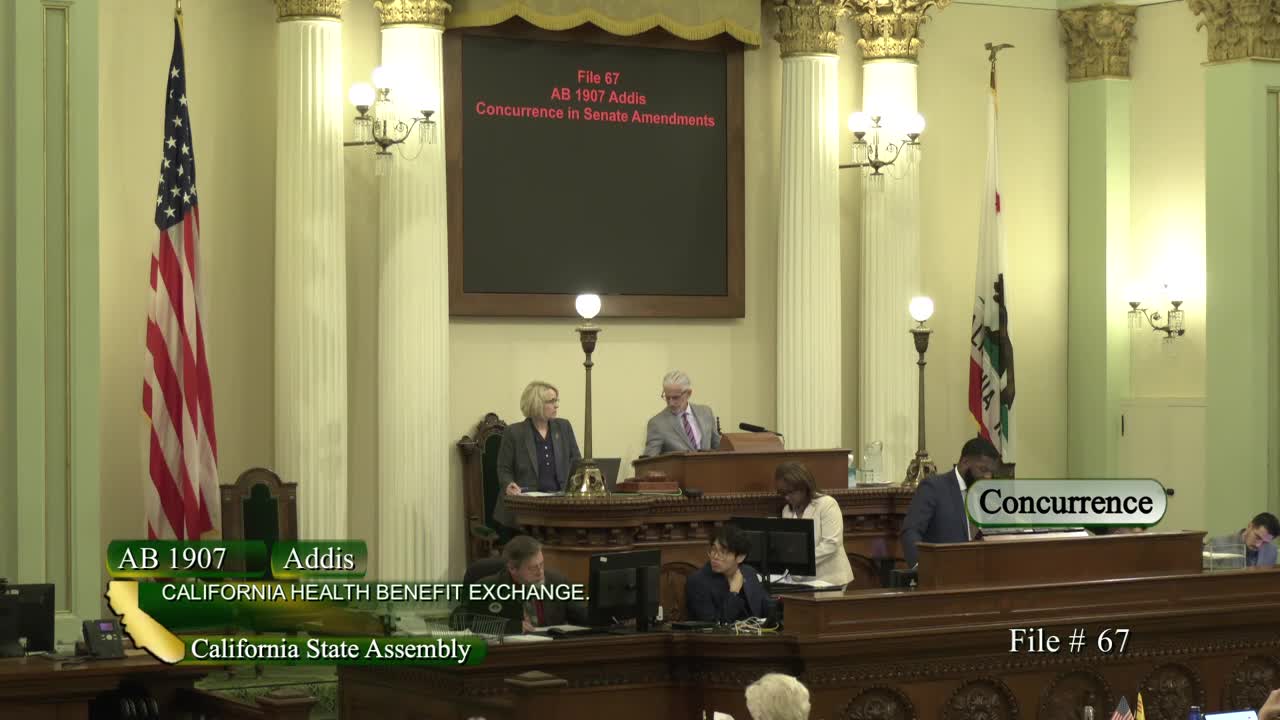 9MIN
Assembly Floor
 2MIN
Senate Floor
 35SEC
Senate Standing Committee on Appropriations
 27MIN
Senate Standing Committee on Energy, Utilities and Communications
 12MIN
Assembly Floor
 26MIN
Assembly Standing Committee on Utilities and Energy
Bill Author



